Philadelphia is often referred to as an “eds and meds” economy — the region’s colleges, universities, and health systems employ hundreds of thousands.
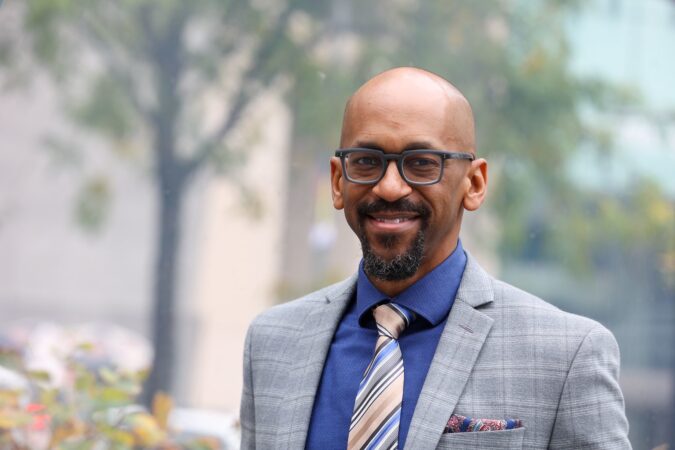
But Sean Vereen, president and CEO of Heights Philadelphia,doesn’t want the city to just be defined by those employers. The nonprofit he leads helps connect young people with education and career opportunities.
“I often say Philly should be a city for working-class people. We have a lot of working-class sensibilities, but we don’t have an economy that works for working-class people,” said Vereen. “We are going to have to be much more dedicated across all kinds of sectors to really try to create that kind of city and region.”
The Inquirer spoke with Vereen about recent unemployment data released by the Bureau of Labor Statistics, and the opportunities available to young adults. He says companies should have a vested interest in employing and training these entry-level workers — it’s a savvy business decision.
“Companies are not doing this out of charity. They’re doing it because they need a better workforce, and they cannot just be dependent on people who have done everything right, or have had access to all the opportunities,” said Vereen.
The following conversation has been edited for length and clarity.
U.S. unemployment is at the highest level since 2021. What does that mean for workers and those looking for work in Philadelphia and across the country?
Entry-level work is getting harder for people to find and have. Whether it’s [because of] tariffs or it is economic trends with hiring in general, it’s clear that the labor market is weakening. I think that’s particularly true for families of color, particularly Black folks seeking employment.
Then, I think the other piece is that the cost of living increases. There’s a ton of pressure for people through their employment to be able to maintain lifestyles. As much as [the Philadelphia area] is a great place to live, economically we’re not producing enough jobs that can sustain people in a working-class, middle-class lifestyle.
I recently wrote about how college graduates are facing one of the toughest job markets in recent years. What can young people expect when they’re entering the workforce? How can they prepare?
When you’re looking at the employment rates of people without a college degree, or even without a high school degree, the employment rates are much worse. So … it’s still the best bet that you’re going to have to get access to employment, particularly in this region because we are very much an “eds and meds”-driven economy in the five counties. We have to diversify and build up what the economic opportunities are here, but that’s also a reality that young people are facing.
Particularly first-generation-to-college students, they need networks and support systems, because they don’t have the connections that other folks from higher-income groups may have. We’re never gonna get people who have experience unless we give young people an opportunity and a chance. Employers have to be more dedicated to that entry-level work and paying fair and decent wages for that.
Scene from Rowan University’s College of Education graduation ceremony at Rowan University in Glassboro.
Tell me a bit about underemployment. Have we seen a change in how many people are employed part-time who would like to have more work?
It is clear that the cost of living has increased significantly over the last four or five years since the pandemic, and people are doing a lot of different things to try to supplement what their income is.
Everybody has got some kind of side hustle. Now, the question I would have is: Does it add up to actually real economic prosperity?
Are there many people who are in jobs that don’t match the amount of education they have? What can be done about that?
I think that is happening, one, because [there are] just more college graduates, period.
We need institutions and universities more dedicated to giving opportunities to low-income and first-generation students. We don’t have this connection between education and employment as much as we need to.
We’re really trying to push [for] kids to go to institutions that have the support and ability for kids to be able to graduate. We think Temple [University] is one of those places.
Some people … in their economic status [have] built-in networks that allow them to be connected to industries and professions. They may know somebody who’s already an investment banker … or does government work. For everybody else who does not have those connections, we need to have stronger networks. We need to have more people in career fields who are willing to mentor and engage people who are not their cousin, or their sibling, or a family member, but people who are different from them, but will benefit the industry, and the field, and all of us.
City Hall is reflected in glass of Temple University Center City Campus at 1515 Market St. on Jun. 5, 2025.
It’s the canary in the coal mine. What we saw during the pandemic, and coming out of the pandemic, was enormous amounts of opportunity for low-income, lower-wage workers … and now that’s wearing out. Then we think about the cutbacks in government work, cutbacks that are happening across many industries, that often Black folks are the folks who are first to be hitting those headwinds.
We still need to create long-term careers. We need to be thinking in this system. Even after the end of diversity, equity, and inclusion, we need to be creating opportunities in communities where that has not been the case. That’s both really thinking about lowering the cost of education … [and] making a stronger connection to what happens to you at the end of your educational journey.
We’re trying to press universities to be thinking harder about what happens to kids once they graduate. We’re trying to press the School District of Philadelphia to be thinking more about what happens, not just to get a kid to graduation, but have we connected them to an opportunity?
We cannot just be a place of “eds and meds” and Comcast. There has to be more economic opportunity for more people.
Public art “For Philadelphia” (top) by Jenny Holzer and “Exploded Paradigm” (left) by Conrad Shawcross and the Universal Sphere (rear) in the second-floor lobby of the Comcast Technology Center, Monday, March 17, 2025.
How should workforce development programs help people in Philadelphia secure good jobs? What kind of industries, skills, or training should they be focused on right now?
Whether you’re going to be a welder, or whether you’re going to be an electrician, or whether you’re going to work in a hospital, your reading and math skills still matter.
The other piece is just understanding what a field is. A med technician, they make, actually, good living wages. It is a job that you can do without a college degree, happening in many of the hospitals and research labs around the region. Kids don’t know about those things. No one is waking up in the morning and being like, “I want to be a med technician, [or a] sterilization technician.”
We have to do a better job of actually, at scale, introducing young people to fields and what opportunities are [available]. When they think about medicine, it’s not just about being a nurse or a doctor. There are thousands of jobs and opportunities there.
We have a ton of jobs that are going unfilled while we have employment going up, for example, in some of the hospitals. We’ve got to be better about trying to get people connected to opportunities. And that is possible to do. We just haven’t really looked at it, I think, in the right way.
From losing a leg to a parasitic infection that almost took his life to getting temporarily cast out by his herd, Ray the Nubian goat had a rough 2025. Loving volunteers and a wheelchair might make for an improved 2026.
In October, the Philly Goat Project, an East Germantown nonprofit that provides community wellness through nature connection, shared Ray’s story with The Inquirer.
The 7-year-old goat had gone from helping people in bereavement and children with cerebral palsy at Awbury Arboretum to needing help moving around. Readers showed up for the middle-aged ruminant, donating enough for Ray to get his wheelchair and have physical therapy.
On a recent cold Monday morning, Ray eagerly awaited his rehabilitation, standing strong on three legs and eating orange peels out of volunteer Jay Tinkleman’s hand.
“It’s amazing what he has been through,” Tinkleman said, kissing Ray’s forehead. “He seems more confident now, a little stronger, and the other goats don’t pick on him like they used to at first, so I think they sense that he is stronger.”
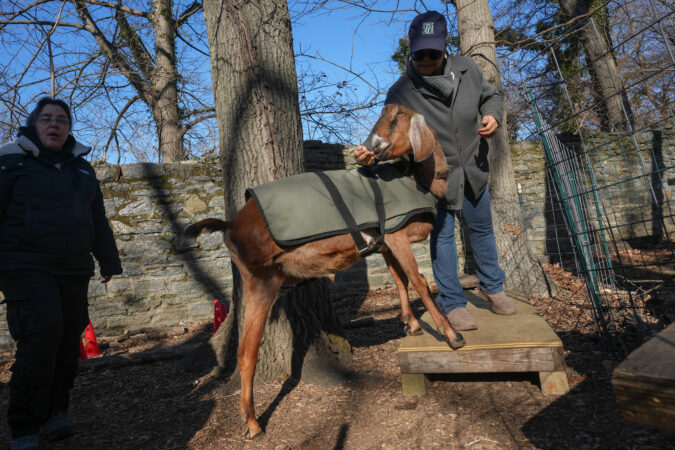
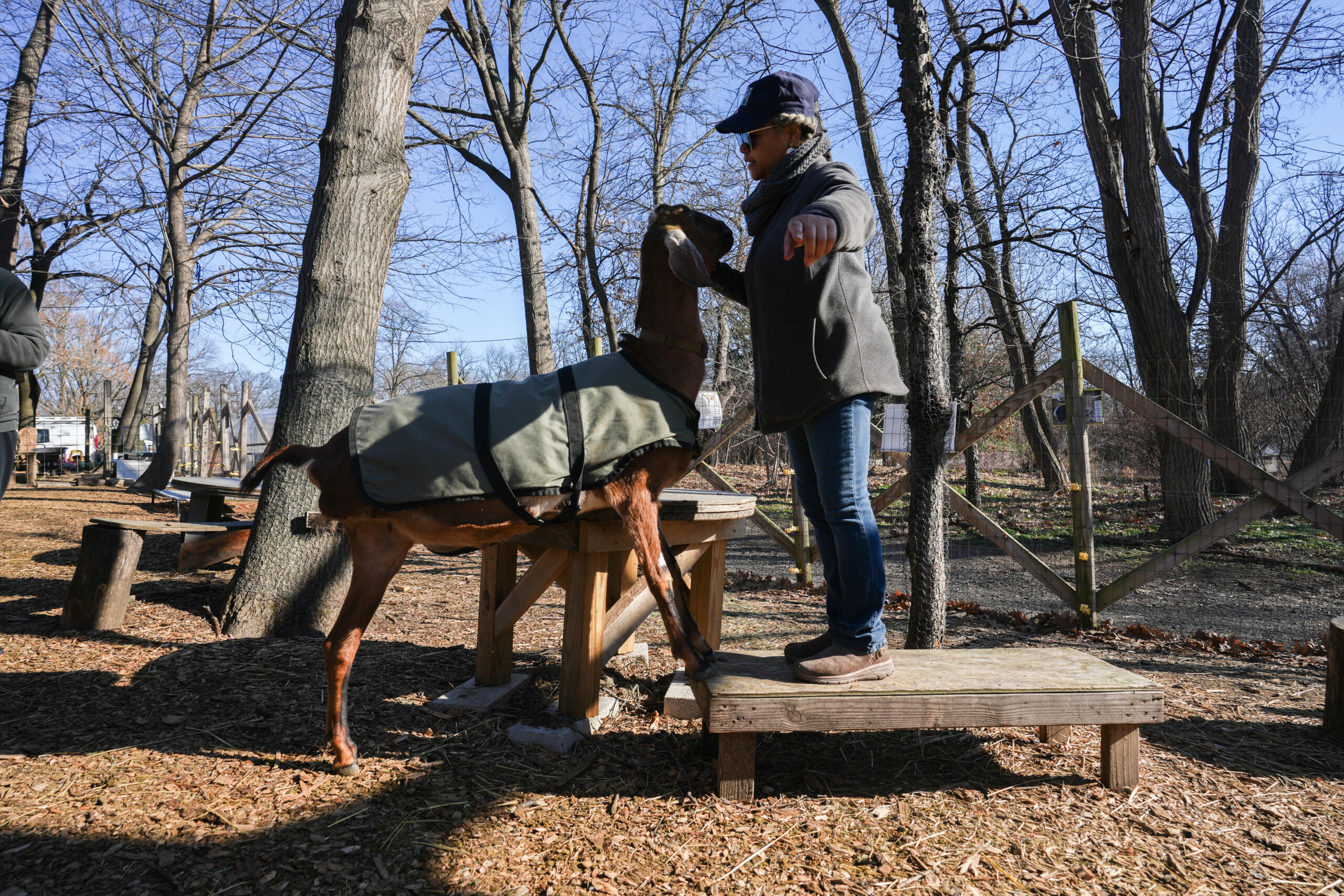
Leslie Jackson, director of operations, works with Ray, who lost his leg due to a parasite infection.
Casey Buckley, who runs Ray’s physical therapy, agrees with Tinkleman, but said the friendly goat still has a long way to go.
These days, Ray is an ambulatory wheelchair user. He can move with or without a wheelchair, but needs it for long strolls, an important part of goat life.
“His rehab is a lifelong process,” Buckley said. “The goal is that on long walks, where he might not be able to go, he can use the wheelchair, but we just have to take it day by day.”
Ray might not fully agree. Once the first of his nine exercises began, he was ready to go.
“Slow down!” Leslie Jackson, director of operations at Philly Goat Project, told Ray on multiple occasions.
Neck stretches side to side, he aced it. Getting rocked back and forth to get the core strength humans get when doing crunches, no problem. Elevating his two front hooves on a table, while balancing on his third leg, to practice climbing the Philly Goat Project van “Vangoat,”easy.
Then came the orange cone course. Ray flew through it only to be stopped by Jackson right before the ending.
“No, no, no cheating, back, back,” Jackson told him upon realizing, in his speed, Ray had missed a line.
He tried again and again, but his last paw kept missing a line of cones. He bumped Jackson’s arm softly, perhaps looking for a comforting treat.
“We will do it together, teamwork makes the dream work,” Jackson told Ray, as Tinkleman and Buckley rallied around them to help line up the cones for another try. And shortly, to Ray, victory tasted like orange peels.
After 30 minutes of PT, he was ready to practice walking around in his wheelchair.
It took all three to get Ray into the chair. Tinkleman petted Ray’s head, keeping him calm. Jackson lifted the back of his body. And Buckley placed the metal contraptionaround Ray, making sure there was a wheel on each side, securing the black belt, and placing two soft sponges under the hip where his fourth leg used to be.
“He is not afraid of it, he doesn’t run from it,” Jackson said as Ray took off walking faster than before, no hopping or dragging. A milestone for the team that had been working for Ray to walk with his chair instead of feeling like he had to drag it.
Belly full of treats, the jolly goat led the group to the barn where his 11 goat friends and brother Teddy rested after returning from one of their long walks.
In time, the team hopes that the chair will help Ray join in once again. They are practicing having Teddy walk next to Ray in his wheelchair, keeping enough space for the wheels not to run over Teddy’s hooves.
Until then, Jackson feels grateful for Ray’s resilience and the big hearts that have helped him along the way.
“You don’t give up on a teammate, you try to help them through,” Jackson said. “Without the people who responded from The Inquirer [article], and our friends and family and fans, this would not be possible; he would not be getting stronger without a trainer, without a professional wheelchair. It’s a community effort.”
Robert Caputo was captivated by the natural world, its animals and people. So he spent 35 years, from 1970 through 2005, traveling through Africa, Asia, and South America, taking photos, writing stories, and making films and TV shows for National Geographic magazine, Time, PBS, TNT, and other media outlets.
From Kenya to Egypt, Venezuela to Zanzibar, in China, Cuba, New Orleans, and Boston, Mr. Caputo chronicled the beauty and tragedy of everyday life. He reported as a freelancer, with a camera and a notepad, for National Geographic for decades, covering political coups, civil wars, and famines in Sudan and Somalia, and the AIDS epidemic in Uganda.
He worked for photographer and filmmaker Hugo van Lawick in Tanzania in the 1970s and then camera-stalked lions and leopards for National Geographic on the Serengeti Plain. He sent back striking images of the Abu Simbel Temples in Egypt and the old Kingdom of Mustang in Nepal.
In Sudan, he sipped tea with camel traders, slept under the stars, and posed for portraits with tribal chiefs. He trekked the Himalayas and photographed fishermen on the Congo, Nile, and Mississippi Rivers. His poignant August 1993 cover photo for National Geographic of a starving Somali woman gained worldwide attention.
“In fact, it is a great job,” Mr. Caputo told the Washington Post in 1995, when he was featured in a TV show about the Geographic photographers. “You really do get to go places and do things others only dream about.”
He told the New York Daily News in 1995: “I’ve always thought of my job as a license to be nosy.”
In 2002, as he was winding down his international travel, Mr. Caputo moved from Washington, D.C., to a farmhouse in Kennett Square, Chester County. In early 2025, he was diagnosed with Alzheimer’s disease. In December, he and his family traveled to the Pegasos Swiss Association voluntary assisted dying center in Basel, Switzerland. He died Thursday, Dec. 18. He was 76.
“Fairly early on, Bob had expressed his wishes to go out on his own terms,” said his wife, Amy. “We were able to honestly and pragmatically deal with our situation, and he remained his thoughtful self, with his sense of humor intact till the end.”
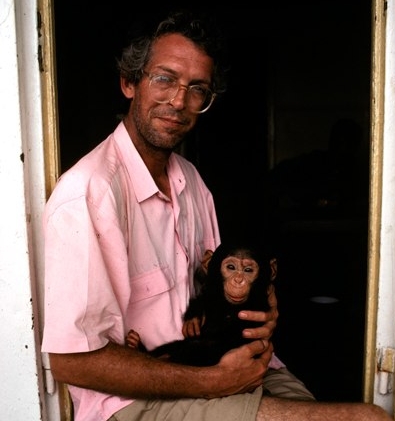
Mr. Caputo loved spending time with animals.
Mr. Caputo first went to Africa in 1970. He dropped out of Trinity College in Connecticut as a senior and meandered with friends across the vast continent, from Morocco to Tanzania.
He returned to earn a bachelor’s degree in film at New York University in 1976. Then, until 1979, he lived in Nairobi, Kenya, and sold photos and stories about Africa to Time, Life, and other magazines.
“He liked to learn about things,” said his son Nick. “He was constantly inquiring into things.”
In 1981, National Geographic hired him to report from Sudan on the verge of its civil war, and he produced striking cover photos, dramatic picture spreads, and detailed stories about Africa. In 1984 and ’85, he spent eight months and traveled 4,000 miles on steamboats, tugboats, and all-terrain vehicles to document traditional daily life along the Nile.
Mr. Caputo had several cover photos for National Geographic.
“Everywhere he went,” his family said, “Bob found that the people he met were fundamentally good and generous, happy to share their often limited food with him, a perfect stranger, and excited to tell him about their lives.”
There were challenges, too, he said in many interviews. He was detained by border guards in Uganda in 1979 and contracted malaria nine times. The monthslong assignments in search of remote Indigenous people were often lonely, and he got hungry and tired.
But the connections he made with people he encountered were worth it, he said. “The great advantage of working for National Geographic is having time,” he told the New York Daily News. “You can go to a village in Africa and not just have to waltz in and start shooting away. You can spend time getting to know people, and they can know you.”
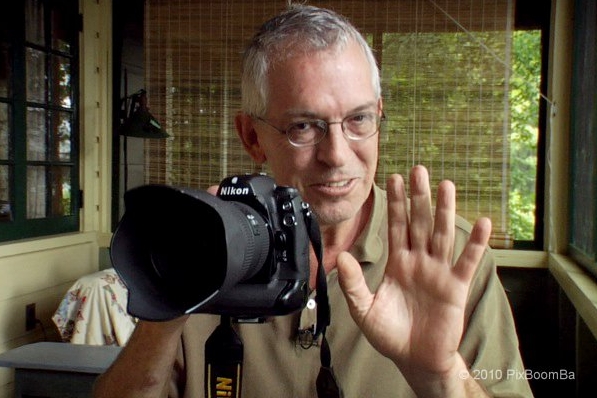
Mr. Caputo was a natural innovator and teacher, and he organized photo workshops and lectured about photography around the world. He taught digital photography at the Center for Digital Imaging Arts at Boston University and cofounded Aurora & Quanta Productions in Maine in 1985 and the PixBoomBa.com photo website in 2010.
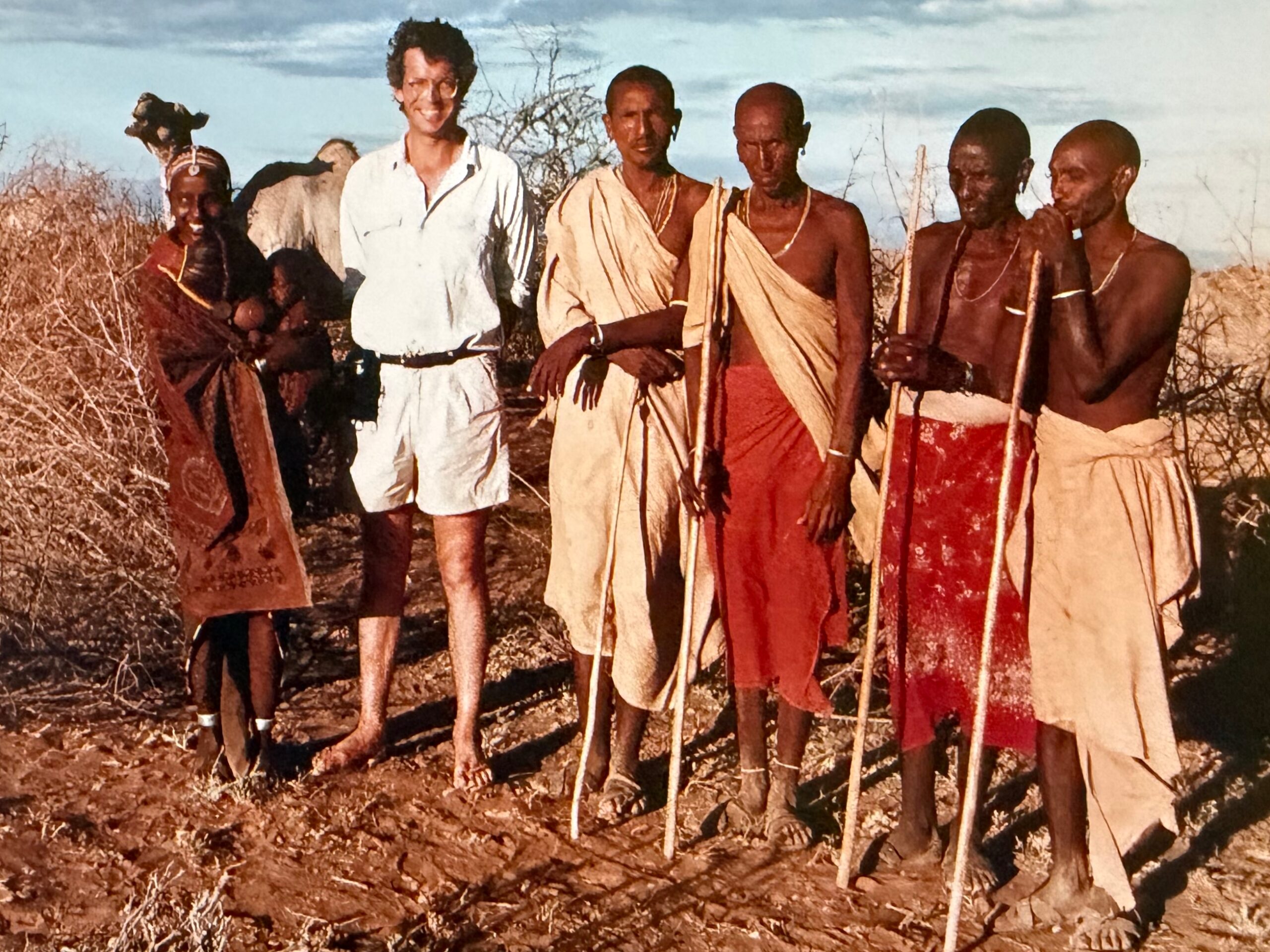
Mr. Caputo (second from left) poses with local people in Africa.
He wrote and appeared in wildlife shows, hosted TV programs and YouTube videos about photography, and wrote the story on which Glory & Honor, a 1998 award-winning TV film, is based. He made films about making films in Nigeria and the history of Boston’s Fenway Park.
He earned awards from the National Press Photographers Association, the American Travel Writers Foundation, Communications Arts journal, and other groups. He was personable and energetic, colleagues said, and he cofounded the annual National Geographic Prom at the Washington office.
“He was a tremendously caring and loving person,” his son Nick said. “He looked out for other people.”
Mr. Caputo met TV and film producer Amy Wray on a National Geographic TV shoot in the Amazon rainforest. They married in 1997 and had sons Nick and Matt.
This photo is featured on Mr. Caputo’s website.
In Facebook tributes, friends and colleagues noted his “wonderful smile” and “deep love of people and animals.” They called him a “legend” and “amazing.” Robert J. Rosenthal, former Africa correspondent and former executive editor of The Inquirer, called Mr. Caputo “one of the best humans I ever knew.”
Mr. Caputo told MainLine Today in 2009: “My personal heroes are the people who work for aid organizations and nongovernmental organizations, who go to some faraway place to help people they’re not related to and often put themselves in harm’s way.”
Robert Anthony Caputo was born Jan. 15, 1949, at Camp Lejeune, N.C. His father was a career Marine and moved the family to bases in Virginia and then Sweden for an assignment at the U.S. embassy there.
In a 1991 interview with the Newhouse News Service, Mr. Caputo said: “I remember as a kid going to sleep listening to artillery going off in the distance down at the range. It was kind of comforting. I wouldn’t change it for anything.”
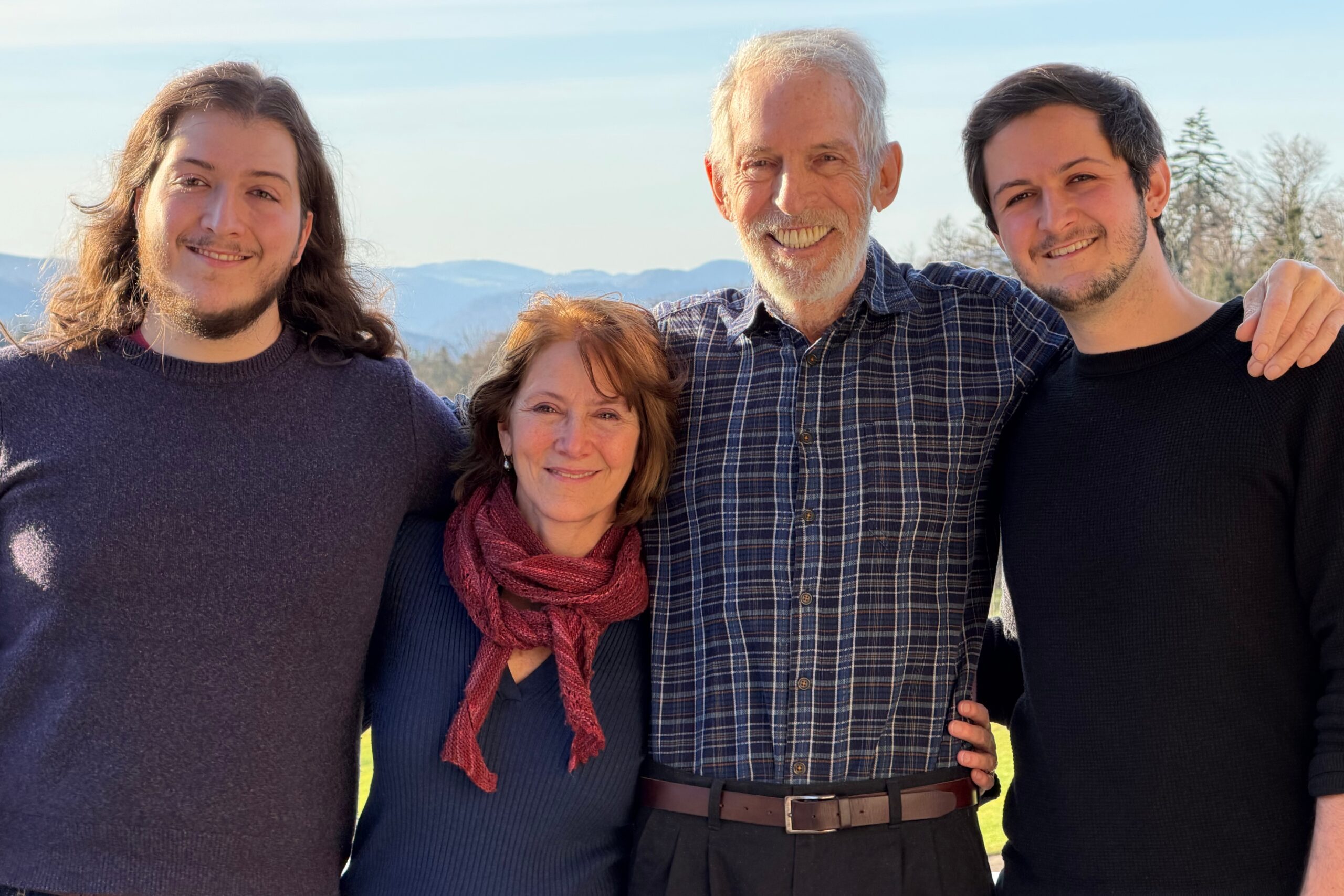
Mr. Caputo (second from right) doted on his wife and sons.
He attended a Swedish middle school, learned the language, skied, and played soccer. He returned to the United States in the late 1960s to attend boarding school in Virginia and then Trinity.
In Kennett Square, Mr. Caputo was a soccer, baseball, and basketball coach to his sons, and a Cub Scouts leader. He walked the boys to the school bus stop in the morning. He told them bedtime tales about secret agents and pirates, they said, and built a tree house in the backyard.
He decorated his truck on Halloween and grew impressive gardens. His neighbors called him Farmer Bob.
He took his family on trips to Kenya and Tanzania. He dabbled in experimental playwriting and literature when he was young, and enjoyed classic movies and William Blake’s poetry.
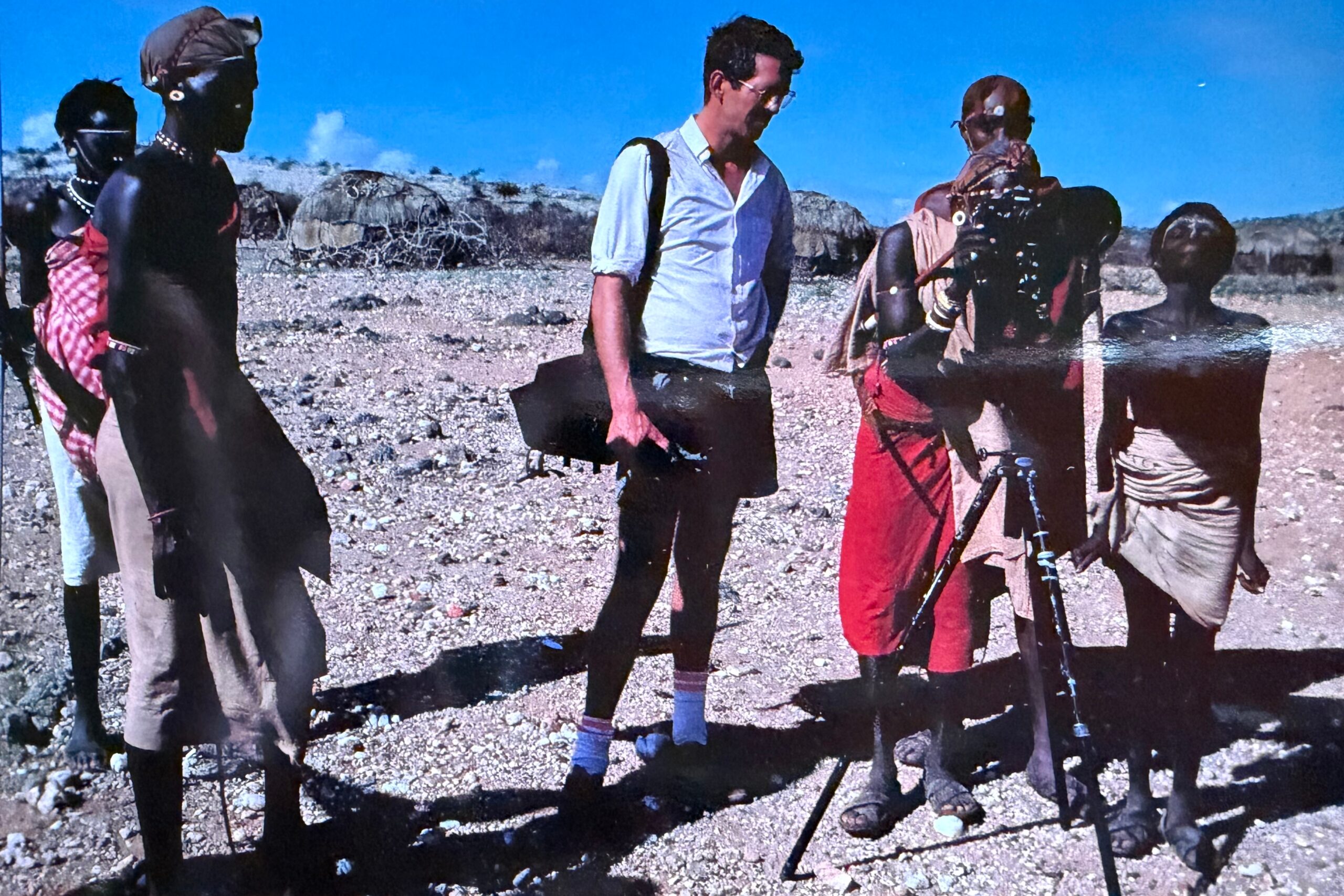
Mr. Caputo (center) shows his camera to the locals in Africa.
“He felt extraordinarily lucky to have lived the life he did,” his wife said, “full of adventure, family and friends. And in the end he said, ‘I’m ready.’”
In addition to his wife and sons, Mr. Caputo is survived by a sister and other relatives.
Services are to be at 11 a.m. Saturday, Jan. 10, at Kennett Friends Meeting, 125 W. Sickle St., Kennett Square, Pa. 19348.
Donations in his name may be made to Doctors Without Borders, Box 5030, Hagerstown, Md. 21741.
His family called Mr. Caputo “buttered side up” when he was young “because no matter
how he fell he always seemed to end up the right way, and his life was full and lucky.”
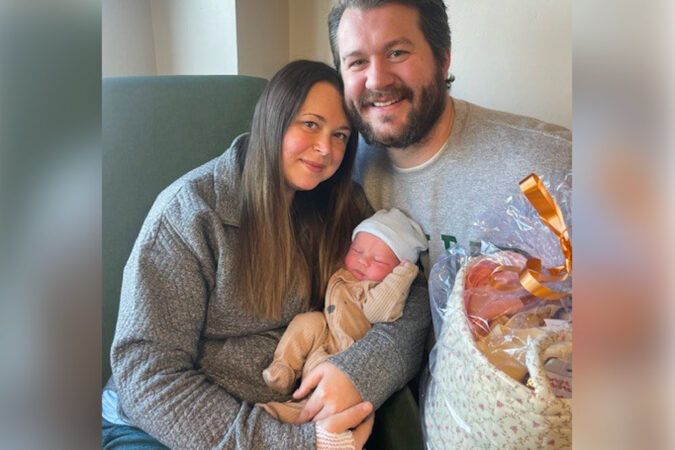
The Philadelphia area’s first baby of 2026 was born at the stroke of midnight New Year’s Eve at Penn Medicine Doylestown Hospital, while fireworks lit up the sky outside their window.
Parents Sarah and Ryan Schamp of Ambler described the moment as “surreal” and “picture perfect.”
“I thought everyone was joking,” Sarah Schamp said of the perfectly timed fireworks display that was visible from their room moments after Henry’s birth.
The family expected to return home later Friday, where they would be greeted by the couple’s 2-year-old daughter, Willow, and 5-year-old Australian shepherd, Winston.
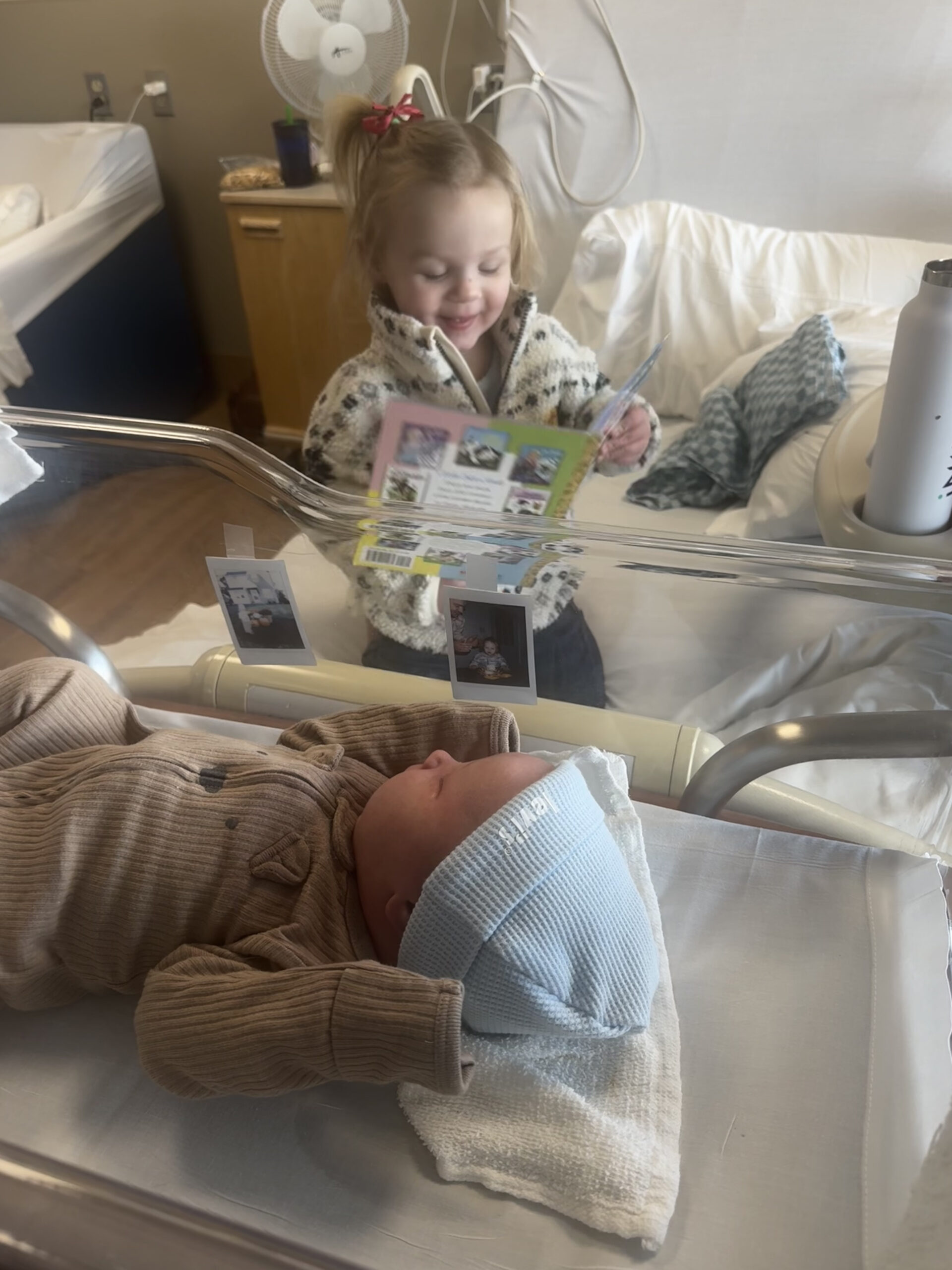
Willow is already embracing her duties as a big sister, piling blankets on him and showing him pictures in her books during visits to the hospital, which was acquired by Penn Medicine in 2025. Henry’s hospital bassinet is lined with Polaroid snapshots of her.
Willow Schamp, 2, shows baby brother Henry a book during a visit at Doylestown Hospital on New Year’s Day 2026.
Henry was one of several babies born at Philadelphia-area hospitals in the first hour of the new year:
Temple Women & Families Hospital, the North Philadelphia facility where Temple moved its labor and delivery services in September, celebrated its first baby of the year at 12:10 a.m. — a boy, Ezekiel Hall, born to Natalie Rivera.
Elliott Sarnoff was born to parents Kim and Jason Sarnoff at Lankenau Medical Center at 12:22 a.m.
Virtua Voorhees Hospital’s first baby of the year was a boy named Landon, born at 12:29 a.m. to parents Caitlyn and Mark. Virtua declined to provide surnames to protect patient privacy.
Lindsay and Matthew Logan of Chalfont welcomed baby Dawson Logan at Jefferson Abington Hospital at 1:01 a.m.
While Henry was born on his due date, the Schamps expected him to arrive early, after Sarah started having contractions on Dec. 30 and the couple headed to the hospital.
“It wasn’t what we planned, but it’s a cool thing and will be a fun tradition,” Sarah Schamp said.
Plus, they joked, he’ll have a fun fact for breaking the ice with new friends and coworkers for the rest of his life.
For the first time in more than half a century, Philadelphia has recorded fewer than 225 homicides in a single year.
In 2025,222people were killed — the fewest since 1966, when there were a fraction of as many guns in circulation and 178 homicides.
It is a milestone worth commemorating — and mourning: Violence has fallen to its lowest level in decades, yet 222 deathsin a single city is still considered progress.
window.addEventListener(“message”,function(a){if(void 0!==a.data[“datawrapper-height”]){var e=document.querySelectorAll(“iframe”);for(var t in a.data[“datawrapper-height”])for(var r,i=0;r=e[i];i++)if(r.contentWindow===a.source){var d=a.data[“datawrapper-height”][t]+”px”;r.style.height=d}}});
The drop mirrors a national reduction in violence and follows years of sustained declines after Philadelphia’s annual homicide totals peaked during the pandemic, and it reflects a mix of likely contributing factors: Tech-savvy police are solving more shootings, violence prevention programs have expanded, and the city has emerged from pandemic instability.
No single policy or investment explains it, and officials caution that the gains are fragile.
“The numbers don’t mean that the work is done,” said Adam Geer, the city’s director of public safety. “But it’s a sign that what we’re doing is working.”
The impact is tangible: fewer children losing parents, fewer mothers burying sons, fewer cycles of retaliation.
“We are saving a life every day,” District Attorney Larry Krasner said.
Still, the violence hit some. Victims ranged from a 2-year-old girl allegedly beaten to death by her mother’s boyfriend to a 93-year-old grandfather robbed and stabbed in his home. They included Ethan Parker, 12, fatally shot by a friend playing with a gun, and Said Butler, 18, killed just days before starting his first job.
Police say street-level shootings and retaliatory violence fell sharply, in part because some gang conflicts have burned out after key players were arrested or killed. Killings this year more often stemmed from long-standing drivers — arguments, drugs, and domestic violence — and were concentrated in neighborhoods that have borne the brunt of the crisis.
“These same communities are still traumatized,” said Police Commissioner Kevin Bethel. “One gunshot is a lot. We can’t sit or act like we don’t see that.”
window.addEventListener(“message”,function(a){if(void 0!==a.data[“datawrapper-height”]){var e=document.querySelectorAll(“iframe”);for(var t in a.data[“datawrapper-height”])for(var r,i=0;r=e[i];i++)if(r.contentWindow===a.source){var d=a.data[“datawrapper-height”][t]+”px”;r.style.height=d}}});
The number of domestic-related killings nearly doubled this year compared with last, making up about 20% of homicides, Geer said. The disappearance and killing of Kada Scott, a 23-year-old woman from Mount Airy, was among them, and led to a citywide outcry and renewed scrutiny of how authorities handle violence against women.
And mass shootings on back-to-back holiday weekends — 11 people shot in Lemon Hill on Memorial Day, and 21 shot in a pair of incidents in South Philadelphia over July Fourth — left residents reeling.
<iframe title="Philadelphians’ Perceptions of Safety at Night" aria-label="Line chart" id="datawrapper-chart-GRrTN" src="https://datawrapper.dwcdn.net/GRrTN/1/" scrolling="no" frameborder="0" style="width: 0; min-width: 100% !important; border: none;" height="556" data-external="1"></iframe><script type="text/javascript">window.addEventListener("message",function(a){if(void 0!==a.data["datawrapper-height"]){var e=document.querySelectorAll("iframe");for(var t in a.data["datawrapper-height"])for(var r,i=0;r=e[i];i++)if(r.contentWindow===a.source){var d=a.data["datawrapper-height"][t]+"px";r.style.height=d}}});</script>
The progress comes even as the police department remains 20% below its budgeted staffing levels, with about 1,200 fewer officers on the force than 10 years ago.
The city’s jail population has reached its lowest level in recent history. It dipped below 3,700 in April for the first time in at least a decade, and remains so today.
And arrests citywide, particularly for drug crimes, have cratered and remain far below pre-pandemic levels, mirroring a nationwide trend.
Experts say the moment demands persistence.
“We can’t look at this decline and turn our attention to other problems that we have to solve. We have to keep investing and keep pushing to get this number even lower, because it could be even lower,” said Jason Gravel, an assistant professor of criminal justice at Temple University.
‘Unheard of’ clearance rates
After shootings exploded during the pandemic, and Philadelphia recorded 562 homicides in 2021 — the most in its history — violence began to decline, slowly at first.
But then, from 2023 to 2024, killings fell by 35% — the largest year-over-year reduction among U.S. cities with the highest homicide rates, according to an analysis by Pew.
The decline continued into 2025.
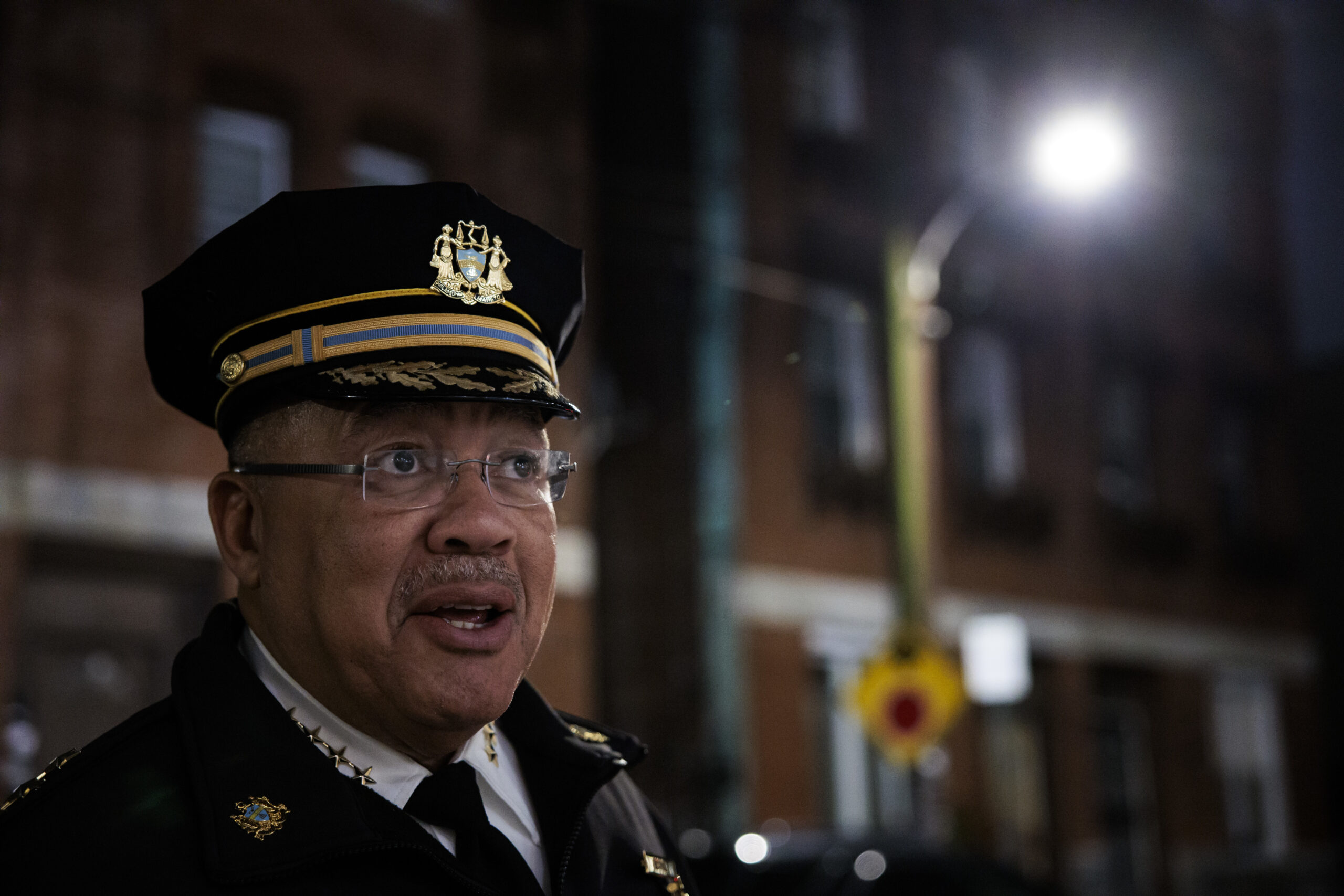
Police Commissioner Kevin Bethel arrives at a North Philadelphia community meeting on Dec. 2.
Bethel has pointed to a host of potential reasons for the decline: the reopening of society post-pandemic — kids returned to school and adults reconnected with jobs, courts, and probation officers — as well as police resources focused in hot spot crime areas and improved coordination among city leaders.
Most notably, he said, detectives are making more arrests in nonfatal shootings and homicides. Experts say that arresting shooters is a key violence-prevention strategy — it prevents that shooter from committing more violence or from ending up as a victim of retaliation, sends a message of accountability and deterrence, and improves the relationship between police and the community.
The homicide clearance rate this year ended at 81.98%, the highest since 1984, and the clearance of nonfatal shootings reached 39.9%.
“That’s unheard of,” said Geer, the public safety director. “The small amount of people who are committing these really heinous, violent crimes in our neighborhood[s] are being taken off the street.”
window.addEventListener(“message”,function(a){if(void 0!==a.data[“datawrapper-height”]){var e=document.querySelectorAll(“iframe”);for(var t in a.data[“datawrapper-height”])for(var r,i=0;r=e[i];i++)if(r.contentWindow===a.source){var d=a.data[“datawrapper-height”][t]+”px”;r.style.height=d}}});
Still, more than 800 killings from between 2020 and 2023 remain without an arrest, according to an Inquirer analysis.
That has had a significant impact on the police department’s relationship with the community over the years, something Bethel has sought to repair since he was appointed commissioner in 2024.
In 2025, he created an Office of the Victim Advocate, hired a 20-person team to communicate with and support victims, and hosted 35 meetings with residents of the most challenged neighborhoods.
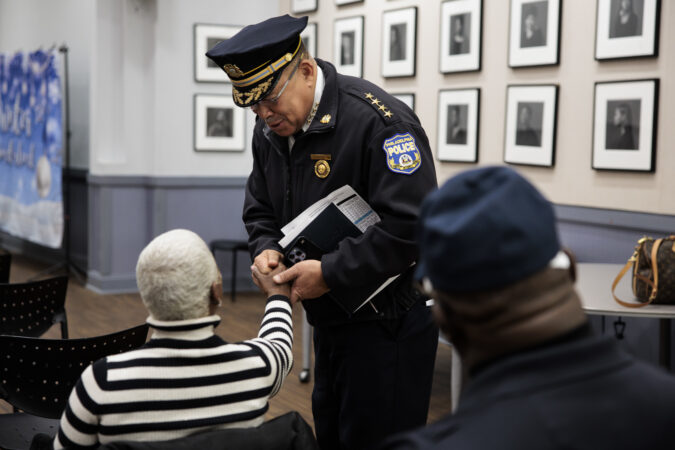
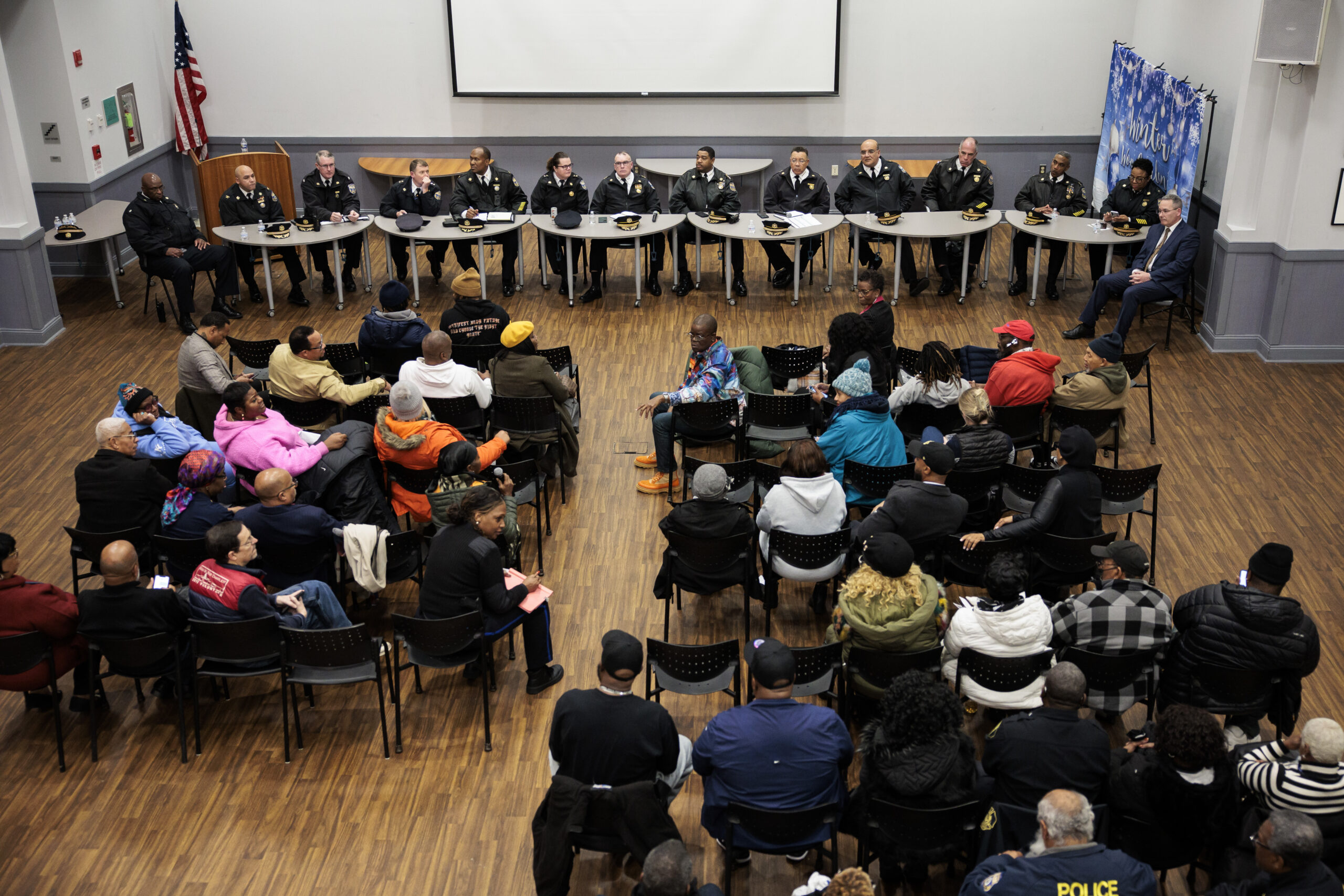
A few dozen community members gathered with top police brass in North Philadelphia on Dec. 2.
Yet Bethel has grappled with the challenge of convincing residents that the city is safer today than four years ago, while questioning whether today’s gains can outweigh years of devastation.
That challenge was on display on a recent cold December night, as Bethel gathered with a few dozen residents inside a North Philadelphia church and asked what they wanted him to know.
Person after person stood and told him what gun violence had taken from them in recent years.
My son. My brother. My nephew.
Both of my sons.
Investing in violence prevention
The city’s network of violence prevention strategies has expanded greatly since 2020, when the city began issuing tens of millions of dollars in grants to grassroots organizations.
Early on, the city faced criticism that its rollout of the funds was chaotic, with little oversight or infrastructure to track impact. Today, Geer said, the city has stronger fiscal oversight, better organizational support, and a data-driven approach that targets neighborhoods experiencing the most violence.
In 2024,Community Justice, a national coalition that researches violence-intervention strategies, said that Philadelphia had the most expansive violence-prevention infrastructure of the 10 largest U.S. cities. When evaluating 100 cities, it ranked Philadelphia as having the third-best public-health-centered approach to preventing violence, falling behind Washington and Baltimore.
Geer said the work will continue through 2026. Starting in January, the city will have a pool of about $500,000 to help cover the funeral expenses for families affected by violence.
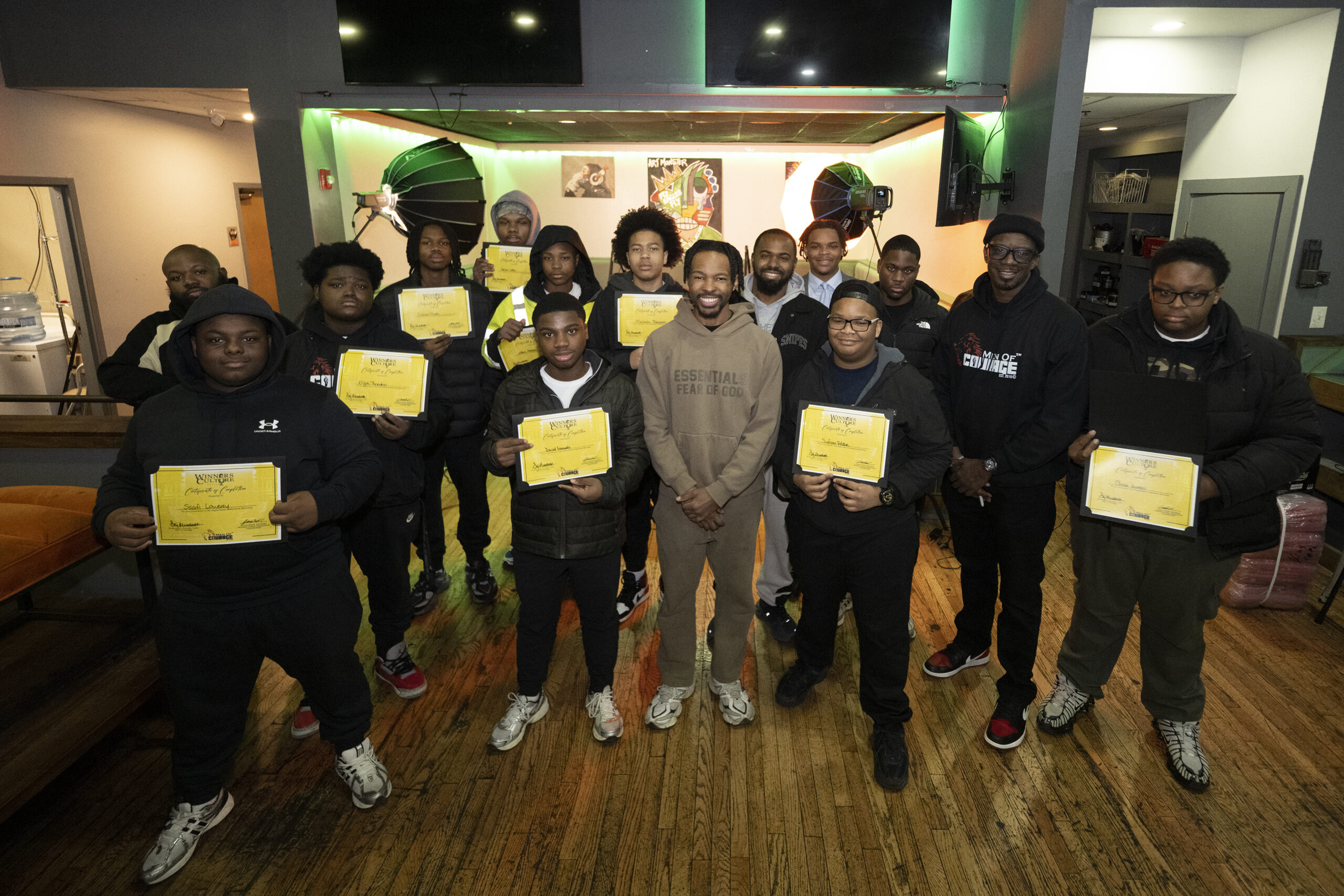
Members of Men of Courage pose with the certificates of accomplishment after completing a 16-week program on multi-media work and podcasting, one of multiple programs the community organization uses to help Black teens build their confidence.
One of those organizations that has benefited from the city’s funding is Men of Courage, a Germantown-based group that mentors young Black men ages 12 to 18 and focuses on building their confidence, resilience, and emotional intelligence.
“We want them to know that one decision can affect your entire life,” said founder Taj Murdock. “Their environment already tells them they’ll be nothing. … We have to shift their mindsets.”
Arguments are a leading cause of shootings, and teaching teens how to de-escalate conflicts and think through long-term consequences can prevent them from turning disputes violent, he said.
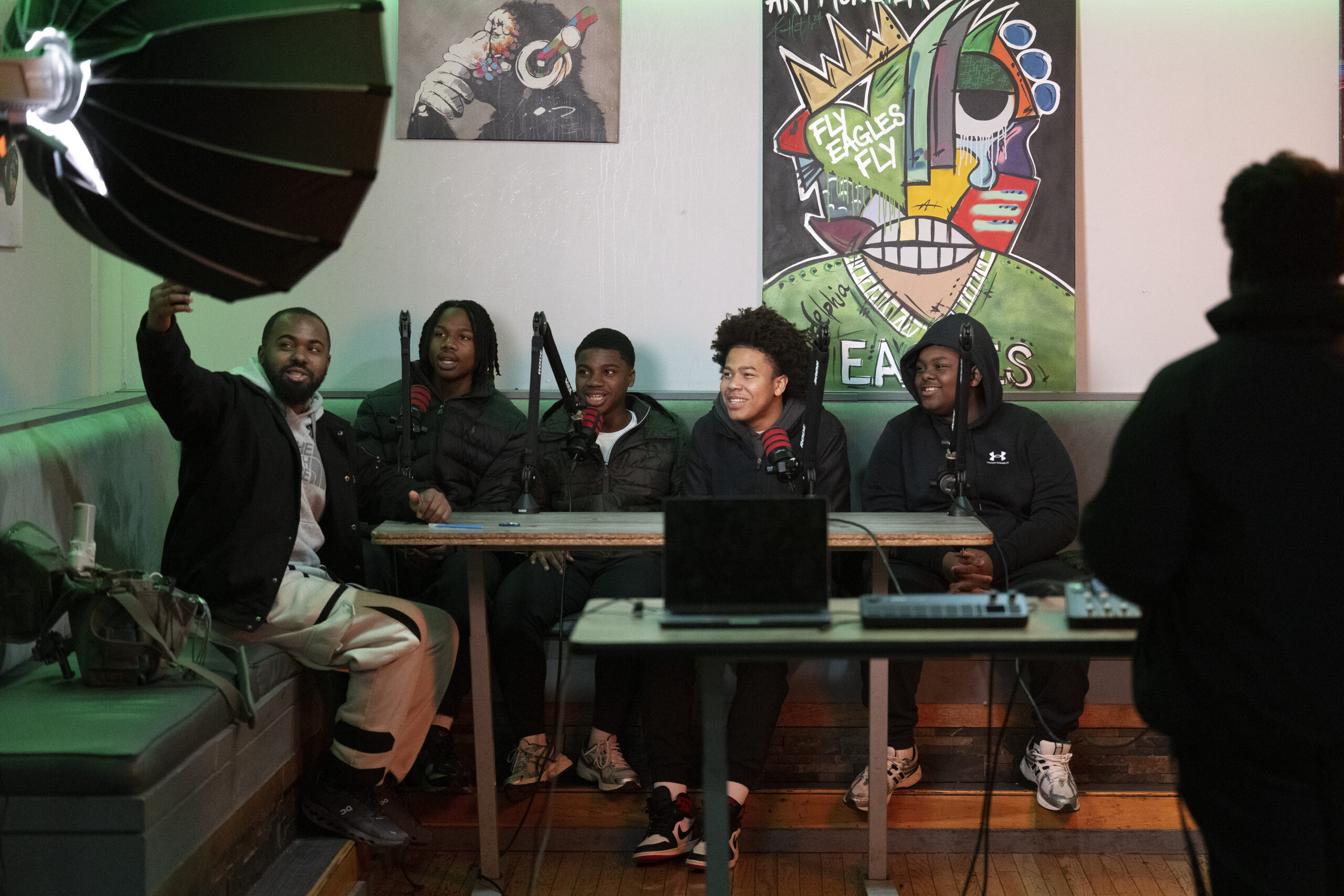
Isaiah Clark-White, second to left, and David Samuel, middle, pose for a photo with other members of Men of Courage before recording a podcast.
Isaiah Clark-White, 16, a sophomore at Hill Freedman World Academy in East Mount Airy, said that in his three years working with Men of Courage, he has grown more confident and has improved his public speaking.
And David Samuel, 15, of Logan, said he has learned how to better control his emotions and identify those of the people around him. Both said they feel safer today than three years ago, but remain vigilant of their surroundings.
Samuel said his dad watches the news every day and talks about the overnight crimes and shootings.
“He’s always telling me,” he said, “‘David, I don’t want this to happen to you.’”
New Jersey lawmakers passed a bill to prohibit households from being denied housing because they use public assistance.
The legislation, which lawmakers passed on Dec. 18, makes explicit that the state’s anti-discrimination law includes protections for residents based on their source of income for housing payments, including government vouchers, child support payments, and assistance from nonprofits. And the bill affirms that protections apply both to people paying rent and those paying mortgages.
State Sen. Angela V. McKnight (D., Hudson County), one of the bill’s sponsors, said the legislation will protect the rights of homeowners and tenants.
“Access to stable housing should never hinge on the source of a person’s legal income, especially for vulnerable populations like single parents, veterans, or those living with disabilities who often rely on assistance to make ends meet,” she said in a statement.
The legislation, which would take effect immediately after Gov. Phil Murphy signs it, is part of local and national efforts to prevent people from being denied housing because they use public assistance to pay for it. More than 2.3 million families use federal Housing Choice Vouchers, formerly known as Section 8 vouchers.
In September, Democratic U.S. Sen. John Fetterman cosponsored a bill that would create federal protections for these tenants. The Fair Housing Improvement Act of 2025 would prohibit landlords from denying housing to tenants because they pay rent using Housing Choice Vouchers; Social Security benefits; payments from a trust; income from a court order, such as spousal or child support; or other legal sources of income.
It also would expand protections in the Fair Housing Act of 1968 to prohibit discrimination based on source of income or military or veteran status.
“It’s hard enough to find an affordable place to call home,” Fetterman said in a statement. “Every veteran and every family struggling to keep a roof over their head deserve dignity and our support, not discrimination based upon their service or if they use a voucher.”
Chantelle Wilkinson, vice president of strategic partnerships and campaigns at the National Low Income Housing Coalition, said source of income discrimination “is far too often a main barrier for households seeking stable housing.”
“When a landlord denies a voucher holder access to housing despite meeting all other qualifications, that ‘no’ is not just about a home: it’s denial of opportunity, equity, and stability,” she said in a statement.
In Philadelphia, the city’s Fair Practices Ordinance bans rental property owners from discriminating against potential tenants based on the source of the income they will use to pay their rent. That includes housing vouchers and other public assistance.
In June 2024, City Council passed a bill to expand protections under the Fair Practices Ordinance. The legislation explicitly stated that housing providers renting or selling a property cannot advertise or communicate that they do not accept housing vouchers. It also explicitly says that Housing Choice Vouchers are an example of a protected income source.
And it makes fighting this type of housing discrimination easier for renters.
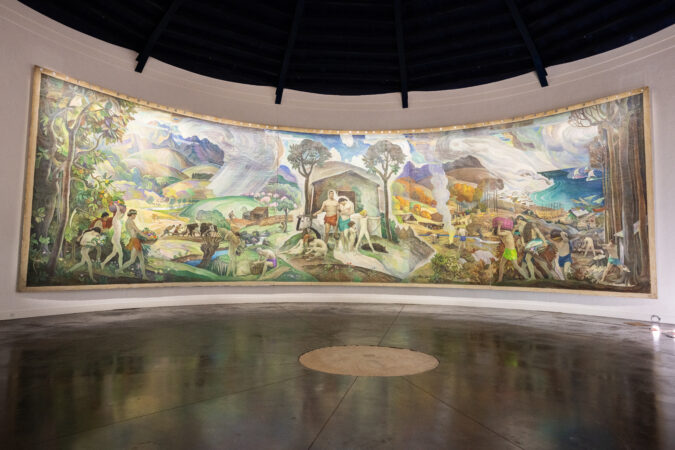
Packed away in 2007, a mural 60 feet long and 19 feet high has been brought back to life and given a swanky new home near Wilmington.
N.C. Wyeth’s colossal 1932 mural, “Apotheosis of the Family,” re-emerges in a gleaming new round barn after years in storage, on Jamie Wyeth’s property near Wilmington, Del.
Artist Jamie Wyeth had to rent a building “the size of an aircraft tanker” to open the rolled-up panels of the five-panel mural Apotheosis of the Family, painted by his grandfather — famed illustrator N.C. Wyeth.
The panels had been in storage for more than a decade, and once unrolled, Wyeth didn’t know what shape they’d be in.
“I didn’t know if I’d see potato chips of paint flying,” he said.
Thankfully, he didn’t.
Instead, in a bid to resurrect the mural from oblivion, he had a “sort of tent thing” built to humidify the panels of what is N.C. Wyeth’s largest artwork ever. “There was a lot of damage to it,” he said, “but certainly not major damage.”
Jamie Wyeth stands in front of his grandfather N.C. Wyeth’s colossal 1932 mural, “Apotheosis of the Family.” The 60-feet-long and 19-feet-high mural is now open for public viewing.
story continues after advertisement
In the late 1920s, while the country reeled under the Great Depression, N.C. Wyeth was commissioned to paint the colossal 60-feet-long and 19-feet-high mural by his friend Frederick Stone, who was the president of the Wilmington Savings Fund Society (now, WSFS). It was the bank’s 100th anniversary and they needed something that would instill some confidence in their clients.
N.C. Wyeth had already painted a 16-by-30-foot mural for New York City’s Franklin Savings Bank, and had added a mural studio to his painting studio in Chadds Ford, Pa. in 1923.
“He was beginning to take the idea of painting murals seriously. It’s a natural progression from illustration to mural painting, because both of them are involved with the painting telling a story, a narrative that really has a specific idea to be conveyed,” said Amanda Burdan, senior curator at the Brandywine Museum of Art, which has the largest collection of N.C. Wyeth paintings and oversees the studios of N.C. Wyeth and his son Andrew.
Jamie Wyeth outside the barn which houses N.C. Wyeth’s colossal 1932 mural, “Apotheosis of the Family”A view of the new round barn from the horse sanctuary built in memory of Jamie Wyeth’s wife, Phyllis
Building a home
Apotheosis was unveiled in January, 1932. Undergoing two restorations, the mural hung on the walls of the Wilmington Savings Fund Society location at Wilmington's Ninth and Market streets until 2007 when the bank sold the building to a developer.
That was when the five humongous panels were rolled away into storage and put under the care of the Historical Society of Delaware.
"Apotheosis" mural installed at Wilmington Savings Fund Society, 9th and Market Streets, Wilmington, DE, circa 1932.Sanborn Studio, Wilmington, DE
“It was all planned how to take it down, and they [possibly, the Historical Society, to whom the mural was donated by the developers and the bank] completely disregarded that, and used a cheaper method of removing it, and then rolled it the improper way,” said Jamie Wyeth, who was born in 1946, a year after his grandfather died from a freak accident where his car was struck by a freight train. N.C. Wyeth was working on a series of murals when he died.
A portrait of N.C. Wyeth around 1930.
When being rolled, the painting side of Apotheosis was supposed to be on the outside to prevent cracking. But it was rolled inside. Chunks of the lead white paint from the wall were still stuck to the panels’ back when they were packed away. For the next 15 years, until 2022, the mural lay forgotten.
In 2021, the Wyeth Foundation for American Art asked the Society for an assessment of the mural’s condition. With restoration estimated at about $903,000, the Historical Society deemed the mural “severely damaged” and its trustees voted to transfer the mural to a proper steward.
In 2022, the ownership of Apotheosis was transferred to the Wyeth Foundation, of which Jamie Wyeth is a trustee.
“And then began the two years of painstaking conservation and restoration,” said Jamie Wyeth who remembers seeing the mural on the bank’s walls several times as a young boy.
The whole project cost close to a million dollars. While the barn was built by Wyeth, the restoration was funded by the Wyeth Foundation for American Art.
A cutout of N.C. Wyeth stands next to a self-portrait of Andrew (right) in N.C.’s studio. Three generations of Wyeth artists have practiced their art in the Brandywine region.Jamie Wyeth stands in front of N.C. Wyeth’s “Apotheosis of the Family.”
“I loved the idea of bringing it back to Pennsylvania. My farm is half in Pennsylvania and half in Delaware. And I thought, ‘Well, this is where the painting was created,’” he said, referring to his Points Lookout Farm and his grandfather’s Chadds Ford studio which are about a mile apart. “And my wife and I thought, ‘What a perfect thing!’ But then we thought, ‘How the hell do we do it?’”
Jamie and Phyllis Wyeth had offered the mural to museums, including the Brandywine, but no one had the space.
“And then the question was, if we build a building, would it be 100-feet-high and 10-feet-wide?”
The answer came from Wyeth’s assistant Caroline O’Neil Ryan. How about building a round barn on the farm?
The new barn on Jamie Wyeth’s Point Lookout Farm near Wilmington, Del.
“And I’ve always just loved round barns. The Shelburne Museum in Vermont has one of the great round barns. Not only was the mural going to be resurrected, but also this structure would be so unique and wonderful, and so in keeping with the farm,” said Jamie Wyeth.
The result is a 62-foot diameter barn with high windows and a slanting roof. Half the curved wall surface holds the mural and the other half remains empty.
When the mural’s first panel was rolled out in the tanker-sized building, conservators Kristin deGhetaldi and Brian Baade could hear the lead white crackling. There was a lot of flaking “along several hundred lines of paint loss,” deGhetaldi said in an email. “We had to then remove the old facing and varnish and stabilize each flake of paint that was lifting.” There were several tears that had to be addressed and each panel “suffered from severe undulations and bulges.”
So before anything could be done, the panels had to be humidified. The conservation team wore protective suits because of the lead and was able to restore the damaged parts.
story continues after advertisement
The panels had to be wrapped around wooden cylinders to be uncurled. Each of them were then glued and mounted onto a custom-made curved frame that matches the curve of the barn. They were then weighed down with sandbags before installing the panels on the wall.
The mural took three years to restore off-site and one week to install.
A small domed cupola stands on the roof of Jamie Wyeth’s new barn while columns guard the entry way. Nearby, retired racehorses neigh within the sanctuary he built in memory of his wife after she passed away in 2019.
The restoration of the mural, however, is not quite finished, wrote deGhetaldi.
For one, the seams that were, as deGhetaldi wrote, “meticulously painted over” by N.C. Wyeth when the mural was installed in 1932, are now visible and need to be fixed. A frame that he had made himself also needs to be re-attached.
The mural spectacle
The five-panelled mural paints a vast picture of a pastoral community.
There are farmers with their cattle, young girls carrying flowers, men carrying multicolored fruits and fish, some chopping wood, sowing seeds, weaving a basket, playing a flute — all spread over a landscape that, valleylike, is nestled among rolling hills, but is also thriving against the seashore.
Details on N.C. Wyeth’s 1932 mural, “Apotheosis of the Family” show people farming and coming together to form a civilization, an optimistic message during the Great Depression“Apotheosis of the Family” is set amidst a varied landscape and shows the passage of all seasons
Woodlands and prairies blend into one another. When the eyes move from left to right, we see a change of seasons. Fruit-laden trees and clear skies transition into an autumnal scenery while winter lurks around in the clouds. A brook streams along as sheep and oxen graze. And in the middle of all the activity, is the artist’s own family.
The father figure, modeled after N.C. Wyeth himself stands bare-torsoed. Beside him, the wife (modeled after his wife Carolyn Wyeth) breastfeeds an infant. There is a toddler daughter holding a doll in her hand — modeled after their daughter, also named Carolyn. Andrew Wyeth—Jamie’s father — is the young boy playing with a bow and arrow. Nearby another daughter, a young Ann Wyeth sits on the ground looking at a sapling and son Nathaniel, carries a bunch of sticks on his back. Several other figures are modeled after the Wyeths’ neighbors.
In the center of N.C. Wyeth’s “Apotheosis of the Family,” is the artist’s own family. The father figure, modeled after Wyeth himself stands bare-torsoed.
“It is showing the most idealized version of life,” said Burdan. “So not everybody is represented faithfully.”
Carolyn Wyeth, the daughter, for example, was well in her 20s when her father painted her as a toddler. In a February 1931 letter to his brother, N.C. Wyeth mentions he weighs 230 lbs., bearing little resemblance to the muscular bare-bodied father in the mural. When N.C. Wyeth pointed out to the almost-naked Andrew to Betsy, Andrew’s future wife, Andrew was rather embarrassed, Jamie Wyeth recalled.
“But still, it was his family that was the center of this mural about the family,” said Burdan. “The family is represented here as the heart of a community of people who are working together to form a civilization.”
A Wilmington Savings Fund advertisement showing a part of the N.C. Wyeth mural, "Apotheosis of the Family." From the 7 Feb 1934 issue of the Morning News(Wilmington, DE)Newspapers.com
“For the family … safety and security,” reads a Wilmington Savings Fund Society ad that appeared on the Feb. 7, 1934 issue of the Morning News.
By this time in his career, N.C. Wyeth had made a name for himself as an illustrator. But even when he illustrated best-selling versions of Treasure Island and Robinson Crusoe, he’d draw them in large sizes which would later be scaled down for the books.
“He wanted the mural to jump out of the page and grab you, they still do. And so the mural was not really that much of a departure to him. He was always thinking on this large scale,” said Jamie Wyeth.
A Wilmington Savings Fund advertisement showing the central motif of N.C. Wyeth’s "Apotheosis of the Family." From the Oct. 18 1933 issue of the Morning Newsnewspapers.comN.C. Wyeth in Chadds Ford studio with the same central panel of the “Apotheosis” mural, undated.Earl C. Roper
“It’s almost like a respite from current time,” said Burdan, “[Like] an encouragement that can build back from the depression.”
A 1920s’ mural commissioned by a bank, she said, would perhaps be very different — “luxuries and cars and millionaires and mansions.” But the stock market crash had sobered the society down and forced artists to look at the roots of what makes a civilization.
Believing the role art plays in recovery from the depression, the American government’s Works Progress Administration started a mural painting program so artists could be employed and the general public could partake of art in their regular surroundings. The artistic medium had already been popularized by the Mexican artists, José Clemente Orozco, Diego Rivera, and David Alfaro Siqueiros.
A logistical home in Brandywine
Just up the river from Jamie Wyeth’s barn is the Brandywine Museum, which will manage the access to the barn. It “is the perfect vehicle for this,” said Jamie Wyeth.
“The land, the barn, and the painting, might all have different owners, but Brandywine is taking on the responsibility of interpreting it and bringing it to the public,” said Burdan.
N.C. Wyeth's art studio on the Wyeth property in Chadds Ford, PA, August 28, 2025. He used the wooden stairway to paint massive murals. On view is Qeth's "William Penn, Man of Vision·Courage·Action."
The museum, home to the Andrew & Betsy Wyeth Study Center, already oversees and conducts tours of the studios of Andrew Wyeth and N.C. Wyeth. In this studio, N.C. Wyeth built a wooden stairway that he climbed to paint Apotheosis — in five panels so that while working on one panel, he has another panel side by side to match colors. He reportedly bore a hole into the floor going up and down the stairs. A door in the studio would lift open and allow for the direct passage of the panels once they were complete.
story continues after advertisement
The William Penn, Man of Vision·Courage·Action mural that Wyeth painted in 1933 still stands in the mural studio.
The Brandywine, therefore, becomes the “logical starting place” for a trip to the barn, said Burdan.
Inside N.C. Wyeth’s studio in Chadds Ford, Pa.Inside N.C. Wyeth’s studio in Chadds Ford, Pa.
The museum owns 350 works of art by N.C. Wyeth, and has just started digitizing a collection of his letters. “So we want to be really good stewards of N.C. Wyeth’s work. And this is his biggest work ever,” said Burdan.
“We want to be the place that people say, ‘If I am interested in NC, Wyeth, I must go there, I must read the archives there, I must see the collection of paintings. And now, his mural.”
The Brandywine Museum is currently sold out for tours happening through March 28, 2026. For information on future availability of tickets,visitbrandywine.org/mural
The article has been updated with added information on the restoration and costs from Kristin deGhetaldi
Staff Contributors
Reporting: Bedatri D. Choudhury
Editing: Kate Dailey
Photography: Jessica Griffin, Charles Fox
Subscribe to The Philadelphia Inquirer
Our reporting is directly supported by reader subscriptions. If you want more journalism like this story, please subscribe today
Seeing the Mummers’ New Year’s Day parade became something of a running joke to Avril Davidge and her family.
You see, they live in Wales and Davidge is now a 93-year-old grandmother who rarely leaves her flat. She didn’t have a passport, nor had she been on a plane in 30 years. She’d never been to the United Statesand she jokes she could die tomorrow.
But after going down a YouTube rabbit hole and becoming what can only be described as obsessed with the tradition two years ago, she would often say things like “when we go to Philadelphia” or “when I see my Mummers.”
“It’s done a lot for me,” Davidge said. She had her granddaughter set her Mummers YouTube videos on autoplay since she can’t figure out the search function.“Even having breakfast, I put it on. It starts the day right for me.”
While the Mummers Parade can draw drastically divergent opinions at home, where some see it as a beloved multigenerational tradition and others paint it as an excuse for people to get drunk on Two Street, Davidge sees it as a connection to her late husband. She doesn’t know anyone in Wales who has even heard of Mummery, but deep in her heart, she knows it’s something her husband of 70 years would have loved. He died two years ago and she discovered her first Mummers video weeks later.
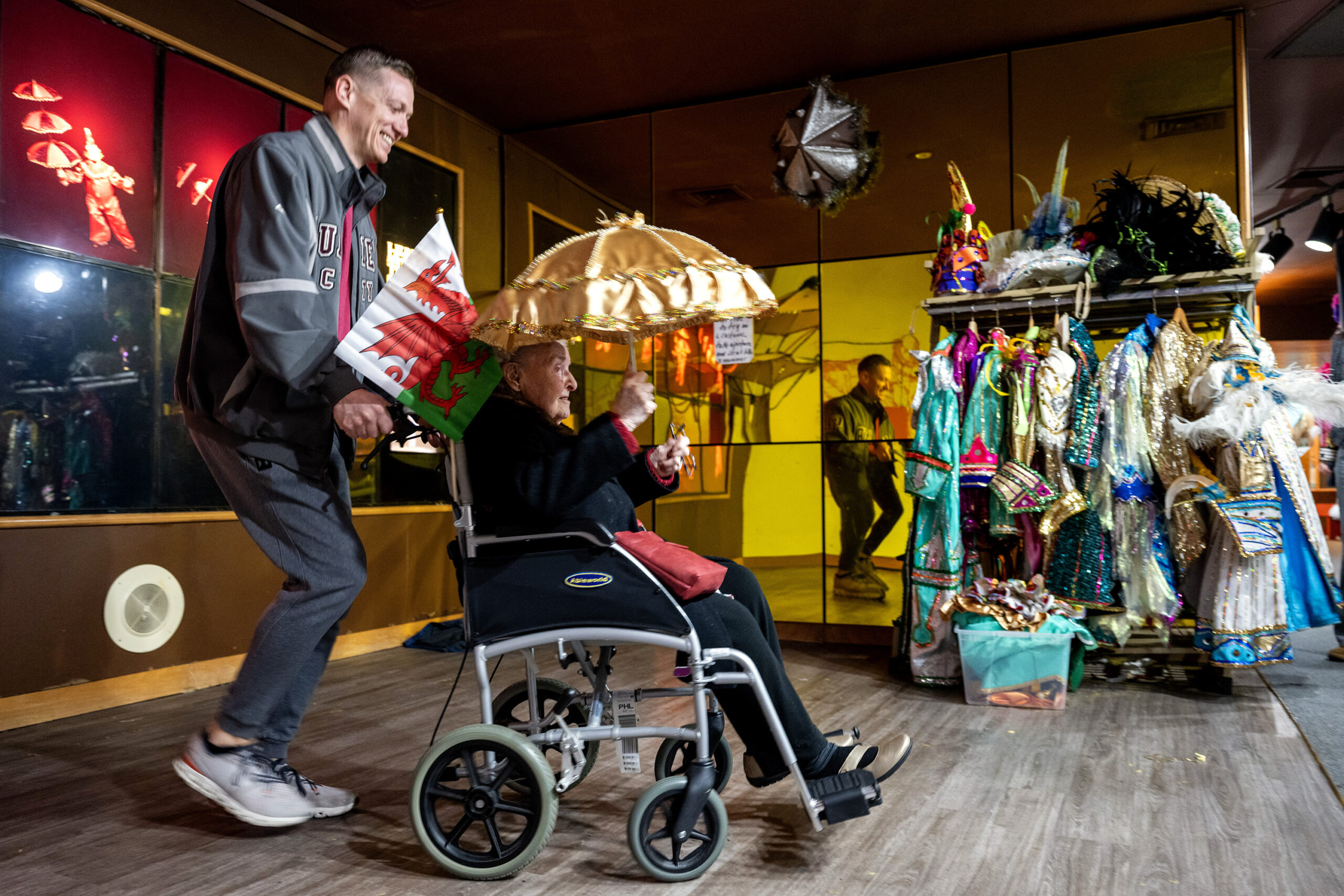
Quaker City String Band Captain Jimmy Good pushes the wheelchair of “Queen Mumm” Avril Davidge doing a Mummers strut. Davidge is a 93 year old Welsh grandma who came to the United States for the first time to see the Mummers.
Eventually, her family decided to give Davidge the trip of a lifetime to witness the 10,000-person spectacle that has ushered in the new year for Philadelphians for 125 years.Davidge will be among the many spectators watching the Mummers Parade take Broad Street on Thursday.
Using the power of social media and propelled by her family, Davidge landed Tuesday at Philadelphia International Airport, greeted by a Rocky statue — another bit of culture she loves. On Wednesday she was surprised with a trip to the Mummers Museum in South Philadelphia, where she delighted in a private tour: Yes, they’re real ostrich feathers on the costumes, and one of the more elaborate costumes can weigh 150 pounds.
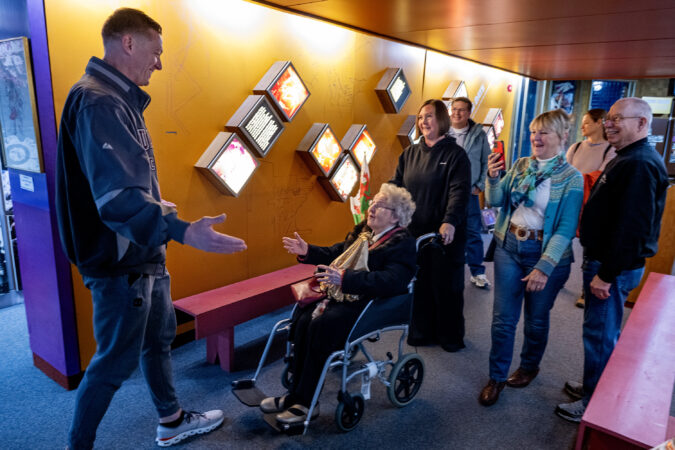
Then she met Jimmy Good, captain of the Quaker City String Band, and a personal favorite of Davidge’s. Her family said Davidge often quiets them down with a “my Jimmy is on.”
“I’ll never forget this,” she told Good, complimenting what she called his beautiful smile and showing him her golden shoes, a nod to dem golden slippers. “Never.”
The two even strutted in the museum, Good pushing Davidge in her wheelchair as she lifted a gifted satin umbrella.
It was a scene Davidge’s family could hardly believe was playing out. Just a few weeks ago, they thought Davidge was at death’s door.
Divine intervention brings the Mummers to Wales
When Davidge’s husband died, she was “feeling low,” as she calls it.
Then the YouTube algorithm, programmed by her granddaughter to show her United Kingdom marching bands, showed her a clip of the Quaker City String Band performing “Make Believe,” a song Davidge and her husband loved. Her family felt it was almost a form of divine intervention.
Something about the string bands, the costumes, the performances offered a comfort Davidge needed. Soon, the Mummers were all she was watching and she quickly developed an encyclopedic knowledge of the longtime Philadelphian tradition.
The 1999 Quaker City String Band theme of “Reflections of Old Moscow” is a legendary performance, Davidge said, and then-captain Bob Shannon Jr. remains her all-time favorite.
She was in awe as she learned Shannon stood at 6-foot-10; the old YouTube clips are grainy and don’t do the performances justice.
Connecting Philly and Wales through social media
Davidge’s love for the Mummers has been contagious, family members say, not that they’ve had much of a choice.
Last year, Fiona Smillie-Hedges, Davidge’s granddaughter, asked a friend, American expat Wendy Ratcliffe, if she had heard of the Mummers.
Ratcliffe, whose maternal side of the family is scattered around Southeastern Pennsylvania, was floored.
“I said, vast swaths of the country would have no idea what you’re talking about,” she said.
When Ratcliffe’s family visited her, they brought a Mummers mug and other Philly merch for the grandmother they had heard so much about. The mug is not for use and remains propped in front of Davidge’s television.
Last Christmas, Davidge even got a Mummers book, which she calls her bible.
By 2025, the joke of going to Philly felt more like an inevitability. Smillie-Hedges, 38, tried to figure out how to maximize the experience and took to TikTok and Instagram to get some advice. She needed to know how people kept warm, how to get a good view of the string bands, and where to stay.
Soon she was in touch with Jim Donio, host of the String Band Sessions podcast, a longtime Mummer who led the broadcasts from 1985 to 1987.
Donio arranged for the museum tour and asked Good to set some time aside to meet Davidge.
“I need[ed] to step in here and do what I can to make this dream happen and make this dream come true,” Donio said.
But as Donio — who calls Davidge “Queen Mumm” — worked stateside, Davidge caught some sort of virus a few weeks ago, which at her age can be deadly.
Davidge said she thought she wouldn’t make it.
But Smillie-Hedges said the family used the Philadelphia trip to motivate her into eating and staying positive.
“She’s worked very hard to be here, to be well enough,” Smillie-Hedges said. “Every time I was like, you must eat this, you must drink that. Come on, Rocky training for Philly.”
On Wednesday, Davidge was all smiles. Her hotel overlooks Broad Street should she get cold and need to duck in for warmth. Unbeknownst to her, Donio also arranged for a golf cart to get her, Ratcliffe, Smillie-Hedges, and Davidge’s daughter Kay Hedges to their VIP seats by the judges’ table.
The whole trip feels implausible to the family, yet the only natural outcome.
“[Davidge] didn’t find the Mummers until it was literally a couple of weeks after my granddad had passed,” Smillie-Hedges said. “I swear it was meant to be.”
Scott Sauer would like nothing better than to make SEPTA an afterthought.
He doesn’t mean that the Philadelphia region’s mass transit agency should be neglected, but rather that it will come to do its job so seamlessly that its nearly 800,000 daily customers can rely on the service without worrying about breakdowns, delays and disruptions.
Given the cascading crises that hit SEPTA in 2025, many people wondered if the place was hexed.
“I hope not, because I don’t know how to get the curse off me,” Sauer said in a recent interview. “But listen, truth be told, there were days when I scratched my head and thought, ‘Oh, my goodness, what is going on?’”
“We just couldn’t seem to get more than a day or two of relief before something else was causing a headache,” said Sauer.
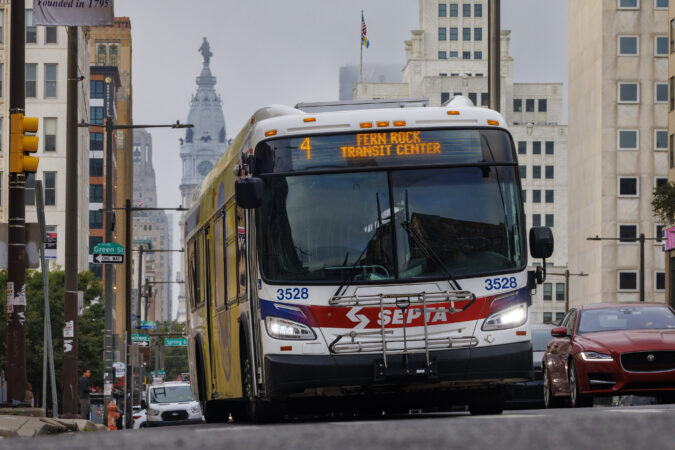
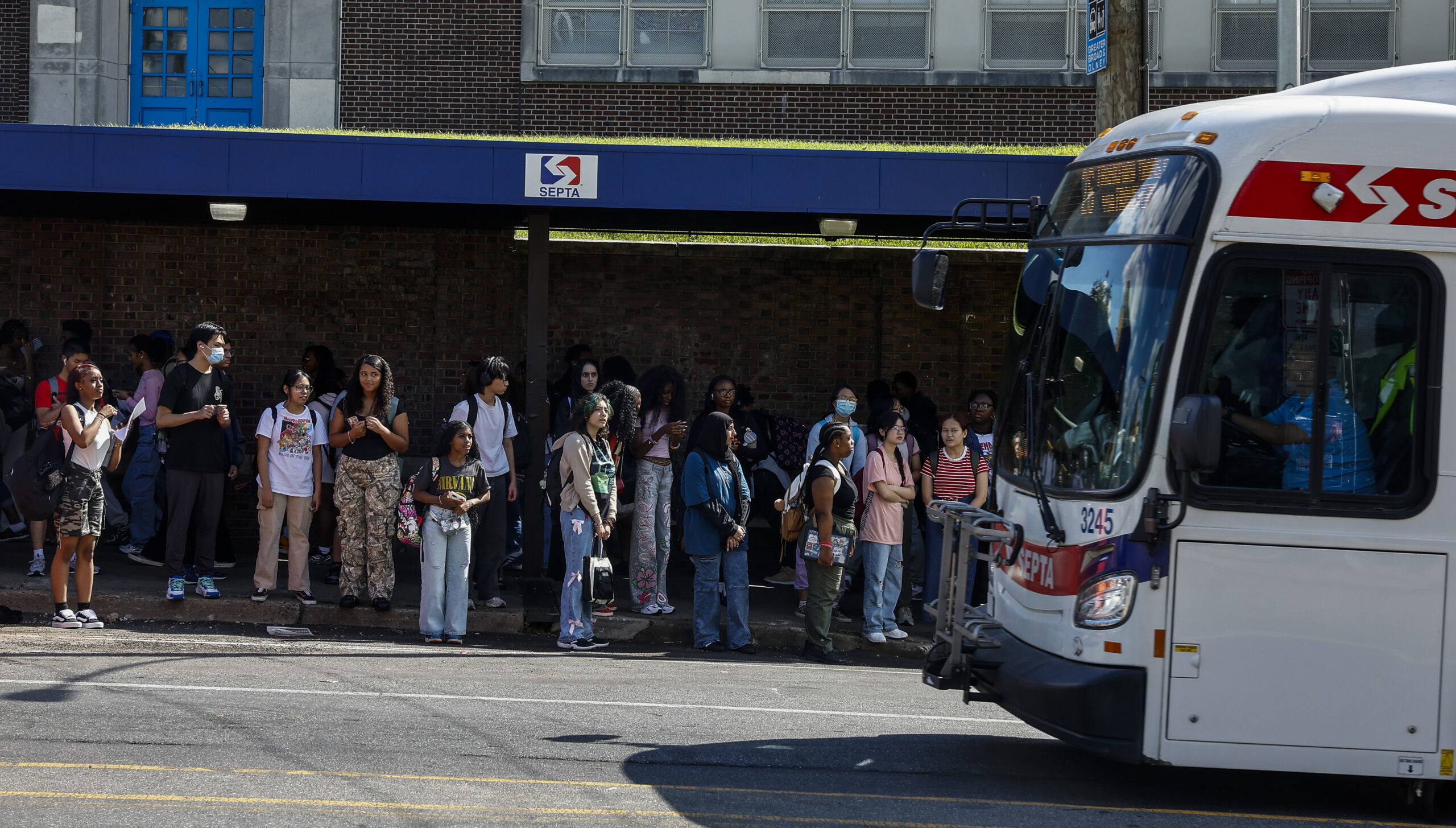
A bus passes the stop near Girls High at Broad and Olney Streets on Monday, Aug. 25, 2025. Thirty two SEPTA bus routes were cut and 16 were shortened, forced by massive budget deficits.
Back to basics in 2026
In the end, help from above and a new labor contract bought SEPTA at least two years to recover from its annus horribilis and stabilize operations.
When the Pennsylvania legislature couldn’t get a transit funding deal done, Gov. Josh Shapiro shifted $394 million in state-allocated funds for infrastructure projects to use for operations — the third temporary solution in as many years. The administration also later sent $220 million in emergency money in November for the Regional Rail fleet and the trolley tunnel.
And, early in December, SEPTA reached agreement on a new, two-year contract with its largest bargaining unit, Transport Workers Union Local 234.
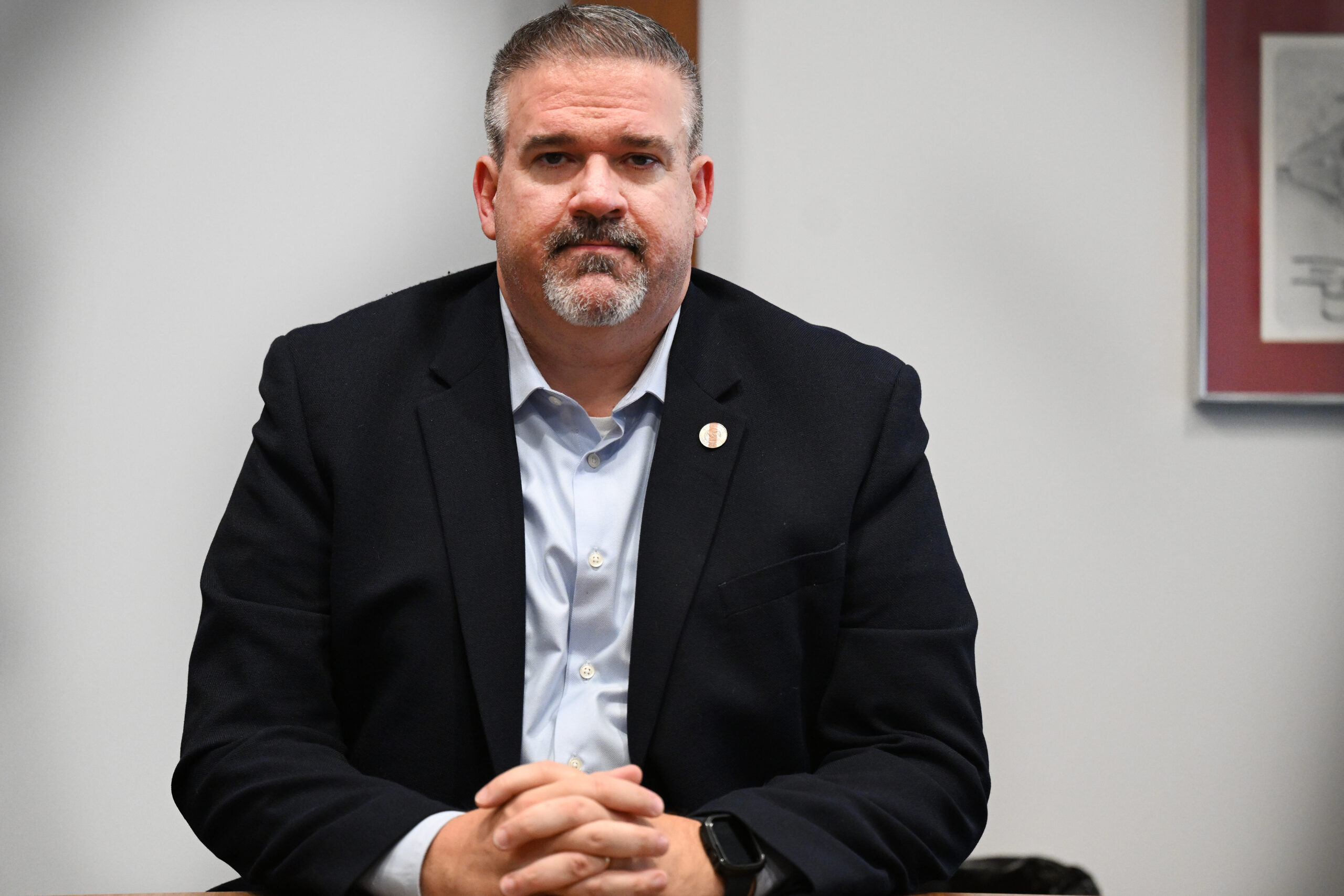
Scott Sauer, general manager of SEPTA, admits that 2025 was an extremely challenging year.
Sauer compared SEPTA’s position to football refs. When they are doing their jobs right, fans don’t have to think about them when watching the game. And when things are going well on the transit system, it becomes part of the background.
“Let’s make sure we do the basics, and we do them really well, because at the end of the day, people want SEPTA to move them from one place to the other, right?” he said.
The test of the focus on fundamentals comes soon, with millions of visitors expected in the region for the 250th anniversary of the Declaration of Independence, World Cup soccer, and other big events.
Sauer, 54, began his career as a trolley operator more than 30 years ago. He had no political experience, though, and would quickly be thrown headfirst into those murky waters to swim with sharks.
Storm clouds were already rolling in. Weeks before Sauer took the reins, Shapiro had flexed $153 million in state highway funds for SEPTA operations after a broader deal failed amid Senate GOP opposition.
It’s a legal move, but often controversial, and Shapiro’s opponents were furious.
Richards and her leadership team had been warning of a looming fiscal “doomsday scenario” for months. Officials were drafting a budget with service cuts and fare increases.
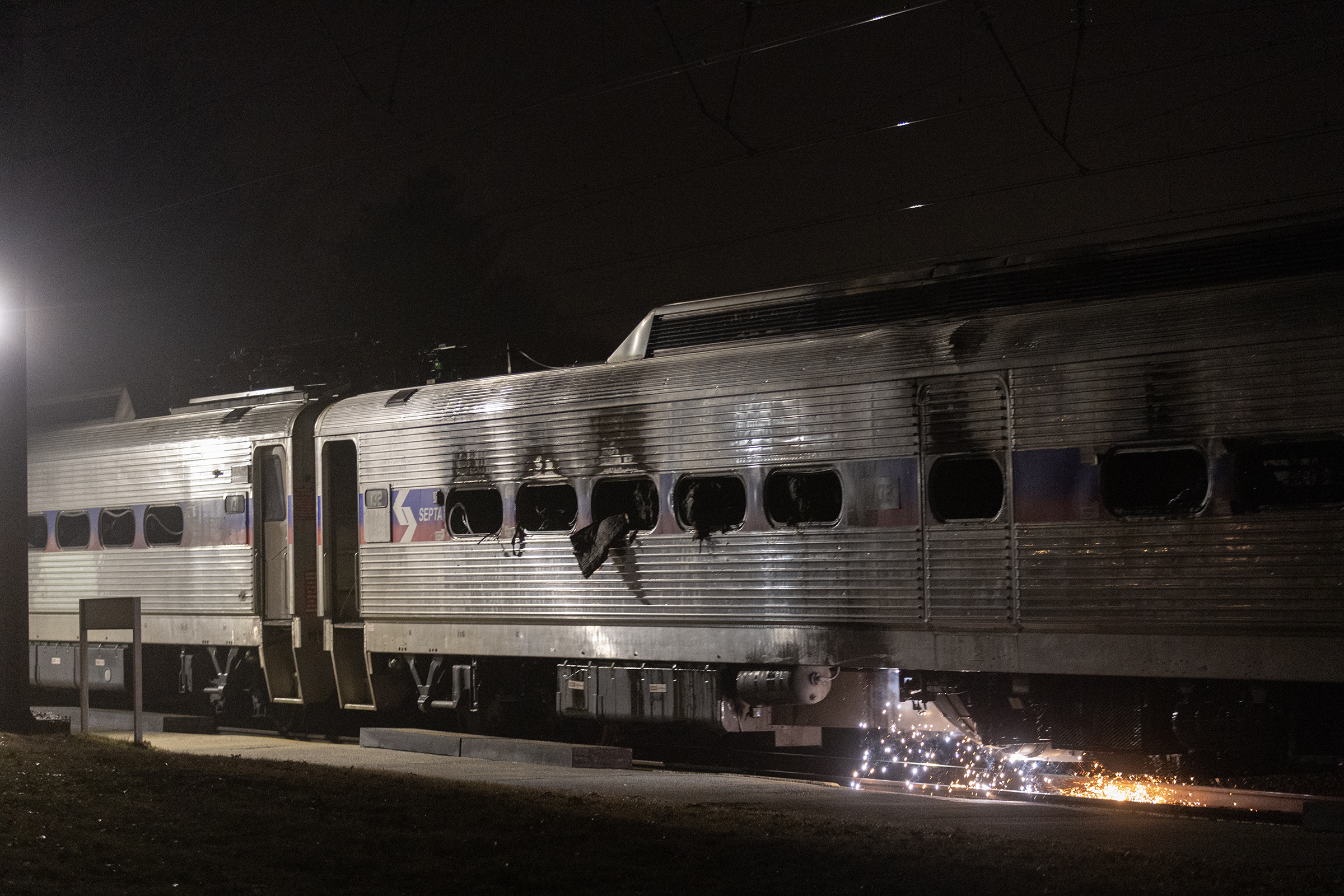
On Feb. 6, a Wilmington-bound Regional Rail train caught fire as it was leaving Crum Lynne Station in Delaware County. It was worrisome, but at the time, nobody knew it would get worse.
More than 300 passengers were safely evacuated after a SEPTA Regional Rail train caught fire near Crum Lynne Station in February.
Familiar battle lines were drawn. Senate Republicans, in the majority in the chamber, opposed Shapiro’s proposal to generate $1.5 billion for transit operations over five years by increasing its share of state sales tax income.
They preferred a new source of income for the state’s transit aid and said SEPTA was mismanaged, citing high-profile crimes, rampant fare evasion, and lax enforcement.
On a mid-August night, the Senate GOP came up with a proposal that would take money from the Public Transportation Trust Fund, a source for transit capital projects, and split it evenly between transit operations subsidies and rural state highway repairs.
Senate Majority Leader Joe Pittman, a Republican from Indiana County, was a key player in budget negotiations, which ultimately did not yield additional funding for mass transit.
“It was kind of quiet … and then we got alerted that a proposal was coming within minutes. And so everybody was scrambling to try to read through it,” Sauer said.
In a quick news conference with Shapiro, Sauer opposed the idea of taking capital dollars for transit operations, as did the governor. Then he spoke with Senate Republicans and told reporters it could be worth considering, but he had questions. And by the end of the night, he walked that back and opposed the measure.
“I guess if there was a lesson to be learned for me in August, it was I should have taken some [more] time reading through that proposal,” he said.
There was not much time to reflect on what happened, though, because the hits kept on comingas the federal government ordered SEPTA to inspect all 223 Regional Rail cars.
SEPTA’s Regional Rail fleet is the oldest operating commuter fleet in the country, and the fires highlighted the difficulty of keeping them maintained while needing to stretch limited capital funds to address multiple problems.
The Market-Frankford El cars, though younger than the Silverliner IVs, have been beat up and unreliable. SEPTA is moving forward with replacing them, as well as the Kawasaki trolleys that are more than 40 years old.
SEPTA had ordered new Regional Rail coaches from a Chinese-government-related manufacturer, but canceled the contract after the first few models, built during the pandemic, showed flaws. Now the agency is advertising for bids on a new fleet of Regional Rail workhorses — but it has to make them sturdier to last for at least seven more years before new cars would be on the way.
Officials plan to use $220 million received from the state on that effort.
Some of the money, about $48 million, is slated to help fix the trolley-tunnel issue. SEPTA is contending with glitches in the connection between the overhead catenary wires and the pole that conducts electricity to the vehicle.
What SEPTA got done
SEPTA has made some progress on some of its persistent issues, officials say, though the accomplishments understandably have been largely overlooked amid the urgent, existential crises of 2025.
For instance, serious crimes on the SEPTA system dropped 10% through Sept. 30 compared to the same period in 2024, according to Transit Police metrics.
And there had already been a sharp improvement. Serious crimes in 2024 dropped 33% compared to 2023 — from 1,063 to 711, year over year.
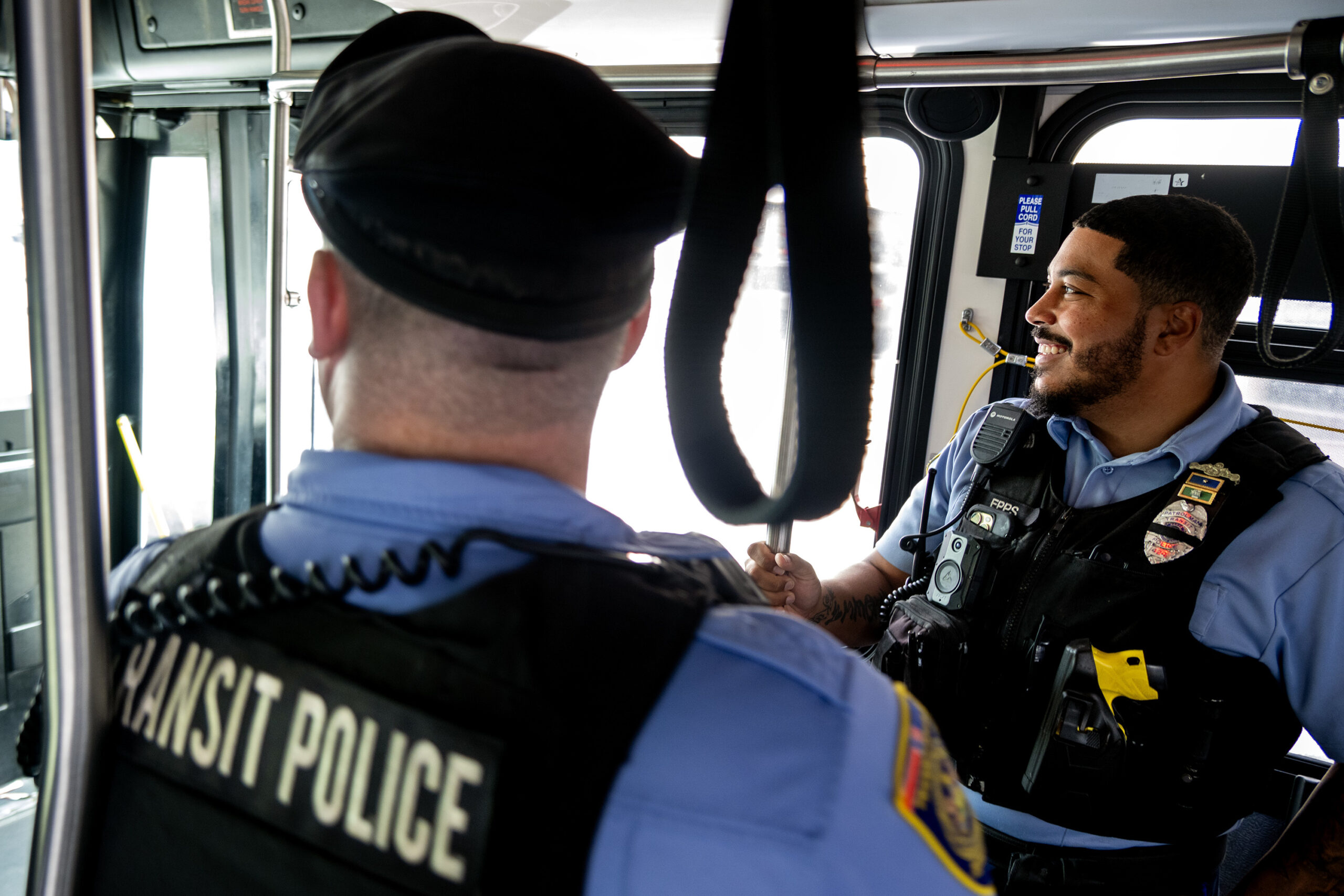
SEPTA transit police police patrol officers Brendan Dougherty (left) and Nicholas Epps (right) with the Fare Evasion Unit ride the 21 bus.
“If you think back to where we were in 2021 and 2022, the perception was bad things were happening on SEPTA, and you should steer clear of them,” Sauer said.
The Transit Police have been hiring new officers, including a recently graduated academy class of nine, and has about 250 officers.
SEPTA also installed 42 full-length gates designed to thwart fare evasion on seven platforms in five stations during 2025, spokesperson Andrew Busch said.Another 48 gates are coming in the first quarter of the year.
Police are also issuing citations with an enhanced penalty of up to $300 for fare evasion.
Prepare for déjà vu
Andyet, in 2027, it will be time to start the old SEPTA-funding dance once again, as transit agency advocates and supportive lawmakers work at getting a stable state funding stream for transit operations.
State Democrats have said the transit issue could help them take control of the Senate from Republicans — a longtime goal but one that is difficult to achieve. One wild card is whether President Donald Trump’s slumping popularity will cause GOP congressional candidates to get swamped in the 2026 midterms, and whether that will translate into voters’ local senators.
It likely would have to be a huge wave, and it’s a closely divided state.
By 2027, Shapiro is expected to be running for president (if he is reelected next year), and it’s anyone’s guess how that could affect budget politics.
“Not everybody wants to see us. I didn’t make a lot of friends,” Sauer joked after the TWU settlement.
When Nicole Lauria met Daniele Grovola more than a decade ago, it was clear that the little girl from Upper Darby would one day become a star employee at her karaoke company.
“She was amazing,” said Lauria, the owner of Lucky Music Productions. “A lot of people use the phrase, ‘She lit up a room.’ But she really did.”
Tragedy struck the Grovola family days before Christmas.
Police arrested the young woman’s mother, Diane Grovola, 57, whom they have accused of stabbing her daughter to death in the home. Her husband, John, Daniele Grovola’s father, discovered the horrific scene as he arrived home from an overnight shift at the airport, authorities said.
Friends of Daniele Grovola are shocked by a crime they are struggling to understand.
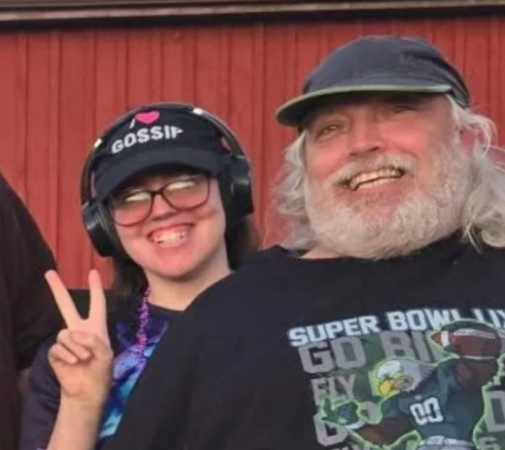
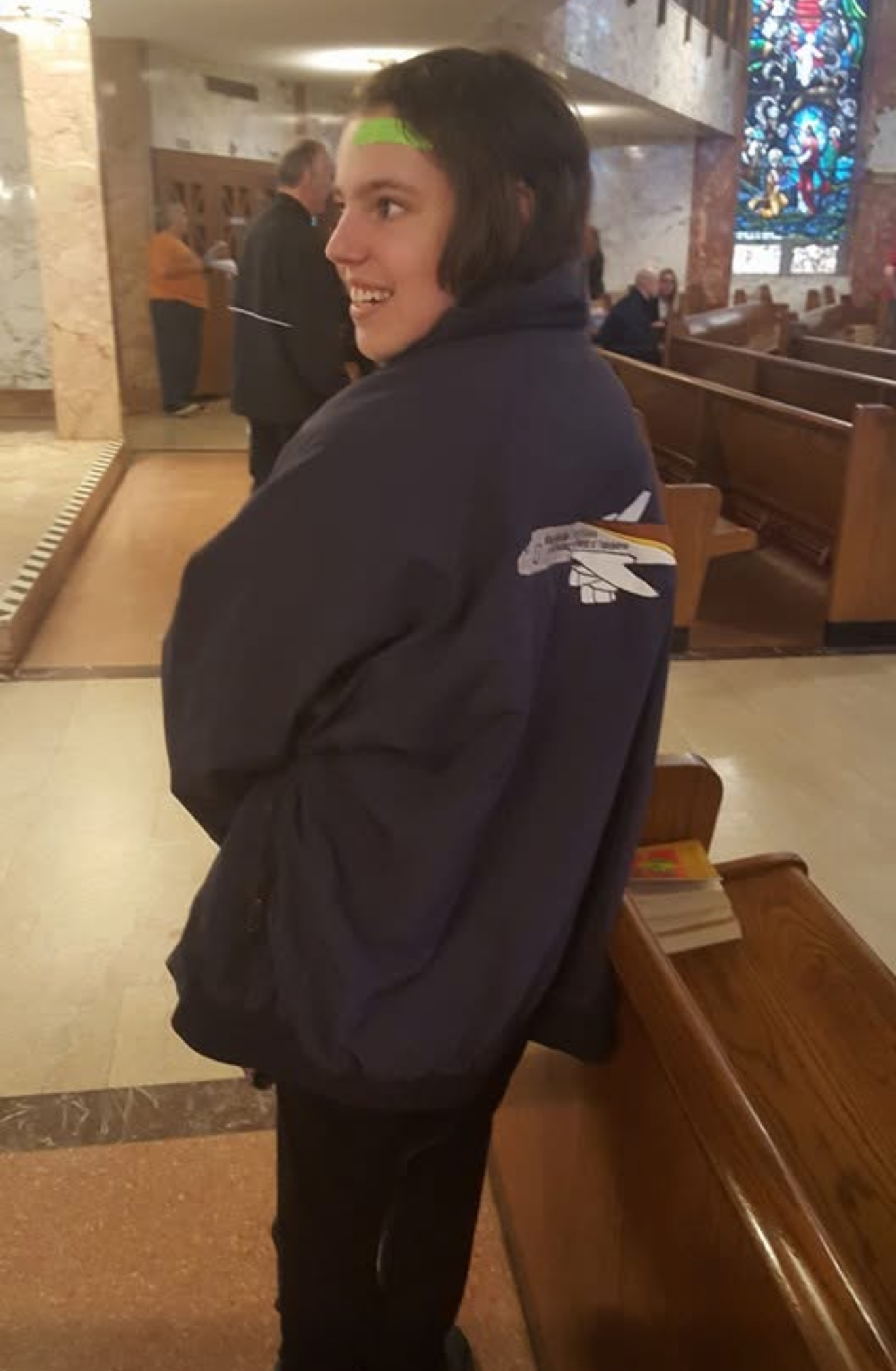
Photo of Daniele Grovola.
In the week since Grovola’s death, they have launched a fundraiser to support her father and cover the young woman’s funeral costs. The money will also go toward veterinary bills for the family’s dog, Ezra, which police suspect Grovola’s mother also stabbed that morning.
And loved ones are sharing memories of Daniele Grovola, who brought joy and warmth to those she encountered.
Lauria met John Grovola around 15 years ago, when he made the leap from singing karaoke to joining Lucky Music as an equipment manager and DJ. The company hosts events at venues throughout Delaware County and Philadelphia.
Grovola soon began to bring around his daughter, who took a fast interest in her father’s work.
The father and daughter were “immensely close,” Lauria said. Following in her father’s footsteps, Daniele Grovola eventually joined Lucky Music herself, managing the company’s DJ equipment.
She was training to become a bar trivia host before she died.
Her radiant personality shone on the job, according to Lauria, including at a karaoke party the company hosted in 2024 for children who had disabilities and were on the autism spectrum.
“[Daniele] was just amazing at encouraging them to sing, helping them to feel positive about themselves,” Lauria said. “She was just a warm person.”
Hailey Geller, 23, said she and Grovola had been best friends since the third grade. The girls went on to attend Upper Darby High School together.
“She was never a bother,” Geller said. “She was really good to me, and I was good to her.”
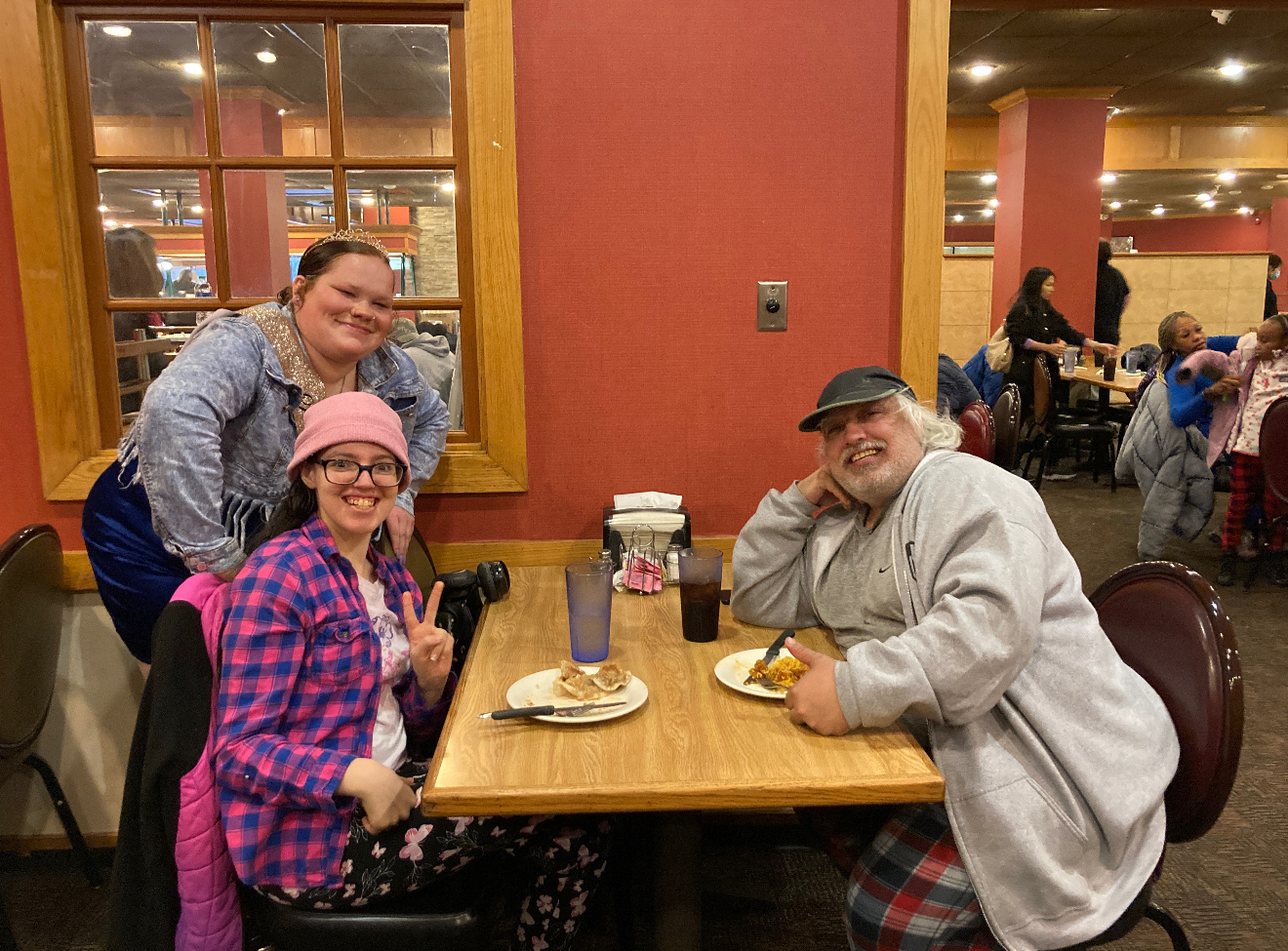
Hailey Geller with Daniele Grovola and her father, John.
Grovola had her quirks, Geller said, amusing friends with her obsession with Sharpies. The girls would spend afternoons at the mall, where Grovola would hunt for multicolored markers to use in her artwork.
She was an avid fan of anime shows, Geller added, and, as a music lover, adored her headphones.
Geller said Grovola was always there to confide in. In recent months, however, some of Grovola’s comments about her home life had concerned her.
Grovola told Geller that her mother had been “in and out” of local crisis centers. And Grovola described her mother as having “mental issues,” Geller said, once disclosing she had locked herself in the basement to avoid her.
Still, Geller believes Grovola did not share the complete story of possible tensions with her mother. Police have yet to identify a motive in the killing and continue to investigate.
Friends like Lauria said those who knew the Grovola family did not suspect such a crime was possible.
“It makes no sense,” Lauria said. “[Daniele] was a great daughter to her mother … loved her mother very much. This just came out of nowhere.”