Tag: Weekend Reads

  • Officials warn ICE detention centers in Pa. could overwhelm sewer, other critical services

    Officials warn ICE detention centers in Pa. could overwhelm sewer, other critical services

    This story was produced by the Berks County bureau of Spotlight PA, an independent, nonpartisan newsroom. Sign up for Good Day, Berks, a daily dose of essential local stories at spotlightpa.org/newsletters/gooddayberks.

    UPPER BERN, Pa. — Not enough clean water. Hundreds of thousands of gallons of sewage dumped into systems designed to handle much less. More calls for already overwhelmed EMS departments.

    Pennsylvania leaders, municipal officials, and first responders say communities will be overwhelmed by the federal government’s plans to turn vacant warehouses in Berks and Schuylkill Counties into massive ICE detention centers and processing facilities.

    A recently released memo from the Department of Homeland Security (DHS) says it selected sites based on engineering reviews and found a warehouse-to-detention center conversion would have “no detrimental effect.”

    But state officials and Upper Bern Township leaders — who were blindsided by the Feb. 2 purchase and are still largely operating in the dark — are pointing to facts about capacity and raising serious concerns about how these plans would play out.

    Commonwealth leaders in emergency management, environmental protection, health, and labor cosigned a Feb. 12 letter to Homeland Security Secretary Kristi Noem asking that the department not “impose such intolerable burdens on residents of Schuylkill and Berks counties.”

    “If reporting about DHS’s plans is accurate, the facilities will violate the legal requirements applicable to public drinking water, sewage, and water pollution,” the state officials wrote.

    They continued: “The stress each facility will place on local infrastructure will, among other things, jeopardize Pennsylvanians’ access to safe water, deplete resources and infrastructure needed for emergencies, and overextend already strained emergency response personnel.”

    The federal government has provided few specifics on the impacts Immigration and Customs Enforcement’s plans could have on these rural communities. A meeting among federal, state, and local officials has yet to materialize.

    Upper Bern Township’s Board of Supervisors, who have spoken publicly through solicitor Andrew Hoffman, said in a prepared statement on Feb. 12 that ICE’s plans at the vacant warehouse would “more than double” Upper Bern’s population.

    Its wastewater treatment plant could be overwhelmed by a 1,500-bed facility, and supervisors wonder what extracting “potable water from wells for those 1,500 or more people” could do to the water supply.

    Here’s what we know about the potential impact on the community:
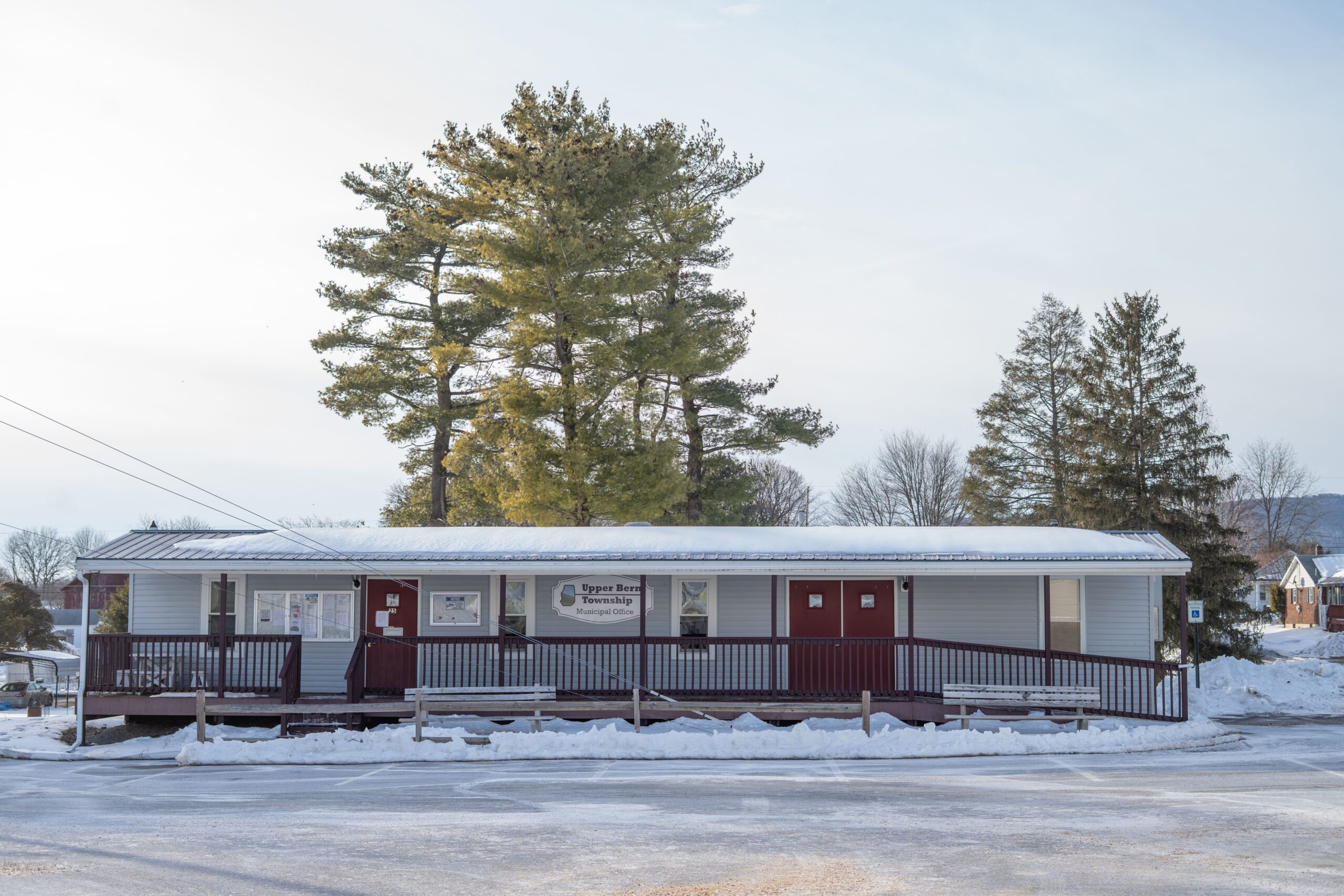
    A view from the Upper Bern Township building near Shartlesville, Pa., on Feb. 9.

    Sewage

    When the Department of Environmental Protection (DEP) signed off on the plan to build the Hamburg Logistics Center several years ago, documents show the agency approved the warehouse to produce 8,000 gallons of sewage daily.

    If it’s used as an ICE processing center and holds up to 1,500 people, that number would skyrocket to more than 100,00 gallons per day, officials said in their letter to Noem.

    Upper Bern’s “maximum monthly flow from serving its current customers is 131,000 gallons per day,” they continued. And its treatment plant is designed to only treat up to 155,000 gallons daily.

    Upper Bern renewed its wastewater permit with DEP in January 2024, indicating that the township was not modifying or adding onto the system. The average monthly flow reported during that renewal was 78,000 gallons per day.

    Township sewer engineer John Roche said no one has submitted a formal request to change the use or increase sewer capacity at the warehouse.

    “If the use changes, we’d have to look at that on an individual basis,” Roche told Spotlight PA after a supervisors’ meeting on Feb. 12. “We haven’t had any new requests yet.”

    Neither Roche nor Upper Bern’s solicitor was available for comment for this story.

    The former Big Lots warehouse in Schuylkill County, which ICE wants to turn into a detention center for 7,500 people, has a system approved to discharge even less than the one in Upper Bern — no more than 6,000 gallons per day, according to the letter. The system is also connected to the treatment facility by a 2-inch diameter pipe, which state officials told Noem isn’t suitable for a detention center.

    Drinking water

    Neither warehouse was designed to provide the amount of potable water that would be needed to run these detention centers, state officials warn, and finding alternatives would be all but impossible.

    Upper Bern officials said the township has no public water system. Homes and businesses rely on wells for potable water.

    In the letter to Noem, state officials wrote that the vacant warehouse is designed to draw water from an on-site water well. The Department of Environmental Protection (DEP) previously approved the construction of such a system, “because it could provide treated water for use by a limited number of employees engaged in warehouse activities based on three anticipated separate shifts in a 24-hour period.”

    However, the agency hasn’t approved the operation of the system. What’s more, it’s not designed to provide drinking water 24 hours a day for some 1,500 people, they wrote.

    During an April 2025 inspection, DEP officials also found several deficiencies that suggest the drinking water system “was not constructed in accordance with the approved designs.”

    The Tremont Township warehouse is even more strained, the letter said. While it is serviced by the Schuylkill County Municipal Authority’s public water system, that system already struggles to provide adequate services to the community.

    State officials estimate a 7,500-bed facility would need up to 800,000 gallons of safe water per day, which is nearly all of the available 1 million gallons stored for the Tremont area. The plant is permitted to only treat 330,000 gallons daily by the Susquehanna River Basin Commission.

    That not only threatens access to safe drinking water, but could also “lead to calamity in the event of an emergency,” state department heads warned. For example, the same water supply is used for fighting fires, and the current systems may not have the supply or the water pressure needed to extinguish a blaze.

    Emergency services

    Communities across Pennsylvania are already experiencing an EMS crisis. Adding high-density facilities to the rural communities of Upper Bern and Tremont Townships — populations 1,600 and 300, respectively — will exacerbate those problems, local first responders told Spotlight PA.

    Ambulance companies statewide have folded or adjusted coverage areas to stay solvent, increasing response times. In recent years, Berks County municipalities have implemented EMS taxes or struck agreements with ambulance companies to help pay for services, but they remain underfunded.

    Hamburg EMS has served Upper Bern Township for years, Chief Leslie Herring told Spotlight PA. While there are still many unknowns, she said first responders worry about how the ICE processing facility would impact their call volumes and response times.

    “We’re just concerned because it’s not only going to affect us, it’s going to affect every other neighboring squad in the county,” Herring said. “We’re worried about what it’s going to do to all the surrounding municipalities and boroughs.”

    Berks County officials declined to discuss the impact on emergency services. Emergency Services Director Brian Gottschall referred a Spotlight PA reporter to county spokesperson Jonathan Heintzman. Heintzman later declined to comment after consulting with the county commissioners and solicitor.

    Scott Krater, director of Schuylkill County’s 911 center, is responsible for dispatching EMS, police, and fire personnel throughout the county, and noted the challenges these sectors already have. He said attracting 911 call operators is difficult.

    Schuylkill County already has three prisons — run by the county, state, and federal governments — but none house the number of people anticipated for the empty warehouse. The county prison typically incarcerates fewer than 300 people, and both the federal and state prisons have about 1,200 inmates each.

    “Those normal challenges that we have here would obviously be the same, or maybe more taxing on the telecommunicators that are working currently with the increase in call volume,” Krater told Spotlight PA.

    Western Berks Ambulance Association provides mutual aid for Upper Bern Township and is the second in line to respond to emergencies, CEO Anthony Tucci said.

    Tucci reached out to other EMS companies and DHS to learn more and better prepare, but said he hasn’t heard back. He estimates an ICE facility could add an additional 60 to 70 EMS calls a month.

    “I think it’s going to be a huge impact on our community,” Tucci said.

    Fire departments operate on a similar system of mutual aid and could also experience an increase in emergency calls, state leaders wrote in their letter to Noem.

    While Tremont is serviced by five fire departments, Upper Bern is protected by just one: Shartlesville Fire Company, which is staffed by volunteers. It’s unclear how many calls the department averages monthly. Calls and emails to the fire company were not returned.

    DHS has also failed to engage with area hospitals that would serve the ICE facilities, the Pennsylvania agency leaders said in their letter, which they called disconcerting. Hospitals need to plan for disasters, such as a fire at these buildings, that would cause an influx in patients.

    “Area hospitals may not have the capacity to prepare for these emergency events without support and the lack of communication from federal officials raises serious concerns,” the state leaders wrote.

    Reading Hospital and Penn State Health St. Joseph in Berks County did not immediately respond to Spotlight PA’s questions, nor did St. Luke’s Hospital or Lehigh Valley Hospital in Schuylkill County.

    The Hospital and Healthsystem Association of Pennsylvania, which represents more than 235 providers across the state, was unable to say whether DHS has contacted local hospitals.

    “Hospitals continuously update their plans — especially when there is a major change in the community — to ensure they are prepared to respond to emergencies and address their communities’ needs,” the association said in an emailed response to Spotlight PA questions. “Strong collaboration with local leaders, state and federal agencies, and other stakeholders is an important part of this process.”

    Public safety

    Neighbors have questioned how the proposed processing center would affect public safety.

    Chelsey and Zach Kramer, who live in a mobile home community across the road from the warehouse, came to Upper Bern Township’s Board of Supervisors meeting on Feb. 12 to oppose ICE’s purchase of the warehouse.

    They said they are worried about guns and security presence at the site, road closures, and not being able to access their home.

    “Are we going to have to be showing ID to get home? Are they going to be blocking off our roads?” Chelsey Kramer told Spotlight PA.

    The Kramers said they also worry about how a detention facility could impact recreational and family-friendly spaces near their home.

    “When they were looking at these facilities, who at DHS looked at the campground and the mobile home community and the game lands and public trails and everything, and the community park right here, and said: ‘Let’s put one right there,’” Zach Kramer said. “The campground is going to go under for one, because who’s going to want to go vacationing near a detention facility? I know most of my neighbors are upset about this.”

    The Berks County township doesn’t have its own police department, and State Police are responsible for coverage. Cars already back up at the major thoroughfares near Mountain Road during shift changes at nearby warehouses, local first responders told Spotlight PA.

    Some speakers during the Feb. 12 meeting said they are worried about protesters and “agitators” coming to the area, and ensuring that people can exercise their rights to protest.

    State Police “remain committed to providing the best law enforcement coverage with the utmost professionalism,” agency spokesperson Ethan Brownback told Spotlight PA in a statement, adding that their dedication to the area “remains unchanged.”

    Property taxes

    The $87.4 million sale of the Upper Bern warehouse to the federal government takes the sprawling property — located near the Appalachian Trail — off the tax rolls.

    Since the warehouse was built and placed on the market, the property has remained vacant while generating about $199,620 annually in county property taxes, $31,229 in township taxes, and $597,110 for the Hamburg Area School District.

    The township did not respond to Spotlight PA’s questions about how that revenue loss would affect the community’s annual budget.

    “They’re losing $600,000 a year on school property taxes, and that’s important,” county Commissioner Dante Santoni Jr. said during a Feb. 11 town hall. “The most important thing is what it does to our communities, and we’ve seen what it’s done around this country. It tears us apart, it pits people against each other, and creates chaos.”

    Spotlight PA’s Gabriela Martínez contributed to this article.

    BEFORE YOU GO … If you learned something from this article, pay it forward and contribute to Spotlight PA at spotlightpa.org/donate. Spotlight PA is funded by foundations and readers like you who are committed to accountability journalism that gets results.
  • Immigration lawsuits are dominating Philly’s federal courthouse as ICE push continues

    Immigration lawsuits are dominating Philly’s federal courthouse as ICE push continues

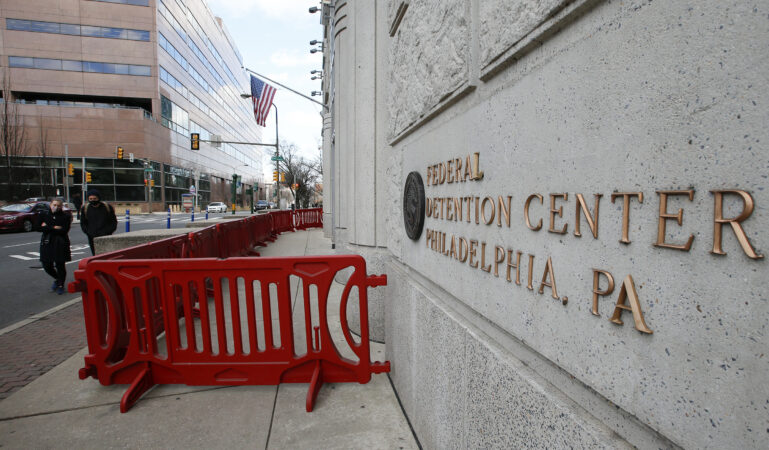
    Philadelphia’s federal courthouse has become awash in lawsuits filed by undocumented immigrants challenging the government’s attempts to detain them, an Inquirer review has found, the latest example of how the mass deportation push by President Donald Trump’s administration has been affecting the nation’s legal landscape.

    Through six weeks this year, court figures show, 168 such lawsuits have been filed in Pennsylvania’s Eastern District Court, up from 115 in all of 2025.

    By contrast, only 11 such suits were filed between 2020 and 2024, meaning a new practice of litigation dominating the region’s federal court practically sprung up overnight.

    <iframe title="An Unprecedented Rise In Release Petitions" aria-label="Column Chart" id="datawrapper-chart-Ze5f9" src="https://datawrapper.dwcdn.net/Ze5f9/1/" scrolling="no" frameborder="0" style="width: 0; min-width: 100% !important; border: none;" height="499" data-external="1"></iframe><script type="text/javascript">window.addEventListener("message",function(a){if(void 0!==a.data["datawrapper-height"]){var e=document.querySelectorAll("iframe");for(var t in a.data["datawrapper-height"])for(var r,i=0;r=e[i];i++)if(r.contentWindow===a.source){var d=a.data["datawrapper-height"][t]+"px";r.style.height=d}}});</script>

    U.S. District Judge Paul S. Diamond wrote in a recent court filing that these lawsuits, known as habeas petitions, now represent more than one in six civil suits filed in the district.

    In other jurisdictions, the surge has become so pronounced that judges and attorneys say they’re struggling to keep up. In New Jersey, the region’s chief judge last week issued new procedures for filing and litigating the petitions, writing: “The volume and timing of these filings is creating a substantial burden on the Court’s ability to expeditiously docket, assign, and address” them.

    And in Minnesota, a federal judge took the highly unusual step of holding a Justice Department attorney in contempt for failing to follow orders about the terms of an immigrant’s release.

    In Philadelphia, nearly all of the increase in habeas petitions appears tied to the Trump administration’s decision last summer to mandate detention for virtually every undocumented immigrant encountered by authorities. ICE and other agencies are now confining people who would have previously been eligible to remain in the community while their cases wound through the immigration system, such as people who have been in the country for years, or those who have not complied with ICE’s instructions while living here.

    “It was not a big part of our work up until about six months ago,” said Chris Setz-Kelly, a managing attorney with HIAS Pennsylvania, a nonprofit that provides legal assistance to immigrants.

    For decades, Setz-Kelly said, there had been a clear understanding about who was or was not eligible to be released on bond once they were picked up by ICE. But he said that changed under mandatory detention, which also says anyone who is newly detained should be denied a bond hearing.

    And the petitions represent just the tip of the iceberg, the attorney said, as many detained immigrants don’t have representation or leave the country during the process.

    “It had really dire consequences to the community,” Setz-Kelly said.

    The number of people in immigration detention has since grown from about 50,000 people in June, to nearly 70,000 people at the start of this year, federal data show.

    ‘The border is everywhere’

    Trump’s administration has been clear about its desire to increase deportations. And it has scored one legal victory in a higher court so far while defending its mandatory detention policy in court.

    Earlier this month, a three-judge panel in the Fifth Circuit Court of Appeals ruled the policy was legal and could be applied in Louisiana, Mississippi, and Texas.

    The government’s main argument in that case was that every undocumented immigrant is, in legal terms, “seeking admission” to the United States, despite a longstanding interpretation that the phrase only applied to people who had recently crossed the border without proper paperwork.

    “The everyday meaning of the statute’s terms confirms that being an ‘applicant for admission’ is not a condition independent from ‘seeking admission,’” the majority opinion said.

    Two Fifth Circuit judges agreed with the government’s position.

    The one who dissented, U.S. Circuit Judge Dana M. Douglas, wrote that the government’s interpretation contradicted the basics of immigration law and, in effect, would create a situation in which “the border is now everywhere.”

    A ‘trap’

    The ruling in the Fifth Circuit — based in New Orleans, and widely considered one of the most conservative courts in the country — has done little to change the views of judges in Pennsylvania’s Eastern District Court.

    This region’s federal judges have consistently criticized the government’s mandatory detention policy over the last eight months, ruling in favor of nearly every immigrant seeking to be released from confinement.

    Some judges have quoted Greek mythology to describe what they’ve cast as an unending attempt by the Trump administration to continue defending a policy that has been resoundingly rejected in court. The region’s chief judge even wrote that “the law is piled sky high against the government’s position.”

    Diamond, in an opinion this month, wrote that he’d reviewed 201 recent decisions in the district involving habeas petitions, and found that judges in every case had rejected the government’s view that mandatory detention — with no opportunity for bond — was both warranted and legal.

    U.S. District Judge Karen Spencer Marston, a Trump appointee, wrote in a recent decision that she was “unpersuaded” by the Fifth Circuit’s ruling as she agreed to free an undocumented immigrant from custody.

    Still, government attorneys have appealed dozens of those losses to the region’s Third Circuit Court of Appeals. Experts believe the effort is part of a Justice Department attempt to create opposing appellate rulings and propel the question of the policy’s legality to the U.S. Supreme Court, which has a conservative majority.

    “I think they’re just trying to tee up the right cases,” said Chris Casazza, a Philadelphia-based immigration attorney who has filed more than 60 habeas petitions in recent months. “They’re hoping the Supreme Court is going to rubber stamp this.”

    In the meantime, judges in Philadelphia are continuing to confront and rule on dozens of petitions in an emerging area of law.

    This week, in a blistering opinion, U.S. District Judge Gail A. Weilheimer wrote that ICE had set up a “trap” for “thousands of non-citizens,” who are required to file forms, attend check-ins, or apply for asylum to receive permission to stay in the country.

    But under mandatory detention, Weilheimer wrote, those applicants will now get arrested and taken to a detention facility for the duration of their removal proceedings, which could take months or years.

    The judge compared the situation to the government handing immigrants a bow and instructing them to shoot an arrow at a tree.

    If anyone hits it, Weilheimer said, “the Government will look at the mark, paint a target to the left of it, and accuse them of missing.”

    Correction: This story has been updated to correct the spelling of Chris Setz-Kelly.

  • Penn expert says whether to take antidepressants during pregnancy is a ‘risk-risk conversation’

    Penn expert says whether to take antidepressants during pregnancy is a ‘risk-risk conversation’

    When Sarah Bynum was pregnant with her first child in 2017, her primary care doctor suggested she stop taking her antidepressant.

    He told her there wasn’t enough research to justify staying on the medication.

    By the time she delivered her daughter, the Delaware County woman’s anxiety was so bad that she decided never again to go through a pregnancy without her antidepressant.

    Bynum, who has taken medication for anxiety since she was a teenager, is one of the nearly 18% of women in the U.S. on an antidepressant. She takes a drug known as an SSRI, the most common class of antidepressants, which medical societies generally consider safe to use during pregnancy.

    Still, roughly half of women taking an antidepressant discontinue their use of the medication while pregnant, according to a 2025 study in the medical journal JAMA Network Open.

    Kelly Zafman, an OB-GYN at the Hospital of the University of Pennsylvania, decided to research the issue that has also recently been under discussion on the federal level. She’s observed that patients often get mixed-messaging from providers.

    “The other side of the conversation that gets missed is this risk of not continuing medications,” said Zafman, who is in her final year of fellowship training in maternal-fetal medicine.

    Preliminary findings from her research showed the risk of a mental health emergency nearly doubled in women who discontinued SSRIs or SNRIs (another popular type of antidepressant), compared to those who stayed on their medication. She presented the unpublished results this month at the meeting of the Society for Maternal-Fetal Medicine.

    The analysis used data from 1,462 privately insured Pennsylvania women with active antidepressant prescriptions who gave birth between 2023 and 2024. While pregnant, 81% of them stopped or interrupted usage.

    Zafman said the highly personal decision comes down to factors such as the patient’s prior pregnancies, mental health history, and how well-controlled their symptoms are.

    Ultimately, the potential risks have to be weighed against those of untreated depression or anxiety.

    “It’s really a risk‑risk conversation,” Zafman said.

    Evolving research

    The American College of Obstetrics and Gynecologists discourages discontinuing antidepressants based on pregnancy alone, highlighting the risks of untreated mental health conditions. Studies have linked uncontrolled depression during pregnancy with preterm birth, low birth weight, higher suicide risk, and impaired mother-infant attachment.

    Research on the safety of antidepressants in pregnancy continues to evolve. Some potential risks identified in older research appear overstated when compared with more recent, better-designed studies, Zafman said.

    She cited as an example a rare but serious condition called persistent pulmonary hypertension — which causes a breathing issue — for which scientific evidence remains conflicting.

    “There’s definitely an association, but it’s not totally clear how causative it is,” Zafman said.

    Another concern, neonatal adaptation syndrome, tends to involve mild difficulties with feeding and breathing that resolve within days. Medical intervention is rarely required, and the treatment essentially is to cuddle and feed your baby, Zafman said.

    While antidepressants potentially pose risks in pregnancy, she said, overall, the risks of long lasting effects are “extraordinarily low.”

    A personal decision

    Bynum, a patient at Penn Medicine, was not on antidepressants during her first pregnancy. (She was not part of this particular study but has participated in other research with Zafman.)

    Five months into the pregnancy, she learned her daughter would be born with a congenital heart defect that would require monitoring, and later, surgery.

    Family and friends tried to help her, but they weren’t able to calm her heightened anxiety the way her medication usually would.

    When she became pregnant with her second child, she knew she wanted to have a “more mentally healthy pregnancy.”

    “I needed to be mentally and physically present not just for myself, but my daughter,” she said.

    She asked her OB-GYNs if she could continue on her antidepressant, Paxil. They weren’t sure.

    She turned to the fetal heart experts at Children’s Hospital of Philadelphia, who looked into the medical evidence and told her it was fine to continue taking her antidepressant.

    Sarah Bynum decided she would not go without her antidepressant for future pregnancies.

    Bynum has since had three healthy pregnancies while taking the antidepressant.

    She felt it was the right decision.

    “I need to focus on having a healthy pregnancy with as minimal stress as possible,” Bynum said. “And if that means taking a medication, that’s what’s gonna work.”

    Editor’s note: This story has been updated to clarify a quote by the researcher.

  • Union membership dipped in Pa. and N.J. amid Trump’s anti-labor push, data suggests

    Union membership dipped in Pa. and N.J. amid Trump’s anti-labor push, data suggests

    Following several years of major worker organizing efforts and high-profile strikes, 2025 brought a change in momentum for the labor movement. President Donald Trump’s administration sought to end federal workers’ union contracts and, through a firing, left the National Labor Relations Board without a quorum and unable to make decisions.

    But the percentage of workers who are union members nationwide has stayed pretty steady in the last year, new data shows. And in Pennsylvania and New Jersey, union membership rates fell.

    In 2025, 10% of the country’s total workforce was part of a union, compared to 9.9% in 2024, according to new data from the U.S. Bureau of Labor Statistics. It’s the first time since 2020 that the rate has inched up — albeit slightly — instead of down.

    However, BLS noted, this year’s estimates are not fully comparable to past years because they are based on a BLS survey that is missing October figures due to the government being shut down in October and part of November.

    In the past year, there have been “a lot of kind of anti-labor efforts coming out of the White House,” said Todd Vachon, assistant professor of labor studies and employment relations at Rutgers University.

    Despite those efforts Vachon said, “labor has pretty much maintained the same at the national level. … The Trump attacks haven’t really had any effect yet, at least in the first year.”

    window.addEventListener(“message”,function(a){if(void 0!==a.data[“datawrapper-height”]){var e=document.querySelectorAll(“iframe”);for(var t in a.data[“datawrapper-height”])for(var r,i=0;r=e[i];i++)if(r.contentWindow===a.source){var d=a.data[“datawrapper-height”][t]+”px”;r.style.height=d}}});

    Union membership rates dropped to an all-time low nationwide in 2023 and remained pretty similar in 2024. During those years, roughly one in 10 U.S. workers was part of a union.

    When BLS first started recording this data in 1983, about two in 10 U.S. workers were unionized. There were 17.7 million unionized workers in 1983 and 14.7 million last year.

    Danny Bauder, president of the Philadelphia Council AFL-CIO, speaks at an event supporting federal workers in October.

    Unionizing in N.J. and Pa.

    In New Jersey, 14.7% of workers were unionized last year, and in Pennsylvania, it was 10.9%.

    In both states, that was a decline of around one percentage point from 2024, but BLS noted that state-level data “should be interpreted with caution,” due to the shutdown-related incomplete data.

    window.addEventListener(“message”,function(a){if(void 0!==a.data[“datawrapper-height”]){var e=document.querySelectorAll(“iframe”);for(var t in a.data[“datawrapper-height”])for(var r,i=0;r=e[i];i++)if(r.contentWindow===a.source){var d=a.data[“datawrapper-height”][t]+”px”;r.style.height=d}}});

    Some local labor action highlights from this past year include:

    What happened in labor organizing last year?

    The Trump administration moved to end union contracts for government workers, amid a push to reshape the federal government.

    Some 271,000 federal jobs were cut between January and November. Meanwhile, the union membership rate in the public sector increased by 0.7% nationally in the last year according to the new BLS data.

    Vachon notes that the vast majority of public sector workers are at the municipal level, not federal.

    “The hiring of police, and teachers, and sanitation workers across the thousands of cities around the U.S. more than compensated for [cuts at the federal level], because we see an increase in the public sector,” he said.

    Trump also fired a member of the National Labor Relations Board (NLRB) early last year, which left it without a quorum to issue rulings. In some cases that can slow down the formation of a new union — at the Amazon-owned Whole Foods in Philadelphia, for example.

    The number of union elections overseen by the NLRB declined last year and the overall number of workers involved in those elections dropped too, according to the nonpartisan Center for American Progress.

    “A huge percentage of new union organizing is required every year just to maintain the same level of unionization, because of the churning and the growth of the overall labor force,” said Vachon. “If the labor force is not growing, then you can actually see increases in union density.”

    And unions are being cautious of reaching out to the NLRB under the Trump administration, he notes.

    “There’s a fear [that] if something gets sent up to the NLRB that the ruling is going to set a precedent that makes it even more difficult to organize,” said Vachon. “It’s kind of had a dampening effect in that way.”

  • Philly’s school closure plan targets middle schools. Here’s why the district is moving away from them.

    Philly’s school closure plan targets middle schools. Here’s why the district is moving away from them.

    The Philadelphia School District is walking away from middle schools — mostly.

    Of the 20 schools Superintendent Tony B. Watlington Sr. has recommended to close, six are middle schools — AMY Northwest, Conwell, and Stetson in Kensington; Harding in Frankford; Tilden in Southwest Philadelphia; and Wagner in West Oak Lane.

    The district plans to expand elementary schools to take in those students in most cases, and Conwell, a magnet middle school, would send students to AMY at James Martin.

    “Our research does not say that traditional middle school children in Philadelphia perform better academically than K-8 students,” Watlington said when he rolled out his tentative plan in January. “Nationally, and in Philadelphia, there’s a mixed bag.”

    While the school district says the K-8 model reduces transitions for students and helps maximize resources, critics of the district’s plan say closing middle schools will uproot their children and abandon successful schools.

    Education experts, meanwhile, say instructing middle school-age students has long been a complex and controversial issue — and it’s a debate that Philadelphia district officials are reigniting with their sweeping facilities proposal.

    Among the top complaints from critics of the plan: The pivot isn’t absolute. Though many middle schools are disappearing, Philadelphia will still have 13 standalone middle schools and secondary-middle schools if those six close. And some will even grow.

    Middle-grades students from Masterman, the popular and elite city magnet, would take over the closing Laura Wheeler Waring school building in Spring Garden “to expand access” to Masterman, officials said.

    The district is also adding a new Academy at Palumbo Middle School to give students a feeder pattern into the South Philadelphia high school magnet. The new middle school will co-locate with Childs Elementary in Point Breeze.

    And in the Northeast, where schools are bursting at the seams, two standalone middle schools — Castor Gardens and Baldi — will be untouched. So will a handful of others, including Roberto Clemente in North Philadelphia, Feltonville School of Arts and Sciences, Grover Washington in Olney, AMY at James Martin in Fishtown, and MYA and Science Leadership Academy Middle School in West Philadelphia.

    Why is the district targeting middle schools?

    Though officials said the facilities plan is not driven by finances, it’s clear that the underfunded school system needs to shrink its footprint.

    With 70,000 empty seats citywide and an inequitable distribution of programs and opportunities, system officials say they need to make changes to do better for all kids.

    “We can more efficiently distribute our limited resources in a K-8 model by operating 13 grade spans as opposed to six,” Watlington told City Council at a hearing on March 17. “This is an efficiency issue.”

    At present, the district has 13 different grade spans throughout its schools — from a single K-2 to K-4s, K-5s, K-8s, 5-8s, 6-8s, and others. It is proposing shrinking, mostly, to six different grade bands, and emphasizing K-8 or 5-12 as preferred models.

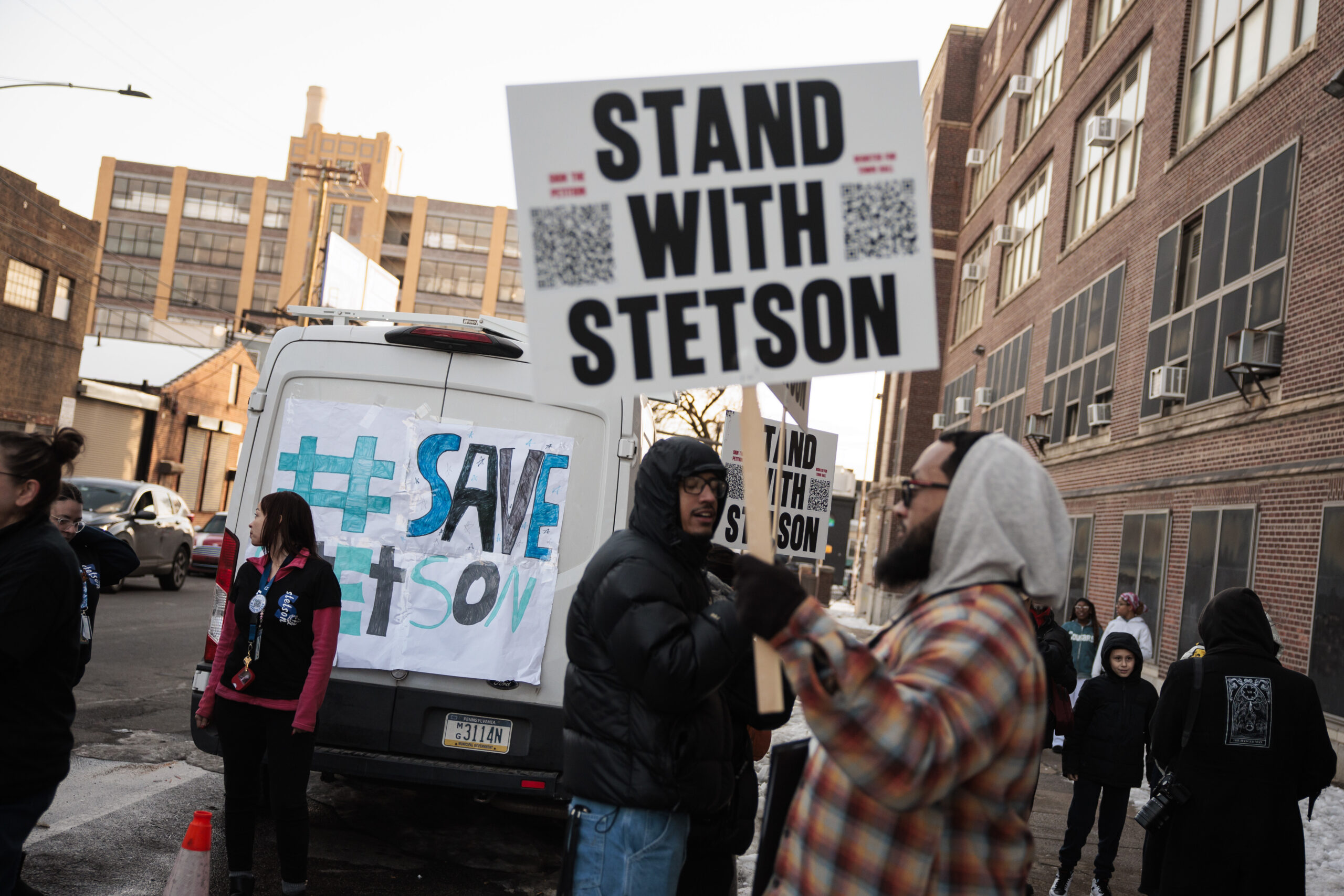
    Students, teachers, and supporters rally before a community meeting at John B. Stetson Middle School this month. It’s one of six middle schools that is slated for closure.

    Officials say they’re also relying on feedback received in surveys taken and meetings held prior to the plan’s release, despite critics’ worry that the feedback was crafted to give the district the answers it wanted.

    Hilderbrand Pelzer III, an associate superintendent, told a crowd of more than 100 people gathered at a Stetson Middle School meeting this month that in the surveys, families told the district they wanted to minimize transitions.

    “Think of safety in the sense that young people should remain in one place longer, pre-K to 8,” Pelzer said. “Hence why we want to recommend some of our K-4s, K-5 schools grow to K-8. Now that may not be the answer you want to hear, but the voices that have informed that have allowed us to make that a recommendation.”

    But critics of the district’s plan say they worry that the feedback was crafted to give the district the answers they wanted. And the audience at Stetson that day pushed back: Minimizing transitions is not what they want. They want their middle school to stay at their current school.

    “Why can’t you inform recommendations from people at Stetson?” one person shouted.

    The long and thorny history of middle schools

    Wrestling with where middle-grades learners should attend school is nothing new, said Penny Bishop, dean of Boston University’s Wheelock College of Education and Human Development.

    “We have been struggling to figure out how to provide appropriate schooling for this age group for well over a century,” Bishop said. “It’s a question with a long and thorny history” dating to the 1800s, she said, with much back and forth.

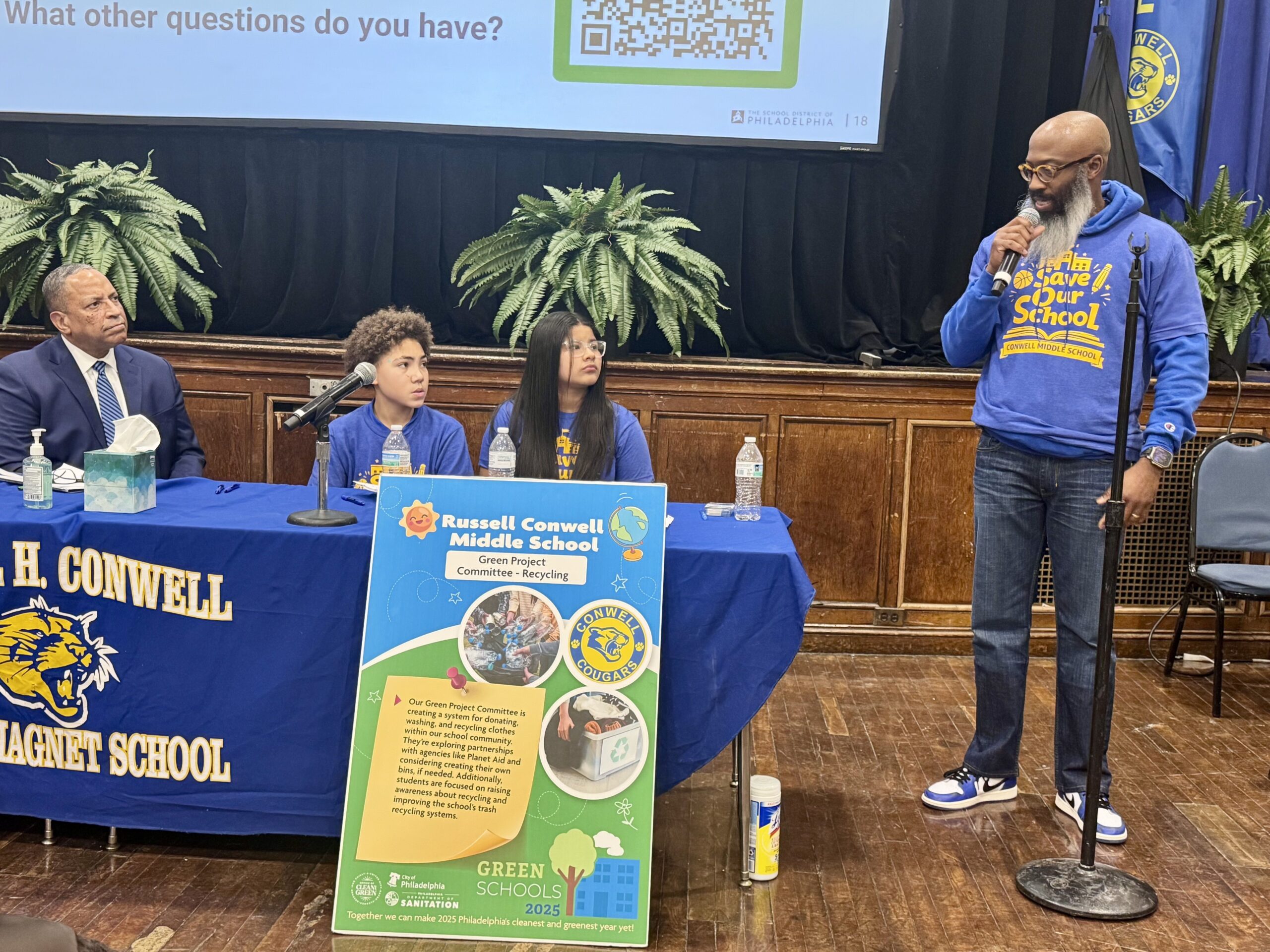
    Philadelphia School District Deputy Superintendent Oz Hill (left) and student moderators listen to Andre Sanford-Adams, Conwell Middle School’s health and physical education teacher, speak during a recent community meeting about why he thinks it’s a mistake to close Conwell.

    Many of Philadelphia’s middle schools began as junior highs. Middle schools as a concept first surfaced in the United States in the 1960s and took off in the 1980s as part of an explicit attempt to create schools “designed based on the developmental needs of this particular age group, as opposed to saying, they’re short high schoolers or they’re tall elementary students,” Bishop said.

    But tweens and early adolescents can be a tough age group to educate well, and middle schools got a bad rap among some, said Bishop. As school choice and shifting birth rates caused belt-tightening in some places, some districts began to shift grade configurations.

    Boston recently shut its last standalone middle school as that district contracted amid enrollment losses, for instance.

    Both Bishop and Katie Powell, director for middle level programs at the Association for Middle Level Education, said that research doesn’t support one kind of grade configuration or another.

    “What matters most for middle school-age students is that we understand that they are going to need a different experience than their elementary counterparts in a K-8 building, and having a defined middle school, even within that K-8 school — that’s what tends to be most successful,” Powell said.

    And, Bishop said, “a lot of this is tied up in the degree to which the leadership understands the developmental needs of the students.”

    At a recent meeting at slated-to-close Wagner Middle School, Kim Newman, another Philadelphia associate superintendent, vowed that the district will spend time and resources planning thoughtful transitions as grade configurations change.

    Adding middle grades to elementary schools hasn’t always been done well in the district, Newman said.

    “In the past, what we’ve done is said, ‘Let’s just add some furniture and books, great,’ grow a grade each year, and that’s really not what children need,” said Newman.

    She said she hopes receiving schools and closing middle schools will work together on what middle-grades learners need in the newly expanded elementary schools.

    Philly skepticism

    Claire Andrews has taught at Wagner Middle School for 40 years — years ago, it had 1,000 students, but today, fewer than 300 are enrolled.

    In the past, “we had opportunities for students, and as the years have gone on, they have just disappeared,” Andrews said. “Over the years, everything has just been pulled away.”

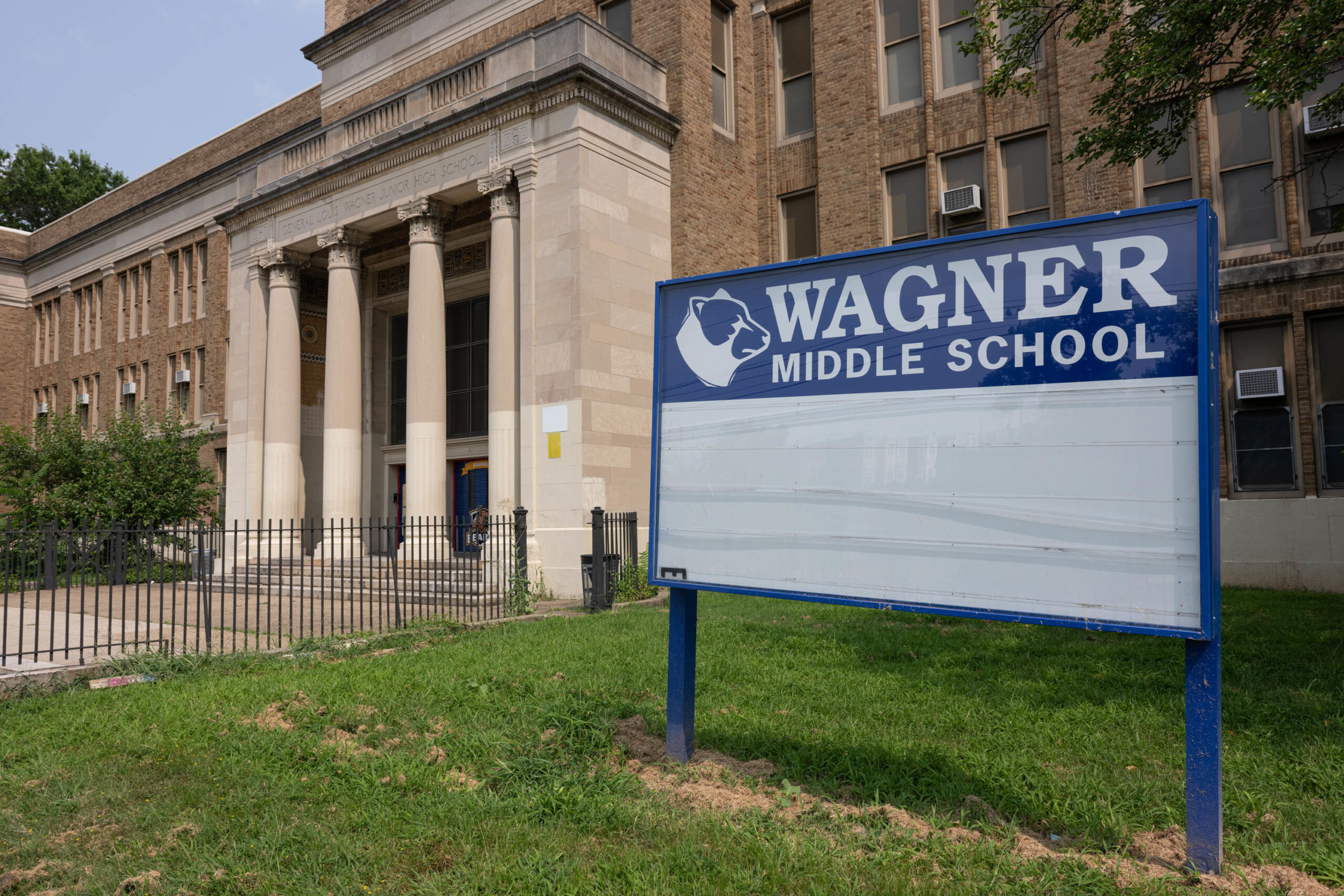
    Wagner Middle School is one of six middle schools that is facing potential closure in Philadelphia.

    Andrews, like others in the city, raised questions of equity.

    “Are they closing schools in the Northeast?” Andrews said.

    Councilmember Isaiah Thomas, chair of City Council’s education committee, highlighted Philadelphia’s complicated middle school position at a Council hearing last week.

    The district’s talking points around middle school sound good, he said. But he questioned decisions to expand middle grades at magnet schools, like Masterman and Carver High School of Engineering and Science, while closing a number of neighborhood middle schools.

    “I want us to have nuanced dialogue around where we are and what we need to do,” said Thomas, who has spoken out against closing Conwell, of which he’s an alumnus. “And I also recognize that there’s pushback on every decision you made. I understand that we have to make tough decisions somewhere else, there is no real facilities plan, and we do need a plan.

    But the reality is that we’re still not sending the right message to people, and I think our position around middle school is problematic.”

    Watlington stressed the research around middle schools and the surveys.

    The superintendent said the district is committed to modernizing and expanding receiving schools, where needed, and was not just focused on the Northeast.

    “We absolutely will not present a plan that just pushes resources in parts of the cities that’s growing fastest,” Watlington said. “I think this is as strategic a plan as we could create.”

  • As ICE enforcement intensifies, one man works to keep undocumented families fed in Bensalem

    As ICE enforcement intensifies, one man works to keep undocumented families fed in Bensalem

    On an icy, 13-degree Saturday morning in January, José Hernández sat in his pickup truck outside a Bensalem church, waiting for his phone to ring.

    It didn’t take long.

    Calls, texts, and emails have become constant, as Hernández, a machinist by trade, has become a crucial connection for many township residents who are living in the United States without official permission.

    What started as a simple good deed, delivering groceries to a few people worried about attracting ICE attention, has for Hernández, 61, become a full-time, unpaid job. Worry has hardened into fear amid the Trump administration’s dramatic escalation in immigration enforcement, leaving some people afraid to leave their homes.

    Hernández’s weekend rounds ― picking up people’s grocery orders at stores, bringing the food to their homes, always with a glance over his shoulder ― ensures sustenance for families for whom discovery would mean arrest, separation, and likely deportation.

    About 14% of the Bucks County township’s 63,000 residents are Latino. Among immigrants, everyone has a friend or family member who has been arrested by ICE and not seen again. And many fear that they’ll be next.

    Connie and Ivan came from Mexico over two decades ago. Fear of being detained by ICE has led them to turn to Hernández for food-delivery help.

    “They come out to pick up their order and you can see the fear in their faces,” Hernández said. “Many people come out saying, ‘Please hurry up, los del Hielo can be here any second.’”

    That’s what some community members call ICE agents — los del Hielo, meaningthe iced ones.” There are other names too, like el Escalofrío (“the chills”) and los Helados (“the frozen ones”).

    The nicknames come not from anger but from anxiety — fear that even speaking aloud the words Immigration and Customs Enforcement could summon danger.

    “We try to only go out when the darkness of the night protects us,” said an Ecuadoran mother, 32, who declined to provide her name for fear of arrest. “It’s a false sense of safety, but we must hold on to it.”

    Hernández recently delivered two bags of groceries and a birthday cake to her home, as her son was turning 12.

    “When I am in school,” the boy said, “the only thing I think about is if dad will make it home today. I wait all day, and then he comes, and I am happy he is still here. I am learning that being an American means that I have to be worried for the people I love.”

    A third of his immediate family ― an uncle and two cousins ― was arrested in November and December.

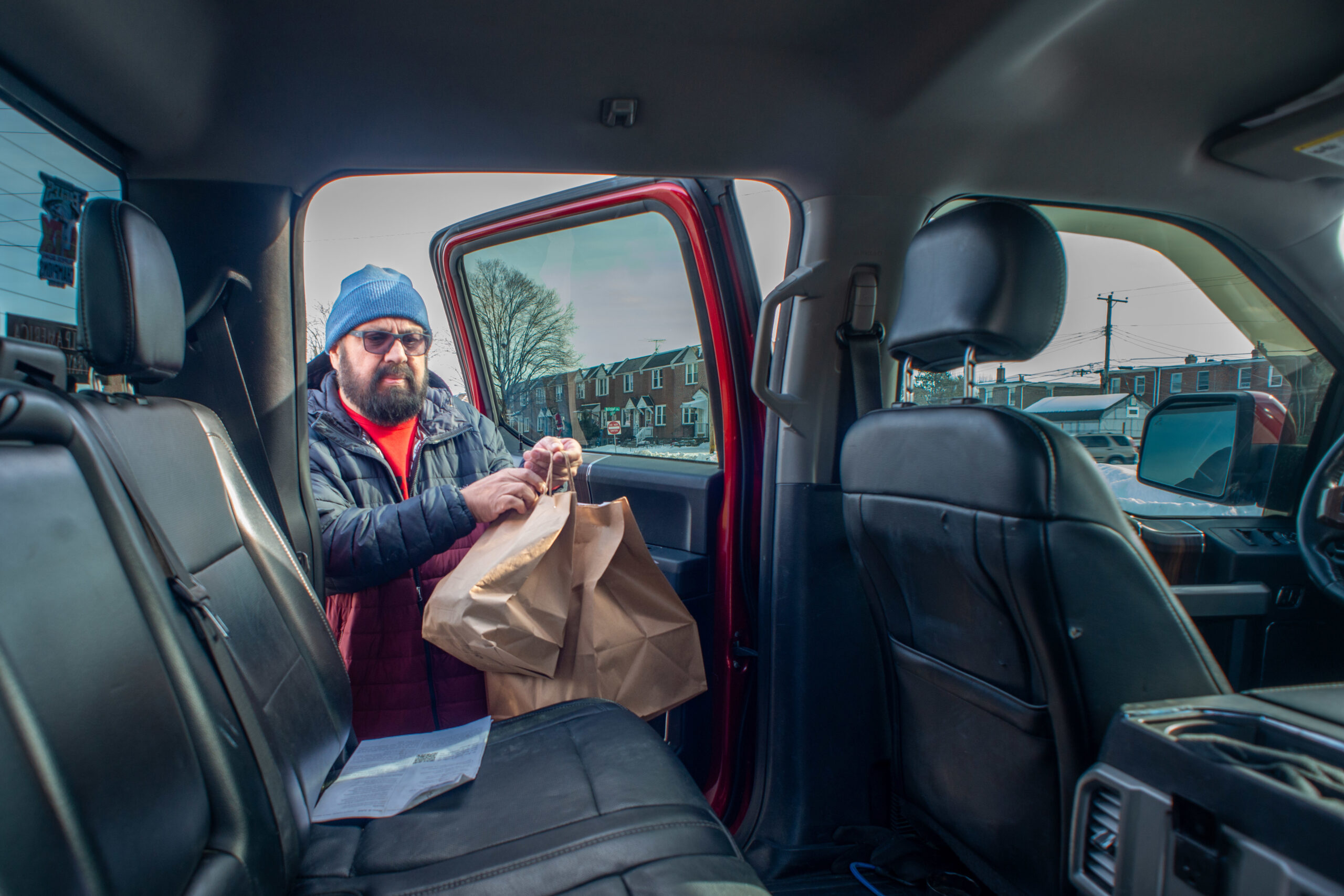
    José Hernández works to deliver groceries to local undocumented immigrants.

    Today an estimated 14 million people live in the United States without government permission, including about 76,000 in Philadelphia.

    Intensified ICE enforcement in the region and the nation has altered their lives ― exactly as the Trump administration intended when it promised to carry out the largest deportation program in U.S. history.

    For undocumented residents, freedom is no longer guaranteed by living quietly, obeying the law, and staying off the government radar. Now, discovery of having entered the country without approval, a civil violation, often means the end of an American life built across years.

    As a result, people are staying indoors.

    Many have stopped going to the doctor. And to church. They keep their children home from school when news of ICE activity surges. Businesses have had to temporarily close when workers stay away.

    ICE officials did not reply to requests for comment.

    In 2025, the agency detained 307,713 people in the U.S. ― detentions closely mirror arrests ― compared to 93,342 in 2024.

    That’s more than a 230% increase.

    Today more and more of those arrested face no criminal charges, even as the Trump administration pledges to deport “the worst of the worst.”

    Hernández uses his own money, earned from his job as a machinist, to pay for gas for deliveries.

    Hernández didn’t plan to be doing this work, spending his weekends traversing Bensalem.

    A decade ago he founded a group called Movimiento Guadalupano, a committee to organize Catholic activities. That grew into a broader support group for Latinos, and now he’s one of four volunteers who have become a central source of assistance and information on ICE activity.

    “Don’t go out today,” the Movimiento website warned on a recent weekend. “Volunteers will deliver your groceries from Hispanic stores to your home free of charge.”

    Hernández is a U.S. citizen, born in this country. He carries no fear of ICE, but plenty of worry that people in the Latino community will struggle without reliable food deliveries.

    In the truck, Hernández’s phone rang.

    Soon he was parked and walking through the doors of a Bensalem store stocked with traditional Mexican foods. He looked around, to be sure he wasn’t followed, but also so he could update Movimiento’s Facebook page if he saw ICE agents.

    A married couple shopping at the store recognized him and said hello ― Hernández had brought groceries to their home, bags of chorizo, tortillas, milk, cereal, and coffee.

    “Having the groceries delivered has been a huge relief,” said the man, Ivan, 44, who declined to provide his surname for fear of being identified to ICE. “We don’t have to choose between risking ourselves and feeding our children.”

    Maira wasn’t acquainted with Hernández, as her sister usually delivers her groceries. A recent medical emergency made it impossible, and with her family of four running out of food, she dialed the number Movimiento listed for delivery.

    Bensalem has been their home for 24 years, the couple explained, but their efforts to obtain legal status have failed. Meanwhile personal disaster has crept close.

    In December, at a construction site where he worked, Ivan said, two coworkers left for lunch and never returned. He later learned they had been arrested by ICE.

    “It’s just very difficult to be in a country that we know isn’t ours,” said Ivan’s wife, Connie, “but we love it as if it were.”

    A clerk interrupted: Hernández’s food order was ready. He grabbed the bag and headed out, Ivan watching him as he left.

    “He could be at home with his family, instead, he is helping,” Ivan said. “He brings a little bit of peace in this environment, like we still are a community.”

    Ten minutes later, Hernández slowed his truck near a row of houses, looking for anyone who might seem like they were waiting.

    A woman at a doorway froze when their eyes met.

    “Did you order a delivery?” Hernández called to her from the truck, watching relief come over her face.

    “You scared me,” she said, explaining that his car looked like one driven by a man who phones ICE to report people.

    The woman, who asked to be identified only by her first name, Maira, because she worried about immigration enforcement, said her husband hasn’t left the house since late November, when he barely escaped an ICE raid at a Norristown construction site. She still goes to work each morning, once she and her sister, who is a U.S. citizen, check the Movimiento site for a safe route.

    “I feel like crying all the time,” said Maira, 48. “I feel like a fugitive without having done anything, but I still have to keep working and paying taxes.”

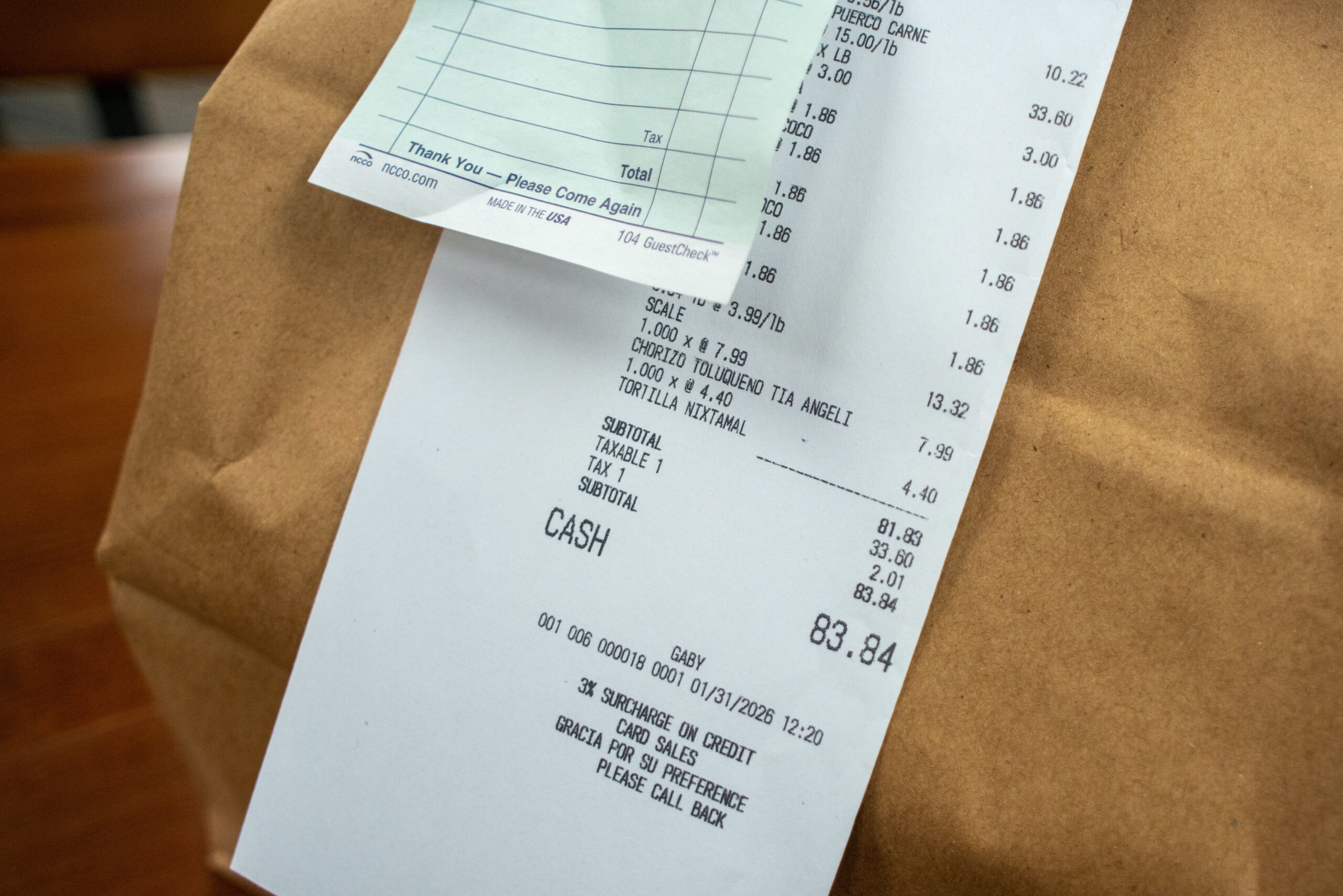
    A receipt attached to a bag of groceries that José Hernández will deliver to local undocumented immigrants in Bensalem.

    After 25 years, she said, she thought she was part of Bensalem. That changed when a neighbor complained there were “too many cars” on Maira’s driveway when her sister visited. After that, she said, she stopped hosting family gatherings, concerned that the neighbor would call ICE.

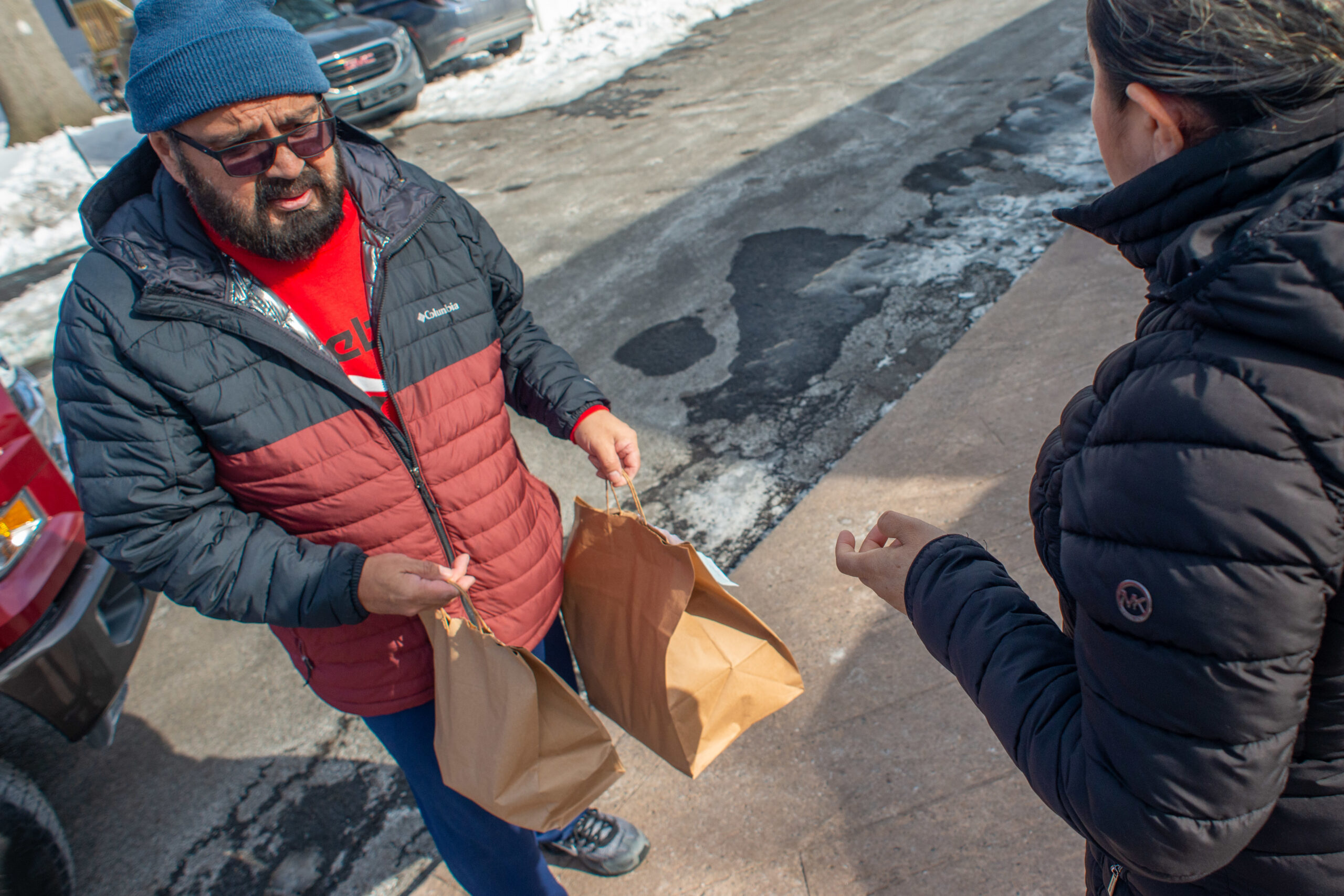
    Hernández handed her the groceries and turned to leave.

    Maira tried to give him a $5 bill.

    “No, no, no,” he said. “How can I be of help if I charge you?”

    Hernández likes to think he brings more than groceries, that with him comes a kind word, a smile, and maybe even some hope. Don José, as folks call him, says his worry is not the weight of the bags or the length of the checkout lines in stores.

    “I am scared,” he said, “that we will get used to this [ICE enforcement], that it will be so normalized that people stop helping one another.”

    As the day wound down, Hernández’s wife phoned to see how he was doing. He drove to a nearby Walgreens pharmacy to check out a report that ICE agents were in the parking lot. They weren’t.

    His phone rang.

    “Hi, is this Don José?” a young man asked, apologizing for calling. “I really need your help with a delivery.”

    “Don’t worry, place your order,” Hernández replied. “I will be right there.”

  • Everything you need to know about the 2026 PHS Philadelphia Flower Show

    Everything you need to know about the 2026 PHS Philadelphia Flower Show

    The iconic Philadelphia Flower Show returns Feb. 28-March 8, bringing a massive, immersive garden world blooming to life within the Convention Center. And more than ever, it promises to be historic.

    Pennsylvania Horticultural officials have billed the 2026 Flower Show as Philly’s first major event of its yearlong festivities planned for the 250th anniversary of America — as a celebration of the history of American gardening.

    The show’s theme, “Rooted: Origins of American Gardening,” honors the people, places, and traditions that have shaped gardening — and invites visitors to consider where their own gardening stories began. The 2026 show will debut a reimagined Marketplace shopping destination and expanded Artisan Row.

    America’s oldest flower show, which began in 1829, the internationally renowned event draws thousands to Center City each year, and represents the Horticultural Society’s biggest fundraiser, supporting its greening efforts across the city.

    Here’s what you need to know if you’re planning to attend.

    Location and schedule

    📍 Pennsylvania Convention Center: 1101 Arch St., Philadelphia, PA 19107

    📅 Feb. 28 to March 8

    ⏰ Hours:

    • Feb. 27: Noon — 4 p.m. Members only Preview
    • Feb. 28 — March 8, 2026
    • Open daily 10 a.m. — 8 p.m., until 6 p.m. on March 8
    A rendering of the 2026 Philadelphia Flower show is on display during a Jan. 14 news conference at Union Trust. The theme of this year’s flower show is called “Rooted: Origins of American Gardening.”

    Tickets and pricing

    Tickets are available online at tickets.phsonline.org and at the Convention Center. Online tickets are cheaper than those purchased at the door, and weekday tickets cost less than weekend tickets. Group discounts are offered to groups of 25 adults or more.

    Online pricing:

    • Adult:
    • Student (18-24 with valid student ID):
    • Children (5-17):
    • Twilight (after 4 p.m.):
    • Any-Day Flex Pass — $60, one-time, any day admission
    • Floral Fanatic Pass — $100 unlimited daily entry for entire run

    In-person pricing:

    • Adult:
    • Student (18-24 with valid student ID):
    • Children (5-17):
    • Twilight (after 4 p.m.):
    A participant creates pressed flower art following a Jan. 14 news conference at Union Trust for the unveiling of a first look at the 2026 Philadelphia Flower Show, “Rooted: Origins of American Gardening.”

    Top exhibits and attractions

    For a full list of exhibitors at this year’s Show, please visit phsonline.org.

    The Forest Floor: Flower Show Entrance Garden

    A sprawling, misty forest floor creation drawing on the diverse inspirations of American gardens, and featuring mossy stonework, Zen-like sculptural plantings, water displays, and crowned with a towering, twisting root structure.

    The American Landscape Showcase: Special exhibition celebrating America’s 250th anniversary.

    This year’s special exhibition celebrates the national milestone, also known as the Semiquincentennial, with four gardens highlighting how gardening has shaped communities and evolved over 250 years.

    First Bloom — Rooted in Memory

    Four acclaimed international florists — Gábor Nagy, Alex Segura, Chantal Post, and Conny van der Westerlaken — showcase the origin moments that sparked their passion for flowers.

    Design Gallery

    Presents floral arrangements crafted for themed challenges, highlighting skill, creativity, and artistic power.

    Hamilton Horticourt

    Each year, thousands of exhibitors compete in more than 900 classes or categories, ranging from horticulture and arrangement to design and photography. With no age limits, winners receive a “Blue Ribbon.” Competitive Class categories are on the show floor, including miniatures, pressed flowers, and specialty plants.

    Artisan Row

    The 2026 show features an expanded Artisan Row, where guests can work alongside nearly 40 vendors and craftspeople to create everything from fresh floral crowns to dried bouquets and terrariums and candles and jewelry and more.

    Marketplace

    A new highly visible, street-level Marketplace below the main exhibit halls, with more than 200 vendors offering a curated selection of live plants, florals, garden tools, decorative wares, and more.

    Potting Parties

    Create your own flower arrangements under the guidance of Tu Bloom, the official botanical artist for the Grammys. $20 per person (reserve at tickets.phsonline.org/events).

    Bloom Bar

    Visit the Bloom Bar or keep an eye out for the cart wandering the show floor to buy gorgeous premade floral crowns.

    Kids Cocoon

    Sponsored by Netflix House Philadelphia, a family-friendly space with reading nooks, craft and digging stations.

    Butterflies Live!

    Hundreds of native and exotic butterflies, including zebra longwings, morning cloaks, and bright blue morphos dance and paint the air with color in the iconic butterfly tent exhibit. Many are happy to land on visitors’ feeding sticks for nectar and sugar water.

    Know to Grow

    Speaker series featuring horticultural experts exploring topics including heirloom and early American gardens, native bees and pollinator habits, resilient ecological design, and the cultural histories that have shaped American gardening traditions.

    Plant People Place

    Interactive area where guests can connect with expert gardeners and industry specialists for advice and insight.

    Early Morning Tours

    Daily early-hour tours offer behind-the-scenes peeks and insights from exhibitors. Early morning photography sessions are also available.

    Family Frolic

    • March 1:10 a.m. — 3 p.m.

    Buy tickets for the March 1 show for a day designed for young families, with educational experiences, playful floral design, coloring, and more. Free with admission, recommended for all ages.

    Blossom & Breathe

    • March 4: 4 — 8 p.m.

    A celebration of beauty, well, and natural healing, including yoga classes, opportunities to work with wellness experts, and mediation. Purchase required for yoga class, all other activities are free with admission. Recommended for all ages.

    Fido Friday

    • March 6: 5 — 8 p.m.

    Bring your best four-legged friend to explore the florals. Proof of current rabies vaccination required.

    Flowers After Hours

    Folklore of the Forest

    • March 7: 8:30 — 11:30 p.m.

    The Flowers After Hours dance party transforms the show into an enchanted, fairytale forest setting with themed cocktails and dancing. Guests are encouraged to wear “fantasy-inspired attire,” planners said. Purchase required. Must be 21.

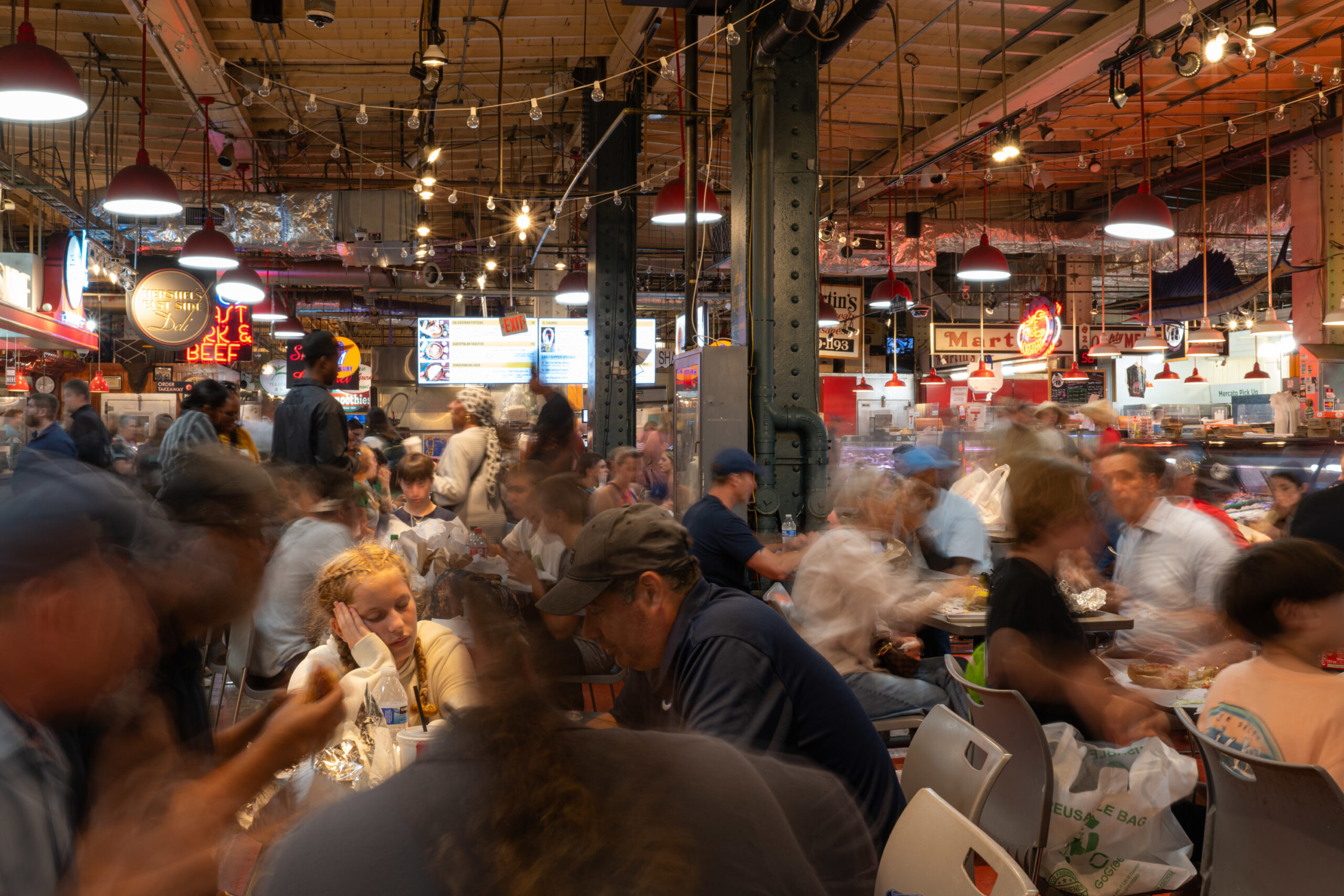
    A young woman falls asleep during the lunch rush at Reading Terminal Market on June 11, 2025, in Philadelphia.

    Food & drinks

    In addition to the convention center’s Saxby’s Coffee and the Overlook Cafe, there are concession areas managed by Aramark serving light bites, snacks, and drinks on the show floor.

    Guests are encouraged to get their hand stamped before exiting the building, if they decide to take a short walk to some of Philadelphia’s famous food destinations.

    How to get to the Flower Show

    • 🚴 Bike: 19 minutes from South Philly, about 30 minutes from North or West Philadelphia.
    • 🚌 Bus: Take lines 4, 10, 11, 13, 16, 17, 21, 23, 27, 33, 34, 36, 38, 42, 44, 45, 47, 48, 61, 78, 124, and 125.
    • 🚇 Subway:
    • 🚉 Regional Rail:
    • SEPTA is running extra trains on these Regional Rail lines on Saturdays and Sundays during the show — March 1-2 and March 8-9:

    Where to park for the Philadelphia Flower Show

    The Convention Center recommends parking at one of the lots closest to the show that are run by ABM Parking, E-Z Park, iParkit Philadelphia, Park America, Parking Facility, Parkway Corp., or SP+ Parking.

    You can also park at a Philadelphia Parking Authority garage:

    • The Autopark at the Fashion District: 📍45 N. Ninth St., 💰 $35 for 24 hours, ⌚ 6 a.m. to midnight, 🚶‍♀️ three minutes.
    • The Autopark at Jefferson: 📍10th and Ludlow Streets, 💰 $36 for 24 hours, ⌚ 5 a.m. to 11 p.m., 🚶‍♀️ 10 minutes.
    • Parkade on Eighth: 📍801 Filbert St., 💰$32 for 24 hours, ⌚ 24/7, 🚶‍♀️ six minutes.
    • Gateway Parking Garage: 📍1540 Vine St., 💰 $16 for 1 hour, $30 for 24 hours, ⌚ 24/7, 🚶‍♀️ five minutes

    Where does the money for the PHS Flower Show go?

    Proceeds from the Flower Show go directly to the Pennsylvania Horticultural Society to disburse among its regional programming. This includes neighborhood programs, city tree-tending, low-cost gardening programs, water conservation, designing and maintaining public gardens, and more.

    For more information, visit phsonline.org/the-flower-show.

  • Chesco towns are among the Philly area’s wealthiest, but big Bucks County is making gains

    Chesco towns are among the Philly area’s wealthiest, but big Bucks County is making gains

    It abuts an internationally famous garden. It may well be the most affluent community in the nation that hosts a prison, a source of some unwanted attention a few years back.

    And, according to recently released U.S. Census data, picturesque Pocopson Township is in a rarified zone for wealth in the eight-county Philadelphia region, with an annual median household income of $230,000.

    Chester County towns dominated the top 50 list in an analysis of incomes in the region’s municipalities — compiled from self-reported American Community Survey data — calculated for the five-year period that ended in 2024.

    But the analysis also showed that not only has Bucks County been gaining star power, some of its towns may merit the label “Big Bucks County.”

    Legendary locale New Hope and neighboring Solebury — places associated with Real Housewives of Beverly Hills alumna Yolanda Hadid and actor Bradley Cooper — are among the towns that have made significant moves up the income chart, compared with the five-year period that ended in 2014.

    Inflation-adjusted median annual incomes jumped 58% in New Hope, to $175,000. Incomes were up nearly 30% in Solebury, to $196,000, among the highest in the region.

    The national median income was around $80,000, according to census figures.

    Income figures are estimates, rounded to the nearest hundred, and are subject to margins of error. A total of 286 municipalities were included in the analysis; those with fewer than 2,500 residents were excluded. Here are some key findings.

    window.addEventListener(“message”,function(a){if(void 0!==a.data[“datawrapper-height”]){var e=document.querySelectorAll(“iframe”);for(var t in a.data[“datawrapper-height”])for(var r,i=0;r=e[i];i++)if(r.contentWindow===a.source){var d=a.data[“datawrapper-height”][t]+”px”;r.style.height=d}}});

    Chester County still has the wealthiest towns

    Chester County towns held six of the top 10 spots, including Birmingham, adjacent to Pocopson.

    The county evidently is rich in an amenity attractive to the wealthy — and to others.

    “Chester County has been a leader in terms of the amount of land preserved,” said Andrew Svekla, Office of Smart Growth manager with the Delaware Valley Regional Planning Commission. “The availability of open space is an amenity that everyone is looking for.”

    While the natural environment is an understandable attraction, not everyone who spends time in Pocopson comes for the green space: The Chester County Prison has been a mainstay in the township since 1959.

    In August 2023, Pocopson and Longwood Gardens became international news when inmate Danilo Cavalcante escaped and set off a two-week investigative frenzy that mutated into a massive exercise of Where’s Danilo? He spent time hiding in Longwood and was eventually captured in South Coventry Township, about 20 miles away.

    Otherwise, the likes of Pocopson and Birmingham have not exactly been centers of media attention, and the towns even have avoided the development-vs.-open-space conflicts that have erupted elsewhere, said Matthew J. Edmond, executive director of the Chester County Planning Commission.

    “They aren’t in the path of growth,” he said. “These areas are off the beaten path.” The residents represent a mix of old and new money, he said.

    He likened Chester County to a macro-version of Lower Merion Township, where neighborhoods vary from ultra-wealthy Gladwyne to the middle-class sections of Ardmore.

    While overall the county has the highest median income in the state, “when you get down to the granular level, it’s a very diverse county,” he said.

    Incomes in other counties in the region have grown

    The overall picture of wealth in the eight-county region was quite a diverse one in the census survey, ranging from Pocopson’s median income to the $40,000 levels of Camden, the City of Chester, and Darby Borough.

    But the preponderance of the higher incomes clearly were west of the Delaware River.

    Jersey’s wealthier municipalities tend to be clustered in the New York metro area, Svekla said, and only six were on the top 50 list in the Philly region. They included Camden County’s Haddonfield, with a median income of $200,500, and Moorestown, at $160,000 and a favorite of professional athletes. They include ex-Phillie Nick Castellanos, onetime 76er Ben Simmons, Flyers legend Bobby Clarke, and former Eagle Terrell Owens, who famously drew media attention by doing push-ups on his driveway.

    It also is the home of Kevin Patullo, the Eagles’ former offensive coordinator whose house was pelted with eggs in October after one of the team’s lackluster performances.

    Haddon Heights and Haddon Township did not join Haddonfield in the top 50 but were high on the list of towns where incomes had grown substantially in the last 10 years.

    Other places that experienced substantial paycheck bumps in the last 10 years included the Blue Route towns of Conshohocken and West Conshohocken. Both are close to I-476 interchanges and have experienced growth spurts in population and wealth since the highway connecting the Pennsylvania Turnpike to I-95 opened in the 1990s.

    Bucks lags in population growth, but not wealth

    Led by Chester County, population increased in all eight counties between the 2010 and 2020 census counts. “We’re growing mainly due to international immigration,“ said Greg Diebold, the Delaware Valley planning commission’s senior data analyst.

    “Bucks has been one of the slower-growing counties,” he said, having added only about 4% to its population between 2010 and 2020.

    In terms of median-income growth over the last 10 years, however, it had seven municipalities in the top 20, more than any other county.

    window.addEventListener(“message”,function(a){if(void 0!==a.data[“datawrapper-height”]){var e=document.querySelectorAll(“iframe”);for(var t in a.data[“datawrapper-height”])for(var r,i=0;r=e[i];i++)if(r.contentWindow===a.source){var d=a.data[“datawrapper-height”][t]+”px”;r.style.height=d}}});

    Not all the gainers were wealthy towns

    One Delaware County town, Upland Borough, adjacent to the City of Chester and the location of part of the closed Crozer-Chester Medical Center, made the biggest-growth list with incomes up more than 40% to $61,000.

    Bankrupt Chester itself, with one of Pennsylvania’s highest poverty rates, reported a 10% gain, to $41,000.

    However, half of the 10 towns where incomes decreased the most were in Delaware County.

    Speaking to the region’s overall prosperity, fewer than 25% of the 286 towns showed drops in income in the period that ended in 2024, compared with the five-year period that ended in 2014.

    And only 20% this time around reported incomes below the national median.

  • This West Philly high school is among the last of the area’s small, specialty schools. Now, the district wants to close it.

    This West Philly high school is among the last of the area’s small, specialty schools. Now, the district wants to close it.

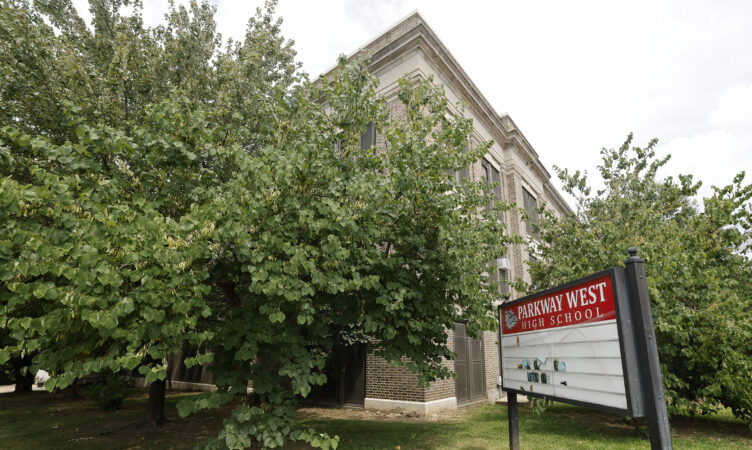
    Parkway West High School is small, by design.

    Its size is also a reason the Philadelphia School District wants to shut it down.

    It is among the 20 schools the district is proposing to close, citing its low enrollment. The district plans to merge the Mill Creek magnet school into Science Leadership Academy at Beeber, two miles northwest in Overbrook. That move would dissolve the Parkway West name — and its storied history of alternative education, its supporters say.

    Community members say the merger would do away with what makes Parkway West special and successful: the only curriculum in the city tailored for teens interested in becoming early childhood educators, specialty classrooms to support students with disabilities, and intimate class sizes that foster tight-knit relationships. And some say it would unfairly limit school options in West Philadelphia.

    “It’s a safe environment — a small school which allows for greater touches, and you just don’t get swallowed up in the size of a big school,” said Earl Morgan, a Parkway West special education teacher who coaches three Hoya sports teams.

    Morgan added: “We’re losing a real, safe alternative to private education in West Philadelphia.”

    The district’s facilities plan, which the school board is expected to vote on this winter, looks to address systemic issues like declining enrollment, aging infrastructure, and disparate programming in part by targeting some schools with large numbers of empty seats. Parkway West is operating with 140 students, or 40% capacity; its 11th-grade class — possibly its last graduating cohort — has just 18 students. Comparatively, there are nearly 500 students at Beeber, which is 54% full.

    Dwindling numbers, however, are in part a product of a 2021 overhaul to the district’s special admissions process, which stripped principals at criteria-based schools of their discretion to admit students who did not fulfill all the academic or attendance requirements. Parkway West’s 2022-23 freshman class was 54 students; the next year, it was 19.

    Morgan said the proposal poses a “logistical nightmare.” Community members have raised concerns about safety and transportation woes to get children to Beeber. Inside Parkway West, emotions range from indifference to outrage, Morgan said.

    The closure would leave “a hole” in the neighborhood, said Cecelia Thompson, a Mill Creek resident and former school board member who regularly interacts with the Parkway West community.

    West Philadelphia is now staring down an educational landscape devoid of choice: The number of small, individualized magnet high schools, like Parkway West, in the area would shrink to one, while the district prioritizes reinvesting in neighborhood schools. The proposed school closures would disproportionately affect Black students, according to an Inquirer analysis, though the district says its plan is aimed at boosting opportunities and achievement.

    This troubles City Councilmember Jamie Gauthier, whose district includes Parkway West and a handful of other schools affected by the plan.

    “It feels like they’re hollowing out my district,” Gauthier said. “They’re essentially shuttering criteria-based schools that people value and that are accessible to Black and brown children in West and Southwest Philadelphia. They’re completely taking it away … or dumping them into much larger schools that are not going to provide the experience that people want.

    “Those kids deserve to have high-quality options right where they live.”

    The consolidation of Parkway West into Beeber also threatens to erase a few of the last remnants of Philadelphia’s famed “school without walls.”

    The Parkway model was a pioneering approach to alternative education, hallmarked by nonconformism, wandering classrooms, and a casual, personable learning environment where students called teachers by their first names, alumni told The Inquirer. Shaunda Watson graduated from Parkway Gamma, which later became Parkway West, and said the program took her from a C average to honor-roll student.

    “Students like me will get lost in larger classrooms,” Watson, 48, of West Philadelphia, said. She added: “We have students that are exceptional and they will get lost in the sauce if they have to go to neighborhood schools. I don’t think that’s fair.”

    For Gamma graduate Shannon Sherrod, 54, of Delaware County, preserving the model is more important than the name: “It’s bittersweet. I hate to see it die off,” Sherrod said.

  • ‘Don’t uproot our education,’ Pennypacker fourth graders plead as their school faces closure

    ‘Don’t uproot our education,’ Pennypacker fourth graders plead as their school faces closure

    For nearly a century, the Samuel Pennypacker School has survived — a three-story brick anchor of the West Oak Lane neighborhood in Northwest Philadelphia.

    Now it faces the threat of extinction.

    The Philadelphia School District says the school’s building score is “unsatisfactory” and modernizing it would cost more than $30 million. District officials are calling for shuttering Pennypacker following the 2026-27 school year, funneling its students to nearby Franklin S. Edmonds or Anna B. Day schools — part of a citywide proposal to close 20 district schools.

    The recommendation, district officials say, is no reflection of the “incredible teachers, community, [and] students” at Pennypacker. Rather, it is an attempt by the district to optimize resources and equity for students.

    Like many district schools, Pennypacker, which serves students in kindergarten through eighth grade, is aging and outdated, having opened in 1930. At just over 300 students, it is among the city’s smaller schools — and operating at about 64% of building capacity.

    Yet, it is those same qualities — its size and longevity — that represent some of its greatest strengths, say those in the school community who are not happy about the proposed closure.

    It’s a school, they say, that is more than the sum of its aging parts.

    On the school’s walls are pocks of chipped paint, yes, but also the colorful detritus of a small but vibrant student population: a poster composed of tiny handprints in honor of Black History Month; a “Blizzard of Positivity” — handwritten messages reading “Smile” and “Hugs” and “Help your friends when they fall.”

    It’s where Wonika Archer’s children enrolled soon after the family emigrated from Guyana — the first school they had ever known.

    “A lot of firsts,” Archer said. “Their first friends, their first teachers outside of their parents.”

    It’s where, since 1992, Andreas Roberts’ youth drill team has been allowed to practice. The team, which includes some Pennypacker students, recently participated in its first competition and won first place.

    “Pennypacker has been very, very useful to us,” he said. “We have nowhere else to practice for the kids.”

    It’s where Christine Thorne put her kids through school, her son and her daughter, and where her grandchildren now go. Around the school, they call her “Grandmama.”

    “I feel as if my household is being destroyed,” she said recently.

    For students, news of the imminent closure has been no less jarring.

    When Janelle Pearson’s fourth-grade students learned recently that their school was poised to be shuttered under the district’s plan, they took it as a grim reflection on themselves.

    “It makes them feel like, ‘What did we do wrong that they want to close our school?’” said Pearson, who has taught at Pennypacker for about a decade. “That’s the part that tugs at your heart.”

    Unwilling to go down without a fight, the fourth graders resolved to do what they could. Soon, a poster took shape, in marker and crayon, a series of pleas addressed to Philadelphia Superintendent Tony B. Watlington Sr.

    “Pennypacker is our home.”

    “Don’t uproot our education.”

    “Our neighborhood depends on this school!”

    The poster was presented to district officials earlier this month at a community meeting held in the school’s wood-seated auditorium.

    At that meeting, representatives from the district did their best to explain the reasoning for the proposed closures. They presented a tidy PowerPoint and talked of student retention and program alignment, of building capacity and neighborhood vulnerability scores.

    It stood in stark contrast to the parents and teachers and staffers who, one by one, held a microphone and spoke of love and family and community, of teachers and staffers who routinely went above and beyond to make their children feel safe. To make them feel special.

    “It’s not just about a building,” said Richard Levy, a onetime Pennypacker teacher who now works at St. Joseph’s University. “The challenges here aren’t reasons to close the school — they’re reasons to strengthen it.”

    Whether their appeals might affect the district’s decision remains to be seen. Other schools in the district slated for closure have mounted efforts of their own, and, despite a recent grilling by City Council members, it seems all but certain that several schools will ultimately shutter.

    A school board vote on the district’s proposal is expected later this winter.

    Until then, those at Pennypacker are holding tight to the possibility of an eleventh-hour reprieve for the longtime neighborhood institution.

    “I’m hoping there’s a chance,” Archer said. “I’m so hopeful.”