Philadelphia’s congested highways or crowded SEPTA platforms don’t get in the way of Daniel Rodriguez’s commute to work.
That’s because the Philadelphia-based urban designer’s commute between his firm’s two offices consists of two flights, two trains, and a bus between two states each week.
Rodriguez, who lives with his wife in their Jewelers’ Row apartment, ping pongs between his home (and his Center City office) in Philadelphia and his office in midtown Atlanta, twice a week.
Rather than moving to Georgia or embracing a simpler, work-life balance, Rodriguez prefers an 800-mile trek to work that doesn’t have him dealing with Philly rush hour traffic and the restrictions car owners face.
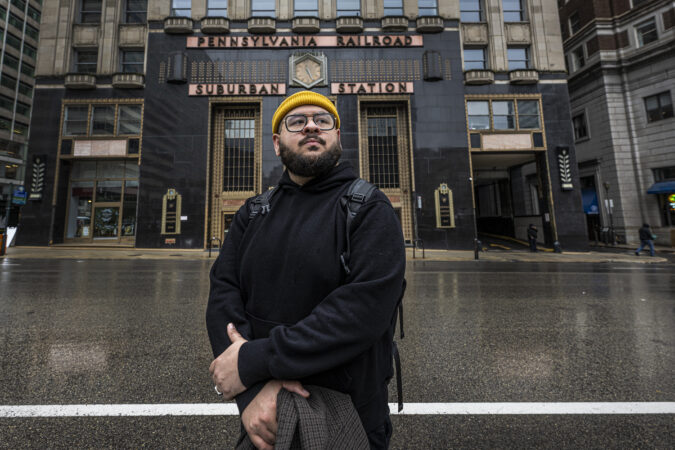
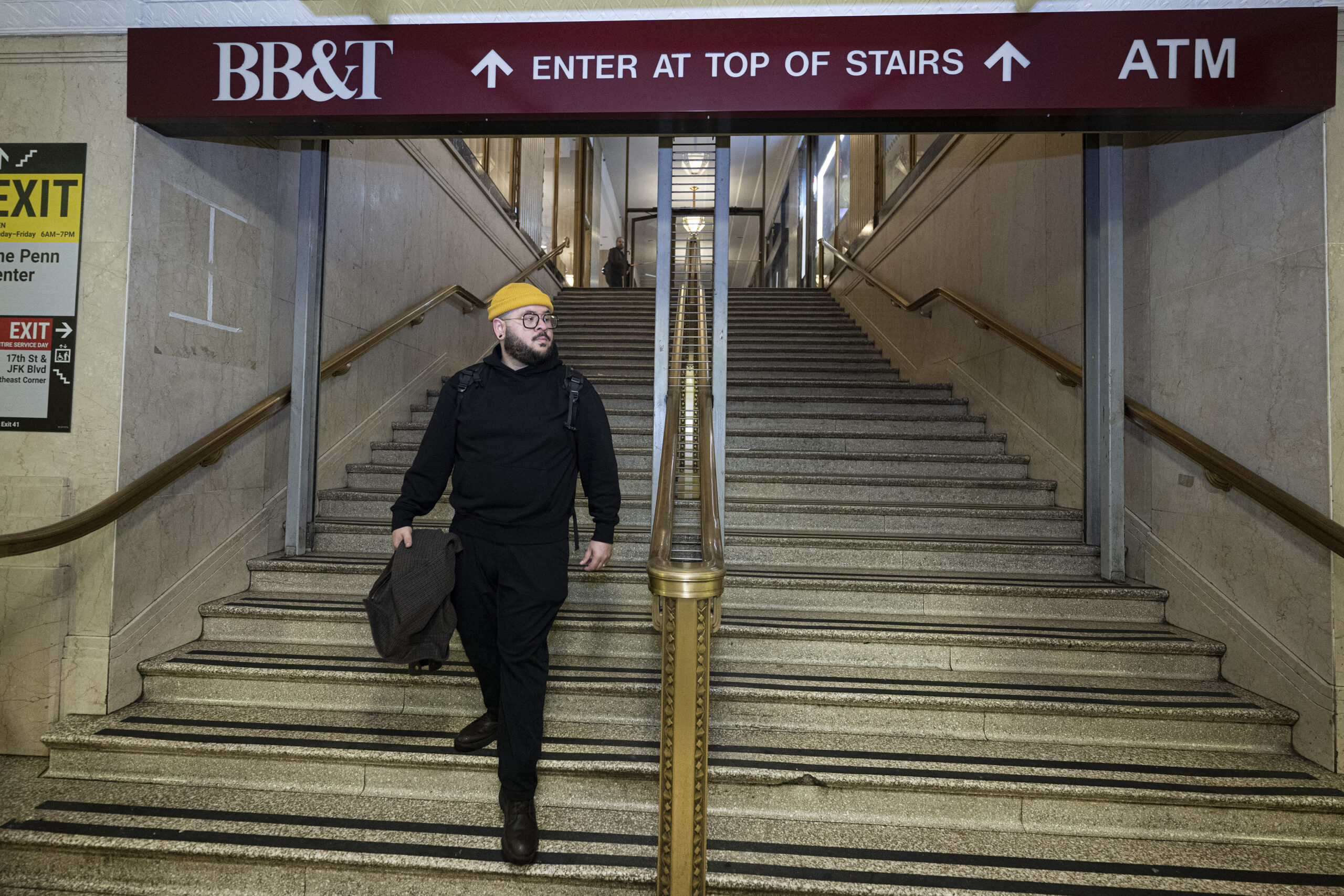
Daniel Rodriguez travels to the Philadelphia’s Suburban Station on Friday, Dec. 19, 2025. Rodriguez uses the station to commute between Philadelphia and metro Atlanta, taking a train from Center City to Philadelphia International Airport before boarding flights to and from his company’s Atlanta office.
“I want to live a life that’s intentionally, anti-whatever everybody else is doing,” Rodriguez said. “I feel like there are problems in society, and this is one of them that just trickles and affects so many things in our personal and professional lives. It’s not anti-car. It’s really about getting away from the dependency and focusing on building systems that help people move. That’s my whole philosophy.”
Rodriguez, who grew up in Bayamon, Puerto Rico, said it’s a lifestyle driven by the independence and movement he felt was missing in his youth.
The geographical barriers of the island often led to feelings of physical and mental entrapment as a child.
“Where I come from, I’ve never seen people so hungry to have something in life, with no ability to achieve it,” he said. “And I’m willing to do extreme things to do that.”
In May, the 34-year-old began posting videos of his travels to and from Philadelphia and Atlanta. His TikTok and Instagram posts have drawn millions of viewers, with hundreds of users questioning how Rodriguez balances his workload and travels.
His schedule varies each week, but he usually flies into Atlanta on Sunday nights and returns to Philadelphia on Tuesday nights. Sometimes, he will fly out on Monday mornings and return on Wednesday mornings. He also does same-day round trips a couple of times a month.
The planning for his trips to Atlanta begins the night before. Rodriguez packs his bags and puts toothpaste on his toothbrush before going to bed.
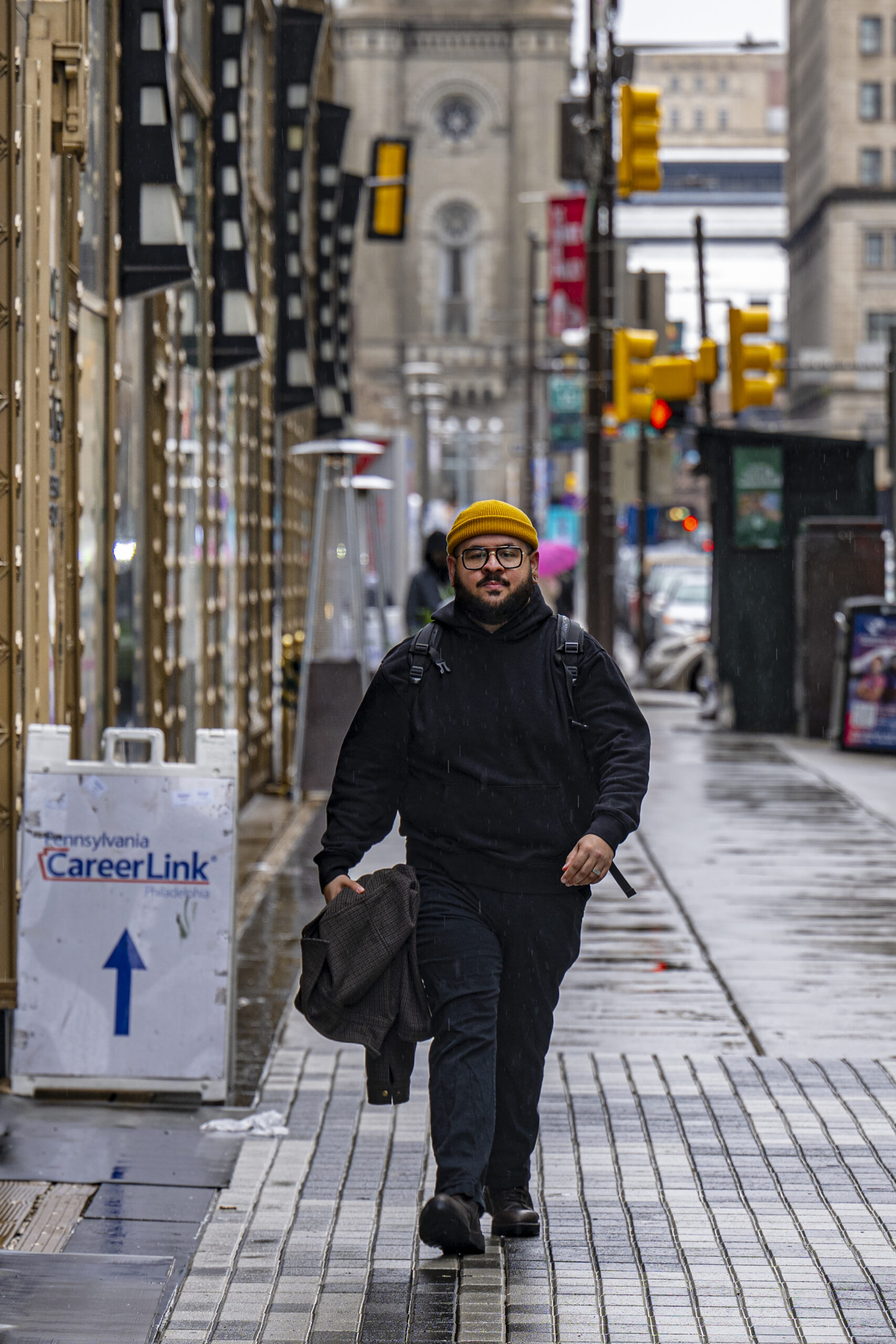
Daniel Rodriguez travels through Philadelphia’s Suburban Station on Friday, Dec. 19, 2025. Rodriguez uses the station to commute between Philadelphia and metro Atlanta, taking a train from Center City to Philadelphia International Airport before boarding flights to and from his company’s Atlanta office.
He wakes up at 4 a.m., grabs his belongings and walks to Suburban Station. Here, he boards the train to the Philadelphia International Airport and lands in Terminal F for his flight to Atlanta. He does have to factor in the regular delays.
“Terminal F is like the dingleberry of Philadelphia. It’s the last one at the airport, and really far,” he joked.
After the 90-minute flight to Atlanta, he walks over to the Metropolitan Atlanta Rapid Transit Authority platform for a 30-minute train ride to his company office in midtown Atlanta.
He’s not completely “anti-car,” he insists. He often rents a Zipcar for small errands and to explore Atlanta restaurants, art galleries, and sites that feed his architectural interests.
“I’m more along the lines of, ‘I don’t want to be dependent on a car,’” he said. “I don’t want to put my money toward that. I’d rather put that into something else, and suffer the consequences.”
Once his work day is finished, he either uses ride-share or takes a one-and-a-half-hour bus ride to a friend’s apartment in Decatur, arriving around 9 p.m. And before he rests his head for the night, Rodriguez begins his routine all over again for his return to Philly the following morning.
Rodriguez said his travel costs come out to about $180 each week, with the most significant barrier being the time and energy he spends to balance out his travels.
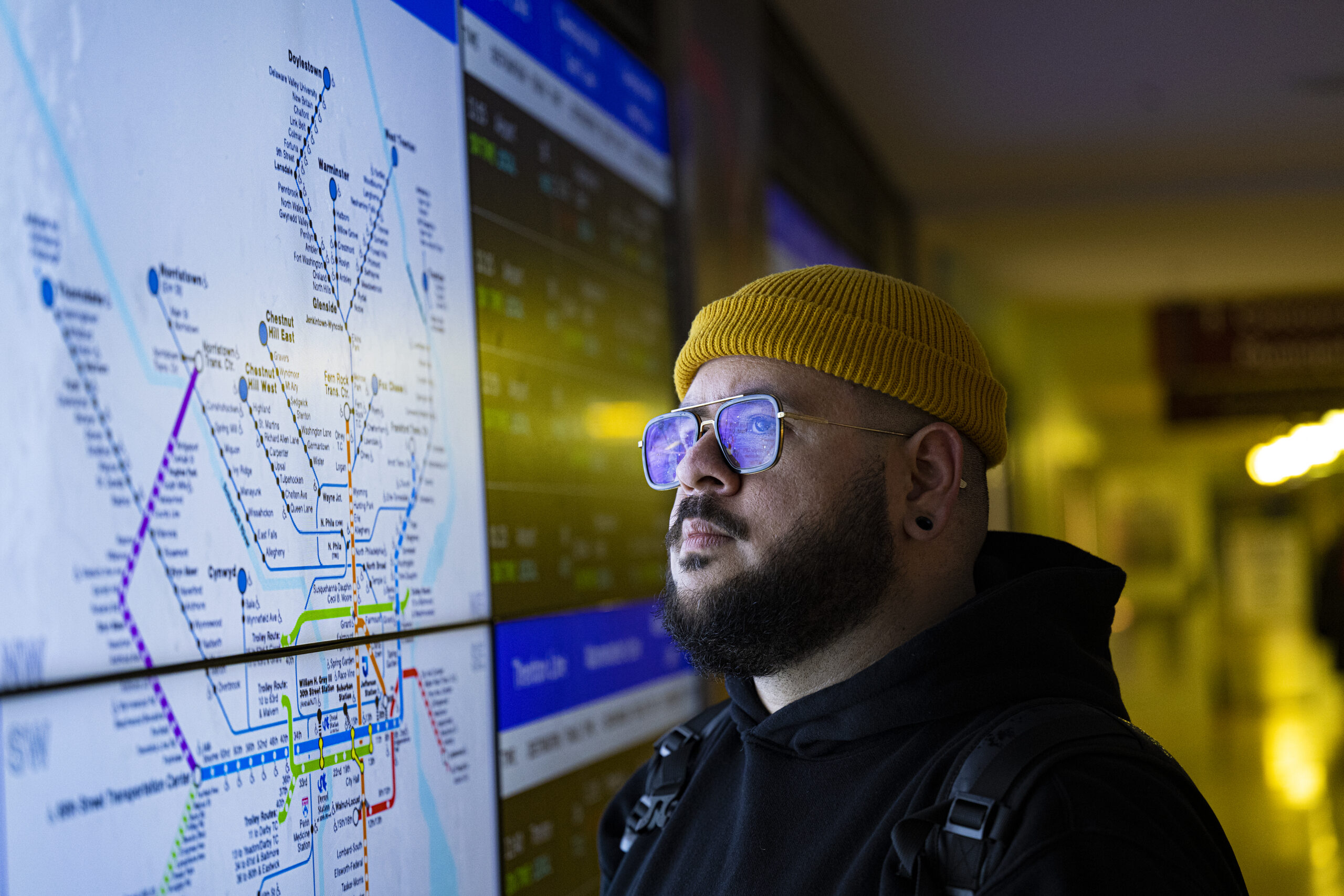
Daniel Rodriguez travels through Philadelphia’s Suburban Station on Friday, Dec. 19, 2025, in Philadelphia. Rodriguez uses the station to commute between Philadelphia and metro Atlanta, taking a train from Center City to Philadelphia International Airport before boarding flights to and from his company’s Atlanta office.
“It’s not unachievable,” Rodriguez said. “I feel like the pain point for a lot of people is the time. People don’t want to spend the time.”
Rodriguez didn’t always live like this. His super commute began after years of uncertainty. He moved to Philly in 2022 and between 2023 and 2025, Rodriguez was laid off twice and incurred thousands in debt.
“I wasn’t even paycheck to paycheck anymore. I was living in the negative,” he said.
After another eight months of job hunting, he was at a crossroads. With limited jobs in his industry in Philly, he applied for roles in other cities.
He applied to an urban design firm in Atlanta, and the week his unemployment ran out, he landed his current role in May 2025. While the company has an office in Center City, the Atlanta location was the only one hiring in his specific field.
Rodriguez consults on transportation, green space, urban design, and master planning in Atlanta and other cities along the East Coast.
While the demands of the commute were challenging at first, Rodriguez believes he has made a decision that works for him. “I have my wife here, and I don’t want to uproot her,” he said.
Since he started making videos of his commute, his world has “completely flipped,” Rodriguez said.
He’s landed brand deals with travel-based companies and has spoken in various cities across the country about how fellow millennials can traverse the country without the burden of a vehicle.
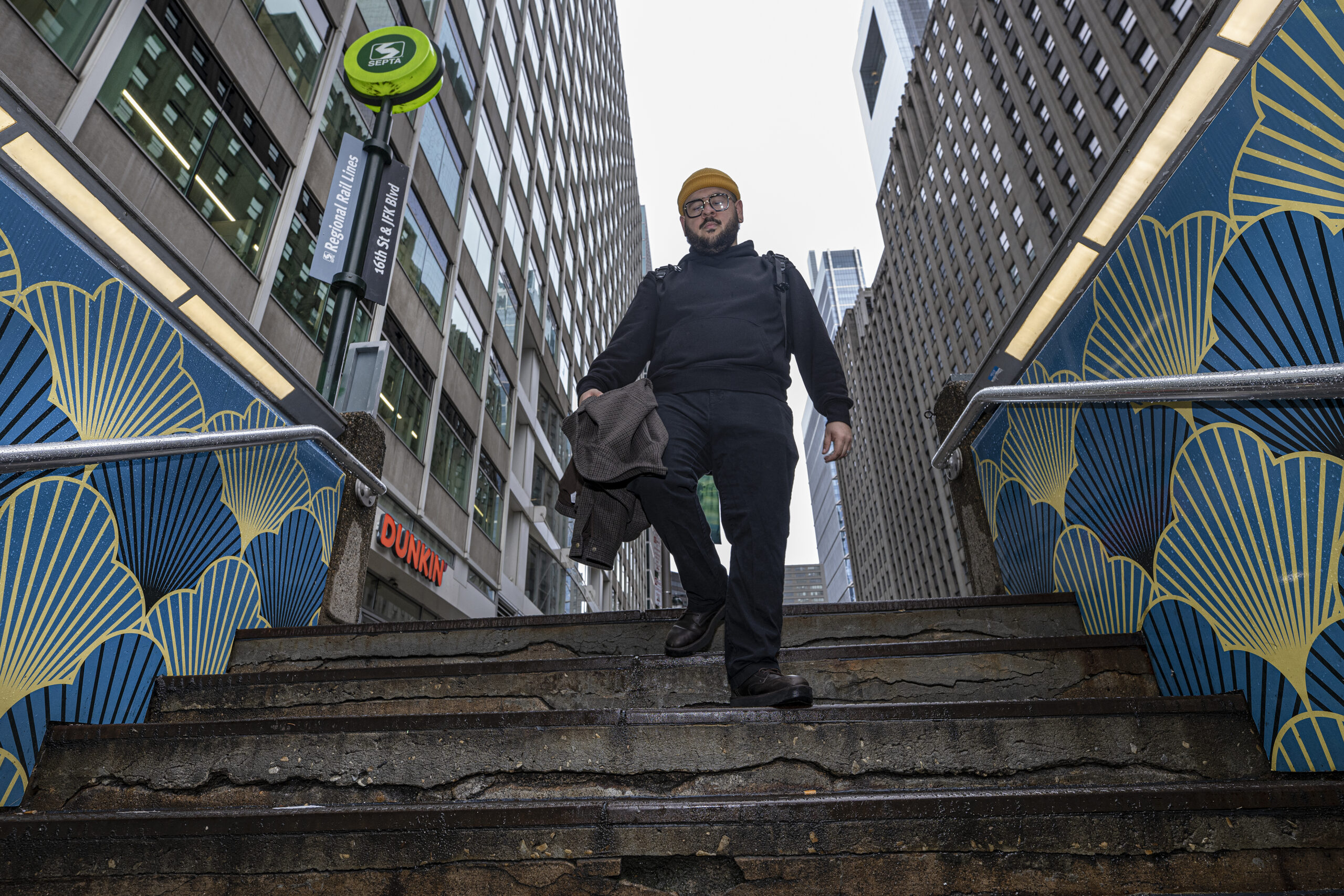
Daniel Rodriguez travels through Philadelphia’s Suburban Station on Friday, Dec. 19, 2025, in Philadelphia. Rodriguez uses the station to commute between Philadelphia and metro Atlanta, taking a train from Center City to Philadelphia International Airport before boarding flights to and from his company’s Atlanta office.
Rodriguez plans to become a content creator full-time to encourage viewers across YouTube, Instagram, TikTok, and other platforms to avoid the pitfalls of car ownership.
His ambitions haven’t gone unchecked. Environmentalists who watch his videos often point to the carbon footprint he leaves behind, despite his aversion to car ownership.
Rodriguez admits his lifestyle could be viewed as contradictory. His modes of travel contribute to gas emissions, but he contends he’s not the sole source of the issue, simply a product of a system already in place.
“I did not pass the laws that allow oil barons to drive or force corporations to fuel jets that release stored carbon,” he said. “I am a participant in society, and there is no fully ethical way to exist within it.”
While he understands people’s precaution and confusion, Rodriguez is confident his weekly commute and lifestyle will work as well for others as they do for him.
“I love to create. I love to build. And I don’t want to do anything where you’re just staying still,” he said.
Police found the body of the woman with the crystal pendant necklace stuffed beneath a wooden pallet in an overgrown lot in Frankford one night last June. She had been shot once between the eyes, and wore only a sports bra, with her pants and underwear tangled around her ankles.
Days in the stifling heat had left her face unrecognizable, nearly mummified.
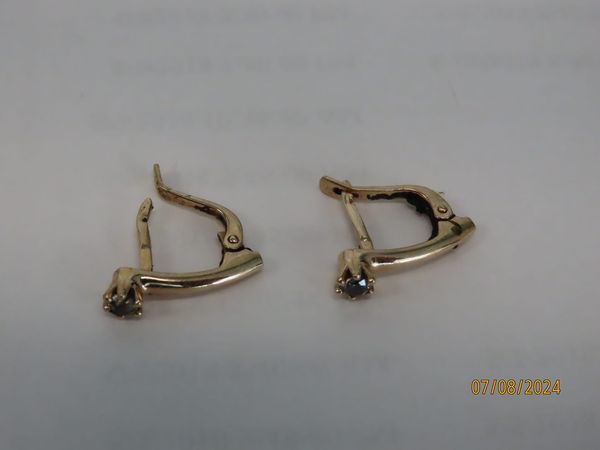
Still, Homicide Detective Richard Bova could see traces of the beautiful young woman she had been. She was small, about 100 pounds, with long dark hair tinted red at the ends. Her nails were painted pale pink. She wore small gold hoops in her ears.
But he didn’t know her name. And for 90 days, the absence of that essential fact stalled everything.
A victim’s identity is the foundation on which a homicide case is built. Without it, detectives cannot retrace a person’s final moments or home in on who might have wanted them dead and why. For three months, Bova and his partner scoured surveillance footage, checked missing-persons reports, and ran down every faint lead, eager to put a name to the woman beneath the pallet.
At the same time, in a small house in Northeast Philadelphia, a family was searching, too.
Olga Sarancha hadn’t heard from her 22-year-old daughter, Anastasiya Stangret, in weeks and was growing worried. Stangret had struggled with an opioid addiction in recent months, but never went more than a few days without speaking to her mother or sister.
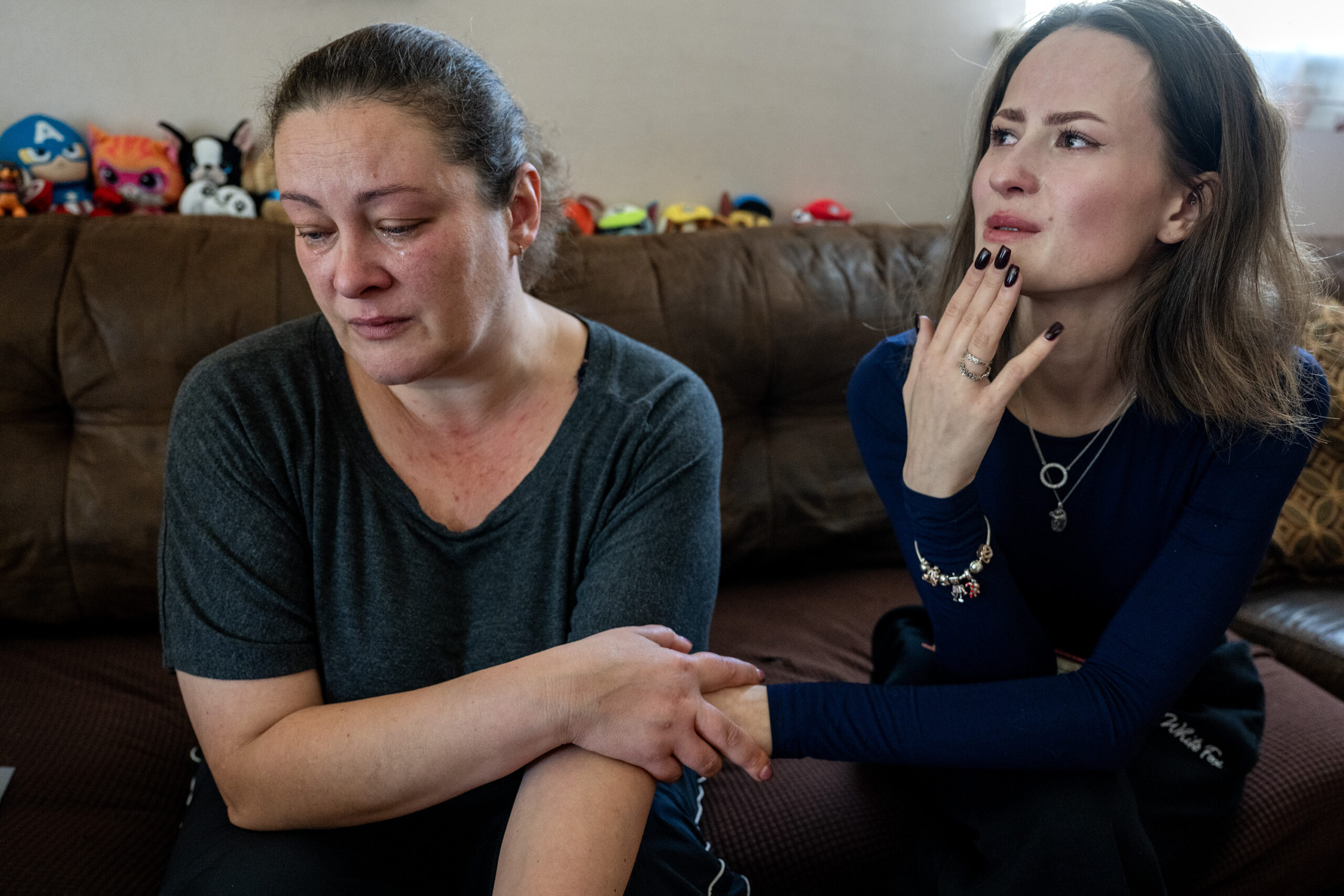
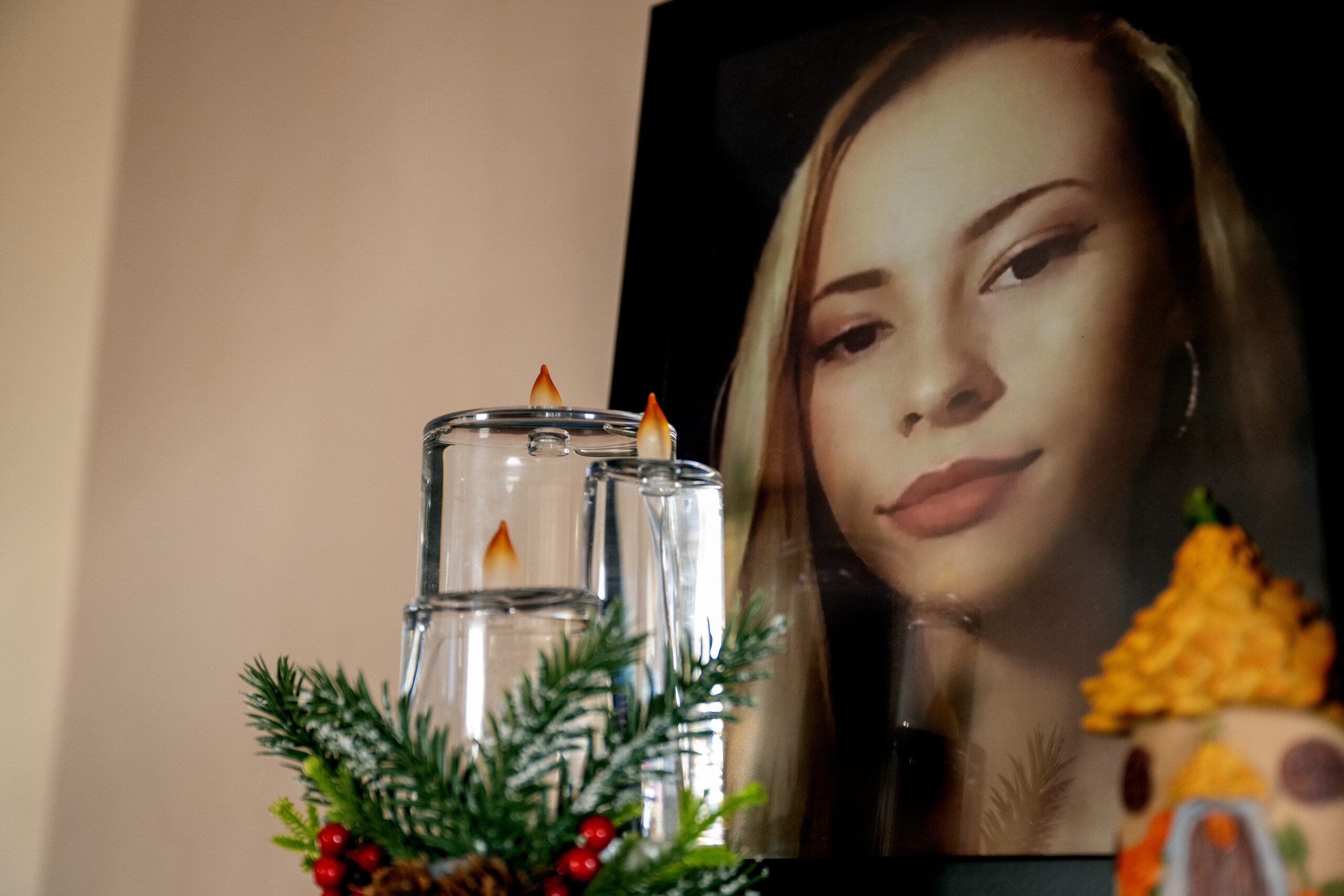
Olga Sarancha (left) and her daughter, Dasha Stangret, speak of the pain of the death of her eldest daughter, Anastasiya, at their Northeast Philadelphia home. Dasha wears a bracelet featuring Pandora charms gifted by her sister.
Through July and August that summer, Sarancha and her youngest daughter, Dasha, tried to report Stangret missing, but they said they were repeatedly rebuffed by police who turned them away and urged them to search Kensington instead.
So they kept checking hospitals, calling Stangret’s boyfriend, and driving through the dark streets of Kensington — looking for any sign that she was still alive.
It was not until mid-September that the family was able to file a missing-persons report. Only then did Bova learn the name of his victim.
But by then, he said, the crucial early window in the investigation had closed — critical surveillance footage, which resets every 30 days, was gone. Cell phone data and physical evidence were harder to trace.
Still, for 18 months, Bova has worked to solve the case, and for 18 months, Stangret’s mother and younger sister have grieved silently, haunted by the horrors of her final moments and the fear that her killer might never be caught.
Philadelphia’s homicide detectives this year are experiencing unprecedented twin phenomena: The city is on pace to record its fewest killings in 60 years, and detectives are solving new cases at a near-record high.
But those gains do not erase the reality that hundreds of killings in recent years remain unresolved — each one leaving families suspended in despair, and detectives asking themselves what more they could have done.
In this case, extensive interviews with Bova and Stangret’s family offer a window into how a case can stall even when a detective puts dozens of hours into an investigation — and what that stall costs.
Bova has a suspect: a 58-year-old man with a lengthy criminal record who he believes had grown infatuated with Stangret as he traded drugs for suboxone and sex with her. But the evidence is largely circumstantial. He needs a witness.
And Stangret’s family needs closure — and reassurance that the life of the young woman, despite her struggles, mattered.
“Everybody has something going on in their life,” said Dasha Stangret, 23. “It doesn’t make her a bad person, and it’s not what she deserved.”
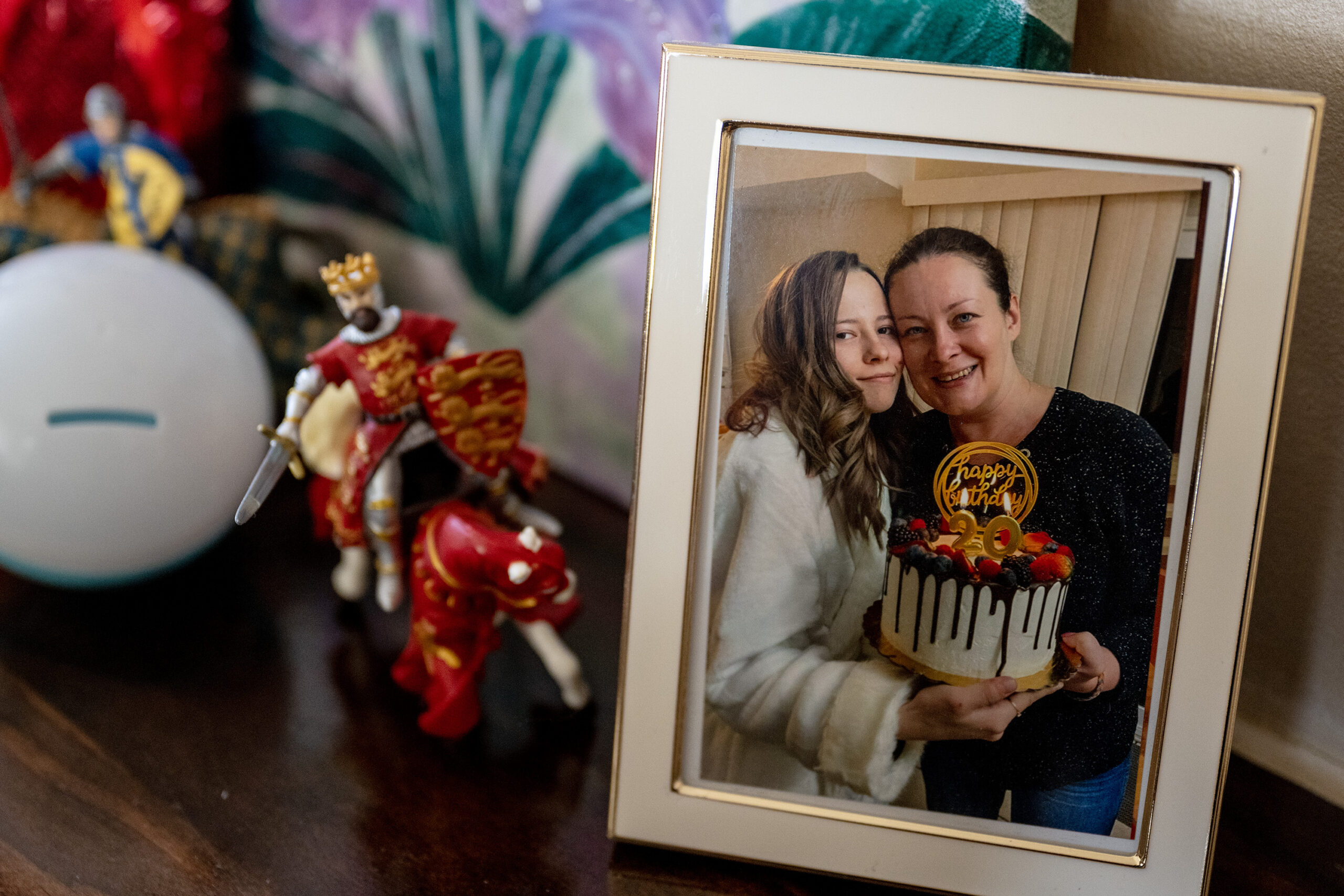
Anastasiya Stangret, left, celebrated her 20th birthday with her mother in 2022.
Becoming Anna
Anastasiya Stangret was born in Lviv, Ukraine, on Nov. 15, 2001. Her family immigrated to Northeast Philadelphia when she was 8 and Dasha was 7.
The sisters were inseparable for most of their childhood. They cuddled under weighted blankets with cups of tea. They put on fluffy robes and did each other’s eyebrows and nails.
Anna was bubbly, polite, and gentle, her family said. She enjoyed working with the elderly, and after graduating from George Washington High School, she earned certifications in phlebotomy and cardiology care. She volunteered at a nearby food bank, translated for Ukrainian and Russian immigrants, and later worked at a rehabilitation facility, where she gave patients manicures in her free time.
Sisters Dasha, left, and Anastasiya Stangret were inseparable as children. They dressed up as princesses for Halloween in 2008.Dasha, left, and Anastasiya Stangret at their first day of school in Philadelphia after emigrating from Ukraine.
“Anna always worked really hard,” Dasha Stangret said. “I looked up to her.”
But her sister was also quietly struggling with a drug addiction.
Her challenges began when she was 12, her mother said, after she was hit by a car while crossing the street to catch the school bus. She suffered a serious concussion, Sarancha said, and afterward struggled with PTSD, anxiety, and depression.
About a year later, as her anxiety worsened, a doctor prescribed her Xanax, her mother said. Not long after, she started experimenting with drugs with friends, her sister said — first weed, then Percocet.
She hid her drug use from her family until her early 20s, when she became addicted to opioids.
She sought help in January 2024 and began drug treatment. But her progress was fleeting. She returned to living with her boyfriend of a few years, who they later learned also used drugs, and she became harder to get in touch with, her mother said.
When Sarancha’s birthday, June 18, came and passed in 2024 without word from her daughter, the family grew increasingly concerned.
Anastasiya Stangret was kind, gentle, and polite.
They checked in with Stangret’s boyfriend, they said, but for weeks, he made excuses for her absence. He told them that she was at a friend’s house and had lost her phone, that she was in rehab, that she was at the hospital.
On July 27, Sarancha and her daughter visited the 7th Police District in Northeast Philly to report Anna missing, but they said an officer told them to go home and call 911 to file a report.
Two officers responded to their home that day. The family explained their concerns — Stangret was not returning calls or texts, and her boyfriend was acting strange. But the officers, they said, told them they could not take the missing-persons report because Stangret no longer lived with them. They recommended that the family go to Kensington and look for her.
Through August, the family visited a nearby hospital looking for Stangret, only to be turned away. Sarancha, 46, and her husband drove through the streets of Kensington without success. They continued to contact the boyfriend, but received no information.
They wanted to believe that she was OK.
On Sept. 12, they visited Northeast Detectives to try to file a missing-persons report again, but they said an officer said that was not the right place to make the report. They left confused. Dasha Stangret called the district again that day, but she said the officer on the phone again told her that she should go to Kensington and look for her sister.
That the family was discouraged from filing a report — or that they were turned away — is a violation of Philadelphia police policy.
“When in doubt, the report will be taken,” the department’s directive reads.
Finally, on the night of Sept. 12, Dasha Stangret again called 911, and an officer came to the house and took the missing-persons report. For the first time, they said, they felt like they were being taken seriously.
A few days later, Dasha Stangret called the detective assigned to the case and asked if there was any information. He asked her to open her laptop and visit a website for missing and unidentified persons.
Scroll down, he told her, and look at the photos under case No. 124809.
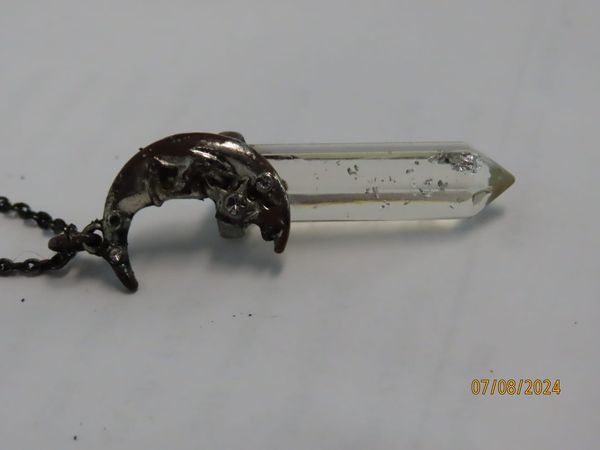
On the screen was her sister’s jewelry.
Dasha Stangret gifted this necklace to her sister for her birthday one year. Police released the image after Anastasiya’s body was found last June, in a hope that someone would recognize it and identify her. Dasha did not see the photo until September 2024.Olga Sarancha gifted these gold earrings, handmade in Ukraine, to her eldest child on her birthday a few years ago. Police released this image after they recovered the earrings on Anna’s body, hoping it could lead them to her identity.
A detective’s hunch
Three months into Bova’s quest to identify the woman under the pallet — of watching hundreds of hours of surveillance footage and chasing fleeting missing-persons leads — dental records confirmed that the victim was Stangret.
After meeting with her family, Bova questioned the young woman’s boyfriend.
He told the detective he and Stangret had met a man under the El at the Arrott Transit Center in Frankford sometime in June, Bova said, and that the man gave them drugs in exchange for suboxone and, later, sex with Stangret.
But the man had grown infatuated with Stangret, he said, and after she left his house, he started threatening her in Facebook messages, ordering her to return and saying that if anybody got in his way, he would hurt them.
The man lived in a rooming house on Penn Street — almost directly in front of the overgrown lot where Stangret’s body was found. Surveillance video showed Stangret walking inside the rowhouse with him just before 7 p.m. on June 18, Bova said, but video never showed her coming back out.
Police searched the man’s apartment but found nothing to link him to the crime — no blood, no gun, no forensic evidence that Stangret had ever been inside. The suspect had deleted most of the texts and calls in his phone from June, July, and August, Bova said, and because nearly four months had passed, they could no longer get precise phone location data.
He said that, at this point, he does not believe the boyfriend was involved with her death, and that he came up with excuses because he was afraid to face her family.
Surveillance cameras facing the lot where Stangret was found didn’t show anyone entering the brush with a body. Neighbors and residents of the rooming house said they didn’t know or hear anything, he said. And a woman seen on camera pacing the block and talking with the suspect the night they believed Stangret was killed also said she had no information.
The detective is stuck, he said.
“Is it enough for an arrest? Sure,” Bova said of the circumstantial evidence against the suspect. “But our focus is securing a conviction.”
Bova’s theory is that the man, angry that Stangret wanted to leave, shot her in the head. Because the house has no back door, he believes the man then lowered her body out of the second-floor window, used cardboard to drag her through the brush, and then hid her under a pallet.
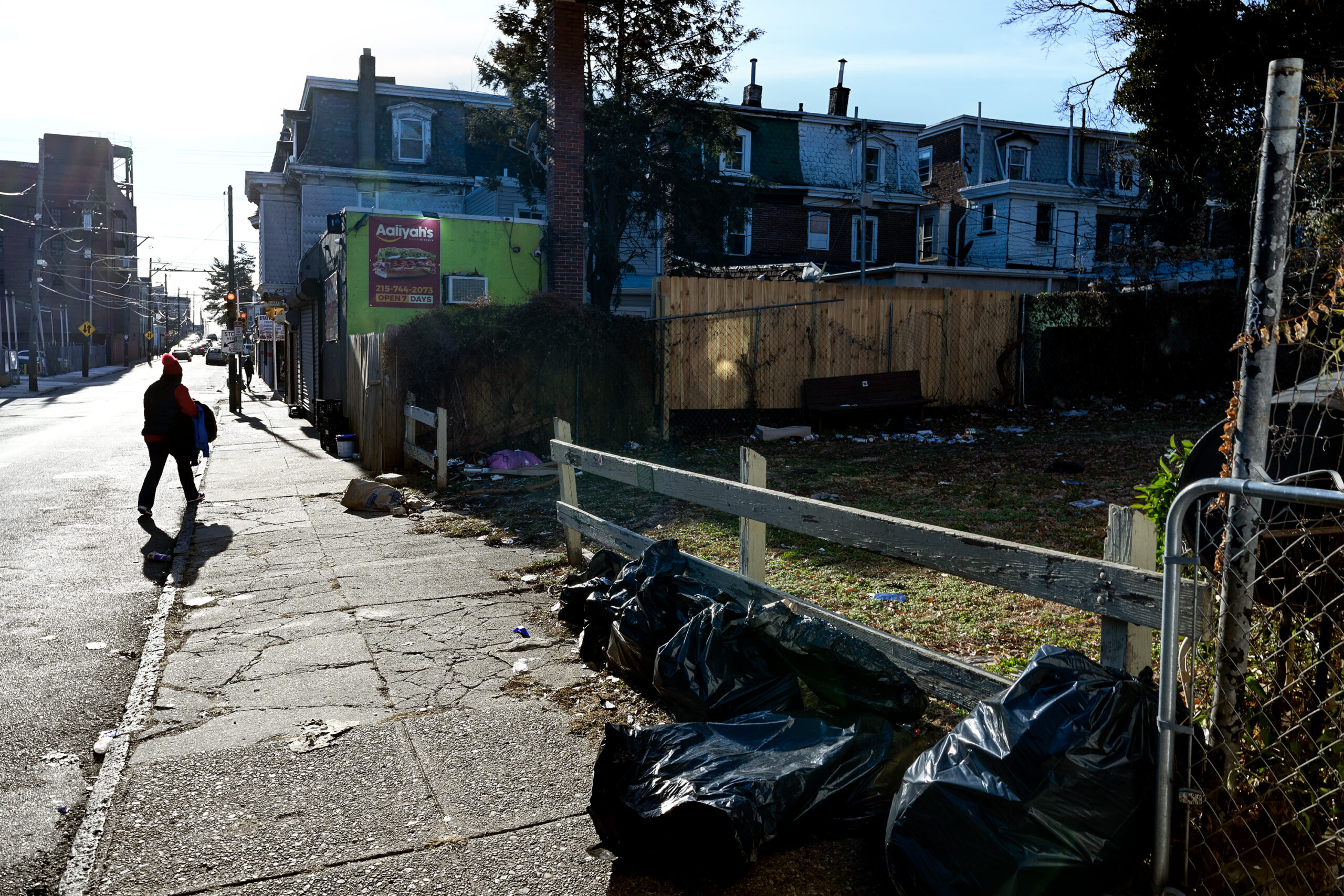
Anastasiya Stangret’s body was found in the back of this vacant lot, on the 4700 block of Griscom Street, in June 2024.
He is sure that someone has information that could help the case — that the suspect may have bragged about what happened, that a neighbor heard a gunshot or saw Stangret’s body being taken into the lot.
There is a $20,000 reward for anyone who has information that leads to an arrest and conviction.
“The hardest part is patience,” he said. “I’m looking for any tips, any information.”
Bova has worked in homicide for five years. As with all detectives, he said, some cases stick with him more than others. Stangret’s is one of them.
“Anna means a lot,” he said. “This is a young girl. We all have children. I have daughters. For her to be thrown in an empty lot and left, to see her life not matter like that, it’s horrifying to me and to us as a unit.”
“It eats me alive,” he said, “that I don’t have answers for them and I’m not finishing what was started.”
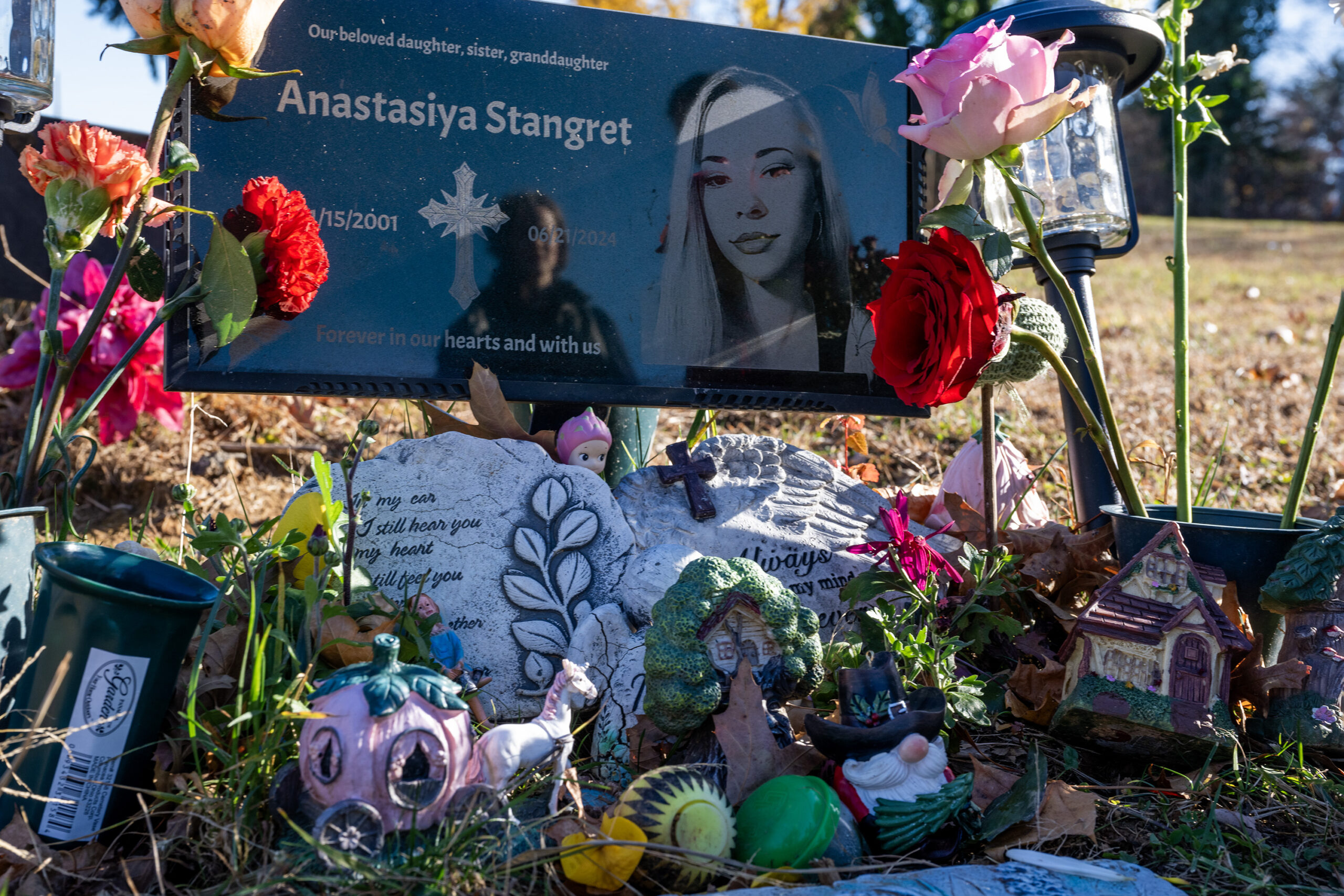
Dasha Stangret is reflected in the memorial at the grave of her sister, Anastasiya, in William Penn Cemetery.
‘I love you. I miss you’
Stangret’s family suffers every day — the guilt of wondering whether they could have done more to get her help, the anger that her boyfriend didn’t raise his concerns sooner, the fear of knowing the man who killed her is still out there.
Dasha Stangret, a graphic design student at Community College of Philadelphia, finds it difficult to talk about her sister at length without trembling. It’s as if the grief has sunk into her bones.
In July, she asked a police officer to drive her to the lot where her sister’s body was found. She sat for almost an hour, crying, placing flowers, searching for a way to feel closer to her.
“I cannot sleep, I cannot live,” Olga Sarancha said of the pain of losing her daughter.
Sarancha struggles to sleep. She wakes up early in the mornings and rereads old text messages with her daughter. She pulls herself together to care for her 6-year-old son, Max, whose memories of his oldest sister fade daily.
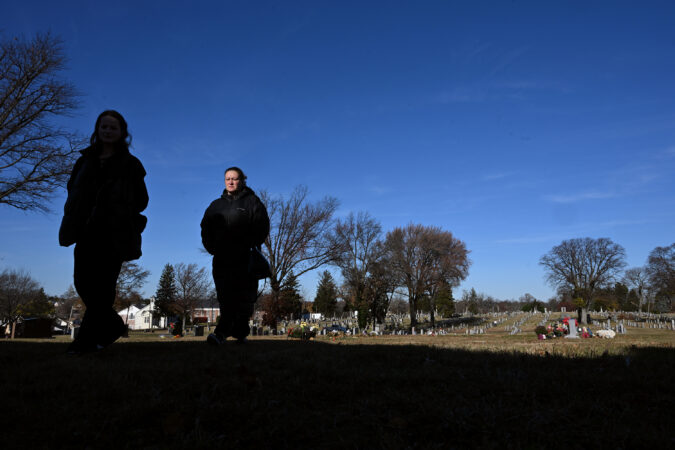
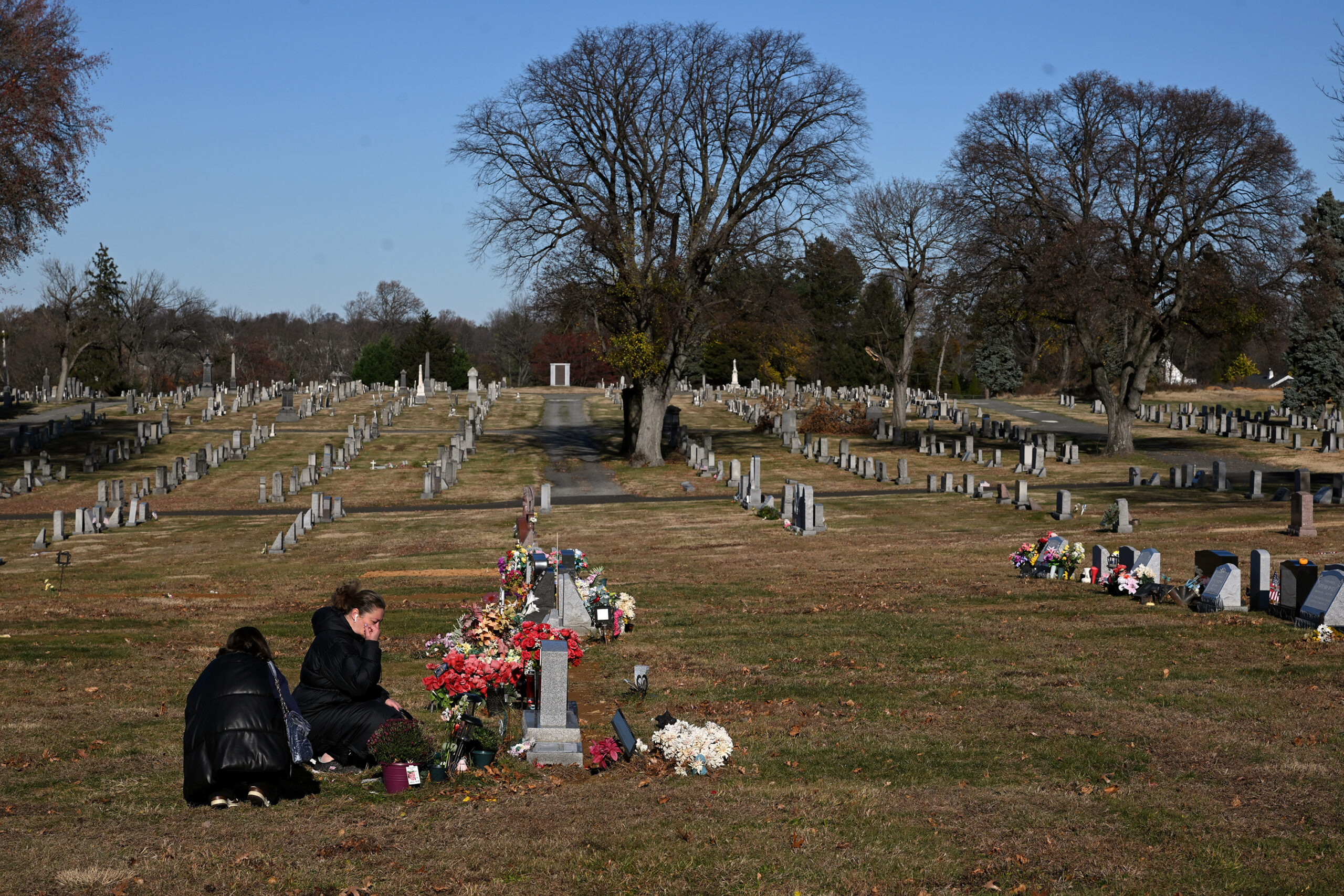
On a recent day, Dasha Stangret and her mother visited her sister’s grave at William Penn Cemetery. They fluffed up the fresh roses, rearranged the tiny fairy garden around her headstone, and lit a candle.
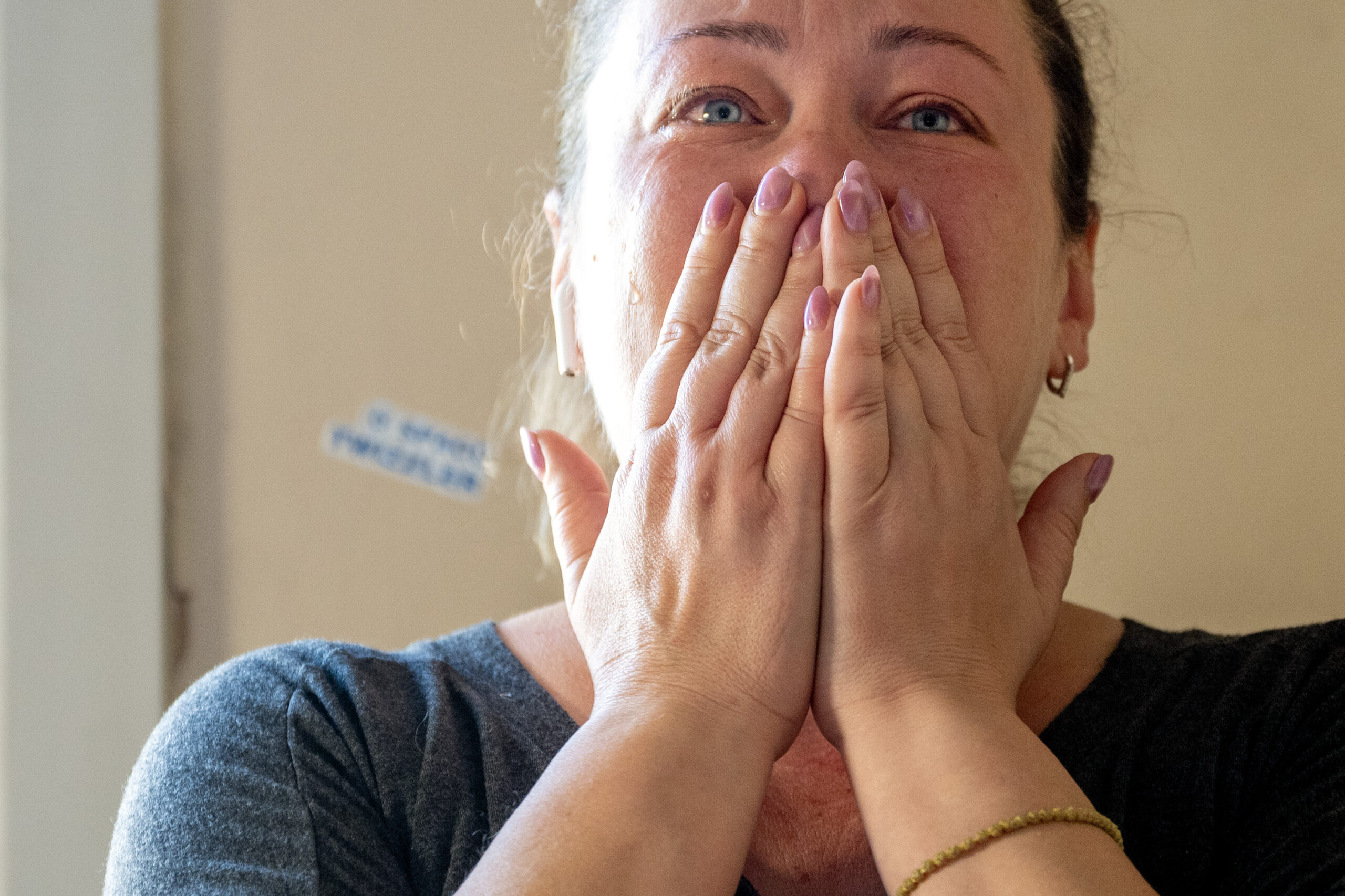
Stangret began to cry — and shake. Her mother took her arm.
“I love you. I miss you,” Stangret told her sister. “I hope you’re happy, wherever you are.”
And nearly 20 miles south, inside the homicide unit, Bova continues to review the files of the case, waiting for the results of another DNA test, hoping for a witness who may never come.
If you have information about this crime, contact the Homicide Unit at 215-686-3334 or submit a confidential tip by texting 773847 or emailing tips@phillypolice.com.
Olga Sarancha (right) and her daughter Dasha visit the grave of her older daughter Anastasiya Stangret in William Penn Cemetery. “It feels out of body. Like a dream, a movie, like it’s not real,” Dasha said of losing her sister.
Way back in 2022, when Philadelphians gathered on an abandoned pier to watch a man eat a rotisserie chicken, folks on social media began to wonder: “Is Philadelphia a real place?”
Sure, that perception has a lot to do with an unbelievable event that actually happened in the suburbs (Delco never fails to carry its weight), but Philly also saw its fair share of the bizarre this year, too.
As we prepare for what may be one of the most important (and hopefully weirdest!) years in modern Philadelphia history, let’s take some time to look back on the peculiar stories from across the region that punctuated 2025.
Five uh-oh
Kevon Darden was sworn in as a part-time police officer for Collingdale Borough on Jan. 12 and hit the ground running, landing his first arrest just four days later.
The only problem? It was his own.
Pennsylvania State Police charged Darden with terroristic threats and related offenses for an alleged road rage incident in 2023 in which he’s accused of pointing a gun at a driver on the Blue Route in Ridley Township. At the time of the alleged incident Darden was employed as an officer at Cheyney University.
A Pennsylvania State Police vehicle. The agency provided two clean background checks for a Collingdale police officer this year, only to arrest him four days after he started the job.
Here’s the thing — it was state police who provided not one but two clean background checks on Darden to Collingdale officials before he was hired. An agency spokesperson told The Inquirer troopers had to wait on forensic evidence tests and approval from the District Attorney’s Office before filing charges.
Darden subsequently resigned and is scheduled for trial next year in Delaware County Court.
For the Birds
The Eagles’ second Super Bowl win provided a wellspring of wacky — and sometimes dicey — moments on and off the field early this year.
Mayor Cherelle L. Parker started the championship run off strong by going viral for misspelling the most popular chant in the city as “E-L-G-S-E-S” during a news conference. Her mistake made the rounds on late night talk shows and was plastered onto T-shirts, beer coozies, and even a license plate. If you think the National Spelling Bee is brutal, you’ve never met Eagles fans.
Philadelphia Eagles quarterback Jalen Hurts at the line of scrimmage during the fourth quarter of the NFC divisional playoff at Lincoln Financial Field on Jan. 19. The Philadelphia Eagles defeated the Los Angeles Rams 28 to 22.
Then there was the snowy NFC divisional playoff game against the Los Angeles Rams at Lincoln Financial Field; continued drama around the Tush Push (which resulted in Dude Wipes becoming an official sponsor of the team); and Cooper DeJean’s pick-six, a gift to himself and us on his 22nd birthday that helped the Birds trounce the Kansas City Chiefs 40-22 in Super Bowl LIX.
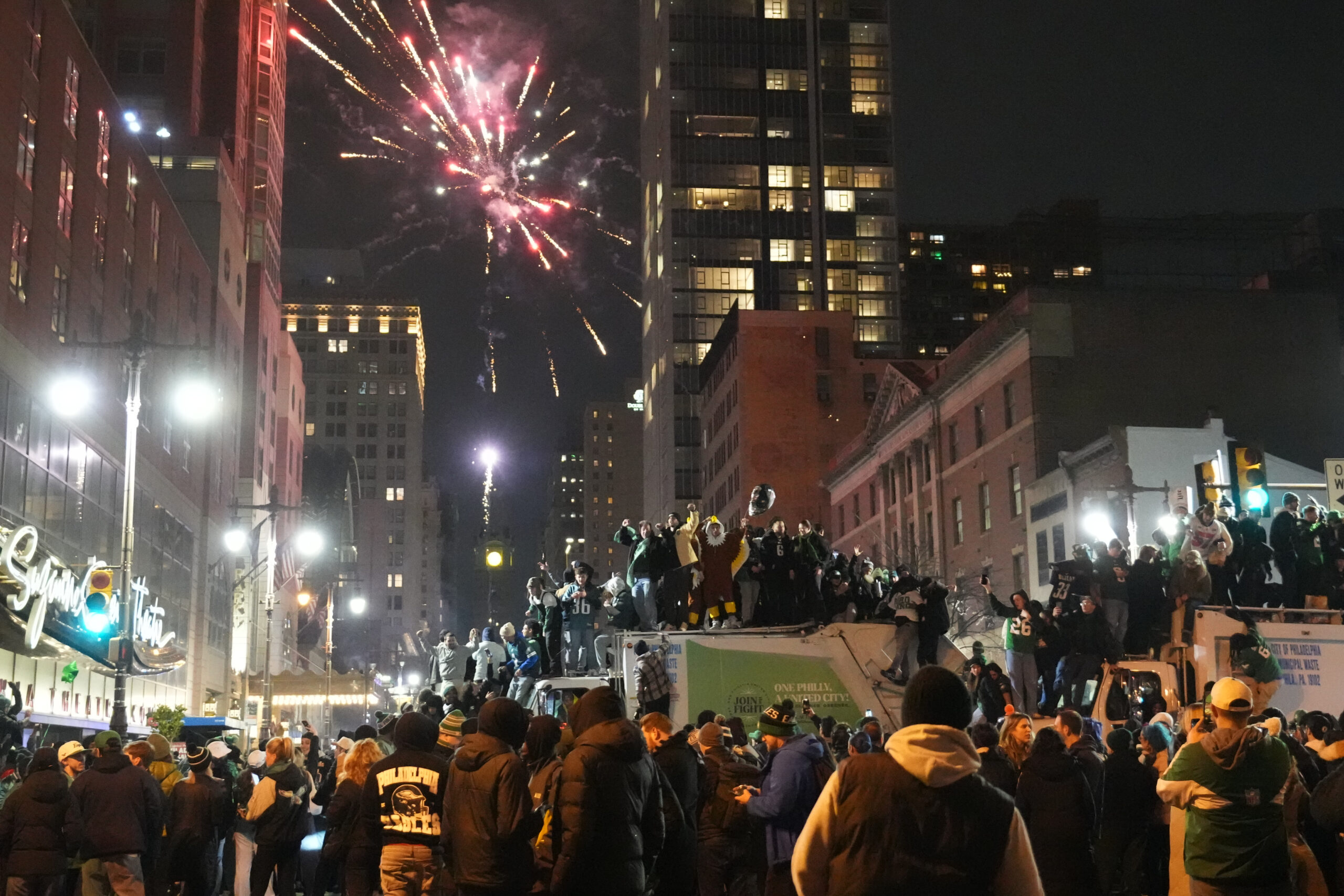
As soon as the Eagles won with Jalen Hurts as MVP, Philadelphians let loose, flooding the streets like a drunken green tsunami. Fans scaled poles and tore them down; danced on bus shelters, medic units, and trash trucks; partied with Big Foot, Ben Franklin, and Philly Elmo; and set a bonfire in the middle of Market Street.
Eagles fans party on trash trucks in the streets of Center City after the Birds win in Super Bowl LIX against the Chiefs on Feb. 9.
Finally, there was the parade, a Valentine’s Day love letter to the Eagles from Philadelphia. Among the more memorable moments was when Birds general manager Howie Roseman was hit in the head with a can of beer thrown from the crowd. He took his battle scar in pride, proclaiming from the steps of the Philadelphia Art Museum: “I bleed for this city.”
As we say around here, love Hurts.
Throngs of Birds fans lined the Benjamin Franklin Parkway for the Eagles Super Bowl Parade on Feb. 14.
A $40 million goodbye
As far as inanimate objects go, few have experienced more drama in recent Philly history than the SS United States, the 73-year-old, 990-foot luxury liner that was docked for nearly three decades on the Delaware River waterfront.
Supporters spent more than $40 million on rent, insurance, and other measures to keep the ship in Philly with the hopes of returning it to service or at least turning it into a venue. But a rent dispute with the owners of the pier finally led a judge to order the SS United States Conservancy, which owned the vessel, to seek an alternate solution.
Workers on the Walt Whitman Bridge watch from above as the SS United States is pulled by tug boats on the Delaware River.
And so in February, with the help of five tugboats, the ship was hauled out of Philly to prepare it to become the world’s largest artificial reef off the coast of Okaloosa County, Fla.
If the United States has to end somewhere, Florida feels like an apt place.
The ‘Delco Pooper’
While the Eagles’ Tush Push was deemed legal by NFL owners this year, a Delaware County motorist found that another kind of tush push most definitely is not after she was arrested for rage pooping on the hood of a car during a roadway dispute in April.
Captured on video by a teen who witnessed the rear-ending, the incident quickly went viral and put a stain on Delco that won’t be wiped away anytime soon.
Christina Solometo, who was dubbed the “Delco Pooper” on social media, told Prospect Park Police she got into a dispute with another driver, whom she believed began following her. Solometo claimed when she got out of her car the other driver insulted her and so she decided to dump her frustrations on their hood.
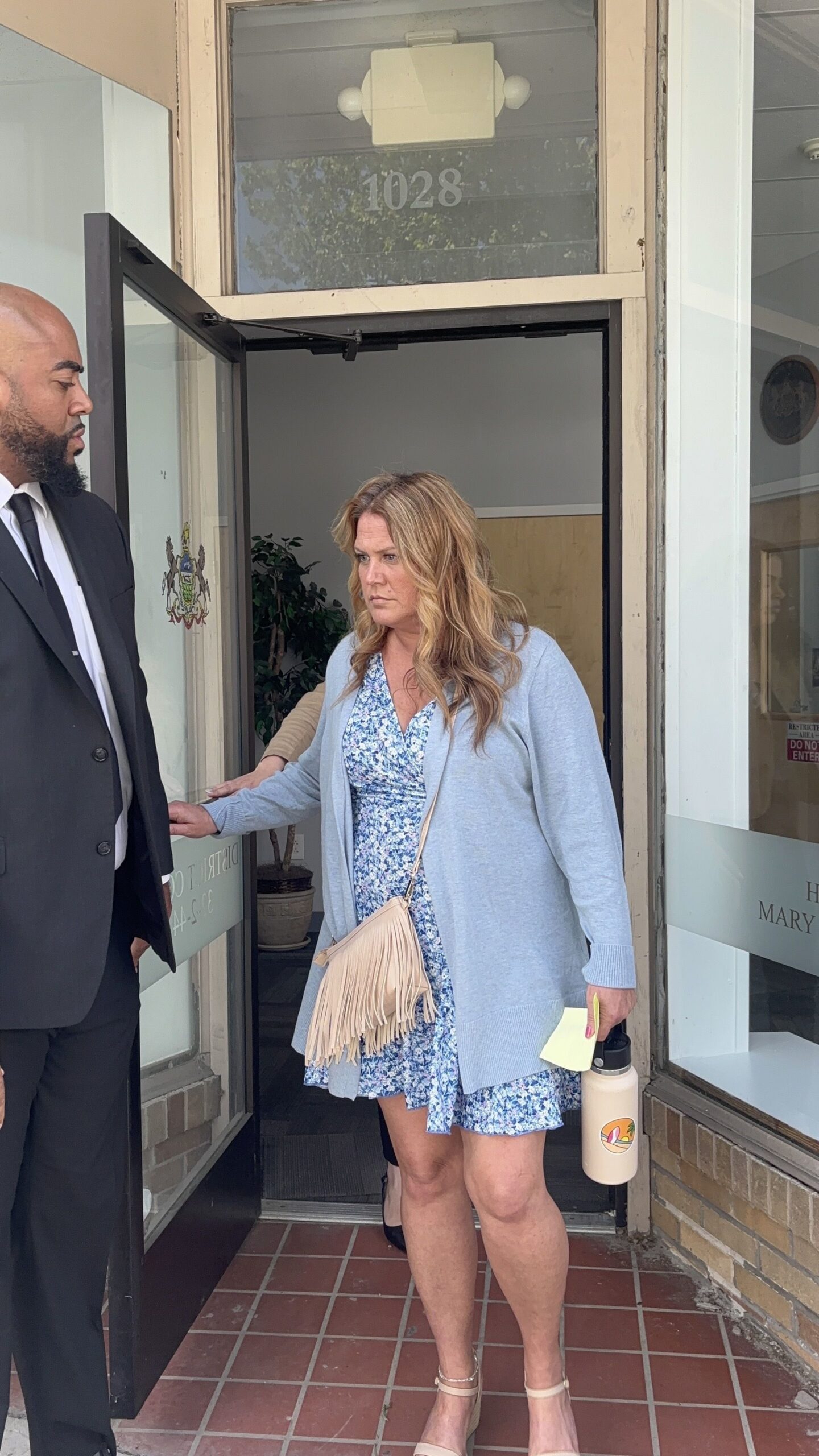
A private security guard holds the door open for alleged “Delco Pooper” Christina Solometo following her preliminary hearing Monday at Prospect Park District Court.
“Solometo said, ‘I wanted to punch her in the face, but I pooped on her car instead and went home,’” according to the affidavit.
I’ve written a lot of stories about Delco in my time, but this may be the most absurd.
Hopefully, she won’t be clogging up the court system anymore.
The Delco pope
Delco is large, it contains multitudes, and never was that more clear than when two weeks after the Delco Pooper case broke, a Delco pope was elected.
OK, so Pope Leo XIV is technically a native of Chicago, but he attended undergrad at Villanova University — which, yes, technically straddles Delco and Montgomery County — but Delco’s had a tough year so I’m gonna give it this one.
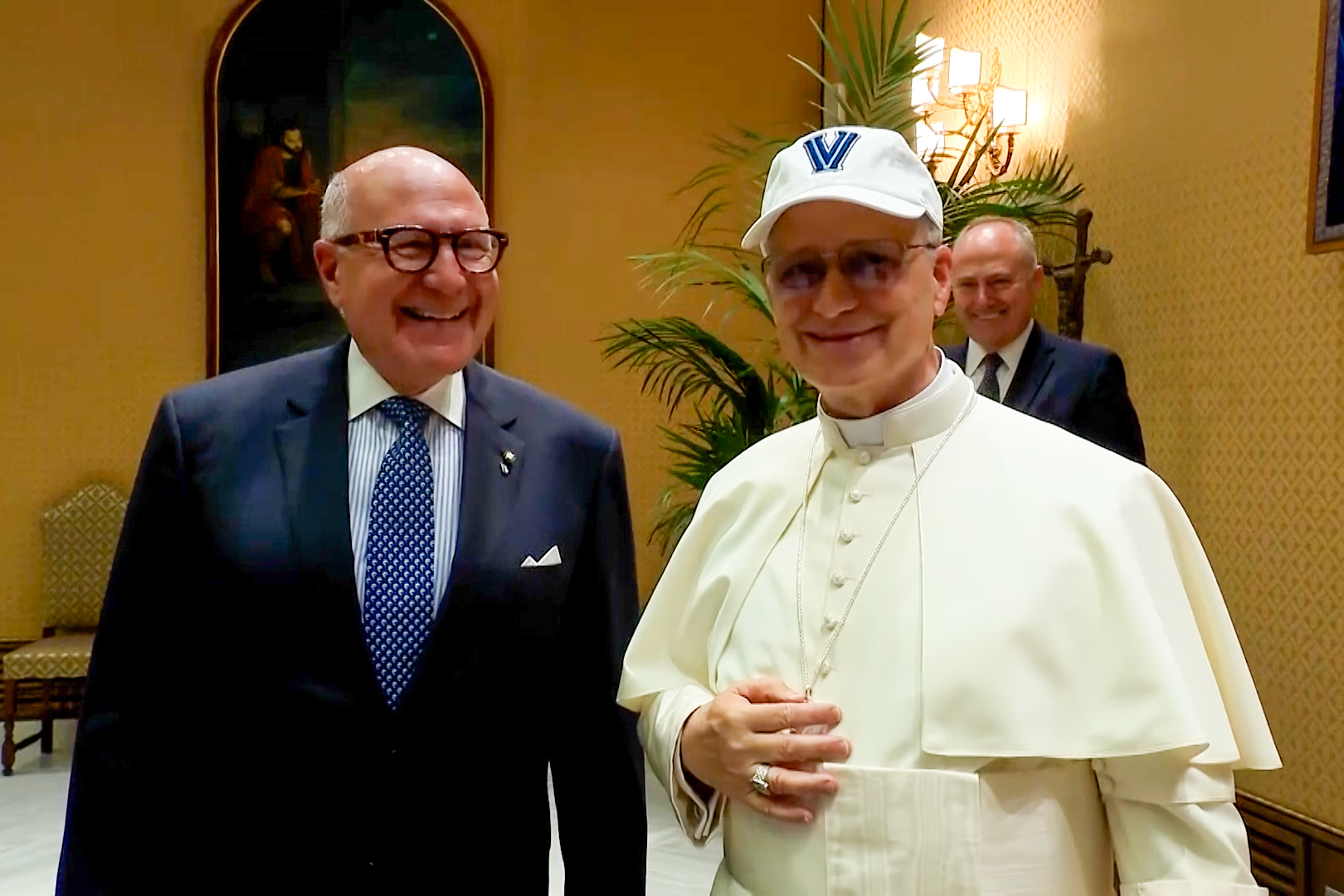
This video screen grab shows Pope Leo XIV wearing a Villanova University hat gifted to him during a meeting with an Italian heritage group.
Born Robert Prevost, Pope Leo is the first U.S. pope in history and also a citizen of Peru. He earned his bachelor’s degree in mathematics from Villanova in 1977 and an honorary doctor of humanities from the university in 2014.
Center City Sips, the Wednesday Center City happy hour program, long ago earned a reputation as a rite of passage for 20-somethings who are still figuring out how to limit their intake and want to do so in business casual attire.
Things seemed to calm down after the pandemic, but then Philadelphians took Sips to another level and a whole new place this year — the streets.
Videos showed hundreds of people partying in the streets of Midtown Village on Wednesday nights this summer. Granted, the parties look far more calm than when sports fans take over Philly after a big win, but the nearby bar owners who participate in the Sips program said their places sat empty as people brought their own alcohol to drink.
Jason Evenchik, who owns Time, Vintage, Garage, and other bars, told The Inquirer that “No one is inside, and it’s mayhem outside.”
“Instead, he claimed, people are selling alcohol out of their cars and bringing coolers to make their own cocktails. At one point on June 11,Evenchik said, a Tesla blocked a crosswalk while a man made piña coladas with a pair of blenders hooked up to the car,” my colleague Beatrice Forman wrote.
In no way am I condoning this behavior, but those two sentences above may be my among favorite this year. Who thinks to bring a blender — with a car hookup — to make piña coladas at an unauthorized Center City street party on a Wednesday night?
Philly.
Getting trashed
Philadelphians experienced a major city workers strike this summer when Mayor Cherelle L. Parker and AFSCME District Council 33 couldn’t agree on a new contract for the union’s nearly 9,000 members.
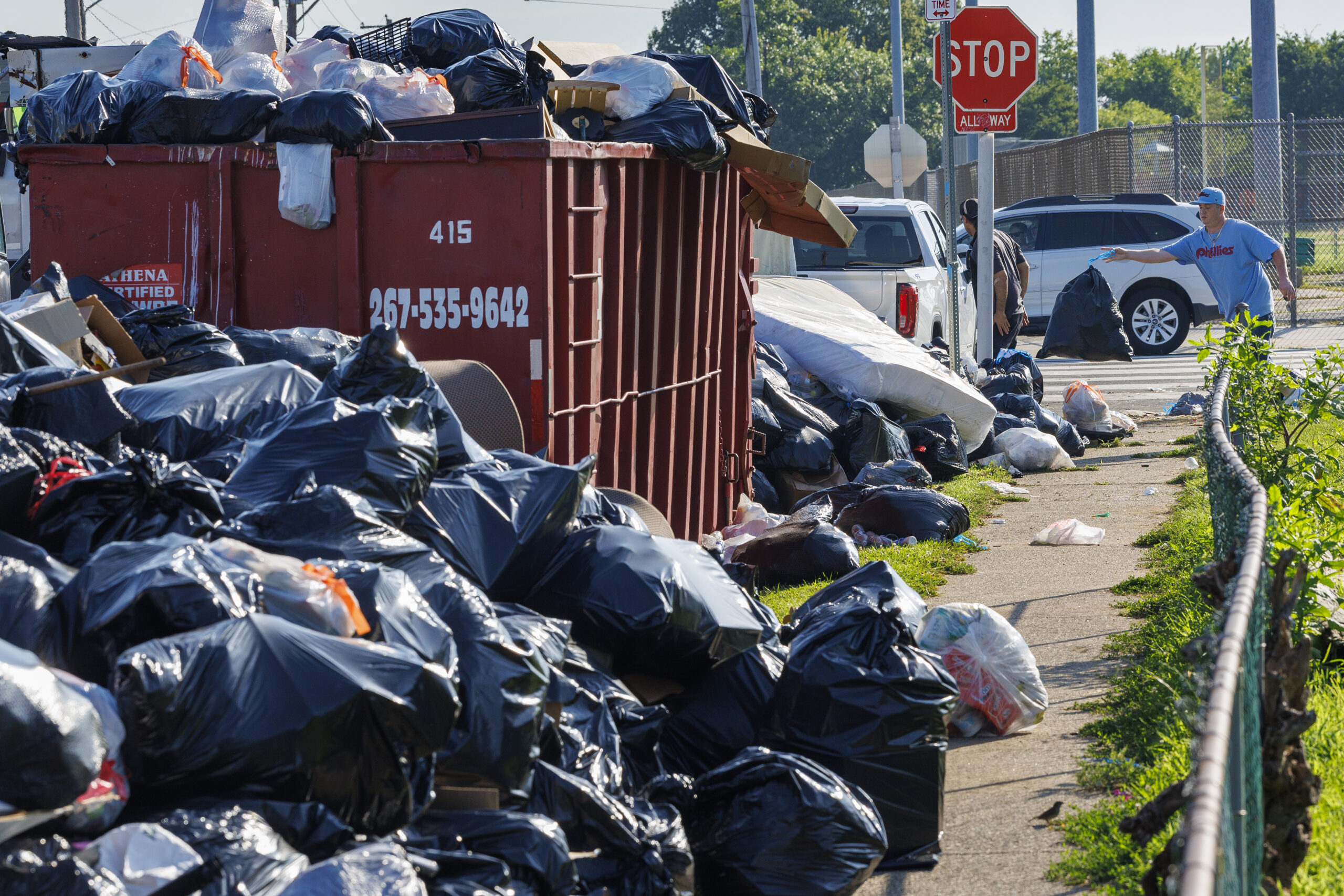
Residents with trash arrive at garbage dump site at Caldera Road and Red Lion Road in northeast Philadelphia during the AFSCME District Council 33 workers strike in July.
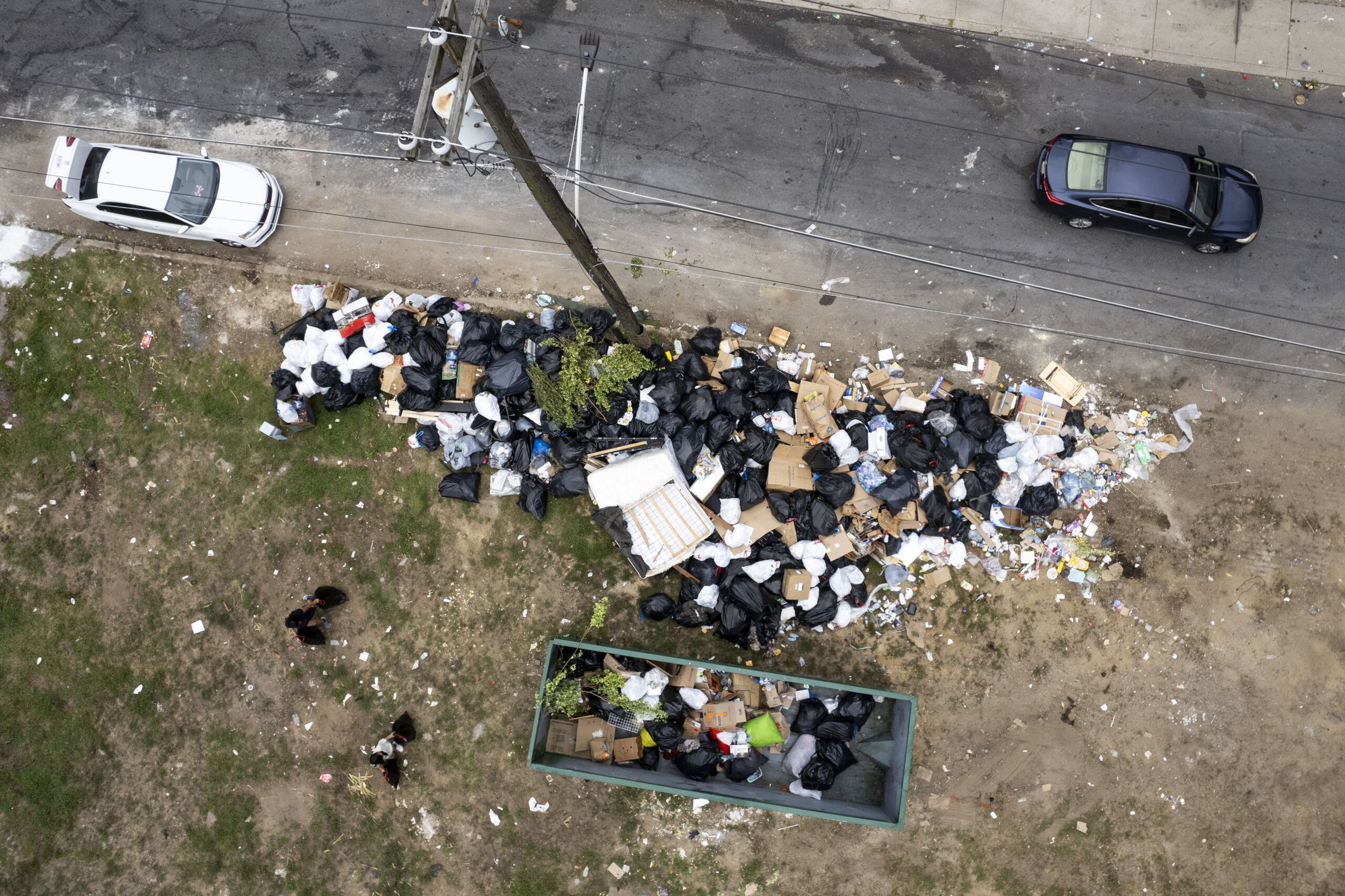
As a result, things got weird. Dead bodies piled up at the Medical Examiner’s Office; a striking union member was arrested for allegedly slashing the tires of a PGW vehicle; and for eight days in the July heat, garbage heaped up all across Philadelphia. The city set up temporary trash drop-off sites, which often overflowed into what were nicknamed “Parker piles,” but that also set off a firestorm about whether using the sites constituted crossing a picket line.
Wawa Welcome America July Fourth concert headliners LL Cool J and Jazmine Sullivan even pulled out of the show in support of striking workers, resulting in a fantastic “Labor Loves Cool J” meme.
It was all like something out of It’s Always Sunny in Philadelphia. In fact, the gang predicted a trash strike in the 2012 episode “The Gang Recycles Their Trash.”
The real strike lasted eight days before a contract was reached. In true Philly form, AFSCME District Council 33 president Greg Boulware told The Inquirer “nobody’s happy.”
A large pile of trash collects at a city drop-off site during the AFSCME workers strike this summer.
97-year-old gives birth to 16 kids
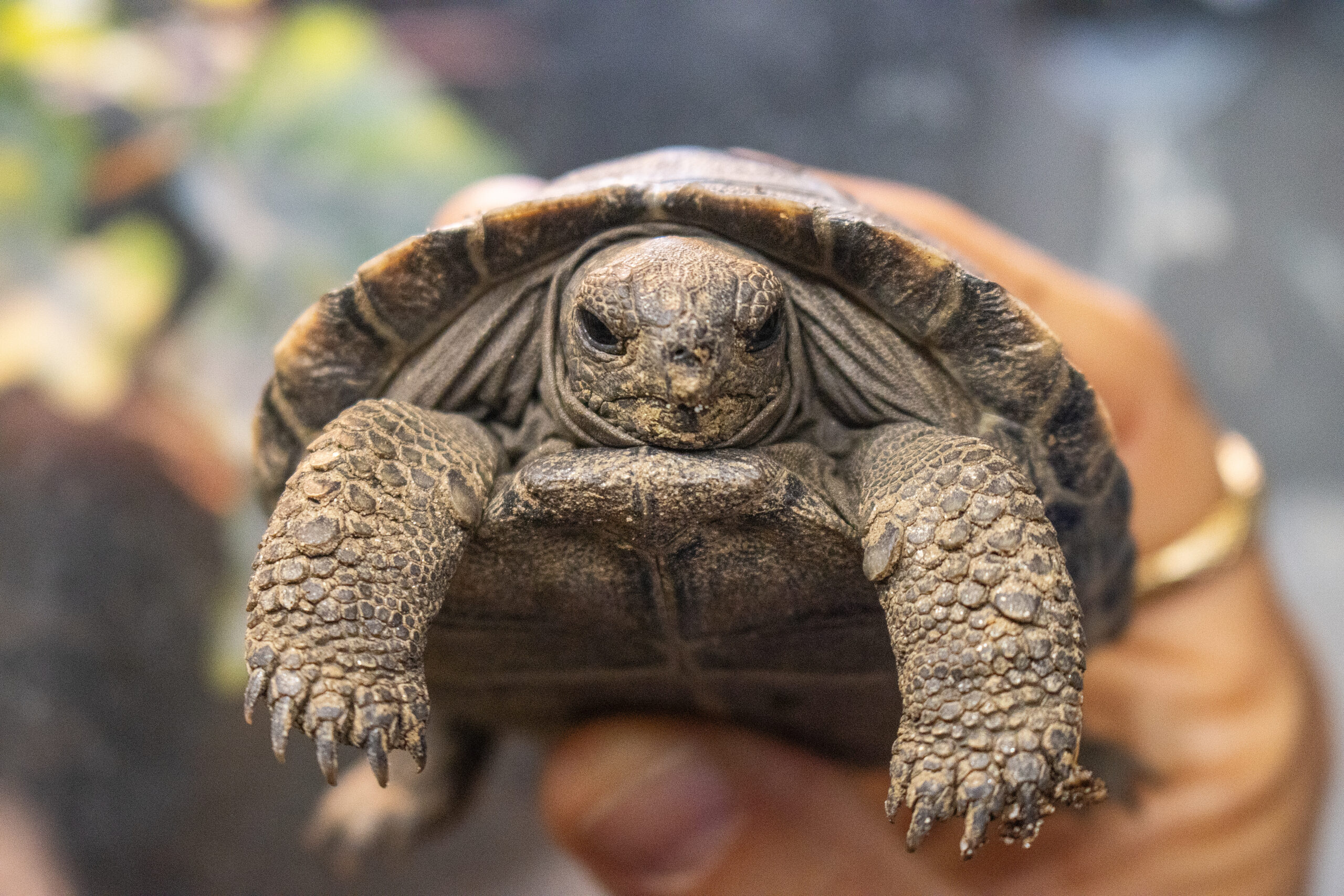
A local nonagenarian couple became national shellebrities this year for welcoming seven babies in April and nine more in August, proving that age ain’t nothing but a number, as long as you’re a tortoise.
Western Santa Cruz Galapagos tortoise Mommy, and male Abrazzo, left, are shown on Wednesday, April 23, 2025, at the Philadelphia Zoo in Philadelphia, Pa. The hatchlings’ parents, female Mommy and male Abrazzo, are the Zoo’s two oldest animals, each estimated to be around 100 years old.
Mommy and Abrazzo, Western Santa Cruz Galapagos tortoises who reside at the Philadelphia Zoo, made history with their two clutches, becoming the first pair of the critically endangered species in the zoo’s 150-year history to hatch eggs and the first to do so in any accredited zoo since 2019.
Mommy is also the oldest known first-time Galapagos tortoise mom in the world, so it’s safe to say she doesn’t have any time or patience for shenanigans. She’s got 16 heroes in a half shell to raise.
Western Santa Cruz Galapagos tortoise egg hatchling.
Phillies Karen
Taking candy from a baby is one thing — babies don’t need candy anyway — but taking a baseball from a kid at a Phillies game is a deed so foul and off base it’s almost unimaginable.
And yet, that’s exactly what happened at a Phillies-Marlins game in September, when a home run from Harrison Bader landed in the stands and a dad ran from his seat to grab it and give it to his son. A woman who was sitting near where the ball landed marched over to the dad, berated him, and demanded the ball be given her. Taken aback, the father reached into his son’s baseball glove and turned the ball over.
The entire scene was caught on camera and the woman, with her Kate Gosselin-esque hairdo, was immediately dubbed “Phillies Karen” by flabbergasted fans.
While the act technically happened at the Marlins stadium in Miami, Fla., it captured the minds and memes of Philadelphians so much that it deserves inclusion on this list. Phillies Karen has made her way onto T-shirts and coffee mugs, inspired skits at a Savannah Bananas game and the MLB Awards, and she even became a popular Halloween costume.
To this day, “Phillies Karen” remains unidentified, so it’s a safe bet she lives in Florida, where she’ll have better luck with alligators than with people here.
Institutional intrigue
Drama at area institutions this year had Philadelphians sipping tea like we were moms on Christmas morning, and sometimes, left us shaking our fists in the air like we were dads putting up tangled lights.
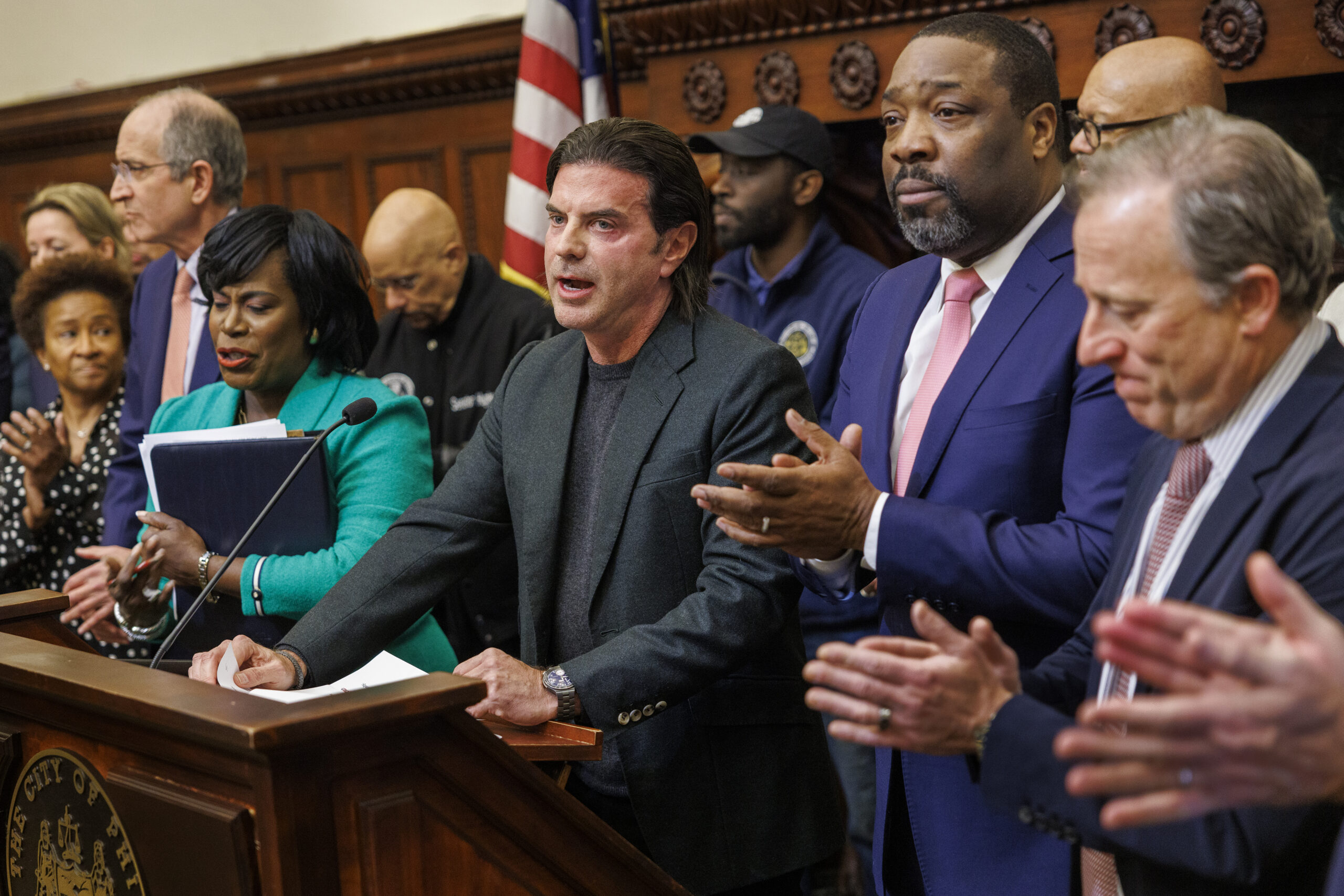
David Adelman with the Philadelphia 76ers makes a statement at a press conference in the Mayor’s Reception Room in January regarding the Sixers changing directions on the controversial Center City arena. At left is mayor Parker, at right City Council President Kenyatta Johnson and Josh Harris, Sixers owner.
It started early in January, when the billionaire owners of the Sixers surprised the entire city by announcing the team would stay at the South Philly sports complex instead of building their own arena on Market East. The decision came after two years of seemingly using the city, its politicians, and its people as pawns in their game.
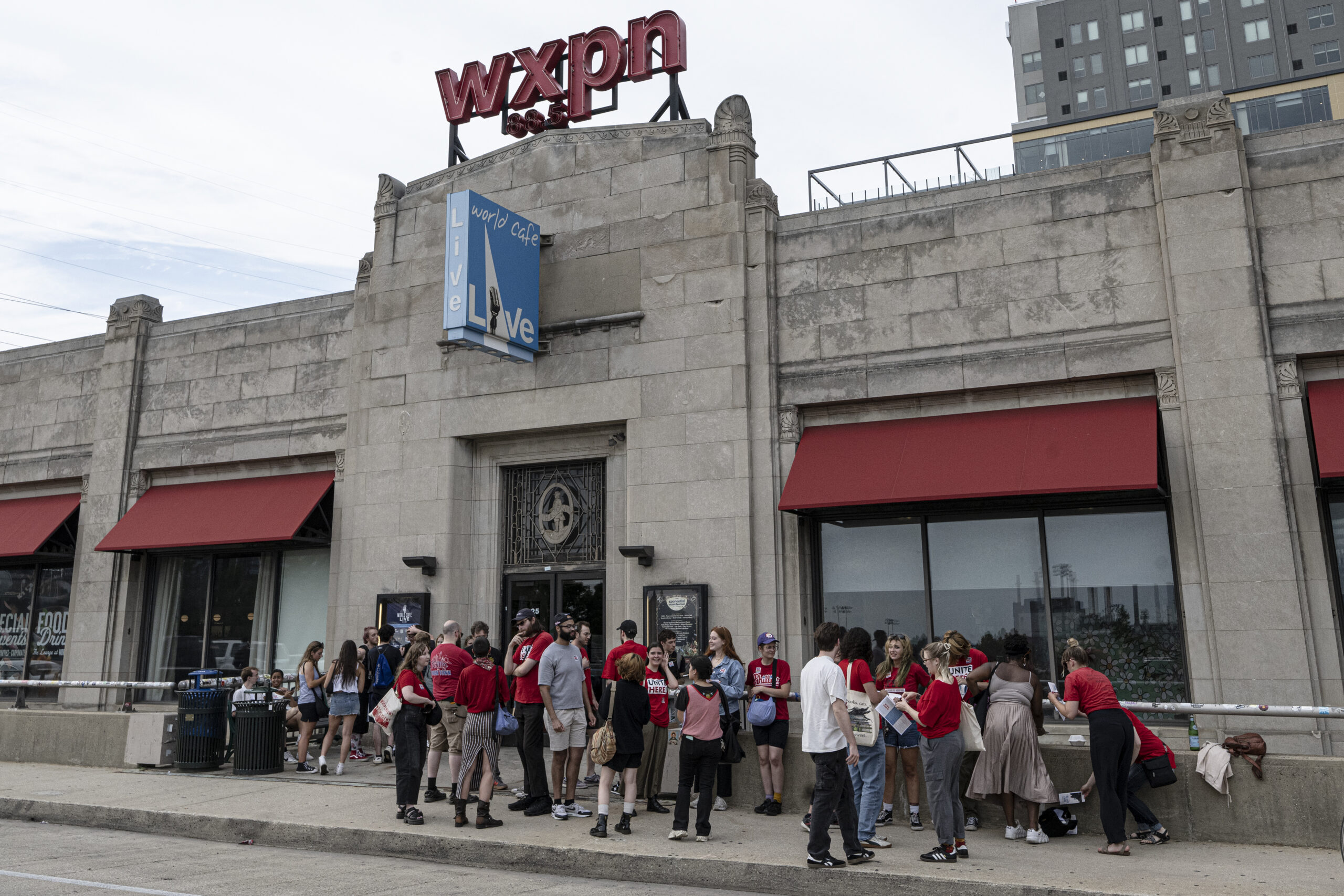
Workers gathered outside World Cafe Live before a Town Hall meeting with management in July.
In June, workers staged a walkout at World Cafe Live due to what they claimed was “an unacceptable level of hostility and mismanagement” from its new owners, including its then-CEO, Joseph Callahan. Callahan — who said the owners inherited $6 million in debt and that he wanted to use virtual reality to bolster its revenue — responded by firing some of the workers and threatening legal action. Today, the future of World Cafe Live remains unclear. Callahan stepped down as CEO in September (but remains chairman of the board), the venue’s liquor license expired, and its landlord, the University of Pennsylvania, wants to evict its tenant, with a trial scheduled for January.
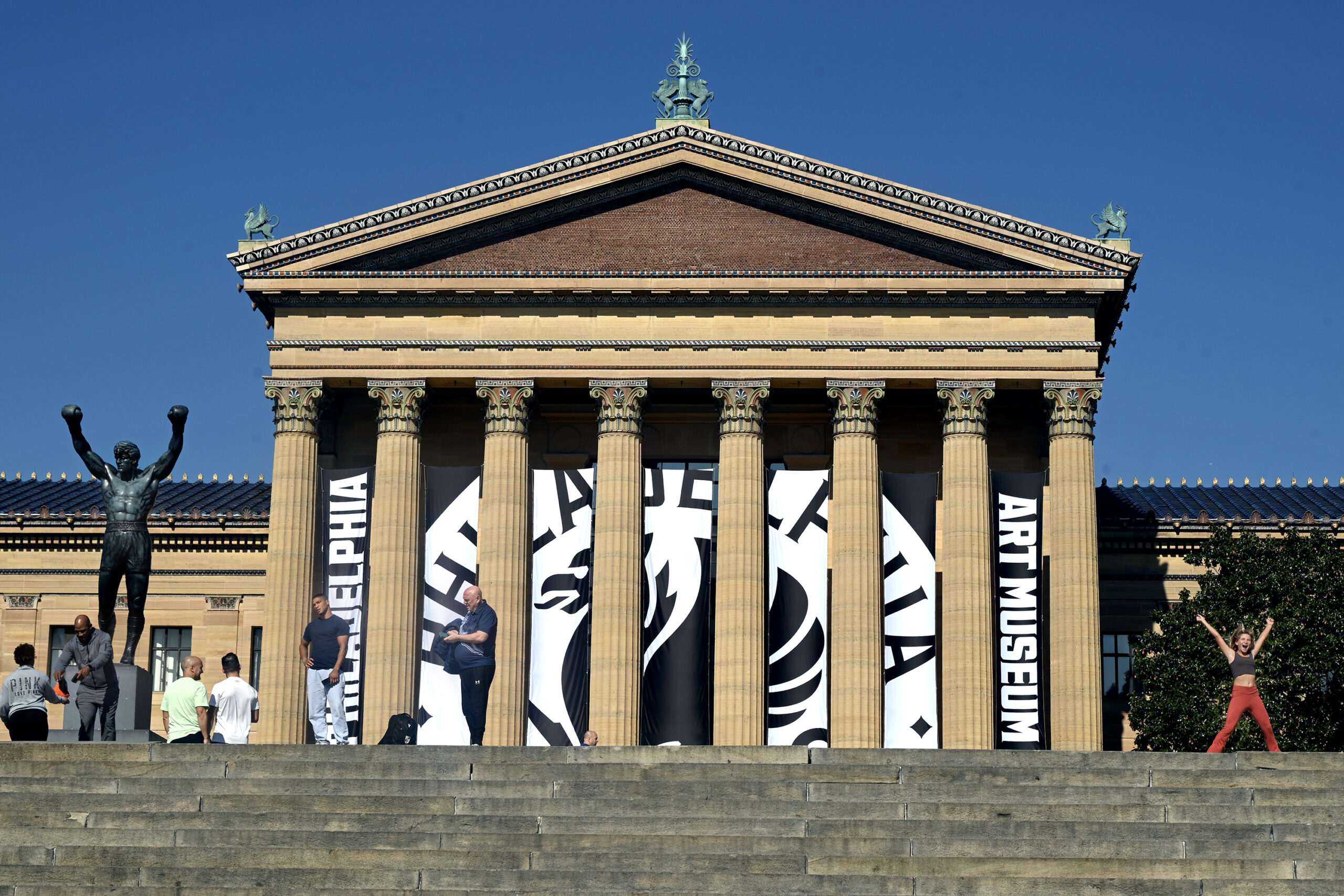
Signage at the east entrance to the Philadelphia Art Museum reflects the rebrand of the institution, which was formerly known as the Philadelphia Museum of Art.
Finally, late this year at the Philadelphia Art Museum, things got more surreal than a Salvador Dalí painting, starting with an institutional rebrand that surprised some board members, didn’t land well with the public, and resulted in a lot of PhART jokes. In November, museum CEO Sasha Suda was fired following an investigation by an outside law firm that focused, in part, on increases to her salary, a source told The Inquirer. Suda’s lawyer called it a “a sham investigation” and Suda quickly sued her former employer, claiming that “her efforts to modernize the museum clashed with a small, corrupt, and unethical faction of the board intent on preserving the status quo.”
Nobody knows where all of this will go, but it’s likely to have more drama than a Caravaggio.
No one throws a “Happy 250th Birthday, America” jammy jam like a Philadelphia museum.
Embedded into the fabric of our nation’s birthplace, Philly cultural institutions are gearing up for high-level deep dives into history, fun, folly, and reflection. Just in time for the Semiquincentennial.
Our museums’ dynamic programming for America’s big birthday kicks off on Jan. 1.
The Philadelphia Art Museum, the National Constitution Center, the Museum of the American Revolution, and smaller outfits like Eastern State Penitentiary and Historic Germantown will, as expected, reimagine the history of our republic in an homage to the forefathers’ ingenuity.
Many are also honoring the perspective of marginalized Americans, upon whose backs this country was built.
Mixed into the Semiquincentennial festivities are other milestone birthdays. Carpenters’ Hall will celebrate the Commonwealth of Pennsylvania’s 250th with an exhibit, historical marker, statewide town halls, and virtual lecture series.
The new year also marks Germantown’s the Colored Girls Museum‘s 10th anniversary; it will open its fall 2026 season with a rare show from renowned sculptor vanessa german.
Renderings of The Franklin Institute’s world premiere of “Universal Theme Parks: The Exhibition” February 14, 2026 – September 7, 2026.
Philly is America’s birthplace. Our 250th birthday energy can’t be outdone.
From the looks of it, it won’t be.
Philadelphia Art Museum
The Philadelphia Art Museum has three major shows in 2026.
Noah Davis
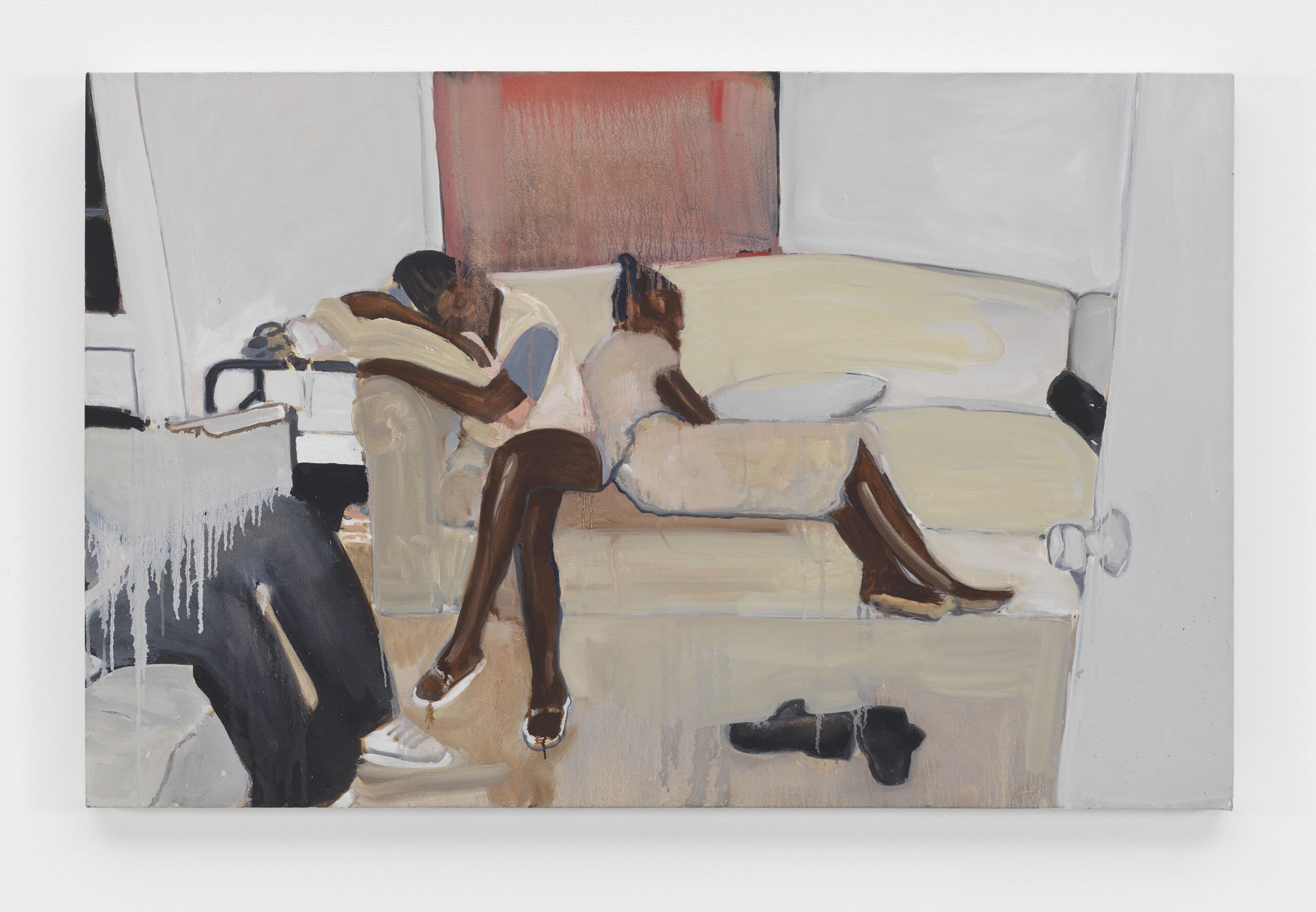
The art museum’s Morgan, Korman, and Field galleries will feature the work of the late African American artist Noah Davis (1983-2015). Davis’ paintings, sculpture, and works on paper capture the history and intricacies of American Black life from antebellum America through his untimely death. Jan. 24-April 26.
“Untitled Girls” This painting by Noah Davis will be on display in the Philadelphia Art Museum’s 2026 exhibition named after the late artist
A Nation of Artists
Paintings, furniture, and decorative arts from Phillies managing partner John Middleton and his wife, Leigh, will center the “A Nation of Artists” exhibit, telling the 300-yearslong story of American creativity. The exhibit is a joint project between the Philadelphia Art Museum and the Pennsylvania Academy of Fine Arts and is billed as “the most expansive presentation of American art ever mounted in Philadelphia.” Opens April 12.
Rising Up
2026 marks the 50th anniversary of the release of the first Rocky film. To coincide, the Art Museum in April will open “Rising Up: Rocky and the Making of Moments” in the museum’s Dorrance galleries. The exhibit will explore how the Rocky statue outside the museum brings people together. April 25-Aug. 2.
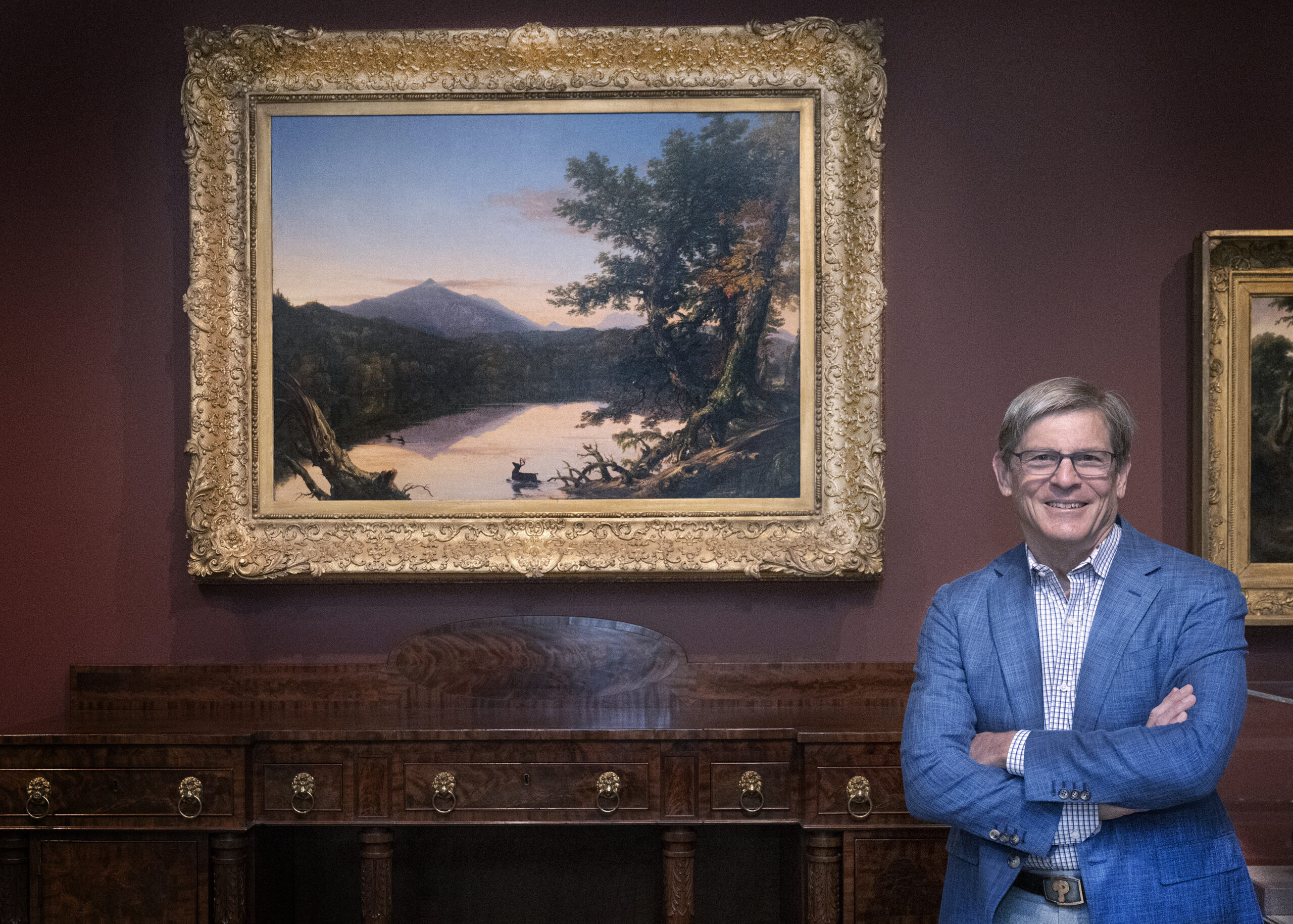
Phillies owner John Middleton is photographed next to a painting to his left, part of his personal collection and soon to be exhibited at the Philadelphia Museum of Art.
Visitors at the Museum of the American Revolution in front of a portrait of Absalom Jones, abolitionist and founder of The First African Episcopal Church of St. Thomas. Jones’ writings are on display.
Penn Museum
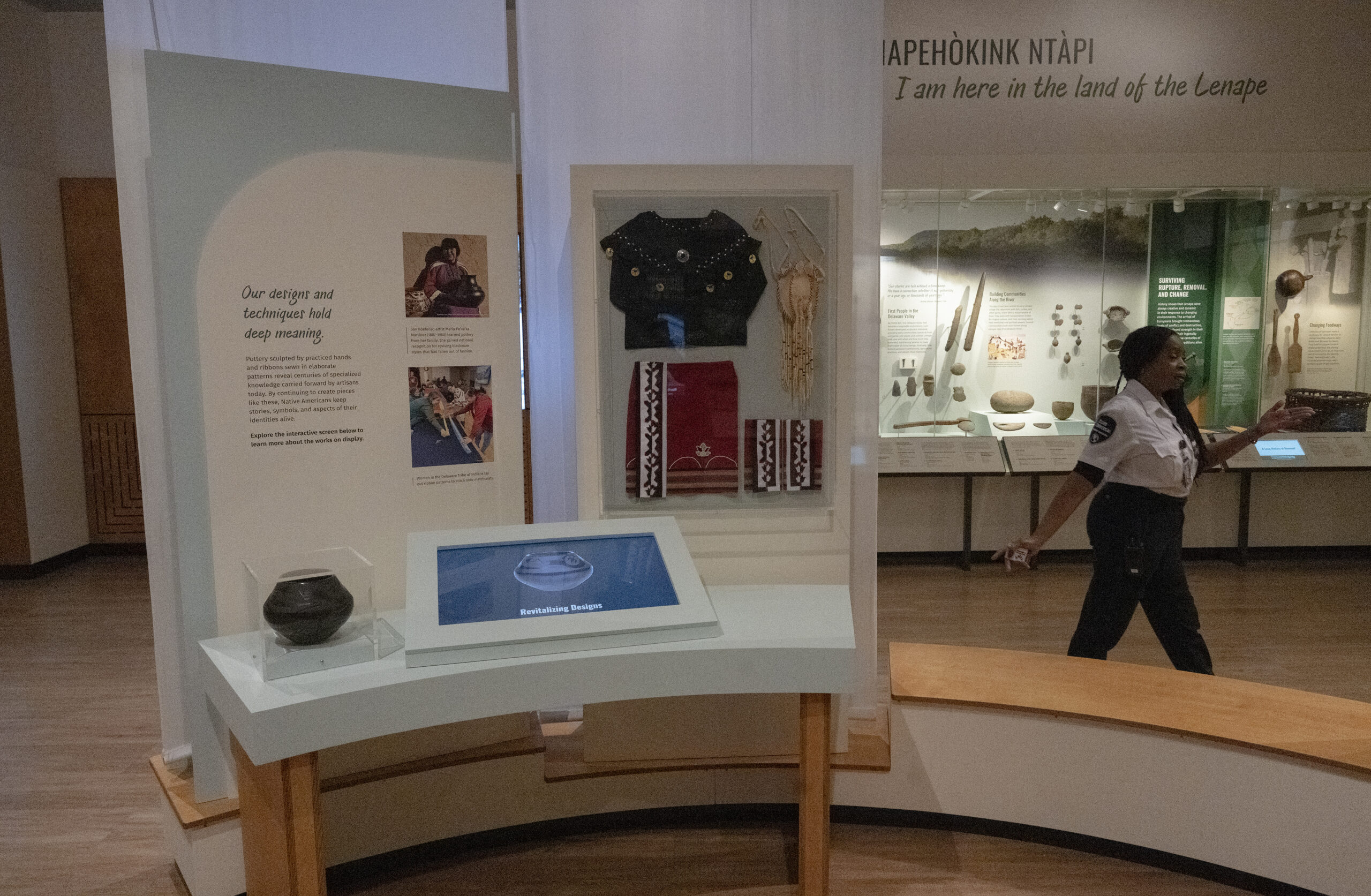
Spear points dating to 3,000 B.C., centuries-old bowls, and 19th century beaded collars are a few of the items that illustrate the lives Lenape Indians led fishing on the banks of the Schuylkill and hunting in Fairmount Park. These are on display at Penn Museum’s new Native North American gallery. Visiting curator Jeremy Johnson chose these artifacts because, he said, they best “tell the story of his people — who the Founding Fathers tried to erase.” Through 2027.
A gallery of Native American art is displayed at the Penn Museum on Friday, Nov. 21, 2025, in Philadelphia. As celebrations of Native American culture and precolonial Philadelphia plants grow, museums across the city prepare for America’s 250th birthday.
Weitzman National Museum of American Jewish History
On Nov. 16, 1776, the Andrew Doria brigantine arrived in the Caribbean on the British colony St. Eustatius, waving the first national flag of the United States. The Jewish merchants and English settlers, treated poorly by their antisemitic Anglican monarchs, greeted the newly minted Americans with a 13-cannon salute. In that moment, St. Eustatius became the first country to recognize America’s sovereignty.
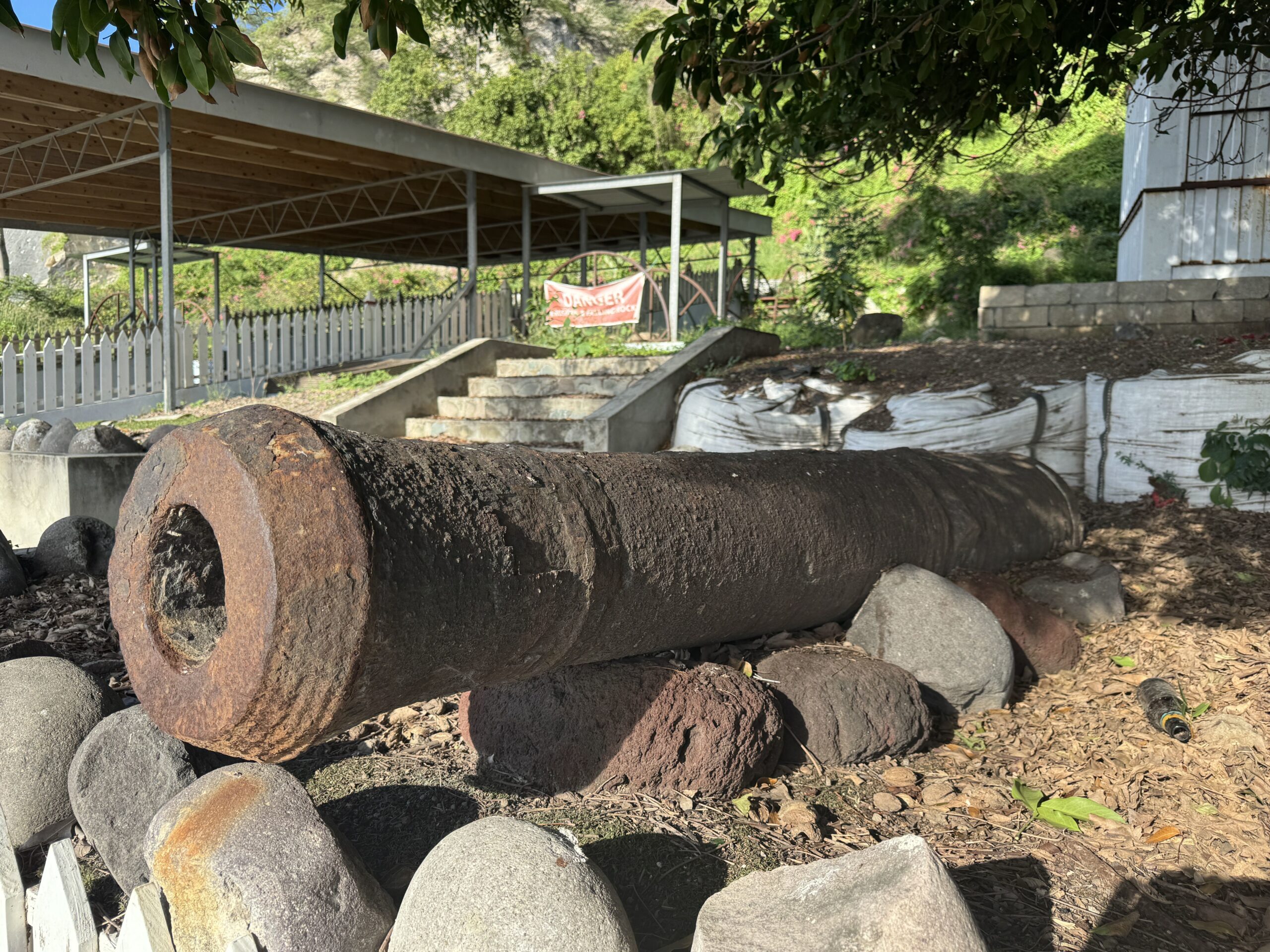
Cannon from the shores of St. Eustatius much like those fired in the 18th century that will will be on display during “First Salute.” 250tharts-12-28-2025
Weitzman National Museum of American Jewish History’s“The First Salute” exhibit will recount this largely untold story — including how the Jewish merchants smuggled the Americans’ gunpowder in tea and rice bags, giving Pirates of the Caribbean meets Hamilton vibes. Artifacts on display will include 18th-century currency, a series of paintings from prominent Jewish Philadelphian Barnard Gratz’s art collection, and an actual cannon shot from the island’s shores. From April 23, 2026, through April 2027.
National Constitution Center
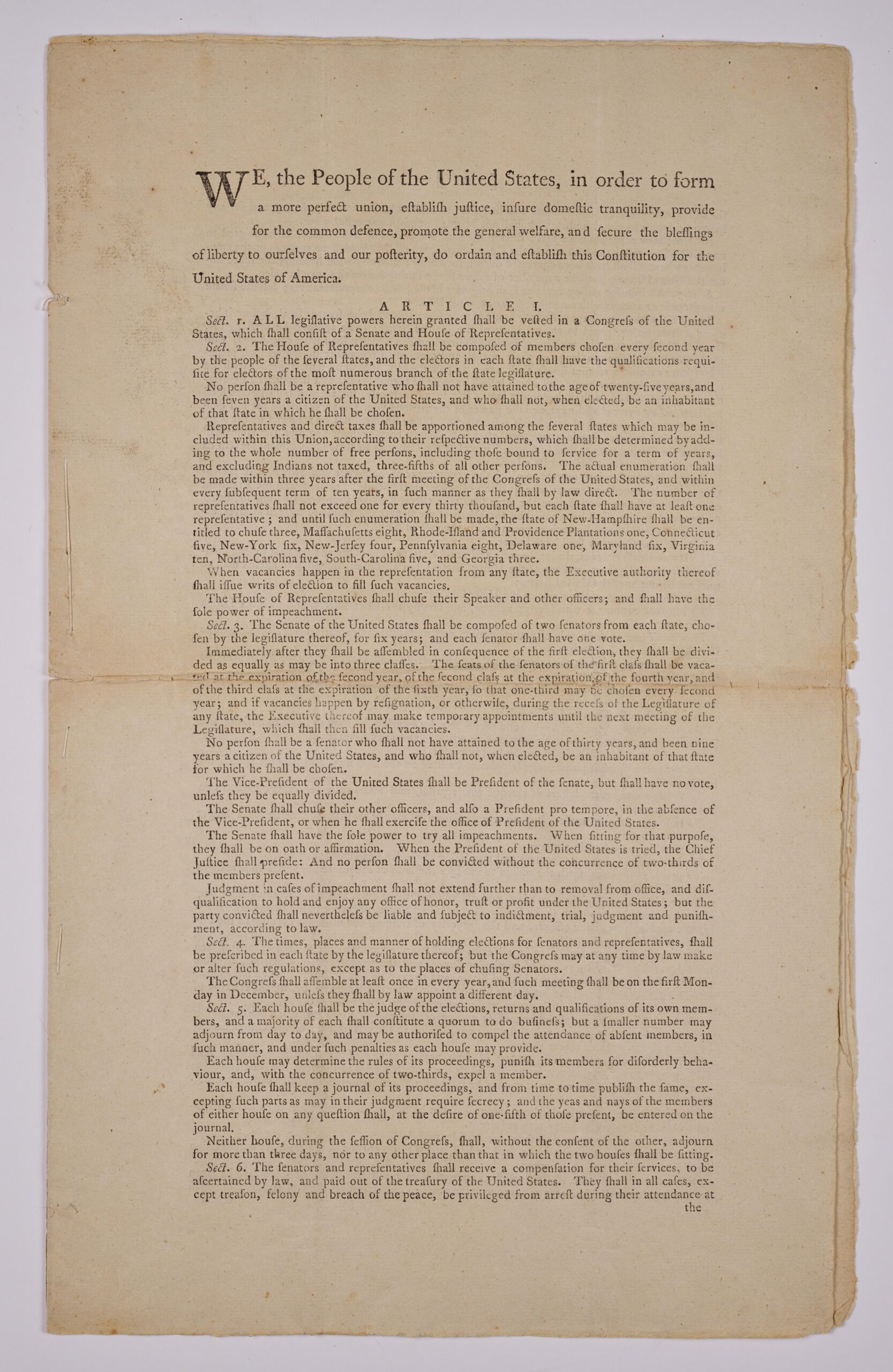
Centered around a rare, centuries-old copy of the U.S. Constitution — a gift from billionaire hedge fund manager Kenneth C. Griffin — the National Constitution Center will present “America’s Founding.“ The gallery will be dedicated to the exploration of our early, colonial principles that led our fight for independence. How do they stand up now? Opens Feb. 13.
This original copy of the U.S. Constitution, one of only 14, was donated to the National Constitution Center by billionaire hedge fund manager Kenneth C. Griffin. It will be featured in the Constitution Center’s upcoming “America’s Founding” exhibit.
A second gallery will explore how the Constitution defines roles and balances power between the legislative, judicial, and executive branches of government. Opens in May.
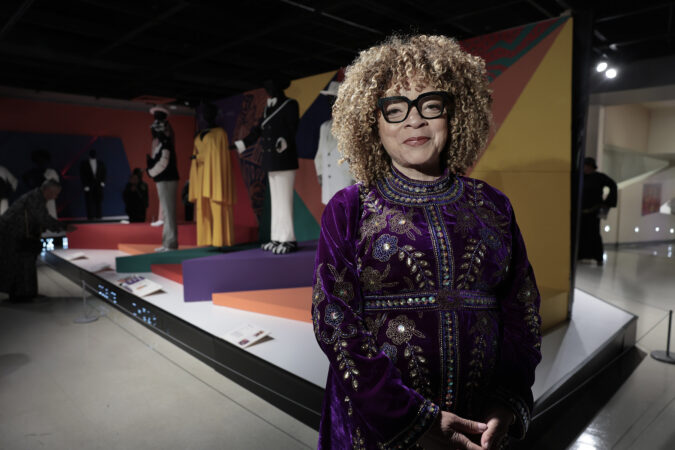
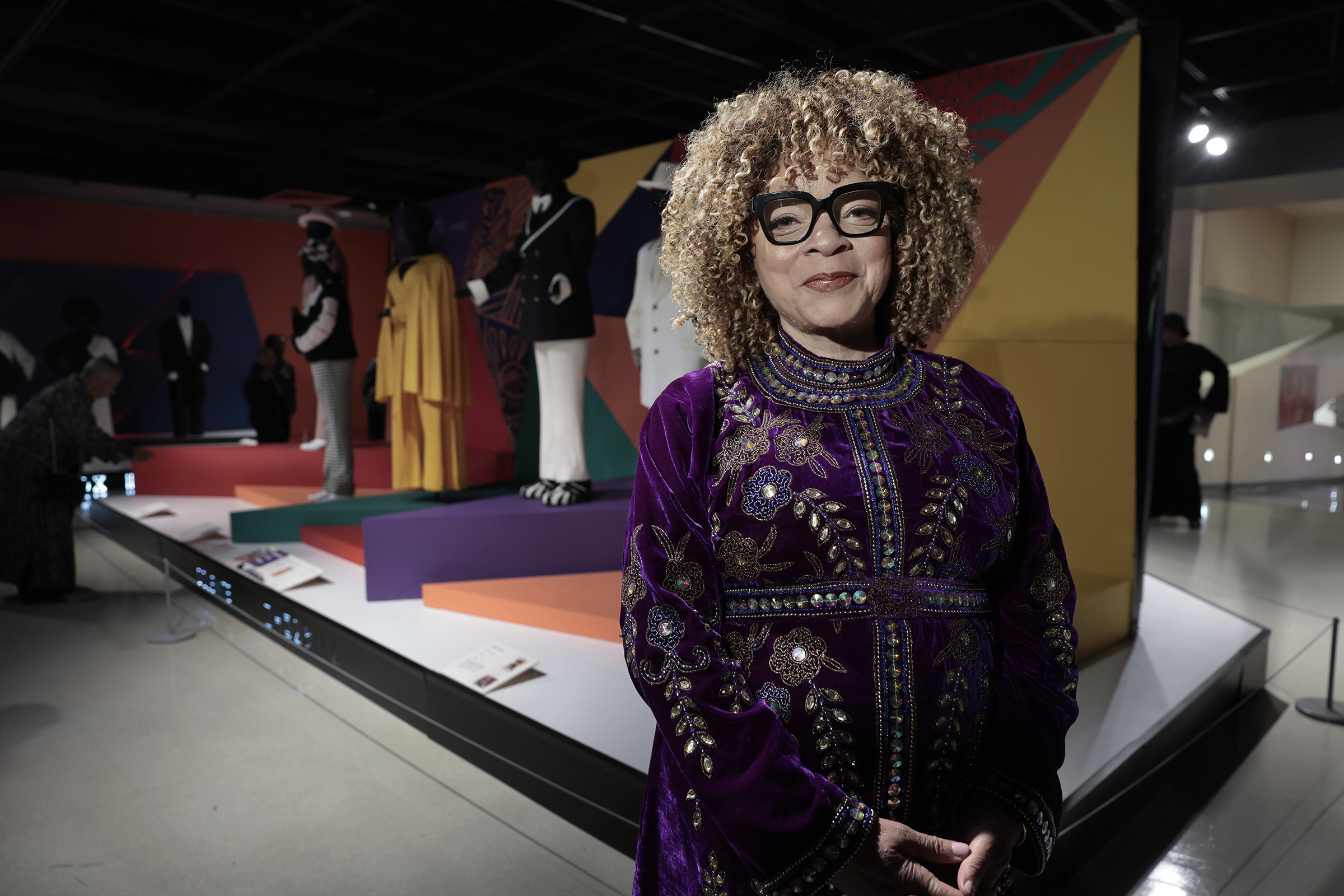
Ruth E. Carter pauses briefly during the “Ruth E. Carter: Afrofuturism in Costume Design” opening gala at the African American Museum in Philadelphia on Saturday, Nov. 1, 2025.
In October 2026, AAMP will premiere the extension of its “Audacious Freedom” exhibit. Currently on the ground floor, the exhibit is a study of Black Philadelphians from 1776 to 1876. The expanded show will bring “Audacious Freedom” up to present day and will include 20th-century artists and educators, from Charles Blockson to Jill Scott.
Woodmere Art Museum
Inspired by Philadelphia illustrator and friend of WoodmereJerry Pinkney, the Chestnut Hill museum’s Semiquincentennial show, “Arc of Promise,” acknowledges America’s painful histories of slavery, injustice, and displacement of its Indigenous people while affirming its capacity to rebuild, renew, and evolve. Featuring art by Philadelphians dating to 1790, “Arc of Promise’s” paintings, sculptures, maps, and flags explore what freedom and justice for all truly means. Opens June 20.
The Academy of Natural Sciences of Drexel University
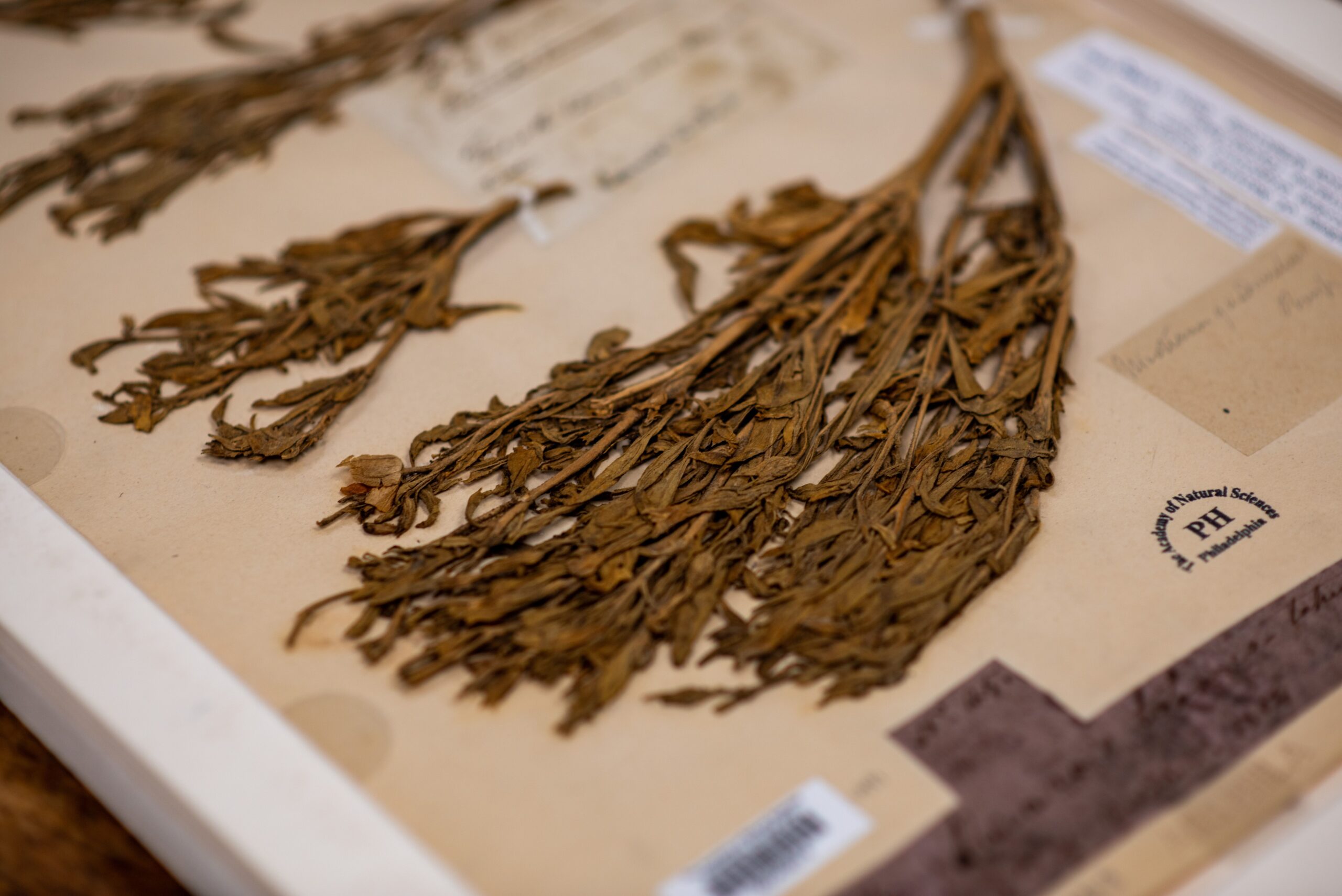
In collaboration with California State University ethnobotanist Enrique Salmón, the Academy of Natural Sciences at Drexel University will debut “Botany of Nations: Indigenous Ecological Knowledge and the Lewis & Clark Corps of Discovery.” These centuries-old plants, collected by explorers Meriwether Lewis and William Clark, were a gift to Philadelphia’s American Philosophical Society from Thomas Jefferson. Organizers hope the selection of now-pressed plants — prairie turnip, camas root, and Western red cedar — will be a vegetative portal to the Indigenous perspective in American frontier life. From March 28, 2026, through Feb. 14, 2027.
Samples from Botany of Nations. Academy of Natural Sciences of Drexel University, March 28, 2026 – February 14, 2027
The Clay Studio: Center for Innovation in Ceramic Art.
Twenty-five artists from 20 Philadelphia cultural institutions will present projects that show how the definition of independence evolved from 1776 through 1876, 1926, 1976, and 2026 under the umbrella of the Clay Studio. The exhibit, “Radical Americana,” will start with a compelling show by Kensington potter Roberto Lugo on April 9. Artists will mount additional shows at participating institutions throughout the year, including at the Museum for Art in Wood and Cliveden Historic House. A full list is available at theclaystudio.org. Opens April 9.
Roberto Lugo is shown working on one of his Greek vases that is now part of a new exhibition, “Roberto Lugo / Orange and Black” at Art@Bainbridge, a gallery project of the Princeton University Art Museum
Mural Arts Philadelphia
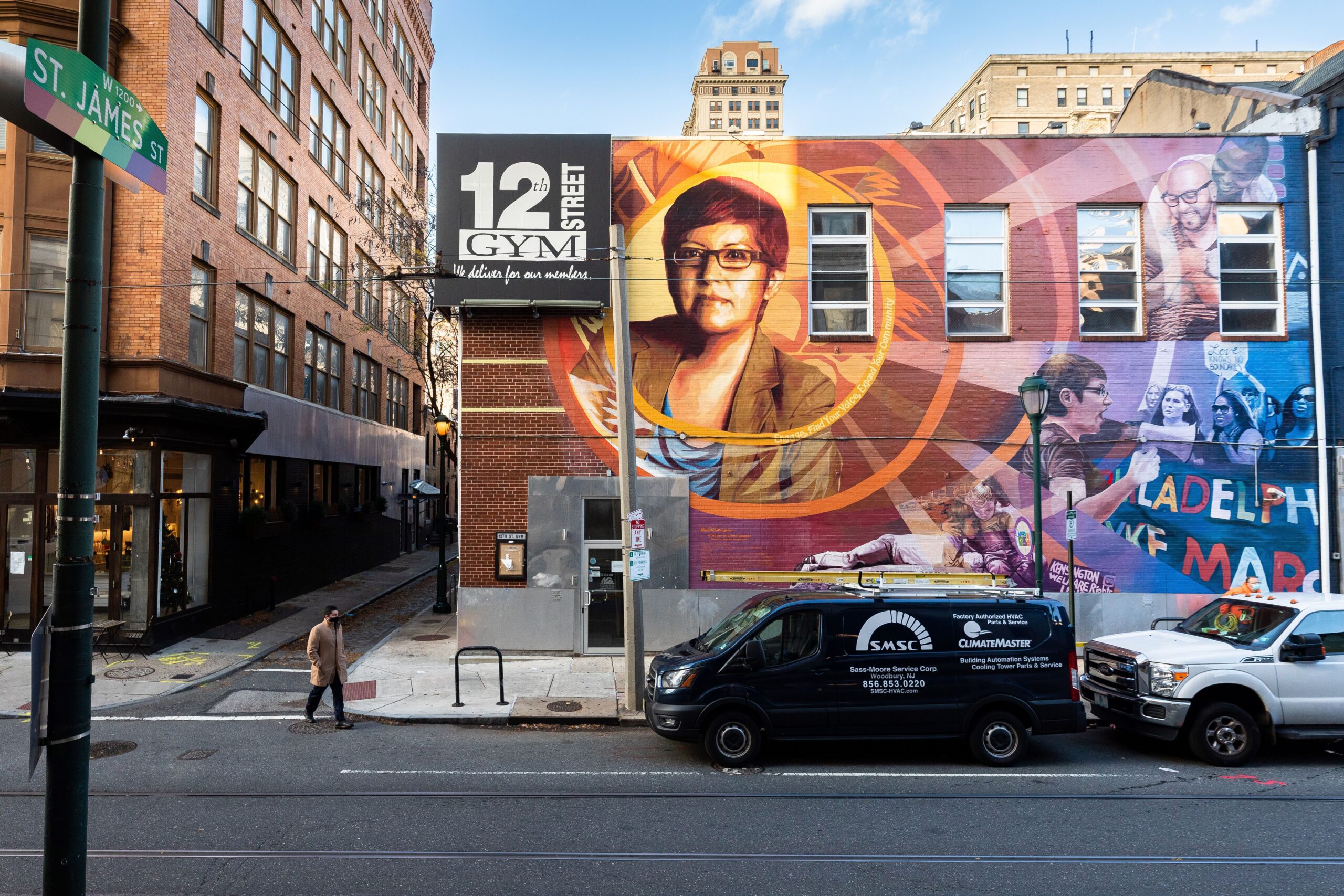
Mural Arts is working on several projects that will spruce up the city in 2026. That includes a new focus on the city’s entryways, the restoration of several murals, and a collaboration between Free Library of Philadelphia in a community printmaking project. At least three new murals will debut and include a tribute to artists Questlove (of the legendary Roots crew) and Boyz II Men. A refurbished mural in honor of Philadelphia’s first director of LBGTQ affairs, the late Gloria Casarez, will be unveiled. Mural Arts also is partnering with the Philadelphia Historic District on sculptures for next year’s 52 Weeks of Firsts programming and with the Bells Across PA program to create Liberty Bell replicas in neighborhoods throughout the city.
A rendering of a tribute to Gloria Casarez City of Philadelphia Mural Arts Program, Michelle Angela Ortiz, 12th Street Gym, 204 South 12th Street.
Philadelphia sports fans of a certain age remember the city’s golden era, when all four professional teams advanced to their league’s championship series or title game in the same calendar year.
“The city was crazy that summer,” said Larry Bowa, the former Phillies shortstop who was a member of the 1980 World Series champion team. “Every team went to the finals, and we were the only one that won.”
Yes, the Sixers, Flyers, and Eagles all came up short of the brass ring in 1980 (and January 1981 for the Birds’ Super Bowl loss), but Philadelphia morphed into a sports nirvana during those 12 months.
Bowa said he thinks the 2026 Philadelphia sports scene will be even more electric, when the City of Brotherly Love hosts a bevy of major sporting events throughout the year. It starts with the March Madness men’s basketball opening rounds at Xfinity Mobile Arena, and stretches through the end of August, when the Philadelphia Cycling Classic is staged.
In between those two marquee events, the 108th PGA Championship will be played at Aronimink Golf Club, followed by six FIFA World Cup matches held at Lincoln Financial Field, the last of which is scheduled for July 4, the 250th anniversary of the adoption of the Declaration of Independence by the Continental Congress.
If that’s not enough, Citizens Bank Park in mid-July will be the host site for the Major League Baseball All-Star Game, the fifth time the Midsummer Classic has been played in Philadelphia, but the first at the Phillies’ current home stadium.
Imagine if the four Philly pro teams have a 1980 redux — that would be the cherry on top of Billy Penn’s hat.
“I think it’s going to be awesome,” Bowa said of the upcoming sports extravaganza. “People come from all over, and, whether it’s fair or not, Philly gets a bad rap sometimes. People that don’t live here, they don’t understand the passion that the fans have. It’s a great city. The fans are great. [You] can enjoy some of the history downtown. It’s going to be fun to sit back and watch.”
Houston forward Ja’Vier Francis blocks a shot by Florida center Micah Handlogten during the NCAA championship game on April 7, 2025, in San Antonio, Texas.
March Madness: NCAA men’s basketball tournament
None of the area men’s basketball teams that constitute the Big 5 (now 6 including Drexel University) is currently in the Top 25 rankings as of this writing, but that could change by the turn of the calendar.
Even if no Philly-area team punches its Big Dance ticket, St. Joseph’s will factor in the 2026 NCAA tourney when the school hosts the first- and second-round games at Xfinity Mobile Arena. The Florida Gators are the defending champions, and when March Madness begins, Philadelphia steps into the college basketball limelight for the opening curtain.
Friday, March 20, and Sunday, March 22; Xfinity Mobile Arena; tickets at xfinitymobilearena.com.
Scottie Scheffler lines up a putt on the fifth green on the first day of the 2025 Ryder Cup at Bethpage Black on Sept. 26.
PGA Championship
The 108th edition of one of professional golf’s four majors will be staged on the pristine Aronimink Golf Club links. The last time the PGA Championship was staged here was more than 60 years ago, when Hall of Fame legend Gary Player beat Bob Goalby by a stroke.
More recently, Keegan Bradley won the 2018 BMW Championship at Aronimink. Defending champ Scottie Scheffler will be among the star-studded group of golfers descending upon suburban Philly to play for the Wanamaker Trophy. If you miss out on tickets to the PGA Championship, you have another chance to see high-level golf in the region when the U.S. Men’s Amateur Championship comes to Merion Golf Club in mid-August.
May 11-17; Aronimink Golf Club, Newtown Square; tickets at pgachampionship.com.
The FIFA World Cup Trophy is displayed during the FIFA World Cup 2026 playoff draw in Zurich, Switzerland, on Nov. 20.
FIFA World Cup
Soccer’s premiere event was last staged in the U.S. over three decades ago, when the USMNT advanced to the Round of 16, before losing to perennial powerhouse Brazil. Now the men’s national team has another chance to try to do what no U.S. squad has done before — win soccer’s most prestigious award.
Six of the 2026 FIFA World Cup matches will be played at the Linc, including the final of those matches scheduled to take place on Independence Day.
June 14-July 4; Lincoln Financial Field; tickets at fifa.com.
Tampa Bay Rays’ Junior Caminero reacts during the MLB baseball All-Star Home Run Derby on July 14 in Atlanta.
MLB All-Star Game
Bowa was an All-Star in 1976, when the Midsummer Classic was played at Veterans Stadium. But in that doughnut-shaped ballpark, “you had to hit ’em to get out of there.” Bowa said he thinks the bandbox Citizens Bank Park will be a great venue for baseball’s All-Star gathering, particularly the Home Run Derby.
“This one, they might be taking the upper deck down with these guys as big and strong as they are, and the way the ball jumps in Philly.”
It will be even more entertaining if defending All-Star Game MVP Kyle Schwarber is suited up in a Phillies jersey next year. But if Schwarber departs in free agency, there is still a group of Phillies — Bryce Harper, Trea Turner, Cristopher Sanchez — who could star for the National League.
July 12-14; Citizens Bank Park; tickets at mlb.com.
Racers in the 2007 Commerce Bank Liberty Classic climbing the Manayunk Wall.
Philadelphia Cycling Classic
One of cycling’s jewel events, the Philadelphia Classic has had numerous name iterations over the years, going back to its start in 1985 when it was called CoreStates U.S. Pro Cycling Championship. That year, Eric Heiden — yes, the former U.S. Olympic gold medal-winning speed skater — was champion.
Tour de France legend Greg LeMond has also been a past participant. The route snakes west of Center City and includes the famed Manayunk Wall, a cycling test of will on Levering Street.
Aug. 30; Planned 14.4-mile circuit goes from Logan Square up Kelly Drive to Manayunk and back; tickets at philadelphiacyclingclassic.com.
The morning glory flower can take months to blossom, but seeing their stunning trumpet-shape blooms finally pop from their spindly tendrils is so worth the wait.
“We call the morning glory ‘happiness,’ because it’s cheerful. It’s blue with a glowing pink center, and it makes you feel like life is good,” said Burpee president and CEO Jamie Mattikow.
To celebrate the nation’s 250th birthday, the Warminster company is partnering with the Museum of the American Revolution to offer a Declaration Bouquet collection, which features seeds for five new flowers inspired by words plucked from the Declaration of Independence and the national anthem.
The collection debuted Dec. 1, and, besides the “happiness” morning glory, includes a “star-spangled” marigold, whose white layered petals signify Old Glory’s stars; the drought-tolerant, butter yellow “independence” gaillardia; the fiery orange “liberty” cosmos; and the calming purple “freedom” verbena that can be started indoors or out, as long as it has full sun.
Burpee’s Declaration Bouquet celebrates the nation’s 250th anniversary.
“We wanted to bring the words to life in a flower that embodied them,” Mattikow said of the full collection, which is available in the museum’s gift shop and via Burpee for $34.95 (you can also get each Declaration Bouquet seed packet individually via burpee.com). The collection contains five seed packets, eight labels, a Declaration of Independence keepsake card, and growing instructions.
“The Declaration Bouquet was part of a larger effort of making America’s 250th special for gardeners,” said Mattikow, who became an avid gardener himself after he joined the company in 2019.
The idea to partner with the Museum of the American Revolution came from Maureen Heffernan, horticulturist and wife of Burpee owner George Bell, after a visit to the Old City institution.
“They were percolating this idea of collaborations for 2026, so she reached out,” said Allegra Burnette, the museum’s chief strategy and growth officer.
They talked through ideas, and the company came up with the flower collection.
“It’s a way for them to showcase new flowers — and the Declaration of Independence spawned a lot of new things, as well,” Burnette said. “It’s also a nice way to come out of our ‘Declaration’s Journey’ exhibit when you are in a thoughtful but celebratory frame of mind. We hope it’s a way to plant a seed and keep something going forward.”
“Freedom” verbenas were bred for Burpee’s Declaration Bouquet in celebration of the nation’s 250th anniversary.
The collaboration was a no-brainer for Burpee. “We recognize the importance of Philadelphia to the birth of the country, and we wanted to partner with somebody who could help us think of a great way to do this,” Mattikow said.
Along with celebrating the nation’s milestone birthday, Burpee has a big one of its own, marking 150 years in business in 2026. One way it’s ringing in the anniversary is with a Historic Breakthroughs collection of heirloom seeds.
“The founding of W. Atlee Burpee has always been about innovation, even today,” Mattikow said. “[Our story] has been largely told in products that were firsts to gardeners and farmers at the time. There are histories behind them that some people aren’t aware of, so we thought it’d be a wonderful opportunity to bundle it together in a collection of historic gardening firsts.”
Burpee’s Historical Breakthroughs seed collection celebrates the company’s 150th anniversary.
The Historic Breakthroughs collection includes nine seed packets and is priced at $29.95, available through Burpee’s website and catalog. This includes iceberg lettuce (first bred in 1894), the first yellow sweet corn (1902), and snowbird sugar snap peas (1978). The collection’s packaging features a nostalgic recreation of a Burpee catalog cover from 1888.
In addition to the Declaration Bouquet, Burpee also launched three other heirloom seed collections for 2026 that tell stories from the iconic gardens of the Monticello Museum, George Washington’s Mount Vernon, and the American Horticultural Society. Each collection contains eight packets of seeds and is available at the respective institutions, as well as via Burpee for $49.95.
“Over the years there’s been a lot of choiceful introduction of products that would succeed in the climates of the U.S.,” said Mattikow. “They’re wonderful if you want a little slice of history from a gardener’s standpoint.”
First, Danielle Delange saw the news alert: Bristol Health & Rehab, the nursing home where her mother lived, was on fire.
Within minutes, Delange got a phone call from an unfamiliar number. On the line, she heard her 64-year-old mother’s trembling voice.
“My mom said there was a gas explosion,” Delange said. “And I said, ‘How do you know it was a gas explosion?’ And she said, ‘Because we’d been smelling gas.’ … And I said, ‘Today?’ And she said, ‘No, for a couple days.’”
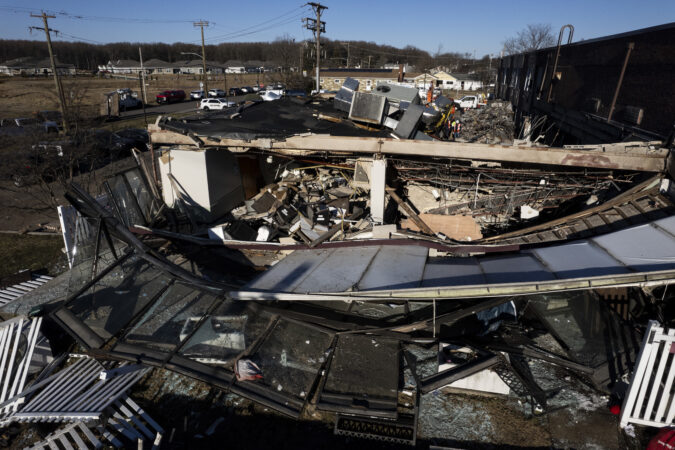
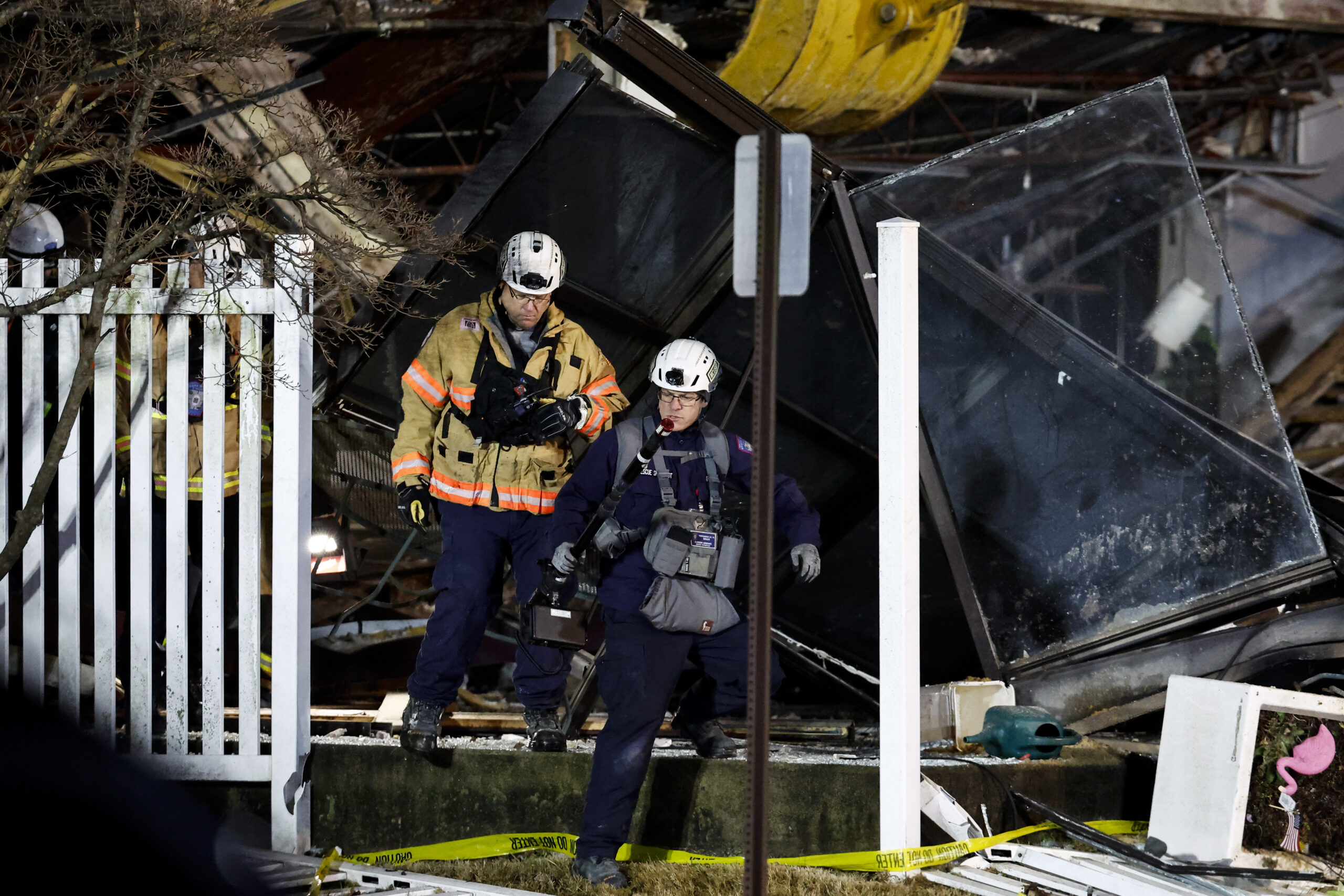
Her mother, Anna Grauber, who uses a wheelchair, was evacuated from the burning building soon after Tuesday’s devastating blast, which killed a nurse and a resident and injured 20 people. The cause of the explosion remains under investigation.
First responders work the scene of an explosion and fire at Bristol Health & Rehab Center, Tuesday, Dec. 23, 2025, in Bristol, Pa.
According to Delange, in the immediate aftermath of the explosion, her mother was outside, and she was starting to get uncomfortably cold.
Delange said her mother, who lives with COPD and emphysema, didn’t have the oxygen that she needs and was struggling to breathe. Even her emergency inhaler was back in her room.
Delange’s mother is one of the 119 residents who had to be relocated from the healthcare facility in Bristol Township, Bucks County, to other care homes across the region. With the facility now the scene of a federal investigation, Grauber and other residents are left without their possessions and, according to several families, they lack even basic necessities like clothes and phone chargers.
‘She doesn’t have pants’
The company that runs the nursing home, Saber Healthcare Group, says it’s doing all it can while it waits for the National Transportation Safety Board to determine whether people can safely return to the nursing home building at 905 Tower Rd.
But family members of residents, such as Delange, are questioning whether that’s enough.
Delange said her mother was promptly moved to another Saber Healthcare Group property, Statesman Health & Rehabilitation Center, a short drive away in Levittown. However, her mother had to go several days without one of her medications, Delange said, and was struggling to adjust.
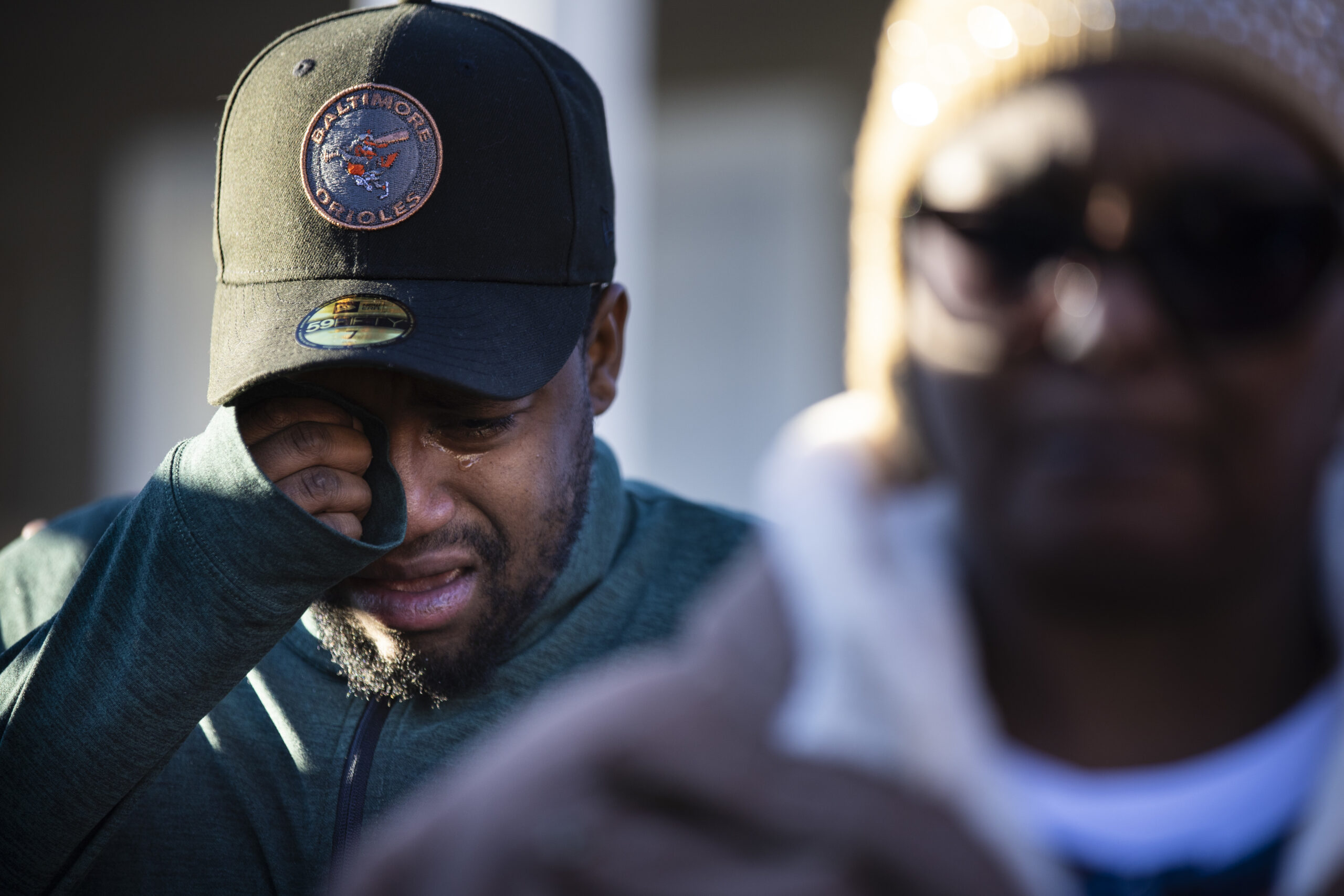
Muthoni Nduthu’s son Clinton tears up while the family speaks with the media on Wednesday, Dec. 24, 2025, in Bristol Township, Pa. Muthoni Nduthu was killed in the explosion at Bristol Health and Rehab Center on Tuesday.
Delange said that when she visited her mother on Friday at her new home in Levittown, her mother was wearing men’s basketball shorts and a T-shirt. She said that Saber has not provided clothes for the relocated residents, and so staff have resorted to pulling clothes from a donation box.
“She doesn’t have pants,” Delange said. “And that got me thinking, like, what did my mom have on when she left there?”
‘No indication’ of issues
Zachary Shamberg, Saber’s chief of government affairs, said the company is doing everything it can to help the displaced residents — but right now, nobody is allowed in the Bristol facility.
Possibly as early as Monday, Saber may be cleared to reenter the building, Shamberg said. “We’ll survey the damage, we’ll see what can be salvaged, and we’ll get in touch with families to ensure any items were returned.”
Saber’s insurance company would likely handle replacement or compensation for items destroyed in the blaze, he said.
As far as he knows, Shamberg said, the company is not providing money or purchasing new clothes or essential items for residents. He encouraged residents’ families to contact leadership at the Bristol facility if they need anything.
Shamberg said many residents have been moved to other Saber-affiliated nursing homes in the area, and these residents would promptly get prescriptions refilled. In addition, the company has started working with Medicare and Medicaid to replace residents’ dentures and eyeglasses. However, because some Saber locations are full, people have been placed in other facilities.
In the immediate aftermath of the disaster, Shamberg said, the goal was to get people “to the best care setting as quickly as possible.” He added the company tried to keep residents as close as possible to their families.
“The focus, initially on Tuesday, was to make sure staff and residents were safe,” Shamberg said. “Now, we survey the damage. We assess the facility. And we decide what happens next in terms of rebuilding and moving forward.”
Gov. Josh Shapiro delivers remarks on the explosion at Bristol Health & Rehab Center, at Lower Bucks Hospital on Tuesday, Dec. 23, 2025, in Bristol, Pa.
Saber staff at Bristol are being paid for the next 30 days regardless of whether they work, Shamberg said, and the company is offering them positions at other locations. Some staff, such as care coordinators and facility leadership, have remained in close contact with residents’ families, he said.
Saber, a privately run for-profit company, acquired the Bristol nursing home from Ohio-based CommuniCare Health Services barely three weeks before the explosion. Under CommuniCare, the nursing home had received numerous citations for unsafe building conditions and substandard care.
Saber was aware of these issues, Shamberg said. However, he said, as the company took over, there was no indication of problems with its gas lines.
“When you acquire a nursing home, you inherit that nursing home’s survey history,” Shamberg said. “Even looking at the most recent survey, the October 30th survey, there’s nothing that indicated a potential gas leak or explosion.”
Bristol had not been the first choice for 49-year-old Lisa Harnick and her family when it came time to find a nursing home for her mother, Debra Harnick. However, since Lisa Harnick didn’t have a car, the family opted for a choice close to her home in Bristol Township.
Now, Lisa Harnick’s 77-year-old mother is about an hour away at York Nursing & Rehabilitation Center in Philadelphia, she said. (The facility is not part of Saber Healthcare Group.) And their weekly lunch date is on hold.
“We started going over every Tuesday to have lunch with her, and visit with her, and now I can’t do that,” Lisa Harnick said.
Debra Harnick is “completely bed-bound,” her daughter said, and has no possessions except for her iPad, which she uses to communicate with family. She does not have a cognitive impairment, is alert, and is not happy about her new situation, Lisa Harnick said.
She added that Saber has remained in touch.
“I’ve been in contact with the social worker, and the activities director,” she said. “And I’ve been in contact with the insurance company, too. They just wanted to verify that she was there.”
The story behind New Jersey Gov.-elect Mikie Sherrill’s landslide victory last month can be understood by looking at her strong performance in the city of Camden.
The young, diverse,and working-class city exemplifies trends that played out across the state as Sherrill reversed rightward shifts among the voter groups Democrats desperately need to rebound with nationally.
An Inquirer analysis of municipal-level data shows that Sherrill outperformed both former Vice President Kamala Harris in 2024 andoutgoing Democratic Gov. Phil Murphy in 2021 across New Jersey’s 564 cities, boroughs, and townships, winning 300 — about 53% — of them as compared with Harris’ 252 last year and Murphy’s 210 four years ago.
window.addEventListener(“message”,function(a){if(void 0!==a.data[“datawrapper-height”]){var e=document.querySelectorAll(“iframe”);for(var t in a.data[“datawrapper-height”])for(var r,i=0;r=e[i];i++)if(r.contentWindow===a.source){var d=a.data[“datawrapper-height”][t]+”px”;r.style.height=d}}});
Camden’s population is more than 54% Hispanic and nearly 38% Black — Democratic-leaning voter groups that had shifted toward Trump nationally in 2024. Sherrill’s campaign had outreach operations geared toward both Black and Hispanic voters.
Every demographic group in the state swung toward Democrats this year, butSherrill’s most striking improvement over Murphy and Harris seemed to be among Hispanic people, who make up more than half of Camden’s population.
She similarly made gains in areas across the state that have high populations of young voters, lower-income voters, and voters without college degrees — like Camden.
Voters in Camden turned out for Sherrill resoundingly with 92% of the vote, more than 10 percentage points better than Harris performed in the city during her presidential run last year, and Sherrill outperformed the former vice president in every one of the city’s 40 precincts. The larger the Hispanic share of the voting district, the larger it shifted toward Sherrill.
This was reflected statewide, with the state’s 10 largest Hispanic-majority cities moving an average of 18 points to the left while other New Jersey municipalities moved just about four points toward the Democrat.
Latino outreach in Camden fueled Hispanic support
window.addEventListener(“message”,function(a){if(void 0!==a.data[“datawrapper-height”]){var e=document.querySelectorAll(“iframe”);for(var t in a.data[“datawrapper-height”])for(var r,i=0;r=e[i];i++)if(r.contentWindow===a.source){var d=a.data[“datawrapper-height”][t]+”px”;r.style.height=d}}});
Outreach to Hispanic voters was driven by a coordinated campaign between Sherrill’s campaign and the state Democratic Party, as well as independent expenditure groups. It seemed to pay off.
In Camden’s most heavily Hispanic precinct, for example, voters gave Sherrill 92% of the vote, 12 points more than they gave to Harris.
Sherrill’s campaign and its backers knew how important it was to win over these voters who had felt taken for granted by the Democratic Party.
UnidosUS Action PAC experienced that unfamiliarity with Sherrill when its canvassers first started knocking on doors in Camden in September, said Rafael Collazo, the executive director of the PAC.
“The question that Latino voters and voters that we spoke to had wasn’t if they were going to vote for Ciattarelli or not, because they were clearly against anyone associated with Trump,” Collazo said. “But they honestly weren’t sure if they were going to vote for Sherrill, because they didn’t feel like they knew her.”
Sherrill’s campaign and backers tapped local leaders like pastors, nonprofit executives, and elected officials, and held events specifically catered to Latinos, said Vereliz Santana, the coordinated campaign’s Latino base vote director, who grew up in Camden.
They spread the message through Spanish-speaking door knockers and Spanish-language ads, which Camden City Councilman Falio Leyba-Martinez, a Democrat, called “beyond impactful.”
“She made it normal for people to understand that you don’t speak English,” he said.
That was not always the case for New Jersey Democrats, according to Patricia Campos-Medina, a vice chair of Sherrill’s campaign and senior adviser for Sherrill’s Latino and progressive outreach. Democratic operatives in the statejustified saving money on bilingual messaging over the last decade since most Latinos speak English, she said.
“But the problem is that Latinos have to hear that you are talking to them … otherwise they feel like you’re just ignoring them,” she added.
And it’s not just speaking Spanish. Showing cultural competency — such as using Puerto Rican slang or phrases like “reproductive healthcare” instead of “abortion rights” — is also critical, she said.
window.addEventListener(“message”,function(a){if(void 0!==a.data[“datawrapper-height”]){var e=document.querySelectorAll(“iframe”);for(var t in a.data[“datawrapper-height”])for(var r,i=0;r=e[i];i++)if(r.contentWindow===a.source){var d=a.data[“datawrapper-height”][t]+”px”;r.style.height=d}}});
Latino organizers in Camden said that community members who supported Trump or did not vote in 2024 have become frustrated by the high cost of living, slashed federal funding, and Immigration and Customs Enforcement’s tactics. Even those for whom immigration was not a top priority or who supported Trump’s plan to deport people who committed crimes have been dismayed, they said.
Camden City Council President Angel Fuentes said videos circulating of immigrants being detained locally have been particularly resonant.
“You can see the tears of these individuals,” he said. “You know, it’s so inhumane. I mean, I really want to use the f-word, but it’s so inhumane how they’re treated. Latinos … we are all family. We should not be treated like this.”
Turnout increased compared to last race for governor
Turnout is typically lower in cities with large numbers of lower-income voters and voters without college degrees, like Camden. But Democratic investments in the city seemed to make a difference this year.
Camden saw a 63% increase in turnout compared with 2021. The jump in the city is more than double the 28% turnout increase statewide compared with the last race for governor.
The city still has relatively low turnout compared with the full state, however, with only 26% of voters casting ballots in Camden compared with 51% statewide.
Camden County as a whole was closer to the statewide turnout rate at 50%, butthe county’s increase of 32% from 2021 was smaller than the city’s growth.
Sherrill visited the city of Camden in July — early in her general election campaign — for a visit to CAMcare, a federally qualified health center that treats underserved communities, and went on to discuss it on a national podcast the next day.
She did not return until October, at which point she visited the city three times in the lead-up to Election Day. Her campaign also held a rally outside city lines at the Camden County Democratic Party headquarters in Cherry Hill that Santana said was planned to feel “authentically Latino.”
As part of their “scientific” strategy, Sherrill visited less-Democratic areas in the summer and early fall to try to win over swing voters before pivoting to bluer places like Camden, where they needed to motivate already-registered Democrats to cast their ballots, said Om Savargaonkar, the coordinated campaign director for Sherrill’s campaign and the New Jersey Democratic State Committee.
As Sherrill zigzagged the state, a massive coordinated effort was underway to draw a strong Democratic turnout, bolstered by national fundingfrom the Democratic National Committee.
Sherrill’s coordinated campaign — the state party operation that worked with the campaign — made at least19.5 million phone calls, door knocks, and text messages statewide, which was roughly 13 times more than the 1.5 million made for Murphy’s coordinated campaign in 2021, Savargaonkar said.
Out of a roughly $12 million statewide investment, about $2 million to $3 million went directly to county parties to supplement the statewide turnout efforts, Savargaonkar said of the coordinated campaign.
Sherrill did even better than previous Democrats in lower-income municipalities
Democrats routinely score landslide wins in New Jersey’s working-class municipalities.
Both Murphy and Harris posted double-digit margins in these communities, but Sherrill took that strong base and supercharged it. She won nearly two-thirds of the vote in the lowest-income municipalities and in places where fewer voters have college degrees — improving on Murphy’s and Harris’ performances by as much as eight percentage points.
In Camden, fewer than one in 10 adults have a college degree and the typical household has an annual income of $40,000. That’s in a state where nearly 45% of residents are college-educated and with a median income of about $100,000.
Sherrill’s campaign reached Latinos in Camden who voted for Trump last year because they believed he would make life more affordable but were having buyer’s remorse,organizers said.
Her campaign spoke with locals about the negative impacts of Trump’s tariffs, engaging with everyone from distributors and manufacturers to local business groups, Santana said. Local surrogates also discussed Trump’s cuts to benefits and programs that help the community, said Camden Mayor Victor Carstarphen.
And Sherrill’s focus on affordability and Trump resonated more broadly.
She also won among voters in wealthier places, including the middle 50% of towns by median household income — places where Ciattarelli won four years ago and where Trump fought Harris to a near-draw last year. Like Harris before her, she managed to win the very wealthiest areas comfortably.
While the city of Camden saw Sherrill’s biggest improvement over Harris in the county, her second-largest improvement came in nearby Runnemede, a borough in Camden County, where the typical household’s income is virtually identical to that of the state.
Sherrill reversed losses among the youngest voters
Trump made gains last year among younger voters across the country, and New Jersey was no different. The president won about 37% of the vote in the state’s youngest 25% of municipalities, beating Ciattarelli’s 2021 performance with that group by more than three percentage points even as he lost the state by nearly double Ciattarelli’s 2021 margin.
This year, Sherrill reversed those inroads, improving on Harris’ performance by nearly eight points in places, including Camden, where the median age is 33. (New Jersey’s median age is 40.)
Sherrill’s campaign made partnering with social media influencers a key part of her strategy as more young people focus their attention online. She appeared on national podcasts and in TikTok videos, on Substack, Reddit, and Instagram — often with Democratic-friendly hosts. Her team provided special access to influencers and held briefings with them.
Sherrill appeared on 18 podcasts from January to October 2025, according to Edison Research, while Harris appeared on only eight during her campaign from July to November 2024.
Her coordinated campaign’s statewide Latino effort also had its own social media, spearheaded by Frank Santos, a 33-year-old Camden resident of Puerto Rican and Nicaraguan descent. Santos and other staffers on the Latino outreach team represented different sub-demographics of “the larger Latino monolith,”Santana said.
Organizers also catered their conversations to different sub-demographics through smaller and more “organic” events, she said, noting that younger voters were generally more progressive.
“If you’re trying to connect with a community, knowing that you yourself reflect and represent that community, I think it makes the world of a difference,” she said.
window.addEventListener(“message”,function(a){if(void 0!==a.data[“datawrapper-height”]){var e=document.querySelectorAll(“iframe”);for(var t in a.data[“datawrapper-height”])for(var r,i=0;r=e[i];i++)if(r.contentWindow===a.source){var d=a.data[“datawrapper-height”][t]+”px”;r.style.height=d}}});
In a global survey that asked residents of 65 large cities how satisfied they were with where they lived, Philadelphia came in almost dead last, according to the Gensler Research Institute. Only about 59% of Philly respondents said they were “satisfied” or “very satisfied” about living here.
And among U.S. cities, Philly ranked 26th out of 27, with peers like New York City at nearly 70% satisfaction andDetroit and Columbus, Ohio, at 66%.
But satisfaction is subjective, and surveys are not gospel. As a tumultuous year comes to a close, here is what a handful of neighborhood leaders across the city had to say about living in Philly today, the issues that matter most to their communities, and what still makes them excited to be Philadelphians.
Life feels harder and more expensive
“Things just feel a lot harder and a little bit more expensive,” said Jamila Harris-Morrison, the executive director of ACHIEVEability, a West Philly anti-poverty nonprofit focusing on single-parent and homeless families.
This year, ACHIEVEability has received more requests for assistance than ever before, she said. Inflation has created financial pressure. “We’re talking about people who are working full-time jobs or maybe two jobs and feeling like they can’t make ends meet,” she said.
That pressure has led West Philly’s young people to pick up any side hustle they can, like photography and sneaker cleaning. Some dismiss the idea of going to college or trade school, Harris-Morrison said, because they need money and resources now, not years down the line.
Latisha White gathers at a balloon Release in memory of her nephew Maurice White, 19, at Level Up, in Philadelphia, July 10, 2024. White was killed in a drive-by shooting that injured eight others at a July 4th gathering in Southwest Philadelphia.
Harris-Morrison hears them talk about aspirations to get out of their neighborhoods one day, but not necessarily out of Philly. And their adult counterparts still hold some optimism, despite recent struggles.
She said that Mayor Cherelle L. Parker’s H.O.M.E. initiative especially has people energized and looking forward to how it might ease their housing burdens.
“There’s still a level of hope,” she said.
Community problem-solving
Affordability is a major issue in West Mount Airy, too, according to Josephine Gasiewski Winter, executive director of the West Mount Airy Neighbors nonprofit. She said it has become more difficult for people who have lived in the area to stay, and for younger families to buy homes.
But in general, people are pretty happy to be living in the neighborhood and the city, she said. Her organization was founded in 1959 to make the area one of the first intentionally integrated neighborhoods, and she said people today still value its diversity, plus its access to green spaces and the rest of the city.
“It is a very magical little corner of Philadelphia,” she said.
A strong sense of community is a key component of making people feel more satisfied, according to Winter. Recently, neighbors have come together for anti-immigration-raid trainings, and for mutual aid activations when SNAP benefits were paused.
Local resident Carol Bates (far left) aims a speed gun at passing motorists as members of the West Mt. Airy Neighbors (WMAN), East Mt. Airy Neighbors (EMAN) and other community members hold a Protest Traffic Violence rally at Emlen Circle on Lincoln Drive Lincoln Drive in Phila., Pa. on Sept. 11, 2022.
“So when it feels like there’s not much you can do, there are people around that are doing things, and they’re united toward that common goal. That is a reason I think why people love living here,” Winter said.
In South Philly, trash and litter are always top of mind for residents, according to Jimmy Gastner, board vice president of the Passyunk Square Civic Association.
The problem persists even going into year two of the Parker administration’s twice-weekly trash pickup program in South Philly, so Gastner’s block has a contract with Glitter, a popular sidewalk and street-cleaning business. Gastner said litter in the area is a multifaceted problem that requires improvements to infrastructure but also personal responsibility.
Attendees pass vendors at the 2025 Flavors of the Avenue Festival, hosted by the East Passyunk Business Corporation, on East Passyunk Avenue.
He said residents have also shared concerns about maintaining safe, accessible options for transit.
Gastner still sees people positive and optimistic about their slice of South Philly, boosted particularly by neighborhood schools, parks, and resident groups. People value the restaurants and small businesses, and together it makes residents feel connected to where they live.
“Particularly coming out of COVID, I think we’re all looking to get that sense of community,” he said
Uncertainty moving forward
While Kensington may have a certain reputation to those living outside the neighborhood, lately residents have shared mostly mixed feelings about living there, said New Kensington Community Development Corp. executive director Bill McKinney.
Their ambivalence is driven strongly by uncertainty. McKinney said people feel unsure about what is coming next from the federal government.
Theo Caraway of Philadelphia walking his dog Cooper, 6 months, Shitzu/Poodle wearing his Eagles jersey along Kensington at Ontario Street on Philadelphia, Friday, September 5, 2025.
What the city’s latest plan is for the neighborhood’s unhoused population, its open-air drug market, and those suffering from substance abuse is also unclear to residents.
“There’s constant movement but not a lot of clarity,” McKinney said. “You’re kind of just waiting for the other shoe to drop because you know the larger thing wasn’t solved.”
Yet McKinney said there is plenty of positivity around, and it often goes overlooked. Whether or not that adds up to people being satisfied with living there, McKinney said he clearly sees the ways community members are invested in their neighborhood, like reclaiming open spaces to create Kensington’s thriving community gardens.
His agency hosted a workshop series on housing over the last few months, with hundreds of people coming to learn about housing policies work and how coming plans may affect them.
At a packedyouth town hall cohostedwith the nonprofit FAB Youth Philly, many questioned whether Philly was a place where they could see a future for themselves, McKinney said. He hopes that changes — for young people to envision a home here, a family, a job, and a community that they love. It will take major changes and investment, but McKinney thinks it’s possible.
“I’m here because I love Kensington. I can live anywhere … I believe in it. I believe in the people here,” he said.
Even as Taylor Swift racked up every accolade during her early music career, she received the message loud and clear: Show business has little use for women above a certain age.
At 22, she wrote Nothing New about her fear of aging into irrelevancy, imagining a radiant 17-year-old ingenue ready to take her place. Seven years later, Swift expanded on these anxieties in her Miss Americana documentary. “Women in entertainment are discarded in an elephant graveyard by the time they’re 35,” she said, bemoaning the culture’s impossible standards for maturing women. The pop superstar figured her time was almost up.
“As I’m reaching 30, I’m like, ‘I want to work really hard while society is still tolerating me being successful,’” she told the camera.
Now, just turned 36, Swift has released The End of an Era on Disney+, a six-part docuseries that chronicled the behind-the-scenes of her 2023-2024 Eras Tour. Between glimpses of the intensive effort that it took to stage 149 sold-out stadium shows across the world, Swift and her colleagues offered theories about how and why it became the highest-grossing tour in history, breaking records and boosting local economies whenever it visited a new city.At one point, Swift put it in the context of her legacy as an artist, saying that the tour “will live on as probably the pinnacle, foremost important thing that I’ve done” — and again zeroed in on ageism.
“I get very depressed about pop culture’s obsession with youth culture, and [how] we designate extremely young people to be the ones who have to tell us where culture is going,” Swift saysin the final episode, which was released Tuesday. “And then the idea that an artist had, in my case, the privilege of developing to the point where you’re in your 30s and you do know yourself a bit more and then you were able to make the thing that they’ll know you for: There’s something very special about that.”
Although showbiz has plenty of stars well past their 30s still producing relevant work, it’s no surprise that Swift internalized the lessons as she saw female pop stars getting older and subsequently mocked for the way they look or torn apart by the internet for myriad reasons.
But Swift is now in a rarefied spot as she embarks on the third decade of her career, having just closed the books on her self-described peak. And it seems like the astronomical success of the tour, an anomaly that even took her by surprise, may have soothed some of those fears. Because Swift has made it very clear over the last several months: She’s not going anywhere.
This messaging started in earnest this fall while promoting her 12th album, The Life of a Showgirl, which she announced on her fiancé Travis Kelce’s podcast. Unlike herother recent album releases, Swift hit the TV and radio promotional circuit, sitting down with more than a dozen interviewers in America and the United Kingdom. On BBC Radio 2, host Scott Mills noted that some of her fans were concerned that Swift would soon get married and have children and never make an album again.
Swift looked taken aback. “That’s a shockingly offensive thing to say,” she said, as Mills quickly backtracked and assured her that fans were just panicking. “It’s not why people get married, so that they can quit their job. … I love the person that I am with because he loves what I do and he loves how much I am fulfilled by making art and making music.”
The singer admitted that she was enjoying a break after two exhausting years of 3½-hour concerts; she recoiled when one host asked if she was planning another tour soon. But she emphasized in interviews that she doesn’t do well when her mind is on autopilot, explaining that she recorded The Life of the Showgirl on her few days off from the tour during summer 2024, when she started to feel like she could perform the show in her sleep and needed something to stimulate the creative part of her brain.
So this is not someone who is looking to just sit around, even if she feels pressure from society to step aside. Swift communicates as much in the album’s title track, about the surreal challenges of life in the public eye, and sneeringly sings at rivals who she believes wish she would “hurry up and die.”
“I’m immortal now, baby dolls,” she croons, “I couldn’t if I tried.”
Recently, during an appearance on The Late Show With Stephen Colbert, she was even more straightforward after the late-night host asked her who she could possibly turn to for career advice. Swift named Fleetwood Mac legend Stevie Nicks and her longtime collaborator, producer Max Martin, and then talked about how she admires people who are constantly evolving.
“I think there are certain corners of our society that really love that and look up to longevity. There’s also corners that are like, ‘Give someone else a turn. Can’t you just go away so we can talk about how good you were?!’” Swift said. “And I’m like — I don’t want to.”
It’s possible Swift was calling out the criticism she’s received in the wake of The Life of a Showgirl, which sold 4 million copies in its first week, shattering records to become the highest-selling album debut since the invention of sales tracking technology. But factions of the internet weren’t pleased that she partially achieved that record by selling quite a few variants of physical CDs, digital versions, and vinyl, some arguing that completist fans buying multiple versions to reflect every format unfairly inflate her numbers. Even her loyal fandom broke out in contentious debates over the quality of the album, which earned mixed reviews from critics, with some Swifties disappointed by what they saw as less-than-introspective songwriting.
The singer seemed to address this during an Apple Music interview, telling Zane Lowe that she welcomed the “chaos” of the initial reactions to the record, and she respected people’s “subjective opinions on art.” Plus, she pointed out, at least people were talking about her.
“The rule of show business is if it’s the first week of my album release and you are saying either my name or my album title, you’re helping,” she said.
Swift has made no secret that she takes criticism about her music to heart, and that she used to let it guide her instincts about her music. Now, after seeing the heights she could achieve — even as (gasp!) a 30-something woman — it appears that she might be ready to start letting all that go. During one radio interview, in which the host fretted that he offended her years ago with a joke about her sweaty appearance after a concert on a hot day, she reassured him that she’s more secure than that.
“People don’t need to bubble wrap me in their minds as much as they do,” Swift said. “I’m a pretty tough broad.”
Swift may have to take even more in stride next year, given that she will almost surely dominate global news with her upcoming wedding to Kelce. While she has repeatedly maintained on this press tour that she doesn’t check social media, her immense stardom means that she can’t escape knowing what people think about her. Near the conclusion of the End of an Era docuseries, she argued that the phenomenal success of the tour also reflected how she happened to fit into the culture at the time. Luck, in other words.
“There’s times, these very rare instances, where you make something and the wind is at your back,” Swift said. “Somehow culture and timing, and whatever mood there is out in the world about you that you can’t control, all lines up for this to go well.”
The film ends on a very deliberate message. After a sequence of text recapping recent milestones and measures of Swift’s achievements comes a final one:
“On October 3, 2025 Taylor released her 12th studio album The Life of a Showgirl, the biggest album of her career.”