Tag: Weekend Subscribers

  • For 31 years, the late Carl Henderson ran Carl’s Cards with joy and selflessness. Now, his family is keeping it alive

    For 31 years, the late Carl Henderson ran Carl’s Cards with joy and selflessness. Now, his family is keeping it alive

    On the morning of Jan. 31, a few hours after Carl Henderson died unexpectedly in his sleep, his daughter, Lauren Henderson-Pignetti, drove to her late father’s sports cards and collectibles shop.

    She opened it up like she would any other Saturday. Sometimes, kids stopped in with their parents on the back end of trips to the grocery store. Or while they were driving home from basketball practice or piano lessons.

    Being there — just like her father had for 31 years — seemed like the right thing to do. So, the younger Henderson stayed at Carl’s Cards in Havertown from 11 a.m. to 7 p.m., until the last customer left.
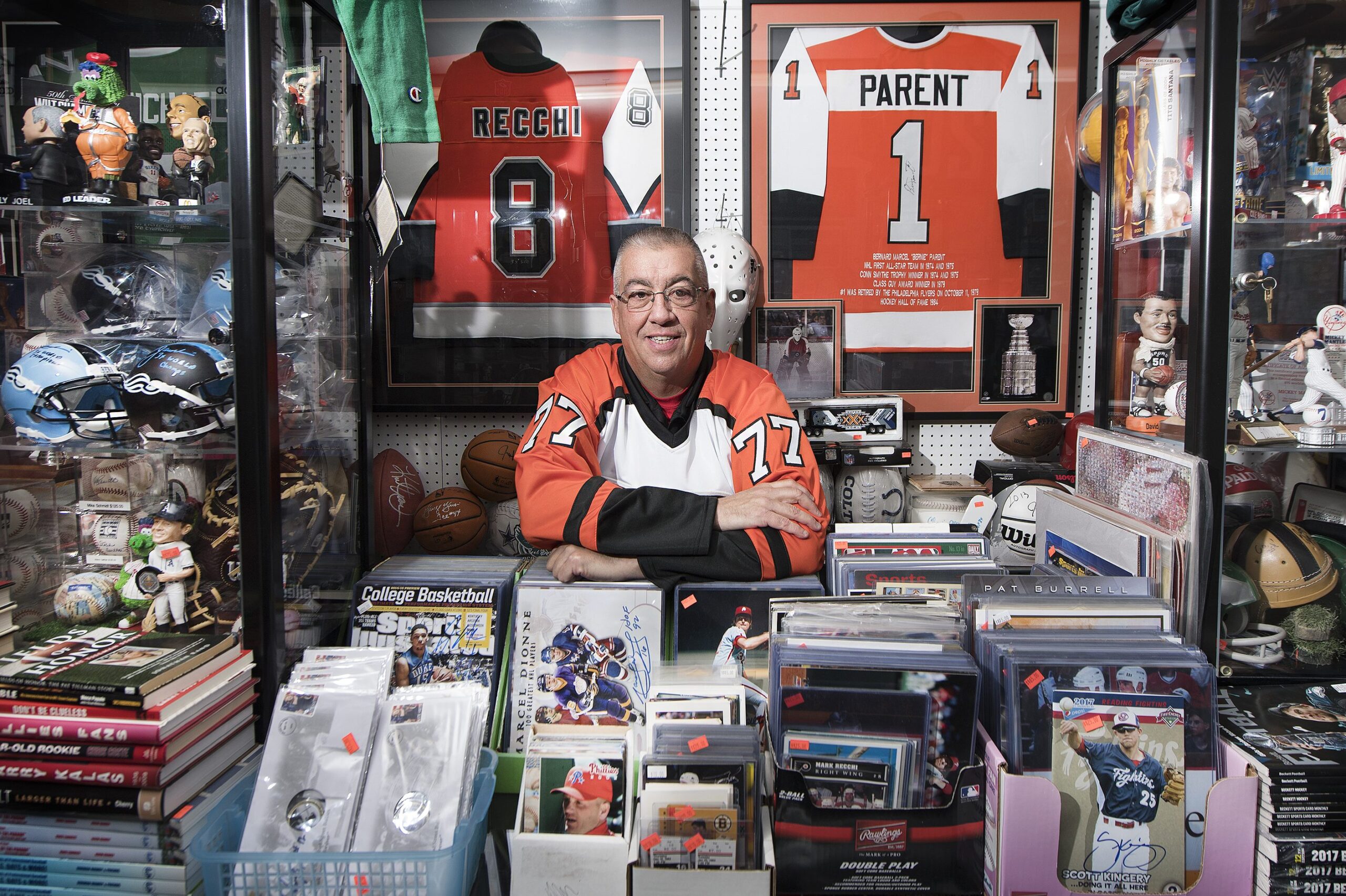
    Carl Henderson at his Havertown store in 2018.

    The shop owner was 69 when he passed. His family announced the news on Sunday, and received an overwhelming response; thousands of messages from children and adults and even a few local pro athletes.

    By Monday morning, bouquets of flowers were wedged between the doors. Customers started sending sympathy cards. Some showed up in person to express their support.

    A memorial service held last week, in Bryn Mawr, drew about 400 people. Former Phillies pitcher Dickie Noles read a passage from the Old Testament. Members of the Broad Street Bullies sat among the crowd.

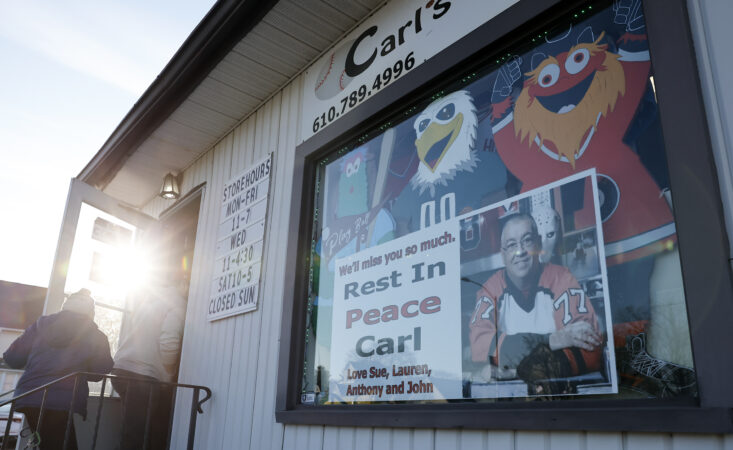
    His shop looks a little different now. Those sympathy cards are pinned along the walls. A sign commemorating the longtime owner sits in its front window.
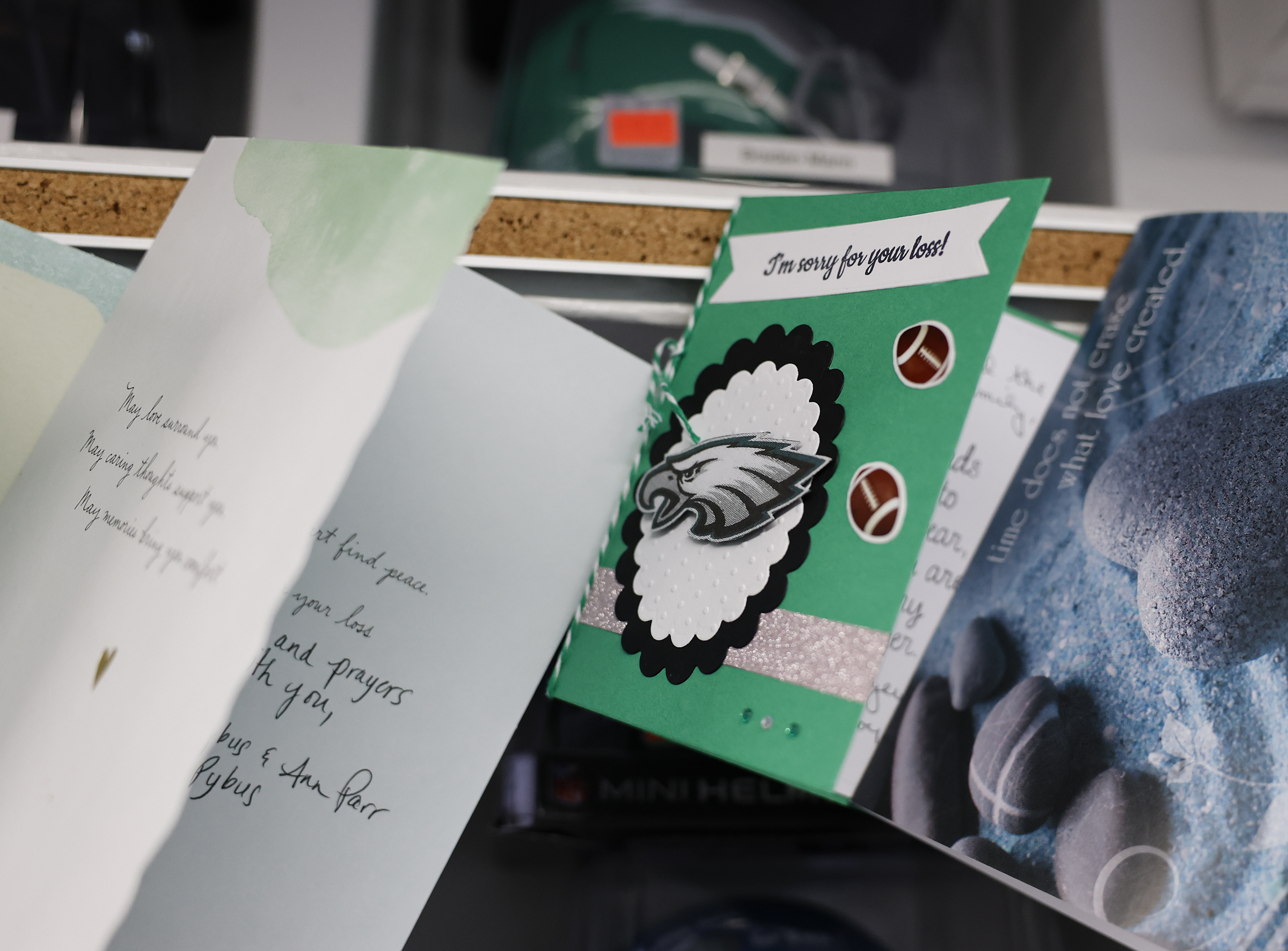
    Condolences and tributes have poured into Carl’s Cards, including some from area sports figures.

    But the character remains the same — and Henderson-Pignetti is determined to keep it that way. Carl’s Cards has something for everyone. Kids can fish through the dollar bin for unexpected treasures. Right above it, collectors can purchase a limited edition Bryce Harper-signed bat more than 1,000 times that price.

    There are more run-of-the-mill items, like signed helmets and jerseys, but also packs of Pope Leo XIV trading cards, and a rectangular piece of wood cut from the old Spectrum court.

    The sports memorabilia world can be transactional, if not cold, but Henderson navigated it with warmth and integrity. He frequently donated money and autographed items to charity.

    He liked to say he knew his clientele — and they weren’t always big spenders.

    The shop owner cared just as much about the 10- or 11-year-old student with only a few dollars in their pocket. Or those who had no money to spend at all, but just wanted to vent about Philadelphia sports.

    “He didn’t care if you were buying something,” said Henderson-Pignetti. “It was almost like a version of a bar where you stop in and talk to a bartender.

    “You can buy something, [but] you don’t have to. You can just stop in and talk. It wasn’t always about the dollar.”
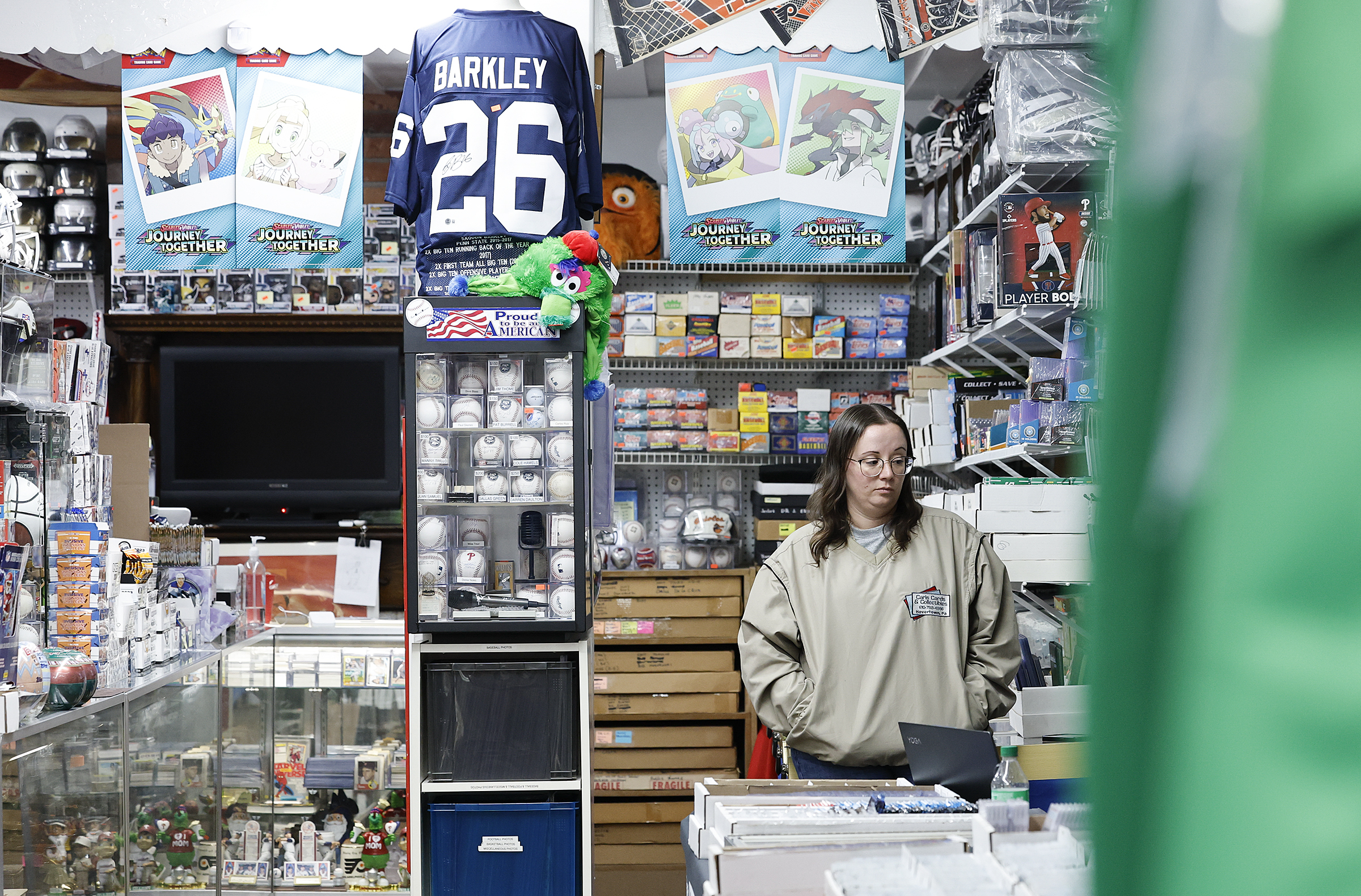
    Lauren Henderson-Pignetti has taken on the responsibility of maintaining her father’s life’s work.

    The store has been open since Henderson passed. For now, it’ll stay on its previous schedule.

    Henderson-Pignetti sees this as a way of honoring her late father, who would’ve wanted Carl’s Cards to stay alive, no matter what.

    “We made the decision to keep everything rolling the way he would have,” she said. “He spent 31 years building this place. He would have wanted everything to stay the way it was.”

    A family atmosphere

    When Henderson opened Carl’s Cards in 1995, his family thought he was out of his mind. He’d left a stable, corporate job working for Ryerson Steel, and had a wife and young daughter to support.

    But Henderson loved collecting, and was ready for a change. So, he signed a three-year lease for a small property on Darby Road.

    By 1998, he’d outgrown it, moving to a bigger location across the street from The Haverford Skatium. In 2010, he outgrew his budding collection yet again, moving Carl’s Cards to its current home on West Eagle Road.

    These shops were where Henderson-Pignetti spent her childhood. She watched as her father welcomed world-class athletes for autograph signings, and put them at ease in a way bigger card shops couldn’t.
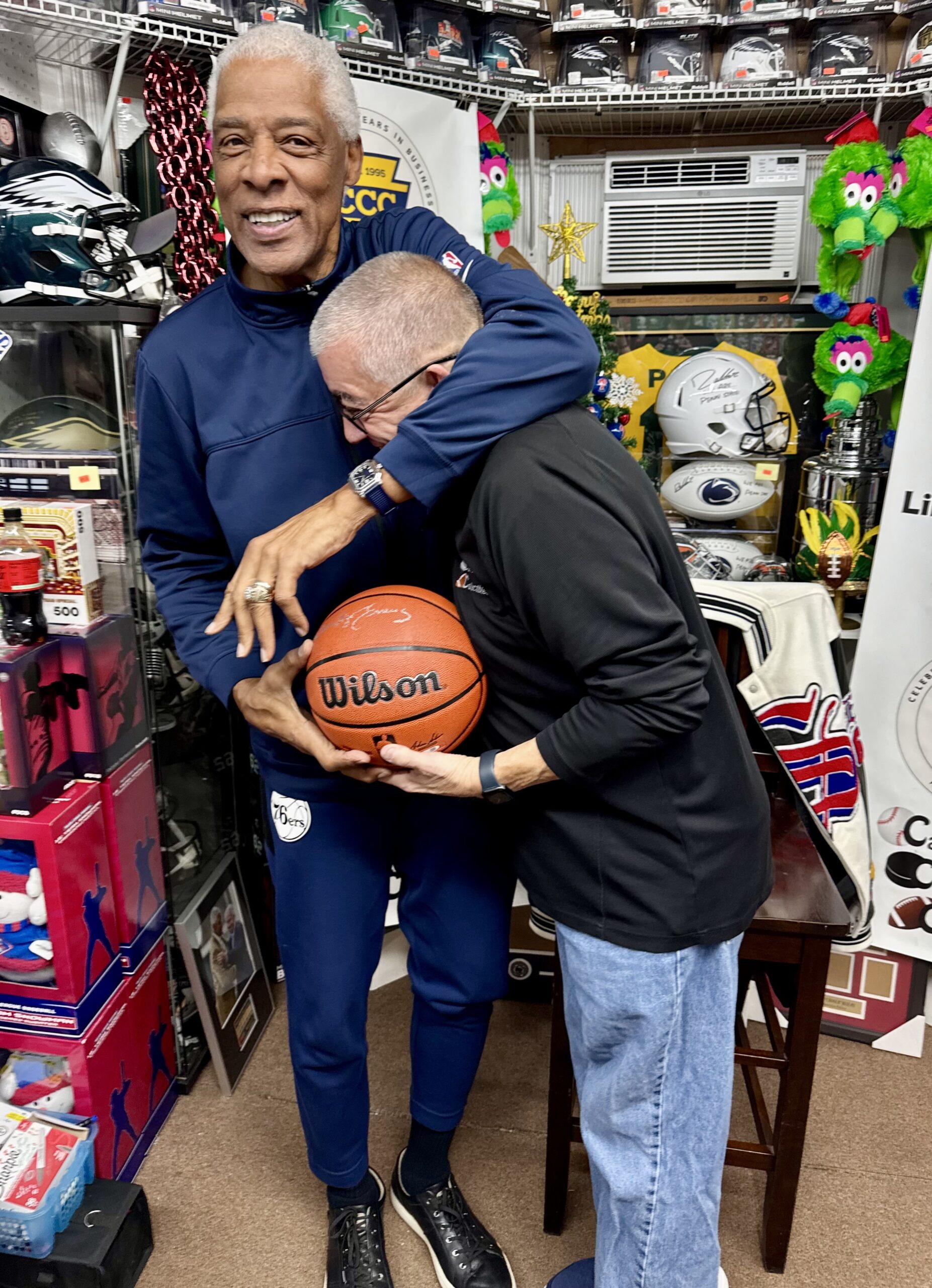
    Julius Erving was among the local sports dignitaries who were made to felt comfortable by Carl Henderson (right).

    There were no strangers at Carl’s Cards. He was always running the show, with his wife, Sue, selling tickets. As Lauren got older, she began to help out too, mainly with social media and website management.

    “It’s not like one of those big card shows where you’re sort of forced in and forced back out again,” Henderson-Pignetti said. “It’s very much a family atmosphere. So, I think a lot of players really enjoyed that.”

    Henderson’s theory was that when athletes were more relaxed, they were able to show their authentic selves. This proved true time and time again. Carl’s Cards hosted everyone from Allen Iverson to Jimmy Rollins to A.J. Brown.

    Many of these athletes returned for more signings. Some, like Eagles offensive tackle Fred Johnson, even reached out after Henderson’s passing. Others, like Julius Erving, treated the store owner like an age-old friend.

    An appearance by Erving had long been on Carl’s bucket list. Like many kids growing up in Philadelphia in the 1970s, Henderson idolized Dr. J. He owned Converse sneakers — just like the Sixers forward — and played varsity basketball at John Bartram High School.

    Not much enthralled Henderson, but the idea of sharing a room with one of the best athletes of his generation did. They booked the signing for Dec. 21. After it was done, Erving hung around and talked to the store owner.

    At one point, he heard some employees poking fun. He joined in.

    “Dr. J was like, ‘Man, they even talk to the boss like that!’” Henderson-Pignetti recalled. “And my dad was like, ‘Do you hear that, guys? I’m the boss here.’

    “It was just a really fun, sort of banter conversation. It was just nice.”

    While autograph signings were part of the job, they were not the whole job. Henderson wanted his shop to be just as accessible for young kids.
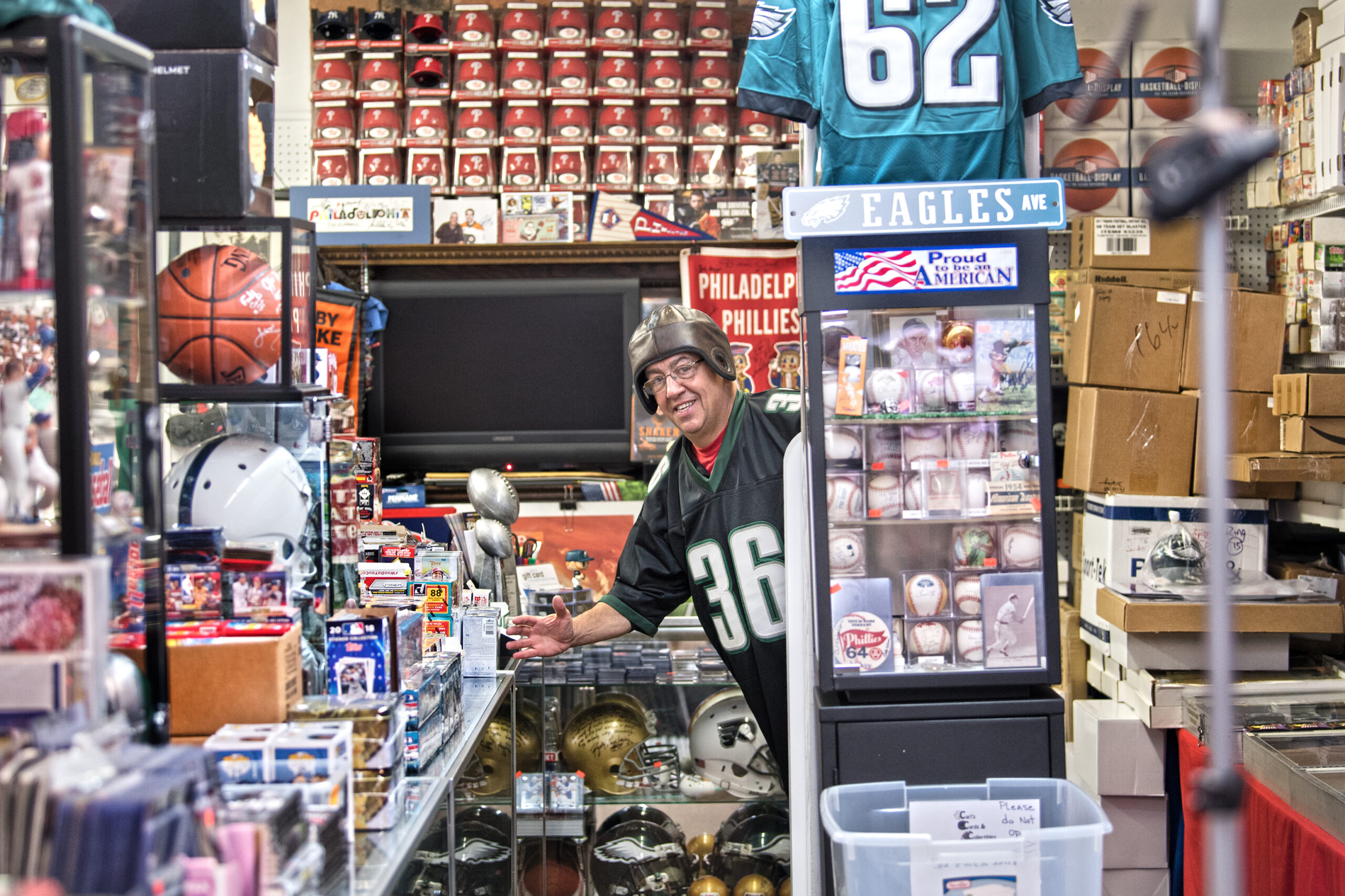
    Carl Henderson was a lifelong fan of the area’s sports teams, and that passion showed in his work.

    In addition to the dollar bin, he made sure to stock the shelves with affordable card packs. He brought in a gumball machine and added $25 mystery memorabilia boxes.

    But above all, he was an uplifting presence in their lives, in a way that Henderson-Pignetti wasn’t even aware. After her father died, she heard from all sorts of kids.

    One of them, 12-year-old Owen Papson, crafted a handmade letter.

    “I just heard the news,” he wrote. “I am so sorry. We will miss Carl so much. Your store will always be my favorite.”

    Inside, he taped a signed Harold Carmichael Topps card with an inscription above: “Hopefully this will help.”

    More stories came pouring in on Facebook. One, in particular, stuck with her. It was from a longtime customer who used to frequent Carl’s Cards in the early 2000s.
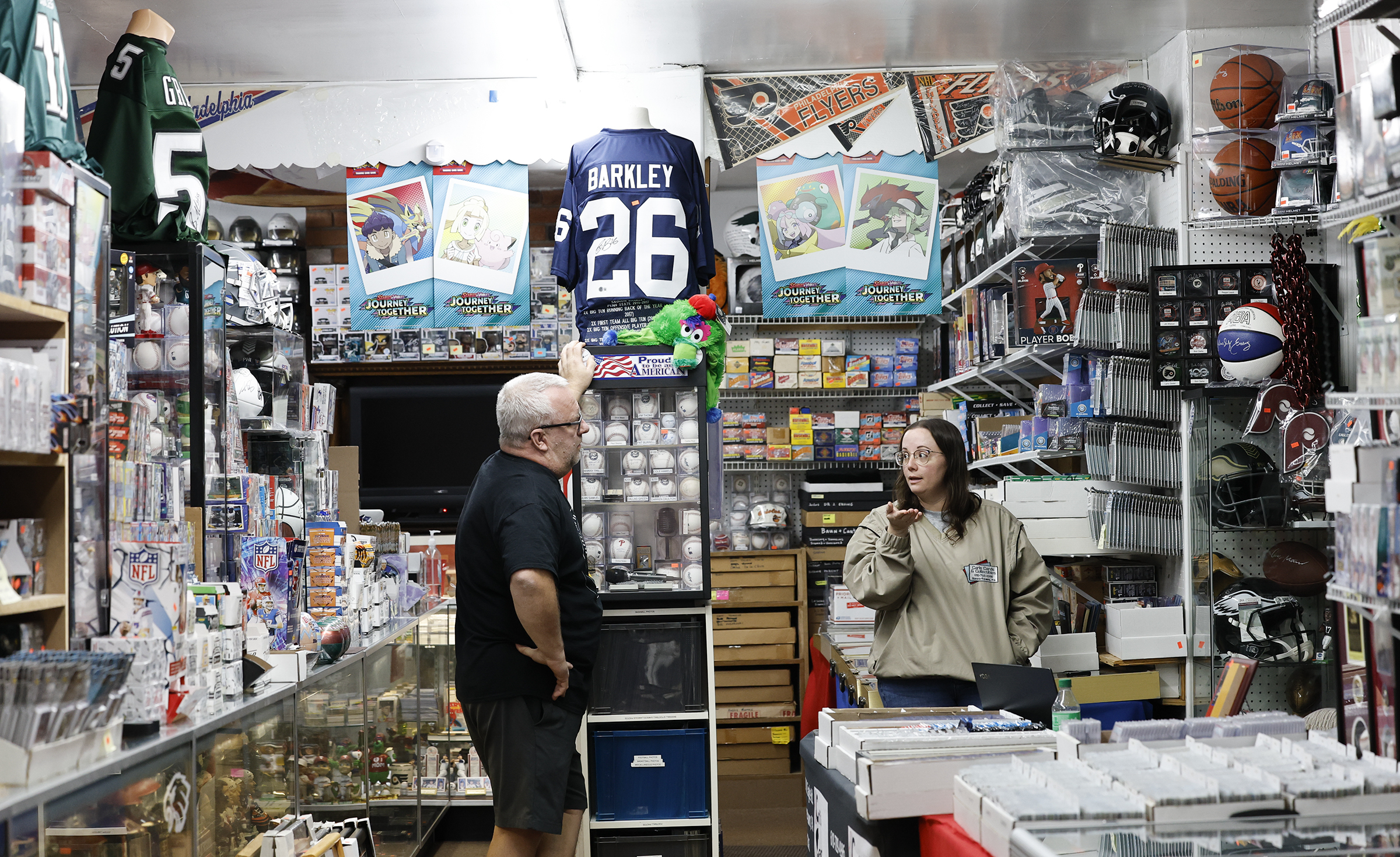
    Lauren Henderson-Pignetti (right, with John O’ Brien) has been touched by the outpouring over her father’s death.

    He explained that at the time, his parents were going through a divorce. Henderson was a stable presence when he needed one. He’d ride his bike to the store and was greeted with a smile every time.

    “I had no idea,” said Henderson-Pignetti. “To think that something so simple as my dad just being in his place of business … for this kid [it] meant more to him than I think he probably even realized.”

    ‘A gift from God’

    Last September, Henderson-Pignetti quit her role as director of development at the Humane Society in Reading. She loved working there, but was ready for something different, similar to her father when he left Ryerson Steel.

    In the moment, her decision was based on a gut feeling, but now she can see the bigger picture. Last fall, Henderson-Pignetti started working full-time at Carl’s Cards.

    On Thursdays, her father would give her run of the shop; how to properly open and close, how to track sales, how website orders are mailed out, and other intricacies of the job.

    “It was a gift from God, basically, because it allowed me to just absorb even more information from him,” she said. “I kind of look back on that as a weird sort of intuition type of thing. If I hadn’t left my job, that wouldn’t have happened.”
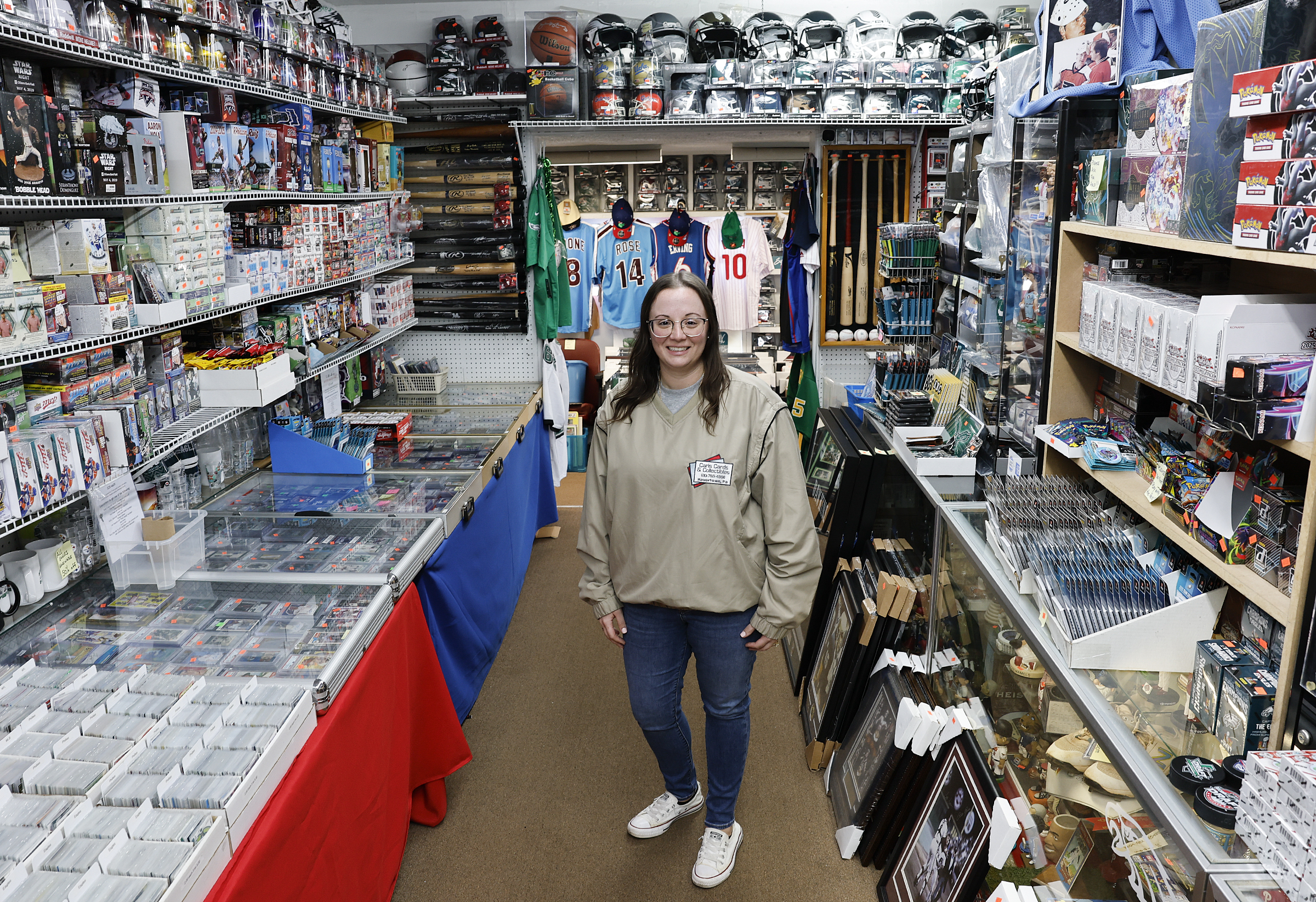
    Lauren Henderson Pignetti says her goal is to keep Carl’s Cards & Collectibles up and running after her father’s passing.

    The goal, for now, is to keep the shop open. Some days are easier than others. Sue is sick and unable to work. Coworkers, and even customers, have helped pick up shifts when Henderson-Pignetti needs some space.

    It can be emotionally exhausting at times. But she’s going to see it through.

    “The plan is to not have anything change,” she said. “He would want me to step right into this role. I have no doubt about that. So that’s what I’m going to do, for as long as I possibly can.”

  • Modern designs and mid-century touches live side-by-side in this renovated Lambertville home

    Modern designs and mid-century touches live side-by-side in this renovated Lambertville home

    As their family grew, Lauren Braun-Strumfels and Kyle Strumfels felt the walls of their 1895 rowhouse in Lambertville, N.J., closing in on them. With two kids, the 16-foot wide, one-bathroom house left a lot to be desired.

    They pined after the neighboring standalone house built in the 1970s, an abnormality for the Victorian-era town that attracts antiques lovers to Hunterdon County year-round. Even though maintenance had been deferred for decades, the house sat on an unusually roomy lot for the dense, walkable downtown. The couple, unafraid of a renovation, had a vision for what it could become.

    But creating the California modern-inspired ranch house they live in today was not nearly as straightforward. First, buying the house proved challenging.

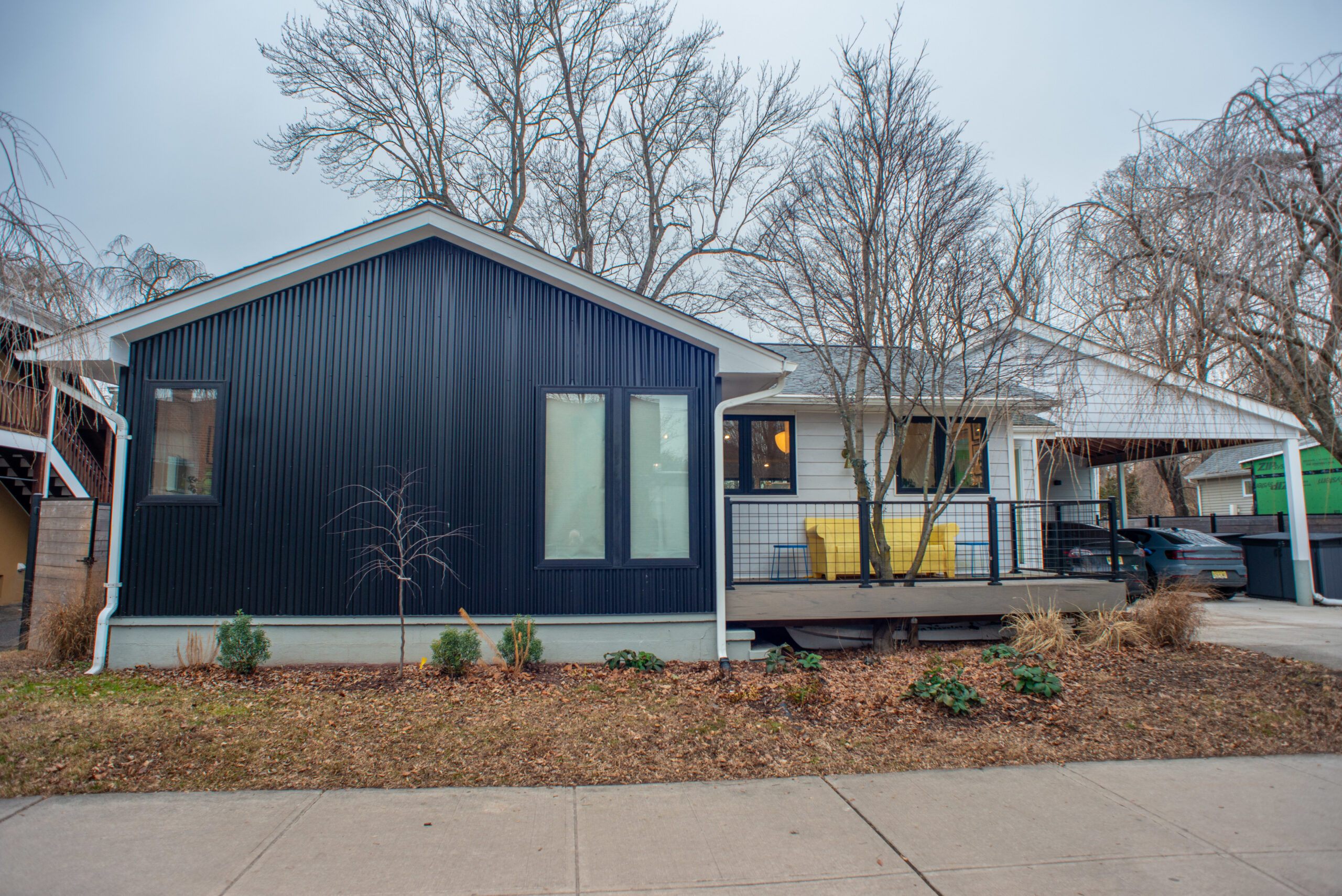
    The exterior of Kyle Strumfels and Lauren Braun-Strumfels’ home in Lambertville, N.J.

    “When we finally got to the table and signed the deal, [the seller’s] lawyer said, ‘I thought she was gonna go breach of contract, like, three times!’” Braun-Strumfels, 46, said. The couple felt it on their end, too, as they helped guide their neighbor through the sale. “It was very stressful and very intense.”

    They closed for $290,000 in August 2017. The young family moved into the two-bedroom house on Feb. 4, 2018, the day the Eagles won the Super Bowl, recalled Strumfels, 47. Their two kids, now 12 and 9, shared one room while the couple had the other. Everything needed updating.

    “With the rowhouse, there were certain things that we just wouldn’t want to do to it, historically, to preserve the character,” Braun-Strumfels said. “This house was a total blank slate. It was neither historic nor attractive, so we felt like we could really transform it.”

    In the first of their two major renovations, they funneled $150,000 into moving the kitchen to the front of the house, bumping the back wall of the house out to add more living space, and adding a Jack-and-Jill bathroom connecting the two original bedrooms on top of less exciting but no less important mechanical upgrades. They lived that way for a few years but always knew there was more work to do.

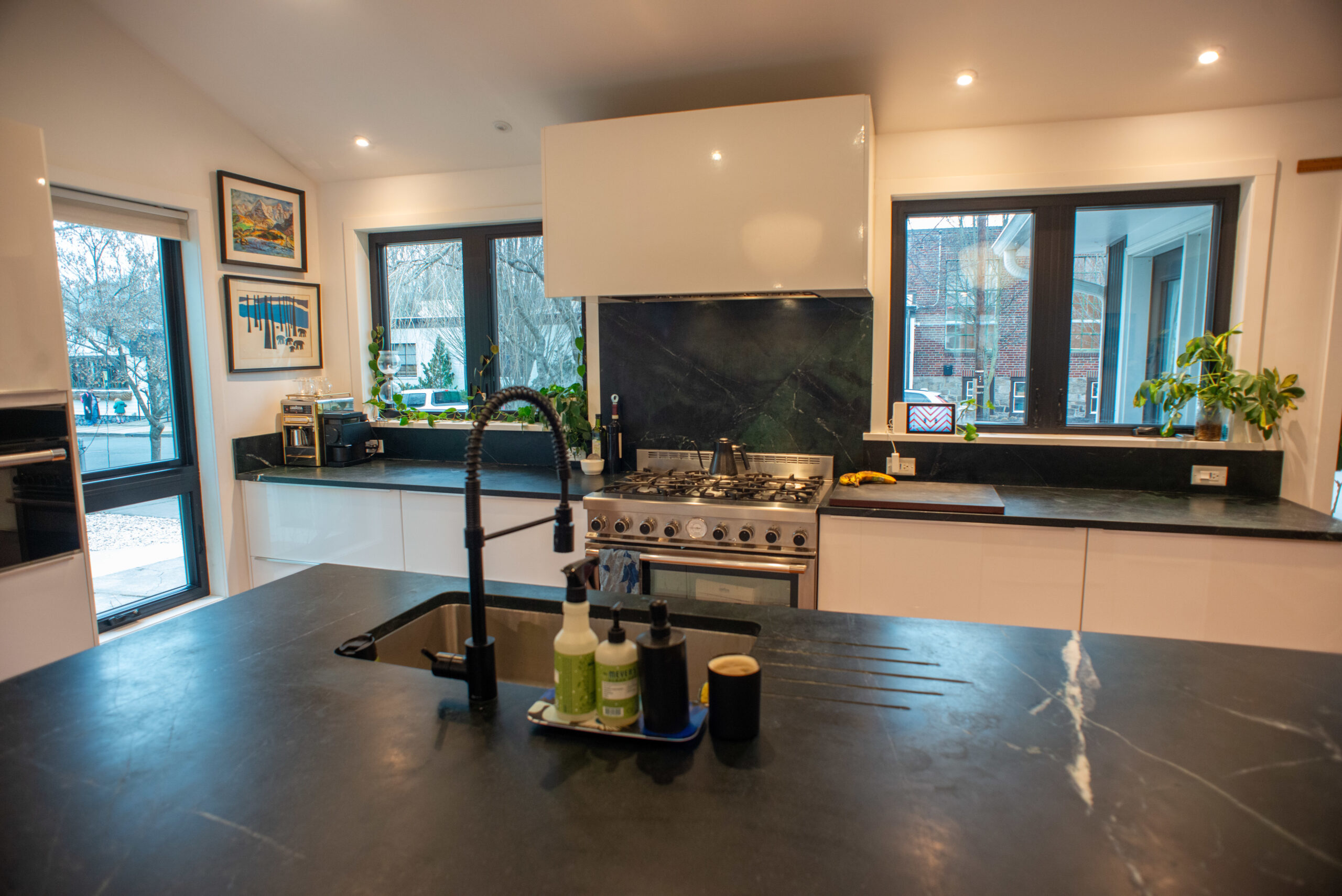
    The kitchen, which was relocated in the first round of renovations.
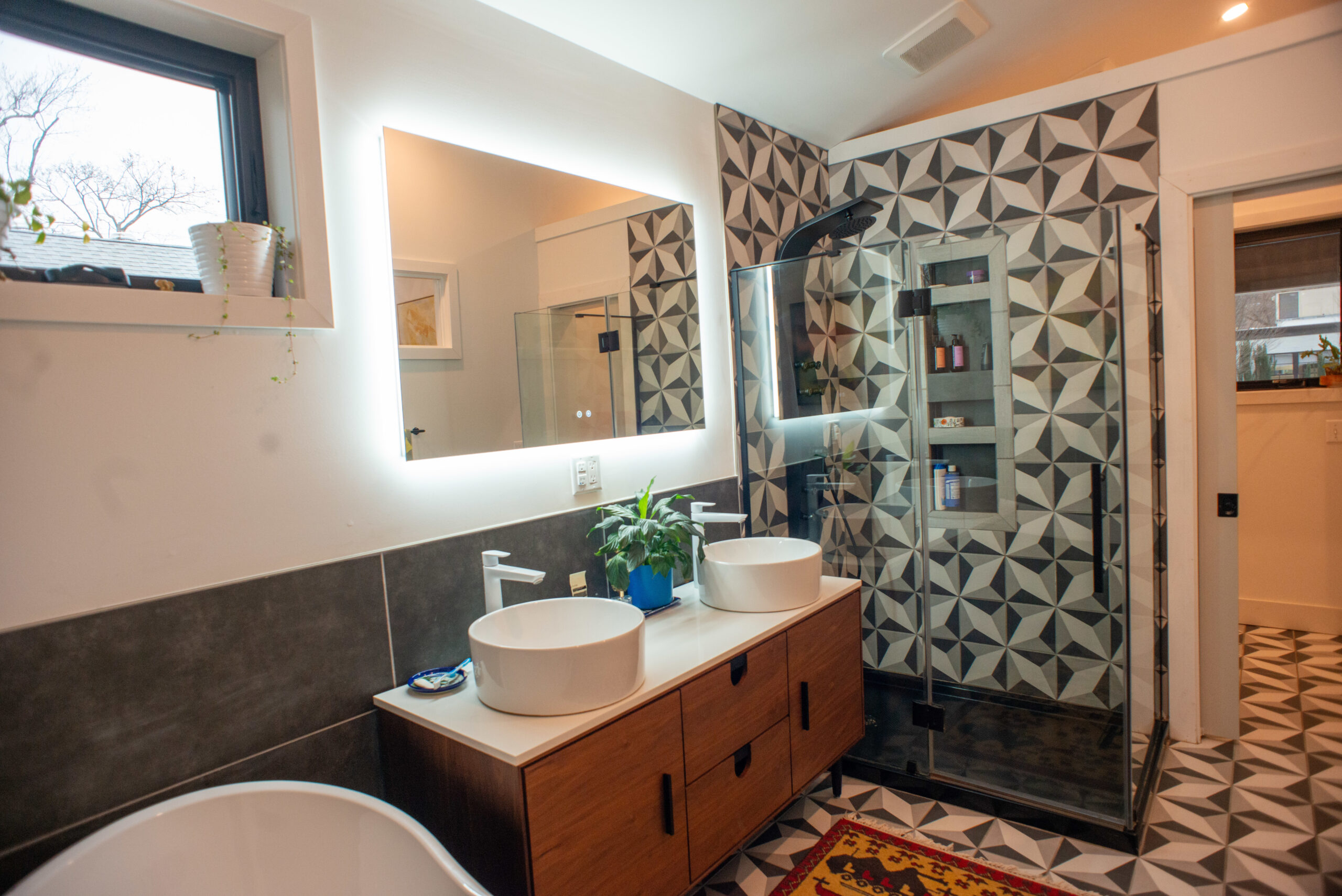
    The main bathroom.

    The second renovation didn’t go quite as smoothly.

    The couple began pursuing a $300,000 construction loan in 2018 that didn’t close until 2020, thanks to a zoning snafu. The amount was intended to leave a nice cushion for finishing details, but by the time the loan was theirs, the pandemic had driven up lumber costs and “our whole budget got eaten by two-by-fours,” Braun-Strumfels said. Their tile budget was whittled down to about $1 per square foot in the bathrooms, meaning Braun-Strumfels had to let go of her plans for elaborate tile and countertops.

    They also had to part with one architect who didn’t quite get the couple’s vision. They then hired Princeton-based architect Peter Wasem.

    The hallway near the entrance features a large painting that contrasts with the green front door.

    Ultimately the renovation added 1,000 square feet for a new entry as well as what they call an “adult wing,” with a walk-in closet that leads to an en suite bathroom. Through a stroke of smart design, the en suite’s water closet doubles as a powder room, creating a circular flow through the wing.

    Coming from their rowhouse, which only had two exposures, it was important to Braun-Strumfels and Strumfels to take advantage of the roomy lot’s natural light. The primary bedroom is lined in windows — with a partial view of their old property. Their living room addition also has a large window overlooking the backyard.

    The primary bedroom has two-story windows, high ceilings, and a living space.

    The original front porch was enclosed to become a shared office for Braun-Strumfels, an associate professor of history at Cedar Crest College, and Strumfels, a senior vice president of ESG and climate at Macquarie Group. A new carport gives the house a distinctly mid-century touch.

    The result of the renovations is an open-concept house where the couple’s eclectic furniture, wares, and finishes can live in harmony. Their collection of mid-century furniture and wares from local joints like Rago Auctions coexists with original art, including Strumfels’ favorite piece from Philadelphia’s Material Culture. And that’s on a backdrop of modern finishes like sleek soapstone countertops and Herman Miller pendant lighting over the oversized kitchen island.

    “Sometimes I wondered if people would be mad we stuck a modern house in the middle of this town, but people seem to really like it,” Strumfels said. Folks in the area can be very resistant to change, Strumfels said, but “we get a lot of nice feedback.”

    Mid-century furniture and original art coexist in an eclectically decorated home.

    They have no plans to move, but Braun-Strumfels said they do harbor a hope of someday returning to Philadelphia, where they lived for a year before moving to Lambertville.

    Paintings hang on the wall.
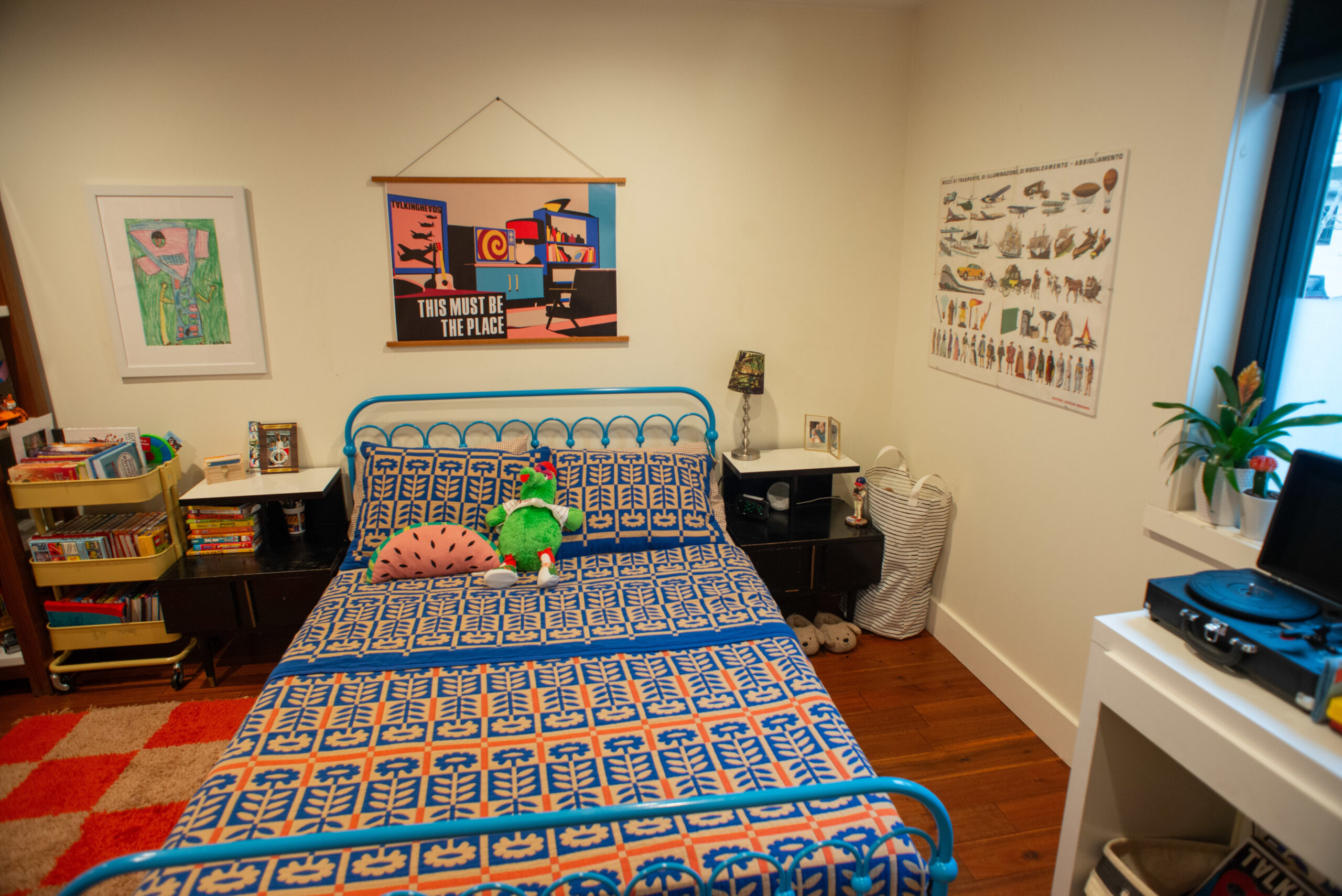
    One of the children’s bedrooms.

    “We have our little pipe dream that we might retire eventually, get a little spot in the city, go back and forth,” she said.

    But for now, they’re finally perfectly at home.

    Is your house a Haven? Nominate your home by email (and send some digital photographs) at properties@inquirer.com.

  • Ranking the 2026 NFL draft position groups, and what that means for the Eagles

    Ranking the 2026 NFL draft position groups, and what that means for the Eagles

    Next week, 319 college football prospects will descend on Indianapolis for the annual NFL scouting combine, where they will be tested physically, mentally, and medically, interviewed by NFL front office personnel, and will speak with hundreds of media members.

    This latest step in the 2026 NFL draft process allows teams to home in on the next crop of players that will fill their franchises. All 32 teams will have 45 “formal interviews,” which last just under 20 minutes, can include watching film or any questions teams want to ask a prospect, and typically take place in the Lucas Oil Stadium suites.

    The first direct touch point with prospects happened at last month’s Shrine and Senior Bowl games. NFL teams will utilize this next piece of the puzzle to identify which prospects match their team needs.

    Here is how we’re ranking the combine position groups from strongest to weakest — and how they could help the Eagles address some roster needs.

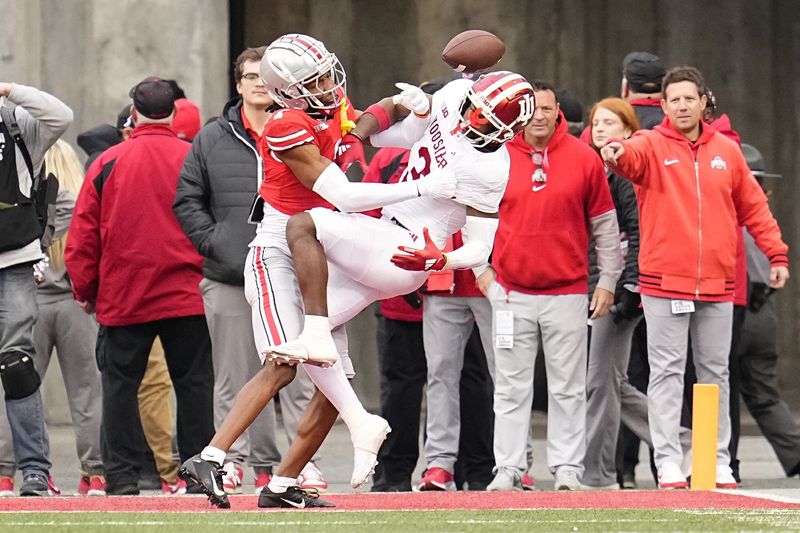
    Ohio State cornerback Davison Igbinosun (1) is a potential target for the Eagles beyond the first round.

    1. Cornerbacks

    It’s a good year to add a secondary player, whether they play outside corner, nickel, or safety. But outside and boundary corners, specifically, will be plentiful from the first round to Day 3 of the draft.

    This is a position the Eagles could address early, but not one that will likely be prioritized in the first round. Among the early projected draft picks at the position are LSU’s Mansoor Delane, Tennessee’s Jermod McCoy and Colton Hood, Clemson’s Avieon Terrell, and South Carolina’s Brandon Cisse.

    Finding a corner to develop into a starter opposite of Quinyon Mitchell — assuming they don’t bring back Adoree’ Jackson, who is set to be a free agent — should be among the Eagles’ objectives. Keep an eye on San Diego State’s Chris Johnson, Ohio State’s Davison Igbinosun, Arkansas’ Julian Neal, Georgia’s Daylen Everette, and Texas A&M’s Will Lee as players who could interest the Eagles.

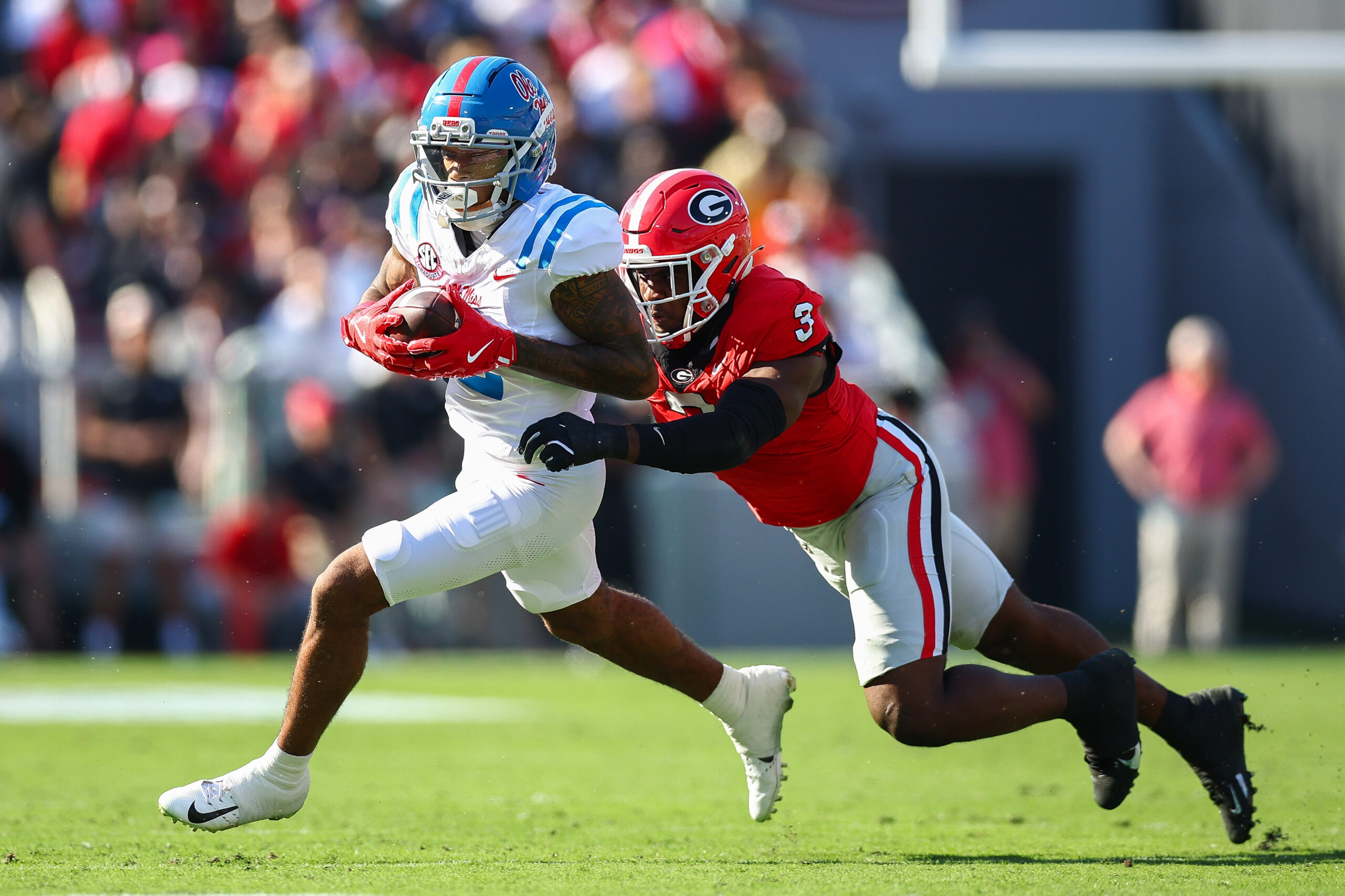
    Ole Miss wideout Harrison Wallace III (2) could be a depth or slot option for the Eagles.

    2. Wide receivers

    There is always a healthy stable of receivers entering the draft, and 2026 is no different. The Eagles, of course, won’t be drafting a wide receiver early — unless they trade A.J. Brown before the draft — but they will need to add more depth to the room regardless.

    The top of the class is led by Ohio State’s Carnell Tate, Arizona State’s Jordyn Tyson, and USC’s Makai Lemon, but the receivers heading to the combine feature several skill sets.

    The Eagles’ WR3 spot is a potential question mark heading into next season with Jahan Dotson heading into free agency. Players like Ole Miss’ Harrison Wallace, Baylor’s Josh Cameron, Georgia Tech’s Eric Rivers, and Clemson’s Antonio Williams are players to keep an eye on that can occupy either a slot role or have moved around the formation in their collegiate careers and could fit in a depth role for the Eagles.

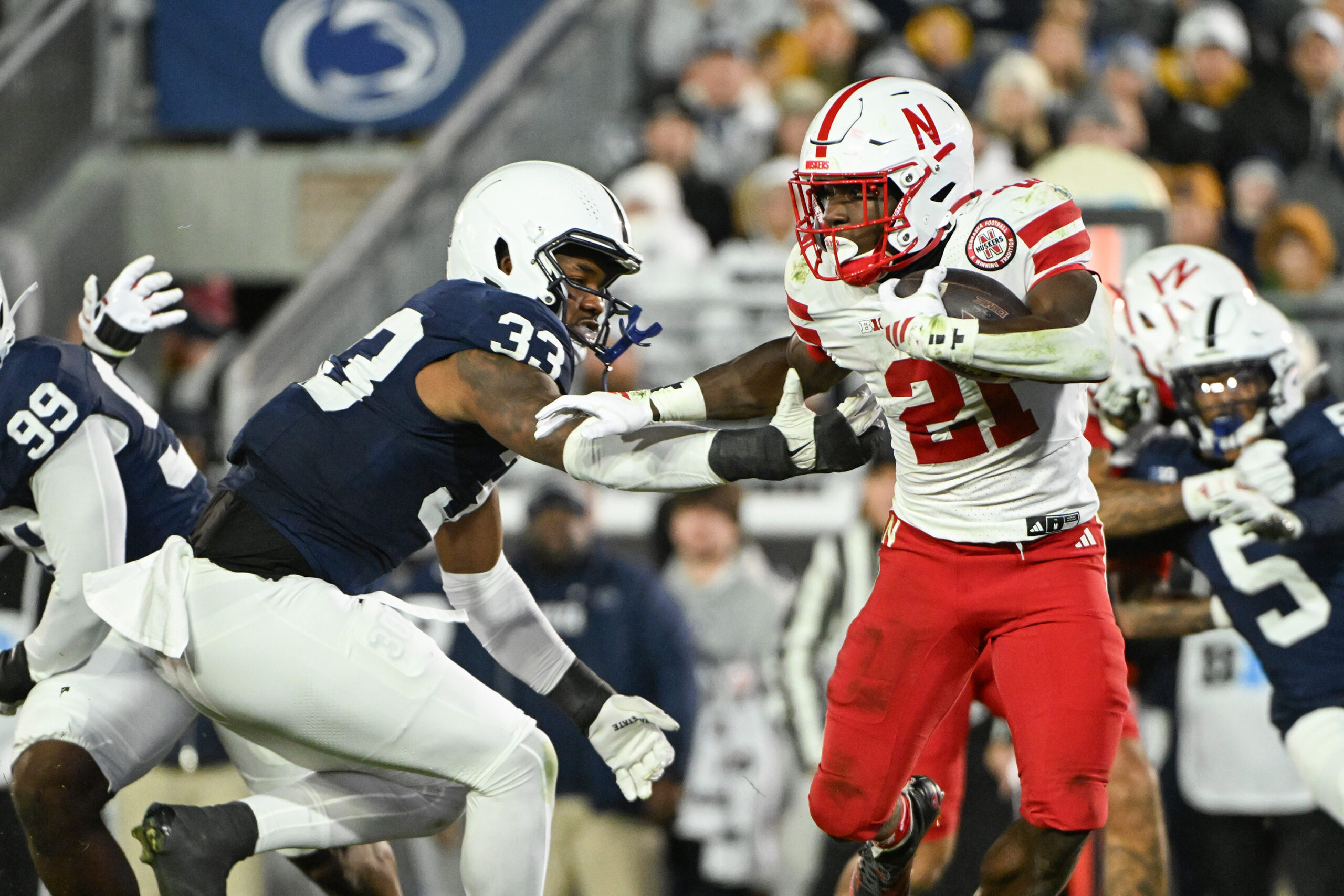
    Would Penn State defensive end Dani Dennis-Sutton (33) be a fit for the Eagles’ pass rushing group?

    3. Edge rushers

    There is an abundance of edge rushers worth drafting in this class, with Miami’s Rueben Bain, Texas Tech’s David Bailey, and Auburn’s Keldric Faulk as the top names. With Jaelan Phillips and Azeez Ojulari set to become free agents and Brandon Graham’s status unknown for 2026, the Eagles’ edge rusher room desperately needs more depth.

    The versatile edge rusher types might interest the Eagles more in this class, though, to complement the relatively light-body types in the edge rusher room currently. Alabama’s LT Overton, Florida’s Tyreak Sapp, and Penn State’s Dani Dennis-Sutton are all players who are bigger in size and have the ability to play from three-techniques out to true pass rusher alignments.

    As for developmental pass rushers, keep an eye on Michigan’s Jaishawn Barham, Western Michigan’s Nadame Tucker, and Boston College’s Quintayvious Hutchins as late Day 2 and early Day 3 options as pure pass rushers.

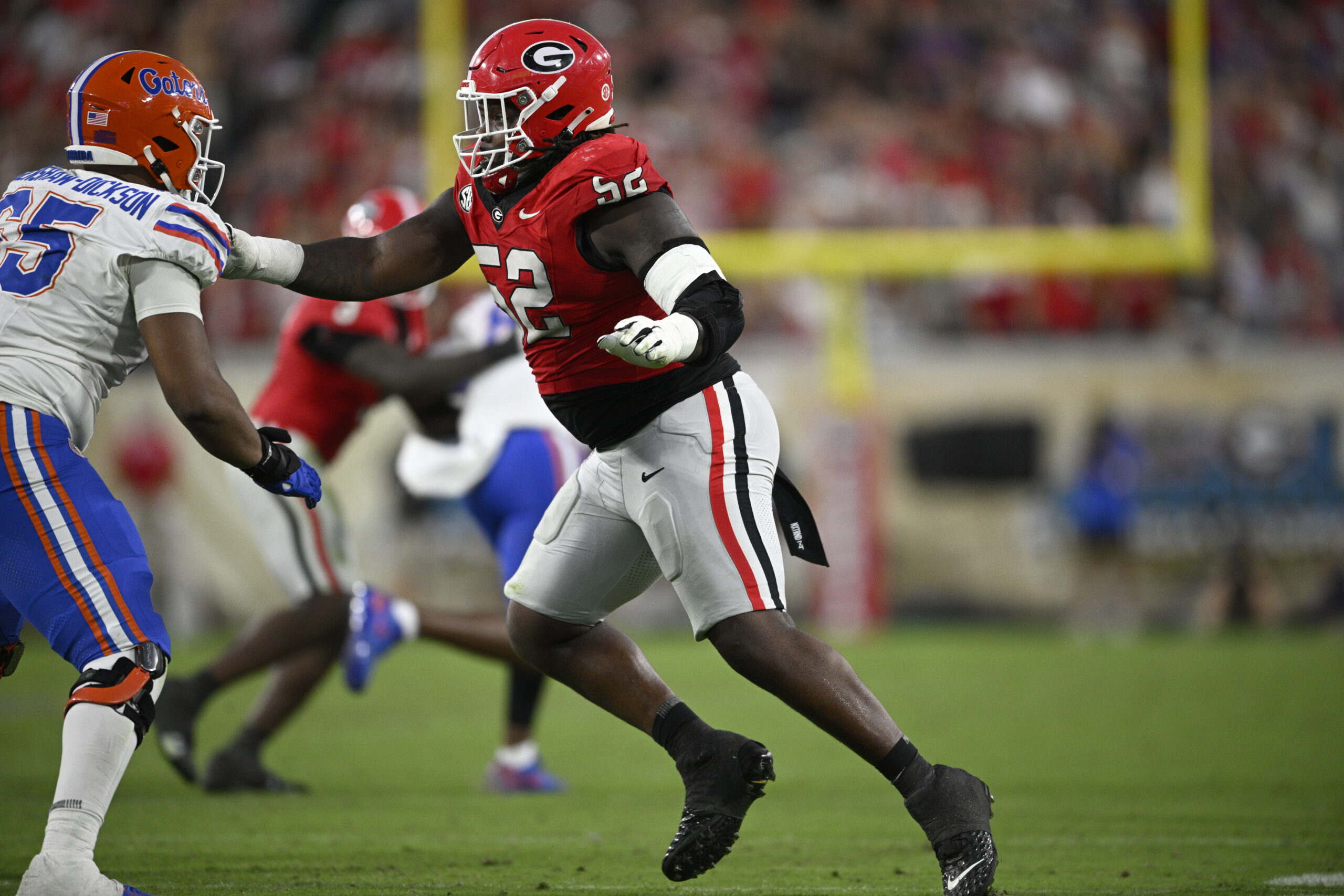
    Christen Miller (52) is another Athens-to-South Philly possibility for the Eagles.

    4. Interior D-line

    As the Eagles and Seattle Seahawks proved in the last two Super Bowls, an interior pass rush presence matters a whole lot, and the NFL has a deep group of prospects to choose from in this class.

    There are run stuffer types such as Texas Tech’s Lee Hunter, Ohio State’s Kayden McDonald, Iowa State’s Domonique Orange, and Georgia’s Christen Miller, and twitchy pass rushers including Clemson’s Peter Woods and Florida’s Caleb Banks.

    Jalen Carter and Jordan Davis could soon get extensions from the Eagles, but adding more bodies to have a deeper rotation and talent level in the room would only help keep those players fresh. Michigan’s Rayshaun Benny, Missouri’s Chris McClellan, and Texas A&M’s Tyler Onyedim are a few Day 2 and 3 options to keep tabs on.

    Eric Gentry is a local product who might be of interest to the Eagles.

    5. Linebackers

    The Eagles linebacker room became a strength of the defense over the last few seasons and they won’t need to expend an early-round pick on one. But this class has three first-round caliber players at the position: Ohio State’s Arvell Reese and Sonny Styles and Georgia’s CJ Allen.

    The Eagles could lose Nakobe Dean to free agency this offseason, but still have Jihaad Campbell and Zack Baun penciled in as starters. There are two players in this class with Philly-area ties: USC’s Eric Gentry, the former Neumann Goretti standout, and Missouri’s Josiah Trotter, the younger brother of Jeremiah Trotter Jr. Josiah Trotter and Gentry are both expected to get drafted.

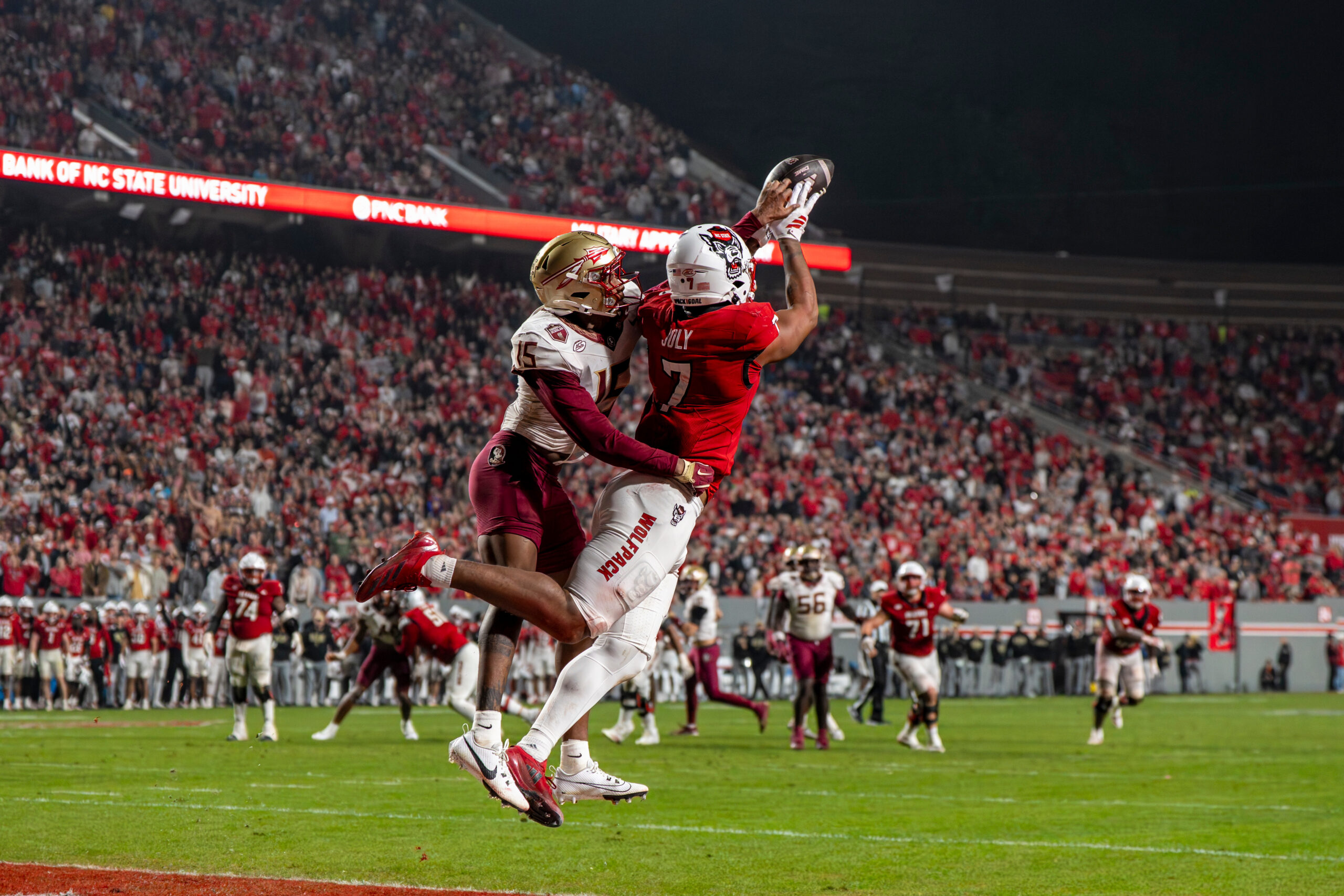
    North Carolina State tight end Justin Joly (7) could be an intriguing target for the Eagles.

    6. Tight ends

    Put a big circle around this group, because tight end is one of the pressing needs for the Eagles. Dallas Goedert, Grant Calcaterra, and Kylen Granson are all set to be free agents, and regardless of whether any of those players return, the room needs more talent in it.

    Oregon’s Kenyon Sadiq is at the top of the class, and likely the only tight end to go in Round 1. But this class is strong on Day 2 and 3.

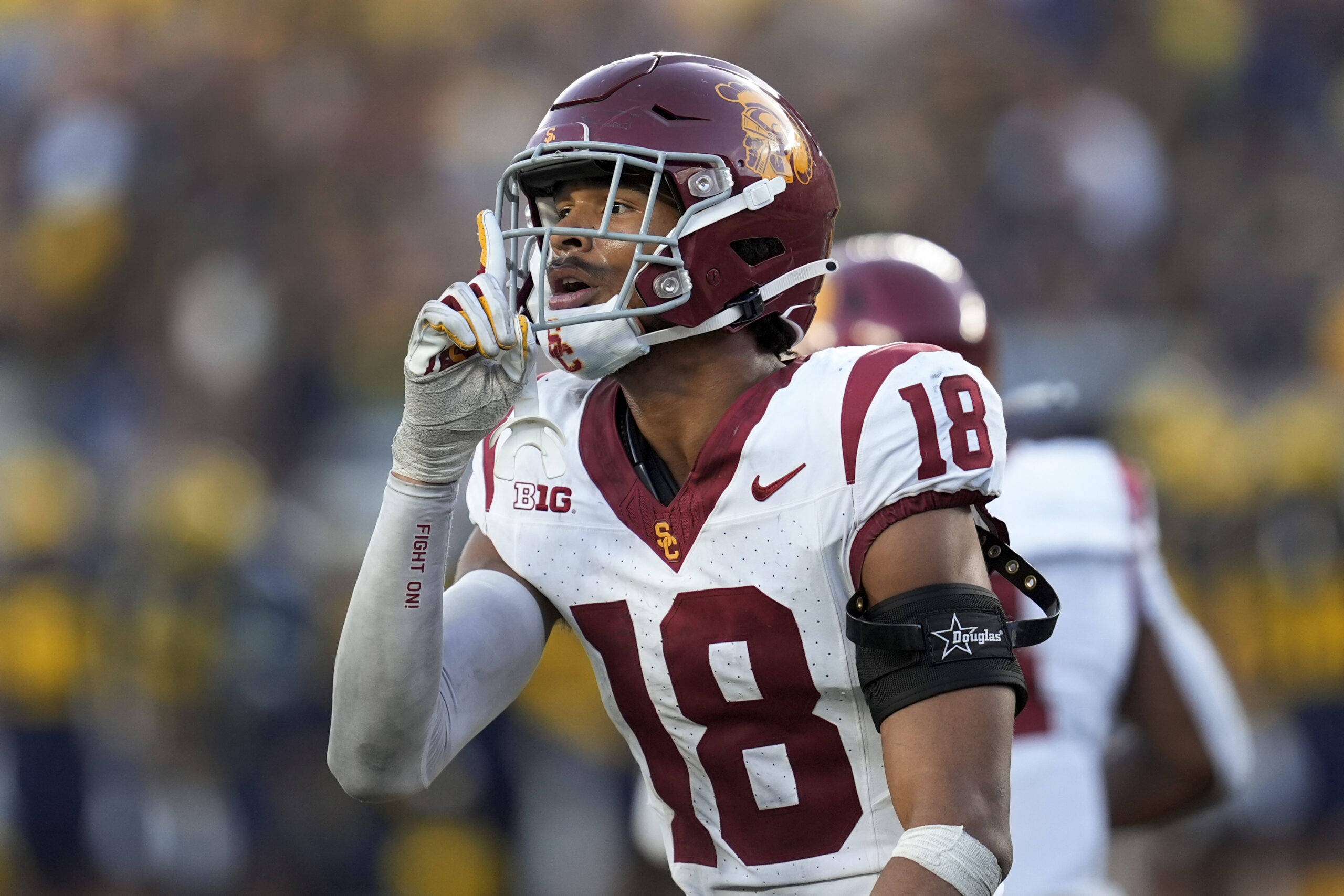
    Ohio State’s Max Klare, NC State’s Justin Joly, Georgia’s Oscar Delp, and Baylor’s Michael Trigg are all receiving tight end prospects worth taking on Day 2. Players who can thrive in-line as blockers and have some receiving chops as well include Ohio State’s Will Kacmarek, Penn State’s Khalil Dinkins, Texas A&M’s Nate Boerkircher, and Indiana’s Riley Nowakowski, who can also play fullback.

    Other later names, including Utah’s Dallen Bentley, Ole Miss’ Dae’Quan Wright, and Stanford’s Sam Roush are developmental options on Day 3 and could fill roles as second or third options in multi-tight end formations.

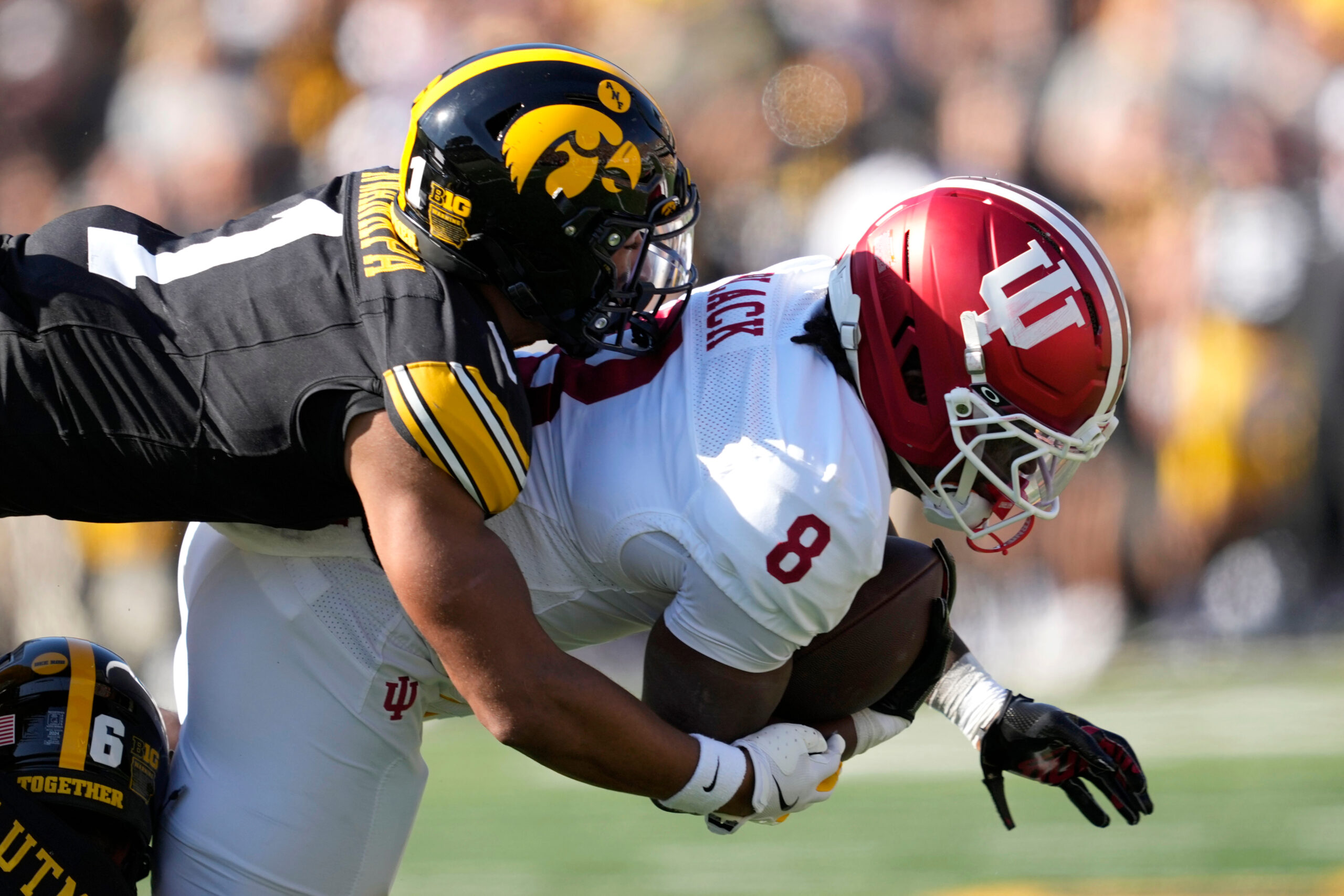
    Could Xavier Nwankpa (1) join Cooper DeJean as another ex-Hawkeye in the Eagles secondary?

    7. Safeties

    This is a position that probably needs more attention than it generally gets, considering Reed Blankenship and Marcus Epps are soon-to-be free agents. Drew Mukuba and Sydney Brown are the only players under contract for next season who have taken significant snaps at the position.

    This is a strong safety class, led by Ohio State’s Caleb Downs, who is also one of the best players in the draft class. Quinyon Mitchell’s alma mater, Toledo, has another early-round pick in Emmanuel McNeil-Warren, and there are plenty of coverage specialists such as USC’s Kamari Ramsey, LSU’s A.J. Haulcy, and Arizona’s Genesis Smith.

    Since Blankenship played more near the line of scrimmage, the Eagles could be looking to pair that skill set with Mukuba, and players including Penn State’s Zakee Wheatley, Oregon’s Dillon Thieneman, and Iowa’s Xavier Nwankpa fit the bill.

    Kadyn Proctor (74) is generating buzz as a possibility along the Birds’ offensive line.

    8. Offensive linemen

    This is the spot the Eagles need to upgrade most heading into next season, yet it’s among the weakest groups in this class in terms of starting caliber players. Still, there are players that will interest the Eagles.

    The player most commonly linked to the Birds is Alabama’s Kadyn Proctor, a massive offensive lineman with unique athleticism at 6-foot-7, 366 pounds. Is he a tackle or guard? That debate could get settled at the combine next week.

    The other top offensive linemen are Utah’s Spencer Fano and Caleb Lomu and Miami’s Francis Mauigoa. Fano and Mauigoa are also players that could move to the interior at the NFL level. Georgia’s Monroe Freeling, Arizona State’s Max Iheanachor, and Clemson’s Blake Miller are the next group of fringe first-round players who will strictly be tackles in the NFL and could serve as potential heirs to Lane Johnson whenever he retires.

    As for interior offensive line, Penn State’s Olaivavega Ioane is the only true guard prospect that is Round 1 worthy. The Day 2 prospects like Texas A&M’s Chase Bisontis, Oregon’s Emmanuel Pregnon, Georgia Tech’s Keylan Rutledge, and Notre Dame’s drop-off could be players the Eagles have interest in, especially with Landon Dickerson’s uncertain future.

    The overall O-line class has a steep drop-off after the starting-caliber players, so if the Eagles want one, they’ll need to draft one early.

    9. Running backs

    The Eagles seem set at the running back position for now with Saquon Barkley, Tank Bigsby, and Will Shipley. A quick glance at the running back invites at the combine shows a relatively limited group to pick from.

    There’s only one running back right now that has first-round consideration, and that’s Notre Dame’s Jeremiyah Love. Beyond him, the next running back could wait a full one or two rounds before hearing their name called in the 2026 draft.

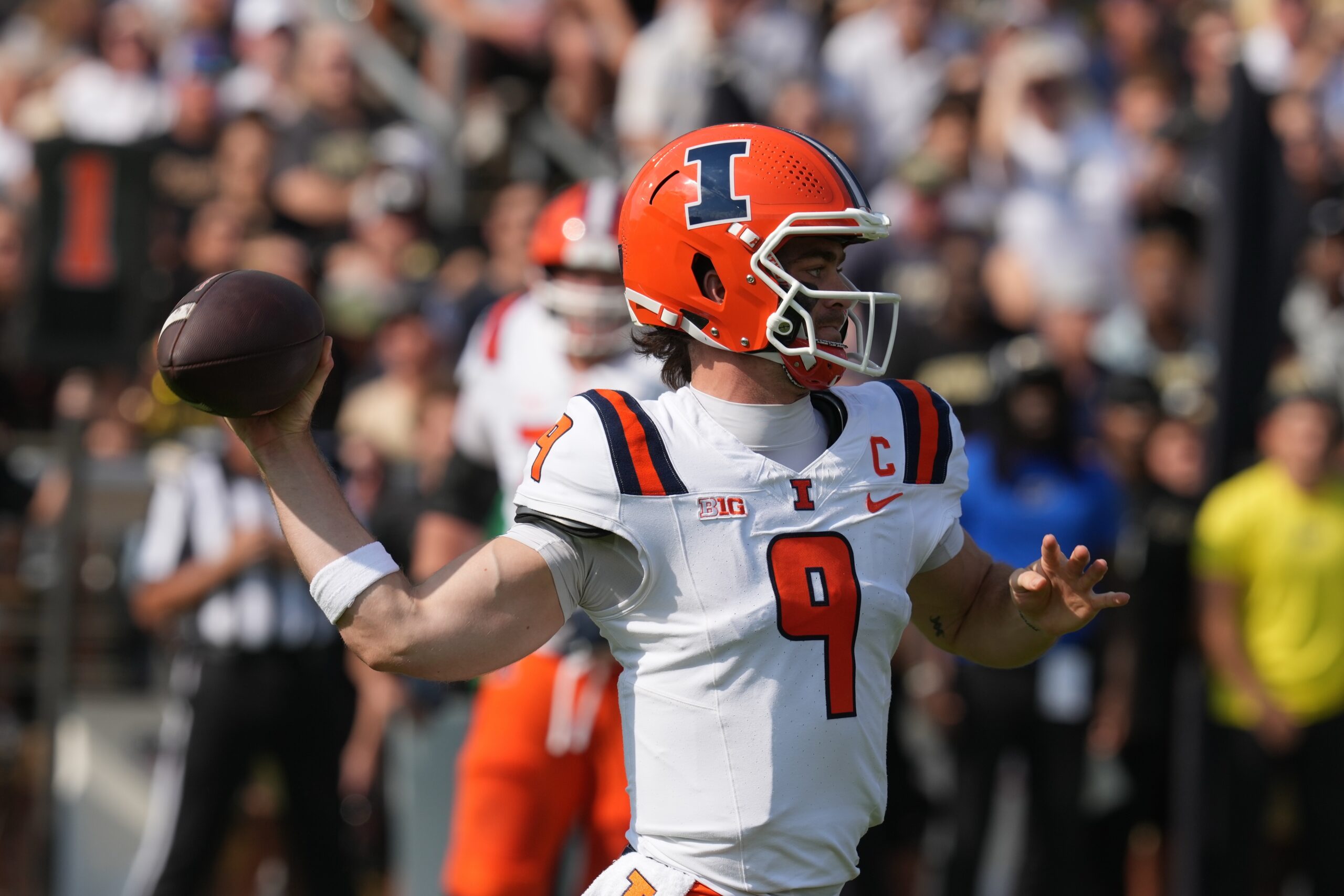
    Illinois quarterback Luke Altmyer is a potential developmental QB the Eagles might evaluate.

    10. Quarterbacks

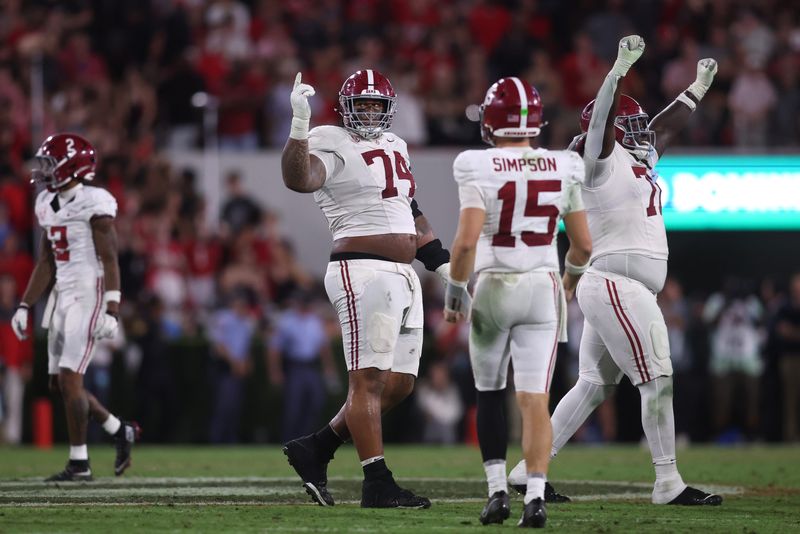
    As we alluded to in the All-Star game takeaways, this is not a strong quarterback class and it’s reflected in the number of combine invites. Indiana’s Fernando Mendoza is the projected top pick, but beyond him, the class is wide open. Alabama’s Ty Simpson could go in Round 1, but the gap between the second and third quarterback taken in this class could be very wide.

    The class overall lacks starting caliber players, and the sweet spot of the class is likely between Rounds 3-6. The Eagles could draft one to develop since Sam Howell is a free agent and Tanner McKee could move on over the next year via trade or free agency.

    Some players attending the combine that could make sense for the Eagles include Kansas’ Jalon Daniels, Arkansas’ Taylen Green, and Illinois’ Luke Altmyer.

  • CBS kills Stephen Colbert’s interview with a Democratic candidate. So why was Josh Shapiro allowed on the show?

    CBS kills Stephen Colbert’s interview with a Democratic candidate. So why was Josh Shapiro allowed on the show?

    A defiant Stephen Colbert blasted CBS on Monday for killing an interview with a Texas Democrat, blaming arcane rules being enforced by the Trump administration.

    “He was supposed to be here, but we were told in no uncertain terms by our network’s lawyers, who called us directly, that we could not have him on the broadcast,” Colbert said of State Rep. James Talarico, who is running in the Democratic primary for a U.S. Senate seat in Texas.

    CBS issued a statement claiming they didn’t prohibit him from running an interview.

    The Late Show was not prohibited by CBS from broadcasting the interview with Rep. James Talarico,” the statement read. “The show was provided legal guidance that the broadcast could trigger the FCC equal-time rule for two other candidates, including Rep. Jasmine Crockett, and presented options for how the equal time for other candidates could be fulfilled. The Late Show decided to present the interview through its YouTube channel with on-air promotion on the broadcast rather than potentially providing the equal-time options.”

    The decision comes down to something known as the equal-time rule, a federal requirement put into law in 1934 that requires broadcast stations like CBS to provide comparable airtime to political opponents during an election. Cable networks like Fox News and Comedy Central, home to The Daily Show, are not bound to those rules, allowing them to be as partisan as they choose.

    News programs on broadcast TV (such as Meet the Press and Face the Nation) are exempt from the rule, and the Federal Communications Commission has not enforced it on late-night shows since 2006, when it ruled then-California gubernatorial candidate Arnold Schwarzenegger’s appearance on The Tonight Show with Jay Leno qualified as a “bona fide news interview.”

    But that is changing under the Trump administration. FCC chairman Brendan Carr, who pressured affiliates to take ABC late-night host Jimmy Kimmel off the air in September, issued a notice to broadcasters last month stating that late-night and daytime TV talk shows may no longer be exempt from the rule, claiming some were “motivated by partisan purposes.”

    The move was criticized by FCC commissioner Anna Gomez, a Democrat appointed by former President Joe Biden, who called it “an escalation in this FCC’s ongoing campaign to censor and control speech.”

    Colbert said CBS prohibited the interview with Talarico from airing Monday night. Instead, it was posted in its entirety on Colbert’s YouTube channel.

    “At this point, [Carr has] just released a letter that says he’s thinking about doing away with the exemption for broadcast for late night. He hasn’t done away with it yet,” Colbert said. “But my network is unilaterally enforcing it as if he had.”

    Talarico told Colbert that Trump and Republicans ran against cancel culture during the last election, but now the current administration is “trying to control what we watch, what we say, what we read.”

    “And this is the most dangerous kind of cancel culture, the kind that comes from the top,” Talarico said. “Corporate media executives are selling out the First Amendment to curry favor with corrupt politicians.”

    Bill Carter, who covered late-night television for decades at the New York Times and currently writes for the website LateNighter, called CBS’s capitulation “shameful,” especially since the FCC has not moved yet to enforce the rule.

    “Trump’s intention is to mute free speech of his critics, and he’s found the rule in the FCC and decided he can do this,” Carter said. “And he’s got the broadcasters cowed a bit.”

    “Let’s just call this what it is: Donald Trump’s administration wants to silence anyone who says anything bad about Trump on TV, because all Trump does is watch TV,” Colbert added.

    How was Josh Shapiro able to appear on Colbert’s show?

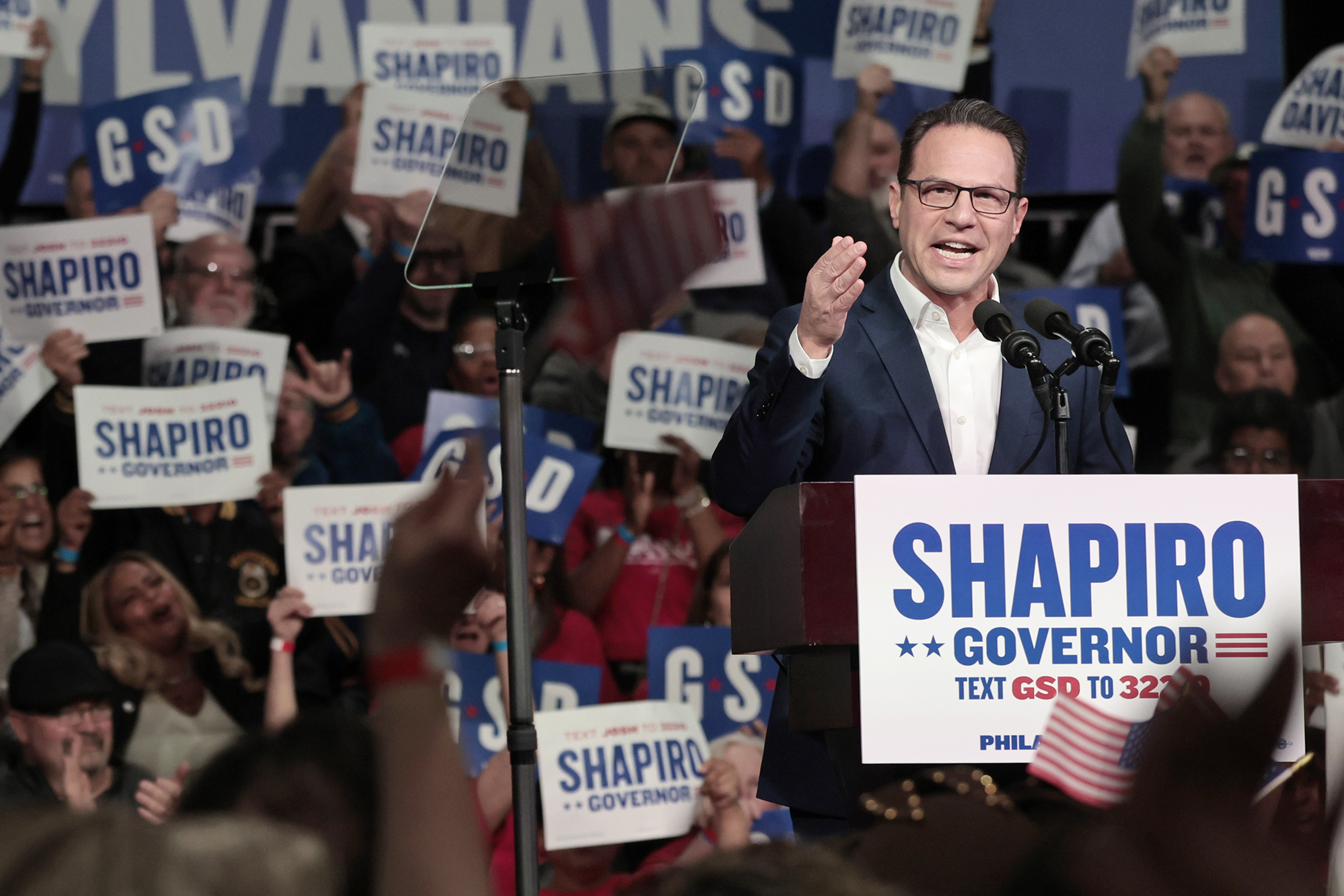
    Governor Josh Shapiro announced his re-election campaign weeks before appearing on Colbert’s show last month.

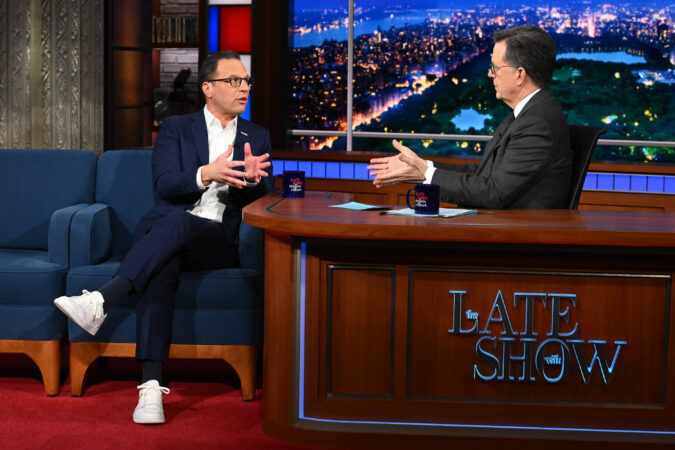
    Despite the FCC’s threat to crack down on networks, Pennsylvania Gov. Josh Shapiro was able to appear on The Late Show last month, using his time to bash Trump’ immigration crackdown in Minneapolis as “pure evil” and Vice President JD Vance as a “sycophant” and a “suck-up.”

    So why didn’t CBS ban Colbert from airing Shapiro’s interview?

    The FCC’s equal-time rule applies strictly to a “legally qualified candidate for any public office.” Despite announcing his reelection campaign in Philadelphia on Jan. 8, Shapiro did not become an official candidate until Tuesday, when the state’s official filing period opened. It runs through March 10.

    Shapiro was able to appear not only on Colbert’s show, but also on ABC’s daytime talk show The View, which has also found itself a target of the FCC under Carr.

    “I think it’s worthwhile to have the FCC look into whether The View, and some of these other programs that you have, still qualify as bona fide news programs and therefore are exempt from the equal opportunity regime that Congress has put in place,” Carr said in a September interview with conservative CNN commentator Scott Jennings.

    It’s also why U.S. Sen. Jon Ossoff’s forthcoming interview with Colbert is still slated to air on the network Wednesday. While Ossoff (D., Ga.) has announced he is running for reelection in Georgia, the window for candidates to officially file paperwork for their primaries does not open until March 2.

    Neither CBS nor Ossoff’s campaign has commented on the interview.

    The equal-time rule also applies to radio broadcasts, where conservative talk shows are among the most dominant formats and regularly feature Republican candidates for office during election years. Then-candidate Trump did multiple interviews on 1210 WPHT in Philadelphia during the 2024 election.

    Carr has said he does not plan to enforce a stricter equal-time rule on radio stations the way he has for television networks, claiming in a news conference last month there wasn’t a similar bona fide news exemption “being misconstrued on the radio side.”

  • Charged with carrying on Dr. King’s legacy, Jesse Jackson proved to be a titan of civil rights on his own accord | Editorial

    Charged with carrying on Dr. King’s legacy, Jesse Jackson proved to be a titan of civil rights on his own accord | Editorial

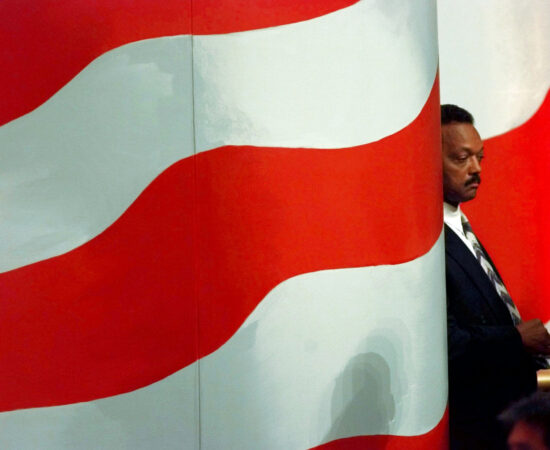
    There’s an old saying that “only the good die young.” Not true, of course, but the sentiment is understandable given the complex twists and turns of any life, including that of the Rev. Jesse Jackson, the civil rights titan and noteworthy presidential candidate, who at age 84 died Tuesday at his home in Chicago.

    The Rev. Jackson’s rise into America’s awareness was itself triggered by a death. He was with the Rev. Dr. Martin Luther King Jr. on the balcony of a Memphis hotel in 1968 when an assassin’s bullet killed his mentor. Who knew then that the Rev. Jackson would become as forceful a voice for equality as King, and later, a credible though unsuccessful political candidate for the nation’s highest office?

    Both the Rev. Jackson and King were gifted with voices that moved people to action, not just with their words, but with how they expressed them. King’s cadence perfected in sermons from pulpits across the South stirred the souls of folks who were cautioned to peaceably place their bodies in harm’s way to achieve dignity.

    The Rev. Jackson more so appealed to people’s outrage as he urged protesters to let their oppressors know, “I am somebody!” Hearing the Rev. Jackson speak, you got the feeling that those three words meant more to him than the disparate treatment Black people were afforded in then-segregated America. It was true that some aspects of the Rev. Jackson’s life had also been a struggle.

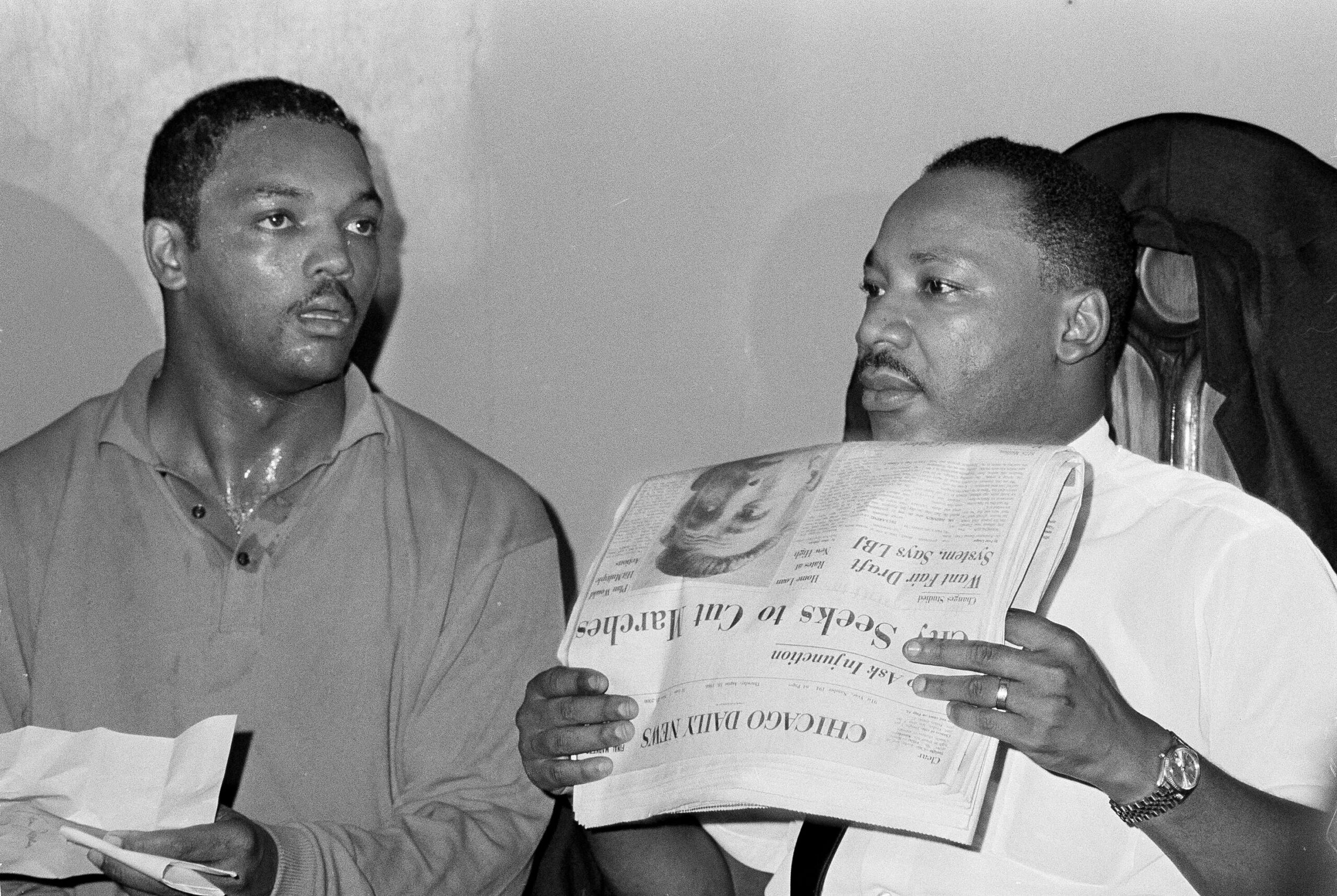
    Civil rights leader the Rev. Dr. Martin Luther King, Jr. (right) and his aide, the Rev. Jesse Jackson, are seen in Chicago in August 1966.

    Born in 1941 in Greenville, S.C., the mother of Jesse Louis Burns was a 16-year-old high school majorette who had been impregnated by a 33-year-old married man who lived next door, but denied his paternity. Two years later, Jesse’s mother married Charles Jackson, whom she met when he was a barbershop shoeshine man. Jackson sent the boy to live with his grandmother and didn’t adopt Jesse until he was 16 years old.

    After high school, the Rev. Jackson enrolled at the University of Illinois Urbana-Champaign on a football scholarship. After his freshman year, he transferred to North Carolina A&T University, a historically Black institution in Greensboro, N.C., where he became a leader in his Omega Psi Phi fraternity chapter and president of the student body. In those roles, the seeds of the Rev. Jackson’s dynamic activism were sown.

    Earlier, the Rev. Jackson had been a member of the “Greenville Eight,” the eight African American students arrested for refusing to leave the then-segregated Greenville County Public Library. By 1965, he was marching with King in Selma, Ala., and in 1967 was named head of Operation Breadbasket, the Southern Christian Leadership Conference program developed to help poor Black communities across the nation.

    The Rev. Jackson eventually left the SCLC after King’s death and, in 1971, created his own organization, Operation PUSH, and later the Rainbow Push Coalition, which became as involved in politics as it was with social justice. That political involvement is credited with being a factor in the 1983 election of Chicago’s first Black mayor, Harold Washington.

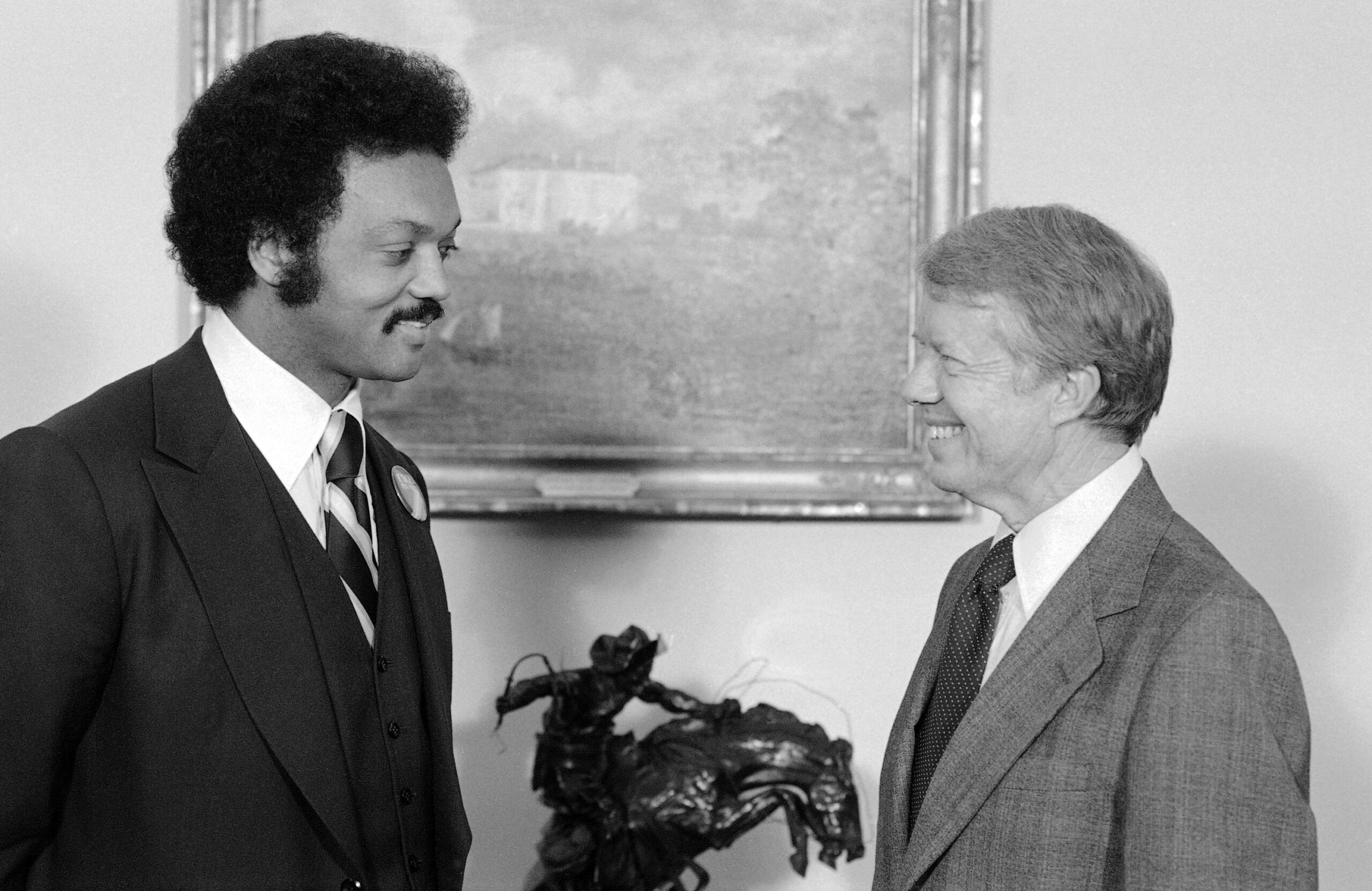
    President Jimmy Carter speaks with the Rev. Jesse Jackson at the White House in Washington, April 4, 1979.

    The Rev. Jackson’s subsequent 1984 presidential campaign resonated with voters of all colors and backgrounds who agreed with him that America wasn’t doing enough “to clothe the naked, to house the homeless, to teach the illiterate, to provide jobs for the jobless, and to choose the human race over the nuclear race.”

    The Rev. Jackson won 465 delegates to the 1984 Democratic National Convention and 1,218 delegates in 1988, both times far exceeding Shirley Chisholm’s 151 delegates when the New York member of Congress ran for president in 1972. But the Rev. Jackson never gave it a third shot. He instead spoke out for justice not just in this country but around the world, and, in 2000, was awarded the Presidential Medal of Freedom by President Bill Clinton.

    Those were good times, but life isn’t always good.

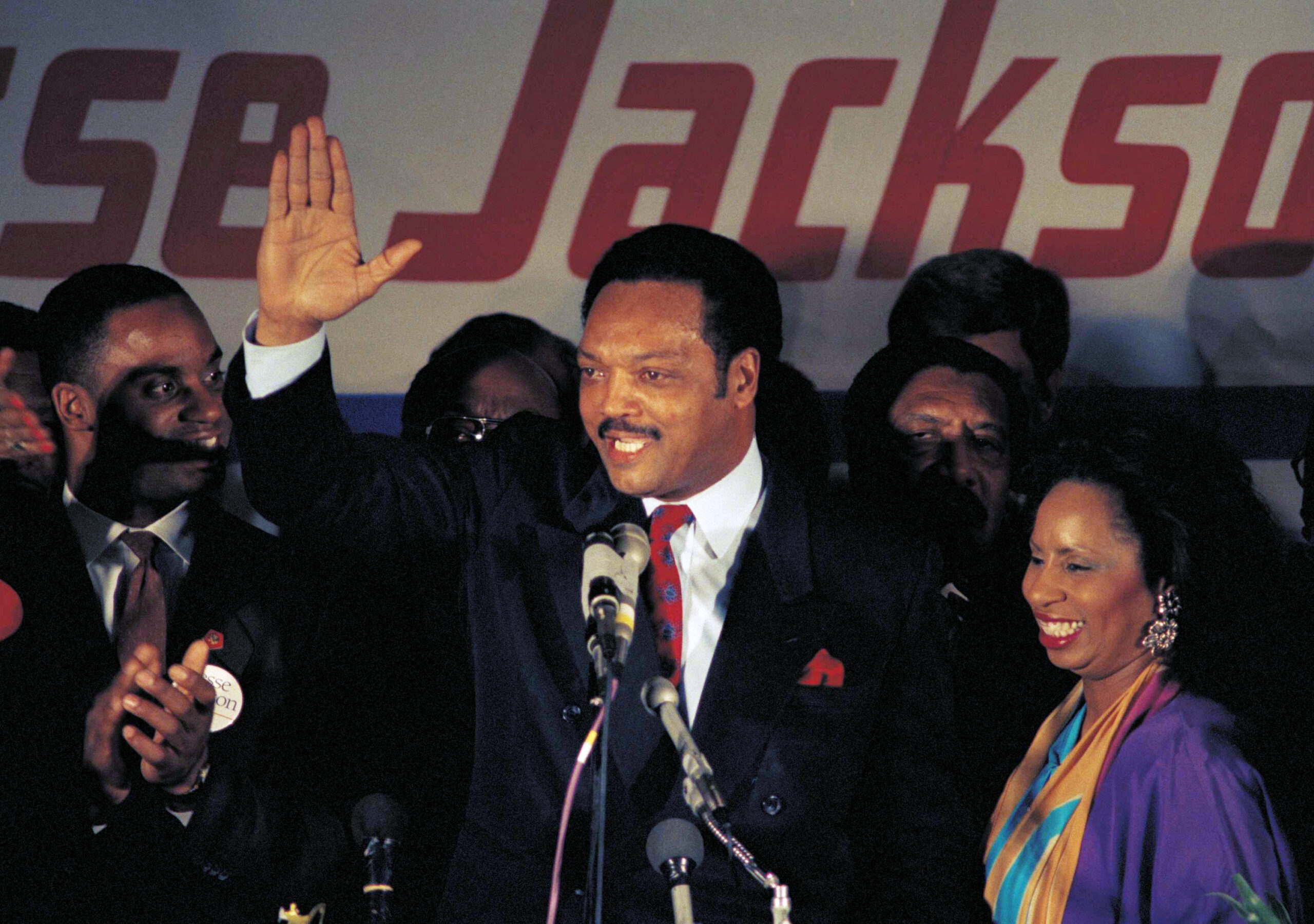
    The Rev. Jesse Jackson, with his wife, Jacqueline, concedes defeat in the Illinois Democratic primary on March 16, 1988, in Chicago.

    There was the revelation in 2001 that the Rev. Jackson had fathered a child with a woman other than his wife. There was the pain of seeing his son, Jesse Jackson Jr., a former congressman, plead guilty in 2013 to misspending $750,000 in campaign funds for personal use and being sentenced to 30 months in prison. Then, there were health issues. In 2017, the Rev. Jackson was diagnosed with Parkinson’s disease, a neurological disorder in which mobility and speech decline over time.

    Watching the Rev. Jackson in his final years, attending public events but barely able to move or speak, made you wish for a better summation of a life once so full of zest and vigor. But the Rev. Jackson has left behind vivid memories captured in print, video, and downloads of a man history should not forget. Memories of crowds screaming, “Run, Jesse, Run,” as the Rev. Jackson tried to fulfill a political dream left to be carried out by someone else. Thank God, Jesse did live to see that.

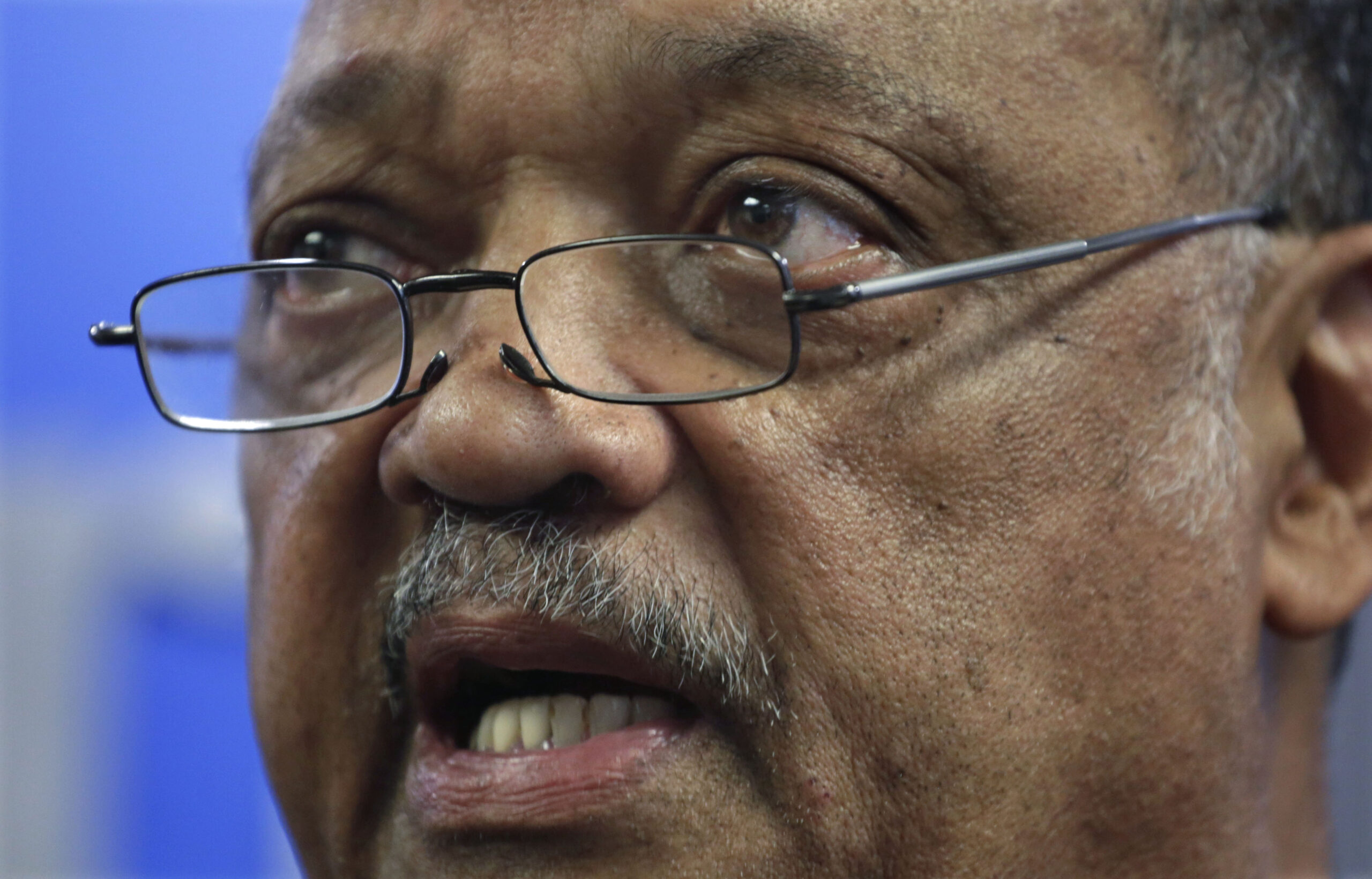
    Jackson speaks at a Chicago news conference in February 2015.
  • Sheetz wants to move into Delaware County, home of Wawa

    Sheetz wants to move into Delaware County, home of Wawa

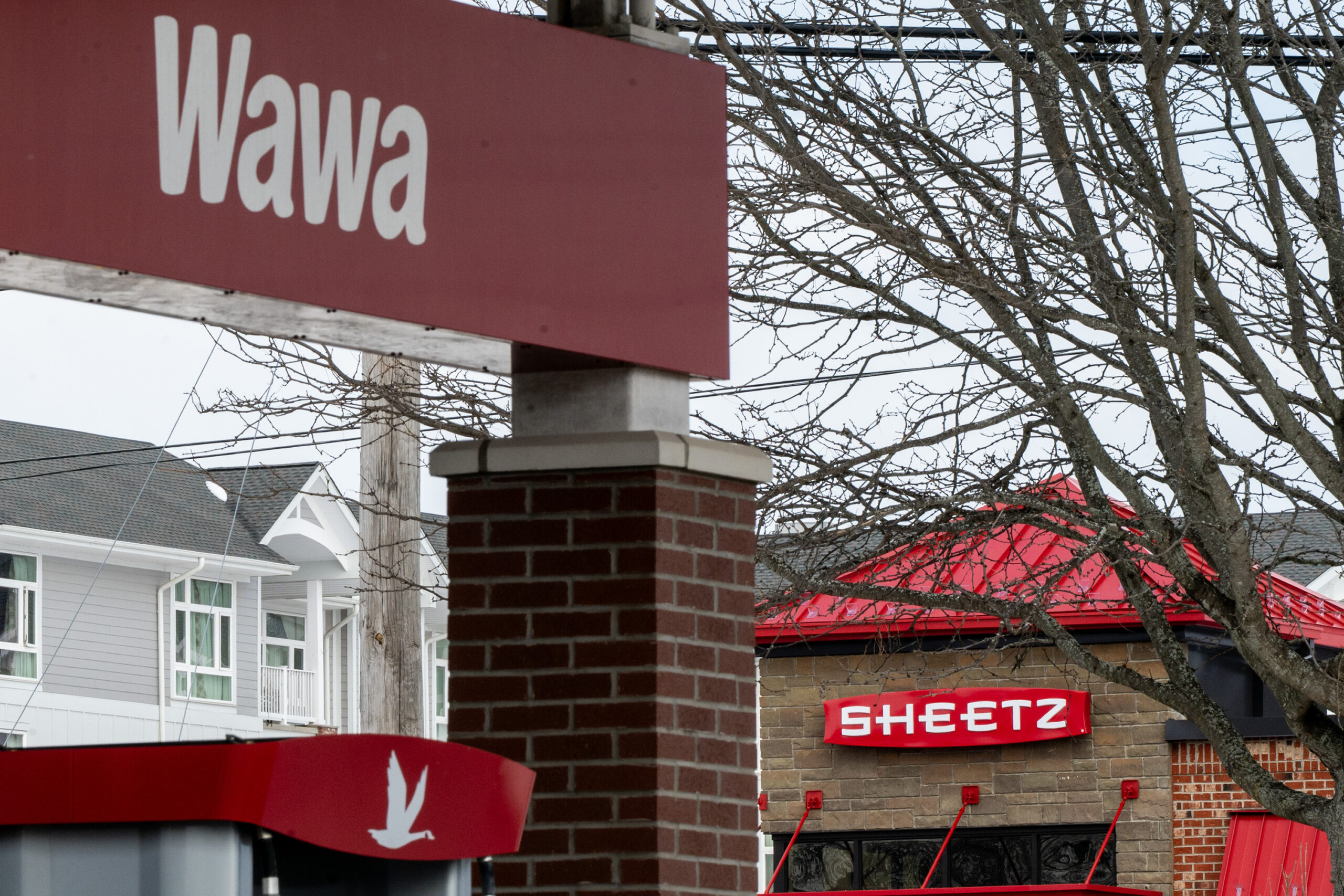
    Sheetz could soon stake a claim in Delaware County, extending its reach into the Philadelphia region.

    The Altoona-based convenience store chain, which opened its first store in the Philly suburbs last week, has submitted a sketch plan application to build a 6,000-square-foot location in Chadds Ford.

    It would be Sheetz’s first outpost in Wawa’s home county.

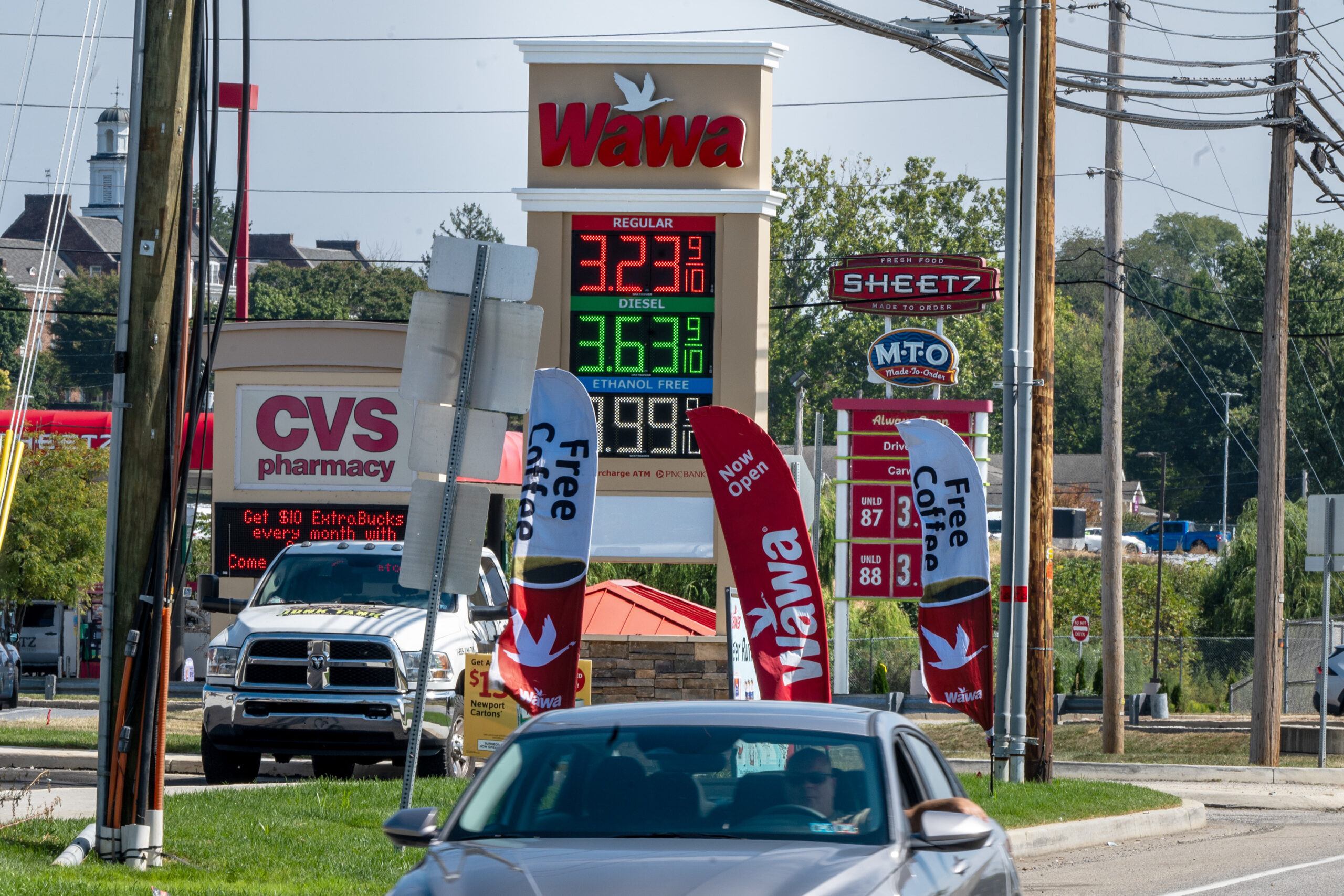
    A Sheetz and Wawa now sit across the street from each other in Limerick Township, Montgomery County.

    If approved, the store would be constructed about five miles down the road from Wawa’s corporate headquarters, and across the county from the site of Wawa’s first store, in Folsom.

    The Sheetz would be in the Village at Painters’ Crossing shopping center near the intersection of U.S. Routes 1 and 202, according to the application. Sheetz would take over a parcel in the northeast corner of the complex that is currently occupied by a vacant former bank and a closed Carrabba’s Italian restaurant.

    Along with Sheetz’s usual offerings of made-to-order food, grab-and-go snacks, and drinks, the outpost would include indoor and outdoor seating, two mobile-order pickup windows, and six gas pumps, according to the application. It would not include a drive-through.

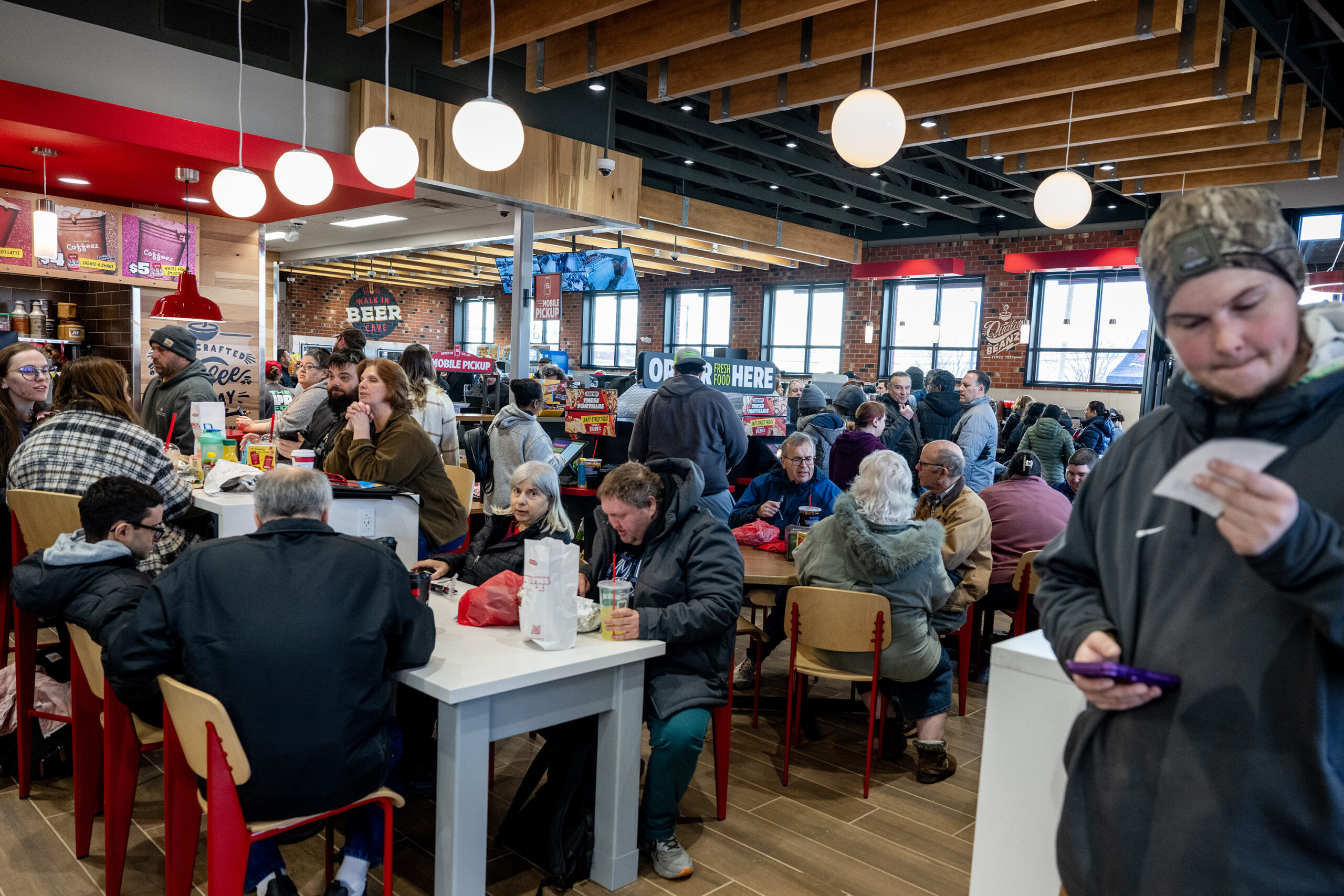
    Customers crowd into the indoor dining area at the new Sheetz in Limerick Township that opened last week.

    Nick Ruffner, Sheetz public affairs manager, declined to provide additional information about the proposal, saying in a statement that “it is still very early in the process.”

    Zoning changes and other approvals would be required before anything is built, Chadds Ford Township solicitor Michael Maddren said. As of Tuesday, Sheetz had only submitted the sketch plan, which was discussed at a planning commission meeting earlier this month, Maddren said.

    At the meeting, township officials did not express strong opinions about the sketch, Maddren said: “We need a little more detail.”

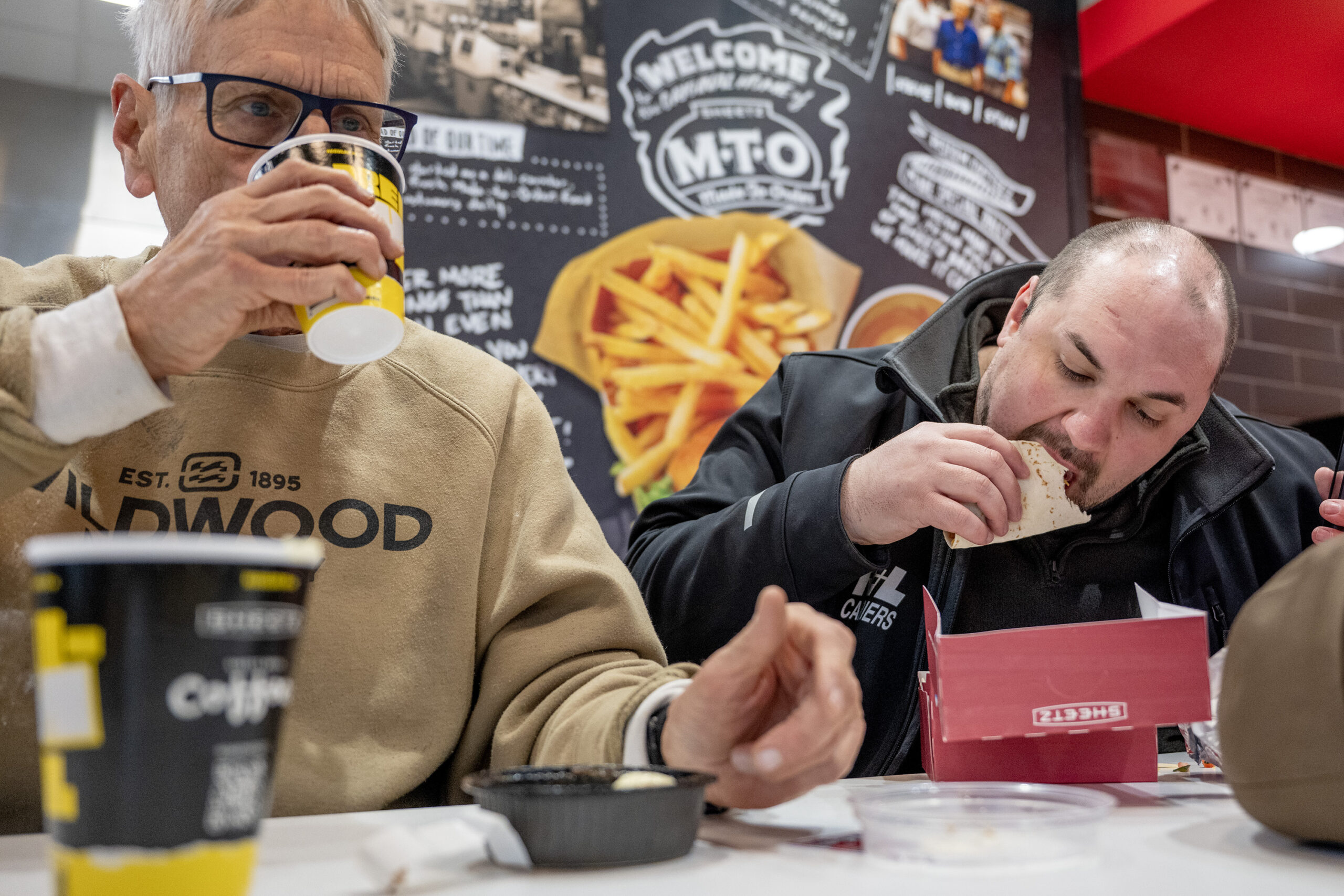
    Craig Scott (left) of Wayne and Dave Swartz (right) of Collegeville had breakfast at last week’s grand opening of the first Sheetz in the Philadelphia suburbs.

    If the Chadds Ford project moves forward, Sheetz could establish a foothold in three of Philly’s four collar counties: Along with its new Limerick, Montgomery County location, Sheetz also has expressed interest in building a store in Chester County.

    In the fall, company officials submitted a sketch plan to Caln Township officials, proposing a location at the site of a shuttered Rite Aid on the 3800 block of Lincoln Highway in Downingtown, according to the township website.

    After years of Sheetz opening stores in Western and central Pennsylvania, and Wawa expanding closer to Philly, Sheetz and Wawa’s footprints have increasingly overlapped in recent years.

    A Wawa opened outside Harrisburg in 2024, marking the chain’s first central Pennsylvania location. It is down the street from a Sheetz.

    Wawa made the first move: In 2024, it opened its first central Pennsylvania location within eyesight of a Sheetz. Since then, Wawa has opened 10 stores in the region, with plans to add 40 more there in the next five years.

    Both chains also have expanded beyond Pennsylvania.

    Sheetz now has more than 800 stores in seven states. Wawa has nearly 1,200 stores in 13 states.

  • Why Philly has so many chicken bones lying around

    Why Philly has so many chicken bones lying around

    As the cold thaws and the snow melts, one constant remains the same: There are chicken bones on the Philly streets.

    Time may be a flat circle, but that doesn’t stop us from wondering why. A reader asked through Curious Philly, The Inquirer’s forum for answering questions, why there are so many chicken bones on the sidewalks and streets of Philadelphia.

    » ASK US: Have something you’re wondering about the Philly region? Submit your Curious Philly question here.

    Two architects appear to be behind Philadelphia’s chicken-bone temple.

    First are animals, who forage through trash looking for the final scraps left on discarded bones. Whether they discover drumsticks by ripping through trash bags on the street or from dumpster diving, these animals likely drop the bones wherever they finish with them.

    The culprits most likely to blame are rats, followed by raccoons and opossums, said Rich Foreman, the owner of Dynamite Pest Control in West Philly.

    While it’s unclear if rats have a particular taste for fried chicken, the animals are among the least-picky eaters around and will take advantage of any food source, from human scraps to cannibalism. And Philadelphia is seemingly a good place to be a rat, being declared the eighth-rattiest city in the United States in 2025 by the pest-control company Orkin, measured by tracking its new residential rodent treatments.

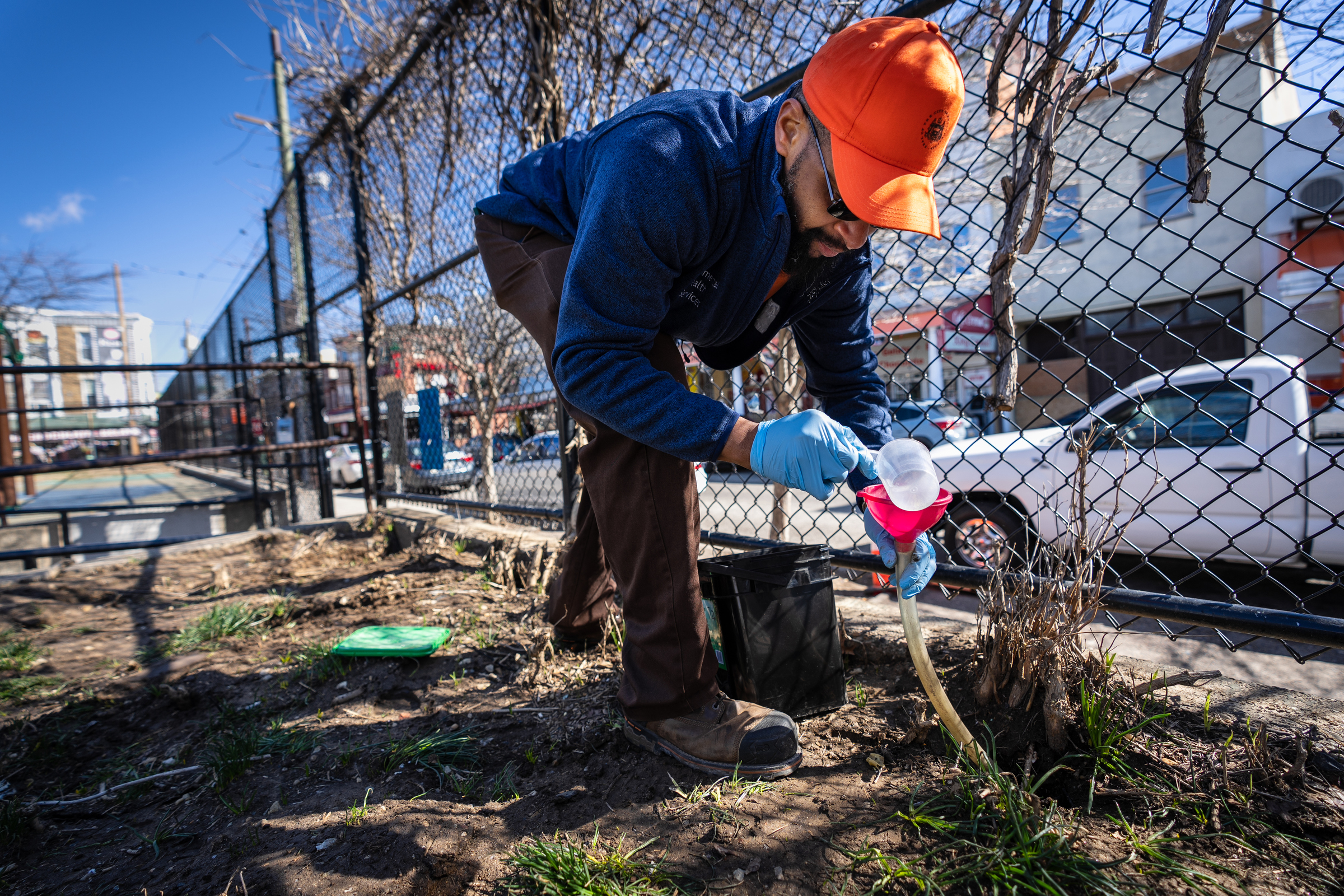
    Adrian Jordan, Vector Control Crew Chief, works keeping the rat population under control, in Philadelphia, Friday, March 7, 2025.

    Foreman sees the chicken-bone problem all over the city, as with some restaurants in Port Richmond that called Dynamite when they saw their trash all over the street. He is confident animals were behind the mess, and said he has “never seen” humans do anything of the sort.

    Foreman said the city’s twice-weekly trash pickup initiative has not helped, since it means an additional day of easily accessible trash on the street for animals.

    He said the best way for people to prevent critters from going into their garbage for bones is to get large, durable trash cans.

    “And make sure you put the lid on it,” he said.

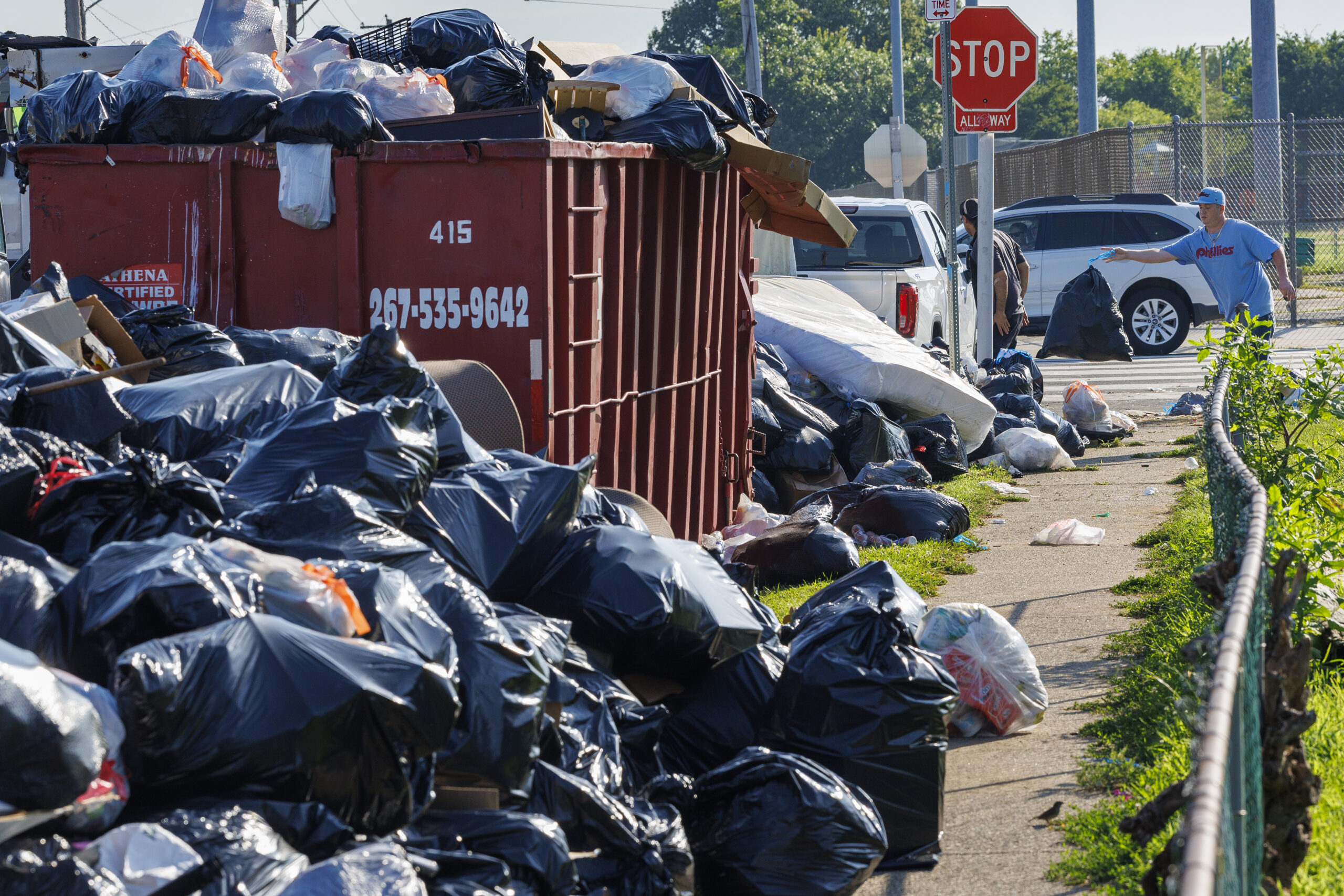
    Residents with trash arriving at garbage dump site at Caldera Road and Red Lion Road in northeast Philadelphia. AFSCME District Council 33 workers enter their second week on strike, Tuesday, July 8, 2025.

    Scavenging animals was the conclusion that the Search Engine podcast reached in a 2024 episode investigating the cause of the chicken bones littering the streets of New York City. Other cities have reported the same problem, including Chicago, Miami, and Washington.

    And yet, anecdotal evidence from residents demonstrates that human activity clearly contributes to the problem.

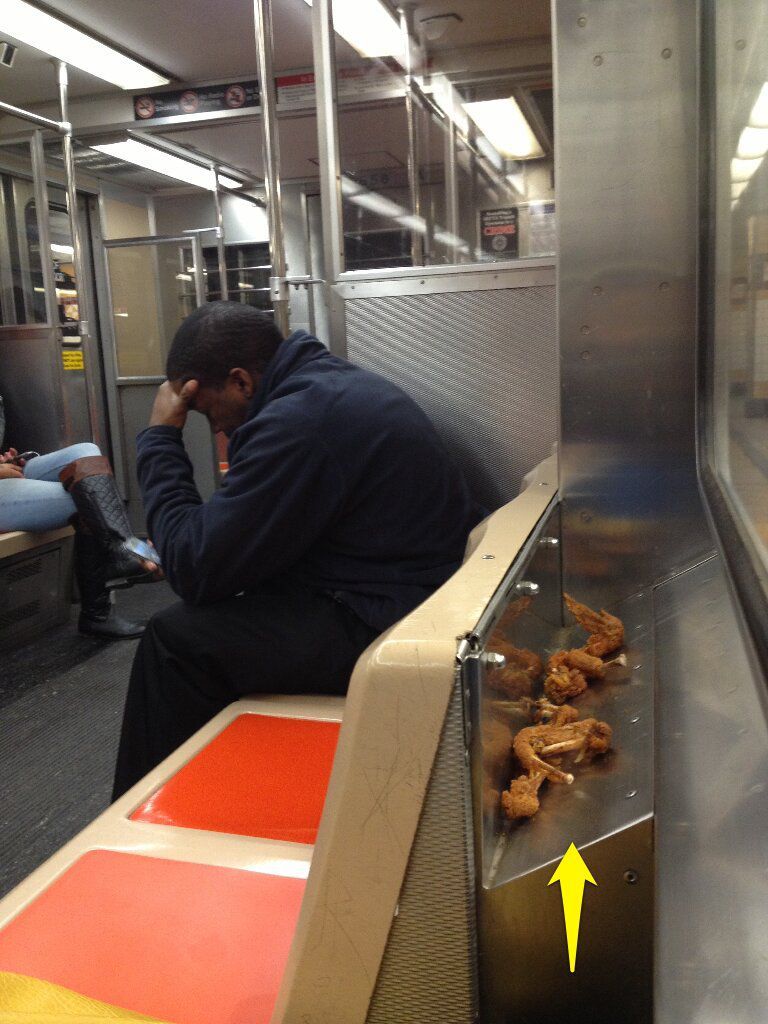
    Jessica Griffith has become the David Attenborough of abandoned chicken bones, documenting and appreciating the beauty of what she encounters in the wild. More than 10 years ago, when she lived in South Philly, Griffith, 46, would notice the chicken bones frequently on walks with her dog. She started photographing them and posting the pictures to Facebook, finding the bones everywhere, including a pile on a SEPTA train.

    “It was just bizarre to me. Just a phenomenon,” she said.

    Jessica Griffith snapped this picture of some discarded chicken bones on the Broad Street Line in 2013.

    Her documentation gathered a following, and people started to send their own submissions. Griffith received pictures from all over the globe — people in Seattle, Las Vegas, South Korea, Sweden, and the Dominican Republic all had their own pictures of discarded chicken bones to share.

    When Brian Love, 53, walks his miniature pinscher, Ziggy, through the Gayborhood, he often sees other people smiling at his dog. But then he realizes it’s because Ziggy is carrying a chicken bone in his mouth.

    Love has complained to his friends about constantly needing to tussle with Ziggy over what the dog sees as a treasure. He has watched people toss chicken bones on the ground, and recently came across a pile of four bones on a mound of snow. Love wishes his neighbors would just use trash bins.

    “It’s your food that you’ve literally just had in your mouth. Throw it in the trash,” he said.

    Stephanie Harmelin, 43, has the same problem with her dog in West Philly, and she said she accepts the bony sidewalks as part of living in a city. She has seen aggressive squirrels rifling through trash, but also has come across bones at street corners and under park benches that appear to have been dropped by humans.

    She said part of the problem is educational. Once, Harmelin pulled her dog away from a bone on the street, and two fellow walkers asked her why.

    Harmelin explained how chicken bones are unsafe for most dogs to consume. Cooked bones splinter when a dog chews on them, and the sharp fragments may cause life-threatening damage as they pass through the dog’s digestive track.

    One woman was shocked, and said she had not realized chicken bones were potentially dangerous to dogs when she had tossed them to the ground before.

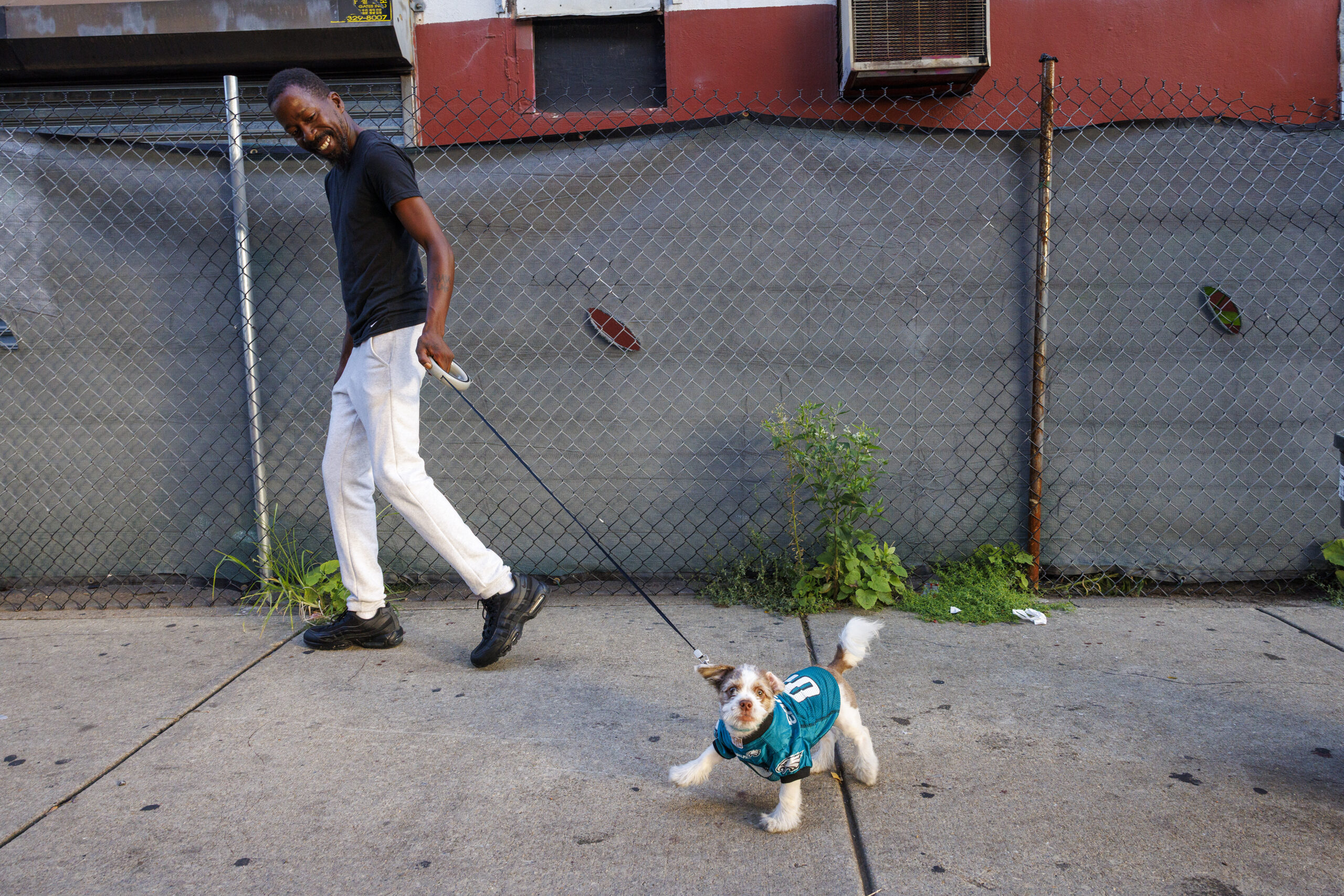
    Theo Caraway of Philadelphia walking his dog Cooper, 6 months, Shitzu/Poodle wearing his Eagles jersey along Kensington at Ontario Street on Philadelphia, Friday, September 5, 2025.

    Harmelin has had similar conversations with others who were not aware of the hazards bones create. Now, she is less likely to be frustrated at whomever has dropped the chicken bone on her street corner.

    “We’re trying to assume what other people know and intend, but we can’t,” she said.

    Even if more people get the message, though, it appears you will still be as likely to find a chicken bone on the street as a fallen leaf.

    Although they’re a gross nuisance of a sidewalk adornment, Griffith doesn’t really mind them. She said they are more of a curiosity that make Philly what it is, in a small way.

    “I think it’s kind of endearing,” she said.

  • The Eagles have three obvious positional needs. History says they’ll watch these players closely at next week’s combine.

    The Eagles have three obvious positional needs. History says they’ll watch these players closely at next week’s combine.

    When evaluating NFL prospects, a player’s past performance is often the best predictor of future performance. The same can be said for the act of scouting itself.

    Howie Roseman, who began serving as Eagles general manager in 2010, has an extensive draft history that can be used to project his future prospect preferences. Roseman has had personnel control during 15 draft cycles, not including 2015 when Chip Kelly was in charge of those decisions. Those 15 draft classes offer windows into Roseman’s valued traits and abilities at each position.

    For years, the Eagles’ player personnel department has been gathering information about the 2026 draft class. At the scouting combine next week, Roseman and his staff will continue to learn about the scores of NFL hopefuls and determine their prospective fit within the organization.

    What can the Eagles’ draft history tell us about the questions they will seek to answer about some of the top prospects at three positions of need next week?

    Will new Eagles offensive line coach Chris Kuper have the same impact on the team’s draft board as did his predecessor Jeff Stoutland?

    ‘Critical factors’ on the offensive line

    Jeff Stoutland is no longer the Eagles offensive line coach, but will his philosophies in scouting prospective talent linger within the front office?

    Throughout his 13-year tenure, Stoutland often emphasized the importance of his players possessing “critical factors” — traits that make them unusual (in a positive way) — to fit in on the Eagles line. Those factors were essential for everyone, from free-agent additions to Day 3 draft picks.

    The Eagles may still take his approach in identifying offensive line talent, which is one of their key responsibilities this offseason. Given the uncertain future of Lane Johnson, regardless of whether he returns for the upcoming season or not, the Eagles could look to bolster their prospects at tackle.

    For Johnson and Jordan Mailata — Roseman’s biggest draft success stories at tackle — “critical factors” trumped time on task. Johnson, the No. 4 overall pick out of Oklahoma in 2013, had three seasons of tackle experience going into the draft. Mailata, the Eagles’ 2018 seventh-rounder, had none.

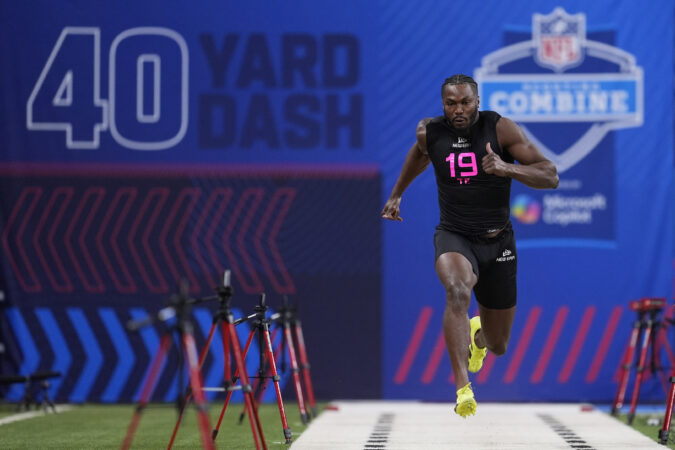
    They were remarkable athletes at their size, though. Johnson flaunted his athleticism at the combine, ranking in the 99th percentile in the 40-yard dash (4.72 seconds). But most offensive linemen aren’t running 40 yards unabated downfield. His 98th percentile 10-yard split (1.61 seconds) was a reflection of the short-area burst that would help provide the foundation for his All-Pro career.

    This tackle class is top-heavy with talent that could interest the Eagles. Kadyn Proctor, the 6-foot-7, 366-pound tackle from Alabama, stands out for his movement skills at his hulking size. He can reinforce that notion with a strong performance at the combine. In addition to athleticism, Stoutland valued versatility along the offensive line. Proctor has the skill set to line up at guard, too, giving the Eagles another interior option if Johnson returns for a 14th season.

    After a standout week at the Senior Bowl, Max Iheanachor, the 6-6, 330-pound tackle out of Arizona State, could be on the Eagles’ radar. He’s a rawer prospect than Proctor, beginning his football career in junior college only five years ago. Iheanachor has the requisite size and quickness at the position, though, and he could continue to improve his draft stock with eye-catching numbers at the combine.

    However, without Stoutland on the staff developing the offensive linemen, it will be interesting to see if the Eagles gravitate toward a tackle prospect with a higher floor.

    Zach Ertz (left) and Dallas Goedert were productive college tight ends who were selected by the Eagles beyond the first round.

    Tight end production

    Come the start of the new league year next month, the Eagles will likely put up their “help wanted” sign at tight end. After eight seasons in Philadelphia, Dallas Goedert is set to become a free agent, and his asking price may be too steep for the Eagles to meet. Grant Calcaterra, the Eagles’ second-string tight end, is poised to hit the open market, too.

    The Eagles will likely draft a tight end in April, but how early? Goedert was a 2018 second-rounder (No. 49 overall) out of South Dakota State. Zach Ertz was drafted in the second round, No. 35 overall, out of Stanford in 2013. With Roseman at the helm, the Eagles have never selected a tight end in the first round, but could that change in 2026?

    Kenyon Sadiq, the 20-year-old out of Oregon, is the consensus top tight end in this year’s draft class who could come off the board within the Eagles’ range (potentially earlier) at No. 23 overall. His speed and athleticism are his strengths, and he will likely continue to turn heads at the combine workouts.

    Sadiq doesn’t boast the college production that most first-round pass-catchers have achieved, though, a group that includes the Eagles’ pair of second-round tight ends. In three seasons at Oregon, Sadiq posted 892 yards and 11 touchdowns on 80 receptions. Since the turn of the century, only one offensive skill player with at least 40 games played and fewer than 1,000 yards from scrimmage has been drafted in the first round — tight end Benjamin Watson (by the New England Patriots in 2004, No. 32 overall out of Georgia).

    Goedert and Ertz were their respective teams’ top weapons by the end of their collegiate careers. Sadiq, who declared for the draft after his junior season, was not. Why? That’s the question the Eagles must answer as they mull the decision to use a first-round pick on the versatile hybrid tight end.

    At 6-3, 245 pounds, Sadiq is smaller than Goedert (6-5, 256) and Ertz (6-5, 249). Still, Sadiq makes for an intriguing fit in the Shanahan-esque scheme that new Eagles offensive coordinator Sean Mannion is expected to bring to Philadelphia. The speedy Sadiq has the ability to exploit mismatches in the passing game, given his ability to outrun linebackers. He excels at making plays with the ball in his hands, which could be a benefit to the Eagles in the screen game.

    Realistically, Days 2 and 3 could be the ideal spots to draft a tight end given the depth at the position in this year’s draft class. But Sadiq, a better athlete than Goedert or Ertz, could quell some doubts about his college production by dazzling at the combine.

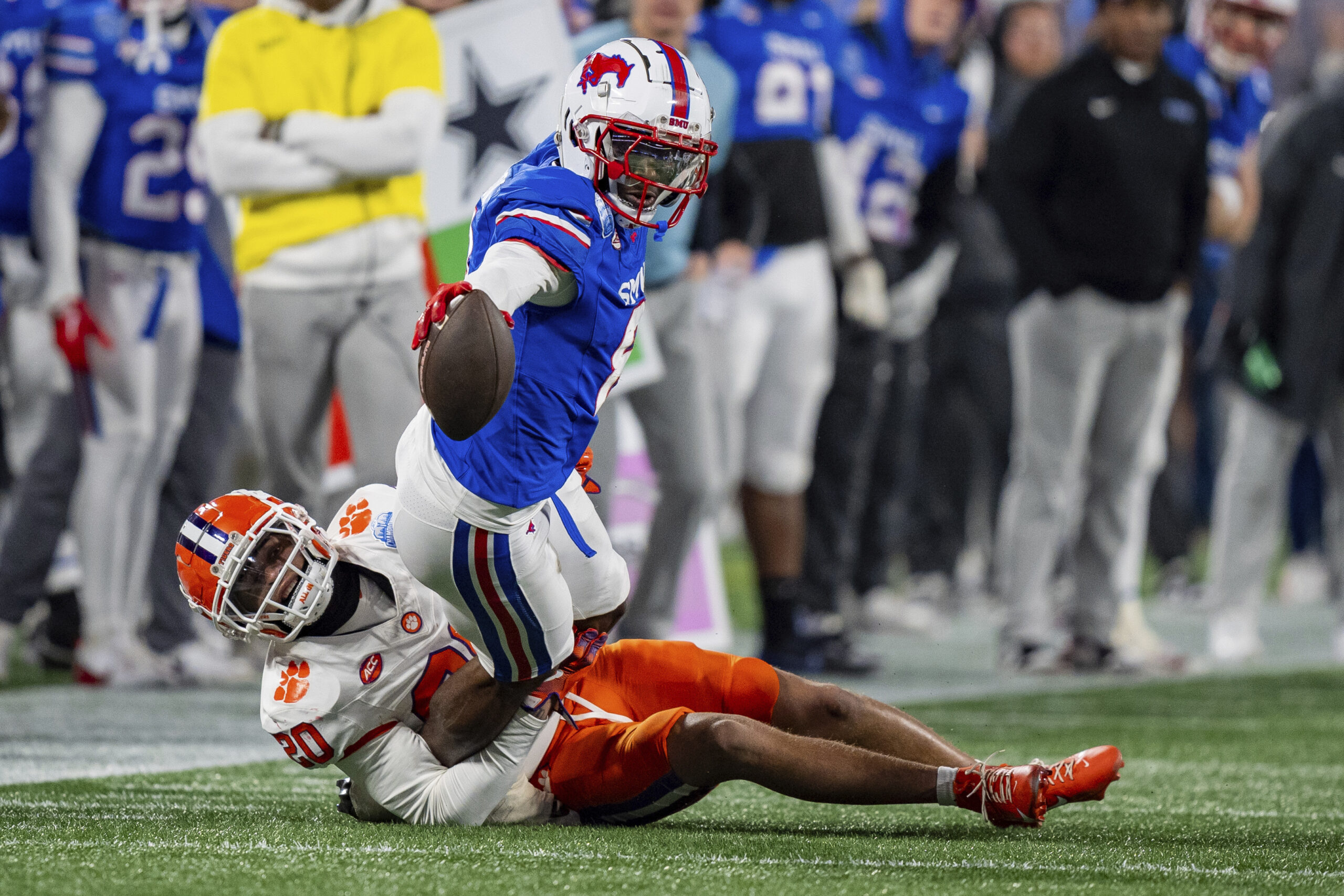
    Clemson cornerback Avieon Terrell (tackling SMU wide receiver Jordan Hudson) is a player who has been linked to the Eagles in multiple mock drafts.

    Need for speed, skill at cornerback

    The cornerback position is a reminder that Roseman’s track record isn’t always predictive. Going into the 2024 draft, he had never drafted a cornerback in the first round. That year, he bucked the trend with the selection of Quinyon Mitchell with the No. 22 overall pick.

    One of the biggest questions about Mitchell’s future in the NFL as CB1 was answered at the Senior Bowl. He had mostly played in off coverage and zone at Toledo, but he performed well in press-man against other top prospects in Mobile, Ala. Roseman said after the first night of the draft that Mitchell’s Senior Bowl showing helped him see his “diverse array of skill sets.”

    Mitchell also helped his draft stock at the combine. He ran a 4.33-second 40-yard dash, the second-fastest speed by a cornerback that year. Unsurprisingly, speed seems to be one of the priorities for the Eagles at the position, with their cornerback selections over the last three draft classes running at most a 4.41 in the 40 at the combine. Cooper DeJean, who did not participate at the combine because of an injury, ran a 4.42 at his pro day.

    Could Roseman go back to the cornerback well in the first round again? The Eagles have a need at CB2, with Adoree’ Jackson set to become a free agent in March.

    Some notable draft analysts seem to think so. Daniel Jeremiah and Bucky Brooks, NFL Network draft analysts, tabbed Clemson cornerback Avieon Terrell to go to the Eagles in their first mock drafts of the year.

    The 5-11, 180-pound Terrell is relatively undersized at the position, although that might not necessarily be a deal-breaker. By comparison, Mitchell has fairly average size at 6 feet, 195 pounds, but his 34th-percentile arms (31 inches long) haven’t seemed to hold him back in the NFL.

    Regardless of his size, Terrell has solidified himself among the top cornerbacks in this year’s draft class with his smart instincts and competitive spirit, a pair of traits that would be coveted by Vic Fangio. He also has inside-outside versatility if the Eagles ever decide to move DeJean outside full-time. If Terrell tests well at the combine, he could get his foot in the door of the late first round.

  • House of the week: An end-unit townhouse in Elkins Park for $499,000

    House of the week: An end-unit townhouse in Elkins Park for $499,000

    She has been staying there only for a few months, but Samantha Robinson knows why her grandparents loved their Elkins Park end-unit townhouse and the neighborhood.

    “Everybody says hello,” she said. “Everybody looks out for each other.”

    Her mother, Kerry Rosenthal, said her dad “really liked the wall space and the lighting. Being an end unit made it easier for my mom to grow things.”

    Rosenthal said it’s possible to walk through the neighborhood and think you’re in a rural area until you hear the commuter rail train nearby .

    Her parents — Beverly Green, a writing teacher, and Stephen Green, an attorney — bought the condo in the gated Breyer Woods development in 2011, expecting to renovate it so they could age in place. The Greens died in October.

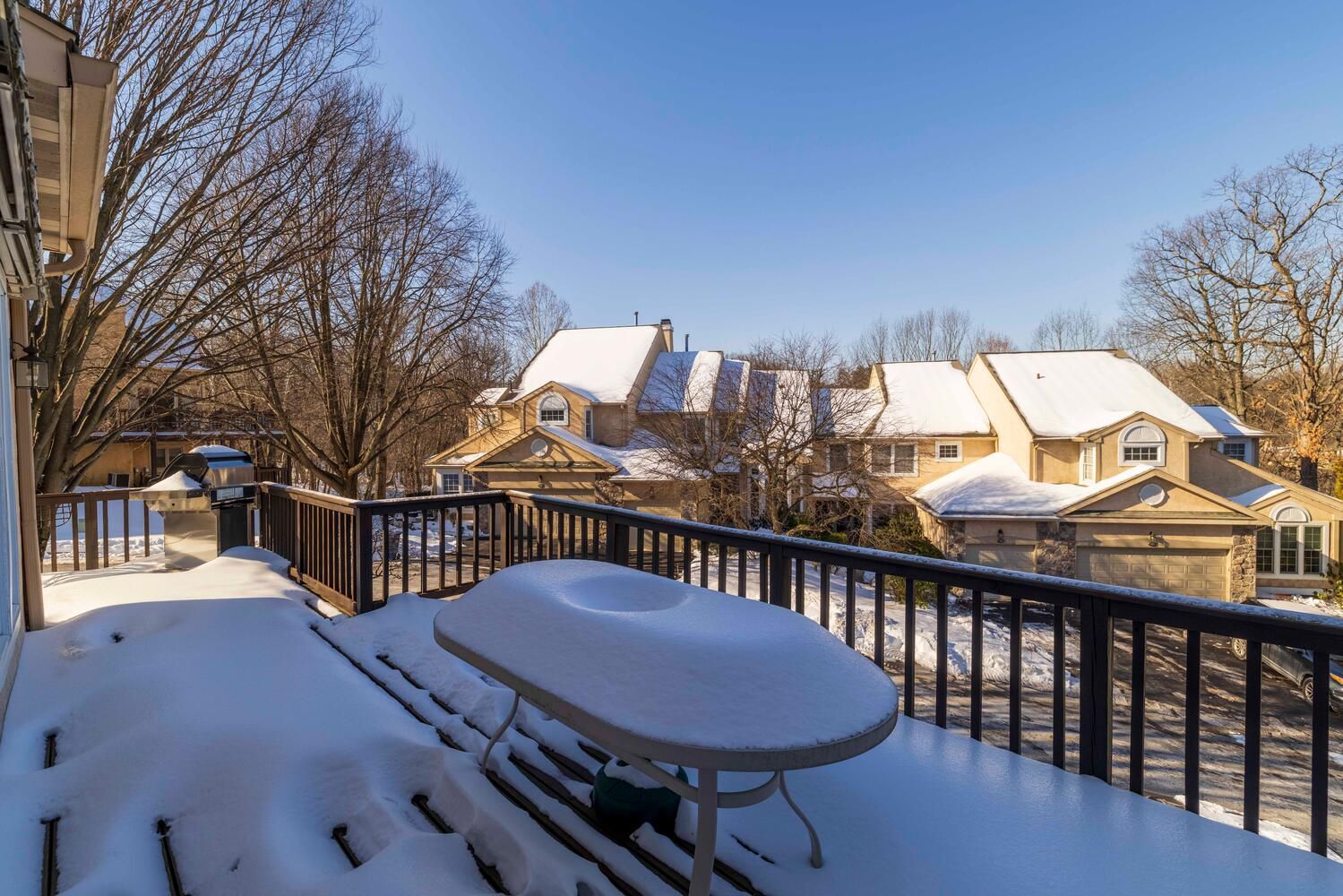
    The back porch with a permanent gas grill.

    The 2,936-square-foot house, built in 1993, has three bedrooms, two full bathrooms, and two half bathrooms.

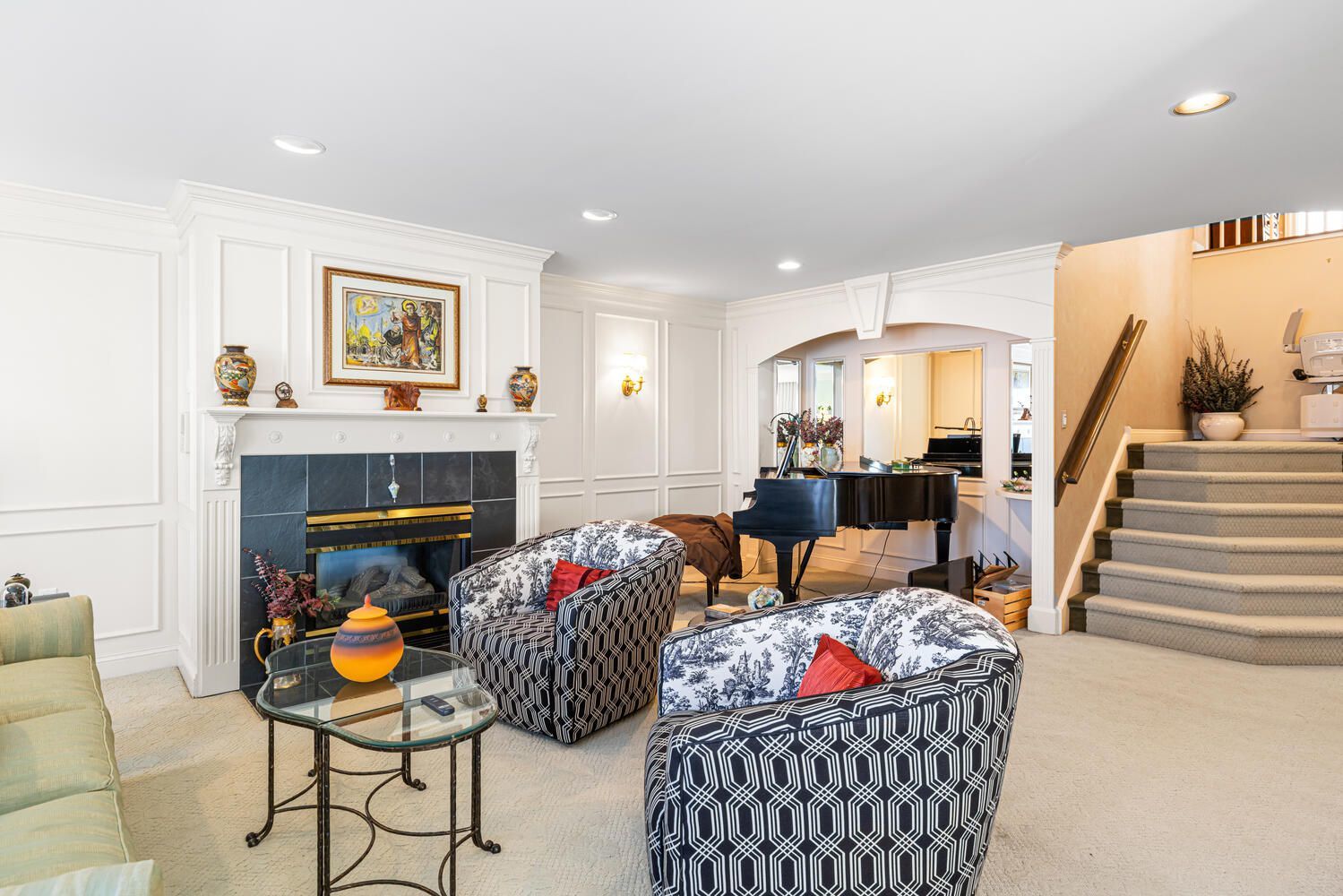
    The main level has a living room with a working gas fireplace, a deck, and a dedicated home office that could serve as a fourth bedroom.

    A two-car attached garage leads directly to the laundry room.

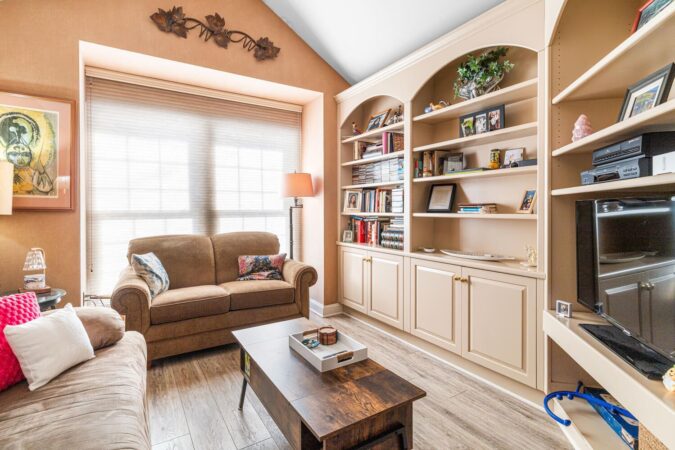
    The living room has a working gas fireplace.

    The upper level primary suite has vaulted ceilings and multiple closets.

    The finished walk-out basement has a half bath and kitchenette and opens to a second private deck.

    Community residents have access to a tennis court and can join the adjacent student center at the Elkins Park campus of Drexel University, which has a clubhouse and gym.

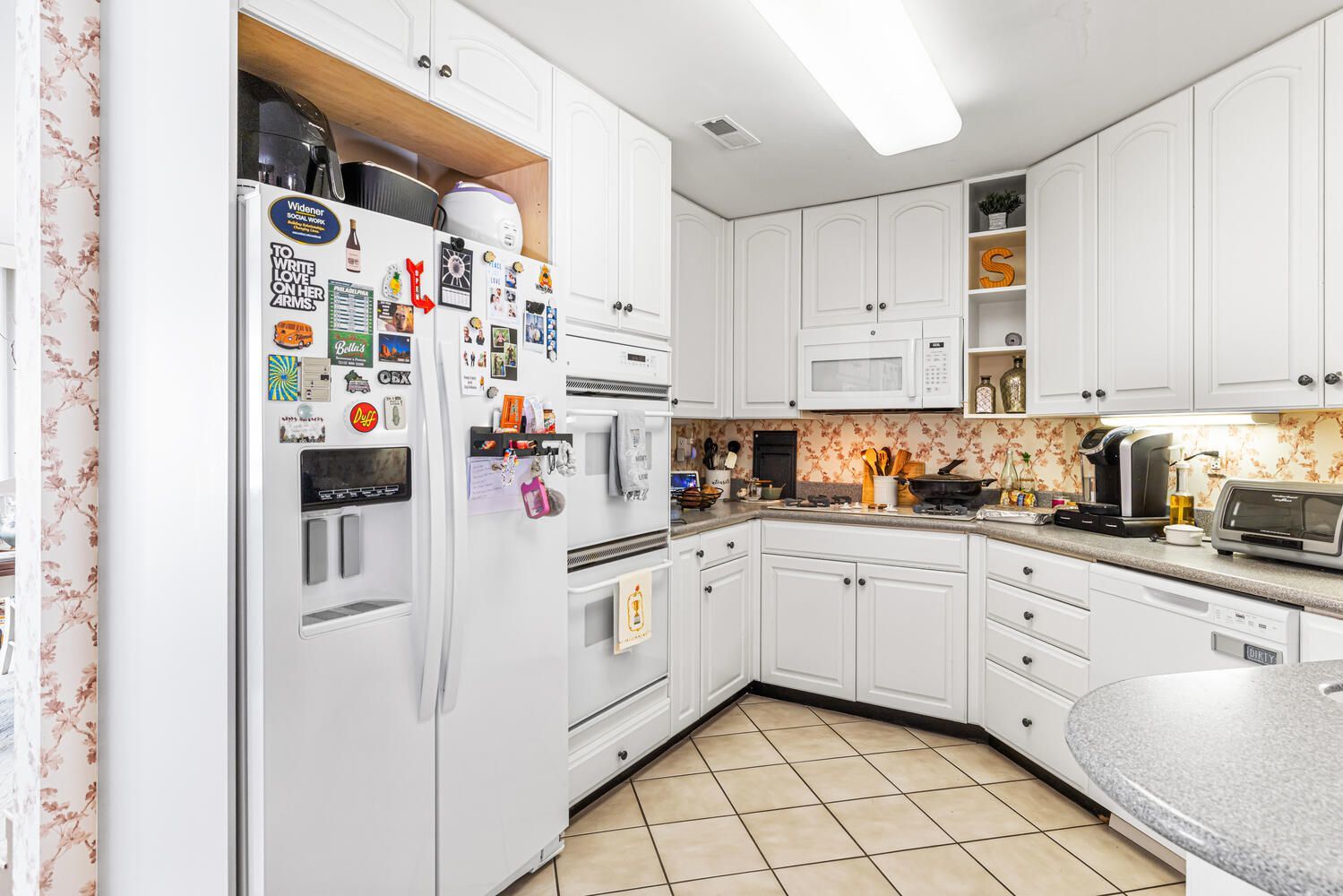
    The kitchen.

    The house is a short walk from the Jenkintown SEPTA station, and a supermarket is less than a half-mile away.

    The house is listed by Frank Blumenthal at Keller Williams Real Estate Tri-County for $499,000.

  • It has taken Homer Simpson a very long time to realize that Philadelphia is his kind of town

    It has taken Homer Simpson a very long time to realize that Philadelphia is his kind of town

    (Some spoilers ahead!)

    When The Simpsons writer Christine Nangle got a chance to pen the Philadelphia episode that airs Sunday night, the comedian from Oxford Circle knew it was high stakes — and local audiences would be watching closely.

    “It was a lot of pressure. I was joking like, ‘If they hate it, they’re gonna burn my parents’ house down, and if they love it, they’re gonna burn my parents’ house down,’” Nangle said with a laugh.

    The idea originally came from Simpsons producer Mike Price, who grew up in South Plainfield, N.J., and suggested a visit to Philadelphia as a plot premise to Nangle, knowing she was a native.

    The timing worked out serendipitously: Philadelphia is one of the top tourist destinations this year thanks to America 250 and the show is celebrating its 800th episode to air on FOX. Guest stars from Philly were available, too, including Quinta Brunson, Kevin Bacon, and Questlove.

    Co-executive producer and writer Christine Nangle at “The Simpsons” 800th episode party in Los Angeles.

    Last summer, Nangle and Price brainstormed what could bring their beloved cartoon family to the city and they landed on a nod to the National Dog Show. It was partially inspired by Nangle’s own 11-year-old rescue pit bull, Philby, who had just died. (Nangle got a shoutout in the episode with a competition sponsored by “Philby’s Poop Bags.”)

    Titled “Irrational Treasure,” the episode is a spoof of the 2004 film National Treasure. A group of historians believe that the Simpsons’ family dog, Santa’s Little Helper, is a descendant of Benjamin Franklin’s greyhounds, and holds the key to finding the inventor’s long-lost treasure somewhere in the city.

    Before getting to Philly, Santa’s Little Helper gains weight as Homer (Dan Castellaneta) overfeeds and spoils him. When the dog eats Marge’s (Julie Kavner) ambrosia salad full of toxic grapes, they rush to the emergency veterinarian, voiced by The Pitt star Noah Wyle.

    Marge consults with Adrienne (Brunson), a canine nutritionist and trainer who gets the dog working out to “Far From Over,” the ‘80s track by Frank Stallone (Sylvester’s brother). The pair enroll Santa’s Little Helper in competitions to help build agility, and he soon becomes a winner who can qualify for the big dog show in Philadelphia.

    Adrienne (Quinta Brunson) and Santa’s Little Helper in ‘The Simpsons’ episode “Irrational Treasure.”

    “I basically wrote this [Adrienne] role for Quinta, and she said yes, which is awesome,” said Nangle, who’s a big fan of Brunson’s Philly-set sitcom, Abbott Elementary. “When we recorded it, I said to her, ‘Thank you for saying yes, because I didn’t have a second choice, and I don’t know what I would have done.’”

    Though the whole family wants to go to the show, Marge insists that only she and Santa’s Little Helper attend. But Homer has other plans and he manages to stow away in the trunk for the 18-hour drive.

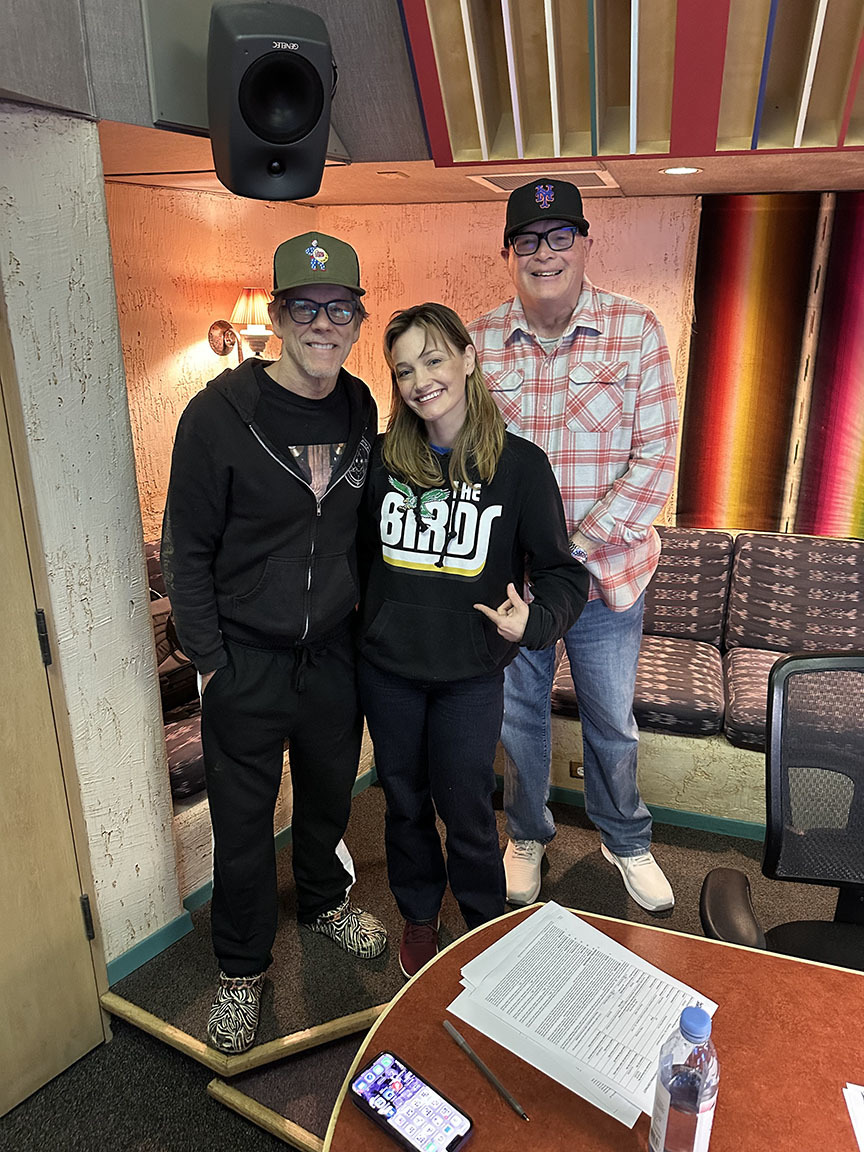
    Actor Kevin Bacon with “The Simpsons” co-executive producer and writer Christine Nangle and executive producer Mike Price.

    “Philadelphia, my kind of town,” Homer says with reverence. “Throwing ice balls at Santa Claus, climbing greasy street lamps. The city Lenny Dykstra learned to be crazy, where every steak is cheesed and every tush is pushed. Even though I’ve never been, I feel like I was born there and I never left.”

    When they arrive — passing a welcome sign calling the city “The Big Scrapple” — a hotel concierge (Bacon) greets them: “Yo! Welcome to the Hotel Philadelphia. We offer 24-hour room service from our full Boyz to Menu. If you need a wooder or any other jawn just ring the Patti LaBelle and we’ll send a jabroni right up.” (Boyz II Men also contributed their own version of The Simpsons theme song for the episode.)

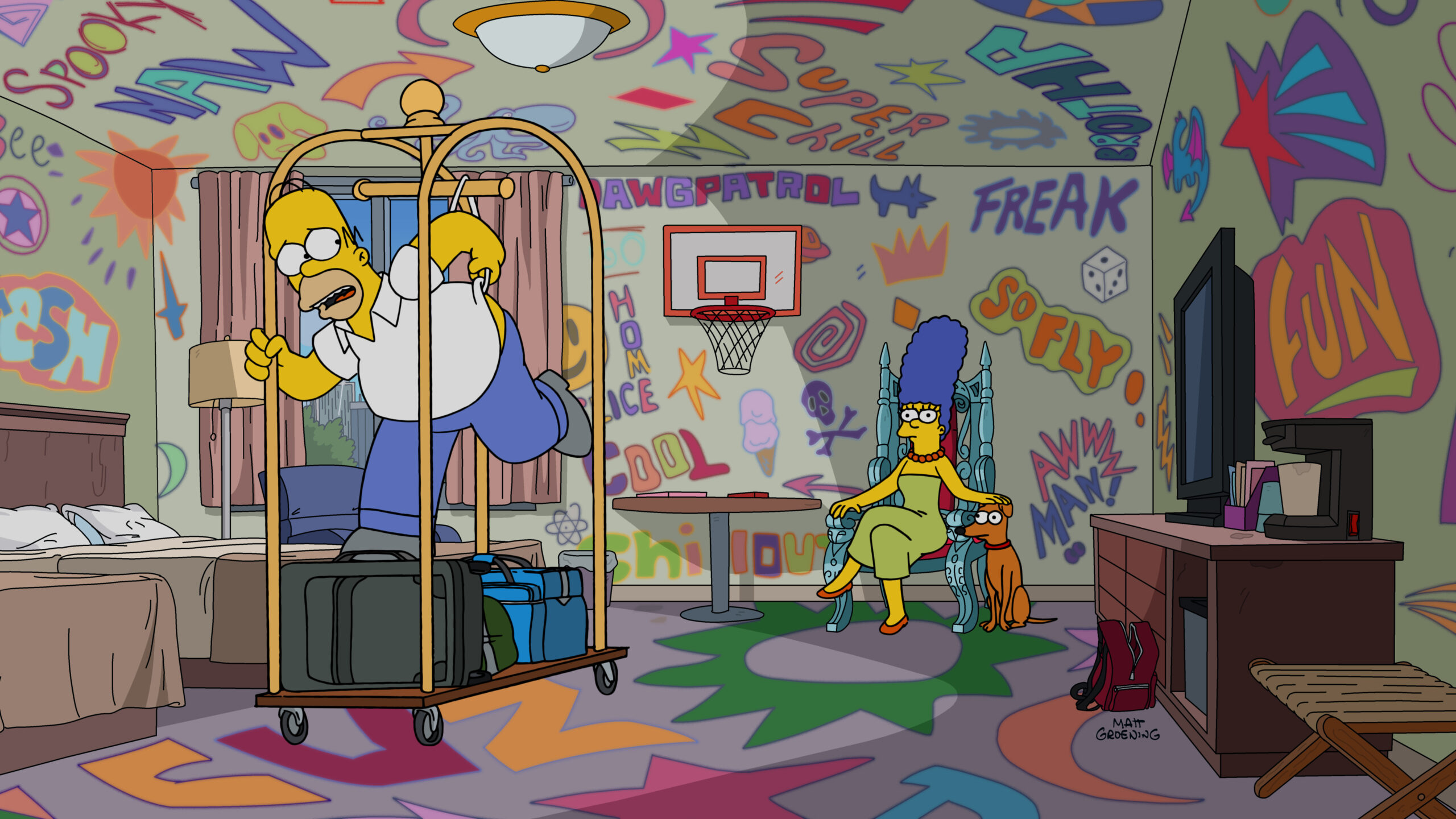
    The “Fresh Prince suite” in ‘The Simpsons’ Philadelphia episode.

    That legendary Philly accent was essential to his character, and Nangle knew Bacon could do it well. “From [hearing] the first ‘Yo,’ I felt homesick, like, immediately,” she said.

    They stay in the graffiti-covered Fresh Prince suite and Marge soon finds Homer’s list of “Awesome things for me to do in Philadelphia,” from head-butting a local, to a Mare of Easttown tour, to ripping off a piece of Jason Kelce’s beard.

    “How is a dirtbag tour of the city supporting the dog?” Marge asks, exasperated.

    The answer? Distraction tactic. The group of historians, who call themselves H.O.A.G.I.E. Men (Historians of America’s Great Inventors and Enlightened Men), ask Homer to take them to Santa’s Little Helper and he lies, telling them his wife and dog are on a tour of the city.

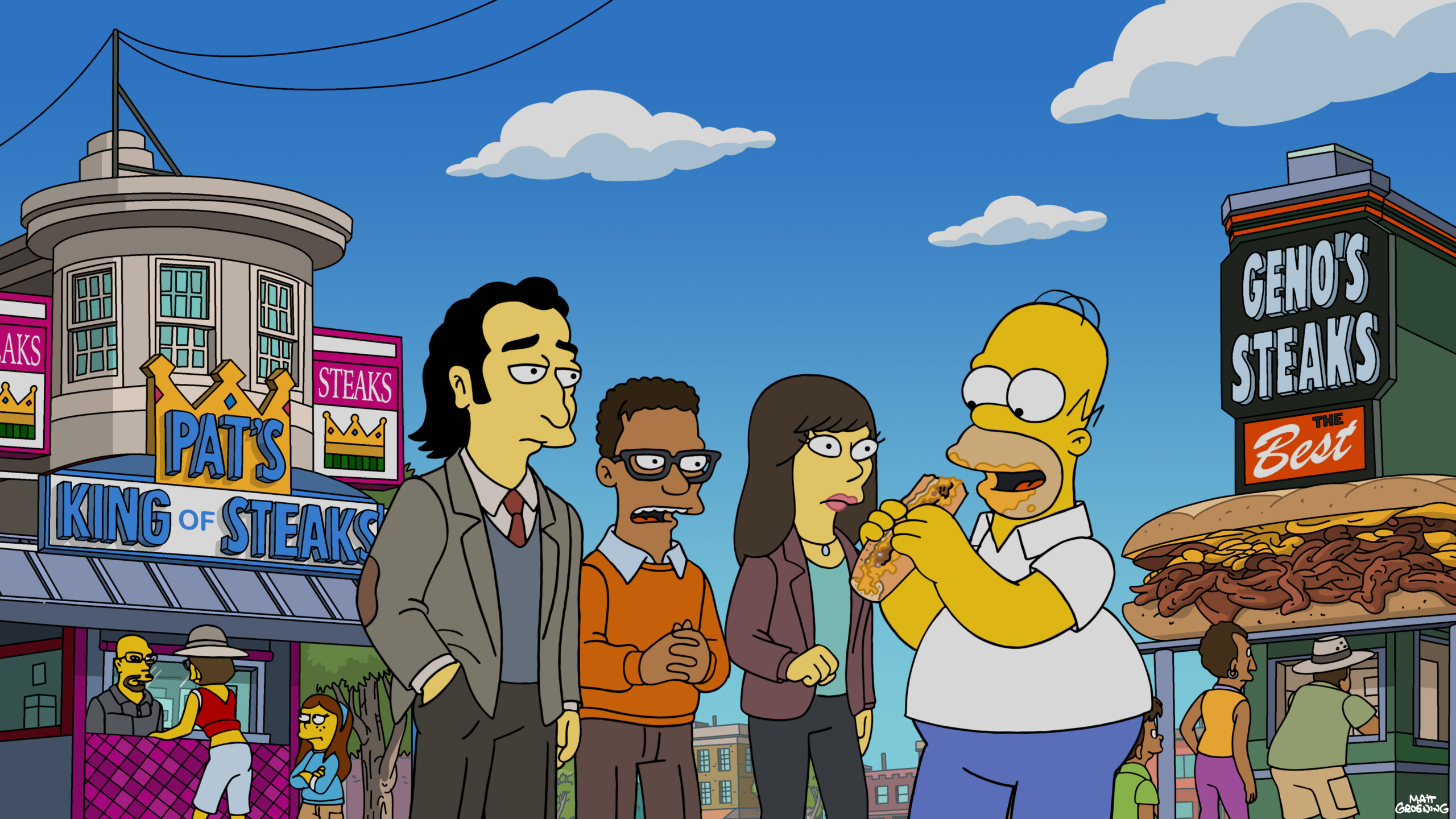
    Cue tourist montage: Homer eats cheesesteaks at Dalessandro’s, Pat’s, and Geno’s, pizza at Down North, Tastykakes at the Navy Yard factory, and cherry water ice on the Schuylkill in front of Boathouse Row. He takes selfies at the Mütter Museum and the Rocky statue, which appears alongside multiple other bronzes memorializing characters from the boxing franchise like Apollo Creed, Ivan Drago, Mickey, and “Hanging Side of Beef.” Of course they stop at Wawa, too — Nangle always makes sure she stops for a soft pretzel when she visits home.

    Homer (Dan Castellaneta) eats a cheesesteak in South Philly in an upcoming episode of ‘The Simpsons.’

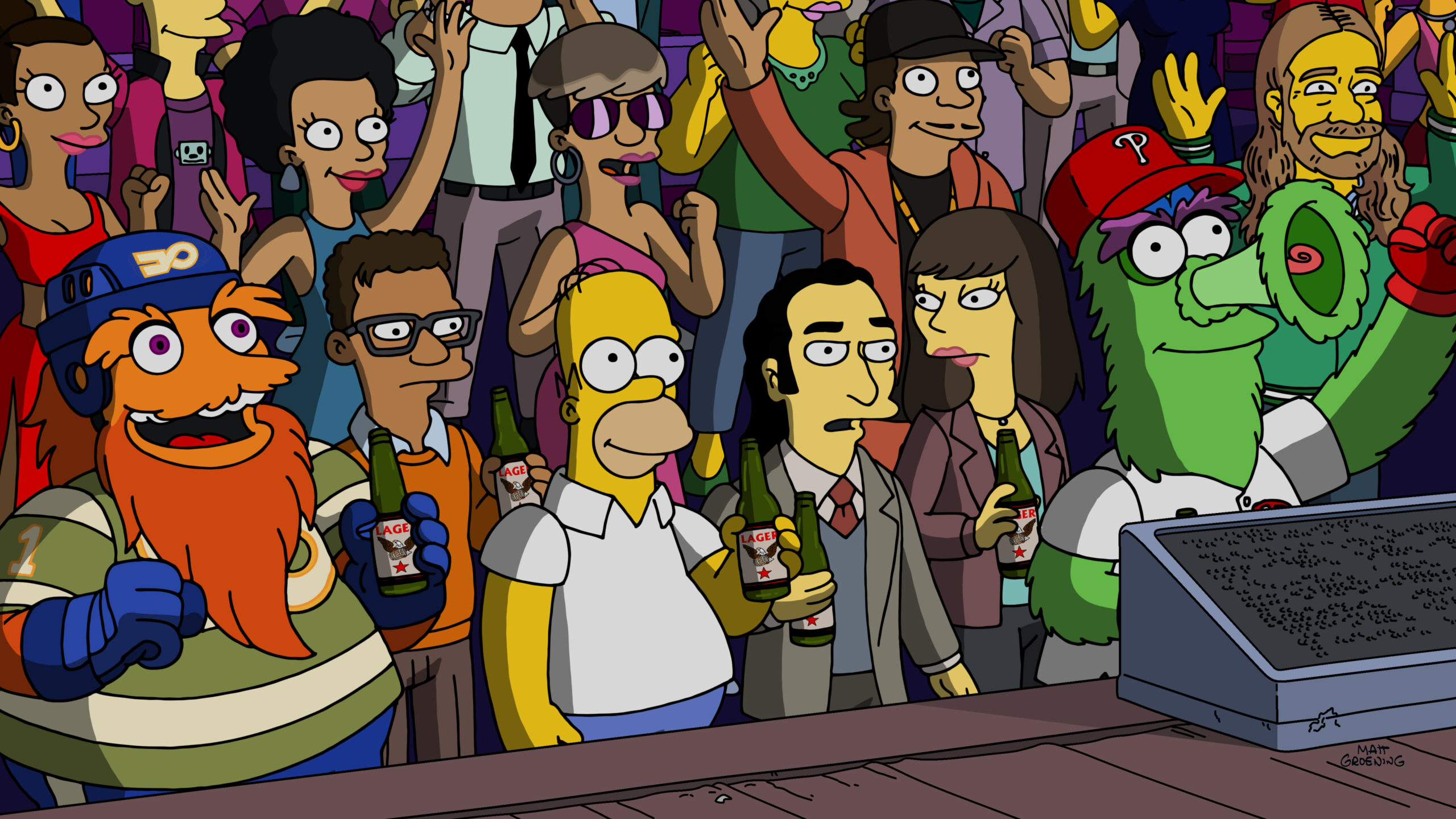
    They head to a Phillies game where the Phanatic gives Homer a noogie, and then to a Flyers game where Gritty beats him up on the ice. The mascots then join the group to drink beers and watch The Roots in concert.

    At the Philadelphia Museum of Art, the H.O.A.G.I.E. Men don special glasses to show Homer the invisible greyhound in portraits of Franklin, like the 1816 painting Benjamin Franklin Drawing Electricity from the Sky, who looks just like Santa’s Little Helper.

    “I didn’t want it to just be tourist spots, I wanted to make it places where actual Philadelphians would go,” said Nangle about selecting which locations to spotlight. “It really feels like a balance, because the show is watched worldwide — I want people to get it, but I also want people who are from the area to appreciate it. And not be mad at me.”

    Homer, Marge, Adrienne, and the dog all reunite at a fictional Colonial Firefighting Museum, where Nangle cameos as a security guard (“Get outta here, ya dirts!” she yells.) Turns out the H.O.A.G.I.E. Men weren’t the only ones looking for the special dog — Adrienne reveals that she, too, seeks Franklin’s treasure and she takes Santa’s Little Helper with her to Betsy Ross’ house to unlock the vault.

    Questlove voices a Segway tour guide in ‘The Simpsons’ episode “Irrational Treasure.”

    Marge finally makes the Rocky reference and shouts “Adrienne!” after the dog chooses the trainer over her. She and Homer chase after them, getting interrupted by a Mummers Parade and Segway tour (led by Questlove) that stops to watch a reenactment of “the Battle of Broad Street, also known as the Super Bowl 52 Riot.”

    In the end, Marge and Homer save Santa’s Little Helper from Adrienne, who winds up jumping after Franklin’s key into a crumbling pit while shouting “Go, Birds!” on the way down.

    Nangle had hoped the episode would’ve aired after a second Super Bowl win for the Eagles this year; instead, she was just happy that the Patriots lost. Out of the dozens of Philly references packed into the episode, her favorite joke is the shot of a beautiful dog park called “Michael Vick Reparation Park.” (The former Eagles quarterback was convicted of dogfighting.)

    “I cannot believe we were allowed to do it,” she said. “Of course, as someone who had a rescue pit bull, it’s an issue that I care a lot about, but it was just so fun.”
    A shot from ‘The Simpsons’ 800th episode showing Gritty, Homer Simpson (Dan Castellaneta), and the Phanatic at a Roots concert. Late Philadelphia journalist Dan McQuade is pictured on the top right.

    Out of all the ways to make the episode authentically Philly, there was one more thing that Nangle and The Simpsons team wanted to do: Give beloved Philly journalist Dan McQuade, who died last month, a spotlight.

    Nangle and McQuade met back in high school and he was a big fan of the show and planned to write about the Philly episode.

    “It’s just so sad that he’s not gonna be able to see this episode,” said Nangle.
    Though it was too late to make it into the broadcast version of the episode, the Disney+ version will show an animated McQuade standing behind the Phanatic in the scene at The Roots concert.

    The “Irrational Treaure” episode of “The Simpsonsairs Sunday, Feb. 15 at 8 p.m. ET on FOX.