When Philly artist Amir Bey Richardson first uploaded his rap songs online in 2010, he was told his music was “too corny” to garner an audience.
“I definitely had friends who encouraged me, but I had other friends who used to call it ‘bus driver rap,’” Richardson said. “Or they said, ‘Too many people rap. Get out of here.’”
Today, Richardson is a go-to musician-for-hire for major network shows, including for the Emmy-winning, Philly-set comedy series Abbott Elementary.
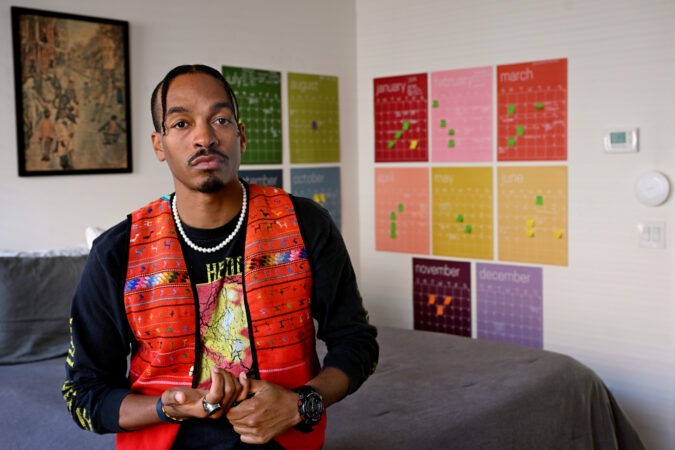
Philly artist Amir Bey Richardson in his home studio on Monday, Dec. 1, 2025.
Richardson, who goes by Bul Bey, knows his music doesn’t have the same musical edge that has long defined Philadelphia’s hip-hop sound. But he makes up for it with his more soulful and personal hip-hop records that speak to his West Philly roots and connect with a wider range of rap fans.
“Philadelphia is one of those cities where rapping is held to a higher standard, so I had to listen to my heart,” he said. “I was an artist whether I wanted to be one or not.”
While his sound didn’t match that of his contemporaries, he believes it sets him apart from other Philly artists.
On the Oct. 22 episode of Abbott Elementary, Richardson’s 2024 track “Elbow Deep” can be heard in the background as characters Gregory and Janine (played by Tyler James Williams and show creator Quinta Brunson), set the vibe for a friendly hangout.
“I lost my mind when I heard it,” Richardson said. “There are some explicit moments in the song, but when I saw the scene, it all made total sense.”
This was the second time Richardson’s music was placed in the hit series.
Back in February 2022, Richardson sent an “awkward” introductory message on LinkedIn to Abbott Elementary music supervisor Kier Lehman. Among the tens of tracks Richardson pulled from his catalog to include in that message, the 2014 single “Where I’m From” struck a chord with Lehman.
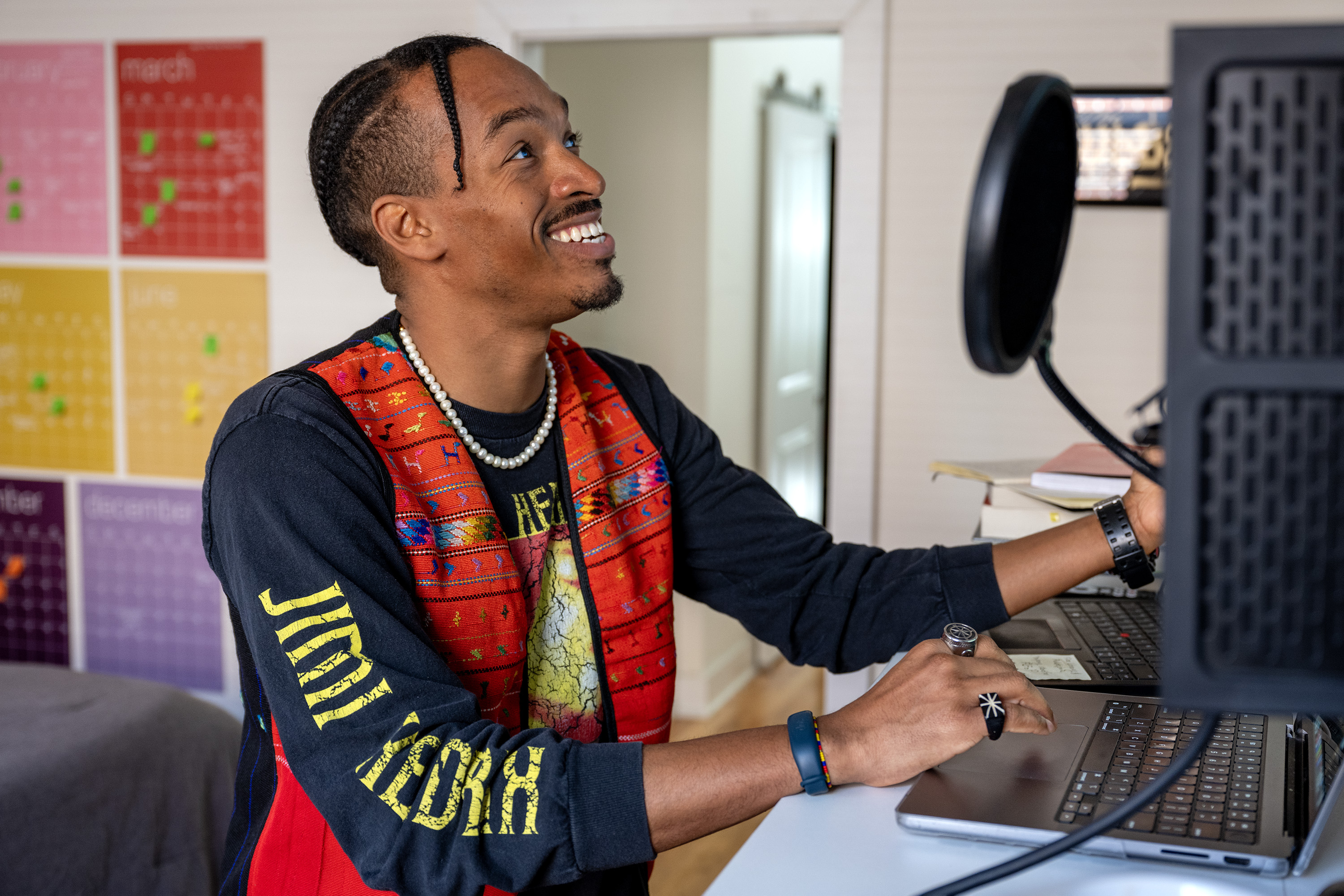
Philly artist Amir Bey Richardson at his home studio Monday, Dec. 1, 2025.
In early 2023, the Grammy-nominated music supervisor reached out to Richardson to request the use of “Where I’m From” for season two, episode 19, of the show.
Richardson said he’s still processing the achievement. “Sometimes I go back to the episode just to make sure it wasn’t changed,” he said.
That song placement, Richardson said, arrived at a “time of desperation.”
After a decade of making music, Richardson was at a creative crossroads. He was confident in his musical talents, but it felt like there were limited avenues to showcase them. “I felt very lost and desperate,” he said.
He stumbled onto Abbott Elementary like everyone else. Only he paused the TV to find Lehman’s name in the credits and reached out to him months later on the networking platform.
While he’s now “embarrassed” by his direct message to Lehman, the eventual song placement was the first time Richardson was ever paid for his music.
“That was definitely me crossing a threshold,” he said. “And in my mind, I was like, ‘I have to do that again.’”
It would be two years until that would happen. Earlier this year, Lehman reached out to Richardson to use “Elbow Deep.” Richardson approved immediately.
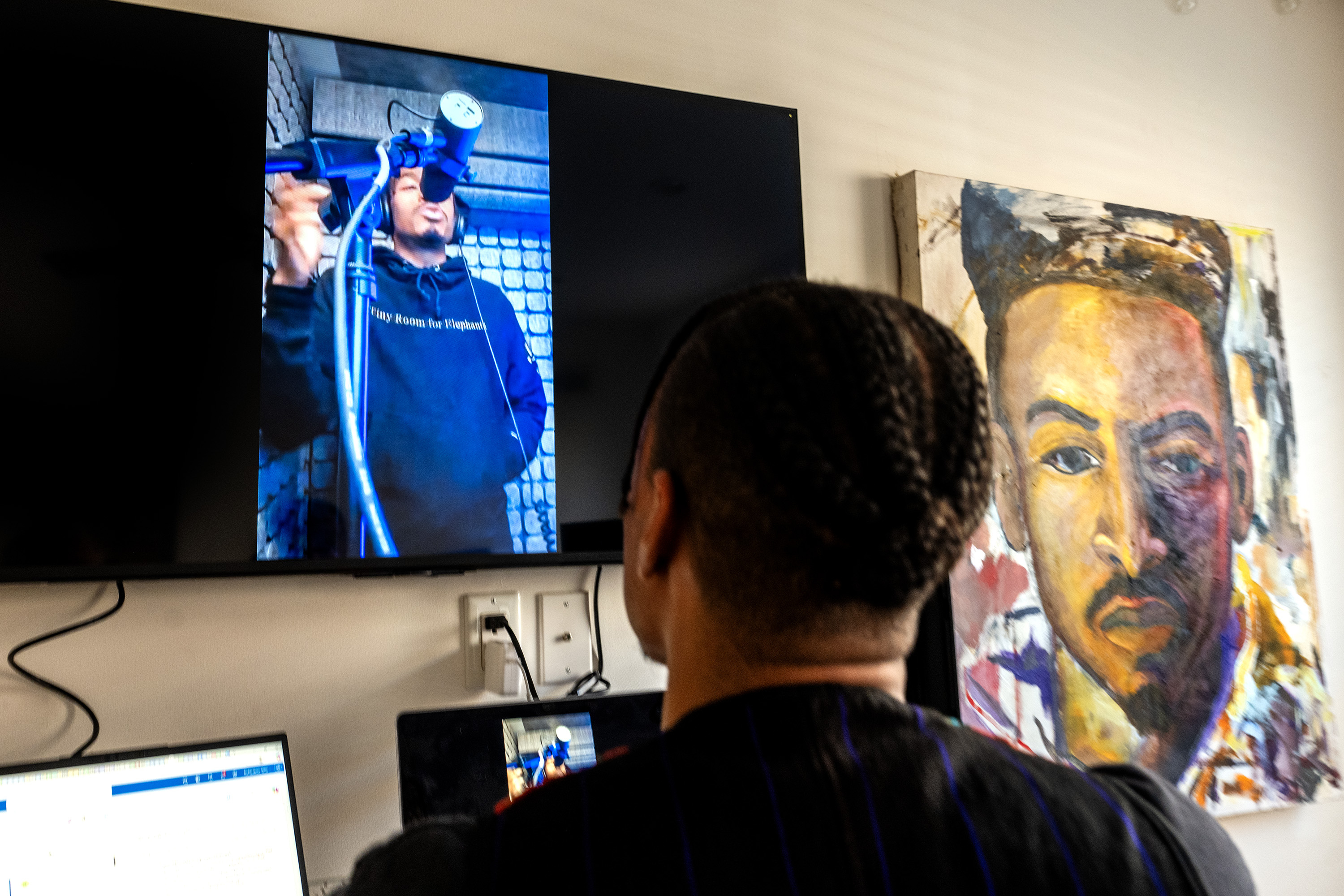
Philly artist Amir Bey Richardson at his home studio Monday, Dec. 1, 2025. He is seen doing the voice-over for a Joel Embiid Skechers commercial.
In the meantime, that first placement opened several creative doors.
Between his role as an event coordinator for the Free Library of Philadelphia Foundation, Richardson dropped a pair of collaborative EPs with producers Sam Live and Patrick Feliciano. He also contributed music to WHYY programs, such as Albie’s Elevator and The Infinite Art Hunt, and served as host of the Franklin Institute’s So Curious podcast.
He was even tapped to narrate a Skechers ad featuring Sixers star Joel Embiid, showcasing his abilities as a voice-over talent.
It’s all been a surprising path, Richardson said. One that has inspired him to pursue avenues that meld his love of music and Philadelphia.
“It let me know I had a narrower view of what I could do as an artist,” Richardson said. “I wouldn’t say I’m doing unconventional things, but it’s more of a wider range.”
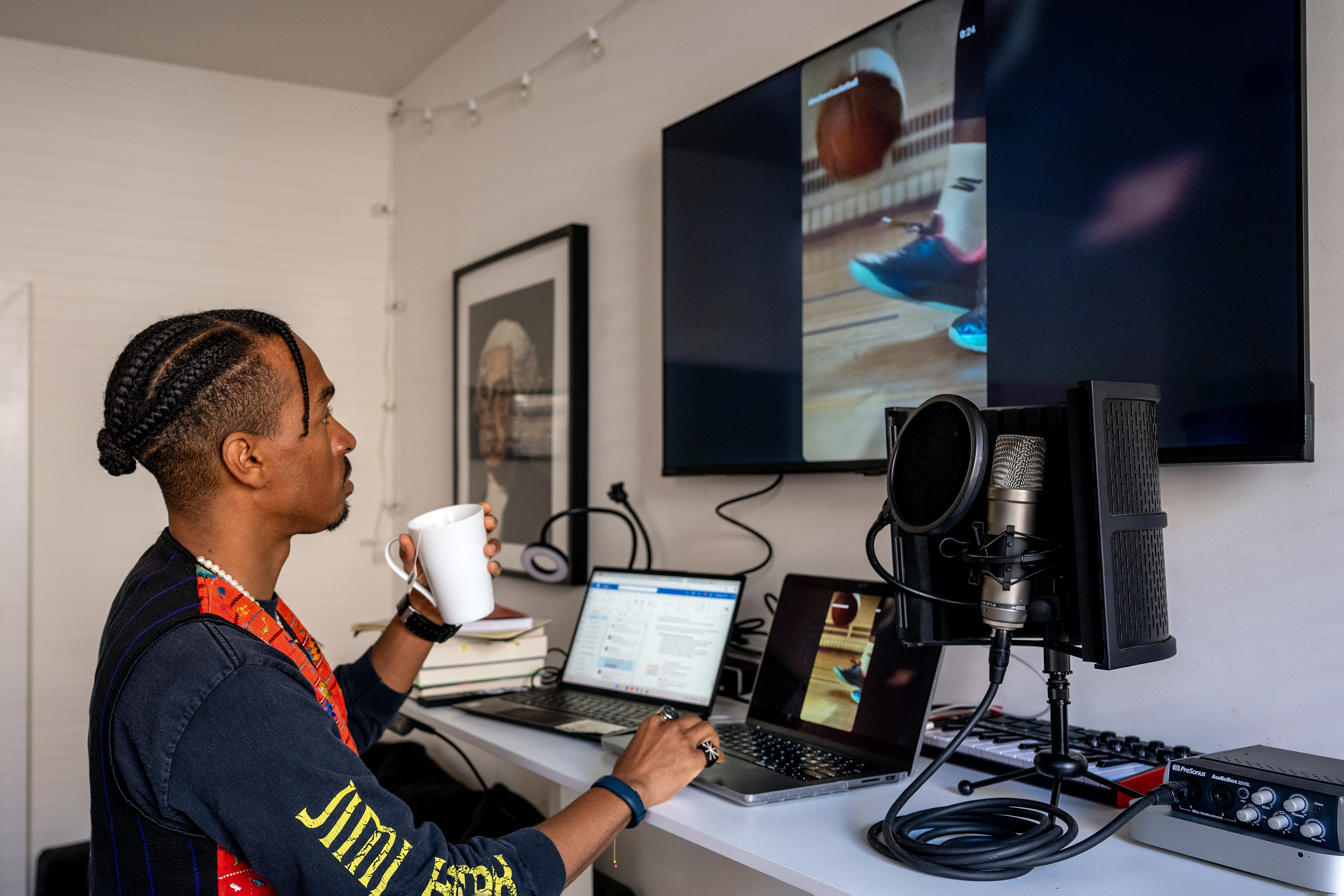
Philly artist Amir Bey Richardson in his home studio Monday, Dec. 1, 2025. He did the voice-over in a new Joel Embiid Skechers commercial, seen on screen.
His goal is to be a more notable name for big-budget shows and eventually land a placement on a blockbuster film. He currently has his sights on Sony’s animated Spider-Man multiverse saga, which Lehman served as the music supervisor for in 2018.
For someone who started out making songs from his college radio station at Pittsburgh’s La Roche University, and now sees his name on TV screens, Richardson has learned to avoid limiting his art and musical reach. And to the friends who previously doubted his abilities, he’s proving his music can take him places he’s never been, including prime-time television.
Airbnb expects to host 17,000 guests at its short-term rentals across the Philadelphia region when the FIFA World Cup comes to town next summer.
That’s according to a new report done by Deloitte at Airbnb’s behest and released last week. Airbnb guests are expected to spend about $52 million on average during their stays in the Philly region, and about $14 million of that total will be spent on the rentals.
Over the course of the six matches in June and July, Airbnb hosts are expected to rake in about $1,900 on average, totaling about $8 million in earnings for all area hosts, according to the report.
Officials from Philadelphia Soccer 2026 have estimated that the World Cup will bring 500,000 visitors to the region. Airbnb’s report estimates that 149,000 of them will require overnight accommodations.
Each Airbnb guest is expected to spend about $109 a night on average on the rentals, as well as another $301 a night on food, entertainment, and other expenses, according to the company’s report.
Airbnb guests will have a total impact of about $167 million, including direct and indirect spending, the report projected, and that activity is expected to spur additional spending in the city over the following five years.
After the games were announced, some people went online to secure their short-term rentals. All host cities saw a 33% spike in new bookings last weekend, according to AirDNA, a site that analyzes data on short-term rentals. In Philadelphia, occupancy across all game days has reached 20%, a year and a half ahead of the event.
Philly is getting ready to dress itself up — with Liberty Bells. Lots of Liberty Bells.
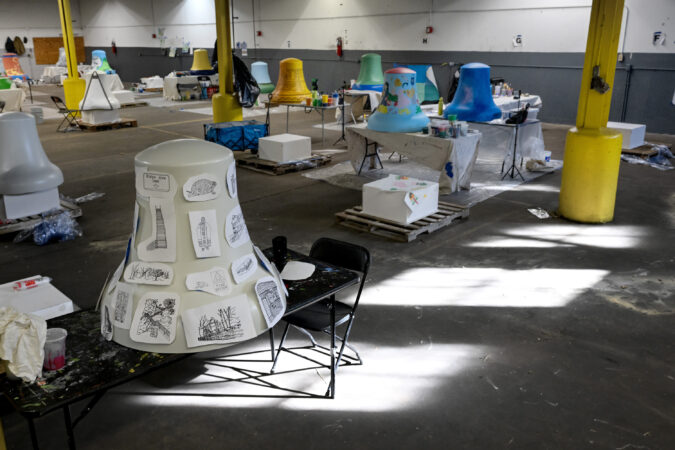
Organizers of Philadelphia’s yearlong celebrations for America’s 250th anniversary in 2026 gathered in a frigid Philadelphia School District warehouse in Logan on Tuesday, offering a special preview of the 20 large replica Liberty Bells that will decorate Philly neighborhoods for the national milestone.
Designed by 16 local artists selected through Mural Arts Philadelphia — and planned for commercial corridors and public parks everywhere from Chinatown and South Philly to West Philly and Wynnefield — the painted bells depict the histories, heroes, cultures, and traditions of Philly neighborhoods.
As part of the state nonprofit America250PA’s “Bells Across PA” program, more than 100 painted bells will be installed across Pennsylvania throughout the national milestone, also known as the Semiquincentennial. Local planners and Mural Arts Philadelphia helped coordinate the Philly bells.
“As Philadelphia’s own Liberty Bell served as inspiration for this statewide program, it makes sense that Philly would take it to the next level and bring these bells to as many neighborhoods as possible,” Mayor Cherelle L. Parker said in a statement. “We are a proud, diverse city of neighborhoods with many stories to tell.”
Kathryn Ott Lovell, president and CEO of Philadelphia250, the city’s planning partner for the Semiquincentennial, said the bells are a key part of the local planners’ efforts to bring the party to every Philly neighborhood.
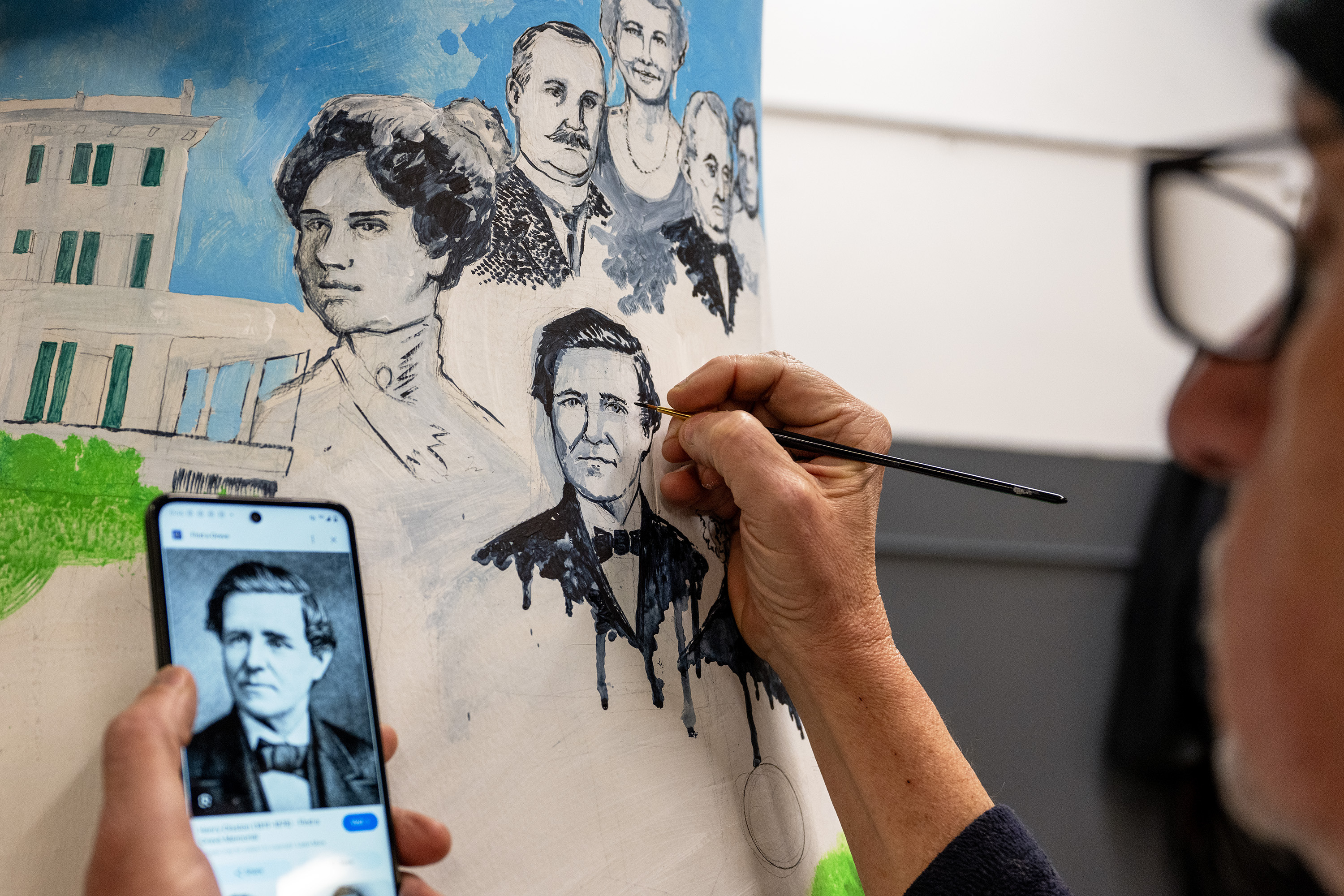
Local artist Bob Dix paints a portrait of industrialist Henry Disston on his bell.
“The personalities of the neighborhoods are coming out in the bells,” she said, adding that the completed bells will be dedicated in January, then installed in early spring, in time for Philly’s big-ticket events next summer, including six FIFA World Cup matches, the MLB All-Star Game, and a pumped-up Fourth of July concert.
Planners released a full list of neighborhoods where the bells will be placed, but said exact locations will be announced in January. Each of the nearly 3-foot bells — which will be perched on heavy black pedestals — was designed in collaboration with community members, Ott Lovell said.
Inside the massive, makeshift studio behind the Widener Memorial School on Tuesday, artists worked in the chill on their bells. Each bell told a different story of neighborhood pride.
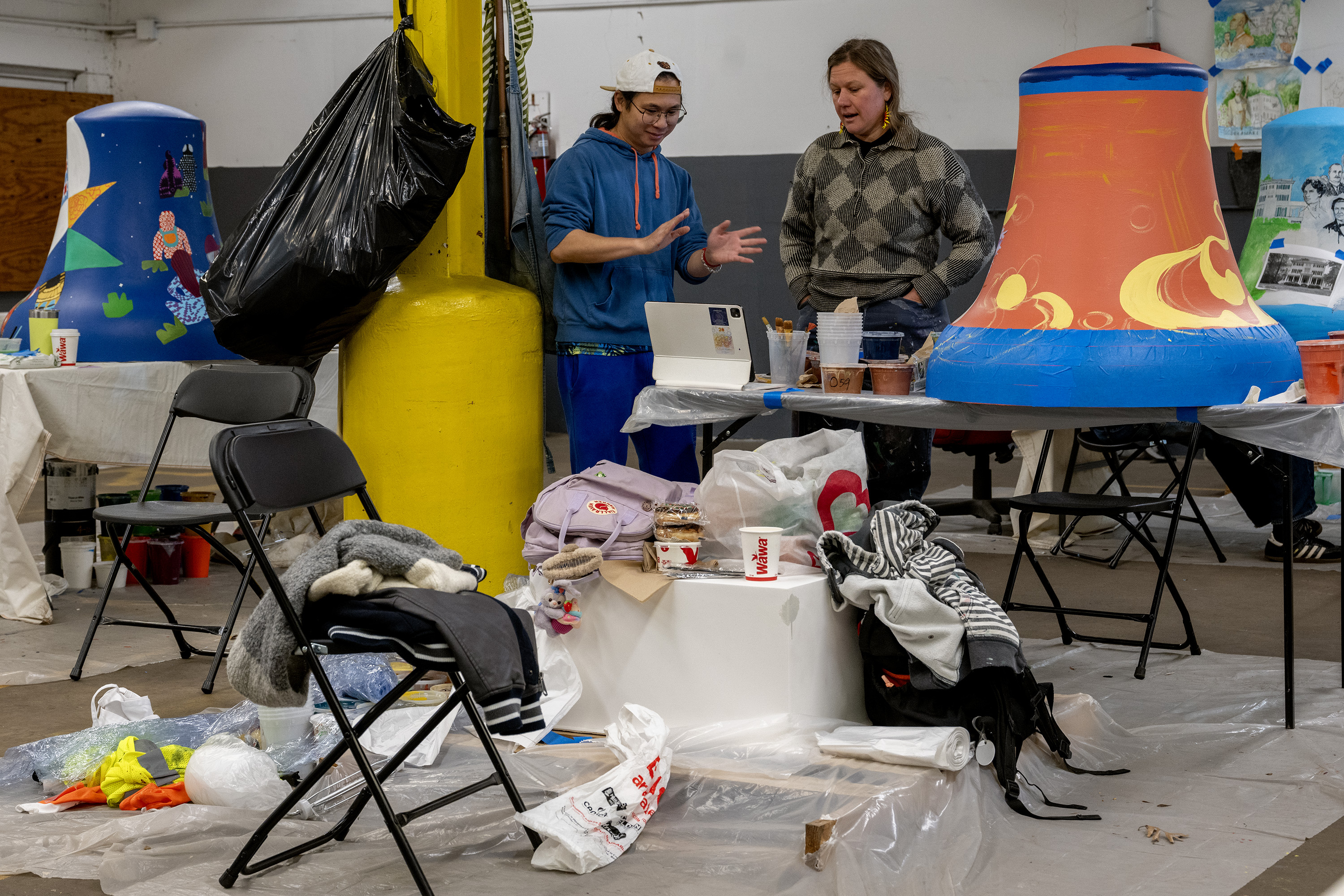
Chenlin Cai (left) talks with fellow artist Emily Busch (right) about his bell, showing her concepts on his tablet.
Cindy Lozito, 33, a muralist and illustrator who lives in Bella Vista, didn’t have to look for inspiration for her bell on the Italian Market. She lives just a block away from Ninth Street and is a market regular.
After talking with merchants, she strove to capture the market’s iconic sites, history, and diversity. Titled Always Open, her bell includes painted scenes of the market’s bustling produce stands and flickering fire barrels, the smiling faces of old-school merchants and newer immigrant vendors, and the joy of the street’s annual Procession of Saints and Day of the Dead festivities. Also, of course, the greased pole.
“It’s a place where I can walk outside my house and get everything that I need, and also a place where people know your name and care about you,” she said, painting her bell.
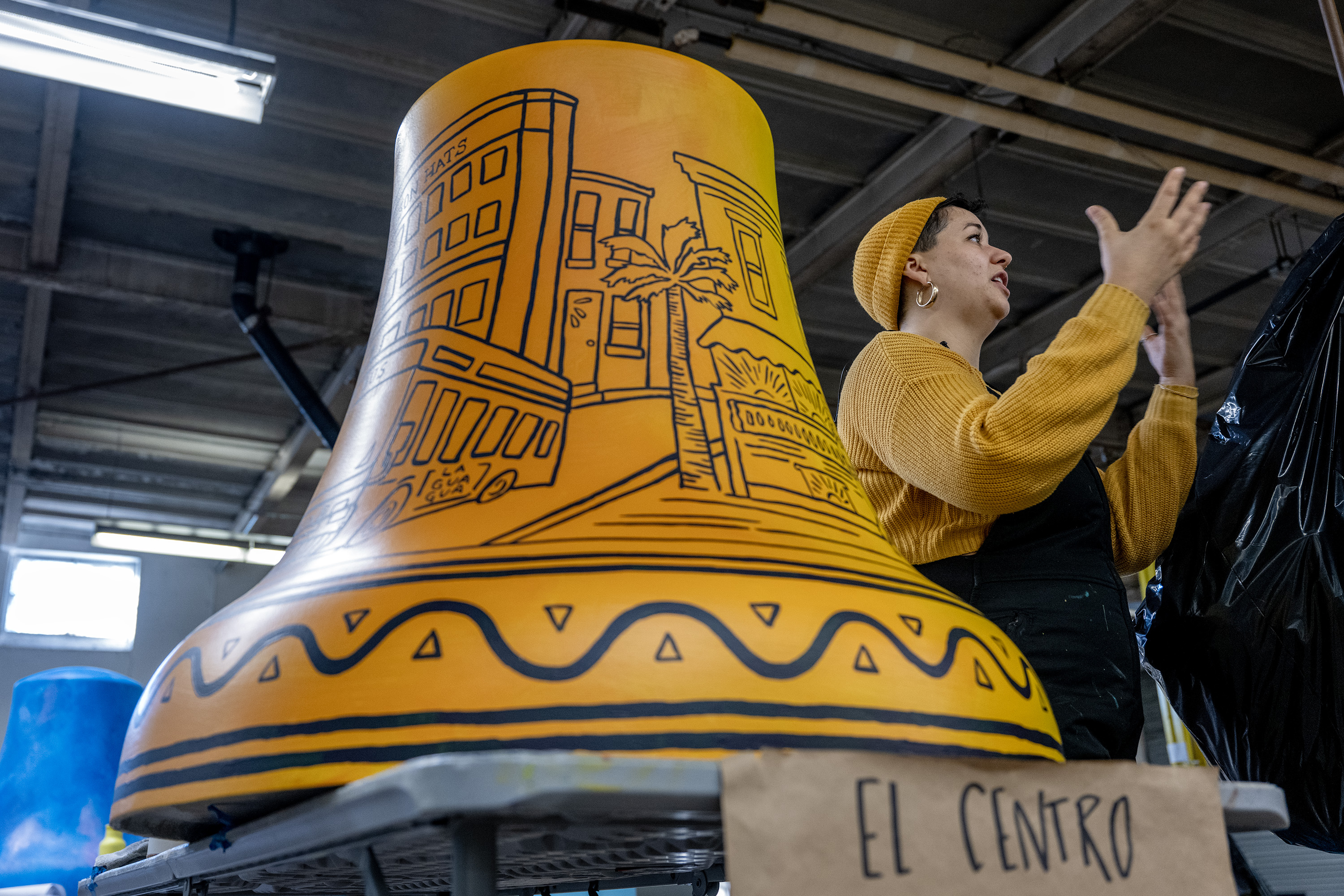
For her bell on El Centro de Oro, artist and educator Symone Salib, 32, met twice with 30 community members from North Fifth Street and Lehigh Avenue, asking them for ideas.
“From there, I had a very long list,” she said. “People really liked telling me what they wanted to see and what they did not.”
Local artist Symone Salib talks with a visitor as she works on her bell.
Titled The Golden Block, the striking yellow-and-black bell depicts the neighborhood’s historic Stetson Hats factory, the long-standing Latin music shop Centro Musical, and popular iron palm tree sculptures.
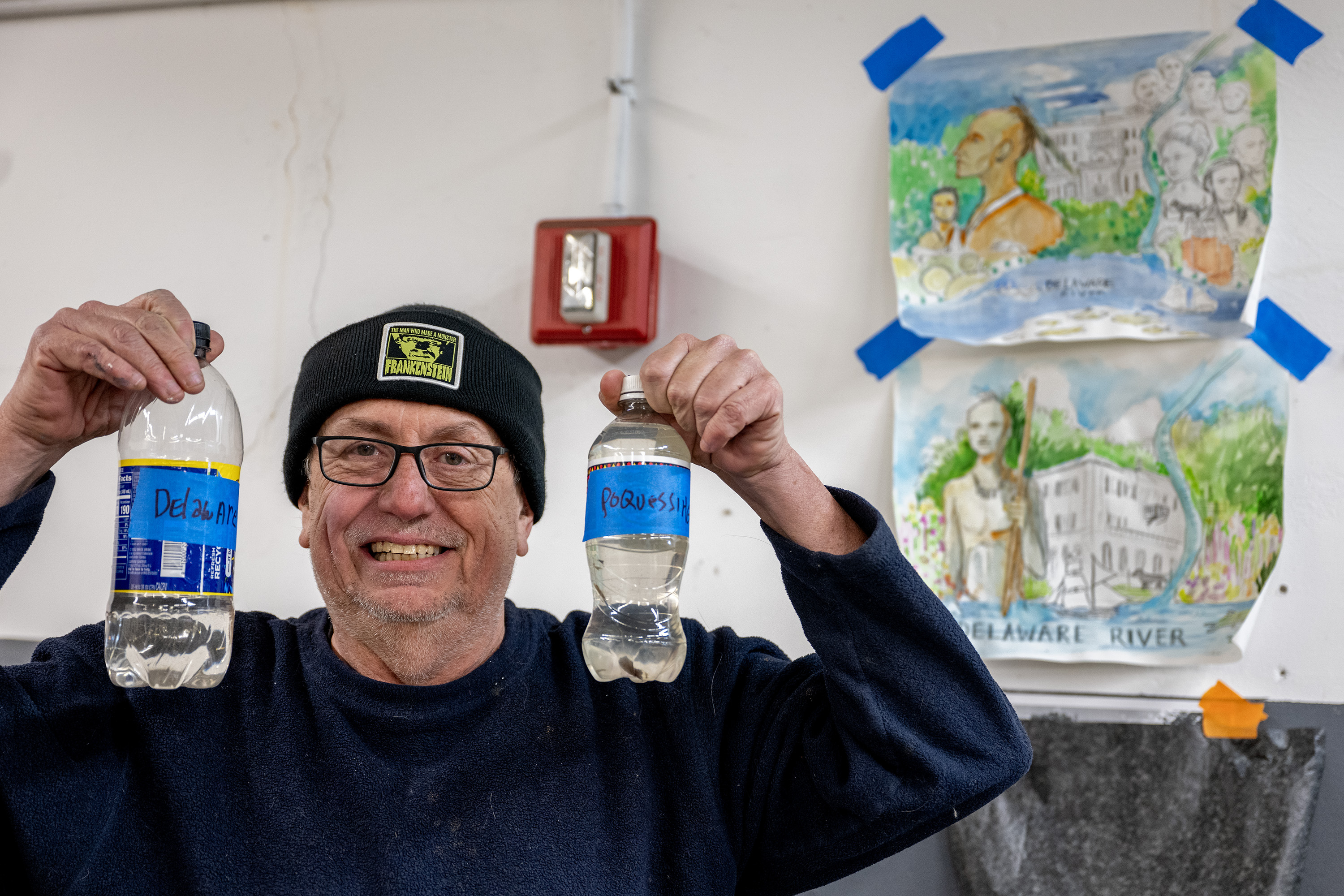
To add that extra bit of authenticity to his bell depicting Glen Foerd, artist Bob Dix, 62, mixed his paints with water bottled from the Delaware River, near where the historic mansion and estate sits perched in Torresdale, overlooking the mouth of Poquessing Creek.
“I like to incorporate the spirit of the area,” he said, dabbing his brush in the river water. “I think it’s important to bring in the natural materials.”
Local artist Bob Dix displays waters he collected from the Delaware River and Poquessing Creek to use in his painting of one of 20 replica Liberty Bells representing different neighborhoods Tuesday, Dec. 9, 2025.
Planners say they expect the bells to draw interest and curiosity similar to the painted donkeys that dotted Philadelphia neighborhoods during the 2016 Democratic National Convention.
Ott Lovell said organizers will install the bells around March to protect them from the worst of the winter weather.
“I don’t want any weather on them,” she said with a smile. “I want them looking perfect for 2026.”
Philadelphia’s FringeArts will return to offering seasonal programming, in addition to its monthlong Fringe Festival, beginning with a Winter-Spring 2026 season, the organization announced this week.
The legendary festival, known for experimental and boundary-pushing theater, previously offered year-round programming before the COVID-19 lockdown in 2020. In recent years, it has seen record-breaking audience growth, prompting producing director Nell Bang-Jensen to expand beyond the month of September.
“I’m really proud to say [Fringe Festival 2025] was actually, numbers-wise, our most successful festival ever, which just feels like a light shining, in terms of arts organizations having a win right now,” said Bang-Jensen, who took the helm last year after serving as Theatre Horizon’s artistic director. “It’s an experience that can’t be replicated on a screen, and an experience that celebrates Philly, and I think people are really here for that.”
The Philly Fringe is one of the largest festivals of its kind in the country. Based on the number of participating venues across the city, Bang-Jensen said, Philly Fringe ranks first ahead of other notable festivals in Rochester, N.Y., and Minneapolis.
The 2025 Fringe Festival was the largest-ever produced in its 29-year history with 353 shows. More than 35,000 tickets were sold during the month of September, which was a record high, and saw a 17% increase in unique ticket buyers from last year, which “means it’s not just the same people buying more tickets,” said Bang-Jensen.
She added that they have seen success in reaching younger audiences this year as well, with more than half of the audience composed of Millennials and Gen Z for the first time.
For the Winter-Spring 2026 season, FringeArts will present four productions from local and international artists at its Old City venue, along with a monthly series of Scratch Nights that invite artists to present works in progress.
Philadelphia artist Jenn Kidwell will stage her new work “we come to collect: a flirtation with capitalism” at FringeArts in January 2026.
Jenn Kidwell, the Obie Award-winning cowriter behind The Underground Railroad Game, will stage the Philadelphia premiere of her new work, we come to collect: a flirtation with capitalism (Jan. 22-24), with ASL artist Brandon Kazen-Maddox. It’s an irreverent exploration of “the pigsty of American consumerism.”
Frequent Fringe artist Lee Minora will bring back her solo show, Baby Everything (Feb. 26-28), for another run. The interactive performance follows a protagonist who doomscrolls through her anxieties about the state of the world. Minora “challenges us to see ourselves as others do, no matter how endearing or insufferable,” wrote Julie Zeglen in The Inquirer’s roundup of the best shows of Fringe Fest 2025.
Japanese artist Hiroaki Umeda is globally renowned for combining choreography and dynamic digital staging. He’s presenting two shows on a U.S. tour as a double billing: Moving State 1 and the solo performance, assimilating (March 14-15).
Lastly, FringeArts will stage Girl Dolls: An American Musical (May 8-17) from Philadelphia artists Jackie Soro and Pax Ressler, who’ve teamed up with the Bearded Ladies Cabaret for a production billed as “part tea party, part identity crisis.” They ask, “What does your favorite doll reveal about your childhood trauma?”
In addition to year-round programming, FringeArts will launch an artist-in-residency program for fostering original works. The Albert M. Greenfield Residency at FringeArts — funded by the local foundation of the same name — will invite three individuals or artist groups to develop new theatrical productions. The inaugural 2026 recipients will be selected by a panel of Philadelphia creatives.
Bang-Jensen said she’s grateful that Philly audiences have shown up for the “city of makers” every year and she hopes to continue expanding FringeArts’ reach.
“As many arts organizations are actually feeling pressure in 2025 just based on the economic environment and the political environment to do work that’s a little more mainstream, we have this wide-open field to do more for people who like things off the beaten path,” said Bang-Jensen.
Tickets for FringeArts’ Winter-Spring 2026 season go on sale to FringeArts members on Dec. 10 and the public on Dec. 12 at fringearts.com.
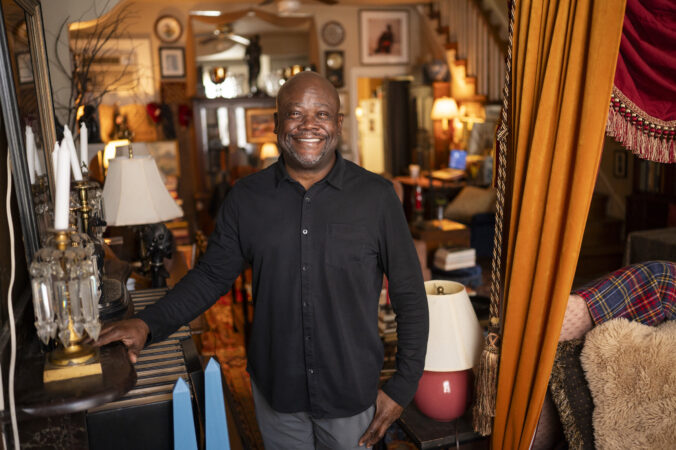
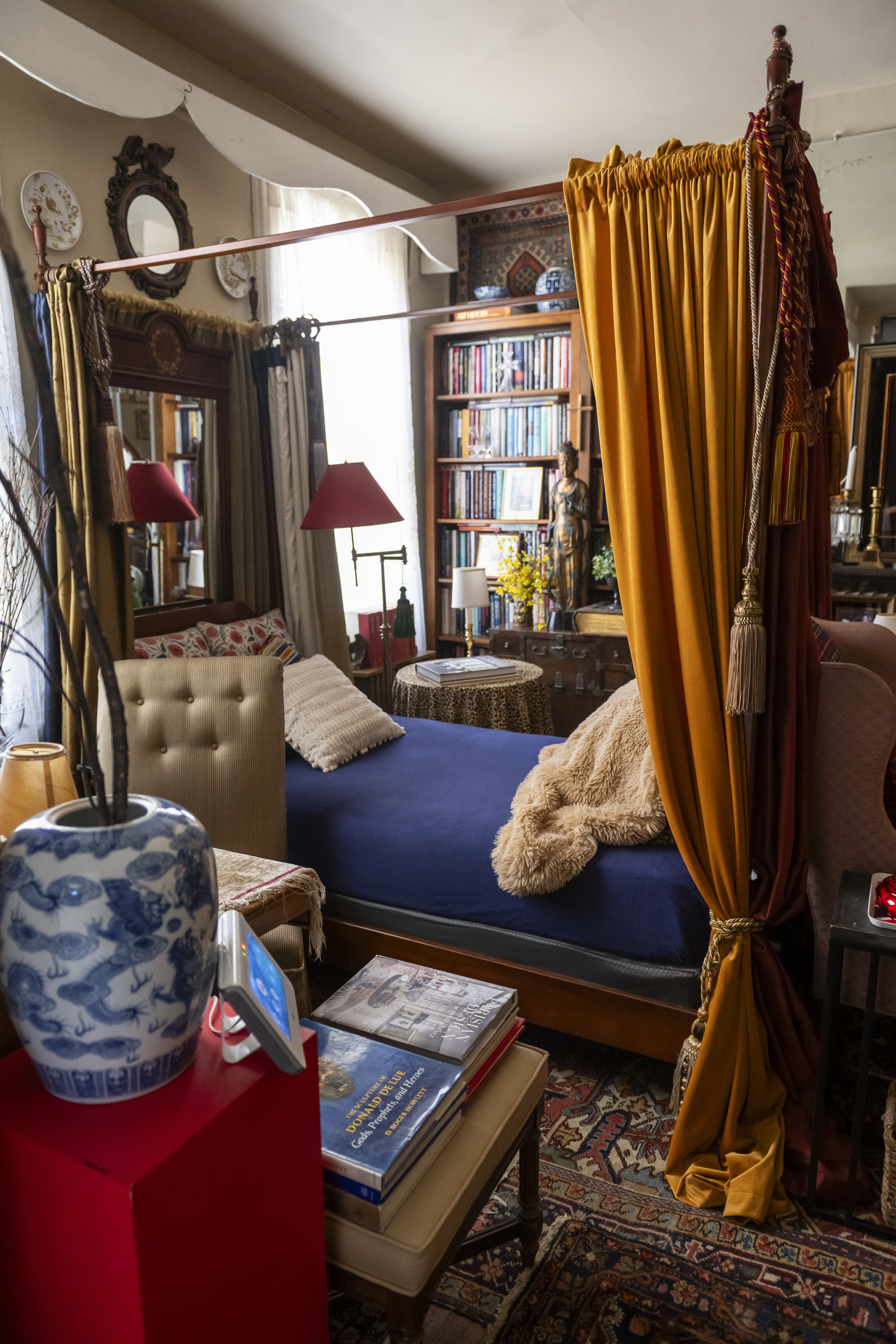
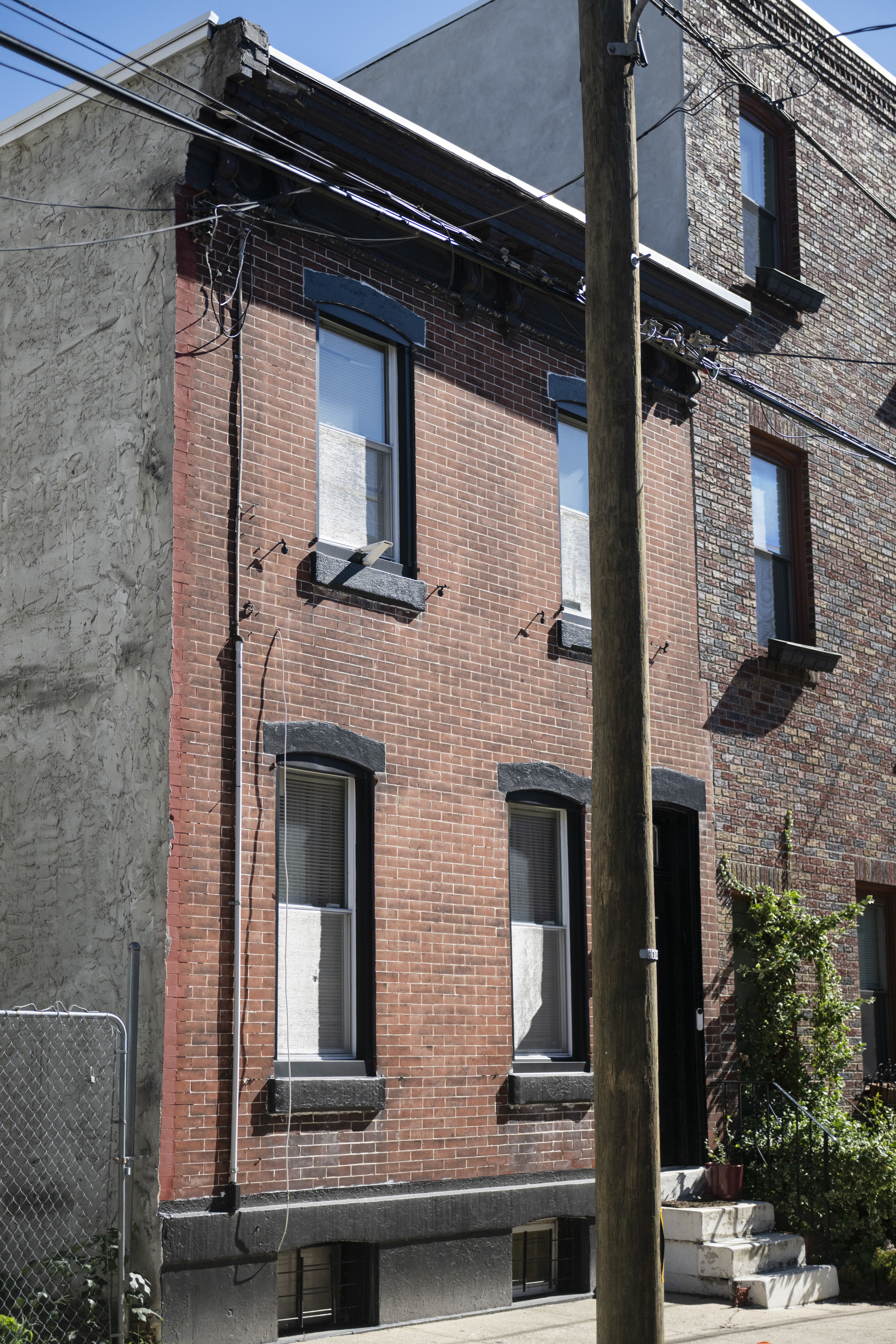
Before moving into his North Philadelphia home 13 years ago, Abel Tootle Jr. had rented small apartments, all under 800 square feet. He decided to make the leap to homeownership to pursue his passion for interior design and create a space that reflects his personal style.
“The timing was perfect,” said Tootle. And so, he moved into his circa-1910, three-bedroom, 1,200-square-foot house. Becoming a homeowner meant full freedom in designing his space — and no more lugging clothes to the laundromat, a feature of which he is most appreciative, he said.
His home’s look has been evolving since.
“I truly believe a home is never done. I was given every opportunity to paint, carpet, and design as I wish; however, I did not make any structural changes at all,” Tootle said. “My focus remains on creating a very English-country-house feel with special attention to my culture and interests.”
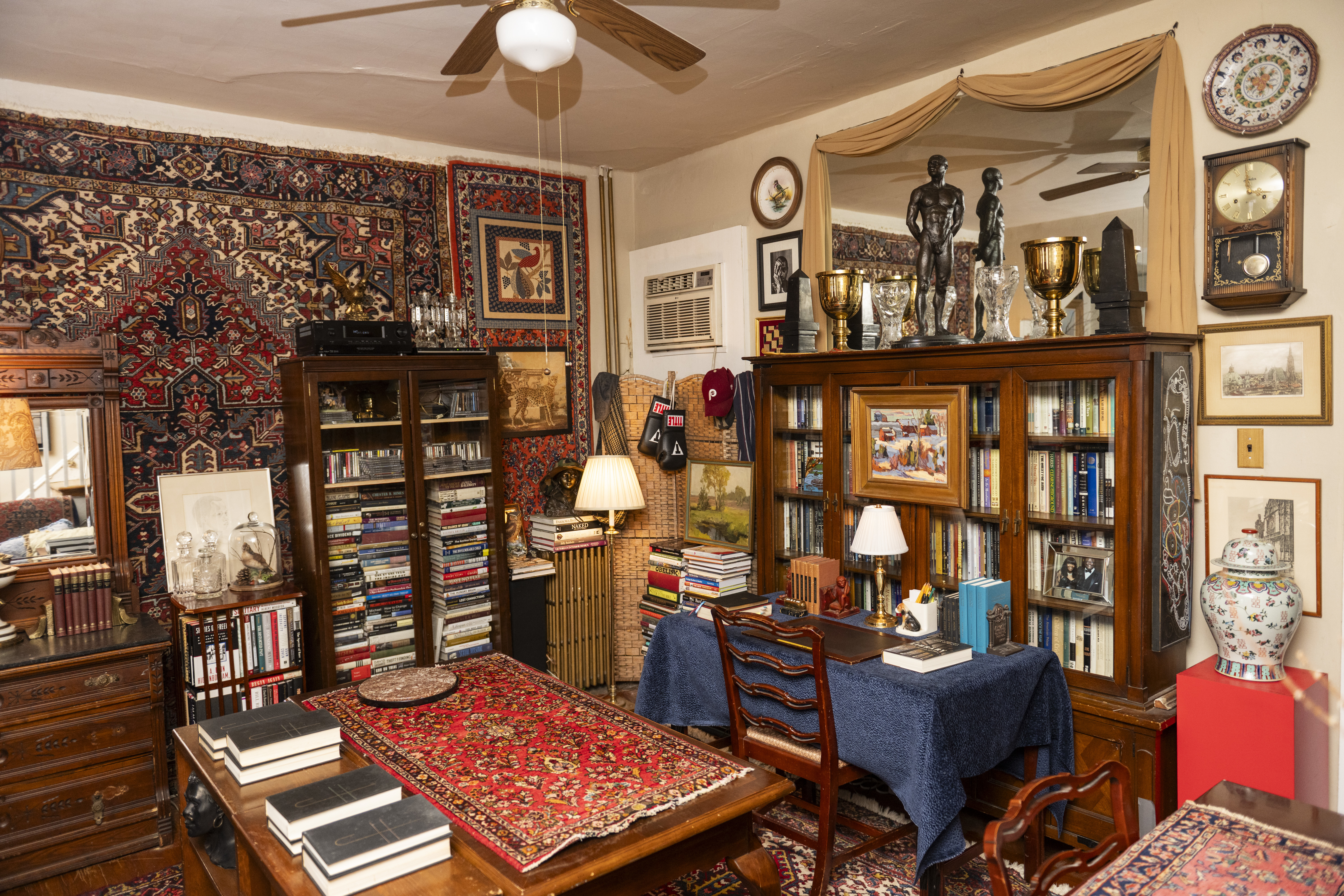
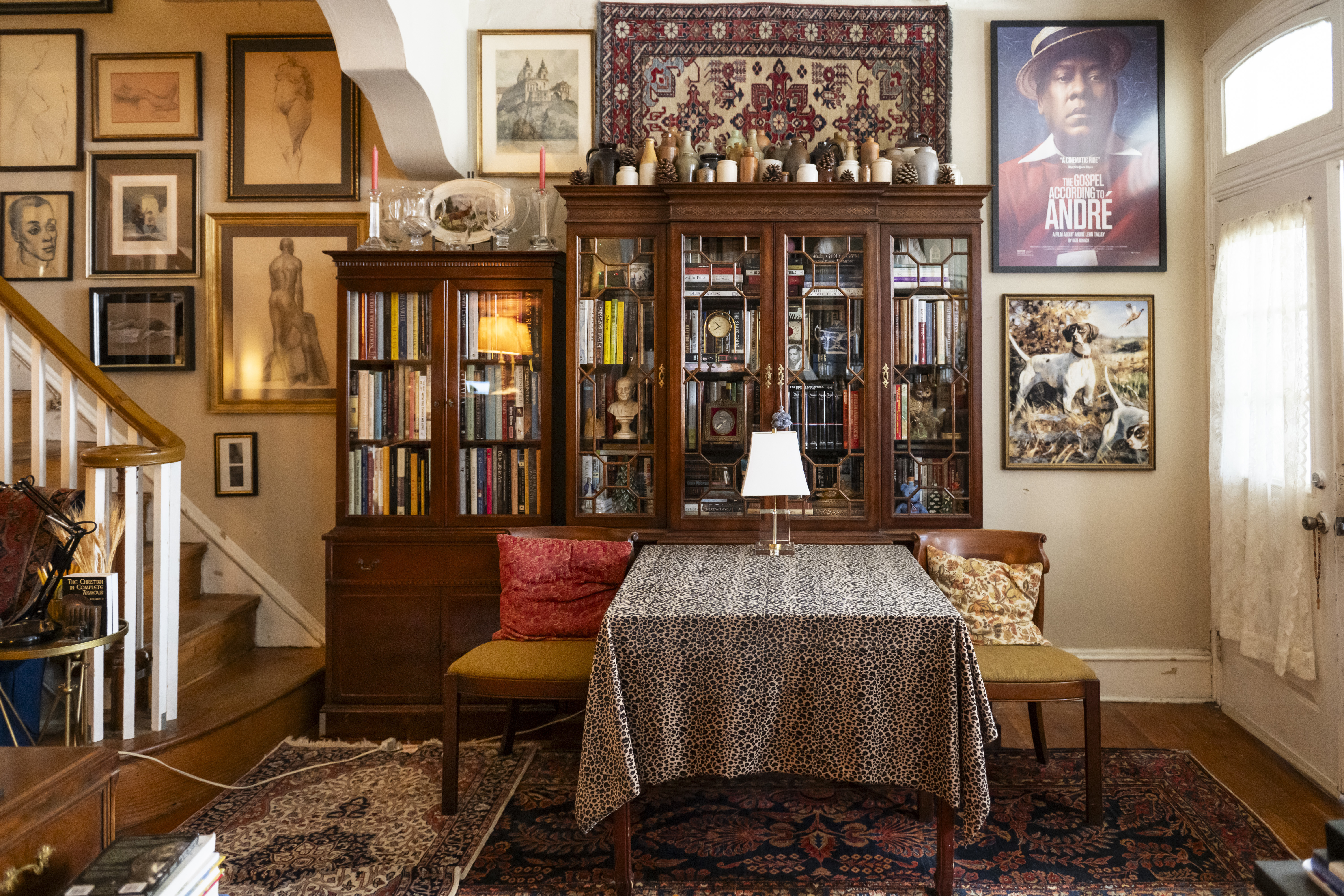
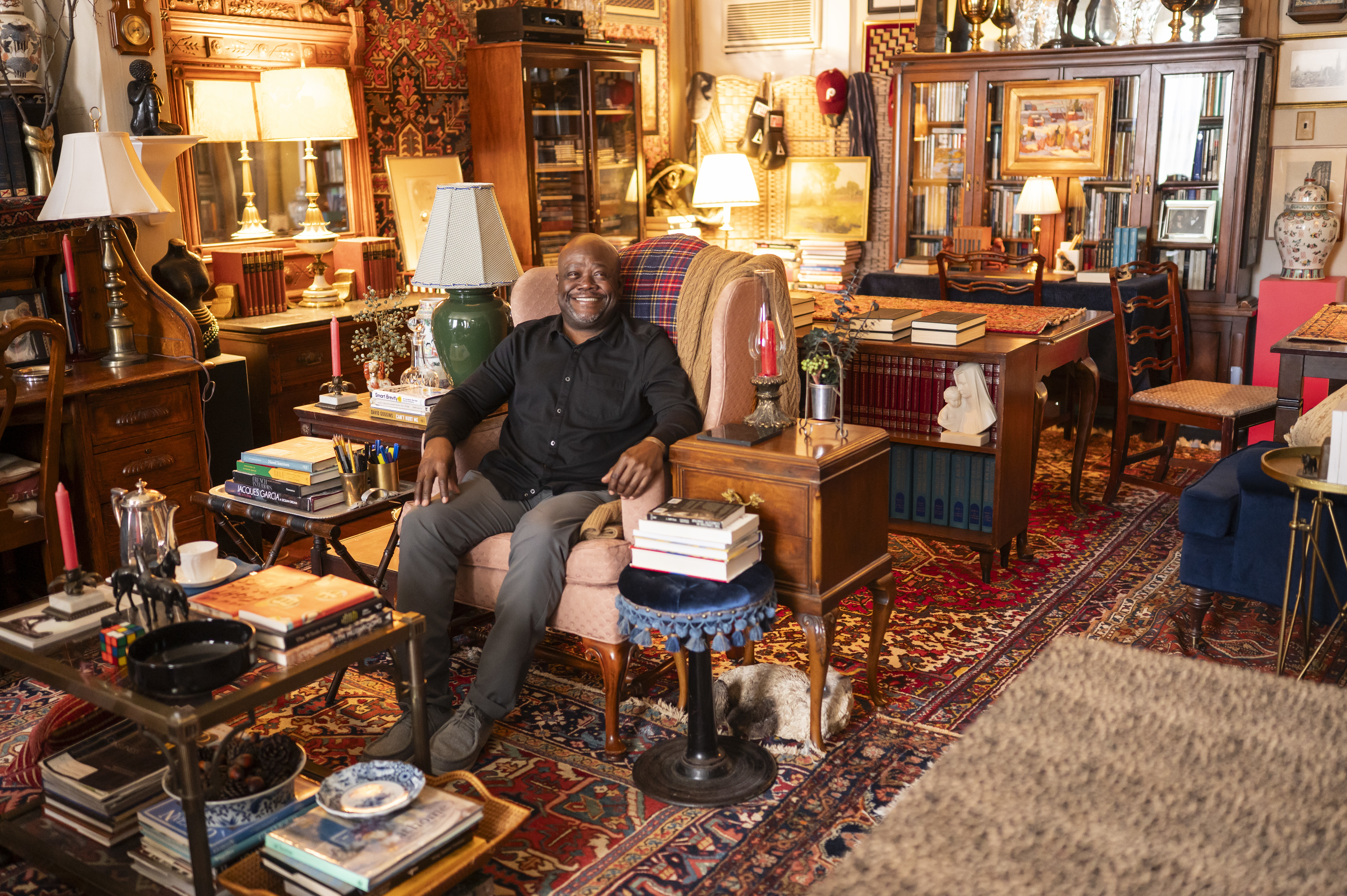
He favorite design elements include books — there are dozens and dozens displayed throughout the home, not just on shelves but arranged intentionally on and under tables, and stacked in towers rising from the red-pine-hardwood floors — as well as antiques, colorful area rugs in various sizes, art, lighting, and mirrors.
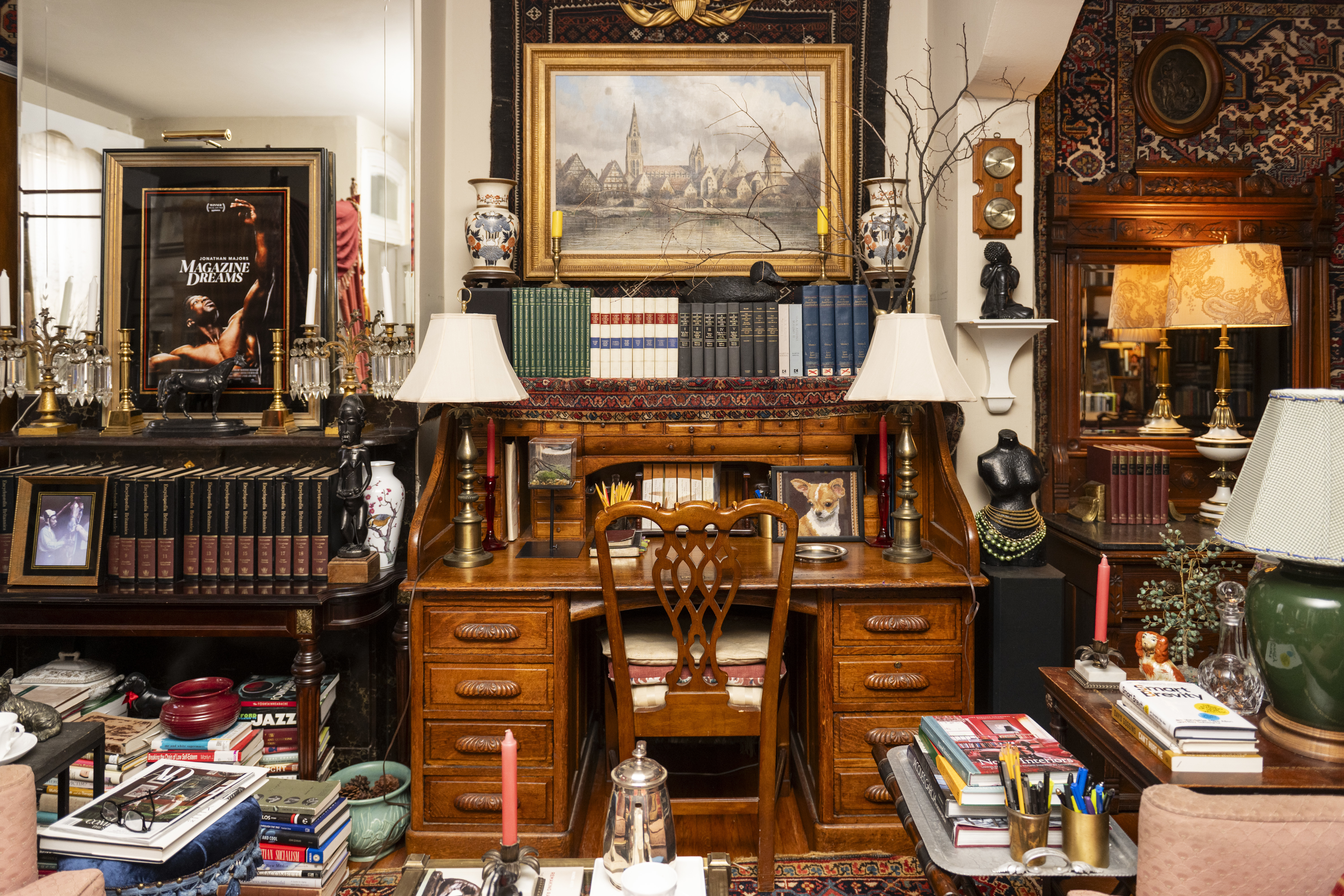
Colorful patterned rugs adorn not just the floors, but tabletops and walls as well. Tootle says his interior designs are “layered.”Books fill a glass-doored cabinet and art covers the wall at the foot of the stairs.A desk is topped with a book-filled cabinet, adjacent to the canopy bed.The canopy bed in Tootle’s double parlor room in his North Philadelphia home.
Tootle was initially attracted to his home’s location because he worked at Girard Medical Center. The commute was 15 minutes by bicycle or a 30-minute walk.
“I was raised not too far from my current address as a teenager; hence, I am very familiar with the neighborhood,” he noted. He also appreciates the sense of community, being minutes from Center City, and the architecture of the neighborhood.
“The classic brick and stone rowhomes, the spacious interiors of the three-story houses, and the rich history of music, art, and civil rights,” Tootle said. “Shopping, arts, and eateries are other reasons I love where I live, and I especially love the many libraries and museums,” added Tootle.
Tootle’s career is in social work and he has experience in psychotherapy, individual and group therapy, trauma counseling, grief counseling, and drug and alcohol counseling. In his spare time, he enjoys reading, antiquing, and going to the gym.
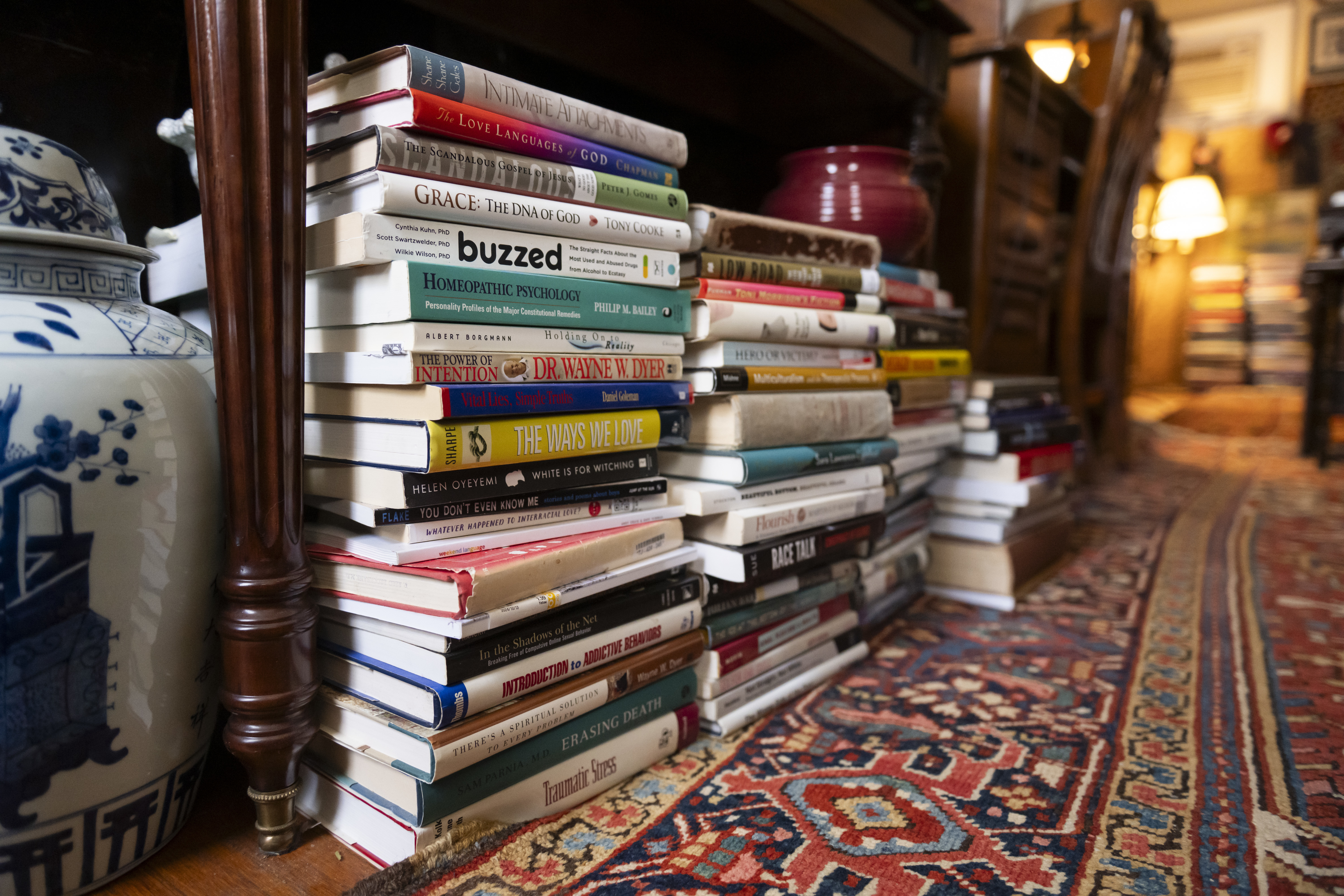
Books are a central focus in his home — he estimates he owns about 3,000.
Tootle sits in his double parlor surrounded by books and antiques.
“My library is the culmination of 40-plus years of book collecting, trading, and selling. I have purchased books from bookstores, auctions, flea markets, libraries, thrift stores — anywhere books were sold,” he said.
The bulk of the collection focuses on psychology, spirituality, history, art, and interior design, but it also includes poetry, fiction, and science. His favorite writers include James Baldwin, Toni Morrison, Peter Gomes, Ellen Langer, Carl Jung, and W.E.B. Du Bois, he said.
“Essentially, I’d like to think my home references the three places I’ve always wanted to live in as a child: a library, a church, and an art gallery or museum — without the pretension,” said Tootle.
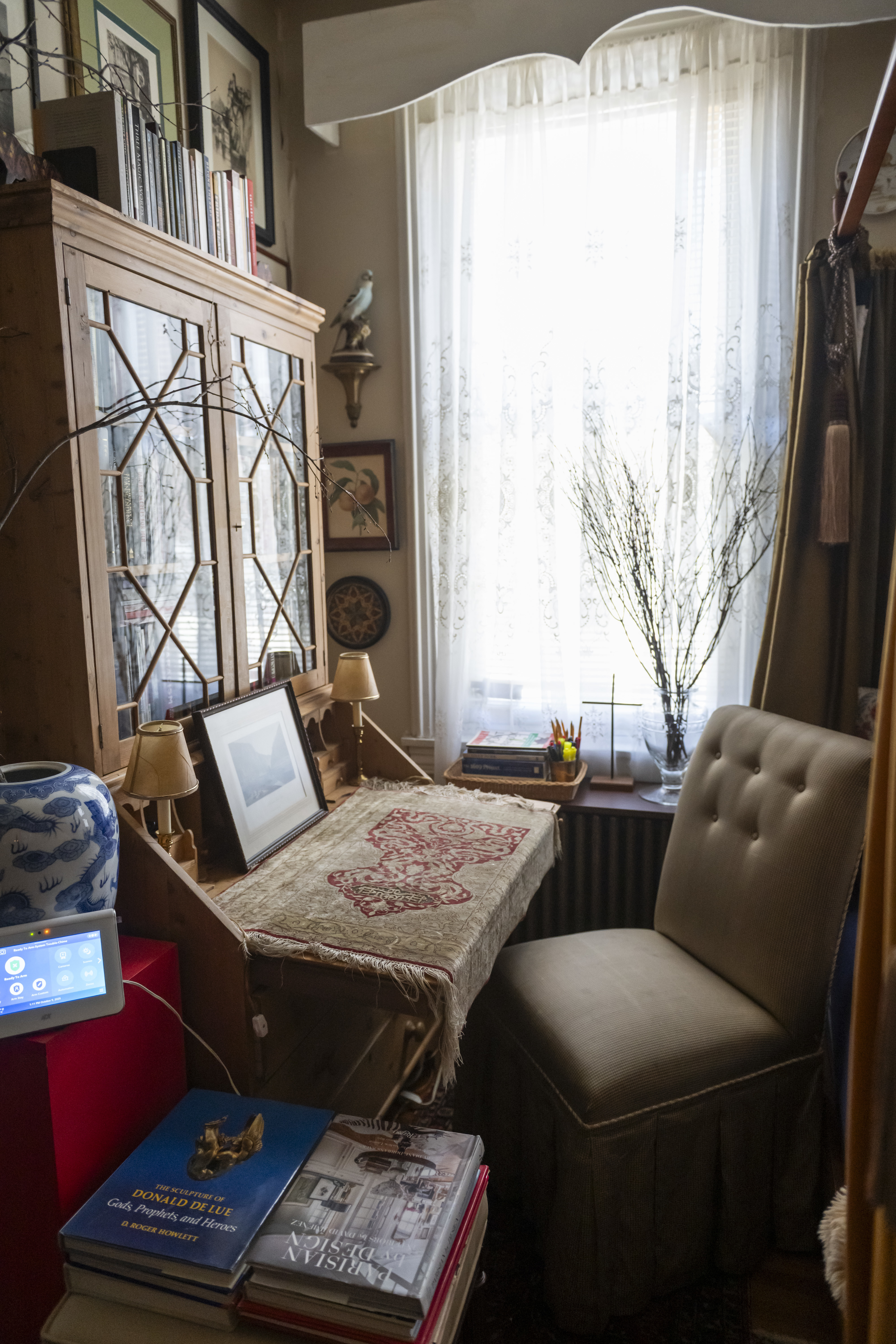
Stacks of books overflow from the shelves and tables and onto the floor.Tootle’s S-rolltop desk is one of his most prized antiques.
He’s especially fond of 19th-century antiques.
“I am a sucker for antique lighting and furnishings of this period and have frequently found gems at auctions, estate sales, flea markets, thrift stores, and on the curbs of sidewalks,” he said.
One special acquisition is an antique 60-inch-wide Tiger Oak S-rolltop desk, which he bought from a dealer in Bucks County. It was produced in the late Victorian Era, he said, in the 1890s.
Tootle frequently tries different design layouts by rearranging furniture, changing lighting, and experimenting with colors, patterns, and textures.
“My design ethos is very intentional and, hence, curatorial. I am a maximalist at heart,” continued Tootle. “My interiors are very layered.”
Also, he’s planning on featuring more theatrical elements.
“This includes incorporating more velvets, tassels, deep saturated colors, and sculpture — in the tradition of the late Renzo Mongiardino. Not as a copy, but inspiration,” he said.
In the backyard, he wants to make a mixed-use space.
The exterior of Tootle’s home.
“I would like to have the soil paved over and start a container garden with trees, shrubs, herbs, and vegetables with a small round table accommodating two to four people,” said Tootle. “I rarely use it as it currently stands.”
Is your house a Haven? Nominate your home by email (and send some digital photographs) at properties@inquirer.com.
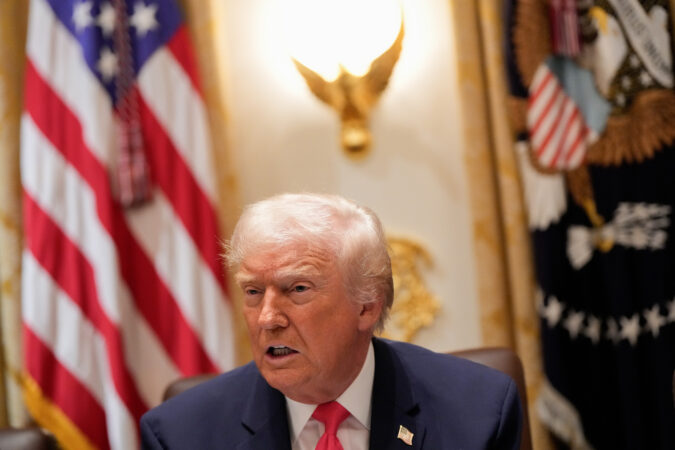
Donald Trump let us know exactly who he is when he rode down that escalator in June 2015, declared his presidential candidacy, and said this about Mexicans: “They’re bringing drugs. They’re bringing crime. They’re rapists.”
We’ve heard him refer to Haiti, African nations, and El Salvador as “shithole countries.” Last year, he accused Haitians in Springfield, Ohio, of eating their neighbors’ dogs and cats. Trump allows mask-wearing U.S. Immigration and Customs Enforcement agents to terrorize undocumented immigrants, most recently in New Orleans, as reported by my colleague Will Bunch.
No one should be surprised he called Somalis “garbage” who “contribute nothing” and should leave America during a cabinet meeting last week.
“These are people that do nothing but complain,” Trump said. “When they come from hell, and they complain and do nothing but bitch, we don’t want them in our country. Let them go back to where they came from and fix it.”
Trump talks a really good game about putting America First, but he really means people of color last. An example of that was when he suspended refugee admissions, but then turned around and made an exception for white South Africans.
Even knowing Trump’s agenda, it’s still upsetting to hear a sitting U.S. presidentdenigrate the roughly 250,000 Somalis in this country.
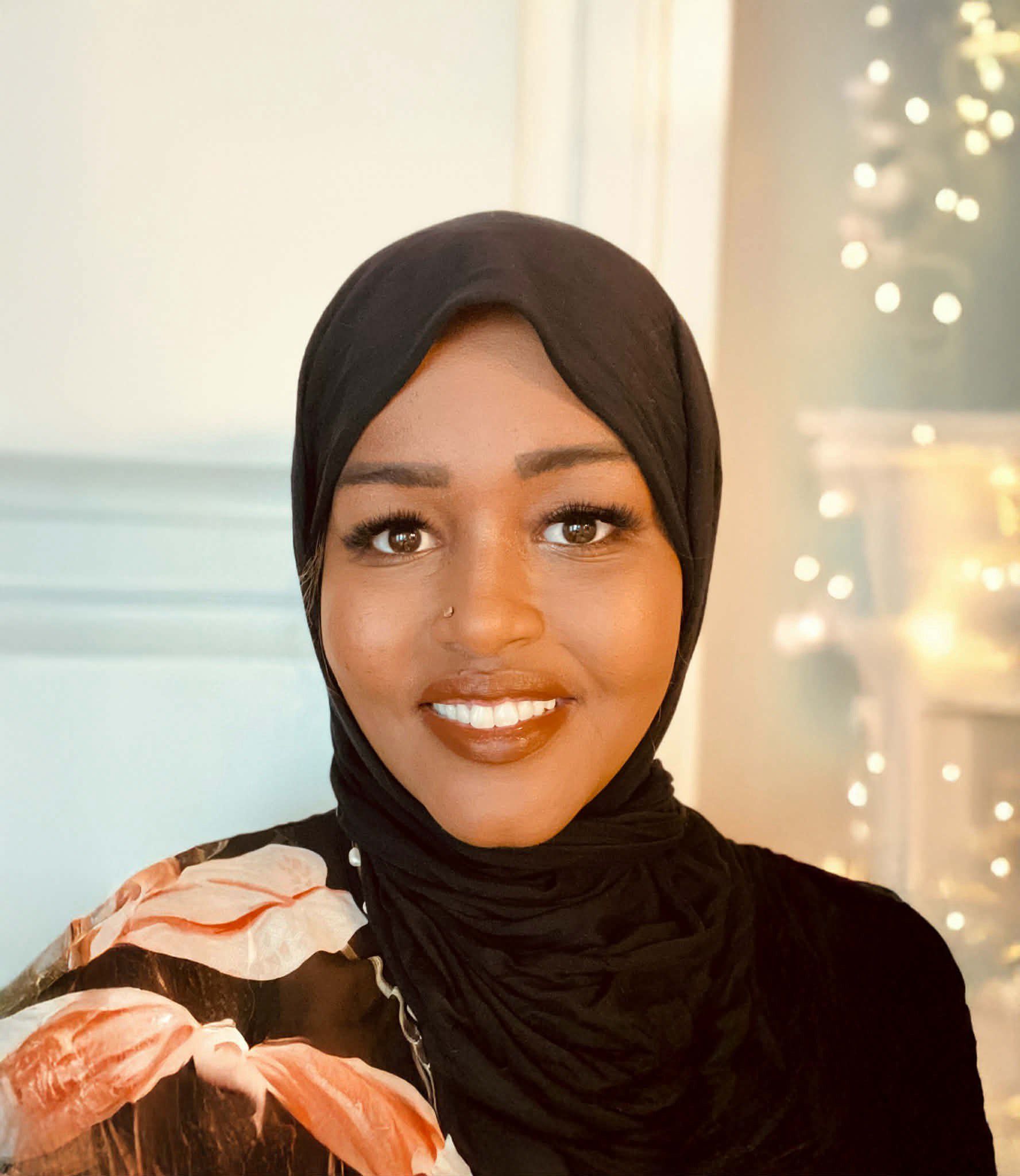
He’s talking about law-abiding folks like Salma Hussein. She made headlines in 2022 when she became the first female Somali principal in her school district in suburban Minneapolis,and possibly in the entire state of Minnesota.
Hussein was born in Somalia, but has lived in America since the age of 7, and is a naturalized citizen. She’s a wife. She’s a mother of two. She’s a good person. “It’s really hurtful, and he’s giving permission to people to be hateful, and that’s really disheartening,” Hussein said.
I stumbled across some of her social media posts about what’s been happening and decided to reach out. When I got her on the phone last week, Hussein, 37, and I talked about a lot of things, including how a stranger had emailed her saying: “Watch out. You’re not wanted. We’re taking out the trash from our country.”
Salma Hussein, a Somali American who’s lived in the U.S. since she was 7, said the president is “giving permission to people to be hateful.”
I shouldn’t even have to write this:Most Somalis are honest, law-abiding people. Many settled in Minnesota during the early 1990s after fleeing their war-torn country. Of the state’s foreign-born Somalis, most are naturalized U.S. citizens. They have every right to live in the Land of 10,000 Lakes. They vote. They pay taxes. Trump is their president, too. Some, oddly enough, even voted for him.
I wish they’d thought longer and harder before voting for Trump, who posted on Truth Social that Minnesota is “a hub of fraudulent money laundering” and announced he was terminating Somalis’ Temporary Protected Status.
Dozens of Somalis in Minnesota are facing charges in connection with a nefarious scheme to defraud the U.S. government of hundreds of millions in funding that had been set aside to feed hungry children atthe height of the pandemic. Still, it’s unfair for a sitting U.S. president to stereotype an entire community for the actions of a subset. “As a Somali American, I’m just as upset about the people in my community who use fraud to make money,” Hussein told me.
Somalis, who have built a large and influential enclave inMinnesota, are terrified that masked agents from ICE will take them into custody. Some have started carrying their passports. Others refuse to even leave their homes.
“This kind of dangerous rhetoric and this level of dehumanizing can lead to dangerous actions by people who listen to the president,” said Rep. Ilhan Omar (D., Minn.) on CBS’s Face the Nation on Sunday.
It’s textbook Trump — and, of course, MAGA loves it.
Rep. Ilhan Omar (D., Minn.) speaks during a news conference, May 24, 2023, on Capitol Hill in Washington.
Which ethnic minority Trump will single out next for harassment is anybody’s guess. The only thing we can be certain of is that they will be from a Black or brown community.
A new arts festival will launch in Philadelphia in 2026 as one of the major events marking the nation’s 250th anniversary. What Now: 2026 is planned to be a five-week-long festival from the nonprofit ArtPhilly. The festival aims to showcase the city’s artistry and talent for both tourists and neighbors alike.
Dozens of Philadelphia artists across disciplines will present more than 30 original works, staged from late May to July 2026 in venues around Philadelphia, coinciding with the Fourth of July and FIFA World Cup matches as part of the city’s Semiquincentennial events.
What Now: 2026 will feature new works by Philly artists such as filmmaker Walé Oyéjidé, poet Yolanda Wisher, opera singer/drag queen Cookie Diorio, photographer and pop-up book creator Colette Fu, and sculptor Pedro Ospina. Institutional collaborators in the region will include BalletX, BlackStar, Philadanco!, the Crossing, and Theatre in the X.
One highlight is The Basil Biggs Project, a new play from actor and playwright Anna Deavere Smith, an alum of Arcadia University. Her great-great-grandfather was a farmer and veterinarian in Gettysburg who, during the Civil War, took a job disinterring and reburying Union soldiers on the battlefield. Smith wrote the work using archival research on her family’s history.
The festival is the brainchild of renowned local philanthropist Katherine Sachs, a longtime trustee and benefactor of the Philadelphia Art Museum, and arts administrator Bill Adair, who previously led programs at the Pew Center for Arts & Heritage and the Rosenbach Museum & Library.
Sachs began planning What Now: 2026 in the winter of 2021 to ensure that the arts remained central to the city’s celebration. She gathered a committee of regional arts leaders including Barnes Foundation head Thom Collins, Mann Center for the Performing Arts president Cathy Cahill, and Mural Arts director Jane Golden to brainstorm meaningful ways to spotlight Philadelphia’s artists.
“I just thought we could do a better job than we did in 1976 [for the Bicentennial],” said Sachs, who serves as chair of ArtPhilly. “We want people to see what Philly has to offer every day of the year, so they come back.”
“We’re rah-rah sports. We’re rah-rah about our history and our Independence Hall, and Liberty Bell,” said Adair, ArtPhilly’s creative and executive director. “Those are amazing parts of our identity and who we are, but we know that the arts and culture sector is one of the strongest in the country and the world, and we deserve to be known for that.”
Part of the duo’s work involved creating the nonprofit organization ArtPhilly, that would provide infrastructure and allow for planning the inaugural festival in 2026 and also future years. Sachs and Adair plan for it to be a recurring festival every two or three years.
The pair fundraised about $7.5 million for ArtPhilly and the festival with support from the William Penn Foundation and the Pew Center for Arts & Heritage along with private foundations and corporate sponsors. ArtPhilly also received $750,000 from the Philadelphia Funder Collaborative for the Semiquincentennial.
Working with choreographer Tania Isaac, ArtPhilly’s curatorial and deputy director, they selected 17 Philadelphia curators who proposed 45 projects. The team narrowed down the list to 32 works that received between $20,000 to $400,000 in project funding.
“Other cities have done [festivals like] this, and the return on the investment is about six times, meaning the economic impact is really pretty great, between the hotels and restaurants, and what the artists have to build and all the people that you have involved,” said Sachs.
Los Angeles’ Pacific Standard Time festival was a helpful model. Sachs said the result led to increased attendance at institutions in the city, a major goal for Philadelphia organizations that have struggled with foot traffic since the COVID-19 lockdown.
“Artists are going to interpret this anniversary in a way that no one else can … For us, this festival isn’t a celebration of the anniversary, as much as it is a kind of marking and interrogation of the anniversary. Hence the question, ‘What now?’,” said Adair. “We feel like we’re adding something very important to the public discourse around the anniversary by having artists as the interpreters, but also the provocateurs.”
What Now: 2026 projects include:
Chinatown Pop-Up Book, a look at the neighborhood’s history through a large, hand-cranked pop-up book
In Case of Fire, Speak!, a dance collaboration between Martha Graham Dance Company and Philadanco!
Pepperpot, a combination of live music, poetry, and food surrounding the history of pepper pot soup from jazz musician V. Shayne Frederick and chef Valerie Erwin
This article was updated after receiving a revised total for the amount that the Philadelphia Funder Collaborative for the Semiquincentennial granted ArtPhilly.
This article was updated to reflect Jane Golden’s current title.
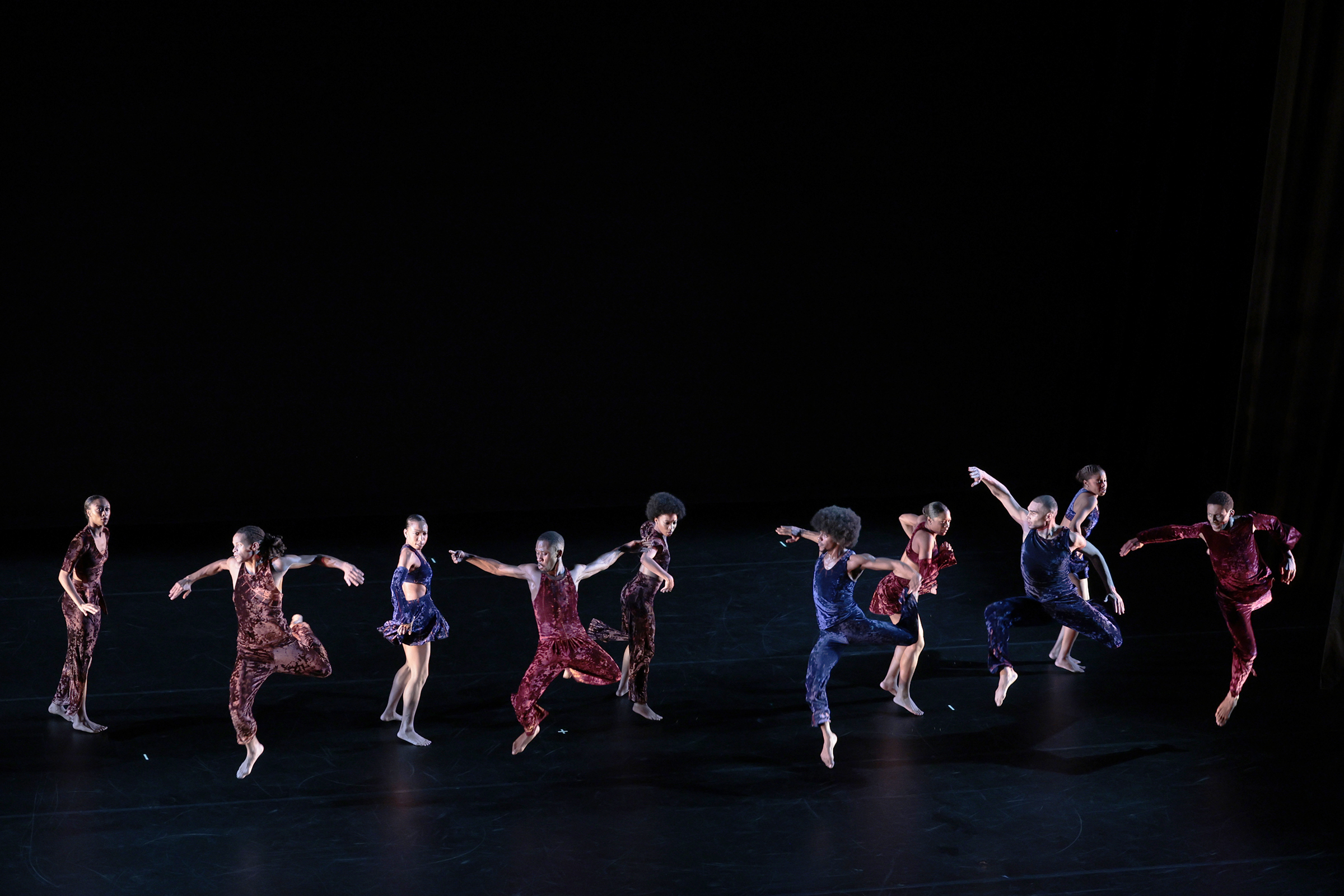
Philadanco is currently celebrating its 25th anniversary in residence at the Kimmel Center’s Perelman Theater with a mixed bill that showcases the company’s extraordinarily skilled dancers in works by a quartet of award-winning choreographers.
“Then and Now!,” as the program is called, includes revised productions of pieces by Donald Byrd and Tommie-Waheed Evans, plus a company premiere from Ronald K. Brown and a brand-new work by up-and-comer Juel D. Lane.
Friday’s opening-night audience was large and enthusiastic, giving an extended ovation to Lane’s Heirborne, a pun on its theme of literal and metaphorical flight.
In the printed program, Lane cites among his inspirations Bessie Coleman, the first Black woman to hold a pilot’s license, and Mae Jemison, the first African American female astronaut.
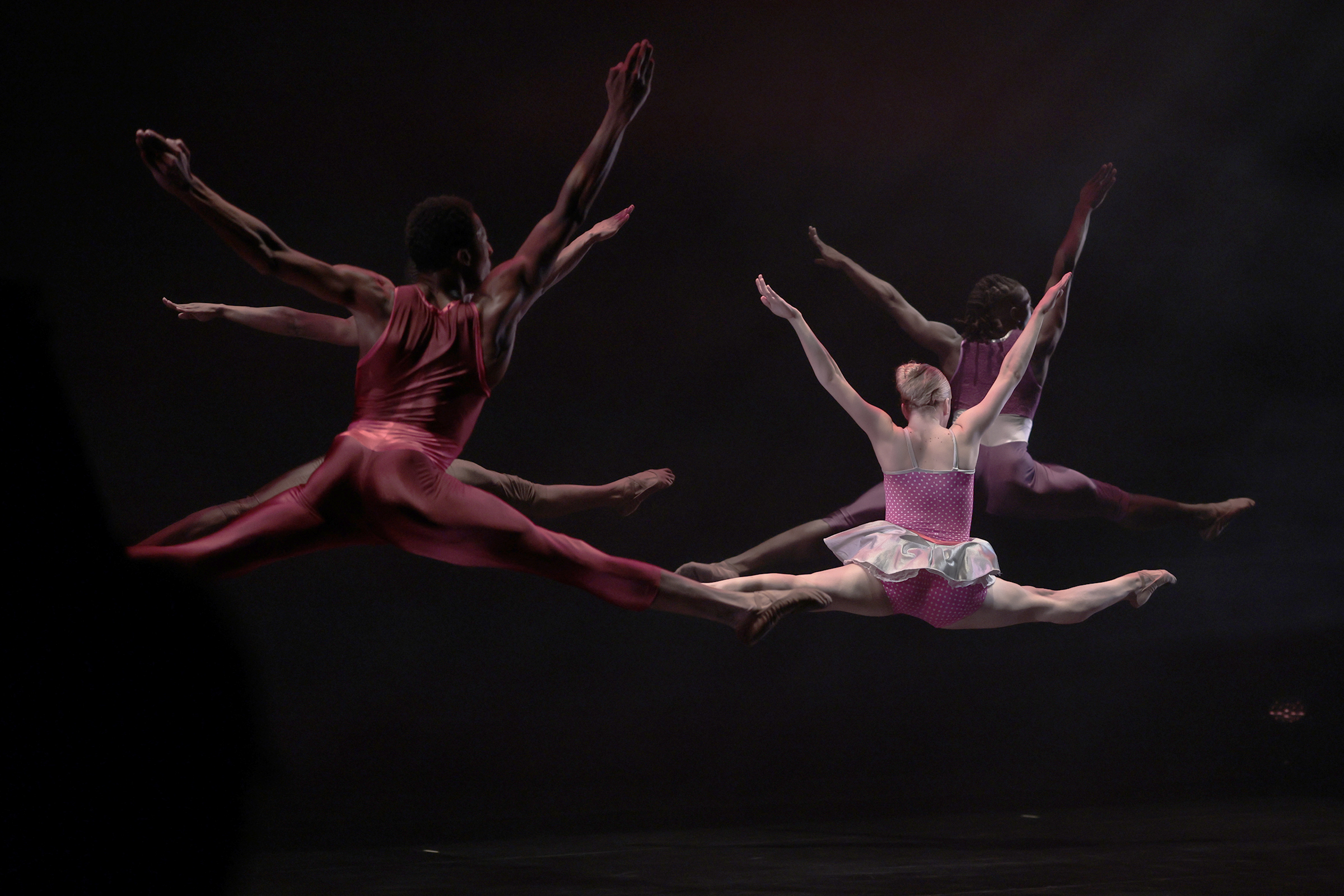
While those specific sources weren’t clear to this viewer, the dancers’ outstretched arms, perfectly controlled suspensions, and quicksilver entrances and exits clearly evoked the sensation of flying.
Philadanco dancers during their Then & Now performance at the Kimmel Center’s Perelman Theater in Philadelphia on Saturday, Dec. 6, 2025.
It is difficult to single out individuals in this — or, in fact, in any of the works on the program, which frequently had 10 dancers onstage at a time, performing in expert unison. But long-limbed Aliyah Clay began Heirborne with an exquisite solo, moving inside a dramatic shaft of light (designed by Nick Kolin). The piece ended on an even stronger — and unexpected — note when all eight dancers suddenly leaped forward, disappearing into the darkness.
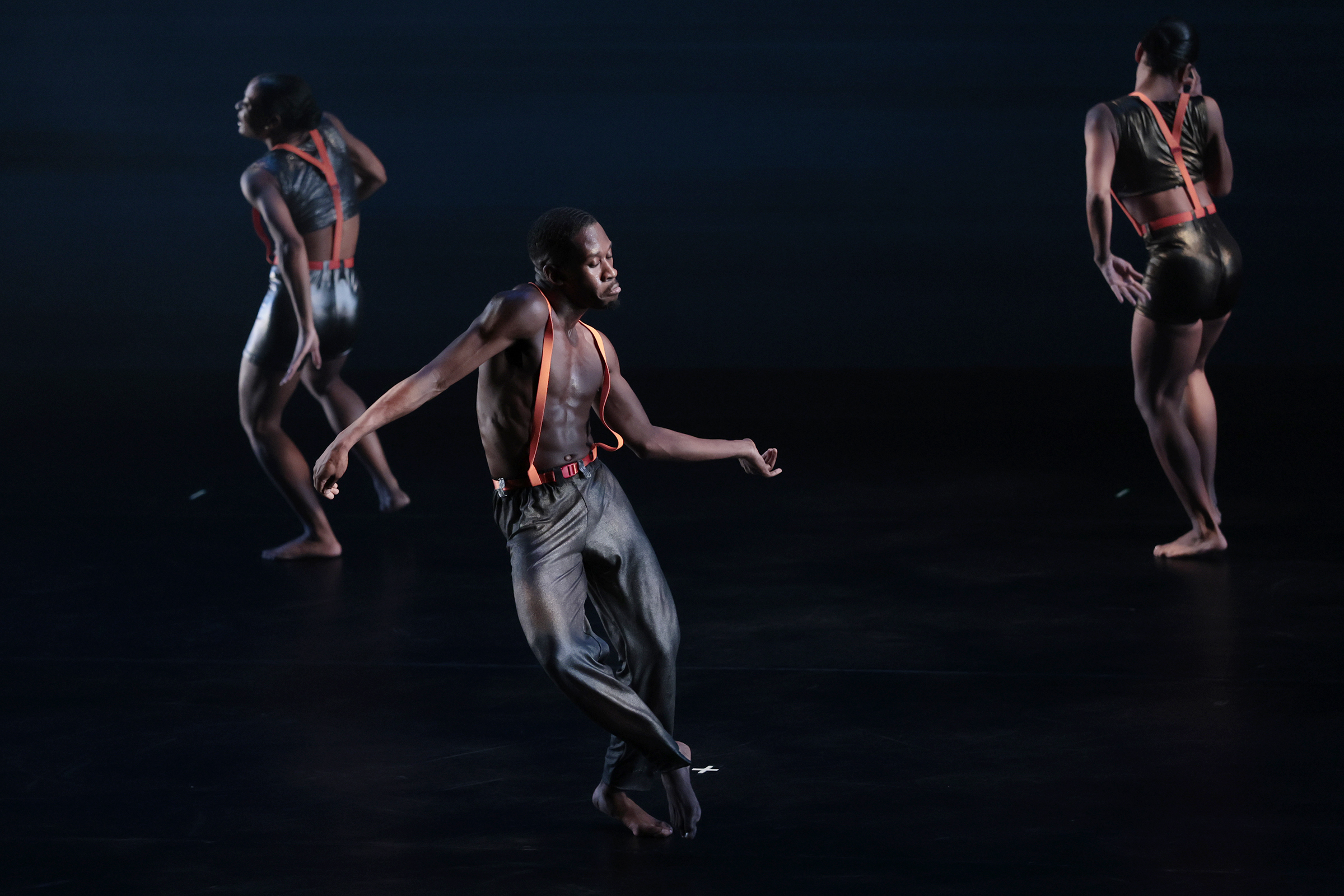
The music, for this and the other items on the bill, was recorded, favoring mixtures of rap, gospel, and jazz. For Heirborne, Atlanta native Lane chose pieces by several Georgia-based artists: RAHBI, Bryce Raburn, and Leo Ra Soul. Costume designer Anna-Alisa Belous dressed the women in shiny black shorts, a somewhat curious choice, and everyone wore neon-orange suspenders (a nod to airport safety equipment?).
From Exotica Back to Us, Brown’s contribution to the program, was originally choreographed for Philadanco in 1999 and revised this year.
Philadanco dancers during their Then & Now performance at the Kimmel Center’s Perelman Theater in Philadelphia on Saturday, Dec. 6, 2025.
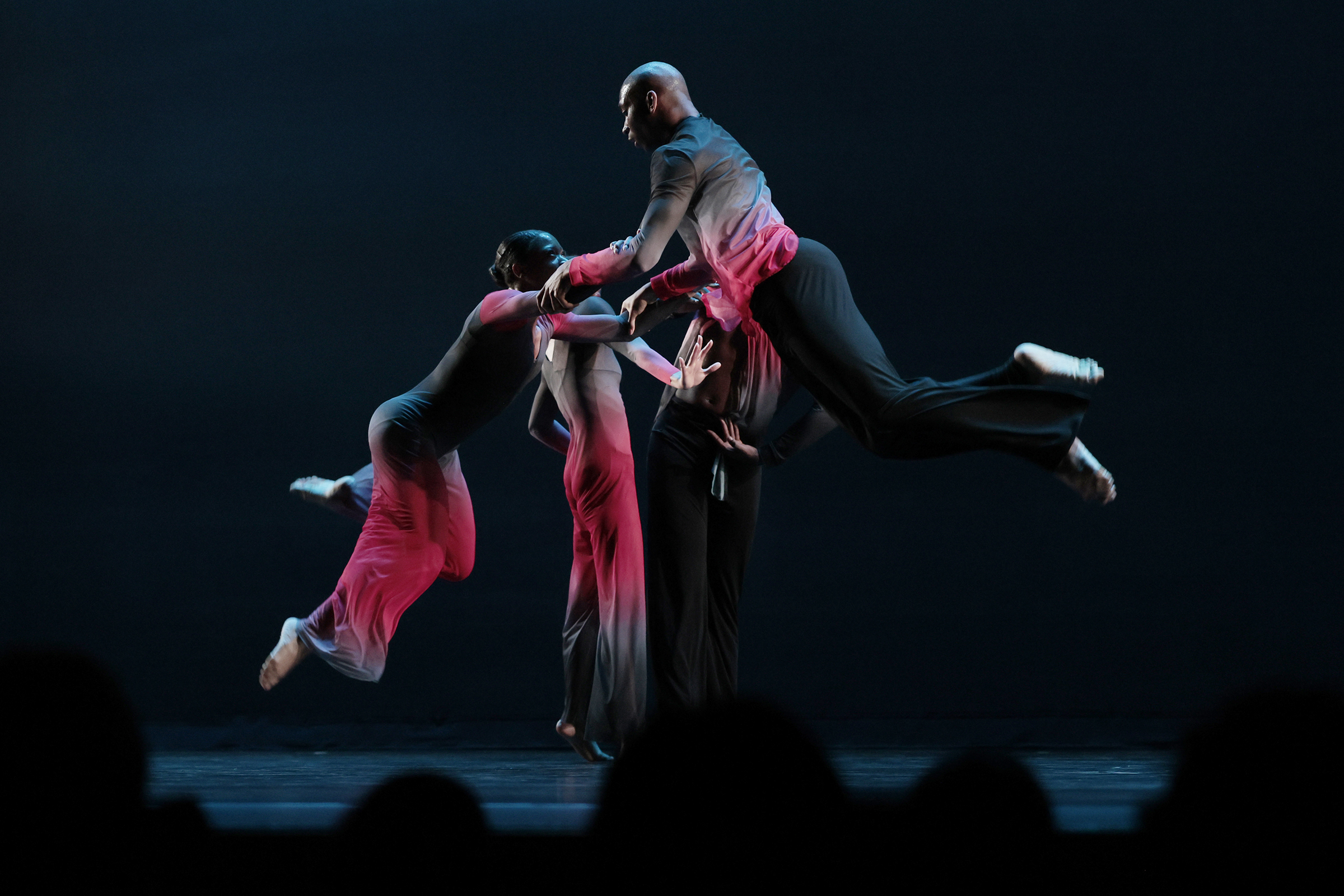
Not having seen the earlier version, I can’t comment on how the work has changed. However, its current iteration is stunning: from the richly colored and textured costumes by Wunmi Oliya (a British Nigerian singer, dancer, and fashion designer who also provides part of the score for this piece) to Brown’s seamless combination of traditional West African dance and percussion with his own, distinctive movement vocabulary.
There is an obvious spiritual and emotional dimension to these short vignettes — as the dancers raise their arms, hide their faces in their hands, or kneel as though in prayer. This powerful effect is enhanced, at several points, by the outstanding work of dancer William E. Burden.
Tommie-Waheed Evans created Withinverse… in 2018. In Friday’s “refreshed” version, dancer Kaylah Arielle embodies the deep emotions mentioned in the program. Sometimes she and her fellow dancers appear as supplicants, responding to sad, slow gospel music. Yet at other points they seem frantic, their bodies reflecting the heavy, insistent beat of electronic club music.
Philadanco dancers during their Then & Now performance at the Kimmel Center’s Perelman Theater in Philadelphia on Saturday, Dec. 6, 2025.
Evans has included a series of complicated and innovative lifts, which the dancers execute seemingly without effort. They are equally expert when performing challenging passages in unison.
The evening begins with Everybody by Donald Byrd. Billed as a parody, it seems more like an uneasy hybrid than, say, the comedic works of Mark Morris or Les Ballets Trocadero de Monte Carlo.
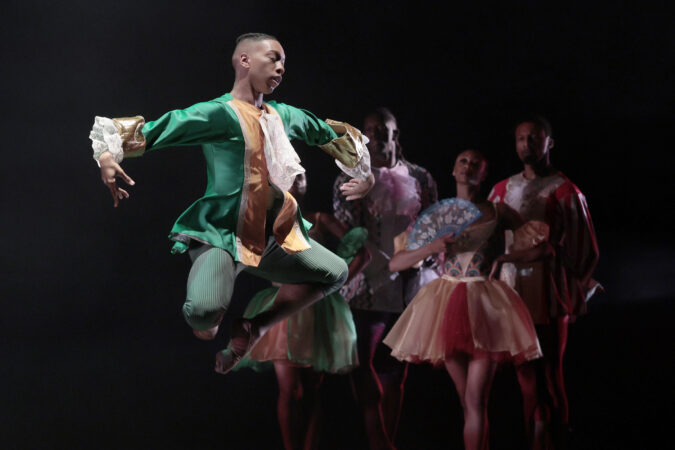
This work contrasts a harpsichord piece by J.S. Bach with hip-hop music by Ruffhouse, and Natasha Guruleva’s costumes reveal foppish men (notably the statuesque Yasir Jones) dressed in ruffled tunics, while the women wear tutus. Yet everyone is barefoot, alternating between impeccable ballet technique and decidedly non-classical body language.
Philadanco dancers during their Then & Now performance at the Kimmel Center’s Perelman Theater in Philadelphia on Saturday, Dec. 6, 2025.
The comparison is amusing, and — as a classically trained flutist who, in his youth, spent six years studying with the celebrated ballerina Mia Slavenska — Byrd knows his way around both Baroque music and classical dance. He enjoys himself by inserting sly touches of physical humor, here and there, and excels at creating intricate and unusual partnering sequences for two or more individuals.
In a brief pre-performance introduction, Tommie-Waheed Evans (who is also the company’s co-artistic director, along with Kim Bears Bailey) noted that Philadanco had just returned from a successful, multicity tour of Germany. This troupe, which the indomitable Joan Myers Brown established 55 years ago, has many reasons to be proud. But, next time, I hope that ’Danco will include the work of at least one female choreographer.
Philadanco, “Then and Now!” through Dec. 7, Perelman Theater, 300 S. Broad St. Tickets $43-$63. 215-387-8200, ensembleartsphilly.org
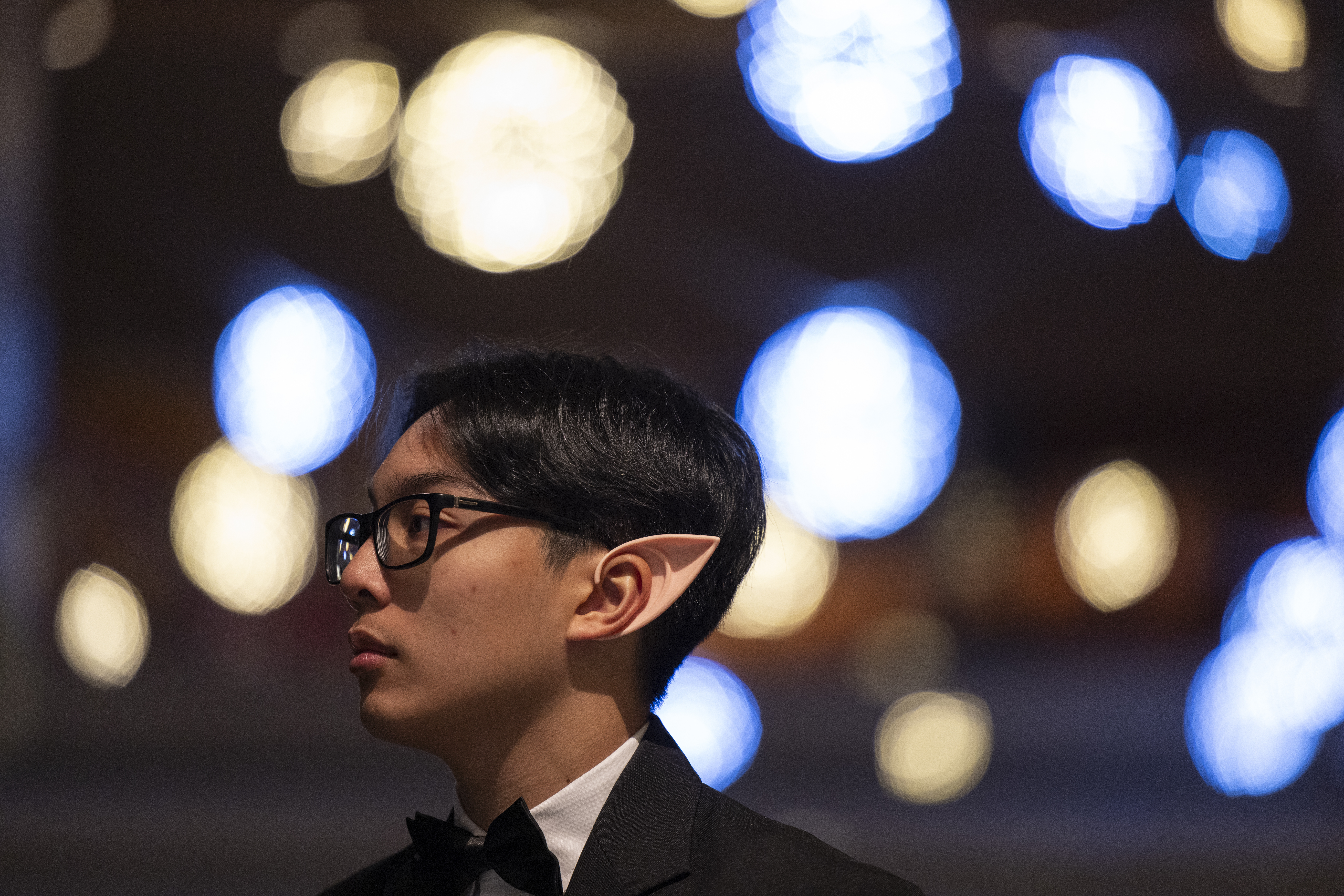
It was the kind of night at the orchestra when any good hobbit could show up in a Bilbo Baggins waistcoat and feel right at home. Previously-human ushers had suddenly sprung elven ears. And the action on stage involved a twisty, unlikely tale of a magical gold ring whose purpose seemed to be to exploit the flaws and weaknesses of those who encounter it.
The Philadelphia Orchestra’s presentation of The Lord of the Rings: The Fellowship of the Ring Friday night in Marian Anderson Hall was one of those cross-cultural experiences that ricocheted with surprising power. Two subcultures, each with its own specialized language — classical music, and the fandom around J. R. R Tolkien’s world of wizards, dwarfs and the dark forces — intensified the other.
The Philadelphia Orchestra, Singing City and Philadelphia Boys Choir on stage in Marian Anderson Hall for ‘Lord of the Rings: The Fellowship of the Ring.’
For anyone keeping score in the ongoing battle for younger audiences in classical music, Friday was a night when it seemed everyone in the hall was 31 years old and deeply engaged. Never at an orchestra performance have I heard the audience break in so many times with applause and hoots of approval.
Of this happy synergy, the orchestra sold out all three performances, with tickets topping out at more than $250 a pop.
Lead usher Ryan Viz, in elven ears, in the Kimmel Center lobby Friday night.
Not all of the orchestra’s live-to-screen presentations have justified themselves musically, but here, Howard Shore’s score was a canvas both vast (about three hours of music) and colorful.
If there’s a single label for Shore’s musical language, it’s Celtic Craggy — with notable excursions into the bellicose, sentimental, and moods more subtle. The great value of hearing a great orchestra live in dialogue with the screen is in the emotional epiphanies, moments where the music tells you something the dialogue and action alone can’t.
The sound engineering on this night favored the music over the dialogue, and smartly so.
Ian McKellen as Gandalf looms over members of Singing City Friday night in Marian Anderson Hall during a Philadelphia Orchestra live-to-screen presentation of ‘Lord of the Rings: The Fellowship of the Ring.’
The other beautiful dynamic at play: You didn’t have to walk into the hall with any prior knowledge of classical music or Middle-earth nomenclature to feel the experience. This level of communication is simply embedded deep in being human.
The definition of human becomes hazy in the 2001 installment of Peter Jackson’s film trilogy. But time and time again, the musical score honed in on the universal goodness and country-folk sincerity embodied in instruments. Two different soprano tin whistles (one in C, the other in D), whose very pitch and story-telling inflection were skillfully stretched by orchestra flutist Erica Peel. Hornist Jennifer Montone perfectly conveyed what it feels like to be a lonely leader in the Council of Elrond scene.
The percussion section was a city in itself, conjuring folk sounds on the bodhrán drum, and the anvils of war (struck by musicians on, essentially, flat sheets of steel).
Brian Johnson sits rapt with attention at the Philadelphia Orchestra’s live-to-screen presentation of ‘Lord of the Rings: The Fellowship of the Ring’ Friday night.
Anvils? The quest for a magical ring? Dwarfs, warriors and flawed characters? Tolkien drew on some of the same sources as Wagner did in his Ring Cycle, and while Shore’s score might have a Wagnerian touch here or there, the larger influence was Carl Orff, whose Carmina Burana became the musical DNA of video games and car commercials.
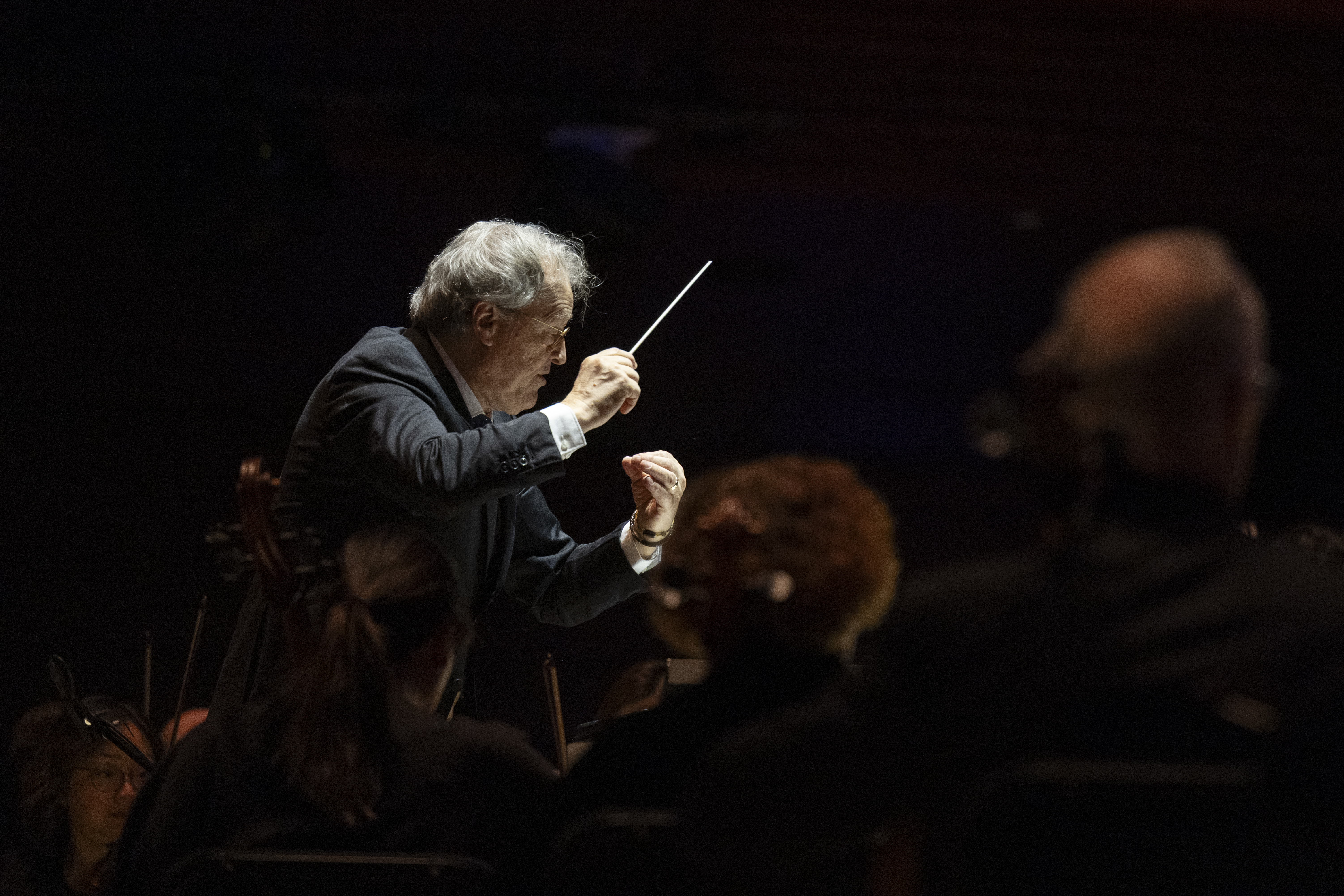
Conductor Ludwig Wicki leading the Philadelphia Orchestra and other musical forces in Marian Anderson Hall.
Colossal forces brought both precision and brutality, particularly in the repeating combination of driving percussion, screaming brass and blocs of choral sound amassed for battle. With Ludwig Wicki conducting, the Singing City Choir and Philadelphia Boys Choir — both quite strong — provided chaos and balm. Vocalist Kaitlyn Lusk and chorus were the gentle healing we needed to hear after Gandalf’s death.
The good thing was, when you tired of watching yet another wave of fiendish Orcs getting clobbered, you could always turn your eyes to the stage, decode the instrumentation and imagine for yourself an entirely different narrative. This is the enduring promise of orchestral sound on any night at the orchestra.
“It’s really more their process than it is ours at this time in the sense that they set the time frame,” Dave Dombrowski said. “They know we have interest, and then it’s up to them to kind of say, ‘OK, we’re ready to move forward,’ or not, whenever that ends up happening.”
That was three weeks ago. Schwarber and Realmuto have had five weeks to browse the market. By now, they have a decent idea of what’s there for them beyond the Delaware Valley. The Phillies probably do, too.
And with the baseball world set to gather again Sunday night in Orlando for the three-day winter meetings, it might finally be time for all parties to circle back to one another. In the shadow of the Magic Kingdom, of all places, the fantasyland of rumors about which teams are curious about which players will give way to a better sense of reality about whether Schwarber and Realmuto will return or move on.
The Phillies haven’t hidden their strong desire to keep both. Even though Schwarber will be 33 and Realmuto 35, and they’re central to a team that made the playoffs four years in a row but stubbed its toe in October, Dombrowski described them as “very important” and said they “mean a lot to the organization.”
With the exception of Japanese ace Yoshinobu Yamamoto, owner John Middleton hasn’t lost out on a free agent that he’s wanted since the “stupid money” winter of 2018-19. And free agents have wanted to play in Philly over the last half-decade because of the culture set by Schwarber, Realmuto, et al.
No wonder most of the industry expects Schwarber and Realmuto to find their way back to the corner of Pattison and Darien.
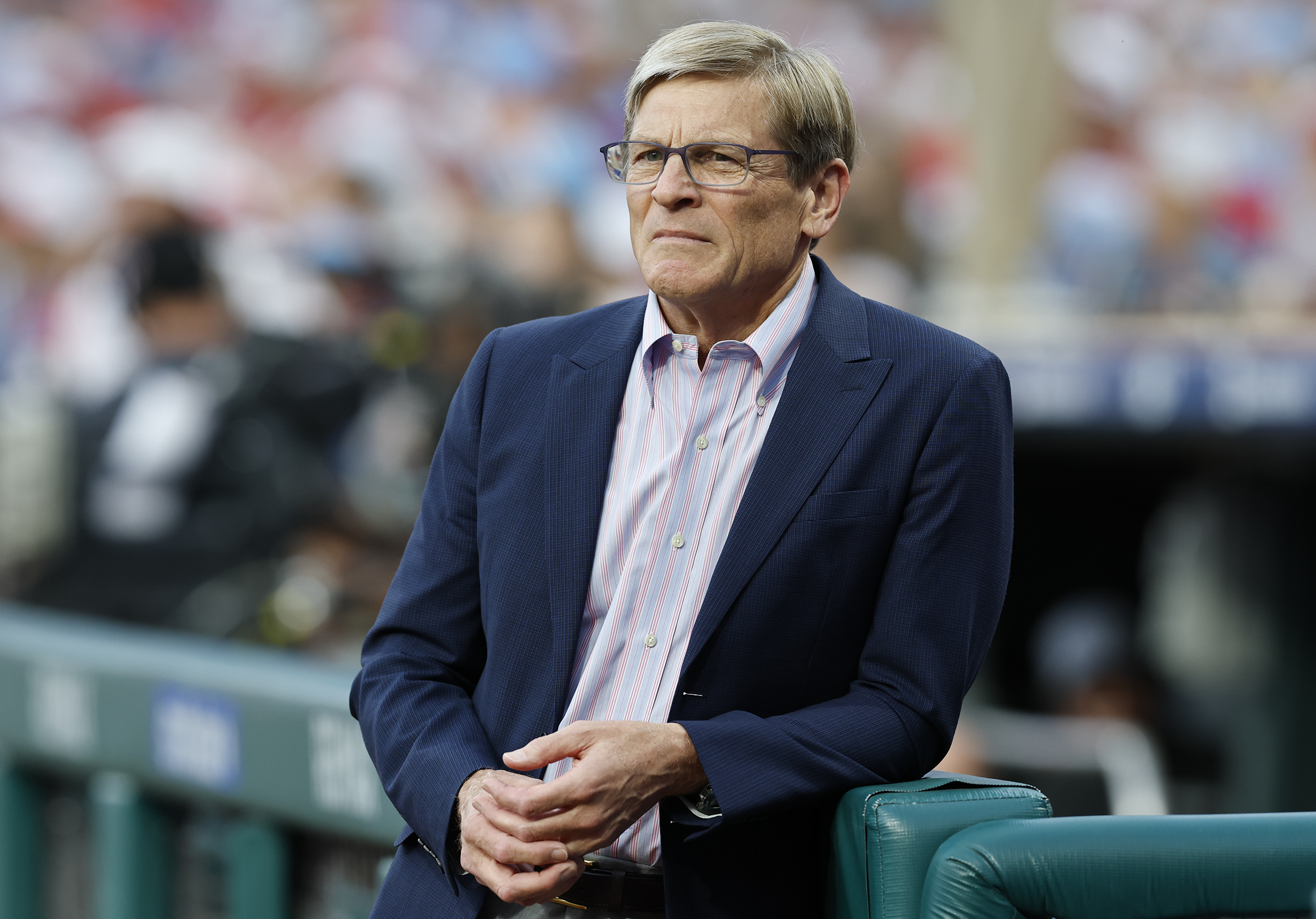
Phillies owner John Middleton hasn’t been outbid for many free agents over the last half-decade.
But even if it feels like almost a fait accompli, the mission for their agents is to get offers that will at least drive up the price. Maybe they’ve done that. Maybe not.
Schwarber’s market is especially fascinating because it lacks most of the high-payroll teams. The Dodgers’ designated hitter is Shohei Ohtani, only the best player on the planet. The Yankees (Giancarlo Stanton) and Astros (Yordan Alvarez) are set at DH, too. George Springer had a career renaissance as a DH for the Blue Jays, who are in on seemingly every marquee free agent except Schwarber. The Cubs appear to be focused on pitching.
The Red Sox want to add a middle-of-the-order bat, chief baseball officer Craig Breslow said last month, and Alex Cora loved managing Schwarber in 2021. But given their lineup’s lefty lean and Fenway Park’s dimensions, righty-hitting Pete Alonso or Alex Bregman might be better fits. And Boston doesn’t spend money like it once did, either.
The Reds’ interest in bringing Schwarber home to southwest Ohio is real, multiple sources confirmed this week. It makes sense for a young team that is rich in starting pitching but lacking power and veteran leadership. Asked in July about the prospect of being courted by his childhood team, Schwarber said this: “I think it’d be awesome.”
But the Reds intend to keep their payroll in the $120 million range, president of baseball operations Nick Krall told reporters last month, leaving them with about $20 million to spend for 2026. Schwarber figures to cost at least $30 million per year.
And even if they had the cash, spending big for free agents isn’t in the Reds’ organizational DNA. They’ve done only two nine-figure contracts in their history, and Joey Votto and Homer Bailey were extensions. Their largest free-agent contracts: Mike Moustakas and Nick Castellanos, both four years, $64 million.
That leaves, well, who? Various reports have linked Schwarber to the Giants and Pirates (seriously).
The Mets are “in the mix” for Schwarber, at least according to an ESPN.com report. It’s plausible as a backup plan if New York doesn’t re-sign Alonso, although president of baseball operations David Stearns emphasized run prevention as the team’s chief offseason focus. Schwarber doesn’t help there.
But the best way for Schwarber’s agents to hike the price on the Phillies might be to claim interest from the rival Mets, owned by Steve Cohen, the wealthiest man in baseball. And the Mets could attempt to gain leverage over Alonso by suggesting they’d pivot to Schwarber.
In any case, the Phillies remain the favorite in the Schwarber derby.
“You have the owner who wants him, you have Dave Dombrowski who wants him, you have the coaching staff, you have [manager] Rob Thomson, you have a fan base — everybody involved here wants [him] to be back, including Kyle — so what does it come down to?” hitting coach Kevin Long, who is close with Schwarber, said on The Inquirer’s Phillies Extra podcast. “What’s his market value, and are we willing to give him his market value? And I think the answer is yes to that.
“I think it would be devastating to this organization and this fan base and everybody involved if he wasn’t a Phillie.”
The last five weeks have been about establishing market value for Schwarber and Realmuto. Next week might finally mark the Phillies’ chance to meet it.
A few other thoughts leading into the winter meetings:
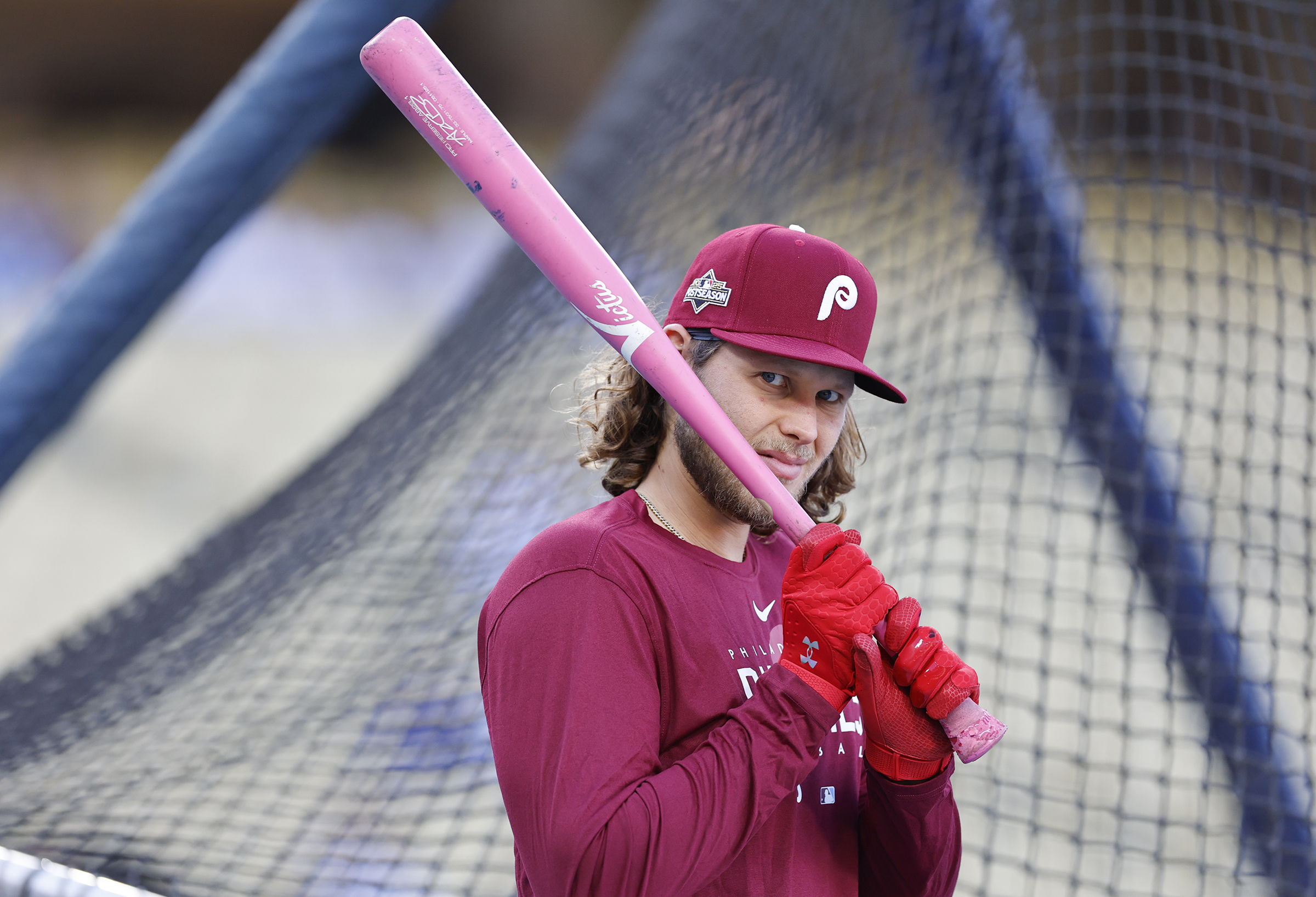
Phillies third baseman Alec Bohm is once again a candidate to be traded in the offseason.
Trading places
Two of the most intriguing offseason moves so far were one-for-one trades of major leaguers.
The Orioles swapped four years of control over gifted but often-injured pitcher Grayson Rodriguez to the Angels for walk-year outfielder Taylor Ward. Then, the Mets dealt popular outfielder Brandon Nimmo to the Rangers for second baseman Marcus Semien in a change-the-mix move.
Across the sport, the trade market is hyperactive, multiple team officials said this week, perhaps because some clubs are wary of signing free agents to multiyear contracts amid labor uncertainty beyond 2026.
Once again, Alec Bohm‘s name will come up in the Phillies’ conversations. But they couldn’t agree on his value in trade talks last winter, and it figures to be even lower now that the third baseman is one season from free agency.
Lefty reliever Matt Strahm could be another potential chip, especially after Dombrowski volunteered in an end-of-year news conference that the veteran declined to do pitcher fielding drills before the postseason.
Rivals believe the Phillies prefer trading from their major league roster rather than the farm system after moving teenage shortstop Starlyn Caba (for Jesús Luzardo) and catcher Eduardo Tait and right-hander Mick Abel (for Jhoan Duran) within the last calendar year. Andrew Painter, Aidan Miller, and Justin Crawford are thought to be largely off limits, with Painter and Crawford ticketed for the opening-day roster and Miller close behind.
As long as the Phillies cling to that trio, it’s difficult to see them matching up with the Diamondbacks for second baseman Ketel Marte, the Red Sox for outfielder Jarren Duran, or especially the Twins for center fielder Byron Buxton, if Buxton decides to waive his no-trade clause.
But maybe there’s a trade to be made for someone like Astros center fielder Jake Meyers, a solid defender who batted .292 with a 103 OPS-plus this season and is reportedly available.
Jesús Luzardo had a big season for the Phillies after being acquired in a trade last December.
Making a pitch
A year ago, the Phillies weren’t focused on starting pitching at the winter meetings. But they traded for Luzardo a few weeks later, and it wound up as their best offseason move.
Just something to keep in mind.
Because although the rotation remains the strength of the roster even amid the expected departure of free agent Ranger Suárez, there are questions. Aaron Nola is coming off an injury-interrupted season in which he posted a 6.01 ERA. Painter’s prospect shine isn’t quite as luminescent after he struggled in triple A.
Oh, and although Zack Wheeler is close to throwing a ball again, a source said this week, the recovery from thoracic outlet decompression surgery isn’t always a linear process.
And Dombrowski, who values starting pitching as much as any executive in the sport, recently noted the drop-off after Cristopher Sánchez, Luzardo, Wheeler, Nola, Taijuan Walker, and Painter.
“We don’t have a lot of starting pitching depth, so that’s something that we have to be cognizant of,” he said. “It’s not our highest priority, but I can’t say that we wouldn’t [add another starter]. That doesn’t necessarily mean top of the market, but where does that fit in? Because you never have enough starting pitching.”
After making a bid for Yamamoto two years ago, it wouldn’t be surprising if the Phillies show interest in Japanese right-hander Tatsuya Imai. Or maybe they will be opportunistic in the trade market again.
One other bit of winter-meetings business: The Phillies are still looking for a bench coach. Don Mattingly remains a leading candidate, if he’s interested in returning to the dugout after leaving the Blue Jays’ staff after the World Series.