Even after more than two decades of operating a financial advisory in the Philadelphia region, Joel Steele is inspired when clients tell him they want to donate money to charity.
“But the problem is that it’s gotten much more difficult to know if your donations are going to the people you are directly trying to help,” said Steele, co-owner and financial adviser with Steele Financial Solutions in Cherry Hill. “Charity scammers are running rampant.”
Solicitors are on the phone, at your door, in your email, and in your mailbox.
“We’re constantly inundated with people looking to take our money and put it in their pockets for the wrong reasons,” Steele said. “This has led many people to back off — in part or in full from — donating to charities.”
One way to reduce the chance of misappropriation is to contact the charity directly, Steele said. “Yes, it’s easier to put cash in a tin can or buy things from a stranger, but these are more likely to end up in that person’s pocket.”
Also, he recommends, when you donate directly to charities, get a receipt and check with your income tax preparer or review deduction guidelines to understand potential tax benefits.
Evaluating Giving Tuesday solicitations
Everyone knows about Black Friday shopping, and recent years have seen the additions of Small Business Saturday and Cyber Monday in the days after Thanksgiving.
In 2012, Giving Tuesday joined the lineup, promoted by the 92nd Street Y in New York and the United Nations Foundation. It caught on quickly, as more organizations joined in on the opportunity to fundraise.
Giving Tuesday encourages generosity, but it’s also a time for scammers to ramp up fraud tactics. Scammers may use fake charities or misuse real ones to take advantage of donors.
If you get direct mail or a call, text, email, or social media message asking you to donate to a nonprofit, pause for a moment to dig deeper.
Your heart immediately wants to say “yes,” said Katherina ‘Kat’ Rosqueta, founding executive director of the Center for High Impact Philanthropy at the University of Pennsylvania. But unless you have personally been helped by that nonprofit or know someone who was, it’s hard to know whether the nonprofit is actually making a difference.
“That’s where your head comes in,” Rosqueta said. Consider running a quick Internet search for the charity’s name, along with “scam” or “complaints” to see if there have been any negative feedback or investigations, she said.
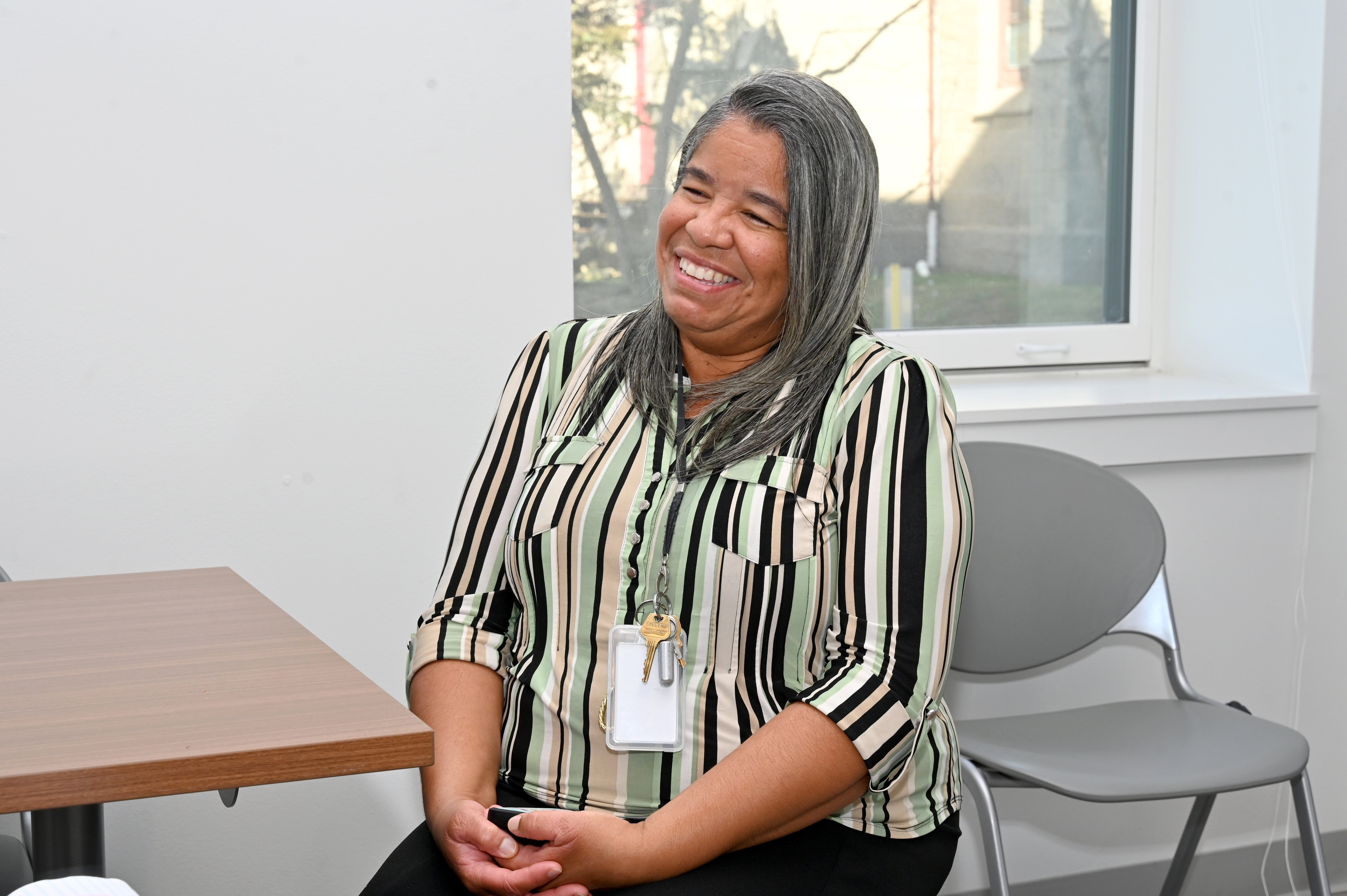
Katherina Rosqueta is the founding executive director of the Center for High Impact Philanthropy at the University of Pennsylvania.
Of course, most donors want to do more than just avoid fraud.
“They want their donation to make a real difference,” Rosqueta said.
Her center at Penn created a “High Impact Giving Toolkit,” updated each year and available for free. It highlights vetted nonprofits and provides links to organizations like Candid, Charity Navigator, and BBB Wise Giving Alliance, where potential donors can learn about organizations’ programs, team, and finances.
“Once you feel confident about a nonprofit’s work, consider donating online through an official, secure nonprofit website that uses HTTPS encryption,” Rosqueta said.
“Avoid links in unsolicited emails or social media posts. Credit cards and checks offer better fraud protection than debit cards or wire transfers,” Rosqueta said.
How to make online donations safer
The key to understanding fraud is that most scammers prey on your emotions.
“Fear, urgency, and promise of a quick win are some elements that exist in so many scam scenarios,” said Christopher Blackmore of TD Bank in Mount Laurel, who works in customer education in financial crimes prevention.
Blackmore said most “bad actors” will reach out and provide a number to call, link to click, or instructions for payment. “The goal is to make scenarios seem so real that you feel you must reply or something will happen.”
Financial industries should never ask for login credentials, passwords, or one-time pass codes, Blackmore said. “Technology is making it very difficult to identify what is real vs. fake.”
A text, email, or phone call is a very quick and easy way to contact a lot of people quickly and ask for a donation.
“These tactics are known as phishing, vishing, and smishing,” Blackmore said. A newer tactic, known as “Quishing,” utilizes QR codes.
When a donation ask includes a request for payments using gift cards, wires, and cryptocurrency, that should immediately raise caution, Blackmore said.
Donors might want to consider a third-party platform like PayPal, which safeguards sensitive financial information.
“Donors should stay mindful online and keep an eye out for the warning signs of common scams, including being wary of unexpected messages from strangers,” said Nick Aldridge, Global CEO of PayPal Giving Fund.
“We always encourage supporting causes you care about through trusted channels like PayPal Giving Fund, the PayPal Cause Hub, and Venmo Charity Profiles,” Aldridge said.
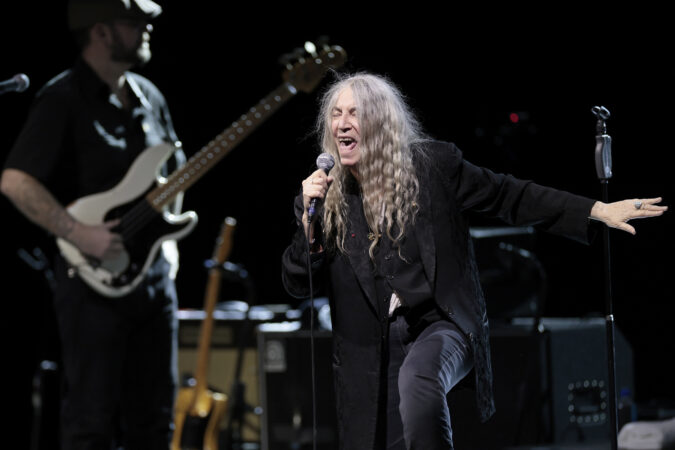
Patti Smith stood onstage at the Met Philadelphia on Saturday during her 50th anniversary tour for her 1975 album Horses. She recalled her elementary school report cards when she was growing up in Germantown in the 1950s.
“They would always say, ‘Patti Lee shows a lot of potential, but she daydreams too much,’” she said. “‘Will she amount to anything?’”
The revered punk poet and undiminished life force, who will turn 79 on Dec. 30, smiled and looked out at the cheering sold-out crowd, mirroring their affection.
“You are my answer,” she said.
Philadelphia was the final stop on the Horses tour, commemorating the majestic John Cale-produced album with an iconic cover photo by Robert Mapplethorpe that lit the fuse for a punk rock conflagration to come.
Smith came onstage dressed in black jeans and a suit jacket, accompanied by her band, with original 1970s members Lenny Kaye and Jay Dee Daugherty on guitar and drums, joined by her son, Jackson Smith, on guitar, and Tony Shanahan on bass and keyboard.
They started with “Gloria,” Smith’s reworked version of the 1964 Van Morrison-penned Them hit that began, as always, with the still startling declaration, “Jesus died for somebody’s sins, but not mine.” She then went on to take responsibility for her own actions, seeking rock and roll salvation on her own terms.
“My sins, my own,” she sang in a voice that has lowered in register in the last half century but lost none of its power. She often sounded as if she were channeling otherworldly spirits.
“They belong to me,” she sang.
Patti Smith and her band perform “Horses” on its 50th anniversary at the Met Philadelphia on Saturday, Nov. 29, 2025.
The band steadily built to a roar, with Kaye and Shanahan chiming in along with the crowd on chanted vocals.
Track one, side one. “G-L-O-R-I-A!” — catharsis was already achieved.
The eight-song Horses was performed in its entirety, essentially straight through but with a few songs flip-flopped in order. “Free Money,” about dreaming of hitting the lottery and lifting her family up financially, preceded the epic improvised-in-the-studio “Birdland.” For that song, Smith put on glasses to read out the rapid-fire incantatory lyrics from one of her own books, as the song built to a crescendo.
There was little chitchat during Horses itself, save for a dedication of “Elegie” to Jimi Hendrix and a story about hanging out in the 1970s with the late Television guitarist Tom Verlaine at a Manhattan magazine shop called Flying Saucer News. The duo teamed to write “Break It Up,” a song inspired by Smith’s dream of coming upon a marble statue of Jim Morrison, “like Prometheus in chains, with long flowing hair,” lying in a clearing in the woods.
Horses built to a climax with “Land,” complete with its ecstatic “Do the Watusi” romp through Chris Kenner’s “Land of 1000 Dances” and a reprise of “Gloria.” Then, Smith took a break.
While offstage, the band served up a treat: a three-song tribute to Television, the Smith group’s “sister band” with whom it shared a four-nights-a-week residency at CBGB in New York in 1975. Kaye and Shanahan took turns on vocals on “See No Evil,” “Friction,” and “Marquee Moon,” and Kaye and Jackson Smith (who shone throughout the evening) paid aural homage to Verlaine and Richard Lloyd’s guitar interplay.
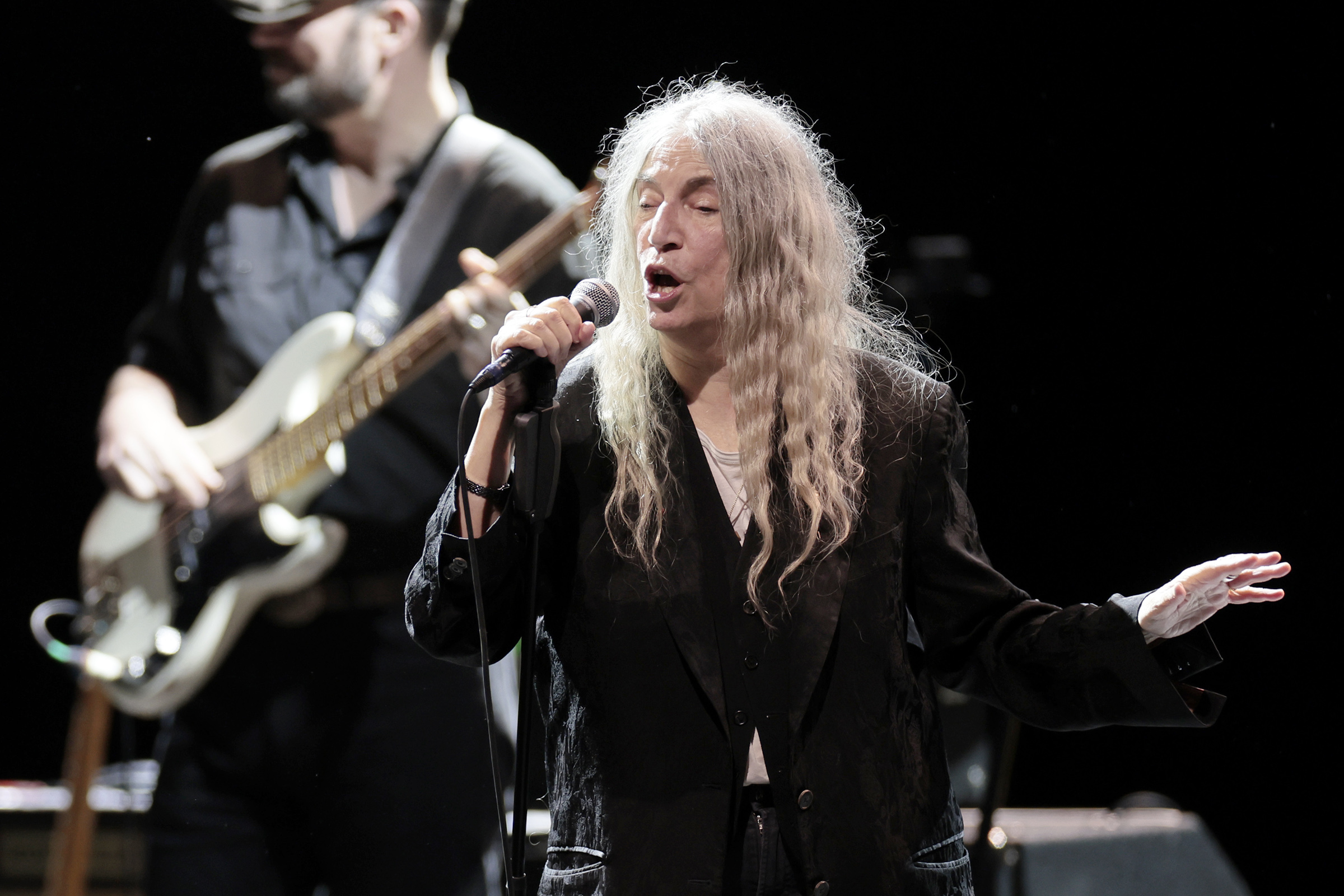
Patti Smith and her band perform “Horses” on its 50th anniversary at the Met Philadelphia on Saturday, Nov. 29, 2025.
The second half of the two-hour-plus show surveyed Smith’s five-decade post-Horses career, with ‘70s rock radio hits like “Dancing Barefoot” and her Bruce Springsteen co-write “Because the Night.” That was dedicated to her late husband, Fred “Sonic” Smith, and included an exultant, crowd-pleasing declaration that she was back onstage in the city that shaped her “because the night belongs to Philadelphia.”
“Ain’t It Strange” and “Pissing in the River,” two songs from 1976’s Horses follow-up Radio Ethiopia were included, both holding up well in stately versions. The latter included an origin story about Smith walking to school with her sisters and being afraid of high winds blowing them into Wissahickon Creek.
Smith explained that “Peaceable Kingdom” — a song that shares a title with a painting by Quaker artist Edward Hicks at the Pennsylvania Academy of Fine Arts — was written “for the Palestinian people” with Shanahan “with great hope” in 2003.
“Now,” she said, “we sing it with great sorrow.”
A slowed, and somber, segment of “People Have the Power,” her populist anthem penned with her late husband, was added onto the end of the prayerlike song.
For an encore, Smith brought out her daughter, Jesse Paris Smith — who will join the singer and author, Jackson Smith, and Shanahan at Marian Anderson Hall on Monday for a “Songs & Stories” performance that kicks off a book tour for her new memoir, Bread of Angels.
Together with Kaye, Smith sang “Ghost Dance,” a song from 1978’s Easter that she said the two wrote “with great respect and love for the Hopi tribe.” She urged that “we need to be diligent” in resisting “our present administration who show no empathy, respect, or love for our Native Americans.”
That was followed by the full-on, rocked-out “People Have the Power,” for which the band was joined by New Jersey guitarist and longtime Smith associate James Mastro.
But before leaping into her testament of faith in democratic ideals that name-checked the Declaration of Independence and Independence Hall, Smith had a few more words for the city where “I discovered art, and battled bullies.”
“I’m just so happy to be in Philadelphia,” she said. “In 1967, I had to leave Philadelphia to look for a job. I got on the Greyhound bus and went to New York City. I was 20 years old and I built a new life, … but it all began with that decision to get on that bus. And I might have left Philadelphia physically, but it’s always been in my heart.”
“People Have the Power” was reliably inspiring, stirring the heart with marching music fit for taking to the streets. But Smith took the extra step of adding a closer that she often covered in her mid-1970s Horses era: the Who’s “My Generation.”
“Hope I die before I get old,” she sang, gleefully echoing Pete Townshend’s 1960s youth culture mantra. But then, she added her own in-song commentary that playfully raised the possibility of future Horses anniversary tours just as thrilling as this one.
“And I am old!” Smith shouted. “And I’m going to get older! I’m going to live to a hundred and two!”
Songs & Stories with Patti Smith: Bread of Angels Book Tour at Marian Anderson Hall, 300 S. Broad St. at 7 p.m. Monday. ensembleartsphilly.org.
Over in the visitors’ locker room, the head coach had his shirt off. He was flexing and jumping and shouting and looking like a man who might soon be taken away by some folks in white gowns. Ben Johnson had every right to act a fool. He earned it. His team earned it. All anybody else could do was shrug.
“We’ve got great people in this team that I have a lot of faith and belief in,” Eagles tight end Dallas Goedert said after a disconcertingly definitive 24-15 loss to the Chicago Bears. “I think we still have everything we want ahead of us.”
It is getting harder for those of us outside the locker room to share in that belief. The Bears didn’t just beat the Eagles on Friday evening. They shook them to their core. They walked into Lincoln Financial Field on the day after Thanksgiving as a seven-point underdog with a rookie head coach and a second-year quarterback who might not be good and they walked out with a win that lifted them to the second-best record in the NFC and dealt a serious blow to the Eagles’ hopes of landing the conference’s top playoff seed.
The Bears will frame it as a statement victory. It felt more like a statement loss by the Eagles. They lost an important game in tough conditions against an opponent that entered the day having earned none of the benefit of the doubt. In short, the Eagles did exactly the opposite of what they had done, almost without exception, over their previous 32 games. They made it very clear that they were not the better team.
That’s a remarkable thing to write, considering the circumstances. The Bears entered the day with an 8-3 record that couldn’t be taken seriously. They’d played the second-easiest schedule in the NFL, the easiest in the NFC by far, with six of their eight wins coming against teams that ranked among the 12 worst in point differential. The other two victories came against winning teams who barely qualified as such: the 6-5-1 Dallas Cowboys and the 6-5 Pittsburgh Steelers. In fact, until Friday, the Bears had been outscored on the season.
“The sky is falling outside the locker room, we understand that, but I have nothing but confidence in the men in this locker room, players and coaches included,” said running back Saquon Barkley, who finished with 56 yards on 13 carries and has now gained 60 or fewer yards in nine of 12 games on the season. “It’s going to take all of us to come together, block out the noise.”
Until Friday, we could err on the side of nodding along to such sentiments. All season, as the Eagles have struggled to replicate last year’s dominance, they’ve insisted that their Super Bowl blowout of the Kansas City Chiefs was an exorcism of the demons of 2023. They swore they were a different team. They’d learned their lessons. Plus, they had an actual defense.
Neither of those things was evident against the Bears.
They allowed 281 rushing yards, their most since 2015 and the third-most in the last 50 years. They lost the turnover battle, in a fashion meek and mild, a fumble on a Tush Push and an ugly interception, both at the hands of the quarterback. Neither could be written off as the unfortunate byproducts of a warrior mindset.
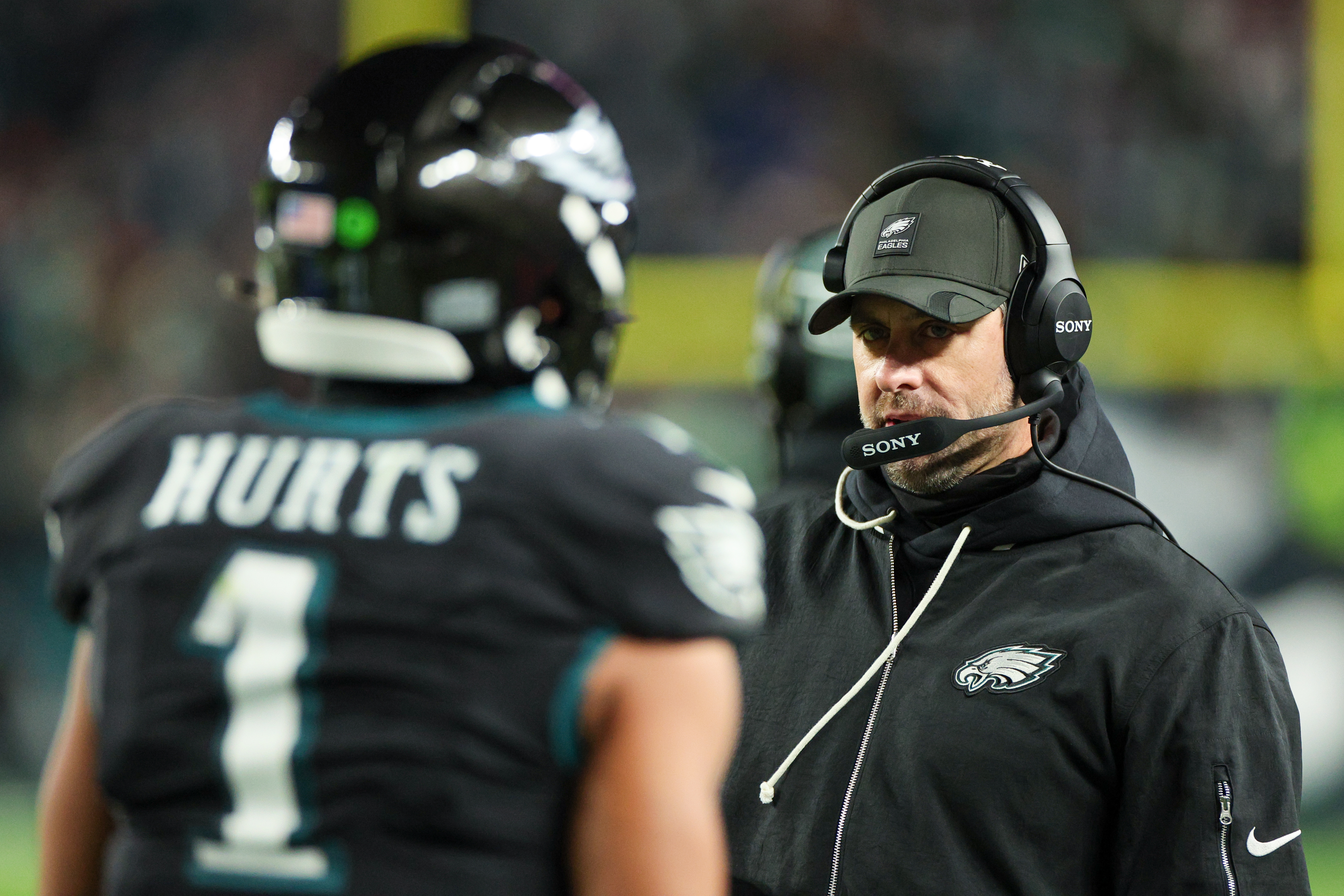
Eagles offensive coordinator Kevin Patullo and quarterback Jalen Hurts have failed to inspire confidence for much of the season.
Every quarterback has bad days. Where they differ is in their energy. Some quarterbacks are maddening, some erratic, some just plain dumb. Hurts at his worst looks listless. A nonfactor. Completely uncompetitive.
His coaches look that way, too. For most of the last month, Nick Sirianni and Kevin Patullo have looked like video game players who suddenly move the difficulty slider from All-Pro to All-Madden. Again, the computer won handily. The issue isn’t a lack of improvement. It’s that things are getting worse.
“It was both units, offense, defense, hats off to them,” Eagles coach Nick Sirianni said. “They played a good game; they coached a good game. They outcoached us; they outplayed us. That’s obviously something that I need to go through and watch, look through it, but to say I don’t want to — again, they ran for however many yards. We didn’t run for many yards. We lost the turnover battle. We lost the explosive play battle. All those things are going to dictate the win and loss.”
They didn’t just lose. They are at a loss. No answers. No ideas, even. This was the most concerning game of the Sirianni era, and it isn’t particularly close. Sure, 2023 was ugly. But at least it hadn’t happened before. The three scariest words in the world are “here we go again.”
If this Eagles season ends up where it is currently heading, the faces of the Bears will be the last thing they see on their final swirl around the toilet bowl. This was the kind of loss that can break a team through what it reveals. Until now, they’ve maintained an air of invincibility, a belief in the virtue of winning ugly. While the latter may be true, the Eagles looked entirely vincible on Black Friday.
They could write off their loss to the Denver Broncos as a game they should have won. Their loss to the New York Giants was a Thursday night fluke. After their loss to the Cowboys last week, they could cling to their one great quarter.
Their loss to the Bears? It felt like a culmination to all of that. The end of their suspension of disbelief. They are back in the same place they were when it all went up in flames. Talk has sufficed until now. Adversity is easy in its hypothetical form. Now, the Eagles must actually show us what they are made of.
Meteorologists don’t have the specific forecast ready yet, but there is a growing consensus that December will be a frigid one for parts of the United States.
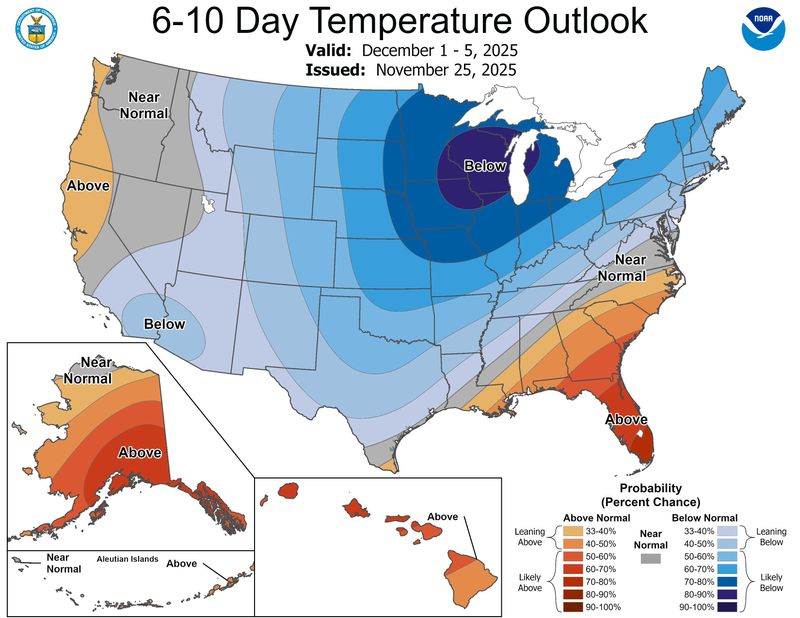
The National Weather Service’s Climate Prediction Center says colder-than-normal weather is most likely in the northern and northeastern United States, but some forecasters say a complex dance involving the polar vortex could send some of Earth’s most extreme cold toward the United States.
“My thinking is that the cold the first week of December is the appetizer and the main course will be in mid-December,” said climatologist Judah Cohen, a research scientist at MIT, in an email to USA TODAY.
Unusually cold temperatures are expected for most of the north-central U.S. by the first week of December.
Indeed, according to Cohen’s computer model, “which I can credibly claim as the world’s best — is predicting that the most expansive region of most likely extreme cold on Earth stretches from the Canadian Plains to the U.S. East Coast in the 3rd week of December.”
As for snow, that remains a wild card, as the weather systems that produce snow typically can’t be predicted more than a few days in advance. Suffice it to say that having cold air present is half of the battle.
Polar vortex on hold?
The main “polar vortex” load of very cold air will remain mostly locked up in Canada through the next 7-10 days, said Weather Trader meteorologist Ryan Maue in a Substack post. Maue continues to monitor the polar vortex intrusion risk into the Lower 48 into December.
Indeed, the complex dances of large-scale climate patterns far above our heads — which include the infamous polar vortex and a phenomenon known as “sudden stratospheric warming” — will determine the intensity and duration of the cold weather in the United States in December, Cohen said. But “I am conflicted about exactly what is happening with the polar vortex,” he admitted.
How cold will it get?
Although the most extreme cold won’t arrive until later in December, widespread and persistent below-average temperatures for this time of year can be expected for a wide expanse of the country from the western High Plains to the East Coast next week, with some near average conditions for the Southeast states and warmer over Florida, according to the National Weather Service.
The coldest anomalies for both highs and lows are forecast over the Midwest Monday Dec. 1 and Tuesday Dec. 2, with highs only in the 10s to middle 20s for many of these areas, and lows in the 0s getting down to northern Missouri and Illinois by Monday morning as the arctic airmass becomes established over the region.
Some subzero overnight lows are well within the realm of possibility from eastern Montana to North Dakota, the weather service said.
The holiday season is officially upon us and with it, a slew of festive events. From Santa sightings to a menorah lighting, here’s how and where to celebrate around Lower Merion.
Santa will come to town on a fire truck for the tree lighting at Schauffele Plaza, where there will also be hot chocolate, cookies, and photo ops with St. Nick.
Catch a screening of the 1946 holiday classic starring Jimmy Stewart and Donna Reed. A cocktail is included with the ticket purchase for those 21 and over.
⏰ Thursday, Dec. 4, 7:15 p.m. 💵 $17.75 📍Bryn Mawr Film Institute, 824 Lancaster Ave., Bryn Mawr
Catch screenings of your favorite animated holiday classics The Year Without a Santa Claus, Frosty’s Winter Wonderland, and ’Twas the Night Before Christmas during two matinee showings.
⏰ Saturdays, Dec. 6 and 20, 11 a.m. 💵 $6.75-$7.75 📍Bryn Mawr Film Institute, 824 Lancaster Ave., Bryn Mawr
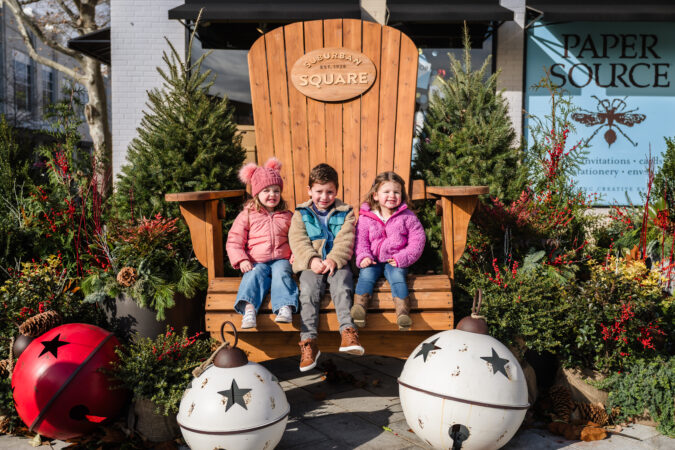
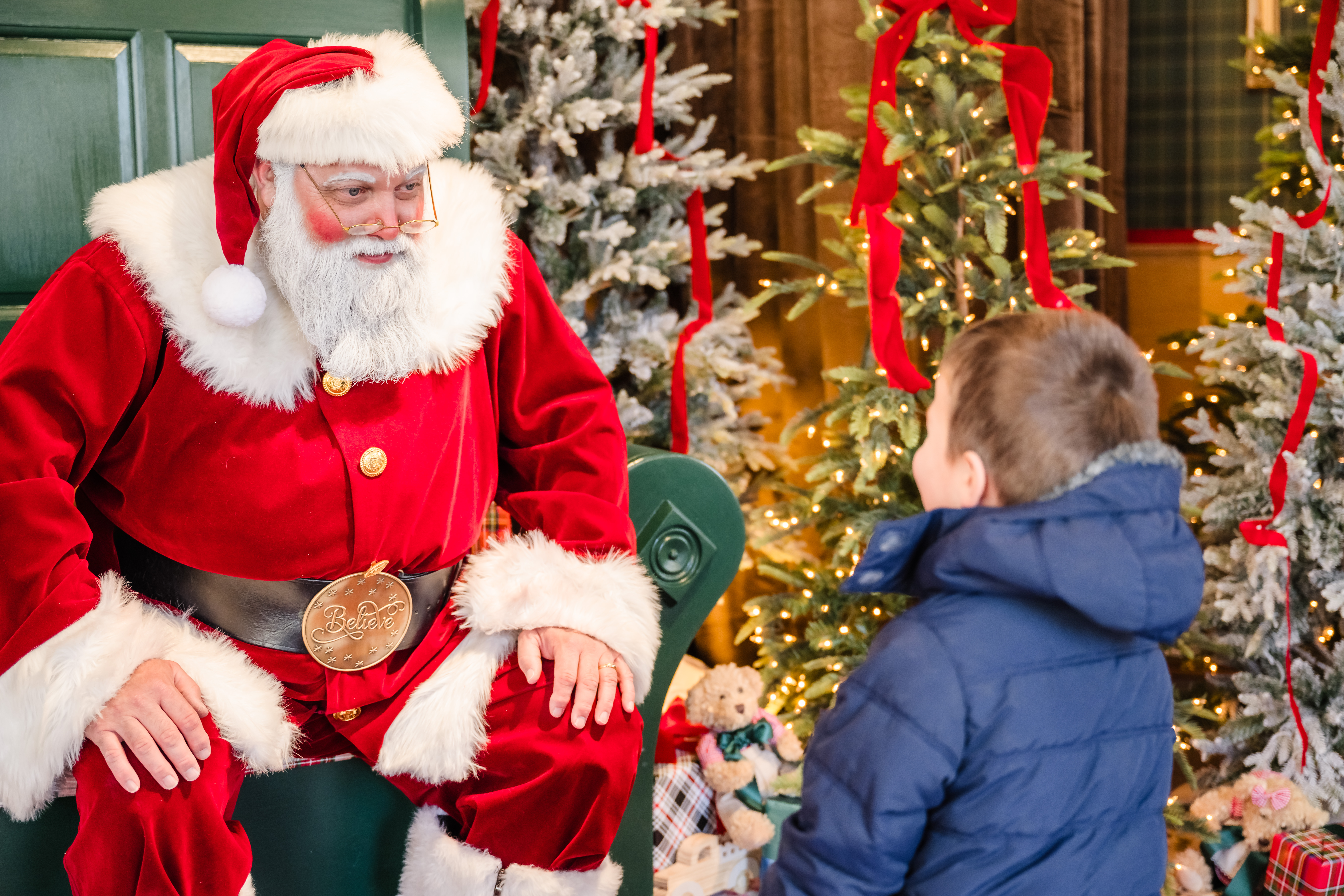
Santa will be at Suburban Square on select days this season.
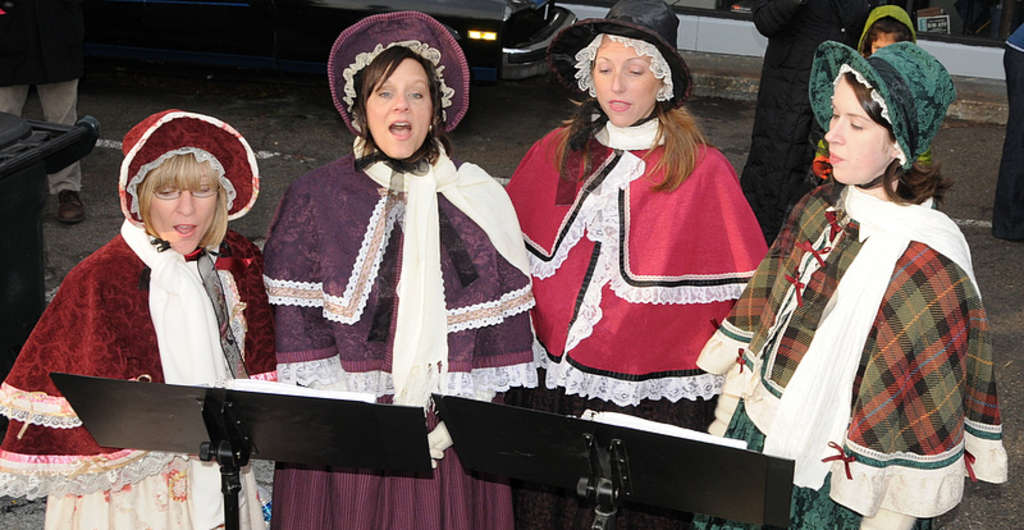
Santa will be visiting Suburban Square and posing for photos three days in December, when there will also be carolers and live music. Little ones can also drop off letters to Santa.
⏰ Saturdays, Dec. 6, 13, and 20, 11 a.m.-2 p.m. 💵 Free 📍Suburban Square, Anderson and Coulter Avenues, Ardmore
Shop an array of vendors selling things like coffee, jewelry, florals, skincare, pottery, and food. You can also try your hand at wreath-making and roast s’mores over a fire. Advanced registration is encouraged.
⏰ Saturday, Dec. 6, 11 a.m.-4 p.m. 💵 Pay as you go 📍Riverbend Environmental Education Center, 1950 Spring Mill Rd., Gladwyne
Wander around Narberth as it’s transformed into an 1840s Charles Dickens-themed London, complete with characters from A Christmas Carol. Period vendors, carolers, crafts, food, drinks, and a scavenger hunt round out the event.
⏰ Sunday, Dec. 7, noon-4 p.m. 💵 Pay as you go 📍Downtown Narberth
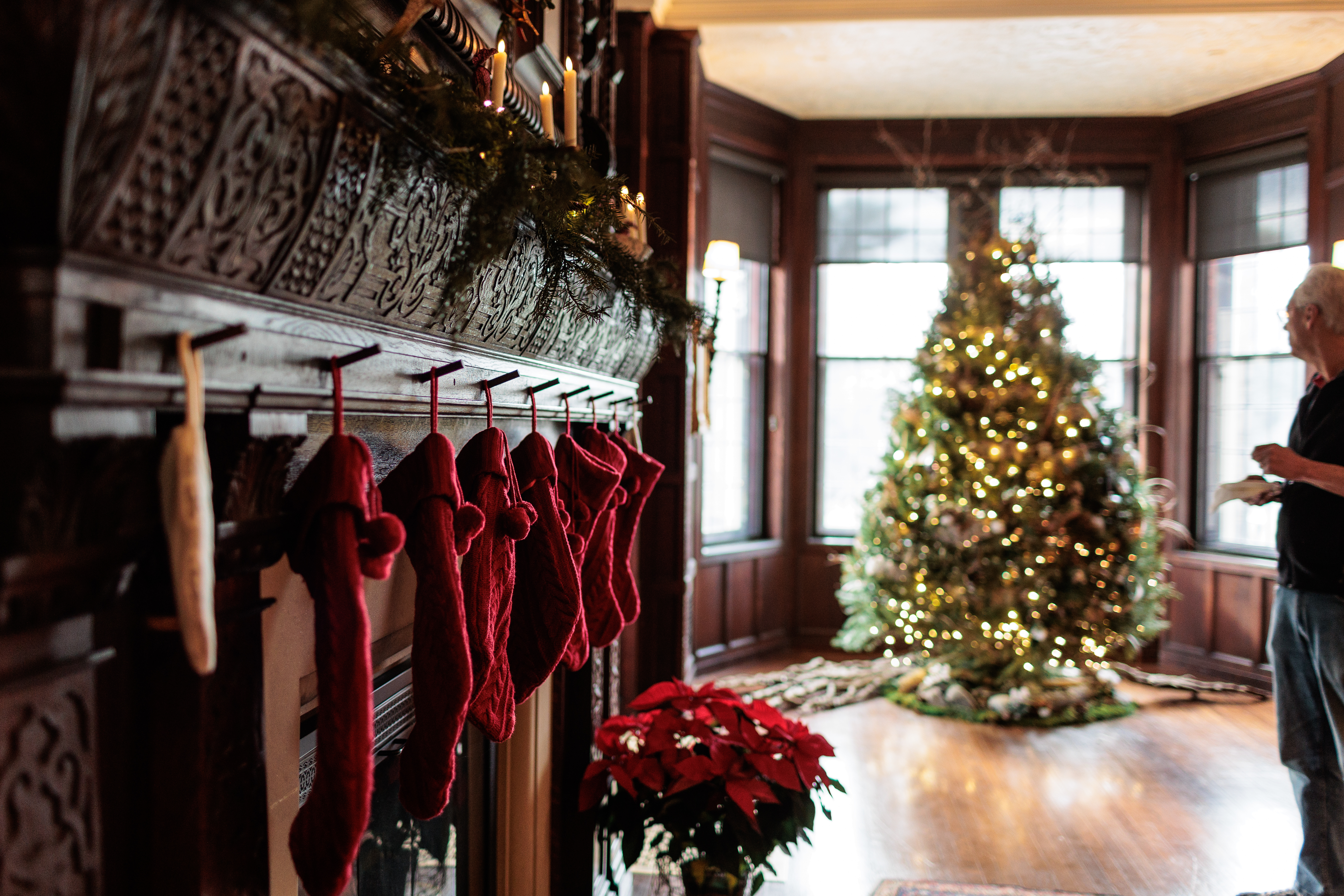
Take a look inside the main house at Stoneleigh as it’s decked out for the holidays.
⏰ Saturday, Dec. 13-Sunday, Dec. 14 and Saturday, Dec. 20-Sunday, Dec. 21, times vary 💵 $15 for Natural Lands members and $20 for nonmembers 📍 Stoneleigh, 1829 County Line Rd., Villanova
Celebrate the first night of Hanukkah with a lighting of the giant menorah at Suburban Square. There will also be food, drinks, and activities like donut decorating.
⏰ Sunday, Dec. 14, 5 p.m. 💵 Free 📍Suburban Square, Anderson and Coulter Avenues, Ardmore
Enjoy a meal and a movie during this longtime tradition. There will be a family-friendly movie option (Happy Feet) as well as a dark comedy for adults (Bad Shabbos).
This suburban content is produced with support from the Leslie Miller and Richard Worley Foundation and The Lenfest Institute for Journalism. Editorial content is created independently of the project donors. Gifts to support The Inquirer’s high-impact journalism can be made at inquirer.com/donate. A list of Lenfest Institute donors can be found at lenfestinstitute.org/supporters.
2026 Audi S3 Prestige vs. 2026 BMW 228i xDrive Gran Coupe: Battle of the little racers.
This week: BMW 228i
Price: Starts at $41,600 for both the 2025 and 2026 model years. Advantage, BMW.
Conventional wisdom:Car and Driver liked the “Refined balance of ride and handling, eager powertrains, purposeful near minimalist interior design and materials,” but not the “compromised cargo and rear passenger space,” and that the “front and rear fasciae appear a bit forced on otherwise sleek bodywork.“
Marketer’s pitch: “Strikingly sporty.”
Reality: “Striking.” I was afraid of striking things as I tried to make simple adjustments.
Catching up: Last week Mr. Driver’s Seat enjoyed the Audi S3 — until he landed on the highway, or tried to squeeze in some luggage.
What’s new: The 2 Series received more horsepower and a new look for 2025, and carries on pretty much unchanged for 2026.
Competition: In addition to the S3, there are the Acura Integra, Cadillac CT4, and Mercedes-Benz CLA.
Up to speed: The 2 Series’ speed would be the first question mark. The 2.0-liter TwinPower turbo provides 241 horsepower, almost 100 fewer than last week’s Audi S3; would it keep up?
Yet the version tested gets to 60 mph in 5.1 seconds, according to Car and Driver, just 0.7 seconds slower than the S3. A more souped-up model with a 3-liter six-cylinder engine gets there in just 3.6 seconds.
Shifty: The seven-speed dual-clutch transmission is super smooth, worlds above any attempt from Kia or some other inexpensive offerings.
The slider PRND operator looks cool but doesn’t offer much feel or add any usable space. Shift via the steering wheel paddles.
On the road: Handling is quite nice, perhaps in part because of the M Sport Package, which adds adaptive suspension along with other decals and stuff, plus the aforementioned dual-clutch.
In the first of several “improvements” designed to make the interior feel more high tech, Sport mode requires finding the button on the console touch pad (no solid way to feel your way to it) and then pressing the large icon on the screen. So there’s two instances you’re looking away from the road while trying to operate the vehicle.
But at least compared to last week’s Audi S3, the BMW doesn’t rattle your brain on the highways at all.
The cockpit of the 2025 BMW 2 Series looks as inviting as ever but operation does not live up to expectations.
Driver’s Seat: The sport seats that come with the M Sport package are supportive and comfortable, and I never adjusted it beyond forward and backward. No annoying lumbar or grippy seat corners.
The materials all feel upscale, an improvement over the X2 SUV I tested this year. Everything about that small SUV felt cheap and plasticky.
The materials seem especially scuff prone, though. I brushed out the carpet and seats when I was done with my loan and it seemed the bristles and the plastic handle left marks on the seat and in the plastic door frame bottom. Be sure this fabric fits your lifestyle.
Friends and stuff: Sturgis Kid 4.0 laughed at how tight the rear seat was. He sat stretched into the middle just to make it workable.
He’s not wrong. My own head was squashed up against the ceiling in the corner, although foot room and legroom were pretty good. Entry and exit are challenging because the door is narrow and the seat actually sits up kind of high (not something I expected to write in this review). The middle seat is compromised by the hump and the console and the corner people trying to find a place for their heads.
Cargo space is 13.8 cubic feet, far higher than the S3.
Play some tunes: Sound from the Harman Kardon system might be better than I heard, but I could never find the audio tuning adjustment when I had CarPlay activated. It would only show up in the touchscreen when I left CarPlay off, so it was difficult to make the most of my favorite songs. B-, because why make it so hard?
BMWs once had a superb dial and button system for operating the infotainment, and some models still have it. It takes a bit of practice but you can really run it by feel after a while. Now it’s all about the touchscreen, with a roller dial on the console for volume.
Keeping warm and cool: The temperature controls appear as small +/- adjustments at the corners of the touchscreen. There’s no way to feel for them, and your eyes are off the road while you adjust.
But wait! There’s more! To make further HVAC adjustments, click on the tiny fan icon between them to open up all the controls. These are fairly clear, but I’ve already looked at the screen and away from the road twice now, just to cool off (or warm up).
Fuel economy: I neglected to note the fuel economy. (Hangs head in shame, then blames BMW for the confusion.) The window sticker says 30 mpg combined, but that seems optimistic.
Where it’s built: Leipzig, Germany. Germany is the source of 24% of the car’s parts. None of it comes from the United States or Canada.
How it’s built:Consumer Reports gives the 2 Series Gran Coupe a predicted reliability rating of 3 out of 5.
In the end: The 228i was definitely fun to drive, but too many drawbacks made me long for the real delight of the S3. Just pack ibuprofen for the highways.
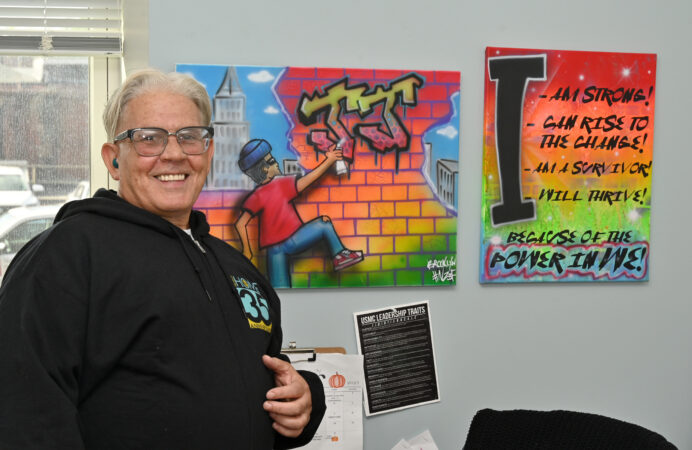
As charming and ebullient as Nephtali Andujar is (lots of hugs, compliments, and gifts of his homemade pottery), the 61-year-old is also pretty blunt about why people should give to Project HOME, one of the city’s largest nonprofit housing agencies.
Because of Project HOME, said Andujar, who spent years living on the streets, he is no longer desperate — desperate to get money to feed a heroin addiction, desperate to scrape $5 together to pay someone to let him drag a discarded mattress into an abandoned house for a night’s sleep out of the rain.
“It’s not just giving someone an apartment,” said Andujar, who sheepishly described a past that included stealing cars and selling drugs. “It’s the snowball effect.
“You are not just helping the homeless,” he said. “You are helping the city. You are helping humanity.”
In the agency’s name, the letters HOME are capitalized, because each letter stands for part of the multipronged approach that Project HOME takes in addressing homelessness and combating poverty for the 15,000-plus people it serves each year.
There’s H, for Housing — not only housing in the literal sense, but also in the teams of outreach workers who comb through the city’s neighborhoods looking for people like Andujar. One outreach worker found Andujar in 2021 at a critical moment in his life — clean, just out of the hospital for liver treatment, and back on the streets of Kensington ready to begin anew.
“We know we have to do the most we can to preserve these resources that we’ve come to rely on,” says Donna Bullock, president and CEO of Project Home.
For Andujar, it was a race. What would find him first?
Would it be heroin, as it had so often been in the past? It was tempting. It’s painful being on the street — cold, hungry and dirty, ashamed and alone. “When you do heroin, you don’t feel the cold. It kills the hunger,” he said. “When you use the drugs, you don’t have to suffer for hours. Heroin numbs you.”
Instead, though, it was the outreach worker — someone who had been through Project HOME’s recovery program — who plucked Andujar off the street in the nick of time and took him to a shelter.
A year later, that same outreach worker helped Andujar move to his own room at Project HOME’s Hope Haven shelter in North Philadelphia.
“You get tired of the streets. They were killing me,” Andujar said.
Next Andujar found Project HOME manager JJ Fox, who helped him get a birth certificate and other documents, and arranged for him to stay. But he needed more than a warm bed.
The problem with getting straight after a heroin addiction, Andujar explained, is finding a new purpose and direction. For so long, life was focused on a repeat cycle of getting the next fix and then becoming numb to pain while it was working.
So when he got to Project HOME, he needed a new direction, which is where both the O and E in HOME came in for Andujar.
“JJ Fox gave me direction,” he said, and so did Project HOME employment specialist Jamie Deni.
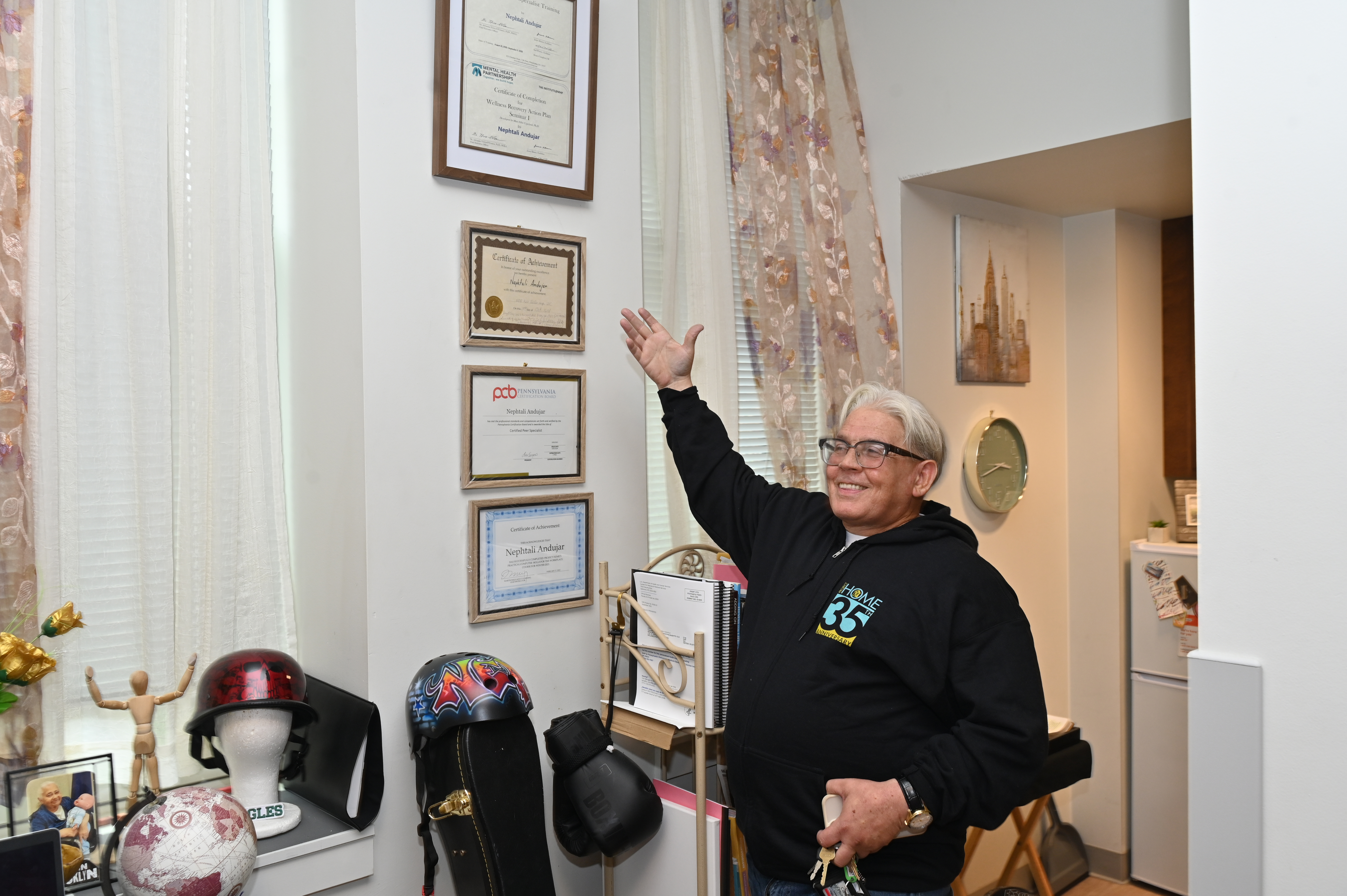
Training certificates cover a wall in Nephtali Andujar’s studio apartment in Project HOME’s Inn of Amazing Mercy in Kensington.
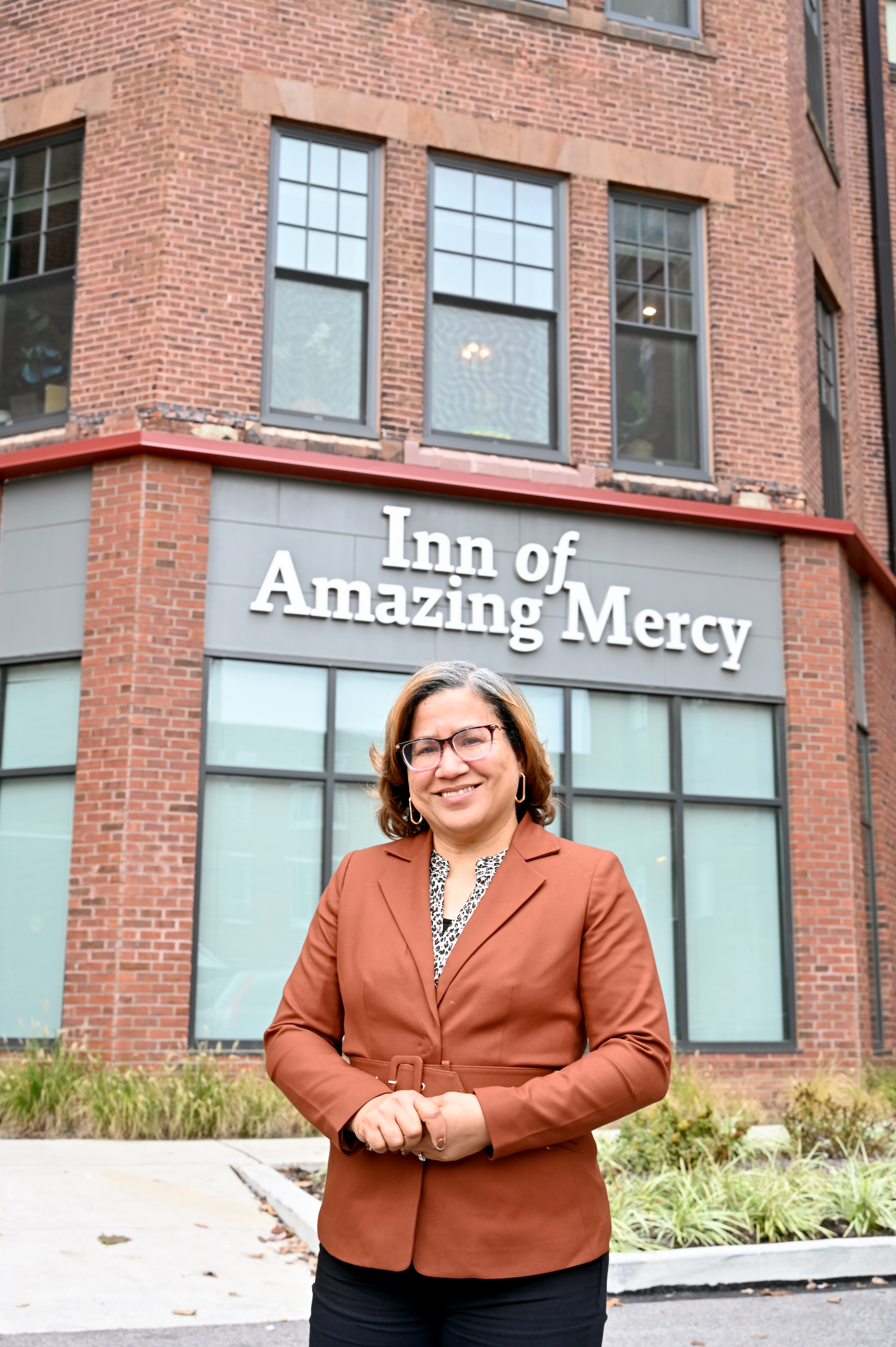
The “O” in HOME has to do with Opportunities for employment. Certificates cover one wall in Andujar’s studio apartment in Project HOME’s Inn of Amazing Mercy, a 62-unit apartment building and offices in a former nursing school dormitory in Kensington. He can point to his accomplishments in computer skills, barbering, and training as a peer specialist to help others the way the outreach worker helped him.
But Andujar is not in good health, as vigorous as he appears. His addictions will someday exact their price, even though with cirrhosis of the liver, he is already living years beyond what his doctor predicted.
Full-time work is not an option. So Andujar is part of the “E,” as in Education. Deni helped him get a grant to take art classes at Community College of Philadelphia. She helped him understand CCP’s education software so he could turn in his homework.
Project HOME offers classes in graphic design, music production training, ServSafe food handling, forklift and powered industrial trucks certification, and website building, among other courses.
The M stands for Medical. Project HOME doctors, nurses, and other health practitioners treat 5,000 people a year, both in a fully equipped health center and by sending medical teams into the streets, caring for people, literally, where they live.
“My dad always told me that you need three things — housing, food, and love. You get all that here,” Andujar said.
And for him, it goes beyond that. During a stable period in his life, Andujar had a partner and a child. His daughter is now 14 and living with her aunt in New Jersey. Her mother, who was also stable for many years, fell into addiction but is clean now. She is living in another Project HOME apartment.
Like Andujar, Omayru Villanueva, 49, another resident at the Inn of Amazing Mercy, recalls her first night of homelessness.
She remembered a cold slushy rain.
She remembered sweeping every corner of her house, determined to leave it clean, no matter what. Her husband had been convicted and jailed for a federal crime. She couldn’t make the payments on the house, so she sold or stored all of her belongings and prepared to leave.
On her last morning at home, she and her school-age twin sons walked out the door before the sheriff came. Her older daughter was able to find a place in a shelter. Her second daughter, just under 18, said she was living with a boyfriend, but it turned out that she had been trafficked.
“There’s a sense of dignity and respect when you have your own place,” says Omayra Villanueva, another resident of the Inn of Amazing Mercy.
By that evening, Villanueva was desperate. She took her boys to a hospital emergency room. At least they could sit indoors while she figured out something. “I was crying inside.” Finally, she called a friend from church who took her and her sons in.
From there, they moved from shelter to shelter, and ultimately to a Project HOME apartment with two bedrooms.
“That night we had a pizza party. We were so happy,” she said. “There’s a sense of dignity and respect when you have your own place. You can take your worries away from having a place to live, and you can focus on other things.”
She remembered lying in her new bed, “thanking God and rubbing my feet against the mattress.” The next day, she woke up, opened the window, and listened to the birds. Then she asked her sons what they wanted for breakfast. “When you are in a shelter, you eat what they give you.”
Three of her four children, scarred from the experience, have also been homeless and living on the street. Her two sons, now 23, are in Project HOME apartments. Both daughters are now fairly well-established.
Villanueva appreciates the medical help she has been given at Project HOME, particularly for mental illness stemming from the trauma she has experienced with her ex-husband’s arrest and homelessness.
“Anybody can end up being homeless,” she said. “I wasn’t a drug addict. I wasn’t an alcoholic. It can happen to anybody.”
She thinks of her daughter, who has a house, a job, and a car. But if something happens to the car, her daughter won’t be able to get to work. She won’t be able to pay her mortgage, and she could wind up homeless. It’s that simple.
“It’s important to donate because people can help break the cycle of homelessness,” Villanueva said.
“It’s about housing and education. It’s about medical help. It’s about employment,” she said. “Project HOME helped me a lot.”
The truth is that every person in Project HOME has a story. Those stories keep Donna Bullock, president and chief executive, motivated to preserve and protect the agency founded just over 35 years ago by Sister Mary Scullion and Joan Dawson McConnon.
She worries about how the city will respond to federal executive orders amounting to the criminalization of homelessness. Will there be tightened requirements for agencies that provide shelter?
Project HOME is reimbursed for some of the medical care it provides, but Bullock worries that new rules involving Medicaid reimbursement will impact the agency’s budget, while cutbacks in services increase demand.
“It’s terrifying,” she said. “We know we have to do the most we can to preserve these resources that we’ve come to rely on.
“In this job, I’ve learned to appreciate the humanity of folks — the residents and the stories they tell and the contributions they make to our community.”
Sometimes, she said, Project HOME residents walking the path of recovery slip and fall away. Sometimes the results are tragic, the losses devastating.
“We’re experiencing all these moments — communal grief and communal celebrations as well. We talk a lot about how every journey of recovery is unique. Everyone walks their own journey. We can’t do the walk for you, but we can walk with you,” she said.
Bullock invites others to the journey, promising that when people give to Project HOME, they can be assured that their money is carefully managed. “We’re good stewards of the resources entrusted in our care. We know how to leverage the resources given to us.
“Folks expect a return on their investment, and the return is the difference in individual lives and also building a community,” she said. “Your investment is magnified 10 times over.”
This article is part of a series about Philly Gives — a community fund to support nonprofits through end-of-year giving. To learn more about Philly Gives, including how to donate, visit phillygives.org.
For more information about Philly Gives, including how to donate, visit phillygives.org.
About Project HOME
Mission: To empower adults, children, and families to break the cycle of homelessness and poverty, to alleviate the underlying causes of poverty, and to enable all of us to attain our fullest potential.
People served: More than 15,000 annually — with street outreach, housing, opportunities for employment, medical care, and education.
Annual spend: $49.06 million
Point of pride: Project HOME, which operates 1,038 housing units, broke ground in October for construction of 45 new apartments; also under construction are 20 respite beds. In the pipeline are an additional 44 apartments. Project HOME also operates the Honickman Learning Center Comcast Technology Labs, Stephen Klein Wellness Center, Helen Brown Community Center, and Hub of Hope.
You can help: Volunteers tutor students, serve meals, participate in neighborhood cleanups, and organize donation drives at their organizations for household items or other items useful to families or people still experiencing street homelessness.
Here are some ways that a gift can help the people we serve:
$25 provides warm clothing and new socks for a visitor at the Hub of Hope.
$50 supports a behavioral health counseling visit.
$100 provides a month’s worth of hygiene products and toiletries for a family.
$250 provides a welcome basket for a new resident complete with sheets, towels, and cooking supplies.
$500 supports five dental visits at the Stephen Klein Wellness Center.
$1,000 funds six weeks of summer camp at the Honickman Learning Center Comcast Technology Labs, keeping a child’s mind active during the summer and supporting moms who work.
$1,500 funds a certification program through the Adult Education and Employment program leading to employment readiness.
President Donald Trump has argued with the architect he handpicked to design a White House ballroom over the size of the project, reflecting a conflict between architectural norms and Trump’s grandiose aesthetic, according to four people who spoke on the condition of anonymity to describe internal conversations.
Trump’s desire to go big with the project has put him at odds with architect James McCrery II, the people said, who has counseled restraint over concerns the planned 90,000-square-foot addition could dwarf the 55,000-square-foot mansion in violation of a general architectural rule: don’t build an addition that overshadows the main building.
A White House official acknowledged the two have disagreed but would not say why or elaborate on the tensions, characterizing Trump and McCrery’s conversations about the ballroom as “constructive dialogue.”
“As with any building, there is a conversation between the principal and the architect,” said the official, who spoke on the condition of anonymity to discuss private conversations. “All parties are excited to execute on the president’s vision on what will be the greatest addition to the White House since the Oval Office.”
McCrery declined an interview request through a representative who declined to answer questions about the architect’s interactions with Trump in recent weeks.
Trump’s intense focus on the project and insistence on realizing his vision over the objections of his own hire, historic preservationists and others concerned by a lack of public input in the project reflect his singular belief in himself as a tastemaker and obsessive attention to details. In the first 10 months of his second term, Trump has waged a campaign to remake the White House in his gilded aesthetic and done so unilaterally – using a who’s-going-to-stop-me ethos he honed for decades as a developer.
Multiple administration officials have acknowledged that Trump has at times veered into micromanagement of the ballroom project, holding frequent meetings about its design and materials. A model of the ballroom has also become a regular fixture in the Oval Office.
The renovation represents one of the largest changes to the White House in its 233-year history, and has yet to undergo any formal public review. The administration has not publicly provided key details about the building, such as its planned height. The 90,000-square-foot structure also is expected to host a suite of offices previously located in the East Wing. The White House has also declined to specify its plans for an emergency bunker that was located below the East Wing, citing matters of national security.
On recent weekdays, a bustling project site that is almost entirely fenced off from public view contained dozens of workers and materials ready to be installed, including reinforced concrete pipes and an array of cranes, drills, pile drivers and other heavy machinery, photos obtained by The WashingtonPost show.
Plans for the addition as of Tuesday had not been submitted to the National Capital Planning Commission, a 12-member board charged by Congress with overseeing federal construction projects and now led by Trump allies. A preliminary agenda for the commission’s next meeting, scheduled for Dec. 4, does not include the ballroom project under projects expected to be covered at the meeting or reviewed by the body in the next six months. White House officials say that the administration still plans to submit its ballroom plans to the commission at “the appropriate time.”
The administration’s rapid demolition of the East Wing annex and solicitations from companies and individuals to fund the new construction have caused controversy over the project, which Trump believes the White House needs to host special events. Democrats, historical preservation groups and some architects have criticized the project’s pace, secrecy and shifting specifications. The White House initially said this summer that the ballroom would cost $200 million and fit 650 people, while Trump in recent weeks asserted that it could cost $300 million or more and would fit about 1,000 people.
McCrery has kept his criticism out of the public eye, quietly working to deliver as Trump demanded rushed revisions to his plans, according to two of the people with knowledge of the conversations. The president – a longtime real estate executive who prides himself on his expertise – has repeatedly drilled into the details of the project in their Oval Office meetings, the people said.
McCrery has wanted to remain with the project, worried that another architect would design an inferior building, according to a person with knowledge of his thinking.
McCrery, a classical architect and the founder and principal of McCrery Architects, had designed works like the U.S. Supreme Court bookstore and the pedestal for President Ronald Reagan’s statue in the U.S. Capitol. The ballroom was the largest-ever project for his firm, which has specialized in designing churches, libraries and homes.
Trump hired McCrery for the project on July 13. Eighteen days later, the White House announced the ballroom project, with officials promising to start construction within two months and finish before the end of Trump’s second term.
Trump also appointed McCrery in 2019 to serve a four-year term on the U.S. Commission of Fine Arts, which provides advice to the president, Congress and local government officials on design matters related to construction projects in the capital region.
Democrats have pressed the White House and its donors for more details on the planned construction and what was promised to financial contributors. The ballroom is being funded by wealthy individuals and large companies that have contracts with the federal government, including Amazon, Lockheed Martin and Palantir Technologies. (Amazon founder Jeff Bezos owns The Post.)
Several donors have cast the decision in statements as an investment in the future of a building that belongs to the American people, pushing back on the suggestion that their largesse sought to curry favor with Trump.
A donor list released by the White House of 37 businesses and individuals who underwrote the ballroom is not comprehensive, administration officials acknowledged, leaving open the possibility that millions of dollars have been funneled toward the president’s pet project with no oversight.
“Billionaires and giant corporations with business in front of this administration are lining up to dump millions into Trump’s new ballroom – and Trump is showing them where to sign on the dotted line,” Sen. Elizabeth Warren (D-Massachusetts) said in a statement last week. Warren andhercolleagues also introduced legislation that would impose restrictions on White House construction and require more transparency from donors.
The holiday season is officially upon us and with it, a slew offestive events. From Santa sightings to a cocoa crawl, here’s how and where to celebrate in and around Media.
Linvilla Orchards will transform for the holidays, complete with a Winter Makers Market on most Fridays, Saturdays, and Sundays throughout December. There will also be ice skating, live music, and visits with Santa. Plus, you can cut your own Christmas tree.
⏰ Through Sunday, Dec. 21, times vary 💵 Pay as you go 📍Linvilla Orchards, 137 W. Knowlton Rd., Media
Holiday Tree Lighting at the Promenade at Granite Run
See the tree lit and explore area small businesses, which will have tables set up for the occasion.
⏰ Saturday, Nov. 29, 5-6 p.m. 💵 Free 📍Promenade at Granite Run, 1067 W. Baltimore Pike, Media
Get into the holiday spirit with a free block party at Veterans Square, where attendees are asked to contribute goods to the Media Food Bank or an unwrapped gift for Toys for Tots. There will be a holiday costume contest at 4 p.m., followed by a fun run and walk at 4:15 p.m. Festivities conclude with Santa parading along State and Front Streets, complete with mummers, musicians, classic cars, and fire trucks.
⏰ Sunday, Nov. 30, 2:30-7 p.m. 💵 Free, donations to Media Food Bank or Toys for Tots encouraged 📍Downtown Media
The Festival of Lights returns to Rose Tree County Park.
Marking its 50th anniversary this year, the festival will be open nightly for a month, with food trucks, vendors, and live entertainment on Dec. 4, 6, 7, 13, and 14. The tree lighting takes place Dec. 4 at 5 p.m.
⏰ Thursday, Dec. 4-Saturday, Jan. 3 💵 Pay as you go 📍Rose Tree County Park, 1671 N. Providence Rd., Media
This annual tradition returns with an all-day celebration that includes the Reindeer Dash one-mile walk and run at 11:30 a.m. Participants are encouraged to dress for the season. From noon to 4:30 p.m., the Winter Village will take over the borough parking lot, complete with a pub, food vendors, and crafts. There will also be a Kwanzaa celebration, trolley rides, and caroling, capped by a fire truck parade with Santa that ends with the town’s tree lighting.
⏰ Saturday, Dec. 6, 9 a.m.-9 p.m. 💵 Pay as you go 📍 Swarthmore town center
Love holiday cookies but don’t love baking? Or just want to sample an array of treats? This annual event lets attendees pick and pay for the homemade cookies they want.
⏰ Saturday, Dec. 13, 9 a.m. 💵 Pay as you go 📍Middletown Church, 273 S. Old Middletown Rd., Media
Kate Brennan puts a modern twist on A Christmas Carol with this show centered on a woman who gets trapped in her apartment on Christmas Eve and ends up assessing how technology and devices both connect and disconnect us.
⏰ Thursday, Dec. 18, 12:30 p.m., and Friday, Dec. 19, 7 p.m. 💵 $21 📍Park Avenue Community Center, 129 Park Ave., Swarthmore
This tribute to Frankie Valli and the Four Seasons features classic hits and festive tunes, as well as audience participation.
⏰ Saturday, Dec. 21, 7 p.m. 💵 $41 📍The Media Theatre, 104 E. State St., Media
This suburban content is produced with support from the Leslie Miller and Richard Worley Foundation and The Lenfest Institute for Journalism. Editorial content is created independently of the project donors. Gifts to support The Inquirer’s high-impact journalism can be made at inquirer.com/donate. A list of Lenfest Institute donors can be found at lenfestinstitute.org/supporters.
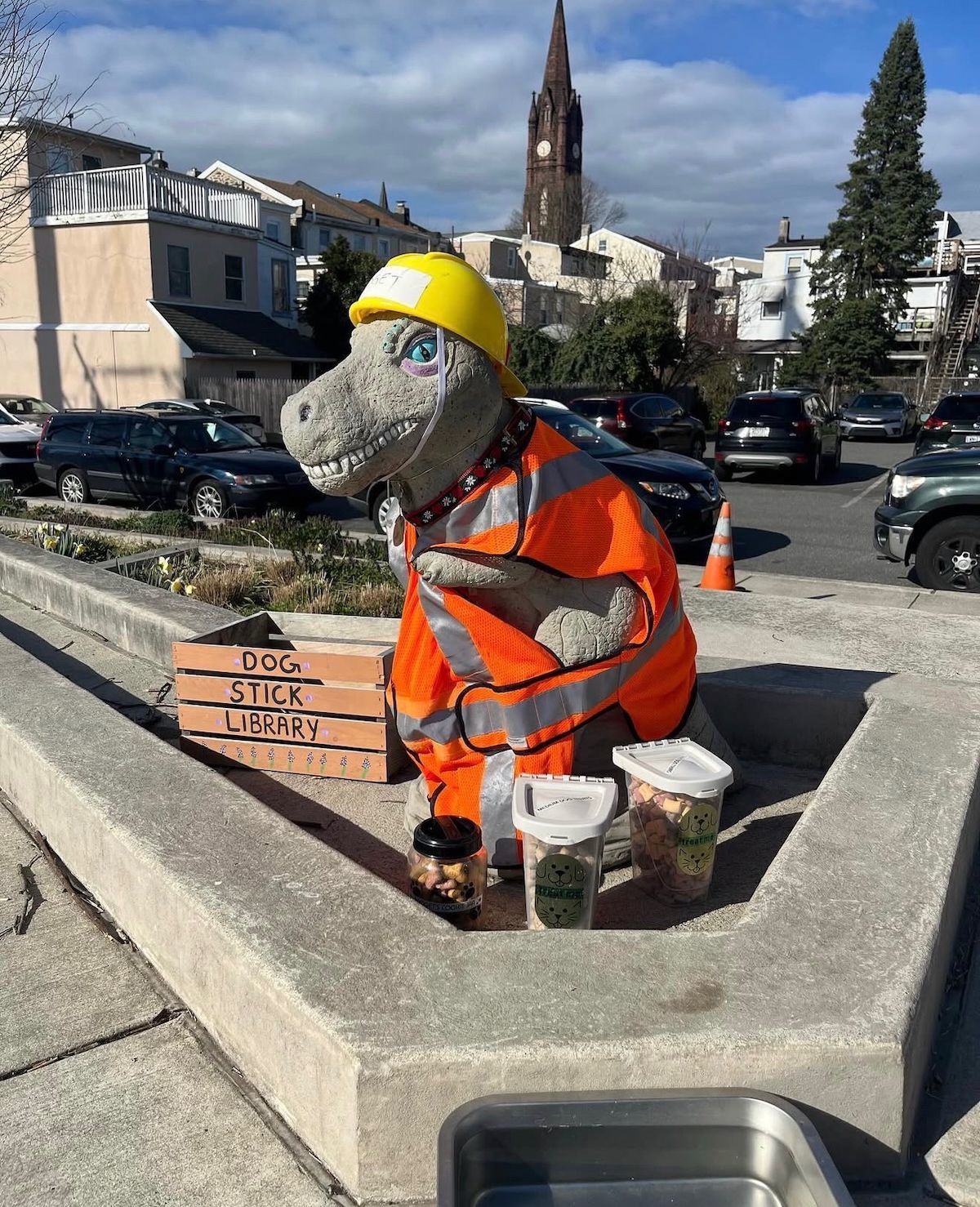
Bridget the Dino was a symbol for the neighborhood’s green spaces and neighborly affection, who oversaw the Manayunk Bridge Trail gardens.
When all hope was lost, the original owners of Bridget, and other neighborhood dinosaurs that have become a staple to Roxborough and Manayunk, saved the day.
Holod’s, the Lafayette Hill home and garden store, donated a brand new stone dinosaur to the Manayunk gardens at Dupont and High Streets, taking over Bridget’s yearslong watch as the garden guardian.
“After the heartbreak of seeing Bridget damaged, this unexpected act of kindness means more than words can say. The neighborhood love is real, and this Dino is already feeling it,” park organizers announced on Tuesday.
Now that the difficult task of placing a new 300-pound stone garden dinosaur is complete, the fun part comes: choosing a name for the new dino. When park organizers learned they would be getting a brand new dino, they decided they couldn’t just name the new statue Bridget, as she is “irreplaceable,” said park volunteer and Roxborough resident Juliane Holz.
“The community is so much a part of this that they can help us name this new one,” Holz said. “I like Manny. But we also have to decide whether she is a girl or a boy dino. I do like ‘Holly’ for Holod’s.”
Park organizers have already posted a list of suggested names for the new statue. This reporter is partial to “Yunker.”
Potential dinosaur names:
Manny (for Manayunk)
Archie (for the arch of the bridge)
Roxie (for the Roxborough side)
Schuylie (for the Schuylkill)
Ivy (garden vibes)
Rocky (Philly and Roxborough)
Ledger (bridge and connection vibes)
Petra (means “rock”)
Yunker (play on Manayunk)
Residents from Manayunk, Roxborough, and beyond can drop a comment below the park’s latest Instagram post to vote on one of the above names or suggest a new one.
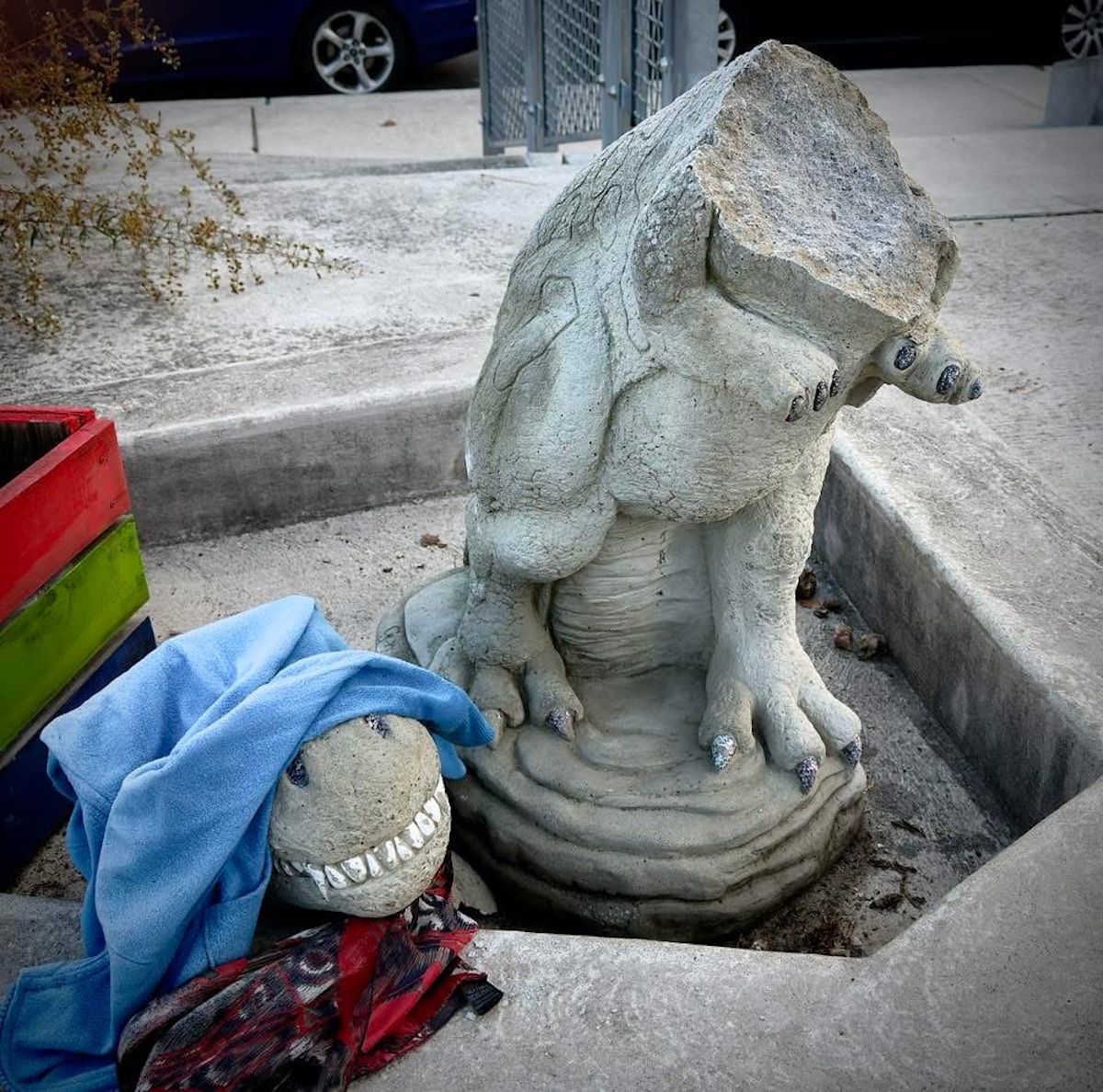
Last Sunday, a neighbor found Bridget’s head lying at the feet of her stone body after it was smashed between late Saturday evening and early Sunday morning. The vandalism came as a shock to the community that welcomed Bridget with open arms, as she grew into a beacon for the ever-growing green spaces that the families of Manayunk and Roxborough have come to revitalize.
Bridget the Dino, a beloved stone garden statue at the Manayunk Bridge Garden, had its head smashed off between late Saturday night, Nov. 22, and early Sunday morning, Nov. 23, 2025. The 300-pound stone statue would be hard to move, neighbors say, leading some to believe an adult purposefully broke the statue.
“It seems like something silly to be upset about, but someone put a lot of effort and money — these statues and improvements are not cheap — into making that bridge garden a really nice place,” Manayunk resident Annie Schuster said. “I hate the fact that somebody did that.”
Neighbors believe the cowardly act to have been perpetrated by an adult who intended to destroy the iconic statue. Holz believed the statue proved too heavy for someone to mistakenly bump into it. Police reached out to Holz and park organizers to let them know they will investigate the crime, Holz said.
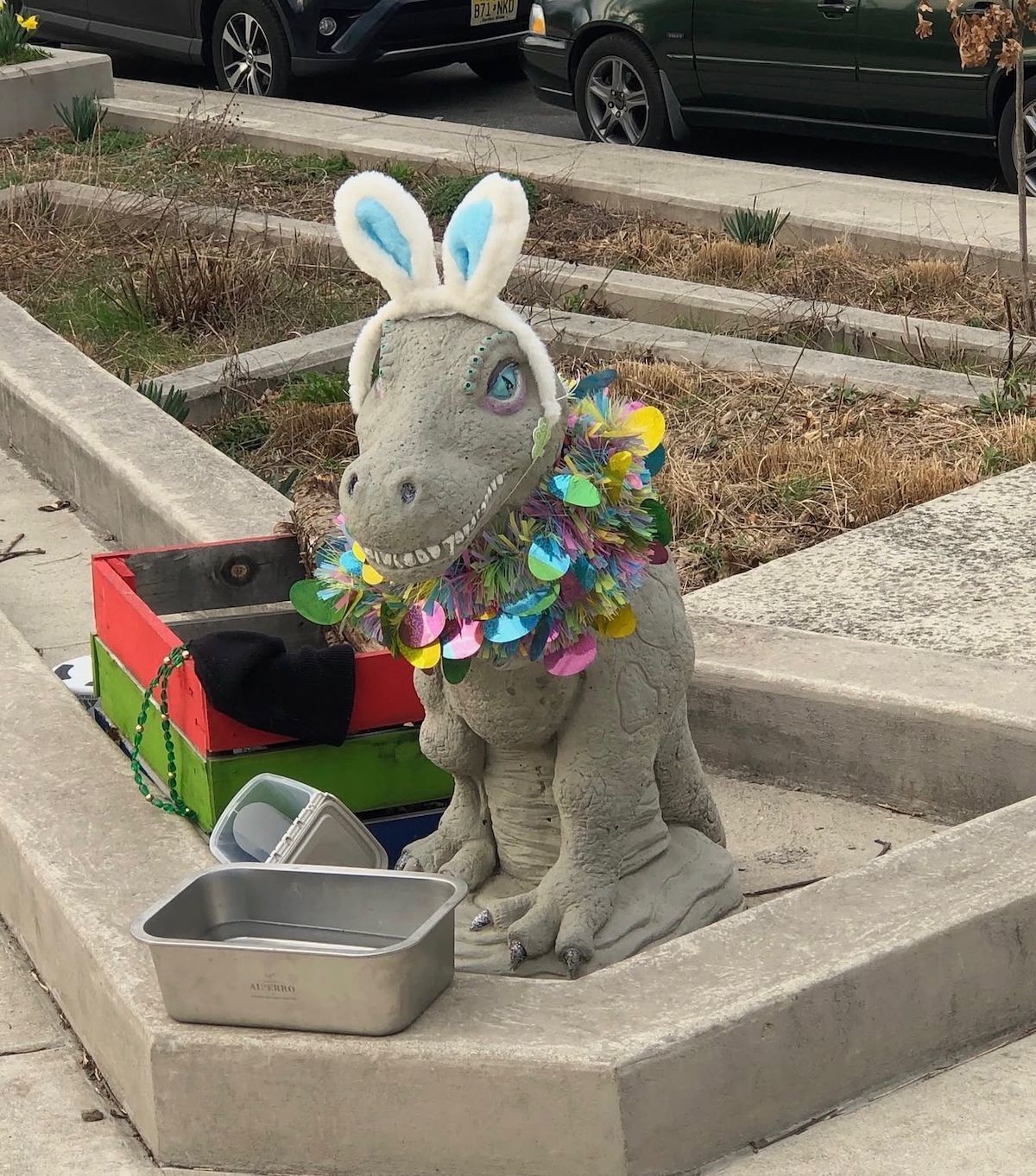
Bridget the Dino, a beloved stone garden statue at the Manayunk Bridge Garden, pictured in an Easter Bunny costume for Easter. The community often dresses up Bridget during different holidays and themed events. In November 2026, her head was smashed off her body.
Meanwhile, they’ll repurpose Bridget elsewhere among the garden beds and usher a new dinosaur dynasty with Holod’s latest statue. Holz said perhaps Bridget’s new iteration will be as a bird bath installation or an addition in a new sensory garden.
The Manayunk Bridge Garden is one of the many public spaces being transformed into neighborhood gardens and pedestrian thoroughfares. Since COVID-19 lockdowns, residents have donated their time, alongside the Roxborough Manayunk Conservancy, to making this place special for local families. Bridget and her new friend encapsulate all of that passion.
Bridget the Dino, a beloved stone garden statue at the Manayunk Bridge Garden, pictured in a construction worker’s uniform. The community often dresses up Bridget during different holidays and themed events. In November 2026, her head was smashed off her body.
“We are focused on improving the park’s ecology and creating opportunities for the community to enjoy and use the space. The gardens are stunning in autumn with their masses of purple asters and yellow goldenrod,” said Avigail Milder of the Roxborough Manayunk Conservancy.
Along with the welcoming stone dinosaur, volunteers have been planting native shrubs and herbaceous plants that bloom through spring and summer. A new sugar maple tree was planted for much-needed shade. And most recently, Opus Piano donated a mini grand piano to be enjoyed and played by all parkgoers.