Tag: Weekend Subscribers

  • Philadelphia is at risk of losing more than 7,500 subsidized rental homes during the next decade, report says

    Philadelphia is at risk of losing more than 7,500 subsidized rental homes during the next decade, report says

    Across Philadelphia, low- and moderate-income households rely on federal subsidies that reduce the cost of their rent.

    Federal housing programs directly subsidize at least 476 properties, totaling about 34,350 rental units. But the city is at risk of losing more than one in five of these affordable housing units during the next decade, according to an analysis by the Housing Initiative at Penn published Thursday.

    Between 2026 and 2036, federal contracts or mandates that cap the rents at these properties can expire.

    Owners can decide whether to renew contracts or let them end and then charge higher market-rate rents or sell their properties in potentially lucrative deals as property values in the city continue to rise.

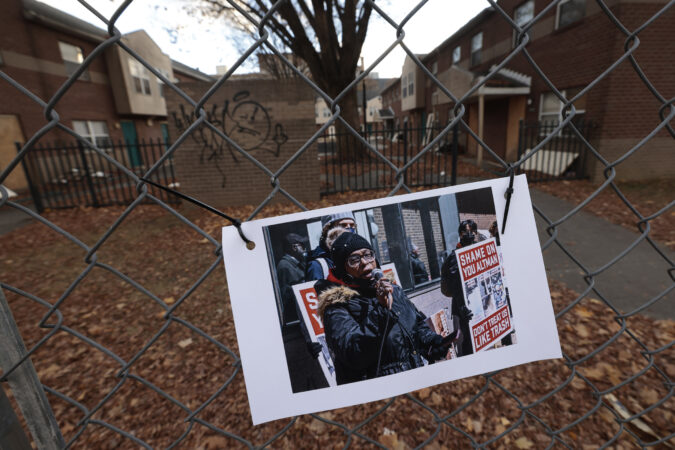
    A property owner’s decision in 2021 not to renew a subsidy contract at the University City Townhomes in West Philadelphia is a recent high-profile example of what’s at stake. The site had grown much more valuable since the subsidized townhomes were built four decades earlier, and the owner decided to sell the property, displacing 69 households.

    “Philadelphia has long relied on a large number of federally subsidized properties to provide affordable housing options that are protected from market forces,” researchers at the Housing Initiative at Penn wrote.

    They said the report can help policymakers, advocates, and others plan how to preserve affordable housing as subsidies reach their expiration dates. The report relies on data from the National Housing Preservation Database developed by the Public and Affordable Housing Research Corp. and the National Low Income Housing Coalition.

    Also helpful, researchers noted, will be the public database of subsidized housing properties and their subsidy expiration dates that the city is creating, as directed by legislation City Council passed in 2023. City officials said they hope to launch the database early next year.

    Here are some takeaways from Penn researchers’ analysis of subsidized properties in Philadelphia.

    These properties are concentrated in certain areas

    Subsidized properties, including those at risk of having their subsidies expire, operate in neighborhoods across the city.

    But they are most concentrated in three City Council districts: the Third in West Philadelphia, the Fifth in North Philadelphia, and the Eighth, which includes the area around Germantown and Mount Airy.

    The report’s total count of federally subsidized properties does not include those added in the last two to three years, due to limitations of the data.

    Subsidies face several risk factors

    Researchers found that where properties are located influences the odds of an owner ending participation in a subsidy program and if they do, how much rents potentially could increase.

    Thirty-eight of the 136 Philadelphia properties whose subsidies will be up for renewal during the next decade are in areas where rents, household incomes, and home values have increased more than in the city as a whole.

    In census tracts that have properties with expiring subsidies, home values increased by 28% in the last decade, compared to 21% citywide.

    In areas with strong housing markets, property owners have more incentive to end subsidy contracts and charge market-rate rents.

    For-profit property owners are less likely than nonprofit owners to renew subsidy contracts. And about six in 10 properties with expiring subsidies are owned by for-profit owners.

    Researchers also noted that any policy change by President Donald Trump’s administration that reduces federal funding for subsidy programs would make properties less affordable for tenants.

    These are the most common subsidies

    The country’s largest source of funding for new and renovated subsidized rental housing is the Low-Income Housing Tax Credit program. It’s also the most common subsidy source in Philadelphia.

    These properties have to keep rents affordable for 30 to 40 years after they are built.

    Of the properties that have subsidies that expire within the next 10 years, 57% use Low-Income Housing Tax Credit subsidies, either alone or in combination with other programs.

    In a 2024 report, Fannie Mae said the credit was “one of the most successful” programs that support affordable housing for “some of the most vulnerable renters in the country.”

    Fannie Mae found that in early 2024, the average asking rent for Low-Income Housing Tax Credit properties in the Philadelphia metropolitan area was about half the average asking rent for a market-rate property.

    For Philadelphia properties, the next largest source of federal housing subsidies is the Section 8 program that ties subsidies to units, not households.

    This program, either alone or in combination with other programs, covers 27% of the city’s subsidized properties that have agreements that expire during the next decade.

    Property owners can choose whether to renew these contracts when they end, which is usually after five to 20 years. Current contracts are all renewals of agreements that date back to before 1983, when Congress ended the program.
  • Haverford College president to step down in 2027

    Haverford College president to step down in 2027

    Haverford College president Wendy Raymond announced she will retire in June 2027, and the college plans to launch a search for her replacement early in the new year.

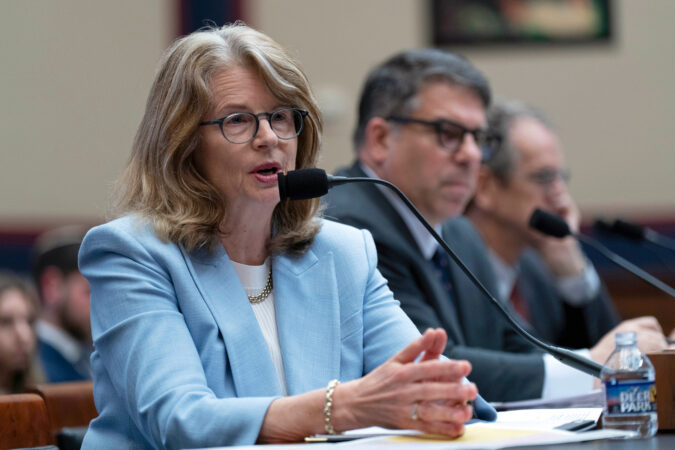
    The announcement comes after a particularly difficult year for the college and Raymond, who faced intense grilling in May by a Republican-led congressional committee probing antisemitism complaints on college campuses. The school also is under investigation by the U.S. Department of Education over its handling of antisemitism complaints.

    “This was not an easy decision, but after more than three decades in higher education, I am ready to step away from academia,” Raymond said in her message to campus.

    Her news comes just two days after she announced John McKnight, the dean of the college, would be leaving in June for a new role at Dartmouth College.

    Raymond said she wanted to give the college’s board of managers time to search for a replacement.

    Raymond, 65, a molecular biologist, became president of the 1,470-student liberal arts college on the Main Line in July 2019. She came to Haverford from Davidson College in North Carolina, where she had been vice president for academic affairs and dean of faculty.

    She has been in the job longer than her three most recent predecessors, Kim Benston, who served four years; Daniel Weiss, who was there two; and Stephen G. Emerson, who had four years.

    In her announcement, she noted accomplishments including the completion of a strategic plan, efforts to advance diversity, equity, and access, the launch of the Institute for Ethical Leadership and Inquiry named for board chair Michael B. Kim, and the new recital hall.

    She also acknowledged challenges, including the pandemic, the strike for racial justice in 2020 in which students refused to attend class and demanded that Haverford do more to support its Black and brown students, and “more recent times of social unrest and public scrutiny.”

    Raymond earlier this year in a message to the campus acknowledged that she “came up short” in dealing with conflict over antisemitism complaints and said both she and Haverford can do better.

    “To Jewish members of our community who felt as if the College was not there for you, I am sorry that my actions and my leadership let you down,” she said in that message.

    Haverford was the only local college earlier this year to receive an F on a report card by the Anti-Defamation League for its response to antisemitism — a rating given to less than 10% of schools nationwide. The ADL’s methodology for categorizing antisemitism has been questioned, and critics have argued that criticism of the state of Israel and its government have been wrongly conflated with antisemitism.

    But the F rating caught the attention of the congressional Committee on Education and Workforce, which called on Raymond and two other college presidents to testify in May. Raymond took the worst of the grilling, largely because she was reluctant to answer questions about discipline for alleged antisemitism, especially in specific cases. Raymond testified that the college does not release data on student suspensions and expulsions.

    In June, the committee demanded answers about faculty and student discipline. And in August, the education department, which has launched a flurry of investigations of colleges regarding antisemitism, said it would probe Haverford.

    The investigation follows “credible reports that Haverford has failed to respond as required by law to multiple incidents of discrimination and harassment against Jewish and Israeli students on its campus,” the department said at the time.

    In her testimony to the congressional committee, Raymond noted the college had made a plethora of changes to address concerns about antisemitism, including changes in the antibias policy and rules around protesting, steps to revise the honor code, and increases in campus safety at events.

    Kim, the board chair, thanked Raymond for her service amid a difficult time in a message to campus Thursday.

    “She has guided the College with great care during periods of both remarkable growth and significant challenge,” he said. “During her tenure, Haverford has welcomed two of its largest incoming classes, increased support for student resources, access, and engagement, and continued to graduate students who use their liberal arts education to effect positive change in the world.”

    Raymond said in her Thursday message that through the challenges, “ … the College has remained strong and resolute in its mission to foster a campus culture of belonging and respect, where academic freedom and freedom of expression remain fundamental to Haverford’s nearly 200 years of academic excellence and open inquiry, and where our values guide us through new territory.”

  • World Cafe Live’s liquor license has lapsed, forcing Free at Noon shows to move

    World Cafe Live’s liquor license has lapsed, forcing Free at Noon shows to move

    There’s more drama happening at the World Cafe Live.

    The University City music venue has been racked by labor strife since staff members walked off the job in June to protest what they said were unfair working conditions under the longstanding club’s new leadership under CEO Joseph Callahan.

    The concert schedule has grown sparse at both the WCL’s intimate upstairs Lounge and larger downstairs Music Hall.

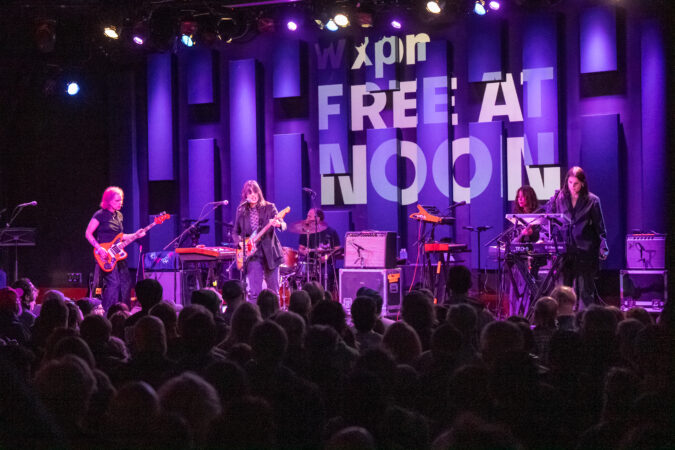
    The one reliable highlight has been the Friday Free at Noon series presented by WXPN-FM (88.5), the University of Pennsylvania radio station that’s also located at 3025 Walnut St. but is an entirely separate business.

    Now, you can’t even get a drink at World Cafe Live. At least, not an alcoholic one.

    According to public records obtained by The Inquirer, the venue’s liquor license lapsed at the end of last month.

    Word of that lapse this week coincided with XPN moving the Free at Noon series — at least temporarily — out of West Philly to the Main Line in Montgomery County.

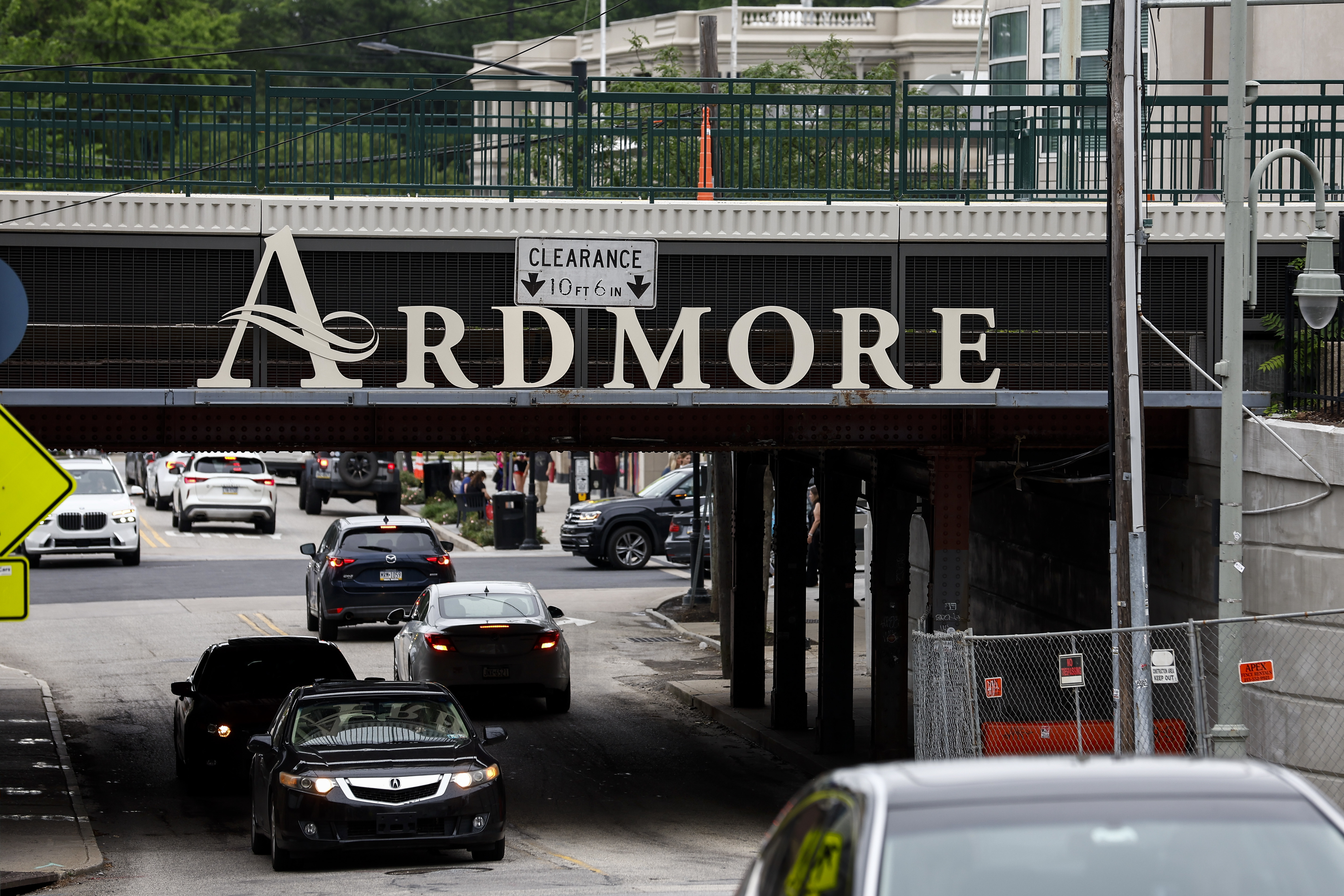
    Friday’s Free at Noon with Philly songwriter, guitarist, and protest singer Ron Gallo will be staged at Ardmore Music Hall. And next week’s Black Friday FAN with another local band — rock and roller Nik Greeley & the Operators — will also be held at AMH, which has periodically hosted the lunchtime concerts in recent years.

    Reached for comment about the temporary move, WXPN general manager Roger LaMay did not say whether the decision to move the FAN series — which celebrated its 20th anniversary earlier this year — to Ardmore was specifically based on the lapsed liquor license.

    Multiple attempts to reach World Cafe Live management for comment on the status of the liquor license and the Free at Noon shows were met with no response.

    As of Halloween, the Pennsylvania Liquor Control Broad’s site has listed the entry for Real Entertainment Philadelphia, Inc. as “EXPIRED.”

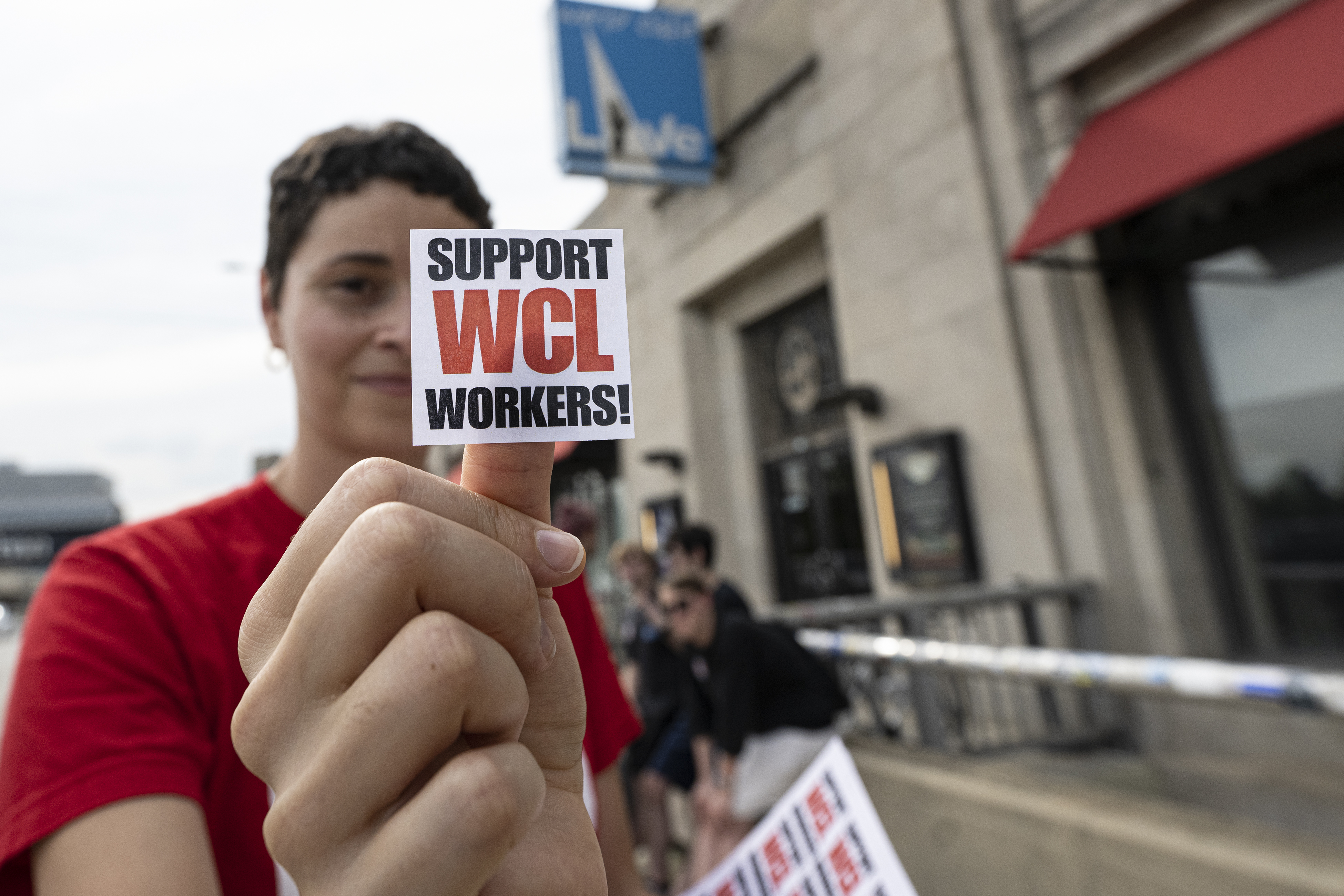
    Union rep Kerrick Edwards shows a support sticker outside the World Cafe Live building on Thursday, July, 2025.

    The company’s license still bears the name of Hal Real, who founded WCL in 2004 and later converted it into a nonprofit before stepping down in the spring. He was replaced by Callahan, the Philly native technologist and entrepreneur who was responsible for bringing the Portal to Center City last year.

    When he took over from Real in May, Callahan said that the venue had accumulated $6 million in debt and was losing up to $70,000 a month. He told The Inquirer in June he was dedicated to putting the venue on sound financial footing and vowed to utilize virtual reality technology “to bring the world to World Cafe Live, virtually and digitally.”

    On Wednesday, a spokesperson for the Pennsylvania LCB confirmed that the license is expired and said “its renewal is pending the receipt of information from the licensee, the licensee does not have operating authority at this time.”

    Since the WCL’s license expired, alcohol sales reportedly continued at some shows, such as the Josh Ritter Free at Noon performance in the Music Hall on Nov. 14, according to patrons.

    But at Wednesday night’s show in the Lounge with Montclair, N.J., bandleader Lily Vakali and Philly guitarist Mighty Joe Castro, all beer taps were turned off. No booze was served, a World Cafe Live staffer said, adding that the venue expects to have a BYO policy for the next few weeks until the license is renewed.

    Joseph Callahan of World Cafe Live at World Cafe Live, 3025 Walnut St., on June 18, 2025.

    This weekend, the WCL has a busy schedule. Contemporary Christian singer Terrian was scheduled for Thursday night in the Music Hall, Philly Irish music singer John Byrne Band is set to play in the Lounge on Friday, and salsero Alex Moreno Singer will sing in the Lounge on Saturday.

    However, Thursday’s show in the Lounge with Kaleb Cohen has been postponed and rescheduled for April 9 next year.

    At a Town Hall meeting in July, then-World Cafe Live president Gar Giles — who has since left the company — publicly recognized Philly unions Unite Here Local 274 and IATSE Local 8 to represent World Cafe Live workers.

    Since then, “World Cafe Live has refused to come to the bargaining table,” said Mat Wranovics of Unite Here, which represents food service and front-of-house workers at the venue. “Despite the announcements and promises they’ve made, not one of the workers they’ve fired has been given their job back.”

    In September, Callahan stepped aside as CEO and president, though insiders say he remains atop the World Cafe Live board and in charge of the venue. Callahan has been replaced J. Sean Diaz, a Penn grad who is a former DJ as well as a music producer and entertainment lawyer.

    “Whatever financial concerns that this place has had, I’m very positive that we are going to connect with all of the resources, all of the partnerships, all of the organizations that we need to be successful,” Diaz told the Daily Pennsylvanian in September. “I’m here to be that agent of change.”

    At time of publication, neither Callahan nor Diaz had responded to requests for comment for this story.

  • The artist behind the ‘Boob Garden’ and ‘Rave Coffin’ strikes again with ‘Crab Couch’ in South Philly

    The artist behind the ‘Boob Garden’ and ‘Rave Coffin’ strikes again with ‘Crab Couch’ in South Philly

    For the last two years, Rose Luardo has been exceedingly generous with her art, installing it for all to see in a vacant triangular lot in South Philly that was once home to Capt. Jesse G’s Crab Shack.

    In 2023, she gifted the people of Philadelphia with the Boob Garden, a furniture set covered in handmade breast plushies, and the following year she gave us the Rave Coffin, a casket covered in tie-dyed felt that passersby could lie down inside of.

    Rose Luardo strikes a pose at her “Boob Garden” art installation in 2023.

    Luardo struck again Sunday night at the cement triangle at the intersection of Washington Avenue, Passyunk Avenue, and Eighth Street, but this time around, her guerrilla art installation was totally shellfish.

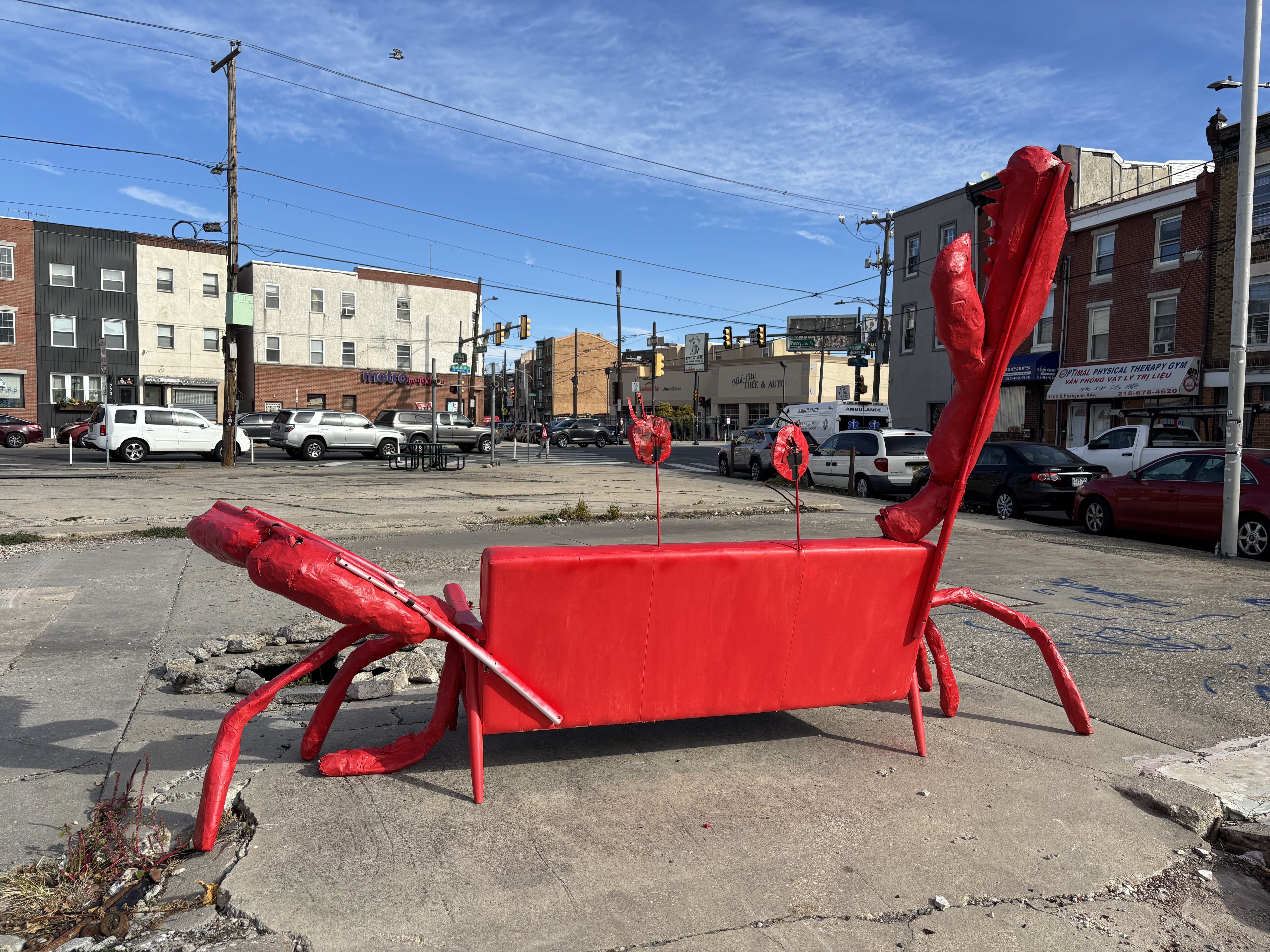
    Crab Couch — which is exactly what it sounds like unless you’re thinking of the other kind of crabs, which it is not — is the latest work Luardo set up at what she calls Capt. Jesse G’s Crab Shack Gallery. That’s because the shuttered business’ sign inexplicably remains lording over the lot on a freestanding pole, even though the building was long-ago demolished.

    Once just a regular white sofa that was looking for a new home on Facebook Marketplace, Luardo — a provocateur of the peculiar — rescued the couch and Frankenstein-ed that piece of furniture into a comfy crustacean.

    With some papier-mâché, red house paint, and the help of her niece, Ingrid Rose Koppisch, and their friend, Simply Val, Luardo gave the couch six legs, a pair of judgey eyes, and two hulking claws, with one clamping down on a giant cigarette.

    She first put the crabby patio furniture in a gallery show she had in September.

    “I just had a feeling that this was not going to sell, but it would be a fun thing to make and eventually put out in my own personal art gallery at Capt. Jesse G’s,” Luardo said.

    On Sunday night, she and her husband put Crab Couch on one of his skateboards and wheeled it up the street to the vacant lot.

    Luardo noticed, as did I, that since the time of her installation last year, a taco truck has stationed itself at the edge of the lot and someone has bashed a small hole into the cement and created a modest fire pit, which Luardo placed the Crab Couch in front of. When I stopped by on Tuesday, the pit held an empty can of Modelo and an empty pack of Marlboro Lights.

    Artist Rose Lurado placed her latest work, “Crab Couch,” in front of a fire pit someone smashed into the cement at the vacant South Philly triangle she calls “Capt. Jesse G’s Crab Shack Gallery.”

    “I was so psyched that was there!” Luardo said of the pit. “This is the dream coming true, which is that the space is becoming activated, people are hopefully hanging out, eating a taco, drinking a Modelo, and sitting on the couch.”

    In the days since it was installed, the wind has done some damage to Crab Couch’s claws, which Luardo said neighbors came out to valiantly fix with drills. But its giant cigarette is nowhere to be found. It has become the ultimate Philly loosie.

    Otherwise, all is good with Crab Couch.

    “Crab Couch” is an old bae but a good one.

    I asked Luardo why she continues to put her art in such a hardscrabble lot, where it’s subject not only to weather but to something even more unpredictable — the whims of Philadelphians.

    “It was built for this kind of experience and nobody has claimed it,” she said. “It’s just this … s— lot and I know there’s people walking by and it’s so much fun to see something crazy and delightfully weird. It puts a hitch in your giddy-up.”

    According to city records, the lot is owned by 1100 Passyunk Partners LLC, which purchased the property for $2.85 million in 2020. A number for the group was not able to be located.

    South Philly artist Rose Luardo sits in her “Rave Coffin” at the triangular cement lot between Washington Avenue, Passyunk Avenue, and Eighth Street in 2024.

    To whomever owns this eyesore — which has been a vacant lot since at least 2016 — I beseech you to gift it to Luardo, who’s shown more interest in it and has done more to improve it than you ever have.

    The world is coming to Philadelphia next year and instead of having an empty, crumbling lot on one of the city’s busiest corridors, why not let Luardo show the world just how weird Philly can be?

    I hear she’s been eyeing an inflatable nightclub on Temu.

    “Crab Couch” looks out over the vacant triangle lot where it’s currently clawing out its existence next to busy Washington Avenue.
  • How Delaware helped keep OpenAI from turning into a typical for-profit company

    How Delaware helped keep OpenAI from turning into a typical for-profit company

    It’s been 10 years since OpenAI was set up as a nonprofit by Sam Altman, Elon Musk, and other software developers and investors, friends, and rivals who didn’t quite trust each other to run a traditional for-profit business with explosive potential.

    Chartered in business-friendly Delaware like most big corporations, OpenAI laid out its public purpose in a mission statement: “to ensure that artificial general intelligence — AI systems that are generally smarter than humans — benefit all of humanity.”

    A decade later, its best-known product, ChatGPT, claims more than 700 million weekly users.

    Delaware officials who monitor the state’s nonprofits took a particular interest as OpenAI became so valuable, and so contentious, that the San Francisco-based startup ballooned into an enterprise requiring multibillion-dollar investments and sought to restructure as a for-profit company.

    “We realized building [artificial general intelligence] will require far more resources than we’d initially imagined,” the company wrote in an open letter last year, explaining its plans. In fact, OpenAI had set up for-profit affiliates at least as far back as 2019.

    But the company said it needed more corporate flexibility if it was to bring in the billions needed to fund high-speed data centers full of Nvidia chips and other systems that could withstand intense AI searches and commands.

    Recent investments have boosted OpenAI’s value to around $500 billion. That’s more than Musk’s SpaceX or Jeff Yass-backed ByteDance (which owns TikTok) or any other private firm — underscoring the bonanza potential and the returns investors hope to realize.

    So it wasn’t surprising last year when OpenAI, which Altman runs, announced plans to raise billions of new dollars by ending its previous limits on investor profits — or that Musk, now owner of a competitor, X.AI, and others, promptly sued, challenging terms of their plan.

    That’s when Delaware Attorney General Kathy Jennings, and California Attorney General Rob Bonta, stepped up.

    Jennings and Bonta filed court papers challenging the proposed business structure — not to stop it, as Musk wanted, but to ensure that the public interest was somehow protected, so OpenAI wouldn’t stray from what the company has called its “save the world” mission.

    Critics, including some in Congress, have worried that ChatGPT is prone to surveillance abuse, crime and encouraging self-harm.

    The final plan, as OpenAI posted it last month, preserves the original company as the nonprofit OpenAI Foundation but moves its businesses to a new, largely investor-owned Delaware “public-benefit corporation.”

    A public-benefit corporation is a for-profit company but does not have the usual legal obligations to enrich investors before anything else, freeing directors to act in favor of public goals even if it hurts sales or profits.

    A public-benefit corporation provides “a clear and durable vehicle” for companies whose goals go beyond shareholder gains, says Lawrence Cunningham, who runs the Weinberg Corporate Governance Center at the University of Delaware. “I like seeing it used in that way here.”

    State intervention at the corporate-charter level “does not happen often” and usually involves questions about nonprofit hospitals’ business activities, said Mat Marshall, spokesperson for Delaware AG Jennings.

    Jennings hired lawyers from Manhattan-based Pillsbury Winthrop Shaw Pittman and financial analysts from Moelis & Co. to buttress the state’s fraud and consumer protection director, Owen Lefkon, in talks with OpenAI.

    Delaware Attorney General Kathy Jennings at a December 2024 press conference.

    What changes for OpenAI

    At first, OpenAI planned to pay off its nonprofit obligations by leaving those to a large charitable foundation and then move forward as a typical for-profit company, still professing public goals but responsible to private investors.

    Lawyers for the two states argued that the company’s public mission had to survive the restructuring.

    OpenAI “is the world leader in the artificial intelligence industry,” but it needs guidelines as it funnels massive information about science, medicine, and communities to private, commercial, and government users, and power to “hold OpenAI accountable” for the safety of those whose information is raw material for AI, Jennings said in a statement.

    The foundation also needed some way to keep control over the company, alongside its powerful new for-profit investors. The nonprofit has kept the power to name and remove board members for the business.

    OpenAI’s Safety and Security Committee will remain in place, with “authority to oversee and review the safety and security processes and practices of OpenAI” and the companies it controls, even halting new AI systems if it finds them dangerous, or taking time to resolve ambiguities.

    Zico Kolter, professor of machine learning at Carnegie Mellon University in Pittsburgh, will continue to head the safety committee, attend the corporation’s board meetings, and receive “all director information regarding safety and security.”

    And the states will be given “advance notice of significant changes” in governance.

    In a statement praising the new structure, OpenAI chair Bret Taylor, creator of Google Maps and a former Facebook and Twitter officer, acknowledged changing the plan in discussion with Delaware and California.

    He said the parent, now called the OpenAI Foundation, will own around one-quarter of the business group. Outside investors include Microsoft, Japanese investor Softbank, company employees, and other investors, with room for more.

    Besides keeping the business subordinate to the foundation’s mission, Taylor wrote that the foundation will set aside $25 billion: for “open-sourced and responsibly-built” health data sets to speed up diagnostics, treatments and cures; and to fund AI security to protect power grids, banks, governments, companies and individuals” from AI abuse.

    Microsoft Chief Technology Officer of Microsoft Kevin Scott, right, and OpenAI CEO Sam Altman at the Microsoft Build event in Seattle in 2024.

    Microsoft shows its power

    Since the restructuring, Microsoft has revealed new details of its already-lucrative agreement with OpenAI, the noted Philadelphia-based accounting professor and researcher Francine McKenna and her investigative partner Olga Usvyatsky wrote last week in McKenna’s newsletter, The Dig.

    Microsoft has invested $11.6 billion in OpenAI over several years (and promised at least $1.4 billion more).

    Thanks to exploding OpenAI sales and additional private investments, Microsoft says its investment is now worth $135 billion. That’s more than 10 times what the company paid. Microsoft is the largest OpenAI shareholder, with around 27%. .

    Under a recent agreement following the restructuring, Microsoft said, OpenAI promises to buy another $250 billion in Microsoft Azure cloud networking and other services but also gains the right to form more partnerships with other companies.

    The companies also enjoy a revenue-sharing agreement — the first time that’s been disclosed, according to McKenna and Usvyatsky — though details will have to wait for future disclosure.

  • Selling a piece of family history in a changing Ocean City

    Selling a piece of family history in a changing Ocean City

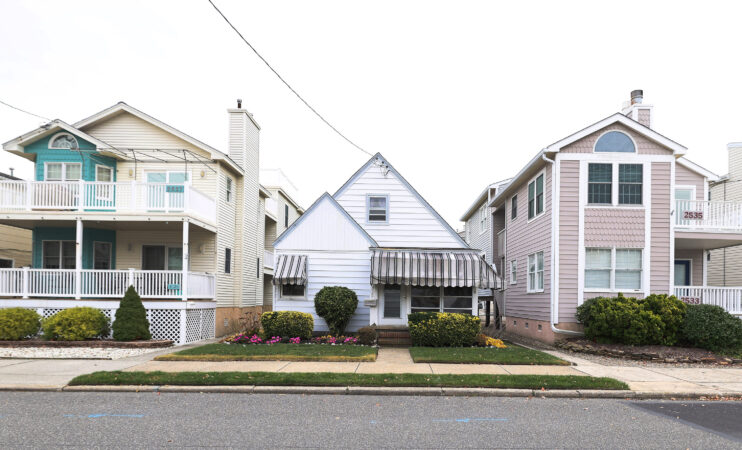
    The wrecking ball is likely coming for 2529 Asbury Ave. in Ocean City, a 957-square-foot, two-bedroom, one-bathroom postwar Cape Cod that’s been in the Smith family for 69 years. The Smiths know demolition is nearly inevitable, but they aren’t happy about it.

    “I’m hopeful somebody would keep it as is, but I think it will probably be torn down,” said David S. Smith, of Summit, N.J., a retired investment banker whose parents bought the house in the 1950s.

    There are currently 1,400 homes over 100 years old in Ocean City, and in 2024, 137 homes were demolished. Though specific details aren’t available about the age or condition of those razed houses, it is fair to say many were older and capable of being restored, said Bill Merritt, president and cofounder of Friends of OCNJ History & Culture, a group dedicated to embracing the rich, historic culture of Ocean City.

    “It’s economic driven, but also regulation driven,” he said. “Ocean City has long been a real estate developer driven place.”

    Over the years, R-2 zoning, which permits a mix of single-family and two-family dwellings, has driven up the number of duplexes.

    “The economics of that are that a single homebuyer wanting to buy an older home and fix it up, absolutely cannot compete against a developer who is going to knock it down and build a duplex,” said Merritt.

    The Smiths’ home went on the market in late October for $1.4 million. They instantly received many offers, mostly from developers.

    A house filled with memories

    Purchased in 1956 by Norman Sr. and Elizabeth Smith — affectionately known as Bole and Lib — for $13,500, the cottage was the summer gathering spot for the whole clan. That included their sons, Norman Jr., John, and David, and eventually four grandchildren and 10 great-grandchildren.

    A family photo of Norman Sr. and Elizabeth Smith and their sons John and David, taken in 1956 in front of 2529 Asbury Ave.
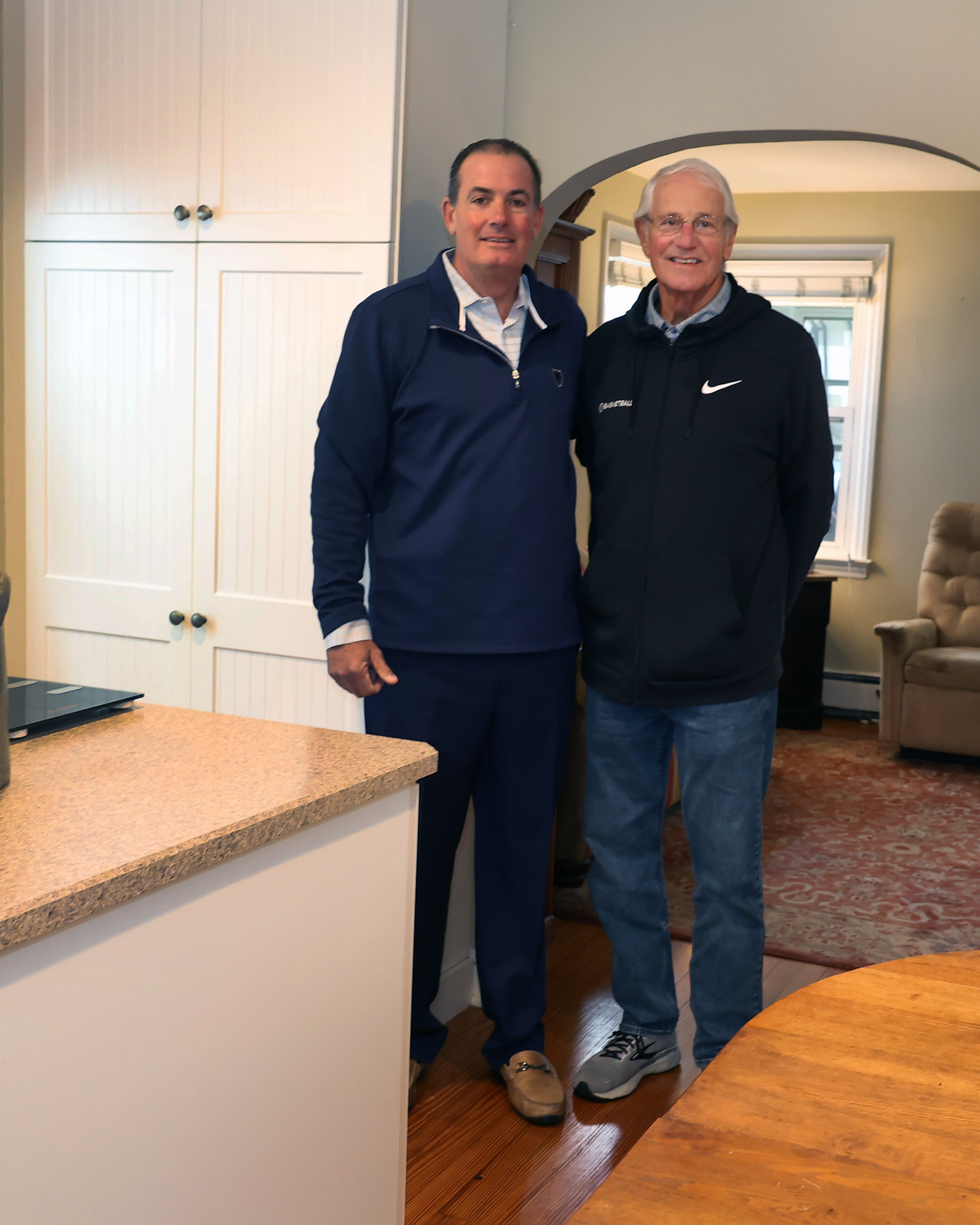
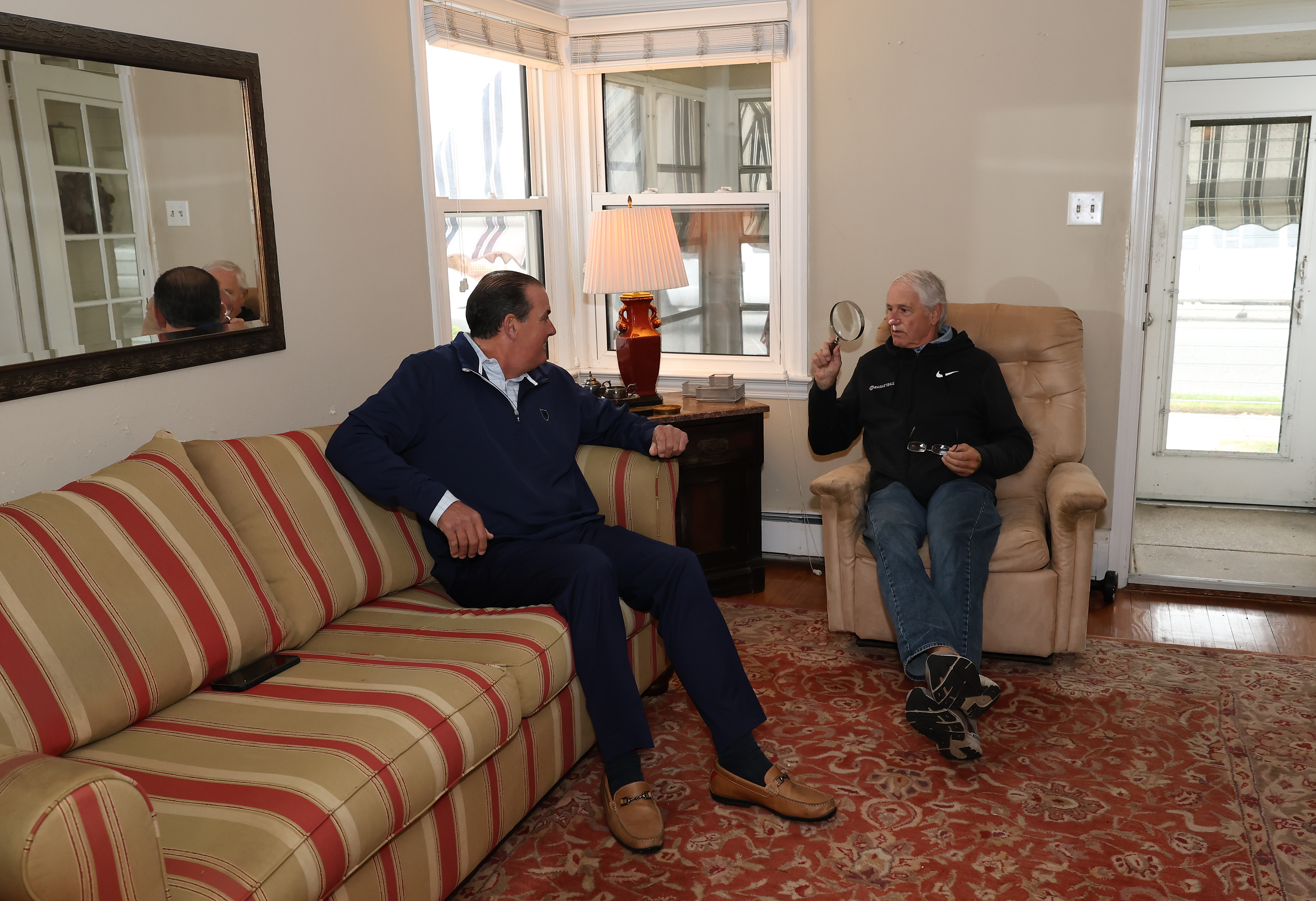
    David Smith and his uncle, David S. Smith, in the Ocean City home that’s been in their family for nearly seven decades.

    After Bole and Lib died in 1994 and 1998 respectively, their son John moved into the home. When John died this past September, the family put the house on the market.

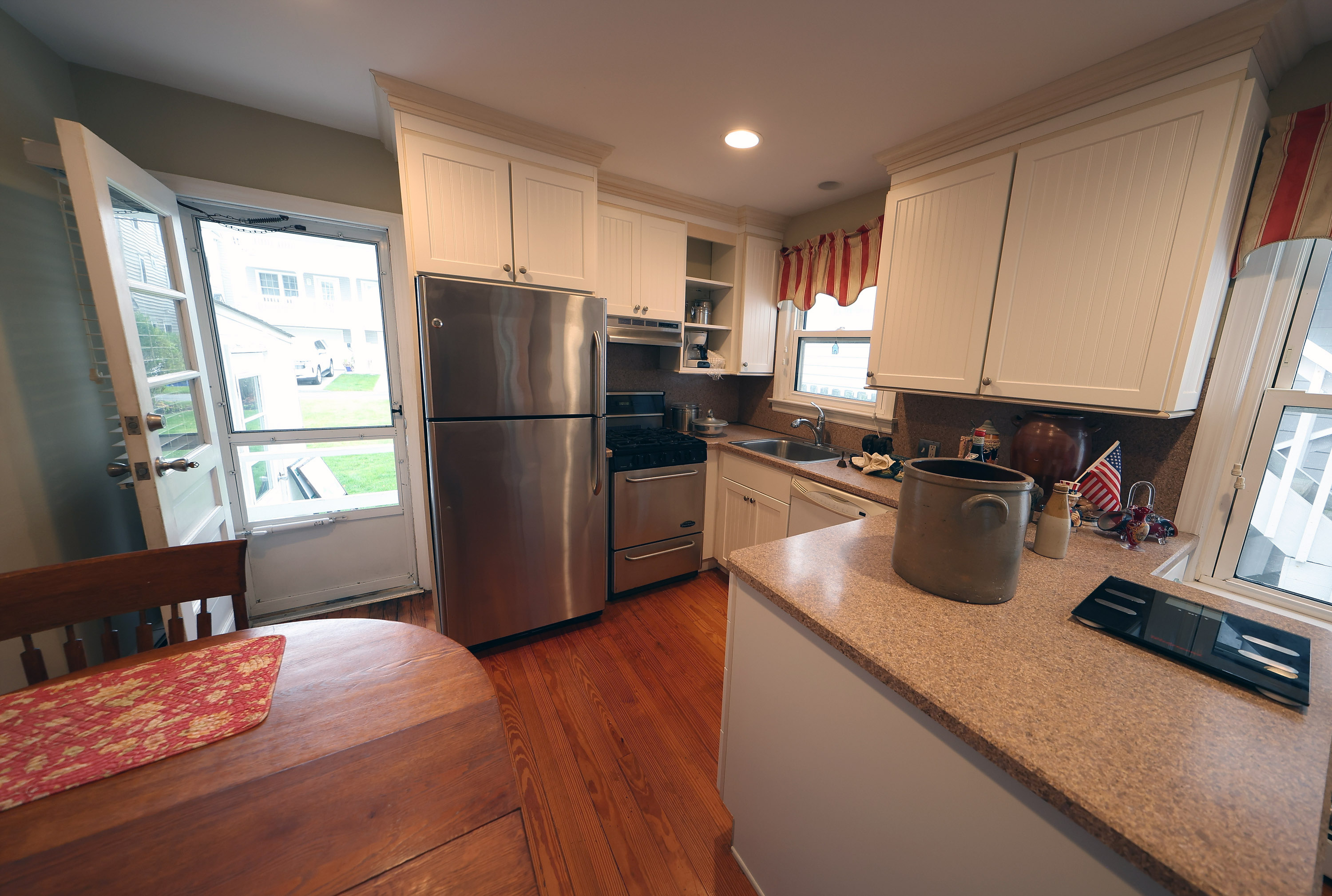
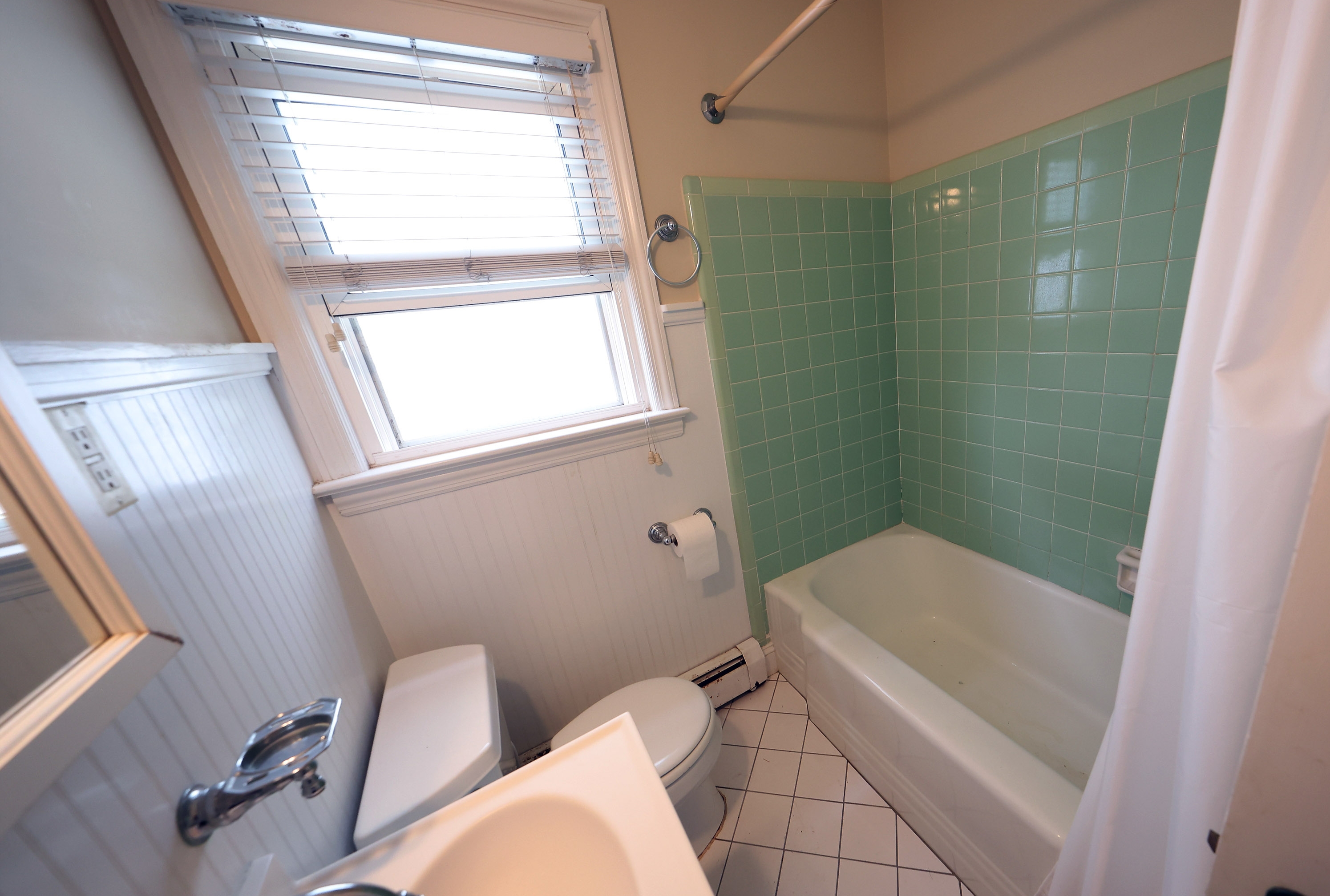
    The house was typical for its time — it had a washing machine but no dryer, an outdoor shower in continuous use because there was only one shower inside the house, a grassy backyard, and an attic crammed with a tangle of sleeping children.

    The cottage was small but the memories loom large.

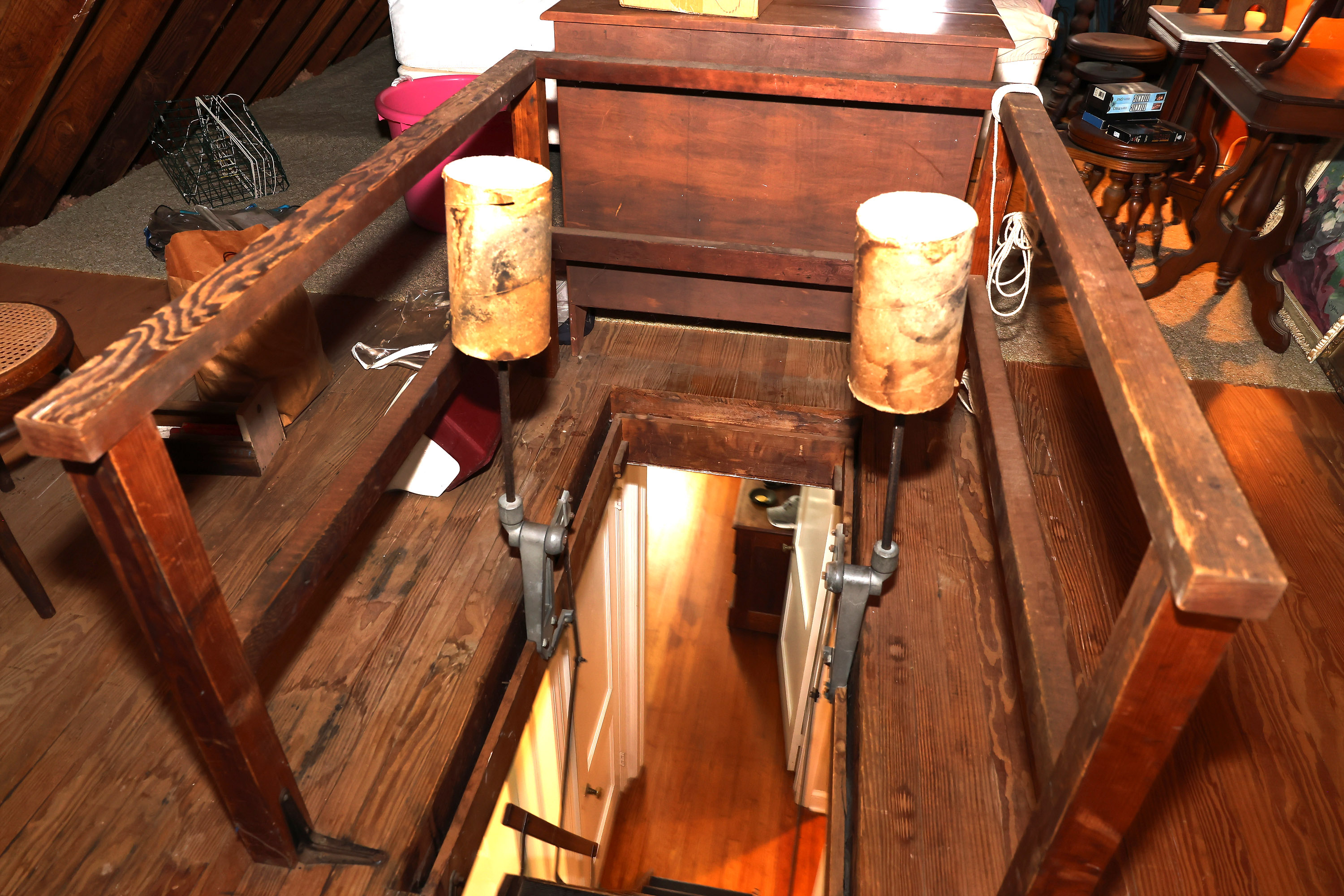
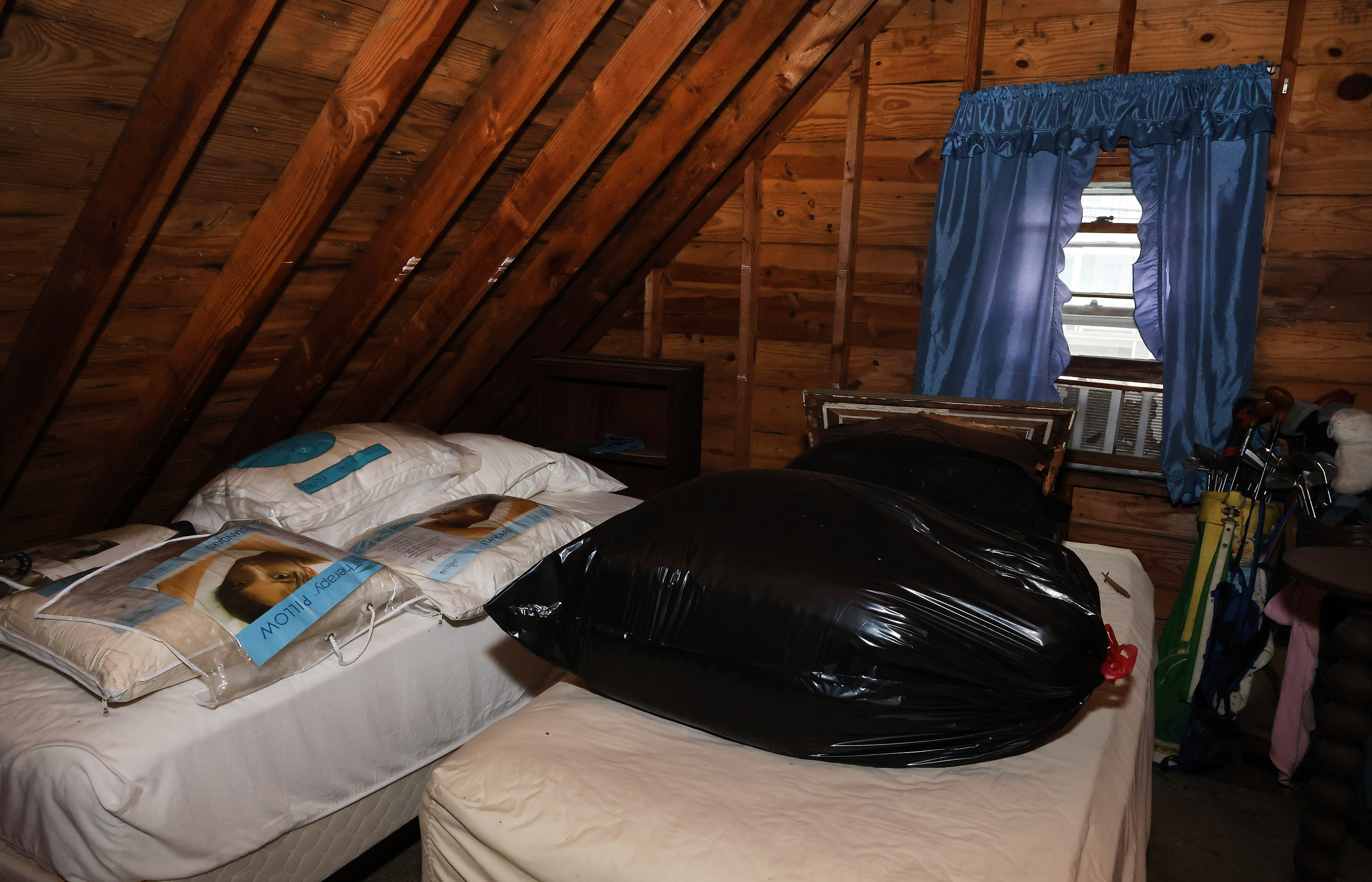
    “The attic had pull-down steps and a window where the breeze came in off the ocean,” recalled David, Bole and Lib’s son. “The oldest would get closest to the window, then the next oldest, and so on, because that’s where you got the most air. There were about four beds lined up and then you had mattresses on the floor.”

    A view from the attic into the main house from the pull-down door.
    Beds sit in the attic, where the children would sleep, sometimes 10 at a time.

    With the whole family together it was not uncommon to have up to 10 people sleeping up there, he said.

    “My parents used to send me down when I was about 8 or 9 on the NJ Transit bus,” said the younger David Smith, one of Lib and Bole’s grandchildren, and nephew of David S. Smith. He’s a Realtor with Coldwell Banker who lives in Wallingford. “I thought riding the bus by myself was the coolest thing!”

    Ocean City is where members of the Smith family formed lifelong friendships and forged their work ethic at their summer jobs. Lib and Boles’ oldest son, Norman Jr., met his wife of 61 years in Ocean City. The younger David Smith is their son.

    All of the family members had typical summer jobs at the Shore, including beach chair rentals, waitressing at the College Grill, manning the ice cream truck, and lifeguarding.

    David S. Smith won the 1968 South Jersey Lifeguard Championships in the doubles rowing event, an annual tradition that continues to this day. He was inducted into the Ocean City Beach Patrol Hall of Fame in 2004.

    He recalls hanging out on the beach with Grace Kelly’s family, who lived nearby. “That whole area was really driven by the connection to the Kelly family and their connection to Ocean City,” he said.

    But David S. Smith himself had connections to Shore royalty of sorts. His wife, Lynn, was elected Miss Ocean City Beach Patrol in 1967 and was on the cover of the book Images of America-Ocean City: 1950-1980 by Fred Miller.

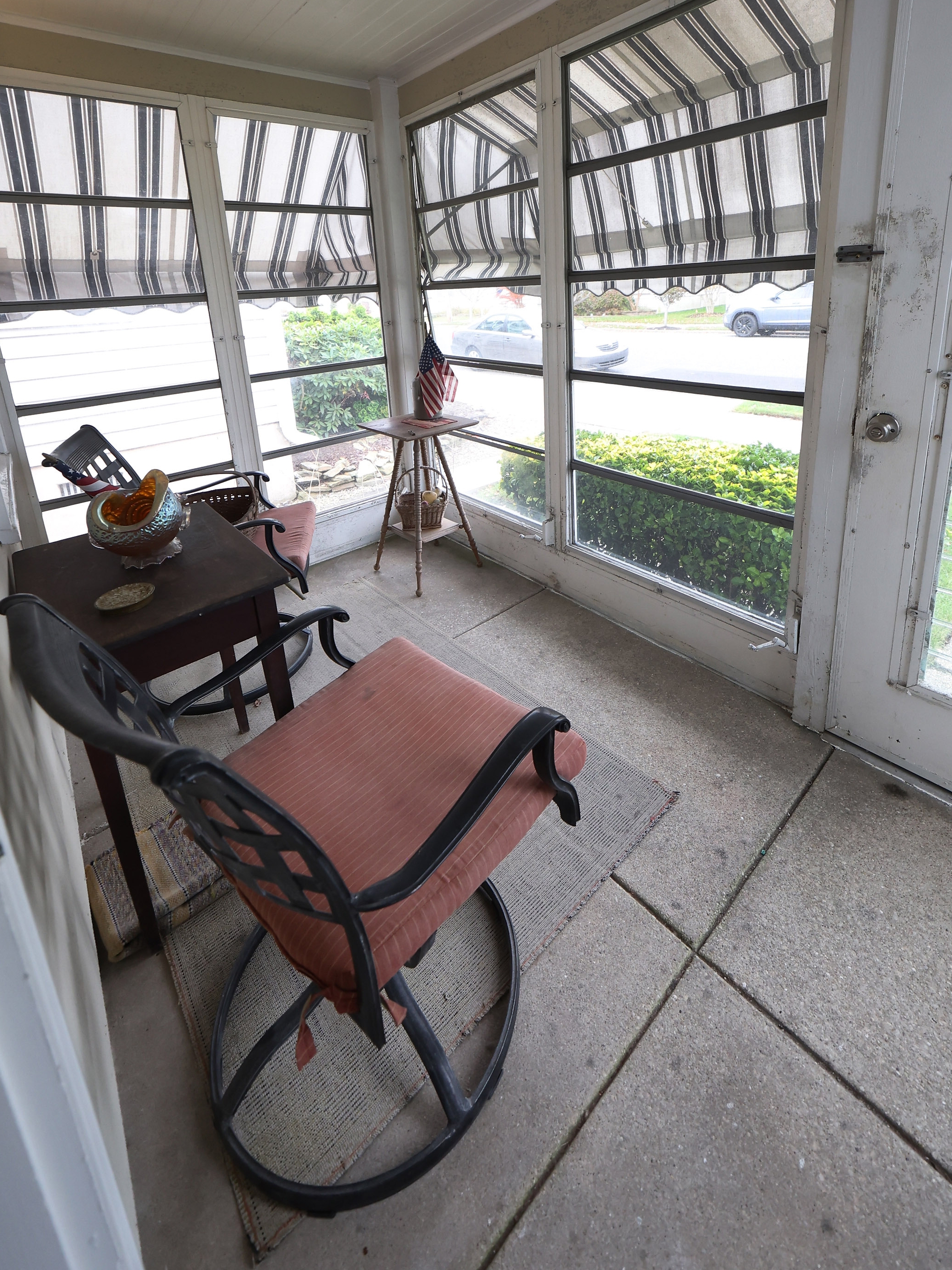
    The covered front porch of the Smiths’ cottage.
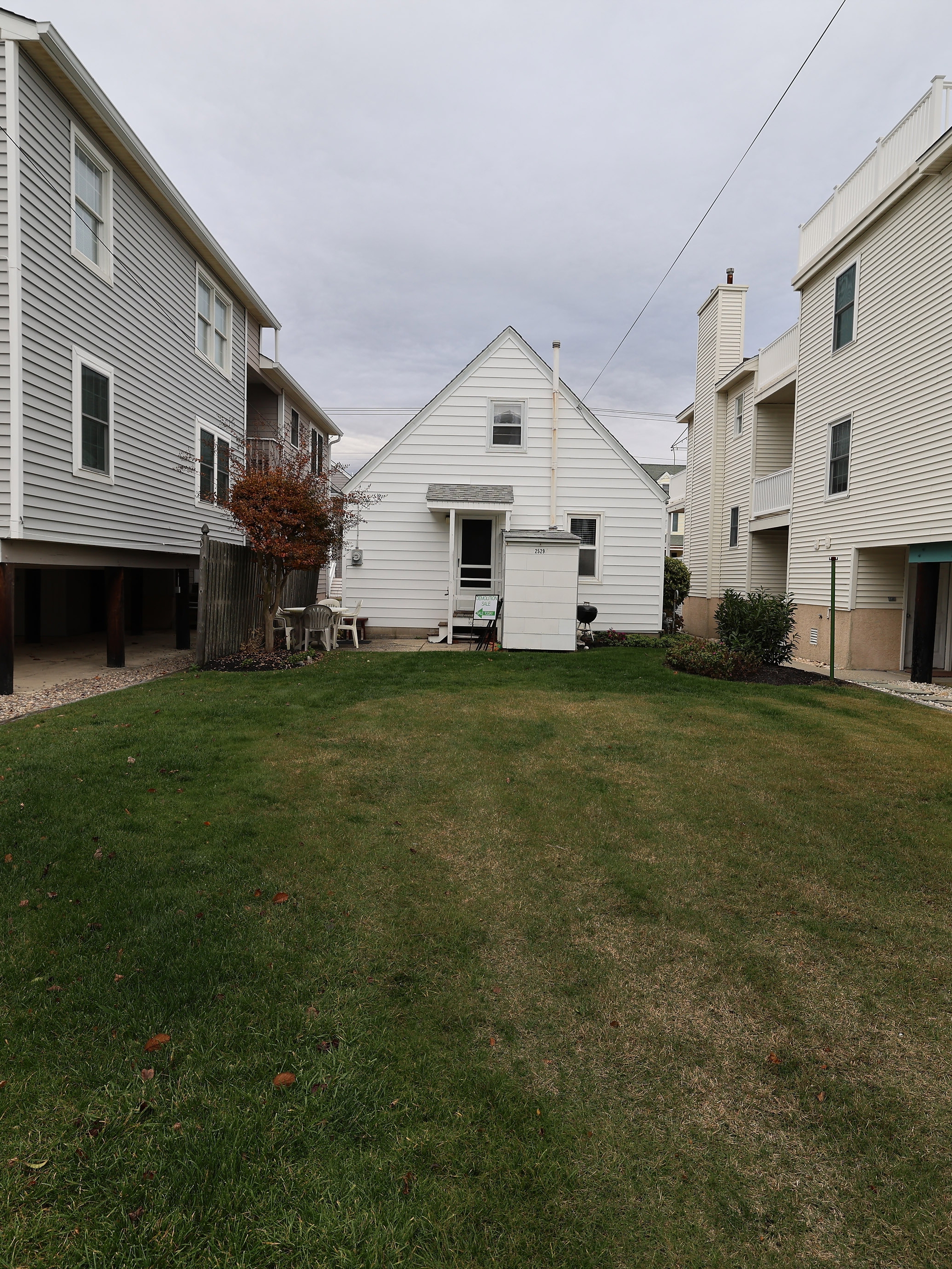
    The cottage sits on a large lot, which still is covered in grass unlike many neighbors.

    Over the decades, the home’s backyard was always in use, as the site for cookouts and quoits, a game similar to horseshoes. Family members of every generation competed while dinner was cooking on the charcoal grill.

    “The backyard of 2529 Asbury is still grass,” David S. Smith said. But at most of the nearby houses “the backyards are all stones.”

    The smell of frying scrapple was the morning alarm clock — a scent that still brings back a flood of memories for the younger David, Bole and Lib’s grandson.

    The cottage’s kitchen brings back memories of scrapple frying in the morning.
    The house’s one bathroom was used by the whole family, as well as the outdoor shower.

    A different town

    The Smiths witnessed the block transform dramatically over the years. Small cottages were razed and replaced with duplexes.

    “The Jersey Shore has changed so much,” said grandson David. “Now you see all these giant houses.”

    To help protect some of the town’s older homes, the city created a historic district in 1992, primarily between Third and Eighth Streets and Central and Ocean Avenues. That includes many homes with Victorian-era architecture, many built in the late 1800s and early 1900s.

    To maintain the area’s historical integrity, the district is protected by local ordinances that require approval for demolition, new construction, or rehabilitation projects. Merritt’s group hopes to raise awareness of these and other older homes.

    “When you knock down a house, you don’t just lose the house, but you lose the history,” he said.

    David Smith (left) and his uncle, David S. Smith, in the living room of the cottage.

    Merritt’s house, for example, has been rumored to have been owned by the family of Grace Kelly’s boyfriend when they were teens. Merritt was recently greeted at his home by the man’s sister.

    “We had this whole conversation of how her brother took Grace Kelly to the Lifeguard’s Ball, and she showed me the pictures she had,” he recalled. “When you knock these houses down, that connection to the past is severed.”

    Merritt argues that the town loses its identity when these houses disappear.

    While the Smiths have little say in who buys their home, they hope a single-family house will replace it, rather than a duplex, which brings more cars, people, and traffic.

    “It hurts,” David S. Smith said. “We’ve had it for 69 years and there’s a lot of history.”

  • Bellwether District could soon announce its first tenants

    Bellwether District could soon announce its first tenants

    Officials for the Bellwether District say they are in “late-stage negotiations” with potential tenants to occupy the first of many buildings planned for the 1,300-acre former refinery site in South and Southwest Philadelphia.

    However, Amelia Chassé Alcivar, a spokesperson for HRP Group, the site’s owner, said during an update on the project Tuesday that she would not comment on potential tenants.

    She was responding to a question from environmental advocate Mitch Chanin about whether a data center is a possible use on the site of the Philadelphia Energy Solutions (PES) refinery that closed in 2019 after an explosion and fire.

    “I want to emphasize that no official announcements have been made at this time, so I cannot confirm … I cannot deny,” she said, adding that, “I would just generally preach caution if you’re reading anything in the press that is not confirmed by us on the record or by the company on the record.”

    Chassé Alcivar said that there are no plans to build a traditional power plant on site.

    A recent BillyPenn article cited a union official who said a cogeneration plant is being discussed for the site. Cogeneration is considered a nontraditional technology that simultaneously, and efficiently, produces heat and electricity on site.

    Chassé Alcivar said solar installations are being planned for at least some of the six million square feet of rooftops the development will have when fully built out over several phases in years to come.

    “I will share with this group that we are in late-stage negotiations with several prospective tenants,” she said.

    What’s the Bellwether District?

    HRP, which was spun off from its parent company, Hilco, is building two massive commercial campuses on the site of the former refinery.

    window.addEventListener(“message”,function(a){if(void 0!==a.data[“datawrapper-height”]){var e=document.querySelectorAll(“iframe”);for(var t in a.data[“datawrapper-height”])for(var r,i=0;r=e[i];i++)if(r.contentWindow===a.source){var d=a.data[“datawrapper-height”][t]+”px”;r.style.height=d}}});

    It plans about 14 buildings for a 750-acre industrial campus with the potential for 10,500 jobs.

    And it plans a series of smaller buildings on a 250-acre innovation campus, originally slated to house mostly life sciences companies, with the potential for 8,500 jobs. The buildings are being designed for uses such as bio-manufacturing, processing, production, and tech.

    In all, HRP plans for about 14 million square feet of buildings across the two campuses.

    The ground of the sprawling site was tainted by 150 years of petroleum-related uses. As a result, it is undergoing a complex environmental remediation.

    In its most recent history, Sunoco sold the refinery to PES in 2012. PES owned it at the time of the explosion and subsequent closure. PES went bankrupt and sold the site to Hilco Redevelopment Partners, now just HRP, in 2020.

    Sunoco is responsible for contamination up to 2012. HRP is responsible for contamination after that. The two companies are coordinating cleanup with the state Department of Environmental Protection.

    Remediation is expected to be ongoing for years. Some of the soil will be capped by buildings and parking lots. Barriers are being installed to prevent vapors from volatile organic compounds in the ground from penetrating work areas in the buildings.

    What’s complete and what’s coming

    HRP says it will invest more than $4 billion into the redevelopment.

    So far, HRP has completed a 326,000-square-foot class A warehouse on its 750-acre industrial campus with poured concrete floors and structural steel column supports off 26th Street.

    It is finishing a second, 727,000-square-foot warehouse adjacent to the first with a planned boulevard leading into the campus for a total of little more than 1 million square feet.

    Last month, Bellwether applied for a permit for a 1.4-million-square-foot building titled DrinkPAK warehouse. California-based DrinkPAK is a large manufacturer of alcoholic and non-alcoholic canned beverages.

    DrinkPAK’s website lists two existing facilities: The first in Santa Clarita, Calif., and a second scheduled to open this year in Fort Worth, Texas. A map shows a third facility projected to open in 2027 in the Northeast with a marker showing an area in Southeastern Pennsylvania.

    Chassé Alcivar did not comment on that project during the meeting.

    Other updates:

    • HRP said it is planning to widen the intersection of 26th Street and Penrose Avenue from three lanes to five. The intersection will have two left turn lanes, one straight lane, and then two dedicated right turn lanes. And a new boulevard entrance at 26th and Hartranft Streets is being created, featuring roughly seven lanes in and out.
    • The company plans to plant 10,000 trees, bring buildings up to LEED standards, and to be solar ready. LEED certification is a system developed by the U.S. Green Building Council (USGBC) to verify a building’s sustainable design, construction, operation, and maintenance.
    • Weekly readings of a benzene monitor are being taken as part of the THRIVEair Community Air Monitoring Project (CAMP) in South and Southwest Philadelphia. THRIVEair is a partnership between Drexel University and Philly Thrive, a local environmental justice organization.
    • HRP has launched a new driver education pilot program for students enrolled in construction and automotive career and technical education programs. Lack of a driver’s license has been cited as a barrier of entry to jobs.
  • 2026 Audi S3: Looks fun, sounds fun, drives fun, but keep it casual

    2026 Audi S3: Looks fun, sounds fun, drives fun, but keep it casual

    2026 Audi S3 Prestige vs. 2026 BMW 228 xDrive Gran Coupe: Battle of the little racers.

    This week: Audi S3

    Price: The 2025 starts at $48,700, according to the window sticker of the test model; the 2026 starts at $52,000.

    Conventional wisdom: Car and Driver likes the “entertaining handling, responsive powertrain, sophisticated and luxurious interior.” They were less fond of the “limited trunk space,” that there was “some road noise at higher speeds,” and that it was “not quite as raucous as the RS3.”

    Marketer’s pitch: “Upgrade the everyday.”

    Reality: It depends where all you go every day.

    What’s new: We’ve been exploring efficiency over the last two weeks with the Accord Hybrid and Prius Plug-In. The Prius had some kick, but the Audi and BMW really pack a punch.

    The little Audi sedan (which the EPA surprisingly classifies as “midsize”) is the souped-up version of the A3. That’s not to be mistaken for the super souped-up version, the RS3. Just think of the abbreviations as “Speedy” and “Really Speedy.”

    The sedan got a power boost and handling improvements for 2025. The 2026 carries on fairly unchanged.

    Competition: In addition to the BMW 2 Series, there are the Acura Integra, Cadillac CT4, and Mercedes-Benz CLA.

    The interior of the Audi S3 is comfortable when you’re riding up front, but not so much in the back row. The trunk helps teach how to travel light.

    Driver’s Seat: At first sit, the S3 started off strong. I hopped inside and felt instantly smitten with the no-nonsense black Dynamica faux leather interior, the firm but mostly comfortable seat, the narrow fonts in the typeface.

    Then I fired it up and heard the throaty exhaust recording that generally comes with Audi. But could this love last?

    Up to speed: The S3 certainly can get a move on. It’s powered by a 2.0-liter turbocharged four-cylinder engine that creates 328 horsepower, a lot for a small sedan, which kicks it to 60 mph in 4.4 seconds, according to Audi.

    Shifty: Audi has progressed even beyond its groundbreaking shift toggle switch and now has a shiny small shift mouse, for lack of a better term. Hold two fingers over it and push forward for Reverse and back for Drive. Kinda cool.

    You can shift the 7-speed automatic through the paddles, but with a vehicle as quick as the S3 you need to be in second gear before you finish rounding the corner at an intersection, so good luck finding the toggle. Here’s where a gearshift would come in handy.

    On the road: The S3 dazzles. It corners impressively and takes on country roads with a sense of wild abandon. What’s to prevent everyone from racing around the world like maniacs in this sedan?

    But what the Quattro all-wheel-drive system giveth, the suspension taketh away. The S3 starts to lose its charm on the highways; road seams and pocked road surfaces really jolt the little sedan abruptly. Be sure to check your dental plan before purchasing.

    Friends and stuff: You won’t squeeze much of either inside, friends nor stuff, not with this leg room, that hump, or the trunk. Feet and legs are pretty smushed.

    Farther back, the trunk seemed to identify as bigger but it’s rated at a snug 8.3 cubic feet, closer to a Miata (4.59) than a Civic (14.8). The rear seat does fold down, making things a little better.

    Play some tunes: Sound from the Sonos premium sound system is awesome — an A+. There’s a heavy echo in the surround sound, but I decided to live with it, as it only interfered with a few songs.

    Operation is all through the touchscreen. In a depressing application of function following form, the forward-reverse-volume controls live on a little round button on the console that matches the engine Start button. Beautiful to look at; disturbing to operate.

    I always love the Google Earth feature in Audi maps; it makes driving around quite scenic. Although so is looking at the actual road.

    Keeping warm and cool: The heater features a row of toggles that you push to lower and pull to raise. Somehow, though I’ve seen various toggles in different vehicles and they worked well, these black toggles felt hard to operate and distracting from the road.

    The blowers are also right in the driver’s face, which I was less enthusiastic about; there was no real way to send the air away from me.

    Fuel economy: I averaged about 24 mpg in a lively week of testing; every red light was an acceleration test. About 100 of those miles were there before me.

    Where it’s built: Ingolstadt, Germany. Just over half the parts hail from Germany as well (51%), and a mere 1% come from the U.S. or Canada.

    How it’s built: The less-fun A3 rates a 3 out of 5 from Consumer Reports for reliability, so that likely applies to the S3 as well.

    In the end: If your every day involves lots of highway, maybe this isn’t the choice.

    Next week: Let’s see how the BMW 228 compares.

  • Contractor caused construction of the W and Element hotels to go ‘off the rails,’ judge finds

    Contractor caused construction of the W and Element hotels to go ‘off the rails,’ judge finds

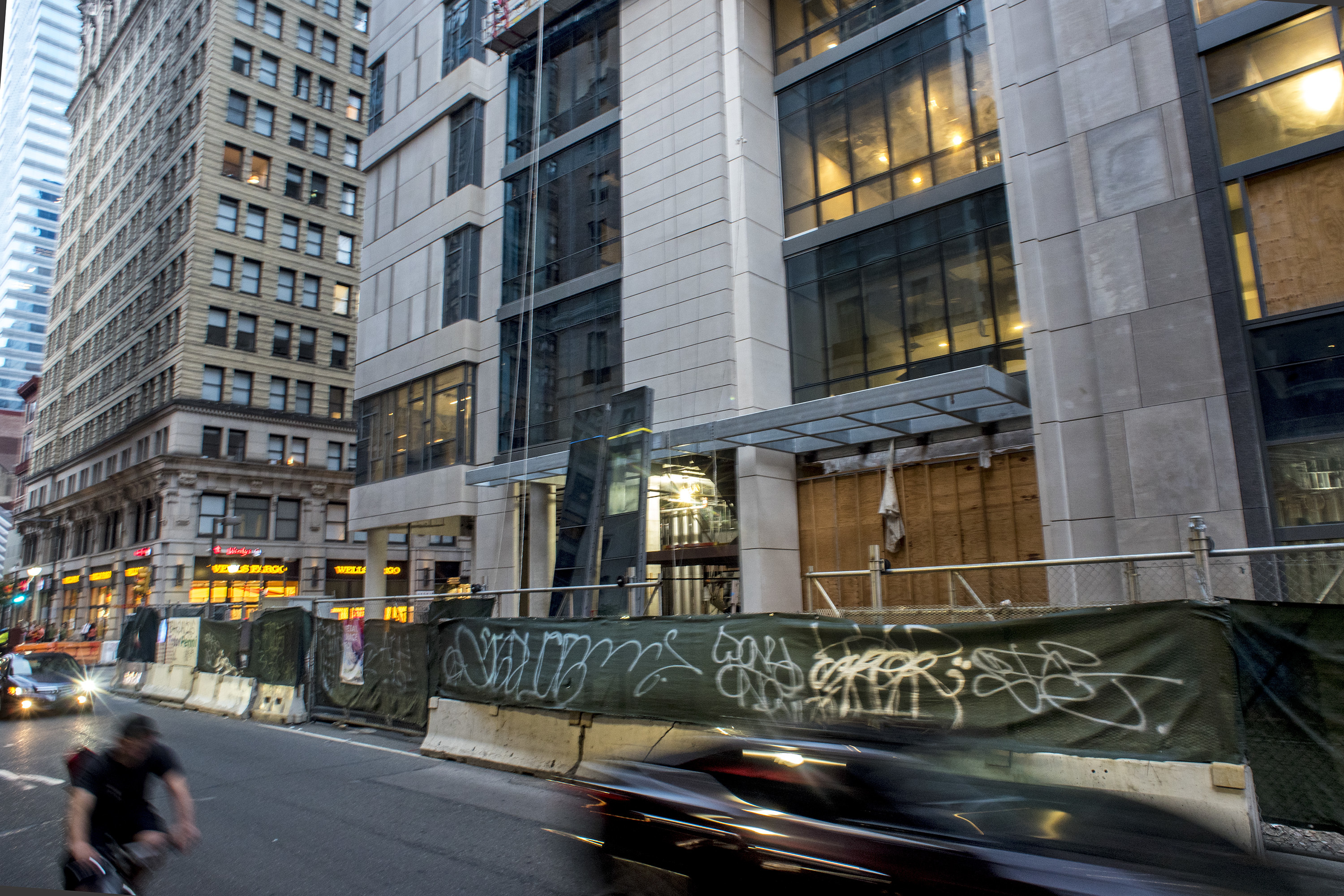
    When a Marriott representative visited the construction site of the W Philadelphia hotel in Center City in January 2019, months after the project should have been completed, the concrete floors were so uneven that a pen placed on the ground rolled downhill.

    The construction of Philadelphia’s largest hotel, home of the W and the Element, both part of the Marriott umbrella, began in 2015 and had a strict 2018 deadline for completion. Delays led to an avalanche of nearly 30 lawsuits with the site’s owner, construction contractor, and design company pointing fingers at each other.

    The W, which comprises 295 rooms of the 51-story building, eventually opened in 2021, roughly three years late.

    Bringing to a close 25 of the lawsuits, a Philadelphia judge issued a 69-page memo last week laying out the saga and finding the construction company responsible for the project going “off the rails.”

    Common Pleas Court Judge James Crumlish found that the construction contractor, Tutor Perini Building Corp., subcontracted the concrete work to a company that botched the job. And despite knowing about the problems, which were detrimental to the entire project, Tutor denied the issues for months.

    The judge’s finding comes after trial testimonies that took five months as the parties “turned this litigation into a challenging behemoth that made any effort at resolution impossible,” Crumlish wrote.

    A yearslong saga

    The saga began when Chestlen Development LP, the owner of the site, picked Tutor as the construction manager. The agreement capped the cost of construction at $239 million and required completion within 1,017 days after April 2015.

    An attorney for Tutor did not respond to a request for comment.

    From the outset, Tutor suffered “chronic turnover of its personnel,” the judge wrote, resulting in the loss of “institutional knowledge of key decisions.”

    Tutored subcontracted the concrete work to Thomas P. Carney Inc. Construction, a Bucks County company.

    When a different subcontractor, Ventana DBS LLC, began installing the wall-window systems, they immediately noticed a “big problem,” according to the judge’s memo. In many places the concrete wasn’t level or did not meet the elevation requirements in the design.

    Tutor pushed back, denying that there was a problem, while quietly attempting to grind the edges of the concrete slabs to address the issue.

    While denying the problem, Tutor hired outside advisers to evaluate the concrete work. But they confirmed the problem too.

    Finally, in March 2018, Tutor shared the outside reports that acknowledged Carney’s shoddy concrete work with Chestlen’s representative for the project.

    As summer 2018 began, it was clear that the project would not be completed on deadline.

    In September 2018 Tutor asked Chestlen for an extension, which the owner rejected, saying the request came “months if not years after some of the concrete issues started to become apparent,” according to Crumlish’s memo.

    The remediation of the floor began in April 2019 and was completed in October.

    The sidewalk area of W Philadelphia and Element Philadelphia Hotel under construction, looking northwest along the 1400 block of Chestnut Street July 2, 2019.

    The building finally obtained a certificate of occupancy in April 2021. But Marriott couldn’t open the W until August because over a hundred window vents were inoperable because Tutor failed to follow the design.

    “Tutor knew that the floors did not meet specifications but did not timely disclose its knowledge to Chestlen or consult with it,” Crumlish wrote. The judge further found that Tutor refused to work with contractors to remediate the problems in 2017 and 2018, and proceeded to install interiors over the deficient concrete floors.

    The blame game

    Throughout the litigation, the parties all blamed one another for various problems and aspects of the delay.

    Costs and liens piled up.

    Chestlen paid Tutor $239 million for the construction, accrued over $40 million in damages as set in its contract with Tutor, and paid tens of millions to remediate the floors. The property is “clouded with over $155 million in liens,” according to the judge’s memo.

    Crumlish concluded that Tutor breached its contract when it failed to oversee the concrete work and the window-wall installation, and generally didn’t fulfill its obligations.

    “Every delay in the performance and completion of the project is the responsibility of Tutor and Carney,” the judge said. The judge will decide on the amount of damages following hearings scheduled for January.

    Chestlen’s attorney was unavailable to provide comment. Carney did not respond to a request for comment.

    The W hotel is located where One Meridian Plaza used to be, before that building suffered a devastating fire in 1991 and was finally demolished in 1999.

    Filling the vacant lot, a mere block from City Hall, became a top priority for policymakers during Mayor Michael Nutter’s time in office. The hotel proposal eventually received $75 million in taxpayer support across local, state, and federal funding sources in addition to other legislative assistance.

    The project was developed by Brook Lenfest, son of the former Inquirer owner H.F. “Gerry” Lenfest, whose foundation continues to own the newspaper today.

  • Lower Merion may raise parking meter rates for the first time since 1999

    Lower Merion may raise parking meter rates for the first time since 1999

    Lower Merion’s board of commissioners is set to put multiple new ordinances on the books next month, including policies raising parking meter rates for the first time since 1999, lowering the speed limit on parts of Lancaster Avenue, and regulating where smoke and vape shops can open in the township.

    The smoke and vape shop regulation moved ahead last month, and the commissioners advanced the parking meter and speed limit changes Wednesday evening. Lower Merion’s assistant township manager, Brandon Ford, said the commissioners are poised to formally vote on all three proposals in December. Here’s everything you need to know.

    Parking meter rate may go up

    Commissioners on Wednesday moved forward an ordinance that would raise parking meter rates across Lower Merion for the first time in more than 25 years.

    Under the proposed ordinance, parking would increase from 50 cents per hour to $1 per hour across the township, with the exception of six locations in Ardmore. Parking would go up to $1.50 per hour at Rittenhouse Place, Cricket Avenue, Cricket Terrace, and township-owned parking lots five (Cricket Terrace) and six (Schauffele Plaza). The Cricket Avenue Parking Garage would stay at 50 cents per hour.

    Township staff say the proposed meter rate increase would generate around $900,000 annually and would likely drive quicker turnover in Lower Merion’s commercial corridor, generating more economic activity for local businesses.

    “The rates that we are charging have not kept up with the overall cost for maintaining those parking meters, as well as our overall parking services program,” Ford said during a Nov. 5 meeting.

    The ordinance, if passed, would not change how parking meter fees are collected. The township collects parking fees through meters, kiosks, and a mobile app.

    Commissioner Scott Zelov, who represents Bryn Mawr, Haverford, and Gladwyne, said: “It certainly is time to do this.”

    Anderson Avenue near Suburban Square on June 8. A proposed Lower Merion ordinance would increase parking meter rates across the township in hopes of raising revenue and spurring economic activity in places like downtown Ardmore.

    Lancaster Avenue speed limit reduction

    Lower Merion is set to reduce the speed limit on parts of Lancaster Avenue from 40 mph to 35 mph, bringing township code in compliance with an earlier speed limit change by the Pennsylvania Department of Transportation.

    PennDot has already placed 35-mph speed limit signs on the selected strip of Lancaster Avenue. The board’s approval will bring the township in line with the state and allow township police to start enforcing the reduced speed limit. The speed limit change is the latest development in a major redesign of Lancaster Avenue by the state and the township.

    A study conducted by PennDot earlier this year found that, out of nearly 20,000 vehicles traveling on Lancaster Avenue between Wynnewood Road and City Avenue during a 24-hour period, only 57% were driving at or below the 40-mph speed limit. PennDot considers the intersection of Lancaster Avenue and Remington Road to be a “high crash location.”

    The ordinance, approved for advertisement on Wednesday, also bans right turns on red at three intersections: Lancaster Avenue and Remington Road for eastbound traffic, Lancaster Avenue and Haverford Station Road for westbound traffic, and Montgomery Avenue and Airdale Road for east-west traffic.

    The township aims to place automated red-light cameras at all three intersections. The first red-light camera, at Remington Road and Lancaster Avenue, is in the process of being installed. Andy Block, Lower Merion’s superintendent of police, said the camera should be up and running by the end of the year.

    Smoke and vape shop zoning

    Following a lengthy discussion that stretched across two meetings, the board of commissioners on Oct. 22 moved forward an ordinance that would decide where tobacco and vape shops can operate in Lower Merion.

    Under the proposed ordinance, if a tobacco or vape shop wanted to open in Lower Merion, it would have to be situated at least 1,000 feet from any other tobacco or vape shop and 1,000 feet from any public or private school. The rule would also apply to hookah lounges.

    Township staff said the 1,000-foot buffer would dramatically decrease the opportunity for smoke shops to operate in Lower Merion. Ford said there are currently around 1,000 properties in Lower Merion where smoke shops could operate. If the buffer ordinance were to be implemented, that number would drop to 300.

    While some commissioners inquired about creating a larger buffer, officials said doing so would likely zone smoke shops out of Lower Merion entirely, which would give smoke shop owners the legal claim to build anywhere in the community.

    During an Oct. 17 discussion of the ordinance, Commissioner Anthony Stevenson, who represents Ardmore and Haverford, said: “We need to avoid the continuation of making our township, and particularly in the Ardmore area, a vape central.”

    This suburban content is produced with support from the Leslie Miller and Richard Worley Foundation and The Lenfest Institute for Journalism. Editorial content is created independently of the project donors. Gifts to support The Inquirer’s high-impact journalism can be made at inquirer.com/donate. A list of Lenfest Institute donors can be found at lenfestinstitute.org/supporters.