Author: Denali Sagner

  • The Bryn Mawr Film Institute turned 20 this year. Here are 20 iconic movies from its history.

    The Bryn Mawr Film Institute turned 20 this year. Here are 20 iconic movies from its history.

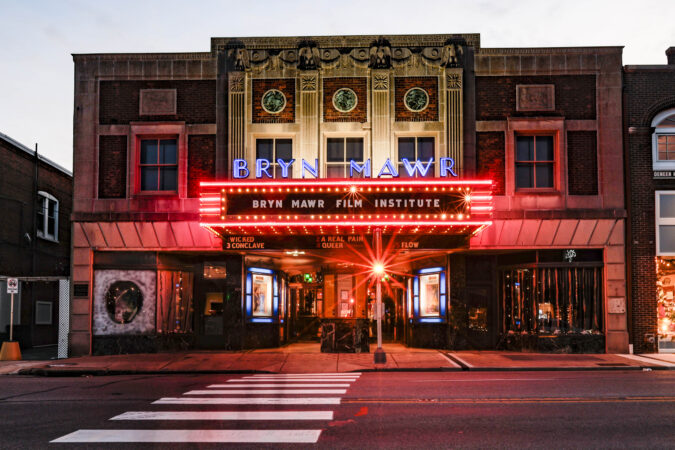
    There are few facades more iconic in Bryn Mawr than the marquee of the Bryn Mawr Film Institute (BMFI), an enduring Main Line institution and watering hole for cinephiles from across the region.

    BMFI has turned 20, marking two decades of the nonprofit community theater founded by Juliet Goodfriend in 2005. In the early 2000s, Goodfriend found herself dismayed when a historic movie theater in neighboring Ardmore was converted into a short-lived gym. To protect Bryn Mawr’s historic Seville Theatre from the same fate, Goodfriend rallied a team of local stakeholders around the theater. In December 2004, BMFI purchased the Seville, and in March 2005, the film institute opened its doors. Today, BMFI screens new and historic films, hosts lectures, teaches courses for children and adults, and celebrates the art of the film.

    “It means a lot … to see what this place has become through the generous support and engagement of the community,” said Andrew J. Douglas, deputy director of the film institute who has worked at BMFI since it first opened.

    To celebrate BMFI’s 20th anniversary, its staff compiled a list of 20 of the most iconic films the theater has screened, from Philly-based flicks to beloved musicals:

    ‘Blue Velvet’

    If there’s an iconic filmmaker with a Philadelphia connection, it’s the late David Lynch, said Jacob Mazer, BMFI’s director of programs and education.

    Blue Velvet is Lynch’s 1986 mystery thriller. It follows college student Jeffrey Beaumont after he discovers a severed ear in a vacant lot in his suburban hometown and is drawn into a dark world of crime.

    “When we look at this arc of [Lynch’s] career, it’s really the film where he finds his way,” Mazer said.

    Lynch began his filmmaking career in Philadelphia at the Pennsylvania Academy of the Fine Arts and regularly discussed basing his landmark debut Eraserhead on the city in the 1970s. When Lynch returned to Philly for a retrospective of his work at PAFA in 2014, he visited BMFI for a screening of his films and a Q&A session with the audience. Blue Velvet was the first film BMFI played to commemorate Lynch after his death in January.

    ‘The Philadelphia Story’

    There’s a lot of local love for The Philadelphia Story, George Cukor’s 1940 romantic comedy set on the Main Line and based on the life of socialite Helen Hope Montgomery Scott, said Gina Izzo, BMFI’s communications director.

    Plus, Izzo added, “It’s funny. It holds up.”

    ‘Lawrence of Arabia’

    The annual summer screening of David Lean’s 1962 film Lawrence of Arabia is the oldest-running BMFI tradition. It’s a movie that is just “not done justice on a small screen,” said Mazer.

    ‘The Sound of Music’

    Each December, lovers of The Sound of Music descend on BMFI for what Izzo describes as an “interactive screening” of the 1965 musical directed by Robert Wise. Over the course of three hours and many songs, The Sound of Music tells the World War II-era story of Maria (Julie Andrews), a young woman who becomes a governess for the von Trapps, an aristocratic Austrian family.

    At the annual Christmastime screening at BMFI, moviegoers sing along from their seats and, each year, wear increasingly elaborate costumes. Last year, there were nuns, goats, and “brown paper packages tied up with strings” (a la the song “My Favorite Things”). The showings sell out months in advance.

    As Izzo put it, “It’s sort of our Rocky Horror Picture Show equivalent.”

    ‘Harold and Maude’

    Hal Ashby’s Harold and Maude has been a mainstay at the Seville Theatre since it was released in 1971. It was the last movie shown on the Seville’s single screen before the theater was twinned (split into two screening rooms) in the 1980s.

    Harold and Maude just comes back again and again and again” in the theater’s history, said Mazer. “It’s one of the quintessential cult movies.”

    A view from one of the projection booths inside the Bryn Mawr Film Institute in Bryn Mawr on March 8, 2018.

    ‘Casablanca’

    Michael Curtiz’s 1942 romantic-drama Casablanca is “one of the great examples of the difference [between] seeing a movie in a theater with other people versus by yourself at home,” said Douglas.

    BMFI screens Casablanca every summer, and Douglas teaches an annual lecture on the film. When he watches Casablanca at BMFI, Douglas says he regularly hears people sniffling at sad moments or guffawing at funny ones, a stark comparison to the muted reactions one often has from the comfort of their own couch.

    “You’re reminded how funny it is, you’re reminded how moving it is, and you’re reminded, in a sense, how human it is,” he said.

    ‘The Grand Budapest Hotel’

    Why include Wes Anderson’s 2014 film The Grand Budapest Hotel? Put simply, people just love Wes Anderson, Izzo said.

    ‘2001: A Space Odyssey’

    Stanley Kubrick’s 2001: A Space Odyssey was the first film shown at the theater after it developed the capacity to screen 70 mm film. Mazer called the 1968 movie an “iconic film” in cinematic history.

    ‘Silver Linings Playbook’

    In a way, Silver Linings Playbook is a “modern-day Philadelphia Story,” said Douglas. The 2012 film, directed by David O. Russell, follows Pat Solitano Jr. (Bradley Cooper), recently released from a psychiatric hospital who works to win back his estranged wife, and Tiffany Maxwell (Jennifer Lawrence), a young widow also struggling with mental illness, as she prepares for an upcoming dance competition.

    Philadelphia’s favorite rom-com is an homage to Delco, Eagles fans, and the Montgomery County-born-and-raised Cooper. It’s a “local guy makes good” story, Douglas said, referring to Cooper. It’s also the highest grossing main attraction in BMFI history.

    “For our community, it was an enormously meaningful movie‚” Douglas said.

    ‘La La Land’

    Benj Pasek and Justin Paul, known as Pasek and Paul, are a composing and songwriting duo responsible for the lyrics in La La Land, the acclaimed 2016 musical directed by Damien Chazelle.

    Pasek is “Bryn Mawr’s son,” Izzo said. The composer graduated from Friends Central, the Wynnewood Quaker school, and is a longtime supporter of BMFI. When Pasek and Paul won an Oscar for the movie, everybody at home “had a little piece,” said Izzo.

    ‘Barbie’

    Greta Gerwig’s 2023 Barbie felt like the “big wave back after the pandemic,” Izzo said. People dressed in pink and flocked to the movies after months of isolation and uncertainty.

    ‘Oppenheimer’

    Same with Christopher Nolan’s 2023 Oppenheimer. RememberBarbenheimer”?

    ‘Parasite’

    Parasite, Bong Joon Ho’s 2019 South Korean Oscar winner, was the third-longest running main attraction in BMFI history with a 16-week run.

    “We were proud to show that one,” Izzo said. “It was very popular here.”

    ‘Rocky’

    Rocky, the 1976 film directed by John G. Avildsen about boxer Rocky Balboa (Sylvester Stallone), may seem like an obvious addition to any Philly-area iconic movies list. But the local history behind the movie is deeper than meets the eye, Mazer said.

    Rocky was one of the first to be filmed with the Steadicam, a revolutionary invention of Garrett Brown, a Haverford High School graduate and prolific Philadelphia inventor. The Steadicam, created by Brown in 1975, is a camera stabilizing device that revolutionized the movie industry, allowing filmmakers to shoot scenes without having to mount cameras onto cranes or dollies.

    In testing out his new invention, Brown shot various scenes around Philadelphia, including one of his future wife running up the steps of the Philadelphia Art Museum. That scene would later become an iconic motif of Rocky, shot by Brown.

    “It’s this place where film history and Philadelphia history really connect,” Mazer said.

    Brown is a friend of BMFI and has given numerous lectures at the theater, including for the 40th anniversary of Rocky.

    ‘Superman’

    James Gunn’s 2025 Superman is another story of a local hero. David Cornswet, who played Superman, was raised in Lower Merion and graduated from the Shipley School, a Bryn Mawr private school. Cornswet hosted a friends and family debut of Superman at BMFI.

    ‘Brooklyn’

    Brooklyn, John Crowley’s 2015 period drama, stars Saoirse Ronan as Ellis Lace, a young Irish immigrant to New York City. The movie was immensely popular at BMFI, said Izzo.

    ‘On the Waterfront’

    Elia Kazan’s 1954 crime drama On the Waterfront helped revolutionize BMFI’s educational programming. The film was the first of the theater’s one-night seminars, during which moviegoers listen to a short lecture, sit for a screening, and then stay for a discussion. Now, they’re a popular part of the theater’s educational menu.

    ‘RBG’

    RBG, Julie Cohen and Betsy West’s 2018 documentary about late Supreme Court Justice Ruth Bader Ginsburg, was the highest-grossing documentary screening in BMFI history. It’s also in the top 20 of the highest-grossing screenings in the theater’s history (including movies and documentaries).

    National Theatre Live: ‘The Audience’

    Though movies are at the core of BMFI’s work, the theater has expanded its repertoire to include cinematic presentations of ballet, theater, opera, and behind-the-scenes tours of art museums, all filmed and fit for the movie screen. BMFI’s most popular alternative program to date was a screening of The Audience, a 2013 play starring Helen Mirren as Queen Elizabeth II. BMFI sold out 13 showings of the show.

    Izzo and Douglas said the screenings help transport locals to places that can be difficult to get to — New York City’s Broadway, London’s West End, or European museums.

    “Even at current prices, it’s still a tremendous bargain for access to the arts,” said Douglas.

    ‘Metropolitan’

    To commemorate the 30th anniversary of Whit Stillman’s 1990 movie Metropolitan, the director visited BMFI in 2022 for a screening of the film and Q&A with the audience. Metropolitan follows the Sally Fowler Rat Pack, a group of young Manhattan socialites in the throes of debutante season.

    Stillman’s visit to BMFI “was the beginning of a really nice friendship,” Mazer said.

    This suburban content is produced with support from the Leslie Miller and Richard Worley Foundation and The Lenfest Institute for Journalism. Editorial content is created independently of the project donors. Gifts to support The Inquirer’s high-impact journalism can be made at inquirer.com/donate. A list of Lenfest Institute donors can be found at lenfestinstitute.org/supporters.
  • Middletown Township welcomes first full-service hotel ahead of major tourism events in Delco

    Middletown Township welcomes first full-service hotel ahead of major tourism events in Delco

    On a frigid Tuesday morning, stakeholders from across Delaware County toasted champagne and popped mini pastries under the roof of Middletown Township’s new Hilton Garden Inn.

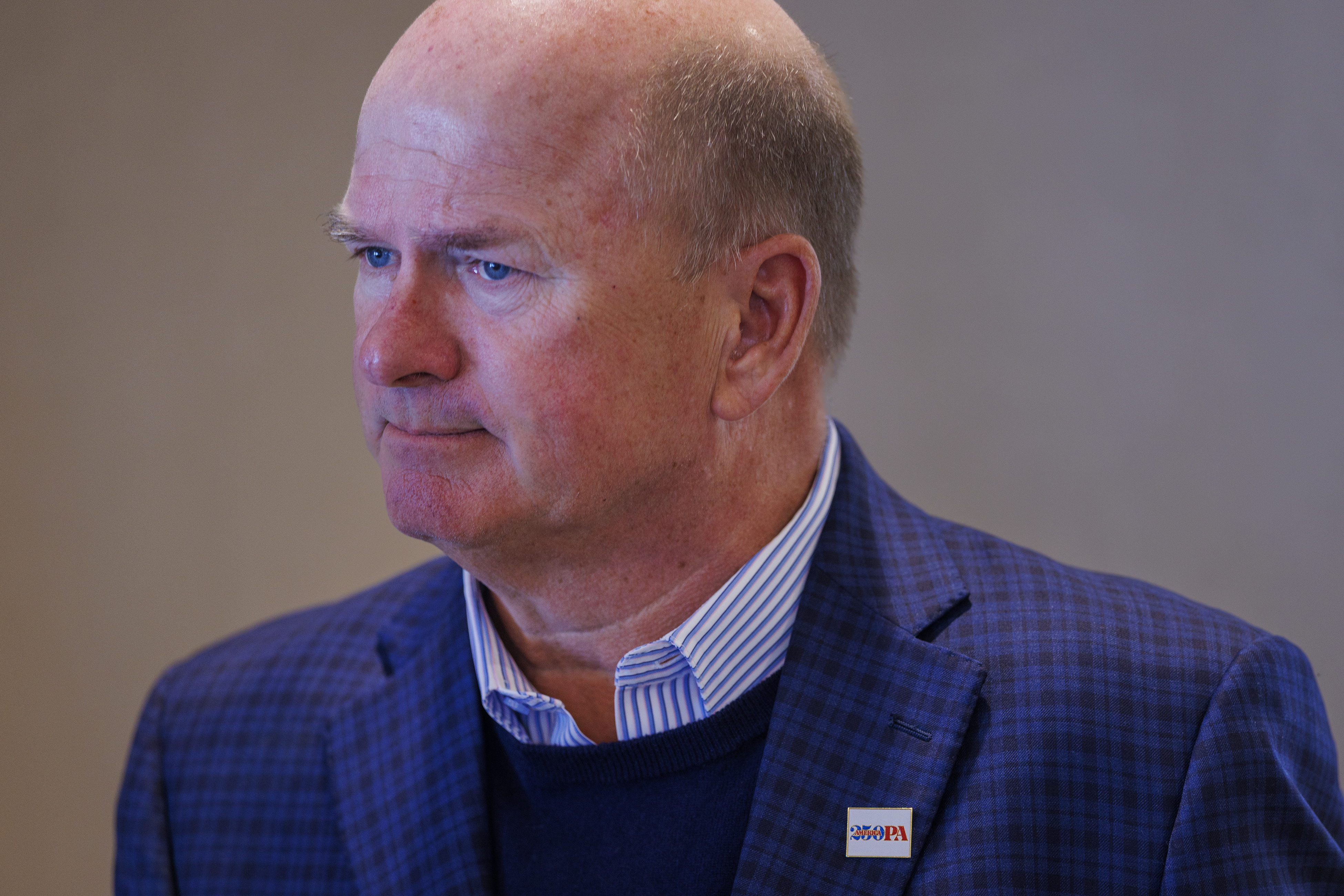
    “We may be the only Hilton Garden Inn in the world that serves Wawa coffee and drinks it all the time,” quipped hotel owner Patrick J. Burns, standing before a sea of family members, hotel staffers, business associates, and elected officials.

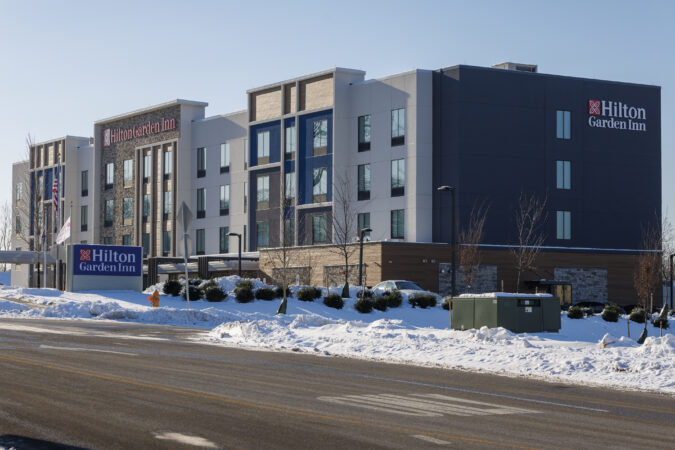
    The 107-room, 67,000-square-foot Hilton, located off Baltimore Pike at the former Franklin Mint site, is open and welcoming guests. It’s the 42nd hotel in Delaware County and first full-service hotel in Middletown Township.

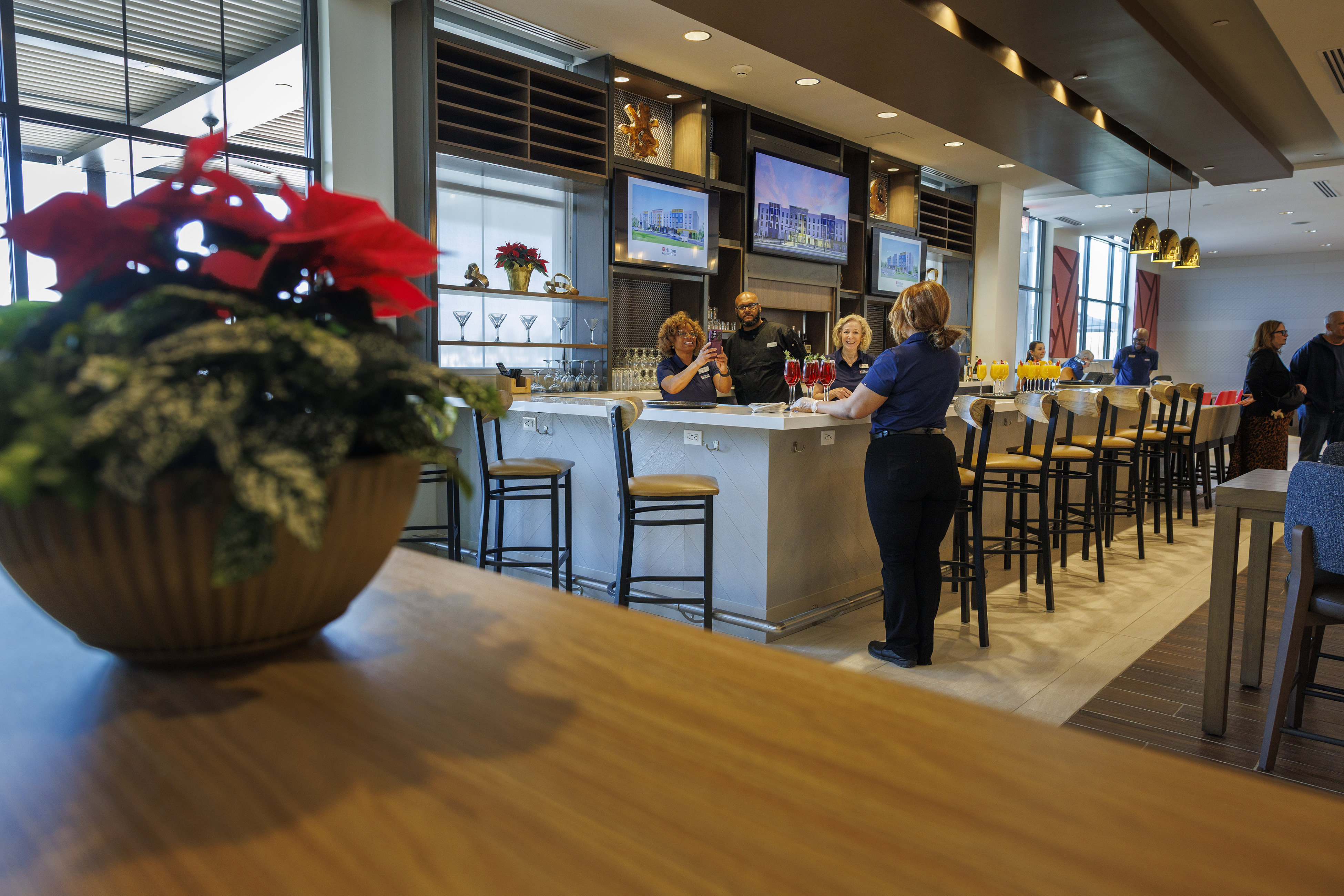
    The hotel features app-to-room device integration, mobile key and contactless check-in, meeting and banquet spaces, an outdoor patio with fire pits, a fitness center, and the Garden Grill, a restaurant serving “American cuisine with local flair” that will be open to the public.

    The hotel is long awaited, borne from a yearslong planning process and delayed by pandemic-era construction slowdowns. On Tuesday, attendees expressed gratitude that what was once an economic dream for the township was finally becoming reality.

    The Hilton marks an important expansion of the collar county’s tourism economy, according to Delaware County’s major economic stakeholders. And as far as tourism in Delco, they say, it’s only up from here.

    The bar area off of the lobby at the new Hilton Garden Inn of Middletown Township on Tuesday, Dec. 16, 2025.

    Delaware County hosted 4.5 million visitors in 2024, according to Steve Bryne, executive director of Visit Delco. Those visitors spent $860 million, generated $1.2 billion in economic impact, and sustained 13,000 jobs. In 2025, the county is on track to sell more than one million hotel room nights for the first time in its history.

    Representatives from the Hilton say it created 200 construction jobs and 40 new hospitality jobs.

    Bryne said tourism to Delaware County is a “combination of everything.” The county doesn’t have one major anchor (like Longwood Gardens in Chester County, for example). Rather, it’s home to 12 colleges and universities, major corporate employers like Wawa, and sports complexes like IceWorks and Subaru Park, home of the Philadelphia Union. That means regular tournaments, business conferences, parents weekends, homecomings, and graduations — events that, collectively, help power the county’s economy.

    Already, Penn State Brandywine, located down the road, has named the Hilton Garden Inn its host hotel.

    Delaware County also gets spillover from visitors to Philadelphia, especially those who want proximity to Philadelphia International Airport.

    The hotel is a property of Metro Philly Management, owned by Burns. Burns’ management company also owns the Courtyard by Marriott in Springfield, the Fairfield Inn & Suites in Broomall, and the Springfield Country Club, as well as numerous grocery stores and restaurants.

    Patrick J. Burns, pictured at Middletown Township’s new Hilton Garden Inn on Tuesday, Dec. 16, 2025. The hotel is owned by Burns’ company, Metro Philly Management.

    Stakeholders lauded the hotel’s location in a central, and rapidly developing, part of Middletown Township.

    The former Franklin Mint complex, now home to the Hilton, has been a hotbed of development in Middletown Township since the mint shuttered in 2004. Two newer housing developments — Pond’s Edge and Franklin Station — have added over 450 units of housing to the site. Middletown Township outpaced its neighbors — Media, Nether Providence, and Upper Providence — in population growth in 2024.

    “Middletown Township is such a vital corridor of Delaware County,” Burns said.

    The hotel’s opening coincides with major events coming to the region in the coming months: semiquincentennial celebrations in Philadelphia and in Delco, the FIFA World Cup, the PGA Championship at Aronimink Golf Club, and the MLB All-Star Game. For the PGA Championship alone, Delaware County is expecting 200,000 visitors and $125 million in economic impact.

    This suburban content is produced with support from the Leslie Miller and Richard Worley Foundation and The Lenfest Institute for Journalism. Editorial content is created independently of the project donors. Gifts to support The Inquirer’s high-impact journalism can be made at inquirer.com/donate. A list of Lenfest Institute donors can be found at lenfestinstitute.org/supporters.
  • Cherry Hill Santa tour brings Christmas cheer to a snow-dusted South Jersey

    Cherry Hill Santa tour brings Christmas cheer to a snow-dusted South Jersey

    ’Twas a few days before Christmas, and all through Cherry Hill, children were running outside with no jackets to chase Santa, and sometimes with no shoes.

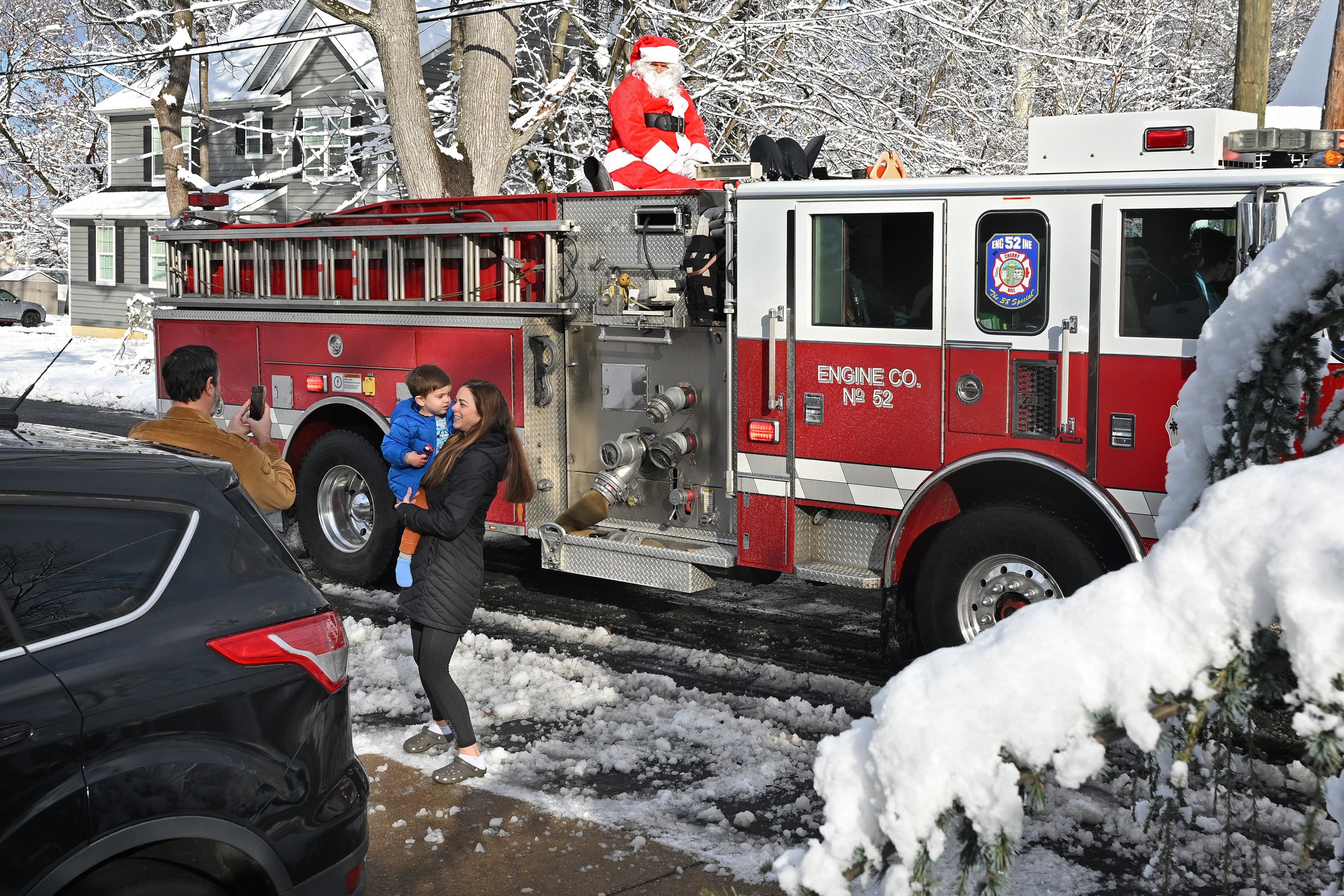
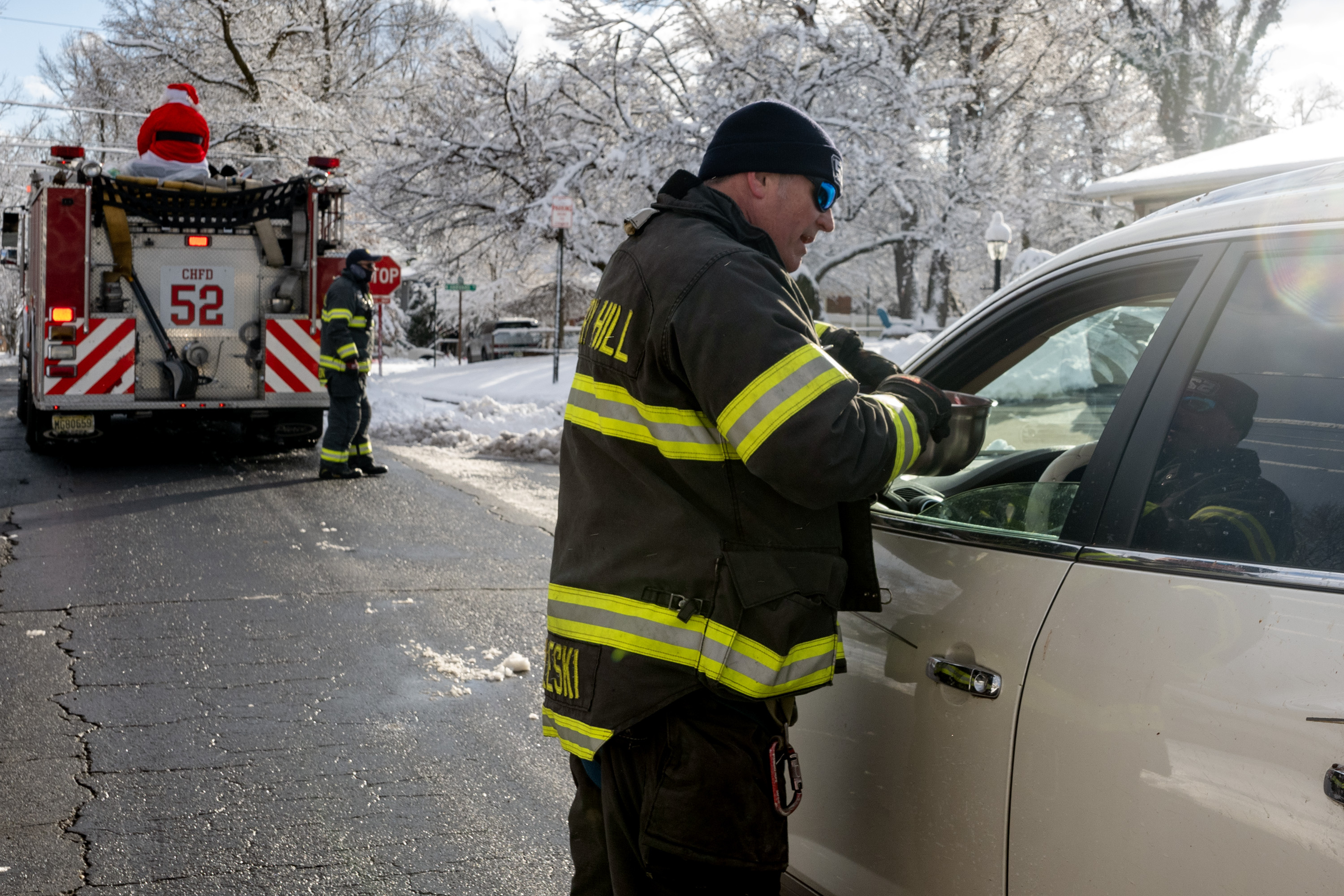
    Strapped to the top of a Cherry Hill fire truck, Santa Claus made his rounds through the South Jersey community on Sunday, waving as he passed through condominiums decorated for Christmas and snow-dusted cul-de-sacs. Santa’s firefighter escorts handed out candy canes and holiday greetings as Christmas cheer warmed the frigid township.

    “There’s nothing better than when you pull around the block with Santa on the roof,” said Jim Aleski, a Cherry Hill Fire Department lieutenant.

    Each December, Santa makes a special trip to Cherry Hill, meticulously visiting every street in the township over the course of the department’s multiday Santa Tour. A fresh coat of rare December snow made for a particularly picturesque scene over the weekend, when kids, parents, and dogs chased down the fire truck to get a coveted glimpse of St. Nick.

    Mark Yakovich, 3, and his dad, Ed Yakovich, 44, flagged down the fire truck from their driveway as if they were hailing a cab. Mark, the toddler, is very into trains at the moment. Luckily, fire trucks remain pretty high on his list (specifically when they’re associated with Marshall, the Dalmatian puppy fire marshal in PAW Patrol). Holding two candy canes and a toy train, Mark eyed the fire truck with glee, and a healthy skepticism, from the comfort of his dad’s arms.

    Though Ed Yakovich said they are still “figuring out the family traditions with the new little guy,” seeing Santa was at the top of their December to-do list.

    At the Burrough’s Mill subdivision, Andrew Lee said he and his family wait for Santa every year. A bit of Christmas light amid so much darkness in the world was a welcome respite this time around, he said.

    “Santa brings the spirit,” Lee said.

    What is Lee’s son, Makai, 10, asking for this Christmas? An Xbox, Roblox, and more Roblox.

    Ed Yakovich takes a photo of his wife Kendra McGarvey with their son Mark Yakovich, 3, as Santa, leaves after stopping at their home.

    As the firefighting crew and its guest of honor wound through the township, delighted residents waved and cheered, stopped for selfies, and honked in appreciation. One resident ran out to gift a box of brownies to the firefighters.

    Aleski said no one can quite pinpoint when the Santa Tour began, but residents say they remember the tradition happening as far back as the 1960s.

    Archives show Santa visiting South Jersey via fire truck as early as 1931, when he distributed gifts to the children of Barrington on Christmas Day.

    Sandy Chase, 54, said she remembers a Santa Tour from her childhood in northern New Jersey.

    “This is a big Jersey thing,” she said.

    Nicole Gaunt, 31, has lived in Cherry Hill her whole life. She and her daughter Khaos, 8, were out playing in the snow when Santa rounded the corner.

    Gaunt said the duo were prepared to see the big guy.

    “We’ve chased him down before,” she added.

    Three-year-old Michele Peruffo pauses as firefighter Sam Harrison (left) walks behind a fire truck with Santa through the neighborhood.

    Aleski said nothing drives community engagement like the Santa Tour. Each year, his department gets dozens of calls, emails, and social media inquiries about when Santa will pass by each house.

    Though the department is meticulous in hitting every block, it’s a fire department first, and emergency operations supersede Santa. Santa has shown up at more than a few unexpected emergencies during tours past.

    The Santa Tour in Cherry Hill will continue over the next few days. To see when Santa is visiting each neighborhood, explore this interactive map.

    Firefighter Lt. Jim Aleski gives candy canes to a driver “stuck” behind the Santa fire truck.

    This suburban content is produced with support from the Leslie Miller and Richard Worley Foundation and The Lenfest Institute for Journalism. Editorial content is created independently of the project donors. Gifts to support The Inquirer’s high-impact journalism can be made at inquirer.com/donate. A list of Lenfest Institute donors can be found at lenfestinstitute.org/supporters.

  • ‘Everything is up for consideration’ as Wallingford-Swarthmore tackles $2.6 million budget deficit

    ‘Everything is up for consideration’ as Wallingford-Swarthmore tackles $2.6 million budget deficit

    Standing before a room full of parents, administrators, and taxpayers on Monday morning, Wallingford-Swarthmore School District Superintendent Russell Johnston opened the conversation: “None of us is as smart as all of us.”

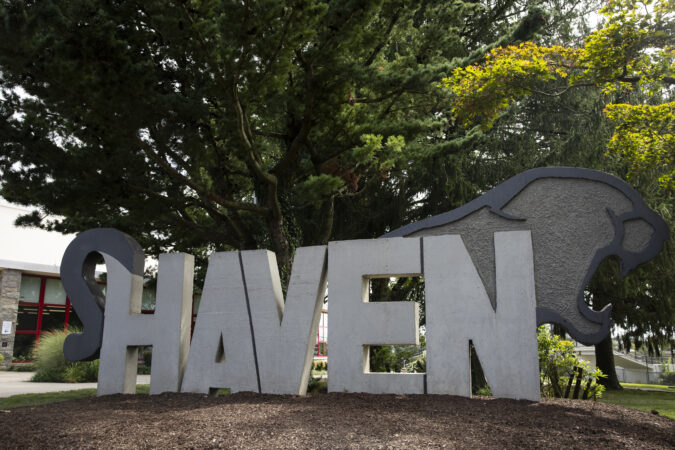
    At the listening session at Strath Haven Middle School, Johnston and members of the Wallingford-Swarthmore administration took suggestions from the public and laid out the district’s dire budget issues, which came into the public eye at a board meeting last month.

    The main message Johnston came to deliver: As Wallingford-Swarthmore works to cut its budget, everything is on the table, no idea is too big, and no cut is too small.

    “None of this is easy and, like I said, everything is up for consideration right now,” Johnston said, emphasizing that the district is “turning over every stone” and is eager to hear good ideas.

    The Wallingford-Swarthmore School District is facing a $2.6 million budget deficit for the 2027-28 school year. Administrators say the shortfall is due to a combination of factors, including runaway spending, rising staffing costs, a stagnant revenue base, and costly infrastructure repairs, which are needed due to years of deferred maintenance.

    At the community meeting (which was the first of two sessions that took place on Monday), Johnston and colleagues broke down expenses related to staffing, transportation, special services, curriculum, and the district’s long-range capital plan, which was approved in June.

    The conversation stretched across the big picture and the nitty-gritty.

    How often should classrooms be deep-cleaned? How important is renovating the swimming pool? Should the district run late buses for students in after-school clubs? Could the number of district administrators be reduced?

    Suzanne Herron, a parent of young children in the district, said the meeting felt “thoughtful and transparent.”

    “I walked out of there feeling pretty confident that they were going to think about the right things,” Herron said.

    Johnston took the helm of Wallingford-Swarthmore in May, closing an embattled chapter for the Delaware County school district. The district parted ways with its former superintendent, Marseille Wagner, with a $330,000 payout in August 2024. Wagner was accused of spending excessively on administrative initiatives and facilitating an unhealthy work environment for staff, including pitting staffers against one another and dismissing efforts for consensus building.

    The district and Wagner said in a statement at the time that they had “mutually agreed to amicably end their contractual agreement.”

    Wagner’s tenure hung over the conversation at Strath Haven Middle School. Attendees asked how many administrators had been added under the prior superintendent and how the administrator-to-student ratio compared with neighboring districts (administrators said they didn’t have exact numbers off the top of their heads). One parent said that while she was grateful for the open discussion, she struggled to understand how the district got to such a dire place.

    Parents also raised concerns that a disconnect remains between school needs and what taxpayers, especially those without children in the district, see as wasteful spending

    In contrast to neighboring districts like Rose Tree Media and Radnor, which are home to a mix of residential and commercial properties that feed their tax bases, Wallingford-Swarthmore is small and largely residential. This means its school district tax base is powered almost completely by homeowners, many of whom feel stretched thin by the growing tax burden. Swarthmore College, a major presence in the borough, pays limited taxes as a 501(c)3 nonprofit.

    On top of local taxes, Delaware County is expected to increase residential property taxes by 19% for next year. That’s in addition to the 23% increase the county approved for 2025.

    Joyce Federman, an attendee who recently moved to the area and does not have children in the school district, said she has been “staggered” by the amount of school taxes she pays.

    “My tax burden is unbearable,” she added.

    District officials emphasized that there will be continued opportunities for feedback as the budget process continues. The school board finance committee is set to present a potential budget reallocation strategy on Tuesday, and the board is set to vote on reallocation expectations on Dec. 22. A budget must be adopted by June.

    This suburban content is produced with support from the Leslie Miller and Richard Worley Foundation and The Lenfest Institute for Journalism. Editorial content is created independently of the project donors. Gifts to support The Inquirer’s high-impact journalism can be made at inquirer.com/donate. A list of Lenfest Institute donors can be found at lenfestinstitute.org/supporters.
  • A driver fatally struck a man crossing a roadway in Cherry Hill

    A driver fatally struck a man crossing a roadway in Cherry Hill

    A driver struck and killed a man who was crossing a street in Cherry Hill on Monday night.

    Cherry Hill resident Gerald S. Yashinsky, 51, was crossing Haddonfield Road near Yale Avenue around 6:41 p.m. Monday when the driver of a northbound vehicle struck him, according to the Cherry Hill Police Department. Law enforcement officers, firefighters, and EMS personnel responded and provided medical aid.

    Yashinsky was later pronounced dead.

    The driver remained at the scene and was cooperating with investigators.

    No additional injuries were reported.

    The crash remains under investigation by the Cherry Hill Police Department, the Camden County Prosecutor’s Office, and the medical examiner’s office.

    Anyone who witnessed the incident or has information is encouraged to contact Cherry Hill Police Officer Geoffrey Byrne at 856-432-8859 or traffic@cherryhillpolice.com.

  • These Wynnewood residents are building a Village to help Lower Merion’s older adults age in place

    These Wynnewood residents are building a Village to help Lower Merion’s older adults age in place

    They say it takes a village to raise a child. But what about to age in place?

    More than ever, older adults want to age in their homes. According to a 2024 survey by AARP, 75% of adults ages 50 and over want to stay in their homes as they get older, and 73% want to stay in their communities.

    Economic and logistical barriers, however, can make aging in place difficult. Single-family homes in suburban neighborhoods can be isolating for older adults, especially those who don’t drive.

    Moving into a retirement community with built-in care and socialization, on the other hand, can be expensive. This paradigm often forces older adults to make difficult decisions about if, and how, they can age in their homes.

    To combat these challenges, a group of Lower Merion residents is building the Lower Merion Village, a local chapter of the nationwide Village to Village Network. The network seeks to “change the paradigm of aging” by connecting older adults to social events, transportation, household help, and other services while keeping them in the neighborhoods they know and love.

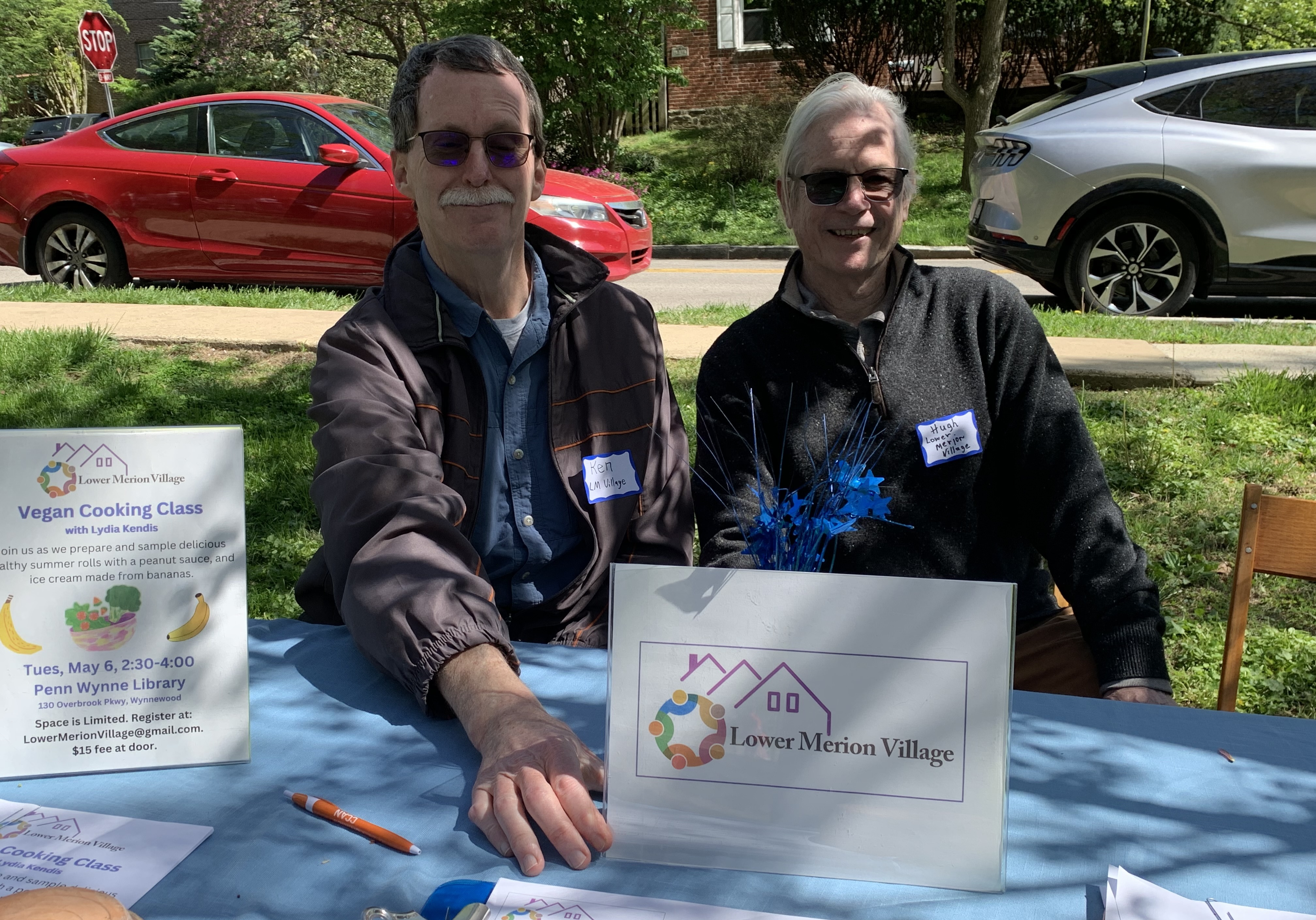
    Lower Merion Village volunteers tabling at an Earth Day celebration in Wynnewood Valley Park in April.

    Bonnie Asher, a member of the Lower Merion Village’s program committee, got introduced to the village model through her mother, who lived in her suburban Maryland home until her death at 99.

    Asher remembers worrying about her mother, especially as she got older and driving became a challenge. Getting involved in a village changed her mom’s life. Suddenly, she made new friends, got rides to the doctor’s office, and signed up for lectures, which she brought Asher to when she visited.

    “Those connections were just really important,” Asher said.

    The Village to Village Network is a national nonprofit that originated in Boston and has since spread from Fairbanks, Alaska, to upstate New York. The network provides guidance and resources to local chapters, which cater to older adults’ needs on a hyperlocal level.

    Villages are membership-driven, self-governing organizations that are run by volunteers, and, at times, have a small paid staff.

    There are five existing villages in the Philadelphia region: Penn’s Village (Center City), Village on the Ridge (Roxborough), East Falls Village, Shtetl 2.0 (Northwest Philly), and the Northwest Village Network (Northwest Philly).

    In 2023, a group of neighbors in Wynnewood began tossing around the idea of starting a village. One conversation turned to a few gatherings at a neighbor’s house, then a monthly meeting at the library.

    As the Wynnewood group dreamed up their village, its members got connected with Sara Crimm, also a Wynnewood resident and the founder of Families CCAN, a nonprofit focused on adults with disabilities.

    Crimm saw the village as an opportunity to create a strong community infrastructure for both older adults and people with disabilities who want to stay, and thrive, in Lower Merion. Crimm met with the village organizers, and the newly formed coalition quickly got to work.

    In spring 2024, Families CCAN received around $21,000 in American Rescue Plan (ARP) funds as part of Lower Merion Township’s ARP Non-Profit Vitality Grant Program. The funds were earmarked to help get the village off the ground, and most of the grant money went to pay Crimm’s salary as its first and only staff member.

    With that foundation, the village has launched a growing slate of social events as it works to establish its official nonprofit structure. The group takes weekly walks, perusing the Wynnewood Valley Park Sensory Garden or the local fall foliage. They’ve baked challah with Jewish Family and Children’s Service of Greater Philadelphia and hosted lectures — last month’s was on “ethical wills.” They meet monthly for coffee at Narberth’s GET Cafe.

    When Asher moved to Lower Merion, her kids were already out of school, so she missed out on the opportunity to make friends through her children’s activities.

    “One of the things that I’ve already gotten from the experience is making new friends. At this age, it’s just amazing,” said Asher, 74.

    With regular lectures, walks, volunteer commitments, and lunches, Asher said with a laugh, “I got kind of busy.”

    “We’re safer living in communities that are connected,” Crimm said, noting that many of the village programs are designed to build social connections and ward off the loneliness and depression that can sneak into older adulthood.

    The Lower Merion Village is still in its infancy. It’s not officially accepting members yet, and Crimm is working to build a dues structure, create a website, and establish the organization as a 501(c)3 nonprofit.

    The Lower Merion Village plans to charge an individual membership rate of $125 per year and a household rate of $200 per year. The village hopes to provide a scholarship option down the road for people who can’t afford it. The membership will come with access to all of the village’s programs, as well as to a network of volunteers who can help with household tasks, give rides, and troubleshoot technology.

    Transportation is a particularly difficult issue for older people in Lower Merion, Crimm said. While SEPTA can take people into Center City or out to Norristown, getting around within the township can be difficult for people. Rideshares like Uber offer a temporary, but costly, solution.

    Crimm noted that Lower Merion’s village will be less expensive than neighboring villages and assisted living communities. (Penn’s Village members pay $600 annually to gain access to services, and a one-bedroom apartment at Sunrise of Haverford, a senior living community that offers healthcare services, starts at $3,770 per month).

    When asked about the misconceptions around aging, Crimm said there’s a pervasive ageism in how we see older adults’ wants and needs.

    “These are people who are so rich in experience, and they have so much to give back,” she said. “Let’s support people to stay in their neighborhoods and to make those neighborhoods richer and stronger.”

    Those interested in getting involved in the Lower Merion Village can email lowermerionvillage@gmail.com.

  • In search of a crafty holiday gift? Here’s where to look in Lower Merion.

    In search of a crafty holiday gift? Here’s where to look in Lower Merion.

    The jingle bells are ringing, the Hanukkah party guest list is filling up, and you still don’t have a present for the coolest, artsiest person on your shopping list.

    Looking for a kooky snow globe? Bespoke Eagles memorabilia? An art print unlike any other? Don’t worry! If you’re living on (or traveling to) the Main Line, here’s where you should be shopping for crafty presents.

    Sweet Mabel Gallery

    Narberth’s Sweet Mabel Gallery is an iconic local business, run by husband-and-wife duo David Stehman and Tracy Tumolo. Sweet Mabel got its start in 2005 when Tumolo took over her grandfather’s former barbershop in Narberth. She and Stehman, who were graphic designers, decided to turn the barbershop into a local gallery and store stocked with colorful American and Canadian folk art.

    To celebrate the shop’s 20th anniversary, Sweet Mabel is displaying and selling works from local artists, all under $100. An anniversary ceremony will be held on Dec. 5 from 6-9 p.m. at the storefront on Haverford Avenue. Plus, if you find the perfect gift, Sweet Mabel will wrap it for free.

    Ardmore Holiday Market

    Art Star, a Philadelphia gallery and boutique, is bringing a collection of bespoke craft vendors to Ardmore for two weekends this month. The Ardmore Holiday Market, organized in partnership with the Ardmore Initiative, will take place Dec. 6 and 13 from 11 a.m. to 3 p.m. at Schauffele Plaza.

    Ardmore Holiday Market attendees can look out for Philly-area artists like Lauren Delk Ceramics, Mahika Market, Fwens, and Leann the Illustrator. Peruse the booths, listen to live music, and, if you have time, stop by Suburban Square for a free photo with Santa from 11 a.m. to 2 p.m.

    Past Present Future

    Looking for a funky snow globe? A one-of-a-kind charm necklace? Day of the Dead inspired earrings? Ardmore’s Past Present Future is a portal into the world of eclectic antiques and crafts, from embroidered cat-themed pillows to hand-painted ceramic dishes. Sherry Tillman started Past Present Future in Philadelphia in 1976, drawing on her “long-held ties to the local arts and crafts community” to procure unique goods.

    Past Present Future is open Mondays through Saturdays from 11 a.m. to 6 p.m. and Sundays from noon to 4 p.m. (or later — “If we are still standing, we are still open,” the shop’s Facebook page reads).

    Something Different by Eric

    Eric Wells‘ store, Something Different by Eric, isn’t just a gift shop, it’s a hub for people with disabilities on the Main Line.

    Wells and his mom, Bernadette Wheeler, started the Bryn Mawr store in 2015. The nonprofit shop is staffed entirely by volunteers, including Haverford College students and special education advocates. Wheeler has said Something Different by Eric is part of a larger effort to “educate the community” and help people “see disabled individuals in action.”

    In addition to selling unique housewares, Philly- and Main Line-themed trinkets, sports memorabilia, baby gifts, and greeting cards, Something Different by Eric is stocked with books about mental and physical disabilities.

    The shop is open from noon to 8 p.m. on Fridays and Saturdays and from 1 to 5 p.m. on Sundays.

    This suburban content is produced with support from the Leslie Miller and Richard Worley Foundation and The Lenfest Institute for Journalism. Editorial content is created independently of the project donors. Gifts to support The Inquirer’s high-impact journalism can be made at inquirer.com/donate. A list of Lenfest Institute donors can be found at lenfestinstitute.org/supporters.

  • Swarthmore College hopes to redevelop Cunningham Fields as its athletic infrastructure ages

    Swarthmore College hopes to redevelop Cunningham Fields as its athletic infrastructure ages

    As Swarthmore College embarks on an ambitious campaign to update its campus infrastructure, plans for a redeveloped athletic complex are taking shape. Under the college’s proposal, Cunningham Fields, a set of playing fields located off College Avenue and North Chester Road, would be redesigned to include updated grass and turf fields, new tennis courts, spectator seating, and a pavilion with restrooms and team meeting areas.

    As the lengthy development process between the borough and the college continues to play out, here’s what you need to know about the proposed redesign.

    What is Cunningham Fields?

    Cunningham Fields is a set of athletic fields located on the Swarthmore College campus, off College Avenue and North Chester Road. The complex currently includes four grass fields, six tennis courts, locker rooms, and restrooms. The fields are used for lacrosse, field hockey, soccer, rugby, and Ultimate Frisbee practice. They are open to the public when they are not in use by the college.

    What does the proposed renovation look like?

    The Cunningham Fields redesign proposes the construction of three new sports fields; a pavilion with restrooms, team meeting areas, a training room, and storage; additional spectator viewing areas; and the addition of six tennis courts and relocation of existing tennis courts.

    One all-purpose turf field would be installed for soccer, lacrosse, rugby, Ultimate Frisbee, kickball, and flag football. The all-purpose field would not have lighting, a sound system, or permanent seating.

    A second proposed turf field would be used primarily for field hockey. That field would include spectator seating for up to 160 people, a press box, a scoreboard, a sound system, and lighting, per NCAA regulations. The field may be lit from 4 to 8 p.m., depending on the season, with the option to extend to 10 p.m. one day a week for fall night games. The use of the sound system would be limited to intercollegiate games, which the college says typically occur twice a week during the season.

    A new grass field would be put in primarily for soccer, rugby, and other recreational activities. The field would not have lighting or a sound system, and would be designed as a “quiet and calm environment,” the college says.

    The proposal also includes renovating existing tennis courts and adding six courts, which the college says would allow the men’s and women’s teams to play side by side.

    Why does the college want to renovate Cunningham Fields?

    The Cunningham Fields renovation is part of a larger plan for Swarthmore’s athletic facilities, which the college says are in need of major updates.

    Cunningham Fields currently presents “a unique set of challenges,” according to the college. The natural grass fields require significant maintenance. Its tennis courts have poor drainage and no spectator seats and are split between two locations, creating scheduling conflicts during meets. In addition to Cunningham Fields, the college says, Swarthmore’s Lamb-Miller Field House is “at the end of its usable life” and no longer meets NCAA requirements.

    A spokesperson for the college said in a statement that the proposed development is “an exciting project designed to meet the needs of our students while also serving as a resource for the broader Swarthmore College and Borough community.”

    The proposed renovation follows the 2024 adoption of “Swarthmore Forward,” a strategic plan that articulates the college’s vision for nurturing “all aspects” of students’ well-being, including health and wellness.

    How has the Cunningham Fields proposal changed over time?

    After receiving community feedback, the college says it has made significant changes to its initial plans and is “committed to preserving a true parklike character” through modern lighting and sound technology, quiet hours, deliberate scheduling, and environmentally responsible materials, among other measures.

    While the college initially planned to put lighting on all of the new fields, it now plans to light only the tennis courts and field hockey field. Plans for a new fitness court have been eliminated. Spectator seating and new netting have been pared back.

    To address the complaint of buses waiting along College Avenue, the South Cunningham Lot would be used as the main entry point, and drop-off and pickup would take place at a dedicated area near the parking lot entrance off South Chester Road.

    Has the borough approved the renovations?

    Not yet. Swarthmore College is in the middle of a development process with the borough that could take months, or longer.

    When property owners want to build something that does not comply with the existing zoning code (like the Cunningham Fields proposal), they can go through one of two avenues. Developers can either request that a municipality rezone its specific parcel of land, or propose a text amendment, which changes the municipality’s zoning code at-large.

    The college has gone the latter route, requesting an amendment to the borough’s zoning code. As proposed by the college, the amendment would add various permitted uses to the current IN-B Institutional District code, including changes that would affect the allowance of tennis courts, walking paths, safety netting, and scoreboards.

    Before a text amendment can be passed, it has to go through the borough’s planning and zoning committee, borough council, and planning commission. At a meeting on Dec. 1, the Swarthmore Borough Council discussed traffic, environmental impacts, and noise issues, raising questions like how late the college could use its field lights and where and when spectators could park for games. The council plans to send a list of questions and concerns to the planning commission by the end of the month. The commission will then study those issues before returning with a recommendation.

    If the zoning amendment is approved, the college’s development proposal would then have to go through an approval process with the county and borough, introducing another set of public meetings.

    How do residents feel?

    At a Nov. 20 meeting of Swarthmore’s planning and zoning commission, fears about changing neighborhood character and environmental impacts dominated public comment, according to the Swarthmorean, a community newspaper. Some residents expressed concerns about disruptive late-night athletic games, while others questioned the college’s decision to pursue a text amendment rather than a zone change.

    In its statement, the college said it looks forward to “continued engagement with our neighbors and the Borough as the process moves forward and to creating a space that benefits both the College and Swarthmore residents.”

    This suburban content is produced with support from the Leslie Miller and Richard Worley Foundation and The Lenfest Institute for Journalism. Editorial content is created independently of the project donors. Gifts to support The Inquirer’s high-impact journalism can be made at inquirer.com/donate. A list of Lenfest Institute donors can be found at lenfestinstitute.org/supporters.
  • ‘Job performance and nothing else’ led to Cherry Hill administrator’s firing, court filings claim

    ‘Job performance and nothing else’ led to Cherry Hill administrator’s firing, court filings claim

    A former Cherry Hill principal claims he did not engage in discriminatory behavior or retaliate against a former employee following a lawsuit filed earlier this year against administrators in the South Jersey school district.

    In court documents filed last month, legal counsel for Daniel Finkle, the former principal of Cherry Hill High School East, denies claims made by former assistant principal David Francis-Maurer, who sued the school district and Finkle in September over alleged discrimination and retaliation.

    Francis-Maurer’s lawsuit claims that top Cherry Hill officials, including Finkle and Superintendent Kwame Morton, “unlawfully conspired with each other” to subject Francis-Maurer to ”retaliatory conduct” and “severe, pervasive, and continuing instances of discrimination” based on his sexual orientation and religion (Francis-Maurer is gay and practices Judaism). Francis-Maurer also claims that administrators skirted student drug testing and mental health protocols. At the crux of Francis-Maurer’s lawsuit is the allegation that he was wrongfully terminated in May for blowing the whistle on Finkle’s behavior.

    Legal counsel for Finkle says Francis-Maurer’s job performance, not whistleblowing, led to his firing.

    According to filings from Finkle’s attorneys, Francis-Maurer was argumentative and made “egregious errors” as assistant principal. Specifically, they contend, Francis-Maurer was allegedly unresponsive to feedback and unwilling to collaborate with colleagues, and he failed to complete mandatory performance reviews of employees.

    Finkle served as the principal of Cherry Hill High School East from August 2024 through his resignation in September. He was set to become principal of Hightstown High School in the East Windsor Regional School District this fall until the district rescinded its offer.

    Francis-Maurer, called “DFM” by students, was hired in 2023 as an assistant principal at East. His termination in May was met with protest in the community, including a student-led walkout and a contentious public meeting in which students implored the school board to retain Francis-Maurer, calling him a “rare talent” who advocated for their needs. He is currently serving as assistant principal of Central High School in North Philadelphia.

    Court filings by Finkle and the district dispute Francis-Maurer’s telling of numerous events over the course of the 2024-25 school year.

    In Francis-Maurer’s lawsuit, he alleges that Finkle told him to “leave his identities ‘at the door,’” referring to Francis-Maurer’s being gay and practicing Judaism.

    Finkle, who is also openly gay and Jewish, rebuts this, saying that “the insinuation that [Francis-Maurer] could not express this same identity is ludicrous.” Rather, Finkle says, he was explaining that when he walks through the school doors, he “does not assert any other identity than a high school principal” as his job is to “be there for every student regardless of their beliefs.” When Francis-Maurer asked if he was required to take the same approach, Finkle says he “told him no” but said that it has been effective, which Finkle described as an act of mentorship.

    Francis-Maurer’s lawsuit claims that Finkle appeared in a video “trivializing” and “mocking” gender identity. Finkle was featured in a video published by the student government association lip-syncing to a sound bite that stated, “My pronouns are U.S.A.” Francis-Maurer says that parents complained to him about the video, and that when he confronted Finkle, the principal was “dismissive” and brushed him off.

    In Finkle’s telling, he was “ignorant at the time” and didn’t know the sound bite was “anti-trans.” As soon as he was made aware of the video’s connotations, Finkle says, he immediately asked the student to take it down, which he did. Finkle says he then emailed the school’s Gay Straight Alliance adviser to take ownership of the incident and express that it was “never his intention to make any group feel marginalized.”

    Finkle also pushed back against Francis-Maurer’s characterization of his handling of sensitive student issues.

    Francis-Maurer claims that when a student who appeared to be under the influence was referred for drug testing, testing protocols were skirted, and that Finkle said, “I know the student doesn’t take drugs.”

    According to Finkle’s court filings, a teacher’s suspicion that a student might be under the influence is not enough to constitute required drug testing. That particular student was not tested for drugs because a parent refused the test, the filing claims.

    Francis-Maurer’s lawsuit also claims that after a student reported suicidal thoughts to a club adviser, the adviser texted the student continuously for five days without a response. Francis-Maurer says he raised concerns that an adviser was texting with a student from a personal phone, but “no disciplinary action was taken.”

    Finkle, on the other hand, says that the student’s parent was immediately contacted and that Finkle met with the club adviser to explain that he could not use his personal cell phone to contact students. Finkle was informed that the adviser did not have a school email and worked with the district technology team to get him one. Finkle states that Francis-Maurer, who was then the supervisor of the club, “should have been more aware of the situation and addressed it before an issue arose.”

    Francis-Maurer says that “the very next day” after he submitted a detailed complaint to top administrators about Finkle, outlining those concerns, Francis-Maurer was rated “partially effective” on parts of his performance review for the first time and was later placed on a performance improvement plan, despite a successful track record.

    In a separate filing, attorneys for the district say this did not happen on “the very next day.” Rather, they say, Francis-Maurer submitted his complaint on Feb. 24 and the district submitted his performance evaluation on March 17.

    Attorneys for Francis-Maurer describe his work as successful, citing an outpouring of support after his contract was not renewed. In Finkle’s characterization, however, Francis-Maurer would “argue incessantly” when told to complete a task and made “egregious errors” in his failure to properly evaluate employees.

    Francis-Maurer’s conduct “demonstrated a lack of alignment with District and building priorities and an unwillingness to fully support the collective vision of the administrative team at High School East,” court filings from Finkle’s legal counsel claim.

    This suburban content is produced with support from the Leslie Miller and Richard Worley Foundation and The Lenfest Institute for Journalism. Editorial content is created independently of the project donors. Gifts to support The Inquirer’s high-impact journalism can be made at inquirer.com/donate. A list of Lenfest Institute donors can be found at lenfestinstitute.org/supporters.
  • Holiday traditions, more than deals, draw Philly-area Black Friday shoppers to Cherry Hill Mall

    Holiday traditions, more than deals, draw Philly-area Black Friday shoppers to Cherry Hill Mall

    Stephanie Greenleaf has Black Friday down to a science.

    Every year, the Moorestown resident hosts Thanksgiving. The next morning, she, her sister-in-law, and her mother hit the Cherry Hill Mall early. They start at Nordstrom, then head to Soma for pajamas, Urban Outfitters for her teenagers, and anime stores for the younger kids.

    “We have it down,” she said, standing next to a Christmas ornament display around 8:30 a.m.

    “As my mom always says, ‘I just want to be out in it,’” she added. “It’s not the same when you’re sitting on your couch.”

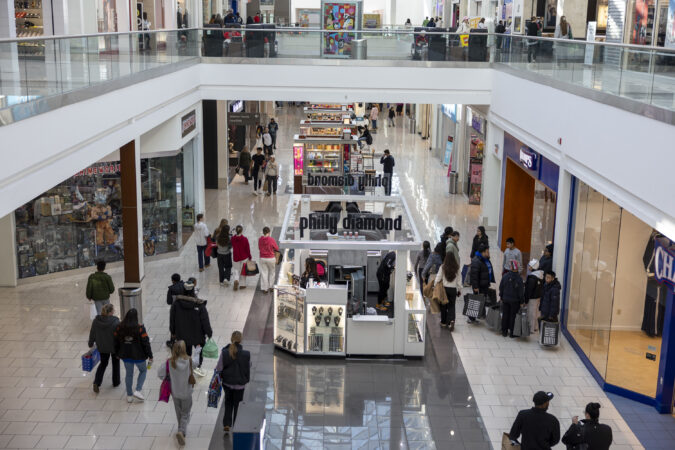
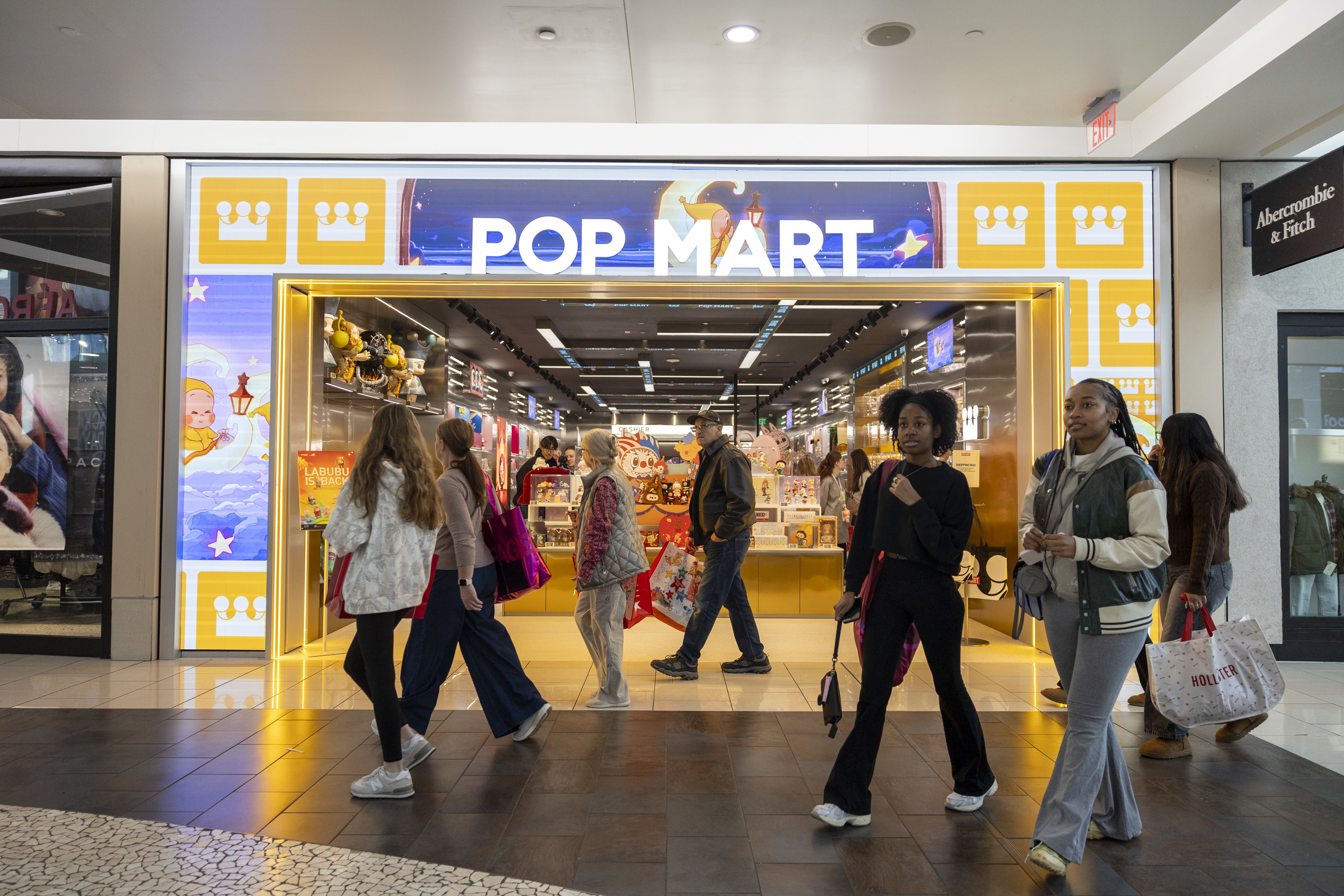
    Despite inflation, rising prices, and the omnipresent e-commerce ecosystem, a familiar Black Friday hustle was in the air at the Cherry Hill Mall on Friday morning. Shoppers filed into the parking lot early, toting shopping bags and holiday-flavored lattes. Labubus and puffer jackets were displayed in store windows. Teenagers flocked to Abercrombie and Zara.

    While some retailers reported business as usual, others described the South Jersey shopping destination as more subdued than in years past as consumers contend with an uncertain economic landscape and e-commerce giants continue to cut into a market long dominated by malls.

    People walk pass Pop Mart during their shopping on Black Friday at the Cherry Hill Mall in Cherry Hill, N.J., on Friday, Nov. 28.

    Black Friday, then and now

    The term “Black Friday” has Philly origins. Beginning in the 1960s, tourists would descend on Philly the day between Thanksgiving and the annual Saturday Army-Navy football game. Philadelphia police reportedly began calling the day Black Friday after they were forced to work long hours and manage heavy traffic and unruly crowds. Years later, Americans would latch onto the tale that Black Friday got its name because it was the day retailers would move from being “in the red” to being “in the black” (finally making a profit after running a loss).

    The retail-oriented holiday has morphed over the years from a one-day shopping bonanza to a month of deals. Now, the pervasiveness of e-commerce has muddied the Black Friday tradition, forcing retailers to attract shoppers both online and in stores.

    Barbara Kahn, professor of marketing at the University of Pennsylvania’s Wharton School, calls this an “omni-channel experience.”

    “It’s really more of an integration between both modalities now‚” Kahn said.

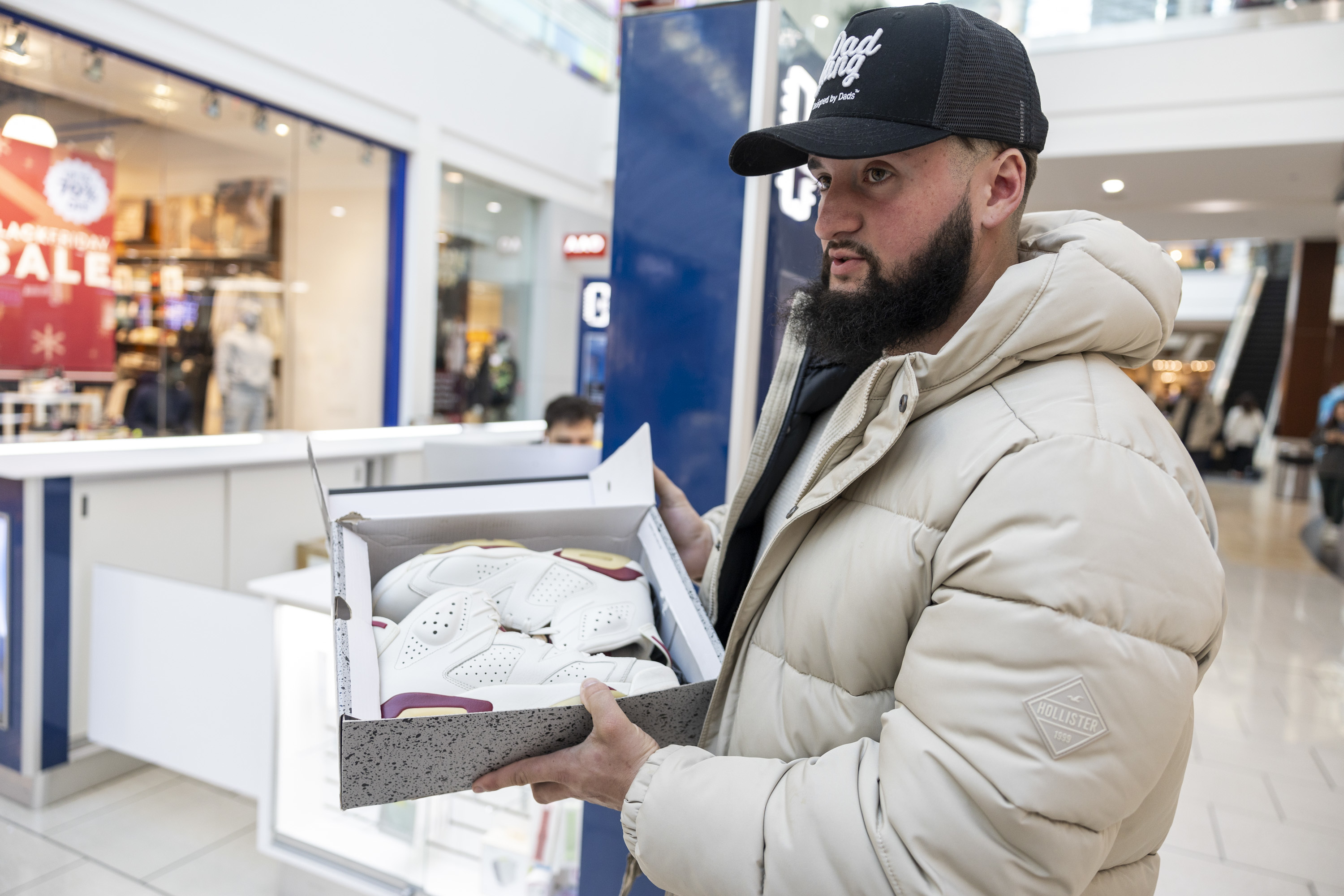
    Daniel Leslie, 23, of Franklinville, N.J., showing off a pair of Maroon Jordan 6’s he bought on Black Friday at the Cherry Hill Mall.

    Two major changes stick out to Kahn. First, the ability to compare prices online (and now with AI) has made shoppers more “price sensitive,” forcing retailers to stay competitive. Second, stores are turning to “experiences” to draw people in through giveaways, events, or exclusive items.

    “Part of what people are shopping for is not necessarily the utility of buying a particular item,” Kahn said. Rather, it’s the experience “wrapped around the actual purchase.”

    Despite these changes, a record number of shoppers were expected to hit stores, and the holiday is still largely understood to be the biggest shopping day of the year.

    Keeping the ‘Black Friday experience’ alive

    Shoppers at the Cherry Hill Mall said they had come out on Black Friday for the nostalgia more than for once-a-year deals.

    Karrim Gordon, 48, said he is “not at all” a regular Black Friday shopper. But, with his young son in tow, the South Philly dad said he wanted to give his kids the true “Black Friday experience.” They got to the mall when it opened at 7 a.m. and hoped to hit Psycho Bunny for his son, then Aéropostale and Pop Mart for his daughter.

    Daniel Leslie, 23, of Franklinville, said an Instagram ad for a sneaker deal had caught his eye. He was the first in line at a shoe store Friday morning, walking away with a pair of Timberland boots and a pair of Nike Air Force 1 sneakers for $20 each.

    Was economic anxiety curbing his holiday shopping? Not really, Leslie said.

    “The deals are just too good to pass up.”

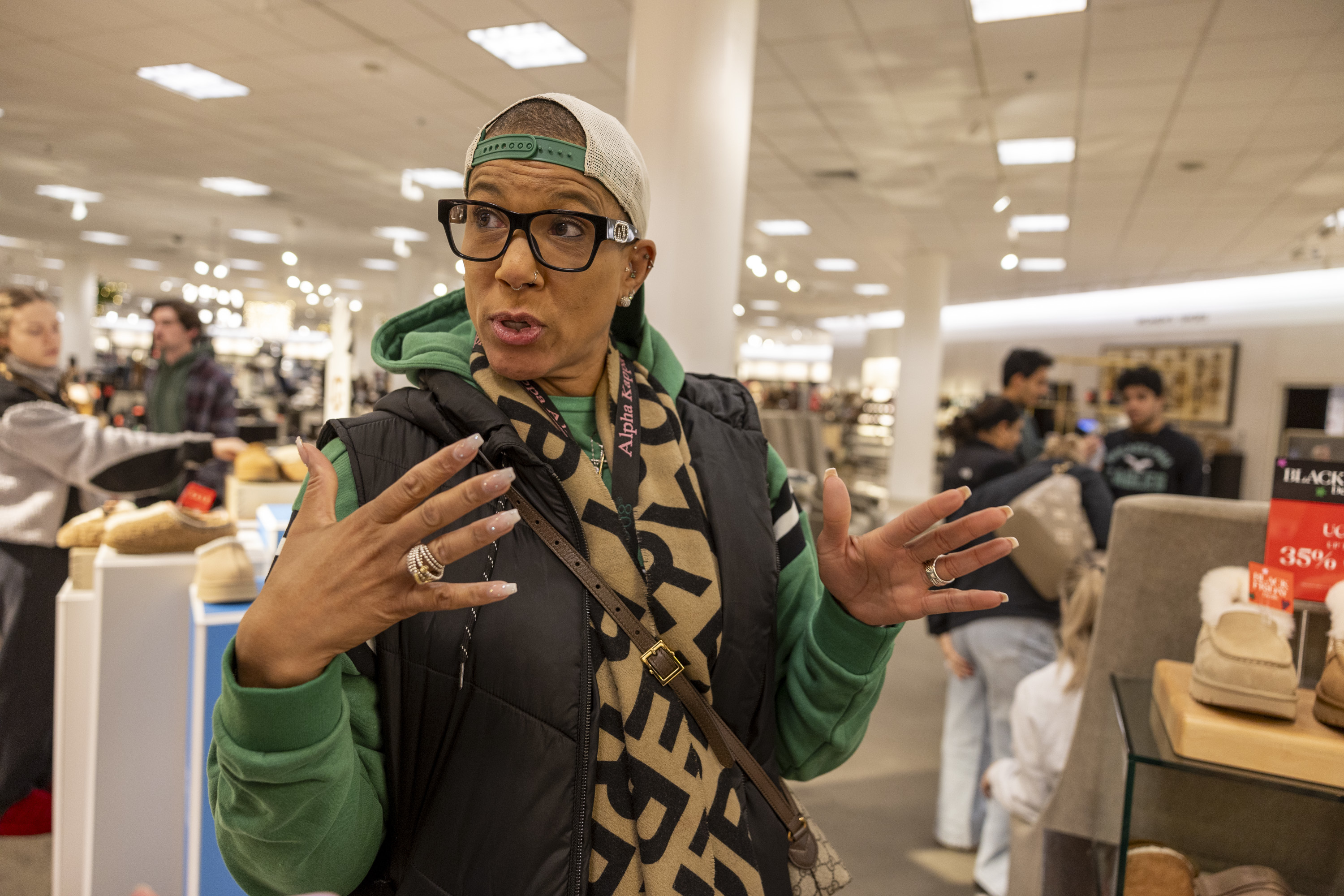
    Alicia Hall, of Philadelphia, shops at Nordstrom at the Cherry Hill Mall on Friday, Nov. 28. Hall is a regular at the mall, but said the Black Friday shopping experience isn’t what it used to be.

    Economic doom and gloom didn’t deter Alicia Hall, 54, from hitting the mall, either.

    Hall is a Cherry Hill Mall regular, driving over from Philly a few times a month to browse. For years, she would wake up early and wait in line for the big sales. Now, she said, “nothing is open like it used to be.”

    Though she sometimes thinks about looming economic concerns, “retail therapy” remains an important part of her life.

    “I go to work every day, and I work hard,” she said. “I might as well spend it.”

    This suburban content is produced with support from the Leslie Miller and Richard Worley Foundation and The Lenfest Institute for Journalism. Editorial content is created independently of the project donors. Gifts to support The Inquirer’s high-impact journalism can be made at inquirer.com/donate. A list of Lenfest Institute donors can be found at lenfestinstitute.org/supporters.