Category: Business

Business news and market updates

  • Contractor caused construction of the W and Element hotels to go ‘off the rails,’ judge finds

    Contractor caused construction of the W and Element hotels to go ‘off the rails,’ judge finds

    When a Marriott representative visited the construction site of the W Philadelphia hotel in Center City in January 2019, months after the project should have been completed, the concrete floors were so uneven that a pen placed on the ground rolled downhill.

    The construction of Philadelphia’s largest hotel, home of the W and the Element, both part of the Marriott umbrella, began in 2015 and had a strict 2018 deadline for completion. Delays led to an avalanche of nearly 30 lawsuits with the site’s owner, construction contractor, and design company pointing fingers at each other.

    The W, which comprises 295 rooms of the 51-story building, eventually opened in 2021, roughly three years late.

    Bringing to a close 25 of the lawsuits, a Philadelphia judge issued a 69-page memo last week laying out the saga and finding the construction company responsible for the project going “off the rails.”

    Common Pleas Court Judge James Crumlish found that the construction contractor, Tutor Perini Building Corp., subcontracted the concrete work to a company that botched the job. And despite knowing about the problems, which were detrimental to the entire project, Tutor denied the issues for months.

    The judge’s finding comes after trial testimonies that took five months as the parties “turned this litigation into a challenging behemoth that made any effort at resolution impossible,” Crumlish wrote.

    A yearslong saga

    The saga began when Chestlen Development LP, the owner of the site, picked Tutor as the construction manager. The agreement capped the cost of construction at $239 million and required completion within 1,017 days after April 2015.

    An attorney for Tutor did not respond to a request for comment.

    From the outset, Tutor suffered “chronic turnover of its personnel,” the judge wrote, resulting in the loss of “institutional knowledge of key decisions.”

    Tutored subcontracted the concrete work to Thomas P. Carney Inc. Construction, a Bucks County company.

    When a different subcontractor, Ventana DBS LLC, began installing the wall-window systems, they immediately noticed a “big problem,” according to the judge’s memo. In many places the concrete wasn’t level or did not meet the elevation requirements in the design.

    Tutor pushed back, denying that there was a problem, while quietly attempting to grind the edges of the concrete slabs to address the issue.

    While denying the problem, Tutor hired outside advisers to evaluate the concrete work. But they confirmed the problem too.

    Finally, in March 2018, Tutor shared the outside reports that acknowledged Carney’s shoddy concrete work with Chestlen’s representative for the project.

    As summer 2018 began, it was clear that the project would not be completed on deadline.

    In September 2018 Tutor asked Chestlen for an extension, which the owner rejected, saying the request came “months if not years after some of the concrete issues started to become apparent,” according to Crumlish’s memo.

    The remediation of the floor began in April 2019 and was completed in October.

    The sidewalk area of W Philadelphia and Element Philadelphia Hotel under construction, looking northwest along the 1400 block of Chestnut Street July 2, 2019.

    The building finally obtained a certificate of occupancy in April 2021. But Marriott couldn’t open the W until August because over a hundred window vents were inoperable because Tutor failed to follow the design.

    “Tutor knew that the floors did not meet specifications but did not timely disclose its knowledge to Chestlen or consult with it,” Crumlish wrote. The judge further found that Tutor refused to work with contractors to remediate the problems in 2017 and 2018, and proceeded to install interiors over the deficient concrete floors.

    The blame game

    Throughout the litigation, the parties all blamed one another for various problems and aspects of the delay.

    Costs and liens piled up.

    Chestlen paid Tutor $239 million for the construction, accrued over $40 million in damages as set in its contract with Tutor, and paid tens of millions to remediate the floors. The property is “clouded with over $155 million in liens,” according to the judge’s memo.

    Crumlish concluded that Tutor breached its contract when it failed to oversee the concrete work and the window-wall installation, and generally didn’t fulfill its obligations.

    “Every delay in the performance and completion of the project is the responsibility of Tutor and Carney,” the judge said. The judge will decide on the amount of damages following hearings scheduled for January.

    Chestlen’s attorney was unavailable to provide comment. Carney did not respond to a request for comment.

    The W hotel is located where One Meridian Plaza used to be, before that building suffered a devastating fire in 1991 and was finally demolished in 1999.

    Filling the vacant lot, a mere block from City Hall, became a top priority for policymakers during Mayor Michael Nutter’s time in office. The hotel proposal eventually received $75 million in taxpayer support across local, state, and federal funding sources in addition to other legislative assistance.

    The project was developed by Brook Lenfest, son of the former Inquirer owner H.F. “Gerry” Lenfest, whose foundation continues to own the newspaper today.

  • Eli Lilly & Co. is opening a Lilly Gateway Labs biotech incubator in Philadelphia

    Eli Lilly & Co. is opening a Lilly Gateway Labs biotech incubator in Philadelphia

    Philadelphia is the newest destination for Lilly Gateway Labs, an incubator for early-stage biotech companies backed by pharmaceutical giant Eli Lilly & Co., the company announced Wednesday.

    The Center City incubator will be Lilly’s fifth in the United States. Biotech hotbeds Boston, South San Francisco, and San Diego already have them. (South San Francisco has two.) Companies at those locations have raised more than $3 billion from investors since the program started in 2019, Lilly said.

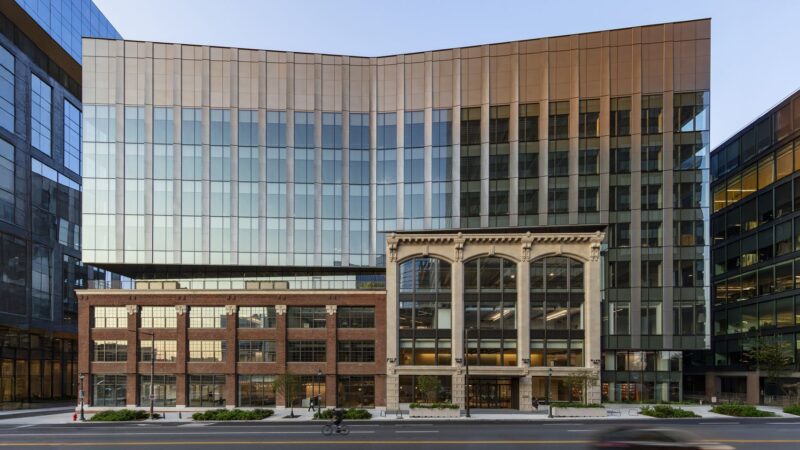
    Lilly’s Philadelphia operation will occupy 44,000 square feet on the first two levels of 2300 Market St. in Center City.

    Lilly expects to house six to eight companies there, aiming to welcome the first startups to the site in the first quarter of next year, said Julie Gilmore, global head of Lilly Gateway Labs. She did not identify prospects.

    Typically, Gateway Labs residents are at the stage of raising their first significant round of capital from investors, called Series A, and are two or three years from clinical testing, she said.

    The arrival of high-profile Lilly, which has seen resounding success with its GLP-1 drugs for diabetes and weight loss, could turn out to be a shot in the arm for a local biotech scene. Philadelphia has a growing biotech sector but has lagged places like Boston, despite the presence of world-class scientists at local research universities. Their work has fueled groundbreaking discoveries in cell and gene therapy, as well as vaccines.

    But Lilly is interested in supporting ideas that go beyond the city’s cell and gene therapy strengths, said Gilmore. Gateway labs is part of Lilly’s Catalyze360 Portfolio Management unit, which provides broad support to fledgling biotech firms, including venture capital.

    “What we like is to go after innovative science. Who are the companies trying to solve really hard problems?” Gilmore said. “And we do know that Philadelphia has had a ton of success in gene therapy and CAR-T and I hope we can find some great companies in that space, but we’re going to be open to other types of innovative science as well.”

    Expanding Philly’s life sciences footprint

    Indianapolis-based Lilly already has a small presence in Philadelphia with Avid Radiopharmaceuticals Inc., a company it acquired in 2010. Avid still operates in University City. Lilly’s chief scientific officer, Daniel Skovronsky, founded Avid in 2004 after receiving a doctorate in neuroscience and a medical degree from the University of Pennsylvania.

    Lilly is interviewing people to lead Philadelphia’s Gateway Labs location. They like to hire people who are familiar with the local universities and venture funds for those jobs, but that’s not all that matters. “We’re also looking for somebody who’s got deep drug development expertise,” Gilmore said.

    Lilly’s incubator adds to the life sciences activity at 23rd and Market Streets.

    Breakthrough Properties, a Los-Angeles-based joint venture of Tishman Speyer and Bellco Capital, announced plans for the eight-story, 225,000 square-foot building in 2022. Last week, Legend Biotech, which is headquartered in Somerset, N.J., celebrated the opening of a new cell therapy research center on the building’s third floor.

    Lilly Gateway Labs companies agree to stay for at least two years, and they can apply for up to another two years, Gilmore said.

    “The goal is, a company moves in and they can just worry about their science, worry about their team, and moving their mission forward, and we try to take care of everything else,” she said.

  • Roblox steps up age checks and groups younger users into age-based chats

    Roblox steps up age checks and groups younger users into age-based chats

    Roblox is stepping up its age-verification system for users who want to chat with other players and implementing age-based chats so kids, teens, and adults will only be able to communicate with people around their own age.

    The moves come as the popular gaming platform continues to face criticism and lawsuits over child safety and a growing number of states and countries are implementing age-verification laws.

    The company had previously announced the age-estimation tool, which is provided by a company called Persona, in July. It requires players to take a video selfie that will be used to estimate their age. Roblox says the videos are deleted after the age check is processed. Users are not required to submit a face scan to use the platform, only if they want to chat with other users.

    Roblox doesn’t allow kids under 13 to chat with other users outside of games unless they have explicit parental permission — and unlike different platforms, it does not encrypt private chat conversations, so it can monitor and moderate them.

    While some experts have expressed caution about the reliability of facial age-estimation tools, Matt Kaufman, chief safety officer at Roblox, said that between the ages of about 5 to 25, the system can accurately estimate a person’s age within one or two years.

    “But of course, there’s always people who may be well outside of a traditional bell curve. And in those cases, if you disagree with the estimate that comes back, then you can provide an ID or use parental consent in order to correct that,” he said.

    After users go through the age checks, they will be assigned to age groups ranging from under 9, 9 to 12, 13 to 15, 16 to 17, 18 to 20, and over 21. Users will then be able to chat with their age group or similar age groups, depending on their age and the type of chat.

    Roblox said it will start enforcing age checks in Australia, New Zealand, and the Netherlands in the first week of December and the rest of the world in early January.

    A growing number of tech companies are implementing verification systems to comply with regulations or ward off criticism that they are not protecting children. This includes Google, which recently started testing a new age-verification system for YouTube that relies on AI to differentiate between adults and minors based on their watch histories. Instagram is testing an AI system to determine if kids are lying about their ages.

    “While we welcome the new age ID measures as a step forward, it remains to be seen how effective it will be and whether Roblox will stay the course on a voluntary measure once public scrutiny fades,” said Shelby Knox, director of online safety campaigns at the advocacy group ParentsTogether. “We have to remember this comes from a platform that has historically been slow to address systemic predatory behavior despite being marketed to and used by very young children.”

  • Philadelphia’s Center for Advocacy for the Rights and Interests of Elders is closing next week after nearly 50 years

    Philadelphia’s nonprofit Center for Advocacy for the Rights and Interests of Elders, known as CARIE, is closing next Wednesday after nearly 50 years, the organization’s board announced Tuesday in an email to supporters.

    Few details were available on what led to the decision to close abruptly the day before Thanksgiving. CARIE’s new executive director, Brian Gralnick, did not reply to an email or voicemail asking for more information.

    Board chair Joan Davitt, an associate professor and geriatric scholar at the University of Maryland School of Social Work who lives in the Philadelphia area, also did not respond to requests for comment.

    The organization lists 26 employees on its website. Its most recent audited financial statements show that it had $2.9 million in revenue and a $177,307 operating loss in the year that ended June 30, 2024.

    An unaudited financial report for the seven months that ended in January warned that CARIE “was facing financial risks, including the potential default on its line of credit.” At the end of January, CARIE only had enough cash to pay its bills for two weeks, the report obtained by The Inquirer said.

    This year, CARIE lost two of its largest contracts, effective next year. Those contracts were to provide long-term care ombudsman services for the elderly in most of Philadelphia and in Montgomery County. An ombudsman’s job is to provide independent advocacy for residents of long-term care facilities and to help resolve complaints about care and living conditions.

    In Philadelphia, CARIE had provided the service since 1981, four years after its founding. Philadelphia Corporation for Aging, which manages the contracts, is still finalizing the selection of the new providers.

    CARIE started providing ombudsman services in Montgomery County in 2022, but the county’s Office of Aging Services is taking the service back in-house on Feb. 1.

    CARIE has lacked stability in senior leadership since the retirement of Diane Menio in March 2023. Menio had been executive director for 34 years.

    Menio’s successor, Whitney Lingle, lasted just 19 months. She was followed by an internal acting executive director for a year. Gralnick took over in September.

  • Bistro at Cherry Hill owner indicted on charges of tax fraud

    Bistro at Cherry Hill owner indicted on charges of tax fraud

    The owner of the beleaguered Bistro at Cherry Hill, a longtime mall fixture that closed this summer amid bankruptcy proceedings, has been indicted on charges of tax fraud.

    The New Jersey Attorney General’s Office announced the indictment against Andrew Cosenza Jr. on Tuesday, saying an investigation found that he had failed to send the state more than $270,000 in sales tax paid by Bistro customers in 2021 and 2022.

    The 57-year-old Cherry Hill resident was indicted Oct. 29 on several charges, including tax fraud.

    “Everyone is required to pay their fair share of taxes,” New Jersey Attorney General Matthew J. Platkin said in the statement. “This form of tax fraud will not be tolerated.”

    Cosenza did not return a request for comment on Tuesday. No defense attorney was listed on court documents as of Tuesday, and an attorney representing Cosenza in a new Chapter 11 bankruptcy case did not return requests for comment.

    Cosenza had owned the Bistro at Cherry Hill for more than 25 years. The beloved restaurant operated out of a 12,000-square-foot kiosk in the middle of the Cherry Hill Mall. This summer, it closed abruptly, saddening loyal customers.

    In July, Cosenza told The Inquirer that the sudden closure was the result of a communication “breakdown” regarding a Chapter 11 bankruptcy petition that he filed in May. It was the restaurant’s second bankruptcy filing since 2017.

    While Cosenza was incapacitated by medical issues over the summer, he said the Bistro’s Chapter 11 bankruptcy petition had been converted to a Chapter 7, which involves the liquidation of assets, without his consent. Cosenza said his brother showed up to open the Bistro on July 10 and found the doors locked.

    The Cherry Hill Mall, where the Bistro at Cherry Hill operated for 27 years, is shown in January.

    “This is not a case of mismanagement or inability to meet financial obligations,” Cosenza said in a July interview. He said that the bankruptcy was the result of lingering pandemic-related issues and that he had a plan for repaying his debts.

    In early October, the Bistro’s bankruptcy case was dismissed. Cosenza told The Inquirer on Oct. 10, two weeks before the indictment, that he planned to keep fighting to reopen the Bistro. On Oct. 15, he filed for Chapter 11 bankruptcy as a small-business debtor.

    The charges against Cosenza stem from a 2023 joint investigation by the New Jersey Division of Taxation’s Office of Criminal Investigation and the Division of Criminal Justice. Investigators said they found discrepancies between the gross sales tax amounts that Cosenza reported on his business tax returns and the amounts turned over to the state.

    If found guilty of the charges, Cosenza could face five years or more in state prison and fines of more than $150,000, according to the prosecutor’s office.

  • Conshohocken-area AI data center proposal abruptly withdrawn over legal issues

    Conshohocken-area AI data center proposal abruptly withdrawn over legal issues

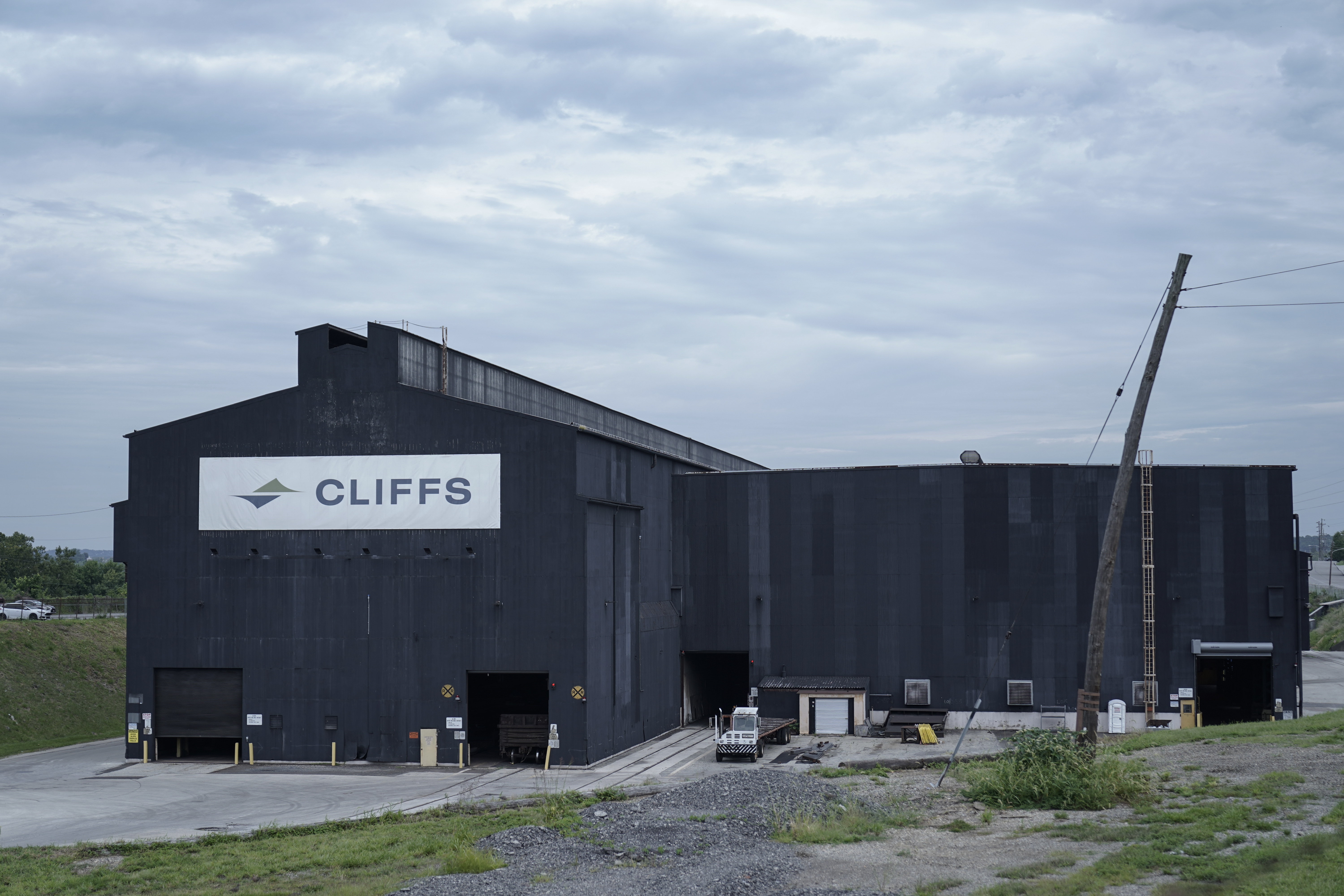
    A Main Line developer’s plan to turn a shuttered steel mill into a 2-million-square-foot AI data center on the outskirts of Conshohocken was stymied Monday when he was forced to withdraw his application over legal issues.

    At the Plymouth Township zoning hearing board meeting, Brian O’Neill’s team had been set to make their case for an exception that would allow a data center to be built at 900 Conshohocken Rd.

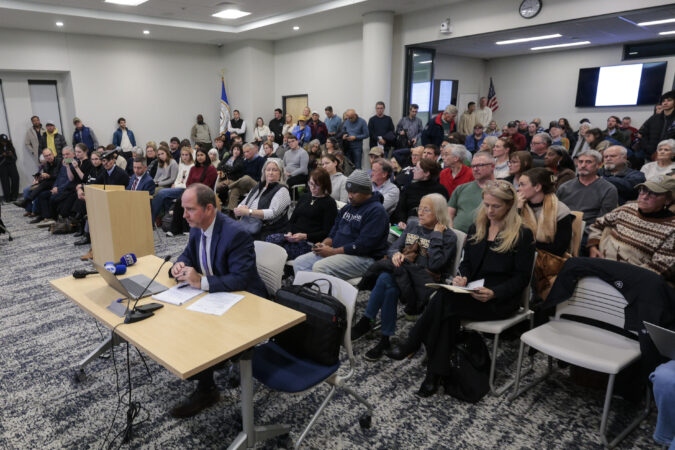
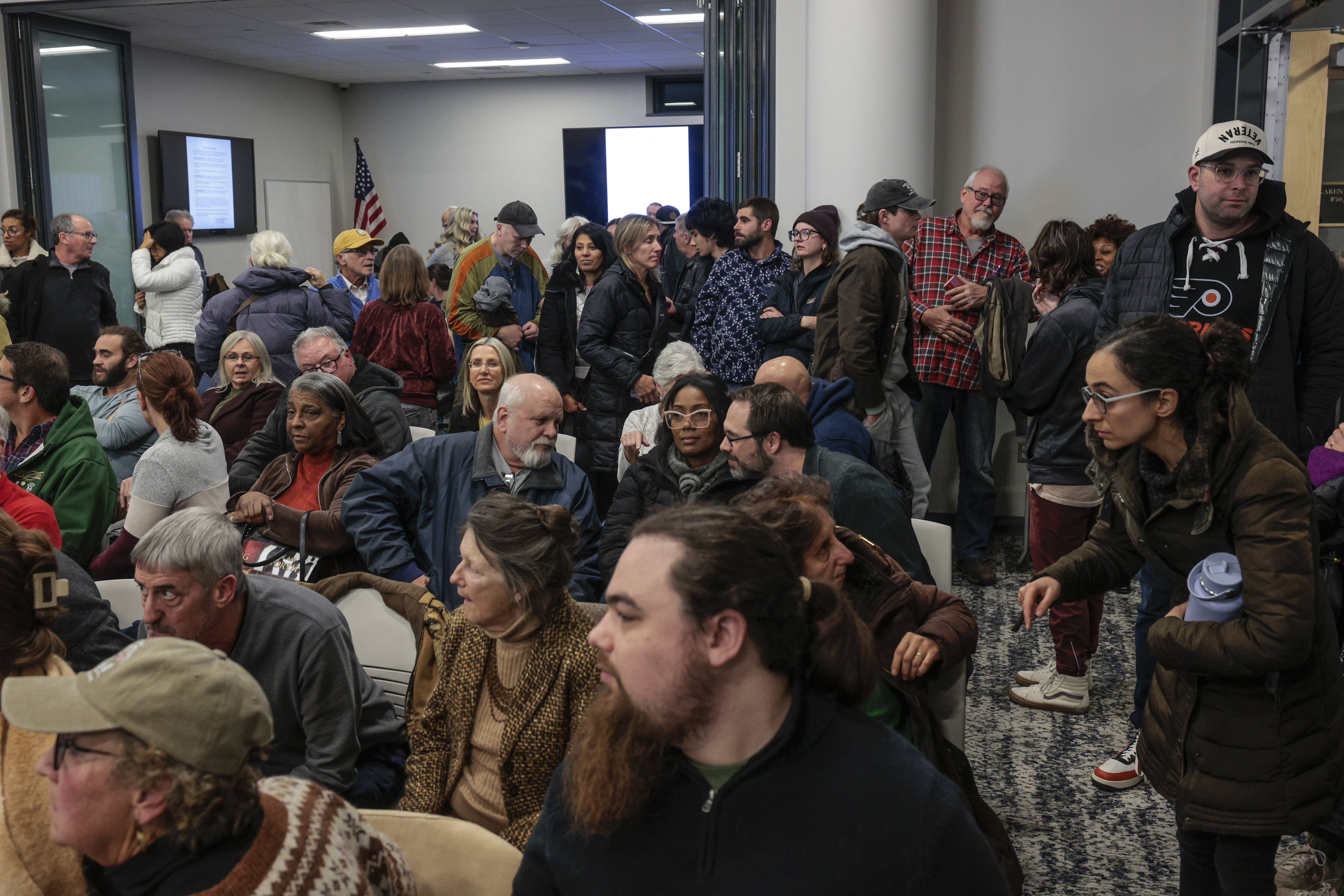
    The plan has faced neighborhood pushback, and hundreds of people packed the meeting room on Monday night. O’Neill did not appear to be among them.

    Edmund J. Campbell Jr., an attorney for O’Neill, said they wished to move the hearing to the township’s December meeting. Then an attorney for Cleveland-Cliffs, the property owner, said the prospective buyer did not have legal standing to do so.

    An agreement of sale had not been approved prior to the meeting, said Heather Fine, the attorney for Cleveland-Cliffs.

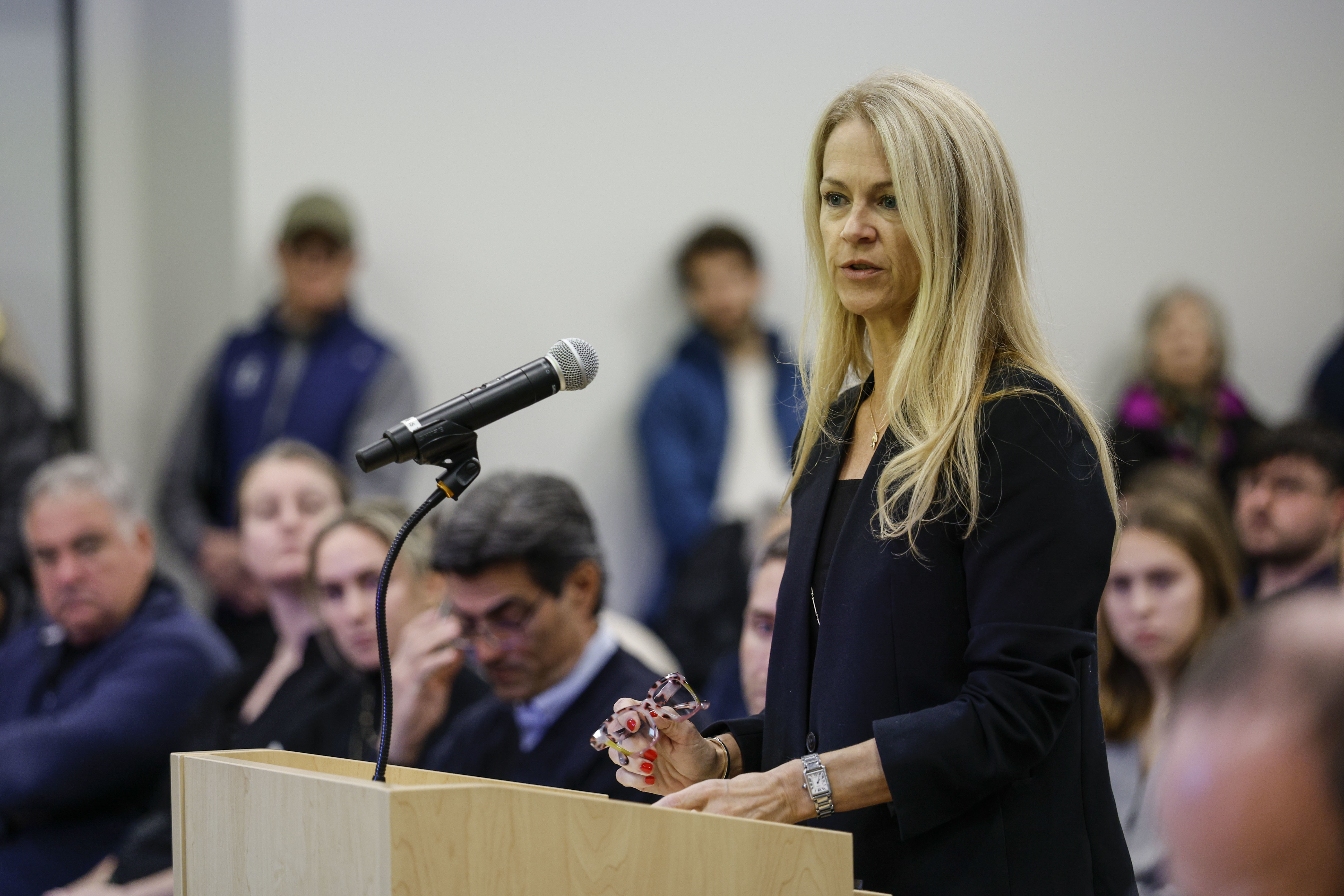
    Heather Fine, an attorney for Cleveland-Cliffs, addresses the Plymouth Township zoning hearing board on Monday.

    Campbell later asked Fine and then the board for permission to withdraw the application. Both declined to provide additional comment.

    Residents who had spent more than a month organizing in opposition to the project said they had mixed emotions.

    “It is the smallest of small wins, because we’re making it harder for something bad to happen to our community,” said Nick Liermann, an attorney who lives in a neighborhood near the former steel mill. “But we will be back in this room in a few months.”

    “Communities can be effective,” said Patti Smith, a neighbor of Liermann who has spearheaded the local data-center opposition efforts. “We have to stand up for ourselves.”

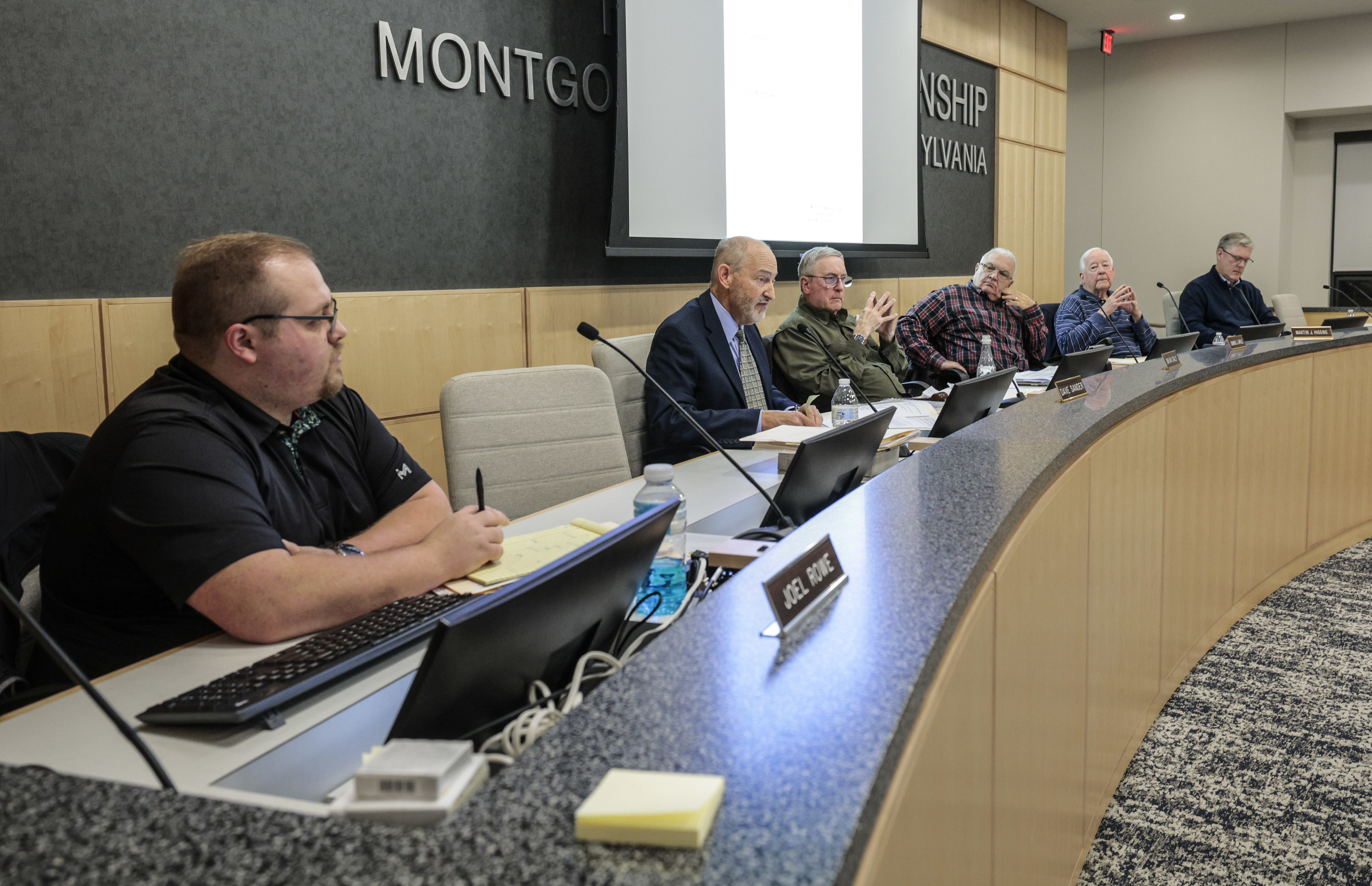
    With the withdrawal, the data center proposal is officially off the docket in Plymouth Township, zoning officer Joel Rowe said, but the applicant can resubmit a plan at any time, restarting the process.

    What the data center proposal entailed

    The now-closed Cleveland-Cliffs plant near Conshohocken is shown in this 2023 file photo. A data center has been proposed for the site.

    This latest development in the Conshohocken-area data center saga occurs amid broader controversy about such facilities, which handle cloud-computing and storage for Big Tech companies.

    The construction of data centers has been fast-tracked to meet the growing demands of power-hungry AI tools like ChatGPT. Politicians on both sides of the aisle, including President Donald Trump and Gov. Josh Shapiro, have pushed for more centers, while some neighbors near proposed sites have mounted fierce pushback.

    In the Philadelphia area, Amazon is building a 2-million-square-foot data center on a former steel mill in Falls Township, Bucks County. And a 1.3-million-square-foot data center has been proposed at the former Pennhurst State School and Hospital in East Vincent Township, Chester County.

    In Plymouth Township, O’Neill had not revealed the potential tenant for his proposed data center, but indicated it would be related to the life sciences.

    The data center is proposed for a 66-acre property along the Schuylkill in the Connaughtown section of the township. The site is less than a mile from downtown Conshohocken. Its neighbors include the Proving Grounds sports complex, Tee’s Golf Center, and dozens of homes.

    A crowd of people leave the Plymouth Township zoning hearing board meeting on Monday.

    Some Connaughtown residents, along with other data center opponents from across the Philadelphia region, have rallied against the proposal. As of Tuesday, more than 1,000 people had signed an online petition urging township officials not to grant a zoning exception for the data center, citing concerns about light, noise, and air pollution; water usage; and electricity costs.

    O’Neill, meanwhile, had argued that a data center should be permitted in the “heavy industrial” zone due its to similarity to a warehouse and laboratory, which are both permitted uses under township code. He had also touted the center’s potential economic benefits, saying it could bring in $21 million in annual tax revenue and attract other companies to the area.

    “Industry hasn’t come and gone. It’s simply changed,” O’Neill said at last month’s planning board meeting. “What I’m proposing is to put 21st-century industry into an industrial building.”

    Why the data center plan was withdrawn

    The Plymouth Township zoning hearing board had been set to hear Brian O’Neill’s proposal for an AI data center outside Conshohocken on Monday.

    At the start of Monday’s standing-room-only meeting, Plymouth Township officials were expecting a long and potentially tense night.

    Solicitor Dave Sander began by warning the crowd that they must maintain decorum, and said he would cut off the proceedings at 10 p.m. Police officers stood outside the room.

    Quickly, however, it became clear that Campbell, O’Neill’s attorney, had other plans, requesting a continuance to the Dec. 15 meeting. If granted, it would have marked the hearing’s second continuance: The proposal was initially supposed to be discussed at an October meeting.

    “My client would like an additional opportunity to review with [community members] the project,” Campbell said. “When we proceed, if we have had a more robust dialogue with those participants, this hearing on the 15th would be significantly more efficient.”

    Neighbors, some of whom had already attended a private meeting with O’Neill last month, objected to the last-minute request, saying that it was unlikely their minds would be changed if no significant changes had been made to the plan.

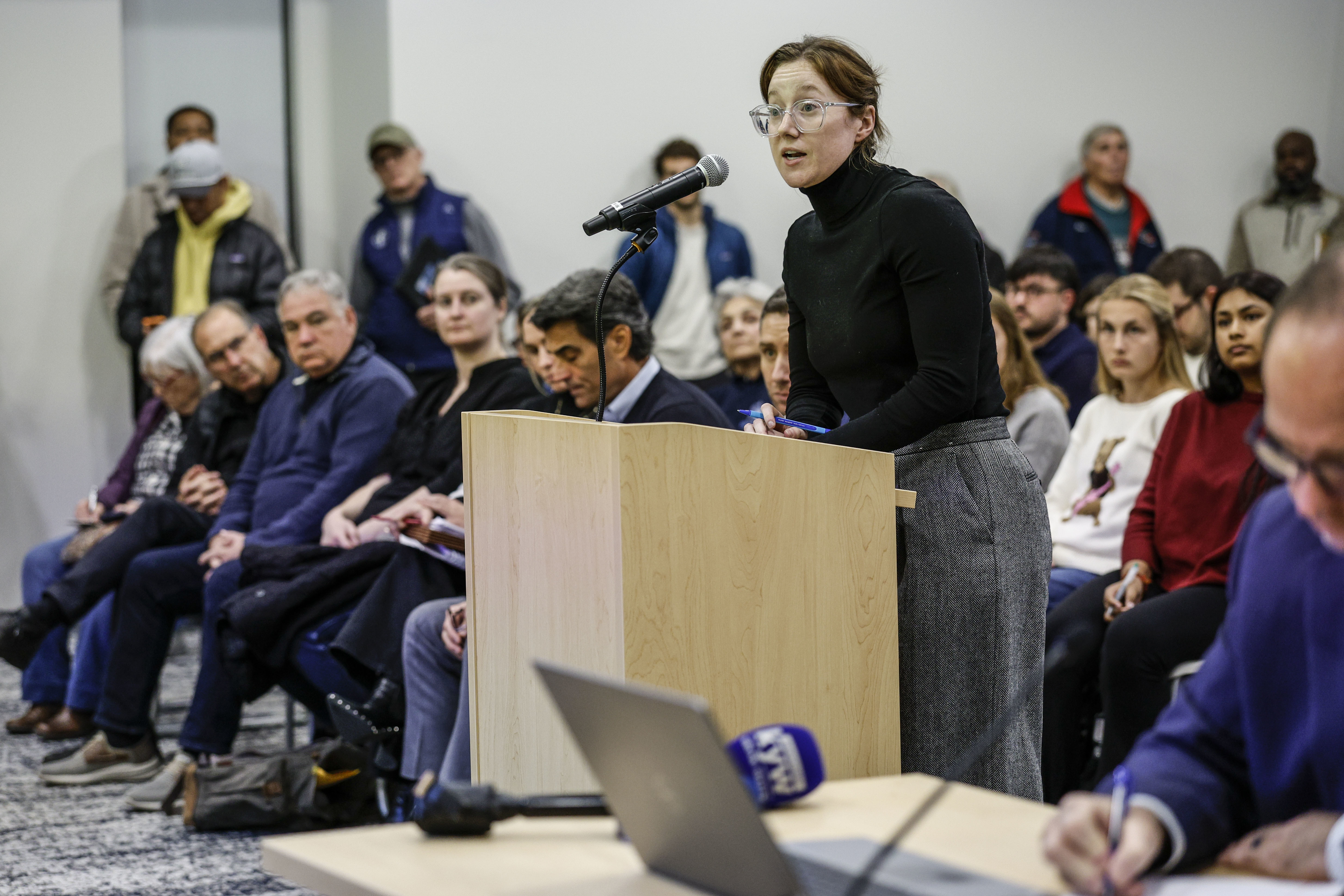
    “Is the proposal significantly different than what was displayed to community members at the Oct. 8 meeting?” asked Smith, who organized neighborhood opposition.

    Patti Smith, resident and organizer of anti-data center movement in the neighborhood, addresses the Plymouth Township zoning hearing board at Monday’s meeting.

    “No,” Campbell responded, later adding that they wanted more residents to be able to attend the meeting and hear from their experts who could speak to concerns, including about noise and emissions.

    Before the zoning hearing board could vote on the continuance request, Fine, the attorney for property owner Cleveland-Cliffs, took to the podium.

    “There is no standing for the prospective buyer to proceed with the application this evening,” Fine said. “That authority was not extended to the prospective buyer from the owner. There is no LOI [letter of intent] in place.”

    “My client delivered a signed agreement of sale to the owner this evening,” Campbell said. “Based on that, we have standing. … We made our application with the express consent of the owner.”

    Sander turned to Fine, asking if that was true.

    “It’s not entirely true, no,” Fine said. “The signed agreement that was transmitted to my colleague at 5:51 p.m. this evening had redline changes. Those have not been accepted by my client.”

    She did not elaborate on what those changes entailed.

    The zoning hearing board recessed before returning to accept Campbell’s motion to withdraw the application.

    As a neighbor to the site, Liermann said the unexpected turn of events left him with a more sour taste in his mouth about the developer: “The last-minute request in an attempt to obstruct the process and dissuade the public from participating, and then this ‘confusion’ over whether or not an LOI was actually signed between the developer and the owner, is incredibly disturbing.”

  • Philly-based DuPont spin-off hopes merger with global paint giant will boost sagging sales

    Philly-based DuPont spin-off hopes merger with global paint giant will boost sagging sales

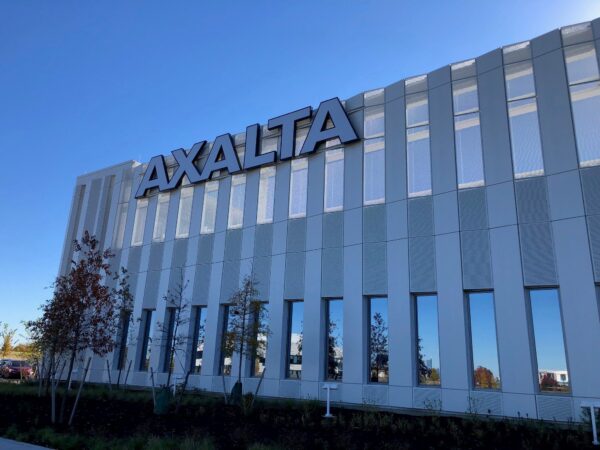
    Axalta, the Philadelphia-based automobile paint and coatings maker, is set to be acquired by AkzoNobel NV, the Netherlands-based maker of Dulux and other paint and coatings brands, in an all-stock deal worth $6 billion.

    Both companies have plants in the Philadelphia area, among other locations worldwide.

    Axalta’s headquarters and central research lab is in South Philadelphia.

    AkzoNobel, which employs around 34,500, almost three times Axalta’s 12,600, last year promised to update its powder coatings plant near Reading. AkzoNobel also has a Sikkens vehicle refinishings plant near Malvern.

    “The last few years have been really challenging,” Axalta CEO Chris Villavarayan told investors in a morning conference call. “The market has gone sideways at best. Coatings demand is still below 2019 levels. At some point there’s going to be some kind of recovery.”

    He predicted that sales will benefit as soon as next year as auto, shipbuilding, and other cyclical markets rebound, and that the merger will help boost sales of both companies’ products, after cutting costs.

    AkzoNobel CEO Greg Poux-Guillaume will head the combined company, with sales totaling around $17 billion a year, across 160 countries. Poux-Guillaume said in the conference call that’s large enough to earn it a listing on the S&P 500, like rival PPG.

    Poux-Guillaume said the combined company will maintain Axalta’s main office in Philadelphia as a second headquarters.

    AkzoNobel shares slipped around 3% to $55 on Tuesday. Axalta shares closed down 0.64% to $28, well below the $30 to $40 range where the stock traded last winter.

    The deal, if completed on schedule by early 2027, ends years of Axalta merger talks that began soon after its 2013 spinoff from the DuPont Co., with Axalta periodically discussing possible deals with competitors including PPG and Kansai, as well as AkzoNobel. AkzoNobel’s Dulux is also a former DuPont brand.

    “The stars have finally aligned for this longtime proposed transaction,” said Georgina Fraser, a stock analyst at Goldman Sachs, during the companies’ conference call with investors.

    “The industrial logic has been very clear,” Poux-Guillaume said: combined, the company, whose new name hasn’t been chosen, can push more AkzoNobel products in the Americas and other areas where Axalta sales are concentrated, while Axalta paints can find bigger markets in Europe and Asia.

    Axalta CEO Villavarayan will serve as deputy CEO in charge of cost-cutting $600 million from current expenses by 2030. Villavarayan said the company would also spend $400 million a year on research and development, enough “to drive growth.”

    Rakesh Sachdev, a senior adviser at New Mountain Capital and Axalta’s chairman who served as interim CEO before Villavarayan took the job in 2022, will serve as chairman of the combined board, with four directors from each company and three outsiders. AkzoNobel shareholders will hold around 55% of the combined company’s shares.

    The Axalta Board is confident that this combination with AkzoNobel will create significant value for our shareholders,“ Sachdev said in a statement.

  • Medicare costs will eat a big chunk of older Americans’ Social Security cost-of-living increase next year

    Medicare costs will eat a big chunk of older Americans’ Social Security cost-of-living increase next year

    It’s official. Medicare costs will eat up much of older Americans’ Social Security cost-of-living increase next year.

    The standard monthly premium for Medicare Part B, which covers outpatient care, doctors’ services, durable medical equipment and preventive service, will be $202.90 in 2026, the Centers for Medicare and Medicaid Services said on Nov. 14. That’s up $17.90, or nearly 9.7%, from $185.00 in 2025.

    It’s smaller than the $21.50 increase the Medicare Trustees had forecast earlier but still the second largest dollar jump in program history behind 2022’s $21.60 gain and almost 3.5 times the 2.8% Social Security raise for next year. That means seniors will probably see a drop, again, in their standard of living, experts said.

    Seniors were the only ones who saw an increase in poverty in 2024. All other age groups saw a decrease or stayed the same.

    “The public is likely to perceive this Part B increase as taking a significant chunk of or even most of their COLA,” said Mary Johnson, independent Social Security and Medicare policy analyst. “In other words, another continuation in relentless cost increases battering consumer finances.”

    Monthly Social Security checks will rise $56, on average, starting in January because of the 2.8% COLA, the Social Security Administration said. After the $17.90 increase in Medicare Part B, the average monthly COLA increase is cut to $38.10.

    Hold-harmless provision

    Such a large increase in Medicare Part B will likely trigger the hold-harmless provision for Social Security recipients with a Social Security benefit of $640 or less, Johnson said.

    The Medicare hold-harmless provision prevents the Part B premium increase from being larger than the Social Security COLA. If a premium increase is higher than the COLA, the rule prevents the beneficiary from paying the full increase. The portion of the increase those beneficiaries don’t pay is spread out among others who aren’t protected by the rule.

    For those people with a Social Security benefit of $640 or less, the 2.8% COLA next year would mean just less than an $18 per month increase in their Social Security checks. Without the hold-harmless rule, the Part B premium increase would swallow the entire COLA.

    In 2022, only about 1.5% of Medicare beneficiaries had their Part B premiums limited by the hold-harmless provision, government data showed. Part B rose $21.60 to $170.10 in 2022 while the average monthly COLA increase boosted Social Security checks by $92.

    In 2017, when Medicare premiums jumped 10%, or $12.20, to $134.00 and far outpaced the 0.3%, or $5 average, monthly COLA increase, 70% of Medicare Part B enrollees paid a lower-than-standard Part B premium due to the hold-harmless provision.

    Hold-harmless rule isn’t panacea for all costs

    The hold-harmless provision can protect seniors from Part B premium surges, but other costs may bite, Johnson said.

    “If individuals have other automatic deductions such as for Medicare Advantage or Part D premiums, increases in those premiums could reduce Social Security benefits,” Johnson said. The optional Part D covers prescription drugs.

    Some Part D plans are increasing premiums by as much as $50 in 2026, the maximum allowed under a Part D Premium Stabilization Demonstration Program, according to the nonprofit, nonpartisan research organization KFF.

    “To complicate things, there are fewer stand-alone Part D plans to choose from,” Johnson said. The total number of prescription drug plans has dropped by half since 2024, KFF said.

    Is everyone eligible for hold harmless?

    Those who aren’t eligible for the hold-harmless provision include:

    • New Medicare enrollees
    • People who aren’t receiving Social Security benefits
    • High-income earners

    What about deductibles?

    In addition to higher premiums, higher annual deductibles next year will make health insurance even more expensive for Medicare enrollees.

    The annual deductible for all Medicare Part B beneficiaries before insurance covers costs will be $283 in 2026, up $26 from $257 in 2025, CMS said.

    Could it have been worse?

    The Part B premium could have been higher, CMS said.

    “If the Trump Administration had not taken action to address unprecedented spending on skin substitutes, the Part B premium increase would have been about $11 more a month,” CMS said. “However, due to changes finalized in the 2026 Physician Fee Schedule Final Rule, spending on skin substitutes is expected to drop by 90% without affecting patient care.”

    Skin substitutes are materials like biologic, synthetic or biosynthetic products that mimic human skin and are used to cover and treat chronic wounds, such as diabetic foot ulcers. The Trump administration reclassified these bandages so they aren’t billed separately. CMS estimates the change would reduce Medicare spending on these products by nearly 90% in calendar year 2026.

    Medicare Trustees also estimated earlier this year the standard monthly Part B premium would rise $21.50 to $206.50 in 2026 from $185 in 2025. That would have been more than the $17.90 increase to $202.90 in 2026.

  • Cloudflare outage impacts X, ChatGPT, Spotify, and other websites

    Cloudflare, an internet infrastructure platform, is experiencing an outage that appears to be affecting websites across the internet, including the social media platform X.

    The company said in a status update before 7 a.m. EST on Nov. 18 that it was aware of “an issue which potentially impacts multiple customers,” and was investigating the problem.

    In a statement to USA TODAY around 8:30 a.m. EST, Cloudflare said it “saw a spike in unusual traffic” to one of its services around 6:20 a.m. EST.

    “That caused some traffic passing through Cloudflare’s network to experience errors. We do not yet know the cause of the spike in unusual traffic. We are all hands on deck to make sure all traffic is served without errors. After that, we will turn our attention to investigating the cause of the unusual spike in traffic,” the statement said.

    Many X users reported having problems loading the social media app.

    According to Downdetector, an outage-tracking website, thousands of users of several popular websites were reporting issues or outages as of 8 a.m. EST, including X, Spotify, OpenAI, League of Legends and more.

    By 8:30 a.m. EST, though, Downdetector also appeared to be having connectivity issues tied to the Cloudflare outage.

    Is Cloudflare down?

    Cloudflare said it is experiencing issues with its global network, causing outages at many websites that rely on the platform.

    Shortly after 8 a.m. EST, Cloudflare said it had identified the issue and made changes to recover its Cloudflare Access and WARP system, which both help protect companies’ traffic and devices.

    “We are continuing to work towards restoring other services,” Cloudflare said.

    More updates will be available on its status website.

    Cloudflare is a platform which many websites use to improve their performance and functionality.

    Which websites are down from Cloudflare outage?

    According to Downdetector, the following websites were reporting increased outages as of 9 a.m. EST:

    • X, formerly Twitter
    • Spotify
    • OpenAI
    • League of Legends
    • Grindr
    • Google Store
    • Archive of Our Own
    • Uber
    • Quizlet
    • Canva
    • Claude AI
    • Character AI
    • Indeed
    • Truth Social
    • Dayforce
    • ChatGPT
    • Letterboxd
    • Square
    • Rover
    • Zoom
    • Canvas
    • Ikea

    Downdetector also appeared to be impacted by the outage, as did news outlet Axios. Both websites loaded a banner that said, “Please unblock challenges.cloudflare.com to proceed.”

  • Despite challenges in 2025, Philly-area small businesses remain resilient and optimistic

    Despite challenges in 2025, Philly-area small businesses remain resilient and optimistic

    From inflation to tariffs to labor shortages, small businesses in Philadelphia have faced many challenges in 2025. But they remain resilient and, for the most part, are optimistic about the coming year.

    But that, of course, depends on the type of business.

    For example, the Monkey’s Uncle, a retro Philly sports apparel boutique located in Doylestown, had an “exceptionally strong” year, which was mostly driven by the Eagles’ Super Bowl win. Co-owner Derrick Morgan expects the holiday season to be busy but observes more people are shopping for holiday gifts much earlier this year as consumers are “spreading out their spending much more.”

    For small businesses in the Philadelphia region, consumer sales were up 2.4% in October compared to a year before, according to a monthly index from payment technology provider Fiserv. That’s compared to a 1.5% increase nationally. Small-business optimism remains above its 52-year average and uncertainty dropped this month, according to the National Federation of Independent Businesses.

    All in all, it hasn’t been such a bad year for most, despite the uncertainty.

    Looking to 2026, Morgan is optimistic due to Philadelphia hosting a number of major sporting events (like the MLB All-Star Game), and he is already coordinating commemorative merchandise with licensed vendors. But it’s not economic uncertainty that impacts his business as much as Jalen Hurts or Bryce Harper.

    “The nature of our business is very much at the mercy of the wins and losses from our Philly sports teams, which can certainly be unpredictable,” he said.

    Regardless of the economic uncertainty, physical fitness remains popular. Valerie Plummer’s Germantown-based Pilates studio — Pilates by Valerie — has had a “profitable and expansive year” thanks to “rising client retention, steady new enrollments, and an increasingly strong sense of community.”

    Plummer has used this year to double down on her business by broadening her programming with a series of new classes and apparatus trainings while developing instructor materials, improving internal systems, and strengthening her long-term training pipeline. As for next year? Plummer’s optimistic.

    “I am confident in the direction of the studio, the relationships we are building, and the value we are providing — and I’m excited for what’s ahead,” she said.

    The restaurant industry has been hit hard recently, thanks mainly to increasing costs and labor shortages. In Media, Rainy Culbertson’s breakfast restaurant, The Corner, has had a difficult year.

    “Customers are uncertain about their finances,” she said. “Eating out is a luxury and is one of the first cuts to a person’s budget in economically uncertain times. We’ve had ups and downs this year, but mostly down.”

    Like many restaurants, The Corner faces challenges in labor retention, cost increases, and competitive issues. And they’re still recovering from the pandemic, Culbertson said.

    “Most restaurants have not recovered from COVID, it’s just that we stopped talking about it because folks want it behind them, ourselves included,” she said. “Most restaurants still carry debt from COVID and now they have to deal with economic uncertainty and painfully thin profit margins due to inflation.”

    It’s not surprising that Culbertson remains very uncertain about 2026.

    “I’m optimistic it will be better but realistically, it will probably be more chaos and stress dealing with inflation and tariffs,” she said. “A lot depends on how long this madness of inflation, tariffs, and the unstable economy drags on. I’m really close to calling it quits.”

    Heather Herbert, the co-owner of Tail Spinz in Montgomeryville says her family-owned dog daycare has grown every year since its opening in 2023. It saw growth this year too, but some months were slower.

    “2025 has had its ups and downs, with some months of steady growth and others that have leveled off a bit,” she said. “Our business is built almost entirely on word-of-mouth and referrals, which creates a slower but more sustainable kind of growth. We have had a few families scale back or pause daycare due to budget changes, and we completely understand that we’re a ‘nice-to-have’ rather than a necessity for everyone.”

    Herbert is looking forward to even more growth next year and is currently gearing up for the holidays, with “a full lineup of festive events planned” including “a visit from Santa” with holiday photo ops and treats.

    “When you provide great care, build genuine relationships, and create a space that dogs are excited to come to, it’s hard not to feel positive about what’s ahead,” she said.

    Even in an uncertain economy, specialized businesses like Blevins Sommelier Services can flourish. Focused on bringing “affordable luxury experiences” directly into their clients’ homes, the company, which offers wine tasting and bourbon education events, has experienced strong growth this year with monthly bookings doubling over the prior year.

    “I’m optimistic for 2026,” said Amanda Blevins, who operates her business out of her home in Glen Mills. “The demand for wine events remains steady, and the demand for bourbon tastings has increased.”

    Tariffs and supply shortages have impacted Blevins’ business, particularly on wines from Italy and France, but like many business owners she’s pivoted and now features more local wines.

    “In many cases, hosting private in-home celebrations is more affordable than entertaining at a restaurant or larger rented venue,” she said. “There is always something new to discover in the world of wine and whiskey, and I consider it a wonderful life-long journey.”