Category: Business

Business news and market updates

  • QVC may file for bankruptcy, according to a new report. Here’s what to know.

    QVC may file for bankruptcy, according to a new report. Here’s what to know.

    The West Chester-based QVC Group is considering filing for Chapter 11 bankruptcy as its financial troubles mount, according to Bloomberg.

    The TV shopping network has been negotiating the voluntary restructuring of billions in debt during confidential conversations with creditors, Bloomberg reported Tuesday, citing anonymous sources familiar with the matter.

    A final decision had not been made on whether the company would file, according to Bloomberg. As of midday Wednesday, a search for “QVC Group” in online court records did not show any bankruptcy filings.

    In September, QVC Group had $6.6 billion in debt and $1.8 billion in cash or cash equivalents, according to its latest earnings report.

    A QVC Group spokesperson did not return a request for comment from The Inquirer. On Tuesday, company representatives did not immediately respond to Bloomberg or the Philadelphia Business Journal.

    After Bloomberg’s article published, QVC Group’s stock price took a nosedive, losing about two-thirds of its value by the end of the trading day.

    How QVC got into these financial straits

    Based in West Chester for more than three decades, QVC pioneered home shopping.

    Before consumers could make purchases on laptops and smartphones, the network and its smaller counterpart HSN — which until recently was based in Florida — broadcast on live TV at all hours. Anchors sold a wide array of clothing, electronics, household goods, beauty products, and other wares.

    A QVC show is shot at the network’s West Chester studio in this 2019 file photo.

    The news of a potential bankruptcy comes after a tumultuous few years.

    In early 2025, executives closed HSN’s studio in St. Petersburg, Fla., and consolidated both networks on its West Chester campus, laying off hundreds of employees in the process.

    Around the same time, the parent company rebranded as QVC Group. Executives said they planned to focus more on livestreaming and social-media shopping to keep up with stiff competition from the likes of TikTok Shop.

    “Live social shopping is a natural evolution for us,” David L. Rawlinson II, the company’s president and CEO, said in a November 2024 statement. “Our customers are spending dramatically more time on social media, and that is increasingly where they are finding inspiration and shopping.”

    David L. Rawlinson II, CEO of QVC Group, is shown in this 2023 file photo.

    The strategy did not prove fruitful.

    By May, as President Donald Trump’s tariffs took a toll, Rawlinson said the company was taking steps to cut costs and win back customers who were feeling down on the economy. That included an agreement with TikTok that the CEO said would create “the first 24/7 live shopping experience in the U.S.”

    Then in August, a company spokesperson announced plans to hire about 250 employees by early 2026. It was not clear Wednesday whether those hires were ever made.

    Despite these changes, QVC’s revenue and operating income have continued to decline, according to earnings reports, and the company has continued shedding customers.

    As of September, about 7 million people had shopped on the networks in the past year, down from 8.1 million in fiscal year 2023.

    QVC Group is set to release its fourth quarter 2025 earnings report later this month.

    What Chapter 11 bankruptcy could mean for QVC

    A holiday segment is taped at QVC’s West Chester studio in this 2023 file photo.

    A Chapter 11 bankruptcy would not mean the end of QVC.

    Chapter 11 is different from Chapter 7, which involves the liquidation of assets. (Iron Hill Brewery closed all restaurants when it filed for Chapter 7 bankruptcy this fall.)

    After filing for Chapter 11 protection, companies usually continue to operate, though they often decide to close locations or downsize in other ways amid the restructuring process.

    Saks Global, for instance, which filed for Chapter 11 bankruptcy last month, announced Tuesday that its restructuring would involve the closure of its longstanding Bala Cynwyd store, as well as nine other Saks Fifth Avenue and Neiman Marcus locations.


  • Shareholders approve merger of American Water and Essential Utilities, which serve Pa. and N.J.

    Shareholders approve merger of American Water and Essential Utilities, which serve Pa. and N.J.

    Shareholders of Camden-based American Water Works and Bryn Mawr-based Essential Utilities, which owns the Aqua water and sewer companies, voted overwhelmingly Tuesday to merge and create a combined company with nearly $30 billion in yearly water and sewer sales.

    More than 99% of the 161 million American Water shares that were voted were cast in favor of the deal, the company told the Securities & Exchange Commission. Essential’s online proposal to merge was approved by around 95% of voting shareholders.

    The planned combination of these rivals, which have competed for more than 100 years to manage water and sewer for the small number of U.S. communities that allow for-profit operators, still needs approval from state public utility commissions.

    The combined companies’ sales are concentrated in Pennsylvania and New Jersey. In suburban Philadelphia, Aqua serves West Chester, northern Delaware County, parts of Lower Bucks, and Main Line communities. American Water serves Abington, King of Prussia, Norristown, Phoenixville, and nearby towns.

    New Jersey American Water serves towns along the PATCO rail line in Camden County, in northern and central Burlington County, and in Shore communities such as Absecon and Ocean City. Aqua New Jersey has customers in the three suburban South Jersey counties and at the Shore.

    American Water’s 14 million U.S. customers include systems in 12 other states, and on 18 U.S. military bases. Essential has around 3 million customers, including systems in six other states, and Pittsburgh-based Peoples Gas, which serves 750,000 in western Pennsylvania and Kentucky.

    American Water is already the nation’s largest private operator of water and sewer systems, and the deal will make it a larger player in competition with Florida-based NextEra Water Group and France-based Veolia’s U.S. operations, among other private systems that have been seeking to expand.

    A separate vote on an Essential executive pay package drew some opposition, with 85%approving.

    That package included more than $17 million in severance compensation and stock grants for departing Essential CEO Christopher H. Franklin, plus medical benefits and up to three years’ professional assistance helping him land another job, plus millions more for his four top deputies.

    The merged company’s larger size, as big as many of the leading natural-gas companies that dominate utility stock-index funds, will boost its visibility to investors, John C. Griffith, the American Water chief executive who will run the combined companies, said in announcing the deal last fall.

    The companies disclosed the approvals Tuesday afternoon and said more details on the vote and their plans would come later this week.

    Deal backers say the combination should enable Griffith to cut management costs, boost profits, drive up the share price, and could ease pressure to keep raising water rates.

    Regulators in New Jersey and Pennsylvania are weighing the company’s latest rate increase requests. American Water’s New Jersey affiliate is asking the state Board of Public Utilities for an average 10% water and 8% sewer rate hike on Jan. 16 for 2.9 million customers, which it said would fund improvements to aging water and sewer systems. Customers would pay an average of $18 more a month.

    Pennsylvania’s Public Utility Commission said last month that it would consider the company’s request to boost water and sewer rates on 2.4 million customers by an average 15%, or $20 a month.

    Critics had urged Essential to seek rival buyers to drive up the share price and shareholder profits from the sale, noting that both stocks had dropped after the merger was proposed last year.

    Tim Quast, founder of Colorado-based ModernIR, a consultant the companies hired to help explain the merger, said share price declines are now typical, even for merger-target companies like Essential whose shares command a premium from buyers like American Water because index-fund investors such as Vanguard and BlackRock tend not to buy more shares of merging companies until a deal is completed.

    Even after long competition from U.S. and foreign utility owners, private water companies serve only about one in six Americans. In recent years, customers of public utilities serving parts of Chester, Delaware, and Bucks Counties have defeated privatization campaigns, though some towns in Pennsylvania and New Jersey have signed on. Pennsylvania also has asked private operators to take over small, troubled public systems.

  • A look at how Ventnor is completely rebuilding its boardwalk

    A look at how Ventnor is completely rebuilding its boardwalk

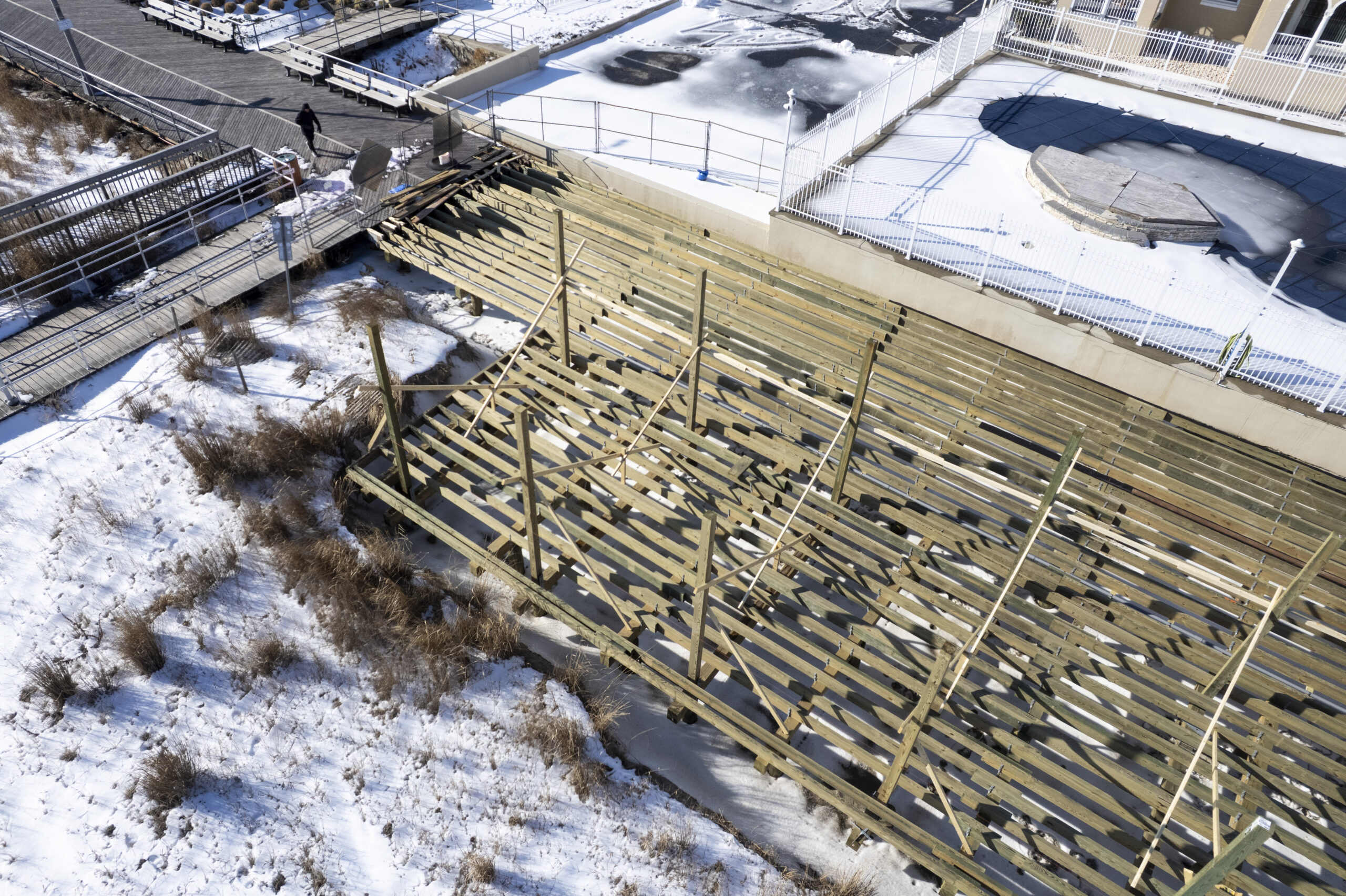
    VENTNOR, N.J. — They demolished the existing boardwalk from the tennis courts to the fishing pier, north to south, and now they are building their way back up.

    Financed mostly with federal funds granted to New Jersey from the COVID American Rescue Plan, Ventnor and other Shore towns like Ocean City, North Wildwood, Atlantic City, and Wildwood have set out to redo or upgrade their iconic pathways.

    Ventnor is using $7 million in federal funds and bonded for about $4 million more, officials said.

    Will this stretch of boardwalk reconstruction be done by Memorial Day?

    Construction continues on the boardwalk on Wednesday, Feb. 4, 2026, in Ventnor City, N.J.

    “It’s always a worry,” Ed Stinson, the Ventnor city engineer, said in an interview late last month. “We’ve had multiple meetings with the contractor [Schiavone Construction], one as recent as three weeks ago. In all the meetings, he’s said it’ll be complete and open before Memorial Day.”

    The reconstruction has delivered a seven-block offseason interruption in a walkway that is popular year-round.

    Work will stop for the summer, city officials say. In the fall, a second 13-block section, from Suffolk Avenue to the Atlantic City border at Jackson Avenue, will begin. There is currently no funding or plan for the boardwalk from Cambridge south to the Margate border, said Stinson.

    The biggest change people will notice is that the original and distinctive angled herringbone decking pattern of the boardwalk is being replaced with a straight board decking. Ultimately, it came down to cost over tradition.

    “There was discussion about it,” said Stinson. “There’s additional lumber that’s wasted when you do the herringbone, and the labor to cut that material. The additional material costs were significant. It’s a waste of tropical lumber. The only reason to go herringbone is tradition and appearance.”

    The reconstruction has delivered a seven-block offseason interruption in a walkway that is popular year-round. Work will stop for the summer, city officials say.

    Other differences are changes in lighting (lower, more frequent light poles) and some enhancements of accessible ramps. The existing benches, with their memorial plaques, will be back.

    To demolish the boardwalk, the contractor cut the joist and the decking in 14-foot sections, “swung it around, carried it over to the volleyball court,” Stinson said, on Suffolk Avenue.

    “That’s where they did their crushing and loading into the dumpsters. They worked their way down and followed that with the pile removing.”

    The original herringbone pattern can be seen on the left, compared with the new straight decking pattern on the new construction side.

    The other massive job was excavating the sand that had accumulated under the boardwalk. “They screened it, cleaned it, and put it down there,” on the beach in piles. It will be spread around above the tide line, Stinson said.

    Once the excavation was down, the pile driving crew set out beginning at the south end and working their way toward Suffolk Avenue. “Then the framing crew came in and started framing,” Stinson said. On Feb. 2, the third team began its work: the decking crew.

    The weather has slowed the pace, Stinson said. “They were doing about 20 to 24 piles a day,” he said, a pace that dropped to about nine piles a day after the snowstorm and ice buildup.

    The framing crew installs pile caps, 8-by-14 beams that run across the boardwalk atop the pilings. The decking crew follows behind them, installing the wood, a tropical wood known as Cumaru. The use of Brazilian rainforest lumber at one time inspired protests, but that has not been an issue this time.

    Construction continues on the boardwalk on Wednesday, Feb. 4, 2026, in Ventnor City, N.J.

    Ventnor’s boardwalk, which links to Atlantic City’s famous walkway, dates to 1910. It was rebuilt twice before: once after the hurricane of 1944 and again after the March storm of 1962. Margate, on the southern end, never rebuilt its boardwalk after 1944.

    Stinson said the tropical wood is noted for its “denseness and durability. It does not last forever.”

    In all, $100 million of American Rescue funds was set aside by Gov. Phil Murphy for a Boardwalk Fund and awarded to 18 municipalities, including, as Stinson said, “anybody who has anything close to a boardwalk.”

    Brigantine, with its promenade, received $1.18 million. Ocean City, in the process of rebuilding a portion of its north end boardwalk, received $4.85 million.

    The two biggest recipients were Asbury Park and Atlantic City, each receiving $20 million. Atlantic City has completed a rebuilding of its Boardwalk to stretch all the way around the inlet to Gardner’s Basin. Wildwood, with $8.2 million, has undertaken a boardwalk reconstruction project, and North Wildwood, receiving $10.2 million, is rebuilding its boardwalk between 24th and 26th Streets, combining the herringbone pattern with a straight board lane for the tram car.

    Although the timing of the reconstruction was no doubt prompted by the availability of the federal funds, Stinson said Ventnor’s boardwalk had shown signs of age.

    “We’ve been into some significant repairs on the boardwalk,” Stinson said. “Those have increased every year. We were getting into pile failures. It was due. I don’t know if the city would have tackled it without the [federal] money.”

    Ventnor’s boardwalk, which links to Atlantic City’s famous walkway, dates to 1910. It was rebuilt twice before: once after the hurricane of 1944 and again after the March storm of 1962.
  • Pa. plant that helps make smartphones and bullets finds new suppliers in China trade war

    Pa. plant that helps make smartphones and bullets finds new suppliers in China trade war

    Tungsten is the hardest metal, tough enough to drill steel.

    When your Apple phone rings, its tungsten “Taptic Engine” buzzes. Tungsten hardens artillery shells made for the Ukraine war at General Dynamics’ Scranton Ammunition Plant. It’s used in Boeing helicopters built at Ridley Park and medical device parts from Berwyn-based TE Connectivity.

    More than 80% of mined tungsten comes from China — or did, until limits on China tungsten imports imposed during the Biden administration began last year. China has also imposed tungsten export limits.

    Not surprisingly, tungsten concentrate is now selling at record prices of more than $30 a pound amid the U.S.-China trade war and the budget-busting U.S. military buildup.

    The struggle has fed a global tungsten rush, with investors and their allies in the U.S. and foreign governments paying to reopen old mines and secure new suppliers around the globe. The restrictions have also revived production of other strategic metals in many countries.

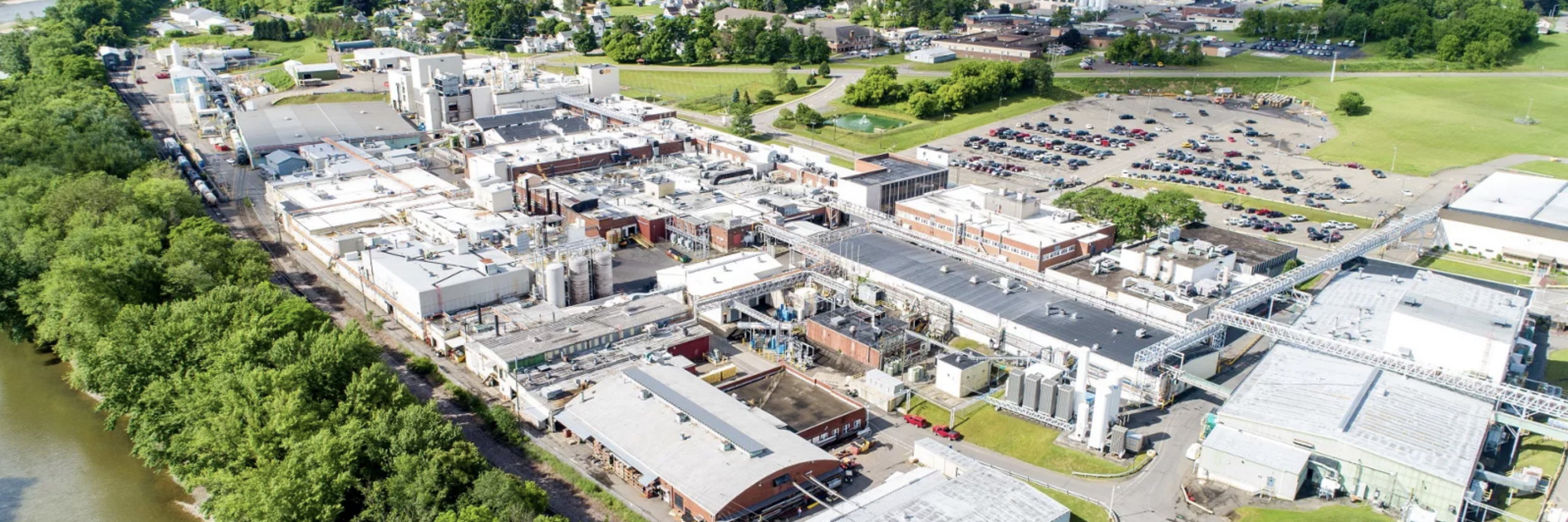
    The biggest tungsten processor in the Western world is the century-old, 400-worker Global Tungsten & Powders (GTP) complex in Towanda, Pa., three hours north of Philadelphia. It produced more than 12,000 of the 117,000 metric tons of tungsten powder made in the world last year, crushing the metal into workable powders because it takes too much energy to melt.

    Far from fighting to preserve cheap Chinese tungsten supplies, GTP championed laws supporting China import restrictions.

    Before Stacy Garrity became Pennsylvania’s elected treasurer in 2021, she worked at GTP for more than 30 years. As vice president for government affairs and head of a metals industry group, she lobbied Congress and the first Trump administration to limit tungsten imports from China and its allies under what she called the “don’t buy from the bad guys” law.

    Trump endorsed Garrity last month for the Republican nomination to run against Pennsylvania Gov. Josh Shapiro this fall.

    Stacy Garrity, Pennsylvania treasurer, at the Pennsylvania Farm Show in Harrisburg in January.

    GTP’s owner, Austria-based Plansee, has relied mostly on recycled Western tungsten, along with the few non-Chinese mines. But with tungsten demand and prices surging, the company has contracted mined metal from new sources, including Korea and Rwanda, after many years of effort, says Karlheinz Wex, Plansee’s executive board chairman.

    Korea’s Sandong mine, once among the world’s biggest suppliers, shut in 1994 as cheaper Chinese tungsten flooded world markets. The mine has reopened with financial support from the Korean government, technical assistance from U.S. agencies, and an exclusive supply deal to GTP. It’s owned by Almonty, a multinational mining company partly owned by Plansee. Almonty is moving its headquarters to the U.S. from Canada.

    Tungsten shipping from the mine at Nyakabingo, Rwanda, has been delayed by conflicts between militia backed by Rwanda’s pro-business President Paul Kagame and neighboring Congo, also a mining center.

    Wex agreed to take questions about the tungsten trade and GTP, purchased from lighting maker Sylvania in 2007. This conversation has been edited for clarity and length.

    How did a tungsten processing plant end up in Pennsylvania?

    That is where it started more than 100 years ago. The company focused on medical applications. Later, it went into the lighting business [pre-LED light bulbs used tungsten filament]. We have focused it 100% on tooling and special applications, such as artillery shells, and mostly in alloys with nickel and iron for tools, and with carbide and cobalt in machines for cutting, drilling, mining.

    The journey starts by creating tungsten scrap from customers and competitors. Our tungsten supply is 70% scrap recycling, from tools and drill bits.

    Austria-based Plansee owns the tungsten powdering plant in Towanda, Pa., which processes about one-tenth of the world’s supply of the heavy metal, used in tools and weapons.
    Why did your company, which relied on Chinese tungsten, also lobby to reduce imports from China?

    We always had this topic of sources independent from China, from the politics and their pricing. The mining of tungsten in the West was not that much [because of] the unfair competition flooding Chinese materials into the market. We wanted to get independent of that.

    Why are you buying tungsten from Africa now?

    Tungsten is a so-called conflict material. When we can certify it’s conflict-free, the material from that mine is really sound. The people at Trinity Metals [in Rwanda], we’ve known for years. Our specialists visit their mine.

    The U.S. government’s involvement made it easier to prove we can support national security in the West. We buy their entire production.

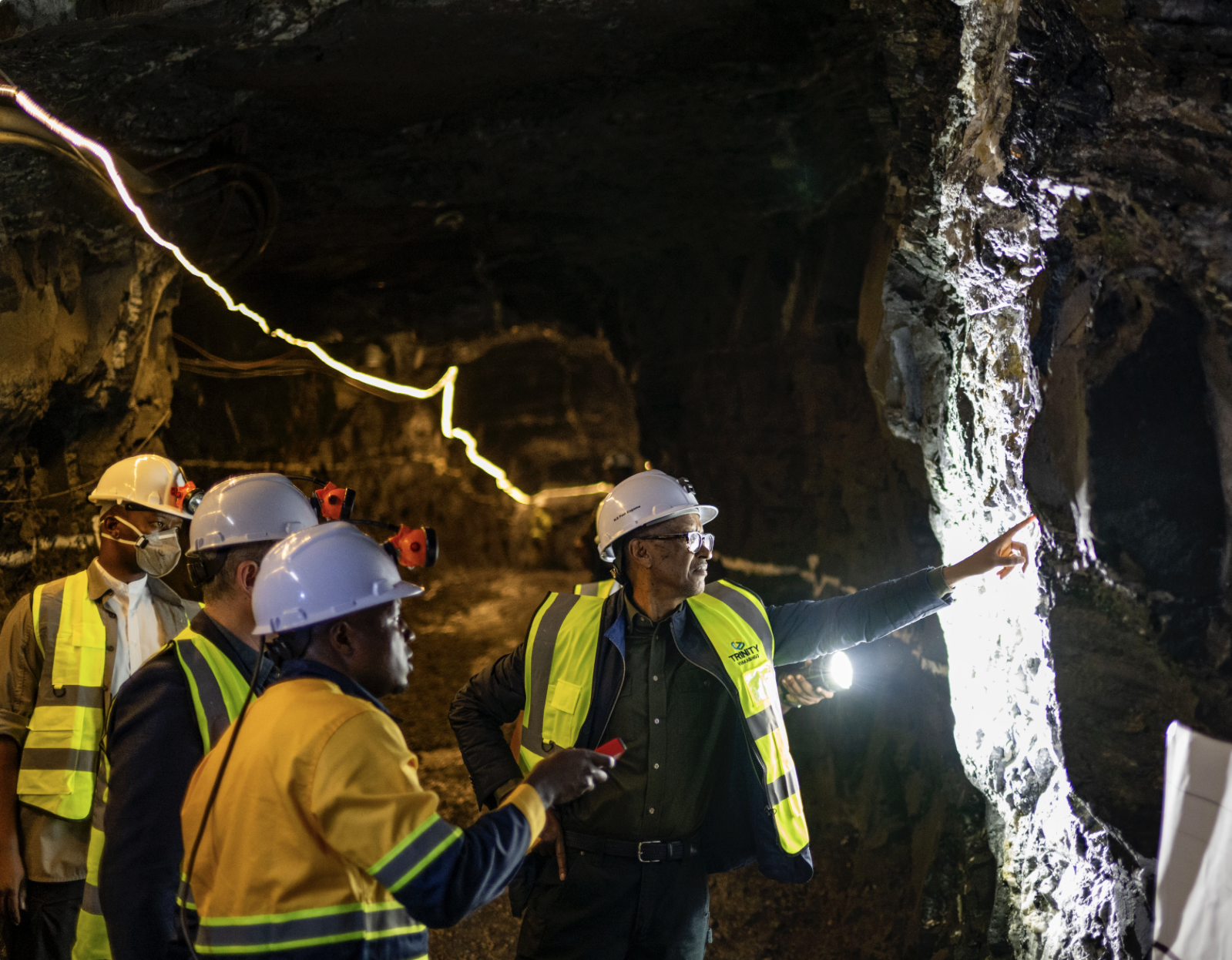
    Rwanda President Paul Kagame at Trinity Metals’ newly expanded, reopened Nyakabingo tungsten mine in May 2025. The mine’s entire production is sold to Plansee, an Austrian company that processes one-tenth of world tungsten output at its General Tungsten & Powders plant in Towanda, Pa.
    How does tungsten get from Rwanda to Pennsylvania?

    At the mine they separate the tungsten, crushing and separating the material by weight, or separating it by flood behind a dam. That makes a concentrate, about 60% tungsten. They put it in big bags and drums, very heavy. It’s easy to transport in standard containers [usually through the port of Mombasa [in Kenya], arriving through Newark or other East Coast ports and trucked to Towanda].

    Does the sale price of tungsten today cover all those costs?

    We have record prices in the tungsten market. Last year the price tripled. We don’t have enough [supply].

    The big problem is the Chinese have restricted exports. And the U.S. has forbidden the use of Chinese material for defense applications, as of this year. About 10% of tungsten goes into defense applications.

    Will Rwanda make a big difference in the supply chain?

    Rwanda is a small part.

    We rely on recycling. The biggest growth in supply that we see is the Sandong mine in South Korea. We have supported that financially. They will ship the concentrate to San Francisco [ports] and then by land to Towanda.

    Karlheinz Wex, chairman of the executive committee of Austria-based global miner Plansee, on a 2025 visit to the company’s Global Tungsten & Powder (GTP) mill in Towanda, Pa.

    We are working at capacity. We could produce 50-60% more and sell it on the market. We are sold out for the next six to nine months. Some of our customers are desperate.

    We are thinking of expanding in Towanda.

    Have you kept in touch with Stacy Garrity since she became a public official?

    Yes! It’s good to see her as state treasurer and potentially governor of Pennsylvania. She worked a long time for GTP after she was in the Army.

  • Eddie Bauer operator files for bankruptcy and is liquidating stores

    Eddie Bauer operator files for bankruptcy and is liquidating stores

    Over 60 years ago, the first American to climb Mount Everest sported an Eddie Bauer coat. Now the company behind the outdoor apparel finds itself conducting liquidation sales.

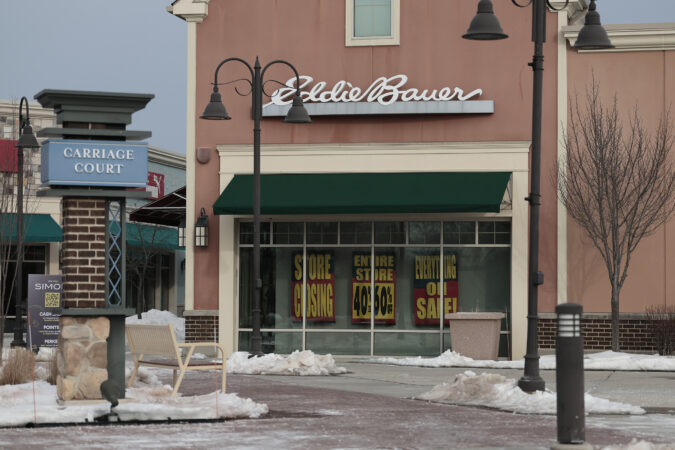
    The operator of Eddie Bauer filed for Chapter 11 bankruptcy in the U.S. Bankruptcy Court for the District of New Jersey on Monday and is winding down stores as it seeks a buyer.

    Eddie Bauer is laying off some 58 employees in New Jersey at locations in Burlington, Gloucester, Middlesex, and Monmouth Counties, according to a layoff notice filed with the state.

    “In an effort to rightsize the company’s store footprint and close underperforming stores, the company will be closing a number of retail locations in N.J.,” reads the notice.

    In Pennsylvania, a spokesperson for the state’s Department of Labor and Industry said they had not received a layoff notice for Eddie Bauer stores as of Tuesday morning.

    Before filing for bankruptcy, the company chose not to renew leases for 49 stores that had leases ending Jan. 31. Those locations have since closed, bankruptcy documents indicate.

    The company is liquidating the remaining 175 stores as it seeks out a buyer.

    In the Philadelphia area, Eddie Bauer stores are located at the Gloucester Premium Outlets in Camden County, at the Philadelphia Premium Outlets in Montgomery County, as well as in Concordville in Delaware County.

    As of Tuesday, the Fashion District location in Center City appeared to be closed, according to the Eddie Bauer website.

    What led to the bankruptcy?

    Eddie Bauer stores have been operated by Catalyst Brands, which was formed in January 2025 in a merger that brought together brands including Aéropostale, Brooks Brothers, and JCPenney.

    The CEO of Catalyst Brands, Marc Rosen, said in a news release Monday that the Eddie Bauer operator had been in a “challenged situation,” even before the new parent company was formed last year. The company was dealing with declining sales and supply chain challenges amid other issues, he said.

    “Over the past year, these challenges have been exacerbated by various headwinds, including increased costs of doing business due to inflation, ongoing tariff uncertainty, and other factors,” Rosen said. “While the leadership team at Catalyst was able to make significant strides in the brand, including rapid improvements in product development and marketing, those changes could not be implemented fast enough to fully address the challenges created over several years.”

    Other retailers have also faced headwinds recently. The parent company of Saks Fifth Avenue and Neiman Marcus filed for bankruptcy in January, and shopping mall mainstay Claire’s, did so in August.

    Eddie Bauer stores in the Philadelphia area

    Pennsylvania:

    • Fashion District, 901 Market St., Philadelphia
    • Shoppes at Brinton Lake, 961 Baltimore Pike, Glen Mills
    • Montgomery Mall, 290 Montgomery Mall, North Wales
    • Philadelphia Premium Outlets, 18 Lightcap Rd., Pottstown
    • Tanger Outlets Lancaster, 1140 Stanley K Tanger Blvd., Lancaster

    New Jersey

    • Gloucester Premium Outlets, 100 Premium Outlets Drive, Blackwood
    • Jersey Shore Premium Outlets, 1 Premium Outlets Blvd., Tinton Falls
  • Pa. company pleads guilty in illegal video gambling scheme, but charges have been dropped against the owners

    Pa. company pleads guilty in illegal video gambling scheme, but charges have been dropped against the owners

    A Pennsylvania company has pleaded guilty to a crime stemming from its work installing hundreds of illegal video gambling devices across the state — but its owners appear to be off the hook.

    Schuylkill County-based Deibler Brothers Novelty Co. pleaded guilty Friday to corrupt organizations, a first-degree felony, and was ordered by a judge to forfeit $3 million to the state in cash and assets, according to the office of Pennsylvania Attorney General Dave Sunday.

    The company is owned by brothers Arthur Deibler, 34, and Donald Deibler, 33, and their friend Joel Ney, 35, each of whom was charged in 2024 with multiple felonies, including corrupt organizations and conspiracy.

    Court records show the charges were withdrawn Tuesday. Sunday’s office said that was part of the plea agreement, which also required the company to pay the asset forfeiture up front.

    “We expect those charges to be dismissed by the attorney general,” said defense lawyer William J. Brennan, who represents the Deibler brothers along with Michael T. van der Veen.

    Prosecutors say Deibler Brothers marketed its illegal devices as legal skill games — the slot machine-style games that have proliferated across Pennsylvania — and paid kickbacks to an executive at a device vendor.

    State lawmakers have repeatedly pledged, but so far failed, to tax and regulate the games. The Pennsylvania Attorney General’s Office has argued that the games are illegal slot machines — essentially unregulated casino games — but courts have thus far disagreed.

    “For many years, the legal status of games of chance has been a ping-pong ball in the court system,” Brennan said. “From day to day, it’s hard to follow what the current state of the law is. This corporation has done everything it can to try to remain compliant in a changing legal landscape. This result allows all the parties to move on and put this matter behind them.”

    Sunday, a Republican, said in a statement Monday that the plea resolution “secures a substantial forfeiture of assets to the commonwealth.”

    “This company was warned time and time again and continued to snub its nose at state regulations by flooding Pennsylvania counties with illegal gambling machines,” he said.

    A grand jury presentment accused Deibler Brothers of supplying thousands of illegal video gambling devices — modified slot machines — to convenience stores, bars, and gas stations across more than a dozen counties.

    From April 2021 through November 2023, the company received more than $1 million a month from the distribution and operation of the machines, according to the presentment from the 50th Statewide Investigating Grand Jury.

    In an effort to “disguise” its use of illegal slot machines, Deibler Brothers also paid $150,000 in illegal kickbacks to an executive at device vendor Pace-O-Matic, the presentment said.

    The executive — Ricky Goodling, a retired Pennsylvania State Police corporal and Pace-O-Matic’s former director of national compliance — pleaded guilty last week to state money laundering charges. He also pleaded guilty to federal tax evasion charges.

    Deibler Brothers sought to commingle its illegal games with legal Pace-O-Matic machines to try to “dupe” law enforcement authorities and store owners into thinking they were the same, the presentment says.

    Pennsylvania courts have ruled that Pace-O-Matic games are legal games of skill, not chance, because they include a memory component that distinguishes them from casino-style slot machines. But most of the machines distributed by the Deibler Brothers had no such secondary element and were therefore illegal, the presentment said.

    Goodling used his authority at Pace-O-Matic to quash complaints about Deibler Brothers and another firm that paid him kickbacks, according to the grand jury.

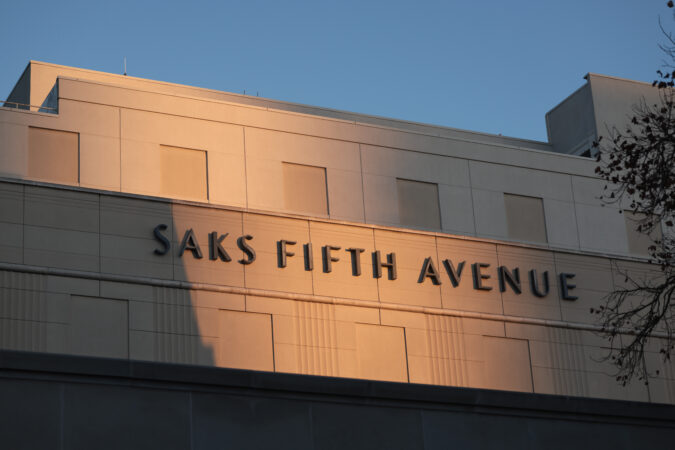
  • Saks Fifth Avenue in Bala Cynwyd is closing

    Saks Fifth Avenue in Bala Cynwyd is closing

    Saks Fifth Avenue will be closing its Bala Cynwyd location.

    Saks Global, which owns Saks Fifth Avenue and Neiman Marcus, announced the impending closure in a news release Tuesday, a month after the luxury clothing retailer filed for Chapter 11 bankruptcy.

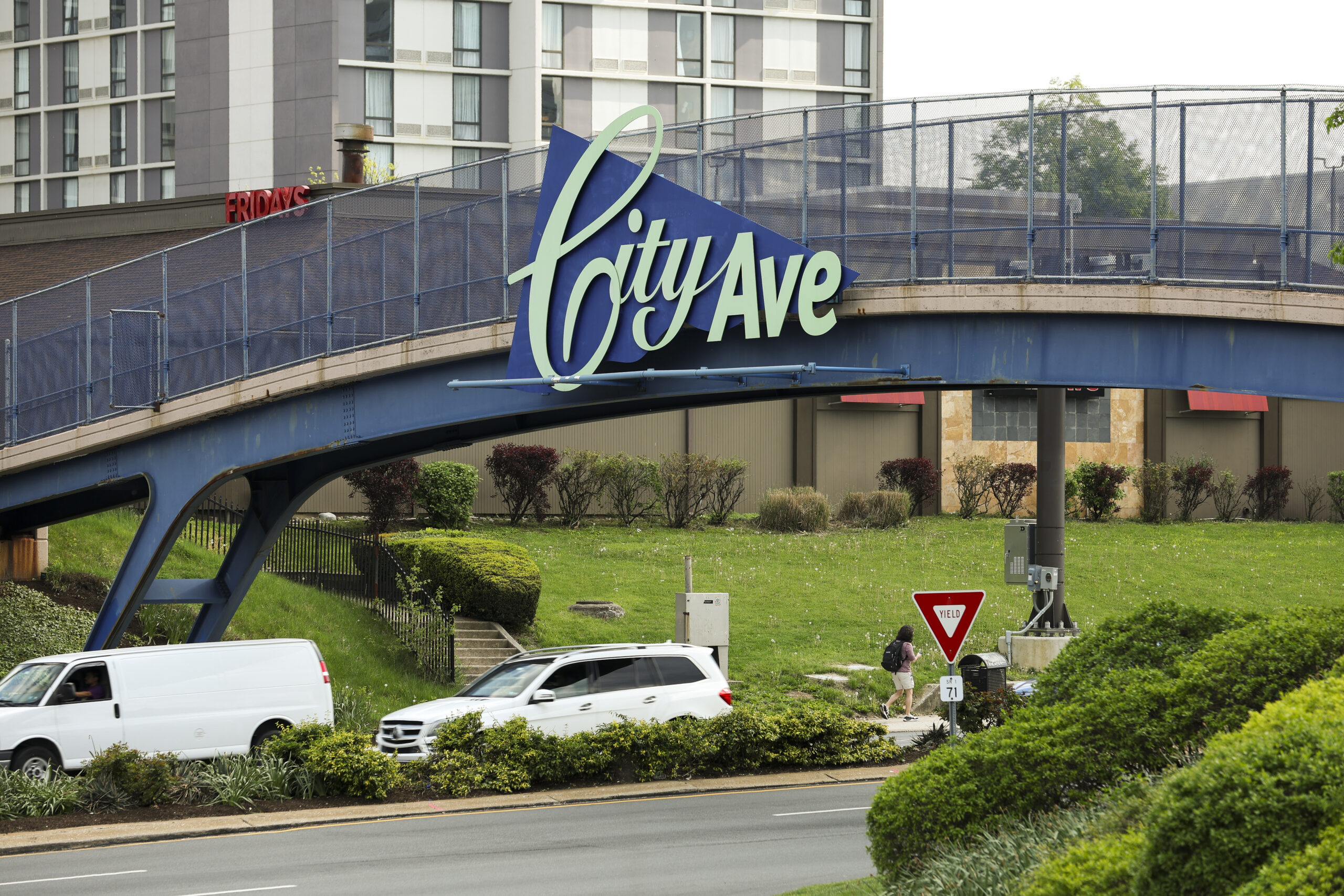
    After decades in business, the expansive store along City Avenue is expected to close in April, according to a Saks Global spokesperson, who said decisions were based on several factors, including store performance and “lease economics.”

    Fifty workers at the Bala Cynwyd Saks Fifth Avenue will lose their jobs effective April 11, according to a WARN Act filing with the Pennsylvania Department of Labor and Industry. Another 155 workers at a Wilkes Barre fulfillment center will be laid off, according to a separate filing.

    As part of the company’s restructuring, it will shutter seven other Saks Fifth Avenue stores, including at the American Dream mall in North Jersey, as well as a Neiman Marcus in Boston.

    “Saks Global is refining its store footprint to focus on profitable locations with the highest growth potential,” company executives wrote on its website, adding that the nine closures represented “the first phase of this ongoing review.”

    The move will make the company “better positioned to deliver exceptional products, elevated experiences and highly personalized service across all channels,” CEO Geoffroy van Raemdonck said in a statement.

    Over the years, the Saks Fifth Avenue in Bala Cynwyd has become the brand’s only physical outpost in the region. It is referred to as “Saks Philadelphia” on the company’s website, despite being located across the city line in a freestanding building at Bala Plaza.

    City Avenue is shown in April 2024. The Saks Fifth Avenue along the busy thoroughfare is closing in April.

    The aging shopping center is in the process of being revamped into what developers are advertising as a “sanctuary for work, life and play,” with hundreds of new residential units.

    Nearby on City Avenue, a standalone Lord & Taylor, which closed in 2021 amid the department store’s bankruptcy, is being converted into an apartment building.

    Until recently, the longstanding Saks Fifth Avenue appeared primed to be part of the area’s future: In 2024, City Ave District, the nonprofit business development agency that straddles Lower Merion and Philadelphia, reported that business at the store was so strong that it had resisted offers to move to King of Prussia.

    Once the Bala Cynwyd Saks Fifth Avenue closes, the nearest location will be in New York.

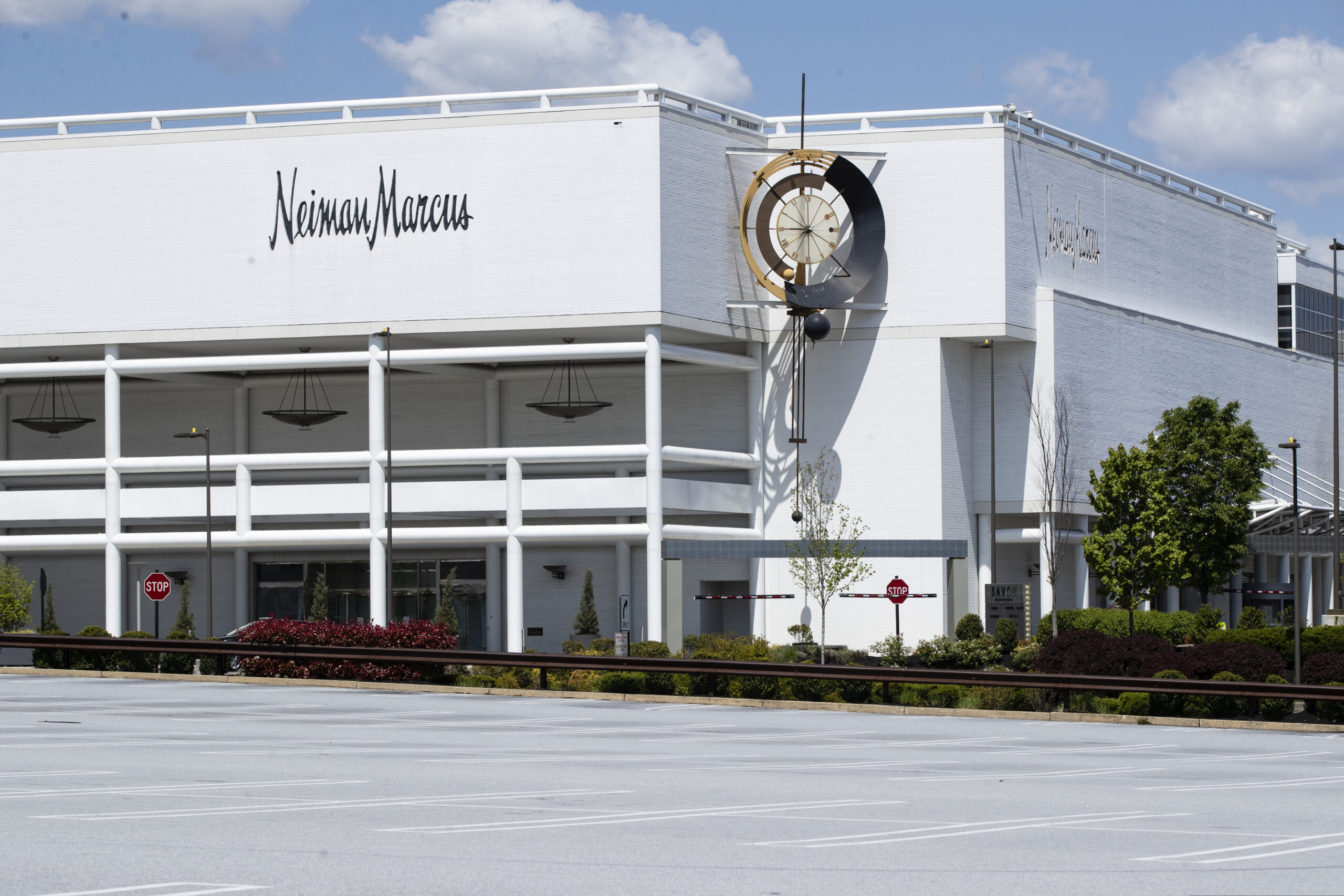
    Saks Global also operates a Neiman Marcus at the King of Prussia Mall, which is not on the list of stores to close.

    The Neiman Marcus at the King of Prussia Mall, pictured in 2020, will remain open.

    Saks Off 5th discount outlets at the Franklin Mall in Northeast Philadelphia and at the Metroplex shopping center in Plymouth Meeting recently closed. The winding down of those stores was announced before the bankruptcy filing, as was reported by several news outlets, including the Philadelphia Business Journal.

    Elsewhere in the country, Saks Global is closing the majority of its standalone Fifth Avenue Club personal styling suites, the company said Tuesday.

    In New York, Bergdorf Goodman, which Saks also owns, will remain open.

    What Philly-area Saks customers should know

    Shoppers walk through Saks Fifth Avenue in New York in January.

    Shoppers at the Bala Cynwyd store will no longer be able to buy gift cards in person, according to Saks, and will have 15 days from the start of the closing sale to use existing gift cards.

    Items that were bought before the closing sale can be returned or exchanged as usual, the company said, but purchases made during it will be final. Merchandise bought during the closing sale will also be ineligible for return or exchange at stores that are remaining open.

    SaksFirst credit cards will still be accepted, according to the company, and customers with those credit cards will still earn points for purchases made in store. Shoppers will no longer be able to make in-person credit card payments or apply for credit cards at the Bala Cynwyd store.

    At other Saks locations, including the King of Prussia Neiman Marcus, the company says the customer experience will remain unchanged.

  • LOVE Park’s saucer could soon get a reboot. For real this time, the city says.

    LOVE Park’s saucer could soon get a reboot. For real this time, the city says.

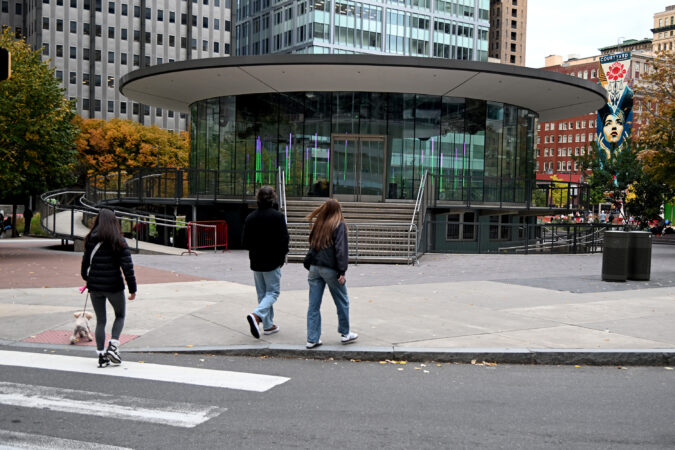
    The saucer in LOVE Park finally has a timeline for its revival.

    After years of seeking ideas from business owners and other Philadelphians, city officials expect work on the historic building to begin in May, the city’s Parks & Recreation Department says.

    But officials are still working to select a partner for the project.

    In May, the city issued a “request for expressions of interest” (RFEI) from “visionary businesses, particularly those in food, beverage, retail, or hospitality,” who wanted to partner on the saucer.

    City officials said the interest exceeded expectations, with more than 50 applicants submitting ideas. They included “coffee and cafe concepts, casual food offerings, beer garden hybrids, and informal meeting spaces,” according to Parks & Recreation spokesperson Ra’Chelle Rogers.

    Among applicants, there was a focus on “flexible, welcoming concepts that function as a true public amenity, encouraging people to meet, linger, and connect in the park,” Rogers said.

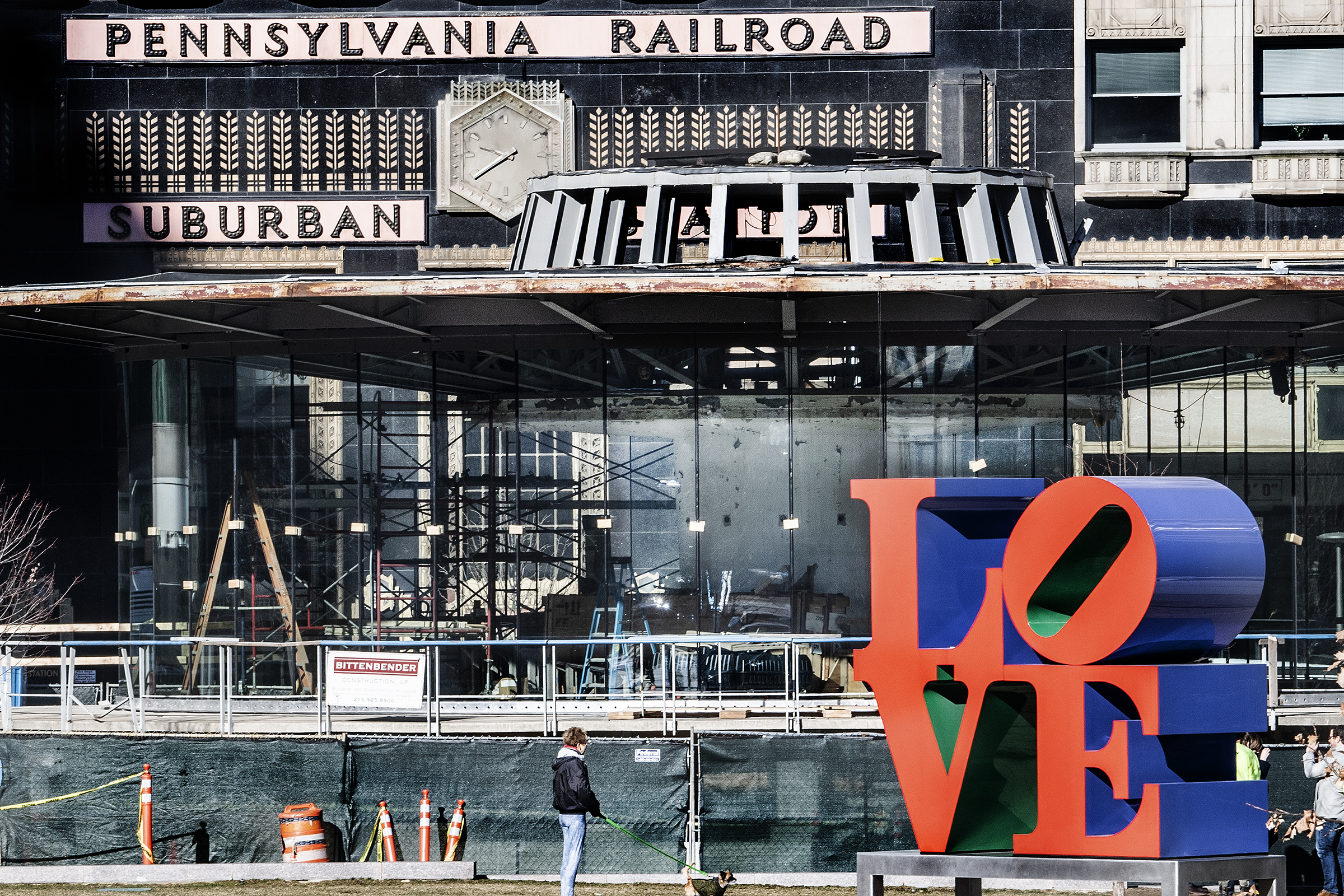
    The saucer building in LOVE Park is pictured in March 2019, amid early renovations for a bar-restaurant concept that never panned out.

    In light of the demand, the city is moving into its next stage, requiring prospective partners to visit the saucer at 3 p.m. on Feb. 18 and submit a proposal online by March 18.

    Prospective partners do not need to have submitted an idea in the spring, Rogers said. Any experienced food, beverage, hospitality, or community operator with the capacity to “generate sustainable revenue to support the park” is encouraged to apply, Rogers said.

    “The saucer has always been envisioned as a people-first space — one that complements the park, supports programming, and welcomes both residents and visitors,” said Susan Slawson, the city’s parks & recreation commissioner. The RFEI process has given officials “confidence to move forward with a flexible, inclusive model designed for the way people actually use LOVE Park.”

    The saucer, also referred to as the UFO, was added to the Philadelphia Register of Historic Places last year. Built in 1960, the building predates LOVE Park, and first served as the city hospitality center. It later housed offices for park staff.

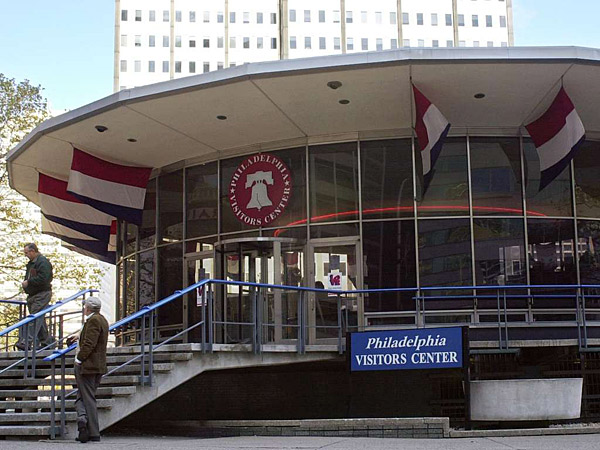
    An undated file photo of LOVE Park’s saucer building when it served as the Philadelphia Visitors Center.

    For more than a decade, however, the circular structure near 16th Street and JFK Boulevard has largely sat dormant (the building has opened to the public for the Festival of Trees, a Children’s Hospital of Philadelphia fundraiser, during recent holiday seasons).

    As part of LOVE Park’s rehabilitation in the late 2010s, the saucer got a $5.6 million facelift, making it “structurally brand new,” as Rogers described it in May.

    The city solicited proposals for a restaurant to fill the space, and selected Safran Turney Hospitality, the group behind a slew of popular restaurants on 13th Street. They planned to open a bar-restaurant called Loveluck that would seat about 50 people indoors and another 150 outside.

    In March 2019, city officials applauded the early construction of a bar-restaurant that was set to fill LOVE Park’s saucer building. The pandemic later caused the restaurateurs to bow out of the project.

    Then the pandemic happened, and the group bowed out of the project in 2022. A few months later, the city issued another request for proposals from experienced restaurateurs interested in signing a 10-year lease. That request did not result in any bids, Rogers said in May.

    As for this latest request process, city officials said they plan to select a partner by April, and begin work a month later. The timing could coincide with Philly’s celebration of America’s 250th birthday, as well as the city’s hosting of World Cup matches and the MLB All-Star game.

    The office of Councilmember Jeffery Young, whose district includes LOVE Park, is set to fund “key utility and infrastructure improvements” at the saucer, according to the city statement, and public grants are being sought to offset other upfront costs.

    “Bringing an active, public-facing partner into the saucer is a milestone for LOVE Park and for Philadelphia,” Young said. “I’m proud to support improvements that make the saucer a welcoming hub for years to come.”

  • Teachers at this Philadelphia charter just voted to unionize

    Teachers at this Philadelphia charter just voted to unionize

    Esperanza Academy Charter High School teachers and staff have unionized.

    The brand-new Esperanza High School Collective, a chapter of the American Federation of Teachers, now represents nearly 80 staff at the school.

    The move comes during a period of turmoil at the school, after some employees were laid off abruptly in December. Current and former staff say there have been sudden and arbitrary changes at the school, including larger class sizes and fewer staff working directly with children.

    Union recognition was hard fought — a majority of the staff signed union cards in the fall, but the Esperanza administration declined to voluntarily recognize the collective.

    Instead, the AFT had to go through the National Labor Relations Board, which held an election in late January. In all, 87% of the Esperanza Academy Charter High School staff voted to unionize. (Staff at Esperanza’s elementary and middle schools have not unionized.)

    Wendy G. Coleman, president of AFT Pennsylvania, said the organization was “thrilled” to welcome Esperanza Academy high school staff.

    “These dedicated educators and staff work tirelessly to ensure that their students receive the best possible education, and AFTPA is ready to work just as diligently to help them secure better class sizes, higher wages, and adequate resources for every member in their first contract,” Coleman said in a statement. “As we know, our members’ working conditions are our students’ learning conditions, and we’re excited to see what the future holds for the Esperanza High School Collective in their first contract.”

    Esperanza is the sixth of Philadelphia’s 81 charter schools to form a union; the vast majority of Pennsylvania charters are not unionized.

  • Expecting a big tax refund? One missing detail could freeze your money for weeks

    Expecting a big tax refund? One missing detail could freeze your money for weeks

    Thanks to new changes in the tax law caused by 2025’s One Big Beautiful Bill — specifically with regard to new deductions for tipped and overtime income — the U.S. Treasury Department expects many taxpayers to receive refunds this year.

    “The bill was passed in July [and many] working Americans didn’t change their withholding, so they’re going to be getting very large refunds in the first quarter,” Treasury Secretary Scott Bessent said in a December interview broadcast on NBC10. “So I think we’re going to see $100 [billion]-$150 billion of refunds, which could be between $1,000 to $2,000 per household.”

    Sounds great. But be careful. If you’re in line to get your tax refund, you better make sure you’re prepared to share your bank account information with the Internal Revenue Service. Otherwise you could experience significant delays.

    A new IRS rule that affects 2025 tax returns is now requiring taxpayers to provide their bank account and routing numbers to receive refunds timely via direct deposit.

    The IRS will still process individual income tax returns (Form 1040 series) filed without bank account information. However, the agency will temporarily freeze the refund until the taxpayer provides direct-deposit information or requests a paper check. More importantly, if incorrect bank account information is submitted, the IRS will freeze those direct deposits until the issue is resolved.

    “Many taxpayers haven’t fully grasped that shift yet,” said Mitchell Gerstein, a senior tax adviser at Isdaner & Company in Bala Cynwyd. “If you are hesitant to share bank information with the IRS, we explain that electronic payments are now the default.”

    Some may not feel comfortable sharing their bank information with the government, and ultimately providing this information is voluntary. But, according to Philadelphia CPA Jacob Cohen, not doing so will create headaches and delays.

    “If a taxpayer does not want to share the information, their refund will take longer to process and the IRS will still attempt to collect banking information before they issue a refund check,” he said. “The refund could be delayed several weeks at a minimum, but likely longer.”

    Not everyone will be affected by this rule. The IRS says international taxpayers, minors, prisoners, taxpayers with religious exceptions, and decedent taxpayers will receive paper check refunds as in the past.

    And the IRS will still be making payments by check for now for those who request it. But they do plan on phasing out that ability in the coming years.

    “If you do not have an account, we’d recommend setting up a basic no-fee checking account in person at a reputable bank, or even online with certain banks like Ally Bank or Discover Bank,” Cohen said. The IRS offers the ability to split your refund into up to three accounts for retirement, savings, and checking.

    What if you don’t have a bank account and don’t want to open one?

    There are other options for those without bank accounts.

    Treasury does offer alternative options such as prepaid debit cards, credit cards, or approved digital wallets such as PayPal, says Gerstein. Many reloadable prepaid cards like Netspend and Bluebird provide a routing and account number that you can use for direct deposit.

    Make sure to check with your mobile app provider or financial institution to confirm which numbers to use.

    The IRS also recommends visiting the FDIC website or using the National Credit Union Administration‘s Credit Union Locator Tool to find a bank or credit union and how to choose the right account for you. If you are a veteran, you can use the Veterans Benefits Banking Program (VBBP) for access to financial services at participating banks

    If you decide to go fully digital, Philadelphia CPA David Lopez recommends setting up your online account and also creating an account on ID.me. This program is used by several government and non-government agencies and allows you to track the status of your tax refund.

    “For the IRS, you can use the ID.me platform to review your tax documents for the past seven years, run reports on your income and wages, and obtain tax documents that you may have displaced,” he said. Users can see “if you owe, if you have a refund, and [can] even make payments in installments if needed.”

    Typical refunds are processed within 21 days for an e-filed return and six weeks or more if sent by mail, according to the IRS. Refunds will take even longer if corrections are needed or bank information isn’t included. Where’s My Refund will have the latest information on your return.

    Why is the IRS pushing so hard for electronic payments?

    Gerstein says the real benefit for both individuals and businesses is faster, more secure refunds and fewer lost checks with an immediate payment confirmation. Most accounting experts say that the IRS does process refunds via direct deposit faster than by check and that it’s the quickest way to do business with the agency.

    “Our advice is simple,” he said. “Set up an IRS online account, double-check your bank routing and account numbers, and don’t ignore IRS letters.