Category: Business

Business news and market updates

  • Austen’s Shelf pens a new chapter with a brick-and-mortar bookstore in South Jersey

    Austen’s Shelf pens a new chapter with a brick-and-mortar bookstore in South Jersey

    On a warm weekend earlier this month, dozens of shoppers, some of them dressed in Regency-inspired apparel, milled about the city of Bordentown, in Burlington County.

    Those donning bonnets and hand fans weren’t time travelers or lost actors — they were there to celebrate the opening of a new bookshop with plenty of historic flair of its own.

    Inspired by the works of renowned 18th- and 19th-century novelist Jane Austen, Austen’s Shelf penned a new chapter June 6 with the opening of its storefront at 230 Farnsworth Ave. The bookshop, which held a period-inspired costume contest for the occasion, is part of a growing surge of independent bookstores nationwide.

    Austen’s Shelf launched last year as a mobile bookstore in a 98-square-foot trailer.

    Austen’s Shelf launched last year as a 98-square-foot mobile bookstore that popped up at festivals and events, many of them in South Jersey. It was born out of founder Charity Herndon’s desire to fulfill a lifelong dream of owning a bookstore, something she decided to pursue after facing a breast cancer scare.

    While she ultimately didn’t end up with a diagnosis, the experience changed how the now-30-year-old looked at life.

    “I feel like a completely different person than I was before the health scare,” she said. “After you get over that mountain, it’s kind of like, all systems go.”

    For Herndon, it was. Within months of her mobile shop’s September opening, she began to contemplate a more permanent space, seeing a desire from customers to “sit and linger.” With long lines forming at pop-ups, she felt like the shop had become as much about buying a book as it was a place for people to connect.

    That was further stoked after a dreary winter and one particularly busy January pop-up at Turtle Beans Coffee in Bordentown. During that event, she said visitors told Herndon “we need a bookstore like this in town.”

    While there’s already an independent bookstore there, Old Book Shop of Bordentown specializes in general used, out-of-print, and antiquarian books. Coincidentally, Jane Austen is the 21-year-old shop’s second-best selling author, owner Doug Palmieri said.

    Given the two don’t have significant crossover in their business models, he welcomes having another bookshop nearby. Like antique stores, “the more there are in one area, the better for business,” he said, adding that he got a boost during Austen’s Shelf’s opening weekend, which coincided with the New Jersey book crawl and another store’s opening.

    Independent bookstores like Austen’s Shelf are on the rise nationally. According to the American Booksellers Association, 605 new bookstore businesses opened in 2025, an 87% increase from 2024.

    They’ve proliferated in the Philadelphia suburbs in recent months. Chapter Two Books opened in Wynnewood in May, Forage Books debuted in Kennett Square in February, and two bookstores, Celia Bookshop and Dirt Farm Books, opened in Swarthmore in October and January, respectively. The latter specializes in used and rare books.

    Books aren’t the only media form making a resurgence. A Passyunk Square resident is on the hunt for a place to set up Little Movie Store, a video rental shop in the vein of Blockbuster.

    Palmieri — a 20-year member, current secretary, and past president of the Downtown Bordentown Association, which promotes and supports local businesses — attributes the growth of indie bookshops partly to an uptick in younger readers, primarily those in their 20s and 30s.

    “They like the touch and feel of books,” he said. “They like to have the books in their hands.”

    DBA treasurer and past president CJ Mugavero, who owns Artful Deposit, sees the rise in retail as something of a reaction to the increased digitization of society.

    “What people are craving is the human factor,” she said. That’s helped spur a number of new businesses in Bordentown recently.

    Located next door to Austen’s Shelf, menswear and home store Haberdashery and Home debuted this month. Earlier this spring, the historic city welcomed art spaces Bonaparte Boutique and Sleeping Cat, an expansion of studio Leaping Dog. Abyssal Brewing and yoga and pilates studio The Movement also put down roots there in the first half of this year.

    Beyond a desire for the tactile, “people long for community, and I think that’s something you can’t necessarily find if you’re just ordering your books off of Amazon,” Herndon said.

    That was top of mind when she conceptualized her new space, which is small, but more than quadruple the size of the mobile bookshop. Clocking in at under 500 square feet, it has a “homey” vibe that allows for lingering and connecting. There are two sitting areas, one with a couch, the other a table and chairs. The latter sits beneath a large mural depicting Elizabeth Bennett and Mr. Darcy from Austen’s Pride and Prejudice, painted by Philadelphia artist Erik Weedeman.

    Shoppers browse for books and other goods at Austen’s Shelf in Bordentown.

    Like its predecessor, this edition of Austen’s Shelf caters to a wide range of readers, stocking a curated selection of young adult, literary fiction, poetry, mystery and thriller, and fantasy, as well as children’s books.

    There’s also a room dedicated to Austen, complete with a gilded digital display showing film adaptations of her books. Herndon also sells a selection of what she’s dubbed “Regency-modern” apparel.

    With a permanent space now up and running, Herndon has no plans to stop taking the mobile bookstore out. She’s just refining the schedule and taking on fewer events.

    A former Bordentown resident who now lives in Gloucester County, Herndon hopes the shop helps draw visitors to the city. She wants visiting Austen’s Shelf to feel “like an experience where the entire town can kind of be a place to linger.”

    If opening weekend was any indication, that just might be the case. Looking out at the historic city during the grand opening and seeing people wander the streets in period-inspired attire, she said the image “just fits like a glove. It’s the dream, literally.”

    Austen’s Shelf is open Wednesdays and Thursdays from 11 a.m. to 6 p.m., Fridays and Saturdays from 11 a.m. to 7 p.m. and Sundays from 11 a.m. to 5 p.m.

    This suburban content is produced with support from the Leslie Miller and Richard Worley Foundation and The Lenfest Institute for Journalism. Editorial content is created independently of the project donors. Gifts to support The Inquirer’s high-impact journalism can be made at inquirer.com/donate. A list of Lenfest Institute donors can be found at lenfestinstitute.org/supporters.


  • Airbnb is turning on its ‘anti-party’ technology for Memorial Day weekend

    Airbnb is turning on its ‘anti-party’ technology for Memorial Day weekend

    Airbnb is activating its “anti-party” technology again for Memorial Day weekend as the global rental property giant doubles down on its no-party policies.

    Temporary changes to the online booking system will deter potential “higher risk” bookings during Memorial Day weekend. At the time of publishing, Airbnb did not specify the exact dates and times the technology would be operating.

    Last year, Airbnb said this technology deterred nearly 11,000 people from booking entire homes over Memorial Day weekend. In Philadelphia, 85 people were deterred from entire-home booking that same time period.

    The system looks at the type of listing being booked, the duration of the stay, the distance from the guest’s primary location, and whether the booking is made last minute, to determine whether a booking should be deterred, according to Airbnb.

    Airbnb has tied certain entire-home bookings to the potentially disruptive parties for which rental platforms garnered a reputation in earlier years, including in the Philadelphia region. Muhammad Ali’s Cherry Hill mansion, which still operates as a rental property on platforms like Vrbo and Expedia, was the site of countless “wild parties” that led police to visit the home 97 times between 2018 and 2019, according to an Inquirer report.

    The anti-party technology deters potential house party bookings toward private room listing or hotels hosted on the platform.

    “Our investment in anti-party technology, along with clear policies and consequences, reflects our commitment to supporting positive stays and countering the rare few who would try to break the trust our platform and local communities are built on,” said Rog Kaiser, vice president of fraud and safety operations at Airbnb.

    In 2022, Airbnb made its COVID-era “party ban” permanent, making it against the rules for all users year-round to book entire homes solely for large parties.

    Airbnb was also reminding parents and guardians that children under 18 cannot have Airbnb accounts and parents cannot book rentals for underage guests without the parent being on-site. Violating these rules can lead to bans and financial costs in the case of damages.

    Since these measures were put in place, in 2025, less than 1% of U.S. rental bookings resulted in a report of a party to Airbnb, according to the company.

  • Edna B. Foa, celebrated pioneering psychologist and longtime Penn professor, has died at 88

    Edna B. Foa, celebrated pioneering psychologist and longtime Penn professor, has died at 88

    Edna B. Foa, 88, of Philadelphia, renowned clinical psychologist, pioneering mental health researcher, creator of the celebrated prolonged exposure therapy for post-traumatic stress disorder, longtime professor of clinical psychology in psychiatry at the University of Pennsylvania, lecturer, mentor, and volunteer, died Tuesday, March 24, of complications from pneumonia at Pennsylvania Hospital.

    Dr. Foa was among the first psychologists in the 1970s and ‘80s to infuse empirical case study research into existing behavior protocols to create more effective mental health treatments for victims of rape, combat trauma, childhood sexual abuse, and other ordeals. She became an expert in PTSD, obsessive-compulsive disorder, and social phobia, and her prolonged exposure therapy for PTSD and exposure and response prevention treatments for OCD are still hailed as breakthrough innovations.

    From 1971 to 1997, she was a fellow, professor, and clinical researcher in the psychiatry departments at Temple University and the old Medical College of Pennsylvania, now part of Drexel University. She joined Penn’s Department of Psychiatry in 1998 and, over more than 50 years, evaluated thousands of mental health cases to determine which behavior therapy was best for each condition.

    “Her work truly changed the field,” colleagues at the Ardmore-based Center for Hope and Health said on Instagram. They said she “spent her career doing what she believed mattered most: studying what actually helps people get better, and making those treatments more accessible.”

    She created the Center for the Treatment and Study of Anxiety at Temple in 1979 and directed it later at Penn. Colleagues at the center said on Facebook: “Through her brilliance, determination, and unwavering belief in the power of evidence-based care, she transformed the understanding and treatment of anxiety-related disorders and changed the lives of countless individuals and families around the world.”

    Other colleagues and friends called her “brilliant,” “amazing,” and “extremely influential” in online tributes. One said she was “a giant who taught the world how to conquer fear and reclaim life.”

    Dr. Foa earned grants for research and education, and taught her therapy techniques to veterans counselors in the United States and Israel, to therapists for the U.S. Army and the City of Philadelphia, and to clinicians at Women Against Rape and other groups around the world. In 2010, she was named one of Time magazine’s 100 most influential people in the world.

    To share her innovations and encourage peer review, Dr. Foa edited Failures in Behavior Therapy in 1983 and cowrote Emotional Process of Fear in 1986 and Emotional Processing of Traumatic Experiences in 2007. The hundreds of books, manuals, articles, and papers she wrote, cowrote, or edited about memory, stress, anger, depression, and guilt have been cited more than 13,000 times by other authors.

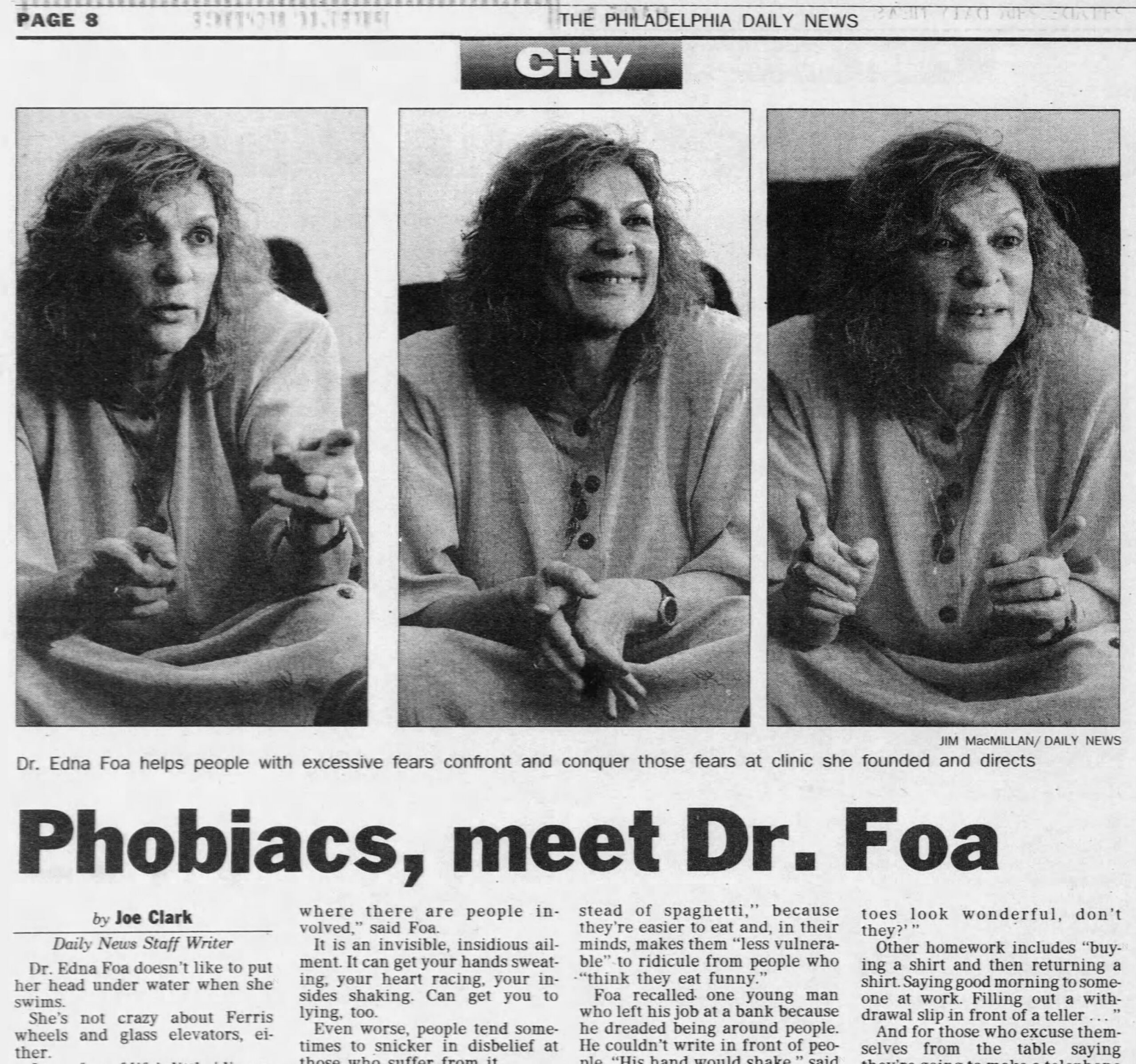
    The Daily News published this story and photos of Dr. Foa in 1993.

    She also volunteered as a consultant and supervisor at clinics and medical centers. She lectured and organized clinical workshops in the United States, Israel, and elsewhere. In 2010, she told Time magazine: “If you develop a wonderful protocol, it’s useless if nobody uses it.”

    She was affiliated with many mental health societies and associations, and earned lifetime achievement awards from the American Psychological Association, the International Society for Traumatic Stress Studies, and other groups. She was featured often in The Inquirer and the Daily News, and told the Daily News in 1993 that “everyone has little fears.” She said her little fears were of heights and swimming underwater.

    In 1970, Dr. Foa earned both a doctorate in clinical psychology and personality from the University of Missouri, and a master’s degree in clinical psychology at the University of Illinois. In 1962, she earned a bachelor’s degree in psychology and literature at Bar-Ilan University in Israel.

    She stopped working full-time at Penn in 2023 but never really retired. In April, she was scheduled to lead a workshop in prolonged exposure therapy. In 2011, she told The Inquirer: “If I die tomorrow, I think that what I have achieved is fine. If I don’t die, I don’t need to stop.”

    Edna Ben Jacob was born Dec. 28, 1937, in what is now Haifa, Israel. She became fascinated by the work of psychologist Sigmund Freud, she told the Encyclopedia of Behavior Modification and Cognitive Behavior Therapy, and she worked briefly with juvenile offenders near Tel Aviv after high school.

    In 2011, she told The Inquirer she was shattered by her own trauma in 1948 when her brother, Uri, was killed in the war and her father, Abraham, died four years later.

    She married and divorced when she was young, and met Professor Uriel Foa at Bar-Ilan. They married when she was 24, had daughter Dora, and moved to the United States in 1966. They had daughters Yael and Michelle, and lived in Illinois and Missouri before moving to Glenside and then Penn Valley. She moved to Philadelphia a few years ago.

    After a divorce, she married Penn professor Charles Kahn. Her husband and former husband died earlier.

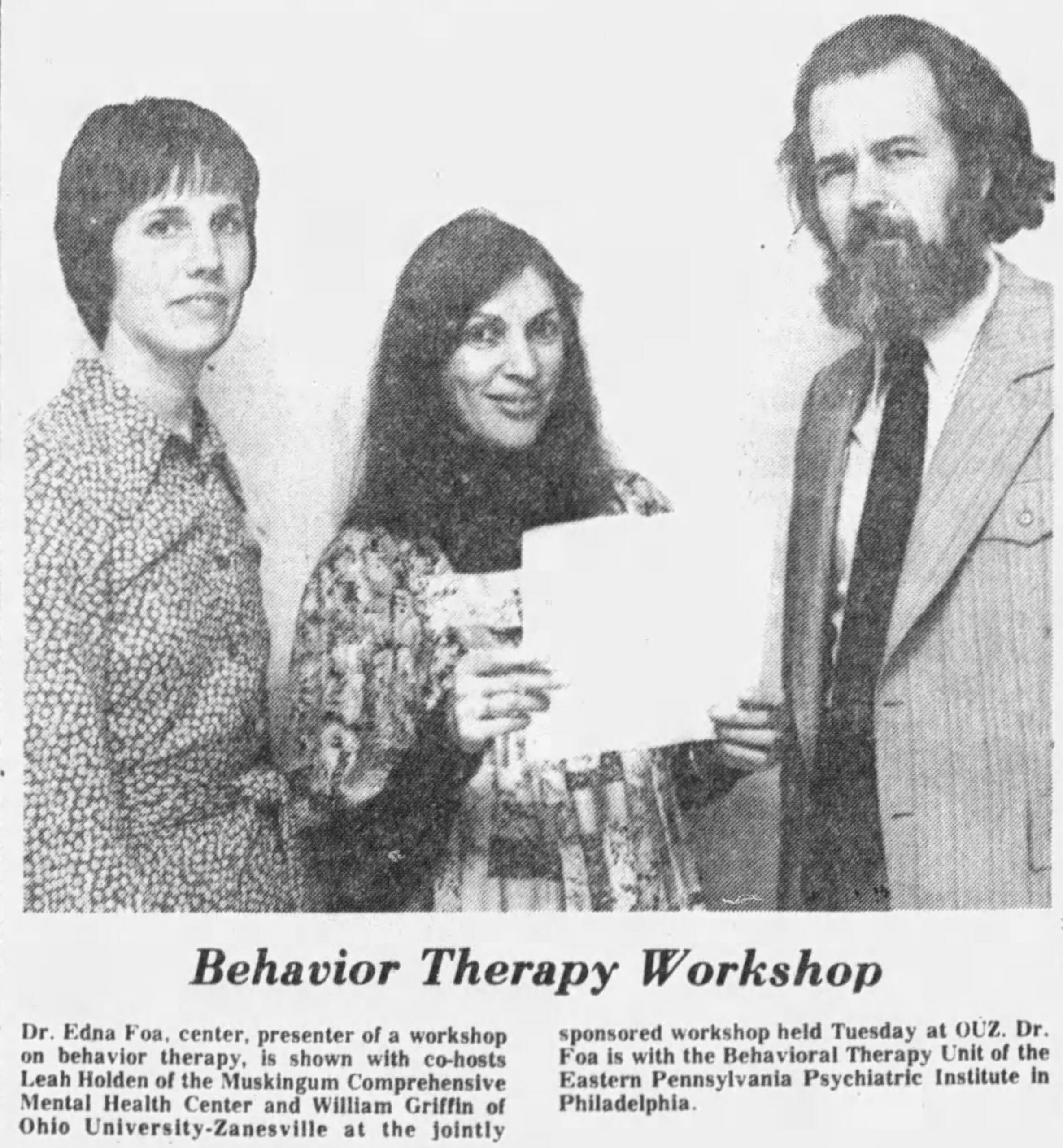
    This photo of Dr. Foa (center) appeared in the Times Recorder in Ohio in 1978.

    Away from work, Dr. Foa enjoyed traveling, gardening, and hosting family and friends at holidays. She collected art and antiques.

    She told an interviewer she had a bad habit of deleting emails before reading them. She managed lung cancer years ago.

    “She was full of energy, vivacious, a force of nature,” said her daughter Yael. Her daughter Michelle said: “She was an extraordinary figure who lived a very rich life.”

    In addition to her daughters, Dr. Foa is survived by five grandchildren, a great-granddaughter, and other relatives.

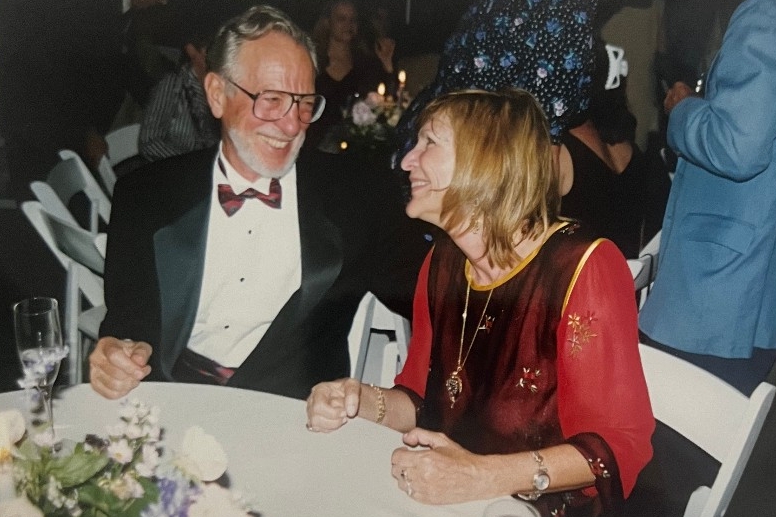
    Dr. Foa laughs with her husband, Charles Kahn.

    Private services are to be held later.

    Donations in her name may be made to the Philadelphia Museum of Art, 2600 Benjamin Franklin Parkway, Philadelphia, Pa. 19130; and the Philadelphia Orchestra, 300 S. Broad St., Philadelphia, Pa. 19102.

  • Philly-area residents share how much they paid to keep warm this winter

    Philly-area residents share how much they paid to keep warm this winter

    If you’re getting burned by high heating bills this winter, you’re in good, and equally stressed, company.

    U.S. households are expected to pay more than $1,000 on average to heat their homes this winter, according to the National Energy Assistance Directors Association’s projections, which were updated last month. That’s about $100 more than households paid last year, according to the association, which advocates for federal funding for low-income ratepayers.

    Consumers are paying more whether they heat their homes with electricity, natural gas, or heating oil. Residential propane costs are on par with last year.

    And customers usually pay more in freezing temperatures, when more energy is required to keep their homes comfortable.

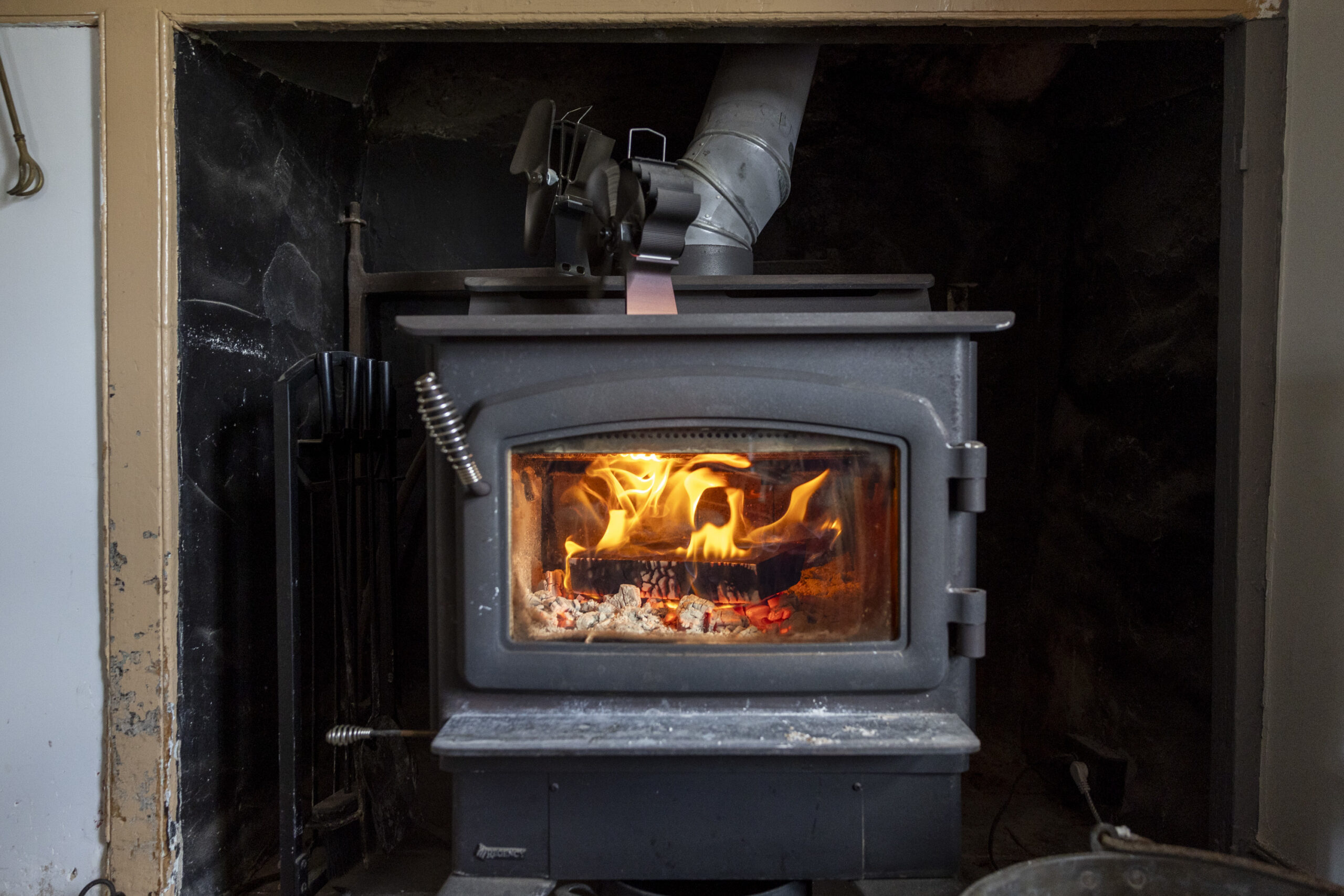
    A wood stove provides heat in the old stone farmhouse of Patrick Melcher’s near Downingtown.

    Philly-area residents were hit with a double whammy: They experienced one of the coldest, snowiest winters in recent memory as rate increases took effect for major utilities, including Peco and PGW.

    All this occurred after a summer in which some local consumers paid more than ever to stay cool.

    Spokespeople for Peco and PGW, which provide electric and gas service to millions across southeastern Pennsylvania, said many of their customers saw increased usage this winter due to the cold. They noted that individual bills can also be impacted by thermostat settings, efficiency of appliances, and weatherization of windows, doors, and other parts of the home, as well as whether customers have opted for a third-party energy supplier.

    “Energy affordability remains a priority, and rising supply costs — set by competitive markets and not controlled or profited from by Peco — continue to be a major driver of customer bills,” spokesperson Candice Womer said in a statement, noting a nearly 20% year-over-year supply cost increase for electric customers and a nearly 10% increase for gas.

    The Inquirer spoke with five people who live across the region, have different types of homes, and use varying fuel sources and heating systems. Here’s how much they’ve paid to keep warm this winter.

    Quotes have been edited for clarity and brevity.

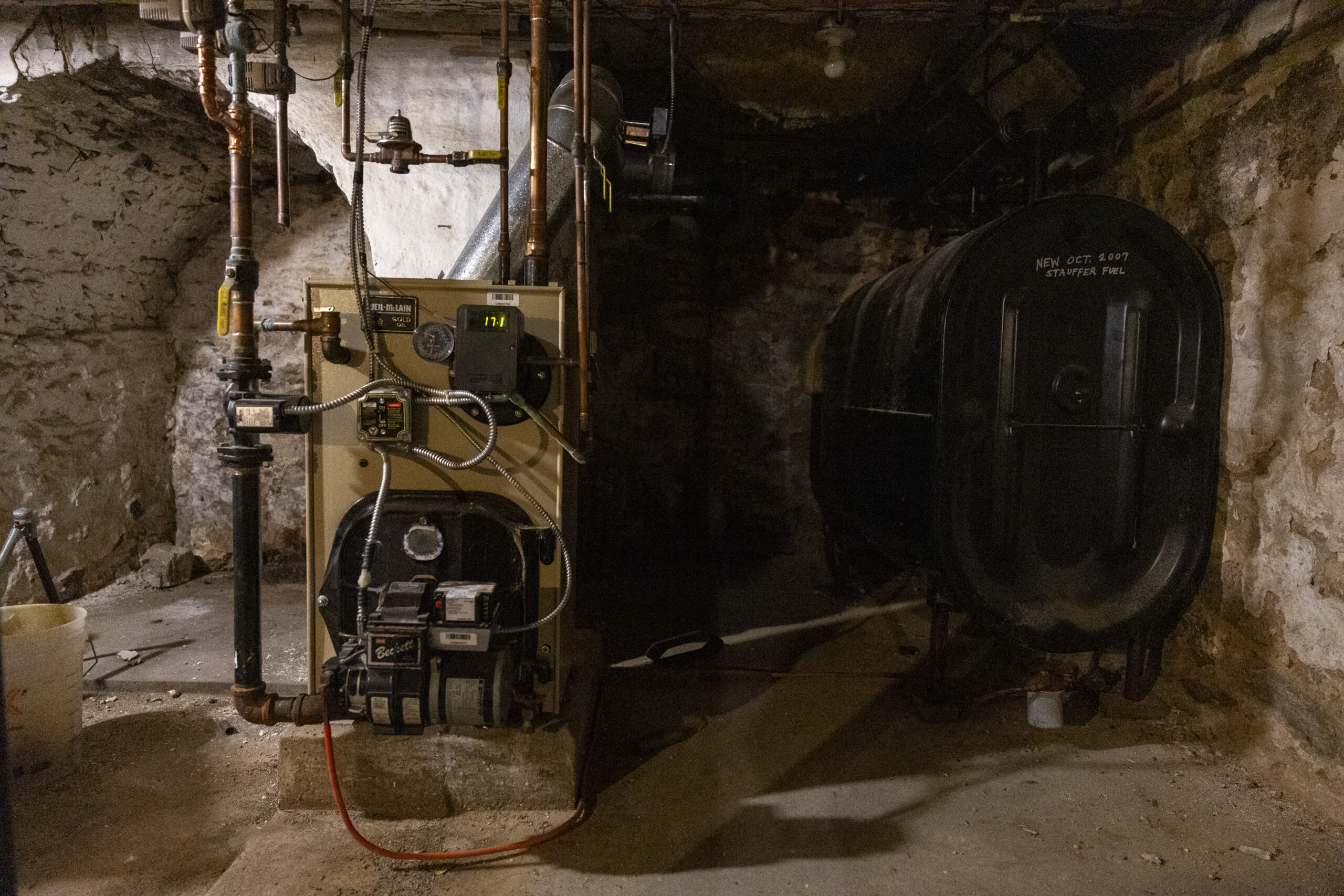
    Melcher, a 48-year-old who owns a custom woodworking business, said he usually needs to fill his 250-gallon oil tank twice a year. In early January, he paid $800 for a 230-gallon top-off, or about $3.45 per gallon, which he thought was fair. He had paid around the same for an oil fill-up in October. This winter, Melcher said he’s also spent about $900 on firewood for his wood-burning stove, plus a couple hundred dollars a month to fuel the electric heaters in his workshop.

    “I don’t have a ton of money. I have a small business. But what else can you do? In the wintertime, it hurts. You hope for a mild winter. It’s one of those things you can’t control.”

    An oil tank heater is shown in the basement of Patrick Melcher’s home near Downingtown.

    Simonsen, a 69-year-old retired public relations professional, said her electric bills are usually around $50. This winter, however, her last three bills have been $78, $84, and, most recently, $312 for the period of mid-January through mid-February. She keeps her heat around 65 during the day, she said, and 60 at night. She’s billed through her condo complex, and said her neighbors have noted similar increases.

    “I know we had very cold days but we were just boggled. I’m looking at everything around the apartment now. What can I turn off? Have I been careless about leaving things on? I don’t think so, but I am much more cognizant of that. I’m wondering if this is the new reality.”

    A phone charger plugged in a Center City apartment. In Fairmount, Janice Simonsen said she is making sure she unplugs everything after receiving a more than $300 electric bill for a 750-square-foot unit.

    Capriotti, a 55-year-old research scientist, said her family switched from oil heat to natural gas over the past decade. They were fed up with paying hundreds of dollars every time they needed to fill their oil tank. Still, she said, their home is drafty and they need to upgrade doors and insulation. Their most recent Peco bill, which includes electric and gas, was $721, and the gas portion was $570.

    “It’s better than oil heat for sure, but this past year has been very rough. $720 for heating and energy is a bit much. I don’t want to say I can’t pay it, but it’s definitely a struggle.”

    Carol Capriotti paid more than $700 in February for gas and electric service for her Willow Grove home, which she heats with a gas-powered boiler.

    Fritz, a 41-year-old full-time hospice aide who works part-time at a distillery, said she had her upstairs and downstairs heat pumps serviced in December. In recent years, she insulated windows and the basement ceiling, and she said she keeps the temperature around 65. Fritz is billed directly through the borough electric department, and can’t ever remember receiving a bill this high since moving into her home 13 years ago. Before the most recent charge, her last three monthly electric bills totaled $256 in December, $424 in January, and $505 in February.

    “I’m a single parent. I work full-time and part-time. My child has behavioral issues. So I am struggling. It is more than the [$704] mortgage payment. I know in the winter months it goes up, but to go up that high, it’s frankly ridiculous.”

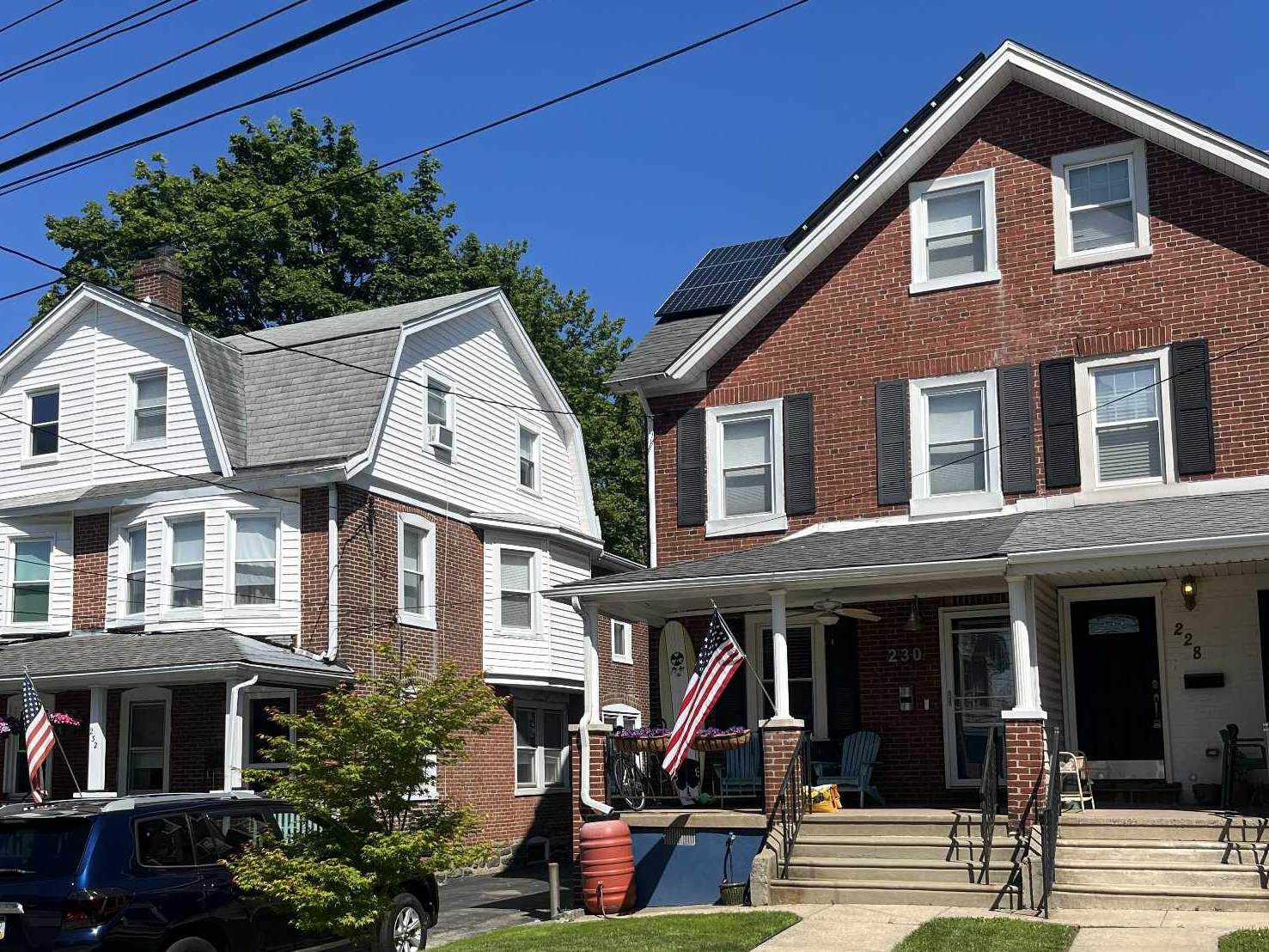
    Seidell, a 52-year-old who works in technology, said his bills this winter are on par with previous years’. He has gas-powered forced-air heating, he said, but electricity powers the blower fans that circulate the air. Seidell got solar panels installed in 2020, and he said they offset his electric cost throughout the year, though less so in the winter than in the summer.

    As for his heating bills, “it’s been reasonable. My house was built 125 years ago. I don’t really do anything to keep it energy efficient besides the programmable thermostat and the solar panels.”

    In Ardmore, Sean Seidell’s 1,800-square-foot twin home, which has solar panels, has cost about $200 to $250 a month to heat this winter.
  • As health insurance prices climb, HRAs offer small businesses a flexible option | Expert Opinion

    As health insurance prices climb, HRAs offer small businesses a flexible option | Expert Opinion

    Finding and retaining employees remains a top concern among small-business owners, and offering affordable healthcare benefits continues to be a significant challenge. Because of this, health reimbursement arrangements, or HRAs, have become more popular.

    Simply put, an HRA allows an employer (or an employee) to make tax-free (and tax-deductible to the employer) contributions to an individual’s HRA account.

    The employee can use those funds to reimburse uncovered healthcare expenses or purchase their own health insurance, either from outside brokers or on the Pennsylvania, New Jersey or Delaware healthcare marketplaces.

    HRA options

    A small business can consider a few different HRA options.

    A general HRA is funded entirely by just the employer and often used alongside existing group insurance plans to help reimburse expenses not covered by their existing insurance. These expenses could include co-pays, over-the-counter medication, or even dental and vision care.

    Alternatively, health savings accounts (HSAs) allow employees to contribute pretax dollars for the same purpose.

    “An employer can buy a high-deductible group plan, then use HRA funds to cover part of that deductible,” said Robert Deninno, a founding principal of Precision Benefits Group in Philadelphia. “The appeal is that unused HRA money remains with the employer, unlike HSA funds, which belong to the employee.”

    Deninno said employers can use HRA language to fill in specific gaps in a group plan, such as hospital costs, rather than paying a much higher premium for a richer underlying plan.

    An individual coverage HRA (ICHRA) allows employers to reimburse employees for premiums on health insurance the employee independently purchases.

    A qualified small-employer HRA (QSEHRA) is designed specifically for businesses with fewer than 50 employees that do not offer a group plan. It is more formalized and is similar to an ICHRA.

    HRA popularity

    These arrangements give employers wide discretion, said Ed MacConnell, owner of Total Benefits Solutions in Feasterville.

    “Employers can determine reimbursement levels, caps, frequency, and categories,” MacConnell said. ”That matters because most employers are trying to balance two competing goals: doing right by employees while staying within budget.”

    Many people assume employers just want the cheapest plan possible, MacConnell said, but in his experience the opposite is usually true.

    “Most employers genuinely care about how their choices affect employees and their families,” he said. “HRAs can help by letting them target limited dollars more intentionally.”

    All of these plans have their nuances and it’s best to speak with a health benefits consultant or your payroll company to determine what’s best for your business.

    You won’t be alone. ICHRAs alone grew 52% among small employers from 2024 to 2025 with 83% of employers who previously didn’t offer health insurance options now offering either ICHRAs or QSEHRAs, according to a recent report from the HRA Council, an advocacy organization.

    HRA benefits

    That surge in popularity is because offering HRAs — in addition to or in lieu of group coverage — provides an employer with three significant benefits.

    The first is cost control. The cost of group insurance is expected to rise as much as 10% in 2026, but with an HRA, an employer can contribute whatever amount they can afford, unbeholden to the insurance company’s premiums. With certain HRA plans, an employer no longer has to negotiate with a group insurance provider, and is less exposed to potential privacy violations of an employee’s health history.

    “The employer can decide what to reimburse, how much to reimburse, and under what limits,” MacConnell said. “This flexibility makes HRAs attractive to smaller employers that want to start somewhere rather than do nothing.”

    Another benefit: because an employee can use these funds to purchase their own insurance, they’re no longer limited to the options their employer offers and they may be able to buy more affordable or more suitable plans.

    Finally, there’s the recruiting benefit. Offering an HRA plan allows small businesses to have a response when a prospective employee inevitably asks about health benefits. By contributing even a nominal amount — and allowing an employee to contribute their own pretax dollars — a small business has a healthcare benefit option and becomes more competitive when pursuing talent.

    HRA challenges

    There are challenges with these types of plans. For example, administration can be messy, especially as the company grows or employee situations become more diverse.

    “If 10 employees buy 10 different plans, the employer and broker lose the efficiencies that come with one group carrier and one group policy,” said Deninno. “When employees are scattered across different individual plans, it becomes much harder to resolve claims problems or coverage issues.”

    MacConnell emphasizes the need for a third-party administrator, particularly when a company exceeds 10 to 15 employees.

    “Outsourcing becomes worthwhile when the alternative is tracking many different employees, many different plans, and constant premium changes,” he said.

    For HRAs to work well, it’s also important to educate employees and make sure it fits the company culture. Experts recommend meeting frequently and providing employees with as much support as possible.

    “A good broker or administrator will act as a coworker with your employees,” said MacConnell. “They should help both employers and their employees choose the right plans, answer questions, and act as an advocate.”

  • Bill Gates’ nuclear company plans $450 million plant in Philly’s Bellwether District making radioactive cancer treatments

    Bill Gates’ nuclear company plans $450 million plant in Philly’s Bellwether District making radioactive cancer treatments

    TerraPower Isotopes, part of a nuclear power company founded by Bill Gates, plans a $450 million plant in the Bellwether District to make radioactive molecules for cancer research and potential treatments, Gov. Josh Shapiro announced Tuesday.

    Bellwether’s developer HRP Group will build a 250,000-square-foot facility for the Bellevue, Wash., company at the former refinery site. TerraPower Isotopes is expected to employ 225 people in Philadelphia to meet anticipated demand for a type of molecule that can be used to kill tumors without damaging surrounding tissue.

    TerraPower’s material, an isotope called actinium-225, is ultimately derived from weapons-grade uranium. Researchers are exploring precision cancer treatments that involve attaching actinium-225 to an antibody that is targeted to specific cancer cells. The isotope then emits high doses of radiation at close range.

    “This new facility is a testament to the demand for actinium-225 as part of the growing industry, which is transforming how cancer is treated,” TerraPower Isotopes President Scott Claunch said in Shapiro’s announcement. “Our team is proud to be building a large-scale manufacturing facility in Philadelphia, which will play a pivotal role in expanding global access to this rare isotope.”

    Pennsylvania government is supporting the project with $10 million in grants. The Bellwether District is in a Keystone Opportunity Zone that has tax benefits through 2043. That means TerraPower Isotopes won’t have to pay many state and local taxes, though it will remain responsible for city wage taxes.

    TerraPower Isotopes, part of a bigger nuclear sciences company called TerraPower, is the second radiopharmaceutical company to announce a factory in the region. In 2024, Nucleus RadioPharma, which counts Fox Chase Cancer Center among its investors, shared plans for a 48,000-square-foot facility in Spring House, Montgomery County.

    TerraPower’s move to South Philadelphia is the third significant life sciences development announced this year by Shapiro and his economic development team.

    Eli Lilly & Co. said in January that it is building a $3.5 billion pharmaceutical plant in the Lehigh Valley to expand manufacturing capacity for next-generation weight-loss medicines. Last month, Johnson & Johnson shared plans for a $1 billion cell therapy plant in Montgomery County.

    TerraPower is the second tenant in the 1,300-acre Bellwether District, which HRP is trying to develop into a new industrial and life sciences hub. Late last year, it announced that California-based canned beverage manufacturer DrinkPAK will build a 1.4 million-square-foot factory that will product 3 billion cans a year.

  • Thousands strike at one of the largest meatpacking plants in the U.S.

    Thousands strike at one of the largest meatpacking plants in the U.S.

    GREELEY, Colo. — About 3,800 workers for the world’s largest meatpacking company began striking Monday in Colorado, and if they don’t get a new contract soon, already costly beef could become even more expensive for U.S. consumers.

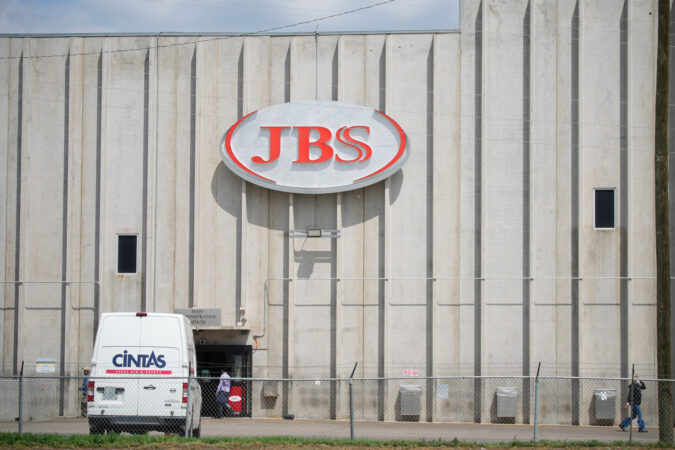
    As the sun rose, hundreds of strikers picketed outside the Swift Beef Co. plant in Greeley, owned by JBS USA and one of the largest slaughterhouses in the nation. Walking back and forth in the morning cold, bundled in blankets, some yelled “huelga!” — Spanish for strike. Others carried signs saying “please don’t patronize JBS.”

    The first walkout at a U.S. beef slaughterhouse in four decades follows accusations from union officials that the company retaliated against workers and committed other unfair labor practices. The union also said the company offered less than 2% more a year in wages, which is less than inflation in Colorado.

    A spokesperson at JBS USA denied any labor law violations and said its offer is fair. Each side blamed the other for an impasse before the contract ended Sunday night.

    “They don’t really value their workers and we’re the ones that help them get all their profit,” said Leticia Avalos, a 34-year-old union steward and Greeley native who has been working at the plant since 2020. She depends on the job to support her family including a 6-month-old baby, but said she’ll make sacrifices to get the company to listen.

    Union says workers pay to protect themselves

    The union says its workers perform some of the most difficult and dangerous jobs in the country, and deserve higher wages and better healthcare. It said JBS in many cases has charged workers $1,100 or more to offset the company’s expenses for personal protective equipment needed to ensure worker safety.

    Smoke rose from parts of the plant Monday but it was unclear if it was fully operating. JBS spokesperson Nikki Richardson said “many team members” reported to work, but did not provide a precise number.

    “Our team members want stability, they want to support their families, and they deserved the opportunity to vote on the company’s historic offer — an opportunity the union leadership has denied them,” Richardson wrote in an email.

    She said any employee who didn’t strike would have work and be paid. The company also has said it would move production as needed to other JBS facilities.

    A federal probe into soaring beef prices

    The strike comes at a 75-year low in U.S. cattle numbers, with a Jan. 1 inventory of 86.2 million animals — down 1% from the prior year. The decline has been driven in part by drought and low prices offered to ranchers. Meanwhile, beef prices have soared to record levels.

    President Donald Trump’s tariffs on Brazil, a major beef exporter, have also curbed imports. Pressed to act on “affordability” issues after Republican losses last November, Trump accused foreign-owned companies of driving up U.S. beef prices and asked the Department of Justice to investigate.

    The average price for 100% ground chuck beef more than doubled over the past two decades from $2.55 to $6.07 per pound, according to the Bureau of Labor Statistics. The increase has added to economic anxiety in the U.S. The Trump administration has promoted a trade deal with Argentina in efforts to lower prices for food, including beef.

    The Greeley plant has about 6% of the total U.S. beef slaughterhouse capacity, said Abby Greiman, a livestock market adviser for industry consultant Ever.Ag.

    Most ranchers can still get cattle to market because the national herd is smaller, and that could give JBS some leverage in negotiations, since other slaughterhouses can absorb the Greeley plant’s work, Greiman said.

    Feedlots hold clues to consumer costs

    Yet an extended strike at Greeley could disrupt the industry, particularly in Colorado and neighboring states, said Jennifer Martin at Colorado State University’s animal sciences department.

    “The feedlots, the people who have the cattle right now — the longer they sit kind of in a holding pattern, the more expensive they become to feed,” said Martin. “For consumers, it means that prices will likely go up.”

    The strike follows the January closure of a meatpacking plant in Lexington, Neb., which was expected to ripple through the local economy and community. Tyson Foods cited the smaller herd and millions of dollars in expected losses this year.

    JBS, the world’s largest meatpacker, has a market capitalization of $17 billion on the New York Stock Exchange after being approved for trading last May, despite environmental opposition and a federal probe that led to its guilty plea in October to bribing Brazilian officials for the financing it used for its U.S. expansion.

    JBS is a top local employer

    At the Greeley plant, the company tried to intimidate workers to quit the union in one-on-one meetings, union general counsel Matt Shechter said.

    Despite the pressure, 99% of workers voted to authorize the strike, said Kim Cordova, president of the United Food and Commercial Union Local 7.

    It’s the first strike at a U.S. slaughterhouse since workers walked out at a Hormel plant in Minnesota in 1985, according to Cordova and Martin. That strike lasted more than a year and included violent confrontations between police and protesters, according to the Minnesota Historical Society.

    JBS is the top employer in Greeley, a city 50 miles northeast of Denver with a population of about 114,000 people.

    “It’s a huge impact in the community for us to be striking,” said union steward Avalos. “I know a lot of us are worried, and hope that nothing goes even more south.”

  • A bipartisan group of 13 attorneys general sues OneMain over hidden loan add-ons

    A bipartisan group of 13 attorneys general sues OneMain over hidden loan add-ons

    NEW YORK — A bipartisan group of 13 attorneys general sued the financial company OneMain Financial on Monday, alleging the company placed unwanted additional products and other hidden costs on its loans that led to higher costs for its borrowers.

    The lawsuit, filed in New York on Monday, says OneMain employees steered borrowers into purchasing credit insurance and other loan-related products while making deceptive claims about whether the products were required and how they could be canceled. The attorneys general say the conduct affected tens of thousands of borrowers and violated state consumer protection laws.

    The products include credit insurance, which claims to pay the loan if a consumer dies or becomes unemployed, as well as products like home and auto memberships that are similar to AAA. These companies are, in turn, owned by OneMain through a related company.

    These products increase the cost of the loan. The lawsuit alleges that OneMain does not check whether the consumer may already have a home or auto membership service through AAA as well.

    “OneMain targets people who are already struggling financially, saddling them with hidden fees and misleading loans to trap them in even more debt,” New York State Attorney General Letitia James said in a statement.

    OneMain said the practices involved with the lawsuit were already reviewed with the Consumer Financial Protection Bureau in 2023. In that settlement, OneMain agreed to repay $10 million to consumers and pay $10 million in fines and penalties for allegedly selling add-on products to consumers.

    “The states’ allegations are simply untrue — their case is wrong on the facts and wrong on the law and attempts to re-litigate issues that were already reviewed by the Consumer Financial Protection Bureau and fully resolved. We will litigate this case vigorously and look forward to proving the truth in court.”

    OneMain, based in Evansville, Ind., is one of the largest U.S. non-bank installment lenders. It primarily offers loans to those with subprime credit scores, meaning much of its customers are already financially struggling when they come to OneMain.

    Along with New York, the other attorneys general joining the lawsuit include the states of Colorado, Nevada, Maryland, North Dakota, Oklahoma, Washington, Wisconsin, New Jersey, South Dakota, and New Hampshire, as well as the Commonwealths of Virginia and Pennsylvania.

  • How deregulation made electricity more expensive, not cheaper

    How deregulation made electricity more expensive, not cheaper

    American families are feeling the pinch of rising electricity prices. In the past five years alone, the supply portion of the standard service residential electric bill in Philadelphia has increased by 71%. In the Lehigh Valley it has increased by 77%. And in Columbus Ohio, by 110%. These are three data points in a national trend.

    Energy affordability is quickly shaping up to be a key election issue at all levels of American politics. And more than half of U.S. adults surveyed in January 2026 reported being very concerned about the price of electricity.

    New research from the Energy Markets and Policy Group that includes The Ohio State University and Lehigh University where we serve as principal investigators, provides new insights about another factor you were probably not thinking about – middlemen introduced by deregulation.

    How deregulation brought middlemen instead of competition

    Between the late 1990s and early 2000s, several state legislatures deregulated their electricity systems. Deregulation was originally sold as a way to replace inefficient regulation and reduce bureaucracy. People were told that competition would deliver lower prices.

    Under the old system, a state regulatory commission set prices for all electricity services – generation, transmission and distribution – which were supplied by the same monopoly utility company. Each state commission was required by federal law to ensure that rates were “just and reasonable.” Under deregulation, that same commission rate-setting process still holds for transmission and distribution, but the generation part was split off.

    Deregulation created competitive wholesale markets for generation, but price competition did not spread widely at the retail level. In states with active retail deregulation, there are two ways the retail generation price can be set. Consumers get to pick which one – buy from a marketer on the open market, or do nothing. Most people choose to do nothing.

    Rather than introducing efficiency, this system of retail deregulation created a new complexity: middlemen marketers. In most cases, no matter which choice people make, it’s hard for them to understand how their electricity rates are set.

    Option A: The open market

    Electricity customers in deregulated retail markets can choose a company that buys the electricity on their behalf. Energy salespeople have sophisticated marketing programs to sell their companies’ plans.

    For example, people who live in the Cincinnati area can contract with one of more than 50 suppliers to buy electricity on their behalf from the wholesale market. In the Lehigh Valley and Philadelphia there are more than 30 suppliers. Their monthly bill would still come from the regulated distribution company (Duke Energy, PPL, PECO, respectively), and would still include regulated charges for distribution and transmission set by state and federal officials. But it would also include charges from an unregulated retail supplier, for the generation part of their bill – their electric supply.

    Our research has found that these markets are not working as intended.

    Option B: Do nothing – default service

    For people who choose not to shop on the open market, by doing nothing they remain on what is called the “standard offer” or “default service.” Sometimes it is also called “provider of last resort” service because it is not meant to be the best option.

    For these people, state law generally requires each distribution utility to hold auctions or use a procurement process like a request for proposals to determine which middlemen companies get to be their supplier, and of course, at what price.

    People in this category still buy from middleman marketers. But rather than choosing their own middleman, they get the middleman the utility company selects for them.

    Problems in the open market

    People who live in states with deregulated electricity markets know that these open markets have many problems. There have been investigations into unfair trade practices, lawsuits and regulatory penalties for misleading sales practices.

    Other problems include deceptive marketing, a process called “slamming” in which companies change customers’ suppliers without their knowledge, contract loopholes that increase prices, and outright fraud.

    Help for consumers usually comes after problems have arisen, rather than preventing them in the first place.

    Our research team sought to determine whether, and how much, electricity consumers would save money if they used the supposedly competitive open market, rather than going with the default rate. To answer this question, we developed a detailed database of every daily retail choice offer filed by every supplier in all service territories in Ohio for a decade – which meant compiling millions of records.

    We found that 72.1% of the open-market offers exceeded the utility’s default rate. In some years, there was not even one single cost-saving offer for the entire year, or longer. The vast majority of these supposedly competitive electricity prices were higher than customers would get by doing nothing. Taking the time to research the market and compare prices was often not worth consumers’ time.

    Importantly, the study found that suppliers in the open market were not setting their prices based on market fundamentals – like the underlying wholesale price of electricity. Instead, they were setting prices based on the results of the utility’s default supply selection. In a competitive market, that is not supposed to happen.

    Is default service really competitive?

    In a separate study, our team evaluated every default service auction in every utility service territory in Ohio since 2011, nearly 15 years. We found that the number of companies competing with one another in these auctions is a key determinant of the retail markup consumers have to pay.

    In some of the default-option rate auctions, as few as five suppliers placed bids. In others, there were as many as 15 companies vying to provide default-option electricity. Our analysis found that in situations when the underlying costs of generating electricity were the same, default supply auctions with fewer bidders delivered significantly higher prices for consumers than auctions with more bidders.

    It’s important to note that Ohio’s process for setting default service rates is more robust than many other states. In Pennsylvania, the process is similar to Ohio’s. In some states, it is not uncommon for even fewer companies to bid. So Ohio and Pennsylvania’s situation is not actually a worst-case scenario for consumers. Rather, it’s probably better than many other states with deregulated electricity markets.

    Putting it all together

    The first study showed that the open market is not setting efficient retail rates and is not working as intended. Most of the offers made available to consumers are not worth their time, and the suppliers in those markets are not setting their prices based upon market fundamentals. Instead, these companies are taking their cues from the local distribution utility’s default supply auctions. That is not how deregulation was envisioned.

    The second study showed that the process which sets the default supply rate is also not very competitive. Less competition means the middleman companies bidding in those auctions can bid, and win, higher prices – raising electric bills and increasing their profit margin.

    Energy deregulation promised lower prices through competition. But instead, consumers got an army of middleman marketers. And, those middlemen have been taking their cues from a bidding process that often has too few participants to keep prices low.

    Noah Dormady is Associate Professor of Public Policy at The Ohio State University; Alberto J. Lamadrid is James T. Kane Professor of Economics and Industrial and Systems Engineering at Lehigh University . A version of this article appeared on The Conversation., a nonprofit news website sharing the knowledge of researchers.

    The Conversation

  • Customs and Border Protection official says new process for tariff refunds could be ready in 45 days

    Customs and Border Protection official says new process for tariff refunds could be ready in 45 days

    NEW YORK — Government officials are getting closer to ironing out a refund process for the hundreds of thousands of companies that paid tariffs now deemed illegal.

    In a filing with the Court of International Trade on Friday, Brandon Lord, executive director of U.S. Customs and Border Protection’s trade policy and programs directorate, said the CBP is working on a new system that will simplify the process. He said it should be ready in 45 days and require “minimal submission from importers.”

    The filing comes after a judge on Wednesday ordered the government to start paying back all importers the illegal tariffs they paid — with interest. Judge Richard Eaton of the U.S. Court of International Trade wrote that “all importers of record’’ were “entitled to benefit” from the Supreme Court ruling that struck down sweeping double-digit import taxes President Donald Trump imposed last year under the 1977 International Emergency Economic Powers Act (IEEPA).

    Eaton would have to approve the process before it proceeds.

    In the filing, Lord said that as of March 4, over 330,000 importers have made a total of over 53 million entries with CBP and paid about $166 billion in tariffs that now have to be refunded.

    Lord estimated that under the current system, refunds would take more than 4.4 million man hours to complete, and it isn’t feasible to divert all employees to the refund process full time, because “CBP’s other functions and responsibilities would be severely disrupted and the agency would not be able to continue to adequately perform its mission, including its revenue protection mandate and its vital national security functions.”

    But he said the agency is confident they can develop and implement a new process that will streamline and consolidate refunds and interest payments. The system should be ready in 45 days, he said.

    “This new process will require minimal submission from importers,” he wrote. “It will also minimize errors by ensuring accurate IEEPA refund calculations through system validations and allowing for a review period for CBP to resolve any discrepancies with the importer and to confirm no other outstanding enforcement issues or no revenue is owed.”

    Lord also noted that as of Feb. 6 the CBP only issues refunds electronically, but most importers haven’t completed signing up for the electronic system. Of the 330,566 importers who paid tariffs, only 21,423 have completed the setup process to receive their refunds electronically.

    “Until importers complete the process to receive refunds electronically, the refunds will be rejected,” he said.