Category: Business

Business news and market updates

  • CHOP names Joseph Mitchell to succeed Madeline Bell as CEO

    CHOP names Joseph Mitchell to succeed Madeline Bell as CEO

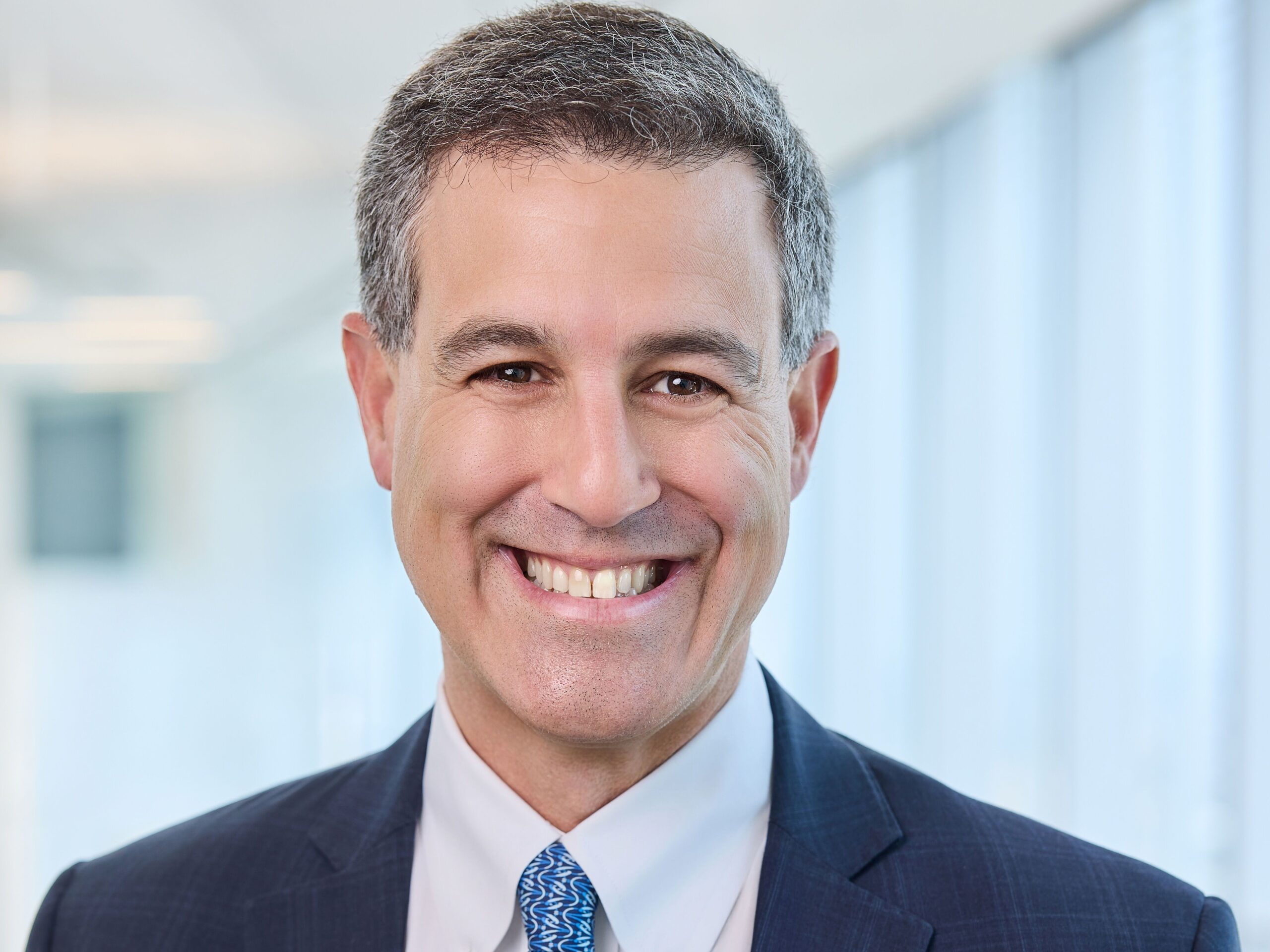
    The Children’s Hospital of Philadelphia announced Tuesday that Joseph Mitchell will succeed Madeline Bell as CEO, when Bell retires Oct. 1 after a nearly 40-year career at the University City nonprofit.

    Bell, 65, became CHOP’s CEO in July 2015 following eight years as chief operating officer. During Bell’s tenure as CEO, CHOP more than doubled its annual revenue to more than $5 billion, added a hospital in King of Prussia, and started building a $2.6 billion patient tower on its main campus.

    Mitchell, 51, joined CHOP as president in April 2025 following a national search by CHOP’s board for Bell’s successor. In 2024, Bell had notified the board of her intention to retire, CHOP said.

    Before coming to Philadelphia, Mitchell was an executive vice president at Boston Children’s Hospital and president of Franciscan Children’s, a specialty hospital that Boston Children’s acquired in 2023.

    “The opportunity to lead an institution that is so iconic, impactful, and relevant, and has the opportunity to impact pediatrics and have an indelible imprint on kids and families was just irresistible,” Mitchell said in an interview this week. “It was an easy decision to move my family from Boston to Philadelphia.”

    CHOP is financially strong as Mitchell assumes the top job, but like other health systems it will face financial pressure from Medicaid cuts starting next year. The nonprofit has also been under fire from the Trump administration for its program that serves transgender youth.

    Mitchell trained as a urologist and worked at McKinsey & Co. as a consultant for 14 years before becoming CEO of Franciscan Children’s in 2021. He led a financial turnaround effort there and planned for a dramatic expansion of its campus in Boston’s Brighton neighborhood.

    “Joe brings a fresh perspective, a patient-first approach, and a strong strategic mindset,” Greg Davis, CHOP’s board chair, said in a news release. “We are confident he will guide CHOP into its next chapter with continued excellence and impact.”

    Bell’s tenure as CEO

    Bell, who started at CHOP as a nurse, oversaw substantial growth of CHOP’s footprint in West Philadelphia and on the eastern side of the Schuylkill with two research towers on Schuylkill Avenue near the South Street Bridge. CHOP also expanded its specialty-care network in the suburbs.

    CHOP became the pediatric partner for Main Line Health, Lehigh Valley Health Network, and ChristianaCare under Bell’s leadership. Such relationships with systems focused on adults help steer patients needing advanced specialties to CHOP. CHOP has long been Penn Medicine’s pediatric partner.

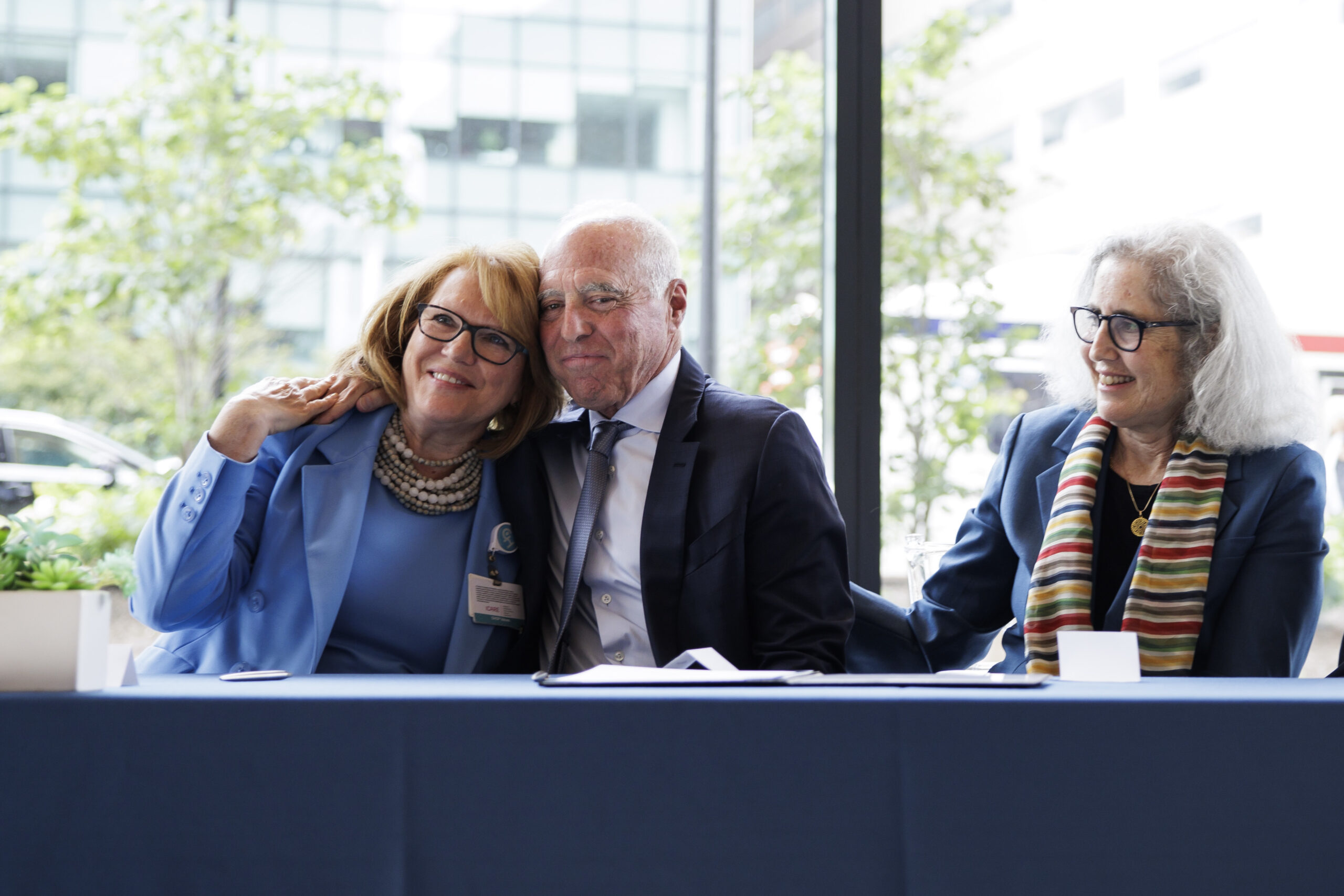
    Madeline Bell sat next to Philadelphia Eagles owner Jeffrey Lurie last year during a ceremonial signing of documents for the Lurie family’s $50 million donation to create the Lurie Autism Institute at the University of Pennsylvania and CHOP.

    In a prerecorded statement for staff and others viewed by The Inquirer in advance of the transitional announcement, Bell highlighted medical breakthroughs in cell and gene therapy during the past decade, as well as an expansion of behavioral health services. The Lurie Autism Institute, a partnership between the University of Pennsylvania and CHOP, launched last year thanks to a $50 million gift from Philadelphia Eagles owner Jeffrey Lurie and his family.

    Also last year, CHOP received its largest gift ever, $125 million from Comcast CEO Brian Roberts and his wife, Aileen. The new patient tower expected to open in 2028 will bear their name. In 2024, real estate investor Mitchell L. Morgan and his family donated $50 million toward the cost of one of the two research towers near the South Street Bridge.

    After retiring, Bell plans to continue as honorary consul of Spain for the Philadelphia region, a position she started last July, and hopes to remain on the board of Comcast-NBCUniversal, she said. Also, she will continue to support CHOP philanthropically and will remain a resource for Mitchell.

    CHOP is among the nation’s largest pediatric systems. It has 774 licensed hospital beds and employs 31,000 people. In the nine months that ended March 31, CHOP had 27,643 inpatient admissions and 1.3 million outpatient visits.

    Joe Mitchell’s priorities

    Since arriving in Philadelphia, Mitchell has immersed himself in getting to know CHOP, visiting primary care and specialty sites, as well as the hospitals, he said. The next step was broadening his responsibilities to the point where most of CHOP’s senior executives are now reporting to him.

    He said it’s too soon for him to address specific strategic moves, but emphasized that his priority is expanding access to care for children and families.

    Joseph Mitchell will succeed Madeline Bell as CHOP’s CEO this fall.

    That could get harder with Medicaid cuts looming next year. Nearly 50% of CHOP’s patients have the insurance for low-income families.

    “We’re doing everything we can to preserve access for families, to advocate for funding and resources at the state and federal level,” said Mitchell, who grew up in St. Louis in a family “that was deep into healthcare.”

    He moved to Boston for a residency at Brigham and Women’s Hospital. That’s where he met his wife, Vivian. They have two children, 17 and 14, and the entire family has fallen in love with Philadelphia, he said.

    “CHOP has embraced me, but Philadelphia as a community has really embraced us,” he said.

  • PSERS outsources $20 billion in investments

    PSERS outsources $20 billion in investments

    In one of the biggest outsourcing moves in Pennsylvania investment history, the board of the $84 billion-asset state teachers’ pension plan, PSERS, voted last week to outsource investments worth $20 billion to BNY Investments Mellon, replacing work now done by members of PSERS investment staff.

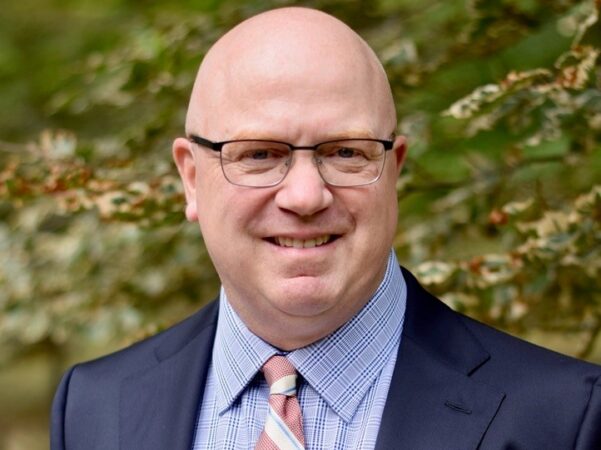
    “We are trying to be more efficient,” Benjamin Cotton, PSERS’s chief investment officer, said in an interview Thursday. PSERS staff “have done a good job” managing that money, he said, but commercial index fund fees have fallen so much, and Wall Street managers’ ability to match benchmark indexes has improved to where it’s best to hire outsiders.

    At Wednesday’s meeting, Cotton told trustees that BNY, which is based in New York and has investment offices in Pittsburgh, is already a PSERS contractor and “wants to be an index fund manager for PSERS as well.”

    He declined to estimate how much PSERS would pay the bank, adding that a final contract is under negotiation.

    The resolution passed by the PSERS board calls on BNY to invest $16 billion in a “passive” (index-fund) portfolio of stocks “benchmarked to the S&P 1500.” BNY Mellon does not currently manage an S&P 1500 index fund, though the measure is used as a benchmark for BNY funds combining other indexes.

    BNY documents show the bank charges institutional investors between 0.2% to 0.7% of assets per year for other index funds, which could result in PSERS payments to the bank of at least $32 million a year. But fund managers sometimes negotiate significantly lower rates with multibillion-dollar clients like PSERS.

    PSERS also agreed to invest $4 billion with BNY in a foreign stocks fund, its performance to be measured against the Morgan Stanley Capital International (MSCI) World Ex-U.S. benchmark.

    Cotton said no PSERS staffers would be laid off as a result of the outsourcing moves, with investors responsible for buying and selling stocks for the current portfolio reassigned to other work. He declined to estimate how many PSERS staffers managed the funds BNY will take over.

    The board voted to approve the transfer, with only State Sen. Katie Muth (D., Chester) dissenting.

    Muth has opposed or abstained from supporting scores of PSERS investments, citing the lack of fee information and other details she says are provided to the trustees.

    The agency’s investment contracts often include fee formulas managers say are available to trustees like Muth on request but redacted from public viewing, though the annual sums paid to contractors have been published in separate reports without explanation of how the payments were calculated.

    Manufactured housing profits

    Also at Wednesday’s meeting, Cotton said PSERS would collect nearly $700 million from selling a major investment. People familiar with that investment confirmed it is a stake in Yes Communities, which has owned and developed hundreds of U.S. trailer parks with amenities such as swimming pools and clubhouses.

    Cotton says PSERS invested a total of $230 million, starting in 2008, and including the new payout has received around $1 billion back, with another $500 million still invested in the same asset, currently through the Brookfield private investment group. Cotton said that return has been higher than if PSERS invested that money in the S&P 500.

    That’s better than the results PSERS realized on some of its other “direct” real estate investments from that period, including a handful of Southern hotels and shopping malls, and vacant Harrisburg industrial properties.

    The board also approved investments in TPG Peppertree Fund XI-A, an infrastructure fund, and PAI Mid-Market Fund II, a European private-equity fund.

    The board did not consider two other investments recommended by staff, in a pair of private-credit funds.

    Given poor results and variations in asset valuations reported by private-credit managers, Cotton said, PSERS needs to review its existing private-credit investments, and what’s happening to the high-risk loans that private-credit funds finance before buying more.

  • Amazon agrees to pay $3 million in Pennsylvania class-action settlement over unpaid wages

    Amazon agrees to pay $3 million in Pennsylvania class-action settlement over unpaid wages

    Amazon has reached a $3 million class-action settlement in Pennsylvania over allegedly unpaid wages during the pandemic.

    Employees had said they spent time off the clock before their shifts in COVID-19 screenings and were not paid for that time as state law requires, according to court documents.

    Amazon’s legal team has said that “time spent off the clock was minimal,” especially once company sites adopted temperature screenings via thermal cameras.

    A representative for Amazon did not immediately respond to a request for comment Monday.

    The class action lawsuit was originally filed in 2023 in the U.S. District Court for the Eastern District of Pennsylvania by Bobby Muniz, an Amazon employee at the company’s Easton fulfillment center.

    Muniz argued that the required health screening typically took 10 to 15 minutes before each shift, including the wait in line.

    “Both sides vigorously dispute the amount of time workers spent off the clock as a result of the COVID-19 screenings,” a recent court document indicates.

    The case went to mediation in October, and a proposed settlement was granted preliminary court approval earlier this month. A final approval hearing is set for November.

    Amazon employees who worked for the company in Pennsylvania before July 19, 2023, and underwent COVID-19 screening are eligible to be part of the class settlement.

    Eligible workers don’t need to take any further steps. Those who want to opt out must do so by Oct. 15.

  • Alan Greenspan, most powerful central banker of modern times, dies at 100

    Alan Greenspan, most powerful central banker of modern times, dies at 100

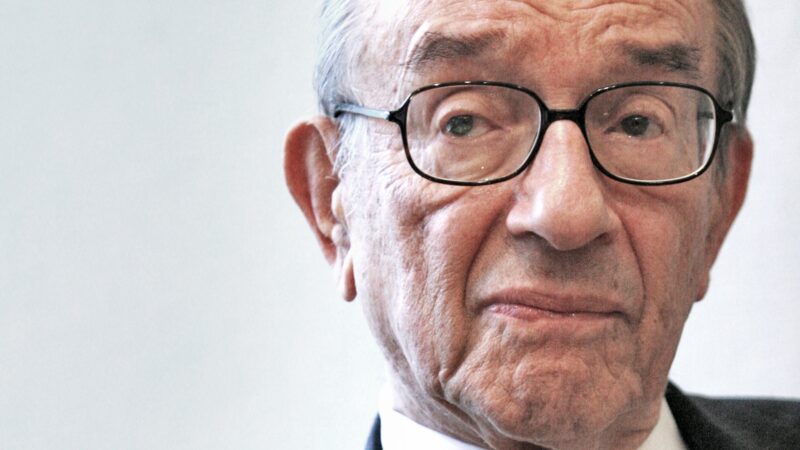
    Alan Greenspan, who as the world’s most powerful central banker maneuvered the United States through two decades of stunning prosperity, but whose decisions contributed to the near-collapse of the economy shortly after he left office, died June 22 at age 100.

    The cause was complications from Parkinson’s disease, his wife, Andrea Mitchell, said in a statement.

    “He was a giant of a man who helped shape the U.S. economy for decades under presidents of both parties, but was always honest in acknowledging his mistakes,” said Mitchell, chief Washington correspondent and chief foreign affairs correspondent for NBC News. “To me he was my husband, who shaped my life from our very first date in 1984.”

    A dour intellectual with eclectic interests who attended the Juilliard music school, played the clarinet in a jazz band and was an acolyte of the philosopher Ayn Rand as a young man, Mr. Greenspan initially made his name as an economic forecaster and adviser to presidents Richard M. Nixon, Gerald Ford and Ronald Reagan.

    During a more than 18-year run as chair of the Federal Reserve beginning in 1987, Mr. Greenspan achieved greater prominence than any central banker before him. He attained an almost mythical reputation for his ability to guide U.S. economic policy with a whisper in the president’s ear, to steer the multi-trillion-dollar economy by nudging interest rates up or down, and to soothe frazzled global financial markets with a few arcane words in a speech.

    Mr. Greenspan was a Washington fixture, named to five terms as Fed chair by four different presidents. He exercised greater power, and for longer, than arguably any public official since FBI Director J. Edgar Hoover.

    He was the “Maestro,” as Washington Post journalist Bob Woodward titled his best-selling book about Mr. Greenspan in 2000. He was a founding member of the “Committee to Save the World,” as a 1999 Time magazine cover called the alliance of Mr. Greenspan, Treasury Secretary Robert E. Rubin and Rubin deputy Lawrence H. Summers.

    Mr. Greenspan’s 1996 musing in a speech over how hard it is to know when “irrational exuberance has unduly escalated asset values” triggered both a sell-off on global stock markets and a new term of art for financial bubbles.

    The financial world was so obsessed with his every move that the cable network CNBC would tape him getting into his car on the morning of Fed policy meetings, hoping to judge by the thickness of his briefcase whether the central bank would move interest rates. An entire cottage industry existed of analysts who parsed his rare and often inscrutable public comments. (“If I seem unduly clear to you, you must have misunderstood what I said,” Mr. Greenspan once said.)

    He was a curious mix of cerebral economist and Washington celebrity. He was a man who spent his mornings reading economic reports as he soaked in the bathtub, his days obsessing over monetary policy transmission mechanisms, and his evenings on the Georgetown cocktail circuit. A man once nicknamed “the undertaker” for his serious manner married one glamorous newscaster, Mitchell of NBC, having earlier dated another, Barbara Walters.

    Mr. Greenspan’s peculiar brand of celebrity was built on a very real achievement. Economists call it the Great Moderation, and it coincided almost precisely with Mr. Greenspan’s tenure as the nation’s economist in chief: A period in which growth was steady, inflation low, and recessions rare and mild. The unemployment rate averaged 5.5 percent during his nearly 19 years in the job, compared with 6.4 percent in the preceding two decades.

    A tarnished legacy

    Mr. Greenspan bent the sprawling Federal Reserve system to his will, using a subtle political touch and a vast reserve of knowledge about the inner workings of the U.S. economy acquired while an economic consultant to businesses. His primary job was to set monetary policy — adjusting interest-rate targets to manipulate the money supply, aiming for low unemployment and low inflation.

    Mr. Greenspan guided the economy through rocky economic shoals, including the 1987 stock market crash, which occurred when he had been in office for two months, the 1991 recession, financial crises in emerging markets in 1998, and the dot-com bust and the Sept. 11, 2001, terrorist attacks. He titled his 2007 autobiography “The Age of Turbulence,” though in hindsight it appears a period of enviable economic calm.

    When Mr. Greenspan left government service in early 2006, he was widely viewed as one of the greatest economic statesmen of all time. But within a few years, the Great Moderation came to look like a mirage, and the maestro’s legacy was severely tarnished.

    Much of the economic expansion under Mr. Greenspan’s watch was built on bubbles, first the 1990s stock market boom and then an unprecedented run-up in house prices in the 2000s. Americans financed their consumption with ever-rising levels of debt: The ratio of household debt to the size of the economy as a whole soared to 82 percent from 53 percent during his tenure.

    The Greenspan Fed fueled these trends with ultra-low-interest-rate policies, particularly from 2003 to 2005, and by taking a hands-off approach to regulating a financial system that grew immeasurably in size and complexity during his tenure.

    “The mindset was that there should be no regulation,” Scott Alvarez, a longtime lawyer at the Fed and Mr. Greenspan’s general counsel starting in 2004, told the Financial Crisis Inquiry Commission. “The market should take care of policing, unless there already is an identified problem … We were in the reactive mode because that’s what the mindset was of the ’90s and the early 2000s.”

    Around 2000, he specifically rebuffed a request by a fellow Fed governor, Edward Gramlich, for the Fed to crack down on lending to people who might have little ability to repay their mortgages, Gramlich told the Wall Street Journal in 2007. Those “subprime” loans would serve as the initial trigger to the crisis that enveloped the world in 2008.

    Mr. Greenspan repeatedly advised Congress against heightening regulation of derivatives, complex financial contracts that, he argued, made the financial system as a whole more stable by distributing risk to those who can afford to take it on. In fact, the unraveling of those markets was a key factor in the 2007-2009 financial crisis.

    And while Mr. Greenspan was renowned for his understanding of the workings of the U.S. economy, and by 2005 had expressed some public worry about home prices having risen too high, he did not identify the scale of the housing bubble that was a major underlying cause of the crisis or use regulatory tools or his bully pulpit to try to combat it.

    “There do appear to be, at a minimum, signs of froth in some local markets,” he said in 2005, near the peak of the biggest national home-price bubble in U.S. history.

    Fostering complacency

    More broadly, Mr. Greenspan’s greatest apparent achievement — preventing the series of crises and near-crises in the financial world from damaging the broader U.S. economy — may have been a factor in the steep downturn. His critics call it the “Greenspan Put,” using a financial term for an option contract that protects investors against losses.

    His very actions that maintained financial stability — helping prevent extreme losses when conditions turned unfavorable — made global investors complacent about risk. That helped fuel the bad lending and excessive use of borrowed money that caused a massive collapse soon after Mr. Greenspan left office.

    “He was the person who came up with the ‘irrational exuberance’ critique of excessive speculation prior to 2000, but he didn’t follow up on it,” said Robert J. Shiller, a Yale economist who warned of stock and housing bubbles during the 1990s and 2000s. “He has an Ayn Rand, pro-market philosophy, and so it wasn’t in his personality to aggressively pursue those ideas and to lean against bubbles.”

    The popping of the housing and credit bubble in 2007 led to a deep global recession and near-collapse of the financial system in 2008, and a far worse outcome was avoided only by an expensive series of government bailouts.

    “I made a mistake in presuming that the self-interest of organizations, specifically banks and others, were such that they were best capable of protecting their own shareholders and their equity in the firms,” Mr. Greenspan told a congressional committee in October 2008, amid the darkest days of the crisis. “Something which looked to be a very solid edifice, and indeed a critical pillar to market competition and free markets, did break down. And I think that, as I said, shocked me. I still do not fully understand why it happened.”

    A libertarian’s pragmatism

    Mr. Greenspan was a staunch libertarian, deeply skeptical of government intervention in the economy. In four decades on the national stage, though, he was a pragmatist who used the tools of government in ways that sometimes were at odds with his philosophy.

    He served on a key commission in the Nixon administration that led to ending the military draft, which Greenspan viewed as an affront to human freedom. But he also helped Ford bail out a nearly bankrupt New York City in the mid-1970s.

    In 1983, he chaired a commission on the finances of Social Security. The accord raised taxes and raised the retirement age over time, and stabilized the finances of the program for a generation.

    As Fed chair, he offered crucial public support both to Bill Clinton’s deficit reduction plan in 1993 and to George W. Bush’s proposed tax cuts in 2001. The former attracted accusations from Republicans that he was trying to ingratiate himself with the new Democratic president who would later reappoint him. The latter drew sharp attacks from Democrats who accused Mr. Greenspan of raw partisanship. (“One of the biggest political hacks we have here in Washington” was how Senate Democratic leader Harry M. Reid of Nevada described him in 2005).

    His testimony at congressional hearings in the latter years of his Fed chairmanship resembled nothing so much as a series of efforts by members of Congress to win Mr. Greenspan’s endorsement — viewed as the sine qua non of economic seriousness — for their preferred policies and pet causes.

    Mr. Greenspan’s impact on U.S. economic policy, in other words, went far beyond that of his official portfolio as a central banker.

    “Alan Greenspan has probably been a key player in more Republican presidential campaigns and Republican party platforms and Republican administrations than any other economist in the country,” Martin Anderson, a senior fellow at the Hoover Institution who recruited Mr. Greenspan to work on the 1968 Nixon presidential campaign, told The Washington Post in 2006. “He’s a wonderful politician.”

    The number cruncher

    Alan Greenspan was born in New York on March 6, 1926, the only child of parents who would soon divorce. His father, Herbert, was a stockbroker. Raised by his mother, the former Rose Goldsmith, in Manhattan’s Washington Heights neighborhood, Alan channeled an uncanny way with numbers as a child into analyzing baseball statistics with an intensity that would be mirrored in his approach to economic analysis decades later.

    “I developed my own technique of keeping box scores,” Mr. Greenspan wrote in “The Age of Turbulence.” “I always used green paper, and recorded each game pitch by pitch, using an elaborate code I made up. My mind, which had been essentially empty to that point, filled with baseball statistics.”

    His other great passion was jazz; he played the clarinet and was nearly as obsessed with big-band leader Glenn Miller as he was with baseball. After high school, he studied at the Juilliard School, and when a spot on his lung kept him out of the Army during World War II, he joined a 14-man jazz band that played around the country.

    During breaks, when most of the musicians would smoke tobacco or marijuana, Mr. Greenspan read about finance and economics. He took to doing his bandmates’ income taxes.

    He enrolled at New York University and took a part-time job at the investment bank Brown Brothers Harriman, where he figured out how to take raw weekly information on department store sales and adjust the data to filter out the normal seasonal fluctuations. That would be an easy task for anyone with a modern computer spreadsheet program, but at the time it required hours upon hours of laborious calculations by hand.

    As with his baseball statistics, Mr. Greenspan had found his great obsession — analyzing data to discern trends. He graduated summa cum laude in 1948 from NYU, where he also received a master’s degree in economics in 1950.

    While in graduate school, he took a job at the Conference Board, which then as now did economic research for big companies.

    “I discovered that the Conference Board had amassed a treasure trove of data on every major industry in America dating back half a century and more,” he wrote in 2007. “It became my passion to master all the knowledge on those shelves. I read about the robber barons; I spent hours over the census of population of 1890; I studied railroad freight-car loadings of that era, trends in short staple for the decades after the Civil War … Instead of reading ‘Gone With the Wind,’ I was happy to immerse myself in ‘Copper Ore Deposits in Chile.’ ”

    Mr. Greenspan enrolled in Columbia University’s economics PhD program in 1950, and though he would never finish it, he did cultivate a relationship with economist Arthur F. Burns, a mentor who would go on to chair the Federal Reserve in the 1970s. (New York University awarded Mr. Greenspan a doctorate in economics in 1977 for previously published research — after he had already become one of the country’s preeminent business economists and chief economic adviser to Ford).

    Mr. Greenspan married art historian Joan Mitchell in 1952, but the marriage was annulled 10 months later. He wrote in his memoir, “I had no real understanding of the commitment required for marriage.”

    In Ayn Rand’s circle

    It was through Mitchell, however, that Mr. Greenspan met one of his deepest, most enduring intellectual influences. Ayn Rand, the libertarian author of “The Fountainhead” and “Atlas Shrugged,” maintained a cadre of mostly young men who came over for evening bull sessions, long arguments about philosophy at which Mr. Greenspan was a regular through the 1950s and early 60s.

    “When I met Ayn Rand, I was a free enterpriser in the Adam Smith sense — impressed with the theoretical structure and efficiency of markets,” Mr. Greenspan told the New York Times in 1974. “What she did — through long discussions and lots of arguments into the night — was to make me think why capitalism is not only efficient and practical, but also moral.”

    Taxes, in her philosophy, were immoral theft; the social safety net an affront to human liberty. He contributed to The Objectivist, a monthly journal published by Rand acolytes, and in a 1966 issue wrote that “the welfare state” was “nothing more than a mechanism by which governments confiscate the wealth of the productive members of a society.”

    While Mr. Greenspan distanced himself over the years from many of the extreme implications of Rand’s views, they remained exceptionally close until her death in 1982; she appeared at his side when he was sworn in as Ford’s economic adviser.

    While Mr. Greenspan debated with Rand and her other young protégés at night, he was building a business consulting firm by day.

    In 1953, he partnered with investment adviser William W. Townsend to start an economic research firm, Townsend-Greenspan, in which Mr. Greenspan would use the knowledge of the inner workings of the U.S. economy he had been accumulating through his work at the Conference Board to consult for some of the biggest American businesses.

    When U.S. Steel, Alcoa, Mobil Oil or dozens of other companies wanted to know when the economy was poised to speed up or slow down, or what how demand for steel or aluminum or anything else would trend, Townsend-Greenspan did the analysis. The experience left Mr. Greenspan with a sterling Rolodex, full of contacts across corporate America.

    Entering politics

    Mr. Greenspan entered politics in 1967, recruited to help Nixon’s 1968 presidential campaign. He briefed Nixon regularly on economics during the campaign but served the administration as an outside adviser rather than within the White House.

    By the time he was ready to join the Nixon administration, the president had resigned in disgrace and Mr. Greenspan would serve Ford instead. His adjustment to full-time government work was uneasy at times. In his memoir, he recalled blanching at one of his first major policy meetings. Speechwriters unveiled a campaign called “Whip Inflation Now,” aiming to using a mere publicity effort to keep prices unchanged when powerful economic forces were driving them upward.

    “The speechwriters had ordered up millions of Whip Inflation Now buttons, samples of which they handed out to us in the room,” Mr. Greenspan wrote. “I was the only economist present, and I said to myself, ‘This is unbelievable stupidity. What am I doing here?’ ”

    Early misgivings aside, Mr. Greenspan proved to be an able public servant, winning a lifelong friend in Ford, who was House minority leader before succeeding Nixon, and the trust of such Nixon and Ford White House officials as Dick Cheney and Donald H. Rumsfeld.

    As president, Reagan gave Mr. Greenspan the task of salvaging the finances of the nation’s public pension program, which was on the verge of running out of money.

    As chair of the National Commission on Social Security, Mr. Greenspan guided a disparate 15-member group, stocked with disparate figures including AFL-CIO head Lane Kirkland, Sen. Robert J. Dole (R-Kansas) and Sen. Daniel Patrick Moynihan (D-New York), toward a common understanding of how best to put the finances of Social Security on a more sustainable path.

    Their agreement, which Congress enacted in 1983, raised taxes on some affluent individuals and increased the retirement age gradually over the decades to follow, among many other provisions that put the finances of the program on a solid footing for a generation.

    While the Greenspan Commission, as it was widely known, has been hailed as a triumph of policymaking by bipartisan commission, the reality may have been somewhat different.

    Robert M. Ball, a commission member and former commissioner of Social Security, wrote later that the committee was in fact deadlocked. A compromise was achieved when James A. Baker III, Reagan’s chief of staff, and House Speaker Thomas J. “Tip” O’Neill Jr. (D-Massachusetts) hammered out an agreement between themselves, which the commission then accepted.

    Mr. Greenspan, for his part, acknowledged the irony that a man philosophically opposed to the social insurance net had played a large role in saving it.

    His work on the Social Security commission had another, more personal benefit. A young NBC White House correspondent, Andrea Mitchell, called Mr. Greenspan as a source in 1983. They talked periodically; he declined an invitation to the White House correspondents’ dinner because he was going with Barbara Walters.

    Mitchell agreed to go to dinner with him in 1984, and, he later recalled that on their first date, he invited her back to his apartment to read an essay on monopolies he had written for Rand’s newsletter.

    Mr. Greenspan and Mitchell quickly became a couple, although they would not marry until 1997. She is his only immediate survivor.

    The ‘Black Monday’ test

    On Aug. 3, 1987, Mr. Greenspan was confirmed as chair of the Federal Reserve. His first test came remarkably early on. On Oct. 19 that year, the stock market plummeted 22.5 percent in a single nerve-shaking day.

    Mr. Greenspan was in Dallas for a previously scheduled speech — or at least he was, until the White House dispatched an Air Force jet to ferry him back to Washington. He immediately realized the risks to the U.S. economy: If banks, reeling from losses and fearful that their clients wouldn’t survive, stopped extending routine credit, the entire financial system could collapse.

    Fed lawyers wanted to release a lengthy, complicated statement of the Fed’s stance, according to Woodward’s book “Maestro.” But Mr. Greenspan and a key lieutenant, New York Fed President E. Gerald Corrigan, realized that the central bank needed to give Wall Street a simple, open-ended commitment to prevent financial collapse.

    At 8:41 a.m. on Tuesday, Oct. 20, Mr. Greenspan issued a statement under his name: “The Federal Reserve, consistent with its responsibilities as the nation’s central bank, affirmed today its readiness to serve as a source of liquidity to support the economic and financial system.”

    That, along with a slew of private calls by Corrigan to Wall Street firms strongly encouraging them not to start canceling credit lines, helped fuel a market rally that day, and ultimately Black Monday in 1987 would have little visible impact on the U.S. economy.

    It was the first triumph over markets by the maestro, and Mr. Greenspan’s almost mystical reputation as a soothsayer over financial markets had begun.

    Pressure on rates

    In Mr. Greenspan’s early years as Fed chair, one of his steepest challenges was the tendency of Reagan and Bush administration officials to constantly — and publicly — push for lower interest rates.

    Fed chairs operate independently of the rest of the government for a reason. Higher interest rates may slow down the economy and result in higher unemployment in the short run, but they are often needed to prevent inflation from rising in the longer run. Elected officials, Mr. Greenspan soon saw firsthand, often have a shorter-term perspective than central bankers.

    In August 1988, Mr. Greenspan pushed the Fed’s policy committee to raise a key bank lending rate by half a percentage point. Baker was now secretary of the treasury, and Mr. Greenspan went to Baker’s office at the Treasury Department to make the case for raising rates.

    Baker, who wanted the economy firing on all cylinders to help Vice President George H.W. Bush win the presidential race that fall, replied, “You just hit me right here” in my stomach, according to “Maestro.”

    It was just one in a four-year series of attacks — some veiled, some overt — on Mr. Greenspan from his fellow Republicans in the Reagan and Bush administrations. The frustration that Mr. Greenspan wasn’t doing enough to boost the economy led Bush, by then elected president, to move slowly and reluctantly in deciding whether to appoint Mr. Greenspan to a second term.

    The decision was made only a month before his term was to expire, and only after Mr. Greenspan assured the president that he was relatively pessimistic about the economy, which was interpreted within the White House as an indication he was inclined to keep interest rates low.

    Referring to Bush’s reluctant decision to reappoint him, Mr. Greenspan wrote in his memoir, “I think he concluded I was his least worst choice” and that any other selection would have roiled markets.

    Bush kept pressure on Mr. Greenspan to cut rates in 1992, requests the Fed chair ignored. Bush, he made clear in later interviews, blamed Mr. Greenspan for his losing reelection bid.

    A growing reputation

    By the mid-1990s, the U.S. economy was growing rapidly and unemployment was low. Mr. Greenspan had a warm relationship with Clinton and his administration, who adopted a hands-off-the-Fed policy. And Mr. Greenspan was using his knowledge of the inner workings of the U.S. economy to great advantage, winning the awe of his Fed colleagues.

    Lawrence B. Lindsey, a Fed governor from 1991 to 1997, later recalled a time when the Mississippi River was flooding. “At the time of the weekly Board of Governors’ meeting, the U.S. economy was literally linked together by a single bridge,” Lindsey wrote in his book “Economic Puppetmasters: Lessons from the Halls of Power.” “Greenspan not only knew the location of the bridge, but also the various reroutings that could be used to get merchandise there. Those type of facts fit naturally into the mind of a man who studies statistics on boxcar loadings at all the major terminals in the country.”

    The economy, if anything, seemed to be growing too fast. Surely, some Fed policymakers argued, that would soon cause an outburst of inflation. Mr. Greenspan felt differently. He concluded that American businesses were becoming more productive, thanks to information technology and new ways of doing things.

    That would allow a speedier rate of growth without prices rising, so he kept interest rates lower than some inflation worriers would have preferred. He even cut rates in late 1998, when East Asian nations were experiencing a financial crisis even as the U.S. economy kept going gangbusters, which in turn helped boost the stock market to stratospheric levels.

    Having handled the 1987 market crash, the 1991 recession and the political battles of the Bush years, and having guided the economy through the grand prosperity of the 1990s, Mr. Greenspan was developing a certain aura of greatness.

    When Sen. John McCain (R-Arizona) was running for president in 2000, he was asked whether he would reappoint Mr. Greenspan.

    “Not only would I reappoint him,” McCain said, “but if he died we’d prop him up and put sunglasses on him as they did in the movie ‘Weekend at Bernie’s.’ ”

    Defending his record

    Amid the popping of the stock market bubble that his policies had helped fuel, and the Sept. 11, 2001, terrorist attacks, Mr. Greenspan led the Fed on an aggressive series of interest-rate cuts. By the summer of 2003, the Fed’s target rate for loans between banks was down to 1 percent.

    It worked to keep the 2001 recession a mild one. But while the economy was growing in 2002 and 2003, it did so at a glacial pace. And Mr. Greenspan feared that the nation could fall into a dangerous cycle of falling prices known as deflation.

    To fend off that risk, he wanted to keep the low rate in place for a long time — a “considerable period,” as Fed statements of the time put it. That was one factor, although hardly the only one, behind a booming housing market in which national home prices rose by double-digit rates.

    In all, from the beginning of 2000 to the middle of 2006, just after Mr. Greenspan left office and a year after receiving the Presidential Medal of Freedom, national home prices rose 90 percent, according to one popular index. It was much more than that in some markets, and the fundamental economic reasons that might have justified that rise were few.

    And while Congress had given the Federal Reserve the authority to regulate mortgage lending practices, the Fed did little with that authority. Mr. Greenspan’s successor, Ben S. Bernanke, would later call it “the most severe failure of the Fed in this particular episode.”

    Mr. Greenspan, testifying before the Financial Crisis Inquiry Commission in 2010, defended his legacy and rebuffed criticism. “History tells us regulators cannot identify the timing of a crisis, or anticipate exactly where it will be located or how large the losses and spillovers will be,” Mr. Greenspan said.

    “When you’ve been in government for 20 years, as I have been, the issue of retrospective and figuring out what you should have done differently is a really futile activity,” he added. “My experience has been, in the business I was in, I was right 70 percent of the time, but I was wrong 30 percent of the time and there are an awful lot of mistakes in 21 years.”

    Irwin, a former Post staff writer, is the author of “The Alchemists: Three Central Bankers and a World on Fire.”

  • Philadelphia’s former top lawyer, now a corporate defender, says national companies need Philly lawyers

    Philadelphia’s former top lawyer, now a corporate defender, says national companies need Philly lawyers

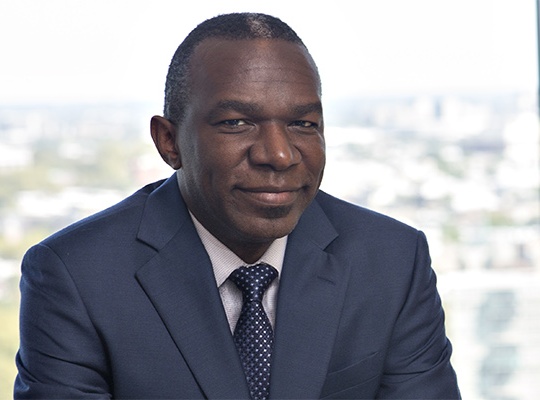
    As Philadelphia’s city solicitor, heading a staff of more than 200 lawyers, Sozi Pedro Tulante sued some of the nation’s biggest corporations, accusing them of loan discrimination and pushing lethal painkillers.

    Now he’s a partner at Dechert LLP, a Philadelphia-founded, international corporate law firm, where the work includes defending big national corporations from the kinds of complaints he used to file.

    Corporate targets during his 2016-18 stint as the city’s top civil lawyer included Wells Fargo & Co., the third-largest U.S. bank, which settled his lending-discrimination complaint for a promise of $10 million in donations to housing programs, and six pharmaceutical companies, four of which were major Pennsylvania employers, for promoting addictive opioids. The city later got a nearly $200 million share of a national settlement.

    Tulante’s job also included routine legal reviews. He defended the city’s soda tax and its sanctuary city immigration status.

    After leaving his city position in 2018, Tulante — son of a refugee, a Northeast High School and Harvard University graduate, and a former federal prosecutor — lectured at the University of Pennsylvania’s law school.

    He joined Dechert’s litigation department the next year, then spent 2022 to 2025 as general counsel at Boston-based Form Energy, which builds iron-based batteries for data centers and other clients at its plant in Weirton, W.Va.

    Last year, Tulante moved back to Philadelphia and was named co-managing partner of Dechert’s Philadelphia office. He agreed to talk to The Inquirer about practicing law in Philadelphia.

    This interview has been edited for clarity and brevity.

    Does Philadelphia’s reputation as a “judicial hellhole” full of billboards urging citizens to sue businesses scare companies away?

    When a company is deciding to locate in a particular place, they do look at the tax structure and how red is the red tape and the legal climate.

    The Inquirer has reported how in Philadelphia [a plaintiff] can pursue a case in Philadelphia Court of Common Pleas even if they aren’t here. There have been these “nuclear verdicts” for millions of dollars.

    More companies are now aware of the risk. They adjust.

    There are extreme cases where litigation ends a company. But for the most part you factor it in.

    Who gains from a litigious climate?

    Sophisticated national companies have clients everywhere. They know they are going to get sued. They study to minimize litigation. For example, don’t use flip messaging. Just be familiar where the threats may come from. Know what litigation the city is pursuing.

    Many of the big companies facing litigation in Philadelphia are more likely to engage counsel that is locally respected and recognized in the area. In Philly, if you can’t answer the question, “Where did you go to high school?” [with a name the parties recognize], it’s a disadvantage. Here, we fight the plaintiff attorney, but we also serve on the same board and attend the same continuing legal education [CLE] classes.

    There are great lawyers on the other side, at [plaintiffs’] firms like Kline & Specter and Ross Feller Casey, sophisticated counsel who walk into court and get instant respect.

    Part of my role at Dechert is to represent clients in Philadelphia and nationally who are thinking about how Philadelphia has changed as a place of litigation and how that litigation impacts business.

    Businesses are saying, “We have the tax burden, the regulatory burden, we’ll comply, but you are pushing on the edges.”

    What recent laws have changed the legal climate for business?

    The new consumer protection ordinance, passed in 2024, has given the city more power to bring some major cases [through national law firms] that are broader than before. Life sciences cases. Firearms liability. Fair workweek litigation. They may go after [national] retailers in certain cases. The city can go forward and get penalties up to $2,000 per violation.

    As city solicitor, I was reminded that government has the broadest power of regulation at the local level. The police authority government has is really broad. Unless there’s some preemption by state or federal government. It’s something folks pay attention to.

    Is part of Philadelphia’s affordability a result of its failure to attract private-sector employers?

    I live in West Philly. I work at the law school. I have three children in public schools. I want the city to have a secure tax base. I want to make sure investment goes where it needs to.

    It’s challenging. One of the biggest challenges is getting people from Temple, Penn, Drexel, and St. Joe’s to stay.

    There are instances, like Chubb’s new office, where the city has persuaded [a longtime city employer] to stay.

    In Philadelphia the strength ultimately is in eds and meds. We have doctors and nurses, lab technicians, people with a high level of training. Philadelphia takes credit for helping solve COVID by our Nobel Prize winners Drew Weissman and Katalin Karikó at Penn, which has led to investments in gene therapy.

    What was the most satisfying thing you did as city solicitor?

    Working to get local control of the school district and disbanding the state’s School Reform Commission. It was humiliating, the way the state was running our schools. We should have a stake. The most important thing we can do is educate our children and prepare them for businesses that want to hire talent.

    Why did you choose the law?

    It’s not the ability to argue that makes a good lawyer. You have to solve problems. You have to be really good at writing. And you have to be able to talk to people — to be personable, to make the hard stuff simple, to help them understand.

    I like a career where people ask you to help them solve really big problems. They can be CEO of a major company or a pro bono client that needs a habeas petition. They require the same level of skill.

    How did you come to be a Philadelphian?

    I came here at age 8 in 1983 [after his father, a military official in Angola, fled to Congo following a change in government, was imprisoned, then was resettled in North Philly by a refugee agency].

    It was a difficult time to grow up here. I graduated in 1993 from Northeast High School. I got into Harvard, then Harvard Law School.

    Eight years ago, I left the city, to be general counsel at a startup.

    But it came back to family and affordability. Philadelphia is that place for me, within the larger Northeast corridor.

    What gives you hope?

    My dad drove a cab when he came here. My mom worked in the prison system. Now here I am, a Black attorney from the public school system.

    I am a big booster of today’s public schools. My children are at Central, at Masterman — I couldn’t get into those, I still hold a grudge! — and at Penn Alexander in West Philly.

    I want my children with other children who really want to achieve. I motivate them, the teachers motivate them, they are self-motivated, but the friends they are with have more of an impact on them.

    And I think we are finally putting into place an infrastructure for understanding government. You know Philadelphia has more political ads and advertising than almost anyplace, a big city in a swing state. But we have not always centered our education on civics. Now my son understands more than I did.

    I’m glad to be back at Dechert. I can see a lot from this perch.

    This story has been updated to correct some biographical information about Sozi Pedro Tulante.

  • Why Philly longshoremen say the city’s ports are the fastest in North America

    Why Philly longshoremen say the city’s ports are the fastest in North America

    Philadelphia’s ports ranked as the fastest in North America for the third year in a row, according to the latest annual Container Port Performance Index, sponsored by the World Bank and Standard & Poor’s as a way to encourage improvements to terminals that handle global trade and pack goods moving from the ocean to road and rail for delivery.

    The survey gave Philadelphia the highest ranking of more than 50 ports in the United States, Canada, and Central America.

    Boston and Jacksonville, Fla., ranked second and third. Philadelphia’s nearest neighbors — the New York area and Baltimore ports — ranked far behind. The list measures the time ships spend at port berths, the time from a ship docks until it is unloaded, crane availability, ship size, and other measures.

    No North America port ranked among the 20 fastest of more than 200 surveyed worldwide. That list was dominated by ports in China and other parts of East Asia, in Arab and North African countries, plus Algeciras, Spain, and Posorja, Ecuador.

    “This sometimes looks like chaos, but it’s organized chaos. It’s about teamwork,” said Boise Butler, president of Local 1291 of the International Longshoreman’s Association.

    ILA is the main East Coast port labor union group, claiming more than 1,400 members on the Philadelphia docks, plus more in New Jersey and Delaware.

    Philadelphia ports are some of the most flexible, offering shippers start times, on average, every hour from 7 a.m. until 1 a.m. the next day, and guaranteeing that Longshoremen and truckers will show up to take off loads, said Richard Lazer, the port’s new chief executive officer and executive director.

    Butler said Philadelphia had long ago expanded its hours to attract shippers who were concerned that the terminals far up the Delaware estuary were more vulnerable to any delays.

    Lazer credited “our very skilled labor” for handling large loads efficiently with minimum damage reports, according to commodity and container shippers.

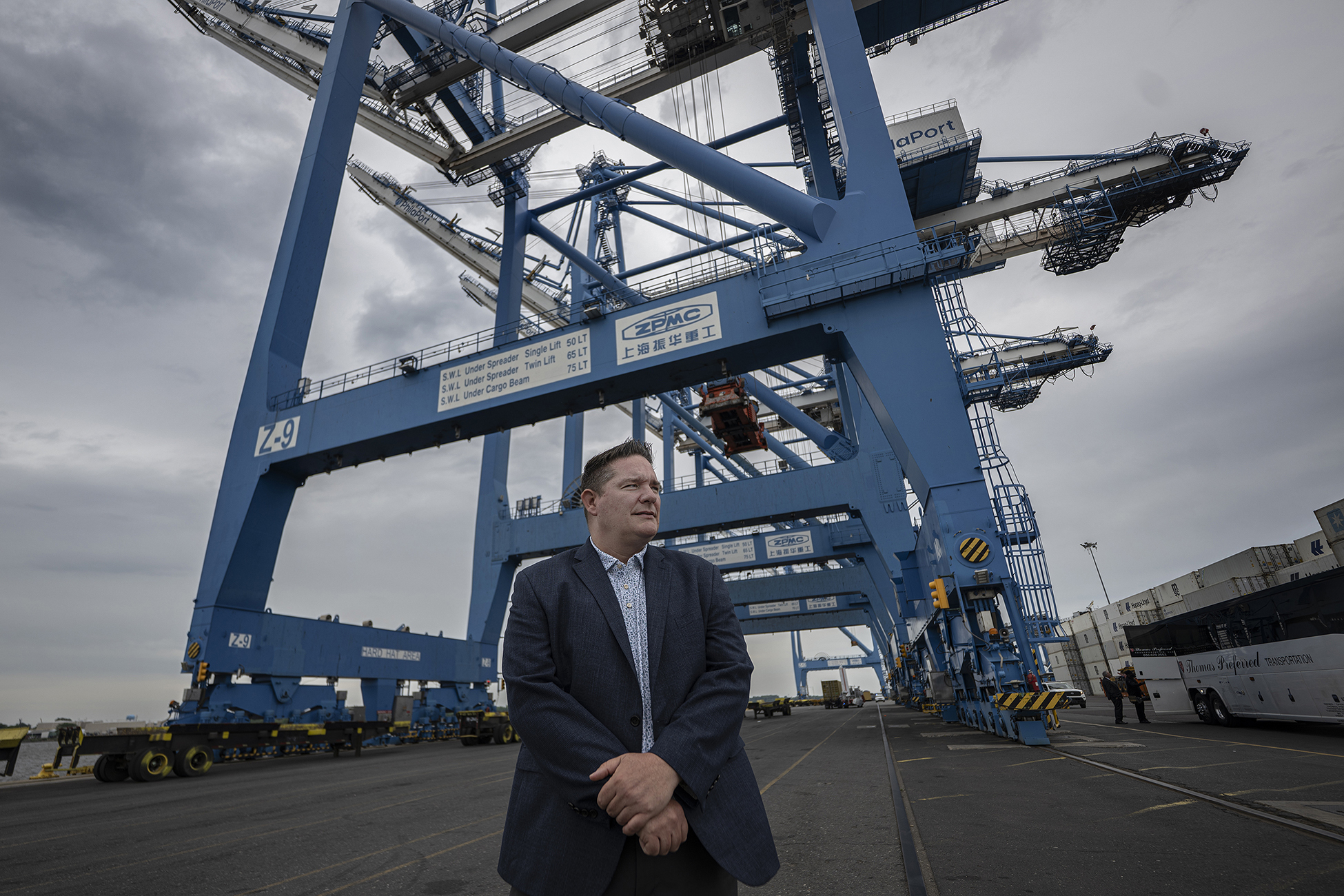
    Richard Lazer, CEO of PhilaPort, near cargo cranes at the PhilaPort terminals. Lazer credits “our very skilled labor” for handling large loads efficiently with minimum damage reports.

    It is premium work. The Longshoremen’s contract currently pays experienced workers $50 an hour, rising to $54 in October, with overtime pay after five hours, Butler said. “If they’re not making $200,000 after five or six years, something’s wrong.”

    But the ranking is “not just about labor,” Butler said. “It starts with the Commonwealth of Pennsylvania, what they have built, and their vision for this port.”

    Leo Holt, whose family-owned shipping company operates on the Packer Avenue docks and at its own Gloucester City port terminals, said the latest high score is “credit to all parties.”

    “It’s a partnership between labor and management that has taken a long time to refine,” Holt said, referring to last year’s report, which also put Philly at the top of North American ports. “We work hard at it.”

    Butler said the port needs to expand beyond the recent record hauls of nearly 1 million containers a year if it is to challenge ports like Savannah, Ga., which he said shipped five times as many containers.

    “We need more warehouses,” Butler said.

    The state built or helped finance many of the port’s improvements and has pledged to lead expansion into part of the former Philadelphia Naval Base and the Norfolk Southern freight yard in South Philadelphia. Four cranes larger than any currently on the area dock and two new 1,000-foot berths are planned, Lazer said.

    Philadelphia cargoes through the Tioga Marine Terminal near the Betsy Ross Bridge include wood pulp and cocoa beans moved and, recently, ship propellers and sheet and structural steel imported by Korean industrial giant Hanwha for transfer by barge back down the Delaware to Hanwha Philly Shipyard.

    Besides containers, the South Philadelphia port that once handled iron and coal now ships fertilizer and cement. Korean cars from Hyundai and Kia also land in the port.

    South American fruit, which once formed a significant part of the Philadelphia and Wilmington port totals, now goes mostly to ports in New Jersey, Butler said.

  • Inside the $70 million makeover of Roosevelt Mall

    Inside the $70 million makeover of Roosevelt Mall

    As Brixmor Property Group executives began transforming the Roosevelt Mall, they briefly debated whether to change the name.

    After all, the 60-year-old Northeast Philly shopping center is undergoing a more than $70 million makeover that promises to bring it into the modern age with new tenants, upgraded facades, and a better layout.

    As Brixmor executives walked around the 620,000-square-foot complex on a recent day, they said they already see the outdoor mall becoming a community hub — with a gym, an organic grocer, and new fast-casual dining options.

    Despite these changes, they have decided the Roosevelt Mall should not be rebranded.

    “It’s an iconic name,” said David Vender, Brixmor Property Group’s executive vice president for the north region, who is based in Conshohocken. “People know it as a landmark.”

    Brixmor operates about 350 shopping centers nationwide, but some of its top executives — including new CEO Brian Finnegan, who grew up in Roxborough — have soft spots for Philly, forged by personal or family connections to the region.

    During a visit to the Roosevelt Mall last week, they said they were proud of their local properties.

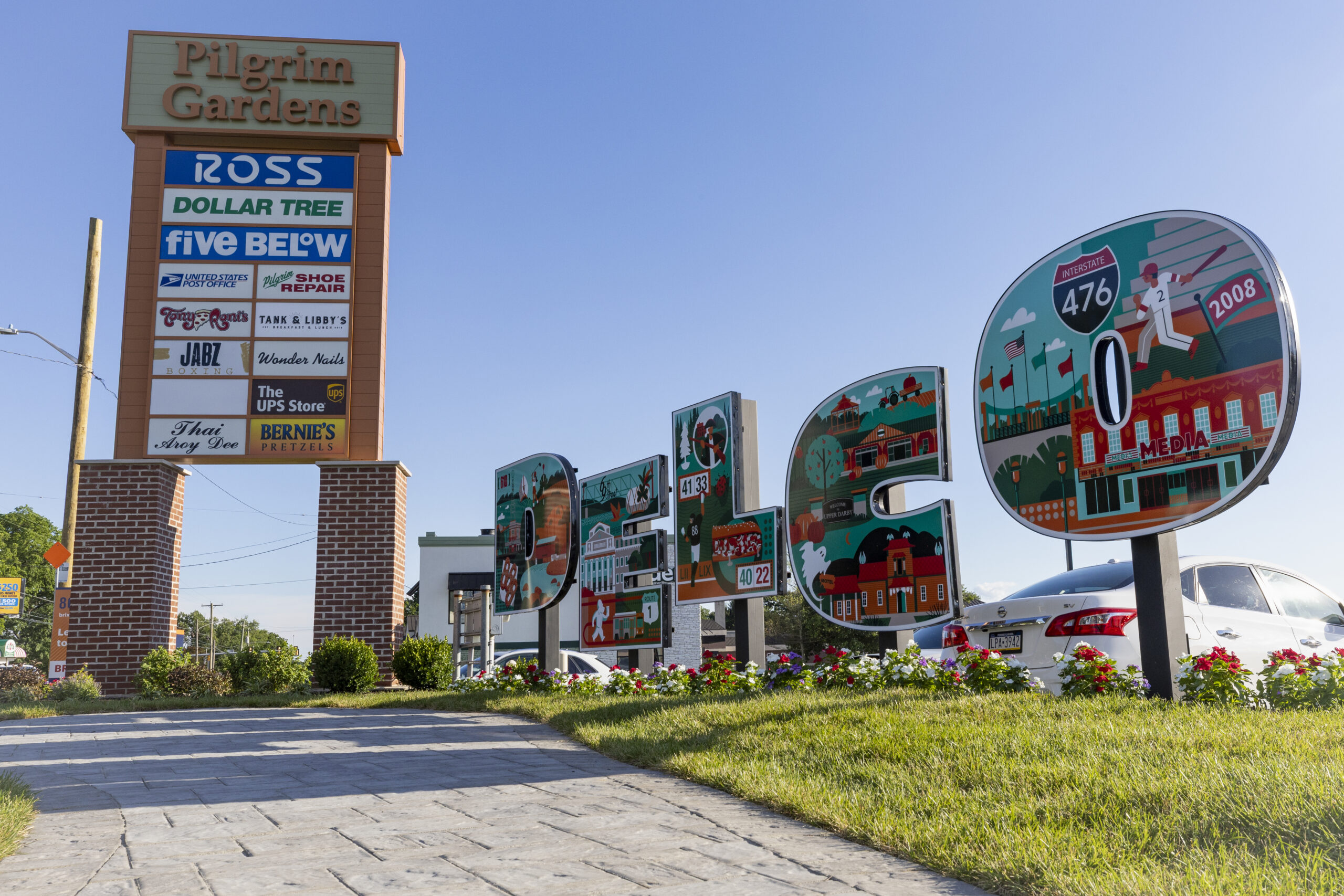
    Those include the Village at Newtown in Bucks County and Pilgrim Gardens in Drexel Hill, where the company recently built an artful “Delco” sign to tap into local pride.

    A new Delco sign is shown at Pilgrim Gardens in Drexel Hill on June 16.

    And they said their connection to the community around the Roosevelt Mall has only grown stronger since last year’s plane crash, which killed eight people, injured two dozen, damaged nearby homes, and left an 8-foot-deep crater in front of the mall.

    Even before the tragedy, they said, they considered how their local redevelopments affected the Philly-area residents who shop, eat, and drive by their centers every day.

    At the Roosevelt Mall — which sits on 36 acres between Cottman Avenue, Roosevelt Boulevard, and Bustleton Avenue — these decisions have begun to pay off.

    In the last year, the center logged 6.3 million visits, a 5% year-over-year increase and a 19% jump when compared with the 12 months before Sprouts Farmers Market’s 2024 opening, according to company executives.

    Occupancy was over 98% this spring, they said, and customers spend about 35 minutes there on average, on par with the national average for all Brixmor complexes.

    When you’re able to bring together “higher-quality food and beverage, fitness, service … then you’re also able to attract more elevated retail” stores, said Finnegan, noting that Ulta Beauty and Victoria’s Secret are among the tenants signed on for the next phase of the Roosevelt Mall’s redevelopment.

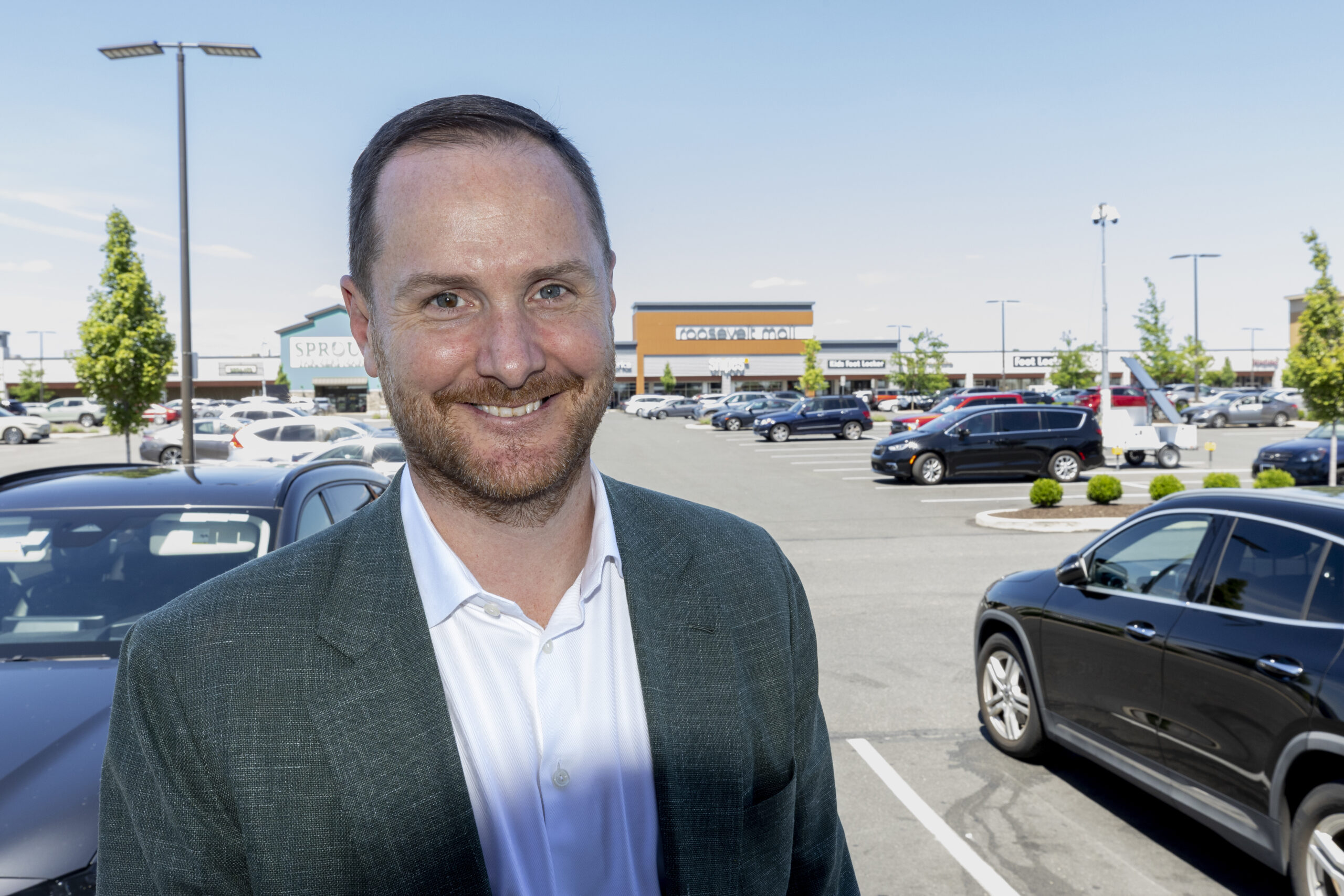
    Brian Finnegan, CEO and president, at Brixmor Property Group, at the Roosevelt Mall in Northeast Philadelphia.

    Achieving the tenant mix of a modern shopping center

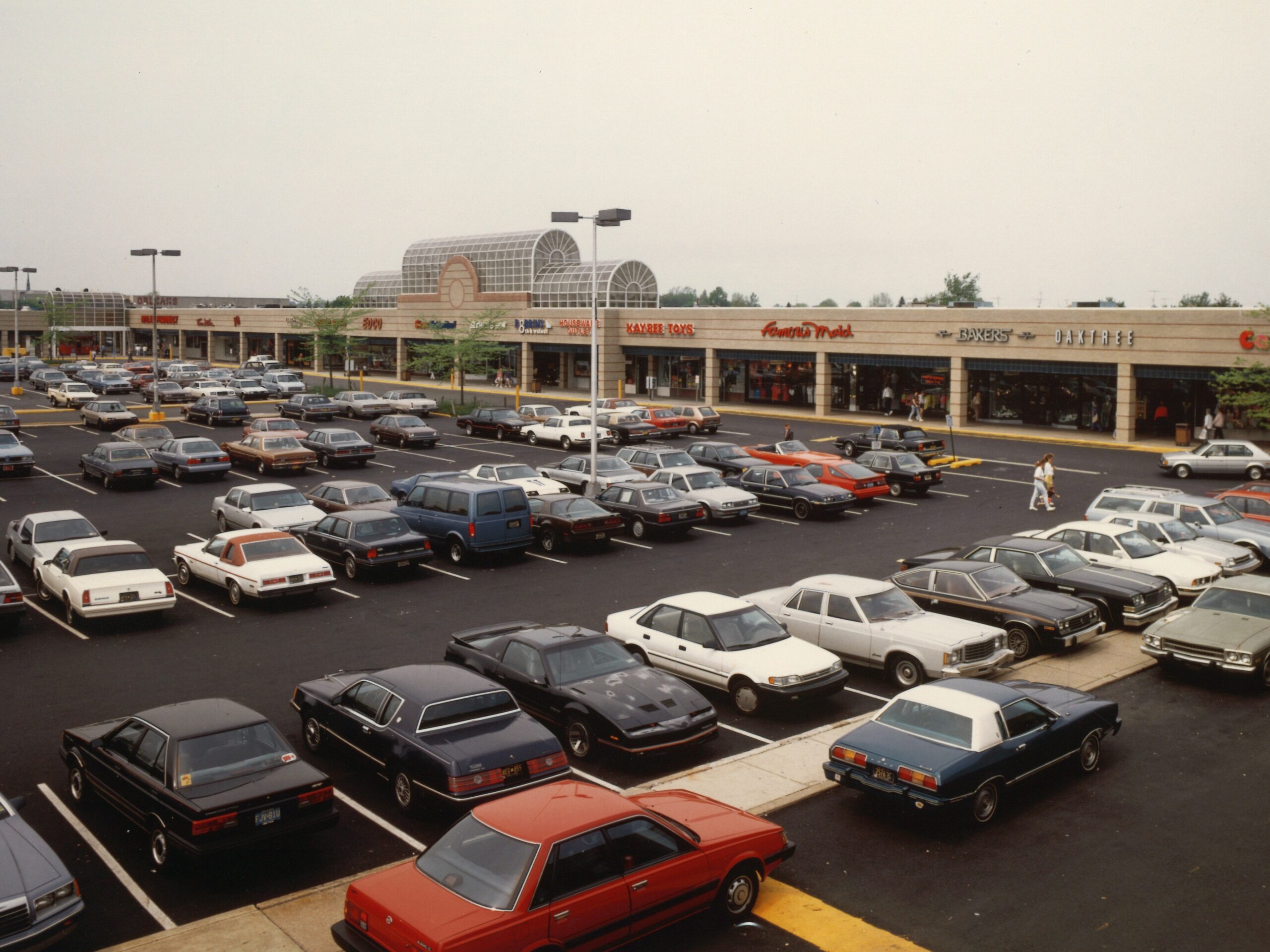
    When the Roosevelt Mall opened in 1964, its main promenade was referred to as “Chestnut Street Northeast,” with several outposts of Center City clothing stores, according to an Inquirer article from the time.

    The shopping center had apparel shops, such as Baker Shoes and Famous Maid, as well as “the Cavalier, a cafeteria-style restaurant with a game room and a retail bakery,” The Inquirer reported. It was anchored by an S. Klein’s discount department store.

    The Roosevelt Mall was built as part of the Roosevelt Boulevard shopping complex, bordered by Cottman and Castor Avenues. The larger development — which also had Gimbels and Lit Bros. department stores — was called the country’s largest “in-town” shopping center at the time.

    Roosevelt Mall in Northeast Philadelphia is shown in earlier days, long before Brixmor Property Group remodeled the property.

    Decades later, consumers can buy clothes, home goods, even groceries online with just a few clicks. So shopping centers need more than just retail stores, said executives at Brixmor, which became the Roosevelt Mall’s owner more than a decade ago.

    They said they have intentionally brought in tenants that customers may visit multiple times a week and added more pedestrian walkways, open-air plazas, and outdoor seating.

    “Historically, shopping centers were very utilitarian, and now they’re really becoming more community assets, so we’re really careful about our merchandising mix,” said Ryan Guheen, Brixmor’s senior vice president of development.

    Roosevelt Mall in Northeast Philadelphia is shown in earlier days, long before Brixmor Property Group remodeled the property.

    The latest redevelopment push began around 2020, when Brixmor opened an LA Fitness outpost on the site of a former Turf Club off-track betting venue, near a new Oak Street Health clinic.

    Since then, the company has constructed buildings in underused sections of the parking lot and filled them with popular chain eateries like Raising Cane’s chicken; the American-Chinese food spot Panda Express; and Tous les Jours, a Korean-French bakery and coffee shop.

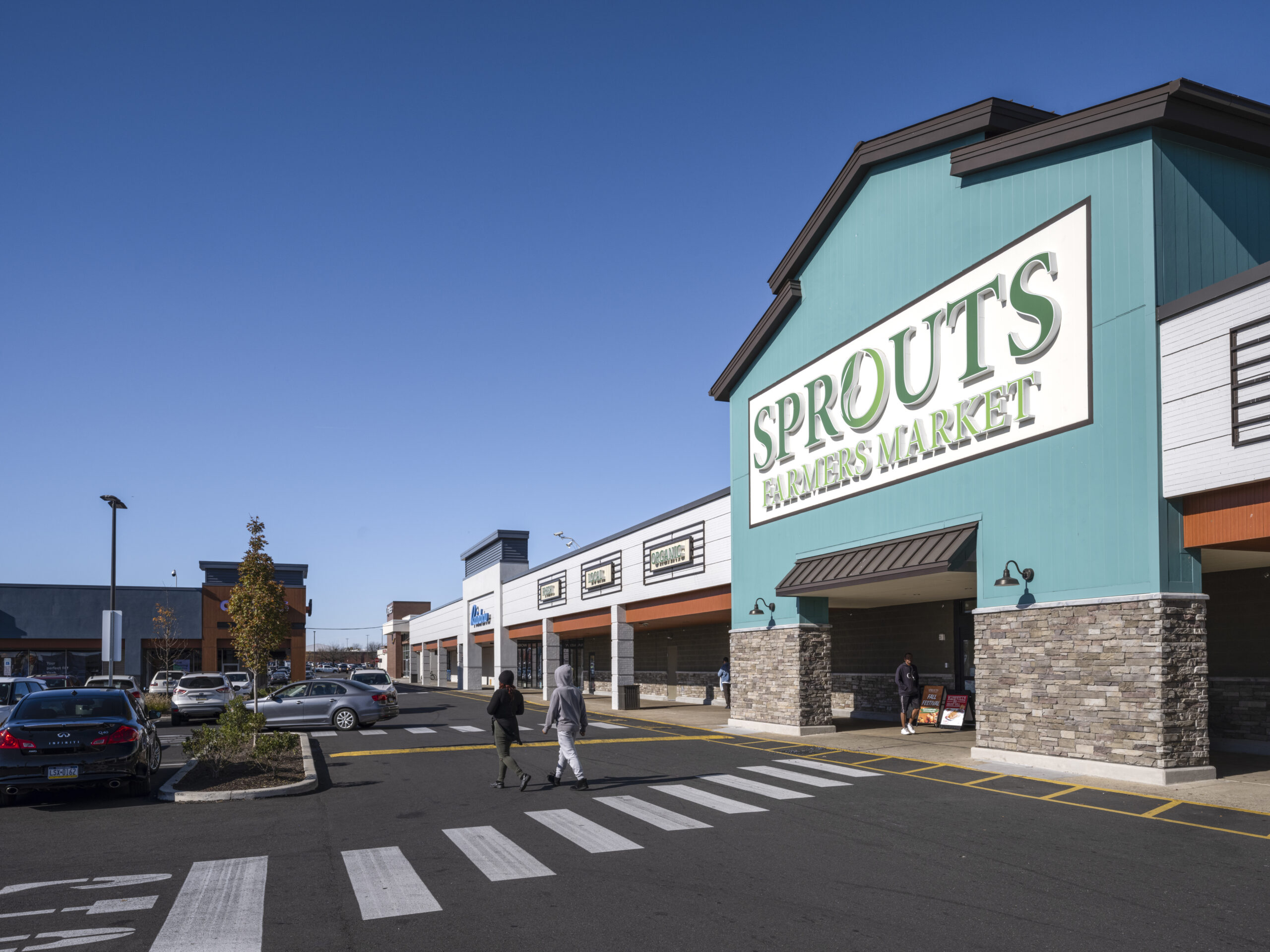
    The Sprouts organic grocer has driven traffic to the center since it opened in 2024, and a nearby Wonder dine-in food hall and delivery kitchen opened last year.

    Annual customer visits to Roosvelt Mall have increased 13% since Sprouts organic grocer opened there in 2024.

    The 37,000-square-foot under-construction building, set to house a Victoria’s Secret and an Ulta, will also include fast-casual staples like Shake Shack and Cava, which serves Mediterranean bowls and pitas.

    Tenants like these, Guheen said, provide “multiple opportunities for people to stay on property to shop retail, get their workout in, go to the bakery, get a coffee.”

    Some mall retailers have found homes in shopping centers

    As Brixmor executives diversify the tenant mix at their shopping centers, they say they do not see retail stores going extinct.

    In fact, as some indoor malls deteriorate or become residential-focused town centers, “the open-air strip centers benefit,” Vender said, as traditional mall retailers look to open more stores in outdoor complexes.

    Elsewhere in the Northeast, the Franklin Mall, formerly Franklin Mills, has been in decline for years and was recently listed for sale. Real estate investor Dean Adler has said he wants to buy the 137-acre mall and turn it into a youth sports complex with a hotel and Margaritaville-themed water park.

    Seven miles away, the Roosevelt Mall is home to several shops that were once found almost exclusively in enclosed malls, such as Bath & Body Works, Foot Locker, and the forthcoming Victoria’s Secret. These companies’ higher-ups have pivoted in recent years, adding more locations in open-air centers.

    “It’s not like retailers are leaving malls en masse … at least in the best malls,” Finnegan said. But “as they open stores in open-air shopping centers with grocery stores, with fitness uses, with elevated food and beverage, they’re seeing the sales performance” — and then want to keep investing in shopping centers.

    Longer-standing retail tenants are continuing to see success, too. Finnegan said the Roosevelt Mall’s 300,000-square-foot standalone Macy’s is among the company’s top-performing locations in the region, rivaling the King of Prussia Mall store.

    The department store is the center’s largest driver of traffic, recording more than 900,000 annual visits, said Brixmor executives, who are not worried about the department store closing as the Center City store did last year.

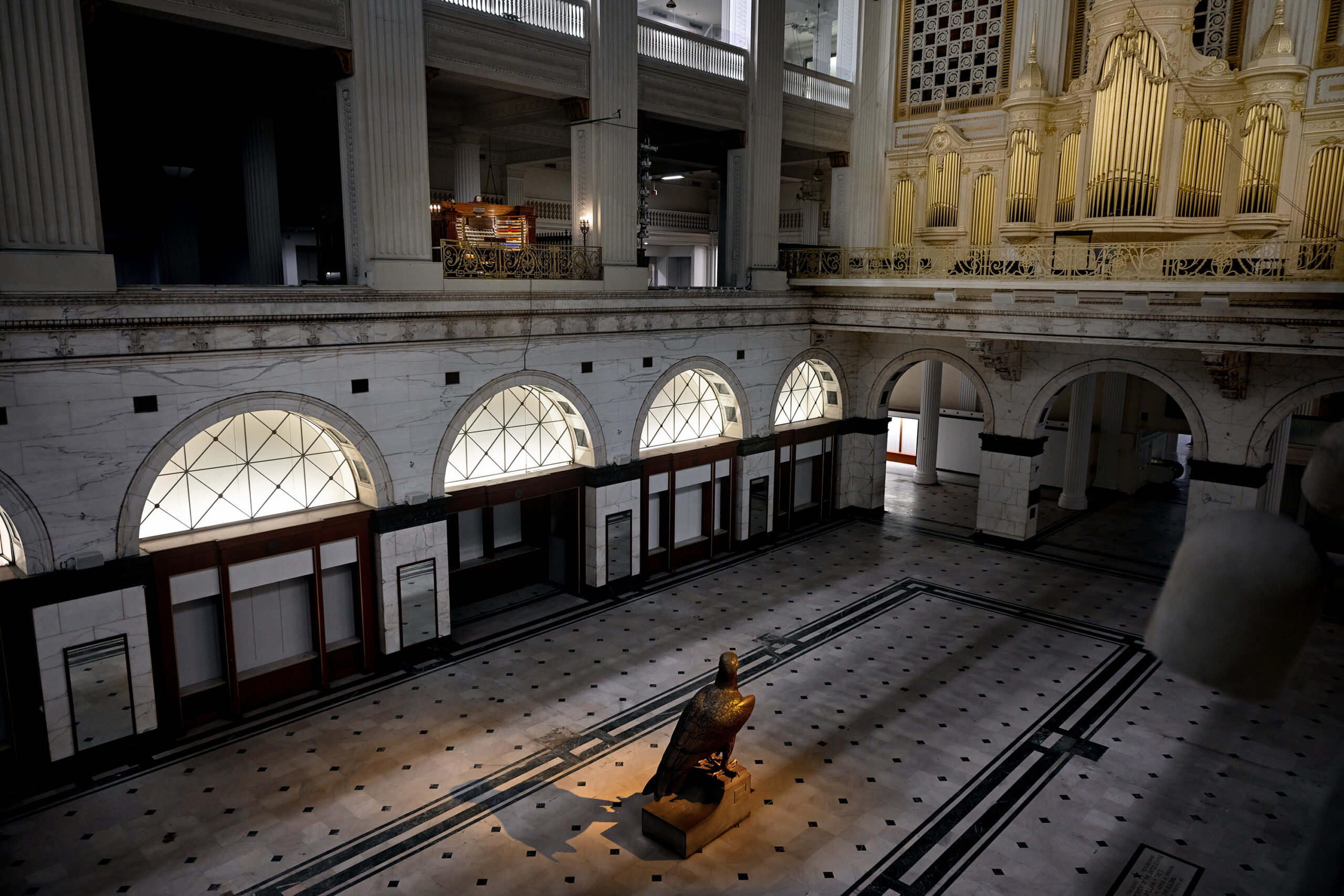
    As seen in September, the Macy’s in the Wanamaker Building in Center City now sits empty. It closed last year.

    A Rita’s Water Ice franchise has also stayed put in the Roosevelt Mall for decades, Finnegan said.

    Company executives said they are optimistic this momentum will continue. Along with the under-construction section, redevelopment plans also include another standalone building that has yet to break ground — and the cost of which is not included in the current price tag.

    Finnegan put it simply: “Opportunity begets opportunity.”

  • 150 years, 2 world wars, 32 mayors, and 28 presidents later, a store still thrives in a bankrupt city

    150 years, 2 world wars, 32 mayors, and 28 presidents later, a store still thrives in a bankrupt city

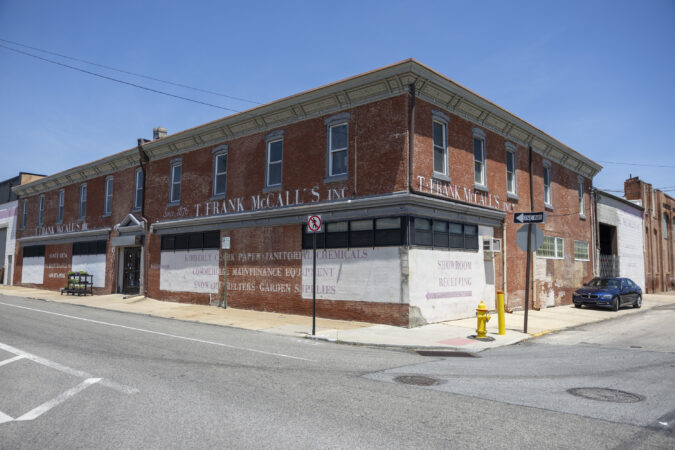
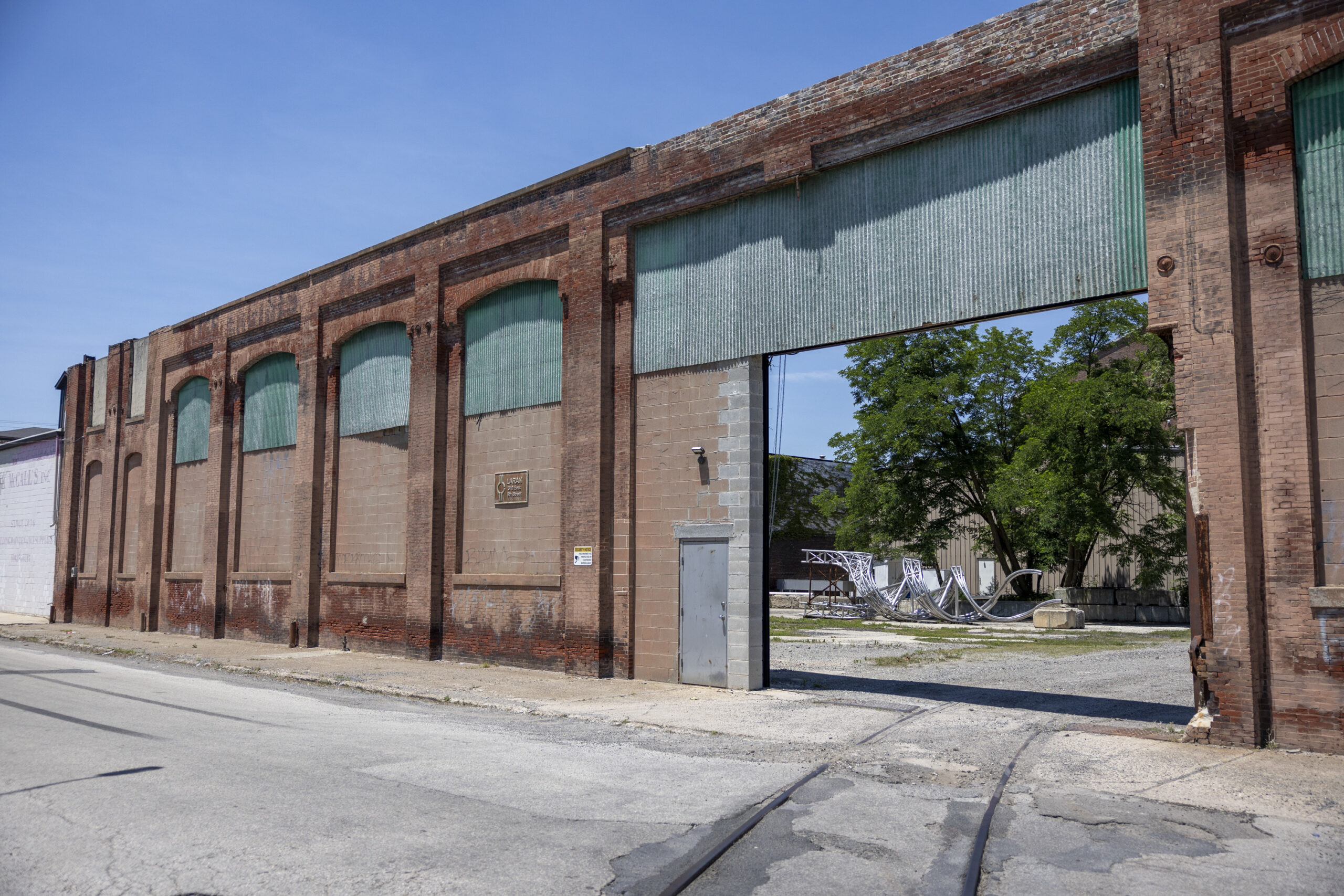
    Humans still answer the phones. The business is family-owned and run by women. But perhaps the most remarkable aspect of T. Frank McCall’s is the reality that the store is still there, next to the railroad tracks in the Delaware County riverfront city of Chester, where it has been since 1876.

    It has somehow survived through the administrations of 28 presidents, 32 governors, and 32 mayors; two world wars; the Great Depression; and the collapse of Chester’s economy that has climaxed with a rare municipal bankruptcy, By the time the Philadelphia Phillies played their first game in 1883, McCall’s had been in business for seven years at Sixth and Madison Streets.

    The building has retained the faint odors of the company’s seed-and-grain roots. But these days the houses that had lined the streets are long gone. The nearest neighbor is a remnant of a factory that once was part of the city’s industrial might. The store’s owners are bemused by the unused bicycle lane on the other side of Madison Street, and the superfluous parking restrictions.

    The remnants of an abandoned factory building sit next to McCall’s.

    McCall’s sells janitorial and cleaning supplies, but rather than a traditional “jan/san” business, it is more like a hybrid wholesale general store. That its website features a snowfall image is fitting: It made a killing selling ice-melters this winter to SEPTA, Philadelphia, and other customers.

    The assortment evidently continues to work; McCall’s generates about $10 million in annual revenue, said owner Lisa Witomski, whose father bought the company from the family of the original owners in 1957 in a decade when businesses were pulling out of Chester.

    What explains the staying power?

    In part, Witomski said, McCall’s sells things people have to have. “Nobody really wants to buy janitorial supplies, but if you have customers or employees, you need them.”

    Staying in the one location in Chester, even though only a tiny percentage of the revenue comes from in-store sales, has been an asset, Witomski said. Customers know where to find them, and the company owns the 50,000-square-foot facility outright; the mortgage was paid off in 1880.

    The county estimates the property’s value at about $850,000, and the company contributes about $17,000 annually to the city and the Chester-Upland School District in property taxes. It also pays a 6% sales tax to the city, and the 16 employees pay earned-income levies. The size of the workforce has not changed much through the years.

    Most of the building’s space, which includes a former stable for the horses that delivered the company’s goods in the wayback when Chester was transforming from a rural outpost to an industrial power, is devoted to warehousing. About 95% of the company’s business is shipped on McCall’s trucks, Witomski said, and the location has outstanding road access, close to I-95 and the Blue Route.

    When customers call during business hours, “a human being always answers the phone,” she said. “People are shocked when you say, ‘Hello,’ and they’re waiting for ‘press 1.’”

    Being a family business that has resisted corporate takeover has given McCall’s an edge with customers, said Witomski, who recalled playing hide-and-seek among the store’s galvanized trash cans as a kid.

    “Unlike almost all our competition, we haven’t sold out.”

    The original McCalls

    George McCall started his feed-and-grain business in 1876, when Chester’s population was growing rapidly. He eventually turned over the keys to his son Thomas, who later passed on the business to his sons under the name T. Frank McCall.

    A breakthrough came in the 1880s when nearby Scott Paper — on the Chester riverfront, the company that is believed to have been the first to market toilet paper on a roll and disposable paper towels — hired McCall’s as its distributor. (The plant now bears the Kimberly-Clark name, but the Scott brand name survives.)

    Along with Scott products, through the years it would sell and distribute a wide variety of janitorial and other products while remaining in the seed-and-grain business.

    The McCalls would run the company for 80 years.

    McCall’s today

    Owner Lisa Witomski (right) with her niece Lisa Claire, McCall’s office manager, and nephew Chas Wiley, warehouse manager, inside the store.

    They sold the company in 1957 at a time when Chester was entering a postwar decline: In the 1950s, the number of apparel and general merchandise stores in the city fell from 68 to 19, according to Chester Planning Commission documents.

    Brothers Edward and Charles Witomski purchased the business on the advice of a member of the legendary Pew family, founders of the Sun Oil empire. The brothers had owned a bar in Essington and were looking for an enterprise that would be more family-friendly, Lisa Witomski said.

    Like the McCalls, they continued the tradition of selling and distributing a wide variety of products, including paints and even baby chicks at Easter time. Eventually the business was passed on to Charles Witomski’s daughters, Marcie and Lisa, the company president. Marcie Witomski’s daughter, Lisa Claire, is the office manager; Marcie’s son Chas Wiley manages the warehouse.

    In recent years their regular customers have included casinos throughout the region that have needs for paper and enzyme cleaning products. (Gamblers have been known to make a mess.)

    And ice melter has been a source of considerable cold cash — this winter in particular.

    “It was a doozy,” Claire said. It wasn’t just the 30 inches of snow, but the subsequent Arctic freezes that locked in the snow-and-ice coverage. The result was the sale of mass quantities of calcium chloride melter.

    On occasion, a motorist along Madison Street, which is part of Route 320, stopped in to buy some melter, Lisa Witomski said, but the store never was heavily trafficked even when the neighborhood was well-occupied in the 1950s and ’60s.

    Save for a few incidents — one person tried to walk off with a lawn mower, another tried to make off with a 100-pound barrel that he couldn’t carry — crime has not been an issue, Lisa Witomski said, even when the city went through a period a decade ago when it had the nation’s highest per capita homicide rate.

    “We are not exactly in a populated area,” she said.

    Cars parked in front of the store these days are anomalies. “We think the two-hour parking is very funny,” she said.

    Said Michelle Cubler, the purchasing manager, “We’ve never seen them actually ticket on this street.”

  • World Cup exposes growing global rift over prediction markets

    World Cup exposes growing global rift over prediction markets

    This year’s World Cup is the first since prediction markets such as Kalshi and Polymarket exploded to popularity as a new way to bet on sports.

    Fans in the U.S. are free to collectively wager billions of dollars on the tournament, but a growing number of other countries are making it harder to access the platforms offering those bets. Whether fans can bet on how many goals Kylian Mbappé scores for France or who wins the tournament may depend on where they live. In some cases, fans may not be able to bet at all.

    In just the last few weeks, Spain, Indonesia, and India have joined the growing list of countries — including most of the European Union and large parts of Asia — that have put in place temporary or permanent measures to cut off access to the Kalshi and Polymarket websites and apps.

    Brazil shut down 27 prediction platforms in April, including Kalshi, whose co-founder, Luana Lopes Lara, is Brazilian, leaving the company scrambling shortly after it launched in the country.

    Regulators have intensified their scrutiny of prediction markets as the companies have expanded rapidly around the world, offering a new kind of financial contract that straddles the line between gambling and financial speculation.

    Some countries view the new types of financial contracts offered by the prediction markets as a form of gambling and subject them to betting laws. Others argue that they should fall under securities or derivatives rules. The start-ups have used the legal uncertainty around their new products to offer them to customers even as regulators struggle to catch up.

    “Prediction markets are entering the same phase every novel financial primitive eventually enters: first hobbyist market, then mass attraction, then legitimacy fights,” said Dovey Wan, founding partner of Primitive Ventures, a backer of prediction market platform Opinion Labs. “The recent bans mean the category has become important enough to regulate.”

    Prediction market operators argue their platforms provide valuable information by aggregating collective forecasts on everything from economic indicators to geopolitical events. Critics counter that the contracts can encourage excessive speculation, and also open new opportunities for insider trading, alongside the ethical issues created by making it possible to bet on the war and other matters of life and death.

    “Betting isn’t new,” said Chris Holland, partner at Singaporean consulting firm HM Strategy. “What’s new is the structure.” Because prediction market contracts are typically classified as derivatives, they fall outside gambling licensing frameworks, he added. “That gap is an open invitation to insiders.”

    Though Kalshi and Polymarket are by far the largest prediction companies, many more are expanding globally, including Opinion Labs, which is backed by Binance cofounder Changpeng Zhao’s family office YZi Labs, and Coinbase Ventures-backed Limitless.

    A number of exchanges have cut marketing deals with soccer leagues and teams ahead of the World Cup to increase their visibility around the tournament.

    The markets are big business, and growing. On Monday, Piper Sandl analyst Patrick Moley wrote that the World Cup was “like the Super Bowl every day,” and was driving record daily volumes on Kalshi.

    Polymarket recorded around $2.8 billion in notional trading volume across its international and U.S. exchanges in the first week of June, according to user-compiled data on Dune Analytics, up from $2.1 billion a week earlier. Kalshi reported about $4.5 billion over the same period, up from $4.2 billion.

    Creating a regulatory framework that restricts the sites is proving a challenge for country-specific regulators. The companies have been rapidly expanding around the world, unlike traditional gambling companies that are generally restricted to a specific jurisdiction. The use of virtual private-networks and cryptocurrencies make it easier to operate without going through local financial firms and regulators, and makes it difficult to completely shut the platforms down.

    India’s government said users were able to access “illegal and blocked” prediction markets and said “Polymarket and a few other similar sites” were enabling the use of virtual private networks to circumvent the national ban, The government asked internet providers to cut off access to the platforms.

    Polymarket and Kalshi’s terms of service already prohibit people from signing up in certain countries, including many that have recently taken steps to crack down on the sites. They’ve also strengthened safeguards against insider trading and market manipulation as prediction markets face growing scrutiny.

    Polymarket is partnering with blockchain analytics firm Chainalysis Inc. to help police its platform related to suspicious trades.

    “We welcome the opportunity to collaborate with Spain, Brazil, and other countries on a path forward that supports responsible innovation, transparency, and user protection in prediction markets,” a Polymarket spokesperson said in an email. The firm monitors for insider trading and other illegal activity, consistent with other markets, the spokesperson added.

    Opinion Labs has restricted access for users from various jurisdictions and blocked any sanctioned addresses, said Alex Chan, chief investment officer, in an emailed response. “We are working closely with a number of local authorities toward launching compliant local platforms.”

    Kalshi and Limitless didn’t respond to email seeking comments.

    For now, prediction markets remain legal in a patchwork of jurisdictions, but the direction of travel is becoming clearer: Governments are increasingly unwilling to let platforms operate in a regulatory gray zone.

    Emily Nicolle, Sidhartha Shukla, Alice French, Yian Lee, Betty Hou, Lulu Yilun Chen, and Amanda Wang contributed to this article.

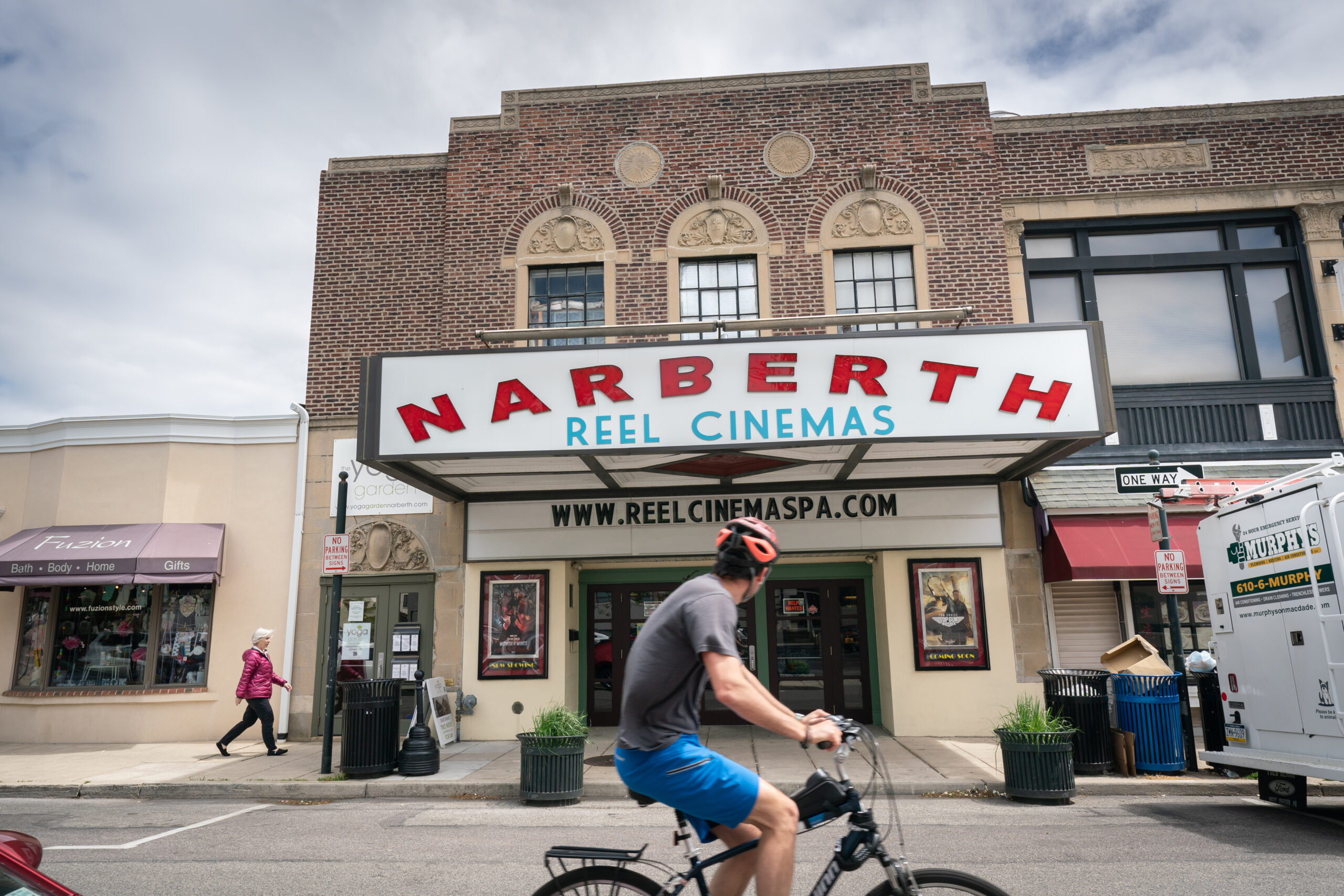
  • In Narberth, a zoning fight raises questions over whether a small borough can help solve the housing crisis

    In Narberth, a zoning fight raises questions over whether a small borough can help solve the housing crisis

    Brenna Carswell has lived on the same street in Narberth for a decade.

    Carswell moved to Narberth, a small Montgomery County borough encircled by Lower Merion, in 2011 from Upper Darby with her younger daughter after a divorce. She knew early on that her daughter would need more support than the Upper Darby schools could provide, so she scraped together the cash for a rental in the Lower Merion School District.

    “It’s been a great place for my girls to grow up,” Carswell said of her Main Line community. “It’s given them a town that I didn’t have.”

    After four years and three rentals, Carswell, 44, a small-business owner, bought a home in the borough. In early 2020, she sold her house with the intention of buying another place in Narberth, but the pandemic hit and Carswell was furloughed. She ended up in a rental across the street, where she still lives. By the time Carswell was ready to buy again, houses around her had exploded in price.

    She and her family have outgrown their space, but in the current market, “there’s literally nowhere to go.”

    Narberth’s borough council last August directed its planning commission to study how it could use zoning to increase affordable housing and support the local economy. Officials say living in the borough has become increasingly expensive, as experiences like Carswell’s become more and more common.

    In February, the commission came back with a handful of recommendations in two zoning districts: the higher-density residential area that surrounds the Haverford Avenue downtown, and the commercial mixed-use corridor along Montgomery Avenue.

    Recommendations included allowing apartments, cottages, and rowhouses by-right, in the ring around the downtown core, and permitting extra floors for apartment buildings that include affordable units in both zoning districts. The commission suggested reducing minimum parking requirements, allowing ground-floor apartments on Montgomery Avenue, and letting developers build off-site parking lots for apartment complexes.

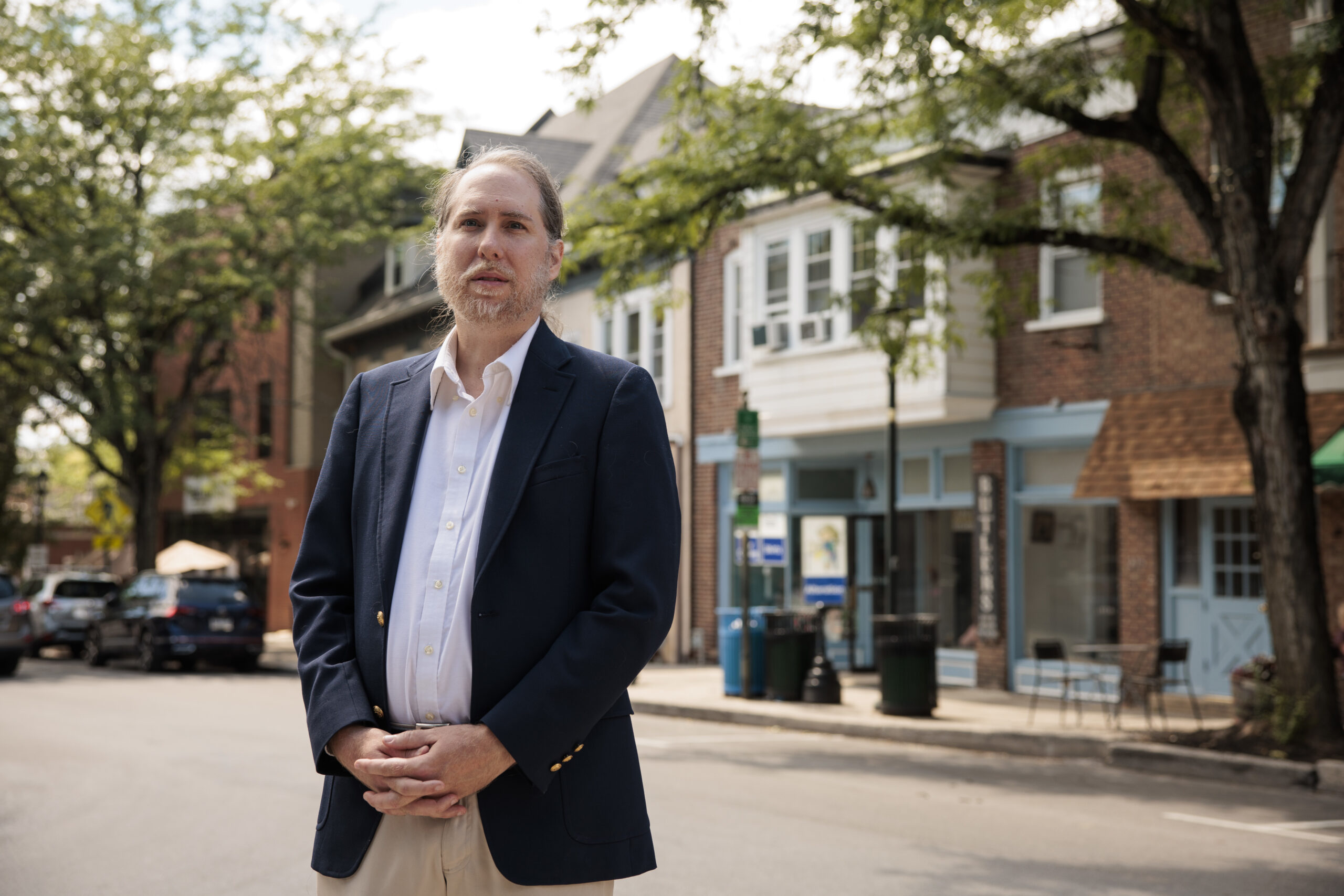
    Adam Krom, the planning commission’s chair, has said the changes would “provide flexibility” and incentivize developers to build both market-rate and affordable housing units in areas where similar developments already exist.

    But what began as a municipal land-use discussion has morphed into a monthslong debate in the borough over what, if anything, Narberth should do to fight America’s housing crisis. Proponents say changes would bring in much-needed tax revenue, create foot traffic for downtown businesses, and help preserve socioeconomic diversity. Others, however, feel that a small contingent on the borough council has charged ahead with proposals to increase density while ignoring growing concerns over traffic, neighborhood character, and the reality of supporting transit-oriented development with a transit system marred by uncertainty.

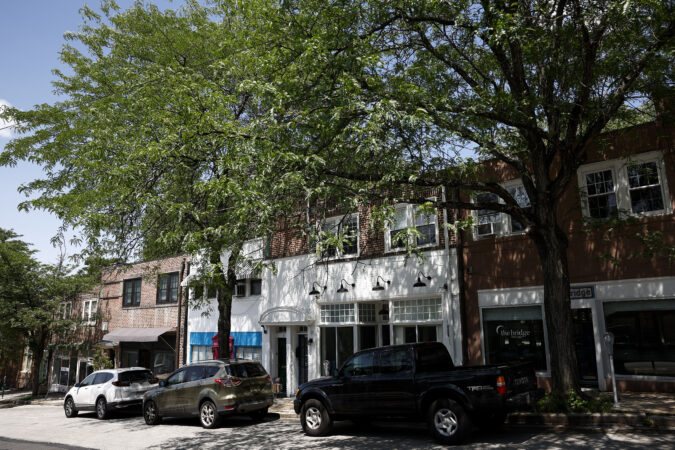
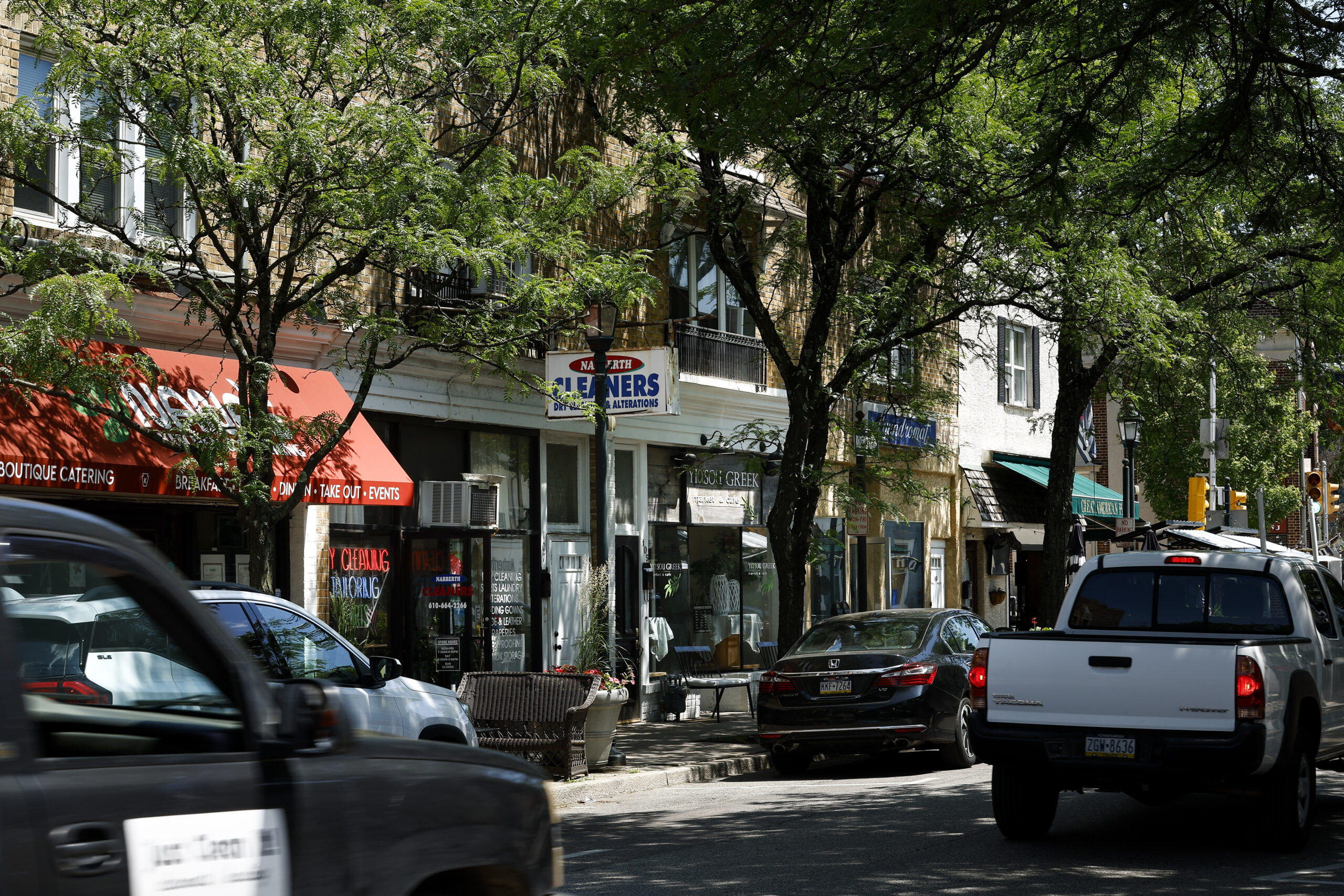
    Shops line North Narberth Avenue.

    Rising costs, shrinking options

    In Narberth, and across the Philadelphia suburbs, the cost of housing is outpacing the ability of large segments of the population to afford it, said Scott France, executive director of the Montgomery County Planning Commission, which consults the borough on land-use issues.

    Narberth had the highest median housing sales price of any municipality in Montgomery County in 2024, at $751,000, a 70% increase from 2014.

    The average rent for a one-bedroom apartment in Narberth is $2,050 per month, according to Zillow rental data. As housing prices have risen, incomes have stayed largely stagnant. In 2024, 46% of renters and 19% of homeowners in Montgomery County were spending more than 30% of their income on housing, according to a Housing Blueprint recently published by the county.

    In Montgomery County, boroughs like Narberth were often the first point of entry for people looking to settle in the suburbs, France said, given their more urban-suburban feel and smaller lot sizes.

    Yet the factors that once made places like Narberth starter-home magnets have now made them increasingly inaccessible. As millennials have sought out premiums like walkability and transit access, the cost of both renting and homeownership in places like Narberth, Conshohocken, and Ambler has risen, France said.

    Montgomery County’s and Narberth’s housing woes are part of a well-documented housing shortage that has swept the United States, as a widening gulf between supply and demand has put homeownership further out of reach for many, especially for younger people.

    Some communities facing housing shortages have loosened zoning restrictions in order to court developers who are willing to build housing and, in certain cases, set aside affordable units in exchange for height and other bonuses. On the Main Line, luxury apartments have cropped up in large numbers, especially in areas where officials have used zoning to increase density.

    Fred Bush, president of Narberth’s borough council, said the county’s Housing Blueprint crystallizes why Narberth needs to ease its zoning regulations and incentivize development.

    “It’s very difficult for people who come in here — who are renting or who are looking to move in, young families — to find a place to stay,” Bush said.

    Narberth Borough Council President Fred Bush. Bush is part of a contingent of borough council members who see zoning changes as a key to increasing the availability of affordable housing in the borough.

    ‘Is that what’s best for this area?’

    Narberth residents like Margot and Jason Deitz describe the push to rezone as confusing and misguided. The couple, both 40, have lived together in Narberth since 2020. Their house is near the Montgomery Avenue corridor, where changes are being considered.

    The Deitzes are among a large contingent who feel the proposals would complicate an already hairy parking situation, allow for buildings outside of Narberth’s quaint character, and tip the balance of the borough in favor of renter-occupied units. They feel the borough is putting the cart before the horse, trying to address national problems rather than the sidewalk repairs and parking shortages on their front steps.

    For Margot Deitz, the idea of building fewer parking spaces and asking residents to rely on SEPTA, a sometimes unreliable transit system, was confounding. Her questions to the borough council about parking went unanswered, she said. Both Margot and Jason Deitz wondered how, in a town with shuttered storefronts and parking problems, building new apartments became the council’s priority.

    Homeowner Michelle Karten, 52, went to a public meeting to ask questions about the proposals but felt the changes were a “foregone conclusion.”

    Karten said she hopes the borough can find a more “holistic” approach, rather than just allowing for the proliferation of luxury apartments. She believes the borough has already made a number of concessions to developers and does not need to offer density bonuses to get affordable housing.

    “Do we really need to go up that extra level? Is that what’s best for this area? And what other solutions could there be?” Karten said.

    Matt Patrick, 37, a homeowner in the borough since 2018, is “not against affordable units” but thinks the council is using the affordability crisis to push through incongruous density in spite of resident opposition.

    “It seems like more of a developer bonus than something aimed at conquering affordability,” Patrick said.

    Narberth’s SEPTA train station on the Paoli/Thorndale Line.

    Luxury apartments’ “two truths problem”

    For others, the debates over parking requirements and maximum heights are a distraction from a looming reality: The national housing crisis has hit Narberth, and prices will only continue to rise without new inventory.

    Blessing Osazuwa, 28, thinks the changes are a “great idea.” Osazuwa grew up in Lower Merion and moved to Narberth three years ago. Her roommate’s family owns the house they live in, giving her a break on the rent that allows her to afford Narberth.

    “I love Narberth,” Osazuwa said. “I would love to stay, but there’s no way that I’ll be able to afford that on my own, and it’s a shame, because I feel like I contribute to the community.”

    Numerous residents said the conversation around zoning in Narberth has devolved into misconceptions and ad hominem attacks hurled from all sides, across public meeting forums and Facebook groups.

    Carswell said there is a misconception that Narberth and surrounding communities already have plenty of affordable apartments.

    Little exists in Carswell’s price range in or around Narberth. She has chased multiple “ghost” listings, reaching out to property managers only to find out listed units are occupied. She wants to stay in Narberth to provide consistency for her kids. When she explains her reality, she said, she is often told to just move somewhere else.

    Osazuwa said the refrain that those who cannot afford Narberth should simply move ignores a souring economic reality.

    “I tend to encounter that ‘pulling yourself up from the bootstraps’ mentality without regard to the times that we’re living in, without regard to inflation, without regard to the fact that jobs don’t pay as much,” she said.

    Advocates acknowledge that future development will likely rely on luxury rentals, many of which have popped up in neighboring communities like Ardmore and Bala Cynwyd and would be unaffordable to all but a wealthy set of renters. They believe, however, that any new housing units can help moderate the market, and even a few affordable units attached to the developments could provide housing for lower-income residents.

    “I agree that struggling families are not going to be moving into luxury apartments, but it just puts an overall downward pressure on rental prices for the rest of the market,” Bush said.

    Vincent Reina, a University of Pennsylvania professor and founder of the Housing Initiative at Penn, said there is “a two truths problem” when it comes to luxury apartments. High-end buildings do not fill the need for affordable housing. But, without new construction, existing prices can be pushed up even further as demand continues to outpace supply.

    “What you aren’t going to see is the natural market production of [low-cost] units because the price is too high,” he said. Without government incentives for affordable units, “the numbers just don’t pencil out.”

    Narberth Reel Cinemas. The borough is considering zoning changes that would increase density around its downtown core.

    Balancing ‘what should be complementary interests’

    The borough council has drafted comments to send back to the planning commission for consideration. The draft splits the difference on some issues, dropping the parking reduction and some height bonuses, but keeping other changes. It could be months before any changes are actually adopted.

    Council member Mike Salmanson said Narberth is trying to balance “complementary interests” in keeping the borough’s character while ensuring fiscal stability. Salmanson said the borough has maxed out how much it can charge in earned income tax. Because Pennsylvania does not require regular property reassessments, it is difficult for municipalities to collect the revenue they need without just raising tax rates.

    “Increased housing creates a broader tax base,” Salmanson said. “I see the advantages of that.”

    But he also called zoning changes that cater to current market conditions, and not the long-term success of the borough, “short-sighted.”

    Council member Cyndi Rickards believes the council has yet to meaningfully engage with incentivizing housing options beyond luxury apartments, such as reasonably priced ownership opportunities that would allow residents to build equity.

    “I really struggle to understand how those of us who own homes …
[see] luxury apartments as a tool for justice,” Rickards said.

    Carswell said she understands the concerns about zoning changes and was once opposed herself.

    “There is a deep fear, that I understand, that the good old days are slipping away,” Carswell said. “The good old days are gone. … The changes that happened to our economy on a national scale absolutely impacted Narberth.”

    This suburban content is produced with support from the Leslie Miller and Richard Worley Foundation and The Lenfest Institute for Journalism. Editorial content is created independently of the project donors. Gifts to support The Inquirer’s high-impact journalism can be made at inquirer.com/donate. A list of Lenfest Institute donors can be found at lenfestinstitute.org/supporters.