Category: Business

Business news and market updates

  • What makes someone love their grocery store? Ask the Philadelphians who are already missing their Amazon Fresh.

    What makes someone love their grocery store? Ask the Philadelphians who are already missing their Amazon Fresh.

    When Justin Burkhardt heard that his neighborhood grocery store was closing, just months after it had opened, he felt a pang of sadness.

    The emotion surprised him, he said, because that store was the Northern Liberties Amazon Fresh.

    “Amazon is a big corporation, but [with] the people that worked there [in Northern Liberties] and the fact that it was so affordable, it actually started to feel like a neighborhood grocery store,” said Burkhardt, 40, a public relations professional, who added that he is not a fan of Jeff Bezos, Amazon’s billionaire owner.

    The e-commerce giant announced last month that it was closing all physical Amazon Fresh stores as it expands its Whole Foods footprint. In the Philadelphia area, the shuttering of six Amazon Fresh locations resulted in nearly 1,000 workers being laid off. Local customers said their stores closed days after the company’s announcement.

    “I don’t feel bad for Amazon,” said Burkhardt, who spent about $200 a week at Amazon Fresh. “I feel bad for the workers. … I feel bad for the community members.”

    Burkhardt said he and his wife have been forced to return to their old grocery routine: Driving 20 minutes to the Cherry Hill Wegmans, where they feel the prices are cheaper than their nearby options in the city.
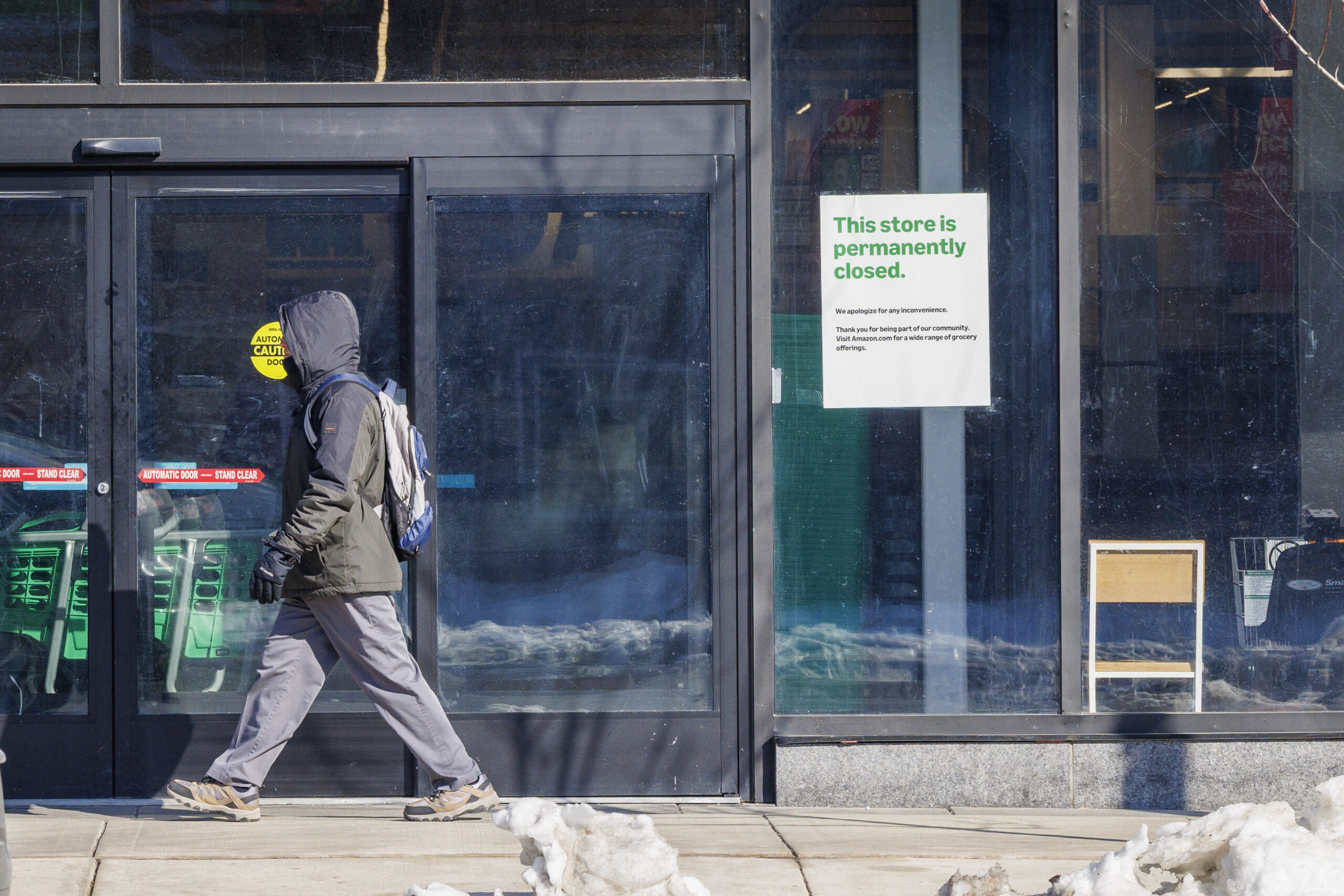
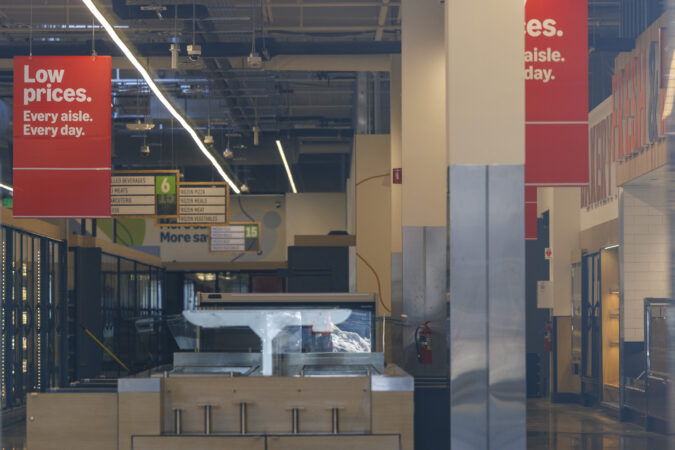
    Last week, signs informed customers that the Northern Liberties Amazon Fresh was permanently closed.

    In Philadelphia and its suburbs, many former Amazon Fresh customers are similarly saddened by the closure of neighborhood stores where they had developed connections with helpful workers. Several said they are most upset about the effects on their budgets amid recent years’ rise in grocery prices.

    “I wasn’t happy about it closing for the simple fact that it was much cheaper to shop there,” said Brandon Girardi, a 30-year-old truck driver from Levittown (who quit a job delivering packages for Amazon a few years ago). Girardi said his family’s weekly $138 grocery haul from the Langhorne Amazon Fresh would have cost at least $200 at other local stores.

    At the Amazon Fresh in Broomall, “they had a lot of organic stuff for a quarter of the price of what Giant or Acme has,” said Nicoletta O’Rangers, a 58-year-old hairstylist who shopped there for the past couple years. “They were like the same things that were in Whole Foods but cheaper than Whole Foods.”

    She paused, then added: “Maybe that’s why they didn’t last.”

    In response to questions from The Inquirer, an Amazon spokesperson referred to the company’s original announcement. In that statement, executives wrote: “While we’ve seen encouraging signals in our Amazon-branded physical grocery stores, we haven’t yet created a truly distinctive customer experience with the right economic model needed for large-scale expansion.”

    Workers could be seen inside the closed Amazon Fresh in Northern Liberties last week.

    What makes a Philly shopper loyal to a grocery store?

    Former Amazon Fresh customers say they’re now shopping around for a new grocery store and assessing what makes them loyal to one supermarket over another.

    Last week, one of those customers, Andrea “Andy” Furlani, drove from her Newtown Square home to Aldi in King of Prussia. The drive is about an hour round trip, she said, but the prices are lower than at some other stores. Her five-person, three-dog household tries to stick to a $1,200 monthly grocery budget.

    As she drove to Aldi, she said, she’d already been alerted that the store was out of several items she had ordered for pickup. That’s an issue Furlani said she seldom encountered at the Amazon Fresh in Broomall, to which she had become “very loyal” in recent years.

    “It was small, well-stocked,” said Furlani, 43, who works in legal compliance. “I don’t like to go into like a Giant and have a billion options. Sometimes less is more. And the staff was awesome,” often actively stocking shelves and unafraid to make eye contact with customers.

    “Time is valuable to me,” Furlani said. At Amazon Fresh, “you could get in and out of there quickly.”

    Shoppers learned how to use the Amazon Dash Cart at an Amazon Fresh in Warrington in 2021.

    Girardi, in Levittown, said he is deciding between Giant and Redner’s now that Amazon Fresh is gone. The most cost-effective store would likely win out, he said, but product quality and convenience are important considerations, too.

    “We used to do Aldi, but Amazon Fresh had fresher produce,” Girardi said. “I used to have a real good connection with Walmart because my mom used to work there. But I don’t see myself going all the way to Tullytown just to go grocery shopping.”

    Susan and Michael Kitt, of Newtown Square, shopped at the Broomall Amazon Fresh for certain items, such as $1.19 gallons of distilled water for their humidifiers and Amy’s frozen dinners that were dollars cheaper than at other stores.

    But Giant is the couple’s mainstay. They said they like its wide selection, as well as its coupons and specials that save them money.

    “I got suckered by Giant on their marketing with the Giant-points-for-gas discounts. I figured if I’m going to a store I may as well get something out of it,” said Michael Kitt, a 70-year-old business owner who has saved as much as $2-per-gallon with his Giant rewards. “I really at the time didn’t see that much of a difference between the stores.”

    How Whole Foods might fare in Amazon Fresh shells
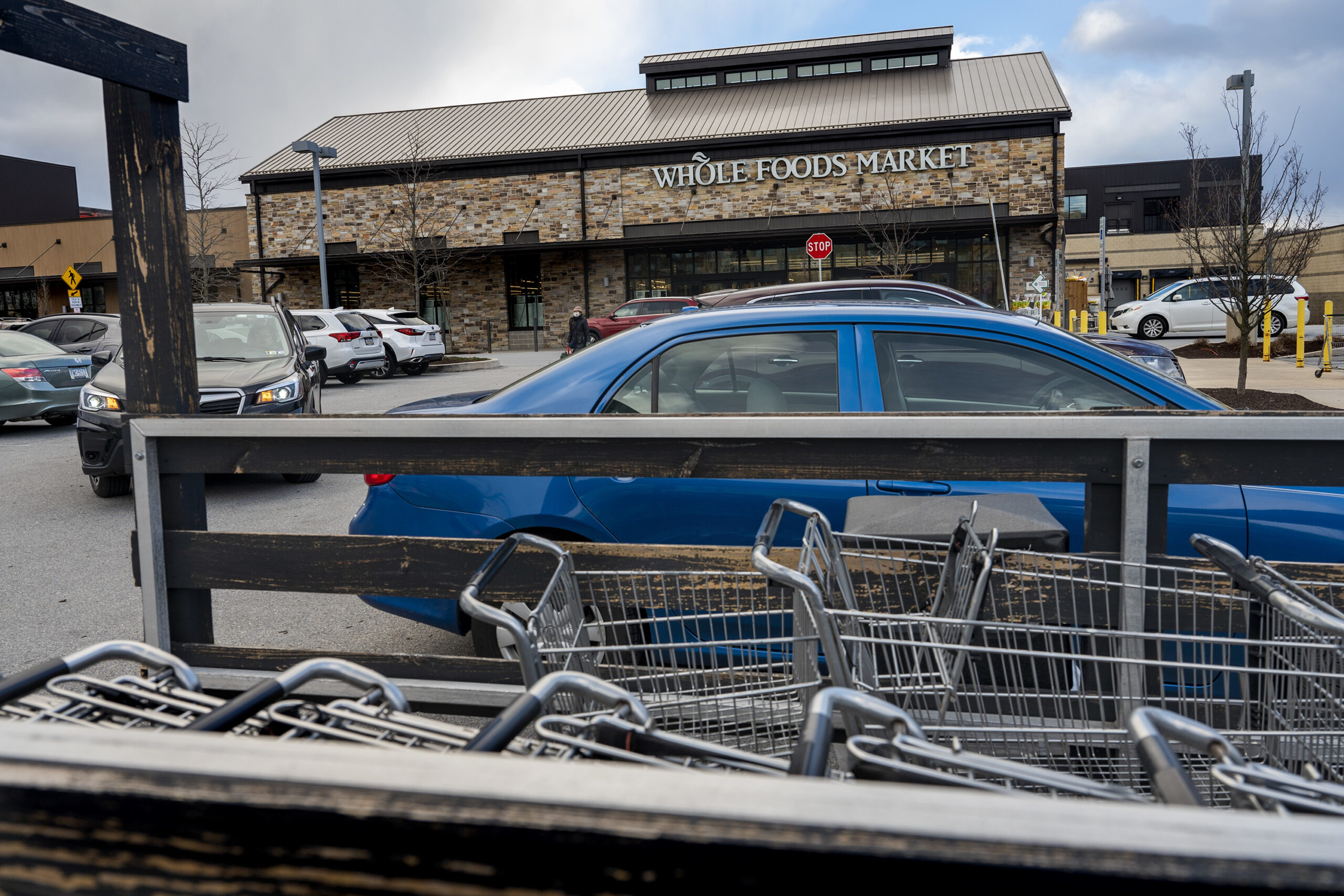
    The Whole Foods store on the Exton Square Mall property is shown in 2022.

    If any of these local Amazon Fresh stores were to become a Whole Foods, several customers said they’d be unlikely to return, at least not on a regular basis.

    Amazon said last month that it plans to turn some Amazon Fresh stores into Whole Foods Markets, but did not specify which locations might be converted.

    Amazon bought Whole Foods in 2017. The organic grocer is sometimes referred to as “Whole Paycheck,” but the company has been working to shed that reputation for more than a decade.

    Some Philly-area consumers, however, said Whole Foods prices would likely be a deterrent.

    Natoya Brown-Baker, 42, of Overbrook, said she found the Northern Liberties Amazon Fresh “soulless,” and she didn’t “want to give Jeff Bezos any more money.” But the prices at Amazon Fresh were so low, she said, that she couldn’t resist shopping there sometimes.

    Brown-Baker, who works in health equity, said she came to appreciate that it represented an affordable, walkable option for many in the neighborhood, including her parents, who are on a fixed income.

    If a Whole Foods replaces the store at Sixth and Spring Garden Streets, which was under construction for years, Brown-Baker said the area would be “back at square one.”

    Burkhardt, who also lives in the neighborhood, noted that Northern Liberties has a mix of fancy new apartment complexes and low-income housing.

    “The grocery store should be for everyone,” he said. Whole Foods “doesn’t feel like it’s for the neighborhood. It feels like it’s for a certain class of people.”
  • These outsourced Vanguard workers will be offered their jobs back

    These outsourced Vanguard workers will be offered their jobs back

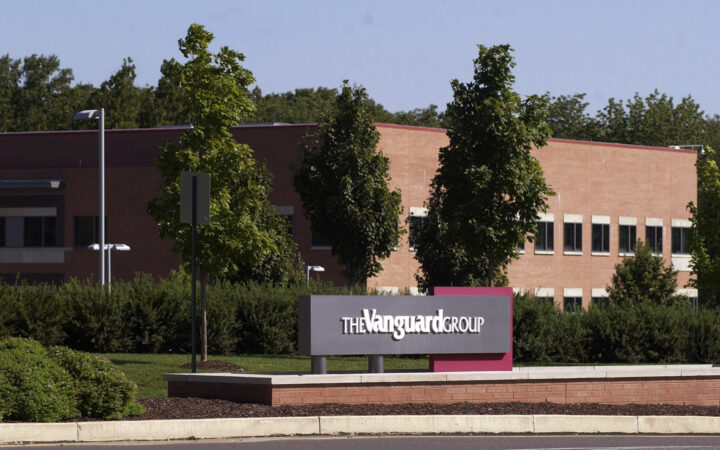
    When Vanguard Group outsourced more than 1,300 retirement-plan office jobs to Infosys in 2020, both companies pitched the deal as a win for the Philadelphia region, not just another cost-cutting move.

    India-based Infosys called it a first step in attracting work from other U.S. financial employers.

    But with Infosys moving jobs back to Vanguard, the Trump administration discouraging visas for foreign workers at U.S. contractors, and Vanguard opening a large tech center in Hyderabad, India, that deal now looks as though it may have been a high point in U.S. outsourcing, not a sign of bigger things ahead.

    Vanguard spokespeople in 2020 stressed that Infosys planned to use the outsourced workers to open a “Mid-Atlantic Center of Excellence” facility in Malvern.

    Infosys officials said they hoped to hire more U.S. workers to outsource work from financial companies into the center under a veteran Vanguard manager, Martha King.

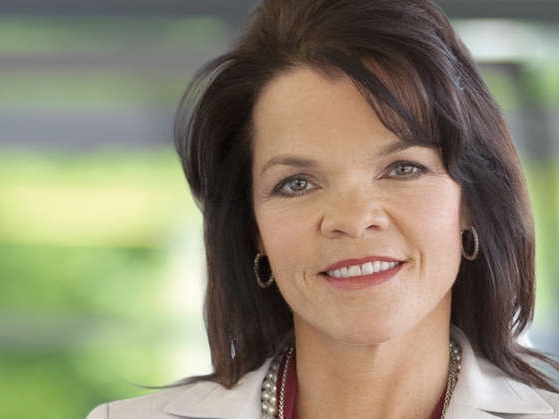
    Martha G. King headed a retirement services unit at Vanguard Group and moved with a large part of her team to Infosys when the work was outsourced in 2020.

    It was “the largest-ever deal signed in Infosys history,” Pravin Rao, chief information officer, told investors in a conference call the day after the deal.

    The stock jumped 15% on the news. Infosys president Mohit Joshi promised to improve retirees’ investment experience and set a higher service standard.

    But the expected new business didn’t materialize. Infosys’ growth slowed after 2020. The company’s stock is now worth less than when it signed the Vanguard deal, and its major U.S. office centers are elsewhere.

    The Vanguard arrangement itself has partly unraveled. Infosys “is in the process of transitioning services back to Vanguard,” according to a report an Infosys official in Atlanta sent to the Pennsylvania Department of Labor and Industry on Jan. 27.

    As a result, 248 remaining Infosys employees who work on Vanguard projects are being laid off this spring and summer. That includes 70 record-keeping account administrators, 32 project managers, and others in smaller categories.

    All but 10 will be offered jobs at Vanguard, according to the note, which referred state officials with any questions to a manager at Infosys’ Business Process Management (BPM) group in India.

    That Infosys BPM outsourcing unit, initially financed by New York-based Citibank, had grown through the 2000s and 2010s by acquiring other outsourcing firms in the United States, Europe and Australia, adding business even as the backlash against outsourcing U.S. jobs grew.

    The outsourcers tended to have lower pay. Vanguard employees who made the switch to Infosys got reduced benefits. New hires were paid lower rates than Vanguard veterans, according to former Vanguard and Infosys employees.

    President Donald Trump has said he will curtail H-1B visas for foreign workers who come in the U.S. to work for outsourcing companies and other contractors and added $100,000 yearly application fees, though these have not been applied to all H-1B employers.

    H-1B remains an important source of technology workers for U.S. government contractors and for state government contractors in Pennsylvania,New Jersey, and other states.

    Two people familiar with Vanguard operations says it will continue to have some work done by Infosys and other tech outsourcing contractors.

    Vanguard and Infosys declined to answer questions about what work Infosys will continue to perform for Vanguard.

    Vanguard offered a general statement: “We’re proud to attract top talent to deliver the best possible outcomes for our clients. We also value our relationships with outside specialists who bring unique skillsets and the flexibility to allow us to deliver for our clients.”

    A check of U.S. H-1B visa records shows Infosys relied less on foreign workers for its U.S. operations since signing the 2020 Vanguard deal — whether because it hired more Americans as promised or also because of a slowdown in new business.

    The total of Infosys H-1B visa holders in the U.S. peaked at around 21,000 in 2019, the year before the Vanguard deal, falling steadily to around 5,800 last year. The number of Infosys visa holders in Malvern dropped even more steeply over that period, the records show.

    But during the same period, Vanguard’s own use of H-1B visas for company employees increased, from an average of under 100 a year from 2020 to 2023, to more than 200 in each of the last two years.

    The visa holders include Vanguard’s $625,000-a-year-salary head of investor advice and wealth management, a post occupied by Canada native Johana Rotenberg, and its $300,000-a-year head of fraud strategy, now occupied by a banking-industry veteran, Pooja M, from India. Veteran Vanguard managers receive most of their pay as fund bonuses.

    Most of the Vanguard H-1B visa workers were paid between $100,000 and $200,000 a year. Roughly half of the Infosys visa workers were paid $100,000 a year or less.

    Inquirer staff writer Joe Yerardi contributed to this article.

  • Philly’s port has a problem with the ‘Buy America’ law: The cranes they need aren’t made in the U.S.

    Philly’s port has a problem with the ‘Buy America’ law: The cranes they need aren’t made in the U.S.

    In an effort to reduce air pollution and modernize U.S. ports, the Biden administration in 2024 announced $3 billion in grants for zero-emission equipment — including tens of millions earmarked for Philadelphia’s port to buy two new electric cranes to help unload ships.

    Ports have embraced the clean energy push, but some have run into a problem. U.S. law requires federally funded infrastructure projects to use American-made products. But according to industry groups, no U.S. firm makes the giant ship-to-shore gantry cranes like the ones Philly is hoping to buy.

    So now the Philadelphia Regional Port Authority (PhilaPort), the state agency that owns terminals and logistics facilities along the Delaware River, is asking the Trump administration for a waiver from so-called Build America, Buy America rules.

    Those rules — included in a 2021 law that had bipartisan support in Congress — reflect a push under both Republican and Democratic administrations to revive American manufacturing, especially in industries such as semiconductor production and shipbuilding, where continued U.S. deference to China is seen as a potential security risk.

    But there are practical constraints to so-called onshoring, from the cost of materials to a shortage of skilled labor. The U.S. manufacturing sector has lost more than 200,000 jobs since 2023.

    In the case of the cranes, PhilaPort says that even if it could procure them in the U.S., it would still face risks because of a lack of “a reliable domestic supply chain for spare parts and service.”

    The Environmental Protection Agency said it is reviewing PhilaPort’s application. It might not be a slam dunk: President Donald Trump’s administration has slashed billions of dollars in funding for Biden-era clean energy initiatives — and early last year, PhilaPort’s grant appeared to be briefly suspended.

    Yet Trump has also expressed support for union dockworkers like the ones who would operate new cranes at Tioga Marine Terminal in Port Richmond. The International Longshoremen’s Association has celebrated the initiative, known as the Clean Ports Program, saying it protects jobs against automation.

    If the EPA does sign off on the request, the port authority will have to navigate a geopolitical minefield.

    Grant recipients are prohibited from using the funds to buy equipment made in China, whose state-owned Shanghai Zhenhua Heavy Industries Co. Ltd. (ZPMC) produces 70% of the world’s ship-to-shore cranes, including the vast majority in use at U.S. ports.

    American reliance on Chinese-made critical port infrastructure has raised national security concerns, magnified by the FBI’s 2021 discovery of “intelligence gathering equipment” onboard a ship that was delivering ZPMC cranes to Baltimore’s port, according to a congressional investigation.

    Only three companies outside China, two in Europe and one in Japan, make ship-to-shore cranes available for international buyers, according to the American Association of Port Authorities. Each firm’s cranes would likely be subject to tariffs imposed by the Trump administration.

    Another wrinkle: As PhilaPort has sought support for the waiver from Pennsylvania’s congressional delegation, some lawmakers have expressed reservations that even cranes made by a non-Chinese manufacturer might include parts made in China. Limiting that exposure could be challenging, given China’s dominance in these intermediate goods.

    It remains to be seen whether lawmakers will ultimately back the request. Labor unions such as United Steelworkers have broadly opposed exemptions from domestic production requirements. A spokesperson for United Steelworkers said the union is “still reviewing the specifics of this case.”

    U.S. Rep. Brendan Boyle (D., Pa.) said he “fought hard” to include the Build America Buy America provision in the 2021 law. “So I’m naturally quite concerned any time an entity is attempting to circumvent these important provisions that protect American jobs and industries,” he said in a statement.

    “PhilaPort’s management needs to do a much better job explaining why a waiver in this case is absolutely necessary,” said Boyle, whose district includes the Tioga terminal.

    Spokespeople for U.S. Sens. John Fetterman (D., Pa.) and Dave McCormick (R., Pa.) did not respond to messages seeking comment.

    Those restrictions will likely increase the cost. Of the $80 million awarded to PhilaPort by the EPA, the port authority had budgeted $47 million for two cranes at Tioga Marine Terminal.

    Now, “it’s unclear if we can do two [cranes] for that price,” said Ryan Mulvey, the port authority’s director of government and public affairs.

    Replacing diesel-powered cranes

    The 2022 Inflation Reduction Act passed by Congress and signed by President Joe Biden presented an opportunity for PhilaPort’s Tioga Marine Terminal, which was built in the 1960s and until recently was still using two diesel-powered cranes that had been installed in the late ‘60s and early ’70s.

    The cranes reached the end of their useful life and were recently dismantled, and the port authority has installed electrical infrastructure to support zero-emission equipment at Tioga, which handles cargoes such as forest products, containers, and steel.

    President Joe Biden speaks at PhilaPort’s Tioga Marine Terminal in Philadelphia on Oct. 13, 2023.

    Cranes can lift two 20-ton cargo containers off a ship at a time. Without them, “it really restricts the amount of cargo you can put through the terminal,” said Andrew Sentyz, president of operator Delaware River Stevedores, which leases the terminal from the port authority.

    About 100 to 200 union longshoremen work at the site, depending on cargo volumes, he said.

    When PhilaPort started reaching out to vendors, at least three — Konecranes of Finland, Phoenix-based Stafford Crane Group, and Swiss-German firm Liebherr’s U.S. affiliate — indicated they were working toward making ship-to-shore cranes that would meet domestic content requirements under the Build America, Buy America Act, a provision of Biden’s 2021 bipartisan infrastructure law. (Stafford is a new entrant in the STS crane market.)

    But when the port authority proceeded to bid for the project last spring, four potential bidders said they were not able to deliver cranes meeting PhilaPort’s technical specifications within its schedule or budget, according to the application it filed with the EPA in September.

    One firm said Buy America rules would increase the cost of the project as much as threefold. It would take three to five years to build the manufacturing facilities needed to comply with the law and a further 36 months to complete production. By comparison, cranes that are not subject to those rules can be completed within 28 months, the vendor said.

    “In the absence of continuing federal incentives toward onshore crane manufacturing, the vendor advised there is not sufficient market demand to continue to scale up its domestic manufacturing of cranes,” PhilaPort’s application says.

    Another vendor told the port authority that “the low volume of current demand for BABA-compliant cranes makes domestic manufacturing currently uneconomical.”

    To comply with Buy America regulations, more than 55% of the total cost of components in a manufactured product must be from U.S.-made parts.

    The EPA has acknowledged the limited domestic production of zero-emission port equipment and in 2024 temporarily lowered that requirement to 25% for certain items. But to take advantage of that reduced threshold, installation of the STS cranes would have to begin by the end of the year — a timeline PhilaPort says is not realistic.

    ‘Nonexistent for decades’

    PhilaPort’s findings were consistent with broader industry research.

    American crane manufacturing “has been nonexistent for decades,” Cary Davis, president and CEO of the American Association of Port Authorities, told the U.S. trade representative last May in comments opposing Trump’s proposed 100% tariff on Chinese-made cranes.

    Barriers to reviving domestic industry include a shortage of welders and the fact that “American steel is significantly more expensive than European or Asian alternatives,” Davis said.

    Holt Logistics Corp. cranes lift containers off vessels docked at the Packer Avenue Marine Terminal in South Philadelphia.

    Likewise, the National Association of Waterfront Employers told the Biden administration in 2024 that domestic crane manufacturing is years, “if not decades, away from being a reality.”

    The EPA is aware of the industry input, and as part of its review of PhilaPort’s application, the agency is now conducting its own market research to assess the availability of American-made cranes, a spokesperson said.

    There have been signs of some incremental progress toward diversifying supply chains. In September, California-based PACECO Corp., a subsidiary of Japanese firm Mitsui E&S, said it had secured a contract to supply two ship-to-shore cranes to a terminal at the Port of Long Beach in California. The cranes will be built in Japan, the companies said, and include “American-made components supplied by U.S. companies.”

    “This order underscores the shift now underway in the U.S. container handling market,” Troy Collard, general manager of sales at PACECO, said in a news release announcing the order. He said the order shows there are “reliable alternatives” to Chinese manufacturers “that both meet the needs of U.S. ports and support broader national security and supply chain resilience goals.”

    Scrutiny of China

    The focus on domestic production comes as Congress and federal law enforcement have in recent years stepped up scrutiny of potential security risks associated with Chinese equipment at U.S. ports.

    China’s ZPMC built about 80% of the ship-to-shore cranes in use at U.S. ports — including several bought by PhilaPort for the Packer Avenue Marine Terminal in South Philadelphia. The firm has close ties to the Chinese Communist Party, according to two Republican-led House committees that investigated the company.

    ZPMC cranes were installed at Packer Avenue Marine Terminal in 2018.

    In 2024, three years after the FBI’s discovery in Baltimore, the committees said their investigation found that ZPMC had installed communication devices on crane components and other maritime infrastructure at two U.S. seaports. These cellular modems, not included in contracts with U.S. ports, were “intended for the collection of usage data on certain equipment,” constituting “a significant backdoor security vulnerability that undermines the integrity of port operations,” the investigation found.

    China has called concerns about spying “overly paranoid.”

    But under Beijing’s “highly acquisitive data governance regime and comparatively high levels of control over PRC firms,” Chinese-made equipment and software in port systems enable surveillance and “may cause delay or disruption to the critical operations of U.S. maritime transport systems,” Isaac Kardon, senior fellow for China Studies at Carnegie Endowment for International Peace, told Congress last year.

    It is not easy to completely remove China from the supply chain, however. In response to a request from lawmakers, PhilaPort asked prospective bidders if they could produce the cranes without Chinese parts, Mulvey said. Only one firm said it could source “100% without Chinese components,” he said.

    PhilaPort noted in the waiver application that it is considered by the Pentagon as one of 14 “strategic military seaports.” During the Iraq War, that enabled the port to handle Army shipments.

    “These cranes enable the efficient handling of heavy, oversized, and mission-critical military cargo, directly supporting the Department of Defense’s logistical and deployment capabilities,” the application says.

  • Philly-area bariatric surgery programs face upheaval amid growing GLP-1 use for weight loss

    Philly-area bariatric surgery programs face upheaval amid growing GLP-1 use for weight loss

    At Roxborough Memorial Hospital in Philadelphia, surgeon Piotr Krecioch has his hands full launching a program offering surgical interventions to treat obesity.

    One in three Philadelphians are living with obesity, putting them at higher risk of chronic conditions like diabetes and heart disease, but these days fewer are seeking the bariatric surgical procedures long considered a leading medical treatment for the condition.

    “I’m trying to start a bariatric program at probably the worst possible time you can ever imagine because everybody’s losing patients, and I don’t even have a patient to begin with,” Krecioch said.

    Tower Health’s Reading Hospital recently closed its bariatric surgery program, and other local health systems have seen declines in weight-loss operations approach 50%.

    Independence Blue Cross, the Philadelphia region’s largest insurer, said the number of bariatric surgeries it paid for dropped by half in the five years ended June 30.

    Those shifts in the bariatric surgery landscape have followed the meteoric national rise in the use of GLP-1s and related drugs for weight loss.

    So far, the drugs have benefited patients by allowing them to avoid an invasive surgery. With bariatric surgery, people lose weight because the procedures restrict the amount of food a person can eat. Drugs in a class known as GLP-1s make people feel full longer.

    For hospitals, the upheaval in treatment options cuts into a profitable business line and adds to the financial pressure health systems have been experiencing since the pandemic.

    Despite the ever-increasing popularity of GLP-1s for weight loss like Novo Nordisk’s Ozempic and Wegovy and Eli Lilly’s Mounjaro and Zepbound, it’s too soon to write off bariatric surgery as an option, some doctors say.

    Insurers are imposing limits on coverage because of the long-term cost of the drugs compared to surgery, and doctors are watching for side effects that may emerge as more people take the drugs for longer periods of time.

    It’s not the first time a new technology has reduced surgical volumes.

    Whenever a less-invasive treatment has come along, “surgical volumes always have taken a beating,” said Prashanth R. Ramachandra, a bariatric and general surgeon at Trinity Health Mid-Atlantic’s Mercy Fitzgerald Hospital. Declines in peptic ulcer and open heart surgeries are past examples of the phenomenon, he said.

    Such industrywide moves away from profitable procedures can create financial challenges for individual clinics or independent hospitals, said Daniel Steingart, who leads the nonprofit healthcare practice at Moody’s, a major credit ratings agency.

    “But I also see it as an opportunity, because there’s other patients out there, there’s other services that can be provided. This is a matter of the management team being nimble,” he said.

    Sharp decline in bariatric surgeries

    National data show a 38% decline in bariatric surgeries from the beginning of 2024 through September, according to data firm Strata Decision Technology. Comparable local data were not available.

    A substantial portion of the drop is from patients who previously had bariatric surgery but regained weight, physicians say. In the past, they would have had a type of surgery called a revision. Now, those patients are more likely to start taking GLP-1s, local doctors said.

    Prashanth R. Ramachandra is a general and bariatric surgeon at Trinity Health Mid-Atlantic’s Mercy Fitzgerald Hospital in Darby.

    Only two Philadelphia-area health systems provided details on changes in bariatric surgery volumes in recent years as GLP-1s for weight loss took off.

    At the University of Pennsylvania Health System’s three Philadelphia hospitals, the annual number of bariatric surgeries has fallen by more than half, from a peak of 850 three or four years ago to around 400 in the year that ended June 30, said Noel Williams, a physician who leads Penn’s bariatric surgery program.

    At Mercy Fitzgerald in Darby, the number fell from an annual peak in the 220-230 range to about 125 last year, Ramachandra said.

    The volume at Mercy Fitzgerald was likely buoyed by the closure of the bariatric surgery program at nearby Crozer-Chester Medical Center in Upland.

    Tower did not provide details on the Reading closure, which was part of cutbacks Tower announced in early November. The program closed last month after a 60-day notice to the state health department.

    Main Line Health, which only offers bariatric surgery at Bryn Mawr Hospital, said surgeries have declined, but provided no details.

    Virtua Health did not provide comparable data but said that its Virtua Complete Weight Management Program, which opened in spring 2024 to expand into medication treatments, experienced a 35% increase in visits last year.

    The number of bariatric procedures is also down at Temple University Health System, but patients with complex conditions and more severe obesity are still coming to Temple for surgery, said David Stein, who is surgeon-in-chief at Temple University Hospital.

    To adapt to this rapid change in medicine, Temple is adopting a multidisciplinary approach to the disease, building on what is done in cancer care, Stein said.

    Jefferson Health did not respond to requests for information about its bariatric surgery program.

    How health systems are responding

    While full-scale closures like Reading’s are unusual, cutbacks are occurring broadly.

    When the bariatric surgeon at Penn Presbyterian Medical Center retired amid declining numbers of surgeries across the entire system, Penn did not replace him, Williams said.

    Penn does the procedures locally at the Hospital of the University of Pennsylvania and at Pennsylvania Hospital.

    “If the numbers were to continue the way they are now,” Williams said, “we may want to consolidate into one of our hospitals in the city.”

    Outside of Philadelphia, Penn has bariatrics programs at Lancaster General Hospital and Penn Princeton Medical Center.

    After Jefferson Health acquired Einstein Healthcare Network in late 2021, it consolidated bariatric procedures at Jefferson Abington Hospital, according an Inquirer analysis of inpatient data through 2024 from the Pennsylvania Health Cost Containment Council.

    Jefferson did not respond to a request for information about the changes.

    Piotr Krecioch is a bariatric and general surgeon at Roxborough Memorial Hospital in Philadelphia.

    Not the end for bariatric surgery

    GLP-1s don’t mean the end of bariatric surgery, even though the procedures are not likely to return to previous peaks, physicians said.

    Some patients don’t respond to GLP-1s and others can’t tolerate them, which means they remain candidates for surgery, Williams said. Surgery is still recommended for patients who are considered severely obese, with body-mass indexes over 50, he added.

    Outcomes cannot yet be compared over the long-term. Ramachandra and other doctors are keeping their eye on the ratio of fat loss and muscle loss in patients taking GLP-1s compared to those who have bariatric surgery. Losing muscle can lead to falls and fractures.

    A study published last month in the Journal of the American Medical Association found that bariatric surgery is associated with a favorable ratio of fat loss.

    At Roxborough Memorial Hospital, Krecioch, who also works as a general surgeon, sounds optimistic as he works on his new program. He became a Roxborough employee in April 2024 after eight years at Mercy Fitzgerald, where he worked with Ramachandra.

    Krecioch’s strategy for years has been to offer weight management services in addition to surgery. Patients come for a GLP-1, giving him a chance to build a long-term relationship.

    “I have a feeling that these people are going to come back to my office,” he said. ”I’m gonna keep seeing them, and that they will actually convert to bariatric surgery at some point.”

    Editor’s note: This article has been updated with information from Temple University Health System.

  • For Gopuff, Super Monday is the national holiday

    For Gopuff, Super Monday is the national holiday

    Sunday’s Super Bowl LX, featuring some 66 ads costing corporate brands an average $8 million for half a minute, shone a light on America’s snacking trends, tracked closely by Gopuff, the Philadelphia-based national delivery service.

    The game between the Seattle Seahawks and the New England Patriots, also featuring Bad Bunny’s Spanish-language halftime spectacular, was watched by nearly 40% of Americans. Their delivery orders gave marketers a broad, almost instant view of what Americans were consuming and how their ads were working — or not, said Michael Peroutka, GoPuff’s head of ads, in his Super Bowl postmortem report Monday.

    The product with the most spectacular Super Bowl increase didn’t advertise.

    Philadelphia-based Gopuff reported sharp increases in advertised snacks, but also in basic party ingredients such as limes and red party cups, during Super Bowl LX.

    Orders for limes during the game jumped over 600% over previous Sundays in 2026. Limes are, after all, a key ingredient in popular plates like guacamole and pico de gallo, served with Mexican beers and margaritas, and “easily forgotten at the store,” making them a natural for last-minute delivery, said Gopuff spokeswoman Brigid Gorham.

    Though lime consumption has been growing rapidly, the increase was more than four times last year’s Game Day spike, and no one could say exactly why.

    Lime sales exploded even more than Gopuff’s Basically-brand red party cups, a three-year-old in-house brand, which was up 381% on Super Bowl Sunday above recent Sunday sales.

    Overall, alcohol sales nearly doubled from recent Sundays. Soda sales were up more than one-third and salty snacks by about one-quarter. Compared to last year, when the Eagles were in the Super Bowl, the number of Philadelphia orders were up 7%.

    Other Super Bowl Sunday growth-leaders included PepsiCo’s Tostitos Hint of Lime chips, which were up 398%.

    But the top gains were two candies made by Italy-based candy maker Ferrero. Gopuff orders for Kinder Bueno, chocolates marketed heavily in Latin America and U.S. Hispanic neighborhoods, were up 444% vs. recent Sundays, and Ferrero’s Nerd Gummy Clusters, were up 418%.

    Kinder Bueno and Nerd Gummy Clusters saw sales roughly double in the hour after their Super Bowl ads ran. Liquid Death and Dunkin also saw orders rise at least 50% after ads.

    Day off?

    Gopuff also noticed well before the game that a record 13 million American workers planned to schedule Monday off; 10 million planned to call out sick, go in late, or not show up, and millions more were thinking about it, according to a Harris Poll survey funded by work software maker UKG.

    Founders and CEO of Gopuff Yakir Gola (left) and Rafael Ilishayev speak to a room full of staff and team members of Gopuff at a recently opened center in Philadelphia in 2022.

    Cofounder Yair Gola and his colleagues saw those numbers and thought, “This ought to be a holiday.” Last fall, it set up a 501(c)4 lobbying group, the Super Monday Off Coalition, pledging at least $250,000 to get the effort rolling.

    They hired retired Patriots quarterback Tom Brady and comedian Druski to promote the cause.

    Druski (left) and former NFL quarterback Tom Brady in an ad for Philadelphia-based Gopuff promoting its campaign to designate “Super Monday” as a national holiday, since millions already take the day off.

    The company’s contribution to the lobbying would be funded by 1% of Gopuff’s profits from sales of certain boxes of beer, sugary drinks, hot dogs, and other products from Thanksgiving to game day.

    Heavy users who placed at least four $30 orders in that period would also get $20 “Gocash” discounts and receive a chance at a Birkin handbag, a Rolex watch, and other prizes.

    By Monday, Gopuff hadn’t announced its planned donation, but the campaign was declared “a winner” by Charles R. Taylor, a Villanova University marketing professor who tracks Super Bowl ads. He spotlights not just successful marketing but also ineffective efforts like Nationwide’s painful 2015 “Boy” campaign and GM’s 2021 “No Way Norway” misfire.

    Partnering with high-profile Brady and Druski gives “instant visibility and credibility” with fans and wider audiences, Taylor said. Even if the campaign costs more than Gopuff actually donates to the cause, a national holiday is “a clever hook” watchers will remember, Taylor said.

    Going public?

    Gopuff raised over $5 billion from Saudi, Japanese, and U.S. private investors during the digital-delivery investment boom that lasted into the COVID years. These big investors hoped Gopuff (officially Gobrands) founders and early investors would win them big profits by selling shares in a high-priced stock market initial public offering or selling to DoorDash, Uber, or other delivery giants.

    But app use and delivery growth slowed in the COVID recovery. Gopuff’s perceived valuation tumbled as its publicly traded rivals’ share prices fell. The company, which had expanded to hundreds of city neighborhoods and college towns, shut marginal centers and laid off staff at its Spring Garden Street headquarters to reduce losses and save investors’ capital for better times.

    Now Gopuff is showcasing efforts to win new investor attention.

    In the past year the company announced an on-screen snacks-order app targeting Disney+, ESPN, and Hulu views; a cash-with-your-order partnership with online-broker Robinhood; hot warehouse-brewed Starbucks coffees from stores in Philadelphia and some other areas; and a partnership with Amazon to speed grocery delivery in Britain, where Gopuff remained after ending its European programs.

    Gopuff has added a warehouse camera feed and local product-sales stats for fans who want to know what neighbors are buying, app-based order updates, and user product recommendations. It added over-the-counter pharmacy items and new lines of vegan organic GOAT Gummies (which Brady is also promoting).

    The company also began accepting SNAP EBT electronic food-stamp accounts and donated $5 million for SNAP when the federal shutdown threatened low-income families dependent on the program.

    New hires include economist Matt McBrady — a veteran private-equity investor, former adviser to President Bill Clinton, and sometimes Wharton instructor — as Gopuff’s new chief financial officer, noting his experience taking companies through public stock offerings.

    Last fall Gopuff raised $250 million, its first investment since a 2021 convertible-bond financing that had valued the company at a stock-market-bubble-inflated $40 billion.

    This time, the largest investors included previous Gopuff backers Eldridge Industries and Valor Equity Partners, along with Robinhood, Israeli billionaire Yakir Gabay, the cofounders, and other earlier investors. Eldridge chairman Todd L. Boehly in a statement called Gopuff “resilient.”

    Valor partner Jon Shulkin cited the company’s “focus, innovation, and substantial gains in profitability.”

    This latest capital-raise implied a valuation of $8.5 billion — a fraction of what Gopuff was worth on paper during the digital-delivery bubble, but enough for the venture capitalists to hope they may yet get their money back with at least a modest profit.

  • 85,000 Pennie customers dropped health plans as tax credits shrank and costs spiked

    85,000 Pennie customers dropped health plans as tax credits shrank and costs spiked

    About 85,000 people who bought Pennie plans in 2025 did not renew for this year following the expiration of expanded tax credits that reduced what consumers had to pay, Pennsylvania’s Affordable Care Act marketplace announced Monday.

    That meant that 18% of previously enrolled Pennsylvania residents dropped their coverage as premiums doubled on average across the state, according to Pennie, the state’s Obamacare marketplace.

    Enrollment for 2026 totaled 486,000, down from 496,661 at the end of last year’s open enrollment period. For this year, roughly 79,500 newcomers to the exchange partially offset the people who dropped coverage.

    The agency warned, however, that the number of enrollees could continue declining for several months. There’s a three-month lag between when consumers stop paying premiums and coverage ends. Open enrollment ended Jan. 31.

    Pennsylvania already had more than 700,000 people without health insurance, according to the latest census data.

    The agency had predicted last summer that as many as 150,000 people would drop coverage if Congress did not renew the expanded tax credits that were adopted in 2021 during the coronavirus pandemic.

    New Jersey has not released final results for its ACA open enrollment period, which also ended Jan. 31.

    As of the start of January, 493,727 residents were signed up for 2026 health coverage with Get Covered New Jersey. That’s up slightly from the 481,151 people who were enrolled last year.

    Soaring costs for consumers

    Average out-of-pocket costs were expected to double on average for people who benefited from the enhanced tax credits, Pennie said last year.

    Under the ACA, people who earn less than 400% of the federal poverty level — about $64,000 for an individual and $132,000 for a family of four — are eligible for tax credits on a sliding scale, based on their income, to help offset the monthly cost of an insurance premium.

    That tax credit is part of the law, and therefore did not expire at the end of December. The change affects an expansion in 2021, when Congress increased financial assistance so that those buying coverage through an Obamacare marketplace do not pay more than 8.5% of their income.

    The expiration of the 8.5% cap means that a 60-year-old couple with household income of about $85,000 could see their premium triple to $22,600 this year from $7,225 last year, according to the nonprofit Bipartisan Policy Center in Washington.

    The tax credits were a key issue in the federal budget debate last year that ultimately led to the longest-ever government shutdown. Democrats wanted to permanently expand the enhanced subsidies, and Republicans refused.

    Weaker coverage

    About 33,000 more Pennie customers enrolled in plans that have lower monthly premiums, but typically come with high out-of-pocket costs in the form of deductibles and copays. That amounted to a 30% increase in the number of consumers choosing so-called Bronze plans, Pennie said.

    “As the costs of groceries, housing, utilities, and other necessities continue to rise, higher healthcare costs mean more people will delay care, skip treatments, or take on medical debt,” Antoinette Krause, executive director of the nonprofit advocacy group Pennsylvania Health Access Network, said in an email.

    Pennie noted that rural counties were particularly hard hit by coverage losses. Fifteen of the top 20 counties with the highest disenrollment on a percentage bases were rural, Pennie said.

    That could put more stress on rural hospitals if people have to resort more often to emergency departments for care and don’t have the means to pay.

    Inquirer staff writer Sarah Gantz contributed to this article.

  • Former federal workers are taking up local government jobs

    Former federal workers are taking up local government jobs

    Some federal workers aren’t leaving public service altogether. They’re landing jobs in local government.

    A job-seeking platform managed by national nonprofit Work for America is helping some workers find those new roles. The service is relatively new but predates President Donald Trump’s efforts to shrink the federal workforce in 2025.

    Some 350 workers with federal job experience in Pennsylvania and 169 in New Jersey have used the platform, called Civic Match, since it was founded in November 2024.

    Nearly 900 state and local government roles in Pennsylvania have been posted on the platform since its start and 42 in New Jersey.

    And, according to new data, 187 former federal workers across the U.S. have used the site and landed jobs in state or local government.

    While that’s a small fraction of the total federal workers who have left their jobs in the last year amid the Trump administration’s shake-up of the workforce, the new data shed light on where workers are landing after leaving government positions.

    The federal government cut 271,000 jobs from January through November last year. That included workers who were laid off, left of their own accord, or took a government incentive to resign.

    In October, just after Trump’s deferred resignation program took effect, Pennsylvania and New Jersey lost roughly 6,000 federal jobs.

    There really isn’t a centralized place where someone looking for a state or other local government job can go, said Caitlin Lewis, executive director at Work for America. The platform is open only to job seekers who have federal work experience or who lost their jobs because of federal funding cuts, but Lewis hopes to open it up to others in the future.

    Who are these federal workers?

    Austin Holland was working in the U.S. Department of Housing and Urban Development last year, when federal workers were instructed to begin working in the office full-time. He had been working remotely from Lancaster much of the time and commuting to Washington, a few days per pay period. Relocating to D.C. wasn’t feasible for him.

    “I really enjoyed my federal job, and I had imagined that it was kind of something I was going to do for my entire career,” he said. “I was struggling with losing that and trying to figure out ‘Where is my career going from here?’”

    Holland estimates that he joined the Civic Match platform in early 2025. Through a virtual job fair, he made a connection that ultimately led to a job at the Pennsylvania Housing Finance Agency. He took a pay cut but was able to stay in Lancaster — and in public service.

    Before leaving his job at the Environmental Protection Agency, Andrew Kreider uploaded his resume to Civic Match and attended some of the platform’s webinars.

    “It was refreshing and validating to have such high-quality hiring officials participating,” Kreider said. “I think it helped remind those of us who maybe were a little bit disillusioned — or were feeling traumatized by what we had just been through — that there were places where we could continue to serve where we wouldn’t be subject to what we were going through at the federal level.”

    Kreider, who lives in Chester County, also used LinkedIn to look for jobs and searched government websites. He ultimately landed a communications director job with Chester County, which he found on the county’s job listing board.

    He’s been in the new job for roughly two months and says some days are “completely overwhelming.”

    Andrew Kreider in Philadelphia in April 2025.

    “County governments do a lot of work with not as many resources as federal agencies tend to have,” he said. “I’m working as a communication director for an organization three times the size of the one I came from, but I’m making significantly less money and sort of being responsible for communications related to far more things.”

    He’s taken a pay cut but said he loves the new job.

    “It’s been, for me, an affirmation of how many good people there are who just want to help,” Kreider said. “I’m surrounded by people who come into work every day to serve their neighbors and their communities.”

    On a recent Thursday afternoon in February, Civic Match had seven jobs posted in Philadelphia. Available positions with the city included a chief epidemiologist, a director of tax policy, and a director of adult education.

    The majority of the 187 platform users who have found jobs — 63% — are workers with at least eight years of public sector experience, according to new data from Work for America. Roughly 40% found jobs in human resources or other operations-related roles.

    One-third of those hired have relocated for their new jobs out of state, with 22% reporting a move of over 100 miles from their previous position.

    Their federal experience came from a range of departments, including the Departments of Health and Human Services, Housing and Urban Development, and Transportation, as well as USAID, the General Services Administration, and the Environmental Protection Agency.

    The aim of Work for America is to curb staffing shortages in local governments and help speed up their hiring process, Lewis said.

    “Unlike the private sector, government does not really think about its employer brand and marketing itself as a potential employer,” she said. “Individual local governments don’t have the same amount of resourcing to actually think about expressing an employee value proposition and really marketing to folks who could be great fits for roles that they have open.”

  • Philly native Mike Petrakis built PowerPay, a fintech company for people who think banks are too slow

    Philly native Mike Petrakis built PowerPay, a fintech company for people who think banks are too slow

    The Philadelphia region, once a banking center, is still home to financial innovators. One of the growing digital lenders based nearby is seven-year-old PowerPay, whose 225 staff members build a software platform to finance home improvement loans, personal loans for hearing aids and other medical needs, and a growing list of services, from its new offices just off U.S. 202 near King of Prussia.

    PowerPay revenues more than doubled to $200 million last year, as the company processed $6 billion in loan applications.

    The company raised its local profile last winter when it cosponsored the Christmas light show at the former Wanamakers in Center City. That got its name out to more prospective employees and borrowers.

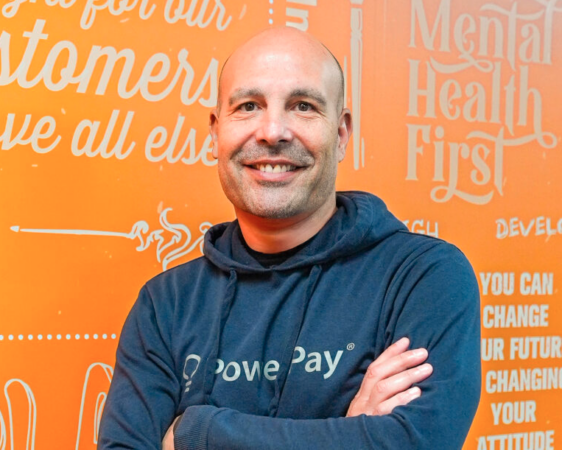
    Founder Mike Petrakis, a native of Northeast Philadelphia and Archbishop Ryan High School graduate, played varsity soccer at Drexel University and briefly went pro in England. He settled in Doylestown and a sales career, which led him to start PowerPay in 2017. Early backers included hoteliers Jay Shah and Eustace Mita.

    He agreed to talk to The Inquirer about his company’s growth and prospects. Questions and answers edited for clarity and brevity.

    What’s the difference between your company and a bank?

    A lot of people think banks are inconvenient. Their loan docs are thirty-some pages. With fintechs, someone applies in seconds, and in milliseconds you can get an offer back.

    We collect thousands of data points — email transmissions, phone checks, geotagging, information in databases that is available. Social media, not so much. We make sure we can recognize the device from which they are putting in the application. We put all this into our models.

    We are onboarding more artificial intelligence. We take a driver’s license and check — does the signature match the customer on the platform? is that image theirs? It is done in an instant.

    Lending has become an automated business. Why do you still do so much business by phone?

    You get a loan with us, you are going to be connected to us for the next 15 years, and we need to be connected to each other. We are deploying digital routing that moves them from an initial inquiry to a specialized team member without the traditional “on hold.” And we have engineers on premise and around the world.

    The goal is to work so hard to get the consumer that we can keep them in perpetuity.

    PowerPay has its headquarters just off U.S. 202 near King of Prussia.
    Since you’re not a bank, how do you fund these loans?

    Credit unions financed our loans early on. Now we have KeyBanc and Capital One and other major lenders.

    We aren’t a bank, so we don’t have the same oversight, and we can move faster. But we work with banks, so our processes are built to be fully compatible with bank regulations. We process half a billion dollars’ worth of loans a month, which is larger than most banks.

    What do you do any better than a bank?

    We just built a new product, PowerPay 360. You pay interest only for 12 months, then interest and principal for 14 years. Leaves a little extra cash in their pocket for a year. We set that up in 30 days.

    Banks are so conservative; for them to build that, with their large, core technology systems, it would take them years to get it into the market. Apple tried to get in the consumer financial business and left within two years.

    We are adding credit card and mortgage products, and healthcare loans, too. We just opened a relationship with U.S. Bank to grow that relationship to half a billion dollars.

    Credit cards have moved from plastic into a whole digital landscape for the consumer. We are making it so [in late 2026] you can tap your smartphone or mobile device at Home Depot and not just buy supplies but also hire your installer or service provider, and get an installment loan to pay for the whole project.

    What else are you preparing to sell?

    We now have an insurance business. We sell credit-default insurance for the benefit of our financial sponsors. Our underwriter is domiciled in the Cayman Islands under their financial regulations. We aggregate the risk into asset-backed securities [and sell loans in risk-based pieces to get higher returns]. We sell those to investors, and the insurance comes off.

    We’re going to grow insurance. Involuntary unemployment, disability, credit, life. We would domicile that in the U.S. We are talking to large insurance carriers we could front for and share the risk.

    How did you get into this business?

    In 2017, I was a national contractor, [helping buyers finance] home generators for Generac, Cummins, Kohler, Briggs & Stratton. You pay $99 a month for 10 years, and we’d get them a loan with Synchrony or GreenSky [two online-lending pioneers].

    Generac came to me and said, how can we make these loans, too? I said start a national call center. It took me six months to find a software platform and a credit union to finance us.

    At first we were just a couple of people, sitting in the Whole Foods beer garden in Plymouth Meeting. We’d have breakfast, then set up our laptops that we bought at Best Buy, initiating loans and writing the code on third-party platforms. Then we grew out of Whole Foods, and we got our first office at the Life Time fitness club in Ardmore.

    We took over an auto-loan platform and converted it to make home-equity loans. We were ready to really build it up, and then Generac backed out.

    So we said, what else can we finance with this? We approached the big home improvement companies, Renewal by Andersen window installations, and others.

    What was it like, launching into the pandemic?

    The home improvement companies were sitting on millions in applications they couldn’t get funded. We underwrote those loans and got them funded, at first, by credit unions.

    We onboarded 100,000 users overnight, and we nearly blew up the software platform we were using. So we built our own, and now we own all our intellectual property.

    We went at first to many credit unions, and they shared participation with other credit unions, but then they would get scared and pull out. We still weren’t big enough for Goldman or JPMorgan. Even the second-tier banks would only lend part of the money. Finally, we found one credit union, Chartway [based in Virginia], they kept the doors open.

    In 2023, we were ready to sell loans in our first securitization. We kept servicing rights. That legitimized us in the eyes of the bankers. Capital One agreed to help us with the securitization.

    There were 50 lawyers involved! We only did a $118 million deal. But we have done much larger ones since, and now I can get it done with a lawyer on each side in a couple of days. We underwrite the loans, we insure them, and then we sell them, de-risking.

    It becomes a cost-of-funds game — the lower the cost, the less onerous the rates we can offer consumers.

    We can drive billions more through this platform.

  • Trump’s chaotic governing style is hurting the value of the U.S. dollar

    Trump’s chaotic governing style is hurting the value of the U.S. dollar

    Fallout from the recent Greenland crisis clipped the U.S. dollar, aggravating a yearlong decline that has shaved more than 10% off the greenback’s value since President Donald Trump returned to the White House.

    The dollar is under pressure on multiple fronts. After a long period of U.S. financial market outperformance, many foreign investors are rebalancing their portfolios to reduce excessive exposure to the United States and to capitalize on improving prospects elsewhere. Washington’s failure to address its mounting public debt, including crisis-level annual budget deficits at a time of low unemployment, isn’t helping.

    But perhaps the key to the dollar’s drop is the ripple effect of the president’s erratic policymaking, including abrupt stops and starts with tariffs and military action against a lengthening list of countries. After more than a year of nonstop upheaval emanating from the White House, many foreign investment managers are exhausted.

    “There is a visceral dislike of this kind of policy chaos,” said economist Robin Brooks, a senior fellow at the Brookings Institution. “I think the dollar will fall around 10% [more] this year.”

    One sign of the dollar’s ebbing appeal has been a staggering surge in gold prices, up almost 80% over the past year.

    At the end of January, the dollar rallied — and gold sank — on news that Trump had nominated Kevin Warsh, a former Federal Reserve governor, to be the next chairman of the nation’s central bank.

    But the broader trend of dollar weakness remains in place, several economists and money managers said. The president has pushed repeatedly for the Fed to cut its benchmark 3.75% interest rate to levels far below what mainstream economists say is appropriate, which would be likely to further erode the dollar’s standing.

    “We should have the lowest interest rate anywhere in the world. They should be two points and even three points lower,” the president said on Thursday during a Cabinet meeting.

    The Fed’s policymaking committee left rates unchanged at their January meeting. But financial markets expect cuts to resume in June.

    A weaker dollar will help U.S. exporters by making their products more affordable for foreign customers while boosting companies that earn profits abroad and convert them into dollars. A sagging greenback also should aid the president’s efforts to shrink the trade deficit and attract foreign capital to spur U.S. reindustrialization.

    But by raising the cost of imported goods such as furniture, computers, cars, appliances, and clothing, a softer dollar could hamper the fight to cool inflation. That would be bad news for the president, already struggling to address voter concerns over the cost of living with the midterm congressional elections little more than nine months away.

    The president and his aides have sent mixed signals about the trend. Recently, Trump brushed off currency concerns, telling reporters in Iowa that the dollar “was doing great.” After traders responded by driving it lower, Treasury Secretary Scott Bessent reaffirmed the traditional U.S. stance in favor of a “strong dollar.”

    Doubts about Trump’s position have swirled since the 2024 election. A widely-read paper by Stephen Miran, a Trump economic adviser the president later named to a Fed position, argued for a weaker dollar to help rebalance the global trading system. With a nod to the president’s Florida resort, Miran christened the proposed arrangement “the Mar-a-Lago accord.”

    No such agreement has emerged. But the dollar showed pronounced weakness on two occasions following major Trump initiatives.

    After Trump’s announcement of historic global tariffs last April, U.S. stocks, bonds, and the dollar all sank in an unusual trifecta. While stocks and bonds recovered, the dollar remained depressed — the opposite of what typically happens when a nation imposes new import taxes.

    Some analysts diagnosed a widespread “Sell America” trade sweeping financial markets. Bessent scoffed, and many analysts now acknowledge that assessment was overstated. The S&P 500 index hit an all-time high recently, which hardly supports the idea of a flight from U.S. assets.

    If foreign investors did not abandon the dollar, they did become less confident in it, a change of sentiment that appeared through increased demand for hedges against their currency exposure.

    For a foreign investor, changes in currency values are as important as movements in asset prices.

    If the dollar falls while a foreigner holds U.S. stocks or bonds, their investment gains can be eroded or eliminated. Foreign investors can protect themselves against that risk by effectively selling dollars and buying their home currency, a practice called hedging.

    When the dollar fell after Trump’s tariff announcements, unhedged investors suffered big losses and some began hedging to mitigate the damage. Those transactions served to encourage the dollar decline, according to a detailed June 2025 analysis by economists with the Bank for International Settlements.

    “Global investors have changed their behavior. Even when they want exposure to the U.S. stock market, they now feel that they have to hedge the currency,” said Dario Perkins, an economist with TS Lombard in London.

    Another headwind facing the dollar is the growing attractiveness of financial markets outside the U.S. For years, global investors poured funds into the U.S., drawn by available returns that were larger than in other markets.

    That’s no longer true. The S&P 500’s 14% return over the past year was dwarfed by gains on exchanges in London, Tokyo, Hong Kong, and Toronto. Brazilian stocks are up 44% since this time last year.

    The latest gauges of economic activity also show other economies stirring. Both the United Kingdom and Japan are growing at least as quickly as the U.S., according to January’s flash PMI surveys.

    The uptick in activity is driving up the price of industrial metals. Zinc is up 30% since mid-2025 and iron ore is up 11%.

    “There was this era of U.S. exceptionalism where the U.S. was significantly outperforming the rest of the world. And now we’re seeing more of a broad base. Global growth is picking up,” said Priya Misra, portfolio manager of JPMorgan’s core-plus bond fund.

    Even after its recent decline, the dollar is about as strong, adjusted for inflation, as it was three years ago and remains at a level some analysts call “overvalued.” Many analysts expect a further decline this year. But there seems little reason to anticipate a full-fledged rout.

    In a statement, Joseph Lavorgna, a counselor to the treasury secretary, described the dollar’s dip as unremarkable. The inflation-adjusted dollar “remains higher today than it was during President Trump’s first term, and it is overall at one of its highest levels in the last several decades,” he said.

    Even as foreign investors edge away from the geopolitical chaos enveloping the dollar, it remains the global reserve currency. No viable alternative exists. Global central banks hold more than $7.4 trillion in U.S. currency, by far their largest single holding.

    The U.S. also boasts the largest and most liquid financial markets. Its leading position in artificial intelligence makes it an essential destination, even for investors who are skeptical of Trump’s governing style.

    “The U.S. economy is one of the strongest, most dynamic in the world. Investors should be careful about declaring the dollar is dead,” said Daniel Ivascyn, chief investment officer for Pimco in Newport Beach, Calif.

    Foreign central banks also would be expected to push back against any rapid dollar plunge, according to economists at Bank of America. The flip side of a sinking dollar, by definition, is the appreciation of other currencies, a particular problem for exporting nations and a “recessionary shock” for the world outside the U.S., they said in a client note recently.

    One wild card is the situation in Japan, where a long era of ultralow borrowing costs appears to have ended. That suggests the Japanese economy may have decisively emerged from its long-term funk. But rising interest rates threaten a popular strategy long used by global investors.

    When Japanese interest rates hovered near zero, global investors could borrow yen cheaply and then invest it in U.S. and other markets, earning sizable returns via a strategy known as the “carry trade.”

    Japanese investors hold nearly $5 trillion in overseas securities, with most of that amount in the U.S. With the gap narrowing between yields in Japan and those in other developed markets, some analysts expect Japanese investors to bring a portion of that money home.

    Last week, Michael Burry, the famed investor known for “The Big Short,” posted several Japanese financial charts on X under the terse heading: “Repatriation pending.”

    So far, there has been no sign of any Japanese exit, and some analysts think the concern is overblown.

    “Japanese interest rates have been going up for some time now, and I’m not seeing any evidence that the Japanese are keeping their money at home,” said Marc Chandler, chief market strategist at Bannockburn Capital Markets in New York.

    If that changes, it would only add to the downdrafts buffeting the dollar.

  • Washington Post publisher Will Lewis says he’s stepping down, days after big layoffs at the paper

    Washington Post publisher Will Lewis says he’s stepping down, days after big layoffs at the paper

    Washington Post publisher Will Lewis said Saturday that he’s stepping down, ending a troubled tenure three days after the newspaper said that it was laying off one-third of its staff.

    Lewis announced his departure in a two-paragraph email to the newspaper’s staff, saying that after two years of transformation, “now is the right time for me to step aside.” The Post’s chief financial officer, Jeff D’Onofrio, was appointed temporary publisher.

    Neither Lewis nor the newspaper’s billionaire owner, Jeff Bezos, participated in the meeting with staff members announcing the layoffs on Wednesday. While anticipated, the cutbacks were deeper than expected, resulting in the shutdown of the Post’s renowned sports section, the elimination of its photography staff, and sharp reductions in personnel responsible for coverage of metropolitan Washington and overseas.

    They came on top of widespread talent defections in recent years at the newspaper, which lost tens of thousands of subscribers following Bezos’ order late in the 2024 presidential campaign pulling back from a planned endorsement of Kamala Harris, and a subsequent reorienting of its opinion section in a more conservative direction.

    Martin Baron, the Post’s first editor under Bezos, condemned his former boss last week for attempting to curry favor with President Donald Trump and called what has happened at the newspaper “a case study in near-instant, self-inflicted brand destruction.”

    The British-born Lewis was a former top executive at the Wall Street Journal before taking over at the Post in January 2024. His tenure has been rocky from the start, marked by layoffs and a failed reorganization plan that led to the departure of former top editor Sally Buzbee.

    His initial choice to take over for Buzbee, Robert Winnett, withdrew from the job after ethical questions were raised about both he and Lewis’ actions while working in England. They include paying for information that produced major stories, actions that would be considered unethical in American journalism. The current executive editor, Matt Murray, took over shortly thereafter.

    Lewis didn’t endear himself to Washington Post journalists with blunt talk about their work, at one point saying in a staff meeting that they needed to make changes because not enough people were reading their work.

    This week’s layoffs have led to some calls for Bezos to either increase his investment in the Post or sell it to someone who will take a more active role. Lewis, in his note, praised Bezos: “The institution could not have had a better owner,” he said.

    “During my tenure, difficult decisions have been taken in order to ensure the sustainable future of The Post so it can for many years ahead publish high-quality nonpartisan news to millions of customers each day,” Lewis said.

    The Washington Post Guild, the union representing staff members, called Lewis’ exit long overdue.

    “His legacy will be the attempted destruction of a great American journalism institution,” the Guild said in a statement. “But it’s not too late to save The Post. Jeff Bezos must immediately rescind these layoffs or sell the paper to someone willing to invest in its future.”

    Bezos did not mention Lewis in a statement saying D’Onofrio and his team are positioned to lead the Post into “an exciting and thriving next chapter.”

    “The Post has an essential journalistic mission and an extraordinary opportunity,” Bezos said. “Each and every day our readers give us a roadmap to success. The data tells us what is valuable and where to focus.”

    D’Onofrio, who joined the paper last June after jobs at the digital ad management company Raptive, Google, Zagat, and Major League Baseball, said in a note to staff that “we are ending a hard week of change with more change.

    “This is a challenging time across all media organizations, and The Post is unfortunately no exception,” he wrote. “I’ve had the privilege of helping chart the course of disrupters and cultural stalwarts alike. All faced economic headwinds in changing industry landscapes, and we rose to meet those moments. I have no doubt we will do just that, together.”