Major changes are coming to the Rittenhouse Hotel on Rittenhouse Square, as the Italian restaurant Scarpetta will leave the bilevel space next weekend after nearly a decade to set the stage for a posh new steakhouse called the Ruxton, from Baltimore-based Atlas Restaurant Group.
Alex Smith, Atlas’ president and chief executive, told The Inquirer that the Ruxton, a sibling of the location in Baltimore’s Harbor East, would open in spring 2027. This will be the second Philadelphia restaurant for Atlas, which opened the high-end Loch Bar at Broad and Spruce Streets in fall 2023.
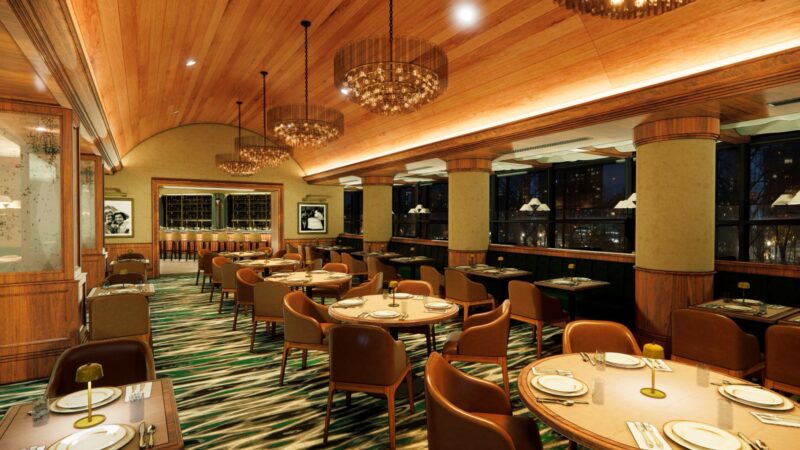
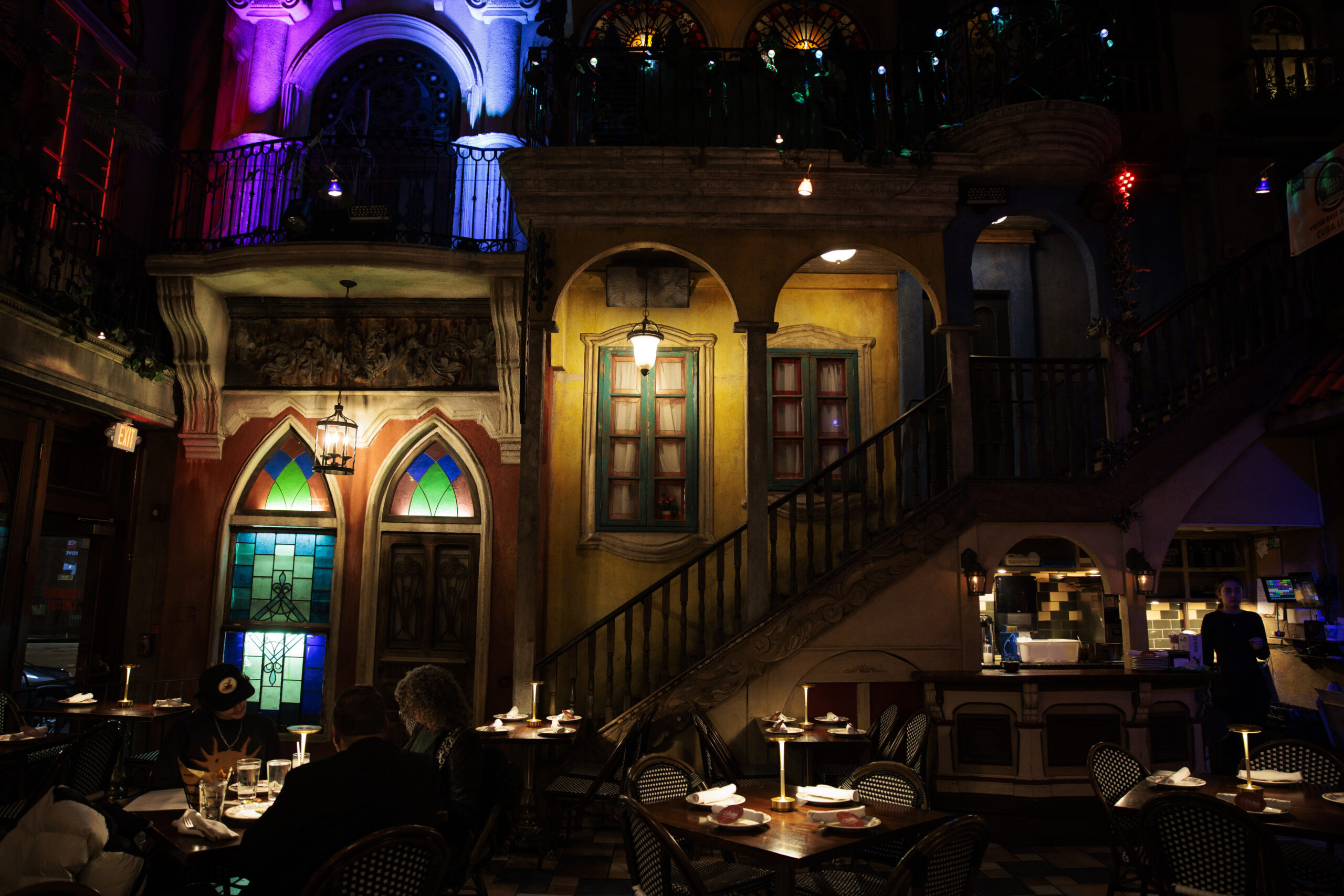
A rendering of the second-floor dining room of the Ruxton at Rittenhouse Hotel.
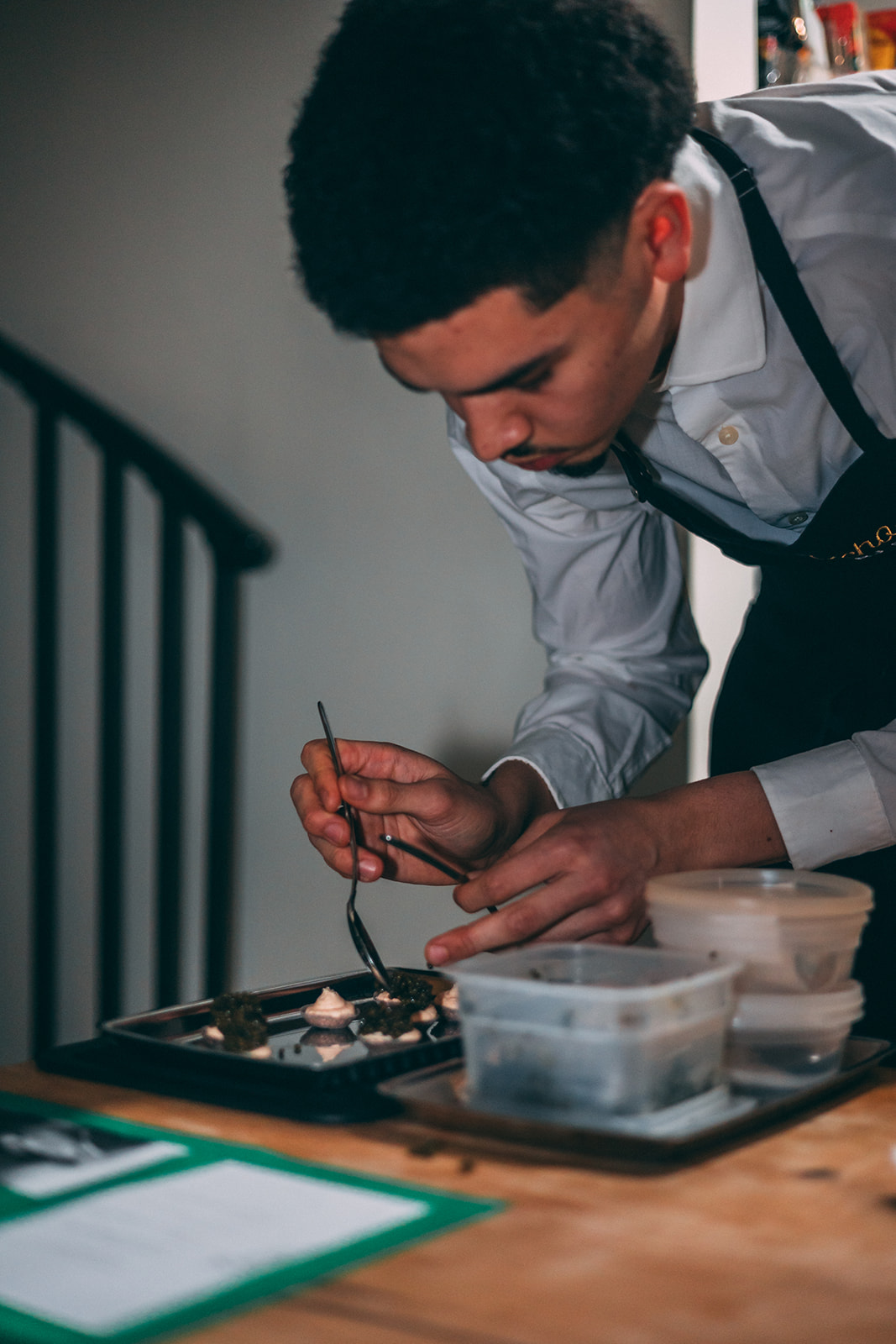
But before renovations for the Ruxton begin, the Rittenhouse space will host a residency from up-and-coming chef RJ Smith, 21, who launched Ocho Supper Club last year in his Drexel University apartment to showcase Afro-Caribbean cuisine through a fine-dining lens.
RJ Smith, no relation to Atlas’ president, said he has scheduled the first seating for his eight-course tasting menus for Feb. 1 and plans to offer them through July 26; the schedule has not been formally set but includes Valentine’s Day.
RJ Smith, culinary student and executive chef of Ocho Supper Club.
Scarpetta, owned by LDV Hospitality, has set its final service for Jan. 31. Scarpetta opened in 2016, filling the space previously occupied by Smith & Wollensky, also a steakhouse. Lacroix, the Rittenhouse Hotel’s signature restaurant, is unaffected by the changes.
Construction is expected to start in late summer for the Ruxton, whose deal has been in the works for nearly a year. Alex Smith said the Ruxton will occupy more space at the Rittenhouse — allowing for a total of 220 seats, vs. Scarpetta’s 120.
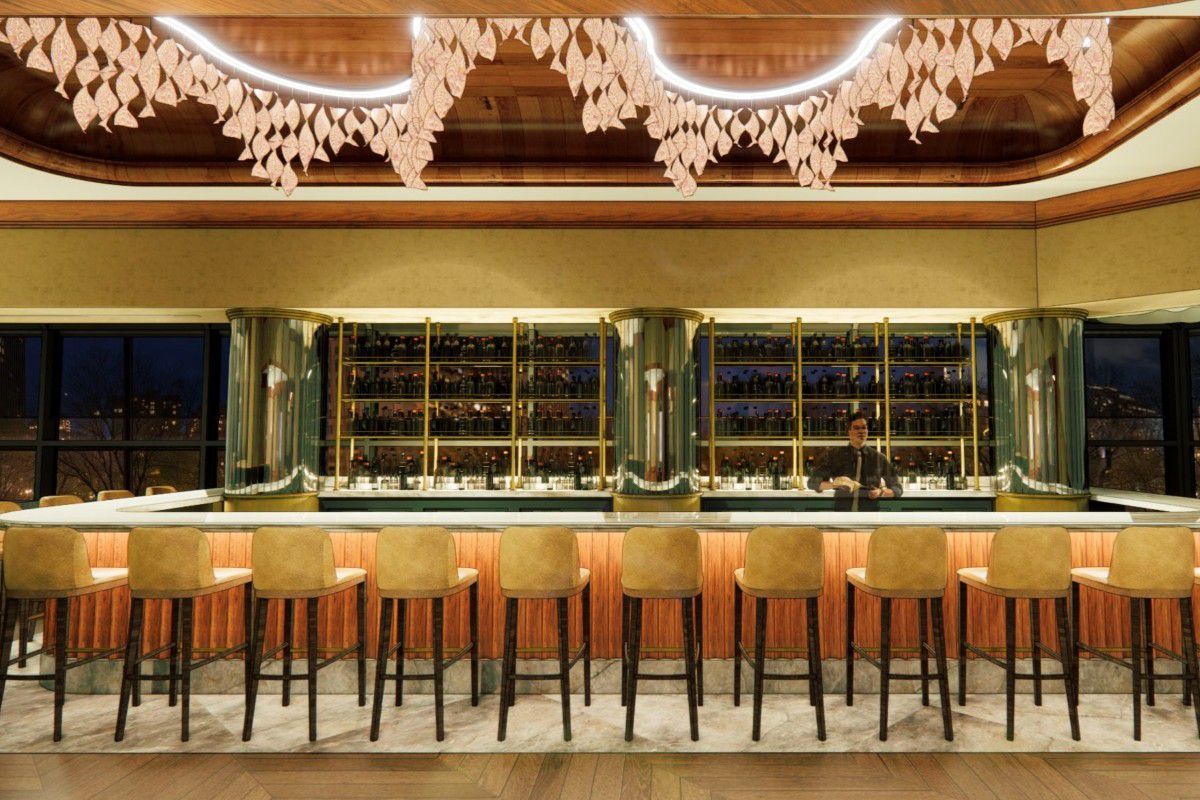
The Ruxton, offering Rittenhouse Square views from its second floor, will have three private dining rooms and a 50-seat outdoor space on the deck. The restaurant’s entrance will be moved next to the hotel lobby, and there will also be an interior entrance through the hotel lobby.
Designer Patrick Sutton is channeling inspiration from the Jazz Age, with highlights including velvet upholstery, walnut wood millwork, and custom Murano-style glass chandeliers. Corporate chef Aaron Taylor will oversee the steak and seafood menu.
The Philadelphia location will be Atlas’ third Ruxton location; the second is due to open this fall in National Harbor in Maryland, outside of Washington, D.C.
“We love Philly,” Smith told The Inquirer, adding that Loch Bar’s numbers are strong. “It’s a great town. In some ways, it reminds me of Baltimore — just much bigger. And we’re planning on doing more in Philadelphia.” He said developer Carl Dranoff, his partner at Loch Bar, would be involved in the Ruxton.
Cole Hernandez, a Rittenhouse Hotel spokesperson, said that the Scarpetta space, in the short term, would also be used by Lacroix chef Eric Leveillee to host groups, do cooking and mixology classes, and other programming.
In addition, the hotel’s Library Bar continues to rework its cocktails in collaboration with James Beard Award winner Danny Childs. A fresh drinks menu will launch in February.
“Where we’re ultimately heading is a broader shift across the property,” Hernandez said. “The Philadelphia dining scene is changing — it’s more vibrant, more interesting, and less formal and stuffy. We’re evolving our concepts to be more relevant to today’s diner.
At Lacroix, service standards have been modified to allow for more approachable, 90-minute dinners and “more dynamic and social” brunches that include à la carte options.
Tyler Gerber loved growing up in Medford in the 1990s and early ’00s. But for all its suburban charm, “Medford didn’t really have a lot of places people could attach themselves to and be proud of,” he said.
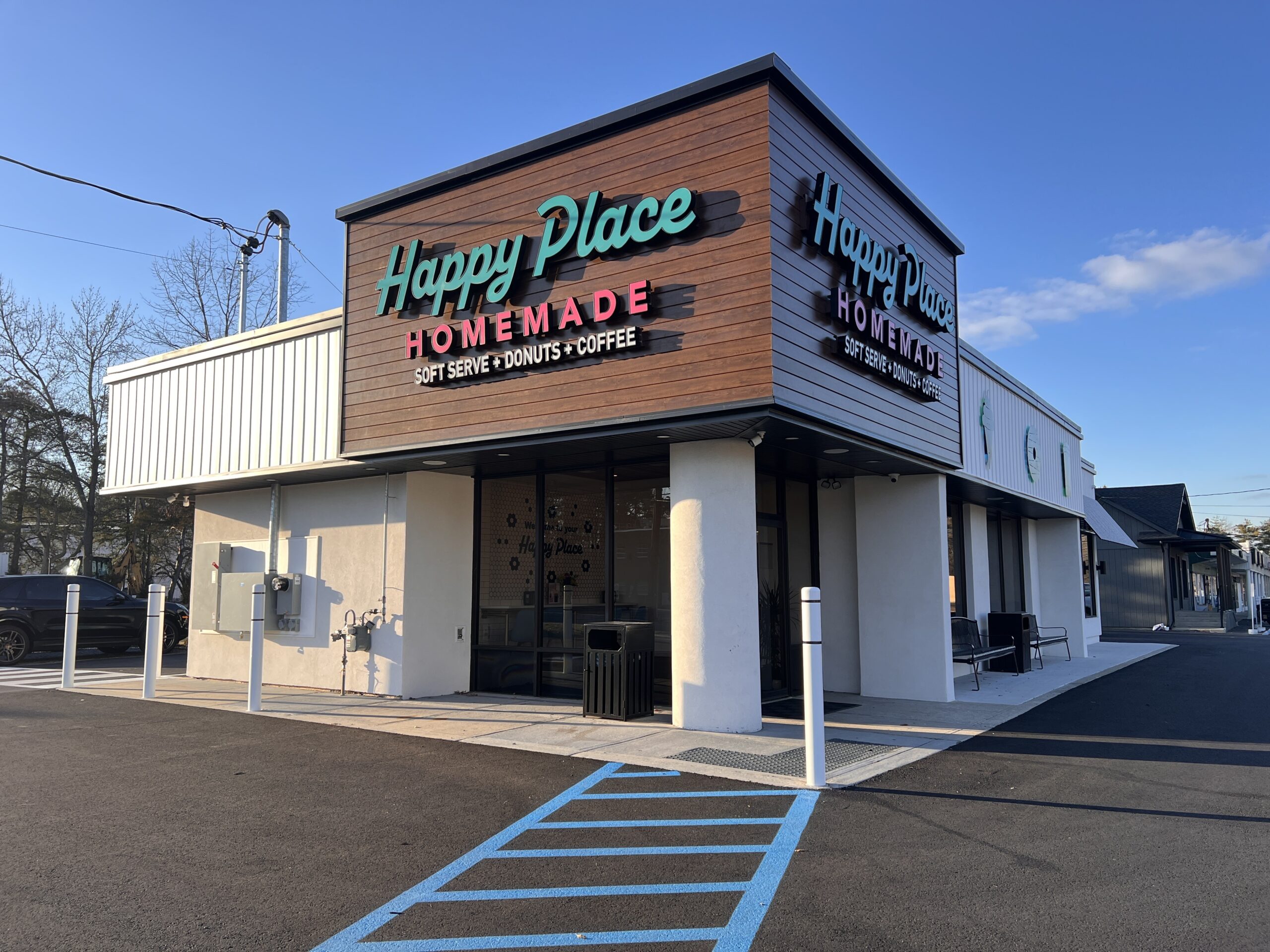
On Jan. 23, Gerber, 32, marks the grand opening of Happy Place Homemade, a bright, modern shop designed around the daily rhythms of the Burlington County town. Set up in a former Bank of America branch on Route 70 — including the drive-through — it serves coffee and scratch-made doughnuts in the morning, and adds soft serve and shakes in the afternoon and evening. There’s seating in booths along the front windows.
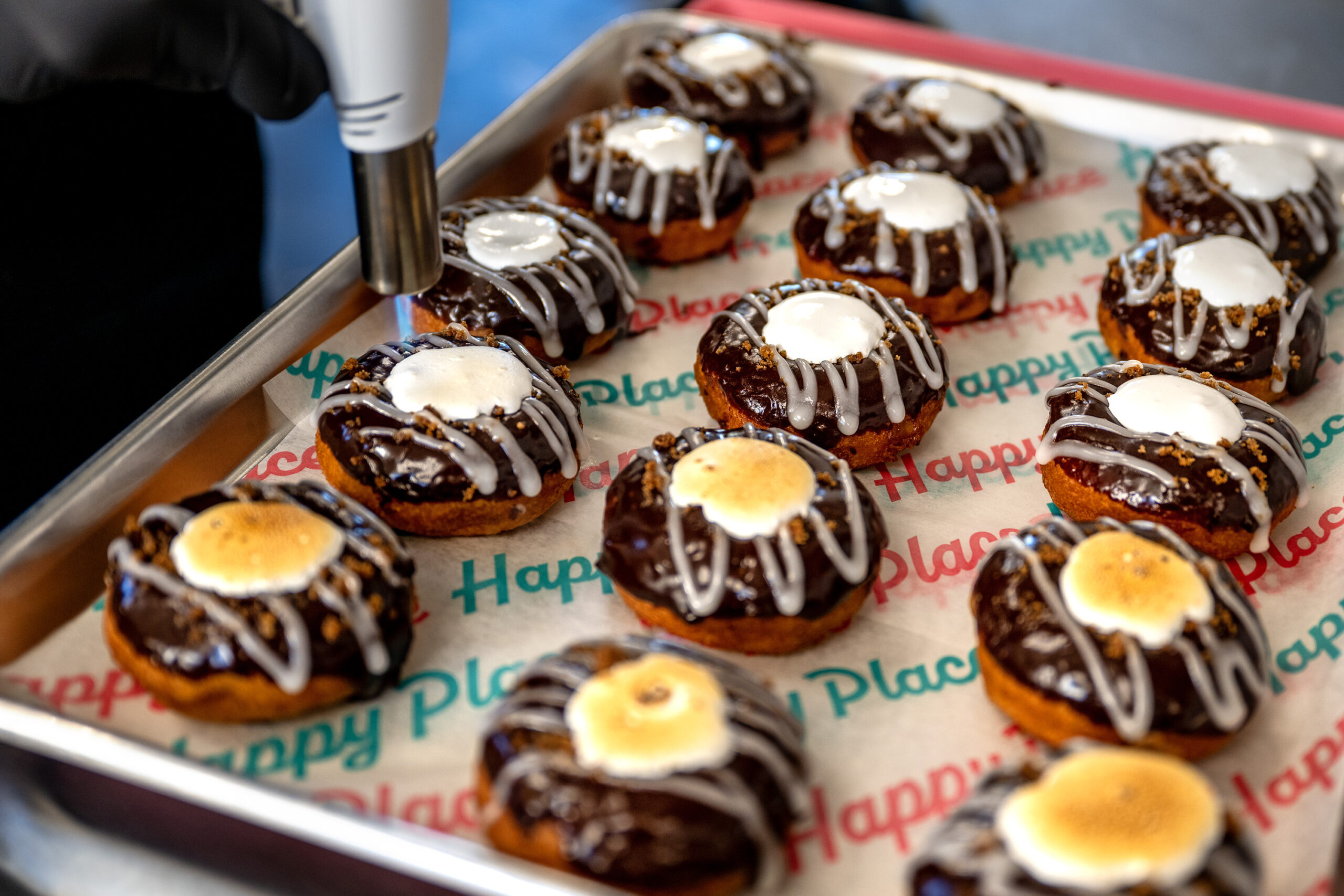
A torch is used to toast the marshmallow atop the s’mores doughnuts at Happy Place Homemade.
“We’re trying to create a fun, unique experience for the town,” said Gerber, who moved to Philadelphia after his Shawnee High graduation to study entrepreneurship and financial planning at St. Joseph’s University.
Combining seemingly disparate food product lines — Federal Donuts & Chicken comes to mind — is not new. “But it hasn’t been done around here,” Gerber said. “We call it ‘new nostalgia.’ We want to build a place people remember — a spot they come back to 10 or 20 years from now and say, ‘Oh, my God, Happy Place.’”
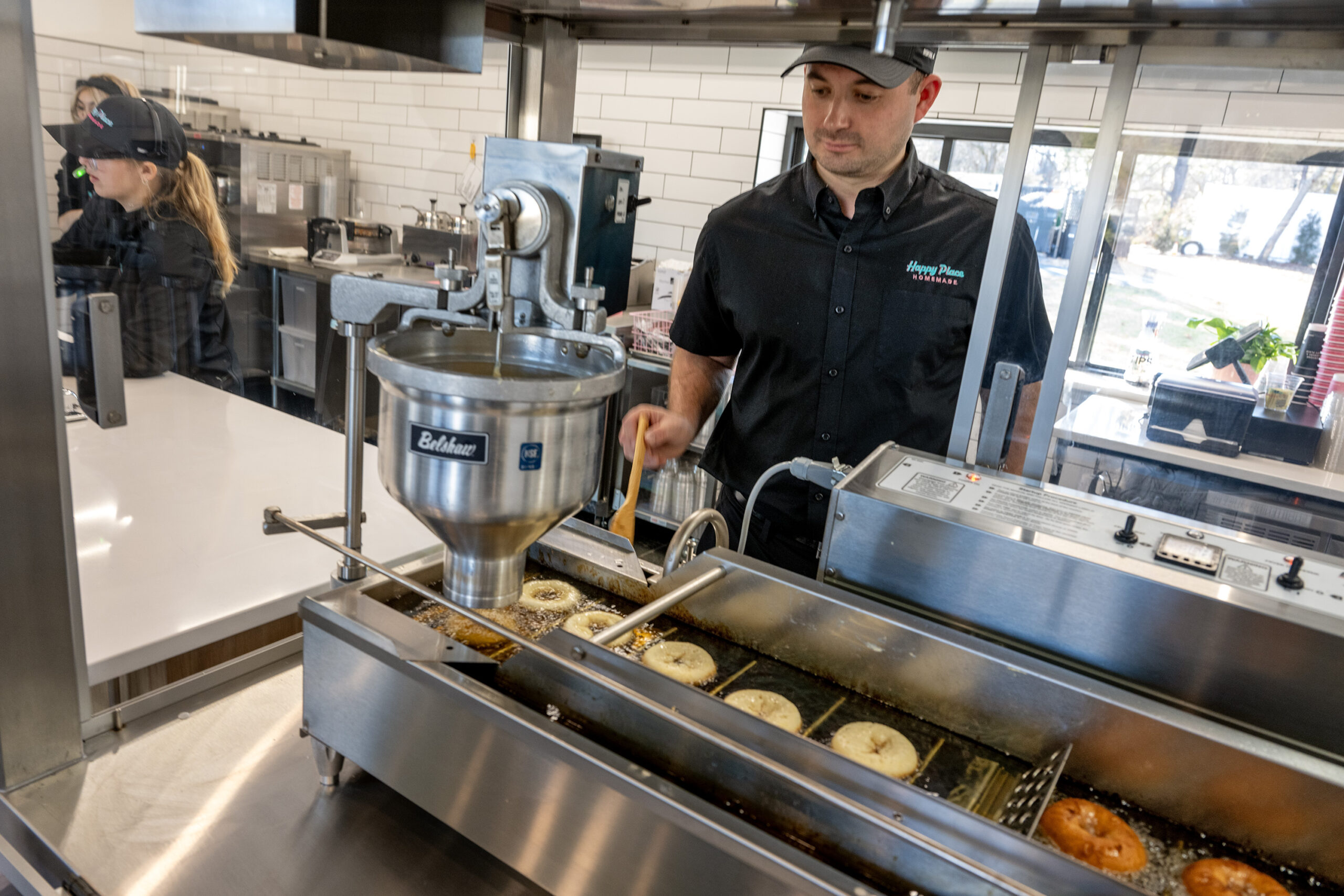
Tyler Gerber talks makes doughnuts at Happy Place Homemade in Medford.
At first, Gerber said, “we were going to be a straight soft-serve shop. But the challenge around here is that most ice cream places aren’t open year-round. We wanted to build something that could be sustainable all year, so we started thinking about what paired naturally with soft serve. Hot and cold just makes sense. That’s where doughnuts come in.”
And where there are doughnuts, there is drip coffee — in this case, from La Colombe. Gerber makes his own syrups to flavor coffee drinks and soft serve.
Gerber bought a country-fair-style Belshaw cake-doughnut machine with a glass front to let customers watch the process from the first drop of batter to the roll-out of the finished doughnut. Batter is mixed in-house and temperature-controlled before being fried, cooled, glazed while warm, and displayed in the nearby case.
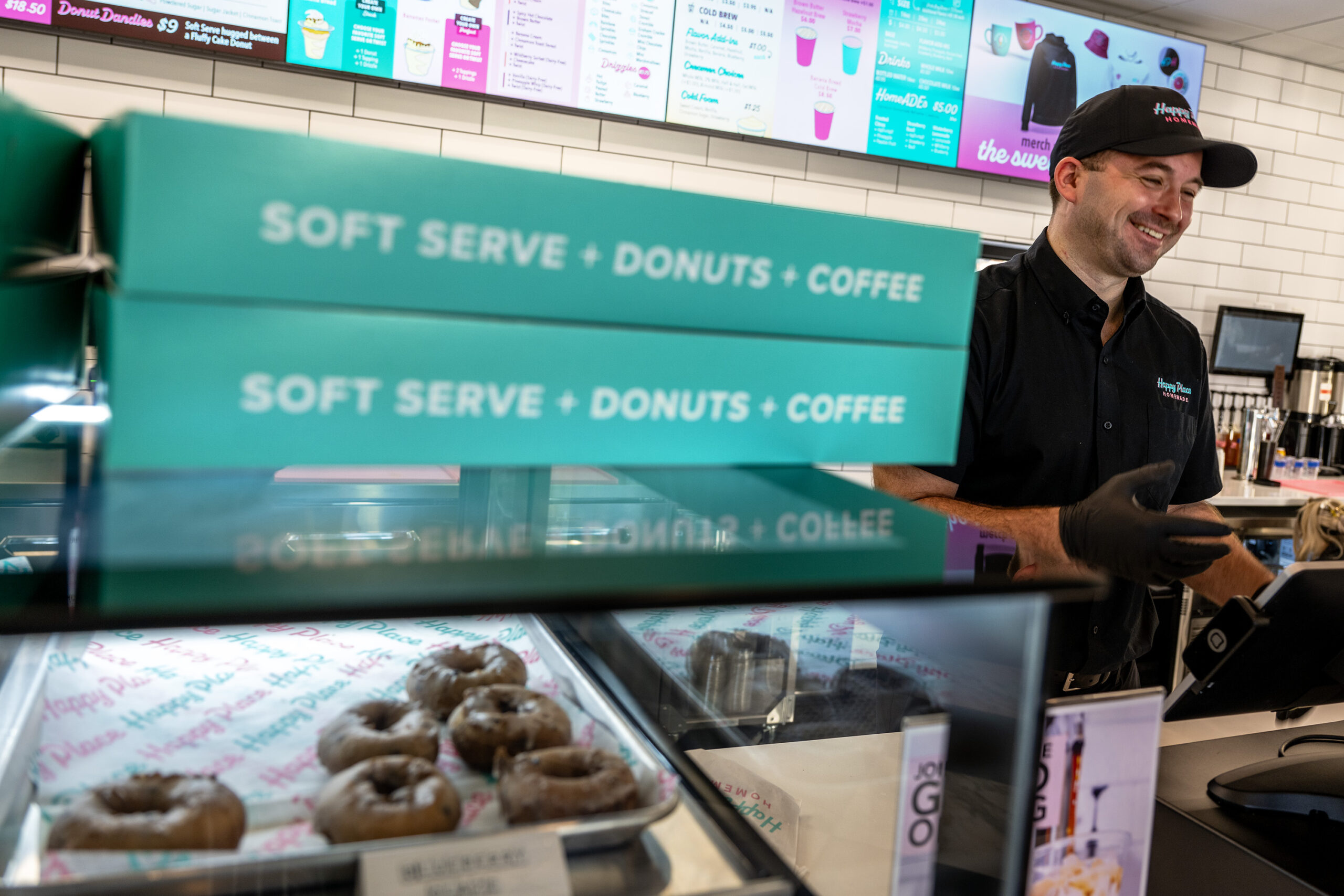
Tyler Gerber works the counter at Happy Place Homemade in Medford.
The soft serve is spun into a dense, low-air product that tastes creamier than even most ice cream, even though at 9% butterfat it is not “ice cream” by industry standards.
“We aim for about 40% overrun,” he said, referring to the percentage of air whipped into the mix during freezing. (Super-premium ice creams’ overruns are about 50% and lower, while premium brands range between 60% and 90%.)
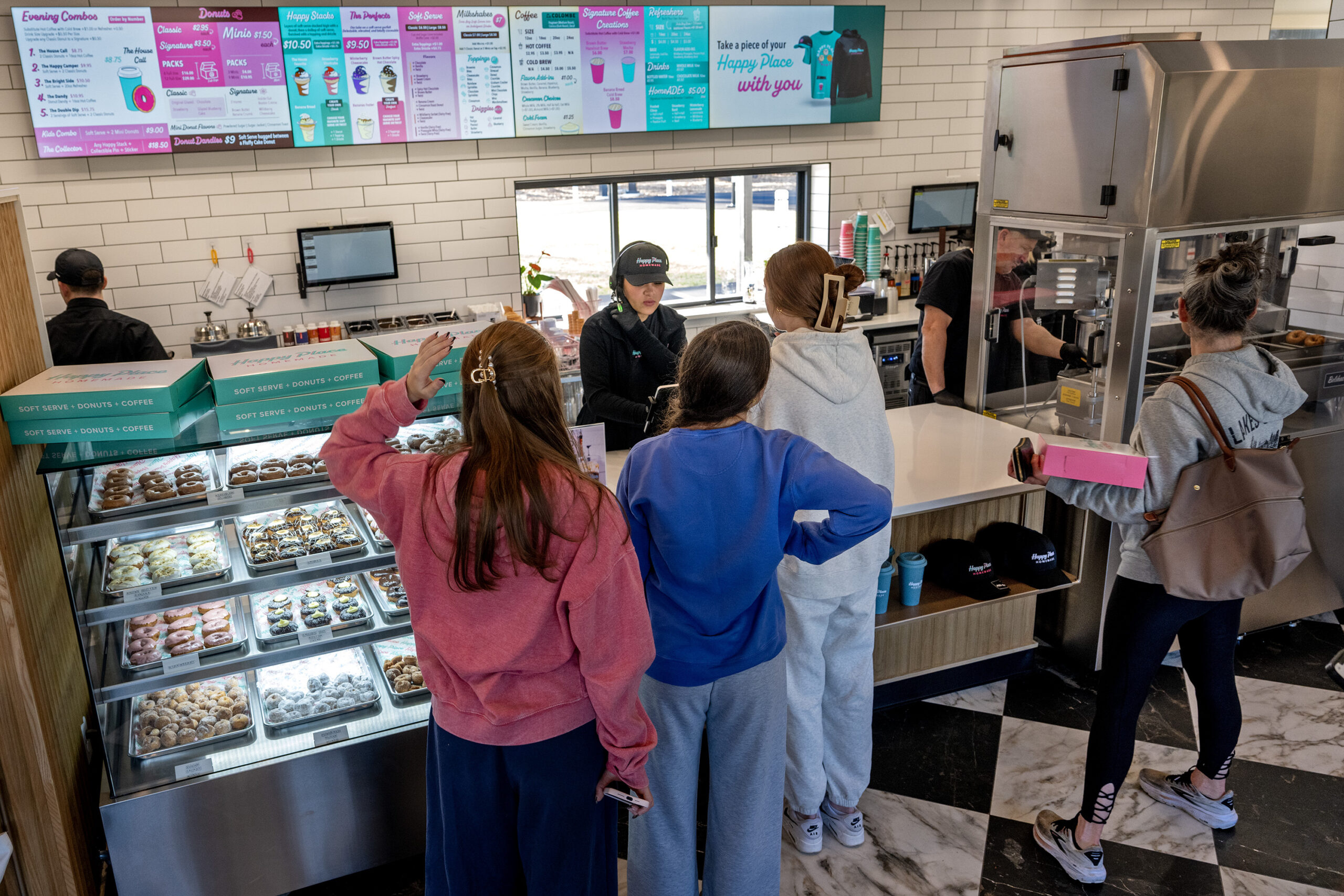
Chase Horton serves customers at Happy Place Homemade in Medford.
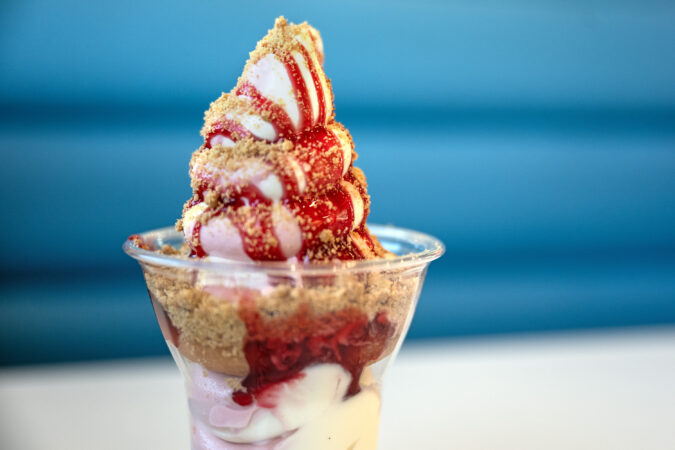
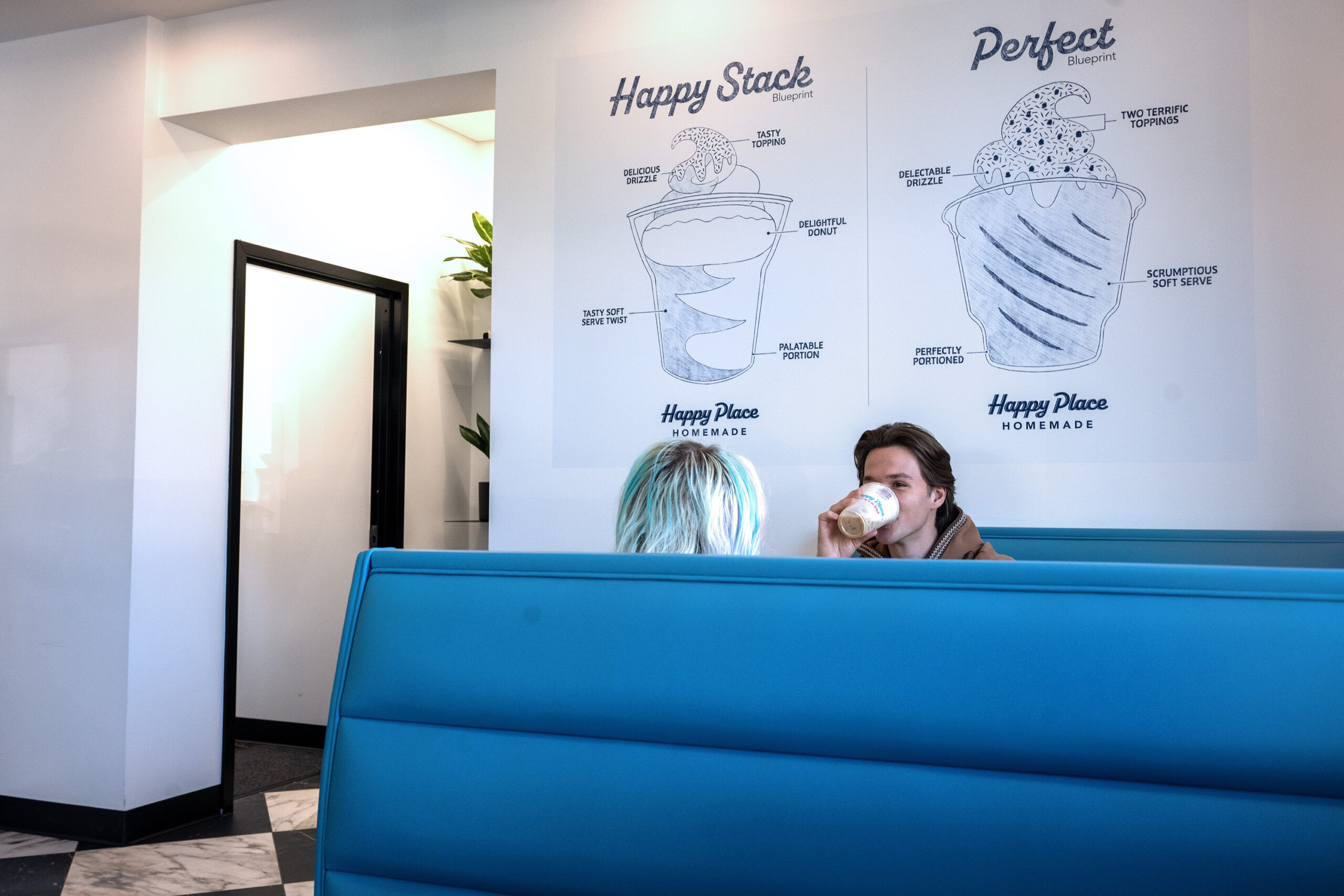
The doughnut-and-ice cream combination led to one of the shop’s signature creations: Happy Stacks — a doughnut sandwiched by soft serve, served in a cup, with toppings and a syrup drizzle.
There are also soft-serve parfaits (“Perfects,” he calls them), doughnut soft-serve sandwiches (“Donut Dandies”), and nondairy, fruit-based iced drinks (“HomeADE”).
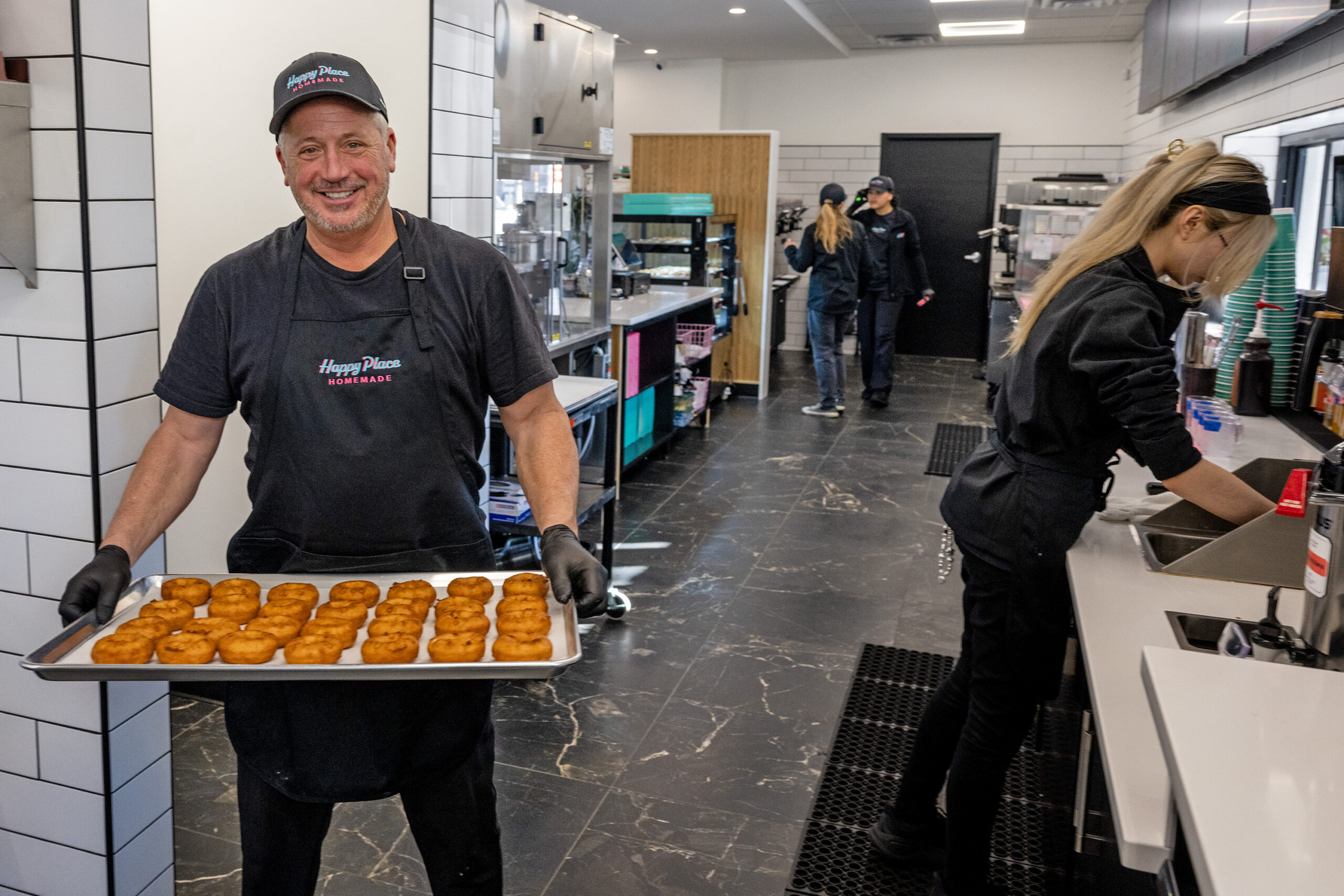
Tyler Gerber’s father, Larry Gerber, totes a tray of doughnuts at Happy Place Homemade.
Although Gerber doesn’t come from a traditional restaurant background, he says his strength is creation. “I love to cook. I’ve been experimenting my whole life,” he said.
“He goes 100% into everything,” said his father, Larry, who sold his concrete business several years ago and is helping him with the business. “Sports, school, business — he’s a perfectionist. This whole concept came out of his imagination.”
Lilli Schoener (left) and Justice Wunsch have a snack at Happy Place Homemade.
Tyler Gerber said he was making a long-term bet on his hometown.
“We’re not just popping up,” he said. “We’re building a brand. We’re building an experience. And hopefully, we’re building something that Medford can call its own.”
Happy Place Homemade, 690 Stokes Rd., Medford, N.J., 609-969-9650, happyplacehomemade.com. Hours are 7 a.m. to 9 p.m. Wednesday through Monday, closed Tuesday.
Happy Place Homemade at 690 Stokes Rd, Medford on Jan. 15, 2026.
Frank P. Olivieri, 87 — whose uncle and father invented the steak sandwich and who ran the landmark Pat’s King of Steaks for nearly four decades — died Sunday, Jan. 18. He had been under care for dementia, said his son, Frank E. Olivieri, who has run the shop since his father’s 1996 retirement.
Though the Olivieri name spread through Philadelphia over the years through various shops, Mr. Olivieri spent his entire working life at the intersection of Ninth, Wharton, and Passyunk in South Philadelphia. “I’m on my own little island,” he told The Inquirer in 1982.
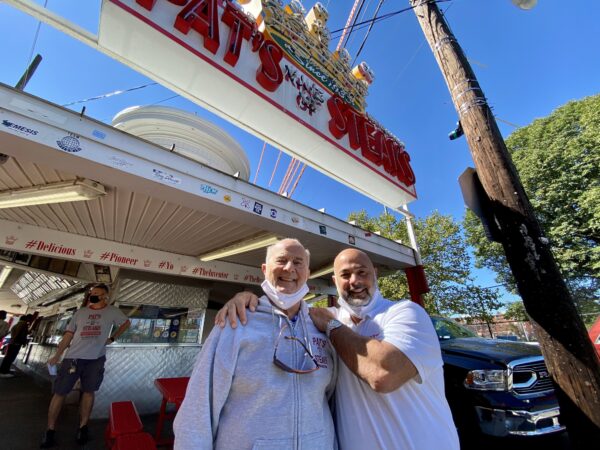
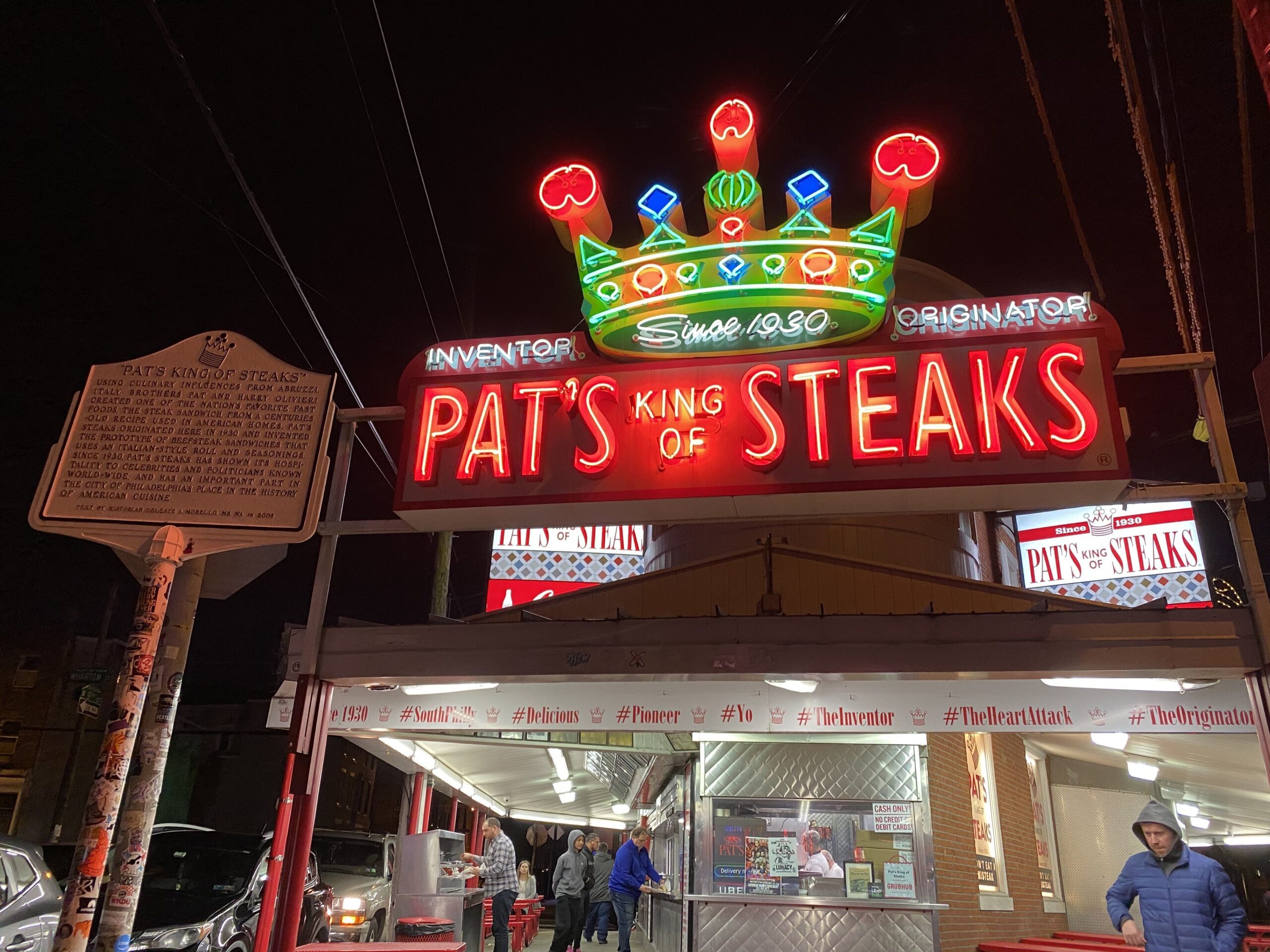
Pat’s King of Steaks, at Ninth Street, Wharton Street, and Passyunk Avenue, in 2020.
The legend began in 1930 (in some accounts 1932) when Mr. Olivieri’s father, Harry, and his uncle, Pasquale “Pat” Olivieri, started selling hot dogs for a nickel at that corner. (Pat, the elder, got the naming rights.) One day, as the story goes, they got tired of eating hot dogs and bought a loaf of Italian bread and some steaks, sliced them up, and put them on the grill. (Cheesesteaks came along in 1951.) Curious cabdrivers begged for the sandwiches. “Pretty soon, they forgot all about the hot dogs and did nothing but steaks,” Mr. Olivieri told The Inquirer in 1982.
Mr. Olivieri told The Inquirer that he started working at the stand at age 11, selling watermelon and corn on the cob out front. He turned down the opportunity to go to the University of Pennsylvania to become an attorney, and chose to go into the family business, his son said.
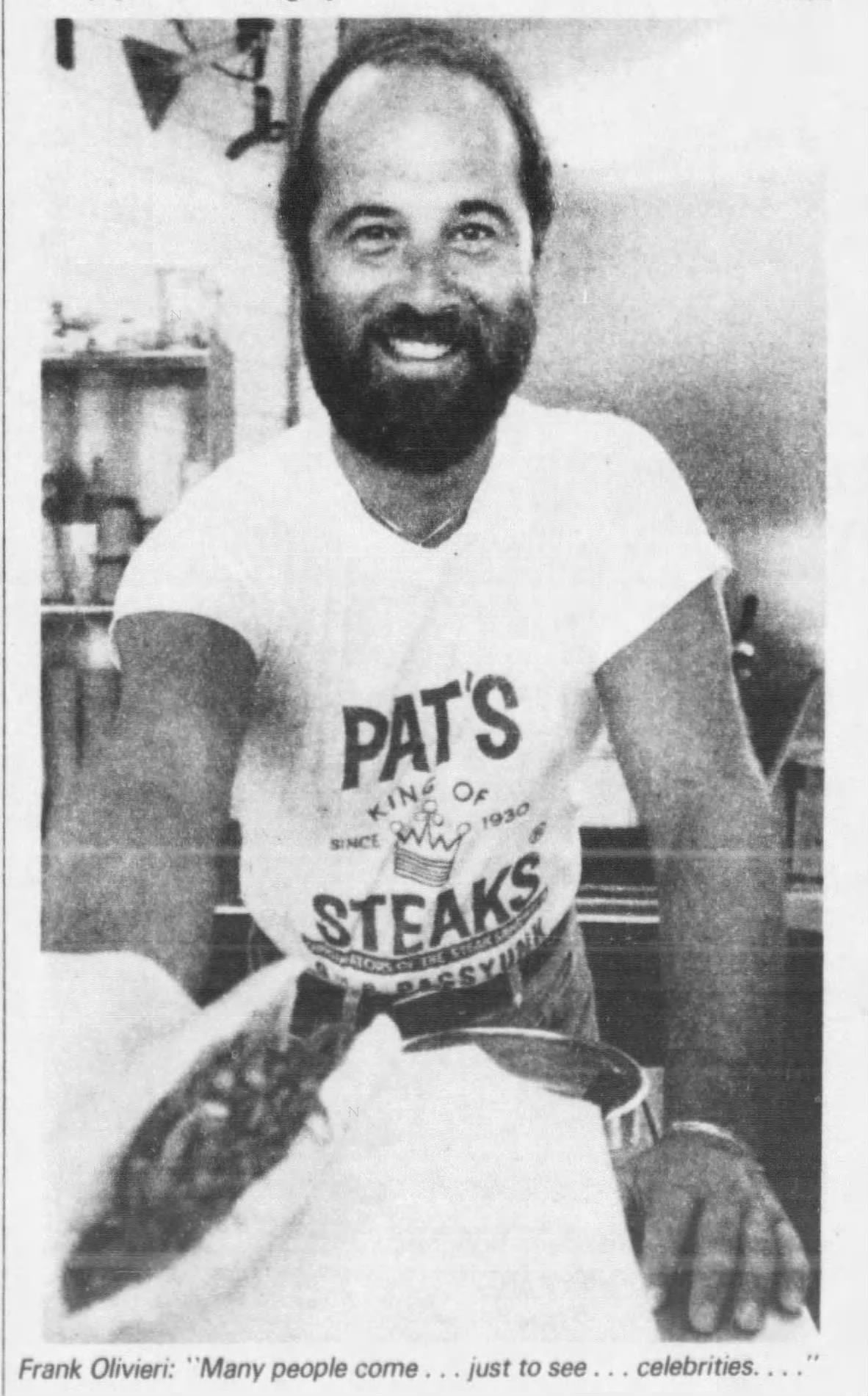
Frank Olivieri working the grill at Pat’s King of Steaks in 1980.
Pat Olivieri moved to California in the 1960s; he died in 1970. In 1967, father and son Harry and Frank Olivieri bought the original stand, while Pat’s son Herb obtained licensing and franchising rights to the name.
Herb Olivieri opened Olivieri’s Prince of Steaks in Reading Terminal Market in 1982 and later ran a Pat’s location in Northeast Philadelphia (unaffiliated with the original). Herb’s son Rick owned sandwich shops, including the reflagged Rick’s Steaks at Reading Terminal, as well as stands at the Bellevue and Liberty Place food courts.
Pat’s, meanwhile, had become a 24-hour destination. Limos and tour buses, then as now, roll up at all hours.
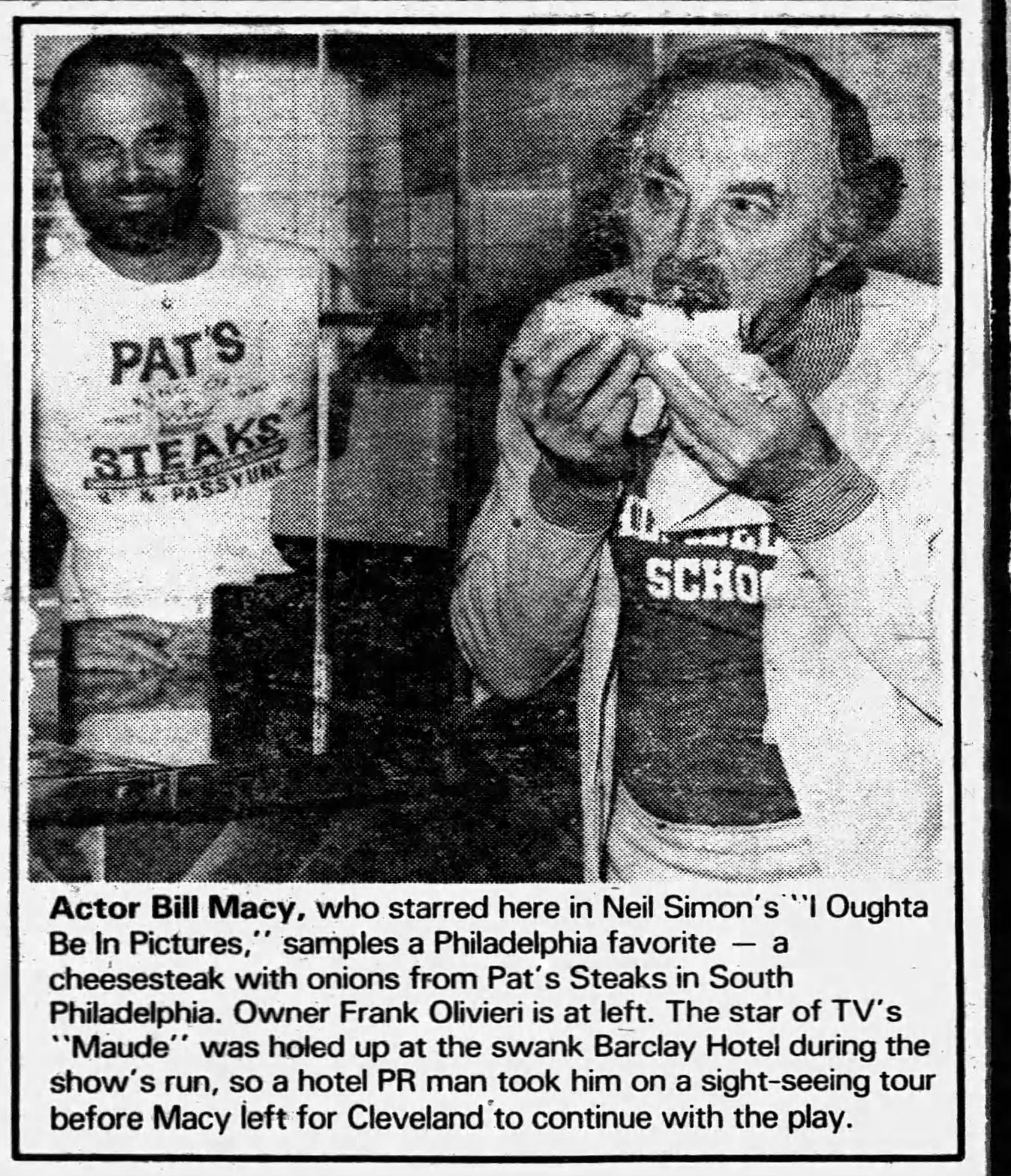
Frank Olivieri (left) watching actor Bill Macy eating a cheesesteak from Pat’s King of Steaks in 1981. Macy was touring Philadelphia sites while starring at the Forrest Theater in a pre-Broadway run of “I Oughta Be in Pictures.”
When Sylvester Stallone filmed part of Rocky outside of Pat’s in 1976, he invited Mr. Olivieri to a private party afterward.
“I had to tell him I can’t go,” Mr. Olivieri recalled. “We didn’t get to be No. 1 by letting the business run itself.” Back then, Mr. Olivieri lived in Packer Park, kept a summer home in Brigantine, and was rarely more than an hour away.
“I can be here any time,” he said. “And I am here lots and lots of the time.”
In 1966, a competitor arrived across the street: Geno’s Steaks, owned by Joey Vento, a former Pat’s employee. The Pat’s-Geno’s rivalry — buzzing neon, dueling lines, endless debates over quality — is, in fact, wildly overblown. Current owners Frank E. Olivieri, popularly known as Frankie, and Geno Vento, Joey’s son, are good friends.
Mr. Olivieri, who served for many years on the board of directors of Provident Bank, was a whiz with numbers, his son said. He also was an avid fisherman and yachtsman who had his captain’s license. “He also taught me everything I know about electrical work, plumbing, woodworking, and how to fix just about anything,” his son said. “The reason I know how to do all of that is because if he couldn’t do something himself, I had to learn how to do it. Without his guidance, I wouldn’t know how to do any of it.”
Mr. Olivieri’s son recalls his father’s burgundy 1974 Corvette. “One of the happiest moments of my week was sitting in the passenger seat with him on Saturdays and Sundays,” he said. When they turned from Broad onto Wharton Street, “by the time we hit around 10th Street, I could already smell the onions cooking. He always had the T-tops off for me in the summer. That was my first introduction to being at the store.”
Besides his son, Mr. Olivieri is survived by his wife of 65 years, Ritamarie; daughters Danielle Olivieri and Leah Tartaglia; 10 grandchildren; and three great-grandchildren.
Viewing will be from 9 to 11 a.m. Friday, Jan. 23, at Baldi Funeral Home, 1327-29 S. Broad St. A prayer service and memorial tributes will begin at 11 a.m. The family requests donations to St. Maron Church, 1010 Ellsworth St., Philadelphia, Pa. 19147.
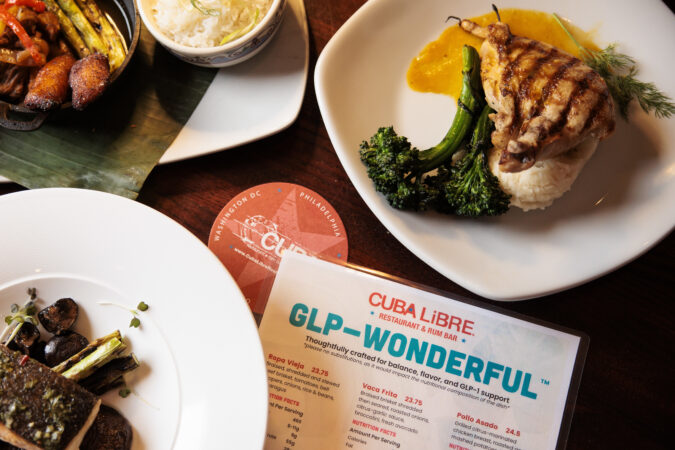
Next month, the Old City establishment will also roll out a “lighter portions, lighter prices” section of its regular menu.
This is all to keep up with the evolving preferences of Philly-area diners, said Barry Gutin, cofounder of Cuba Libre.
“We said, ‘We should put something on the menu for all sorts of people watching their diet and their money,’” said Gutin, whose staff has noticed GLP-1 users and nonusers alike requesting these options more over the past year. This trend has also been seen at Cuba Libre restaurants in Atlantic City, Washington, and Orlando, as well as at its Paladar Latin Kitchen and Bomba Tacos locations in the Philadelphia suburbs.
For customers, an added perk is that they pay less for these smaller-portioned menu items, Gutin added. He said diners have become more focused on value amid broader financial uncertainty.
“The economy dictates that we have a diversity in pricing that meets more people’s needs,” Gutin said. “You think about the way people look at menus online. They’re scanning through prices as well.”
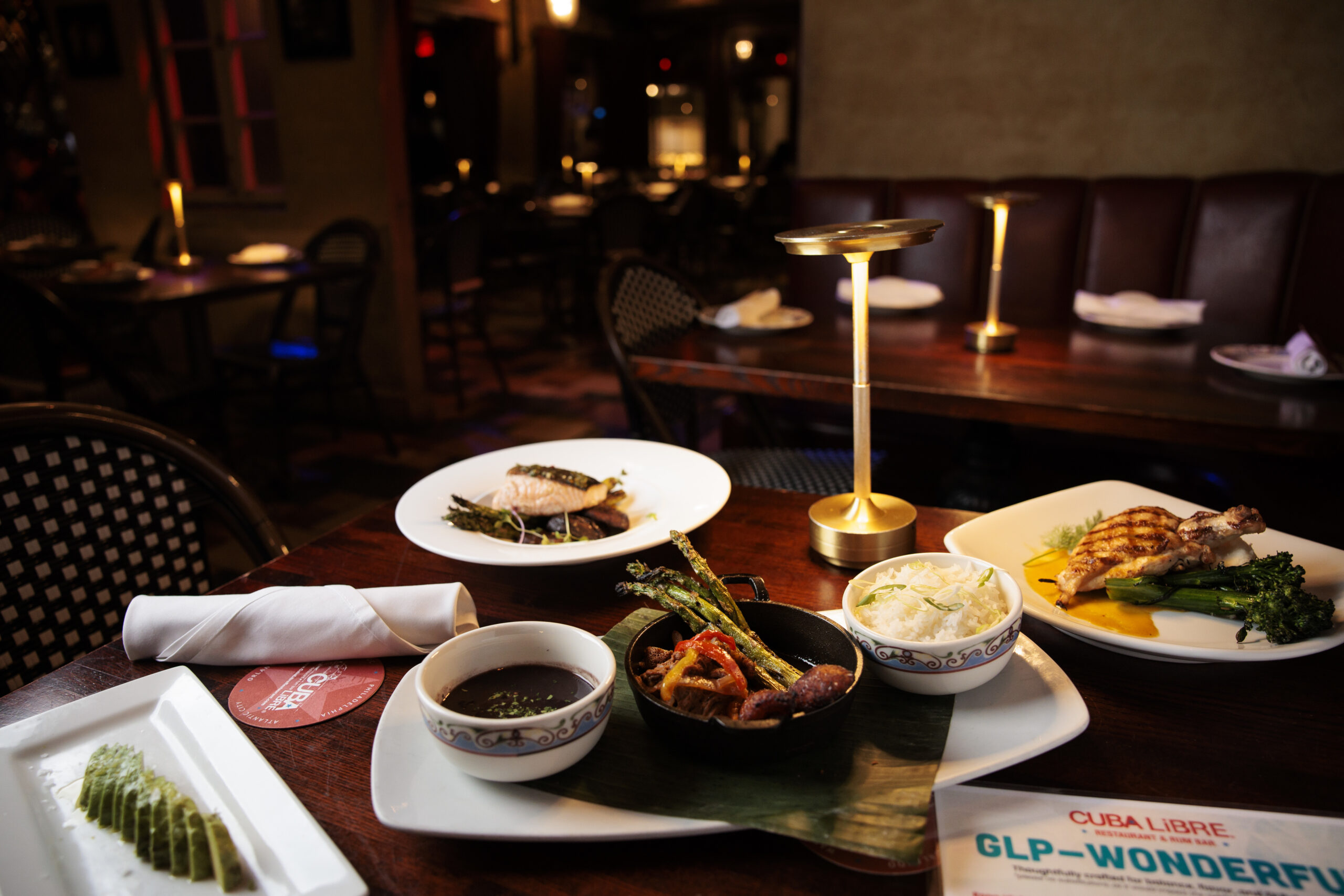
The dining room at Cuba Libre in Philadelphia. A cofounder says staff has noticed GLP-1 users and nonusers alike requesting smaller-portioned, less expensive options more over the past year.
In August, more than a third of U.S. diners said they were dining out less frequently than they did a year ago, according to a survey from YouGov. Of the less-frequent diners, 69% said they were eating out less in part because of the perceived cost of restaurant meals, the survey found.
Lower-income consumers were most likely to have cut back on dining out, according to the survey, while middle- and higher-income folks hadn’t changed their habits substantially.
This jibes with what executives at the Federal Reserve Bank of Philadelphia are hearing, too.
“Even individuals with discretionary income to spend are being careful,” Anna Paulson, president of the Federal Reserve Bank of Philadelphia, said Wednesday. “For example, although people are still eating out in Philadelphia, contacts tell us that less expensive options on the menu are becoming more popular.”
“The only exception to this trend is at more upscale restaurants,” Paulson added. “High-income households, bolstered by a strong stock market, appear to be driving elevated consumption growth.”
The Ropa Vieja meal from the GLP-Wonderful menu at Cuba Libre as shown on Jan. 14.
Alcohol use among adults has plummeted, with just 54% of respondents saying they drink in a July Gallup survey. That’s the lowest percentage in at least 90 years. It likely drops even lower this month as some people abstain from alcohol as part of the Dry January trend.
All of these trends are on display at Philly-area bars and restaurants. And owners are trying to keep up.
“We’re definitely at a time of dramatic shift in people’s preferences and tastes,” said Avram Hornik, owner of FCM Hospitality, which runs about a dozen venues in the region. They include Morgan’s Pier, Harper’s Garden, Craft Hall, and Concourse Dance Bar, as well as seasonal cocktail and beer gardens such as the traveling Parks on Tap.
“I don’t think people are spending less or going out less,” Hornik said, “but I just think they are doing it differently.”
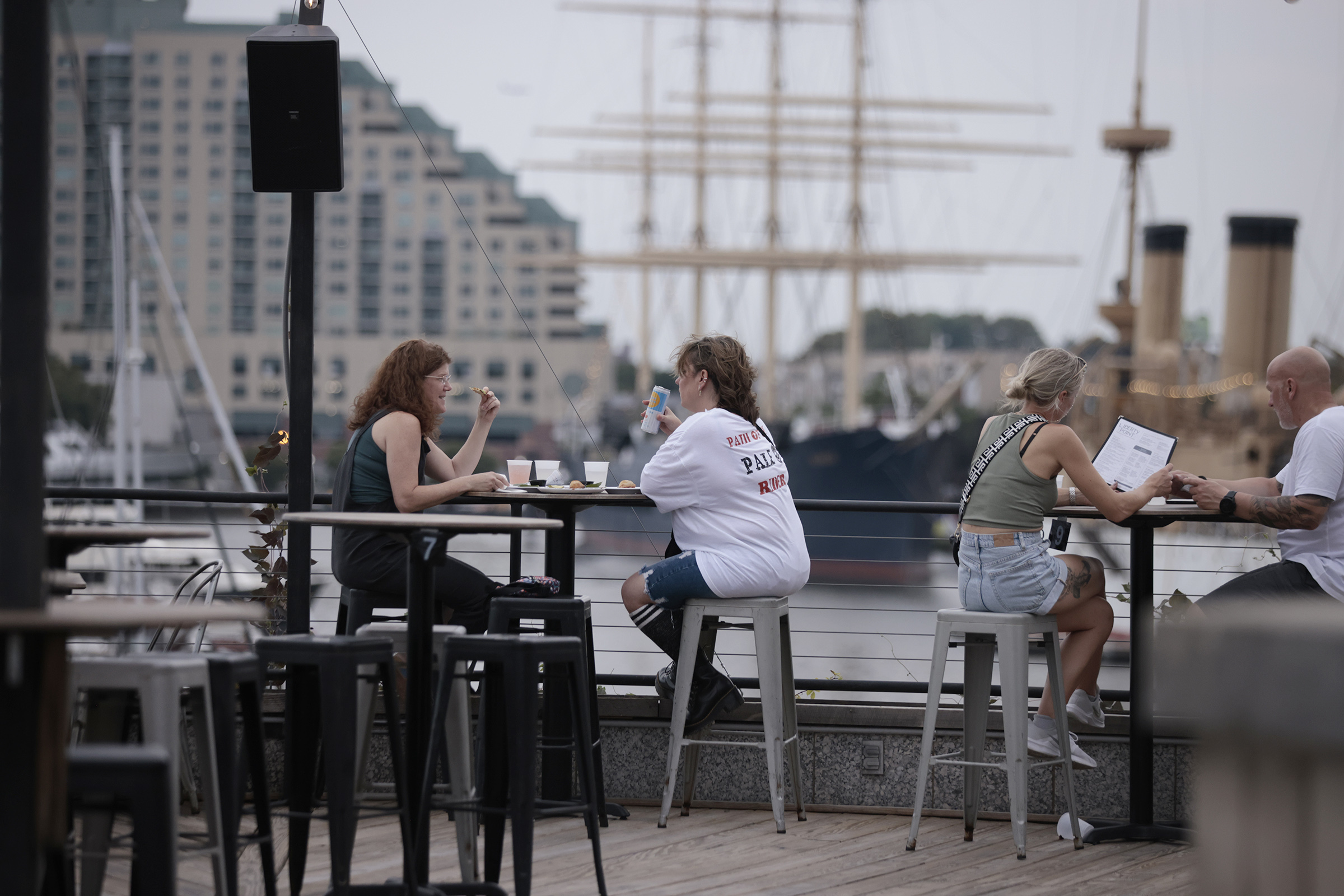
Customers dine at Liberty Point, one of Avram Hornik’s restaurants, in 2023.
At Hornik’s restaurants, overall sales have been consistent year over year, he said. Some customers are looking for smaller portions, he said, and late-night business has dropped precipitously. But group dining and special events have made up for losses in other areas, he said.
When customers decide an outing is worthwhile, Hornik said, they generally aren’t sparing expenses.
People are “looking for more of an experience when they go out to eat,” Hornik said. “It’s really about value: Am I getting a good value for the money that I’m spending?”
To retain customers, Hornik said his restaurants are leaning into weekly specials, such as $1 tacos at Rosy’s, and happy-hour deals.
At Cuba Libre, Gutin said he sees the GLP-1 menu, as well as the forthcoming lighter-portions menu, as a way to make his restaurants as appealing as possible for all diners.
At each location, only about a dozen people request the GLP-1 menu each week, he said. But if a group is considering dining at Cuba Libre and one person is on a GLP-1, the special menu could make or break their decision. He said it could keep the GLP-1 user from exercising their “veto vote,” sending the entire group to dine elsewhere.
Dining trends differ by location
In the Philadelphia suburbs, restaurateurs said dining trends vary depending on location and type of restaurant.
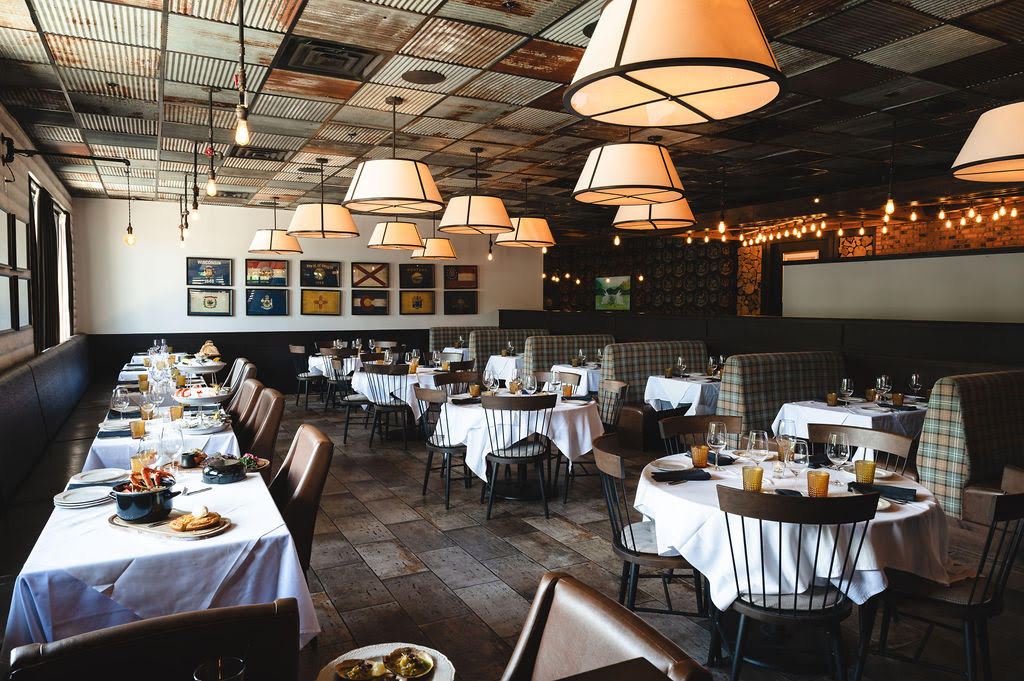
The dining room at Joey Chops, the Malvern steakhouse that Stove & Co. restaurants co-owner Joe Monnich said has been least impacted financially by changing consumer habits.
Joe Monnich, co-owner of Stove & Co. restaurant group, said food sales are up at his higher-end restaurants, including Joey Chops steakhouse in Malvern. But farther from the Main Line, in more “blue-collar” Lansdale, he said, Stove & Tap’s business is less steady of late.
There, “I feel more economic up and downs,” Monnich said. He felt similarly about his Al Pastor restaurant in Havertown, which is now closed after a local buyer came in last month and offered Monnich cash on the spot for the building.
At his more casual concepts all over the region, people are spending less on average, he said, and about the same at the higher-end spots. Recently, he added, staff have noticed diners being more mindful of how much they’re consuming.
“People aren’t getting that second drink,” Monnich said. “People aren’t getting dessert. People aren’t getting that appetizer.”
Changing drinking habits have hurt alcohol sales, too, Monnich said. In recent years, many customers have turned away from local microbrews and gravitated toward canned cocktails and “macro beers” like Michelob Ultra and Miller Lite.
“Three years ago I barely sold Michelob Ultra and right now it’s one of my top sellers,” Monnich said. As are canned cocktails. “Surfsides are expensive, and I don’t make a lot of money off them.”
Stove & Co. executives have talked about creating special menus catering to these evolving consumer preferences, Monnich said, but he gets anxious about making portions smaller. So for now, he too is leaning into happy-hour deals and other value-focused items.
“I try not to be too focused on trends because trends come and go,” Monnich said. “I do see the current trend, these weight-loss drugs, I don’t see that going anywhere … [and] people are going to be drinking less-octane alcohol.”
Staff writer Ariana Perez-Castells contributed to this article.
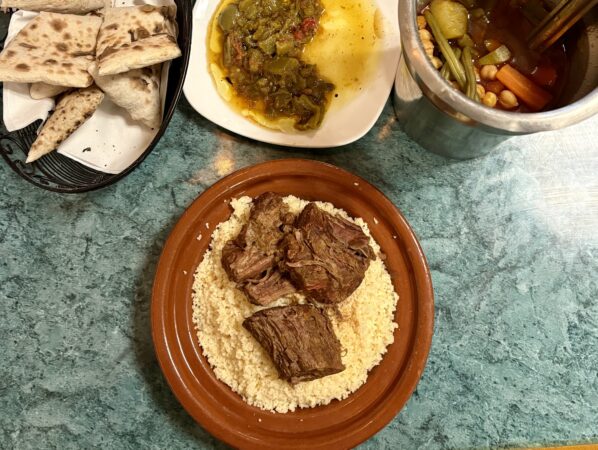
South Philadelphia has acquired an intriguing handful of Algerian restaurants over the past couple years, including Numidia Algeria (at 2340 S. Hemberger St., near 23rd Street), where I recently devoured a platter of house-made beef merguez, Berber-style semolina flatbread, and pastries. My most memorable Algerian meal of late, however, was the special Friday couscous at Algerino’s, which replaced West Passyunk Avenue’s Little Morocco in July with a wood-fired oven that turns out pizzas topped with merguez, North African-spiced roast chickens, and flavorful kebabs. On Fridays, though, this kitchen is all about producing its weekly special couscous platters: fluffy mounds of fine semolina grains topped with huge hunks of slow-braised beef shank and a tall pan of sauce on the side filled with vegetables and broth to be spooned over top at your leisure.
Couscous is a common Berber dish served across North Africa’s Maghreb region, but chef and partner Kaci Grabi — who previously ran a restaurant in the central Algerian city of Tizi Ouzou — says the Algerian style is to serve components separately, as opposed to the Moroccan manner, in which plates are more composed, with vegetables already arranged over top. Flavor-wise, he says, there are also fundamental differences, with Algerian couscous occupying a restrained middle place between the sweet aromatics typical of Morocco and the spicier harissa profile of Tunisia. Indeed, the clear broth at Algerino’s was simple, rustic, and straightforward in its beefy savor, but still so incredibly satisfying for a cold winter lunch, especially with wedges of fresh-baked Berber flatbread on the side to soak it up. Algerino’s, 1431 W. Passyunk Ave., 267-639-4504, instagram.com/algerinos_restaurant
— Craig LaBan
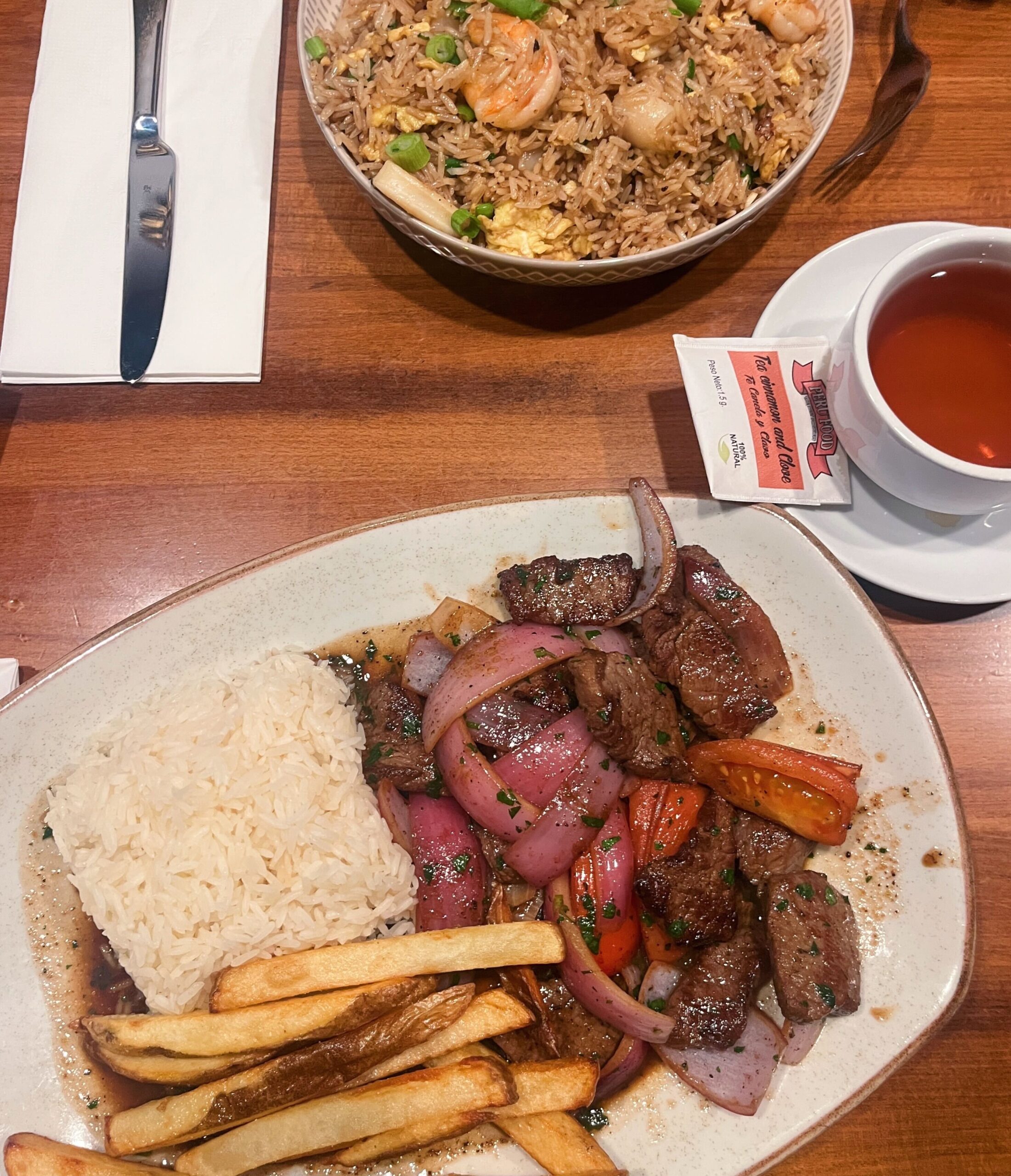
Lomo saltado from Kiko’s Peruvian Kitchen in Collingswood, N.J.
Lomo saltado from Kiko’s Peruvian Kitchen
Lomo saltado — Peruvian-style steak stir-fry with onions, tomatoes, mild ají amarillo chilies, and French fries — has always been my favorite way to the test the quality of a Peruvian joint. Is the skirt steak tender? Are the fries soggy? Does the sauce capture the umami tang of an elevated soy sauce? If the answers are not yes, no, yes — well, thank goodness there’s always pollo al brasa.
The lomo saltado is textbook at this Collingswood hole-in-the wall, with ultrathin cuts of juicy skirt steak and thick yucca fries only made better by sopping up the sauce. The stir-fry’s tomato slices are still just a bit firm and burst with juice, adding a slight sweetness to the otherwise umami soy sauce. I had no trouble tackling the restaurant’s heaping portions and was secretly disappointed with myself for not leaving more leftovers: Stir-fry always tastes better the next day. Kiko’s Peruvian Cuisine, 624 W. Collings Ave., Collingswood, 856-854-6888, kikosperuviankitchen.com
— Beatrice Forman
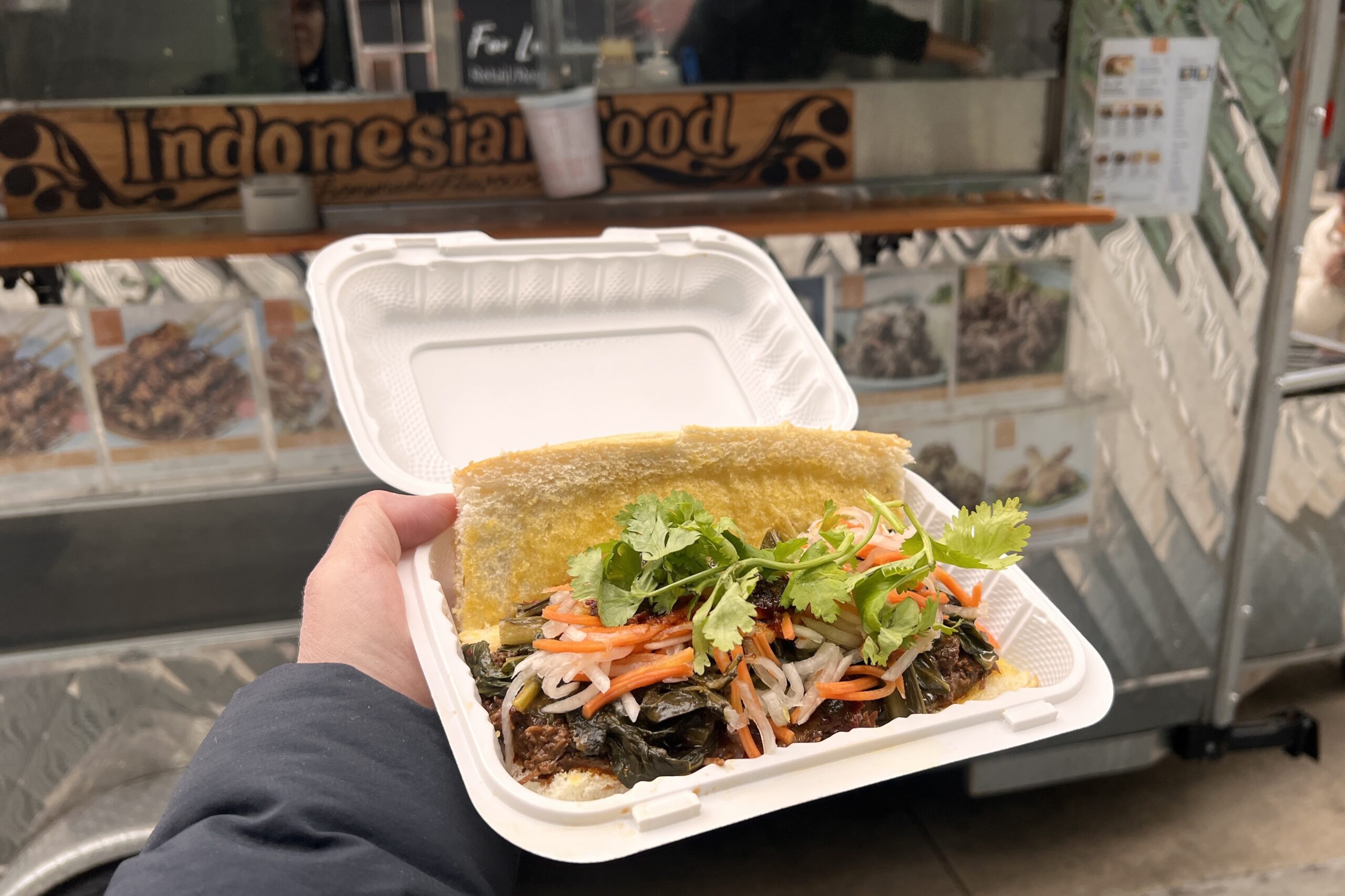
Rendang hoagie from the Sego food cart, on 16th Street, west side, just north of Market Street, on Jan. 14, 2026.
Rendang hoagie from Sego cart
Split a long roll, fill it with just about whatever you wish, and — voila! — in Philadelphia, you’ve got yourself a hoagie. The iconic sandwich, initially made of Italian deli meats and cheeses, has been spun into a world of variety over the years: fish hoagies, eggplant cutlet hoagies, falafel hoagies. All this and banh mi, too. Why shouldn’t the city’s small Indonesian community get in on it, too?
Last year, Aditya Setyawan and his wife, Irza, who own the Indonesian catering business Pecel Ndeso, opened a food cart called Sego on 16th Street in Penn Center. It caught our eye last fall for The 76, our rundown of essential Philadelphia food destinations. One menu star is beef rendang — a spicy-creamy stew served with jasmine rice, sambal, and collard greens. Or go the hoagie route: They ladle the rendang onto a long roll. Each hearty bite gives you a rich beefiness countered by a bright kick from daikon, cilantro, and pickled carrots scattered on top. Sego, 1600 Market St. (outside of NAYA restaurant on 16th Street just north of Market), hours: 11 a.m. to 4 p.m. Monday to Friday, 267-559-1656, instagram.com/pecelndeso.usa
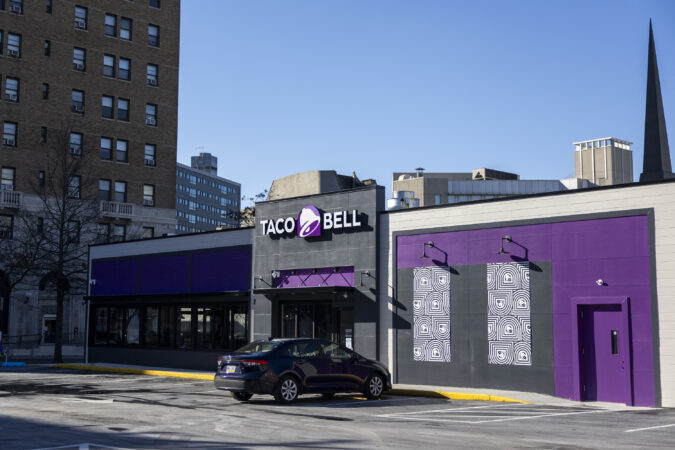
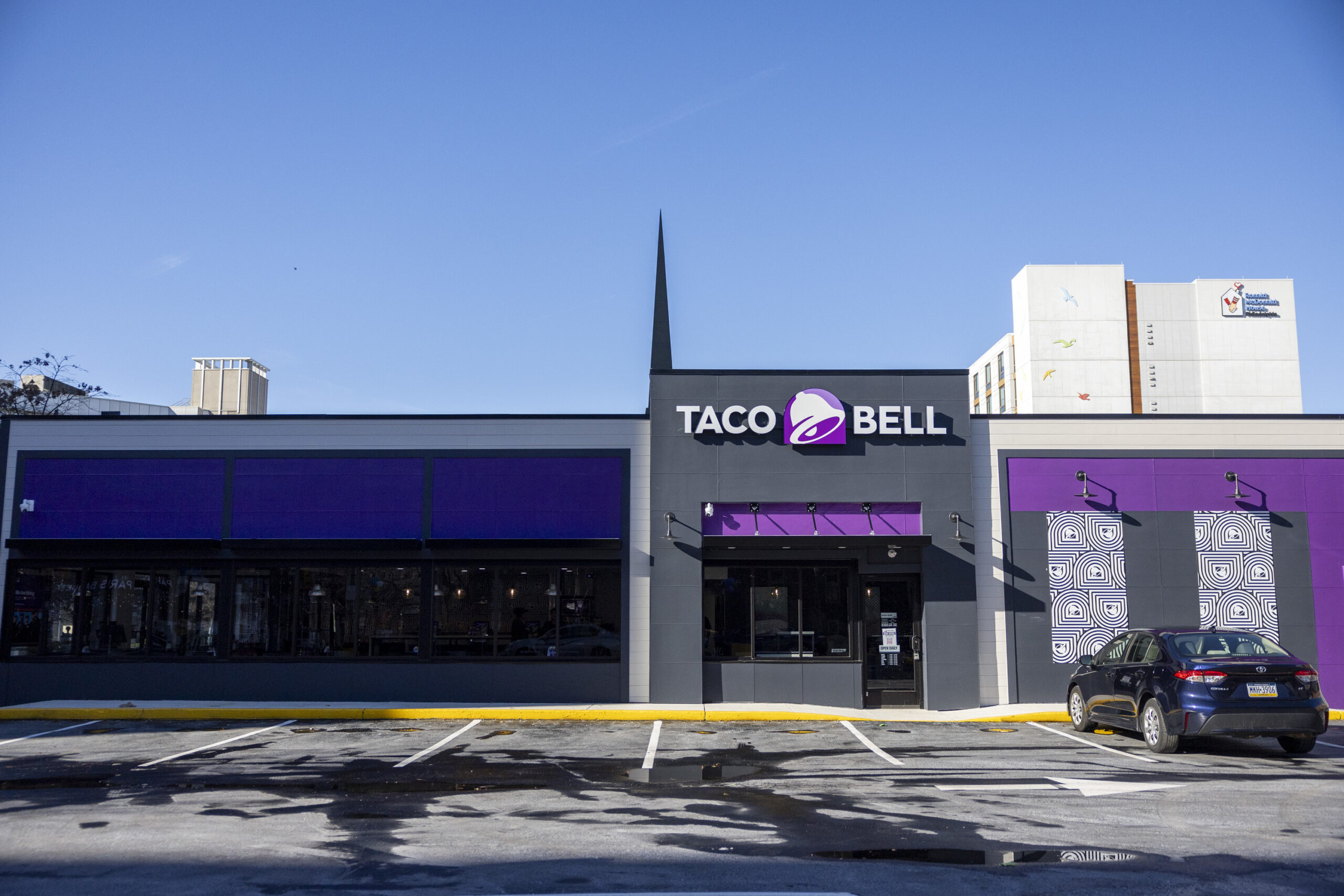
It was a Christmas miracle of the fast food variety: A 24-hour Taco Bell had opened in University City.
The Mexican-ishchain opened its 16th Philly location in late December at 3901 Chestnut St., where it replaced a Boston Market outpost that once owed nearly $220,000 in rent after defaulting on a lease. To hear some Philadelphians tell it, the opening was practically heaven-sent.
The new Taco Bell generated twoseparate posts from different users last month in the 95,000-member r/Philly subreddit. Other restaurants yearn for that kind of word-of-mouth marketing.
“Anyone have any info on the Taco Bell they’re putting on 39th and Chestnut?” asked user 8hivefiend8 on Dec. 17. “I have high hopes that maybe it will open soon because it looks so close to finished.”
Six days later, user rad_rascal posted pictures of the Taco Bell in all of its grand opening glory under the title “New Taco Bell in West Philly!” In the days leading up to the opening, the user wrote, they “would pass it every day and peer in like a buncha [sic] creeps.”
Under both threads, commenters expressed the kind of jubilation normally reserved for, say, rotisserie chicken-eating stunts or Super Bowl parades. “This just made my day,” commented one Taco Bell enthusiast. Others chimed in. “This the best Christmas present yet,” wrote one user. “My new home away from home,” said another.
In a city with no shortage of affordable (and excellent) Mexican food, why do people care so much about a Taco Bell that doesn’t even serve alcohol? And could this Taco Bell possibly live up to Reddit’s expectations?
Is it normal to care this much about a Taco Bell?
Taco Bell is as much a fast food chain as it is a borderline “cult,” according to chef Reuben Asaram, one of Philly’s most notable Taco Bell enthusiasts.
The 34-year-old’s love affair with Taco Bell began after his family emigrated from India to Queens in 1993, the chain quickly becoming a staple for weekend meals out. Taco Bell partially inspired Asaram’s Mexican and pan-Asian pop-up menus, which led the chain to name him one of three chefs allowed to reimagine the iconic Crunchwrap Supreme in 2024. At one point, Asaram was so tight with the staff at the 1037 Chestnut St. Taco Bell that they would turn part of restaurant into a private space for him to take dates.
Philly chef Reuben Asaram was one of three chefs tapped by Taco Bell to revamp the Crunchwrap Supreme. The local Taco Bell enthusiast created a butter chicken version.
True Taco Bell devotees will go out of their way to try a new location, Asaram said, because “they’re obsessed with getting the perfect bite” and need to know if there’s a reliable option nearby in case aDorito Locos Taco emergency hits. Asaram is one of those people.
“If I have a craving and know I’m going to be in a random place, I have to know where the [nearest] good Taco Bell is,” said Asaram while sipping a Baja Blast on Zoom. Asaram’s preferred locations are the two closest to his house in Cherry Hill. He must visit the University City outpost before it can be added to his reserves.
Perhaps the University City Taco Bell is a representation of what could’ve been, four walls for Philly fans to place their shattered hopes and dreams. Or maybe people are just happy something replaced the Boston Market.
“That Boston Market was profoundly cursed,” one Philadelphian wrote on Reddit. Others claimed they got food poisoning there.
“Everyone I know that ever went into the Boston Market when it was open has a horror tale about it!” wrote user rad_rascal, who broke the Taco Bell news.
window.addEventListener(“message”,function(a){if(void 0!==a.data[“datawrapper-height”]){var e=document.querySelectorAll(“iframe”);for(var t in a.data[“datawrapper-height”])for(var r,i=0;r=e[i];i++)if(r.contentWindow===a.source){var d=a.data[“datawrapper-height”][t]+”px”;r.style.height=d}}});
What are the vibes?
The University City Taco Bell has all the makings of what some in the Taco Bell-loving community refer to as a “Taj-Mah-Bell,” or a higher-end location.
This Taco Bell location is large, with a mix of booths, standard tables, and counter seating that isn’t sticky: When I visited on a Wednesday afternoon in early January, employees were cleaning tables within minutes of customers leaving. There were ample napkins (necessary for taco spillage), and the soda machine dumped out pellet ice, perfect for fountain drinks. It made my medium-size Baja Blast taste extra electric.
The outside of University City’s new Taco Bell, which is open 24-hours, seven days a week.
The only downside: Humans don’t take your order. Customers use one of several digital kiosks spread across the store. That’s a bummer for Asaram.
“What makes a good Taco Bell franchise is mainly how the workers treat their guests,” he said.
How’s the food?
Not Taj-Mah-Bell quality, I’ll tell you that much.
I ordered a beef Crunchwrap Supreme, beef Doritos Locos Taco, cinnamon twists, and the all-important beef chalupa. The latter, Asaram said, is key for understanding the quality of a Taco Bell.
“You want to see all the components of your Taco Bell [at once]. You want to see if the fryer oil is fresh, if their vegetables and other garnishes are good,” he said.
A textbook chalupa is golden brown, Asaram said, with firm tomatoes and a layer of ground beef on the bottom that’s roughly an inch thick. If the deep-fried flatbread shell has a sheen — or worse, approaches a russet shade of brown — it means the fryer is dirty.
“That’s when you know the Taco Bell [location] doesn’t give a s— and you want to dip out,” said Asaram.
A tray of menu items from University City’s new Taco Bell, which includes a Crunchwrap Supreme, Doritos Locos Taco, Chalupa, and cinnamon twists.
Despite receiving my chalupa in less than five minutes, it was cold. The fried shell was inexplicably both light brown and vaguely sparkly. Who knows what that means for the fryer oil.
They also skimped on the meat, which was not evenly distributed across the bottom. The Crunchwrap and taco had the same issues: cold and limp.
Perhaps this was my fault. I ordered close to 2 p.m. The prime time to visit a Taco Bell is between 11 a.m. and 12:30 p.m., Asaram said, when the morning and afternoon shifts switch over.
At that time, Taco Bell is “like an omakase,” he explained. “They just make everything in front of you and hand it to you to eat.
Center City District Restaurant Week returned Sunday for the first time in a year, with 120 restaurants offering fixed-price lunches and dinners — the largest lineup since the pandemic.
This also will be 2026’s only restaurant week. After running both fall and winter editions since September 2003, a district spokesperson told The Inquirer that it will not return this fall and will remain an early-winter promotion “at this time.”
The fall edition disappeared last September as the district said it had shifted its focus to newer programs, such as Open Streets and Let’s Do Lunch, while keeping its popular Center City District Sips series. Restaurateurs had also been pushing back on the September restaurant week, arguing that it landed during an already busy month and that promotional dollars were better spent in January, traditionally the slowest stretch of the year.
For the 2026 restaurant week, running through Jan. 31, some restaurants will offer $20 two-course lunches in addition to three-course dinners priced at $45 or $60. (The lower-tier dinners were $40 last year.)
More than 100 of the participating restaurants are repeats from last January, including such popular destinations as a.kitchen, Barbuzzo, Del Frisco’s, Estia, Fork, Forsythia, Gran Caffe L’Aquila, Harp & Crown, Loch Bar, and Wilder.
Additions this year include the yearlings Rockwell & Rose (attached to P.J. Clarke’s on Washington Square) and Rhythm & Spirits (at One Penn Center, above Suburban Station), as well as established restaurants Ambrosia, Bar Bombon, Charlie was a sinner., Cry Baby Pasta, Farina Pasta Bar, Grandma’s Philly, Hi-Lo Taco Co., Kanella, Kirin House, La Fontana Della Citta, Miss Saigon, the Mulberry on Arch, Pub & Kitchen, Radicchio Cafe, Superfolie, Trattoria Carina, Umami Steak & Sushi Bar, and Vita.
Some 2025 participants are not returning, such as the shuttered Banh Mi & Bottles, Del Frisco’s Grille, Flambo, Iron Hill Brewery, Kook Burger & Bar, and Mulherin’s Pizzeria.
The district has arranged discount parking for $10 or less at participating BexPark by Brandywine Realty Trust, LAZ Parking, and Philadelphia Parking Authority parking facilities from 4:45 p.m. to 1 a.m.
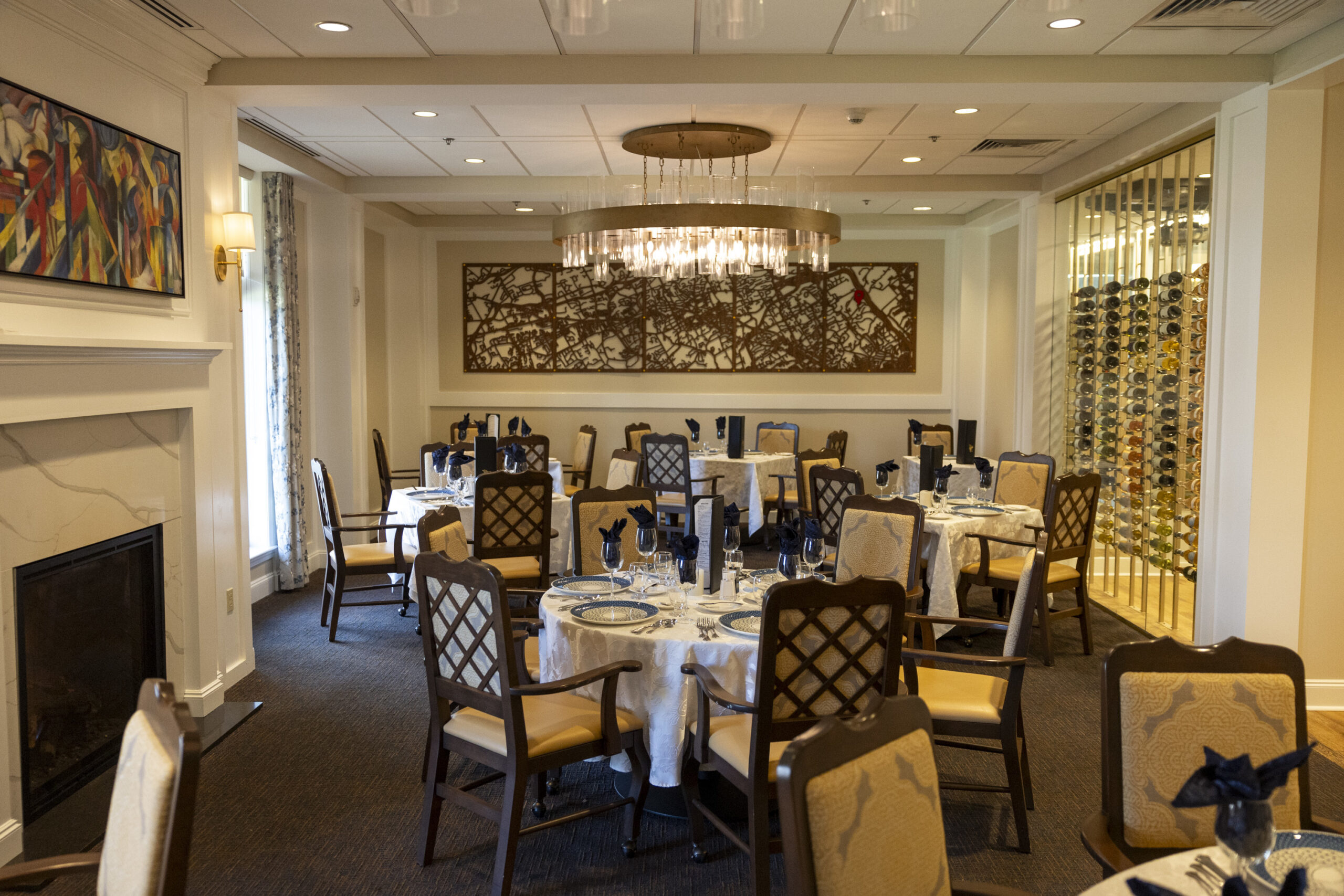
The intimate dining room is hushed but for the clinking of glasses and silverware clattering on gleaming plates. There are only 32 seats. The polished wooden chairs are plushly upholstered. The paintings and a stylized metalwork map that adorn the room are tasteful. A glass wine room, lit golden from within, casts soft light on the silver damask-swathed tables, as do the Napa winery-esque modern chandeliers.
This is Carlton Commons, the heart of senior-living, life-planning community Waverly Heights in Gladwyne.
The mansion in which this dining room is housed was once the elegant Main Line estate of a railway baron. Now, it has the air of a very quiet cruise ship, complete with a dress code: dresses for women, dinner jackets for men.
Dining room at the Waverly Heights in Gladwyne, Pa., on Tuesday, Dec. 30, 2025.
This is a restaurant that has a waiting list that’s ostensibly 710 people, about as long as Royal Sushi’s notorious Resy waitlist. But it‘s arguably far more difficult to get into. You need to be 62 years of age to be a resident (who can bring guests of any age), and the cost of admission for a one-bedroom dwelling requires a $336,000 minimum down payment. (Deluxe apartments start at over a million dollars — not a surprise for wealthy Gladwyne.)
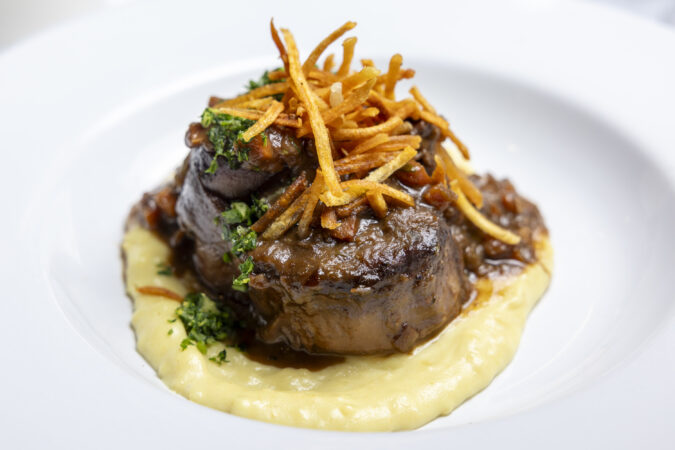
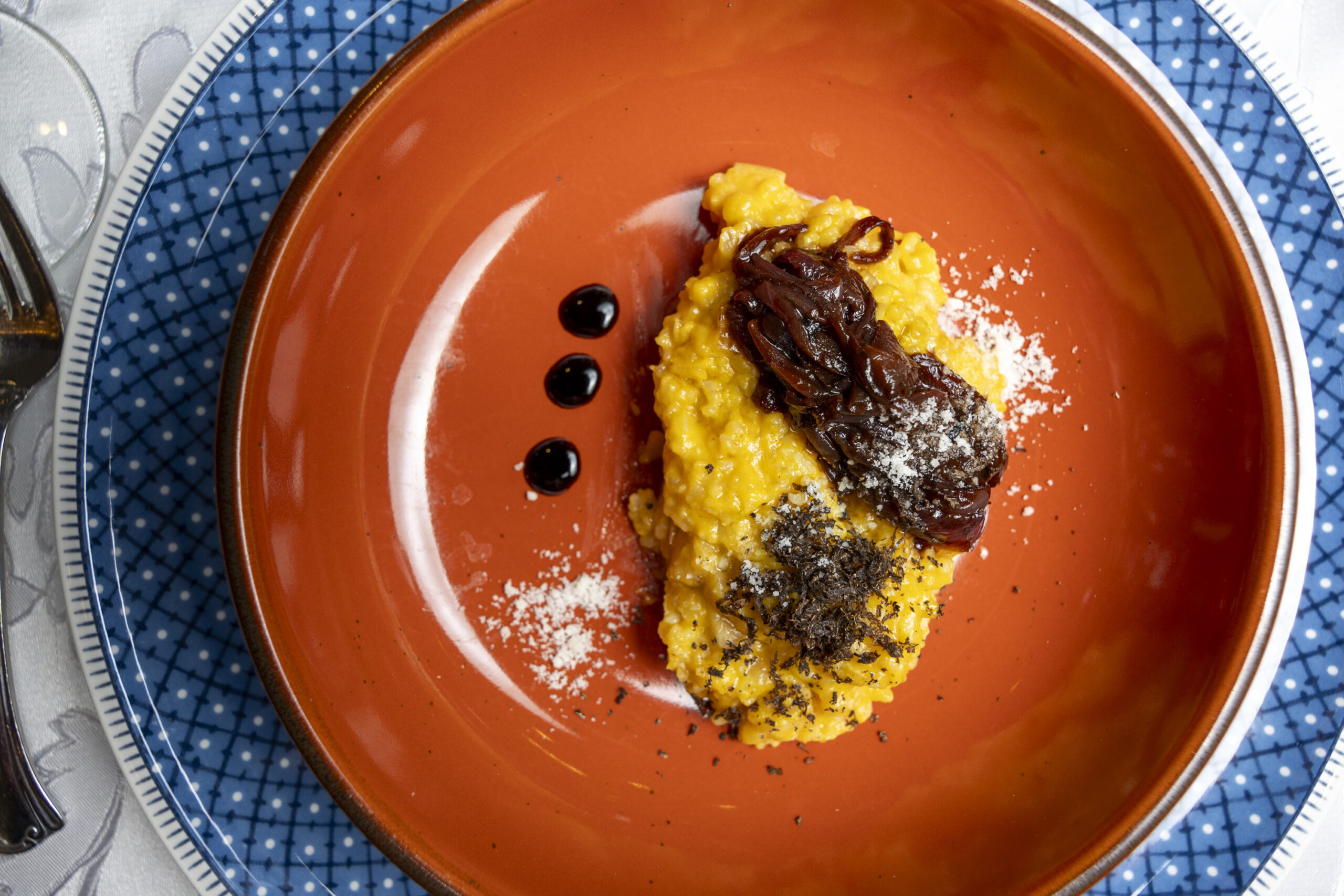
An osso buco collapses into a tangle of tender fibers at the prod of a fork, melting into the slightly tangy goat cheese polenta puddled beneath. Crunchy fried potato slivers add pleasing texture to each bite. A butternut squash risotto is just as satisfying, a master class in texture, with creamy squash trapped in distinct grains of arborio, beset with balsamic-scented curls of slow-cooked sweet onion.
If I closed my eyes, I could very well think I was dining at Le Virtù.
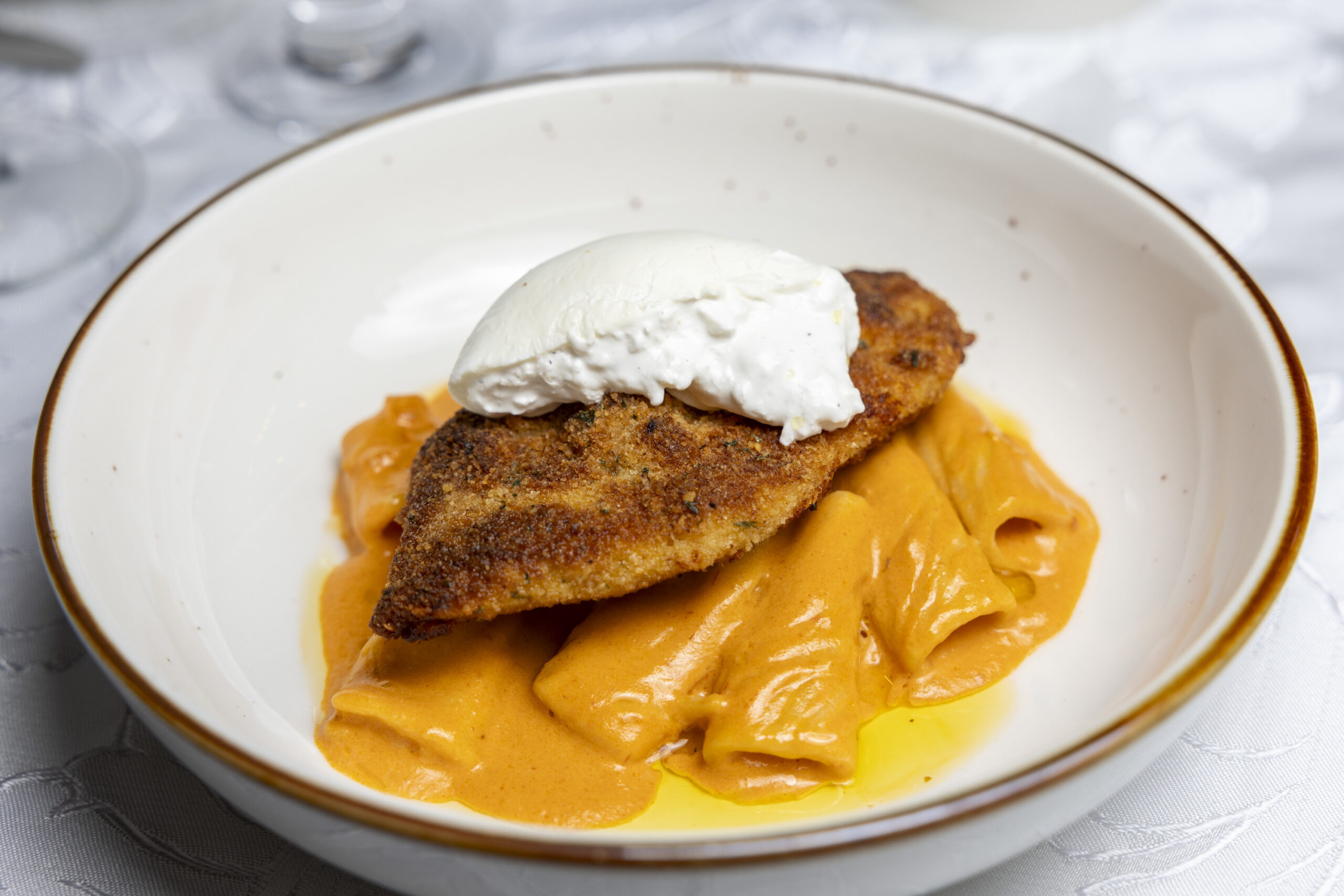
Chicken cutlet with rigatoni and vodka sauce at Waverly Heights.
There’s a perfectly al dente rigatoni alla vodka upon which a crisp chicken cutlet is nestled, then topped with an oozing cloud of burrata. (It’s almost identical to the thoroughly satisfying one I just had at Center City’s Wine Dive.)
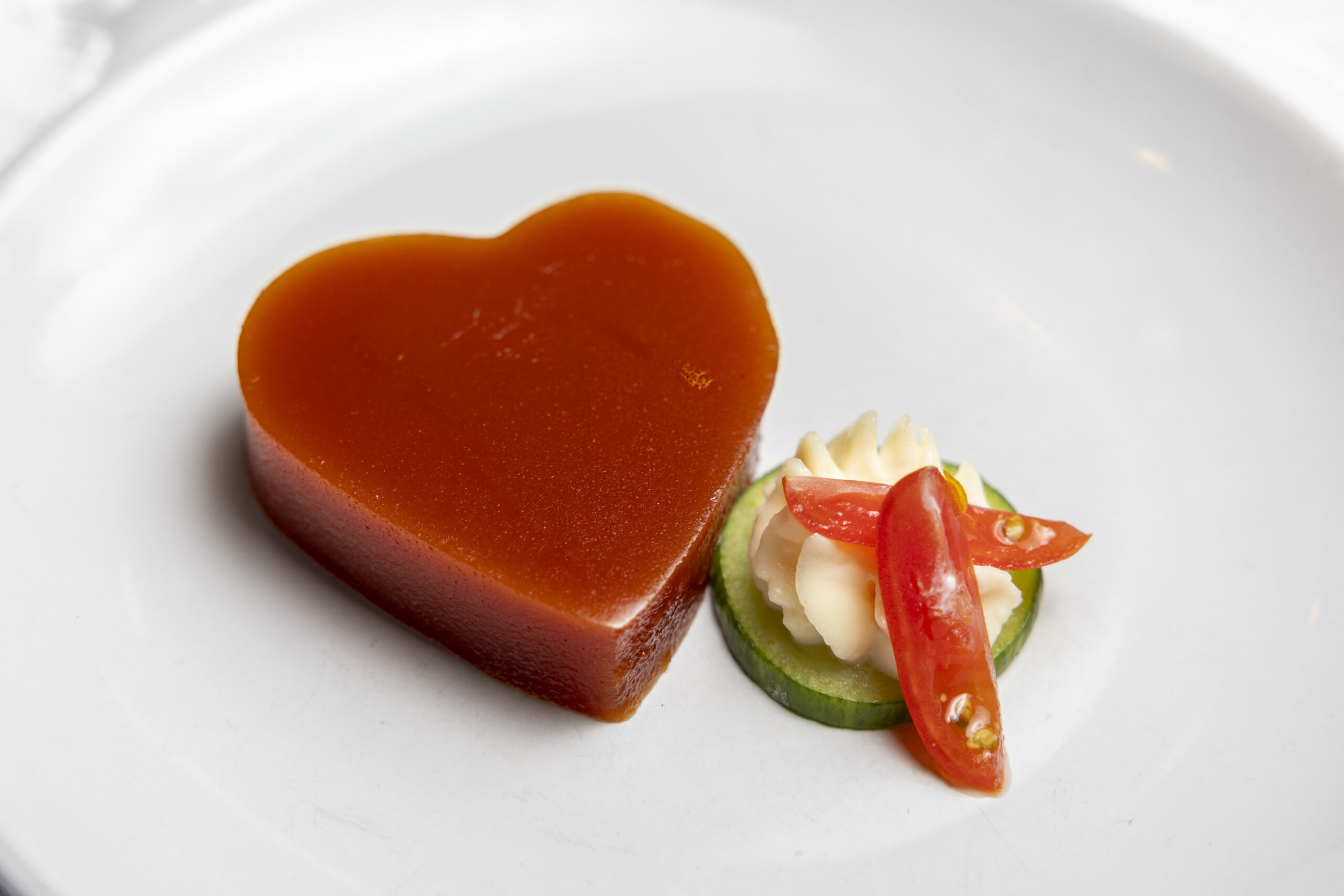
The specialty of the house is a curiously delicious tomato aspic, served with a tiny slice of cucumber and a dollop of Hellman’s mayo. No staff member was able to explain its origins, as it predated all of them. “It was always here,” said Waverly Heights’ white-toqued executive chef Michael F. Tiernan, 47. “And it is a fan favorite.”
Tomato aspic with mayo and cucumber.
When Tiernan interviewed for the position in 2017, he was expressly told to not touch the tomato aspic. He could change the shape — the kitchen’s cookie-cutter collection forms it into hearts, circles, and triangles — but he was not permitted to riff on the recipe, which consists of unflavored gelatin, tomato juice, vegetable juice, celery, onion, and olives. “It’s a very traditional, Old World-style recipe,” said CEO Tom Garvin.
Tiernan has worked at Waverly Heights for eight years, with a cumulative 18 years under his belt cooking at continuing-care facilities. In addition to managing Carlton Commons and changing its menu every three months, he cooks for a packed calendar of special events. On one of my visits, he was preparing for New Year’s Eve with poached lobster and filet mignon for a dinner that would be a prelude to dancing. The only major difference between a New Year’s party at Waverly Heights and a typical one: Their ball drops at 9 p.m. “We celebrate like we’re in Australia,” Garvin quipped.
Executive Chef Michael Tiernan at Waverly Heights in Gladwyne, Pa.
I dined at Carlton Commons twice, once as a guest of a friend’s parents who are residents and again after I contacted the life-plan community (the preferred term over retirement community, as I was informed by Garvin), who indulged my request for an interview with no small amount of incredulousness. But I loved my first meal there.
And I was deeply curious. A bookshelf in the community’s library is stacked with books written by residents, including volumes on psychology, cardiovascular disorders, and politics. Carlton Commons’ regular diners had careers as physicians, ambassadors, and scientists. How does one cook for residents like those of Waverly Heights?
Well, first, by changing the menu every 90 days, and then by packing it with global influences, frequently rendered into Italian-rooted comfort foods. And hosting lots of themed parties and events.
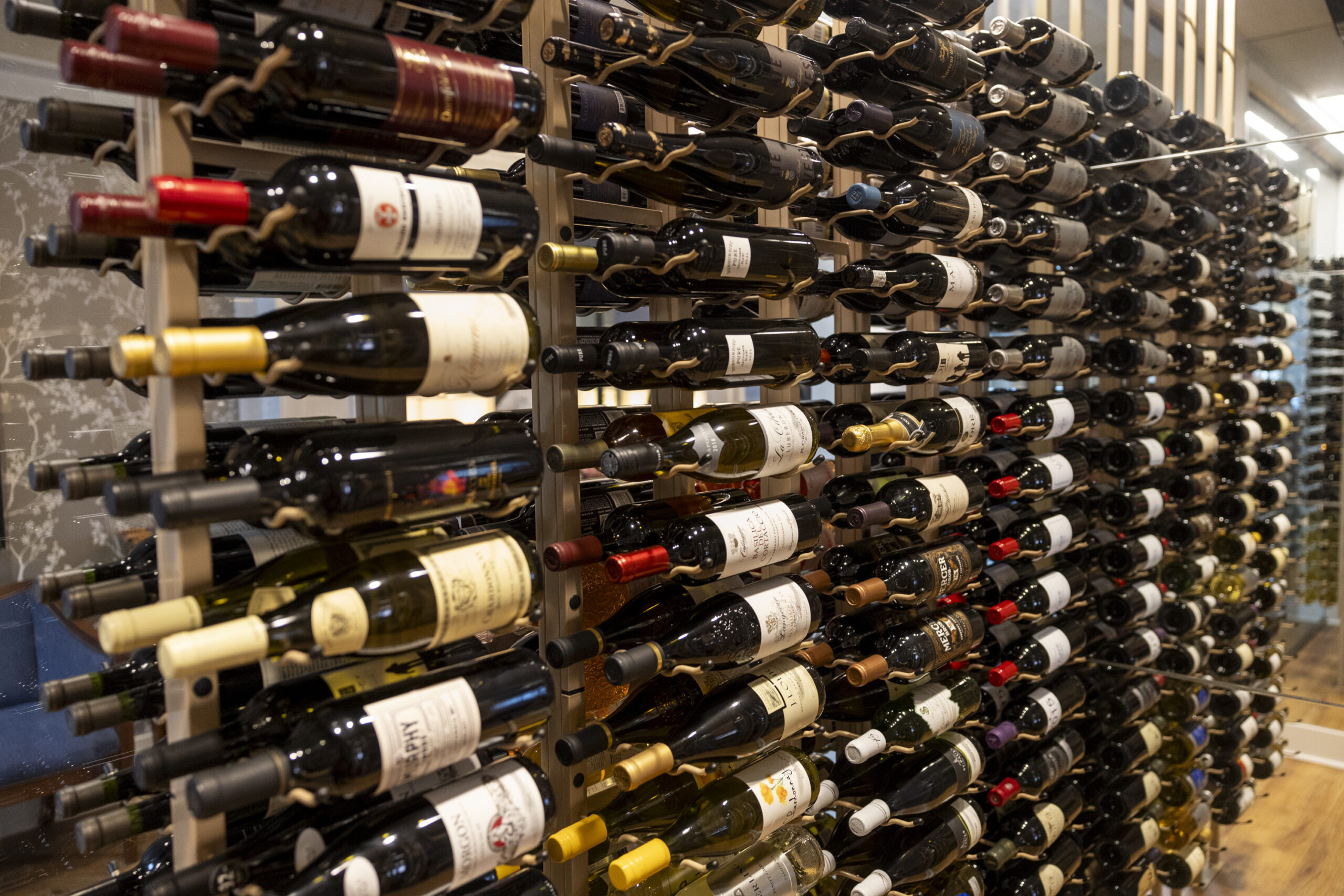
Wine cellar displayed near the entrance of the dining room at the Waverly Heights in Gladwyne, Pa., on Tuesday, Dec. 30, 2025.
The back of house is, by necessity, an institutional operation. Carlton Commons and Waverly Heights’ other dining rooms and cafes are executed in partnership with Unidine, the life-plan community’s version of Aramark, though Carlton Commons’ chef has significant creative control over the menus. The pasta that winds up on my plate tastes far less institutional at many places I’ve eaten, including the 100-layer lasagna at Borromini in Rittenhouse.
The prices for me, a single guest, are shockingly low. It’s $37.50 plus tax for a full meal, including an appetizer, soup or salad, entree, and dessert. No tipping is permitted. I am unable to pay more than $5.75 for a glass of chardonnay, and a nip of Maker’s Mark costs $4.75. (There’s no sommelier on staff, but there is a wine committee consisting of opinionated residents.)
My first dinner there had some slight hiccups. One of my dining companions ordered a steak “still pink inside” that arrived well done, but it was swiftly replaced by an appropriately cooked one. Another dining companion was startled to discover that her iced tea was presweetened, which took more than a few minutes to rectify.
The butternut squash risotto at Waverly Heights in Gladwyne, Pa., on Tuesday, Dec. 30, 2025.
My edamame dumplings swam in a too heavy-handed pour of bracingly salty soy sauce that would have worked better as a dipping sauce, but the dumplings themselves were delightful crispy golden pockets of gently mashed soybeans. My miso sea bass was pristinely roasted, flaking apart into succulent morsels with a gentle nudge.
Overall, the food is comforting, gently refined, and on trend in every which way, even to the surprise of Waverly Heights’ staff (down to the baked potatoes, available as a side every night). And the veryearly reservations — Carlton Commons seats diners between 5:30 and 7:15 p.m., and everyone is asleep by last call — reflect recent data that indicate diners are eating out earlier than ever. And I assure you, many of those residents listen to vinyl records, just like in Philly’s listening bars.
Dining at Carlton Commons reminded me that sometimes, the best meals aren’t found in the places you’d expect.
As anyone who keeps tabs on their bottle shop selection knows, craft beer has seen better days: Sales are down, and, in an industry now rife with consolidations and acquisitions, more breweries are closing than opening.
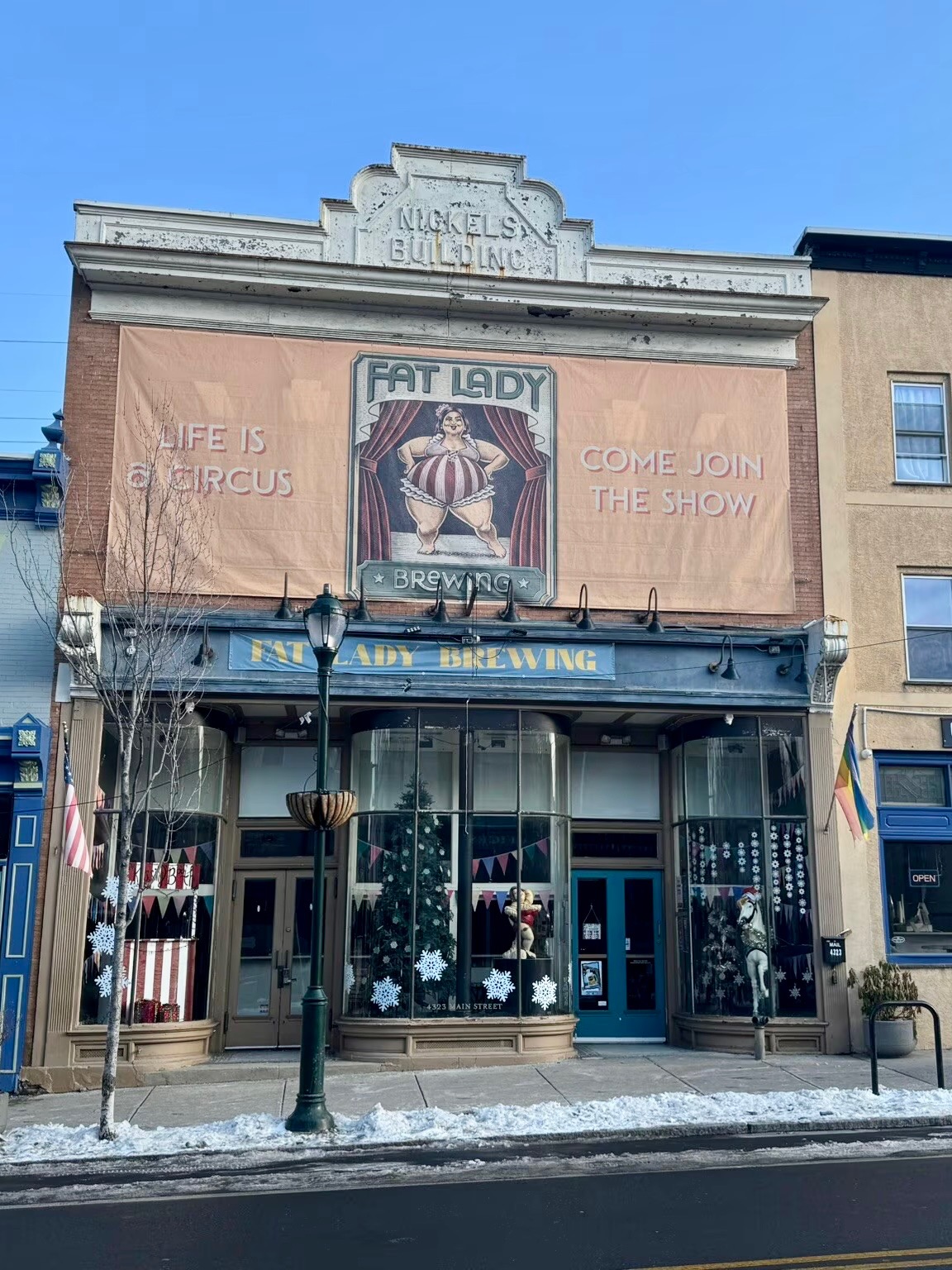
The outside of 4323 Main St., an 1880s-era Manayunk grocery store turned five-and-dime that was most recently home to Fat Lady Brewing.
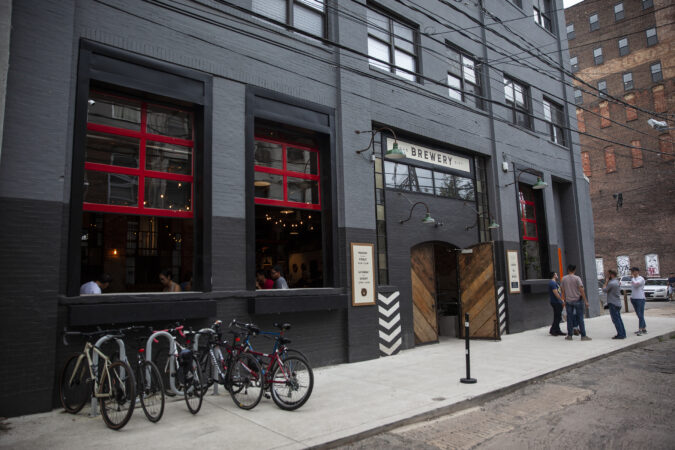
But the taps in Manayunk won’t be dry for long: Love City Brewing signed a lease on the historic two-story building at 4323 Main St. last week. The Callowhill brewery is targeting a spring opening following some cosmetic changes, according to co-owner Melissa Walter.
The new taproom will have room for about 60 seated (more standing) and an upstairs space used mostly for private events to start out with. An in-house food partner, like Love City has with Old City’s Viva Pizza, has yet to be determined. All beer will still be brewed in Callowhill.
Walter said she and her husband/co-owner, Kevin, have been on the hunt for a second location for about two years, prompted by the desire to expand their own retail business.
Love City produces about 2,900 barrels a year at its Hamilton Street home, which opened nearly eight years ago. Around 60% of that liquid is funneled to beer stores and other bars. But the profit Love City makes off the beer it distributes pales in comparison to its margin on beer sold from its own taproom. “That’s a big part of the thought behind this expansion,” Walter said. “It’s always going to be good for us to sell our products over our bar. So how can we make that happen? Where can we make that happen?”
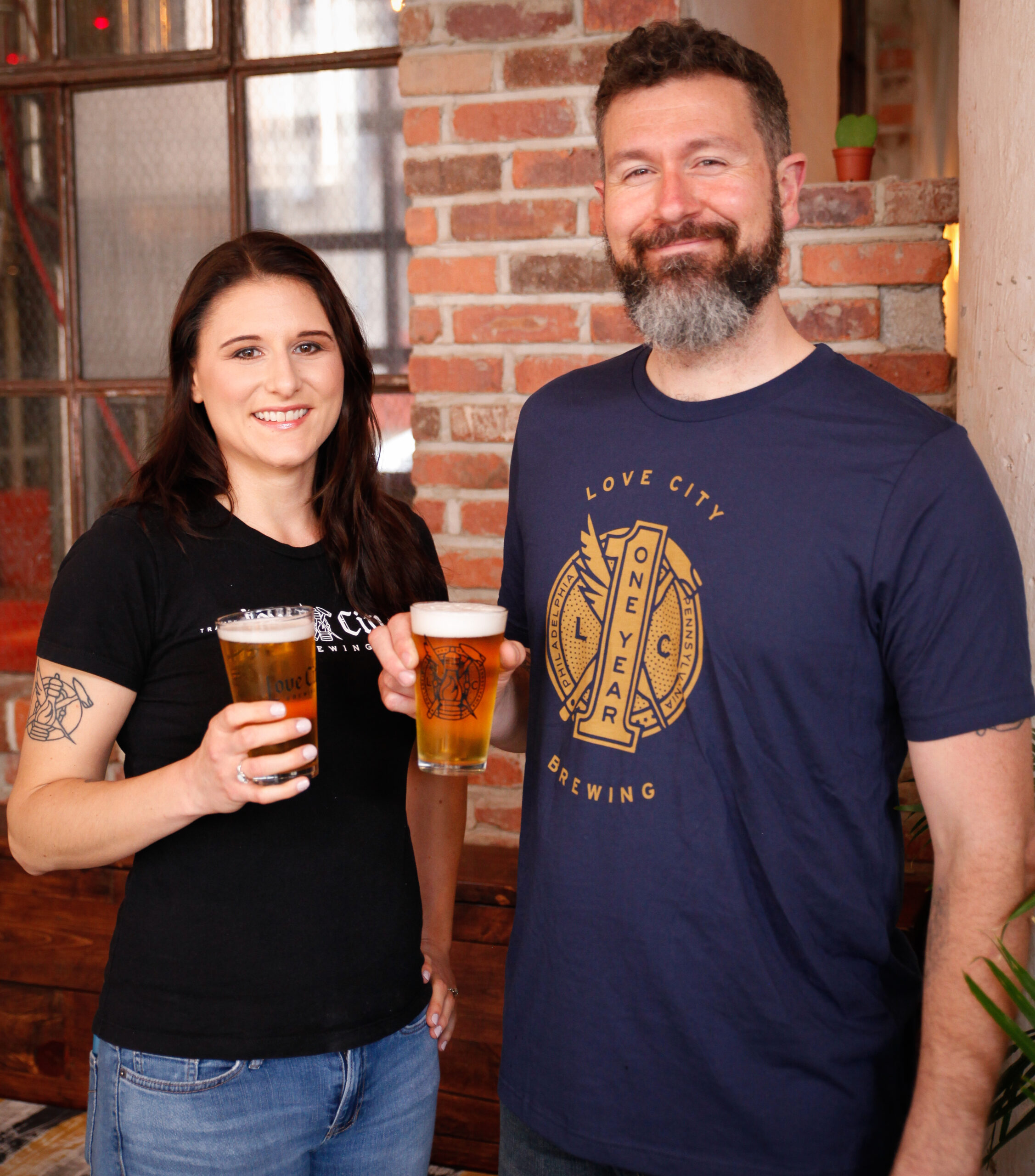
Love City Brewing owners Melissa and Kevin Walter. The couple is expanding to a second taproom in Manayunk.
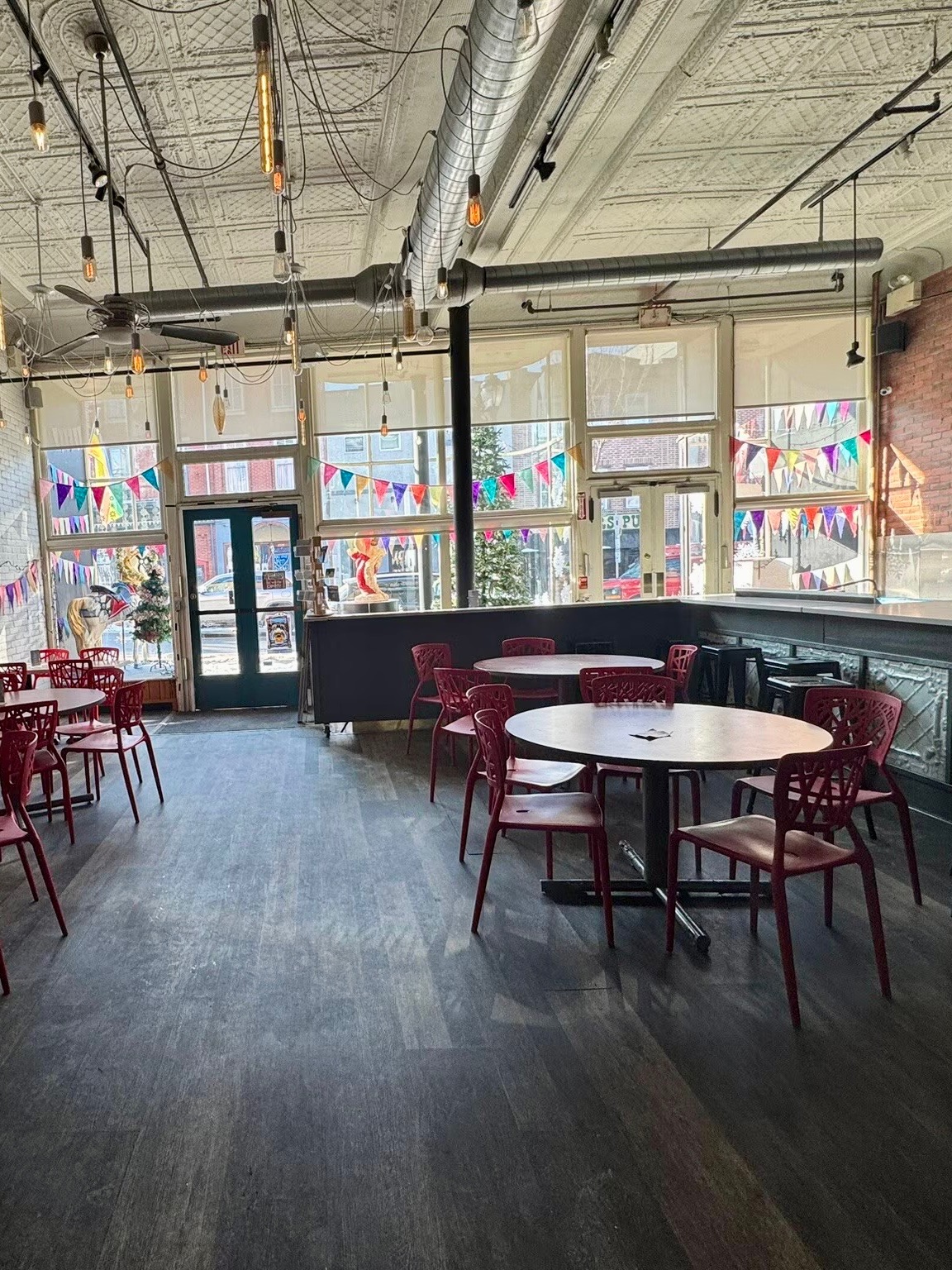
When the Walters first scoped out Fat Lady’s space in the fall, it met all their criteria for a second location. “We wanted to be in a place that already had good energy and good foot traffic,” which Main Street brings in spades, Melissa Walter said. Add to that the physical space itself — an 1880s-era brick-faced storefront with towering curved-glass windows outside and tin ceilings and hardwood floors inside — and the Walters were sold.
Another point that resonated, on both sides of the deal, were the two breweries’ mutually shared values: “I’m super-excited to be able to not only carry on an awesome historic building, but to carry on the torch of this small, woman-owned, queer-friendly brewery,” Walter said. “We’re like, ‘Yes, we can do that! We are that.’”
Fat Lady Brewing owner Jane Lipton, whose mother bought 4323 Main St. in 1986, said she feels equally positive about passing the baton to Love City. “From the moment they came and looked at it, I was really hopeful, because I thought it was such a good fit,” Lipton said in an interview this week. “In their beer and their brand and how they operate, I just feel there’s some kind of symmetry.”
Inside the Fat Lady Brewing space at 4323 Main St. in Manayunk.
A brewery for all
Lipton has been a fixture in Manayunk’s business community for 40 years — ever since her mother deployed her to oversee a second location of her South Street antiques store, Two By Four. “My whole life was around that South Street corridor then, and mom said, ‘I’m moving you to manage Manayunk and I want you to do in Manayunk what you did in South Street,’ which was her way of saying, get involved in the business association, get involved in whatever way,” Lipton recalls. “And I was like, ‘Oh my God, Manayunk?’”
In the years that followed, Lipton did just that, eventually serving as the executive director of the Manayunk Development Corp. from 2009 to 2019. Aside from running Two By Four, she also launched her own antiques business and a co-working space in the 6,000-square-foot Main Street building before leasing it as a satellite taproom to Bald Birds in 2019. When the pandemic forced the Audubon brewery to break the lease, one of the owners suggested Lipton get her own brewery license when she had trouble finding another tenant.
Thus in 2021 they launched Fat Lady, a pet project that was immediately near and dear to Lipton’s late, beer-loving wife, Karen Kolkka, an artist and art teacher. The couple threw themselves into making the brewery a warm, community-oriented space: “We picked the circus theme because everyone’s welcome at the circus,” Lipton said. “I just wanted Fat Lady Brewing to be a place where everybody and anybody could feel good and happy and safe and accepted.”
Over its four years, Fat Lady hosted scores of events. Lipton rattles off a long list: speed dating, fashion shows, live music, open-mic nights, bingo, Quizzo, dance parties, drag shows, and burlesque shows, and community beef and beers, among others. “It was really fun,” she said.
“And then in 2023 my wife’s cancer returned, and I had to step away, and the rest is kind of history, and it’s not the same without her,” Lipton said. “It took me a year to come into the taproom that she had picked every color for and every paint. She hung every light bulb in this beautiful fixture that we made ourselves.”
After Kolkka’s passing, Lipton decided it was time to retire. She wound down Fat Lady’s operations at the end of 2025, just before the lease with Love City was finalized. She’s confident Kolkka — who had been to Love City with her in years previous — would strongly approve of the coming transition for the space.
“She would be very happy about this, and that makes me feel good,” Lipton said.
There are plenty of value-priced wines to choose from these days. Indeed, there are so many that it can be a challenge to select a bottle with any confidence, since wine quality can range quite dramatically within each price tier. It’s tempting to simply spend more to increase your odds of drinking a well-drafted wine, but if you are willing to do a little homework, there is a reliable way to identify wines that are likely to overperform.
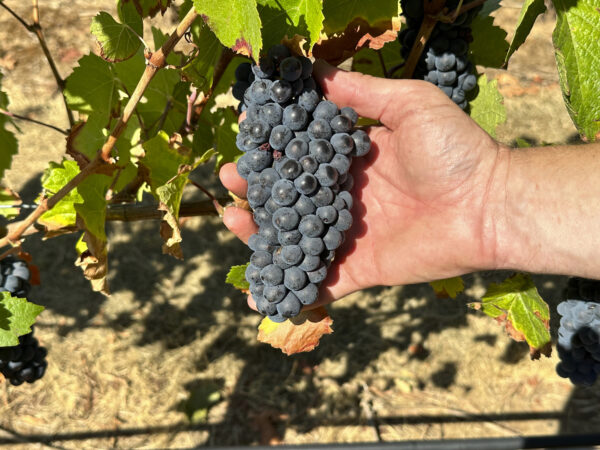
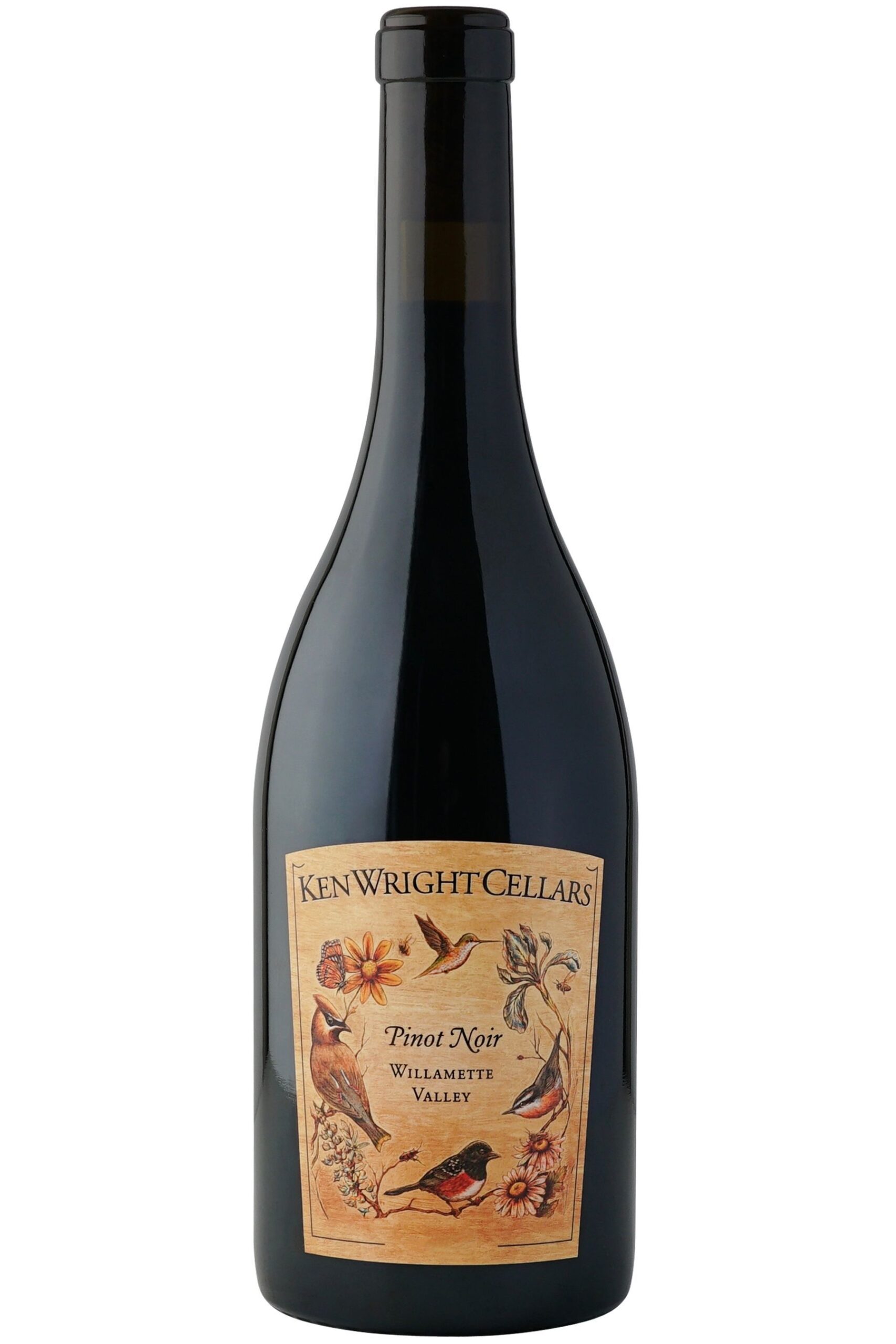
The lowest-priced wines from respected, top-notch winemakers will almost always be superior to similarly priced wines from less ambitious competitors. This entry-level Willamette Valley pinot noir from Ken Wright is a perfect example, offering a wine that is more nuanced, more complex, and has far more integrity than most pinot noirs available at this price.
Ken Wright was among the earliest Oregon winemakers to earn recognition for the quality of his wines. A stint working in high-end restaurants inspired him to study winemaking in California in the 1970s. There he made lifelong friends, some of whom made the trek north to Oregon in search of terrain and climate that could produce better pinot noir than what was then possible in California. Inspired by their experiences, Wright brought his family to the Willamette Valley in 1986 and quickly became one of the region’s rising stars. Ken Wright Cellars was founded eight years later and to this day is revered for the richness, grace, and fine-tuned balance of its single-vineyard pinot noirs.
This wine is their most modestly priced cuvée, a blend that includes barrels that don’t make the cut for the winery’s top bottlings. Wright’s wines are known for their plush generosity of fruit and lithe, food-friendly balance. This dry, midweight red offers bright blueberry and cherry flavors that feature a faint whiff of cinnamon and cocoa rarely found in wines that see no aging in new oak barrels.
Ken Wright Pinot Noir
Ken Wright pinot noir
Willamette Valley, Oregon; 13.8% ABV
PLCB Item #100032864 ― on sale for $22.99 through Feb. 1 (regularly $24.99)