Category: Health

  • Kids get free dental care at this Philly school. Officials say it’s a model that could be replicated in schools with empty space.

    Kids get free dental care at this Philly school. Officials say it’s a model that could be replicated in schools with empty space.

    Crystal Edwards didn’t see a dentist until she had a deep cavity at age 10: growing up in a struggling Philadelphia family, the resources to access dental checkups just weren’t there.

    So she jumped at the opportunity to locate a dental clinic in the school where she is now principal, W.D. Kelley, a K-8 in North Philadelphia.

    “This dental clinic is saving lives,” said Edwards.

    Tucked into a converted science lab on the school’s third floor, the Dental Clinic at William. D. Kelley, operated by Temple University’s Maurice H. Kornberg School of Dentistry, is nearing its third year of operation. It is open to all Philadelphia children, including those who do not attend Kelley, regardless of insurance status.

    School district officials have pointed to the Kelley clinic as a model as it prepares to make facilities master plan decisions, which will result in closing, combining, and reconfiguring some school buildings. The clinic is an example, they say, of how the system could use available space in some of its schools for public good.

    Soribel Acosta arrives at the Dental Clinic at William D. Kelley public school on Thursday, with her children, Andrea Jimenez (left), 6. And Sayra Jimenez, 7.

    “This is certainly a great example of what can happen when a university partners with a school district to create life-changing opportunities and outcomes for young people,” Superintendent Tony B. Watlington Sr. said in a statement in 2023, when the clinic opened.

    Temple dental school officials said more clinics could follow elsewhere in the city.

    Taking care of every child

    The underlying concept is simple, said Eileen Barfuss, the Temple dental professor who leads the clinic.

    “If your tooth hurts, if you’re not feeling well, you’re not going to learn,” said Barfuss. “In the past, there have been a lot of barriers to care for dentistry that weren’t there for medicine, but preventative care is so important so it doesn’t get to the point of pain.”

    The clinic accepts all comers, including those who are uninsured or underinsured, and sometimes treats students’ parents. (Most, but not all, patients have Medicaid dental, and grants help cover treatment for those without insurance.)
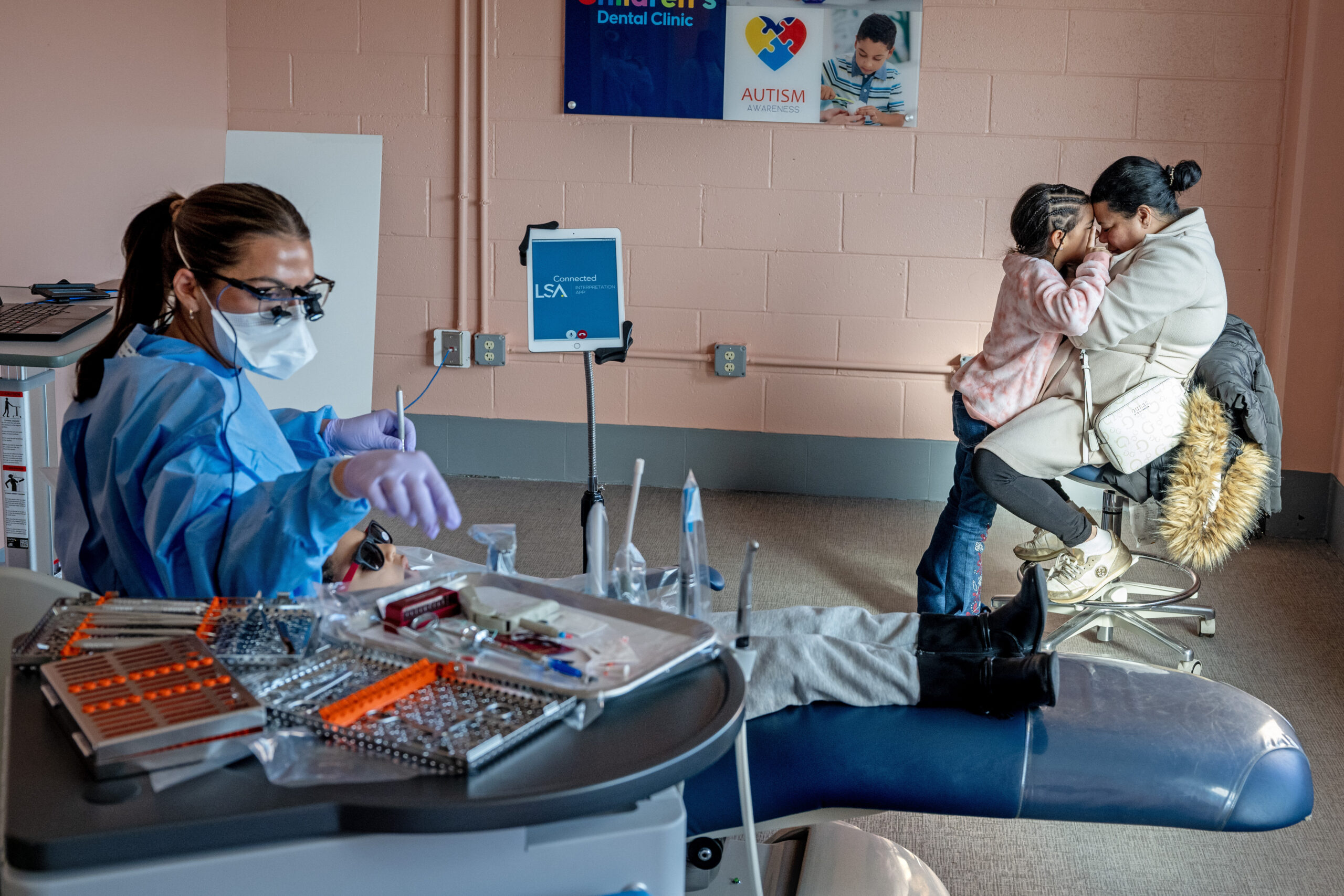
    Temple dentistry student Carly Pandit works on the teeth of Andrea Jimenez, 6, as her mother, Soribel Acosta, entertains sister Sayra Jimenez, 7, waiting her turn in the char at the dental clinic at William D. Kelley public school on Thursday.

    “We try to take care of every child in the Philadelphia School District,” said Barfuss. “There’s a place that they can come and get comprehensive care and establish a dental home.”

    To date, the clinic has seen nearly 700 patients, some of whom are repeat visitors. Patients are treated both by Barfuss and dental students she supervises.

    Students do come from other schools to the clinic; Barfuss said her team does outreach at community events and spreads the word through the district’s school nurses, who often send patients to the clinic. And staff teach lessons in Kelley classrooms on oral health and the importance of seeing a dentist twice a year.

    Being in a school helps normalize the dentist for many kids, who might poke their heads into the clinic to look around and see the friendly dental staff in their scrubs in the hallways, Barfuss said.

    ‘This is a good dentist’

    On Thursday, Fatoumata Bathily, a fourth grader with pink glasses and a bright smile, swung her legs down from a Kelley clinic dentist chair after a successful checkup.

    Eileen K. Barfuss (left), a pediatric dentist and Temple dentistry instructor consults with Fily Dramera after her daughter Fatoumata Bathily (rear), 9, was seen by a Temple student dentist at the Dental Clinic at William D. Kelley public school on Thursday.

    “It’s good here,” said Fatoumata, who attends nearby Robert Morris Elementary, and came for preventive care along with her brother, Abubakr. “This is a good dentist. I like that it’s colorful, and the people are nice.”

    Amid Ismail has wanted to bring such a model to the city since he became dean of Temple’s dental school in 2008. Decades ago, some schools offered dental care via city services, but as funding dried up, those clinics went away, Ismail said.

    Ismail raised the idea of a Temple-district partnership, but it took several years to get off the ground. Edwards, an award-winning principal who takes pride in bringing the community into Kelley, got the vision intuitively, he said.

    Temple paid to transform a large science lab into the dental clinic; the district provides the space and does not charge rent. There are four chairs, including one in a space specifically designed for patients with autism who might need a quieter environment and more room. Rooms are bright and modern.

    “The message to the parents and caregivers is that this is a nice place where all treatment is provided,” Ismail said. “A lot of children do have dental problems, but here we can treat them easily — they miss one class, max, and they don’t have to stay a long time.”

    Soribel Acosta waits for their appointment with her children, Sayra Jimenez (left), 7; and Andrea Jimenez (right), 6, at the Dental Clinic at William D. Kelley public school on Thursday.

    The clinic, which is about to celebrate its third anniversary, just expanded its schedule — it’s open four days a week, and officials eventually hope it will be open five days.

    Edwards fought for the clinic to come to Kelley, and it’s been just the boon she had hoped, she said.

    “This is a historic community that was really devastated and hard hit by the crack and drug pandemic,” said Edwards. “The dental office has really given us leverage on how to serve the community better.”


  • The Trump administration is targeting ultra-processed foods. A Penn researcher explains why that might be complicated. | Q&A

    The Trump administration is targeting ultra-processed foods. A Penn researcher explains why that might be complicated. | Q&A

    On the same day President Donald Trump’s administration targeted ultra-processed foods in its new federal nutrition guidelines, Penn researcher Alyssa Moran published an academic journal article explaining why they’re hard to regulate.

    For starters, there’s no consensus on how policymakers should define the term, she and two coauthors said in a Nature Medicine commentary piece. (The publication timing was a coincidence, but she welcomed the attention to an underestimated challenge.)

    Ultra-processed foods are generally understood to be those with industrially produced ingredients not found in home cooking, but experts have long debated how best to classify the foods for regulation. The wording would need to encompass all the possible variations, without being so rigid that the industry finds loopholes.

    The U.S. Food and Drug Administration and the Agriculture Department have said they are working on developing a federal definition to provide “increased transparency to consumers about the foods they eat.” It’s a key goal of the nation’s top health official, Robert F. Kennedy Jr., who blames ultra-processed foods for the United States’ “chronic disease epidemic.”

    Roughly 60% of an American child’s daily calorie intake is estimated to come from ultra-processed foods, which comprise up to 70% of the U.S. food supply. Studies have linked their consumption to a higher risk of obesity, diabetes, cancer, heart disease, and other harms.

    This is the first time U.S. dietary guidelines have explicitly called out ultra-processed foods, also called highly processed foods, and told Americans to limit consumption, Moran said. The guidance was part of a broader update by the Trump administration the first week of January that flipped the longstanding food pyramid on its head to promote consumption of whole foods, proteins, and some fats.

    Though health experts questioned changes, such as the vague guidance on drinking alcohol, the crackdown on ultra-processed foods mirrors what many health organizations and consumer advocacy groups have been saying for years.

    “I thought it was a bold move, and I was glad to see it,” she said.

    Moran talked with The Inquirer about what people should know about ultra-processed foods and the challenges that remain in regulating the products.

    This conversation has been lightly edited for length and clarity.

    Health & Human Services Secretary Robert F. Kennedy Jr. speaks during a press briefing with leading health officials and nutrition advisors at the White House in early January.
    What are ultra-processed foods?

    It’s a term that’s been used for decades and has been used, I think, interchangeably with ‘the Western diet’ or ‘junk foods’ or ‘highly processed foods.’

    Most foods are processed in some form, whether it’s physical processing, like slicing fruit before you eat it, or adding some chemical preservatives to foods that increase food safety. What changes with ultra-processing is the intent of the processing.

    With ultra-processing, the intent isn’t just to make the food safer or to extend shelf-life. It is to make it more cosmetically appealing and more likely to be overconsumed by individuals. They’re formulated in a way that makes them addictive, and they’re also aggressively marketed.

    What does it mean to make a food ‘cosmetically appealing’?

    It’s the overall sensation of eating the product.

    Companies are manipulating levels of highly palatable ingredients like sugar, salt, and fat to be at levels that are not naturally occurring and that are extremely palatable to consumers.

    They also add additives that enhance the naturally rewarding properties of things like sugar, salt, and fat. Some additives are added to food, for example, to mask a bitter flavor or prevent an aftertaste. They also add emulsifiers to change the mouth feel of a product. They pay attention to how the product sounds — even the crunch of a product when you’re chewing it — and add dyes to make them more visually appealing, especially to kids.

    There are all kinds of strategies that can take advantage of all of the senses to make the product almost irresistible.

    Why is there so much debate over how to define the products?

    The current administration has talked more than any prior administration about potentially limiting the production, marketing and sale, and availability of ultra-processed products. So, to be able to formulate policy to limit intake of these products, we have to be able to identify them.

    Many people have proposed going down the route of defining ultra-processed foods according to a list of additives. And there are many reasons why I don’t think that’s a good approach.

    What are the reasons?

    We need to really be thinking about how companies are going to respond to whatever definition we create.

    If we use a list of specific additives that makes something ultra-processed, companies are going to look at that list and they’re going to say, ‘How can we get around this. How can we skirt regulation?’ They’re either going to increase their use of additives that exist already but aren’t on that list, or they’re going to create new additives with very similar structures and functions as the existing additives.

    We see this happen all the time with commercially regulated products. When policies tax sugar, we see that companies increase their use of non-nutritive sweeteners, so the food supply is just as sweet, if not more. When Red Dye No. 2 was banned (in 1976), companies created Red Dye No. 3, which is almost identical and was also banned (in 2025), but 50 years later.

    Plus, we have hundreds of thousands of products on the marketplace and there are constantly new ones being added. And currently under FDA policy, companies don’t even need to notify the FDA when they add new ingredients to the food supply. So we don’t even have a complete list of every single additive in the food supply right now.

    What approach did you propose in your Nature article on this topic?

    Right now, it has been proposed to use a list of ingredients that would make a food ultra-processed. Everything else is non-ultra-processed.

    Our recommendation is really to flip that.

    We would say, ‘Here are all of the ingredients that make a food non-ultra-processed. Everything else is ultra-processed.’

    There are very few additives that make a food non-ultra-processed. The purpose (of the additive) would have to be for food safety or preservation, and that’s one reason why this is also a much simpler approach. Our approach is saying, for example, your yogurt is considered non-ultra-processed if it contains things like milk, live cultures, fruit, nuts, seeds, and honey, as well as some preservatives, vitamins, and minerals.

    If it has anything else, it’s an ultra-processed food and is in scope for regulation. Then, if companies introduce new additives, they’ll still be considered ultra-processed because they still fall into the ‘everything else’ bucket.

    Are there any other challenges that you see in terms of regulating the industry?

    The biggest one is the pushback from the food industry. They spend a lot of money fighting against policies to regulate production, marketing, and sale. We see it with sweet and beverage taxes that have been enacted in Philadelphia and other places. We see it with front-of-package labeling, which the FDA had been trying to pass.

    The lack of resources at our federal agencies is another barrier. This administration, early on, really dismantled the FDA, which I think would be the main regulatory body involved in creating this definition and potentially developing policy to regulate these products.

    If we don’t have people at those agencies, and they don’t have the resources they need to do their work, you could have a law on the books, but it’s not going to go anywhere.

    What are your tips for consumers?

    Shop on the grocery store perimeter and avoid the center aisles. Avoid ingredients that aren’t familiar to you.

    Classic examples of ultra-processed foods are box macaroni and cheese, many frozen pizzas or frozen prepared meals, and many boxed cookies, candies, cakes, and packaged foods.

    I would never tell consumers in this environment that you have to avoid every single ultra-processed food to be healthy. These products are everywhere. They’re cheap. They’re super convenient. Many people don’t have access to minimally processed whole foods.

    That’s why I think policy is so important — policies that both put limits on ultra-processed foods, but also promote and incentivize the production and sale and marketing of non-ultra-processed products.

  • Quest for a drug that lowers an artery-clogging particle nears finish line

    Quest for a drug that lowers an artery-clogging particle nears finish line

    A fatty particle can clog arteries just as surely as cholesterol but often goes undetected, striking seemingly healthy people unaware of the danger. Though tests are widely available, they aren’t routinely ordered — in part because there are no approved treatments for the genetic disorder.

    Now, cardiologists waging a campaign against lipoprotein(a) say they are reaching a turning point. Five experimental drugs are in late stages of development and aim to prove that lowering levels of Lp(a) — pronounced “L-P-little-A” — reduces heart attacks and strokes. Results from the most advanced clinical trial are expected in the first half of this year.

    Cardiologists, drugmakers, and Wall Street analysts are optimistic that these new drugs can effectively treat a disorder that is estimated to affect about 20% of the world’s population. Even if they prove effective, the cost of a novel drug — as well as the scant public awareness of Lp(a) — could be a barrier to treating patients who might benefit.

    “There are over a billion people on our planet that have elevated lipoprotein levels and that are at increased risk,” said Steve Nissen, a cardiologist at Cleveland Clinic whose team is leading trials on four drugs targeting Lp(a). “We will have a massive educational job to do.”

    Discovered in the 1960s, Lp(a) is prone to getting stuck in the arterial wall like the particle that doctors call “bad” cholesterol, but it carries another protein that creates an even greater risk of heart attacks, strokes, and restricting blood flowing from the heart. Until 2019, there wasn’t even a diagnostic code for high Lp(a) levels.

    The condition often flies under the radar because it is almost entirely genetic, isn’t part of typical cholesterol tests, and can afflict otherwise healthy people. Diet and exercise don’t bring down Lp(a). With no approved drugs to treat the condition, many cardiologists say they routinely hear that primary care physicians don’t see the point in testing. In a study of more than 48,000 patients globally with a history of heart disease, just 14% had been screened for Lp(a).

    So the cardiology community is closely watching a clinical trial seen as a bellwether for Lp(a) treatments.

    The trial is studying pelacarsen, an experimental drug that stops the liver from producing the extra protein carried by Lp(a) that makes it especially risky. In an earlier trial, researchers showed the drug could reduce Lp(a) levels by up to 80% when injected weekly. Now the drug’s sponsor, Novartis, will be the first to reveal whether lowering Lp(a) levels also reduces cardiovascular events from patients who have heart disease.

    Asked about pricing strategy on a November call with financial analysts, Novartis executives said that pelacarsen would initially be tailored to patients who’ve had early heart problems and a family history of disease, according to a transcript compiled by S&P Global Market Intelligence. “The family history is an emotional motivator for people to take action,” said Dianne Auclair Rocha, a senior vice president.

    Though pelacarsen is the furthest along, other experimental drugs have shown they can lower Lp(a) even more sharply and for longer. Olpasiran, developed by Amgen, cut Lp(a) levels by up to 100% when taken every 12 weeks. Eli Lilly is studying lepodisiran, which works by a similar mechanism, to see if it reduces risk for patients who have not yet had a cardiac event — and it is also developing a pill for lowering Lp(a).

    “If these therapies show benefit, it would impact the lives of these individuals tremendously,” said Gissette Reyes-Soffer, an associate professor at Columbia University Irving Medical Center who advises companies targeting Lp(a). “You’re not going to have four stents put in,” she said, adding that preventing heart disease could save on health costs.

    For now, there are few ways to lower Lp(a) levels. A class of cholesterol-lowering drugs has shown a modest effect, and an expensive blood-filtering procedure can also do so, though neither is approved by the Food and Drug Administration for that purpose. But some cardiologists bristle at physicians who decline to order tests for Lp(a) because there isn’t a drug that treats it.

    “I think that’s crazy,” said Erin Michos, a professor of cardiology at the Johns Hopkins University School of Medicine. “I think Lp(a) is very actionable now,” she said, adding that physicians can take steps to lower all other treatable risks such as high cholesterol, blood pressure, and weight. Michos has consulted for companies developing Lp(a) therapies.

    Labcorp and Quest Diagnostics offer Lp(a) in-person tests for about $50. The Family Heart Foundation, which promotes awareness of genetic risks for cardiovascular disease, offers free at-home kits to test for Lp(a). Guidelines from professional associations differ, with some calling for everyone to get tested once while others recommend screening only those deemed to be at high risk.

    That may change with the results of the pending clinical trials on lowering Lp(a).

    “If these trials are positive, I think they are going to be game changers,” said Salim Virani, a preventive cardiologist who is now vice provost at Aga Khan University in Pakistan. But that will also depend on how they are priced, he said, an issue that has limited access to other effective cardiovascular drugs. “Drugs only benefit when patients are able to take them,” he said.

  • Five Democratic-led states sue HHS over frozen welfare funding

    Five Democratic-led states sue HHS over frozen welfare funding

    Five Democratic-led states are suing the Trump administration for freezing their share of federal food, housing, and childcare assistance dollars, saying officials failed to justify the sweeping actions that could strip billions in aid from needy families.

    New York, along with California, Colorado, Illinois, and Minnesota, asked for a temporary restraining order that would allow them to continue receiving the funds, in a lawsuit filed Thursday evening with the United States District Court for the Southern District of New York.

    The states argued that the Administration for Children and Families, which is within the Department of Health and Human Services, provided no evidence of fraud and acted illegally by enacting sanctions within the three welfare programs without following processes laid out by law. The administration wrote to the states earlier this week that the freeze was necessary to prevent “potential” fraud but didn’t detail what it meant, according to letters viewed by the Washington Post.

    “I will not allow this administration to play political games with the resources families need to help make ends meet,” New York Attorney General Letitia James (D) said in a statement.

    State officials and child advocates have said the funding freeze would wreak havoc on families relying on childcare aid and could cause ripple effects if parents are forced to quit their jobs to care for children or daycare centers shut down permanently.

    HHS General Counsel Mike Stuart wrote on X late Thursday that the agency “stands by its decision to take this action to defend American taxpayers.”

    “We identified serious concerns in these states that warranted immediate review and action,” he wrote. “These same officials were complicit in this perpetuation of this fraud and allowing it to happen.”

    Minnesota was already in the administration’s crosshairs amid investigations into billions of federal dollars authorities say were fraudulently claimed by individuals and groups purporting to help the state’s low-income population. HHS broadened its crackdown this week, saying nearly $2.4 billion in childcare grants have been frozen to the five states, as well as $7.35 billion in temporary grants for needy families and $869 million in social services funds. These programs help cover childcare, housing, food, and home utility costs for families with low incomes.

    Democratic leaders in those states blasted the move as politically motivated. Before the lawsuit was filed Thursday, New York Gov. Kathy Hochul (D) told reporters that the administration is “coming after Democratic governors, five of us, for no reason at all.”

    “I want them to know this, that you may think you’re punishing me as a Democrat, but this is a county program,” she said, referring to safety net programs in New York partly funded with federal dollars. “We are simply the pass-through. The money goes to providers selected by the counties. They run this.”

    Under the freeze, the states must submit justification and receipts before being able to collect funds from any of the programs. The administration wrote in letters to the states that the freeze wouldn’t be lifted until they put in place more verification measures to ensure the funds are being used properly for eligible recipients.

    A letter from HHS’s Administration for Children and Families to Colorado said the administration is committed to “rooting out fraud” and expressed concern that Colorado is providing “illegal aliens” government benefits.

    Fraud investigations into the three programs targeted by the administration are typically handled by states, former HHS officials said. New York’s Office of the Welfare Inspector General reported it secured nearly $600,000 in fraud-related restitution in 2024, for example.

    The administration froze childcare funding to nearly a dozen daycare facilities in Minnesota in late December after a viral video alleged they were collecting funds without caring for children — claims the state has rebutted. Federal prosecutors have charged 92 people with committing fraud in other, Medicaid-funded programs in the state.

    All five states involved in the lawsuit filed Thursday are among more than two dozen states that previously sued the Trump administration over withholding other federal funds including for education, disaster relief and public health, arguing the actions jeopardize critical services.

  • South Carolina measles outbreak grows by nearly 100, spreads to North Carolina and Ohio

    South Carolina measles outbreak grows by nearly 100, spreads to North Carolina and Ohio

    South Carolina’s measles outbreak exploded into one of the worst in the U.S., with state health officials confirming 99 new cases in the past three days.

    The outbreak centered in Spartanburg County grew to 310 cases over the holidays, and spawned cases in North Carolina and Ohio among families who traveled to the outbreak area in the northwestern part of the state.

    State health officials acknowledged the spike in cases had been expected following holiday travel and family gatherings during the school break. A growing number of public exposures and low vaccination rates in the area are driving the surge, they said. As of Friday, 200 people were in quarantine and nine in isolation, state health department data shows.

    “The number of those in quarantine does not reflect the number actually exposed,” said Dr. Linda Bell, who leads the state health department’s outbreak response. “An increasing number of public exposure sites are being identified with likely hundreds more people exposed who are not aware they should be in quarantine if they are not immune to measles.”

    Since the outbreak started in October, Bell has warned that the virus was spreading undetected in the area. Hundreds of school children have been quarantined from school, some more than once.

    South Carolina is one of two active hot spots for measles. The other outbreak is on the Arizona-Utah border, where 337 people have gotten measles since August.

    Last year was the nation’s worst year for measles spread since 1991, end-of-year data from the Centers for Disease Control and Prevention shows. The U.S. confirmed 2,144 cases across 44 states.

    And as the one-year anniversary of the Texas-New Mexico-Oklahoma outbreak approaches — which sickened at least 900 people and killed three — health experts say the vaccine-preventable virus is on the verge of making a lasting comeback in the U.S.

    At that point, the U.S. would lose its status of having eliminated local spread of the virus, as Canada did in November. International health experts say the same strain of measles is spreading across the Americas.

  • Kenneth W. Ford, hydrogen bomb physicist, educator, and author, has died at 99

    Kenneth W. Ford, hydrogen bomb physicist, educator, and author, has died at 99

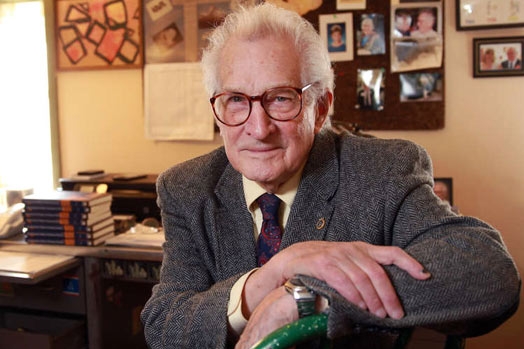
    Kenneth W. Ford, 99, of Gwynedd, Montgomery County, theoretical physicist who helped develop the hydrogen bomb in 1952, university president, college professor, executive director, award-winning author, and Navy veteran, died Friday, Dec. 5, of pneumonia at Foulkeways at Gwynedd retirement community.

    Dr. Ford was a 24-year-old physics graduate student at Princeton University in 1950 when he was recruited by a colleague to help other scientists covertly build a hydrogen bomb. “I was told if we don’t do it, the Soviet Union will,” Dr. Ford told The Inquirer in 2023, “and the world will become a much more dangerous place.”

    So he spent one year at the Los Alamos National Laboratory in New Mexico and another back at Princeton, creating calculations on the burning of the fuel that ignited the bomb and theorizing about nuclear fission and fusion. The H-bomb was tested in 1952.

    Dr. Ford’s expertise was in nuclear structure and particle and mathematical physics. He and Albert Einstein attended the same lecture when he was young, and he knew Robert Oppenheimer, Fredrick Reines, John Wheeler, and dozens of other accomplished scientists and professors over his long career.

    He came to Philadelphia from the University System of Maryland in 1983 to be president of a startup biotech firm. He joined the American Physical Society as an education officer in 1986 and was named executive director of the American Institute of Physics in 1987.

    “He always seemed to be the head of something,” his son Jason said.

    He retired from the AIP in 1993 but kept busy as a consultant for the California-based Packard Foundation and physics teacher at Germantown Academy and Germantown Friends School. Michael Moloney, current chief executive of the AIP, praised Dr. Ford’s “steady and transformative leadership” in a tribute. He said: “His career in research, education, and global scientific collaboration puts him among the giants.”

    As president of the New Mexico Institute of Mining and Technology from 1975 to 1982, Dr. Ford oversaw improvements in the school’s enrollment, faculty, budget, and facilities. He “was an accomplished researcher, scholar and teacher,” Michael Jackson, interim president of New Mexico Tech, said in a tribute, “a techie through and through.”

    Dr. Ford wrote “Building the H Bomb,” and it was published in 2015.

    Before Philadelphia, he spent a year as executive vice president of the University System of Maryland. Earlier, from 1953 to 1975, he was a researcher at Indiana University, physics professor at Brandeis University in Massachusetts and the University of Massachusetts, and founding chair of the department of physics at the University of California, Irvine.

    Officials at UC Irvine said in a tribute: Dr. Ford “leaves an enduring legacy as a scientist, educator, and institution builder. … The School of Physical Sciences honors his foundational role in our history and celebrates the broad impact of his distinguished life.”

    He told The Inquirer that he hung out at the local library as he grew up in a Kentucky suburb of Cincinnati and read every book he could find about “biology, chemistry, geology, you name it.” He went on to write 11 books about physics, flying, and building the H-bomb.

    Two of his books won awards, and 2015’s Building the H Bomb: A Personal History became a hit when the Department of Energy unsuccessfully tried to edit out some of his best material. His research papers on particle scattering, the nuclear transparency of neutrons, and other topics are cited in hundreds of publications.

    Dr. Ford was a popular professor because he created interesting demonstrations of physics for his students.

    In 1976, he earned a distinguished service citation from the American Association of Physics Teachers. In 2006, he earned an AAPT medal for notable contributions to the teaching of physics.

    He was the valedictorian at Phillips Exeter Academy in New Hampshire in 1944. He served two years in the Navy and earned a summa cum laude bachelor’s degree in physics at Harvard University and his doctorate at Princeton in 1953.

    In 1968, he was so opposed to the Vietnam War that he publicly declined to ever again work in secret or on weapons. “It was a statement of principle,” he told The Inquirer.

    Kenneth William Ford was born May 1, 1926, in West Palm Beach, Fla. He married Karin Stehnike in 1953, and they had a son, Paul, and a daughter, Sarah. After a divorce, he married Joanne Baumunk, and they had daughters Caroline and Star, and sons Adam and Jason. His wife and former wife died earlier.

    This photo shows Dr. Ford (center) and other students listening to former First Lady Eleanor Roosevelt speak in 1944.

    Dr. Ford lived in University City, Germantown, and Mount Airy before moving to Foulkeways in 2019. He was an avid pilot and glider for decades. He enjoyed folk dancing, followed the Eagles closely, and excelled at Scrabble and other word games.

    He loved ice cream, coffee, and bad puns. He became a Quaker and wore a peace sign button for years. Ever the writer, he edited the Foulkeways newsletter.

    In 2023, he said: “I spent my whole life looking for new challenges.” His son Jason said. “He found connections between things. He had an active mind that went in all different directions.”

    In addition to his children, Dr. Ford is survived by 14 grandchildren, a great-grandson, a sister, a stepdaughter, Nina, and other relatives.

    Services are to be from 2 to 4:30 p.m., Saturday, Jan. 24, at Foulkeways at Gwynedd, 1120 Meetinghouse Rd., Gwynedd, Pa. 19436.

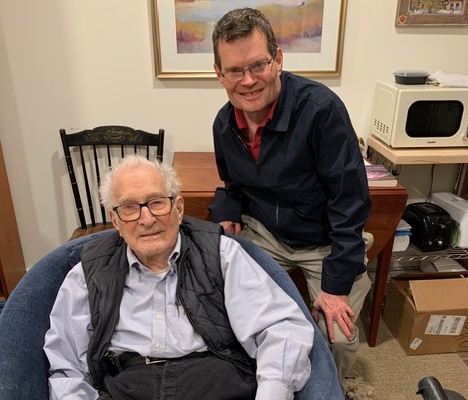
    Dr. Ford and his son Jason
    Dr. Ford wore a peace sign button for years.
  • In unprecedented move, NASA cuts short space mission over astronaut’s health

    In unprecedented move, NASA cuts short space mission over astronaut’s health

    For the first time in the International Space Station’s history, NASA said it was cutting short a crew mission after an astronaut “experienced a medical situation.”

    “It’s in the best interests of our astronauts to return Crew-11 ahead of their planned departure,” NASA Administrator Jared Isaacman told reporters at a news conference Thursday, without naming the astronaut or specifying what the problem was.

    The four-person Crew-11 is made up of U.S. astronauts Zena Cardman and Mike Fincke, along with Japan’s Kimiya Yui and Russia’s Oleg Platonov. Together, they have spent about five months aboard the space station and had planned to stay until mid-February.

    On Wednesday, they were conducting scientific research, ahead of a planned space walk, when one of the astronauts had a medical issue that required help from the other crew members and onboard medical equipment, NASA officials said.

    “The astronaut is absolutely stable. This is not an emergent evacuation,” said NASA’s Chief Health and Medical Officer, J.D. Polk.

    He said the issue also did not reflect a problem with the space station environment and “was not an injury that occurred in the pursuit of operations.”

    Although the Space Station has medical equipment onboard, he said the issue was sufficient to warrant bringing the astronaut back for a full work-up and diagnosis at a facility with more extensive hardware and without the challenges of working in microgravity.

    “Always we err on the side of the astronaut’s health and welfare. And in this particular case, we are doing the same,” he said.

    The crew will return to Earth in the “coming days,” Isaacman said, with plans for a parachute-assisted splashdown off the coast of California. And because of that early departure, Crew-12, which had been scheduled to take over in mid-February, could be deployed earlier.

    “This is exactly what our astronauts train and prepare for,” he added.

    Crew members live and work aboard the International Space Station, orbiting Earth 16 times a day. Run as an international partnership by five space agencies, the station has had more than 290 visitors representing 26 countries since it was assembled in 1998.

  • A new $50 million investment fund will back Penn life sciences startups

    The University of Pennsylvania, German biotech firm BioNTech, and Osage University Partners, a Bala Cynwyd venture capital firm, have formed a $50 million fund to back early-stage life sciences startups at Penn, the partners announced Friday.

    The announcement came on the eve of the much-hyped annual J.P. Morgan Healthcare Conference in San Francisco, which starts Monday. The conference has become a way to measure the mood of the biotech sector, which has slumped after investment peaked in 2021. It’s been particularly difficult for early-stage biotech companies to raise money in recent years, according to a recent J.P. Morgan report.

    For Penn scientists and company founders, the so-called Penn-BioNTech Innovative Therapeutics Seed Fund, or PxB Fund for short, will step into that gap. It is designed to invest in companies that are developing new therapeutics, diagnostics, and research tools.

    The announcement did not include a breakdown of how much money each of the three backers provided. Osage University Partners, which has $800 million under management and had previously invested in at least 10 Penn spinouts, will run the fund.

    “Penn has a remarkable track record of creating cutting-edge startups,” Marc Singer, an Osage managing partner, said in a statement.

    He cited two deals for Penn spinouts last year: AbbVie acquired San-Diego-based Capstan Therapeutics for up to $2.1 billion, and Kite paid $350 million for Interius BioTherapeutics, which was based at Pennovation Works in the Grays Ferry section of Philadelphia.

    Penn was among the first six universities Osage partnered with 15 years ago when it started investing in spinouts from research universities, while allowing the institutions to share in some of the profits. This was at a time when few universities were investing in their own startups.

    Penn’s evolution as an investor in its own startups

    For Penn, that began changing about a decade ago. The university’s first investment in one of its own faculty-member spinouts came in 2016, when it invested $5 million in Carl June’s Tmunity Therapeutics. In 2018, Penn Medicine agreed to invest an additional $45 million in Penn biotech companies over three years in conjunction with outside funds.

    In December, Penn announced a $10 million fund that will make seed investments of up to $250,000 in companies that have at least one founder affiliated with the University of Pennsylvania. That fund is for the entire university, not just life sciences.

    PxB is another part of what John Swartley, Penn’s chief innovation officer, called in an interview Friday a “constellation of different support structures and funding sources that our companies can draw upon in order to advance their opportunities and agenda.”

    Anna Turetsky, a biotech investor in New York who received her undergraduate degree at Penn and has a doctorate in biophysics from Harvard University, has joined Osage and will serve as PxB’s general partner. She said PxB is a 10-year fund and is expected to build a portfolio of around 15 companies in the early years.

    “Part of why this is a fantastic time to start this fund is that there has been a gap in venture funding for early stage startups over the last few years. Everyone wants to see clinical data these days,“ Turetsky said. If that continues, ”then in a few years, there will be no early-stage clinical companies,” she said.

    Germany’s BioNTech, which partnered with Pfizer on one of the COVID-19 vaccines that used mRNA technology developed at Penn, will use the fund to deepen its longstanding ties to Penn researchers.

    Philadelphia’s place in biotech

    Some observers of Philadelphia’s biotech sector have lamented the relative lack of local investors, which are abundant in places like Boston and San Francisco and have helped turn those metro areas into leading innovation centers.

    Quaker BioVentures was a local investment fund that raised $700 million in the early 2000s to buy into biotech firms in Philadelphia and elsewhere, but was not successful for its investors, which included Pennsylvania state pension funds.

    Others, when asked why the Philadelphia region trails Boston, San Francisco, and San Diego, as a biotech hub, point to the need for a deeper pool of management talent.

    PxB could help change that, Singer said.

    “Part of our hope with the fund is to create some companies, start from scratch, take technology, find management teams, start them in Philadelphia. Hopefully, that will create a new crop of managers,” he said.

  • Keeping seniors fit in Philly takes a citywide effort | Expert Opinion

    Keeping seniors fit in Philly takes a citywide effort | Expert Opinion

    One in five Philadelphians are age 60 or older, and the city’s senior population has been growing for at least the past decade.

    I’m a Philly-based physical therapist and researcher who studies how to boost physical activity for seniors and people with disabilities. Patients, participants in the studies I conduct, and older community members alike often ask me: “What should I do to stay healthy?”

    My answer is simple: Movement is one of the most powerful tools we have to support our bodies and minds, and to stay independent as we grow older.

    The World Health Organization recommends that all adults, no matter their age, should aim for at least 150 minutes of cardio activities per week, and strength training twice a week. Older adults should also practice balance training through activities like tai chi, yoga, or dance to prevent falls.

    But most older adults don’t meet all these metrics. In fact, in Philadelphia, 30% of seniors report having difficulty with mobility activities like walking or climbing stairs.

    While staying active is key to aging independently, the environments where we live also influence these outcomes. Think about “blue zones,” places where some of the healthiest and longest-living people in the world reside. They usually live longer because of a combination of social connections, movement opportunities, and diets.

    Philly is definitely not a blue zone, but there are pros to moving through your golden years here … and some cons.

    Urban infrastructure

    Philadelphia’s regular street grid, close neighborhoods and the fact that much of Center City is accessible by foot help explain why Philly was named the most walkable city in the U.S. by USA Today for the past three years.

    If you’re taking in the city on foot, you’re very likely to stumble upon a public park like one of the five historic squares designed by William Penn in the 1680s, the massive Fairmount Park — which is over 10 times the size of Central Park in New York — or the bustling Clark Park in West Philadelphia, among others.

    In fact, 95% of all Philadelphia residents — and 94% of those 65 and older — live within a 10-minute walk of a public park. However, those parks tend to be smaller and lower-quality for people in low-income neighborhoods.

    Philly’s public transit system, however, tends to receive less praise.

    In the beginning of 2025, over 700,000 people rode some form of Southeastern Pennsylvania Public Transportation Authority, or SEPTA, public transit daily. But this year was marked by dramatic service cuts — though they were quickly reversedfunding uncertainty, and fare increases.

    Public transportation is directly linked to the overall health of a city and its residents. Healthy public transportation can stimulate local economies, improve air quality, and increase access to work, school, and healthcare for everyone, whether they own a car or not.

    And the physical activity often required to get to and from a bus, train, or trolley stop can provide some extra movement for riders.

    Since older adults make up a significant portion of SEPTA riders, service cuts mean that some seniors cannot get where they need to go, are less physically active, and may become lonelier.

    Of course, Philly’s historic cobblestone streets, narrow alleyways, and uneven sidewalks aren’t wheelchair- or cane-friendly, and are a challenge for people with mobility limitations. However, in 2023, Philadelphia settled a class-action lawsuit over inaccessible sidewalks and curb ramps that resulted in a federal mandate that requires the city to install or fix 10,000 curb ramps by 2038. Philly has installed or fixed about 25% of that total so far.

    Philadelphia also has many historic buildings, and this designation allows for a loophole to Americans with Disabilities Act compliance laws. These buildings are often inaccessible to people who use wheelchairs or other mobility devices.

    Services for seniors

    In 2011, Philly launched the Mayor’s Commission on Aging to support policies and projects that aim to improve the quality of life of older adults.

    At the time, the U.S. was experiencing a massive shift in demographics. The number of adults age 65 and older grew by nearly 40% from 2010 to 2020. According to research from the Pew Charitable Trusts, Philly experienced a similar, albeit less dramatic, upward trend. The city’s senior population grew by 22% from 2013 to 2023.

    The Mayor’s Commission on Aging advocates for older residents and often partners with agencies like the Philadelphia Corporation on Aging that focus on seniors. PCA offers several programs to support senior independence and wellness, such as the Senior Housing Assistance Repair Program and the Caregiver Support Program, which provides help for the family and friends who support seniors.

    PCA also oversees 28 senior community centers throughout the city. Each of the centers offers a variety of free or low-cost classes, including nationally recognized physical activity programs that improve strength, balance, quality of life, and other important health metrics for older adults.

    The Salvation Army Kroc Center of Philadelphia in North Philadelphia is another great resource for older Philadelphians. The state-of-the-art health club offers fitness, swimming, and gardening opportunities. An annual membership is $451 for adults over age 62, and the club accepts some insurance wellness benefits.

    This year, I will partner with the Kroc Center to launch Bingocize, an evidence-based physical activity program for older adults, as part of a research study funded by the Arthritis Foundation. We hope to find out if the new program boosts physical function and physical activity, and improves arthritis symptoms and quality of life. We’re also looking at what factors will make the program sustainable at the Kroc Center long after the study is over.

    I believe Philly has more work to do when it comes to providing seniors access to physical activities that promote healthy aging. But the seeds planted over a decade ago to protect and support the city’s rapidly growing aging population demonstrate a commitment to positive change, and an understanding that where we live affects individual and collective health.

    Laura Baehr is an assistant professor of physical therapy and rehabilitation sciences at Drexel University.

    Reprinted from The Conversation.

  • Is red wine better for you than white? The answer may surprise you.

    Is red wine better for you than white? The answer may surprise you.

    The question: Is red wine healthier than white wine?

    The science: Many people think red wine is better for you than white wine or other types of alcohol.

    The notion was partly born from studies — some of which have been disputed — that suggested that certain compounds found in red wine could improve cardiovascular health.

    Now the evidence suggests that any type of alcohol — including red wine — is unlikely to make you any healthier than drinking no alcohol at all.

    “There’s no isolated health benefit of red wine over white wine over any other beverage containing alcohol,” said George Koob, the director of the National Institute on Alcohol Abuse and Alcoholism. And, he added, “There’s no physical health benefits of which we can attribute to alcohol.”

    While it’s long been known that heavy alcohol consumption can cause serious health problems, the potential benefits and risks of moderate drinking — defined as up to two drinks per day for men and one for women — have been murkier. In the past, some research suggested that people who drank small amounts of alcohol in general might have a health advantage compared with those who didn’t drink at all.

    But as research has evolved over the years, we now know that even modest drinking is linked to a higher risk of developing certain cancers such as breast, colorectal, and esophageal cancers, as well as brain changes and dementia, heart problems, and sleep problems.

    Dietary guidance has also changed. Current guidelines from the U.S. Department of Agriculture state that “emerging evidence suggests that even drinking within the recommended limits may increase the overall risk of death from various causes.” The American Heart Association recommends limiting or abstaining from alcohol, even though the association published a scientific review in 2025 that concluded that light drinking poses no risk for coronary artery disease, stroke, sudden death, and possibly heart failure, and may even reduce the risk of developing such conditions — though not all experts agreed with that conclusion.

    The argument in favor of red wine used to focus on certain compounds.

    Red wine contains more polyphenols — plant compounds with antioxidant and anti-inflammatory properties — because the grape juice is fermented with the grape skins, where these compounds are concentrated. (White wine grapes are pressed, and the skins removed, before the fermentation process.)

    These polyphenols include procyanidins, flavonoids, and resveratrol, which is often mentioned in cancer research. Another type, anthocyanins, helps give red wine its rich color and has been studied for potential cardiovascular benefits.

    Most of the health benefits associated with these polyphenols have been observed in studies at much higher doses than what you would get from a couple glasses of wine, so there’s no real advantage, experts said.

    “The concentrations are sufficiently low that you would have to drink more than moderate amounts to truly get that much more benefit from the polyphenols in red wine,” which could lead to health issues, said Eric Rimm, a professor of epidemiology and nutrition at the Harvard T.H. Chan School of Public Health, who has studied the health effects of alcohol.

    Instead, you could add stronger sources of anthocyanins into your diet, including darker berries such as blueberries, apples, onions, black or green tea, and dark chocolate, Rimm said.

    As for other risks and benefits, some people may avoid red wine because it can stain teeth and cause headaches and even allergy-like symptoms. While red wine headaches are not fully understood, some people may be especially sensitive to the tannins in the grapes, histamines, or sulfites produced through fermentation, or the additional sulfites added to preserve wine. Some research suggests quercetin, an antioxidant found in grapes, may be responsible.

    In one study, people who had a wine intolerance were more likely to report allergy-like symptoms such as nasal congestion, itching, flushed skin, and stomach upset more often after drinking red wine than white wine.

    What else you should know

    While drinking alcohol probably won’t lead to any positive health effects, you may be able to reduce potential negative effects by how you drink it.

    First, speak with your healthcare provider about whether drinking alcohol is safe for you. People who are pregnant, have certain medical conditions, take medications that interact with alcohol, or have or are recovering from an alcohol-use disorder should not drink, according to USDA. Also, teetotalers, people who don’t already drink, should not start drinking for any health reasons, health officials said.

    Assuming you’re of legal drinking age — 21 years or older in the United States — here are some tips from experts:

    • Eat first. Food, particularly foods with some protein, fats, and carbohydrates, slows the absorption of alcohol into the bloodstream, reducing potential ill effects.
    • Understand drink sizes. A standard alcoholic drink has 0.6 ounces of pure alcohol. That’s equal to 5 ounces of wine with 12% alcohol, 12 ounces of beer with 5% alcohol, or a shot — 1.5 ounces — of an 80-proof liquor. When buying alcohol at a store, check the alcohol content. “Beer used to be 4 or 5% alcohol. There are a lot of beers now that are 8 to 10%. So you may want to drink a little bit less if you have a higher alcohol-containing beer or a higher alcohol-containing spirit,” Rimm said.
    • Keep in mind that men and women may process alcohol differently. Women generally don’t produce as much of an alcohol-metabolizing enzyme called alcohol dehydrogenase, which means they break down alcohol more slowly and are at a higher risk of alcohol-related health problems.
    • Drink in moderation, which is defined as up to two drinks per day for men and one for women. Also, space out drinks throughout the week — meaning don’t drink all 7 or 14 drinks in one weekend.

    The bottom line

    While red wine has more polyphenols, which are associated with cardiovascular benefits, than white wine, they aren’t in a high enough concentration to provide a health advantage. In addition, red wine may be more likely than white wine to cause headaches and allergy-like symptoms in people who are susceptible.