Category: Health

  • Why changes in a Florida ocean current could wreak havoc worldwide

    Why changes in a Florida ocean current could wreak havoc worldwide

    STRAITS OF FLORIDA — At 2 a.m., oceanographer Ryan Smith was headed into his 12th hour of work with little sleep when trouble started.

    From the rear deck of the University of Miami’s research boat, he guided the vessel’s winch to lower a cage containing 14 long, gray tubes, collectively weighing about 1,000 pounds, hundreds of meters deep into the Atlantic Ocean, to record the temperature, salinity and density of the water. But after running smoothly for the first two-thirds of the trip, the sensors now suddenly stopped transmitting data.

    There was no time for a hiccup. With urgency mounting, Smith signaled to bring the cage to the surface.

    At sea, there is no helpline to call for a broken instrument at this hour (or any hour). If the team couldn’t fix it, they would need to make a 12-hour slog back to Miami through the fast-moving Florida Current — the precise subject they were trying to measure.

    For 43 years, scientists have been studying the strength of the water flow between Florida and the Bahamas to learn what drives its changes over time. The information could help scientists answer a pressing question: Is the Florida Current, one of the world’s fastest ocean currents, slowing down? If so, it could indicate weakening of the larger circulation system in the Atlantic Ocean — what scientists call the Atlantic Meridional Overturning Circulation (AMOC) — which could be disastrous.

    Even Hollywood has imagined the harm that could result from a collapse of this system of currents, which acts like a conveyor belt as it transports water, nutrients, and heat through the Atlantic.

    While scientists doubt the scenario sketched out in the 2004 movie The Day After Tomorrow, in which the AMOC’s failure prompts a calamitous ice age across the Northern Hemisphere, researchers say rain patterns could change or fail in Southeast Asia and parts of Africa, disease may spread to new populations, and temperatures would probably drop across Western Europe. Iceland has even declared that the risk of such a collapse is a national security threat.

    But climate scientists are at odds over how soon, or whether, the circulation system may weaken. Researchers largely agree that the AMOC may weaken over this century as the world warms, but they differ on whether the system is already slowing down.

    Direct observations of the AMOC’s and the Florida Current’s flow, velocity, temperature and salinity could help clarify this. The Florida Current, which helps shuttle water north, is a key component in calculating the system’s strength.

    Traveling between Miami and the Bahamas, a crew from the University of Miami and the National Oceanic and Atmospheric Administration homed in on the Florida Current, the world’s longest nearly continuously observed ocean current. Over 36 sleep-deprived hours, six researchers and seven crew members traversed the ocean, dove underwater, and collected gigabytes of measurements. These expeditions gather data that generations of scientists can use to better understand the state of our oceans — and humanity’s future.

    Tyler Christian, a marine scientist, takes a photo of a waterspout during a research trip to collect data on the Florida Current.

    The AMOC debate

    For more than four decades, scientists have almost continuously measured water flow across the Florida Current, largely with the help of a decommissioned AT&T telecommunications cable running from West Palm Beach to Grand Bahama Island.

    The telephone line wasn’t intended for ocean research, but NOAA scientists noted that it picked up tiny voltages induced by seawater flowing across the Florida Straits, which changed depending on the current’s flow. Using direct measurements of the waterway from research cruises, scientists can convert the voltages into the volume of water carried each second through the strait.

    In 2005, British oceanographer Harry Bryden tapped these cable measurements and the limited available ship measurements in a seminal paper that suggested a possible slowdown in the AMOC between 1957 and 2004. Using data across the Atlantic Basin today, scientists have found that the AMOC varies, daily and seasonally, yet it also appears to have experienced a slight weakening over the past two decades.

    But is it on a long-term decline because of human-induced planetary warming? Debatable.
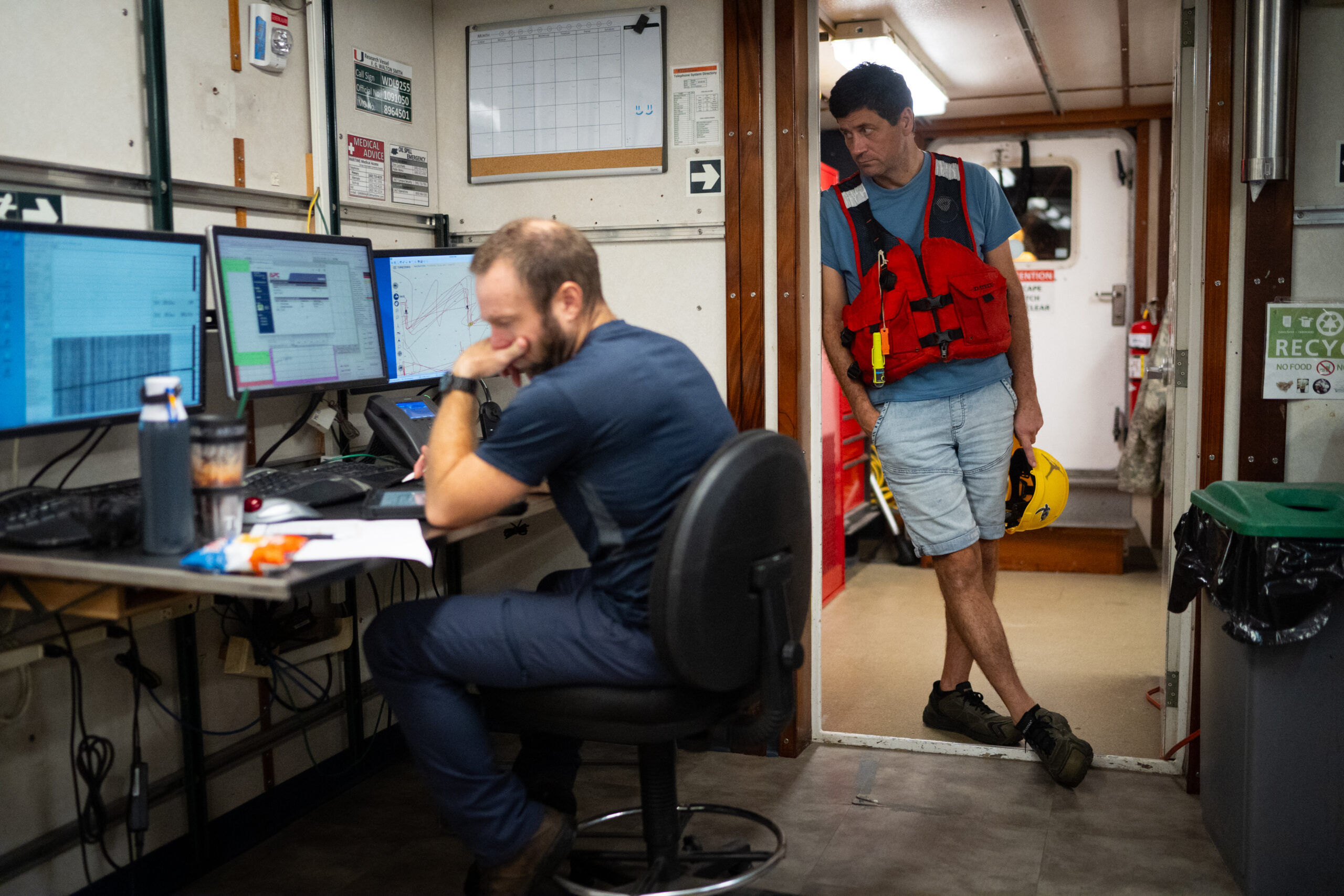
    At about 4 a.m., oceanographer Denis Volkov, right, checks in on Jay Hooper, who helps the team with data management

    The Florida Current is one of the main forces that make up the western boundary of the AMOC. The warm Florida waters feed into the mighty Gulf Stream, which merges with the warm North Atlantic Current headed toward Europe. As the current reaches the Arctic, air temperatures cool the water, which becomes denser. The water sinks and moves south toward the equator, where it is again warmed by the sun and returns north.

    “The role of the AMOC in the climate is it carries a huge amount of heat from the equator towards the poles,” said Denis Volkov, who is a co-principal investigator of NOAA’s Western Boundary Time Series project along with Smith.

    But scientists say a warming world is throwing off this balance. As Arctic ice melts, freshwater enters the North Atlantic — making the ocean water less dense, so it is less likely to sink. As a result, scientists propose that it cannot power the ocean conveyor belt as well, so less salty, warm water is getting transported northward.

    A major shift in the Atlantic Ocean’s circulation could create severe drought in some areas and damaging floods in others. Sea level could rise by a foot or more along the U.S. East Coast if it collapsed.

    Scientists have typically used data that indirectly hints at the current’s movement — such as sea surface or air temperature — to reconstruct the oceans in models and track whether the overall system is weakening, but they have reached mixed conclusions.

    For instance, a 2018 study plugged sea surface temperatures into computer models to show that the AMOC is weakening. Then, a paper released last January reported no evidence of weakening over the past 60 years after examining data on heat exchanges between the air and the ocean called air-sea fluxes.
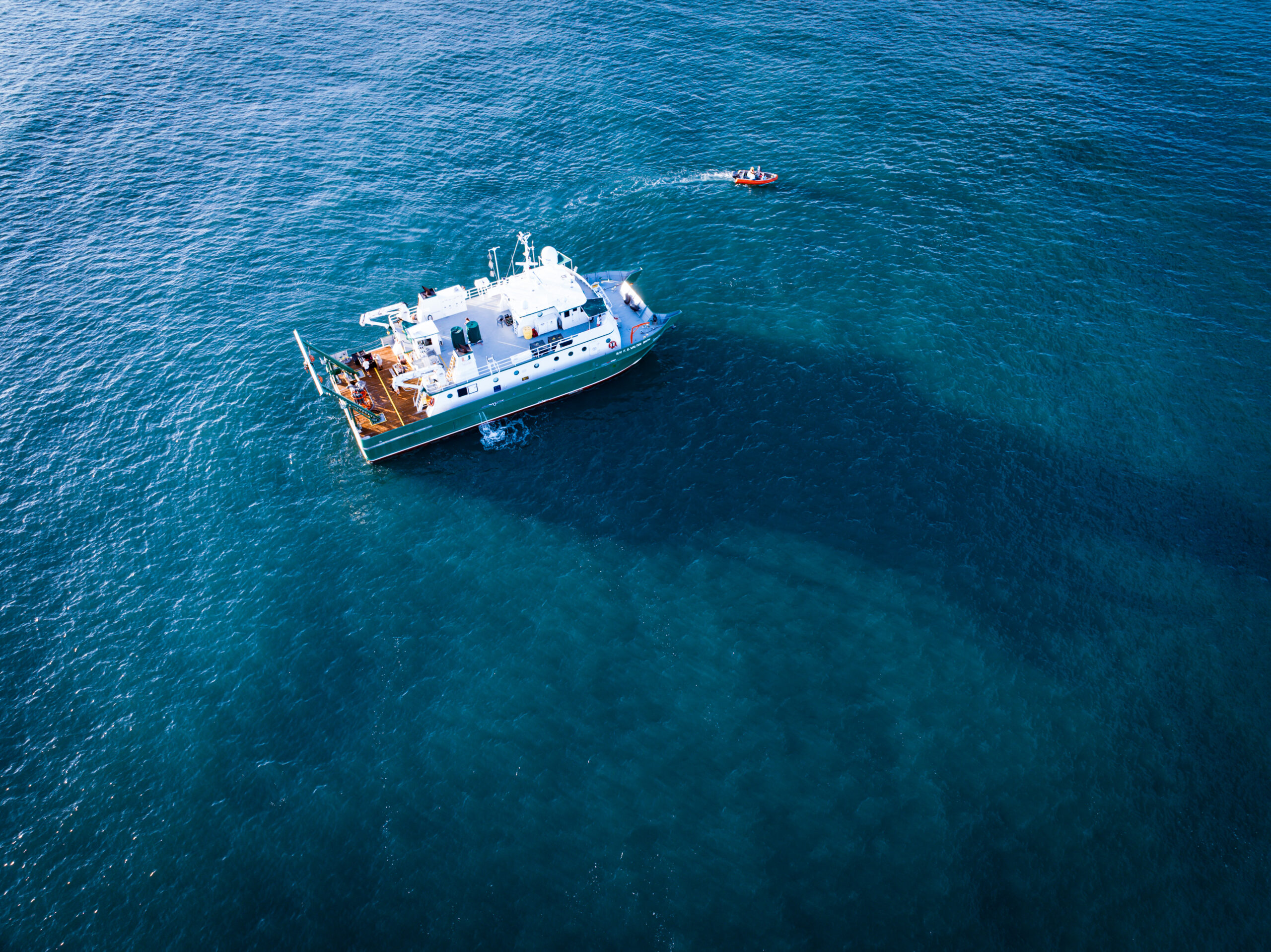
    The dive boat takes scientists to a site to collect data on the Florida Current.

    Volkov and his colleagues are helping approach the puzzle with observations. In 2024, they reassessed the cable data from the Florida Current, adjusting for changes from Earth’s geomagnetic field. First, they found that the current had remained stable over the past four decades. Then, they updated calculations of the AMOC in this region, which has been monitored for only 20 years or so, with the corrected data and found that the AMOC wasn’t weakening as much as previously calculated at this latitude.

    “But there is a caveat that observational data is very short,” said Volkov. He said scientists would need another 20 years of AMOC observations to determine if the small decline is a robust feature and not part of natural variability.

    And the AMOC can still weaken even if the Florida Current remains strong, he said, since it is the sum of currents across the basin. But long-term changes in the Florida Current can serve as an indicator of trouble for the rest of the system.

    One snag, said Volkov: The serendipitous cable that provided data for more than 40 years malfunctioned in 2023 — perhaps broke. Until it’s fixed, researchers are ramping up their diving operations to recover data from underwater acoustic barometers on the ocean floor.
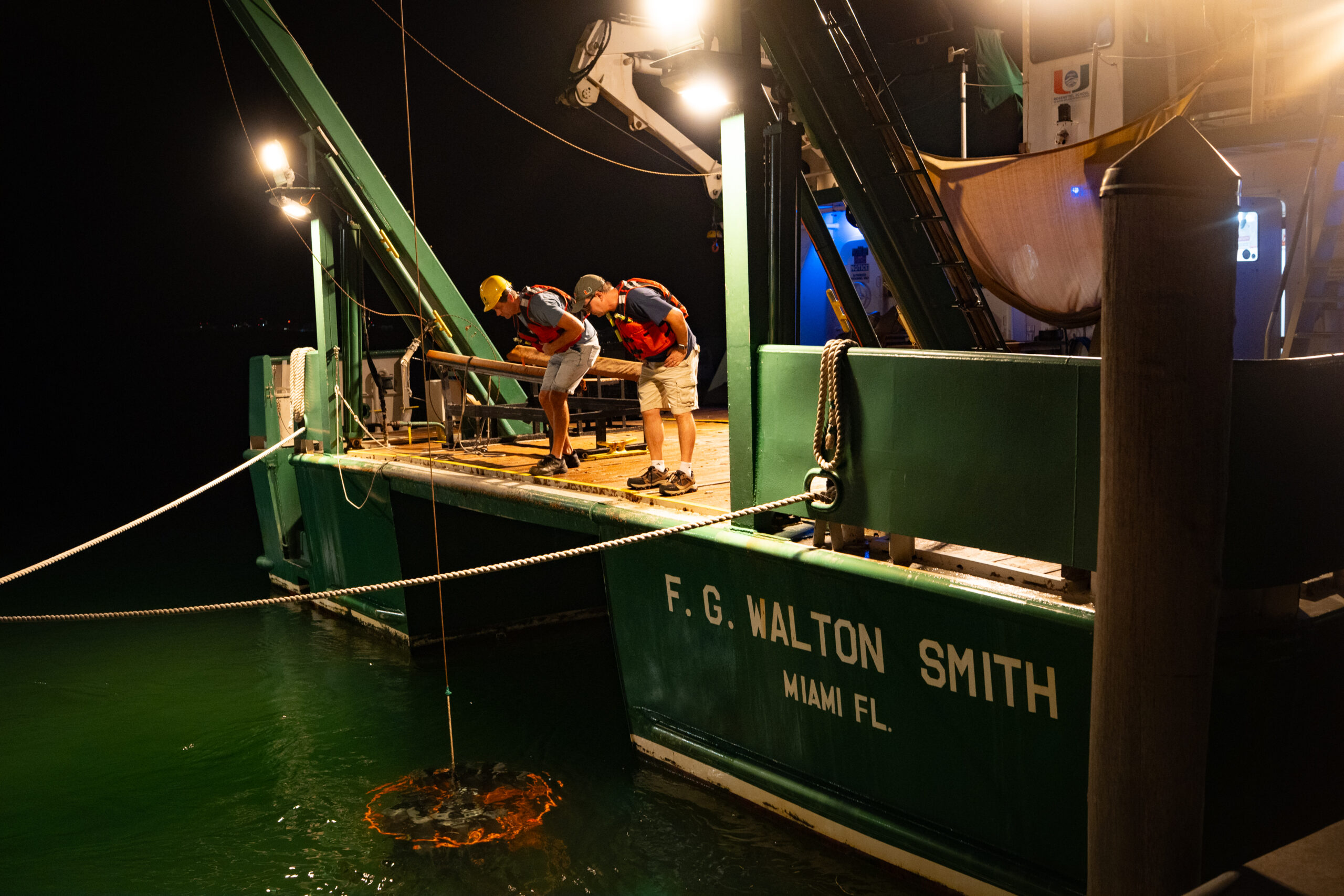
    Volkov, left, and Smith watch as a sampling instrument drops into the water.

    The expedition

    When the research vessel departed from the university’s dock around 4 a.m. on Sept. 3, the sun and most of the science staff were down for the night. A few shipmates gazed at the illuminated cityscapes from the stern deck, next to the diesel engine’s deep rumble. After traversing rocking waves, the crew reached scenic Bahamian waters eight hours later.

    The green F.G. Walton Smith, 96 feet long, and its crew make this overnight trip about six times a year, traveling 93 nautical miles diagonally from Miami toward the Little Bahama Bank. From there, they go west and collect data at nine sites from the boat and dive underwater at two others.

    The team’s goal is to determine the amount of water flowing north through the Florida Current per second through a series of underwater instruments, from the boat and from satellites. They also collect temperature, salinity, density and velocity data; velocity and temperature, for example, can be combined to calculate the amount of heat transported across an area.
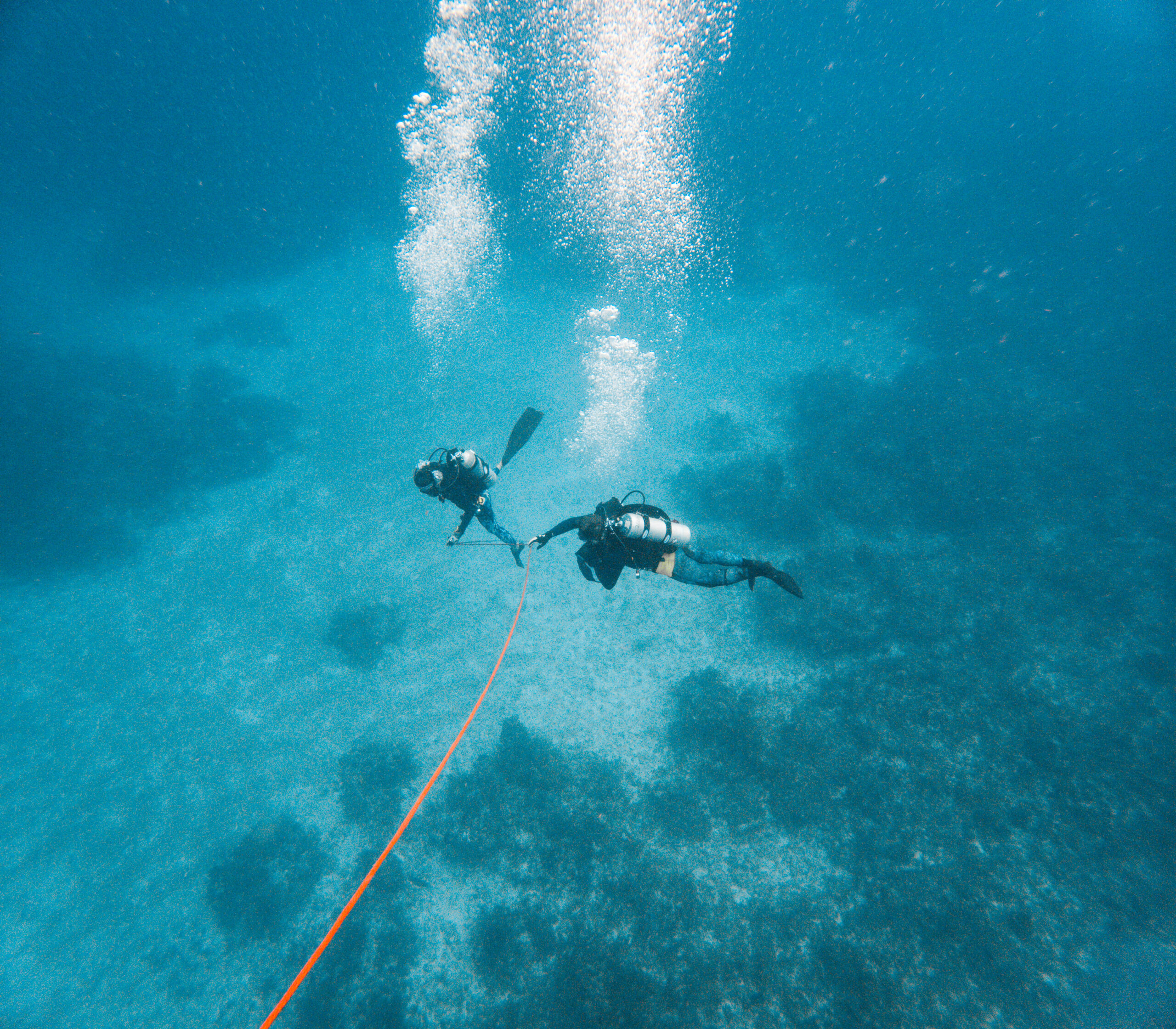
    Chomiak, left, and Zach Barton, a technician and engineer, return from diving to the seafloor to place a data-collection instrument.

    At the first dive site, a remora — a long, torpedo-shaped suckerfish — circled the two scuba divers less than a mile from the boat. The slender fish is known for a unique fin on its head that suctions itself to sharks, whales, and turtles to feed off their detritus. And for a quick moment, it latched onto Leah Chomiak’s head. And her thigh.

    Chomiak focused on the barometer in front of her. Her bulky gloves made it harder to use a screwdriver 50 feet below the Bahamian surface. She and her fellow diver held onto the long tubes that had been recording data every five minutes for the previous two months, since the last time divers brought the instruments to the surface and downloaded the data.

    “Now we decided to service them more frequently, because, at the moment, this is the only source of data for our Florida Current transport estimates,” Volkov said. The scientists can use the pressure data to help calculate the amount of water flowing through the area.

    Next, the ship arrived at the first of nine hydrographic stations and lowered a cage of sensors known as a CTD-rosette sampler (CTD stands for conductivity, temperature and depth, although it measures many more properties). Researchers can use the temperature and salt concentrations of a particular mass of water to infer where it came from and how it reaches other parts of the world.
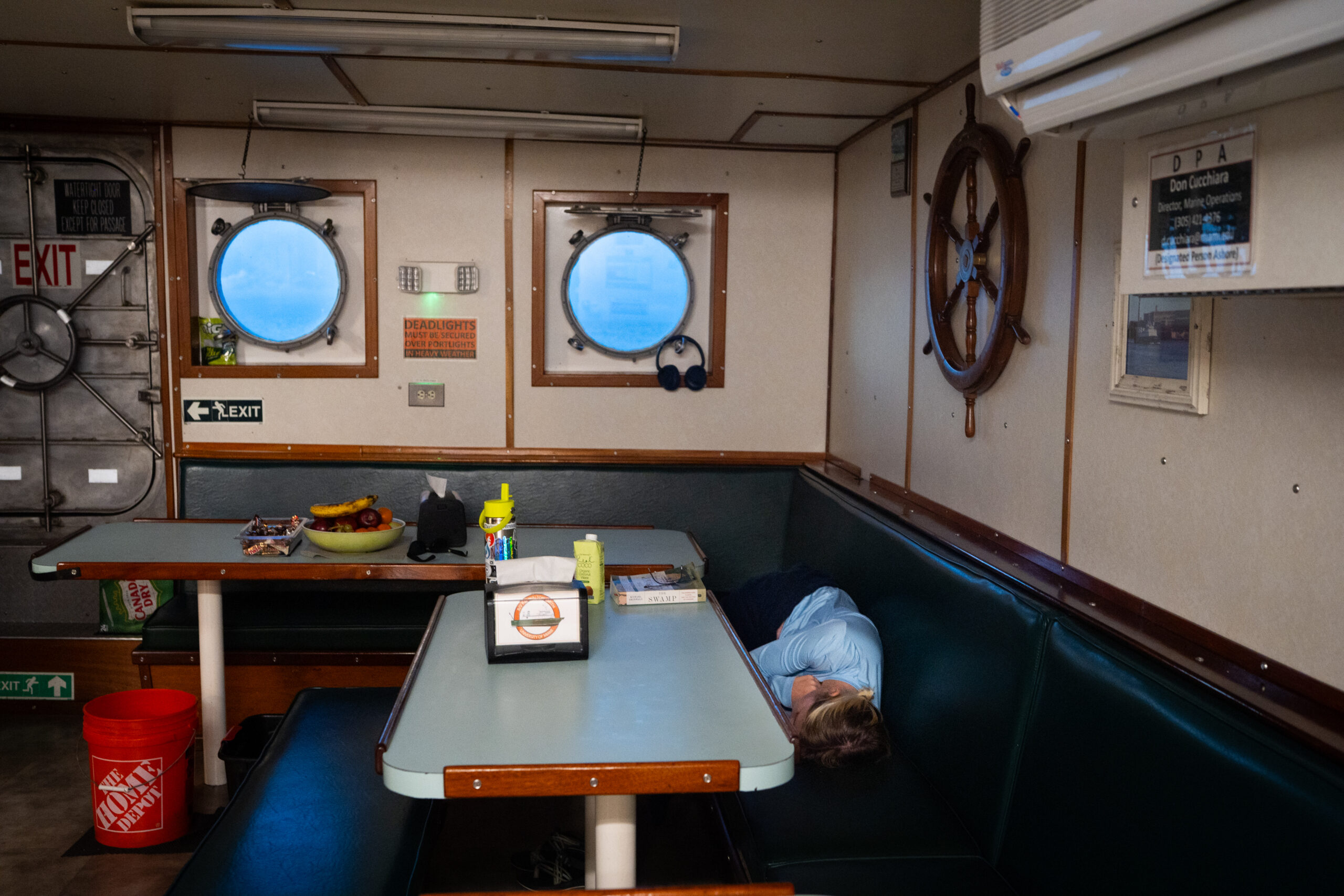
    Christian takes a quick nap in the galley as the vessel travels back to Miami.

    Jay Hooper, who has been on these trips for 10 years and helps with data management, sat at the ship’s computer station.

    “Ready whenever you are,” he said into his headset.

    From the top deck, the captain lowered the rosette into the water, dropping 60 meters each minute. As the instruments approached the bottom at 486 meters, Hooper said to slow down.

    Lines of various colors — representing salinity, temperature, and density — squiggled down on Hooper’s computer screen as the sensors dropped. Temperature decreased and density increased as the instruments descended. Seventeen minutes later, the rosette was brought back onto the boat.

    After hours of gathering data, Hooper and Smith hit a snag at the seventh station. The rosette now wasn’t sending any information to the computer. Was it human error? Did the instrument break?

    The two tried different solutions as the other scientists slept. Then they replaced the sensors’ cable, and as they lowered the rosette, data filled the computer screen.

    The boat stopped for the last dive near the Florida coast to retrieve the second set of underwater acoustic barometers. But the water was so cloudy, thick and green that the divers couldn’t see their hands, so they decided they would try on the next trip.

    Captain John Cramer pilots the vessel back to the university.

    For the next 12 hours, the boat fought against the Florida Current to take the crew home. Some aboard mustered up energy to sing “Happy Birthday” to one of the crew members.

    The next morning, Smith and his colleagues processed the data to upload to NOAA’s Atlantic Oceanographic & Meteorological Laboratory website. There were no notes about a cable malfunction, encounters with remoras or sleep deprivation.

    The Excel spreadsheet had a single note for each station it recorded: “Profile looks good; use these data.”

  • Philadelphia Medicaid advocates meet to plan outreach, with coverage at stake

    Philadelphia Medicaid advocates meet to plan outreach, with coverage at stake

    About 300,000 Pennsylvania residents risk losing Medicaid next year when new eligibility rules take effect, and advocates worry that too few people are aware.

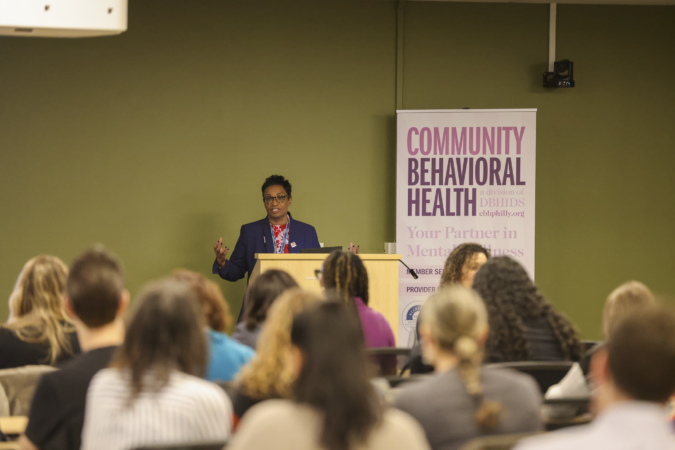
    More than 100 public health workers, community advocates, and medical providers gathered Thursday to strategize how to spread the word about forthcoming changes to Medicaid.

    The nonprofit Community Behavioral Health organized the event at its Center City offices as a first step toward rallying the stakeholders tasked with helping people navigate the new rules in order to maintain access to critical health services. The city contracts with CBH to provide mental and behavioral health services for Philadelphians with Medicaid.

    New federal rules taking effect in January 2027 require certain adults to meet work requirements and reapply for Medicaid every six months, instead of the current once a year. The changes were ordered under Republicans’ 2025 spending bill and signed into law by President Donald Trump. They are part of the largest cut in recent history to Medicaid, the publicly funded health coverage program for low-income families and individuals, and people with disabilities.

    States will be expected to verify eligibility for millions of people twice as often, a major administrative burden. For now, who will be exempt remains unclear. For instance, the law suggests that “medically frail” individuals will not need to meet work requirements or reapply every six months, without detailing who would qualify.

    The federal government expects to release more details in June.

    Public health leaders say they cannot wait for the additional guidance to begin talking about the forthcoming changes, in order to minimize the number of people who lose coverage.

    “It needs to be consistent and ongoing,” Donna E.M. Bailey, CEO of CBH, said of the group’s outreach efforts. “It really is a Philadelphia responsibility.”

    The coming Medicaid changes

    Roughly three million Pennsylvania residents are covered by Medicaid. About a quarter of them — roughly 750,000 people, including 180,000 in Philadelphia — qualify because the 2010 Affordable Care Act expanded access to low-income parents and childless adults. This so-called expansion group saw the bulk of the Medicaid cuts in last year’s Republican spending bill.

    Beginning next year, most people in this group will need to provide monthly proof that they spent at least 80 hours working, volunteering, or participating in job training. Every six months, they will need to reapply for the program. Some experts have compared this process to filing taxes because of the extensive paperwork and documentation required.

    Pennsylvania has estimated that about 300,000 people will lose Medicaid because they cannot navigate the new requirements — even though many remain eligible.

    “It’s hard to imagine with all these changes that it’s just going to be smooth,” said Mike Nardone, a former director of Pennsylvania’s Medicaid program, who spoke during the CBH event. “We’re going to have people who lose coverage, and we’re going to have to understand why that happens.”

    Starting outreach early

    Early and frequent communication is the best strategy for minimizing the number of people who lose Medicaid, public health advocates said at Thursday’s event.

    “We need to start now. This isn’t something that can wait,” said Joan Erney, CBH’s former chief executive.

    The dozens of medical providers, social workers, and community advocates in attendance were urged to work together to develop strategies for helping people to understand what new steps to take to keep their Medicaid coverage.

    “We always need the voice of those of you on the ground,” said Leesa Allen, a former Pennsylvania Medicaid director, who spoke during the panel.

    The event was the first in a series planned by CBH, which will expand outreach with similar events throughout Philadelphia designed for families and individuals to ask questions and learn more about the new Medicaid rules.

  • Should your therapy session be outdoors? More therapists are trying it.

    Should your therapy session be outdoors? More therapists are trying it.

    Jennifer Udler has been a practicing therapist for 25 years. A little over a decade ago, she started training for a marathon, running with a group near her home in Montgomery County, Maryland.

    “I noticed that people were more comfortable, less inhibited, opening up and talking during our group training runs,” Udler said. “And I started to wonder if there was a way to do a practice where people are moving.”

    Udler sees children and adolescents as well as adults, and she suspected that her younger clients especially might feel more comfortable talking while walking on a nature trail rather than sitting in a therapist’s office. She decided to try it with one of her young clients with his mom’s permission.

    “We met at a park, and we walked around, and he was a different kid,” Udler said. “He was running around, and he was showing me stuff in nature. And he talked.” She said they made more progress in one session outside than they had in two years meeting in her office.

    “That was in the snow in February,” she added. “So I was like, it’s only going to get better.”

    Udler started reading more about outdoor therapy, which is also known as walk-and-talk or nature-informed therapy. At that time she couldn’t find any formal training or certification programs, but she did learn that other therapists had tried it and found many of the same benefits she had.

    “You’ve got the movement, you’ve got nature, which is extremely grounding and stabilizing for people, and you have the co-regulation, walking side-by-side,” Udler said. For her younger clients or anyone uncomfortable with therapy, it also helped to be walking while talking about difficult topics because they didn’t always have to make eye contact with her.

    She wrote her own informed consent for her clients, establishing the additional risks of outdoor therapy and how confidentiality would work in a public park. She started a practice called Positive Strides, specializing in walk-and-talk therapy sessions outdoors in nature.

    “As I did the work and saw different types of people with different kinds of mental health issues, I realized how amazing it is,” Udler said.

    Trading the couch for the great outdoors

    In March of 2020, when many therapists moved their practices online, a smaller number brought their practices outside. The benefits were not felt only by the clients. Nature acts as a sort of “buffer against burnout,” said Heidi Schreiber-Pan, the executive director and founder of the Center for Nature Informed Therapy, where she trains clinicians in how to bring their practices outdoors.

    “What we’re hearing from people is that they can see more clients when they have outdoor sessions or nature-informed sessions,” Schreiber-Pan said.

    The American Psychological Association put out new guidelines this past fall for how clinicians can implement walk-and-talk therapy into their practice.

    The number of therapists working outside is still small. Shreiber-Pan believes that’s in part because therapists don’t realize that nature is all around us. One of the first questions she asks in her trainings is: When you think of nature, what comes to mind?

    “They talk about, like, these beautiful national parks or the mountains or the ocean,” Shreiber-Pan said. “And where is your therapy office? Not there.” She said that part of the training is helping practitioners recognize that nature is all around us — even in a city park.

    Miki Moskowitz is a clinical psychologist who practices in a primary care setting, which means she sometimes sees a patient only a couple of times.

    “We’re trying to make a difference, even in one single session,” she said.

    For Moskowitz, practicing outside has improved her own mental health and increased her capacity, but she also sees the immediate impact for her patients.

    “What I’ve seen that’s so encouraging is that sometimes just that first session we go for the walk, and patients are, like: ‘Wow, I didn’t know this trail was here. This is so beautiful. This feels so great. This is totally something I can do on my own,’” Moskowitz said. “That is so much more powerful than if we’re sitting in my office, which has no windows, just talking about the idea of going outside.”

    The brain benefits of getting outside — even when it’s freezing

    When Marc Berman was doing research at the University of Michigan, he helped devise a study to look at the brain benefits of time in nature. Participants did a challenging task testing their memory and attention, and then they were sent on a walk either through downtown Ann Arbor or in the area arboretum. Those who walked in nature showed a 20% improvement in their short-term memory, while those who walked in an urban environment did not.

    Berman and his colleagues did this experiment in June and January. In the winter, the nature walk was less enjoyable — but just as beneficial.

    “That was pretty cool because it suggested that you didn’t have to enjoy the nature walk to get these cognitive benefits. There was something deeper going on,” Berman said.

    One explanation for why nature is so good for our brains is called the attention restoration theory. The idea is that our ability to pay attention is finite, and spending time in nature can replenish our capacity. Nature is also “softly fascinating” — it captures our attention without overwhelming our senses.

    “I can kind of mind-wander and think about other things when I’m looking at a waterfall,” Berman said. “I can’t really mind-wander or think about other things when I’m in Times Square.”

    Berman is now a psychology professor at the University of Chicago and author of the new book Nature and the Mind: The Science of How Nature Improves Cognitive, Physical, and Social Well-Being.

    How to make the most of time outdoors

    Whether or not you are in therapy, your brain can benefit from a dose of nature, especially during the colder months when many of us are inclined to stay indoors. Here are some science-backed tips for how to get the benefits.

    • Nature can be found anywhere. You just have to look for it. Research has shown that noticing nature and paying attention to it can have positive effects even in an urban environment. Psychologists recommend noting the bird song you hear on the walk to your car, looking at the leaves on the trees and the clouds in the sky, and just taking a moment to appreciate nature’s beauty — even if it’s just a small plant poking through the sidewalk.
    • You don’t have to like it. Nature can be an acquired taste, especially when it’s cold. But you don’t have to be a backpacker or love camping to benefit from time outside. Berman and others have found in their research that we get the brain benefits whether or not we enjoy a walk in the woods.
    • Try a mindfulness exercise. Many people struggle to sit still and meditate, despite its benefits — but Moskowitz said that mindfulness practices can come more easily outside. “Just look up at the treetops and notice what you see, notice what you hear,” Moskowitz said. “Look for something that’s moving, and watch the branches sway in the breeze. Look at something close up, or look at something far away. You’re doing a mindfulness practice, and you’re tuning into your senses, and you are focusing your attention, but it’s not hard work.”
    • Bring nature inside. If you aren’t able to get outside as often as you would like, you can still get some of the benefits. Put a plant in your office — even a fake one — or look at pictures of beautiful landscapes. Listen to bird songs at your desk. “It’s not as strong as the real thing, but you can get benefits from the simulated nature,” Berman said.
    • Embrace the winter. When it’s cold and snowy outside, our impulse is to stay inside. But less time outside can contribute to seasonal depression. Schreiber-Pan recommends following the Scandinavian practices of “friluftsliv” — or “open-air living,” getting outside no matter the weather — and hygge, or embracing the cozy indoors when you come back in. “The happiest people on this planet are the Scandinavians,” Schreiber-Pan said. “They also have the longest winters.”
  • 1,100 dead or sick geese in N.J. spark bird flu warning, prompt lake’s closure

    1,100 dead or sick geese in N.J. spark bird flu warning, prompt lake’s closure

    At least 1,100 dead or sick birds, mostly Canada geese, have been reported across New Jersey in an outbreak that started on Valentine’s Day, according to state officials.

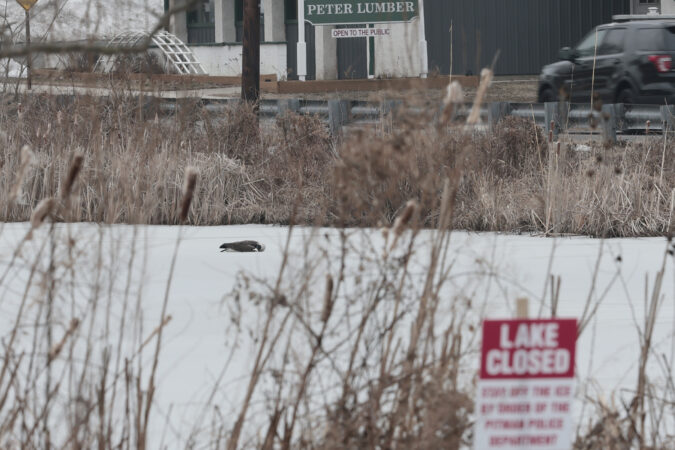
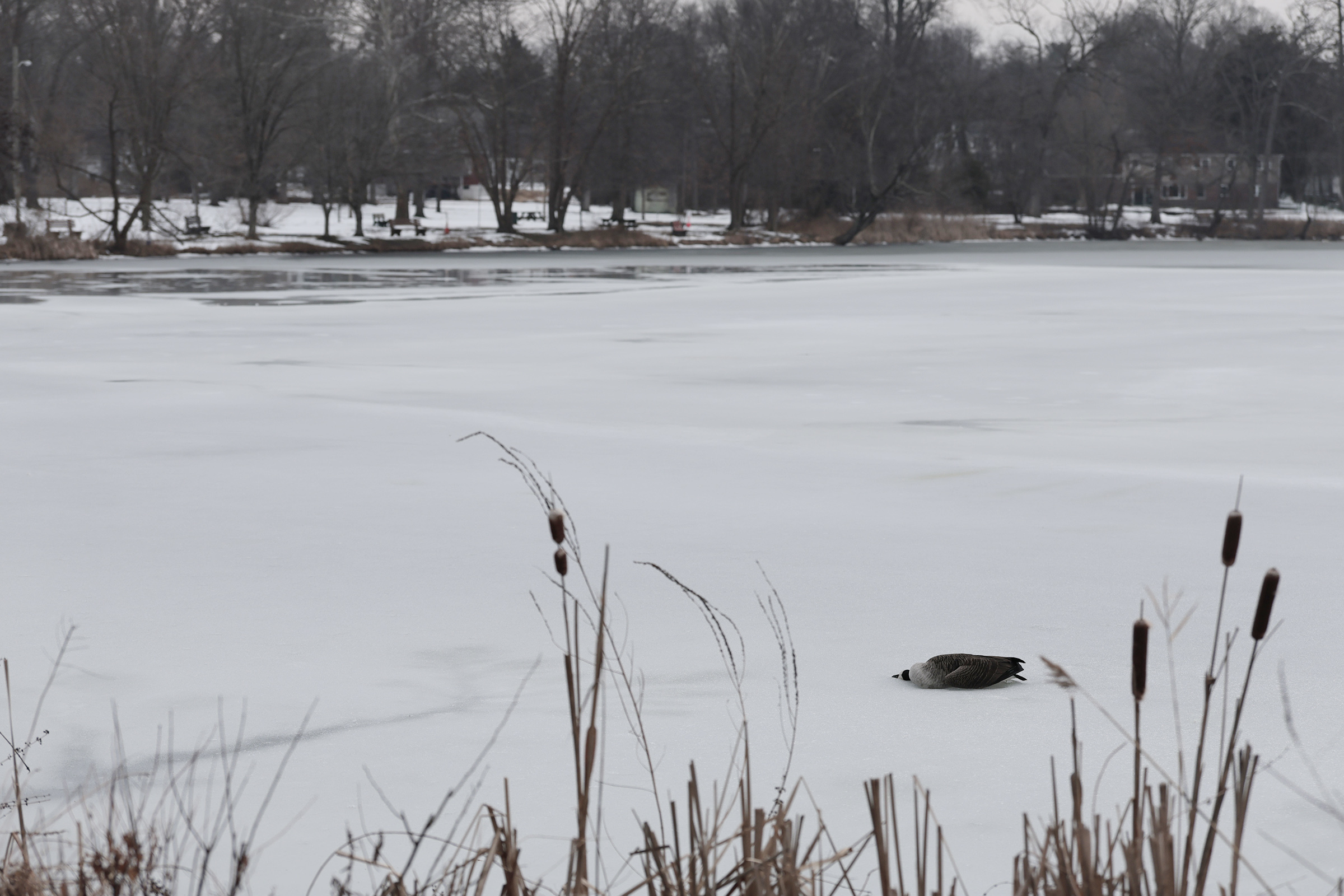
    At least 50 geese have died at Alcyon Lake in Pitman, Gloucester County. Officials have closed the lake and the adjoining Betty Park out of precaution.

    The fish and wildlife division within the New Jersey Department of Environmental Protection (DEP) and the U.S. Department of Agriculture are tracking them as suspected cases of highly pathogenic avian influenza (H5N1), or bird flu.

    Bird flu is not new. But it began to spread in the U.S. in January 2022 and has infected wild and domestic birds in every state.

    While bird flu can infect humans, the U.S. Centers for Disease Control and Prevention has said it is primarily a threat to animals and poses little risk to the public.

    State officials say large numbers of dead geese may be concentrated in areas where birds gather to look for open water as ice melts. They said that the 1,100 dead or sick wild birds were reported between Saturday and Monday.

    Where have dead geese been found?

    The DEP says it has received reports of dead Canada geese in South Jersey, including in Hainesport, Burlington County; Sicklerville, Camden County; and Pitman.

    Annmarie Ruiz, Gloucester County’s health officer, said the dead geese were noticed in Pitman on Tuesday. She said that there were probably more than 50 at Alcyon Lake, but that there were reports of dead geese elsewhere in the municipality.

    “Right now, we have to presume that it is bird flu based on the signs the birds were exhibiting,” Ruiz said.

    The New Jersey Department of Agriculture took some of the birds for testing. The results could take weeks, she said.

    “Right now, we’re just erring on the side of caution,” Ruiz said.

    Ruiz said workers use face shields and gloves when handling the birds, which are triple-bagged before being disposed.

    She said people can report sick or dead wild birds to Gloucester County animal control at 856-881-2828 or the DEP at 877-927-6337.

    A lifeless bird lays on the ice at Alcyon Lake in Pitman, N.J. on Wednesday, Feb. 18, 2026. Two adjacent parks, Betty Park (in background) and Alcyon Park (not in photo) are closed as a result of the mysterious birds deaths.

    Caryelle Lasher, Camden County’s health officer, said there have been only a small number of reports of dead birds in the county.

    Those were concentrated in the lake off Mullen Drive in the Sicklerville section of Gloucester Township, she said.

    Overall, however, the county has not seen a spike in reports, she said.

    Ruiz and Lasher — as well as state officials — stress that people should not touch sick or dead wildlife of any kind. And they should keep pets away.

    Even though the risk is low, the potential for human infection exists.

    The DEP also has an online form to report sick or dead birds.

    H5N1 is a respiratory bird disease caused by influenza A viruses. Wild birds, such as ducks, gulls, and shorebirds, can carry and spread these viruses but may show no signs of illness, according to the DEP.

    The disease can kill domestic poultry such as chickens. Typical symptoms include diarrhea, nasal discharge, coughing, sneezing, and incoordination.

    It continues to infect not only birds, but also mammals.

    Tips to prevent infection:

    • Do not touch sick or dying animals, or bring them into your home.
    • Keep pets away from them, as well as away from droppings.
    • Wash hands frequently if you are near wildlife.
    • Do not eat undercooked eggs, poultry, or beef.
    • Prevent cross-contamination between cooked and raw food.
    • Avoid unpasteurized milk or cheese.
  • FDA reverses course and will review Moderna’s mRNA-based flu shot

    FDA reverses course and will review Moderna’s mRNA-based flu shot

    The Food and Drug Administration has reversed course and agreed to review Moderna’s application for the first mRNA-based flu vaccine under a revised approach, company and federal officials said Wednesday.

    Last week, Vinay Prasad, the agency’s top vaccine regulator, declined to review the vaccine, a rare move that shocked the company and that public health experts saw as the latest example of the Trump administration’s hostility toward immunization. Federal health officials argued that Moderna lacked an “adequate and well-controlled” study and should have used a high dose flu shot for adults 65 and older in a large clinical trial.

    The company met with the FDA and proposed seeking full approval for the vaccine for adults 50 to 64 years of age and accelerated approval for adults 65 and older, along with a requirement to further study the vaccine in older adults, according to Moderna.

    “We appreciate the FDA’s engagement in a constructive Type A meeting and its agreement to advance our application for review,” Moderna CEO Stéphane Bancel said in a statement. “Pending FDA approval, we look forward to making our flu vaccine available later this year so that America’s seniors have access to a new option to protect themselves against flu.”

    The target date for completing the review and making a decision is Aug. 5, according to Moderna. If approved, the vaccine could be on the market for the next flu season.

    The Department of Health and Human Services confirmed it held a formal meeting with Moderna, and it had accepted the company’s new approach.

    “FDA will maintain its high standards during review and potential licensure stages as it does with all products,” Andrew Nixon, an HHS spokesman, said in a statement.

    FDA Commissioner Marty Makary personally sought a quick resolution but was not involved in the regulatory decision for the new approach, according to a person familiar with the matter who spoke on the condition of anonymity to share private details.

    Katalin Karikó and her Penn colleague Drew Weissman won the 2023 Nobel Prize in medicine for their messenger RNA research, which paved the way for COVID-19 vaccines that are credited with saving millions of lives.

    MRNA vaccines are faster to develop than traditional vaccines. Medical experts hope such technology could help vaccine makers respond more rapidly to changes in the flu strain. Flu vaccines are updated annually, and their effectiveness varies every season depending on the quality of the match.

    But Health Secretary Robert F. Kennedy Jr. and other health officials in the Trump administration have criticized the use of the technology for respiratory virus immunization and have pulled federal funding for mRNA research, including for flu vaccines.

    Vaccine experts had raised concerns over Prasad’s initial decision to refuse to review the vaccine, saying that shifting guidance from the FDA could deter future investments in pricey clinical trials. For the Moderna vaccine, Blackstone, a private equity company, invested $750 million into conducting a large-scale clinical trial and potential licensure of the vaccine.

    Companies conduct clinical trials in consultation with the FDA. According to Moderna, the FDA in April 2024 told the company that its trial design for the mRNA flu vaccine compared with a standard flu shot was “acceptable.” The FDA recommended comparing the mRNA flu vaccine against a higher-dose flu shot for those 65 and older, but the recommendation was not binding.

    Moderna conducted two late-stage trials — one of the final steps before seeking approval of its mRNA flu vaccine — enrolling more than 43,000 adults ages 50 or older. In one trial, more than 40,000 participants received either a dose of the experimental mRNA flu vaccine or a standard dose of an existing flu shot. In a smaller trial, participants received a dose of the mRNA vaccine, a standard shot or a high-dose influenza shot recommended for adults 65 and older.

    The administration had defended the decision to decline to review the shot. In a statement last week, Nixon said that “Moderna exposed participants aged 65 and over to increased risk of severe illness by giving them a substandard of care against the recommendation of FDA career scientists.”

    In an interview last week, Moderna president Stephen Hoge said the company was “surprised” and “confused” by the refusal. He said the agency had not identified any issues around the safety or efficacy of its product.

    At an event Tuesday held by the major industry lobby organization PhRMA, Makary said the company was given “pretty clear guidance.”

    “The application was reviewed, and that letter, in my mind, is part of a conversation where you’ll see a dialogue between the company and the agency,” he said.

  • White House taps Jay Bhattacharya, CDC critic, to lead agency for now

    White House taps Jay Bhattacharya, CDC critic, to lead agency for now

    Jay Bhattacharya, a top Trump administration health official and an outspoken critic of the Centers for Disease Control and Prevention’s response to the coronavirus pandemic, will lead the CDC on an acting basis, according to four people who spoke on the condition of anonymity to describe personnel moves.

    Bhattacharya, who will continue his role as director of the National Institutes of Health, replaces Jim O’Neill, who had served as the CDC’s acting director. O’Neill, who had also served as the deputy secretary of the Department of Health and Human Services, will be nominated to run the National Science Foundation after he declined a potential ambassadorship to the Organization for Economic Cooperation and Development, two of the people said.

    The installation of Bhattacharya at the CDC is the latest move by the White House and Health Secretary Robert F. Kennedy Jr. to shake up HHS’s leadership team ahead of the midterms, as the Trump administration seeks to stabilize a department rattled by internal fights and controversial messages.

    The New York Times first reported that Bhattacharya would serve as the acting head of CDC, which is charged with protecting Americans from health threats and issues recommendations on vaccines and other public health matters. Trump officials have said they are planning to find a full-time CDC director, a post that requires Senate confirmation. Susan Monarez, who was confirmed as CDC director in July, was ousted less than a month later after clashing with Kennedy over his plans to change vaccine policies.

    Bhattacharya, a Stanford University physician and economist, rose to prominence during the pandemic by arguing that the government’s response to the outbreak was too harsh, a stance that put him at odds with public health leaders who said his proposals would imperil the most vulnerable Americans. He co-wrote the Great Barrington Declaration, which was published in October 2020 and called for an end to coronavirus shutdowns. The declaration drew rebukes from government officials — a clash that ultimately boosted his profile and helped draw the support of Kennedy, a fellow critic of the government’s pandemic response.

    “The CDC peddled pseudo science in the middle of a pandemic,” Bhattacharya wrote on X in 2024, criticizing agency leaders’ past claim that widespread masking could end the coronavirus outbreak.

    As CDC’s acting head, Bhattacharya is poised to oversee the agency’s vaccine recommendations, which have emerged as a political flash point as Kennedy has worked to roll them back over the objections of public health leaders. A KFF poll published this month found that 47% of U.S. adults now trust CDC for reliable information on vaccines, down from 85% in early 2020.

    Bhattacharya has said he supports vaccination for childhood diseases.

    “I think the best way to address the measles epidemic in this country is by vaccinating your children for measles,” Bhattacharya said at a Senate hearing this month.

    Bhattacharya and other NIH leaders in January also published a commentary in the journal Nature Medicine that criticized the public health response to the pandemic led by other agencies.

    “Many of the recommended policies, including lockdowns, social distancing, school closures, masking, and vaccine mandates, lacked robust confirmatory evidence and remain the subject of debate regarding their overall benefits and unintended consequences,” they wrote. “Where enforced, vaccine mandates contributed to decreased public confidence in routine voluntary immunizations.”

  • Should you feed a cold and starve a fever? Here’s what experts say.

    Should you feed a cold and starve a fever? Here’s what experts say.

    Most of us have heard the adage “Feed a cold, starve a fever.”

    It comes from an outdated theory that a cold makes your body cooler and eating can help warm it up, and that a fever makes your body warmer and fasting can help cool it down. The premise itself is flawed: While fevers do raise your body temperature, colds don’t make your body cold. You might even get a fever when you have a cold.

    As for whether you should eat more or less, in most cases, there’s no convincing evidence that limiting food intake when you’re sick plays a meaningful role in recovery, experts said.

    There may be a more accurate approach. “Feed a cold. Feed a fever, too,” said Roy Gulick, the chief of the infectious-disease division at Weill Cornell Medicine and an attending physician at New York-Presbyterian Hospital.

    Experts recommend staying hydrated and eating healthy foods — at least when your stomach will allow it — to support your body when you’re sick. The advice holds true whether you’re dealing with a cold, which is an upper-respiratory infection that can be caused by more than 200 viruses, or a fever, which can be caused by viral and bacterial infections, autoimmune issues, and reactions to medications, among other things.

    “If you are truly not feeling hungry, you don’t necessarily have to eat more than you feel like eating,” said Geeta Sood, an assistant professor in the infectious-disease division at Johns Hopkins University. However, you do want to make sure you’re getting enough calories, protein, and nutrients — and hydration — to help support your body as it heals, she said.

    What does the research show?

    Research in this area is limited — and mostly in animals. For example, in a 2016 study, mice were infected with either a bacterium that causes gastrointestinal illness or a virus that causes influenza. In mice with the bacterial infection, fasting was protective while nutritional supplementation was detrimental, the authors found. The pattern was reversed in mice with the flu and viral sepsis. While interesting fodder for further research, these results can’t be applied directly to humans, experts said.

    In humans, researchers who conducted a 2021 review concluded that there is some evidence that nutrients such as vitamins and minerals can help support the body’s immune response and help fight infections in general. And a 2024 review that included newer studies that were conducted during the pandemic suggested that nutritional needs may depend on the specific pathogen you’re fighting and other variables, such as the duration and severity of your illness — not simply on whether it’s a bacterium or virus.

    The reality is that most studies on how nutrition affects infections have looked at only a handful of pathogens, said David Schneider, a professor of microbiology and immunology at Stanford University. To further complicate matters, when you’re experiencing symptoms such as a runny nose or fever, you may not know whether you’re sick with a bacterium or virus, he said. Both of these things make it difficult to give generalized recommendations about what might be best for every cold or every fever, he said.

    Why do I lose my appetite when I’m sick?

    There is some rationale to the adage, because it’s common to lose your appetite when your body is fighting off an infection. As your immune system ramps up, it releases chemical messengers, known as cytokines, to rally immune cells to fight infection, and those same signals also tell the brain that eating isn’t a priority, said Sharon Bergquist, an internal medicine physician and associate professor at the Emory University School of Medicine.

    While not well understood, one theory states that a drop in calorie and protein intake triggers a process called autophagy, which helps recycle damaged cell parts and may play a role in immune defense, she said.

    That said, the process of fighting an infection is “metabolically really costly,” Bergquist said, explaining that although you can skip food for a day if you aren’t hungry, going longer than that may leave you without adequate nutrition. “It takes so much energy and calories that there’s a rationale for us needing to increase our food and our hydration during times of illness so that we can support our immune system,” she said.

    What can I do if I have an infection?

    Vaccines are the first-line defense to help prevent and lessen the severity of some viral infections, including COVID and the flu. If you get sick, however, you can try some medications that may help you recover faster.

    • Antibiotics target specific kinds of bacteria such as those that cause strep throat, pneumonia, or urinary tract infections.
    • Antiviral medications can help treat certain viral infections, including the coronavirus and influenza. Three antivirals — Paxlovid, remdesivir, and molnupiravir — are available by prescription to treat COVID in people who are at high risk of serious complications, and four antivirals are approved to treat the flu.

    There are also a few other things you can do to help support your body.

    • Stay hydrated. Losing water and electrolytes through sweat when you have a fever, as well as through diarrhea and vomiting, can put you at risk for dehydration, so it’s important to drink plenty of water and make sure you’re getting enough electrolytes, Gulick said. Pediatric beverages and sports drinks with added sodium and potassium can help you stay hydrated, and warm liquids such as soups, broths, and caffeine-free herbal teas can help ease symptoms such as congestion, body aches, and chills, Sood said. Avoid alcohol and caffeinated drinks because they are diuretics and can make dehydration worse.
    • Eat, when possible. Listen to your body, but when you have an appetite, eat healthy, whole foods rich in vitamins, minerals, and antioxidants such as fresh fruits and vegetables. One strategy is to make smoothies or soups, Bergquist said. Avoid foods high in saturated fats and processed carbohydrates.
    • Get rest. Take time to rest as your body does much of its repair work while you sleep, Bergquist said. “Don’t push your body because you want to dedicate that energy to your immune system,” she said.
    • Take hot showers or baths. The steam can help break up congestion and clear airways.
    • Try zinc. Zinc may help shorten a cold by a day or two. In a 2024 review, researchers found some evidence that zinc might reduce the duration of symptoms by about two days compared with a placebo, though the mineral was associated with mild side effects such as nasal and oral irritation, problems with taste, stomach pain, constipation, diarrhea, and vomiting. Most other supplements have no real advantage for colds, including vitamin C, which, when started at the onset of symptoms, doesn’t help lessen the duration or severity, research shows.
    • Use honey for a cough or sore throat. Adults and children older than 1 year can add honey to warm tea or water to help soothe sore throats and calm coughs.
  • The Atlantic’s essay about measles was gut-wrenching. Some readers feel deceived.

    The Atlantic’s essay about measles was gut-wrenching. Some readers feel deceived.

    When Kelly McBride read Elizabeth Bruenig’s essay in the Atlantic about a child’s death from measles complications, she was moved and quickly shared the story on her Facebook account. She hadn’t realized that Bruenig’s family had been ravaged by virus and the well-known journalist had lost a child.

    McBride, a media ethicist and senior vice president at the Poynter Institute, also didn’t realize the story was a hypothetical scenario — and the child a composite character based on the author’s research — until a friend alerted her to an editor’s note at the bottom of the story. Then, McBride felt duped.

    “I feel deceived,” McBride said. “I spent all weekend talking about this story to my friends as if the reporter had experienced it.”

    Bruenig’s stirring account of a mother’s experience learning her child will die of the long-term effects of measles has remained one of the Atlantic’s most read stories since it was published Thursday, receiving more than 700 comments. Written in the second person, some readers have called the essay a visceral and gut-wrenching exposé of the human impacts of the measles epidemic.

    It has also generated controversy. Readers and media experts have condemned the story as breeching journalistic ethics by informing the reader that the story is fictionalized through a short editor’s note at the end of the 3,000-word essay. Some public health experts argued the story was a dangerous writing exercise that could evoke backlash and confusion as vaccine skepticism hits an all-time high across the country.

    “Grateful to @ebruenig for sharing her and her family’s ordeal,” Gabby Stern, a former World Health Organization communications director, wrote on X shortly after the story published. “Friends, please ensure that your children receive vaccinations against preventable diseases like measles.”

    She followed up soon after: “I missed the disclaimer at the bottom. Others did, too. You get to the end and you’re shattered, not looking for caveats and fine print. Disappointed in the magazine. The topic is too high-stakes for such shenanigans.”

    Adrienne LaFrance, executive editor at the Atlantic, told The Washington Post in a statement that the magazine was “pleased that so many people are reading and praising Liz’s remarkable essay.”

    “We trust our readers to understand all different kinds of writing and writerly devices,” she said. “And while we included a note about Liz’s methods for transparency’s sake, we’re finding that most readers already understand the second-person well enough to know that the ‘you’ referenced throughout the piece is not literally ‘you,’ the reader.”

    The Atlantic, one of the most popular American magazines with 1.4 million subscribers, has become a destination for health reporting in recent years. The Atlantic is among a cohort of outlets that have reported on rising measles cases across the United States, as well as the role that misinformation and shifting government guidelines have on childhood vaccinations. Once eliminated in the country, outbreaks have led to the highest count of measles cases in more than three decades. Atlantic staff writer Tom Bartlett was first to find and interview the parents of a child who died of measles in Texas, the first such death in a decade.

    Bruenig, a former Post opinion writer, has twice been a finalist for the Pulitzer Prize for feature writing, one of the industry’s top honors for narrative journalism. (This reporter worked for the Atlantic from 2017 to 2019.)

    Bruenig wrote the essay in the second person, detailing a scenario where two unvaccinated children attend a birthday party and catch measles from an infected-but-asymptomatic child. “Your daughter behaves normally over the next week while the virus slowly spreads inside her, infecting immune cells that carry it to the lymph nodes, where it replicates and spreads at a rapid pace.”

    It includes a short disclaimer at the bottom of the 3,000-word piece: “This story is based on extensive reporting and interviews with physicians, including those who have cared directly for patients with measles.”

    Reported hypotheticals have been used in other grim chronicles such as Outside Magazine’s 1997 story “Frozen Alive,” about freezing to death; a passage of Kathryn Schulz’s 2015 New Yorker essay “The Really Big One” about the risks of a large earthquake; and the 2024 Annie Jacobsen book “Nuclear War: A Scenario,” about how nuclear warfare could transpire. The first two stories also are written in second person.

    Many readers, including physicians, praised the Atlantic essay, writing that its evocative writing and storytelling forced readers to grapple with the impact of vaccine hesitancy. “Read this while holding my almost-one-month-old, and it absolutely wrecked me. What a powerful and important piece,” one commenter wrote. “Tragically realistic story exquisitely described by Ms. Breunig,” wrote another. “I’m a pediatrician who has never seen a case of measles but am awaiting my first one.”

    Others, however, expressed their confusion in the essay’s comments. “The fact that readers in the discussion are unsure of whether this is a true story or fiction highlights a fundamental failure on the part of the author, and the editor,” one reader wrote.

    “I know the internet is full of made up stuff, but I trusted the Atlantic,” another reader wrote. “I feel foolish that I told my husband about this as if it were the truth. Glad I didn’t share it with my sisters. We are all pro vaccines, and I’m concerned this story masquerading as a first person memoir will encourage people on the edge to blow off vaccines.”

    Tom Rosenstiel, a professor at University of Maryland’s Philip Merrill College of Journalism and former executive director of the American Press Institute, felt the piece did the reader a disservice by not being fully transparent about they were about to read. He said the Atlantic needed to clearly explain the unusual choices in the story upfront, avoiding deception.

    “Any time you’re answering questions about why you did something in the story after you’ve published it, you’re in a bad place,” he said.

    Some physicians argued the uncertainty around the essay could fan distrust of vaccines. Angela Rasmussen, a virologist at the University of Saskatchewan who edits the journal “Vaccine,” said she found the essay scientifically sound but extremely confusing. She initially believed the essay was about Bruenig’s real child and felt the essay could backfire. “We need effective communicators like this,” she said. “But if that effective communication is being presented in such a way that it actually diminishes trust further, then we’re in real trouble.”

    Rachael Bedard, a physician and writer, called herself an admirer of Bruenig, but expressed similar concerns in a series of posts on X.

    “One of the things that people who have actually interacted [with] anti-vaxxers know is that they often think the liberal media is lying to them about how bad measles is,” she wrote, writing that the Atlantic’s presentation of this essay as anything other than fiction “affirms all of those concerns.”

    Bruenig, in an interview with the website Nieman Lab, defended the structure of her essay. “It is a hypothetical account of a very real phenomenon based on careful reporting,” she said. “I would place it somewhere on the creative nonfiction spectrum.” She said that she interviewed doctors for her piece, and based the character of the mother on herself.

    “I have no doubt that there are a lot of people out there who are unhappy with the story or reject its premises, and they are entitled to their interpretations. I get it,” she said. “But my job is to report the truth about the world — and I use all kinds of literary, and narrative devices to do that. I do it because telling the truth is important in its own right, whether or not anyone finds it persuasive.”

  • Johnson & Johnson will spend $1 billion on a cell therapy plant in Montgomery County

    Johnson & Johnson will spend $1 billion on a cell therapy plant in Montgomery County

    Johnson & Johnson plans to spend more than $1 billion to build a cell therapy manufacturing facility in Montgomery County near Spring House, the New Jersey pharmaceutical and medical supplies giant said Wednesday.

    The Lower Gwynedd Township plant, part of an effort by the company to invest $55 million in the U.S. by early 2029, is expected to employ 500 people when fully operational in 2031, J&J said.

    The facility at 1201 Sumneytown Pike will add to J&J’s capacity to make cell therapy treatments for cancer, with a focus on multiple myeloma. That’s a type of cancer that attacks white blood cells in the bone marrow. Cell therapy is the use of engineered immune cells to treat disease.

    “Pennsylvania’s proud manufacturing legacy, from steel to today’s medicines and medical technologies and Johnson & Johnson’s roots here for seven decades, are part of why we are investing here.” Joaquin Duato, J&J’s chairman and CEO, said.

    Duato spoke during an event at the company’s Spring House research and development campus, where 2,500 scientists work in 70 laboratories. The Montgomery County site is J&J’s largest R&D center and it’s “where most of our discovery efforts start,” Duato said.

    The company based in New Brunswick, N.J., employs 5,885 people at 10 Pennsylvania facilities, according to the office of Gov. Josh Shapiro. The Shapiro administration has offered $41.5 million in state support for the J&J project.

    “With this investment, we are further cementing our place as a leader in life sciences,” Shapiro said. He said his administration’s efforts to cut red tape are among the reasons companies like J&J “are choosing to double down on their investments” in Pennsylvania.

    Eli Lilly & Co. last month announced plans to build a $3.5 billion pharmaceutical plant in the Lehigh Valley to expand manufacturing capacity for next-generation injectable weight-loss medicines.

    GSK said in September that it will build a biologics factory in Upper Merion Township, but did not specify how much it would spend there. That project is part of GSK’s plan to spend $1.2 billion on advanced manufacturing facilities.

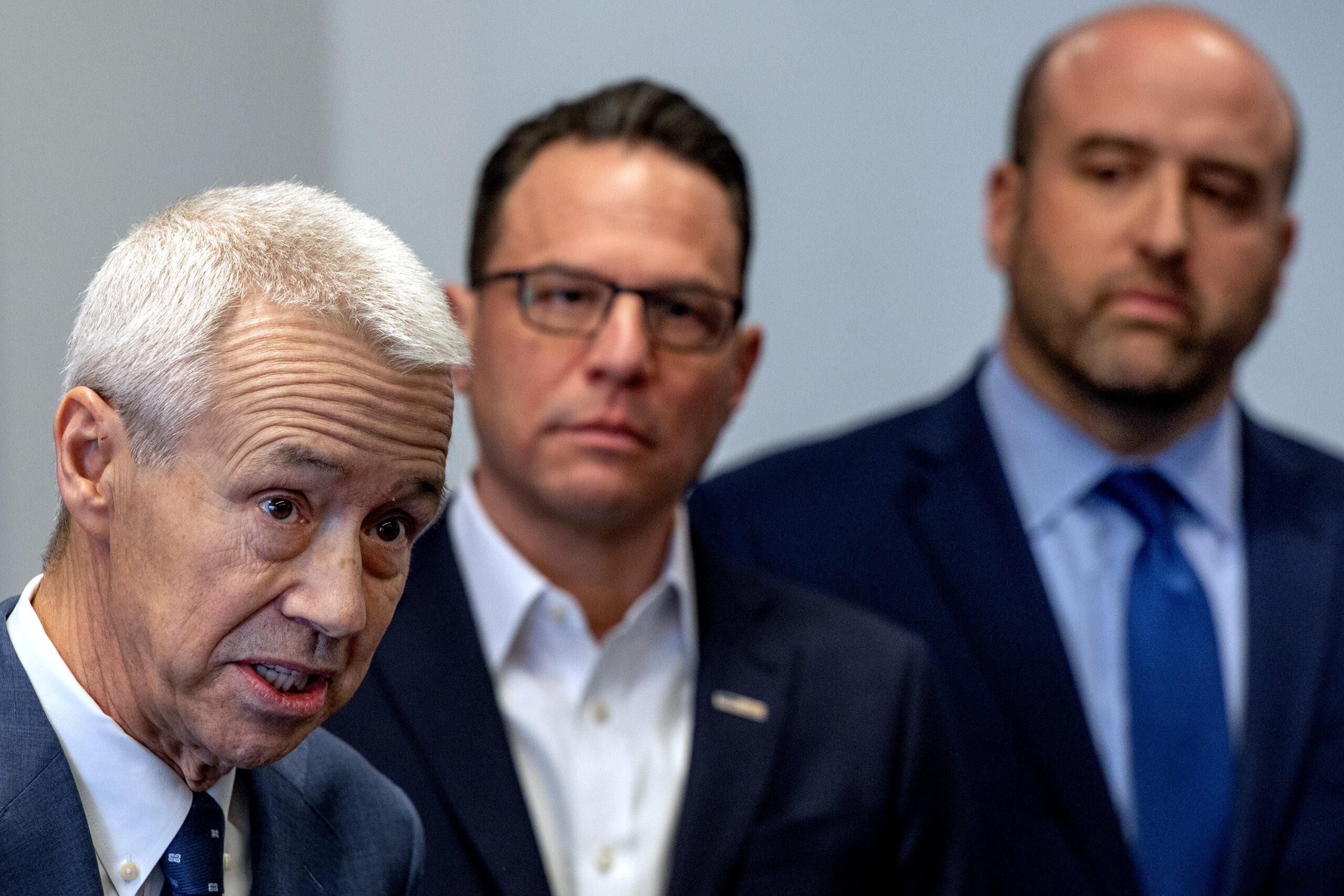
    Johnson & Johnson chairman and CEO Joaquin Duato (left), was joined by Gov. Josh Shapiro and Pa. Dept. of Community and Economic Development Secretary Rick Siger (right) on Wednesday when J&J announced it will spend $1 billion on a cell therapy plant on its campus in Lower Gwynedd Township.

    Merck, another New Jersey-based drug giant, last year announced plans for a $1 billion factory and lab near Wilmington. Merck also has major operations in Montgomery County, which is among the top-ranked counties nationally for pharmaceutical manufacturing jobs.

    J&J has a long legacy in the Philadelphia region. Among its major acquisitions here was the 1959 purchase of McNeil Laboratories, which later developed Tylenol. The pain reliever is still made at a plant in Fort Washington.

    Other major Philadelphia-area J&J deals include the 1999 purchase of Centocor, one of the country’s first biotech companies, and the 2012 deal for Synthes Inc., a Swiss medical device maker with its North American headquarters and major operations here.

    Separately from the new cell therapy manufacturing facility, J&J has two expansion projects planned for the Spring House R&D site.

    One is a new cell engineering and analytical sciences facility. The other is focused on CAR-T testing and manufacturing during research and development, with the goal of creating personalized therapies more quickly and efficiently. The company did not disclose the cost of those projects.

  • Epstein files offer lessons to parents on keeping kids safe | Expert Opinion

    Epstein files offer lessons to parents on keeping kids safe | Expert Opinion

    A millionaire’s private island filled with luxury goods, gourmet food, and fine wine seems like a reality a million miles from yours, so what can Philadelphia-area parents learn from the Epstein files?

    Plenty.

    There are people like Jeffrey Epstein everywhere. He just had a bigger field.

    Epstein started small. In her memoir Nobody’s Girl, the late Virginia Roberts Giuffre, abused and trafficked by Epstein starting at age 16, describes how Epstein told her that as a teacher, he traded sex for grades. Alumni of New York’s elite Dalton School have described inappropriate conduct toward girls. Yet he was dismissed from the school simply for “poor performance.”

    Back in the 1970s, when Epstein taught, sex abuse prevention programs were primarily directed at kids. Teaching kids to recognize “good touch/bad touch” would have done nothing for teenage girls, likely targeted for their insecurity, for whom attention from a cute, popular new teacher felt like affection and status. Today, the most effective school-based sex abuse prevention programs involve the entire school helping faculty and staff recognize and respond to inappropriate behavior. Policies explicitly identify acceptable and unacceptable behaviors around issues from touching to communicating with students outside of school. Ongoing prevention programs empower everyone to act if they see a breach. Parents are included as partners to reinforce healthy messages at home. One great example is Safety STARS — Enough Abuse.

    What are the lessons for parents? I can count at least four:

    1. Learn what sexual abuse prevention program is offered in your school or district and participate in the parent component. Confirm that it follows best practices, such as requiring a code of conduct for faculty, staff, and students, and commitment from administration to continuous monitoring of adherence to the policies.

    Almost 20 years ago, Epstein was convicted of trafficking children for sex but escaped serious punishment in a now widely criticized plea deal. Defense attorneys at the time used the phrase “underage women” to soften how his acts against children sounded. I urge parents and all adults to more accurately call his crimes “child rape.” This helps challenge the social norm that it is somehow acceptable to have sex with minors who may be dressed up to appear older than they truly are.

    2. For decades, social scientists have distinguished a pedophile — someone primarily attracted to prepubescent children — from ephebophiles, people attracted to older adolescents and teens. Either way, acting on such attractions is a crime against children.

    Adults who target older youth may be more subtle in how they approach their targets, and that’s why parents should monitor all their teens’ relationships with adults, both virtual and in real life. A 17-year-old may look grown, and may balk at this supervision. But their brain still has nearly a decade before it can consistently make mature decisions.

    Adolescence is a time of deep insecurity, when teens are highly sensitive to others’ opinions. As Giuffre noted in her memoir, people like Epstein are adept at “reading a room.” They can intuit what a vulnerable teen needs, and offer it, exacting their price later.

    3. Even as maturing teens pull away, parents must work harder to stay connected and know what is happening in their teens’ lives. Set special times — driving to school can be ideal — to ask questions that require more than a yes-no answer. Take the time to learn the names of their friends, teachers, and coaches, so they know you’re really interested. Leave a surprise note on their bed telling them you’re proud of something they did. Teens need steady validation of their worth — not only for achievements, but simply for who they are. Keeping their self-esteem “cup” as full as possible is an important protective factor.

    Predators are master manipulators. They can patiently work their way into an adolescent’s confidence, shoring up fragile self-esteem. That’s why it’s so critical for parents to be their children’s consistent support. Predators don’t just live on private islands and roam the world in private jets; they can run the social hierarchy as the “alpha” in a high school, or orchestrate hazing in a college fraternity or sorority.

    4. Use the Epstein news as a moment to remind kids what a bully really is: someone who repeatedly uses their power to hurt, scare, or control a more vulnerable person. It is also a crucial chance to talk about sexual health and safety. Explain how youth of any age can be vulnerable to exploitation, and be explicit that sex should never be traded for anything.

    A colleague raising teens put it starkly when I asked how she was handling the Epstein stories: “Kids are watching how we handle this as adults, and they are not impressed.” The children of this attorney are likely not the only ones who wonder why Epstein went so lightly punished, or why our culture seems to condone sexualized images of teens.

    Ask your children what they’ve read and heard, what they think it means, and listen. Then share your thoughts and values. All adults can show the young people in our lives that we can do better — by talking openly about abuse, bullying, harmful media messages and whatever else is troubling our children. We can show them that we stand behind them and will advocate for safer policies in schools and communities.

    Janet Rosenzweig MS, PhD, MPA is author of the book “The Sex-Wise Parent,” a senior policy analyst at The Institute for Human Services, and a member of the board of directors of The National Coalition to Prevent Child Sexual Abuse and Exploitation.