Category: Health

  • Why can’t this teen stay awake during his classes? | Medical Mystery

    Why can’t this teen stay awake during his classes? | Medical Mystery

    A 14-year-old boy and his mother went to his pediatrician because the teen had just been placed on a three-day suspension. The reason? His loud snoring was disrupting his classes.

    His doctor asked many questions to understand what was going on, and learned his patient had been frequently falling asleep in class over the last several months. He told the doctor that no matter how much he tried to stay awake, he couldn’t help dozing off. Previously he had received As and Bs in his classes, but since he was missing so much in class, lately he had been getting more Cs and even a D. He and his mother were both worried about this. He was also embarrassed over his loud snoring making him the center of attention in class.

    His sleepiness was also causing problems at home. He and his mother agreed that waking up in the morning was a nightmare because he kept falling back asleep after his alarm sounded. His mother said that it often took up to an hour to get him out of bed.

    The doctor reviewed his medical history and saw that he was a generally healthy teen who didn’t have any chronic conditions or take any daily medications. He had his tonsils and adenoids removed eight years prior for a reason his mother did not remember. His pediatrician noted that he had gained a significant amount of weight over the last two years and his body mass index (a ratio of weight to height) was now in the obese range.

    His doctor then asked more questions about his sleep. Generally, he went to bed at 10 p.m. and woke up around 6:30 a.m. for school. He had already tried measures to improve his “sleep hygiene” which are the habits around sleep. He left his phone charging outside his room in the hallway so he wouldn’t be tempted to scroll all night long. He tried to pick a consistent sleep and wake up time, even on weekends.

    He didn’t typically have problems falling asleep, and he didn’t wake up at night. He denied having restless legs that interrupted sleep. His mother told the doctor that he snored loudly enough that she could hear it outside the door. One or two times she had also noticed that he paused in breathing during sleep for a few seconds, without waking up. The doctor asked if the teen ever had muscle weakness when having a strong emotion. Both he and his mother were amused by the question but didn’t think this had ever occurred; the doctor explained that she was describing “cataplexy,” which can be seen in people with a neurological problem with sleep called narcolepsy.

    The doctor then asked to speak with the teen one-on-one. She was worried that his sleepiness issues might be indicative of a problem like depression, anxiety, or drug use. The teen denied symptoms like a loss of pleasure in doing things or feeling worthless. He told her that his favorite thing to do was play in the band, where he played five different band instruments. Unfortunately, he had been kicked out of his band due to his declining grades and his suspension. He wasn’t someone who was easily anxious and he didn’t have anxious thoughts at night keeping him up. He had never tried alcohol, vaping, marijuana, or other substances.

    The doctor invited the teen’s mother back in the room for the physical examination. She assessed his blood pressure, heart, thyroid, lungs, abdomen, and neurological system and did not find anything abnormal.

    Answer:

    The doctor referred the teen to a pulmonologist, or lung specialist for a sleep study to see whether the teen may have narcolepsy or obstructive sleep apnea. For the sleep study, also called polysomnography, the teen slept overnight in the hospital while his oxygen saturation, breathing patterns, and brain activity were monitored.

    Due to many episodes of apnea (pauses in breathing during sleep) and hypopnea (partial decrease in air flow during sleep), he was diagnosed with severe obstructive sleep apnea. Obstructive sleep apnea (OSA) is a condition where the throat becomes closed or narrowed during sleep, causing pauses or decreases in air flow, which can cause oxygen levels in the body to drop.

    This causes the body to wake up, even if the person doesn’t notice it. If this happens throughout the night, the person cannot get restful sleep and can be very tired during the day. Risk factors for OSA include male sex, obesity, and having large adenoids and/or tonsils.

    The teen was grateful to understand that his sleepiness was not his fault or a sign of laziness. He started treatment with continuous positive airway pressure (CPAP) overnight to help keep his airway open. Once his daytime sleepiness improved, he was able to do more physical activity during the day. The best part was that his school let him back into the band, and he decided to challenge himself to learn another instrument.

    Take home points

    1. Teens generally need 8 to 10 hours of sleep to best support their health.
    2. Daytime sleepiness is common in adolescents and can affect their schoolwork, relationships with peers and family, and daily activities.
    3. Common methods to improve sleep hygiene include a consistent schedule of going to bed and waking up (even on weekends), avoiding screens in the bedroom, having a consistent bedtime routine, and being active daily but avoiding heavy exercise for at least an hour before bed.
    4. In some cases excessive daytime sleepiness may be an indicator of an underlying health condition, such as obstructive sleep apnea. Be sure to talk to your child’s doctor if you have these concerns — OSA is becoming more common in children due to obesity, though it can have other causes as well.

    Samantha Starkey is a third-year pediatric resident and Hayley Goldner is a pediatrician in the adolescent medicine department at Nemours Children’s Hospital, Delaware

  • AI can offer patients a starting point | Expert Opinion

    AI can offer patients a starting point | Expert Opinion

    A friend’s medical odyssey recently prompted me to ask whether AI could have helped. As an experienced primary care doctor, I was surprised to discover how much potential a chatbot has to serve as your true partner navigating the healthcare maze.

    My friend, a middle-aged woman, was experiencing numbness and tingling in her hands and torso. A week went by, with no relief — occasionally the symptoms caused her to lose hand grip strength. She sought an evaluation at a busy urgent care clinic, which showed only a borderline elevated blood sugar. She was bewildered to receive a preliminary diagnosis of nerve inflammation from diabetes, since she was diligent about regular checkups and had no history of diabetes.

    She decided to schedule both primary care and endocrinology visits. The specialist could see her first and ordered extensive blood testing which showed only prediabetes unlikely to cause nerve injury. She left with a follow-up plan to prevent her from developing overt diabetes, but no diagnosis for her symptoms. She was encouraged to pursue nerve testing and meet with her primary care physician (PCP).

    It took her an agonizing three weeks to get an appointment to see her PCP, who reviewed the prior tests and agreed she should see a neurologist. By now, she had already self-scheduled the specialist appointment. Her symptoms resolved by the time she saw the neurologist, who was concerned that this may have been a sign of a chronic condition such as multiple sclerosis. For a third time, she left a medical appointment without a clear diagnosis.

    My friend’s story shows how difficult it can be to get a timely and accurate medical evaluation when new symptoms arise. Access to primary care is constrained, and self-referral to specialists can sometimes land you in a rabbit hole of testing.

    I was curious to see how an AI chatbot might have helped in my friend’s scenario, so I logged onto Microsoft Copilot and typed in the following prompt:

    I have had numbness and tingling in my hands and torso for 1 week and occasional loss of grip strength. What could be wrong with me?

    I received a warning that the chatbot could not formally diagnose me, followed by a list of possible diagnoses that were stunningly relevant. Next, the chatbot generated a list of warning signs that would require emergency care, and some tests that a clinician would likely order to zero in on the diagnosis.

    As a doctor, I know it is still important to avoid trying to diagnose yourself. My advice is to continue to view your PCP as the best starting point when you have new symptoms that aren’t an emergency. Your PCP can perform an initial assessment and guide you toward appropriate specialty care. Your primary care office is also the medical “home” you can always return to if you encounter a follow-up problem, or develop new or worsening symptoms. But AI chatbots can help you along the way by proposing questions to ask and giving you a sense of what your doctor may be concerned about. It is important to be open with your doctor about your AI query, so you can have a thorough discussion together about the diagnostic possibilities and why some of these may require further evaluation while others do not.

    Physicians today expect patients to use technology to advocate for themselves, so your AI findings should be received with curiosity and concern, especially from a doctor with whom you have a well-established trusting relationship. If you are met with dismissal or defensiveness, this may be a sign of a nonideal physician-patient partnership. A few months ago, I wrote about my first office encounter with a patient who openly discussed her use of an AI chatbot as a health advocate. That patient visit left me with cautious optimism about the role of AI in clinical care, with a caveat that these tools are designed to profit in a rapidly changing healthcare marketplace, not necessarily to keep you well. But they can still help you get there.

    Some health systems, like the one where I work, are developing plans for personalized chatbots built into the electronic health record. Patients might interact with a bot in preparation for a visit, following prompts to answer questions about their health history or current symptoms. These advances may help with way-finding within the system, continuity of care, and tee up a more useful clinic appointment.

    Doctors themselves use AI platforms like OpenEvidence, which helps us to quickly parse the latest medical research, to enhance their own diagnostic skills. AI tools like ambient listening are even being woven into medical school curricula to help students develop clinical reasoning and communication skills. The hope is that instead of spending time memorizing and re-memorizing facts, energy can be shifted to active listening and thoughtful problem solving.

    The collaboration between patients, doctors, and AI is a new frontier with great potential to improve clinical care. It may have saved my friend a lot of time and angst searching for the right specialist, even as she continues to search for a diagnosis. But the promise of AI in patient care still hinges on effective communication, trust, and human connection. Sir William Osler’s famous adage will always remain our true north: “A good physician treats the disease; the great physician treats the patient who has the disease.”

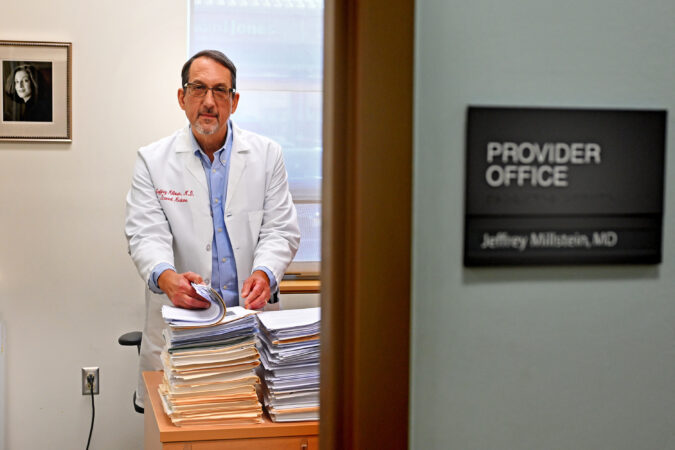
    Jeffrey Millstein is an internist and regional medical director for Penn Primary and Specialty Care.

  • 30 miniature horses are for sale in Gettysburg this weekend. Here’s what’s involved in owning one.

    30 miniature horses are for sale in Gettysburg this weekend. Here’s what’s involved in owning one.

    Everything at Land of Little Horses animal theme park in Gettysburg must go this weekend. That means tractors, picnic tables, porta potties, and about 30 miniature horses.

    Sparkle, Pumpernickel, Russel’s Majestic Princess Gingerbread, Summer Wish, Shortcake, and the others will head for greener pastures at the Saturday morning auction, which will mark the end of the 55-year-old park.

    In December, the park owners announced on social media that they’d decided to retire and close the facility, which hosted horse shows, trail rides, and grooming activities. They declined to be interviewed for this story.

    Selling horses, let alone miniature horses, is a first for auctioneer Larry Swartz.

    “We have had strong interest from really across the nation, even a breeder from Hawaii has reached out,” Swartz said.

    (If you’re wondering if a mini horse can be transported on an airplane, it can, Swartz said.)

    Swartz predicts one particular miniature horse, an 11-year-old chocolate mare with a bald face, to fetch the highest price.

    “Cameo was the star of their show here,” Swartz said. “We expect her probably to be the high seller.”

    Cameo, an 11-year-old miniature horse for sale at the Land of Little Horses auction, can wave, smile, untie, and sit down.

    Not only does she have distinctive markings, she can wave, smile, untie, lay down, and sit.

    As of Wednesday afternoon, she was already going for $3,550 in the online prebidding which started Feb. 14 and ends when the live auction starts Saturday at 10 a.m. at the Gettysburg farm at 125 Glenwood Dr. The auction will also be available to view on livestream. Swartz expects each miniature horse to sell for around $2,000 to $3,000.

    The origins of miniature horses in the United States may date back to the 1800s, according to the American Miniature Horse Association, a Texas-based nonprofit that sets regulations and compiles registries of miniature horses around the country and world.

    Sparkle, a 16-year-old miniature horse who will be available at the Land of Little Horses auction, is food motivated.

    The horses were originally brought over from Britain to assist in the mining industry for hauling wagons of coal, said Valerie Shingledecker, the association’s operations manager. The United States now has around 100,000 of them, according to the association’s registry.

    Texas, California, and Florida have the largest number of association-registered miniature horses in the country as of this month. States along the Appalachian Mountain range, where much 19th-century coal mining activity was concentrated, have the next-highest number. Pennsylvania has the fifth-largest population of association-registered miniature horses at about 3,800.

    Can you own a miniature horse?

    In recent decades, miniature horses are more commonly seen at petting zoos and in horse shows performing tricks, like pulling people in wagons.

    They can also be kept as pets. In Philadelphia, residents can apply for a license to own a horse if they have a stable or one quarter acre of land per horse, according to a 2013 law. If residents have neither, they can still keep one so long as they have fewer than three horses in the same space and submit an equine veterinarian-approved exercise plan for the horses.

    Most importantly manure must be disposed of every 24 hours.

    Macy is a 30-year-old Falabella miniature horse who knows how to smile. She’ll be up for auction at the Land of Little Horses sale.

    Under the Americans with Disabilities Act, a miniature horse can function as a service animal for people with disabilities. Facilities covered by the ADA are required to adopt policies detailing where and when service miniature horses are permitted. Facilities may elect to not allow them inside if they’re not housebroken.

    If you’re interested in owning one, get ready for a long-haul commitment, Shingledecker said. These horses “cannot exceed 34 inches in height at the withers as measured from the last hairs of the mane,” according to the American Miniature Horse Association. They’re about a quarter the size of a regular horse and can live for over 30 years. However, they’re “easy keepers,” she said, meaning they don’t require a lot of food — about $2 of hay a day or $730 a year.

    They also need vaccines and have to have their feet trimmed every six weeks by a farrier, but they don’t need horseshoes.

    All in all, Shingledecker estimates one miniature horse costs about $1,500 a year to take care of.

    Though they’re generally well-behaved, it’s important to remember they’re still animals with their own set of defense mechanisms.

    “It is a horse, it’s not a dog,” she said. ”They can kick and they can bite if they were not socialized well. Don’t put them in the house.”

    If they become afraid, they’ll either run, kick, or bite, Shingledecker said. “On the whole, they’re very friendly, very easy to work with.”

  • Main Line Health reported an operating profit of $8.7 million in the first half of fiscal 2026

    Main Line Health reported an operating profit of $8.7 million in the first half of fiscal 2026

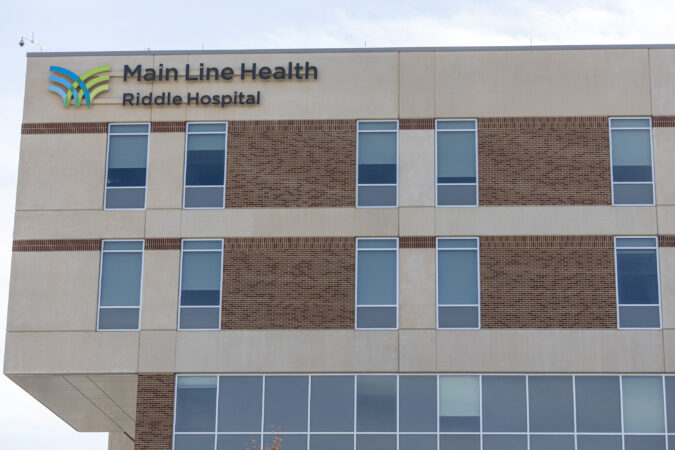
    Main Line Health had an $8.7 million operating profit in the six months that ended Dec. 31, the nonprofit health system reported to bond investors Wednesday.

    Main Line’s swing from an $8.9 million loss in the same period of 2024 benefited from a change in accounting for depreciation that reduced expenses. Without that change, Main Line would have had another loss.

    “We have been pleased with our continued improvement in fiscal performance year over year, which has been strong outside of the change in depreciation,” Main Line’s chief financial officer, Leigh Ehrlich, said in a statement.

    Here are more details on Main Line’s results:

    Revenue: Main Line reported $1.35 billion in patient revenue in the first six months of fiscal 2026, up 10.5% from $1.22 billion a year ago. Strong gains in hospital discharges, emergency department visits, and same-day surgeries contributed to the increase. Main Line’s Riddle Hospital near Media has seen a 36% increase in patients following the closure of Crozer Health’s hospitals last spring, contributing to revenue growth, Ehrlich said.

    Expenses: Last year, Main Line changed how it accounts for investments in facilities and equipment, significantly reducing depreciation and amortization expenses. In the first two quarters of fiscal 2026, Main Line’s depreciation and amortization expense was $68.8 million, down from $84.5 million the year before. Excluding those expenses from both years, Main Line’s operating profit margin fell slightly, to 5.5% from 5.9%.

    Notable: Main Line provides more detail than most systems on its patients’ health insurers. After just two years in Southeastern Pennsylvania, Pittsburgh insurance giant Highmark accounted for 12.5% for the business at Main Line Health. That is just 2 percentage points less than Aetna, which as been in the market for decades.

  • States sue Trump administration over changes to childhood vaccine recommendations

    States sue Trump administration over changes to childhood vaccine recommendations

    SACRAMENTO, Calif. — More than a dozen states sued the Trump administration Tuesday over its rollback of vaccine recommendations for children, calling the move an illegal threat to public health.

    The states argue that the Centers for Disease Control and Prevention put children’s lives at risk when it announced last month that it would stop recommending all children get immunized against the flu, rotavirus, hepatitis A, hepatitis B, some forms of meningitis, and RSV. Under the new guidance, which was met with criticism from medical experts, protections against those diseases are recommended only for certain groups deemed high risk or when doctors recommend them in what’s called “shared decision-making.”

    The new vaccine recommendations ignore long-standing medical guidance and will make states have to spend more to protect against outbreaks, the states, including Arizona and California, said.

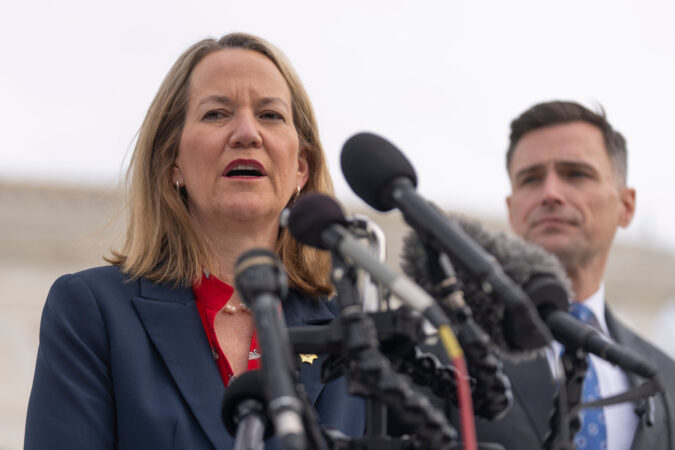
    “The health and safety of children across the country is not a political issue,” Arizona Attorney General Kris Mayes, a Democrat, said at a news conference. “It is not a culture war talking point.”

    Emily G. Hilliard, press secretary for the Department of Health and Human Services, blasted the complaint as a “publicity stunt dressed up as a lawsuit.”

    Pennsylvania, New Jersey, and Delaware all joined the Arizona-led lawsuit.

    “Every Pennsylvanian deserves accurate information to make their own healthcare decisions when consulting with their doctors — and science, not politics, will continue to guide our healthcare decisions here in the Commonwealth,” said Gov. Josh Shapiro, a Democrat who has repeatedly joined litigation against the Trump administration since last year.

    The lawsuit escalates an ongoing battle between Democratic-led states and Republican President Donald Trump’s administration over the federal government’s changes to public health policy under Health Secretary Robert F. Kennedy Jr. The Trump administration has laid off thousands of workers at federal public health agencies, cut funding for scientific research and altered government guidance on fluoride and other topics.

    Kennedy last year ousted every member of a vaccine advisory committee and replaced them with his own picks, which Tuesday’s complaint alleges was unlawful.

    The lawsuit comes months after the Democratic governors of California, Washington state, and Oregon launched an alliance to establish their own vaccine recommendations. The governors said the Trump administration was risking people’s health by politicizing the CDC.

    States, not the federal government, have the authority to require vaccinations for schoolchildren, though the CDC’s requirements typically influence state regulations.

  • Surgeon general nominee Casey Means grilled on vaccines, pesticides in hearing

    Surgeon general nominee Casey Means grilled on vaccines, pesticides in hearing

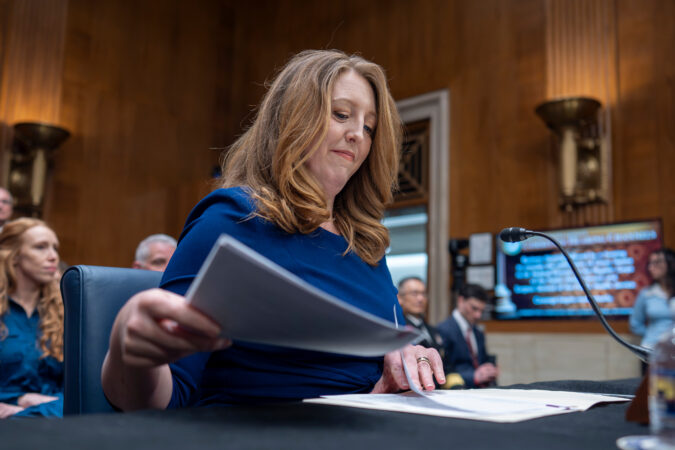
    After over a year without a surgeon general, the Senate Health Committee is grilling Casey Means on vaccinations, her business entanglements, and past comments on pesticides, as they weigh whether she should serve as the nation’s top doctor.

    Means wrote the book considered the bible of the Make America Healthy Again movement with her brother, Calley Means, a Trump administration official. As surgeon general, she could amplify many of her messages around healthy eating and exercise, although she has faced criticism for some of her ties to wellness products.

    Means is drawing fire and praise from both sides of the aisle, reflecting the MAHA coalition’s crosscutting appeal. Her messages on food found favor with both sides, while Democrats and the panel’s GOP chair probed her views on vaccinations and a Republican senator raised questions on how her stance on pesticides could impact American farmers.

    Means highlighted the nation’s chronic illness rates and a path to how she hopes to change them in her opening remarks.

    “Public health leaders must address the evidence-based, modifiable drivers of chronic diseases which include ultra-processed foods, industrial chemical exposure, lack of physical activity, chronic stress and loneliness, and overmedicalization,” Means said. “As surgeon general, I would call on every American and the Public Health Service to join in a great national healing — one that halts preventable chronic disease, makes healthy living the easiest choice, honors the body’s connection to the environment, and puts America back on the road towards wholeness and health.”

    Her initial confirmation hearing was delayed after she gave birth in the fall. This hearing is also a referendum on the controversial moves of her political patron, Health Secretary Robert F. Kennedy Jr., who has overhauled federal vaccine guidelines and upended the public health system. Means, like Kennedy, has publicly questioned the number of vaccines included in the childhood vaccine schedule, as well as the hepatitis B shot. Public health experts say the vaccine schedule is safe and effective.

    Vaccine questions

    At the beginning of the hearing, Chairman Bill Cassidy (R., La.) cautioned that as the nation’s top doctor, Means would have a responsibility to fight back against the vaccine skepticism rising across the country “at a time when so many, for whatever reason, sow distrust and confusion.”

    Sen. Bernie Sanders (Ind., Vt.), the panel’s ranking minority-party member, went further, accusing Trump and Kennedy of spreading misinformation on vaccines and pleading with Means to take a stand against them.

    Cassidy later peppered Means with questions around immunizations, pointing to children who have died of vaccine-preventable disease. Means emphasized that while she supports vaccines, she believes parents and patients must speak to their physicians. She also refused to explicitly say vaccines do not cause autism when pressed, instead saying that no stones should be left unturned in the search for the causes of autism. As health secretary, Kennedy instructed the Centers for Disease Control and Prevention to remove from its website the long-settled scientific conclusion that vaccines do not cause autism.

    In his questioning, Sanders started by pointing out the overlap between his and Means’s interest in fighting against ultra-processed food, before pivoting to further press Means on the scientific community’s determination that vaccines don’t cause autism.

    “Anti-vaccine rhetoric has never been a part of my message,” Means said, adding that the nation should study when children are getting many medications.

    Business ties and pesticides

    A Washington Post examination last year found that Means had made over half a million dollars from partnerships with companies that her financial forms described as selling “diagnostic testing,” “herbal remedies and wellness products,” and “teas, supplements, and elixirs” from 2024 into the summer of 2025, according to her financial disclosures. Legal and advertising experts told the Post last fall that they were concerned about whether Means clearly disclosed her ties to some brands.

    Sen. Tammy Baldwin (D., Wis.) grilled Means on some of her connections to wellness products: “It seems to me that you’ve spent your career sort of making money off the flaws” in the healthcare system.

    Sen. Chris Murphy (D., Conn.) said he was concerned that Means was in “willful violation” of Federal Trade Commission rules, recommending products without telling followers she was sponsored by such products.

    Means pushed back on the allegations and said she “would rectify that immediately” if it has inadvertently happened.

    “I take conflicts of interest incredibly seriously,” Means said.

    While many Republicans spoke highly of Means’s approach to improving American diets and fighting chronic disease, some others did not hold back in their questioning of her past remarks on psilocybin, pesticides, and other items.

    Pesticides are a hot-button issue among the MAHA movement after Trump issued an executive order protecting a key ingredient in a weed killer.

    She wrote in a newsletter sent in 2024: “How can we help bring a pesticide-free world to fruition? It starts with each of us prioritizing eating organic food as much as possible and standing firmly against buying or serving food sprayed with pesticides.”

    Sen. Jon Husted (R., Ohio) stressed that he has heard questions from Ohio farmers about her comments on pesticides, calling them critical for the food supply and farmers’ stability.

    Means called her thoughts on pesticides a core belief that was important to understand the impact pesticides could be having on Americans’ bodies, but noted she understood change could not happen overnight to destabilize the farming ecosystem.

    Means also got in a testy exchange with Sen. Patty Murray (D., Wash.) over birth control, with Means stressing that it’s important to highlight the possible risks including stroke for women. Means has a history of disparaging birth control, which has been under fire from wellness and right-wing influencers.

    Bucking the medical mainstream

    Secretary Kennedy has championed Means’s nomination.

    “She has an extraordinary capacity to communicate to the American public. That is the function of the surgeon general,” Kennedy said at an event Monday, saying Means would be a medical and “moral” authority for the public and he hoped she would be confirmed very soon.Means’ credentials — attending Stanford for her undergraduate education and medical school, racking up academic honors, writing scientific papers and working on research at top institutions — came up in the hearing.

    Means left her medical residency over seven years ago and has encouraged Americans to ask questions of their doctors — positions Kennedy has said led to her nomination.

    Means, a physician, has a medical license in Oregon that she voluntarily placed in inactive status, according to the state medical board, which means she cannot practice medicine in Oregon as of the beginning of 2024. Sen. Andy Kim (D., N.J.) raised concerns about Means’s medical license. Means pushed back on him by noting she practiced medicine and sees her background as “a feature, it’s not a bug.

    MAHA supporters have lauded her for challenging the medical mainstream.

    Public health experts have raised questions about some of her advice. In her book Good Energy, Means writes that “the ability to prevent and reverse” a variety of ailments, including infertility and Alzheimer’s, “is under your control and simpler than you think.”

    Medical experts have said that while there is significant evidence that diet and exercise can lower the risk of some chronic conditions and slow the progression of diseases, Means overstates the science when she says it can reverse many of them.

  • As more Americans embrace anxiety treatment, MAHA derides medication

    As more Americans embrace anxiety treatment, MAHA derides medication

    After a grueling year of chemotherapy, surgery, and radiation to treat breast cancer, Sadia Zapp was anxious — not the manageable hum that had long been part of her life, but something deeper, more distracting.

    “Every little ache, like my knee hurts,” she said, made her worry that “this is the end of the road for me.”

    So Zapp, a 40-year-old communications director in New York, became one of millions of Americans to start taking an anxiety medication in recent years. For her, it was the serotonin-boosting drug Lexapro.

    “I love it. It’s been great,” she said. “It’s really helped me manage.”

    The proportion of American adults who took anxiety medications jumped from 11.7% in 2019 to 14.3% in 2024, with most of the increase occurring during the COVID pandemic, according to survey data from the Centers for Disease Control and Prevention. That’s 8 million more people, bringing the total to roughly 38 million, with sharp increases among young adults, people with a college degree, and adults who identify as LGBTQ+.

    Even as psychiatric medications gain public acceptance and become easier to access through telehealth appointments, the rise of a class of antidepressants called selective serotonin reuptake inhibitors, known as SSRIs, has triggered a backlash from supporters of the “Make America Healthy Again” movement who argue they are harmful. Doctors and researchers say medications such as Prozac, Zoloft, and Lexapro are front-line treatments for many anxiety disorders, including generalized anxiety disorder and panic disorder, and are being misrepresented as addictive and broadly harmful even though they’ve been proved safe for extended use.

    Health and Human Services Secretary Robert F. Kennedy Jr. has decried broadening SSRI use. During his confirmation hearing, he said he knows people, including family members, who had a tougher time quitting SSRIs than people have quitting heroin. More recently, he said his agency is studying a possible link between the use of SSRIs and other psychiatric medications and violent behavior like school shootings.

    Food and Drug Administration Commissioner Marty Makary speaks at the White House on Oct. 16. MUST CREDIT: Demetrius Freeman/The Washington Post

    Food and Drug Administration Commissioner Marty Makary has also suggested that SSRI use among pregnant women could lead to poor birth outcomes.

    SSRIs’ common side effects include upset stomach, brain fog, and fatigue. Some SSRIs also can reduce libido and cause other sexual side effects.

    For many people, however, the side effects are mild and tolerable and the benefits of treating chronic anxiety are worth it, said Patrick Kelly, president of the Southern California Psychiatric Society. “The statements about SSRIs were just not grounded in any sort of evidence or fact,” Kelly said of Kennedy’s comments.

    A recent comprehensive study showed that over half of people with generalized anxiety disorder taking an SSRI saw their anxiety symptoms reduced by at least 50%. Side effects prompted about 1 in 12 to stop taking an SSRI.

    “When it’s being done right and when you’re also using appropriate therapy techniques, SSRIs can be really, really helpful,” said Emily Wood, a psychiatrist who practices in Los Angeles.

    MAHA blames anxiety on poor diet, lack of exercise

    Supporters of MAHA have partly blamed poor dietary choices and the increase of a sedentary lifestyle for the rise of a number of health problems, including anxiety, depression, and other mental health disorders. As a remedy, they have called for measures such as reducing consumption of ultraprocessed foods, which studies in recent years have connected to depression and anxiety, and cutting back on screen time in favor of exercise.

    Psychiatrists often encourage a healthy diet and exercise as an adjunctive therapy for anxiety and depression. Wood said those who can manage anxiety without medication should also consider talk therapy. The proportion of American adults using mental health counseling boomed from 2019 to 2024 as teletherapy grew in popularity, federal data shows. “Anxiety disorders are amongst our psychiatric disorders that really respond well to cognitive behavioral therapy,” she said.

    But medication can help.

    Studies show the risks of taking SSRIs during pregnancy are low for mother and child. By contrast, “depression increases your risk for every complication for a mother and a baby,” Wood said, adding that recent statements by government officials about SSRI use during pregnancy are “potentially leading to real harm for these women.”

    Some people who stop taking antidepressant medication will experience nausea, insomnia, or other symptoms, especially if they quit suddenly. But “the concept of addiction simply does not apply to these chemicals,” Kelly said, a statement backed up by studies.

    Addiction, though, is a possibility with benzodiazepines such as Xanax that are often a second line of treatment for anxiety. These controlled substances can also increase the risk of opioid overdose in patients taking both types of drugs. During congressional hearings last year, Kennedy also decried benzodiazepine overuse as a problem.

    While benzodiazepines are effective for short-term use, they require monitoring and care, Wood said.

    “Those are really great meds for acute anxiety and not great as long-term anxiety medications, because they are habit-forming over time,” Wood said. “If you’re taking them on a daily basis, you’ll need more and more to get the same effect, and then you have to come down from them in a tapered way.”

    And an increasing number of people are also occasionally taking beta-blockers such as propranolol for anxiety. Some people use beta-blockers to prevent a racing heart before a public speech or other big moments, even though they are not FDA-approved for treating anxiety and are prescribed “off-label.”

    Beta-blockers can cause dizziness and fatigue, but they are “nonaddictive, really helpful for bringing down the autonomic nervous system, going from fight or flight to something more neutral, and really safe,” Wood said.

    Social shifts drive increased use of anxiety meds

    A number of leading theories could explain why so many more people are taking anxiety medication, including increased social media use, more isolation, and heightened economic uncertainty, physicians and researchers say.

    Plus, the medicines are relatively easy to get. Many people obtain SSRI and benzodiazepine prescriptions from their primary care physician. Others obtain the medications after a brief teletherapy appointment.

    Many social media influencers talk about their mental health struggles, easing some stigma among young people and encouraging them to get help. About a third of teens in a recent study said they get mental health information via social media.

    Still, increased access to anxiety medication can be a problem when combined with a trend of self-diagnosis based on social media trends. A Google search for “buy Xanax online” leads to sponsored promises of same-day treatment, though fine-print disclaimers clarify that a prescription is not guaranteed.

    “I think increased access is good, but that’s not the same thing as, you know, ordering Xanax online,” Kelly said.

    Young adults are largely driving an increase in anxiety medication use. The proportion of Americans ages 18 to 34 taking anxiety medication rose from 8.8% in 2019 — the first year such survey data became available — to 14.6% in 2024. By contrast, the rate didn’t change much among adults 65 and older, CDC data shows.

    The pandemic and COVID lockdowns greatly increased stress among many American adults, particularly young adults.

    And data shows more women than men take anxiety medication. Jason Schnittker, a department chair and professor of sociology at the University of Pennsylvania, said that’s because they’re more likely to need them. They are also likelier than men to report when they feel anxious, and doctors are “inclined or see anxiety more readily in their female patients than their male patients,” Schnittker added.

    Broader trends could also be at work. Schnittker said studies have shown anxiety growing more prevalent among ensuing generations for much of the 20th and 21st centuries. Schnittker, author of Unnerved: Anxiety, Social Change, and the Transformation of Modern Mental Health, said growing income inequality could be partly to blame, with people feeling stress over improving their economic status. Social and religious activities have been replaced by more isolation. And people have become more suspicious of others, creating a sense of unease around strangers.

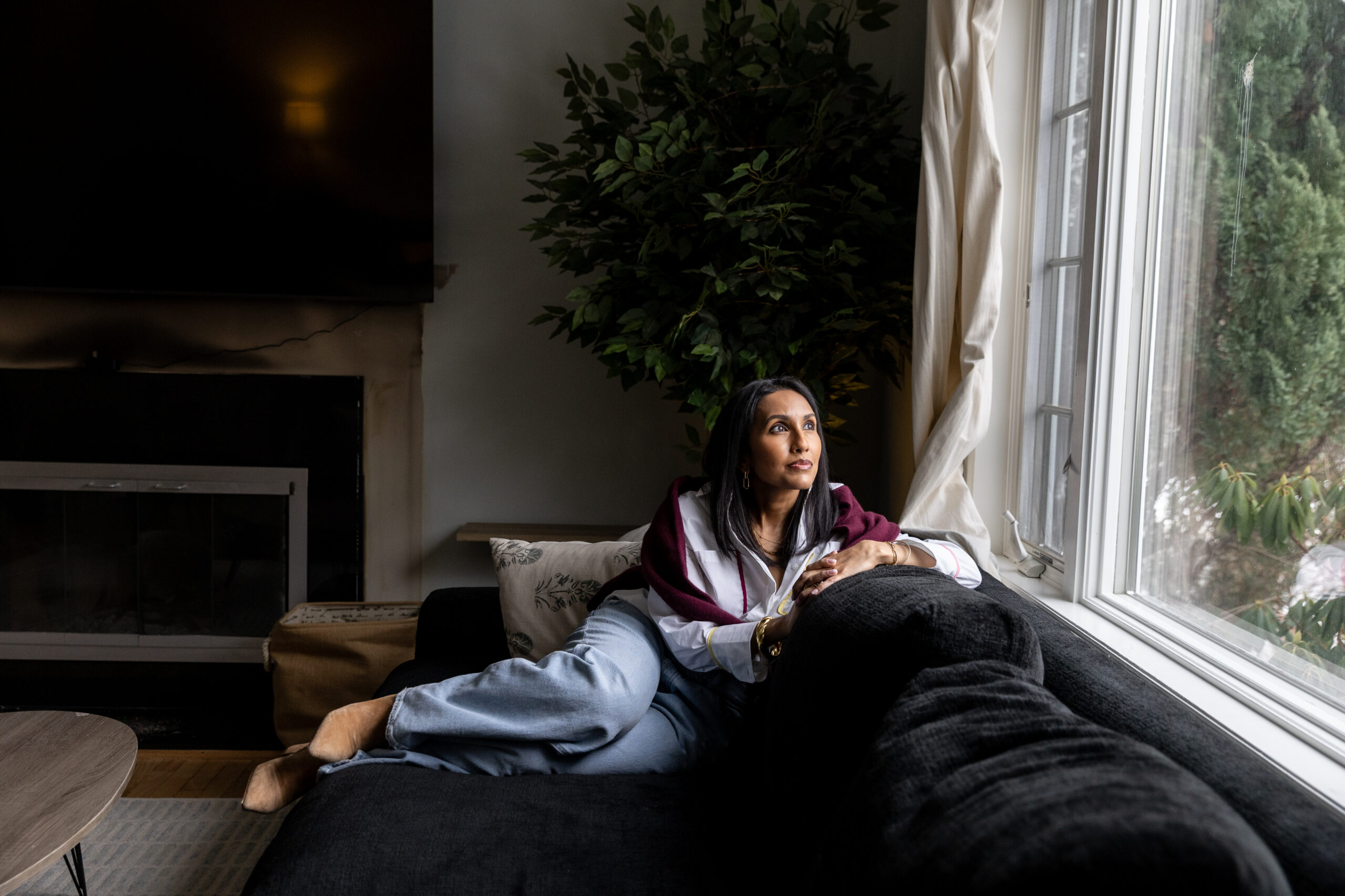
    Sadia Zapp started taking anxiety medication after surgery and treatment for breast cancer. She says it has helped reduce the noise in her mind, allowing her to focus again. (Jackie Molloy for KFF Health News)

    For Zapp, the cancer survivor, it took a few months on Lexapro before she started seeing clear results. When she did, she said, it felt like her mind was less noisy, making it easier to focus. She also underwent talk therapy, but now her chronic anxiety is stabilized on medication alone.

    “It definitely helped me get back to my day-to-day in a way that was productive and not just riddled with my anxieties throughout the day,” she said.

    Zapp, a communications director in New York, is one of millions of Americans to start taking an anxiety medication in recent years. “It’s really helped me manage,” she says.

    KFF Health News’ Holly Hacker, Maia Rosenfeld, and Lydia Zuraw contributed to this report.

    KFF Health News is a national newsroom that produces in-depth journalism about health issues and is one of the core operating programs at KFF — the independent source for health policy research, polling, and journalism.

  • The Eagles Autism Foundation raised more than $10 million last year. It’s needed ‘now more than ever,’ Jeffrey Lurie says.

    The Eagles Autism Foundation raised more than $10 million last year. It’s needed ‘now more than ever,’ Jeffrey Lurie says.

    With its soft motion-sensor lights, bubble walls, beanbag chairs, and custom tactile artwork, the sensory room at Lincoln Financial Field showcases the Eagles Autism Foundation’s work to create an inclusive environment for those with autism.

    There’s more work behind the scenes that many don’t get the chance to see. This year, the Eagles Autism Foundation is contributing $10.8 million in funding to 54 research and community projects specializing in autism research and care, the largest amount raised to date by the foundation.

    “This was a huge milestone for us. It was the first year we raised over $10 million,” said Ryan Hammond, executive director of the Eagles Autism Foundation.

    “The fact that we can be a model to an inclusive fan experience, inclusive recreation opportunities, inclusive employment, all of those things are just as important as the science,” she said. “We’re impacting people every day by feeling included — whether it’s a family seeing our mascot wearing headphones and their son wearing headphones, they feel seen.”

    The funding comes from foundation-related initiatives throughout the year, including the Eagles Autism Challenge and events like Jason Kelce’s annual celebrity bartending event in Sea Isle City.

    Eagles Jalen Hurts (right) takes a selfie with Aaron Greenfield of Plymouth Meeting at the eighth annual Eagles Autism Challenge in May.

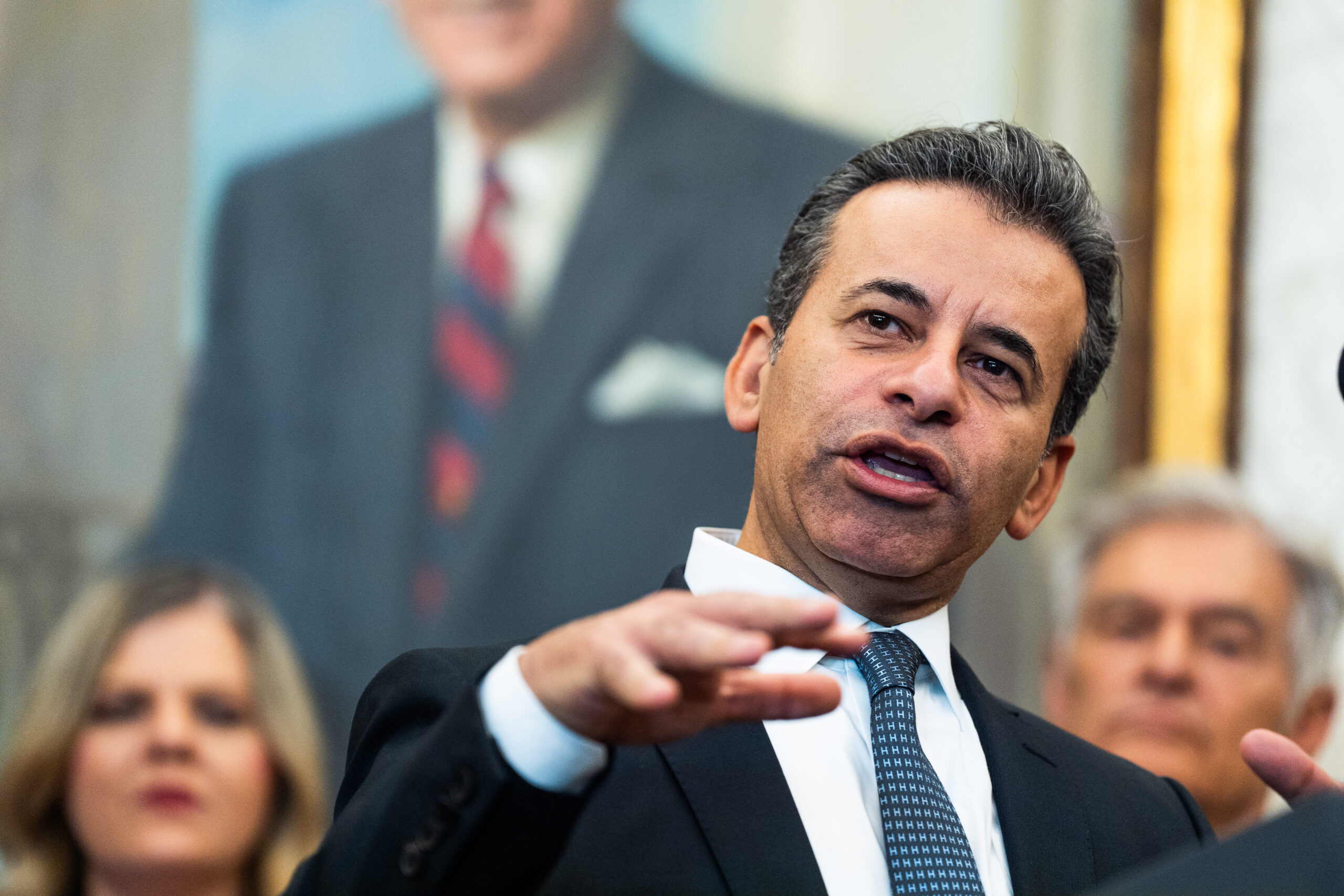
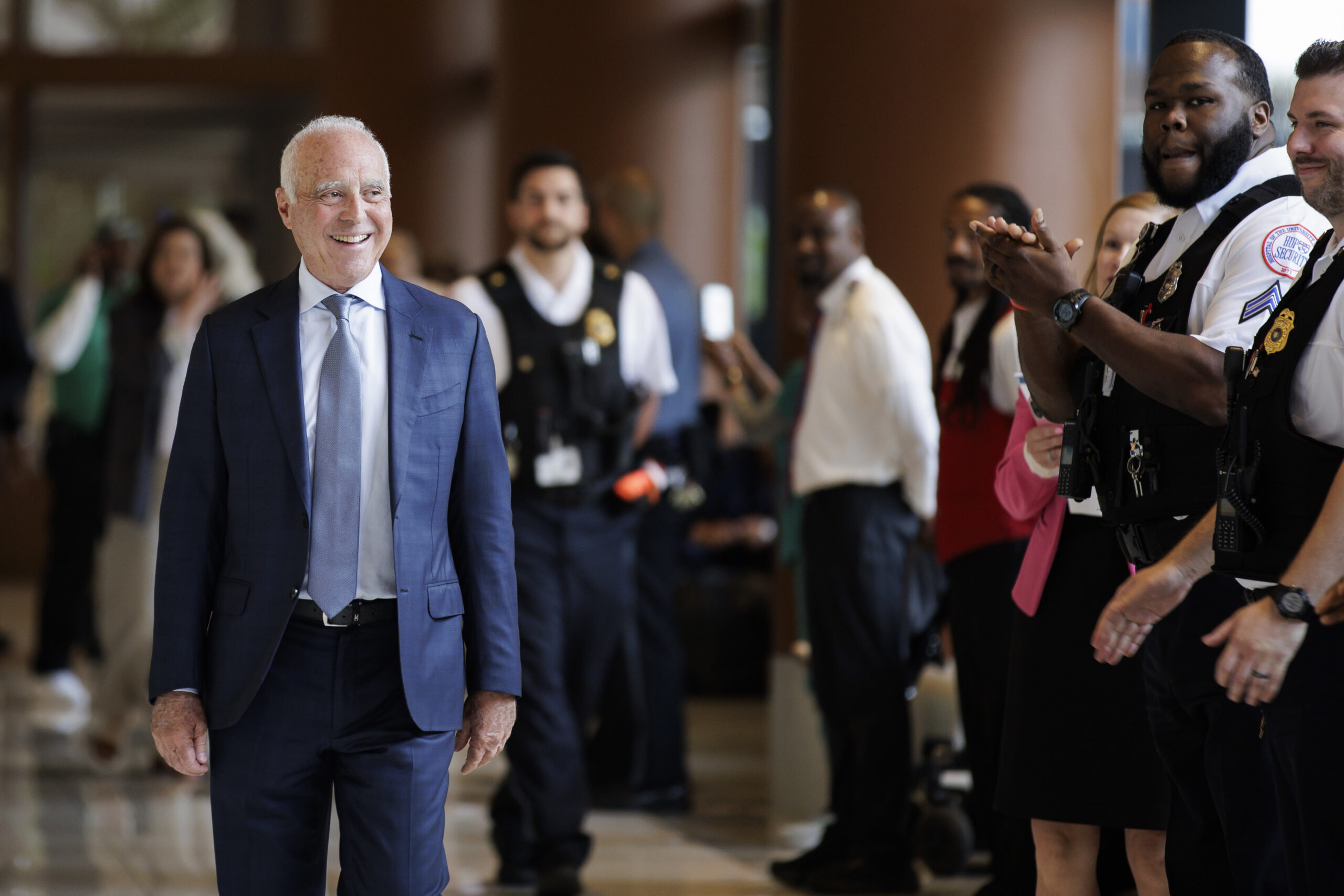
    “It is rewarding to know that our financial investment this year will support the next generation of scientific researchers and leaders who are all working hard to accelerate treatment for the autism community,” Eagles owner Jeffrey Lurie said. “While we are proud to celebrate another record-setting year for the Eagles Autism Foundation, it comes at an unfortunate time where too many institutions are having their funding cut. Now more than ever, we need to invest in science and prioritize those who need our help.”

    In the last year, President Donald Trump’s administration has cut funding for autism research, with one of the biggest cuts occurring at the Department of Education.

    “To know that we were making [our] largest investment in science at a time that it’s the most needed is a point of not only pride, but motivation to continue to support and serve this community,” Hammond said. “Funding science is critical, and a lot of institutions are faced with challenges with losing funding from the federal government.”

    As the foundation grows, so does the interest from potential research partners. This year, the Eagles Autism Foundation received a record 267 letters of intent for research grant funding. A scientific adviser helped review each letter, taking innovation and measurable outcomes into consideration to narrow the pool to 52 proposals.

    Each proposal was assigned to an independent team of scientists for review. Then, Dr. Emanuel DiCicco-Bloom, who serves as the foundation’s scientific adviser and chairman of its review panel, and others participated in a two-day discussion at Lurie’s home to negotiate the strengths, weaknesses, and challenges of each project.

    “Being able to go through this process that’s not only rigorous but also transparent makes me feel like we’re doing a service on behalf of every single person who agreed to support our mission,” Hammond said. “I’m filled with hope that these projects are really going to change someone’s life.”

    Added Lurie: “We are beyond grateful for Dr. DiCicco-Bloom and his esteemed panel of colleagues for putting in the time, once again, to evaluate these projects and drive meaningful progress in autism research.”

    Eagles owner Jeffery Lurie and his family donated $50 million to Children’s Hospital of Philadelphia and Penn Medicine to create the Lurie Autism Institute last year.

    This year, the foundation will fund 13 pilot grants, four postdoctoral fellowships, and three translational grants that include a three-year investment for research. The four postdoctoral fellowships will support the work at the Children’s Hospital of Philadelphia and the University of Pennsylvania, both partners in the Lurie Autism Institute, which was founded last year after the Lurie family donated $50 million to CHOP and Penn Medicine.

    In addition to funding autism research, grants were given to dozens of local projects that provide an immediate need in the community and align with the Eagles Autism Foundation’s mission.

    Since 2018, the Eagles Autism Foundation has invested more than $40 million in 223 research projects and community grants. To Hammond, this is just the beginning.

    “Honestly, the sky is really the limit,” Hammond said. “What we’ve been able to see in such a short time has been incredible. … We’re continuing to drive a more inclusive future for everyone.”

    Savannah Laycock of Quakertown and Brennan Sim of Atco play in the Eagles’ sensory room at Lincoln Financial Field.

    Where is all the money going?

    The Eagles Autism Foundation will divide the $10.8 million in funds among 54 research and community projects:

    Research institutions

    Local: The A.J. Drexel Autism Institute, Children’s Hospital of Philadelphia (two postdoctoral fellowships and a translational grant), and the University of Pennsylvania (two postdoctoral fellowships).

    National/global: Boston Children’s Hospital, Boston Children’s Hospital — Harvard Medical School, Children’s Hospital of Los Angeles, Children’s National, Cold Spring Harbor Laboratory, Icahn School of Medicine at Mount Sinai, Stanford University, Stony Brook University, University of California San Francisco, University of Geneva, University of Iowa, University of Minnesota Twin Cities, University of North Carolina at Chapel Hill, University of Wisconsin-Madison.

    Community projects and initiatives

    Local: KIPP Philadelphia Public Schools, A Step Up Academy, Common Space, Huddle Up for Autism, KultureCity Barefoot Country Music Fest, Coffee Closet with Barista Jake, Office for People with Disabilities (City of Philadelphia), Penn State Health, Philadelphia Orchestra, Philadelphia Zoo, Saint Joseph’s University, CASA Youth Advocates, Special Olympics Pennsylvania, SPIN, St. Christopher’s Hospital for Children, St. John of God Community Services, Stratford Friends School, TGR Learning Lab, Timothy School, Theatre Horizon, Thomas Jefferson University, and Variety — The Children’s Charity of the Delaware Valley, Comprehensive Learning Center, Devereux Advanced Behavioral Health, Elwyn Foundation, KultureCity Super Bowl LIX, Melmark, Neurodiversity Employment Network, No Limits Café, Pathway School, Potential Inc., Raise the Bar Family Services, Shore Medical Center, Special Equestrians.

  • I’m an oncologist. Here’s what the science says about cancer and supplements. | Expert Opinion

    I’m an oncologist. Here’s what the science says about cancer and supplements. | Expert Opinion

    I specialize in treating people who are immunocompromised from leukemia or other cancers affecting the cells of the bone marrow. Recently, I was reviewing the medications one of my patients was taking when she showed me a photo of a pill bottle with a label indicating that the contents included antioxidants.

    “It’s to help boost my immune system,” she explained. “I want to make sure it’s safe to take with my other medicines.”

    It is estimated that 64 to 81% of people with a cancer diagnosis use dietary supplements. Almost half take them without telling their healthcare providers — so I was grateful my patient asked me about hers. Among people without cancer, approximately 50% report taking supplements, many of which purport to help prevent cancer.

    But do they? Here’s what we know about cancer and supplements.

    Are dietary supplements safe? And how well do they work?

    Unlike prescription medications and over-the-counter drugs, dietary supplements are not well regulated by the FDA. Supplement manufacturers who introduce new ingredients do have to submit a premarket safety notification that the supplement “will reasonably be expected to be safe” when used as the product label suggests. However, the FDA can only take action against a supplement manufacturer if safety concerns are raised after it has been marketed. There is no requirement, though, for efficacy — so unless a dietary supplement is tested in a clinical trial, we really don’t know if it works.

    The FDA does not approve the label on a dietary supplement either, but if a claim is made about how the supplement affects the structure or function of the human body (such as “calcium builds stronger bones”), the manufacturer must notify the FDA and include a disclaimer that the FDA has not evaluated that claim.

    Supplement manufacturers also need to comply with good manufacturing practices (known as GMP, these are strict requirements that ensure food, drugs, and cosmetics are made according to safe, quality standards), and the FDA can inspect manufacturing facilities. Despite this, products with deceptive claims and false labels can end up on shelves. For example, in 2015 the New York State Attorney General’s office found that four out of five herbal supplements sold at four national retailers did not contain any of the herbs mentioned on their labels. The products were often made from little more than cheap fillers like powdered rice, asparagus, and houseplants. It ordered them to halt sales of those supplements thereafter.

    Can dietary supplements help prevent cancer?

    As a general statement, when dietary supplements have been studied rigorously in clinical trials, they have not been shown to prevent cancer.

    For example, epidemiological and laboratory studies conducted decades ago initially suggested that taking antioxidants such as beta-carotene could help stave off cancer. Yet, randomized trials enrolling thousands of people, in which approximately half the subjects received dietary supplementation and half received placebo, failed to show that beta-carotene prevents skin cancer recurrence in people with a previous skin cancer, or has any effect on overall cancer rates.

    Other research has also failed to show that beta-carotene or other antioxidants, such as vitamin C or vitamin E, prevent colorectal adenomas (polyps that can lead to cancer); that those supplements, selenium, or vitamin A prevent gastrointestinal cancers; or that beta-carotene or vitamin A prevent lung cancer.

    Dietary supplements were not helpful in analyses that separated men from women, either. In one study of over 8,000 women, vitamin C and E did not lower overall cancer rates, and in a study of over 36,000 women enrolled in the Women’s Health Initiative, vitamin D or calcium supplementation had no effect on rates of colorectal cancer or on overall cancer rates. Similarly, vitamin E and selenium did not prevent the development of prostate cancer in a study that included over 35,000 healthy men, nor in a study of men with precancerous findings in the prostate.

    Can dietary supplements increase cancer risk?

    Most dietary supplements are not harmful. Some, however, should be taken with caution, especially in certain populations of people.

    In a follow-up analysis of the 35,000 healthy men treated with selenium and/or vitamin E — the study designed to prevent cancer — men taking vitamin E actually had a 17% higher risk of developing prostate cancer than men taking a placebo. Similarly, beta-carotene, which did not do a great job in preventing cancer, was found in one analysis to increase the risk of lung cancer and stomach cancer, particularly among smokers.

    Another study, which assigned people to receive folate supplementation or placebo to prevent colon polyps, found that folate was not effective. However, the men who received folate were over 2.5 times as likely to develop prostate cancer compared to those receiving placebo.

    Without question, anyone at risk for developing these types of cancers should avoid taking these dietary supplements. But what about people, like my patient, who already have cancer?

    In one study of over 1,100 women with breast cancer who were receiving chemotherapy, those who took antioxidant dietary supplements before and during treatment had a higher risk of cancer recurrence — though taking a multivitamin had no effect. One possible explanation is that antioxidants may counter some of the cancer-fighting effects of chemotherapy. Dietary supplements can also alter how the body processes chemotherapy, which can theoretically reduce the medication’s efficacy or worsen its side effects.

    There’s a lot we still don’t know about the potential benefits or risks of taking dietary supplements, which are not regulated by the FDA. At the very least, tell your doctor about any nonprescription vitamins or supplements you’re taking, so they can make sure they aren’t harming you or interfering with the treatments they do prescribe you.

    Mikkael A. Sekeres, MD, MS, is the chief of the division of hematology and professor of medicine at the Sylvester Comprehensive Cancer Center, University of Miami. He is author of the books “When Blood Breaks Down: Life Lessons from Leukemia” and “Drugs and the FDA: Safety, Efficacy, and the Public’s Trust.”

  • Paul F. Engstrom, award-winning pioneer in cancer prevention and control at Fox Chase Cancer Center, has died at 89

    Paul F. Engstrom, award-winning pioneer in cancer prevention and control at Fox Chase Cancer Center, has died at 89

    Paul F. Engstrom, 89, formerly of Ambler, Montgomery County, celebrated pioneer in cancer prevention, education, and treatment, former chair and professor emeritus of the hematology and oncology department at Fox Chase Cancer Center, retired vice president of cancer control and senior adviser to the president at Fox Chase, Army veteran, and mentor, died Friday, Dec. 26, of Parkinson’s disease at Normandy Farms Estates in Blue Bell.

    The son of a small-town doctor, Dr. Engstrom accompanied his father on house calls in Minnesota when he was young and assisted sometimes on routine procedures. Later, after earning his medical degree at the University of Minnesota, he excelled at identifying cancer-related health problems and creating solutions.

    Starting in the 1960s and ’70s, Dr. Engstrom noticed large gaps in cancer prevention programs and treatment strategies. So he compiled comprehensive clinical care guidelines for cancer doctors and hospitals around the world, forged sustainable oncology research networks and community education partnerships, and established one of the country’s first cancer prevention and control programs at Fox Chase.

    “Most doctors and oncologists in the 1970s were training to treat cancer, not necessarily to prevent it,” former Fox Chase colleague Carolyn Fang said in a 2018 story for Fox Chase’s Forward magazine. “He was one of the first to recognize that prevention was important.”

    In 1991, Dr. Engstrom told the Daily News: “Changing the behavior of the public is only part of my job. We must change the physicians, too.” In 2000, he told The Inquirer: “Nowadays, the trend is toward identifying high-risk individuals and treatments we can give to prevent cancer from ever starting.”

    Dr. Engstrom was adept at organization and collaboration, former colleagues said in online tributes. He recruited other cancer experts to Fox Chase and established cutting-edge programs for cancer screening, smoking cessation, and education at hospitals, schools, private companies, and other organizations.

    He taught clinical science classes, secured vital grants from the National Cancer Institute and other groups, and made seminal clinical trials available to many more patients. “He was really aware of the need to integrate the community into this work.” Fang said in 2018.

    Dr. Engstrom joined the old American Oncologic Hospital in Philadelphia in 1970 and oversaw its merger with the Institute for Cancer Research in 1974 to become the Fox Chase Cancer Center. He was named vice president of cancer control and continuing education in 1984, and head of community cancer program activities in 1989.

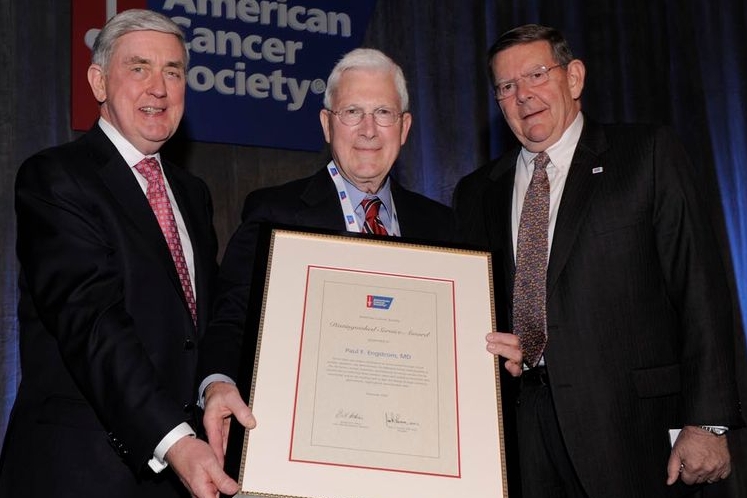
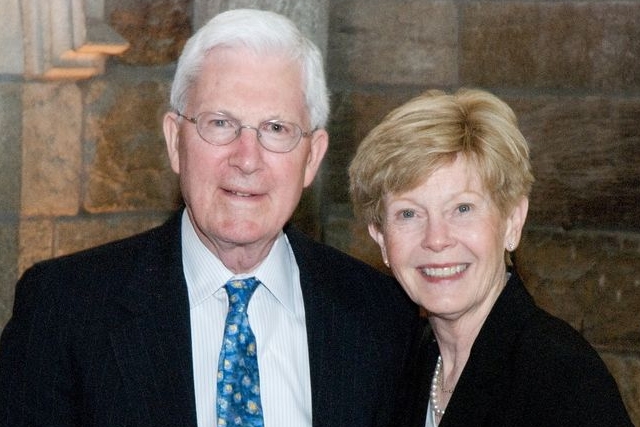
    Dr. Engstrom (center) earned many awards over his long career.

    He was also vice president for population science and held the Samuel M.V. Hamilton endowed chair in cancer prevention. He specialized in treating gastrointestinal cancers and neuroendocrine tumors. He retired in 2018 but continued as a special adviser to the Fox Chase president.

    He cofounded the National Comprehensive Cancer Network and was a fellow of the American College of Physicians and longtime member of the American Association of Cancer Research and other groups. He served on many boards and earned a clinical care achievement award in 2013 from the Association of Community Cancer Centers.

    In 2016, Dr. Engstrom and his wife, Janet, were honored by Fox Chase colleagues for their combined 80 years of service to the center. In 2020, colleagues published a series of articles about his career in the journal Cancer Prevention Research. In 2023, friends, colleagues, patients, and his family established the Paul F. Engstrom professorship in oncology at Fox Chase.

    Dr. Engstrom edited, wrote, or cowrote hundreds of research papers and lectured around the world. He was drafted into the Army in 1967, rose to the rank of major, and served three years as head of hematology and oncology at Tripler Army Hospital in Honolulu.

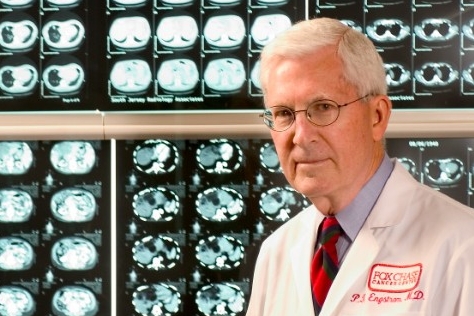
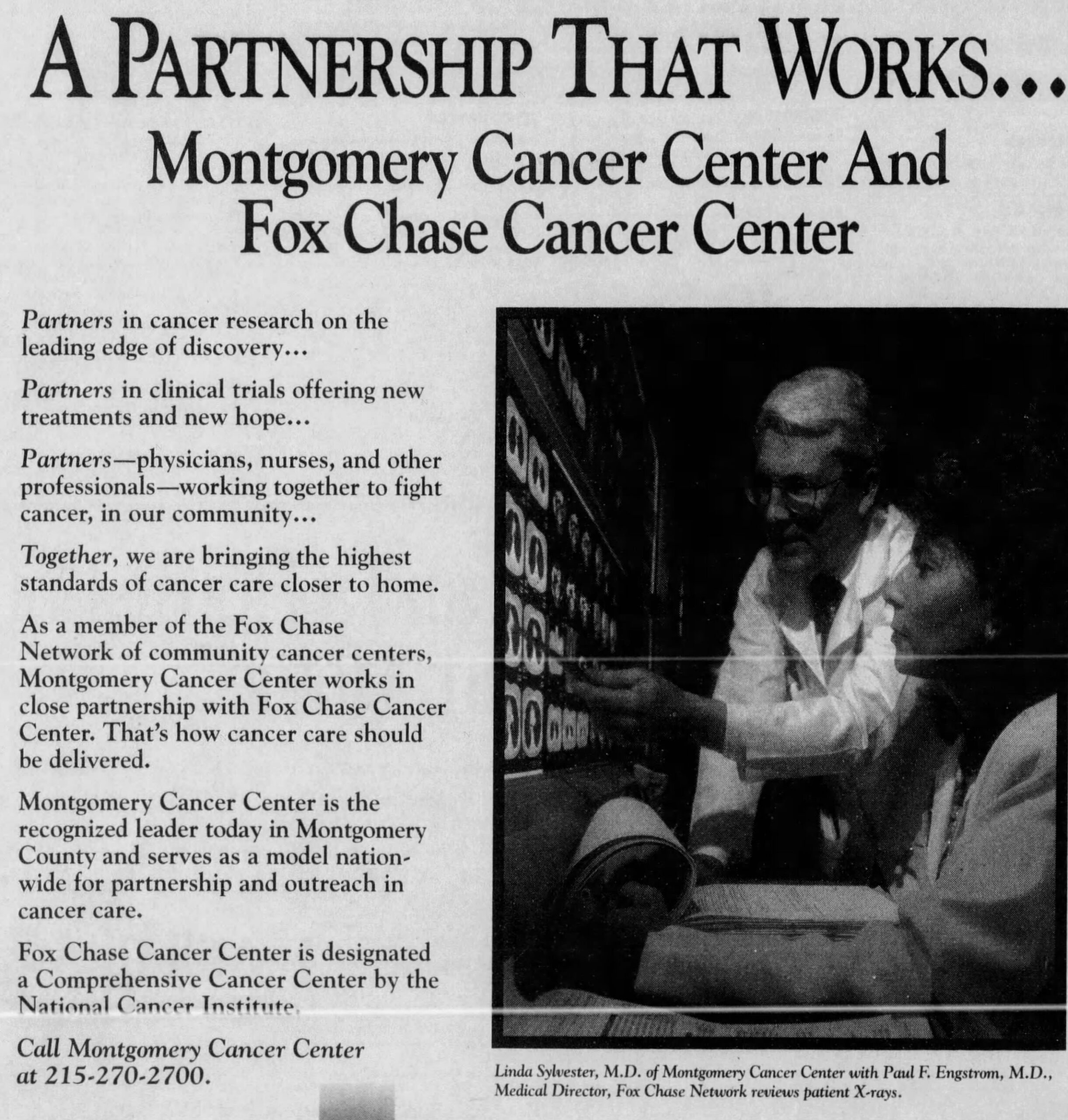
    Dr. Engstrom (left in the photo) appeared in many print advertisements for the Fox Chase Cancer Center, such as this 1995 ad in The Inquirer.

    “Medicine is a great career,” he said in 2018. “It is still the most satisfying and the best opportunity to do well, but most importantly to do good.”

    Paul Frederick Engstrom was born May 28, 1936, in St. Cloud, Minn. He played football and basketball, ran track, played trombone in the high school band, and sang in the school chorus.

    His father was the only doctor in Belgrade, Minn., and Dr. Engstrom knew early he was going to be a doctor, too. He earned a bachelor’s degree at St. Olaf College in Minnesota and completed a public health fellowship at the California Department of Health during medical school.

    He met nurse Janet Johnson during a procedure in a Minnesota hospital in 1960, and they married in 1961. They lived in Hawaii while he served in the Army and in Ambler until recently, and had daughters Karin and Maria, and a son, David.

    Dr. Engstrom met his wife, Janet, when she was an intensive care unit nurse.

    Dr. Engstrom and his wife enjoyed the orchestra, ballet, and theater in Philadelphia. He liked to garden, read, and travel. He was thrifty, his wife said.

    He followed many of the local college and professional sports teams, especially the Eagles, and sang in the choir at Christ’s Lutheran Church in Oreland. He survived prostate cancer and remained a lifelong learner.

    “He liked being a student,” his wife said. “He was quiet. He was persistent.”

    His family said in a tribute: “He cherished every moment spent with his wife, children, and grandchildren.”

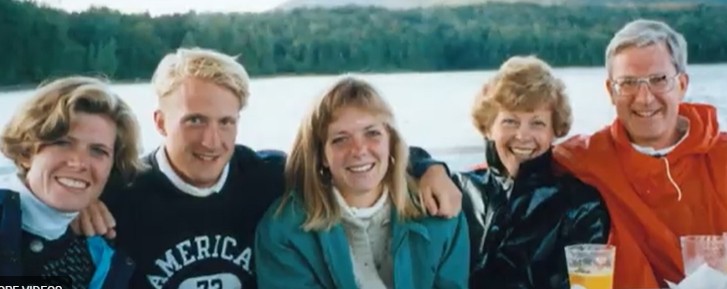
    Dr. Engstrom (right) enjoyed time with his family.

    In addition to his wife and children, Dr. Engstrom is survived by eight grandchildren, a brother, and other relatives. A brother died earlier.

    A celebration of his life was held earlier.

    Donations in his name may be made to the Fox Chase Cancer Center, 333 Cottman Ave., Philadelphia, Pa. 19111; and Christ’s Lutheran Church, 700 E. Pennsylvania Ave., Oreland, Pa. 19075.