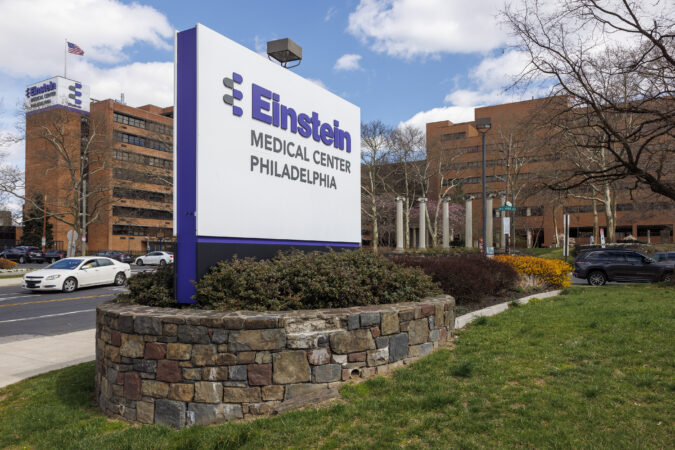
Jefferson Health is closing four legacy Einstein pediatric practices, including one at Jefferson Einstein Hospital Philadelphia in a low-income area of the city, and moving three others to True North Pediatrics, a private group with a dozen mostly suburban locations.
The nonprofit health system did notrespond to questions Thursday about how many children the practices serve, how many jobs will be cut, or why it was making the change, which is expected to significantly reduce the amount of pediatric care in North and Northeast Philadelphia.
This week’s pediatric cutbacks are a significant move affecting patient care amid a yearslong effort to make the system with more than $15 billion in annual revenue financially sustainable. From 2015 through 2024, Jefferson grew from three hospitals to more than 30 and now stretches from South Jersey to near Scranton.
The locations scheduled to close June 30 are the Pediatric & Adolescent Ambulatory Center at Einstein Philadelphia and three Holland Pediatrics locations (Center One/Bustleton in Northeast Philadelphia, Buck Road in Southampton, and Frankford in Torresdale), Jefferson said in a statement.
The three clinics going to True North are Trappe Pediatric Care at Iron Bridge, Pennypack Pediatrics, and Einstein Pediatrics Elkins Park. Jefferson did not provide details on transaction terms.
A practice manager at True North, which is based in suburban Philadelphia, did not respond to a request for more information. True North’s website said the practice is independent, “not managed by any big business or larger institution.”
Jefferson said in a statement that it will continue offering pediatric services through its primary care network, urgent care centers, emergency departments, and Lehigh Valley Health Network’s Reilly Children’s Hospital.
“With three excellent inpatient pediatric hospitals right here in our region, partnering with True North Pediatrics — an organization whose singular focus is pediatric care — allows us to ensure that families across our region continue to receive the specialized, dedicated attention they deserve,” Jefferson said in an internal communication Monday.
It’s possible that St. Christopher’s Hospital for Children, which is about 3½ miles by car from Einstein Philadelphia, will pick up many of the thousands of dislocated patients.
St. Chris already serves almost exclusively patients with Medicaid insurance for low-income families and struggles to make ends meet because of the low rates it receives.
“We are committed to delivering trusted, compassionate care for every patient who walks through our doors,” St. Chris said in a statement. “Families can access care at our nearby locations, including our Center for the Urban Children and Northeast Pediatrics office.”
Pottstown Hospital was cited by the Pennsylvania Department of Health for shuttering intensive care services 13 days before it was scheduled to close the unit.
Tower Health, which owns Pottstown, announced in November that it was closing Pottstown’s ICU, endoscopy center, and the Pottstown outpost of Tower’s McGlinn Cancer Institute effective Jan. 6. Hospitals are required to give 60 days notice before shuttering services.
The closures were part of a larger downsizing that included laying off 350 workers across Tower’s hospital system. Tower also owns Phoenixville Hospital, Reading Hospital, and has a joint ownership of St. Christopher’s Hospital for Children with Drexel University.
Tower officials said they closed the unit 13 days ahead of schedule on Dec. 24 because they did not have enough remaining nurses on staff to safely operate.
“Safe ICU care requires appropriate nurse staffing, and operating the unit under those conditions could have compromised the high-quality care our patients deserve,” Tower said in a statement.
Pottstown had already limited admissions to the unit to four patients, and began transferring remaining patients to other intensive care facilities on Dec. 22, according to the health department inspection report.
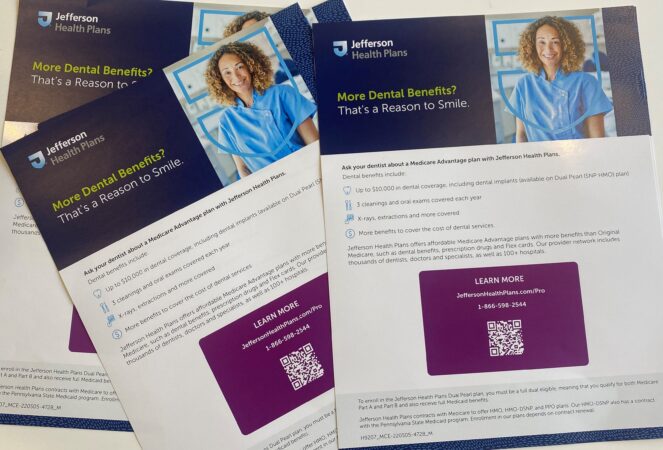
Jefferson Health Plans added nearly 12,000 new customers to its Medicare Advantage plans during the open enrollment period for coverage this year, the biggest annual gain ever for the insurance arm of Thomas Jefferson University.
About half of Jefferson’s enrollment gains were in Philadelphia, Montgomery, and Bucks Counties. Still, Jefferson remained the sixth largest provider of private Medicare plans in Southeastern Pennsylvania. The Inquirer compared February 2025 with last month.
Philadelphia-based Independence Blue Cross was leader, with one-third of the region’s 383,000 Medicare Advantage customers. National companies Aetna, UnitedHealthcare, Humana, and Cigna occupied the next four spots.
“This was the strongest Medicare Advantage enrollment period in Jefferson Health Plans’ history,” Jefferson Health Plans president Krista Hoglund said in an email.
“That level of growth signals a clear gap in the market for coverage that is anchored in the local community, easier to use, and closely connected with the doctors and hospitals they know and trust,” she said.
window.addEventListener(“message”,function(a){if(void 0!==a.data[“datawrapper-height”]){var e=document.querySelectorAll(“iframe”);for(var t in a.data[“datawrapper-height”])for(var r,i=0;r=e[i];i++)if(r.contentWindow===a.source){var d=a.data[“datawrapper-height”][t]+”px”;r.style.height=d}}});
New Jersey has been a harder market for Jefferson. Enrollment more than doubled this year, but the eight counties in South Jersey where Jefferson sells plans still account for less than 10% of its members.
Jefferson gained about 2,400 members in Lehigh Valley counties served by Lehigh Valley Health Network, which Jefferson acquired in 2024. Jefferson’s ownership of an insurer was a key reason why Lehigh Valley chose to become part of Jefferson, health system officials said at the time.
Jefferson’s gains in the Lehigh Valley came amid a contract dispute with United HealthCare, leading to LVHN going out of network in January for UnitedHealthcare Medicare Advantage plans. Jefferson had warned in October that the contract was expected to end.
United said then that the timing of the warning during the Medicare Advantage open enrollment period looked like a “negotiating tactic” that could lead United customers to choose other plans.
The two Pennsylvania counties where United had the biggest percentage declines were Lehigh and Northampton, where LVHN has substantial operations.
The biggest gains, however, went to Capital Blue Cross, of Harrisburg.
Climate change’s rising seas may threaten tens of millions more people than scientists and government planners originally thought because of mistaken research assumptions on how high coastal waters already are, a new study said.
Researchers studied hundreds of scientific studies and hazard assessments, calculating that about 90% of them underestimated baseline coastal water heights by an average of 1 foot, according to Wednesday’s study in the journal Nature. The problem arises far more frequently in the Global South, the Pacific, and Southeast Asia, and less in Europe and along the Atlantic coasts.
The cause is a mismatch between the way sea and land altitudes are measured, said study coauthor Philip Minderhoud, a hydrogeology professor at Wageningen University and Research in the Netherlands. And he attributed that to a “methodological blind spot” between the different ways those two things are measured.
Each way measures its own areas properly, he said. But where sea meets land, there are a lot of factors that often do not get accounted for when satellites and land-based models are used. Studies that calculate sea level rise impact usually “do not look at the actual measured sea level, so they used this zero-meter” figure as a starting point, said lead author Katharina Seeger of the University of Padua in Italy. In some places in the Indo-Pacific, the figure is close to 1 meter, or about 3 feet, Minderhoud said.
One simple way to understand that is that many studies assume sea levels without waves or currents, when the reality at the water’s edge is of oceans constantly roiled by wind, tides, currents, changing temperatures, and things like El Niño, Minderhoud and Seeger said.
Adjusting to a more accurate coastal height baseline means that if seas rise by a little more than 3 feet — as some studies suggest will happen by the end of the century — waters could inundate up to 37% more land and threaten 77 million to 132 million more people, the study said.
That would trigger problems in planning and paying for the impacts of a warming world.
People at risk
“You have a lot of people here for whom the risk of extreme flooding is much higher than people thought,” said Anders Levermann, a climate scientist at the Potsdam Institute for Climate Impacts Research in Germany, who was not part of the study. Southeast Asia, where the study finds the biggest discrepancy, has the most people already threatened by sea level rise, he said.
Minderhoud pointed to island nations in that region as an area where the reality of discrepancy hits home.
For 17-year-old climate activist Vepaiamele Trief, the projections are not abstract. On her island home in the South Pacific archipelago of Vanuatu, the shoreline has visibly retreated within her short lifetime, with beaches eroded, coastal trees uprooted, and some homes now barely 3 feet from the sea at high tide. On her grandmother’s island of Ambae, a coastal road from the airport to her village has been rerouted inland because of encroaching water. Graves have been submerged and entire ways of life feel under threat.
“These studies, they aren’t just words on a paper. They aren’t just numbers. They’re people’s actual livelihoods,” she said. “Put yourself in the shoes of our coastal communities — their lives are going to be completely overturned because of sea level rise and climate change.”
Paying attention to the starting point
This new study is pretty much about what is the truth on the ground.
Calculations that may be correct for the seas overall or for the land are not quite right at that key intersection point of water and land, Seeger and Minderhoud said. That is especially true in the Pacific.
“To understand how much higher a piece of land is than the water, you need to know the land elevation and the water elevation. And what this paper says the vast majority of studies have done is to just assume that zero in your land elevation data set is the level of the water — when, in fact, it’s not,” said sea level rise expert Ben Strauss, CEO of Climate Central. His 2019 study was one of the few the new paper said got it right.
“It’s just the baseline that you start from that people are getting wrong,” said Strauss, who was not part of the research.
Maybe not so bad, some scientists say
Other outside scientists said that Minderhoud and Seeger may be making too much of the problem.
“I think they’re exaggerating the implications for impact studies a bit — the problem is actually well understood, albeit addressed in a way that could probably be improved,” said Gonéri Le Cozannet, a scientist at the French geological survey. Most local planners know their coastal issues and plan accordingly, Rutgers University sea level expert Robert Kopp said.
That’s true in Vietnam, in the high-impact area, Minderhoud said. Officials there have an accurate sense of elevation, he said.
The findings come as a new UNESCO report warns of major gaps in understanding how much carbon the ocean absorbs. That report said that models differ by 10% to 20% in estimating the size of that carbon sink, raising questions about the accuracy of global climate projections that rely on them.
Together, the studies suggest governments may be planning for coastal and climate risks with an incomplete picture of how the ocean is changing.
“When the ocean comes closer, it takes away more than just the land we used to enjoy,” said Thompson Natuoivi, a climate advocate for Save the Children Vanuatu.
“Sea level rise is not just changing our coastline, it’s changing our lives. We are not talking about the future — we’re talking about the right now.”
A glance at the clock told me that I had only five more minutes to finish examining my patient in his early 60s.
During my family medicine rotation at a primary care clinic affiliated with Cooper Medical School of Rowan University, where I am training to become a physician, we are usually allotted 20 minutes for a standard patient checkup. In that time, I have to cover a patient’s medical history, review their medications, conduct a physical exam, and discuss test results.
I had little time for conversation about my patient’s bloodwork, where a few numbers popped up as concerning. His total cholesterol and LDL (harmful cholesterol) had climbed sharply since his last visit. I entered the values into a cardiovascular risk calculator, a routine step in deciding whether to start medication. My patient also smoked and had a family history of heart disease.
The calculation assessed his 10-year risk of heart attack or stroke as near 20%. That’s well above the 7.5% risk threshold where we typically recommend starting treatment.
I explained the results and encouraged my patient to consider starting a statin to lower his cholesterol.
He shook his head. “I Googled it. I wasn’t too pleased with the side effects. What good is preventing heart disease if I get muscle breakdown? There are doctors online saying they’re overprescribed,” he told me.
I walked him through the evidence. Yes, muscle pain can happen, and in rare cases, more serious muscle injury. I urged him to look past fears of rare side effects, but he wasn’t convinced. “It sounds like the medication lowers the risk of some things and raises the risk of others,” he said.
Conversations like this reveal how medical misinformation enters routine care decisions. It starts with an article read online, a TikTok video about side effects, a social media thread questioning whether doctors overprescribe. Over time, this incomplete information reshapes how patients weigh risk. Like my patient, some end up fearing rare complications more than than the threat posed by common diseases.
The consequences extend to issues like vaccine hesitancy. Unsubstantiated fears of side effects and debunked links to autism have led many parents to forgo routine immunizations. We are already seeing the results in rising outbreaks of preventable diseases like measles.
In medical school, I have seen that doctors rarely can promise certainty. My profession pieces together evidence and offers guidance based on what is most likely to happen, not what is guaranteed. We talk in terms of risk and percentages.
That nuance can feel unsatisfying, especially when someone else — a friend, family member, influencer — is making bold, confident claims about hidden harms. In high-stakes situations, it’s easy to mistake that confidence for competence.
To earn this patient’s trust, I needed a different playbook. As my allotted minutes for his visit ran out, I stepped out of the exam room to briefly to discuss his case with my attending physician. We re-entered the room together, and the experienced doctor showed me a different approach.
He didn’t start talking about statistics. Instead, he listened carefully and acknowledged the patient’s concerns. Yes, muscle symptoms can happen. No medication is completely without risk.
Then he reframed the conversation. What would a heart attack mean for your life? What is most important to you?
The tone in the room shifted. The discussion stopped being about whether the internet was right or wrong and became about values and tradeoffs. Neither of us was trying to “win” the argument. We wanted to show our interest in the patient.
Misinformation is best addressed with transparency and a willingness to acknowledge uncertainty and meet patients where they are. These conversations take time, but are necessary.
Misinformation doesn’t disappear if we ignore it, overwhelm it with data, or lean on whatever authority we think comes with a white coat. It goes away when patients feel heard, when risks and benefits are explained plainly, and when trust is built one conversation at a time.
Ian Millstein is a rising fourth-year medical student at Cooper Medical School of Rowan University, currently pursuing an MPH in Health Management at the Harvard T.H. Chan School of Public Health.
COLUSA, Calif. — Early on, Jean Franklin got some career advice she followed religiously: “Pay yourself first.” So she did, socking away hundreds of thousands of dollars in retirement savings by the time she became a stay-at-home mom at age 41.
She and her husband, Charles, a former high school teacher who goes by Chaz, planned to retire comfortably in the three-bedroom house where they raised their kids about 60 miles northwest of Sacramento.
But early last year, the 63-year-old became unsteady on her feet. One morning in May, she woke up with slurred speech and landed in the hospital, then rapidly lost the ability to move the right side of her body.
In August, as doctors continued to puzzle over a possible diagnosis, the couple received a notice saying that on Jan. 1 their combined healthcare premium payments through the state insurance exchange would shoot up from $540 a month to $3,899 a month. The reason: Federal enhanced premium subsidies expiring at the end of last year would no longer offset their payment.
They immediately canceled a monthlong cruise they’d been planning with friends and looked through their retirement accounts.
“Now, instead of thinking about where we can go in our retirement, we’re asking the question, ‘Are we still going to be able to stay where we are because of the healthcare costs?’” said Chaz, who retired in 2021 at age 59.
Then they received more bad news. In October, at the age of 63, Jean was diagnosed with ALS, a debilitating disease that will eventually leave her unable to speak, swallow, or breathe on her own. But Jean’s condition allowed her to enroll in Medicare, the federal health insurance program that covers adults 65 and older and people with disabilities. The diagnosis saved them roughly $1,600 a month in premiums — little comfort as Jean lost her ability to walk, bathe, and dress herself.
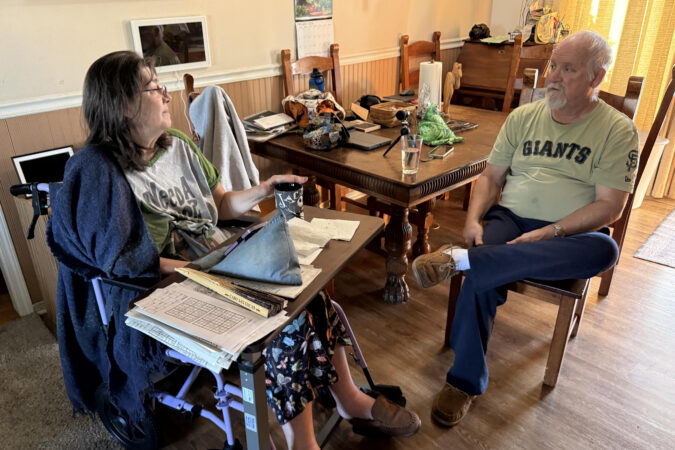
“It’s kind of morbid that, because of my diagnosis, I got put on Medicare right away, so at least we don’t have to pay that out-of-pocket,” Jean said, sitting in a wheelchair in her living room, a quilt draped over her legs to guard against the intense chills she now often gets. “We’re not going to get buried under this.”
Yet the premiums for Chaz’s plan and her Medicare remain a significant strain on their finances. The $2,300 a month they now owe, which includes roughly $342 in premium payments for Jean’s Medicare supplemental insurance, is higher than their monthly mortgage and eats up more than a quarter of their budget.
The Franklins are among the 22 million people across the nation facing greater financial pressure after Congress chose not to extend 2021 enhanced federal subsidies. That assistance helped more than double enrollment in Obamacare plans to over 24 million.
The Congressional Budget Office estimated in 2024 that, without an extension of the tax credits, the number of uninsured Americans would climb by 2.2 million this year alone. As of January, nationwide enrollment in ACA plans was down about 1.2 million year over year, though experts say it could be months before the full effects of rising premiums are known, as people miss payments and lose coverage.
The groups hit hardest will be early retirees, middle-income earners, and people living in high-cost states, said Stacey Pogue, a senior research fellow at the Center on Health Insurance Reforms at Georgetown University. The Franklins are all three.
“They fell off what we call a subsidy cliff,” Pogue said. “It’s very, very shocking, the amount that a person would have to absorb.”
That’s because the expanded tax credits made the biggest difference for people nearing retirement age who sat just above previous income eligibility thresholds, Pogue said. People such as the Franklins, who likely wouldn’t have qualified for financial help before expanded credits were implemented, are now losing that support at a time when insurers have responded to the uncertainty by dramatically raising rates.
Roughly half of people who were expected to lose eligibility for premium tax credits were ages 50 to 64, according to an analysis by KFF, a health information nonprofit that includes KFF Health News.
Republicans who opposed the extension have said the premium assistance went directly to insurance companies rather than consumers, incentivizing fraud and wasteful coverage. They also say the enhanced subsidies, which had no upper income limit for eligibility, were far too generous in capping premium payments at 8.5% of income, no matter how much an enrollee made.
“Most Americans would agree that taxpayers should not be subsidizing the health insurance of someone making $250,000,” U.S. Rep. Ken Calvert, a California Republican who voted against an extension in January, wrote in an Orange County Register op-ed. “I cannot accept the simple extension of a program that will line the pockets of insurers and is riddled with fraud at the expense of the American taxpayer.”
Patient advocates say the premium increases and expiration of subsidies have forced people into difficult choices. “The young people who are healthy are the first to say, I’m going to roll the dice” and forgo coverage, said Rebecca Kirch, executive vice president of policy and programs at the National Patient Advocate Foundation. “Those who are remaining in the system — because they have no choice — are holding off care, they’re holding off their meds, they’re going without necessary food.”
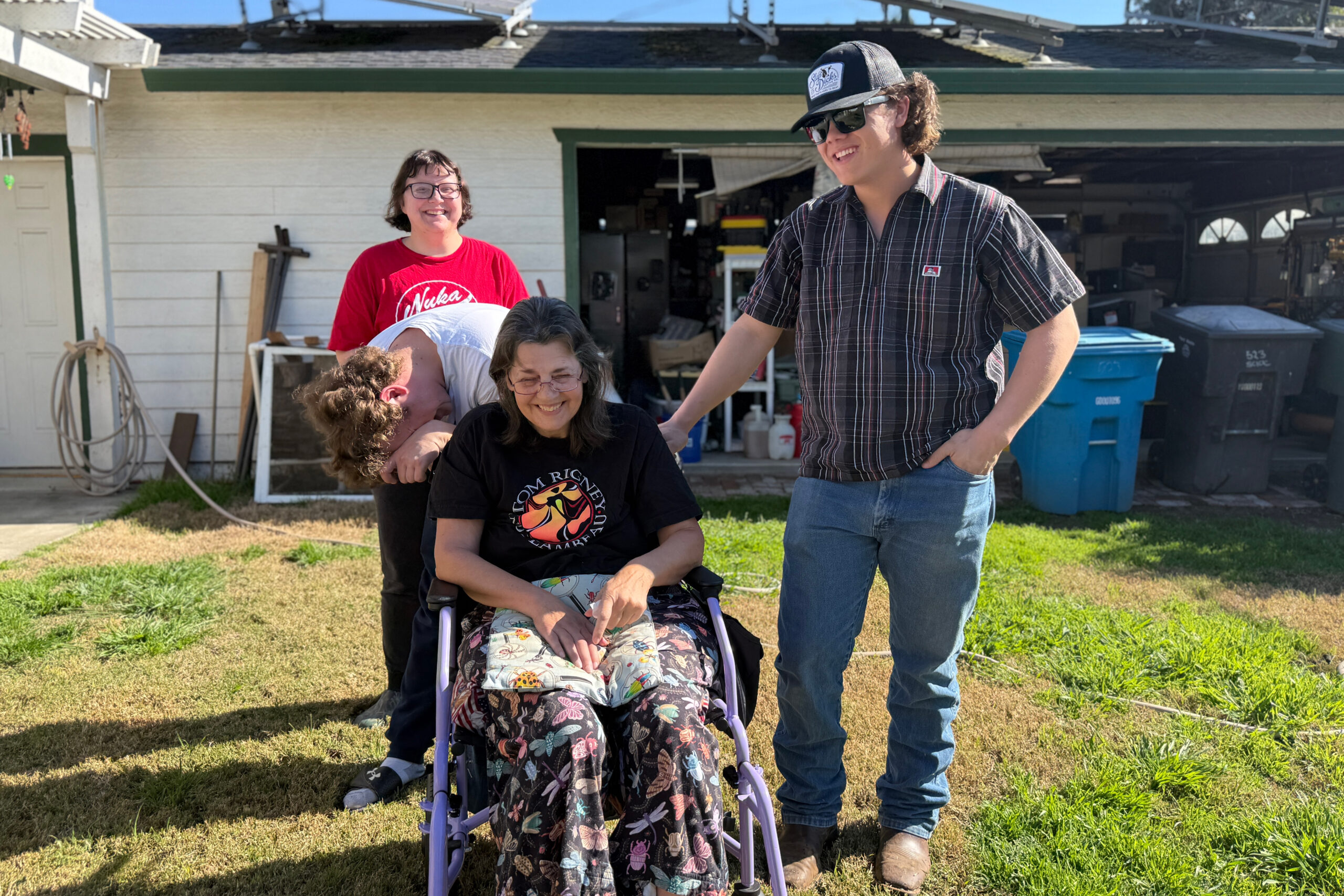
Jean Franklin, center, laughs with her sons, Louis (right) and Charlie, and Charlie’s girlfriend, Masha Billingsley. Charlie and Louis have helped their mother get dressed and get in and out of her wheelchair since she was diagnosed with ALS last year. (Christine Mai-Duc/KFF Health News)
While the Franklins are getting by, they have relied on their sons to pay for a motorized recliner to assist with lifting Jean and a handicap van to transport her. Chaz, who broke a tooth a year ago, delayed fixing it because a crown would cost him $1,000.
This year, the couple will draw $36,000 more than they had anticipated from their retirement savings, most of it to cover Chaz’s insurance premiums.
“I have a nest egg,” Chaz said. “But there’s a lot of people around here who don’t.”
For a while, he was outraged.
“I wish Congress would get off their butts and solve this issue,” said Chaz, who is a registered Republican but blames both sides of the aisle. “You’re so busy bickering over stupid crap and it’s both parties pointing fingers and blaming. Where was this discussion two years ago?”
Now, Chaz said, he’s focused on making Jean, his wife of 27 years, as comfortable as possible.
Before she got sick, they did practically everything together — hiking, traveling, tai chi, amateur photography, and bug-hunting. One of her favorite specimens was the rain beetle, a fuzzy scarab-like insect that can’t feed as an adult, relying solely on fat stores from its larval stages.
In the mornings, Chaz and their sons, Charlie and Louis, take turns lifting Jean, dressing her, and helping her use the bathroom. It’ll be fodder for the counselor, she jokes to her sons, when they inevitably need therapy later in life.
Most days, Jean’s outdoor adventures rarely extend beyond being wheeled to her back patio, where she loves to watch their backyard chickens bobble around. Chaz’s stubbornness makes him a great patient advocate. Charlie always seems to know exactly when she needs a big hug, and Louis tells jokes that can still make her snort with laughter.
“I don’t know what I would do without my boys making me laugh,” she said.
In December, Chaz will turn 65, old enough to qualify for Medicare himself. “After this year — knock on wood — we should be OK,” Jean said, before pausing and shooting her husband a wry smile.
“Well, you’re gonna be OK.”
KFF Health News is a national newsroom that produces in-depth journalism about health issues and is one of the core operating programs at KFF — the independent source for health policy research, polling, and journalism.
Artificial intelligence presents a mixed bag of risks and benefits for children that vary by age, according to Children’s Hospital of Philadelphia researchers who reviewed dozens of academic studies onthe emerging technology.
For young children, an AI chatbot could help with language development, yet it could also distorttheir perceptions ofsocial interactions.
For adolescents, the technology could help with career exploration, but its record of inappropriate responses to mental health matters raises concerns.
The researchers summarized the current evidence on generative AI — tools that imitate human intelligence to produce content in the form of text, audio, images, or videos — in a review article published Wednesday in the medical journal Pediatrics. They reviewed 55 published works largely released in the last five years, including nearly three dozen peer-reviewed studies and a mix of news articles, blog posts, and pending legislation.
They separated the potential effects across early childhood (ages 0 to 5), middle childhood (6 to 11), and adolescence (12 and older) to lay out the considerations for families.
Guidance for parents on how AI might reshape childhood remains limited, despite its rapid spread into children’s learning and play, said Robert Grundmeier, a primary care pediatrician at the Children’s Hospital of Philadelphia and thelead author.
Nearly two-thirds of teens use chatbots, like ChatGPT or Gemini, with 28% doing so daily, according to a Pew Research Center survey last year. They are using the tools for everythingfrom searching for information to getting help on homework and having a digital companion to chat with.
“Our children are getting exposed to AI at incredibly young ages, well before they have a smartphone,” Grundmeier said.
The article was what’s called a “state-of-the-art review,” meaning it covers a topic that is rapidly changing, and for which there’s not yet a lot of rigorous research, he said.
He hopes other researchers willdig deeper into the area “so that we can actually start to, in the future, make some concrete recommendations about best practices.”
The Inquirer spoke with Grundmeier about what parents should know about children’s use of generative AI in a conversation lightly edited for clarity and length.
Robert Grundmeier is a pediatrician at CHOP and lead author on the recent article
What are the takeaways of your review?
There’s a lot of opportunity, clearly in the educational domain, in helping to really creatively tailor and customize educational materials.
One of the biggest concerns that came up had to do with the reliance on artificial intelligence as a companionship tool. You can interact with it in a way that you might a friend. And there are some nice things about that, in terms of being able to explore ideas in a non-judgmental way. But I think there’s a tremendous concern, especially from a child development perspective, that children could learn incorrect mental models of human interaction.
How might interacting with AI differ?
AI tools are typically designed to promote engagement. While a human might challenge your ideas and push back — friends do it all the time — an AI tool is typically a little less likely to push back and challenge you in a way that might make you unhappy with the interaction.
There’s more nuance in the human interaction.
What are the potential risks and benefits of AI in early childhood?
There’s a lot of opportunity for creativity, storytelling, and supporting language development that could be a really nice benefit of AI in preschool-aged children. The concern regarding incorrect mental models and not correctly understanding what a human interaction is meant to be like is really most notable, however, in this age category.
It’s really essential that a parent always remains involved in any AI interactions, looking at the output from AI alongside their child, and preferably pre-screening what’s being generated to make sure their young child is not accidentally exposed to any harmful content.
What about for school-age children?
There’s a lot more opportunity to personalize education to people’s different learning styles.
But similarly, there are definitely school rules that have to be followed on the appropriate use of AI. To the extent parents can start to promote an idea of AI literacy and make sure that their child is not handing over their learning to the AI, then I think there’s a lot of good opportunity there.
We want to promote skill development, not cause people to have their skills atrophy because they’re relying on the AI to do their homework.
What are the considerations for adolescents?
There are social interaction concerns. We reference some of the news related to problems with teenagers using AI tools as a companion or a friend. In particular, there was some research that showed that AI tools may respond very inappropriately to questions about mental health topics, including suicide. There really needs to be a lot of guardrail development on the part of the AI vendors to make sure that teenagers do not have harmful interactions with AI.
What are potential benefits of adolescents using AI?
AI is here to stay as part of our futures and our professional careers. To the extent that AI literacy can be supported in the adolescent age group, so that they can enter the workforce as a professional who knows how to use AI appropriately, I think that’s a worthwhile educational effort.
It can also be a valuable tool for career exploration and college choice. There’s a lot of information about different colleges and career paths, and AI tools are good at summarizing, synthesizing, and interpreting something in light of what you might say are your priorities.
Is there anything that you feel is still uncertain or needs to be clarified through future research?
The manner of interacting with AI keeps changing. For example, various household ambient AI tools (devices that passively listen to us) have been in existence for a while, but now the types of interaction have become much more complicated. We need to understand what are safe and effective ways to use these tools in the household in a way that’s supportive of child development.
Another category of research that is really important is developing guardrails, evaluating them, and making sure that they’re adapted appropriately for different age stages.
As a pediatrician, what have you been hearing about AI from parents?
I was chatting with the family of an elementary school-aged child about school performance, and the mom indicated some difficulties supporting his reading comprehension. They had discovered, with support from his school, that they could use AI tools to create reading comprehension paragraphs that they could practice with at home to help their child learn how to really focus on their reading. I thought that was actually a fantastic example.
What I’m struck by is really the creativity that families are approaching this with. There’s a lot of good opportunity there, as long as we pay attention to the risks and make sure guardrails are in place appropriately.
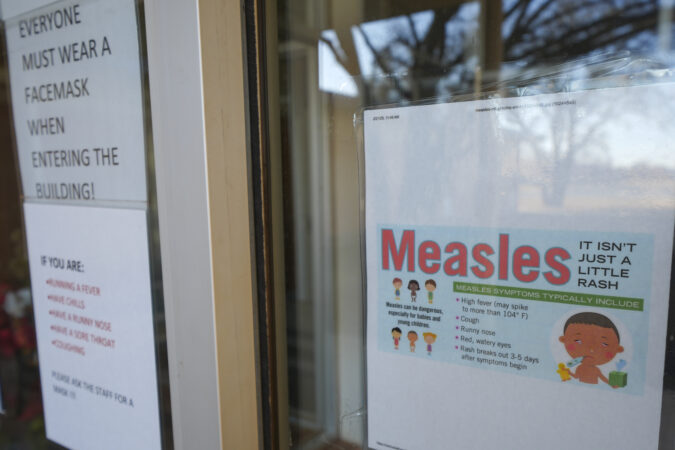
Pennsylvania had 12 confirmed cases of measles among state residents and two more involving visitors to the state as of Tuesday, the state health department said.
Eight cases are associated with an outbreak in Lancaster County, where the Pennsylvania Department of Health declared an outbreak involving five cases a month ago.
The latest case was reported last Wednesday in that county. LNP reported that the three most recent cases there were diagnosed in people who were already quarantining after a measles exposure.
Pennsylvania officials also have confirmed two cases in Chester County — one in a county resident and another in a person visiting the county.
One of the Chester cases was connected to the Lancaster outbreak, and the other was linked to an outbreak at Ave Maria University, a small Catholic college in Florida, said Jeanne Franklin, the county’s public health director.
Likewise, four cases in Montgomery County — one in a person visiting the county and three in county residents — were connected to the Ave Maria outbreak.
A person infected with measles connected to that outbreak traveled to Montgomery County; later, two members of their household and a person who had visited an urgent care clinic at the same time as the original patient were diagnosed with measles.
The person infected at the urgent care developed symptoms about 20 days after exposure. Measles has a long incubation period of up to 21 days.
That person had visited a Wawa in Limerick and a car dealership in Royersford multiple times while contagious, and late last month county officials issued warnings about possible exposures to residents who may have been in those locations.
None of the Pennsylvania patients diagnosed with measles had been vaccinated.
Measles cases have risen in the last several years in the United States. In South Carolina, a major outbreak has caused at least 935 cases since last fall. At least 83 people have been sickened in Collier County, Fla., where Ave Maria University is located. Florida has seen 114 total cases so far this year, the Naples Daily News reported.
Closer to home, in late February, Delaware health officials reported a potential measles exposure at the Nemours Children’s Hospital emergency room.
Pennsylvania health officials, citing state privacy laws, declined to specify how the outbreak in Lancaster County began.
“The department investigates each reported case of measles to understand the potential source of their infection. Some of the cases in Pennsylvania have been connected to cases in other states,” the department said in an email.
The state conducts contact tracing to identify people who were exposed to the highly contagious disease; the virus can linger in the air for up to two hours. Health officials determine whether those exposed are immune to the virus, either through vaccination or a prior infection.
People without immunity can get vaccinated for measles within 72 hours or receive immunoglobulin within six days to avoid contracting the disease.
In a health alert issued last month, state officials urged physicians to “maintain a high index of suspicion” for measles if patients show up with a rash and fever. If doctors suspect a measles case, they should not wait for lab confirmation and instead immediately notify the health department.
The department stressed that the measles, mumps, and rubella vaccine is the best way to protect against measles; two doses of the vaccine are 97% effective at preventing the disease.
About 94% of Pennsylvania residents have received the MMR vaccine. That is “likely to help limit the number of measles cases in Pennsylvania, compared to other states with lower vaccination rates,” the health department’s statement said.
Pennsylvania insurance regulators fined CVS Health’s Aetna health insurance subsidiary $550,000 for violating rules meant to ensure that mental health services are as accessible as medical or surgical care, the state Insurance Department said Tuesday.
Regulators foundthat Aetna applied standards of review for certain autism therapies and inpatient opioid addiction treatment services that were more stringent than those applied broadly to medical claims submitted to the insurer. The result was limits on the scope and duration of the treatments that violated parity rules.
The department said Aetna would have to fix its practices within a year and repay affected customers. It did not specify how much money Aetna needs to repay, or how that process would work.
“Aetna has long been an advocate of the Mental Health Parity and Addiction Equity Act. Aetna has received the results of the market conduct exam from the Pennsylvania Insurance Department and will implement, as appropriate, any corrective actions,” the company said in an email.
The violations were found during a regular periodic review of insurers’ practices. The Aetna exam covered the period from October 2021 through Dec. 2022. Aetna and regulators signed a consent order in January.
The insurance department fined Aetna $190,000 in 2019 for similar violations of the Mental Health Parity and Addiction Equity Act, a federal law passed in 2008.
Six of eight nonprofit health systems in Southeastern Pennsylvania and northern Delaware posted improved financial results for the six months that ended Dec. 31 compared to the year before. Still,half of them had operating losses, according to financial data reported last month to bond investors.
Jefferson Health and Temple University Health System reported results that were worse than the same period last year.
Children’s Hospital of Philadelphia remained the region’s most profitable health system, with a 6.2% operating margin, up from 5.2% the year before. CHOP posted $2.7 billion in total revenue in the last six months of 2025, up from $2.4 billion the year before.
Nonprofit health systems in South Jersey, such as Cooper, Inspira, and Virtua, do not report comparable financial results until they file their annual audited financials statements in the spring.
Here’s a summary:
Jefferson Health: Jefferson had an operating loss of $201 million in the six months that ended Dec. 31, compared to a $55 million loss the year before. The $201 million loss included a $64.7 million restructuring charge related to severance for 600 to 700 people laid off in October and other changes designed to improve efficiency in the 32-hospital system that stretches from South Jersey to Scranton, Jefferson said.
University of Pennsylvania Health System: Penn had an operating profit of $189 million in the first six months of fiscal 2026, up from $117 million in the same period a year ago. Operating income increased, even after Penn put $43 million into reserves for medical malpractice claims. Two years ago, Penn had recorded charges totaling $90 million for the same purpose.
ChristianaCare: ChristianaCare, Delaware’s largest health system, posted a $37 million operating gain, up from $33 million in the first six months of fiscal 2025. The health system’s revenue rose 9% to $1.75 billion, helped in part by its expansion into Pennsylvania. ChristianaCare took over five of Crozer Health’s freestanding outpatient locations in Delaware County.
Temple University Health System: Temple had a $50.5 million operating loss in the six months that ended Dec. 31. In the same period the year before, Temple reported a $13.5 million operating gain. The nonprofit attributed some of the losses to costs related to the opening of Temple Women & Families Hospital in September.
Main Line Health: Main Line had an $8.7 million operating profit in the six months that ended Dec. 31. Main Line’s swing from an $8.9 million loss in the same period of 2024 benefited from a change in accounting for depreciation that reduced expenses. Without that change, Main Line would have had another loss.
Redeemer Health: Redeemer reported an operating loss of $14.7 million, compared to a loss of $19.5 million the year before. The improvement happened even though the health system in Philadelphia’s northern suburbs increased revenue by just 1.2%, to $227 million.