Category: Health

  • Edna B. Foa, celebrated pioneering psychologist and longtime Penn professor, has died at 88

    Edna B. Foa, celebrated pioneering psychologist and longtime Penn professor, has died at 88

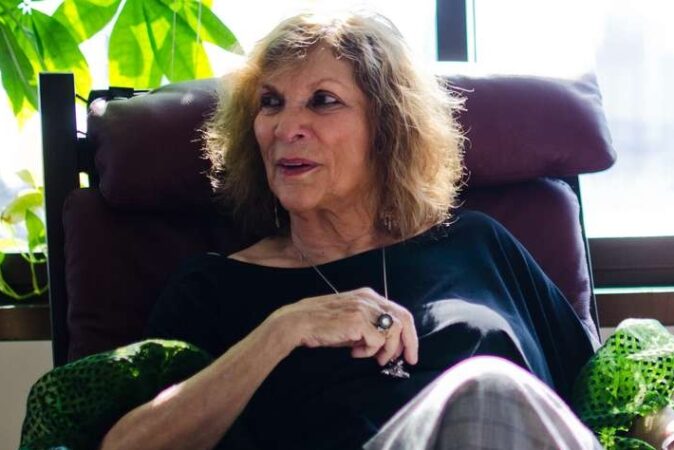
    Edna B. Foa, 88, of Philadelphia, renowned clinical psychologist, pioneering mental health researcher, creator of the celebrated prolonged exposure therapy for post-traumatic stress disorder, longtime professor of clinical psychology in psychiatry at the University of Pennsylvania, lecturer, mentor, and volunteer, died Tuesday, March 24, of complications from pneumonia at Pennsylvania Hospital.

    Dr. Foa was among the first psychologists in the 1970s and ‘80s to infuse empirical case study research into existing behavior protocols to create more effective mental health treatments for victims of rape, combat trauma, childhood sexual abuse, and other ordeals. She became an expert in PTSD, obsessive-compulsive disorder, and social phobia, and her prolonged exposure therapy for PTSD and exposure and response prevention treatments for OCD are still hailed as breakthrough innovations.

    From 1971 to 1997, she was a fellow, professor, and clinical researcher in the psychiatry departments at Temple University and the old Medical College of Pennsylvania, now part of Drexel University. She joined Penn’s Department of Psychiatry in 1998 and, over more than 50 years, evaluated thousands of mental health cases to determine which behavior therapy was best for each condition.

    “Her work truly changed the field,” colleagues at the Ardmore-based Center for Hope and Health said on Instagram. They said she “spent her career doing what she believed mattered most: studying what actually helps people get better, and making those treatments more accessible.”

    She created the Center for the Treatment and Study of Anxiety at Temple in 1979 and directed it later at Penn. Colleagues at the center said on Facebook: “Through her brilliance, determination, and unwavering belief in the power of evidence-based care, she transformed the understanding and treatment of anxiety-related disorders and changed the lives of countless individuals and families around the world.”

    Other colleagues and friends called her “brilliant,” “amazing,” and “extremely influential” in online tributes. One said she was “a giant who taught the world how to conquer fear and reclaim life.”

    Dr. Foa earned grants for research and education, and taught her therapy techniques to veterans counselors in the United States and Israel, to therapists for the U.S. Army and the City of Philadelphia, and to clinicians at Women Against Rape and other groups around the world. In 2010, she was named one of Time magazine’s 100 most influential people in the world.

    To share her innovations and encourage peer review, Dr. Foa edited Failures in Behavior Therapy in 1983 and cowrote Emotional Process of Fear in 1986 and Emotional Processing of Traumatic Experiences in 2007. The hundreds of books, manuals, articles, and papers she wrote, cowrote, or edited about memory, stress, anger, depression, and guilt have been cited more than 13,000 times by other authors.
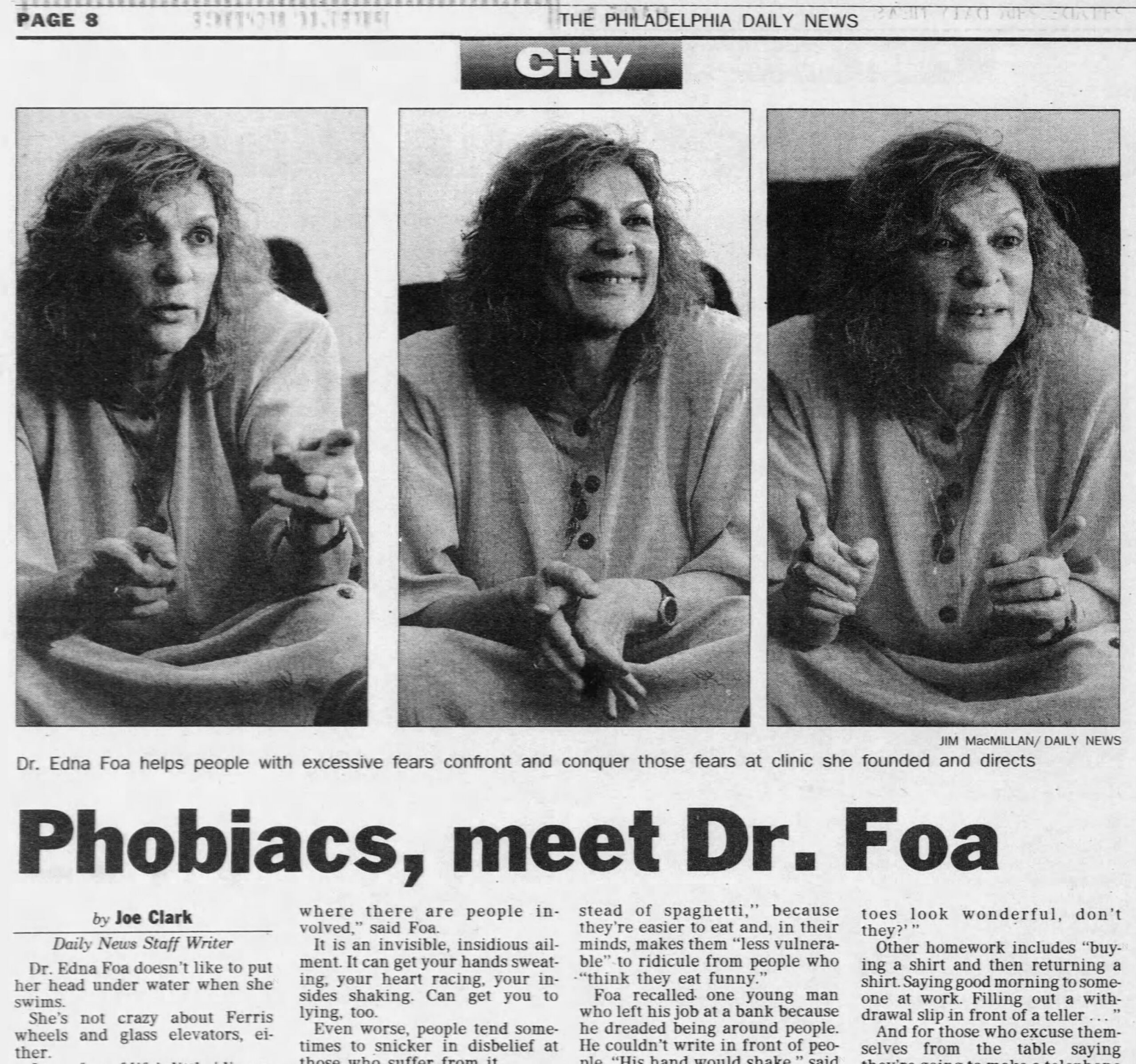
    The Daily News published this story and photos of Dr. Foa in 1993.

    She also volunteered as a consultant and supervisor at clinics and medical centers. She lectured and organized clinical workshops in the United States, Israel, and elsewhere. In 2010, she told Time magazine: “If you develop a wonderful protocol, it’s useless if nobody uses it.”

    She was affiliated with many mental health societies and associations, and earned lifetime achievement awards from the American Psychological Association, the International Society for Traumatic Stress Studies, and other groups. She was featured often in The Inquirer and the Daily News, and told the Daily News in 1993 that “everyone has little fears.” She said her little fears were of heights and swimming underwater.

    In 1970, Dr. Foa earned both a doctorate in clinical psychology and personality from the University of Missouri, and a master’s degree in clinical psychology at the University of Illinois. In 1962, she earned a bachelor’s degree in psychology and literature at Bar-Ilan University in Israel.

    She stopped working full-time at Penn in 2023 but never really retired. In April, she was scheduled to lead a workshop in prolonged exposure therapy. In 2011, she told The Inquirer: “If I die tomorrow, I think that what I have achieved is fine. If I don’t die, I don’t need to stop.”

    Edna Ben Jacob was born Dec. 28, 1937, in what is now Haifa, Israel. She became fascinated by the work of psychologist Sigmund Freud, she told the Encyclopedia of Behavior Modification and Cognitive Behavior Therapy, and she worked briefly with juvenile offenders near Tel Aviv after high school.

    In 2011, she told The Inquirer she was shattered by her own trauma in 1948 when her brother, Uri, was killed in the war and her father, Abraham, died four years later.

    She married and divorced when she was young, and met Professor Uriel Foa at Bar-Ilan. They married when she was 24, had daughter Dora, and moved to the United States in 1966. They had daughters Yael and Michelle, and lived in Illinois and Missouri before moving to Glenside and then Penn Valley. She moved to Philadelphia a few years ago.

    After a divorce, she married Penn professor Charles Kahn. Her husband and former husband died earlier.
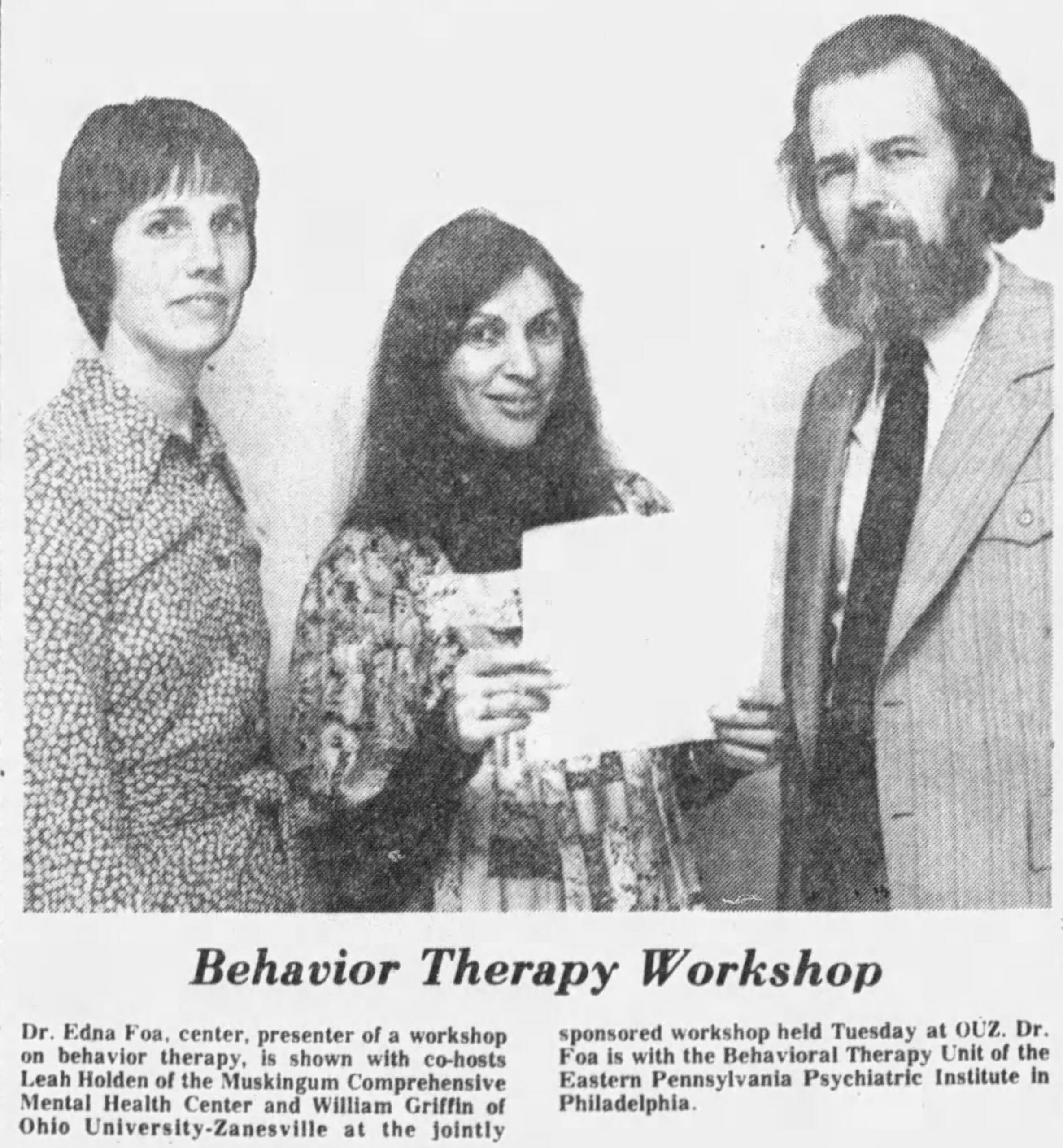
    This photo of Dr. Foa (center) appeared in the Times Recorder in Ohio in 1978.

    Away from work, Dr. Foa enjoyed traveling, gardening, and hosting family and friends at holidays. She collected art and antiques.

    She told an interviewer she had a bad habit of deleting emails before reading them. She managed lung cancer years ago.

    “She was full of energy, vivacious, a force of nature,” said her daughter Yael. Her daughter Michelle said: “She was an extraordinary figure who lived a very rich life.”

    In addition to her daughters, Dr. Foa is survived by five grandchildren, a great-granddaughter, and other relatives.
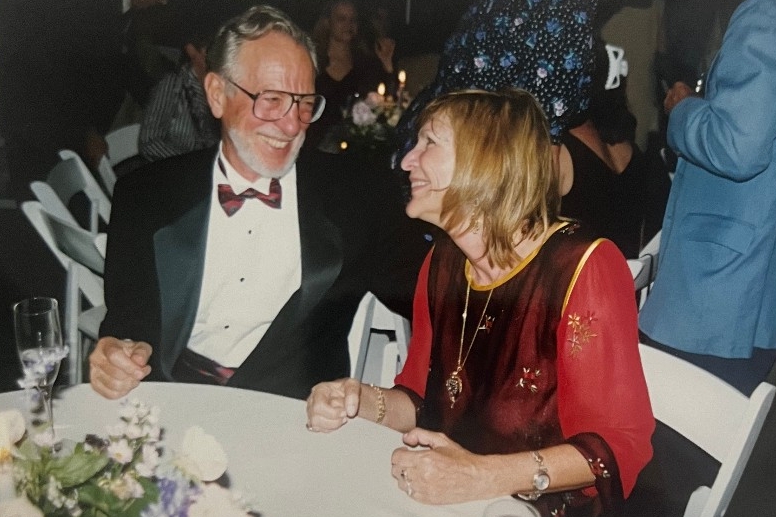
    Dr. Foa laughs with her husband, Charles Kahn.

    Private services are to be held later.

    Donations in her name may be made to the Philadelphia Museum of Art, 2600 Benjamin Franklin Parkway, Philadelphia, Pa. 19130; and the Philadelphia Orchestra, 300 S. Broad St., Philadelphia, Pa. 19102.


  • Philly vaccination experts hail a court ruling that halts changes to childhood vaccine recommendations

    Philadelphia vaccine experts on Tuesday called a federal court decision reversing changes to the U.S. childhood vaccination schedule under Health and Human Services Secretary Robert F. Kennedy Jr. a win for public health.

    But discord between the Centers for Disease Control and Prevention under his leadership and medical professional groups has sowed distrust and confusion for families, experts say.

    Federal health agencies were stopped from implementing a January overhaul of the childhood vaccination schedule that decreased the number of recommended childhood immunizations from 17 to 11.

    The ruling by U.S. District Judge Brian Murphy in Massachusetts also unwound other vaccine recommendations made last year by a panel of independent experts, the Advisory Committee on Immunization Practices, that advises the CDC.

    Last spring, Kennedy fired the entire committee and replaced it with handpicked members that included several vaccine skeptics. Kennedy himself is a longtime anti-vaccination activist.

    The reconstituted committee’s members have recommended delaying hepatitis B shots for most newborns, which have been universally recommended at birth since 1991. (In January, Kennedy went further, saying that the vaccine was no longer recommended for all children — just those at high risk of contracting the virus.)

    The revamped committee also voted against universally recommending COVID-19 vaccinations, instead saying patients could get the shots after “shared clinical decision-making” with a doctor.

    The decisions were decried by public health experts who say ACIP’s stances will increase preventable diseases and deaths in children.

    Several major medical organizations, including the American Medical Association and the American Academy of Pediatrics, filed suit last July to block changes to COVID vaccine recommendations. The organizations updated their lawsuit as Kennedy oversaw further changes to vaccination recommendations.

    In his ruling, Murphy said that HHS violated federal law around government procedures by bypassing ACIP in the January overhaul of the vaccination schedule. The new recommendations said that only children at higher risk of health complications should get vaccines that protect against certain serious illnesses, like rotavirus and hepatitis B.

    He also noted that the reconstituted ACIP includes members with no expertise or professional qualifications on vaccination.

    HHS spokesperson Andrew Nixon indicated in an e-mailed statement that the administration may challenge the ruling. “HHS looks forward to this judge’s decision being overturned just like his other attempts to keep the Trump administration from governing,” he said.

    The back-and-forth headlines and lengthy legal battles can be confusing to parents, said Charlotte Moser, codirector of the Vaccine Education Center at Children’s Hospital of Philadelphia.

    “But families can take comfort in the fact that the science is and has been stable when it comes to the safety of vaccines and their effectiveness,” she said.

    Also a former ACIP member whom Kennedy fired last summer, she noted that vaccines work: “And they’ve been protecting children for decades.”

    ‘A war on vaccines’

    For years, states have used ACIP’s recommendations to require which vaccines should be covered by insurers and mandated for schoolchildren.

    Amid shake-ups on the committee, several states, including Pennsylvania, have changed their own policies around vaccine distribution to ensure that people can continue to access vaccines no longer recommended by the CDC.

    Gov. Josh Shapiro, a Democrat who signed onto a separate lawsuit over the vaccine schedule changes, hailed the court ruling.

    “Hey @SecKennedy, you heard the courts,” he said Monday in an X post. “And if we haven’t made it clear enough: here in Pennsylvania, we trust doctors to help us make healthcare decisions — not conspiracy theorists like you.”

    The ongoing debate about the CDC’s recommended childhood vaccination schedule has so far not affected access to vaccines, as insurers have continued to cover all vaccines under the old schedule.

    But Kennedy’s appointment elevated anti-vaccine activism to the highest levels of federal policymaking, said Paul Offit, a physician and a leading national vaccine advocate who heads CHOP’s Vaccine Education Center.

    “He altered the current vaccine schedule to make it so that certain vaccines appear to be unnecessary or optional,” Offit said. “It was an assault. A war on vaccines.”

    Public distrust of vaccines has been growing since the COVID-19 pandemic, Offit noted, and the United States is already seeing a resurgence of vaccine-preventable diseases, including tetanus, measles, flu, and whooping cough.

    Offit, a co-inventor of a rotavirus vaccine who has sparred publicly with Kennedy for years, said many Americans no longer experience the suffering associated with vaccine-preventable diseases. “People don’t appreciate how sick or dead these viruses can make you,” he said.

    Vaccines and public trust

    In a survey last year, researchers at the Annenberg Public Policy Center at the University of Pennsylvania found that people would be more likely to trust their medical provider or a professional organization than the CDC if the two sides disagreed on vaccine advice.

    “You have a personal relationship with that individual and you’ve played a role in selecting them, as opposed to the anonymous entity the CDC,” said Kathleen Hall Jamieson, Annenberg’s director.

    People who continue to follow the CDC may become increasingly skeptical of vaccines because of the agency’s efforts to remove some vaccines from the recommended schedule or alter when they should be given, she said.

    Jamieson said she expected confusion to continue as the Trump administration appeals the court’s decision.

    Moser, the fired ACIP member and CHOP vaccine expert, urged parents to consult trusted healthcare providers about vaccination. Recent changes to vaccine recommendations were not based on any new data that raised fresh concerns about vaccine safety, she said.

    “Many young parents today have themselves received these vaccines,” she said. “We want to make sure we’re able to protect this generation of children from these horrible diseases that we had the benefit of being protected against.”

  • Bill Gates’ nuclear company plans $450 million plant in Philly’s Bellwether District making radioactive cancer treatments

    Bill Gates’ nuclear company plans $450 million plant in Philly’s Bellwether District making radioactive cancer treatments

    TerraPower Isotopes, part of a nuclear power company founded by Bill Gates, plans a $450 million plant in the Bellwether District to make radioactive molecules for cancer research and potential treatments, Gov. Josh Shapiro announced Tuesday.

    Bellwether’s developer HRP Group will build a 250,000-square-foot facility for the Bellevue, Wash., company at the former refinery site. TerraPower Isotopes is expected to employ 225 people in Philadelphia to meet anticipated demand for a type of molecule that can be used to kill tumors without damaging surrounding tissue.

    TerraPower’s material, an isotope called actinium-225, is ultimately derived from weapons-grade uranium. Researchers are exploring precision cancer treatments that involve attaching actinium-225 to an antibody that is targeted to specific cancer cells. The isotope then emits high doses of radiation at close range.

    “This new facility is a testament to the demand for actinium-225 as part of the growing industry, which is transforming how cancer is treated,” TerraPower Isotopes President Scott Claunch said in Shapiro’s announcement. “Our team is proud to be building a large-scale manufacturing facility in Philadelphia, which will play a pivotal role in expanding global access to this rare isotope.”

    Pennsylvania government is supporting the project with $10 million in grants. The Bellwether District is in a Keystone Opportunity Zone that has tax benefits through 2043. That means TerraPower Isotopes won’t have to pay many state and local taxes, though it will remain responsible for city wage taxes.

    TerraPower Isotopes, part of a bigger nuclear sciences company called TerraPower, is the second radiopharmaceutical company to announce a factory in the region. In 2024, Nucleus RadioPharma, which counts Fox Chase Cancer Center among its investors, shared plans for a 48,000-square-foot facility in Spring House, Montgomery County.

    TerraPower’s move to South Philadelphia is the third significant life sciences development announced this year by Shapiro and his economic development team.

    Eli Lilly & Co. said in January that it is building a $3.5 billion pharmaceutical plant in the Lehigh Valley to expand manufacturing capacity for next-generation weight-loss medicines. Last month, Johnson & Johnson shared plans for a $1 billion cell therapy plant in Montgomery County.

    TerraPower is the second tenant in the 1,300-acre Bellwether District, which HRP is trying to develop into a new industrial and life sciences hub. Late last year, it announced that California-based canned beverage manufacturer DrinkPAK will build a 1.4 million-square-foot factory that will product 3 billion cans a year.

  • This app is quietly reformulating America’s food supply

    This app is quietly reformulating America’s food supply

    Julie Chapon was 26 when she finally learned what was in her Nestlé Fitness cereal.

    “I’d eaten this cereal for 10 years,” by 2016 said Chapon, and she considered it to be healthy. “When I checked the label, one quarter of this product was made with sugar,” she recalls. “That’s when we realized we can’t trust the brand and the marketing.”

    So Chapon conceived Yuka, a smartphone app that gives users X-ray vision into the health impacts of 6 million foods and cosmetics.

    Scan a barcode and the app will show you a detailed breakdown of a product’s ingredients based on Nutri-Score, a food labeling system developed by scientists, as well as the presence of additives and organic certification. (Nestlé did not respond to requests for comment. Fitness cereal has been reformulated since Chapon’s encounter.)

    Yuka rates each product with a simple color code: Excellent (green), good (light green), poor (yellow) or bad (red). More than 80 million people, including 25 million in the United States, have used the app to scan groceries or personal care products since it launched in 2017. Yuka said it has 20 million active users worldwide each month and is financed almost entirely by user subscriptions: Premium users pay at a rate they can afford, between $10 to $50.

    The consulting firm BCG coined the term “Yuka Effect” to describe how the app shapes what goes in — or stays out — of shopping carts. Yuka says survey data suggests 94 percent of its users put products back on the shelf after the app shows them low scores. That’s helping to pressure manufacturers to reformulate products to score better, despite objections from some experts that the app oversimplifies complex diet decisions.

    In France, where Yuka says one in three citizens have signed up since its launch, the app appears to be acting as an unofficial food regulator. The supermarket chain Intermarché, noting the app’s influence, has reformulated more than 2,300 private-label products, removing controversial additives, reducing sodium levels and slashing added sugars.

    When France’s charcuterie industry sued Yuka for defamation and unfair business practices regarding its warnings about nitrites, it lost on appeal. Preserved meat producers are now removing nitrates and nitrites from their recipes without a regulatory mandate.

    Yuka, now available in 12 countries, says it is signing up over 25,000 users per day in the United States, where it has been embraced by everyone from average shoppers to leaders of the MAHA movement. Health and Human Services Secretary Robert F. Kennedy Jr. has told reporters that he uses the app.

    That’s adding to pressure on consumer packaged goods manufacturers to change their products. Sales of ultra-processed foods have slowed or contracted, according to BCG, and researchers are calling them a “clear global threat to our health.” Public officials, using the same legal strategies once used against the tobacco industry to target Big Food, have sued major food companies for precipitating a public health crisis by engineering and marketing ultra-processed foods.

    Some U.S. brands are already trimming sugar, salt and additives to cross Yuka’s scoring thresholds, such as moving from a red to yellow rating, said Lauren Taylor, who leads BCG’s research into consumer markets, although few have announced it publicly.

    By making nutrition, additives and processing levels instantly visible at the point of purchase, Yuka is influencing product standards without needing to change the law and quietly reordering R&D priorities across the industry.

    “Regulation moves the floor.” Taylor said. “Consumers, enabled by transparency tools, move the ceiling.”

    That’s now central to Yuka’s mission, Chapon said. Merely offering shoppers the power to make an informed choice wasn’t enough, because few healthy options existed in many categories. “So our approach evolved,” she said, prompting the company to add a “Call-Out” feature that allows shoppers to ask brands to remove additives and free tools to help manufacturers reformulate their products. “Yuka is not only about informing consumers,” she said. “It’s also about shifting the market.”

    The backlash against ultra-processed

    A modern American grocery store carries about 31,800 different unique products. Good luck finding the healthy ones outside the produce aisles: 73 percent of the American food supply is “ultra-processed,” estimates Giulia Menichetti, senior research scientist at Northeastern’s Network Science Institute. These industrial formulations are engineered for maximum shelf-life and “hyper-palatability,” she wrote.

    “Food manufacturers have actually figured out what the bliss point is in ultra-processed foods,” said Tara Schmidt, a registered dietitian at the Mayo Clinic, referring to the precise ratio of salt, sugar, and fat that overrides people’s sense of feeling full, so they keep eating.

    Not all processed foods are unhealthy — breads, pasta, frozen vegetables, for example — and most are fine in moderation. But more than half of all calories consumed by Americans now come from ultra-processed food, which is associated with higher rates of obesity, diabetes, mental health disorders and certain cancers, as well as a 50 percent higher risk of dying from cardiovascular disease.

    That makes what we eat the leading cause of death in the U.S., Schmidt said, responsible for an estimated 500,000 deaths annually from poor diets.

    Two decades ago, David Katz, a doctor, medical researcher and founding director of the Yale-Griffin Prevention Research Center, tried to tackle the same problem. His company, NuVal, which debuted in grocery stores in 2007, rating foods on a nutritional quality index of 1 to 100. It was supposed to help shoppers trade up. “In every supermarket, there is a pasta sauce with more added sugar than ice cream per calorie,” Katz said. “Right next to it is a pasta sauce with no added sugar. The average shopper has no clue.”

    NuVal scores were eventually displayed on products in more than 1,600 grocery stores. Kroger agreed to roll them out after a pilot — then canceled the program. Years later, Katz said, he heard from a former Kroger employee that NuVal was canceled at the behest of PepsiCo. Major food brands, which pay grocery chains for favorable shelf displays, were typically ranked poorly for soft drinks and chips. A PepsiCo spokesperson did not answer questions about the incident, but said “the company uses science‑based standards and regulatory guidance – not any single app – to inform our product decisions.” Kroger declined to comment.

    NuVal folded in 2017. Katz now says it was a mistake to only work with supermarkets. “We needed to put this in the hands of consumers,” he said.

    Does Yuka work?

    Yuka displays a simple score based on nutritional quality (60 percent of a food’s score), additive risk (30 percent), and organic certification (10 percent). It sets limits — such as sugar, sodium, saturated fat and calories — and offsets them with positive elements such as fiber, protein and the proportion of fruits and vegetables. Yuka’s toxicology and nutritional experts rely on published studies, especially the Nutri-Score, a nutritional assessment adopted by several European governments.

    Even as someone who reads food labels, the app changed how I shop. First, I scanned my pantry. Some snacks (oh, crackers) were ranked worse than I expected, while other foods proved far healthier (Tasty Bite’s Indian food pouches). On grocery runs, I could instantly assess the ingredients of almost any item and browse for better choices steps away.

    Some recommendations struck me as silly: My jar of mayonnaise was predictably rated red for being high in saturated fat and calories, as were most indulgences. But I was no longer guessing about obscure ingredients. Just how bad is disodium phosphate, anyway?

    While Yuka’s scores are easy to follow, some scientists and dietitians contend they oversimplify the notoriously nuanced question of what is “healthy.”

    Dariush Mozaffarian, a Tufts University cardiologist and director of its Food Is Medicine Institute, faults Nutri-Score as relying on “outdated science,” such as penalizing some healthy fats, while lacking evidence it leads individuals to eat meaningfully better over time. “It’s not terrible,” he said, “but I don’t think it’s great.” (Mozaffarian has helped develop his own nutritional index called the Food Compass).

    Other food experts say Yuka unhelpfully demonizes additives that can be dangerous at high doses but are usually present in tiny amounts. Some may not be “high-risk” at all: Yuka puts MSG in that category, despite scientific bodies from the FDA to WHO declaring them safe in typical amounts after multiple randomized controlled studies.

    Schmidt of the Mayo Clinic said Yuka’s focus on specific additives can be misleading. “It’s rarely about the individual ingredient,” she said. “Look at the rest of your diet before we demonize these foods. … All foods can fit.”

    Yuka’s Chapon said the company has submitted its scoring system and behavior change research to peer-reviewed journals and expects users to learn how to maker better choices, rather than completely cutting out sweets and snacks.

    Better choices may be on the way. When I contacted 13 leading U.S. food brands and grocery retailers, none would confirm whether they had reformulated products to meet the app’s standards.

    But Yuka has said companies such as Nestlé and Unilever have already done so, with more likely. “We are contacted almost daily by U.S. brands seeking to reformulate their products and asking how they can improve their Yuka score,” Chapon said.

    Yuka is still unlikely to end Americans’ appetite for sweet, salty and ultra-processed food. Nor does it intend to. “The right approach to nutrition isn’t telling people to stop eating pizza or cookies,” said Chapon. “If you want to eat a pizza, there is a better choice. There is always a better choice.”

    There will always be unhealthier choices, too. McKee Foods, maker of Little Debbie snack cakes, says it has no plans to reformulate, despite its products’ “poor” ratings on Yuka.

    “There is no need,” wrote Mike Gloekler, a spokesperson for McKee. “The vast majority buy our cookies and cakes because they love them as they are.”

  • Federal judge blocks RFK Jr.’s vaccine policy overhaul for now

    Federal judge blocks RFK Jr.’s vaccine policy overhaul for now

    A federal judge on Monday blocked the Trump administration from implementing sweeping changes to the nation’s childhood immunization schedule, mostly siding with major medical organizations that argue Health Secretary Robert F. Kennedy Jr. unlawfully altered vaccine policy and improperly reconstituted a federal vaccine advisory panel.

    Under Kennedy, the federal government has cut the number of shots routinely recommended to children, including for flu, hepatitis A, rotavirus, and meningococcal disease. Kennedy also dismissed all 17 members of the vaccine advisory panel to the Centers for Disease Control and Prevention last year, installing new members, several of whom have criticized vaccines, especially COVID-19 mRNA shots.

    Several groups, including the American Academy of Pediatrics, the American College of Physicians, and the Infectious Diseases Society of America, sued.

    In his opinion, Judge Brian E. Murphy slammed the administration’s approach to revamping government recommendations for how and when children should be immunized. He said the government has undermined its history of recognizing “the importance and value” of involving independent experts in setting our national public health agenda and relying on “a method scientific in nature” to make such decisions.

    The U.S. District Court judge from Massachusetts wrote that the government bypassed the CDC’s vaccine advisory panel — which is how vaccine recommendations have been made for decades — to change the immunization schedule. He called it a “technical, procedural failure” and a “strong indication of something more fundamentally problematic: an abandonment of the technical knowledge and expertise embodied by that committee.”

    The pause on the administration’s actions are temporary as the dispute is expected to wind through multiple rounds of appeals, raising the prospect of a drawn-out court battle over who ultimately calls the shots on the scientific standards shaping federal vaccine recommendations.

    Andrew Nixon, a spokesperson for the Department of Health and Human Services, said the department “looks forward to this judge’s decision being overturned just like his other attempts to keep the Trump administration from governing.”

    As health secretary, Kennedy — the founder of a prominent anti-vaccine group — has made clear that he wants to overhaul the nation’s immunization system and argued the prior ACIP was plagued with conflicts of interest.

    In early December, President Donald Trump ordered federal health officials to review the childhood immunization schedule, including recommending fewer vaccines to align with other developed countries. The judge wrote that HHS cannot circumvent the long-standing practice of getting advice from the federal panel without offering an explanation “simply because they are following the President’s orders.”

    He also wrote that the government removed every member of the panel and replaced them without undertaking the “rigorous screening” traditionally used to select members.

    The judge also paused all votes taken by Kennedy’s handpicked advisers. Some recent votes include moving from broadly recommending everyone 6 months and older get a coronavirus shot to instead advising Americans to first consult a clinician. The panel also voted to drop a recommendation that all newborns receive a vaccine for hepatitis B.

    In court filings, the medical groups contend that Kennedy’s reconstitution of the vaccine panel was improper and that subsequent votes on vaccine recommendations — including changes affecting COVID-19 and other routine childhood immunizations — were, therefore, invalid. They argued that the administration bypassed established procedure and violated the Administrative Procedure Act, which governs how federal agencies make policy.

    Government attorneys have defended the secretary’s authority to remove and appoint advisory committee members, arguing that federal law grants HHS broad discretion over such panels. They also contend that policy disagreements over vaccine recommendations do not amount to legal violations.

    On Substack, Robert Malone, the committee’s vice chair and a prominent critic of coronavirus vaccines, called the opinion a “judicial overreach.” He wrote that there is a compelling “case for bringing intellectual diversity and fresh expertise” to the panel and for aligning vaccine recommendations with the practices of other nations.

    “In the meantime, the administration should continue its work,” he wrote.

  • Trump administration’s embattled FDA vaccine chief is leaving for the second time

    Trump administration’s embattled FDA vaccine chief is leaving for the second time

    WASHINGTON — The Food and Drug Administration’s embattled vaccine chief, Vinay Prasad, is once again leaving the agency — the second time in less than a year that he’s departed after controversial decisions involving the review of vaccinations and specialty drugs for rare diseases.

    FDA Commissioner Marty Makary announced the news to FDA staff in an email late Friday, saying Prasad would depart at the end of April. Makary said Prasad would return to his academic job at the University of California, San Francisco.

    In July, Prasad was briefly forced from his job after running afoul of biotech executives, patient groups, and conservative allies of President Donald Trump. He was reinstated less than two weeks later with the backing of Health Secretary Robert F. Kennedy Jr. and Makary.

    Prasad’s latest ouster follows a string of high-profile controversies involving the FDA’s review of vaccines, gene therapies, and biotech drugs in which companies have criticized the agency for reversing itself, in some cases calling for new trials of products previously greenlighted by regulators.

    In the last month, Prasad has come under fire from pharmaceutical executives, investors, members of Congress, and other critics for multiple decisions at the agency.

    First, Prasad initially refused to allow the FDA to review a highly anticipated flu vaccine from drugmaker Moderna made with mRNA technology. The rejection of the application, highly unusual for the FDA, prompted Moderna to go public with Prasad’s decision and vow to formally challenge it.

    A week after the rejection became public, the FDA reversed course and said it would accept the shot for review after all, pending an additional study from Moderna.

    Then, in the past week, the FDA engaged in a highly unusual public fight with a small drug company developing an experimental treatment for Huntington’s disease, a fatal condition that affects about 40,000 people in the U.S.

    The company, UniQure, said Monday that the FDA was demanding a new trial of its gene therapy that would involve performing a sham surgery on some of the patients in the trial. The company’s gene therapy is injected directly into the brain during a surgical procedure.

    Company executives said the request for a sham-controlled trial contradicted previous FDA guidance and raised ethical concerns for patients.

    On Thursday, the FDA held a highly unusual news conference with reporters to criticize the company’s therapy and defend the agency’s request for an additional study.

    A senior FDA official, who requested anonymity to speak with reporters, called the company’s original study “stone cold negative.”

    “We have a failed product here,” he added.

    The FDA typically communicates in carefully vetted written statements when speaking about scientific disagreements, especially those involving experimental drugs that are still under the agency’s review.

    Prasad’s time as the FDA’s top vaccine and biotech regulator has been marked by a series of similar disputes with the companies the agency regulates.

    More than a half-dozen drugmakers studying therapies for rare or hard-to-treat diseases have received rejection letters or requests to run additional studies, adding years and potentially many millions of dollars to their development plans.

    A longtime academic and critic of the FDA’s standards for drug reviews, Prasad’s approach to regulation since arriving at the FDA last May has confounded many FDA observers and critics.

    On repeated occasions, Prasad joined Makary in announcing steps to make FDA drug reviews faster and easier for companies. But he also has imposed new warnings and study requirements for some biotech drugs and vaccines, particularly COVID shots that have long been a target for Kennedy, a longtime anti-vaccine activist before joining the Trump administration.

  • Clocks spring forward Sunday, but the sun may be setting on year-round daylight saving time

    Clocks spring forward Sunday, but the sun may be setting on year-round daylight saving time

    Coinciding with the expected behavior of the atmosphere over Philly, the clocks are taking a major leap into spring this weekend, this time around as early as it ever happens.

    On Sunday the clocks will skip right over 2 a.m. and proceed to 3 a.m. as daylight saving time begins and will continue through Nov. 1.

    The sun won’t set before 7 p.m. until Sept. 22.

    Congratulations to those who prefer eating dinner before dark or savoring an extra dose of daylight after work. If you dread being shorted an hour on a precious weekend and hold that DST actually stands for “delayed sunrise time,” we offer a modest consolation prize.

    The sun appears to be setting on the all-DST-all-the-time movement.

    Recall that the U.S. Senate unanimously (at least technically) passed the 2022 iteration of the Sunshine Protection Act that would have ditched the switch and installed daylight saving time as the year-round system. U.S. Rep. Brendan Boyle (D., Pa.) said at the time “the idea definitely has legs,” and isn’t that what they said about the Eagles’ offense?

    It’s as if the campaign has gone back to bed.

    The 2022 bill’s sponsor, Marco Rubio, at the time a senator representing the Sunshine State, is now the secretary of state and appears to have bigger fish to fry. His immediate supervisor, President Donald Trump, who at different times advocated for year-round standard and year-round DST, has lost interest.

    So, evidently, have legions of state lawmakers around the country.

    The number of bills calling for year-round daylight saving time has dropped dramatically, and this year they are far outnumbered by bills advocating year-round standard time, based on a survey of data compiled by the National Conference of State Legislatures.

    That said, the discussion may never die. The Sunshine Protection Act was reintroduced in the Senate last year. Sen. Rick Scott (R., Fla.) says he’s giving it another shot. But expect 100% chance that clocks go back in the fall; the bill remains in committee.

    Daylight saving time advocates have pointed to the recreational and other benefits of later sunsets, and those will become ever more evident during the next several weeks. Conversely, any number of health organizations warn of the dangers caused by sleep disruption, exacerbated by a certain longitudinal inequity.

    To honor a day that so many look forward to, and so many others dread, we offer a few numbers for consideration, starting with a visit to Marquette, Mich.

    79: Minutes of difference in sunrise times

    Sunrise Monday in Marquette doesn’t occur until 8:11 a.m., compared with 6:52 a.m. in Lubec, Maine. That is a 79-minute difference — in the same time zone. Lubec is on the shores of the Atlantic. Marquette is on the shores of Lake Superior in Michigan’s Upper Peninsula.

    In Marquette, the sun’s reluctance to get out of bed may be understandable. The city already has had close to 210 inches of snow (about 10 Philly winters’ worth) this season. “Even by our standards, this has been a pretty remarkable winter,” said Chris Burling, a meteorologist with the National Weather Service in Marquette.

    As with the snow, the locals appear to accept the late sunrises with a measure of equanimity. “I think there’s some grumbling for a couple days,” said Burling, “but otherwise, it’s just …that’s how it is.”

    Sleep experts advise that people in the westerly longitudes of time zones stand to suffer more than their counterparts to the east. In Marquette, twilight won’t end until close to 10:30 p.m. around the summer solstice. That can be disruptive to bodily sleep rhythms, experts say, by depriving bodies of melatonin, the sleep hormone that the body produces in the dark.

    The Michigan legislature is among those that have considered a bill for year-round standard time. Federal law permits states to go all-standard, but all-daylight saving time would require Congress to pass a law to allow it.

    800: Pro-daylight saving time bills

    Eight hundred bills have been introduced in state legislatures since 2005 to enact year-round daylight saving time, according to Tom Klein, policy associate with the legislatures conference.

    93: Time-change bills in 2025

    There were 93 bills introduced in 2025 in favor of either year-round Daylight Saving Time or standard time.

    35: States

    Thirty-five states considered such bills in 2025, about evenly split between all-DST and all-standard, by the conference’s count.

    21: Bills this year

    In 2026, 21 bills are under consideration, with 16 calling for year-round standard time and five favoring all-Daylight Saving Time.

    1,454: Days

    It’s been 1,454 days since the U.S. Senate approved the Sunshine Protection Act.

    294: Days

    The nation’s last experiment with year-round daylight saving time, in 1974, survived only 294 days,

    238: Days

    Just 238 days until we fall backward again. Incidentally, since Daylight Saving Time begins on the second Sunday in March, this is the earliest it could happen. Nov. 1 is the earliest possible starting date for standard time.

    Innumerable

    Projected number of days before the clock-switch debate ends.

  • Doctor-senator who backed RFK Jr. fights for his job, and his legacy

    Doctor-senator who backed RFK Jr. fights for his job, and his legacy

    BATON ROUGE, La. — The ambitious liver doctor would go just about anywhere in his home state to give people the hepatitis B vaccine.

    Bill Cassidy offered jabs to thousands of inmates at Louisiana’s maximum-security prison in the early 2000s. A decade before that, he set up vaccine clinics in middle schools, a model hailed nationally as a success.

    “He got that whole generation immunized in East Baton Rouge,” said Holley Galland, a retired doctor who worked with Cassidy vaccinating schoolchildren.

    About the same time, a lawyer and environmental activist with a famous last name was starting to build the loyal anti-vaccine coalition that, two decades later, would move President Donald Trump to nominate him as the nation’s top health official.

    Today, a year after now-Sen. Cassidy warily cast the vote that ensured Robert F. Kennedy Jr.’s ascension to that role, the Louisiana Republican’s life’s work — in medicine and in politics — is unraveling.

    Newborn hepatitis B vaccination rates in the U.S. had plunged to 73% as of August, down 10 percentage points since a February 2023 high, according to research published in JAMA last month. In December, the Centers for Disease Control and Prevention’s Advisory Committee for Immunization Practices — remade by Kennedy — voted to revoke a two-decade-old recommendation that all newborns get the shot.

    The next month, Trump endorsed U.S. Rep. Julia Letlow, a Cassidy challenger in what’s shaping up to be a competitive Republican Senate primary. Letlow’s foray into politics began in 2021 when she took the seat won by her husband, left vacant after he died from COVID.

    KFF Health News made multiple requests for comment from Cassidy over three months. His staff declined to make him available for an interview or provide comment. Letlow’s campaign did not respond to requests for comment.

    Rise of the skeptics

    As the May primary nears, some Louisiana doctors are worried they’ve begun a long trek down a dark road when it comes to vaccine-preventable diseases.

    Last year, on the day Kennedy was sworn in a thousand miles away in Washington, Louisiana’s health department stopped promoting vaccines, halting its clinics and advertising. Its communications about an ongoing whooping cough outbreak in the state have nearly ceased. It took months for the state to announce last year that two infants had died from the illness. A Louisiana child’s death from the flu was confirmed this January, and a couple of cases of measles were reported last year.

    Spokespeople for the Louisiana Department of Health did not respond to questions.

    When parents have concerns about vaccines, pediatrician Mikki Bouquet of Baton Rouge, La., offers them a handmade folder she created that addresses common misconceptions or fears about vaccines.

    “It’s so hard to see children get sick from illnesses that they should have never gotten in the first place,” said Mikki Bouquet, a pediatrician in Baton Rouge. “You want to just scream into the void of this community over how they failed this child.”

    As anti-vaccine forces have taken hold of the state and federal health departments, Cassidy has lamented the consequences.

    “Families are getting sick and people are dying from vaccine-preventable deaths, and that tragedy needs to stop,” he wrote on social media last fall.

    But while it is Cassidy’s duty as chairman of the Senate’s Health, Education, Labor, and Pensions Committee to conduct oversight of the health department, Kennedy has appeared before the committee just once since he was confirmed.

    The secretary speaks at a “regular clip” with Cassidy, said Department of Health and Human Services spokesperson Andrew Nixon.

    Kennedy’s department has elevated Louisiana vaccine skeptics. The state surgeon general who terminated Louisiana’s vaccine campaign, Ralph Abraham, was named deputy director of the CDC. (He left the role in February.) And Kennedy handpicked Evelyn Griffin, a Baton Rouge OB-GYN who later replaced Abraham as the state surgeon general, for an appointment to ACIP. Griffin has suggested the COVID vaccine had dangerous side effects for young patients.

    Research has shown that serious side effects from the vaccinations are rare and that the shots saved millions of lives during the pandemic.

    Cassidy “has really not had an outspoken chorus of policy supporters” when it comes to inoculating people, said Michael Henderson, a professor of political communication at Louisiana State University. “There’s not a lot of political stakes in doing that in Louisiana if you’re a Republican.”

    Louisiana Gov. Jeff Landry reprimanded Cassidy after the senator called for the state’s health department to ease access to COVID shots.

    “Why don’t you just leave a prescription for the dangerous COVID shot at your district office and anyone can swing by and get one!” the Republican quipped on X in September.

    On ‘eggshells’ in the exam room

    On a sunny February afternoon, as Carnival floats were readied to parade the streets of New Orleans, pediatrician Katie Brown approached a basement apartment on a well-child visit. Cowboy boot pendants dangled from her ears, and a pack of diapers were clutched tightly in her arms.

    The patient, a toddler who waved at the sight of visitors, was up to date on her immunizations. But when Brown suggested a COVID vaccine, the girl’s mother quickly declined, noting she had never gotten the shot either.

    Many of Brown’s young patients — seen through Nest Health, which offers in-home visits covered by Louisiana’s Medicaid program — are current with their vaccines. Brown said home visits make parents more comfortable immunizing their children, but she’s still spending more time these days explaining what they’re getting in those shots.

    “After COVID vaccines, that’s when some people just decided, ‘I don’t know if I trust vaccines, period,’” she said.

    Across the state, vaccination rates have declined since the pandemic, falling short of the levels scientists say are required to achieve herd immunity for some deadly diseases, including measles. About 92% of Louisiana’s kindergartners have had the recommended two doses of the measles, mumps, and rubella vaccine.

    The New Orleans Health Department has tried to step up with a $100,000 immunization campaign of its own, with clinics and billboards, during this year’s flu season, said Jennifer Avegno, the department’s director.

    But the state’s absence is felt. Other parishes across Louisiana have not taken similar action, leaving doctors largely on their own to promote immunizations.

    “I’ll say that with certainty,” Avegno said. “It’s been a blow to not have a statewide coordination.”

    A day after Brown’s home visit, a mother in Baton Rouge shook her head when Bouquet offered a flu shot for her 10-year-old daughter in an exam room.

    In the waiting room, parents could thumb through a handmade book that offers scientific facts to counter fears about vaccines. A laminated guide placed in each exam room explained the benefits of each recommended immunization.

    Bouquet said she’s experimenting with ways to educate parents about vaccines without seeming overbearing. She still hasn’t figured out a surefire formula. Some parents now shut down any vaccine talk, and she worries others skip scheduling appointments to avoid the topic entirely.

    “We’re having to walk on eggshells a bit to determine how to get that trust back,” Bouquet said. “And maybe these discussions can come up in future visits.”

    Pro-Vax, pro-anti-Vaxxer

    Children’s Health Defense, the nonprofit that Kennedy helmed, worked to erode vaccine trust during the pandemic — falsely claiming, for instance, that COVID shots cause organ damage and that polio vaccines were at fault for a rise in the disease. The organization also sued the federal government over the mRNA-based COVID shots, hoping to get their emergency authorizations from the Food and Drug Administration revoked.

    When Kennedy came before Cassidy’s committee in January 2025 as Trump’s nominee for health secretary, the senator-doctor saw risks if the prominent anti-vaccine lawyer was confirmed.

    Cassidy described a time years ago when he loaded an 18-year-old onto a helicopter to get an emergency liver transplant. The young woman had acute hepatitis B, an incurable disease that is spread primarily through blood or bodily fluids and can lead to liver failure.

    It was “the worst day of my medical career,” he said, addressing Kennedy at the witness table in front of him. “Because I thought, $50 of vaccines could have prevented this all.”

    Cassidy started in politics in 2006 as a state senator, winning election to the U.S. House two years later. When he first ran for the U.S. Senate, in 2014, he charmed Louisiana voters with campaign ads showing him dressed in scrubs and a white lab coat, talking about his work with Hurricane Katrina evacuees and patients at Baton Rouge’s public hospital.

    But some Republicans soured on Cassidy after he voted to convict Trump on an article of impeachment charging him with inciting the Jan. 6, 2021, insurrection at the U.S. Capitol.

    The impeachment vote has hampered Cassidy’s reelection bid this year in a state where Trump captured 60% of the vote in 2024.

    “Cassidy has things that are associated with his name: the impeachment vote in 2021,” Henderson said.

    Cassidy’s loyalty to Trump was tested again with Kennedy’s nomination. Cassidy said he endorsed Kennedy after extracting pledges that he wouldn’t tinker with the nation’s vaccination program.

    But since taking office, Kennedy has largely ignored those promises, and Cassidy hasn’t publicly rebuked him.

    Former Texas congressman Michael Burgess served for years with Cassidy in the House, where they were founding members of the GOP Doctors Caucus, started in 2009. He said Cassidy’s discomfort with some of Kennedy’s actions is palpable.

    “You could hear some of the pain in Sen. Cassidy’s voice when he was addressing that the secretary wanted to drop the birth dose of hepatitis B,” Burgess said. “You got cases to nearly zero on hepatitis B. It was painful to him to think about taking this away from the population.”

    Retired Baton Rouge nurse-practitioner Elizabeth Britton has switched her party affiliation so she can vote in the closed Republican primary for Cassidy, with whom she vaccinated inmates decades ago.

    She doesn’t quite understand the “mess” in Washington that resulted in the senator voting to confirm a vaccine critic.

    Watching Kennedy and others promulgate doubts about shots she once administered has made her “profoundly sad” and “angry,” she said, but most of all worried.

    “It puts a pit in my stomach, because I know the consequences of people not getting the vaccine,” she said.

    KFF Health News is a national newsroom that produces in-depth journalism about health issues and is one of the core operating programs at KFF — the independent source for health policy research, polling, and journalism.

  • Stroke survivors can counterintuitively improve recovery by strengthening their stronger arm | Expert Opinion

    Stroke survivors often face substantial and long-lasting problems with their arms. Both arms often decline together: When one arm is more severely affected by the stroke, the other becomes more difficult to use as well. Compared with a healthy person’s dominant hand, a stroke survivor may take up to three times longer to complete everyday tasks using their less-impaired arm.

    This creates a frustrating reality. People with severe impairment in one arm must rely almost entirely on their other arm for daily activities, such as eating, dressing, and household tasks. When that “good” arm works slowly or awkwardly, even simple activities become tiring and discouraging, and some people may begin to avoid them altogether.

    But that good arm can be strengthened. In our newly published research in the journal JAMA Neurology, we found that training the less-impaired arm in people living with chronic stroke can improve everyday hand function, in some cases even better than focusing only on the most impaired arm.

    What is a stroke?

    A stroke occurs when the flow of oxygen-carrying blood to part of the brain is interrupted by a blockage in a blood vessel or by bleeding. Without oxygen, brain cells begin to die.

    Because each side of the brain mainly controls the opposite side of the body, a stroke often causes movement problems on the side of the body opposite the brain injury. For this reason, stroke rehabilitation has traditionally focused on restoring movement in the most impaired arm.

    If someone’s face is drooping, their arm is weak or they’re having difficulty with speech, it’s time to call 911.

    However, research over the past few decades has shown that both sides of the brain contribute to controlling movements for both arms, although they play different roles. As a result, damage to one side of the brain can affect movement on both sides of the body.

    As expected, the arm opposite the brain injury often has major problems with weakness, stiffness, and voluntary control, limiting its use for reaching, grasping, and manipulating objects. But the other arm, usually thought to be unaffected from the stroke, is frequently not normal either. Many stroke survivors experience reduced strength, slower movements, and poorer coordination in the less-impaired arm.

    Training the less-impaired arm

    As neuroscientists who study how the brain controls movement after stroke, these findings led us to a simple question: Could training the less-impaired arm help it work better?

    In a clinical trial of over 50 patients, we studied people living with chronic stroke who had severe impairments in one arm, making it unusable for everyday tasks. These individuals depended almost entirely on their less-impaired arm to manage daily life.

    Participants were randomly assigned to one of two rehabilitation groups: one that trained their most-impaired arm, and one that trained their less-impaired arm. Both received five weeks of therapy that involved challenging, goal-directed hand movements, including virtual reality tasks designed to improve coordination and timing.

    Compared to those who trained their most-impaired arm, we found that participants who conditioned their less-impaired arm became faster and more efficient at everyday hand tasks, such as picking up small objects or lifting a cup. These improvements remained six months after training ended.

    We believe the lasting benefit of training the less-impaired arm may come from a simple feedback loop: When their arm works better, people naturally use it more, and that extra practice in daily life helps lock in those gains.

    Strengthening what remains

    Stroke rehabilitation has long focused on the arm that is most visibly impaired. But for many people, full function in that arm never returns. They adapt and rely on their less-impaired arm to get through the day.

    “Less-impaired,” however, does not mean unaffected. When this arm becomes the sole tool for daily activities, even mild problems can have major consequences for independence and quality of life. Improving how well this arm works could make everyday tasks faster, easier, and less exhausting, even years after a stroke.

    Future work will focus on how best to combine training of the less-impaired arm with standard therapy for the more-impaired arm, and how these approaches translate into everyday life at home.

    For many survivors, recovery may not mean restoring what was lost but strengthening what remains.

    Candice Maenza is a research project manager and associate director of the Center for Translational Neuromechanics in Rehabilitation at Penn State; Robert Sainburg is a professor of kinesiology and neurology at Penn State.

    Reprinted from The Conversation

  • One year of inspections at Lower Bucks Hospital: December 2024 — November 2025

    One year of inspections at Lower Bucks Hospital: December 2024 — November 2025

    Lower Bucks Hospital was cited by the Pennsylvania Department of Health for failing to properly record a patient’s weight and improperly treating another patient’s pressure ulcer last year.

    The issues were among the instances health inspectors visited the Bristol hospital, owned by Prime Healthcare Services, between December 2024 and November 2025.

    Here’s a look at the publicly available details:

    • Dec. 4, 2024: The Joint Commission, a nonprofit hospital accreditation agency, renewed the hospital’s accreditation, effective September 2024, for 36 months.
    • Dec. 16: Inspectors came to investigate a complaint but found the hospital was in compliance. Complaint details are not made public when inspectors determine it was unfounded.
    • Jan. 29, 2025: Inspectors came to investigate a complaint but found the hospital was in compliance.
    • Feb. 27: Inspectors cited the hospital for failing to measure a patient’s weight and instead recording the weight told to staff by the patient’s family member. Staff were retrained that a patient’s weight must be recorded using a hospital scale within eight hours of admission.
    • March 4: Inspectors cited the hospital for failing to properly monitor and care for a patient’s hospital-acquired pressure ulcer. Inspectors found that the ulcer was not reported to a doctor or documented in the internal reporting system. Administrators said they were trying to hire a wound care nurse, and retrained staff on wound care policies.
    • April 1: Inspectors visited for a mental health monitoring survey and found the hospital was in compliance.
    • Aug. 27: Inspectors followed up on the March citation and found the hospital in compliance.
    • Sept. 5: Inspectors followed up on the February citation and found the hospital in compliance.
    • Sept. 9: Inspectors came to investigate a complaint but found the hospital was in compliance.