Three-year-old Hope Jones weighed 24.5 pounds, less than 99% of children her height and age, just a month before she died in July 2022.
The child was starved and beaten up by her foster parent, a distant relative from Southwest Philadelphia who pleaded no contest to third-degree murder over Hope’s death.
A new federal lawsuit is pointing a finger in another direction. It accuses medical providers from Philadelphia FIGHT, a community health nonprofit based in Center City, of failing to investigate or report abuse despite a series of red flags from Hope’s wellness checks.
The lawsuit, filed Friday in the Eastern District of Pennsylvania, is against the United States because FIGHT is a federally qualified health center and thus receives funding and operates with requirements from the government.
Philadelphia’s U.S. Attorney’s Office declined to comment. FIGHT did not respond to a request for comment.
The lawsuit is not only the latest legal fallout from Hope’s death, but the latest in litigation brought after children who were part of the city’s child welfare system have been harmed.
The city and its affiliated agencies were sued nearly 70 times between 2012 and 2024 after kids in their care were killed, sexually abused, or injured, an Inquirer/Resolve Philly investigation found. And at least 50 of these lawsuits led to settlements or verdicts of $1 million or more.
The new lawsuit on behalf of Hope’s biological family extends the circle of litigants to include medical providers.
“It’s another group of professionals that failed Hope,” said Sherrell Dandy, one of the Kline & Specter attorneys representing the family.
Child welfare services were involved in Hope’s life from her first days on Earth, according to the complaint. Her mother and the infant tested positive for marijuana after the delivery, and the Philadelphia Department of Human Services placed the infant under its care.
Hope became a FIGHT patient, and her first few visits as a baby went well, the lawsuit says. She was “well-developed and well-nourished,” the complaint says, and had a “good appetite.”
Hope’s weight reached the 98th percentile at her 15-month wellness visit, in the summer of 2020, but she fell off the growth chart steadily after the following November when she was placed in foster care with a distant relative, the complaint says. Hope failed to meet developmental milestones and lost teeth, a couple times without explanation and another time following an alleged fall.
The child’s medical records note that she developed an abnormal gait, ate her own feces, and was eating extremely fast followed by periodically vomiting, the suit says.
The FIGHT physicians did refer Hope to an orthopedic specialist because of her gait, but the lawsuit says that they failed to recognize it as “clinical indicators of severe weight loss and underlying caloric deprivation, starvation, and neglect.”
Hope’s weight fell to the single digits as summer 2022 approach. She was rushed to the hospital that July and was pronounced dead. The Philadelphia Medical Examiner’s Office determined that her cause of death was multiple blunt impact injuries, and the manner of death was homicide.
“The hallmark for health is growth,” said Nadeem Bezar, another Kline & Specter attorney. “During those visits there were alarming things that were never followed up on.”
A previous version of the lawsuit was filed against FIGHT in federal court in February. A judge dismissed that case in March because Hope’s estate had other administrative remedies to pursue before filing a lawsuit, and said that the appropriate defendant would be the United States.The new lawsuit says that all administrative remedies were exhausted and the government is the only defendant.
A Philadelphia jury reached $35 million verdict last week against Main Line Health and the University of Pennsylvania Health System for a cancer misdiagnosis that led a then-45-year old Philadelphia resident to undergo a total hysterectomy in 2021.
Main Line discovered later that the biopsy slides used to make the diagnosis in February 2021 were contaminated. The cancer diagnosis was due an error that involveda second person’s DNA, not that of the plaintiff, Iris Spencer, who did not have cancer.
Main Line settled with Spencer in 2022 for an undisclosed amount, so it won’t have to pay its share of the verdict.
The jury found Penn and its physician, Janos Tanyi, a gynecological oncologist, liable for $12.25 million, or 35%, of the total awarded in damages for her unnecessary hysterectomy. The lawsuit said Spencer suffers from “surgically-induced menopause.”
The lawsuit against Penn and Tanyi said the physician did not do enough to resolve a conflict between biopsy results at Main Line and those at Penn, where Spencer sought a second opinion.
A Penn biopsy did not find cancer. Other tests were also negative, but Spencer did not know about those results.
“The verdict affirms the central importance of the patient and the doctor’s obligation to inform the patient of all of the test results, of all of her options, and that she shouldn’t be dismissed because she’s a patient and not a doctor,” Spencer’s lawyer, Glenn A. Ellis, said Monday.
The $35 million verdict is Philadelphia’s largest this year for medical malpractice, according to data from the Philadelphia Court of Common Pleas.
Medical malpractice costs have been rising throughout healthcare. A factor in Pennsylvania is a 2023 rule change that allowed more flexibility in where cases can be filed.
Spencer’s troubles started in February 2021 at Main Line’s Lankenau Medical Center where her biopsy found that she had cancer in the lining of her uterus despite the lack of symptoms.
For a second opinion, Spencer saw Tanyi at Penn a few days later. A repeat biopsy came back negative, according to Spencer’s complaint that was filed in early 2023. Tanyi also performed other tests, all of which came back negative, but he did not share that information with Spencer, the complaint says.
After Tanyi performed the complete hysterectomy on March 8, 2021, Penn’s pathology laboratory found no cancer in the tissues that had been removed from Spencer’s body.
That’s when Spencer, who has since moved to Georgia, went back to Lankenau seeking an explanation. Seven months later, Main Line informed her that she never had cancer.
Main Line and Spencer subsequently “reached an amicable full and final settlement to resolve and discharge all potential claims for care involving the health system,” Main Line said in a statement. Main Line did not participate in the trial.
Penn said in a statement: “We are disappointed by the jury’s verdict in this case that was unmoored to the evidence presented at trial on negligence and damages. Our physician reasonably relied on the pathology performed at a hospital outside our system that revealed a very aggressive cancer.”
Penn said it plans to appeal the verdict, which could increase by more than $2 million if the court approves a motion for delay damages that Ellis filed Saturday.
This story was produced by the State College regional bureau of Spotlight PA, an independent, nonpartisan newsroom dedicated to investigative and public-service journalism for Pennsylvania. Sign up for Talk of the Town, a daily newsletter of local stories that dig deep, events, and more from north-central PA, at spotlightpa.org/newsletters/talkofthetown.
Raymond Hohl, the director of the Penn State Cancer Institute, resigned Friday following a Spotlight PA investigation into his care of patients and leadership of the center.
Hohl made the decision “thoughtfully and with the best interests of the Institute in mind,” according to an internal email, which was signed by Karen Kim, dean of the Penn State College of Medicine, and Michael Kupferman, CEO of Penn State Health. The email says he will remain a faculty member of the university’s medical college.
Hohl started as director in 2014 with the goal of achieving National Cancer Institute designation, a prestigious federal recognition, for the center based in the Milton S. Hershey Medical Center. The university invested hundreds of millions of dollars in the cancer center in pursuit of designation, records show.
A Spotlight PA investigation published Nov. 20 found that Hohl was the subject of a series of damning internal reviews between early 2022 and mid-2023. The reviews found a series of problems with Hohl’s care of at least 10 patients. His sloppy recordkeeping caused multiple errors. Several of Hohl’s patients received extra doses of chemotherapy by accident. Others faced unexplained delays in changing their treatment, or having scans done to check whether their cancer had progressed, according to documents obtained by the newsroom.
Penn State’s reviews also concluded that Hohl perpetuated a toxic culture of fear and mistrust that chewed up doctors and researchers, who left the organization in droves during this time period. Getting federal designation was Hohl’s top priority, but after nearly a decade under his leadership and some $410 million invested, the cancer institute was “significantly behind where it needs to be,” a December 2022 review found. Records show that Hohl disputed the findings and offered a rosier assessment at the time.
Penn State Health’s former chief executive officer and former chief operating officer, as well as the hospital’s then-chief medical officer and two medical school deans, including Kim, had extensive knowledge of these problems, records show.
In 2023, leaders privately considered removing Hohl as director of the cancer institute, internal records show. The doctor kept his position and was placed on a two-month performance improvement plan, under which he was asked to adhere to national guidelines for cancer treatment, demonstrate active listening skills, and show that he was a team player, among other goals.
In May 2024, Penn State quietly removed Hohl’s oversight of clinical care, a move the Penn State Health spokesperson declined to explain in September 2025. Hohl was still seeing patients as of early 2025.
Following publication of Spotlight PA’s investigation, Penn State Health said in a statement: “We believe the reporting by this outlet is based almost entirely on materials more than two years old and it does not provide an accurate representation of Penn State Cancer Institute (PSCI) as it exists today. During the last two years — we have made significant changes to PSCI’s leadership, staffing, operations, clinical capabilities and research processes.”
According to the internal announcement, institute deputy director Jeff Peters will be the interim director of the cancer center.
SUPPORT THIS JOURNALISM and help us reinvigorate local news in north-central Pennsylvania at spotlightpa.org/donate. Spotlight PA is funded by foundations and readers like you who are committed to accountability and public-service journalism that gets results.
Temple University Health System‘s medical malpractice expenses have surged in the two years that ended June 30 as part of a campaign to reduce financial risk by settling old cases.
The hope is that “aggressively” settling cases will pay off over the next few years by reducing medical malpractice expenses, Michael DiFranco, the health system’s chief accounting officer, told investors during a conference call last week on the health system’s fiscal 2025 financial results.
Temple’s annual medical malpractice expenses increased nearly fourfold, to $117.8 million in fiscal 2025 from $31.6 million two years ago. Over the same period, it cut its reserves for future expenses by $88 million, or 22%. Temple’s reserves peaked at $402.9 million in 2023.
Rising medical malpractice costs are reverberating throughout healthcare. Tower Health recently boosted its reserves after its auditor decided they should be higher to deal with anticipated claims. Lifecycle Wellness, a birth center in Bryn Mawr, blamed its decision to stop delivering babies in February in part on rising medical malpractice costs.
The average number of medical malpractice lawsuits filed in Philadelphia every month has risen from 34 and 35 in the two years before the pandemic to 51 last year and 52 so far this year, according to the Philadelphia Court of Common Pleas.In additional to lawsuits against hospitals, the tally includes litigation against physicians, nursing homes, and other healthcare providers.
Contributing to the increase was a rule change at the beginning of 2023 that allowed more cases to be filed in Philadelphia rather than the county where an injury occurred. Malpractice lawyers say they like to file in Philadelphia because the system for trying cases is efficient. Health systems often note that Philadelphia juries sometimes award large verdicts.
A ‘wake-up call’ at Temple
Temple Health started rethinking its medical malpractice strategy after John Ryan started as general counsel in January 2022. A month before he started, The Inquirer published an article about three suicides at Temple Episcopal Hospital in 2020. At least two of the families sued Temple.
“That was a wake-up call,” Ryan said in a recent interview on his approach to handling malpractice cases.
Then in May 2023, a Philadelphia jury hit Temple with a $25.9 million verdict in a case involving a delayed diagnosis of a leg injury leading to an amputation.
After that loss, Temple changed the kinds ofoutside lawyers it hiresto defend it in malpractice cases, Ryan said, swapping medical malpractice specialists for commercial litigators from firms like Blank Rome, Cozen O’Connor, and Duane Morris. Such lawyers cost more, but it’s paying off, he said.
“The settlements we’re getting from the plaintiff lawyers, because they can see that we’re serious, are much better,” Ryan said. The two Episcopal cases were settled this year for undisclosed amounts, according to court records. A birth-injury lawsuit against Temple University Hospital in federal court settled for $8 million this month.
In 2024, a jury awarded $45 million to a teen who was shot in the neck and suffered brain damage from aspirating food soon after his release from Temple. Temple appealed and the judge who oversaw the original trial ordered a new one. That case then settled at the end of October for an undisclosed amount.
The new approach has helped Temple reduce the number of outstanding cases at any one time to 65 or so now compared to 110 three years ago, according to Ryan.
Temple is using the money it is saving on malpractice costs to invest in better and safer care, Ryan said. “That’s not a byproduct of all we’re trying to do as the lawyers. It’s the goal,” he said.
Inquirer staff reporter Abraham Gutman contributed to this article.
When Pamela Collins was pregnant, she would talk and sing to her sonthrough her belly, telling him he was loved.
He was the “miracle” that the 32-year-old mother had been waiting for, after four miscarriages and an ectopic pregnancy.
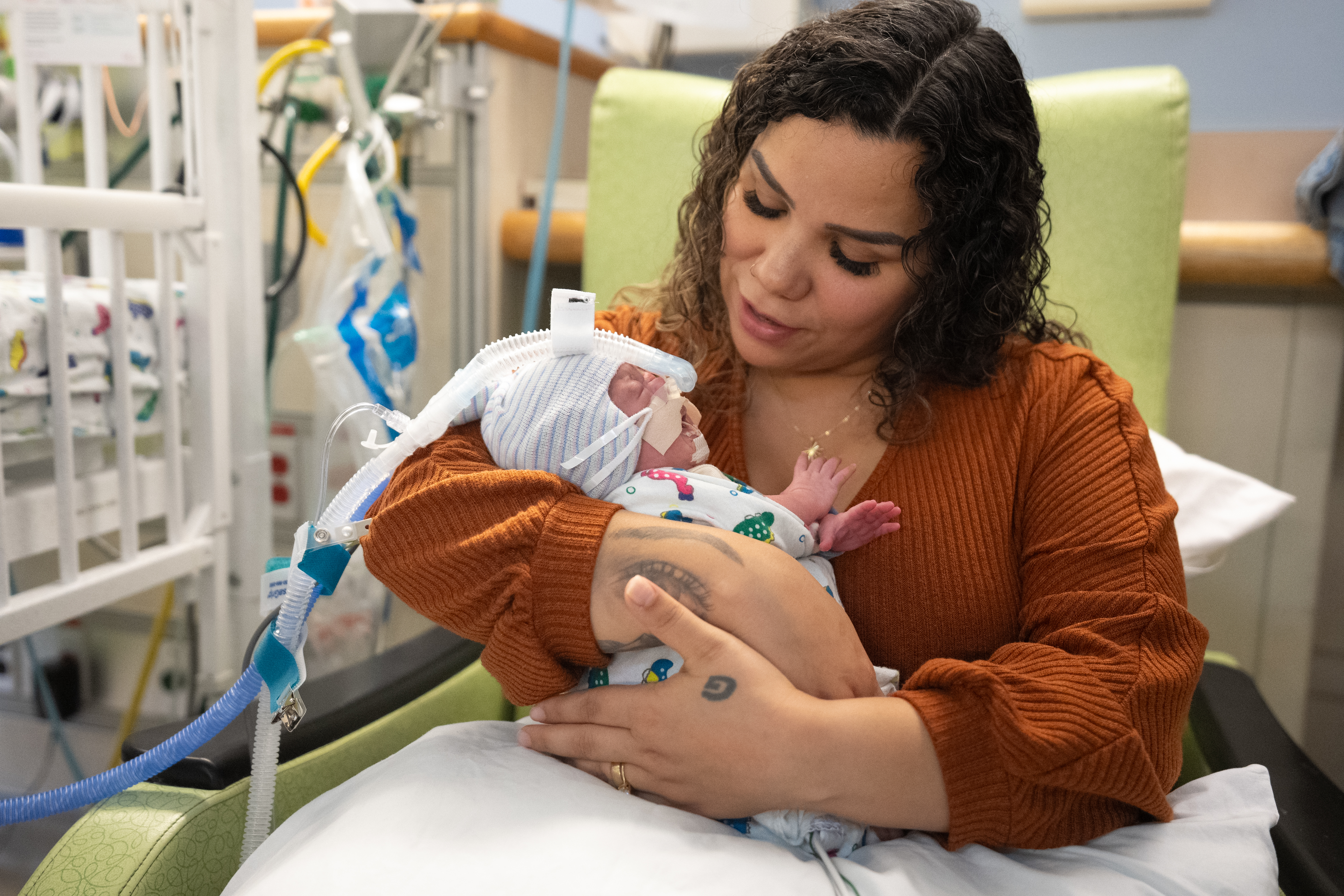
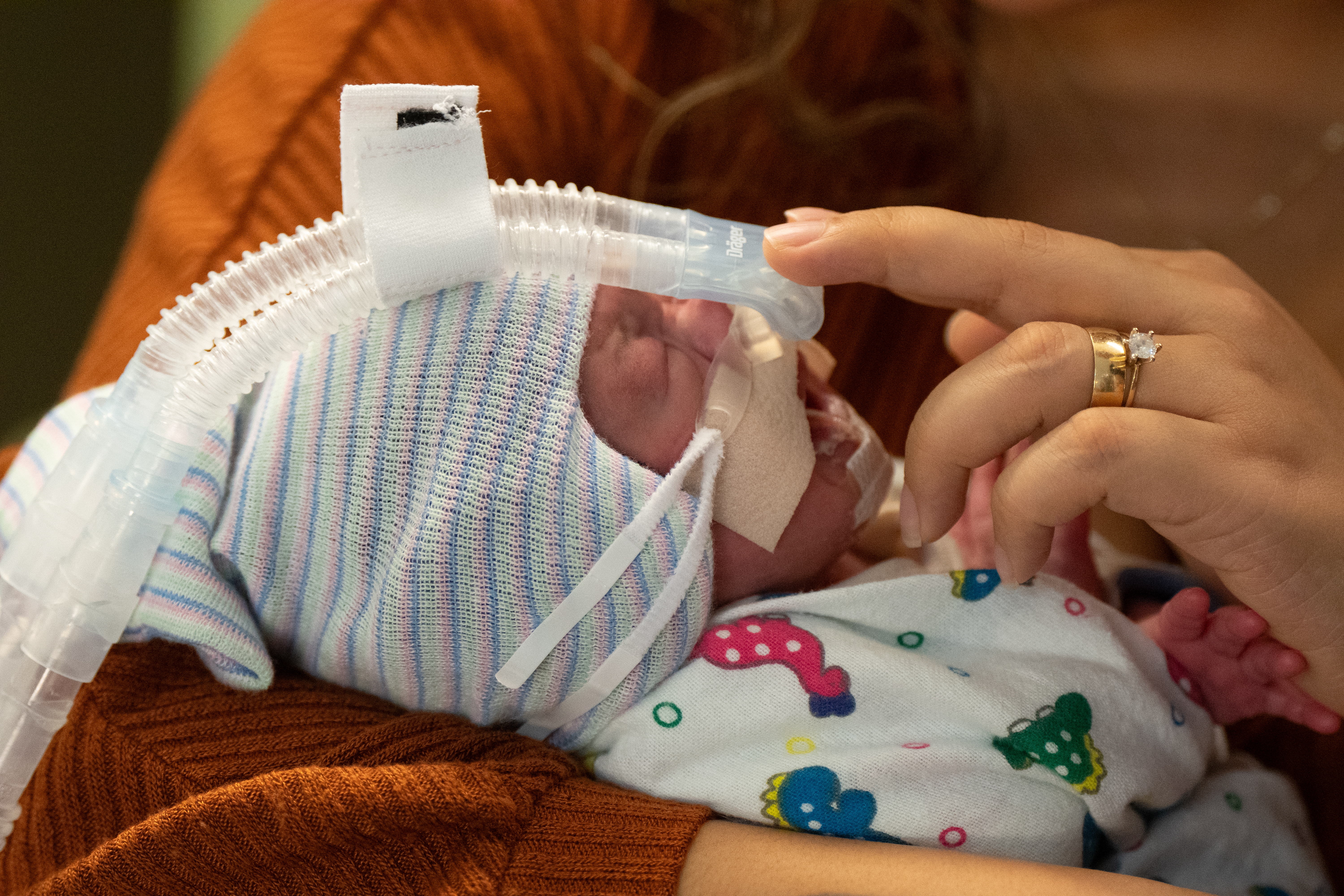
She never expected that her son, John, would arrive early at 29 weeks in September and have tospend his first months in the intensive care nursery at the Hospital of the University of Pennsylvania.
Her family hasrelocated from Mount Pocono to stay at the nearby Ronald McDonald House, a charity, so they canvisit John every day. Even still, she wishes she could be with him all the time, to sing to him and tell him that he is strong and loved — just as she did when he was in her womb.
A new medical device being tested at HUP could help her do just that.
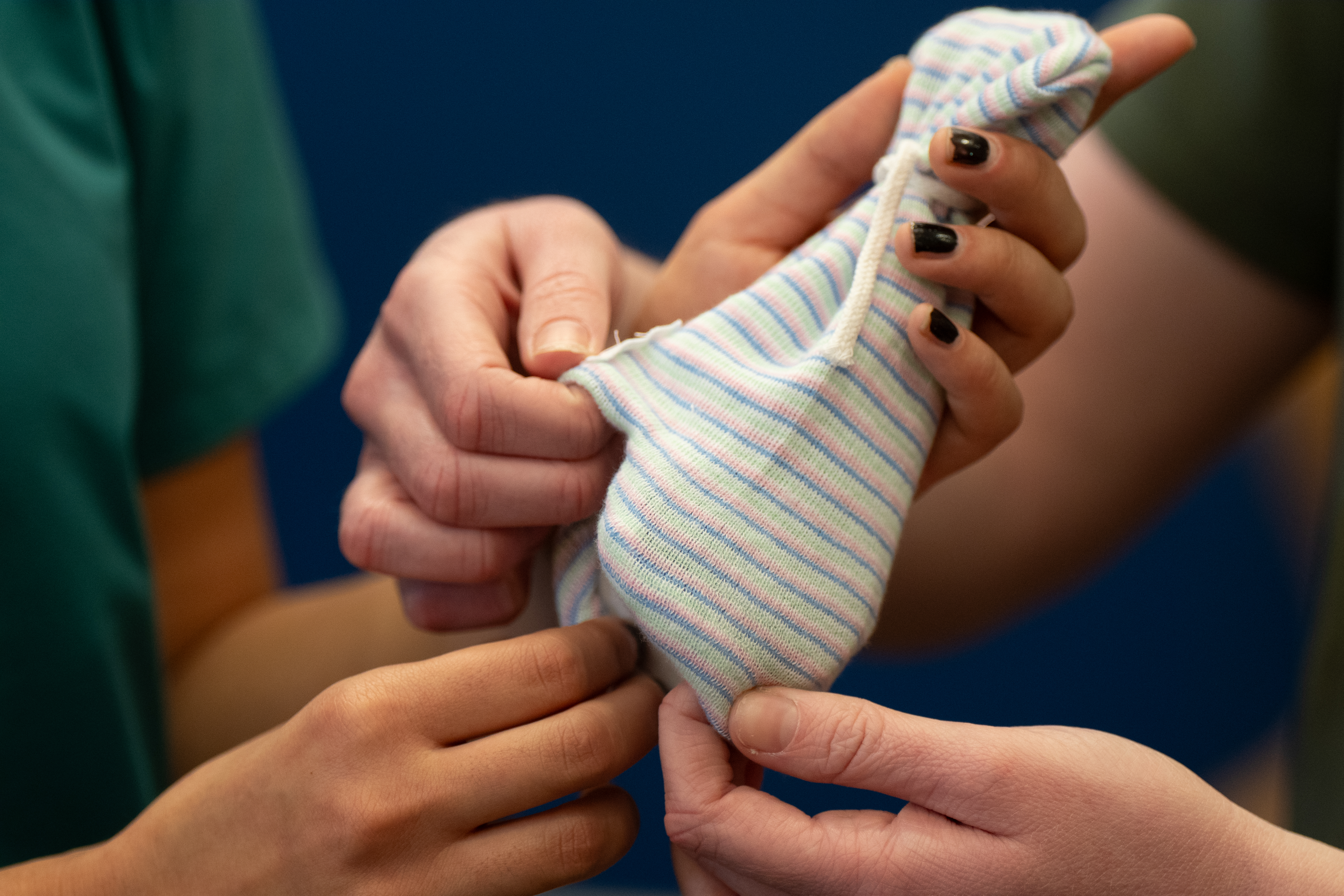
Collins’ son is one of five babies so far to try out the Sonura Beanie, a device that aims to connect NICU babies with their parents and block out harmful noises in the hospital environment.
Invented by five undergraduates at the University of Pennsylvania, the beanie is designed to mimic the womb, by filtering out high-frequency sounds like alarms — which frequently plague the NICU — while allowing human voices at low frequencies to be heard.
The device can also deliver audio messages recorded by parents for their babies.
“It’s as if they were laying on your chest [or] as if they were in the womb,” said Sophie Ishiwari, one of the founders.
Their idea won Penn’s 2023 President’s Innovation Prize, which provided a $100,000 cash award and living stipends for the team to pursue their commercial project after graduation. Three of the original members went onto medical school, leaving two — Gabby Daltoso and Ishiwari — to continue working on the product full-time.
In the two years since graduating, they’ve tested the device in the lab and pitched it to hospitals around the country, earning accolades along the way. Now, they’re putting the beanie on infants in the hospital for the first time.
Over the next several months, Ishiwari and Daltoso will be testing the beanie on 30 infants in HUP’s intensive care nursery. They’ll be looking to see whether the beanie can reduce stress, based on changes in heart rate, respiratory rate, and oxygen saturation.
They will also evaluate how easy it is for nurses to use, and how parents feel about the experience.
Collins joined the study hoping the beanie could help her son feel calmer by hearing her voice, as well as that of his father and teenage sister.
“I know my baby can listen more than he can see, and I’m excited to know he’s listening to our voices instead of this beeping,” she said, gesturing to the noisy NICU machines.
Pamela Collins suffered four miscarriages and an ectopic pregnancy before giving birth to John.
The origin
The first thing Daltoso and Ishiwari noticed when shadowing in the NICU was how loud it was. Between beeping from machines to hospital alarms going off, it felt overwhelming even for adults.
“They can’t turn the alarms off because it’s their job to keep patients alive,” Daltoso said.
In the womb, a fetus would primarily be exposed to low frequency sounds under 500 Hertz. Alarms in the NICU can hit 2,000 Hertz and higher, Daltoso said. Imagine having to hear a fire alarm go off continuously throughout the day.
A 2014 study found that babies in a NICU in Massachusetts were exposed to frequencies over 500 Hertz 57% of the time.
Some medical equipment also emit high frequencies of sounds. Babies on a ventilator, for example, are exposed to sounds in the 8,000 Hertz range of frequencies, Daltoso said.
“They’re in a room of 20, so if one baby’s on it, they’re all exposed,” she added.
In the short term, this noise can stress babies out to the point of not being able to sleep or eat, Daltoso said. Babies may experience trouble gaining weight as a result and show unstable signs such as heart rates that arefaster than normal.
Babies in the NICU could also suffer long-term impacts from what is known as “language deprivation,” Ishiwari said.
Normally, an infant would be exposed to language early in life, which is important for the infant’s neurodevelopment. But a baby in the NICU has less exposure to their parents’ speech.
Studies have shown that preterm babies are generally at higher risk of language delays and deficits.
Daltoso and Ishiwari, alongside those three other seniors majoringin bioengineering at Penn, were inspired to create the beanie for their senior capstone project in 2023.
Through a sound-engineering class and interviews with hundreds of clinicians and parents, they devised the technology inside the beanie to cancel out high-frequency noises, particularly above the 2,000 Hertz range, while allowing lower frequencies through.
A mobile app connects to the hat to enable parents to send songs, stories, audio messages, and recordings of their heartbeat to the baby remotely through a speaker in the hat.
The babies wear the beanies during feeding so that it mimics a real-life interaction, where the baby would normally be lying against their mother’s chest.
Ishiwari said she has teared up listening to some of the messages parents were leaving for their babies. They’ve so far included bedtime stories, songs, and shorter messages like “I love you” and “good night.”
“A lot of them don’t know where to put that love and joy and excitement,” Daltoso said. “This is a place that they can.”
Gabby Daltoso and Sophie Ishiwari are testing the beanie at the Hospital of the University of Pennsylvania.
Sending love from afar
When Collins and her husband, Franqlin, prepared to record messages for John, they turned off the lights in the room and prayed.
Then they started recording.
Collins, who is originally from Brazil, sang a Brazilian song to tellhim that he is perfect the way he is. Her husband made up a story about John, and her 15-year-old daughter narrated another with the messagethat he is enough.
A nurse told Collins that John was laughing when he wore the beanie.
“I can tell he loved that,” Collins recalled the nurse telling her.
Babies in the study wear the beanies for three 45-minute sessions a day, butCollins wishes her son could wear his the whole day.
“I feel babies can be more calm now and [won’t] be crying all the time,” she said.
The beanie designed by Gabby Daltoso and Sophie Ishiwari cancels out high-frequency sounds while allowing low-frequency sounds through.
Michelle Ferrant, a clinical nurse specialist in HUP’s intensive care nursery, was excited that its NICU was chosen as a pilot site.
Herteam has done projects to try to reduce noise levels in the NICU, including putting signs up to remind people to use hushed voices, and closing doors and trash can lids as softly as possible.
“There are a lot of things that might not seem very loud to us, but [if] you’re a small baby and it’s so close to [you], it sounds much louder,” Ferrant said.
However, until the beanie study came along, they didn’t have a way of filtering which noises babies heard.
The Sonura Beanie team is next looking to launch a multi-center trial that will evaluate whether wearing the beanie could help promote weight gain.
Exposure to their mother’s voice and reduced noise levels can help preterm infants with weight gain and feeding, studies have shown.
“We will be looking to prove that our hat is able to soothe the babies to the point where they are taking in more food, gaining more calories, growing faster, and hopefully going home faster,” Daltoso said.
They also plan to launch in other hospitals, including Stanford Medicine Children’s Health, affiliated with Stanford Medicine and Stanford University in California, so that clinicians can test out the product and see how it fits into their workflow. These pilots would function like “a trial for a pre-purchase,” Daltoso said.
They are currently working on submitting their medical device for clearance by the Food and Drug Administrationso they can begin selling it.
Because the product is deemed low-risk in terms of safety, they are eligible for fast-track approval, which they expect to get within the next year, Daltoso said.
The team is still working on setting a price and declined to disclose details.
They would eventually hope to get the product covered by insurance as a sensory-integrative technique. For that, they would need their larger clinical study to show that the beanie has functional outcomes.
‘Holding the miracle’
John weighed only one pound and 14 ounces at birth.
John doesn’t have a specific release date from the NICU. The timeline will depend on when he is able to breathe on his own and put on weight.
At birth, he weighed only 1 pound, 14 ounces. Today, he weighs more than 4 pounds and no longer requires a feeding tube.
Collins was 20 weeks pregnant when she found out that John had a heart defect that doctors said may one day require surgery. A few weeks after that, doctors found an issue with the placenta that ultimately led to his preterm birth.
Now, when she holds her son in her arms, she feels like “I am holding the miracle,” she said.
The latest season of “The White Lotus” delivered big ratings for HBO — and fueled a surge of Google searches for a risky antianxiety prescription drug featured on the show, according to research published this month.
The paper, published in JAMA Health Forum, highlights Hollywood’s outsize cultural influence and the common use of benzodiazepines, a class of anxiety-relieving medications that can cause physical dependence and agonizing withdrawal symptoms.
The third season of the show, which depicts well-heeled guests at a luxury resort in Thailand, includes a storyline of a mother hooked on lorazepam pills and her husband who starts to steal and take them as he faces financial ruin and criminal charges.
Researchers from the University of California at San Diego found that Google searches for lorazepam and two benzodiazepines with different names remained stable for years before the release of the show’s third season in February. Searches for lorazepam skyrocketed for the next 12 weeks, nearly 99% higher than expected — representing 1.6 million additional searches. During that time, searches for similar drugs, alprazolam and clonazepam, remained at expected levels, the study showed.
Many of the queries asked how to get lorazepam, although that doesn’t mean viewers bought them, said Kevin Yang, the study’s lead author and a psychiatrist specializing in addiction at the UC-San Diego School of Medicine. “But it’s at least a good indicator of public interest in that medication,” he said.
Yang got the idea for the study on his couch while watching “The White Lotus” with his now-wife. “It almost felt as if it was being glorified,” Yang said.
A long history
Benzodiazepines — which include drugs such as Xanax and Valium — are commonly prescribed for anxiety, bouts of panic, and insomnia.
The sedative drugs are highly effective but should not be used longer than two to four weeks because of the risk of dependence, said Alexis Ritvo, assistant professor of psychiatry at the University of Colorado School of Medicine and a member of the nonprofit Alliance for Benzodiazepine Best Practices.
“Very rarely are people adequately educated about that before they’re given a prescription for these meds,” Ritvo said.
The medical community has long known about the dangers of prolonged use of benzodiazepines, or benzos, as they are often called.
In 2020, the Food and Drug Administration issued stronger warnings for benzodiazepines, detailing the risk of abuse, addiction, and withdrawal symptoms. The updated boxed warning came amid rising concerns about benzodiazepine abuse, with the agency estimating half of prescriptions were for longer than two months.
Stopping the drugs abruptly after prolonged use can worsen anxiety and insomnia, leading some patients to start again on higher doses. Withdrawals can last months or even years. Nicole Lamberson, a physician assistant who began taking prescription Xanax for anxiety in her early 20s, spent eight years battling withdrawal symptoms. During that time, she became gaunt and bedridden, afflicted by bedsores.
“I was crippled with panic, anxiety, terror, racing thoughts, suicidality. I was fully dissociated,” said Lamberson, medical director of the Benzodiazepine Information Coalition, a nonprofit aimed at raising awareness about the dangers of the medications.
Patients have access to other pharmaceutical anxiety medication, including SSRIs and buspirone. Earlier this year, the American Society of Addiction Medicine published new guidelines for reducing doses for patients who have been regularly taking benzodiazepines.
Long-term benzodiazepine use poses other risks such as memory loss, difficulty concentrating, and brain fog — particularly dangerous for elderly patients susceptible to falls.
Benzodiazepines can also amplify the effects of other prescription drugs or alcohol. “If you have an opioid problem or alcohol problem, adding benzos to the equation is like pouring gasoline onto a fire,” said Wayne Kepner, a Stanford University addiction researcher involved in the “White Lotus” study.
(Victoria, the mother taking lorazepam in “The White Lotus,” slurs at dinner while drinking wine.)
Researchers have also noted cases of “designer” benzos — which are not approved for medical use but can be purchased online — creeping into the illicit drug supply, an added wrinkle to the nation’s drug crisis. Sometimes known as “benzo dope,” the mix of opioids such as fentanyl and benzodiazepines slows breathing and heart rate and lowers blood pressure, increasing the possibility of an overdose.
Cultural imprint
Benzodiazepines have long made appearances in popular culture, reflecting their common use as a prescription and recreational drug.
Books, TV shows, and movies have depicted or hinted at housewives grappling with suburban malaise by taking Valium. The hard-partying stockbroker in “The Wolf of Wall Street” mentions taking Xanax to “take the edge off.” Hip-hop artists rap about them, and not always to glorify — Future’s “XanaX Damage” is about the drug’s harms.
“We have a culture of, ‘You work hard, keep going, you shouldn’t feel pain, you shouldn’t feel distress,’” said Ritvo, the addiction psychiatrist. “If you feel anxious, if you feel overwhelmed, then you should do something to take that feeling away.”
An HBO spokesperson did not return a request for comment.
The visibility of benzodiazepines on “The White Lotus” could serve as a learning moment, the study researchers said.
In the paper, they noted the surge in Google searches showed “a level of engagement that few public health interventions achieve in such a short time frame.”
Yang and Kepner, in an interview, suggested that such shows could include disclaimers on benzodiazepine misuse or steer viewers to help lines or websites, as is often done when media touches on suicide, child abuse, or gambling. “There needs to be some discussion on guardrails,” Kepner said.
On “The White Lotus” (spoilers ahead), Victoria Ratliff appears to be spared excruciating withdrawal as her husband, Timothy, raids her lorazepam supply and descends into a detached, drugged haze. He considers killing himself and his family but eventually runs out of the drug and finds peace.
On Nov. 19, a webpage at the Centers for Disease Control and Prevention was updated with a stunning reversal of the agency’s long-held — and scientifically backed — position on vaccines and autism.
Previously, the CDC has noted on its website that decades of research show no link between receiving vaccines and developing autism.
Now, the site reads: “The claim ‘vaccines do not cause autism’ is not an evidence-based claim because studies have not ruled out the possibility that infant vaccines cause autism.”
A header on the webpage still reads “Vaccines do not cause autism.”
But the phrase is followed by an asterisk leading to another statement explaining the header remains “due to an agreement with the chair of the U.S. Senate Health, Education, Labor, and Pensions Committee that it would remain on the CDC website.”
The chair is Sen. Bill Cassidy (R., La.), who made his confirmation vote for Health and Human Services Secretary Robert F. Kennedy Jr. contingent on that agreement.
The move was met with outrage from public health experts who say that Kennedy, a longtime anti-vaccine advocate, is risking lives by calling vaccines’ safety into question. The New York Times reported two days later that he had personally ordered the website changed.
Diana Robins, the director of the A.J. Drexel Autism Institute at Drexel University, which studies autism from a public health perspective, spoke with The Inquirer about the update and what it means for public health.
This interview has been lightly edited for clarity and brevity.
Question: Take us through the update on the CDC’s website about vaccines and autism.
Answer: The frightening thing, to me, is if a person who is not really familiar with the science reads this website, there is a lot of convincing-sounding language. It feels like deliberate gaslighting.
It’s using terms they’ve learned from scientists over the last several months — “gold-standard science” and “evidence-based claims” — and using them in directly inaccurate ways.
The very first key point at the top of the page says, “The claim ‘vaccines do not cause autism’ is not an evidence-based claim because studies have not ruled out the possibility that infant vaccines cause autism.”
Part of what makes that so egregious is that scientists believe in the scientific process. Unfortunately, the federal administration is weaponizing the fact that scientists won’t come out and say it has been proven. A scientist will never say we have 100% ruled out all possibilities. Something we think we know could change tomorrow when we learn something new.
But there are dozens of studies over many, many years that fail to show a link between vaccines and autism. All the studies that are rigorous and methodologically sound fail to show a link between vaccines and autism. That is unequivocal.
Q: What’s the danger in changing the CDC’s language around vaccines?
A: Vaccines save lives. Vaccines are one of the frontline public health strategies to support health in the population. We’re already seeing what happens when vaccine compliance goes down, when there’s an erosion of the public confidence in vaccines.
There have been measles outbreaks in the last year in the United States. Some kids just get sick and they get better, but some kids have serious illnesses and occasionally die. And it’s not just measles. We’re vaccinated against a lot of life-threatening diseases.
The cost is a huge shift in public health, and the protective factor that vaccines give us against life-threatening illness.
If you told me that reading books past 10 p.m. might cause autism, I would say there’s probably not a lot of cost if you stop reading books at 9:59. But not vaccinating children? The costs are huge. Even one death that’s preventable is a tragedy.
And there will be a lot of preventable serious illness and death if parents don’t vaccinate their children.
Q: How does this affect the public’s view of federal health agencies?
A: I think it makes it very difficult for people to know what to trust. And there is already decreased trust in the medical community, scientific community, higher education broadly.
If pages like this are intermingled with legitimate pages, how will people know which ones are the accurate pages and which are the ones with gaslighting and anti-science? I think people will likely lose their faith in the CDC altogether, which is a terrible blow to the public health of the whole country. If we can’t trust our Centers for Disease Control, who can we trust?
Q: How can scientists communicate accurate medical information with the public?
A: One thing I think is slightly heartening in the face of this devastation is that professional societies and organizations that are medical or scientific are all aligned. There have been so many statements that came out within the first day of this, and they are fully aligned in agreement. The only differences are in which words they yell the loudest.
You can usually not get scientists to agree to anything in a day. That means a lot. It’s the responsibility of all the legitimate scientists and public health experts to try to combat that misinformation every which way we can.
[At the A.J. Drexel Autism Institute], we’re trying to do more outreach to the public. We actually developed some vaccine info sheets just a couple months ago that are posted on our website. We have a new website … that brings together all of the information.
Vaccines are one of our biggest public health successes. If we roll those back, we have stepped back decades in the health of our country. It’s that big. It’s that serious.
A federal judge in Philadelphia has blocked President Donald Trump’s administration from obtaining the private medical records of youth who sought gender-affirming care at Children’s Hospital of Philadelphia.
The decision, issued Friday by U.S. District Court Judge Mark A. Kearney, was a victory for patients’ privacy rights and for CHOP, which had waged a legal battle to limit the scope of a sweeping federal subpoena that sought the names, dates of birth, Social Security numbers, addresses, and parent/guardian information of patients who had been prescribed puberty blockers or hormone therapy.
In a 54-page opinion, Kearney found that the medical records sought by the U.S. Department of Justice were “beyond the authority granted by Congress” under the Food, Drug and Cosmetic Act, and that “the heightened privacy interests of children and their families substantially outweighs the Department’s need to know” such confidential and sensitive information.
Neither CHOP nor the DOJ responded to a request for comment late Friday.
In addition to protecting the identities of patients, Kearney also denied the part of the DOJ subpoena seeking documents related to how doctors make decisions in prescribing medications that help patients to have a body that matches their gender identity, including details such as “clinical indications, diagnoses, or assessments.” Kearney also blocked federal investigators from obtaining documents related to “informed consent, patient intake, and parent or guardian authorization for minor patients.”
CHOP runs one of the nation’s largest clinics providing medical care and mental health support for transgender and gender-nonbinary children and teens and their families. Each year, hundreds of new families seek care at CHOP’s Gender and Sexuality Development Program, created in 2014.
Along with CHOP, five parents of transgender children also filed a motion asking the federal court to intervene on their behalf. Kearney’s ruling rendered that motion moot since it sought similar legal relief as CHOP. The motion was filed by the Public Interest Law Center, a Philadelphia-based nonprofit that advocates for the civil, social, and economic rights of marginalized communities.
Mimi McKenzie, the center’s legal director, said the judge’s ruling was “a complete rebuke” to the DOJ and an affirmation that the federal government has “no authority to root through” private medical records.
“The court recognized that the Department of Justice is using its subpoena power not as a tool for legitimate inquiry, but as a tool for intrusion, and it’s not allowing that,“ McKenzie said late Friday. ”This is an important victory. Under this court’s ruling their privacy is protected, their medical records are not going to be turned over, and this court is just not going to condone this type of government overreach.”
The CHOP case against the DOJ has become part of a broader legal battle playing out across the country. As part of an investigation into possible healthcare fraud or potential misconduct, the DOJ had issued subpoenas to CHOP and at least 19 other hospitals nationally that treat transgender youth. In September, a federal judge in Boston blocked the Trump administration’s attempt to subpoena medical records of patients who received gender-affirming care at Boston Children’s Hospital, ruling it was “motivated only by bad faith.” The DOJ has appealed the Boston ruling.
The Trump administration has said doctors who prescribe to children and teens medications commonly used for gender-affirming care, such as puberty blockers and hormones, are engaging in chemical mutilation, likening it to child abuse. Teenagers are not mature enough to make such major decisions, the administration hasargued.
The American Academy of Pediatrics and other major medical associations, citing research, widely accept such use of these medications assafe, effective, and medically necessary for the patients’mental health.
In his ruling, Kearney said the DOJ subpoena was part of the Trump administration’s strategy to end gender-affirming care for minors. Kearney noted a “charged political environment” in which the federal government views “their medical treatment to [be] a radicalized warped ideology.” He concluded that the state and not the federal government has the authority to regulate medical care, and gender-affirming care for minors is legal in Pennsylvania.
Assuming the sports scientists have it right, the temperatures should be near the performance sweet spots for the runners participating in the Philadelphia Marathon Weekend races on both Saturday and Sunday morning.
At showtimes, 6:55 a.m., just moments after daybreak, temperatures Saturday are expected to be in the upper 40s to near 50 degrees for the half-marathoners, and in the upper 30s to around 40 for Sunday’s main event.
Light rain is expected through the early-morning hours Saturday, and forecasters have been on the fence about when it will shut off. Nick Guzzo, a meteorologist at the National Weather Service said Friday afternoon that rain was likely at the start of the race, but that probabilities would drop precipitously once the event was underway.
AccuWeather Inc. and weather.com were posting about a 50-50 shot that the rain would continue through the morning. The hedging isn’t surprising; timing the onset and end of precipitation has been a longstanding forecast problem.
Nor would it be surprising for those running the 13.1-mile race to experience conditions different from those logging 26.2 miles the following day, points out Kathleen Titus, the race director and runner who has been involved with the marathon for 20 years.
This time of year is a busy one for frontal passages, this being a transition period when the atmosphere isn’t quite sure what season it wants to be. The temperature has reached 74 degreeson Nov. 22 (1883), and plunged to 14 (1880), and snowed 4.6 inches on Nov. 22-23, 1989.
However, nothing momentous is expected this weekend.
Like the rains, winds are forecast to be light, under 10 mph, from the north on Saturday, and northwest on Sunday, although runners allow that on the course, the wind can be way more capricious than the temperatures.
Various studies have concluded that temperature is the most important weather variable in runner performance and that the ideal range for marathoning is 39 to 50 degrees Fahrenheit — give or take a few degrees.
“Your body is always competing between a couple of different things,” said Philip Skiba, sports medicine specialist at ThomasJefferson UniversityHospital, who helped train Eliud Kipchoge, the Kenyan who became the world’s first runner to complete a marathon in under two hours.
During exercise, muscles demand blood to work, while for the body to stay cool, blood has to flow to the skin. If it’s too hot, more blood flows to the skin. When it’s cold, blood is diverted to heat the body’s core.
With temperates in that 39-to-50 range, the blood flow can more easily serve both the muscles and skin. Said Titus, racers love that temperature range because, “It regulates your body. It just works.”
Skiba said the temperature ranged from 51 to 55 degrees on the October 2019 day Kipchoge broke the two-hour barrier in a Vienna event that wasn’t held under record-eligible conditions.
Had the temperatures been lower, Kipchoge could have shaved a few more seconds off his time,Skiba said.
The wind also is a player in marathons
While not as dominant as temperature, “wind resistance … is worth a few seconds per mile,” said Skiba, a former triathlete.
“The more you stay out of the wind, you can save considerable energy,” he said.
“It’s really important to learn how to draft,” that is, get behind a group running close to your pace and using them for wind-breakers,he said. (Not sure how the wind-breakers feel about that.)
On the Philly course, the winds can be wild cards, especially on Kelly Drive, Titus said.
One instant, the wind “hits in your face. Now it’s at my back!”
Titus said she actually likes running uphill into the wind — and she is believed to be a member of a distinct minority — but agrees that “it is nice to have it at your back when you’re coming into the home stretch. Because it does give you a little boost.”
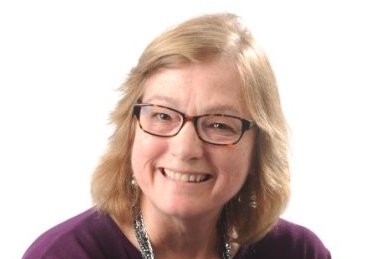
Virginia A. Smith, 75, of Philadelphia, longtime reporter and editor for The Inquirer, the Philadelphia Bulletin, the Akron Beacon Journal, and other newspapers, mentor and working-mother role model to many, and avid gardener, died Friday, Nov. 14, of interstitial lung disease at Roxborough Memorial Hospital.
Born in Philadelphia, Ms. Smith joined her hometown Inquirer in 1985 after three years at the Beacon Journal in Ohio, six months at the Bulletin in Philadelphia, and earlier stints at other papers in New York and Connecticut. Until her retirement in 2015, she covered news, health, and gardens as a reporter for The Inquirer, and served as city and Pennsylvania editor.
In her official Inquirer profile, she described her final assignment as “happily writing — and learning — about gardening full time since 2006.” Her son, Josh Wiegand, said: “She was a curious person and interested in so many different things.”
Former colleagues praised the depth and variety of her reporting, especially the detailed long-form stories she wrote about Sister Mary Scullion in 1992, the Iraq War in 2004, her own extensive garden in 2006, and the other interesting people and significant events she encountered. “She was open to reporting a story until she was confident she had all of its shadings,” Inquirer investigations editor Daniel Rubin said. “She had a gift for the stories people would talk about.”
For Ms. Smith, there was no better place than her own garden.
Ms. Smith was named The Inquirer’s garden writer in 2006, and, of course, wrote detailed previews and reviews of the annual Philadelphia Flower Show. But her favorite stories, she told colleagues, were the hundreds of others about climate change, garden gnomes, community gardens, butterflies, pruning techniques, seed banks, edible weeds, how blind people enjoy gardens, and other topics.
Her winter holiday story in 2006 was not about poinsettias or Christmas tree farms. Instead, she profiled an author who discovered a treasure trove of old black-and-white photos of gardeners tending plots in prisons, war zones, and concentration camps.
“It was her idea,” said Joanne McLaughlin, her editor then. “She wanted to write about gardens nurturing the soul under the worst of circumstances, giving hope under the worst of circumstances.”
She wrote often about her own garden in East Falls and ended one story in 2006 with: “When winter arrives, maybe I’ll settle down. Oh, what are the chances? New years are for confessions, so here’s mine: Come first snow, I’ll be out there shoveling the garden pathways, hoping to sneak another peek.”
Ms. Smith wrote this two-part series in 2012.
Her column was called “Garden Scoop,” and she blogged at “Kiss the Earth” on Inquirer.com. She won two achievement awards from what used to be called the National Garden Writers Association and the 2011 Green Exemplar Award from Bartram’s Garden.
“She understood how important the topic was to this area,” said Reid Tuvim, a longtime editor at The Inquirer.
As a health reporter in the early 2000s, Ms. Smith wrote about bottled water, flu medicine, Lyme disease, organ donation, mental illness, children’s healthcare, and other issues. In 2004, she wrote a story about the Medical Mission Sisters, a progressive religious order that offered healthcare advice and full-body massages as well as spiritual guidance. In the third paragraph, she said: “But this is no spa. And that woman doing the hands-on — are you kidding me? — is a nun!”
She covered Scullion’s acceptance speech of the 1992 Philadelphia Award for community service and described it as “fiery and heartfelt, troubling and joyful.” Inquirer staff writer Amy Rosenberg said Ms. Smith “always drilled down to such emotional depths with her subjects. She defined so much of what The Inquirer meant back then.”
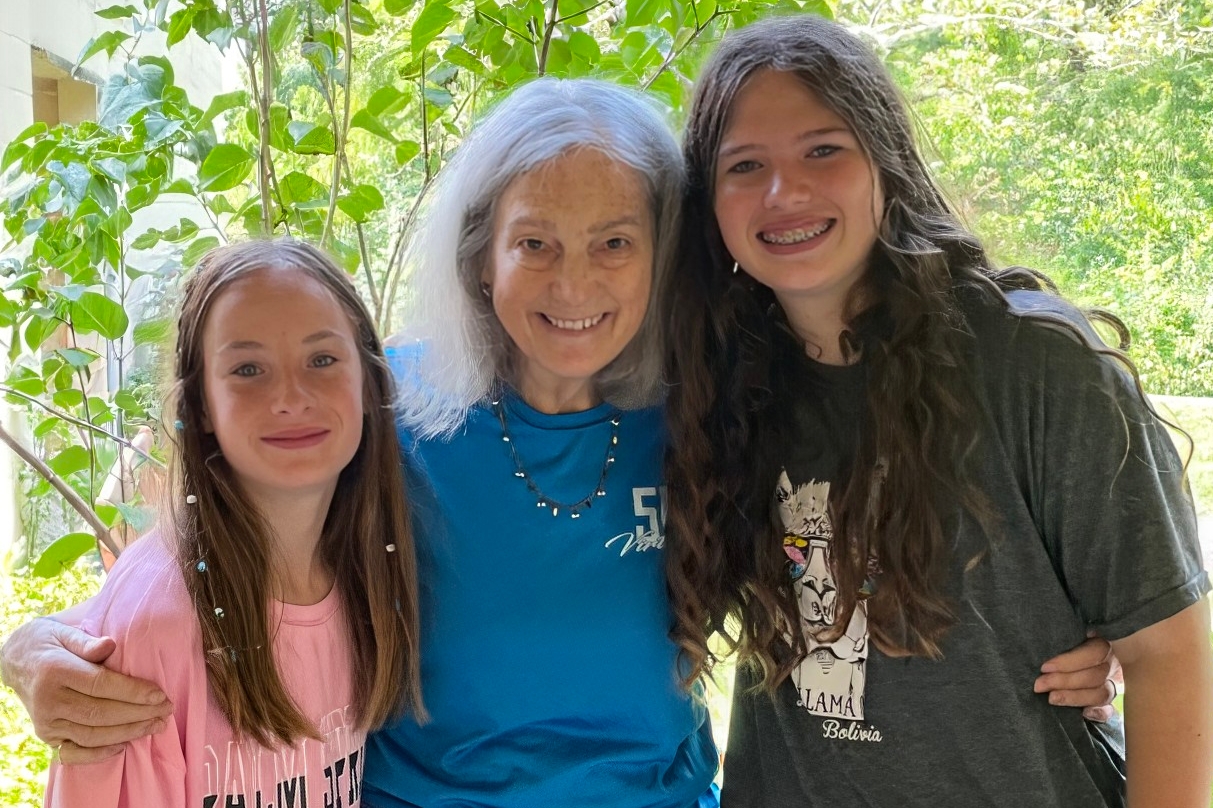
Ms. Smith doted on her granddaughters.
She mentored colleagues as she had been mentored and was a role model for fellow working mothers. “I watched her over and over again get up at 5 p.m. and walk out of the newsroom to get her son when he was young,” Rosenberg said. “Never mind what any of the boys in the room thought.”
Virginia Ann Smith was born Oct. 26, 1950. She graduated from the old Eden Hall high school in Philadelphia and earned a bachelor’s degree in English at Manhattanville University in New York in 1972. In 1981, she earned a master of legal studies degree at Yale University Law School through a Ford Foundation fellowship for journalists.
She married Alan Wiegand, and they had a son, Josh, and lived in East Falls. After a divorce, she married Randy Smith in 1985. He died in 2020, and she moved to Cathedral Village Retirement Community a few years ago.
Ms. Smith was a great cook, friends said. They said she was funny, stubborn, and opinionated. She was so into gardens, her son said, that she visited him in Colorado specifically to renovate his garden.
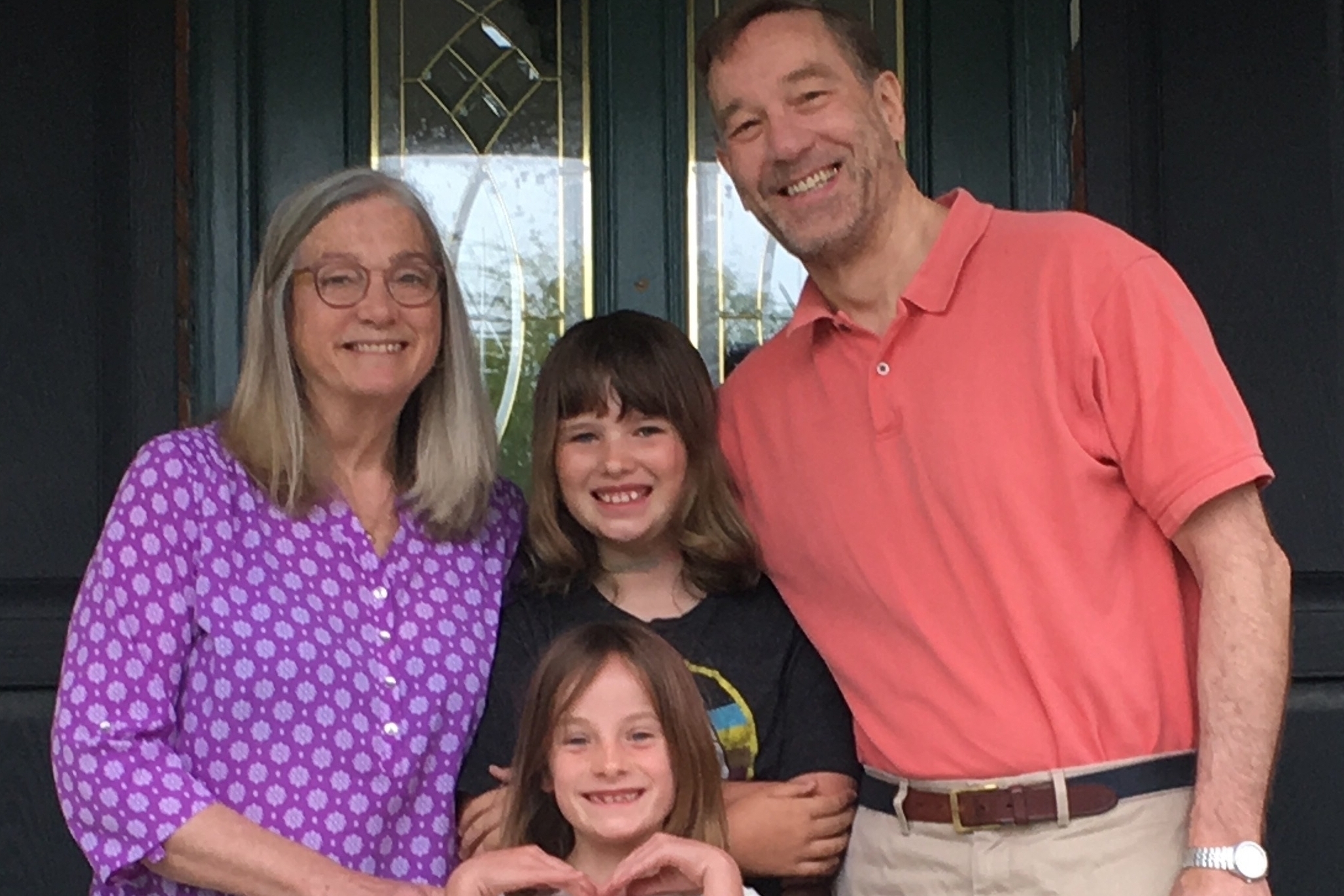
Ms. Smith poses with her husband, Randy, and her two granddaughters.
She listened to classical music and danced at blues festivals. Everyone said she made them feel as if she was their best friend.
“She was one of the most genuine people I’ve ever known,” said friend and former colleague Mari Schaefer. Friend and former colleague Mary Flannery said: “She was so creative and so brave.”
Her son said: “She was the best. I don’t know how she did it. She wanted to do it all, and she did.”
In addition to her son and her former husband, Ms. Smith is survived by two granddaughters, two brothers, and other relatives.
A celebration of her life is to be held later.
Donations in her name may be made to the Schuylkill Center, 8480 Hagys Mill Rd., Philadelphia, Pa. 19128.
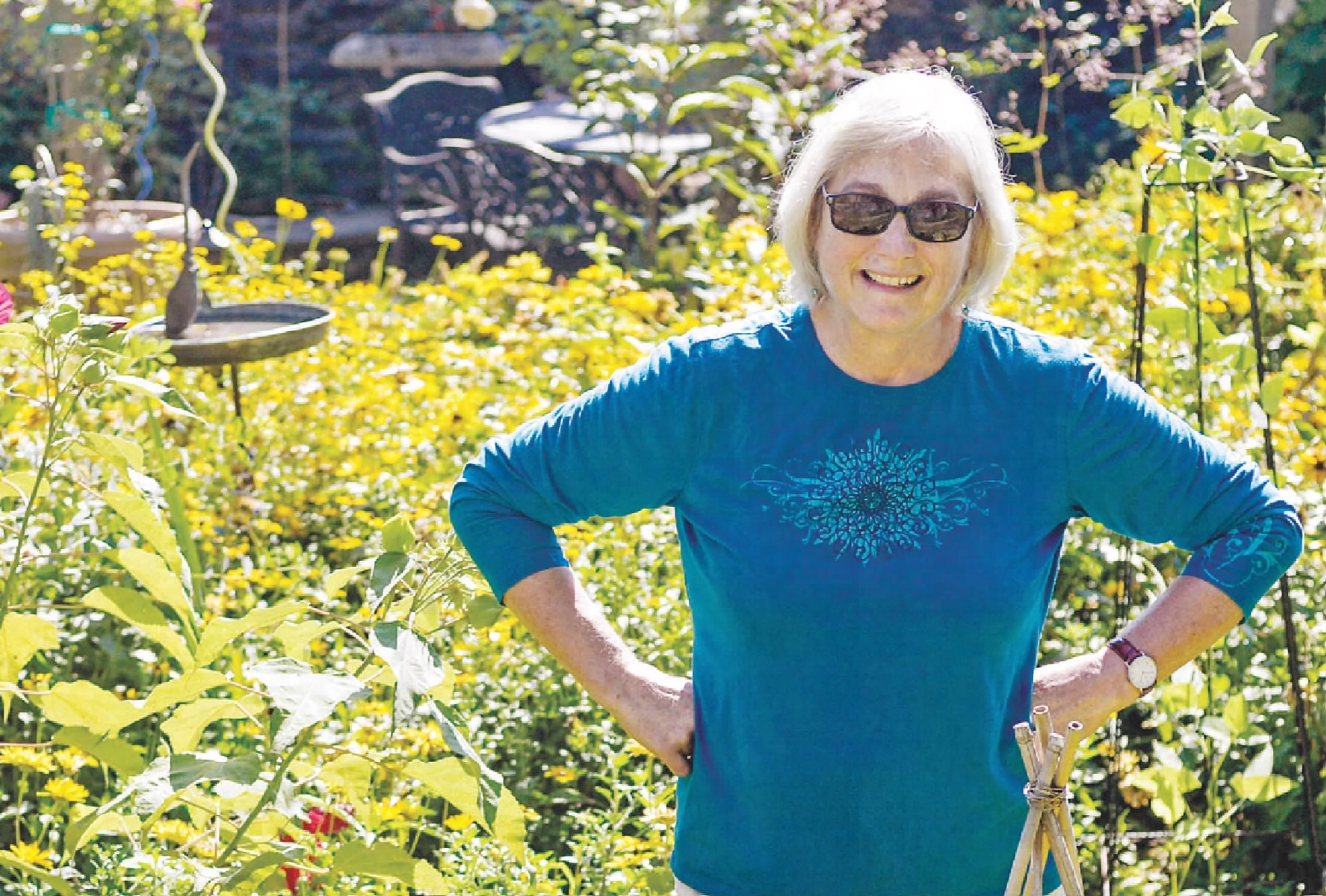
Ms. Smith tends to her garden’s black-eyed Susans in this photo.