President Donald Trump has replaced the architect he handpicked to design his White House ballroom, according to three people familiar with the project, ending the involvement of a boutique firm whose selection raised questions from the start about whether it had the capacity to complete the massive, high-profile endeavor.
For more than three months, James McCrery II and his architecture firm led the effort to design Trump’s $300 million ballroom building — until late October, when he stopped working on the project, one of the people said. It is unclear whether McCrery stepped back voluntarily, but the men parted on good terms and remain so, according to one of the people familiar with the project, all of whom spoke on the condition of anonymity to discuss internal conversations.
Trump and McCrery had clashed over the president’s desire to keep increasing the size of the building, but it was the firm’s small workforce and inability to hit deadlines that became the decisive factor in him leaving, one of the peoplesaid.
Trump has chosen architect Shalom Baranes, who’s been designing and renovating government buildings in Washington for decades, to pick up the mantle, according to two of the people. Baranes’ firm has handled a number of large Washington projects dating back decades, including projects involving the main Treasury building near the White House and the headquarters of the General Services Administration.
“As we begin to transition into the next stage of development on the White House Ballroom, the Administration is excited to share that the highly talented Shalom Baranes has joined the team of experts to carry out President Trump’s vision on building what will be the greatest addition to the White House since the Oval Office — the White House Ballroom,” White House spokesman Davis Ingle said in a written statement. “Shalom is an accomplished architect whose work has shaped the architectural identity of our nation’s capital for decades and his experience will be a great asset to the completion of this project.”
The White House and McCrery’s representative have continued to say that McCrery remains involved in the project in a “consulting” role.
The ballroom building — at 90,000 square feet and estimated to hold nearly 1,000 guests and cost $300 million — was from the start a herculean task for McCrery, said people familiar with his firm’s operations. That might have been true for any firm given Trump’s rushed timeline, but it was especially difficult for the head of a small firm better equipped to design churches, libraries, and homes.
Trump’s selection of the firm raised eyebrows of architects and planning experts worried that a shop as small as McCrery’s couldn’t complete such a large project in little more than three years. One architect said federal officials tasked with awarding contracts would normally consider only firms four times bigger than McCrery’s to take on projects of that scale.
Those concerns grew almost immediately, according to one of the people, who spoke on the condition of anonymity about the project.
“Everybody realized he couldn’t do it,” the person said.
McCrery’s spokesman did not respond to requests for an interview.
The renovation represents one of the biggest changes to the White House in its 233-year history, and has yet to undergo any formal public review. The administration has not publicly provided key details about the building, such as its planned height. The structure also is expected to include a suite of offices previously located in the East Wing. The White House has also declined to specify the status of an emergency bunker located beneath the East Wing, citing matters of national security.
In the weeks since the switch from McCrery to Baranes, crews of dozens of workers have continued to prep the site for construction, driving piles, stockpiling materials such as reinforced concrete pipes and amassing an array of cranes, drills and other heavy machinery, photos obtained by The Post show. On Wednesday, they erected a towering crane anchored into a concrete paddock.
On Tuesday, Trump said during a Cabinet meeting that the pile drivers operate “all night” and have created a disagreement in his marriage. The president said he loves the sound while first lady Melania Trump has asked him to make the constant pounding stop, a request he’s denied.
“Sorry, darling, that’s progress,” Trump said he told her.
In her early 20s, Nala Ray had it all. Or so she thought.
She lived in a $4.3 million home in California. She frequently drove luxury cars, including Ferraris, Bentleys and Lamborghinis. Her closet dripped with designer labels — Givenchy, Dior, Prada. Her favorite? A lamb-skin Chanel bag — red, with gold chains. Even her dogs, she says, sported Louis Vuitton collars.
All the luxury, however, came at a cost, she says. Ray made her fortune posting explicit content of herself on OnlyFans. In fact, she says she was one of the first to ever do so. In the early years of the website, when she made her account, no one quite knew what the fledgling, subscription-based platform would become. Maybe it’d be full of cooking classes. Or fitness tutorials. But, Ray says, because of early adopters like her, it became a de facto porn site, where anyone can upload content of themselves in exchange for cash from paying subscribers. Though not everyone on OnlyFans makes porn, the site has become known for it.
Most OnlyFans creators make next to nothing. A lucky few make millions. Ray was one of them. Over the course of her five years on the site, she estimates she made $14 million total, averaging $300,000 a month.
But after what she describes as a spiritual awakening, Ray left OnlyFans and has since become an outspoken critic of the platform. Now, she says, she wants to see OnlyFans — the very website she helped turn into a porn empire — destroyed.
Her plan? By shedding light on what she describes as the hidden cost of pornography, she hopes to change the hearts and minds of those still on OnlyFans, one person at a time. She wants to see a day when no one frequents the platform anymore.
“I was so deep in the industry,” Ray says. “I was bold enough to take so many crazy, radical steps into it. And now, I’m just on the opposite spectrum. It’s crazy. That shows God’s glory.”
How Nala Ray found OnlyFans
Ray’s upbringing was tumultuous.
When she was 8, a tornado wiped out her family’s home in small-town Missouri. Her dad had an affair, leading to her parents’ divorce, but they remarried each other two years later. After that, Ray says, her dad took on a newfound religious intensity, becoming a minister. Frequent in-fighting in her Baptist community led her family to hop from church to church. She never felt like she had a spiritual home.
“You get to see a dark side of religion,” Ray says. “People will kick you out of their church, and that’s so hard to see from people that you kind of fell in love with. So it was kind of major divorces, over and over and over again.”
Things worsened when her dad took pity on a wayward 16-year-old boy, letting him live in their home. The boy molested Ray when she was 13, she says, and the abuse continued for months until he ran away one night. Ray says neither she nor her family have heard from him since.
After that, Ray began acting out. She’d sneak out of the house at 2 a.m. to meet boys. She longed for the day she could finally move out and become independent. At around age 20, she found herself in Florida, working for an orthopedics company. She wasn’t sure where to go next.
Then, she got the Instagram DM.
“A random guy on Instagram − he was verified − he reached out,” she says. “And he was like, ‘Hey, you’d be so good at OnlyFans.’”
‘I couldn’t feel much at all’
OnlyFans skyrocketed in popularity during the COVID-19 pandemic. Ray caught the wave at the perfect time, she says, joining the site in February of 2020. Her first month, she made $87,000.
It became her new full-time job — and she took it seriously.
Ray acquired a manager. She read books on men’s psychology, so she could learn how best to appeal to their fantasies. She studied popular porn trends — and adjusted her content accordingly. She went on podcasts and made outrageous statements about sex that would go viral — whatever it took to drive more people to her page. At her peak on the site, she had 270,000 subscribers.
As the earnings ramped up, so did the pressure to make more gratuitous content, she says. She relied on marijuana and alcohol to get through particularly tough filming days. Anything, she says, to numb herself.
“Honestly, I couldn’t feel much at all. I could feel angry, but I didn’t cry for years. It felt like I didn’t feel sorry for anybody,” she says. “Anytime I would have to do major scenes, I’d have to drink myself into oblivion to just do it.”
Then, Ray met Jordan Giordano, a Christian influencer, on TikTok in 2023. He didn’t know who she was. They started talking.
Giordano treated her as a person, not as as sex object. It was his compassion and gentle nudging, she says, that ultimately got her to see the life she was living differently.
In January 2024, Ray quit OnlyFans. She and Giordano wed that March.
“There was this tear inside of me. I had built this whole life. I was so independent. I didn’t need a man. I made my bag. I could have anything I wanted. I could go anywhere I wanted, even though I didn’t have a lot of friends or anything. I felt so unique, and OnlyFans had given me that kind of freedom,” Ray says.
“To cross over into this very unknown world was terrifying to me. I thought so many times, ‘I can’t do this. I can’t do this. It’s too scary for me. I don’t know if I’m courageous enough to cross this line.’ And so what happened was, I continued to just talk to Jordan. I continued reading my Bible. I continued to pray. And then Jordan’s mom was actually the one that really helped me make the decision. She was like, ‘You’re on the right path, but you still have this door of darkness open, which is OnlyFans. You cannot have both.’”
‘Someone just wants someone else to listen to them’
Since leaving OnlyFans, Ray’s received tons of backlash online − much of it not from OnlyFans models, but from fellow Christians.
They call her a grifter. They call her faith a sham. They say she’ll be back on OnlyFans any day now.
The noise used to bother her. Now, she says, she’s better at tuning it out.
“The hate got to me for sure,” she says. “It got to my husband. I felt utterly alone some days, just being like, ‘Wow, the whole world hates me.’ And that’s a tough pill to swallow, honestly.”
Ray still has empathy for the women who do OnlyFans. Though she disagrees with their actions, she knows many have struggles few will ever understand.
“I have a heart for the OnlyFans girls, not only because I was one, but I saw it,” she says. “So many girls were like, ‘Oh, my dad abused me.’ ‘My stepdad tried to do things with me.’ ‘I don’t have a dad.’ ‘My dad ran away.’ ‘My mom hates me.’ I heard it all … Behavior is a symptom of what’s really going on underneath, right? Hurt damages people so bad, and shame will lead you into things that you never thought you would do.”
When they ask for it, Ray helps guide people through the process of quitting OnlyFans. She recalls one model who deleted her account after flying to Tennessee to have a heart-to-heart with Ray in person.
When someone like that contacts her, Ray says she listens to them, without judgment. It’s what her husband did for her − and it’s what she believes makes a real difference.
“The biggest thing I realized is someone just wants someone else to listen to them,” Ray says. “She just wanted to talk, and I let her. And she just told me everything that was going on in her life with her family and her relationship and how she felt about OnlyFans. And I didn’t pass one word of judgment. That’s it. We just can’t judge other people, because we have no idea what it’s like to walk a day in their shoes.”
Ray’s life looks quite different than it did a year ago. Her financial situation looks different, too. The OnlyFans money dried up fast, she says. The website took 20% of it. Her manager, 45%. Not to mention the hefty California taxes she owed.
Although her life hasn’t gotten easier, she says she doesn’t regret her decision. Being honest about her current life is also something that’s important to her, as she charts this new path. She plans on launching a podcast to continue sharing her story.
“The kind of Christian I want to portray is like, yeah, life freaking sucks,” Ray says. “I mess up. I’m not always modest. I still cuss sometimes. Yes, I want a joint sometimes. That is the Christian walk. I hate it when I see Christians online who just seem so perfect, but yet aren’t real with the fact that life is so hard sometimes.”
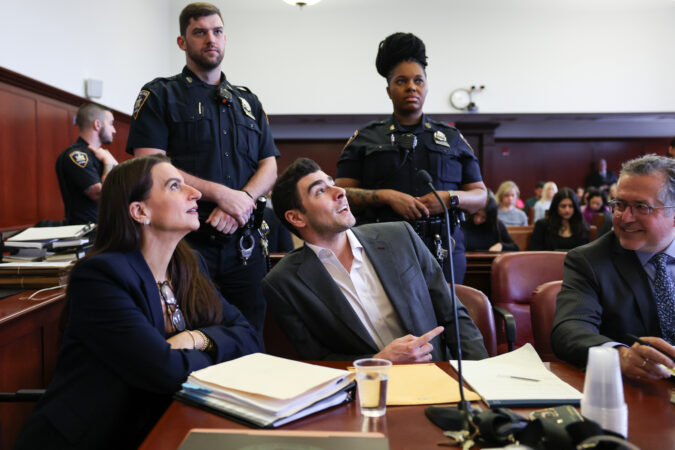
NEW YORK — Minutes after police approached Luigi Mangione in a Pennsylvania McDonald’s, he told an officer he didn’t want to talk, according to video and testimony at a court hearing Thursday for the man charged with killing UnitedHealthcare CEO Brian Thompson.
Although some video and accounts of police interactions with Mangione emerged earlier in this week’s hearing, Thursday’s proceedings shed new light on the lead-up to and aftermath of his Dec. 9, 2024, arrest in Altoona, Pa.
Mangione, 27, appeared to follow the proceedings intently, at times leaning over the defense table to scrutinize papers or take notes. He briefly looked down as Altoona Police Officer Tyler Frye was asked about a strip-search of Mangione after his arrest. Under the department’s policy, that search wasn’t recorded.
It happened after police were told that someone at the McDonald’s resembled the much-publicized suspect in Thompson’s killing. But Frye and Officer Joseph Detwiler initially approached Mangione with a low-key tone, saying only that someone had said he looked “suspicious.” Asked for his ID, he gave a phony New Jersey driver’s license with a fake name, according to prosecutors.
Moments later, after frisking Mangione, Detwiler stepped away to communicate with dispatchers about the license, leaving the rookie Frye by Mangione’s table.
“So what’s going on? What brings you up here from New Jersey?” Frye asked, according to his body-camera video.
Mangione answered in a low voice. Asked what the suspect had said, Frye testified Thursday: “It was something along the lines of: He didn’t want to talk to me at that time.”
Mangione later added that “he was just trying to use the Wi-Fi,” according to Frye.
During the roughly 20 minutes before Mangione was told he had the right to remain silent, he answered other questions asked by the officers, and also posed a few of his own.
“Can I ask why there’s so many cops here?” he asked shortly before being informed he was being arrested on a forgery charge related to his false ID. By that point, roughly a dozen officers had converged on the restaurant, and Mangione had been told he was being investigated and had been handcuffed.
Mangione has pleaded not guilty to state and federal murder charges. Before any trials get scheduled, his lawyers are trying to preclude the eventual jurors from hearing about his alleged statements to law officers and items — including a gun and a notebook — they allegedly seized from his backpack.
The evidence is key to prosecutors’ case. They have said the 9 mm handgun matches the firearm used in the killing, that writings in the notebook laid out Mangione’s disdain for health insurers and ideas about killing a CEO at an investor conference, and that he gave police the same fake name that the alleged gunman used at a New York hostel days before the shooting.
Thursday’s proceedings came on the anniversary of the killing, which UnitedHealthcare marked by lowering the flags at its headquarters in Minnetonka, Minnesota, and encouraging employees to engage in volunteering.
Thompson, 50, was shot from behind as he walked to an investor conference. He became UnitedHealthcare’s CEO in 2021 and had worked within parent UnitedHealth Group Inc. for 20 years.
The hearing, which started Monday and could extend to next week, applies only to the state case. But it is giving the public an extensive preview of some testimony, video, 911 audio and other records relevant to both cases.
After encountering Mangione, Detwiler and Frye tried to play it cool and buy time by intimating that they were simply responding to a loitering complaint and chatting about his sandwich. Still, they patted Mangione down and pushed his backpack away from him. About 15 minutes in, officers warned him that he was being investigated and would be arrested if he repeated what they had determined was a fake name.
After he gave his real one, he was read his rights, handcuffed, frisked again and ultimately arrested on a forgery charge related to his fake ID.
Mangione’s lawyers argue that his statements shouldn’t be allowed as trial evidence because officers started questioning him before reading his rights. They say the contents of his backpack should be excluded because police didn’t get a warrant before searching it.
Manhattan prosecutors haven’t yet detailed their arguments for allowing the disputed evidence. Federal prosecutors have maintained that the backpack search was justified to ensure there was nothing dangerous inside, and that Mangione’s statements to officers were voluntary and made before he was under arrest.
Many criminal cases see disputes over evidence and the complicated legal standards governing police searches and interactions with potential suspects.
A seal waddled into a bar — and ordered a drink on the rocks.
So went one of the many jokes made by patrons at Sprig + Fern, The Meadows, a craft beerpub in New Zealand’s South Island, after a young fur seal walked in the front door on a rainy Sunday, sparking excitement and disbelief.
Co-owner Bella Evans said she was working behind the bar, putting up Christmas decorations, when the young seal entered shortly after 5 p.m.
“Everyone was pretty shocked,” Evans said in a phone interview Thursday. “A lot of people thought it was a dog at first, because we are a dog-friendly establishment.”
“It was a mix of shock, excitement and everything all at once,” she said.
The seal seemed “pretty relaxed” and was in the pub for around 25 minutes, including visiting the bathroom, Evans said. Video posted online by the bar — and set to the Mission Impossible theme tune — shows the seal waddling between tables as a customer tries to usher it outside.
“Today we had the cutest unexpected visitor,” the business wrote on Facebook. “It wandered in all on its own for a little look around, absolutely stealing the show.”
Evans said she was initially worried about the seal getting frightened and the safety of customers, but the pup seemed “really mellow.”
The seal eventually settled under a dishwasher before staff members managed to lure it into a customer’s dog crate — with the help of some salmon from a pizza special on the menu. Conservation rangers then came to collect it.
“Everyone was joking it was so popular that even the seal’s heard,” Evans said about the pub’s pizza.
Helen Otley, a principal ranger for the New Zealand Department of Conservation, said the agency received “numerous” calls Sunday about the young fur seal, known as kekeno in Maori, which had been spotted in the area.
“The pub staff did a great job keeping the seal safe until the DOC ranger could get there,” she said in a statement to The Washington Post.
Otley said it was “not unusual” to see young fur seals in the Tasman Bay area, at the top of New Zealand’s South Island, as they explore their environment after being weaned. The pub is about a mile from the coast.
“Seals can wander up to 15 km (9.3 miles) inland, often following rivers and streams. They can turn up in unusual places — like this pub — but this is normal exploratory behavior,” she said, adding that the department generally takes a “hands off” approach to seals.
“They are capable and resilient and, given time and space, they usually find their way back to the shore,” she said.
Evans said the surprise visitor delighted customers and staff, and sparked a flurry of jokes about drinks served “on the rocks” and the pub having the “seal of approval.” The seal has also left an intriguing scent for local dogs who have been “sniffing the trail” where it roamed, she said.
Otley said the seal has since been released at Rabbit Island, a small island in the Tasman Bay area, which she described as “a safe location due to its dog-free status.”
It’s not the first timeanimals have turned up in unexpected places in the past couple of weeks, with a raccoon passing out in a bathroom after ransacking a Virginia liquor store and a bear squeezing into a crawl space in a California home.
For Evans, who took over the pub around three months ago, the animal visitor was followed up by another surprise this week: a customer bringing their bearded dragon for a drink.
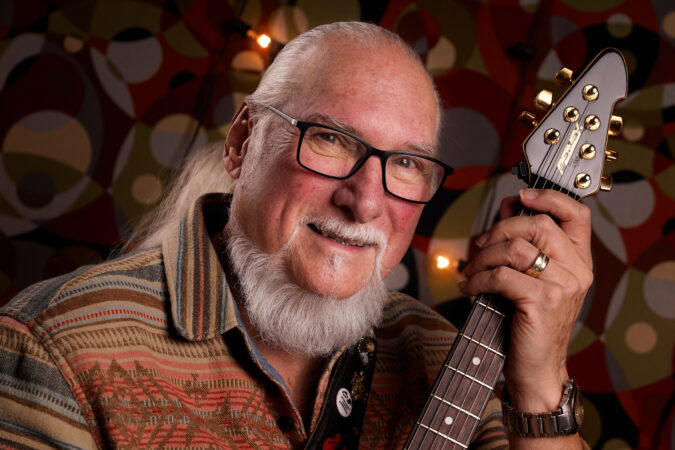
Steve Cropper, an internationally renowned, Grammy-winning guitarist and Rock & Roll Hall of Fame inductee who played with luminaries such as Otis Redding, B.B. King, Booker T. & the MG’s and the Blues Brothers, died Dec. 3 in Nashville. He was 84 years old.
Mr. Cropper’s death was announced on his social media accounts in a statement that called him “a beloved musician, songwriter, and producer.” The cause of death was not disclosed.
In the earliest days of his decades-long career, Mr. Cropper played guitar as a founding member of the Memphis band the Mar-Keys, which had a national hit with “Last Night” in 1961. He formed the band with his childhood friend, Donald “Duck” Dunn, who became a well-known bassist. The two continued to collaborate for years afterward, notably with the famed Booker T. & the MG’s — a groundbreaking, racially integrated R&B/soul studio band formed by Mr. Cropper in 1962.
Mr. Cropper performed on many enduring hits, including with Otis Redding on “(Sittin’ On) The Dock of the Bay,” which the two co-wrote, and with Sam & Dave on “Soul Man.”
He also played on two albums with the Blues Brothers and co-wrote hits such as “In the Midnight Hour” with Wilson Pickett, “Knock on Wood” with Eddie Floyd, and “Green Onions” as part of Booker T. & the MG’s.
Stephen Lee Cropper was born on a farm near Dora, Mo., on Oct. 21, 1941. He recalled falling in love with music after his family moved to Memphis when he was 9 years old and he started hearing Black gospel songs on local radio stations.
“I really enjoyed that music. I don’t know what it was. At such a young age, it impressed me,” he recalled in a 1984 interview. “The Black spiritual music … it gave me a whole different attitude about music.”
At aboutage 14, he decided he wanted to play guitar and scraped together $20 to order one from a catalog by setting pins at a bowling alley in Memphis — earning about 10 cents a game. He recalled his shock when he opened the box and found that the instrument had not been strung.
“I went, ‘Wait a minute, isn’t it supposed to be all tuned and all that stuff?’” he said with a laugh. “I really didn’t have a musical background in the family.”
He taught himself how to play, recalling: “I liked the sound of it. I liked the ring of the notes.”
In his acceptance speech when Booker T. & the MG’s was inducted into the Rock & Roll Hall of Fame in 1992, Mr. Cropper said he was honored to play “with some of the greatest musicians on the planet.”
“It’s been a great career and it’s been a lot of fun,” he said.
Mr. Cropper was inducted into the Songwriters Hall of Fame in 2005. He won two Grammy Awards, in 1968 for “(Sittin’ On) The Dock of the Bay” with Redding and in 1994 for “Cruisin’” as part of Booker T. & the MG’s. He was nominated for a Grammy nine times.
In 1996, British magazine Mojo ranked him as the second-greatest guitarist of all time, behind only Jimi Hendrix.
“Steve’s influence on American music is immeasurable,” his family said on social media.
“Every note he played, every song he wrote, and every artist he inspired ensures that his spirit and artistry will continue to move people for generations.”
Mr. Cropper is survived by his wife, Angel Cropper, and his four children.
WASHINGTON — President Donald Trump praised the leaders of the Democratic Republic of Congo and Rwanda for their courage as they signed onto a deal on Thursday aimed at ending the conflict in eastern Congo and opening the region’s critical mineral reserves to the U.S. government and American companies.
The moment offered Trump — who has repeatedly and with a measure of exaggeration boasted of brokering peace in some of the world’s most entrenched conflicts — another chance to tout himself as a dealmaker extraordinaire on the global stage and make the case that he’s deserving of the Nobel Peace Prize. The U.S. leader hasn’t been shy about his desire to receive the honor.
“It’s a great day for Africa, a great day for the world,” Trump said shortly before the leaders signed the pact. He added, “Today, we’re succeeding where so many others have failed.”
Trump welcomed Presidents Felix Tshisekedi of Congo and Paul Kagame of Rwanda, as well as several officials from other African nations who traveled to Washington to witness the signing, in the same week he contemptuously derided the war-torn country of Somalia and said he did he did not want immigrants from the East African nation in the U.S.
Lauded by the White House as a “historic” agreement brokered by Trump, the pact between Tshisekedi and Kagame follows monthslong peace efforts by the U.S. and partners, including the African Union and Qatar, and finalizes an earlier deal signed in June.
Fighting, meanwhile, continued this week in the conflict-battered region with pockets of clashes reported between the rebels and Congolese soldiers, together with their allied forces. Trump, a Republican, has often said that his mediation has ended the conflict, which some people in Congo say isn’t true.
Still, Kagame and Tshisekedi offered a hopeful tone as they signed onto to the agreement.
“No one was asking President Trump to take up this task. Our region is far from the headlines,” Kagame said. “But when the president saw the opportunity to contribute to peace, he immediately took it.”
“I do believe this day is the beginning of a new path, a demanding path, yes. Indeed, quite difficult,” Tshisekedi said. ”But this is a path where peace will not just be a wish, an aspiration, but a turning point.”
Indeed, analysts say Thursday’s deal also isn’t expected to quickly result in peace. A separate peace deal has been signed between Congo and the M23.
“We are still at war,” said Amani Chibalonza Edith, a 32-year-old resident of Goma, eastern Congo’s key city seized by rebels early this year. “There can be no peace as long as the front lines remain active.”
Rare earth minerals
Thursday’s pact will also build on a Regional Economic Integration Framework previously agreed upon that officials have said will define the terms of economic partnerships involving the three countries.
Trump also announced the United States was signing bilateral agreements with the Congo and Rwanda that will unlock new opportunities for the United States to access critical minerals–deals that will benefit all three nations’ economies.
“And we’ll be involved with sending some of our biggest and greatest U.S. companies over to the two countries,” Trump said. He added, “Everybody’s going to make a lot of money.”
The region, rich in critical minerals, has been of interest to Trump as Washington looks for ways to circumvent China to acquire rare earths, essential to manufacturing fighter jets, cell phones and more. China accounts for nearly 70% of the world’s rare earth mining and controls roughly 90% of global rare earths processing.
Trump hosted the leaders on Thursday morning for one-on-one meetings at the White House as well as a three-way conversation before the signing ceremony at the Institute of Peace in Washington, which the State Department announced on Wednesday has been rebranded “the Donald J. Trump Institute of Peace.”
Later Thursday, the U.S. Chamber of Commerce will host an event that will bring together American business leaders and the Congolese and Rwandan delegations to discuss potential investment opportunities in critical minerals, energy and tourism.
Ongoing clashes
In eastern Congo, meanwhile, residents reported pockets of clashes and rebel advances in various localities. Both the M23 and Congolese forces have accused each other of violating the terms of the ceasefire agreed earlier this year. Fighting has also continued in the central plateaus across South Kivu province.
The hardship in the aftermath of the conflict has worsened following U.S. funding cuts that were crucial for aid support in the conflict.
In rebel-held Goma, which was a regional hub for security and humanitarian efforts before this year’s escalation of fighting, the international airport is closed. Government services such as bank operations have yet to resume and residents have reported a surge in crimes and in the prices of goods.
“We are waiting to see what will happen because so far, both sides continue to clash and attack each other,” said Moise Bauma, a 27-year-old student in rebel-held Bukavu city.
Both Congo and Rwanda, meanwhile, have touted American involvement as a key step towards peace in the region.
“We need that attention from the administration to continue to get to where we need to get to,” Makolo said. “We are under no illusion that this is going to be easy. This is not the end but it’s a good step.”
Conflict’s cause
The conflict can be traced to the aftermath of the 1994 genocide in Rwanda, where Hutu militias killed between 500,000 and 1 million ethnic Tutsi, as well as moderate Hutus and Twa, Indigenous people. When Tutsi-led forces fought back, nearly 2 million Hutus crossed into Congo, fearing reprisals.
Rwandan authorities have accused the Hutus who fled of participating in the genocide and alleged that elements of the Congolese army protected them. They have argued that the militias formed by a small fraction of the Hutus are a threat to Rwanda’s Tutsi population.
Congo’s government has said there can’t be permanent peace if Rwanda doesn’t withdraw its support troops and other support for the M23 in the region. Rwanda, on the other hand, has conditioned a permanent ceasefire on Congo dissolving a local militia that it said is made up of the Hutus and is fighting with the Congolese military.
U.N. experts have said that between 3,000 and 4,000 Rwandan government forces are deployed in eastern Congo, operating alongside the M23. Rwanda denies such support, but says any action taken in the conflict is to protect its territory.
ROGERS, Ark. — She was already separated from her husband, the family breadwinner and father of her two youngest children, and had lost the home they shared in Arkansas.
Then Cristina Osornio was ensnared by the nation’s rapidly expanding immigration enforcement crackdown just months after her husband was deported to Mexico. Following a traffic stop in Benton County, in the state’s northwest corner, she was jailed for several days on an Immigration and Customs Enforcement hold, records show, even though she is a legal permanent U.S. resident and the mother of six children.
Best known as home to Walmart headquarters, the county and the wider region have emerged as a little-known hot spot in the Trump administration’s crackdown, according to an Associated Press review of ICE arrest data, jail records, police reports and interviews with residents, immigration lawyers and watchdogs.
The county offers a window into what the future may hold in places where local and state law enforcement authorities cooperate broadly with ICE, as the Department of Homeland Security offers financial incentives in exchange for help making arrests.
The partnership in Arkansas has led to the detention and deportation of some violent criminals but also repeatedly turned misdemeanor arrests into the first steps toward deportations, records show. The arrests have split apart families, sparked protests and spread fear through the immigrant community, including people born in Mexico, El Salvador, Guatemala, Honduras and the Marshall Islands.
“Nobody is safe at this point because they are targeting you because of your skin color,” said Osornio, 35, who was born in Mexico but has lived in the U.S. since she was 3 months old.
Her odyssey began in September, when an officer in the city of Rogers cited her for driving without insurance and with a suspended license, body cam video shows. She was arrested on a warrant for missing a court appearance in a misdemeanor case and taken to the Benton County Jail, where an ICE hold was placed on her.
After four days behind bars, she said she was released without explanation. She called it a “very scary” experience that exacerbated her health conditions.
Cristina Osornio and her 3-year-old daughter, Valentina, decorate a Christmas tree in their apartment in Rogers, Ark.
Benton County offers the kind of help ICE wants nationwide
More than 450 people were arrested by ICE at the Benton County Jail from Jan. 1 through Oct. 15, according to ICE arrest data from the University of California Berkeley Deportation Data Project analyzed by AP. That’s more than 1.5 arrests per day in the county of roughly 300,000 people.
Most of the arrests were made through the county’s so-called 287(g) agreement, named for a section of immigration law, that allows deputies to question people who are booked into the jail about their immigration status. In fact, the county’s program accounted for more than 4% of roughly 7,000 arrests nationwide that were attributed to similar programs during the first 9 1/2 months of this year, according to the data.
Under the program, deputies alert ICE to inmates suspected of being in the country illegally, who are usually held without bond and eventually transferred into ICE custody. After a couple of days, they are often moved to the neighboring Washington County Detention Center in Fayetteville, which has long held detainees for ICE, before they are taken to detention centers in Louisiana and potentially deported.
ICE now has more than 1,180 cooperation agreements with state and local law enforcement agencies, up from 135 at the start of the new administration, and it has offered federal payments to cover the costs of training, equipment and salaries in some circumstances. Arrests under the programs have surged in recent months as more agencies get started, ICE data shows.
The growth has been particularly pronounced in Republican-led states such as Florida, where new laws encourage or require such cooperation. Earlier this year, Arkansas Gov. Sarah Huckabee Sanders signed a law requiring all county sheriffs to cooperate with ICE through either a 287(g) program at the jail or a program in which they serve ICE warrants to expedite detentions and removals.
ICE arrests have surged in Benton County this year
Benton County’s partnership with ICE has been controversial off and on since its inception nearly 20 years ago.
ICE data shows arrests have shot up this year in the county, a Trump stronghold in a heavily Republican state that has a large foreign-born population compared with other parts of Arkansas.
About half of those arrested by ICE through the program have been convicted of crimes, while the other half have charges pending, according to the data. But the severity of the charges ranges widely.
Jail records show those on recent ICE holds include people charged with forgery, sexual assault, drug trafficking, theft, and public intoxication. Offenses related to domestic violence and unsafe driving are among the most common.
Local observers say they have tracked an uptick in people facing ICE detention after traffic stops involving violations such as driving without a license.
“It just feels more aggressive. We’re seeing people detained more frequently on extremely minor charges,” said Nathan Bogart, an immigration attorney. “They’ve kind of just been let off the leash now.”
County officials were unwilling to talk about their partnership with ICE. County Judge Barry Moehring, the county’s chief executive who oversees public safety, referred questions to the sheriff’s office.
Sheriff Shawn Holloway, who has championed the program since his election in 2015, did not respond to several interview requests. The sheriff’s office spokesperson referred questions to ICE.
A routine traffic stop turns into an ICE hold
Body cam video shows that police officer Myles Tucker pulled Osornio over on Sept. 15 in a quiet neighborhood of Rogers as she drove to a bank to get change for her job at the retail chain Five Below.
Tucker said he stopped Osornio because a check of her license plate number indicated that her auto insurance was unconfirmed, and he thought she made a suspicious turn after seeing police.
In addition to issuing tickets for lacking insurance and driving with a suspended license, the officer learned she had a warrant for failing to appear for a misdemeanor domestic violence case. That case stemmed from a 2023 incident in which she argued and fought with her husband.
Osornio disputed that she missed a court hearing. She told the officer that her husband had been deported and that she needed to arrange child care for her children.
During the drive to the jail, Tucker played upbeat Christian-themed music in his patrol vehicle.
He turned down the music to ask Osornio where she was born, saying the information would be required at the jail. “I ask the question because I have to put it on the form, not because I’m trying to get you in trouble,” he said.
Osornio said she was baffled about why she was placed on an ICE hold. She offered to show her residency and Social Security cards, but jail staff told her she would have to meet with an immigration agent in a few days. She said that never happened and instead she was told the hold was “lifted.”
Neither a jail spokesperson nor ICE responded to questions about the matter.
Cpl. Don Lisi, spokesperson for the Rogers Police Department, said his agency has “nothing to do with” the county’s ICE partnership.
But jail records show dozens of the department’s recent arrests have turned into ICE detentions once suspects are booked. Advocates for immigrants allege the department and others nearby engage in racial profiling in traffic stops.
Afraid of racial profiling, local residents take precautions
In interviews, nonwhite residents said they were afraid to drive in northwest Arkansas regardless of whether they had legal status. Some said they leave home only to go to work, have groceries and food delivered rather than eating out, and avoid other activities.
“This is a kind of jail, one would say,” said Ernesto, 73, a school custodian born in Venezuela, from his apartment filled with Christmas decorations. He spoke on the condition that only his first name be used to avoid retaliation.
One of Ernesto’s adult daughters was recently stripped of her asylum status, and his temporary legal status also recently expired. He recently witnessed authorities “taking away people” from a traffic stop.
“Don’t just pull over people because they’re Latino or a foreigner,” he said. “I hope that all this is over soon, that the state of Arkansas sees who are the immigrants that are doing good here.”
Immigration attorney Lilia Pacheco in her vehicle, which has a surveillance camera she installed on the windshield in order to record interactions with police should she be pulled over.
Rogers-based attorney Lilia Pacheco said she started practicing law in the area during the first Trump administration, and “it’s day and night between the first administration as far as enforcement.” She said Benton County authorities have taken their cooperation with ICE to new heights, stepping up traffic stops, assisting with arrests and welcoming undercover agents.
“We’re seeing that shift here, and I think that’s given a rise to the arrests and operations in the area,” she said. “It looks like their relationship is a lot closer than what we anticipated that it would be.”
Pacheco said her husband was recently pulled over in Rogers while taking their daughter to school when he was driving the speed limit and could not understand why. The officer asked for his driver’s license, and he was let go without a ticket, she said.
The family has since installed a dashboard camera in their car so that they can record any future interactions with police after the Supreme Court decision that allowed ICE to racially profile, she said.
Pacheco said many who live in the area are from the state of Guanajuato in Mexico, and fear deportation because of a rise in violence linked to drug cartels. Those from El Salvador fear prolonged detention in their country, which has swept up innocent people in its crackdown on gangs, she said.
After husband’s deportation, family has struggled
Osornio said she has been with her husband, Edwin Sanchez-Mendoza, for eight years. They got together a couple of years after he illegally crossed the border from Mexico when he was in his late teens.
They have two children together, a 5-year-old boy and 3-year-old girl. She said her husband worked in construction, and his salary paid the rent and bills in the home they shared in Bentonville.
Court records show Sanchez-Mendoza was arrested on misdemeanor charges in September 2024 after he was accused of striking one of his teenage stepsons.
Sanchez-Mendoza told police he was restraining the stepson in self-defense and believed the teen called police to scare him since he was not in the country legally. A Bentonville officer wrote in a report that the sheriff’s office should check “the legality of Edwin’s nationality status.”
Sanchez-Mendoza was placed on a hold for ICE at the Benton County Jail. The charges were dropped after ICE transferred him elsewhere in January 2025.
Ultimately, Osornio said her husband ended up at an ICE detention facility in Louisiana, where he found the conditions unbearable. He agreed to be deported and was flown last spring to Mexico, where he has since moved back to his rural hometown and helps on the family farm.
His absence has been devastating financially and emotionally, Osornio said. When they drive past construction sites, their young daughter says, “Look, Mom, Daddy’s working there,” she said.
The family could no longer afford their house. Osornio got the retail job but has struggled to pay for the apartment where they moved and their bills. She’s getting help from a local advocacy organization and asking for help on GoFundMe.
She suffers from high blood pressure and said she suffered a stroke days after her release from jail.
Osornio said Sanchez-Mendoza wants her to move to Mexico, and she and the kids visited him in May. But she’s agonizing over the decision, saying she fears it would put her children in danger of cartel violence and that she knows the U.S. as home.
She’s anxiously waiting for her new permanent residency card to arrive after receiving a temporary extension earlier this year.
“Obviously over there it’s the cartels. But here now the scare is with immigration. Now we don’t know even if we are safe here anymore,” she said. “Ever since that happened to me, I don’t go anywhere. I don’t go out of my house.”
Russian President Vladimir Putin says some proposals in a U.S. plan to end the war in Ukraine are unacceptable to the Kremlin, indicating in comments published Thursday that any deal is still some ways off.
President Donald Trump has set in motion the most intense diplomatic push to stop the fighting since Russia launched the full-scale invasion of its neighbor nearly four years ago. But the effort has once again run into demands that are hard to reconcile, especially over whether Ukraine must give up land to Russia and how it can be kept safe from any future aggression by Moscow.
Trump’s special envoy, Steve Witkoff, and son-in-law Jared Kushner, are set to meet with Ukraine’s lead negotiator, Rustem Umerov, later Thursday in Miami for further talks, according to a senior Trump administration official who wasn’t authorized to comment publicly and spoke on condition of anonymity.
Putin said his five-hour talks Tuesday in the Kremlin with Witkoff and Kushner were “necessary” and “useful,” but also “difficult work,” and some proposals were unacceptable.
Putin spoke to the India Today TV channel before he landed Thursday in New Delhi for a state visit. Ahead of the broadcast of the full interview, Russian state news agencies Tass and RIA Novosti quoted some of his remarks in it.
Tass quoted Putin as saying that in Tuesday’s talks, the sides “had to go through each point” of the U.S. peace proposal, “which is why it took so long.”
“This was a necessary conversation, a very concrete one,” he said, with provisions that Moscow was ready to discuss, while others “we can’t agree to.”
Trump said Wednesday that Witkoff and Kushner came away from their marathon session confident that he wants to find an end to the war. “Their impression was very strongly that he’d like to make a deal,” he added.
Putin refused to elaborate on what Russia could accept or reject, and none of the other officials involved offered details of the talks.
“I think it is premature. Because it could simply disrupt the working regime” of the peace effort, Tass quoted Putin as saying.
European leaders, left on the sidelines by Washington as U.S. officials engage directly with Moscow and Kyiv, have accused Putin of feigning interest in Trump’s peace drive.
French President Emmanuel Macron met in Beijing with China’s leader Xi Jinping, seeking to involve him in pressuring Russia toward a ceasefire. Xi, whose country has provided strong diplomatic support for Putin, did not say respond to France’s call, but said that “China supports all efforts that work towards peace.”
Russian barrages of civilian areas of Ukraine continued overnight into Thursday. A missile struck Kryvyi Rih on Wednesday night, wounding six people, including a 3-year-old girl, according to city administration head Oleksandr Vilkul.
The attack on Ukrainian President Volodymyr Zelensky’s hometown damaged more than 40 residential buildings, a school and domestic gas pipes, Vilkul said.
A 6-year-old girl died in the southern city of Kherson after Russian artillery shelling wounded her the previous day, regional military administration chief Oleksandr Prokudin wrote on Telegram.
The Kherson Thermal Power Plant, which provides heat for over 40,000 residents, shut down Thursday after Russia pounded it with drones and artillery for several days, he said.
Authorities planned emergency meetings to find alternate sources of heating, he said. Until then, tents were erected across the city where residents could warm up and charge electronic devices.
Russia also struck Odesa with drones, wounding six people, while civilian and energy infrastructure was damaged, said Oleh Kiper, head of the regional military administration.
Overall, Russia fired two ballistic missiles and 138 drones at Ukraine overnight, officials said.
Meanwhile, in the Russia-occupied part of the Kherson region, two men were killed by a Ukrainian drone strike on their vehicle Thursday, Moscow-installed regional leader Vladimir Saldo said. A 68-year-old woman was also wounded in the attack, he said.
The FBI on Thursday arrested a man accused of placing two pipe bombs outside the headquarters of the Republican and Democratic national parties in Washington on the eve of the U.S. Capitol attack, an abrupt breakthrough in an investigation that for years flummoxed law enforcement and spawned conspiracy theories about Jan. 6, 2021.
The arrest marks the first time investigators have publicly identified a suspect in an act that has been an enduring mystery for nearly five years in the shadow of the violent Capitol insurrection.
The suspect was identified as Brian J. Cole Jr., 30, of Woodbridge, Va., but key questions remain unanswered after his arrest on explosives charges, including a possible motive and what connection if any the act had to the assault on the Capitol the following day by supporters of President Donald Trump.
Law enforcement officials used credit purchases of bomb-making materials, cellphone tower data and a license plate reader to zero in on Cole, according to an FBI affidavit filed in the case. The FBI and Justice Department declined to elaborate on what led them to the suspect, but characterized his arrest as the result of a reinvigorated investigation and a fresh analysis of already collected evidence and data.
“Let me be clear: There was no new tip. There was no new witness. Just good, diligent police work and prosecutorial work,” Attorney General Pam Bondi said at a news conference.
Calls to relatives of Cole listed in public records were not immediately returned Thursday. Hours after Cole was taken into custody, unmarked law enforcement vehicles lined the cul-de-sac where Cole’s home is while FBI agents helped shoo away onlookers. Authorities were seen entering the house and examining the trunk of a car nearby.
FBI says the bombs could have killed people
The pipe bombs were placed on the evening of Jan. 5, 2021, near the offices of the Democratic and Republican national committees. Nobody was hurt before the bombs were rendered safe, but the FBI has said both devices could have been lethal.
In the years since, investigators have sought the public’s help in identifying a shadowy subject seen on surveillance camera even as they struggled to determine answers to basic questions, including the person’s gender and motive and whether the act had a clear connection to the riot at the Capitol a day later, when supporters of Trump stormed the building in a bid to halt the certification of the Republican’s 2020 election loss to Democrat Joe Biden.
Seeking a breakthrough, the FBI last January publicized additional information about the investigation, including an estimate that the suspect was about 5 feet, 7 inches tall, as well as previously unreleased video of the suspect placing one of the bombs.
The bureau had for years struggled to pinpoint a suspect despite hundreds of tips, a review of tens of thousands of video files and a significant number of interviews.
Investigative clues
An FBI affidavit filed in connection with Cole’s arrest lays out a series of circumstantial clues that investigators pieced together.
Using information from his bank account and credit cards, authorities discovered he purchased materials in 2019 and 2020 consistent with those used to make the pipe bombs, according to court papers. That included galvanized pipes and white kitchen-style timers, according to the affidavit. The purchases continued even after the devices were placed.
Cole owns a 2017 Nissan Sentra with a Virginia license plate, the affidavit says. About 7:10 p.m. on Jan. 5, 2021, Cole’s vehicle drove past a license plate reader less than a half mile from where the person who placed the devices was first spotted on foot at 7:34 p.m. that night, the document says.
Lack of evidence spawns conspiracy theories
In the absence of harder evidence, Republican lawmakers and right-wing media outlets promoted conspiracy theories about the pipe bombs. House Republicans also criticized security lapses, questioning how law enforcement failed to detect the bombs for 17 hours. Dan Bongino, the current FBI deputy director, floated the possibility last year — before being tapped for his job — that the act was an “inside job” and involved a “massive cover-up.”
The FBI’s top two leaders, Bongino and Director Kash Patel, sought to breathe new life into the investigation despite having openly disparaged the bureau’s broader approach to the Jan. 6 siege and despite Trump’s pardons on his first day back in office of the rioters who stormed the Capitol, including those who violently attacked police with poles and other makeshift weapons.
In a long Nov. 13 post on X, Bongino wrote that the FBI had brought in new personnel to examine the case and “dramatically increased investigative resources” along with the public reward for information “to utilize crowd-sourcing leads.” He said in the same post, addressed to Rep. Thomas Massie, R-Ky., that “a week of near 24-hour work on RECENT open source leads in the case has yet to produce a break through.”
Investigators hunt for clues
Public attention over the years had centered in part on surveillance video, taken the night before the riot, showing the suspect spending close to an hour moving through the surrounding blocks, pausing on a park bench, cutting through an alley and stopping again as a dog walker passed.
The person wore a light sweatshirt, dark pants and sneakers, with a dark backpack slung over one shoulder. Investigators have long said the gait suggested the person was a man, but a surgical mask and hood rendered the face all but impossible to see.
Agents paired their video review with a broad sweep of digital records. They gathered cell tower data showing which phones were active in the neighborhood at the time and issued subpoenas to several tech companies, including Google, for location information.
Investigators also analyzed credit card transactions from hobby shops and major retailers to identify customers who had purchased components resembling those used in the two explosive devices — each roughly 1 foot long and packed with gunpowder and metal, according to two law enforcement officials familiar with the investigation.
Another avenue of the investigation centered on the suspect’s shoes, believed to be Nike Air Max Speed Turfs. After learning from Nike that thousands of pairs had been distributed through more than two dozen retailers, agents filed subpoenas for credit card records from Foot Locker and other chains as they worked to narrow down potential buyers. Still, for years, they had no solid breakthroughs.
For years, Alex Karp, Palantir’s CEO, had declared the data-management company to be “involved in supporting progressive values,” saying he has repeatedly “walked away” from contracts that targeted minorities or that he found otherwise unethical. Even as Palantir took on extensive data-management contracts for the federal government, the company said it was not willing to allow its powerful tools to broadly track immigrants across America.
That commitment no longer holds. Palantir’s software is helping U.S. Immigration and Customs Enforcement track undocumented immigrants and deport them faster, according to federal procurement filings and interviews with people who have knowledge of the project and who spoke on the condition of anonymity to discuss sensitive details. The software, Immigration OS, plays a key role in supporting the Trump administration’s mass deportation agenda.
Karp, formerly an outspoken Democrat who a decade ago said that he respected “nothing” about Donald Trump and that a deportation drive made “no sense,” has staunchly defended the president’s immigration policies. Declaring Palantir to be “completely anti-woke,” he has repeatedly praised Trump’s ongoing crackdown on immigrants, thrusting the company into one of the country’s most contentious issues.
That shift in political alliances in no way signals a change in his core beliefs, Karp said in a statement to The Washington Post, portraying his commitment to controlling immigration as of a piece with his long-standing devotion to social justice.
“For over two decades, I have implored our political elite to take seriously the truly progressive position on immigration: one of extreme skepticism. To no avail,” Karp said. “Unfettered immigration in Europe, where I lived for well over a decade, has been a disaster — depressing wages for the working class and resulting in mass social dislocation. I remain an economic progressive, isolated among self-proclaimed progressives that are anything but.”
The changes at Palantir have been driven by multiple factors, according to five of the people familiar with the company’s project. Palantir executives saw Trump’s election to a second term as a mandate from voters for stricter border control, the people said, and, like many other companies, Palantir has changed some policies in response to executive orders targeting diversity in hiring and other issues. They added that Karp’s support of Israel after the Oct. 7, 2023, Hamas attack has drawn him closer to Republican national security hawks.
Palantir’s federal contracting business has bloomed during the Trump administration. Its September tally of new federal contracts was $128 million, its largest monthly sum on record, according to USASpending.gov. The company’s stock price is up more than 120 percent this year, as it rides its contracting wave and the boom in companies that, like Palantir, are centered on the development and use of AI.
Palantir has long defied simple political characterization. For years, it has worked with administrations of both parties on projects other Silicon Valley firms shunned, such as the Pentagon’s Project Maven AI target identification system. But its support for ICE on a deportation crackdown punctuated by violent clashes and stiff court challenges has sparked debate among current and former employees over whether it runs afoul of the company’s values and endangers its bipartisan profile.
Seven months into the project, which was renewed in late September, some Palantir employees still harbor concerns about Immigration OS, according to two of the people familiar with the matter. They say some Palantir staff members have been discussing whether the contract should be discontinued if ICE’s use of the technology veers into extrajudicial actions or violate the company’s civil liberties principles. It couldn’t be determined whether the company’s senior executives are involved in those discussions. A Palantir spokeswoman declined to comment.
ICE and its parent department, the Department of Homeland Security, declined to answer questions about Immigration OS. DHS said in a statement that Palantir has been a contractor for 14 years, providing “solutions for investigative case management and enforcement operations” to ICE. “DHS looks holistically at technology and data solutions that can meet operational and mission demands,” it said.
ICE awarded Palantir a $30 million contract on April 11 to build an “Immigration Lifecycle Operating System,” or Immigration OS for short. Its aim, according to procurement filings by the agency, is to facilitate the “selection and apprehension operations of illegal aliens” based on ICE priorities, minimize “time and resource expenditure” in deportations, and track in “near real-time” which individuals leave the country voluntarily. Palantir won the contract without a competitive bidding process, with ICE citing an “urgent and compelling need” and stating that “Palantir is the only source that can provide the required capabilities … without causing unacceptable delays.” ICE renewed the contract on Sept. 25, bringing its total value to about $60 million — a relatively small amount in the context of Palantir’s$2.87 billion revenue in 2024.
In an internal communication to employees in the spring, Palantir presented the project as a “prototype” and said “longer-term engagements” were “TBD,” according to a copy obtained by 404 Media. The company said it was “pursuing this effort because we believe it is critical to national security and that our software can make a meaningful difference in the safety of all involved in enforcement actions.”
ICE and Palantir have declined to disclose how many people the system tracks, which agencies it pulls data from, and whether there are safeguards against mistaken identity or overcollection of surveillance data. Shyam Sankar, Palantir’s chief technology officer, told the New York Times in a recent interview that Immigration OS tracked encounters at the border, asylum applications and applications for benefits. Immigration OS does not track information of U.S. citizens who are relatives of undocumented immigrants, Palantir said in a statement.
ICE adopted Immigration OS this year as it rolled out a campaign to identify and detain what it calls the “Worst of the Worst.” The agency has cited cases of undocumented immigrants committing serious crimes as justification for broad deportation sweeps through Chicago, Charlotte and Portland, Oregon, and other cities. ICE and Palantir declined to say whether Immigration OS played a role in helping compile ICE’s “Worst of the Worst” lists.
Trump said on Thanksgiving Day that he would “permanently pause” migration from “Third World Countries,” broadly deport undocumented immigrants, and end all federal benefits and subsidies to noncitizens. That would mark an escalation of a campaign that federal judges have repeatedly ruled exceeds the administration’s legal authority, with one Chicago judge saying last month that the use of force involved “shocks the conscience.” The Department of Homeland Security has decried the rulings as coming from “activist judges” and said its actions have been lawful.
In an interview with Wired published in November, Karp said he had previously “pulled things” that he believed were being deployed in violation ofthe company’s code of conduct, while rejecting contentions that its immigration software is. Asked whether he needed to take a closer look at how Palantir’s products were being used in the United States, he called it “exactly the right question,” adding: “I’m telling you that I have done this, and I will continue to do it.”
Wendy R. Anderson, who was Palantir’s senior vice president for national security until May, said Karp has never wavered in his conviction that tech companies working in defense have a duty to the country, not to politics.
“Alex starts from a single, nonnegotiable premise: America has to win,” she said, speaking generally and not in reference to Immigration OS. “Not in a partisan sense, but in the enduring one — the survival of the United States and the Western institutions that make free societies possible.”
Palantir, founded by Karp and PayPal co-founder Peter Thiel in 2003 in the wake of 9/11, has long drawn criticism from civil rights activists over the powerful data-management tools it sold to the likes of the Pentagon, CIA and ICE.
Karp is the son of a Jewish father and African American mother, who brought him along to civil rights protests as a child. He grew up in Philadelphia, graduated from Central High School in 1985 and earned a bachelor’s degree in philosophy from Haverford College. Karp has long been outspoken in his self-identification as a Democrat and his beliefs in privacy protections. “We as a company, and I as an individual, always have been deeply involved in supporting progressive values and causes,” Karp said in 2011.
In summer 2015, shortly after Trump announced his first major presidential run, Karp told his staff that he had turned down an opportunity to meet Trump, as “it would be hard to make up someone I find less appealing,” according to a leaked video published by BuzzFeed. Karp said he opposed Trump’s broad deportation platform, saying it made “no sense” to throw out hardworking people. He said blaming immigrants for the nation’s ills would bring up “the worst that a society can bring up.”
During Trump’s first presidency, Palantir said it would not work directly with ICE’s Enforcement and Removal Operations arm on deportations, citing the risk of human rights violations. The company limited its contracts to the agency’s Homeland Security Investigations division, which worked on issues such as terrorism, sex trafficking and drug smuggling, though in practice there was at least some crossover with raids on undocumented immigrants.
Palantir had made that distinction, Courtney Bowman, the company’s director of privacy and civil liberties, wrote in a 2020 letter to Amnesty International, “because we share your organization’s concern with the potential serious human rights violations against migrants, refugees, and asylum seekers at the U.S.-Mexico border and risks of disproportionate immigration enforcement inside the U.S.”
Critics say Immigration OS represents a breach of those principles. The project has drawn public backlash, including from Y Combinator co-founder Paul Graham, who wrote on X that Palantir was “building the infrastructure of the police state.” In a public letter, 13 of the company’s former employees accused Palantir’s leadership of being “complicit” in “normalizing authoritarianism” in America.
Within Palantir, executives defended the project by citing changing voter sentiment on the border issue and changes to ICE’s structure. In one of his first executive orders in January, Trump had ordered ICE’s Homeland Security Investigations to prioritize immigration enforcement instead of national security.
“The national conversation around immigration enforcement, both at the border and in the interior of the United States has shifted,” the company wrote in an internal communication to employees, according to a copy obtained by 404 Media. Palantir said it had realized that “to really support the agency’s immigration enforcement mission, we must expand our aperture … this means supporting workflows that are substantially distinct from our historical scope and into Enforcement and Removal Operations (ERO).”
The policy reversal prompted some employee resignations. Brianna Katherine Martin, who had been a U.S. government strategist for the company for almost three years, left in May, citing the recent expansion of the company’s work with ICE.
“For most of my time here, I found the way that Palantir grappled with the weight of our capabilities to be refreshing, transparent, and conscionable,” Martin wrote on LinkedIn. “This has changed for me over the past few months.” She did not respond to requests for comment.
The deepened partnership with ICE has come amid other changes at the company.
Palantir revised its employee code of conduct in March, removing pledges to avoid biased decision-making and eschew unfair action based on race or national origin. The “Protect the Vulnerable” section of the code previously said: “We will not create or perpetuate the unfair treatment and/or stigmatization of individuals or groups, particularly when such unfair action is based on race, color, national origin, religion, sex, gender identity, disability, age, ancestry, marital status, citizenship, or sexual orientation.” The new version pledges more generally to avoid unfair action “based on any characteristic protected by federal, state, or local laws.”
Palantir also deleted a section that said employees should strive to overcome conscious and unconscious biases in their decision-making. The section now says employees should engage with one another with respect.
The code-of-conduct changes were made in response to Trump executive orders unrelated to the company’s ICE business, according to a person familiar with the matter, who spoke on the condition of anonymity to discuss the shift. Trump had forbidden federal contractors from “illegal” diversity practices in January.
Karp biographer Michael Steinberger, whose book “The Philosopher in the Valley” was published last month, said his interviews revealed Karp’s increasing exasperation with what he saw as the Democratic Party’s unwillingness to control the border and preoccupation with identity politics.
“He has definitely moved to the right,” Steinberger said. “Though I suspect he would be more inclined to say that he thinks the left left him.”
An important factor in Karp’s rightward shift has been the Oct. 7 attack on Israel two years ago, Steinberger wrote in his book. “I’m now very willing to overlook my disagreements with Republicans on other issues because of the position they have taken on this one,” he quotes Karp there as saying.
In a letter in July to Amnesty International, responding to questions about its ICE contracts, Palantir said that while it took the human rights risks of its work with governments seriously, its role was to serve as a responsible federal contractor and uphold the law, not to set U.S. government policy.
“Palantir is not an oversight authority entrusted with scrutinizing or questioning executive branch actors,” the company wrote.