Category: Nation & World

  • Trump targets Minnesota’s Somali community with harsh words and policies

    Trump targets Minnesota’s Somali community with harsh words and policies

    MINNEAPOLIS — Recent statements by President Donald Trump and top administration officials disparaging Minnesota’s large Somali community have focused renewed attention on the immigrants from the war-torn east African country and their descendants.

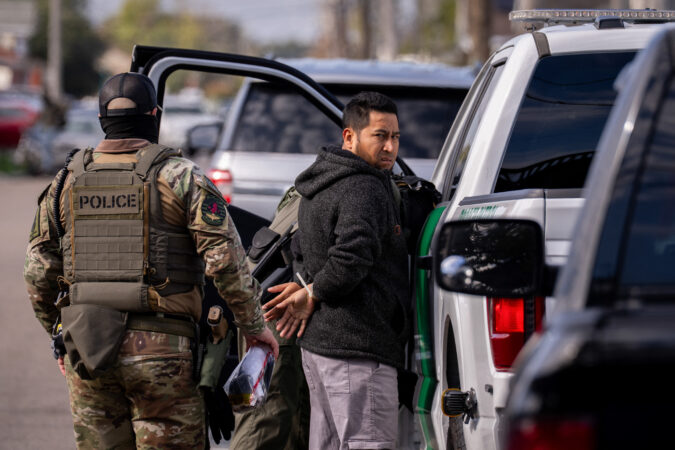
    Trump on Tuesday said he did not want Somalis in the U.S. because “they contribute nothing.” The president spoke soon after a person familiar with the planning said federal authorities are preparing a targeted immigration enforcement operation in Minnesota that would primarily focus on Somali immigrants living unlawfully in the U.S.

    Here are some things to know about Somalis in Minnesota:

    Largest Somali American population in the U.S.

    An estimated 260,000 people of Somali descent were living in the U.S. in 2024, according to the Census Bureau’s annual American Community Survey. The largest population is in the Minneapolis-St. Paul area, home to about 84,000 residents, most of whom are American citizens. Ohio, Washington and California also have significant populations.

    Almost 58% of the Somalis in Minnesota were born in the U.S. Of the foreign-born Somalis in Minnesota, an overwhelming majority — 87% — are naturalized U.S. citizens. Of the foreign-born population, almost half entered the U.S. in 2010 or later, according to the Census Bureau.

    They include many who fled the long civil war in their east African country and were drawn to the state’s welcoming social programs.

    Trump targets the community

    Trump has become increasingly focused in recent weeks on Somalis living in the U.S., saying they “have caused a lot of trouble.”

    Trump and other administration officials stepped up their criticism after a conservative news outlet, City Journal, claimed that taxpayer dollars from defrauded government programs have flowed to the militant group al-Shabab, an affiliate of al-Qaida that controls parts of rural Somalia and often has targeted the capital, Mogadishu.

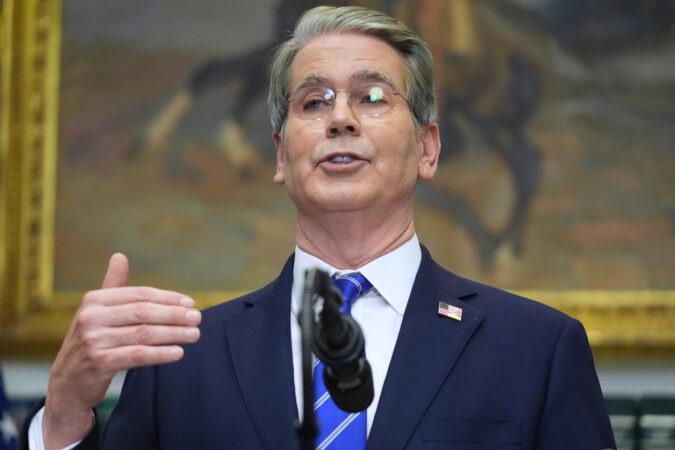
    While Treasury Secretary Scott Bessent said in a social media post Monday that his agency is investigating whether “hardworking Minnesotans’ tax dollars may have been diverted to the terrorist organization,” little evidence has emerged so far to prove a link. Federal prosecutors have not charged any of the dozens of defendants in recent public program fraud cases in Minnesota with providing material support to foreign terrorist organizations.

    Last month, Trump said he was terminating Temporary Protected Status for Somali migrants in Minnesota, a legal safeguard against deportation. A report produced for Congress in August put the number of Somalis covered by the program at just 705 nationwide.

    The announcement drew immediate pushback from some state leaders and immigration experts, who characterized Trump’s declaration as a legally dubious effort to sow fear and suspicion.

    Fraud allegations lead to pushback

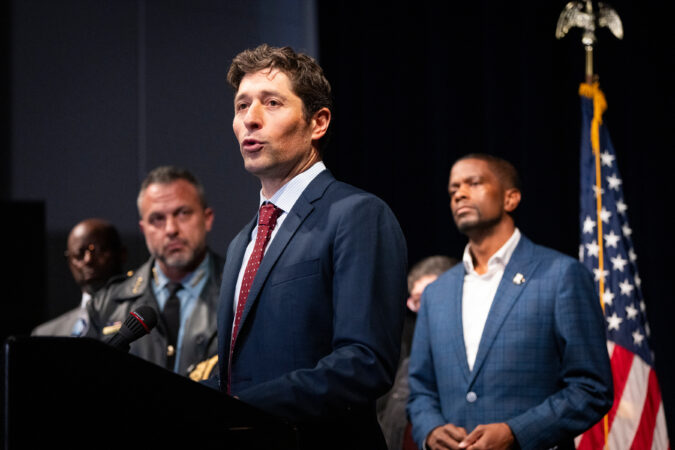
    Local Somali community leaders, as well as allies like Gov. Tim Walz and Minneapolis Mayor Jacob Frey, have also pushed back against those who might blame the broader Somali community for some recent cases of massive fraud in public programs.

    Those include what is known as the Feeding Our Future scandal, which federal prosecutors say was the country’s largest COVID-19-related fraud case. It involved a program meant to feed children during the pandemic. The defendants were accused of fraudulently claiming to be feeding millions of meals to children. While the alleged ringleader was white, many of the defendants were Somalis, and most of them were U.S. citizens.

    Prosecutors in recent months have raised their estimate of the thefts to $300 million from an original $250 million, and the number of defendants last month grew to 78. The cases are still working their way through the court system.

    Republican candidates for governor and other offices in 2026 are staking their hopes on voters blaming Walz for failing to prevent the losses to taxpayers. Trump has blasted Walz for allowing the fraud to unfold on his watch.

    Earlier terrorism cases still echo

    Authorities in Minnesota struggled for years to stem the recruiting of young Somali men by the Islamic State group and the Somalia-based militant group al-Shabab.

    The problem first surfaced in 2007, when more than 20 young men went to Somalia, where Ethiopian troops propping up a weak U.N.-backed government were seen by many as foreign invaders.

    While most of those cases were resolved years ago, another came to light earlier this year. A 23-year-old defendant pleaded guilty in September to attempting to provide material support and resources to a designated foreign terrorist organization.

    Mostly in the 2010s, the Islamic State group also found recruits in Minnesota’s Somali community, with authorities saying roughly a dozen left to join militants in Syria.

    Somalis have become a force in Minnesota politics

    The best-known Somali American is arguably Democratic U.S. Rep. Ilhan Omar, a fiery progressive whose district includes Minneapolis and is a frequent target of Trump.

    Several other Somali Americans have served in the Minnesota Legislature and the Minneapolis and St. Paul city councils. State Sen. Omar Fateh, a democratic socialist, finished second in the Minneapolis mayoral election in November to incumbent Mayor Frey.

  • Pentagon knew boat attack left survivors but still launched a follow-on strike, AP sources say

    Pentagon knew boat attack left survivors but still launched a follow-on strike, AP sources say

    WASHINGTON — The Pentagon knew there were survivors after a September attack on an alleged drug boat in the Caribbean Sea and the U.S. military still carried out a follow-up strike, according to two people familiar with the matter.

    The rationale for the second strike was that it was needed to sink the vessel, according to the people familiar with the matter who spoke on the condition of anonymity because they weren’t authorized to discuss it publicly. The Trump administration says all 11 people aboard were killed.

    What remains unclear was who ordered the strikes and whether Defense Secretary Pete Hegseth was involved, one of the people said. That will be part of a classified congressional briefing Thursday with the commander that the Trump administration says ordered the second strike, Adm. Frank “Mitch” Bradley.

    Hegseth has defended the second strike as emerging in the “fog of war,” saying he didn’t see any survivors but also “didn’t stick around” for the rest of the mission.

    Hegseth is under growing scrutiny over the military strikes on alleged drug traffickers in the Caribbean and eastern Pacific. Legal experts and some lawmakers say a strike that killed survivors would have violated the laws of armed conflict.

  • Americans gave $4B on Giving Tuesday 2025 as donations and volunteering gain big over last year

    Americans gave $4B on Giving Tuesday 2025 as donations and volunteering gain big over last year

    Americans gave $4 billion to nonprofits on Giving Tuesday in 2025, an increase from the $3.6 billion they gave in 2024, according to estimates from the nonprofit Giving Tuesday.

    More people also volunteered their time on the Tuesday after Thanksgiving this year, which fell on Dec. 2 and has become a major fundraising day for nonprofits. This year, 11.1 million people in the U.S. volunteered, up from, 9.2 million last year.

    Giving Tuesday started in 2012 as a hashtag and a project of the 92nd St Y in New York and has since become an independent nonprofit. The organization estimates how much was given and how many people volunteer using data from a wide variety of sources, including giving platforms, payment processors and software applications that nonprofits use.

    Woodrow Rosenbaum, the chief data officer for Giving Tuesday, said both the number of people giving and the overall donation amount may have increased this year as people seek a sense of belonging and connection.

    “Generosity is a really powerful way to get that,” Rosenbaum said in an interview with The Associated Press. ”But I think mostly it’s just that when people see need, they want to do something about it and Giving Tuesday is an opportunity to do that in a moment of celebration as opposed to crisis.”

    Overall donations increased 8.1% from last year when adjusted for inflation. Giving Tuesday has also seen the average donation increase in size over time and Rosenbaum said people may be seeking additional ways to give as well.

    “Volunteering is a way that you can add to your impact without it costing you money,” he said.

    Not everyone who volunteers their time does so through a nonprofit. They may volunteer with mutual aid groups or by helping out family members or neighbors, he said.

    Giving Tuesday does not include donations from corporations or foundations in their estimate, Rosenbaum said, as they are focused on the everyday generosity of individuals. That means they did not include the gift from billionaires Michael and Susan Dell of $6.25 billion to encourage families to claim new investment accounts created by the Trump administration.

    President Donald Trump hosted the Dells at the White House Tuesday, calling their commitment “one of the most generous acts in the history of our country.” The Dells will offer $250 to 25 million children 10 years old and younger to invest in accounts that the U.S. Department of Treasury will create next year. The ” Trump accounts ” were part of the administration’s tax and spending legislation passed in the summer.

    A significant portion of charitable giving to nonprofits happens at the end of the calendar year and Giving Tuesday is an informal kick off to what nonprofits think of as the giving season. A combination of economic and political uncertainty has meant it is hard to predict how generous donors will be this year. Rosenbaum said that the generosity demonstrated on GivingTuesday is an extremely encouraging bellwether for how the rest of the giving season will go.

    “What we really hope is that nonprofits and community groups see this as an opportunity that we are in a moment of abundance and that people are ready and willing to help,” Rosenbaum said.

  • A vocal Jeffrey Epstein accuser is urging judges to unseal his court records

    A vocal Jeffrey Epstein accuser is urging judges to unseal his court records

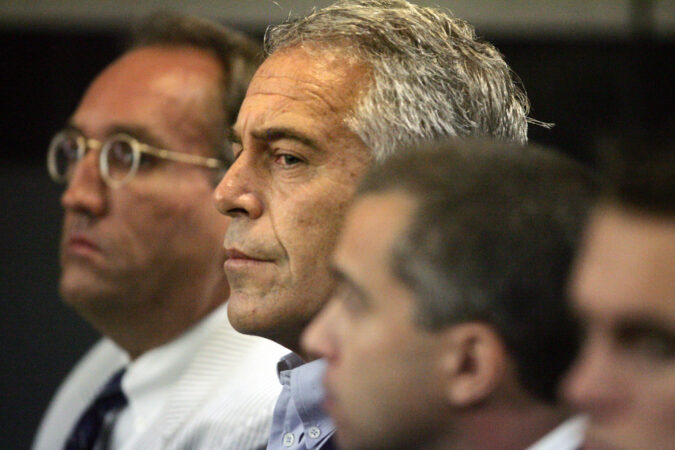
    NEW YORK — One of Jeffrey Epstein and Ghislaine Maxwell‘s most vocal accusers urged judges on Wednesday to grant the Justice Department’s request to unseal records from their federal sex trafficking cases, saying “only transparency is likely to lead to justice.”

    Annie Farmer weighed in through her lawyer, Sigrid S. McCawley, after the judges asked for input from victims before ruling on whether the records should be made public under a new law requiring the government to open its files on the late financier and his longtime confidante, who sexually abused young women and girls for decades.

    Farmer and other victims fought for the passage of the law, known as the Epstein Files Transparency Act. Signed last month by President Donald Trump, it compels the Justice Department, FBI and federal prosecutors to release by Dec. 19 the vast troves of material they’ve amassed during investigations into Epstein.

    The Justice Department last week asked Manhattan federal Judges Richard Berman and Paul Engelmayer to lift secrecy orders on grand jury transcripts and other material from Epstein’s 2019 sex-trafficking case and a wide range of records from Maxwell’s 2021 case, including search warrants, financial records, and notes from interviews with victims.

    “Nothing in these proceedings should stand in the way of their victory or provide a backdoor avenue to continue to cover up history’s most notorious sex-trafficking operation,” McCawley wrote in a letter to the judges.

    The attorney was critical of the government for failing to prosecute anyone else in Epstein and Maxwell’s orbit. She asked the judges to ensure that any orders they issue do not preclude the Justice Department from releasing other Epstein-related materials.

    Farmer “is wary of the possibility that any denial of the motions may be used by others as a pretext or excuse for continuing to withhold crucial information concerning Epstein’s crimes,” McCawley wrote.

    Epstein, a millionaire money manager known for socializing with celebrities, politicians, billionaires, and the academic elite, killed himself in jail a month after his 2019 arrest.

    Maxwell was convicted in 2021 by a federal jury of sex trafficking for helping recruit some of Epstein’s underage victims and participating in some of the abuse. She is serving a 20-year prison sentence.

    In a court filing Wednesday, Maxwell’s lawyer again said that she is preparing a habeas petition in a bid to overturn her conviction. The lawyer, David Markus, first mentioned the habeas petition in court papers in August as she fought the Justice Department’s initial bid to have her case records unsealed. The Supreme Court in October declined to hear Maxwell’s appeal.

    Markus said in Wednesday’s filing that while Maxwell now “does not take a position” in the wake of the transparency act’s passage, doing so “would create undue prejudice so severe that it would foreclose the possibility of a fair retrial” if her habeas petition succeeds.

    The records, Markus said, “contain untested and unproven allegations.”

    Engelmayer, who’s weighing whether to release records from Maxwell’s case, gave her and victims until Wednesday to respond to the Justice Department’s unsealing request. The government must respond to their filings by Dec. 10. The judge said he will rule “promptly thereafter.”

    Berman, who presided over the Epstein case, ordered victims and Epstein’s estate to respond by Wednesday and gave the government until Dec. 8 to reply to those submissions. Berman said he would make his “best efforts to resolve this motion promptly.”

    Lawyers for Epstein’s estate said in a letter to Berman on Wednesday that the estate takes no position on the Justice Department’s unsealing request. The lawyers noted that the government had committed to making appropriate redactions of personal identifying information for victims.

    Last week, a lawyer for some victims complained that the House Oversight Committee had failed to redact, or black out, some of their names from tens of thousands pages of Epstein-related documents it has released in recent months.

    Transparency “CANNOT come at the expense of the privacy, safety, and protection of sexual abuse and sex trafficking victims, especially these survivors who have already suffered repeatedly,” lawyer Brad Edwards wrote.

  • Joint city-Parking Authority proposal to reopen Filbert Street bus station advances in Council

    Joint city-Parking Authority proposal to reopen Filbert Street bus station advances in Council

    The Philadelphia Parking Authority would renovate and run the abandoned Greyhound bus terminal on Filbert Street under legislation approved Wednesday by a key City Council committee.

    It was a step toward ending a two-year civic struggle to find a site for long-distance buses and their passengers. The renovated station could be ready for a series of big national and international events expected to draw millions of visitors next year.

    “A lot of people are going to be coming here for the first time, and when they’re in that station, they’re going to get their first taste of Philadelphia — and we want to make sure it’s a good one,” said Councilmember Mike Driscoll, who sponsored the bill on behalf of the Parker administration.

    The city will host events in 2026 for the 250th anniversary of the Declaration of Independence, as well as FIFA World Cup soccer matches and the Major League Baseball All-Star Game, among others.

    Greyhound ran the terminal at 10th and Filbert Streets for more than three decades but ended its lease in June 2023 when the business model of its parent company, Flixbus, called for divesting from real estate and moving toward cheaper curbside service in many U.S. cities.

    Since November 2023, customers of Greyhound, Peter Pan, and other interstate bus carriers wait, board, and arrive at curbside along Spring Garden Street in Northern Liberties — with no shelter from the weather and few amenities. It also has proved a nuisance to nearby businesses.

    Before that, the buses operated at curbside on Market Street between Sixth and Seventh Streets.

    PPA has a 10-year lease agreement with the property’s owner, 1001-1025 West Filbert Street LLC, with an option to extend it.

    The city senses that over the long term the owner anticipates selling the property, said Michael Carroll, assistant managing director for the Philadelphia Office of Transportation and Infrastructure Systems.

    “That’s the sweet spot, long enough that there’s a meaningful basis to invest in improvements and solve the problems,” Carroll told the committee.

    “At the 10-year mark, decisions will have to be made about whether this is a site that forever works best in Philadelphia, or whether there’s a better site,” he said.

    The unanimous Finance Committee vote came after it amended the measure to adjust the fees bus companies would be charged to stop in Philadelphia.

    Each stop in the city would cost $40 until the bus terminal is open, when it would move to a $65 fee. A smaller number of buses subsidized by the Pennsylvania Department of Transportation under a program to provide rural service would pay $16 a stop.

    Committee members also asked for suspension of a procedural rule so that all 17 lawmakers could consider the bill Thursday and clear the way for final passage before the holidays.

    In the agreement with the city that is part of the bill, PPA would run the terminal; assess the fees on bus carriers for the use of the facility and any street loading zones, such as those in University City; and handle enforcement.

    The Filbert Street proposal includes specific requirements designed to address concerns particular to Chinatown.

    For instance, the streets department would change traffic patterns so buses are routed to the station via Market Street instead of driving through the heart of the neighborhood as they did in the past.

    John Mondlak, first deputy and chief of staff of the city planning department, said that the through traffic had long been a chief complaint of residents and business owners in Chinatown.

    This story has been updated to include the name of the firm that owns the former Greyhound station.

  • Doctor who sold ketamine to ‘Friends’ star Matthew Perry gets 2 1/2 years in prison

    Doctor who sold ketamine to ‘Friends’ star Matthew Perry gets 2 1/2 years in prison

    LOS ANGELES — A doctor who pleaded guilty to selling ketamine to Matthew Perry in the weeks before the Friends star’s overdose death was sentenced to 2 1/2 years in prison on Wednesday.

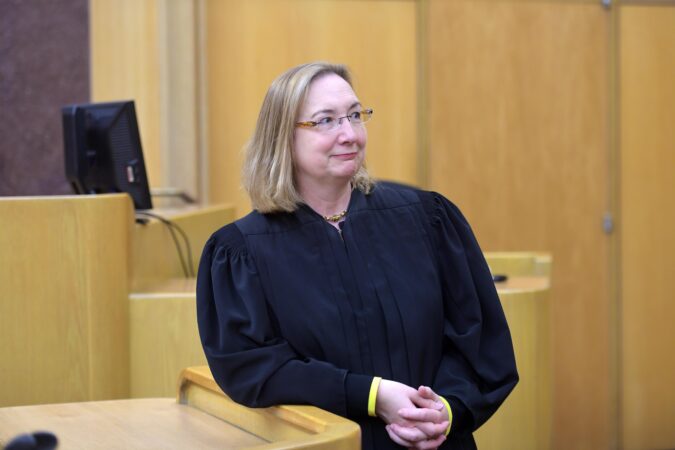
    Judge Sherilyn Peace Garnett handed down the sentence plus two years of probation to 44-year-old Dr. Salvador Plasencia in a federal courtroom in Los Angeles.

    The judge emphasized that Plasencia didn’t provide the ketamine that killed Perry, but told him, “You and others helped Mr. Perry on the road to such an ending by continuing to feed his ketamine addiction.”

    “You exploited Mr. Perry’s addiction for your own profit,” she said.

    Plasencia was led from the courtroom in handcuffs as his mother cried loudly in the audience. He might have arranged a date to surrender, but his lawyers said he was prepared to do it today.

    Perry’s mother and two half sisters gave tearful victim impact statements before the sentencing.

    “The world mourns my brother,” Madeleine Morrison said. “He was everyone’s favorite friend.”

    “My brother’s death turned my world upside down,” Morrison said, crying. “It punched a crater in my life. His absence is everywhere.”

    Plasencia was the first to be sentenced of the five defendants who have pleaded guilty in connection with Perry’s death at age 54 in 2023.

    The doctor admitted to taking advantage of Perry, knowing he was a struggling addict. Plasencia texted another doctor that Perry was a “moron” who could be exploited for money, according to court filings.

    Prosecutors had asked for three years in prison, while the defense sought just a day in prison plus probation.

    Perry’s mother talked about the things he overcame in life and the strength he showed.

    “I used to think he couldn’t die,” Suzanne Perry said as her husband, Dateline journalist Keith Morrison, stood at the podium with her.

    “You called him a ‘moron,’” she said. “There is nothing moronic about that man. He was even a successful drug addict.”

    She spoke eloquently and apologized for rambling before getting tearful at the end, saying, “this was a bad thing you did!” as she cried.

    Plasencia also spoke before the sentencing, breaking into tears as he imagined the day he would have to tell his now 2-year-old son “about the time I didn’t protect another mother’s son. It hurts me so much. I can’t believe I’m here.”

    He apologized directly to Perry’s family. “I should have protected him,” he said.

    Perry had been taking the surgical anesthetic ketamine legally as a treatment for depression. But when his regular doctor wouldn’t provide it in the amounts he wanted, he turned to Plasencia, who admitted to illegally selling to Perry and knowing he was a struggling addict.

    Plasencia’s lawyers tried to give a sympathetic portrait of him as a man who rose out of poverty to become a doctor beloved by his patients, some of whom provided testimonials about him for the court.

    The attorneys called his selling to Perry “reckless” and “the biggest mistake of his life.”

    Plasencia pleaded guilty in July to four counts of distribution of ketamine. Prosecutors agreed to drop five different counts. The agreement came with no sentencing guarantees, and legally Garnett can give him up to 40 years.

    The other four defendants who reached deals to plead guilty will be sentenced at their own hearings in the coming months.

    Perry died at age 54 in 2023 after struggling with addiction for years, dating back to his time on Friends, when he became one of the biggest stars of his generation as Chandler Bing. He starred alongside Jennifer Aniston, Courteney Cox, Lisa Kudrow, Matt LeBlanc and David Schwimmer for 10 seasons from 1994 to 2004 on NBC’s megahit.

  • Bessent says Federal Reserve Board could ‘veto’ future regional presidents

    Bessent says Federal Reserve Board could ‘veto’ future regional presidents

    WASHINGTON — Treasury Secretary Scott Bessent said Wednesday he would push a new requirement that the Federal Reserve’s regional bank presidents live in their districts for at least three years before taking office, a move that could give the White House more power over the independent agency.

    In comments at the New York Times’ DealBook Summit, Bessent criticized several presidents of the Fed’s regional banks, saying that they were not from the districts that they now represent, “a disconnect from the original framing” of the Fed.

    Bessent said that three of the 12 regional presidents have ties to New York: Two previously worked at the New York Federal Reserve, while a third worked at a New York investment bank.

    “So, do they represent their district?” he asked. “I am going to start advocating, going forward, not retroactively, that regional Fed presidents must have lived in their district for at least three years.”

    Bessent added that he wasn’t sure if Congress would need to weigh in on such a change. Under current law, the Fed’s Washington, D.C.-based board can block the appointment of regional Fed presidents.

    “I believe that you would just say, unless someone’s lived in the district for three years, we’re going to veto them,” Bessent said.

    Bessent has stepped up his criticism of the Fed’s 12 regional bank presidents in recent weeks after several of them made clear in a series of speeches that they opposed cutting the Fed’s key rate at its next meeting in December. President Donald Trump has sharply criticized the Fed for not lowering its short-term interest rate more quickly. When the Fed reduces its rate it can over time lower borrowing costs for mortgages, auto loans, and credit cards.

    The prospect of the administration “vetoing” regional bank presidents would represent another effort by the White House to exert more control over the Fed, an institution that has traditionally been independent from day-to-day politics.

    The Federal Reserve seeks to keep prices in check and support hiring by setting a short-term interest rate that influences borrowing costs across the economy. It has a complicated structure that includes a seven-member board of governors based in Washington as well as 12 regional banks that cover specific districts across the United States.

    The seven governors and the president of the New York Fed vote on every interest-rate decision, while four of the remaining 11 presidents vote on a rotating basis. But all the presidents participate in meetings of the Fed’s interest-rate setting committee.

    The regional Fed presidents are appointed by boards made up of local and business community leaders.

    Three of the seven members of the Fed’s board were appointed by Trump, and the president is seeking to fire Governor Lisa Cook, which would give him a fourth seat and a majority. Yet Cook has sued to keep her job, and the Supreme Court has ruled she can stay in her seat as the court battle plays out.

    Trump is also weighing a pick to replace Chair Jerome Powell when he finishes his term in May. Trump said over the weekend that “I know who I am going to pick,” but at a Cabinet meeting Tuesday said he wouldn’t announce his choice until early next year. Kevin Hassett, a top economic adviser to Trump, is widely considered Trump’s most likely choice.

    The three regional presidents cited by Bessent are all relatively recent appointees. Lorie Logan was named president of the Dallas Fed in August 2022, after holding a senior position at the New York Fed as the manager of the Fed’s multitrillion dollar portfolio of mostly government securities. Alberto Musalem became president of the St. Louis Fed in April 2024, and from 2014-2017 was an executive vice president at the New York Fed.

    Beth Hammack was appointed president of the Cleveland Fed in August 2024, after an extended career at Goldman Sachs.

    Musalem is the only one of the three that currently votes on policy and he supported the Fed’s rate cuts in September and October. But last month he suggested that with inflation elevated, the Fed likely wouldn’t be able to cut much more.

    Logan has said she would have voted against October’s rate cut if she had a vote, while Hammack has said that the Fed’s key rate should remain high to combat inflation. Both Hammack and Logan will vote on rate decisions next year.

    Bessent argued last month in an interview on CNBC that the reason for the regional Fed banks was to bring the perspective of their districts to the Fed’s interest rate decisions and “break the New York hold” on the setting of interest rates.

    __

    Associated Press Writer Fatima Hussein contributed to this report.

  • Federal judge limits warrantless immigration arrests in D.C.

    Federal judge limits warrantless immigration arrests in D.C.

    The Trump administration’s escalating use of warrantless immigration arrests in D.C. this year probably violated federal law, a judge ruled Tuesday in a decision that prohibits such arrests for all migrants in the city except those at risk of escaping.

    U.S. District Judge Beryl A. Howell granted a preliminary injunction sought by the immigrant-rights group CASA Inc. and four migrants who were arrested without administrative warrants in August amid President Donald Trump’s law enforcement surge in the capital. All four had pending immigration applications at the time of their arrests and were eventually released after spending time in detention facilities.

    “They were arrested while going about unavoidable, lawful activities of daily life,” Howell said.

    The judge, in an 88-page opinion, took Trump administration officials to task for depriving migrants of their rights and basic necessities as they languished in cramped detention facilities before being released. She criticized immigration authorities’ “systemic failure” to follow the law and said top administration officials, including Chief Border Patrol Agent Gregory Bovino, had repeatedly misstated the legal requirements for warrantless arrests in public comments.

    Bovino and a spokesperson for the Department of Homeland Security had asserted that officers needed “reasonable suspicion” to conduct such arrests, but Howell said the legal standard was more stringent: probable cause. Homeland Security officials did not immediately respond to a request for comment Wednesday.

    Trump ordered a renewed crackdown on illegal immigration this year, and top administration officials set targets as high as 3,000 daily arrests of migrants. Attorneys for CASA and the four plaintiffs in the case argued that authorities began to work under an “arrest first, ask questions later” policy to comply with the high daily quotas — and began ignoring a section of the Immigration and Nationality Act that authorizes warrantless arrests only when a migrant “is likely to escape before a warrant can be obtained.”

    One of the plaintiffs, Jose Escobar Molina, a scaffolder from El Salvador, described in a court filing how he was picked up at 6 a.m. as he headed to work one morning by a group of plainclothes officers who shoved him into a black SUV, making him think he was being kidnapped. Another plaintiff, from Venezuela, said he showed his arresting officers his driver’s license, work permit and asylum application paperwork, which they disregarded.

    Warrantless arrests have skyrocketed since Trump’s surge began in August, Howell found. By one count, she said, officials conducted 943 immigration arrests over a month-long period that ended Sept. 9, which represented 40 percent of all D.C. arrests. The judge noted that being present in the country without legal authorization is not a criminal offense, but a civil violation. Entering the United States without legal authorization is a misdemeanor under federal law, and a felony for repeat offenders.

    “Viewing all immigrants potentially subject to removal as criminals is, as a legal matter, plain wrong,” Howell said, before quoting a Supreme Court ruling from 2012: “Perceived mistreatment of aliens in the United States may lead to harmful reciprocal treatment of American citizens abroad.”

    At a court hearing last month, an assistant U.S. attorney argued that an injunction would slow the Trump administration’s deportation efforts by allowing the court to micromanage arrests. As part of her ruling Tuesday, Howell ordered that immigration authorities document every warrantless immigration arrest in D.C. with “specific, particularized facts” establishing probable cause “that the person is likely to escape before a warrant can be obtained.”

    The Justice Department in a legal filing denied that immigration authorities had instituted a new policy of warrantless arrests and argued that the court did not have jurisdiction to rule on the case.

    “Plaintiffs identify no written policy authorizing the arrests that they complain of because there is none,” Assistant U.S. Attorney John Bardo said. Howell said approximately 40 migrants had submitted court declarations attesting to the warrantless arrests and said Bovino’s comments defending those arrests with inaccurate information proved that the policy existed.

    “This is a victory for the rule of law and for the people across the city, who have avoided going to work, to church, to school, to grocery stores — out of fear of being unlawfully arrested, detained, and deported,” said Joanne Lin, an official with the Washington Lawyer’s Committee, one of the groups representing the plaintiffs.

    The ruling describes some circumstances in which immigration agents can establish a migrant’s likelihood of escaping before a warrant may be obtained, but Howell said those factors could vary.

    “Some courts have found the likelihood of escape to be higher when, for example, the noncitizen presented ‘conflicting documents,’ ‘had been “picked up before,” ’ admitted that he had previously been removed, or appeared ‘extremely nervous’ as if ‘looking for an opportunity to run,’” the judge wrote. “Courts have also made the self-evident finding that the likelihood of escape is lower when the individual has resided in the country for a lengthy period of time and has strong community ties.”

    Aditi Shah, an attorney involved in the case from the American Civil Liberties Union of D.C., welcomed those conditions.

    “This requires the government to take some extra steps that it’s required to under the law before it can just grab people off the streets and lock them away in detention centers,” she said.

    Ama Frimpong, CASA’s legal director, said the ruling was a powerful memorial to one of the migrants who described his warrantless arrest and detention in a legal filing, using a pseudonym, Elias Doe. He died last week, Frimpong said. His health had worsened after he missed a dialysis treatment while detained, she said.

    “This is now part of his legacy,” Frimpong said. “It is important for impacted community members to lead this fight and show that they are not afraid.”

  • House Judiciary issues subpoena to force Jack Smith to testify in private

    House Judiciary issues subpoena to force Jack Smith to testify in private

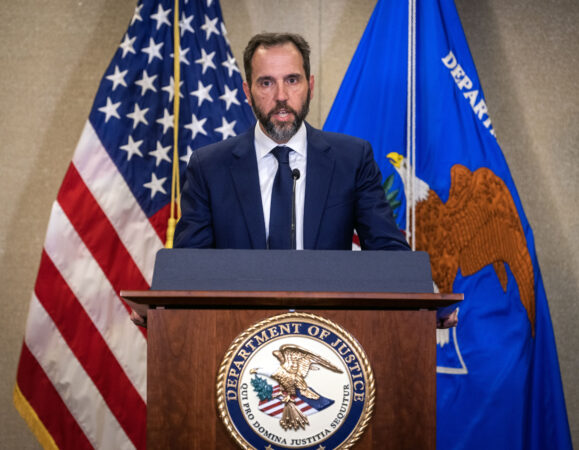
    House Republicans have upped their demands for Jack Smith to testify behind closed doors, issuing a subpoena on Wednesday to the former special counsel that calls on him to meet with members of the House Judiciary Committee and answer questions about his two federal prosecutions of President Donald Trump.

    Rep. Jim Jordan (R., Ohio), who chairs the House Judiciary Committee, said in his letter to Smith — which he posted on social media — that Smith would be deposed on Dec. 17. Smith must hand over materials related to the investigations by Dec. 12, he said.

    The demand is the latest in a string from Republican lawmakers aimed at getting Smith to testify privately and hand over materials related to the probes. In October, Jordan wrote Smith requesting that he sit for a private interview with lawmakers about the investigations, though did not issue a subpoena.

    “Due to your service as special counsel, the Committee believes that you possess information that is vital to its oversight of this matter,” the letter from Jordan reads.

    Smith repeatedly has said he would sit for an interview with lawmakers in a public setting, but does not want to do it behind closed doors. His supporters have expressed concern that a private interview would be subject to selective leaks by committee members.

    Public testimony, however, could put Republicans and the Trump administration in a tricky position. Smith has said he collected ample evidence showing that Trump committed the alleged crimes for which he was indicted. By calling Smith to testify, Republicans risk giving him a platform to air the evidence he collected against the president and failing to elicit testimony that would portray him as a corrupt prosecutor out to get Republicans.

    The former special counsel has also said that, under long-standing protocol, he needs Justice Department guidance to tell him what he is allowed to testify about and what materials he is allowed to hand over. Smith, who is now a private citizen, says he does not have access to the investigatory materials, which are now in the Justice Department’s possession.

    The Justice Department did not immediately respond to a request asking if it had provided Smith with that guidance.

    “Nearly six weeks ago Jack offered to voluntarily appear before the House Judiciary committee in an open hearing to answer any questions lawmakers have about his investigation,” Smith’s attorney, Peter Koski, said in a statement.

    “We are disappointed that offer was rejected, and that the American people will be denied the opportunity to hear directly from Jack on these topics. Jack looks forward to meeting with the committee later this month to discuss his work and clarify the various misconceptions about his investigation.”

    If Smith failed to comply with the subpoena, he could risk prosecution. If a person defies a congressional subpoena, lawmakers could refer that person to the Justice Department for prosecution.

    The back-and-forth over the terms of Smith’s testimony highlights the Trump administration’s contentious relationship with Smith and the large team of agents and prosecutors involved in investigating the president. The administration has fired multiple prosecutors and agents who worked on the cases and has portrayed Smith and his team as corrupt and politicized. The committee has also called some of Smith’s deputies on the special counsel team for testimony.

    Smith oversaw two federal investigations into Trump during the Biden administration. One examined Trump’s alleged mishandling of classified materials after he left office, and the other probed his alleged attempts to overturn the 2020 election results.

    Neither case made it to trial, and both were dismissed before Trump took office in January. Smith has said that he did nothing wrong and that he followed all investigatory protocols when overseeing the cases.

  • More than 65,000 immigrants are being held in federal detention, a big increase from when Trump took office

    More than 65,000 immigrants are being held in federal detention, a big increase from when Trump took office

    The number of immigrants confined in federal detention facilities has surged past 65,000, perhaps the highest figure ever and a two-thirds increase since President Donald Trump took office in January.

    The 65,135 in custody across the nation represents a shattering of the 60,000 threshold, which was last passed briefly in August before dropping back down. The new figure is up from 39,238 when Trump was inaugurated, as his administration quickly undertook an unprecedented campaign to arrest, detain, and deport immigrants.

    “It’s quite stunning,” said Jonah Eaton, a Philadelphia immigration attorney who teaches about detention at Temple University’s Beasley School of Law. “They are dead serious about moving as many people out of the country as possible, and keeping them detained while they do it.”

    The data, current as of Nov. 16, come from the Transactional Records Access Clearinghouse, an information-and-research organization that obtains information from ICE and other federal agencies.

    An ICE spokesperson said the agency could not comment on statistics compiled by third parties.

    window.addEventListener(“message”,function(a){if(void 0!==a.data[“datawrapper-height”]){var e=document.querySelectorAll(“iframe”);for(var t in a.data[“datawrapper-height”])for(var r,i=0;r=e[i];i++)if(r.contentWindow===a.source){var d=a.data[“datawrapper-height”][t]+”px”;r.style.height=d}}});

    The Trump administration says it is arresting the “worst of the worst,” criminal immigrants who have committed serious and sometimes violent offenses. But the new data show ― as they consistently have ― that 74% of those in detention have no criminal convictions.

    “The question is ‘What’s going to be the ceiling for this?’ as the administration has designs to expand the capacity to detain individuals as arrests increase,” said Cris Ramon, an independent immigration consultant in Washington. “If the goal is to remove as many people as possible, they’re going to be leaning on the detention centers to be, first and foremost, a staging ground.”

    Ramon said he was not surprised by the high detention numbers, given the Trump administration’s determination to carry out large-scale operations in cities like Charlotte, N.C., and Chicago.

    The Moshannon Valley Processing Center outside Philipsburg, a U.S. Immigration and Customs Enforcement facility in Clearfield County, Pennsylvania that is privately operated by the GEO Group under contract with ICE. It is the largest ICE detention center in the Northeast United States.

    The new figures show that more of those in custody are being arrested by ICE, rather than by U.S. Customs and Border Protection, the agency that conducts inspections at airports and other ports of entry and includes the Border Patrol.

    Today 81% of people in detention were arrested by ICE, up from 38% when Trump took office. The president has demanded that Immigration and Customs Enforcement make more arrests more quickly, and won new funding to encourage that.

    The agency generally operates in the interior United States.

    Many of those arrested in Pennsylvania are sent to the largest detention center in the Northeast, the Moshannon Valley Processing Center near Philipsburg, Pa. Moshannon, as it is known, is a private, 1,876-bed immigration prison operated by the Florida-based GEO Group Inc.

    ICE also holds detainees at the Clinton County Correctional Facility and the Pike County Correctional Facility. And this year the agency began confining people at the Philadelphia Federal Detention Center in Center City.

    New Jersey has two detention facilities, in Newark and Elizabeth, and might be getting a third, in South Jersey. The administration plans to hold detainees at Joint Base McGuire-Dix-Lakehurst, one of two military sites that have been designated for that purpose. The other is Camp Atterbury in Indiana.

    Many of those in custody are subject to “mandatory detention,” meaning they are not allowed to seek release on bond. In the summer, the administration announced a policy change that prevented immigration judges from granting bond to anyone in detention who had entered the United States without documentation.

    The result, according to the National Immigration Law Center, is that the Trump administration has ensured that migrants have almost no way out of detention “other than death or deportation.”

    ICE is arresting, detaining, and refusing to release far more people than before, the law center said, including many who rarely would have been held in the past.

    In Philadelphia and elsewhere, some immigrants have showed up for routine in-person appointments or check-ins, only to be handcuffed and taken into detention. Green-card applicants, asylum-seekers, and others who have ongoing legal or visa cases have been unexpectedly detained.

    Immigration detention is civil in nature, to hold people as they progress through their court cases or await deportation. It is not supposed to be a punishment.

    When Joe Biden assumed the presidency in 2021, there were 14,195 people in immigration detention. That figure more than doubled during his term and eventually topped 39,000.

    “Trump’s cruel mass detention and deportation agenda has reached a previously unimaginable scope and scale,” Carly Pérez Fernández, communications director at Detention Watch Network in Washington, said in a statement.

    She called the new detention figure “a grim reminder” of a larger plan that is “targeting people based on where they work and what they look like, destabilizing communities, separating families, and putting people’s lives at risk.”

    ICE holds detainees across the country, in ICE facilities, in federal prisons, in privately owned lockups, and in state and local jails. As detentions have surged, so has the need for places to house people.

    As of this summer, ICE detained people in all 50 states as well as in Guantánamo Bay, Cuba, Puerto Rico, Guam, the Northern Mariana Islands, and the U.S. Virgin Islands, according to the Vera Institute of Justice in New York.

    Texas had the most facilities with 69, and Florida was second with 40, the institute said.