Category: Nation & World

  • 40 people drown in France amid scorching temperatures

    40 people drown in France amid scorching temperatures

    At least 40 people have drowned in France over the last five days as the country endured a scorching heat wave, Sébastien Lecornu, the country’s prime minister, said at an emergency cabinet meeting Tuesday.

    Most of the drowning victims were young, many of them teenagers, and swimming in unsupervised areas. Lecornu called the drownings a “tragic scourge.”

    Marina Ferrari, a minister whose responsibilities include young people, said in an interview on French radio Tuesday that the drownings were mostly in bodies of water such as lakes or canals.

    “During heat waves like this,” she said, “it’s no small matter to go swimming in areas that aren’t supervised.”

    France is in the middle of an intense heat wave over much of Europe that began in the middle of last week. Forecasters have said that Paris could hit 104 degrees Fahrenheit this week, not far from its record. Parts of central France could see highs of around 109 degrees F.

    More than half of the country is under a red alert for heat wave conditions, the most severe. France’s weather agency, Météo-France, said it expected “exceptionally high temperatures, both day and night.” The temperatures have the potential to have a “strong health impact.”

    “All the records, locally or nationally, are being broken every day or night when it comes to temperatures,” Lecornu said.

    From Monday to Tuesday, France recorded its hottest night since measurements began in 1947, Météo-France said. An average of readings from 30 stations across France reached almost 71 degrees F, according to preliminary figures.

    The current heat wave in Europe is the result of a heat dome, a strong area of high pressure that allows heat to build over a region.

    According to Météo-France these stubborn, high-pressure systems can block or divert passing weather fronts, leading to conditions with few clouds and little rainfall.

    For France, this is the second heat wave in about a month, after record-breaking temperatures in May.

    The high temperatures have also caused other fatalities over the last few days. BFMTV, a French news station, reported the deaths of two children, ages 2 and 4, who were left inside a car on Monday.

    In Paris on Tuesday, dozens of people sought relief from the heat, swimming in the canal Saint-Martin to avoid their hot apartments.

    Martina Russo, 28, said she was not very worried about the risk of drowning. She said she was more worried about the quality of water. “It would be nice to have someone say, ‘We’ve tested it, and there are no health risks,’” she said.

    This article originally appeared in the New York Times.

  • Iran makes moves to assert control over the Strait of Hormuz

    Iran makes moves to assert control over the Strait of Hormuz

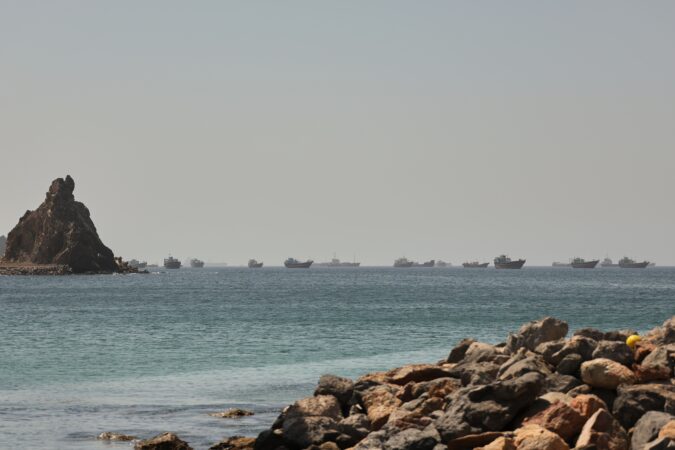
    Iran is taking steps to cement its control over the Strait of Hormuz and to generate revenue from the waterway through new entities and procedures, experts say. The moves come even as negotiations with the United States and Iran’s neighbors over managing the vital waterway are taking place.

    The head of Iran’s primary insurance regulator, Mousa Rezaei, said Sunday that a new insurance company had been established that was dedicated solely to the Strait of Hormuz, Iranian state media reported. And late last week, the Persian Gulf Strait Authority, which was created by Iran in May, demanded that vessels register and sign up for a new mandatory Iranian insurance policy — free of charge for now.

    Shipping experts see these steps as an attempt to assert Iranian control over the whole waterway, which it shares with Oman. They appear to be a prelude to Iran’s demanding payments from vessels that once transited without fees or need of its assent, the experts say.

    The Iranian requirements could set a dangerous precedent for global shipping, experts say, and they are already making a confusing situation in the strait much more so.

    “We are in uncharted territory,” said Richard Meade, editor-in-chief of Lloyd’s List, a shipping news service, in an interview Monday.

    The Persian Gulf Strait Authority did not respond to a request for comment.

    The insurance demands emerged after the United States and Iran signed a memorandum of understanding to end the war and to reopen the Strait of Hormuz last week. That agreement left discussion of difficult issues — including management of the strait — to further talks. And Oman, Iran, and other Gulf nations “will figure out a proper security framework for the straits in the future,” Vice President JD Vance said last week.

    But the Iranian demands try to legitimize the authority of the new entity as those broader negotiations are underway, said Salvatore Mercogliano, a maritime historian and former merchant marine who hosts the YouTube show What’s Going On With Shipping?

    The free insurance period passes after 60 days, which is the length of the initial ceasefire agreement between Iran and Washington and the period that the initial deal guarantees free passage. After that, Iran could then demand vessels pay for insurance through its new dedicated strait insurance company, Mercogliano said, collecting payment for risks that did not exist until Iran began attacking ships.

    The new insurance Iran is offering protects against things like risk of attack and the detention of mariners, issues that experts say Iran created after the United States and Israel attacked the country in February and it retaliated by striking commercial vessels.

    Iran weaponized the waterway by making it too dangerous for businesses, experts say.

    Mercogliano said in an interview that the new administrative procedures took this Iranian weaponization a step further. He compared the insurance requirement to the mafia’s demanding protection money or someone trying to sell flood insurance “while they control the gates above the dam.”

    The new Iranian insurance also raises legal questions. Under international law, a toll for mere passage through the strait would be illegal, though charging fees for services — tugging or waste disposal, for example — could be legal.

    Since March, Iran has floated the notion that it will charge ships in the strait, characterizing the payments as services without specifying what it would offer and raising international alarm. Last month, it was in talks with Oman about the proposition.

    But simply calling something a “service” is not enough to transform an illegal toll into a legitimate request for payment for services, maritime lawyers say.

    The Persian Gulf Strait Authority’s insurance demand “effectively sidesteps” the agreement between the United States and Iran and paves the way for Iran to demand fees in the future, Meade said.

    “This is effectively a toll by another name,” he said.

    A spokesperson for the International Maritime Organization told the New York Times that the insurance requirement published by the authority “has not been officially submitted to IMO and is not part of any official process or record.”

    The spokesperson said the right of ships to transit through the passage “cannot be suspended or hampered by coastal states” and that there was “no established basis in international law” that allowed mandatory tolls or fees. She did not, however, rule out “cooperation mechanisms to assist in managing a strait” between states.

    The new insurance requirement also raises practical questions for shippers and vessels. By having to pay to mitigate risks from Iran, businesses could find themselves in trouble with the United States.

    The Treasury Department imposed sanctions on the Persian Gulf Strait Authority in late May. The United States called the entity a new attempt by Iran “to monetize its campaign of state-sponsored terror by extorting vessels,” and Treasury officials warned against paying the authority, saying that those who did do so could be subject to sanctions.

    Iran is also under a number of different sanctions from the United States, Britain, the European Union, and the United Nations. While lifting the sanctions has been discussed as part of a broader deal related to Iran’s fulfilling commitments to end its nuclear program, at this stage, registering for Iranian war-risk insurance is itself a potential risk.

    In light of the confusion about navigating the strait, shippers are in “purgatory,” stuck between a past that cannot be revived and a future that remains unclear, Meade said.

    This article originally appeared in the New York Times.

  • 8 convicted in Texas immigration center shooting and protest are sentenced to decades in prison

    8 convicted in Texas immigration center shooting and protest are sentenced to decades in prison

    FORT WORTH, Texas — Eight protesters accused by the Justice Department of having ties to antifa were sentenced Tuesday to decades in federal prison over a shooting outside a Texas immigration detention center that wounded a police officer and that prosecutors called an act of terrorism.

    One of the defendants, a former U.S. Marine Corps reservist convicted of opening fire during the July 4 demonstration outside the Prairieland Detention Center near Dallas, was sentenced to 100 years in prison, the maximum punishment.

    The lengthy sentences were condemned by family members and supporters in a news conference outside the federal courthouse in Fort Worth. Hope Song, whose son Benjamin Song received the heftiest sentence, disputed prosecutors’ claims that her son shot the officer and said he didn’t intend to hurt anyone.

    U.S. District Judge Reed O’Connor, one of two judges overseeing the proceedings, said what happened wasn’t a protest but “an assault on democracy.”

    “The need to deter this type of conduct is high,” O’Connor said.

    The seven other protesters received prison terms ranging from 30 to 70 years.

    Prosecutors said the eight are members of antifa, a decentralized anti-fascist organization and a target of the Trump administration. Antifa is not a single organization but rather an umbrella term for far-left militant groups that confront or resist neo-Nazis and white supremacists at demonstrations.

    President Donald Trump last fall signed an executive order designating antifa a domestic terrorist organization, even though there is no domestic equivalent to the State Department’s list of foreign terror organizations.

    The defendants deny any affiliation with antifa and maintain they attended the demonstration in support of detained immigrants.

    Prosecutor Frank Gatto urged the judge to impose stiff penalties.

    “People with that kind of extremist beliefs need extra time in prison,” Gatto said. “They believe violence is justified.”

    Phillip Hayes, Song’s attorney, said outside the courthouse that he takes issue with the idea that the protesters are extremists.

    “This is a bunch of kids and young adults who really have a really big heart and really wanted their voice to be heard,” Hayes said. “It was never intended that anybody get hurt. It was never intended that any shots would be fired.”

    Prosecutors said in court that Song had yelled “get to the rifles” and opened fire, striking a police officer who had just pulled up to the center.

    Hayes argued that Song’s shots were “suppressive fire” and that a ricochet bullet hit the officer after he arrived on the scene and “aggressively” pulled out his firearm. He said his client will appeal the 100-year sentence.

    “Song, aside from this day, has had an impeccable life. A former Marine. A good student,” Hayes said. “He had a lot of good qualities that were just ignored. The judge went ahead and gave as much as he could.”

    Other defendants and their family members pleaded for leniency in court.

    Autumn Hill said the gathering “seemed more like a party to me than anything else” and that she and others who participated ”didn’t expect or want any violence or destruction of property to occur.”

    Amber Lowrey told the judge that her sister, Savanna Batten, is a compassionate person with dreams of opening a bakery. She said Batten’s activism started with animal rights and evolved into anti-war and human rights advocacy.

    “She’s the best person I know,” Lowrey said.

    Hill and Batten both received 50-year sentences.

    Other defendants previously pleaded guilty to providing material support to terrorists rather than take their case to trial.

    Critics warn the case could have wide-reaching impact on protests given that organizations operating within the U.S. are supposed to be protected by First Amendment free-speech rights.

    Last week, federal prosecutors charged 15 people with impeding the Trump administration’s immigration crackdown in Minnesota. They claimed the demonstrators were members of antifa who conspired against the federal government to block arrests and deportations by setting up blockades around government buildings and throwing chunks of ice at federal vehicles, among other actions.

  • New photos show first look at Kennedy Center facade without Trump’s name

    New photos show first look at Kennedy Center facade without Trump’s name

    New photos show that President Donald Trump’s name is indeed off the Kennedy Center, offering the first public look at the performing arts venue’s facade since crews removed the letters by court order.

    The images were taken last week inside the tarp-covered scaffolding that has hidden the title of the John F. Kennedy Center for the Performing Arts for the nine days since crews removed Trump’s name. The images were first provided to the Washington Post by the activist group Hands Off the Arts before being independently obtained and verified by the Post.

    “This is the picture the Trump administration does not want anyone to see, so it’s all the more important … that people have an opportunity to witness when they’re winning,” said Mallory Miller, co-founder of Hands Off the Arts.

    On June 12, a 14-member crew erected scaffolding to comply with a court-ordered deadline to remove Trump’s name. The workers missed the deadline, taking down the letters around 3 a.m. Saturday. The Kennedy Center’s lawyers confirmed in a court filing later that morning the work was done.

    But the center left the scaffolding and tarps in place. For nine days, barricades manned by security guards have kept people from approaching and blocked any view of the exterior.

    The new photos show two rows of blank square panels, with black lettering just visible below. In older photos, Trump’s name occupied the bottom of the two blank rows.

    In a statement last week, Kennedy Center spokesperson Roma Daravi said the tarps and scaffolding “will remain up as crews address maintenance needs of the marble and soffit panels.”

    On Friday, lawyers for Rep. Joyce Beatty (D., Ohio), an ex officio board member whose lawsuit led to the removal, accused Trump and his allies on the board of “willfully sabotaging Kennedy Center’s iconic façade to assuage Defendants’ vanity or massage broken egos.”

    The trustees “appear to be actively undermining the restoration of the Kennedy Center’s name, in a petty act of defiance,” they wrote.

    On Monday night, House Democrats on the Transportation and Infrastructure Committee, which oversees the Kennedy Center and other federal buildings, said the center should take down “the shame scaffolding.”

    “Now that the Courts have compelled President Trump to take his name off another man’s Memorial,” they said in an X post, “it’s time for a return to normalcy.”

  • Supreme Court says Rastafarian can’t sue prison officials over shorn dreadlocks

    Supreme Court says Rastafarian can’t sue prison officials over shorn dreadlocks

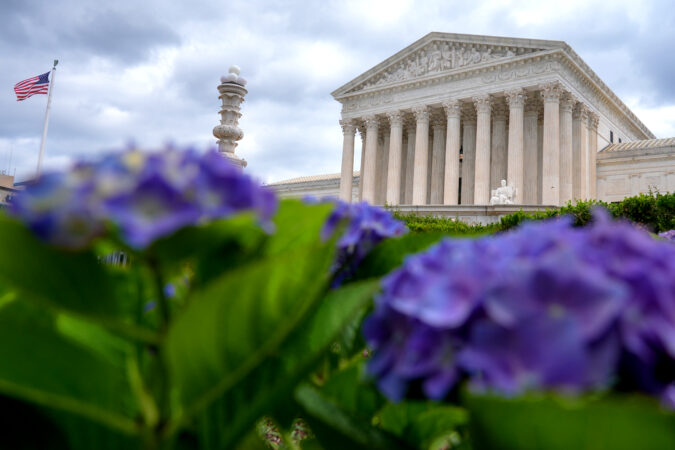
    The Supreme Court on Tuesday ruled a Rastafarian can’t pursue a lawsuit against prison officials who forcibly sheared his dreadlocks in violation of a court order while he was incarcerated at a facility in Louisiana.

    In a 6-3 ruling along ideological lines, the justices found Damon Landor could not sue prison officials as individuals under a 2000 federal law that requires states to protect the religious rights of prisoners in state institutions.

    Justice Neil M. Gorsuch, who wrote the majority opinion, found prison officials could not be held personally liable in most instances for violations of religious rights under the Religious Land Use and Institutionalized Persons Act (RLUIPA). The ruling centered on the technicalities of the law.

    “Under the Spending Clause, Congress lacks regulatory authority to impose liability on them directly and must depend instead on consent,” Gorsuch wrote of the prison officials. “And because they never agreed to answer suits like this one, Mr. Landor’s case cannot proceed against them any more than a breach of contract action might proceed against a defendant who never formed a contract.”

    The ruling came over the objections of the court’s liberals, who said barring a remedy for a violation would render the law toothless.

    “Prisoners like Landor who suffer violations of their religious freedom in state prisons — no matter how blatant — will often be left remediless,” Justice Ketanji Brown Jackson wrote for the liberals. “And encroachments on prisoners’ statutory rights are likely to happen with fair frequency, as state-empowered prison officials will have little incentive to abide by federal law, even if it is handed to them on a piece of paper.”

    She added: “We took this case to address whether Landor can seek money damages from the officials who ignored the law, held him down, and ‘uncrowned him before God.’”

    The ruling dealt with the question of who can be held liable under the RLUIPA but departed from a series of decisions by the Supreme Court expanding religious freedoms in recent terms, including allowing religious parents to opt their children out of lessons featuring LGBTQ+ books, permitting a football coach to pray on a field at a public high school, and protecting a Christian web designer who did not want to serve same-sex couples.

    That trend has pushed up against another set of court decisions limiting the ability of prisoners to obtain compensation for ill treatment in custody.

    Landor’s case began in 2020, when he arrived at the Raymond Laborde Correctional Center to serve out a term for drug possession. The two previous facilities in which Landor was incarcerated allowed him to keep his dreadlocks, a symbol of his religious devotion that he had grown for roughly 20 years and that reached nearly to his knees.

    At Laborde, Landor told a prison guard about his faith and presented him a copy of a court decision that found RLUIPA prevented Louisiana prisons from forcing Rastafarians to cut their hair.

    The guard threw the ruling in the trash.

    Despite pleading with the warden, Landor was handcuffed to a chair and held down by two correctional officers, who trimmed his dreadlocks. Landor was devastated, because lengthy dreadlocks are seen as a physical embodiment of Rastafarians’ religious commitment to God.

    After Landor finished his term, he sued under RLUIPA. He also filed claims in state court for negligence, infliction of emotional distress, and violation of the Louisiana Constitution.

    Congress enacted RLUIPA under the Constitution’s spending clause, requiring state corrections departments to comply with the law’s provisions in order to receive federal money. The law includes a provision that allows individuals to sue to enforce the law’s requirements.

    Landor’s case raised the issue of whether the law also allows people to sue prison officials for damages in their personal capacity. In 2011, the Supreme Court ruled it did not authorize claims against state prison officials in their official capacities, so the one remaining avenue for Landor to collect damages in federal court for his treatment was to sue officials personally.

    Zack Tripp, an attorney for Landor, told the justices during arguments in November that allowing suits such as Landor’s would be an effective deterrent to prevent the abuse of prisoners’ rights. If defendants cannot collect damages, he said, prison officials “can treat the law like garbage.”

    “It is the poster child for RLUIPA violation,” Tripp said of Landor’s case.

    In filings, Landor’s lawyers also pointed out that the Supreme Court held in 2020 that a “sister statute” of RLUIPA, employing the same language, does allow a plaintiff to sue a government official in his or her individual capacity for damages for religious discrimination.

    The Louisiana attorney general and Department of Public Safety and Corrections wrote in briefs that the state “condemns” in “the strongest possible terms” what happened to Landor. They said they have changed grooming policy in response to the incident.

    The state argued that allowing suits for damages, however, could open the door to lawsuits being filed against individual government officials in other areas of federal law, such as Title IX, the landmark statute that prohibits sex discrimination in education.

    A federal judge and an appeals court ruled against Landor, finding the law did not allow him to sue officials for damages in their individual capacities. All other federal courts that have examined the issue have come to the same conclusion.

    Landor is still able to pursue his claims in state court.

  • New ‘Love Island’ contestant is a Drexel grad and ‘Jalen Hurts doppelganger’

    New ‘Love Island’ contestant is a Drexel grad and ‘Jalen Hurts doppelganger’

    A new bombshell has entered the villa, and it’s not Jalen Hurts — but, uh, close enough!

    Ronnie Gunter, a lacrosse player and recent Drexel graduate best known for his viral resemblance to the Eagles quarterback, made his TV debut Monday night.

    Sporting orange swim trunks and not much else, Gunter was one of 12 new men who entered the show on episode 18 of Love Island USA.

    It’s all part of Casa Amor, the mid-season twist where OG contestants split off into two villas and are forced to explore new connections. Gunter, 25, was one of a dozen men and six women who’ve been introduced to the show in the last two nights.

    He was also one of the men chosen to stay: Those 12 men were quickly cut to six in the same episode.

    Proving Philly is the center of the universe — even on a remote Fijian island and even at Casa Amor, Gunter was quick to tell North Philly native Melanie Moreno that he went to Drexel.

    In a prior episode, Moreno, 24, told her most consistent connection, Sincere Rhea — who’s from Cape May — that her dream first date for them would be to walk through Penn’s Landing.

    But with Rhea away at the other villa with new arm candy and the OG women forced to explore connections with their own new crop of islanders, Gunter stood out.

    He chose to kiss both Moreno and Jen Terry as part of a challenge and later won the women over by talking about family life and his cooking chops.

    “I want my wife sipping red wine on the countertop while I’m cooking,” he said. “I love to chef. Y’all will never go hungry with me around.”

    While attending college in Philly, where he majored in sports studies, Gunter achieved virality for his likeness to Hurts.

    Two years ago, in a TikTok reshared by accounts including ESPN, Gunter’s then-girlfriend (now-former Division I golfer and prominent sports broadcaster and social media personality Emma Carpenter) said he’d get mistaken for Hurts “everywhere we go.”

    @emmacarpenter

    No cuz it’s everywhere we go 😭

    ♬ MILLION DOLLAR BABY (VHS) – Tommy Richman

    Gunter told The Inquirer at the time that the comparisons started coming around his sophomore year — along with stares and photo requests — but he welcomed the attention for the most part.

    “I think it’s funny. And I mean, he’s not a bad guy to be compared to,” he said. “It’s an awesome comparison to be mistaken for that guy.”

    Even Drexel’s Lacrosse program got in on the fun, posting on Instagram in 2023: “All we’re saying is that we’ve never seen @_ronniegunter and @jalenhurts together.”

    Notably, Gunter’s comparisons to Hurts — and his graduation from Drexel — predated the popular look-alike contests that popped up nationwide months later. A different ringer won Philly’s grassroots quest for a Hurts double.

    Born and raised in Minnesota before heading Northeast for school, Gunter lives in New York these days, where he works as a program director for the nonprofit Harlem Lacrosse.

    So far, no one on Love Island has made any comments about Gunter’s resemblance to Hurts. But there’s a lot more island time to play out.

  • Iranian president lands in Pakistan as US-Iran teams work to finalize a war-ending deal

    Iranian president lands in Pakistan as US-Iran teams work to finalize a war-ending deal

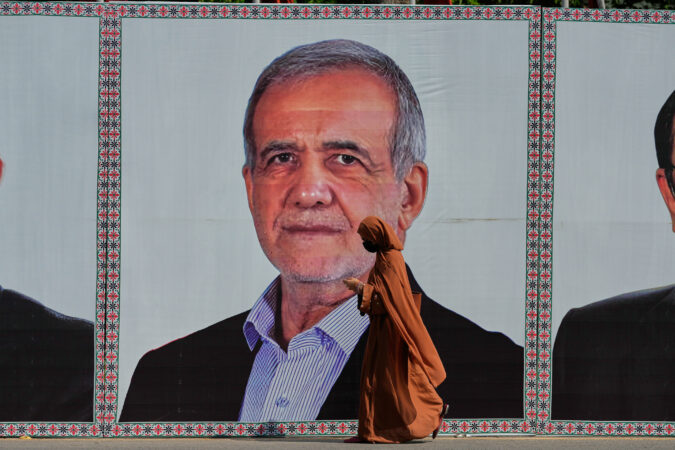
    ISLAMABAD — Iran’s president arrived in Pakistan for talks Tuesday with officials who have been mediating negotiations between Tehran and Washington on a permanent end to the war in the Middle East, even as discrepancies emerged on what had been agreed so far and violence broke out again in Lebanon.

    President Masoud Pezeshkian’s visit to Islamabad comes as technical teams were working on details of the deal following high-level negotiations in Switzerland on Monday led by U.S. Vice President JD Vance and Iran’s parliamentary speaker, Mohammad Bagher Qalibaf.

    In Tehran, Iran’s capital, Foreign Ministry spokesperson Esmail Baghaei told reporters that no visits have been scheduled for the U.N. watchdog — the International Atomic Energy Agency — to examine Iranian nuclear sites bombed by the United States last year. Vance previously said the negotiations in Switzerland won an agreement for the IAEA to inspect the sites.

    The IAEA has been in and out of Iran since Israel’s 12-day war in 2025, but has not been granted access to the bombed enrichment sites targeted by the U.S. at the time.

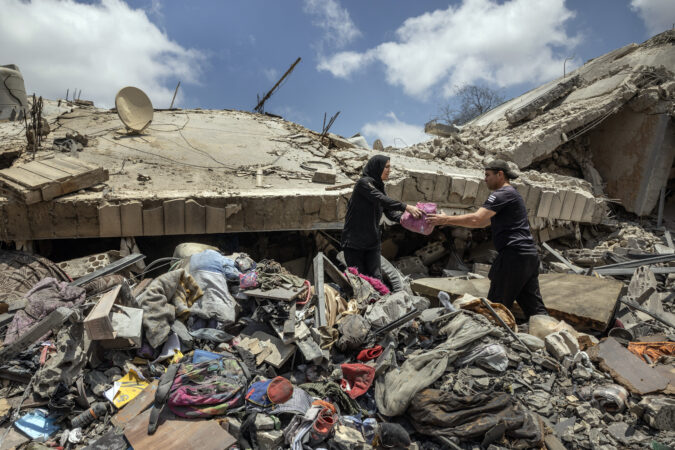
    Meanwhile, violence flared again in southern Lebanon as Israeli soldiers opened fire, killing two people. The reports of violence came after two days of calm following a ceasefire brokered on Saturday. Any renewal of heavy fighting could threaten the broader diplomatic talks, since Iran has demanded that a full truce in Lebanon be part of any comprehensive deal.

    Iran’s president makes his first visit to Islamabad since the war started

    President Asif Ali Zardari, Prime Minister Shehbaz Sharif and other senior officials received Pezeshkian upon his arrival in Islamabad amid tight security, according to Pakistani state media. Television footage showed Pezeshkian embracing Zardari and Sharif as they welcomed him.

    This is the Iranian president’s first visit since the conflict started with the U.S. and Israeli attack on Iran on Feb. 28.

    Pezeshkian and Sharif were to hold a joint news conference after their discussions.

    In the initial talks, marking the start of a 60-day diplomatic process that seeks to reach a permanent deal to end the Iran war, Iran and the U.S. agreed to create a “de-confliction cell” to address the fighting in Lebanon between Israel and the Iranian-backed Hezbollah militant group. The U.S. said negotiators also discussed “mechanisms” to ensure that the Strait of Hormuz, a key waterway for oil transit that Iran had effectively blocked during the war, remains open.

    Ahead of his meetings in Pakistan, Pezeshkian cautioned that “the effectiveness of the talks depends on full commitment to the agreed obligations and their precise implementation.”

    “Progress on this path will be measured by practical adherence to accepted responsibilities,” he wrote on X. “Statements outside the agreed text do not help advance the negotiations.”

    Iran says negotiation groups focused on sanctions relief, nuclear issues and more

    Iran suggested that the ongoing technical talks in Switzerland have led to the creation of specific negotiation groups, including those focused on sanctions relief, nuclear issues, reconstruction, and monitoring, according to the state-run IRNA news agency.

    The report quoted Kazem Gharibabadi, a deputy foreign minister leading the technical talks, saying that the countries involved also formed a contact mechanism over ships moving through the Strait of Hormuz and over the fighting in Lebanon between Israel and Hezbollah.

    It remains unclear whether the deconfliction cell being created will be enough to stop fighting between the Lebanese militant group Hezbollah and Israel, which occupies part of Lebanon and insists it must maintain a free hand to attack militants launching attacks into northern Israel.

    Israeli forces opened fire and killed two men in the southern Lebanese town of Nabatiyeh al-Fawqa on Tuesday, Lebanon’s state-run National News Agency reported, adding the pair were next to a bulldozer that was clearing the road at the time.

    Separately, the agency said Israeli troops fired on residents on the outskirts of the town of Hadatha as they were heading to carry out a burial in the town’s ceremony with a Lebanese army escort.

    There was no immediate comment from Israel.

    Discrepancy on Iran’s use of unfrozen funds

    Following the high-level talks in Switzerland, Vance had said if Iranian financial assets were unfrozen, they would be used to buy American-grown food.

    Vance said that the U.S. and Qatar would have approval over the process, but if Iranian money becomes accessible as sanctions are lifted, it “would actually go to buy American soy, American corn and American wheat for the benefit of the Iranian people.”

    However, Iran has no current demand for U.S. crops and Baghaei said on Tuesday that Tehran’s decisions on what to import would be based on “prices and quality.”

    “It is interesting that the philosophy and goal of the war, which was the destruction of the Iranian civilization and the collapse of Iran, has become enriching American farmers,” Baghaei said at the news conference in Tehran.

    Iran’s ambassador in Geneva, Ali Bahreini, also questioned Vance’s contention that the U.S. and Qatar would have to approve how Iran uses unfrozen funds.

    “Iran is the only country who decides what to do with those assets,” he told reporters.

    Netanyahu raises new questions over fragile Lebanon ceasefire

    Mediators Pakistan and Qatar said the cell would include the Lebanese government and would “ensure the adherence of the termination of military operations in Lebanon,” but Israeli Prime Minister Benjamin Netanyahu raised new questions late on Monday, saying his military still has “full freedom of action to thwart any direct or emerging threat to them or to the residents of the north.”

    Neither Israel nor Hezbollah is a signatory to the U.S.-Iran deal, and Netanyahu has vowed to keep his forces in southern Lebanon until any threat to Israel is eliminated. Hezbollah has refused to halt attacks unless Israel commits to withdrawing.

    When asked about Netanyahu’s comments, U.S. President Donald Trump later said “we’re going to take a look at it,” adding that he wouldn’t say what action he would take but that the situation would “get solved.”

    “I’m a problem solver, I get problems solved real fast, including with Bibi,” he said, using a nickname for Netanyahu.

    No Israeli airstrikes or shelling have been reported since Sunday, a day after a ceasefire was reached, and Hezbollah also has not claimed any attacks in what has been the longest halt in the fighting since the latest Israel-Hezbollah war erupted on March 2.

    Lebanon and Israel planned another round of direct talks in Washington on Tuesday, which are expected to focus on developing a plan for an Israeli withdrawal.

  • Judge blocks bans on using food stamps for sugary drinks and candy

    Judge blocks bans on using food stamps for sugary drinks and candy

    WASHINGTON — A federal judge on Monday blocked the Trump administration from barring the use of food stamps to buy sugary drinks and candy.

    Since last year, the Agriculture Department has approved waivers in more than 20 states that allow them to bar participants in the federal Supplemental Nutrition Assistance Program from using their benefits to buy soda, energy drinks, candy or other prepared desserts. In March, recipients in five states sued the agency over the waivers, arguing that the limits were unlawful and confusing and made it difficult to manage health conditions such as diabetes.

    Judge Amy Berman Jackson of the U.S. District Court in Washington, in a 68-page decision, agreed with the recipients that the Agriculture Department did not have the authority to approve the waivers and also failed to abide by a notice period. Monday’s decision was a rollback of restrictions that officials have characterized as a major achievement of the Make America Healthy Again movement.

    Jackson wrote that while the law allows for the department to approve projects related to the administrative and logistical efficiency of the SNAP program, the agency essentially “purports to waive not just a mere administrative or technical obstacle, but the very definition of ‘food’ as it was laid down by Congress.”

    “The federal defendants and the states may have a genuine desire to improve the health of SNAP households by encouraging healthy choices at the store, and they can take lawful steps to meet those goals,” she wrote. “But what they cannot do is violate the law and their own regulations along the way.”

    The case was brought by the National Center for Law and Economic Justice, a nonprofit that advocates on behalf of low-income people, and Shinder Cantor Lerner, an antitrust law firm.

    Katharine Deabler-Meadows, a senior attorney at the National Center for Law and Economic Justice, said in a statement that the decision was “a major step in restoring essential food assistance to the millions of families that rely on SNAP nationwide.”

    The Agriculture Department did not immediately respond to a request for comment about the ruling. A spokesperson for the agency had earlier told The Associated Press that it “will not be backing down from the fight to Make America Healthy Again.”

    This article originally appeared in The New York Times.

  • Authorities ID 3 people killed in Maryland crash of plane from Ocean City, N.J.

    Authorities ID 3 people killed in Maryland crash of plane from Ocean City, N.J.

    Maryland State Police on Monday released the names of three young men killed when a plane that took off from Ocean City, N.J. crashed late Saturday night east of Washington D.C.

    Around 11:30 p.m. Saturday, a single-engine Piper Cherokee piloted by Yoav Bomrind, 26, of Israel, with two passengers, David Rabinovich, 19, or Israel, and Elad Naidik, 20, of Canada, crashed in a wooded area in Bowie, Md.

    Maryland State Police said Prince George’s County Public Safety Communications received an iPhone crash alert around 11:45 p.m. indicating the plane went down in the area of U.S. Routes 50 and 301 in Bowie.

    The plane was headed to the Montgomery County Airpark in Gaithersburg, Md., approximately 20 miles northwest of Bowie, apparently as part of a training flight, the state police said.

    Based on preliminary information, investigators believe the plane was owned by a flight school in Montgomery County, Maryland, the state police said.

    Multiple agencies responded to the crash area and the plane was located around 3:45 a.m. Sunday near a residential neighborhood. All three men were pronounced dead at the scene.

    No one else was injured, the state police said.

    The National Transportation Safety Board is investigating the crash.

  • Israel holds to Lebanon truce, with troops kept on defense

    Israel holds to Lebanon truce, with troops kept on defense

    JERUSALEM — Israel and Hezbollah appeared to maintain a tense ceasefire in Lebanon for a second day on Monday, as mediators in the U.S.-Iran talks announced a mechanism aimed at ensuring the truce holds, and Israeli troops operated under new orders designed to lower the risk of flare-ups.

    Israel’s top diplomat, however, warned that the country would not withdraw its forces from the self-declared “security zone” it has established in Lebanon up to about 6 miles north of the border.

    “Israel will respect the ceasefire in Lebanon as long as it won’t be breached by Hezbollah,” Foreign Minister Gideon Saar wrote in a social media post on Monday. “We don’t have territorial ambitions in Lebanon, but we will not withdraw from the security zone and expose our citizens to Hezbollah’s attacks and possible invasion.”

    Saar’s post came hours after Pakistan and Qatar, the mediators in the U.S.-Iran talks, announced an agreement to create a “deconfliction cell” to ensure the “adherence of the termination of military operations in Lebanon.” It would include representatives from Iran, the United States, and Lebanon.

    The quiet on the Lebanon front was still settling in after a furious round of hostilities on Friday and Saturday that began when four Israeli soldiers, including a battalion commander, were killed when their tank exploded.

    A fifth soldier was killed in the same area Saturday, setting off waves of Israeli retaliatory strikes. The military said Hezbollah, the Iran-backed Lebanese militant group, had launched more than 50 rockets targeting its soldiers operating in southern Lebanon.

    The fighting centered around the area of Kfar Tebnit and nearby Ali Taher, a strategic ridgeline overlooking the large city of Nabatiyeh in southern Lebanon. The Israeli military recently issued an updated map of its security zone that placed Kfar Tebnit and Ali Taher just within the area under Israeli control.

    That appeared to be more than coincidental.

    The Israeli military said that Ali Taher was the location of a fortified underground Hezbollah stronghold that has long served as the militia’s southern headquarters from which it directed fire against Israeli forces and communities in northern Israel.

    Should the militants inside try to leave that stronghold without surrendering, it could pose a threat to the Israel-Hezbollah ceasefire.

    Ceasefires in Lebanon have been declared, broken, and reinstated numerous times in recent weeks, but the fighting has persisted amid disagreements over what constitutes defensive actions by Israeli forces.

    An Israeli military statement Monday said that it had gained control of the area of the Hezbollah compound and encircled it, adding that “dozens of Hezbollah operatives are currently trapped with no ability to exit.”

    Hezbollah said Saturday that it had attacked Israeli forces advancing toward Ali Taher.

    Later on Saturday, the Israeli military said it had received “updated directives” from the country’s political leaders and would no longer be “conducting proactive strikes” in Lebanon. The military reserved the right to respond if Hezbollah did not abide by the ceasefire and targeted Israeli troops or civilians.

    Israeli Prime Minister Benjamin Netanyahu insisted in a video statement Monday that his directive to the military, and that of the defense minister, remained clear and unchanged: “Our fighters in southern Lebanon have full operational freedom to thwart any direct or emergent threat against them or residents of the north.”

    He did not address whether the military had been ordered to refrain from offensive action, and a spokesperson would not elaborate.

    Israeli commanders received new orders Saturday restricting them to defensive actions in Lebanon, stating that troops may only fire to counter an immediate threat unless authorized by the military’s chief of staff.

    The new orders specifically bar Israeli soldiers from firing warning shots at civilians attempting to return to southern Lebanon unless they get too close to the soldiers, according to two Israeli officials who insisted on anonymity because they were not authorized to speak publicly.

    The orders also bar Israeli soldiers from blowing up homes and other infrastructure inside the security zone without the approval of senior officers, the officials said.

    Spokespeople for the military did not respond to repeated requests for comment Monday.

    Sarit Zehavi, president of the Alma Research and Education Center, which focuses on Israel’s northern border, said she feared that the ban on offensive operations would put Israeli soldiers in the position of having to be responsive rather than proactive.

    “On the ground, it takes time till you understand what’s a threat,” she said. “This will eventually cost the lives of soldiers.”

    This article originally appeared in the New York Times.