Category: Nation & World

  • For heirs of Custer and Sitting Bull, a 150-year-old battle is personal

    For heirs of Custer and Sitting Bull, a 150-year-old battle is personal

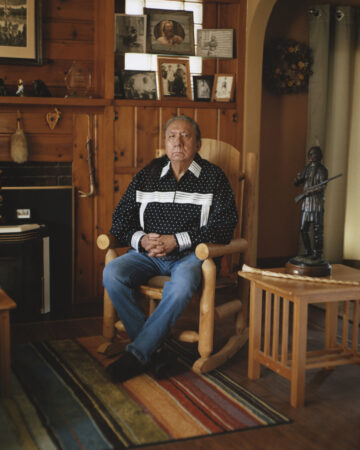
    CROW AGENCY, Mont. — As a child in South Dakota, Ernie LaPointe was told: Don’t tell anyone who your great-grandfather was.

    If his neighbors or friends knew he was descended from Sitting Bull, the storied Hunkpapa Lakota leader, he would never have a normal childhood, his mother told him.

    “‘There will be a time and place when you get the permission to do it,’” LaPointe, now 77, recalled his mother saying.

    LaPointe kept mum until the early 1990s, when, he said, an aunt told him it was time to “come out from the shadows.”

    Now he protects the legacy of Sitting Bull, who helped lead the resistance to the U.S. government’s seizure of the Great Plains and became perhaps even more famous in death than in life.

    Almost 150 years ago, Sitting Bull’s followers defeated Lt. Col. George Armstrong Custer and the 7th Cavalry Regiment of the U.S. Army in the Battle of the Little Bighorn, one of the most closely studied and hotly debated military clashes in American history. Sitting Bull is said to have had a vision that presaged a great victory, which came weeks later for warriors led by Crazy Horse.

    More than a thousand miles south, in Arizona, Chip Custer’s lineage was not something he could have hidden, even if he wanted to.

    He was born George Armstrong Custer IV, the great-great-grand-nephew of the famous lieutenant colonel. After his father (George Armstrong Custer III) died suddenly in 1991, Chip inherited the job of minding the legacy of a man who is among the most lionized, and vilified, figures in American history.

    Chip Custer, 70, has long been familiar with the criticism — of Custer’s devastating offensive against the Cheyenne, of his military tactics, of his ego. He hopes people will try to view his relative in his full complexity, in light of his successes and in the context of his time.

    “If someone wrote a thousand stories about me,” he added, “what would I end up looking like after all the time under the microscope?”

    Last week, crowds converged where the Little Bighorn River snakes through grassy hills in southeastern Montana and where Custer and all of his men died during an attack on a Native American encampment on June 25, 1876. There were reenactments, ceremonies, and talk of a new visitor center scheduled to be completed in the coming months.

    To the Lakota, Northern Cheyenne, and other tribes, the battlefield remains hallowed ground, a place of great triumph over a government that suppressed their way of life.

    To historians, it remains an inexhaustible source for debate. Had one cavalry major been drinking? Was Custer undone by recklessness or flawed intelligence?

    Chip Custer and Ernie LaPointe are students of the battle and fluent in its intricacies, but their interest is not simply in military history. It is based in a mission to preserve their family legacies.

    “The blood of my great-grandfather is in me,” LaPointe said. “He cared for the people; he cared for everything. He even cared for the people who tried to kill him.”

    Custer’s kin

    Chip Custer first visited the battlefield in 1976, for the 100th anniversary of the battle, as a 21-year-old hippie with no expressed interest in family history. He drove up from college to surprise his father, a retired Army officer who had fought in three wars.

    As they sat through a quiet ceremony near what is known as Last Stand Hill, the American Indian Movement leader Russell Means spoke out to celebrate the cavalry’s defeat.

    “My father, of course, was incensed over the way that whole event went,” Custer said. “So that was my introduction.”

    The national park was known as Custer Battlefield National Monument then, though Native American activists had begun to draw attention to the site’s narrow focus on the more than 260 U.S. deaths, part of a wider discussion of broken treaties and American expansionism.

    White marble headstones peeked out of the grass across the haunting prairie to mark where soldiers had fallen. The same was not true for the 60 to 100 Native Americans who the National Park Service has estimated died that day.

    “You’d see that powerful landscape out there and it was just the 7th Cavalry headstones,” said John Doerner, who was an historian at the battlefield for more than 20 years.

    Perspectives were evolving. Chip Custer said his father recognized that depictions of their relative — long embraced by many as a gallant, fearless commander carrying out Washington’s will to push Native Americans toward reservations — had grown more complicated.

    In 1970, the movie Little Big Man portrayed Custer as a vain commander who foolishly led his soldiers to slaughter. Chip Custer remembers watching it on an Arizona army base and that his red-faced father stormed out. His father was similarly upset in 1991 at a proposal to drop the family name from the site. He died of a heart attack just months before Congress rechristened it the Little Bighorn Battlefield National Monument.

    In the decades since, Chip has served as an occasional spokesperson for the Custer legacy, even as he ran a landscape design business and raised two daughters with his wife. Chip is descended from one of the famed soldier’s brothers, Nevin, whose health problems prevented him from joining the military. Two of George Armstrong Custer’s brothers died with him on the battlefield.

    Chip has written about Custer’s rowdy days at West Point and his celebrated successes as a Civil War “boy general,” which included commanding the Michigan Cavalry Brigade in the Battle of Gettysburg. He has spoken to groups of Custer buffs.

    In 2021, he opposed calls to remove a Custer statue in Monroe, Mich., the lieutenant colonel’s hometown. In a letter to the City Council, Chip argued that Custer, in his writings, had recognized why Native Americans resisted the confinement of reservations and that he had unfairly become the “poster boy for all wrongs committed against the American Indians during our roughly 250 years as a nation.”

    The council ultimately left the monument as is.

    When it comes to that final battle, Chip Custer believes his relative unquestionably shoulders some blame for the outcome, though some point fingers at subordinates.

    “I think he would, as any commander, accept full responsibility for how that all played out,” he said. “But I regret that we only remember him by the last day of his life.”

    Sitting with history

    For LaPointe, an Army veteran born on the Pine Ridge Indian Reservation in South Dakota, the challenge has been defending, not his relative’s legacy, but his own.

    After LaPointe publicly embraced his lineage, he began representing the family at events like the 1992 dedication of a bronze bust of his great-grandfather to the National Hall of Fame for Famous American Indians, in Oklahoma. But in the face of competing claims, his connection was still closely scrutinized by the Smithsonian in the mid-2000s as it worked to repatriate some of Sitting Bull’s belongings. Once satisfied, the museum gave LaPointe a braid of Sitting Bull’s hair and a pair of wool leggings obtained by a doctor who had custody of the Lakota leader’s body after his death.

    Sitting Bull was fatally shot in 1890 on the Standing Rock Indian Reservation during a botched arrest by Native American police officers following orders from U.S. officials. In the years after the Battle of the Little Bighorn, the U.S. government had responded to the loss by escalating its efforts to force Native Americans onto reservations.

    LaPointe’s ancestry was later scientifically confirmed by a Danish researcher, who did a DNA test on a small clipping of his great-grandfather’s hair. When the results were published, news of LaPointe’s lineage ricocheted across domestic and international media. It escalated the outreach he had long received from people who claim to be his long-lost kin.

    “They call, they email, they come to the house,” said Sonja LaPointe, his wife of more than 30 years. “One guy from Wisconsin brought his Winchester to the house because he wanted to take a picture with Ernie.”

    LaPointe was involved in the creation of an Indian memorial at the Little Bighorn battlefield, and in 2003 he attended the dedication of a sculpture by Colleen Cutschall, an Oglala-Sicangu Lakota artist. The bronze outline of warriors on horseback is level with the horizon, with the sky and grassy hills shining through the tableau.

    With permission from park rangers, LaPointe had a pipe ceremony at the memorial that night and said he noticed something special in the air. “You could hear the horse hooves all around us,” he said.

    LaPointe was also asked to share the oral histories he had heard as a child with Doerner, who worked to add red granite markers where Native American warriors fell.

    LaPointe and Custer have each been to multiple events at the battlefield, but neither planned to attend the anniversary this week. Sonja LaPointe said her husband and Custer briefly crossed paths at a battlefield event years ago, but the men do not remember meeting.

    Around 2007, LaPointe did speak with Chip’s uncle, Brice Custer, who called him after LaPointe gave a talk in George Armstrong Custer’s hometown.

    Brice, who named one of his sons Garry Owen after the 7th Cavalry marching song, told LaPointe he had not felt well enough to make the trip but wanted to express how much respect he had for Sitting Bull.

    “I said I appreciated his call,” LaPointe recalled, “and I don’t hold any animosities toward nobody.”

    “‘It happened many years ago,’ I said. ‘I think we have to heal from that.’ He agreed.”

    This article originally appeared in The New York Times.
  • US and Iran wrap high-level talks in Switzerland after making ‘encouraging progress,’ mediators say

    US and Iran wrap high-level talks in Switzerland after making ‘encouraging progress,’ mediators say

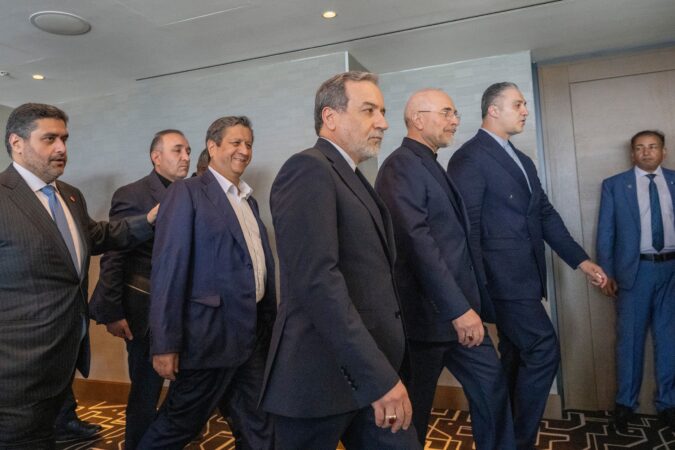
    OBBUERGEN, Switzerland — U.S. Vice President JD Vance and Iran’s parliamentary speaker Mohammad Bagher Qalibaf on Monday wrapped up a lengthy round of initial talks aimed at solidifying a permanent end to the war between the countries.

    The mediation effort in Switzerland, which started Sunday and stretched into the early hours of Monday, had rocky moments. But the talks also led to some agreements between the two sides.

    In a joint statement, mediators Pakistan and Qatar said that while the high-level engagement had ended, technical negotiations would continue in Switzerland this week.

    Vance was expected to make remarks from the resort at 1 p.m. local time, his office said.

    The mediators hailed what they called “encouraging progress” made during the talks. A senior U.S. diplomat claimed progress on multiple fronts, including the establishment of “mechanisms” to ensure the Strait of Hormuz, a vital waterway for global energy shipments, remains open and that a ceasefire in the fighting between Israel and Iran-backed Hezbollah militants in southern Lebanon holds.

    Yet the talks between the United States and Iran were jolted by blistering statements from U.S. President Donald Trump, who, from thousands of miles away from the Swiss negotiating venue at a mountainside resort near Lake Lucerne, was firing off comments that offended the Iranians.

    Iranian state media said talks had paused after the “publication of an insulting message by the U.S. President,” according to Iranian state media.

    Ultimately, the Iranians remained on site and negotiations continued, according to the senior U.S. diplomat, who was not authorized to comment publicly and briefed reporters on the condition of anonymity.

    Iranian state television reported Monday that the Iranian delegation had left the summit site to head to the airport in Zurich to fly back to Tehran.

    Trump didn’t attend what was dubbed the “Lake Lucerne Summit,” but his presence certainly loomed large.

    Ahead of the talks, Iranian President Masoud Pezeshkian had vowed to “never back down from the right to enrich uranium,” according to state media.

    Trump on Sunday told Fox News in a phone interview that Pezeshkian should watch what he says and also threatened to take over Iran, according to one of the news channel’s correspondents.

    Trump also continued to issue warnings against Iran on social media, posting as negotiators worked: “Iran must immediately stop their highly paid PROXIES in Lebanon from causing trouble. If they don’t, we’ll hit Iran very hard again, just like we did last week, only harder!!!”

    It’s unclear when Vance will depart Switzerland. Trump envoys Jared Kushner and Steve Witkoff are handling many of the technical details on behalf of the U.S. delegation.

    Iranian Foreign Minister Abbas Araghchi wrote on X that Pakistani and Qatari mediators delivered “major progress to end the Lebanon War.” But, he added, the first “real test” of negotiations would be whether the mechanism succeeded in halting the fighting between Israel and Hezbollah.

    The senior U.S. diplomat said among the issues discussed was Iran’s messaging as it related to the Strait of Hormuz, which Iran’s military said it closed Saturday in response to continued fighting in Lebanon. U.S. Central Command has disputed that Iran closed the strait again.

    The interim deal to end the fighting in Iran, signed last week by the leaders of the U.S. and Iran, also sets a 60-day period for negotiators to settle the future of Tehran’s nuclear program amid concerns that it wants to use it for military purposes, a claim Iran denies. The fate of frozen Iranian assets, among other thorny issues, are also on the agenda.

    Though the talks will encompass a vast array of complex matters, Iran has insisted on first addressing the fighting in Lebanon.

    Saturday’s renewed ceasefire in Lebanon appeared to be holding, and Israel’s military said it would lift movement restrictions for residents near the Israel-Lebanon border on Monday morning. Neither Israel nor Hezbollah is a signatory to the U.S.-Iran deal.

    There was cautious calm Monday in Lebanon, with no Israeli strikes reported overnight after a quiet Sunday. Hezbollah likewise has not announced any attacks on Israeli forces since Saturday.

    The lull in fighting in Lebanon is the longest since the outbreak of the latest Israel-Hezbollah war on March 2.

  • Starmer announces he’ll resign as UK prime minister with Burnham confirming bid to succeed him

    Starmer announces he’ll resign as UK prime minister with Burnham confirming bid to succeed him

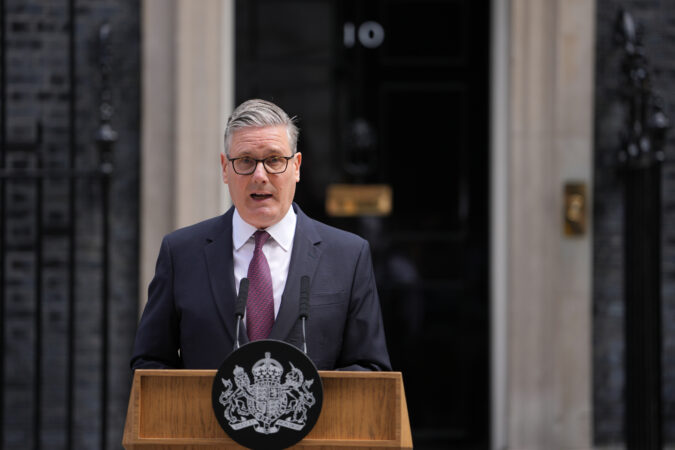
    LONDON — British Prime Minister Keir Starmer announced Monday that he will resign, forced out by his own party after missteps and mistakes soured voters’ goodwill for a prime minister who won a landslide election victory two years ago on a promise of steady leadership and economic growth.

    Starmer says he will remain caretaker prime minister until his Labour party chooses a new leader — with expectations growing that it will be former Greater Manchester Mayor Andy Burnham.

    Burnham confirmed in a social media post that “I will put myself forward as part of this process.” Former Health Secretary Wes Streeting, who was considered his main rival for the top job, said he will back Burnham.

    It was Burnham’s victory in a special parliamentary election last week that triggered Starmer’s decision to resign. After nearly a decade out of Parliament as the mayor of Greater Manchester, Burnham returns to Westminster and will be sworn in as a lawmaker later on Monday.

    Only members of Parliament can stand for the party leadership.

    Streeting’s statement makes it more likely that Burnham will be selected without a leadership contest.

    Starmer is the sixth prime minister in a decade to stand outside 10 Downing Street and announce a premature departure. His statement comes the day before Britain marks the 10th anniversary of its vote to leave the European Union, a decision that still roils the country’s economy and politics.

    After weeks of insisting he would fight to keep his job, Starmer conceded to growing pressure to hand over to a new leader who can try and revive the government’s flagging fortunes. He led Labour to a landslide election victory in July 2024, but since then his popularity and that of the party have plummeted.

    A new leader in place within weeks

    Starmer made the announcement outside his official 10 Downing St. residence, the spot where he delivered his first speech as prime minister two years ago.

    His voice choked with emotion near the end of the brief statement, which was watched by a group of staff, Cabinet ministers and scores of journalists.

    “The question my party is asking now is whether I am best placed to lead us into the next general election,” Starmer said. “I have heard the answer of my parliamentary party to that question, and I accept that answer with good grace.”

    He said he spoke to King Charles III, Britain’s constitutional monarch, to inform him of the decision.

    Starmer spent the weekend pondering his future following Burnham’s special election victory.

    It’s unclear whether Burnham, who is due to be sworn in as a member of Parliament on Monday, will now face a coronation or a challenge. Starmer said nominations for a leadership contest will open on July 9, and the new leader will be in place by the time Parliament returns from its summer break on Sept. 1.

    If Burnham is the only candidate, the change could come by mid-July.

    Starmer struggled to fulfill election pledges

    Starmer has struggled to deliver promised economic growth, repair tattered public services and ease the cost of living. He has been hamstrung by repeated missteps, including his decision to appoint Peter Mandelson, a scandal-tarnished friend of Jeffrey Epstein, as the U.K. ambassador to the United States.

    Labour is losing liberal voters to the growing Green Party and facing a rising Reform UK, the Nigel Farage -led anti-immigration party that consistently leads in nationwide opinion polls.

    U.S. President Donald Trump weighed in even before an announcement, linking Starmer’s potential exit to two of his recurring bugbears: immigration and renewable energy.

    “Keir Starmer will resign as Prime Minister of The United Kingdom. He failed badly on two very important subjects- IMMIGRATION AND ENERGY (OPEN NORTH SEA OIL!). I wish him well! President DJT,” Trump posted on his social media platform.

    Starmer’s initially warm relationship with the president has soured in recent months over issues including the Iran war, which the U.K. didn’t join.

    He won praise on the world stage

    In contrast to missteps on the domestic front, Starmer has won praise for his international role, notably in rallying European support for Ukraine in its fight against Russia’s invasion, and working to mitigate the economic and political turmoil unleashed by the Iran conflict.

    A NATO summit in Turkey next month may be his last foray on the world stage as Britain’s leader.

    European Commission President Ursula von der Leyen praised Starmer’s legacy.

    “It can take many leaders years to grow into the statesman you became in just two years,” she said on X. “European and Ukrainian security is stronger because of you. Thank you, dear Keir.”

    While many Labour lawmakers have rallied behind Burnham, some have said that Starmer had been treated unfairly. London legislator Neil Coyle railed on X against “the prospect of an utter stitch-up & the media circus being rewarded.

    “When the next leader cannot change Trump, Iran, Ukraine, Putin, Musk, broadcast editorial & algorithm bias overnight they’ll bay for his blood too. Better keep that guillotine sharp,” he wrote.

  • Patrols grow as paint peels at the  Reflecting Pool

    Patrols grow as paint peels at the Reflecting Pool

    WASHINGTON — National Guard service members and U.S. Park Police patrolled the deck around the Lincoln Memorial Reflecting Pool on Monday as President Donald Trump’s administration faces a self-imposed deadline to fix a botched renovation before the nation’s 250th anniversary celebration.

    The patrols came two days after Trump said authorities had made “multiple arrests” of people he insisted were responsible for damage to the peeling coating after an algae bloom occurred. The liner was installed as part of his $14 million-plus project.

    The president has confirmed the problems most likely require draining the pool again for liner repairs and he promised a quick fix. Without offering substantiation, he also said vandals dumped fertilizer in the pool and slashed the coating with a box cutter.

    But the timeline was not clear Monday, and the administration did not immediately respond to questions about a new round of work. Contractors and federal workers in recent days have been using chemicals and ozone nanobubbles to combat the algae.

    Trump pitched the original improvements as intended to clean, beautify and reinforce an iconic site that he said had become dilapidated and dirty because of previous presidents’ neglect. Algae has plagued the pool for a century, and Trump insisted that a newly installed “American flag blue” coating, which he selected himself, would turn the pool into a gleaming expanse along the National Mall.

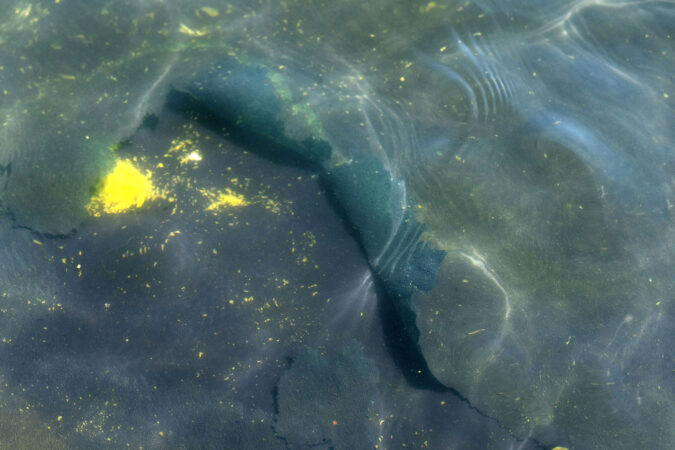
    Yet within weeks of Trump declaring the rehabilitation completed in time for Independence Day, the water was plagued by a vivid green algae bloom that clouded the pool’s coating. A piece of liner, about 4 square feet, was observed Friday partially floating in the pool. The Associated Press saw additional pieces in the water Monday.

    Via social media, the president has blamed the problems on “SICK, DERANGED PEOPLE!” He asserted Monday on Truth Social that intentional damages include a “300 foot long gash” and that “chemicals have been illegally placed in the water.” A day earlier, Trump posted, “Work will begin immediately on fixing the seriously vandalized Reflecting Pool.”

    At an executive order signing on Monday, the president said five people had been arrested and five more were under suspicion, and he deflected blame for the pool’s maintenance issues: “I can’t help it if somebody goes in with a knife and starts hacking it up.” He has not backed up those claims, and even if anyone has deliberately peeled or cut the lining, that would not explain the algae bloom that appeared more intensely than what typically occurred before the renovation.

    Images showing that Trump’s project had apparently backfired boomeranged across social media last week, drawing crowds of onlookers eager to see the effects themselves. An unknown number ended up being detained by federal authorities.

    One man arrested was David Hearn, 67, of Bethesda, Md. A former Olympic canoe racer, Hearn told the Associated Press that he reached into the pool because he wanted to examine the peeling new coating. He said he briefly touched a chunk that was still attached to the side of the pool, then let go shortly after a park worker told him to. Hearn said he was then detained by National Guard troops and Park Police for five hours before being released Friday night.

    “I’m a curious citizen,” Hearn said in a telephone interview. “I reached down to see what it felt like. It was very rubbery.”

    The Park Police did not immediately respond Monday to AP’s questions about how many arrests were made and whether any charges had been filed. Washington’s Metropolitan Police Department said Monday that the agency is not involved.

    It was not immediately apparent what criminal or civil violation someone might commit reaching into the pool. Trump, in one of his Truth Social posts, cited laws against defacing monuments as grounds for imprisoning anyone harming the pool.

  • Trump, claiming vandalism, says Reflecting Pool will be drained

    Trump, claiming vandalism, says Reflecting Pool will be drained

    WASHINGTON — President Donald Trump said on Saturday that “multiple individuals” had been arrested for vandalizing the Lincoln Memorial Reflecting Pool, and that problems with a more than $14 million renovation project had become so severe that the pool would have to be at least partly drained for “necessary repairs.”

    The president’s announcement late Saturday, made on social media, was his starkest acknowledgment of the pool’s rapid deterioration in recent days. The water this week became covered by clouds of blooming algae, which were obscuring a floor that had just been painted a shade that Trump has called “American flag blue.” The paint then began to peel off, making it a tourist destination for unusual reasons.

    Among those accused of vandalism was David Carter Hearn, 67, a cyclist and three-time Olympian as a canoeist who says he stopped at the site Friday just to have a look, then reached down to touch a strip of peeling blue paint mixed with the algae.

    The U.S. Park Police arrested Hearn shortly after, accusing him of destroying government property, a crime that can carry up to a 10-year prison sentence. Hearn denies the charge.

    “I was just a curious, concerned citizen,” he said in an interview. “I guess I was there at the wrong place, wrong time.”

    The administration has not released the names of others accused of vandalizing the pool, a crime that Trump said Saturday could lead to “years in jail.” In a later post, he said without evidence that vandals had “poured corrosive and destructive chemicals into the Pool.”

    The project, one of many Trump is undertaking around the capital as the United States nears its 250th birthday, has faced intense scrutiny, including from engineers and other experts who warned that the hastily undertaken project was unlikely to undo the problems that have plagued the pool for decades. A construction company tied to Trump was awarded a no-bid contract and painted the bottom of the pool.

    Trump said Saturday that he had met with contractors earlier in the day to discuss the state of the pool.

    The Interior Department said this week that agency workers had “killed the algae” that had expanded with heat and humidity. But on Friday afternoon, the water was stained by clumps of algae where National Park Service staff members had scrubbed away bright green blooms along the bottom of the basin. The pool’s new coating was also missing large sections, including a gap roughly the size of a park bench. Underneath appeared to be the original concrete basin.

    Hearn, of Bethesda, Md., said that he was on a 50-mile bike ride before stopping at the pool, and that Park Police officers detained him for more than four hours Friday at a facility south of the National Mall without allowing a phone call. They also did not say more about why he had been arrested, he added. The White House and Park Police did not respond to requests for comment.

    Late Friday, Trump claimed on social media that the “inside surface that was just installed” had been damaged by vandals.

    Hearn said that he had “reached into the water to feel the characteristics” of a dislodged paint piece “still attached to the bottom.” He compared his actions to those of Jonathan Karl, an ABC News reporter who lifted a detached piece of paint at the pool Thursday in a video the news organization published.

    “I didn’t remove anything,” Hearn said. “I was bending and feeling this 2-millimeter-thick, rubbery flap.”

    Until his retirement 18 months ago, Hearn ran a company selling special materials for building canoes. That, he said, made him particularly interested in the materials contractors had used before the paint at the base of the pool began peeling.

    Hearn said that he had already received offers of pro bono representation following his arrest.

    “I’m getting a lot of support from my community,” he added.

    This article originally appeared in the New York Times.

  • A diocese tries to protect its 29-foot Jesus from Trump’s border wall

    A diocese tries to protect its 29-foot Jesus from Trump’s border wall

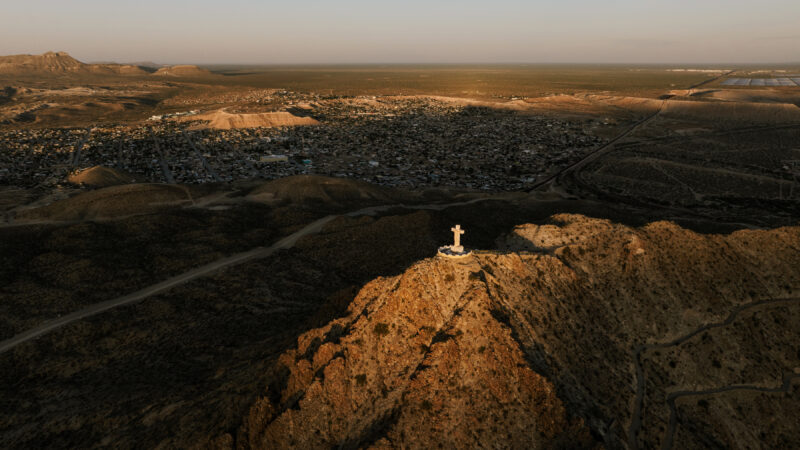
    LAS CRUCES, N.M. — At sunrise, when the day’s first golden glow washes over the 29-foot-tall limestone Jesus atop Mount Cristo Rey, Lourdes Castañon feels the presence of the divine. “The rays catch it,” he said, “and, oh man, I think I’m touching the face of God.”

    Countless pilgrims from around the world journey to the sacred site just on New Mexico’s side of the southwestern border, but Castañon fears for its future. At the mountain’s base, President Donald Trump wants to build his border wall, and the small Catholic diocese that owns the land is trying to stop it.

    The Department of Homeland Security is attempting to use eminent domain to seize 14 acres of desert from the diocese, based in Las Cruces, N.M., so it can raise about 1.5 miles of new wall. The church claims a towering steel barrier would desecrate a holy landmark and violate the religious liberties of those who wish to worship there.

    “It will look like a scar on Mother Earth,” said Castañon, 74, a volunteer with the Mount Cristo Rey Restoration Committee, an independent group that works to keep the site clean and accessible.

    Homeland Security sued to wrest control of the land from the diocese last month, offering about $180,000 as compensation. The diocese, which had pleaded with the Trump administration to consider alternatives to a wall, countered in court, arguing that the lawsuit flouted the First Amendment and laws to further protect religious freedom.

    “The wall is a physical manifestation of this government’s attitude toward migrants,” the diocese said Friday in a legal brief that detailed its arguments and included testimony from local bishops and others. “Nothing could be less Catholic.”

    The ongoing federal case is the latest example of opposition to a border wall Trump wants to extend across the entire southern frontier. Since Trump’s first term, aggrieved landowners, environmentalists, and Native American tribes have fought the president’s barrier-building, tying up government lawyers in court.

    The Trump administration has claimed broad authority over wall construction, but opponents have secured a few tentative wins, including this year in Texas’ Big Bend National Park, where U.S. Customs and Border Protection had to change plans after a bipartisan outcry.

    Now, an administration that holds itself up as a defender of the devout is facing off with Catholics asserting their freedom of religion.

    “This is not a battle between the church and the government; it’s a battle between symbols,” said Deacon Jim Winder, the chancellor of the diocese. “One is a 29-foot statue of Christ the King, which is meant to symbolize unity and hope, and the other is a 30-foot iron monstrosity that symbolizes exclusion and division. Our symbol was there first. The wall is an in-your-face insult.”

    Customs and Border Protection has acknowledged Mount Cristo Rey’s significance, but the agency has argued that the site is also popular for drug smugglers and human traffickers. The mountain is the only stretch of land in the area not fortified with tall fencing — Cristo Rey was long considered a natural barrier — and the federal government now sees the gap as a security problem.

    Part of the new segment will be built on federal land and the rest “will have no adverse impact” on Mount Cristo Rey, the government has said, because it won’t block the trail leading up to the Christ sculpture. Construction will occur several hundred feet below the statue.

    “Anyone who spent 30 seconds examining a map of Mount Cristo Rey and the southern border would realize how ludicrous these claims are,” John B. Mennell, an agency spokesperson, said in a statement, referring to the church’s arguments.

    Mount Cristo Rey, known also as Sierra de Cristo Rey, near El Paso, Texas, and the suburbs of Mexico’s Ciudad Juárez, saw its first pilgrim in the early 1930s, after a local priest, Father Lourdes Costa, gazed out his window at the distant peak and envisioned a soaring crucifix at its summit.

    Costa made the challenging trek and shared his premonition with the Diocese of El Paso, which purchased the land from the state of New Mexico. In the nearly 90 years since the sculpture was completed, hundreds of thousands of faithful have traveled to the top, some on their knees and others barefoot, over rough ground studded with yucca and creosote.

    It also attracted those looking to cross into the United States illegally. As migrant apprehensions soared, members of the restoration committee, among the mountain’s most frequent visitors, noticed an uptick in vandalism and crime at the site.

    Not all of Mount Cristo Rey’s devotees oppose the wall. Ruben Escandon, whose parents and grandparents preceded him as Cristo Rey caretakers, worried that border-related safety concerns have held the site back from being considered one of the world’s premier Catholic attractions, like the statue of Christ the Redeemer in Rio de Janeiro.

    He is opposed to Trump’s immigration agenda, he said, but the surrounding segments of the border wall are funneling migrants onto his cherished mountain. The barrier needs to be completed, he said.

    “It has nothing to do with immigration policies; it has to do with keeping Mount Cristo Rey safe,” said Escandon, a former police officer who specializes in performing cross-border marriages. “Hopefully it will allow the traditional visitor to come without fear.”

    But environmental and migrant rights groups say the new wall would disrupt a fragile desert ecosystem and make an already dangerous journey over the border more deadly.

    The diocese said it respects the Trump administration’s authority to secure the area. When Border Patrol officials asked in recent years to carve a roadway through Cristo Rey property, the diocese agreed and charged the government nothing. The church has not objected to the agency’s use of sensors and cameras around the mountain.

    But a wall is too far, Winder said.

    Barrier construction elsewhere has threatened or destroyed other cultural sites, including a 1,000-year-old Native American etching that federal contractors mistakenly bulldozed in Arizona this year. And the blasting involved in building near Cristo Rey could damage the statue, he said.

    Lawyers for the Justice Department have been pushing to accelerate the case, filing motions to condemn the property and take possession of it in quick succession. “Time is of the essence,” they argued, because the government has already contracted with construction companies and could be fined if the project is delayed.

    “We’re just getting run over,” Winder said.

    A Justice Department spokesperson, Natalie Baldassarre, said “the taking is authorized by law” and that it “will not impact activity or use of the shrine.”

    Kathryn Brack Morrow, an attorney for the diocese, said the government’s urgency was not justified.

    “This is a self-inflicted emergency,” Morrow said. “The diocese has raised weighty religious liberty concerns that warrant deliberate consideration.”

    Contractors have already begun working at the base of Cristo Rey. On a recent morning, 15-year-old Fernanda Vazquez hiked up the winding trail with her family and looked down at the ribbon of dirt where the wall may soon be built.

    “It just breaks my heart,” she said. “It just doesn’t seem right.”

    This article originally appeared in the New York Times.

  • Ukrainian attacks prompt Russian-held Crimea to halt civilian gasoline sales

    Ukrainian attacks prompt Russian-held Crimea to halt civilian gasoline sales

    Officials in Russia-occupied Crimea suspended civilian gasoline sales Sunday as Ukraine ramped up attacks on fuel supplies on the Black Sea peninsula.

    Gov. Sergey Aksyonov, the Kremlin-appointed head of Crimea, said that overnight Ukrainian strikes killed four people and wounded 28 others. He did not specify the target of the attack.

    He later wrote on social media that local gas stations would halt all sales to nonstate companies and individuals for an undefined period.

    “Fuel will be sold only to government agencies that ensure the functioning and security of the Republic of Crimea,” Aksyonov said. “I ask everyone to remain calm and to only trust official sources of information.”

    Ukrainian forces have repeatedly targeted fuel supplies to Crimea in recent weeks, triggering the worst energy crisis in the region since it was illegally annexed by Russia in 2014.

    Ukrainian President Volodymyr Zelensky said in a statement Sunday that a Crimean oil depot as well as an oil transport facility in Russia’s southern Krasnodar region were among the targets. He described the attacks as part of Ukraine’s “long-range sanctions” against Russia’s energy infrastructure.

    “Russia understands only strength, and our long-range strength is certainly working for peace,” he wrote.

    Russian officials in Krasnodar reported earlier Sunday that a drone strike sparked a fire at a Black Sea oil terminal in the village of Chushka. They said that Ukrainian attacks struck a ferry, killing one person.

    Motorists struggle to find fuel

    The Crimean peninsula has had periodic fuel shortages from Ukrainian strikes before, but the current crisis is the worst since its 2014 annexation.

    At the end of May, authorities restricted the sale of gas to 20 liters (5⅓ gallons) per vehicle owner per week, using prepaid coupons. Those were snapped up immediately following their release on an official messaging app channel, and motorists lined up for hours, waiting to refuel.

    Social networks have been abuzz with requests and advice on where to find fuel, and authorities launched a hotline for tourists in the area who have found themselves trapped.

    Some motorists bring their own gas from Krasnodar and elsewhere via the Kerch bridge, but they are restricted to carrying 100 liters (about 26½ gallons) per vehicle. Some speculators are selling gas at double the market price.

    In a rare public acknowledgment, the Kremlin has recognized the scope of the problem and promised to address the issue quickly.

    However, Ukraine’s successes have highlighted its ability to inflict painful damage on Russia and change the course of the conflict while Moscow’s advances recently have ground to a near halt. On June 11, Russia’s full-scale invasion of Ukraine reached its 1,569th day, surpassing the duration of World War I.

  • For cash-strapped farmers, deal to end Iran fighting comes too late

    For cash-strapped farmers, deal to end Iran fighting comes too late

    NASHVILLE, N.C. – The possible end of the Iran war will not cure the drought that has stunted the wheat crop. It won’t secure soybean export orders caught in the U.S.-China trade war. And it will do nothing to promote competition in agriculture, which would help farmers like Jeff Tyson earn a living.

    Like other growers, Tyson, 55, has seen costs outrun sales this year as the rain grew scarce and government policies added to his burdens.

    Now, the U.S.-Iran agreement to reopen the vital Strait of Hormuz and pursue a lasting peace offers some relief to farmers who have seen their fuel and fertilizer bills soar because of combat in the Persian Gulf. Diesel has not been cheaper since mid-March. Urea fertilizer in recent days sold for less than it did before the fighting began.

    But the financial damage has been done.

    President Donald Trump’s February decision to join Israel in attacking Iran aggravated the farm economy’s struggles. Soybean growers, who were already suffering from the president’s tariffs, are expected to lose money in 2026 for the fourth straight year.

    “There’s no joy left in this farm. When you work 16-hour days and get to the end of the year, and you have to borrow money to pay your taxes, there’s no fun in it. It’s just not worth it anymore,” said Tyson, a fourth-generation farmer, who long ago advised his daughters to look elsewhere for a good life.

    Tough times on the farm are souring some of the president’s most loyal supporters little more than four months before November’s congressional elections. Rural voters backed Trump’s economic policies by a 45% to 43% margin early last year but now disapprove of them 61% to 31%, according to a Reuters-Ipsos poll released this month.

    A separate Purdue University-CME Group survey this month showed that agricultural producers in particular have grown more downbeat. From a high of 75% in December, the percentage of those surveyed saying the country is headed in the right direction fell to 52% in May.

    Farmers represent a key constituency in states that could decide control of the U.S. Senate, including Iowa, Texas, Ohio, and Michigan, as well as North Carolina.

    The president’s signing Wednesday of an agreement that extends the ceasefire with Iran for 60 days follows a lengthy interruption to shipping through the Strait of Hormuz, which curtailed exports from three of the world’s top 10 producers of urea and anhydrous ammonia fertilizer: Saudi Arabia, Qatar, and Iran.

    “We’re not going to solve that just because we open the strait. There is still a very big wound there that is going to take time to heal,” said Josh Linville, vice president of financial services firm StoneX, who expects prices to remain higher than usual through next spring.

    On Saturday, conditions in the strait remained fluid. Iranian authorities declared the channel once again closed in response to Israeli attacks in Lebanon — underscoring the fragility of the agreement signed last week. U.S. Central Command denied there was a closure, and said that shipping had increased, with 55 merchant ships and 17 million gallons of oil reaching global markets. U.S.-Iran peace talks were planned for Sunday in Switzerland.

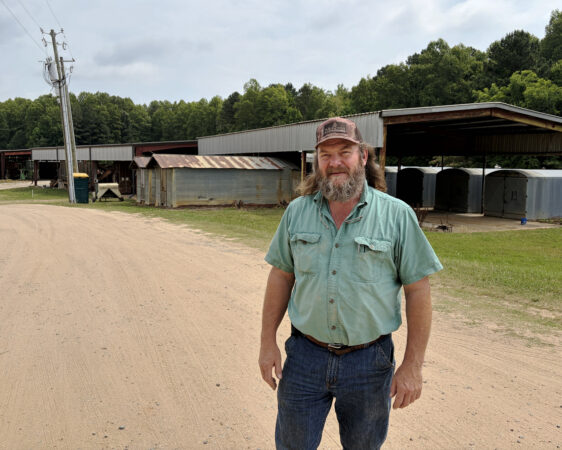
    About an hour’s drive east of Raleigh, Tyson raises soybeans, cotton, sweet potatoes, tobacco, corn, and sunflowers. He runs the operation from a small white house adjacent to a two-lane road. Several buildings and grain silos dot the property.

    With shoulder-length brown hair and a full beard, Tyson is profoundly disillusioned by Washington. Well-funded business lobbyists and entrenched government bureaucrats thwart the will of the people, necessitating a disruptive figure like Trump, he said.

    “I was involved with the [American] Soybean Association for 16 years. I thought I could make a difference,” he said. “I spent a lot of time in Washington and realized that it doesn’t matter. It doesn’t matter what you say out here or what you do out here.”

    Tyson remains supportive of Trump’s drain-the-swamp brio, though he objects to the double whammy of import tariffs and income taxes.

    Farmers have been among the biggest losers of the president’s trade wars. After China responded to Trump’s first-term tariffs by purchasing soybeans from Brazil rather than the U.S., he gave farmers $23 billion to offset lost export sales.

    Last year, his April decision to raise U.S. tariffs to their highest mark since the 1930s caused China to again retaliate by halting purchases of American soybeans. Annual sales slumped to just $3 billion from a 2022 peak of nearly $18 billion. Trump’s tariffs on steel and aluminum also translated into higher prices for tractors, combines, and harvesters as well as replacement parts. Separate levies first imposed in 2020 on phosphate fertilizer from Morocco were another irritant.

    Under pressure from larger harvests in South America, soybean prices are down by roughly one-third from their 2022 levels. The combination of higher input costs and lower sales prices leave many soybean farmers needing to borrow money.

    For loans in excess of $100,000, farmers face interest rates of nearly 7%, more than twice the figure from four years ago, according to data from the Federal Reserve Bank of Kansas City.

    “The returns for farmers have been really tough on the soybean side the past few years. They just generally haven’t been making much money,” said Scott Gerlt, chief economist for the American Soybean Association.

    Earlier this month, the administration reduced tariffs on agricultural equipment made of steel or aluminum, such as harvesters and combines, to 15% from 25%.

    The president also sought to reassure farmers by staging a White House event in March, where he promised easier environmental regulations and small-business loan guarantees. By then, $12 billion in farm aid designed to counter what the administration called “four years of disastrous Biden Administration policies” and other nations’ “unfair trade practices” was landing in farmers’ bank accounts.

    “We’re going to prove that the golden age of American agriculture is right here and right now,” Trump said.

    But the most consequential move came last fall when Trump and Chinese President Xi Jinping reached a truce in their trade war. In return for lower U.S. tariffs, Xi agreed to resume purchases of American soybeans.

    Almost 100 miles west of Tyson’s farm, Michael McPherson stood in a wheat field where his son-in-law and grandson baled straw. This plot sits among 1,000 acres of soybeans, corn, cattle, and hay that he and his family cultivate.

    McPherson, 57, was another financial casualty of the Iran war. The price of diesel, which powers tractors, jumped by nearly 50% in the weeks before his scheduled April 1 corn planting. Fertilizer costs rose as well. He waited a few days, hoping the market would reset. But crops are not patient. Eventually he had to swallow the extra expense.

    “It’s been a tough year, a tough season so far. Among everything else that’s going on, we’re in the worst drought we’ve ever had this time of year. That’s really putting us in a bind right now. None of our crops are where they’re supposed to be this time of year,” said McPherson, who expects to realize about half his usual harvest from this field.

    Though reluctant to talk politics, he applauds the Trump administration’s efforts to secure better trade terms for U.S. farmers even as he voices frustration with the Iran war.

    Before attacking, he said, the administration should have stockpiled fertilizer to spare farmers crippling price increases. Instead, the war’s costs have eroded profits and forced him to tap his financial reserves.

    “I don’t want to say we’re at crisis levels yet. But something’s got to change,” he said.

    Gary Hendrix, working with his wife and two sons, tills 7,000 acres of corn, cotton, soybeans, peanuts, and wheat in Raeford, about 100 miles east of Charlotte. He failed to turn a profit last year and continues to operate in the red.

    Production costs, including seed and fertilizer, are up about 20% or $100 per acre compared with last year. His last tank of diesel cost $32,000, versus roughly $19,000 in December.

    The Iran war’s end should mean less-expensive fertilizer. But Hendrix worries that the small number of suppliers will use their market power to keep prices high. One of his biggest complaints is the agribusiness consolidation of recent years.

    “It doesn’t really matter whether I’m buying or selling. If I’m trying to buy a tractor or if I’m trying to sell a load of soybeans. You know, I don’t have many places to go,” he said. “They can reserve a four-seat table at any restaurant and decide what my [profit] margin’s going to be.”

    Two companies — Nutrien and Mosaic — account for at least 86% of the phosphate and potash fertilizer market. In March, Bloomberg News reported that the Justice Department was investigating Nutrien, Mosaic, and three other producers for potential antitrust violations. The Federal Trade Commission last month said it had launched a related probe.

    In a statement, Mosaic said fertilizer prices are determined by “a wide range of well‑documented market factors,” not individual companies. Nutrien did not respond to a request for comment.

    Hendrix, a registered independent, said he voted for Trump in 2024. He is undecided about which party he will back in November’s congressional elections. But as the midterms draw near, he sounds lukewarm on the president.

    “He’s done some things that have really been a benefit to ag,” Hendrix said. “And he’s tried some other things that haven’t quite worked.”

  • Can Trump sway another Latin American election? Here’s what to know.

    Can Trump sway another Latin American election? Here’s what to know.

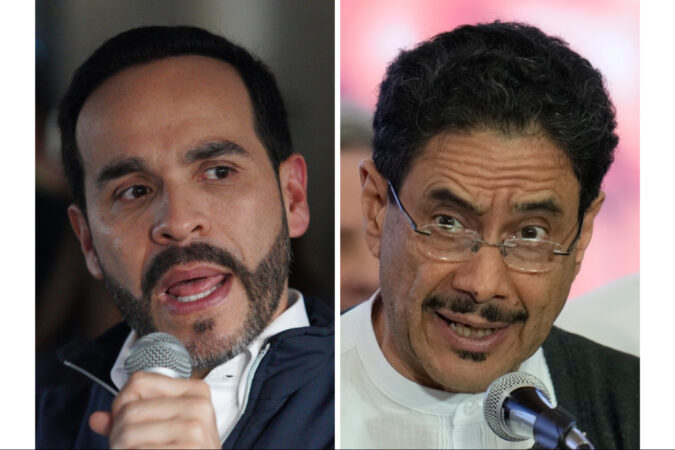
    BOGOTÁ, Colombia — Colombians headed to the polls Sunday in the most polarized election in years, with voters choosing between the country’s governing leftist political movement and a President Donald Trump-endorsed right-wing outsider.

    The vote pits Sen. Iván Cepeda, a longtime human rights activist and ally of President Gustavo Petro, the country’s first leftist president, against Abelardo De La Espriella, a former criminal defense lawyer who vows a sweeping crackdown on guerrilla groups and drug-trafficking gangs.

    The high-stakes contest has drawn international attention following De La Espriella’s endorsement by Trump, who called Cepeda a “Radical Left Marxist.”

    The move marks the latest instance of Trump endorsing right-wing candidates in Latin American elections as the region increasingly shifts toward the right, driven in part by concerns over rising insecurity.

    Who are the candidates?

    Cepeda, 63, is a senator and well-known advocate for victims of Colombia’s decades-long armed conflict. He was also part of the negotiations that led to Colombia’s landmark 2016 peace deal with the Revolutionary Armed Forces of Colombia that was meant to help end that conflict.

    Running as the candidate of Petro’s party, he has pledged to preserve many of his policies, including anti-poverty programs, land redistribution efforts, and negotiations with armed groups.

    De La Espriella, 47, is a former high-profile criminal defense lawyer and businessperson with no previous political experience and who spent years living in Florida.

    Nicknamed “El Tigre,” or “the tiger,” he has campaigned as an antiestablishment outsider, though he has long been close to Colombia’s right-wing political power elites as a lawyer.

    Why has the vote spurred controversy in the U. S.?

    Some of De La Espriella’s campaign promises echo policies pursued by other Latin American right-wing leaders, such as Nayib Bukele of El Salvador and Javier Milei of Argentina. His platform includes building 10 megaprisons, shrinking the state, and collaborating with the United States to combat drug trafficking.

    He has also been known to legally pursue his opponents — including journalists. After he received Trump’s endorsement and the support of some Republican lawmakers, De La Espriella, a naturalized U.S. citizen, began warning that he would go after anyone who challenged him, with the assistance of the United States.

    Last week, Secretary of State Marco Rubio issued a memo saying that the presence of a progressive activist living in Arizona, Beto Coral, interfered with U.S. foreign policy after the activist criticized De La Espriella. Coral, 40, was detained by U.S. immigration authorities Tuesday, a move decried by Democrats in Congress and by rights groups.

    What are voters focused on?

    Along with complaints about Petro’s rocky four-year-term, voters cite concerns over crime and extortion and the growing power of armed groups in rural areas.

    Violence surged even during the campaign, which saw a presidential hopeful assassinated, two De La Espriella campaign workers killed, and Cepeda’s running mate briefly kidnapped.

    Critics say Petro’s flagship “Total Peace” strategy, which sought negotiated settlements with multiple armed groups, allowed those groups to grow stronger during ceasefires.

    Humanitarian organizations say violence has reached its highest level since the 2016 peace accord, but Colombia remains far safer than it was during the height of the conflict in the 1980s and 1990s.

    While De La Espriella says he will completely abandon peace talks and crush narcotrafficking groups within 90 days, Cepeda has said he will continue his own version of peace negotiations.

    The election is also seen as a referendum on Petro’s presidency. Supporters credit his government with expanding social programs, and increasing the political visibility of historically marginalized groups.

    But critics say his tenure has been marked not only by deteriorating security, but by a troubled state takeover of the health system and runaway spending that has left Colombia with a public debt that is at pandemic levels.

    Why the first round of voting was a surprise

    De La Espriella finished first in the opening round with 43.7% of the vote, compared with 40.9% for Cepeda.

    The result surprised many analysts. Despite complaints, Petro has maintained approval ratings above 50% and has created a broad coalition of movements that support the left. Cepeda enjoyed a comfortable lead in the polls into last month.

    Yet many voters instead turned to De La Espriella, a political newcomer who promised a clean break not only with the left, but with traditional parties and the “same ones as always.”

    Since the first round, most polls have shown De La Espriella holding the lead. However, analysts note that the right-wing candidate’s increasingly strident language has worried more middle-of-the-road Colombians, making it harder to predict whom undecided voters will support.

    After May’s first round, Petro claimed electoral fraud without evidence, raising concerns that he could refuse to accept the results of Sunday’s election or call for protests.

    When are results expected?

    Polls were open from 8 a.m. to 4 p.m. local time. Preliminary results were expected within hours of the polls closing.

    This article originally appeared in The New York Times.
  • France restricts public drinking and outdoor sports as heat wave bakes parts of Europe

    France restricts public drinking and outdoor sports as heat wave bakes parts of Europe

    PARIS — France sizzled Sunday, canceling trains, concerts, and sports events and cracking down on public drinking as an exceptional heat wave unfurled across parts of Europe. Multiple drownings were reported as people sought relief in whatever water they could find.

    About a third of France is under ‘’red alert″ heat and temperatures reached 104 degrees Fahrenheit in some areas, in a country where air-conditioning isn’t widespread. The forecast for Monday is even hotter.

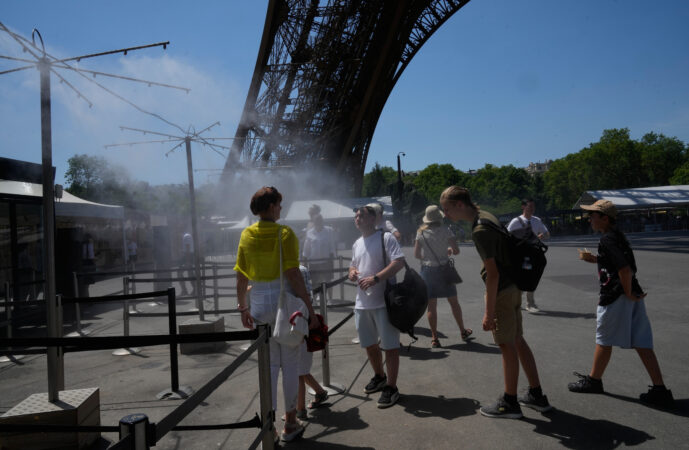
    The Eiffel Tower and other Paris venues set up misting stations to cool crowds, among a raft of measures introduced by authorities to minimize risks. Tourists in Rome dunked in fountains. Spain’s Basque Country canceled some sports and cultural events.

    More than 200,000 people across Europe died from heat-related causes over the last four years, and most of the fatalities were preventable, the World Health Organization’s Europe office said this month. More above-average temperatures are expected this summer, which can cause heat exhaustion and life-threatening heat stroke.

    Human-caused climate change is tied to increasing extreme weather events and U.N. climate agency projections say the next five years should shatter more heat records. A rapid study found that human-caused climate change was responsible for killing about 1,500 people in an unusually early European heat wave in May.

    In this latest European hot spell, French media reported that four children drowned Saturday. Summer drownings are an annual problem that health authorities say worsens during hot spells.

    Solstice parties draw large crowds in extreme heat

    France’s annual Music Day on Sunday was of particular concern. The nationwide summer solstice celebration involves thousands of concerts in village squares, rave venues, and Paris clubs, bringing communities together and increasingly drawing British and other international visitors. Some of the concerts outside Paris were canceled.

    The French government banned public drinking in ’’red alert″ zones, and ordered organizers of music day events to limit alcohol consumption to “preserve emergency services and allow medics to concentrate on taking care of the most vulnerable.”

    Scores of French trains were canceled, and the national rail authority dispatched thousands of extra staff to deal with potential problems as the heat threatened rails and electrical cables.

    Authorities are notably worried about people living in the baking streets, and elderly people in nursing homes or isolated in their homes. About 15,000 older people died in France in a 2003 heat wave that became a national reckoning.

    The government mobilized emergency services and military forces for reinforced wildfire readiness, imposed tightened surveillance of water supplies to France’s many nuclear reactors, and ordered 845 schools to close Monday.

    Spain, Italy, Germany swelter as tourists seek relief

    Spain kicked off the summer with large parts of the country on alert due to temperatures expected to hover around 104 F — even in the interior of Basque Country, a northern region that typically experiences cooler temperatures.

    Authorities have suspended outdoor sports and cultural activities in the region. The heat wave is expected to scorch Spain at least through Wednesday.

    In Italy, authorities expanded heat warnings — referred to locally as “red flags” — to eight cities Sunday in northern and central parts of the country. Temperatures there are mostly in the high 90s to low 100s F.

    At one farm outside Milan, owners set up fans and sprinklers to keep cows cool, while visitors to Milan Fashion Week huddled under parasols and clutched fans. In Rome, tourists dunked their arms and occasionally their faces into the city’s famed fountain pools.

    The German Weather Service is forecasting temperatures of up to 98 F for Monday and Tuesday, and up to 102 F Wednesday.

    A 23-year-old man drowned Saturday in a lake near Rheinstetten in the southwestern region of Baden-Württemberg, the German news agency dpa reported. Three other people are missing after swimming in the Rhine River, a police spokesperson told dpa.

    Britain’s weather office has issued an “extreme heat” warning for much of southern England and parts of Wales from Monday until Thursday, saying temperatures could reach 100 F. The current record for a June day is 96 F, reached in 1976.

    Thunderstorms also threatened regions in Germany and Poland.

    French Prime Minister Sebastien Lecornu convened a new government heat crisis meeting Sunday, and ordered government ministers to plan for better adapting France to heat waves in the future — including “via air-conditioning, if necessary.”