Category: Nation & World

  • Israel holds to Lebanon truce, with troops kept on defense

    Israel holds to Lebanon truce, with troops kept on defense

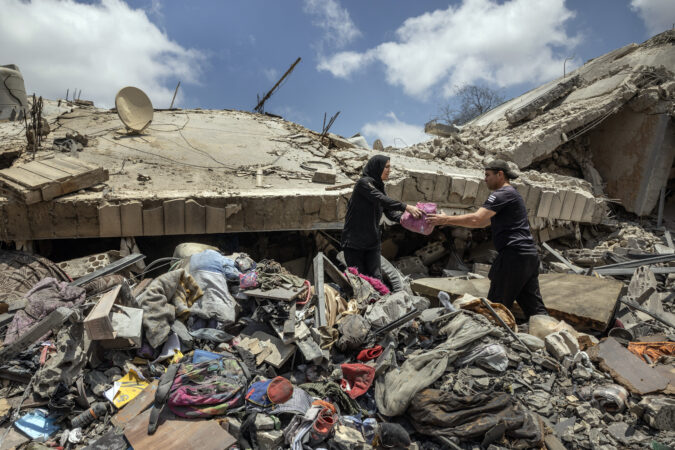
    JERUSALEM — Israel and Hezbollah appeared to maintain a tense ceasefire in Lebanon for a second day on Monday, as mediators in the U.S.-Iran talks announced a mechanism aimed at ensuring the truce holds, and Israeli troops operated under new orders designed to lower the risk of flare-ups.

    Israel’s top diplomat, however, warned that the country would not withdraw its forces from the self-declared “security zone” it has established in Lebanon up to about 6 miles north of the border.

    “Israel will respect the ceasefire in Lebanon as long as it won’t be breached by Hezbollah,” Foreign Minister Gideon Saar wrote in a social media post on Monday. “We don’t have territorial ambitions in Lebanon, but we will not withdraw from the security zone and expose our citizens to Hezbollah’s attacks and possible invasion.”

    Saar’s post came hours after Pakistan and Qatar, the mediators in the U.S.-Iran talks, announced an agreement to create a “deconfliction cell” to ensure the “adherence of the termination of military operations in Lebanon.” It would include representatives from Iran, the United States, and Lebanon.

    The quiet on the Lebanon front was still settling in after a furious round of hostilities on Friday and Saturday that began when four Israeli soldiers, including a battalion commander, were killed when their tank exploded.

    A fifth soldier was killed in the same area Saturday, setting off waves of Israeli retaliatory strikes. The military said Hezbollah, the Iran-backed Lebanese militant group, had launched more than 50 rockets targeting its soldiers operating in southern Lebanon.

    The fighting centered around the area of Kfar Tebnit and nearby Ali Taher, a strategic ridgeline overlooking the large city of Nabatiyeh in southern Lebanon. The Israeli military recently issued an updated map of its security zone that placed Kfar Tebnit and Ali Taher just within the area under Israeli control.

    That appeared to be more than coincidental.

    The Israeli military said that Ali Taher was the location of a fortified underground Hezbollah stronghold that has long served as the militia’s southern headquarters from which it directed fire against Israeli forces and communities in northern Israel.

    Should the militants inside try to leave that stronghold without surrendering, it could pose a threat to the Israel-Hezbollah ceasefire.

    Ceasefires in Lebanon have been declared, broken, and reinstated numerous times in recent weeks, but the fighting has persisted amid disagreements over what constitutes defensive actions by Israeli forces.

    An Israeli military statement Monday said that it had gained control of the area of the Hezbollah compound and encircled it, adding that “dozens of Hezbollah operatives are currently trapped with no ability to exit.”

    Hezbollah said Saturday that it had attacked Israeli forces advancing toward Ali Taher.

    Later on Saturday, the Israeli military said it had received “updated directives” from the country’s political leaders and would no longer be “conducting proactive strikes” in Lebanon. The military reserved the right to respond if Hezbollah did not abide by the ceasefire and targeted Israeli troops or civilians.

    Israeli Prime Minister Benjamin Netanyahu insisted in a video statement Monday that his directive to the military, and that of the defense minister, remained clear and unchanged: “Our fighters in southern Lebanon have full operational freedom to thwart any direct or emergent threat against them or residents of the north.”

    He did not address whether the military had been ordered to refrain from offensive action, and a spokesperson would not elaborate.

    Israeli commanders received new orders Saturday restricting them to defensive actions in Lebanon, stating that troops may only fire to counter an immediate threat unless authorized by the military’s chief of staff.

    The new orders specifically bar Israeli soldiers from firing warning shots at civilians attempting to return to southern Lebanon unless they get too close to the soldiers, according to two Israeli officials who insisted on anonymity because they were not authorized to speak publicly.

    The orders also bar Israeli soldiers from blowing up homes and other infrastructure inside the security zone without the approval of senior officers, the officials said.

    Spokespeople for the military did not respond to repeated requests for comment Monday.

    Sarit Zehavi, president of the Alma Research and Education Center, which focuses on Israel’s northern border, said she feared that the ban on offensive operations would put Israeli soldiers in the position of having to be responsive rather than proactive.

    “On the ground, it takes time till you understand what’s a threat,” she said. “This will eventually cost the lives of soldiers.”

    This article originally appeared in the New York Times.
  • First round of U.S.-Iran talks ends with high hopes and big challenges

    First round of U.S.-Iran talks ends with high hopes and big challenges

    ZURICH — The morning after the first overnight session of renewed talks between the United States and Iran, aimed at turning an incomplete truce into a lasting peace deal, the vibes were as warm as the heat wave currently washing over Switzerland.

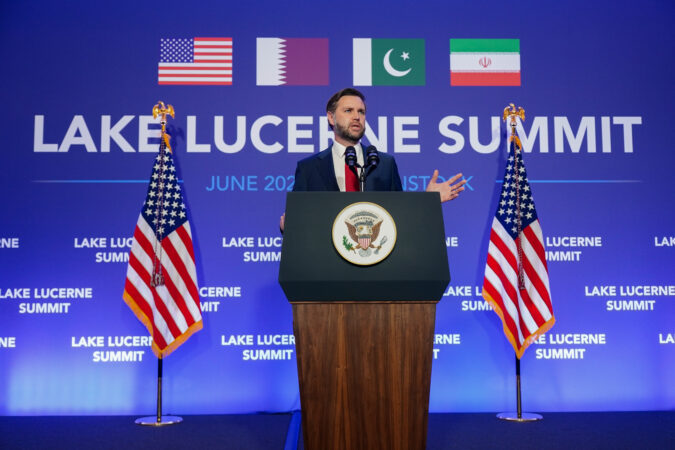
    Mediators from Pakistan and Qatar said early Monday that Vice President JD Vance and his Iranian counterparts had made “encouraging progress” toward the goal of cementing a final peace agreement within 60 days. Swiss officials called the outcome “constructive.”

    “Yesterday was a very, very good day,” Vance told reporters Monday afternoon. “We made a lot of good progress. We did exactly what we wanted to do.”

    He added that Iran had promised to readmit nuclear inspectors from the International Atomic Energy Agency, a U.N. watchdog, though Iran did not immediately confirm that.

    But other details that emerged from the luxury Bürgenstock Resort Lake Lucerne suggested that the discussions over the next two months could still prove difficult and that efforts to reach a deal could proceed in fits and starts.

    Iran’s delegation, headed by the speaker of parliament, Mohammad Bagher Qalibaf, walked away from the table Sunday to protest a social media post from President Donald Trump that threatened to resume U.S. attacks on Iran if a deal did not come together. They eventually returned.

    Perhaps more important were the still-unresolved topics that appear to have dominated much of the conversation.

    The 60-day window, which was established by the initial memorandum of understanding that Trump and Iran’s president signed last week, was meant to be a period for Iran and the United States to solve crucial issues left out of that first-step deal. Most notably, that includes Iran’s nuclear ambitions. The memorandum says that Iran will dilute its existing stockpile of near-weapons-grade nuclear material but does not clarify how that will happen or whether the country will be barred from producing such material in the future.

    Those issues were not center stage, aside from Vance’s mention of the IAEA inspectors, whose return would still be far from a solution to the nuclear question.

    Instead, the first talks focused largely on two topics that were supposed to be settled: How to enforce a ceasefire between Israel and Hezbollah in Lebanon, and how to ensure shipping traffic, including oil tankers, flows freely again through the Strait of Hormuz.

    Israel launched the war on Iran alongside the United States in February and was not party to last week’s initial deal. Despite the deal’s call for a ceasefire, both Israel and Hezbollah have continued to carry out attacks on each other. Iran protested Israel’s attacks over the weekend by saying that it had closed the Strait of Hormuz — which has been clogged throughout the war, sending global oil prices skyward — though U.S. officials said that ships were still passing through.

    Mediators from Qatar and Pakistan, who joined Iranian and U.S. officials at Lake Lucerne, said Monday morning that discussions would continue through this week.

    Some analysts warned Monday against an overly optimistic takeaway.

    Financial markets had reacted to Trump’s initial agreement with Iran “with a classic show of irrational exuberance,” Carl B. Weinberg, the chief economist for High Frequency Economics, an American analysis firm, wrote in a research note Monday morning. “This week should bring a reality check,” he noted.

    Weinberg added that he believed Iran was likely to string out the talks for much longer than 60 days — all the way until January 2029, when the next U.S. president will take office.

    The stop-start nature of the negotiations has heightened the uncertainty.

    Vance had been scheduled to fly to Switzerland on Thursday night, but canceled the trip at the last minute after Iran pulled out in protest, diplomats said, at continuing Israeli attacks in Lebanon.

    Nothing in the statements from the mediators, or from Iranian officials, suggested that the negotiations were barreling toward the sort of quick capitulation that Trump has intimated would be the endgame for the talks. For example, Qalibaf wrote on social media that Iran’s “armed forces are prepared to respond” if Trump attacked Iran again — raising the possibility of more war.

    Still, the releases from the mediators and hosts conveyed, at the very least, a sense that the talks had succeeded in starting the gears of a more traditional diplomatic process.

    Qatar and Pakistan said that the discussions had led to “the creation of a mechanism for further technical talks.” Swiss authorities said that the parties had agreed to “a road map aimed at reaching a final agreement within 60 days.”

    “Our aim,” Swiss officials wrote, “is that our diplomacy contributes to de-escalation, stability and peace.”

    This article originally appeared in the New York Times.

  • Supreme Court restores conviction in 1979 murder of Etan Patz

    Supreme Court restores conviction in 1979 murder of Etan Patz

    NEW YORK — The Supreme Court on Monday reversed a lower court decision that had reopened the case of the man convicted in the killing of Etan Patz, a 6-year-old boy whose 1979 abduction in Manhattan reshaped American childhoods.

    The court’s unsigned opinion restores the conviction of the man, Pedro Hernandez, who the 2nd U.S. Circuit Court of Appeals had said last year was entitled to a new trial.

    The three liberal justices — Sonia Sotomayor, Elena Kagan and Ketanji Brown Jackson — noted their objection to the majority’s order.

    Hernandez was found guilty in 2017 of kidnapping and murdering Etan, but an appeals court overturned that judgment in July. Months later, the Manhattan district attorney’s office, which prosecuted Hernandez, asked the nation’s highest court to review the decision.

    On Monday, a defense lawyer for Hernandez, Harvey Fishbein, said the Supreme Court’s order meant his client would not get a new trial and that his team was “terribly disappointed.”

    “We firmly believe that an innocent man is in jail for a crime that he did not commit,” Fishbein said.

    In a statement, Manhattan District Attorney Alvin Bragg said the case had “changed a generation of New Yorkers.”

    “This office has remained steadfast in its pursuit of justice for Etan and the Patz family and will continue to stand by this important conviction,” he said.

    The Supreme Court’s action sends the matter back to the lower courts and is the latest development in a case that stumped investigators for decades. Hernandez, a handyman who lived in New Jersey, was arrested in 2012 and first put on trial in 2015. But after 18 days of deliberations, the trial ended in a hung jury. The case went back to trial and, in 2017, a Manhattan jury convicted Hernandez after nine days of deliberations.

    The reversal of Hernandez’s conviction last year reopened a case that had appeared finally settled. From the first days Etan went missing, when he was walking the two blocks from his home in the SoHo neighborhood to a school bus stop, the case generated intense public interest. Etan’s abrupt disappearance — and the killing of 6-year-old Adam Walsh two years later — ushered in an era of heightened caution among American parents.

    In its 10-page opinion Monday, the Supreme Court said the 2nd Circuit got it wrong and exceeded its authority.

    The lower court opinion “appears to reflect serious doubt about the reliability of Hernandez’s confessions,” the majority said, but the relevant statute does not permit federal courts to “disturb a state-court conviction based on such an evaluation of the evidence.”

    The liberal justices did not explain their disagreement. The ruling was issued as part of the court’s routine orders and without the justices holding oral arguments.

    For decades, investigators in Manhattan struggled to figure out what happened to Etan. His body was never found, and in 2001, he was declared legally dead.

    The critical break in the case came in 2012, when one of Hernandez’s relatives contacted investigators. New York police officers traveled to Hernandez’s home in Camden, N.J. After about seven hours of questioning, police said, Hernandez confessed — first before being read his rights, and twice more after.

    Hernandez was 18 at the time of Etan’s disappearance and worked at a bodega where investigators believed Etan had been killed.

    There was no scientific evidence linking Hernandez to the crime, and his confessions to investigators were quickly called into question.

    Hernandez’s lawyers argued that the statements were invented to placate the police. They asked the court to suppress them, saying they were a result of Hernandez’s low IQ and the product of psychotic delusions. The judge nonetheless said that they could be used as evidence.

    During jury deliberations at the second trial in 2017, the jury asked the judge whether they should disregard one of Hernandez’s later confessions if they found that his first one was not voluntary. The judge gave a one-word answer: No.

    A federal appeals court found that the judge should have explained a Supreme Court precedent about such serial confessions and ordered that Hernandez be released from his 25-years-to-life sentence or get a new trial.

    Prosecutors in Manhattan, led by Bragg, argued to the Supreme Court that Hernandez’s conviction should not have been overturned because it was not based on an “error in the decades-long investigation, in the admission of Hernandez’s confessions or in the evidence presented at trial.” The appeals court had said that the judge overseeing the trial, Maxwell Wiley, had violated federal law and therefore invalidated a jury’s verdict.

    In their response, Hernandez’s lawyers said that the judge’s instruction to the jury had touched on the central issue in the case.

    “Far from exhibiting the kind of clear error for which summary reversal is typically reserved,” his lawyers wrote, “the 2nd Circuit’s decision is correct.”

    This article originally appeared in the New York Times.

  • Quarantine comes to an end for the last of the hantavirus ship passengers in Nebraska

    Quarantine comes to an end for the last of the hantavirus ship passengers in Nebraska

    OMAHA, Nebraska — The last eight American passengers who endured 42 days in a specialized hospital quarantine unit after exposure to an unusual hantavirus outbreak on a cruise ship that killed three people have left the Nebraska facility.

    U.S. Department of Health and Human Services officials on Monday confirmed the end of the quarantine.

    “Through close collaboration among federal, state, and local partners, HHS helped protect the American people, contain potential risks, and bring this response effort to a successful conclusion,” HHS spokesperson Emily Hilliard said in an email.

    More than 120 people were evacuated from the MV Hondius in Spain’s Canary Islands early last month — including the 18 Americans who wound up in the National Quarantine Unit in Omaha — though most were from other countries.

    In addition to those people evacuated by health officials in full protective suits, at least 30 other passengers had left the ship earlier before the outbreak was documented. That included seven Americans, who were allowed to monitor for any symptoms at home. When the ship eventually docked in the Netherlands, 25 crew members and two medical personnel were on board and had to quarantine.

    The World Health Organization didn’t immediately respond Monday to questions about the status of all the other people who had to quarantine around the globe. A total of 13 cases of the virus, including the three who died, were identified among people who were on the ship.

    Most Americans returned home but some were forced to quarantine

    One of the American passengers, Angela Perryman, had been held against her will and against the recommendation of a government medical expert. She said in an interview Monday passengers were told that the quarantine monitoring period ended Sunday at 2 p.m. She left on a flight that evening. Others were flying out Monday, she said.

    “We were locked in our rooms until 1:55. And at 2 o’clock, ‘OK, well, everybody walk out and go home,’” Perryman said, speaking from her Florida home.

    Some stayed the night elsewhere in Omaha, but Perryman pushed for a flight home that evening. The government paid for the flights, she said.

    Seven of the last remaining patients stayed there voluntarily, but Perryman was forced to stay as the result of a controversial quarantine order that was deemed unnecessary even by some health officials.

    Perryman and seven others spent six weeks at the National Quarantine Unit at the University of Nebraska Medical Center. That monitoring period was set because symptoms of hantavirus have taken as long as 42 days to appear in previous outbreaks. None were reported to have developed the illness.

    Ten others who were at the facility were allowed to leave earlier under an agreement that they would be closely monitored in their home states.

    Outbreak developed on a small cruise ship

    The passengers were on a Dutch cruise ship, the MV Hondius, traveling in the South Atlantic that became the setting of a hantavirus outbreak that killed three people, including a Dutch couple who health officials believe were the first exposed to the virus while visiting South America.

    Hantaviruses usually spread when people inhale contaminated residue of rodent droppings, but the hantavirus that caused the outbreak, called the Andes virus, may be able to spread between people in rare cases, health officials say.

    Some 25 Americans were on the ship, including about seven who disembarked in April and 18 who remained on board. Sixteen were evacuated to the Nebraska quarantine unit in Omaha on May 11, and two other Americans joined them a few days later.

    Passengers staying in Omaha enjoyed Nebraska hospitality

    During the passengers’ stay, local Omaha restaurants and food trucks delivered special meals for them to enjoy almost daily. And the nurses sometimes made Starbucks runs to deliver some of the passengers’ favorite drinks.

    The rooms they stayed in are like hotel rooms equipped with a desk, television, internet connection, and exercise equipment to help the passengers pass the time.

    One of the passengers, Jake Rosmarin, on Monday morning posted an “I’m finally coming home” video that showed him leaving his room at the quarantine center, hauling two suitcases and a backpack and turning out the lights as he walked out the door. Later Monday, he posted a video of the Omaha skyline shot out the window of his plane as he headed home to his fiance in Boston and his family.

    Rosmarin, who is a travel blogger, posted a tearful video Sunday thanking the staff of the quarantine unit, the Omaha community, and his family and friends who helped him get through quarantine.

    “I want to thank the Omaha, Nebraska, community for welcoming us with open arms and showing us complete kindness and generosity. And a big thanks to all of you who have helped me get through this because I really don’t know if it would have been as easy without the support from strangers,” he said while wearing a Nebraska Huskers sweatshirt that someone sent him.

    Florida wouldn’t agree to monitor passenger round the clock

    Perryman had a darker take. She was forced to stay after Florida officials refused a federal demand that the state provide round-the-clock surveillance on her if she were returned home. This happened even as they had started making travel arrangements for the passengers weeks ago, she said.

    “Nobody actually expected anybody to get sick at that point,” she said. “Everybody was well aware that we were all going home on commercial flights.”

    She called the six-week quarantine “a political stunt.”

  • Confirmed Ebola cases in Congo outbreak top 1,000 with 254 deaths, authorities say

    Confirmed Ebola cases in Congo outbreak top 1,000 with 254 deaths, authorities say

    BUNIA, Congo — Confirmed cases in the Ebola outbreak in eastern Congo have reached 1,003, including 254 deaths, officials said, as tracing those who had been in contact with patients remains a major challenge.

    A total of 100 people have recovered in the outbreak concentrated in the Ituri province since it was declared on May 15, Congo’s Ministry of Health said Sunday. At least 365 patients are in hospitals or in isolation, it said.

    The Ebola outbreak caused by the rare Bundibugyo virus, which has no vaccines or treatment, was the worst ever in its first month. Officials admit there could be far more cases they still don’t know about and that the peak of the outbreak is still ahead.

    Contact tracing remains a key issue for local authorities, who have only achieved a 55% coverage rate, the ministry said.

    “If you want to control an outbreak, especially Ebola outbreak, you must know the index case. We don’t have confidence on when this outbreak started,” the Africa Centers for Disease Control and Prevention Director-General Jean Kaseya told the Associated Press last week.

    Officials also are yet to identify the patient zero and trace more than 35,000 people who have come in contact with infected individuals as of last week, authorities said.

    That’s partly because eastern Congo is also battling ongoing violence from rebels. In Ituri, attacks by the Islamic State group-backed Allied Democratic Force have cut off access to many villages and forced people to flee their homes, including those sheltering in overcrowded camps and others constantly on the move.

    More than a month into the outbreak, officials believe the disease continues to outpace response efforts and no one knows its true scale.

    Displaced persons at risk

    At the Kigonze displacement camp in Bunia, the capital of Ituri province, camp officials said Friday that 10 people had died last week in unusual circumstances, raising the fear of a possible outbreak in the camp of over 20,000 displaced people.

    There had been no Ebola case confirmed at the site, camp officials said, but added that the death rate was unprecedented and called for investigation.

    The U.N. refugee agency has said at least 2 million people forcibly displaced from their homes, including over 320,000 refugees, live in areas at risk of Ebola in Congo.

    In a statement on Friday, the agency said it was “deeply concerned by the accelerating spread” of the virus and “the growing risks it poses to displaced communities across the region.”

    “If a disease or epidemic were to spread among the thousands of people living at this (Kigonze) site, it would be a real catastrophe given our already very precarious living conditions,” said Charité Banza, a civil society leader in Ituri.

  • Top Justice Department officials can remain part of prosecution of press gala attack, judge rules

    Top Justice Department officials can remain part of prosecution of press gala attack, judge rules

    WASHINGTON — A federal judge on Monday denied a request to disqualify top Justice Department officials from supervising the prosecution of the man charged with trying to kill President Donald Trump at the White House Correspondents’ Association dinner.

    Cole Tomas Allen had argued that involvement in his prosecution by Acting Attorney General Todd Blanche and District of Columbia U.S. Attorney Jeanine Pirro created a potential conflict of interest because they were among many administration officials present at the April dinner. Allen’s attorney also had raised concerns about the close friendship between Trump and Pirro, a former Fox News commentator.

    U.S. District Judge Trevor McFadden wrote in his ruling that neither their attendance at the dinner nor Pirro’s personal relationship with the president merited their disqualification. McFadden noted that Allen is not charged with attempting to harm Blanche and Pirro, and there is no evidence to suggest he even knew they would attend the dinner.

    “They are unlikely to be trial witnesses, nor do they meet the legal definition of victims,” wrote McFadden, who was nominated to the bench by Trump.

    Allen has been accused of trying to breach a security checkpoint armed with guns and knives. He has pleaded not guilty to various charges, including assaulting a federal official with a deadly weapon and attempted assassination of the president. He faces a maximum sentence of life in prison if convicted of the attempted assassination charge alone.

    Allen also is accused of firing a shotgun at a Secret Service agent during the attack, which disrupted and ultimately prompted an early end to one of the highest-profile annual events in the nation’s capital. The Secret Service officer who was shot once in a bullet-resistant vest fired his own weapon five times without hitting anyone. Allen, of Torrance, Calif., was injured but was not shot.

  • U.S. oil blockade means children in Cuba are missing school

    U.S. oil blockade means children in Cuba are missing school

    HAVANA — Axisa and Aron Alfonso, 6- and 7-year-old siblings in western Cuba, are luckier than most of their classmates: Their father takes them on their 1-mile commute to school on horseback.

    The children and teachers who live farther away rely on a spluttering, yellow Soviet-era school bus that no longer shows up. Teachers often do not make it to class, so the Alfonso family and their horse, Chocolate, turn around and go home.

    A U.S. oil blockade has set off an increasingly agonizing energy crisis that has brought transportation largely to a standstill. Fewer cars and buses are on the streets, and, as a result, fewer students and teachers are in school.

    “My children rarely go to school. They go, but the teachers don’t come,” said Sergio Alfonso Vásquez, 33, a farmer and the father of Axisa and Arona. “I’m afraid because they aren’t learning anything.”

    To save energy, the Cuban government in February cut school to half-days and resorted to COVID-era remote learning for college students.

    Then Cuba decided to end the school year two weeks early and scrapped college entrance exams for high school seniors after acknowledging that sleepless nights without electricity and a lack of school meals were exhausting students and teachers alike.

    The Cuban government’s measures are the latest blows to the country’s once vaunted public education system, which had long been a signature triumph of the country’s socialist revolution.

    Schools were already reeling from Hurricane Melissa last fall, which damaged hundreds of buildings; a mass departure of teachers in recent years; and shortages of textbooks, uniforms, and even pencils and paper.

    The extreme gasoline shortage finally brought the strained system to a stop.

    The Trump administration’s pressure campaign, including an executive order that prohibited countries from delivering oil to Cuba, is aimed at forcing Cuba’s government into making political and economic changes.

    But experts say the damage to the educational system is a striking example of the negative consequences of U.S. measures on regular Cubans and that, in the case of schools, amounts to a serious long-term threat.

    “Education in Cuba is at risk due to the current energy crisis,” Anne Lemaistre, the regional director of UNESCO, the United Nations education organization, said on Instagram. “It jeopardizes the future of an entire generation.”

    All 240 of Cuba’s boarding schools had to close this semester, Lemaistre, who is based in Havana, told the New York Times.

    The Cuban government did not respond to requests for comment, but government officials have publicly discussed the schools crisis.

    “After a night without electricity, getting a kid to school, figuring out how to engage him, and the class itself, is a challenge,” Naima Ariatne Trujillo Barreto, Cuba’s minister of education, said in February on state television. “And for the teachers, who also suffer just as much, without electricity or with the problem of whether or not they have water at home, concentrating on giving classes has been quite a challenge.”

    Even before the Trump administration started imposing stricter measures against the Cuban government, the country had already been in a steep economic decline for several years.

    The Cuban government said the school system was facing a shortage of roughly 26,000 teachers, many of whom had quit for better-paying jobs in the private sector.

    In Camagüey, a city in eastern Cuba, nearly 1,000 teachers had left the country for good in recent years, state-run media reported.

    After the COVID-19 pandemic, the country experienced a record-breaking exodus. More than 1 million people, including thousands of teachers who earned an average of $11 a month, left the country.

    President Donald Trump cut off international fuel deliveries in January and introduced a new package of aggressive economic measures aimed at starving the Cuban government of cash.

    The Trump administration argues that the United States is not to blame for Cuba’s energy crunch, but instead faults Cuban officials for not investing enough in infrastructure while diverting “energy resources to line their own pockets.”

    The State Department, in a statement, questioned why the Cuban regime claims it has no fuel for schools, while Interior Ministry officials who quash protests have enough gas to carry out their operations.

    Remote learning for college students, one of the austerity measures adopted by the Cuban government, has proved all but impossible. Blackouts stretch over 20 hours a day, and most students and teachers cannot pay for enough data on their phones to support remote classes.

    Instead, professors have sent lessons using WhatsApp voice notes.

    Leonard Gómez León, a third-year law student at the University of Havana, described the semester as “hellish.”

    “The power outages have been constant, the lack of internet connection, and so on, and it’s truly terrifying to see how badly we students are doing,” he said. “I feel like this is almost a lost semester.”

    Gómez, 21, is the vice president of the University Student Federation of Cuba, a state-run organization that has traditionally toed the government line. But he helped organize a protest in March outside the university, demanding the semester be canceled until in-person classes could resume.

    The vice minister of education, Modesto Ricardo Gómez, told the protesting students that the Trump administration was “massacring an entire society.”

    The collapse of education is a stark contrast to the gains that the country made after Fidel Castro toppled a U.S.-aligned dictator and seized power in 1959.

    He made education a priority at a time when the illiteracy rate was higher than 20% and mobilized 250,000 students and teachers to teach adults to read, particularly in the countryside.

    Illiteracy was all but eradicated. The island’s universal, free university system steadily expanded over the decades, churning out doctors and engineers.

    But the government, which has a near monopoly on such professions, has for decades paid minuscule salaries, undercutting economic incentives to study or teach. And the quality of Cuba’s education has deteriorated since the fall of the Soviet Union, the country’s main benefactor, which led to budget shortfalls.

    Katrin Hansing, an anthropologist at the City University of New York’s Baruch College who has written extensively about Cuba, said the education system is now “a shell of its former self.”

    University education in particular, she said, is largely on pause.

    “What is happening online is very poor in quality,” she said. “There’s only one, or two, or less, hours of electricity a day, and people in that time are trying to do everything to survive, from washing to cooking.”

    Alejandro Paradero Almenarios, 20, had enrolled at the University of Guantánamo, hoping to become a biology teacher, but dropped out in January, five months into his freshman year. He decided the effort was not worth it given the paltry wages he would earn teaching high school, the equivalent of $7 a month.

    “I was studying and studying for nothing,” he said.

    He now works full time making charcoal, which people now rely on to prepare meals because cooking gas is unavailable.

    Raúl Cabrera Oliva, 18, was in his last year at a vocational high school in Artemisa, west of Havana, that specialized in veterinary medicine.

    With few transportation options for most students, the school closed.

    “No transportation, no school,” Cabrera said.

    The government’s push to reduce school hours to half a day caused another set of problems. By the time parents and children, many of whom hitchhiked, arrived at school, there was no time for parents to go home and then return in time for dismissal.

    Mothers killed time waiting outside.

    Yaymaris Rodríguez López said she would leave her house in a village in western Cuba every morning at 7 a.m. with her two sons, ages 12 and 4, and stood on the side of the road, hoping someone would drive by offering a ride to her children’s school.

    Sometimes, 10 a.m. came and went, and they would still be waiting.

    “What am I going to do? I have to take them to school,” Rodríguez said. “They can’t grow up to be dumb.”

    This article originally appeared in the New York Times.

  • Rubio will visit Gulf allies amid scrutiny of his position on Iran deal

    Rubio will visit Gulf allies amid scrutiny of his position on Iran deal

    ABU DHABI — Secretary of State Marco Rubio will head to the Middle East this week for meetings with Arab Gulf allies, a high-stakes diplomatic assignment for a prominent Iran hawk who largely kept a low profile as the Trump administration pursued its fragile ceasefire deal with Tehran.

    Rubio will travel to the United Arab Emirates, Kuwait, and Bahrain from Tuesday to Thursday. All three countries faced heavy targeting from Iranian strikes after U.S. and Israeli forces began the Iran war in late February, and they suffered some of the most acute economic fallout from Tehran’s move to block traffic through the Strait of Hormuz, a vital shipping lane for export-dependent countries in the region.

    In addition to his bilateral meetings during the three stops, Rubio will meet in Bahrain with the Gulf Cooperation Council (GCC), a regional body for the Arab Gulf nations.

    The secretary’s trip follows Vice President JD Vance’s meeting with Iranian officials in Switzerland on Sunday, beginning a 60-day effort to build upon the ceasefire announced in a controversial memorandum of understanding signed by President Donald Trump last week. The meeting was delayed by several days after Israeli attacks on Lebanon prompted Iran to say it would reimpose its closure of the Strait of Hormuz.

    The outcome of U.S. talks with Iran would have significant impact across the Middle East. As part of the Trump administration’s proposed compromise with Tehran, the Iranian regime would give up its highly enriched uranium, which could be used to make a nuclear weapon, in exchange for a number of economic benefits, including the lifting of sanctions, access to frozen assets, and a $300 billion fund for reconstruction.

    That Vance, and not Rubio, has been the face of the deal has been widely noted in Washington.

    “I think Marco just sees a bad deal when he knows one,” said Sen. Chris Coons, (D., Del.), speaking at a roundtable with journalists hosted by Bloomberg News last week. Coons asserted that Rubio, his former colleague on the Senate Foreign Relations Committee, was not discussing the subject publicly to avoid being associated with a deal that the senator called a “near-total capitulation” to Tehran.

    The State Department dismissed this sentiment as ill-informed speculation. “Secretary Rubio and the entire administration is 100% in lockstep behind President Trump,” said Tommy Pigott, a spokesperson.

    Any public defense of the negotiations with Iran from Rubio could carry weight, as he was a fierce critic of the 2015 nuclear agreement with Iran, the Joint Comprehensive Plan of Action, that was secured by the Obama administration. In one speech before that agreement was struck, Rubio said that “a bad deal [with Iran] almost guarantees war, because Israel is not going to abide by any deal that they believe puts them and their existence in danger.”

    “I think many will be waiting with bated breath to see how one of the most internationalist and hawkish members of this administration will be making sense of this document,” said Behnam Ben Taleblu, an expert at the Foundation for Defense of Democracies, a D.C. think tank that has argued for more aggressive action against Tehran.

    Brett Bruen, who served on the White House National Security Council during the Obama administration, said Vance’s position as the public face of the deal was notable and may be because “the vice president so badly wanted to push peace, having been so ideologically at odds with the war.”

    “But it’s also because Rubio knows a dumb diplomatic deal from a distance and this one with Iran has ‘disastrous’ emblazoned all over,” Bruen added.

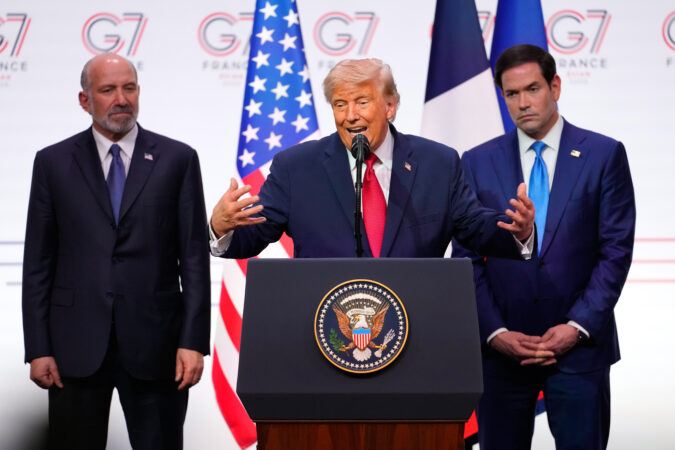
    Officials close to both Rubio and Vance have downplayed the significance of Vance’s role as the public face of the agreement, arguing that much of it was timing. The vice president, these people noted, had a book coming out and was already doing a press tour, whereas Rubio was traveling with Trump to the Group of Seven meetings in France, where naturally his boss took center stage.

    “From what I can tell, he’s supportive of the deal,” said one person familiar with Rubio’s thinking, who spoke on the condition of anonymity because they were not authorized to speak to the media. This person added that the secretary, who also serves as White House national security adviser, was also “clear-eyed about the fact that we are talking about the Iranians here.”

    Vance’s ownership of the issue has political implications, given that he and Rubio are widely expected to become political rivals in the race to succeed Trump as president.

    Jon Hoffman, a policy analyst at the libertarian Cato Institute think tank, said Rubio and Vance represented “the divide between the traditional neoconservative worldview and the growing constituency weary of foreign entanglements,” particularly in the Middle East.

    All three nations that Rubio is visiting were impacted by Iranian military retaliation after it was attacked. Bahrain, the smallest country in the region, saw major damage near the U.S. Navy’s 5th Fleet based in Manama, while the UAE was reported to have seen more attempted strikes than the five other Gulf Cooperation Council nations combined.

    Experts said that while all three appeared to welcome the ceasefire, across Arab Gulf nations there were major concerns about the memorandum of understanding’s lack of provisions addressing nonnuclear threats like Iran’s ballistic missiles and the prospect of large sums of money going to Tehran with few strings attached.

    Rubio will need to “reassure them that this is not some harbinger of a U.S. decision to leave the region or to abandon their security,” said William V. Roebuck, executive vice president of the Arab Gulf States Institute in Washington and a former U.S. ambassador to Bahrain. “In fact, it’s an opportunity to enhance it.”

  • U.S. temporarily lifts sanctions on Iranian oil

    U.S. temporarily lifts sanctions on Iranian oil

    The Treasury Department on Monday issued a 60-day license allowing the production, delivery, and sale of Iranian oil as part of the preliminary U.S.-Iran deal signed last week.

    Iran stands to reap significant financial rewards from the reprieve, which represents a sharp reversal of U.S. policy. Most importantly, it clears a path for the country to export its oil at market rates after many years of being forced to sell at a discount to find buyers willing to take the risk of running afoul of U.S. economic restrictions.

    But the Trump administration has signaled that it’s ready to provide Iran with financial rewards for opening the Strait of Hormuz and ending the war, which has destabilized the global economy.

    Treasury Secretary Scott Bessent said on social media that the sanctions exemption was the result of “ongoing productive” talks with Iran that are taking place in Switzerland.

    “Iran has committed to free and open transit in the Strait of Hormuz and to permit International Atomic Energy Agency (IAEA) inspectors into their country,” Bessent wrote in a post on social platform X.

    The Trump administration provided Iran with temporary sanctions relief earlier this year as it tried to curb oil prices by allowing more crude supplies to flow to global markets. The U.S. then ramped up sanctions and created a military blockade preventing the sale of Iranian oil as part of an effort to cripple its economy.

    The new license, which expires Aug. 21, gives Iran greater access to U.S. currency by allowing the country to conduct oil transactions using U.S. dollars. It also allows U.S. importers to buy Iranian crude oil, petrochemical products, and petroleum products.

    Iran produced less than 5% of the world’s oil before the war, with the vast majority of its exports going to China. But it was forced to sharply curtail production in recent months because of a U.S. blockade. Time will tell how quickly the country will be able to restart those wells, which can be a tricky process. Iran will also have to repair energy infrastructure damaged in the war.

    The Trump administration has faced criticism for striking an initial agreement with Iran that critics say is overly accommodating and more generous than the 2015 Joint Comprehensive Plan of Action that the Obama administration and other world powers reached with Iran to curb its nuclear program.

    “It’s also important to note that sanctions relief was not provided immediately when the JCPOA was enacted, it happened at ‘Implementation Day’ — six months after the IAEA verified the nuclear commitments were fulfilled,” said Daniel Tannebaum, a senior fellow at the Atlantic Council who previously served as the Office of Foreign Assets Control compliance coordinator for the Federal Reserve Bank of New York.

    This article originally appeared in the New York Times.
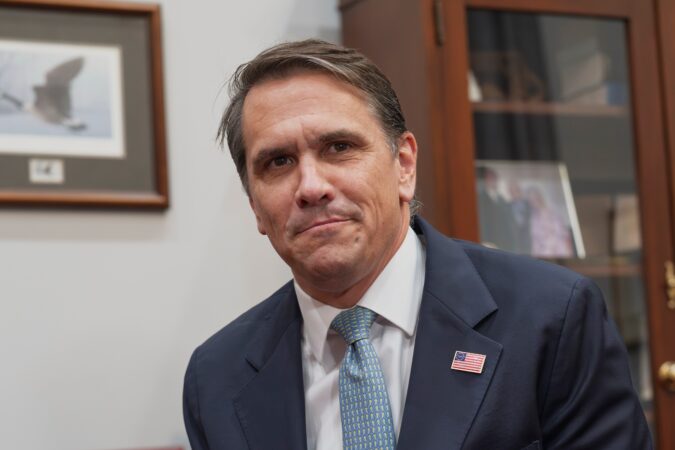
  • Federal judge halts Trump administration effort to subpoena Walz in immigration enforcement probe

    Federal judge halts Trump administration effort to subpoena Walz in immigration enforcement probe

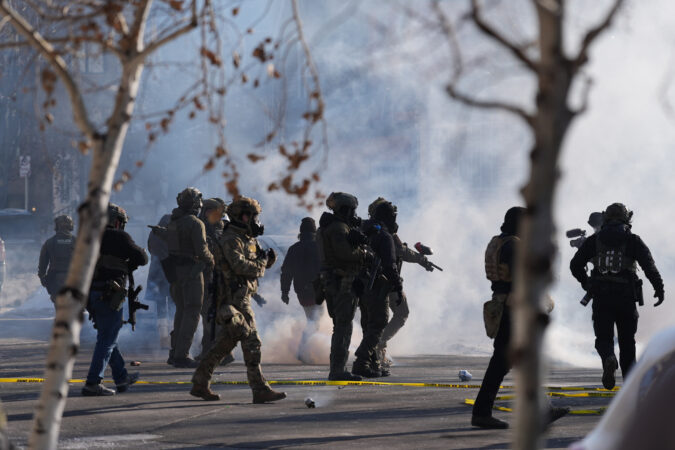
    A federal judge has blocked an attempt by the Trump administration to subpoena Minnesota Gov. Tim Walz and other state officials, calling it an effort to “harass and retaliate against them.”

    In a ruling unsealed Monday, U.S. District Judge Patrick Schlitz found the “dominant purpose” of the subpoenas was to “coerce Minnesota officials into assisting the federal government with enforcing civil immigration law and to harass and retaliate against them for failing to do so.”

    The subpoenas seeking records were served in January as part of an investigation into whether Walz and other officials obstructed or impeded law enforcement during a sweeping immigration operation in the Minneapolis-St. Paul area. They were sent to the offices of Walz, Attorney General Keith Ellison, Minneapolis Mayor Jacob Frey, St. Paul Mayor Kaohly Her, and officials in Ramsey and Hennepin counties.

    The ruling is the latest rebuke by the federal judiciary of Justice Department efforts to aggressively implement the Trump administration agenda in courts and target the president’s political adversaries through subpoenas and similar demands.

    The judge ruled that there appeared to be “extremely weak to nonexistent” connections between the information sought in the subpoenas and any possible criminal violation. The subpoenas seek materials “that largely if not entirely relate to constitutionally protected conduct,” the judge wrote, noting that Minnesota has the legal right not to devote its resources to enforcing federal immigration law.

    The Justice Department “is not conducting a criminal investigation,” the judge wrote, “but is instead using the grand jury process for other (unlawful) purposes.”

    The evidence that the subpoenas were issued for unlawful reasons is overwhelming, the judge said, arguing that the Justice Department “has struggled — without success — to identify a single plausible investigatory justification” for them.

    The Justice Department didn’t immediately respond to an email seeking comment.

    Walz, in a statement, called the ruling “a victory for the rule of law and our democracy.”

    “The U.S. Justice Department is pursuing criminal investigations into the President’s political opponents,” said Walz, the 2024 Democratic nominee for vice president. “This case was just one example of that, but we are seeing daily reminders of this administration’s lawlessness — in Minnesota and around the country. We all must continue to seek justice and uphold the rule of law.”

    Ellison said “it should disturb every American that Donald Trump is weaponizing the criminal justice system against people he disagrees with.”

    The subpoenas were “a politically motivated retaliation against our city for lawfully standing up to ICE and fighting for our residents,” Her said in a statement, referring to U.S. Immigration and Customs Enforcement.

    Frey said the investigation was “never about justice, law, and order, but the absence of it.”

    “Subpoenaing political opponents because they spoke on behalf of their constituents violates the core tenets of our democracy and human decency,” he said.

    Frey also observed that criticizing government action is not a crime.

    “One of the defining strengths of our democracy is the ability to challenge those in power without fear of retribution. Elected officials have both the right and the responsibility to speak honestly about how government decisions affect the people they serve,” he said.

    Over the last year, judges have dismissed indictments against two prominent Trump foes, former FBI Director James Comey and New York Attorney General Letitia James, and grand juries have repeatedly refused to return indictments sought by the Justice Department.

    The moves reflect mounting public concerns that the Justice Department, an institution meant to make investigative and prosecution decisions independent of the White House, is being politicized under the current Trump administration.

    Vice President JD Vance has separately called on the Justice Department to investigate Walz and Ellison over allegations they failed to stop widespread social services fraud, though the department has not said whether it will open an investigation. Walz and Ellison have described those allegations as politically motivated and defended their efforts to combat fraud in Minnesota.