Category: New Jersey News

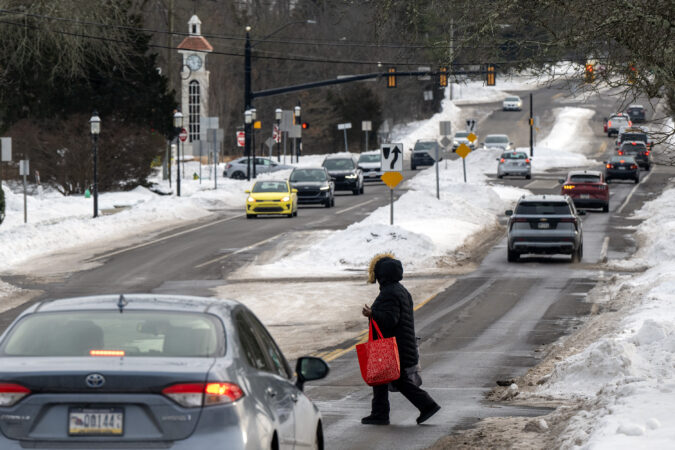
  • It’s ‘Groundhog Day’ in Philly this week as snow and ice persist

    It’s ‘Groundhog Day’ in Philly this week as snow and ice persist

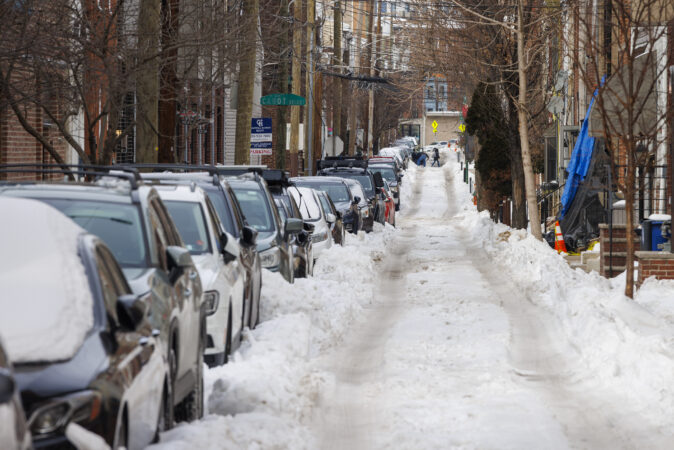
    If it appears that the tenacious meringue of snow and ice that landed on the region two weekends ago hasn’t budged, it hasn’t.

    Among Philadelphia winters, this one is approaching a rarefied status.

    Not long after Phil predictably saw his shadow in Punxsutawney, the National Weather Weather Service contractor at Philadelphia International Airport reported a snow depth of six inches on Monday.

    That marked the eighth consecutive day of a snow cover of at least six inches, a streak unmatched since February 2010 — which included a five-day period in which 44 inches of snow had fallen.

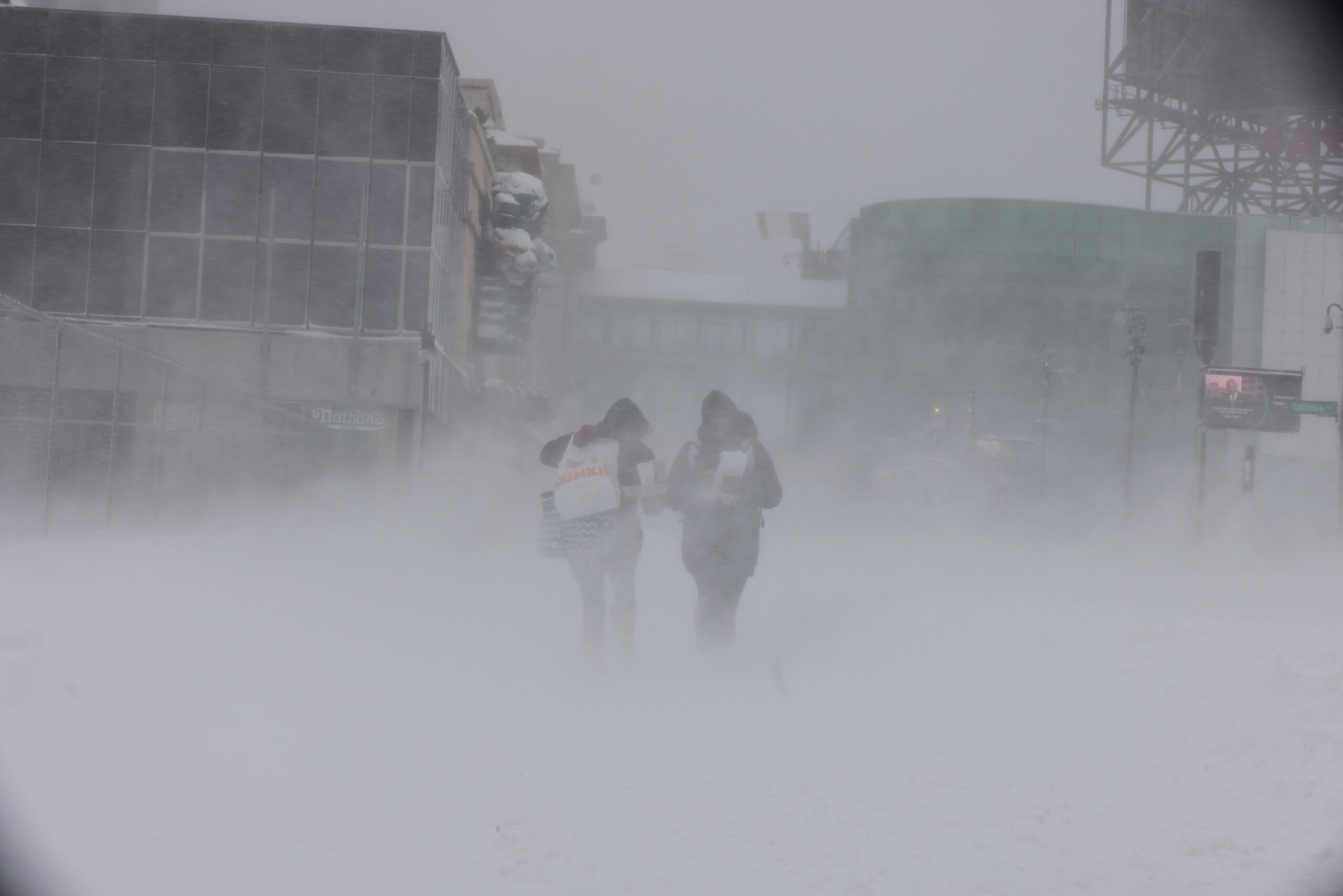
    And what’s out there now may get a fresh frosting on Tuesday night that could affect the Wednesday morning commute, and perhaps snow squalls on Friday with the approach of another Arctic front as the freezer reopens.

    Don’t be surprised if next Monday morning looks a lot like this one.

    “The snowpack is not going anywhere,” said Amanda Lee, meteorologist at the weather service office in Mount Holly.

    What explains the durability of the snow cover

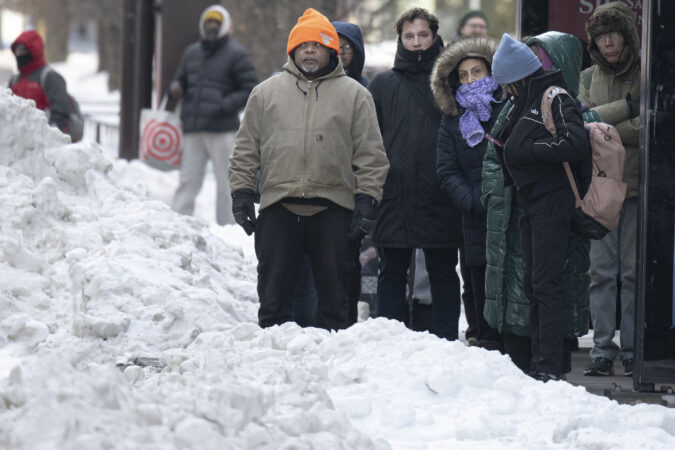
    The primary factor locking in the regional glacier has been the obvious — the cold. Sunday marked the ninth consecutive day that temperatures failed to surpass freezing, the longest stretch since 2004. The temperature did reach above freezing at Philadelphia International Airport on Monday.

    Temperatures since Jan. 24 have averaged 14 degrees below normal in Philly. January temperatures ended up finishing 2.2 degrees below normal, even though the month had a nine-day warm spell in which the highs went past 55 on five days.

    In addition to the cold, the icy layers of sleet that have put a cap and a patent-leather sheen on the several inches of snow that fell Jan. 25, have limited melting. Ice is way slower to melt than snow.

    Eight days after an official 9.3 inches of snow and ice was measured officially, about two-thirds of it has survived.

    The forecast for the next several days

    The region is in for a modest — very modest — warming trend. Readings cracked freezing Monday, reaching 35 degrees at 4 p.m. and are forecast to top out near 32 on Tuesday and Wednesday, and hold in the upper 20s Thursday. Those readings still would be several degrees below normal.

    Some light snow is possible Tuesday night, “maybe up to an inch,” Lee said. The weather service on Monday was listing a 72% probability of something measurable — defined as 0.1 inches or more — falling in Philly.

    Given the cold and the solidly frozen paved surfaces, “it could make things slippery for the morning commute on Wednesday,” said Matt Benz, senior meteorologist with AccuWeather Inc.

    Friday afternoon, he said, the region could see snow squalls — brief, mini-blizzards that can come on without notice and reduce visibility dangerously.

    Then it’s back to the freezer with expected weekend lows in single digits and highs struggling to reach 20.

    For those ready for something completely different, NOAA’s Climate Prediction Center on Monday suggested the potential for significant pattern change, although this may require a little patience around here.

    Its extended outlook for the six-to-10 day period that begins Sunday has most of the nation warmer than normal, with odds strongly favoring below-normal readings in the Philadelphia-to-Boston corridor. But a “rapid warmup” in the Philly region is possible around mid-month, the climate center says.

    In the short term, it appears that Philly is in for a repetitive sequence evocative of the 1993 movie classic Groundhog Day.

    “We’ve had lots of very similar days,” Lee said.

    We’ve noticed.
  • Take a look inside Muhammad Ali’s former Cherry Hill mansion that’s now back on the market

    Take a look inside Muhammad Ali’s former Cherry Hill mansion that’s now back on the market

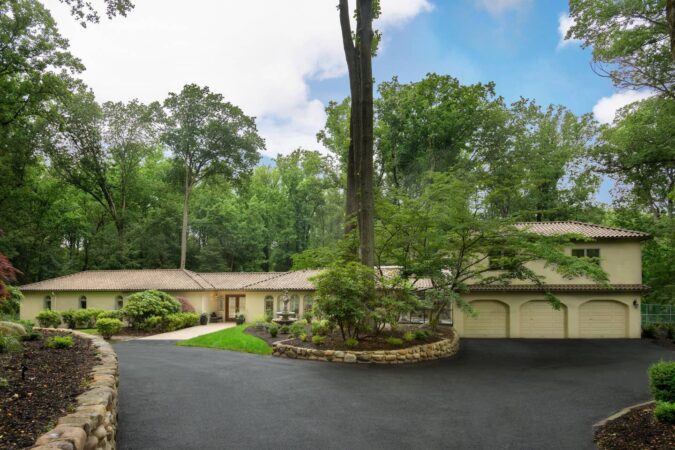
    Muhammad Ali’s former Cherry Hill mansion, once fit for one of sports’ greatest icons, is back on the market.

    The 6,688-square-foot Mediterranean-style ranch house, located at 1121 Winding Dr., is listed for sale for $1.9 million, $100,000 more than it was previously listed for three years ago.

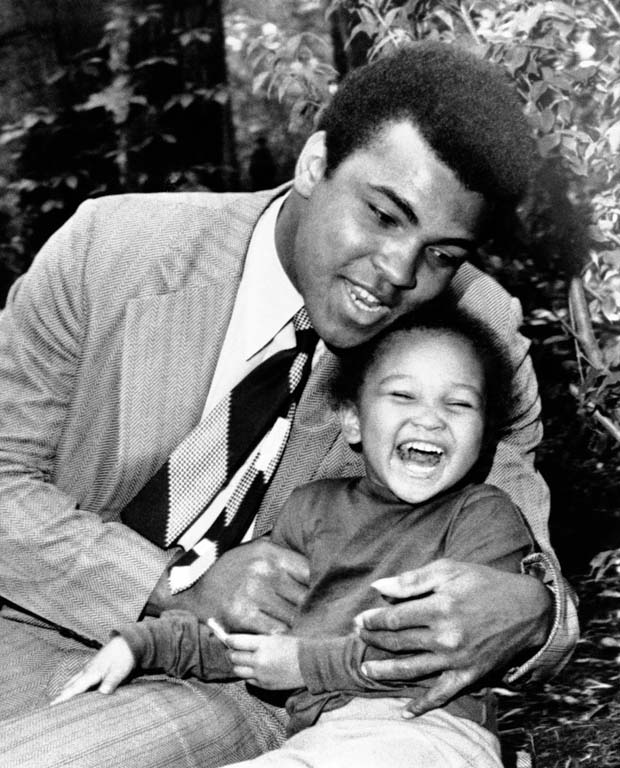
    Muhammad Ali plays with his 3-year-old daughter Maryum at his home in Cherry Hill, N.J., on Monday, June 14, 1971.

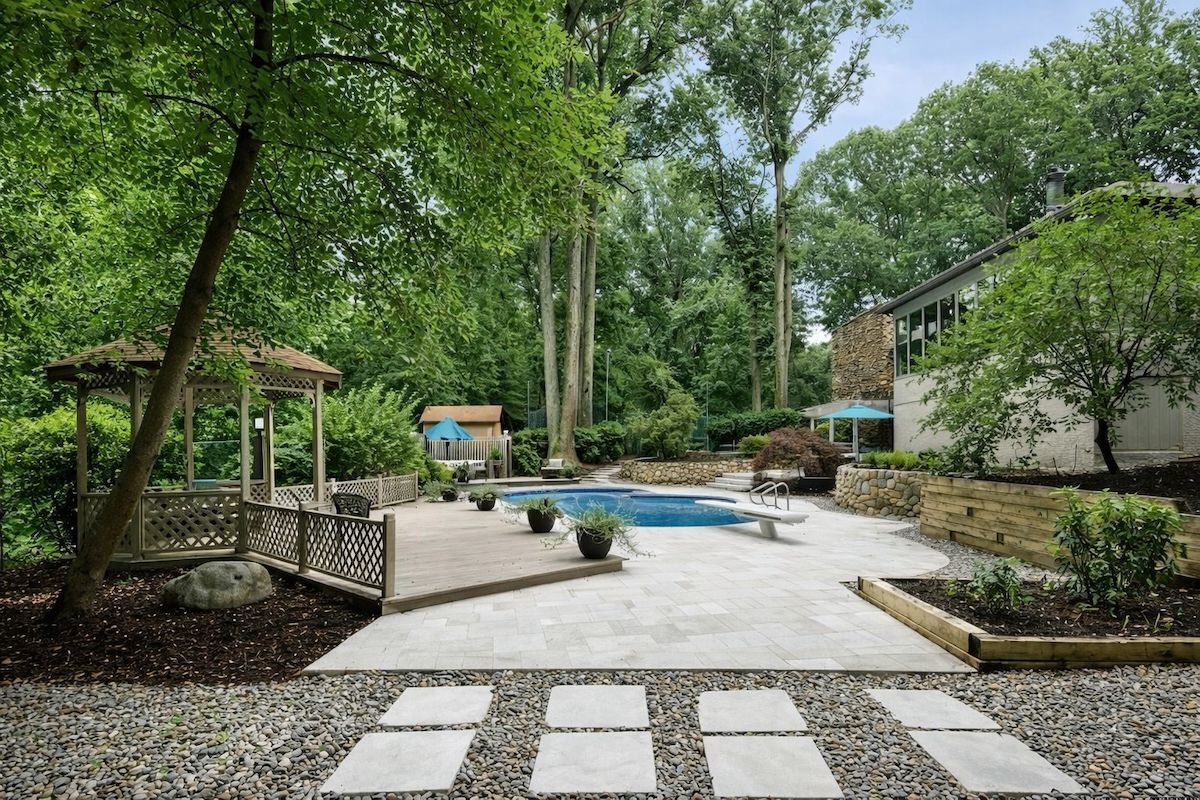
    Sitting on 1.5 acres, the six-bedroom, five-bathroom estate features a kitchen with a large center island and custom cabinetry, a sun-filled greenhouse room, a spacious living area, and an in-ground pool and hot tub, with adjacent basketball and tennis courts. On the lower level of the home is a personal gym and a 12-foot wet bar.

    Ali, who died in 2016, lived in Cherry Hill with his family from 1971 to 1973. “I made a little mansion out of it. I’ve got a lot of land,” Ali told Philadelphia magazine in the 1970s

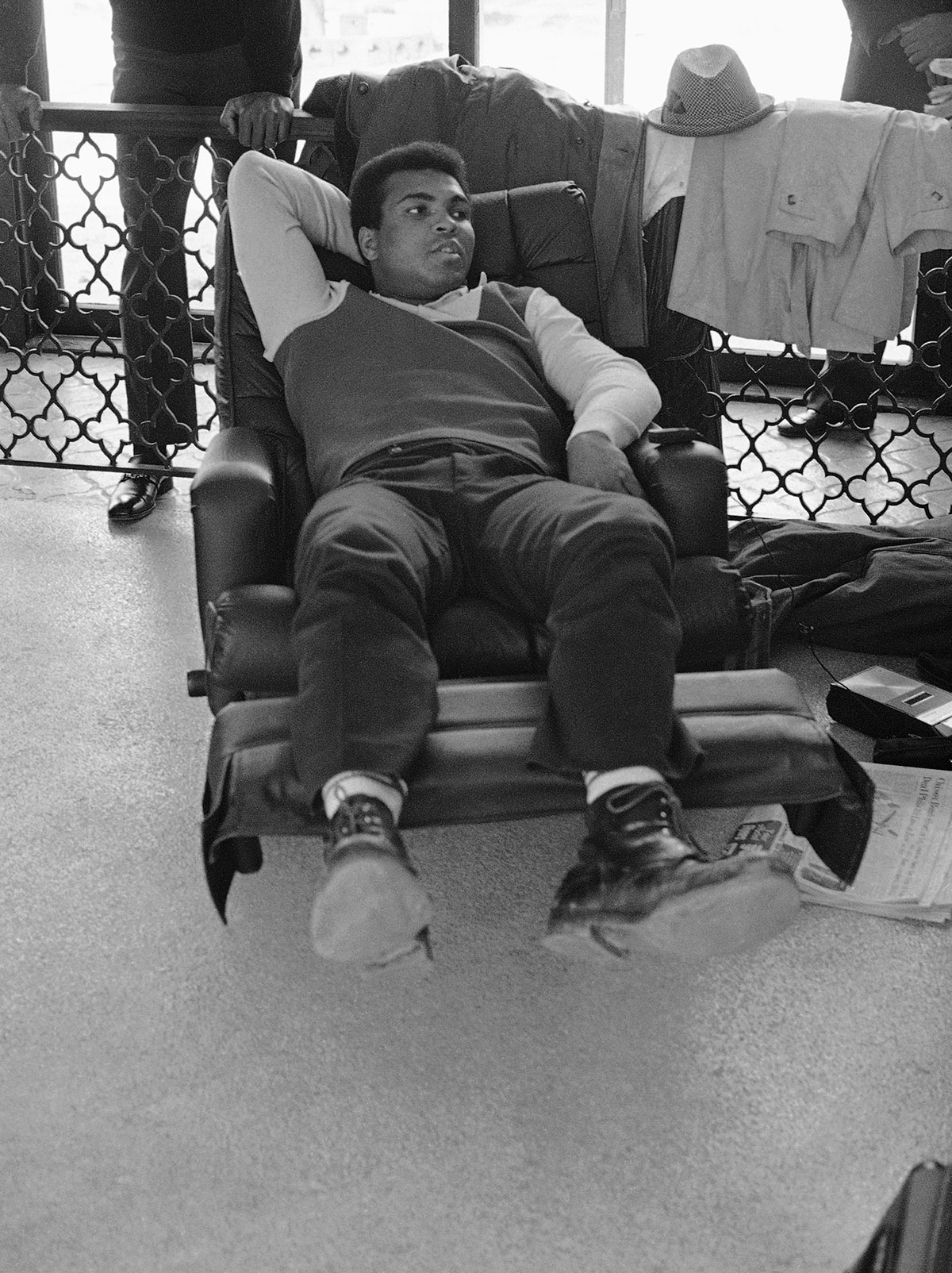
    Muhammad Ali, who was defeated by heavyweight champion Joe Frazier, leans back in a reclining chair in his new home in Cherry Hill, N.J., March 10, 1971, as he answered Frazier’s promise to fight Ali again. “Good, we got a rematch, maybe in seven months, might be sooner,” Ali said.

    The Champion bought the home for $103,000 in 1971. He moved to Chicago a few years later, according to the New York Times, after his friend, Camden power broker Major Coxson, was shot and killed in his home down the road from Ali’s. A major franchisee of local McDonald’s bought the home from Ali for $175,000.

    Before living in Cherry Hill, Ali lived in a West Philadelphia home in Overbrook that was later sold to Kobe Bryant’s grandparents.

    The backyard and pool area of 1121 Winding Dr. in Cherry Hill, the former home of prizefighter Muhammad Ali from 1970 to 1973. It’s now up for sale for $1.9 million in 2026.

    The current owners, who purchased the Cherry Hill home in 2014, traded in the 1970s decor and design for a modern look, converting Ali’s koi pond into a centerpiece courtyard and fire pit. However, the home retains Ali’s prayer room, which can be found in the lower level, lined with bookshelves.

    The main draw is the ample entertainment spaces, including the basement bar.

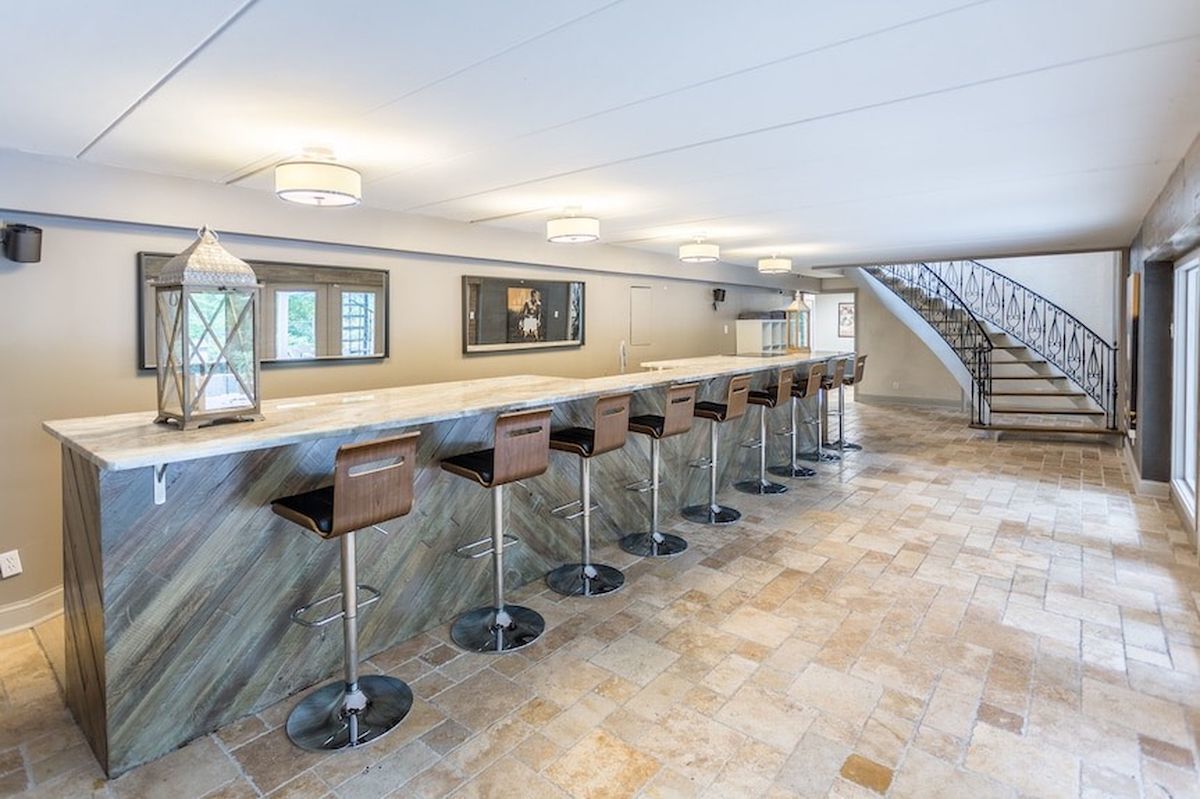
    The downstairs bar area at 1121 Winding Dr. in Cherry Hill, the former home of Muhammad Ali from 1970 to 1973. It’s now up for sale for $1.9 million in 2026.

    “There’s a spiral staircase from the main level to downstairs and you walk right into this large bar area, with tables, chairs, and a large TV setup,” Nicholas Alvini of Keller Williams said. “It really is a great entertaining house.”

    The kitchen, including a large island, at 1121 Winding Dr. in Cherry Hill, the former home of prizefighter Muhammad Ali from 1970 to 1973. It’s now up for sale for $1.9 million.

    In recent years, the home has been used for short-term rentals, and “wild parties” led police to visit the home 97 times between 2018 and 2019, according to an Inquirer report. In response, Cherry Hill township council almost adopted a ban on Airbnb rentals before eventually tabling the idea after community members spoke against it.

  • Spotting snowy Elmo

    Spotting snowy Elmo

    I spoke with a Friends School class this week, primarily about my photos decades ago of unhoused men in Center City. It was part of their week working with PhotoVoice, a research method where participants photograph their own lives to highlight community strengths and challenges, and advocate for social change.

    After the class, and following many thoughtful questions from the middle schoolers about how in general I approach people before I photograph them, and specifically people in vulnerable situations, a student came up to ask me a more practical question: “How do you take pictures in bad weather?”

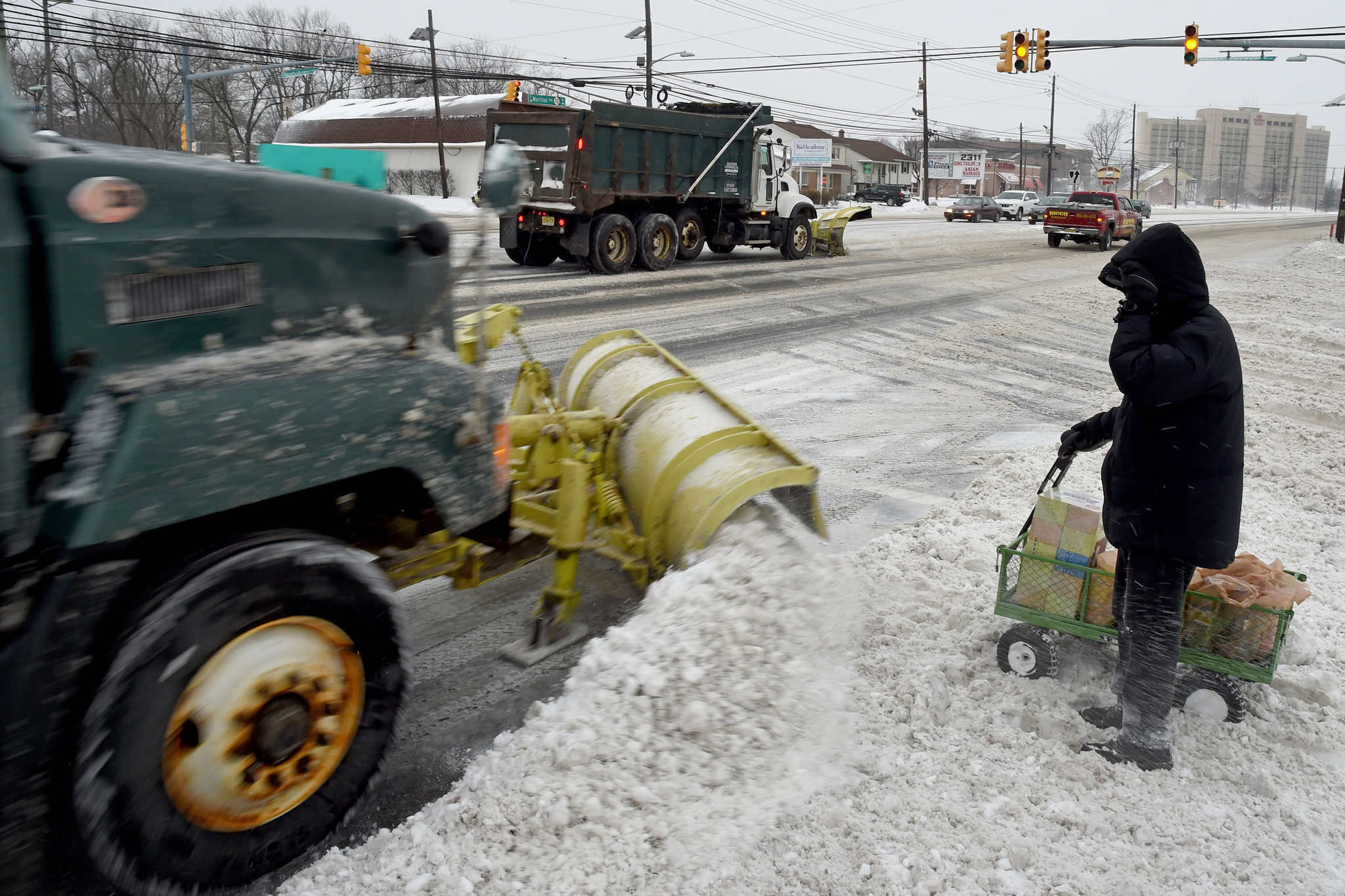
    Pedestrians and plows on Rt. 70 in Cherry Hill in Januiary, 2018.

    I don’t have an all-weather, sealed camera, so besides dressing as best I can for the conditions (and always having a spare pair of thick, dry wool socks in my car) keeping my camera protected is the biggest priority. I not only need to stave off mechanical/electronic breakdown, but have to keep my lens clear of the elements.

    I told him I do have a dedicated rain sleeve but I’ve only used it once or twice at rainy sporting events (they’re priced from $2 each up to $200).

    Mostly I use plastic bags or a large umbrellas (watching that I not catch the edges in my frame). I also try to find dry areas to stand in — while watching and photographing others out in the elements. I seek cover under a roof, awning, or doorway. I go into parking garages or subway entrances.

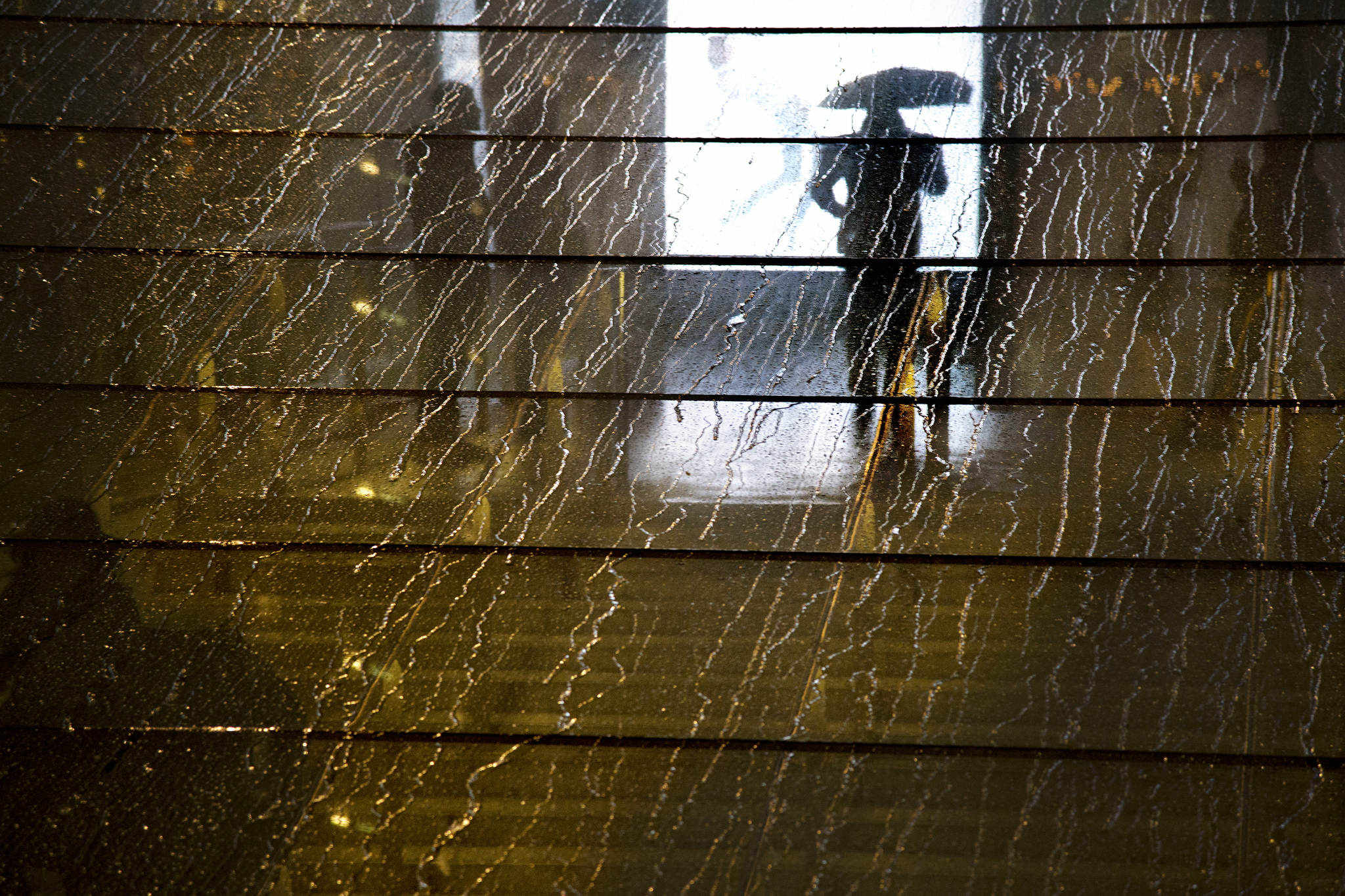
    The glass entrance to SEPTA’s underground concourse at Dilworth Park by City Hall.

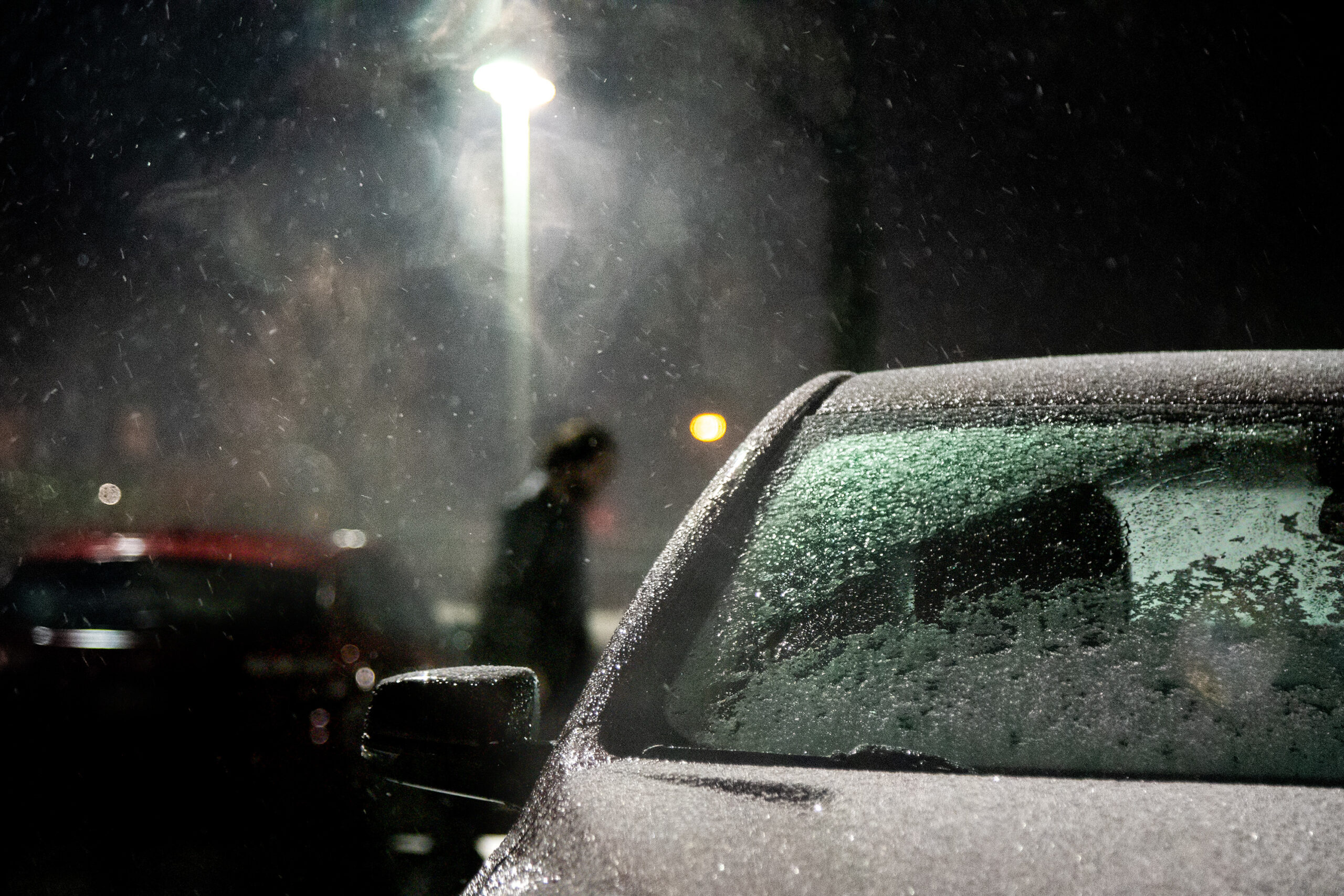
    Sometimes I safely park my car where I can briefly open my leeward (downwind!) window. Other times the rain or snow on glass can even be an effective way to portray the “dab” weather. It can be in or out of focus to create a bokeh-like effect or blurred to convey mood. Your choice of a fast shutter or slow shutter can either stop the drops or show their movement.

    Precipitation — some snow and some rain — falls on cars in a parking lot on City Avenue.

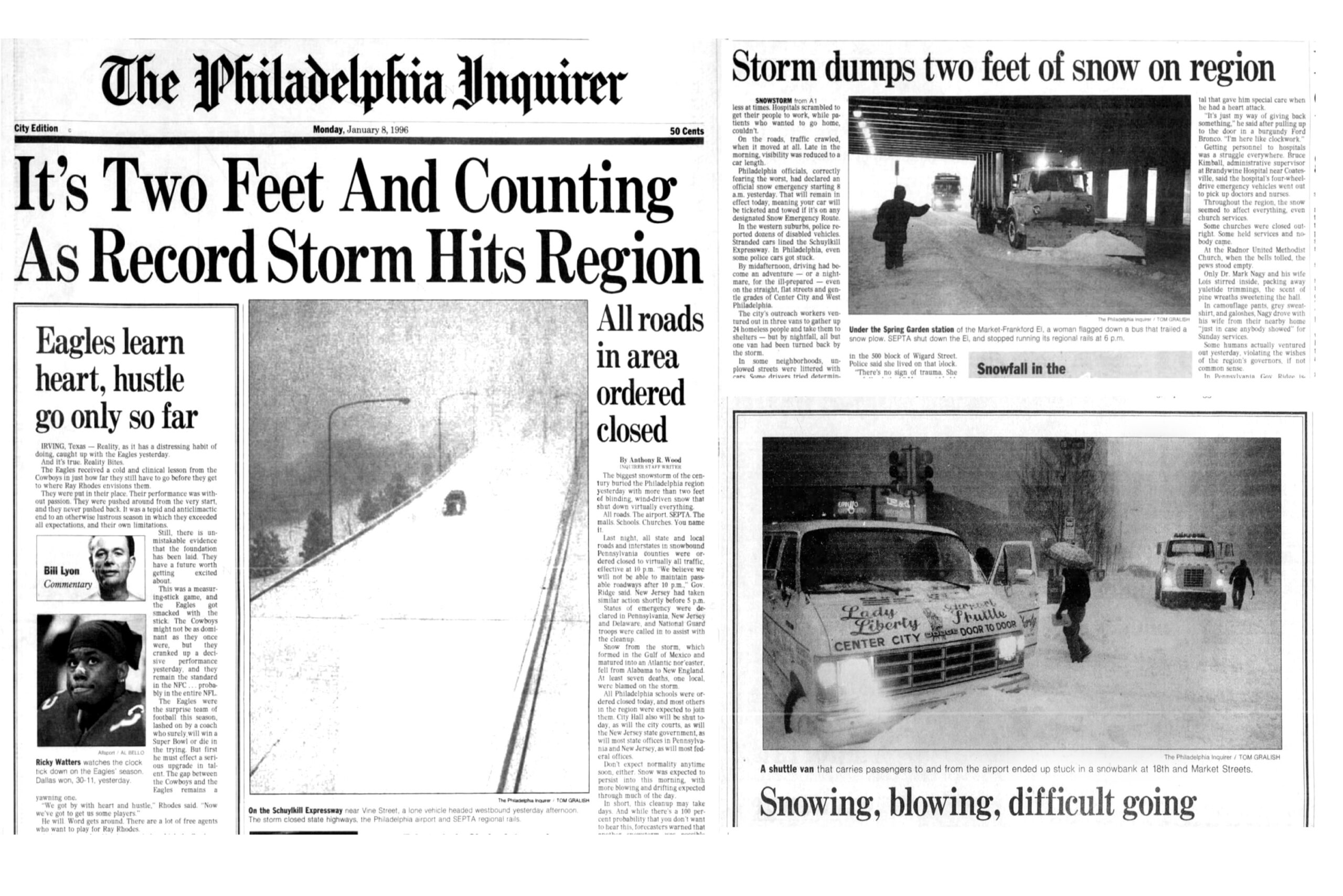
    I’ve covered all of the biggest storms of the past few decades, including the historic “Blizzard of the Century” thirty years ago this month.

    Front page and inside photos from The Philadelphia Inquirer. January 8, 1996.

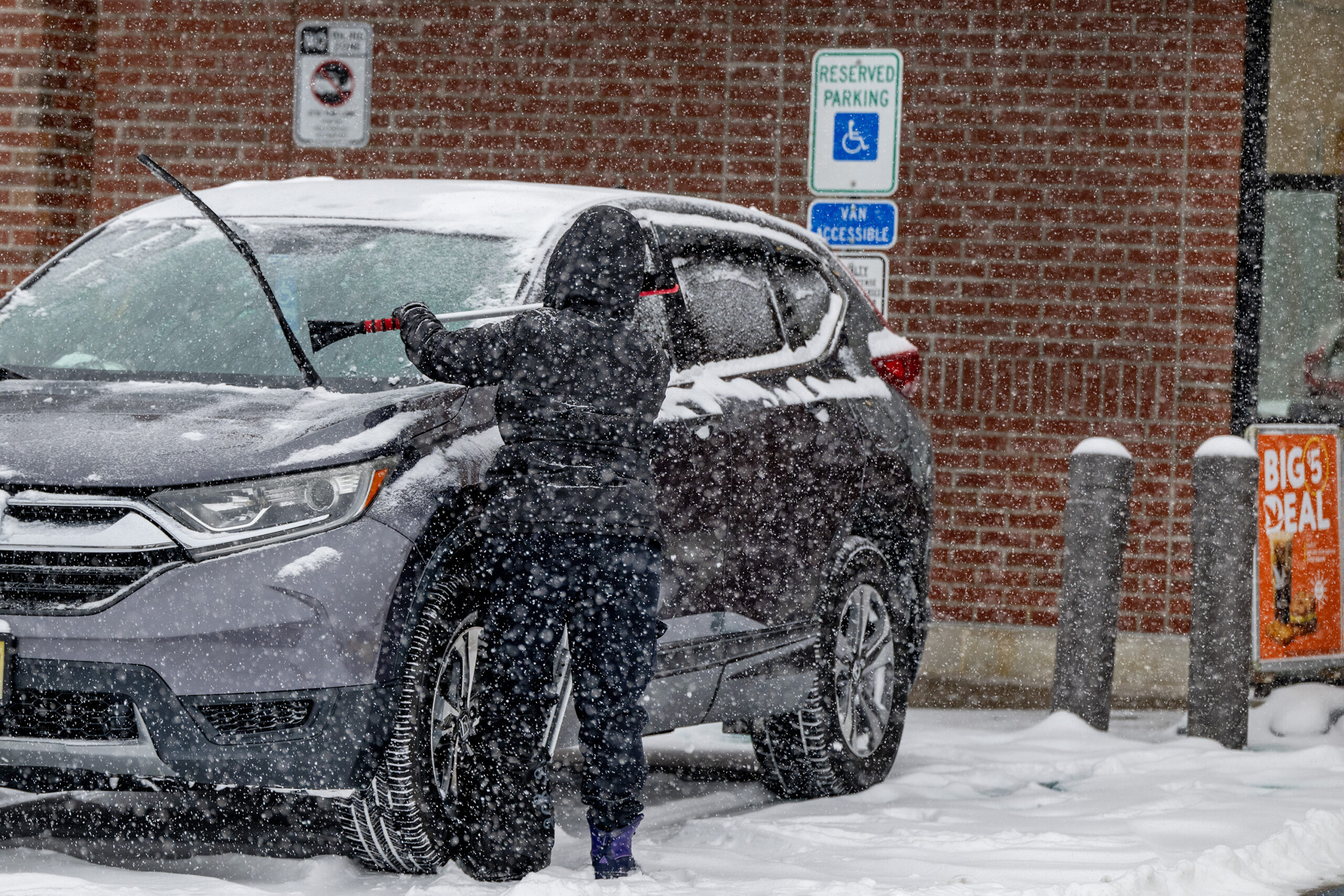
    So, I took my own advice while preparing to go out last Sunday. Knowing the roads would get worse as the day went on, I drove out of my South Jersey neighborhood while an early pass of the plows left main arteries somewhat passable, and headed straight to the nearest Wawa that I knew would have a clear-ish parking lot.

    Stepping out from under the overhang — I made a few photos before walking out into on the wide street to get the few passing cars and plowing crews in a nearby shopping center.

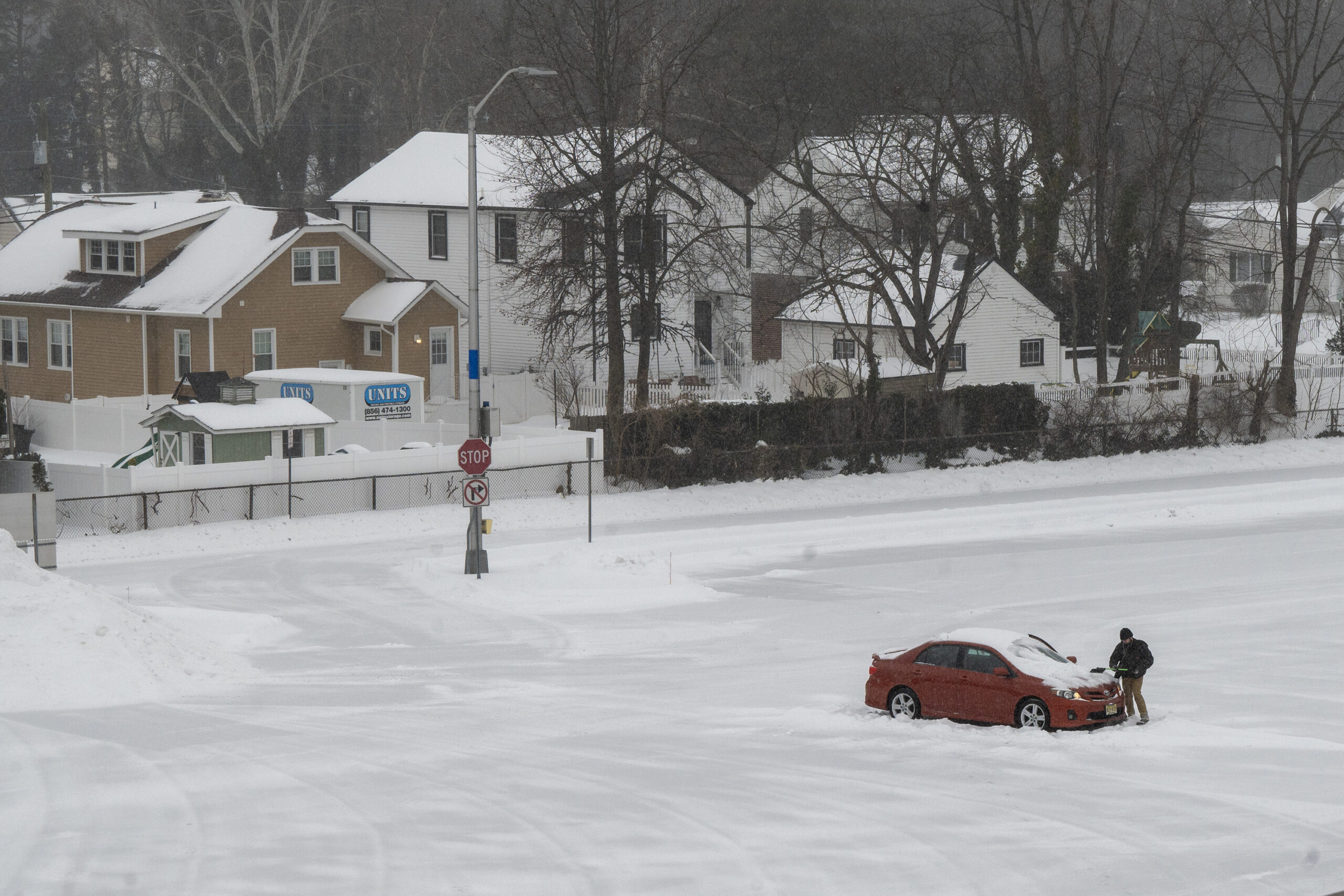
    Carmen Roman clears snow off her car at a Cherry Hill Wawa early Sunday morning, Jan. 25, 2026, as heavy snow bands move through the region generating snowfall rates of 1 to 2 inches an hour.

    From there, confirming my fears the roads would be more difficult to drive on, I headed the Westmont PATCO station, finding a safe place to park even as workers were hard at it, clearing the lot.

    I made photos from the elevated platform before taking a train to Collingswood, where — standing on the leeward side of the stairwell shelter — I took more pictures then walked into downtown.

    Haddon Avenue was plowed and relatively empty of cars, but the sidewalks were impassible. I sent in my best photo of people walking along the middle of the downtown street.

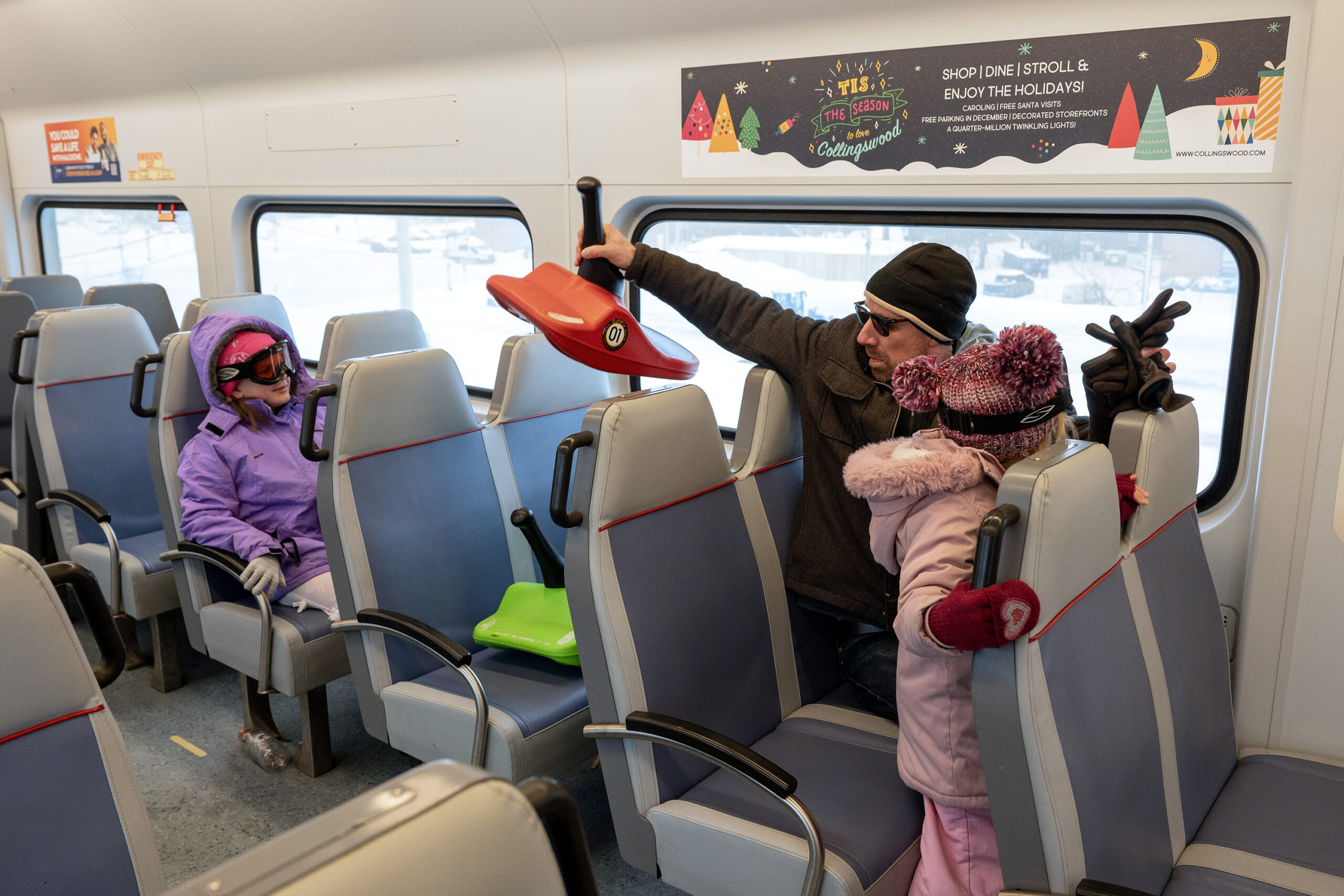
    It was then I saw Mike Doveton and his daughters. Not wanting to repeat my earlier image, I asked if they were headed to or from sledding.

    They were walking to the PATCO station to sled in Haddonfield, so I tagged along.

    On the train headed to sled.
    I went with them to their destination, but didn’t want another kids-on-a-hill photo, so I got back on the train returning to the Westmont station, and my car, calling it a day. Until I saw someone digging out their car — the same one I had photographed hours earlier. I got as close as I could to the spot on the platform and made an “after” photo.

    Before and after in the Westmont PATCO station parking lot.

    Luis Nova had left his car there on Friday, and was in Philadelphia all weekend helping friends move and going to a goodbye party. He spent the morning sledding with friends in Clark Park in West Philadelphia. Like me, he had experience with storms. “I spent four years in Rochester [NY],” he told me. “So I knew what I was signing up for and was ready. I left all my equipment to get myself out.”

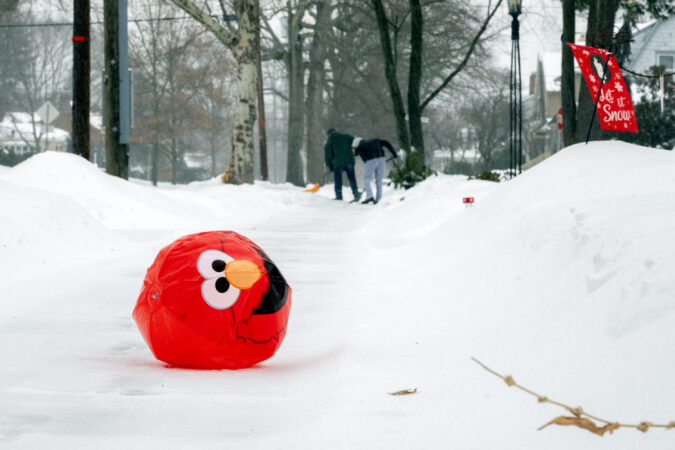
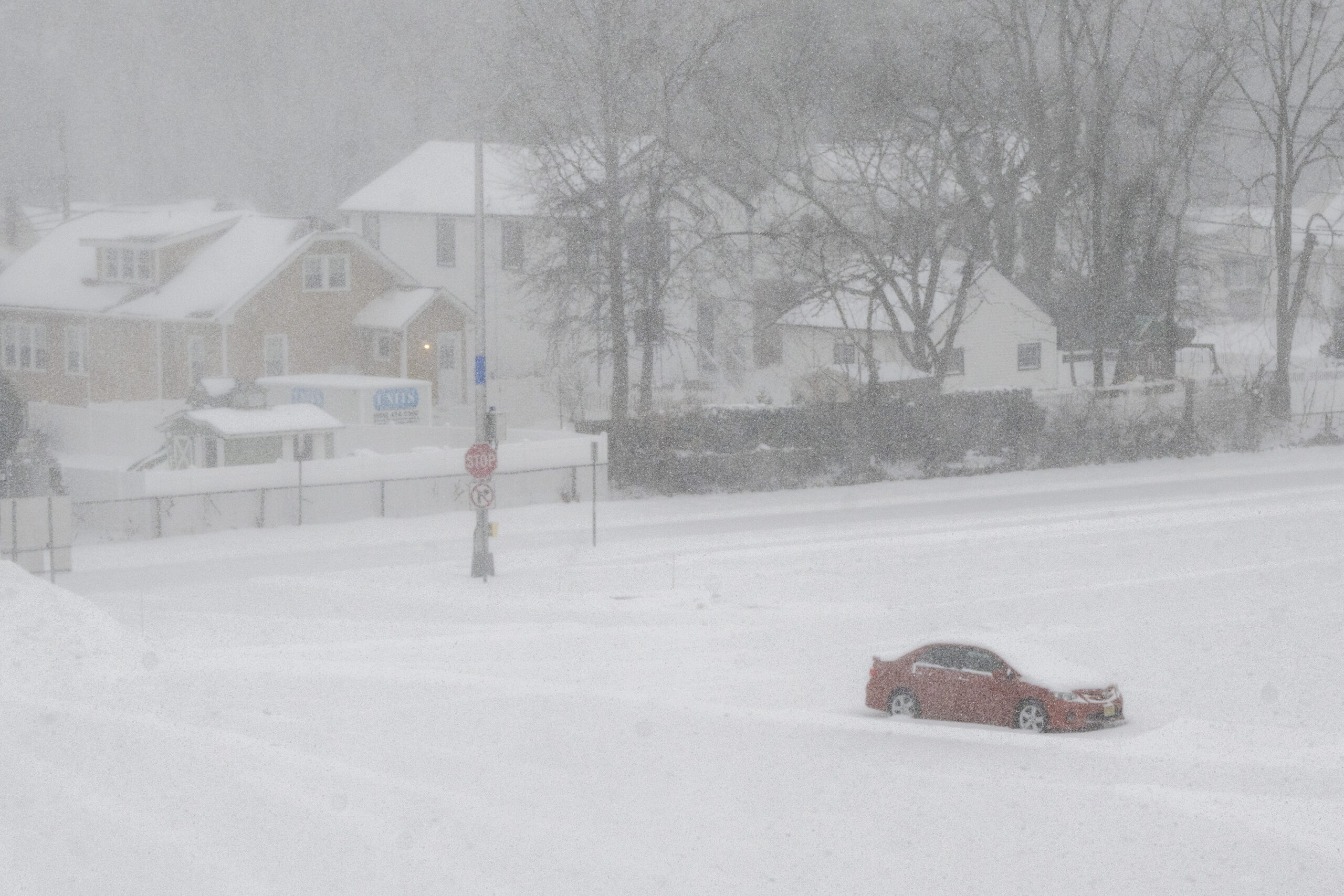
    But the highlight of the day was at the very end, as I headed for home as the snow was turning to sleet. Two hours earlier, in the middle of the storm my grandson snapped a photo out our front window of an Elmo head in the middle of the street before the wind blew it away, and shared the picture with our family. As I approached my house, I see a red ball rolling fast down the street toward me. I almost drove into a snow bank laughing.

    Not really, but I did pull into the driveway, grab a camera, jump out of my car and go chasing after it. The wind was really moving it, and I couldn’t see where it was, which was hard to imagine, being as the road and everything else was all white. I came up to a couple of guys shoveling and asked, “Did you see an Elmo head come this way?” They had, and said it went up a driveway and jumped onto the sidewalk. I found it and just as I was lining up my photo the wind took it again and it started spinning.

    Since 1998 a black-and-white photo has appeared every Monday in staff photographer Tom Gralish’s “Scene Through the Lens” photo column in the print editions of The Inquirer’s local news section. Here are the most recent, in color:

    January 26, 2026: The President’s House in Independence National Historical Park hours Jan, 22, after all historical exhibits were removed following President Trump’s Executive Order last March that the content at national parks that “inappropriately disparage” the U.S. be reviewed. The site, a reconstructed “ghost” structure titled “Freedom and Slavery in the Making of a New Nation” (2010), serves as a memorial to the nine people George Washington enslaved there during the founding of America.
    January 19, 2026: A low-in-the-sky winter sun is behind the triangular pediment of the “front door” of the open-air President’s House installation in Independence National Historical Park. The reconstructed “ghost” structure with partial walls and windows of the Georgian home known in the 18th century as 190 High St. is officially titled, “Freedom and Slavery in the Making of a New Nation” (2010). It is designed to give visitors a sense of the house where the first two presidents of the United States, George Washington and John Adams, served their terms of office. The commemorative site designed by Emanuel Kelly, with Kelly/Maiello Architects, pays homage to nine enslaved people of African descent who were part of the Washington household with videos scripted by Lorene Cary and directed by Louis Massiah.
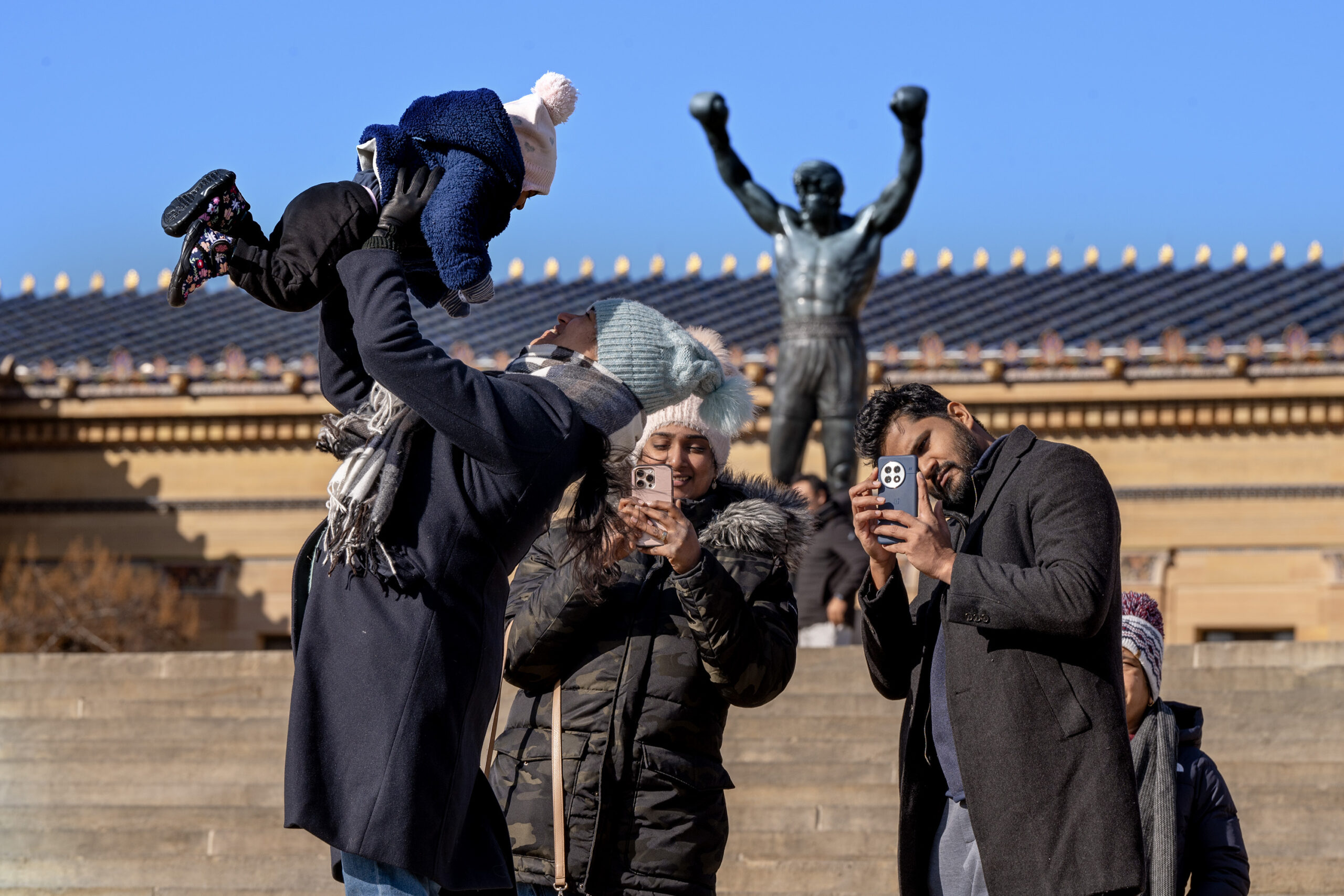
    Deepika Iyer holds her niece Ira Samudra aloft in a Rockyesque pose, while her parents photograph their 8 month-old daughter, in front of the famous movie prop at the top of the steps at the Philadelphia Art Museum. Iyer lives in Philadelphia and is hosting a visit by her mother Vijayalakshmi Ramachandran (partially hidden); brother Gautham Ramachandran; and her sister-in-law Janani Gautham who all live in Bangalore, India.
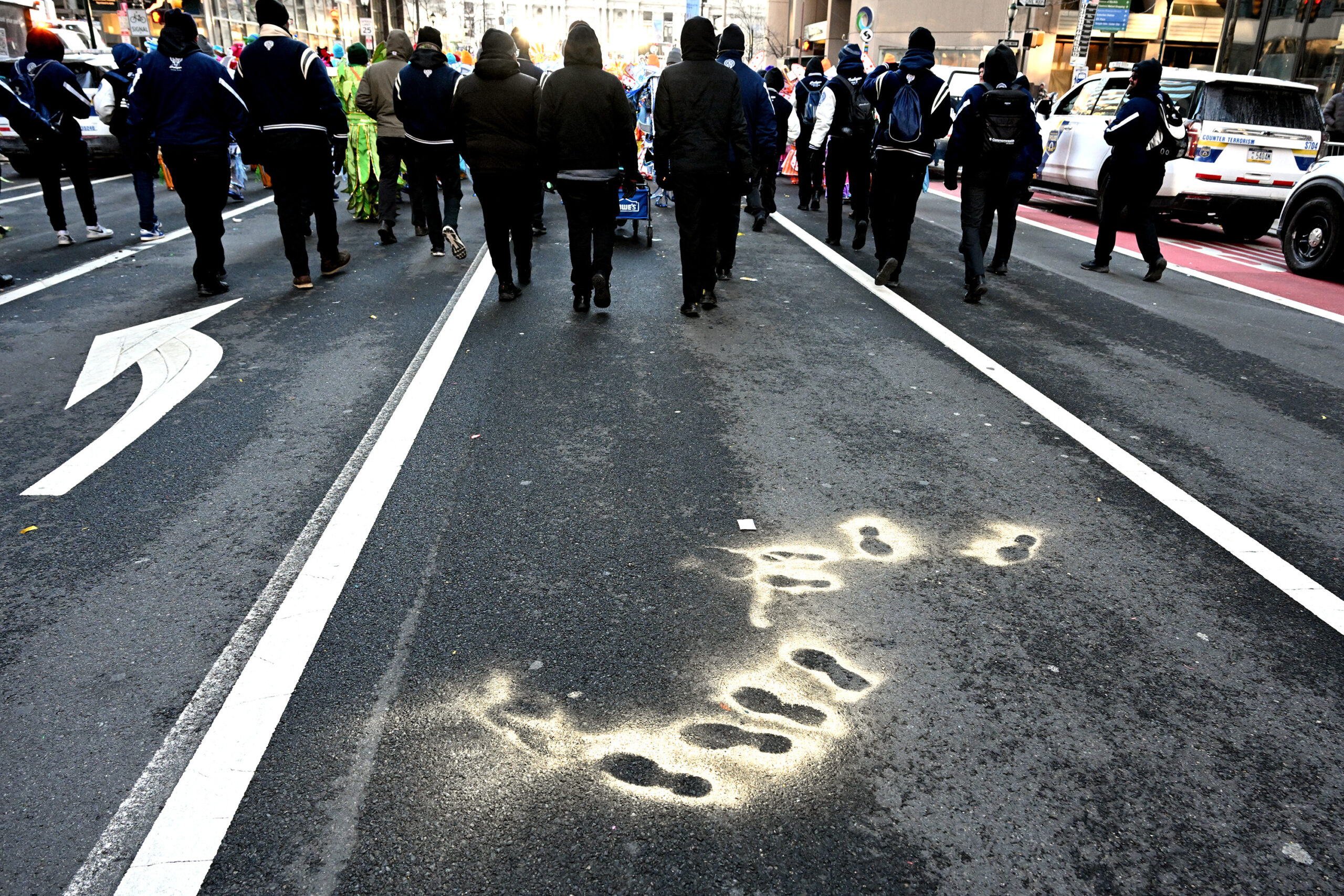
    January 5, 2026: Parade marshals trail behind the musicians of the Greater Kensington String Band heading to their #9 position start in the Mummers Parade. Spray paint by comic wenches earlier in the day left “Oh, Dem Golden Slippers” shadows on the pavement of Market Street. This year marked the 125th anniversary of Philly’s iconic New Year’s Day celebration.
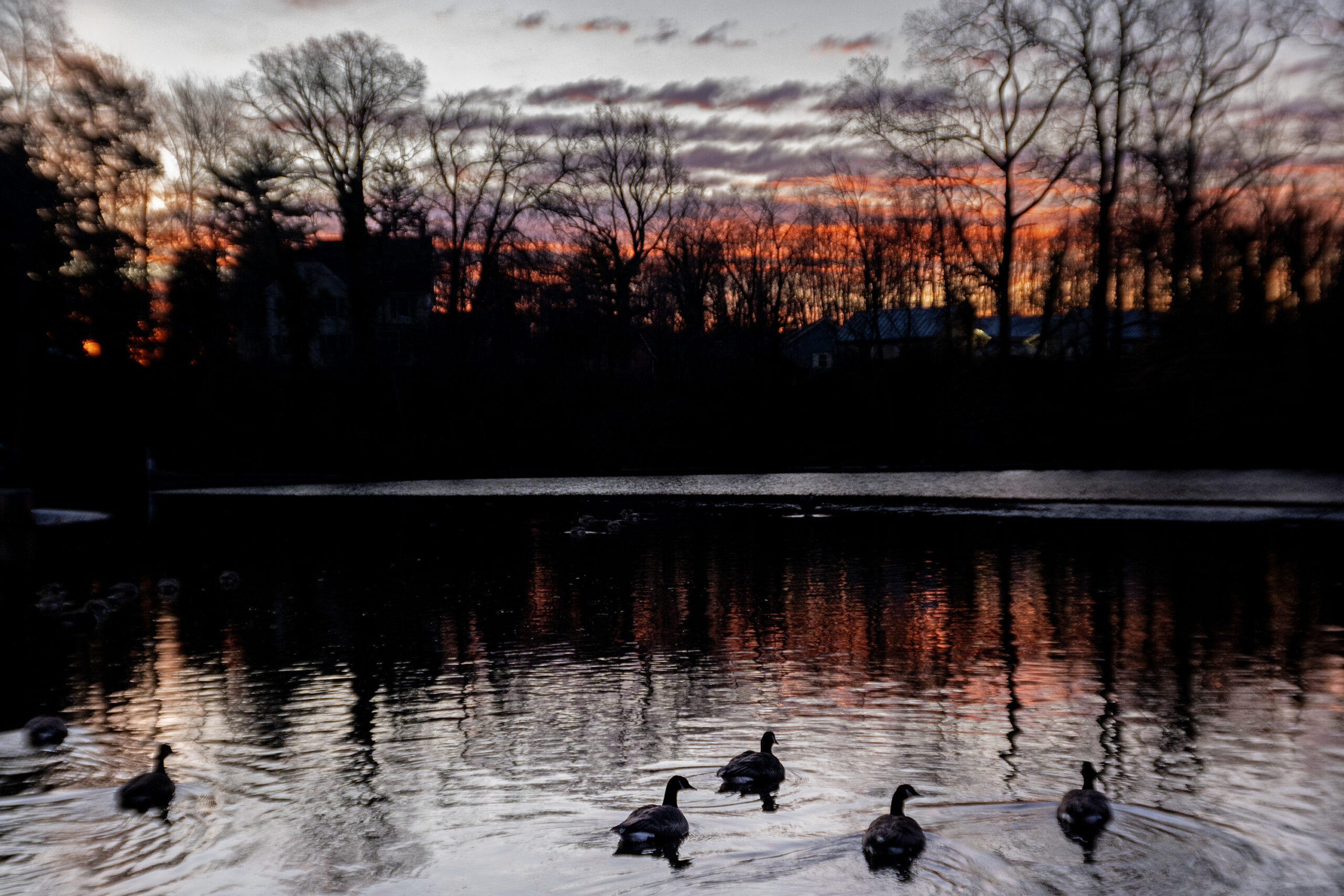
    Dec. 29, 2025: Canada geese at sunrise in Evans Pond in Haddonfield, during the week of the Winter Solstice for the Northern Hemisphere.
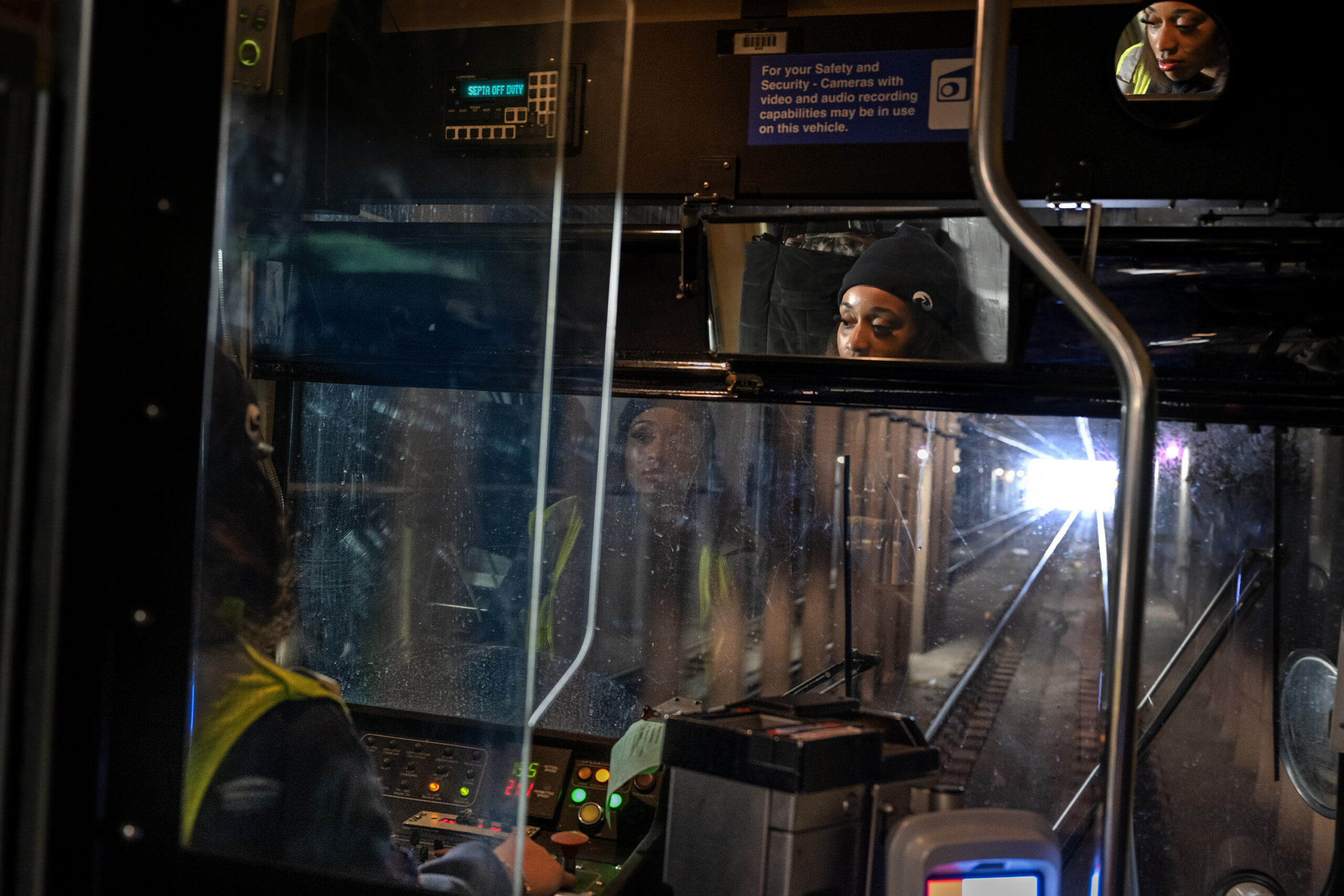
    December 22, 2025: SEPTA trolley operator Victoria Daniels approaches the end of the Center City Tunnel, heading toward the 40th Street trolley portal after a tour to update the news media on overhead wire repairs in the closed tunnel due to unexpected issues from new slider parts.
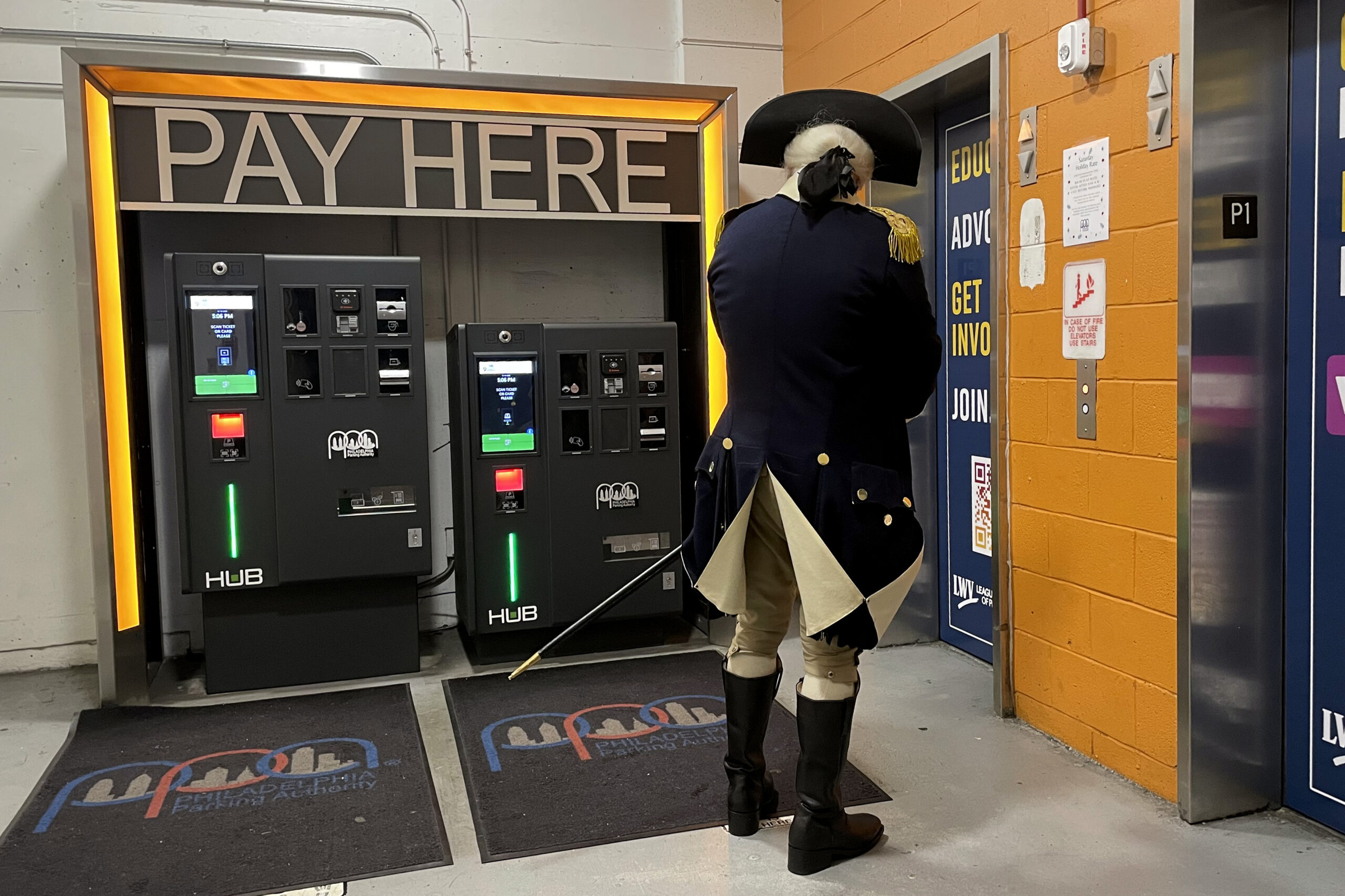
    December 15, 2025: A historical interpreter waits at the parking garage elevators headed not to a December crossing of the Delaware River, but an event at the National Constitution Center. General George Washington was on his way to an unveiling of the U.S. Mint’s new 2026 coins for the Semiquincentennial,
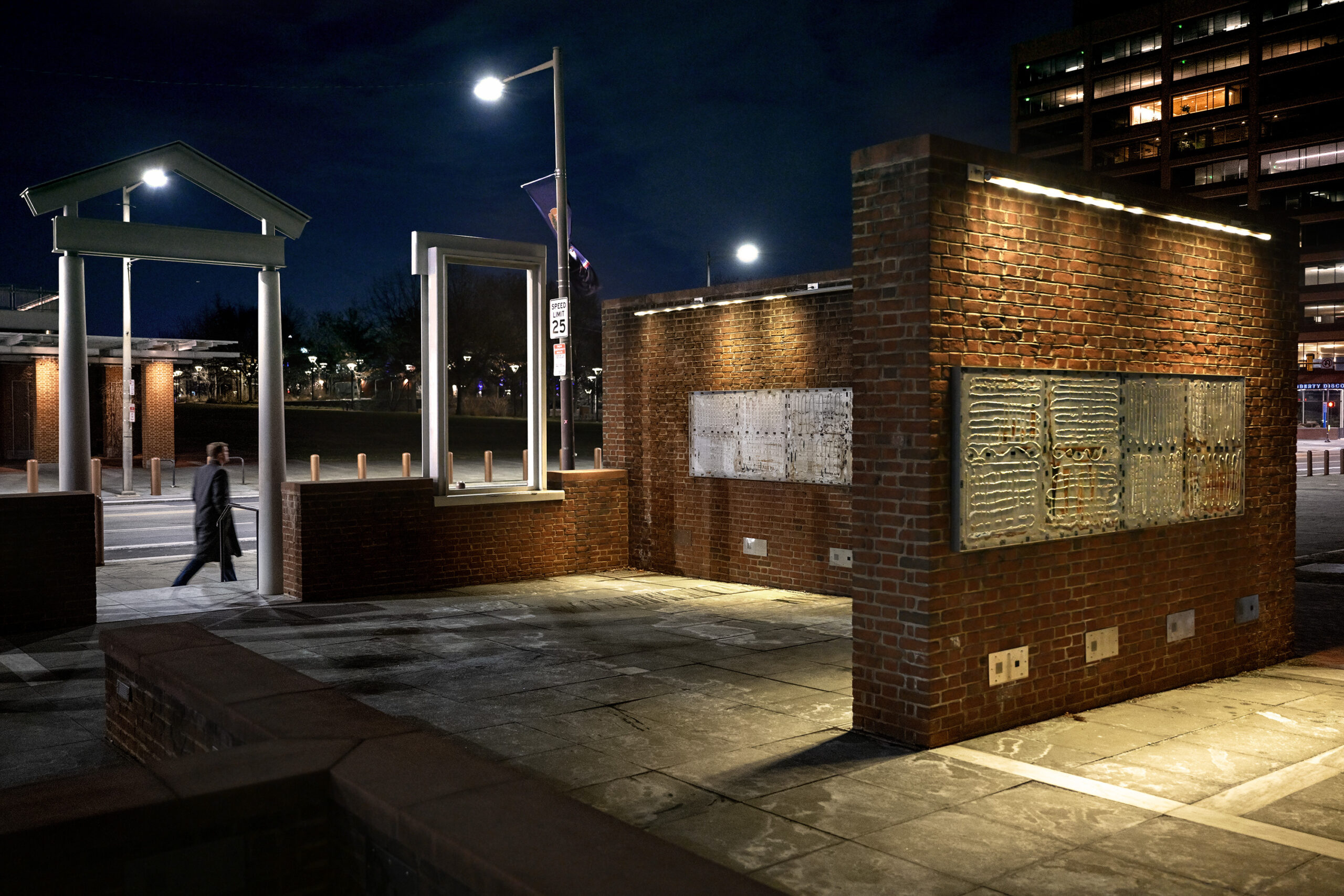
    December 8, 2025: The Benjamin Franklin Bridge and pedestrians on the Delaware River Trail are reflected in mirrored spheres of the “Weaver’s Knot: Sheet Bend” public artwork on Columbus Boulevard. The site-specific stainless steel piece located between the Cherry Street and Race Street Piers was commissioned by the City’s Public Art Office and the Delaware River Waterfront Corporation and created and installed in 2022 by the design and fabrication group Ball-Nogues Studio. The name recalls a history that dominated the region for hundreds of years. “Weaver’s knot” derives from use in textile mills and the “Sheet bend” or “sheet knot” was used on sailing vessels for bending ropes to sails.
    November 29, 2025: t’s ginkgo time in our region again when the distinctive fan-shaped leaves turn yellow and then, on one day, lose all their leaves at the same time laying a carpet on city streets and sidewalks. A squirrel leaps over leaves in the 18th Century Garden in Independence National Historical Park Nov. 25, 2025. The ginkgo (Ginkgo biloba) is considered a living fossil as it’s the only surviving species of a group of trees that existed before dinosaurs. Genetically, it has remained unchanged over the past 200 million years. William Hamilton, owner the Woodlands in SW Phila (no relation to Alexander Hamilton) brought the first ginkgo trees to North America in 1785.
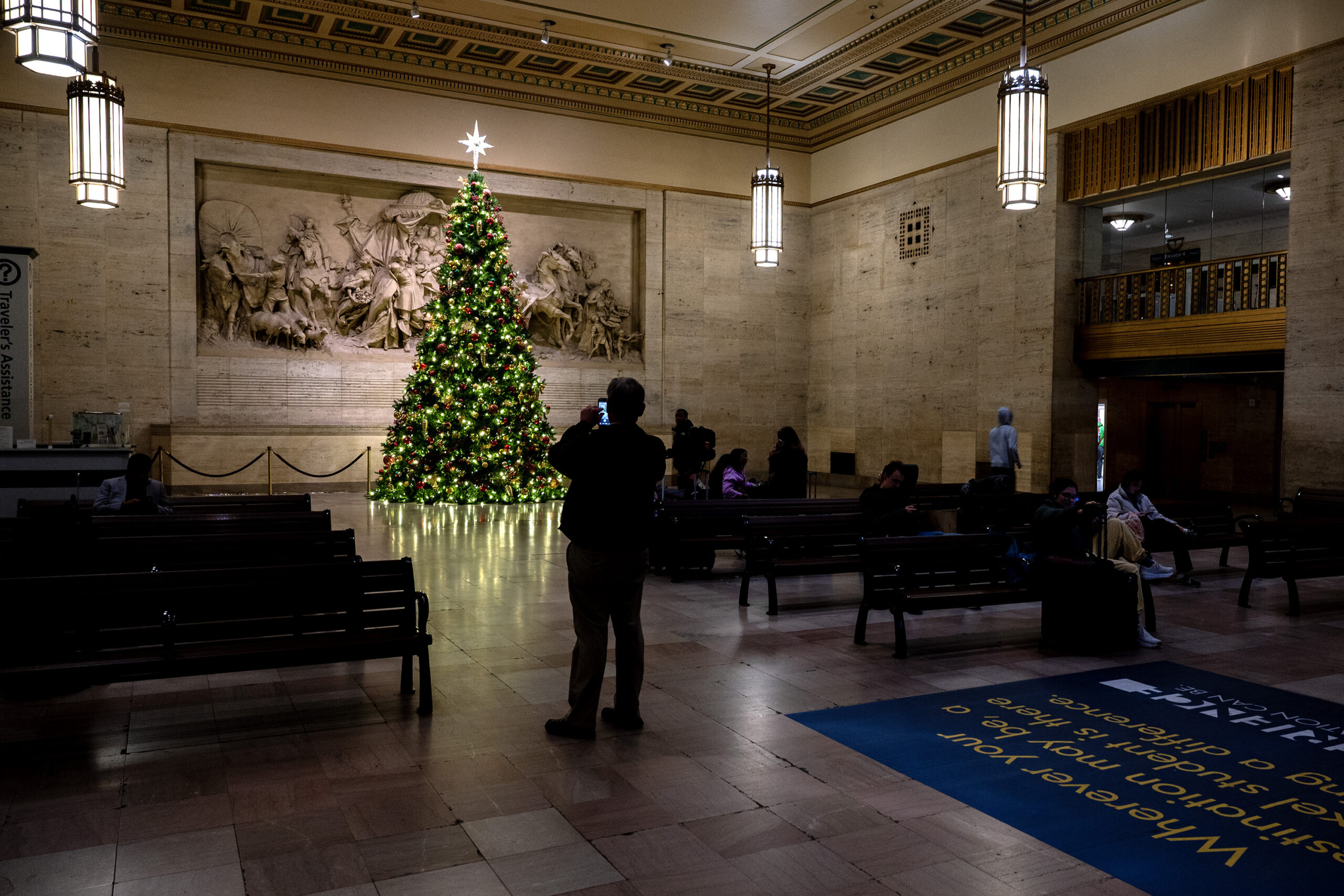
    November 24, 2025: The old waiting room at 30th Street Station that most people only pass through on their way to the restrooms has been spiffed up with benches – and a Christmas tree. It was placed there this year in front of the 30-foot frieze, “The Spirit of Transportation” while the lobby of Amtrak’s $550 million station restoration is underway. The 1895 relief sculpture by Karl Bitter was originally hung in the Broad Street Station by City Hall, but was moved in 1933. It depicts travel from ancient to modern and even futuristic times.
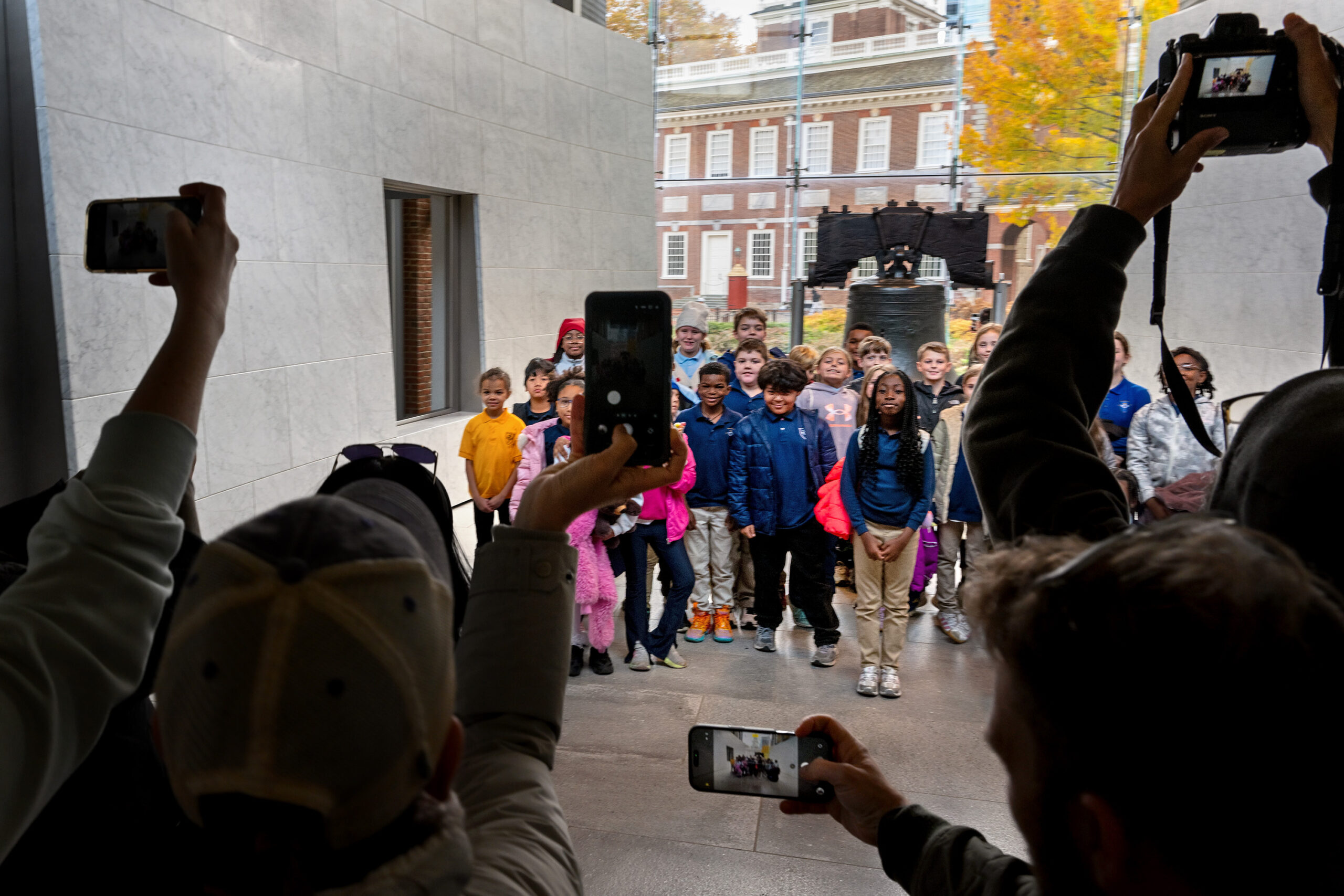
    November 17, 2025: Students on a field trip from the Christian Academy in Brookhaven, Delaware County, pose for a group photo in front of the Liberty Bell in Independence National Historical Park on Thursday. The trip was planned weeks earlier, before they knew it would be on the day park buildings were reopening after the government shutdown ended. “We got so lucky,” a teacher said. Then corrected herself. “It’s because we prayed for it.”
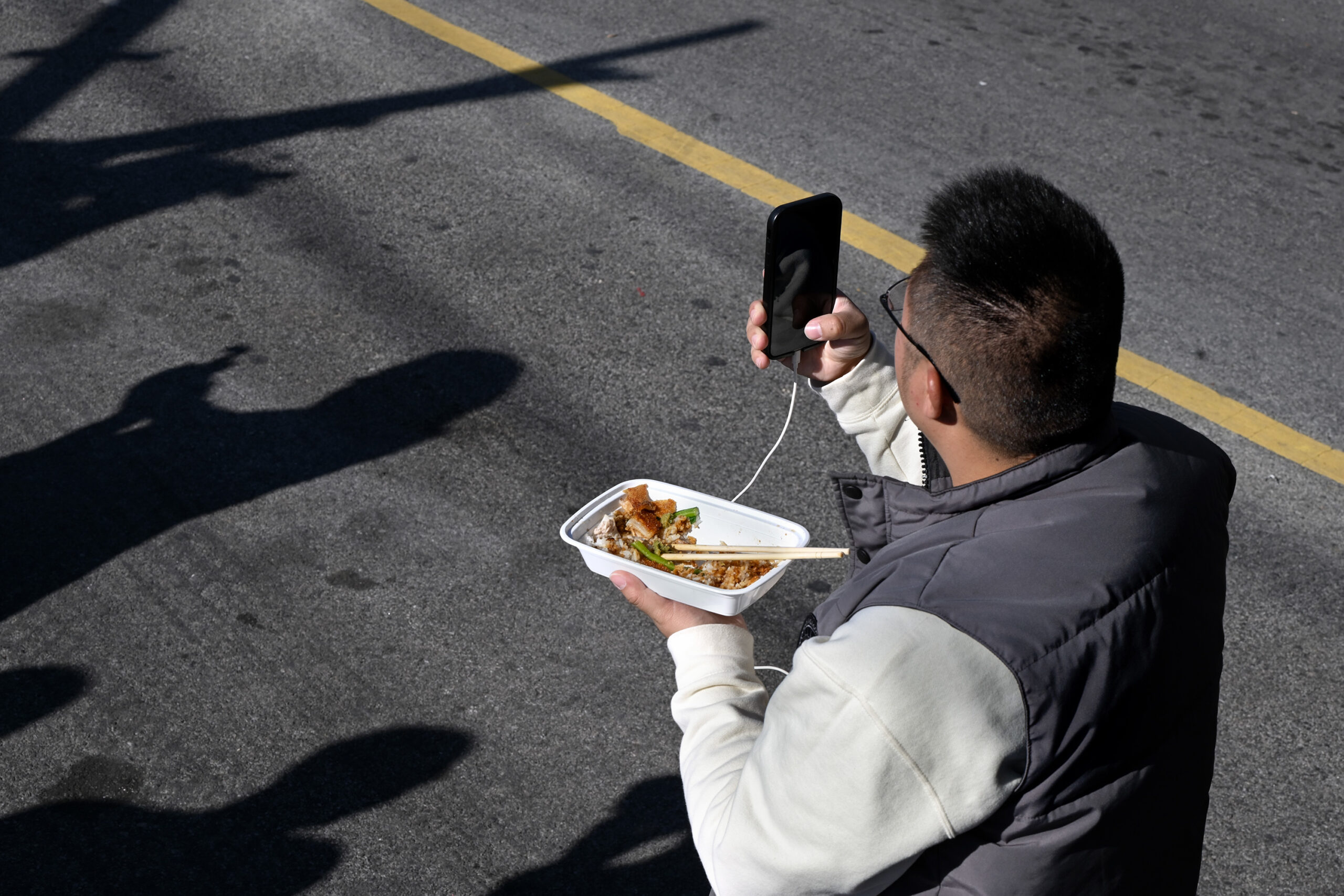
    November 8, 2025: Multitasking during the Festival de Día de Muertos – Day of the Dead – in South Philadelphia.
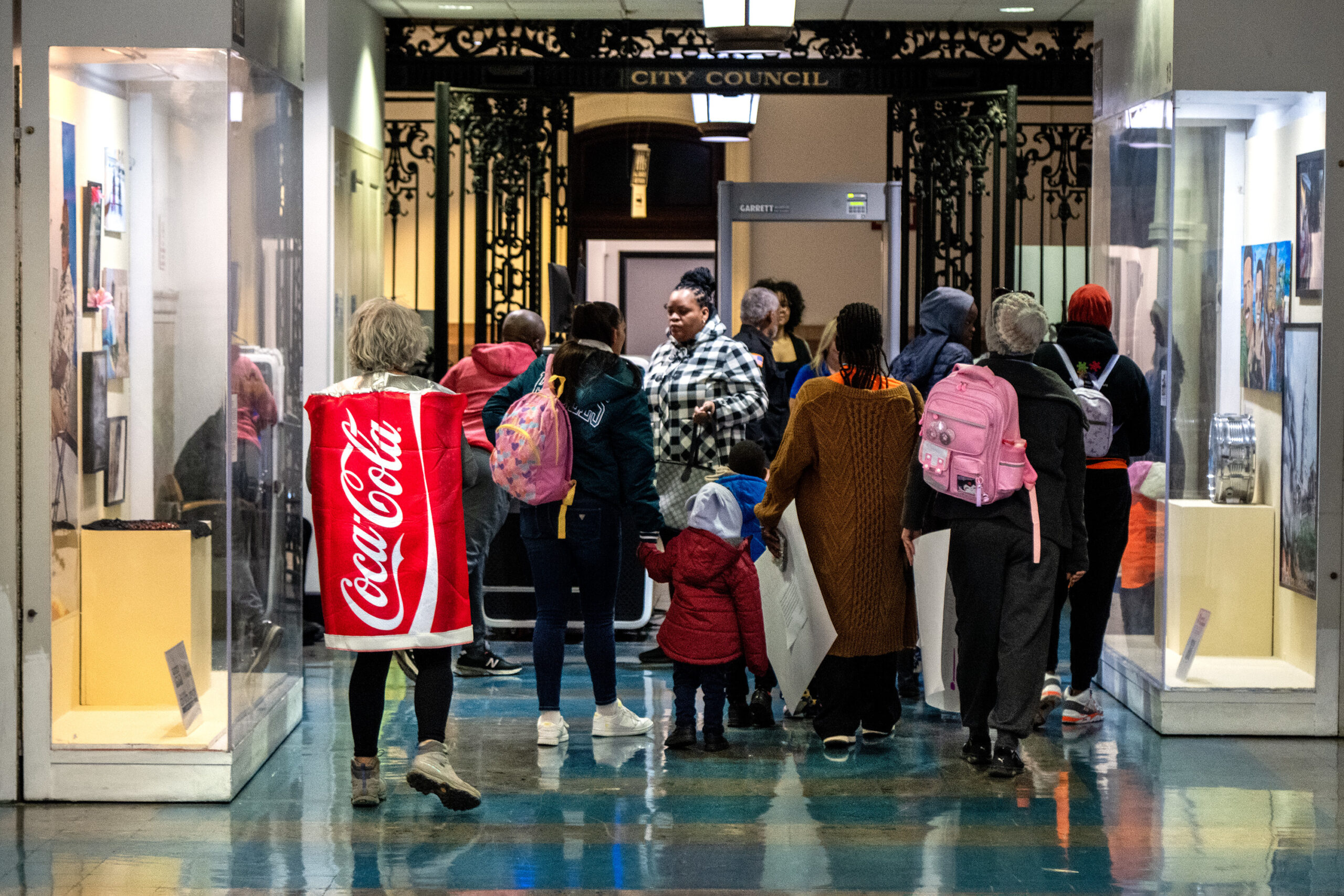
    November 1, 2025: Marcy Boroff is at City Hall dressed as a Coke can, along with preschoolers and their caregivers, in support of former Mayor Jim Kenney’s 2017 tax on sweetened beverages. City Council is considering repealing the tax, which funds the city’s pre-K programs.
    October 25, 2025: Austin Gabauer, paint and production assistant at the Johnson Atelier, in Hamilton Twp, N.J. as the finished “O” letter awaits the return to Philadelphia. The “Y” part of the OY/YO sculpture is inside the painting booth. The well-known sculpture outside the Weitzman National Museum of American Jewish History was removed in May while construction continues on Market Street and has been undergoing refurbishment at the Atelier at the Grounds for Sculpture outside of Trenton.

    » SEE MORE: Archived columns and Twenty years of a photo column.

  • The arctic cold persists, and so does Philly’s snowpack. Both may even go away some day.

    The arctic cold persists, and so does Philly’s snowpack. Both may even go away some day.

    It looks like the Philly region will evade any snow generated by that coastal “bomb cyclone” during the weekend, but the disruptive snowpack on the ground continues to melt at a glacial pace. Maybe ever slower.

    “For now, it’s not budging,” said David Robinson, the New Jersey state climatologist who is an international expert on snow cover.

    And, ironically, that has a whole lot to do with what happened in the hours right after the snow stopped around 11:30 a.m. Sunday.

    Add one of the more signifiant Arctic cold spells in Philadelphia’s period of record, and the entire region has endured a white and wintry week rarely experienced around here.

    As of Friday morning, the official snow depth at the airport still was 6 inches, about two-thirds of what was measured when the storm ended five days before.

    For perspective, the depth was 6 inches five days after a snowstorm in 2016 — after 22.4 inches had fallen.

    The cold won’t be as harsh during the workweek, but a thaw isn’t imminent, and some snow is possible Wednesday.

    Temperatures are forecast to drop deep into the single digits Saturday morning, flirting with records. It is not due to get into the 20s until Sunday, when backlash winds from the potent coastal storm are expected to drive wind chills below zero.

    Those winds may contribute to significant flooding at the Shore, where they could gust to 50 mph.

    About last Sunday in Philly

    About 7.5 inches of snow had fallen officially by 11:30 a.m. Sunday at Philadelphia International Airport, more in some other places, when it yielded to several hours of sleet that accumulated 2 to 3 inches, coating the snow with a sparkling, icy veneer.

    “You can’t help but recognize the beauty of it,” said Robinson, a Rutgers University geography professor and keeper of the Rutgers Snow Lab.

    While it may be an aesthetic pleasure, especially at night under the full “snow moon” rising this weekend, it has had a profoundly chilling effect on cleanup efforts.

    The sleet, liquid that freezes before it lands, literally put an ice cap on the snow. “Ice pellets are tougher to melt,” said PennDot’s Thomas Rogal, a maintenance supervisor for the Philadelphia district. In a melting race, a homely sleet ball wouldn’t have a chance against a six-sided snowflake.

    On Sunday, said Rogal, the sleet was a game-changer for the road crews. Instead of just plowing, crews were “scraping the road surfaces,” he said. Sleet added a stubborn stickiness to the mass of frozen material.

    It also contained about as much liquid as several inches of snow, said Robinson.

    The surprisingly cold temperatures, in the lower 20s and teens, inhibited the effectiveness of salt on Sunday. “The material just didn’t function,” said Rogal.

    In the city, the glacial mass has been especially disruptive, a royal, inconvenient pain for people living on side streets, for street crews, for anyone who has tried shoveling, and for the schools.

    In addition to the snow and ice challenges, the cold has stressed aging heating systems in the public schools, once they reopened.

    A thermometer in a Central High School classroom on Friday read 39 degrees. That’s colder than the normal high for the date in Philly — outdoors.

    When will all this go away?

    Philly hasn’t had a stretch of days like this in which the temperature has failed to reach 30 degrees since 1979, according to records tracked by the Pennsylvania state climatologist.

    And it likely is going to finish in the top 10 for consecutive days in which readings didn’t get past freezing, said Mike Silva, a meteorologist with the National Weather Service in Mount Holly.

    Low temperatures Thursday and Friday morning, 13 and 11, respectively, were several degrees above the forecasts. That probably was related to the winds at the airport, he said.

    It also may be related to the sleet, said Robinson: Ice doesn’t have quite the same chilling effect as fresh snow.

    Conditions Saturday morning — clear skies and lighter winds — should be more conducive for daytime heating (we use the term loosely) to radiate into space. Morning lows could approach the record of 3 degrees, set in 1948.

    Some moderation is expected with the workweek, but not much. “We were hoping to get to the mid-30s,” said Sliva, but “it looks like we may barely get to freezing.”

    Even at those temperatures, some melting should occur.

    The total daily solar energy beaming toward Philly now is about 30% higher than it was on Jan. 1, according to NASA’s calculations, and the sunrise-to-sunset time is increasing by about two minutes a day.

    Even the cold has a bright side, said PennDot’s Rogal. Potholes, it turns out, have something in common with a lot of humans: “They aren’t particularly fond of this weather.”

    “The freeze-thaw is what always gets us,” he said. “We’re actually in better shape when the cold sets and stays.”

    Even if it snows next week — “There’s a couple of systems that could affect us,” said Silva — based on 150 years of official record-keeping for Philly, it is going to warm up and the ground will reappear.

    Eventually.

  • Judge was right to toss racketeering charges against George Norcross, N.J. appeals court says

    Judge was right to toss racketeering charges against George Norcross, N.J. appeals court says

    A New Jersey appellate court on Friday declined to reinstate racketeering charges against Democratic power broker George E. Norcross III, dealing a fresh blow to prosecutors who had accused him of running a criminal enterprise.

    The three-judge panel affirmed a lower court order dismissing a 13-count indictment against Norcross, 69, and five codefendants, whom a grand jury alleged used threats of economic and reputational harm — as well as their control of Camden government — to obtain property on the city’s waterfront from a developer and a nonprofit.

    Acting Attorney General Jennifer Davenport — Democratic Gov. Mikie Sherrill’s nominee for the post — will now have to decide whether to file another appeal in a case that was brought by her predecessor. A spokesperson said the Attorney General’s Office is reviewing the opinion, which says the state has 45 days to pursue an appeal at the state Supreme Court.

    Mercer County Superior Court Judge Peter Warshaw ruled last February that none of the threats described in the June 2024 indictment were unlawful because, he said, state law permits such statements in the context of economic bargaining. Warshaw also found the charges were time-barred.

    The state Attorney General’s Office appealed Warshaw’s decision, arguing that the judge had failed to review thousands of pages of grand jury evidence and that the indictment properly alleged criminal extortion.

    On Friday, the appellate court in a 92-page opinion upheld Warshaw’s order but did so on different legal grounds. The panel said several of the indictment’s racketeering conspiracy and extortion charges were time-barred under the statute of limitations. Other counts failed to state a crime, were untimely, or both, the panel said.

    Norcross’ representatives didn’t immediately respond to requests for comment.

    In addition to Norcross — founder of insurance brokerage Conner Strong & Buckelew and chair of Cooper University Health Care — the grand jury charged his brother Philip, CEO of the law firm Parker McCay; attorney William Tambussi; former Camden Mayor Dana L. Redd; Sidney R. Brown, CEO of logistics firm NFI; and John J. O’Donnell, an executive at residential developer The Michaels Organization.

    Statute of limitations

    The case centers on Norcross’ efforts to acquire real estate in Camden following a 2013 New Jersey law he allegedly shaped that turbocharged corporate tax incentives for development in a city that had faced decades of disinvestment.

    Prosecutors say that from 2014 through 2016, Norcross and his associates threatened a nonprofit redevelopment group and Philadelphia developer Carl Dranoff, coercing them into selling property for less money than they believed it was worth.

    Norcross and his partners then used the properties to obtain millions of dollars in state tax credits for various corporate entities and later sold the credits for cash, the state says.

    In contrast to the lower court judge, the appeals panel did not weigh whether the threats allegedly made in 2014 and 2016 were unlawful. Instead, the panel said the charges associated with those threats — racketeering and extortion conspiracies — were filed by prosecutors beyond the five-year statute of limitations.

    To comply with that statute, prosecutors needed to show that the conspiracies outlined in the June 2024 indictment continued past 2019. The state contended that it met this burden because corporate entities controlled by Norcross continued to receive tax credits during that period and because the indictment says the power broker took steps to conceal his conduct in the years since.

    But the appellate panel agreed with Warshaw that “the objects of the conspiracies were concluded” with the completion of the redevelopment deals years earlier.

    The court also rejected the concealment argument, saying the indictment does not meet a legal requirement alleging an “agreement among the conspirators to continue to act in concert in order to cover up, for their own self-protection, traces of the crime.”

    Dealings with Carl Dranoff

    The appeals court did find that another charge related to waterfront real estate dealings was timely, but failed to satisfy other legal requirements.

    When Dranoff in 2018 tried to sell the 349-apartment Victor Lofts to a real estate investment firm for $71 million, the indictment says he faced resistance from Camden officials. They agreed to “slow down” a government approval at the direction of Philip Norcross — an attorney who, like his brother, had no official role in city government, the indictment says.

    The sale ultimately fell through, and the city moved to terminate Dranoff’s option to develop another property known as Radio Lofts. The dispute led to years of litigation, and Dranoff ultimately settled with the city in 2023, agreeing to forfeit his rights to Radio Lofts and pay Camden $3.3 million despite believing “he was in the right,” according to the indictment.

    Prosecutors allege this was another conspiracy to extort Dranoff. But while the alleged conduct occurred within the limitations period, the appeals panel said, the indictment failed to meet the legal requirements for alleging conspiracy to commit extortion. For example, neither George Norcross nor his codefendants were accused of threatening or planning to threaten Dranoff to settle, the panel said.

    Serving on the panel were Appellate Judges Greta Gooden Brown, Lisa Rose and Ellen Torregrossa-O’Connor.

  • A coastal ‘bomb’ and single-digit temperatures are expected this weekend in the Philly area

    A coastal ‘bomb’ and single-digit temperatures are expected this weekend in the Philly area

    It remains a long shot that a fresh layer of frosting will coat the hardening and tenacious snowpack, but evidently that street-congesting frozen mass isn’t exiting in the near future.

    As of Friday morning, it appeared that a potent coastal storm that is expected to qualify as a meteorological “bomb” was going to spare the Philadelphia region from another snowfall.

    But it is expected to have serious impacts on the New Jersey and Delaware beaches, with a combination of onshore gales and a tide-inciting full moon, forecasters are warning.

    On the mainland, it is poised to generate winds that would add sting to what has been one of the region’s most significant outbreaks of Arctic air in the period of record.

    Lows at Philadelphia International Airport both Thursday and Friday mornings — 13 and 11, respectively — were several degrees above what was forecast.

    But they are to drop into single digits Saturday morning, and flirt with a record. Wind chills during the weekend are expected be in the 10-below range, said Mike Silva, a meteorologist with the National Weather Service in Mount Holly.

    “Even though there might not be much or any snow in Philly,” he said, “it’s going to be cold, and we’re still going to have the wind impacts.”

    window.addEventListener(“message”,function(a){if(void 0!==a.data[“datawrapper-height”]){var e=document.querySelectorAll(“iframe”);for(var t in a.data[“datawrapper-height”])for(var r,i=0;r=e[i];i++)if(r.contentWindow===a.source){var d=a.data[“datawrapper-height”][t]+”px”;r.style.height=d}}});

    Is the snow threat off the table for Philly?

    Computer models continue to keep the storm far enough off the coast to preclude a major snowfall inland.

    But “it wouldn’t take much of a jog west to really mess up the forecast,” said Tom Kines, senior meteorologist with AccuWeather Inc. It’s been known to happen.

    On Friday morning, the National Weather Service was posting a 30% chance that Philly would get something measurable — technically 0.1 inches — Saturday night into Sunday, with about a 10%shot at an inch.

    The weather service was expecting an inch at the Shore, but with a slight chance of several inches.

    Forecasters are certain that a storm is going to blow up off the Southeast coast as frigid air that is penetrating all the way to Disney World interacts with the warm waters of the Gulf Stream.

    Gusts at the Shore during the day Sunday might be as high as 40 mph as the storm could reach “bomb” status.

    What exactly is a ‘bomb?’

    Two brave souls endure the snow and winds from a meteorological bomb cyclone in Atlantic City in January 2022.

    The technical definition of a meteorological bomb is a drop in central barometric pressure of 0.7 inches in a 24-hour period, about a 2% to 3% change in the weight of the air. That might not seem like much, but it’s a big deal if you’re a column of air.

    Such a drop in pressure indicates a rapidly developing storm. Air is lighter in the centers of storms, as precipitation is set off by lighter warm air rising over denser cold air.

    As a weather term, bomb first appeared in an academic paper in 1980 by atmospheric scientists Frederick Sanders at the Massachusetts Institute of Technology and John Gyakum at McGill University.

    They found that the western Atlantic, in the proximity of the Gulf Stream, was one of two regions on the planet most prone to bombs. The other was the area near the Kuroshio Current in the far northwestern Pacific.

    Both are massive reservoirs of warmer waters that interact with cold air coming off land masses. Some of the European settlers in the colonial era learned about the effects the hard way, experiencing mega-storms that were alien to areas in England.

    Gyakum, who was Sanders’ graduate student at MIT, recalled Thursday that the duo took some blowback for using the word bomb.

    But with a cyclone of such ferocity, the term was worth using to draw the public’s attention to potential impacts, which sometimes exceed those of hurricanes, Gyakum said.

    He said he had no doubt this weekend’s storm would reach bomb status.

    While any heavy snows from this storm are likely to bypass the Philly region, some accumulating snow is possible the middle of next week, Kines said, although nothing in a league with what happened Sunday.

    When can Philly expect a thaw?

    Temperatures during the coming workweek are due to moderate, at least slightly, with highs around freezing Monday through Thursday, 10 to 12 degrees warmer than what is expected this weekend.

    The cold “certainly eases up,” Kines said.

    But that 9.3 inches of snow and sleet that accumulated Sunday evidently has taken a particular liking to the region. As for when it will disappear, he said: “It’s going to take a while.”

    The overall cold upper-air pattern looks to persist, said Paul Pastelok, AccuWeather’s long-range forecaster. And the extensive snow cover is going to have a refrigerant effect on temperatures.

    So when will it warm up and go away?

    “We’ll find out Monday,” Kines said. He was referring to Groundhog Day, of course, when Punxsutawney Phil will issue his extended forecast.

    Nevertheless, he said, meteorologists will be on call if needed.

    “It never hurts to get a second opinion,” he said.

  • Mikie Sherrill supports enshrining N.J.’s existing sanctuary policy into law as immigrant rights groups push for an expanded version

    Mikie Sherrill supports enshrining N.J.’s existing sanctuary policy into law as immigrant rights groups push for an expanded version

    New Jersey Gov. Mikie Sherrill supports cementing the state’s sanctuary state policy into law — as it’s already written.

    The Immigrant Trust Directive, commonly called a sanctuary policy, restricts state law enforcement from cooperating with U.S. Immigration and Customs Enforcement (ICE). Enshrining the policy into law would ensure future governors of either party could not unilaterally take it away. As of now, the directive could be undone with a flick of a pen.

    Immigrant rights groups in New Jersey have pushed for several years to make the policy permanent with a new law, a move they say is increasingly urgent amid President Donald Trump’s immigration crackdown in Minneapolis, which has reverberated across the country. But those activists want to expand protections, which could clash with Sherrill’s approach.

    “Gov. Sherrill supports a bill to codify the directive,” her spokesperson Sean Higgins said. “What she does not support is anything that undermines the ability to defend our protections in court, which puts people at risk.”

    Sherrill has said making changes to the directive while making it law could invite lawsuits and risk the whole policy, which was enacted during Trump’s first presidency and has survived federal judges appointed by both Trump and former President George W. Bush.

    “New Jersey’s directive has already withstood judicial review — and that additional action, if not precise, could undo important protections which we cannot risk under the Trump administration,” Sherrill said during her primary campaign.

    Higgins said those concerns “have not changed.”

    Immigrant rights groups nearly reached the finish line late last year after the state legislature passed a bill that included some of the changes they wanted to make.

    But former Gov. Phil Murphy rejected the bill in his final hours in office. Like Sherrill, he said the policy could be in jeopardy if it changed and could invite lawsuits.

    Amol Sinha, the executive director of ACLU New Jersey, disagrees.

    The bill Murphy vetoed — which Democratic lawmakers have already signaled they will reintroduce in the new session would remove an exception for law enforcement to work with federal immigration authorities on final orders of removal and prohibit law enforcement from providing money to federal immigration authorities.

    Sinha and others who support the bill say those changes would be on solid legal ground. Since the courts previously found federal law does not preempt the state’s immigration policy, and the state has the right to determine where its resources go, he said, he believes Murphy’s veto was overly cautious.

    “We cannot be in a situation where we’re constantly afraid of lawsuits and therefore we don’t pass any laws,” Sinha said. “There is legal risk to every law that passes in New Jersey. You’re going to get sued, and if you don’t want to get sued, then you shouldn’t be in government.”

    Sherrill’s stance on the matter has, at times, been ambiguous.

    After a general election debate in late September, she said she was “going to focus on following the law and the Constitution” when pressed by reporters on whether she would keep the directive in place. In October, she said she supported aspects of the policy but also suggested she wanted to revisit it.

    During the primary contest, her spokesperson said Trump “is changing the rules rapidly” and Sherrill would “address the circumstances as they exist,” but she had also signaled support for keeping the policy.

    Since taking office last week, Sherrill has taken other steps to try to shield the state from ICE. She announced Thursday that her administration plans to launch a state database for New Jerseyans to upload videos of ICE operations in the state after two fatal shootings in Minnesota.

    But the pressure to work with legislators on making the sanctuary directive law remains.

    Assemblymember Balvir Singh, a Burlington County Democrat and cosponsor of the bill Murphy rejected, said part of the urgency is concern over Trump’s threats to withhold federal funding from Democratic-led states over policy disagreements.

    Even though Sherrill has kept the policy in place, a directive carries less weight than a statute backed by two branches of government.

    “Our executive can be put under a tremendous amount of pressure where they have to figure out how they’re going to fund our social services systems that rely on federal funding,” Singh said.

    Just last week, Trump directed federal government agencies to review funding for several Democratic states, including New Jersey, almost all of which were on a list of sanctuary jurisdictions produced by his administration.

    The one exception was Virginia, where new Democratic Gov. Abigail Spanberger rescinded a directive that instructed law enforcement to work with ICE. The previous week, Trump said he planned to cut off federal funding for states with sanctuary cities.

    Singh, whose district includes communities with large immigrant populations, said preserving the seven-year-old policy through law is “the very minimum.”

    ‘I take Gov. Sherrill at her word’

    Sherrill declined to comment on the specifics of the bill that reached Murphy’s desk, and the question will be whether lawmakers are able to enact changes to the current directive or if she will only sign a carbon copy of what already exists.

    The sanctuary bill was one of three pieces of legislation aimed at protecting immigrants that Murphy weighed in his final days in office. He signed one about creating model policies for safe spaces in the state and vetoed another aimed at limiting data collected by government agencies and health centers, citing a “drafting oversight.”

    As she waited anxiously for Murphy’s decisions on the bills earlier this month, Nedia Morsy, the executive director of immigrant advocacy group Make the Road New Jersey, said that New Jersey should not “make policy based on fear” and that immigrants in the state were experiencing a “collective feeling of suffocation.”

    She criticized Murphy’s vetoes, saying legal experts had already vetted the bills.

    Sherrill has repeatedly promised to fight Trump and recently said that ICE agents are “occupying cities, inciting violence, and violating the Constitution” and need to be held accountable “for their lawless actions.”

    Her comments have given some activists hope that she will be willing to work with them.

    And while a single bill cannot stop ICE from sweeping New Jersey communities, Sinha said, the state can “put up safeguards and guardrails” through policies like the ones Murphy rejected.

    “I take Gov. Sherrill at her word that she wants to push back against authoritarianism,” he added, “and to me, that means doing whatever we can to protect immigrants in our state.”

  • Gov. Mikie Sherrill says N.J. will create a database for uploading videos of ICE: ‘Get your phone out’

    Gov. Mikie Sherrill says N.J. will create a database for uploading videos of ICE: ‘Get your phone out’

    New Jersey Gov. Mikie Sherrill said her administration will create an online database for people to upload videos they record of ICE.

    “If you see an ICE agent in the street, get your phone out,” she urged New Jerseyans in an appearance on The Daily Show on Wednesday night with host Desi Lydic in New York City.

    Sherrill, a Democrat and former member of Congress, said her administration will set up an online portal “so people can upload all their cell phone videos and alert people.”

    Cell phone video from onlookers has been used to rebut the narrative of President Donald Trump’s administration after federal agents fatally shot Renee Good and Alex Pretti in Minneapolis.

    Sherrill outlined her plan just eight days after she was sworn into office. She became the second woman to lead the state and the first female veteran governor in the country.

    “They will pick people up, they will not tell us who they are … they’ll pick up American citizens. They picked up a 5-year-old child,” she said on the show. “We want documentation, and we are going to make sure we get it.”

    The policy announcement was not featured in the television broadcast, but it was posted to YouTube shortly afterward by The Daily Show.

    New Jersey residents routinely report ICE activity and arrests around the state, including recently in Bridgeton and Princeton. The Garden State is home to about the seventh-largest undocumented population in the country, an estimated 476,000 people, according to the Migration Policy Institute in Washington.

    Amy Torres, executive director of the New Jersey Alliance for Immigrant Justice, said Sherrill needs to do more.

    “We don’t need to see more evidence of what ICE is doing,” Torres said. “They’ve arrested a New Jersey mayor. They’ve gone after a sitting member of Congress. They’ve opened up a 1,000-bed facility in our state’s largest city and they’re ripping our families apart. New Jersey doesn’t need more evidence, we need leadership who is going to act.”

    She said the governor should work to pass additional immigrant protections, like those contained in two bills former Gov. Phil Murphy rejected in his final day in office that would have safeguarded immigrants’ data and expanded the state’s sanctuary policy.

    Sherrill, meanwhile, also said her administration plans to put out information to help New Jerseyans know their rights in the state. And she said she will not allow ICE raids “to be staged from state properties.”

    Sherrill, a former Navy helicopter pilot, compared U.S. Immigration and Customs Enforcement to secret police forces she observed in foreign nations during her service.

    “I knew where this was headed when we started to see DHS people taking loyalty oaths to the president, not the Constitution,” she said. “We saw people in the street with masks and no insignia, so not accountable at all, hiding from the population.”

    New Jersey has become a key state in the Trump administration’s plan to arrest and deport millions of immigrants, and has been slated for an expansion of ICE detention.

    A facility in Elizabeth was for a time the only detention center in the state. But the 1,000-bed Delaney Hall in Newark was reopened for detention in May, and the administration recently announced plans to hold 1,000 to 3,000 detainees at Joint Base McGuire-Dix-Lakehurst, which spans parts of Burlington and Ocean Counties.

    The specific details surrounding that South Jersey undertaking remain unknown.

    In Wednesday night’s television appearance, Sherrill denounced the Minneapolis shootings, calling Good “a mother of three, who drops her 6-year-old off in her Honda Pilot and then gets shot and killed.”

    And she noted that Pretti worked at the Minneapolis VA as an ICU nurse.

    “I saw his official photo, and I’ve seen a million of those … with the flag in the background, I know those guys,” Sherrill said.

    Pretti was fatally shot by a Border Patrol agent, while Good was shot and killed by an ICE agent. Both agencies fall under the Department of Homeland Security.

    The new governor also said on The Daily Show that she called Trump to discuss his decision to freeze funding for the planned Gateway Tunnel in North Jersey, a project championed by Sherrill that would connect New York and New Jersey under the Hudson River.

    New Jersey Gov. Mikie Sherrill does her best New Jersey “Oh!” and “C’mon!” impressions on The Daily Show with host Desi Lydic.

    “I haven’t heard back from him yet to flag for him that this is about 100,000 jobs in the region, and by the way, his numbers aren’t looking so good in that area,” she said.

    Sherrill said the president “should listen to me because I just won back all his voters,” citing her victory in November of more than 14 percentage points, outperforming her Democratic predecessors and reversing rightward shifts in 2024.

    But she also said it is time to “rethink” the federal government’s relationship with states because of attacks from Trump.

    “We need to start looking at expanding,” she said. “This is a time when I think we’re going to see a large expansion of state power, because the states are the rational actors in this space.”

    Sherrill also played a game with Lydic where she picked which things were most New Jersey, choosing Tony Soprano over Snookie; hating New Yorkers over hating Pennsylvanians; diners over Wawa; and “C’mon!” over “Oh!”

  • Former Willingboro mayor is found guilty of mortgage fraud

    Former Willingboro mayor is found guilty of mortgage fraud

    The former mayor of Willingboro Township and a business associate were found guilty by a federal jury of mortgage fraud, the U.S. Attorney’s Office in New Jersey said Wednesday.

    Nathaniel Anderson, 59, who is still a town councilman in Willingboro, and Chrisone D. Anderson, 58, of Sicklerville, were each convicted of one count of conspiracy to commit wire fraud affecting a financial institution, one count of bank fraud, and two counts of making a false statement on a mortgage application, said Senior Counsel Philip Lamparello from the prosecutor’s office.

    The jury deliberated for less than three hours after a two-week trial before U.S. District Judge Robert Kirsch in federal court in Trenton, Lamparello said.

    Sentencing is scheduled for June 1. “Though we respect the jury’s decision, we plan to appeal this conviction to the Third Circuit Court of Appeals,” Troy A. Archie, attorney for Chrisone Anderson, said in an email.

    Anderson was represented by federal public defenders who could not be reached Wednesday night.

    The Andersons, who are not related, conspired to save Nathaniel Anderson’s home, which was facing foreclosure in 2015, by orchestrating a fraudulent short sale to Chrisone Anderson, prosecutors said.

    The scheme involved Chrisone Anderson posing as a buyer of the home and claiming that Nathaniel Anderson would no longer live there so that his mortgage lender would forgive the rest of his loan.

    The fraudulent misrepresentations included that Chrisone Anderson would occupy the home as her primary residence, prosecutors said.

    Nathaniel Anderson’s problems with his residency began in 2009 as he and his then-wife fell behind on mortgage payments, prosecutors said.

    The couple divorced, but Anderson wanted to keep his home through a short sale. That’s a process by which a mortgage lender agrees to write off the remaining debt of a mortgage holder in default — provided the holder can arrange a sale of the property to dispense with most of the remaining debt.

  • Philly snow cleanup: What to know about plowing, parking, schools, and more

    Philly snow cleanup: What to know about plowing, parking, schools, and more

    As Mayor Cherelle L. Parker put it earlier this week, we’re not out of the woods yet.

    The storm that hit Philadelphia Sunday brought with it 9.3 inches of snow for the city proper — the most we’ve seen at one time in a decade. And while that really sells the wintery vibe — especially when combined with the bitter cold we’re experiencing — cleanup efforts are ongoing.

    Highways and public transportation in the region are largely restored, but some city streets remain packed with snow and ice. City school buildings Wednesday were in their third day of snow-related closures. And we might even be looking at more snow to come.

    Here is what you need to know:

    Roads (mostly) cleared

    PennDot’s vehicle and speed restrictions have been lifted on all interstates and major highways across the Philadelphia region, as were those on state roads in New Jersey. But street plowing in the city remains a work in progress.

    Residents from around the city told The Inquirer many side streets and some secondary streets remained coated in several inches of snow and ice, making traveling on them difficult or impossible. Data from PlowPHL, a service that tracks plow movement, indicated Tuesday that roughly a quarter of city streets had not received any snow treatment since the storm.

    Parking enforcement resumes

    The Philadelphia Parking Authority reopened its offices Wednesday, and began on-street parking enforcement for safety violations including parking in bus zones and in front of fire hydrants. The 24-hour $5 emergency garage parking rate was also rescinded, with PPA garages returning to their usual rates, the authority said.

    Public transit resuming

    SEPTA on Monday restored all of its subway, trolley, and suburban trolley services, and as of Wednesday was running Regional Rail lines on their normal weekday schedules. Bus service, SEPTA notes online, is largely operational, though several routes remain suspended due to road conditions.

    Among the suspended buses Wednesday were routes 3, 5, 40, 41, and 115, according to the agency’s alerts page. The suspended routes, SEPTA indicated, would be restored “once it is safe to do so.”

    PATCO, meanwhile, returned to its normal weekday schedule Tuesday.

    Airport operational

    Philadelphia International Airport experienced hundreds of flight cancellations and delays due to the storm, but remained open despite the inclement weather, Parker said at a news conference this week.

    As of early Wednesday afternoon, the airport had experienced about 87 delays and 57 cancellations, according to flight data tracking website FlightAware. On Monday, the day after the storm, there were 326 delays and 290 cancelations, followed by 255 delays and 156 cancelations Tuesday, FlightAware indicated.

    Schools go virtual

    Philadelphia school buildings are slated to reopen Thursday after three straight days of being closed in the wake of the storm. A full snow day was declared Monday, followed by two days of virtual learning Tuesday and Wednesday.

    Archdiocesan high schools and city parochial schools will also go back to in-person classes Thursday.

    Students and staff who arrive late to class due to weather-related issued would not have their lateness counted against them, Superintendent Tony B. Watlington Sr. said.

    This week’s disruption to the usual school schedule had begun taking its toll on some parents. Outside the city, many suburban districts had already reopened by Wednesday.

    More snow possible

    Post-storm, the Philadelphia region faces frigid temperatures that are expected to remain well below freezing until at least Feb. 4. Highs were expected to top out around the teens, and lows consistently in the single digits — along with wind chills reaching down into the negatives.

    And then, of course, there is the potential for more snow this weekend.

    Forecasters said Wednesday that it remained unclear exactly what we should expect, but a major coastal storm is likely to appear during the weekend. Early computer models indicated that the system would remain far offshore enough to spare the Philadelphia area from major snowfall, but accumulation predictions remain in flux.