Category: New Jersey News

  • Cherry Hill’s Hindu temple approved for major expansion adding height, classrooms, a gym, and more

    Cherry Hill’s Hindu temple approved for major expansion adding height, classrooms, a gym, and more

    BAPS Shri Swaminarayan Mandir, a Hindu temple on the eastern border of Cherry Hill, is preparing for a major facelift.

    The Cherry Hill Township Zoning Board approved site plans last week during a 4½-hour meeting for an 18,330-square-foot expansion that would transform BAPS Cherry Hill’s exterior and add a gym, lobby, prayer hall, improved Sunday school rooms, new parking spaces, and more.

    More steps will have to be made before construction can begin, but this approval is a major move forward after what zoning officials say took more than a year of planning.

    BAPS Inc., an international religious nonprofit, has more than 100 temples across the U.S., including eight in New Jersey. Cherry Hill Township approved a zoning variance back in 2002 to allow a former vacant warehouse building on an 11-acre property at 1 Carnegie Plaza, acquired by a real estate company for $1.9 million and conveyed to BAPS, to become a Hindu temple despite the lot being zoned Industrial Restricted. The temple is run by BAPS Cherry Hill, a limited liability company.

    Decades have passed since BAPS Cherry Hill opened, and the mandir, a Hindu place of worship that neighbors King’s Christian School and Remington & Vernick Engineers, still looks like a warehouse.

    But the new plans propose a more decorative exterior, including the addition of three shikharas, tall spires on the roof that would reach 58 feet at their highest. Aavart Patel, the project’s architect, said the change matches more traditional styles of Hindu architecture.

    The current zoning rules put the building’s maximum height at 35 feet, but BAPS Cherry Hill’s lawyer, Damien Del Duca, sought a variance allowing for the boost.

    “Metaphysically, the shikhara represents the spiritual connection between the earthly realm and the divine,” Del Duca wrote in a March letter. “It guides the eyes to move from the earth upwards toward the sky — representing heaven.”

    Del Duca and BAPS did not return requests for comment about the projected cost of the expansion, but Del Duca said during the zoning board meeting that the temple had raised the necessary funds for the project.

    Riya Patel, a BAPS Cherry Hill volunteer and youth coordinator, testified during the zoning meeting that the temple’s current structure poses a problem for its youth classes and group activities.

    “It still serves as this warehouse layout,” Patel said. “So talking about some of our weekly activities, a lot of the space that we have doesn’t have much utility.”

    Neel Patel, a lead volunteer and national coordinator for BAPS, has attended BAPS Cherry Hill for the last 22 years. He said the temple has 400 to 500 worshipers on an average Sunday and offers scriptural studies, language learning, music, and sports programming for attendees from kindergarten age to adults.

    The new additions would mean educational and sports programs could take place in designated classrooms and a gymnasium rather than in the current dining hall, makeshift spaces, or outside on the warehouse loading dock, which the temple converted into a basketball court. The addition of about two dozen parking spaces will accommodate extra visitors during the high holidays.

    Under the current site plans, the building’s footprint would only expand about 3,000 square feet, and the remaining 15,000 square feet of additions come in the form of a second story to accommodate classrooms, offices, and the new gym.

    Anand Bhatt with Arna Engineering, the project’s civil engineer, said the project will be completed in one phase, and the mandir will remain open throughout the process since construction will be limited to weekdays. The temple has little foot traffic except on Sunday.

    ‘A space where I can express my religious freedoms’

    The BAPS location in Cherry Hill came to be in 2002 when Rishi Realty acquired the vacant warehouse space from Graphic Controls Corp. for $1.9 million and quickly conveyed ownership to BAPS.

    Although the property is zoned industrial and accompanied by surrounding commercial businesses, the temple faces a residential neighborhood, Point of Woods, in Cherry Hill.

    Three neighbors attended the zoning board meeting via Zoom last week to voice their concerns, mostly regarding the desire to protect the property’s wetlands and limit lighting at night.

    Jody and Jenn DeMarco, who live across from the BAPS parking lot and its wooded area, asked the zoning board to deny the application unless the front facade of the new temple is reoriented to face away from their neighborhood.

    “It’s a matter of preference, not a matter of necessity, that they are putting this giant variance that impacts our neighborhood negatively facing our property,” Jenn DeMarco said.

    In 2012, BAPS Cherry Hill received violations from the township and the New Jersey Department of Environmental Protection for illegally removing trees in a wetland without proper permits, but BAPS Cherry Hill said in its zoning application that the organization remediated the issue by planting more trees.

    BAPS representatives said at the zoning board meeting that they would follow N.J. DEP’s rules and make sure any lighting above the height maximum of 35 feet turns off by 10 p.m. Plus, BAPS Cherry Hill doesn’t anticipate increased visitor volume after the renovations, and they don’t plan to add any additional seating for its Sunday services.

    Another Cherry Hill resident, Deepak Chhatwal, said he was excited about the upcoming changes.

    “I’m very happy that there’ll be an organization and a space where I can express my religious freedoms, and there will be a better space for myself and my family and other neighbors who are practicing the Hindu faith.”

    The six zoning board members who attended the meeting approved the site plans unanimously.

    Brian Bauerle, the township’s chief of staff, said Cherry Hill still has to adopt a resolution confirming the decision and its conditions of approval at a future meeting on an undecided date.

    As for BAPS Cherry Hill, the nonprofit will have to update its site plans based on the new approvals and satisfy remaining compliance items, which Bauerle said can take weeks to months. Then, the Department of Community Development can issue a zoning permit allowing BAPS to apply for construction permits.

  • Philly declares a heat emergency and Welcome America alters events as 100-degree temperatures loom

    Philly declares a heat emergency and Welcome America alters events as 100-degree temperatures loom

    The National Weather Service on Tuesday issued an “extreme heat” warning for the entire region through July Fourth, with a record-tying three consecutive days of 100-degree temperatures possible in Philadelphia.

    Though heat warnings may lack the sizzle of warnings for blizzards or hurricanes, health officials advise that they can be more dangerous — slow-motion disasters that target the most-vulnerable populations. Plus, the timing of this one couldn’t be much worse.

    Along with the daytime heat indexes approaching 110, the nights aren’t going to be much cooler. Temperatures Friday morning may not get below 80 degrees in the city, said Sarah Johnson, the warning coordination meteorologist with the National Weather Service in Mount Holly, which has been briefing emergency managers since late last week.

    “It’s very concerning,” she said.

    The city on Tuesday declared a “heat health emergency” in effect from 1 p.m. Wednesday through 8 p.m. Saturday, activating its pioneering heat-response system.

    In deference to the heat, Wawa Welcome America announced several schedule changes, including canceling Thursday’s All-American Block Party, and moving back start times for concerts Thursday and Friday.

    It also said the Liberty Medal ceremony on Friday honoring Pope Leo XIV would be moved to inside the Constitution Center and the route of the Semiquincentennial Parade, which begins at Fifth and Chestnut Streets, would end at Broad and Chestnut, rather than proceeding to Logan Circle as originally planned.

    PJM Interconnection, the region’s electric grid operator and one of the nation’s largest, already has sounded alarm bells regarding power demands. Peco advised that it has a contingency plan in case workers go on strike Saturday, as they have threatened.

    SEPTA is making preparations for what would have been a challenging week even if the weather was cool (as it was in 1776, by the way). At Philadelphia International Airport, a bigger concern would be pop-up thunderstorms that could disrupt the weekend celebrations that have been 250 years in the making.

    The heat wave will have staying power in Philly

    Only twice has Philly had three consecutive days of triple-digit temperatures — in 1993, and on July 2, 3, and 4 of 1966. That could happen again on July 2, 3, and 4 of 2026, the weather service says.

    Officially it reached 90 degrees Tuesday at the airport, the 16th time this year that the high reached at least 90 degrees, the second-most number of days before Jul 1 in records dating to 1874. Wednesday’s forecast high, in the mid to upper 90s, would be the prelude to the holiday heat festival.

    Along with the heat, of concern for event planners is the potential for strong thunderstorms on Saturday afternoon and evening during the climax of the Semiquincentennial events.

    Preparing for the heat and storm threats in the region

    At Philadelphia International Airport, it’s not the heat so much as the attendant storm threat that is the major concern, said spokesperson Heather Redfern.

    The national extent of the extreme heat — the result of a so-called heat dome of high pressure — and the pop-up storm threat could “impact flights with delays, diversions to other airports and cancellations,” she said.

    The airport was expecting more than 680,000 departing and arriving passengers from Wednesday through next Tuesday. Redfern advised travelers to sign up for airline flight alerts.

    In its forecast discussion Tuesday, the weather service cautioned “that any holiday weekend festivities could be impacted by thunderstorms,” adding that “the environmental setup would be favorable for strong to severe” storms.

    SEPTA was expecting a crush of passengers, especially Saturday when in addition to the 250th bash, a World Cup soccer match will be played in South Philly. The agency may set up misters outside stations where long lines may develop, spokesperson Andrew Busch said. The agency would try to make some cooling buses available if the city requests, he said.

    A Saturday complication for Peco is a threatened strike by 1,500 union members. The company said it has a “contingency plan” in place to keep customers’ air-conditioning systems operating and would be able to respond to any severe storm issues.

    With or without storms, in deference to the heat SEPTA will be reducing speeds on all rail lines, said Busch, as extreme heat can cause overhead lines to sag and tracks to buckle.

    Heat-wave response is a Philly thing

    It’s not in a league with the Rocky statue or cheesesteaks, but heat response is a very Philly thing that got its start in the 1990s when the city won high praise from the Centers for Disease Control and the National Oceanic and Atmospheric Administration.

    The impetus was the summer of 1993 when Philadelphia recorded 118 heat-related deaths — about triple the combined total of 2015-16. That summer was also the last time the city had three consecutive days of 100-plus degree temperatures.

    The relatively inexpensive program includes setting up more than 50 cooling centers; health officials hold that even a short break from extreme heat can save lives. Residents are encouraged to look in on elderly neighbors, and the Philadelphia Corporation for Aging will be operating a heat hotline, 215-765-9040.

    Variants of Philly’s response system have spread to other cities around the country.

    In Philadelphia, even though summer temperatures have been rising, heat-related deaths have declined dramatically.

    May that trend continue.

    Staff writer Ariana Perez-Castells contributed to this article.

  • This 18th-century tavern with a tainted past is now South Jersey’s American Revolution Museum

    This 18th-century tavern with a tainted past is now South Jersey’s American Revolution Museum

    An unsuspecting property in north Camden that had a front-row seat to the American Revolution has become a multimillion-dollar museum.

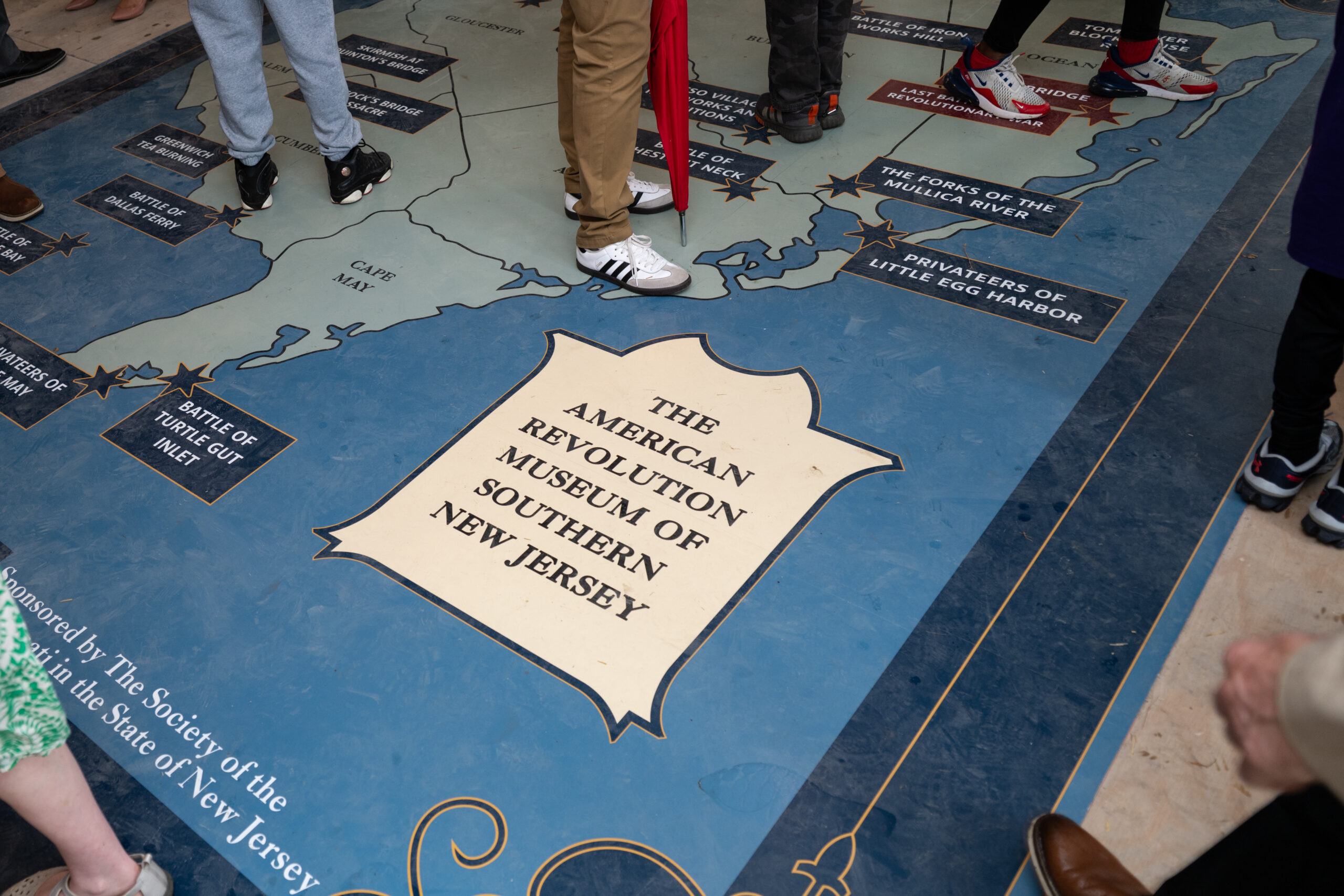
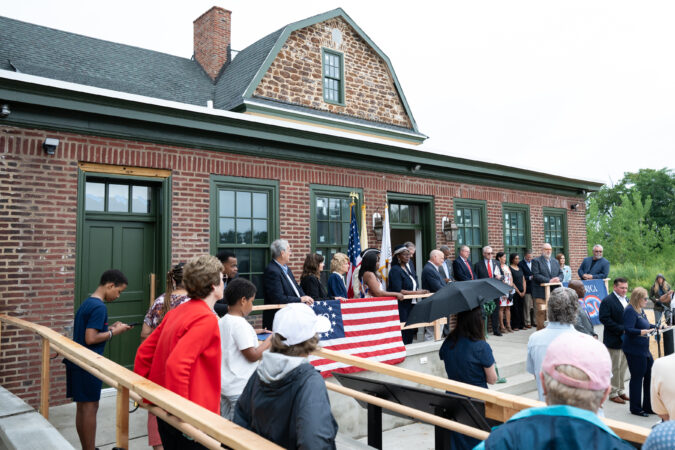
    Elected officials, history buffs, and local organizers gathered at the Benjamin Cooper Inn at 75 Erie St. on Saturday to celebrate the soft opening of the American Revolution Museum of Southern New Jersey. The project was funded by $4.6 million in grants from federal, state, and local sources, with the largest amount coming from the New Jersey Historic Trust.

    The 18th-century stone building has taken on many identities, including a private residence, tavern, British Army outpost, shipyard, luxury yacht building site, storage unit, and dumping ground for toxic materials. In the 1760s, the land was witness to the mass auction of enslaved people. Until recently, the building was abandoned.

    The museum hasn’t fully opened to the public and likely won’t for at least a little while, but leaders of the Camden County Historical Society, which has a 30-year lease with the building’s private owner, wanted to give people a taste of what the museum will be when it does. Right now, the museum is open for limited tours by appointment only.

    The Inn still needs work. The building has a temporary roof installed after a 2012 fire. The floors aren’t finished, and bathrooms have no doors. The second floor, currently sectioned off, hasn’t undergone any renovations, which will require fundraising of hundreds of thousands of dollars. Dirt piles and overgrown foliage block any view of the Delaware River.

    Visitors explore the exhibits at the soft opening of the American Revolution Museum of Southern New Jersey in Camden on Saturday.

    For the past six years, the society has planned to unveil the museum before America’s 250th, said Jack O’Byrne, the society’s executive director, but they kept running into obstacles. The project’s success came years after the society lost the Hugg-Harrison-Glover House, a Bellmawr home that survived the Revolutionary War, to a highway construction project after a preservation battle.

    “It’s been a race to the end,” said O’Byrne, who will retire from his role on July 4. “The project probably died like 13 times.”

    Zed Fox, the incoming executive director, and the society’s board will determine the future official opening date, hours, and cost. Fox said Monday that the board will meet on Wednesday to discuss those options, but he expects the museum to ready to open at full capacity by fall.

    The museum is planned to serve as the trailhead for Camden County’s LINK trail, a 34 mile shared-use path in the works across 17 municipalities, and educate people on South Jersey’s role in American history.

    A long history and a damaged home

    The new museum doesn’t showcase many historic artifacts. Many gems kept in the society’s archives, such as a letter written by George Washington at Valley Forge and a dozen other Revolutionary War-era items, wouldn’t fare well at the Inn with the sunlight streaming through the windows.

    But scattered amid walls of weapon replicas and educational text are hints of the real thing.

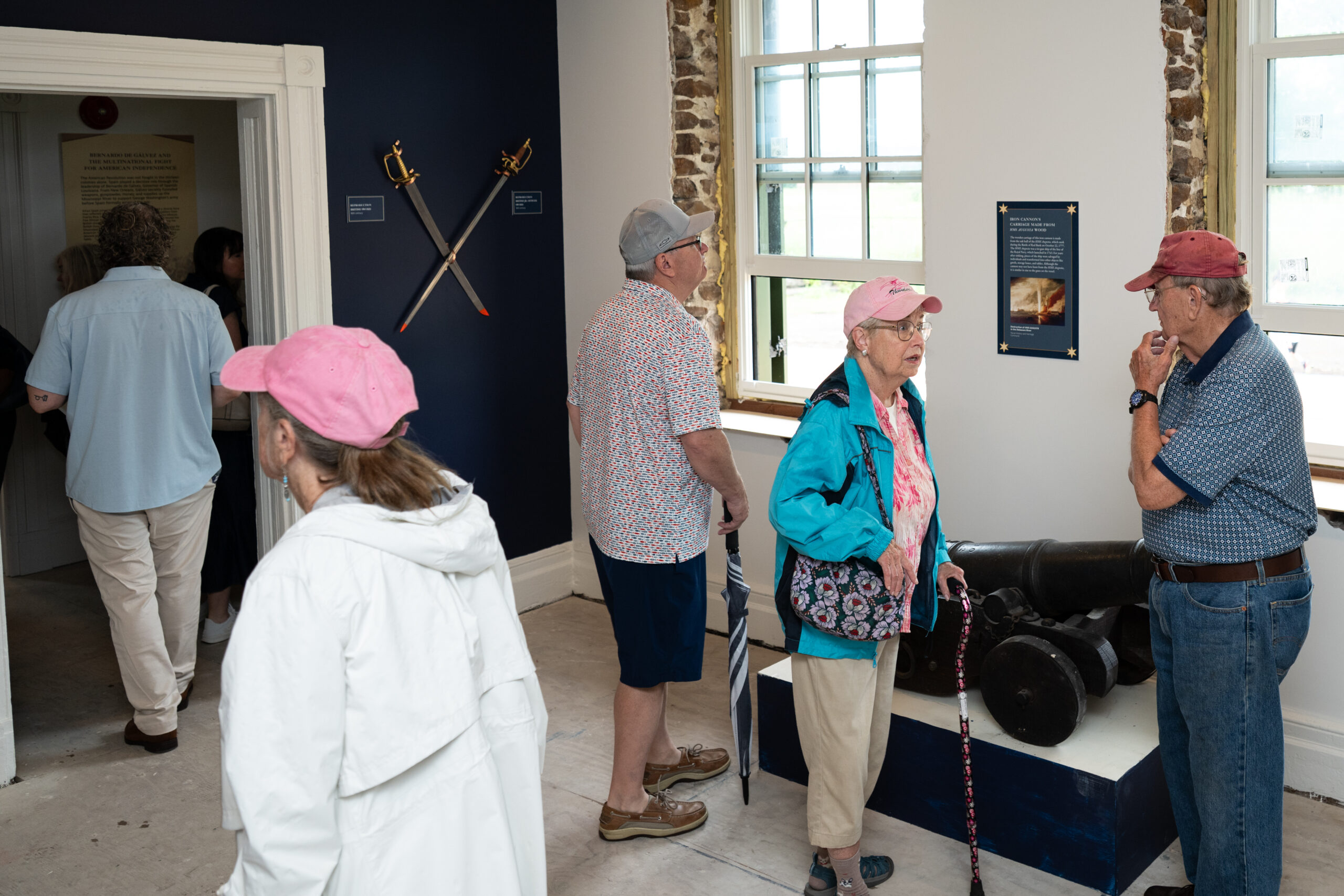
    There’s some 19th-century furniture originally owned by the Cooper family, a British cannon featuring wood blown off an 18th-century Royal Navy ship in Gloucester City, framed New Jersey bank notes from the 1760s and 1770s, and a front door key from when the Inn was a saloon called the “Old Stone Jug.”

    A bell hanging in one room rang to announce ferries landing at Cooper Street Ferry in 1800, and a cheval-de-frise, a sharp wooden log, once blocked British ships from sailing the Delaware River.

    In the same room, there’s a mantel from Hugg’s Tavern in Gloucester City, salvaged in 1929 before the building was demolished. Betsy Ross married her first husband, John Ross, in front of the fireplace at the tavern in 1773, though the mantel at the museum isn’t the original.

    Visitors explore the exhibits at the opening of the American Revolution Museum of Southern New Jersey in Camden on Saturday.

    But local historians say the displays aren’t the main attraction.

    “The building itself is an artifact,” O’Byrne said. “You know, it’s the most historic building in Camden.”

    Before the house was built, a teenage Benjamin Franklin was said to have slept at the property while traveling from Boston to Philadelphia.

    In 1734, Joseph Cooper, a Quaker, built a 2½-story Dutch Colonial stone home for his son and daughter-in-law, Benjamin and Hannah Cooper, at what became the historic building. Benjamin Cooper, a ferryman, also used the residence as an inn and a tavern.

    In 1777, the Benjamin Cooper Inn was used as a outpost for British Col. Robert Abercrombie. Hessian troops, German auxiliaries to the British Army, marched through Cooper Point during the war, and at one time, local historians say Benjamin Cooper’s sons, Samuel and Joseph Cooper, were jailed in Haddonfield in 1778 on suspicion of being American spies.

    But the property has a more troubling past.

    In the 1760s, the site was used for the auction of enslaved people. Though some who were forced to stay on the Cooper’s property until being sold managed to escape, “all were pursued and re-captured,” according to the Inn’s 2021 historic preservation plan.

    O’Byrne said the museum is working to educate people about that history. One of the museum’s few rooms, which the society has titled “The Declaration’s Promise,” informs visitors about how immigrants, Black people, and the Lenape, who lived in the region before white settlers arrived, shaped South Jersey’s history.

    “What we’re trying to do is make this a balanced history and not just about, you know, white people,” O’Byrne said.

    Camden’s ‘most historic building,’ under threat

    When demolition crews tore down the Hugg-Harrison-Glover House in 2017, the Camden County Historical Society viewed the outcome as a huge injustice to historic preservation.

    “That was a gut punch,” said Chris Perks, board president. “We had invested a tremendous amount of time and the community’s time into that site.”

    Then, in 2018, a private company, 75 Erie St. LLC, purchased the Benjamin Cooper House from Agathon Realty for $1.1 million without knowing the building’s history. The house was in poor condition and graffitied. The windows were boarded up. It was difficult from the street to even know the building was there, because the house faces the river instead. The waterways were the real highways back then, O’Byrne said.

    “When we heard this just got purchased, we were like, ‘Oh, my God, we can’t let Camden’s most historic house go under,’” O’Byrne said. “It took me two years, and I was able to get a 30-year lease.”

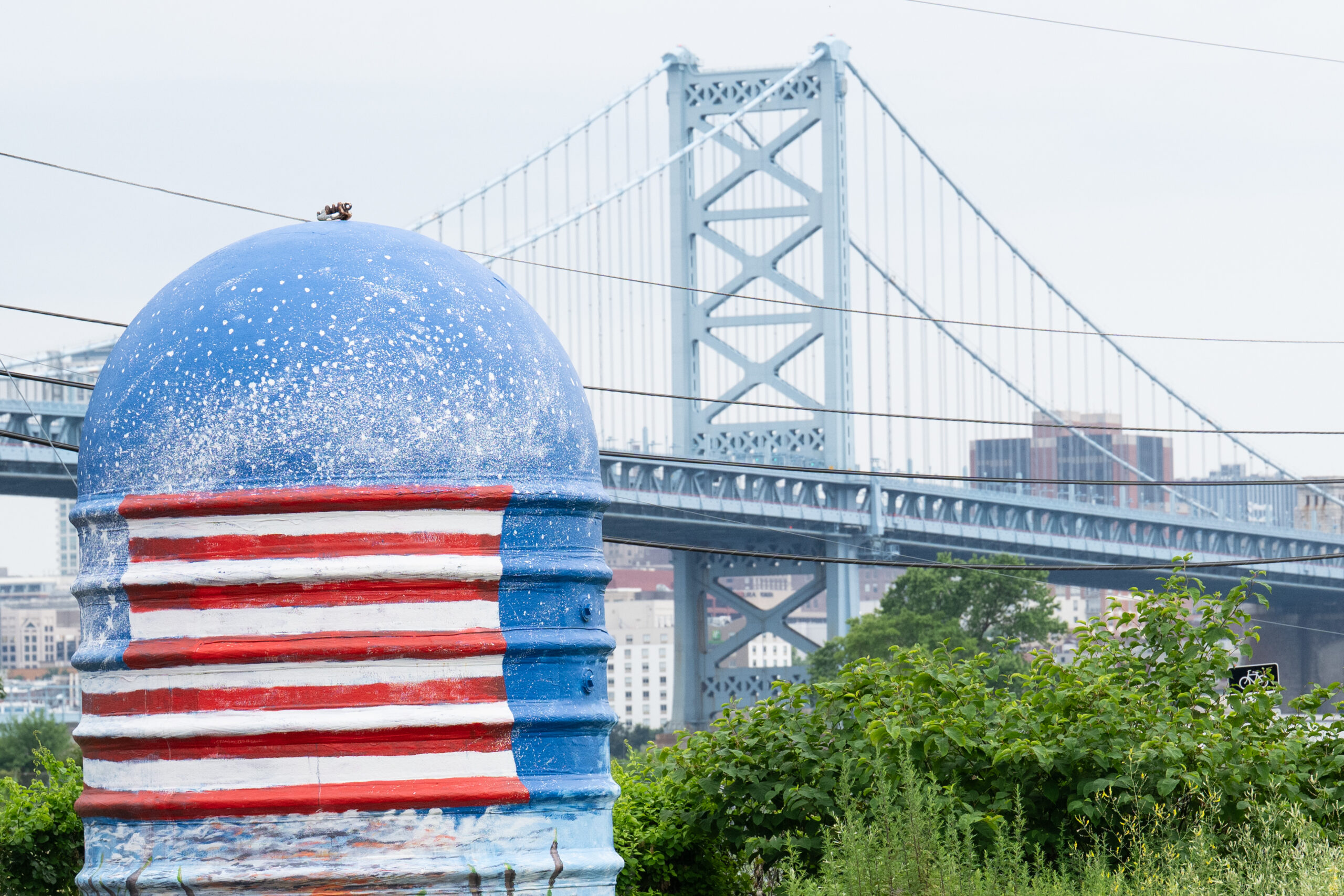
    A view of the Benjamin Franklin Bridge from the newly opened American Revolution Museum of Southern New Jersey in Camden on Saturday.

    That lease will last at least through 2051. Perks declined to share how much the historical society will pay monthly.

    The 2021 historic preservation plan for the building estimated that if the building opened in 2025 as originally projected, museum operations would have required an operating budget of $300,000 full time, or $132,000 part time.

    While several organizations came together to fund the Benjamin Cooper Inn’s restoration, O’Byrne said the society will require more revenue beyond the funding for the restorations to maintain operations. O’Byrne applied for an operating support grant from the state and is working to raise $750,000 to match a New Jersey Historic Trust grant to restore the tavern’s upper level.

    “We opened this thing, and it’s a minor miracle that we were able to pull all the funds together and make it in time,” O’Byrne said. “But in some respects, capital fundraising is easier.”

  • Rowan’s vet school can ‘keep the lights on’ under tentative state budget deal, and other South Jersey program updates

    Rowan’s vet school can ‘keep the lights on’ under tentative state budget deal, and other South Jersey program updates

    Rowan University’s nascent veterinary school will get enough funding to “keep the lights on” under the tentative New Jersey budget deal, according to one South Jersey lawmaker.

    It’s among several South Jersey programs with a fate tied to the negotiations ahead of the state’s June 30 budget deadline.

    New Jersey Gov. Mikie Sherrill proposed completely slashing state funding for the state’s only vet school in her budget proposal rolled out in March.

    The Shreiber School of Veterinary Medicine was created with state support and its first class just finished its first year. On top of training the next generation of vets and conducting research, the South Jersey institution provides veterinary services to the region and helps address a large animal vet shortage.

    Since the four-year school only has had only one 75-student class paying tuition so far, the prospect of losing all state funding was potentially devastating.

    The state legislature will vote Tuesday on a budget that allocates $6.2 million to the school, a lower number compared to the $8 million it got this year (and much lower than the $20 million it had requested). But the amount will be sufficient enough for the vet school to survive, said Sen. John Burzichelli, a Gloucester County Democrat.

    “Will they keep the lights on? Will they continue to grow? I’m confident they can,” he said in a Monday interview.

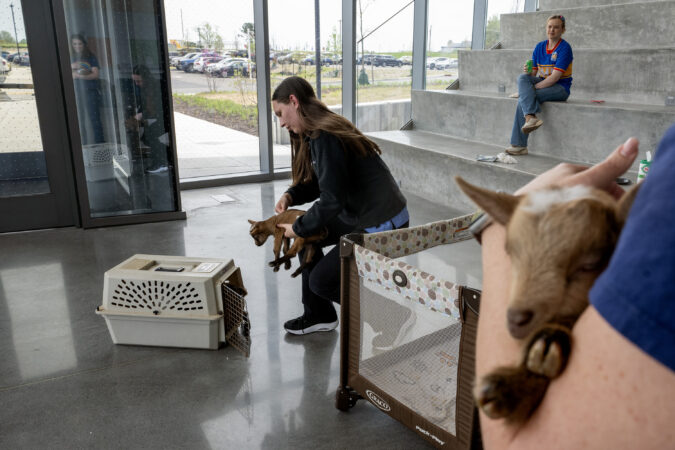
    Veterinary students at Rowan University’s Shreiber School of Veterinary Medicine interact with a group of less than-a-week-old kids (baby goats) brought in by classmate Cana Patterson (back to camera, second from right).

    Burzichelli said he and other supporters of the school were trying to allocate $12 million to the school to provide “more resources as they grow out.”

    Rowan spokesperson Jose Cardona declined to comment because the deal has not been signed into law.

    The legislature is expected to approve the budget Tuesday, the final day before the new fiscal year begins on July 1. Sherrill has the power to veto items in the budget before signing it into law.

    As part of her March proposal, Sherrill warned that legislators must provide cuts to equal out any spending they want to add to the budget, a stance she softened more recently.

    On Friday, she said in Camden that because of cuts she identified with legislative leaders, there’s money for lawmakers to “really push into their local projects.” The state’s revenue forecasts have also gone up.

    Sherrill announced last week that she came to a budget agreement with legislative leaders with a price tag of $60.7 billion, the same rounded figure she proposed earlier this year.

    Then, on Sunday, legislators advanced a budget with $15 million more than Sherrill’s proposed total earlier this year.

    Sherrill has repeatedly touted her budget proposal as” the most fiscally responsible budget New Jersey has seen in years,” though it’s the largest in the state’s history.

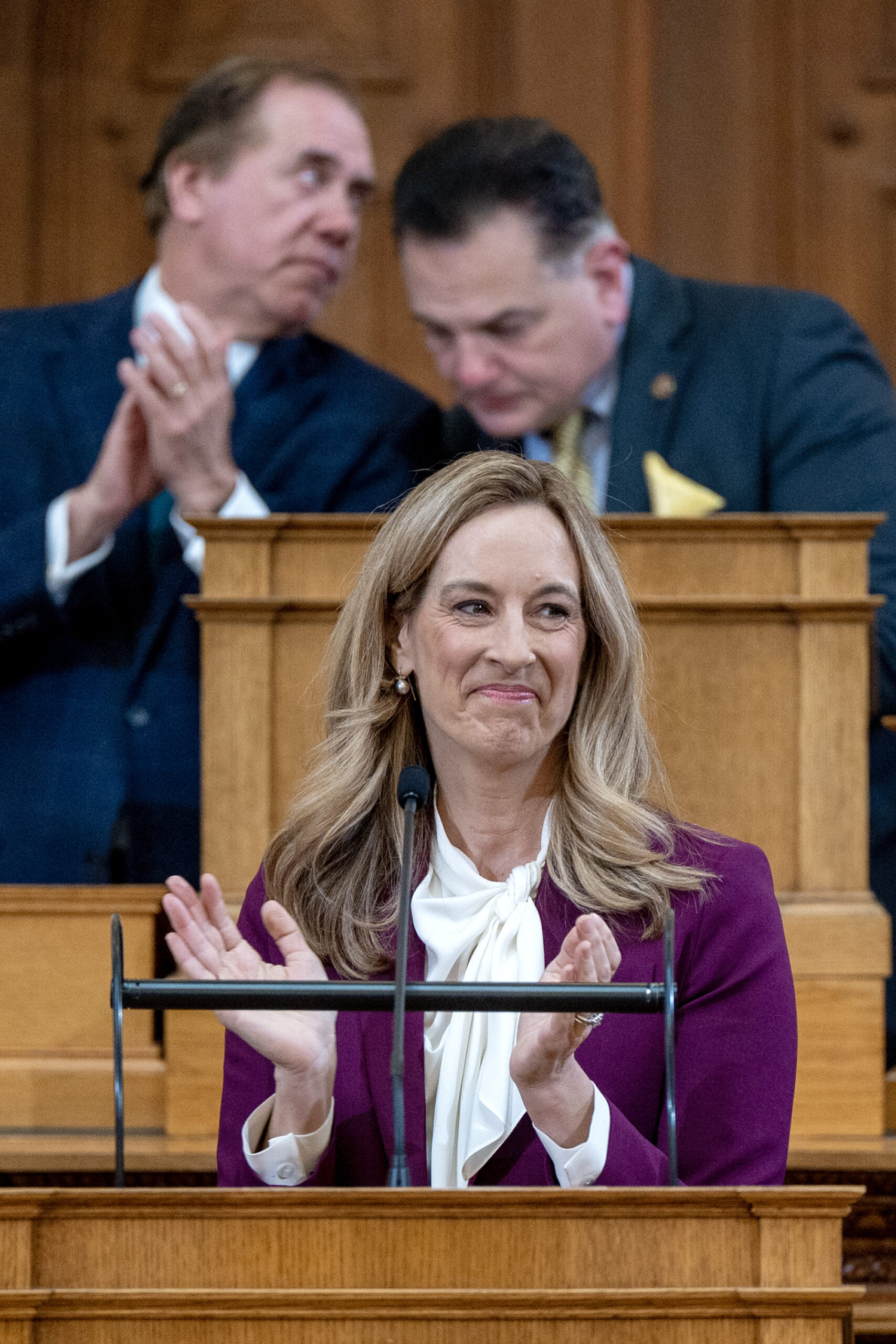
    Gov. Mikie Sherrill delivers her budget address Tuesday, Mar. 10, 2026, in the Assembly Chamber at the New Jersey State House. Assembly Speaker Craig J. Coughlin (left) and Senate President Nicholas P. Scutari (right) are behind her.

    Funding restored for child trauma care in South Jersey

    Sherrill’s original proposal also zeroed out funding for a program that provides medical and mental health care to South Jersey children who have experienced abuse in her budget proposal earlier this year. But the legislature restored funding to the same level as the current fiscal year at $1.85 million.

    The Rowan-Virtua Child Abuse Research Education and Service Institute (CARES) has locations in Stratford in Camden County and Vineland in Cumberland County. Rowan informed employees of layoffs across both locations and said the university would be closing down the more rural Vineland location as a result of the cuts.

    Cardona, the Rowan spokesperson, declined to say Monday whether the Vineland center will remain open and if the layoffs will be reversed. He said it’s “premature to comment on a budget that has not been approved.”

    Dio Tsitouras, the executive director of the American Association of University Professors Biomedical and Health Sciences union — which represents CARES employees — said the union is awaiting “an announcement from Rowan that rescinds all layoffs and indicates that the Vineland office will remain open.”

    “We are pleased that the budget the Legislature passed restores critical funding to the CARES program so that our members can continue serving the most vulnerable children of South Jersey,” Tsitouras said.

    State Rep. Anthony Angelozzi, a Burlington County Democrat, said his office advocated for CARES, one of dozens of groups at risk of funding cuts that met with his office. He called the program’s work “imperative.”

    “There were certain priorities we had to fight for because we are sorta on the ground in our districts in a way sometimes the governor is not,” he said. “There are some programs that legislators realize how profound they are at helping people that the governor may underestimate.”

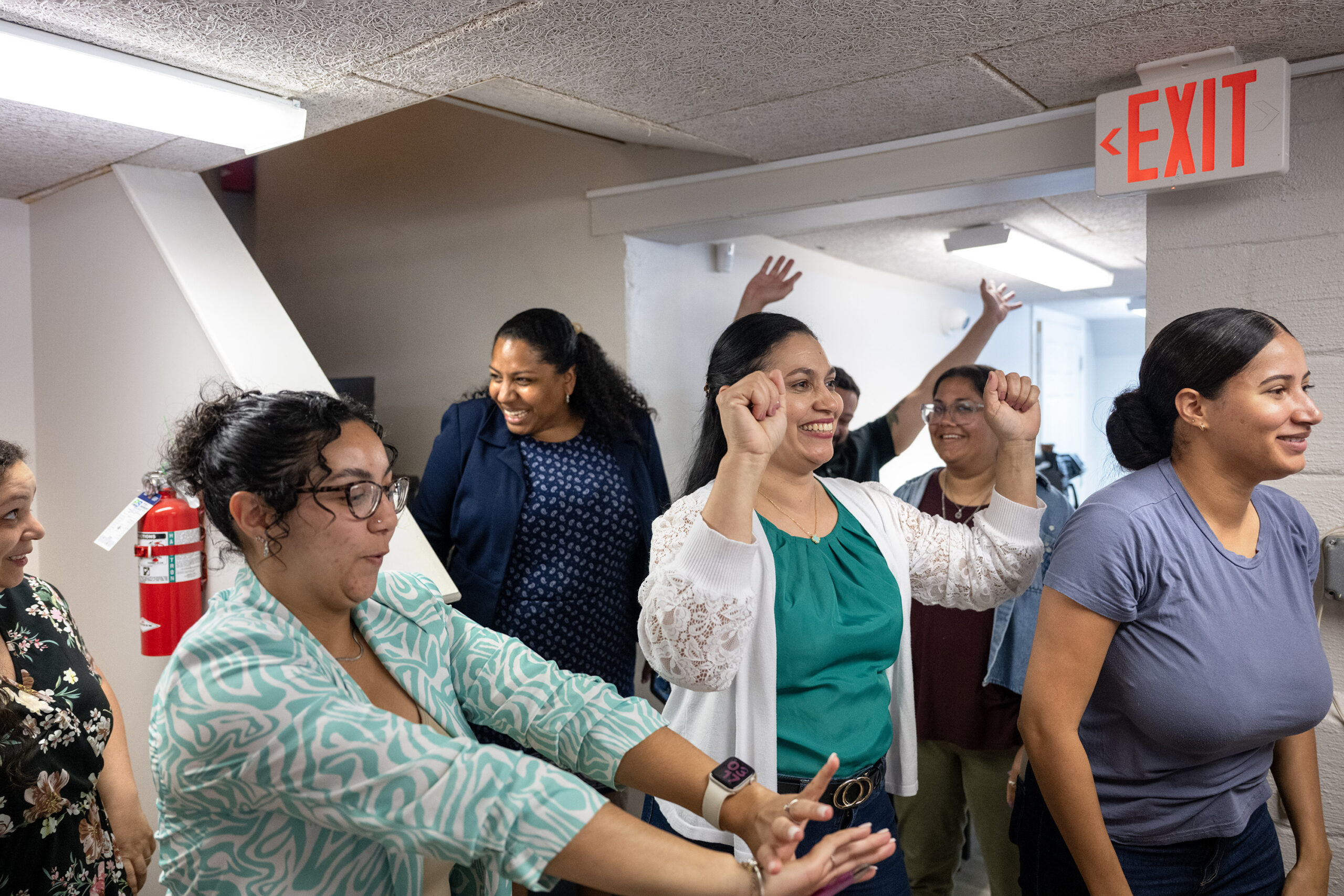
    Staff members observe from back of the room during a workshop at the Hispanic Women’s Resource Center in Camden Thursday, June 11, 2026.

    Hispanic Women’s Resource Centers still at risk

    New Jersey has one of the largest wage gaps for Hispanic women in the country. Hispanic Women’s Resource Centers were established by the legislature in the early 1990s to help that disparity, providing employment training and other support to Latinas. Sherrill proposed cutting 80% of state funding for these programs, down to just $535,000 statewide.

    Legislators restored most of that funding in their tentative budget to nearly $1.8 million but program leaders say it’s still not enough, at almost 30% less than this year’s allocation of $2.5 million.

    The Latino Action Network Foundation runs these centers in partnership with six nonprofits across 14 sites, including five in South Jersey in Camden, Vineland, Hammonton, Pennsville, and Rio Grande.

    Latino Action Network president Javier Robles said that decrease will still cause the closure of centers and reduce job training, mental health services, and English language classes to thousands of families statewide.

    “At a time when Latino families across our state are being targeted by the right-wing Trump anti-immigrant agenda, these cuts will only put additional strain on our community,” Robles added.

  • The battle for backyard chickens | Inquirer South Jersey

    The battle for backyard chickens | Inquirer South Jersey

    Good morning, South Jersey.

    A small but mighty group of Collingswood residents are fighting to legalize backyard chickens.

    And hospitals in New Jersey could lose an estimated $3.6 billion through 2032 because of Medicaid changes.

    Plus, home insurance rates in New Jersey are on the rise, and more news of the day.

    — Taylor Allen (southjersey@inquirer.com)

    If someone forwarded you this email, sign up for free here.

    ‘Let the chicken people have their thing

    The push to lift Collingswood’s ban of chickens has been an ongoing effort for years.

    But after new leadership joined and reshuffled the board of commissioners, a small group of residents thinks this could be their year to finally get the green light to have backyard chickens.

    Advocates have been showing up at board meetings lately. And most recently, they provided proposed language for the board to use in a future ordinance to support it during its last working meeting earlier this month.

    In the past, commissioner and former Mayor Jim Maley has said he would not support a backyard chicken pilot program. Meanwhile, Deputy Mayor Amy Henderson Riley said she suspects this effort has better chances than the ones before.

    Reporter Sarah Nicell details the specifics of what advocates want in the proposal.

    P.S. Read the article for the local government news, but stay for the chicken pictures.

    N.J. hospitals could lose $3.6 billion

    During a panel discussion in Cherry Hill last week, Inspira Health Network CEO Amy Mansue said New Jersey hospitals could lose about $3.6 billion from Medicaid changes through 2032.

    According to Mansue, these changes will force hospitals to alter the way they operate to bring expenses in line.

    That high-figure estimate does not include the costs that hospitals absorb from the growing number of uninsured people who show up to emergency departments because they don’t have the money for a doctor’s visit.

    Almost 69,000 people’s individual coverage from New Jersey’s Affordable Care Act marketplace have already lapsed, and thousands more are expected to lose their Medicaid coverage when new requirements go into effect next year.

    The Inquirer’s Harold Brubaker explains the hospitals’ regulatory hurdles and workforce development efforts.

    Plus: Gov. Sherrill’s visit at SoccerFest26

    🎤 Allow me to pass the mic to South Jersey politics reporter Aliya Schneider.

    Gov. Mikie Sherrill visited the SoccerFest26 fan fest at the Wiggins Waterfront in Camden on Friday afternoon.

    “These are kind of heavy times, they’re kind of dark times; there’s a lot of conflict going on,” Sherrill said in brief remarks on stage in front of a scarce crowd during her Friday afternoon visit. “But what I love about soccer is, it doesn’t matter where you’re from, doesn’t matter who you voted for, it doesn’t matter who you pray to. We all come together as a world.”

    Officials credited Sherrill for including South Jersey in World Cup festivities. Former Gov. Phil Murphy’s administration planned to hold a large fan fest in North Jersey but Sherrill’s administration canceled that plan and instead organized regional celebrations.

    Her Camden visit came just days before the state budget deadline on Tuesday. The governor agreed on a budget framework with legislative leaders a week before the deadline, but the details remained unclear.

    “I’m getting a little more concerned,” she told reporters on Friday. “And so I know they [legislators] are hard at work and I’m going to keep reminding them of the constitutional deadline.”

    Sherrill proposed massive funding cuts to various South Jersey programs in her March budget proposal. But because of cuts she’s found in the budget with legislative leaders, there’s money for lawmakers to “really push into their local projects,” she said. Rowan University’s veterinary school, a medical center for abused children, and Hispanic Women’s Resource Centers are among the many causes asking for a piece of the pie.

    What to know today

    🧠 Trivia time

    What year was Burlington City established?

    A) 1596

    B) 1677

    C) 1776

    D) 2000

    Think you know? Check your answer.

    What we’re…

    💧Borrowing: A kayak to explore the The Cooper River Water Trail.

    🛍️ Shopping: For a new sundress at the Cherry Hill Mall.

    🏡 Ogling: This two-bedroom bungalow built in 1930. (Did you recently buy a home in South Jersey? Share the story of how you did it. Email Inquirer real estate reporters at properties@inquirer.com)

    📬 Your South Jersey view

    Festival goers watch a large screening of a match during opening night of SoccerFest26 on Thursday at Wiggins Park in Camden.

    My fiancé and I strolled through the festival, ate tacos, and watched the games as the sun was setting.

    What does your community look like? Submit a photo and a brief description for a chance to be featured in the Monday edition of this newsletter.

    🗞️ What other South Jersey residents are reading

    Thanks for starting your week with The Inquirer. I’ll catch you tomorrow. 👋🏽

    By submitting your written, visual, and/or audio contributions, you agree to The Inquirer’s Terms of Use, including the grant of rights in Section 10.

  • Collingswood residents have spent years fighting for backyard chickens. This time, they think they might win.

    Collingswood residents have spent years fighting for backyard chickens. This time, they think they might win.

    Any Collingswood resident over the last 18 years can remember the fight to legalize backyard chickens. Or the second attempt. Or the third.

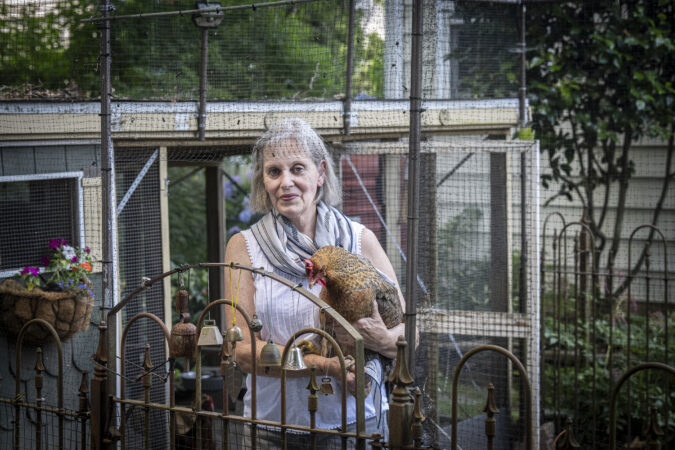
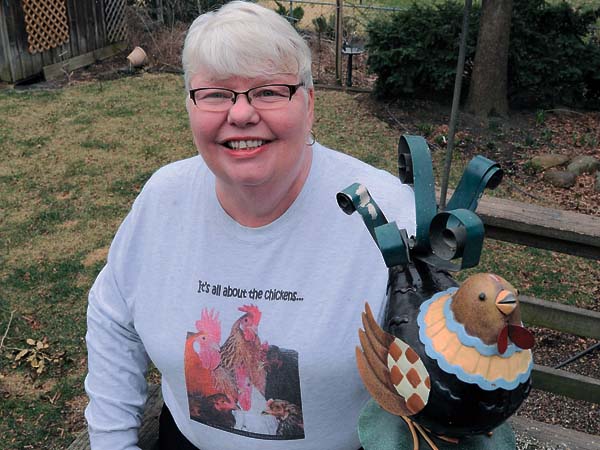
    Gwenne Baile, 77, knows the efforts well. A Haddon Township resident and the unofficial “Chicken Lady of South Jersey,” Baile initially became interested when she saw Martha Stewart showing off her chickens on TV. After retiring in 2009 from a long career as an ob-gyn nurse, Baile decided she needed a hobby.

    “I started looking into it,” Baile said, “but it was illegal here.”

    Since then, Baile said, she has played some part in changing the ordinances in 35 municipalities across South Jersey, including in her hometown. She keeps a list of places with pro-chicken zoning rules, including the 19 municipalities in Camden County that allow them. Baile now has five hens, taken in as fosters, including those injured by predators or forced from owners whose municipalities do not allow coops.

    One hen with arthritis lives indoors. Baile calls her a “mini me” since she hates the heat, doesn’t like exercise, and has golden feathers that match Baile’s hair.

    Gwenne Baile, an advocate of backyard chickens, holds Mimi, a family’s hen in Audubon.

    Baile and a small group of hopeful Collingswood residents have frequented Collingswood Borough Board of Commissioners meetings in recent months. At its last working meeting on June 17, the group handed over proposed language that they hope the board will use in a future ordinance supporting backyard chickens, informed by Baile’s years of advocacy.

    The last major push for residential hens fizzled out in 2019 after several Collingswood residents spent more than a year regularly attending meetings to champion an ordinance that never saw the light of day.

    But this time feels different, Baile said, and some locals and officials agree.

    Dan DiVito, 42, has lived in Collingswood for six years and owns Front Yard Food, a business that teaches people how to grow their own crops and helps design the backyard infrastructure to do it. If Collingswood passes an ordinance, DiVito said, he will get chickens himself and join the new Backyard Chicken Advisory Board — a five-member commission that would oversee the initiative and investigate complaints.

    “Chickens are a no-brainer,” DiVito said. “It’s a pet that makes you breakfast.”

    Gwenne Baile in her backyard in 2014.

    ‘A change and an opportunity’

    Collingswood did not always ban chickens.

    But in 2008, Collingswood’s three-person board of commissioners — made up of a mayor, deputy mayor, and a commissioner — adopted measures prohibiting residents from keeping or breeding a long list of livestock and fowl, including chickens.

    Local news records from 2008 do not give a clear explanation why the rules were adopted, other than comment from then-Mayor Jim Maley that the board wanted to “head off a problem before it presents itself.”

    The maximum penalty for violating the ordinance is a $500 fine.

    Repeated attempts to end the ban have been unsuccessful, even as neighboring municipalities passed ordinances to allow chickens. Some residents voiced concerns about the smell or the noise, or about Collingswood properties being too small to house chicken coops. Collingswood Chicken Uprising, the local Facebook group for the chicken resistance, was created 16 years ago and is up to 234 members.

    But a recent political shift in Collingswood has meant hope for some local chicken advocates.

    Maley’s 28-year tenure as mayor ended last May, when two progressive challengers joined Maley to win seats on the board of commissioners.

    Daniela Solano-Ward became the first female and Latina mayor of Collingswood in 2025, and Deputy Mayor Amy Henderson Riley became one of only a handful of women to serve on the board in the borough’s history. That shuffling was one factor that brought on the chicken resurgence.

    “Advocates and community members saw that this was a change and an opportunity to try this out with the new team and see what could happen,” Henderson Riley said.

    Maley, who has said that he would not want chickens living next door or support a backyard chicken pilot program, would be one of three votes if an ordinance makes it to the floor. It takes only a majority to pass.

    Passing an ordinance takes time. There must be two separate readings of the proposal, and time must be given for residents to comment. The next commissioners meeting is not until July 15, and Henderson Riley said Tuesday that she was unsure whether the proposal drafted by Collingswood residents would make it to the agenda.

    But with an organized, citizen-led group, Henderson Riley said, she suspects this is the most favorable effort thus far. Plus, with concerns like the cost of living and gas prices, she said, there are bigger things to worry about than banning chickens.

    “Let the chicken people have their thing,” she said.

    Maley and Solano-Ward did not respond to requests for comment.

    What advocates are proposing

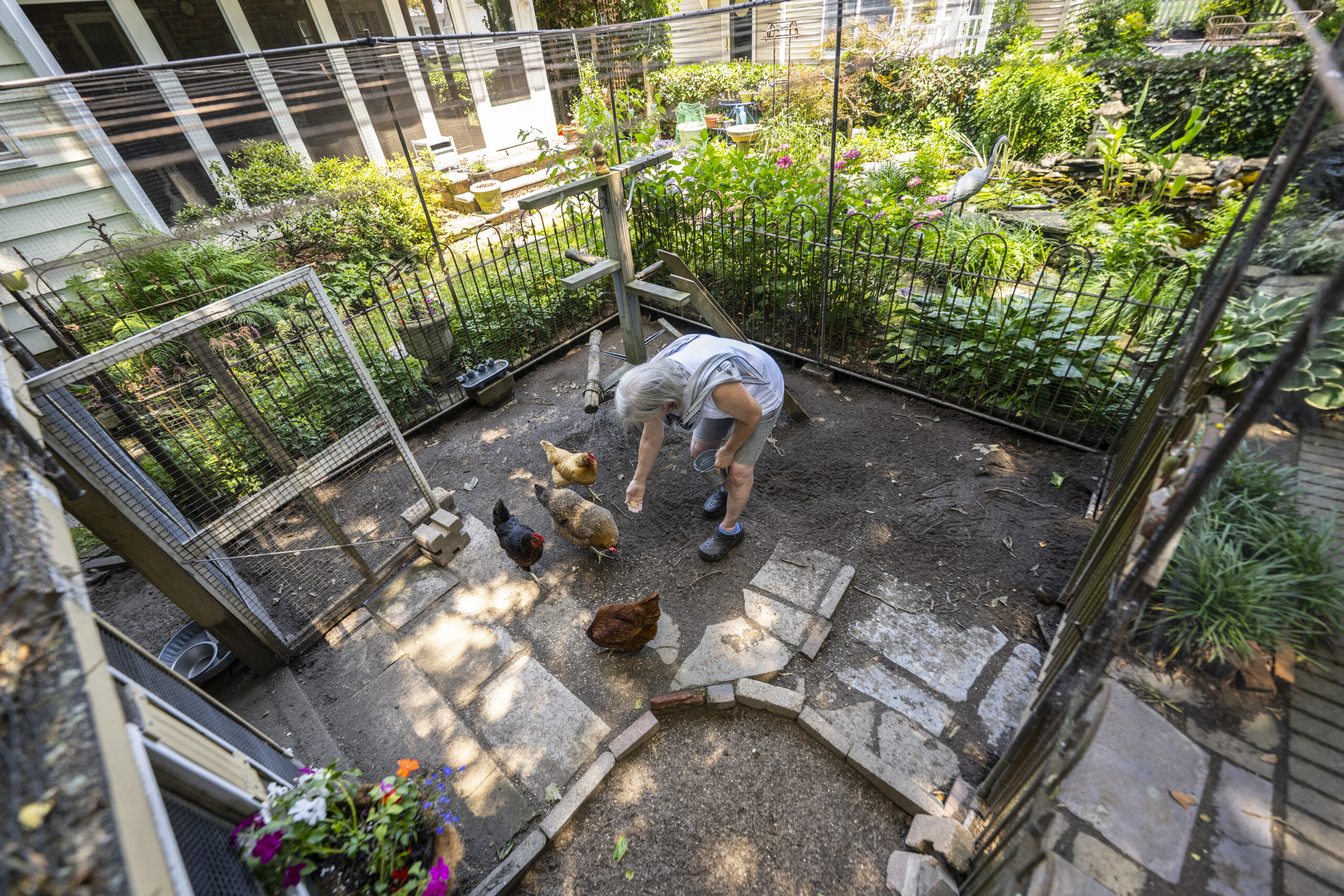
    Suzanne Passante feeds her chickens inside the chicken coop in the backyard of her home in Haddon Township, N.J., on Wednesday, June 24, 2026.

    Every municipality’s backyard chicken ordinance is slightly different. Most have strict requirements, including that coops are predator-proof, set a certain distance from other properties, and kept dry and clean.

    Collingswood residents’ pitch to the commissioners would ban roosters, forbid residents from selling their eggs, and require completion of an online course teaching applicants how to care for hens. Collingswood could have only 30 households with hens at a time (of the 6,900 estimated housing units the U.S. Census Bureau estimates are in Collingswood), and new licensees would be capped at four chickens.

    Chicken owners would have to pay $10 fees annually to renew their licenses. The Backyard Chicken Advisory Board would investigate complaints and help relocate chickens that are no longer wanted, since the advocates are calling for a ban on slaughtering hens.

    Any violations could result in a fine of up to $1,250 or imprisonment of up to 90 days, a more severe punishment than the current ordinance gives for keeping chickens.

    Henderson Riley, who has a doctorate in public health, took the three-hour backyard chicken course to learn more about the potential process residents would have to go through to get a coop.

    She passed, but not without a bunch of red markings and a reality check that owning chickens takes time, money, and energy that she does not have. Henderson Riley said she thinks the long list of requirements, along with the difficulty of raising hens, will dissuade the vast majority of people from partaking in the hobby.

    “It’s not like the hens are going to take over Collingswood.”

    Words of wisdom

    Lynn Parker, 52, has 10 hens in her backyard in Stratford Township, Camden County. When Stratford passed its ordinance allowing chickens in 2023 (an effort Baile helped with), Parker was the first person in line for a chicken permit.

    She now chairs the township’s Hen Advisory Commission, which inspects new coops and educates residents. Fourteen homes in Stratford have chickens now, Parker said, and there have been no complaints.

    Her advice to people who want to change their municipality’s chicken law is simple.

    “Even if you get a no, do it again,” Parker said.

    Suzanne Passante, 71 and Baile’s neighbor, chairs Haddon Township’s Backyard Chicken Advisory Board. She has four chickens and averages a dozen eggs per week.

    It took time to educate residents about the benefits of hens and to quell misconceptions, like chickens attracting rats, but she said complaints have been nonexistent in recent years.

    “Now, after 11 years, people don’t even think about it,” Passante said.

  • See what $405,000 can buy you in the Fairmount, Drexel Hill, and Camden County housing markets | The Price Point

    See what $405,000 can buy you in the Fairmount, Drexel Hill, and Camden County housing markets | The Price Point

    The Price Point compares homes listed for similar sale prices across the region to help readers set expectations about house hunting.

    According to recent Zillow data, homes with “character” — visual distinction and a sense of history — are all the rage.

    As the birthplace of the nation, the Philadelphia region has its fair share of drool-worthy older homes of all shapes, sizes, and price tags.

    In May, the median sale price for homes in the Philadelphia metropolitan area was $405,000.

    So, here are three pre-World War II homes in the Philadelphia region that about $405,000 can buy — all with ample “character.”

    A Fairmount condo with a private patio

    This second-floor condo boasts a desirable location, according to its listing agent, Jeniffer Benner with Home Sweet Home PHL.

    It’s situated on a tree-lined street in the heart of the Art Museum neighborhood, with easy walkability to Center City, the Schuylkill River Trail, and Roberto Clemente Park just a block away.

    Benner said a main draw is the property’s private rear patio, which is “tough to find in condo spaces.”

    Built in 1920 with a major remodel in 2014, the home’s living room boasts modern features and touches of the past with its traditional red brick exterior. It has nine-foot ceilings, custom shutters, hardwood floors, recessed lighting, and crown molding. The built-in entertainment center has been a favorite of prospective buyers.

    “A lot of people think that’s a really nice feature, rather than having a blank box like some of the newer construction condos,” Benner said. “They like that character.”

    There are two bedrooms and two bathrooms, with the primary suite including two closets, one a walk-in.

    Benner said the condo fee is minimal — $223 per month — because it only covers exterior maintenance and insurance for the townhouse’s three units. Compared to city condo fees that can reach upward of $1,000 a month, the cost is “very affordable.”
    The property was listed for sale in March for $420,000. The listing price has since come down to $410,000.

    A Tudor-style home in Drexel Hill

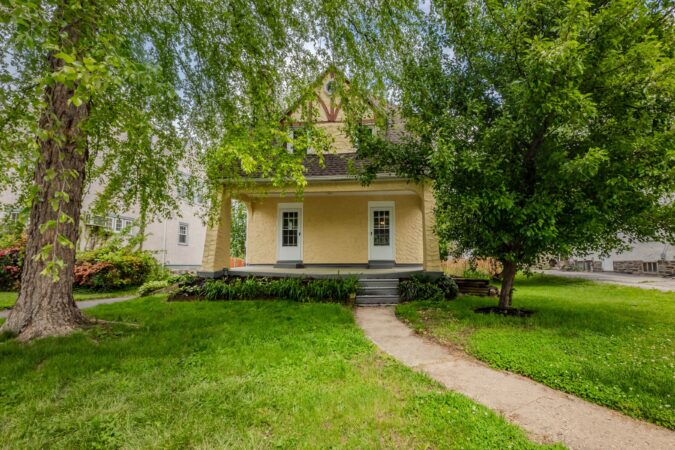
    This Tudor-style home in Drexel Hill has an old-fashioned feel, as most of the neighborhood’s homes were built between 1925 and 1934, said listing agent Jason Cox with Long & Foster Real Estate.

    “This is a throwback, and that’s one of the reasons people love it,” said Cox.

    Two columns frame the property’s double-entry doors, which Cox said is an imprint of historical Drexel Hill homes. The kitchen’s mullioned glass-front cabinets and the bathroom’s checkered-tile accents further the home’s traditional aesthetic.

    The front yard is shaded by a willow tree, and the backyard is spacious enough for a garden, play set, pool, or all of the above.

    The three-story home has one full bathroom and five bedrooms — rare for its listing price. There are three larger bedrooms on the second floor, in addition to a smaller room that could double as an office, and a finished attic with skylights on the third floor.

    The living room has a traditional brick fireplace, and the dining room features access to a deck that is a prime location for outdoor grilling. Recently repainted and carpeted, the home is move-in ready.

    Cox, who lives a block away from the property, “can’t say enough about the neighborhood.” Ideal for families, the home is walking distance from the local elementary and middle schools, and is a five-minute drive from Upper Darby High School. In the neighborhood, some families have stayed for two or three generations.

    The property was listed for sale in May for $400,000.

    A complete renovation in Magnolia, Camden County

    Sitting on more than a half-acre, this home’s standout feature is its expansive backyard. About three years ago, the homeowners installed a patio and a gazebo with a mounted TV, transforming the empty space.

    “It makes the outside feel like the inside, and it can be screened in,” said listing agent Aaron Wallace with KW Main Street. “It’s the best thing about this property.”

    The four-bedroom, two-bath property was built in 1911 but underwent a major renovation in 2020. The contractor did everything “soup to nuts,” Wallace said, including the roof, windows, both bathrooms, and kitchen. “They left no stone unturned with this renovation.”

    The bright and airy ground floor includes the mudroom, living room, dining room, kitchen, and full bathroom. Going up a level, there are three bedrooms and the second full bathroom. On the third floor, there’s a generously-sized carpeted room that can be utilized as a bedroom, office, or an alternative living space.

    Another highlight is the living room’s fireplace, which is framed by a wooden chevron accent wall and serves as a focal point in the house.

    Magnolia’s pre-K-8 school is within walking distance from the home, and there is a baseball field behind the house that hosts local games. Wallace said the homeowners enjoy watching games from their gazebo.

    “It has a great small-town feel, and the big city is not too far away,” said Wallace.

    The property was listed for sale in June for $400,000.

  • Inside the Flyers’ 2026 NHL draft party: Fans come together in Atlantic City to share passion — and critique the team’s first-round move

    Inside the Flyers’ 2026 NHL draft party: Fans come together in Atlantic City to share passion — and critique the team’s first-round move

    ATLANTIC CITY — Noel Cronon and Sarah Colon, both native Philadelphians and devoted Flyers fans, had never met in person before the Flyers’ draft party in Atlantic City on Friday night.

    The two first connected through Flyers Nation, a Facebook group with more than 67,000 members where fans discuss the team and post updates. Cronon saw Colon in the group and reached out, and asking if she wanted to go to the draft party together.

    “There aren’t a lot of female Flyers fans, so it’s nice that we found each other,” Cronon said. “There are a lot of women here tonight, though, which is good to see.”

    Several hundred Flyers fans came together as a fan base at the Sound Waves Theatre at Hard Rock Hotel and Casino in Atlantic City to watch the 2026 NHL draft. Orange balloons, streamers, and Flyers memorabilia decorated the venue while fans came decked out in their best Flyers merchandise.

    Flyers fans watch the 2026 NHL draft during a party at the Hard Rock Hotel & Casino in Atlantic City on Friday.

    To kick off the night, past and present broadcasters Jim Jackson, Tim Saunders, and Steve Coates took the stage to share their thoughts on what general manager Danny Brière might do with the team’s first-round pick and energize the crowd.

    “We are back,” Coates said when he addressed the crowd. “Remember, this is a team that is going places.”

    The Austin City Nights band started the party, while the beginning of the draft played from monitors above the stage. Forward Porter Martone joined the band onstage and Gritty, the beloved Flyers mascot, posed for selfies and photos while Jackson went around the audience speaking with fans and taking photos.

    Father and son Grant and Trent Kitchenman have been season ticket holders since 1992 and said that they never miss events like this.

    “It’s really cool that they allow fans in on the draft night experience,” Grant said. “It makes it more personable and you get to see some of the players which is cool.”

    Garett Babik couldn’t have imagined watching the draft anywhere else.

    His dad took him to a playoff game against the Boston Bruins in 2010, and he’s been hooked ever since. During this year’s playoff run, Babik attended games dressed as Darth Vader to show his support for goalie Dan Vladař.

    “I’ve been a fan my entire life,” Babik said. “This is my life. I love this team from the bottom of my heart, and I can’t express that enough.”

    Fans (from left to right): Zack McErlain, Tug McErlain, Thomas McErlain and Stephen Dellaquilla react after the Flyers picked defenseman Maksim Sokolovskii with the 27th overall pick during the Flyers’ 2026 NHL draft party at the Hard Rock Hotel & Casino in Atlantic City on Friday.

    When it came time for the Flyers to make their first-round selection, the band stopped playing, and the theatre became quiet. Fans turned their attention to the monitors and anxiously waited for the announcement.

    When the trade alert came up on the screen and NHL commissioner Gary Bettman announced the trade, the crowd booed.

    Babik was not thrilled with the move either, he said.

    “I’m going to be totally blunt. I didn’t like it,” he said. “[Dallas Stars winger] Jason Robertson has been on the market, and I was hoping they would’ve got him. Don’t get me wrong, I understand we only have four picks in this draft, and they wanted to get more.”

    After they traded the 21st pick to the San Jose Sharks, moving down to No. 27, some fans immediately left, leaving the true diehards to wait until their pick.

    Among them were Eddie Bertino and Scott Parker, childhood friends from South Jersey who grew up playing hockey together and played in under-30 and under-40 leagues.

    Flyers Porter Martone signs his autograph for fans during the Flyers’ 2026 NHL draft party at the Hard Rock Hotel & Casino in Atlantic City on Friday.

    Bertino started playing hockey when he was 5 years old, with Parker’s dad as his coach. Both became lifelong Flyers fans thanks to their fathers, who had season tickets and attended the Flyers’ Stanley Cup victory in 1975.

    When Bertino secured the tickets for the draft party, he knew Parker was the right person to accompany him.

    “He is one of my few diehard Flyers fan friends,” Bertino said. “ I didn’t want to be here with some poseur, I wanted to be here with another diehard.”

    By 10:20 p.m., with the Flyers still waiting to pick and it being a Friday night in Atlantic City, Bertino was surprised so many fans decided to leave, but he wasn’t surprised by Brière’s trade.

    “The past two years he’s made some sort of trade, it’s kind of his thing,” Bertino said.

    Many fans didn’t stay around long enough to see the Flyers pick 6-foot-7 defenseman Maksim Sokolovskii with the 27th overall pick.

    However, a similar sentiment was shared with fans throughout the night — the future of Flyers hockey is bright, and they are proud to be a part of the fan base.

  • George Washington on a laptop

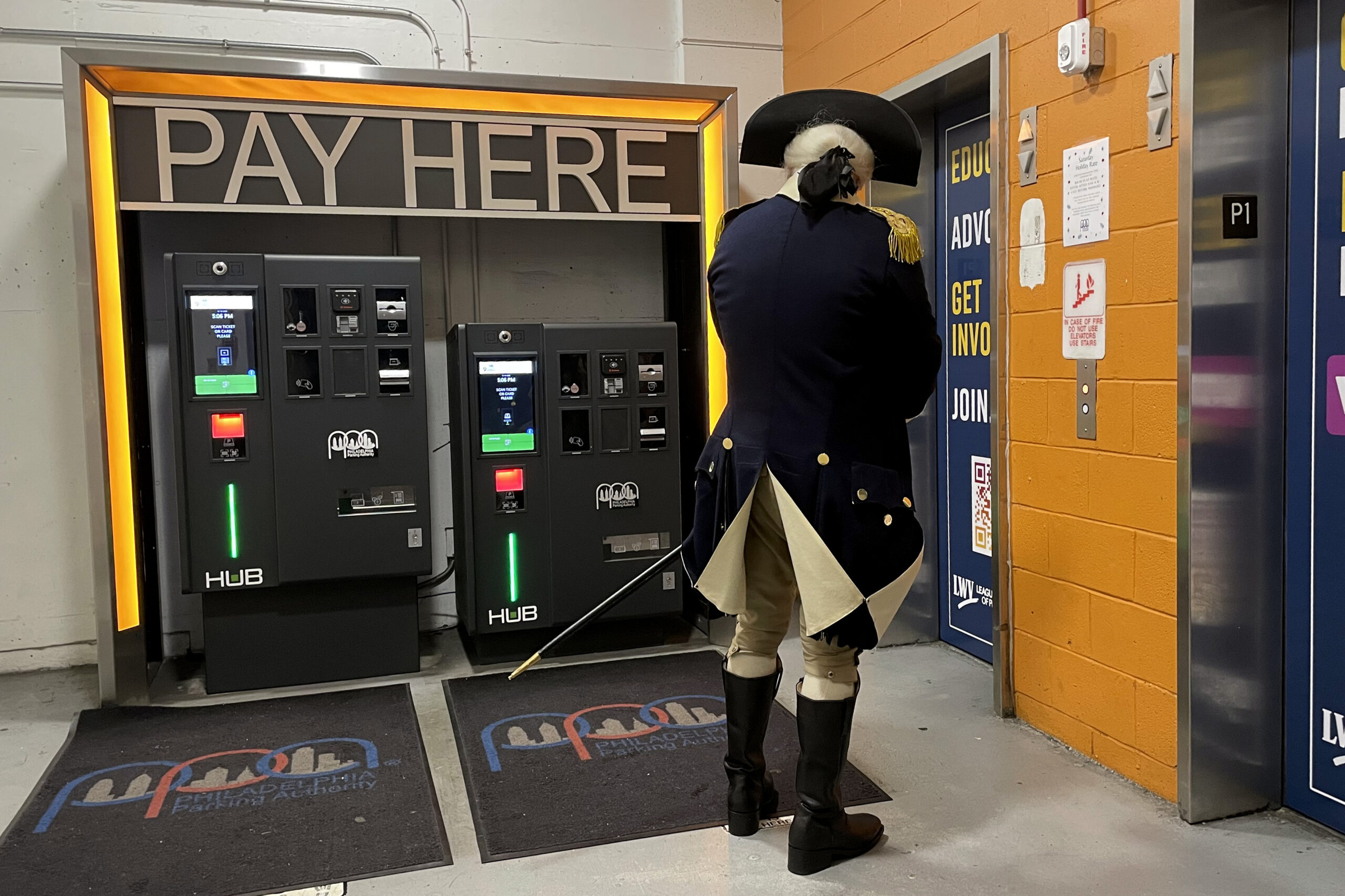
    George Washington on a laptop

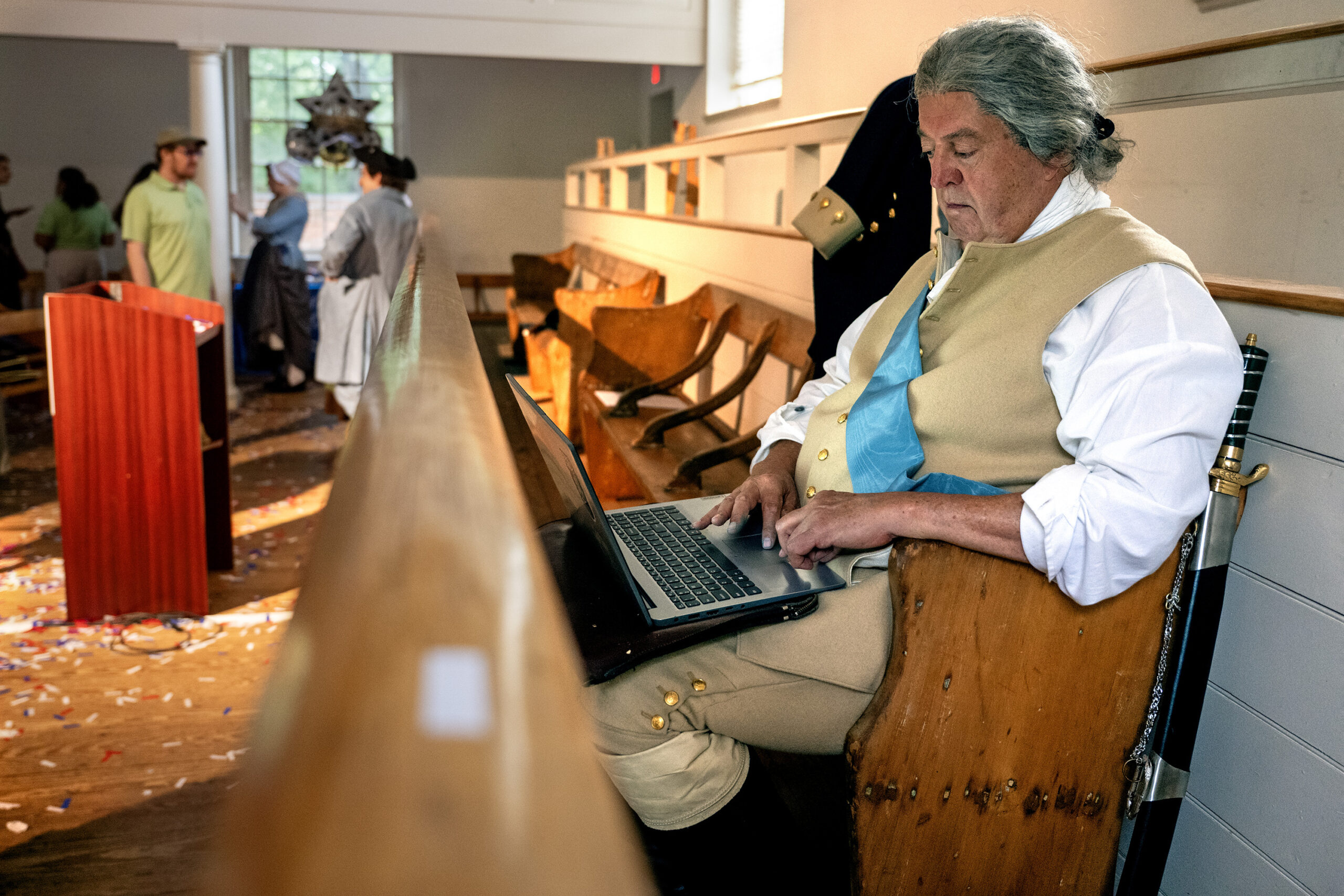
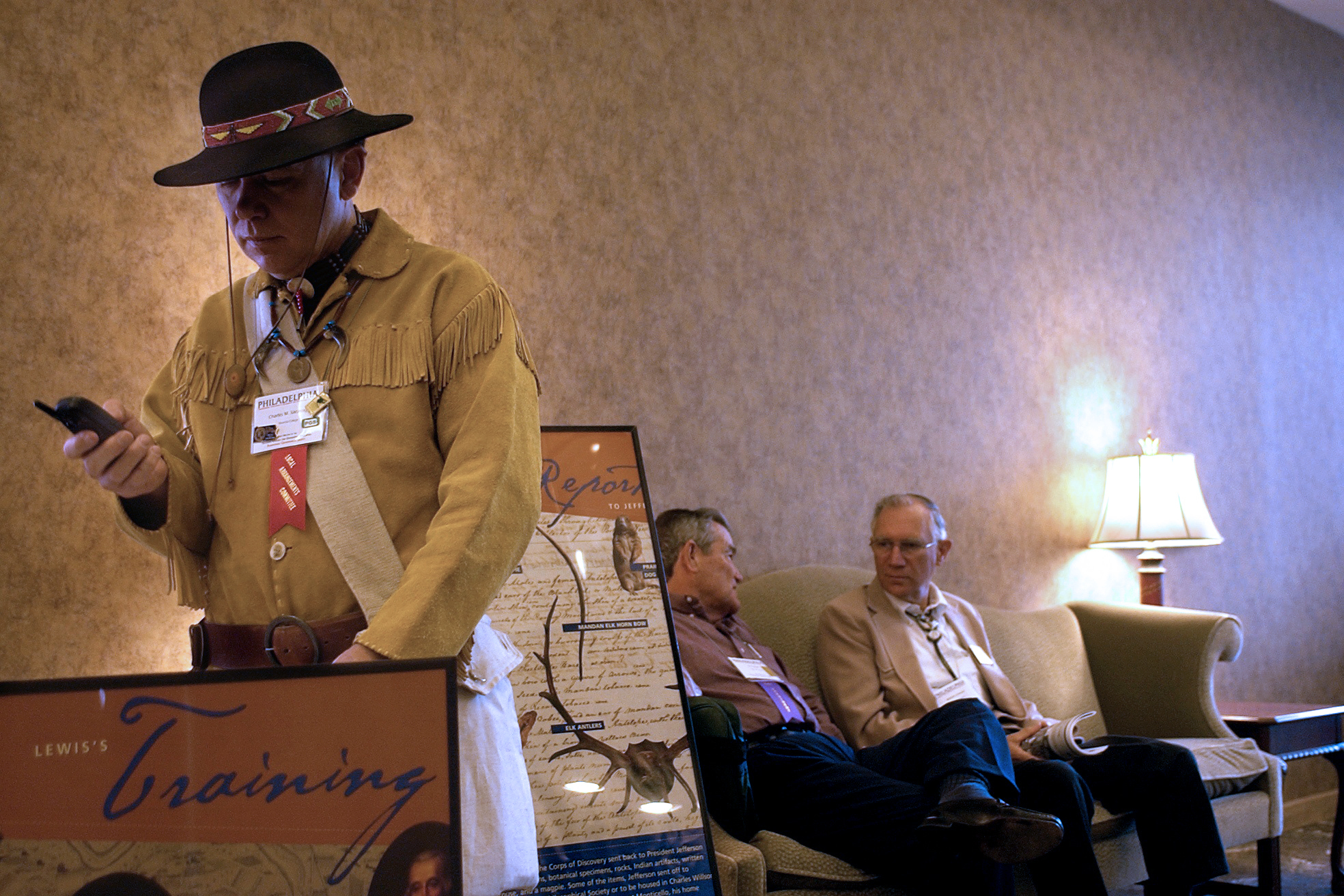
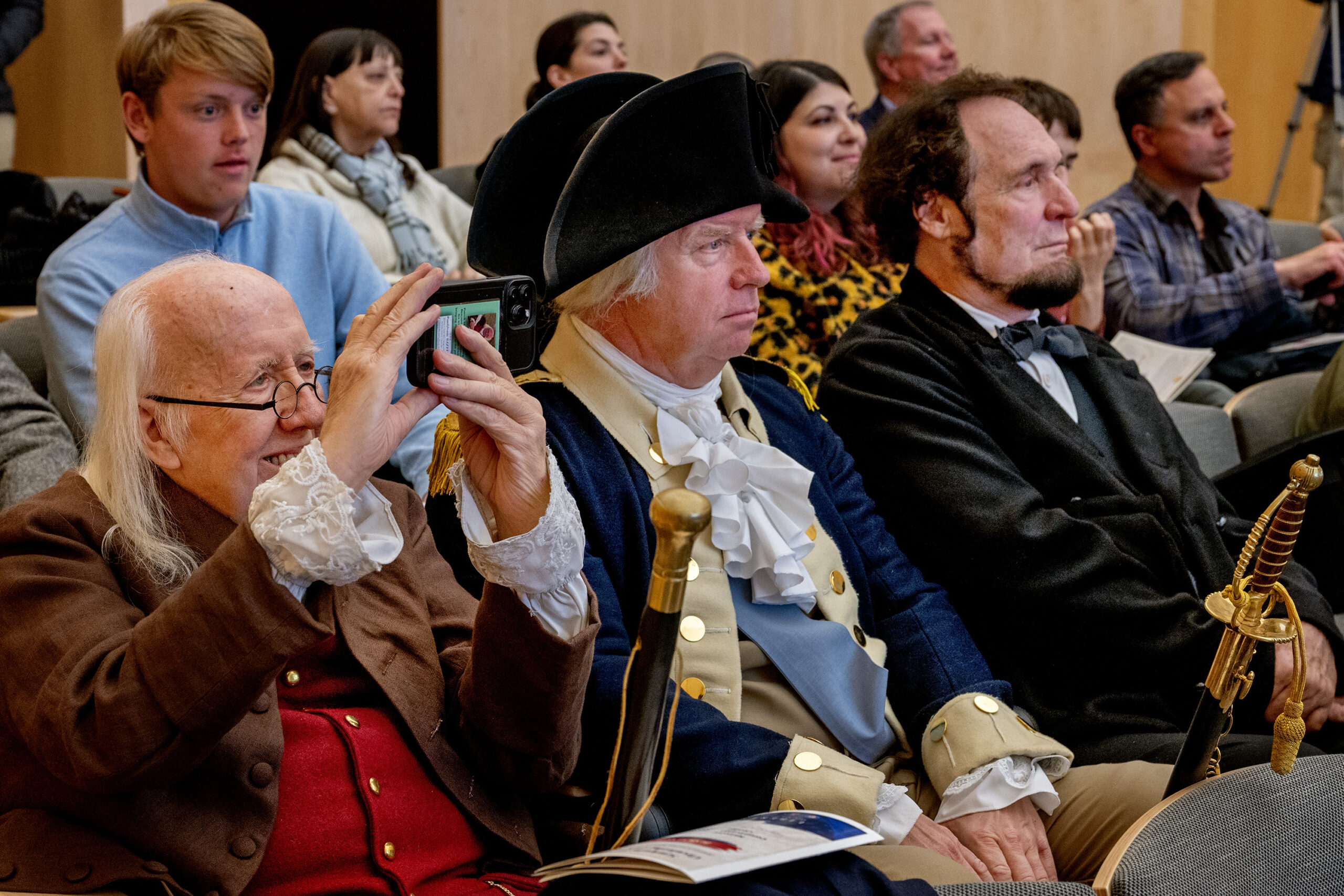
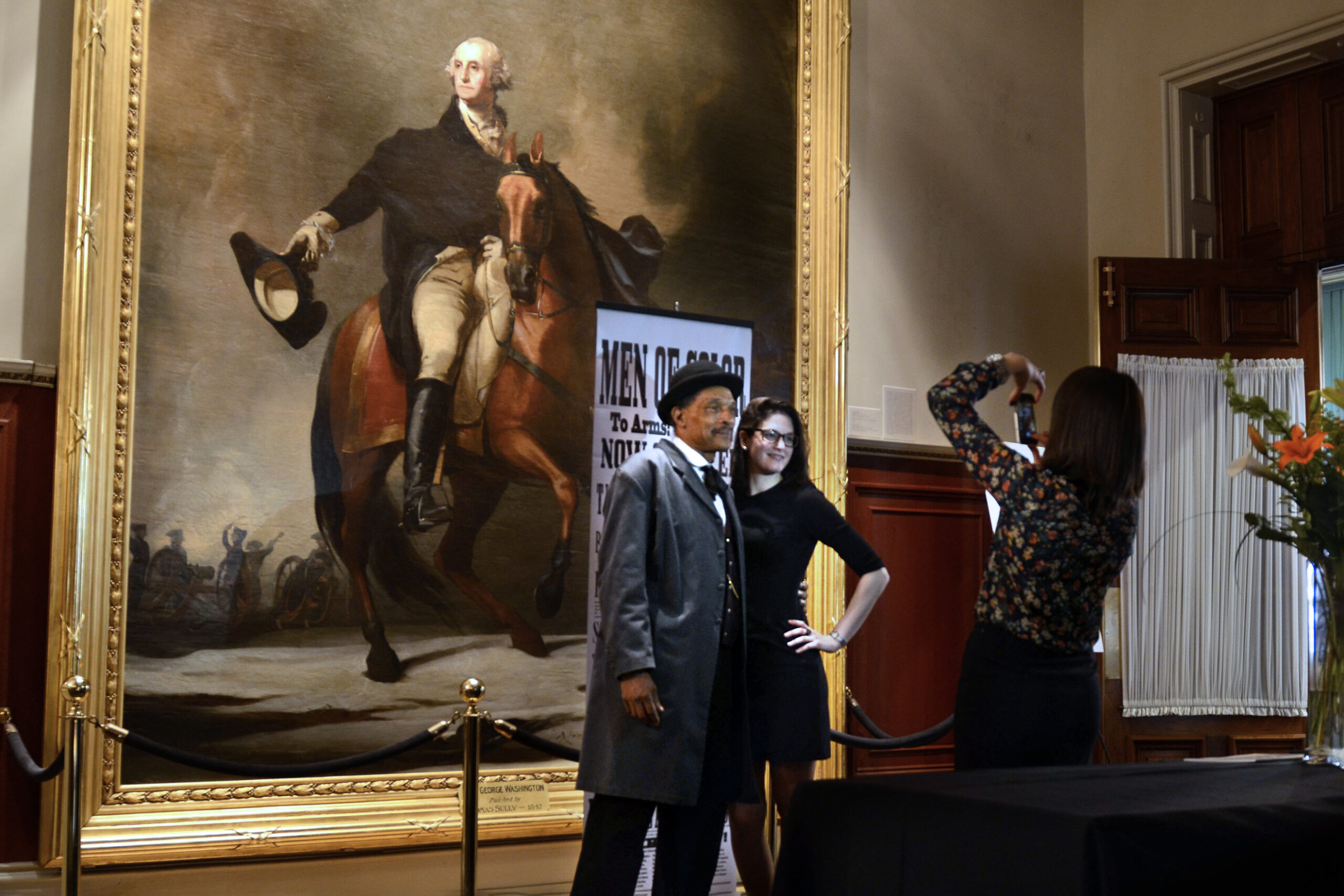
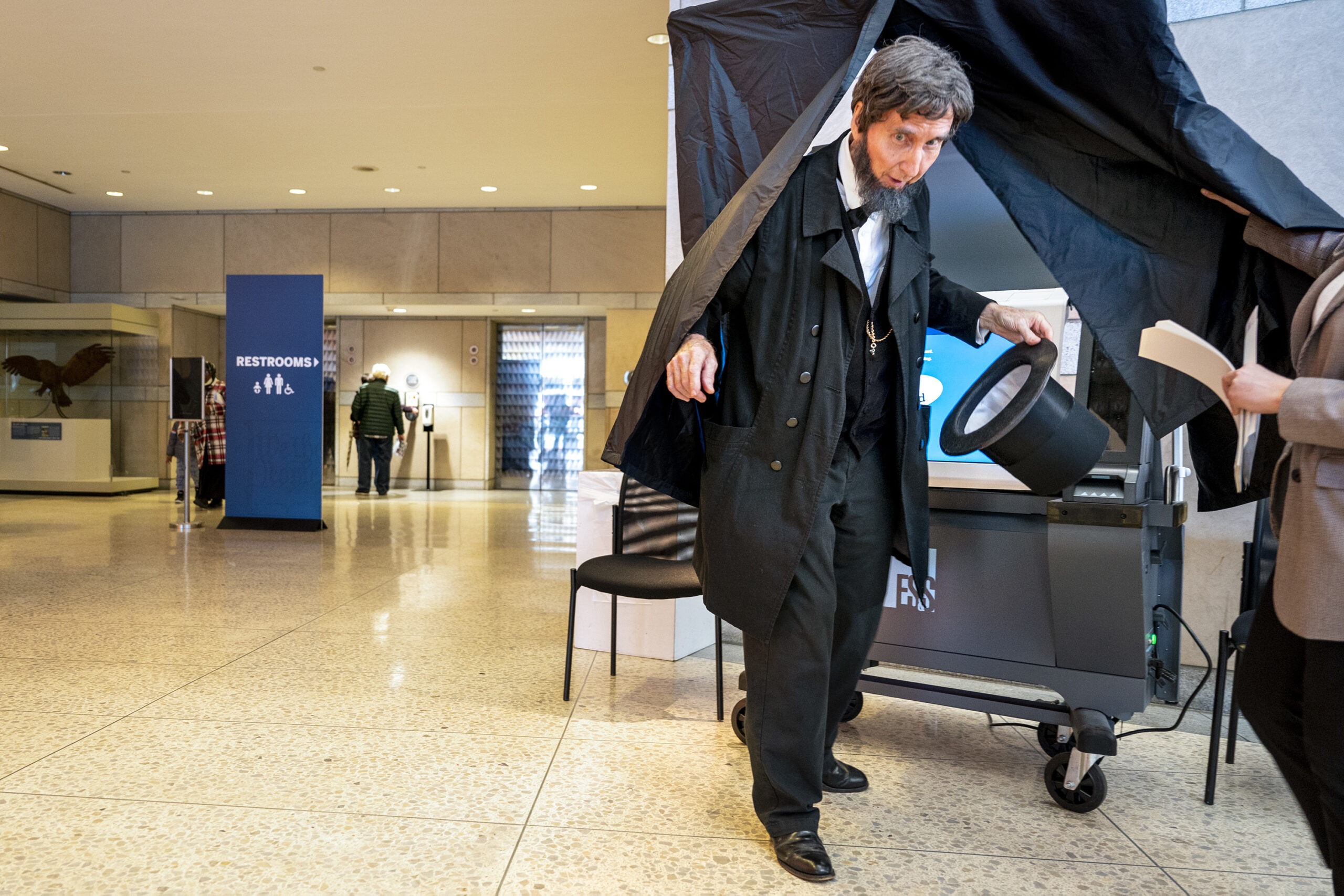
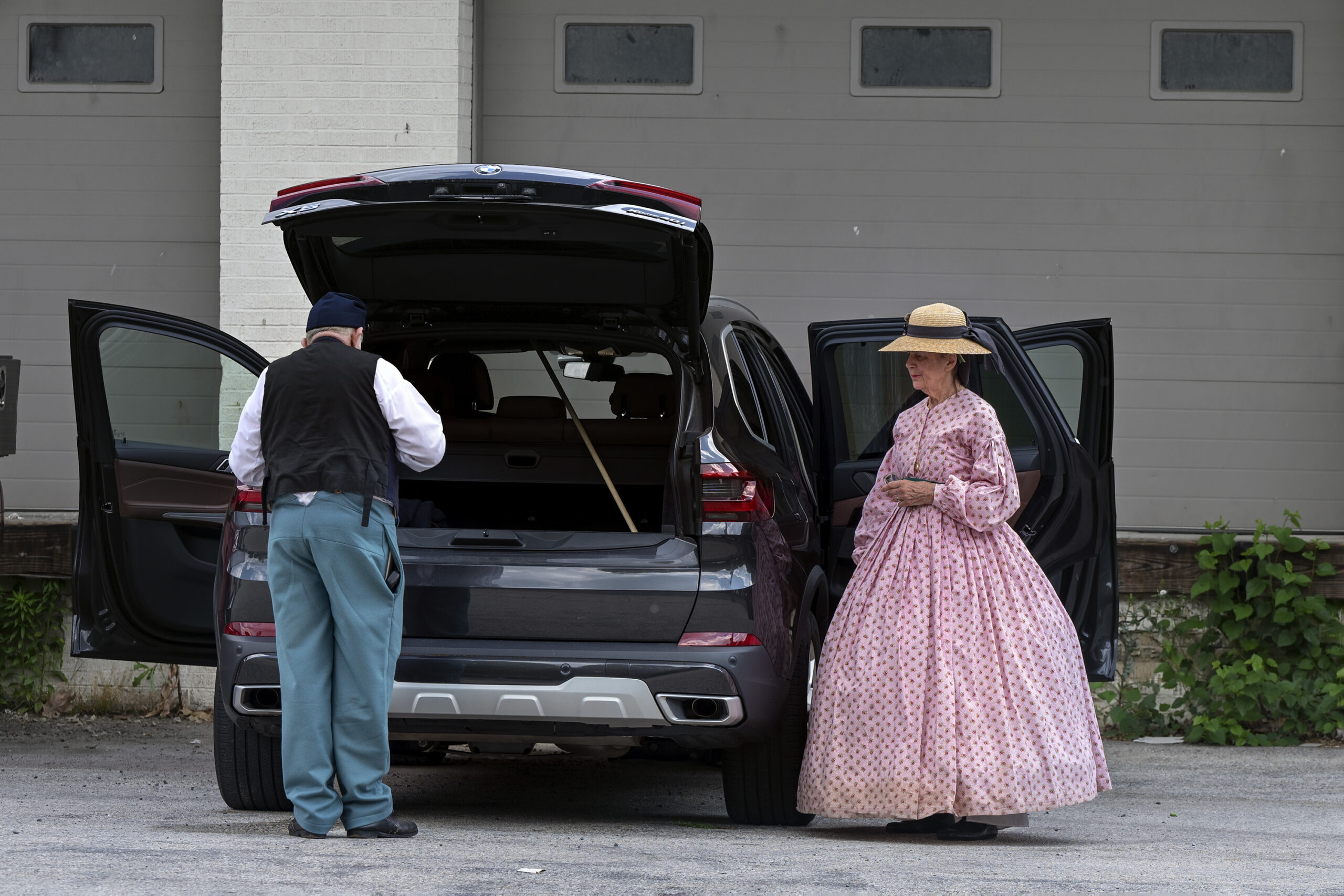
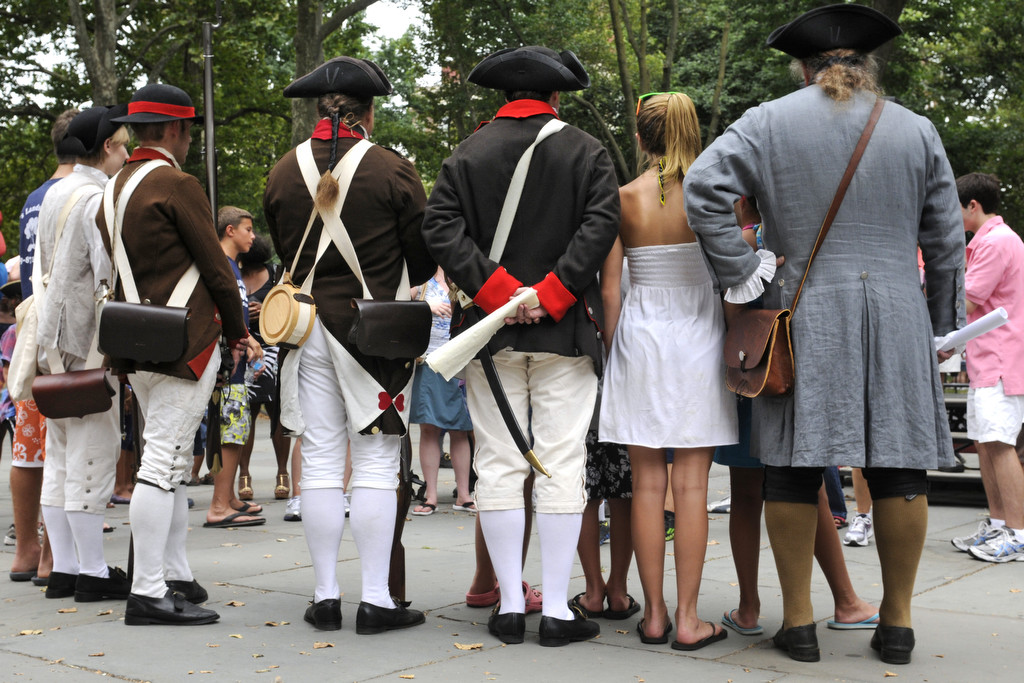
    Besides shadows, reflections, silhouettes, pigeons, umbrellas, or hats one of my favorite photo gimmick-clichés is finding juxtapositions. Like catching historic reenactors in moments of chronological inconsistency.

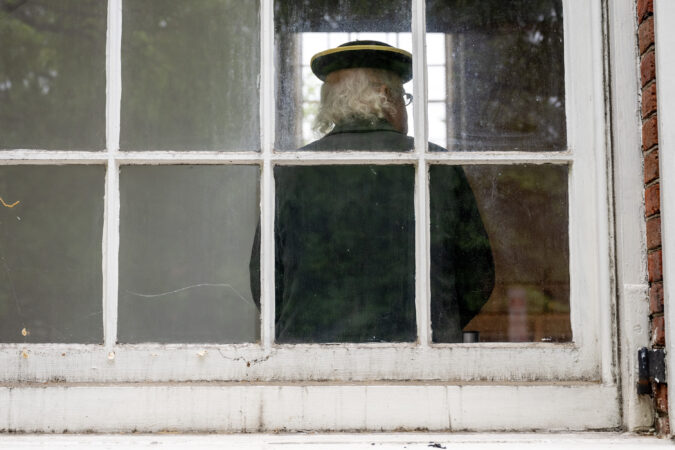
    The image of Ben above and George below was made on assignment for an upcoming story on the 21st season of Historic Philadelphia’s Once Upon a Nation program — where costumed actors perform first-person interpretations of real 18th-century Philadelphians in the Historic District and at Valley Forge National Historical Park.

    May 21, 2026: Jim Fryer as George Washington.

    The photo of the actor portraying Franklin was made from outside the Free Quaker Meeting House at 5th and Arch Streets. It was established during the Revolution when a rift occurred among the Society of Friends. As pacifists they would not take up arms, pay war taxes, or take an oath of allegiance. A group calling themselves “Free” Quakers supported the American cause and were expelled or “read out of meeting” by the mainstream Friends.

    Among those Free Quakers was Timothy Matlack, a clerk in the Pennsylvania Statehouse known for his excellent penmanship. He was chosen by the Continental Congress to produce the handwritten copy of the Declaration of Independence — the engrossed parchment version that we all recognize as the “original” — that was signed by the 56 delegates in August 1776. (Matlack, who was born in Haddonfield, N.J. was also one of the earliest opponents of slavery in America, and he felt that the Quakers were not moving quickly enough to abolish it.)

    I only mention the Declaration as, along with many other stories, I have been photographing for in the Historic District and at the President’s House, I’ve been working on a photo essay on some of the direct descendants of the men who were in the room in Independence Hall (then the Pennsylvania State House) as America was born. Their photos, along with interesting and little known facts about the 17 local Signers from Pennsylvania, New Jersey, and Delaware will be published later this week as part of The Inquirer’s coverage of the 250th.

    As promised in a previous column, I’ve collected a bunch of my Philly photo-anachronisms from over the years.

    October 17, 2002: Charles Sacavage as Meriwether Lewis (of the Lewis & Clark Expedition).
    May 24, 2026: Mike Gabriele as Civil War General Ambrose E. Burnside.
    December 10, 2025: Benjamin Franklin (from left) Gen. George Washington and President Abraham Lincoln.
    January 15, 2014: Robert Branch (left) as 19th Century educator, intellectual, and civil rights activist Octavius V. Catto.
    February. 20, 2023: President Abraham Lincoln votes.
    May 26, 2024: Civil War reenactors Kathy and Ed Berna.
    July 8, 2012: After the annual reenactment of the first public reading of the Declaration of Independence.
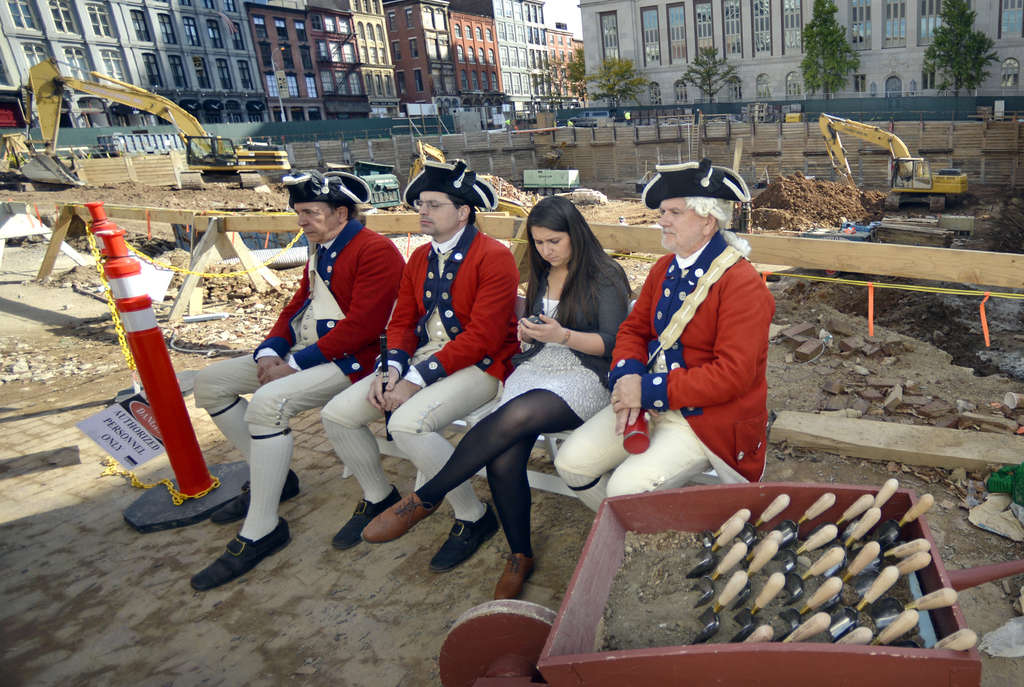
    October 9, 2014: Ceremonial groundbreaking for the Museum of the American Revolution.
    December 10, 2025: George Washington.

    Since 1998 a black-and-white photo has appeared every Monday in staff photographer Tom Gralish’s “Scene Through the Lens” photo column in the print editions of The Inquirer’s local news section. Here are the most recent, in color:

    » SEE MORE: Archived columns and Twenty years of a photo column.

  • His dream Shore house popped up on his phone over lunch at a Wildwood tavern | How I Bought This House

    His dream Shore house popped up on his phone over lunch at a Wildwood tavern | How I Bought This House

    The buyer: Jacob Wilson, 43, attorney.

    The house: An 800-square-foot two-bedroom, 1½-bath bungalow built in 1930 in Wildwood.

    The price: Listed for $444,000; purchased for $441,000.

    The agent: Marion Rowland, ReMax Surfside.

    The ask: Wilson lives in Venice Beach, Calif., but grew up in Wildwood and Atlantic County and missed the East Coast. When he was a toddler, the family lived at the Regency in North Wildwood, where his parents were the offseason managers. “It was around the time The Shining came out, and my aunt used to tease them about living there with my sister and me when the whole of Wildwood was shut down!“ he said.

    Wildwood was in his DNA for good. His dream was to buy a second home in Wildwood, a place with some old Shore charm, where he and the family could gather and revive traditions.

    The search: Wilson’s aunt is a local real estate agent in Wildwood, and they “combed the market for months,” he said.

    He put in an offer on a renovated triplex in Wildwood Crest toward summer’s end in 2024 but was outbid. “It got 12 other offers above the asking price,” Wilson said. “They were asking $575[000] I was willing to pay them $600,000.”

    After a day of house hunting in September 2024, the two sat down for lunch at the Dogtooth Bar & Grill. “We saw a listing two blocks away pop up,” he said. “We drove over to the house and started the process.”

    The appeal: As soon as he walked in the house, Wilson said he thought, “I know what I need to make this good.”

    The house checked a lot of boxes for him: charm, old-school bungalow feel, close to the ocean.

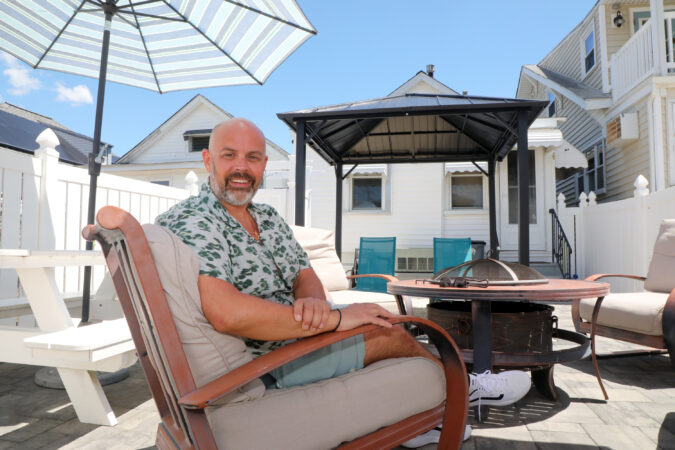
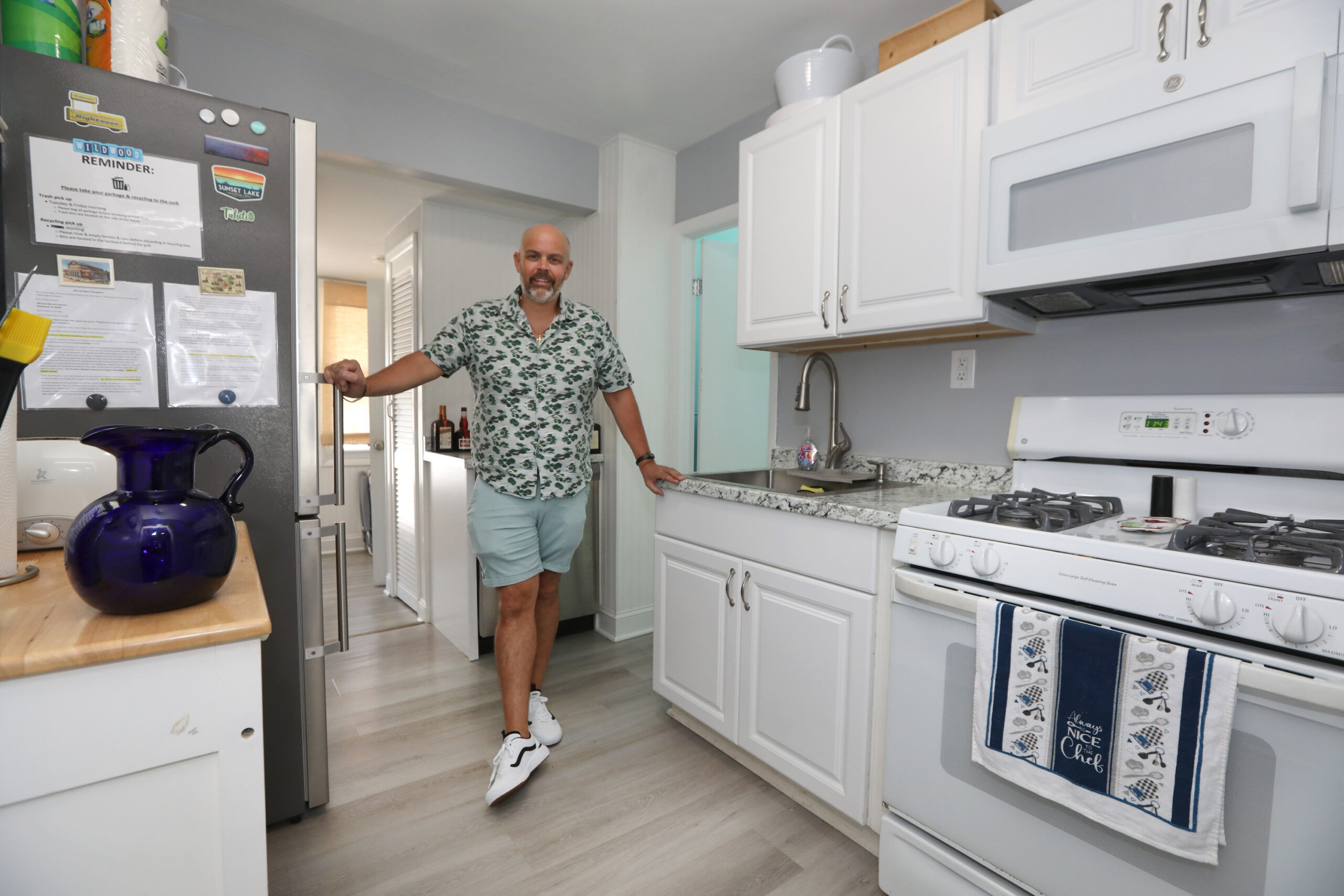
    Jacob Wilson added a dishwasher to the kitchen along with other improvements at his home in Wildwood.

    “My mom’s been a Realtor in the area for 40 years,” he said. “She has a 1900 Victorian. I’ve always admired the work my parents did on that home. My cousin had a Craftsman bungalow. It reminds me of houses here in Venice.”

    Both Wilson and his aunt appreciated being able to buy an original property in Wildwood and not tear it down.

    “I have deep ties to Wildwood,” he said. “I really didn’t want to do that.”

    A house across from his was recently torn down and a triplex built in its place. Plus, his house has a backyard.

    “That just doesn’t exist anymore,” he said. “In the offseason, I can hear the waves from my backyard.”

    The deal: Wilson said he put in an offer for the asking price and beat two other offers. “The house sold in three days,” he said. The inspection revealed some termite damage, and the seller reduced the price by $3,000, he said.

    “The work to remedy the problem was estimated to be over $10,000,” he said, “and it cost me around $15,000 altogether with foundation work and pest treatment.”

    Because of the competitive environment, he said, “I took the $3,000 reduction to make the sale happen.”

    Jacob Wilson wanted his Wildwood property to feel “like a modern beach house” and was happy that the previous owners had redone the floors with light gray planks.

    His aunt was proud of him for buying and preserving a house in Wildwood, he said, the place where two of his grandparents were born.

    The money: Wilson did it in a traditional way: 20% down payment, a mortgage with the local Ocean First Bank. “Kudos to Ocean First,” he said. “They don’t sell the mortgage.” His mortgage rate was 7%, higher due to its being an investment property, he said.

    Using the property part of the summer as a weekly rental and a longer-term winter rental covers his mortgage, he said. “I don’t really have too many out-of-pocket expenses,” he said. “Taxes are $4,000 a year. Utility bills a few hundred a month.”

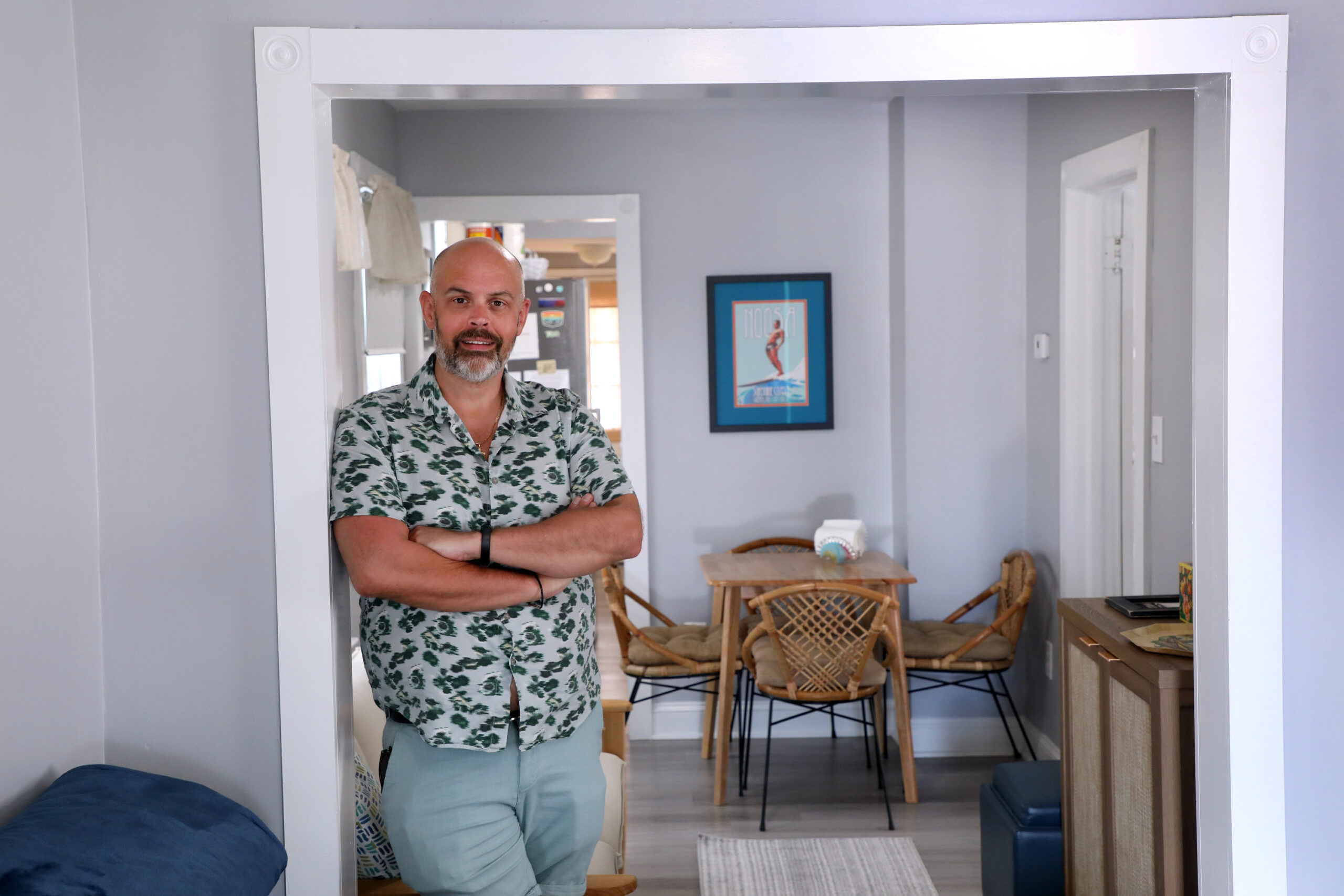
    The move: There were some changes. He liked the way the former owners used gray plank boards to replace the original parquet wood that made it “more like a modern beach house.”

    But, Wilson said, “some things inside were a little too country.”

    “I wanted to make it more beachy,” he said. There was shelving in the doorways that he got rid of, and some closets that inexplicably had the doors removed and curtains put up. Luckily, he found the original doors in the attic and put them back on. He replaced the door knobs and repainted the entire interior.

    “The big thing that showed up was termite damage,” he said. “I had to do a lot of foundation work when I bought the place.” He replaced the old insulation with spray insulation, he said, and installed a dishwasher and new refrigerator.

    “A lot of things like that to make it look sharp,” he said.

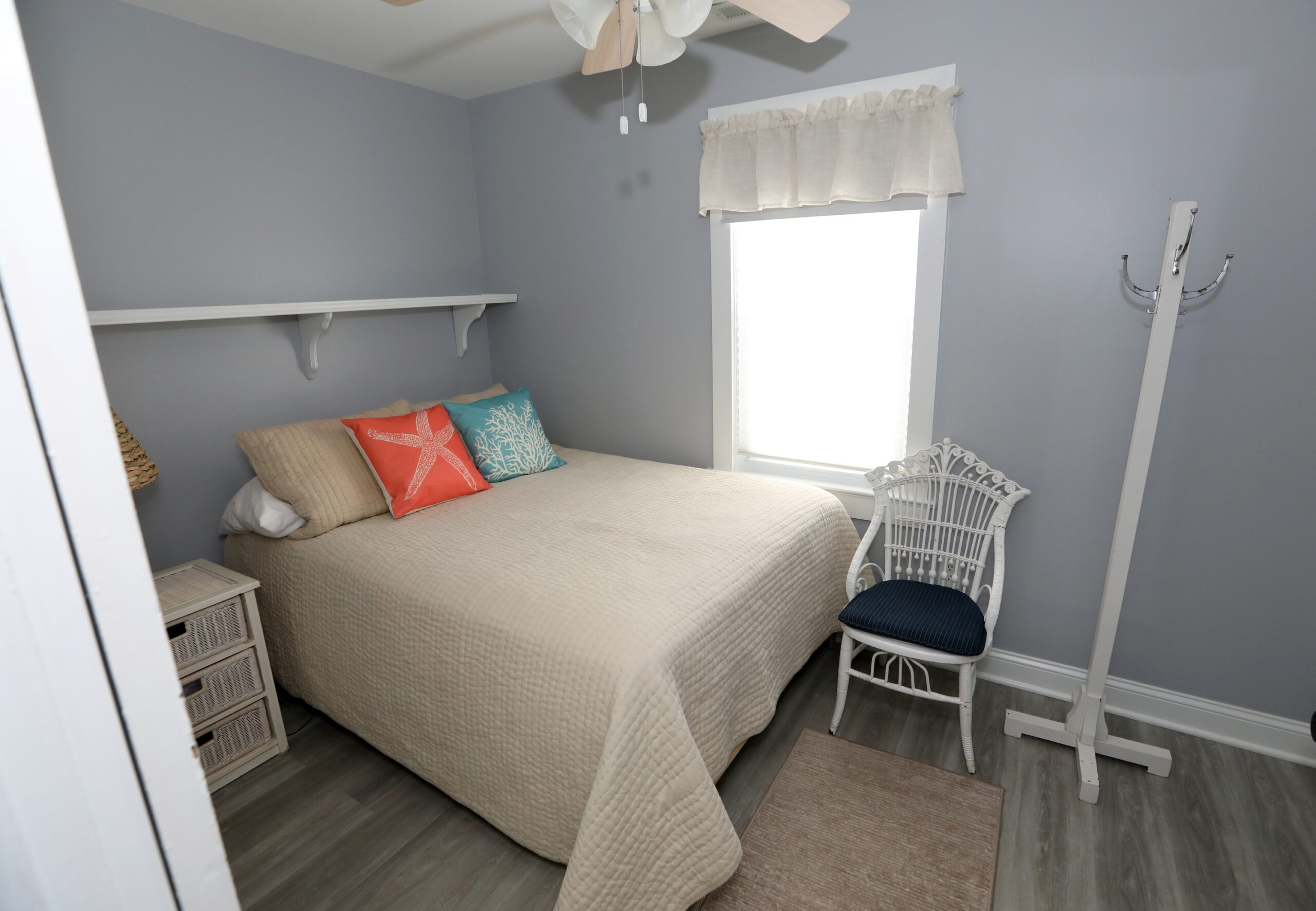
    A cozy bedroom in the Wildwood bungalow.

    Life after close: This will be his second summer using the Wildwood bungalow. He’s spending a month there over June and July and expecting a stream of visitors to revive old family traditions. He plans to block out more time for himself in the shoulder seasons.

    “It’s all kind of like nostalgia for me because we spent so much time there as a kid,” he said.

    “I had a lot of strong feelings about going back,” he said. “As an adult, I appreciate it more.”

    About six months after he bought the house, “Someone called me and asked if I was interested in selling it,” he said. No way.

    “Keeping it long term is my goal,” he said. “I feel like I made a good investment choice. No regrets.”

    Did you recently buy a home in the Philadelphia area or South Jersey? Share the story of how you did it. Email Inquirer real estate reporters at properties@inquirer.com.