Category: News

Latest breaking news and updates

  • DHS spokeswoman who became a face of Trump deportation campaign steps down

    DHS spokeswoman who became a face of Trump deportation campaign steps down

    The Department of Homeland Security’s top spokesperson is leaving the Trump administration, officials said Tuesday, a departure that comes amid falling public approval ratings for the president’s mass deportation agenda.

    Tricia McLaughlin, whose regular Fox News appearances made her a face of the administration’s hard-line immigration agenda, is leaving just over a year into Homeland Security Secretary Kristi L. Noem’s tenure leading the agency. The move comes after DHS and the White House have scrambled to tamp down public outrage over the killings of two U.S. citizens by federal immigration agents in Minneapolis last month.

    McLaughlin informed colleagues Tuesday of her departure. She had begun planning to leave in December but extended her stay to help the administration deal with the fallout of the fatal shootings of Renée Good and Alex Pretti in Minneapolis, according to people briefed on her exit. Politico first reported on McLaughlin’s departure.

    Confirming McLaughlin’s decision in a post on X on Tuesday, Noem cited her “exceptional dedication, tenacity, and professionalism” and said she “has played an instrumental role in advancing our mission to secure the homeland and keep Americans safe.”

    In a statement, McLaughlin thanked Noem and President Donald Trump, saying she is “immensely proud of the team we built and the historic accomplishments achieved by this Administration and the Department of Homeland Security.”

    McLaughlin said she will be replaced by her deputy, Lauren Bis, and DHS’s public affairs team is adding Katie Zacharia, a Fox News contributor.

    Noem’s chief spokeswoman built a reputation as a fierce defender of the administration’s handling of immigration and of the secretary’s leadership, frequently sparring with reporters on social media and appearing on cable news programs. But her forceful pronouncements have drawn criticism from Democrats and immigrant rights groups, who point to incidents in which statements she made were later contradicted in court or in video footage recorded by witnesses.

    McLaughlin joined other administration officials in quickly declaring that Good had committed “an act of domestic terrorism” before she was shot to death by an immigration officer. McLaughlin also said a Venezuelan immigrant had “mercilessly beat” a federal law enforcement officer in Minneapolis. The charges against that man were dropped after the U.S. attorney in Minneapolis said that “newly discovered evidence” was “materially inconsistent with the allegations” the officers had made.

    In those and other incidents, McLaughlin quickly made statements supporting actions by officers before investigations had transpired — something that Democrats and some Republicans have also criticized Noem for doing.

    Christopher Parente, an attorney for Marimar Martinez, a U.S. citizen shot multiple times by a Border Patrol agent in Chicago in the fall, asked a federal judge for permission to release body-camera footage and other evidence that he said was necessary to demonstrate that McLaughlin and other senior administration officials had falsely accused Martinez of being a domestic terrorist and of doxing federal agents.

    Martinez was indicted on federal charges of assault and attempted murder of a federal employee with a deadly or dangerous weapon after the shooting. But a federal judge dismissed the case in November after prosecutors in the Northern District of Illinois requested that the charges be dropped. Prosecutors didn’t state a reason for the dismissal, although attorneys for the defendant criticized the weakness of the government’s case from the start.

    Under McLaughlin, critics say, the DHS public affairs office has produced a skewed view of immigration enforcement. Officials have refused to publish detailed reports of how many immigrants have been arrested and deported. The agency’s messaging has mainly publicized the arrests of immigrants who commit crimes, even though public records show that a majority of migrants who have been detained do not have criminal records.

    “We are pleased with this resignation,” Parente told the Washington Post when asked about McLaughlin’s departure. “Unless Pinocchio is applying for the position, we believe her replacement will be a great improvement and hopefully work to start repairing the credibility of DHS.”

    Critics said that DHS’s public affairs office has refused to publish detailed reports of how many immigrants have been arrested and deported. The agency’s messaging has mainly publicized the arrests of immigrants who commit crimes, even though public records show that a majority of migrants who have been detained do not have criminal records.

    McLaughlin also has repeatedly attacked federal judges who have ruled against the administration, calling them “unhinged,” “deranged” and “disgusting and immoral.” In some cases, she has accused judges of endangering immigration agents or the public through their rulings.

    David Lapan, a DHS spokesman in Trump’s first administration, said he hopes McLaughlin’s replacement “stays away from the belligerent, attacking approach that she took.”

    “The mis- and disinformation that comes out hurts the trust and credibility of the organization, and they can’t afford to have that continue,” Lapan said.

    But McLaughlin’s combative approach won public praise from Trump last month.

    “Great job by wonderful TRICIA MCLAUGHLIN, DHS Assistant Secretary, on the Sean Hannity Show,” Trump posted on social media. “Many Illegals from around our Nation charged with serious crimes this week. Tricia really knows her ‘STUFF!’”

    Democrats have criticized DHS’s posts on social media for disparaging immigrants and posting paintings that depict scenes of a predominantly White America. One post featured an ICE recruitment promotion that stated, “We’ll Have Our Home Again,” a phrase that has been associated with a song embraced by white nationalists.

    McLaughlin defended that promotion, telling the Post in a statement last month: “The fact that people would like to cherry pick something of white nationalism with the same title to make a connection to DHS law enforcement is disgusting.”

    McLaughlin was still posting on X on Tuesday — disputing an NBC News report of growing tensions between DHS leadership and Coast Guard officials over Noem’s use of the military branch’s resources, which she oversees. The Post has also reported on the strained relationship between DHS and the Coast Guard, including Noem’s decision to spend $200 million on new Coast Guard jets for use by senior DHS officials and her move into military housing typically reserved for the Coast Guard commandant.

    Before her tenure at DHS, McLaughlin was a senior adviser and communications director for Vivek Ramaswamy’s 2024 presidential campaign. She joins other senior DHS officials who have left the department in recent weeks, including Madison Sheahan, who last month stepped down from her role as Immigration and Customs Enforcement’s deputy director to mount a campaign against Democratic Rep. Marcy Kaptur in Ohio.

  • A former Philly drug kingpin, once ordered to life behind bars, had his sentence reduced to 25 years

    A former Philly drug kingpin, once ordered to life behind bars, had his sentence reduced to 25 years

    In 2009, after a federal judge effectively ordered Philadelphia drug kingpin Alton “Ace Capone” Coles to die in prison — imposing a life sentence plus 55 years for convictions on a host of drug and weapons charges — Coles momentarily dropped the swaggering persona he had displayed while building his vast cocaine empire.

    “I never thought it would come to this,” Coles said at the time, his voice cracking as he spoke in court. “I don’t think life is deserved for selling drugs.”

    On Tuesday, another federal judge offered something close to an endorsement of that view as she ordered Coles’ sentence be reduced to 25 years in prison — meaning Coles, now 52, could be released within a few years.

    Coles’ twist of fate is the result of a complicated appellate process, one that has its roots in how federal laws have changed in recent years for some drug crimes, particularly those involving crack cocaine. The penalties for crack offenses were once significantly harsher than those tied to other narcotics, leading to widespread racial disparities because most defendants in crack cases were Black.

    Coles’ lawyers say his case is also a demonstration of the “remarkable” turnaround Coles has made behind bars. While Coles once oversaw a drug operation that was estimated to have poured $25 million worth of cocaine and crack into Philadelphia — all as he served as the brash face of a local hip-hop record label — in prison, his lawyers said, he has become a barber, facilitated anti-violence programs for other inmates, and served as a counselor for prisoners with thoughts of self-harm.

    “Knowing that he was facing the rest of his life in prison, Mr. Coles engaged in this extraordinary effort toward rehabilitation for the sole purpose of improving his life and of those around him,” his lawyer, Paul Hetznecker, wrote in court documents.

    Federal prosecutors took a starkly different view, saying that Coles was “one of the major drug kingpins in Philadelphia during the last several decades” and that his eligibility to be resentenced was the result of a “pure technicality.” Even if Coles had committed his crimes today, prosecutors said — after Congress changed criminal sentencing guidelines — his actions would still warrant a life sentence.

    “Coles led an armed and violent cocaine and crack distribution gang, which distributed quantities of deadly narcotics that [the trial judge] at sentencing aptly described as ‘staggering,’” prosecutors wrote in court documents.

    U.S. District Judge Kai Scott said she believed that Coles had transformed his life in prison, and that 25 years of incarceration — even if much shorter than a life sentence — was still a substantial amount of time to serve behind bars.

    Discussing Coles’ growth since being convicted, Scott said: “I’ve never seen this type of post-sentence rehabilitation.”

    Coles, meanwhile, apologized for his crimes, telling Scott he is determined to try to make amends for his past.

    “I am not the man I once was,” he said.

    Building an empire

    When Coles was federally indicted in 2005, prosecutors said he had run one of the largest drug organizations in modern city history. Coles and his coconspirators, they said, helped push a ton of cocaine and a half-ton of crack into the streets over the course of more than six years.

    Coles was not charged with any crimes of violence, but federal authorities said they believed his group and its members were tied to nearly two dozen shootings and seven homicides.

    As he was growing his drug empire, Coles was also building his reputation in the local rap scene. He helped found the hip-hop label Take Down Records, and staged popular parties and concerts around the city.

    And he and a friend, Timothy “Tim Gotti” Baukman, produced and starred in a 31-minute music video called New Jack City, The Next Generation, in which they portrayed Philadelphia drug dealers who used violence and intimidation to cement their standing in the underworld.

    Authorities used that video as part of a two-year investigation into Coles and his gang, and said Take Down Records amounted to a front for Coles to wash his money. They also wiretapped hundreds of conversations between drug associates, and went on to seize dozens of weapons and hundreds of thousands of dollars in raids on members’ homes.

    Coles was charged in 2005, as were nearly two dozen associates, some of whom pleaded guilty or went on to cooperate with authorities.

    Coles took his case to trial and testified in his own defense, saying he was not the kingpin prosecutors made him out to be.

    But in 2008, a jury found Coles guilty of crimes including conspiracy to distribute cocaine and heading a continuing criminal enterprise. U.S. District Judge R. Barclay Surrick later sentenced Coles to life behind bars plus 55 years, saying: “The amount of drugs was staggering and the money involved was even more staggering … this crime was just horrendous.”

    Ongoing legal saga

    The imposition of that penalty, however, was hardly the end of the legal drama connected to Coles.

    After Coles was sentenced, a Philadelphia police officer was convicted and imprisoned for tipping Coles off about his impending arrest.

    A federal appeals court also later overturned a conviction tied to Coles’ girlfriend, who had been accused of helping him launder drug money to buy a house.

    And Coles continued to file appeals challenging his case.

    In 2014, he successfully argued to have one of his two prison sentences — the 55-year term — reduced to five years because of technicalities in how evidence was used to prove certain charges. His life sentence, however, remained intact.

    But in 2020, Hetznecker, Coles’ appellate lawyer, filed a new motion challenging that penalty, saying a law passed by Congress in 2018 made Coles eligible to have his life sentence reduced.

    The law, known as the First Step Act, was a sweeping attempt to undo some of the tough-on-crime laws from the 1990s that caused the federal prison population to swell. The bill received bipartisan support, and was signed into law by President Donald Trump.

    One of the law’s provisions allowed some people who were sentenced for crack-related offenses to have their penalties reevaluated — part of an effort to unwind the racial disparities caused by disproportionately harsh sentences being imposed on Black defendants in crack cases.

    Hetznecker, in seeking to have a judge reconsider Coles’ penalty, wrote that a life sentence “for a non-violent drug offense is a draconian sentence and, given the current paradigm of criminal justice reform, counter the movement toward a more just system.”

    “The underlying principles of justice and fairness require that those subjected to punishment for crimes against society, especially those convicted of non-violent offenses, be provided the opportunity for re-integration back into society as rehabilitated individuals,” Hetznecker wrote.

    Scott, the judge, agreed last month that Coles was eligible for a new sentence under the First Step Act. And in imposing the new penalty Tuesday, she said she believed Coles was unlikely to commit similar crimes in the future.

    “It’s clear to me that you have been deterred — you have made changes,” she said.

    Coles said he recognizes that he had once been “a negative influence on society,” but said he has now committed to bettering himself and trying to help others.

    Hetznecker said Coles deserves the opportunity to demonstrate that he has moved beyond the persona he once inhabited on the streets.

    “‘Ace Capone’ is dead, he’s gone,” Hetznecker said. “Alton Coles has emerged.”

  • City Council members grill school district officials on plan to close 20 schools — and superintendent says he could have closed 40

    City Council members grill school district officials on plan to close 20 schools — and superintendent says he could have closed 40

    Philadelphia City Council may not have a vote on Superintendent Tony B. Watlington Sr.’s sweeping facilities plan, but it indicated Tuesday that it will have a say in school closings.

    As a packed hearing began in Council’s chambers Tuesday morning, both Council President Kenyatta Johnson and Isaiah Thomas, chair of the Education Committee, said Council refused to be a “rubber stamp” to Watlington’s proposal to close 20 schools, colocate six, and modernize 159.

    Though only the school board gets to vote directly on the plan, Johnson has indicated he is willing to hold up city funding to the district over the school closure plan. And his colleagues echoed that sentiment Tuesday.

    “I’m infuriated that we don’t get a say,” Councilmember Jimmy Harrity said, warning the district officials who appeared before him. “But, Council president, you and I both know we do get a say, because budget’s coming. And we will be looking. Mindful is the word I would use for today — be mindful.”

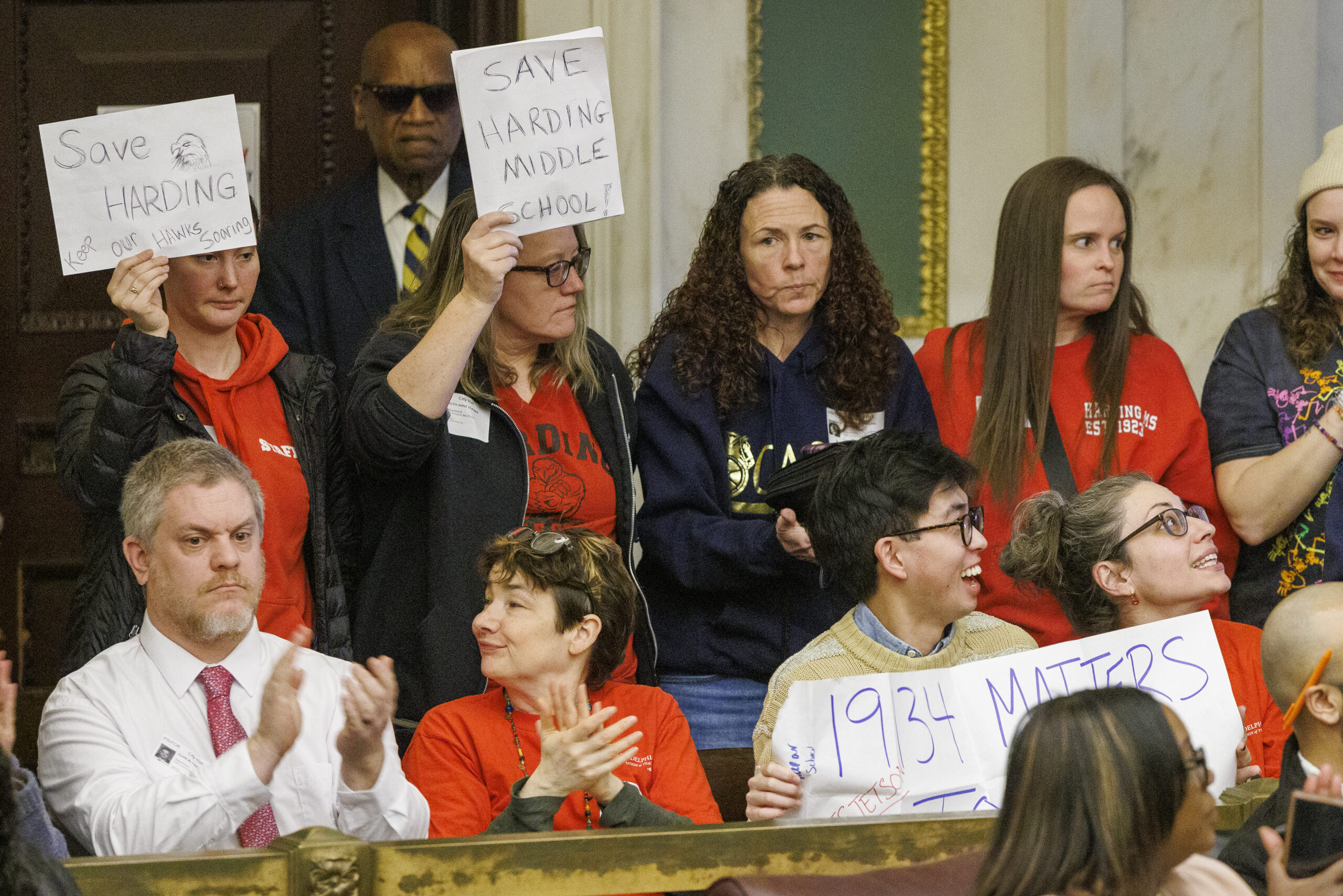
    Concerned citizens stand with signs in support of Harding Middle School before the start of a Philadelphia City Council hearing Tuesday at City Hall on the school district’s plan to close 20 schools.

    About 40% of the district’s nearly $5 billion budget comes from local revenue and city funding, which City Council and Mayor Cherelle L. Parker must approve in the annual city budget by the end of June.

    Harrity, an at-large Council member, said he was “tired that every time cuts come, they come from a certain neighborhood. You know, I live in Kensington, in the 7th District. I talk to these kids. They’re good kids. They deserve everything that other kids in other neighborhoods are getting. … You can see that this isn’t what our people want.” Watlington has proposed closing four schools in the 7th District.

    More than 100 community members holding babies and waving signs opposing the facilities plan filled Council chambers on the fourth floor of City Hall on Tuesday as Council members spent hours grilling Watlington and other district officials.

    Watlington, meanwhile, stood by his plan in testimony to Council on Tuesday, saying that 20 closings was a much smaller number than he could have settled on.

    “We could have come here and presented a plan that closed twice as many schools and been able to defend it,” Watlington said.

    A once-in-a-lifetime opportunity?

    District officials have said the facilities process is not about saving money, but about optimizing education and equity for the city’s 115,000 students.

    But it was clear Tuesday that finances played a part: The district has lost 15,000 students in the last 10 years, and over 80,000 since 1997, when charter schools were first authorized in Pennsylvania. It has 300 buildings, many of them 75 years and older and in poor repair, and some schools with more than 1,000 empty seats, while others are overcrowded.

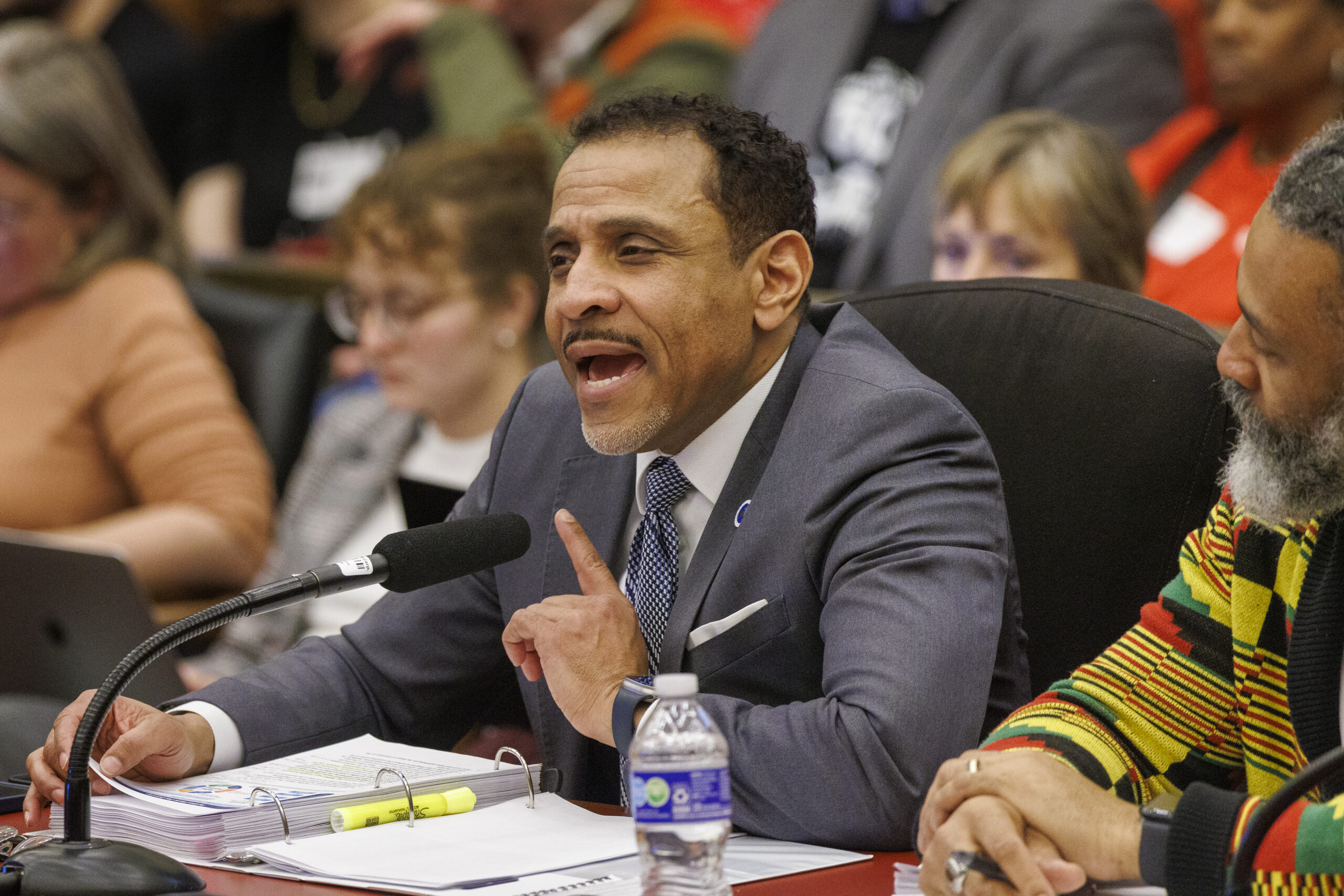
    Tony B. Watlington Sr., superintendent of School District of Philadelphia, speaks at a City Council hearing Tuesday on his proposal to close 20 schools.

    “We’ve got to be very careful with our limited resources in a historically underfunded district,” Watlington told Council.

    Watlington and board president Reginald Streater, who also testified, pitched the plan as a way to add things the district cannot now offer — Advanced Placement courses in every high school, the opportunity for all eighth graders to take algebra, more prekindergarten, and career and technical education programs.

    “I do not believe we’ll get this opportunity again in our lifetime,” Watlington said.

    The superintendent dropped a few previously undisclosed facts about the facilities road map, indicating that his recommendations could shift slightly before he presents the plan to the school board on Feb. 26. No date has been set for the board’s final vote, which is expected later this winter.

    “It’s premature to say how the final recommendations will land,” Watlington said.

    But, the superintendent said, “if there are schools that Council wants me to take off the list, and add others on that list, we are open to you telling me what those are, but we cannot get to a place where we address our 35% non-utilization rate in buildings if no changes are made.”

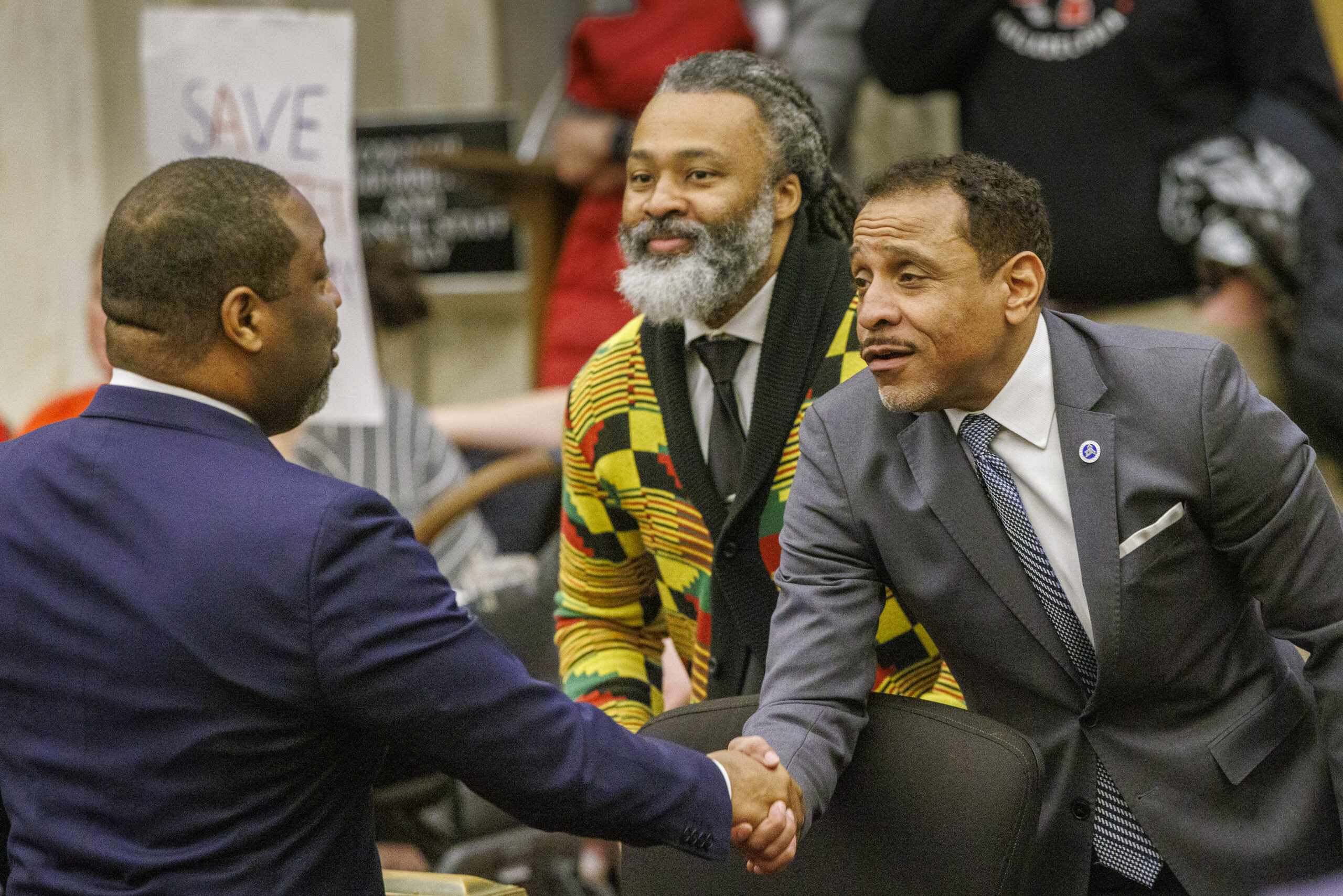
    Philadelphia City Council President Kenyatta Johnson (left) greets Dr. Tony Watlington, Superintendent of School District of Philadelphia Philadelphia City Council holds hearing with board members of School District of Philadelphia, Tuesday, Feb. 17, 2026. Reginald L. Streater, Esq., President Board of Education. (center)

    Debora Carrera, the city’s chief education officer, who spent three decades as a district teacher and administrator, told Council that Parker believes “the current district footprint is unsustainable.”

    Carrera said her own experience as principal of Kensington High School for Creative and Performing Arts shows that it is right for the district to focus resources on neighborhood high schools.

    “My high school was a small high school,” Carrera said. “I could only offer my children two AP courses, when other schools like Central — where my son went — could offer them over 20-plus AP courses.“

    ‘Breaking down of public education’

    The hearing got tense at times.

    “I feel like this is the breaking down of public education in Philadelphia,” said Councilmember Cindy Bass, who said some of the district’s own decisions had led to closures.

    Several members of Council raised questions about the plan’s price tag. Prior district and city estimates put the cost just under $8 billion, but members of Watlington’s team said they could they could actually do the work for $2.8 billion — $1 billion from district capital funds, and $1.8 from yet-unpromised state and philanthropic sources.

    In the past, the district had made public detailed facilities condition assessments for every school in the district, Councilmember Rue Landau noted.

    Residents could look up their school and see exactly what the condition of every system in the building was, and how much money would be required to fix those that needed repair.

    “We don’t have any of those details,” said Landau, who went so far as to say she believed the district should be spending more than $2.8 billion on the plan. “What is the increased investment, and why don’t we have any of those details? They are not out there in the public for us, so none of us have any understanding as to why this is happening, This should all be public so all of the public can see.”

    Jerry Roseman, the Philadelphia Federation of Teachers’ longtime environmental director, who has had a first-row seat to district facilities conditions for decades, said he believed the $2.8 billion figure was not realistic.

    “You need much more money than that,” Roseman told Council. “We need more money than this plan comes close to.”

    Some Council members pushed the district and the board on the plan’s timing.

    The city has been asking for a long-range facilities plan for years, Councilmember Quetcy Lozada pointed out.

    “It’s taken us all this time,” Lozada said. “Now, you guys have come up with a plan, and now we want to rush through it. Now all of a sudden there’s this urgency to get through this plan, which I don’t understand.”

    Streater said the board is moving forward with hearing Watlington’s plan on Feb. 26, but won’t vote until it hears more feedback.

    But ultimately, he said, the board will vote on “a plan that is dynamic, that can evolve over time. … I think that we all understand that things change, facts change, funding changes, enrollment trends change.”

    And, Streater said, there will also likely be policy changes based on redrawing some catchment areas, or boundaries that determine which neighborhood schools children attend.

    Streater, who introduced himself at the beginning of the hearing as “Reggie from Germantown,” underscoring his history as a graduate of two district schools that closed — Germantown High and Leeds Middle School — said that changes must be made.

    “I think if we continue doing the same thing, expecting a different result — which I would argue is chronic underachievement — we are doomed.”

  • History and conservation groups are suing the Trump administration over censorship at national parks

    History and conservation groups are suing the Trump administration over censorship at national parks

    A new lawsuit filed by a group of conservation and history organizations is challenging President Donald Trump’s executive order to remove historic information from national parks.

    It comes a day after a federal judge ordered restoration of the slavery exhibits at the President’s House in Philadelphia and marks the latest chapter in a showdown between historical transparency versus censorship.

    On Tuesday, the National Parks Conservation Association filed a lawsuit in Massachusetts federal court against the Department of Interior, challenging Trump’s 2025 executive order that forced national parks to change or strip displays tied to topics ranging from slavery and racism to LGBTQ+ rights and climate change.

    “Plaintiffs are organizations committed to protecting the national parks, preserving history, promoting access to high quality scientific information, and providing high quality interpretive materials — including exhibits, signs, brochures, and other educational materials — that bridge the gap between physical objects and human understanding for park visitors,” the lawsuit says.

    “They and their members — including avid users of national parks and historians whose research is being erased — have been injured by these actions and seek to ensure that the administration does not wash away history and science from what the National Park Service has recognized is ‘America’s largest classroom.’ ”

    The coalition, which includes the American Association for State and Local History, the Association of National Park Rangers, the Coalition to Protect America’s National Parks, the Society for Experiential Graphic Design, and the Union of Concerned Scientists, is asking the court to declare Trump’s executive order unlawful and to order removed materials to be restored.

    “In filing this litigation together, we are taking a stand for the soul of our national parks,” Alan Spears, senior director of cultural resources at the National Parks Conservation Association, said. “Censoring science and erasing America’s history at national parks are direct threats to everything these amazing places, and our country, stand for.”

    In Philadelphia, U.S. District Judge Cynthia M. Rufe issued a ruling Monday requiring the federal government to restore the President’s House site to its original state. The removed exhibits paid tribute to the enslaved people who lived in George Washington’s home during his presidency.

    In her 40-page opinion, Rufe — who is a George W. Bush appointee — does not mince words. She compared the federal government’s argument that it can unilaterally control the exhibits in national parks to the dystopian totalitarian regime in George Orwell’s 1984.

    The plaintiff’s group for the Massachusetts suit is being represented by Democracy Forward, a progressive nonprofit that challenges government actions it views as harmful.

    “You cannot tell the story of America without recognizing both the beauty and the tragedy of our history,” Skye Perryman, Democracy Forward’s president and CEO said in a statement. “The president’s effort to erase history and science in our national parks violates federal law, and is a disgrace that neither honors our country’s legacy nor its future.”

    Beyond Philadelphia, the lawsuit also mentions other examples of Trump’s executive order in action, including the removal of an interactive display mentioning climate change at Fort Sumter in South Carolina, short films on labor history being scrapped at Lowell’s National Historical Park in Massachusetts, and the removal of displays discussing negative impacts tourists, settlers, and cattle ranchers have on the Grand Canyon National Park.

    The lawsuit goes on to point out the irony of Trump’s executive order aiming to avoid “disparaging Americans,” despite the president’s own new signage at the White House, which takes jabs at former President Joe Biden and others along his West Wing “Walk of Fame.”

    The parties are asking a judge to order that national parks must be allowed to present the full historical and scientific picture without censorship and for their court costs to be paid for.

  • Stephen Colbert says CBS blocked interview with Texas Democrat over FCC concerns

    Stephen Colbert says CBS blocked interview with Texas Democrat over FCC concerns

    CBS late-night host Stephen Colbert rebuked his own network Monday night, claiming that lawyers for parent company Paramount Skydance prohibited him from airing an interview with Texas State Rep. James Talarico, a Democratic candidate for the U.S. Senate, over concerns it would violate the Federal Communications Commission’s equal time rule.

    “You know who is not one of my guests tonight?” Colbert asked his audience. “That’s Texas state representative James Talarico. He was supposed to be here, but we were told in no uncertain terms by our network’s lawyers, who called us directly, that we could not have him on the broadcast.”

    In response, the studio audience booed.

    “Then I was told, in some uncertain terms, that not only could I not have him on, I could not mention me not having him on,” Colbert continued. “And because my network clearly does not want us to talk about this, let’s talk about this.” A representative for Paramount Skydance did not respond to a request for comment.

    Colbert launched into a segment about the FCC’s equal time rule, which requires broadcasters to provide equal opportunity to political candidates. News and talk show interviews have traditionally been exempt from the mandate. But in January, the FCC, issued a public notice saying that daytime and nighttime talk shows would have to apply for a exemptions to the equal time rule for each of their programs.

    “Importantly, the FCC has not been presented with any evidence that the interview portion of any late night or daytime television talk show program on air presently would qualify for the bona fide news exemption,” the FCC’s notice read.

    At the time, Anna M. Gomez, the FCC’s lone Democrat, called the notice “misleading” and said nothing has changed about the FCC’s requirements.

    In a statement Tuesday, Gomez wrote that CBS’s decision is an example of “corporate capitulation in the face of this Administration’s broader campaign to censor and control speech” and said that the FCC has “no lawful authority to pressure broadcasters for political purposes.”

    “CBS is fully protected under the First Amendment to determine what interviews it airs, which makes its decision to yield to political pressure all the more disappointing,” she said.

    In a statement Tuesday afternoon, CBS defended itself and pushed back against Colbert’s account.

    “THE LATE SHOW was not prohibited by CBS from broadcasting the interview with Rep. James Talarico,” a spokesperson for the network said in a statement. “The show was provided legal guidance that the broadcast could trigger the FCC equal-time rule for two other candidates, including Rep. Jasmine Crockett, and presented options for how the equal time for other candidates could be fulfilled. THE LATE SHOW decided to present the interview through its YouTube channel with on-air promotion on the broadcast rather than potentially providing the equal-time options.”

    Colbert is already on his way out of CBS, set to depart the network in May when his show goes off the air. CBS announced over the summer that it is canceling The Late Show, the long-running talk show once hosted by David Letterman, which it claimed is “purely a financial decision.”

    Led by Chairman Brendan Carr, the FCC in President Donald Trump’s second term has remade itself as a speech enforcer tackling perceived liberal bias in the media industry. Carr’s speech agenda has been marked by investigations of media companies and threats to take action against broadcasters that do not follow rarely enforced FCC rules. He has frequently invoked a little-used “news distortion” policy as justification, a practice condemned by a bipartisan group of former FCC chairs and commissioners in a November letter.

    Following on-air comments in September by ABC’s Jimmy Kimmel in the wake of conservative activist Charlie Kirk’s killing, Carr suggested on a podcast that the agency could take action against the network and its parent company Disney, which owns broadcast licenses across the country.

    “We can do this the easy way or the hard way,” Carr told conservative podcast host Benny Johnson about Kimmel. “These companies can find ways to change conduct and take actions on Kimmel, or there’s going to be additional work for the FCC ahead.” Carr drew bipartisan criticism for his role in the episode, with Sen. Ted Cruz (R., Texas) likening him to a cinema mafioso. ABC suspended Kimmel for several days in September.

    Last summer the FCC approved an $8 billion deal for David Ellison’s Skydance to buy CBS parent company Paramount after a series of concessions. Skydance pledged to conduct a review of CBS’s programming and agreed to refrain from diversity, equity and inclusion initiatives. It also appointed an ombudsman with Republican Party ties to handle claims of bias.

    In July, CBS also settled a lawsuit from Trump, who claimed that a 60 Minutes interview with political rival Kamala Harris was “deceitful” in its editing. Colbert claimed the $16 million settlement was a “big, fat bribe.” The network canceled The Late Show three days later.

    Colbert’s criticism also comes amid another corporate pursuit for Paramount Skydance.

    The company is trying to persuade Warner Bros. Discovery to accept its hostile bid to buy the company rather than sell to Netflix. It’s unclear whether the FCC would have a role in such a deal, even if Paramount is involved, because no broadcast spectrum licenses would be changing hands. Still, any deal of this size would need government approval, probably from Trump’s Justice Department, where antitrust chief Gail Slater just resigned.

    In December, Trump has said he would be “involved” in vetting the Netflix-Warner Bros. deal, which has massive implications for Hollywood, movie theaters and streaming. More recently, Trump backtracked, saying he is “not involved” in the deal.

    Talarico, 36, has been a member of the Texas House of Representatives since 2018 and more recently has been a rising star in the Democratic Party. He is running for a U.S. Senate seat in Texas, which is holding its primary contests on March 3.

    Though Colbert’s interview with Talarico didn’t broadcast over the airwaves, it was made available on YouTube.

    “This is the party that ran against cancel culture,” Talarico told Colbert. “Now they’re trying to control what we watch, what we say, what we read. And this is the most dangerous kind of cancel culture — the kind that comes from the top.”

  • Pennsylvania man cleared after 43 years in prison for murder denied bail during deportation fight

    Pennsylvania man cleared after 43 years in prison for murder denied bail during deportation fight

    A Pennsylvania man who spent 43 years in prison before his murder conviction was overturned — only to be taken straight into immigration custody — was denied bail Tuesday while he fights deportation.

    Subramanyam Vedam, 64, will remain in custody while he appeals a 1999 deportation order. The Board of Immigration Appeals agreed this month to hear his appeal based on what it called exceptional circumstances.

    The Trump administration had initially pursued a quick deportation and moved Vedam to a detention center in Louisiana last fall, before two separate courts intervened.

    Vedam’s lawyer argued Tuesday that he would have likely been spared deportation and become a citizen if not for the murder case, given immigration laws in place at the time. Vedam would have left prison on a drug charge by 1992, lawyer Ava Benach said.

    “It was delivery of LSD on a very small scale. This is not importing tons of cocaine,” Benach said Tuesday. “He is not a danger to the community. We are talking about offenses that occurred over 40 years ago.”

    In August, a Pennsylvania judge threw out Vedam’s murder conviction in the 1980 death of a college friend, based on ballistics evidence that prosecutors hadn’t disclosed during his two trials. Supporters listening in remotely to the bail hearing included a Centre County prosecutor and the mayor of State College, where Vedam’s late father was a renowned professor at Pennsylvania State University, Benach said.

    Immigration Judge Tamar Wilson, sitting in Elizabeth, N.J., said she believes detention to be mandatory given the felony drug conviction. Alternatively, she agreed with Department of Homeland Security officials who said he remains a safety risk.

    “The fact he’s been a ‘model prisoner’ does not suggest that out in the general public he’s going to be safe,” Wilson said.

    It’s not yet clear whether Wilson or another judge will hear the merits of the deportation case. No hearings have yet been scheduled.

    “Subu is nothing if not resilient, and we’re resolved to emulate the example he sets for us by focusing on the next step in his fight for freedom. We continue to believe his immigration case is strong and look forward to the day we can be together again,” said his sister, Saraswathi Vedam, calling him by a family nickname.

    She planned to bring him home when he was released from state prison on Oct. 3, only to see him taken into federal immigration custody. Vedam had come to the U.S. legally from India when he was 9 months old, when his parents returned to State College.

    “He was someone who’s suffered a profound injustice,” Benach told the Associated Press last year. “Those 43 years aren’t a blank slate. He lived a remarkable experience in prison.”

    Vedam is being held at an 1,800-bed U.S. Immigration and Customs Enforcement facility in central Pennsylvania.

    “Criminal illegal aliens are not welcome in the U.S,” a Department of Homeland Security spokesperson said of the case last year.

  • Sheetz wants to move into Delaware County, home of Wawa

    Sheetz wants to move into Delaware County, home of Wawa

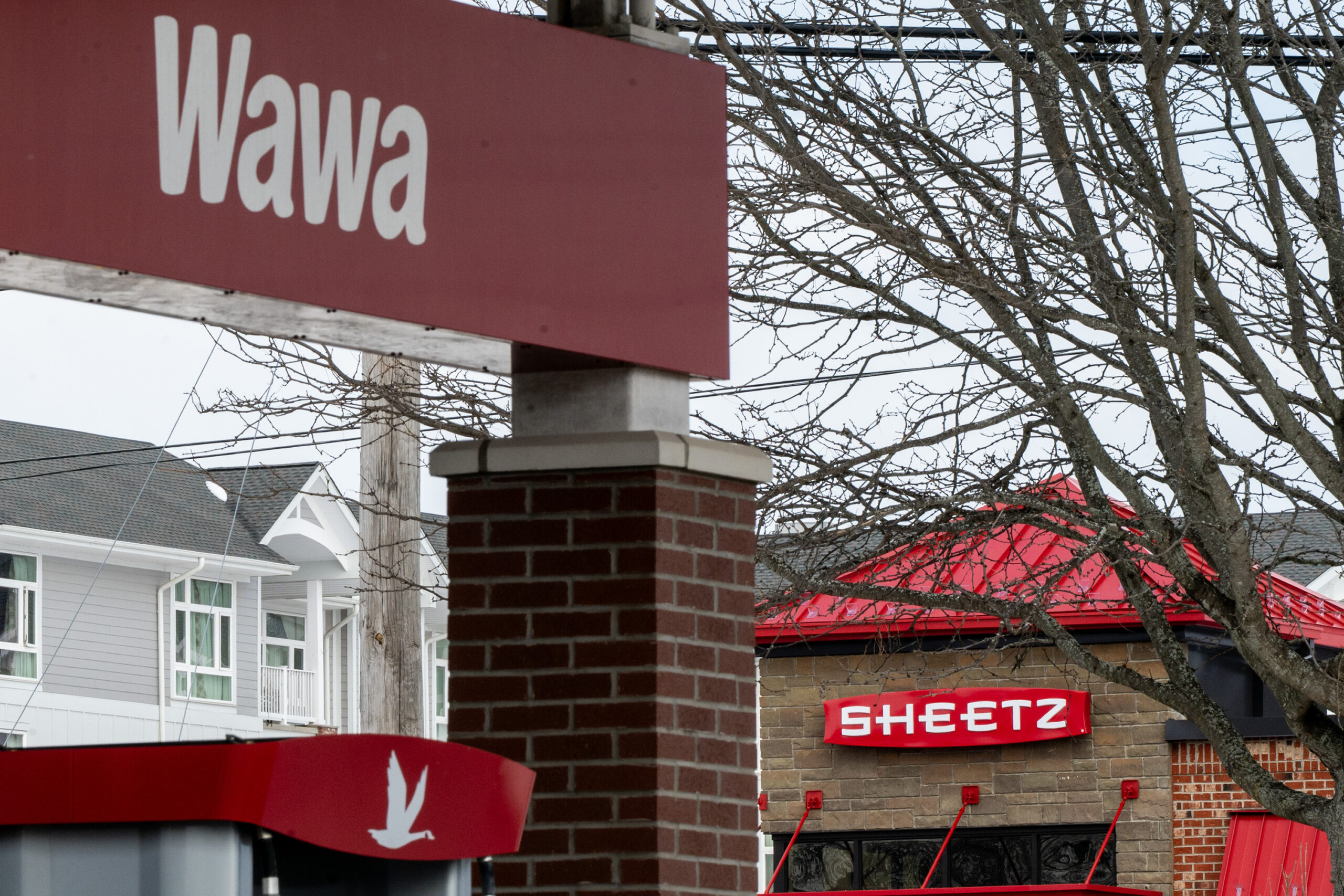
    Sheetz could soon stake a claim in Delaware County, extending its reach into the Philadelphia region.

    The Altoona-based convenience store chain, which opened its first store in the Philly suburbs last week, has submitted a sketch plan application to build a 6,000-square-foot location in Chadds Ford.

    It would be Sheetz’s first outpost in Wawa’s home county.

    A Sheetz and Wawa now sit across the street from each other in Limerick Township, Montgomery County.

    If approved, the store would be constructed about five miles down the road from Wawa’s corporate headquarters, and across the county from the site of Wawa’s first store, in Folsom.

    The Sheetz would be in the Village at Painters’ Crossing shopping center near the intersection of U.S. Routes 1 and 202, according to the application. Sheetz would take over a parcel in the northeast corner of the complex that is currently occupied by a vacant former bank and a closed Carrabba’s Italian restaurant.

    Along with Sheetz’s usual offerings of made-to-order food, grab-and-go snacks, and drinks, the outpost would include indoor and outdoor seating, two mobile-order pickup windows, and six gas pumps, according to the application. It would not include a drive-through.

    Customers crowd into the indoor dining area at the new Sheetz in Limerick Township that opened last week.

    Nick Ruffner, Sheetz public affairs manager, declined to provide additional information about the proposal, saying in a statement that “it is still very early in the process.”

    Zoning changes and other approvals would be required before anything is built, Chadds Ford Township solicitor Michael Maddren said. As of Tuesday, Sheetz had only submitted the sketch plan, which was discussed at a planning commission meeting earlier this month, Maddren said.

    At the meeting, township officials did not express strong opinions about the sketch, Maddren said: “We need a little more detail.”

    Craig Scott (left) of Wayne and Dave Swartz (right) of Collegeville had breakfast at last week’s grand opening of the first Sheetz in the Philadelphia suburbs.

    If the Chadds Ford project moves forward, Sheetz could establish a foothold in three of Philly’s four collar counties: Along with its new Limerick, Montgomery County location, Sheetz also has expressed interest in building a store in Chester County.

    In the fall, company officials submitted a sketch plan to Caln Township officials, proposing a location at the site of a shuttered Rite Aid on the 3800 block of Lincoln Highway in Downingtown, according to the township website.

    After years of Sheetz opening stores in Western and central Pennsylvania, and Wawa expanding closer to Philly, Sheetz and Wawa’s footprints have increasingly overlapped in recent years.

    A Wawa opened outside Harrisburg in 2024, marking the chain’s first central Pennsylvania location. It is down the street from a Sheetz.

    Wawa made the first move: In 2024, it opened its first central Pennsylvania location within eyesight of a Sheetz. Since then, Wawa has opened 10 stores in the region, with plans to add 40 more there in the next five years.

    Both chains also have expanded beyond Pennsylvania.

    Sheetz now has more than 800 stores in seven states. Wawa has nearly 1,200 stores in 13 states.

  • NJ Transit riders from Philadelphia should expect service disruptions for the next four weeks

    NJ Transit riders from Philadelphia should expect service disruptions for the next four weeks

    Philadelphia-area commuters must prepare for a monthlong disruption on NJ Transit while an upgrade to a century-old bridge is completed.

    All NJ Transit lines, except the Atlantic City Rail Line, are operating on modified schedules with fewer trains running, starting Tuesday through March 15, to allow for crews to transfer, or “cut over,” rail service from the 116-year-old Portal Bridge onto the new Portal North Bridge over the Hackensack River.

    Tuesday morning’s “Portal Cutover” schedule led to major disruptions on NJ Transit, the New York Times reported, with crowded trains and buses, many running behind schedule.

    Commuting on NJ Transit

    NJ Transit advises all commuters to work from home if possible and to check the weekday and weekend Portal Cutover schedules at njtransit.com/portalcutover. The agency warns against relying solely on third-party apps, such as Google Maps, because it has received reports of incorrect schedules being shown.

    These modified schedules include some train consolidations or cancellations, and others with changed departure times or stopping patterns.

    Commuters should travel before 7 a.m. or after 9 a.m. on weekday mornings to avoid major disruptions, or before 4 p.m. or after 7 p.m. on weekday evenings, according to NJ Transit.

    Rail service is expected to return to normal on Sunday, March 15, pending a safety inspection.

    “We understand that this work will disrupt the way our customers travel during the cutover period, which is why every element of our service plan was designed to keep people moving as safely and efficiently as possible,” said NJ Transit president and CEO Kris Kolluri. “While the disruption is temporary, the benefits, including a far more reliable and resilient commute along the Northeast Corridor, will last for generations.”

    Why is NJ Transit upgrading the Portal Bridge?

    The 116-year-old steel Portal Bridge has been a source of unreliability for decades as the aging infrastructure requires constant maintenance, an NJ Transit spokesperson said.

    The new Portal North Bridge is also higher and will not have to open for marine traffic, providing more reliable service.

    Amtrak commuters are also encouraged to check times and possible service disruptions, since the bridge is also used by Amtrak.

    “The cutover of the Portal North Bridge represents more than just work to connect railroad infrastructure; it signifies a whole new level of reliability on the Northeast Corridor and New Jersey that has never previously existed,” said Amtrak president Roger Harris.

  • New Orleans celebrates Mardi Gras, the indulgent conclusion of Carnival season

    New Orleans celebrates Mardi Gras, the indulgent conclusion of Carnival season

    NEW ORLEANS — People leaned out of wrought iron balconies, hollering the iconic phrase “Throw me something, Mister” as a massive Mardi Gras parade rolled down New Orleans’ historic St. Charles Avenue on Tuesday.

    Mardi Gras, also known as Fat Tuesday, marks the climax and end of the weekslong Carnival season and a final chance for indulgence, feasting, and revelry before the Christian Lent period of sacrifice and reflection. The joyous goodbye to Carnival always falls the day before Ash Wednesday.

    In Louisiana’s most populous city, which is world-famous for its Mardi Gras bash, people donned green, gold, and purple outfits, with some opting for an abundance of sequins and others showing off homemade costumes.

    The revelers began lining the streets as the sun rose. They set up chairs, coolers, grills, and ladders — offering a higher vantage point.

    As marching bands and floats filled with women wearing massive feathered headdresses passed by, the music echoing through the city streets, people danced and cheered. Others sipped drinks, with many opting for adult concoctions on the day of celebration rather than the usual morning coffee.

    Each parade has its signature “throws” — trinkets that include plastic beads, candy, doubloons, stuffed animals, cups, and toys. Hand-decorated coconuts are the coveted item from Zulu, a massive parade named after the largest ethnic group in South Africa.

    As a man, dressed like a crawfish — including red fabric claws for hands — caught one of the coconuts, he waved it around, the gold glitter on the husk glistening in the sun.

    Sue Mennino was dressed in a white Egyptian-inspired costume, complete with a gold headpiece and translucent cape. Her face was embellished with glitter and electric blue eyeshadow.

    “The world will be here tomorrow, but today is a day off and a time to party,” Mennino said.

    The party isn’t solely confined to the parade route. Throughout the French Quarter, people celebrated in the streets, on balconies and on the front porches of shotgun-style homes.

    One impromptu parade was led by a man playing a washboard instrument and dressed as a blue alligator — his papier-mâché tail dragging along the street, unintentionally sweeping up stray beads with it. A brass band played “The Saints” as people danced.

    In Jackson Square, the costumed masses included a man painted from head to toe as a zebra, a group cosplaying as Hungry Hungry Hippos from the tabletop game and a diver wearing an antique brass and copper helmet.

    “The people are the best part,” said Martha Archer, who was dressed as Madame Leota, the disembodied medium whose head appears within a crystal ball in the Haunted Mansion attraction at Disney amusement parks.

    Archer’s face was painted blue and her outfit was a makeshift table that came up to her neck — giving the appearance that she was indeed a floating head.

    “Everybody is just so happy,” she explained.

    The good times will roll not just in New Orleans but across the state, from exclusive balls to the Cajun French tradition of the Courir de Mardi Gras, or Fat Tuesday Run — a rural event in Central Louisiana featuring costumed participants performing, begging for ingredients and chasing live chickens to be cooked in a communal gumbo.

    Parades are also held in other Gulf Coast cities such as Mobile, Ala., and Pensacola, Fla., and there are other world-renowned celebrations in Brazil and Europe.

    One of the quirkiest is an international Pancake Day competition pitting the women of Liberal, Kan., against the women of Olney, England. Pancakes are used because they were thought to be a good way for Christians to consume the fat they were supposed to give up during the 40 days before Easter.

    Contestants must carry a pancake in a frying pan and flip the pancake at the beginning and end of the 415-yard race.

  • Georgia students recall horror of being shot as father of accused school shooter goes on trial

    Georgia students recall horror of being shot as father of accused school shooter goes on trial

    ATLANTA — Georgia high school students on Tuesday testified in court about the horrors of being shot during their algebra class, and recounted through tears seeing a classmate in a pool of blood, then seeing blood on their own bodies and fearing they might die.

    Various students took the stand at the trial of Colin Gray, the father of Colt Gray, who investigators said had carefully planned the Sept. 4, 2024, shooting at the school northeast of Atlanta that left two teachers and two students dead and several others wounded.

    This is one of several cases around the nation where prosecutors are trying to hold parents responsible after their children are accused in fatal shootings.

    A ninth-grade girl saw a hole in her wrist and began screaming moments after the gunfire began in her Algebra I class, she testified Tuesday.

    “I was also worried that I was going to die and how that would affect my parents because my dad has a heart problem,” she said.

    As paramedics carried her out of the school building, she saw Colt Gray on the floor with his hands behind his back and screamed obscenities at him as she passed by him.

    “I remember yelling at him that we were kids, because we were kids,” she said. The faces of she and others who testified were not shown during a video livestream of the testimony because of their young ages.

    Other students said the trauma was not limited to their physical wounds, as they spoke of being depressed, anxious and slow to trust people even now, more than a year later.

    “Just seeing what I saw that day, it just sticks with me … and not being able to trust certain people, trust people,” said one girl who sustained a gunshot wound to her left shoulder.

    Many of the students said they were still in counseling to deal with nightmares, fears of loud noises and anxiety at school and at home. “Even to go on a walk around my neighborhood, anxiety would fill my head, and I feel like somebody driving past me would shoot me,” a female student testified.

    Colt Gray, who was 14 years old at the time of the shooting, faces 55 counts, including murder in the deaths of four people and 25 counts of aggravated assault. His father Colin Gray faces 29 counts, including two counts of second-degree murder and two counts of involuntary manslaughter.

    Colin Gray should be held responsible for providing the weapon despite warnings about alleged threats his son made, a prosecutor said as the father’s trial began Monday.

    “This case is about this defendant and his actions in allowing a child that he has custody over access to a firearm and ammunition after being warned that child was going to harm others,” Barrow County District Attorney Brad Smith said in his opening statement.

    Prosecutors argue that amounts to cruelty to children, and second-degree murder is defined in Georgia law as causing the death of a child by committing the crime of cruelty to children.

    But Brian Hobbs, an attorney for Colin Gray, said the shooting’s planning and timing “were hidden by Colt Gray from his father.”

    “That’s the difference between tragedy and criminal liability,” he said. “You cannot hold someone criminally responsible for failing to predict what was intentionally hidden from them.”

    With a semiautomatic rifle in his book bag, the barrel sticking out and wrapped in poster board, Colt Gray boarded the school bus, investigators said. He left his second-period class and emerged from a bathroom with the gun and then shot people in a classroom and hallways, they said.

    Smith told the jury that in September 2021, Colt Gray used a school computer to search the phrase, “how to kill your dad.” School resource officers were then sent to the home, but it was determined to be a “misunderstanding,” Smith said.

    Sixteen months before the shooting, in May 2023, law enforcement acted on a tip from the FBI after a shooting threat was made online concerning an elementary school. The threat was traced to a computer at Gray’s home, Smith said.

    Colin Gray was told about the threat and was asked whether his son had access to guns. Gray replied that he and his son “take this school shooting stuff very seriously,” according to Smith. Colt Gray denied that he made the threat and said that his online account had been hacked, Smith said.

    That Christmas, Colin Gray gave his son the gun as a gift and continued to buy accessories after that, including “a lot of ammunition,” Smith said.

    Colin Gray knew his son was obsessed with school shooters, even having a shrine in his bedroom to Nikolas Cruz, the shooter in the 2018 massacre at Marjory Stoneman Douglas High School in Parkland, Fla., prosecutors have said. A Georgia Bureau of Investigation agent had testified that the teen’s parents had discussed their son’s fascination with school shooters but decided that it was in a joking context and not a serious issue.

    Three weeks before the shooting, Gray received a chilling text from his son: “Whenever something happens, just know the blood is on your hands,” according to Smith.

    Colin Gray was also aware his son’s mental health had deteriorated and had sought help from a counseling service weeks before the shooting, an investigator testified.

    “We have had a very difficult past couple of years and he needs help. Anger, anxiety, quick to be volatile. I don’t know what to do,” Colin Gray wrote about his son.

    But Smith said Colin Gray never followed through on concerns about getting his son admitted to an inpatient facility.