Category: News

Latest breaking news and updates

  • Strip club shooter sentenced for killing a Good Samaritan, prosecutors say

    A Trenton man was sentenced to up to 60 years in Pennsylvania state prison for fatally shooting a bystander at a Morrisville strip club.

    On Friday, Pedro E. Rodriguez, 29, pleaded guilty to third-degree murder, discharging a firearm into an occupied structure, possession of an instrument of crime, and four counts of recklessly endangering another person in the killing of 28-year-old Mekhi Norman in August 2024.

    According to the Bucks County District Attorney’s Office, Norman was shot at a Morrisville nightclub while acting as a Good Samaritan. He did not know Rodriguez but was helping the club’s staff following an altercation at the doorway.

    Surveillance video shown during the sentencing hearing shows Rodriguez walking to his car, getting a handgun, loading it, and returning to the club, according to a district attorney’s office statement. Then, he fired into the building as security staff were attempting to remove his nephew, according to the statement.

    Norman, who was helping the staff when he was shot, was struck in the back of the head, the left thigh, and under both armpits, as 17 patrons and employees remained at the club.

    Rodriguez fled but later turned himself in and was held on $5 million bail at the Bucks County Correctional Facility. He now faces between 30 and 60 years in state prison.

    Rodriguez’s nephew, 22-year-old Kevin Perez, entered a guilty plea in 2025 to several counts of simple assault, disorderly conduct, and harassment for assaulting staff. The Trenton resident was sentenced to 10 to 23 months in the Bucks County Correctional Facility, followed by a year of probation.

    During the sentencing hearing, Deputy District Attorney Ed Louka described Norman as a good father, a good son, and a good friend who died being a Good Samaritan, according to the statement.

    Offering an account of how life has changed, the mother of Norman’s daughter told the court that the child still cries waiting for her father to call in the mornings and nights, as he used to, according to prosecutors.

    “While this sentence ensures that the defendant is held accountable for his senseless and violent actions, we know it cannot fill the void left in the lives of those who loved Mr. Norman,” District Attorney Joe Khan said.

  • Brazilian au pair gets 10-year sentence for scheme to kill lover’s wife and another man

    Brazilian au pair gets 10-year sentence for scheme to kill lover’s wife and another man

    FAIRFAX, Va. — An au pair who schemed with her employer-turned-lover to kill his wife and another man received a 10-year prison sentence on Friday.

    Prosecutors had recommended Juliana Peres Magalhães walk free after she pleaded guilty to a downgraded manslaughter charge in the February 2023 killing of Joseph Ryan. Instead of being tried for second-degree murder, she became their star witness, testifying that she had fatally shot Ryan as Brendan Banfield was fatally stabbing his wife, Christine, in the couple’s bedroom.

    Brendan Banfield was convicted by a jury this month of aggravated murder in the deaths of his wife and Ryan.

    “I know my remorse cannot bring you peace,” Magalhães told the victims’ families on Friday, wiping away tears and muffling sobs. “I hope you can someday understand that I really did not believe his plan would actually happen.”

    Instead of sentencing her to time served, Judge Penney Azcarate delivered the maximum possible sentence to the woman from Brazil.

    “Let’s get it straight: You do not deserve anything other than incarceration and a life of reflection on what you have done to the victim and his family. May it weigh heavily on your soul,” the judge said.

    At Banfield’s trial, Magalhães testified that she and the IRS agent created an account in the name of his wife, a pediatric intensive care nurse, on a social media platform for people interested in sexual fetishes. Ryan connected with the account and agreed to meet for a sexual encounter involving a knife.

    Magalhães, then 22, said she and Brendan Banfield took the couple’s 4-year-old child to the basement, and then found Ryan surprising Christine Banfield with a knife in the couple’s bedroom. She said Brendan Banfield shot Ryan and then began stabbing his wife in the neck. When she saw Ryan moving, Magalhães said, she fired the second shot that killed him.

    The au pair wasn’t arrested until eight months later, and hasn’t left jail since. Prosecutors raised concerns that if she were to be allowed bail, she would flee to Brazil or be deported by immigration officials before they could finish their case. She didn’t talk with investigators for more than a year, until she changed her mind as her trial date approached.

    “I lost myself in a relationship, and left my morals and values behind,” Magalhães told the judge.

    “You were texting and speaking to Joseph Ryan, encouraging him to bring a knife and ultimately, through the phone conversation, getting his consent, knowing all along you were bringing him to his death,” the judge responded.

    Ryan’s mother, Deirdre Fisher, told the court that her son, born days before Christmas, was her “greatest gift.” Three years after his killing, she can’t bear taking down their Christmas tree. An urn with Ryan’s ashes sits in front of the decoration.

    “I say good morning to him each day when I turn on the tree’s lights,” she said. “But of course that’s not Joe sitting there. He can’t say ‘I love you’ back.”

    Sangeeta Ryan described her nephew as “inquisitive, curious, smart, charming and so dang talkative.” She said he loved martial arts and role-playing with his friends. She also noted that he had moved in with his octogenarian grandmother to care for her.

    “His sudden murder devastated his grandma — she could no longer live in the family home without Joe,” his aunt said. The woman quietly moved away, hoping to avoid her memories and the reporters knocking at the door.

    Christine Banfield’s relatives attended Friday’s hearing. A judge has said Banfield will be sentenced in May.

  • Feds open a perjury probe into ICE officers’ testimony about the shooting of a Venezuelan man

    Feds open a perjury probe into ICE officers’ testimony about the shooting of a Venezuelan man

    MINNEAPOLIS — Federal authorities have opened a criminal probe into whether two immigration officers lied under oath about a shooting in Minneapolis last month, as all charges were dropped against two Venezuelan men.

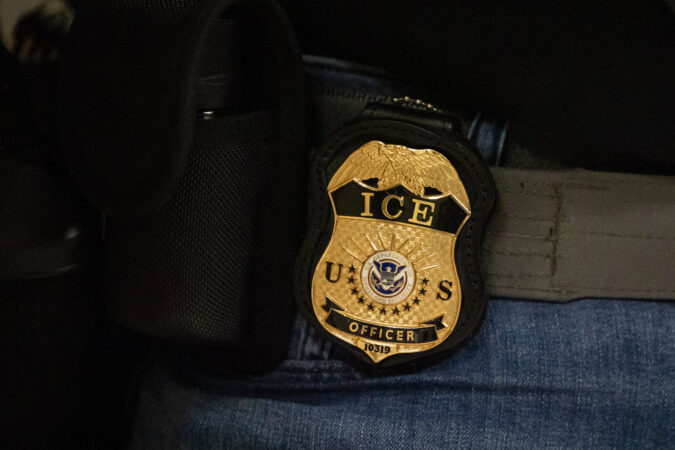
    Immigration and Customs Enforcement Director Todd Lyons said Friday that his agency opened a joint probe with the Justice Department after video evidence revealed “sworn testimony provided by two separate officers appears to have made untruthful statements” about the shooting of one of the Venezuelan men during the Trump administration’s immigration crackdown across the Minneapolis-St. Paul area.

    The officers, whose names were not disclosed, are on administrative leave while the investigation is carried out, he said. Lyons said the two ICE officers could be fired and face criminal prosecution.

    “Lying under oath is a serious federal offense,” said Lyons, adding that the U.S. attorney’s office is actively investigating.

    “The men and women of ICE are entrusted with upholding the rule of law and are held to the highest standards of professionalism, integrity, and ethical conduct,” Lyons said. “Violations of this sacred sworn oath will not be tolerated. ICE remains fully committed to transparency, accountability, and the fair enforcement of our nation’s immigration laws.”

    Earlier Friday, U.S. District Court Judge Paul A. Magnuson dismissed felony assault charges against Alfredo Alejandro Aljorna and Julio Cesar Sosa-Celis, who were accused of beating an ICE officer with a broom handle and a snow shovel during a Jan. 14 fracas. The officer fired a single shot from his handgun, striking Sosa-Celis in his right thigh.

    The cases were dropped after a highly unusual motion to dismiss from U.S. Attorney for the District of Minnesota Daniel N. Rosen, who said “newly discovered evidence” was “materially inconsistent with the allegations” made against the two men in a criminal complaint and at a hearing last month.

    The reversal follows a string of high-profile shootings involving federal immigration agents in which eyewitness statements and video evidence have called into question claims made to justify using deadly force. Dozens of felony cases against protesters accused of assaulting or impeding federal officers have also crumbled.

    The immigration lawyer representing Aljorna and Sosa-Celis said they are “overjoyed” that all charges have been dismissed. Had they been convicted, the two immigrants would have faced years in federal prison.

    “The charges against them were based on lies by an ICE agent who recklessly shot into their home through a closed door,” said attorney Brian D. Clark. “They are so happy justice is being served.”

    It is unclear whether the men could still be deported.

    A chase, claims of an attack, and a shot fired

    Last month, an FBI investigator said in a now-discredited court affidavit that ICE officers attempted to conduct a traffic stop on a vehicle driven by Aljorna on Jan. 14. He crashed the vehicle and fled on foot toward the apartment duplex where he lived. An immigration officer chased Aljorna who — according to the government — violently resisted arrest.

    The complaint alleged Sosa-Celis and another man attacked the officer with a snow shovel and a broom handle as the officer and Aljorna struggled on the ground. The officer, who is not named in court filings, fired his handgun, striking Sosa-Celis. The men ran into an apartment and eventually were arrested.

    After the shooting, Homeland Security Secretary Kristi Noem attacked Minnesota Gov. Tim Walz and Minneapolis Mayor Jacob Frey, accusing the Democrats of “encouraging impeding and assault against our law enforcement which is a federal crime, a felony.”

    “What we saw last night in Minneapolis was an attempted murder of federal law enforcement,” Noem said in a Jan. 15 statement. “Our officer was ambushed and attacked by three individuals who beat him with snow shovels and the handles of brooms. Fearing for his life, the officer fired a defensive shot.”

    The Department of Homeland Security did not responded Friday to questions about whether Noem stands by those statements, which ICE — part of DHS — says are now under investigation.

    Robin M. Wolpert, a defense attorney for Sosa-Celis in the criminal case, said she was pleased ICE and the Justice Department are publicly acknowledging and investigating apparent untruthful statements by the two ICE officers.

    “These untruthful statements had serious consequences for my client and his family,” Wolpert said. “My client is a crime victim.”

    Clark, the immigration lawyer for Aljorna and Sosa-Celis, urged the government to release the name of the ICE officer who shot his client and charge him.

    Court filings show state authorities have opened their own criminal investigation into the shooting, though the FBI has thus far refused to share evidence, provide the name of the ICE officer who fired his weapon or make him available for an interview.

    Holes already apparent in prosecution case

    Rosen’s motion seeking to drop the charges did not detail what new evidence had emerged or what falsehoods had been in the government’s prior filings, but cracks began to appear in the government’s case during a Jan. 21 court hearing to determine whether the accused men could be released pending trial.

    In court, the ICE officer’s account of the moments before the shooting differed significantly from testimony from the two defendants and three eyewitnesses. Available video evidence did not support the ICE officer’s account of being assaulted with a broom and snow shovel.

    Aljorna and Sosa-Celis denied assaulting the officer. Testimony from a neighbor and the men’s romantic partners also did not support the agent’s account that he had been attacked with a broom or shovel or that a third person was involved.

    Frederick Goetz, a lawyer representing Aljorna, said his client had a broomstick in his hand and threw it at the agent as he ran toward the house. Wolpert, representing Sosa-Celis, said he had been holding a shovel but was retreating into the home when the officer fired, wounding him. The men’s attorneys said the prosecution’s case relied wholly on testimony from the agent who fired the gun.

    Neither Aljorna and Sosa-Celis had violent criminal records. Both had been working as DoorDash delivery drivers at night in an attempt to avoid encounters with federal agents, their attorneys said.

    Aljorna and Sosa-Celis retreated into their upstairs apartment and barricaded the door, so federal officers used tear gas to try to force the men out, the FBI agent said. Concerned about the safety of two children under 2 inside the home, Aljorna and Sosa-Celis surrendered.

    A third Venezuelan man, Gabriel Alejandro Hernandez Ledezma, who lived in the apartment downstairs was also arrested.

    Though he was never federally charged, a Jan. 30 court petition seeking his release says Hernandez Ledezma was detained without a warrant and within hours flown to an ICE detention facility in Texas. He alleges his removal was to prevent him becoming a material eyewitness who could undercut the federal government’s case and help the Minnesota state investigation.

    Hernandez Ledezma was returned to Minnesota and discharged from ICE custody on Monday after a federal judge ordered his release.

  • Journalist Don Lemon pleads not guilty to civil rights charges in Minnesota church protest

    Journalist Don Lemon pleads not guilty to civil rights charges in Minnesota church protest

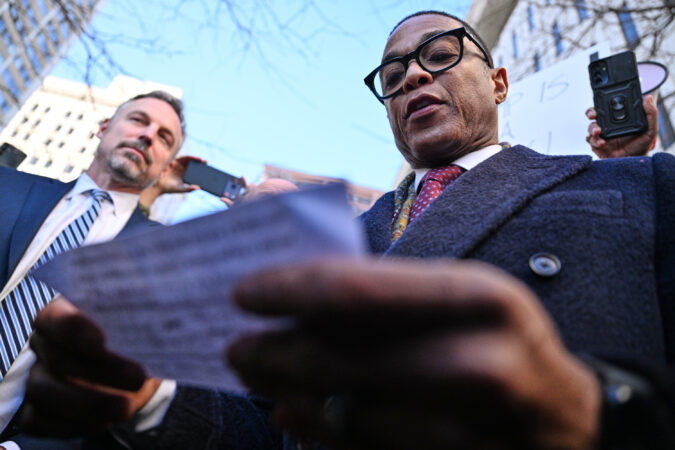
    ST. PAUL, Minn. — Former CNN host turned independent journalist Don Lemon pleaded not guilty to federal civil rights charges Friday, following a protest at a Minnesota church where an Immigration and Customs Enforcement official is a pastor. Four others also pleaded not guilty in the case.

    Lemon insists he was at the Cities Church in St. Paul to chronicle the Jan. 18 protest but was not a participant. The veteran journalist vowed to fight what he called “baseless charges” and protect his free speech rights.

    “For more than 30 years, I’ve been a journalist, and the power and protection of the First Amendment has been the underpinning of my work. The First Amendment, the freedom of the press, are the bedrock of our democracy,” Lemon said outside the courthouse after his arraignment. “And like all of you here in Minnesota, the great people of Minnesota, I will not be intimidated, I will not back down.”

    Dozens of supporters gathered outside the courthouse, chanting “Pam Bondi has got to go” and “Protect the press.”

    ‘We the people have to stand for our rights’

    Civil rights attorney Nekima Levy Armstrong was among the other defendants who pleaded not guilty Friday. The prominent local activist was the subject of a doctored photo posted on official White House social media that falsely showed her crying during her arrest. The picture is part of a deluge of AI-altered imagery that has circulated since the fatal shootings of Renee Good and Alex Pretti by federal officers in Minneapolis amid President Donald Trump’s administration’s immigration crackdown.

    Levy Armstrong echoed Lemon’s defiant words after the hearing.

    “We the people have to stand for our rights. We have to stand for the Constitution. We have to stand for our First Amendment rights to freedom of the speech, some freedom of assembly, and freedom of the press,” she said.

    “Today we have the federal government trying to weaponize the Department of Justice in order to silence us, in order to prevent us from speaking the truth,” Levy Armstrong said. ”They are trying to prevent us from calling out a manifest injustice.”

    All of the defendants have been charged under the FACE Act

    Protesters interrupted a service at the Southern Baptist church last month, chanting “ICE out” and “Justice for Renee Good,” referring to the 37-year-old mother of three who was fatally shot by an ICE officer in Minneapolis.

    In total, nine people have been charged under the 1994 Freedom of Access to Clinic Entrances Act in relation to the church protest. The FACE Act prohibits interference or intimidation of “any person by force, threat of force, or physical obstruction exercising or seeking to exercise the First Amendment right of religious freedom at a place of religious worship.”

    Two more defendants accused in the protest are scheduled for arraignment next week, including another independent journalist, Georgia Fort.

    Penalties can range up to a year in prison and up to a $10,000 fine.

    Attorneys for journalists seek to pierce veil of grand jury secrecy

    Lawyers for Lemon and Fort filed a joint motion with the court Friday seeking transcripts of the normally secret grand jury proceedings that resulted in the indictments against the nine defendants. They maintained that Lemon and Fort were at the church protest in their capacity as journalists covering the story.

    The defense attorneys noted that several judges — including the chief federal judge for Minnesota — found no probable cause to support the complaints that prosecutors first tried to file against the two journalists, so they refused to sign arrest warrants for Lemon or Fort before the government turned to the grand jury.

    They said those refusals raise serious concerns about whether the government made misleading or inaccurate statements of law and/or facts to the grand jury. And they expressed concern that President Donald Trump, Attorney General Pam Bondi and other Justice Department officials put undue pressure on prosecutors to charge them.

    “In the United States of America, we do not prosecute journalists for doing their job. That happens in Russia, China, Iran and other authoritarian regimes. And yet the government sold this unconstitutional mess to the grand jury,” they wrote. “Disclosure of the grand jury proceedings is necessary to ensure the government did not mislead or mis-instruct it.”

    The attorneys also said prosecutors told them they will oppose the motion.

    Protest provoked conservative religious backlash

    Renee Carlson, an attorney with True North Legal, which is representing Cities Church, said in a statement that by pleading not guilty Lemon and others are “doubling down on their claim that the press can do whatever they want under the auspices of journalism.”

    “The First Amendment does not protect premeditated schemes to violate the sanctity of a sanctuary, disrupt worship services, or intimidate children,” Carlson said. “There is no ‘press pass’ to trespass on church property or conspire to invade religious worship.”

    The church protest drew sharp complaints from conservative religious and political leaders. White House press secretary Karoline Leavitt warned in a social media post at the time: “President Trump will not tolerate the intimidation and harassment of Christians in their sacred places of worship.” Even clergy who oppose the administration’s immigration enforcement tactics expressed discomfort.

    Former federal prosecutor is part of Lemon’s legal team

    One of Lemon’s attorneys who was in court Friday is Joe Thompson, one of several former prosecutors who have left the Minnesota U.S. Attorney’s Office in recent weeks citing frustration with the Trump administration’s immigration enforcement crackdown in the state and the Justice Department’s response to the killing of Good and Pretti.

    Thompson had led the sprawling investigation of major public program fraud cases for the prosecutors office until he resigned last month. The Trump administration has cited the fraud cases, in which most defendants have come from the state’s large Somali community, as justification for its immigration crackdown.

  • Trump says change in power in Iran ‘would be the best thing that could happen’

    Trump says change in power in Iran ‘would be the best thing that could happen’

    WASHINGTON — President Donald Trump said Friday that a change in power in Iran “would be the best thing that could happen” as the U.S. administration weighs whether to take military action against Tehran.

    Trump made the comments shortly after visiting with troops in Fort Bragg, N.C., and after he confirmed earlier in the day that he’s deploying a second aircraft carrier group to the Mideast for potential military action against Iran.

    “It seems like that would be the best thing that could happen,” Trump said in an exchange with reporters when asked about pressing for the ouster of the Islamic clerical rule in Iran. “For 47 years, they’ve been talking and talking and talking.”

    The president has suggested in recent weeks that his top priority is for Iran to further scale back its nuclear program, but on Friday he suggested that’s only one aspect of concessions the U.S. needs Iran to make.

    Israeli Prime Minister Benjamin Netanyahu, who traveled to Washington this week for talks with Trump, has been pressing for any deal to include steps to neutralize Iran’s ballistic missile program and end its funding for proxy groups such as Hamas and Hezbollah.

    “If we do it, that would be the least of the mission,” Trump said of targeting Tehran’s nuclear program, which suffered significant setbacks in U.S. military strikes last year.

    Iran has insisted its nuclear program is for peaceful purposes. Before the June war, Iran had been enriching uranium up to 60% purity, a short, technical step away from weapons-grade levels.

    Trump’s comments advocating for a potential end to Ayatollah Ali Khamenei’s rule come just weeks after Secretary of State Marco Rubio said a potential change in power in Iran would be “far more complex” than the administration’s recent effort to oust Venezuelan President Nicolás Maduro from power.

    Rubio, during a Senate hearing last month, noted that with Iran “you’re talking about a regime that’s in place for a very long time.”

    “So that’s going to require a lot of careful thinking, if that eventuality ever presents itself,” Rubio said.

    Trump said the USS Gerald R. Ford, the world’s largest aircraft carrier, is being sent from the Caribbean Sea to the Mideast to join other warships and military assets the U.S. has built up in the region.

    The planned deployment comes just days after Trump suggested another round of talks with the Iranians was at hand. Those negotiations didn’t materialize as one of Tehran’s top security officials visited Oman and Qatar this week and exchanged messages with U.S. intermediaries.

    “In case we don’t make a deal, we’ll need it,” Trump told reporters about the second carrier. He added, “It’ll be leaving very soon.”

    Already, Gulf Arab nations have warned any attack could spiral into another regional conflict in a Mideast still reeling from the Israel-Hamas war in the Gaza Strip. Meanwhile, Iranians are beginning to hold 40-day mourning ceremonies for the thousands killed in Tehran’s bloody crackdown on nationwide protests last month, adding to the internal pressure faced by the sanctions-battered Islamic Republic.

    The Ford, whose new deployment was first reported by the New York Times, will join the USS Abraham Lincoln and its accompanying guided-missile destroyers, which have been in the region for over two weeks. U.S. forces already have shot down an Iranian drone that approached the Lincoln on the same day last week that Iran tried to stop a U.S.-flagged ship in the Strait of Hormuz.

    Trump in exchanges with reporters on Friday still offered measured hope that a deal can be struck with Iran.

    “Give us the deal that they should have given us the first time,” Trump said about how U.S. military action can be avoided. ”If they give us the right deal, we won’t do that.”

    Ford had been part of Venezuela strike force

    It would be a quick turnaround for the Ford, which Trump sent from the Mediterranean Sea to the Caribbean last October as the administration built up a huge military presence in the lead-up to the surprise raid last month that captured then-Venezuelan President Nicolás Maduro.

    It also appears to be at odds with the Trump administration’s national security and defense strategies, which put an emphasis on the Western Hemisphere over other parts of the world.

    In response to questions about the movement of the Ford, U.S. Southern Command said U.S. forces in Latin America will continue to “counter illicit activities and malign actors in the Western Hemisphere.”

    “While force posture evolves, our operational capability does not,” Col. Emanuel Ortiz, spokesperson for Southern Command, said in a statement. U.S. “forces remain fully ready to project power, defend themselves, and protect U.S. interests in the region.”

    The Ford strike group will bring more than 5,000 additional troops to the Middle East but few capabilities or weapons that don’t already exist within the Lincoln group. Having two carriers will double the number of aircraft and munitions that are available to military planners and Trump.

    Given the Ford’s current position in the Caribbean, it will likely be weeks before it is off the coast of Iran.

    Trump has repeatedly threatened to use force to compel Iran to agree to constrain its nuclear program and earlier over Tehran’s bloody crackdown on nationwide protests.

    Iran and the United States held indirect talks in Oman a week ago, and Trump later warned Tehran that failure to reach an agreement with his administration would be “very traumatic.” Similar talks last year ultimately broke down in June as Israel launched what became a 12-day war on Iran that included the U.S. bombing Iranian nuclear sites.

    Asked by a reporter about the new negotiations, Trump said Friday that “I think they’ll be successful. And if they’re not, it’s going to be a bad day for Iran, very bad.”

    Long carrier deployments affect crews and ships

    The USS Ford, meanwhile, first set sail in late June 2025, which means the crew will soon have been deployed for eight months. While it is unclear how long the ship will remain in the Middle East, the move sets the crew up for an unusually long deployment.

    The Navy’s top officer, Adm. Daryl Caudle, told reporters last month that keeping the Ford longer at sea would be “highly disruptive” and that he was “a big nonfan of extensions.”

    Carriers are typically deployed for six or seven months. “When it goes past that, that disrupts lives, it disrupts things … funerals that were planned, marriages that were planned, babies that were planned,” Caudle said.

    He said extending the Ford would complicate its maintenance and upkeep by throwing off the schedule of repairs, adding more wear and tear, and increasing the equipment that will need attention.

    For comparison, the aircraft carrier USS Dwight D. Eisenhower had a nine-month deployment to the Middle East in 2023 and 2024, when it spent much of its time engaged with the Iran-backed Houthi rebels in Yemen. The ship entered maintenance in early 2025 as scheduled, but it blew past its planned completion date of July and remains in the shipyard to this day.

    Caudle told the Associated Press in a recent interview that his vision is to deploy smaller, newer ships when possible instead of consistently turning to huge aircraft carriers.

  • ICE operation causes students at Lindenwold bus stop to flee in panic, school district says

    ICE operation causes students at Lindenwold bus stop to flee in panic, school district says

    The Lindenwold School District reported Thursday that fourth- and fifth-grade students waiting at a bus stop ran away in a panic when a U.S. Customs and Immigration Enforcement operation occurred nearby.

    The incident happened in the morning as the students were waiting to take a bus to school from the Woodland Village Apartments, the district said in a statement.

    Superintendent Kristin O’Neil said about 44 students were waiting at the bus when unmarked vehicles arrived at the complex. Officers in tactical gear and wearing masks fanned out, she said.

    (function() {
    var l2 = function() {
    new pym.Parent(‘lindenwold’,
    ‘https://media.inquirer.com/storage/inquirer/projects/innovation/arcgis_iframe/lindenwold.html’);
    };
    if (typeof(pym) === ‘undefined’) {
    var h = document.getElementsByTagName(‘head’)[0],
    s = document.createElement(‘script’);
    s.type = ‘text/javascript’;
    s.src = ‘https://pym.nprapps.org/pym.v1.min.js’;
    s.onload = l2;
    h.appendChild(s);
    } else {
    l2();
    }
    })();

    “The presence of multiple enforcement vehicles caused significant fear and confusion, and several students ran from the bus stop. Our bus driver acted quickly and responsibly, circling back multiple times to ensure as many children as possible were safely transported to school,” the district said, also thanking the bus driver.

    A Ring video from the apartment complex provided to some news outlets shows the children running with some shouting: “ICE! ICE!”

    “Upon arrival to school, many children were understandably upset and emotional,” the district said.

    “All students currently in school are safe,” the district said. “ICE Agents are NOT at the Lindenwold School District.”

    O’Neil said the students attend the district’s school No. 5. About 20 students didn’t show up Thursday, she said. The district will work with families of students who will be marked absent, she said.

    “To us, these are our children,” O’Neil said.

    About 60% of the district’s 3,100 students are Hispanic, according to its latest school performance report. O’Neil said it is not unusual for parents to keep their children home when there are reports of ICE activity in the area.

    <iframe src="https://www.facebook.com/plugins/post.php?href=https%3A%2F%2Fwww.facebook.com%2FLindenwoldPublicSchoolDistrict%2Fposts%2Fpfbid0FnuXsFoCwr7uSvAwW9NPs4XcL4BgVQHwTVxycWvdUc5KWKJF76j389k8VMpVcsL8l&show_text=true&width=500" width="500" height="679" style="border:none;overflow:hidden" scrolling="no" frameborder="0" allowfullscreen="true" allow="autoplay; clipboard-write; encrypted-media; picture-in-picture; web-share"></iframe>

    A district leader reached out to county and state representatives to alert them about the incident and to advocate for protocols that prioritize the safety of children during any future ICE operations, the district said.

    “Our students deserve to feel safe while waiting for their school bus and while attending school each day,” the district said.

    A spokesperson for ICE could not be reached for comment Thursday night.

    U.S. Rep. Donald Norcross, (D., NJ), who represents the district, was among several dozen people who showed up Friday at an “ICE Out of Lindenwold” protest at Lindenwold Borough Hall. The protest was announced before the bus stop incident.

    “Schoolchildren are not criminals, and enforcement actions must reflect that,” Norcross said in a statement. “… Our community will not be terrorized, and we will keep fighting to protect our neighborhoods.”

    Lindenwold, located about 16 miles southeast of Philadelphia, has been among several communities in Camden County that have been subject to ICE operations.

    County Commissioner Director Louis Cappelli Jr. said in a statement Thursday night that “the absolute chaos sowed by this ICE operation in Lindenwold this morning was appalling.”

    Cappelli added that “we are short on facts and details about the intentions of ICE,” however at some point ICE called 911 to request local police assistance.

    “That said, the impact and fear that struck the children of our county was painful to watch, and I can’t imagine the anxiety and trauma that came from this incident,” Cappelli said.

    He added, “As a community, segments of our population are being terrorized and scared to leave their homes. This is no way for any of us to live.”

    County Commissioner Jonathan Young said in a statement: “As a former Lindenwold resident, I’m disgusted to watch the videos of children running in absolute terror along a busy county thoroughfare.”

    Young said that “no one wants criminals in their community,” but added that, “under Trump, ICE has been inhumane in how it conducts its operations. We’ve seen that firsthand throughout other cities in the country, and now it’s happening here.”

  • Quakertown’s superintendent goes on leave

    Quakertown’s superintendent goes on leave

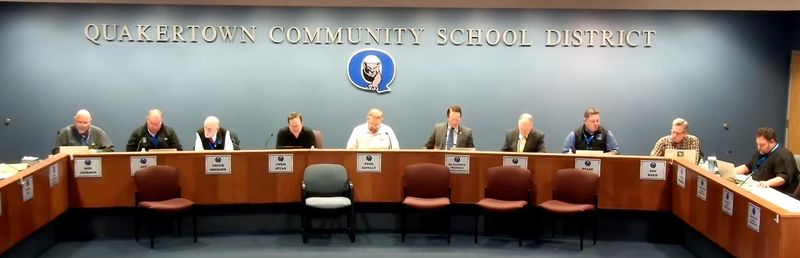
    Quakertown Community School District Superintendent Matthew Friedman is on leave effective immediately, a district spokesperson said Friday.

    The spokesperson, Melissa Hartney, said the district’s school board could not comment further.

    “Because this is a personnel matter, the board is limited in the amount of information it can share at this time,” Hartney said in a statement.

    Friedman did not return a request for comment.

    Friedman took over the 4,600-student district in Upper Bucks County in 2023, after serving as superintendent of the Ocean City School District in New Jersey.

    The Quakertown school board in November granted him a $10,000 raise, bringing his salary to $233,000, and extended his contract until June 30, 2028.

    Assistant Superintendent Lisa Hoffman is taking over day-to-day operations of the district, Hartney said.

    “The board is confident that district operations, instructional programs, and student services will continue without interruption,” Hartney said, adding that it “remains committed to transparency, accountability, and maintaining the trust of our students, staff, families, and community.”

  • A cannonball was found in the backyard of a Cherry Hill home

    A cannonball was found buried in a Cherry Hill home’s backyard Friday morning, prompting street closures and evacuations.

    The Cherry Hill Police Department responded to the 200 block of Woodstock Drive South just before noon, after residents found a very old cannonball buried in their yard, said Capt. Sheldon Bryant.

    The Camden County Sheriff’s Department Bomb Unit was called in to handle the situation. The police temporarily evacuated neighboring homes and closed down surrounding streets.

    Cannonballs have been discovered in New Jersey yards before.

    In June 2015, an old cannonball mysteriously appeared in Madison in North Jersey, and was turned over to the U.S. Army, according to NBC New York.

    A month later, a couple found what turned out to be an active cannonball while landscaping their backyard in Lower Township in Cape May County. It was later detonated in an unpopulated area, 6abc reported.

    As for the Cherry Hill cannonball, it was unknown where the cannonball came from, how old it was, exactly how it was discovered, or how long it had been in the yard. The bomb unit took the cannonball for proper disposal, and the area was cleared in less than an hour, Bryant said. Streets were open soon afterward.

    “We treat every situation like this with care and caution to ensure the safety of our residents,” Bryant said. “We are thankful for the swift response of the Camden County Sheriff’s Department Bomb Unit and for the cooperation of the neighborhood while we worked to resolve this safely.”

  • Philly’s snowpack reaches a 65-year milestone, and here’s when it finally may disappear

    Philly’s snowpack reaches a 65-year milestone, and here’s when it finally may disappear

    You may not have noticed, but that endless snowpack has developed a slow leak — in this case historically slow.

    Its endurance continues to climb the charts among the snowpacks of yesteryear — and in at least one way may well be unprecedented in the period of record dating to the late 19th century.

    As of 7 a.m. Friday, officially at Philadelphia International Airport, three inches of the snowy and icy remnants of what fell on the region on Jan. 25 had survived.

    That made this the most-enduring snowpack of at least three inches in 65 years, said Alex Staarmann, a meteorologist at the National Weather Service in Mount Holly, the office’s climate specialist.

    That earlier one, which lasted from Jan. 20 to Feb. 14, 1961, was replenished by multiple significant snowfalls, as did others at the top of the endurance list; the 2026 version was basically one-and-done after 9.3 inches were measured at the airport.

    This one — and it still has its sparkle where it hasn’t mutated into frozen sludge — even has bested the snow cover attending the 44 inches that accumulated in a six-day period in February 2010, when at least four inches survived for 17 days.

    The latest batch was at four inches for 18 days, good for fourth place all-time.

    Not that it hasn’t had some aesthetic benefits. It can be like light therapy in the morning, and a spectacular screen for the tree shadows. It has beautifully entombed all that unfinished yard work.

    Snow and ice debris is piled along the Camden waterfront in Camden, N.J., framing the Philadelphia skyline across the Delaware River, Thursday, Feb. 5, 2026.

    But it’s also been a royal pain throughout the region and begged the question: When it will go away?

    When will bare ground emerge in the Philly region?

    A farewell tour is likely next week as a snow threat for the holiday weekend remains a remote one, with accumulations only between “wet flakes” and “a dusting” possible, said Staarmann.

    And you might keep an eye on Tuesday for a melt watch. Temperatures are forecast to fall below freezing Monday morning, and then stay above 32, even at night, through the workweek.

    Highs are expected in the 40s Saturday through Monday, and then 50 or better the next three days.

    More significantly for melting, the air will become noticeably more moist on Tuesday, and that should accelerate the melting. Your skin might even notice the difference.

    Why has the snowpack been so enduring in Philly?

    Since the precipitation ended on Jan. 25, the air has been remarkably dry, an underrated factor in the persistence of the ground cover, along with what happened after the snow stopped that day.

    After more than seven inches of snow had fallen, it was topped with several hours of accumulating sleet.

    Those miniature ice balls turned out to be a mighty additive: Ice may be way slower to accumulate, but it is also way slower to melt, giving the snowpack staying power.

    “If we hadn’t had this much sleet, we might have some evidence of it, but it wouldn’t be this deep or persistent,” said Staarmann.

    The Arctic freeze that followed and the consistently arid air have been the ideal preservatives.

    Moist air, an efficient melter, has been absent.

    When enough invisible water vapor comes in contact with snow and ice, it condenses and gives off latent heat that can liquefy the pack in a hurry.

    After Philadelphia’s record 30.7-inch snowfall of Jan. 7-8, 1996, it was a moisture surge 11 days after the snow stopped that had a whole lot to do with erasing the snowpack even before the modest rains that followed, recalled David Robinson, the longtime New Jersey state climatologist.

    The melt set off disruptive flooding, but even though rain is in the forecast for midweek, anything resembling a repeat is unlikely this time around.

    Is that all there is for the winter of 2025-26?

    NOAA’s Climate Prediction Center on Friday had odds favoring above-normal temperatures through Feb. 23, followed by a possible cool down.

    Regarding any potential for snow, “We still have a few weeks left of opportunities,” said Staarmann.

    As long as computers are operating, snow chances will never die.

    However, the February sun is getting stronger by the day and lasting longer. If it does snow again, it’s a near certainty that it won’t match this one for staying power.

  • Phil Sumpter, celebrated sculptor, artist, and teacher, has died at 95

    Phil Sumpter, celebrated sculptor, artist, and teacher, has died at 95

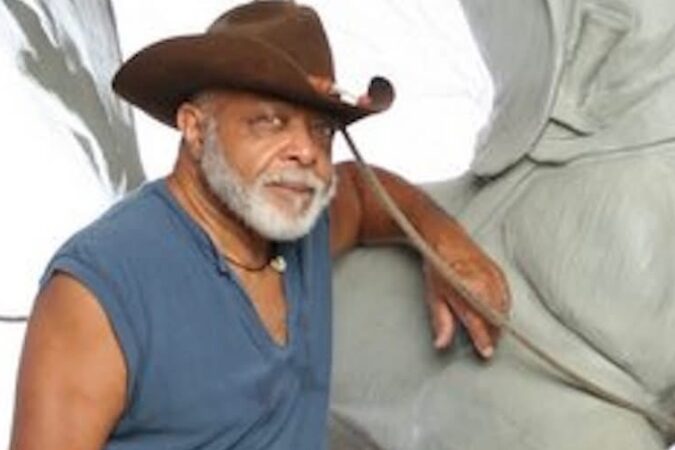
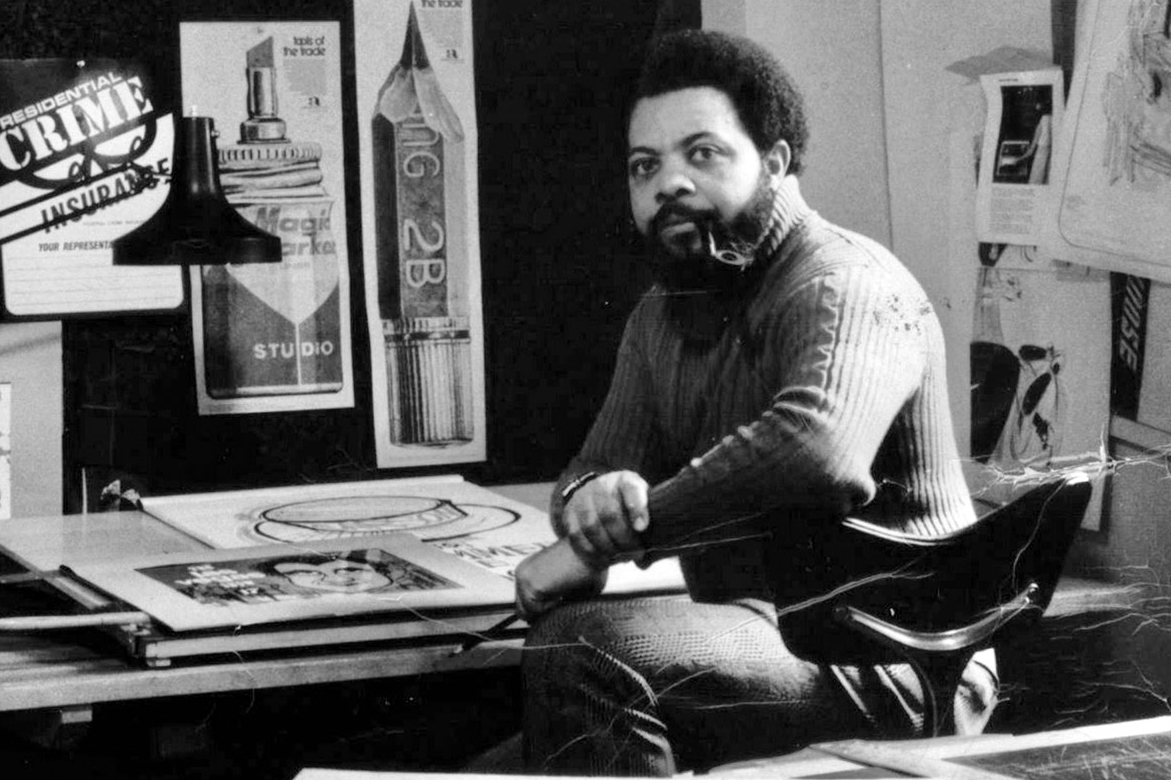
    Phil Sumpter, 95, formerly of Philadelphia, celebrated sculptor, artist, art teacher, TV station art director, veteran, mentor, urban cowboy, and revered raconteur, died Thursday, Jan. 1, of age-associated decline at his home in San Juan, Puerto Rico.

    A graduate of John Bartram High School and the old Philadelphia College of Art, Mr. Sumpter taught art, both its history and application, to middle and high school students in Philadelphia for 27 years. He was an engaging teacher, former students said, and a founding faculty member at the Philadelphia High School for the Creative and Performing Arts in 1978.

    He started teaching in 1955 and, after a break in the 1960s and ’70s, finally retired in 1992. “You are very lucky to have a teacher in your life that believed in you, nurtured you, challenged you, and loved you,” a former student said on Facebook. “Mr. Sumpter did all that and more.”

    Other former students called him their “father” and a “legend.” One said: “You did a lot of good here on earth, especially for a bunch of feral artist teenagers.”

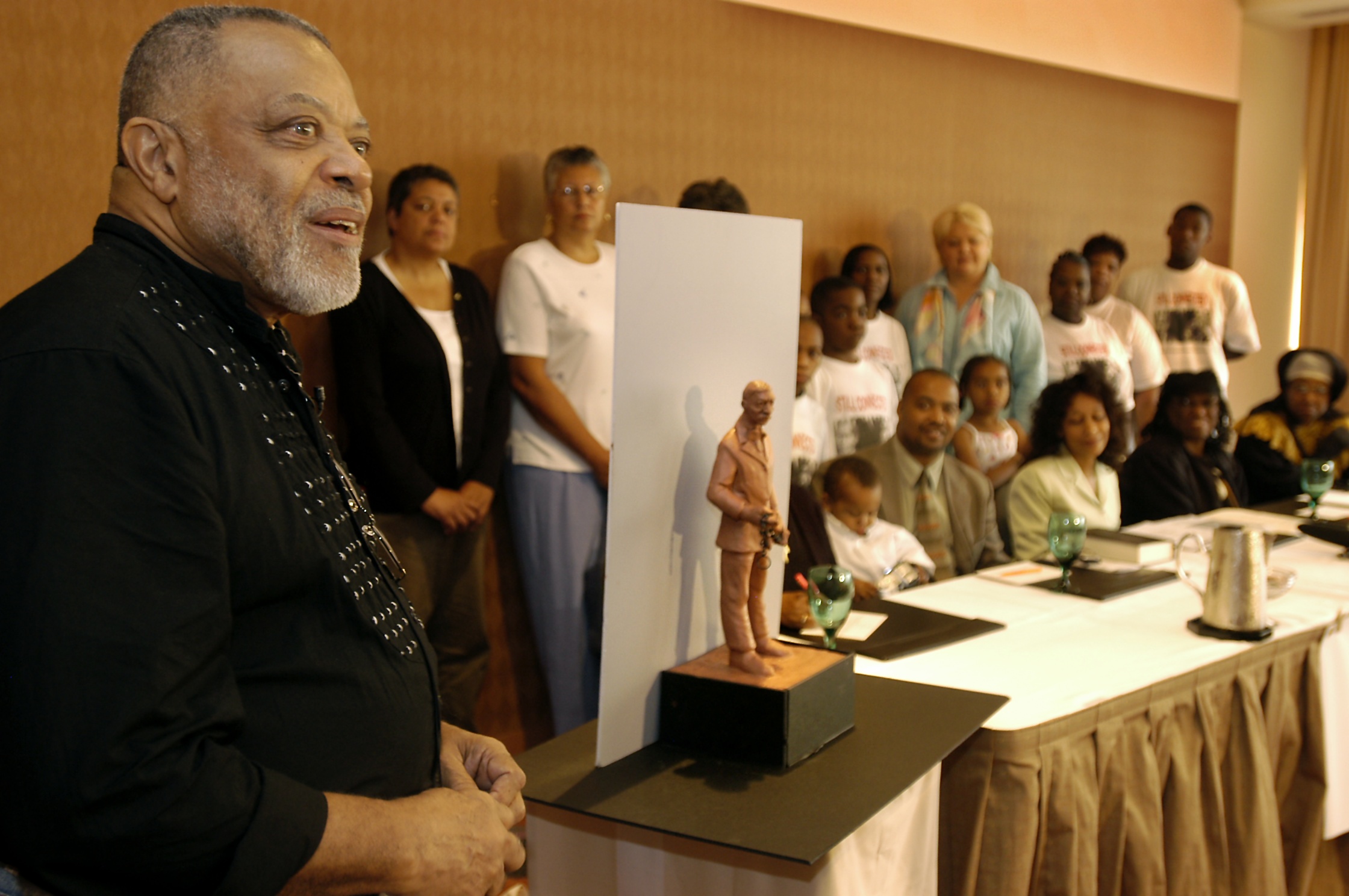
    Mr. Sumpter (left) talks about his sculpture of Underground Railroad organizer William Still in 2003.

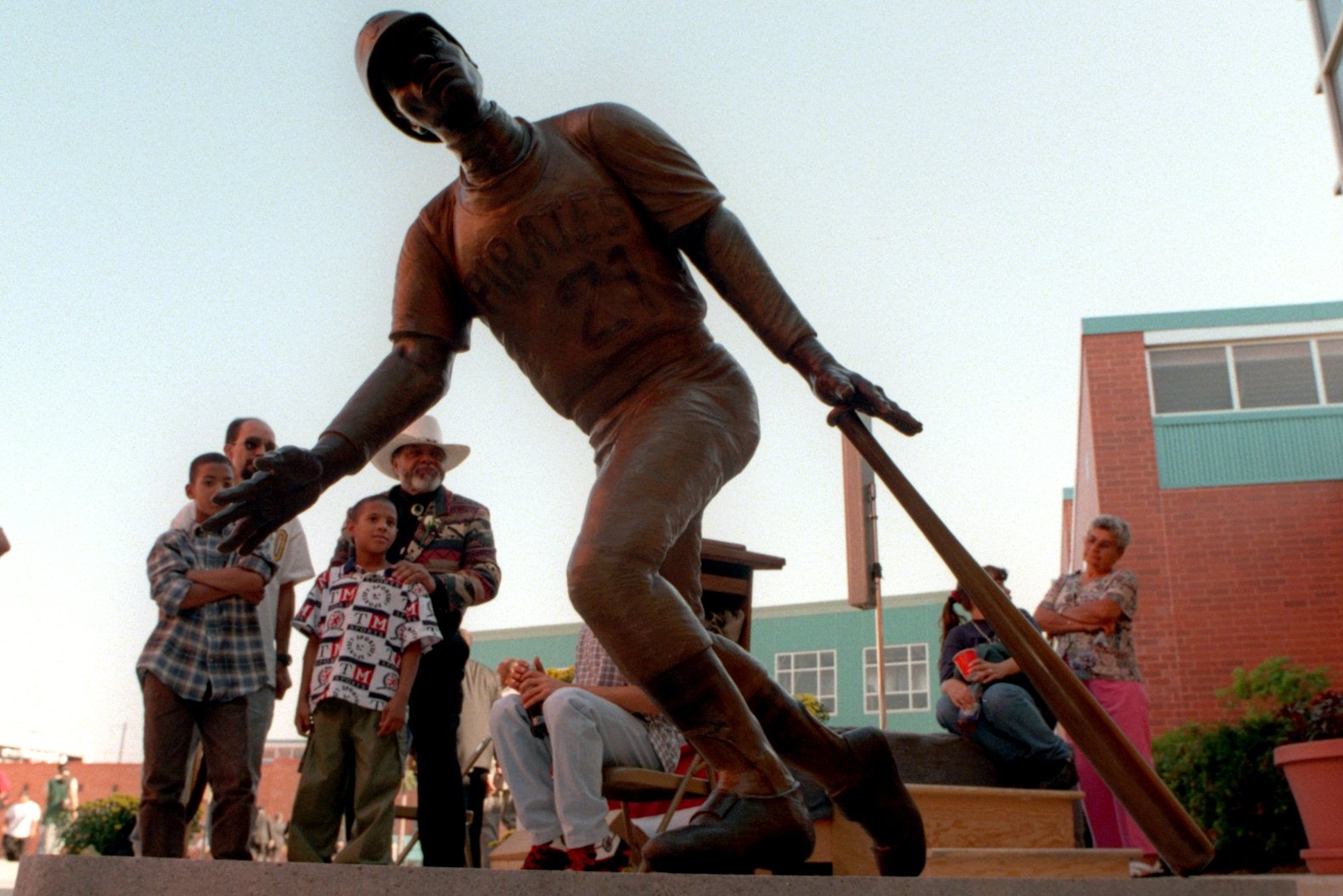
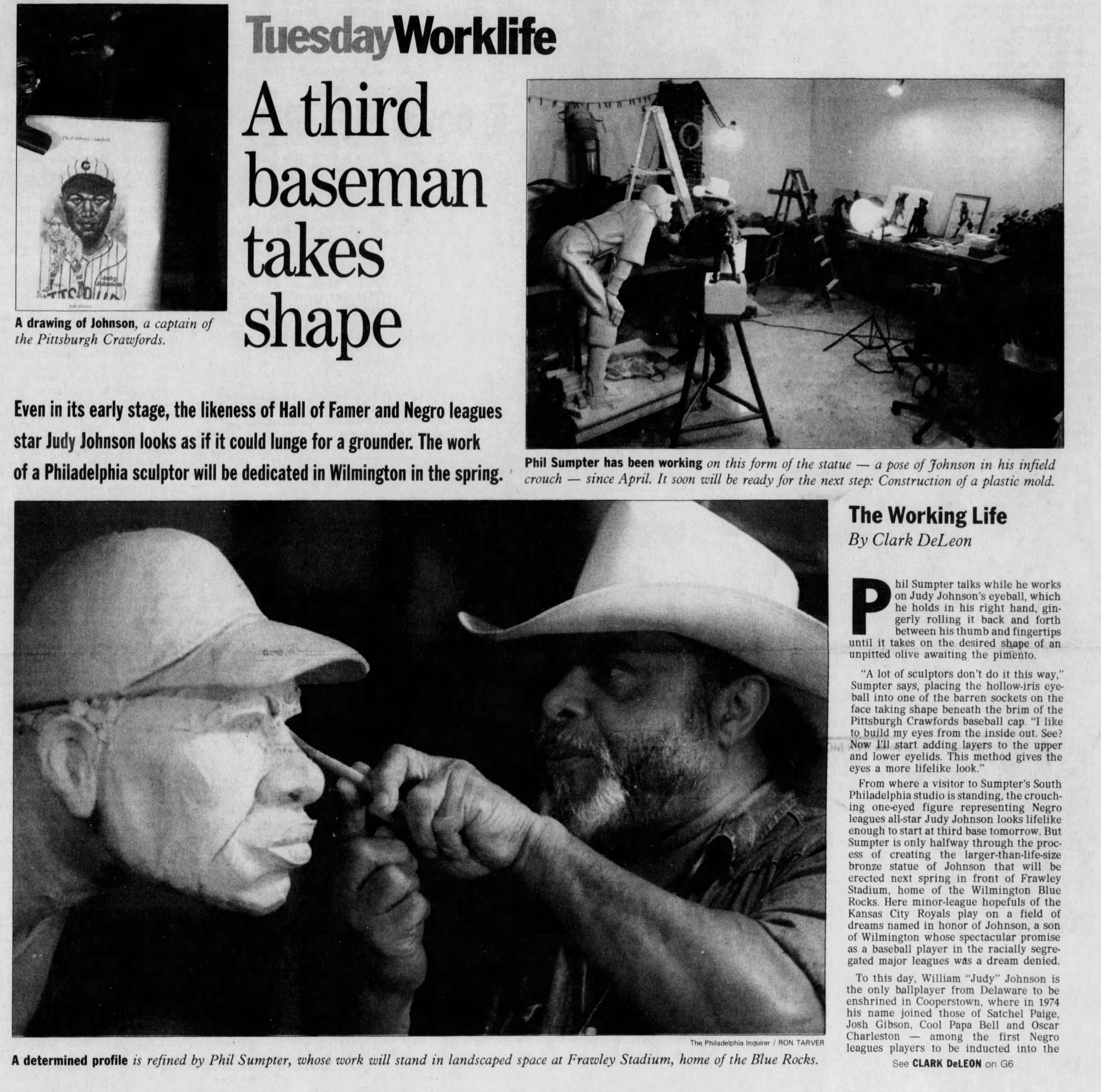
    Outside the classroom, Mr. Sumpter sculpted hundreds of pieces and painted and sketched thousands of pictures in his South Philadelphia stable-turned-studio on Hicks Street. Prominent examples of his dozens of commissions and wide-ranging public art presence include the bas-relief sculpture of Black Revolutionary War soldiers at Valley Forge National Historical Park in Montgomery County, the action statue of baseball star Roberto Clemente in North Philadelphia, the Negro Leagues baseball monument in West Parkside, and the Judy Johnson and Helen Chambers statues in Wilmington.

    He worked often in clay and paper, made murals, and designed commemorative coins and medals. He especially enjoyed illustrating cowboys, pirates, Puerto Rican jibaros, and landscapes.

    His statue of Clemente was unveiled at Roberto Clemente Middle School in 1997, and Mr. Sumpter told The Inquirer: “I think I’ve captured a heroic image, an action figure depicting strength plus determination.”

    He was among the most popular contributors to the Off the Wall Gallery at Dirty Franks bar, and his many exhibitions drew crowds and parties at the Bacchanal Gallery, the Free Library of Philadelphia, the Plastic Club, and elsewhere in the region and Puerto Rico. He hung out with other notable artists and community leaders, and collaborated on projects with his son, Philip III, and daughter, Elisabeth.

    Mr. Sumpter worked often in clay and paper, made murals, and designed commemorative coins and medals.

    He even marketed a homemade barbecue sauce with his wife, Carmen. His family said: “He is remembered for mentorship, cultural fluency, and presence as much as for material works.”

    He founded Phil Sumpter Design Associates in the 1960s and worked on design and branding projects for a decade with institutions, educational organizations, and other clients. He was art director for WKBS-TV, WPHL-TV, and the Pyramid Club.

    “The word for him,” his son said, “is expansive.”

    Mr. Sumpter was friendly and gregarious. He became enamored with Black cowboys and Western life as a boy and went on to ride horses around town, dress daily in Western wear, and depict Black cowboys from around the world in his art. His viewpoints and exhibits were featured often in The Inquirer, the Philadelphia Tribune, Philadelphia Magazine, Dosage Magazine, and other publications.

    Mr. Sumpter (in white cowboy hat) views his statue of Roberto Clemente in 1997.

    He was an air observer for the Air Force during the Korean War and later, while stationed in England, studied sculpture, ceramics, and drawing at Cambridge Technical Institute. His daughter said: “He taught me how to open the portal to the infinite multiverse of my own imagination, where every mind, every soul can be free.”

    Philip Harold Sumpter Jr. was born March 12, 1930, in Erie. His family moved to segregated West Philadelphia when he was young, and he earned a bachelor’s degree in art education at PCA.

    He married and divorced when he was young, and then married Florence Reasner. They had a son, Philip III, and a daughter, Elisabeth, and lived in Abington. They divorced later, and he moved to Hicks Street in South Philadelphia.

    He met Carmen Guzman in Philadelphia, and they married in 2001 and moved to San Juan for good in 2003. He built a studio at his new home and never really retired from creating.

    Mr. Sumpter (second from left) enjoyed time with his family.

    Mr. Sumpter enjoyed singing, road trips to visit family in Pittsburgh, and bomba dancing in San Juan. He was a creative cook, and what he called his “trail chili” won cook-offs and many admirers.

    “He was a larger-than-life person,” his son said. “He was fearless in his frontier spirit.” His wife said: “His joy for life was contagious, as was his laughter.”

    In addition to his wife, children, and former wife, Mr. Sumpter is survived by other relatives.

    A celebration of his life was held earlier in Puerto Rico. Celebrations in Philadelphia are to be from 2 to 5 p.m. Saturday, March 14, at Dirty Franks, 347 S. 13th St., Philadelphia, Pa. 19107, and from 2:30 to 4:30 p.m. Sunday, March 15, at the Plastic Club, 247 S. Camac St., Philadelphia, Pa. 19107.

    Mr. Sumpter’s work was featured in The Inquirer in 1994.