Category: News

Latest breaking news and updates

  • Chrissy Houlahan and another Pa. Democrat report bomb threats at their district offices

    Chrissy Houlahan and another Pa. Democrat report bomb threats at their district offices

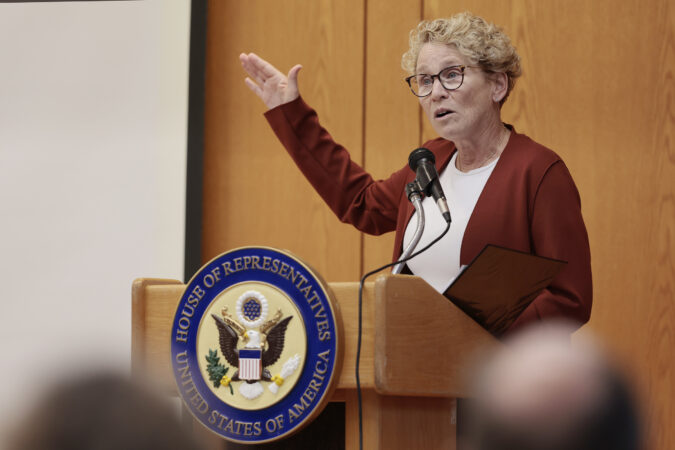
    Spokespersons for U.S. Rep. Chrissy Houlahan, a Chester County Democrat, and Rep. Chris Deluzio, a Western Pennsylvania Democrat, reported that the legislators’ district offices had been targeted with bomb threats on Friday.

    The threats came a day after President Donald Trump accused Houlahan, Deluzio, and four other Democratic lawmakers of sedition “punishable by DEATH” after they were featured in a video urging members of the military and intelligence community to “refuse illegal orders.”

    All six are military veterans or members of the intelligence community.

    Early Friday evening, a spokesperson for Houlahan posted on the representative’s X account that her district office in West Chester was the target of a bomb threat.

    “Thankfully, the staff there as well as the office in Washington, D.C. are safe. We are grateful for our local law enforcement agencies who reacted quickly and are investigating,” the post said.

    A spokesperson for Deluzio posted on X late Friday afternoon that the representative’s district offices were targeted with bomb threats.

    In response to the video, Trump went after the six congressional Democrats in a string of posts on Truth Social Thursday.

    Houlahan lamented at a Friday news conference in Washington that “not a single” Republican in Congress “has reached out to me, either publicly or privately” since Trump’s posts.

  • Zelensky says Ukraine faces a stark choice and risks losing American support over U.S. peace plan

    Zelensky says Ukraine faces a stark choice and risks losing American support over U.S. peace plan

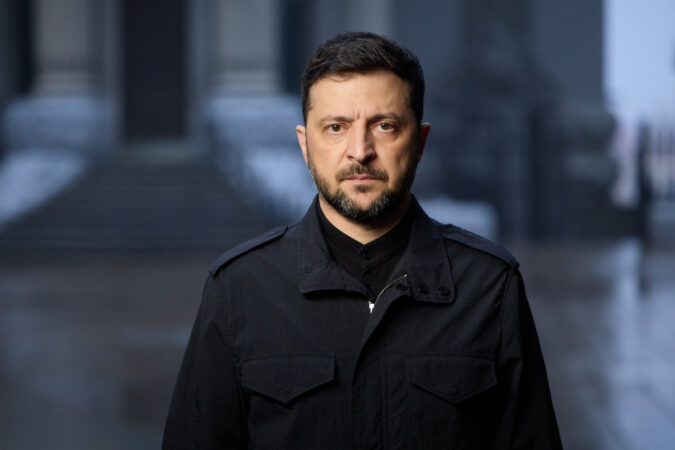
    KYIV, Ukraine — Ukrainian President Volodymyr Zelensky told his country in an address Friday that it could face a pivotal choice between standing up for its sovereign rights and preserving the American support it needs, as leaders discuss a U.S. peace proposal seen as favoring Russia.

    Russian President Vladimir Putin, meanwhile, cautiously welcomed the U.S. plan to end Moscow’s nearly four-year war in Ukraine, which contains many of the Kremlin’s longstanding demands while offering limited security guarantees to Ukraine. Putin said it “could form the basis of a final peace settlement,” while accusing Ukraine of opposing the plan and being unrealistic.

    The plan foresees Ukraine handing over territory to Russia — something Kyiv has repeatedly ruled out — while reducing the size of its army and blocking its coveted path to NATO membership.

    Zelensky, in his address hours earlier, did not reject the plan outright, but insisted on fair treatment while pledging to “work calmly” with Washington and other partners in what he called “truly one of the most difficult moments in our history.” He said he spoke for almost an hour Friday with U.S. Vice President JD Vance and Army Secretary Dan Driscoll about the peace proposal.

    “Currently, the pressure on Ukraine is one of the hardest,” Zelensky said in the recorded speech. “Ukraine may now face a very difficult choice, either losing its dignity or the risk of losing a key partner.”

    Speaking at a meeting of Russia’s National Security Council, Putin called the plan “a new version” and “a modernized plan” of what was discussed with the U.S. ahead of his Alaska summit with President Donald Trump in August, and said Moscow has received it. “I believe that it, too, could form the basis for a final peace settlement,” he said.

    But he said the “text has not been discussed with us in any substantive way, and I can guess why,” adding that Washington has so far been unable to gain Ukraine’s consent. “Ukraine is against it. Apparently, Ukraine and its European allies are still under illusions and dream of inflicting a strategic defeat on Russia on the battlefield,” Putin said.

    Trump says he wants Ukraine to respond within a week

    Trump said Zelensky is going to have to come to terms with the U.S. proposal, and if he doesn’t, “they should just keep fighting, I guess.”

    Asked by reporters about Zelensky saying his country faces a difficult choice, Trump alluded to their tense meeting in February that led to a brief rupture in the U.S.-Ukraine relationship: “You remember right in the Oval Office not so long ago? I said you don’t have the cards.”

    Trump in a radio interview earlier Friday said he wants an answer from Zelensky on his 28-point plan by Thursday, but said an extension is possible to finalize terms.

    “I’ve had a lot of deadlines, but if things are working well, you tend to extend the deadlines,” Trump said in an interview on “The Brian Kilmeade Show” on Fox News Radio. “But Thursday is it — we think an appropriate time.”

    While Zelensky has offered to negotiate with the U.S. and Russia, he signaled Ukraine has to confront the possibility of losing American support if it makes a stand.

    He urged Ukrainians to “stop fighting” each other, in a possible reference to a major corruption scandal that has brought fierce criticism of the government, and said peace talks next week “will be very difficult.”

    Europe says it will keep supporting Ukraine

    Zelensky spoke earlier by phone with the leaders of Germany, France and the United Kingdom, who assured him of their continued support, as European officials scrambled to respond to the U.S. proposals that apparently caught them unawares.

    Wary of antagonizing Trump, the European and Ukrainian leaders cautiously worded their responses and pointedly commended American peace efforts.

    German Chancellor Friedrich Merz, French President Emmanuel Macron and British Prime Minister Keir Starmer assured Zelensky of “their unchanged and full support on the way to a lasting and just peace” in Ukraine, Merz’s office said.

    The four leaders welcomed U.S. efforts to end the war. “In particular, they welcomed the commitment to the sovereignty of Ukraine and the readiness to grant Ukraine solid security guarantees,” the statement added.

    The line of contact must be the departure point for an agreement, they said, and “the Ukrainian armed forces must remain in a position to defend the sovereignty of Ukraine effectively.”

    Starmer said the right of Ukraine to “determine its future under its sovereignty is a fundamental principle.”

    Existential threat to Europe

    European countries see their own futures at stake in Ukraine’s fight against the Russian invasion and have insisted on being consulted in peace efforts.

    “Russia’s war against Ukraine is an existential threat to Europe. We all want this war to end. But how it ends matters,” EU foreign policy chief Kaja Kallas said in Brussels. “Russia has no legal right whatsoever to any concessions from the country it invaded. Ultimately, the terms of any agreement are for Ukraine to decide.”

    Trump in his radio interview pushed back against the notion that the settlement, which offers plentiful concessions to Russia, would embolden Putin to carry out further malign action on his European neighbors.

    “He’s not thinking of more war,” Trump said of Putin. ”He’s thinking punishment. Say what you want. I mean, this was supposed to be a one-day war that has been four years now.”

    A European government official said the U.S. plans weren’t officially presented to Ukraine’s European backers.

    Many of the proposals are “quite concerning,” the official said, adding that a bad deal for Ukraine would also be a threat to broader European security.

    The official was not authorized to discuss the plan publicly and spoke to The Associated Press on condition of anonymity.

    European Council President Antonio Costa, in Johannesburg, said of the U.S. proposals, “The European Union has not been communicated any plans in (an) official manner.”

    Proposal meets with skepticism in the U.S. Senate

    “This so-called ‘peace plan’ has real problems, and I am highly skeptical it will achieve peace,” said Sen. Roger Wicker, the Republican chair of the Senate Armed Services Committee. “Ukraine should not be forced to give up its lands to one of the world’s most flagrant war criminals in Vladimir Putin.”

    Wicker added that Ukraine should be allowed to determine the size of its military and Putin should not be rewarded with assurances from the U.S.

    Democratic Sen. Chris Coons, who serves on the Senate Foreign Relations Committee, said there’s “general concern and alarm that this is a Russian wish list proposal.”

    Ukraine examines the proposals

    Ukrainian officials said they were weighing the U.S. proposals, and Zelensky said he expected to talk to Trump about it in coming days.

    A U.S. team began drawing up the plan soon after U.S. special envoy Steve Witkoff held talks with Rustem Umerov, a top adviser to Zelensky, according to a senior Trump administration official who was not authorized to comment publicly and spoke on the condition of anonymity.

    The official added that Umerov agreed to most of the plan, after making several modifications, and then presented it to Zelensky.

    However, Umerov on Friday denied that version of events. He said he only organized meetings and prepared the talks.

    He said technical talks between the U.S. and Ukraine were continuing in Kyiv.

    “We are thoughtfully processing the partners’ proposals within the framework of Ukraine’s unchanging principles — sovereignty, people’s security, and a just peace,” he said.
  • Trump and Mamdani go from adversaries to allies after White House meeting

    Trump and Mamdani go from adversaries to allies after White House meeting

    WASHINGTON — President Donald Trump on Friday met the man who had proudly proclaimed himself “Donald Trump’s worst nightmare,” but he seemed to find the opposite.

    The Republican president and New York City’s Mayor-elect Zohran Mamdani were warm and friendly, speaking repeatedly of their shared goals to help Trump’s hometown rather than their combustible differences.

    Trump, who had in the past called Mamdani a “100% Communist Lunatic” and a “total nut job,” spoke openly of how impressed he was with the man who had called his administration “authoritarian.”

    “I think he is going to surprise some conservative people, actually,” Trump said of the democratic socialist as Mamdani stood next to him in the Oval Office.

    The meeting offered political opportunities for both men. For Mamdani, a sit-down offered the state lawmaker — who until recently was relatively unknown — the chance to go head-to-head with the most powerful person in the world.

    For Trump, it was a high-profile chance to talk about affordability at a time when he’s under increasing political pressure to show he’s addressing voter concerns about the cost of living.

    Until now, the men have been political foils who galvanized their supporters by taking on each other, and it’s unclear how those backers will react to their genial get-together and complimentary words.

    “We’re going to be helping him, to make everybody’s dream come true, having a strong and very safe New York,” the president said.

    “What I really appreciate about the president is that the meeting that we had focused not on places of disagreement, which there are many, and also focused on the shared purpose that we have in serving New Yorkers,” Mamdani said.

    ‘I’ll stick up for you’

    Mamdani and Trump said they discussed housing affordability and the cost of groceries and utilities, as Mamdani successfully used frustration over inflation to get elected, just as the president did in the 2024 election.

    “Some of his ideas are really the same ideas that I have,” the president said of Mamdani about inflationary issues.

    The president brushed aside Mamdani’s criticisms of him over his administration’s deportation raids and claims that Trump was behaving like a despot. Instead, Trump said the responsibility of holding an executive position in the government causes a person to change, saying that had been the case for him.

    He seemed at times even protective of Mamdani, jumping in on his behalf at several points. For example, when reporters asked Mamdani to clarify his past statements indicating that he thought the president was acting like a fascist, Trump said, “I’ve been called much worse than a despot.”

    When a reporter asked if Mamdani stood by his comments that Trump is a fascist, Trump interjected before the mayor-elect could fully answer the question.

    “That’s OK. You can just say yes. OK?” Trump said. “It’s easier. It’s easier than explaining it. I don’t mind.”

    Trump stepped in again when a reporter asked Mamdani why he flew to Washington instead of taking transportation that used less fossil fuels.

    “I’ll stick up for you,” Trump said.

    All about affordability

    Mamdani, who takes office in January, said he sought the meeting with Trump to talk about ways to make New York City more affordable. Trump has said he may want to help him out — although he has also falsely labeled Mamdani as a “communist” and threatened to yank federal funds from the city.

    But Trump on Friday didn’t sling that at the mayor. He acknowledged that he had said he had been prepared to cut off funding or make it harder for New York City to access federal resources if the two had failed to “get along,” only to pull back from those threats during the meeting.

    “We don’t want that to happen,” Trump said. ”I don’t think that’s going to happen.”

    Afterward, Mamdani’s former campaign manager and incoming chief of staff Elle Bisgaard-Church told NY1 that the pair clearly disagreed on some issues but were able to find common ground on things like reducing crime.

    “We discussed that we share a mutual goal of having a safe city where everyone can move around in comfort and ease,” she said, before later adding, “We know that there have been labels thrown all around that are just simply not fair and we kept it, again, at where we could find agreement on making the city affordable.”

    Trump loomed large over the mayoral race this year, and on the eve of the election, he endorsed independent candidate and former Democratic Gov. Andrew Cuomo, predicting the city has “ZERO chance of success, or even survival” if Mamdani won. He also questioned the citizenship of Mamdani, who was born in Uganda and became a naturalized American citizen after graduating from college, and said he’d have him arrested if he followed through on threats not to cooperate with immigration agents in the city.

    Mamdani beat back a challenge from Cuomo, painting him as a “puppet” for the president, and promised to be “a mayor who can stand up to Donald Trump and actually deliver.” He declared during one primary debate, “I am Donald Trump’s worst nightmare, as a progressive Muslim immigrant who actually fights for the things that I believe in.”

    The president, who has long used political opponents to fire up his backers, predicted Mamdani “will prove to be one of the best things to ever happen to our great Republican Party.” As Mamdani upended the Democratic establishment by defeating Cuomo and his far-left progressive policies provoked infighting, Trump repeatedly has cast Mamdani as the face of Democratic Party.

    Some had expected fireworks in the Oval Office meeting

    The president has had some dramatic public Oval Office faceoffs this year, including an infamously heated exchange with Ukrainian President Volodymyr Zelenskyy in March. In May, Trump dimmed the lights while meeting with South African President Cyril Ramaphosa and played a four-minute video making widely rejected claims that South Africa is violently persecuting the country’s white Afrikaner minority farmers.

    A senior Trump administration official who spoke on condition of anonymity to describe internal discussions said Trump had not put a lot of thought into planning the meeting with the incoming mayor — but said Trump’s threats to block federal dollars from flowing to New York remained on the table.

    Mamdani said Thursday that he was not concerned about the president potentially trying to use the meeting to publicly embarrass him and said he saw it as a chance to make his case, even while acknowledging “many disagreements with the president.”

    Instead, both men avoided a public confrontation in a remarkably calm and cordial series of comments in front of news reporters.

    Mamdani, who lives in Queens — where Trump was raised — has shown a cutthroat streak just as Trump has as a candidate. During his campaign, he appeared to borrow from Trump’s playbook when he noted during a televised debate with Cuomo that one of the women who had accused the former governor of sexual harassment was in the audience. Cuomo has denied wrongdoing.

    But the tensions were subdued Friday as Trump seemed sympathetic to Mamdani’s policies to want to build more housing.

    “People would be shocked, but I want to see the same thing,” the president said.

  • Art Museum’s former HR, DEI director charged with theft after police said she put $58k in personal expenses on company card

    Art Museum’s former HR, DEI director charged with theft after police said she put $58k in personal expenses on company card

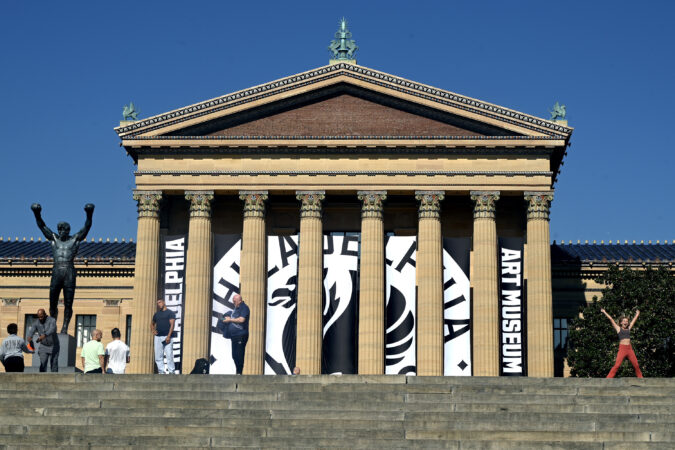
    The former head of human resources and diversity initiatives for the Philadelphia Art Museum was charged with theft earlier this year. The police said she racked up more than $58,000 in personal expenses on a company credit card, then failed to pay back the funds, court records show.

    Latasha Harling, 43, was arrested in July and charged with theft by unlawful taking, theft by deception, and related crimes about six months after she quietly resigned from her job as the chief people and diversity officer for the museum.

    The charges against Harling — which had not previously been reported or made public by the museum — are the latest chapter in a six-week stretch of turbulence for the prominent institution, and raise new questions about the financial oversight and controls of its senior executives.

    On Nov. 4, the museum fired its director and CEO, Sasha Suda, after an investigation by an outside law firm flagged the handling of her compensation. Suda filed a lawsuit on Nov. 10 against her former employer claiming that she was the victim of a “small cabal” from the board that commissioned a “sham investigation” as a “pretext” for her “unlawful dismissal.”

    The Art Museum on Thursday responded to the lawsuit in Philadelphia Court of Common Pleas with a petition saying Suda was dismissed after an investigation determined that she “misappropriated funds from the museum and lied to cover up her theft.” Her lawyer, Luke Nikas of Quinn Emanuel Urquhart & Sullivan, called the museum’s accusations false.

    “These are the same recycled allegations from the sham investigation that the museum manufactured as a pretext for Suda’s wrongful termination,” he said.

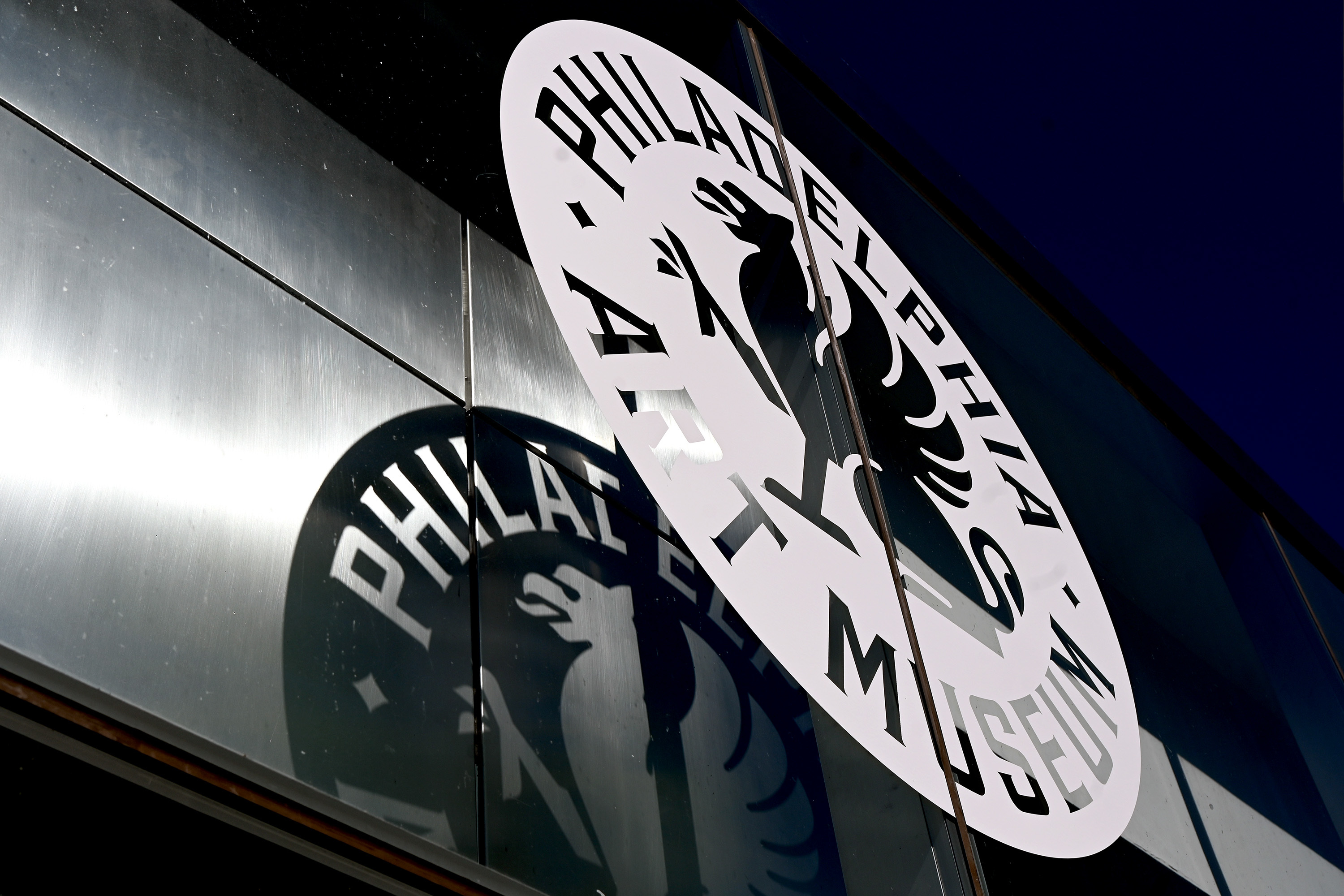
    A sign shows the recent rebranding of the Philadelphia Art Museum.

    Harling declined to comment on the charges filed against her Friday, as did her lawyers at the Defender Association. A spokesperson for the Philadelphia Art Museum also declined to comment on the matter.

    Harling was hired by the museum as a senior member of its executive staff in November 2023, according to her LinkedIn profile. In that role, she oversaw human resources for the museum, implemented policies to promote diversity, equity, and inclusion, and managed budgetary responsibilities, among other duties, per her profile.

    As part of her job, Harling had access to a corporate credit card for business-related expenses, according to the affidavit of probable cause for her arrest.

    In January 2025, museum staff noticed that Harling’s December credit card statement contained “several large, and apparently personal expenses,” the affidavit said.

    The museum’s chief financial officer conducted an audit and found that, over the course of Harling’s tenure, she charged $58,885.98 in personal expenses to the company’s credit card, the document said. She had not filed an expense report since July 2024, according to the affidavit.

    Museum officials confronted Harling about the charges in January, the filing said, and proposed that she repay $32,565.42. She resigned from her role soon after “without resolution,” according to the affidavit.

    The museum continued to negotiate with Harling, and in February, she signed a promissory note agreeing to pay back $19,380.21 over the course of three months that spring, the record said.

    But in April, per the filing, a lawyer for the museum contacted the police to say that two months had passed and Harling had not repaid any of the funds. They said that, according to their agreement, she should have paid back about $13,000 by then.

    After the museum provided investigators with copies of their emails with Harling, her expenses, and its travel and expense policy, prosecutors agreed to charge her with theft.

    The case remains ongoing in Philadelphia’s criminal court.

    Staff writer Jillian Kramer contributed to this article.

  • Jury issues bring unease to trial of men accused of killing Philly officer Richard Mendez

    Jury issues bring unease to trial of men accused of killing Philly officer Richard Mendez

    As jury deliberations stretched through a third day, a conclusion in the trial of two men accused of killing Philadelphia Police Officer Richard Mendez was delayed Friday after a juror had to be replaced.

    It was the second time a juror was removed.

    The issues brought unease to a courtroom full of Mendez’s family, friends, and law enforcement colleagues who had gathered during the nearly two-week-long trial with hopes of justice for Mendez, who was shot and killed at the airport in October 2023 while interrupting an attempted car theft.

    Yobranny Martinez-Fernandez, 20, and Hendrick Pena-Fernandez, 23, face life in prison without parole if they are convicted of first- and second-degree murder, respectively, in addition to attempted murder, robbery and a slew of related charges.

    Last week a jury sat through prosecutors’ presentation of evidence, which included recovered DNA and cell phone tower data as well as testimony from a man who participated in the theft and identified his former accomplices before a crowded courtroom.

    Defense attorneys did not put any witnesses on the stand, rebuffing prosecutors during opening and closing arguments.

    But on Wednesday, about an hour after Common Pleas Judge Giovanni O. Campbell sent the jury to deliberate, confusion began to seep into the trial.

    A juror suffered a medical emergency and was removed from court on a stretcher. Campbell ordered that he be replaced by an alternate juror and that deliberations begin anew.

    On Thursday, jurors came back to the judge with a handful of questions, asking to see copies of DNA evidence, photographs from the scene, and the outfits Mendez and his partner wore that evening.

    They also wanted to see the letters exchanged between prosecutors and their star witness, who had pleaded guilty to a lesser murder charge days before the trial got underway.

    As the day wore on, Campbell brought jurors back into the courtroom. There would be no verdict, however.

    For unknown reasons, the judge instead suggested that the jury operate with “courtesy and respect,” and that they approach deliberations with an “open mind.”

    “We recognize it’s not easy,” Campbell said of the process.

    Deliberations resumed Friday morning; courtroom observers would not see the jury until Campbell called them back into court around 4 p.m.

    Campbell, without citing a reason, said a second juror had been removed. He told the court “it had nothing to do with her views on the case.”

    And again, the jury was told to restart deliberations from the beginning.

    Campbell dismissed the jury at 5:40 p.m. and told them to return on Monday.

  • Trolley tunnel to remain closed until at least Nov. 30

    Trolley tunnel to remain closed until at least Nov. 30

    SEPTA is extending its trolley tunnel closure through at least Nov. 30, hoping to use the extra time over the Thanksgiving holiday to complete repairs to the overhead catenary power system.

    The tunnel has been shut down for most of the last two weeks as crews work on the problem.

    Riders should use the Market-Frankford El to travel through Center City, catching the trolleys at 40th and Market Streets.

    “My wife, daughter and I are totally dependent on the trolley to get us to work and school, and with a prolonged trolley-tunnel diversion, the system has become unreliable and, frankly, unusable,” Will Tung, a Southwest Philly resident, told the SEPTA board during public comments at its Thursday meeting.

    Trolley ridership is typically lower during the week of the Thanksgiving holiday so the closure should be less of a disruption, spokesperson Andrew Busch said.

    SEPTA is contending with glitches in the connection between the overhead catenary wires in the tunnel and the pole that conducts electricity to the vehicle.

    The issue led to two trolleys becoming stranded in October, with a total of 415 passengers needing to be evacuated.

  • No, it’s not going to snow on Thanksgiving in Philly, but a taste of winter is coming

    No, it’s not going to snow on Thanksgiving in Philly, but a taste of winter is coming

    The snow rumors notwithstanding, the Philadelphia region and most of the rest of the Northeast can pretty well rule out a white Thanksgiving, nor will Black Friday turn white.

    However, the upper atmosphere evidently is in a state of upheaval with a potentially rare event unfolding, and forecasters say something resembling winter may arrive around here before the holiday weekend ends.

    The National Oceanic and Atmospheric Administration’s Climate Prediction Center has chances favoring below-normal temperatures and above-normal precipitation from Thanksgiving Day through Dec. 1.

    However, the meteorologists who have grappled with longer-range outlooks are cautioning against taking social media snow forecasting too seriously.

    “The observed snowfall is inversely proportional to the hype,” said Judah Cohen, research scientist with the Massachusetts Institute of Technology. He is among those who have noticed the snow mentions that have popped up on X accounts and popular websites.

    The next week should generally be uneventful save for rain Tuesday night possibly into getaway Wednesday, when highs are forecast to reach the 60s.

    Then a developing pattern change is predicted to import colder air into the Northeast. “I do believe it will get colder as the Thanksgiving week wears on,” said Bob Larson, senior meteorologist with AccuWeather Inc.

    A rare event may chill December

    What has the attention of Cohen and others in the meteorological world is the potential for a “major” stratospheric warming event in the upper atmosphere over the Arctic sometime in the next several days, a disruption that could allow significant cold air to pour into the United States.

    Major events have occurred on average about six times a decade, according to NOAA researchers; however, having one so early would be a rarity.

    If one occurred, it would be only the second time in records dating to the early 1950s that it has happened this early, said NOAA meteorologist Laura M. Ciasto.

    While computer models have been debating over just what is going to happen, Cohen, chief of seasonal forecasting for the Janus Research Group, said that such an early date has given him pause about forecasting it will happen.

    What causes a stratospheric warming event?

    On occasion, upward-moving waves from the troposphere, 5 to 9 miles over the Arctic, crash into the stratosphere, 10 to 30 miles up. That has the effect of compromising the polar vortex, the west-to-east winds that lock cold air in the places where the sun disappears for the winter, Ciasto said.

    When the winds slacken, the vortex can weaken and allow frigid air to spill southward. In some cases it might “stretch,” or split into pieces that deliver cold air to regions of the Northern Hemisphere.

    A major disruption would have longer-lasting impacts, Cohen said.

    The European forecast model has consistently predicted a major event, Ciasto said, while the U.S. model has not been as impressed.

    What is likely to happen if the warming event occurs?

    A major warming in January 2021, when temperatures in the stratosphere suddenly jumped 65 degrees Fahrenheit, resulted in quite a snowy February in the Philadelphia region.

    After a warming event, “there’s a greater chance that the jet stream will become more disrupted and dip down” over the continuous United States, Ciasto said, “bringing cold air with it.”

    As for timing, the effects may show up anywhere from two to several weeks after the event.

    In the meantime, she noted that “several other factors,” including patterns over the North Pacific, favor a chilling for the Northeast.

    Don’t be surprised to see snow appear in an actual forecast, but not necessarily on the ground.

  • Cherry Hill’s Activate Gaming transforms childhood games into immersive arenas

    Cherry Hill’s Activate Gaming transforms childhood games into immersive arenas

    Cherry Hill is home to a new gaming space that takes childhood playground games and drops them into padded LED-laden arenas.

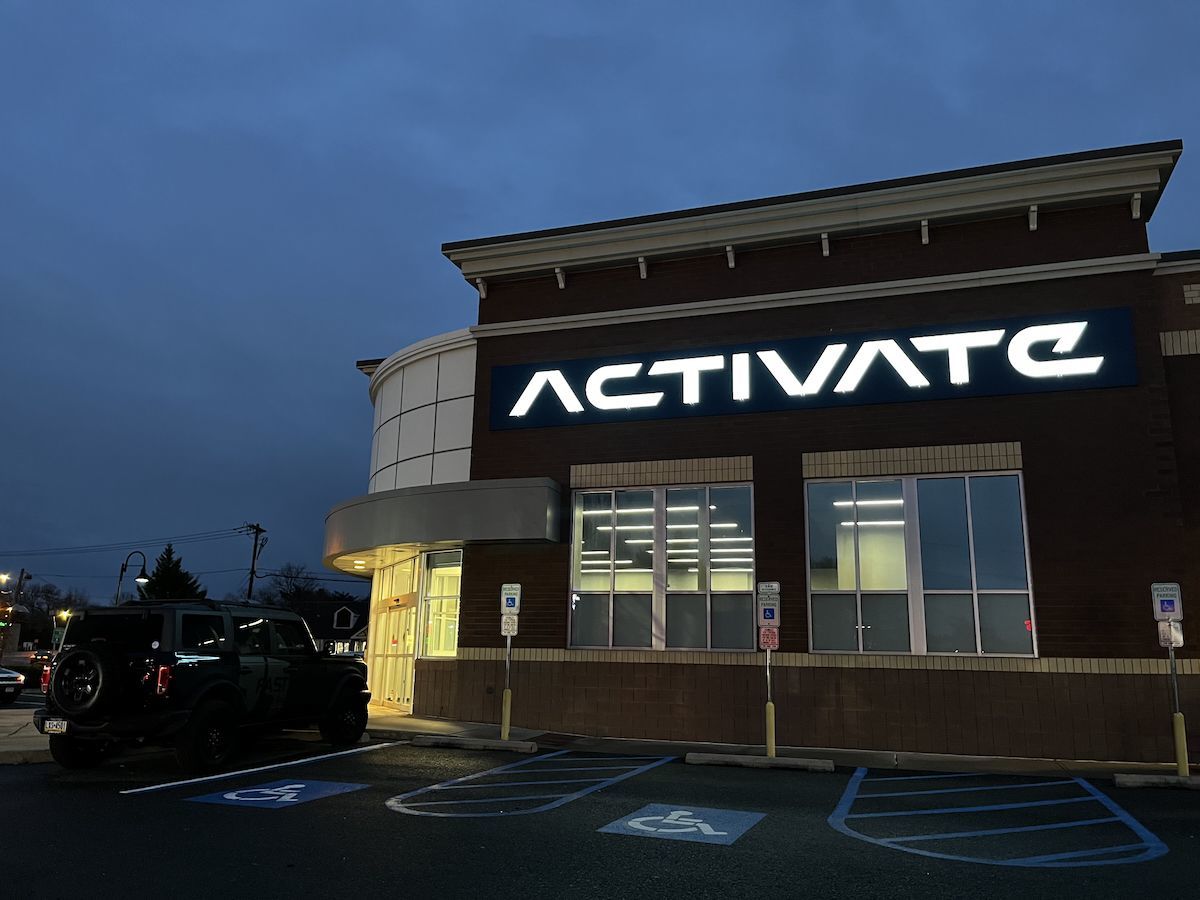
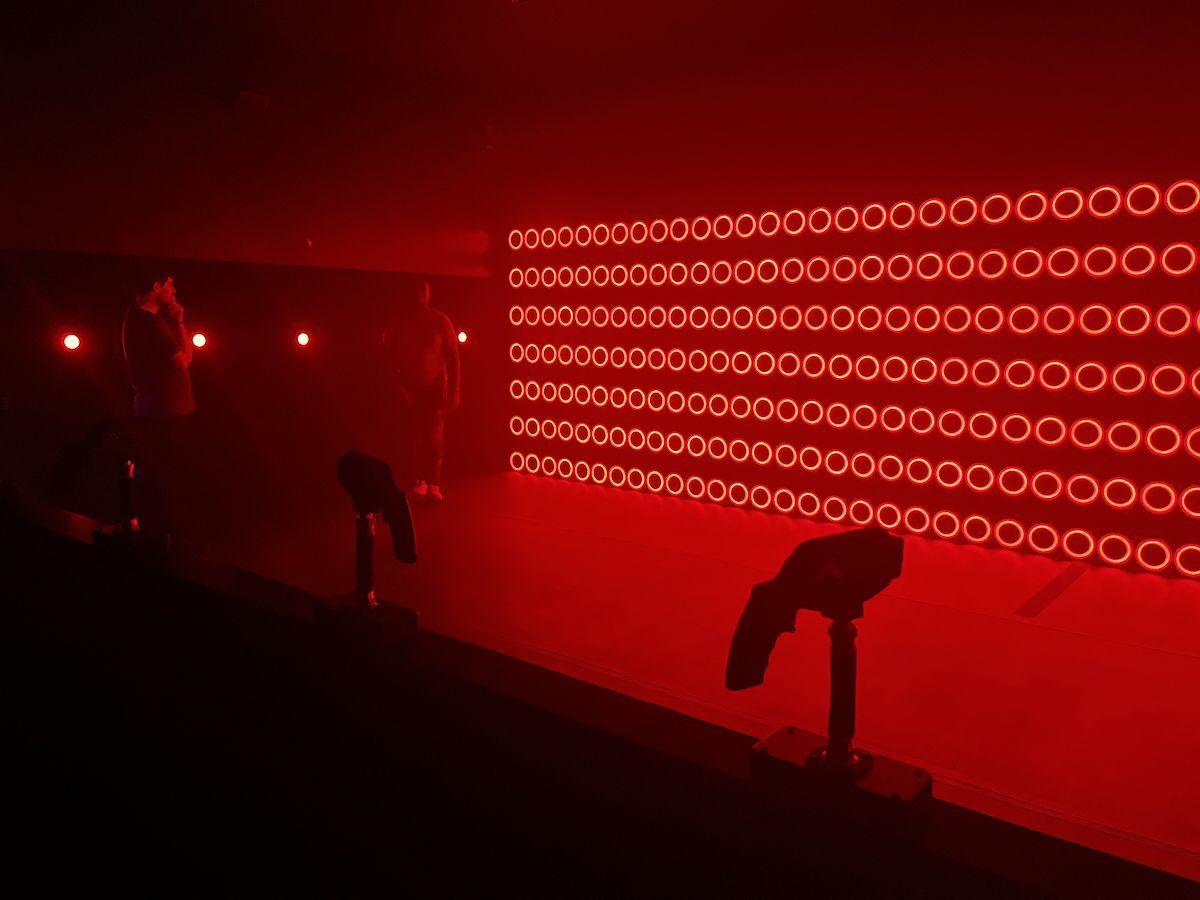
    Activate Gaming is a 14,000-square-foot immersive gaming complex opening Nov. 21, where groups can tackle Mission Impossible-esque laser gauntlets and scatter from giant digital eyes in an amped-up game of hide-and-seek (Squid Game, anyone?).

    Staffers (from left) Jason Shacket, Justin Dyaz, Christina Schmidbauer, and Robert Cole, prepare for the laser light gauntlet inside Active Gaming in Cherry Hill, N.J., on Tuesday, Nov. 18, 2025.

    “We don’t have an age bracket or a specific demographic,” general manager Tahai Exum said. “We want to encourage everyone to come, where a lot of this is just the childhood games that we used to play out in the cul-de-sac or in our backyards with our friends after school.”

    Activate will be transforming the site of a former Rite Aid, a wider trend among landlords to revitalize dormant spaces. As longtime tenants of large retail spaces start to leave these facilities, a new crop of immersive retail experiences is taking them over, including a massive entertainment center in the Moorestown Mall, Cherry Hill Mall getting a Dick’s House of Sport, and Center City’s Fashion District considering experiential retail offerings after the success of Puttshack and F1 Arcade nearby.

    Activate Gaming, located at the site of a former Rite Aid, at 1509 Route 38 in Cherry Hill, pictured on Tuesday, Nov. 18, 2025.

    What is Activate Gaming?

    Walking into the complex, about a mile down the road from the Cherry Hill Mall, players are equipped with a wristband that activates the game rooms and tracks their scores. Rack up enough points and rewards like Croc accessories, portable speakers, and exclusive apparel are up for grabs.

    Players are ushered into a sprawling, cushion-floored hall with 13 stalls of different games of their choosing. Each round of a game is one to three minutes long, which allows a fresh set of new players to get in.

    From there, players can choose to get back in line and scan their wristband for another round, or try the other games on offer. Think of an arcade with loads of games, but instead of playing with a controller, players are part of the game themselves.

    Shooting hoops, playing hide-and-seek, and the all-time childhood classic “the floor is lava” are heightened in these rooms with interactive prompts, trivia, and thumping techno music.

    For instance, Activate trades the couch cushions and ottomans from traditional “floor is lava” for an LED tile-lined floor that illuminates squares for players to take refuge on. With each new round, players race to the next pressure-triggered tile to win.

    Basketball gets turned into a trivia game where contestants are prompted with questions like “Where is the most densely populated island found?” and shoot a basketball into the correctly labeled hoop. This time the answer is “Haiti,” Exum said, referring to the Haitian island of Ilet a Brouee.

    Players prepare for a race through the laser light gauntlet at Activate Gaming in Cherry Hill on Nov. 18, 2025. The immersive gaming space opens at the end of November.

    In the laser gauntlet room, staffers Robert Cole from Philadelphia and Justyn Diaz from Pennsauken roll like ninjas below the lasers as a smoke machine wafts clouds throughout the room to illuminate the lasers into view. The staffers — even Cole, who previously worked at Dave & Buster’s — have never had employee training like this before.

    The games that guests play are the same ones staffers play every week.

    “I don’t know anywhere you can go and get paid to play games,” Exum said. “Our staff are playing these games ahead of launch, and when we’re open, to better explain and suggest games to guests, but also to provide feedback on the gaming experience.”

    Before you go to Activate Gaming in Cherry Hill

    Activate Gaming is open to everyone ages 6 and up, and yes, Exum said, adults are encouraged to join the fun. Adults must be present at the gaming facility for the entire gaming session for children ages 6 to 13.

    Pricing starts at $24.99 per person for a 60-minute session and $29.99 for 90-minute sessions on weekdays, or $34.99 per person for 60 minutes and $39.99 for 90 minutes on weekends, which should be booked online in advance. Walk-ins are welcome but are subject to availability as time slots get reserved.

    For birthday parties and group visits, the price drops to $19.99 per person with a minimum of 10 guests.

    The display screen where players choose the various game modes within the laser gauntlet at Activate Gaming in Cherry Hill, N.J., on Tuesday, Nov. 18, 2025.

    There are no limits to how many games you can play in your allotted sessions, so make sure to arrive early so you don’t eat up any valuable gaming time.

    No food or drink is served on the premises, and usually only drinks can be brought inside the lobby or private rooms. But during birthday parties, bringing in party food and birthday cakes can be arranged.

    Cherry Hill’s Activate Gaming is opening on Friday, Nov. 21, with an all-day free gaming event. They are running a limited-time offer of 50% off opening tickets when customers sign up for their newsletter.

    Follow Activate for updates at playactivate.com/new-jersey-cherry-hill or on Instagram and Facebook.

  • What to expect for the Philadelphia Marathon weekend weather forecast

    What to expect for the Philadelphia Marathon weekend weather forecast

    Assuming the sports scientists have it right, the temperatures should be near the performance sweet spots for the runners participating in the Philadelphia Marathon Weekend races on both Saturday and Sunday morning.

    At showtimes, 6:55 a.m., just moments after daybreak, temperatures Saturday are expected to be in the upper 40s to near 50 degrees for the half-marathoners, and in the upper 30s to around 40 for Sunday’s main event.

    Light rain is expected through the early-morning hours Saturday, and forecasters have been on the fence about when it will shut off. Nick Guzzo, a meteorologist at the National Weather Service said Friday afternoon that rain was likely at the start of the race, but that probabilities would drop precipitously once the event was underway.

    AccuWeather Inc. and weather.com were posting about a 50-50 shot that the rain would continue through the morning. The hedging isn’t surprising; timing the onset and end of precipitation has been a longstanding forecast problem.

    Nor would it be surprising for those running the 13.1-mile race to experience conditions different from those logging 26.2 miles the following day, points out Kathleen Titus, the race director and runner who has been involved with the marathon for 20 years.

    This time of year is a busy one for frontal passages, this being a transition period when the atmosphere isn’t quite sure what season it wants to be. The temperature has reached 74 degrees on Nov. 22 (1883), and plunged to 14 (1880), and snowed 4.6 inches on Nov. 22-23, 1989.

    However, nothing momentous is expected this weekend.

    Like the rains, winds are forecast to be light, under 10 mph, from the north on Saturday, and northwest on Sunday, although runners allow that on the course, the wind can be way more capricious than the temperatures.

    Why runners like these temperatures

    Various studies have concluded that temperature is the most important weather variable in runner performance and that the ideal range for marathoning is 39 to 50 degrees Fahrenheit — give or take a few degrees.

    “Your body is always competing between a couple of different things,” said Philip Skiba, sports medicine specialist at Thomas Jefferson University Hospital, who helped train Eliud Kipchoge, the Kenyan who became the world’s first runner to complete a marathon in under two hours.

    During exercise, muscles demand blood to work, while for the body to stay cool, blood has to flow to the skin. If it’s too hot, more blood flows to the skin. When it’s cold, blood is diverted to heat the body’s core.

    With temperates in that 39-to-50 range, the blood flow can more easily serve both the muscles and skin. Said Titus, racers love that temperature range because, “It regulates your body. It just works.”

    Skiba said the temperature ranged from 51 to 55 degrees on the October 2019 day Kipchoge broke the two-hour barrier in a Vienna event that wasn’t held under record-eligible conditions.

    Had the temperatures been lower, Kipchoge could have shaved a few more seconds off his time, Skiba said.

    The wind also is a player in marathons

    While not as dominant as temperature, “wind resistance … is worth a few seconds per mile,” said Skiba, a former triathlete.

    “The more you stay out of the wind, you can save considerable energy,” he said.

    “It’s really important to learn how to draft,” that is, get behind a group running close to your pace and using them for wind-breakers, he said. (Not sure how the wind-breakers feel about that.)

    On the Philly course, the winds can be wild cards, especially on Kelly Drive, Titus said.

    One instant, the wind “hits in your face. Now it’s at my back!”

    Titus said she actually likes running uphill into the wind — and she is believed to be a member of a distinct minority — but agrees that “it is nice to have it at your back when you’re coming into the home stretch. Because it does give you a little boost.”

    The Philly Marathon is holding out hope for a record

    Titus said she is hoping for a record this year, unrelated to race times.

    She encourages people to overdress to stay warm before the running gets underway, and to be liberal about peeling off layers during the race.

    The shed garments are collected and given to the Salvation Army.

    “We’d love to break some record in the clothing donation,” she said.

  • Virginia A. Smith, retired award-winning Inquirer reporter and editor, has died at 75

    Virginia A. Smith, retired award-winning Inquirer reporter and editor, has died at 75

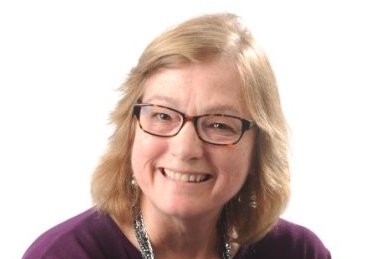
    Virginia A. Smith, 75, of Philadelphia, longtime reporter and editor for The Inquirer, the Philadelphia Bulletin, the Akron Beacon Journal, and other newspapers, mentor and working-mother role model to many, and avid gardener, died Friday, Nov. 14, of interstitial lung disease at Roxborough Memorial Hospital.

    Born in Philadelphia, Ms. Smith joined her hometown Inquirer in 1985 after three years at the Beacon Journal in Ohio, six months at the Bulletin in Philadelphia, and earlier stints at other papers in New York and Connecticut. Until her retirement in 2015, she covered news, health, and gardens as a reporter for The Inquirer, and served as city and Pennsylvania editor.

    In her official Inquirer profile, she described her final assignment as “happily writing — and learning — about gardening full time since 2006.” Her son, Josh Wiegand, said: “She was a curious person and interested in so many different things.”

    Former colleagues praised the depth and variety of her reporting, especially the detailed long-form stories she wrote about Sister Mary Scullion in 1992, the Iraq War in 2004, her own extensive garden in 2006, and the other interesting people and significant events she encountered. “She was open to reporting a story until she was confident she had all of its shadings,” Inquirer investigations editor Daniel Rubin said. “She had a gift for the stories people would talk about.”

    For Ms. Smith, there was no better place than her own garden.

    Ms. Smith was named The Inquirer’s garden writer in 2006, and, of course, wrote detailed previews and reviews of the annual Philadelphia Flower Show. But her favorite stories, she told colleagues, were the hundreds of others about climate change, garden gnomes, community gardens, butterflies, pruning techniques, seed banks, edible weeds, how blind people enjoy gardens, and other topics.

    Her winter holiday story in 2006 was not about poinsettias or Christmas tree farms. Instead, she profiled an author who discovered a treasure trove of old black-and-white photos of gardeners tending plots in prisons, war zones, and concentration camps.

    “It was her idea,” said Joanne McLaughlin, her editor then. “She wanted to write about gardens nurturing the soul under the worst of circumstances, giving hope under the worst of circumstances.”

    She wrote often about her own garden in East Falls and ended one story in 2006 with: “When winter arrives, maybe I’ll settle down. Oh, what are the chances? New years are for confessions, so here’s mine: Come first snow, I’ll be out there shoveling the garden pathways, hoping to sneak another peek.”

    Ms. Smith wrote this two-part series in 2012.

    Her column was called “Garden Scoop,” and she blogged at “Kiss the Earth” on Inquirer.com. She won two achievement awards from what used to be called the National Garden Writers Association and the 2011 Green Exemplar Award from Bartram’s Garden.

    “She understood how important the topic was to this area,” said Reid Tuvim, a longtime editor at The Inquirer.

    As a health reporter in the early 2000s, Ms. Smith wrote about bottled water, flu medicine, Lyme disease, organ donation, mental illness, children’s healthcare, and other issues. In 2004, she wrote a story about the Medical Mission Sisters, a progressive religious order that offered healthcare advice and full-body massages as well as spiritual guidance. In the third paragraph, she said: “But this is no spa. And that woman doing the hands-on — are you kidding me? — is a nun!”

    She covered Scullion’s acceptance speech of the 1992 Philadelphia Award for community service and described it as “fiery and heartfelt, troubling and joyful.” Inquirer staff writer Amy Rosenberg said Ms. Smith “always drilled down to such emotional depths with her subjects. She defined so much of what The Inquirer meant back then.”

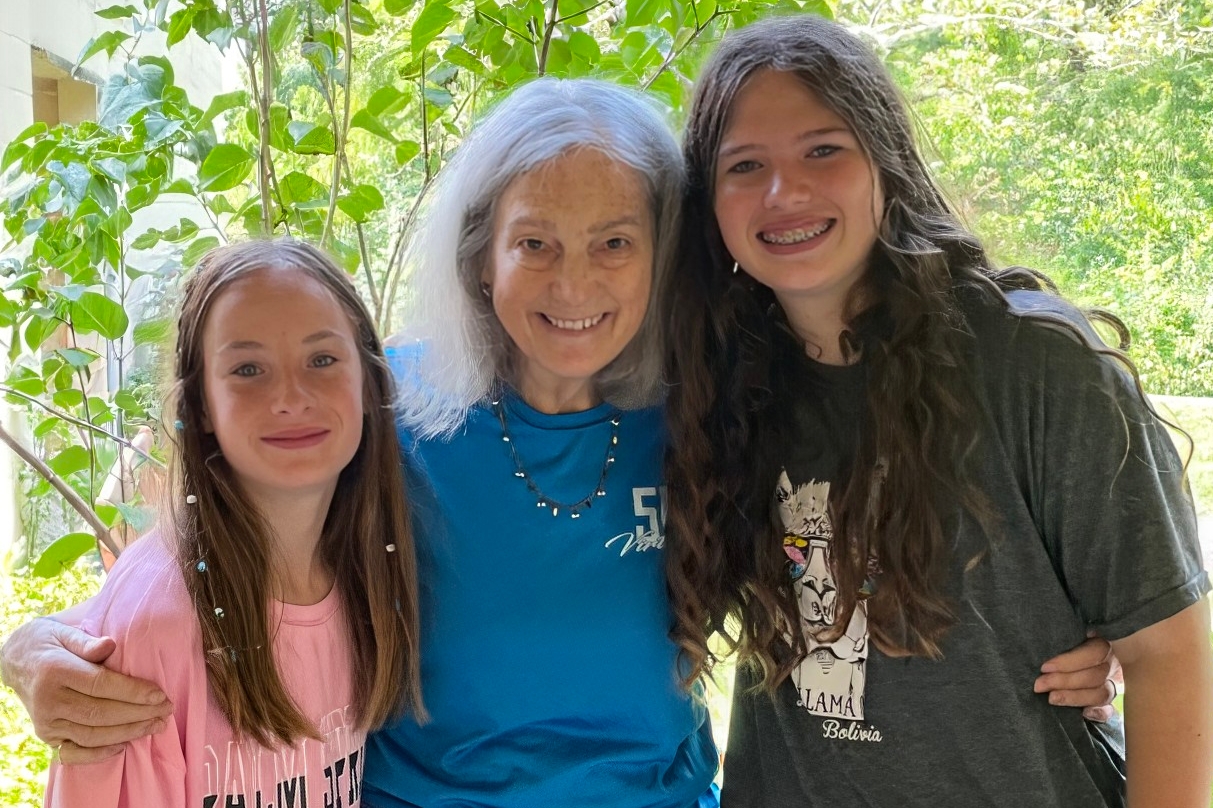
    Ms. Smith doted on her granddaughters.

    She mentored colleagues as she had been mentored and was a role model for fellow working mothers. “I watched her over and over again get up at 5 p.m. and walk out of the newsroom to get her son when he was young,” Rosenberg said. “Never mind what any of the boys in the room thought.”

    Virginia Ann Smith was born Oct. 26, 1950. She graduated from the old Eden Hall high school in Philadelphia and earned a bachelor’s degree in English at Manhattanville University in New York in 1972. In 1981, she earned a master of legal studies degree at Yale University Law School through a Ford Foundation fellowship for journalists.

    She married Alan Wiegand, and they had a son, Josh, and lived in East Falls. After a divorce, she married Randy Smith in 1985. He died in 2020, and she moved to Cathedral Village Retirement Community a few years ago.

    Ms. Smith was a great cook, friends said. They said she was funny, stubborn, and opinionated. She was so into gardens, her son said, that she visited him in Colorado specifically to renovate his garden.

    Ms. Smith poses with her husband, Randy, and her two granddaughters.

    She listened to classical music and danced at blues festivals. Everyone said she made them feel as if she was their best friend.

    “She was one of the most genuine people I’ve ever known,” said friend and former colleague Mari Schaefer. Friend and former colleague Mary Flannery said: “She was so creative and so brave.”

    Her son said: “She was the best. I don’t know how she did it. She wanted to do it all, and she did.”

    In addition to her son and her former husband, Ms. Smith is survived by two granddaughters, two brothers, and other relatives.

    A celebration of her life is to be held later.

    Donations in her name may be made to the Schuylkill Center, 8480 Hagys Mill Rd., Philadelphia, Pa. 19128.

    Ms. Smith tends to her garden’s black-eyed Susans in this photo.