Category: News

Latest breaking news and updates

  • Trump administration takes down a rainbow flag at the Stonewall National Monument

    Trump administration takes down a rainbow flag at the Stonewall National Monument

    NEW YORK — The Trump administration has stopped flying a rainbow flag at the Stonewall National Monument, angering activists who see the change as a symbolic swipe at the country’s first national monument to LGBTQ+ history.

    The multicolored flag, one of the world’s most well known emblems of LGBTQ+ rights, was quietly removed in recent days from a flagpole on the National Park Service-run site, which centers on a tiny park in Manhattan’s Greenwich Village. It’s across the street from the Stonewall Inn, the gay bar where patrons’ rebellion against a police raid helped catalyze the modern LGBTQ+ rights movement.

    The park service said it’s simply complying with recent guidance that clarifies longstanding flag policies and applies them consistently. A Jan. 21 park service memo largely restricts the agency to flying the flags of the United States, the Department of the Interior and the POW/MIA flag.

    LGBTQ+ rights activists including Ann Northrop don’t buy the explanation.

    “It’s just a disgusting slap in the face,” she said by phone Tuesday as advocates planned a rally and some city and state officials vowed to raise the flag again.

    One of them, Manhattan Borough President Brad Hoylman-Sigal, called the removal “petty and vindictive.”

    “On one level, removing a flag seems extremely, I guess, pedestrian. But the symbolism of doing it here at Stonewall is what is so profoundly disappointing and frightening,” said Hoylman-Sigal, a Democrat and the first openly LGBTQ+ person to hold his office.

    A rainbow flag still appears on a city-owned pole just outside the park, and smaller ones wave along its fence. But advocates fought for years to see the banner fly high every day on federal property, and they saw it as an important gesture of recognition when the flag first went up in 2019.

    “That’s why we have those flag-raisings — because we wanted the national sanction to make it a national park,” said Northrop, who co-hosts a weekly cable news program called “GAY USA.” She spoke at a flag-related ceremony at the monument in 2017.

    The flag is the latest point of contention between LGBTQ+ activists and President Donald Trump’s administrations over the Stonewall monument, which Democratic former President Barack Obama created in 2016. Activists were irritated when, during the Republican Trump’s first administration, the park service kept a bureaucratic distance from the raising of the rainbow flag on the city’s pole.

    Then, soon after Trump returned to office last year and declared that his administration would recognize only two genders, the government scrubbed verbal references to transgender people from the park service website for the Stonewall monument.

    The park service didn’t answer specific questions Tuesday about the Stonewall site and the flag policy, including whether any flags had been removed from other parks.

    “Stonewall National Monument continues to preserve and interpret the site’s historic significance through exhibits and programs,” the agency said in a statement.


  • LOVE Park’s saucer could soon get a reboot. For real this time, the city says.

    LOVE Park’s saucer could soon get a reboot. For real this time, the city says.

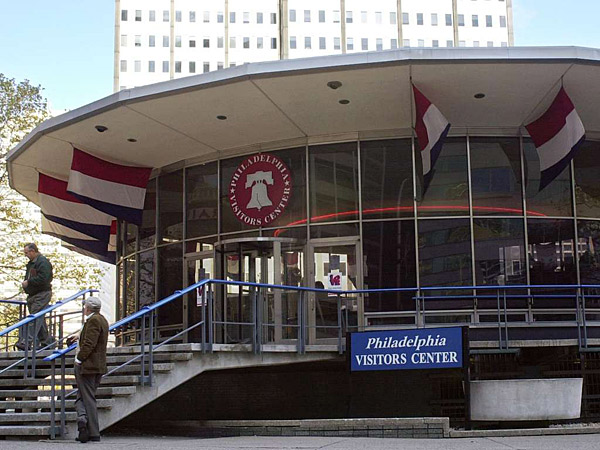
    The saucer in LOVE Park finally has a timeline for its revival.

    After years of seeking ideas from business owners and other Philadelphians, city officials expect work on the historic building to begin in May, the city’s Parks & Recreation Department says.

    But officials are still working to select a partner for the project.

    In May, the city issued a “request for expressions of interest” (RFEI) from “visionary businesses, particularly those in food, beverage, retail, or hospitality,” who wanted to partner on the saucer.

    City officials said the interest exceeded expectations, with more than 50 applicants submitting ideas. They included “coffee and cafe concepts, casual food offerings, beer garden hybrids, and informal meeting spaces,” according to Parks & Recreation spokesperson Ra’Chelle Rogers.

    Among applicants, there was a focus on “flexible, welcoming concepts that function as a true public amenity, encouraging people to meet, linger, and connect in the park,” Rogers said.

    The saucer building in LOVE Park is pictured in March 2019, amid early renovations for a bar-restaurant concept that never panned out.

    In light of the demand, the city is moving into its next stage, requiring prospective partners to visit the saucer at 3 p.m. on Feb. 18 and submit a proposal online by March 18.

    Prospective partners do not need to have submitted an idea in the spring, Rogers said. Any experienced food, beverage, hospitality, or community operator with the capacity to “generate sustainable revenue to support the park” is encouraged to apply, Rogers said.

    “The saucer has always been envisioned as a people-first space — one that complements the park, supports programming, and welcomes both residents and visitors,” said Susan Slawson, the city’s parks & recreation commissioner. The RFEI process has given officials “confidence to move forward with a flexible, inclusive model designed for the way people actually use LOVE Park.”

    The saucer, also referred to as the UFO, was added to the Philadelphia Register of Historic Places last year. Built in 1960, the building predates LOVE Park, and first served as the city hospitality center. It later housed offices for park staff.

    An undated file photo of LOVE Park’s saucer building when it served as the Philadelphia Visitors Center.

    For more than a decade, however, the circular structure near 16th Street and JFK Boulevard has largely sat dormant (the building has opened to the public for the Festival of Trees, a Children’s Hospital of Philadelphia fundraiser, during recent holiday seasons).

    As part of LOVE Park’s rehabilitation in the late 2010s, the saucer got a $5.6 million facelift, making it “structurally brand new,” as Rogers described it in May.

    The city solicited proposals for a restaurant to fill the space, and selected Safran Turney Hospitality, the group behind a slew of popular restaurants on 13th Street. They planned to open a bar-restaurant called Loveluck that would seat about 50 people indoors and another 150 outside.

    In March 2019, city officials applauded the early construction of a bar-restaurant that was set to fill LOVE Park’s saucer building. The pandemic later caused the restaurateurs to bow out of the project.

    Then the pandemic happened, and the group bowed out of the project in 2022. A few months later, the city issued another request for proposals from experienced restaurateurs interested in signing a 10-year lease. That request did not result in any bids, Rogers said in May.

    As for this latest request process, city officials said they plan to select a partner by April, and begin work a month later. The timing could coincide with Philly’s celebration of America’s 250th birthday, as well as the city’s hosting of World Cup matches and the MLB All-Star game.

    The office of Councilmember Jeffery Young, whose district includes LOVE Park, is set to fund “key utility and infrastructure improvements” at the saucer, according to the city statement, and public grants are being sought to offset other upfront costs.

    “Bringing an active, public-facing partner into the saucer is a milestone for LOVE Park and for Philadelphia,” Young said. “I’m proud to support improvements that make the saucer a welcoming hub for years to come.”

  • Teachers at this Philadelphia charter just voted to unionize

    Teachers at this Philadelphia charter just voted to unionize

    Esperanza Academy Charter High School teachers and staff have unionized.

    The brand-new Esperanza High School Collective, a chapter of the American Federation of Teachers, now represents nearly 80 staff at the school.

    The move comes during a period of turmoil at the school, after some employees were laid off abruptly in December. Current and former staff say there have been sudden and arbitrary changes at the school, including larger class sizes and fewer staff working directly with children.

    Union recognition was hard fought — a majority of the staff signed union cards in the fall, but the Esperanza administration declined to voluntarily recognize the collective.

    Instead, the AFT had to go through the National Labor Relations Board, which held an election in late January. In all, 87% of the Esperanza Academy Charter High School staff voted to unionize. (Staff at Esperanza’s elementary and middle schools have not unionized.)

    Wendy G. Coleman, president of AFT Pennsylvania, said the organization was “thrilled” to welcome Esperanza Academy high school staff.

    “These dedicated educators and staff work tirelessly to ensure that their students receive the best possible education, and AFTPA is ready to work just as diligently to help them secure better class sizes, higher wages, and adequate resources for every member in their first contract,” Coleman said in a statement. “As we know, our members’ working conditions are our students’ learning conditions, and we’re excited to see what the future holds for the Esperanza High School Collective in their first contract.”

    Esperanza is the sixth of Philadelphia’s 81 charter schools to form a union; the vast majority of Pennsylvania charters are not unionized.

  • AMA joins effort to launch vaccine science review amid CDC turmoil

    AMA joins effort to launch vaccine science review amid CDC turmoil

    The American Medical Association and a leading public health research group focused on vaccines are teaming up to create a system to review vaccine safety and effectiveness, mirroring a role long played by the Centers for Disease Control and Prevention.

    The groups, which will operate independently from the federal government, say their work is needed because the CDC’s vaccine review process has “effectively collapsed.” The parallel effort will initially focus on reviewing immunizations for influenza, COVID-19 and respiratory syncytial virus, or RSV, ahead of the coming fall respiratory season.

    The groups will not be making vaccine recommendations but will provide the evidence reviews to state health officials, clinicians, and others making vaccine decisions.

    The nation’s largest physician organization and the Vaccine Integrity Project at the University of Minnesota will convene leading medical professional societies, public health groups, and healthcare organizations to “ensure a deliberative, evidence-driven approach to produce the data necessary to understand the risks and benefits of vaccine policy decisions for all populations — the approach traditionally used by the federal government,” according to a joint statement announcing the effort Tuesday.

    The involvement of the AMA is significant because the doctors group has traditionally focused on issues such as physician reimbursement, billing practices and the economics of medical practice — not on broad public health evidence reviews. Its decision to help stand up a parallel vaccine review process reflects how seriously medical leaders view the breakdown of confidence in the federal government’s vaccine system under Health Secretary Robert F. Kennedy Jr.

    “This signals a really important foray for them to come into this space,” said Jeanne Marrazzo, chief executive of the Infectious Diseases Society of America and the former director of the National Institute of Allergy and Infectious Diseases. “It shows the considerable concern around where we are going with evidence-based recommendations.”

    For decades, the CDC’s outside panel of vaccine experts — the Advisory Committee on Immunization Practices — set the standards for which vaccines the agency should recommend and who should get them. Even though the recommendations were guidance, not law, physicians, school systems, health insurers and others broadly adopted them. The vaccine panel, in coordination with CDC staff, conducted extensive data reviews of benefits and risks, and held exhaustive discussions during its public meetings before voting to make new vaccine recommendations or change existing ones.

    But Kennedy fired all 17 members of the vaccine panel in June and replaced them with a handpicked group that included several vaccine skeptics. The Department of Health and Human Services has also disallowed several doctors groups that had long provided input from participating in the panel’s work groups, the teams that do the detailed analysis for the full committee.

    Since then, the panel has made recommendations that have been strongly criticized by public health and medical experts, including voting in December to drop the long-standing recommendation that all newborns be given the hepatitis B vaccine.

    Andrew Nixon, an HHS spokesman, said the “claim that ACIP’s evidence-based process has collapsed is categorically false. ACIP continues to remain the nation’s advisory body for vaccine recommendations driven by gold standard science.” He added, “While outside organizations continue to conduct their own analyses and confuse the American people, those efforts do not replace or supersede the federal process that guides vaccine policy in the United States.”

    The new effort comes after the acting CDC director, a top deputy to Kennedy, took the unprecedented step of reducing the number of vaccines that the United States routinely recommends for every child. Leading public health experts and medical organizations raised alarms, saying the shift, which bypassed vaccine experts at CDC and its vaccine advisory panel, could weaken protections against preventable deadly disease.

    “Everything that has been done since the new ACIP has all been about ideology and not based on science,” said Michael Osterholm, director of the University of Minnesota’s Center for d Research and Policy, which established the Vaccine Integrity Project last year.

    Osterholm said the new initiative is an attempt to fill “a huge black hole in public health and medical practice.”

    “It is our duty as healthcare professionals to work across medicine, science, and public health to make sure the U.S. has a transparent, evidence-based process by which vaccine recommendations are made,” said Sandra Adamson Fryhofer, an AMA trustee and the organization’s liaison to the CDC vaccine panel. “Together, we are committed to ensuring the American public has clear, evidence-based guidance that inspires confidence when making important vaccination decisions.”

    The Vaccine Integrity Project published an evidence review and convened panels that looked at scientific studies on COVID-19, influenza, and RSV vaccines in 2025, and is conducting a review of the HPV vaccine.

  • Wasserman fallout, explained: Musicians speak out after talent agency’s CEO named in Epstein files

    Wasserman fallout, explained: Musicians speak out after talent agency’s CEO named in Epstein files

    A growing number of musicians — including most recently Chappell Roan — are leaving their management company after its founder’s emails were uncovered in the latest release of the Epstein files.

    Wasserman, a major talent management company based out of Los Angeles, represents stars ranging from Billie Eilish and Kendrick Lamar to Phish, Bon Iver, Turnstile, and Kacey Musgraves.

    The company has been in hot water since the Department of Justice dropped over 3 million pages of documents related to Jeffrey Epstein, the disgraced financier and sex offender, and his associate, convicted sex offender Ghislaine Maxwell.

    Those released files included emails between the agency’s founder, Casey Wasserman, and Maxwell. Now, musicians signed to Wasserman Group are speaking out and cutting ties.

    Here’s what you need to know.

    Who is Casey Wasserman?

    Wasserman is a successful entertainment agent and the founder and CEO of the Wasserman Group, which represents sports talent, musicians, artists, and content creators.

    He is the grandson of media mogul and talent agent Lew Wasserman. He is also the chairperson of the organizing committee for the Los Angeles 2028 Olympic and Paralympic Games.

    What did Casey Wasserman’s emails to Ghislaine Maxwell say?

    Wasserman’s emails, which were released by the Justice Department in January, reveal an exchange between him and Maxwell from 2003.

    In the emails, Maxwell offers to give Wasserman a massage that would “drive a man wild.” Later, Wasserman tells Maxwell that he thinks about her “all the time” and asks what he has to do to see her in “a tight leather outfit.”

    The Justice Department has not accused Wasserman of wrongdoing.

    What kind of talent does the Wasserman Group represent?

    Wasserman is regarded as one of the top talent agencies. The company represents hundreds of the world’s biggest touring acts and oversees artists who perform across a range of musical genres.

    The company’s artist roster includes Coldplay; Ed Sheeran; Joni Mitchell; Tyler, the Creator; Kendrick Lamar; Lorde; and many more.

    Wasserman’s artist roster is no longer available on its website.

    How are artists signed to Wasserman reacting?

    Many have spoken out against the Wasserman CEO, calling for him to leave the agency. Some artists have gone as far as leaving the agency.

    Bethany Cosentino, the front woman of Best Coast, was among the first to speak out, posting an open letter on Instagram last week calling for the founder to step down.

    “As an artist represented by Wasserman, I did not consent to having my name or my career tied to someone with this kind of association to exploitation,” Cosentino said. “Staying quiet isn’t something I can do in good conscience — especially in a moment when men in power are so often protected, excused, or allowed to move on without consequence. Pretending this isn’t a big deal is not an option for me.”

    Irish punk band the Dropkick Murphys announced over the weekend that they were also leaving Wasserman.

    “It saddens us to part ways with [our agents], but the namesake of the agency is in the Epstein files so … we GONE,” the band wrote on Instagram.

    Other bands, including Wednesday, Water From Your Eyes, and Beach Bunny, have made statements on social media about their concerns or their intentions to start the process of leaving the agency.

    On Monday, Chappell Roan announced her exit.

    “As of today, I am no longer represented by Wasserman, the talent agency led by Casey Wasserman,” Roan posted on Instagram. “I hold my teams to the highest standards and have a duty to protect them as well. No artist, agent or employee should ever be expected to defend or overlook actions that conflict so deeply with our own moral values. I have deep respect and appreciation for the agents and staff who work tirelessly for their artists and I refuse to passively stand by.”

    In addition to artist pressure, Los Angeles politicians are calling for Wasserman to give up his role on the Olympics committee. The Hollywood Reporter also reported that agents who work at Wasserman are considering spinning off a new firm.

    Still, not all artists believe they can make a clean break like Chappell Roan or the Dropkick Murphys.

    Why can’t every artist leave the agency?

    Wasserman client Alexis Krauss, of the group Sleigh Bells, released a lengthy statement condemning the CEO and detailing why she could not leave the company entirely, citing the financial impact it would cause.

    “Do I wish I could burn it all down, boycott and divest? Sure I do. But to be totally honest, I can’t afford to,” Krauss said.

    Krauss continued, “Would I love to just leave Wasserman Music? Yes I would. Can we? No, because I love and respect our agent and I trust him to make the decision that is best for himself, his family and his artists. The agents at Wasserman are not the villains.”

    Several artists, including Krauss, emphasized that they do not work directly with — and in most cases have never met — Casey Wasserman.

    Krauss added that her income allows her to pay her and her child’s health insurance, saying, “let’s remember that there’s no such thing as healthcare for working musicians. Call me spineless, but this is my truth. This is the hypocrisy of our realities as we try to do the least harm in an unscrupulous system.”

    Are any Philadelphia-area artists managed by Wasserman?

    Yes. Some include: Aaron West and the Roaring Twenties, the A’s, the Bacon Brothers, Diplo, the Disco Biscuits, Dr. Dog, G. Love & Special Sauce, the Menzingers, the Wonder Years, and Spaga.

    As of publication time, none of these artists have made statements about Wasserman. This story will be updated if they do.

    Has Casey Wasserman made a statement?

    Yes. In a statement sent to the New York Times, Wasserman said he “deeply regrets” his correspondence with Maxwell, “which took place over two decades ago, long before her horrific crimes came to light.”

    Wasserman added that he never had a “personal or business relationship” with Epstein.

  • Republicans are pushing to drastically change the way you cast ballots

    Republicans are pushing to drastically change the way you cast ballots

    As President Donald Trump calls for sweeping changes to election law — including saying that Republicans should “take over the voting” — Republicans in Congress are planning to vote this week on the SAVE America Act, which would make massive changes to how Americans vote ahead of November’s midterms.

    They want to require all Americans to prove they are citizens when registering to vote, and to show an ID when voting in person or by mail, as well as make mail voting more difficult.

    Trump and Republicans say this would make voters feel more confident there’s no fraud in federal elections. “We need elections where people aren’t able to cheat,” Trump told NBC News. “And we’re gonna do that. I’m gonna do that. I’m gonna get it done.”

    But there’s no evidence of widespread election fraud. There is evidence, say some nonpartisan elections experts, that this bill could disenfranchise millions of eligible voters by requiring new voters to provide documents that tens of millions of U.S. citizens lack immediate access to.

    The nonpartisan Campaign Legal Center asserts the bill “is harmful to our democracy and a threat to the freedom to vote for all Americans. … Its extreme documentation requirements would actually amount to one of the harshest voter suppression laws nationwide.”

    Here’s how the SAVE Act could dramatically change elections and its chance of becoming law.

    3 major changes

    1. You’d have to provide a proof of citizenship to register to vote: Millions of Americans register to vote every year, and they are already required to verify they are citizens when they do. Under this bill, they’d have to prove it.

    For example, those who change states, or are newly eligible to vote would have to provide proof of their citizenship, like a passport, a military ID submitted with proof of place of birth, or — when submitted alongside other documents — a birth certificate. Newly married voters who change their last name would have to reregister to vote with all of these documents — plus provide proof as to why their current name doesn’t match their birth certificate.

    But about half of Americans don’t have passports, and not all Americans have a copy of their birth certificate.

    “Our research shows that more than 21 million Americans lack ready access to those documents,” writes the nonpartisan Brennan Center for Justice.

    Even some Republican election experts have questioned whether all this documentation is necessary.

    “The premise of the SAVE Act is we need to ensure there are processes that confirm citizenship,” says Matt Germer, director of the governance program at the R Street Institute, a conservative think tank. “But I think much of the burden of citizenship verification should be on the government, which holds much of this data in the first place.”

    2. It requires IDs to vote nationwide: Strong majorities of Americans, including Democrats, support voters presenting a photo ID to cast ballots.

    Only government (state, tribal, or federal) IDs would be accepted.

    3. It would probably make voting by mail more difficult: Mail-in voting is popular and safe, say election experts. Almost all states offer some form of it. Trump has voted by mail, and Republicans certainly use it too.

    But this bill would put strict restrictions on who can vote by mail without providing valid identification. Some disabled voters and active duty troops would be exempt from the new rules.

    Some Republican election officials have expressed concern this takes away from states’ constitutional right to run their own elections how they best see fit. Mail-in voting first became popular among rural conservatives in Western states.

    “When I was in office,” former Kentucky secretary of state Trey Grayson said in a recent interview, “the number one principle of election administration was that the states run elections and Congress should be minimally involved. On the Republican side, we really believed that. It was really, really important.”

    Democrats adamantly oppose

    The bill could pass the Republican-controlled House this week, but in the Senate, Democrats plan to block the legislation by filibustering it.

    “It’s Jim Crow 2.0,” Senate Minority Leader Charles E. Schumer (D., N.Y.) told MS NOW recently. “What they’re trying to do here is the same thing that was done in the South for decades to prevent people of color from voting.”

    This isn’t the first time Republicans have tried to pass some version of the bill, and Trump has been increasingly vocal about election reform. Some of his ideas appear blatantly unconstitutional. But that hasn’t stopped the president from arguing for them.

  • Annual governors gathering with White House unraveling after Trump excludes Democrats

    Annual governors gathering with White House unraveling after Trump excludes Democrats

    WASHINGTON — An annual meeting of the nation’s governors that has long served as a rare bipartisan gathering is unraveling after President Donald Trump excluded Democratic governors from White House events.

    The National Governors Association said it will no longer hold a formal meeting with Trump when governors are scheduled to convene in Washington later this month, after the White House planned to invite only Republican governors. On Tuesday, 18 Democratic governors also announced they would boycott a traditional dinner at the White House.

    “If the reports are true that not all governors are invited to these events, which have historically been productive and bipartisan opportunities for collaboration, we will not be attending the White House dinner this year,” the group wrote. “Democratic governors remain united and will never stop fighting to protect and make life better for people in our states.”

    Oklahoma Gov. Kevin Stitt, a Republican and the chairman of the NGA, said in a letter Monday to fellow governors obtained by The Associated Press that the White House intends to limit invitations to the association’s annual business meeting, scheduled for February 20, to Republican governors only.

    “Because NGA’s mission is to represent all 55 governors, the Association is no longer serving as the facilitator for that event, and it is no longer included in our official program,” Stitt wrote.

    The NGA is scheduled to meet in Washington from Feb. 19-21. Representatives for Stitt, the White House and the NGA didn’t immediately comment on the letter.

    Brandon Tatum, the NGA’s CEO, said in a statement last week that the White House meeting is an “important tradition” and said the organization was “disappointed in the administration’s decision to make it a partisan occasion this year.”

    The governors group is one of the few remaining venues where political leaders from both major parties gather to discuss the top issues facing their communities. In his letter, Stitt encouraged governors to unite around common goals.

    “We cannot allow one divisive action to achieve its goal of dividing us,” he wrote. “The solution is not to respond in kind, but to rise above and to remain focused on our shared duty to the people we serve. America’s governors have always been models of pragmatic leadership, and that example is most important when Washington grows distracted by politics.”

    Signs of partisan tensions emerged at the White House meeting last year, when Trump and Maine’s Gov. Janet Mills traded barbs.

    Trump singled out the Democratic governor over his push to bar transgender athletes from competing in girls’ and women’s sports, threatening to withhold federal funding from the state if she did not comply. Mills responded, “We’ll see you in court.”

    Trump then predicted that Mills’ political career would be over for opposing the order. She is now running for U.S. Senate.

    The back and forth had a lasting impact on last year’s conference and some Democratic governors did not renew their dues last year to the bipartisan group.

  • Commerce Secretary Howard Lutnick acknowledges meetings with Epstein that contradict previous claims

    Commerce Secretary Howard Lutnick acknowledges meetings with Epstein that contradict previous claims

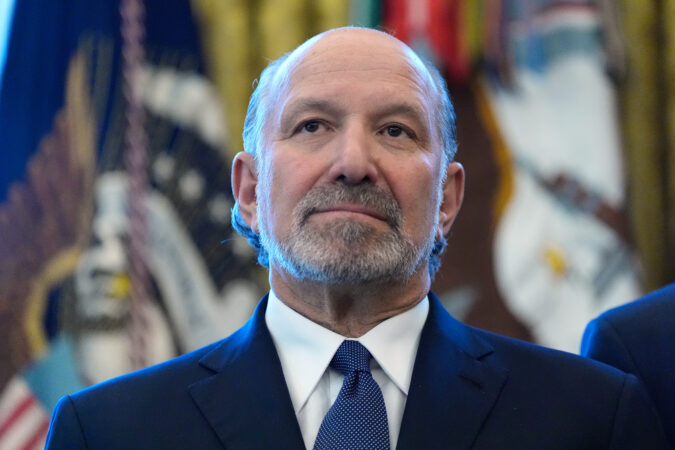
    WASHINGTON — Under questioning from Democrats Tuesday, Commerce Secretary Howard Lutnick acknowledged that he had met with Jeffrey Epstein twice after his 2008 conviction for soliciting prostitution from a child, reversing Lutnick’s previous claim that he had cut ties with the late financier after 2005.

    Lutnick once again downplayed his relationship with the disgraced financier who was once his neighbor in New York City as he was questioned by Democrats during a subcommittee hearing of the Senate Appropriations Committee. He described their contact as a handful of emails and a pair of meetings that were years apart.

    “I did not have any relationship with him. I barely had anything to do with him,” Lutnick told lawmakers.

    But Lutnick is facing calls from several lawmakers for his resignation after the release of case files on Epstein contradicted Lutnick’s claims on a podcast last year that he had decided to “never be in the room” with Epstein again after a 2005 tour of Epstein’s home that disturbed Lutnick and his wife.

    The commerce secretary said Tuesday that he and his family actually had lunch with Epstein on his private island in 2012 and he had another hour-long engagement at Epstein’s home in 2011. Lutnick, a member of President Donald Trump’s Cabinet, is the highest-profile U.S. official to face bipartisan calls for his resignation amid revelations of his ties to Epstein. His acknowledgement comes as lawmakers are grasping for what accountability looks like amid the revelations contained in what’s known as the Epstein files.

    In countries like the United Kingdom, the Epstein files have triggered resignations and the stripping of royal privileges, but so far, U.S. officials have not met the same level of retribution.

    Senators want to dig into Lutnick’s ties to Epstein

    Sen. Chris Van Hollen, the Democrat who questioned Lutnick, told him, “There’s not an indication that you yourself engaged in any wrongdoing with Jeffrey Epstein. It’s the fact that you believe that you misled the country and the Congress based on your earlier statements.”

    Van Hollen, (D., Md.) stopped short of calling for Lutnick’s resignation on Monday, but requested documentation from Lutnick on any of his ties to Epstein.

    “It’s absolutely essential that he provide Congress with those documents, given the misrepresentations he’s made, and then we’ll go from there,” he said.

    Lutnick during the Senate hearing said he would give that request some thought, adding, “I have nothing to hide.”

    However, several Senate Republicans were also questioning Lutnick’s relationship with Epstein. Sen. Roger Wicker, (R., Miss.) said the visit to Epstein’s private island “would raise questions.” And Sen. Thom Tillis, (R., N.C.) told reporters, “It’s something I’m concerned with.”

    Tillis stayed away from calling for Lutnick to leave his post, but added that “he would do himself a service by just laying exactly what and what did not happen over the course of what seems to be an interesting relationship that included business entanglements.”

    House members call for resignation

    Meanwhile, House members who initiated the legislative effort to force the release of the files are calling for Lutnick to resign. Republican Rep. Thomas Massie of Kentucky called for that over the weekend after emails were released that alluded to the meetings between Lutnick and Epstein.

    Rep. Ro Khanna, a California Democrat, joined Massie in pressuring Lutnick out of office on Monday.

    “Based on the evidence, he should be out of the Cabinet,” Khanna said.

    He added, “It’s not about any particular person. In this country, we have to make a decision. Are we going to allow the rich and powerful people who are friends and (had) no problem doing business and showing up with a pedophile who is raping underage girls, are we just going to allow them to skate?”

  • Trump set to gut U.S. climate change policy and environmental regulations: White House official

    Trump set to gut U.S. climate change policy and environmental regulations: White House official

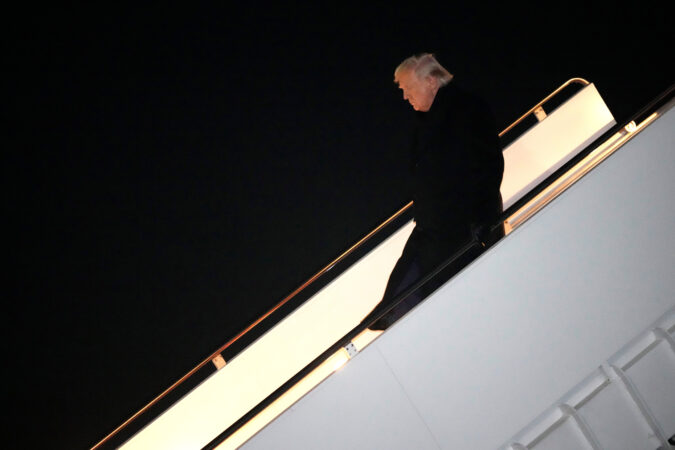
    WASHINGTON — The Trump administration is expected this week to revoke a scientific finding that long has been the central basis for U.S. action to regulate greenhouse gas emissions and fight climate change, according to a White House official.

    The Environmental Protection Agency will issue a final rule rescinding a 2009 government declaration known as the endangerment finding. That Obama-era policy determined that carbon dioxide and other greenhouse gases endanger public health and welfare.

    A White House official, speaking on condition of anonymity because they were not authorized to speak publicly ahead of an official announcement, confirmed the plans, which were first reported by The Wall Street Journal.

    “This week at the White House, President Trump will be taking the most significant deregulatory actions in history to further unleash American energy dominance and drive down costs,” White House press secretary Karoline Leavitt said in a statement Tuesday.

    The endangerment finding is the legal underpinning of nearly all climate regulations under the Clean Air Act for motor vehicles, power plants, and other pollution sources that are heating the planet. It is used to justify regulations, such as auto emissions standards, intended to protect against threats made increasingly severe by climate change — deadly floods, extreme heat waves, catastrophic wildfires, and other natural disasters in the United States and around the world.

    Legal challenges would be certain for any action that effectively would repeal those regulations, with environmental groups describing the shift as the single biggest attack in U.S. history on federal efforts to address climate change.

    An EPA spokesperson did not address when the finding would be revoked but reiterated that the agency is finalizing a new rule on it.

    Brigit Hirsch said via email that the Obama-era rule was “one of the most damaging decisions in modern history” and said EPA “is actively working to deliver a historic action for the American people.”

    President Donald Trump, who has called climate change a “hoax,” previously issued an executive order that directed EPA to submit a report on “the legality and continuing applicability” of the endangerment finding. Conservatives and some congressional Republicans have long sought to undo what they consider overly restrictive and economically damaging rules to limit greenhouse gases that cause global warming.

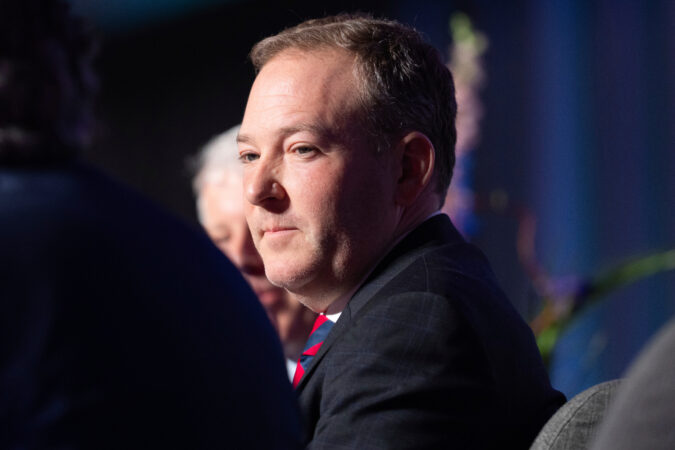
    Lee Zeldin, a former Republican congressman who was tapped by Trump to lead EPA last year, has criticized his predecessors in Democratic administrations, saying they were “willing to bankrupt the country” in an effort to combat climate change.

    Democrats “created this endangerment finding and then they are able to put all these regulations on vehicles, on airplanes, on stationary sources, to basically regulate out of existence … segments of our economy,″ Zeldin said in announcing the proposed rule last year. ”And it cost Americans a lot of money.”

    Peter Zalzal, a lawyer and associate vice president of the Environmental Defense Fund, countered that the EPA will be encouraging more climate pollution, higher health insurance and fuel costs, and thousands of avoidable premature deaths.

    Zeldin’s push “is cynical and deeply damaging, given the mountain of scientific evidence supporting the finding, the devastating climate harms Americans are experiencing right now and EPA’s clear obligation to protect Americans’ health and welfare,” he said.

    Zalzal and other critics noted that the Supreme Court ruled in a 2007 case that planet-warming greenhouse gases, caused by burning of oil and other fossil fuels, are air pollutants under the Clean Air Act.

    Since the high court’s decision, in a case known as Massachusetts v. EPA, courts have uniformly rejected legal challenges to the endangerment finding, including a 2023 decision by the U.S. Court of Appeals for the District of Columbia Circuit.

    Following Zeldin’s proposal to repeal the rule, the National Academies of Sciences, Engineering, and Medicine reassessed the science underpinning the 2009 finding and concluded it was “accurate, has stood the test of time, and is now reinforced by even stronger evidence.”

    Much of the understanding of climate change that was uncertain or tentative in 2009 is now resolved, the NAS panel of scientists said in a September report. “The evidence for current and future harm to human health and welfare created by human-caused greenhouse gases is beyond scientific dispute,” the panel said.

  • An ex-Philly City Council aide from a prominent political family is accused of sexual harassment

    An ex-Philly City Council aide from a prominent political family is accused of sexual harassment

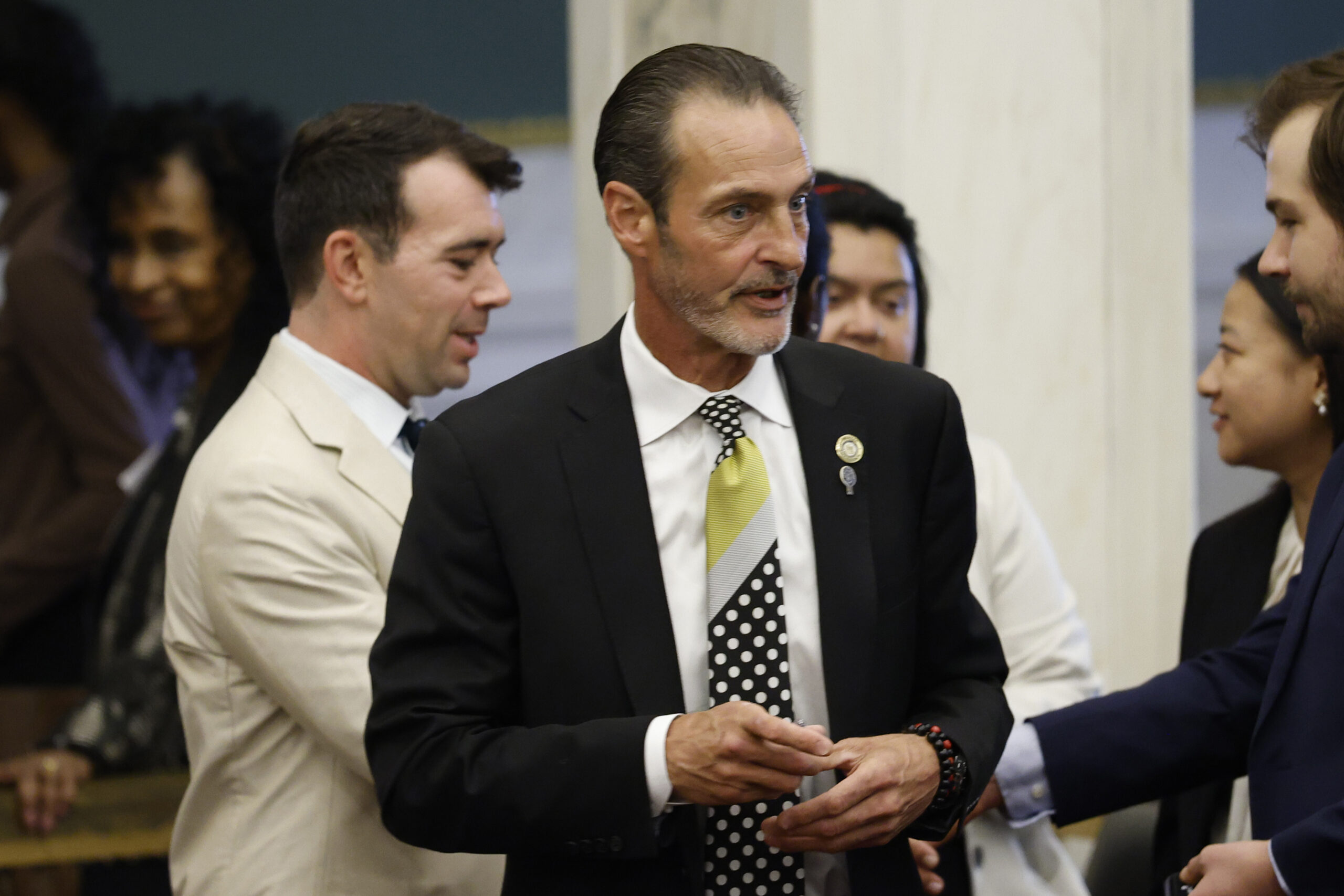
    After Sharif Street Jr. got into a highly public fight at Mayor Cherelle L. Parker’s 2024 inauguration ceremony, his boss, City Councilmember Jim Harrity, extended him some grace.

    Harrity, who credits Street Jr.’s father, State Sen. Sharif Street (D., Philadelphia), with giving him a second chance earlier in his own career, kept the junior Street on staff as a special assistant, saying the incident was a lapse in judgment.

    But according to another staff member in Harrity’s office, it was not the only transgression.

    Shanelle Davis, a former constituent services representative, filed a federal lawsuit last week against the city claiming that she told supervisors months before the inauguration fight that Street Jr. had sexually harassed her while she was at work, including twice grabbing her and making sexualized comments about her body.

    She said in the suit, filed in the U.S. District Court for the Eastern District of Pennsylvania, that no action was taken and Street Jr. remained on staff.

    Davis is seeking unspecified damages from the city, which she claims violated state and federal laws related to gender-based discrimination. Street Jr. is not named as a defendant in the suit, but he is mentioned throughout the 13-page filing.

    Davis’ complaint portrays a dysfunctional workplace environment in the City Hall office, including an alleged physical altercation between Street Jr. and another staffer for which no one was reprimanded. Davis, who is Black, claimed another colleague in Harrity’s office made racist comments, including hurling the N-word toward her.

    Davis, who was hired in late 2022, said in the lawsuit that she was fired for underperforming at her job about a year later, after Harrity won reelection.

    Her attorney did not respond to a request for comment Monday. Street Jr. did not respond to calls seeking comment.

    Harrity, a Democrat who represents the city at-large and was a longtime aide to the elder Street, said in a statement that he “categorically denounce[s] workplace harassment, or any conduct that undermines a respectful and professional work environment.”

    He declined to comment further, citing the ongoing legal proceedings. A spokesperson for the city law department also declined to comment.

    The lawsuit is the latest legal trouble involving Sharif Street Jr., 26, who over the last three years has pleaded guilty to criminal offenses in Philadelphia, Montgomery, and Delaware Counties. In August, his employment with the city was terminated the week he pleaded guilty to charges in connection with the inauguration assault and another incident.

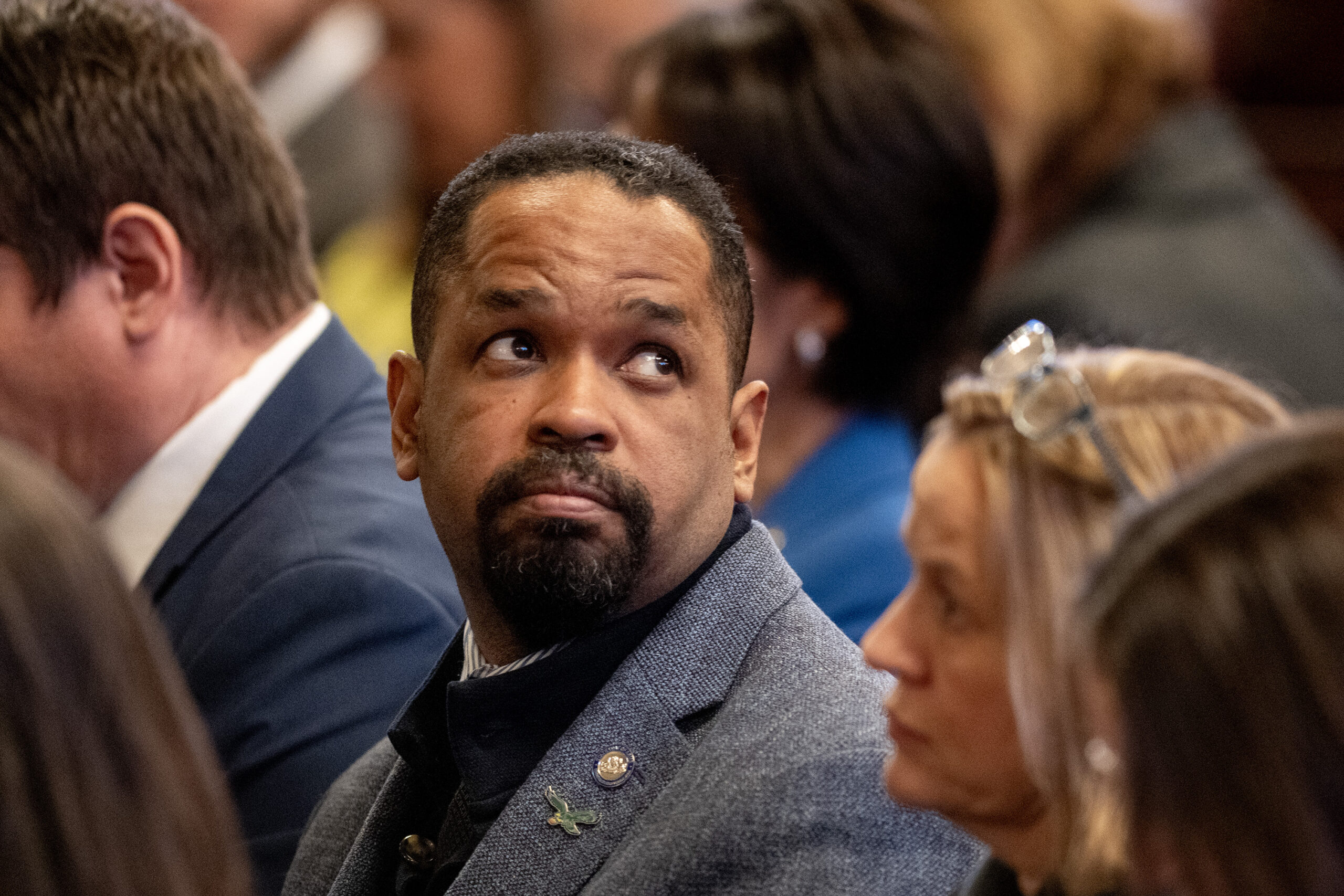
    City Councilmember Jim Harrity speaks to colleagues on during a Council session in September.

    Street Jr. comes from one of Philadelphia’s most well-known political families. His grandfather is former Mayor John F. Street, his mother is Common Pleas Court Judge Sierra Thomas Street, and his father is a state senator and the former head of the state Democratic Party who is now running for a seat in Congress.

    Anthony Campisi, a spokesperson for the elder Sharif Street’s congressional campaign, said the state senator had “no knowledge” of the sexual harassment allegations.

    “Sharif loves his son unconditionally and has supported his son through personal troubles, like so many parents across Philadelphia,” Campisi said. “That being said, Sharif unequivocally condemns sexual harassment in all its forms and is looking for the legal process to play out.”

    City Council President Kenyatta Johnson, who took over as leader of the chamber in 2024, declined to comment. Under City Council rules, individual members are responsible for hiring and terminating their own employees.

    State Senator Sharif Street (D., Phila.)is in the state House chamber as Gov. Josh Shapiro makes his annual budget proposal Feb. 3, 2026.

    Street Jr. was arrested several times over three years while working in City Hall as an assistant in Harrity’s office, court records show. Davis’ lawsuit comes about six months after Street Jr.’s employment in Harrity’s office ended, according to payroll records.

    In January 2024, Street Jr. punched a security guard at the entrance to Parker’s inauguration ceremony at the Met Philadelphia on North Broad Street. He told The Inquirer at the time that he was defending his grandfather, the former mayor, whom he said the guard had grabbed because they were trying to enter at a back entrance without waiting in line.

    “I saw my grandfather get grabbed and I just sort of blacked out,” Street Jr. said. His father defended him at the time, saying the security guard had initiated the altercation.

    Later that month, Street Jr. was charged in connection with a hit-and-run from the previous August that left a 14-year-old injured.

    The two cases were consolidated in Common Pleas Court, and Street Jr. pleaded guilty in August to charges of assault and causing an accident that resulted in an injury. According to prosecutors, he was sentenced to 60 days in jail.

    Four months later, when he was no longer working in city government, Street Jr. was briefly jailed in Delaware County following what police in Upper Darby described as a “prolonged struggle” during a traffic stop. He pleaded guilty to disorderly conduct, a summary offense.