Category: News

Latest breaking news and updates

  • Where to see Isaiah Zagar’s mosaics around Philly

    Where to see Isaiah Zagar’s mosaics around Philly

    Famed mosaic artist Isaiah Zagar left a legacy shaped by the glimmering murals and large-scale tile works he’s engraved throughout Philadelphia.

    Zagar, who died at age 86 on Thursday due to complications of heart failure and Parkinson’s disease, will be remembered for his striking works and unrelenting mission to beautify the city he called home for more than five decades.

    Zagar’s nearly 200 handcrafted works can be found throughout the country, but the bulk of his famed mosaics are within city lines.

    Here’s some of the largest and boldest works the iconic artist has crafted in Philadelphia.

      (function() {
        var l2 = function() {
          new pym.Parent(‘ZAGARMAP.html’,
                         ‘https://media.inquirer.com/storage/inquirer/projects/innovation/arcgis_iframe/ZAGARMAP.html’);
        };
        if (typeof(pym) === ‘undefined’) {
          var h = document.getElementsByTagName(‘head’)[0],
            s = document.createElement(‘script’);
          s.type = ‘text/javascript’;
          s.src = ‘https://pym.nprapps.org/pym.v1.min.js’;
          s.onload = l2;
          h.appendChild(s);
        } else {
          l2();
        }
      })();

    Philadelphia’s Magic Gardens

    1020 South St.

    Tourists visit Philadelphia’s Magic Gardens, which was built by Isaiah Zagar in the 1960s, in 2017.

    As inescapable as Zagar’s work is in Philadelphia, the Magic Gardens serves as the artist’s most grand, well-known project. Dating back to 1994, it consists of thousands of square feet of entirely mosaicked space stretched across three city lots, showcasing what Zagar once referred to as his “voluminous” output of art.

    Magic Gardens Studio

    1002 Watkins St.

    Philadelphia’s Magic Gardens Executive Director Emily Smith (left) and Preservation and Facilities Manager Stacey Holder (right) in the former studio of mosaic artist Isaiah Zagar in 2024.

    If the Magic Gardens is the heart of Zagar’s output, his Magic Gardens Studio is the brain. Purchased in 2007, this 10,000-square-foot South Philly warehouse stands virtually entirely covered — inside and out — in Zagar’s artful mosaics, and long served as his studio and storage space.

    Home of Isaiah and Julia Zagar

    826 South St.

    Isaiah and Julia Zagar are photographed in front of their home in South Philadelphia in 2024.

    It doesn’t get much more personal than the Zagar’s home, where he and his family lived for about 40 years. Similar to his South Philly studio, the space is mosaicked inside and out in Zagar’s signature style, including a roughly 544-square foot piece covering the building’s façade.

    This Is The Day, Jesus Journey

    1036 South St.

    Just steps away from the Magic Gardens sits the Waters Memorial African Methodist Episcopal Church, its side showcasing Jesus Journey — a 2006 mosaic that features a decidedly religious bent. At more than 400 square feet, it uses excerpts from the Bible detailing the life of Jesus Christ. And across the street, another similarly sized installation titled Bilal From Pakistan was completed in 2012 alongside artist Bilal Khan.

    Rose and the Firefighters

    600 block of Alder Street

    Among Zagar’s most iconic murals, this piece stretches some 6,000 square feet along Alder and Kater Streets, just east of the Magic Gardens. This massive piece, completed in 2004, adorns the former headquarters of Engine Company 11, which once served as one of Philadelphia’s only Black fire companies between 1919 and 1952.

    Jim’s Steaks

    400 South St.
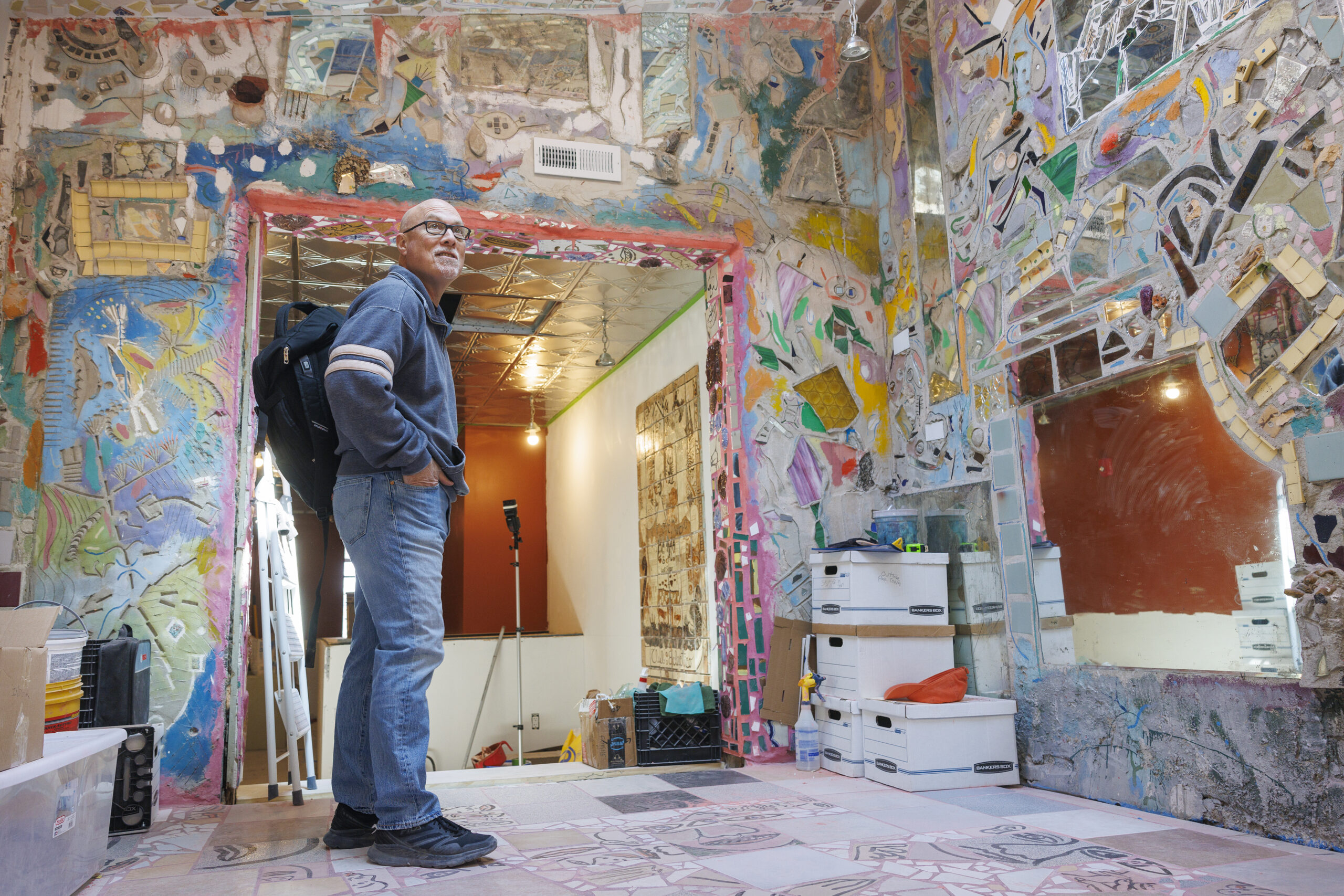
    Ken Silver,owner of Jim’s Steaks, in a room filled with mosaic tile by Philadelphia artist Isaiah Zagar inside former Eye’s Gallery damaged in 2022 fire.

    Blocks from Zagar’s home, Jim’s Steaks showcases the artist’s extensive mosaic work in a space formerly occupied by the Eyes Gallery, which Julia Zagar ran for decades. A 2022 fire damaged both the gallery and the neighboring original Jim’s building, prompting the cheesesteak shop to later expand next door — revealing a treasure trove of interior artwork that had long been covered.

    Schell Street Walls

    600 S. Schell St.

    Vacant lots, rowhouses, and cheesesteak shops weren’t Zagar’s only canvasses — he also covered entire side streets in his mosaics. Completed over nearly 30 years, the 600 block of Schell Street showcases the artist’s work on both sides of the steet. Many pieces were created during community workshops Zagar held there over the years.

    Fitness Works

    714 Reed St.

    There are more well-known murals than the one that occupies the lower façade and parking lot of this South Philly gym, but few are as large. At roughly 1,500 square feet all told, this piece was completed in 2014 as part of a mosaic mural workshop, and has since come to serve as landmark.

    Homage to Mike Mattio, Master Plumber

    700 block of Reese Street

    Occupying the side of a number of row homes, this Zagar mosaic serves as a tribute to its eponymous Mike Mattio, a former plumber of the artist’s — portrait included. It is also something of a high-brow installation, thanks to references calling out artists ranging from William Blake to Duke Ellington.

    Hip Hop Café

    705 Passyunk Ave.

    This building has housed quite a few businesses over the years. At least since 2002, it has showcased Zagar’s Hip Hop Café mosaic mural. The piece covers the structure’s 500-square-foot front, which today is home to Momoka Ramen Skewers’ Queen Village location.

  • Tired Hands Brewing turned its original Ardmore outpost into a private event space as it navigates the future

    Tired Hands Brewing turned its original Ardmore outpost into a private event space as it navigates the future

    Tired Hands Brewing’s Ardmore Brewing Company brewpub has been turned into a private event space, for now, as its owner navigates the future of the beer company.

    Tired Hands’ Kennett Square taproom and bottle shop is permanently closed, owner Jean Broillet confirmed to The Inquirer on Thursday. Tired Hands’ Beer Park in Newtown Square also will not reopen this summer as the property’s owners are looking to redevelop it, Broillet said.

    Tired Hands’ Ardmore Fermentaria and Fishtown restaurant St. Oner’s remain open for business. The brewing company’s MT. Airy Biergarten is a seasonal operation that will reopen in the spring.

    Broillet said the decision to shift to private events at the Ardmore Brewing Company location was born out of a number of factors: having two Tired Hands locations in Ardmore was confusing for customers; ongoing construction in Ardmore created a “prohibitive environment” for doing business; and the changing landscape of brewing has prompted Tired Hands to begin reimagining parts of its business model.

    The changing face of Ardmore, and of Tired Hands

    When Broillet opened the first Tired Hands location, the BrewCafé, in 2012, he said there was little by way of interesting, high-quality food and drink in Ardmore. At the time, he said, Tired Hands’ craft beer and artisan meats and cheeses stood in stark contrast to the Wawas and Irish pubs the area was accustomed to. Now, that era is a distant memory as Ardmore blossoms as a culinary destination on the Main Line.

    Ardmore “went from zero to 60 really quickly in terms” of dining and entertainment options, said Broillet. He added that Tired Hands was a catalyst for that progress.

    In 2015, Broillet and his business partner and wife Julie Foster opened the Fermentaria at 35 Cricket Terrace, just blocks from Tired Hands’ first location at 16 Ardmore Ave.

    The Fermentaria was a major expansion for Tired Hands. It offered food options that extended beyond the BrewCafé‘s sandwich-and-salad-based menu, like steak frites and baby back ribs. It also quadrupled Tired Hands’ production capacity. At the BrewCafé, Tired Hands’ brewers were able to produce 1,000 barrels of beer annually. At the time of its opening, Broillet anticipated the Fermentaria would increase production to 4,000 barrels per year.

    Tired Hands opened St. Oner’s, a Fishtown restaurant and brewpub, in 2020.

    In the years that followed, Tired Hands opened the seasonal Biergarten in Mount Airy, the Kennett Square taproom, and the Beer Park in Newtown Square.

    In 2021, Broillet stepped down from daily operations after allegations of sexism and racism at Tired Hands proliferated on social media, including claims that women were held to different standards than their male counterparts and employees were berated or publicly humiliated for mistakes. Broillet returned to his post at the helm of Tired Hands a year later.

    Broillet said that “lots of valuable lessons, worldly lessons, were learned during that process” and that Tired Hands is doing everything it can to “prevent that from ever happening again.”

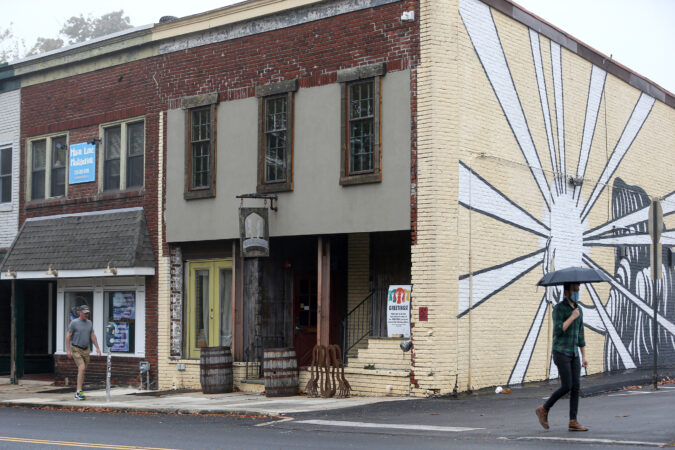
    Ardmore Brewing Co., located at 16 Ardmore Ave. in Ardmore, Pa. Owner Tired Hands Brewing Company has transitioned the brewery into a private events space for the time being.

    Changes in Ardmore, closure in Kennett Square

    While opening a second Ardmore outpost helped grow Tired Hands’ footprint on the Main Line, having “two of the same company” also made things “pretty confusing for people,” Broillet said.

    In efforts to iron out the confusion, Tired Hands rebranded its BrewCafé last spring, renaming it the Ardmore Brewing Company, upgrading its interior, and adding more food and cocktail options while cutting down its beer list.

    “The confusion was still there,” Broillet said.

    Broillet also brought on a culinary team that had extensive experience with private events. They began to host a handful of events at the brewery — retirement parties, birthdays, etc. — which were a success.

    At the same time, major construction had created a “prohibitive environment for us to do business here on Ardmore Avenue,” Broillet said. Construction on the mixed-use Piazza project and Ardmore Avenue Community Center are ongoing, both of which are proximate to Ardmore Avenue and the businesses that operate there.

    The brewery shifted to exclusively hosting private events in the last few months, a decision Broillet said he “couldn’t be happier” with.

    The brewery owner said the Ardmore Avenue location will be open to the public again in the future, but did not specify in what form.

    The taproom and bottle shop in Kennett Square will not reopen.

    Broillet said he opened a Tired Hands outpost in Kennett Square, in part, to have a presence near his family members who lived there. Though it was a “fun” chapter, Broillet said it no longer made sense to operate in Kennett Square, where Tired Hands already has a strong network of distributors that can get their beers into people’s hands without making them trek to the bottle shop.

    What comes next?

    Broillet offered assurances that Ardmore Brewing Company will open up to the public again, but said the specifics aren’t clear yet. Tired Hands also plans on expanding its Mount Airy footprint with a permanent restaurant space.

    For brewers across the country, the specter of people drinking less alcohol looms large. Sales of craft beer fell 4% in 2024, and there were more brewery closings than openings in late 2024 and early 2025, the first time in 20 years such a phenomenon had occurred. Brewerytown’s Crime & Punishment Brewing shuttered last April, with its owners citing a shifting culture around alcohol among the reasons for its closure. Iron Hill Brewery & Restaurant, a Philly-area craft brewing pioneer, abruptly shuttered all of its locations in September.

    Broillet said that while the changing dynamics of the industry remain on his mind, Tired Hands was not “acutely a victim of that downturn.” Sales had been down slightly over the past few years, but Broillet attributes that more to having two locations in Ardmore than to the state of the industry. He’s bullish about Tired Hands’ ability to distinguish itself and sees excitement in the changes.

    “Those sentiments have a way of just propelling you forward,” Broillet said.

    This suburban content is produced with support from the Leslie Miller and Richard Worley Foundation and The Lenfest Institute for Journalism. Editorial content is created independently of the project donors. Gifts to support The Inquirer’s high-impact journalism can be made at inquirer.com/donate. A list of Lenfest Institute donors can be found at lenfestinstitute.org/supporters.

  • Trump banner on Justice Dept. building draws authoritarian comparisons

    Trump banner on Justice Dept. building draws authoritarian comparisons

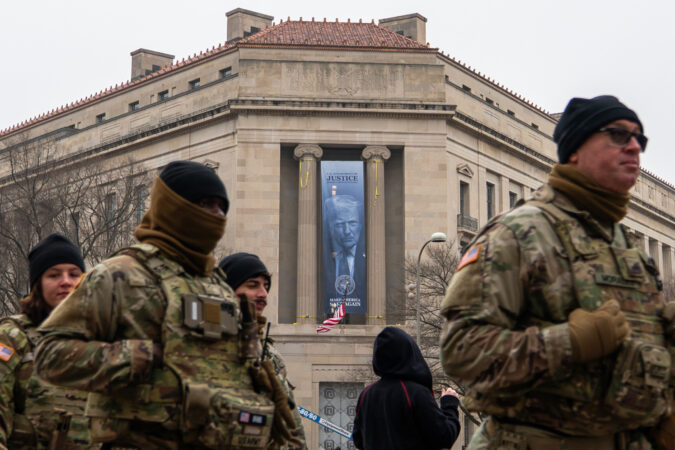
    A new banner hanging along the facade of the Justice Department’s headquarters in Washington is sparking criticism from Democrats and a former FBI director, who suggest that it exemplifies President Donald Trump’s encroachment on the agency, which has long prided itself on being independent from the White House.

    The tall banner displays a portrait of Trump, cast in a dark blue hue, staring down at tourists, commuters and cars along Washington’s bustling Pennsylvania Avenue. “MAKE AMERICA SAFE AGAIN,” reads the banner, which is emblazoned with the Justice Department’s seal.

    A Justice Department spokesperson said the banner was hung in commemoration of the United States’ Semiquincentennial, writing in a statement: “We are proud at this Department of Justice to celebrate 250 years of our great country and our historic work to make America safe again at President Trump’s direction.”

    Similar banners have appeared recently on other government buildings in Washington. But Democrats said that the decision to install one at the Justice Department symbolizes the influence Trump has wielded over the agency during his second term and that the display is comparable to the imagery deployed by authoritarian regimes.

    “The irony of a twice-impeached, convicted felon putting his own picture on the wall of the Department of Justice,” Sen. Ben Ray Luján of New Mexico wrote on X. “President Trump is weaponizing the DOJ as his own personal law firm.”

    Rep. Mike Quigley of Illinois shared an image of the banner online and wrote: “POTUS is putting his face on the Justice Department. … This is not the work of an independent and impartial justice system.”

    “Ok Kim Jong Un,” Rep. Jim McGovern of Massachusetts wrote.

    A pair of similar banners hung at the U.S. Department of Agriculture showed Trump and Abraham Lincoln’s portraits emblazoned with the phrase: “Growing America Since 1862.” (A government purchase order for the pair of banners at USDA showed they cost $16,400.) And banners hung on the Labor Department’s building featured portraits of Trump and Theodore Roosevelt that read, “American workers first.”

    The addition to the Justice Department building follows a pattern of norm-breaking efforts that critics say amount to Trump using the agency as a personal cudgel against his political enemies.

    In a speech delivered inside the building last year, Trump declared himself the nation’s “chief law enforcement officer.” Attorney General Pam Bondi rarely misses an opportunity to praise the president and credit him with the department’s success, including at a contentious congressional oversight hearing last week in which she repeatedly described him “the greatest president in American history.”

    To Trump’s critics, the banner is also striking given his status as a felon. He was found guilty in 2024 in a New York state case on 34 counts of falsifying business records to conceal a hush money payment to an adult-film actress.

    Less than two years ago, Justice Department prosecutors had been pursuing two federal cases against him led by former special counsel Jack Smith. One focused on efforts to overturn the 2020 election, while the other related to Trump’s handling of classified documents.

    Trump is continuing to appeal his state court conviction in New York. A Georgia criminal case against Trump related to efforts to change the 2020 election result was dismissed last year.

    The two federal cases were also dismissed. One ended because of issues with Smith’s appointment. The other Smith withdrew after Trump’s 2024 election victory, in line with long-standing Justice Department policies preventing prosecution of a sitting president.

    Trump and his Justice Department appointees have contended that the prosecutions arose out of a Biden-era weaponization of the justice system to punish political foes.

    Since his return to the White House, Trump has ordered several prosecutions of political rivals on social media. Federal prosecutors brought charges against former FBI Director James B. Comey and New York Attorney General Letitia James last year — both of whom Trump had demanded Bondi move swiftly to prosecute. Those cases were later thrown out over issues with the appointment of the U.S. attorney selected to oversee them.

    Comey, in a social media post Thursday, called the installation of the banner outside the Justice Department headquarters “sickening.”

    “But they forgot to cover the inscription on the Pennsylvania Avenue side: ‘WHERE LAW ENDS TYRANNY BEGINS,’” he wrote.

    The banner is hardly the first time the Trump administration has been accused of adopting aesthetics and deploying imagery typically associated with imperialism or authoritarianism since his return to office last year.

    The administration, for example, roiled the art world when the Department of Homeland Security used images of Americana paintings to bolster support for Trump’s large-scale deportation campaign.

    There was also a massive military parade in Washington last year, which ran against an American tradition of avoiding public displays of martial strength more common in authoritarian regimes. The president is also planning a giant triumphal arch across from the Lincoln Memorial, which could dwarf the size of that and other monuments.

  • Mae Laster, longtime French and algebra schoolteacher and noted civic activist, has died at 87

    Mae Laster, longtime French and algebra schoolteacher and noted civic activist, has died at 87

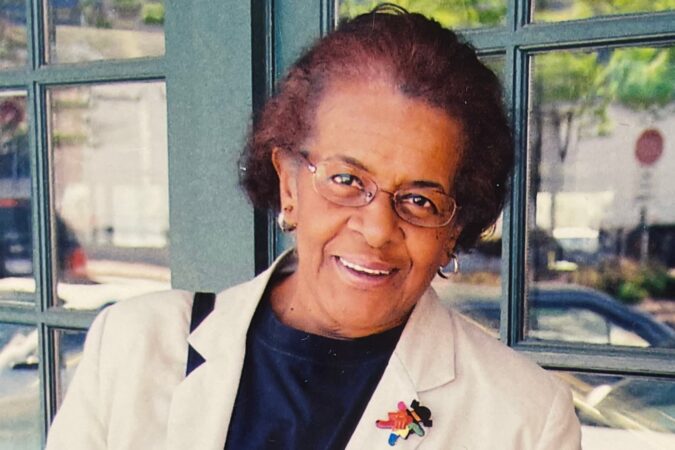
    Mae Laster, 87, of Philadelphia, retired French, algebra, and photography teacher for the School District of Philadelphia, longtime president of Friends of Wynnefield Library, award-winning committee chair for the Philadelphia section of the National Council of Negro Women Inc., community center adviser, church trustee, volunteer, and undisputed Laster family Scrabble champion, died Friday, Jan. 2, of age-associated decline at Lankenau Medical Center.

    Born in Philadelphia, Ms. Laster earned academic degrees at West Philadelphia High School and Temple University. She was a lifelong reader and stellar student, and she tutored her high school classmates in math and later taught elementary and middle school students for 30 years.

    “She was a firm and no-nonsense kind of teacher,” a former student said in an online tribute. “But she was a lot of fun. As an adult, she always offered guidance and advice.”

    Her daughter, Lorna Laster Jackson, said: “She had a passion for learning and sharing with others. She was always an advocate for children.”

    Ms. Laster chaired community service and Founder’s Day committees for the National Council of Negro Women Inc.

    Ms. Laster served as president of Friends of Wynnefield Library for more than 20 years and was active at its many book readings, content discussions, concerts, and fundraisers. She earned several important financial grants for the library, and her personal collection of books at home numbered more than 1,000.

    “She loved reading to our young patrons, especially during our Dr. Seuss birthday celebrations,” library colleagues said in a tribute.

    She chaired community service and Founder’s Day celebration committees for the National Council of Negro Women and earned the local section’s achievement award in 1998. “Mae was a blessing to the Philadelphia section,” colleagues said in a tribute. “We will always remember her feisty way of asking questions and not easily put off.”

    Ms. Laster was an advisory board member at the Leon H. Sullivan Community Development Center and a trustee at Zion Baptist Church. Colleagues at the community center called her “a very thoughtful and talented person.” They said: “She was always forthright and had a strong opinion.”

    Ms. Laster (center) especially enjoyed reading to young people at the Wynnefield Library.

    At church, she was a member of the New Day Bible Class and proofreader for the newsletter. She also volunteered with the Wynnefield Residents Association, the Girl Scouts, and the 4-H Club.

    In a citation, City Council members praised her achievements regarding “education, community service, and all those whose lives were enriched by her wisdom, kindness, and unwavering faith.” In a resolution, members of the state Senate noted “her extraordinary life, her enduring contributions, and her lasting impact on education, community, and faith.”

    Friends said in online tributes that she “had a great sense of humor” and was “the sweetest mom on the planet, who was always like a mom to me.” One friend called her “a community-minded leader who advocated tirelessly to preserve the quality of life in Wynnefield.”

    At home, Ms. Laster studied the dictionary, knew words that nobody else did, and became the undisputed Scrabble champion of her family and friends. She was so good, her daughter said, that nobody volunteered to play against her. “It was humiliating,” her daughter said.

    Ms. Laster was a lifelong advocate for children.

    Mae R. Johnson was born June 5, 1938, in Philadelphia. She grew up in Winston-Salem, N.C., with her grandmother and returned to Philadelphia in the 1950s to live with her mother and begin high school.

    She was an excellent student, especially good with words and numbers, and she graduated from West Philadelphia High in 1956 and earned a bachelor’s degree in early childhood education at Temple.

    She met Francis Laster in the neighborhood, and they married, and had a daughter, Lorna, and sons Francis Jr., Charles, and Ahman. Her husband owned and operated the popular Rainbow Seafood Market, and they lived in West Philadelphia and Wynnefield. They divorced later. He died in 2020.

    Ms. Laster enjoyed bowling, photography, and horticulture. She listened to jazz, classical, and gospel music. She collected butterflies and stamps.

    Ms. Laster was “all about positive change,” her daughter said.

    She shared recipes with friends and kept in touch through memorable phone calls. She helped organize high school reunions and appreciated the educational TV shows on the Public Broadcasting System. She retired from teaching about 20 years ago.

    “She was all about positive change,” her daughter said. “She spoke from compassion and her truth. She did more good than she knew. She was dynamite.”

    In addition to her children, Ms. Laster is survived by six grandchildren, three great-grandchildren, three great-great-grandchildren, a sister, and other relatives. A brother died earlier.

    A celebration of her life was held earlier.

    Donations in her name may be made to Friends of Wynnefield Library, Attn: Terri Jones, 5325 Overbrook Ave., Philadelphia, Pa. 19131.

    Ms. Laster graduated from West Philadelphia High School in 1956 and earned a bachelor’s degree in early childhood education at Temple.
  • Police search Andrew Mountbatten-Windsor’s former home a day after his arrest

    Police search Andrew Mountbatten-Windsor’s former home a day after his arrest

    LONDON — Police searched the former home of Andrew Mountbatten-Windsor again on Friday, a day after he was arrested and held in custody for nearly 11 hours on suspicion of misconduct in having shared confidential trade information with the late convicted sex offender Jeffrey Epstein.

    In another blow for the former Prince Andrew, the British government is considering formally removing him from the line of succession to the crown. Despite losing his status as prince and facing a police investigation, Andrew remains eighth in line to the throne. That can only be changed with new legislation.

    When the king stripped his brother of his titles in the fall, the government said passing a new law would not be a good use of Parliament’s time.

    But that view has changed and the government is now considering legislation once the police investigation is finished. James Murray, the government’s chief secretary to the treasury, said “the government is considering any further steps that might be required, and we’re not ruling anything out.”

    The last time a royal was removed from the line of succession was after the abdication of King Edward VIII in 1936, when the law was changed to strike him and any descendants from the list.

    Removing Andrew would also require agreement from more than a dozen other countries, including Jamaica, Canada, and Australia, that have the British monarch as head of state.

    Following one of the most tumultuous days in the modern history of Britain’s royal family, the former prince was back at his new residence on the Sandringham estate, King Charles III‘s private retreat, around 115 miles northeast of London.

    Police have concluded their search there, but are still searching Royal Lodge, his 30-room former home in the parkland near Windsor Castle, just west of the capital, where the king’s younger brother had lived for decades until his eviction earlier this month. Unmarked vans, believed to be police vehicles, have been entering the grounds Friday morning.

    The search is expected to continue for several days.

    Mountbatten-Windsor, who was pictured slouched in the back of his chauffeur-driven car following his release Thursday evening from a police station near Sandringham, remains under investigation, which means he has neither been charged nor exonerated by Thames Valley Police, the force responsible for areas west of London.

    Arrest was years in the making

    His arrest follows years of allegations over his links with Epstein, who died by suicide in a New York jail in 2019.

    The accusation at the heart of his arrest is that Mountbatten-Windsor — who was known as Prince Andrew until October when his brother stripped him of his titles and honors and banished him from Royal Lodge — shared confidential trade information with the disgraced financier when he was a trade envoy for the U.K.

    Emails released last month by the U.S. Department of Justice appeared to show Mountbatten-Windsor sharing reports of official visits to Hong Kong, Vietnam, and Singapore, and sending Epstein a confidential brief on investment opportunities in Afghanistan.

    Thames Valley Police has previously said it was also reviewing allegations that a woman was trafficked to the U.K. by Epstein to have a sexual encounter with Andrew. Thursday’s arrest had nothing to do with that.

    Other police forces are also conducting their own investigations into Epstein’s links to the U.K., including the assessment of flight logs at airports, large and small. They are coordinating their work within a national group.

    On Friday, London’s Metropolitan Police said it was assessing, with the help of U.S. counterparts, whether the capital’s airports, which include Heathrow, “may have been used to facilitate human trafficking and sexual exploitation.”

    It also said that it’s asking past and present officers who protected Mountbatten-Windsor to “consider carefully” whether they saw or heard anything that may be relevant to the investigations.

    As of now, it said no new criminal allegations have been made regarding sexual offenses within its jurisdiction.

    Mountbatten-Windsor has consistently denied any wrongdoing in his association with Epstein but has not commented on the most recent allegations that have emerged with the release of the so-called Epstein files.

    Arrest was sudden, investigation will take time

    Police swept into the grounds of Mountbatten-Windsor’s home to arrest him at 8 a.m. Thursday — his 66th birthday — before taking him to Aylsham police station for questioning.

    It’s not known what he told them. He may have said nothing, or “no comment,” as is his right.

    Experts said that misconduct in a public office is notoriously difficult to prove.

    “Firstly, it must be determined if Andrew Mountbatten-Windsor was in a role within government that constitutes the title of public officer,” said Sean Caulfield, a criminal defense lawyer at Hodge Jones & Allen. “There is no standard definition to clearly draw on.”

    The Crown Prosecution Service will ultimately make a decision about charging Mountbatten-Windsor.

    Andrew Gilmore, a partner at Grosvenor Law, said that prosecutors will apply the two-stage test known as the “Code for Crown Prosecutors.”

    “That test is to determine whether there is a more realistic prospect of a conviction than not based on the evidence and whether the matter is in the public interest,” he said. “If these two tests are met, then the matter will be charged and proceed to court.”

    Arrest is not just unusual, it’s historic

    Mountbatten-Windsor was the first royal since King Charles I nearly four centuries ago to be placed under arrest. That turned into a seismic moment in British history, leading Charles’ beheading and the temporary abolition of the monarchy.

    Mountbatten-Windsor’s arrest is arguably one of the gravest crises for the House of Windsor since its establishment more than 100 years ago. Arguably, only the abdication of King Edward VIII in 1936, and the death of Diana, Princess of Wales, in 1997, have been as grave for the institution of the British monarchy in modern times.

    In a statement Thursday, the king said the “law must take its course,’’ but that as ”this process continues, it would not be right for me to comment further on this matter.’’

    The allegations are not related to Epstein’s sex trafficking

    The allegations being investigated Thursday are separate from those made by Virginia Giuffre, who claimed she was trafficked to Britain to have sex with the prince in 2001, when she was just 17. Giuffre died by suicide last year.

    Still, Giuffre’s sister-in-law Amanda Roberts said that she was overjoyed when she got a phone call at 3 a.m. telling her the news of the arrest. But those feelings of elation were quickly complicated by the realization that she couldn’t share the feelings of “vindication” with Giuffre.

    “We can’t tell her how much we love her, and that everything that she was doing is not in vain,” Roberts added tearfully.

  • Philly-area lawmakers applaud Supreme Court striking down Trump’s tariffs as area businesses brace for uncertainty on refunds

    Philly-area lawmakers applaud Supreme Court striking down Trump’s tariffs as area businesses brace for uncertainty on refunds

    Pennsylvania lawmakers say Congress should reclaim its power over taxes and tariffs after the U.S. Supreme Court quashed President Donald Trump’s controversial global tariffs.

    The nation’s high court ruled 6-3 Friday that Trump overstepped with tariffs imposed under an emergency powers law, dealing a significant blow to the president’s economic agenda and reasserting congressional authority.

    Chief Justice John Roberts and Justices Neil Gorsuch and Amy Coney Barrett — both Trump nominees — joined liberal justices in the majority. Justices Brett Kavanaugh, Clarence Thomas, and Samuel A. Alito Jr. dissented.

    Trump told reporters at the White House Friday that he was “ashamed” of the three Republican-appointed justices for not having “the courage to do what’s right for our country.”

    But local lawmakers celebrated the decision as a step toward alleviating inflation exacerbated by Trump’s tariffs.

    It’s “​​the first piece of good news that American consumers have gotten in a very long time,” said U.S. Rep. Brendan Boyle (D., Philadelphia), the ranking member of the House Budget Committee.

    The decision is unlikely to be the end of the road for Trump’s efforts to impose tariffs. The court struck down the broad authority Trump had claimed to impose sweeping tariffs, but he could still impose additional import and export taxes using powers he employed in his first term.

    Friday’s decision centers on tariffs imposed under an emergency powers law, including the “reciprocal” tariffs he waged on other countries, The Associated Press reported.

    What’s next

    It remains unclear what will happen to tariff revenue that’s already been collected — about $30 billion a month since Trump took office last year, NPR reported. But Pennsylvania lawmakers are pushing for Congress to reassert its power to control the country’s purse strings.

    “As the Supreme Court validated this morning, Congress has the authority to levy taxes and tariffs,” Boyle said. “It’s time now for us to finally reclaim that authority and bring some certainty and rationality to our tariff policy, which under Donald Trump has been all over the map and changes day by day, even hour by hour.”

    Casey-Lee Waldron, a spokesperson for U.S. Rep. Brian Fitzpatrick (R., Bucks), said in a statement Friday that the lawmaker “applauds” the high court’s decision, “which validates the Congressman’s opposition to blanket and indiscriminate tariffs that are not narrowly tailored, and that do not lower costs for the American consumer.”

    Waldron added that Fitzpatrick supports enforcing trade laws, but “this should always be done in a collaborative manner with a bipartisan, bicameral majority in Congress.”

    Pennsylvania Gov. Josh Shapiro and N.J. Gov. Mikie Sherrill, both Democrats, celebrated the decision Friday in statements that noted the challenges the tariffs had caused for local economies.

    Speaking to reporters at the National Governors Association meeting in Washington, Shapiro said tariffs had done real harm to Pennsylvanians, citing rising prices for farmers and for consumer goods.

    “There is a direct line connecting those price increases to the president pushing the tariff button,” Shapiro said. “I think the Supreme Court got it right, and I say that as a former attorney general, and I say that as someone who actually follows the law.”

    U.S. Sen. Dave McCormick (R., Pa.), however, came to the defense of Trump’s tariff policies, saying in a statement that he believes Trump “was using legitimate emergency authorities very effectively to protect our national security and achieve fair trade for U.S. companies and American workers.”

    McCormick, a former Treasury official and former hedge fund executive, said he was disappointed with the court’s ruling and called to find other ways to accomplish Trump’s economic and national security goals, which include preventing “foreign competitors from cheating Pennsylvania workers.”

    Shockwaves in Philly and beyond

    Trump enacted the sweeping tariffs early last year, arguing that the move would incentivize companies to bring operations back to the United States and even trade deficits with other countries.

    The move, however, sent shock waves through the U.S. economy as prices increased and U.S. exports, including Pennsylvania’s lumber sales, suffered.

    Tariffs slowed business at the Port of Philadelphia, which reported cargo volume down across the board.

    Philly is a major gateway for produce, bringing in more fresh fruit than any other U.S. port, largely from Central and South America. The port saw record container volume last year, handling almost 900,000 units, up 6% over 2024. About two-thirds of that cargo was refrigerated — fruit and meat, for example.

    But this year got off to a slow start. “The story is increased competition and tariffs,” Sean Mahoney, marketing director at the Philadelphia Regional Port Authority (PhilaPort), said during the agency’s board meeting on Wednesday.

    Leo Holt, president of the city’s primary terminal operator Holt Logistics, hopes companies that see savings would pass them on to consumers. In practice, he acknowledged many would likely take a conservative approach.

    “I think consumers are going to demand that at least there’s an accounting for what they’re paying,” Holt said Friday.

    U.S. Sen. Chris Coons (D., Del.) said in a statement that he knows many Republican colleagues of his “are privately breathing sighs of relief this morning at the court’s decision.”

    “They should instead be asking themselves why they didn’t use their legislative authority to do more to stop these tariffs when they had the chance — and what they’ll do differently next time when President Trump inevitably tries again,” Coons said.

    ‘Nobody is going to rush to drop their prices’

    The Supreme Court’s ruling will be welcome news for some businesses, but it also sparks uncertainty.

    Not all of Trump’s tariff increases came through the use of the International Emergency Economic Powers Act, and therefore some will remain in place, said Julie Park, a partner at London-based tax and business advisory firm Blick Rothenberg.

    “This decision brings further uncertainty for businesses,” she said in a statement. That’s in part because Trump could seek to reimpose tariffs through other legal tools, leaving “businesses in limbo about if they will get refunded.”

    U.S. exporters will also be closely following what happens next, since the fate of Trump’s tariffs will likely determine whether other countries, like Canada, keep their retaliatory measures in place. Canada is Pennsylvania’s biggest export market, with the state sending more than $14 billion in goods there in 2024. Top exports included machinery, cocoa, iron, and steel.

    Pennsylvania’s dairy industry has also been caught in the middle of the global trade war, as China and Canada imposed extra taxes on those goods in response to U.S. tariffs.

    It’s also unclear whether companies will receive refunds for the tariffs they’ve paid in the past year.

    Tim Avanzato, vice president of international sales at Lanca Sales Inc, said his New Jersey-based import-export company should be eligible for as much as $4 million in tariff refunds.

    “It’s going to create a paperwork nightmare for importers,” he said, noting that he doesn’t expect the Trump administration to make it easy to retrieve this money.

    Avanzato said he is also watching for ways the administration may implement new tariffs. Consumers, he said, shouldn’t expect changes in the immediate term.

    “Companies are not very good at passing on savings,” Avanzato said. “Nobody is going to rush to drop their prices.”

    Sen. Andy Kim (D., N.J.) said Trump cost Americans “a lot of money.”

    “Trump 2.0: You pay for his tariffs, tax breaks for his billionaire donors, & insane corruption for his friends and family,” the South Jersey Democrat added in a social media post.

    The Supreme Court’s decision is “a step” in righting wrongs by the Trump administration, he said, but there’s “so much more to go.”

    Staff Writers Katie Bernard, Max Marin, Aliya Schneider and Rob Tornoe and The Associated Press contributed to this article.

  • Haverford president is considering convening committee to review Howard Lutnick’s name on campus library

    Haverford president is considering convening committee to review Howard Lutnick’s name on campus library

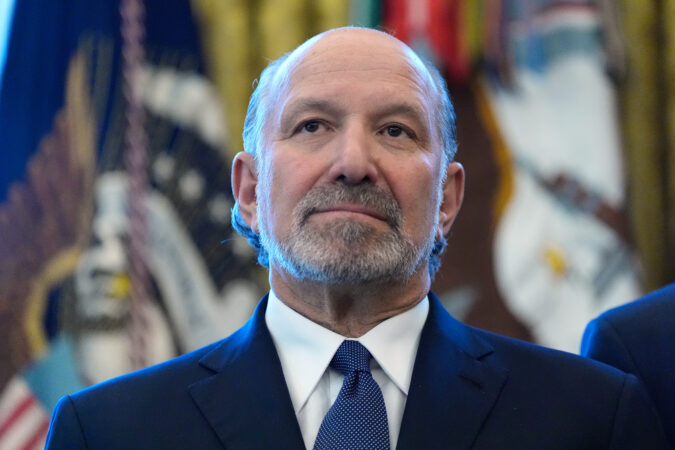
    Haverford College president Wendy Raymond is considering convening a committee that would review whether mega donor and U.S. Commerce Secretary Howard Lutnick’s name should remain on the campus library.

    Raymond’s statement to the campus community this week follows concerns expressed by Haverford students and alumni about Lutnick’s ties to sex offender Jeffrey Epstein. She noted “a growing number of Fords have written to express their dismay.”

    “While forming a naming review committee does not predetermine any outcome, it is a serious step and not something I would take lightly,” Raymond wrote to the campus. “I will take the time necessary to continue to reflect and to engage with thought partners before determining whether to activate a review committee.”

    Under Haverford’s gift policy, the school can rename a building if “the continued use of the name may be deemed detrimental to the college, or if circumstances change regarding the reason for the naming.” If Raymond convenes a committee, she would then consider its recommendations and make her recommendation to the external affairs committee of the board of managers, as well as to its chair and vice chair. The external affairs committee then would make its recommendation to the full board of managers.

    Lutnick, a 1983 graduate and former chair of the college’s board of managers, is one of the school’s biggest donors, having given $65 million. Documents released by the U.S. Justice Department this month show that Lutnick had contact with the late financier as recently as 2018, long after Epstein pleaded guilty to obtaining a minor for prostitution and soliciting a prostitute.

    And during congressional testimony last week, he said he visited Epstein’s private island with his family in 2012. Lutnick previously said he had not been in a room with Epstein, whom he found “disgusting,” since 2005.

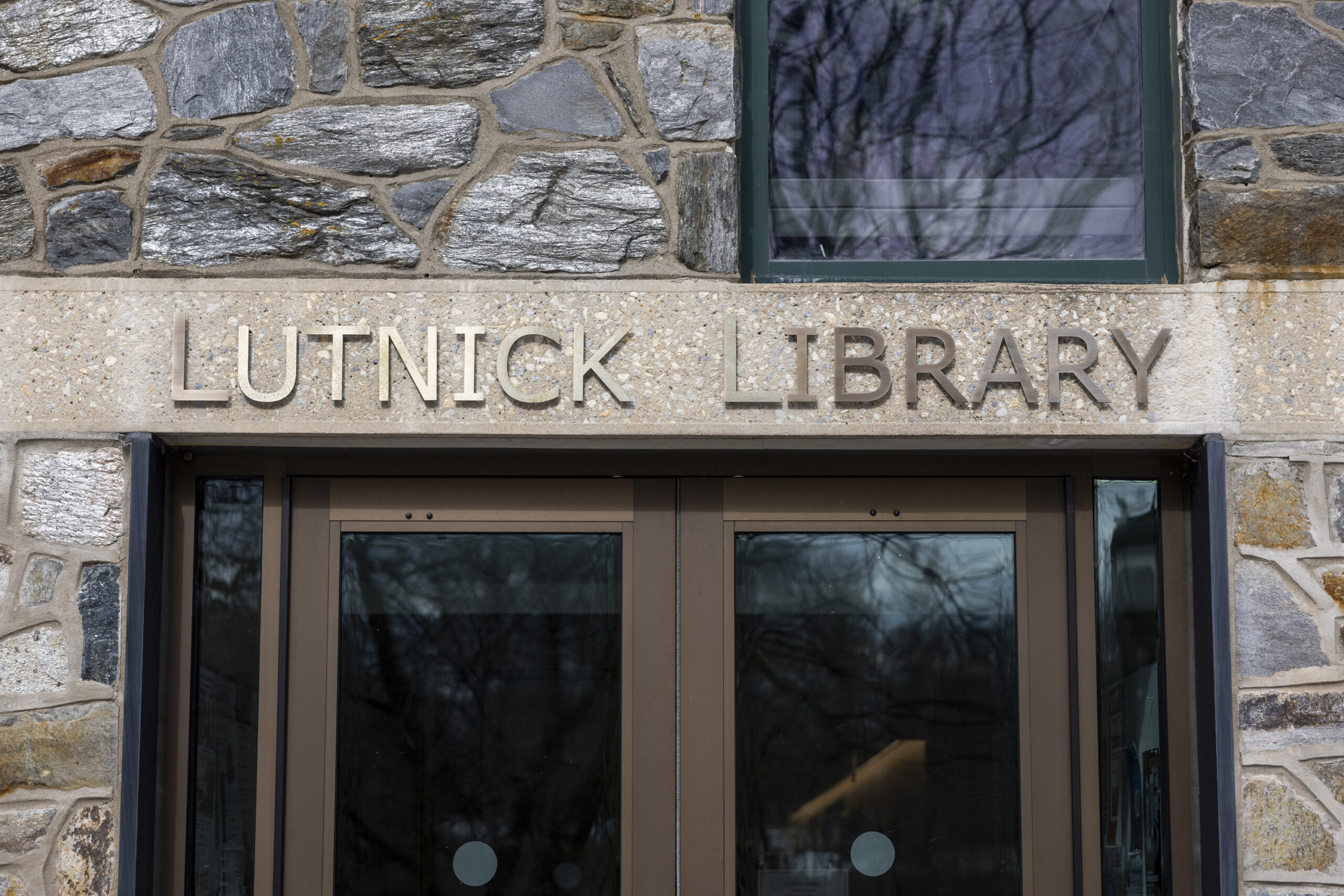
    The outside of the Lutnick Library at Haverford College.

    Raymond’s announcement comes one day after students held a town hall to discuss their concerns and feelings about Lutnick‘s ties to Epstein.

    Students who organized the town hall said Raymond’s communications about Lutnick have fallen short. They said they had hoped at least to see a review committee started.

    “Many students, including myself, are deeply disappointed and, in many cases, hurt by the neutral and softened language in these communications,” senior English major Paeton Smith-Hiebert wrote to Raymond.

    Smith-Hiebert is co-founder of the Haverford Survivor Collective, which started in 2023 and is led by Haverford students and survivors of sexual assault. She said while Raymond notes she is having conversations about the topic, the collective hasn’t been consulted.

    “Given the gravity of this situation, survivors are among those most directly affected,” she wrote. “Many are feeling significant harm and institutional betrayal … While I understand there are many stakeholders to consult, it is difficult to reconcile the stated commitment to engagement with the apparent absence of those most impacted.”

    Raymond’s message, she said, also should have included a reference to resources or support for survivors who are struggling, she said.

    Between 50 and 100 students attended the nearly two-hour town hall, several attendees said, with no students speaking in favor of keeping Lutnick’s name on the building. Students introduced an open letter with demands that has since been signed by 235 students, staff, and alumni as of 8:30 a.m. Friday, said Smith-Hiebert. The letter calls on the college to immediately convene a review committee, rename the library, acknowledge the distress and harm members of the community are experiencing, and “adopt a clear and unambiguous morals clause” in the gift policy.

    Students also discussed the possibility of protest actions to urge the college to act as soon as possible.

    The issue of Lutnick’s name on the library is likely to come up at a plenary session, where students discuss and vote on important campus issues. That session is scheduled for March 29.

    If the students were to pass a resolution calling for the removal of Lutnick’s name from the library, it would go to Raymond for signing.

    Milja Dann, 19, a sophomore psychology major from Woodbury, N.J., said she went through all of the Epstein files that mention Lutnick and Epstein and saw references to at least seven planned in-person encounters. Students compiled a 10-page document on the Lutnick-related material in the files.

    “I feel it is extremely difficult for survivors of sexual violence to see that name and know it is so closely associated with a man who has perpetuated violence and harm to so many people,” Dann said.

    A Commerce Department spokesperson told the Associated Press last month that Lutnick had had “limited interactions” with Epstein, with his wife in attendance, and had not been accused of “wrongdoing.” Lutnick told lawmakers last week: “I did not have any relationship with him. I barely had anything to do with him.”

    Some students at the town hall talked about the difficulty of going in the library, which is the heart of the academic campus.

    “For me, walking into that space has been uncomfortable for a while,” Smith-Hiebert said, referring to when Lutnick was named President Donald Trump’s commerce secretary. “That discomfort has only intensified given this news.”

    Lutnick, formerly chairman of Cantor Fitzgerald L.P., a New York City financial firm that lost hundreds of employees in the 9/11 World Trade Center attacks, served on Haverford’s board for 21 years.

    In addition to the library, which also bears his wife Allison’s name, the indoor tennis and track center is named for his brother Gary Lutnick, a Cantor Fitzgerald employee who was killed on 9/11, and the fine arts building carries the name of his mother, Jane Lutnick, a painter. He also funded the college’s Cantor Fitzgerald Art Gallery.

    Students discussed whether removing Lutnick’s name from the library would be enough or if other references should come down, too, said Cade Fanning, the associate editor of the Clerk, Haverford’s student newspaper, who attended the meeting.

    “That had the most split opinions,” said Fanning, 21, a senior history major from Annapolis.

    But people were concerned that seeing the Lutnick name on anything, even if it was a relative, would be difficult for survivors, Fanning said. And the relatives’ names still signify Lutnick’s “imprint” on the college, he said.

    Students also discussed that while they want his name off the library, the college should install a plaque explaining the history, rather than erasing it, Smith-Hiebert said.

  • Reese’s grandson accuses Hershey of degrading chocolate, making it ‘not edible.’ Is he right?

    Reese’s grandson accuses Hershey of degrading chocolate, making it ‘not edible.’ Is he right?

    The grandson of the inventor of Reese’s Peanut Butter Cups went viral after penning an open letter to Pennsylvania’s Hershey Company on Feb. 14. But it was far from a valentine.

    Brad Reese, 70, accused the confectionery manufacturer of hurting the brand his grandfather H.B. Reese began a century ago, cutting corners with its chocolate quality. Within the week, Reese’s post has sparked discussions about brand integrity, ingredients, and legacy.

    In a LinkedIn post, Reese said Hershey’s assortment of Reese’s products (including the valentine heart-shaped ones he had recently sampled) include different, cheaper ingredients, swapping milk chocolate for compound coatings and peanut butter for peanut butter créme.

    “How does The Hershey Co. continue to position Reese’s as its flagship brand, a symbol of trust, quality, and leadership, while quietly replacing the very ingredients (Milk Chocolate + Peanut Butter) that built Reese’s trust in the first place?” Reese wrote.

    Reese isn’t wrong. Several Reese’s products today — including the valentine’s hearts and the Easter egg-shaped versions — use chocolate-flavored coatings that cannot be legally called “milk chocolate,” a term that’s regulated by the Food and Drug Administration. It’s unclear exactly when the swaps occurred.

    The flagship Reese’s Peanut Butter Cups continue to list milk chocolate and peanuts as the first two ingredients.

    Still, the product line’s variance represents a shift across the candy industry as cocoa prices continue to rise, driven by a combination of factors, including climate-sparked changes in supply, tariffs, and labor shortages, the New York Times reports. Chocolate companies, including Hershey’s, have responded by making cost-effective ingredient swaps. The Times reported that several chocolate-forward Hershey’s candies no longer listed milk chocolate among their ingredients during last Halloween season.

    Hershey doesn’t deny the swaps, but is defending its quality.

    The company said in a statement Wednesday that Reese’s Peanut Butter Cups are made the same way they’ve always been, with house-made milk chocolate and roasted peanuts, but that ingredients for some other Reese’s products can vary based on demand.

    “As we’ve grown and expanded the Reese’s product line, we make product recipe adjustments that allow us to make new shapes, sizes, and innovations that Reese’s fans have come to love and ask for, while always protecting the essence of what makes Reese’s unique and special: the perfect combination of chocolate and peanut butter,” the company said.

    A package of Reese’s Hearts is shown on Tuesday, Feb. 17, 2026, in New Jersey. (AP Photo/Pablo Salinas)

    A government database last updated in 2023 shows changes to the ratio of peanuts and milk chocolate used in Reese’s Peanut Butter Eggs over the years. Three years ago, the egg chocolates had more peanuts and milk chocolate than anything else. But the current formula lists sugar and vegetable oil first — and no milk chocolate.

    Reese said he thinks Hershey has gone too far this time.

    He picked up a bag of Reese’s Mini Hearts for Valentine’s Day, but threw them away after sampling.

    “It was not edible,” Reese told The Associated Press. “You have to understand. I used to eat a Reese’s product every day. This is very devastating for me.”

    Reese’s grandfather, H.B. Reese, spent two years at Hershey before leaving to form his own company, H.B. Reese Candy Co. in 1919. The company manufactured about 12 types of chocolate, made with ingredients that included real cocoa butter, fresh cream, and freshly roasted peanuts.

    He invented Reese’s Peanut Butter Cups in 1928. They were a hit and had wrappers included the slogan: “Made in Chocolate Town, so they must be good.” H.B. Reese died in 1956. His six sons eventually sold his company to Hershey in 1963.

    Now, Reese is waging war.

    He redesigned his personal website to take on Hershey’s ingredient swaps. The lead photo on the homepage shows an orange cap with the phrase “MAKE REESE’S GREAT AGAIN” stitched on the front. He says the website is devoted to “protecting Reese’s brand integrity.” It includes a list of news coverage his LinkedIn call-out has received to date.

    “Right now, the REESE’S story is diverging from what’s inside REESE’S products. And that divergence puts REESE’S and the legacy behind it, at risk,” Reese said on LinkedIn. “As the grandson of the man who created REESE’S Peanut Butter Cups, I’m not asking for nostalgia. I’m asking for alignment. For truth in REESE’S brand stewardship.”

  • What the Supreme Court throwing out Trump’s tariffs means for you

    What the Supreme Court throwing out Trump’s tariffs means for you

    The Supreme Court ruled Friday that most of President Donald Trump’s widespread tariffs put in place last year are invalid — but that doesn’t mean shoppers will suddenly see prices drop.

    The high court ruled that Trump overstepped his authority by relying on a decades-old emergency law to impose tariffs on goods from nearly every country.

    Now, the fate of the tariffs is uncertain. Trump indicated at a news conference Friday that he would not back off from his prominent economic policy and would impose tariffs using other laws.

    Here’s what the ruling means for American consumers and what happens next.

    Does this mean all tariffs are off?

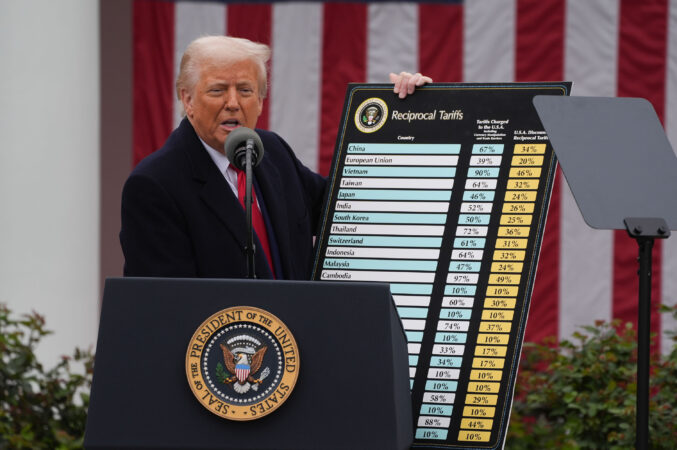
    No. The Supreme Court’s ruling applies to the tariffs Trump imposed under the International Emergency Economic Powers Act (IEEPA). That includes the country-specific tariffs such as a 15% levy on goods from European Union countries or a 20% tariff on imports from Vietnam.

    That includes most of the tariffs Trump put into place last year, but not all of them. Sector-specific tariffs, such as duties on steel, aluminum, and autos will remain in place.

    What does this mean for prices?

    Tariffs contributed to rising prices throughout the past year, though not as significantly as some analysts had initially feared. Still, the Yale Budget Lab estimates that the average household would lose about $1,800 because of the cost of tariffs in the short term.

    Federal Reserve Chair Jerome H. Powell said in December that tariff price increases caused much of the overshoot in inflation, which has remained stubbornly higher than the Fed’s target rate of 2%.

    But even with IEEPA tariffs gone, consumers are unlikely to see much immediate relief in their shopping bills.

    “Generally, prices don’t go down once they’ve gone up,” said Joe Feldman, senior managing director and retail analyst at Telsey Advisory Group. “We might see a little bit of relief.”

    Companies may be wary to reduce prices when so much uncertainty remains about the future of tariffs.

    For months last year, many companies stocked up on imports in anticipation of tariffs. That gave them a cushion before they had to raise prices to make up for the increased cost of goods. That advance inventory started running out for many late last year, but it’s possible that throwing out the IEEPA tariffs will prevent future price increases that would have otherwise taken place.

    Will I get any rebates?

    Probably not. For the most part, tariffs are paid by importing companies during a Customs and Border Protection process. Individual consumers eventually see some of those fees in the form of cost increases but do not pay tariffs directly.

    It’s unlikely that individual businesses will refund customers for price increases.

    Trump said several times last year that he planned to use the tariff revenue, which was about $200 billion as of mid-December, to give stimulus checks to Americans. But there are many challenges inherent in that plan, including that tariff funds go to the Treasury and must be allocated by Congress before they are used.

    Will businesses get refunds from tariff payments?

    Maybe. There’s already a process in place for importers to adjust and dispute the duties they’ve paid at the border, and it’s possible that companies will use that system to appeal the fees they’ve paid over the past several months.

    But the government has yet to say if or how refunds would work or how long they might take to reach companies. The Supreme Court did not address what to do about refunds.

    At a news conference shortly after the decision was announced, Trump criticized the Supreme Court for not addressing the refund issue.

    “I guess it has to get litigated for the next two years,” he said.

    Businesses are preparing for a potential refund process, and some had already started petitioning CBP for refunds even before the court ruled, in the hopes of getting put in the front of the line.

    Costco, one of the nation’s largest retailers, sued customs officials in late November, saying separate legal action was needed to guarantee its refund rights.

    What does this mean for the future of tariffs?

    Trump is unlikely to simply dismiss the idea of tariffs because of the legal setback. Members of the Trump administration have already discussed other avenues to impose levies. After the Supreme Court oral arguments, Trump told reporters his team would “develop a ‘game two’ plan.”

    There are more traditional — albeit slower — ways to put tariffs in place, such as the sector-specific tariffs on steel, aluminum, and copper. Those are generally proceeded by a government investigation and are more specific than the countrywide tariffs Trump imposed last year.

    Trump said Friday after the decision that the government would use a separate law, Section 122, to implement a 10% global tariff. That law allows tariffs to be imposed for 150 days.

    He also said he would impose “several” new tariffs under Section 301, which applies to unfair trade practices.

    One way Trump might proceed would be to use a different law to temporarily put in place tariffs of up to 15% for about five months, said Patrick Childress, an international trade attorney at Holland & Knight in D.C. and a former assistant general counsel at the Office of the U.S. Trade Representative. During that time, the Trump administration could conduct investigations using a separate law to potentially put in place country-specific tariffs.

    “This is the path I think the administration is most likely to take because it gives them speed. They have flexibility to raise tariffs up or down, and they result in country-specific tariffs much like the IEEPA tariffs,” Childress said.

    If that’s how the White House ultimately tackles tariffs, it could mean that not much changes at all for consumers.

  • A Willow Grove man who used insider info to make $617,000 trading stocks was sentenced to two years in prison

    A Willow Grove man who used insider info to make $617,000 trading stocks was sentenced to two years in prison

    A Willow Grove man who made more than $600,000 by trading stocks based on confidential information his then-girlfriend gave him about an impending corporate acquisition was sentenced Friday to two years in federal prison.

    Carlos Sacanell, 59, apologized for his actions before U.S. District Judge Wendy Beetlestone, saying he’d made a “terrible decision” and had “profound regret” for what he did.

    “This action does not represent who I am,” said Sacanell, who pleaded guilty last year to one count of securities fraud.

    Sacanell’s crimes occurred in 2023, prosecutors said, when his longtime partner told him that her company, the Chicago-based Oak Street Health Inc., was about to be acquired by CVS Health.

    The next day, prosecutors said, Sacanell — without his girlfriend’s knowledge — bought hundreds of thousands of dollars worth of Oak Street stocks and call options.

    Sacanell adjusted his purchases over the next few weeks as his girlfriend continued sharing occasional insights about whether or not the deal might go through, prosecutors said. The woman was not aware that he was trading on the information she gave him, prosecutors said, but when the acquisition ultimately closed, Sacanell netted about $617,000.

    In April 2023, prosecutors said, the FBI confronted Sacanell — who worked as a scientist — about what they viewed as his suspicious trades, but he denied that he had any insider information about Oak Street or the deal.

    Sacanell was indicted in late 2024. His relationship with his then-girlfriend has since ended, his lawyer said, and he is now expected to report to prison in about two months.

    He is also expected to be deported once his term of incarceration ends, his lawyer said. Sacanell was born and raised in Spain before becoming a lawful permanent resident of the United States, but will now likely be deported due to his conviction.

    Sacanell said he had already repaid about $300,000 worth of his illicit proceeds, and vowed that he would not commit any similar infractions in the future.

    “I regret it every day of my life,” Sacanell said.