Now, attorneys for the man charged in Kirk’s killing want a state judge to block such videos from being shown during a hearing scheduled for Tuesday. Defense attorneys also want to oust TV and still cameras from the courtroom, arguing that “highly biased” news outlets risk tainting the case.
Prosecutors, attorneys for news organizations, and Kirk’s widow urged state District Judge Tony Graf to keep the proceedings open.
“In the absence of transparency, speculation, misinformation, and conspiracy theories are likely to proliferate, eroding public confidence in the judicial process,” Erika Kirk’s attorney wrote in a Monday court filing. “Such an outcome serves neither the interests of justice nor those of Ms. Kirk.”
But legal experts say the defense team’s worries are real: Media coverage in high-profile cases such as Tyler Robinson’s can have a direct “biasing effect” on potential jurors, said Cornell Law School Professor Valerie Hans.
“There were videos about the killing, and pictures and analysis (and) the entire saga of how this particular defendant came to turn himself in,” said Hans, a leading expert on the jury system. “When jurors come to a trial with this kind of background information from the media, it shapes how they see the evidence that is presented in the courtroom.”
Prosecutors intend to seek the death penalty for Robinson, 22, who is charged with aggravated murder in the Sept. 10 shooting of Kirk on the Utah Valley University campus in Orem. An estimated 3,000 people attended the outdoor rally to hear Kirk, a co-founder of Turning Point USA, who helped mobilize young people to vote for President Donald Trump.
To secure a death sentence in Utah, prosecutors must demonstrate aggravating circumstances, such as that the crime was especially heinous or atrocious. That’s where the graphic videos could come into play.
Watching those videos might make people think, “’Yeah, this was especially heinous, atrocious or cruel,’” Hans said.
Further complicating efforts to ensure a fair trial is the political rhetoric swirling around Kirk, stemming from the role his organization played in Trump’s 2024 election. Even before Robinson’s arrest, people had jumped to conclusions about who the shooter could be and what kind of politics he espoused, said University of Utah law professor Teneille Brown.
“People are just projecting a lot of their own sense of what they think was going on, and that really creates concerns about whether they can be open to hearing the actual evidence that’s presented,” she said.
Robinson’s attorneys have ramped up claims of bias as the case has advanced, even accusing news outlets of using lip readers to deduce what the defendant is whispering to his attorneys during court hearings.
Fueling those concerns was a television camera operator who zoomed in on Robinson’s face as he talked to his attorneys during a Jan. 16 hearing. That violated courtroom orders, prompting the judge to stop filming of Robinson for the remainder of the hearing.
“Rather than being a beacon for truth and openness, the News Media have simply become a financial investor in this case,” defense attorneys wrote in a request for the court to seal some of their accusations of media bias. Unsealing those records, they added, “will simply generate even more views of the offending coverage, and more revenue for the News Media.”
Prosecutors acknowledged the intense public interest surrounding the case but said that does not permit the court to compromise on openness. They said the need for transparency transcends Robinson’s case.
“This case arose, and will remain, in the public eye. That reality favors greater transparency of case proceedings, not less,” Utah County prosecutors wrote in a court filing.
Defense attorneys are seeking to disqualify local prosecutors because the daughter of a deputy county attorney involved in the case attended the rally where Kirk was shot. The defense alleges that the relationship represents a conflict of interest.
In response, prosecutors said in a court filing that they could present videos at Tuesday’s hearing to demonstrate that the daughter was not a necessary witness since numerous other people recorded the shooting.
Among the videos, prosecutors wrote, is one that shows the bullet hitting Kirk, blood coming from his neck and Kirk falling from his chair.
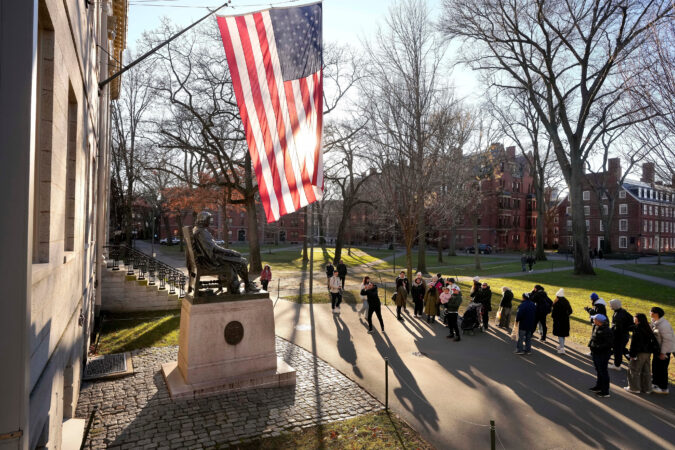
WASHINGTON — President Donald Trump is demanding a $1 billion payment from Harvard University to end his prolonged standoff with the Ivy League campus, doubling the amount he sought previously as both sides appear to move further from reaching a deal.
The president raised the stakes on social media Monday night, saying Harvard has been “behaving very badly.” He said the university must pay the government directly as part of any deal — something Harvard has opposed — and that his administration wants “nothing further to do” with Harvard in the future.
Trump’s comments on Truth Social came in response to a New York Times report saying the president had dropped his demand for a financial payment, lowering the bar for a deal. Trump denied he was backing down.
Harvard officials did not immediately comment.
Trump’s outburst appears to leave both sides firmly entrenched in a conflict that Trump previously said was nearing an end.
Last June, Trump said a deal was just days away and that Harvard had acted “extremely appropriately” during negotiations. He later said an agreement was being finalized that would require Harvard to put $500 million toward the creation of a “series of trade schools” rather than a payment to the government.
That deal appears to have fallen apart entirely. In his social media post, Trump said the trade school proposal had been turned down because it was “convoluted” and “wholly inadequate.”
Harvard has long been Trump’s top target in his administration’s campaign to bring the nation’s most prestigious universities to heel. His officials have cut billions of dollars in Harvard’s federal research funding and attempted to block it from enrolling foreign students after the campus rebuffed a series of government demands last April.
The White House has said it’s punishing Harvard for tolerating anti-Jewish bias on campus.
In a pair of lawsuits, Harvard said it’s being unfairly penalized for refusing to adopt the administration’s views. A federal judge agreed in December, reversing the funding cuts and calling the antisemitism argument a “smokescreen.”
Trump’s latest escalation comes as other parts of his higher education campaign are teetering.
Last fall, the White House invited nine universities to join a “compact” that offered funding priority in exchange for adopting Trump’s agenda. None of the schools accepted. In January, the administration abandoned its legal defense of an Education Department document threatening to cut schools’ funding over diversity, equity, and inclusion policies.
When he took office for his second term, Trump made it a priority to go after elite universities that he said had been overrun by liberal thinking and anti-Jewish bias. His officials have frozen huge sums of research funding, which colleges have come to rely on for scientific and medical research.
Several universities have reached agreements with the White House to restore funding. Some deals have included direct payments to the government, including $200 million from Columbia University. Brown University agreed to pay $50 million toward state workforce development groups.
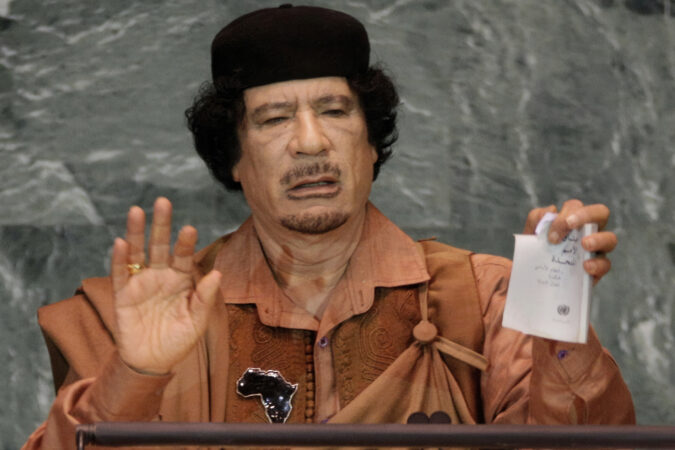
CAIRO — Seif al-Islam Gadhafi, the son and one-time heir apparent of Libya’s late dictator Moammar Gadhafi, was killed in the northern African country, Libyan officials said Tuesday.
The 53-year-old was killed in the town of Zintan, 85 miles southwest of the capital, Tripoli, according to two Libyan security officials in western Libya. The officials spoke on condition of anonymity because they were not authorized to brief the media.
Khaled al-Zaidi, a lawyer for Seif al-Islam, confirmed his death on Facebook, without providing details.
Abdullah Othman Abdurrahim, who represented Gadhafi in the U.N.-brokered political dialogue which aimed to resolve Libya’s long-running conflict, also announced his death on Facebook.
Abdurrahim, who leads his political team, didn’t provide further details, but Libyan news outlet Fawasel Media cited him as saying that armed men killed Seif al-Islam in his home. The outlet reported that prosecutors were investigating the killing.
Seif al-Islam’s political team later released a statement, saying that “four masked men” stormed his house and killed him in a “cowardly and treacherous assassination.” The statement said that he clashed with the assailants, who closed the CCTV cameras at the house “in a desperate attempt to conceal traces of their heinous crimes.”
Born in June 1972 in Tripoli, Seif al-Islam was the second-born son of the longtime dictator. He studied for a Ph.D. at the London School of Economics and was seen as the reformist face of the Gadhafi regime.
Moammar Gadhafi was toppled in a NATO-backed popular uprising in 2011 after more than 40 years in power. He was killed in October 2011 amid the ensuing fighting that would turn into a civil war. The country has since plunged into chaos and divided between rival armed groups and militias.
Seif al-Islam was captured by fighters in Zintan late in 2011 while attempting to flee to neighboring Niger. The fighters released him in June 2017 after one of Libya’s rival governments granted him amnesty. He had since lived in Zintan.
A Libyan court convicted him of inciting violence and murdering protesters and sentenced him to death in absentia in 2015. He was also wanted by the International Criminal Court on charges of crimes against humanity related to the 2011 uprising.
In November 2021, Seif al-Islam announced his candidacy in the country’s presidential election in a controversial move that was met with outcry from anti-Gadhafi political forces in western and eastern Libya.
The country’s High National Elections Committee disqualified him, but the election wasn’t held over disputes between rival administrations and armed groups that have ruled Libya since the bloody ouster of Moammar Gadhafi.
A Montgomery County attorney specializing in personal injury claims against large corporations has been suspended for three years following allegations that he misled at least 16 clients on settlement offers that did not exist.
Brian McCormick was a former partner at Ross Feller Casey, a Philadelphia-based personal injury firm. The conduct that led to his suspension revolves around misleading statements to clients he represented in two types of cases.
The first set of clients are thosewho alleged that using agricultural giant Monsanto‘s weed killer, Roundup, caused their cancer. These cases can be lucrative, as Philadelphia juries returned verdicts against Monsanto for millions, and even billions, of dollars.
Due to the large number of Roundup lawsuits, a federal court appointed a special master who developed a formula to calculate settlement amounts. At least nine of McCormick’s clients rejected the formula-proposed settlement and the attorney claimed he was attempting to obtain, or had obtained, higher offers, according to the suspension order issued last month by the Pennsylvania Supreme Court’s Disciplinary Board.
McCormick went as far as to ask some clients to sign releases to obtain the nonexistent settlements. As his clients waited for their expectedchecks, according to the order, the attorney reassured them via emails, text messages, and voice messages between 2023 and January 2025 that the delays were part of the settlement process.
“[McCormick] did not settle any of the Roundup cases on behalf of the nine clients who rejected the formula determined settlement amount,” the order says.
Clients suing Monsanto weren’t the only ones McCormick misled. The attorney followed a similar pattern with at least seven clients who sued manufacturers of Risperdal, an antipsychotic drug that thousands of men said led them to develop excessive breast tissue, according to the disciplinary board.
McCormick promised settlement to his Risperdal clients, the order said, and at one time even gave a client a specific date on which he should pick up his check “knowing that no settlement check existed.”
Neither McCormick or the attorney who represented him during the disciplinary proceedings responded to a request for comment.
Ross Feller Casey terminated McCormick in January 2025 after finding that he had clients sign settlement agreements even though no settlements were reached.
“The firm’s owners terminated Mr. McCormick’s employment on the very same day they learned of his conduct, and they immediately took steps to ensure that the interests of all affected clients were protected,” said Mario Cattabiani, a spokesperson for Ross Feller Casey.
McCormick admitted to the misconduct and consented to the three-year suspension, the order says. The board noted that he “accepts full responsibility for his misconduct and is remorseful.”
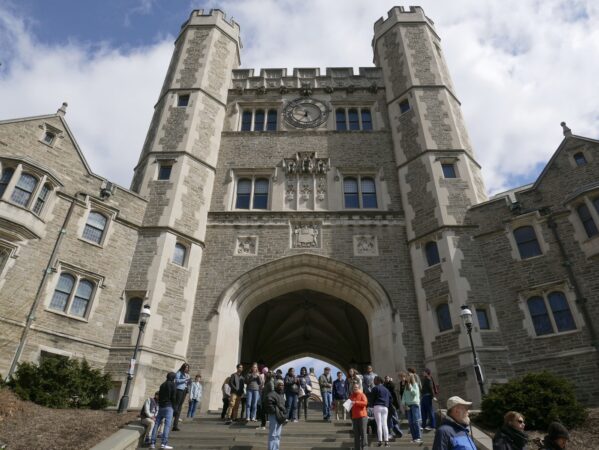
Princeton University’s president, in a message to campus, said the school will take the unusual move of consolidation and cuts, given federal policy changes and “political threats” to its financial model, as well as lowered expectations about future endowment returns.
“Changed political and economic circumstances require that we transition from a period of exceptional growth to one defined by steadfast focus on core priorities,” Christopher Eisgruber wrote Monday in his annual message to campus. “That shift is necessary for multiple reasons, including because it will help Princeton to stand strong for its defining principles and against rising threats to academic freedom.”
The Ivy League university, he wrote, “will have to look for areas where we can consolidate or cut, both to offset rising costs (including salaries and benefits) and to support the investments required for teaching and research excellence.”
Eisgruber’s announcement came days after the University of Pennsylvaniaannounced it would instituteanother round of budgetcutsin response to actions by President Donald Trump’s administration that threaten future funding and revenues, and because of rising legal and insurance expenses. The Trump administration has placed new caps on loans that graduate students can take out, temporarily paused student visa interviews, and sought to cut research funding to universities. Some colleges, including Penn and Princeton, also will see their endowment taxes rise.
Penn’s schools and centers were directed to cut 4% from certain expenses in the next fiscal year and keep in place financial cutbacks instituted last year, including a staff hiring freeze and freezes on midyear adjustments in staff salaries. Schools and centers also were asked last year to cut 5% of certain expenses, and the new 4% reduction would be on top of that.
The new Penn cuts come even though university officials said finances look better than they anticipated a year ago.
At Princeton, university officials also asked units across the school to make 5% to 7% cuts to their budgets over the last year, given an increase in the endowment tax that Princeton faces and federal threats to research funding. Eisgruber noted that the proceeds from its $36.4 billion endowment and sponsored research grants make up 83% of Princeton’s revenue.
The university’s endowment tax is scheduled to rise from 1.4% to 8% in 2026-27. (Penn’s tax on its $24.8 billion endowment is rising from 1.4% to 4%.)
Now, “more targeted, and in some cases deeper, reductions over a multiyear period” are likely required, Eisgruber wrote.
Last year, things were different.
In his 2025 message, Eisgruber noted that the school was “in the midst of an 18-month period in which the University will open more than a dozen substantial new facilities and spaces that enhance the University’s mission.”
Those include a new health center, a commons with a library, an art museum, student housing, and buildings that house an environmental institute and science and engineering programs.
“Princeton will continue to build, but more slowly in the years to come,” Eisgruber said in this week’s message. “Princeton will continue to evolve, but in the future it will more often have to do so through efficiency and substitution rather than addition. That will be a major change for most Princetonians, in comparison to not only the past five years but the last three decades.”
Princeton’s long-term endowment return assumptions have been lowered to 8% from 10.2% three years ago, Eisgruber wrote.
The university’s endowment returns in the three years following 2021 were “the second worst in more than four decades, better only than the returns in the years surrounding the Global Financial Crisis in 2008-09,” Eisgruber wrote. Two of those years saw negative returns.
Princeton spends about 5% of its endowment each year to support operations.
“An 8 percent return rate will require us to get the payout rate down below 5 percent even to cover payout plus inflation,” Eisgruber wrote.
The U.S. House of Representatives Tuesday voted 217-214 to end the partial government shutdown on its fourth day, avoiding a repeat of last year’s 43-day standoff.
The House passed a five-bill package that includes funding the Departments of Defense, State, Transportation, Education, Labor, Treasury, Health and Human Services, and Housing and Urban Development.
Every House Democrat from Pennsylvania opposed the package. U.S. Rep. Scott Perry (R., York) was the lone Republican from the delegation to vote against it.
Among New Jersey Democrats, U.S. Rep. Josh Gottheimer (D., N.J.) was among the 21 members of the party who crossed the aisle to support the bill.
As part of the deal, the House also passed 10 days of funding for the Department of Homeland Security as negotiations for longer-term will continue amid national uproar over President Donald Trump’s immigration crackdown.
Funding for DHS has been the core reason behind the government shutdown after Democrats said they would not vote for an allocation to the department without reforms to federal immigration agents’ conduct after agents fatally shot two Americans in Minnesota last month.
U.S. Rep. Ryan Mackenzie (R., Lehigh), who voted for the deal, said he will participate in “ongoing conversations about achieving commonsense, bipartisan reforms of DHS operations.”
In the House, only a handful of Republicans voted against the package, providing House Speaker Mike Johnson with the support he needed from the party to pass the package in the narrowly divided chamber.
Meanwhile, the vast majority of Democrats voted against the bill, with immigration enforcement remaining a top issue.
"We are in a dangerous and deadly place," U.S. Rep. Madeleine Dean (D, Montgomery) said in a statement. Adding that with DHS receiving funding until Feb. 13, "ICE agents can continue their grotesque and thuggish behavior. Meaning Congress has only ten days to agree on reform,” she said.
Now that Trump has signed the bill, Republicans and Democrats still need to hammer out a long-term deal on DHS, which oversees ICE and the Border Patrol.
Retiring U.S. Rep. Dwight Evans (D., Philadelphia) said in a statement that he would “need to see much-needed guardrails and protections being put into law” before he can support more funding for the agencies.
DHS also oversees TSA and an extended funding lapse could affect air travel.
U.S. Rep. Brian Fitzpatrick, a moderate Republican from Bucks County, voted for the government funding package Tuesday and plans to work with Democrats in the bipartisan Problem Solvers Caucus on reforms to ICE, his spokesperson said.
Staff Contributors
Design, Development and Data: Sam Morris
Reporting: Fallon Roth
Editing: Bryan Lowry
(()=>{var te=(e,t)=>()=>(t||e((t={exports:{}}).exports,t),t.exports);var I=te(r=>{var ue={0:”Jan.”,1:”Feb.”,2:”March”,3:”April”,4:”May”,5:”June”,6:”July”,7:”Aug.”,8:”Sept.”,9:”Oct.”,10:”Nov.”,11:”Dec.”};function E(e){return e===void 0&&(e=new Date),ue[e.getMonth()]}var pe={0:”Jan”,1:”Feb”,2:”Mar”,3:”Apr”,4:”May”,5:”Jun”,6:”Jul”,7:”Aug”,8:”Sep”,9:”Oct”,10:”Nov”,11:”Dec”};function N(e){return e===void 0&&(e=new Date),pe[e.getMonth()]}function s(e){return e==null}function D(e){return typeof e==”number”&&isFinite(e)}function m(e){return D(e)&&Math.floor(e)===e}var fe=[“one”,”two”,”three”,”four”,”five”,”six”,”seven”,”eight”,”nine”],me=[“million”,”billion”,”trillion”,”quadrillion”,”quintillion”,”sextillion”,”septillion”,”octillion”,”nonillion”,”decillion”],$=[“th”,”st”,”nd”,”rd”,”th”,”th”,”th”,”th”,”th”,”th”],he=[11,12,13];function H(e){if(s(e))return””;var t=+e;return m(t)?he.indexOf(t%100)>-1?$[0]:$[t%10]:””}var ve=[“first”,”second”,”third”,”fourth”,”fifth”,”sixth”,”seventh”,”eighth”,”ninth”],ge=new RegExp(/s+([^s]*)s*$/);r.apdate=function(e){return e===void 0&&(e=new Date),E(e)+” “+e.getDate()+”, “+e.getFullYear()},r.apdatetab=function(e){return e===void 0&&(e=new Date),N(e)+” “+e.getDate()+”, “+e.getFullYear()},r.apmonth=E,r.apmonthtab=N,r.apnumber=function(e){if(s(e))return””;var t=+e;return m(t)?t=10?e.toString():fe[t-1]:e.toString()},r.aptime=function(e){e===void 0&&(e=new Date);var t,o,n=e.getHours(),i=e.getMinutes(),l=i===0;if(l){if(n===0)return”midnight”;if(n===12)return”noon”}return n0?n:12):(t=”p.m.”,o=n===12?n:n-12),l?o+” “+t:o+”:”+(i<10?"0"+i:i)+" "+t},r.capfirst=function(e){if(s(e))return"";var t=String(e);return""+t.charAt(0).toUpperCase()+t.slice(1)},r.intcomma=function(e){if(s(e))return"";var t,o=+e;return D(o)?((t=o.toString().split("."))[0]=t[0].replace(/B(?=(d{3})+(?!d))/g,","),t.join(".")):e.toString()},r.intword=function(e){if(s(e))return"";var t=+e;if(!m(t))return e.toString();var o=Math.abs(t);if(o<1e6)return e.toString();var n=Math.ceil(Math.log(o+1)/Math.LN10)-1,i=n-n%3,l=t/Math.pow(10,i);return(l=Math.round(10*l)/10)+" "+me[Math.floor(i/3)-2]},r.ordinal=function(e,t){if(t===void 0&&(t=!1),s(e))return"";var o=+e;return m(o)?t&&o{document.querySelectorAll(“.js-hover”).forEach(e=>{e.addEventListener(“click”,()=>{A(e)}),e.addEventListener(“mouseenter”,()=>{A(e)}),e.addEventListener(“mouseout”,()=>{M(e)})}),window.addEventListener(“scroll”,()=>{u!==null&&ne()})},ne=()=>{(u>window.scrollY+100||u{M(e)})},A=e=>{e.classList.add(“is-visible”),u=window.scrollY},M=e=>{e.classList.remove(“is-visible”),u=null},j={init:()=>{oe()}};var p,ie=(e,t)=>{p=p||window.PMNdataLayer,p?p.push({event:”misc_event”,eventAction:e,eventLabel:t}):window.location.hostname.includes(“localhost”)?console.log(“Analytics event:”,e,t,”(not actually being sent due to localhost)”):console.log(“Failed to push analytics event”,e,t)},f={event:(e,t)=>{ie(e,t)}};var re=!1,se=()=>{document.querySelectorAll(“.js-location”).forEach(e=>{e.querySelector(“.js-location-form”).addEventListener(“submit”,t=>{t.preventDefault(),ae(e)}),e.querySelector(“.js-location-street”).addEventListener(“keyup”,t=>{x(e)}),e.querySelector(“.js-location-street”).addEventListener(“change”,()=>{x(e)})})},ae=e=>{let t=new URLSearchParams;t.set(“street”,e.querySelector(“.js-location-street”).value),t.set(“city”,e.querySelector(“.js-location-city”).value||”Philadelphia”),t.set(“state”,e.querySelector(“.js-location-state”).value||”PA”),f.event(“search”,`submit | ${t.get(“street”)} ${t.get(“city”)}`),e.classList.remove(“is-inactive”,”is-error”,”is-found”),e.classList.add(“is-loading”),fetch(`https://inq-holme.herokuapp.com/geocode?${t.toString()}&fields=cd`).then(o=>{if(o.status>=200&&o.status{console.log(o),o.error?g(“Something has gone wrong. Please try again.”):ce(e,o)})},ce=(e,t)=>{let o=t.results[0].fields.congressional_districts,n=t.results[0].address_components;if(re=!0,t.results[0]&&t.results[0].accuracy>.9&&typeof o!==null&&n.number&&n.formatted_street){e.querySelector(“.js-location-street”).value=`${n.number} ${n.formatted_street}`,e.querySelector(“.js-location-city”).value=n.city;let K=t.results[0].fields.congressional_districts[0].district_number,Q=`${n.state.toLowerCase()}-${K}`,L=document.querySelector(`.js-politicans-member[data-id=”${Q}”]`),v=document.querySelector(“.js-politicans-with-location”),X=v.querySelector(`.js-politicians-members[data-id=”${L.dataset.voteCast.toLowerCase()}”]`),q=v.querySelectorAll(“.js-politicans-member”);q.length>0&&q.forEach(ee=>{ee.remove()}),X.append(L.cloneNode(!0)),v.classList.remove(“is-hidden”),T()}else g(“Address not found. Please try a different one.”)},x=e=>{e.querySelector(“.js-location-street”).value.length>3?e.classList.add(“is-valid”):e.classList.remove(“is-valid”)},T=()=>{document.querySelector(“.js-location”).classList.remove(“is-loading”)},g=e=>{let t=document.querySelector(“.js-location”);t.classList.remove(“is-loading”),t.classList.add(“is-error”),t.querySelector(“.js-error”).textContent=e,document.querySelector(“.js-politicans-with-location”).classList.add(“is-hidden”),T()},k={init:()=>{se()}};var le=()=>{document.querySelectorAll(“.js-politicans-expand”).forEach(e=>{e.addEventListener(“click”,()=>{de(e)})})},de=e=>{f.event(“click”,”open group”),e.closest(“.js-politicans-content”).classList.remove(“is-collapsed”),setTimeout(()=>{e.closest(“.js-politicans-content”).classList.add(“is-open”)},1e3)},P={init:()=>{le()}};var Ve=I();var C=()=>/Android|webOS|iPhone|iPad|iPod|BlackBerry|IEMobile|Opera Mini/i.test(navigator.userAgent);var y=(e,t=null,o=null)=>{o||(o=document.querySelector(“head”));let n=document.createElement(“script”);n.type=”text/javascript”,n.src=e,t&&(n.onload=t),o.appendChild(n)},F=()=>(window.PMNdataLayer?.[0]!==void 0&&window.PMNdataLayer[0])?.analytics?.user?.state===”Subscribed”,O=()=>{let t=(window.PMNdataLayer?.[0]!==void 0&&window.PMNdataLayer[0])?.analytics?.user?.state;return window.location.host.includes(“zzz-systest”)||window.location.host.includes(“pmn.arcpublishing.com”)||window.location.host.includes(“stage.fusion.inquirer.com”)||typeof t>”u”},z=()=>{let t=(window.PMNdataLayer?.[0]!==void 0&&window.PMNdataLayer[0])?.analytics?.user?.hasAdsFreeReading;return!!(t&&t==1)},w=()=>window.location.host.includes(“localhost”);var ye=()=>{z()&&document.querySelectorAll(“.js-ad”).forEach(t=>{t.classList.add(“is-hidden”)})},B={init:()=>{ye()}};var a,_,we=()=>{a=document.getElementById(“js-inno-toast”)},Se=e=>{if(!a)return;a.innerHTML=e,a.classList.add(“inno-toast–active”);let t=()=>{a.addEventListener(“transitionend”,be,{once:!0}),a.classList.remove(“inno-toast–active”)};clearTimeout(_),_=setTimeout(t,5e3)},be=()=>{a.innerHTML=””},c={init:()=>{we()},showToast:Se};var h,Le=async()=>new Promise(e=>{setTimeout(()=>{console.log(“simulating createShareLink for localhost”),e(“https://inquirer.com/interactives”),qe()},100)}),qe=()=>{let e=document.querySelector(“.js-gift-toast-receiver”);!e||!(e instanceof HTMLElement)||setTimeout(()=>{let t=e?.querySelector(“span”);t&&(t.innerHTML=”Gift link copied to clipboard“)},20)},Ae=()=>{let e=window.services?.createShareLink;e&&(h=e),w()&&(h=Le),h&&je()},Me=async e=>{let t=”text/plain”,o=async()=>{try{return await h(window.location.pathname)}catch{e.dataset.state=”error”,c.showToast(“Hmm, we couldn’t generate a gift link…”)}},n=new ClipboardItem({[t]:o()});await navigator.clipboard.write([n]).catch(i=>{console.log(i),c.showToast(“Couldn’t copy to clipboard, try again?”),e.dataset.state=”error”}),c.showToast(“Gift link copied to clipboard!”),e.dataset.state=”complete”},je=()=>{document.querySelectorAll(“.js-gift”).forEach(t=>{(F()||w()||O())&&t.classList.add(“is-available”)}),document.querySelectorAll(“.js-gift-button”).forEach(t=>{t instanceof HTMLButtonElement&&t.addEventListener(“click”,()=>{t.classList.contains(“disabled”)||(t.dataset.state=”loading”,Me(t),setTimeout(()=>{t.dataset.state=”ready”},2e3))})});let e=document.querySelector(“.js-gift-toast-receiver”);!e||!(e instanceof HTMLElement)||xe(e)},xe=e=>{new MutationObserver(o=>{for(let n of o){let i=[…n.addedNodes].at(0);if(!(i instanceof HTMLElement))return;c.showToast(i.outerHTML)}}).observe(e,{subtree:!0,childList:!0})},G={init:()=>{Ae()}};var Te=()=>{window.addEventListener(“message”,e=>{if(e.data[“datawrapper-height”]){let t=e.data[“datawrapper-height”];for(let o in t)document.querySelector(`#datawrapper-chart-${o}`).setAttribute(“height”,t[o])}})},ke=()=>{document.querySelectorAll(“.js-datawrapper-graphic”).forEach(e=>{y(`https://datawrapper.dwcdn.net/${e.dataset.id}/embed.js`,null,e)})},Pe=()=>{window.addEventListener(“message”,e=>{let t=e.data;document.querySelectorAll(`iframe[src*=”${t.id}”]`).forEach(n=>{n.style.height=`${t.height}px`})},!1)},Ee=()=>{document.querySelectorAll(“.js-pym-graphic”).forEach(e=>{if(typeof window{new window.pym.Parent(e.id,e.dataset.iframe)};typeof window.pym>”u”?y(“https://pym.nprapps.org/pym.v1.min.js”,t):t()}})},R={init:()=>{Te(),ke(),Ee(),Pe()}};var Ne=()=>{},J={init:()=>{Ne()}};var d,S,b=!0,$e=()=>{d=document.querySelectorAll(“.js-video-autoplay”)},He=()=>{window.addEventListener(“resize”,()=>{V()}),window.addEventListener(“scroll”,()=>{V()}),d.forEach(e=>{e.addEventListener(“volumechange”,t=>{e.muted!==b&&!C()&&(b=e.muted,De())})})},V=()=>{let e;d.forEach((t,o)=>{let n=t.getBoundingClientRect(),i=n.height/2;n.y-i&&(e=t)}),e!==S&&(S=e,d.forEach(t=>{t.pause()}),e?e.play():S=null)},De=()=>{d.forEach(e=>{e.muted=b})},W={init:()=>{$e(),d&&He()}};var Y={init:()=>{j.init?.(),k.init?.(),P.init?.(),B.init?.(),G.init?.(),R.init?.(),J.init?.(),W.init?.(),c.init?.()}};var Ie=()=>{},U={init:()=>{Ie()}};var Ce=document.querySelector(“.js-inno”),Z=()=>{Y.init(),U.init()};Ce?Z():new MutationObserver((t,o)=>{if(document.querySelector(“.js-inno”)){o.disconnect(),Z();return}}).observe(document,{attributes:!0,childList:!0,subtree:!0});})();
WILMINGTON — The first husband of former first lady Jill Biden has been charged with killing his wife at their Delaware home in late December, authorities announced in a news release Tuesday.
William Stevenson, 77, of Wilmington was married to Jill Biden from 1970 to 1975.
Caroline Harrison, the Delaware Attorney General’s spokesperson, confirmed in a phone call that Stevenson is the former husband of Jill Biden.
Jill Biden declined to comment, according to an e-mailed response from a spokesperson at the former president and first lady’s office.
Stevenson remains in jail after failing to post $500,000 bail after his arrest Monday on first-degree murder charges. He is charged with killing Linda Stevenson, 64, on Dec. 28.
Police were called to the home for a reported domestic dispute after 11 p.m. and found a woman unresponsive in the living room, according to a prior news release. Life-saving measures were unsuccessful.
She ran a bookkeeping business and was described as a family-oriented mother and grandmother and a Philadelphia Eagles fan, according to her obituary, which does not mention her husband.
Stevenson was charged in a grand jury indictment after a weekslong investigation by detectives in the Delaware Department of Justice.
It was not immediately clear if Stevenson has a lawyer. He founded a popular music venue in Newark called the Stone Balloon in the early 1970s.
Jill Biden married U.S. Sen. Joe Biden in 1977. He served as U.S. president from January 2021 to January 2025.
MINNEAPOLIS — Immigration officers with guns drawn arrested some activists who were trailing their vehicles on Tuesday in Minneapolis, a sign that tensions have not eased since the departure last week of a high-profile commander.
At least one person who had an anti-ICE message on clothing was handcuffed while face-down on the ground. An Associated Press photographer witnessed the arrests.
Meanwhile, Tuesday was the deadline for the Minnesota governor, state attorney general and the mayors of Minneapolis and St. Paul to produce documents to a federal grand jury in response to a Justice Department request for records of any effort to stifle the Trump administration’s immigration crackdown. Officials have denounced it as a bullying tactic.
Federal agents in the Twin Cities lately have been conducting more targeted immigration arrests at homes and neighborhoods, rather than staging in parking lots. The convoys have been harder to find and less aggressive. Alerts in activist group chats have been more about sightings than immigration-related detainments.
Several cars followed officers through south Minneapolis after there were reports of them knocking at homes. Officers stopped their vehicles and ordered activists to come out of a car at gunpoint. Agents told reporters at the scene to stay back and threatened to use pepper spray.
There was no immediate response to a request for comment from the Department of Homeland Security and Immigration and Customs Enforcement.
A federal judge last month put limits on how officers treat motorists who are following them but not obstructing their operations. Safely following agents “at an appropriate distance does not, by itself, create reasonable suspicion to justify a vehicle stop,” the judge said. An appeals court, however, set the order aside.
Border Patrol commander Greg Bovino, who was leading an immigration crackdown in Minneapolis and other big U.S. cities, left town last week, shortly after the fatal shooting of Alex Pretti, the second local killing of a U.S. citizen in January.
Trump administration border czar Tom Homan was dispatched to Minnesota instead. He warned that protesters could face consequences if they interfere with officers.
Grand jury seeks communications, records
Minneapolis Mayor Jacob Frey’s office said it was complying with a grand jury subpoena requesting documents about the city’s response to Operation Metro Surge, but it released no other details.
“We have done nothing wrong and have nothing to hide, but when the federal government weaponizes the criminal justice system against political opponents, it’s important to stand up and fight back,” spokesperson Ally Peters said.
Other state and local offices run by Democrats were given similar requests. People familiar with the matter have told the AP that the subpoenas are related to an investigation into whether Minnesota officials obstructed enforcement through public statements.
No bond for man in Omar incident
Elsewhere, a man charged with squirting apple cider vinegar on Democratic U.S. Rep. Ilhan Omar will remain in jail. U.S. Magistrate Judge David Schultz granted a federal prosecutor’s request to deny bond to Anthony Kazmierczak.
“We simply cannot have protesters and people — whatever side of the aisle they’re on — running up to representatives who are conducting official business, and holding town halls, and assaulting them,” Assistant U.S. Attorney Benjamin Bejar said Tuesday.
Defense attorney John Fossum said the vinegar posed a low risk to Omar. He said Kazmierczak’s health problems weren’t being properly addressed in jail and that his release would be appropriate.
Those stubbornly frozen crosswalks with mounds of snow and ice across Philadelphia are getting chipped away with the assist of a 300-person workforce, starting Tuesday.
The 300 ambassadors, as they are called, are tasked with manually breaking up ice at crosswalks and streets in residential neighborhoods, according to Mayor Cherelle. L Parker.
“We are not resting and stopping until every street in the city of Philadelphia is walkable and drivable, and that people feel it when they are driving it and they see it in their neighborhoods,” she said Monday, highlighting the nonstop work municipal workers had been doing since the largest snowfall in a decade blanketed the city with 9.3 inches on Jan. 25.
The dayslong cold snap that followed, however, has complicated dig-out efforts for the city and led to widespread complaints from residents. Photos of commercial corridors with piles of ice on crosswalks, unplowed side streets, untreated SEPTA bus and trolley stops, and unshoveled sidewalks next to public parks and recreation centers flooded social media after the storm as the city asked for patience.
Still, Parker said Monday that the city has melted 4.7 million pounds of snow, put down 15,000 tons of salt on streets and roadways, and treated at least 85% of streets at least one time.
The city has deployed snowplows, compactors, front-end loaders, backhoes, and a snow melter that came from Chicago, the mayor said. And just this weekend, the city made a “coordinated pedestrian safety push,” working across city agencies as well as SEPTA and the Philadelphia School District to clear bus stops, school crossings, crosswalks, and ADA ramps.
The Philadelphia Streets Department has also tapped into its Future Track Program for snow-removal efforts. The trainees are typically at-risk young adults who are not enrolled in higher education and are unemployed. They get job experience, as well as other services, and they help in beautification projects. In the snow cleanup, Parker said, the trainees cleared more than 1,600 ADA ramps.
Heavy equipment clearing snow along S. Broad Street at Dickinson Street.
Carlton Williams, the city’s director of clean and green initiatives, said the hundreds of workers aiding in the cleanup have made significant progress in areas like North Philadelphia; South Philadelphia, which was the epicenter of 311 complaints days after the snowfall; and Manayunk, which posed a challenge because of its hills.
He noted the complexity of the city’s narrow residential streets, which required bringing in specialized equipment, and where he previously said cleanup was further complicated by illegal parking.
Throughout the week, the city had also conducted lifting operations where machines dumped snow and ice into dumpsters to be hauled to storage sites across the city.
A Facebook video on the mayor’s social media page, along with responses to clips of the dig-out update shared online, offered a glimpse of how residents feel. Parker, many said rising to her defense, cannot control the freezing temps. Others were less forgiving, listing their blocks as forgotten sections in the cleanup.
Philly is far from alone in the continued cleanup efforts hampered by below-freezing temperatures. At the request of Washington, D.C., officials, 50 National Guard members were deployed over the weekend to help clear schools of snow. Baltimore was able to get a snow melter on loan from D.C. this week, a machine officials told WBAL-TV the city had not needed in a decade.
In Philadelphia on Tuesday, the city conducted a snow-clearing operation along a 1.5-mile stretch of Broad Street through 6 p.m., towing cars along the street in South Philly to make way for equipment on the major corridor.
City workers received the slightest respite as they continued snow-clearing efforts as temperatures reached the mid-30s Monday and Tuesday.
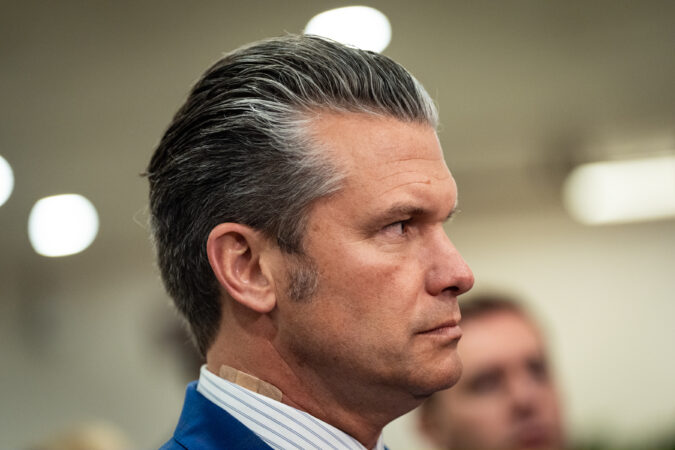
The Pentagon issued a warning late Monday to Scouting America, formerly known as the Boy Scouts, saying the organization risks losing its long-standing partnership with the U.S. military unless it rapidly implements “core value reforms.”
The public warning, delivered on social media by Pentagon spokesman Sean Parnell, comes just months before thousands of Scouts are expected in West Virginia for National Jamboree, a once-every-four-years camping summit that relies on hundreds of National Guard and active-duty service members for medical, security, and logistical support. A sudden loss of that support could jeopardize the youth gathering.
The organization has been in Defense Secretary Pete Hegseth’s crosshairs for years, ever since the group allowed girls to join and in 2024 said it would rebrand as Scouting America to project its inclusiveness. Hegseth is an avowed critic of diversity, equity, and inclusion initiatives and has worked aggressively during his tenure atop the Pentagon to purge what he calls “woke” programs — and people — from the institution.
The Pentagon in recent days had begun finalizing plans to end all support for the Scouts, seeking input from the National Guard and the military’s active-duty components on the potential impact of such a move, said multiple people familiar with a draft memo detailing the plans.
If Scouting America does not comply with Hegseth’s demands, which have not been made public, the group could also lose its access to military facilities — which would have a disproportionate impact on military children who participate in Scouting troops at U.S. bases overseas, people familiar with the matter said. Like some others interviewed for this report, they spoke on the condition of anonymity to discuss the Pentagon’s deliberations.
In his post to social media, Parnell said that after a review of the organization, the Pentagon is near a final agreement whereby it would continue supporting the organization because Scouting America has “firmly committed to a return to core principles.”
“Back to God and country — immediately!” Parnell wrote, assailing what he called Scouting America’s “unacceptable” decisions in recent years “that run counter to the values of this administration,” including “an embrace of DEI and other social justice, gender-fluid ideological stances.”
It was not immediately clear what changes the Scouts might agree to, including whether the organization would return to being for boys only. Neither the Pentagon nor Scouting America addressed questions seeking details on the scope of what it would require of the group.
“For nearly 116 years Scouting has stood as a cornerstone of American ideals, good citizenship, service and adventure for American youth. We are encouraged by tonight’s social media post by the Pentagon and we look forward to providing more details as we move ahead,” Scouting America said in a statement to the Washington Post late Monday.
Pentagon press secretary Kingsley Wilson said the Pentagon “would have more to announce soon.”
Scouts salute as they recite the Pledge of Allegiance during a 2005 National Jamboree in Bowling Green, Va.
Left uncertain is the fate of this year’s Jamboree, a massive 10-day summit scheduled for July and expected to draw more than 15,000 Scouts from throughout the country to West Virginia. In the past, upward of 500 National Guard personnel, military reservists, and active-duty service members have provided a range of equipment and logistical support for the event — all now in doubt if the organization does not meet the Pentagon’s demands.
“They are on the clock,” Parnell wrote on social media, “and we are watching.”
Scout troops spend years planning and raising money — through popcorn sales and other fundraisers — to travel to the Summit Bechtel Reserve for Jamboree. A spokesperson for Scouting America did not answer questions about what would happen to the summit if military support is pulled, saying in a statement that the West Virginia National Guard, which leads the Defense Department’s involvement in Jamboree, “has indicated that they are fully prepared to support” the event.
In a statement, the West Virginia National Guard said that “no official communication has been disseminated to us that would contradict or cease ongoing preparations” and that, for now, military officials are planning to support Jamboree.
Since becoming defense secretary a year ago, Hegseth has moved aggressively to purge the military of DEI programs and to fire senior leaders whom he accused of being overly focused on them. He pushed out transgender service members, too, referring to them as “dudes in dresses,” and directed the military’s service academies to get rid of books, student organizations, and courses that in his estimation were “woke.”
Threats to sever the Defense Department’s ties with the Scouts appear to be the latest evolution in this broader, highly politicized campaign.
NBC News and NPR have previously reported that the Pentagon was considering cutting ties with the Scouts. In November, when NPR disclosed the draft memo’s existence, Scouting America released a statement emphasizing that it has “always” been nonpartisan.
“Over more than a century,” it continues, “we’ve worked constructively with every U.S. presidential administration — Democratic and Republican — focusing on our common goal of building future leaders grounded in integrity, responsibility, and community service.”
A dissolution of the two entities’ partnership would end what for many decades has been a mutually beneficial relationship, as a significant portion of the nation’s military officers have Scouting backgrounds, according to the organization.
It would mark a shift for Hegseth’s boss, too. During his first term in office, in 2017, President Donald Trump appeared at Jamboree and told the thousands of assembled Scouts how proud he was to be there — and that 10 of his Cabinet members at the time had been Scouts.
“The Scouts,” Trump said at the time, “believe in putting America first.”
A year later, the organization began admitting girls.
The rebrand of Scouting America was announced in 2024, as the organization worked to move beyond decades of scandals involving sexual abuse allegations made by thousands of Scouts who say they were abused by Scout leaders or volunteers.
As a Fox News commentator then, Hegseth said allowing girls to join and then renaming the Scouts was “basically the end” of the group, and he blamed “the left” for the change.
“They didn’t want to improve it. They wanted to destroy it or dilute it into something that stood for nothing,” Hegseth said on Fox & Friends.
The Scouts’ interconnectedness with the military is reflected in Army and Air Force policy, which says that the services’ most junior enlisted members, known as an E-1, can be automatically bumped up to the next higher pay grade if they join having previously earned the rank of Eagle Scout. In the Navy, attaining Eagle Scout allows an enlisted member to jump from the rank of E-1 to E-3.
The Scouts have served as a sort of feeder program for the military’s service academies, too. According to Scouting magazine, in 2017 about 20% of cadets at the U.S. Military Academy at West Point had attained the rank of Eagle Scout. At the U.S. Naval Academy for the Class of 2020, about 17% of male midshipmen had participated in Scouting.
It was not immediately clear how many current cadets or midshipmen have Scouting backgrounds. Spokespeople for the academies referred questions to the Pentagon.
The relationship between Scouting and the Pentagon is codified in law, too. Title 10 Section 2554 of the U.S. Code authorizes the defense secretary to provide all the support the Scouts might need at Jamboree — such as cots, flags and refrigerators — to the extent that it “will not interfere with the requirements of military operations.” It also states that the Pentagon must seek a waiver from Congressif the military intends to cut its support, and explain why giving that assistance “would be detrimental to the national security of the United States.”
Spokespeople for the House and Senate Armed Services committees did not immediately respond to requests for comment.