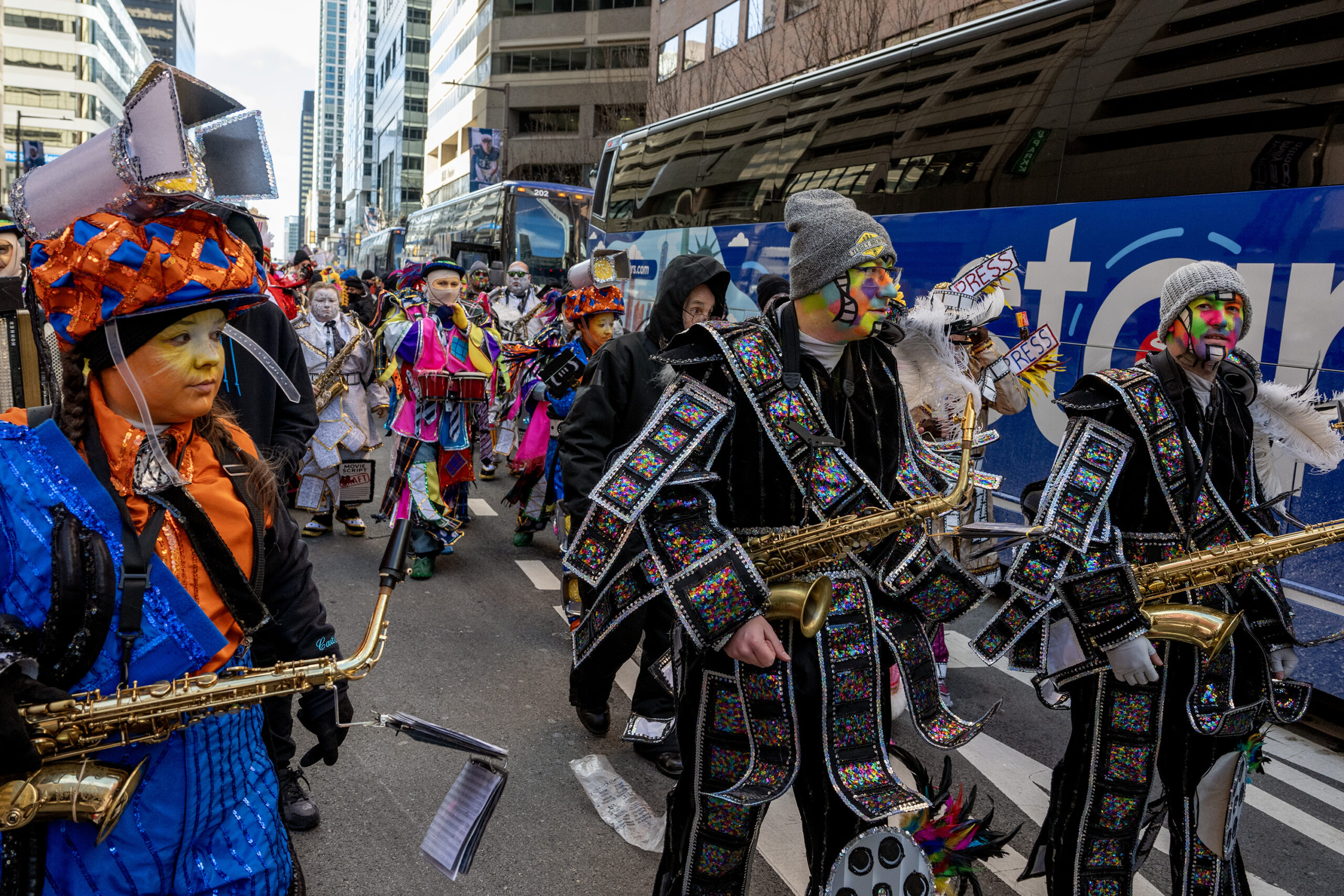
A month after dangerous winds led Mummers string bands to cancel their New Year’s Day Parade competition, one string band says it’ll be too cold to play a makeup show Saturday.
“With extreme cold predicted for this weekend, our top priority is the health and safety of our members, and the forecasted conditions may put them at risk,” the Avalon String Band said on Facebook.
The band was set to join other groups at the 2026 String Band Spectacular at Lincoln Financial Field Saturday afternoon.
The Philadelphia Mummers String Band Association scheduled the event after the string bands canceled their New Year’s Day performances this year, when high winds destroyed props and sent five people to the hospital.
Musicians with the Uptown String Band arrive on buses for the Mummers Parade Thursday, Jan. 1, 2026, after the String Band competition was suspended because of high winds that destroyed props and caused injuries during morning setup. The bands still marched and played their music, but did not carry props, and were not judged. The Uptown theme was “From Script to Screen.”
Saturday a coastal “bomb cyclone” is expected to douse New Jersey and Delaware with snowfall, though forecasting models say Philadelphia won’t get hit. However, stinging winds and Arctic air will push temperatures down to zero Saturday morning, with windchills dipping as low as 10 degrees below 0.
It’s unclear whether other bands will follow the Avalon String Band’s lead. A total of 14 bands make up the Philadelphia Mummers String Band Association, according to its website.
Twelve organizations are set to perform Saturday, said Philadelphia Mummers String Band Association President Sam Regalbuto Friday afternoon. He said workers are getting the stages and props ready.
“Everyone’s on board,” Regalbuto said. “Everyone’s here. We’re good to go.”
The event will begin a 2 p.m. Saturday with the Philadelphia Gay Men’s Chorus singing the national anthem. The event will be broadcast on WDPN-TV (MeTV2) at 8 p.m. and will be streamed on WFMZ.
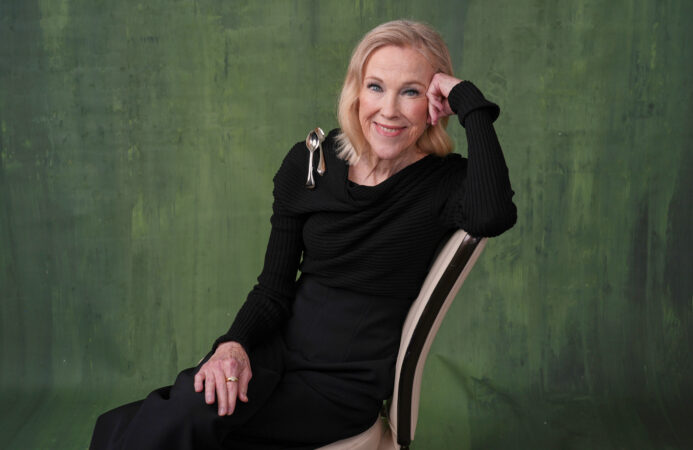
LOS ANGELES — Catherine O’Hara, a gifted Canadian-born comic actor and SCTV alum who starred as Macaulay Culkin’s harried mother in two Home Alone movies and won an Emmy as the dramatically ditzy wealthy matriarch Moira Rose in Schitt’s Creek, died Friday. She was 71.
Ms. O’Hara died at her home in Los Angeles “following a brief illness,” according to a statement from her representatives at Creative Artists Agency. Further details were not immediately available.
Ms. O’Hara’s career was launched with the Second City comedy group in Toronto in the 1970s. It was there that she first worked with Eugene Levy, who would become a lifelong collaborator — and her Schitt’s Creek costar. The two would be among the original cast of the sketch show SCTV, short for “Second City Television.” The series, which began on Canadian TV in the 1970s and aired on NBC in the U.S., spawned a legendary group of esoteric comedians that Ms. O’Hara would work with often, including Martin Short, John Candy, Andrea Martin, Rick Moranis, and Joe Flaherty.
Ms. O’Hara would win her first Emmy for her writing on the show.
Eugene Levy (from left), Annie Murphy, Daniel Levy, and Catherine O’Hara, cast members in the series “Schitt’s Creek,” pose for a 2018 portrait.
Her second, for best actress in a comedy series, came four decades later, for Schitt’s Creek, a career-capping triumph and the perfect personification of her comic talents. The small CBC series created by Levy and his son, Dan, about a wealthy family forced to live in a tiny town would dominate the Emmys in its sixth and final season. It brought Ms. O’Hara, always a beloved figure, a new generation of fans and put her at the center of cultural attention.
She told the Associated Press that she pictured Moira, a former soap opera star, as someone who had married rich and wanted to “remind everyone that (she was) special, too.” With an exaggerated Mid-Atlantic accent and obscure vocabulary, Moira spoke unlike anyone else, using words like “frippet,” “pettifogging” and “unasinous,” to show her desire to be different, Ms. O’Hara said. To perfect Moira’s voice, Ms. O’Hara would pore through old vocabulary books, “Moira-izing” the dialogue even further than what was already written.
Ms. O’Hara also won a Golden Globe and two SAG Awards for the role.
At first, Hollywood didn’t entirely know what to do with Ms. O’Hara and her scattershot style. She played oddball supporting characters in Martin Scorsese’s 1985 After Hours and Tim Burton’s 1988 Beetlejuice — a role she would reprise in the 2024 sequel.
She played it mostly straight as a horrified mother who accidentally abandoned her child in the two Home Alone movies. The films were among the biggest box office earners of the early 1990s and their Christmas setting made them TV perennials. They allowed her moments of unironic warmth that she didn’t get often.
“Mama, I thought we had time,” Culkin said on Instagram alongside an image from Home Alone and a recent recreation of the same pose. “I wanted more. I wanted to sit in a chair next to you. I heard you. But I had so much more to say. I love you.”
Meryl Streep, who worked with O’Hara in Heartburn, said in a statement that she “brought love and light to our world, through whipsmart compassion for the collection of eccentrics she portrayed.”
Roles in big Hollywood films didn’t follow Home Alone, but Ms. O’Hara would find her groove with the crew of improv pros brought together by Christopher Guest for a series of mockumentaries that began with 1996’s Waiting for Guffman and continued with 2000’s Best in Show, 2003’s A Mighty Wind, and 2006’s For Your Consideration.
Best in Show was the biggest hit and best-remembered film of the series. She and Levy play married couple Gerry and Cookie Fleck, who take their Norwich terrier to a dog show and constantly run into Cookie’s former lovers along the way.
“I am devastated,” Guest said in a statement to the AP. “We have lost one of the comic giants of our age.”
Born and raised in Toronto, Ms. O’Hara was the sixth of seven children in a Catholic family of Irish descent. She graduated from Burnhamthorpe Collegiate Institute, an alternative high school. She joined Second City in her early 20s, as an understudy to Gilda Radner before Radner left for Saturday Night Live. (Ms. O’Hara would briefly be hired for “SNL” but quit before appearing on air.)
Nearly 50 years later, her final roles would be as Seth Rogen’s reluctant executive mentor and freelance fixer on The Studio and a dramatic turn as therapist to Pedro Pascal and other dystopia survivors on HBO’s The Last of Us. Both earned her Emmy nominations. She would get 10 in her career.
“Oh, genius to be near you,” Pascal said on Instagram. “Eternally grateful. There is less light in my world.”
Earlier this month, Rogen shared a photo on Instagram of him and Ms. O’Hara shooting the second season of “The Studio.”
She is survived by her husband, Bo Welch, a production designer and director who was born in Yardley; sons Matthew and Luke; and siblings Michael O’Hara, Mary Margaret O’Hara, Maureen Jolley, Marcus O‘Hara, Tom O’Hara, and Patricia Wallice.
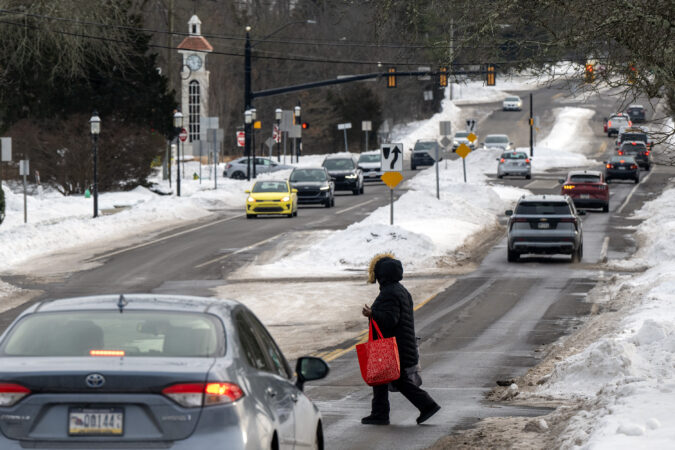
It looks like the Philly region will evade any snow generated by that coastal “bomb cyclone” during the weekend, but the disruptive snowpack on the ground continues to melt at a glacial pace. Maybe ever slower.
“For now, it’s not budging,” said David Robinson, the New Jersey state climatologist who is an international expert on snow cover.
And, ironically, that has a whole lot to do with what happened in the hours right after the snow stopped around 11:30 a.m. Sunday.
Add one of the more signifiant Arctic cold spells in Philadelphia’s period of record, and the entire region has endured a white and wintry week rarely experienced around here.
As of Friday morning, the official snow depth at the airport still was 6 inches, about two-thirds of what was measured when the storm ended five days before.
The cold won’t be as harsh during the workweek, but a thaw isn’t imminent, and some snow is possible Wednesday.
Temperatures are forecast to drop deep into the single digits Saturday morning, flirting with records. It is not due to get into the 20s until Sunday, when backlash winds from the potent coastal storm are expected to drive wind chills below zero.
Those winds may contribute to significant flooding at the Shore, where they could gust to 50 mph.
About last Sunday in Philly
About 7.5 inches of snow had fallen officially by 11:30 a.m. Sunday at Philadelphia International Airport, more in some other places, when it yielded to several hours of sleet that accumulated 2 to 3 inches, coating the snow with a sparkling, icy veneer.
“You can’t help but recognize the beauty of it,” said Robinson, a Rutgers University geography professor and keeper of the Rutgers Snow Lab.
While it may be an aesthetic pleasure, especially at night under the full “snow moon” rising this weekend, it has had a profoundly chilling effect on cleanup efforts.
The sleet, liquid that freezes before it lands, literally put an ice cap on the snow. “Ice pellets are tougher to melt,” said PennDot’s Thomas Rogal, a maintenance supervisor for the Philadelphia district. In a melting race, a homely sleet ball wouldn’t have a chance against a six-sided snowflake.
On Sunday, said Rogal, the sleet was a game-changer for the road crews. Instead of just plowing, crews were “scraping the road surfaces,” he said. Sleet added a stubborn stickiness to the mass of frozen material.
It also contained about as much liquid as several inches of snow, said Robinson.
The surprisingly cold temperatures, in the lower 20s and teens, inhibited the effectiveness of salt on Sunday. “The material just didn’t function,” said Rogal.
In the city, the glacial mass has been especially disruptive, a royal, inconvenient pain for people living on side streets, for street crews, for anyone who has tried shoveling, and for the schools.
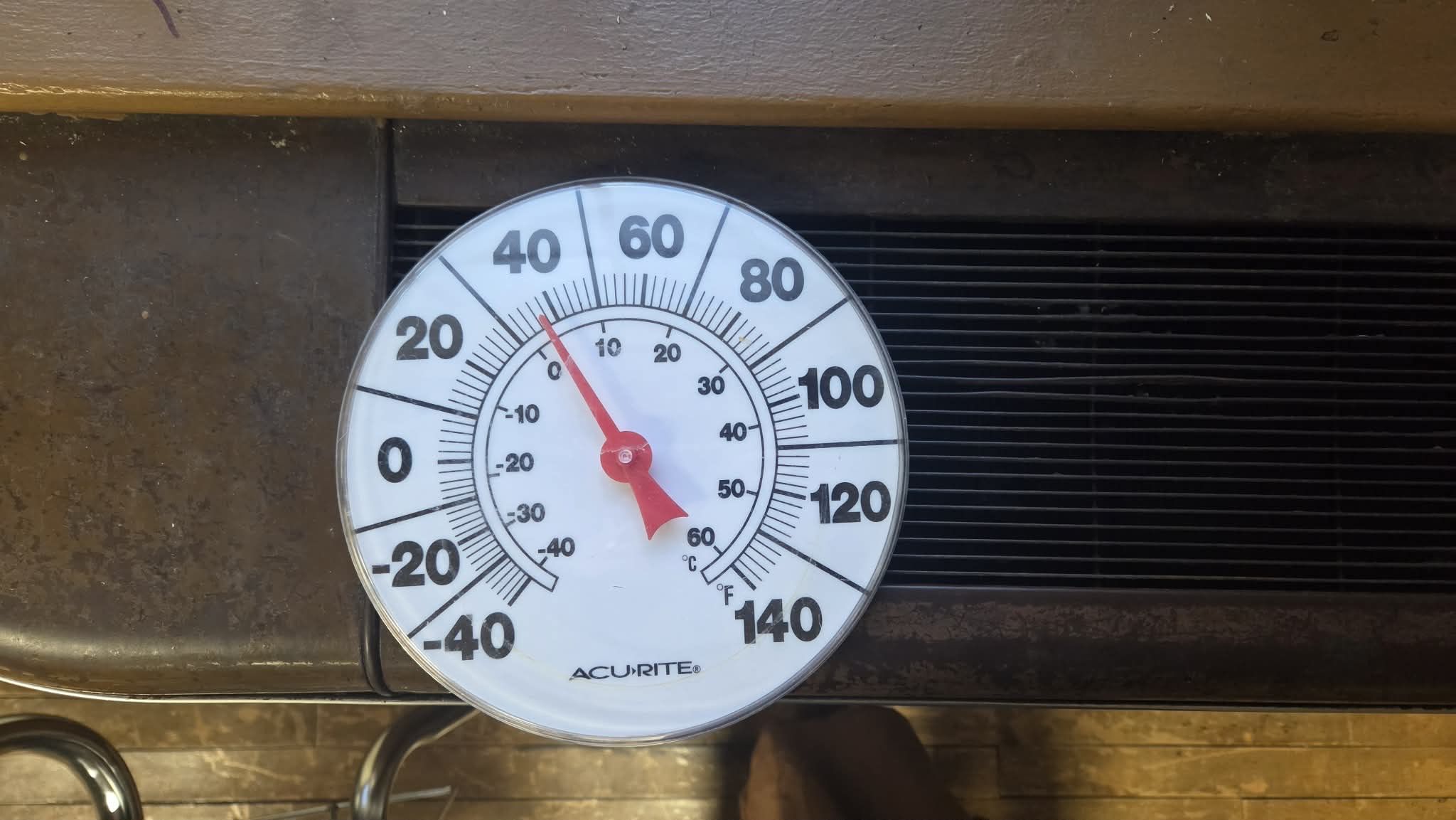
A thermometer in a Central High School classroom on Friday read 39 degrees. That’s colder than the normal high for the date in Philly — outdoors.
When will all this go away?
Philly hasn’t had a stretch of days like this in which the temperature has failed to reach 30 degrees since 1979, according to records tracked by the Pennsylvania state climatologist.
And it likely is going to finish in the top 10 for consecutive days in which readings didn’t get past freezing, said Mike Silva, a meteorologist with the National Weather Service in Mount Holly.
Low temperatures Thursday and Friday morning, 13 and 11, respectively, were several degrees above the forecasts. That probably was related to the winds at the airport, he said.
It also may be related to the sleet, said Robinson: Ice doesn’t have quite the same chilling effect as fresh snow.
Conditions Saturday morning — clear skies and lighter winds — should be more conducive for daytime heating (we use the term loosely) to radiate into space. Morning lows could approach the record of 3 degrees, set in 1948.
Some moderation is expected with the workweek, but not much. “We were hoping to get to the mid-30s,” said Sliva, but “it looks like we may barely get to freezing.”
Even at those temperatures, some melting should occur.
The total daily solar energy beaming toward Philly now is about 30% higher than it was on Jan. 1, according to NASA’s calculations, and the sunrise-to-sunset time is increasing by about two minutes a day.
Even the cold has a bright side, said PennDot’s Rogal. Potholes, it turns out, have something in common with a lot of humans: “They aren’t particularly fond of this weather.”
“The freeze-thaw is what always gets us,” he said. “We’re actually in better shape when the cold sets and stays.”
Even if it snows next week — “There’s a couple of systems that could affect us,” said Silva — based on 150 years of official record-keeping for Philly, it is going to warm up and the ground will reappear.
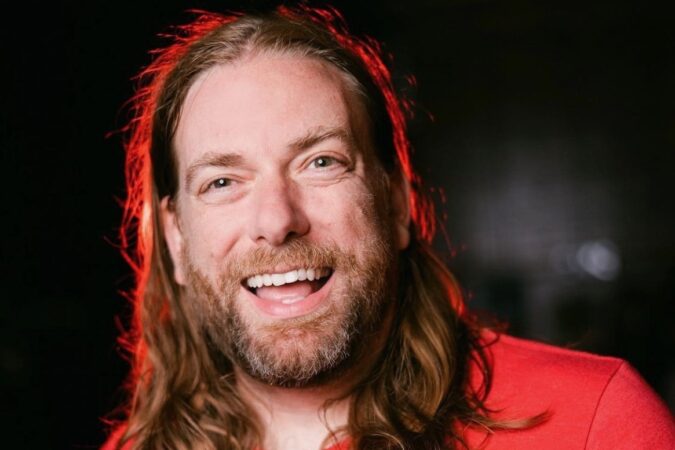
Even as a child, Dan McQuade let his imagination run wild. “What are you doing?” his mother, Denise, would ask if she hadn’t heard any noise from his bedroom for a while. “I’m making stories,” he would reply.
Later, as a young man about town, his compassion for fellow Philadelphians inspired his father, Drew. Dan volunteered to give blood often, donated brand-new sneakers to other guys in need, and continually reached out to people he saw struggling with drug abuse and homelessness. “His kindness was what I loved about him the most,” his father said.
Dan McQuade was already an award-winning writer, blogger, and journalist when he met his future wife, Jan Cohen, online in 2014. To her, his jovial humor, wide-ranging intelligence, and shoulder-length hair made him unique in her circle. “I thought he was too cool for me,” she said.
His empathy, likely inspired by his parents, his wife said, led him to toil tirelessly for charitable nonprofits such as the Everywhere Project, Back on My Feet, and Prevention Point. “Service was always part of his life,” his wife said.
His coolness, as unconventional as it sometimes was, made those he encountered feel cool, too. Molly Eichel, an Inquirer editor and longtime friend, said: “He was annoyingly smart and incredibly kind.”
Dan McQuade died Wednesday, Jan. 28, of neuroendocrine cancer at his parents’ home in Bensalem. He was 43. His birthday was Jan. 27.
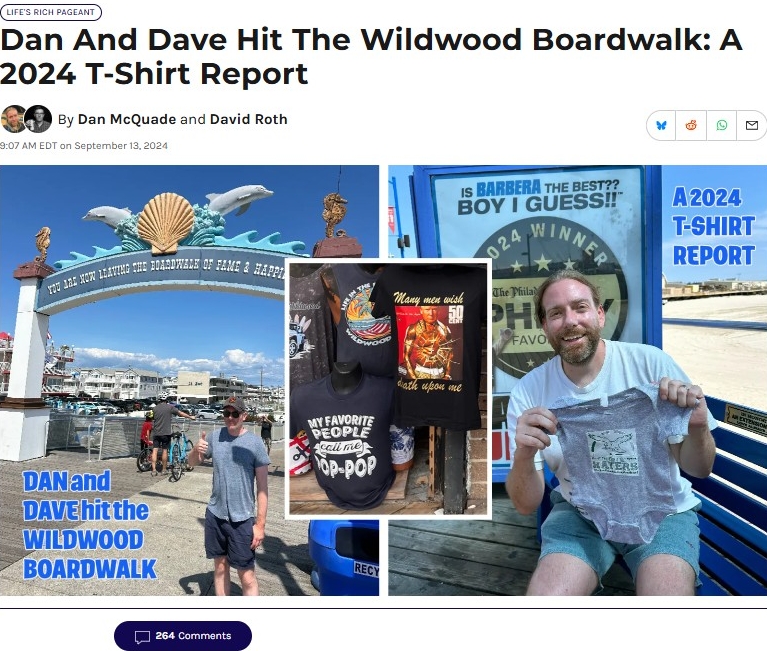
Mr. McQuade’s annual Wildwood T-shirt report was a favorite of his many readers and fans.
“It’s incredibly hard for me to imagine living in a Philadelphia without Dan McQuade,” said Erica Palan, an Inquirer editor and another of Mr. McQuade’s many longtime friends. “He understood Philadelphians better than anyone because he was one: quirky and funny, competitive and humble, loyal and kind.”
A journalism star at the University of Pennsylvania in the early 2000s, Mr. McQuade was a writer, sports editor, and columnist for the school’s Daily Pennsylvanian, and managing editor of its 34th Street Magazine. He earned two Keystone Press awards at Penn, was the Daily Pennsylvanian’s editor of the year in 2002, and won the 2003 college sports writing award from the Philadelphia Sportswriters Association.
He went on to create Philadelphia Weekly’s first blog, “Philadelphia Will Do,” and was a finalist for the Association of Alternative Newsmedia’s best blogger award. He served an internship at the Bucks County Courier Times in Levittown and worked for a while at the Northeast News Gleaner.
Often irreverent, always inventive, he filed thousands of notable stories about, among other things, the Wildwood T-shirt scene, the origin of “Go Birds,” sneaker sales, Donald Trump, Wawa hoagies, the Philly accent, parkway rest stops, the Gallery mall, soap box derbies, and Super Bowls. His stories sparkled with research and humor.
An avid reader himself, Mr. McQuade enjoyed reading local tales to his son, Simon.
“Dan was a truly authentic and engaging person,” Tom Ley, editor-in-chief at Defector, said in an online tribute. “His curiosity was relentless, and his interests were varied and idiosyncratic.”
For example, Mr. McQuade wrote in Philadelphia Magazine in 2013 that Sylvester Stallone’s famous training-run montage in Rocky II — it started in South Philly and ended two minutes of screen time later atop the Art Museum steps — actually showed city scenes that would have had the actor/boxer run more than 30 miles around town. “Rocky almost did a 50K,” Mr. McQuade wrote. “No wonder he won the rematch against Apollo!”
In 2014, he wrote in Philadelphia Magazine about comedian Hannibal Buress calling Bill Cosby a rapist onstage at the old Trocadero. The story went viral, and the ensuing publicity spurred more accusations and court cases that eventually sent Cosby to jail for a time.
When he was 13, Mr. McQuade wrote a letter to the editor of the Daily News that suggested combining the Mummers Parade with Spain’s running of the bulls. Crossing Broad’s Kevin Kinkead said he had “an innate gift for turning the most random things into engaging reads.”
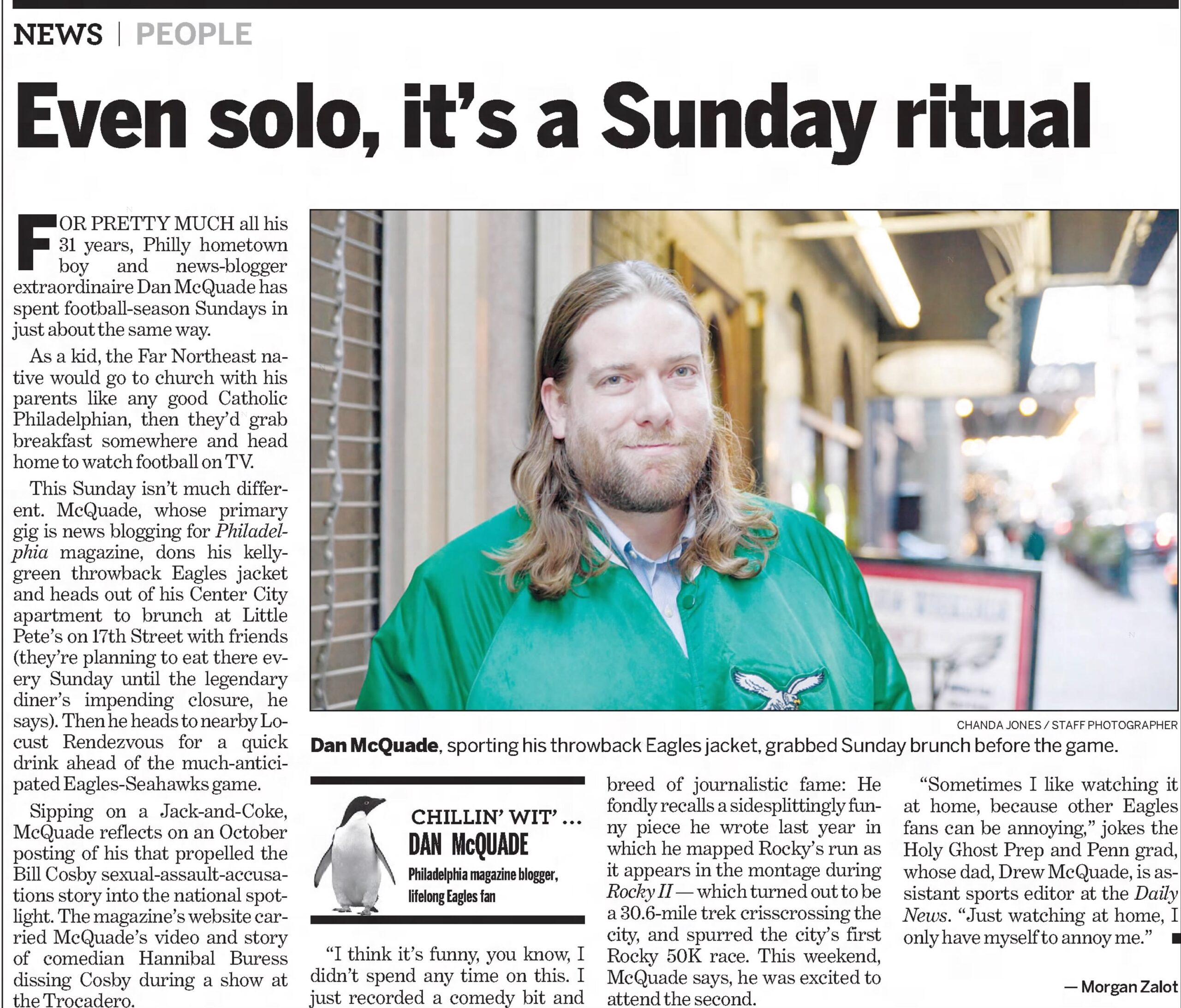
This story about Mr. McQuade appeared in the Daily News in 2014.
“Without Dan’s voice, Philly Mag wouldn’t be Philly Mag,” editor and writer Brian Howard said in a tribute on phillymag.com. “And, I’d argue, Philadelphia wouldn’t quite be Philadelphia.”
Other colleagues called him “a legend,” “a Philadelphia institution,” and “the de facto mayor of Philadelphia” in online tributes. Homages to him were held before recent Flyers and 76ers games.
“Sometimes,” his wife said, “he inserted himself into stories, so readers had a real sense of who he was because he was so authentic.”
Daniel Hall McQuade was born Jan. 27, 1983, in Philadelphia. His father worked nights at the Daily News for years, and the two spent many days together when he was young hanging around playgrounds and skipping stones across the creek in Pennypack Park.
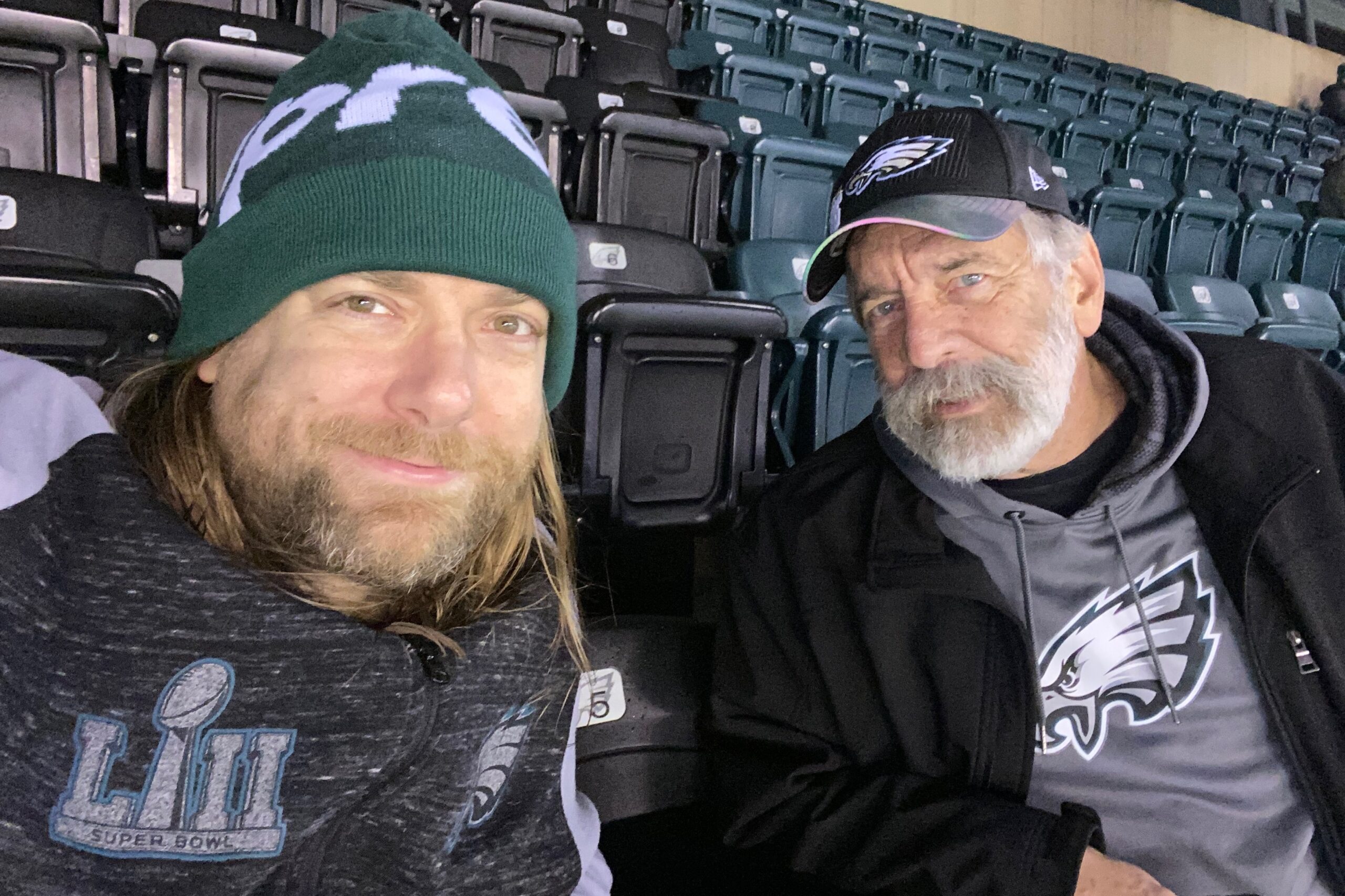
Mr. McQuade (left) and his father, Drew, shared a love of Philly sports and creative writing.
Later, they texted daily about whatever came to mind and bonded at concerts, Eagles games, and the Penn Relays. He grew up in the Northeast, graduated with honors from Holy Ghost Preparatory School in Bensalem, and earned a bachelor’s degree in English at Penn in 2004.
He overcame a serious stutter as a teen and played soccer and basketball, and ran cross-country and track at Holy Ghost. He married Jan Cohen in 2019 and they had a son, Simon, in 2023. They live in Wissahickon.
Mr. McQuade was a voracious reader and an attentive listener. “He never wanted to stop learning,” his wife said. He enjoyed going to 76ers games with his mother and shopping for things, his father said, “they didn’t need.”
He was mesmerized by malls, the movie Mannequin, the TV series Baywatch, and his wife’s cat, Detective John Munch. During the pandemic, he and his wife binged all 11 seasons of Baywatch.
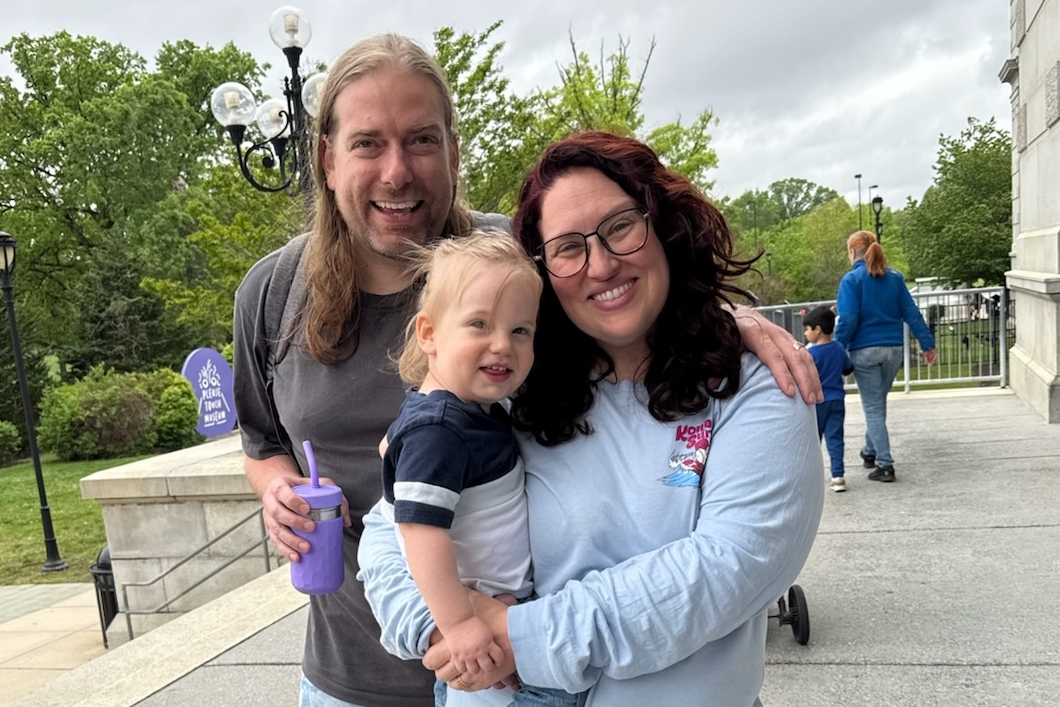
Mr. McQuade doted on his wife, Jan, and their son, Simon.
He could be loud, his mother said, and Molly Eichel described his laugh as “kind of a honk.” His friend and colleague Alli Katz said: “In 50 years I’ll forget my own name. But I’ll remember his laugh.”
He was a vintage bootleg T-shirt fashionista, and his personal collection numbered around 150. He named Oscar’s Tavern on Sansom Street as his favorite bar in a recent podcast interview and said he would reluctantly pick a pretzel over a cheesesteak if that was the choice.
In September, Mr. McQuade wrote about his illness on Defector.com under the headline “My Life With An Uncommon Cancer.” In that story, he said: “Jan has been everything. My son has been a constant inspiration. My parents are two of my best friends, and I talk to them every day. Jan’s parents have been incredible.”
He also said: “I believe there are no other people on earth with my condition who are in as fortunate a situation. … For the past thousand words you have been reading about a bad break I got, but if only everyone in my position had it this good.”
Mr. McQuade and his wife, Jan Cohen, married in 2019.
His wife said: “He was truly the best guy.”
In addition to his wife, son, and parents, Mr. McQuade is survived by his mother-in-law, Cheryl Cohen, and other relatives.
Visitation with the family is to be from 9 to 10 a.m. Thursday, Feb. 5, at St. Martha Parish, 11301 Academy Rd., Philadelphia, Pa. 19154. Mass is to follow from 10 to 11 a.m.
Donations in his name may be made to the Everywhere Project, 1733 McKean St., Philadelphia, Pa. 19145.
No teaching happened inside some Central High classrooms Friday: temperatures were just too low.
Inside Kristen Peeples’ room, a thermometer read below 40 degrees. Multiple classrooms inside the storied Philadelphia magnet were so cold that classes had to relocate for safety, staff there said.
Normally, Peeples relishes engaging classroom instruction and discussion. On Friday, it was all about survival; conditions were “untenable,” she said. While some rooms were comfortable, many were freezing. Some were overly hot.
Classes that were supposed to be in rooms too cold for occupancy just moved around the school — which enrolls over 2,300.
“One class, I shared an empty space with another teacher,” said Peeples, who “couldn’t teach given the volume of people in the room, but at least we were able to be somewhere warm. Another period, we sat in the library while students worked independently, but again, not tenable for direct instruction.”
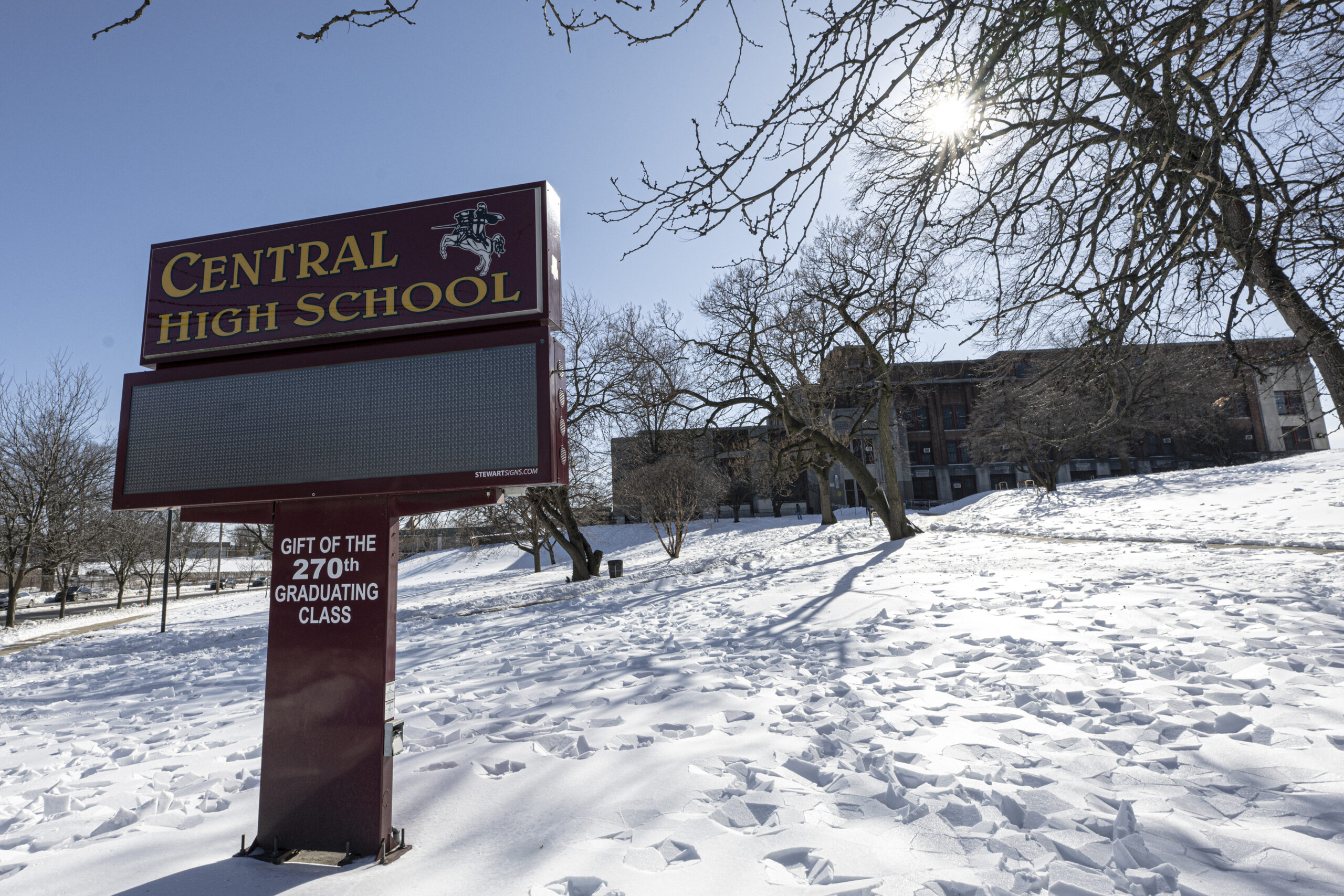
Central High School is shown in the freezing temperature on Friday, January 30, 2026.
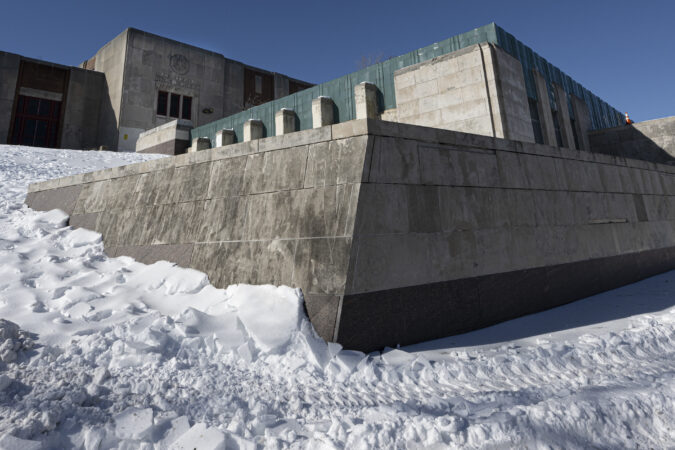
With bitter cold still bearing down on the region, some Philadelphia schools continued to cope with difficult conditions for the second day in a row on Friday — old heating systems struggling to keep up with subfreezing temperatures, giant piles of snow surrounding schools that made getting in and out difficult for students and staff.
All Philadelphia School District schools and offices were closed Monday for a full snow day; Tuesday and Wednesday were virtual learning days as city plows cleared streets.. Superintendent Tony B. Watlington Sr. has said that safety was his first priority in making the decision whether in-person instruction could resume, and made the call to do so Thursday.
But staff at some schools said they thought that was the wrong decision, given conditions in some district buildings Thursday and Friday.
In North Philadelphia’s Taylor Elementary, for instance, two burst pipes rendered five classrooms unusable, according to a staffer who asked to remain anonymous because they were not authorized to speak to a reporter.
Classes had to be combined to account for the out-of-commission rooms. And some rooms were chilly, in the 50s.
“This heating system is just very old and struggling,” said the staffer.
Taylor officials asked the district to pivot to virtual instruction Friday, but their request was denied.
Arthur Steinberg, Philadelphia Federation of Teachers president, said the district’s decision to reopen all schools was “reckless, and a contradiction of their claim of exercising ‘an abundance of caution’ when making such decisions. Forcing students, families, and staff to navigate still-treacherous commutes after a historic snowfall and freezing temperatures was careless.”
Monique Braxton, a district spokesperson, said safety remains paramount and that district and city officials worked round-the-clock to ready buildings as best as they could.
“Across the district, teams are responding in real time to heating concerns, snow and ice conditions, and other weather-related issues as they arise,” Braxton said in a statement. “When conditions do not meet district standards, we work closely with school leaders to take appropriate action and communicate directly with our families.
We will continue to closely monitor building conditions throughout this bitter cold period and make adjustments as needed as, while temperatures remain below freezing.”
At Central High, several classrooms were so cold they were unusable. This was the reading inside a classroom on Friday.
Shivering, and slipping
On Thursday, Penrose Elementary, in Southwest Philadelphia had heating problems some entrances were/ tough to access because of unplowed snow, and a ramp that students with disabilities use to get into the school was blocked. Burst pipes at Vare-Washington Elementary, in South Philadelphia, made six classrooms, the cafeteria, the gym and the entire basement unusable Thursday.
Those schools were in much better shape Friday. But children and adults were still shivering, and slipping, at other schools.
By the end of the short school day — the district had long planned half days for Thursday and Friday, with parent conferences scheduled — the temperature in Peeples’ classroom at Central had dropped even lower.
Teachers and students were in a tough spot, Peeples said, but administrators and building engineers were also put in “an impossible situation” through no fault of their own. They have been working diligently to move students and teachers to warm learning spaces, Peeples said, plowing, shoveling, salting sidewalks and parking lots, and tending to fussy heating systems.
At Taylor in North Philadelphia, staff were told by the district that three of the five unusable classrooms will be fixed and ready for learning on Monday — hopefully.
Watlington recently proposed a facilities plan that would close 20 district schools and modernize 159 over the next 10 years, but the list of schools to receive upgrades has not been divulged.
The $2.8 billion plan also banks on $1.8 billion from the state and philanthropic sources, money that is far from assured.
As Gov. Josh Shapiro makes the case on national television for ICE to leave Minneapolis, his Republican challenger Stacy Garrity has a different view: Minnesotans should cooperate.
Garrity, the state treasurer and GOP-endorsed candidate, said “it’s best to cooperate” with U.S. Immigration and Customs Enforcement, in an interview Thursday night at the National Constitution Center following an appearance on a conservative podcast.
The retired U.S. Army colonel also praised Tom Homan, President Donald Trump’s border czar assigned to take over the Minneapolis operation, as “spot on” in his recent remarks calling for a de-escalation of the conflict between residents and federal officials, and that residents should comply.
“He said it best: Cooperate and take down the rhetoric,” Garrity said, noting her time as U.S. Army military police officer gives her a “different perspective.”
Garrity’s comments came days after she received an endorsement from Trump in the Pennsylvania governor’s race. The president on Tuesday evening called Garrity a “true America First Patriot, who has been with me from the beginning.”
Shapiro, meanwhile, has become more outspoken about ICE’s operations in Minnesota over the last few days while on a national media blitz for his new memoir released this week, Where We Keep the Light. The former Pennsylvania attorney general, known as a careful and deliberate communicator, has now repeatedly called for ICE and the Border Patrol to leave Minneapolis, arguing that the operations are “outside the bounds of law” and “must be terminated.”
Pennsylvania does not have a sanctuary policy restricting cooperation with ICE by state law enforcement, but several jurisdictions in the state do have such policies, including Philadelphia.
Garrity was in Philadelphia on Thursday for a live taping of the conservative podcast Ruthless. The event was hosted by Americans for Prosperity, a national libertarian advocacy organization. She largely talked about what led her to politics in 2020 after a long career in the military and private sector, as well as her work as the state’s treasurer.
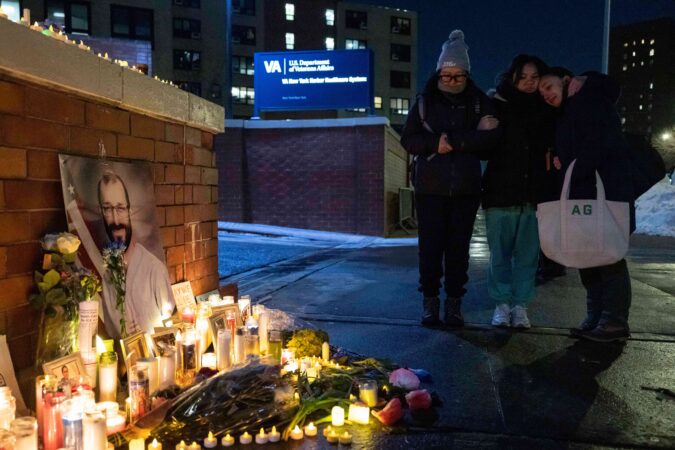
When asked whether she was concerned by the shooting of Alex Pretti, an intensive-care nurse at a Veterans Affairs hospital in Minnesota, Garrity said she had not seen the videos of Border Patrol agents fatally shooting Pretti and that she “always waits for the investigation” before forming an opinion. Pretti’s death marked the second killing of a U.S. citizen by federal agents in Minneapolis this month, leading to mass protests and public outrage.
“The investigation will come out, and then any corrective action that needs to be taken, or we’ll see what the results are,” she said. “I’m going to withhold any judgment until the investigation.”
In the case of Pretti’s death, Trump said the U.S. Department of Homeland Security is leading the investigation, and he is “going to be watching over it.” Minnesota officials have called for an independent investigation and have protested as federal officials have blocked local authorities from investigating.
HAVANA — Cubans are hustling to become more self-sufficient as the U.S. government tightens its economic noose over the communist-run island in a move experts say is meant to force a popular uprising and usher in a new government.
A sharp increase in U.S. sanctions was already suffocating Cubans when critical oil shipments from Venezuela were disrupted after the U.S. attacked the South American country and arrested its leader.
The long-term repercussions of those halted shipments have yet to hit Cuba, but its people are not waiting.
Some are installing solar panels while others are growing their own crops or returning to a simpler way of life, one that doesn’t rely on technology or petroleum.
“It’s how you survive,” said Jose Ángel Méndez Faviel. “It’s best to depend on yourself.”
Méndez recently moved from the center of Havana to a farm in the rural community of Bacuranao because of Cuba’s severe blackouts. At the farm, he can cook with firewood and charcoal, something unthinkable in a darkened city apartment.
Méndez said he doesn’t know what to make of President Donald Trump’s threats against Cuba, but he’s not taking any chances. He’s stocking up on gasoline, charcoal, and produce, which he began planting three months ago at his farm.
Méndez also is thinking of buying back his old horse that he sold in favor of motorized equipment to transport vegetables he sells at local markets.
“You don’t need fuel for a horse,” he said. “We need to go back in time.”
‘Very close to failing’
Before the U.S. attacked Venezuela and disrupted oil shipments to Cuba, the island already was struggling with chronic blackouts, soaring prices, and a lack of basic goods.
With experts warning of a potentially catastrophic economic crisis, some wonder if Cuba is reaching its breaking point. For Trump, who signed an executive order Thursday that would impose a tariff on any goods from countries that sell or provide oil to Cuba, it’s all but guaranteed.
“Cuba is really a nation that is very close to failing,” he recently said.
But Cubans scoff at that assertion, especially those who remember the so-called “Special Period,” when cuts in Soviet aid sparked the 1990s deprivation that eased when Venezuela became an ally under former President Hugo Chávez.
Yadián Silva, a nurse and driver of a classic car who has seen tourism plummet, said Cubans aren’t dumb.
“We have problems, and we know we have a lot of problems,” he said. “But when things happen in Cuba, it’s because people truly feel they should happen. Not because someone from the outside says, ‘do this.’”
On a recent weeknight, tens of thousands of Cubans clutched flaming torches and joined an annual march to remember national hero José Martí. Many of them were university students.
“We are a dignified people, a people eager to move forward, eager to prosper, who do not believe in threats and are not intimidated by any reprisals from the enemy,” said Sheyla Ibatao Ruíz, a 21-year-old law student. “If we have to take up arms, we will be the first to do so.”
“This is not an act of nostalgia, it is a call to action,” said Litza Elena González Desdín, president of the Federation of University Students in a speech that included references to Trump.
A day later, Christopher Landau, U.S. deputy secretary of state, noted that the U.S. embraces Martí “because he shared that passion that we have for freedom.”
“We hope that by 2026, Cubans will finally be able to exercise their fundamental freedoms,” Landau said Wednesday in a recording played at a small gathering at the U.S. embassy in Havana. “The communist Castro regime is tottering; it won’t last much longer. After 67 years of a failed revolution that has betrayed the Cuban people, it’s time for the change that the people on the island are yearning for.”
‘We’ll ride bicycles’
Last September, Ángel Eduardo launched a small business to install solar panels. He called it “Con Voltage,” a word with double meaning in Cuba that can refer to doing something well.
He said he was fed up with studying in the dark and being forced to write in a notebook instead of a computer to obtain his degree as an automation control engineer.
Eduardo started rigging pieces to light a single bulb for his home and ended up learning how to install solar systems thanks to a combination of a friend, Chat GPT and social media.
He now has installed dozens of systems across Cuba, averaging one to two installations a day since November on an island where daily demand for electricity on average surpasses 3,000 megawatts when only about half that is available during peak hours.
Eduardo said he saw a surge in calls from people in Havana seeking solar systems ever since the disruption in oil shipments from Venezuela.
Growing a business is something that 62-year-old Niuvis Bueno Zavala has been pondering. A retired Russian interpreter for the Cuban government, she now runs a small wooden shack near the sea that sells drinks but not food.
“I’ve never had it this hard,” she said, adding that she might start selling homemade food. “There’s always a helping hand to assist us. But now those helping hands can’t reach us. We’re blocked from all sides.”
Many Cubans decry the embargo, including retired pilot Pedro Carbonell.
The 73-year-old recently waited more than two hours to buy gasoline. He said Cubans have to keep fighting.
“If we don’t have fuel, then we’ll ride bicycles,” he said, recalling how Cubans walked a lot during the Special Period. “Our wine is bitter. But it’s our wine. Do you understand? And we don’t want anyone from somewhere else coming here and telling us how to drink our wine.”
WASHINGTON — The Justice Department has opened a federal civil rights investigation into the shooting of Alex Pretti, the Minneapolis resident killed Saturday by Border Patrol officers, Deputy Attorney General Todd Blanche said Friday.
“We’re looking at everything that would shed light on what happened that day and in the days and weeks leading up to what happened,” Blanche said during a news conference.
Blanche did not explain why DOJ decided to open an investigation into Pretti’s killing, but has said a similar probe is not warranted in the Jan. 7 death of Renee Good, who was shot by an Immigration and Customs Enforcement officer in Minneapolis. He said only on Friday that the Civil Rights Division does not investigate every law enforcement shooting and that there have to be circumstances and facts that “warrant an investigation.”
“President Trump has said repeatedly, ‘Of course, this is something we’re going to investigate,’” Blanche said of the Pretti shooting.
Steve Schleicher, a Minneapolis-based attorney representing Pretti’s parents, said Friday that “the family’s focus is on a fair and impartial investigation that examines the facts around his murder.”
FBI to take over federal investigation
The Department of Homeland Security also said Friday that the FBI will lead the federal probe into Pretti’s death.
Homeland Security Secretary Kristi Noem first disclosed the shift in which agency was leading the investigation during a Fox News interview Thursday evening. Her department previously said Homeland Security Investigations, a departmental unit, would head the investigation.
“We will continue to follow the investigation that the FBI is leading and giving them all the information that they need to bring that to conclusion, and make sure that the American people know the truth of the situation and how we can go forward and continue to protect the American people,” Noem said, speaking to Fox host Sean Hannity.
Homeland Security spokesperson Tricia McLaughlin said Homeland Security Investigations will support the FBI in the investigation. Separately, Customs and Border Protection, which is part of DHS, is doing its own internal investigation into the shooting, during which two officers opened fire on Pretti.
DHS did not immediately respond to questions about when the change was made or why. The FBI did not immediately respond to a request for comment.
It was not immediately clear whether the FBI would share information and evidence with Minnesota state investigators, who have thus far been frozen out of the federal investigation.
In the same interview, Noem appeared to distance herself from statements she made shortly after the shooting, claiming Pretti had brandished a handgun and aggressively approached officers.
Multiple videos that emerged of the shooting contradicted that claim, showing the intensive care nurse had only his mobile phone in his hand as officers tackled him to the ground, with one removing a handgun from the back of Pretti’s pants as another officer began firing shots into his back.
Pretti had a state permit to legally carry a concealed firearm. At no point did he appear to reach for it, the videos showed.
Videos emerge of previous altercation
The change in agency comes after two other videos emerged of an earlier altercation between Pretti and federal immigration officers 11 days before his death.
The Jan. 13 videos show Pretti yelling at federal vehicles and at one point appearing to spit before kicking out the taillight of one vehicle. A struggle ensues between Pretti and several officers, during which he is forced to the ground. Pretti’s winter coat comes off, and he either breaks free or the officers let him go and he scurries away.
When he turns his back to the camera, what appears to be a handgun is visible in his waistband. At no point do the videos show Pretti reaching for the gun, and it is not clear whether federal agents saw it.
Schleicher, the Pretti family attorney, said Wednesday the earlier altercation in no way justified the shooting more than a week later.
In a post on his Truth Social platform early Friday morning, President Donald Trump suggested that the videos of the earlier incident undercut the narrative that Pretti was a peaceful protester when he was shot.
“Agitator and, perhaps, insurrectionist, Alex Pretti’s stock has gone way down with the just released video of him screaming and spitting in the face of a very calm and under control ICE Officer, and then crazily kicking in a new and very expensive government vehicle, so hard and violent, in fact, that the taillight broke off in pieces,” Trump’s post said. “It was quite a display of abuse and anger, for all to see, crazed and out of control. The ICE Officer was calm and cool, not an easy thing to be under those circumstances!”
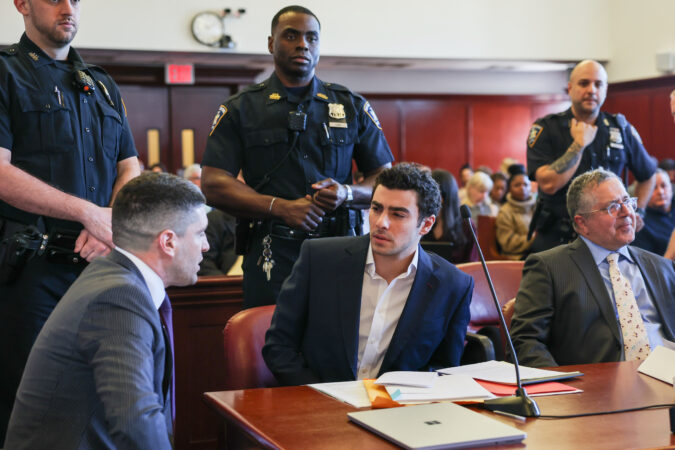
NEW YORK — Federal prosecutors can’t seek the death penalty against Luigi Mangione in the killing of UnitedHealthcare CEO Brian Thompson, a judge ruled Friday, foiling the Trump administration’s bid to see him executed for what it called a “premeditated, cold-blooded assassination that shocked America.”
U.S. District Judge Margaret Garnett dismissed a federal murder charge that had enabled prosecutors to seek capital punishment, finding that it was technically flawed. She wrote that she did so to “foreclose the death penalty as an available punishment to be considered by the jury” as it weighs whether to convict Mangione.
Garnett also dismissed a gun charge but left in place stalking charges that carry a maximum punishment of life in prison. In order to seek the death penalty, prosecutors needed to show that Mangione killed Thompson while committing another “crime of violence.” Stalking doesn’t fit that definition, Garnett wrote in her opinion, citing case law and legal precedents.
In a win for prosecutors, Garnett ruled that prosecutors can use evidence collected from his backpack during his arrest, including a 9mm handgun and a notebook in which authorities say Mangione described his intent to “wack” an insurance executive. Mangione’s lawyers had sought to exclude those items, arguing the search was illegal because police hadn’t yet obtained a warrant.
The rulings could be subject to appeal. Garnett gave prosecutors 30 days to inform her of any plans to appeal her death penalty decision. A message seeking comment was left for a spokesperson for the U.S. attorney’s office in Manhattan, which is prosecuting the federal case.
Garnett acknowledged that the decision “may strike the average person — and indeed many lawyers and judges — as tortured and strange, and the result may seem contrary to our intuitions about the criminal law.” But, she said, it reflected her “committed effort to faithfully apply the dictates of the Supreme Court to the charges in this case. The law must the Court’s only concern.”
Mangione, 27, appeared relaxed as he sat with his lawyers at a brief, previously scheduled hearing about an hour after Garnett issued her written ruling. Prosecutors retained their right to appeal the decision but said they were ready to proceed to trial.
Mangione’s lawyers didn’t address the decision during the hearing. But his lawyer Karen Friedman Agnifilo said afterward that her client and his defense team were relieved by the “incredible decision.”
Jury selection in the federal case is scheduled to begin Sept. 8, followed by opening statements and testimony beginning on Oct. 13. The state trial’s date hasn’t been set yet. On Wednesday, the Manhattan district attorney’s office sent a letter urging the judge in that case to schedule a July 1 trial date.
Thompson, 50, was killed on Dec. 4, 2024, as he walked to a midtown Manhattan hotel for UnitedHealth Group’s annual investor conference. Surveillance video showed a masked gunman shooting him from behind. Police say “delay,” “deny” and “depose” were written on the ammunition, mimicking a phrase used to describe how insurers avoid paying claims.
Mangione, an Ivy League graduate from a wealthy Maryland family, was arrested five days later at a McDonald’s in Altoona, Pa., about 230 miles west of Manhattan.
Following through on Trump’s campaign promise to vigorously pursue capital punishment, Attorney General Pam Bondi ordered Manhattan federal prosecutors last April to seek the death penalty against Mangione.
It was the first time the Justice Department was seeking to bring the death penalty in President Donald Trump’s second term. He returned to office a year ago with a vow to resume federal executions after they were halted under his predecessor, President Joe Biden.
Garnett, a Biden appointee, ruled after a flurry of court filings in the prosecution and defense in recent months. She held oral arguments on the matter earlier this month.
In addition to seeking to have the death penalty thrown out on the grounds Garnett cited, Mangione’s lawyers argued that Bondi’s announcement flouted long-established Justice Department protocols and showed the decision was “based on politics, not merit.”
They said her remarks, which were followed by posts to her Instagram account and a TV appearance, “indelibly prejudiced” the grand jury process that resulted in his indictment a few weeks later.
Prosecutors urged Garnett to keep the death penalty on the table, arguing that the charges allowing for such punishment were legally sound and that Bondi’s remarks weren’t prejudicial, as “pretrial publicity, even when intense, is not itself a constitutional defect.”
Rather than dismissing the case outright or barring the government from seeking the death penalty, prosecutors argued, the defense’s concerns can best be alleviated by carefully questioning prospective jurors about their knowledge of the case and ensuring Mangione’s rights are respected at trial.
“What the defendant recasts as a constitutional crisis is merely a repackaging of arguments” rejected in previous cases, prosecutors said. “None warrants dismissal of the indictment or categorical preclusion of a congressionally authorized punishment.”
Comcast owes a California company $240 million for infringing on its patent when rolling out a voice-activation feature on television remotes over a decade ago, a Philadelphia federal jury decided.
Promptu Systems Corporation “pioneered” the technology that allows users to control their TVs through voice commands spoken into a remote control in the early 2000s, the company said in legal filings.
After Comcast launched its voice remote in 2015, Promptu sued, accusing the telecommunication giant of utilizing patented technology. Comcast executives were aware of the patents, expressed interest in Promptu’s capabilities as early as 2001, and took steps to launch a remote in collaboration with Promptu, the 2016 lawsuit said.
But Comcast ended up launching a voice-controlled remote on its own, which the suit says was based on technology that Promptu shared with Comcast in demonstrations.
“Promptu technology was exploited without permission over a 10-year period,” said Jerry Ivey, an attorney at the law firm Finnegan who represented the company in the trial.
Propmtu’s attorneys asked the jury to award $346 million, based on a calculation that the company was owed 30 cents per month for each Comcast cablecustomer over a 10-year period.
At the conclusion of a six-day trial in the Eastern District of Pennsylvania, on Jan. 23, jurors found that Comcast infringed on two patents but that only one of them was valid. The jury deliberated for less than three hours and awarded $240 million.
The verdict will have no impact on Comcast’s customers, a company spokesperson said.
“We will continue to pursue our claim in court against Promptu to show that these expired patents are unenforceable and appeal this decision if necessary,” the spokesperson’s statement said.
During the 10 years of litigation, Comcast attacked the validity of the patents. It is pursuing a separate claim arguing that the patent that led to the verdict is not enforceable.
Promptu technology wasn’t ahead of its time, the attorney representing Comcast told the jurors, and the start-up did not succeed in becoming a big player in the TV remote market.
“Investors from Promptu have come here to ask you to not only bail them out of their investment in Promptu but to give them an enormous windfall in profits that they didn’t earn in the marketplace and for technology that they didn’t invent,” said Douglas Lumish, a Weil Gotshal & Manges attorney representing Comcast, according to court transcripts.
By 2017, Comcast said it had voice-activated remotes in about 12 million homes — roughly half its subscribers at the time — and the company expected to process 4 billion voice commands that year. In a 2024 meeting with investors, Comcast said their remotes were processing about 50 million voice commands daily in five languages, allowing users to quickly access cable and streaming content.
The company also developed a large-button voice remote with accessibility in mind. Both have been provided to their cable subscribers at no additional cost.
Comcast’s large-button remote with added accessibility features, as released in 2022.
Even if they don’t directly bring in revenue, these kinds of tech features can help a company keep customers. (In recent years, Comcast has been losing more cable customers than gaining, but it counts its Peacock streaming service among areas of growth.)
On Thursday, Comcast reported its 2025 financial results, showing flat revenue from the year before. The company touted Peacock’s 22% increase in paid subscribers, the release of Wicked: For Good from its studios division, and growth in its mobile phone business.
Its count of cable customers decreased — again — to 11.2 million.
Also this month, Comcast agreed to a $117.5 million settlement to resolve 24 lawsuits surrounding a 2023 data breach. The settlement received initial approval from a judge, with a final approval hearing scheduled for July.