Category: News

Latest breaking news and updates

  • Trump sends border czar to Minneapolis as Alex Pretti’s sister speaks out

    Trump sends border czar to Minneapolis as Alex Pretti’s sister speaks out

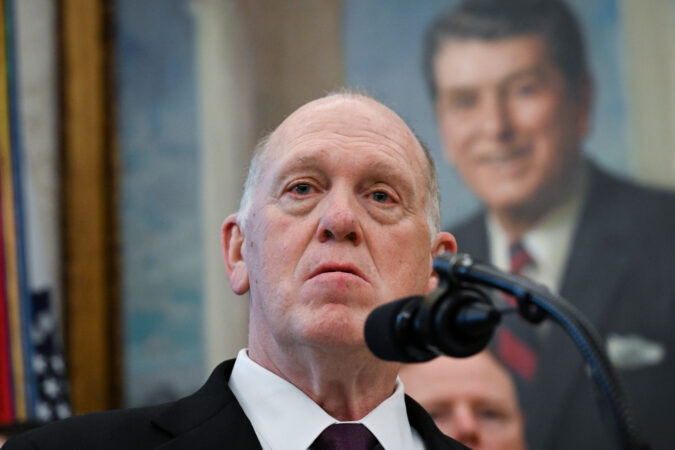
    The Trump administration deployed border czar Tom Homan to Minneapolis on Tuesday, the day after a lengthy meeting at the White House in which the president expressed frustration with the situation in Minnesota since Alex Pretti was fatally shot by Border Patrol.

    President Donald Trump said Monday he would send Homan to replace Border Patrol Commander Gregory Bovino, who has been the face of the operation in Minneapolis and previous ones in Los Angeles and Chicago.

    Pretti’s sister issued a statement memorializing her brother and condemning “disgusting lies” she said had been told about him since his death on Saturday. Video footage of Pretti’s killing has raised questions about Department of Homeland Security officials’ immediate account of the incident.

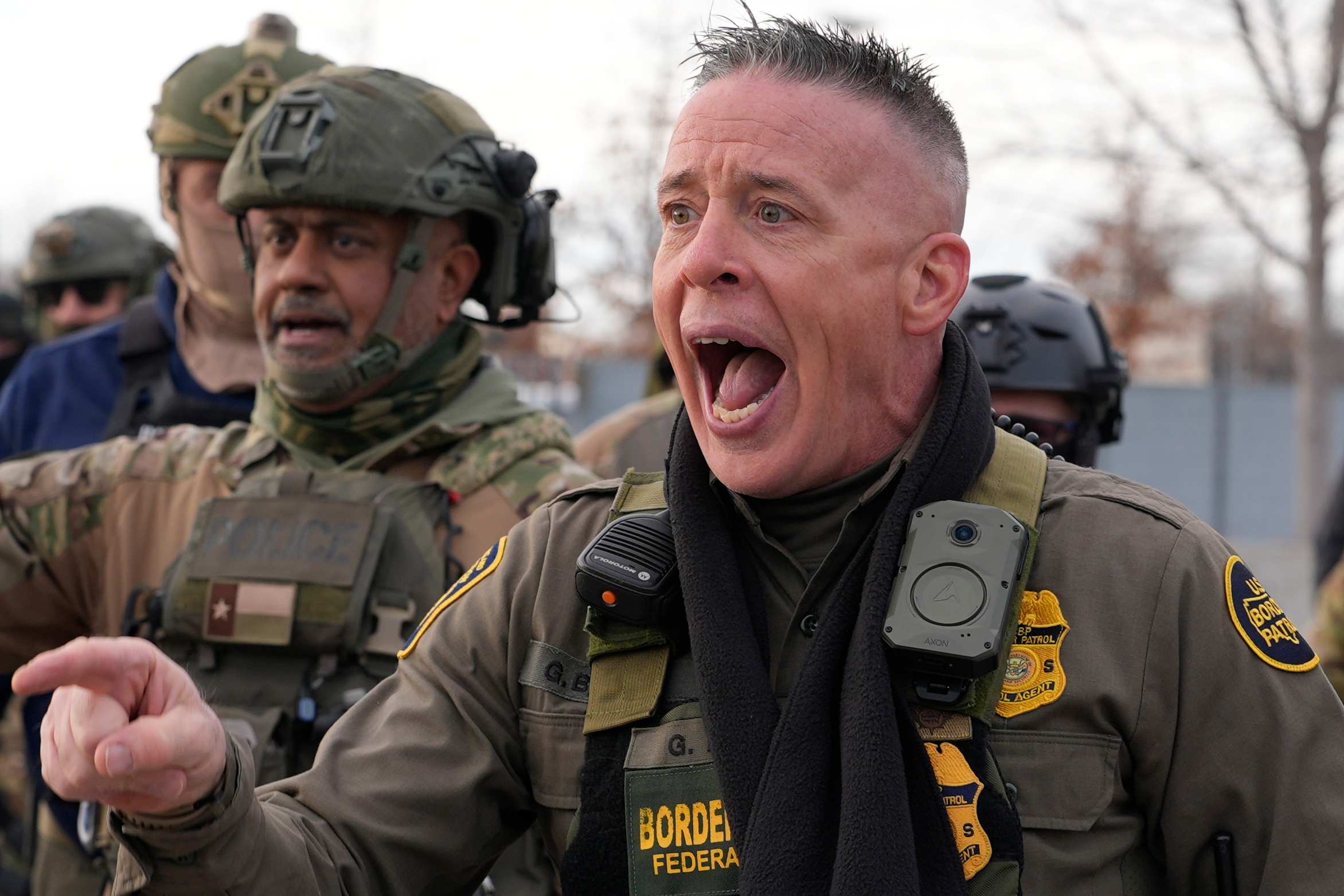
    U.S. Border Patrol Cmdr. Gregory Bovino shouts at protesters, Sunday, Jan. 11, 2026, in Minneapolis. (AP Photo/Jen Golbeck)

    The day Pretti was shot, Bovino suggested he had wanted to “massacre” officers. A Washington Post analysis of the incident’s footage found that agents secured a handgun from Pretti before he was shot multiple times. Local authorities said he was carrying the weapon lawfully.

    The White House in the last 24 hours has adopted a more measured tone in its response to the shooting. Trump showed his dissatisfaction with the situation in Minnesota during an extended meeting with Homeland Security Secretary Kristi L. Noem late on Monday, according to a personal familiar with the meeting who spoke on the condition of anonymity to discuss a private conversation.

    Homan is set to meet with local officials in Minneapolis when he arrives there Tuesday.

    Pretti’s sister, Micayla Pretti, in the statement shared by an Associated Press reporter late Monday, described her grief as “a pain no words can fully capture” and expressed a sense of exasperation. “When does this end? How many more innocent lives must be lost before we say enough?” she wrote. It was not immediately clear what falsehoods she was referring to.

    Alex Pretti, a 37-year-old ICU nurse, was the third person to be shot by federal immigration authorities in Minneapolis this month, and the second to be killed.

    In a remarkable filing late Monday, Minnesota’s chief federal judge demanded that Todd M. Lyons, the acting head of Immigration and Customs Enforcement, personally appear in court on Friday to explain what he said were repeated failures to comply with court orders amid ICE’s enforcement efforts in the state.

    The order threatened possible contempt proceedings against Lyons and sets up another potential showdown between federal judges and Trump officials.

    It was not clear Tuesday how Lyons would respond or whether Justice Department attorneys would seek to block the order in court.

    Minneapolis Mayor Jacob Frey (D) said late Monday, after speaking to Trump, that some federal troops would begin leaving the area on Tuesday. Minnesota Gov. Tim Walz (D) said separately that Trump had agreed in a phone call Monday “to look into reducing the number of federal agents” in the state. DHS did not immediately respond to an early Tuesday request for comment. Both Frey and Trump said Homan would speak with the mayor Tuesday.

    First lady Melania Trump called for unity in Minneapolis in a Fox & Friends interview Tuesday morning, saying: “I know that my husband, the president, had a great call yesterday with the governor and the mayor. And they are working together to make it peaceful and without riots. I’m against the violence. So please, if you protest, protest in peace. We need to unify in these times.”

    “Nobody in the White House, including President Trump, wants to see people getting hurt or killed in America’s streets,” White House press secretary Karoline Leavitt said Monday. “It is President Trump’s hope and wish and demand for the resistance and chaos to end today.”

  • ‘Bone-chilling’ cold is sticking around Philly, and so is the snow

    ‘Bone-chilling’ cold is sticking around Philly, and so is the snow

    Out of the snow globe, and into the freezer.

    After having experienced its heaviest snowfall in about a decade, the Philadelphia region now faces frigid temperatures that are expected to barely squeak out of the teens until next week. And all while dealing with cleanup from the 9.3 inches of snow that blanketed the city, a task made more complicated by minimal natural melting due to the cold — plus monitoring another potential winter storm for this coming weekend.

    But don’t panic just yet. Forecasters at the National Weather Service office in Mount Holly say it’s too early to tell whether mean old Jack Frost will set his sights on us once again in the coming days, and what level of snowfall we could see if he does.

    “There will likely be a system somewhere off the Eastern Seaboard over the weekend,” said weather service meteorologist Joe DeSilva. “But it’s very uncertain at this point.”

    Besides, we’ve got enough to worry about already.

    It won’t just be cold in the Philadelphia area this week — it will be dangerously so. On Tuesday, temperatures generally stretched only into the low or mid 20s, a good five to 10 degrees lower than what we saw Monday, the weather service said. Lows, meanwhile, stuck stubbornly in the single digits, with wind chills making it feel like zero or below.

    That cold, it seems, will refuse to budge until next week. As we move through the final week of January, temps are expected to continue to nosedive, the weather service said.

    Daytime highs throughout the week are expected to top out in the mid- or upper teens in the Philadelphia region, with some spots seeing the off chance of making it into the 20s. Lows are likely to stick in the single digits through Friday. As the weather service put it in a Tuesday afternoon update, this is “bone-chilling” cold that has the potential not only to stress the energy grid — as New Jersey and Philadelphia officials alluded to Monday — but also to cause frostbite and hypothermia.

    Philadelphia, in fact, has the grim potential of hitting zero degrees for the first time in 32 years sometime in the coming days. We haven’t seen zero at the Philadelphia International Airport since Jan. 19, 1994, but that mercifully long streak could be broken Thursday or Friday, when temperatures are expected to go as low as 2 or 3 degrees, DeSilva said.

    “We still have three nights before we get there, so lots could change between now and then,” he added.

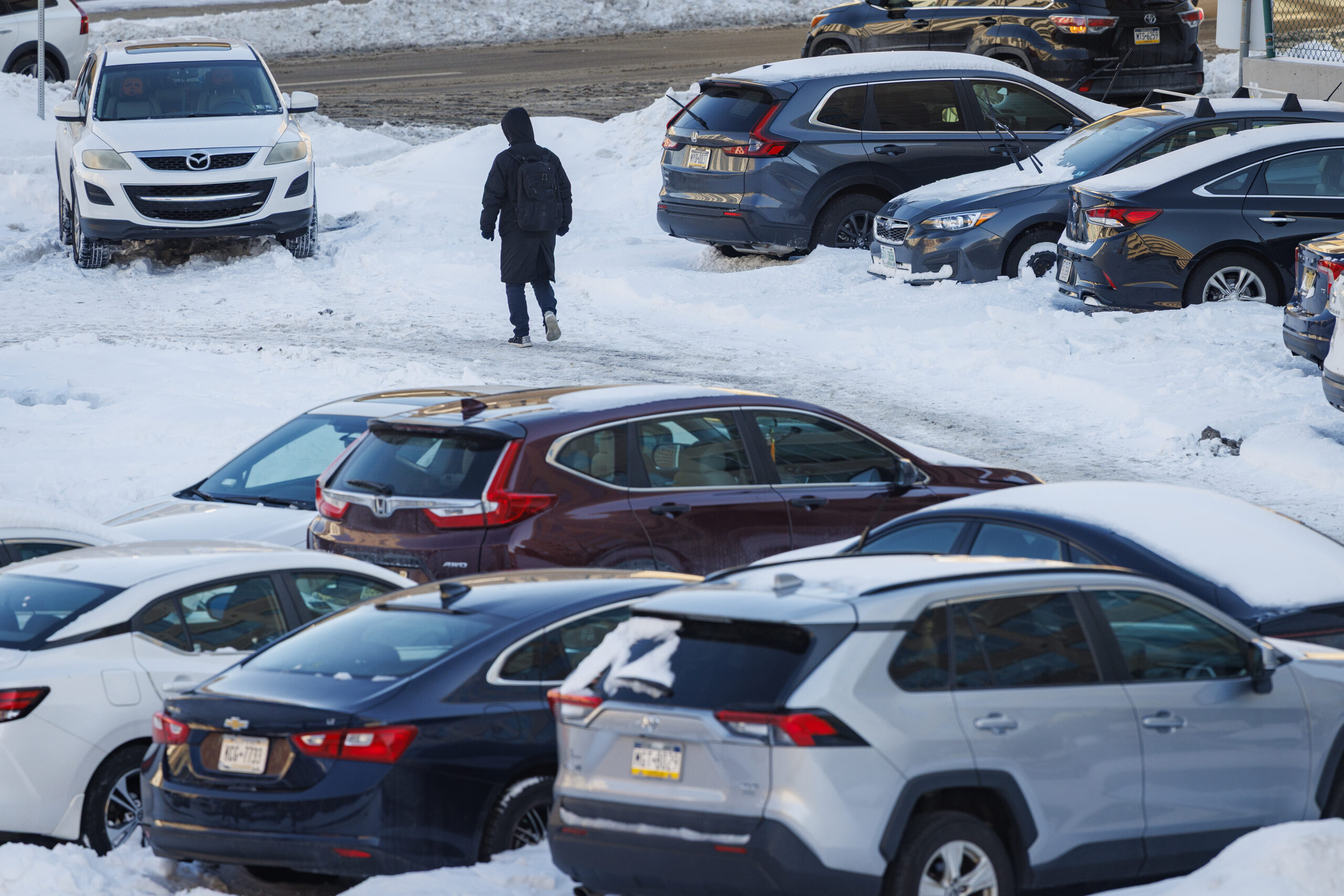
    A pedestrian walks through a snow-covered parking lot at Ninth and Arch Streets in Center City Philadelphia, Tuesday, Jan. 27, 2026.

    These lows arrive as Philadelphia continues to dig out from last weekend’s winter storm, which resulted in a days-long snow emergency in the city that was only lifted Tuesday amid closures for city offices, courts, and schools. Despite a full-court press by the Philadelphia Streets Department, many smaller streets remained unplowed, and the cold weather threatened to institute a deep freeze that could complicate the cleanup, officials have said.

    Unfortunately, no break is imminent. Temperatures are not expected to get above freezing until the early or middle part of next week, and even then perhaps barely so. In its Tuesday afternoon forecast, the weather service called the length and magnitude of the arctic air mass descending upon the area “exceedingly rare” and urged caution. Normal low temperatures for Monday’s date, for example, stand at about 25 degrees.

    “We are running 15 to 20 degrees below average,” DeSilva said.

    And then there is the possibility of even more snow amid our extended bout of cold — though as of Tuesday afternoon, it remained just that. The weather service noted that it remained unclear where precipitation could fall, and in what amounts, though early models indicated that the storm could spare much of the area away from the coast. Still, DeSilva said, it remained too early Tuesday to tell what to expect.

    “If lows track further off the coast, we could see less impact here, but if they’re closer, we may have some moderate impacts,” DeSilva said.

  • A Bucks County bust that ‘dismantled’ a drug ring yielded 8 guns and $4 million in drugs, officials say

    A Bucks County bust that ‘dismantled’ a drug ring yielded 8 guns and $4 million in drugs, officials say

    Bucks County prosecutors charged a man who fired a gun at police during a narcotics operation this month with attempted murder and related crimes, authorities said Tuesday. It was the latest development in a multistate investigation that led to the recovery of eight firearms and $4 million in drugs.

    Police arrested the man, Nicholas Sperando, 26, of Philadelphia, on Jan. 15 after the shooting at his rowhouse on Fairdale Road in Northeast Philadelphia, according to Bucks County District Attorney Joe Khan’s office.

    Sperando’s home was one of several locations involved in an extensive drug-trafficking organization, officials said.

    After announcing their intent to serve a warrant at Sperando’s home that day, agents with the Pennsylvania Attorney General’s Office and Pennsylvania state troopers prepared to breach Sperando’s door with a battering ram.

    Instead, they were met with gunfire from inside the home.

    After firing a round, Sperando fired a second shot through the front door, “directly targeting the position where the officers had been standing,” officials said.

    No officers fired their weapons or were injured in the operation.

    “This cowardly act against our officers was an attack on the rule of law, and our office will always protect those who risk their lives to protect us, even when that happens across county lines,” Khan said when announcing the charges.

    Sperando surrendered during the incident and is being held without bail on two counts of attempted murder and attempted murder of a law enforcement officer, as well as three counts of aggravated assault and related drug crimes.

    The arrest, Khan’s office said, was the culmination of a monthslong investigation that “dismantled” a multimillion-dollar trafficking organization.

    For months, authorities said, undercover officers had purchased drugs from Sperando in Levittown and Northeast Philadelphia. Bucks County officials asserted control of the Philadelphia jurisdiction for the sake of their investigation, according to officials.

    Investigators searched Sperando’s residence and recovered a FN Herstal 5.7 pistol that they said was used in the shooting — including a live round jammed in the gun, which, in prosecutors’ view, likely prevented fatalities among law enforcement officers.

    Meanwhile, authorities said, investigators found a variety of controlled substances and other weapons located across Sperando’s residence, his place of work on James Street, and a stash house on Day Street.

    At the Day Street house, officers arrested another man, David Tierney, who they say was also involved in the operation.

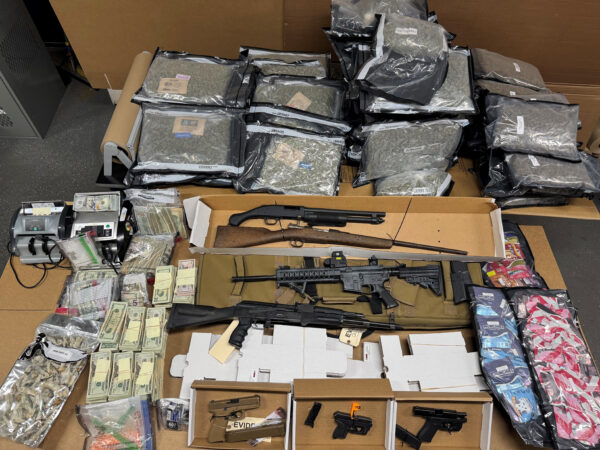
    Investigators said they seized an AR-style rifle, a Glock handgun with extended magazine, and bulk quantities of marijuana and proceeds from drug sales from Sperando’s home, while the alleged stash house yielded a firearm found under a pillow and a trailer containing “enormous quantities” of marijuana and THC vaporizers.

    At Sperando’s workplace, which officials did not name, officers recovered a Mossberg pump shotgun, a Ruger .380 pistol, and a “significant supply” of psilocybin mushrooms and edibles, authorities said.

    In all, officials said, the operation yielded 300 pounds of marijuana and 17,000 vaporizers, as well as 80 pounds of THC concentrate, 600 bags of THC edibles, 15 pounds of mushrooms, 75 mushroom edibles, 300 Adderall pills, and two ounces of cocaine.

    Sperando is being held in custody without bail. Tierney is being held on $250,000 bail. A third suspect in the operation, Nicholas Keenoy, surrendered to authorities on Tuesday.

  • Helen Cherry, prolific illustrator and artist, has died at 101

    Helen Cherry, prolific illustrator and artist, has died at 101

    Helen Cherry, 101, formerly of Philadelphia, prolific illustrator, artist, and show tunes devotee, died Thursday, Jan. 15, of age-associated decline at her home in the Woodland Pond retirement community in New Paltz, N.Y.

    “It was her decision entirely,” said her daughter, Lynne. “She knew her own mind and made the decision that it was time for her to take flight to the Great Beyond.”

    A lifelong artist, Mrs. Cherry grew up drawing and painting in West Philadelphia. She earned a scholarship to the old Philadelphia College of Art, sold illustrations to the Jack and Jill children’s magazine, and took a 20-year hiatus in the 1950s and ’60s to rear her three children.

    She resumed her career at 50 in 1974 and went on to illustrate 30 books and dozens of magazine stories for Highlights, Cricket, and other publications. Using a combination of her maiden name, Cogan, and her married name, Cherry, she was published under the pseudonym of Helen Cogancherry.

    Mrs. Cherry at work illustrating 1991’s “Fourth of July Bear.”

    “She was always an artist,” said her daughter, also an illustrator and writer. “Art was her hobby, her passion, her work. She said it was something that she can’t not do.”

    Mrs. Cherry was a keen and imaginative observer of life, adept at creating visuals that reflected the concepts of the writers with whom she worked. She illustrated many children’s books, such as All I Am, Warm as Wool, and The Floating House.

    She told The Inquirer in 1986 that a book she illustrated helped a girl she knew address a difficult childhood situation. “That made a profound impression on me,” she said. “I saw how my little books could help children.”

    Her career was featured in several publications, and she told The Inquirer that breaking back into the business in the 1970s was “discouraging at first.” She said: “I remember coming home sometimes and telling my husband that it was hopeless. He kept encouraging me to keep at it.”

    Mrs. Cherry (left) and her daughter, Lynne, work on a project.

    Helen Cogan was born July 9, 1924, in a West Philadelphia rowhouse beneath the elevated railroad tracks. The middle of three children, she looked up to her sister, Molly, and cared for her younger brother, Robert, while her parents ran the small grocery store they lived above.

    She contributed illustrations to the yearbook and graduated from West Philadelphia High School. She met Herbert Cherry in French class and sent him beautifully illustrated letters while he served overseas during World War II.

    They married in 1950 and had a daughter, Lynne, and sons Steven and Michael. She helped her husband operate Cherry’s Pharmacy in Ridley Park for years, and they lived in Milmont Park and Wallingford in Delaware County, and Carlisle, Pa. She moved to New Paltz after her husband died in 2000.

    Mrs. Cherry often sang show tunes with family and friends, and while she worked. She whipped up memorable meals, especially on holidays, and enjoyed idyllic summers on family vacations at the Jersey Shore in Ventnor.

    Mrs. Cherry grew up in West Philadelphia.

    She tutored her children and their friends, and later her grandchildren, in drawing and painting. She showed everybody, her daughter said, “how to be a good human being in this world.”

    On Facebook, friends called her “warm,” “beautiful,” and “a talented giver.” One said: “The joy she radiated her whole life long was magical.”

    Her daughter said: “She was quiet and understated but strong.”

    Her favorite song was “Life is Just a Bowl of Cherries.” It opens with: “Life is just a bowl of cherries. Don’t take it serious. Life’s so mysterious.”

    Mrs. Cherry enjoyed time with her children.

    In addition to her children, Mrs. Cherry is survived by five grandchildren, a great-granddaughter, her brother, and other relatives. Her sister died earlier.

    A memorial service was held Sunday, Jan. 18. A celebration of her life is to be held later.

    Donations in her name may be made to the Children’s Environmental Literacy Foundation, Suite 130, 500 Summit Lake Dr., Valhalla, N.Y. 10595.

    Mrs. Cherry and her husband, Herbert, married in 1950.
  • Bucks County man charged with killing his father, mother, and sister

    Bucks County man charged with killing his father, mother, and sister

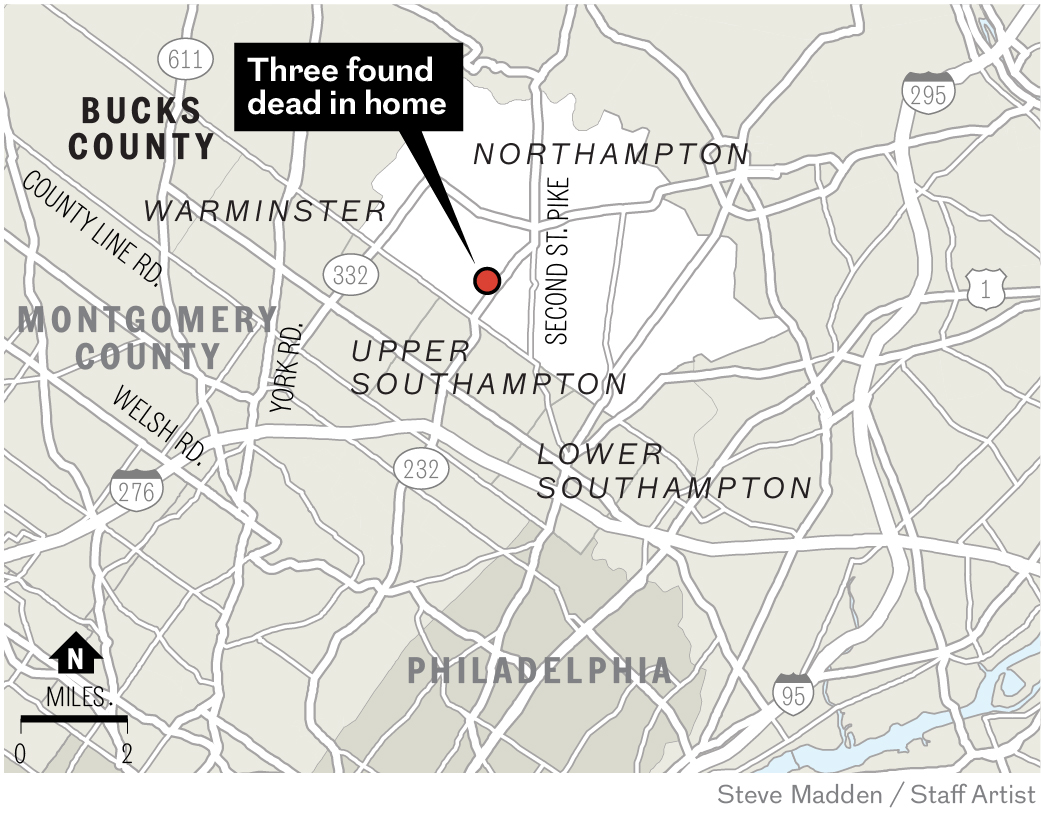
    A Bucks County man was charged with homicide and related crimes late Tuesday after prosecutors said he killed his father, mother, and sister inside their parents’ Northampton Township home.

    The charges came a day after authorities arrested Kevin Castiglia following an hourslong standoff at the home where his relatives were found dead.

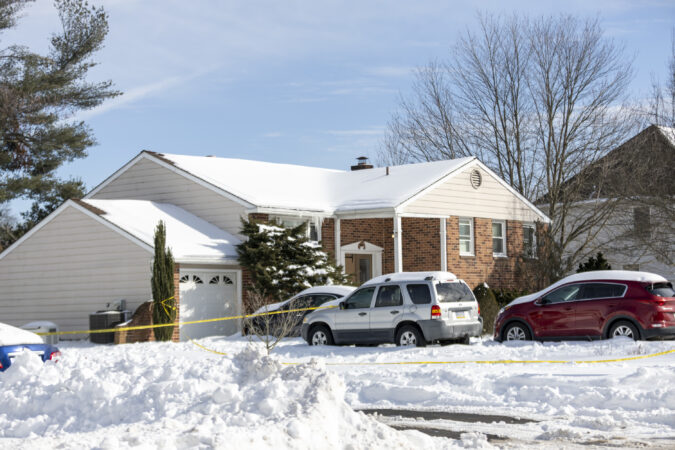
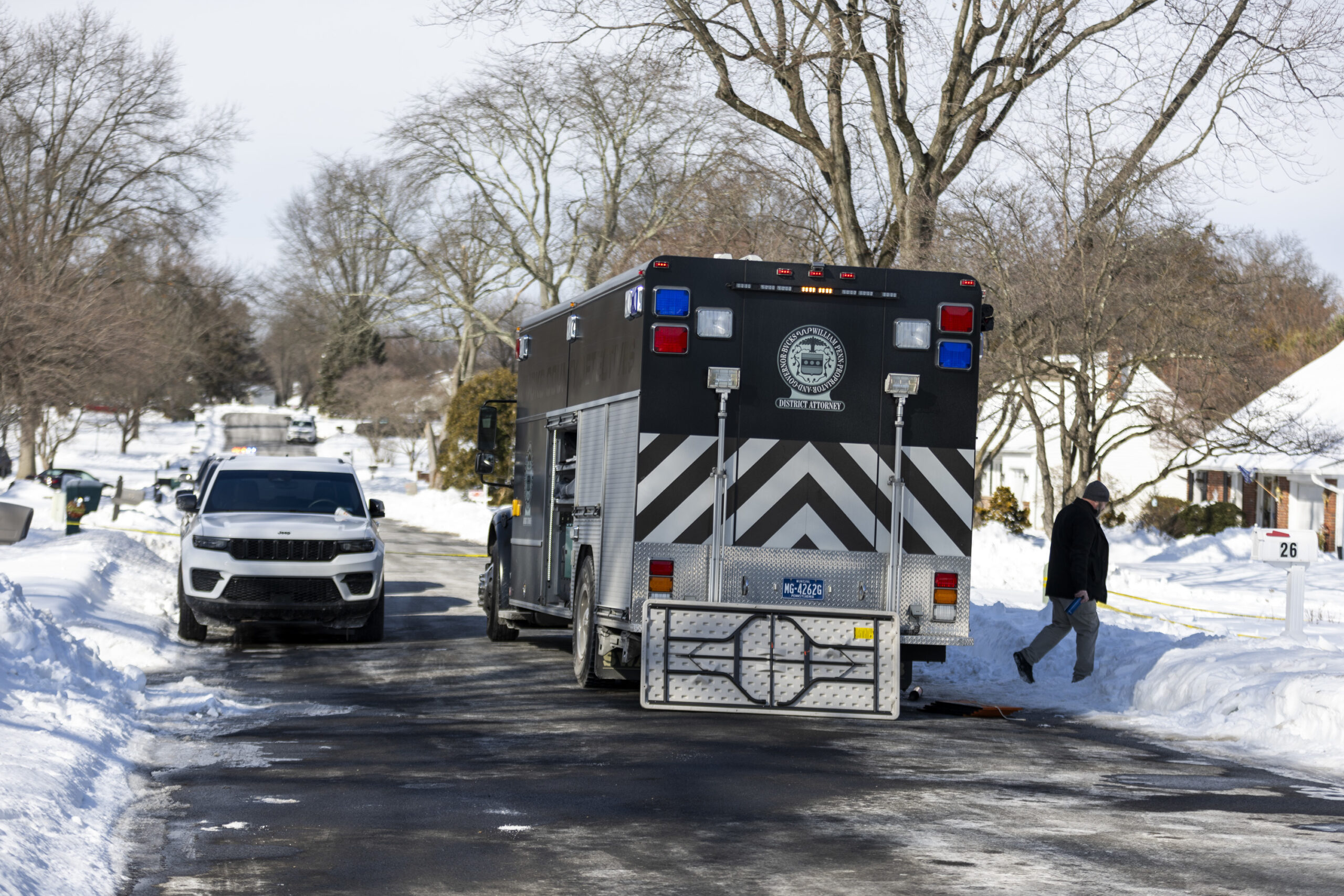
    Castiglia, 55, was taken into custody after he barricaded himself inside the two-story brick house at 26 Heather Road, where police later discovered the bodies of his 53-year-old sister, Deborah, in the kitchen and his parents, Frederick, 90, and Judith, 84, in the basement.

    Authorities have not said how they died.

    Castiglia is charged with three counts each of criminal homicide and abuse of a corpse, as well as making terroristic threats, and related crimes.

    Police were dispatched to the house about 2:15 p.m. Monday after Deborah Castiglia’s boyfriend called 911 to report that Kevin Castiglia had threatened him with a large chef’s knife when he arrived at the home looking for his girlfriend, authorities said. The boyfriend told police Deborah Castiglia had been missing for several days, according to the affidavit of probable cause for her brother’s arrest.

    After officers arrived, the affidavit said, Kevin Castiglia came to the front door armed with two knives, one of which an officer believed had blood on it.

    According to the affidavit, Castiglia spoke incoherently and did not respond when officers asked about his family. He pointed the knives at the officers, who deployed Tasers to try to subdue him — without success, the document said.

    Castiglia pulled the probes from his body before slamming the door shut and locking it, the affidavit said.

    Officers called for a tactical team to break into the house. As police secured the area, neighbors were ordered to shelter in place.

    Three found dead in Northampton

    David Deleo, 41, was shoveling snow from his driveway when Northampton Township police arrived, he said in a phone interview Tuesday. Within minutes, he said, officers blocked off Heather Road. Police vehicles and emergency crews from neighboring towns and counties soon lined the street, surrounding the house and establishing a perimeter, he said.

    From inside her home next door, Erica Titlow, 35, said she looked out a window and saw the man standing at the front door of the house, which has French doors with large glass panes. He was in his underwear, she said, with blood on his chest and stomach. Deleo said that he also saw the man and that he was holding a knife with blood on the blade.

    “I had no idea what was happening,” Titlow said. “I thought maybe he was having some kind of mental breakdown and had hurt himself.”

    After the man retreated from the doorway, police used a bullhorn to call out to him, Titlow said, urging him to come outside. He did not, and the standoff continued for several hours.

    Officers surrounded the house but were unable to enter, Titlow said. Shortly before a SWAT team forced its way through the front door Monday evening, officers went door to door, asking Deleo and Titlow if snipers could use their second-floor windows to provide cover to officers on the ground. They agreed, they said.

    Titlow said she spent more than an hour hiding in her basement with her 2-year-old daughter while snipers were positioned inside her home. “I didn’t want her to see any of it,” she said.

    Even after officers entered the house, the man was not immediately removed, Deleo said. He watched as police deployed gas canisters inside the home and heard them detonate. Firefighters later connected a hose to a nearby hydrant and sprayed water into the house, according to Deleo and Titlow.

    A Bucks County detective truck outside the home where three people died in Southampton on Monday.

    Sometime after nightfall — the exact moment was difficult to recall, Titlow said — officers pulled the man from the house. He was restrained on a stretcher as authorities wheeled him away, she said.

    By Tuesday morning, police were still at the scene, Titlow said, though the activity had slowed. “It’s a lot quieter now,” she said.

    Staff writer Robert Moran contributed to this article.

  • Families of 2 men killed in boat strike sue Trump administration over attack they call ‘unlawful’

    Families of 2 men killed in boat strike sue Trump administration over attack they call ‘unlawful’

    WASHINGTON — Families of two Trinidadian nationals killed in a Trump administration boat strike last October sued the federal government on Tuesday, calling the attack a war crime and part of an “unprecedented and manifestly unlawful U.S. military campaign.”

    The lawsuit is thought to be the first wrongful death case arising from the three dozen strikes that the administration has launched since September on boats in the Caribbean Sea and eastern Pacific Ocean. The complaint will test the legal justification of the Trump administration attacks; government officials have defended them as necessary to stem the flow of drugs into the United States, but many legal experts say they amount to a brazen violation of the laws of armed conflict.

    The complaint echoes many of the frequently articulated concerns about the boat strikes, noting for instance that they have been carried out without congressional authorization and at a time when there is no military conflict between the United States and drug cartels that under the laws of war could justify the lethal attacks.

    “These premeditated and intentional killings lack any plausible legal justification. Thus, they were simply murders, ordered by individuals at the highest levels of government and obeyed by military officers in the chain of command,” the lawsuit says.

    White House Deputy Press Secretary Anna Kelly said in a statement that the Oct. 14 strike “was conducted against designated narcoterrorists bringing deadly poison to our shores.”

    “President Trump used his lawful authority to take decisive action against the scourge of illicit narcotics that has resulted in the needless deaths of innocent Americans,” Kelly stated.

    The lawsuit was filed by the mother of Chad Joseph and the sister of Rishi Samaroo, two Trinidadian nationals who were among six people killed in the Oct. 14 missile strike on a boat traveling from Venezuela to Trinidad. The men were not members of any drug cartel, the lawsuit says, but had instead been fishing in the waters off the Venezuelan coast and were returning to their homes in Trinidad and Tobago.

    The two had caught a ride home to Las Cuervas, a fishing community where they were from, on a small boat targeted in a strike announced on Truth Social by President Donald Trump. All six people aboard the boat were killed.

    “These killings were wrongful because they took place outside of armed conflict and in circumstances in which Mr. Joseph and Mr. Samaroo were not engaged in activities that presented a concrete, specific, and imminent threat of death or serious physical injury, and where there were means other than lethal force that could have reasonably been employed to neutralize any such threat,” the lawsuit says.

    The lawsuit is the first to challenge the legality of the boat strikes in court, according to Jen Nessel, a spokesperson for the Center for Constitutional Rights, which filed the lawsuit in federal court in Massachusetts on behalf of the families, along with the ACLU and others.

    Nessel said in an email that the center also has a Freedom of Information Act lawsuit seeking the release of the legal justification for the strikes.

    Jeffrey Stein, an American Civil Liberties Union attorney, told reporters over Zoom that the lawsuit seeks compensatory and punitive damages that can be determined after a trial.

    “We don’t think that it’s something that we could put a precise dollar amount on,” Stein said. “But we’re seeking damages that can go some way toward bringing justice for these really heinous abuses of power.”

    The lawsuit also aims to prevent more boat strikes, Stein said, with the hope that a U.S. court rejects the Trump administration’s “frankly absurd claims about its authority to engage in these illegal strikes.”

    The lawsuit was filed in federal court in Massachusetts. It cites the Death on the High Seas Act, which the lawyers say permits wrongful death cases in situations like this, as well as the Alien Tort Statute, which permits foreign nationals to sue in federal court for alleged human rights violations.

    The death toll from the boat strikes is now up to at least 126 people, with the inclusion of those presumed dead after being lost at sea, the U.S. military confirmed Monday. The figure includes 116 people who were killed immediately in at least 36 attacks carried out since early September, with 10 others believed dead because searchers did not locate them following a strike.

  • Man wounded after exchanging gunfire with Border Patrol agents near US-Mexico border

    Man wounded after exchanging gunfire with Border Patrol agents near US-Mexico border

    ARIVACA, Ariz. — A man who authorities say was involved in a smuggling operation was shot Tuesday in an exchange of gunfire with the U.S. Border Patrol and after firing at a federal helicopter near the U.S.-Mexico border, authorities said.

    Federal agents were attempting to apprehend the 34-year-old Arizona man near Arivaca, Ariz., when he shot at a Border Patrol helicopter and at agents, the FBI said. Agents returned fire, striking the man and wounding him, the FBI said.

    The man was transported to a hospital and was recovering from surgery Tuesday evening, authorities said.

    The Pima County Sheriff’s Department said the FBI asked it to lead a use-of-force investigation of the Border Patrol. It noted that such investigations are standard when a federal agency is involved in a shooting in the county.

    FBI special agent Heith Janke said suspect Patrick Gary Schlegel has a criminal history that includes a 2025 warrant for escape stemming from a smuggling conviction.

    Hagle was in federal custody and is expected to be charged with a criminal complaint, Janke said.

    Arivaca is a community about 10 miles from the border. The area is a common path for drug smugglers and migrants who illegally cross the border, so agents regularly patrol there.

    The Santa Rita Fire District said it responded to the shooting and the person who was wounded was in custody.

    “Patient care was transferred to a local medical helicopter for rapid transport to a regional trauma center,” the fire district said.

    One level-one trauma center hospital in Tucson declined to release information, and the AP was waiting on a response from another.

    The shooting comes in a month that has seen three shootings — two fatal — by immigration officers involved in the massive Department of Homeland Security enforcement operation in Minnesota.

    While there were numerous videos of those shootings taken by residents monitoring the enforcement operations in the Minneapolis area, the latest shooting in Arizona happened in a community of about 500 people apparently without any bystander video of the incident.

    The sheriff department said its involvement in the investigation was the result of “long standing relationships” built over time in the border area to promote transparency.

    Sheriff Chris Nanos, a Democrat, has previously said his agency will not enforce federal immigration law amid President Donald Trump’s crackdown and that he will use his limited resources to focus on local crime and other public safety issues.

    U.S. Customs and Border Protection did not immediately respond to emails and telephone calls seeking more information.

    Border Patrol agents fired weapons in eight incidents during the 12-month period through September 2025, 14 times during the year before that and 13 times the year before that.

  • Texas sues Delaware nurse practitioner accused of mailing abortion pills

    Texas sues Delaware nurse practitioner accused of mailing abortion pills

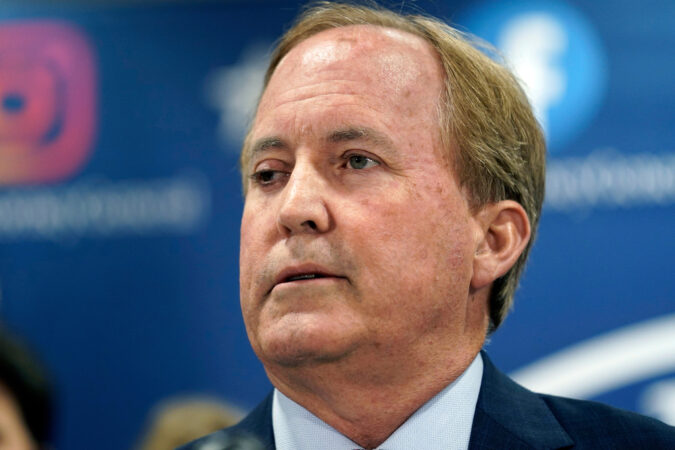
    Texas’s attorney general sued an out-of-state nurse practitioner Monday for allegedly mailing abortion pills to women in Texas, where the drugs are illegal — the latest in a string of similar lawsuits by conservative officials seeking to limit access to the pills.

    Attorney General Ken Paxton (R) filed a lawsuit against Debra Lynch, who runs Her Safe Harbor, a Delaware-based service that remotely prescribes and mails abortion pills to women across the country. Paxton’s court filing suggests that he learned about Lynch’s operations from news interviews she’d done over the last year, including with the Austin American-Statesman and the New York Times.

    In those interviews, Lynch “boasted” about mailing abortion drugs to Texas, the court filing says.

    “The day of reckoning for this radical out-of-state abortion drug trafficker is here,” Paxton said in a statement Tuesday. “No one, regardless of where they live, will be freely allowed to aid in the murder of unborn children in Texas.”

    Lynch and Her Safe Harbor did not immediately respond to requests for comment Tuesday afternoon.

    She and her group join a growing list of out-of-state abortion providers and groups that Texas has sought to punish. All so far have worked out of states with “shield laws” enacted after the Supreme Court threw out the constitutional right to an abortion, to protect abortion providers from out-of-state prosecution.

    That legal strategy has come under fire from officials in states with abortion bans, with Texas leading the way. Paxton, his allies at the Texas Capitol, and antiabortion advocates and attorneys have for months worked to thwart access to the abortion pills that are still flowing into their state.

    Last year, Paxton sued a doctor in New York for sending abortion pills to Texas. This year, he sent cease-and-desist letters to a California doctor, along with Her Safe Harbor — Lynch’s group, which prescribes and mails pills — and another organization that provides information on where to access pills. Louisiana has indicted the same New York and California doctors, also accusing them of illegally sending mailing abortion pills.

    New York and California have declined to cooperate with the actions by the red states.

    When she spoke with the American-Statesman and the Times this year, Lynch let reporters and photographers shadow her work, allowing them to chronicle her process of taking patient phone calls and packaging the pills alongside her husband.

    Across the country, there are eight states that explicitly protect abortion providers that mail pills to patients in states with abortion bans, but that group does not include Delaware, where Her Safe Harbor began providing services in June 2024. Delaware is one of more than a dozen states that offer varying levels of protection for telehealth providers of abortion and gender transition care.

    The New York Times reported in June that Lynch had decided to move to one of the eight states with the strongest shield laws. It is not clear whether she did so.

  • Trump administration uses ICE to pressure blue states

    Trump administration uses ICE to pressure blue states

    For months, President Donald Trump’s administration has been trying to force Minnesota’s Democratic leaders to turn over detailed information about the state’s voters, including driver’s license numbers and partial Social Security numbers.

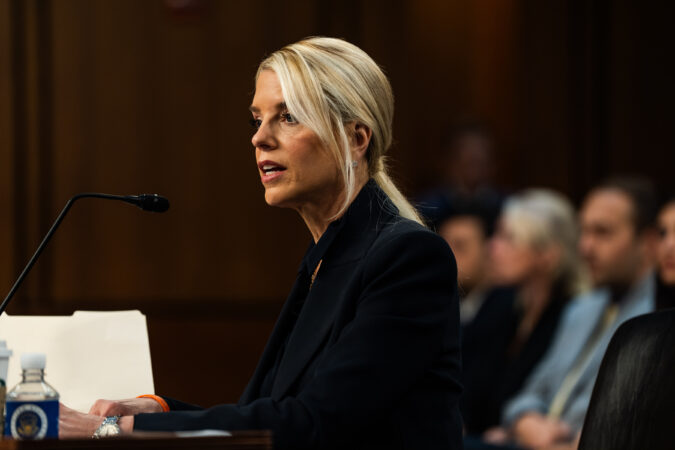
    State officials have said no. Now, Attorney General Pam Bondi is repeating those demands in a letter that also references the federal government’s aggressive deployment of immigration agents to the streets of Minneapolis.

    Her letter, dated Saturday, presses the state on sharing the voter information, turning over public assistance data and assisting the federal government with immigration enforcement. It was sent the same day border agents fatally shot Alex Pretti, an intensive care nurse, in Minneapolis.

    Bondi’s approach has led Democrats in Minnesota and other states to accuse the administration of blackmailing and bullying them into ceding more power to the administration. It comes as she tries to extract similar data from dozens of other states.

    “The states have power,” Minnesota Attorney General Keith Ellison (D) said. “And Trump is saying, ‘No you don’t, not while I’m president. We’ll run you over. We’ll kill your people. We’ll shoot pepper balls at you. We’ll invade your city. We’ll terrorize everyone. We’ll kill citizens.’”

    The Department of Homeland Security launched Operation Metro Surge last month and has sent thousands of agents to Minnesota since then. Pretti’s death came 2½ weeks after another agent killed Renée Good in her vehicle. Both victims were 37.

    The federal government has sweeping authority to enforce immigration laws, as a federal judge made clear Monday as she repeatedly expressed skepticism in response to Minnesota’s arguments in a lawsuit seeking to halt the surge of immigration agents to the state. The administration has far less power when it comes to elections because the Constitution gives states the primary responsibility for voting policies.

    Bondi’s letter to Minnesota Gov. Tim Walz (D) appeared to try to leverage immigration enforcement to get the state’s voter list. Minnesota officials rejected the demand and said Bondi was trying to force them to give up sensitive voter data that the Justice Department is not entitled to have.

    “This was never about immigration,” Ellison said. “It was never about fraud. It’s about coercion and bullying.”

    The Justice Department recently launched an investigation into whether Walz and others were impeding immigration enforcement. Trump on Monday struck a new tone, writing on social media that he had talked to Walz and believed they were “on a similar wavelength.” He said he expected them to talk again soon.

    But in court, the two sides clashed at a hearing over the surge of Immigration and Customs Enforcement agents. U.S. District Judge Katherine Menendez asked a Justice Department attorney whether Bondi with her letter to Walz was trying to “achieve a goal through force, which it can’t achieve through the courts.” Justice Department attorney Brantley Mayers waved off the possibility the enforcement activities were linked to what Bondi sought in her letter.

    “I have all of these quotes in the record,” Menendez said. “You’re telling me that I’m reading them wrong?”

    Throughout the hearing, the judge expressed skepticism that she has the power to curtail the administration’s immigration enforcement and said she would rule soon.

    In a statement, White House spokesperson Abigail Jackson said Trump “wants to work with local leaders to remove the worst of the worst from American streets.” The Justice Department declined to comment on the record.

    Georgetown University law professor Stephen I. Vladeck said Minnesota officials, in their lawsuit trying to stop the federal immigration surge, were testing a legal theory about the limits of the federal government’s power that is “designed for novel times.”

    “Our existing legal doctrines were not designed for rampant lawlessness on the part of the executive,” he said.

    Ahead of the hearing, Maine Gov. Janet Mills (D) said she was watching the case closely, particularly now that immigration agents have flooded into her state. Mills, a former state attorney general, said Republicans were acting hypocritically, given the party’s historical support of states’ rights, which are granted in the 10th Amendment of the Constitution.

    “Republicans have always loved the 10th Amendment,” she said. “Suddenly, they’re against it.”

    Kansas Attorney General Kris Kobach (R) said he has a “long-standing pro-states’ rights, pro-10th Amendment point of view.” But the federal government has clear authority over immigration, he said.

    He said Bondi was making a “policy recommendation” to Minnesota when she urged the state to change how it cooperates with immigration authorities. He said he didn’t think she was linking the request to the surge of agents in the state.

    “She’s not threatening to do something,” he said. “I don’t think it’s coercive.”

    The federal government has a right to data on public assistance programs because it funds them, he argued. The request for the voter rolls may be “tangential” to what is happening in Minnesota, Kobach said, but he believes the federal government has a right to that data, which he supports using in an effort to find illegal voters.

    The dispute over the connection between voter rolls and immigration enforcement has played out over social media in recent days. Rep. Ilhan Omar (D., Minn.) said online that Bondi’s letter showed the surge of immigration agents “was always about rigging elections.”

    Vice President JD Vance responded to her on Monday by stating that Democrats are effectively saying, “We really want illegal aliens to vote in elections and will riot to ensure that it is so.”

    Democratic-led states have brought dozens of lawsuits against the Trump administration over the past year. California Attorney General Rob Bonta (D) said litigation has been an essential check on a federal government intent on pushing the limits of its power.

    “The check of the Congress is completely absent,” he said. “A Republican-led Congress is completely supine, ready to jump when asked to jump by the Trump administration, and they ask how high it is.”

    The Justice Department’s demand for Minnesota’s voter rolls comes after the agency spent months suing states to get personal information on voters, including their dates of birth, driver’s license numbers and partial Social Security numbers.

    In all, the Justice Department has sued two dozen states for their voter lists, but judges have not ruled in most of the cases. A federal judge this month threw out the lawsuit against California, saying the Justice Department is not entitled to the information. That case could sway how other courts look at the issue.

    Justice Department officials have said they want the lists so they can check whether states are properly maintaining them. It has been sharing data it has received from some states with the Department of Homeland Security, which oversees immigration enforcement.

    Under the Constitution, states, rather than the federal government, are responsible for running elections. Congress has not given the administration the authority to “centralize the private information of all Americans within the Executive Branch,” U.S. District Judge David O. Carter for the Central District of California wrote in his recent decision rejecting the Justice Department’s attempts to get that state’s voter rolls.

    Allowing the Justice Department to get the list “would inevitably lead to decreasing voter turnout as voters fear that their information is being used for some inappropriate or unlawful purpose,” the judge wrote.

    Minnesota Secretary of State Steve Simon (D), who oversees the state’s voter rolls, rejected Bondi’s latest demand and noted that most states have taken a similar stance.

    “This isn’t a defiant Minnesota on its own,” he said. “A large majority of states that have been asked for this information have said no on a similar basis to ours.”

    Maine Secretary of State Shenna Bellows (D) has fought the Justice Department’s demand for the voter list in her state.

    “I think what Bondi’s letter makes clear is that ICE invading Minnesota and Maine was never about immigration, but rather about inflicting violence and creating chaos to try to control our states and our elections,” she said.

    If the administration gathers state voter rolls, it can use them to challenge the ability of people to vote, said Uzoma Nkwonta, an attorney who represents Democratic voters who have intervened in the litigation over voter lists.

    “This is how you steal elections,” he said. “This is the path — taking these lists and then submitting them either to prevent people from voting or after the fact in order to reject the results of an election.”
  • Federal Reserve cuts rates again, signals one more cut amid uncertain outlook

    Federal Reserve cuts rates again, signals one more cut amid uncertain outlook

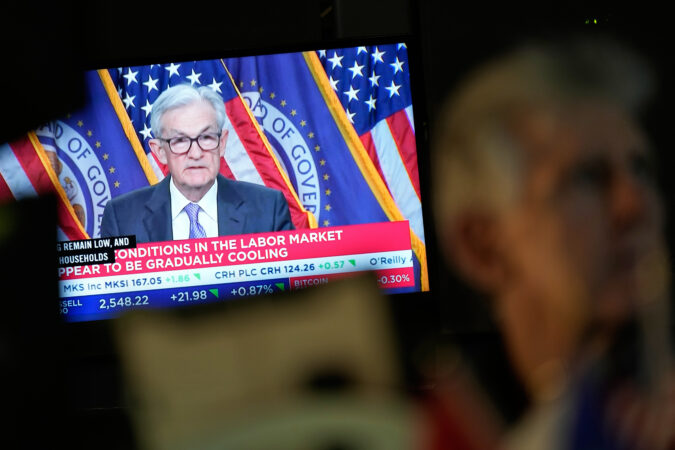
    The Federal Reserve cut interest rates by a quarter of a percentage point on Wednesday for the third time this year, seeking to shore up a softening labor market even as inflation builds and leaving the prospect of more cuts next year unclear.

    “It’s a labor market that seems to have significant downside risks,” Fed Chair Jerome Powell said at a news conference following the meeting.

    Although Fed officials tentatively penciled in at least one more rate cut before the end of next year, estimates about where the economy is heading varied significantly and Powell suggested the central bank might wait before returning to any additional cuts.

    “We are well positioned to wait and see how the economy evolves from here,” he said.

    Wednesday’s widely expected move lowers the Fed’s benchmark rate to a range of 3.5 to 3.75 percent, the lowest level in about three years. But officials remain sharply divided over how to respond to an economy sending mixed signals: Inflation remains above the Fed’s target, which would typically argue for holding rates steady, while slower hiring and a modest uptick in unemployment suggest a case for easing.

    Investors cheered the news, with major financial indexes ending the day higher on Wednesday afternoon.

    Nine Federal Reserve officials backed Wednesday’s cut while three dissented. Two officials — Chicago Fed President Austan Goolsbee and Kansas City Fed President Jeffrey Schmid — favored no rate reduction, while Fed governor Stephen Miran preferred a larger, half-point cut. It was the most dissent since September 2019.

    In another sign of division among top Fed officials, the latest economic projections also released on Wednesday showed seven officials penciled in no additional cuts next year, while 12 favored at least one or more.

    Fed policies influence what households and businesses pay for mortgages, credit cards and other loans, and investors are watching closely for guidance on the central bank’s next steps.

    The Fed’s job is to keep prices stable and to maximize employment, but it is split on how to navigate what some describe as a light version of stagflation — elevated inflation alongside a labor market that is slowing but far from collapsing. Those divides were exposed at the Fed’s last gathering in October, where officials expressed “strongly differing views about what policy decision would most likely be appropriate,” according to the meeting minutes.

    Further complicating the decision, the Fed received far less official data about the health of the economy, because of the government shutdown that delayed or canceled the release of reports on the jobs market and consumer prices. Some Fed officials, relying on alternative data or surveys of the business community, argued that progress on inflation had stalled and warned that cuts risked undermining hard-won gains. Others countered that rising unemployment and weakening consumer demand suggested a need for action.

    Powell defended cutting rates now rather than waiting for the Fed’s next meeting in late January, when officials will finally have a better sense of the status of economy thanks to a trove of upcoming official reports. Wednesday’s call reflected mounting evidence of a cooling job market, he noted, saying that after readjustments and revisions, job growth may have been slightly negative since spring.

    “I think you can say that the labor market has continued to cool gradually, maybe just a touch more gradually than we thought,” Powell said.

    With unemployment rising to 4.4 percent in September, the Fed no longer characterized that rate as “low,” in a statement announcing the rate cut.

    Former Philadelphia Fed president Patrick Harker said this week that Wednesday’s move is shaping up to be a “hawkish cut” — a rate reduction paired with a signal that policymakers may soon pause further easing. Harker said the Fed’s internal divergence reflects an unusual degree of economic “fog,” with inflation not worsening as much as feared, unemployment claims relatively stable, and labor-market signals increasingly difficult to interpret. He noted that monthly job gains below 100,000 would normally be a red flag, but demographic trends and uncertain immigration patterns complicate the baseline.

    Those disagreements are unfolding amid unprecedented political pressure from President Donald Trump, who has repeatedly criticized the Fed for not moving quickly enough to lower rates and has threatened to fire Powell. Trump renewed those attacks ahead of this week’s meeting, telling Politico that support for aggressive rate cuts is a litmus test for whoever he taps to succeed Powell, whose term as chair expires in May. The president plans to nominate a successor early next year, though he has already signaled he knows who he is likely to pick.

    Former Pennsylvania Sen. Pat Toomey, who was top Republican on the Senate Banking Committee, said he is perplexed by Trump’s push for cuts, because inflation remains above target and the broader economy continues to expand. The data shows cooling — not collapsing — labor conditions, which wouldn’t normally justify an urgent push for easing rates, Toomey said.

    Toomey warned that the president is taking a much bigger political gamble than he appears to realize. If inflation were to spike again, he said, Trump would “completely own” the fallout after pressuring the Fed when “there’s no obvious need to ease.” That makes the campaign for faster rate cuts “surprising,” Toomey said.

    Although Powell secured enough board support to approve Wednesday’s cut, future easing would depend on keeping that alliance.

    The split appears to pit a “hawkish” coalition of regional Fed presidents focused on preventing inflation from resurging against a group of governors in Washington who see the greater risk in a softening economy. Officials such as Cleveland Fed President Beth Hammack, who said she would have preferred not to cut rates in October, have argued that inflation remains stubbornly above the bank’s 2 percent target and warned that reducing rates too soon could keep prices rising.

    Meanwhile, other officials continue to emphasize that a cooling labor market and softening consumer demand call for cuts, to ensure the economy does not slip further.