Category: Pennsylvania News

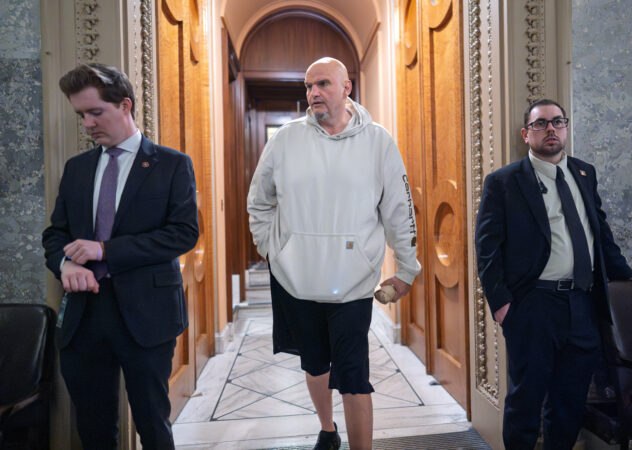
  • Pennsylvania’s Working Families Party pledges to support a primary challenger against Sen. John Fetterman

    Pennsylvania’s Working Families Party pledges to support a primary challenger against Sen. John Fetterman

    Pennsylvania’s Working Families Party is recruiting candidates to run against Pennsylvania’s Democratic senator, John Fetterman.

    Fetterman has not announced whether he will run for reelection in 2028, but the progressive party put out a public declaration Tuesday pledging to endorse — and, if necessary, recruit and train — a challenger.

    The announcement, first reported by The Inquirer, is a remarkable step for the left-leaning organization to take more than two years before an election and speaks to the degree of frustration with Fetterman among progressives.

    “At a time when Donald Trump and Republicans in Congress are doing everything they can to make life harder for working people, we need real leaders in the Senate who are willing to fight for the working class,” Shoshanna Israel, Mid-Atlantic political director for the Working Families Party, said in a statement.

    “Senator Fetterman has sold us out, and that’s why the Pennsylvania Working Families Party is committed to recruiting and supporting a primary challenge to him in 2028.”

    Fetterman did not immediately return a request for comment about the Working Families Party’s announcement.

    The Working Families Party is a progressive, grassroots political party that is independent from the Democratic Party, but it often endorses and supports Democratic candidates.

    Israel noted in her statement that Fetterman voted last week in support of the Republican plan to end the government shutdown — along with seven other Senate Democratic caucus members who crossed the aisle.

    Democratic lawmakers in the House, including several from Pennsylvania’s delegation, railed against the decision as caving to the GOP and President Donald Trump without any substantive wins on healthcare, rendering a 35-day shutdown pointless.

    Though he supports extending federal healthcare subsidies, Fetterman has long said he is against government shutdowns as a negotiating tactic and will always vote to get federal coffers flowing and federal employees paid.

    “I’m sorry to our military, SNAP recipients, gov workers, and Capitol Police who haven’t been paid in weeks,” Fetterman said in a post on X after the vote. “It should’ve never come to this. This was a failure.”

    Already one of the most well-known and scrutinized senators in Washington, Fetterman was back in the spotlight this week as he returns to work following a hospitalization after a fall near his home in Braddock. His staff said he suffered a “ventricular fibrillation flare-up” and hit his face, sustaining “minor injuries.”

    Ventricular fibrillation is the most severe form of arrhythmia — an abnormal heart rhythm — and the most common cause of sudden cardiac death.

    It’s the latest in a string of serious health incidents that have marked the Democratic senator’s time in the public eye. The fall comes three years after he recovered from a near-fatal stroke just days before he won the 2022 Senate primary, which was caused by a blood clot that had blocked a major artery in his brain.

    He spent Thursday and Friday in the hospital and was released Saturday, saying he was feeling good and grateful for his care with plans to be back in the Senate this week.

    Working Families on the offensive

    Israel said in addition to the online portal, the party will hold a number of recruitment events across Pennsylvania in the coming months to train candidates and campaign staff on the basics of running for office and managing a campaign with hopes of finding quality candidates for a variety of races ahead of 2028.

    The party is also pledging a robust ground game and fundraising for a potential challenger it supports.

    It wouldn’t be the first time the Working Families Party has opposed Fetterman. In the 2022 Democratic Senate primary, WFP endorsed State Rep. Malcolm Kenyatta (D., Philadelphia) over Fetterman, who was lieutenant governor at the time.

    The Working Families Party has grown its influence in the region since then. In 2023, WFP became the minority party on Philadelphia’s City Council, defeating Republicans in seats the party had held for over 70 years by electing Councilmembers Kendra Brooks and Nicolas O’Rourke.

    Fetterman has been promoting his book, Unfettered, recounting his stroke during the 2022 Senate run, subsequent struggles with depression, and adjustment to life in the U.S. Senate.

    The book makes no mention of a reelection bid but laments the ugly politics he experienced in both the Democratic primary and his general election race against Mehmet Oz.

    Fetterman said in the book that Oz’s attacks during his rehabilitation from his stroke became so mentally crushing he felt he should have quit the race.

    And he grapples with criticism he faced during the primary surrounding a 2013 incident in which he wielded a shotgun and apprehended a Black jogger he suspected of a shooting. Fetterman calls the backlash an early trigger of his depression.

    Fetterman has said he will remain a Democrat even as Republicans have lauded his independent streak and willingness to work with the GOP.

    Earlier this year, Fetterman was the first Senate Democrat to support the Laken Riley Act, a Republican immigration bill that requires U.S. Immigration and Customs Enforcement to detain and take into custody individuals who have been charged with theft-related offenses, even without a conviction. Critics of the law say it severely cracks down on due process for immigrants.

    Fetterman was the sole Senate Democrat to vote to confirm Attorney General Pam Bondi, who was one of Trump’s attorneys when he tried to overturn the results of the 2020 election.

    And he has been the Senate’s most outspoken defender of Israel during its war in Gaza, sponsoring a resolution with Sen. Dave McCormick (R., Pa.) against antisemitism and appearing for the first time since his fall at an event hosted by the Jewish Federations of North America in Washington on Monday.

    He also received recognition from Israeli Prime Minister Benjamin Netanyahu, who called him the country’s “best friend” and gifted him a silver pager inspired by Israel’s attack on Hezbollah in Lebanon that exploded pagers.

    “He has repeatedly shown disregard for the rights of Palestinians,” the Working Families Party release said. “Refusing to support a two-state solution and breaking with the rest of the Democratic caucus on Israel’s illegal annexation of the West Bank.”

    Staff writer Aliya Schneider contributed to this article.

  • A Trenton woman was found dead in an abandoned car. Police say her boyfriend killed her.

    A Trenton woman was found dead in an abandoned car. Police say her boyfriend killed her.

    A woman who was found dead inside an abandoned car in Lower Makefield on Sunday had been killed hours earlier by her boyfriend in Trenton, police said Monday.

    Lamont Truitt, of Trenton, has been charged with murder, attempted murder, carjacking, and related crimes in the shooting death of Alyssia Murphy, 32. He is also charged with shooting and wounding a friend of Murphy’s who had been sitting with her in a Toyota Camry that police say he stole after the shooting.

    Truitt, 36, remained in custody Monday, awaiting a detention hearing in Mercer County.

    A passerby found Murphy’s body inside the abandoned Camry early Sunday near an access road to the Delaware Canal, according to police in the Bucks County township. She had been shot multiple times.

    Trenton police say the shooting happened just before 6 a.m. on Coolidge Avenue near Oakland Street in the capital city.

    Murphy’s friend, whom police did not identify, said she was sitting in the car with Murphy when Truitt approached them. The couple began to argue, she said, and in the heat of their dispute, Truitt pulled out a handgun and fired multiple times at Murphy at close range.

    The woman, who was shot in the leg, said she jumped out of the car and ran before Truitt sped off. She was treated at Capital Health Regional Medical Center.

    A family friend who asked not to be identified out of fear of retaliation described Murphy as a kind, generous person who had long dreamed of starting a family and “certainly did not deserve to go like that.”

  • William L. Elkins, pioneering research immunologist at Penn and innovative Chester County cattle rancher, has died at 93

    William L. Elkins, pioneering research immunologist at Penn and innovative Chester County cattle rancher, has died at 93

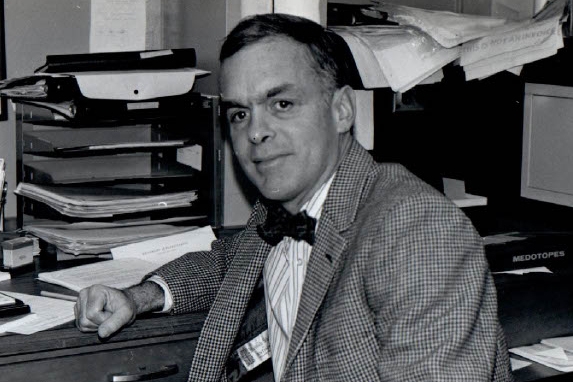
    William L. Elkins, 93, of Coatesville, pioneering research immunologist at what is now the University of Pennsylvania’s Perelman School of Medicine, associate professor emeritus of pathology and laboratory medicine, innovative longtime Angus cattle rancher in Chester County, avid sailor, and veteran, died Tuesday, Nov. 11, of complications from pneumonia at Chester County Hospital.

    The great-great-grandson of Philadelphia business tycoon William Lukens Elkins, Dr. Elkins fashioned his own distinguished career as a scientist, medical researcher, and professor at Penn from 1965 to 1985, and owner of the Buck Run Farm cattle ranch in Coatesville for the last 39 years.

    At Penn, Dr. Elkins conducted pioneering research on how the human immune system fights infection and disease. He collaborated with colleagues in Philadelphia and elsewhere around the country to provide critical new research regarding bone marrow transplants and pediatric oncology.

    His work contributed to new and more effective medical procedures at Penn, Children’s Hospital of Philadelphia, and elsewhere, and he instructed students and residents at Penn. But his lifelong love of the fields and rolling hills he roamed as a boy in Chester County never faded, he told Greet Brandywine Valley magazine in 2023.

    Dr. Elkins was a lifelong outdoorsman.

    “Farming is in my blood,” he said. “So even when I went to medical school and all that, the enthusiasm never left, and I wanted to go back to it.”

    So he retired from medicine at 53, and he and his wife, Helen, bought nearly 300 acres of the old King Ranch on Doe Run Church Road in Coatesville. She kept the books and looked after the business. He became an expert on breeding cattle and growing the high-energy grass they eat.

    Wearing floppy hats and riding a colorful ATV from field to field, Dr. Elkins worked his land for decades. He mended fences and tended daily to his 120 cows, heifers, and prize bulls.

    He championed holistic regenerative farming and used new scientific systems to feed his cattle. He rejected commercial fertilizer and knew all about soil composition, grass growing, and body fat in cattle.

    Dr. Elkins and his wife, Helen, married in 1966.

    In a 1995 Inquirer story, he said: “Cattle are just like anyone else. If you just turn a few cattle out in a great big field, they will wander around, eat the grass they like best, and leave what they don’t want. That means the less desirable grasses tend to predominate.”

    He traveled the country to confer with other cattlemen and helped found the Southeast Regional Cattlemen’s Association in 1994. He sold his beefsteaks, patties, jerky sticks, and kielbasa grillers to private customers online and to butchers and restaurants.

    At least one local chef featured an item on the menu called Dr. Elkins’ Angusburger. Lots of folks called him Doc.

    He earned his medical degree at Harvard University in 1958 and served two years in the Navy at the hospital in Bethesda, Md. He was a surgical intern in New York and discovered that he preferred the research lab. Before Penn, he worked at the Wistar Institute of biomedical research.

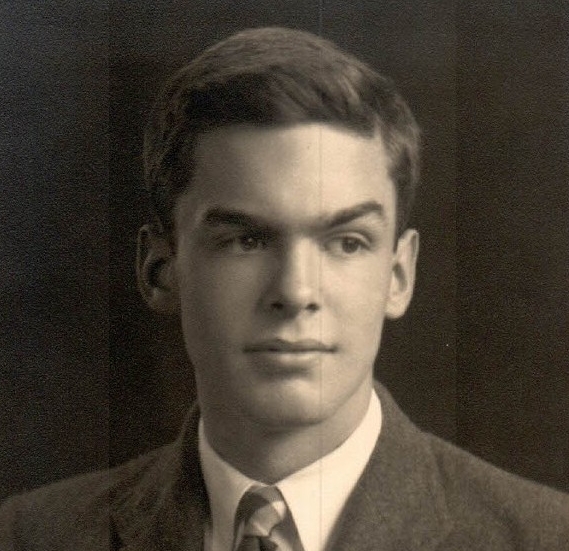
    Dr. Elkins graduated from St. Mark’s School in Massachusetts in 1950.

    Away from the lab, Dr. Elkins was an ocean sailor, expert navigator, and former boat club commodore. He was active with the Brandywine Conservancy, Natural Lands, and other groups, and was lauded by national organizations for his wide-ranging conservation and wildlife efforts.

    He made his farm a haven again for the bobolink grassland songbird and other migratory birds and butterflies that had dwindled. “Buck Run Farm is more about growing grass and trees than beef,” he told Greet Brandywine Valley. “We’re blessed by the land.”

    William Lukens Elkins was born Aug. 2, 1932, in Boston. He lived on the family dairy farm in Pocopson, Chester County, when he was young, went to boarding school in Massachusetts for four years, and earned a bachelor’s degree in biology at Princeton University.

    He met Helen MacLeod at a party in Washington, and they married in 1966 and had a daughter, Sheila, and a son, Jake. They lived in Center City, Society Hill, and Villanova before moving to the farm. “He was easy to be with,” his wife said.

    Dr. Elkins enjoyed sailing and fishing.

    Dr. Elkins loved nature, fishing, and baseball, and he followed the Phillies, the Flyers, and other sports teams. “He had a wonderful bedside manner,” his daughter said. “He was a great listener. He really knew how to support people.”

    His son said: “He was unassuming and direct. He spoke his mind. He connected with so many different people. He was curious about the world around him.”

    His wife said: “He was thoughtful and always concerned about people. He had good humor. He was fun.”

    In addition to his wife and children, Dr. Elkins is survived by five grandchildren and other relatives. A sister died earlier.

    This article about Dr. Elkins and his ranch appeared in The Inquirer in 1995.

    A celebration of his life is to be held later.

    Donations is his name may be made to the Stroud Water Research Center, 970 Spencer Rd., Avondale, Pa. 19311.

  • He showed up for what he thought was a routine appointment in Philly. ICE was waiting for him.

    He showed up for what he thought was a routine appointment in Philly. ICE was waiting for him.

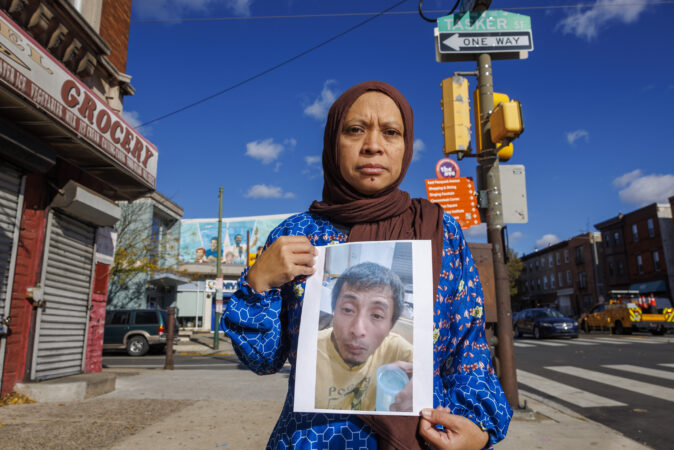
    On Oct. 16, Rian Andrianzah walked into a Philadelphia office of U.S. Citizenship and Immigration Services for what he thought was a routine biometrics appointment. He expected to be fingerprinted and photographed and sent on his way.

    Instead, while his wife waited in an outer room, he was arrested by ICE ― and now faces deportation in a case that has angered the city’s Indonesian community.

    Andrianzah, 46, is among a growing number of immigrants whose families say they showed up for in-person appointments or check-ins, only to be suddenly handcuffed and spirited into detention.

    Green-card applicants, asylum-seekers, and others who have ongoing legal or visa cases have been unexpectedly taken, part of a Trump administration strategy, lawyers and advocates say, to boost the number of immigration arrests and to deport anyone who can possibly be deported.

    “ICE was waiting for him,” said Philadelphia immigration attorney Christopher Casazza, who represents Andrianzah and his family. “In 15 years, I have never once seen somebody arrested at their biometrics appointment ― except in the past few months.”

    Andrianzah legally entered the United States on a visitor’s visa in February 2000, but did not return to Indonesia. He was placed in removal proceedings in 2003, and a judge issued a final order of deportation in November 2006. His appeal was denied two years later.

    The removal order was never enforced, as had been common for what the government then saw as low-priority immigration violators. Some people with final orders have lived in the U.S. for decades.

    In the ensuing years, Andrianzah worked factory and warehouse jobs ― and married Siti Rahayu, 44, also of Indonesia. They made a home in South Philadelphia, parents to two U.S.-citizen children, a son, age 8, and a daughter, 15.

    Andrianzah and his wife went to USCIS that day as part of her application for a T visa, available to people who have been victims of human trafficking. In an interview with The Inquirer, Rahayu said she was sent to the U.S. in 2001 by relatives who saw her as a means to pay off a debt, delivering her to an underground organization that puts people in low-paying jobs, then keeps them working indefinitely.

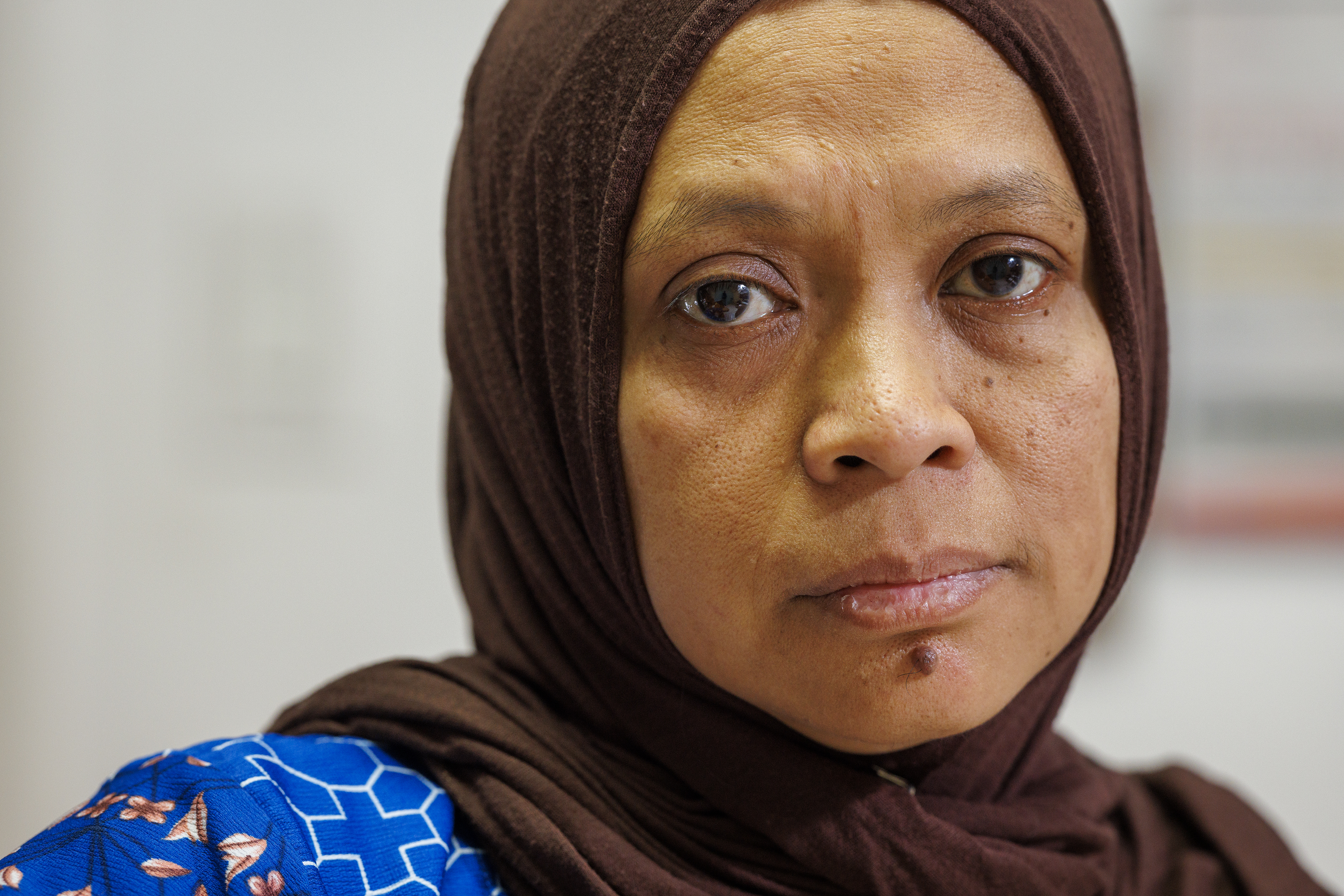
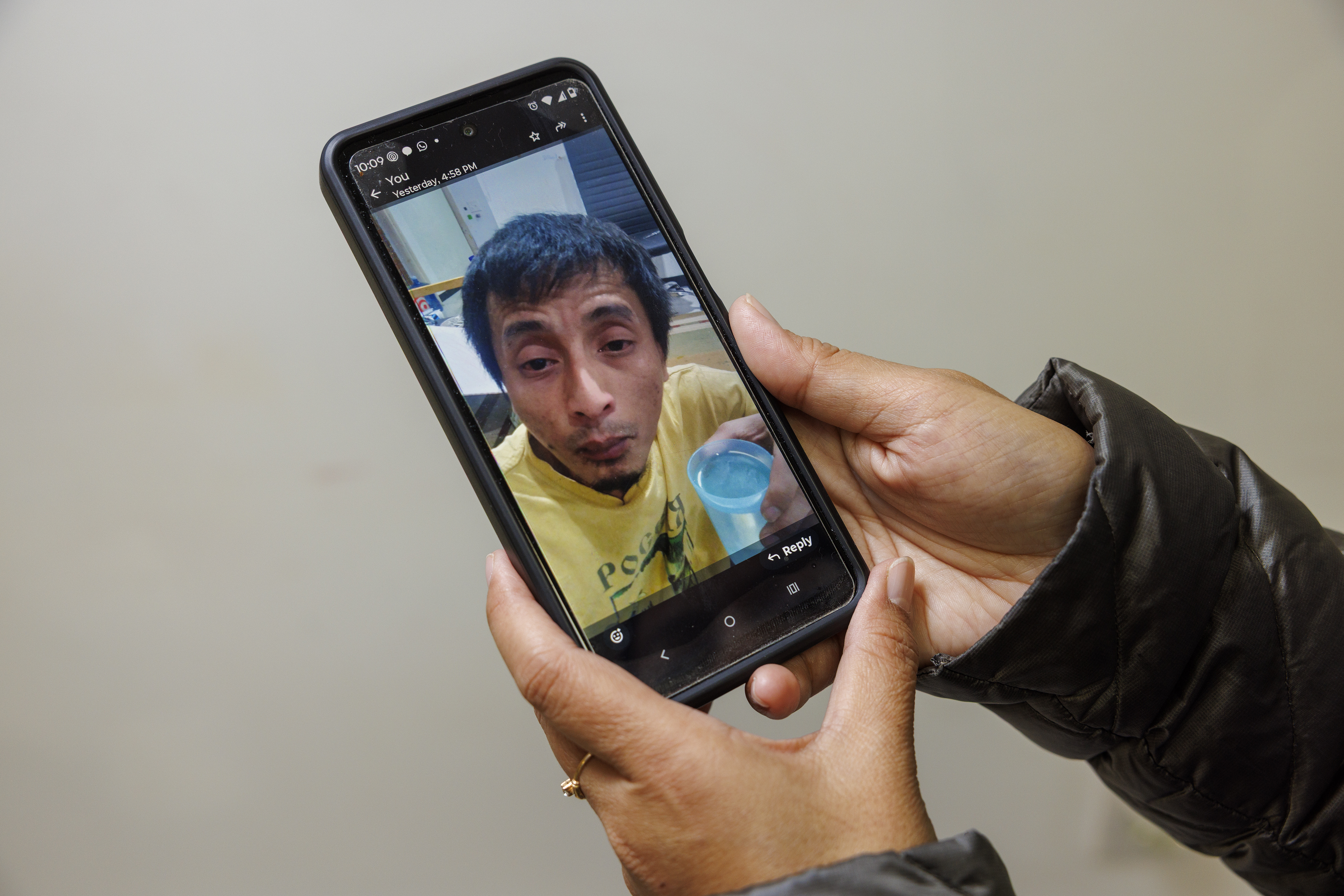
    Siti Rahayu of Philadelphia, here on Thursday, November 6, 2025. Her husband Rian Andrianzah walked into United States Citizenship and Immigration Services office for a routine visit but he was sent to Moshannon detention center to await deportation.

    Casazza, of the Philadelphia firm Palladino, Isbell & Casazza LLC, said Rahayu has a strong case for a T visa, which offers permission to live in the U.S. and a path to permanent residency and citizenship.

    As her husband, Andrianzah would receive those same benefits under her visa.

    That’s why, Casazza said, it makes no sense for ICE to confine and deport him. Once his wife’s visa was approved, Andrianzah would be able to legally live in the United States, the attorney said.

    Asked about Andrianzah’s arrest and the couple’s situation, a U.S. Immigration and Customs Enforcement spokesperson in Philadelphia said in a statement: “Due to privacy issues, we are not authorized to discuss this case.”

    Andrianzah is being held at the Moshannon Valley Processing Center, an ICE detention facility in Clearfield County, Pa.

    As President Donald Trump presses his deportation agenda, what were routine meetings with federal authorities have now become risky for immigrants. Advocates say many of those arrested were following the rules and doing what the government asked:

    • On May 27, the wife of a Marine Corps veteran was detained in Louisiana after meeting with USCIS about her green-card application, CBS News reported. Paola Clouatre, 25, said she came to the U.S. as a child with her mother, but was abandoned as a teenager and unaware that the government had ordered them deported. She spent about eight weeks in custody before being fitted with an ankle monitor and released.
    • On June 3, federal agents in New York City arrested at least 16 immigrants who showed up for check-ins, after a private contractor working with ICE summoned them to urgent appointments, The City, a news organization, reported.
    • On Oct. 22, a 21-year-old California college student was arrested by ICE at an appointment at a USCIS office in San Francisco, Newsweek reported. Government officials said Esteban Danilo Quiroga-Chaparro, a Colombian national and green-card applicant, had missed mandatory meetings, though his husband said that was untrue.
    • On Oct. 23, a Venezuelan couple pursuing asylum were arrested during a check-in at the ICE office in downtown Milwaukee, Urban Milwaukee reported. Diego Ugarte-Arenas and Dailin Pacheco-Acosta sought protection after fleeing their homeland in 2021. An ICE spokesperson told the news agency that “all aliens who remain in the U.S. without a lawful immigration status may be subject to arrest and removal.”

    “There’s a lot of risks right now,” said Ana Ferreira, who serves on the executive board of the Philadelphia chapter of the American Immigration Lawyers Association.

    Some clients went into immigration appointments knowing there was a possibility they could be detained, she said. Others were shocked to be taken.

    “None of this would have happened years ago,” Ferreira said. “It’s a completely different landscape.”

    Siti Rahayu of Philadelphia holds a photograph of her husband, Rian Andrianzah. He walked into a United States Citizenship and Immigration Services office for what he thought would be a routine visit but was sent to the Moshannon detention center to await deportation. Photograph taken on Thursday, November 6, 2025.

    Rahayu said that on Oct. 16, she completed her own biometrics appointment, then grew concerned when her husband did not appear. She asked the staff what was happening.

    “They [said they] don’t know anything, and they say this is new for them,” Rahayu said.

    Finally someone told her: He’s gone. Rahayu fears for her husband’s health in custody because he suffers from diabetes, which impairs his vision.

    The local Indonesian American community reacted immediately, supported by Asian Americans United, the advocacy group. An estimated 2,000 Indonesians live in Philadelphia, the 10th-largest community in the nation.

    “It has sparked so much outrage,” said Kintan Silvany, the civic-engagement coordinator at Gapura, which works to empower local Indonesian Americans. “People are asking how they can help, how they can donate. A lot of people don’t think this can happen to us.”

    Andrianzah said through his wife that he wished to thank everyone who has tried to help him and his family, that he is grateful for their care and concern. Supporters have raised about $13,000.

    Each year thousands of people physically report to ICE or related immigration agencies for mandatory check-ins.

    Some immigrants are required to appear every couple of weeks, some once a month, others once a year. The appointments help immigration officials keep track of people who in the past have been low priorities for deportation, allowed to live freely as they pursue legal efforts to stay in the United States.

    Biometrics appointments are usually brief sessions, perhaps half an hour, at which the government captures fingerprints, a passport-style photo, and a signature. The immigrant may also be asked to provide information like height and weight.

    Despite the fresh risk of being arrested on the spot, immigrants have little option except to show up. Many types of immigration applications require in-person appearances. And failure to appear for a required ICE appointment can by itself result in an order for removal.

    “They’re trying to grab everybody, wherever they can,” and that included Andrianzah, Casazza said. “ICE is going to do their best to deport him.”

  • Meet Gary, the cat who ended a friendship and cost $25,000 in legal fees

    Meet Gary, the cat who ended a friendship and cost $25,000 in legal fees

    First they were roommates, and then they were friends. But after Jessica Yang and Nicole DeNardo couldn’t agree on who should keep Gary — the exotic shorthair that Yang bought and DeNardo had been taking care of — it took a Common Pleas Court judge to decide.

    The two former roommates say they disagreed over whether Yang had given Gary to DeNardo or whether it was a temporary arrangement. In December 2024, Yang sued DeNardo to make her return the cat.

    “She said I was unfit to be a pet parent,” Yang said. “She said I was childish and selfish for even wanting Gary back. She kept asking me to consider the feelings and preferences of Gary.”

    Two lawyers contacted for this story say that situations like this one are on the rise, though the money spent on such a case — Yang spent $20,000, DeNardo, $5,000 — is a bit remarkable.

    “People love their animals, and people are willing to spend a lot of money in legal fees to reclaim their animals,” said Rebecca Glenn-Dinwoodie, a Doylestown-based family and animal lawyer not involved in the case.

    But for the two women, the fight over the small, cuddly cat with blue eyes became a catastrophe that dragged on for a year.

    “She just didn’t want me to have him,” DeNardo said. “It was personal. It was about beating me.”

    Nicole DeNardo at her home in Center City.

    How it started

    Yang, 33, purchased Gary for $1,000 when she was living in Pittsburgh in 2018. She named him after the SpongeBob SquarePants TV show character Gary the Snail.

    In the spring of 2022, Yang moved from New Mexico to Philadelphia. She said that with a new contract as a nurse anesthetist, she expected to travel for work every two weeks, making a roommate situation ideal.

    She and DeNardo, 31, met on a Facebook group for people seeking roommates and soon moved into an apartment together in Graduate Hospital. DeNardo, who works in finance, often worked from home, spending a lot of time with Gary.

    Yang and DeNardo each said they became friends and travel buddies. They took snowboarding trips to Vermont and Colorado and hiked at Lake Havasu, Ariz.

    They even got matching alien tattoos together. Yang said hers was a nod to her time living near Roswell, the UFO tourist town in New Mexico. DeNardo said the alien paired well with her tattoo of Saturn, a planet linked to her zodiac sign of Capricorn.

    Yang said as the apartment’s lease was coming to an end around March 2024, she was going through a difficult time. She and her long-term boyfriend had just broken up. She had just changed jobs. And, she had just bought a house in Passyunk Square that needed extensive renovations.

    That was when, as she remembers it, DeNardo offered to take the cat. “I was like, how convenient for Gary,” Yang said. “And I thought it would be good for her, too.”

    That summer, Yang commissioned a portrait of Gary, surrounded by snowboards, trekking poles, and other symbols of the two women’s friendship. There were two prints, both framed, one for each of them.

    A detail shot of a piece of art Jessica Yang commissioned featuring her cat, Gary, and mementos from her friendship with Nicole DeNardo. She gave a second copy of the art to DeNardo.

    Going to court

    Things began to go south when Yang said she learned that DeNardo had changed Gary’s last name at the vet — from Yang to DeNardo — and added her name to the cat’s microchip. DeNardo, Yang said, considered the cat hers.

    It’s one of several details DeNardo remembers differently. DeNardo said the vet’s office changed the cat’s last name, not her. As for the microchip, which would help people identify Gary’s owner if he were to get lost, she said she added her name for practical reasons — she was the one who was around.

    DeNardo said she was often the one who took care of Gary. She fed him, she said, and took him to the vet. She even “cleaned his eyeballs” every day — something shorthair cats often need.

    “He was always in my life, always on the windowsill next to me,” DeNardo said.

    She provided a timeline showing she’d spent more time with Gary than Yang. She offered lists of friends who would attest Gary was her cat — a fact many people in her lifefound mildly amusing, since her father and her brother are also both named Gary.

    Jessica Yang holds her cat, Gary, at her home Sunday, Nov. 9, 2025.

    DeNardo said she believes that somehow, the issue became personal after a 2023 incident where she told Yang they needed to take the cat to the vet.

    “I think she viewed that more as a personal attack,” DeNardo said. “For me, this was always only about Gary’s well-being.”

    After a yearlong process that involved a hearing and a bench trial, the court ruled in Yang’s favor. Yang proved she had purchased the cat, and DeNardo had to give him up.

    DeNardo blames the Pennsylvania legal system, which views animals as property. “You can spend years scooping litter, cleaning his eyeballs, and the court tells you none of that matters, because pets are property,” she said.

    The law

    A few other states, such as New York, do define pets the way DeNardo had hoped the court would view Gary, said Daniel Howard, an associate family law attorney at Petrelli Previtera in Center City.

    “Some states have pet custody statutes that look similar to what we see in child custody, looking at the welfare of the animal,” Howard said.

    Howard pointed out that in September the Pennsylvania House of Representatives passed a bill that would change how pets are recognized in divorce proceedings. (The bill would have to pass the state Senate and get the governor’s approval for enactment).

    However, even if this bill were to pass, it would not apply to cases where the two people aren’t married, Howard said.

    Gary, an exotic shorthair, relaxes on the couch Sunday, Nov. 9, 2025.

    Still, he said, attitudes are changing around the ways animals should be viewed by the courts. Laws that worked well for farm animals don’t fit as neatly for cats or dogs.

    “For a lot of people, their pets really are their children,” Howard said. “And I think there needs to be some kind of an update to look at that.”

    Glenn-Dinwoodie said the situation also speaks to the need for people — even if they’re just roommates, or friends — to put things in writing when they enter a living arrangement.

    “Just have clear conversations, clear expectations, but also [take] that extra step so that, if ownership is ever disputed … you have enough proof. Because the court needs proof,” she said.

    For Yang, the whole episode felt like a misuse of time and resources. It left her wanting to raise money for animals, “because $25,000 could save a lot of cats.”

    DeNardo said the dispute showed her that doing what you think is right doesn’t always lead to the outcome you want. At her apartment, she gestured toward the window, where she said Gary spent countless hours watching the birds that would perch outside.

    “He’s just a really playful, sweet, cat,” DeNardo said. ”He was my buddy… I just hope he’s OK and has all the things he needs, and is living a good life. If he’s happy, I’m happy.”

    Clarification: This article has been updated to reflect DeNardo’s assertion that she took care of Gary even when Yang was home.

  • How Philly-area outlets survive and sometimes thrive in an era of dying malls

    How Philly-area outlets survive and sometimes thrive in an era of dying malls

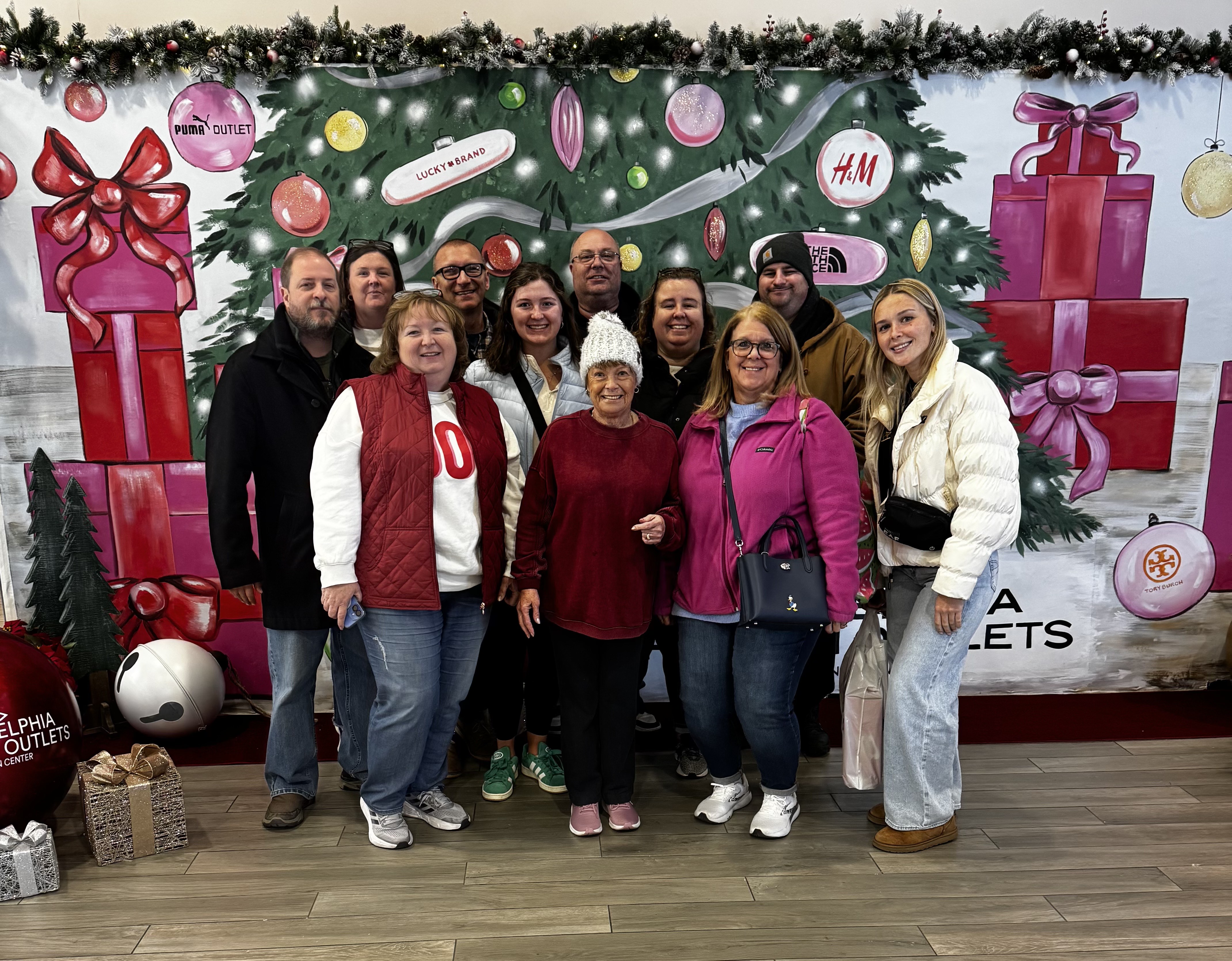
    For the Nowell family, the outlets are an annual tradition.

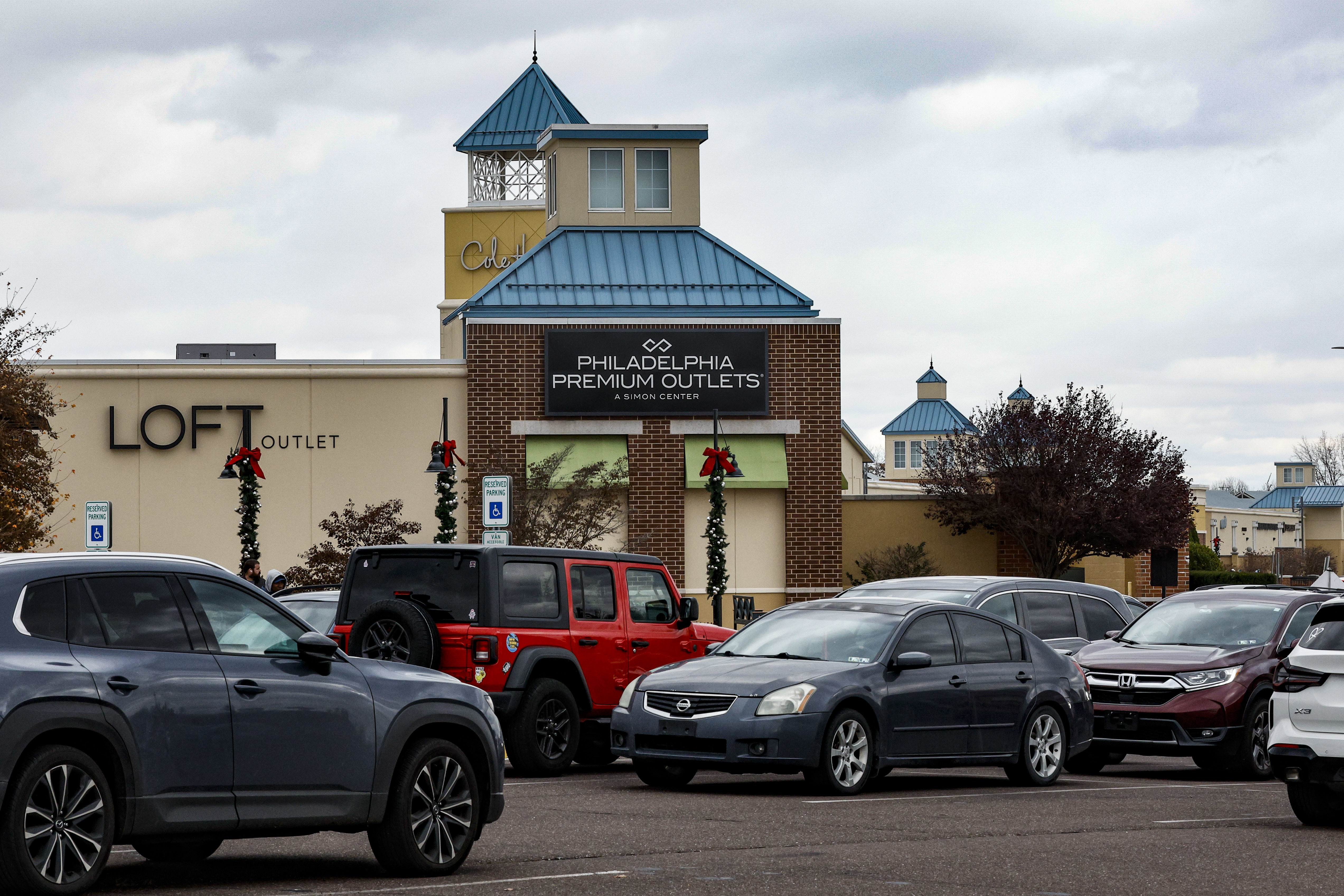
    Every Veterans Day, a dozen relatives venture to Limerick Township in Montgomery County, where they kick off their holiday shopping at the Philadelphia Premium Outlets.

    Even this year, as bitter winds whipped through the outdoor plaza, the family was undeterred.

    After a morning of shopping, the multigenerational group, which included two veterans, warmed up with their yearly food-court lunch, courtesy of matriarch Geri Nowell, 77, of Telford. Then, the men returned to the cars and dropped off dozens of shopping bags, which they’d been carting around in a wagon. The women walked on, hunting for their next find among the more than 130 shops.

    The Nowell family poses in front of a holiday backdrop during their annual outing to the Philadelphia Premium Outlets.

    “It’s super fun,” said Ann Blaney, 47, of Drexel Hill.

    “We get great deals,” added Kim Woodman, 55, of Hatboro.

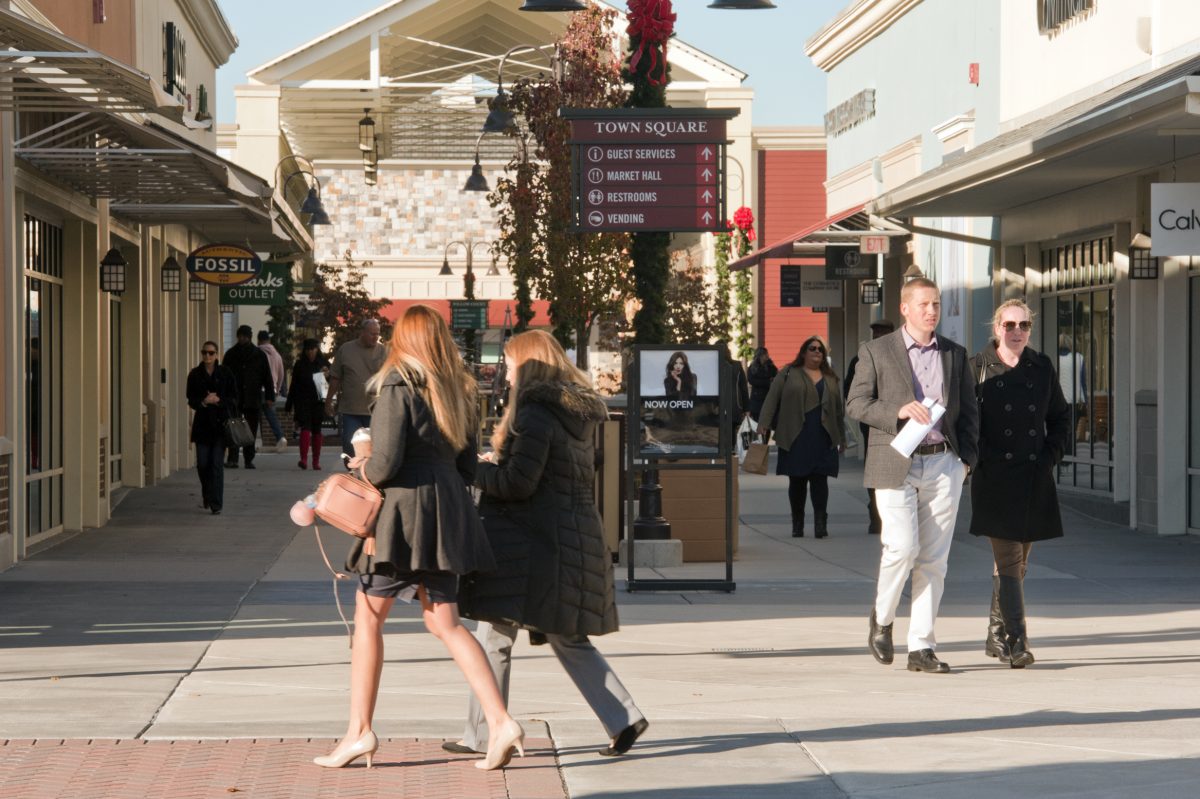
    The tradition is an experience they say can’t be replicated online. The fact that the complex is open-air and contained in a 550,000-square-foot plaza somehow adds to the fun, they said.

    As Kathy Nelson, 48, of Broomall, browsed the outlets with her friends, she said she also shops at the nearly 3 million-square-foot King of Prussia Mall, less than 20 miles away. But otherwise, she said, “there aren’t many indoor malls left” with the variety of stores she prefers.

    As some indoor malls have struggled and died, leaving fewer than 1,000 left nationwide, the outlets remain alive.

    Outlets have always accounted for a fraction of the in-person retail market, which is partly why there have been few headlines about dying outlet malls. But some of the country’s roughly 200 outlet malls seem to be downright thriving, with full parking lots on weekends, few vacant stores, and relatively strong revenue.

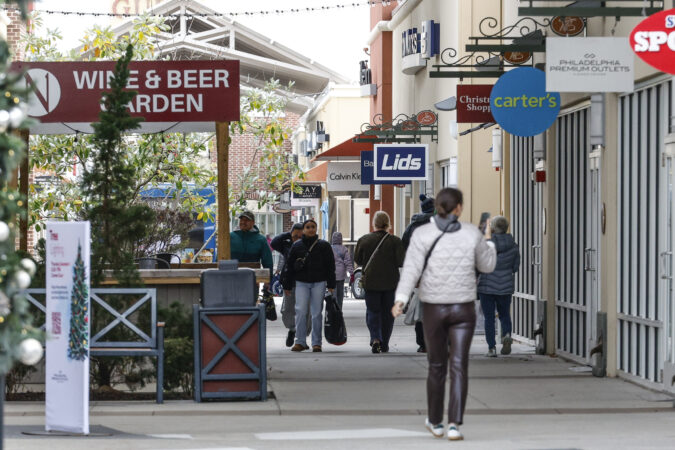
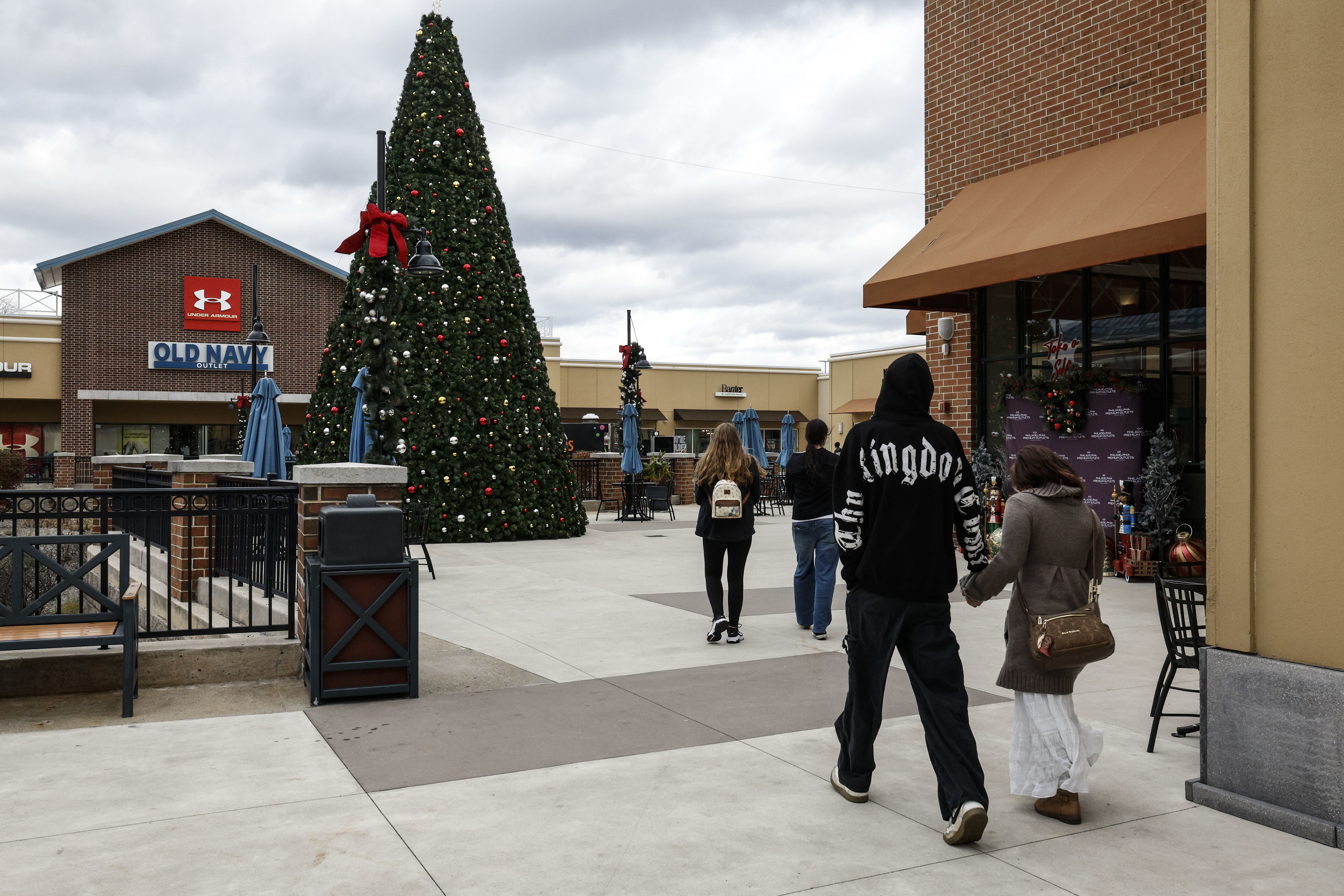
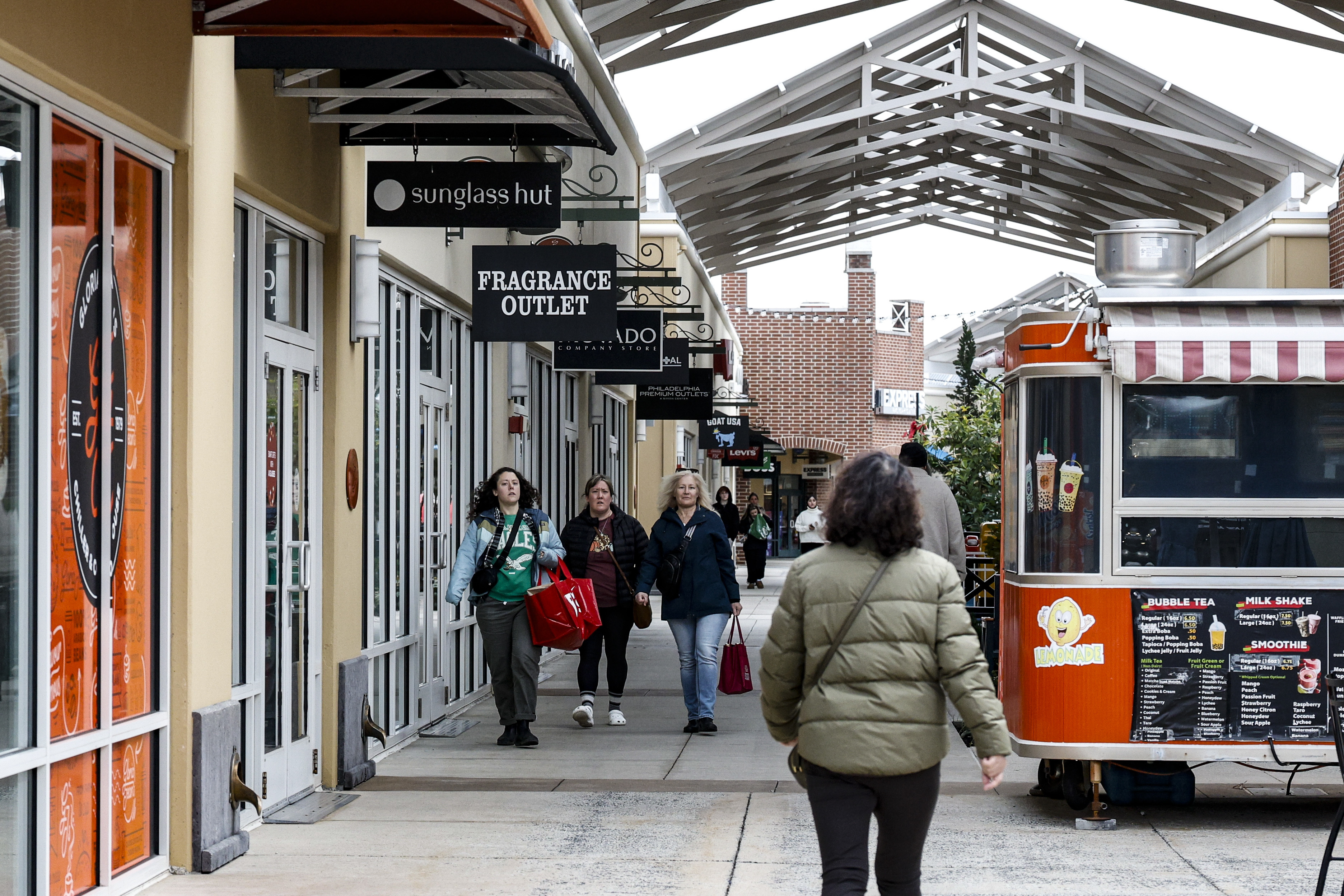
    Shoppers walk by the tree at the Philadelphia Premium Outlets on Nov. 11.

    The Philadelphia region’s two major outlet malls — the Philadelphia Premium Outlets in Limerick Township and the Gloucester Premium Outlets, both owned by Simon Property Group — are more than 92% occupied, according to a count by The Inquirer during visits to each location this month. Both outlets have found success despite being less than 20 miles from thriving indoor malls in King of Prussia and Cherry Hill.

    Tanger Outlets, which has locations in Atlantic City and Lancaster, recently reported more than 97% occupancy across its 39 open-air centers and an increase in average tenant sales per square foot.

    “Outlets do good in good times and great in bad times,” said Lisa Wagner, a longtime consultant for outlets, repeating a common refrain in the industry.

    The centers have evolved amid the broader push toward more experiential retail and most now have a mix of discount stores and full-price retailers. But they have done so while embracing their reputation as the go-to destination for snagging deals, said Wagner, a principal at the Outlet Resource Group.

    “Honestly no one knew what was going to happen after COVID, but [the outlets] came out incredibly strong,” she said. More recently, the retail industry has been rattled by tariffs and economic uncertainty. The outlets have not been immune to those challenges, but they have held strong despite them.

    “People want value right now,” Wagner said. “They need it.”

    The Philadelphia Premium Outlets has more than 130 stores in its 500,000-square-foot complex.

    Outlet malls become one-stop shops

    On a rainy, early November Sunday, hundreds of people descended on the Gloucester Premium Outlets.

    Shoppers pulled up hoods and huddled under umbrellas as they made their way from store to store. Many balanced several large bags bearing brand names like Columbia and Kate Spade, Rally House and Hey Dude shoes. Some munched on Auntie Anne’s pretzels or sipped Starbucks from holiday cups. An acoustic version of Jingle Bells played over the speakers.

    For some, the dreary, drizzly weather was even more reason to spend their afternoon at the 86-store complex in Blackwood, Camden County, about 15 miles outside Philadelphia.

    With two young children in tow, Jessica Bonsu, 30, of Sicklerville, was on a mission.

    “We came out to go to the indoor playground,” called Stay & Play, Bonsu said, pointing to her rambunctious kids. “Just to get some energy out.”

    “And then we can also get some shopping done,” added her cousin, Taneisha Laume, 30, who was visiting from D.C. She needed a gift for her uncle. “Kill two birds with one stone.”

    Shoppers peruse the stores at the Gloucester Premium Outlets in this 2019 file photo.

    These kind of multipurpose visits are buoying outlet malls, which are increasingly becoming mixed-use destinations for dining, drinking, entertainment, and shopping.

    “You’re coming for a little bit of everything,” said Gerilyn Davis, director of marketing and business development at Philadelphia Premium Outlets.

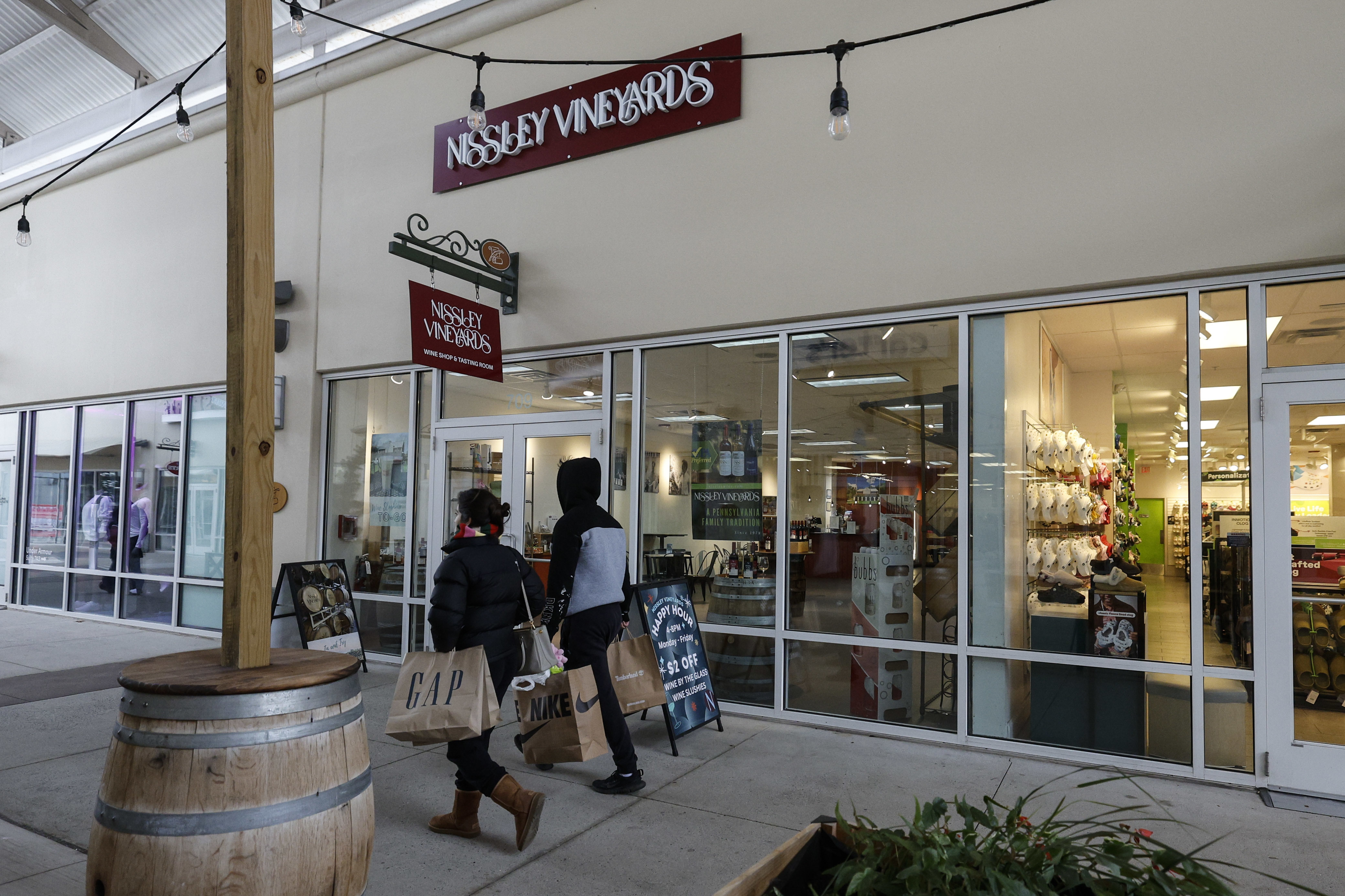
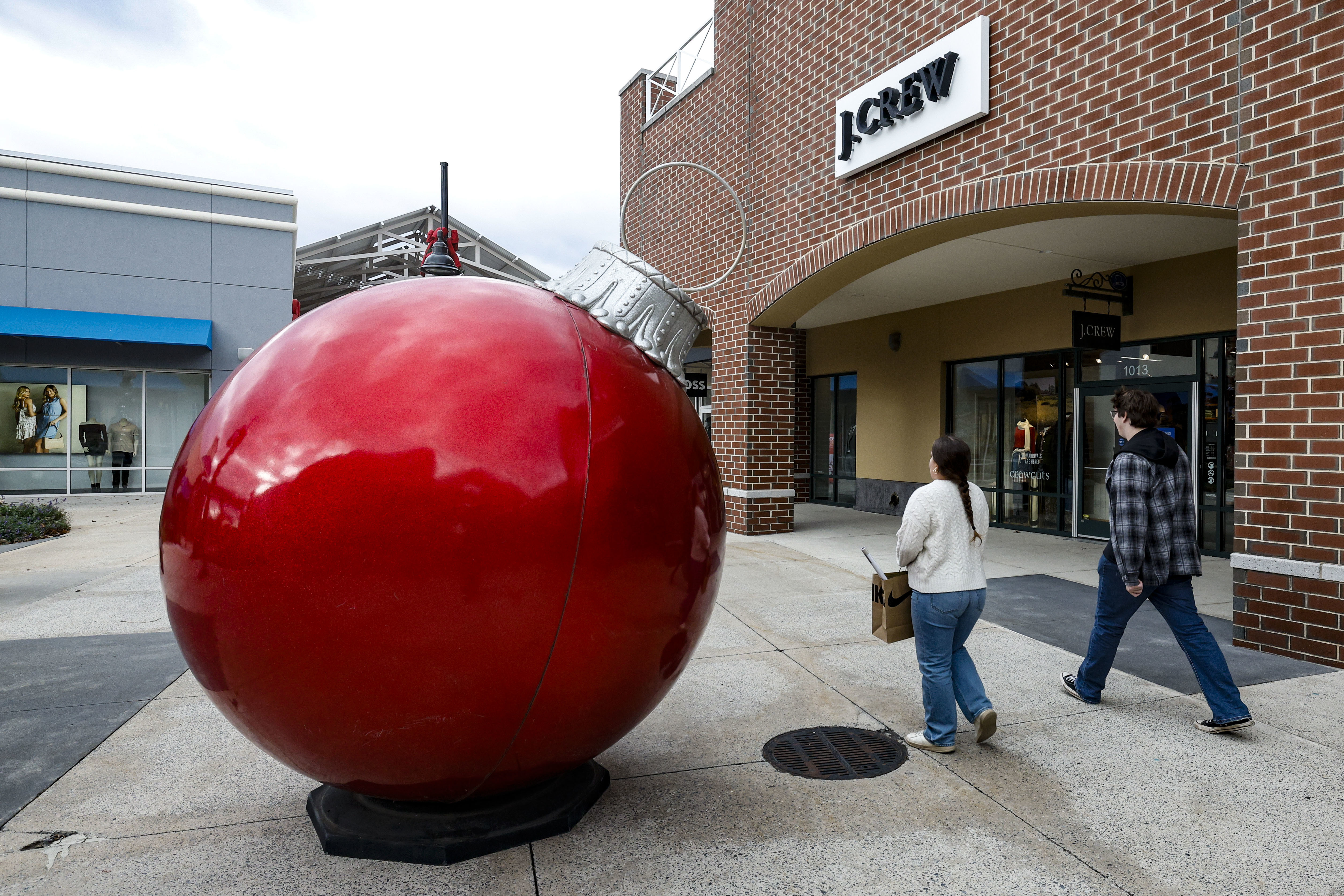
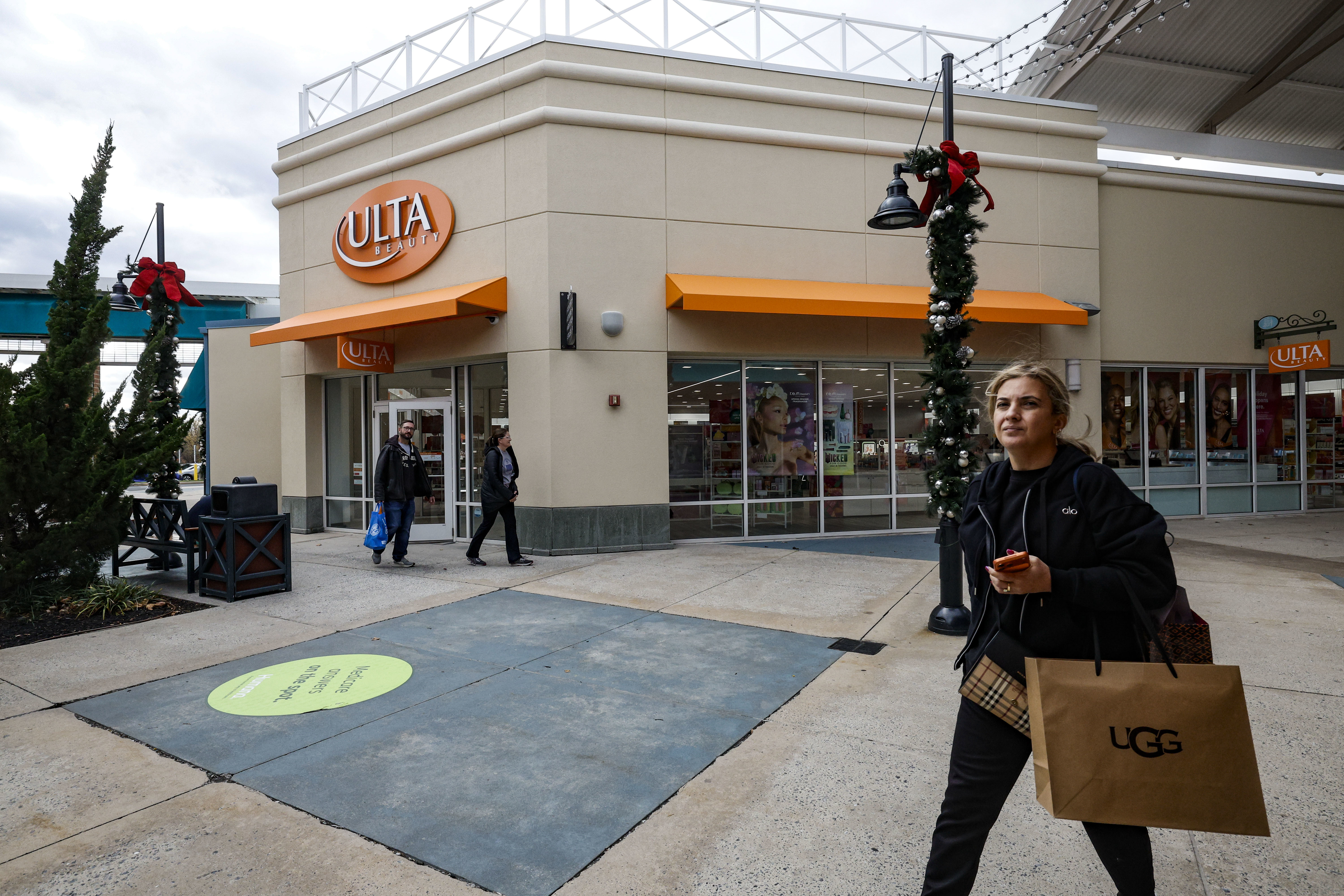
    The Limerick Township complex recently welcomed a slate of new tenants, including Marc Jacobs’ first Pennsylvania outlet store, a BOSS outlet, an Ulta Beauty, and an outpost of central Pennsylvania’s Nissley Vineyards, which has an outdoor seating area.

    Shoppers walk by the Nissley Vineyards store at the Philadelphia Premium Outlets.

    New Balance, whose shoes are trendy again, is also opening stores in both the Philadelphia and Gloucester outlets.

    Justin Stein, Tanger’s executive vice president of leasing, said the North-Carolina-based company is focused on adding more food, beverage, and entertainment options.

    While overall occupancy at its Atlantic City center is lower than others, the complex has a Dave & Buster’s and a Ruth’s Chris steakhouse. The Simpson, a Caribbean restaurant and bar, is also set to open there in early 2026.

    In Lancaster, Tanger is looking to add food and beverage options, Stein said. But that center is still performing well, with a 97% occupancy rate, according to an online map, and only two vacancies.

    When there are places to eat and drink at the outlets, “people stay longer,” Stein said, “and when they stay longer, they spend more.”

    Philadelphia Premium Outlets had a steady crowd on a bitter cold Veterans Day.

    From ‘no frills’ to outlets of the future

    Today’s outlet malls look vastly different from what Wagner calls the “no frills” complexes of the 1990s.

    At the time, an outlet mall served as “a release valve for excess goods,” Wagner said. “There were some stores that had really broken merchandise.”

    To comply with branding rules and avoid competition with department stores, outlet malls were often located along highways between two major metro areas, she said.

    “What became clear is that customers loved it,” Wagner said. Soon, brands started overproducing to supply these outlet stores with products in an array of a sizes and colors.

    This effort to bulk up outlet offerings was “a roaring success,” she said, with companies finding that more than a third of outlet customers went on to buy their products at full price at other locations.

    Philadelphia Premium Outlets, which opened in 2007, has very few vacant storefronts.

    As their popularity rose, more outlet malls were built across the country.

    The Atlantic City outlets, originally called The Walk, opened in 2003, followed by the Philadelphia Premium Outlets four years later. In 2015, the Gloucester Premium Outlets opened, with local officials calling the approximately 400,000-square-foot center the largest economic development project in township history.

    As the centers look to the future, their executives are continuing to hone their identity as “not just a discount-and-clearance center,” said Deanna Pascucci, director of marketing and business development at Gloucester Premium Outlets.

    Center leaders are bringing in food trucks, leaning into rewards programs, and promoting community events, such as Gloucester’s holiday tree lighting, which took place Saturday. Starting Black Friday, the Philadelphia Premium Outlets will offer Santa photos after a successful pilot program last year.

    And the complexes are finding new ways to attract and retain shoppers, online and in real life.

    Tanger recently announced an advertising partnership with Unrivaled Sports, which operates youth sports complexes, including the Ripken Baseball Experience in Aberdeen, Md., an hour drive from its Lancaster outlets. Stein said the company hopes to attract families looking to pass the time between tournament games.

    Tanger is also using AI and data analytics to email specific deals to customers based on where they’ve previously shopped, Stein said.

    “We want you to start your experience online and end it in the store,” Stein said.

    Shoppers walk by a new Ulta store at the Philadelphia Premium Outlets.

    At Simon outlets, customers can search a store’s inventory online before they make the trip, Davis said.

    “Online shopping at this point, it’s a complement,” Davis said. “It’s not viewed as competition.”

    Wagner, the outlet consultant, said she thinks even more centers will be built in the coming years, with a focus on urban and close-in suburban locations that are accessible by public transit.

    As for existing centers, she sees them thriving for the foreseeable future.

    “As long as outlets continue to emphasize a value message and use their loyalty programs to reward customers,” Wagner said, “I think they will hold their own.”

  • ‘More needs and less money’: Philly’s collar counties are preparing for tight budgets, tax increases

    ‘More needs and less money’: Philly’s collar counties are preparing for tight budgets, tax increases

    Across the Philadelphia suburbs, county leaders are tightening their budgets, and looking toward potential tax increases.

    Counties are required by law to complete their budget for next year by Dec. 31. But they entered this year’s budget season facing uncertainty with federal funding and a lack of clarity over state dollars as lawmakers remained locked in a monthslong budget impasse that ended only Wednesday when the Pennsylvania General Assembly and Gov. Josh Shapiro approved a $50.1 billion budget.

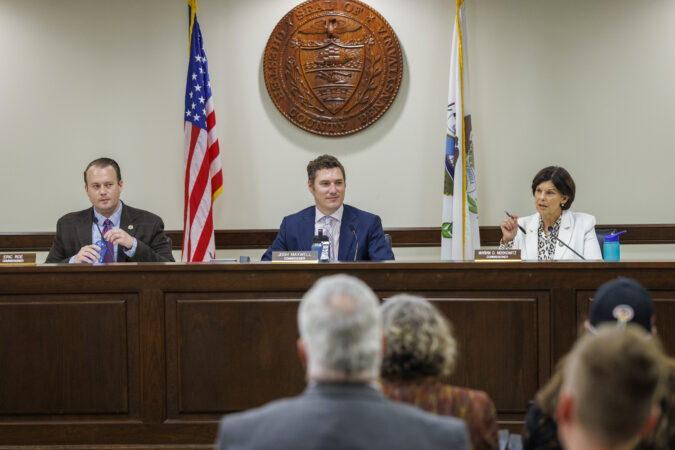
    “We were preparing for more needs and less money,” said Josh Maxwell, a Democrat who chairs the Chester County Board of Commissioners. And even as Washington and Harrisburg resolved their budget woes this week, they did little to resolve concerns at the county level.

    The state budget included no funding for transit, a 2% cut to mental health spending, and stagnant funding on other services like 911 fees — frustrating local officials.

    “I don’t think if the General Assembly had sent us a gold-plated demand or invitation to raise property taxes it could have been any clearer,” said Delaware County Council member Christine Ruether, a Democrat.

    Counties in Pennsylvania can only increase their revenue by raising property taxes. By failing to provide additional funds for social services, county officials argued, the state had created a situation where counties would immediately or eventually have to raise property taxes.

    “The people we serve … all their problems don’t suddenly go away because there’s a lack of funding to address the problem,” said Bob Harvie, a Democrat who chairs the Bucks County Board of Commissioners and is running for Congress.

    “It will likely mean that this county will have to consider a tax increase because we need to meet the needs of those people.”

    Bucks County has not yet released its proposed budget for 2026. But residents in Montgomery and Delaware Counties are likely facing tax increases.

    On Thursday morning, Montgomery County unveiled its proposed budget for 2026, which included a 4% property-tax increase.

    Delaware County’s executive director Barbara O’Malley told the all-Democratic council last week that the county would need to increase property taxes 19% to eliminate the county’s structural deficit. A healthy financial setting, she argued, was especially important as state and federal funding streams have become less reliable.

    Both budgets were crafted before the state budget was released but county officials said they wrote the documents assuming stagnant funding from the state despite inflation.

    “We kept it status quo,” said Dean Dortone, Montgomery County’s chief financial officer.

    Chester County officials said they’ve taken a similar approach. The county, Maxwell said, had also looked for budget cuts throughout the year as federal grant cancellations created uncertainty.

    “We’ve been cutting all year because we know that the federal and state governments are going to be flat or less funding,” Maxwell said, but if the state continues to leave funding flat for social services it will eventually have an impact.

    “Over time it’s going to mean property taxes are … going to go up more than they would have otherwise.”

    Meanwhile, counties have spent the last several months backfilling for state funds that did not come during the impasse.

    In Montgomery County, officials estimated the county had spent between $40 and $50 million from budget reserves to maintain services. Chester County officials estimated the county spent $40 million, while Delaware County officials reported spending $12 million monthly until October when the county was forced to reduce payments to social services providers.

    Counties expect to be reimbursed by the state for those expenses, but it’s unclear how quickly those payments will come.

    Delaware County declared a state of emergency Wednesday allowing them to more quickly distribute funds to local food pantries while the organizations wait for state and federal dollars to come through.

    “It’s going to take a while for the money to trickle down and in the meantime if somebody can’t get food on the table it’s an issue,” Reuther said during the county’s board meeting.

    This suburban content is produced with support from the Leslie Miller and Richard Worley Foundation and The Lenfest Institute for Journalism. Editorial content is created independently of the project donors. Gifts to support The Inquirer’s high-impact journalism can be made at inquirer.com/donate. A list of Lenfest Institute donors can be found at lenfestinstitute.org/supporters.

  • Dorothea Cathell, community volunteer, three-time cancer survivor, and hit-and-run victim, has died at 77

    Dorothea Cathell, community volunteer, three-time cancer survivor, and hit-and-run victim, has died at 77

    Dorothea Cathell, 77, of Philadelphia, longtime community volunteer, retired hospitality worker, three-time cancer survivor, expert tailor, and mother of four, died Friday, Sept. 26, at Lankenau Medical Center of injuries she sustained as a victim of a hit-and-run at 54th Street and Lancaster Avenue.

    Ms. Cathell was walking home from a shopping trip with Halloween decorations on Sept. 26 when she was struck by a speeding car. The driver left the scene in a damaged vehicle, and a suspect was arrested later and charged with homicide by vehicle-DUI and other charges. The case is pending.

    “She was an awesome woman and mother,” said her son Ralph. “She was a real big light for the universe.”

    Born and reared in South Philadelphia, Ms. Cathell lived in West Philadelphia as an adult and treated her neighbors like family, her son said. She volunteered at local free meal programs and youth activities and “opened her door to the homeless and anyone else in need,” her son said.

    “She valued education first and promoted so much positivity in the neighborhood,” he said. “She had an extraordinary personality. Her heart was so huge.”

    Ms. Cathell survived two bouts of stomach cancer and a case of colon cancer, and was “as tough as 30 gorillas,” her son said. She championed order and cleanliness in the community, worked in housekeeping for a hotel, and was an expert tailor.

    Ms. Cathell was an avid storyteller, her son Ralph said. “She was a poetic person.”

    “She made my sixth-grade graduation suit,” her son said. “Jacket, vest, shirt, pants, and tie. My friends said, ‘Wow.’ I said, ‘My mom did it.’”

    Dorothea Elizabeth Cathell was born Dec. 25, 1947. She grew up with three brothers and three sisters, her son said, and graduated from South Philadelphia High School.

    She married Charles Carter in the early 1980s, and they divorced later. He died earlier.

    She had sons Ralph, Dwight, and Erik, and a daughter, Samiyah. Erik died earlier.

    Ms. Cathell was an avid storyteller, her son said. “She was a poetic person,” he said. A friend said on Facebook: “She loved the hell out of her children and grandchildren. Amazing woman, heart of gold.”

    Family members said in TV interviews after the incident that Ms. Cathell was “always happy, always positive,” and “to the world she was just one person. But to her family, she was the world.”

    Her son Ralph said: “She was articulate about being kind. She was the best mother in the world. I never saw anyone like her.”

    In addition to her children, Ms. Cathell is survived by 10 grandchildren, two great-grandchildren, and other relatives. Two brothers died earlier.

    Services were held on Oct. 6.

  • Pa. lawmakers and Gov. Josh Shapiro have approved a $50.1 billion state budget, officially ending monthslong impasse

    Pa. lawmakers and Gov. Josh Shapiro have approved a $50.1 billion state budget, officially ending monthslong impasse

    HARRISBURG — The contentious — and, at times, bitter — Pennsylvania budget stalemate has finally ended.

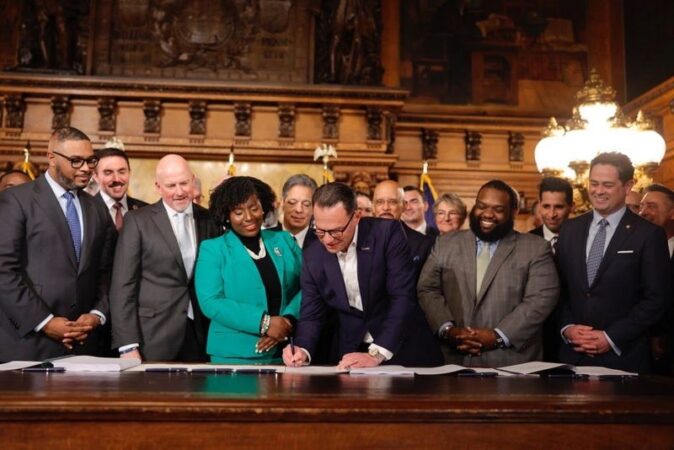
    Gov. Josh Shapiro signed the nearly $50.1 billion state budget Wednesday, as part of a breakthrough bipartisan deal that ends a key climate initiative and increases public school funding. Schools, counties, and social service providers will soon receive four months of withheld state payments, lapsed after the budget deadline passed at the start of the new fiscal year on July 1, providing the much-needed relief that some say will come too late.

    The long-awaited budget deal involving Shapiro, House Democrats, and Senate Republicans marks the first time Pennsylvania’s state budget has topped $50 billion. State spending and revenue earnings have skyrocketed in the post-COVID-19 years due to federal cash infusions. The budget is a 4.7% increase in spending over the prior fiscal year and includes no new tax increases. Lawmakers and Shapiro agreed to tap into underutilized special funds and use the state’s surplus to address a budget shortfall, as Pennsylvania is on track to spend more than it brings in this fiscal year and in the future.

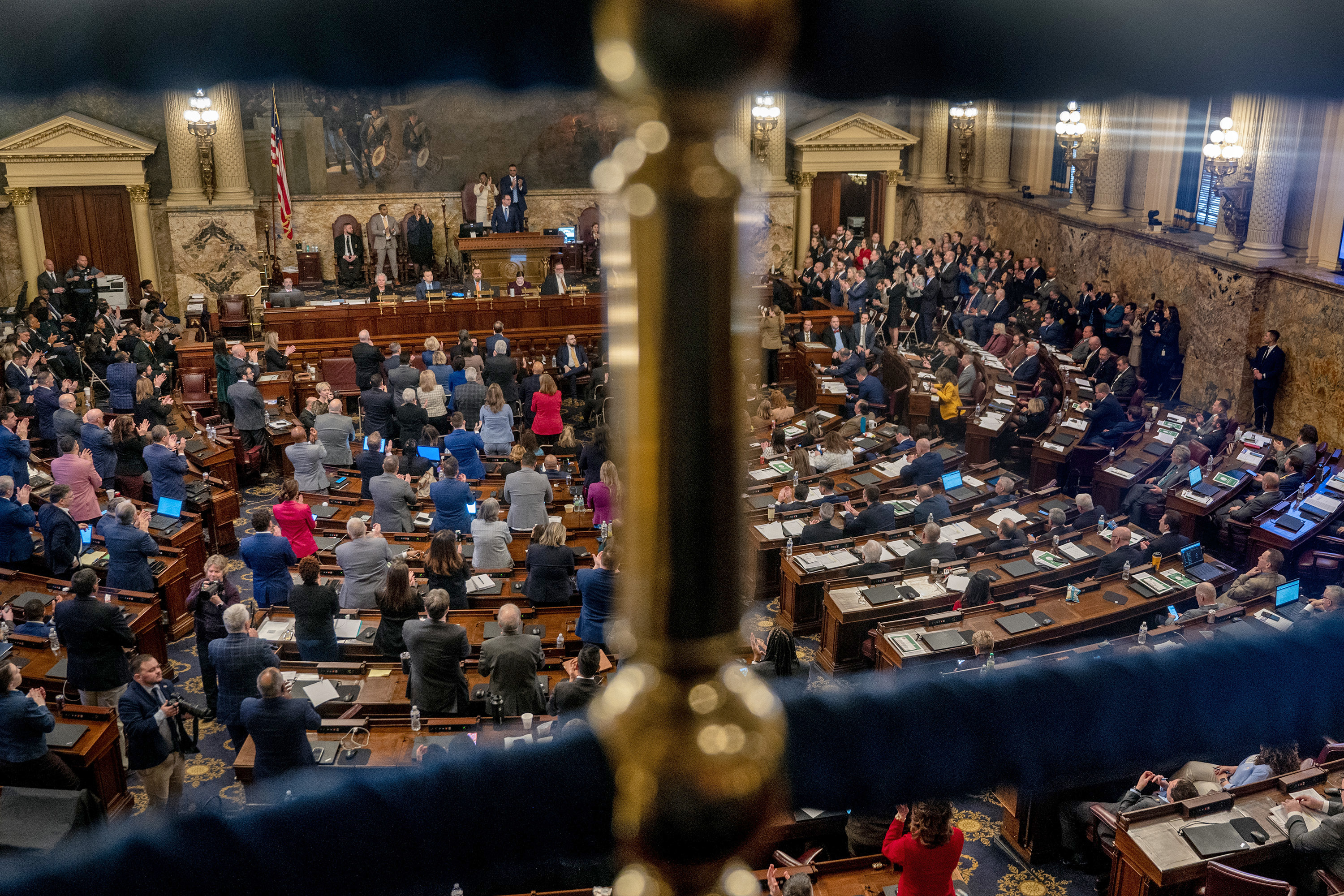
    Democrats (left) stand to applaud a tax cut proposal while Republicans (right) remain seated as Gov. Josh Shapiro delivers his third budget address to a joint session in the House chambers at the State Capitol Tuesday, Feb. 4, 2025. Shapiro, a Democrat, will need to negotiate with a split legislature.

    Both Republican and Democratic leaders celebrated the budget’s passage as a “true compromise,” noting that neither party got everything it wanted in the final deal. The spending plan includes significant energy and permitting changes cheered by Republicans and an earned-income tax credit and revisions to cyber charter funding long sought by Democrats, among other policy wins revealed Wednesday.

    “Today is a good day,” Shapiro said, opening his remarks before signing the budget bills into law in the Capitol building, flanked by Democratic lawmakers.

    “I would have loved to have stood here in this room with all of you on June 30, but as you know, Pennsylvania is just one of only three states in the country with a divided legislature,” Shapiro, a Democrat, said. “It requires all of us to compromise, to have tough conversations, and, ultimately, to find common ground.”

    Several leaders said the budget deal approved Wednesday would not have been possible months ago, as debate had devolved into partisan finger-pointing over who was responsible for the budget deadlock and who might benefit politically from it.

    Big GOP win: An end for RGGI

    Among the top wins for Senate Republicans is the end of the state’s efforts to join the Regional Greenhouse Gas Initiative, which former Democratic Gov. Tom Wolf entered without legislative approval in 2019 and has been tied up in litigation ever since. The program has drawn the ire of Republicans, and in floor remarks Wednesday, House Minority Leader Jesse Topper (R., Bedford) called it the “No. 1 issue holding Pennsylvania back from economic growth.” The 12-state program, known as RGGI, is an interstate cap-and-trade initiative that charges power plants for the amount of carbon emissions they release into the air.

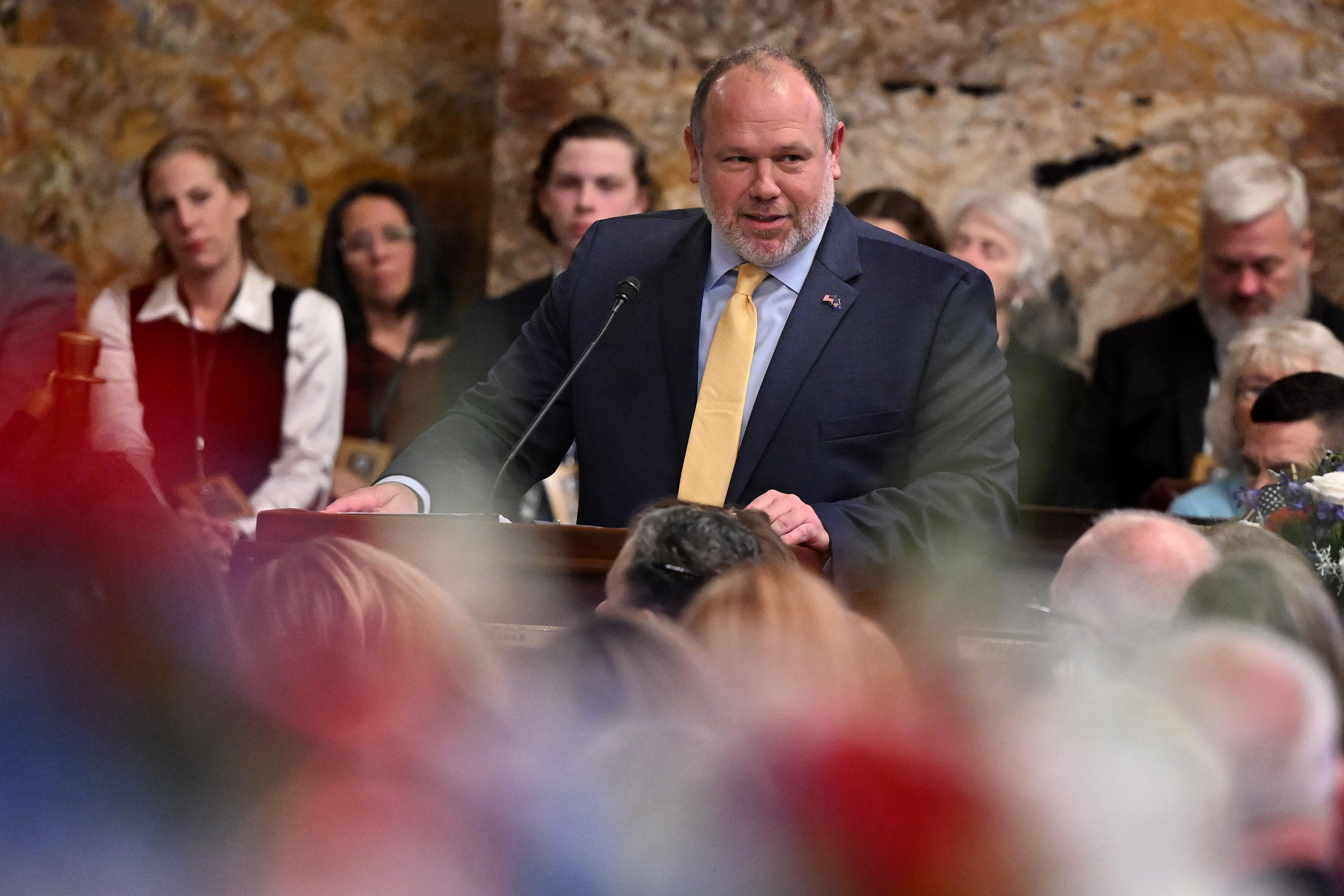
    House Minority Leader Jesse Topper (R., Bedford) speaks on Jan. 7, 2025, on the first day of the 2025-2026 legislative session.

    Ahead of a final budget deal, some Democratic lawmakers and environmental groups spoke out against ending Pennsylvania’s involvement in RGGI as a threat to the environment. In the end, most Democratic lawmakers voted in favor of the omnibus budget bill that ended the state’s pursuit to join the initiative.

    House Majority Leader Matt Bradford (D., Montgomery), a top negotiator of the budget deal, told The Inquirer on Wednesday that Democrats’ agreement to leave RGGI was part of a broader compromise to end the impasse.

    “I’m one who believes there should be a price on carbon, but I recognize the reality of the situation and compromise is required,” Bradford added.

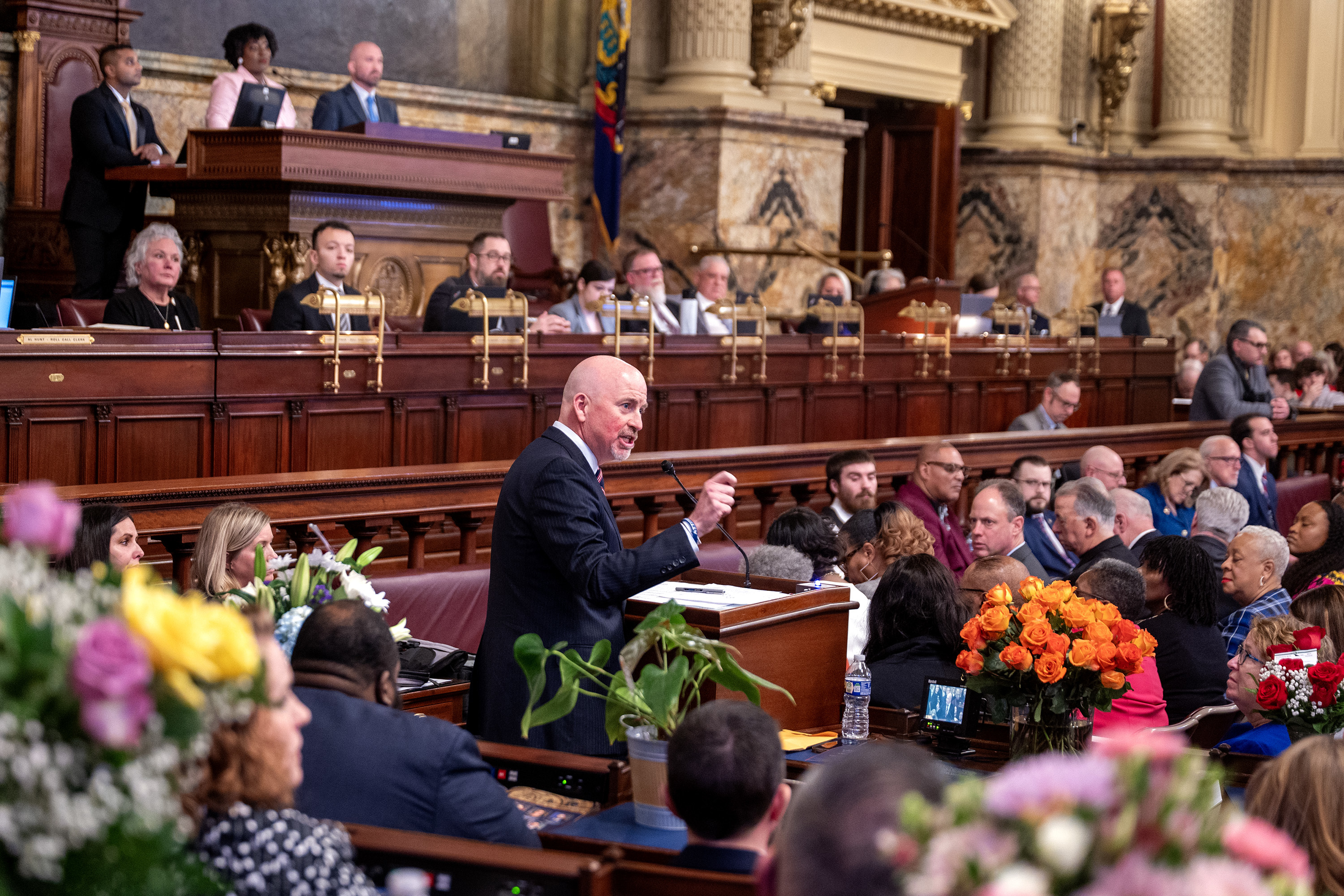
    House Majority Leader Matt Bradford (D., Montgomery) speaks on the first day of the 2025-2026 legislative session.

    Shapiro and Democratic leaders were able to persuade Republicans, in turn, to spend more than they had wanted to this fiscal year. That additional spending allowed Democrats to invest more in public education, a new earned-income tax credit targeted toward working Pennsylvanians, and more.

    “It’s much more money than we want to spend, and it took a lot longer than we wanted, but I think it was worth the wait,” said Senate President Pro Tempore Kim Ward (R., Westmoreland) in floor remarks Wednesday. “I am actually excited to vote for this budget.”

    Dems win new funding for schools, but not mass transit

    The budget deal includes more than $665 million in new funding for public schools, approximately $562 million of which would be funneled through the state’s adequacy and tax equity formulas as part of an effort to close what experts call a $4 billion “adequacy gap.“ These formulas were created last year in response to a 2023 court ruling that found Pennsylvania’s public education funding system unconstitutionally deprives students from poorer districts of an adequate and equitable education.

    Senate Minority Appropriations Chair Vince Hughes (D., Philadelphia) applauded the budget agreement for its investments in public school funding, gun violence prevention, and the student-teacher stipend, among other things.

    “This budget has good work in it that helps address … the issue of affordability, which sang loud and clear in the most recent election as a predominant issue that Pennsylvanians want us to address,” Hughes said on the Senate floor Wednesday.

    In addition, the budget includes changes long sought by Democrats to how Pennsylvania funds and oversees its cyber charter schools. Cyber charter school leaders warned that the changes might lead to closures and mass layoffs for the virtual schools, which often serve the state’s most vulnerable populations, but they were resoundingly celebrated by Democrats and public education experts.

    “We finally reformed our cyber charter school system,” Shapiro said to boisterous applause. “If a parent wants to send their child to a cyber school, that’s fine. That’s their prerogative. But we shouldn’t be overfunding them at the expense of Pennsylvania’s public schools.”

    The deal, however, does not include any additional funding for mass transit, another major Democratic priority. Democrats removed mass transit from the budget negotiation table in September, after a lawsuit required SEPTA to undo its service cuts and Senate Republicans appeared unwilling to make a long-term investment in mass transit. Instead, Shapiro approved SEPTA’s use of its capital funds to help fill the budget deficit of the state’s largest mass transit agency for the next two years.

    Bradford told reporters that securing a long-term revenue stream for transit agencies remains a top priority for his caucus in future budgets.

    Inflamed, in part, by the mass transit debate, negotiations over the budget had been stalled for months until the end of October, when Shapiro convened top legislative leaders to return to talks. The renewed budget negotiations included House Speaker Joanna McClinton (D., Philadelphia) and Ward, who are the highest-ranking officials in their respective chambers but had usually stayed out of the budget talks led by Bradford and Senate Majority Leader Joe Pittman (R., Indiana).

    Counties are still hurting from the late budget

    Unlike the federal government, Pennsylvania’s state government does not entirely shut down when a budget has not been approved. Lawmakers and state employees continued to be paid throughout the 135-day impasse. But the late budget had significant impacts on school districts, counties, and social service providers — all of which are awaiting billions in expected state payments that should begin flowing again soon.

    The lack of state funding has required schools, counties, and service providers to cut jobs, take out expensive loans, or stop services altogether.

    Over the course of the more than four-month impasse, Pennsylvania’s counties spent millions to make up for the loss of state dollars. In Montgomery County, officials estimated the county had spent between $40 million and $50 million from budget reserves to maintain services. Chester County officials estimated they spent $40 million in reserves, while Delaware County officials spent $12 million each month until October, when they had to reduce payments on some of their bills in the absence of state funding. Counties expect to be reimbursed for those expenses, but it is unclear when the reimbursements will come.

    “Counties are at the breaking point, financially speaking,” said Kyle Kopko, the executive director of the County Commissioners Association of Pennsylvania. If reimbursements are not delivered swiftly, Kopko added, it could force additional nonprofits that provide social services to shutter.

    Even as county leaders were grateful for an end to the impasse, some expressed frustration over the contents of the final budget deal. The agreement, Kopko said, included a 2% cut to mental health services statewide, though he said the cut likely would not affect payments to counties. And it left other funds counties rely on to pay their bills — like 911 fees — stagnant, despite inflation.

    Counties in Pennsylvania can increase their revenue only by raising property taxes. By failing to provide additional funds for social services, county officials argued Wednesday, lawmakers had created a situation in which counties would immediately or eventually have to raise property taxes.

    The combination of the cuts and the failure to increase funds for public transit and other needs, Delaware County Councilmember Christine Reuther said, meant the state had essentially passed the buck to the counties.

    “They’re not solving problems. They’re not saving people from tax increases,” she said. “They’re just making somebody else do their dirty work.”

    This suburban content is produced with support from the Leslie Miller and Richard Worley Foundation and The Lenfest Institute for Journalism. Editorial content is created independently of the project donors. Gifts to support The Inquirer’s high-impact journalism can be made at inquirer.com/donate. A list of Lenfest Institute donors can be found at lenfestinstitute.org/supporters.

  • After big wins Tuesday, Democrats think they can oust Brian Fitzpatrick. But the Bucks Republican is resilient.

    After big wins Tuesday, Democrats think they can oust Brian Fitzpatrick. But the Bucks Republican is resilient.

    Should last week’s election results make Brian Fitzpatrick nervous?

    Bucks County Democrats think so.

    The Republican lawmaker has been like Teflon in the 1st Congressional District, which includes all of Bucks County and a sliver of Montgomery County. He persistently outperforms the rest of his party and has survived blue wave after blue wave. First elected in 2016, he has remained the last Republican representing the Philadelphia suburbs in the U.S. House.

    But Democrats pulled something off this year that they hadn’t done in recent memory. They won each countywide office by around 10 percentage points — the largest win margin in a decade — and for the first time installed a Democrat, Joe Khan, as the county’s next top prosecutor.

    Now they are looking to next year, hopeful that County Commissioner Bob Harvie, the likely Democratic nominee, succeeds where Fitzpatrick’s past challengers have failed.

    “This year was unprecedented, and sitting here a year before the midterm, you have to believe that next year is going to be unprecedented as well,” State Sen. Steve Santarsiero, who is also the county party’s chair, said Wednesday.

    Eli Cousin, a spokesperson for the Democratic Congressional Campaign Committee, predicted a “perfect storm brewing for Democrats” to beat Fitzpatrick. “He and Trump’s Republican Party are deeply underwater with Bucks County voters; he has failed to do anything to address rising costs, and we will have a political juggernaut in Gov. Josh Shapiro at the top of the ticket,” Cousin said.

    There are several reasons Democrats may be exhibiting some premature confidence: Despite a spike in turnout for an off-year election, far fewer voters turn out in such elections than do in midterms. Fitzpatrick is extremely well-known in Bucks, where his late brother served before he was elected to the seat. He has won each of his last three elections by double digits.

    Just last year, President Donald Trump narrowly won Bucks County, becoming the first Republican presidential candidate to do so since the 1980s, and Republicans overtook Democrats in voter registrations last year.

    But Tuesday was a sizable pendulum swing in the bellwether. Some of the communities, like Bensalem, that drove Trump’s victory flipped back to blue.

    The last time Democrats had won a sheriff’s race in the county was 2017, a year after Trump was elected the first time. That year, Democrats won by smaller margins, and a Republican incumbent easily won reelection as district attorney. The following year, Fitzpatrick came the closest he has yet to losing a race, but still won his seat by 3 percentage points.

    This year’s landslide, Democrats say, is a warning sign.

    “There were Democratic surges in every place that there’s a competitive congressional seat, and that should be scaring the s— out of national Republicans,” said Democratic strategist Brendan McPhilips, who managed Democratic Sen. John Fetterman’s campaign in the state and worked on both of the last Democratic presidential campaigns here.

    “The Bucks County seat has always been the toughest, but it’s certainly on the table, and there’s a lot there for Bob Harvie to harness and take advantage of.”

    Bucks County Democratic Commissioner Bob Harvie speaks during an Oct. 5 rally outside the Middletown Township Police Department and Administrative Offices in Langhorne.

    Harvie, a high school teacher-turned-politician, leapt on the results of the election hours after races were called, putting out a statement saying, “There is undeniable hunger for change in Bucks County.”

    “The mood of the country certainly is different,” Harvie said in an interview with The Inquirer on Thursday. “What you’re seeing is definitely a referendum.”

    Lack of GOP concern

    But Republicans don’t appear worried.

    Jim Worthington, a Trump megadonor who is deeply involved in Bucks County politics, attributes GOP losses this year to a failure in mail and in-person turnout. Fitzpatrick, he said, has a track record of running robust mail voting campaigns and separating himself from the county party apparatus.

    “He’s not vulnerable,” Worthington said. “No matter who they run against him, they’re going to have their hands full.”

    Heather Roberts, a spokesperson for Fitzpatrick’s campaign, noted that the lawmaker won his last election by 13 points with strong support from independent voters in 2024 — a year after Democrats performed well in the county in another off-year election. She dismissed the notion that Harvie would present a serious challenge, contending the commissioner “has no money and no message” for his campaign.

    Fitzpatrick is also a prolific fundraiser. He brought in $886,049 last quarter, a large amount even for an incumbent, leading Harvie, who raised $217,745.

    “Bob Harvie’s not going to win this race,” said Chris Pack, spokesperson for the Defending America PAC, which is supporting Fitzpatrick. “He has no money. He’s had two dismal fundraising quarters in a row. That’s problematic.”

    Pack noted Harvie’s own internal poll, reviewed by The Inquirer, showed 57% of voters were unsure how they felt about him.

    “An off-off-year election is not the same as a midterm election,” Pack said, adding he thinks Fitzpatrick’s ranking as the most bipartisan member of Congress will continue to serve him well in Bucks County.

    “He’s obviously had well-documented breaks on policy with the Republican caucus in D.C., so for Bob Harvie to try to say Brian Fitzpatrick is super far right, no one’s gonna buy it,” Pack said. “They haven’t bought it every single election.”

    On fundraising, Harvie said he had brought in big fundraising hauls for both of his commissioner races, and said he would have the money he needed to compete.

    Of the four GOP-held House districts Democrats are targeting next year in the state, Fitzpatrick’s seat is by far the safest. That raises the question: How much money and attention are Democrats willing to invest in Pennsylvania?

    “Who’s the most vulnerable?” asked Chris Nicholas, a GOP consultant who grew up in Bucks County. The other three — U.S. Rep. Scott Perry and freshman U.S. Reps. Rob Bresnahan, in the Northeast, and Ryan Mackenzie, in the Lehigh Valley — won by extremely narrow margins last year. “If you’re ranking the four races, you have Rob Bresnahan at the top and Fitzpatrick at the bottom,” Nicholas said.

    National Democrats seldom invest as much to try to beat Fitzpatrick as they say they will, Nicholas said. And he pointed to 2018, a huge year for Democrats, when they had a candidate in Scott Wallace who was very well-funded, albeit far less known than Harvie, and still came up short.

    Democrats see Harvie as the best shot they have had — a twice-elected commissioner, with name ID from Lower Bucks County, home to many of the district’s swing voters. And the 1st District is one of just three in the country that is held by a Republican member of Congress where Vice President Kamala Harris won last year.

    And then there’s Shapiro, who Democrats think will give a boost to candidates like Harvie as he runs for reelection next year. Shapiro won the district by 20 points in 2022.

    Following the playbook used by successful candidates this year, Democrats are likely to argue to voters that Fitzpatrick has done little to push back on Trump — while placing cost-of-living concerns at the feet of the Republican Party.

    “A lot of people are, you know, upset with where we are as a nation,” Harvie said. “They grew up expecting that if you worked hard and played by the rules, you’d be able to have all the things you needed and have a good life. And that’s not happening for them.”

    The Trump effect

    Democrats won races in Bucks County, and across the country, this year by tying their opponents to Trump — a tactic that was especially effective in ousting Republican Sheriff Fred Harran, who partnered his office with U.S. Immigration and Customs Enforcement. In recent cycles, that strategy has not worked against Fitzpatrick.

    “The big thing Democrats throw against Republicans is you’re part and parcel of Trump and MAGA, and Fitzpatrick voted against Trump,” Nicholas said.

    Over nearly 10 years in Congress, Fitzpatrick has been a rare Republican who pushes back on Trump, though often subtly. Fitzpatrick, who cochairs the bipartisan Problem Solvers Caucus, was the lone Pennsylvania Republican to confirm former President Joe Biden’s electoral victory in 2020. A former FBI agent who spent a stint stationed in Ukraine, he is among the strongest voices of support for Ukraine in Congress, consistently pushing the administration to do more to aid the country as it resists a yearslong Russian invasion.

    Fitzpatrick was also one of just two House Republicans to vote against Trump’s signature domestic policy package, which passed in July. He voted for an earlier version that passed the House by just one vote, which Democrats often bring up to claim Fitzpatrick defies his party only when it has no detrimental impact.

    “He’s good at principled stances that ultimately do nothing,” said Tim Persico, an adviser with the Harvie campaign. “That is what has allowed him to defy gravity in the previous cycles. … Now the economy is doing badly. … People feel worse about everything, and Fitzpatrick isn’t doing anything to help with that. I think it makes it harder to defy gravity.”

    Trump has endorsed every Republican running for reelection in Pennsylvania next year except Fitzpatrick. While the Bucks County lawmaker has avoided direct criticism of the president, in an appearance in Pittsburgh over the summer, Trump characterized the “no” vote on the domestic bill as a betrayal.

    Fitzpatrick has faced more conservative primary challengers in the past, but no names have surfaced so far this cycle, a sign that even the more MAGA-aligned may see him as their best chance to hold onto the purple district.

    Keeping his distance from Trump, and limiting Democrats’ opportunities to tie the two together, may remain Fitzpatrick’s best path forward.

    “Anybody who wants to align themselves with an agenda of chaos and corruption and cruelty ought to be worried,” said Khan, Bucks County’s new district attorney-elect.

    This suburban content is produced with support from the Leslie Miller and Richard Worley Foundation and The Lenfest Institute for Journalism. Editorial content is created independently of the project donors. Gifts to support The Inquirer’s high-impact journalism can be made at inquirer.com/donate. A list of Lenfest Institute donors can be found at lenfestinstitute.org/supporters.