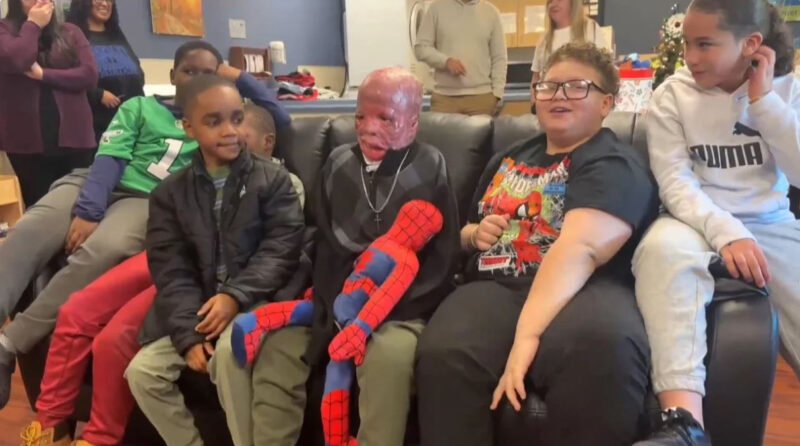
The 10-year-old boy who was severely burned in the Northeast Philadelphia plane crashwas headed home on Tuesday after spending nearly a year in the hospital, his grandmother, Alberta “Amira” Brown said.
“It’s the best thing ever that he’ll be home for the holidays,” Brown said in the morning as the boy prepared to leaveWeisman Children’s rehabilitation hospital in South Jersey. “He is truly happy to be coming home.”
Ramesses Vazquez Viana, then 9, suffered burns to 90% of his body on Jan. 31 whena Learjet medical transport crashed on Cottman Avenue near the Roosevelt Mall, killing allsix people on board.
Ramesses had been riding in a car with his father, Steven Dreuitt Jr., and Dreuitt’s fiancée, Dominique Goods Burke. Dreuitt, 37, died in the blaze. Goods Burke, 34, died in April from her injuries after spending nearly three months at Thomas Jefferson University Hospital.
A bystander saw Ramesses after he escaped from the car; the boy’s back was on fire, and his shirt was burned away.
Police took Ramesses to St. Christopher’s Hospital for Children, and he was later airlifted to Shriners Children’s hospital in Boston. He underwent more than 40 surgeries, including multiple skin grafts. He spent months in physical therapy relearning how to get out of bed, walk and climb stairs, according family interviews with CBS News.
His classmates from Smedley Elementary School in the Philadelphia’s Frankford neighborhood cheered him on from afar, writing him cards and sending videos.
Ramesses celebrated his 10th birthday in October at the Boston hospital.
A few weeks ago, Ramesses was moved closer to his Philadelphia home to Weisman Children’s in Marlton, N.J.
During a phone interview with The Inquirer, Brown said her grandson “has a long road ahead of him” and would need additional surgeries.
During a visit with him Saturday, he kicked a soccer ball around with her.
Brown confirmed a CBS report that Ramesses was being released from Weisman sometime Tuesday, but declined to provide specifics.
Brown said her grandson has chilling memoriesfrom that night: He was in the car’s backseat texting with Brown at about 6 p.m. when the plane exploded in a giant fireball, and he heard loud booms.
As flames engulfed the car, Ramesses tried to help his father, who couldn’t move his legs. The child heard his father yell to get out, and that he loved him. Ramesses told his father he loved him back. He could hear Goods Burke screaming.
Steven Dreuitt Jr. and Goods Burke shared a teenage son, Dominick Goods, who is now a junior at Imhotep Institute Charter High School. Brown said her older grandson is “really struggling” with his parents’ deaths.
The sixpassengers killedon the medical transport jet were Mexican nationals. They included the pilot and copilot, two medical personnel, an 11-year-old girl, and her mother. The girl was headed home to Mexico after undergoing treatment for a spinal condition at Shriners Children’s Philadelphia.
Investigators with the National Transportation Safety Board haven’t yet determined why the plane crashed. A preliminary report, released earlier this year, found the cockpit voice recorder “had likely not been recording audio for several years.” No distress calls were made by the pilot or copilot.
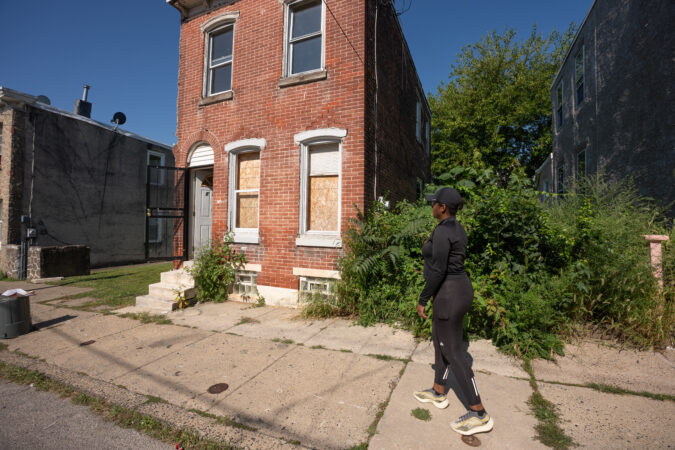
The rowhouse on East Pastorius Street no longer looked like a home.
Its doors and windows had been stripped, leaving the two-bedroom Germantown rowhouse open to the elements — and leaving Patricia Hall, the tenant and mother of four, alone inside and clutching her gun, afraid that if she left, her landlord would finally get his way and throw out everything she owned.
That night, a man slipped through the open back door, armed with a gun of his own.
Hall encountered Felipe Eskew, dressed in a mask, as she lay on her couch. They shot and killed each other.
The intimidation campaign that ended two lives began months earlier, after Hall’s landlord, Stephen Wilkins, grew determined to force Hall and her family out of the crumbling property after they fell behind on rent.
On Tuesday, Wilkins, 55, was sentenced to nine to 18 years in prison for setting in motion the events that led to the deadly confrontation.
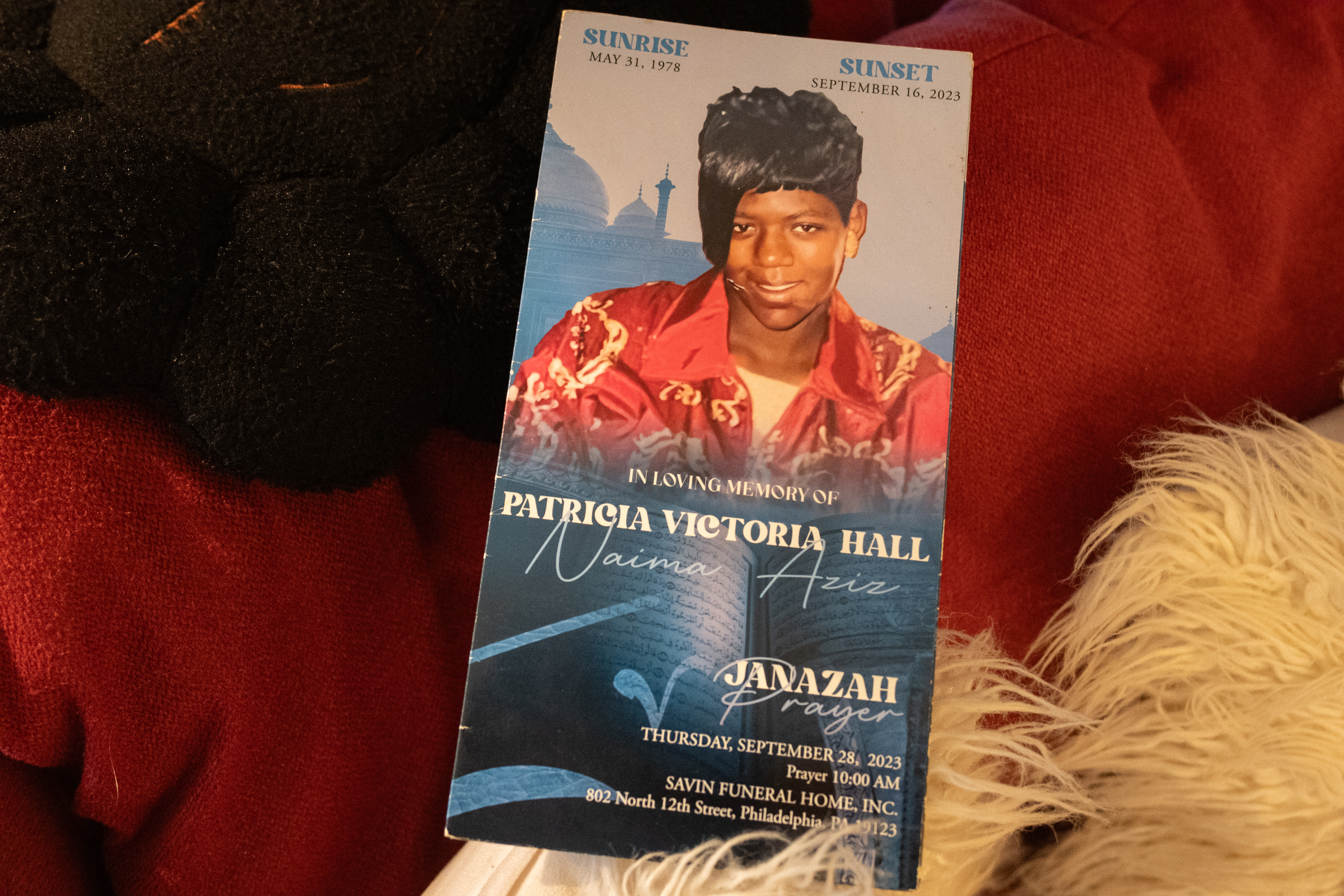
Patricia Hall’s life was not easy, her family said. She grew up without a mother, and often struggled financially. But she loved her children fiercely and tried to protect them.
Hall, 45, and her now 28-year-old daughter, Crystal, had been renting the two-bedroom at 127 E. Pastorius St. for about three years when, in early 2023, they fell behind on rent. They paid Wilkins what they could, but the shortfall was adding up.
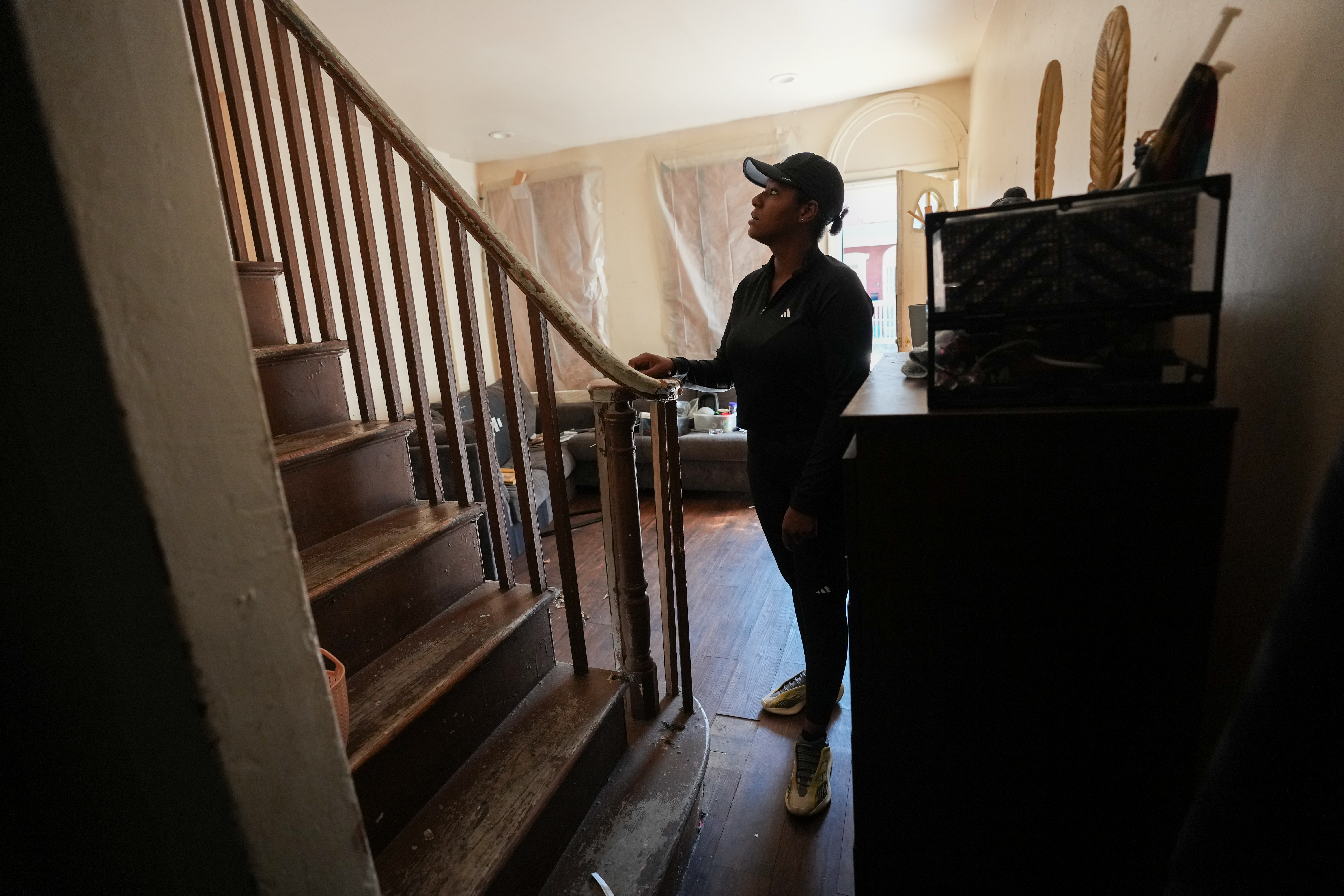
At the same time, the family said, the house was falling apart — kitchen and bathroom sinks wouldn’t drain, the stairs were crumbling, the ceiling was cracking — and Wilkins was refusing to make repairs.
Tension between the Halls and Wilkins started building. Crystal Hall said Wilkins tried to illegally force them out by shutting off the electricity and water, ripping out the electric meter and circuit breakers, and throwing a brick through their window.
After his emergency eviction filing was denied by the courts and the family still refused to leave, he went a step further and on the afternoon of Sept. 15, he removed every door and window from the home — leaving Patricia Hall and her kids inside a shell-like structure.
Hall couldn’t afford to lose the few things that she had, her daughter said, so she sent her young children to stay with a relative, and Hall remained in the house — her gun at her side, just in case.
Late that night, prosecutors said, Askew — Wilkins’ best friend — crept inside the open back door of the home, wearing gloves and black mask, and armed with a gun.
Assistant District Attorney Cydney Pope said she believes Wilkins sent Askew — who was eager to move into the Pastorius Street rowhouse himself — to the home to scare Hall into leaving, not necessarily to kill her.
Instead, when he encountered Hall and her gun, the two shot and killed each other.
Crystal Hall returned to the house where her mother Patricia Hall, was killed. Her mother was found shot multiple times behind the couch in the living room behind her.
Wilkins was charged with murder and related crimes two months later after Homicide Detective Joseph Cremen uncovered Wilkins’ trail of terror against the Hall family — a harassment campaign that culminated to the removal of the windows, and the break-in-turned killing
Wilkins was the last person Askew called just before Pope said he crept into Hall’s home and killed her.
But Pope said the evidence connecting Wilkins directly to Askew’s plans that night was limited. The two men, who had been friends for three decades, were careful never to text directly about their plans to force Hall out, she said.
Concerned that a jury could acquit him of the crimes, the prosecutor said, she offered to drop the murder charge in exchange for a guilty plea to involuntary manslaughter and solicitation to commit burglary. He agreed in September.
Inside the courtroom Tuesday, Crystal Hall said Wilkins’ scheme had upended her life and those of her three young siblings, now 9, 12, and 15. She has suffered emotional breakdowns in the aftermath, she said, and now takes medication for her mental health. Her youngest brother, she said, is angry and confused. Her 15-year-old sister barely speaks.
“We were all we had,” she said of her mother. “We can never get past the life that was taken.”
Crystal Hall said her mother was “our source of guidance, laughter, and unconditional live.”
She asked that Wilkins received the maximum sentence of 12½ to 24 years.
But Wilkins’ family and his attorneys, Fortunato Perri Jr. and Brian McMonagle, asked the judge for mercy for “a man who became desperate” and never meant any harm to Hall.
Teliah Wilkins said she’d seen how her husband had reflected on his actions over the 25 months he has spent in jail so far, and that he was “consumed with regret.”
“Stephen’s conduct wasn’t born of malice,” she said, “… but a series of profound misjudgments.”
But when Wilkins addressed the judge, he denied having ever sent Askew to the home.
“I never meant harm for anybody,” he said. “… I never even wanted him to go there.”
Bronson, the judge, questioned why, then, Askew was at the house that night, and why Wilkins, if he was not involved with Askew’s actions, pleaded guilty.
Wilkins said he didn’t know why Askew was there, only that “he wanted the house.” He took a plea so as not to risk spending the rest of his life in prison, he said.
As the judge stared in confusion, Wilkins began to stammer and apologize.
“Is that it?” Bronson asked.
The judge, while handing down his sentence, said he did believe Wilkins did not mean for Hall to die, but that given the circumstances of the crime, the landlord was lucky not to be facing second-degree murder and life in prison.
He ordered him to spend nine to 18 years behind bars.
Crystal Hall, in the gallery, began to sob. She whispered thanks to God. Then she walked out of court, and prepared to spend another holiday season without her mother.
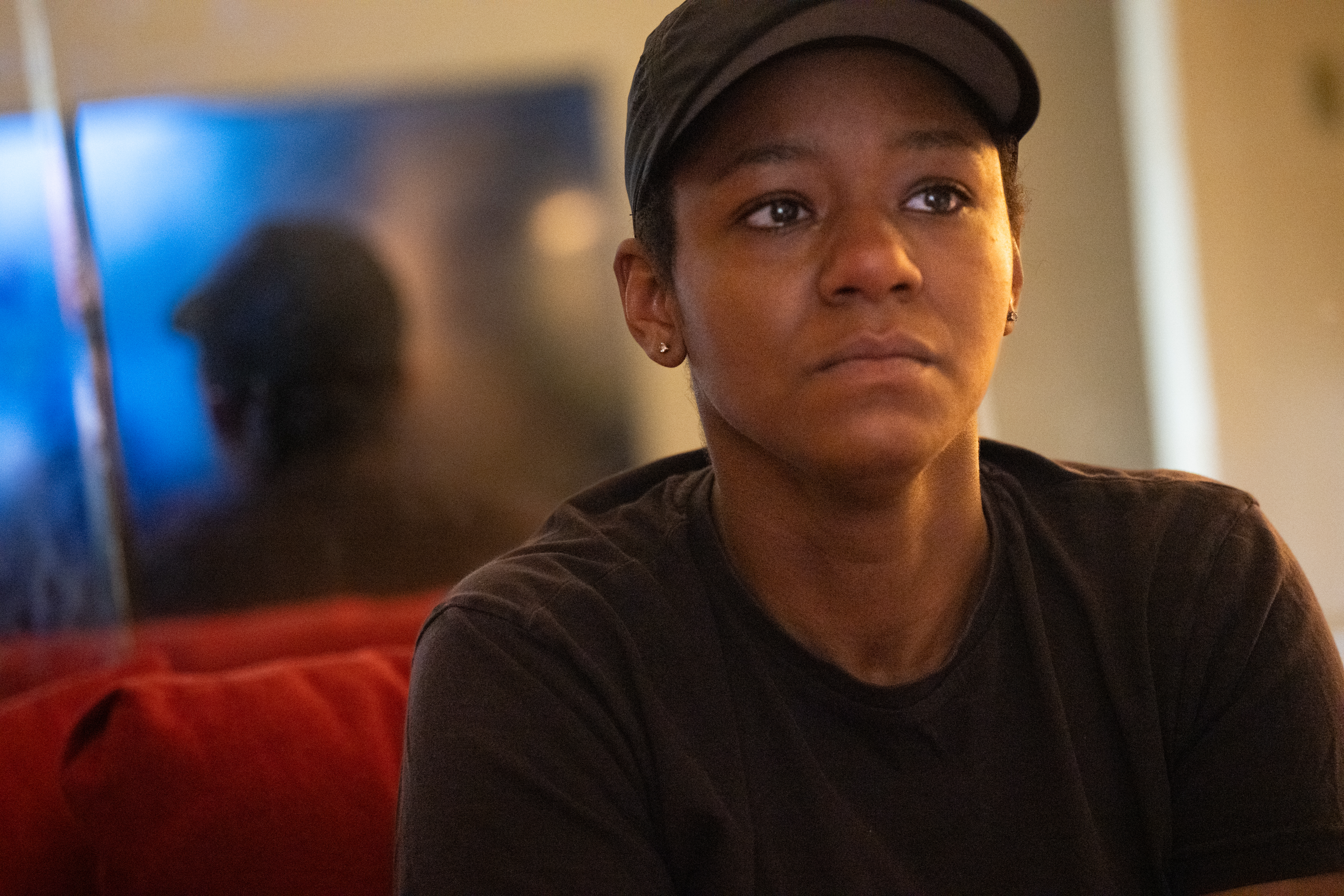
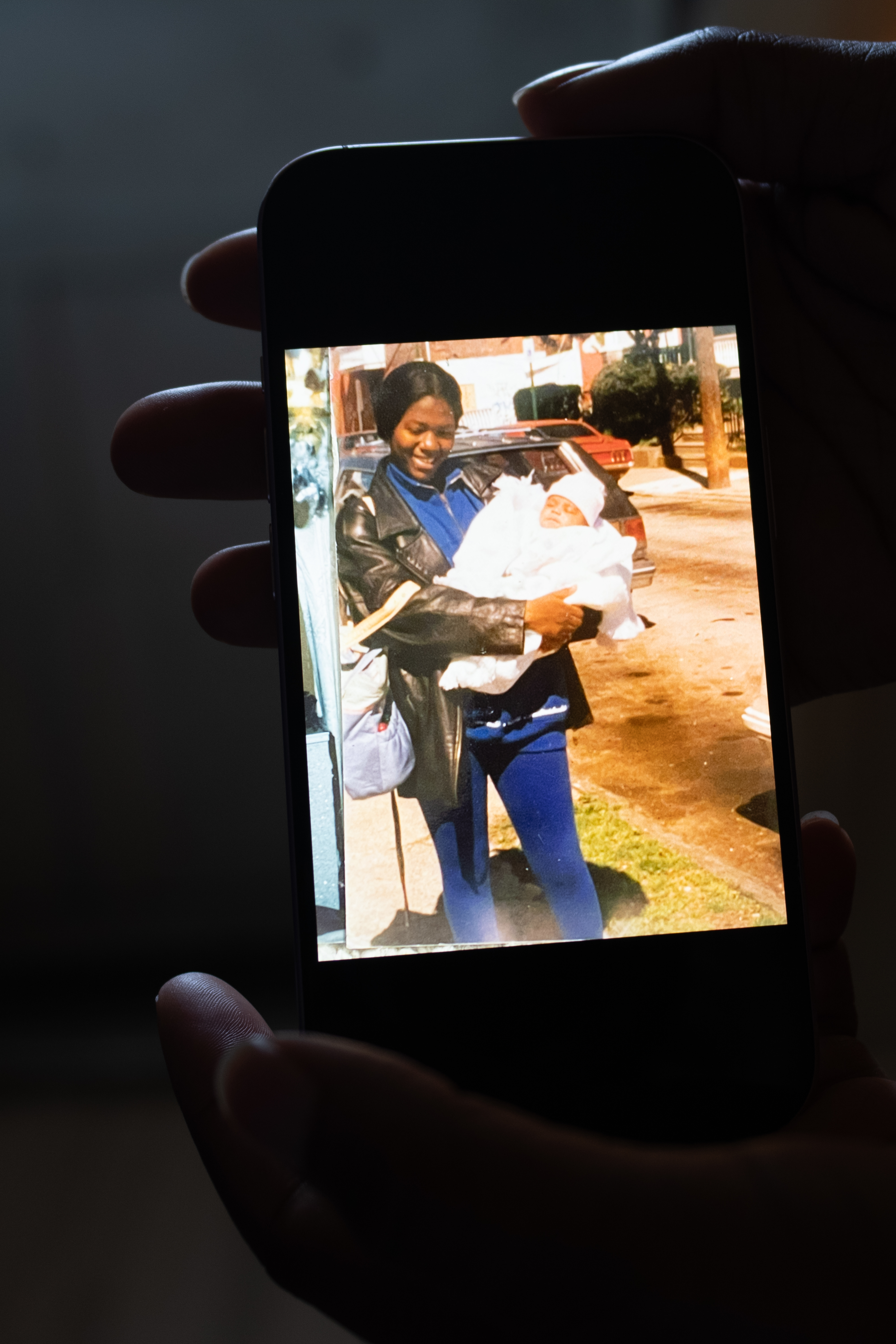
A photo of a young Patricia Hall holding her daughter, Crystal, as a baby.
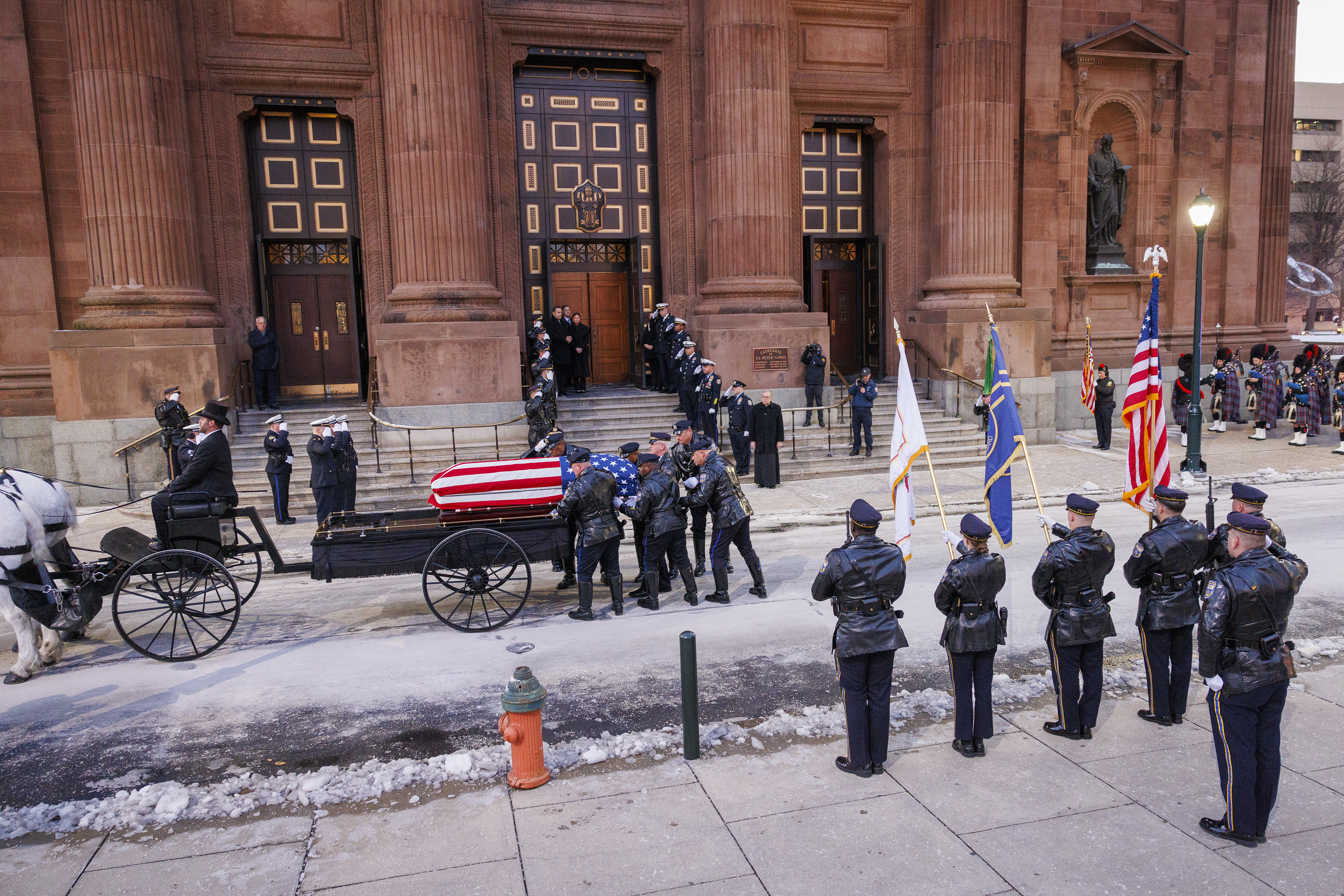
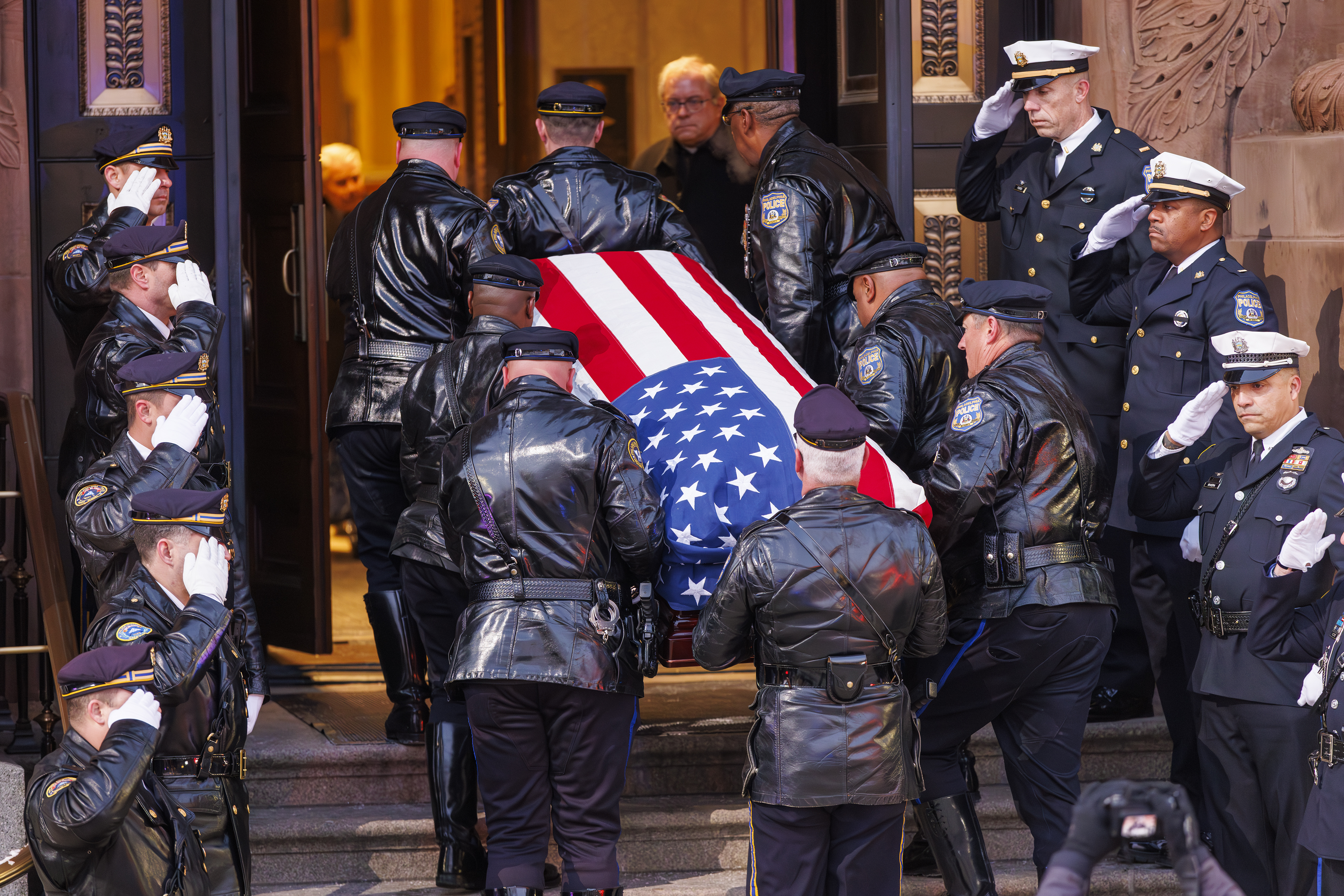
Philadelphia Police Commissioner Kevin Bethel stood at a podium behind a cherry wood coffin inside the Cathedral Basilica of SS. Peter and Paul on Tuesday and told mourners how Highway Patrol Officer Andy Chan had arrived in the afterlife: on his motorcycle, boots shining, smiling.
Then he turned to the highway patrol officers standing in the front pews. “And how,” he asked, “did Andy Chan announce himself when he arrived at the gates of heaven?”
“Highway!” they answered in unison.
Chan, 55, was laid to rest Tuesday morning, six years after a 79-year-old driver struck his patrol motorcycle near Pennypack Park, catapulting him more than 20 feet away onto the pavement and causing brain injuries from which he never fully recovered.
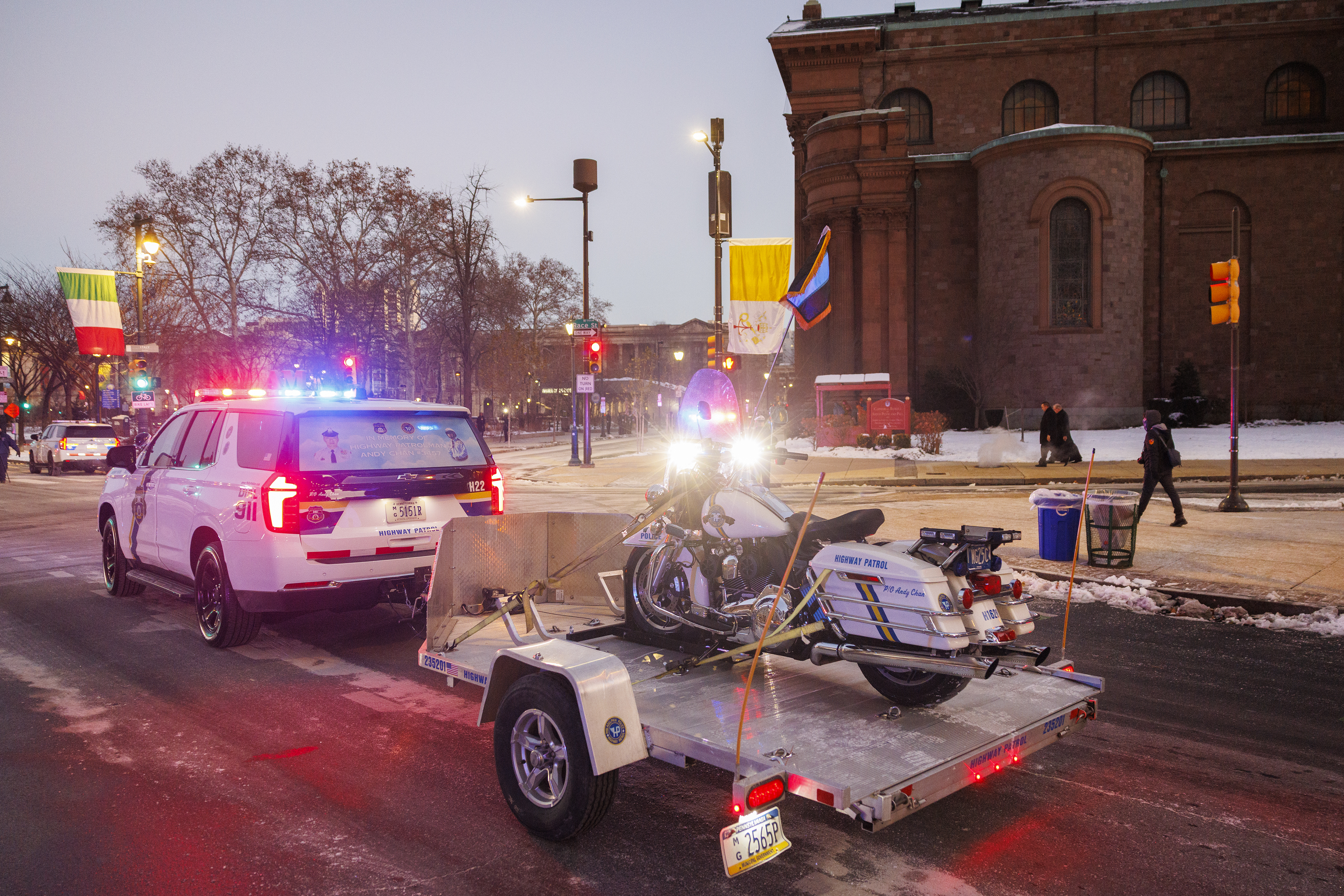
A highway patrol motorcycle leads the procession to the Cathedral Basilica of SS. Peter and Paul for the funeral of Philadelphia Police Officer Andy Chan.
Chan served 24 years on the Philadelphia police force before the crash on a quiet stretch of Rowland Avenue irrevocably altered the course of his life.
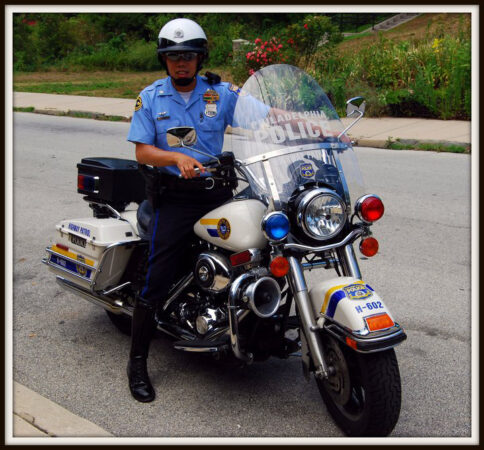
A highway patrol officer for nearly his entire career, Chan spent his working days on two wheels, patrolling neighborhoods and highways astride the bike he was known for riding with pride.
He greeted his fellow officers not with “Hello,” but with “Highway!”
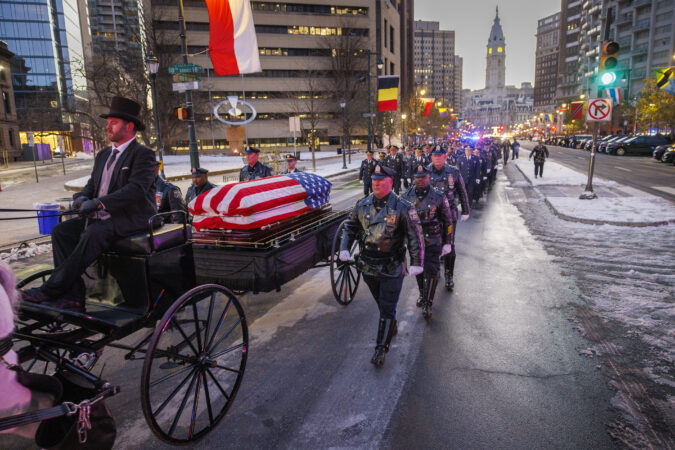
Officers towed Chan’s motorcycle, still bearing his name, in a procession that stretched nearly 18 miles, from North Philadelphia to Center City and finally, to the cathedral.
Inside the gilded building, photos of Chan streamed on TVs: Beside his wife, Teng, dressed in their wedding attire, hands clasped and raised triumphantly as they walked into their reception. In a portrait studio, cradling the youngest of his three children. Standing on the grass of the National Mall in Washington, D.C., surrounded by fellow officers. His arm around a gray-haired Sylvester Stallone. On his bike, over and over again.
The body of Philadelphia police officer Andy Chan is lifted from Caisson after arriving at the Cathedral Basilica St. Peter and Paul, Tuesday, December 16, 2025.
Chan had wanted to be a police officer since childhood, he once said in a radio appearance. From his parents’ restaurant in Chinatown, he listened with reverence to the uniformed officers who came in to eat and swap stories with his father. “I kind of looked up to police officers,” he said.
But he was drawn especially to the thunder of their motorcycles as they passed.
After joining the department, Chan spent eight years riding the streets of the 39th District as a bicycle officer before being promoted in 2004 to the department’s elite Highway Patrol Unit.
When he introduced himself to the woman who would become his wife, he did so simply with the words: “I’m Highway.”
The casket of Philadelphia Police Highway Patrol Officer Andy Chan arriving at the Cathedral Basilica of SS. Peter and Paul on Tuesday.
Teng Chan described her husband’s “unwavering sense of purpose” as rivaled only by his love of his family. On road trips, she said, he gave long lectures to their eldest son about life, inspiring him to become a volunteer firefighter and later, join the U.S. National Guard, she said.
As for her, his wife said, “He pushed me out of my comfort zone. He made me who I am today: a better person. A fighter.”
After the Jan. 3, 2019, crash, Chan remained in a coma for weeks, reliant on a ventilator. When he awoke, he required 24-hour care from family, friends, and fellow police officers, who regularly sat by his side. Though he could no longer speak, those close to him said he showed recognition and response when loved ones were present.
“We were heartbroken every day after the accident,” Teng Chan said. “We prayed every day for recovery, for him to be restored. With his unbreakable spirit, he stayed with us.
“But,” she said, “it was time. He has a higher calling.”
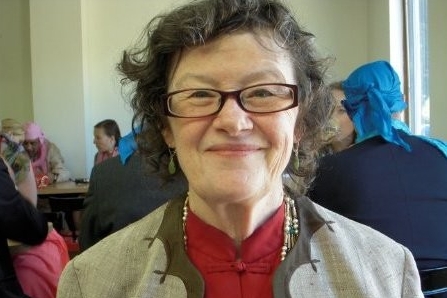
Roberta Fallon, 76, of Bala Cynwyd, cofounder, editor, and longtime executive director of theartblog.org, prolific freelance writer for The Inquirer, Daily News, and other publications, adjunct professor at St. Joseph’s University, artist, sculptor, mentor, and volunteer, died Friday, Dec. 5, at Thomas Jefferson University Hospital of injuries she suffered after being hit by a car on Nov. 24.
Ms. Fallon’s husband, Steven Kimbrough, said the crash remains under investigation by the police.
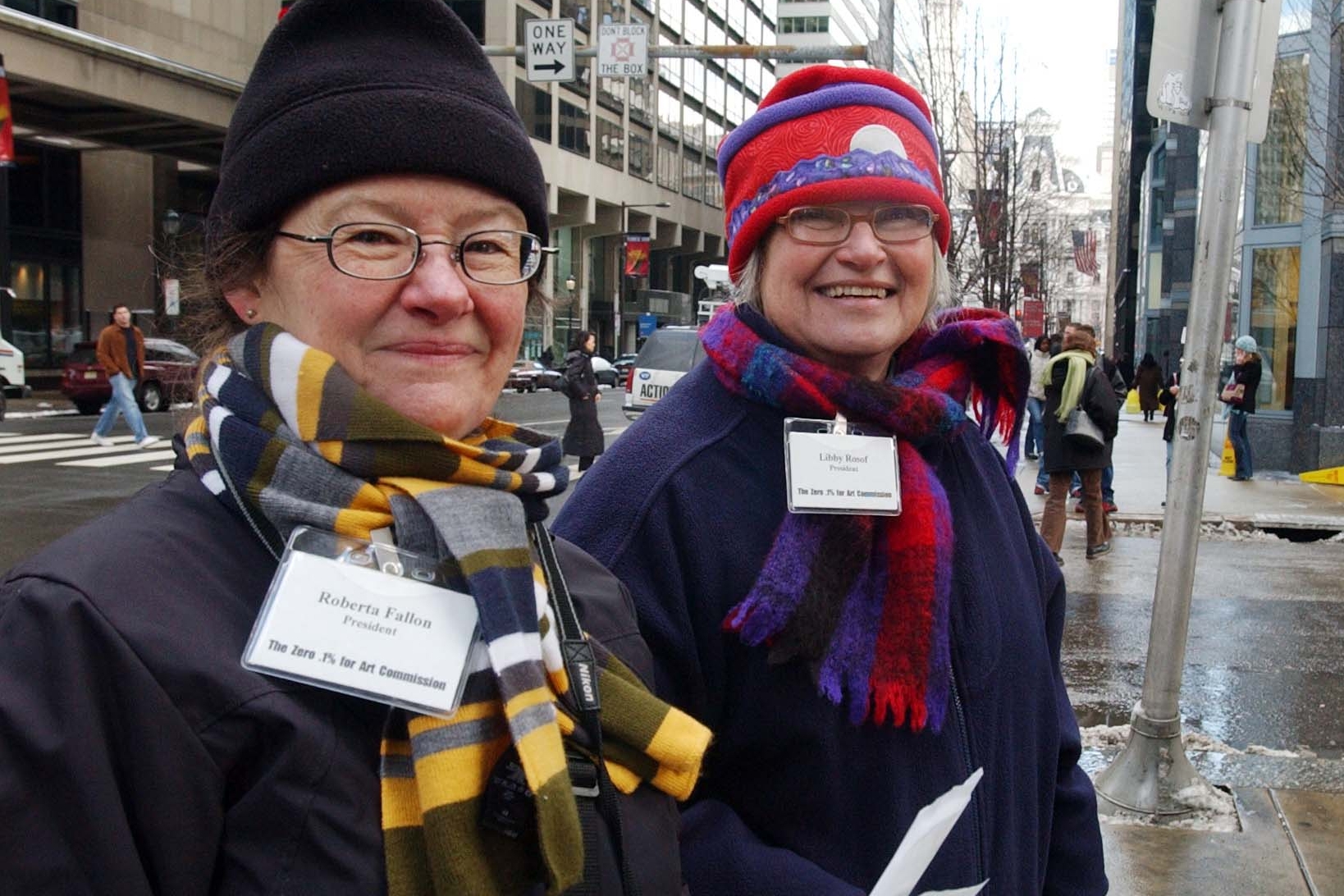
Described by family and friends as empathetic, energetic, and creative, Ms. Fallon and fellow artist Libby Rosof cofounded the online Artblog in 2003. For nearly 22 years, until the blog became inactive in June, Ms. Fallon posted commentary, stories, interviews, reviews, videos, podcasts, and other content that chronicled the eclectic art world in Philadelphia.
The site drew more than 4,500 subscribers and championed galleries and artists of all kinds, especially women, LGBTQ and student artists, and other underrepresented innovators. “I think we have touched base with every major arts organization in Philadelphia at one point or another, and many of the smaller ones,” Ms. Fallon told The Inquirer in May. “We became part of the arts economy.”
She earned grants from the Knight Foundation and other groups to fund her work. She organized artist workshops and guided tours of local studios she called art safaris.
For years, she and Rosof raised art awareness in Center City by handing out miniatures of their artwork to startled passersby. She said in a 2005 Inquirer story: “We think art needs to be for everyone, not just in galleries.”
She mentored other artists and became an expert on the business of art. “She was so generous and curious about people,” Rosof said. “She was innovative and changed the way art reached people.”
Artist Rebecca Rutstein said Ms. Fallon’s “dedicated art journalism filled a vacuum in Philadelphia and beyond. Many of us became known entities because of her artist features, and we are forever grateful.” In a 2008 Inquirer story about the city’s art scene, artist Nike Desis said: “Roberta and Libby are the patron saints of the young.”
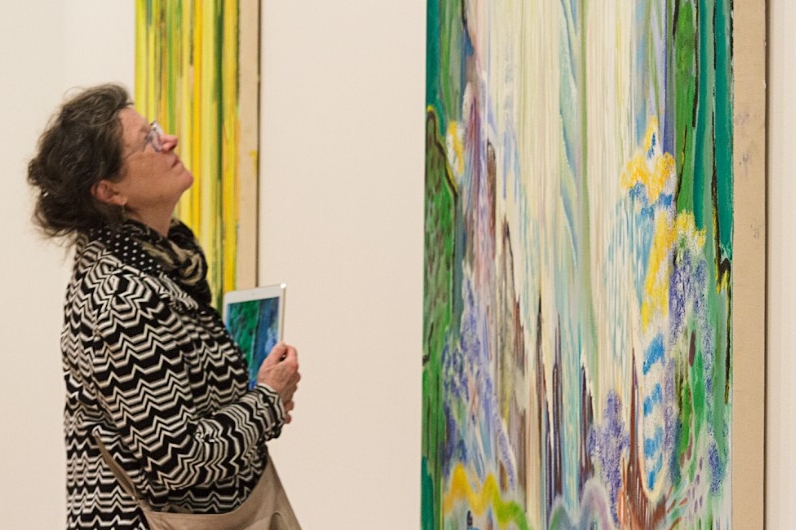
Ms. Fallon never tired of enjoying art.
Colleague and friend Gilda Kramer said: “The Artblog for her was truly a labor of love.”
In November, Ms. Fallon and other art writers created a website called The Philly Occasional. In her Nov. 12 article, she details some of her favorite shows and galleries in Philadelphia and New York, and starts the final paragraph by saying: “P.S. I can’t let you go without telling you about what I just saw at the Barnes Foundation.”
She worked at a small newspaper in Wisconsin before moving to West Philadelphia from Massachusetts in 1984 and wrote many art reviews and freelance articles for The Inquirer, Daily News, Philadelphia Weekly, Philadelphia Citizen, and other publications. In 2012, she wrote more than a dozen art columns for the Daily News called “Art Attack.”
She met Rosof in the 1980s, and together they curated exhibits around the region and displayed their own sculptures, paintings, and installations. Art critic Edith Newhall reviewed their 2008 show “ID” at Projects Gallery for The Inquirer and called it “one of the liveliest, most entertaining shows I’ve seen at this venue.”
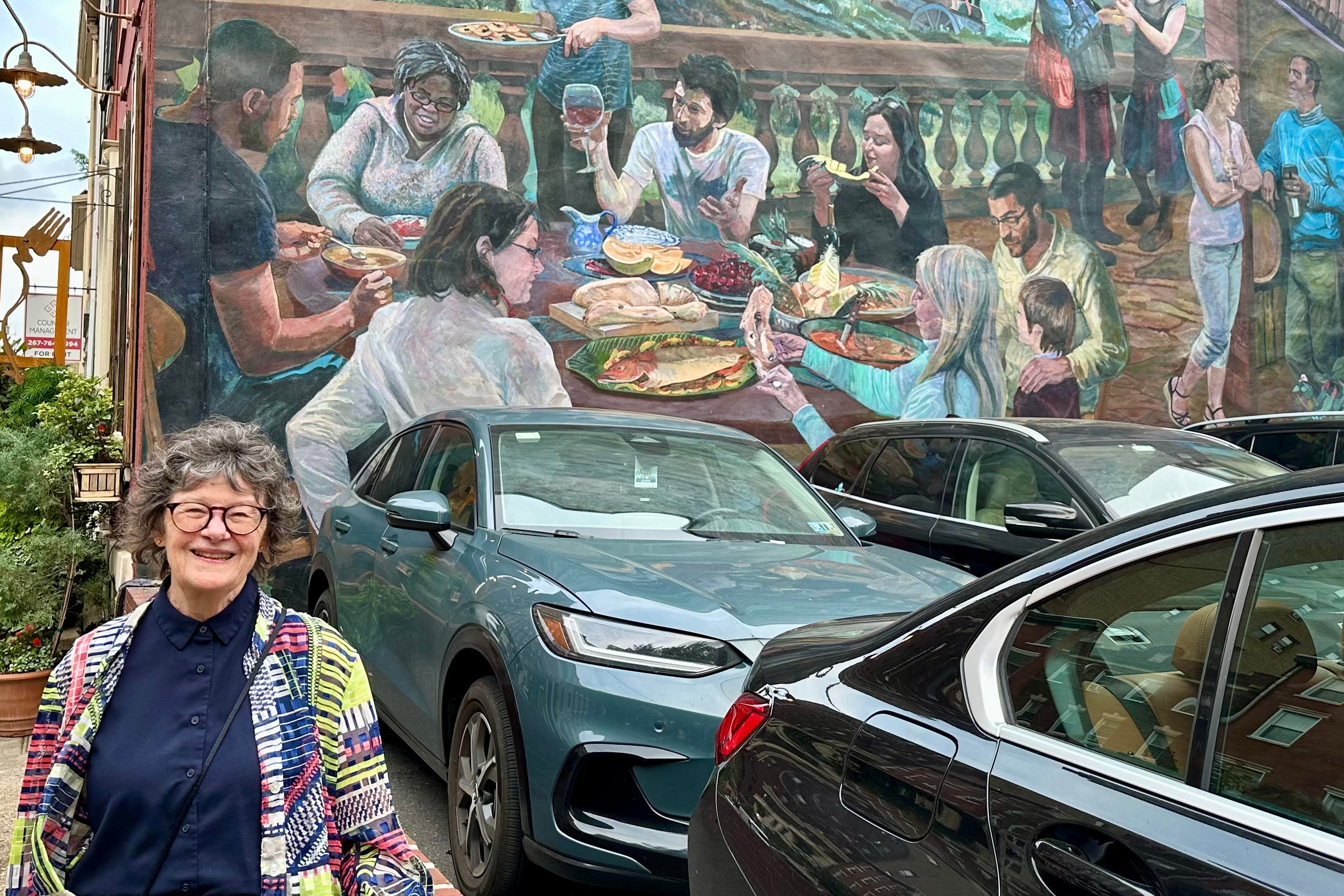
Ms. Fallon stands in front of a mural at 13th and Spruce Streets. She is depicted as the figure profiled in the lower left in the white blouse.
Most often, Ms. Fallon painted objects and sculpted in concrete, wood, metal, textiles, and other material. She was a founding member of the Philadelphia Sculptors and Bala Avenue of the Arts.
She studied at the Pennsylvania Academy of the Fine Arts and Temple University’s Tyler School of Art and Architecture, and later taught professional practice art classes at St. Joseph’s. Moore College of Art and Design, which will archive Artblog, awarded her an honorary doctorate.
“Roberta was an exceptional creative artist” and “a force,” artist Marjorie Grigonis said on LinkedIn. Artist Matthew Rose said: “Robbie was a North Star for many people.”
Her husband said: “Her approach to life was giving. She succeeded by adding value to wherever she was.”
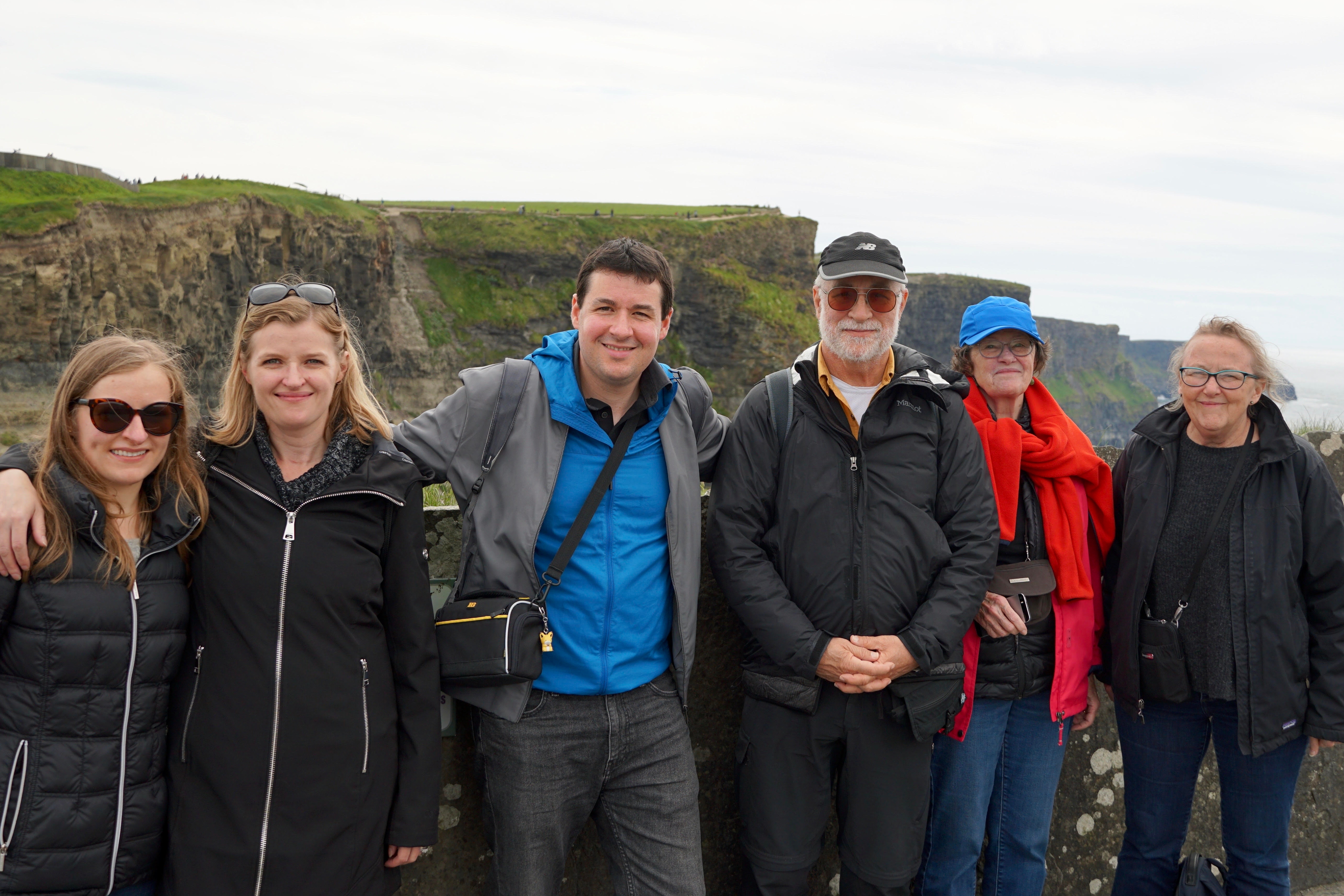
Ms. Fallon (second from right) enjoyed time with her family.
Roberta Ellen Fallon was born Feb. 8, 1949, in Milwaukee. She went to the University of Wisconsin-Madison to study sociology after high school and dropped out to explore Europe and take art classes in Paris. She returned to college, changed her major to English, and earned a bachelor’s degree in 1974.
She met Steven Kimbrough in Wisconsin, and they married in 1980, and had daughters Oona and Stella, and a son, Max. They lived in West Philadelphia for six years before settling in Bala Cynwyd in 1993.
Ms. Fallon was a neighborhood political volunteer. She enjoyed movies and reading, and she and her husband traveled often to museums and art shows in New York and elsewhere.
They had a chance to relocate to Michigan a few years ago, her husband said. But she preferred Philadelphia for its art and culture. “She was like a local celebrity in the art scene,” her daughter Stella said.
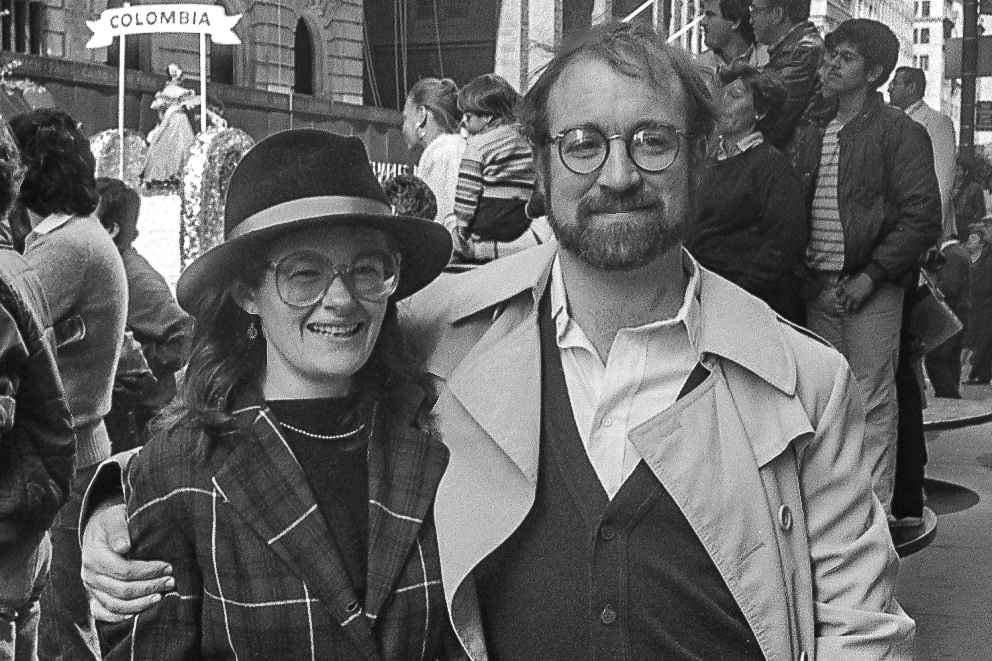
Ms. Fallon and her husband, Steven Kimbrough, visited New York in 1982.
Her husband said: “Everybody likes her. Everybody wants to be around her. She made a difference for a lot of people.”
Her daughter Stella said: “The world would be a better place if we all tried to be like my mom.”
In addition to her husband and children, Ms. Fallon is survived by four grandchildren, a sister, a brother, and other relatives.
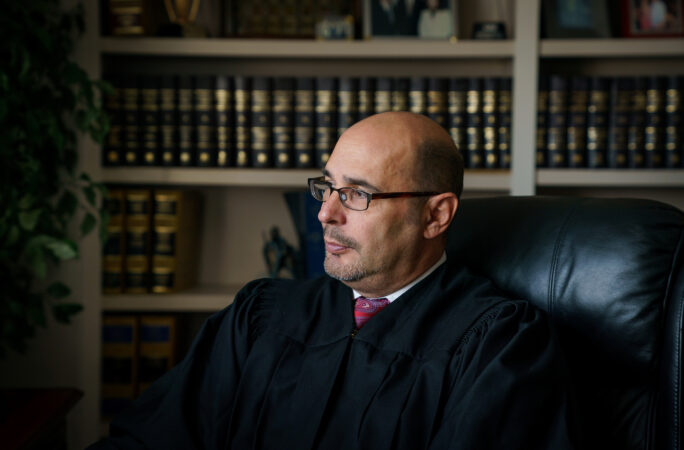
When Common Pleas Court Judge Scott DiClaudio sat before the Court of Judicial Discipline in October and answered questions under oath about whether he sought to influence a colleague’s decision in a case, he denied having summoned the fellow judge to his Philadelphia courtroom.
DiClaudio said he did not ask Judge Zachary Shaffer to come see him that day in June. Shaffer, he said, showed up unannounced.
“I was unaware that day he was going to walk in,” DiClaudio said. “He was unannounced and unexpected.”
But a recording captured by digital audio systems inside DiClaudio’s and Shaffer’s courtrooms and obtained by The Inquirer calls that account into question.
According to the recording, DiClaudio asked his assistant, Gary Silver, to contact Shaffer on the morning of June 12.
“Is Judge Shaffer on the bench right now?” DiClaudio asked his court staff around 11 a.m., according to the recording. “Can you call down there and see if he’s still on the bench, please?”
A few minutes later, according to a recording from the digital system inside Shaffer’s courtroom, Silver visited Shaffer.
“1001 wants to see you,” Silver told the judge, referring to the number of DiClaudio’s courtroom, according to the audio.
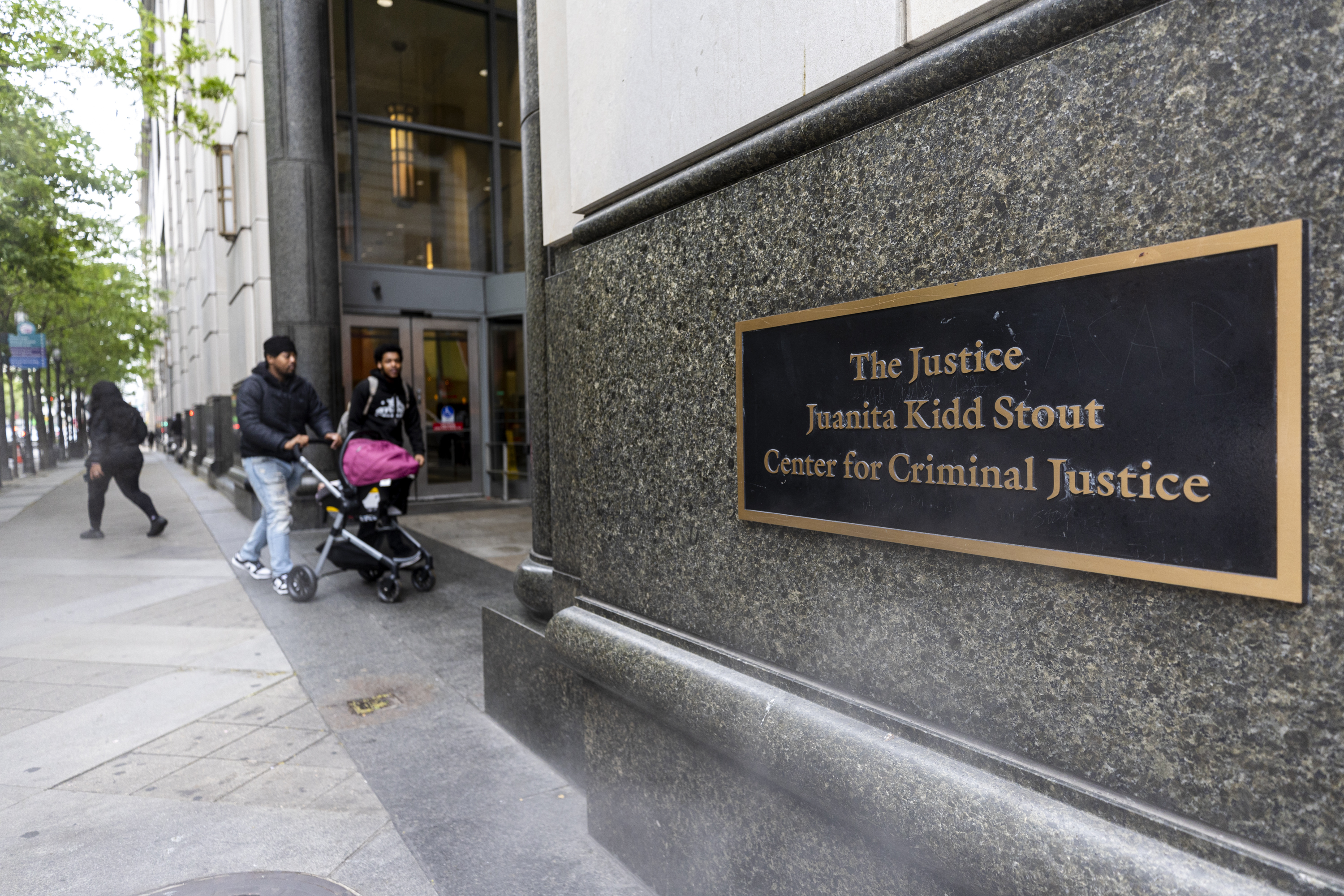
The recordings raise questions about DiClaudio’s sworn testimony before the disciplinary panelas he faces charges from the Judicial Conduct Board that he sought to influence Shaffer’s handling of a gun case involving a defendant with ties to Philadelphia rapper Meek Mill.
Elizabeth Hoffheins, deputy counsel for the Judicial Conduct Board, said during thehearing that DiClaudio’s conduct was so egregious that it brought the judiciary into disrepute.
DiClaudio has denied that he sought to influence Shaffer’s decision-making and said his colleague misunderstood his words and intentions on that day. He has been suspended without pay as the disciplinary case proceeds.
DiClaudio’s attorney, Michael van der Veen, declined to comment on the recordings and said the judge had done nothing wrong.
“It would not be appropriate to comment about alleged secondhand partial evidence in an ongoing matter,” van der Veen said in a statement Monday. “It remains very concerning that there are continual leaks of information somewhere in this process. As from the beginning, my client professes his innocence.”
Common Pleas Court Judge Zachary Shaffer testified that Judge Scott DiClaudio’s assistant came to his courtroom on the ninth floor of the city’s criminal courthouse and said DiClaudio wanted to see him on the morning of June 12.
The conversations were captured on a digital audio recording system embedded in dozens of courtrooms across Philadelphia to aid in the transcription of testimony and proceedings. The systems, which have been in city courtrooms since 2003, can be turned on and off between hearings at the discretion of court reporters, who transcribe hearings.
On the morning of June 12, inside courtrooms 1001 and 905, the systems captured the brief side conversations of the judges and their staff.
At the hearing in the Court of Judicial Discipline, Shaffer testified that he was seated in his ninth-floor courtroom when Silver, DiClaudio’s assistant and a former defense attorney, came in and said DiClaudio wanted to see him.
Shaffer said that during that week in June, he and his court clerk, Nicole Vernacchio, had been in touch with DiClaudio about buying T-shirts from DiClaudio’s wife’s cheesesteak shop.
About 45 minutes after Silver came by, he said, they went up to DiClaudio’s 10th-floor room, assuming the shirts were ready to be picked up.
They met in DiClaudio’s robing room and talked for about 10 minutes before DiClaudio asked Vernacchio to leave the room, he said. Vernacchio also testified that the judge asked her to step out.
After she left, Shaffer said, DiClaudio pulled out a piece of lined paper with “Dwayne Jones, courtroom 905, and Monday’s date” written on it.
DiClaudio held it out at his side, he said, then looked at him and said, “OK?”
Shaffer said he was confused, and hesitantly said, “OK.”
Then, he said, DiClaudio ripped up the paper and threw it away.
The judges then spoke casually about unrelated topics for a few minutes, he said. As he started to leave, Shaffer said, DiClaudio told him, “‘You probably would have done the right thing anyway.’”
Shaffer said he was shocked. He believed DiClaudio was suggesting that he should give a favorable sentence to Jones, who was scheduled to appear in front of him in a few days on illegal gun possession charges connected to a fatal shooting.
The next morning, Shaffer said, he reported the conversation to his supervisors, and they referred the matter to the Judicial Conduct Board. He recused himself from Jones’ case.
In September, the Judicial Conduct Board charged DiClaudio with multiple ethical violations, saying his actions on that day represented “conduct that was so extreme that it brought the judicial office itself into disrepute.”
At the October hearing, held to determine whether DiClaudio should be suspended without pay amid the ongoing inquiry, DiClaudio took the stand and vehemently denied Shaffer’s version of events.
He said he had met Jones at The Roots Picnic on June 1. During a brief conversation, he said, Jones mentioned that he had a gun case in front of Shaffer, and gave DiClaudio his business card.
“I eventually say, ‘Judge Shaffer is a good judge. He does the right thing,’” DiClaudio said he responded. “He gives me his card. I put it in my cell phone case. Then he leaves, never to be seen again.”
He’d forgotten about the conversation, he said, until he saw Shaffer on June 12 and remembered he still had Jones’ business card. He took out the card and relayed the conversation he’d had with Jones before tossing it into the trash, he said.
“I was relating the story to Judge Shaffer to give him a compliment,” DiClaudio said. “I wasn’t trying to influence a case.”
He also denied asking Vernacchio, the clerk, to leave the room.
Van der Veen asked DiClaudio whether he asked Shaffer to come to his courtroom.
“Never,” he said.
Van der Veen told the disciplinary panel that he and DiClaudio had never before heard Shaffer’s contention that his fellow judge had summoned him for a conversation and said it was “shocking.” And he noted that there was no mention of such a request in the summary of Shaffer’s interview with the investigator from the disciplinary board.
(Shaffer, for his part, insisted that he told the investigator DiClaudio had asked him to come to his courtroom. He said he did not review the summary of his conversation with the investigator before it was shared with the board and DiClaudio and his lawyer, and said the report was incomplete and in some ways inaccurate.)
Van der Veen seized on the omission. He suggested that the assertion that DiClaudio had called Shaffer to his courtroom was a “new fact” belatedly raised to support his contention that DiClaudio had sought to influence him.
“Otherwise‚” the lawyer said, “it is completely nonsensical. If you’re going to come to the theory of the prosecutors, that this was … clandestine, premeditated, and designed by Judge DiClaudio, that’s completely false if Judge DiClaudio didn’t call for the meeting.”
Hoffheins, the attorney for the Judicial Conduct Board, told the disciplinary panel DiClaudio orchestrated the meeting with Shaffer to seek a favorable sentence for Jones. The judge did so, she said, because Jones is a friend of Meek Mill. DiClaudio is also a friend of Mill’s, and has worked with him on criminal justice reform issues related to the rapper’s nonprofit.
“The nature of misconduct here is not a technical misstep. It is an abuse of judicial privilege,” she said of DiClaudio’s actions. “It was made behind closed doors, and it was an attempt to tilt the scales of justice for a personal acquaintance.”
The judicial officers on the disciplinary court agreed that the allegations were consequential. In November, they suspended DiClaudio without pay.
The case now awaits a trial before the disciplinary tribunal. If the panel finds that DiClaudio violated judicial ethics or constitutional rules, he could be censored, fined, or removed from office.
DiClaudio was elected to Philadelphia’s Court of Common Pleas in November 2015, and took the bench in January 2016. In recent years, he has mostly heard cases filed by people seeking to have their murder convictions overturned.
He has presided over many high-profile exonerations and wrongful-conviction cases and approved the release or resentencing of dozens of people who had been serving life in prison.
Over the last decade, he has faced multiple inquiries from the Judicial Conduct Board.
In 2020, the Court of Judicial Discipline determined that he violated the code of conduct for judges when he failed to report debts on annual financial disclosure forms and repeatedly defied a judge’sorders to pay thousands of dollars in overdue bills to a Bala Cynwyd fitness club. He was suspended for two weeks, and placed on probation through 2026.
Then, in April of this year, the board filed charges against DiClaudio for allegedly using his position as a judge to promote his wife’s cheesesteak shop. In so doing, the board said, he had eroded public trust in the judiciary and abused the prestige of the office for personal gain. DiClaudio has denied the allegations, and the case is pending before the disciplinary court.
DiClaudio was reelected to another 10-year term last month, though he has publicly discussed retiring after the New Year.
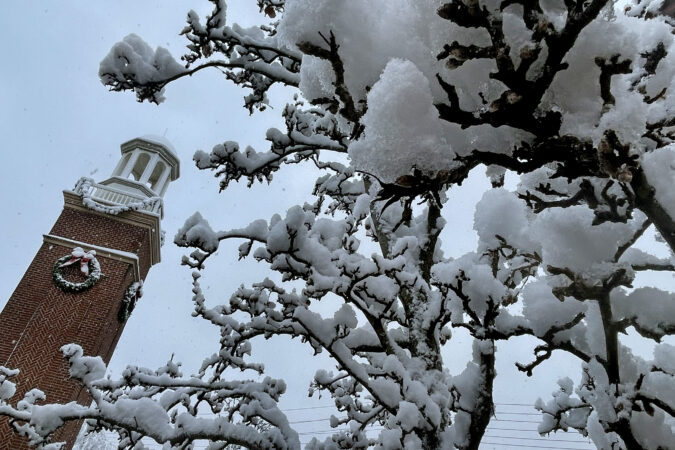
What have become the glacial remnants of a picturesque and a meteorologically unusual snowfall that tufted the trees and bushes with a cottony whiteness are likely to stay around for a few more days.
In what has been quite a chilly December, with not a single day of above-normal temperatures, readings tumbled into the teens for the second consecutive morning on Tuesday and not make it out of freezing in the afternoon.
Expect more ice and stealth “black ice,” re-frozen snow melt that forms on driveways, sidewalks and other surfaces, again Wednesday morning.
But if you’re getting tired of salting and chipping ice after those overnight freeze-ups, you’re about to get some help.
A warm-up is forecast to get underway Wednesday, and come Thursday, which is slated to be the warmest day since before Thanksgiving, the atmosphere is expected to train its snow-removal guns on the region.
Forecasters see a surge of snow-erasing warmth and a significant — and badly needed — rainfall Thursday night that should restore the landscape to a condition more familiar to Philadelphians and ease precipitation deficits.
As for the prospects of a winter-wonderland encore, nothing is on the horizon in the near term, said Nick Guzzo, meteorologist with the National Weather Service in Mount Holly.
Said Matt Benz, senior meteorologist with AccuWeather Inc, “For folks looking for more snow, this might have been it.”
At least for now and perhaps until after Christmas, or later. But, “Winter’s not done yet,” Benz said.
Willow, a West Highland, is with Amanda and David York on a walk in Maria Barnaby Greenwald Memorial Park in Cherry Hill on Sunday morning.
The warmup in Philly is expected to be brief
Temperatures could go as high as 55 degrees Thursday, Benz said. Then after a cold front passes through, temperatures will fall during the day Friday.
This won’t be an Arctic front like the one that gave Philly its coldest day of the season on Monday, with a high of 28. However, the forecasts call for readings to be no higher than the 30s on Saturday, and mid-40s on Sunday, which is close to the longer-term normal high, followed by several degrees chillier on Monday.
What’s expected for the next two weeks
In its updated extended outlooks on Monday, NOAA’s Climate Prediction Center had just about the entire country with above-normal temperatures through Dec. 29, with a notable exception — the Northeast, including Philadelphia.
Predicted upper-air conditions in the Arctic and the North Atlantic would argue against above-normal temperatures around here during the period, climate center forecaster Thomas Collow said.
Regardless of what happens the rest of the way, the winter of 2025-26 will be snowier than at least seven others in the period of snow records that date to the winter of 1884-85.
The 4.2 inches measured officially at Philadelphia International Airport Sunday is a half-inch above the long-term average for the season to date.
Granted almost any substantial snowfall would seem exceptional these days around here, but this one truly was, said the weather service’s Zach Cooper, a meteorologist in the Mount Holly office.
Most of Philly’s significant snows are the result of coastal storms that mine moist air from the ocean.
That wasn’t the case Sunday.
”In some ways it was a bit of a unique situation for us, especially to get the amounts that we did,” he said.
The snow was generated by a weak “clipper system,” a storm that dives out of southwestern Canada and usually has minor impacts around here, and a disturbance in the upper atmosphere.
Totals generally ranged from 4 to 8 inches across the region. Totals were less around the city in part because temperatures took their good, old time dropping below freezing.
Marginal temperatures also were a factor in the spread of accumulations. They added some extra weight and heft to the flakes that glommed on the branches and what remains of the foliage with tenacity.
While the show will have a limited run, the region learned anew that snow and ice may be a pain, but nothing decorates like nature.
A 63-year-old woman riding as a passenger in an Uber vehicle was killed Monday morning when a man allegedly fleeing a warrant crashed a car into the Uber in North Philadelphia, police said.
Just before 7:15 a.m., the Philadelphia Sheriff’s Office attempted to serve a domestic-assault warrant for Joseph Cini, 35, on the 900 block of North Watts Street.
Police said Cini fled the scene in a Nissan Maxima heading east on Girard Avenue from Watts. The Maxima crashed into a red Jeep Patriot at the intersection of Ninth Street and Girard Avenue, and Cini allegedly got out of the car and ran north on Eighth Street.
The female Uber passenger was pronounced dead at the scene, police said. The 51-year-old driver was taken by medics to Temple University Hospital, where he was listed in stable condition.
Cini is now also wanted for leaving the scene of a fatal accident, and anyone who knows his whereabouts is asked to call the police Crash Investigation Division at 215-685-3181.
Tips can also be submitted anonymously by calling or texting the police department’s tip line at 215-686-TIPS (8477).
A spokesperson for the Sheriff’s Office said in an email that the agency was “fully cooperating with all investigative authorities.”
The spokesperson added: “The Office extends its deepest condolences to the victim’s family. Support services have been made available to the deputies involved.”
In the days after the killing of 93-year-old Lafayette Dailey on Dec. 3, authorities said, street surveillance cameras captured Coy Thomas behind the wheel of Dailey’s white 2007 Chrysler 300.
Then, they said, Thomas sold the car for $900.
On Monday, prosecutors with the Philadelphia District Attorney’s Office released new details in their case against Thomas, who is charged with murder, robbery, and related crimes in connection with a slaying that unfolded quietly inside Dailey’s Logan home.
Surveillance footage from that day showed a man police believe to be Thomas walking through the front door of Dailey’s house in the 4500 block of N. 16th St. About 10 minutes later, prosecutors said, the man reemerged, slid behind the wheel of Dailey’s sedan, and drove away.
Two days later, police found Dailey dead inside the home. He had been stabbed several times in the chest.
His house had also been “ransacked,” said Assistant District Attorney Ashley Toczylowski, with “things thrown around,” indicating “there was a struggle” before Dailey was killed.
Police found no signs of forced entry. Thomas’ unhindered entrance into the home suggested that the men knew one another “in a neighborly way,” Toczylowski said. Thomas, 53, previously lived near Dailey, she said.
Thomas is also accused of stealing and using Dailey’s debit card before he was taken into custody on Sunday.
District Attorney Larry Krasner called the killing “evil,” adding: “Even the mob didn’t target seniors.”
Krasner asked anyone with information about the killing to call police.
“It’s in your hands to make sure that your energy and your eyes and your ears are tuned in, so that we can prevent this next time and we can get a just and appropriate remedy this time,” he said.
The Philadelphia region’s first snowfall of the season ended up having quite a March-like quality.
Totals generally ranged from 4 to 8 inches, but the snow literally was so heavy that the average shoveler may have had a hard time discerning the difference.
“When I was shoveling my car out, it felt rough,” said Michael Silva, meteorologist at the National Weather Service Office in Mount Holly. Silva lives in Mount Laurel, where an unofficial 7 inches was reported.
The snow was so weighty because it had a high liquid content, the result of temperatures close to the freezing mark, as so often happens in March. The borderline temperatures also would help explain the range in accumulations, he said.
The snow glommed onto the trees, weighing down branches. In fact it took down a branch outside the Mount Holly office that damaged a federal car (sorry, taxpayers).
The highest amounts, just over 8 inches, were recorded in Chester and Bucks Counties.
Officially, at Philadelphia International Airport, where temperatures didn’t get below freezing until midmorning Sunday, 4.2 inches was measured.
By contrast, Boston has measured only 3.1 inches so far.
Here are the snowfall totals posted by the weather service as of 10 a.m. Monday.
window.addEventListener(“message”,function(a){if(void 0!==a.data[“datawrapper-height”]){var e=document.querySelectorAll(“iframe”);for(var t in a.data[“datawrapper-height”])for(var r,i=0;r=e[i];i++)if(r.contentWindow===a.source){var d=a.data[“datawrapper-height”][t]+”px”;r.style.height=d}}});
Philadelphia roads will be closed Monday and Tuesday for the funeral services of Highway Patrol Officer Andy Chan.
Several streets in the Callowhill, Chinatown, and Center City neighborhoods will begin closing Monday evening for a first viewing, with additional roads closing Tuesday for the second viewing and funeral.
Chan, 55, who suffered a critical brain injury six years ago in a motorcycle crash on his way to work, died Dec. 2. Since the crash, the 24-year police veteran had required around-the-clock care. His fellow officers fundraised for his medical expenses.
A viewing will be held Monday at Holy Redeemer Chinese Catholic Church, 915 Vine St., from 6 p.m. to 9 p.m. The second viewing will be held Tuesday at theCathedral Basilica of SS. Peter and Paul, 1723 Race St., from 8:15 a.m. to 10:40 a.m., with the funeral following directly after.
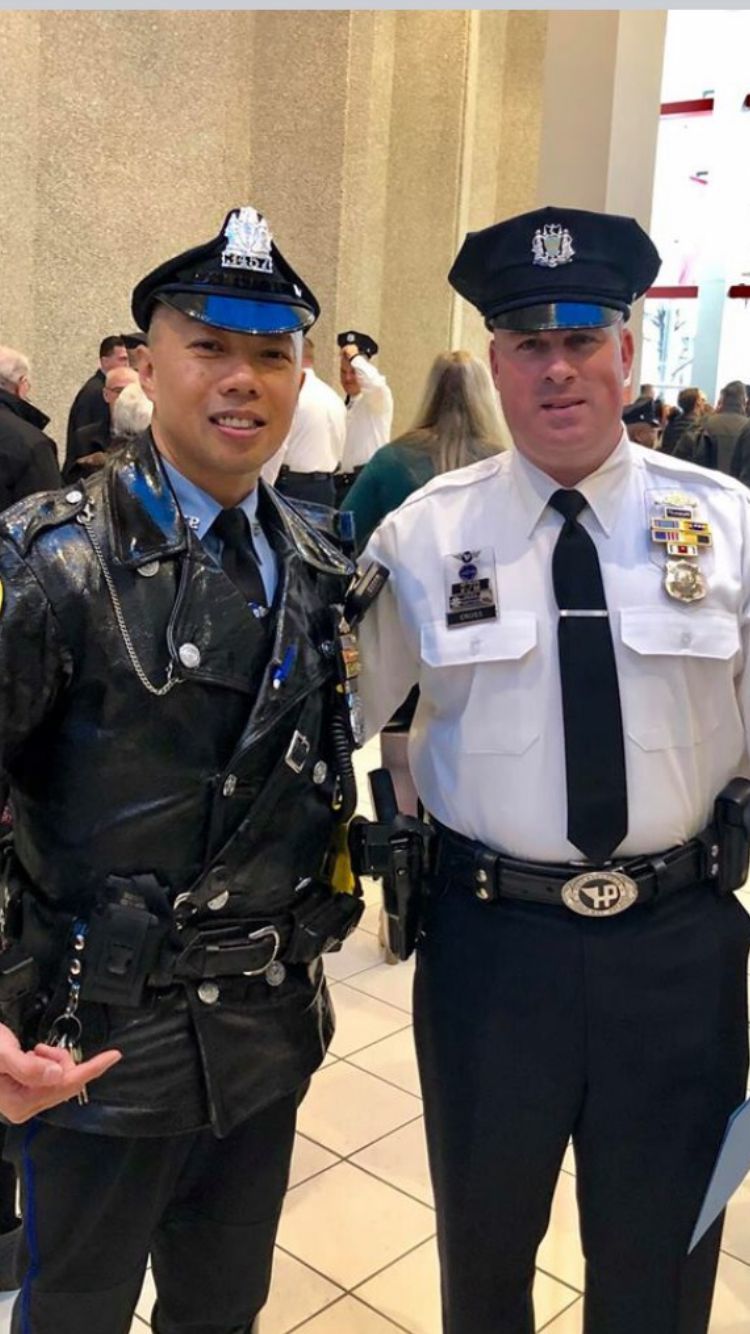
Highway Patrolman Andy Chan (l) at the promotional ceremony of his old partner Sgt. Kyle Cross.
Road closures
Drivers should avoid the areas listed, use alternate routes, and expect delays.
These streets will be closed at 4 p.m. Monday and will reopen at the conclusion of the viewing procession:
Ridge Avenue between Wood Street and Hamilton Street
Vine Street (westbound) between Eighth and 10th Streets
10th Street between Hamilton and Vine Streets
Ninth Street between Callowhill and Wood Streets
Callowhill Street between Eighth and 11th Streets
Wood Street between Ninth and 10th Streets
These streets will close at 5 a.m. Tuesday and will reopen at the conclusion of the service:
18th Street between the Benjamin Franklin Parkway and Vine Street
These streets will close at 5:30 a.m. Tuesday and will reopen at the conclusion of the procession:
15th Street between Spring Garden and Callowhill Streets
Broad Street between Spring Garden and Callowhill Streets
Callowhill Street between Broad and 17th Streets
17th Street between Callowhill and Benjamin Franklin Parkway
These streets will close at 6 a.m. Tuesday and will reopen at the conclusion of the service:
Benjamin Franklin Parkway between 16th and 22nd Streets
Vine Street between Logan Circle and 16th Street
Race Street between 16th and 18th Streets
17th Street between Vine Street and Benjamin Franklin Parkway
19th Street between Benjamin Franklin Parkway and Cherry Street
Additional streets near the Benjamin Franklin Parkway and Eakins Oval may be closed or detoured.
Parking restrictions
Parking is notallowed on the streets listed above during the designated times. “Temporary No Parking” signs are displayed along the streets.
Vehicles parked in these zones during the posted hours will be relocated. The Inquirer has a guide on what to do if your vehicle is “courtesy towed.”
Public transportation
SEPTA Bus detours will be in place, according to the city, but SEPTA has not shared these details yet. Get live service updates at septa.org.