Category: Philadelphia News

  • Executive who bribed Amtrak manager for lucrative 30th Street Station contracts sentenced to 18 months in prison

    Executive who bribed Amtrak manager for lucrative 30th Street Station contracts sentenced to 18 months in prison

    A senior executive of an Illinois-based masonry company was sentenced Thursday to 18 months in prison for his role in a scheme to bribe an Amtrak employee in exchange for lucrative contracts to restore 30th Street Station.

    Lee Maniatis, 58, was one of several senior employees of Mark 1 Restoration who participated in the crimes. But prosecutors said he played a central role, influencing the Amtrak project manager, Ajith Bhaskaran, to sign off on a series of additional contracts worth tens of millions of dollars.

    His prison term will be followed by three years of supervised release. Maniatis has already paid a $278,000 restitution fee, though he will also be required to contribute to a restitution fund of more than $2 million alongside his former associates.

    In all, Maniatis and his colleagues funneled gifts worth more than $323,000 to Bhaskaran between 2016 and 2019, buying him luxury wristwatches and cigars, pricey vacations to India and the Galápagos Islands, Bruno Mars concert tickets, lavish dinners in Center City, and rides in limousines.

    In exchange, Bhaskaran helped secure tens of millions of dollars in extra government-funded work for Mark 1 Restoration, ultimately doubling the cost of what began as a $58 million project to renovate the historic train station’s limestone facade.

    While the firm did legitimate work on the property, most of the gifts were effectively subsidized by the government because Mark 1 falsely inflated its invoices by $2 million to cover the bribes. And Amtrak explicitly prohibits firms from offering gifts in exchange for favorable contracts.

    Prosecutors had ample evidence linking Maniatis to the bribes. Around the time of a January 2017 dinner between Maniatis, a colleague, and Bhaskaran, the Amtrak employee was considering whether to authorize an additional $13.4 million work order for the firm. Maniatis, prosecutors said, gave Bhaskaran a Tourneau worth more than $5,000 during that meeting.

    Bhaskaran approved the contract days later, and “[d]inner was worth it,” Maniatis texted an associate. Later he texted his boss: “$ ding.”

    Maniatis, accompanied by his wife, appeared in federal court in Philadelphia Thursday and teared up as he read a statement to U.S. District Judge Wendy Beetlestone.

    “I’m completely ashamed,” he said. “I was sick about it then, I’m sick about it now.”

    The judge said the former executive’s remorse was palpable. But she said Maniatis had a choice to go to authorities over those three years — and didn’t.

    “Only when federal agents raided his home” in 2019 did Maniatis admit to his wrongdoing, Beetlestone said.

    “He could have resigned,” she continued. “He could have reported it to the FBI.”

    Theodore T. Poulos, one of Maniatis’ defense attorneys, said he still recalls the day after that raid, when the former executive told the lawyer he’d “ruined his life.”

    Poulos said Maniatis had been a victim of “misguided loyalty” to Mark 1’s owner and president, Marak Snedden, who pleaded guilty to charges of conspiracy to commit bribery and making a false claim in the scheme.

    Still, U.S. Attorney Jason Grenell said, Maniatis “made a choice” to siphon public taxpayer money to “line people’s pockets.”

    The attorney commended Maniatis for being the first defendant in the case to plead guilty for his crimes, swiftly admitting his guilt while his coconspirators fended off the government’s allegations in court, Grenell said.

    Maniatis is not the first Mark 1 employee to face prosecution.

    Early this month, Snedden, was sentenced in Beetlestone’s courtroom to 7½ years in prison. The admission made Snedden the sixth person involved to face consequences for the scheme.

    Bhaskaran had been charged with unrelated wire fraud in 2019 but died of heart failure a year later.

    Court documents show Bhaskaran had outsized power to approve work on behalf of the transit agency — and that his signature on “substantially overbilled” work routinely corresponded with sumptuous treatment from Maniatis and Mark 1 employees.

    One such instance came in December 2017, when Bhaskaran authorized an additional $5.6 million in work for the firm. That same month, court records show, Maniatis paid $9,500 for him to visit India with a relative.

    Maniatis emailed Bhaskaran tickets the following year priced at $766 for a New Year’s Eve party at Stratus, a rooftop lounge at Kimpton Hotel Monaco — a purchase investigators said Maniatis had made on his own credit card.

    And when Bhaskaran decided that the Tourneau watch was not to his liking, Maniatis was ready to return it and purchase Bhaskaran an even more expensive timepiece, spending $11,294.

    Beetlestone denied Poulos’ request that Maniatis be allowed to spend the entirety of his sentence on probation. He will serve his term at a prison in Lewisburg, Pa.

    “Lack of fortitude is not an excuse for criminal conduct,” Beetlestone said.

    Staff writer Chris Palmer contributed to this article.

  • Months before Kada Scott’s killing, Keon King was wanted for kidnapping his ex, but no one arrested him — even in court

    Months before Kada Scott’s killing, Keon King was wanted for kidnapping his ex, but no one arrested him — even in court

    A month after Keon King was charged with breaking into his ex-girlfriend’s home and attempting to strangle her, police say, his violence escalated: In January, he returned to her home with a gun, then kidnapped and assaulted her.

    A warrant for his arrest was issued days later.

    In the weeks that followed, King twice appeared in Philadelphia court and stood before a judge in the initial strangulation case. But no one in the courtroom seemed to know he was wanted for kidnapping.

    So both times, King walked out.

    In February, despite the warrant for King’s arrest, prosecutors — seemingly unaware that police said he had recently attacked their key witness — withdrew the burglary and strangulation case when the victim failed to appear in court.

    Police did not go to either hearing to take him into custody, and do not appear to have alerted the prosecutor about the new arrest warrant.

    And King was not formally charged with the kidnapping until April, when, for reasons that are unclear, he turned himself in.

    The shortcomings in those earlier cases came into focus this month after police said King abducted Kada Scott from outside her workplace Oct. 4, then killed her and buried her body in a shallow grave behind an East Germantown school. The death of Scott, 23, of Mount Airy, has unnerved a community and drawn national attention.

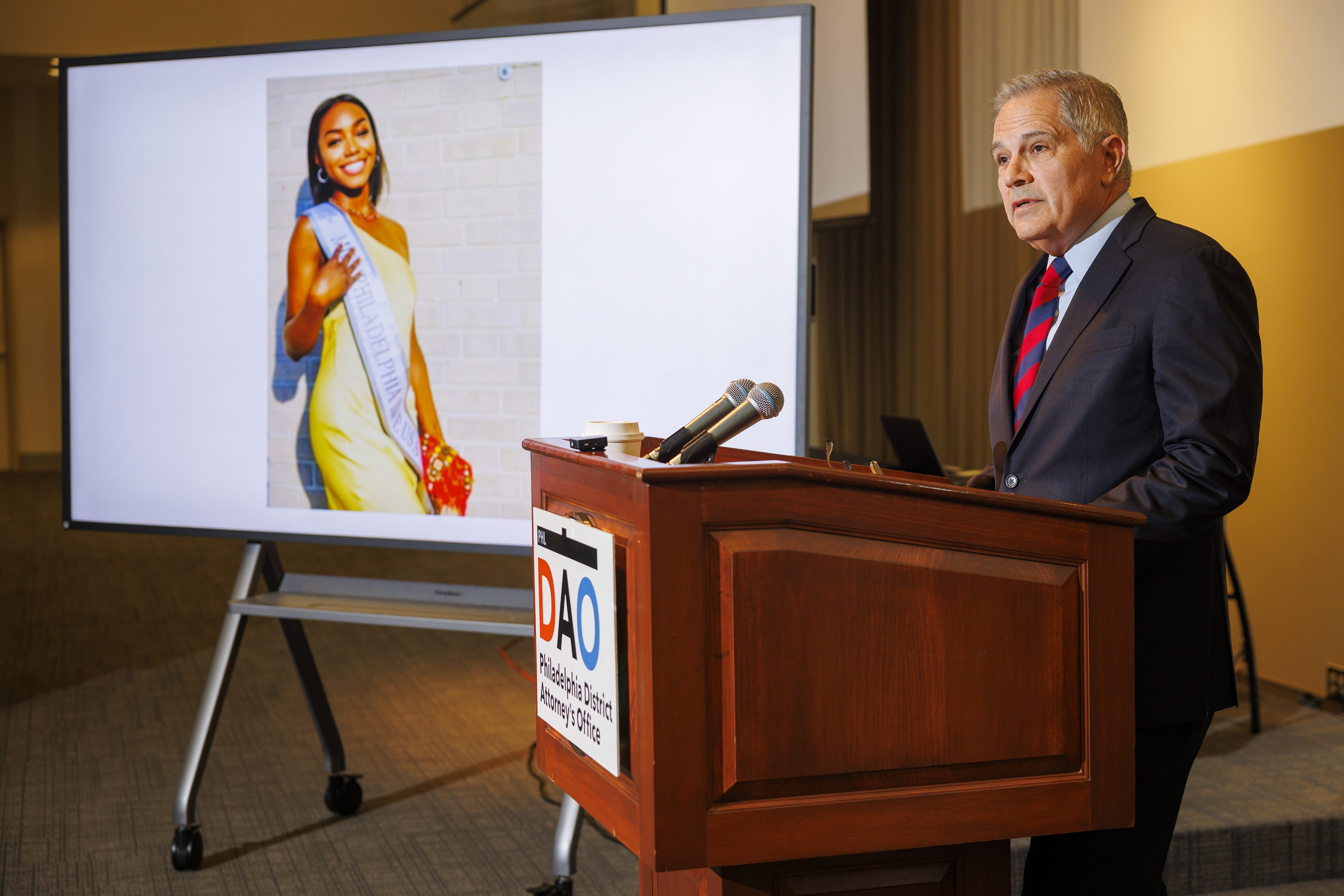
    Kada Scott, 23, was abducted from outside her workplace on Oct. 4, police said.

    A review of King’s previous criminal cases raises questions about whether police and prosecutors could have been more vigilant in holding him accountable for the earlier crimes they say he committed.

    City Council has since vowed to hold a hearing examining how the city’s criminal justice system handles cases of domestic violence.

    District Attorney Larry Krasner has said it was a mistake for prosecutors to withdraw the charges in the alleged kidnapping of King’s ex — and his office has since refiled them. He said the decision not to proceed with the case was made by a young assistant district attorney who was new at handling such prosecutions and who saw the victim’s absence as a fatal flaw, even though there was video evidence of the attack.

    But even before the charges were withdrawn, police and court records show, there were missteps.

    Marian Grace Braccia, a former Philadelphia prosecutor who is a law professor at Temple University, said she found it alarming that law enforcement failed to take King into custody when he twice stood before them in court while wanted for a violent felony.

    “If this is supposed to be a collaborative effort — if there is a shared mission of public safety and victim advocacy — it sounds like everyone dropped the ball,” she said.

    Detectives and prosecutors, she said, should have been aware of the arrest warrant and had officers take him into custody.

    Then, she said, prosecutors could have cited the alleged kidnapping to ask a judge to increase King’s bail and keep him behind bars.

    Instead, she said, “it passed by everybody, and he came in and walked out, and slipped through the cracks of the Philadelphia legal court system.”

    Philadelphia District Attorney Larry Krasner discusses the killing of Kada Scott at a news conference earlier this week.

    Krasner said there is no system to automatically notify prosecutors when a defendant in one of their cases is arrested anew.

    Similarly, there is no system to let police know that suspects in new cases have outstanding criminal matters, said Philadelphia Police Department spokesperson Sgt. Eric Gripp.

    “Detectives are not automatically notified when a wanted subject is physically present in court on a different active case,” he said.

    Krasner said the issues in the case underscore a lack of communication among law enforcement agencies that happens in part because their digital information systems are decades old. He said his office and other law enforcement agencies should work to update those systems.

    “That is something that we can all improve together if we have the will and if we have the resources,” he said.

    A wanted man walks free

    Police said King first attacked his ex-girlfriend in early November of last year. He broke into her Strawberry Mansion home, then tried to strangle her, according to the affidavit of probable cause for his arrest.

    He was taken into custody in December and charged with burglary and strangulation, and bail was set at $50,000. King immediately posted the necessary 10%, $5,000, and was released.

    About a month later, police said, King returned to the woman’s home and tried to break in. When he could not gain entry, they said, he waited for her to step outside, then grabbed her by the hair and dragged her into his car. He drove for at least four miles, beating her along the way, before dropping her off in Fishtown, according to the affidavit for probable cause for his arrest.

    A judge approved the warrant for King’s arrest on charges of kidnapping, strangulation, and related crimes on Jan. 19, court records show.

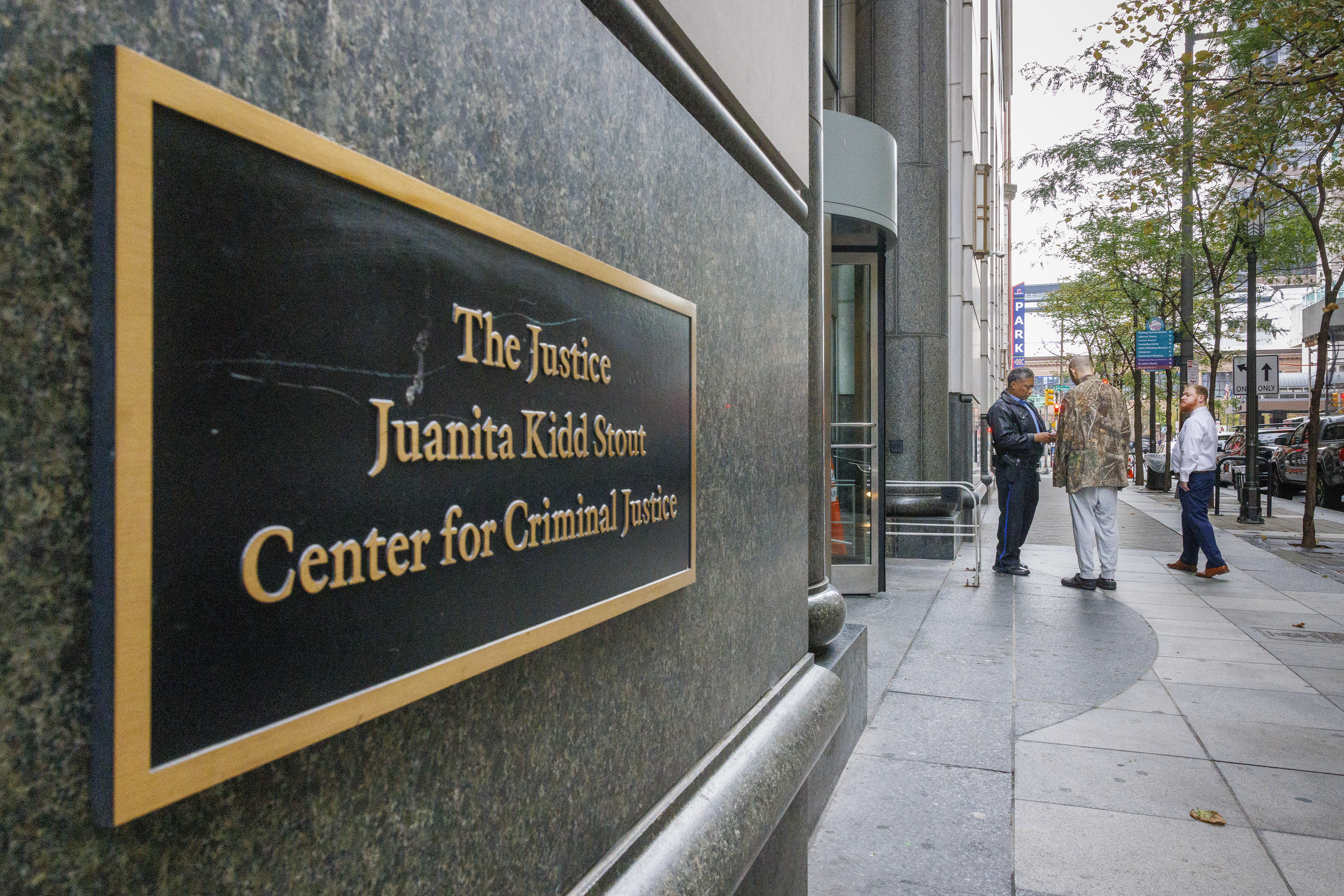
    The Justice Juanita Kidd Stout Center for Criminal Justice in Philadelphia.

    King — now wanted for a violent felony — appeared in court the following week for a preliminary hearing in the earlier burglary case, records show. But when the victim did not show up in court a second time, Municipal Court Judge Jacquelyn Frazier-Lyde ordered that the case had to proceed at the next listing. Prosecutors agreed.

    King left court.

    Meanwhile, police said, officers tried at least once to arrest him. On Feb. 11, Gripp said, police went to a home where they thought King might be, but he was not there.

    Two weeks later, King was again in court for the burglary case — but police did not go there to arrest him. Once again, the victim did not show up, and prosecutors withdrew the charges

    King walked out of court a free man.

    Braccia, the Temple law professor, said the detective assigned to the case should have been aware of the hearing. When seeking to charge King for the kidnapping, she said, the detective should have pulled up King’s arrest history and noticed the ongoing case. He then could have flagged it to the prosecutor in the first case and gone to the hearing to arrest him.

    At the same time, she said, the prosecutors who approved the kidnapping charges against King should have noticed the earlier case and told the prosecutor — particularly because it involved the same victim.

    In April, King turned himself in to police to be charged with kidnapping, strangulation, and related crimes in connection with the January attack. Prosecutors asked for bail of $999,999, but the magisterial judge, Naomi Williams, set bail at $200,000, court records show. King posted the necessary $20,000 and was released.

    The following month, after the victim again did not appear in court at two hearings, the kidnapping charges were also withdrawn.

    Since prosecutors have refiled the charges, Krasner’s office said it has been back in touch with the woman and hopes she will testify. She declined to comment about King’s alleged crimes and the previous handling of the cases by police and prosecutors.

    Six months later, King is back in custody, this time charged with murder. He is being held without bail.

  • The wife of Par Funding’s founder was sentenced to one day in prison — the last prosecution of people tied to the fraudulent firm

    The wife of Par Funding’s founder was sentenced to one day in prison — the last prosecution of people tied to the fraudulent firm

    The wife of the founder of Par Funding, a fraudulent and now-defunct Philadelphia-based lending firm, was sentenced Thursday to one day in jail and 60 days of house arrest for dodging about $1.6 million in taxes she should have paid on income derived from the scheme.

    Lisa McElhone apologized for her conduct during a sentencing hearing before U.S. District Judge Mark A. Kearney, saying the spectacular implosion of her husband’s business — and the criminal prosecution of people associated with it — was the “most painful and transformative period of my entire life,” causing her to lose her home and her future, and watch her husband get sent to prison.

    “It’s difficult, if not impossible, to express how overwhelming and life-altering this has been,” she said.

    Prosecutors acknowledged that McElhone — the owner of an Old City nail salon — had almost nothing to do with Par’s day-to-day operations. And the crimes she was charged with paled in comparison to those of others associated with the business — particularly her husband, Joseph LaForte, who ran the cash-advance firm as a Mafia-style criminal enterprise that defrauded investors out of hundreds of millions of dollars, and resorted to loan shark-style tactics in efforts to collect on debts.

    Still, Kearney said, McElhone, 46, did bear some responsibility by failing to question aspects of the life she was afforded that she should have known were too good to be true.

    “These things only stop when good people … stop and say, ‘Hey, you’re asking me to go a step too far,’” he said. “That’s the only way these things stop. Because otherwise, if everyone falls in line, everyone goes to jail.”

    Kearney said McElhone’s one-day prison stint would be Thursday. She will then serve a three-year term of supervised release, he said, and her 60 days of house arrest will begin in January 2026.

    McElhone’s sentencing was notable as the final criminal proceeding for about a half-dozen people charged in connection with Par Funding, which prosecutors have called one of the biggest financial frauds in Pennsylvania history.

    LaForte received the stiffest sentence: a 15½-year prison term that Kearney imposed earlier this year. LaForte founded Par to offer quick loans at high interest rates to borrowers deemed too risky to secure financing from traditional banks, but lied to investors about the company’s financial health to raise more money, used thuggish tactics to threaten borrowers who fell into default, and hid tens of millions of dollars from the IRS for his personal use.

    Others charged included LaForte’s brother, who also received a lengthy prison term for participating in various aspects of the firm’s crimes. And earlier this week, two financial professionals, Rodney Ermel and Kenneth Bacon, were ordered to serve 2½ years and 6 months, respectively, behind bars for helping devise the fraudulent tax structures connected to the crimes.

    Assistant U.S. Attorney Matthew Newcomer said it was perhaps fitting that McElhone’s penalty was the last to be imposed, given her limited connection to the business.

    “But I think it does speak to the breadth and severity” of Par’s misdeeds, he said, “that even the least-culpable person is still on the hook for a $1.6 million tax loss.”

    Par was founded in 2012 by LaForte, who was legally barred from selling securities because of previous felony convictions for financial crimes.

    One way he got around that was to list McElhone as Par’s chief executive on official documents. Then, LaForte and others he recruited to work for him — including experienced financial professionals — ran radio ads and staged fancy solicitation events to raise more than $500 million, all as they portrayed the business as legitimate and lucrative.

    In reality, prosecutors said, it was losing tens of millions of dollars a year. But to keep the fraud going, some of Par’s executives lied about the business’ financial health to keep raising money, and others threatened to harm or even kill borrowers who fell into default.

    Still, prosecutors said McElhone was effectively uninvolved in the business, spending her workdays instead running the Old City nail salon Lacquer Lounge.

    That doesn’t mean McElhone did not benefit from her husband’s grift. LaForte and his partners extracted cash from Par and spent it on things like a private jet, boats, paintings, expensive watches and jewelry, and homes in the Philadelphia area, Florida, and the Poconos.

    And in the single count to which McElhone agreed to plead guilty last year, prosecutors said she knowingly signed a tax form claiming she and LaForte were living in Florida — where there is no state income tax — even though they spent most of their time that year in their $2.5 million Haverford home.

    That deception led her to avoid paying about $1.6 million in taxes, prosecutors said, an amount she will now be forced to help repay.

    Kearney, the judge, said that others might have been more responsible for the wide array of Par’s wrongdoing — but that she needed to be held accountable for failing to stop the wrongs that unfolded before her.

    “When you get in a relationship with people,” he said, “make sure you keep your identity. Because you don’t want to be the person going to jail for their crimes.”

  • Pew Charitable Trusts chief to step down

    Pew Charitable Trusts chief to step down

    The head of the Pew Charitable Trusts is stepping down.

    Susan K. Urahn, president and CEO, is expected to retire in early 2027 after a search for a successor is completed and the new leader has begun working at the organization, a Pew spokesperson said.

    Urahn, 72, began at Pew in 1994 and took the top job in 2020 following the retirement of longtime chief Rebecca W. Rimel.

    Neither Urahn nor board chair Christopher Jones were made available for interviews. But, in a statement posted on Pew’s website, Urahn said she was fortunate to work with colleagues and a board “all dedicated to finding common ground and using facts as the foundation for discussion and action.”

    “Under Sue’s leadership, Pew has become even better and stronger,” read a statement attributed to Jones.

    Pew — which has offices in Philadelphia, Washington, D.C., and other cities — is a combination foundation/think tank, conducting research and disbursing grants to nonprofit organizations.

    In Philadelphia, it awards money to arts groups through the Pew Center for Arts and Heritage. Its D. C-based Pew Research Center provides research on demographic trends and social issues, as well as polling on matters like politics, religion, climate change, and the role of technology in daily life.

    Pew’s work is funded through seven charitable trusts established between 1948 and 1979 by the children of Sun Oil Co. founder Joseph Newton Pew and his wife, Mary Anderson Pew. As of June 2024, the collective value of the trusts was $6.1 billion, a spokesperson said.

    In addition to funding Philadelphia arts groups and individual artists, Pew has sometimes taken a more activist role by partnering with other philanthropists on large civic projects costing tens of millions of dollars, such as the 2012 move by the Barnes Foundation from Merion to the Ben Franklin Parkway. In 2008, Pew contributed millions toward a bailout of the Kimmel Center that relieved it of debt left over from the arts center’s construction phase.

    In 2023, it announced the award of $4 million for Esperanza Health Center in North Philadelphia to expand services.

    Urahn, most recently based in D.C., worked her way through several posts — including director of Pew’s planning and evaluation division; director of the Pew Center on the States; and executive vice president for Pew’s work on state policy, economics and healthcare.

    A search for a new president is expected to begin in January.

  • William B. Starks, pastor emeritus at Community Baptist Church and Montford Point Marine, has died at 96

    William B. Starks, pastor emeritus at Community Baptist Church and Montford Point Marine, has died at 96

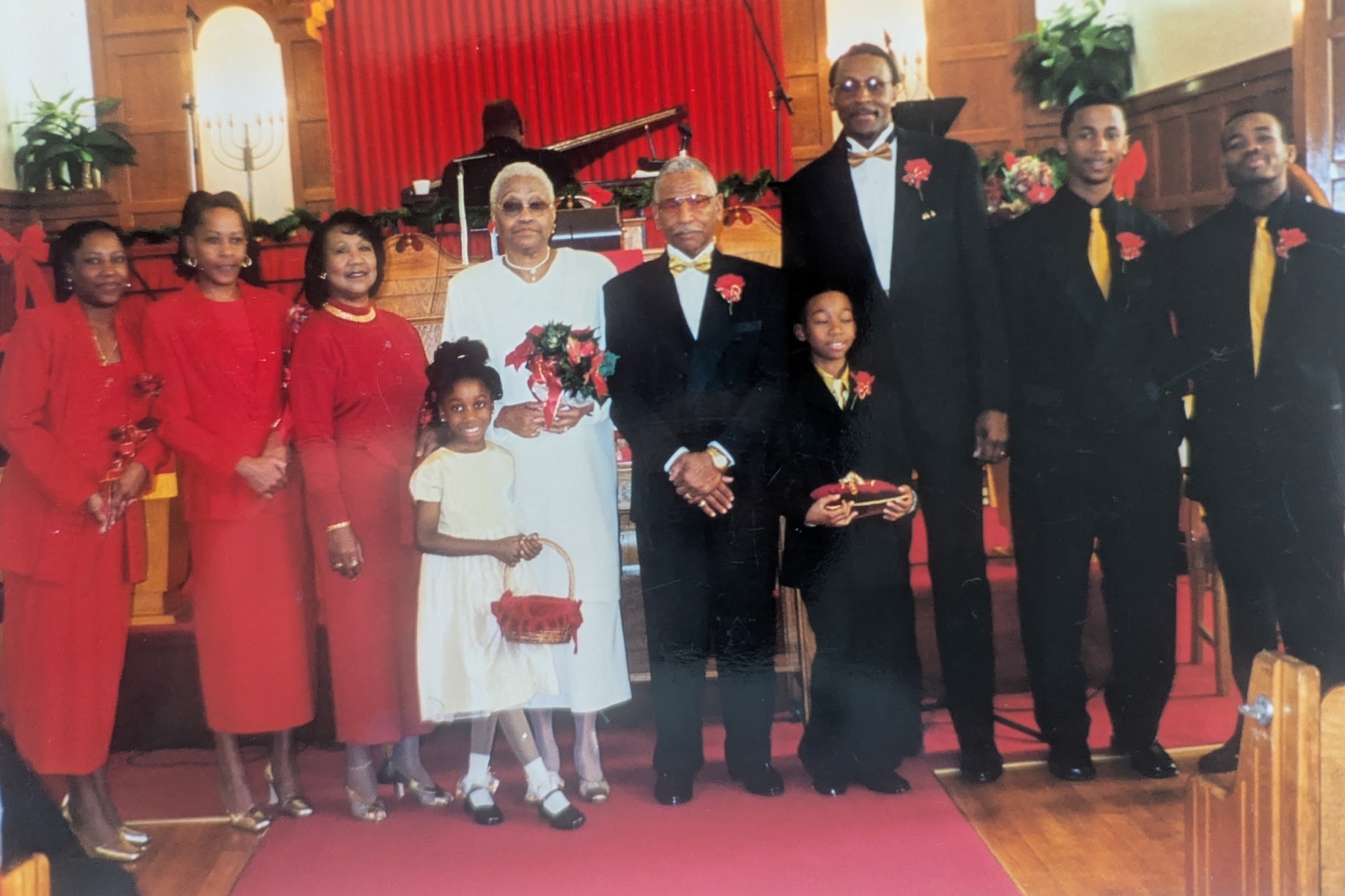
    William B. Starks, 96, of Philadelphia, pastor emeritus at Community Baptist Church in Chester, former associate pastor at Greater Ebenezer Baptist Church in Philadelphia, retired supervisor for the Philadelphia Parks and Recreation Department, Montford Point Marine, lifelong singer, and volunteer, died Saturday, Oct. 4, of age-associated decline at Germantown Home rehabilitation center.

    Born and reared in Nashville, Tenn., the Rev. Starks grew up singing in church every Sunday. So his wife and two daughters were not surprised that he was ordained in 1966, served 31 years as pastor at Community Baptist, and continued to sing in choirs and elsewhere for the rest of his life.

    He was energetic and empathetic, they said, and he became so effective as a spiritual and practical mentor in Chester that city and church officials dedicated part of West Seventh Street in his honor on June 1. They renamed a segment of the street as Rev. William B. Starks Way, installed a sign at Fulton and West Seventh Streets, and called it “a lasting tribute to his selfless service and deep impact on our community.”

    The Rev. Starks was recruited from Greater Ebenezer Baptist by Community Baptist in 1978 and commuted every Sunday, and sometimes three nights a week, from his home in West Oak Lane to the church in Chester. His family said he never missed a Sunday service.

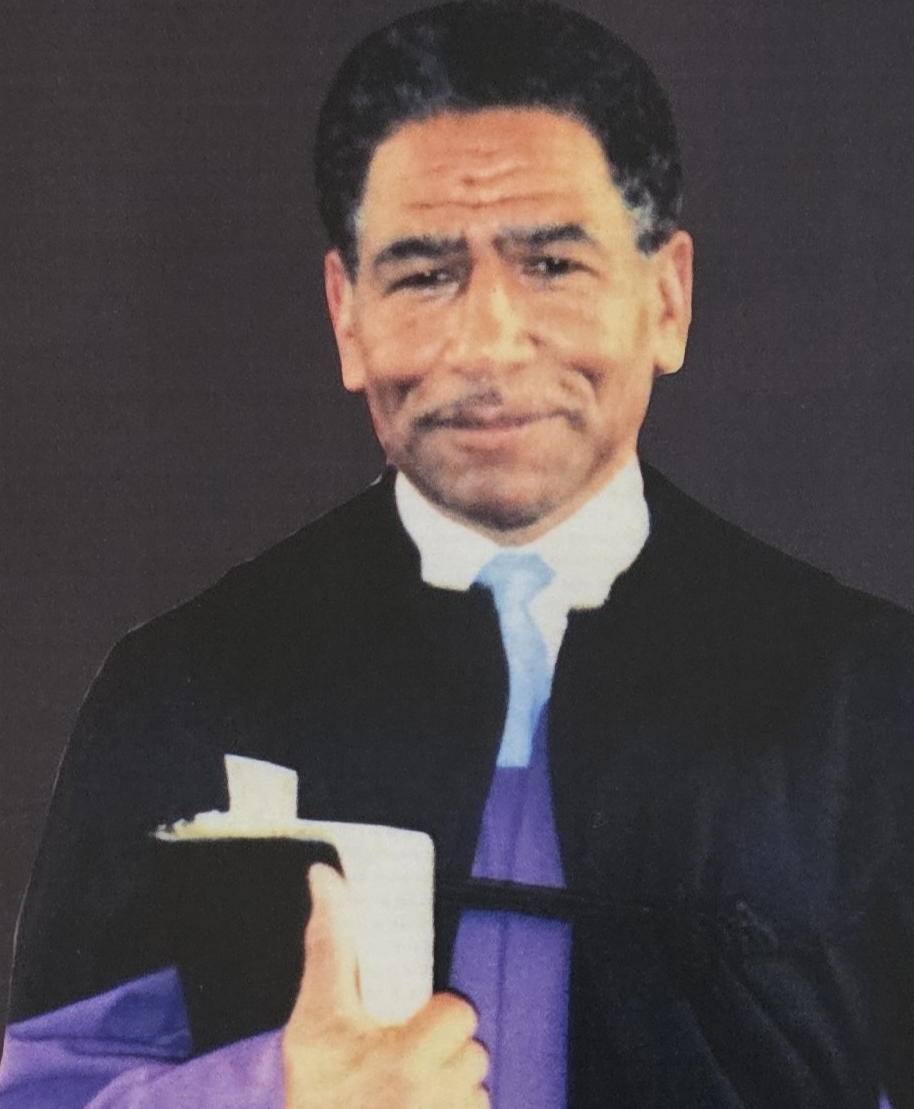
    Rev. Starks ministered at Community Baptist Church in Chester from 1978 to 2009.

    “His love for the Word of God encouraged him,” his family said in a tribute.

    The Rev. Starks was direct and serious in the pulpit, and willing to “roll up his sleeves and fight your fight,” his daughter Rhonda said. He created a Presidents Council to better organize church affairs, celebrated when the church paid off the mortgage, and encouraged its use as a satellite location for the Manna Bible Institute.

    He invited women and young pastors to preach, and induced the Rev. Jesse Jackson, Gov. Ed Rendell, Rep. Robert Brady, and other notables to address his congregation. His outreach and ministry were recognized in awards and honors from the Four Chaplains Memorial Foundation and other church groups.

    In the community, he monitored schools and families for discord, and confronted street-corner problems he encountered. He spoke out often against violence, injustice, crime, and drug abuse.

    Rev. Starks (front center) is honored by the Philadelphia chapter of the National Montford Point Marine Association.

    “He truly believed in the church being involved spiritually, socially, and politically,” his family said. “He truly had a heart for the people.” Earlier, he attended Tenth Memorial Baptist Church and studied theology at what is now Cairn University in Langhorne.

    The Rev. Starks worked at Philco and Whitman’s Chocolates in Philadelphia after he left the Marines in 1952. He spent 25 years with the Philadelphia Parks and Recreation Department, earned service commendations from the Fairmount Park Commission, and left when he became pastor at Community Baptist. He retired from the church in 2009.

    He enlisted in the Marines after high school in 1948 and became one of the celebrated Montford Point Marines in North Carolina. He spent four years in the Corps, sang with the Marine choir, rose to corporal, and was transferred to Philadelphia. He never left.

    In 2012, he and other Montford Point Marines were awarded the Congressional Gold Medal for enduring racism, segregation, and discrimination during their military tours and still serving with honor and distinction.

    Rev. Starks joined the Marines in 1948.

    His mother’s cousin was a church pianist and singer, and she regularly took him along to sing at church in Nashville when he was young. Later, he took music classes in high school and studied voice with professor John W. Work III at nearby Fisk University.

    In retirement, he volunteered at Eleanor C. Emlen Elementary School and elsewhere in the community. “He was very humble, generous, loving, and caring,” his daughter Rhonda said.

    William Barton Starks was born Nov. 2, 1928. He grew up with two brothers, and it was obvious early that his singing voice was exceptional.

    He met fellow singer Inez Baldwin at a recital, and they married in 1951. They had daughters Cheryl and Rhonda, and lived in North Philadelphia and West Oak Lane.

    Rev. Starks (fifth from right) “would give you anything,” his daughter Cheryl said.

    The Rev. Starks and his wife enjoyed annual summer cruises to the Bahamas. He was known as Big Daddy, his family said, “because he was like a father to so many people.” His wife died in 2016.

    “He meant the world to me,” said his daughter Cheryl. “He would give you anything.”

    His daughter Rhonda said: “He always told us he would do anything and everything for his family, and he did.”

    In addition to his daughters, the Rev. Starks is survived by four grandchildren, five great-grandchildren, and other relatives. His brothers died earlier.

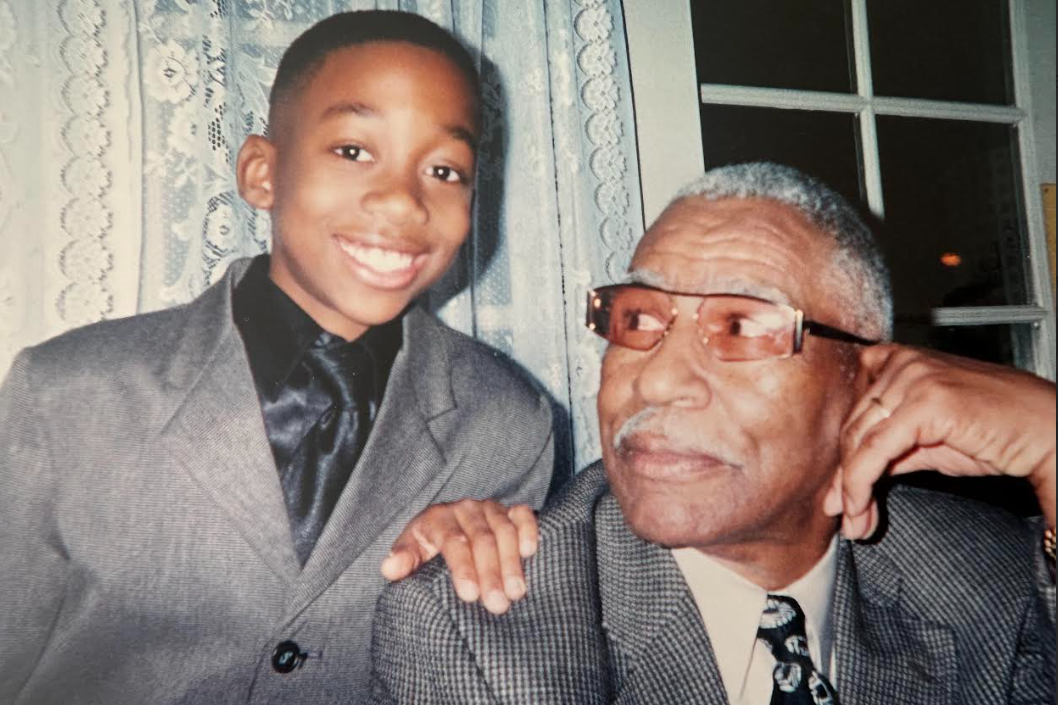
    Rev. Starks (right) doted on his daughters and grandchildren.

    Services were held on Oct. 17 and 18. Interment was Oct. 23 at Washington Crossing National Cemetery.

    Donations in his name may be made to the Scholarship Initiative of the Philadelphia chapter of the National Montford Point Marine Association, 27 Red Tail Court, Limerick, Pa. 19468.

  • A Delco man trolled a Philly Mag writer on Facebook. Now, a judge has ordered him to pay $160,000.

    A Delco man trolled a Philly Mag writer on Facebook. Now, a judge has ordered him to pay $160,000.

    A Philadelphia judge ordered a Delaware County man to pay Philadelphia Magazine senior reporter Victor Fiorillo $160,000 over a series of Facebook comments falsely labeling the journalist a pedophile.

    In an order issued Tuesday, Common Pleas Court Judge Vincent Johnson awarded Fiorillo $35,000 in compensatory damages and $125,000 in punitive damages. The ruling follows a hearing at which the defendant, Ryan Nelson, did not show up.

    “It feels great,” Fiorillo said. “Part of what I said at the beginning is that I would like to support some LGBTQ causes that the defendant very much would dislike his money going to, and I intend to pursue the matter.”

    The libelous comments by Nelson were aimed at Fiorillo not for his journalism, but for his off-the-clock performances as a keyboard player for a band led by drag queen Martha Graham Cracker.

    Nelson never responded to the lawsuit, which was filed in April, and no attorney is listed for him on the court docket. James Beasley, the journalist’s lawyer, did receive a threatening email in June from a person identifying as “RN” that included an expletive aimed at Fiorillo in the subject line.

    “Tell him to unblock me and stop hiding behind facebook,” said the message, which was presented to the judge. “If not i guess i can go to his house and ask him.”

    That email is no longer active, and The Inquirer was unable to reach Nelson through publicly available contact information.

    The focus of the complaint was a series of comments Nelson made in response to a January post by Fiorillo in the Citizens of Delco public Facebook group, in which the reporter shared his article about a racial discrimination lawsuit against a country club restaurant.

    “The only person to agree with you likes seeing dudes in dresses dance with kids,” Nelson wrote.

    Fiorillo asked if the suggestion was that he was a pedophile because he performs with a drag queen.

    “Yes victoria, corruption of a minor. Same as pedophile,” Nelson wrote, adding, “or do you prefer groomer.”

    In another comment, Nelson said he’d “bet” that if a drag queen molested children, Victor would “prob write how the kids are homophobic.”

    The lawsuit said others on the Facebook group had read Nelson’s comments, and provided an example of another person repeating them.

    “There is nothing in the First Amendment that says you can call me a pedophile and a child molester,” Fiorillo previously told The Inquirer.

    Fiorillo was the only witness at the Oct. 8 hearing. Johnson interrupted the lawyer’s line of questioning to ask questions of his own, the reporter said. The judge asked over and over how many times Nelson made the comments.

    The Philly Mag writer recalled thinking from the stand that the hearing was not going in his favor, but felt a great sense of moral victory when the judge issued his decision.

    He said he hopes the ruling sends a message to all the “keyboard warriors out there, in their mother’s basement.”

    “That’s a very big part of why I went down this road to begin with. Part of defending free speech is standing against things that aren’t covered by that.”

  • Carousel House will be Philly’s ‘flagship’ rec center. But people with disabilities will have to wait until 2028 to reunite.

    Carousel House will be Philly’s ‘flagship’ rec center. But people with disabilities will have to wait until 2028 to reunite.

    In March 2023, Kathryn Ott Lovell, then Philadelphia’s parks and recreation commissioner, announced that the plan to build a new Carousel House in West Philly was finally coming together.

    The city’s only recreation center dedicated to people with disabilities had closed its doors temporarily in 2020 during the coronavirus pandemic, then permanently in 2021. City officials said years of deferred maintenance had made it unsafe.

    “I’m excited to stop talking and start doing,” Ott Lovell said during the 2023 presentation at the Please Touch Museum.

    The city’s disability community was also excited to reunite at Carousel House. To many, the rec center on Belmont Avenue had become like a second home, with dances, movies, swimming, arts and crafts, and summer camp.

    The city’s youth wheelchair basketball team was looking forward to returning to its home base. Since the rec center closed, the squad has been practicing in New Jersey.

    Two and a half years later, however, Ott Lovell has moved on to a new job, Mayor Cherelle L. Parker has replaced Jim Kenney, and the Carousel House plan is still in the design phase.

    The new ribbon-cutting date: summer 2028.

    “I know this is a point of pain for many people, the timeline associated with this project,” Aparna Palantino, a deputy city managing director, acknowledged at a meeting Tuesday night announcing the “relaunch” of the project.

    The previous plan called for Carousel House to reopen this year.

    Palantino, who heads the city’s capital program office, said the expected cost of the project had risen from $35 million to $40 million. The work will still be funded primarily with beverage-tax proceeds, but the city had to line up grants to cover the difference, as well as conduct additional environmental and structural analyses.

    “The result of all that is this amazing space that will provide so many more opportunities than the former one did,” Palantino told an audience of several dozen.

    Aparna Palantino, deputy managing director of Capital Program Office, speaks with attendees during the Carousel House Rebuild Community Relaunch at the Please Touch Museum on Tuesday, Oct. 21, 2025, in Philadelphia. The Carousel House project is estimated to be completed in Summer 2028.

    The state-of-the-art rec center will preserve some parts of the iconic Carousel House building and include two basketball courts, a heated lap pool and an activity pool with a zero-entry sloping entrance, a computer lab, a gym, a sensory room, and other amenities.

    That all sounds great to people like Mike Martin, who has used a wheelchair for the last 30 years and has been going to Carousel House since the late 1990s. Such a place is needed in Philadelphia, where an estimated 17% of residents have a disability.

    But the lengthy delays in the project have Martin, 74, questioning whether he will ever see the vision become a reality.

    Martin and others would have preferred for the city to fix the existing building four years ago, when rec centers were reopening after the COVID-19 shutdown. A 2021 “Save the Carousel House” protest failed to sway city leaders.

    “The design is way more than I think we expected, not that we’re complaining at all,” said Martin, who serves on the Carousel House advisory committee. “We’ll see what kind of political will there is to push this through. I just don’t want to get my hopes up is what it comes down to.”

    Once a model

    Carousel House was considered a milestone when it opened in 1987: a city-funded rec center, specifically for people with physical and cognitive limitations, three years before the Americans with Disabilities Act would be signed into law.

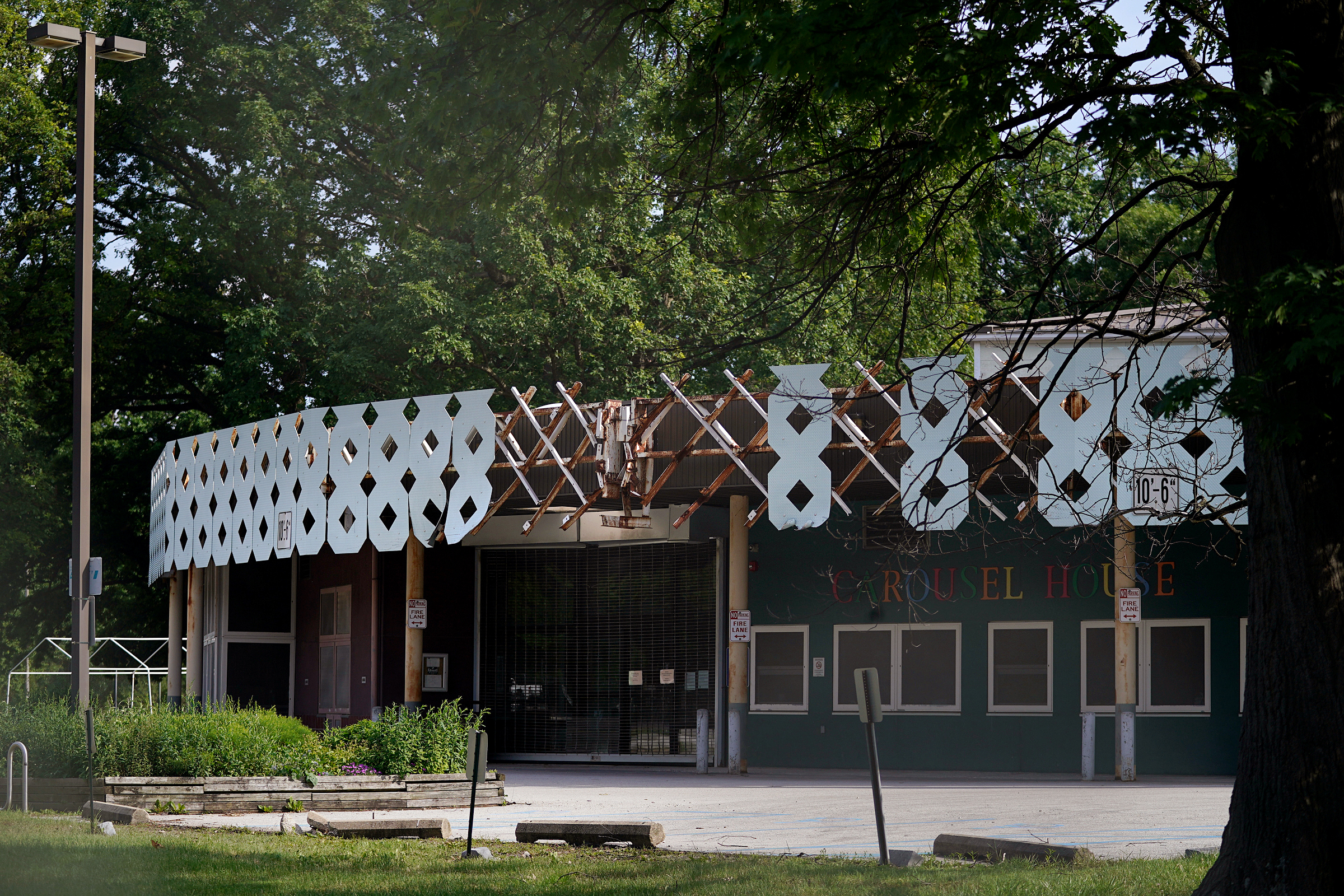
    The Carousel House is pictured in Philadelphia’s West Fairmount Park on Wednesday, June 2, 2021. The city said it was permanently closing the recreation center for disabled people due to the facility’s deterioration.

    But in recent years, disability-rights advocates, both locally and nationally, have come to view that approach as outdated and even discriminatory. How is telling people with disabilities to go to one center, they ask, any different from designating centers for Black people, LGBTQ+ people, or other identity groups?

    “People with disabilities shouldn’t have to go to one place. That’s segregation, no matter how you look at it,” Fran Fulton, the late Philadelphia disability-rights activist, told The Inquirer in 2022. “There is no doubt having people who know how to work with children and adults with different types of disabilities is an advantage. But it doesn’t have to be just Carousel House.”

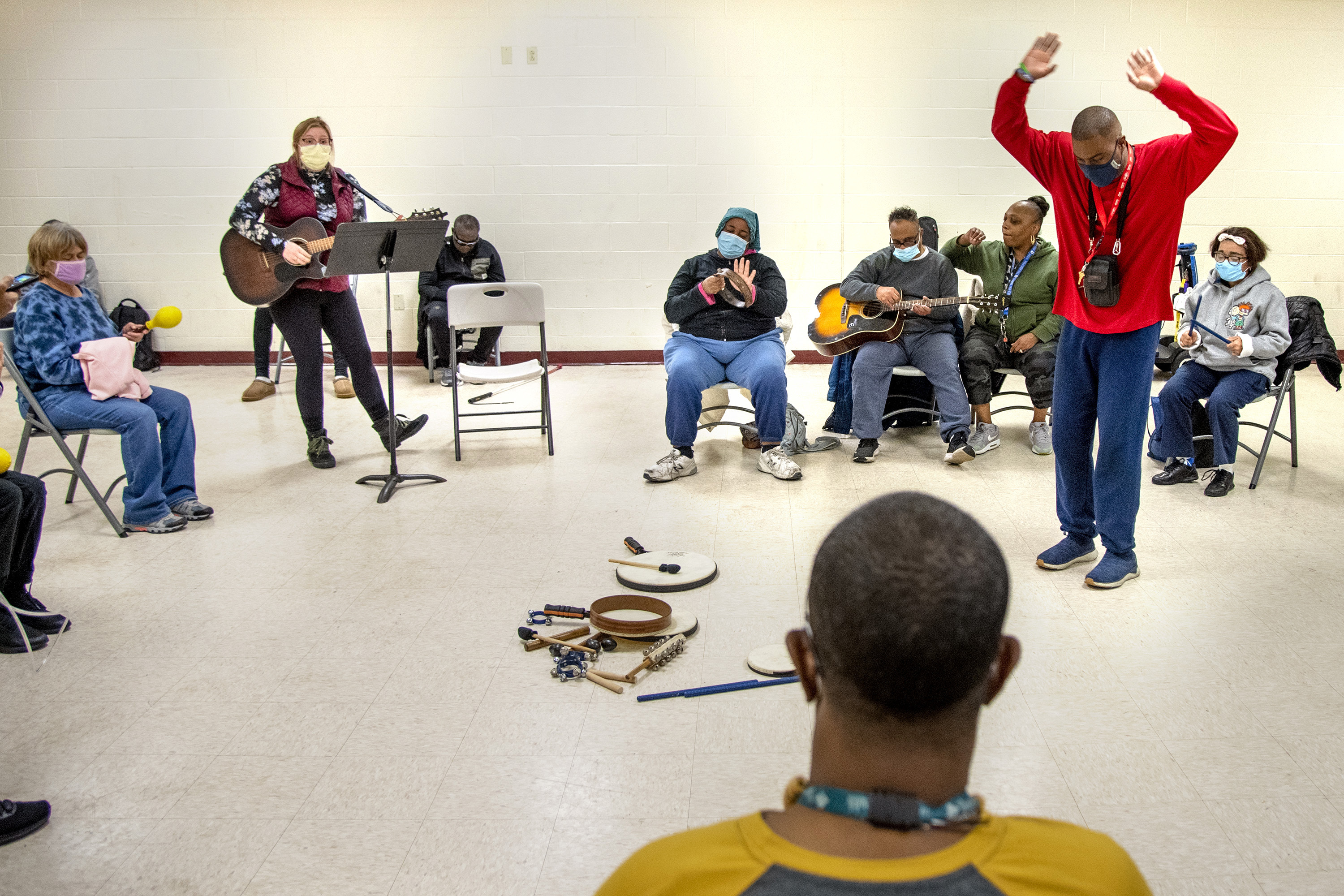
    Sadiki Smith (right) stands to dance as music therapist Madison Frank (left) with her guitar leads a music therapy session at Gustine Recreation Center Tuesday, November 29, 2022. Since the closing of the Carousel House, the city’s only rec center for people with physical and intellectual disabilities, many of the programs have moved to Gustine.

    The city was already moving in that direction before the pandemic with its long-term Rec for All inclusion plan. The goal is to eventually make the city’s 150 rec centers accessible to all residents. The new Carousel House will be open to all people in the surrounding neighborhoods, not just those with disabilities.

    That is welcome news for Lucinda Hudson, president of the Parkside Association of Philadelphia, who attended Tuesday’s meeting.

    “It’s well needed, and I think the community is pleased with how it’s coming together,” Hudson said. “We need a facility to be inclusive for all, and to support the handicapped community.”

    Worth the wait?

    Palantino said that while the Carousel House project has faced significant delays, city officials have continued to work behind the scenes. It is the largest project in the city’s beverage-tax funded Rebuild program, which has so far committed or spent $470 million.

    She believes the new building will be worth the wait.

    “It will be a universal space, so an entire family can come here and enjoy the amenities. The former Carousel House was a little more restrictive in the population it served,” Palantino said in an interview. “This will be the flagship rec center in the city when it’s completed.”

    Attendees look at blueprints during the Carousel House Rebuild Community Relaunch at the Please Touch Museum on Oct. 21.

    Families that frequented the Carousel House, however, are running out of patience.

    The Gustine Recreation Center in East Falls has continued some of the programs for people with disabilities, including music therapy, basketball, and social groups. But that center doesn’t have the space and amenities that Carousel House provided.

    “It’s just not the same,” said Tamar Riley, whose 43-year-old son had been going to Carousel House since he was 12.

    “Hopefully we can get this off the ground,” Riley, president of the advisory council for Carousel House, said of the plans presented this week. “It’s been a really long time. I know it’s going to be a beautiful place once the city gets it up and running.”

    The closure of Carousel House also forced Katie’s Komets, Philadelphia’s team in the National Wheelchair Basketball Association, to move its weekly practices to RiverWinds Community Center in West Deptford, Gloucester County.

    As a result, there is only one Philly player on the team, according to Joe Kirlin, who with his wife, Roseann, created a fund to support the team. The team is named after their late daughter.

    “The problem is city kids just can’t get over there,” Joe Kirlin said.

    Caroline Fitzpatrick (right), 14, of South Jersey, talks with friends during the Philadelphia Parks & Recreation’s 24th Annual Katie Kirlin Junior Wheelchair Basketball Tournament in Philadelphia on Sunday, Jan. 23, 2022. Fitzpatrick plays on Katie’s Komets team from Philadelphia.

    He said wheelchair athletes in the city are missing out on potential college opportunities. This year, all three high school graduates on Katie’s Komets received scholarships to play college wheelchair basketball.

    “That wouldn’t have happened if they didn’t start as kids playing wheelchair basketball,” Roseann Kirlin said.

    Lorraine Gomez, a community activist and president of the Viola Street Residents Association in East Parkside, said after Tuesday’s meeting that she appreciated the city’s efforts to keep the surrounding neighborhoods informed about the project.

    Gomez is looking forward to being able to use the indoor pool and walking track in the winter, and said people with disabilities also deserve “to have their space back.”

    “This is what the community needs,” Gomez said. “It’ll be a place where we can stay in touch with each other.”

    For Hudson, of the Parkside association, the most important thing now is to break ground.

    “So many things get put on the books, but don’t happen,” Hudson said. “This has got to be built.”

  • Penn faculty group says faculty, students facing ‘unfounded accusations of antisemitism’ from the university

    Penn faculty group says faculty, students facing ‘unfounded accusations of antisemitism’ from the university

    One University of Pennsylvania faculty member was called into a university office to answer for assigning “a pedagogically-relevant reading about conflict in Palestine,” others for political posts on personal social media accounts.

    One faced questions for wearing a stole with the Palestinian flag at an off-campus event.

    These are among “unfounded accusations of antisemitism” that Penn’s chapter of the American Association of University Professors said faculty and students have endured in the last year. Chapter representatives accompanied faculty to meetings at Penn’s Office of Religious and Ethnic Interests, which called the faculty in for questioning, according to a statement the group released Wednesday.

    The religious and ethnic interests office oversees the implementation of Title VI of the Civil Rights Act, which prohibits discrimination based on race, color, national origin, or shared ancestry. It was formed following accusations of antisemitism on campus in the aftermath of Hamas’ Oct. 7, 2023, attack on Israel, when Penn was roiled by dueling complaints of unfairly treating Jewish and pro-Palestinian members of its community.

    Then-Penn president Liz Magill resigned in December 2023 following a bipartisan backlash over her congressional committee testimony regarding antisemitism complaints, and the following spring, pro-Palestinian protesters erected an encampment on the College Green that ultimately was dismantled by police.

    Since January, President Donald Trump’s administration has targeted universities that it asserts have failed to respond adequately to antisemitism complaints, and the group of Penn professors said they are worried that the university is following the president’s lead.

    “We are concerned that Penn’s own Title VI office may be responding to these external pressures in a manner that risks chilling faculty speech and potentially discriminating against faculty in violation of the law,” the group asserted in a statement published on its website Wednesday. “… Faculty members, who in some cases had already been subject to targeted harassment, felt that they were expected to take unsubstantiated accusations of antisemitism at face value and to express contrition or offer some concession to their unidentified accuser, or face the possibility of disciplinary action.”

    Penn did not respond to a request for comment. Neither did the religious and ethnic interests office.

    Penn announced the creation of the office in September 2024, noting it was the first of its kind nationally and saying it would ensure a consistent response across all of its schools.

    “Over the past year, our campus and our country witnessed a disquieting surge in antisemitism, Islamophobia, and other forms of religious and ethnic intolerance,” J. Larry Jameson, who was then interim president and was named president six months later, said at the time. “The Office of Religious and Ethnic Inclusion (Title VI) is being formed to confront this deeply troubling trend, and to serve as a stand-alone center for education and complaint resolution.”

    The office formally opened in December with the foundational goals of educating, investigating, mediating, and evaluating. Its codirectors are Steve Ginsburg, who had served over a decade as an executive of the Anti-Defamation League, and Majid Alsayegh, founder of Alta Management Services LLC, which helped clients with criminal justice reform. The office’s chief investigator is Deborah Frey, who previously served as an assistant U.S. attorney in the Eastern District of Pennsylvania, working on discrimination complaints.

    “Because of our own lived experiences as targets of bigotry, we know this work is not going to be easy,” Ginsburg had told Penn Today. “These issues are complex and require deep thought and sensitivity for those who are impacted.”

    Faculty and students were not named in Wednesday’s statement and declined to comment through an AAUP executive committee member out of fear of retribution or harassment. The AAUP did not disclose the number of faculty and students involved.

    But the reports “come almost exclusively from faculty who are Palestinian, Arab, Muslim, and/or Black,” the group said, giving rise to concerns about potential discrimination.

    The faculty and students referred to in the letter were not sanctioned or punished for their activities, but the mere act of being called in and questioned has “a chilling effect” on research, teaching, and speech, said the AAUP executive committee member, who asked not to be identified because the chapter wanted to speak with one voice.

    “For instance, in one meeting, a faculty member whose peer-reviewed research was subject to a complaint was pressured to make a modification to the presentation of that research, although their work had the support of their colleagues and dean,” the AAUP chapter said.

    In that case, the faculty member had been called in because the research “referenced a third-party resource that a complainant claimed, without evidence, promoted hatred of Israel and of Jews in the United States,” the letter stated.

    The chapter called on the office to “clarify and modify its procedures to ensure the transparency, consistency, and fairness essential to carrying out the office’s mission.”

    And it asked the office to respond to a series of questions, including about the criteria it uses to decide whether to pursue a complaint.

  • ‘You could park a car down there’: Sinkhole closes part of Schuylkill Trail in Center City

    A portion of the popular Schuylkill River Trail in Center City has been closed and fenced off indefinitely after a “chasm”-sized sinkhole formed under the asphalt.

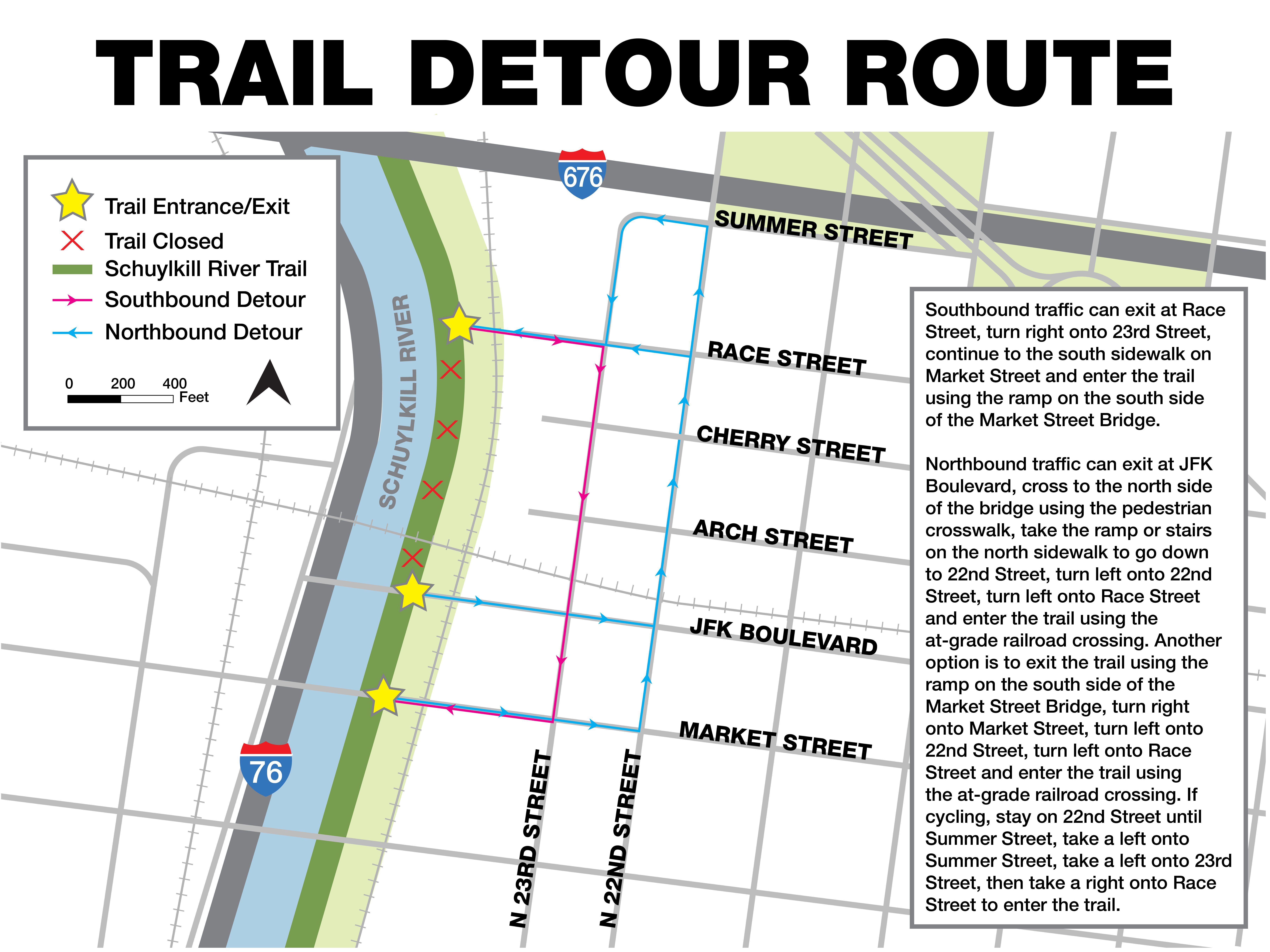
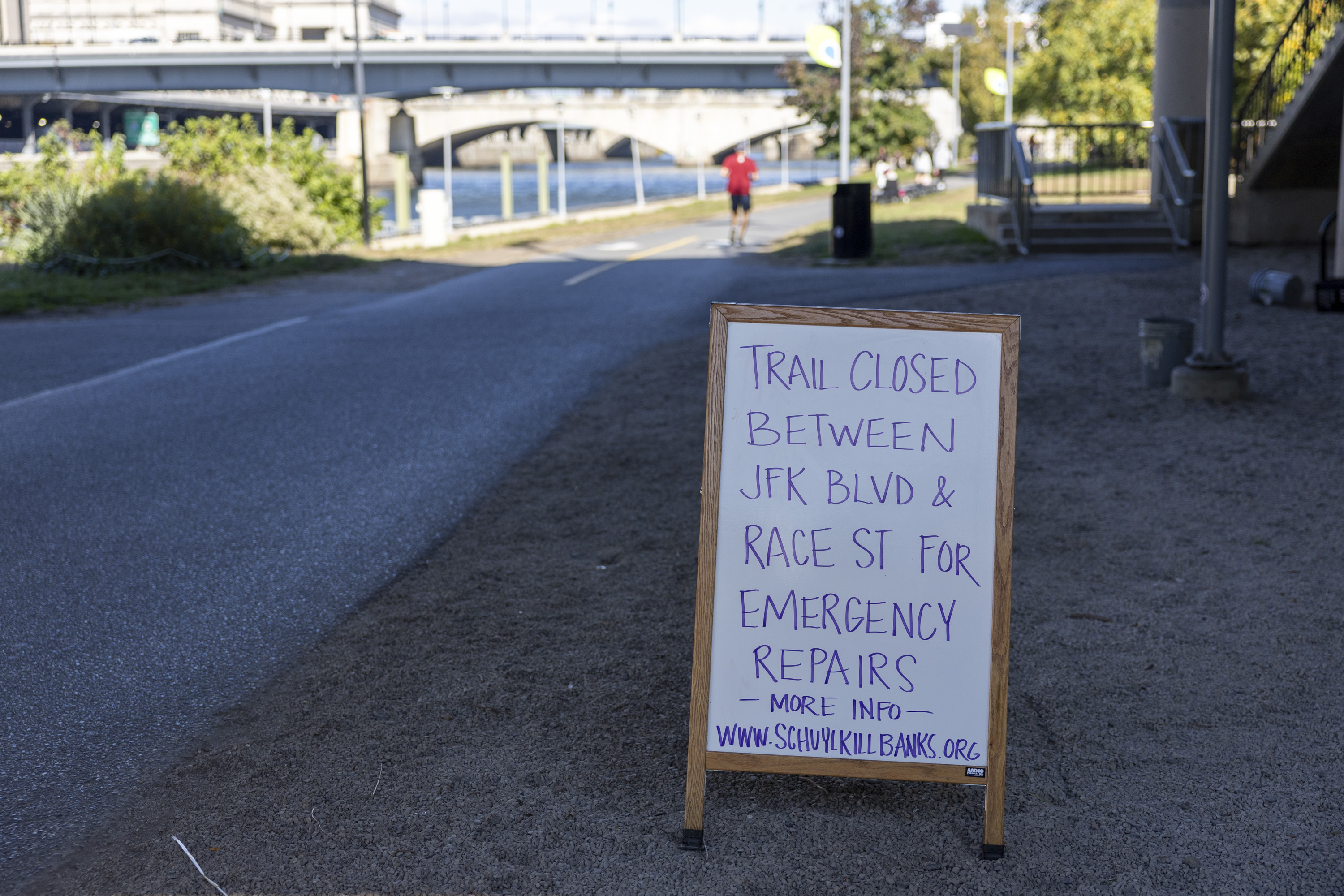
    The trail is closed between Race Street and JFK Boulevard, just north of the SEPTA Bridge, according to the Schuylkill River Development Corp. (SRDC), a nonprofit that has helped revitalize the section of the trail known as Schuylkill Banks.

    The SRDC said that it is working with Philadelphia Parks and Recreation, the Philadelphia Water Department, and engineers “to figure out what caused the large cavity to form and what is needed to make the necessary repairs.”

    It has posted a map of a detour that can be used until repairs are made.

    A map of a detour for the Schuylkill River Trail closure between Race Street and JFK Boulevard, which closed for emergency repairs after a sinkhole appeared Oct. 23, 2025

    .

    Joseph Syrnick, president and CEO of the SRDC, said the hole first came to the attention of his staff when a trail user reported it last week. At first, it appeared to be only a small hole, Syrnick said.

    “By the time we got to it, it was about the size of a cantaloupe,” he said. “And then within a short time, it opened up the size of a small pumpkin. We immediately barricaded it off and made it safe.”

    Syrnick said the hole was covered with plywood and cones were placed around it to block access by trail users. Crews began to explore the hole more thoroughly.

    “We stuck our heads down there through the hole the size of the pumpkin, and saw a huge void. It’s like 8 by 10 [feet]. You could park a car down there — almost. So this has obviously been going on for a long time and luckily we caught it before it collapsed.”

    Syrnick called it a “chasm” under the asphalt.

    On Friday, SRDC hired an engineer, and then brought in the water department. The decision was made to block off the trail completely.

    Although part of the trail remained covered, it took until Monday to put fencing and signs in place, completely sealing off any access.

    “Theoretically, it could have collapsed,” Syrnick said.

    Syrnick did not have a time frame for when the trail would reopen. He said his team needs to find the cause first. A repair could mean minor or major construction.

    A sign warning people that part of the Schuylkill trail is closed for repairs between JFK Boulevard and Race Street after a sinkhole was discovered.

    “I think we’re lucky finding this in the middle of fall, heading in the winter,” Syrnick said, “which is way better than finding it in the middle of spring, heading in the summer.”

    Brian Rademaekers, a spokesperson for the water department, said it is working with SRDC to investigate the cave-in along the trail at Arch Street.

    Rademaekers said crews will use dye to trace the source in an effort to determine a possible cause. He said that the nontoxic dye may cause discolored water in the Schuylkill, but that it is not a threat to people or wildlife.

    “Once the results from this testing are evaluated,” Rademaekers said, “the PWD will work with SRDC to determine next steps needed to reopen the trail. Trail users should follow signage and advisories issued by the SRDC.

    Rademaekers said the water department would not likely have an update on the situation until at least Friday.

  • Kada Scott’s death ruled a homicide and Keon King is charged with murder, as police say others may have helped bury her body

    Kada Scott’s death ruled a homicide and Keon King is charged with murder, as police say others may have helped bury her body

    Keon King was charged with murder and related crimes Wednesday in the death of Kada Scott, the 23-year-old Mount Airy woman police say he kidnapped, then killed, before burying her body in a shallow grave.

    The district attorney’s office approved the charges shortly after police announced that the Medical Examiner’s Office had ruled her death a homicide. Officials said Thursday that Scott died by a gunshot wound to the head.

    In addition to murder, King was charged with illegal gun possession, abuse of corpse, robbery, theft, tampering with evidence, and additional crimes.

    The announcement came as investigators said they believe at least one other person helped King, 21, move Scott’s body and bury it behind a closed East Germantown school in the days after she was killed, and detectives are working to identify those involved.

    New court records, made public Wednesday, offered the most detailed look yet inside the investigation into Scott’s disappearance and death, including her texts with King in the days before she went missing, the police search for her body, and how others may have helped King try to conceal her killing.

    A review of Scott’s cell phone records showed that on Oct. 2, a number believed to belong to King texted Scott: “Yo Kada this my new number.”

    “Who dis,” Scott asked, and he responded “Kel,” according to the affidavit of probable cause for King’s arrest.

    Kada Scott, 23, went missing Oct. 4.

    Law enforcement sources said King appeared to use various aliases when communicating with people, including “Elliot” and “Kel.”

    On the morning of Oct. 4, the document says, Scott texted King saying, “kidnap me again.”

    King replied, “better be up too,” according to the filing.

    What Scott meant in that text continues to perplex investigators, said the sources, who spoke on the condition of anonymity to discuss an ongoing investigation. It’s not clear, the sources said, whether Scott was joking or being sarcastic, or if King had, in fact, abducted her before.

    In any case, the affidavit says, the pair made plans to meet up later that night. Scott worked the overnight shift at the Terrace Hill nursing home in Chestnut Hill, and at 10:09 p.m., the records say, she texted King to call her when he arrived outside.

    According to the affidavit, Scott received 12 calls from the number believed to belong to King between 9:25 p.m. and 10:12 p.m., ending with a 43-second call.

    Around that time, a coworker later told police, she overheard Scott on the phone say, “I can’t believe you’re calling me about this,” before walking toward a dark-colored car.

    At 10:24 p.m., Scott’s phone line went dead, the document shows.

    The rear of Ada H.H. Lewis Middle School, where Kada Scott’s body was found buried in the wooded area.

    By 10:28 p.m., the affidavit says, surveillance cameras showed King, driving a black Hyundai Accent, pull into the parking lot of the Awbury Recreation Center. King got out of the car and left the area, the filing says.

    The next day, around 11:39 p.m., two people in a gold Toyota Camry believed to belong to King went back to the recreation center, the records show. They walked toward the playground area, then returned to the car around 3:56 a.m.

    The two people then opened up the Hyundai Accent and appeared to “remove a heavy object, consistent with a human body,” from the passenger side of the car. They carried the object toward the playground and returned to the vehicle a half-hour later, the records said.

    On Oct. 7 at 2:48 a.m., police believe King returned to the recreation center to retrieve the Hyundai. They said the car — which had been reported stolen a few days earlier from the 6600 block of Sprague Street — was set on fire near 74th Street and Ogontz Avenue a short time later.

    After a two-week search, police found Scott’s body buried in the woods behind the vacant Ada H.H. Lewis Middle School, next to the recreation center, on Saturday.

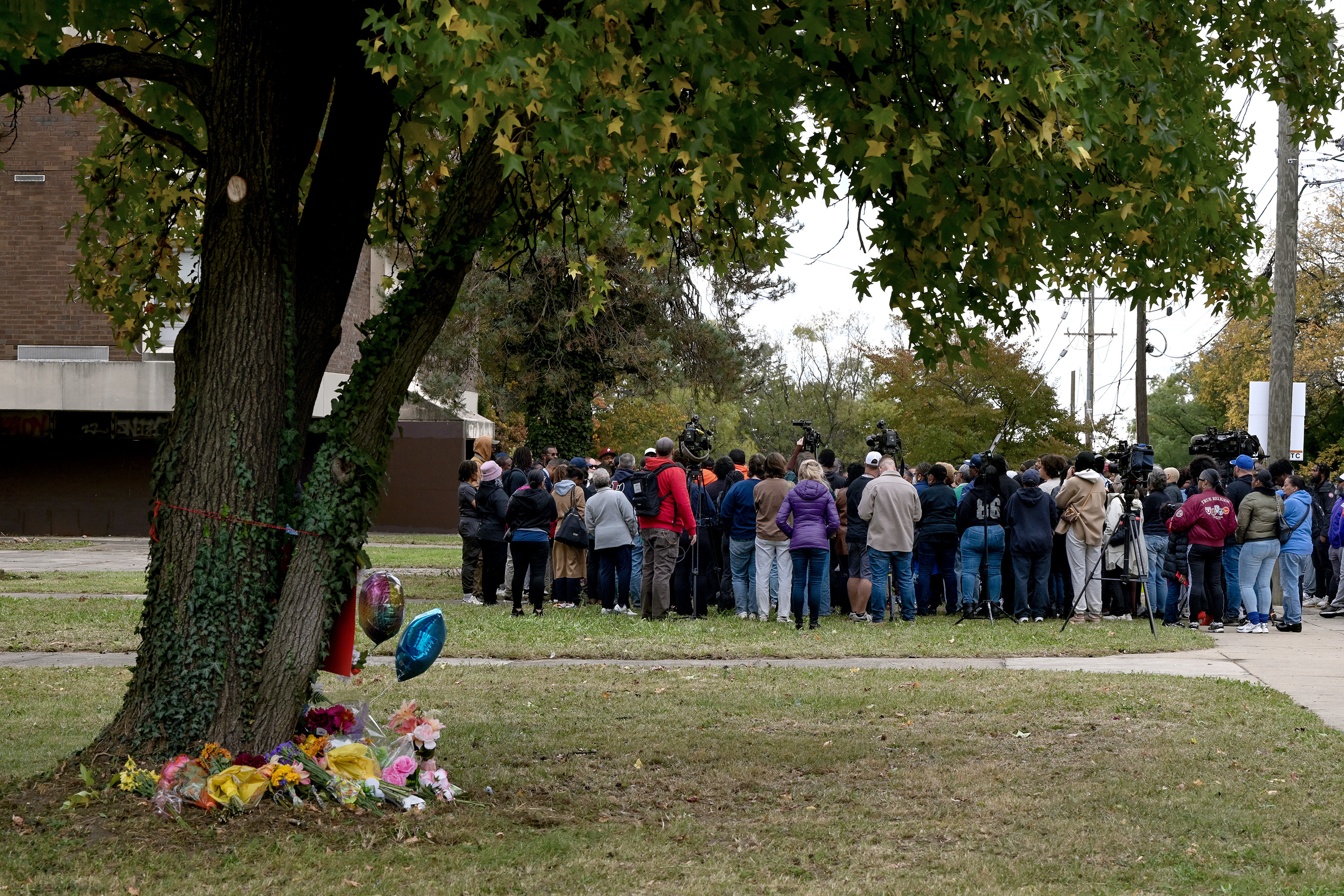
    Community members attend a candlelight vigil by flowers and balloons left at a memorial for Kada Scott near the abandoned Ada H. H. Lewis Middle School on Monday.

    King turned himself in to police last week to be charged with kidnapping Scott. He was held on $2.5 million bail.

    Earlier this week, prosecutors also charged King with arson and related crimes for the burning of the car. Now that he is charged with murder, he is expected to be held without bail.

    King’s lawyer, Shaka Johnson, could not immediately be reached for comment Wednesday.

    On Wednesday evening, city leaders headed to a church in the Northwest Philadelphia community where Scott’s body was recovered, addressing a crowd of about 200 residents concerned about public safety.

    Mayor Cherelle L. Parker and Police Commissioner Kevin Bethel, among other officials, offered condolences to Scott’s family and commended police for recovering her body. Residents, too, appeared relieved, breaking into applause when Bethel said murder charges had been filed against King.

    Bethel, a father of three daughters, said that as the search for Scott wore on, he felt at times as if he were searching for his own child. And Councilmember Cindy Bass told the crowd that Scott “could have been your niece, she could have been your friend.”

    The commissioner said the investigation was continuing as police search for those who might have assisted King. And addressing concerns over safety at the city’s abandoned buildings — including Ada H.H. Lewis Middle School — officials said the city was in the process of reviewing vacant properties.