Category: Commentary

  • Pa. has a human trafficking problem. That’s why Because exists.

    Pa. has a human trafficking problem. That’s why Because exists.

    Earlier this year, a statewide task force arrested more than a dozen men in a Central Pennsylvania sting operation targeting human trafficking and the sexual exploitation of minors. The headlines came and went: another bust, another news release.

    But for every trafficker caught, there are countless survivors unseen, still struggling to rebuild their lives in the shadows of our communities. These operations are heroic and necessary, yet they reveal something deeper: Human trafficking is not a distant problem. It is a Pennsylvania problem.

    As the CEO of the Because Organization, based in Delaware County, I see how this crime takes root in unexpected places.

    In plain sight

    It hides in plain sight along transit routes in Philadelphia and the highways connecting our suburbs and rural towns. It lurks in hotels, nail salons, warehouses, and online chat rooms, amid the overlapping crises of poverty, addiction, mental illness, and homelessness.

    Traffickers prey on vulnerability; they exploit housing instability, the lack of family support, and the constant need to survive. They do this right here in Delaware County, and in Berks, Dauphin, Philadelphia, and Allegheny Counties.

    January is National Human Trafficking Prevention Month. This is a time for education, awareness, and action. But awareness alone is never enough. Pennsylvania has made significant legislative progress in recent years. Act 105 strengthened our laws and enabled law enforcement to respond more effectively to trafficking crimes.
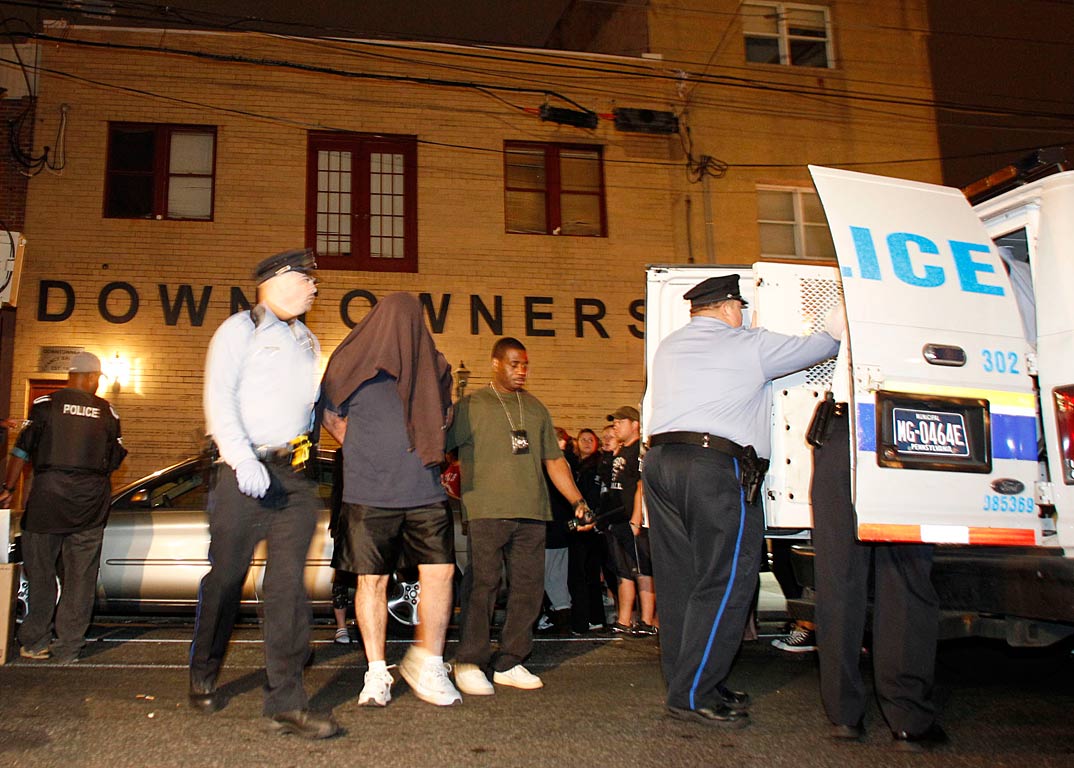
    Police lead men from the Mummers Downtowners Fancy Brigade clubhouse at Second Street and Snyder Avenue in South Philadelphia at about 11 p.m. in 2011. Ten women and one man face prostitution charges. Two other men face liquor violations.

    Local task forces have increased collaboration between police, advocacy groups, and community agencies. The Pennsylvania Office of the Attorney General’s human trafficking section conducts proactive investigations, including a recent sting that uncovered networks of coercion and exploitation across the state. However, laws and arrests address only the supply side of a crime rooted in unmet human needs.

    That is why Because exists: Because no one should be left invisible or unsupported after escaping exploitation.

    The Because Organization works to stop human trafficking through education, advocacy, and survivor empowerment. We teach young people how to spot red flags of grooming and coercion before they find themselves at risk.

    We help survivors access housing, healthcare, therapy, and job training, not just for a few weeks, but for as long as they need to regain control of their lives. We teach communities to recognize the subtle warning signs that often go unnoticed: sudden changes in behavior, lack of personal identification, excessive isolation, or fearfulness.

    Human trafficking is often misunderstood.

    It is not limited to big cities or border crossings. It can occur anywhere there’s a profit to be made from another person’s body or labor.

    In Pennsylvania’s agricultural centers, undocumented workers and refugees are being manipulated into servitude. In college towns, young women are coerced by online predators posing as friends or romantic partners. In suburban areas, minors are lured into sex trafficking via social media.

    Combating these crimes requires active engagement from all parts of our communities.

    A call to action

    Community awareness can change outcomes. When neighbors, teachers, coaches, or healthcare workers recognize warning signs, such as a young person struggling with identity, frequent absences, exhaustion, unexplained injuries, or being afraid to speak up, intervention becomes possible.

    The call to action belongs to all of us. Local businesses can join the fight by offering training and safe ways to report concerns. Faith communities and civic groups can create judgment-free spaces. Additionally, journalists can continue shining a light into the corners where exploitation hides.

    At Because, our message is clear but urgent. Because every person has worth. Because education prevents exploitation. Because our communities are stronger when compassion replaces indifference. Because survivors deserve more.

    This Jan. 11, on National Human Trafficking Awareness Day, we will wear blue to show our solidarity with victims and survivors.

    But more importantly, we will continue doing this work every day of the year, engaging in the challenging, hopeful, human effort of prevention and recovery. You can join us by donating, volunteering, partnering with local organizations, or simply choosing to see what too many still overlook.

    Human trafficking steals people’s freedom and dignity. Our collective duty is to restore both. Let us not wait for the next sting operation to remind us that this fight belongs to all of us.

    Because awareness without action keeps people trapped, but awareness combined with compassion can transform everything.

    Marcia Holt is CEO of the nonprofit Because Organization, based in Delaware County. Because is dedicated to providing a safe and supportive environment for survivors of human trafficking, offering trauma-informed care, and advocating for their rights and well-being.

  • Trump attacks Venezuela, drops drug war excuse, and focuses on oil

    Trump attacks Venezuela, drops drug war excuse, and focuses on oil

    BOGOTÁ, Colombia — Even after a headlong U.S. military assault on Venezuela to topple strongman President Nicolás Maduro, President Donald Trump, in his news conference Saturday morning, offered few details about how U.S. leaders would stop drugs coming from Venezuela.

    For more than four months, that has been the justification for the U.S. armada in the Caribbean and the extrajudicial killing, without evidence of wrongdoing, of 115 people in boat strikes.

    The invasion of Venezuela this weekend is the largest U.S. military operation in Latin America since the 1989 invasion of Panama, when the U.S. seized that nation’s leader, Manuel Noriega. Noriega was convicted in U.S. courts of drug trafficking in 1992 and, after facing additional charges in France and Panama, died in 2017.

    As with Noriega, the justification now is the war on drugs, which, since the 1980s, has cost over a trillion dollars with virtually no effect on stopping the flow of illicit drugs.

    The “narco-terrorist” charge against Maduro has been a shaky pretext for his ouster, measured by the naked assertion that drugs from Venezuela pose a threat to the U.S. and its citizens. Venezuela isn’t mentioned as a source of cocaine in reports by the United Nations Office on Drugs and Crime. And deadly fentanyl isn’t produced in Venezuela.

    It’s noteworthy that protecting democracy has hardly been mentioned as an issue.

    Front and center, President Trump’s focus, post-Maduro, is on the U.S. winning the easy-to-describe prize: U.S. control of Venezuela’s oil reserves, the largest in the world. And that is why Trump’s imperial declaration was straightforward: “We are going to run the country until such time as we can do a safe, proper, and judicious transition.”

    No matter who the next president of Venezuela is, it’s already clear that Trump will choose someone willing to hand over petroleum to U.S. oil companies.

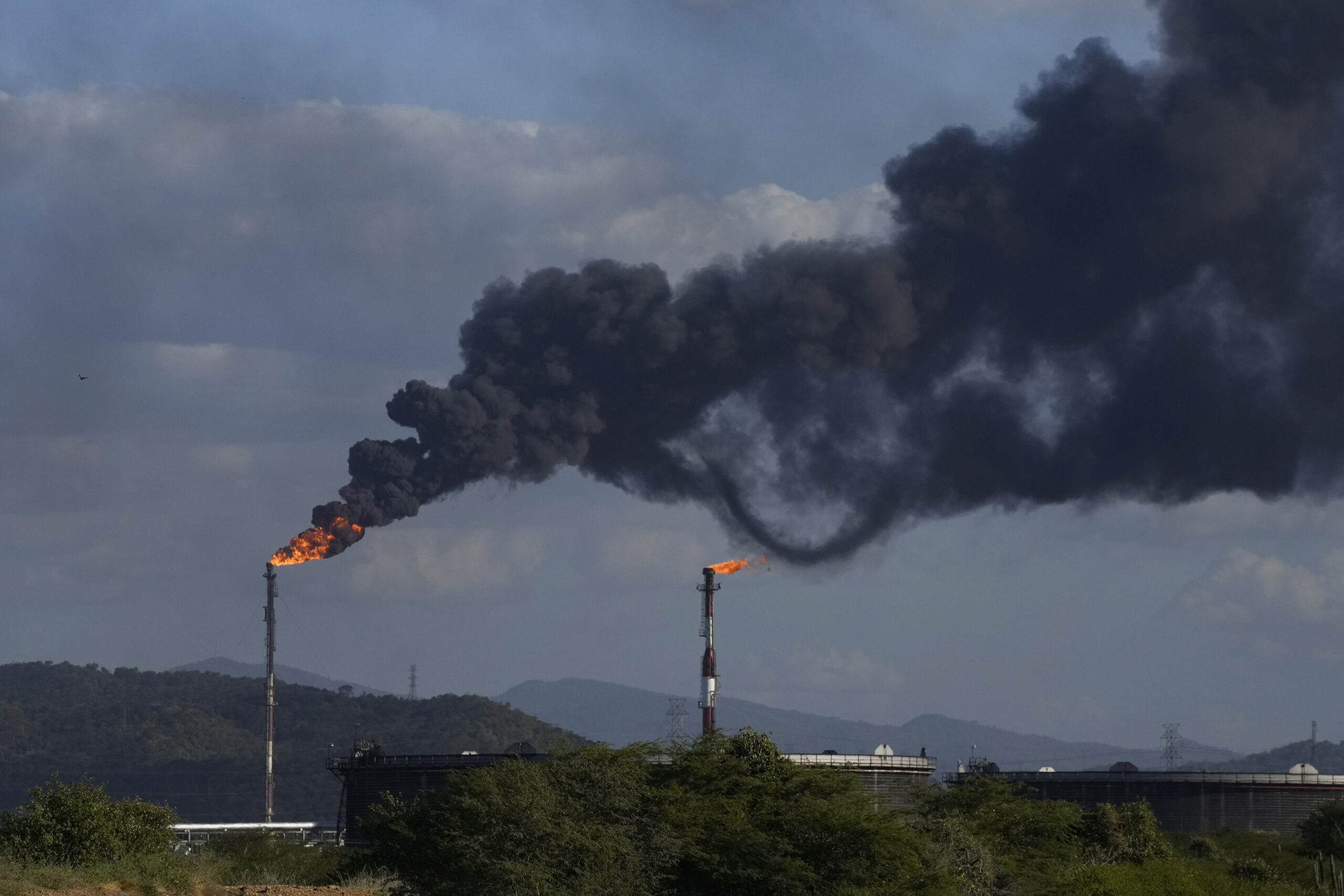
    Flare stacks release gases at the Jose Antonio Anzoategui oil complex in Barcelona, Venezuela, in January 2024.

    Current estimates are that Venezuela has around 300 billion barrels of oil in reserves. By comparison, the U.S. has the equivalent of about 55 billion barrels in reserve. Most U.S. refineries, especially Gulf Coast refineries built years ago, are designed to process Venezuela’s heavy, high-sulfur sour-quality feedstock, which makes them more efficient, with better profit margins than when running lighter, domestic crude.

    And Venezuela, in fact, is not an underdeveloped commodities country, but sits on a wellspring for both today’s energy markets and tomorrow’s green-tech supply chains — with plenty of bauxite, aluminum, gold, copper, nickel, coltan, and cassiterite — all of it too valuable in Trump’s transactional view to be locked out by growing Russian and Chinese influence.

    All of Latin America is now watching to see how the invasion and ongoing transition strategy will play out. Early condemnations have come from Brazil, Mexico, Chile, and especially neighboring Colombia, whose president, Gustavo Petro, has often been critical of President Trump.

    On Saturday, President Trump was asked about U.S. relations with Colombia. And the president — who charged in early December that, after Maduro, Petro “might be next” — stated that Petro “has cocaine mills. He has factories where he makes cocaine. So he does have to watch his ass.”

    Facts about Latin America, in this case Colombia, don’t interest Trump. While the country contends with coca harvesting and with a decades-long internal conflict, pitting government forces against a variety of criminal networks, there is no evidence of Petro’s involvement in the cocaine trade.

    There are arguments among analysts about hectares of coca under harvest and cocaine production potential from various species, and even total hectares under cultivation, but interdictions disrupting cocaine production and trafficking are at record levels. And Petro has said he can offer evidence that as many as 18,000 narcotics laboratories have been dismantled during his time in office.

    In early December, Petro invited Trump to come witness the destruction of cocaine laboratories “to prevent cocaine from reaching the U.S.”

    Trump should also come here to witness, as I have, Colombia’s innovative efforts with modern chemistry detection of illicit drugs at seaports, which is beyond easy description.

    T. Nelson Thompson was a Woodrow Wilson Fellow in international relations at Johns Hopkins University. Before recently retiring, he was a senior adviser in the Office of International Activities at the U.S. Maritime Administration (MARAD) in Washington.

  • True change in Venezuela requires more than Maduro’s exit

    True change in Venezuela requires more than Maduro’s exit

    As events continue to unfold in my native Venezuela, many members of the expat community are experiencing a complex mix of emotions: relief, hope, concern, and caution.

    For many Venezuelans, the removal of Nicolás Maduro represents a long-awaited moment of accountability. His rule, following that of Hugo Chávez, was marked by repression, corruption, and the systematic destruction of a once-prosperous nation.

    Millions were forced into exile, a quarter of the population fled the country, families were separated, and basic human rights were violated. The end of that chapter brings real relief.

    But relief alone does not guarantee confidence in what comes next.

    The announcement during President Donald Trump’s news conference that Venezuelan Vice President Delcy Rodríguez has assumed control is deeply troubling to most Venezuelans.

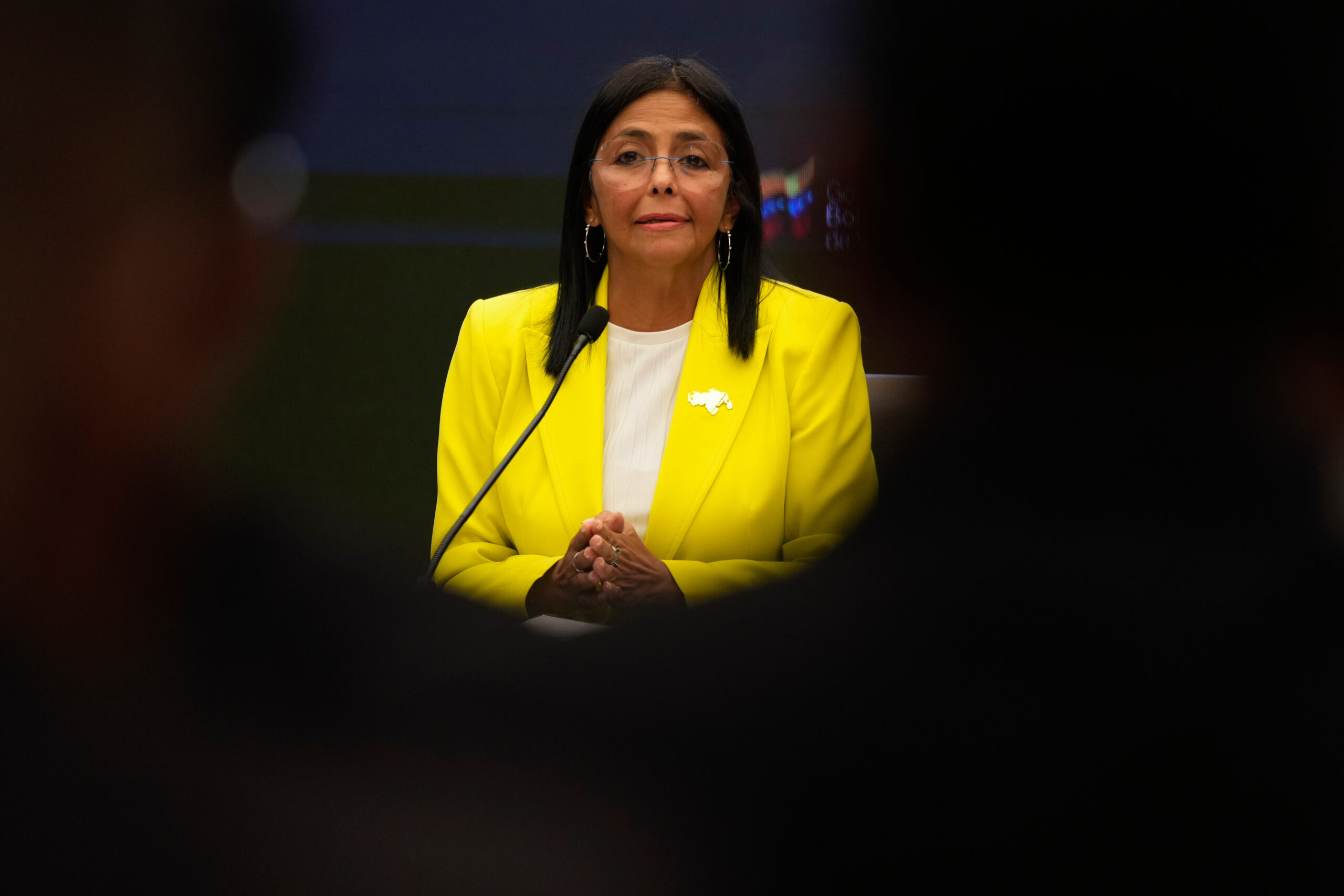
    Venezuelan Vice President and Oil Minister Delcy Rodríguez gives a news conference at the Miraflores presidential palace in Caracas, Venezuela, in March.

    Rodríguez has been one of the architects of the system that caused Venezuela’s humanitarian, economic, and institutional collapse. She is not a neutral caretaker, but part of the inner circle that enabled abuses and dismantled democratic institutions. Replacing one figure while leaving the rest of the structure intact is not meaningful change.

    It is also important to be clear about Venezuela’s resources. Venezuela’s oil belongs to the Venezuelan people.

    While it is legitimate for the United States to seek restitution for assets unlawfully expropriated during Chávez’s presidency, including those taken from companies such as ExxonMobil and ConocoPhillips, any resolution must respect Venezuelan sovereignty and ensure future revenues benefit the population, not another authoritarian elite.

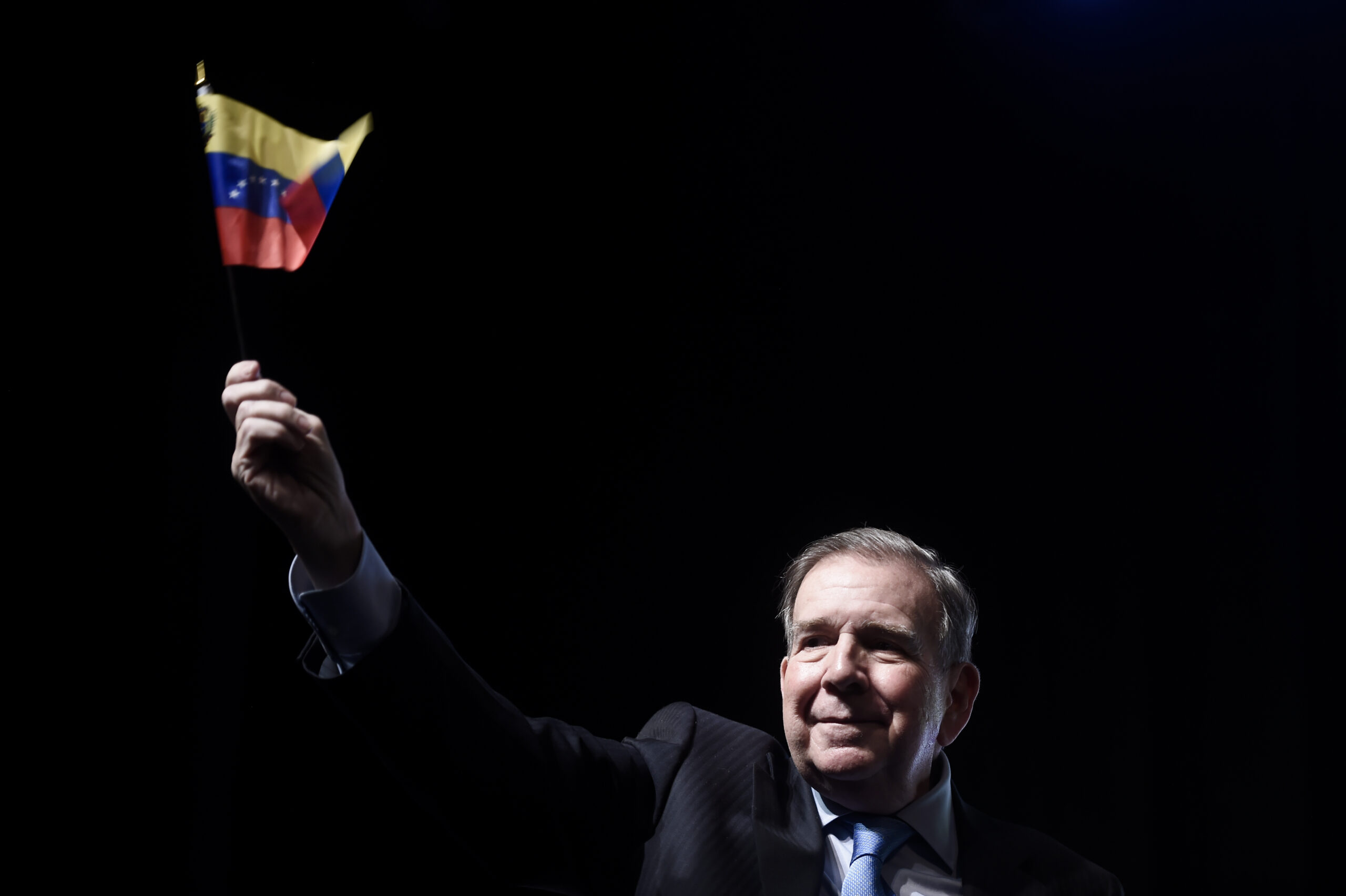
    Venezuela’s opposition leader Edmundo González, who has been recognized by several governments, including the U.S., as Venezuela’s president-elect, waves a Venezuelan flag during a meeting with supporters in Panama City in January 2025.

    Most importantly, Venezuela has already chosen change. In July 2024, voters chose to send Edmundo González to the Miraflores Palace — Venezuela’s White House — in a historic election. Despite efforts by the democratic opposition to expose and counter electoral manipulation, the regime-controlled National Electoral Council ignored the will of the people. That denial of a democratic mandate lies at the heart of today’s crisis.

    What Venezuelans at home and abroad are asking for is not chaos or vengeance, but a protected and legitimate transition — one that respects the 2024 election results and seats González as president. Without safeguards, accountability, and international oversight, Venezuela risks repeating a painful cycle or sliding into further instability.

    Many Venezuelans are also concerned by statements suggesting the United States would “run Venezuela” during a transition. International pressure and support matter, but prolonged foreign administration raises serious questions about sovereignty and accountability.

    Venezuela’s recovery must be led by Venezuelans chosen by their people.

    We welcome the possibility of change, but remain vigilant. Venezuela has suffered too much to endure another false transition. Our hope is for peace, unity, and a democratic future that finally honors the will and dignity of its people.

    Emilio Buitrago is the cofounder and former president of Casa de Venezuela Philadelphia, where he continues to serve as an advisory board member. An engineer and project manager, he also serves as an advisory board member of the Venezuelan American Caucus.

  • The one really great thing about renting in Philly, according to a Boston transplant

    The one really great thing about renting in Philly, according to a Boston transplant

    The Philadelphia Superiority Complex is an occasional series of highly opinionated takes about why Philadelphia is better than other cities.

    As I began in earnest my search for a Philadelphia apartment recently, I steeled myself for a tradition I assumed to be as East Coast as unnecessary honking and an unhealthy animosity toward outsiders.

    I’m speaking, of course, about the broker fee.

    As a native Midwesterner and perpetual renter who has spent the past decade living in Boston, I’d come to view broker fees as an inescapable part of big-city life.

    For the uninitiated, broker fees are a lot like extortion payments. Here’s how it would go in Boston: A so-called apartment broker — to this day I couldn’t tell you what a broker actually is — meets you at an available apartment, unlocks the door, and stands there while you give yourself a brief tour of the unit. In exchange for this white-glove service, and the privilege of renting the apartment, you pay the broker a one-time, nonrefundable fee typically equal to one month’s rent. In Boston, where the average rent for a one-bedroom apartments sits at around $3,500, this is no small thing.

    Making matters worse, the Boston brokers always seem to be finance-bros-in-training, arriving to these brief showings in Lexuses or BMWs, hair meticulously styled and dressed head to toe in Brooks Brothers.

    How refreshing it has been, then, to discover that broker fees just … don’t actually exist here?

    Not once since I began responding to online apartment postings have I been asked to hand a stranger a $3,500 check in exchange for arranging a two-minute tour. I haven’t yet received a torrent of unwanted text messages from guys named Brock or Beau, demanding to know the earliest possible moment I can schedule a viewing.

    And from what I can gather, I’m not going to.

    As one longtime Philadelphian explained it to me recently, “There is a beauty in Philadelphia that no matter how cool it’s trying to be, it is never desirable enough to warrant something like brokers fees.”

    It’s been a true revelation.

    (In Boston’s defense, Massachusetts legislators recently passed a measure mandating that landlords can no longer require tenants to pay a broker fee. Of course, that doesn’t give me back the thousands of dollars I would’ve otherwise put into my retirement fund or, more likely, Uber Eats and Nerf machine guns.)

    Which is not to say, certainly, that things here are perfect. An increasing number of Philly renters are cost-burdened. And the city recently ranked among the nation’s least affordable for apartment renters, according to one online real estate brokerage firm.

    And as someone who is at the very beginning of the process, I’m sure there will be more disappointment in store.

    I’m preparing for an upcoming weekend of apartment tours in Philly, and I have no illusions about how it’s likely to go. I’m imagining a couple days of drab leasing offices and hidden-fee horrors, one-sided rental agreements and a good ol’-fashioned scam or two.

    Fine.

    If it means not handing a half-month’s salary over to a smug 25-year-old in wingtips, well, then, I’m OK with all of it.

    Good on ya, Philadelphia.

  • My brother graduated from college 50 years after dropping out of high school. Here’s his inspiring story.

    My brother graduated from college 50 years after dropping out of high school. Here’s his inspiring story.

    Growing up in South Jersey, my siblings and I were often reminded by our mother to seek a college education to better our chances of landing a good job.

    My sister Andrea and I heeded her advice and obtained bachelor’s degrees with honors a few years after high school, and began working in our professional fields.

    It took my brother, William, the oldest, nearly 50 years to believe he could do it, too. We always knew he had the smarts and the grit. He had to believe it.

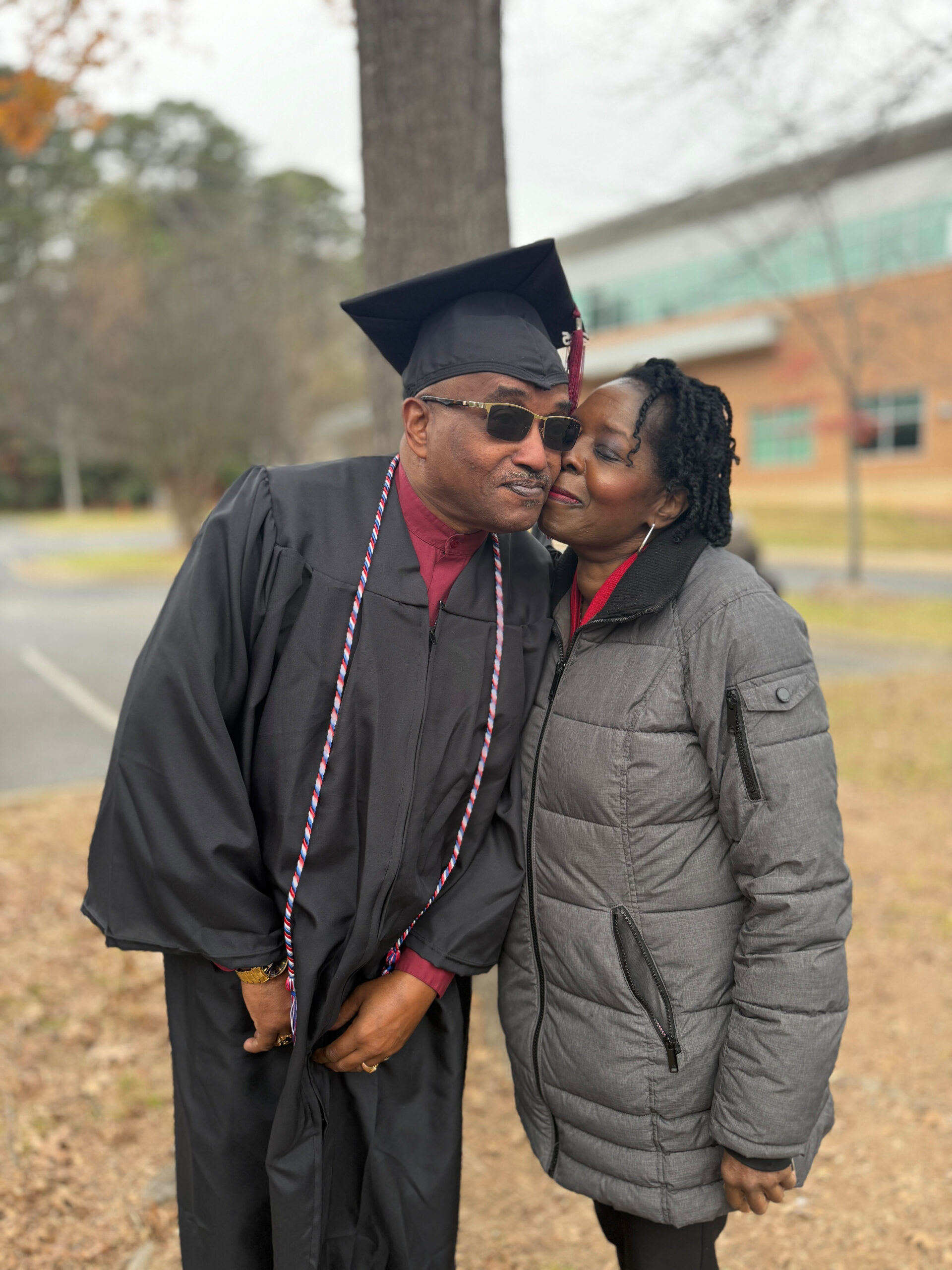
    After a circuitous journey, he proved it by graduating in December from the University of Arkansas at Little Rock at 67. His extended family could not have been more proud.

    ‘I don’t want to give up’

    He attended three colleges and took classes part time for eight years. He enrolled in remedial math, reading, and writing courses, had tutors, and took algebra four times until he finally passed after two years. He missed a semester after a major health scare in 2022, which interrupted his studies.

    “I didn’t want to give up. I was the only one in the family who didn’t have a college degree,” he said. “For me, it was the sky is the limit, and you can do it.”

    An increasing number of learners like Will, 35 and older, are joining younger students in college classrooms. More than four million were enrolled in postsecondary education in 2023, according to an Inside Higher Education report.

    Some older learners, like my brother, are retired and want to pursue a lifelong dream to obtain a college degree. Others want to change careers or increase their earning potential.

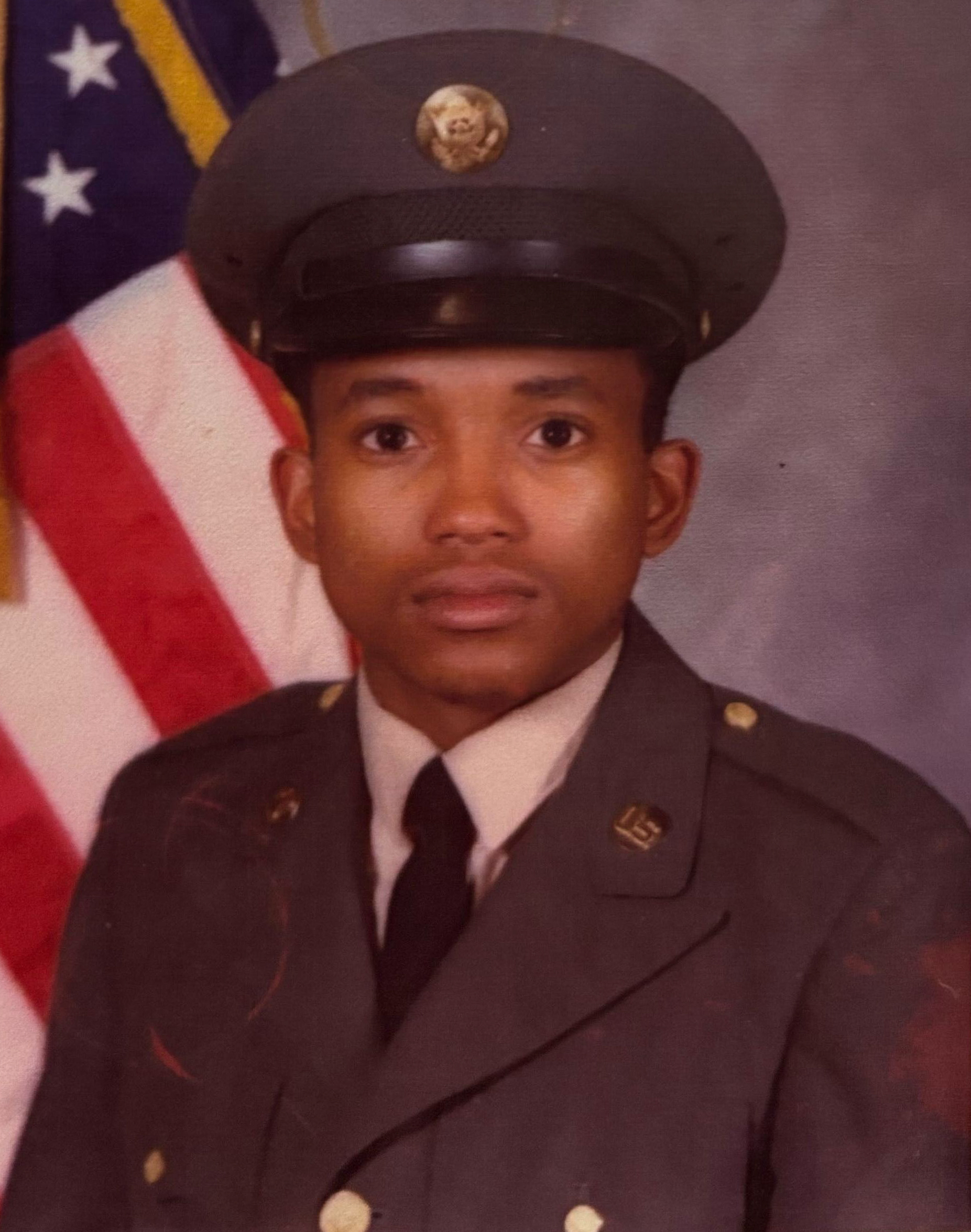
    Affectionately called “Willie Will,” my brother dropped out of Bordentown Regional High School his senior year in 1976 to enlist in the U.S. Army. Because he was just 17, our mother, Eva, had to give permission.

    William Burney dropped out of Bordentown Regional High School his senior year in 1976 to join the U.S. Army. He obtained a GED while serving in the military.

    Bored with school and failing most classes, Will decided the military would give him a new start and ease the financial burden on our single mother. During his three-year military stint, he became a medic in the Army and obtained his GED.

    Despite not having a degree, Will always landed good-paying jobs in a variety of fields. He has been a psychiatric technician, a nursing assistant, a retail store manager, a longshoreman on the Camden waterfront, a truck driver, and a corrections officer.

    Along the way, he battled demons and a drug addiction that made him not always make good choices. He eventually sought treatment and has been sober for nearly three decades.

    No regrets

    “I don’t have any regrets,” he said. “I could have been dead three or four times, so to make it to 67, I have made it.”

    Will retired from the Arkansas Department of Corrections’ Wrightsville Unit, where he had worked as a corrections officer for three years after moving to North Little Rock with his wife, Belinda, in 2008. He suffered a light stroke at work in 2015 that left his left side weakened and affected his short-term memory.

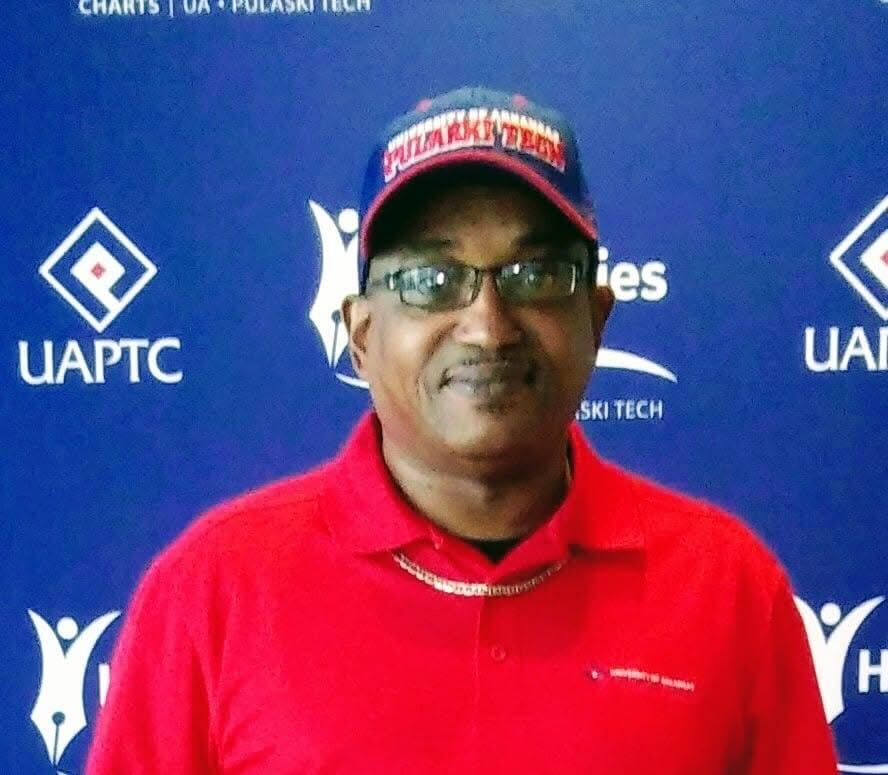
    Thinking about his unfinished business, he began taking classes in 2017 at the University of Arkansas — Pulaski Technical College, a two-year college in North Little Rock. He also spent a semester at Arkansas Baptist College.

    Returning to the classroom for the first time in nearly five decades wasn’t easy. He was three times as old as his classmates. The technology was intimidating: He could barely type and had never used a laptop. He took virtual classes during the pandemic.

    His wife, a retired elementary teacher, became his biggest cheerleader, and his college pursuit became a family project. She found him a tutor, reviewed his research papers, and even watched Zootopia, a Disney animation, with him for an assignment.

    “I was on the journey with him,” she said with a laugh. “It was something he set his mind to, and he kept on.”

    He graduated from Pulaski in 2020 with an associate degree. The family proudly watched the commencement, which was held virtually because of the pandemic. We thought that was it.

    William Burney obtained an associate degree from the University of Arkansas — Pulaski Technical College in 2020. A virtual commencement was held due to the COVID-19 pandemic.

    Motivated by his advisers, Will decided to pursue his bachelor’s with a vengeance. He rarely missed class, turned in assignments on time, and sought help from professors when needed to stay on track.

    He missed the spring 2023 semester after undergoing open-heart surgery to replace an aortic valve. He was back in school the following semester.

    When Will informed the family he was finally graduating, I was determined to witness his big day, traveling over 1,000 miles to get there. I wanted to stand in the gap for our mother, who died in 2014. Our sister, a healthcare administrator in Florida and unable to attend, said, “I’m incredibly proud of him and this monumental accomplishment.”

    William Burney holds a portrait of his mother, Eva Moss, that he commissioned. She died in 2014.

    From the moment we stepped on campus with my boyfriend, Jeff, I chronicled every moment, snapping photos and videos, much to Will’s chagrin. I was especially proud when he led his fellow criminal justice major graduates inside as the department’s student marshal.

    “I knew I was real smart, but wasn’t using it,” he said. “It was just a matter of buckling down and doing it.”

    Always a jokester, he couldn’t resist a sibling jab. “We all know I’m the smartest in the family. I had to go the long route to get there.”

    The Burney family, from left, William Burney, Melanie Burney, mother Eva, sister Andrea Robinson, and her children, Jamil and Christopher Robinson (front).

    During my whirlwind visit, we celebrated and reminisced about our childhood and lessons from our mother. I had a chance to learn more about the man my brother had become. It was bittersweet that our mother was not there to share the moment.

    Siblings William and Melanie Burney at his graduation Dec. 13 from the University of Arkansas at Little Rock.

    As we drove around Little Rock, Will pointed to the community garden he helped start in 2011 and served as the manager. He serves on the board of Jefferson Comprehensive Care Service Inc., which operates seven health clinics. He took me to King Solomon Baptist Church, where he was baptized in 2012.

    Inspiring others

    Will — who earned a second associate degree in addition to a bachelor’s — plans to use his experience to encourage others, especially young Black men. He’s currently weighing an offer to join the university’s faculty. He may pursue a graduate degree.

    “If you get the opportunity to become a better person, learn while you can. You have to do the work.”

    After taking classes for eight years, William Burney graduated in December from the University of Arkansas at Little Rock. He wants to encourage others to pursue their dreams.
  • JD Vance says America is a ‘Christian nation.’ Is it?

    JD Vance says America is a ‘Christian nation.’ Is it?

    During Turning Point USA’s AmericaFest 2025, held on Dec. 21, I heard Vice President JD Vance say that America was founded as, and always will be, a Christian nation. I strongly disagree.

    Not because we have failed to live up to that standard (we have), but because no nation-state can rightly claim that title. Scripture never supports such claims. Nations may be influenced by God, restrained by God, or even blessed by God, but they are not the Kingdom of God.

    Two hundred and fifty years ago, 13 British colonies did something unprecedented in human history.

    Their most remarkable act was not just rebellion itself — rebellions had happened before — but the nature of their rebellion. They did not cast off one king to enthrone another. They rejected the very premise that sovereignty ultimately belonged to any earthly monarch.

    Instead, they declared that all people are created equal and endowed with certain “unalienable rights” not by a crown, but by God, our creator. These were not merely political claims; they were moral assertions rooted in a Judeo-Christian worldview that affirmed human dignity as a gift, not a privilege.

    This declaration was, of course, an act of war not just against England, but the feudal worldview. Over the next eight years, these colonies fought the most powerful military force on Earth for the right to govern themselves — and they won.

    What followed was one of the most remarkable political achievements in history: a constitutional framework designed not to grant rights, but to protect rights already given by Almighty God.

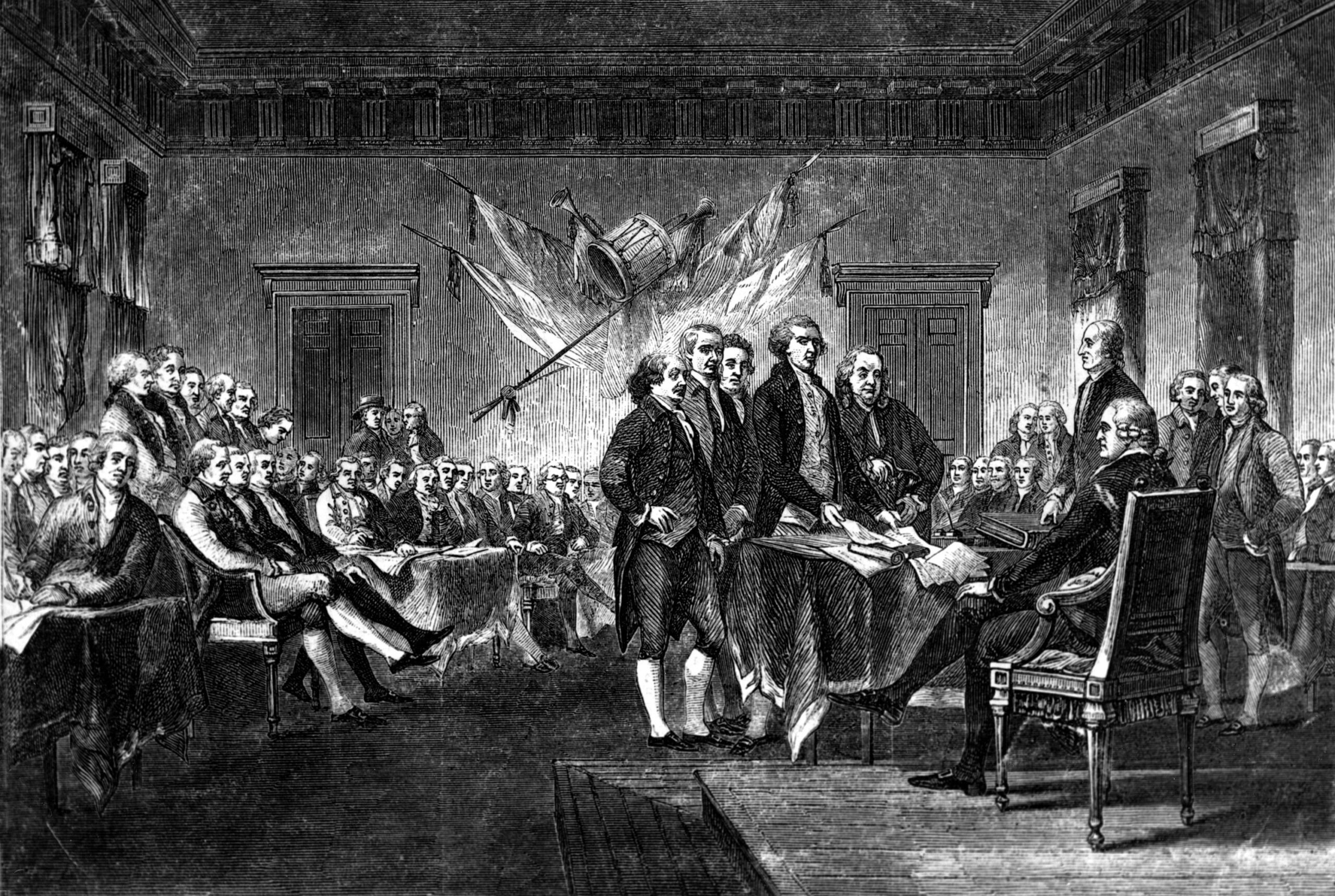
    This undated engraving shows the scene on July 4, 1776, when the Declaration of Independence, drafted by Thomas Jefferson, Benjamin Franklin, John Adams, Philip Livingston, and Roger Sherman, was approved by the Continental Congress in Philadelphia.

    Governing powers were divided, totalitarian authority was restrained, and freedom was placed in the hands of the people. John Adams captured this intent with striking clarity when he wrote: “Our Constitution was made only for a moral and religious people. It is wholly inadequate to the government of any other.”

    The founders understood that liberty could not survive without moral virtue — and that virtue could not be legislated.

    These principles still work today — but only when we the people take an active role in self-government. Our freedom is not self-sustaining. It requires discipline, restraint, and moral courage from each generation. When citizens abdicate responsibility, power inevitably consolidates. Self-rule depends upon self-control.

    The founders also stumbled grievously over the question of slavery. Many knew it was morally wrong, yet they compromised, deferred, and left its resolution to future generations. That failure should never be minimized. But neither should it be used to dismiss the ideals of freedom themselves. The principles were sound. The people were flawed.

    History reminds us that liberty must be defended, expanded, and, at times, redeemed by those willing to pay the price.

    Many of the original signers were Christians, and they understood a core principle of God’s Kingdom: It is transcendent. When Jesus was questioned by political authority, he stated plainly, “My kingdom is not of this world” (John 18:36). Jesus did not come to establish a nation-state or seize political power. He formed a people whose true citizenship transcends borders, flags, and governments.

    This truth must direct how, as Christians, we live as Americans. As citizens of a nation-state, we have real obligations. Citizenship is not passive. It requires obedience to just laws, respect for civil authority, and a commitment to the common good.

    It also demands vigilance. We must be willing to challenge laws and policies that violate the God-given freedoms of others — especially religious liberty. Obedience without conscience is not virtue; it is mere compliance.

    America was shaped by Judeo-Christian principles, but it was never intended to be a theocracy. America’s unity is powerful precisely because we do not have a state religion. Faith compelled by law is no faith at all. Genuine belief cannot be coerced; it must be chosen. The Gospel advances by witness, persuasion, and sacrificial love, not by legislation or force.

    I say this as a Christian and a follower of Jesus Christ: The church does not need the power of the state to fulfill its mission. History shows that when the church weds itself too closely to political power, it loses its prophetic voice and relinquishes its spiritual authority.

    America is not the Kingdom of God, and it was never meant to be.

    But neither is it a historical accident nor a moral improvisation. It is something far more fragile: A people united in the conviction that liberty flows from God, not the state, that government exists to safeguard rights it did not create, and that faith must remain free.

    If we confuse America with the Kingdom of God, we will ultimately diminish both — robbing the nation of its moral responsibility and the Gospel of its eternal power.

    The Rev. Dr. Michel J. Faulkner, a former NFL player, community leader, pastor, and registered Republican, is chair of the board of directors of the Philadelphia Council of Clergy.

  • President Trump is dismantling our national parks

    President Trump is dismantling our national parks

    President Ulysses S. Grant established Yellowstone as the first national park on March 1, 1872. Ever since, 27 American presidents have supported, nurtured, and developed national parks — that is, until now, with this president, Donald Trump.

    Over the course of the past 153 years, presidents have grown the number of parks to today’s 423. Last year, more than 325 million people visited these sites. But this year, visitors to national parks experienced closed campsites, canceled summer camps and school science programs, and visitor centers either closed or with limited hours.

    These Trump-era cutbacks began the disassembling of a system of national parks that was the pride of America and the envy of the world.

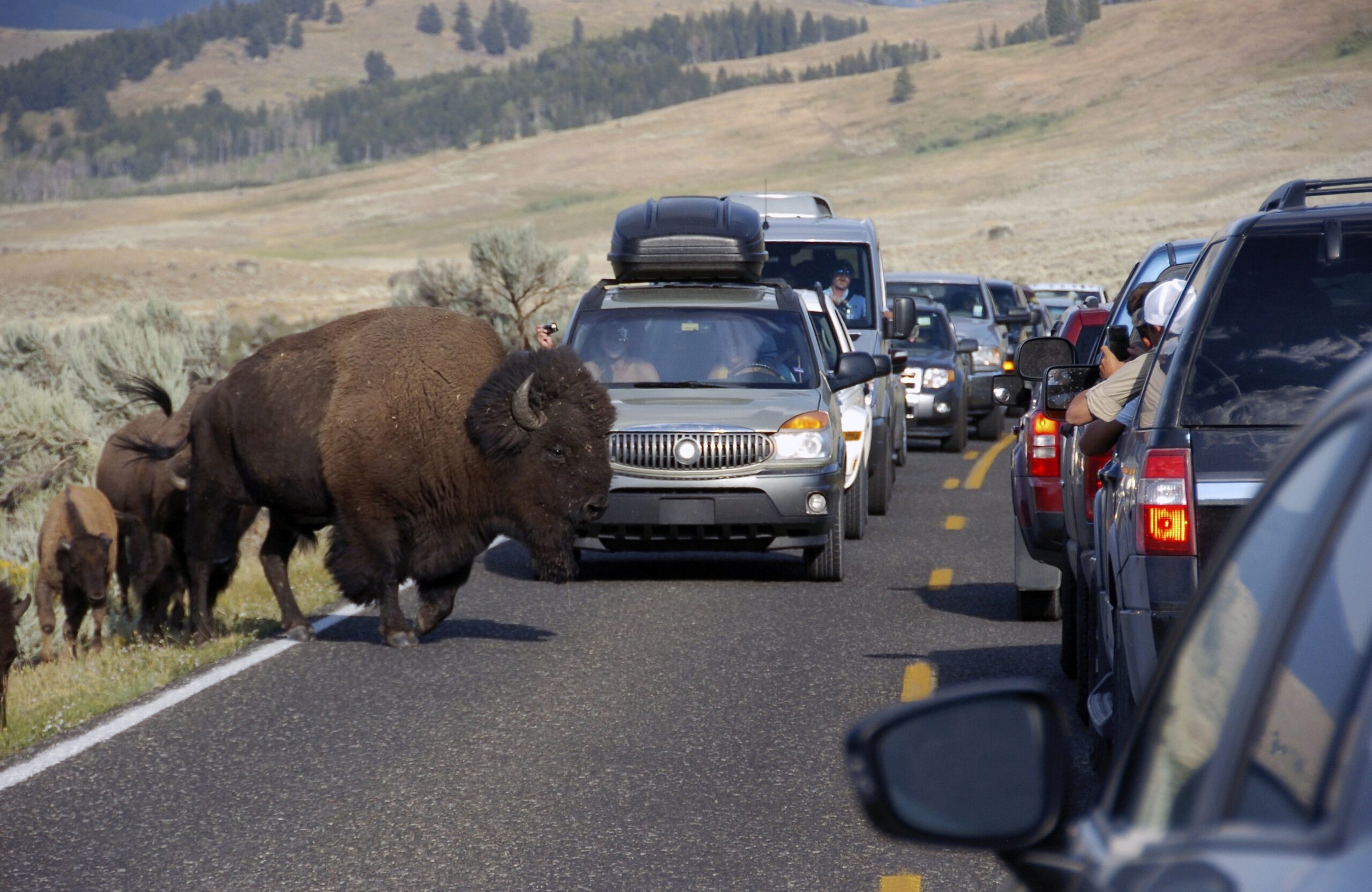
    A large bison blocks traffic as tourists take photos of the animals in the Lamar Valley of Yellowstone National Park in Wyoming, in August 2016.

    In the 11 months since President Trump began his second term, the National Park System has experienced astounding reductions in personnel, staggering cuts to operations and infrastructure budgets, widespread eliminations of environmental protections, and baffling erasures of historical facts.

    National park budget cuts, which were first proposed by the Heritage Foundation’s Project 2025, have totaled roughly 35%.

    Implemented by Elon Musk and his so-called Department of Government Efficiency, the cuts have led to thousands of public servants being fired and day-to-day operations being vastly curtailed.

    Taking it to the next step, Trump’s secretary of the interior, Doug Burgum, who oversees national parks, is considering a plan for the elimination of up to 350 park sites across the country. Burgum is apt to diminish or shutter sites that fall vulnerable to Trump’s executive order, cynically titled, “Restoring Truth and Sanity to American History.”

    A vintage photograph is displayed at Manzanar War Relocation Center at Manzanar National Historic Site, near Independence, Calif.

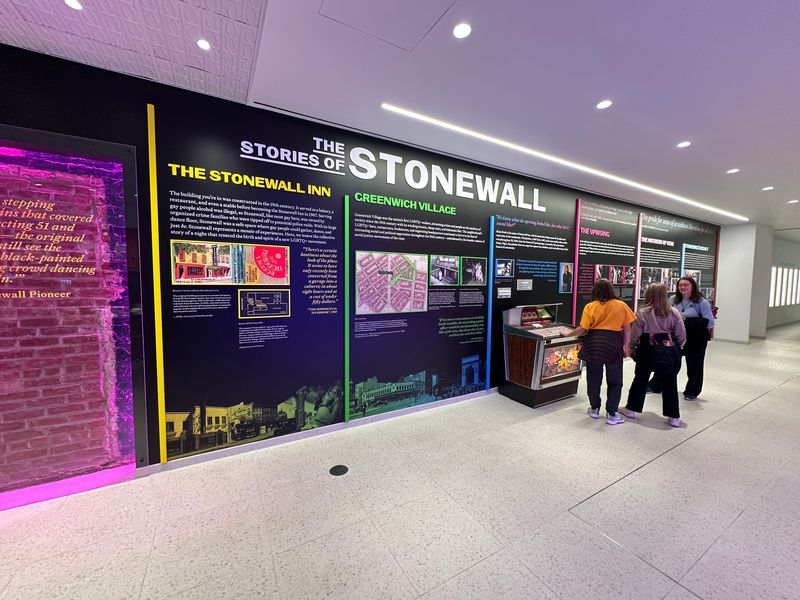
    Park sites seen as not conforming to the order might include the Manzanar National Historic Site in California, which describes the government’s forced race-based relocation to detention camps of Japanese Americans at the start of World War II, or the Stonewall National Monument in New York City, where the advancement of civil rights for LGBTQ+ Americans is celebrated.

    An exhibit at the Stonewall National Monument Visitor Center.

    National parks across the country are also burdened with huge backlogs of deferred maintenance to infrastructure.

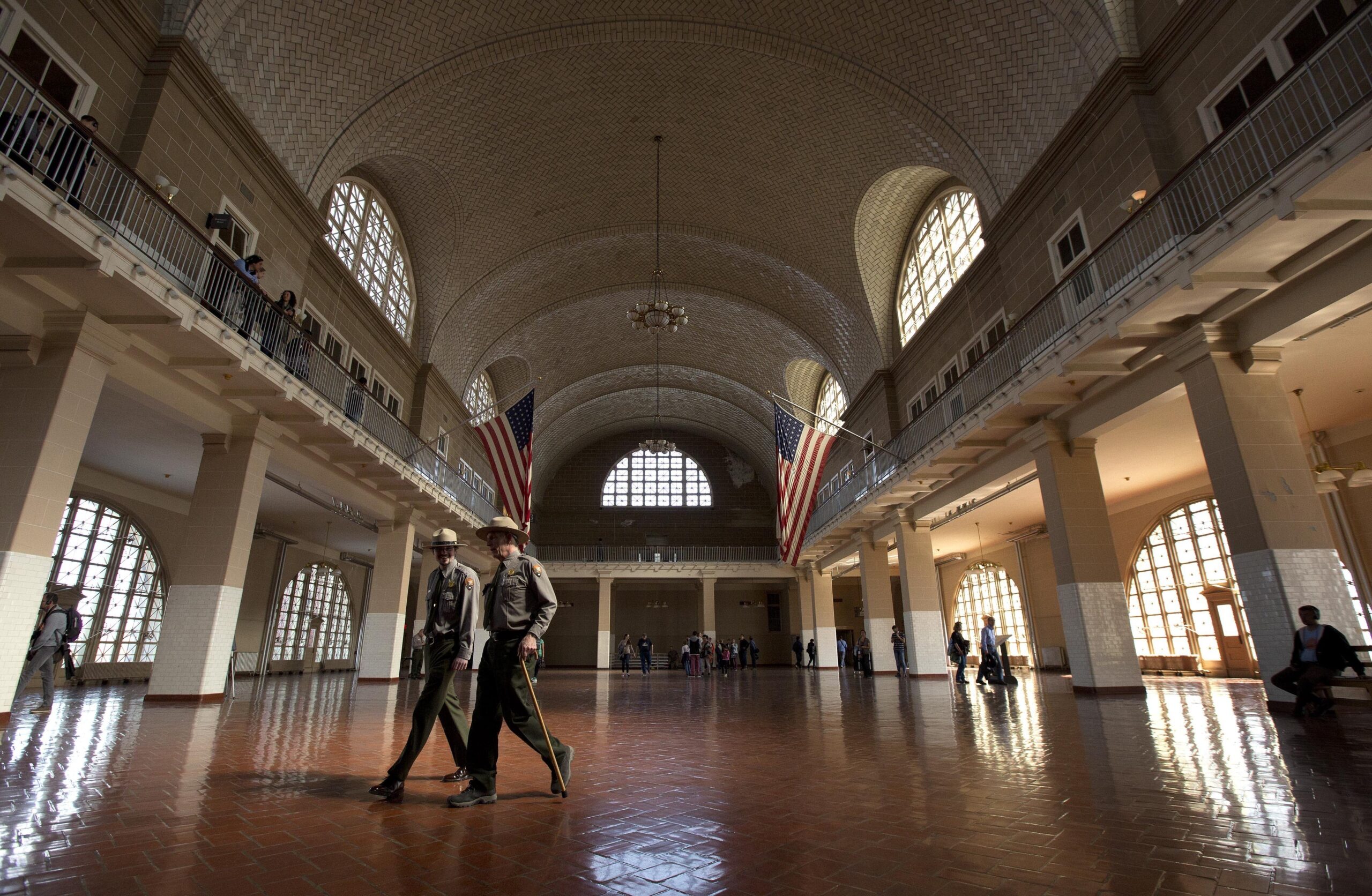
    Statue of Liberty National Monument and Ellis Island in New York Harbor stand proudly as memorials to those who migrated to the United States to escape poverty, repression, and tyranny. Many of the nearly four million who visit every year pay honor to ancestors who made new homes, raised families, and helped build the American dream.

    National Park Service rangers walk through the Great Hall at Ellis Island.

    Sadly, though, deteriorating structural conditions at these historic sites have led to a $288 million repair shortfall. This backlog will grow because the Trump administration has suspended many new public works projects.

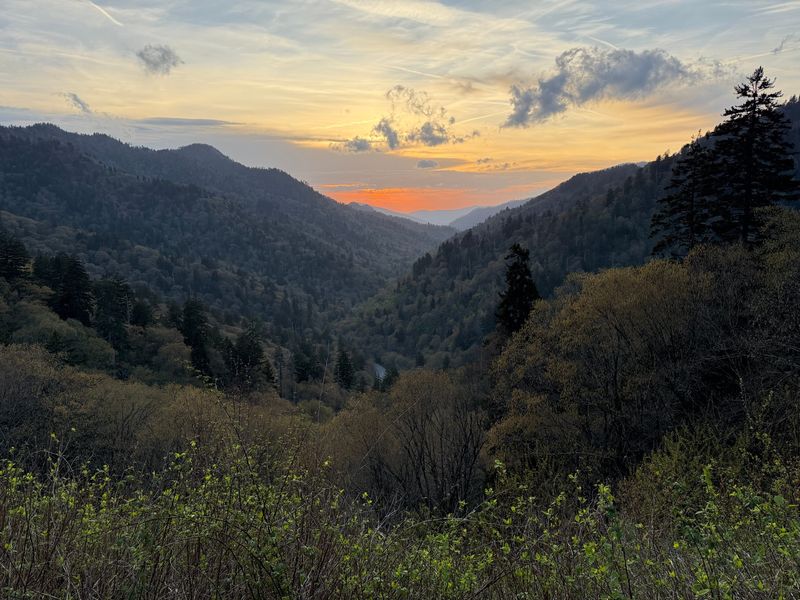
    The Great Smoky Mountains National Park in Tennessee and North Carolina is a natural gem that attracts over 12 million visitors a year. People come to camp, hike, fish, or enjoy the awesome scenery.

    The sun sets on America’s most visited national park, Great Smoky Mountains.

    Guests also spend an estimated $2.1 billion annually boosting area lodgings, restaurants, and convenience stores. This economic dynamic supports over 20,000 jobs in the region.

    President Trump apparently does not grasp that if parks nationwide are degraded through deep budget cuts, thousands of small businesses located in or near national park gateway communities will suffer, and tens of thousands of employees, mostly in the private sector, will be out of work.

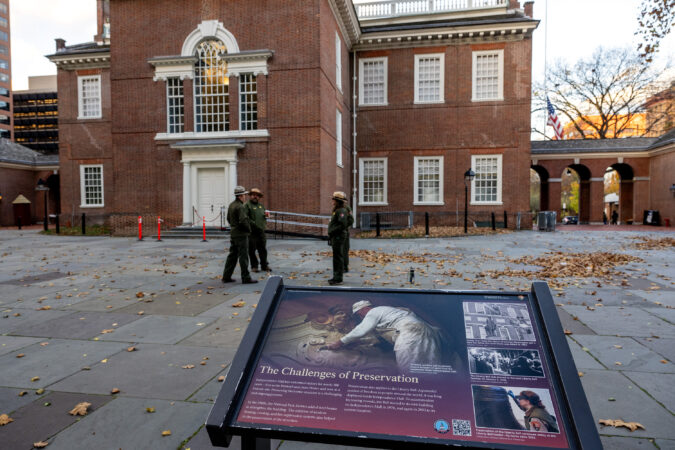
    The President’s House in Independence National Historical Park, in September.

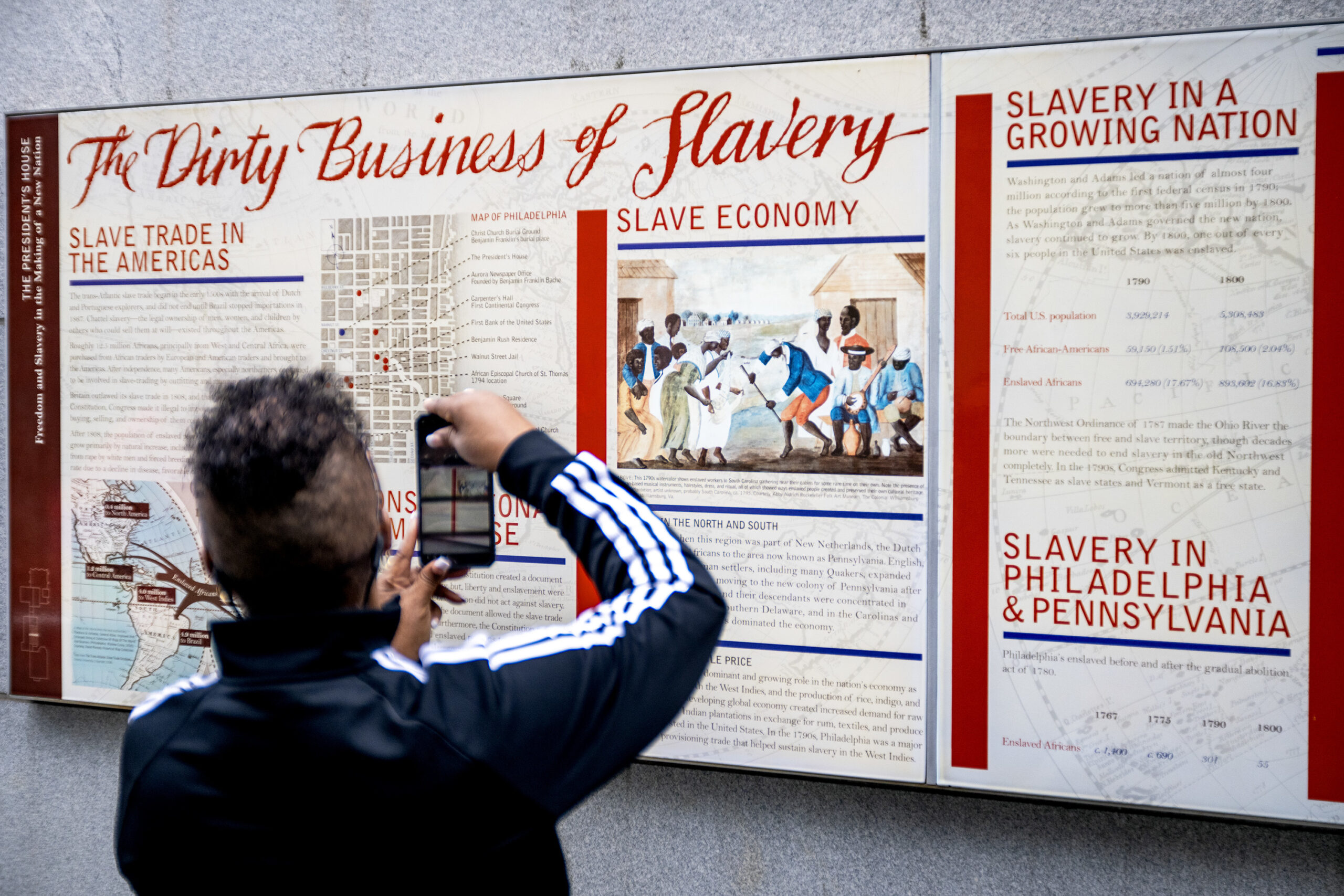
    The President’s House Site at Independence National Historical Park in Philadelphia memorializes nine people who were enslaved there while George Washington was president in the earliest years of the republic. Their names are Austin, Christopher Sheels, Giles, Hercules, Joe, Moll, Oney Judge, Paris, and Richmond. The house site reflects this important detail and describes it truthfully. Yet, this president has ordered that the story be altered to be compatible with a sanitized — and dishonest — description of history.

    Gina Blakemore from Sacramento, Calif., photographs signage describing enslavement at the President’s House in Independence National Historical Park, in September.

    By erasing this factual presentation at Independence Park, a venerated place that represents the founding ideals of the nation, President Trump is revealing a vivid disrespect not only for African Americans but for all of us.

    Slashed funding, fired employees, endangered properties, lost revenue, environmental rollbacks, whitewashed history: this will be the public lands legacy of President Donald Trump.

    The damage to national parks that Trump and his loyalists have already inflicted is so profound that it will take years for these sites to recover.

    We citizens, though, can do something now to help save them. We can write, call, or text members of Congress to demand they step up and repel this president’s egregious assault on parks.

    Meanwhile, we should also make sure to visit a nearby national park site, seek out a ranger or guide, and assure them that we will do our part to defend and protect America’s magnificent national parks.

    John Plonski was a finalist for the 2023 Theodore Roosevelt Genius Prize for the Promotion of Conservation and served as executive secretary of the Pennsylvania State Park and Forest Systems from 1995-2004.

  • The city’s crime rate has fallen dramatically. It didn’t happen by chance.

    The city’s crime rate has fallen dramatically. It didn’t happen by chance.

    For years, Philadelphia, like many American cities, grappled with historic levels of violence brought on by the upheaval of the pandemic. Today, a very different story is unfolding.

    Violent crime in Philadelphia has declined sharply and sustainably, and much of that progress is owed to the extraordinary work and unwavering commitment of the men and women of the Philadelphia Police Department.

    Homicides are down again this year, by roughly 15% to 18% compared with last year, putting the city on pace for its lowest total since the 1960s. Shootings, both fatal and nonfatal, have fallen to levels not seen in more than a decade.

    At the same time, homicide clearance rates have reached historic highs, bringing accountability, answers, and a measure of justice to families who have suffered unimaginable loss.

    These results did not happen by chance. They are the product of relentless professionalism, data-driven policing, and deep engagement with the communities officers serve.

    Behind every statistic is a patrol officer, detective, analyst, supervisor, or civilian professional who showed up day after day, determined to protect this city. Lives have been saved, neighborhoods strengthened, and trust rebuilt because of their work.

    Philadelphia is safer today than it has been in a generation, and that progress deserves recognition.

    Changing threats

    But public safety is not defined solely by addressing violent crime. Some of the most damaging threats we face today are quieter, more personal, and increasingly digital.

    Across Philadelphia and the surrounding region, criminals continue to target the most vulnerable among us. Elderly residents are being deceived out of their life savings through increasingly sophisticated fraud schemes. Young people are being exploited through sextortion, often by offenders operating overseas who use fear, manipulation, and anonymity to cause devastating harm. Businesses of every size are facing ransomware attacks that can cripple operations, disrupt critical services, and threaten livelihoods.

    At the same time, our business community and world-class academic institutions face persistent threats from nation-state actors seeking to steal intellectual property, sensitive data, and cutting-edge research. These efforts target innovation, economic competitiveness, and national security itself, and they often unfold silently over months or years before being discovered.

    Such crimes leave deep scars. They are often underreported, emotionally devastating, and constantly evolving. Addressing them requires persistence, adaptability, and a willingness to confront threats that do not always fit traditional definitions of crime.

    Special Agent in Charge Wayne A. Jacobs at a news conference at the 24th Police District Headquarters in Philadelphia in October

    Every day, the men and women of the FBI show up with a clear purpose: to protect people and hold perpetrators accountable. Our agents, intelligence analysts, and professional staff work tirelessly to identify offenders, dismantle criminal networks, prevent acts of terrorism, disrupt foreign intelligence threats, and bring those responsible to justice, whether they operate across the street or across the world.

    But enforcement alone is not enough. Preventing harm before it occurs is one of the most powerful tools we have.

    That is why outreach and education are central to our mission.

    Building partnerships

    Through partnerships with schools, senior centers, businesses, universities, and community organizations, we work to raise awareness, share intelligence, and empower people to recognize threats early. Helping a senior avoid a scam, a teenager seek help before harm escalates, or an institution protect sensitive research can be just as impactful as an arrest.

    None of this work happens in isolation. The progress Philadelphia has made, both in reducing violent crime and in confronting complex threats like fraud, sextortion, ransomware, and foreign intellectual property theft, is rooted in strong partnerships. Federal, state, and local law enforcement, prosecutors, private-sector leaders, and academic institutions are aligned around a shared responsibility to keep this city safe.

    Those partnerships will be more important than ever as Philadelphia prepares for a historic year in 2026. With global events, national celebrations, and millions of visitors expected, success will depend on seamless coordination, shared intelligence, and a unified approach to prevention and preparedness.

    We are ready because we have built this foundation together.

    Philadelphia’s progress is real. The challenges ahead are serious. And by continuing to work side by side, guided by intelligence, driven by prevention, and grounded in partnership, we will keep this city safe in 2026 and beyond.

    Wayne A. Jacobs is the special agent in charge of the FBI’s Philadelphia Field Office, a position he’s held since November 2023.

  • Term limits offer Pennsylvania rare bipartisan opportunity

    Term limits offer Pennsylvania rare bipartisan opportunity

    For decades, Congress has been the land of the permanent incumbent. Nearly nine in 10 Americans support congressional term limits, yet every attempt to impose them has failed because Washington won’t limit itself. But Pennsylvania has the power to change that.

    As I previously argued in the Hill, there’s a path forward that doesn’t require Congress to vote against its own interests, or the near-impossible task of a constitutional amendment. The answer lies in coordinated state action that could force the U.S. Supreme Court to reconsider its 1995 decision in U.S. Term Limits v. Thornton.

    In Thornton, the Supreme Court ruled that states cannot add qualifications for federal office beyond those in the Constitution. That decision effectively shut down state-led reform, even though the people overwhelmingly support it.

    But landmark Supreme Court reversals often emerge when multiple states pass laws that force the court to reexamine old precedents. From Brown v. Board of Education to Dobbs v. Jackson Women’s Health Organization, coordinated state action has repeatedly succeeded in prompting judicial reconsideration.

    The strategy is straightforward: Pennsylvania, along with states like Texas, Florida, and Tennessee, would pass identical laws establishing term limits for their members of Congress. Each law would face legal challenges and be struck down under Thornton, as expected. But with multiple states acting simultaneously, the issue would surface across several federal circuits, creating pressure for the Supreme Court to revisit the question.

    Under the Articles of Confederation, delegates were not permitted to serve more than three of any six years, a clear endorsement of rotation in office. The founders never intended public service to become a lifelong career.

    If term limits are enacted, they should apply prospectively, with current members grandfathered in and everyone’s “term clock” beginning at zero. This avoids endless lawsuits while setting a new standard for the future.

    Pennsylvania is uniquely positioned to lead this effort. While the commonwealth has a divided legislature, with Republicans controlling the Senate and Democrats holding a narrow House majority, term limits have historically drawn bipartisan support. This is precisely the kind of reform that could bridge partisan divides and demonstrate that Pennsylvania can lead on issues that matter to voters across the political spectrum.

    The state has recent experience standing up to federal overreach. In 2025, Pennsylvania Secretary of the Commonwealth Al Schmidt, a Republican, fought back against the U.S. Department of Justice’s demand for sensitive voter data, calling it “unprecedented and unlawful” federal overreach.

    Schmidt emphasized that, in America, states run elections, not the federal government. This bipartisan defense of state sovereignty, supported by officials across party lines, demonstrates Pennsylvania’s willingness to assert its constitutional authority when necessary.

    Pennsylvania voters overwhelmingly support this reform. A January poll found that 78% of Pennsylvania voters support term limits on Congress, including 79% of Republicans, 78% of Democrats, and 80% of independents. This rare consensus across party lines makes term limits legislation an opportunity for Pennsylvania’s divided government to demonstrate it can work together on reforms that voters clearly want.

    Working to pass term limits legislation would be consistent with the Pennsylvania General Assembly’s history of defending state authority against federal intrusion, writes Tanner Willis.

    The Pennsylvania legislature has shown it can take principled stands on constitutional questions when there’s sufficient public support. Passing term limits legislation, knowing it will be challenged under Thornton, would be consistent with Pennsylvania’s history of defending state authority against federal intrusion. If Pennsylvania acts alongside states like Utah, Arizona, and Kentucky, the combined pressure could succeed where individual efforts have failed.

    If Congress won’t act, and the people can’t amend the Constitution directly, Pennsylvania still has one powerful tool: coordinated challenge.

    The path forward is simple. Pass the law, invite the challenge, and let the Supreme Court decide. The only question is whether Pennsylvania has the courage to lead.

    Tanner Willis is a business operations analyst based in Arlington, Va. He is the author of the book “Smoke and Silence: The Lives of Ol’ Mort.”

  • Resolve to save a life in the new year. Register as an organ donor.

    Resolve to save a life in the new year. Register as an organ donor.

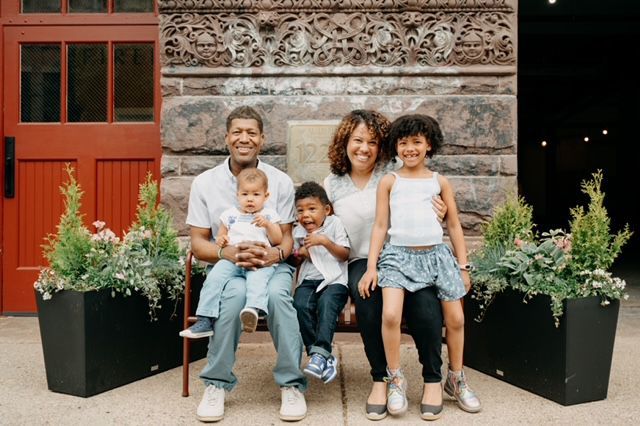
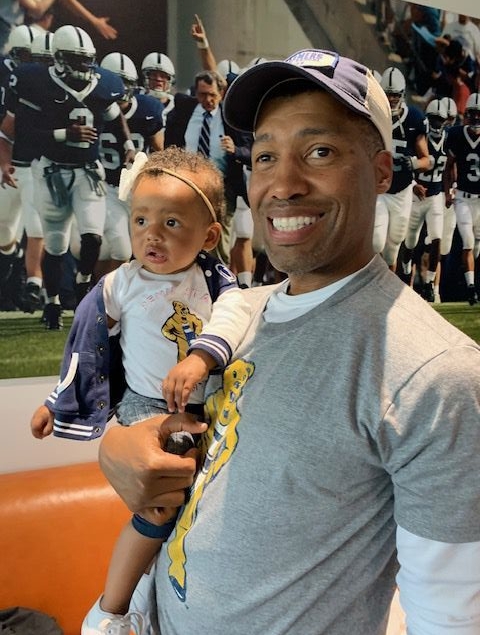
    My husband, Phil, a New Jersey native, father of three children under 7, and former Penn State University football receiver, needs a kidney.

    According to the National Kidney Registry, more than 90,000 people in the United States are currently waiting for a donor kidney. In the Philadelphia metropolitan area, that number hovers around 5,000.

    My husband suffered an acute kidney injury in December 2023 caused by liver rejection medicine, a complication that affects 4% of transplant recipients.

    Chronic kidney disease is common in the U.S., affecting one in seven adults. Most people don’t feel symptoms at first, but if it gets worse, it can lead to kidney failure and serious health problems. Dialysis is a lifesaving treatment for kidney failure, but requires the patient to be hooked to a dialysis machine for hours at a time, often for several days each week.

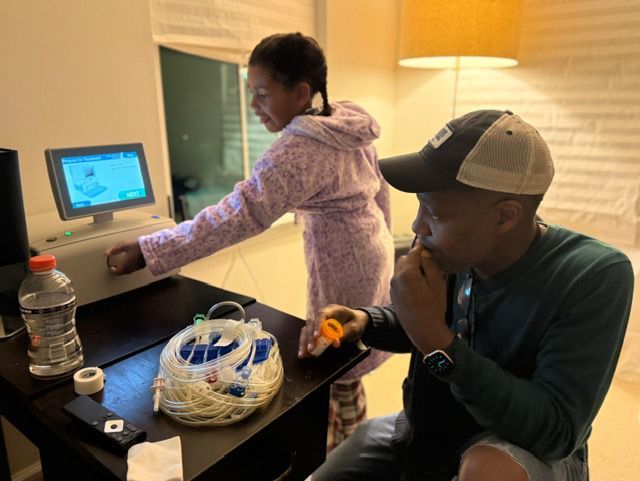
    Phil Collins and his daughter, Charlie, set up the dialysis machine.

    The small joys and normalcy of daily life quickly shift around dialysis schedules and doctors’ appointments.

    It’s been nearly two years since we were placed on the transplant list, and our three small children rely on us to keep their world from being turned upside down even more than it already is.

    Phil Collins and Morgen Perdue-Collins with their children. Collins has been waiting for a donor kidney for two years.

    They see the dialysis boxes stacked taller than they are in the front room, the catheter that we have to be careful of during playtime with their dad, and the frequent hospital visits because of a weakened immune system. Our daughter is even able to set up the peritoneal dialysis machine with help from Phil.

    As a partner of someone on the transplant list, my grief is silent and omnipresent. I find myself torn between supporting my sick husband, bringing my best self to the classroom each day, and ensuring our three little ones can simply be kids.

    When I drive to work, I see the billboards off I-95 for others who need a kidney; the wives and husbands and grandchildren and parents who are feeling just as overwhelmed and hopeful as I am. Maybe there is a match out there; perhaps someone will see their billboard, car magnet, or transplant profile and respond.

    Like so many other families with someone on the transplant list, I help the best way I can. I work to know what the weekly lab numbers mean, whether my husband’s sluggishness is due to low iron and blood count, and if there are early signs of an infection.

    Each December, his weakened immune system seems to lead him to the hospital, where he spends more time than our family would like. There is also guilt in not being able to know everything, and how best to help him in every critical time of need.

    Phil Collins with his daughter, Charlie, at a Penn State game after his liver transplant, but before he suffered an acute kidney injury in 2023 caused by the liver rejection medicine. According to his wife, Morgen Perdue-Collins, it is a complication that affects 4% of transplant recipients.

    Throughout this journey, Phil remains ever the optimist. Always looking on the positive side, while struggling to stay awake or suffering from terrible headaches and exhaustion. He remains diligently waiting and hoping things will turn around.

    But it has been two years, and we are still waiting.

    There are ways to help; for example, getting a donor match screening, as my friend, Meredith, did. She donated with extraordinary grace to a stranger last April, and this year, her family member received a kidney thanks to her advanced donation.

    To become an organ donor, you have a few options:

    • Join your state’s registry. Visit the Donate Life America website to sign up for your state’s online donation registry.
    • Use your driver’s license. Declare your intentions to be an organ donor on your driver’s license.
    • Start the donor screening process. On the Donate Life America website, you can also scroll down to “Start the donor screening process.”
    • Donate through the National Kidney Registry. If you want to donate a kidney to someone in need, you can visit the National Kidney Registry.

    Hesitation about organ donation, whether during life or after death, can stem from cultural beliefs, religious views, or medical mistrust. Many common myths about organ donation have long been disproven, but becoming a living organ donor is a demanding process, with a full return to normal taking eight weeks.

    According to the United Network for Organ Sharing, 11 people die every day waiting for a kidney.

    The truth remains simple: You have the power to save a life, to restore a family, and to give someone like Phil the most extraordinary gift of all.

    Morgen Perdue-Collins is a Philadelphia teacher, and her husband, Phil, is still looking for a match. You can visit his kidney donation page here. And visit the National Kidney Donation site here.