Category: Opinion

  • We’d be so much better off if Kamala Harris had been elected president

    We’d be so much better off if Kamala Harris had been elected president

    My late father was a high school teacher and basketball coach who learned a lot about the world around him during his 81 years. I’ll never forget how, when he’d hear me grousing about what could have been, he would always give me a look and sternly warn, “Don’t look back.”

    I’ve come to appreciate how wise his words were, but let’s face it, sometimes we don’t need wisdom — we need relief.

    Barely a few weeks into Year Two of Donald Trump’s second term, I can’t help but shake my head when I think about how much better off America (and the world) would be if Kamala Harris had won the presidency.

    She wasn’t a perfect candidate. Far from it. But once in the White House, I have no doubt she would have led the country with dignity and integrity, values currently in short supply inside the Oval Office.

    Under President Harris, the U.S. would not have invaded Venezuela and kidnapped its president, threatened to annex Greenland “the hard way,” or alienated our Canadian neighbors into boycotting American products and selling their Florida vacation homes. Rather than flirting with blowing up NATO, we would be working with our European allies to pressure Russia into ending its war with Ukraine.

    Instead of bringing back American imperialism — something nobody voted for — Harris would be focused on improving the lives of everyday Americans.

    She would be implementing policies such as allowing Medicare to better cover the cost of home care, and working with Congress to extend insurance subsidies to help keep healthcare affordable for millions of people. Meanwhile, the inflation that bedeviled her predecessor would continue to ease, untroubled by haphazard tariffs that are no less than a tax on every U.S. family.

    Elon Musk’s Department of Government Efficiency would be a ketamine-fueled figment of the tech billionaire’s imagination instead of the cause of almost 750,000 deaths — most of them children — due to the dismantling of the U.S. Agency for International Development. At home, the roughly 300,000 federal workers who left or lost their jobs because of DOGE would be serving the public, instead of leaving gaps in crucial agencies such as Social Security, the U.S. Department of Veterans Affairs, and the Federal Aviation Administration.

    You know who wouldn’t have a job under a Harris administration? The thousands of U.S. Immigration and Customs Enforcement agents who will be hired, to the tune of $30 billion, over the next few years. ICE would be targeting criminals in the country illegally, not inflicting a reign of terror on the American people. Renee Nicole Good, a 37-year-old mother of three and U.S. citizen, would still be alive instead of gunned down by an ICE agent in Minneapolis.

    FBI agents across the country would be focused on solving and preventing crimes, instead of thousands being reassigned to immigration enforcement. National Guard members would be with their families, not picking up trash in Washington, D.C., or standing around Portland, Ore., waiting for something to happen.

    Kamala Harris during an interview while shopping at Penzeys Spices on Market Street in September.

    Harris, a former California attorney general, would have kept the long-standing tradition of an independent U.S. Department of Justice, instead of turning it into the president’s law firm and using it to go after political enemies. She would have assembled a cabinet stocked with competent and experienced members, one likely as diverse as America. People like Kash Patel and Pete Hegseth would be far away from power, hawking “vaccine reversal” pills and defending war criminals on Fox News, respectively.

    Where would Trump himself be under a Harris presidency? In the same mess of trouble he had gotten himself into.

    Special counsel Jack Smith would be zealously pursuing the case against Trump for illegally retaining classified documents and plotting to overturn the 2020 election. Charges that Smith has said he could prove beyond a reasonable doubt.

    The once and forever former president would not be $3 billion richer thanks to shady crypto deals and other business ventures he has undertaken since returning to Washington. Neither would he be absentmindedly staring out where the East Wing of the White House once stood and imagining his sprawling ballroom, plastering his name on the Kennedy Center, nor costing taxpayers millions to outfit the $400 million luxury jetliner Qatar gave him.

    If anything, he might have found himself with new indictments if he had tried to steal the 2024 election, and the MAGA crowd staged another Jan. 6, 2021-style revolt in protest of a Harris victory. No doubt Harris’ attorney general would have learned a lesson from the previous administration and would not drag his feet, as former Attorney General Merrick Garland did in holding Trump accountable.

    Eventually, though, I’m convinced things would have settled down, and American politics would have gone back to being boring again — like they used to be. Fox News commentators would shift back to their old ways of complaining about Harris’ laugh and occasional lapses into word salad.

    As things calmed down, so, too, would the excitement surrounding her historic win as the realities of governance asserted themselves.

    Signing a bill to restore abortion rights nationwide would have been high on Harris’ agenda, reviving the issue that long fueled a part of the electorate. The culture war over GOP-manufactured concerns about men taking over women’s sports would rage on, never mind that trans people make up only about 1% of the population. So would the debate over the merits of diversity, equity, and inclusion efforts.

    On immigration, Harris would be caught between her party’s activist base and trying to limit people from seeking asylum at the southern border. It’s one thing for Harris to have issued her famous edict telling immigrants, “Don’t come,” and a whole other thing to take substantive steps to stem the flow of people desperate to enter the U.S.

    With Trump out of office, America would continue to be a bulwark for democracy, but the threats of authoritarianism, antisemitism, and racism would not go away. Neither would the voter malaise and congressional dysfunction that have given rise to people like Trump and his supporters. But Harris would fight the good fight for everyday Americans.
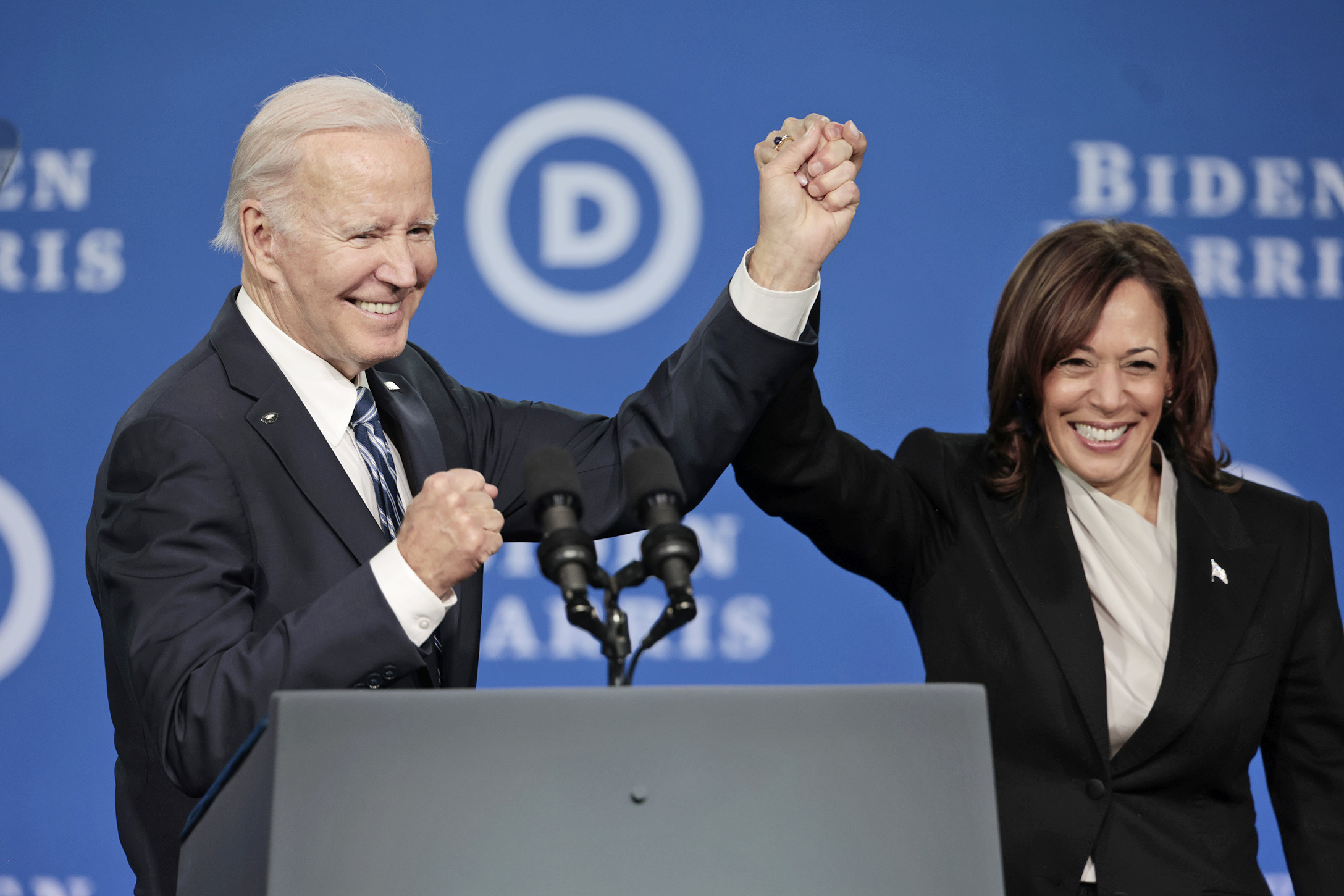
    President Joe Biden and Vice President Kamala Harris wave to the audience after addressing the DNC Winter Meeting at the Sheraton Downtown in Philadelphia in 2023.

    For a few days last month, I’d allowed myself to feel a tad bit optimistic, sensing that America had turned a corner. Maybe it was the eggnog, but the upcoming midterm elections had me feeling a little hopeful. So did the public opinion and court decisions pushing back against Trump’s excess and overreach. And Congress showing a spine and demanding accountability in releasing the Jeffrey Epstein files. If ever there were a year Rep. Jasmine Crockett could win a U.S. Senate race in Texas, 2026 felt like it could be it.

    But then, Trump dropped bombs on an Islamic group in Nigeria on Christmas Day and followed that up by sending troops into Venezuela. Now, he’s staking claims to that country’s oil reserves while looking around to see which nation he can storm next. Will it be Mexico? Colombia? Iran? Greenland? I don’t think even he knows.

    Trump isn’t bound by conventional mores or the Constitution. He’s not restrained by Congress or the U.S. Supreme Court. As he told the New York Times recently, the only thing that can stop him is his own mind. His “own morality,” which is downright scary considering his track record.

    And yet, even as I am knocked down by the reality we’re facing. I can’t help but stand up. My dad was right to warn about not looking back, but in imagining the leadership of someone who is more than worthy of the office of the presidency, I like to think I’m looking forward.

    And maybe I am.

  • The view from Greenland: Trump’s yen to take over makes no economic or security sense

    The view from Greenland: Trump’s yen to take over makes no economic or security sense

    Here’s the glaring sign of how drunk President Donald Trump has become on his own power: his ongoing threat to seize Greenland for security reasons, “whether they like it or not.” Anything else is “unacceptable,” Trump ranted last week.

    Never mind that this icebound island is an autonomous territory of Denmark, one of our longest-standing and closest NATO allies. POTUS is trying to bludgeon Copenhagen, along with seven other European allies who back the Danes, by imposing new 10 per cent tariffs on them all unless they bow to his outrageous demands.

    Never mind that seizing Greenland via economic coercion or force would destroy the NATO alliance, handing Russia and China a major victory at zero cost. Never mind that polls show that only one in four Americans want Trump to take control of Greenland, and only 6% of Greenlanders want to become part of the United States.

    The most absurd part of Trump’s crusade is that there is no need to seize or buy Greenland for U.S. security or rare earths as we already have full access to both.

    Yet, Trump is not only treating Denmark like an enemy but openly rebuffing the rights of Greenland’s government and people, who, according to Danish law have the final say about their future.

    To learn more about what Greenlanders want and why Trump’s approach draws outrage, I turned to Galya Morrell, a Greenlander of Komi ethnic origins, who was raised in the Soviet Arctic. She has led an amazing life in journalism, the arts, and Arctic adventures, alongside her late husband, the renowned Greenlandic explorer Ole Jørgen Hammeken.

    Our conversation has been edited for length and clarity.

    Galya Morrell stands by her husband’s box sled, which was used to transport killed game, atop the frozen sea ice of Uummannaq Fjord in Northern Greenland.
    ⁠What was the first reaction of most Greenlanders to Trump’s proposal to take control of Greenland?

    When we heard about Trump’s proposal during his first term, everyone took it as a joke. Back then, we still lived in a world where logic mattered. How can you buy a country? What about people living there? Many people saw The Apprentice, that’s how they knew Trump, so they thought that maybe he was going to make a new season about Greenland after he retires from his presidency, and some young aspiring actors were asking if they can join the show.

    ⁠Do they take Trump seriously now, especially after Venezuela?

    Now it’s different. I don’t think that Venezuela played a big role in their perception, because already, people knew that Trump became obsessed with Greenland. At first, people thought that maybe it was even good for Greenland, because finally — finally — Denmark started taking Greenland seriously. Before, many Danes saw Greenlanders as a bunch of drunks and useless folks, which they aren’t, and a burden for Denmark. After Trump said he wanted it, many Danes changed their mind.

    Trump also accidentally woke up Greenlandic nationalism because the Greenlandic independence movement was sleepy and divided. Now there was a foreign bully. Nothing unites people faster than someone who treats them like furniture in the new condo purchase. Suddenly even Denmark looked like a shield [against Trump] instead of a cage.

    A 1951 pact with Denmark offers the U.S. almost unlimited military access on land, air, and sea. As for mining hard-to-access critical minerals, Greenland’s government would eagerly welcome U.S. investment. So what is your take on what Trump really wants?

    About 20,000 U.S. soldiers and technicians were based in Greenland [after World War II] and then suddenly they were all gone. Today only Pituffik Space Base [the former Thule Air Base] is still around with some 150 personnel. So why did the US not bring them back when it was clear that Russia rebuilt and upgraded all the former Soviet bases in the Arctic and became a threat in the region?

    The United States already had Greenland, quietly, through contracts, bases, and the gravitational pull of English. But none of that had Trump’s name on it. And if your name is not on something, do you even own it?

    It appears that [Trump’s need for ownership] is not logical but psychological. I think that his understanding of success or power is only when “there is a deal,” and when someone loses face — very important! And when he gets credit — even more important. Soft power, which America had in Greenland until recently, looks like nothing to him. Because none of what existed had Trump’s name on it.

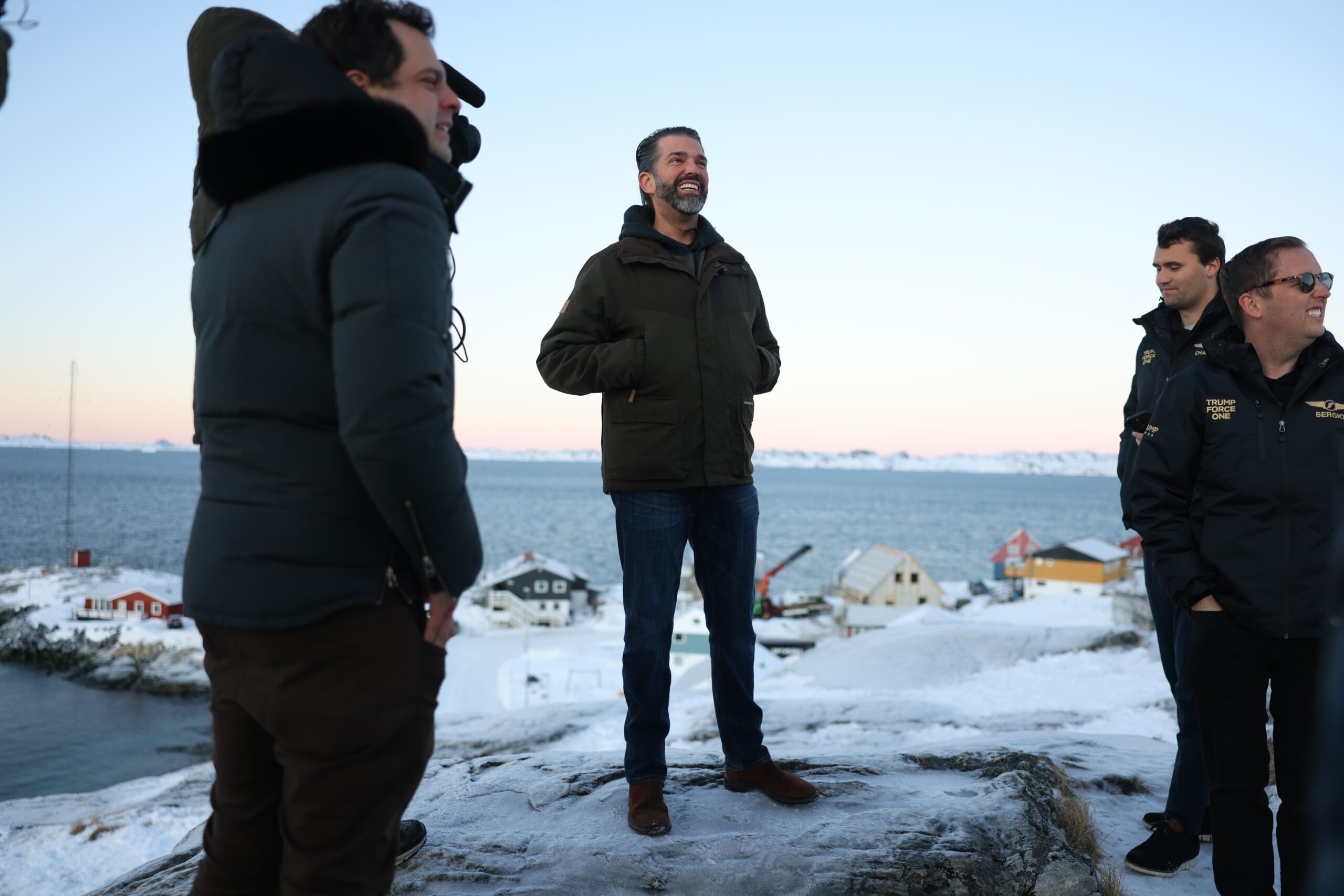
    Donald Trump Jr. (center) smiles after arriving in Nuuk, Greenland, in 2025.
    Are there Trump influencers (or suspected intelligence agents) roaming around, trying to find or buy supporters?

    As a family, we have not seen or met the “agents,” but we certainly saw some people in Nuuk, following Donald Trump Jr.’s visit a year ago, giving money and red MAGA hats to the youngsters, schoolkids, and making them say things on camera. Parents were outraged when they saw their own kids on TV, but it was too late.

    ⁠What really happened when Trump Jr. visited? Why was he so eager to talk about Greenland?

    My late husband, an Inuit elder and explorer, was asked to meet Trump Jr. back in 2015. He wanted to hunt musk ox in Greenland, but not where average tourists hunt. So my husband said that there are a lot of musk oxen around Hammeken Point [a mountain named after him], and he could take him there and be his guide.

    They were planning the expedition for a while, until one day Junior said that he can’t go because his dad decided to run for the presidency. Later, my husband thought that maybe it was all his fault for telling Junior exciting stories about Greenland and about what was hidden there under “all this ice,” and maybe that somehow affected Trump’s father’s interest.

    ⁠Some Trumpers think Greenlanders can be bought. Are some interested?

    We hear rumors that he is thinking of paying $100,000 to each Greenlander. Well, it’s not a lot of money, a boat costs around that, and who will sell the country for the price of a boat? But seriously speaking, today, everyone whom I know says firmly no. There is no price tag, no matter how much. The country is not for sale.

    But we live in a strange world, so I don’t know what will happen for sure. [Opposition leader] Pele Broberg is saying out loud what many politicians think quietly: that Greenland is already being pulled into the American orbit, and that it might as well try to get paid for it.

    Denmark’s Foreign Minister Lars Løkke Rasmussen (right) and Greenland’s Minister for Foreign Affairs Vivian Motzfeldt (left) prepare at the Danish Embassy for a meeting with Vice President JD Vance and Secretary of State Marco Rubio in Washington on Wednesday.
    Do some Greenlanders feel that way?

    Yes. Especially younger people, miners, business owners, and those who feel Denmark never gave Greenland a real economy, only a welfare system. For them, a deal with America sounds like a shortcut to dignity, jobs, and finally being taken seriously.

    But there is no such thing as “a deal” between a superpower and a small Arctic society. There is only dependence, dressed up as partnership.

    The United States already has what it needs in Greenland: military access, strategic geography, and preferential access to resources [such as rare earths]. What it doesn’t have is legal ownership or political control. A so-called “deal” would simply move Greenland’s dependency from Copenhagen to Washington. The question is whether Greenland would still be free after it is made.

    Can you imagine a U.S. military takeover attempt? What would be the consequences? Denmark and many other NATO allies are already moving small numbers of troops to Greenland as a tripwire.

    My husband and I had hoped to live the rest of our years in a small village, Siorapaluk. It is such a beautiful and peaceful place. Ironically, it is 92 miles from Pituffik Space Base. We honestly thought it was the most peaceful place on Earth.

    At this moment, we all — I can only talk about our family and friends — hope for a peaceful solution. Any negotiations are better than the war in the Arctic. Real war in the Arctic will be the end to everything.

    If the U.S. really wanted to secure its interests in Greenland what could Trump do legitimately?

    Trump still can return to U.S. bases, build new ones, invest in the population, in their education and knowledge. I see how scientists, glaciologists, marine biologists — 15 different specialties — from Japan’s Hokkaido University work together side by side with the local Inuit hunters, elders, and children in Qaanaaq, very close to Pituffik Space Base. It is an ideal collaboration; they love each other and benefit from each other. But they have a very smart leader, Shin Sugiyama. I think that President Trump could learn from him.

    People take part in a march ending in front of the U.S. consulate, under the slogan, Greenland belongs to the Greenlandic people, in Nuuk, Greenland, in March.
    Trump claims that if the U.S. doesn’t take Greenland, China or Russia will. What is he talking about?

    Russia is expanding its military presence in the greater Arctic region. This is their priority. I was once arrested by Chechen commandoes [on a floating Russian ice base, not part of Greenland but above the disputed underwater location of the North Pole]. So, yes, activity in Arctic waters is very real, and it is increasing. China has a major interest in Greenland. [But Greenlanders and Arctic experts see no signs of the Chinese and Russian ships Trump says are lurking around Greenland.]

    Greenlanders have said no to Russia and China because we don’t want them. A year ago, the Chinese bought some mining rights, but said they would bring their own workers, like what they have done in Yakutia [a northern region of Russia]. Chinese men married Russian women in Yakutia. There is a growing Chinese presence in Siberia. Soon, a majority will be Chinese, but no one sees it. [Fearing a similar outcome, the Greenland government ultimately rejected the Chinese investment.]

    [Russia’s invasion of Ukraine has also increased Greenlanders’ hostility to Moscow. They are painfully aware of “how poorly Russians treat their Arctic minorities” and how “Putin took the poorest people from Arctic villages” to fight and die in Ukraine].

    Should NATO troops be stationed in Greenland alongside more U.S. troops?

    Today the Arctic is becoming a place where three things overlap: military early warning systems, resource competition, and new shipping routes [due to melting ice]. That combination creates the possibility of accidents and miscalculations long before it creates a planned Russian or Chinese invasion.

    The biggest risk is not that someone like Russia or China suddenly wakes up and “takes Greenland.” The risk is escalation. I think that Greenland’s best protection is not a sudden flood of troops. It is a predictable security architecture that everyone understands.

    Greenland needs protection. But we are old enough to remember how conflicts were avoided during the Cold War: There were rules and restraint. There was clarity. Not theater.

    What do you hope for (or dread) after the failure of last week’s meeting at the White House between Vice President JD Vance and Secretary of State Marco Rubio and the foreign ministers of Denmark and Greenland?

    What I hope for is very simple: that adults will run the room. Secretary of State Marco Rubio is not a performer. So I really hope meetings will not be about headlines or symbolic victories. They should be a security conversation and not a dominance ritual.

    As I said before, the U.S. already has what it needs in Greenland in terms of security. My husband said not long before he departed: “Greenland does not need to be rescued. It needs to be respected.”

  • Letters to the Editor | Jan. 18, 2026

    Letters to the Editor | Jan. 18, 2026

    Domestic terror

    I rarely agree with Donald Trump, but he’s correct about one thing: There is domestic terrorism in America. The perpetrators have been spotted in major cities across the country. They are brazen in their assaults on citizens, wear masks to conceal their identity, drive unmarked vehicles, and rarely identify themselves. They kidnap and hold victims without due process. They carry long guns and many other weapons to cause panic and fear in our communities. We must insist that our elected government officials band together to eliminate this threat. We demand that all U.S. Immigration and Customs Enforcement agents be detained and disarmed, and that ICE be abolished to ensure our safety and protect our rights.

    Barry Adams, Malvern

    Enough is enough

    After almost a year of outrages, large and small, Donald Trump now has blood on his hands. While we seem to be almost immune to caring about the 100 or so casualties of Trump’s bizarre bombing of alleged drug boats, plus another 100 killed in the kidnapping attack on Venezuela, there is now the death of an American citizen in Minneapolis at the hands of U.S. Immigration and Customs Enforcement agents.

    Despite Homeland Security Secretary Kristi Noem’s attempt to spin the horror, it is apparent that this is the tragedy we all feared when we first saw masked thugs, alleging to be law enforcement, cloaked in black and unidentified on the streets of American cities. There was unintended meaning in the fact that The Inquirer’s front-page story happened to jump to Page 6 exactly between Noem calling it “an act of domestic terrorism” and saying the victim was the terrorist. For once, she seemed to be telling the truth: that ICE is a domestic, government terrorist organization. While Trump’s sycophants help him turn our world upside down, Americans need to find ways to stand up and defend ourselves and each other. It is time to bring our feckless leaders to justice before they destroy any more of our lives, our fortunes, and our sacred honor.

    Joe Jones, Mount Holly

    Double standard

    Just to be clear, Vice President JD Vance said about the U.S. Immigration and Customs Enforcement agent who shot the woman in Minnesota: “This is a guy who’s actually done a very, very important job for the United States of America … he’s been assaulted. He’s been attacked. He’s been injured because of it.” Really? Let’s remind the VP that those exact sentiments apply to all police present at the Jan. 6, 2021, insurrection, when armed Donald Trump supporters attacked the U.S. Capitol. What’s changed?

    Dennis Fisher, Media

    Moral restraint

    During a lengthy interview in the Oval Office, our authoritarian president declared that no law, domestic or international, can limit his use of the power he believes American voters bestowed upon him. What can stop him? “My own morality. My own mind. It’s the only thing that can stop me,” he said. No need here to make the case that Donald Trump, who by all rights should be sitting in a federal penitentiary right now, has any morality.

    Those statements, combined with his lawless actions, should at long last be the breaking point, the point of no return, for House and Senate Republicans. As unpalatable as is the thought that his snarky prevaricating vice president will be elevated to chief executive, Congress must now impeach and convict the greatest villain to ever sit in this nation’s highest seat of power. That may require Pennsylvania’s Republican senator to, for the first time, stop blindly toeing the line for Trump and his divisive and often absurd policies.

    David Kahn, Boca Raton, Fla.

    Join the conversation: Send letters to letters@inquirer.com. Limit length to 150 words and include home address and day and evening phone number. Letters run in The Inquirer six days a week on the editorial pages and online.

  • Trump’s assault on free and fair elections continues | Editorial

    Trump’s assault on free and fair elections continues | Editorial

    There are many things Donald Trump could regret about the aftermath of the 2020 election.

    Perhaps it could be his nonstop lying about voter fraud, or how he was recorded asking Georgia election officials to “find” him the votes he needed. Maybe he has remorse about inciting the mob that attacked the U.S. Capitol, violence that led to seven deaths and more than 100 injured law enforcement officers.

    But no. What the president “regrets,” as he told the New York Times recently, is not ordering the National Guard to confiscate voting machines in swing states he lost.

    If the idea of military reservists marching into Philadelphia polling places and walking out with the pesky will of the people seems far-fetched — just another of Trump’s rambling musings — then consider that he and his enablers are already laying the groundwork to undermine future elections.

    With the midterms less than a year away, local and state officials must remain steadfast in their defense of free and fair elections, and voters must demand that their rights are protected.

    The administration’s assault on the franchise began in March, when Trump issued an executive order seeking to exert control over election law that the Constitution does not grant the president, including demanding states avoid counting mail ballots postmarked by Election Day but received after.

    The courts have so far stopped the order from taking effect, but it is worth noting that a new U.S. Postal Service rule changes when a piece of mail is postmarked — no longer when it is dropped off, but when it is processed. That means procrastinating voters in states where a ballot counts if mailed by Election Day can no longer take for granted their vote will be tallied.

    Rioters try to break through a police barrier at the U.S. Capitol on Jan. 6, 2021.

    Trump has claimed he will target mail-in ballots and voting machines as part of his effort to “help bring HONESTY to the 2026 Midterm Elections.” He has also threatened election officials who oversaw the 2020 election with prosecution while pardoning the Jan. 6, 2021, rioters who sought to interfere with the certification of Joe Biden’s electoral victory.

    Meanwhile, starting in May, the U.S. Department of Justice demanded that states turn over their complete voter registration lists. Many states have declined to comply, including Pennsylvania, and are being sued by the government. This is sensitive data that includes Social Security numbers, dates of birth, and home addresses.

    Along with privacy concerns, there are fears that the Trump administration may seek to cast doubt on voter eligibility and pressure states to purge people from voting rolls. Already, there are examples of people being falsely identified as noncitizens by federal databases.

    It is sadly not much of a leap to imagine Trump claiming widespread voting by noncitizens requires U.S. Immigration and Customs Enforcement agents be stationed at polling places. Of course, noncitizens can’t vote, but one does not need to be an immigrant to be intimidated by gun-toting masked forces who have shown they will fire first and expect no questions later.

    The president has also successfully lobbied some Republican-controlled states to remake congressional maps to favor the GOP, regardless of their potential illegality. In Texas, the U.S. Supreme Court allowed 2025 redistricting maps to be used for the upcoming election, even as a legal challenge moves forward over racial gerrymandering. The high court’s conservative members are also likely to strike a blow against the Voting Rights Act this term, further emboldening voter suppression efforts.

    The administration’s unprecedented machinations have fortunately run into the wisdom of the founders, who charged the states with running elections, not the federal government. The same decentralization that sometimes frustrates widespread election reform and the implementation of best practices also limits a wholesale takeover.

    State election officials — Republicans and Democrats — have shown they take their charge seriously and are honor-bound to do their duty. Still, as Trump continues to consolidate power in the executive and stoke fears of widespread fraud, ensuring free and fair elections will require keeping the federal government from overstepping its authority.

  • Americans take their heroes where they can get them, but they should look past Philly’s sheriff | Shackamaxon

    Americans take their heroes where they can get them, but they should look past Philly’s sheriff | Shackamaxon

    This week’s column talks about heroes with feet of clay, SEPTA’s starts and stops, and America’s 250th birthday celebrations.

    No one’s hero

    Philadelphia Sheriff Rochelle Bilal is having her 15 minutes of fame this week, with her comments at a news conference alongside District Attorney Larry Krasner spreading across social media. After the killing of Renee Good by U.S. Immigration and Customs Enforcement agent Jonathan Ross in Minneapolis, Krasner stated that he would hold federal officers accountable for any violation of the law. Bilal warned that the feds “don’t want that smoke” and called ICE “fake wannabe law enforcement.” She even scored an interview with CNN’s Erin Burnett.

    That’s all well and good, but there’s one big problem with Bilal’s position: The sheriff ultimately has no ability to protect Philadelphians from ICE.

    Despite her title and natty uniform, it is Police Commissioner Kevin J. Bethel who serves as the city’s top law enforcement official, not Bilal. This is a good thing because the sheriff’s track record is disastrous.

    Despite running for the office in 2019 as a reformer, Bilal began her tenure by firing Brett Mandel, her chief financial officer, just five weeks into his tenure. Mandel had flagged her use of what he described as a slush fund. A longtime good government advocate, Mandel objected to using city funds to pay for things like parking tickets and six-figure media consulting contracts.

    Things haven’t improved in the years since. Bilal was publicly criticized by the city’s judges for her failure to protect courtrooms, turning over foreclosure sales to an online operator with little notice, covering up the theft of a department-issued vehicle, one of her deputies was caught selling guns illegally, and her office wasted nearly $10,000 on a new mascot no one asked for. The list goes on, yet city officials have mostly steered clear of criticizing the sheriff for her missteps.

    While Bilal was basking in the media spotlight of talking tough against ICE, Bethel was not amused. Given Mayor Cherelle L. Parker’s clear strategy to avoid poking the orange bear, Bilal’s comments forced the commissioner to make clear in a statement that it is the Philadelphia Police Department that runs law enforcement in the city, not the sheriff.

    If people are looking for a genuine local hero in the national crisis over immigration enforcement, why not opt for Keisha Hudson instead? Hudson, who leads the local Defenders Association, has put together a new unit specializing in immigration cases. An immigrant from Jamaica herself, Hudson has both the right job and the right life experience to help residents who have been mistreated by ICE.

    Bilal, on the other hand, can’t even keep ICE from turning the courts she’s responsible for into a hunting ground for the feds.

    Eagles fans wait for a Broad Street Line train at City Hall station.

    The wheels on the bus

    During the yearslong debate over transit funding in Pennsylvania, one consistent drumbeat is that SEPTA needed to become more efficient if it wanted to get more support.

    Of course, SEPTA already does more with less when compared with other major agencies, with cost-per-ride lower than in Boston and Washington, D.C. Additionally, trying to save money can sometimes cost agencies in the long run, or at the very least cost scarce political capital.

    In fact, most of the current crises SEPTA faces are the result of trying to save money or insufficient political will. For example, better capitalized agencies would have replaced the Regional Rail fleet a decade or so ago. Meanwhile, the weekslong closure of the trolley tunnel happened because the agency tried using a new part — in the hope that it would be replaced less frequently and cost less.

    Perhaps the Broad Street Line felt left out of the chaos because operations there have become a new pain point for riders. The 1980s Kawasaki trains are well-built. They are also nearly 45 years old. When I first started at The Inquirer five years ago, then-SEPTA General Manager Leslie Richards told me she hoped to avoid replacing the trains until the 2040s. Recent issues on that line make me question that timeline.

    For weeks, the trains have struggled with mechanical issues. Riders have reported jam-packed trains that have been forced to skip stops, line adjustments, and other delays. According to a spokesperson, door faults and general vehicle malfunctions have contributed to the problems.

    It all came to a head at the end of Sunday’s Eagles game.

    After a door issue disabled a train near Snyder Station, already dejected fans were forced to wait until 9 p.m. to catch a ride home. SEPTA is spending $5 million to upgrade the traction motors, which should help. What’s really needed, however, are new trains.

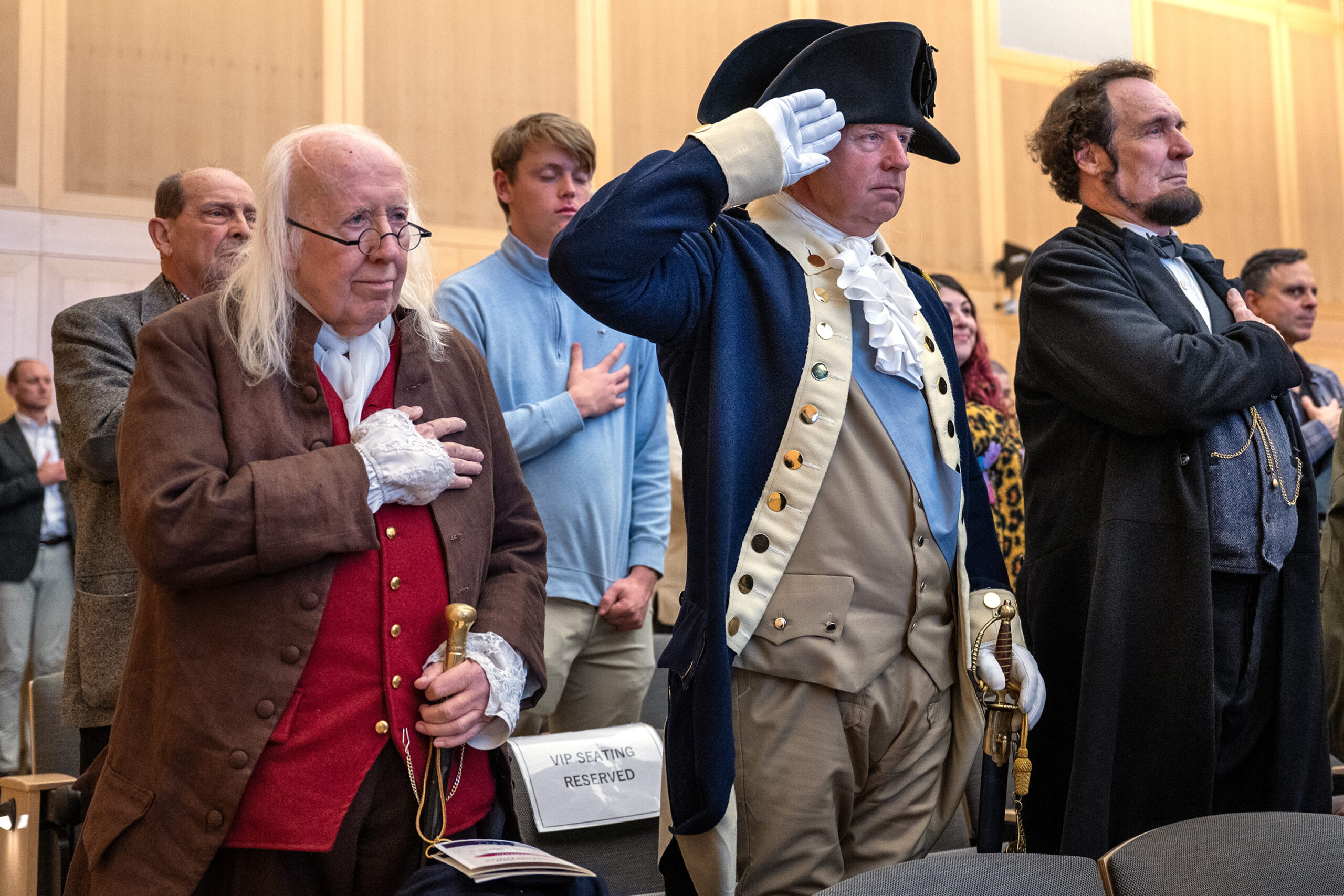
    Historical interpreters (from left) Benjamin Franklin, Gen. George Washington, and President Abraham Lincoln stand with other audience members for the Presentation of the Colors, as the U.S. Mint unveils new coins for the Semiquincentennial at the National Constitution Center in Philadelphia in December.

    Let’s get this party started

    The United States is celebrating a big one this year. America’s big 250th birthday party is here … can you tell?

    I can’t. While big events like the World Cup are planned for later this year, there is currently little to indicate that 2026 is any different from 2025. The patriotic bunting that sprouted all over Philadelphia during the Civil War and the Centennial has yet to appear.

    Still, help is on the way. City and state officials announced an $11.5 million initiative to remove graffiti, plant flowers, and otherwise beautify the city.

    At that price, we should probably do it every year.

  • Letters to the Editor | Jan. 16, 2026

    Letters to the Editor | Jan. 16, 2026

    Taking over

    Vladimir Putin’s excuse for invading Ukraine was that it belongs to Russia because it used to be part of the Soviet Union. I don’t think any American bought that idea. Now, Donald Trump wants to take over Greenland for our national security before Russia or China takes it over. Does anyone buy that argument now? Why was it wrong for Russia to invade Ukraine, but it is OK for the U.S. to take over Greenland? Since when is it OK for the U.S. to take over another country? How about an autonomous territory of a NATO ally? How can any American (Republican, Democrat, independent, MAGA, progressive) think this is all right? Trump says he’s doing what his voters want. Did anyone who voted for Trump want him to take over Greenland?

    June Siegel, Elkins Park

    Fear or anger

    After reviewing the multiple videos of the horrific shooting of Renee Good in Minneapolis, we are asked to believe the U.S. Immigration and Customs Enforcement agent was motivated by fear for his life as he got out of the way of Good’s SUV. I would suggest another emotion that motivated him: anger. In other videos, an expletive directed toward Good can be heard. After the ICE agent shoots through the front windshield and the SUV passes him by, he continues to shoot through the open driver’s side window when he is no longer allegedly in danger. If one wanted to explain the term gaslighting, there are few better examples than the interpretation of this video we are hearing from ICE and Homeland Security chief Kristi Noem. In other words, “Don’t believe what you see.”

    Pasquale Procacci, West Palm Beach, Fla.

    Circle of violence

    The story of Nyshyia Thomas is gut-wrenching. While her one son was killed as an innocent victim of a random shooting, her other son and her partner devastated their family through pure recklessness. Despite the second son owning his gun legally, he and his formerly incarcerated father prioritized violence over their family by arming themselves and running toward gunfire rather than retreating. Thomas blames “the system” for swallowing the two men — but the reality is that the system has no hunger for people who don’t marinate in guns and violence.

    Rosamond Kay, Philadelphia

    It’s time

    On Sept. 11, 1976, 1,500 people gathered at the Lewis Quadrangle at Independence Hall. They were there to launch a time capsule created by the Women For Greater Philadelphia (the nonprofit stewards of historic Laurel Hill Mansion in East Fairmount Park). Children 10 years old or younger were asked to include their names in the capsule. The 816 children whose names were included received a certificate. It charged each one to open and reseal the time capsule in 2026, and tell their children to open it again in 2076. A letter from then-Mayor Frank Rizzo, written to the current mayor, and from Gov. Milton Shapp to the people of Pennsylvania, is also in the capsule.

    The capsule will be opened sometime this fall during a ceremony with representatives from the state as well as other dignitaries. If you were present at the filling of the time capsule in 1976 and received a certificate charging you with the privilege and responsibility to carry the “Spirit of 76” forward to future generations, we’d like to hear from you at womenforgreaterphiladelphia.org/time_capsule.html.

    Barbara Frankl, chairperson of the board, Laurel Hill Mansion, Blue Bell

    Flu surges

    Americans are terribly exhausted and stressed. Chronic anxiety over the affordability of basic needs like food, housing, and healthcare wears people down. Rapid technological changes like artificial intelligence and robotics are threatening U.S. employment. The climate change crisis continues, and people fear violence. No wonder there is a flu surge this season — our immune systems are shot, rendering us vulnerable to not only influenza but also other infectious and noninfectious diseases.

    Richard A. Lippin, Southampton

    Legal shield

    The recent arson at the Beth Israel Congregation synagogue in Jackson, Miss., is the consummate example of antisemitism. What is not antisemitism is criticizing the state of Israel for the genocide it is implementing, the famine it is enforcing, and the ceasefire it is violating under the guise of national defense. House Bill 6090, which allows for the criticism of the government of Israel to be considered as antisemitism, passed the U.S. House, with Pennsylvania Reps. Brian Fitzpatrick, Madeleine Dean, Brendan Boyle, and New Jersey Reps. Jeff Van Drew and Donald Norcross are all voting to squash your right to free speech in order to protect the state of Israel from criticism. This is anti-American.

    Roy Lehman, Woolwich Township

    Two questions

    Growing antisemitic violence worldwide — with hate sanctioned through sentiments like those expressed by Vice President JD Vance at the recent Turning Point USA conference — compels me to share a personal story. The Baltimore of my youth was a time marred by disgraceful, degrading Jim Crow laws. Large signs were posted throughout neighborhoods and establishments reading, “No Jews, Negroes, or Dogs.” With regularity, our school classes traveled to Philadelphia to visit the Liberty Bell, which is inscribed with words from Leviticus 25:10: “Proclaim liberty throughout the land unto all inhabitants thereof.” No teacher ever referenced the disparity between these words and life as endured in Baltimore.

    Following the April 4, 1968, assassination of the Rev. Dr. Martin Luther King Jr., parts of inner-city Baltimore erupted in flames. My father’s business, a fuel oil company started by his father, was destroyed, including the trucks that serviced families with necessary heating oil and the accounts receivable. Although most of his customers lived far from the business location, my father cared about those living near his business, providing heat for countless families, never expecting payment, contributing to all charities he knew about, and, when invited, attending church services with our family. On April 10, eight months pregnant with my first child, I stood in front of my father’s former business, scorched and burned, the smell of destruction ever-present. I heard a man my dad recognized taunt us with a slur. My anguished mother quietly responded, not to the man but to me, “Why are we so hated?”

    Our beloved rabbi, Uri Miller, urged my father to declare bankruptcy, but he refused. My parents sold their comfortable home, most furnishings, and cashed in savings. As soon as his debts were paid, he and my mother moved to a small apartment in Florida. My father believed he had dishonored his father’s name, failed his wife, and disgraced his family. Eventually, my father kept his promise to my mother, bringing her home to be buried in the same Baltimore cemetery as her parents. Several years later, he was buried beside her. More than 30 years after her death, my mother’s haunting question remains: Why are Jewish people so hated? Or to draw on the prescient, thought-provoking insights of Holocaust survivor and activist on behalf of the protection and well-being of all people, Elie Wiesel: Are Jews only spoken up for once we are dead?

    SaraKay Smullens, Philadelphia

    Join the conversation: Send letters to letters@inquirer.com. Limit length to 150 words and include home address and day and evening phone number. Letters run in The Inquirer six days a week on the editorial pages and online.

  • From Spotify to Avelo, economic pressure is melting ICE — but we can do more

    From Spotify to Avelo, economic pressure is melting ICE — but we can do more

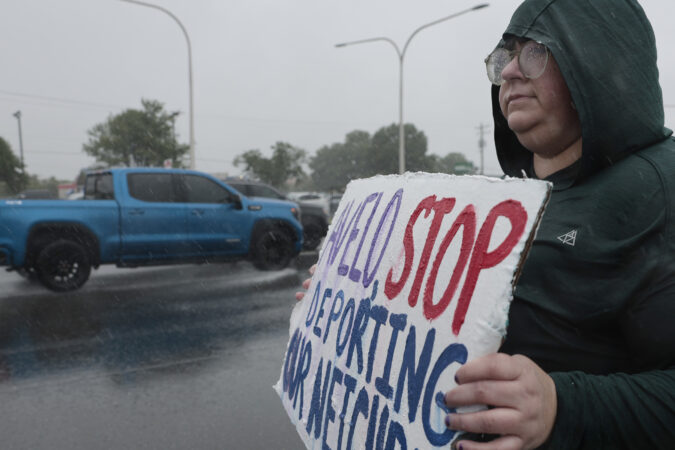
    When the Rev. Jack Perkins Davidson and other parishioners in his socially active Spring Glen Church in Connecticut learned last year that budget carrier Avelo Airlines — with a major hub at nearby Tweed New Haven Airport — was also operating U.S. government deportation flights, the pastor kept thinking about one thing.

    What would the Rev. Dr. Martin Luther King Jr. do?

    Davidson said King’s 1955 Montgomery bus boycott against segregation — the iconic protest that launched the civil rights movement of the mid-20th century — was an inspiration as he and a coalition of activists pressured Avelo to stop aiding U.S. Immigration and Customs Enforcement and its mass deportation campaign.

    “I often think about how the Montgomery bus boycott was a very local action, but it became national news,“ Davidson told me by phone recently. ”Sometimes when I feel so overwhelmed by the state of the world, I take hope in that example — that acting in the local level is a way to create national impact.”

    Davidson and his congregation’s allies, like Connecticut Students for a Dream and the New Haven Immigrant Coalition, spent nine months pressuring Avelo to drop ICE — staging noisy protests, but also doing what the minister called “the unglamorous work” of gathering petition signatures and attending airport board meetings. Last summer, New Haven’s mayor signed their petition as the city banned official travel on Avelo.

    The Connecticut crusaders were joined by activists at other Avelo hubs, including Wilmington. It’s impossible to know exactly how much boycotting air travelers hurts the bottom line of the private, Texas-based corporation, but earlier this month, Avelo made a U-turn. A spokesperson said the airline would halt working with ICE, which “ultimately did not deliver enough consistent and predictable revenue to overcome its operational complexity and costs.”

    Avelo’s exit from the ugly business of flying often handcuffed and shackled migrants out of the United States was a huge win for the growing movement against the Trump regime’s mass deportation raids — but it was not an isolated incident.

    In recent days, the leading music streamer Spotify announced it was no longer running recruitment ads for new ICE agents. The spots urged would-be applicants to “fulfill your mission to protect America,” but sparked outrage among listeners opposed to the agency’s masked goons and its violent raids that have roiled cities from New Orleans to Minneapolis.

    As with Avelo, Spotify’s ties to ICE — the U.S. Department of Homeland Security paid the Swedish-based streamer $74,000, according to Rolling Stone — sparked a nationwide campaign for a boycott that was led by Indivisible, a leading organizer of the massive “No Kings” protests.

    Thousands canceled their paid subscriptions, and some artists pulled their music from Spotify to protest both the ICE ads and the company’s ties to a defense contractor.

    These economic wins come amid a deadly and chaotic start to 2026 that has battered America’s already damaged national psyche. The stunning Jan. 7 Minneapolis murder of Renee Nicole Good, a 37-year-old poet and mother of three, by an ICE agent has only upped the anxiety and the stakes.

    Tuesday night, the shooting of a Venezuelan refugee by federal agents in north Minneapolis triggered a chaotic night of protest that has Donald Trump now threatening to invoke the Insurrection Act and send in troops, escalating a constitutional crisis.

    Although the immigration raids are exactly what Trump promised the nation before his narrow 2024 election victory, Good’s murder and daily viral videos of federal agents smashing windows or flash-banging peaceful citizens have turned a majority of Americans against ICE and everything it stands for.

    A new Quinnipiac Poll released this week showed that 57% of Americans now disapprove of the way ICE and other federal agencies are enforcing immigration laws, with 53% saying Good’s killing was not justified. A separate Economist/YouGov survey found respondents favoring the abolition of ICE by a 46%-43% majority — a first for that political hot-button question.

    So, as you can imagine, in a healthy functioning democracy like the United States, the opposition party Democrats are forming a united front in working to abolish ICE, including the withholding of money in the latest budget battle on Capitol Hill, right?

    Right?

    Um, not exactly. To be sure, Good’s murder and the appalling scenes in Minnesota have triggered a more radical response from some Democrats, including more than 50 members, so far, who’ve signed on for the impeachment of DHS Secretary Kristi Noem. But many in Congress are insisting ICE can somehow be reformed — including an utterly bizarre proposal to put scannable QR codes on immigration agents so the public can identify them. It’s an echo of the tepid reform ideas that failed to stop police brutality after George Floyd’s 2020 murder.

    “Clearly, significant reform needs to take place as it relates to the manner in which ICE is conducting itself,” House Minority Leader Hakeem Jeffries of New York told MS Now on Tuesday night — minutes before agents in Minneapolis reportedly shot a flash-bang grenade into a moving car and injured six children, including a baby.

    You don’t significantly reform the brand of fascism that we can all see on the icy streets of the Twin Cities. You fight it like the existential crisis for American democracy that it is. Millions of everyday Americans are both feeling that urgency and dismayed that the institutions they thought would oppose autocracy — Congress, the media, the U.S. Supreme Court — aren’t standing with them.

    No wonder people are fighting with the only real ammunition they have under late-stage capitalism: their dollars.

    Nearly one year into the second coming of Trump, many of the major victories by citizens resisting his regime have come through the fingertips of everyday folks clicking on a “cancel” button.

    The best-known example came last summer when Disney-owned ABC briefly suspended late-night host Jimmy Kimmel in a flap over some (fairly tame) comments he made after the assassination of right-wing activist Charlie Kirk. The network raced to put Kimmel back on the air after the cancellation rates for two lucrative Disney-owned streaming services, Disney+ and Hulu, doubled. And Disney recently extended the contract of Trump’s least-favorite comic by another year.

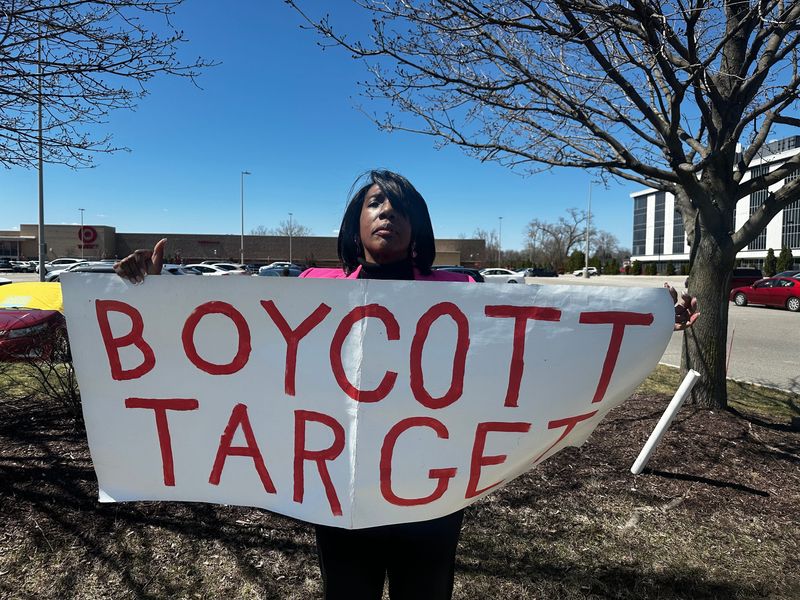
    Other economic pressure campaigns have badly damaged U.S. brands without getting results … yet. The best example is the giant retailer Target, whose decision to end its diversity initiatives after Trump’s inauguration sparked calls for a boycott by prominent Black activists and some labor unions. Since then, foot traffic at Target stores has dropped (while increasing at more “woke” rival Costco), and the stock price of the Minnesota-based company has plunged by 33%.

    This hasn’t yet inspired Target’s management to fully restore its diversity initiatives, and it more recently has angered some activists by insisting it has no power to stop ICE agents from using its parking lots and even entering its stores to make arrests. None of this should deter the public from keeping the pressure on Target.

    Allison Folmar of West Bloomfield joined the protesters who advocated for a boycott against Target in April.

    The weeks of Minnesota mayhem have focused attention on a new corporate bête noire: Hilton Worldwide Holdings. Two of the hotel chain’s properties in Greater Minneapolis have been the scene of noisy, all-night protests after reports that out-of-town ICE agents are staying there. And Hilton further infuriated activists and sparked calls for a boycott by delisting a third Minneapolis hotel after an employee said ICE was not welcome.

    I will not stay at any Hilton hotel as long as the company thinks it’s OK to host masked thugs who are snatching laborers off the street and shooting or tear-gassing anyone who objects to that, and I hope you would consider doing the same.

    As New Haven’s Davidson rightly said, using economic pressure to end injustice takes time and hard work that isn’t always glamorous or made for the cable-TV cameras. Some 71 years ago in Montgomery, Ala., the King-led bus boycott took 381 days and a lot of sacrifice from unsung heroes like Claudette Colvin, who died this week at age 86, and working-class Black people who walked or carpooled to their jobs until claiming victory.

    The bottom line has not changed since MLK’s time. The color that matters most to corporate America is the color of money. The pursuit of profit is why cowardly law firms or TV networks like CBS are aiding American dictatorship instead of fighting it. But it’s also what makes them reverse course when they realize that hate is actually bad for business in a consumer society.

    Boycotts aren’t the only solution, but in a world where feckless institutions have given up, they have become an essential tool. Spend your dollars with any company that still believes in a decent, diverse America, and put the collaborators out of business. Consider it an early birthday present for Dr. King.

  • In the lottery of life, I got lucky

    In the lottery of life, I got lucky

    Many years ago, when I was a college student, a philosophy professor told me that life was a great cosmic lottery. None of us chooses the parents we have. Instead, they choose to have us.

    I’ve been thinking about his comment because my mother died last week, after a long and fruitful life. Of course, it’s always sad to lose a loved one. But since she passed, I’ve felt more serendipity than sorrow.

    In the great cosmic lottery, I got lucky.

    I got lucky because Mom taught me that men and women are — or should be — equal, in all the ways that matter. She never sat me down and said that, but she didn’t have to. It permeated everything she did.

    Mom devoted her career to international family planning and maternal health. She fought for women to have access to contraceptive information and services, no matter where they lived. She thought they should be able to make their own choices about reproduction and everything else.

    So “Women’s Lib” wasn’t just a saying where I grew up, in the 1960s and 1970s. It was a fundamental truth. I never questioned whether women should enjoy the same rights as men.

    Margot Lurie Zimmerman taught her son to raise his voice when he had something to say.

    That’s been an enormous boon to me, as a spouse and a parent and a teacher. My wife and I have two daughters, and, because I teach about education, most of my students have been female. I would be much worse at what I do if I believed they were lesser, in any sense. And they would be worse for it, too.

    I also got lucky because Mom taught me to raise my voice when I had something to say. As an educator, I am constantly trying to get students to do the same. Sadly, some of them don’t believe they have anything to say that would be worth hearing. And others are simply afraid to say what they think.

    I never was. That’s because of Mom, too. If you want to write for newspapers, you need a thick skin. And she gave me one.

    The third way I got lucky was by watching Mom work. And I mean work. Hard. To succeed at anything, she taught me, you need effort. It’s not about your inherent abilities. It’s about what you do with them.

    Psychologists call that a “growth mindset.” I didn’t know the term when I was younger, but again, I didn’t need to. It was drilled into me, over and over again. If you want something, work for it. And if you don’t get it right away, keep at it. Keep going.

    That’s been a hugely useful lesson in my life. Of course, you can take it too far. Mom insisted that you could achieve anything if you tried hard enough.

    And that’s not true. We are all finite beings, in what we can imagine and create and accomplish. It’s good to keep trying, but you also have to accept your own limitations. (I keep trying to do that.)

    Last, I got lucky by being exposed to the inestimable value of friendship in everything we do. My parents spent their lives traveling the world, and they collected friends at every stop. Those are the people who will nurture and replenish you until your own journey comes to an end.

    When Mom died, I was overwhelmed by the expressions of love from her friends. And it came on the heels of the death of my dear friend Mark, who lived in Oregon. I went to be with Mark’s family when he died, and I was on my way home when Mom passed on.

    The novelist Wallace Stegner described friendship as something you needed to create and recreate, over and over again. It is “a relationship that has no formal shape, there are no rules or obligations or bonds as in marriage or the family,” Stegner wrote. “It is held together neither by law nor property nor blood, there is no glue in it but mutual liking. It is therefore rare.”

    Jonathan Zimmerman writes that his mother taught him about the inestimable value of friendship.

    But where I grew up, it was as common as sunshine. As a kid, I don’t think I appreciated what my Mom did to sustain her friendships. Now I do. And I am lucky — again, for her example.

    Mom was not perfect by any means. She could be prickly, judgmental, and blunt. She didn’t know how to read a room, and she also didn’t feel like she needed to. Whatever she thought, she said. And sometimes — actually, lots of times — you didn’t want to hear it.

    But in the great cosmic lottery, I got a pretty darned good ticket. Thanks, Mom, for the mark you left on me. I was lucky to be your son.

    Jonathan Zimmerman teaches education and history at the University of Pennsylvania. He is the author of “Whose America?: Culture Wars in the Public Schools” (University of Chicago Press).

  • Hahnemann redevelopment may be another victim of councilmanic prerogative | Editorial

    Hahnemann redevelopment may be another victim of councilmanic prerogative | Editorial

    Since his 2023 election, 5th District Councilmember Jeffery “Jay” Young has earned a reputation as City Council’s quarrelsome contrarian. His penchant for swooping in and obstructing projects at the last minute has upset everyone from progressive community activists to affected developers.

    Young is a single vote on Philadelphia’s 17-member legislative body, but thanks to the tradition of councilmanic prerogative — where the rest of Council yields to district representatives regarding land-use decisions — he wields absolute power over an area that includes Rittenhouse Square and City Hall to the south, Strawberry Mansion to the west, part of Northern Liberties and Fishtown to the east, and Hunting Park to the north.

    Projects impacted by his objections include a long-standing proposal to build senior housing in Strawberry Mansion, a plan to protect students with speed cameras in school zones, and the renovation of the Cecil B. Moore Library.

    Young’s latest disruptive gambit — ill-conceived and misguided — is a bill that targets the proposed redevelopment of the former Hahnemann University Hospital patient towers in Center City into hundreds of apartments.

    Established in 1885, the hospital healed generations of Philadelphians, and its south tower was the first skyscraper teaching hospital in America. Beyond the loss of medical services, when Hahnemann closed six years ago, it left a gaping hole in the heart of the city.

    Located along a stretch of North Broad Street that is heavily underutilized, the vacant buildings are begging for a new lease. Dwight City Group has proposed refilling the campus with housing. The plan would add hundreds of new residents right next to Center City and the Broad Street Line, and within walking distance of Suburban Station.

    To most housing, development, and planning experts, the idea is perfectly sound. Philadelphia would add workforce housing (around 1% of Mayor Cherelle L. Parker’s goal) in a location that already has the infrastructure and amenities residents require, and the city would not have to spend any taxpayer money to make it happen.

    And yet, Young is opposed.

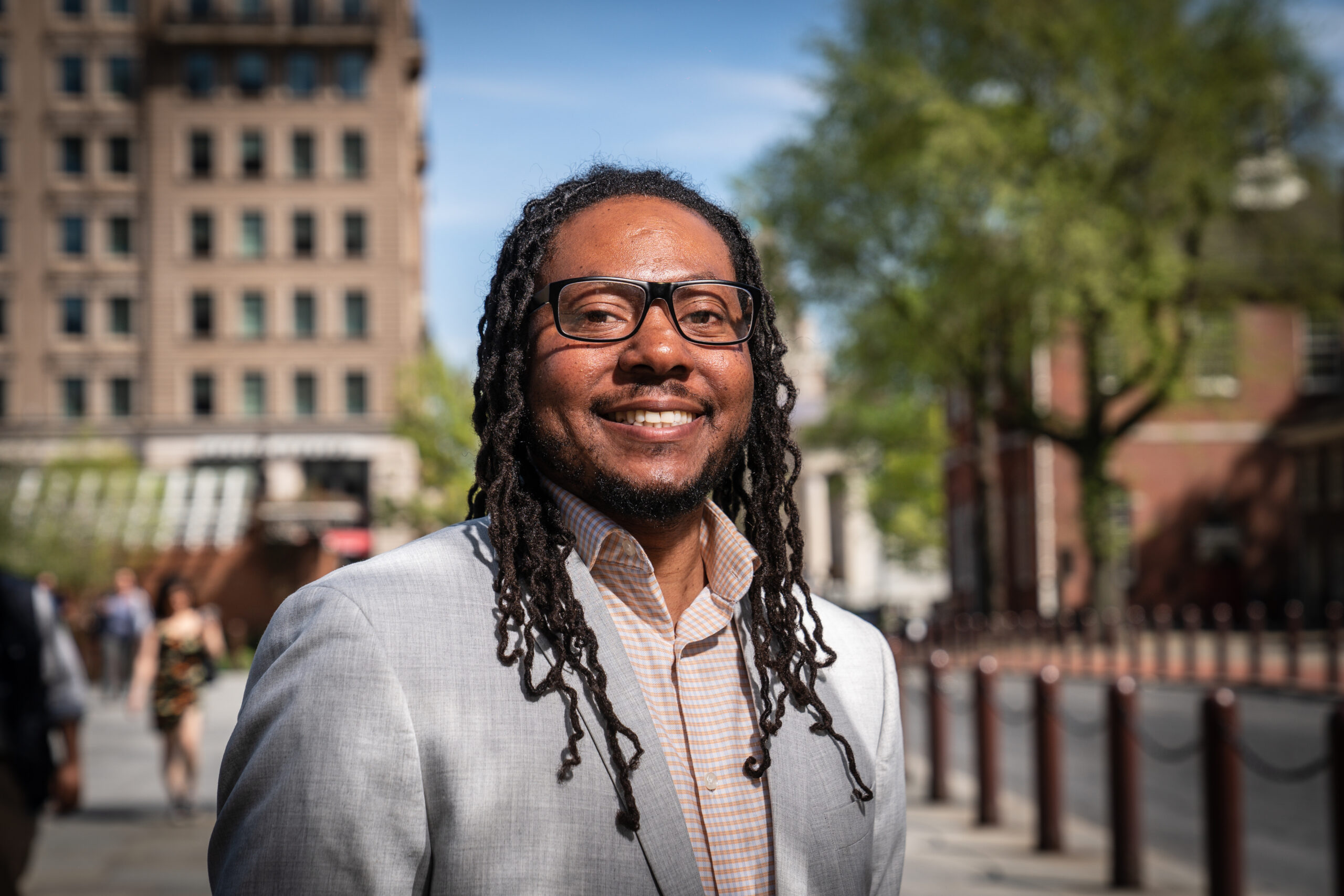
    Jeffery “Jay” Young represents Philadelphia’s 5th District.

    In a statement to the Editorial Board last year, Young defended the move as being motivated by a desire to grow jobs in the city by limiting development in the area to commercial use. That’s an admirable goal. But who is going to buy the goods and services these hypothetical new businesses would offer? The redevelopment of Hahnemann into an apartment building would only increase local entrepreneurial opportunities.

    Thankfully, in this case, it looks like Young’s obstructive desires may be a moot point — at least when it comes to his proposed legislation.

    Because Council adjourned for its winter break without voting Young’s bill out of committee, the developer was able to secure zoning permits to build 361 apartments, with space for commercial use in the building’s ground floor.

    While the Dwight City Group did not want to comment, CEO Judah Angster earlier told Inquirer reporter Jake Blumgart they remain in negotiations with Young. Given the fact that the developer may have to deal with the councilmember in the future, there is a chance the Hahnemann project may be curtailed to avoid Young’s ire elsewhere.

    Were that to happen, it would mark another missed opportunity for positive growth in the city, thanks to councilmanic prerogative.

    For decades, Philadelphia has trailed peer cities in job growth and economic activity. While high business taxes, deep poverty, and other factors play a role, prerogative stands out as an impediment that is entirely self-inflicted.

    The practice — no matter how strongly it is defended by Young and his colleagues — is a constant detriment to the city. While there is merit in giving district representatives a strong voice to protect their constituents from unwanted development, councilmanic prerogative too often allows the whims of a single person to override the will of the people.

    The only thing Philadelphia would lose by eliminating councilmanic prerogative is the opportunity for Council members to grandstand and feed their egos.

  • Trump won’t create safeguards for AI, so Pa. legislators must

    Trump won’t create safeguards for AI, so Pa. legislators must

    Artificial intelligence is here to stay, and its influence across nearly every industry and aspect of society is expanding at a breathtaking pace.

    While AI offers clear benefits for business, government, and personal life, there is currently a troubling lack of safety protocols and consumer protections. Our country has learned hard lessons from allowing business and industry to regulate themselves. We cannot afford to take a wait-and-see approach when it comes to the absence of meaningful guardrails for AI technology.

    The revolutionary potential of AI and its impact on business, government, and society is undeniable. This is a transformation on the scale of the automobile or refrigeration, and comparable to the technological revolutions brought by the internet and social media.

    These innovations have delivered remarkable benefits: fresh strawberries in January in wintry Pennsylvania were once unimaginable before refrigerated trucks; today, virtual business presentations save both time and money by eliminating hours of travel for participants.

    On the flip side, we have building safety codes, automobile seat belt laws, and prohibitions on using cell phones while driving for very good reasons. Similarly, with social media, it has taken two decades for society to reckon with the lessons we wish had been taken more seriously from the start.

    Just because we can do something doesn’t always mean we should. This is precisely why safety regulations are critical.

    To put the scale of AI companionship technology — commonly referred to as chatbots — into perspective, a comprehensive study conducted by the Wheatley Institute found that nearly one in three young adult men and nearly one in four young adult women have interacted with an AI companion, with 29% of those young men and 17% of those young women saying they prefer these digital relationships to human ones.

    A recent Pew Research study found that 16 in 25 teens use chatbots, with 16% reporting they interact with them several times a day. Another study, by Common Sense Media, revealed that 17% of teens (approximately 2.94 million) use AI programs for romantic relationships or friendships, while 12% (about 2.08 million) turn to them for emotional and mental support.

    In today’s digital age, people are seeking companionship in new places. Many are turning to chatbots to fill an emotional void, but no amount of programming can replace genuine human interaction and intervention. AI chatbots currently operate without adequate safety guardrails, a gap that has tragically contributed to several deaths. Wrongful death lawsuits claim these AI systems failed to prevent harm and, in some cases, may have even encouraged it.

    Examples of intentional government oversight and consumer protections exist across every industry and innovation. We’ve learned painful lessons from lead in paint, the importance of smoke alarms in public buildings, and toxic chemicals in our food and water supply.

    Thanks to regulations, substances like chalk and embalming fluids are no longer found in the milk at your local grocery store. As AI technology continues to advance, society is reaching a bipartisan consensus: Government must step up to protect citizens.

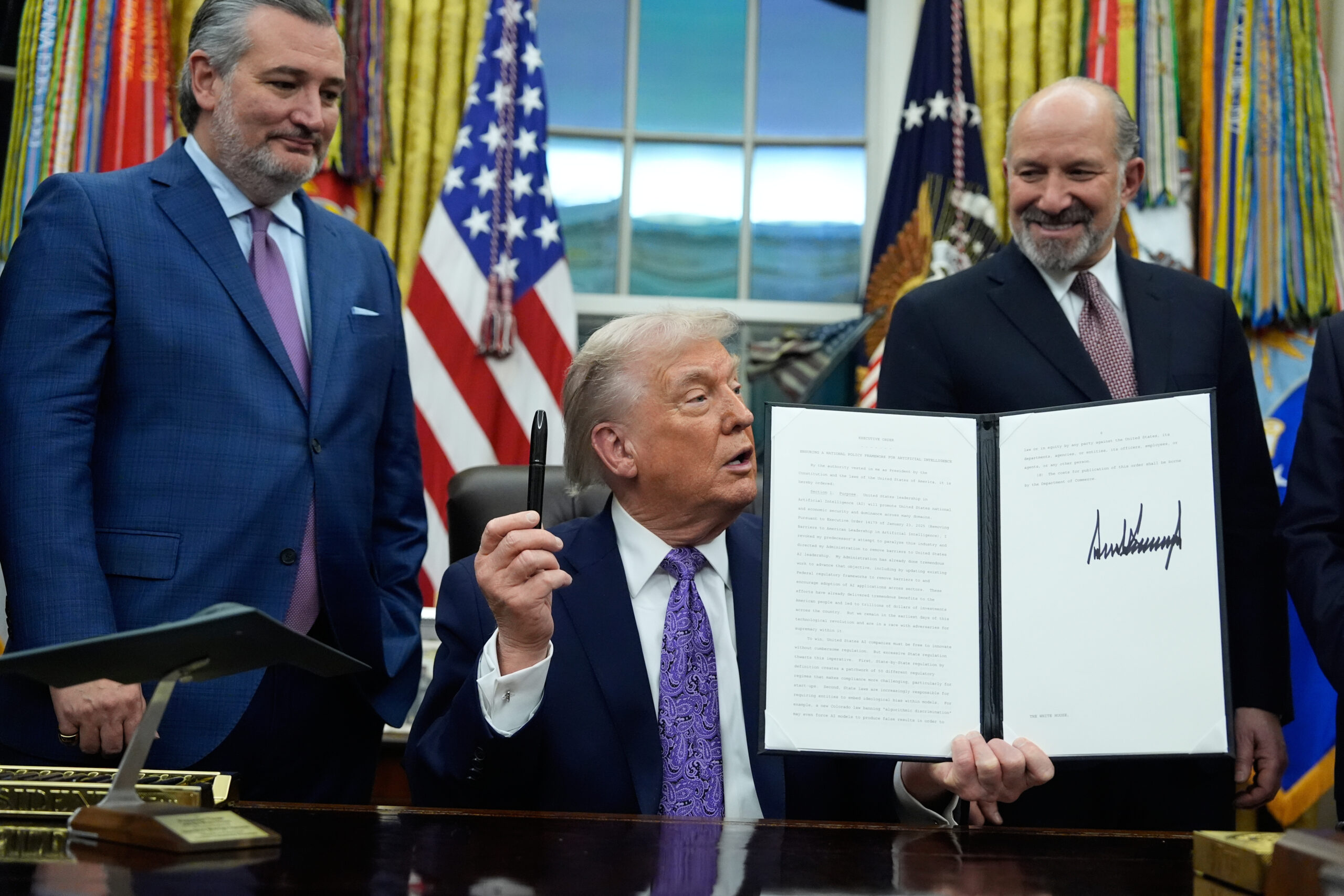
    President Donald Trump signed an “AI initiative” on Dec. 11 that would limit states’ ability to regulate artificial intelligence.

    Last month, President Donald Trump issued an executive order attempting to prevent states from enacting their own AI regulations. While he claims state-level oversight will stifle innovation, this raises the question of whether his priority is American citizens or big corporations. Innovation and consumer protection are not mutually exclusive; we can and must achieve both.

    Yet, the president is ignoring the urgent need for commonsense federal safeguards in what some are calling the “Wild West” of AI. In the absence of federal action, state legislators must step in to fill the gap. We have heard the call. And we are taking action.

    For my part, I’m currently working in the Pennsylvania House of Representatives on three AI technology bills:

    While many people are finding helpful ways to incorporate AI companionship chatbots into their daily routines, far too many children and adults are forming unhealthy emotional attachments and experiencing alarming interactions.

    My proposed safety protocols would require, among other measures, referrals to mental health and suicide resources, and clear reminders that AI companions are not real humans.

    My bill on AI and mental health will ensure AI cannot be used as a substitute for professional therapy. Regarding consumer protections, I am committed to guaranteeing that residents of our commonwealth benefit from transparency and strong privacy safeguards for their data.

    Pennsylvania has long been a leader in state-level consumer financial protection and technological innovation. Now, as AI rapidly advances, I am determined to step up and provide commonsense safety guardrails. I urge my fellow state legislators to join me — our residents are counting on us.

    Melissa L. Shusterman is a Democratic member of the Pennsylvania House of Representatives for the 157th District, located in Chester County. She was elected in 2018.