President Donald Trump issued a warning to Iranian officials that there better not be any shooting of protesters. I’m waiting for him to issue the same warning to U.S. Immigration and Customs Enforcement officials in the good ol’ USA. Or we could deport all the ICE officials to countries where you leave your conscience at home in order to earn your paycheck. I’ll help them pack.
Carol Rhodes, Barnsboro
Direct line
I call on all people of good conscience to unite. Let’s stop allowing the mass media to put us into different camps. Let our goodness unite us across party lines. Please consider this seriously. I see a direct line from the president of the United States pointing a finger at a female reporter exercising her First Amendment rights and saying, “Quiet piggy” to a U.S. Immigration and Customs Enforcement agent pointing his gun and firing three shots to the head of an unarmed mother exercising her First Amendment rights. This is not the American way. All good people must unite to save America’s core principles. Liberals, conservatives, libertarians, independents all share a basic human sense of right and wrong. We must unite on those principles and stop allowing the media to pit us against each other. Start now: Declare the killing of Renee Good unacceptable, not just unfortunate.
Patrick Shanahan,Philadelphia
House of contradictions
The president is a master of contradictions. While claiming to make cities safer by removing criminal immigrants, he is fomenting discord and violence. He promised lower prices and economic security, and instead, many businesses are forced to raise prices due to tariffs. While the stock market has rallied, the roller-coaster ride of wild ups and downs has undermined economic security and slowed hiring by wary corporations. He pledged to avoid foreign entanglements, yet unashamedly engages in saber-rattling over Venezuela and Greenland. While claiming to be fighting a drug war by blowing up alleged drug boats, he pardons convicted drug lords like Juan Orlando Hernández of Honduras and Ross Ulbricht of the online Silk Road drug marketplace. He accuses Joe Biden of having done nothing, yet fentanyl deaths dropped almost 30% in Biden’s final year in office due to addiction programs. Insisting he is fighting radical left decadence by imposing “objective” Christian values, he spews hateful, racist remarks, claiming his “morality” dictates his actions. Promising to reduce waste, fraud, and abuse, he pushes plans to build Versailles in place of the East Wing. And Truth Social? Anything but.
John Groch, West Chester
Fraud and abuse
In answering a reporter’s question about how long the U.S. will be in Venezuela (Months? A year? Longer?), President Donald Trump said, “I would say much longer.” The implication is that U.S. resources, financial and otherwise, will go to Venezuela. It would be naive to think that some of those dollars won’t find their way into the wrong pockets, never achieve the intended purpose, or duplicate other efforts. These hints of waste, fraud, or abuse will not likely cause the administration to pause any of this work the way it did when it terminated programs funded by the U.S. Agency for International Development while it looked for waste, fraud, and abuse. None was ever reported, but children were deprived of food, medicine, and education, and communities saw life-sustaining projects ended, leading to starvation, suffering, and death. In Venezuela, it’s the illusion of an imperial U.S. that must be preserved, not the lives of human beings.
Carol Olivieri,Pennington
Stay tuned
I turned on my TV yesterday in the middle of a news broadcast, and the announcer was saying that “the supreme leader vows to continue the crackdown on protesters.” I honestly wasn’t sure if they were talking about America or Iran.
Stefan Keller, Huntingdon Valley
Join the conversation: Send letters to letters@inquirer.com. Limit length to 150 words and include home address and day and evening phone number. Letters run in The Inquirer six days a week on the editorial pages and online.
Donald Trump gathered U.S. energy executives on Friday to tell them of the nice crude, heavy oil he had procured for them by invading Venezuela — killing dozens of people and kidnapping President Nicolás Maduro and his spouse in the process — only for the men to respond that they couldn’t invest in that country because they’d spent all their money getting Trump elected.
It was a twist right out of an O. Henry story. Call it, The Gift of the Megalomaniac.
Well, not quite. While Big Oil did indeed spend at least around $500 million last year on the presidential campaign and other lobbying efforts, it fell short of the reported $1 billion Trump asked oil executives for during his run for the White House. And even that amount would hardly make a dent in industry profits, which in 2022 reached nearly $200 billion.
I’ll get to Trump’s deranged, illegal attack on Venezuela and its larger implications for Latin America — which plays less like literature and more like a bad ‘80s sitcom episode (“The Dumbroe Doctrine,” Season 2, Episode 1) — in a bit. First, let’s talk oil.
The reason why energy executives didn’t jump at Trump’s offer for them to spend $100 billion in Venezuela to boost oil production is that while there may be massive, untapped potential there, it’s going to take a long time to realize, said Harold York, a fellow at the Center for Energy Studies at Rice University’s Baker Institute.
To start, York told me, companies need a technical assessment of the state of the Venezuelan oil industry’s infrastructure, which is believed to be in serious disrepair. Then, the U.S. must help establish a credible and trustworthy legal and fiscal framework for international companies to participate in Venezuela. After that, executives will begin to figure out what a development plan looks like.
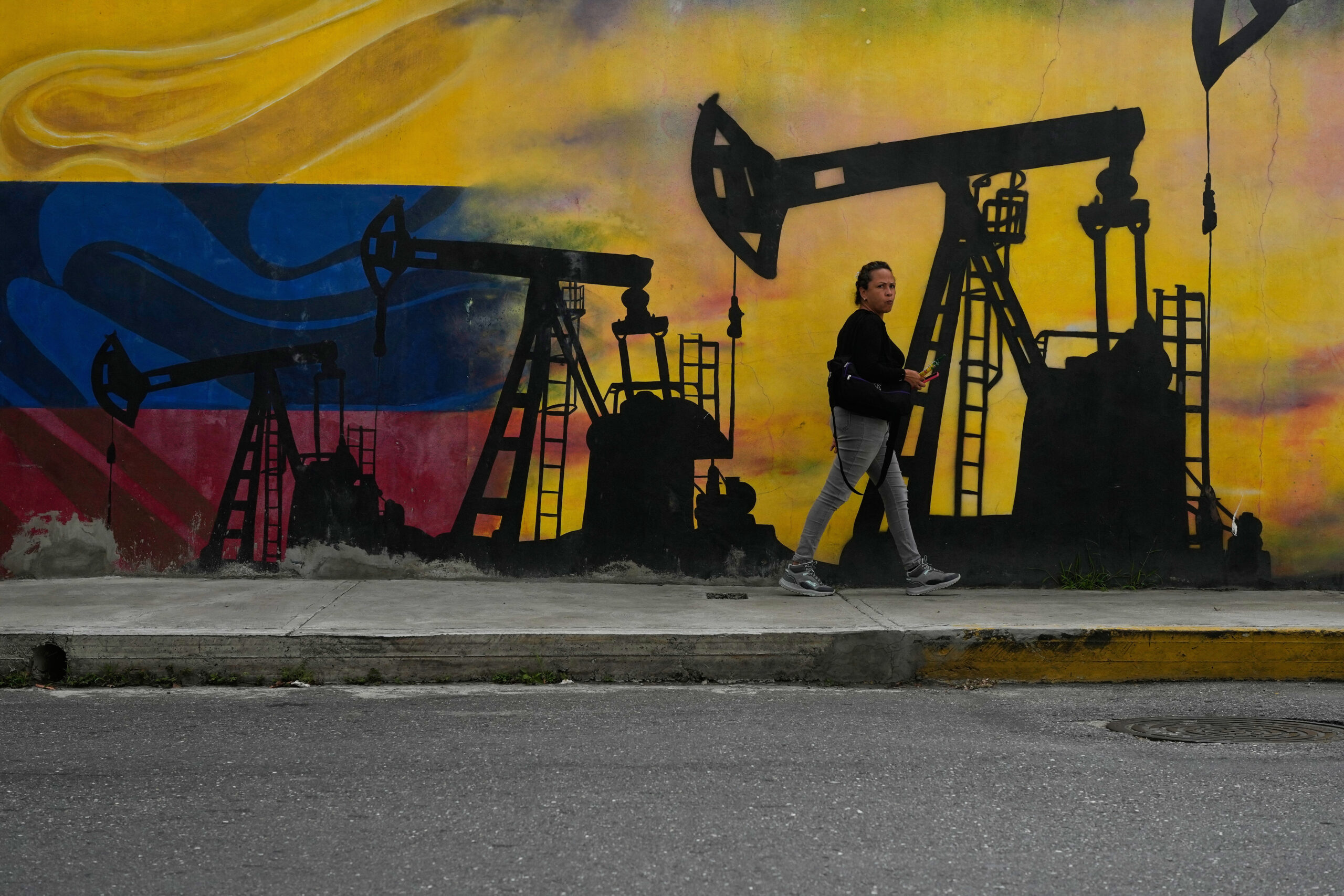
A local walks past a mural featuring oil pumps and wells in Caracas, Venezuela, on Jan. 6.
While some have pointed to the current low price of oil as a roadblock, York doesn’t believe that’s an impediment, since the decision to embark on a yearslong project would consider what the price will be in the future, not what it is now.
“I think there will be appetite precisely because they may not need the production today,” York said. “If you’re looking to keep your portfolio diversified, then Venezuela is something you would look at as one of your long-run assets.”
What will most likely temper that appetite is that the requirements that need to be met for Big Oil to return in earnest to Venezuela also depend on the kind of stability no one can guarantee. You don’t even need to get to the unknown unknowns, as one former failed nation builder once coined. In Venezuela’s case, it is the known unknowns that will get you first.
Trump is offering companies security guarantees, but can a president who routinely reneges on agreements promise a subsequent administration won’t do the same? Future leaders in Venezuela may decide to take back their oil with minimal compensation to U.S. companies, as the government did in 1976, and America could just shrug its shoulders. Or even a pro-U.S. Venezuelan government may decide it wants to renegotiate at some point.
All of that to say, if Trump removed Maduro from power to gain control of Venezuela’s oil, the administration did not seem to give the plan much thought.
What Trump was successful at, other than violating international law and the Constitution — no matter how coyly the administration insists that what it did was a law enforcement action and not an act of war — is in bringing the Monroe Doctrine back to bloody life.
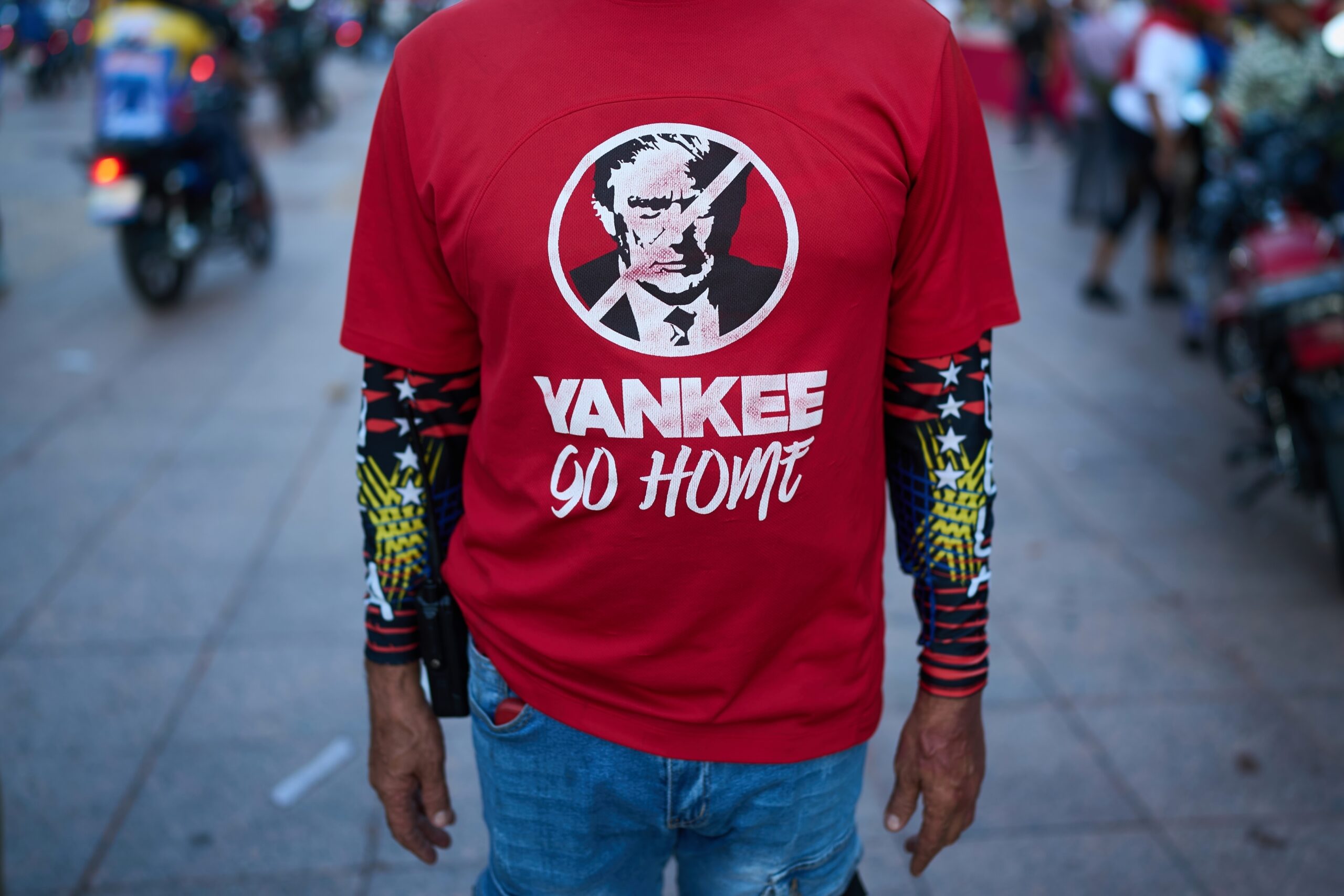
A man wears a T-shirt with a image of President Donald Trump during a government-organized rally against foreign interference, in Caracas, Venezuela, in October.
As presented by President James Monroe in 1823, it was a warning to European powers to stay out of the Western Hemisphere, and an assertion of the United States’ sphere of influence. By the start of the 20th century, the doctrine was used as an excuse to exert power in Latin America to protect U.S. interests as Washington saw fit, including using the military.
Trump allowing Venezuela’s authoritarian regime to continue in every way except having Maduro at the top is in keeping with Cold War U.S. interventionism in Latin America, when U.S.-friendly forces were backed at the expense of civil rights and liberties.
Even before he ordered the kidnapping of Venezuela’s leader to kick off 2026, the president had already spent his first year back in the White House punishing his perceived enemies (imposing sanctions and tariffs on Colombia and Brazil, bombing alleged drug boats) and rewarding his friends (bailing out Argentina, paying for prisoners in El Salvador).
In retrospect, the escalation to full military invasion should not be that surprising, even as the long-term consequences remain uncertain, both for America as a continent and for the system of laws and alliances that has kept the world from war for 80 years.
After Venezuela, Trump threatened Cuba, Colombia, and Mexico. Hearing from friends from Latin America, the feelings that have emerged there in the last week over U.S. actions seem to be fear and loathing.
There is much more to say about this in a future column, but ultimately, neither sentiment is in America’s best interest.
Philadelphia was the first place many early Irish immigrants saw when their long journey ended. The Port of Philadelphia was the gateway to their new world.
Irish workers built Pennsylvania’s canals, its railroads, and its industries. Irish families helped shape its neighborhoods and the civic institutions where they found their home. Irish solidarity and resilience became part of the life fabric of Philadelphia.
Mayor Cherelle L. Parker and State Sen. Sharif Street wear green during the annual Philadelphia St. Patrick’s Day Parade on March 16.
This transatlantic exchange of ideas continues to define our relationship and enrich our two countries to this day.
Ireland and the United States now share one of the world’s most dynamic relationships: economically, culturally, and politically. Across the 50 states, more than 780 Irish-founded companies employ over 200,000 people, bringing skills, entrepreneurship, and a global outlook to local economies nationwide. In Pennsylvania alone, 29 Irish companies support 12,000 jobs. Foreign direct investment from Ireland into Pennsylvania is growing across critical sectors, including pharmaceuticals, business services, and industrial equipment.
Today, the United States remains Ireland’s largest trading partner and its leading source of investment. American companies have long recognized Ireland as a trusted partner in Europe and a place where global businesses can thrive, innovate, and access the barrier-free single European Union market of 450 million consumers.
My hope is that America 250 will not only commemorate the past but will inspire the future, encouraging new generations of Irish Americans to continue to weave this rich transatlantic tapestry.
Geraldine Byrne Nason is the ambassador of Ireland to the United States.
Donald Trump said the only restriction on his power is his own morality. The law, the courts, the Constitution, and the Congress cannot limit his authority or power. This is what a dictator believes. What does Trump’s moral restraint look like? It permits him to have adulterous affairs. It allows him to brag about being able to grab women’s private parts with no consequences. Falsifying financial statements for financial gain is fine. Creating the Big Lie that the 2020 election was stolen is justified by his need to stay in power. Sending a violent mob to assault the U.S. Capitol and Congress is necessary. Asking his vice president to ignore the Constitution and refuse to certify the vote is just his interpretation of the law. Watching as the mob beats law enforcement officers and then praises them as great patriots and finally pardons them is the right thing to do.
In his second term, Trump has increased his power immensely, thanks to a GOP-controlled Congress that has allowed him to select a cabinet of largely unqualified individuals who are willing to accept his every order. He has eliminated the agency that provided food and medical assistance to those in need around the world and severely limited medical research. He has used the U.S. Department of Justice to persecute officials who previously performed their duties by seeking to prosecute Trump for his crimes. Trump has no morals and no shame. His malicious actions are too numerous to list and too un-American to believe.
William J. Owens,Hammonton
Two shootings
On Jan. 6, 2021, Ashli Babbitt entered the U.S. Capitol as part of a mob and tried to break into the room where members of Congress were trying to be kept safe. She was shot and killed. In May, the Trump administration paid a $5 million settlement to her family, and some consider Babbitt a hero. Judicial Watch has filed a $30 million lawsuit over the killing. On Jan. 7, Renee Nicole Good tried to drive away from U.S. Immigration and Customs Enforcement agents and was shot dead. Vice President JD Vance says she brought it upon herself. That really is all one needs to know.
Robert Franz,Plymouth Meeting
Rush to judgment
For most of my four decades as a lawyer, I have practiced criminal defense. Spontaneous shootings in the street demand the most searching, rigorous analysis of distances, angles, location of shooter and target, time intervals between actions and reactions, and a host of other variables, including motives, agendas, and personal histories. Video helps, but the investigative necessities remain the same. Any conclusion as to the shooter’s culpability depends on such work. No political leader or agency chief can fairly exonerate the shooter without such painstaking analysis, much less blame the victim.
Justin T. Loughry, Haddonfield
Rules of engagement
No warrants. No Miranda rights. No due process. No phone call. No legal representation. No accountability. U.S. Immigration and Customs Enforcement bars government representatives from visiting detention facilities. Basically, ICE just disappears you. Separates families. Incarcerates children. And now they shoot you without cause.
Patrick Thompson, Media, pthompson612@gmail.com
Stand for freedom
At an “ICE Out for Good” protest in Philadelphia this weekend, I found myself surrounded by a diverse group of peaceful, patriotic people. Some signs made me laugh; some chants brought me to tears. Outside in the rain, I felt at home. I served for 14 years as a foreign service officer, a role that limited personal political activities. As a diplomat to a kingdom during the 2016 election, I was congratulated by locals; Donald Trump’s disregard for human rights resonated there.
I felt a sense of homesickness for the freedoms of my citizenship, which grew as I moved to countries that were more dangerous and less free. From one U.S. embassy compound, I could hear the government keeping protesters at bay with water cannons and live fire. I’ve seen masked security forces, abductions, communication blackouts, crowds tear-gassed, shipping container piles blocking roadways. To protect and expand our freedoms, we need to keep hold of our democratic experiment and fight for this country to live up to its promises. I know what state-sponsored repression looks like; we’re at a precipice, and we have everything to lose.
Maura O’Brien,Ardmore
Free pass
The Inquirer is to be commended for keeping the spotlight on the corruption, dishonesty, divisiveness, and authoritarianism of the Trump administration. However, the resulting destruction of our democracy, social stability, and relationships with the rest of the world would not occur were it not for the abdication of responsibility by U.S. Sen. Dave McCormick and his Republican colleagues in Congress. On every issue, McCormick is either silent or supportive, never critical. As such, he is complicit in all the madness that is going on. The Inquirer should not let the senator get a pass on his failure to live up to his constitutional responsibility to be a check against this runaway presidency.
Donald Kelly,Havertown
Factually speaking
I write in response to the recent letter to the editor in which the writer reprimands those of us who are not appropriately celebrating the invasion of Venezuela by crafting an argument devoid of a basis in facts. I doubt there are many, if any, people who view Nicolás Maduro as a legitimate leader who gives a whit about the Venezuelan people. He is a dictator who rigged his supposed election and is an alleged drug trafficker. We (as the writer called us) “pearl-clutching and bedwetting” Democrats, independents, and likely a fair number of Republicans, can all agree that any country deserves to be out of the clutches of a fascist, corrupt president. Many of us are feeling some kinship with the Venezuelan people and other oppressed citizens as we watch our own democracy being taken over by a similarly disturbing authoritarian regime.
To address the factual disinformation in this letter, the author states that Maduro is “responsible for magnitudes more American deaths than Osama bin Laden.” Really? Venezuela’s impact on drug deaths in the U.S. has been minimal. According to the Drug Enforcement Administration, fentanyl, the primary cause of overdose deaths, does not come from Venezuela at all. Fentanyl is almost entirely produced by and transported to the U.S. by Mexican criminal cartels, which get needed chemicals primarily from China. Venezuela is used as a transit region for cocaine from Colombia headed for Europe.
As for the comparison between Maduro and bin Laden, the latter founded the violent terrorist group al-Qaeda and launched attacks in multiple countries to further his goal of destroying America. From the late 1990s, al-Qaeda carried out attacks on American interests, including our embassies in Kenya and Tanzania. His reign of terror reached an apex of horror with the Sept. 11, 2001, attacks that killed thousands of men, women, and children going about their ordinary lives. The attempt to paint Maduro as more dangerous to America than bin Laden is utterly fallacious, especially since Donald Trump has openly acknowledged that this was all about oil, which he intends to keep. The letter writer says we need to “get with the program” and applaud an imperialistic anti-constitutional invasion and a violation of international law. Isn’t this exactly what Russian President Vladimir Putin has done to Ukraine?
Diane C. Lucente,Delran
Join the conversation: Send letters to letters@inquirer.com. Limit length to 150 words and include home address and day and evening phone number. Letters run in The Inquirer six days a week on the editorial pages and online.
The Eagles are who we thought they were. A team that consistently disappointed its fans despite winning the NFC East in defense of its Super Bowl crown put in a disappointing one-and-done playoff performance under a clueless offensive coordinator, with a banged-up O-line and some stars (cough, cough…A.J. Brown) perhaps past their peak. But this is what Philly fandom is all about: one battle after another.
Dirty, toxic oil from Venezuela is the last thing that America needs
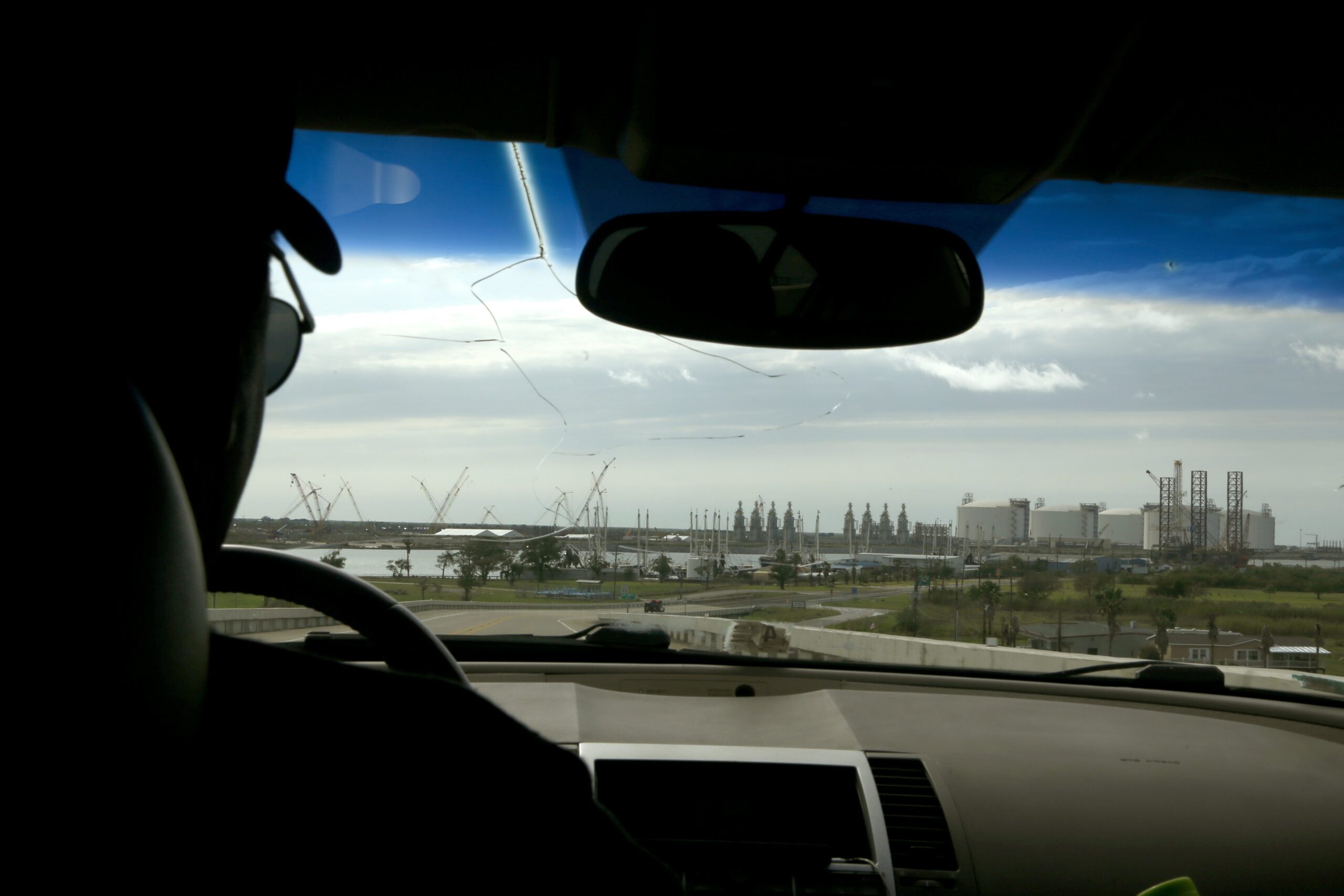
John Beard drives near a liquid natural gas facility in Port Arthur, Texas. In addition to LNG facilities, Port Arthur is surrounded by oil refineries and petrochemical plants. Beard says Black and brown communities like Port Arthur are having to bear much of the risk posed by the facilities.
You could say that crude oil is in John Beard Jr.’s blood. His dad worked for more than 44 years at a giant Gulf Oil refinery in the heady 20th-century days of the South Texas energy boom, and Beard then followed his father’s footsteps by working 38 years at a rival Exxon facility in Beaumont, before heading home to sleep in the shadow of Port Arthur’s own dense row of dozens of refineries.
But today, Beard — a longtime civic activist and political leader in Port Arthur’s large Black community — is fighting to keep oil out of his neighbors’ blood, literally.
“It was nothing to wake up the next morning and find a yellow stain against the side of your house with something had been released in the air,” Beard told me last week on the phone as he talked about growing up surrounded by tall refinery stacks. “You may have smelled it, or you may have slept through it and all and come to find out that it stained your house or whatever.”
“You know how you say when the refinery has a sneeze, we get pneumonia?” he asked. “But no, we don’t get pneumonia. We get cancer.” The most-feared disease has touched pretty much every family that Beard knows in the economically struggling town.
This was all before last week’s lightning bolt of news: that the U.S. military had bombed Venezuela and seized its indicted strongman leader Nicolás Maduro. It was quickly followed by Donald Trump announcing a scheme to bring some 30-to-50-million barrels of oil to the United States — meaning the backyards of Beard and his neighbors.
Indeed, experts have tagged Valero’s big refinery in Port Arthur that towers over Beard’s home — heavily invested in specialized equipment to process the sour, heavy crude that comes from Venezuela — as most likely to benefit from Trump’s proposed gambit.
Environmentalists say any new refinery jobs and U.S. corporate profits will be swamped by increased pollution of both the toxic chemicals that have already sickened Port Arthur, and greenhouse gases that threaten us all through climate change.
When America woke up 10 days ago to news that Trump had ordered the dead-of-night assault on Venezuela and seized Maduro, there was one word that echoed among Democratic lawmakers asked for a comment. “Is anyone going to just stop for a second and be honest?” U.S. Rep. Seth Moulton of Massachusetts told CNN. “This is insane. What the hell are we doing?”
Those problems have been amplified in the days since Moulton and others branded the operation as “insane.” It is indeed insane when Trump declares to the world that the United States is “in charge” of Venezuela and a few days later his State Department says the country is unsafe for Americans because of violent roving gangs. For that matter, it’s also meshugana to upend the global order that has reigned since the end of World War II, when the U.S. led efforts to ban wars of aggression.
But we’re not talking nearly enough about what’s maybe most whacked-out about Trump’s splendid little war in Latin America — that by making his operation all about taking the oil, he seeks to endanger the entire planet by accelerating climate change. One expert told the Associated Press that increasing production of Venezuela’s thick, dirty crude by a target of 1 million barrels a day would also add roughly 360 million metric tons of carbon dioxide a year from the production process — a significant spike in the gases that are warming our planet.
That Trump made it clear that his goal in making war against Venezuela was all about grabbing its oil on the one-year anniversary of the deadly Los Angeles wildfires — perhaps the most dramatic of the floods, amped-up hurricanes, and other weather catastrophes exacerbated by a hotter planet — was especially disgusting.
Michael E. Mann, director of the Center for Science, Sustainability and the Media at the University of Pennsylvania, told me that while Trump’s initial target for Venezuelan oil seems modest, experts believe the South American nation could harbor a whopping 300 billion barrels under ground. He has written that Trump aims to make America a “petrostate,” allied with other bad actors such as Russia and Saudi Arabia in working to undermine any global consensus around fighting climate change.
Less than a week after the Venezuela strike, the New York Times reported that Trump’s U.S. Environmental Protection Agency is dropping its longtime requirement to weigh the cost on human lives — early deaths, or chronic diseases like asthma — in regulating key air pollutants, including those from oil refineries. As a matter of policy, the U.S. government now values the dollars that Valero or Exxon can make from burning dirty oil over the very existence of Beard and his Texas community. That’s not surprising from the crew that’s dismantled an entire generation of EPA programs that once targeted the environmental racism that dumps pollutants on disadvantaged Black and brown communities like Port Arthur.
Indeed, the 100 fatalities caused by the Trump regime’s militarism against Venezuela — although a human-rights outrage — will likely pale over time against the canopy of death and destruction that historians will blame on the president’s obsession with doubling down on fossil fuels while other nations focus on green energy such as wind or solar.
A preview of the world’s coming attractions is arguably taking place right now on the blood-soaked streets of Tehran, where experts believe months of severe drought that sometimes left poorer neighborhoods in the Iranian capital with little or no running water has been a key trigger for the collapse of social order.
While foreign policy experts aren’t wrong to worry about U.S. expansionism triggering World War III, Trump’s backward-looking energy policies could cause a similar or worse toll through civil war and mass migration. While top energy officials — including the Exxon Mobil CEO who called Venezuela “uninvestable” — say Trump’s Venezuela dreams are economically unrealistic, the time lost for America to reduce its greenhouse gas pollution is a clear and present danger for civilization.
History is almost sure to judge that “insane” was far too generous a word to describe it.
Yo, do this!
I’ve written about this before but I can’t say enough about the essentialness of Andrew Hickey’s long-running podcast, A History of Rock Music in 500 Songs, which currently is up to around 1969 on its long, strange trip. His latest episode — about Jimmy Cliff, “Many Rivers to Cross,” and the invention of reggae — proved unexpectedly prescient when Cliff died at age 81 just before its release. Now, the passing of the Grateful Dead’s Bob Weir has me dredging up his recent episode about the Dead, “Dark Star,” and the rise of an almost spiritual cultural phenomenon.
In the world of media, the mid-2020s will be remembered as the moment that intrepid independent journalists stepped up and did the work that traditional newsrooms are suddenly too cowed or too compromised to perform. Since ICE and the Border Patrol amped up their immigration raids last summer, I’ve become a big fan of Amanda Moore (@noturtlesoup17.bsky.social on Bluesky), who has birddogged Greg Bovino and his goon squad from the Big Easy to the frigid streets of Minneapolis. Check out her coverage of the far right for Mother Jones.
Ask me anything
Question: Please explain how the “anti-elite” [MAGA] base can continue to support all the elite personnel in charge of America’s economy in this regime? Just ONE recent example: [Pennsylvania Sen. Dave] McCormick’s wife’s Facebook promotion in charge of….“sovereign relations concerning AI…“. — @tim215.bsky.social via Bluesky
Answer: Tim, I think the ascension of Dina Powell McCormick — the former Trump 45 aide who is also married to Pennsylvania’s Republican junior senator — to the job of president of Facebook’s parent company Meta has profoundly troubling implications. This is neither to say that Mark Zuckerberg’s new hire lacks qualifications, nor that Senate spouses should be barred from the private sector. But the move surely reflects Silicon Valley’s determination to curry favor with the personalist Trump regime by any means necessary. What bothers me even more, as a Pa. voter, is that I see the issues surrounding Meta — especially the currently unchecked rise of artificial intelligence, or AI — as requiring clear-eyed leadership. How can anyone now expect Sen. McCormick to be an honest broker?
What you’re saying about…
Last week’s question about the attack on Venezuela drew a robust response, as I expected, and — also as I expected — almost unanimous opposition to Trump’s policy for the troubled country. Most of you saw the military operation as illegal and unconstitutional, and share my befuddlement (see above) on the president’s assertion that taking Venezuela’s oil was the prime reason, except for Jon Elliott, who wrote: “I absolutely endorse Trump’s Pirates of the Caribbean excursion with one proviso — he performs Maduro redux in North Korea.” More typical was Tom Lees: “I was born in June 1945, two months before the dropping of the atomic bombs. The world order that has prevented WWIII seems to be in the process of being dismantled by people who should be imprisoned (Donald Trump) or institutionalized (Stephen Miller).”
📮 This week’s question: Given the uproar over the killing of Renee Good, is “Abolish ICE” now the mainstream position, and do you support it? If so, how should the U.S. enforce its immigration laws? Please email me your answer and put the exact phrase “Abolish ICE” in the subject line.
Backstory on the end of Newsom’s WH dreams
California Gov. Gavin Newsom speaks during his State of the State address Thursday in Sacramento, Calif.
One of the most anticipated stories of 2026 isn’t supposed to happen until the waning weeks of the year, when the votes from the midterm election have been counted and top Democrats beginning lining up for their shot at following Donald Trump as the 48th president. But the most consequential early moment in that Dem primary race may have already happened. On Monday, California Gov. Gavin Newsom faced a career-defining choice between the growing populism of his party’s anxious voters, or the Silicon Valley moguls who’ve been there for him in the past.
Newsom chose the billionaires.
At issue is a citizen initiative to place a wealth tax on California’s richest of the rich — those with a net worth of more than $1 billion — to pay a one-time levy equal to 5% of their assets, with most of the revenue targeted toward keeping troubled hospitals open and other healthcare costs. Backed by a powerful labor union, the Service Employees International Union-United Healthcare Workers West, the ballot measure reflects growing global rage over economic inequality and the current zeitgeist among Democrats likely to vote in the 2028 primaries. Not surprisingly, the push has angered Silicon Valley’s increasingly right-wing tech titans and investors like Peter Thiel or Google co-founder Larry Page who’ve threatened to move to red states like Florida or Texas.
Newsom, who is term-limited and leaves the governor’s mansion at year’s end, has long walked a tightrope between boosting his White House ambitions by relentlessly needling Donald Trump on social media while — with considerably less fanfare — catering to the high-tech poobahs who’ve funded his campaigns and who, Newsom insists, would damage the Golden State economy by leaving. On Monday, the governor told the New York Times that he firmly opposes the proposed wealth tax and will use his bully pulpit to fight the measure if it reaches the ballot.
“Hey idiots: You’re rich,” the independent journalist Hamilton Nolan wrote in a riposte to Thiel and Co. posted hours before Newsom’s decision. “Enjoy your lives. Pay your taxes and count your blessings. Is this the perfect life that you dreamed of for yourself — performatively kissing the ass of a dictator, giving up your home to flee the taxman, earning the enmity of your fellow man, all in service of money you will never spend?”
Nolan’s piece may have targeted the 0.1%, but it also seemed to carry a message that Newsom and any other Democratic presidential hopefuls need to hear. Running as a performative kind of center-left Trump with viral social media posts will get you attention but not the White House. The core of rank-and-file Democrats — especially the 7 million who took to the streets last summer for the No Kings protest — wants radical changes they’re not seeing in Newsom’s California. These include limits on artificial intelligence, a major overhaul of the Supreme Court, and — especially — an end to the gross unfairness of economic inequality. Hopefully Newsom’s pals in Silicon Valley can find him new work, because 1600 Pennsylvania Ave. already looks above his future pay grade.
What I wrote on this date in 2019
One of the many similarities between today and the United States seven years ago is that Democrats and other progressives were already deeply divided over how best to respond to Donald Trump and threats against democracy. On this date in 2019, I put forth my own idea that I’m not sure I’d endorse in hindsight: that Bernie Sanders was the most inspiring figure in U.S. politics, yet should stand down from the 2020 election. I wrote about “a sense that white dudes from the baby-boomer-and-older generation have been running things for far too long, and that America needs some new blood.” Instead, we got the two oldest presidents in American history. Read the rest: “Bernie Sanders is the leader America needs now. Just NOT by running for president in 2020.”
Recommended Inquirer reading
Late last year, I predicted that Trump’s plummeting popularity would cause him to double down on autocracy. For once, I was right. In my Sunday column, I wrote about the shocking ICE Minneapolis murder of 37-year-old poet and mom Renee Nicole Good and the broader war for the truth that was defined by the Trump regime’s instant smears against the victim. Over the weekend, I looked at how 2026’s shocking start from Caracas to the Twin Cities was punctuated by Trump’s jarring comments to the New York Times — that nothing can stop him but “my own mind” and “my own morality.” I stressed that he can and will be stopped — by our morality.
The nation remains on edge nearly one week after the ICE agent gunned down Good in the streets of Minneapolis, and already the resistance movement to ICE has seen some twists and turns. None has been more dramatic in Philadelphia than the unexpected return of the Black Panther Party for Self Defense, an iconic social movement that thrived in the late 1960s and early ‘70s before a government crackdown. When several armed members of the Black Power group demonstrated against ICE near City Hall on Thursday, The Inquirer’s Brett Sholtis jumped on the story and followed up with an in-depth profile of the small group, whose Philly leader, Paul Birdsong, said Good’s killing “wouldn’t have happened if we were there.” Sholtis is part of the paper’s jacked-up weekend news coverage that is supported by your subscription dollars. Local journalism is a bulwark against tyranny. Become a part of it by subscribing to The Inquirer today.
By submitting your written, visual, and/or audio contributions, you agree to The Inquirer‘s Terms of Use, including the grant of rights in Section 10.
In short, many of Trump’s policies are making people sicker, poorer, and less safe. In that context comes Trump’s latest attack on the Federal Reserve, which will ultimately hurt all Americans.
Since returning to office last year, Trump has pressured Federal Reserve Chairman Jerome Powell to speed up interest rate cuts in an effort to boost the economy. But the Fed has moved cautiously to avoid further inflation.
Trump’s economic approach has been reckless and shortsighted.
In July, he threatened to fire Powell. Last month, Trump said he may sue Powell for “gross incompetence.”
On Friday, the U.S. Department of Justice opened a criminal investigation into Powell involving his testimony before the Senate Banking Committee regarding the increased costs of renovations to the Fed’s headquarters in Washington.
Trump claimed not to know anything about the investigation, but he had previously criticized the renovation costs. Let’s be clear: Trump’s long-running attacks on the Fed chair are the only reason Powell faces any legal trouble.
The Powell investigation shows yet again how Trump continues to pervert the once-independent Justice Department, using it as a political tool to go after his perceived enemies.
Attorney General Pam Bondi continues to do Trump’s bidding. She has launched bogus investigations into other public officials, including former FBI Director James Comey and New York Attorney General Letitia James.
Add Powell to the political hit list that is making a mockery of American justice.
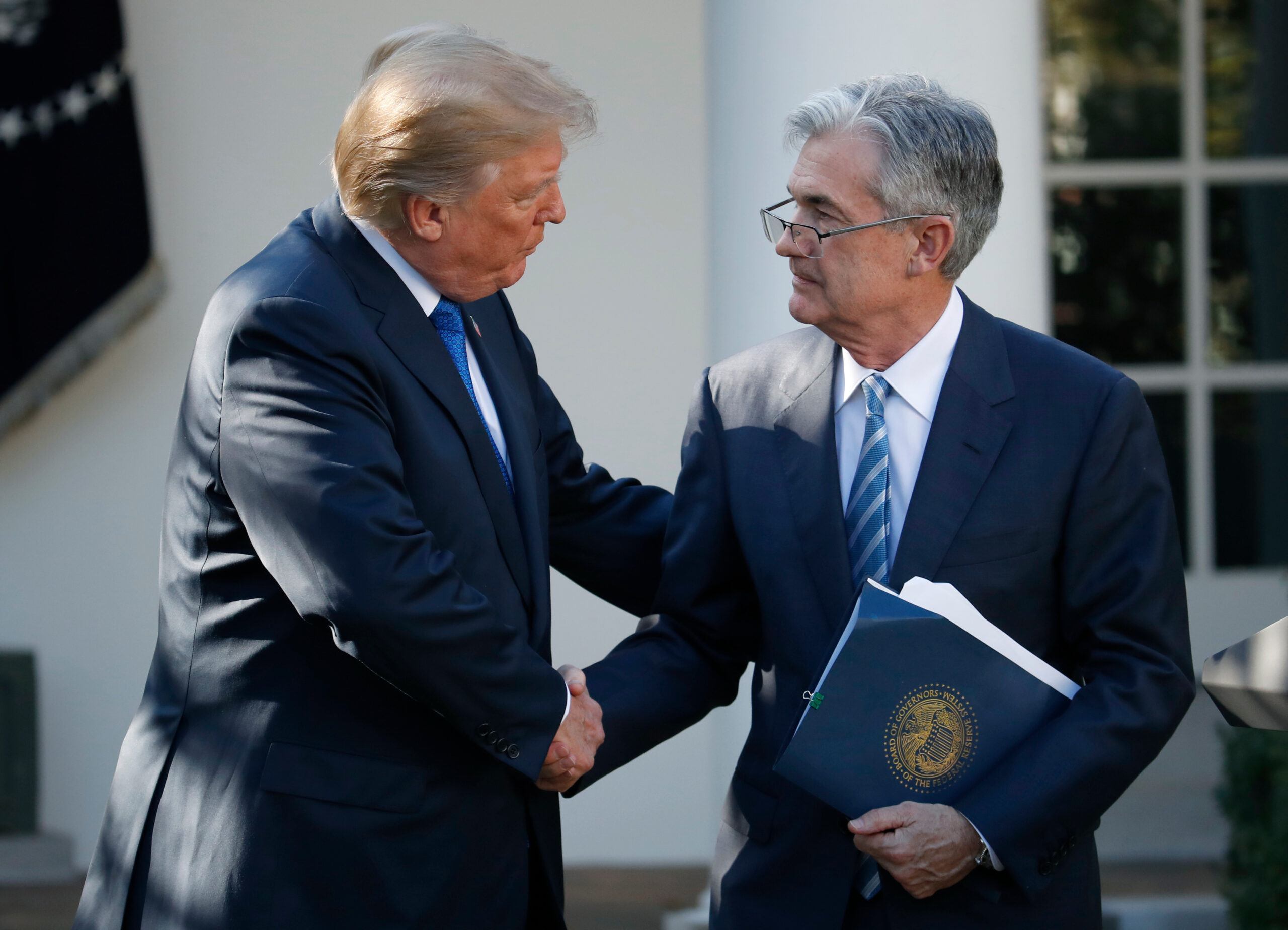
President Donald Trump shakes hands with Federal Reserve board member Jerome Powell after announcing him as his nominee for the next chair of the Federal Reserve, in the Rose Garden of the White House in 2017.
In a rare sign of political courage, some Republican lawmakers mustered the nerve to criticize Trump’s attack on Powell.
Sen. Lisa Murkowski (R., Alaska) said that “the administration’s investigation is nothing more than an attempt at coercion.”
Sen. Thom Tillis (R., N.C.) said the “independence and credibility” of the Department of Justice “are in question.” He promised to oppose the nomination of a new Fed chair until the legal issues are resolved.
But until more Republicans stand up to the president, expect more abuses of power.
Trump’s attack is especially petty, since Powell’s term as Fed chair ends in May, though he can remain on the board through January 2028.
Trump actually nominated Powell to be chairman during his first term in the White House. In a sign of Powell’s independence, former President Joe Biden renominated him to a second term.
By most accounts, Powell has done an impressive job steering monetary policy through uncharted territory involving the pandemic, followed by inflation brought on by increased government spending.
Trump’s pressure campaign on Powell has broader repercussions on America’s financial system.
The Fed’s independence is a cornerstone of U.S. financial markets, as it instills trust in investors, business leaders, economists, and other governments around the world that U.S. monetary policy is set without regard to political pressure.
Without that firewall, presidents could push for rate cuts to boost the economy before an election, potentially causing higher inflation and instability down the road just for short-term political gains.
In this instance, Trump clearly has his eye on revving up the economy before the midterms. (Trump would likely blame any subsequent inflation on Biden.)
Politicizing the Fed creates instability and will harm investors and consumers in the long run. Reports of the Powell investigation already rattled financial markets, prompting investors to sell American stocks and bonds.
To his credit, Powell has remained steadfast and made clear that the stakes surrounding the investigation are much bigger. “This is about whether the Fed will be able to continue to set interest rates based on evidence and economic conditions — or whether instead monetary policy will be directed by political pressure or intimidation.”
But the damage to the Fed is already done, as Trump continues to place his political and financial interests ahead of those of the American people.
Many households that are cost-burdened are not high-income earners paying for luxury housing — they are low-income residents with limited affordable housing options. As a result, many low-income families spend more than half of their income on rent, making other necessities like food and healthcare difficult to support. High demand, low inventory, and rising costs have created an affordable housing crisis and a growing unmet demand for quality affordable housing.
In Philadelphia, there is a deep, structural gap between the number of very low-income households and the supply of housing they can afford. As in many American cities, housing affordability is a significant issue in Philadelphia, and the Philadelphia Housing Authority, in partnership with the city, is boldly addressing this issue head-on with its plan to preserve housing for its current housing stock that provides housing to nearly 80,000 Philadelphians while creating new opportunities for the tens of thousands of residents who are waiting far too long for a home.
The benefits of preserving and expanding affordable housing extend well beyond simply providing a place to live. Affordable housing investments support wage growth by creating quality jobs in construction and related industries while also giving families more financial stability to advance in the workforce.
Every dollar invested in affordable housing generates construction jobs, supports local contractors, and strengthens the tax base. PHA’s $6.8 billion Opening Doors Initiative is preserving existing housing and creating new affordable housing communities that generate widespread economic benefits. A recent economic impact study by Econsult Solutions Inc. demonstrates that PHA’s efforts are providing a significant boost to Philadelphia’s economy.
PHA is working to renew 5404 Gibson Dr., an old public housing development. It’s among many projects the agency is investing in.
PHA’s completed and anticipated investments to preserve, acquire, or build 20,000 affordable housing units from 2023 to 2030 will generate a significant cumulative impact on the local and state economies. Locally, capital investments from PHA’s planned developments are estimated to produce almost $10 billion in cumulative economic impact, supporting more than 3,700 full-time jobs, generating $2.7 billion in employee compensation in Philadelphia. Statewide, these investments are projected to produce a total of $11.3 billion in cumulative economic impact, supporting 4,700 full-time equivalent job years and $3.2 billion in employee compensation during the period of construction.
Creating opportunities
These capital investments are also creating new opportunities for PHA’s skilled labor partners who help build high-quality, professionally managed housing communities. Those workers, in turn, will spend a portion of their salaries and wages within our local economy, catalyzing the procurement of a wide range of goods and services, as well as new economic opportunities for local vendors. Along with expanding the labor workforce, the maintenance and operation of new and rehabbed developments will generate more than $100 million in new tax revenue for the city of Philadelphia.
To complete all these investments, PHA must reduce operating expenses in line with lender and bond issuance requirements, potential federal public housing funding reductions, and multifamily industry staffing norms. In addition, PHA must also take action to streamline its property management functions to better service residents on-site while also decentralizing some management operations to procure qualified third-party property managers to realize millions of dollars in annual savings.
PHA’s recently announced restructuring and rightsizing plan achieves these requirements. Through engaging the Building and Construction Trades Council to modify its collective bargaining agreement, PHA will be better able to sustain and preserve its newly developed and repositioned housing portfolio. Once fully implemented, PHA will generate an estimated $28 million in annual operating savings, which will be redirected to preserve its housing stock, provide enhanced services to residents, and expand housing opportunities to the tens of thousands of Philadelphians on its waiting list.
This is a proactive approach to repositioning and strengthening PHA’s housing portfolio for the benefit of the families who depend on PHA. Decisions like this are never easy, but they are necessary to protect residents’ needs and to ensure the financial sustainability of PHA’s new and repositioned housing assets.
PHA remains committed to opening doors to new affordable housing opportunities and creating a sustainable future for Philadelphia’s housing needs.
Kelvin A. Jeremiah is the president and CEO of the Philadelphia Housing Authority.
We see the picture of the car with the bloody airbag and the stuffed animals in the glove compartment. We have viewed the crime on video in slow motion and from a few different angles. We think about or remember those mornings of getting our kids or grandkids to school, and we are brought to deep sadness and even tears. That is what we feel when we are human and part of a community. Vice President JD Vance has called the killing of Renee Good by a U.S. Immigration and Customs Enforcement agent “a tragedy of her own making.”
Similarly, President Donald Trump and Homeland Security Secretary Kristi Noem are working hard to make sure the ICE agent doesn’t face accountability for his disgusting overreaction. There has been no apology. They have shown no remorse. Not even thoughts and prayers. Leaders do not lose their jobs over policy differences. They are removed from office because their behavior and lack of morality are unbecoming of their positions. This time it was Renee Good. She did not deserve this. The next time, it could be someone we know and love.
Elliott Miller,Bala Cynwyd
Predatory interest
Regarding Donald Trump’s call to cap credit card interest rates, it is time for the federal government to intervene and regulate the predatory interest rates these companies have charged consumers for years. Between 2008 and 2015, while the prime rate remained at a historical low of approximately 3.25% and U.S. Treasury yields were near 1%, credit card companies continued to charge interest rates exceeding 20%, and in some cases, 30%. This disparity is unacceptable. There is an old saying: “Those who control the debt, control the debtor.” This is particularly evident when consumers making only minimum payments see their outstanding balances actually increase each month due to excessive interest. I urge Congress to take action to protect consumers from these practices.
Paul Benedict, Broomall
Might makes right?
This country was born in war, in defiance of a king. We would do well to remember our origins. None of our ancestors wished to kneel before a throne and the tyranny it embodied. We were founded on resistance and should expect other peoples and other nations to react similarly. The aspirations of our forefathers are shared by others around the world, and none want to exchange one tyrant for another. The “might makes right” approach we have embarked on fails to recognize the human condition we all share: stiff necks and a yearning for freedom and self-determination. Subservience is not peace; it is a slow boil that will require cycles of war to contain, if it can be contained at all.
War is death and always represents failure in human advancement, particularly when it is chosen. Often at the center of war is an ambitious man, a “man who would be king” who sends the precious youth of a society into harm’s way. The weight of war is etched on headstones and carried in the psyches of veterans. It is no way to live. This chapter of our evolution has been written so many times before in human history. How does this end?
Kevin Deeny,Levittown
. . .
U.S. Sen. John Fetterman said on Fox & Friends: “I don’t know why we can’t just acknowledge that it’s been a good thing what’s happened … We all wanted this man gone, and now he is gone.” Respectfully, senator: “Good” doesn’t mean much if the United States broke the rules to get there. I won’t defend Nicolás Maduro. I want accountability for corruption and political violence. But the U.S. can’t claim to stand for democracy while it seizes a foreign leader by force and calls it justice. Supporters point to Panama, but even then, we handed power to the democratic opposition. Trump sidelined María Corina Machado — whose coalition won Venezuela’s 2024 election — and installed a Maduro loyalist instead. Democracy isn’t restored if you ignore the vote or refuse new elections. Two wrongs don’t make a right. Pennsylvania deserves leaders who remember that.
Lauren Steinmeyer, Ardmore
Join the conversation: Send letters to letters@inquirer.com. Limit length to 150 words and include home address and day and evening phone number. Letters run in The Inquirer six days a week on the editorial pages and online.
Several weeks ago, I watched a family lose their young child to bacterial meningitis — an infection of the tissues around the brain and spinal cord. By the time the child reached the hospital, the infection had progressed too far; our treatments could not stop or reverse the damage to the child’s brain. He died within a few hours.
The bacteria we found growing in this child’s bloodstream was one that could be prevented with vaccination. This child was unvaccinated. As we cared for him in his last moments of life, many care team members echoed the same thought.
“This is going to keep happening.”
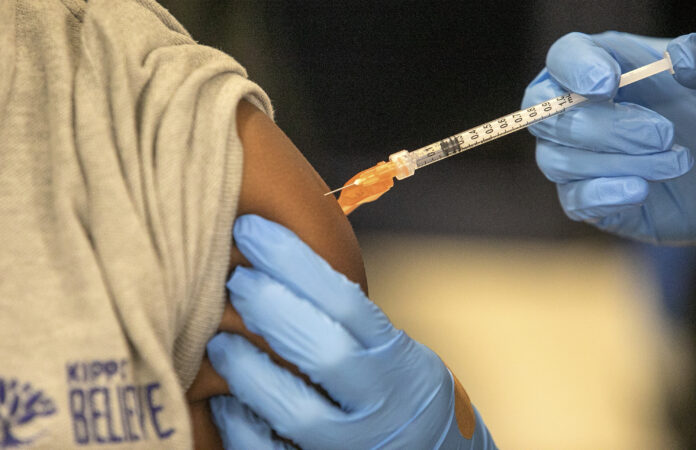
On Jan. 5, the Centers for Disease Control and Prevention released updated vaccine recommendations that decreased the recommended number of childhood vaccines. Based on this new schedule, children would receive routine vaccinations for 11 diseases instead of the previous schedule that protected against 18 ailments. The vaccinations no longer recommended include those for the flu, respiratory syncytial virus (RSV), hepatitides A and B (which cause liver disease), rotavirus (a gastrointestinal illness), and meningococcus (a cause of bacterial meningitis).
The data is clear: Childhood vaccination saves lives, and we have seen increased morbidity as vaccination rates decline. But as a pediatrician, this also goes beyond the data.
When I think about vaccines, I think about that young boy in the ICU. I think about how, if the circumstances were different, he might have lived. I think about his siblings, the ones who will no longer get to play in the yard with their younger brother. I think about his parents and how they will no longer get to hold their son or hear his voice. I think about what could have been.
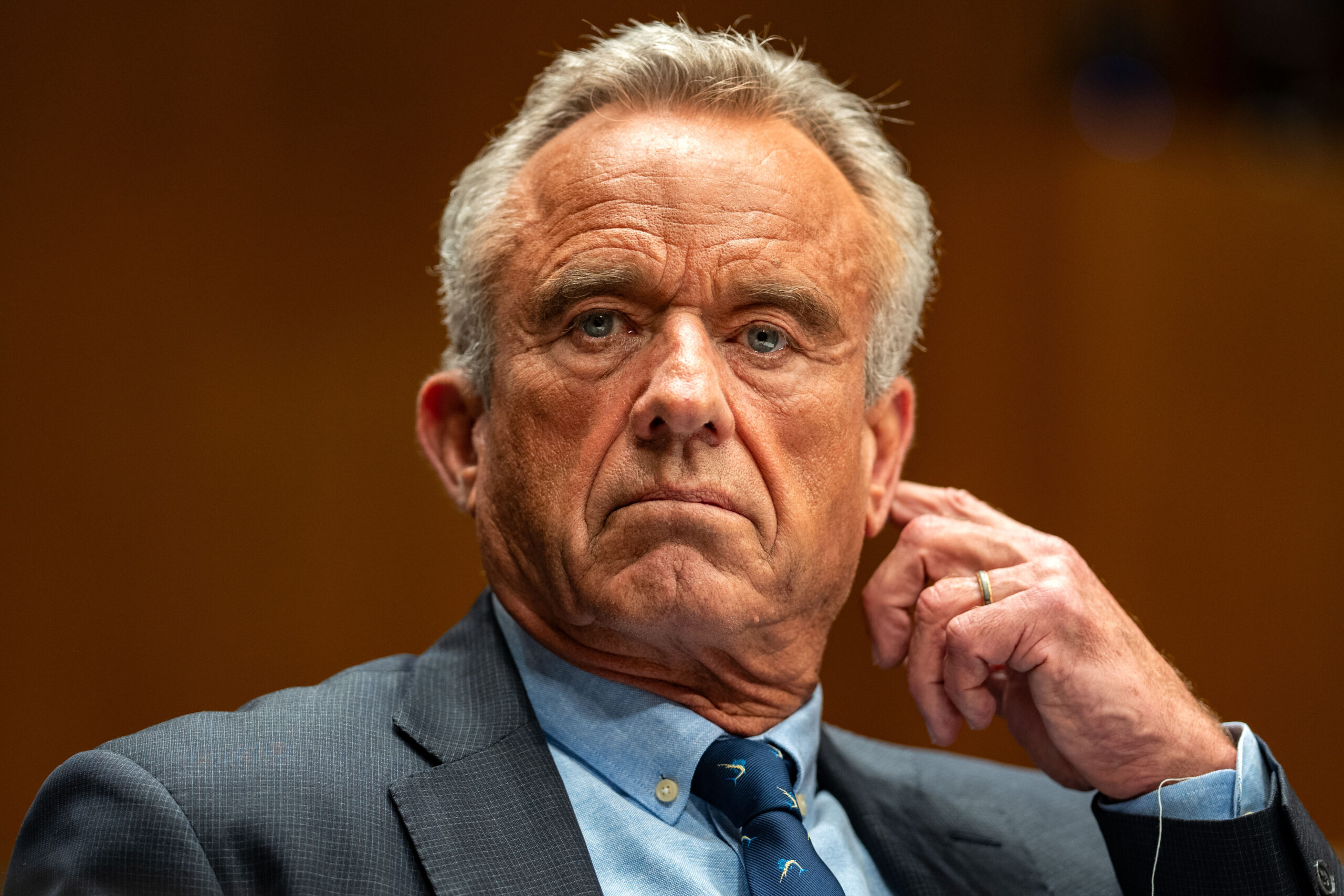
Robert F. Kennedy Jr.’s radical overhaul of established health practices has included reducing the number of recommended childhood vaccinations from 18 to 11.
While I do my best to uphold the doctrine of shared decision-making with the families I see in practice, we must also acknowledge that the decision of whether to vaccinate ultimately impacts others.
Eroding herd immunity
For decades, we have relied on herd immunity to protect vulnerable patients — such as those too young to receive certain vaccines or those who are immunocompromised. With declining vaccine rates, herd immunity has been diminished, leading to outbreaks of preventable diseases. With fewer recommended vaccinations, our vulnerable patients will continue to suffer.
Pediatricians are grieving the children we have already lost to vaccine-preventable illnesses, and we are grieving the losses that will come from these new recommendations.
We urge parents to have open conversations with their pediatricians, look to verified sources such as the American Academy of Pediatrics for information, and trust that we pediatricians do have your child’s best interests in mind. We may be grieving, but we will never stop advocating for your children.
Frances Avila-Soto is a pediatric resident in Philadelphia.