Category: Opinion

  • Trump may have shut down the border to asylum-seekers, but he can’t end immigrants’ hope

    Trump may have shut down the border to asylum-seekers, but he can’t end immigrants’ hope

    JUÁREZ, Mexico — Carolina was living in Colombia as a refugee when her 15-year-old son disappeared. Almost a year after her boy went missing and she mourned his loss, she got a call from an international number.

    Her son was alive 3,000 miles away in this historic Mexican city once known as “the Pass of the North,” nestled along the Texas border.

    “I was so happy, but I didn’t know how to get here, without knowing anything, without money, with nothing,” she told me when I met with her recently at an immigrant shelter in Juárez. “I sold my house and came here alone.”

    After a harrowing three-month journey during which she made her way across seven countries, survived two kidnappings, and endured beatings and sexual assault, she reunited with her son on Jan. 10.

    They tried to get an appointment to cross the border through U.S. Customs and Border Protection’s CBP One app — part of a program launched by the Biden administration to allow people to come to the U.S. legally while they waited for their asylum or other immigration case to be processed.

    Carolina and her son were still trying when President Donald Trump ended the program the day of his inauguration.

    They’ve been stuck in shelters ever since.

    Speak to immigrants at the border, and what happened to Carolina is sadly common. Some people are luckier, some less so, but no one comes out unscathed from their journey. And while some are willing to see their dreams deferred, there are and will continue to be more people who see coming to the United States as the only way out of a desperate situation.

    Visiting the border nearly 10 months after Trump took office and essentially ended the ability to seek asylum in the United States, you see what many Americans — even some begrudging critics — credit the president with doing.

    Trump has been brutally effective at limiting border crossings. The quiet downtown streets and plazas, the nearly empty shelters in both El Paso, Texas, and its sister city of Juárez in Mexico, are a testament to that fact. Only a few years ago, thousands of immigrants crowded sidewalks and shelters here, straining the region’s spirit of hospitality.

    Today, the immigrants left behind are the vulnerable among the vulnerable, advocates said. People who are unable to move out or move on, stuck in shelters with the hope that Trump’s “hard heart will soften,” as one woman told me.

    My own heart was not hard enough to dash her dream. Perhaps it should have been.

    The last thing immigrants need is for some well-meaning dope to ignore the facts for short-term comfort. They had enough of that during the Biden administration.

    A large “Welcome to Mexico” sign hung over the Bridge of the Americas is visible as President Joe Biden talks with U.S. Customs and Border Protection officers in El Paso, Texas, in 2023.

    Good intentions

    Under President Joe Biden, about six million people were allowed entry to pursue asylum applications and other immigration cases, according to the Migration Policy Institute.

    I believe that all things being equal, the U.S. has no trouble absorbing these immigrants. Call me cynical (I prefer pragmatic), but our economy runs on cheap labor and consumer spending — six million people give you both. It gives you adults who are willing to do the work Americans won’t, and kids who will go to school and graduate for the jobs there aren’t enough Americans for.

    But the problem is the president can only do so much. The executive can allow people to remain in the country under some sort of limited parole, it can direct enforcement toward higher priority targets, such as immigrants with criminal records, but it cannot grant legal status.

    Only Congress can do that, and legislators have decided there is no major issue they can’t shrug off as intractable and call it a day.

    So the Biden administration opted to let people in — regardless of whether they had a good asylum case — knowing full well that just as one president could open the door for immigrants, another could slam it in their faces.

    Biden himself shut that door halfway as the 2024 presidential election neared, but the political damage had already been done, because the administration at no point made the argument for why it was doing what it was doing.

    As desperate people who wanted a better life clustered at the border — partly because of the pent-up demand that grew under pandemic restrictions Trump put in place — Biden could have made a moral argument, or laid out the economic benefits of immigration. He could have done more than introduce immigration reform shortly after taking office, and then just as quickly give up on it.

    Instead, it was never clear what Biden wanted other than not to be seen as the bad guy.

    His administration’s humanitarian intentions, coupled with incessant fear-mongering on the right, paved the way to where we are today.
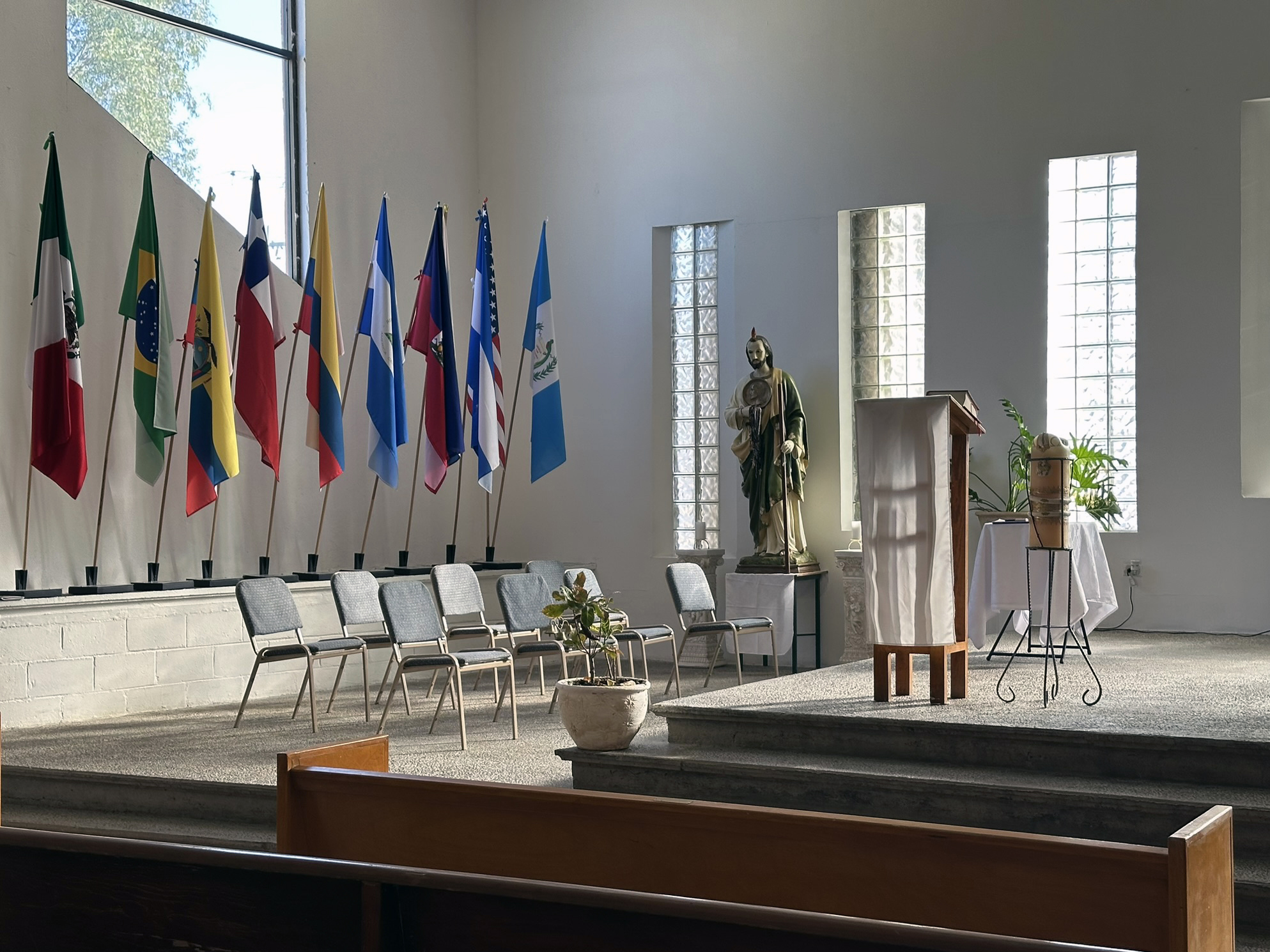
    Flags from North, South, and Central America line the left side of the chapel inside the Casa del Migrante in Juárez, Mexico, in November.

    All for nothing

    It took Helen, her husband, and their 3-month-old baby three months to travel from Ecuador to the Casa del Migrante shelter in Juárez, which is run by the Roman Catholic Diocese of Ciudad Juárez.

    Like Carolina, Helen — who remains concerned about the status of her potential immigration case — would speak with me only on the condition that her last name not be used.

    Helen and her husband, both in their early 20s, arrived in October of last year after leaving their home because of growing gang violence. “You couldn’t have any peace anymore,” Helen said.

    The family crossed the dangerous jungle and rode through Mexico on the freight train known as “the beast.” She saw a man die, falling under the wheels of the cars.

    While her husband goes out to work odd jobs, she takes care of their daughter. The routine gets to her, she said. Once a month, they’re able to go out and splurge on a meal, even as they’re afraid to walk the city’s streets.

    Her daughter has now lived most of her life inside a shelter, but Helen told me they will continue to sacrifice.

    “We are waiting to cross. Whatever it takes,” she said.

    Across town at the Vida shelter, Carolina, 53, is torn about what to do.

    Her journey to Juárez began 14 months ago. Distraught over her son’s disappearance, she went back to her native Venezuela to be with her mother.

    When Mexican officials informed Carolina that her son was alive, she left Venezuela on Oct. 20, 2024, and traveled across Central America. She was kidnapped twice, Carolina said. Once when she crossed the Guatemalan border into Mexico, and again when she got to Juárez in December.

    “The one here was the worst. The one here was rape, beatings. I still can’t fully touch myself here,” she said, grimacing as she moved her hand along her left breast. “They left me with nothing.”

    Although she’s grateful for all the help she’s received, she said, it’s coming up on a year of living in shelters, and the uncertainty is becoming overwhelming.

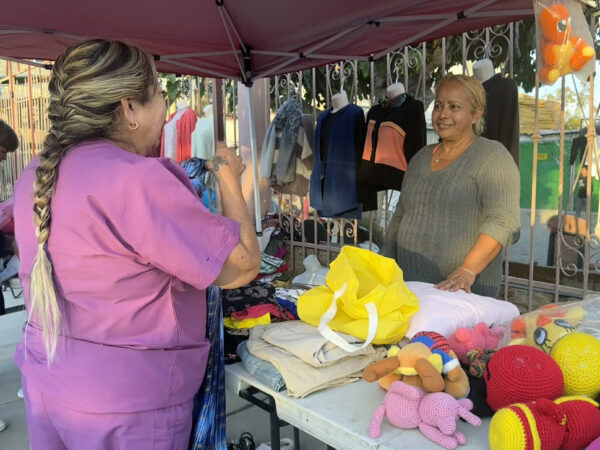
    Her son is going to high school, and sometimes works with a handyman. She sells donated used clothing in front of the shelter and cleans houses, but work is sporadic.

    “I tell my son we should go back,” Carolina said. “He says he came here for a future.”

    Her mother calls and tells her she doesn’t have food, she said. She trusts that God has a plan and things will work out accordingly — even if it means returning home to struggle there — but there must be a point to her journey.

    “You go hungry, you grow tired, it’s raining, you see corpses. You spend sleepless nights, running from people who want to rob you, kill you,” she said.

    “Do you know what it’s like to go through what I went through and not be able to cross?”

    President Donald Trump during a July tour of “Alligator Alcatraz,” a migrant detention facility at Dade-Collier Training and Transition facility in Ochopee, Fla.

    No turning back

    Many immigrants who are still in shelters, and those who have decided to remain in Mexico, are in a state of flux, waiting for the opportunity to cross the border.

    Trump may have succeeded in curtailing illegal immigration through a mix of enforcement, deterrence, and cruelty, but it is unsustainable. While he may be able to delay the inevitable — especially if he manages to crash the economy and there are fewer jobs for immigrants to fill — eventually, people will return.

    “Listening to people’s stories, we’re really at a critical moment,” said Alejandra Corona, who heads Jesuit Refugee Services in Juárez, a nonprofit that serves the migrant community. “The world is broken, and there are no options.”

    You see it in the eyes of parents who are deeply wounded because they cannot provide for their families even in the most basic ways, Corona told me, and the reasons why are far from simple.

    “It’s not just, ‘Oh, I lost my job,’” she said. “It’s, ‘I had a job, but couldn’t afford to pay off the gang member or the cartel. I stopped paying for protection and had to flee. I was discriminated against, I’ve never had a passport, I’ve never been to school, I’ve never had access to my rights. I do not exist, and no one wants to see that I don’t exist.’”

    The lesson to be drawn from the border today is that immigrants may not be as visible, but they haven’t gone away.

    If Democrats capture the presidency in 2028, they will likely not follow the Trump administration’s amoral ruthlessness, but they cannot repeat the Biden administration’s aimless permissiveness, either.

    Everyone suffers under the current seesaw approach to immigration, where an immigrant can come here “the right way” under one administration, only to see things turn out wrong under the next. Trump has tried — successfully and unsuccessfully — to kill programs for immigrants established under Presidents George H.W. Bush, Barack Obama, and Biden.

    Whether or not you support immigration, the whims of an individual — even if it’s the president — are no substitute for the legislative process.

    The United States is a nation of immigrants. America has thrived economically and culturally thanks to this fact. On immigration, it’s Congress, as representatives of the people, who must determine the who and how, the when and where, that makes the most sense for the country.

    Until then, immigrants will be ready and waiting — and praying for a softer heart in the White House.

    More from the border: At the border, fear and uncertainty as Trump seeks to remake the immigration court system
  • Marra’s goes and the Rail Park grows as Philly communities change | Shackamaxon

    Marra’s goes and the Rail Park grows as Philly communities change | Shackamaxon

    This week’s Shackamaxon is all about how cities change, whether some like it or not.

    Meno Italiano

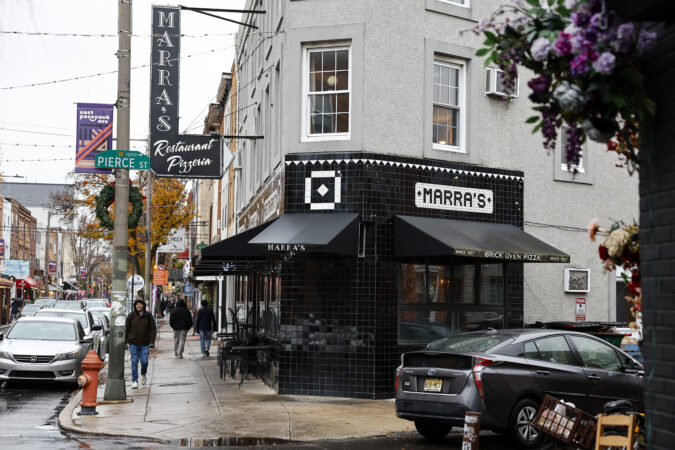
    Like so many of my neighbors in South Philadelphia, I had been meaning to go back to Marra’s on East Passyunk Avenue for a while when I heard the news of its imminent closure. The classic Italian restaurant was just two years shy of a century’s worth of business when the owners found an interested buyer in Dan Tsao, the owner of Chinatown’s EMei.

    In an interview with my colleague Michael Klein, Marra’s owners blamed a lack of parking for contributing to their decision to close and potentially relocate. Given their location on a thriving and increasingly renowned dining corridor, some have expressed skepticism about this diagnosis. To me, however, it rings true in a different way.

    After all, when Marra’s initially opened, parking would not have been much of a concern. Their customer base, like much of the customer base for the new restaurants on the corridor, would have lived nearby. The pizzeria was part of an extensive Italian American community that came to be synonymous with South Philadelphia during the 20th century. Over the years, the center of gravity for this lively community moved to places like Cherry Hill, where people get around by driving, not walking. This means that, over time, many existing businesses have become more dependent on the ease of parking.

    Marra’s is not the only neighborhood institution to fall victim to this phenomenon. While many still call it the “Italian Market,” the stalls on Ninth Street are now more likely to be occupied by Asian and Latino entrepreneurs. When I first moved to South Philly in 2011, I’d regularly hear older residents conversing with each other in Sicilian. That’s much less common today.

    I call this process suburbanization. As more members of a community live and work outside the city, it becomes harder to maintain the institutions that helped forge their identity in the first place. After all, who wants to fight for a parking spot in South Philadelphia when there’s unlimited free parking at the many Italian restaurants closer to home?

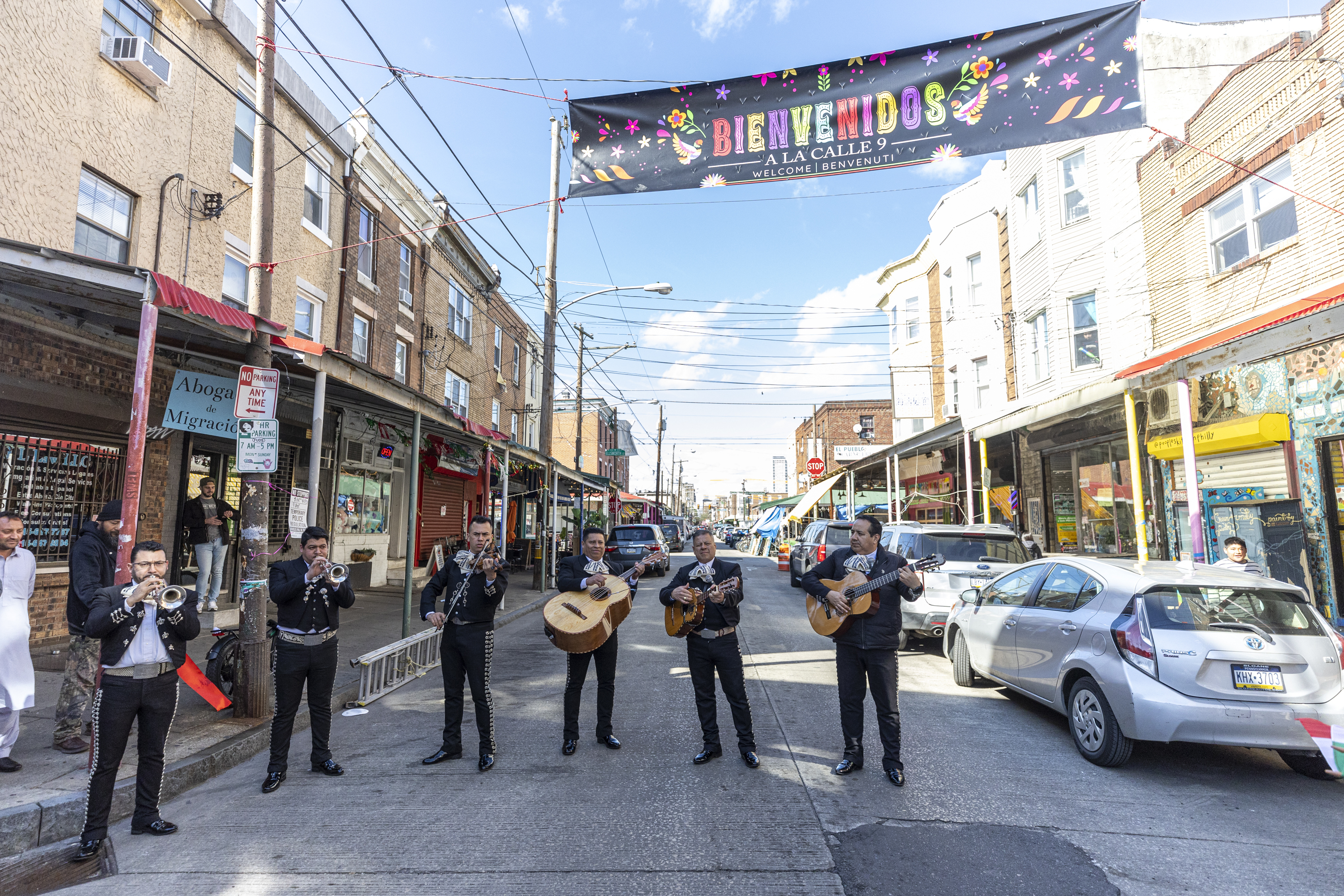
    Rey Azteca Mariachi performs in 2024 below the then-new banner welcoming shoppers to Ninth Street in South Philadelphia.

    Fight displacement, not change

    Marra’s and South Philadelphia are hardly alone when it comes to managing suburbanization. The same phenomenon affects Chinatowns across America, including Philadelphia’s own. Szechuan and Cantonese cuisine are now available throughout the region, just like traditional Italian fare. The largest Chinese restaurant in the city is now Northeast Philadelphia’s China Gourmet, not a Chinatown banquet hall. This is why so many business owners feared the possibility of a Sixers arena on Market Street. They felt fans would be more interested in General Tso’s chicken and bubble tea than the authentic fare that defined the neighborhood. Meanwhile, they’d also take up parking spots that would otherwise be used by their own patrons.

    Suburbanization even affects places of worship. During the debate over bike lane parking in Center City, I talked to Tim Geiger — then interim pastor of Tenth Presbyterian Church on Spruce Street — about why his congregation was so reliant on parking spaces. The answer was clear: They had gone through the suburbanization process decades before South Philadelphia or Chinatown.

    While Geiger told me he encourages congregants to walk, use paid parking, or take transit, it can be a hard sell when so many can attend services closer to home, at a church that offers free parking.

    For many people, this process is a reason to abhor or prevent change. They cite the increase in residential density in and around Center City, the work of groups like the Passyunk Avenue Revitalization Corp., and civic interventions like the Schuylkill River Trail as catalysts for gentrification. At a recent City Council meeting, members of the Committee on Public Property and Public Works echoed these sentiments, expressing a concern that a proposal to turn an abandoned railway viaduct into an expanded Rail Park and pedestrian pathway could drive out low-income residents.

    This is the wrong way to conduct public policy.

    After all, the South Philadelphia neighborhood that hosted Marra’s hasn’t seen a massive shift in its built environment. It has changed significantly anyway.

    Santiago Uribe and his golden retriever Koda take a walk along the Rail Park in 2019.

    Whose community?

    As usual, Council members expressed their skepticism about the park proposal by putting their thoughts into the mouths of residents who conveniently were not there to express their opinions themselves. Jeffery “Jay” Young and Quetcy Lozada, in particular, were concerned that there hadn’t been enough community engagement, or that the park would serve as a playground for wealthy residents, leaving the rest of the city behind.

    Paul Levy, the former head of the Center City District, is heading up the planned expansion of the Rail Park. Levy said the plan is to unite neighborhoods and offer a useful amenity, not to push anyone away. Unlike Councilmember Young’s plans to demolish the Cecil B. Moore Library, the Rail Park has already earned the support of local civic associations. Center City District held 15 meetings to gauge community reaction to the idea.

    It is a process that’s already been successful for the Center City District’s other big projects, Dilworth and Sister Cities Parks. Both serve as urban oases for families across Philadelphia thanks to thoughtful programming and design choices. Levy told me to think in three concentric rings: community involvement in design, community involvement in programming, and a comprehensive housing and development plan for the surrounding neighborhoods.

    That’s a lot more thought than obstructionists like Young and Lozada likely put into their opposition.

  • Letters to the Editor | Dec. 5, 2025

    Letters to the Editor | Dec. 5, 2025

    Boat strikes

    The U.S. War Crimes Act of 1996 is explicit about what is believed to have occurred on the high seas on Sept. 2.

    Murder. —

    The act of a person who intentionally kills, or conspires or attempts to kill, or kills whether intentionally or unintentionally in the course of committing any other offense under this subsection, one or more persons taking no active part in the hostilities, including those placed out of combat by sickness, wounds, detention, or any other cause.

    I believe a shipwrecked individual hanging on for dear life to the detritus of an attack fits this explicit description. In fact, I would suggest the original attack order fits this description, as well, as I have yet to see evidence that these individuals were involved in hostilities or combat of any kind.

    Bill Maginnis, North Wales

    . . .

    The majority of the letters from readers printed on Wednesday were deploring the second strike on a cartel drug boat. It appears the basis for their perceived outrage was a report from the Washington Post.

    The facts are that the Post relied on a single anonymous source who presented no evidence that such an order was given. In fact, the New York Times reported that there was no direct evidence to make that determination. Yet, many people ran with another anonymous source to launch a broadside against the administration, claiming war crimes had been committed. We are entitled to our own opinion, but not our own facts.

    Interestingly, a group of Democratic representatives recently made a video about the importance of service members ignoring illegal orders. Then — lo and behold — an anonymous source claims such an order was given, again with no evidence. Then, the Democrats demand hearings. The sequence is interesting. There is an old saying that you can tell the people who are actually doing something about our problems by the arrows in their backs.

    MG Del Rossi, Blue Bell

    . . .

    It is almost unbelievable that while Pete Hegseth is ordering the killing of suspected drug dealers in boats off the coast of Venezuela, Donald Trump is pardoning a convicted drug lord who brought hundreds of tons of cocaine into the United States.

    It is almost unbelievable that the Trump administration is seeking to court-martial Mark Kelly for making a video with fellow members of Congress, reminding members of the military that they swear an oath to the Constitution and are not required to follow illegal orders.

    It is almost unbelievable that Hegseth orders a bomb strike on suspected drug dealers, and then the killing of two survivors of the attack. That the Trump administration is incompetent, corrupt, and full of hate — now that is believable.

    Mary Ann Furin, Philadelphia

    . . .

    While there has been debate over the legality of recent attacks in the Caribbean and the Pacific, the illegality of the attack on survivors of a first strike, reportedly ordered by Defense Secretary Pete Hegseth, is crystal clear. Whether it was a war crime or simply murder committed in our name, there is no question that Hegseth has broken the law. This murderous act falls squarely within the “high crimes and misdemeanors” referenced in Article II, Section 4 of the Constitution — the impeachment clause. If murder is not worthy of impeachment, then that section is a dead letter. Every member of the House of Representatives should be asked when we can expect articles of impeachment to be filed. If they refuse to impeach Hegseth, then they should be voted out in 2026.

    Jared Cram, Philadelphia

    Join the conversation: Send letters to letters@inquirer.com. Limit length to 150 words and include home address and day and evening phone number. Letters run in The Inquirer six days a week on the editorial pages and online.

  • Life during wartime in New Orleans as feds terrorize Latinos who saved a city

    Life during wartime in New Orleans as feds terrorize Latinos who saved a city

    KENNER, La. — When the day New Orleans had feared for weeks finally came on Wednesday, it began with a lie as wide as the meandering Mississippi River.

    A port city somehow dubbed the Big Easy despite its centuries of big trouble woke up to a frigid blast of Arctic air and a claim from the U.S. Department of Homeland Security that local immigration raids it’s named the “Catahoula Crunch” would narrowly target “criminal illegal aliens roaming free thanks to sanctuary policies …”

    Within a couple of hours — in raids that were, in fact, wildly untargeted — SUV caravans bearing masked, green-uniformed U.S. Customs and Border Protection (CBP) agents stormed into parking lots and at suburban Home Depots and Lowe’s, blitzkrieged Latino restaurants and a car wash on a busy strip near the airport, and cruised neighborhoods looking for roofers to arrest.

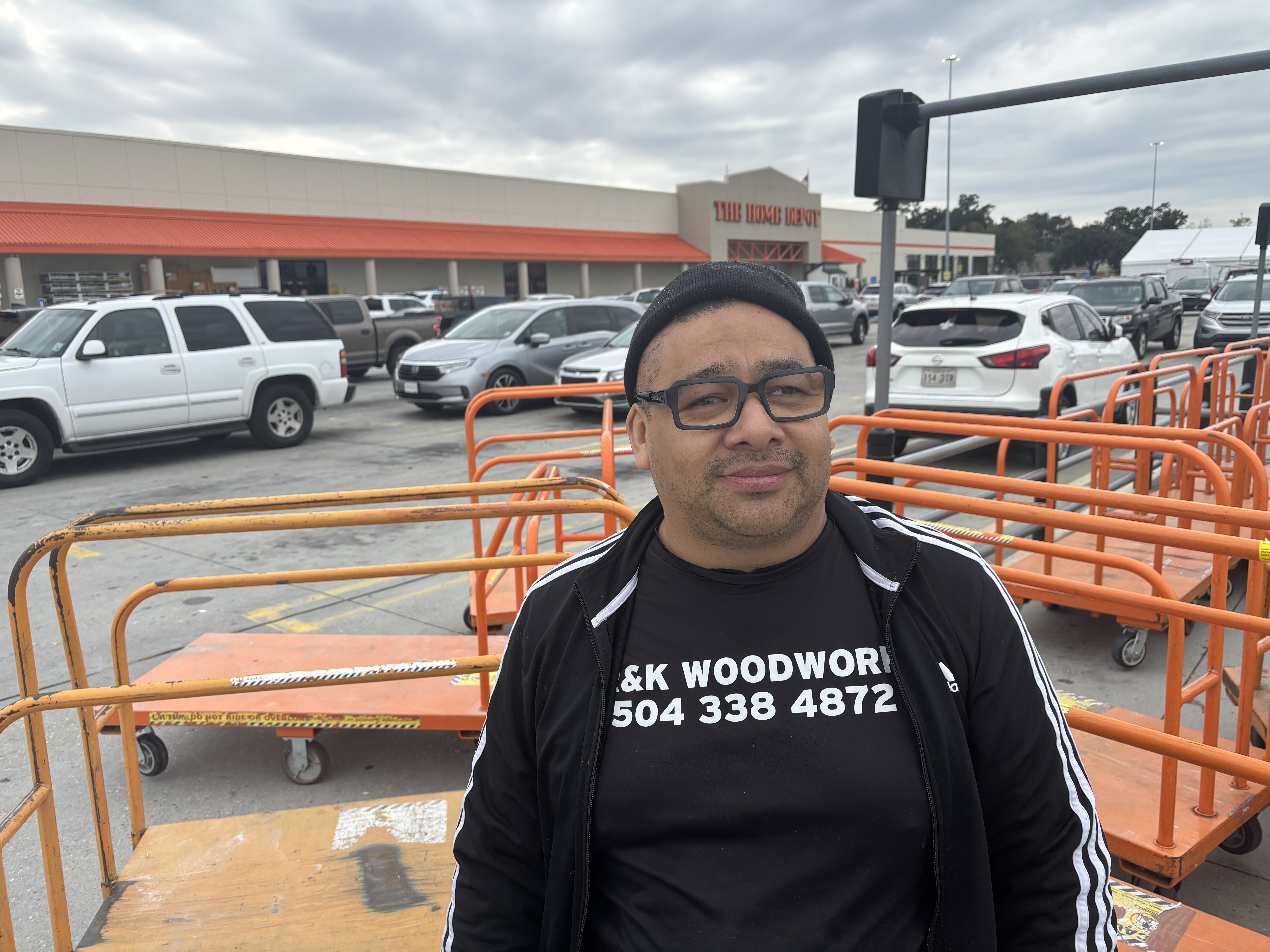
    On a hunch, I drove to a Home Depot here in Kenner at lunchtime and found them: a platoon of maybe 15 masked Border Patrol officers in olive-drab uniforms and dark baseball caps wrapping up a sweep of the parking lot, strutting past the piled-up orange shopping carts and ignoring a film crew shouting, “Why are you here?”

    Ricardo Ramírez, a 50-year-old construction worker and a U.S. citizen, had just pulled into the Home Depot lot to return some items when, as he told me a few minutes later, one of the officers came up to him and barked, “Which country? Are you a citizen?” Ramírez carries his passport because “it’s so crazy what’s going on that I have to, just because I look Spanish” — and was surprised when the officers moved past without asking to see it.

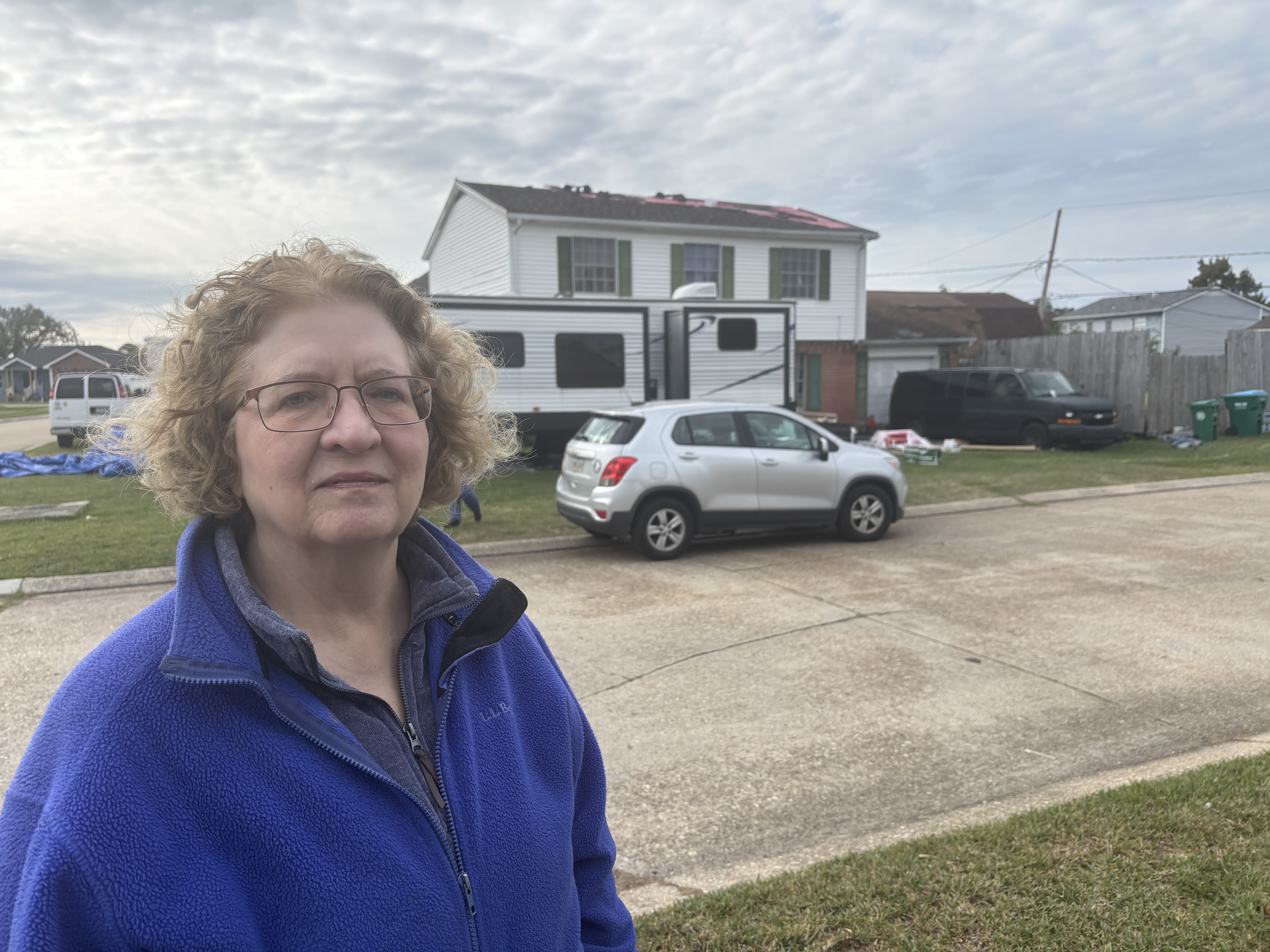
    But at that moment, just two miles away in a suburban subdivision in North Kenner, citizen volunteers raced to find another 12-agent Border Patrol team raiding a two-story home with white siding and green shutters. As an agent trained a sniper rifle on them, two Latino workers who’d been replacing a metal roof damaged in a recent hurricane stood atop the home, hands in the air.

    Zoe Higgins, a 33-year-old social worker who volunteered with the group Unión Migrante to track the immigration raids and watched the tense drama, told me, “I could only imagine how they were feeling, and I was filled with anger.” But as more and more citizens and some journalists crowded the narrow, one-way Louisiana State Drive, they saw the agents leave — the rooftop workers spared, but two other crew members handcuffed and whisked away, destination unknown.

    This is life during wartime in America in 2025, as an iconic U.S. city that celebrates itself as a boiling gumbo pot of Spanish-style architecture, Louisiana French, and spicy Creole culture suddenly finds itself under a terrorizing siege from the same federal government that promised billions so “New Orleans will rise again” after the devastation of Hurricane Katrina 20 years ago.

    Heard about Los Angeles? Heard about Chicago? Heard about Charlotte, N.C.? The 10-month-old Donald Trump regime has stumbled into a playbook for the xenophobic mass deportation drive it promised voters in 2024 — an “American Counter-Revolutionary Guard” of around 250 masked Border Patrol officers, led by the arrogance and telegenic evil of their commander, Greg Bovino, rampaging the Lowe’s parking lots and back alleys of one U.S. city before caravanning in their black SUVs to terrorize the next.

    Ricardo Ramírez, a 50-year-old construction worker, talks about being questioned by Border Patrol agents at a Home Depot parking lot in Kenner, La., on Wednesday.

    I flew from Philadelphia into Greater New Orleans Tuesday afternoon, just in time for the launch of the so-called Catahoula Crunch, because I wanted to see what it looked and felt like when the U.S. government sends a commando squad to wage war on one of its own cities. That meant spurning the beignets and darkened French Quarter jazz clubs of my 10 prior visits here and instead embedding on Williams Boulevard in Kenner, where former Pizza Huts are now taquerias with twinkling white lights and mariachi-style music is pumped into the markets.

    This is the New Orleans tourists only see speeding past in their airport Ubers, where in low-slung brick homes under the constant roar of jet engines, the Latino community has nearly tripled since 2000 — swelled by Mexican and Central American workers who labored around-the-clock on the massive post-Katrina reconstruction. That narrative of communal pride has been swamped by a palpable fear that this week pervades Kenner, where nearly a third of residents are Latino, yet the police chief is pro-immigration raids.

    By the end of the day, observers tallied around 12 to 14 apparent arrests. There was no evidence that any of these people were on the list of 10 most-wanted actual criminals Homeland Security pictured along with Wednesday’s launch — catnip for the Fox News audience clinging to the delusional Big Lie that Team Bovino is only targeting bad guys.

    Instead, his secret police just swarmed wherever they could find the most brown-skinned people — the Home Depot lot, a white van filled with contractors, Mexican restaurants — and acted like the gun-toting officer in the recent movie Civil War who famously asked, “What kind of American are you?”

    In Bovino’s past operations, only a fraction of those arrested and facing deportation had criminal records — just 44 out of 370 in last month’s Charlotte op — and there was no evidence that Louisiana’s “Catahoula Crunch” would be any different.

    The Rev. Jane Mauldin, a Unitarian minister and immigration watchdog, outside a home worksite that was raided by Border Patrol agents on Wednesday.

    Yet, the real terror in Kenner is what you don’t see — a vibrant community that overnight has vanished underground.

    Shoppers who enter the Latino-oriented Ideal Market on the Williams strip are greeted with a sign: “STOP: NO ICE ACCESS IN THIS BUSINESS.” Yet, at midmorning Wednesday, there was just one shopper in the entire supermarket, outnumbered by workers stocking bins of green and yellow plantains and glistening produce that looked utterly untouched.

    “A lot of people are staying home, not going out,” Ramírez, the worker questioned by Border Patrol, told me. “We work in construction, and we are shorthanded. We know people don’t want to go to work. They are afraid.”

    Several local volunteers shared the same thought: that these “papers, please” random raids and the families hiding behind closed blinds and locked doors remind them of the stories they’ve read about Jews who lived in constant fear of Nazi raids in the 1930s and ‘40s.

    “I keep thinking about Anne Frank, who was kept alive with her family by a good friend named Miep,” said the Rev. Jane Mauldin, a Unitarian minister who was one of the volunteers who raced to the North Kenner raid on the roofers, referring to the Jewish teen who eventually died in a German concentration camp in 1945, and her Dutch protector. “I keep in my head saying, ‘What would Miep do?’”

    School attendance is down, and church pews are empty. Volunteers are collecting food for families that have suddenly gone into a COVID-level lockdown, and almost everyone who is out and about has a friend or coworker who abruptly went into hiding when they heard Border Patrol had targeted New Orleans.

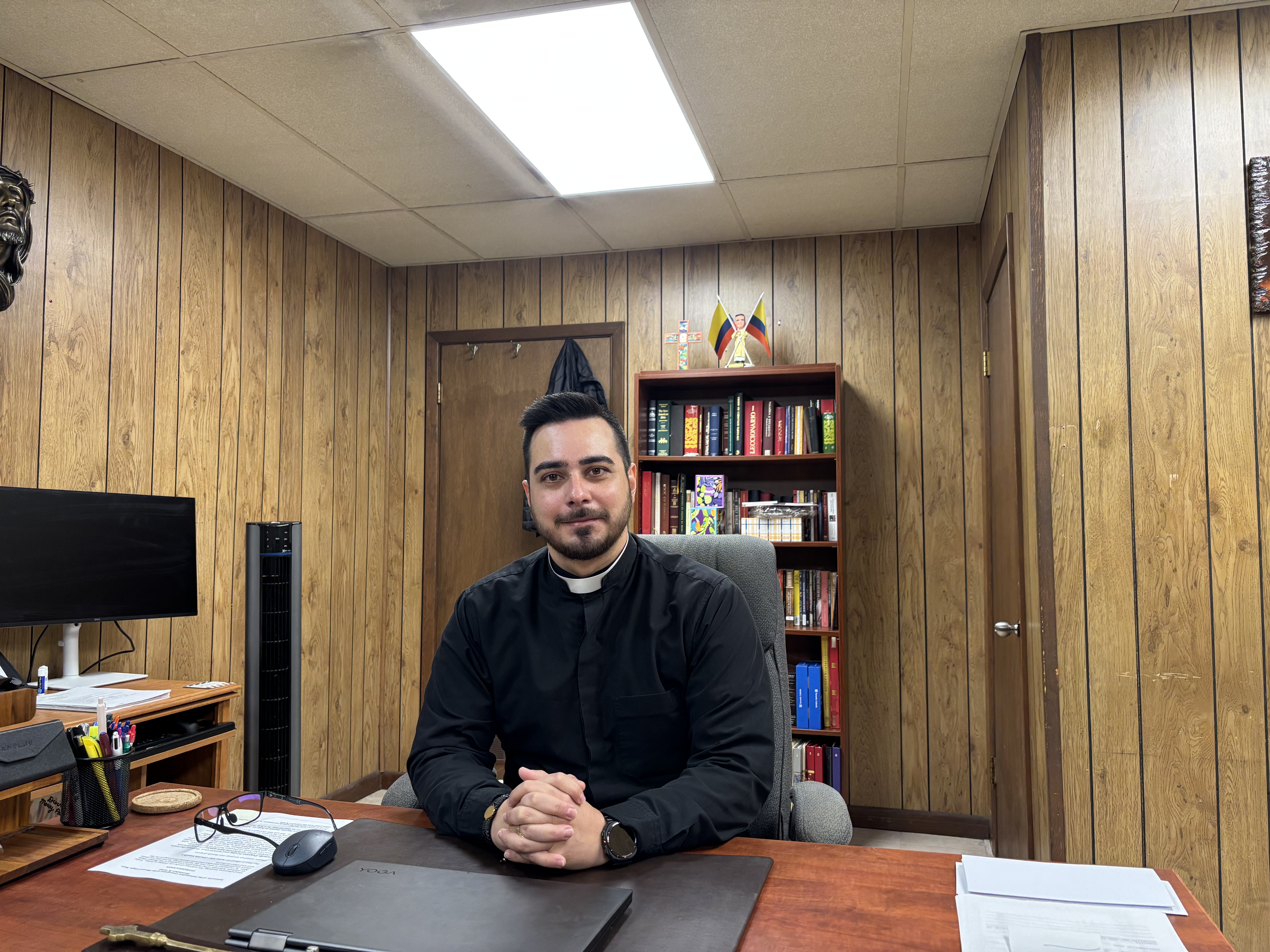
    Father Luis Duarte, a 33-year-old immigrant from Colombia, talks about plunging attendance at St. Jerome Catholic Church, in Kenner, La., where he is pastor, as federal immigration raids begin on Wednesday.

    “There is a good friend of mine who hasn’t left her house in a week,” Mauldin said. “Her children are not going to school because of the fear … And she has all the right papers, but she’s not a citizen, so there is a possibility that she could be kidnapped and taken away and never see her children again.”

    The Rev. Luis Duarte, the 33-year-old Colombian-born priest at St. Jerome Roman Catholic Church in Kenner, told me that attendance at weekend Masses offered in Spanish has plunged, and a family that for weeks had been planning a joyous quinceañera for their daughter’s 15th birthday called it off. “They are fearful,” he told me, adding, “Not fearful because they are criminal, but because they are Hispanics.”

    Duarte was one of many who spoke of the unbelievable irony that the very people who came to the United States with hammers and 16-hours-a-day energy to rescue New Orleans in its darkest hour, after flooding from 2005’s Hurricane Katrina swamped thousands of homes and killed 1,833 people, are now seeing their new world turned upside down by the same U.S. government that vowed to rebuild the Crescent City.

    Duarte said his parishioners have told him of yard signs that welcomed the 2005 influx in Spanish — the same language government agents are now using to profile those they seek to handcuff and whisk away. “So when I see what’s going on now …” the priest said, then paused. “Yeah, why?”

    Yeah, why? This feels like a domestic Vietnam in reverse: We saved the town in order to destroy it. You can glean clues from the way Bovino and his cosplay tin soldiers preened for the prearranged cameras on Canal Street Wednesday afternoon, or the twisted name for his operation. The Catahoula leopard dog is the official state canine, revered by Louisiana’s early settlers for their ability to herd cattle and hunt down wild boars. The “crunch” is the sound of jaws ripping flesh. It’s a terrible echo for a place that once sicced bloodhounds on its enslaved people.

    The cruelty was the point in 1825. The cruelty is the point in 2025. The day laborers outside Lowe’s, just wanting to hammer shingles onto your roof, are the modern-day Christians thrown to Bovino’s cowardly lions in a Roman circus for Fox News couch potatoes. Same as the Somali Americans in Minneapolis, whom Trump was slandering on Wednesday as “garbage.” The worst Americans can revel in the latest model of white supremacy while their Dear Leader is robbing them blind and stashing the profits in crypto or the Trump Plaza Kazakhstan or whatever.

    But every day, more and more people are catching onto the scam and asking what Miep would do. “This hits very deep and very personal for many of us — in my neighborhood, almost every roof had to be replaced,” Mauldin said. “The men who were willing to go on the roof in 100-degree heat in September 2005 were not white, not Black — mostly, they were the Latino men who rebuilt this city.”

    Hours later, I stood at the busy corner of Elysian Fields and St. Claude with a dozen protesters amid a nonstop cacophony of cars responding to one of their signs: “Honk If Your Ancestors Were Immigrants.”

  • White is the 2026 Pantone Color of the Year. They say the choice isn’t political.

    White is the 2026 Pantone Color of the Year. They say the choice isn’t political.

    In a colorless move that, Pantone says, speaks to our collective longing for calmness, a clean slate, serenity, and focus, the New Jersey-based global color authority named Cloud Dancer — a billowy, balanced white — as its 2026 color of the year.

    The blank hue’s uncluttered vibe, Pantone says, plucks us out of the day-to-day crazy of our newsfeeds, AI-generated madness, and hustle culture.

    White, says Pantone Color Institute’s vice president Laurie Pressman, offers relief and respite. White noise silences the cacophony of worry rattling around in our overstimulated brains. The color gives us permission to think, refocus, and chart a new future.

    The pause between the doing, white is the be-ing.

    “White speaks to the value of measured consideration and quiet reflection,” Pressman said. “It represents a future free of toxicity and excess … contentment and peace, unity, and cohesiveness. It’s ethereal. White embraces the clouds.”

    Sweet dollops of whipped cream are white, meringue is white. Fluffy mashed potatoes are white, too.

    A fresh pair of Air Force 1s, patent leather go-go boots, a clean tee, a crisp button-up. A voluminous bridal gown. We ski in winter white.

    Mikado crop top with organza ball-gown skirt, limited edition ($1,150) at David’s Bridal, with pearl-drop earrings ($1,300) at Rosnov Jewelers. (Michael Bryant/Staff Photographer)

    White is fly.

    “In fashion and interior design, white is in our comfort zone,” said Leatrice Eiseman, executive director of the Pantone Color Institute. “It’s natural and organic. It’s about sustainability.”

    White is ethereal. She’s dreamy. She represents new beginnings. I’m overwhelmed, too. I would love to drop my precepts and jump into a world of my own making. Architectural white shirts and black pants are my grown woman fashion go-to.

    I get it.

    But y’all, white is the color of the year in 2026.

    As a Black woman living in Trump’s America, I can’t help but wonder if Pantone’s choice of Cloud Dancer was much more of a nefarious harbinger than they perhaps realized.

    No, I don’t think Pantone is low key promoting whiteness or advocating for a white savior.

    Cloud Dancer, the 2026 Color of the Year, is billowy like this curtain blowing in the wind.

    Rather, to me, Cloud Dancer is a subliminal acknowledgment of the power structure emerging in America, especially her politics. The Trump administration’s attacks on diversity, equity, and inclusion programs in universities and the federal government; its attempts to whitewash American history; its deportation of undocumented (and documented) brown immigrants; its adoption of white supremacist values: It all points to an America that values white lives more than others.

    Fashion and style always gives us clues to the future. So, I asked Pantone if they were tapping into something that perhaps they weren’t even aware of?

    “Absolutely not,” Pressman said, her tone pleading with me to stop with the correlation. “Pantone is not political.”

    Pantone is not political, true. But its trend forecasters keep their manicured fingers on the pulse. And in this moment I’m unable to ignore Ku Klux Klan robes are white, too.

    COY is always right

    Pantone’s Color of the Year is rooted in fashion. Its early picks – oceanic Cerulean in 2000; orange Tiger Lilly in 2004; and golden Mimosa in 2009 – influenced clothing, accessories, and makeup. As we moved deeper into the millennium, COY was the trendy choice for Kitchen Aids, accent walls, and Post-it notes.

    In the last decade, however, color of the year has come to define our collective moods more than just our fashion aspirations.

    It’s the aura hovering over the world, indicative not just of the life we have, but the one we want. The colors have become a peek into the energy of the feelings driving tomorrow’s zeitgeist.

    That became crystal clear in 2016, the first year Pantone chose two colors — a pink Rose Quartz and a baby blue Serenity. The dual hues were a nod to the emerging blurring of gender lines.

    In 2021, Pantone chose two colors again: Ultimate Gray and Illuminating Yellow.

    A year into the pandemic, we were emerging from a 2020 into a hopeful 2021, Pressman explained.

    The 2023 color, Viva Magenta, spoke to the vibrant post-pandemic life we craved.

    The Pantone Color of the Year is Cloud Dancer. The soft white represents a clean palette, a fresh start, shift and change.

    And its 2025 pick was Mocha Mousse, the color of espresso martinis, expensive wood, and me. It made such good sense in a year Black girl magic was at its peak.

    Things took a quick turn after. According to a New York Times study, 319,000 Black women have left both public and private sector jobs in 2025, the result of the Trump administration’s cost-cutting and DEI Initiatives.

    A clean slate

    A key reason why Pantone chose white is because, Pressman said, people are craving blank slates.

    “People have gotten to a point where they see what’s happening isn’t working for them anymore,” Pressman said. “They want something different, new, authentic.”

    Cloud Dancer hit that nail on the head.

    The Trump administration is dismantling the Department of Education, killing funding for the arts, scrubbing civil rights departments in federal agencies, and decimating medical research, replacing vaccine recommendations with unsubstantiated claims about Tylenol.

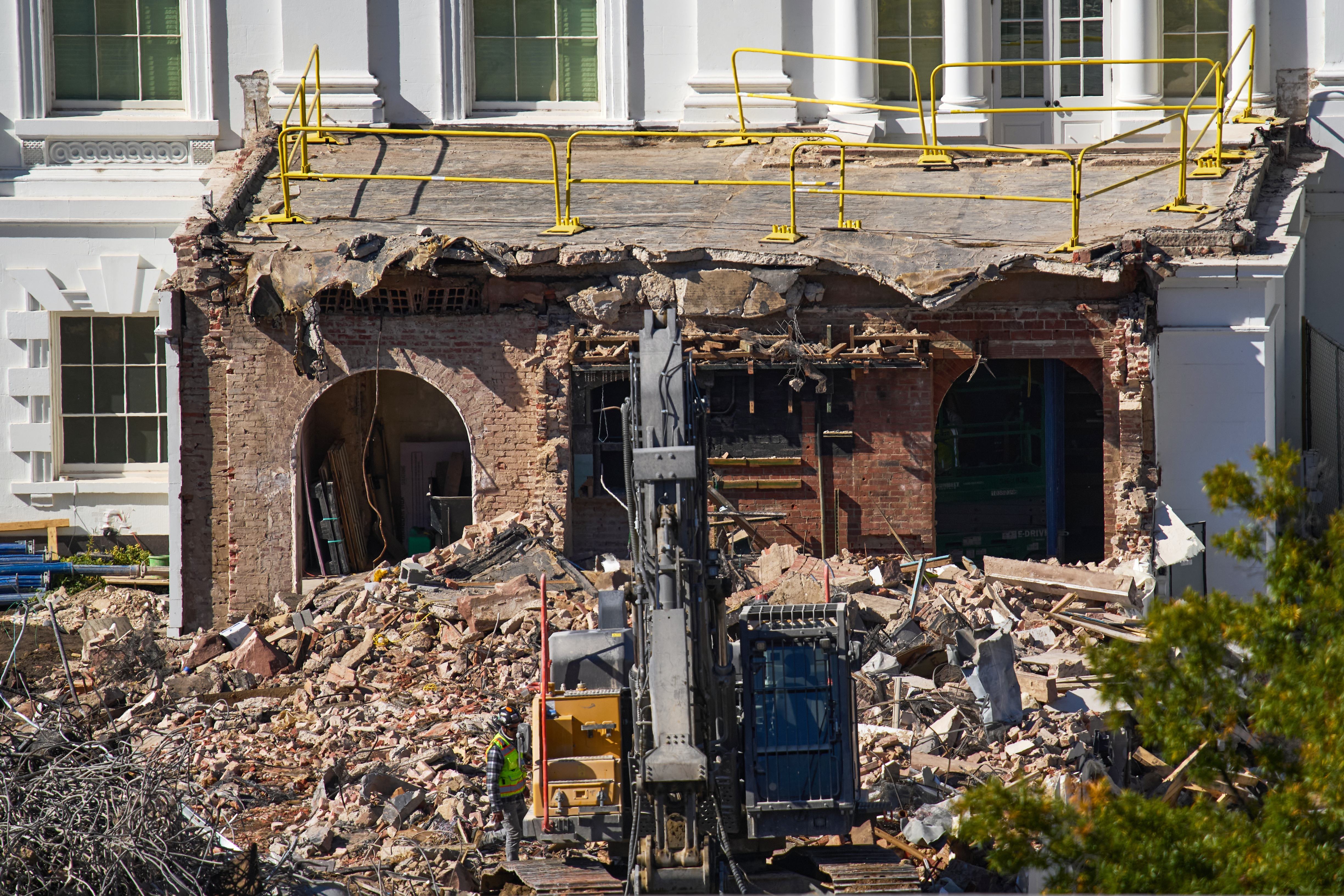
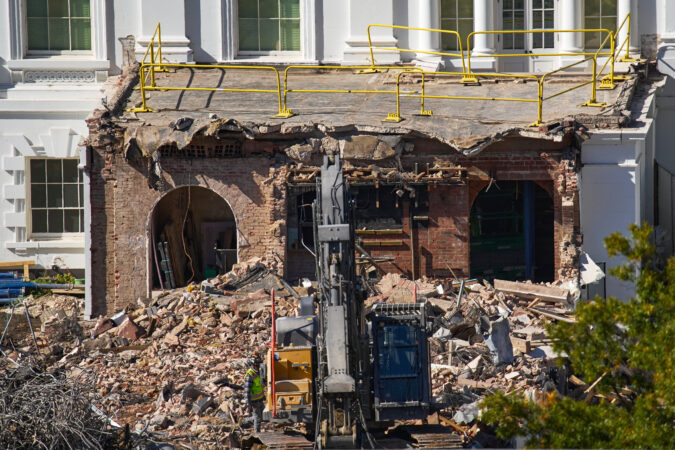
    Debris is seen at a largely demolished part of the East Wing of the White House, Thursday, Oct. 23, 2025, in Washington, before construction of a new ballroom. (AP Photo/Jacquelyn Martin)

    The violent crimes of Jan. 6 protesters have been pardoned. The president has ripped out the East Wing of the White House.

    All clean slates and new beginnings. But for who?

    Cloud Dancer, Eiseman said, is a throwback to classic fashion, citing Coco Chanel and Audrey Hepburn. Sure, fashion of the “Golden Era” was glamorous. These women were undeniably well-dressed, but it was also a time when white gloves and girdles were the norm, and equally glamorous Black women like 1940 Academy Award winner Hattie McDaniel was forced to sit in a segregated section during the Oscar ceremony because her white colleagues didn’t want to sit next to her.

    When the conversation turned to the yin (black) and yang (white) of fashion, I wondered aloud if, maybe this could have been a year when Pantone chose two colors: black and white. Perhaps this could signify harmony.

    Crickets.

    Pantone’s Color of the Year image of the Cloud Dancer.

    Later, I realized Pantone didn’t pick the cooperative vibe up, because it just wasn’t there.

    I’m not ready to wave the white flag yet. In the midst of all this, white remains a shade of hope, purity, and freedom. It’s the color of the Suffragist movement. Pantone’s is simply yet another canary in the coal mine which means I have a lot of work to do.

    I can’t afford to have my head in the clouds.

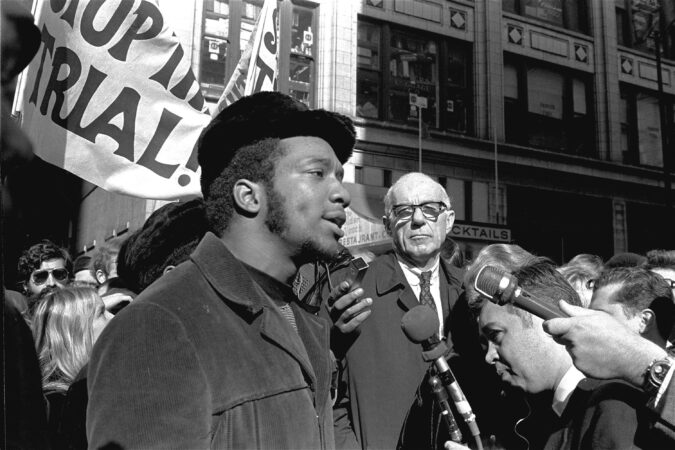
  • Black Panther leader Fred Hampton was assassinated by police 56 years ago today. I found my life’s purpose during the search for his killers.

    Black Panther leader Fred Hampton was assassinated by police 56 years ago today. I found my life’s purpose during the search for his killers.

    On this date 56 years ago, I awoke in my tiny apartment on the South Side of Chicago and heard the news that changed the course of my life: Fred Hampton was dead.

    Hampton, chairman of the Illinois Black Panther Party, had been killed that morning in what the Chicago police described as a “shootout” between them and members of the party at the group’s West Side headquarters.

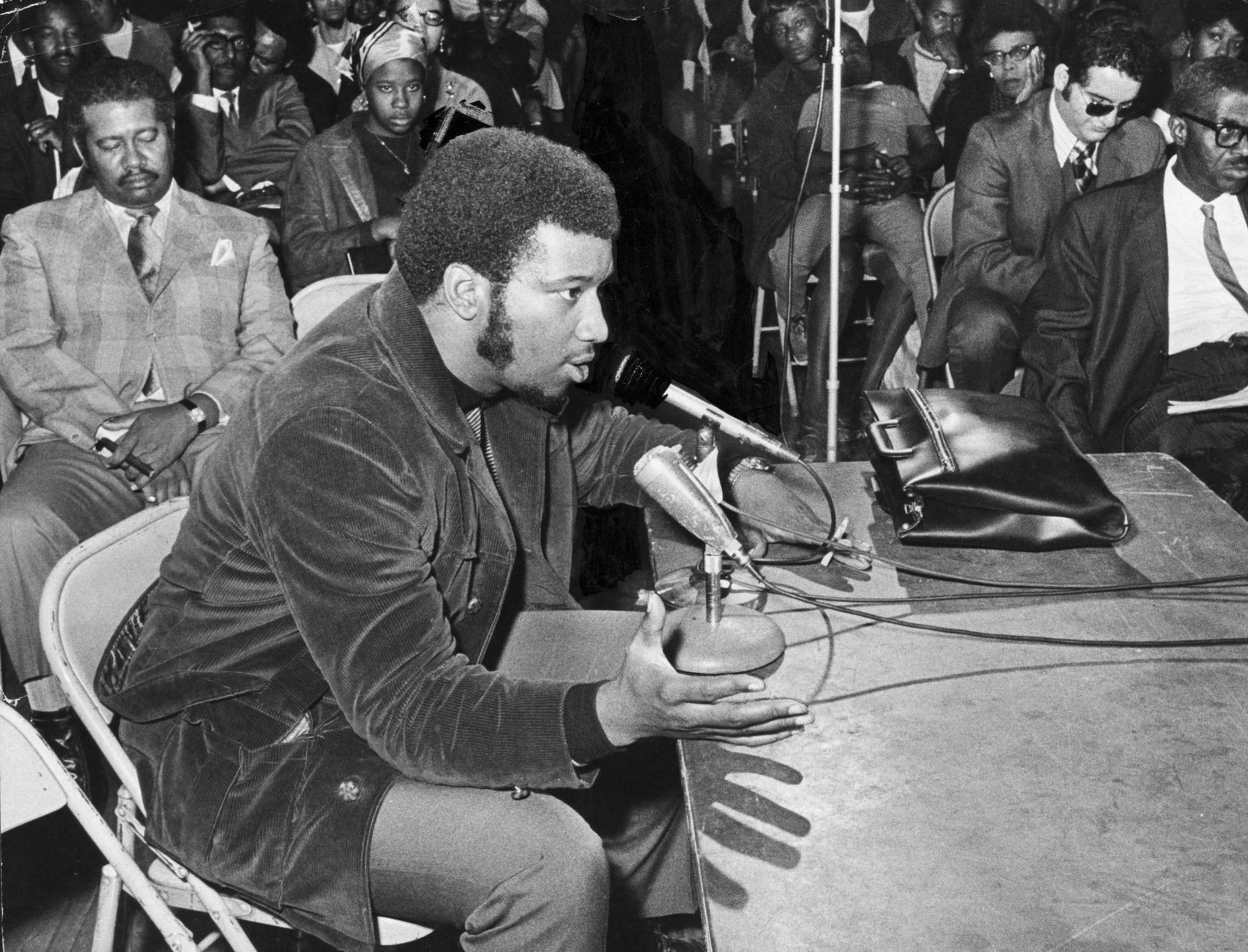
    Hampton was 21, a year younger than I was then. But he already was a magnetic, charismatic figure on the left, clearly destined for leadership beyond the Panthers and Illinois.

    Precisely for that reason, Hampton had become a target of J. Edgar Hoover’s FBI in its effort to control and wipe out the Panthers, a group that he labeled “the greatest threat to the internal security of the country.”

    I was a graduate student at the University of Chicago, looking for a purpose in life that academia was not providing. Suddenly, the death of Hampton — actually, the assassination of Hampton — gave me that purpose.

    Just as many young Americans watched the events of Sept. 11, 2001, and felt compelled to join the military, I watched the aftermath of Hampton’s death and was moved to become a journalist.

    At 21, Fred Hampton was already a magnetic, charismatic figure on the left, clearly destined for leadership beyond the Black Panthers, Don Wycliff writes.

    I had been habituated to the importance of news since I was a child in rural East Texas, listening with my maternal grandfather to Gabriel Heatter’s quavering delivery of the news each evening on the radio.

    In high school, I read and watched in terror as the Cuban missile crisis unfolded. And the year before my high school graduation, I watched faithfully as CBS’s Roger Mudd delivered daily reports on the progress through Congress of the Civil Rights Act of 1964.

    But even as I progressed through college at the University of Notre Dame, it never occurred to me that a Black kid like me could become a journalist. And then came Dec. 4, 1969.

    The Chicago media were all over the Hampton story, and I was into every news story and broadcast about the case.

    One station broadcast a police reenactment of the raid and shootout.

    Five daily newspapers — including the legendary Black publication the Chicago Daily Defender (which, a few years prior, had been led by an editor named Chuck Stone) — published editions virtually around the clock, constantly trying to advance the story.

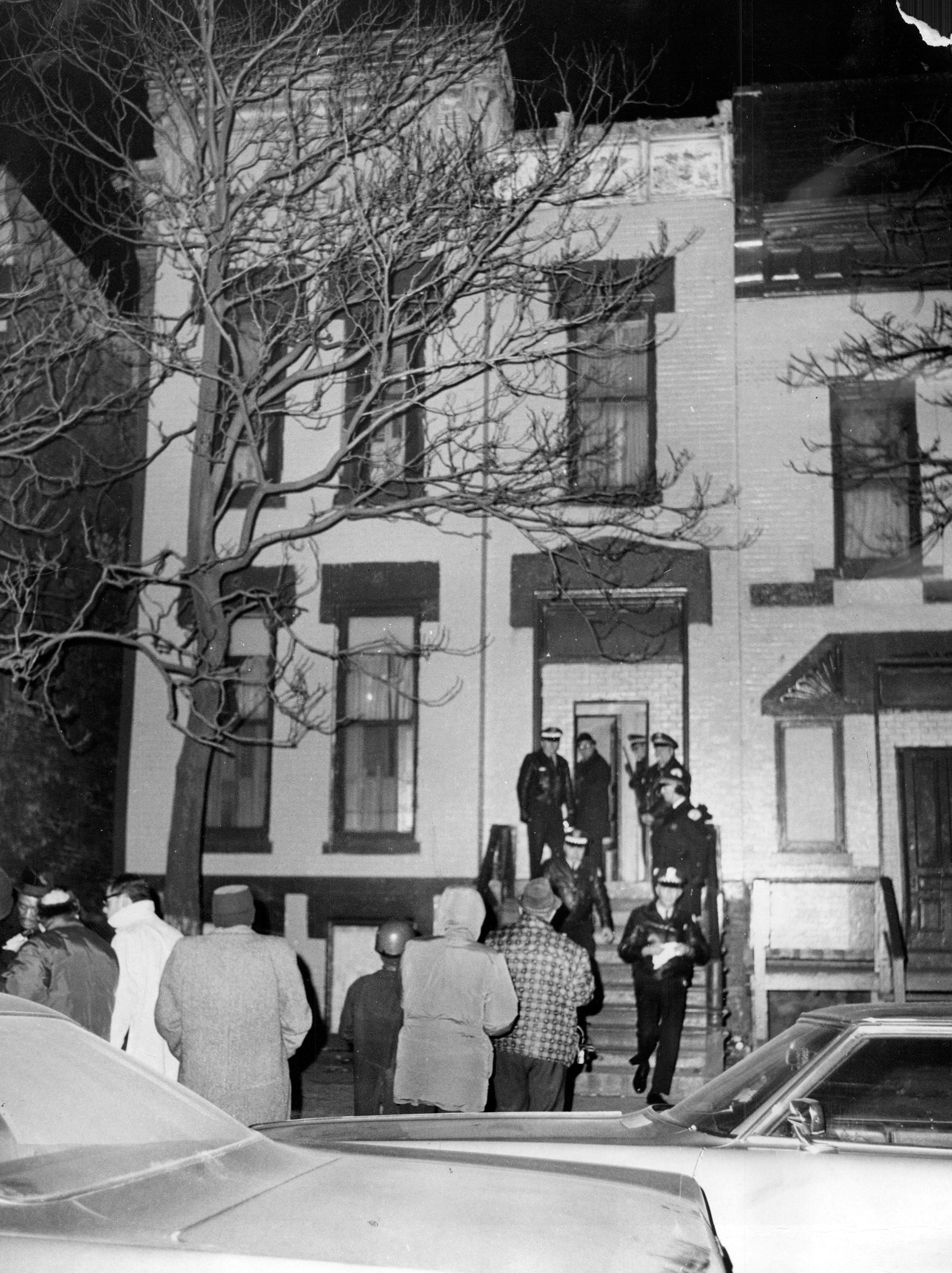
    On Dec. 4, 1969, police gathered at 2337 W. Monroe St. on Chicago’s West Side, where Fred Hampton and another member of the Black Panthers were killed.

    Eventually, it became clear that there had been no “shootout” at all, but a shoot-in by the police. The clincher was a front-page photo in the Dec. 12 editions of the Chicago Sun-Times under a headline that read, “Those ‘bullet holes’ aren’t.”

    The police had put out a similar photo earlier, claiming to show holes in a door caused by bullets fired from within the Panther apartment. The Sun-Times photo showed they were actually rusted nail heads.

    What all of this demonstrated to me was the power of journalism to expose truth, to lay bare hidden facts for examination by citizens of a democracy. And after seeing it done, I knew I wanted to do it, too.

    The Hampton case was the catalyst for my desire to do journalism, but there have been others.

    Bob Woodward and Carl Bernstein inspired a whole generation of journalists with their coverage of Richard Nixon’s Watergate scandal.

    And in cities and towns and hamlets all across the country, journalists have unearthed inconvenient truths that people in power would have preferred remained buried — and that undoubtedly inspired others who wanted to do the same.

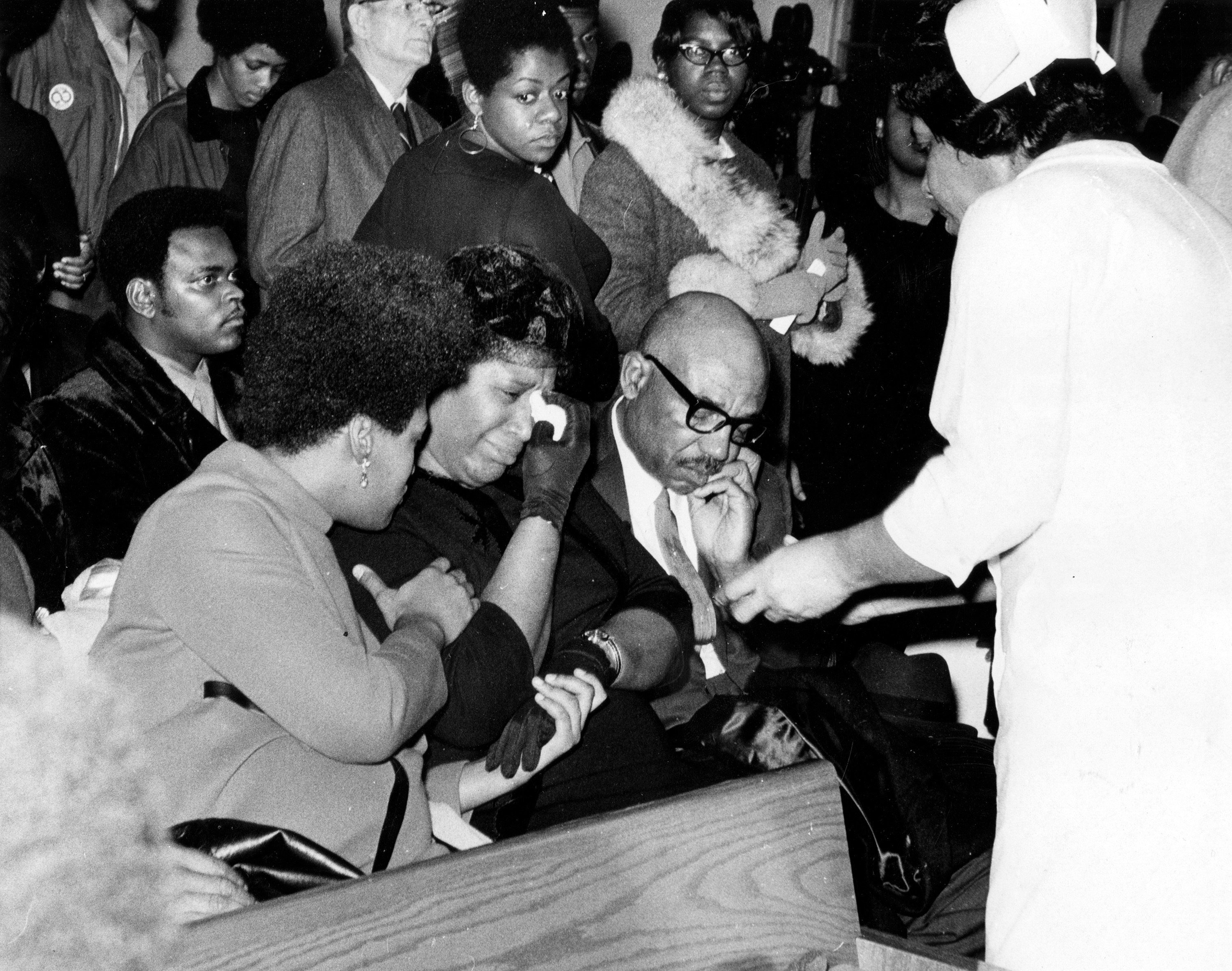
    The parents of Fred Hampton, Mr. and Mrs. Francis Hampton (center with tissue-second and third from left), weep during a memorial service for their son on Dec. 9, 1969, in Melrose Park, Ill.

    Our current politics provide what some might call a “target-rich environment” for aggressive, probing journalism. The undeclared war against alleged Venezuelan drug runners on the high seas of the Caribbean is but the most obvious example.

    But there are plenty of abuses short of lethal ones that cry out for investigation and exposure. In a world where those in power see disagreement as disloyalty, protest as terrorism, and constitutional mandates like due process as dispensable annoyances, the need for passionate, implacable, even clamorous, journalism endures. And will, I suspect, for at least another 56 years.

    Don Wycliff, a former editorial page editor at the Chicago Tribune, is the author of “Black Domers: African-American Students at Notre Dame in Their Own Words” and the recently released memoir, “Before the Byline: A Journalist’s Roots.”

  • Nothing about Trump’s ballroom benefits us

    Nothing about Trump’s ballroom benefits us

    The White House is the People’s House. Period. It is public property that was paid for by us, built by us, and is maintained by us. And no matter who its current occupants are, we still own that building.

    Yet, we weren’t asked if we wanted a new 90,000-square-foot, mega-ballroom decorated with gold and who-knows-what-else to be added onto our house. But it’s a ballroom we’re getting from President Donald Trump, whether we like it or not. (Count me in the latter group.)

    I agree with those who say the design is tacky. I also agree with those who say we don’t really need it — especially when there is so much our fellow Americans actually need these days.

    The project, which will, of course, be called the Trump Ballroom, is projected to cost $300 million. The president says it will be paid for “100% by me and some friends of mine.”

    Sure. Just like the wall he promised to build and get Mexico to pay for. Same thing with his plan to produce a viable alternative to the Affordable Care Act.

    But even if construction costs are covered, taxpayers will get stuck with paying for maintenance and upkeep.

    A handout rendering of the interior of a “$200 million ballroom” in the East Wing of the White House that was announced by the Trump administration in July. The cost of building it has gone up since then — it is currently estimated at $300 million.

    Between high grocery bills, rising healthcare costs, over-the-top housing prices, and everything else that’s going on right now, building an addition onto the White House should be the lowest Trump priority.

    Yet, the project was very much on the president’s mind Sunday night because he boasted about it on Truth Social, claiming “it will be, at its completion, the most beautiful and spectacular Ballroom anywhere in the World!”

    But for a lot of us, the old East Wing, which was demolished to make way for the Trump Ballroom, was beautiful and spectacular on its own. That includes former first lady Michelle Obama, whose office was once located in the East Wing.

    Just last week, she described on the Jamie Kern Lima podcast what a jarring experience the demolition was for her. “It’s not about me, it’s about us and our traditions and what they stand for,” the former first lady explained. “I think in my body I felt confusion because I’m like, ‘Well, who are we? What do we value and who decides that?’”

    I grew up in Washington, D.C., just seven miles away from the White House. But it could have been a thousand miles away. I felt completely disconnected from the historic landmark and what took place there.

    That is, until Obama moved in with her family. She was the first person whom I ever heard refer to 1600 Pennsylvania Ave. as “the People’s House.” Putting it that way made me feel welcome. It gave me a sense of ownership. I loved how she reminded Americans of that shared ownership throughout her family’s eight years in the White House.

    Former first lady Michelle Obama speaks about her new book “The Look” during an event at Sixth and I Streets in Washington, D.C., on Nov. 12.

    Trump supporters are quick to point out that the Obamas themselves made additions to the White House grounds. When he was in office, President Barack Obama painted lines on an existing tennis court and added basketball hoops. But those are minuscule changes compared with Trump’s addition, which would be almost double the size of the White House itself.

    I listened to Obama’s comments about the White House on the Kern podcast a few days before the Thanksgiving holiday, one of the most American traditions we celebrate.

    And as I mulled over her words, I thought about how, no matter what we think of them, U.S. presidents come and go from their official residence, but the building remains a stalwart symbol of the nation’s highest office.

    A Christmas tree decorates the White House on Monday during a preview of its Christmas decorations, which are themed “Home Is Where the Heart Is.”

    The theme of this year’s White House Christmas decor is “Home Is Where the Heart Is.” But we have to remember that home is ours; Trump is merely a temporary guest at the executive mansion. It still belongs to us, the American people. Period.

  • Trump dismisses affordability concerns as he rakes in billions. Most Americans aren’t that lucky. | Editorial

    Trump dismisses affordability concerns as he rakes in billions. Most Americans aren’t that lucky. | Editorial

    Donald Trump had a blunt message for anyone struggling to make ends meet: He does not feel your pain.

    During a lengthy cabinet meeting on Tuesday, the president called the issue of affordability a “fake narrative.”

    Between nodding off and a racist rant, Trump declared during the gathering that the cost-of-living squeeze felt by millions of Americans “doesn’t mean anything to anybody.”

    Polls show affordability is the top issue facing Americans. But Trump claimed all the talk about affordability was a “con job.”

    So who is conning whom?

    Trump ran for office last year on the promise to lower prices, end the war in Ukraine, and release the Jeffrey Epstein files. He’s done none of it.

    “When I win, I will immediately bring prices down, starting on Day One,” he said in August 2024.

    Yes, the much-ballyhooed price of eggs has come down, but overall grocery costs have increased.

    For example, beef prices are up 14% this year and expected to soar next year because of fewer cattle. Coffee prices are the highest in decades due to drought and Trump’s tariffs.

    Companies tried to shield consumers from higher prices brought on by Trump’s erratic trade war. But more prices are starting to rise as tariffs have driven up costs on a wide range of products, including clothes, shoes, toys, electronics, cars, and homes.

    Affordability is more than egg prices.

    Millions of Americans are struggling to keep up. A Wall Street portfolio manager argued that after factoring in the cost of childcare, housing, healthcare, and other essentials, the real poverty line for a family of four should be $140,000.

    The median household income in the U.S. is about $84,000. In Philadelphia, it is $60,000.

    While presidents don’t control prices, Trump’s countless chaotic actions have contributed to the growing costs many Americans face.

    An employee works at a cash register in a grocery store in Schaumburg, Ill., in September. Donald Trump campaigned on lowering prices, but overall grocery costs have increased, writes the Editorial Board.

    Polls show home prices and rental costs are among the top affordability issues. Trump’s tariffs on timber, furniture, and cabinets have fueled the increase in housing affordability.

    Trump’s crackdown on immigrants — who account for one-third of construction workers — is leading to a labor shortage and further driving up home prices.

    Elevated mortgage rates, property tax hikes, and higher insurance premiums from more intense storms are also adding to housing expenses.

    The affordability crisis is so bad that the average first-time home buyer is 40 years old.

    Trump also promised to cut energy prices in half, but that has not happened. Many homeowners and businesses have been hit with sharp increases in electricity bills.

    The price hikes vary by state. A booming demand by data centers sent prices up 20% in New Jersey, while utility companies in California have passed on the cost to rebuild after devastating wildfires.

    Trump has also contributed to the higher utility costs after his One Big Beautiful Bill slashed tax incentives for wind and solar energy projects.

    Many Americans are falling behind. Household debt levels — which include mortgages, car loans, credit cards, and student loans — are at a record high, according to the Federal Reserve Bank of New York.

    Many are also rightly worried about their jobs. The unemployment rate hit its highest since 2021, and a record number of small businesses have filed for bankruptcy this year, along with several large companies such as Spirit Airlines, Claire’s, and First Brands.

    About 300,000 federal workers lost their jobs under Trump. U.S.-based companies have shed more than one million jobs through October of this year, a 65% increase from the period in 2024.

    Trump keeps blaming former President Joe Biden for the economic trouble. While inflation spiked under Biden, there was record job growth. Just weeks before the November 2024 election, the Economist magazine said the U.S. economy was “the envy of the world.”

    Despite Trump’s effort to dismiss affordability concerns, many Americans now blame him for the higher costs.

    Meanwhile, the rich get richer. The wealthiest 10% of Americans added $5 trillion to their fortunes in just the second quarter of 2025. And Trump’s net worth has increased by $3 billion this year.

    Now there is the real con job.

  • New study on historic districts counters claim preservation limits development, housing

    New study on historic districts counters claim preservation limits development, housing

    For years, preservationists have countered claims that historic designation limits development and housing supply. Some neighborhood groups have gone as far as filing petitions to oppose new historic districts in Philadelphia on these grounds.

    Until recently, there was little data to challenge these assumptions. That changed when the Preservation Alliance for Greater Philadelphia commissioned PlaceEconomics to study preservation’s impact in Philadelphia.

    Although only about 5% of the city’s land and 4.4% of its buildings are listed on the Philadelphia Register of Historic Places — up from just 2.2% in 2016 — that expansion in designations shows how Philadelphia has begun to catch up with peer cities. This growth reflects both resident advocacy and the city’s expanded preservation capacity, which were spurred by efforts under Mayor Jim Kenney’s administration, including the convening of a Historic Preservation Task Force.

    The new report produced striking findings that flip the old narrative on its head: that preservation constricts housing supply and reduces density.

    In fact, the data show preservation supports growth and density. Population density in historic districts is 34% higher than in other neighborhoods, and housing units there grew 26% over the past decade, nearly triple the citywide rate.

    The study also found that older neighborhoods are becoming more diverse, with preservation helping sustain racial and economic inclusion. Nonwhite homeownership in these areas is rising faster than in the city as a whole, a clear sign that maintaining older housing can open doors to opportunity, not close them.

    It’s evidence that preserving the city’s older housing stock is a key component of Mayor Cherelle L. Parker’s H.O.M.E. Initiative to provide new affordable housing opportunities. Investing in these neighborhoods will support the growth of homeownership for Black and Hispanic populations.

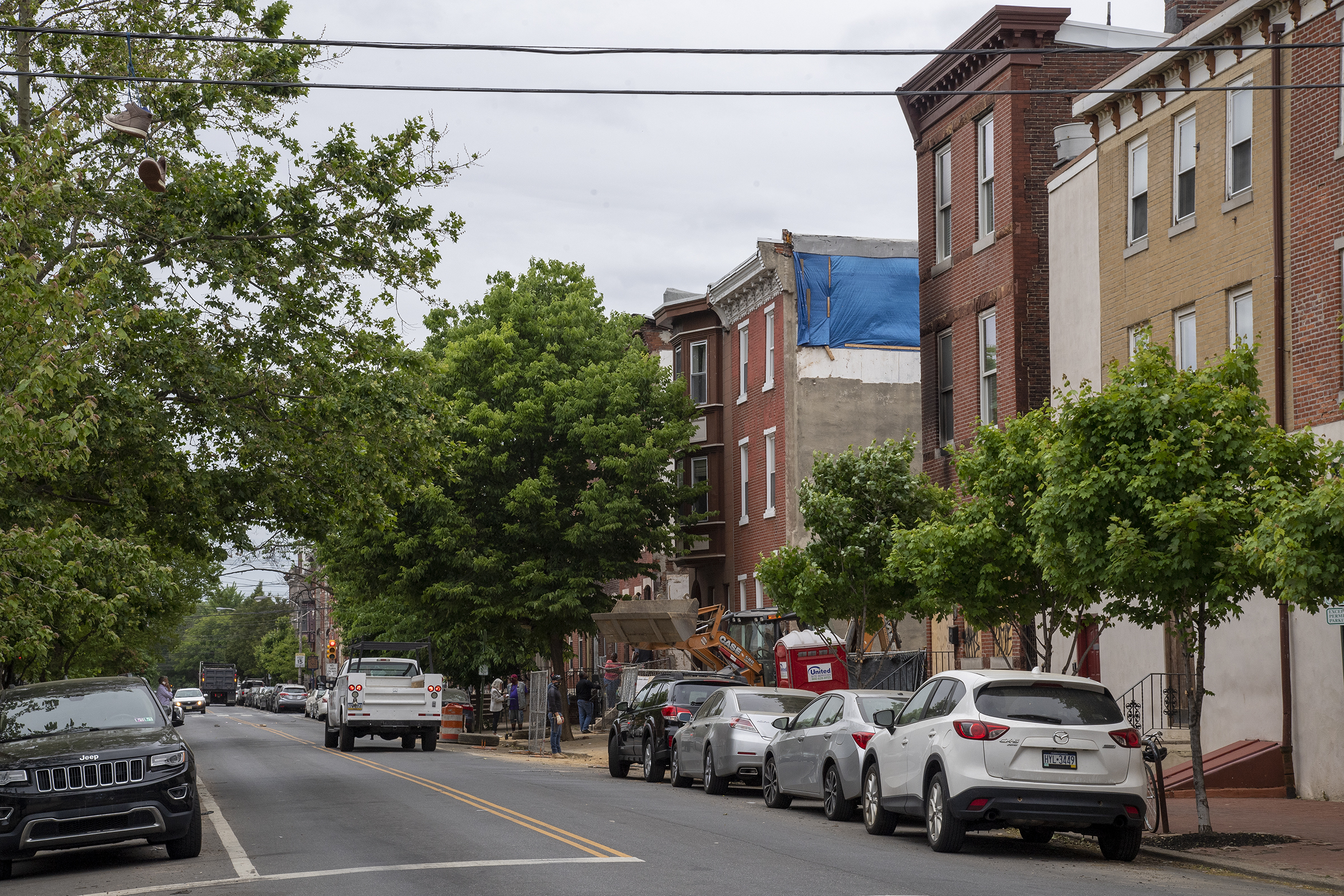
    The 1500 block of Christian Street in the historic Black neighborhood nicknamed “Doctors Row,” photographed in 2021.

    Beyond the data, historic neighborhoods offer beauty, character, and a sense of place that newer developments often struggle to match. Built long before cars shaped our neighborhoods, these areas were designed for people: compact, walkable, and full of architectural variety. Their mix of rowhouses, corner stores, and small apartment buildings naturally creates the kind of density and vibrancy that newer communities struggle to emulate.

    Moreover, many older neighborhoods were built at a time when transportation options were more limited, such as walking and transit, causing them to be more densely developed than later, automobile-oriented areas of the city. These neighborhoods were often built with a wide variety of housing types, including multifamily buildings that are inherently denser than neighborhoods of primarily single-family homes.

    Historic districts are simply desirable places to live. And that attracts housing developers seeking to put up new housing, whether on vacant lots or on parcels containing “noncontributing” properties, which can be demolished under Philadelphia Historical Commission regulations.

    These and other new buildings constructed within historic districts in recent years have been subject to Historical Commission review to ensure they do not detract from the character of the historic districts in which they were built.

    Preservation also fuels local jobs and investment. Philadelphia ranks among the nation’s leaders in historic tax credit projects, which, since 2010, have generated roughly 2,500 jobs and $141 million in annual labor income — a steady return that proves preservation is as much an economic strategy as a cultural one.

    Historic districts are living, breathing neighborhoods that welcome both new housing and new residents. The findings from the latest study should put to rest some of the more persistent claims of preservation’s detractors.

    Paul Steinke is the executive director of the Preservation Alliance for Greater Philadelphia.

  • Letters to the Editor | Dec. 4, 2025

    Letters to the Editor | Dec. 4, 2025

    As I say, not as I do

    The president was highly critical of universities for protests he claimed were antisemitic. We did not hear a peep from the president, though, when Young Republicans in chat rooms used repugnant, antisemitic language, or when Tucker Carlson chatted on his podcast with white nationalist Nick Fuentes.

    The president asked Republicans to release the Jeffrey Epstein files just 48 hours after he applied intense pressure on Lauren Boebert to change her vote on the discharge petition, which would have kept the files in the dark shadows where they have been for the last decade.

    As we seem to get closer and closer to military engagement in Venezuela, under the guise of stopping the flow of illegal drugs, our president has announced his plan to pardon Juan Orlando Hernández, the former president of Honduras and a convicted drug trafficker.

    I appreciate the way The Inquirer has covered these stories, and I hope you will continue to shine a light on these obscene examples of the president’s hypocrisy and moral bankruptcy.

    Rob Howard, Rosemont

    . . .

    Donald Trump announced a “full and complete pardon” for Juan Orlando Hernández, the former president of Honduras, who was serving a 45-year sentence in federal prison. He was found guilty, in a U.S. federal court, of conspiring to import cocaine into our country. In 2024, there were an estimated 1.3 million Americans aged 12 and older addicted to cocaine.

    Trump has murdered more than 80 people he suspected, with no evidence, of planning to bring drugs into our country.

    For Trump, being in a fast boat near the U.S. is proof enough of guilt, but a conviction in federal court is not. How’s that for a rational, effective drug policy?

    Is it possible that dirty drug money can buy a full and complete pardon?

    James A. Morano, New Britain Township

    Weaponizing truth

    I strongly disagree with Jonathan Zimmerman’s premise that calling the president a fascist doesn’t do anything to advance the Democrats’ cause. It’s similar to what happened almost 100 years ago in Europe when the Jewish people were saying the Nazi Party was dangerous and would destroy Germany. But that warning went unheeded.

    This isn’t an etiquette class or an English course at the University of Pennsylvania, Mr. Zimmerman; it’s the cold, hard world we’re living in. We should all be polite, but Donald Trump isn’t. He’s a bully, a name-caller, and he threatens people. Like those fascist Nazis 100 years ago, the MAGA movement, Project 2025, and Trump are all a threat to our democracy. If we don’t call Trump out for being the hateful, fascist liar he is — because it wouldn’t be nice or effective — what do you think is gonna happen? It’s gonna give Trump and his followers a signal that they can do even worse. Just look at Karoline Leavitt, Trump‘s press secretary, who usually responds to reporters’ questions as Trump does, with insults and division. And she’s been doing that since Day One. Zimmerman wants us to remain quiet about that?

    Michael Miller Jr., Philadelphia, michamille@comcast.net

    Join the conversation: Send letters to letters@inquirer.com. Limit length to 150 words and include home address and day and evening phone number. Letters run in The Inquirer six days a week on the editorial pages and online.