Category: Opinion

  • Follow the money to understand Trump’s plan for peace in Ukraine

    Follow the money to understand Trump’s plan for peace in Ukraine

    The Wall Street Journal nailed it last week with a headline that read, “Make Money Not War: Trump’s Real Plan for Peace in Ukraine.”

    That headline captures why the president is so eager to end Vladimir Putin’s war by sacrificing the Ukrainian victim to the Russian aggressor. And it helps explain why Donald Trump’s negotiators are returning home from Moscow empty-handed again.

    Without this explanation, it’s hard to grasp how Trump endorsed a 28-point “peace” plan for Ukraine based on direct input from a Kremlin negotiator, without any Ukrainian or European consultation. (Although a “revised” plan still favors Moscow, Putin continues to demand even more than the initial version.)

    Yes, Trump’s unending quest for a Nobel Peace Prize and his infatuation with the Russian despot figure into his kowtow to Putin. But I believe the Journal’s call to “follow the money” is right on the ruble.

    Trump’s capitulation to the Kremlin shames our country even more than the U.S. killing of civilians clinging to a burned-out Venezuelan boat.

    The Journal’s exposé details how Moscow’s representative sold Trump and his team on the idea they could get inside access to immense riches in Russia if the war were stopped quickly on Putin’s terms. Never mind that meant betraying NATO allies as well as Ukraine.

    Indeed, the Kremlin has long dangled visions of lucrative deals before the White House in an effort to woo the president. Putin has used wealthy Russian businessmen to develop contacts with the Trump administration, dating back to 2016.

    Kirill Dmitriev, the key Russian negotiator in Ukraine talks and head of Russia’s sovereign wealth fund, is the main salesman for a grandiose future that enhances certain Americans’ wealth.

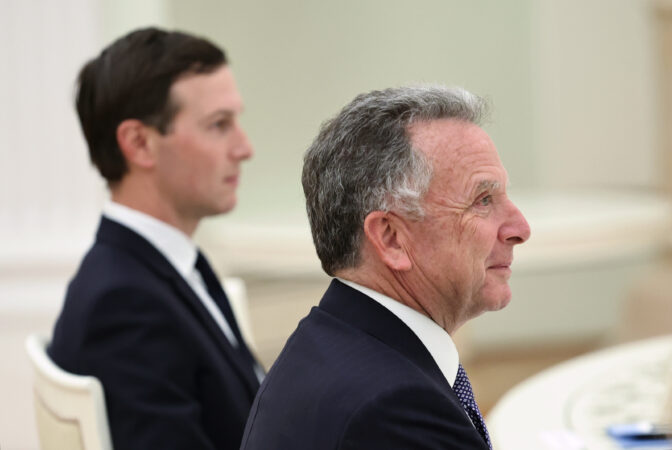
    The Harvard-educated Dmitriev, a Goldman Sachs alumnus, has cleverly played on the greed and naivete of Steve Witkoff and first son-in-law Jared Kushner, real estate moguls turned Trump peace negotiators. He convinced the pair — at a secret meeting at Witkoff’s Miami waterfront mansion in October — to view Russia not as a military threat, but as a cornucopia of investment possibilities to which friendly U.S. investors would have early access.

    That vision depends, of course, on the end of the war, the lifting of sanctions against Russia, and the U.S. welcoming Moscow back into the global economy.

    It was Dmitriev who provided much of the input into the infamous 28-point Trump plan that read like Russian talking points. The proposal made no demands on the Russian aggressor, but required Ukraine give up key defensive positions and land it still controls while shrinking and disarming its military.

    Equally outrageous, however, were the points that called for using much of Russia’s $200 billion-plus of frozen assets in European banks to invest in a U.S.-Russian investment “vehicle” to implement “joint projects” (and much of the rest to facilitate U.S. investment in Ukraine, from which the Americans would take 50% of the profits).

    This is the money the European Union still hopes to use as collateral for loans to arm Ukraine against further Russian advances, or to rebuild in peacetime. Yet, the Trumpers and Russians proposed to seize it — with no input from European allies — to feather U.S. and Russian business nests.

    In this photo provided by the Ukrainian president’s office, President Volodymyr Zelensky (left) shakes hands with U.S. Army Secretary Dan Driscoll in Kyiv, Ukraine, in November.

    As for Witkoff, he is so deep in Russia’s pocket that he was recently heard on a leaked tape tutoring a Russian negotiator on how to win over Trump.

    Meantime, the president, indifferent to the public revelation of U.S.-Russian complicity, continues to send Witkoff on repeated trips to Moscow to negotiate with Putin. Witkoff has never once visited Ukraine.

    The Journal lays out how Dmitriev dangled before Witkoff and Kushner visions of joint U.S.-Russian exploitation of Arctic mineral wealth, and a potential joint mission to Mars with SpaceX, along with multimillion-dollar rare earth deals.

    The Russian money man played brilliantly on Trump’s misguided belief that business deals matter more than sovereignty and can paper over messy and dangerous political disputes — or invasions. Especially if U.S. investors get an inside piece of the action.

    Never mind that this crass theory has already been proven false in Gaza, where Trump still can’t grasp that grandiose visions of prosperity won’t come true when underlying political grievances remain unsettled. Although the Israeli hostages were returned, the rest of Trump’s peace plan is near collapse.

    As for the Ukraine plan, the idea that U.S. investments in Russia (or in Ukrainian rare earths) would prevent further military action is an ahistorical delusion. U.S. investments in both countries did not prevent Moscow from invading Ukraine in 2014 or 2022.

    Putin’s goal is to subordinate Kyiv to Russian domination. If he can’t do it militarily, he will be happy to advance this goal via a peace plan he will surely violate, as he has done with every accord he has previously made with Ukraine. Trump’s dreams of billions in profits will also go down the drain as Putin pursues his dream of conquest.

    POTUS and his real estate pals may think they are New York tough, but Moscow is not the Big Apple.

    Russia is one of the most corrupt countries in the world (154th out of 180 countries, according to Transparency International). Bribery, seizure of huge sums, or nationalization are employed at will by Putin and his oligarch cronies.

    Just consider the experience of William Browder, an American-born British citizen who built up the Heritage Fund into the largest foreign investment portfolio in Russia in the 1990s until he protested government corruption. The Kremlin expelled Browder in 2005 and attempted to assassinate him abroad.

    When Browder’s lawyer, Sergei Magnitsky, challenged a Russian attempt to steal $230 million in taxes that the fund had already paid, his offices were raided. Magnitsky was arrested, tortured, and killed in prison in 2009.

    I spoke with Browder by phone from London, and he had nothing but scorn for the ignorance of the Trump team. “Steve Witkoff and all his pals are not going to make a penny from the Russians,” he told me. “The Russians have a long history of enticing Americans and foreigners. They will defraud, arrest, cheat, and even murder you to prevent you from making a penny.

    “They are masters of expropriation. Every foreign investor has been burned.”

    The tragedy is that Trump, Witkoff and Kushner are willing to burn Ukraine in their quest for more wealth.


  • Manufactured ‘fraud’ narrative threatens veterans’ disability benefits

    Manufactured ‘fraud’ narrative threatens veterans’ disability benefits

    In the five-county Philadelphia region, nearly 34,000 veterans depend on U.S. Department of Veterans Affairs disability benefits. These benefits are not just a lifeline; they are a powerful economic engine that pumps nearly $955 million into our local economy every year.

    But on Oct. 29, the U.S. Senate Veterans’ Affairs Committee held a hearing to “reform” the disability system, laying the groundwork to gut this vital support by using a false narrative that targets the very veterans who need it most.

    The hearing was built around a proposal by Sen. Tommy Tuberville (R., Ala.) to create a commission similar to a Base Realignment and Closure (BRAC) procedure to fast-track changes, and by the testimony of one star witness, Daniel Gade.

    Gade, a retired Army colonel, professor, and disabilities activist who was badly wounded in Iraq and is now running for a U.S. Senate seat in Virginia, argued that disability benefits “rob veterans of purpose” and that conditions like tinnitus and hypertension should not be compensated.

    As a Navy veteran and a medical student, I was alarmed by the medical and data-driven inaccuracies used to justify this attack.

    Questioning PTSD

    Gade’s claim that PTSD is “curable,” and thus shouldn’t be permanently compensated, is medically false. As any first-year medical student knows, post-traumatic stress disorder is a chronic condition that, at best, can be managed into remission. It is not “cured.”

    Gade’s dismissal of hypertension as a “lifestyle” condition is equally dangerous. As the Disabled American Veterans (DAV) has testified, hypertension is scientifically linked to military service and associated with common toxic exposures to Agent Orange and other toxic substances. These conditions are not lifestyle choices; they are the documented, latent wounds of military service.

    The entire premise for this “reform” is based on a manufactured narrative of “massive fraud.” This is statistical fiction.

    My research at Temple University involves analyzing large medical data sets, and the data here is clear: The fraud narrative is a myth. The DAV’s testimony confirmed that the VA sees “fewer than 200 fraud convictions annually” out of nearly “3 million claims.” That is a fraud conviction rate of less than 1/100th of 1%.

    This isn’t just a national story. This rhetoric insults the 33,816 veterans in the Philadelphia region who receive these earned benefits.

    If the committee truly wants to find waste, it should focus on real problems, which were detailed by the VA’s own watchdogs at the same hearing.

    VA Inspector General Cheryl L. Mason focused her testimony on the real issue: predatory “claim sharks” and systemic management challenges, as outlined in an inspector general’s report on the Philadelphia office. The VA’s own data show its problems are internal, not with the veterans it serves.

    Dangerous distraction

    In other words, the “veteran fraud” narrative is a dangerous distraction from the real problem: a broken VA disability system. The Government Accountability Office (GAO) agreed, confirming that the system has been on its “High Risk List” since 2003 due to “longstanding challenges” concerning oversight and training.

    Exterior of Philadelphia Veterans Affairs Regional Benefit Office, 5000 Wissahickon Ave.

    This is where reform is needed. Don’t misplace blame on veterans for the VA’s own systemic failures.

    While Sens. Dave McCormick and John Fetterman do not sit on the Veterans’ Affairs Committee, the financial stability of over 33,000 of their constituents, and nearly a billion dollars in our local economy, is on the line.

    I urge them to publicly oppose this dangerous commission and demand Congress focus on the real problems: cracking down on the claim sharks who prey on veterans, and fixing the VA management failures the watchdogs have identified for decades.

    Alyster Alcudia is a U.S. Navy veteran, a former nuclear submarine warfare officer, and a medical student in Philadelphia.

  • Letters to the Editor | Dec. 3, 2025

    Letters to the Editor | Dec. 3, 2025

    Black spot

    A recent report in the Washington Post reveals that before a Sept. 2 strike on a boat suspected of smuggling drugs, Defense Secretary Pete Hegseth ordered the military to “kill them all” — a reference to the vessel’s crew. After an initial ordnance strike, two survivors were spotted clinging to wreckage. In order to comply with Hegseth’s order, an officer ordered a second missile strike on them. His blind obedience violated the standards of humane treatment of combatants during armed conflict that are clearly spelled out under the Geneva Conventions. People need to realize this incident won’t be a one-off if they don’t start condemning such tactics.

    The conventions provide that all shipwrecked sailors, civilian or military, are to be protected, and all attempts on their lives are prohibited. The opposing party must treat them humanely and not willfully deny them medical care. It requires a party to the conflict to search for and care for those who are shipwrecked. Our country violated those rules on Sept. 2.

    This incident is a stain on the Navy that no twisted excuse can erase. The report should silence the hand-wringers upset with the members of Congress who reminded military members about their duty to obey only lawful orders. The indifference to legality — or even basic humanity — that has been shown by both Hegseth and President Donald Trump necessitated that reminder. As a Navy veteran, I never thought my country would stoop to launching a missile at shipwrecked souls. Hegseth and those following his sick orders proved me wrong and made the U.S. Navy little better than the so-called narco-terrorists it is combating.

    Stewart Speck, Wynnewood, speckstewart@gmail.com

    . . .

    We can’t say we weren’t warned. Anyone who remembered Defense Secretary Pete Hegseth’s full-throated support of Eddie Gallagher’s tactics as a Navy SEAL platoon leader in Afghanistan was aware of Hegseth’s depraved mindset about “war-fighting.” Gallagher, you may remember, was brought to trial for murder and torture of an Afghan ISIS fighter, and was magically acquitted by a surprise admission of guilt by one of his platoon members (Gallagher later admitted to killing the POW in his charge by performing “medical“ procedures on him). Hegseth, then a Fox News talking head, lobbied Donald Trump to grant clemency to Gallagher for the crime of taking a picture with the corpse. Trump pardoned the SEAL. No wonder it’s not difficult for anyone to believe Hegseth ordered the summary execution of survivors of a boat bombing who were holding on for dear life to wreckage in the open sea. Our “war” secretary sees the mission of his department as being, in his own words, to “kill people and break things.”

    What have we come to? Are our service members given license to act as sadistic thugs in war? What will happen to our own troops if they become POWs of an enemy in some future military action? God help them — and God help us all.

    PM Procacci, West Palm Beach, Fla.

    What is your legacy?

    I would love to ask each of our politicians and government officials how they believe they will be remembered once their time on this earth is at an end. Would you be remembered as an American patriot who put our country ahead of your own party and personal interests?

    Would you expect thousands of people from all corners of the political spectrum to show love, respect, and admiration while mourning your loss, as was shown to John McCain, Ruth Bader Ginsburg, and Dick Cheney? Or would your passing be greeted with relief, or maybe not even noticed?

    Your time on this earth is limited, but history will remember you for eternity. Once you are gone, the only footprint you will have left is your legacy. Is the desire for power and wealth worth leaving behind a tarnished legacy for eternity? How do you want to be remembered?

    As an American patriot, or as a complicit part of a dark era in American history? The choice is yours; there is still time to write another chapter in your own personal history.

    Fred Shapiro, Margate

    Still loving leftovers

    I’ve worked with an international team for several years now — and this time of year is always an opportunity for me to explain our American culture around Thanksgiving. Describing the celebration of football, food, and Friday shopping that necessitates the last Thursday in November off from work must seem like Bob Cratchit asking Ebenezer Scrooge for a full day off in A Christmas Carol. So I’ve resorted to this description: parades and food.

    Turkey leftovers. Turkey soup. Turkey sandwiches. Lots of them.

    In terms of parades, there is nothing like Philadelphia’s. I still remember the Gimbel’s Thanksgiving Day Parade, even though it ended when I was only 7.

    Philadelphians don’t know how lucky they are to have the best Thanksgiving Day parade around — and that’s not to mention the Mummers on New Year’s Day.

    Michael Leibrandt, Abington

    Playing nice with a tyrant

    I found Jonathan Zimmerman’s recent column — about how we should stop referring to Donald Trump as a “fascist” — both aggravating and naive.

    Mr. Zimmerman essentially wants us to “play nice” with Trump. Just like the spineless German politicians did with Adolf Hitler in the 1930s. How did that turn out?

    Has Mr. Zimmerman read the nefarious, hate-riddled treatise called Project 2025?

    Or has he heard Trump call for the elimination of Democratic lawmakers? By elimination, I mean death.

    Or has he heard Trump refer to journalists as ugly, pigs, etc.?

    And the list of outrageous statements by Trump goes on and on and on — unabated and sadly often not refuted by the mainstream press.

    Donald Trump is — by his own actions — a fascist. He is, in practice, the orange Hitler.

    Europe learned a very sobering lesson in the 1930s: You can’t appease a tyrant! You must confront him on his own terms. He understands nothing else.

    Stephen R. Gring, Ocean City, N.J., University of Pennsylvania, Class of 1979

    . . .

    In his recent column, Jonathan Zimmerman argues that in order to defeat Donald Trump, we must stop calling him names. The name Mr. Zimmerman suggests we stop using is fascist. He then goes on to say he does see elements of fascism in Trump’s MAGA movement: the relentless denunciation of perceived enemies, the Big Lie about elections, and his misguided belief that he is a strongman who alone can save us. But Mr. Zimmerman thinks it’s an enormous mistake to imagine all his supporters as fascists.

    When you support a fascist, you are, in fact, a fascist. Not calling an evil by its name does not defeat it. It just denies reality. And that won’t make it go away.

    Barry Berg, Langhorne

    A must-win

    If you are not yet afraid of the damage our current president is doing by appeasing his buddy Vladimir Putin, just watch 2000 Meters to Andriivka. Just five minutes in, and my stomach was in a knot, while the Russian devil destroyed these young men’s lives. Ukrainian men in hopeless positions, with broken arms and legs, begging their fellow soldiers to leave them behind in a burned-out, desolate wasteland. Meanwhile, a French army chief is warning its citizens that they must be ready for war, and that they must accept they may lose their children when they enlist in the military and head to the battlefield. Russia cannot be given one inch of Ukrainian territory. If we don’t support Ukraine and win this war, we are truly doomed — and we may end up losing our children, as well.

    Beth Logue, Philadelphia

    Join the conversation: Send letters to letters@inquirer.com. Limit length to 150 words and include home address and day and evening phone number. Letters run in The Inquirer six days a week on the editorial pages and online.

  • Killing of suspected traffickers at sea was already abhorrent. Hegseth may have made it a war crime. | Editorial

    Killing of suspected traffickers at sea was already abhorrent. Hegseth may have made it a war crime. | Editorial

    Donald Trump has been quick to post videos and brag about the heinous boat strikes on suspected drug traffickers by the U.S. military.

    But now comes a report by the Washington Post that a live drone feed showed two survivors from the first attack clinging to the wreckage.

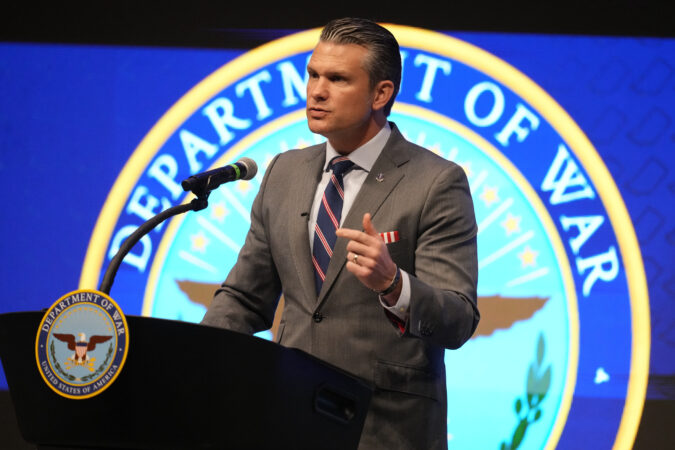
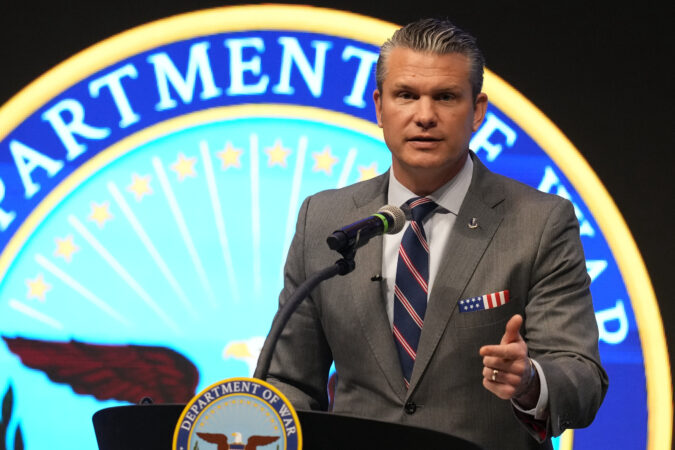
    Defense Secretary Pete Hegseth, who a year ago was working weekends at Fox News, reportedly gave a spoken directive to “kill everybody.”

    To comply with Hegseth’s instructions, the Special Operations commander overseeing the attack ordered a second strike, and the two men were then blown apart in the water, according to the Post.

    The initial strikes are barbaric enough and violate international law, according to the United Nations High Commissioner for Human Rights.

    The second strike appears to be a war crime.

    The boat strikes have been ghastly from the start. The U.S. military doesn’t even know who is being summarily killed. One man was a fisherman, according to his family. The legality is shaky at best, hinging on a secret U.S. Department of Justice memo that no one in the Trump administration has been willing to publicly defend.

    Even if the boats are carrying drugs, those on board should be arrested and prosecuted, not assassinated. The killings are akin to if the Philadelphia police decided to gun down suspected dealers standing on the corner in Kensington.

    How does Trump reconcile summarily executing alleged drug runners while pardoning the former president of Honduras, who was convicted last year of taking bribes from drug cartels in return for helping to move hundreds of tons of cocaine to the U.S.?

    What do the drone killings have to do with making America great, let alone making it more affordable, as Trump promised last year?

    The boat strikes must stop, and Congress should conduct a full investigation before the United States loses whatever is left of its moral authority to lead the free world.

    Hegseth should be fired and held accountable for any wrongdoing.

    On Nov. 15, the U.S. military conducted the 21st known strike on an alleged drug trafficking boat, killing three men. The latest attack brings the total number of people killed by U.S. strikes on the alleged drug boats to 83.

    He was woefully unqualified to oversee the U.S. Department of Defense, given his lack of experience and previous allegations of excessive drinking, carousing, and financial mismanagement.

    Hegseth, who called the kill order report “fabricated, inflammatory, and derogatory,” has continued to demonstrate why he remains supremely unfit.

    He previously texted classified war plans to a journalist in advance of a separate military strike — a security breach that would get other military personnel court-martialed. Hegseth’s purging of career military leaders without cause is making America weaker.

    He initially celebrated the first boat attack. “We smoked a drug boat, and there’s 11 narco-terrorists at the bottom of the ocean, and when other people try to do that, they’re going to meet the same fate,” Hegseth told reporters in September.

    Since then, he has overseen more than 20 additional boat strikes, killing more than 80 people. In a social media post, he appeared to call the report fake news before adding, “Biden coddled terrorists, we kill them.”

    To underscore how unserious he is, Hegseth made light of the boat strikes by posting a mock cover of a Franklin the Turtle children’s book with a made-up title, Franklin Targets Narco Terrorists.

    Trump, who handpicked Hegseth after watching him on TV, said his defense secretary told him he never gave the verbal order.

    “He says he didn’t do it,” Trump said.

    That may be good enough for Trump, but it falls far short for anyone who values the truth, international law, or the Uniform Code of Military Justice. Recall Trump also shamefully sided with Vladimir Putin, a foreign adversary, who claimed he didn’t interfere in the 2016 election. But a Republican-led Senate review and eight U.S. intelligence agencies found Russia meddled in the election.

    At least one top Republican in Congress said American military officials might have committed a war crime in the boat strike. “If that occurred, that would be very serious, and I agree that would be an illegal act,” said Rep. Mike Turner (R., Ohio), who is a former chairman of the House Intelligence Committee.

    Republicans and Democrats on two congressional committees promised to increase scrutiny of the boat strikes in the Caribbean and Pacific. Let’s hope that happens soon.

    The best way to get to the facts is to have Hegseth, the Special Operations commander, and other military officials involved in the boat strikes testify under oath. One benefit of recording extrajudicial killings is that there are videos and transcripts for all to see and hear.

    Let’s get all the facts out and hold any wrongdoers accountable. And let’s end the government-sanctioned killings and return to following the law.

  • Letters to the Editor | Dec. 2, 2025

    Letters to the Editor | Dec. 2, 2025

    Gun reform overdue

    A sign held by a protester at a memorial held for schoolchildren killed in an armed assault on their school read: “Thoughts & prayers don’t save lives. Gun reform will.” I am so done with people, including the president of the United States and other ranking politicos, offering their thoughts and prayers after another tragic, senseless murder. It’s long past time for Congress to enact sensible gun reform that makes gun purchasing more rigorous and difficult, and prevents those with recognized mental illness from being able to buy a lethal weapon. But this “do-nothing” Congress doesn’t even attempt to do anything without the blessing and advocacy of President Donald Trump. The president must do the right thing, the moral thing, and the courageous thing that will result in saving innocent lives and send a substantive and tough gun regulation bill to Congress.

    Mr. Trump, you said you prayed that the two members of the National Guard who were recently shot in Washington would survive. But how about you do something that might prevent the next tragedy from happening and help to keep firearms out of the hands of people who should not have them?

    Ken Derow, Swarthmore

    Unworkable geography

    The first time I looked at a map of Israel and its surrounding neighbors, it was clear to me that a “two-state solution” has always been geographically unworkable.

    No sovereign nation the size of New Jersey would willingly place itself in a position where it could be squeezed between two hostile territories on its east and west. The security risk is simply too great.

    Since 1948, Israel has faced both declared and undeclared wars on multiple fronts. That pattern began when the Arab world rejected United Nations Resolution 181, which proposed dividing the British Mandate into two states — one Arab and one Jewish. It continues to this day.

    Israel actually did withdraw from Gaza in 2005. Hamas seized power two years later and raised a generation taught to view Jews as enemies. The world saw the tragic consequences of that indoctrination on Oct. 7, 2023.

    Given this history, it is unrealistic to expect Israel to return to a territorial arrangement that once again leaves it exposed to the very threats it has faced since the moment of its birth. Any lasting agreement for the Palestinian people must begin with a structure that ensures security for both sides, not a map that repeats past mistakes.

    Lawrence Goldman, York, Pa.

    Still thankful

    As we approach the holiday season, a time of reflection and gratitude, I feel compelled as a proud American Muslim to address a persistent misconception: that Islam stands in opposition to the American way of life. Nothing could be further from the truth.

    In fact, I would argue that the values enshrined in the American ideal, such as freedom of belief, opportunity through hard work, and equal access to education, are deeply aligned with the principles of my faith. In America, I am free to practice Islam without fear or coercion. I am encouraged to strive, to contribute, and to build a meaningful life through honest effort. My daughter has been granted the invaluable gift of education, empowering her to dream and to achieve in a way that many across the world cannot.

    Ironically, it is here in the United States, and not in some so-called Muslim countries, where I find the truest manifestation of justice, dignity, and liberty that Islam upholds. This nation, with all its imperfections, remains a place where faith and democracy coexist, where diversity is not merely tolerated but celebrated.

    For that, I am profoundly grateful. I am proud of my faith, and I am equally proud to call America my home.

    Madeel Abdullah, Garnet Valley

    Join the conversation: Send letters to letters@inquirer.com. Limit length to 150 words and include home address and day and evening phone number. Letters run in The Inquirer six days a week on the editorial pages and online.

  • Fatigue is still a safety risk for air travel

    Fatigue is still a safety risk for air travel

    Even with the longest government shutdown in American history over, it is crucial to recognize that the menace of fatigue and its impact on air travel safety remains a serious and ongoing threat.

    Before the shutdown started on Oct. 1, air traffic controller staffing was below targeted levels, with many already working mandatory overtime and six-day weeks.

    The signs of stress on the system appeared immediately, as flight delays due to staffing shortages were reported at major airports, including the temporary closure of an airport control tower, affecting over five million passengers.

    These effects snowballed such that while just 11 flights were canceled between Oct. 1 and 29 because of controller staffing, the number surged to 4,162 between Oct. 30 and Nov. 9. Of those, 3,756 were between Nov. 7 and 9. To mitigate risk, an emergency order from the Federal Aviation Administration was issued, targeting a 10% reduction in flights at 40 high-traffic airports across the country.

    A Delta Airlines plane comes in for a landing over the air traffic control tower at Denver International Airport on Nov. 9.

    As essential workers, air traffic controllers were required to work unpaid. Faced with mounting expenses, many workers took second jobs to cover their bills, cutting into their sleep. Others faced stress-induced insomnia from unpaid bills and job uncertainty. Overtime prevents recovery of sleep and increases fatigue-related error risk. Unsurprisingly, the White House warned that absenteeism among unpaid federal workers would increase.

    Even under normal conditions, irregular schedules, undiagnosed sleep disorders, and lifestyle factors contribute to fatigue-related errors. Shutdowns amplify these dangers.

    Air traffic controllers perform mentally demanding tasks requiring sustained vigilance. Controllers often work “rattler” schedules: five eight-hour shifts in four days, ending with a day shift followed by a night shift. These offer only 10 hours off between shifts, far too little for sleep recovery.

    One night of sleep loss can significantly impair performance. A 2008 University of Pennsylvania study found that sleep-deprived Transportation Security Administration agents were less able to detect weapons in bags.

    A NASA study found that 70% of air traffic controllers had nearly dozed off while actively working, and more than half of those who made operational errors cited fatigue as a contributing factor.

    Critically, people often misjudge their own level of sleepiness. One landmark study found that people rate themselves as only moderately sleepy even when their cognitive performance has significantly declined. As a result, well-intentioned workers may unknowingly put lives at risk.

    Many mistakenly believe they can overcome sleepiness through willpower and dedication to a task. However, sleepiness is not a minor inconvenience; it is a physiological condition that impairs judgment and performance.

    There is currently no real-time safety monitoring system in place that can determine whether an air traffic controller is fit for duty. The insidious effects of accumulated fatigue and stress may continue to linger long after the shutdown, as flight disruptions remain expected.

    Even though the shutdown has ended, air traffic controller leadership must take active steps, including restricting overtime, monitoring signs of fatigue, and avoiding reliance on self-reported assessments of fatigue.

    If necessary, airports should continue to scale back operations to allow workers time to rest. No one responsible for critical safety operations should be expected to perform under sustained, elevated fatigue levels.

    Allowing exhausted and compromised workers on the job is a recipe for disaster. The safety of millions depends on acknowledging the real threat of fatigue and taking immediate action to prevent avoidable disasters from becoming a reality.

    Jocelyn Y. Cheng is vice chair of the Public Safety Committee of the American Academy of Sleep Medicine.

  • It’s time to send out holiday cards. You know. Holiday cards? Remember them?

    It’s time to send out holiday cards. You know. Holiday cards? Remember them?

    It’s suddenly December, and the Thanksgiving leftovers are mostly eaten. That means it’s once again time to make the big decision: Is this the year to finally stop sending holiday cards?

    When I graduated from college, I promptly embraced the trappings of adult life, from getting a job to buying a car to moving into my own apartment. But the step that made me feel most adultlike was sending out my own holiday cards. A holiday card from a separate address says: “This is my household. Not my parents’ household, mine.”

    Not cheap

    Sending holiday cards isn’t cheap.

    There are the cards themselves, which go up in price if you’re sending a photo card or selecting fancy lined envelopes. Stamps are currently 78 cents apiece, which doesn’t sound like much, unless you’re sending out 50 cards or more.

    And then there’s the issue of time: You have to decide on the cards and purchase them, write a little note in each card, address the envelopes, then make your way to the post office.

    Yet, despite the costs in money and time, I’ve always sent out cards, even in my younger, poorer years. There has always been a satisfaction in reaching out to people I don’t see regularly, but who nevertheless have a place in my heart and my history.

    A customer at Paper Source in Chicago on Dec. 18, 2018. The greeting cards retailer filed for bankruptcy the next week.

    Then, about 10 years ago, I realized we were receiving fewer cards each year.

    The clogged mailbox became progressively emptier over a span of years, like a dying mall. This shift shows up in statistics from the U.S. Postal Service, which notes that mail bearing postage stamps, including cards, letters, and bill payments, dropped from 16.5 billion pieces of mail in 2019 to 10.7 billion last year.

    For the first few years, I worried the non-senders were going through challenging times. A person doesn’t feel very merry if they’ve gotten divorced or been laid off or had a death in the family. But it turned out that — fortunately — very few had faced hardship. They just weren’t sending cards anymore.

    “It’s a lot of trouble,” said one. “I don’t have the time,” said another.

    And then we got to what seemed to be the real issue: Society has changed.

    People who used to send holiday cards can now share photos online of their family and their travels. Because they’re regularly connecting with those far-flung cousins and high school friends on social media, mailing out cards has become redundant and maybe even pointless to them.

    And people today feel less obligated to reciprocate than those from a generation ago, according to research conducted by Brian P. Meier, a psychology professor at Gettysburg College.

    Keeping the tradition alive

    The young adults in my life, including my own grown children, who are now in their 30s, haven’t just decided against sending cards; the idea never occurred to them in the first place.

    So once again, at this time of year, I consider whether to keep the tradition going. But there are several relatives who are not on social media, and there are a few longtime friends I’m in touch with only through holiday cards.

    It’s a poignant yearly ritual to go over the list of recipients, noting who has moved, who has married, who has had a baby, and who has passed away. People come and people go, and nothing underscores this quite like the holiday card list.

    Better to let them know they’re loved, right now.

    So I will get to the task, laying cards and envelopes neatly on the kitchen table. My husband will look at me blankly.

    “Are we still doing that?” he’ll ask.

    Elizabeth Luciano writes essays and fiction and teaches composition at Bucks County Community College.

  • Joy, joylessness, and the American project

    Joy, joylessness, and the American project

    One day, an English teacher at my gigantic public high school in Manhattan paused the lesson.

    He placed his hands shoulder-width apart on his ancient desk. He hooked his toes on the rim of the chalkboard behind him, and there he was: suspended in the air, floating above the sullen earth toward the end of third period on a dismal November day.

    “Have you ever seen anyone do this before?” he asked.

    He looked around from his perch, mischievous joy sparkling in his eyes beneath his mop of white hair. He held the pose, and then the period bell rang.

    That the teacher happened to be Frank McCourt, who would later win a Pulitzer Prize for his memoir Angela’s Ashes, is only partly relevant. Mr. McCourt was celebrating the weirdness and joy of being human, the possibility and story in every moment.

    Messing with our heads

    And, like all good artists, he was messing with our heads to pop us out of our usual selves, into the realms of creativity and new thought that have always moved civilizations forward.

    For a teenager unhappy to be in school at all, he was a welcome light.

    Federal law enforcement officers watch from atop the ICE facility in Portland, Ore., as a protester in a frog costume demonstrates.

    The Portland Frog reminded me of that moment, now 40 years ago, the way it stood there with its belly out like a 3-year-old asking for cookies, and the unbelievable, cowboy-laconic toughness the suit’s occupant expressed after an ICE agent pepper-sprayed his vent hole: “I’ve definitely had spicier tamales.”

    Contrast this great fun to today’s singularly humorless White House, as best exemplified by press secretary Karoline Leavitt. In a recent exchange, a reporter inquired about the significance of a Putin-Trump summit meeting proposed for Budapest, Hungary. Why there? In 1994, that’s where Russia promised not to invade Ukraine if that country gave up its nuclear weapons.

    Leavitt responded with a string of insults. But the question was actually interesting and thoughtful: It would have been more fun to mull its implications than to be a jerk.

    Used to be funny

    Deranged as Donald Trump is, he has always been funny. But even that modestly redeeming trait seems gone in this bleakly self-serious White House. If I were an autocrat in training, I’d be worried about that, on durability grounds.

    The late anthropologist David Graeber and the archeologist David Wengrow are known for rethinking early human history in a way that credits Neolithic peoples with intelligence and whimsy. In the spirit of the Portland Frog or Mr. McCourt, early humans may have initially avoided labor-intensive agriculture because they had other things to do, including storytelling, masquerades, or traveling. Maybe early signs of trade were not nascent capitalism, they argue, but the result of vision quests, or of women gambling.

    Our best human projects survive because they are aspirational, offbeat, and fun. Early democracy in the U.S. was certainly colored by those qualities. When an exhausted John Adams arrived in Philadelphia for the first Continental Congress, he went straight to a bar — City Tavern. Pursuit of happiness, anyone? And yes, dark projects occur, but they rarely last long.

    Visiting my mother recently in that same city of Philadelphia, close to her 88th birthday, I wondered what characteristics lead to a long life and other lasting human projects.

    My mom marched in “No Kings” Day. She suggested we visit a unique beer shop with hundreds of ales to get some Thai beer to pair with our meal. And perhaps, she also offered, you would like to attend the euphonium concert I’m hosting tomorrow night?

    Helping her declutter her storage closet, I held up a Chock full o’Nuts coffee can. “What are we doing with this?” I asked. “I was saving it because it had the twin towers on it … It might be valuable.”

    Indeed, the can featured the skyline of my youth. “It’s art,” I said. “We’ll keep it,” placing it on a shelf for display, an Arabica-scented monument to a city as it once was, still a place of joy and loss and resilience.

    Photos from within U.S. Immigration and Customs Enforcement detention centers show a contrasting vision of the city: pictures of humans in distress, put upon by violent, masked, monstrous agents. The victims’ faces were a panoply of the diversity of the American experience. Perhaps some were vicious criminals, but most seemed to be moms, children, or laborers.

    If they were really Tren de Aragua, would they be crying?

    In the contrast between that dungeon and my mom’s happiness project, I caught a glimpse of the reason our country has endured and thrived, even despite many imperfections.

    We’ve ultimately rewarded, and been rewarded by, entrepreneurial joy, and those projects have often succeeded: the World’s Fairs, the National Parks, the Eagles.

    The purveyors of darkness just aren’t that compelling to those of us who aspire to a measure of glee and wonder in our brief days and years.

    That quality may not be enough to save us now, but it’s a force, for certain, to be reckoned with.

    Auden Schendler is the author of the book “Terrible Beauty: Reckoning with Climate Complicity and Rediscovering Our Soul.”

  • Don’t laugh: A humanities degree is a smart investment

    Don’t laugh: A humanities degree is a smart investment

    As parents enter this fall’s college application season, they’ve likely been warning their children incessantly that a degree in art history or philosophy won’t pay the bills.

    “Study something practical,” they’re muttering, “so you can get a job.”

    But a report from the Federal Reserve Bank of New York tells a different story. Census data from 2023 on recent college graduates reveal that the unemployment rate of students majoring in art history and philosophy, in fact, resembles that of some STEM majors.

    This is welcome news. Studying the humanities — which includes art history and philosophy, but also history, literature, language, religion, and music — isn’t an impractical luxury. Rather, these subjects offer a competitive, if still hidden, advantage and return on investment in the job market.

    The humanities prepare students not just to get a job, but to keep it, and excel while doing so. And Wall Street seems to be noticing.

    Robert Goldstein announced last year at a conference on BlackRock and the future of finance that his company was rethinking which kinds of students to hire.

    “We have more and more conviction that we need people who majored in history, in English, and things that have nothing to do with finance or technology,” he said, adding, “It’s that diversity of thinking and diversity of people and diversity of looking at different ways to solve a problem that really fuels innovation.”

    Death reports exaggerated

    Yes, despite grim headlines about the “death” of the humanities and the end of the English major, the chief operating officer of BlackRock, arguably America’s largest multinational investment company, is now actively seeking college graduates in the humanities.

    Why are the humanities, then, continuing to lose ground on college campuses? Partly because their most important financial benefits do not show up immediately upon graduation. But this myopic perspective, which has long devalued the humanities, is now affecting the perception of what has been the most popular major in recent years: computer science.

    Only recently, professors Mary Shaw and Michael Hilton of Carnegie Mellon University wrote in the New York Times a persuasive defense of computer science, whose majors have seen such a rapid decline with the rise of generative artificial intelligence that graduates cannot even get a job at Chipotle.

    Computer science majors should not panic, however.

    “The rise of generative A.I.,” Shaw and Hilton said, “should sharpen, not distract us from, our focus on what truly matters in computer science education: helping students develop the habits of mind that let them question, reason and apply judgment in a rapidly evolving field.”

    By the same token, as AI reshapes the world, the content of humanities education is more vital than ever for addressing the ethical and existential questions such change provokes.

    The skills cultivated by majoring in the humanities are equally worthy of defense as those of computer science. The wide-ranging studies of the economics of education show that humanities degrees are being underestimated for the job skills they promise students in tomorrow’s workforce.

    Graduates await diplomas. Derided in the age of technology, a humanities degree can bring untold rewards, writes Gene Andrew Jarrett.

    Specifically, the humanities tend to produce the kind of skills that can transfer across various jobs. They prepare people for roles in leadership or management.

    Finally, the critical skills they develop can withstand the rapidly changing technologies that force workers to relearn demanding job tasks. Studying the humanities, then, is akin to investing in academic stock today for long-term professional gain.

    One recent study tells us that the “wage-by-major statistics” parents and students review before declaring a major undervalue how “an education in history increases a student’s labor market value — perhaps through the development of critical reading and writing skills or because reading history texts cultivates a transferable attention to detail — that enables them to earn higher wages when they seek employment after graduation.”

    Transferable skills

    The “transferable” nature of skills is a significant educational benefit of the humanities. A 2020 study describes the labor market returns to the specific, or technically specialized, nature of a college major. That “specificity” determines how much the skills inculcated by this major are transferable across different jobs.

    In short, the humanities consistently produce some of the most transferable skills across professions.

    Another 2020 study looks at earnings dynamics, changing job skills, and careers in science, technology, engineering, and math (STEM). Studying the humanities can develop the skills that overcome the following conundrum: When a person acquires only “specific skills that are in high demand but also changing rapidly over time,” that person likely will need “to learn many new tasks each year.”

    To make a long story short, a humanities education results in one of the slowest measurable rates of counterproductive “skill change.” This means the skills learned through a humanities degree endure resiliently, even in the face of massive technological changes.

    The humanities, of course, have substantive educational benefits. Their themes enable students to learn several critical things about humanity, such as the impact of human intelligence and creativity, the evolution of ideas about humankind, and the vitality of language and culture in how to see and survive in the world.

    But the true value of the humanities includes their ability to build the professional skills students need to thrive in the global workforce — especially at a time when colleges may be deciding whether to consolidate or eliminate humanities departments, majors, and courses.

    The question, then, that parents and children should ask isn’t, “What can you do with a degree in art history or philosophy?” The better question is, “What can’t you do with it?”

    Yes, contrary to what you might think, a degree in the humanities, alongside degrees in computer science and many in between, remains one of the smartest investments students can make.

    Gene Andrew Jarrett is dean of the faculty and William S. Tod Professor of English at Princeton University.

  • Social media that could cure cancer and feed the hungry

    Social media that could cure cancer and feed the hungry

    While those of us concerned about the future of our nation’s scientific institutions and safety net feel distraught without a way to protect them, we doomscroll and spiral out further. Yet, it is in that doomscrolling that a solution may lie.

    Why are we giving away our attention to plutocrats, for free, when we could be investing it in the direction of the common good?

    Meta, the parent company of Facebook and Instagram, made over $160 billion in advertising revenue last year, largely generated by our clicks, our scrolling, and the algorithms that entrap us and, too often, damage our children’s mental health.

    That $160 billion flowed into a corporate machine with a primary duty to its shareholders, not to the public.

    Gutting research

    Meanwhile, the federal government canceled $8 billion in research grants to more than 600 colleges and universities through the National Institutes of Health and the National Science Foundation. And that was just in the first six months of the second Trump administration. That’s a mere 5% of Meta’s profits.

    And while an exact figure for Donald Trump’s contested cuts to nonprofits remains elusive, he did try to cut $400 million from AmeriCorps, and tried to claw back $49 million in aid to the lawyers representing abused and neglected children. The nonprofit sector stands to lose even more if the president’s budget reinforces changes to the tax code.

    That’s the bad news.

    But we believe these catastrophic losses to research and charity can be turned into wins. We believe it is time to rewrite the social contract of social media.

    Cell phones are ubiquitous, and social media generates billions. A new platform could direct money to nobler purposes, the authors write.

    Imagine a nonprofit social media platform run with input from universities, nonprofits, and research institutions — a competitor to Facebook, Instagram, TikTok, and X — where every dollar from advertising and sponsorship supports charitable missions and research.

    The model is radical in its simplicity: users engage much as they do now, advertisers pay to reach them, sponsors chip in, and instead of profits accruing to billionaires, the revenue stream funds scientific research and humanitarian programs.

    You like cat videos? Great — so do the researchers fighting pediatric cancer that your ad clicks just helped fund. Need a dopamine rush from someone liking a picture of your sandwich? So does the charity furnishing apartments for unhoused people. Why cede the attention economy entirely to the for-profit sector?

    Imagine if even a fraction of Meta’s $160 billion in ad revenue were redirected into research into Alzheimer’s and other diseases. On a new social media platform, users could earmark the revenue they generate for particular causes or research institutions.

    Critics will scoff: “You can’t compete with Facebook.” But Myspace once seemed unassailable. TikTok rose from nowhere to global dominance in under five years.

    Attention is fickle. Platforms age. Generations shift. And when they do, new players emerge — players who can ride the next wave of interface design, AI integration, and community-driven features.

    It doesn’t have to be this way

    We can keep sending our collective attention and data into the coffers of corporations that owe us nothing, amplify misinformation, sow division to drive engagement, and knowingly ensnare our children’s attention spans in damaging ways.

    Or, starting small but growing with time, we can build an economic engine designed with community input and guardrails to serve the public good.

    Ours is not a utopian dream.

    The infrastructure exists. The advertising market is there, especially among small local businesses and nonprofits. We don’t know yet what innovative features the platform can offer, but the human desire to connect online isn’t going anywhere. The only missing piece is the will to claim a piece of that market for purposes nobler than quarterly earnings.

    The call here is straightforward: Help us build our social media platform, CommonLoop. We are starting off as a lawyer and a journalist with an email account, seeking an anchor sponsor and early participants.

    If you’re a university president, a nonprofit director, a philanthropist, or simply someone with the resources and skills to help launch such a platform — now is the time. The start-up costs are real, but so is the prize: a self-sustaining system that turns the most lucrative business model of the digital age into a public trust.

    Click, scroll, like — but this time, make it count.

    Eric Jepeal is an attorney in higher education. Tina Kelley is a journalist and coauthor of “Almost Home: Helping Kids Move from Homelessness to Hope.”