It has long been established that some of Donald Trump’s most frequently used rhetorical weapons have been misogynistic insults. It is just as well known that the president seldom hides his contempt for journalists.
So it’s hardly surprising anymore when Trump degrades female reporters. But the president reached a new level of low even for him when he had the nerve to refer to Bloomberg News White House correspondent Catherine Lucey as “piggy” during a briefing with reporters last week aboard Air Force One.
Trump was angered when Lucey attempted to press him about the government’s case file on convicted sex offender Jeffrey Epstein. Trump literally leaned in Lucey’s direction, jabbed a pointed finger at her, and said, “Quiet! Quiet, piggy!”
Even after everything we’ve seen from Trump over the past decade, it was a startling and disgusting thing to witness coming from a sitting president of the United States.
Here’s the thing: Lucey’s a dogged reporter. I know. I used to work with Lucey when she was at the Daily News from 2000 to 2012. Lucey isn’t about to let the president’s schoolyard taunts stop her from asking tough questions.
Catherine Lucey, now a White House correspondent with Bloomberg, spent a dozen years as a reporter at the Daily News before departing in 2012.
Same thing with ABC News reporter Mary Bruce. On Tuesday, Trump accused her of being a “terrible person and a terrible reporter.” That’s not going to stop her, either. Journalists are a determined lot. The good ones in the White House pool recognize that their job is to hold him accountable and will stop at nothing short of exposing the truth.
It’s in our collective DNA.
Bruce did the right thing when she challenged Trump earlier this week by asking if it was appropriate for his family to be doing business in Saudi Arabia.
She was also working in the spirit of journalism’s best traditions when she went on to also address Saudi Crown Prince Mohammed bin Salman, asking: “Your Royal Highness, the U.S. intelligence concluded that you orchestrated the brutal murder of a journalist. [The] 9/11 families are furious that you are here in the Oval Office. Why should Americans trust you? And the same to you, Mr. President.”
After asking Bruce whom she worked for, Trump accused ABC of being “fake news.” He defended his family’s business operations in Saudi Arabia, and said the reporter should not have “embarrassed our guest by asking a question like that.”
“A lot of people didn’t like that gentleman that you’re talking about,” Trump added, referring to the late Washington Post columnist Jamal Khashoggi. “Whether you like him or didn’t like him, things happen.”
ABC News reporter Mary Bruce asks a question as President Donald Trump meets Saudi Arabia’s Crown Prince Mohammed bin Salman in the Oval Office Tuesday.
A chill washed over me when I heard him say that. According to U.S. intelligence, Khashoggi reportedly was killed and dismembered on Oct. 2, 2018, in the Saudi Consulate in Istanbul.
The National Press Club issued a statement afterward, saying the organization is “deeply troubled by President Trump’s comments today regarding the killing of journalist Jamal Khashoggi. Mr. Khashoggi’s murder inside a diplomatic facility was a grave violation of human rights and a direct attack on press freedom.”
Just this past September, the president ordered NBC’s Yamiche Alcindor to be quiet and listen, and told her she was second-rate, which she is not. Alcindor had asked about his intentions for the Windy City after he posted a meme saying, in part, “Chicago about to find out why it’s called the Department of War.”
Trump’s animosity toward journalists goes way back. Following a 2015 Republican primary debate, he said of Megyn Kelly, “There was blood coming out of her eyes, blood coming out of her wherever.”
Even with the numerous lawsuits he’s filed against news outlets, Trump should have figured out by now that he’ll never stop the press. The president can insult and bar certain news organizations from the White House. But good journalists know how to work around that.
Even if anetwork does replace one reporter, another journalist will step in and do the exact same thing. If a newspaper fires a print journalist, these days they’ll move their work to the Substack publishing platform or social media, the way former Washington Post columnist Karen Attiah did shortly after she was let go.
Observers often wonder why journalists don’t fight back more against Trump’s verbal attacks. “Most reporters want to cover the news, not be the news,” as ABC News correspondent Jonathan Karl told Paul Fahri of the Columbia Journalism Review earlier this year. In other words, they try and stay focused on the job at hand.
And these days, getting bullied by the man-child in the Oval Office seems to come with the territory.
While America has been obsessing over Jeffrey Epstein, Vladimir Putin has been making dangerous headway in Ukraine — and expanding his war into Europe.
Under such circumstances, genuine peace negotiations are impossible because Putin thinks he is winning. America’s top foreign policy priority should be to reverse the Russian leader’s mindset by increasing military sales to Ukraine — which the Europeans will pay for.
Instead, the Trump team and Russian officials together have drawn up a new 28-point “peace” plan, without first consulting Ukraine or European allies. This pro-Russian plan calls for major Ukrainian concessions and would leave the country naked to further Russian aggression.
The White House has already denied Ukraine the weapons that could still stop the Russians, thereby effectively helping Putin slaughter Ukrainian civilians nightly with missiles and drones that target apartment buildings and heating systems.
In pursuit of his mythical Nobel Peace Prize, Trump appears poised, yet again, to sell out Ukraine. If so, he will also be selling out our European allies — and the United States.
Most Americans don’t realize Russia is already at war with Europe. This new mode of hybrid warfare is carried out on land, air, and sea, but without ground troops — yet. Moscow is frequently using drones to shut down airports in Germany, Denmark, Norway, Belgium, and Poland. Russian hackers are attacking European networks.
Russian ships are cutting Europe’s underwater cables, its warplanes are invading European airspace and buzzing military planes, and its saboteurs are carrying out assassinations and arson attacks, including failed plans to bring down European airliners.
Because this war is unconventional, and hitting individual countries in Europe, the European Union and its members haven’t yet figured out how to respond.
Putin seeks not only to frighten Europeans but to unnerve Americans, as well. U.S. intelligence agencies concluded last year that failed Russian arson attempts on planes were a “test run” for using similar devices on transatlantic cargo shipments, according to the Washington Post. And Putin frequently hints at nuclear war against the West.
Has Trump denounced such behavior, or warned Putin to stop his attacks on U.S. allies? Nyet. Only occasional grumbling has been heard from the White House.
President Donald Trump shakes the hand of Russia’s President Vladimir Putin during a joint press conference at Joint Base Elmendorf-Richardson, Alaska, in August.
The president probably never even took briefings on Russian sabotage. Anything negative about Putin is rebuffed as the “Russia, Russia, Russia hoax.”
Instead, Trump has been busy misusing U.S. forces to threaten war on Venezuela (which poses no military threat to America, and contrary to Trump’s claims, ships no fentanyl to U.S. shores). Perhaps this wag-the-dog war is meant to scare a weak Nicolás Maduro.
But Trump has made clear he doesn’t dare (or want to) stand up to Putin.
His new secondary sanctions on Russian oil sales haven’t been seriously pursued against India or China, which buy huge and increasing shares of Russian oil and gas.
Moreover, as Moscow takes advantage of Ukraine’s dire shortage of man power, air defenses, and long-range missiles, Trump refuses to help. Even though Europe has pledged to pay for key weapons systems for Kyiv, Trump won’t sell them.
Although Ukraine makes an array of drones, they can’t shoot down ballistic missiles or cope with Russia’s current mass production of drones, helped by thousands of North Korean workers and endless shipments of parts from China.
Promised U.S.-made Patriot air defense systems, which could take out the ballistic missiles, have never arrived in Ukraine. Only this week, after a nine-month delay, did Washington permit Kyiv to once again fire long-range U.S.-made ATACMS missiles. Defense Secretary Pete Hegseth had banned their use early this year.
And most cowardly, after hinting for months that he would send desperately needed long-range Tomahawk missiles to Ukraine, Trump finally came out with a big “No Tomahawks.”
There’s more. Although Ukraine is a world champion producer of all varieties of drones, and the United States lags far behind in unmanned warfare, Trump has yet to conclude a much-discussed drone deal with Volodymyr Zelensky, whereby Ukraine would swap drones, technology, and testing for U.S. weapons.
Such White House blindness — and weakness — convinces Putin he can get away with destroying Ukraine.
Russian President Vladimir Putin and President Donald Trump’s special envoy Steve Witkoff (right) shake hands during their meeting in Moscow in August.
And so the Russian leader is doing with a disastrous plan pushed by Trump’s supremely naive negotiator, real estate mogul Steve Witkoff, who has has no grasp of Putin’s history or goals and seems to swallow his lies whole.
Witkoff’s draft plan would reportedly require Ukraine to give up the 14 per cent of the Donbas region it still controls, and cut the size of its armed forces by half. It would require Ukraine to abandon key categories of weapons, endorse a permanent rollback of vital U.S. assistance including long-range weapons, and ban foreign troops from basing on Ukrainian soil.
And the deal provides no U.S. guarantees except lip service to protect against Putin’s certain violations in the future.
Trump might as well say publicly that he endorses Putin’s dream of swallowing Ukraine. He is effectively telling Ukraine and Zelensky: Drop Dead.
Putin isn’t fighting for a piece of land. He wants to absorb Ukraine back into the Russian empire.
Viktor Medvedchuk, a Ukrainian traitor and close Putin ally, whom the Russian president wanted to install in Zelensky’s place after the invasion, recently spelled out Kremlin goals to the official TASS newswire. He said that Ukraine will not “survive as a state” in the future, and Moscow considers the reunification of Ukraine with Russia a strategic goal.
Trump clearly doesn’t care.
The administration is pushing to strip language from an annual U.N. General Assembly Human Rights Committee resolution that recognizes Ukraine’s territorial integrity and rights as a sovereign nation. The U.S. delegation will vote against anything that condemns Putin.
Trump has made clear he believes Putin bears no blame for invading Ukraine (it’s all Zelensky’s fault or even Joe Biden’s). He has crossed over totally to the Russian dictator’s camp.
Unless he wakes up from his Putin-induced trance, he is incapable of making peace.
Although things look bleak for Ukraine, I believe its fighters will manage to hold back the Russians this winter, but at a brutal cost to civilians’ and soldiers’ lives. Trump will bear much blame for the suffering to come.
But after the Epstein-induced awakening of GOP members of Congress, I hope some Republican senators will find the courage to denounce Trump’s attempt to hand over Ukraine to Russia.
They should recognize that the retort of Rep. Marjorie Taylor Greene (R., Ga.) after Trump called her a traitor also applies to his position on Ukraine.
“Let me tell you what a traitor is. A traitor is an American [who] serves foreign countries and themselves,” Greene said. With his heedless pursuit of Putin and a peace prize, Trump is serving the Kremlin, in service to his ego, as he attempts to sacrifice Ukraine.
Art matters. And because it does, artists and art institutions have been targets of authoritarian regimes from Red Square to Tiananmen Square. Black Lives Matter Plaza, located near the White House, was removed in March. That same month, President Donald Trump issued an executive order targeting the Smithsonian Institution and interpretive signs at National Park Service sites, including the President’s House.
Paul Robeson, athlete, singer, actor, and human rights activist, lived his final years in West Philadelphia. At a protest rally in London in 1937, Robeson said: “The artist must elect to fight for freedom or for slavery. I have made my choice. I had no alternative.”
With democracy nowunder assault, “Fall of Freedom,” a national artist-led protest, hasissued a call for creative resistance, of actions against authoritarian control and censorship, to take place in venues nationwide beginning Friday.
“Fall of Freedom is an urgent reminder that our stories and our art are not luxuries, but essential tools of resistance,” Pulitzer Prize-winning playwright Lynn Nottage wrote in a statement. “When we gather in theaters and public spaces, we are affirming our humanity and our right to imagine a more just future.”
Creative resistance is as American as apple pie, and this city is, after all, the birthplace of our democracy.
The political cartoon “Join, or Die,” published in 1754 in the Pennsylvania Gazette, became a symbol of the American Revolution and stoked public opinion against Britain.
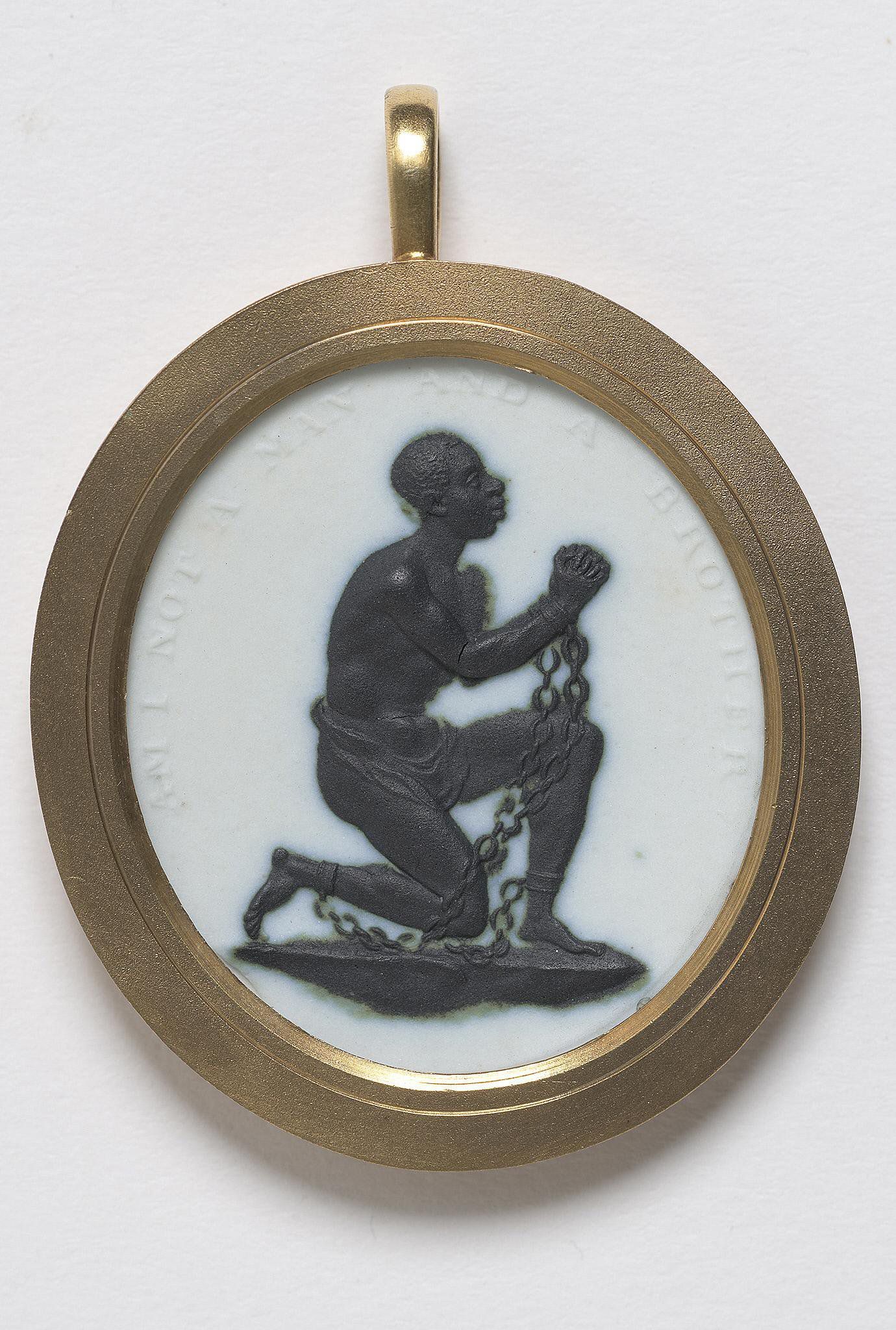
During his tenure as president of the Pennsylvania Abolition Society, Benjamin Franklin helped distribute Josiah Wedgwood’s anti-slavery medallion “Am I Not a Man and a Brother.” In a letter to Wedgwood, Franklin wrote, “I am persuaded [the medallion] may have an Effect equal to that of the best written Pamphlet in procuring favour to those oppressed people.”
Wedgewood medallion with the words “Am I not a man and a brother” in relief along the edge, ca. 1780s, from the collection of the Philadelphia Museum of Art. The museum’s education materials on the medallion stipulate that it was “modeled by William Hackwood and fabricated by Josiah Wedgwood in England in 1787 for the Society for Effecting the Abolition of the Slave Trade, this medallion functioned as a potent political emblem for promoting the abolition of slavery. It reached the United States in 1788, when Wedgwood sent a batch to Philadelphia for former enslaver and ‘cautious abolitionist’ Benjamin Franklin to distribute.”
And indeed it did. Wedgwood’s engraving became the iconic image of the anti-slavery movement. It was printed on broadsides, snuffboxes, decorative objects, and household items. Abolitionist art was part of domestic life in Philadelphia.
The American Anti-Slavery Society, whose founding members included Philadelphians James Forten, Lucretia Mott, and Robert Purvis, commissioned a copper token featuring a related “Am I Not a Woman and a Sister” design. Proceeds from the sale of the token were used to fund the abolition movement.
Abolitionists used art to create a visual language of freedom. Artists created illustrations and paintings that showed “how bad slavery was.” There were theatrical performances and public readings of Harriet Beecher Stowe’s Uncle Tom’s Cabin, the best-selling novel of the 19th century.
Robert Douglass Jr. studied at the Pennsylvania Academy of the Fine Arts. He is considered Philadelphia’s first African American photographer. Active with the National Colored Conventions movement, Douglass created a counternarrative to derogatory racial stereotypes. His daguerreotype of Francis “Frank” Johnson, a forefather of jazz, is in the collection of the Historical Society of Pennsylvania.
On the heels of the Jazz Age, a group of religious activists formed the Young People’s Interracial Fellowship in North Philadelphia in 1931. The fellowship brought together Black and white congregations for dialogue, cultural exchange, and joint activism.
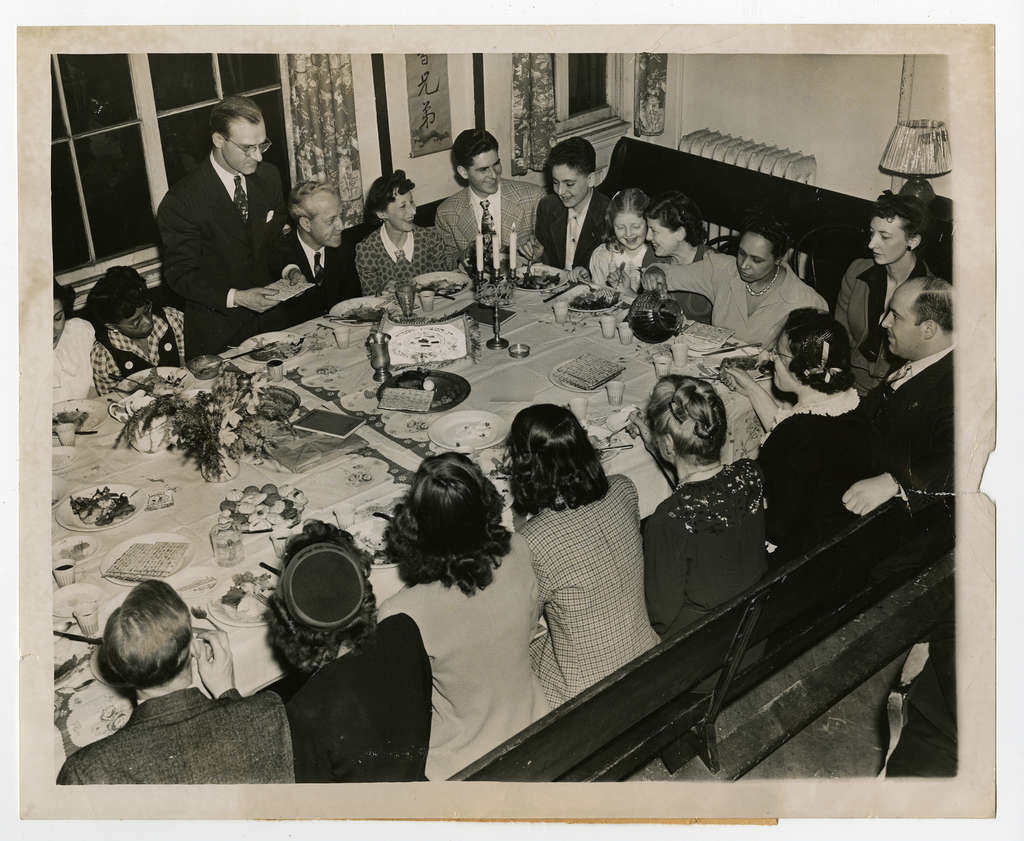
A 1944 seder at Fellowship House.
In 1941, the organization evolved into Fellowship House, whose mission was to resist racial discrimination through education, cultural programs, and community organizing.
Notable cultural figures who spoke at Fellowship House include Marian Anderson, Dave Brubeck, and Robeson. In April 1945, seven months before the release of the short film The House I Live In, Frank Sinatra, the film’s star, stopped by Fellowship House to speak about the importance of racial tolerance. He told the young people that “disunity only helps the enemy.”
The film’s title song, an anti-racism patriotic anthem, became one of Sinatra’s signature songs.
Abel Meeropol, an educator, poet, and songwriter, composed both the film’s title song, “The House I Live In,” and the anti-lynching poem and song, “Strange Fruit,” which would become inextricably associated with one of Philadelphia’s jazz greats.
Born on April 7, 1915, at Philadelphia General Hospital in West Philly, Billie Holiday, née Eleanora Fagan, is one of the greatest jazz singers of all time.
No artist has met the moment with more courage than Lady Day, whose 1939 recording of “Strange Fruit” was named song of the century by Time magazine in 1999, and was added to the National Recording Registry in 2002.
“Strange Fruit” is a timeless and empowering act of creative resistance.
While Holiday is sui generis, jazz musicians were the vanguard of the civil rights movement.
At so-called black and tan clubs like the Down Beat and the Blue Note, Black and white people intermingled on an equal basis for the first time.
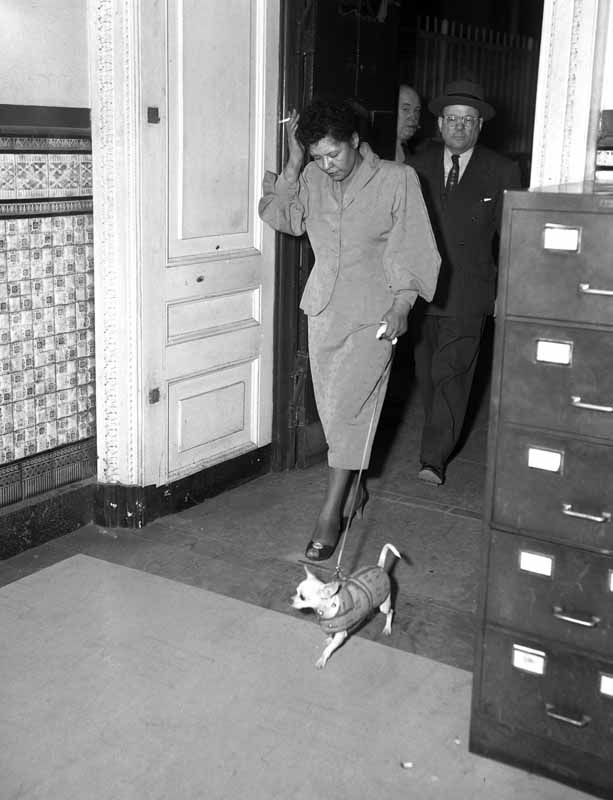
Billie Holiday leaving City Hall in 1956 after her release following a drug bust. Police Capt. Clarence Ferguson walks behind her.
Jazz clubs were constantly harassed by Philadelphia police led by vice squad Capt. Clarence Ferguson and his protégé, Inspector Frank Rizzo. The nightspots became battlegrounds in the struggle for racial justice. Jazz musicians’ unbowed demeanor fashioned a new racial identity.
In remarks to the 1964 Berlin Jazz Festival, the Rev. Dr. Martin Luther King Jr. riffed on the importance of jazz and the jazz culture. He observed: “It is no wonder that so much of the search for identity among American Negroes was championed by jazz musicians. Long before the modern essayists and scholars wrote of racial identity as a problem for a multiracial world, musicians were returning to their roots to affirm that which was stirring within their souls.”
“Much of the power of our Freedom Movement in the United States has come from this music,” he added. “It has strengthened us with its sweet rhythms when courage began to fail. It has calmed us with its rich harmonies when spirits were down.”
At a time when our constitutional rights are being trampled and American history is being whitewashed, I am answering “Fall of Freedom’s” call — as a cultural worker and as a Philadelphian.
Under the “Fall of Freedom” banner, and in collaboration with Scribe Video Center, I will lead a walking tour of Holiday’s Philadelphia.
We will trace her footsteps through Center City and South Philly. We will visit the clubs where she sang, the hotels where she stayed, and the site of the jazz club immortalized in the Tony Award–winning play Lady Day at Emerson’s Bar and Grill. Along the way, we will also highlight places connected to Robeson.
Courage is contagious. When we gather on South Broad, we are the resistance.
Faye Anderson is the founder and director of All That Philly Jazz, a place-based public history project. She can be contacted at phillyjazzapp@gmail.com.
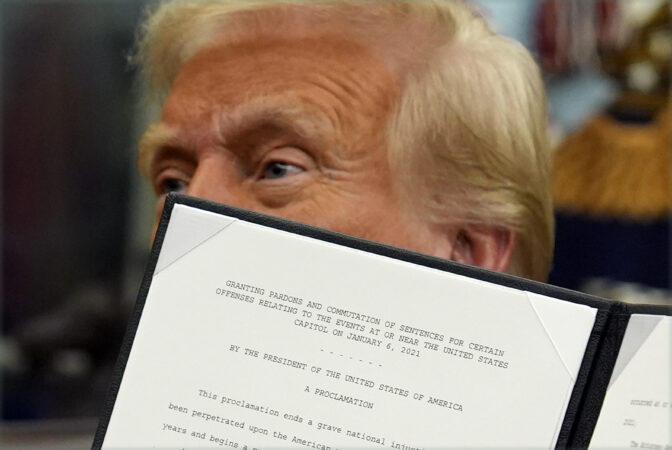
It seems the idea of a con man selling false pardons to fearful sinners was the subject of satire as far back as Geoffrey Chaucer’s The Canterbury Tales. Whereas Chaucer’s barbs were directed at a corrupt medieval church hierarchy, we now almost daily witness a corrupt president handing out pardons like candy to his friends and co-indictees/conspirators, while at the same time prosecuting his perceived enemies. Chaucer was well aware of the irony of his tale’s narrator capitalizing on the very sin of avarice that he condemned. This rogue president continues to flout the spirit of clemency and the rule of law, brazenly lining his own pockets and those of his cronies. Meanwhile, an ineffectual Congress and a compromised U.S. Supreme Court allow this mockery of justice to go on unchecked. Who will finally call out the hypocrisy and end this criminal enterprise? We the people grow impatient.
While most of the world’s nations sent delegations to the annual gathering, the United States did not send any official emissary. Not only is the current administration ignoring the perils of climate change, but by being absent, we are missing an opportunity to promote American technology to the rest of the world.
While we ignore the problem and prioritize the use of fossil fuels, the Trump administration is endangering Americans’ health and our economy. We need a government in Washington that takes climate change more seriously, rather than one that keeps its head in the sand and enriches its fossil fuel donors.
Steve Stern,Mount Laurel
Cassandras for our time
As an emeritus professor at Drexel University, I would like to express my appreciation of professor Lisa Tucker of Drexel’s School of Law for her coauthorship with Dean Erwin Chemerinsky of their op-ed in praise of Justices Sonia Sotomayor and Ketanji Brown Jackson’s principled dissents from the U.S. Supreme Court’s repeated failures to uphold the rule of law against President Donald Trump’s serial breaches of it. Drexel itself faced its own crisis when, at a time when Mr. Trump refused to accept his defeat in the 2020 presidential election, faculty realized that its School of Law had previously conferred an honorary doctorate on his chief defender, Rudolph Giuliani. Together with action by Drexel’s Faculty Senate and petitioners from each of its schools, both the faculty and student body of the law school called unanimously for Giuliani to be stripped of his degree, and the board of trustees revoked it. The nation’s law schools would, I think, do well to apply this precedent to Mr. Trump’s conduct in office, and to the Supreme Court majority that has been his chief enabler.
Robert Zaller, Drexel University, Distinguished University Professor of History, emeritus
Join the conversation: Send letters to letters@inquirer.com. Limit length to 150 words and include home address and day and evening phone number. Letters run in The Inquirer six days a week on the editorial pages and online.
After months of state and federal budget stalemates that have threatened essential services for Philadelphia’s most vulnerable, we now know those budget outcomes don’t address critical housing needs, and as such, we have an opportunity right now as a city to meet the moment through the first year of spending in Mayor Cherelle L. Parker’s housing affordability plan.
As a city, we are currently scrambling to decide what to do with $200 million per year for four years to address housing, when just last year we were discussing spending $1.3 billion on a Sixers arena in Chinatown. Clearly, the issue is not a lack of resources, but where we choose to direct them.
Housing in Philadelphia has rarely been people-first in its approach; rather, it’s been about extraction from communities in one form or another. One could argue that the first great Philadelphia housing plan started with the city’s founding in 1682 and was built on the displacement of the Lenape people, who had inhabited the region for generations.
In a neighborhood like Kensington — where I live and work — housing was developed at the turn of the 20th century to advance industry, and the profits to be made from it, by putting factories in formerly rural spaces and then surrounding those workplaces with as many homes as possible. This was a housing plan meant to extract as much as possible — rental payments, increased worker productivity, patronage of local businesses — from those who lived and worked here.
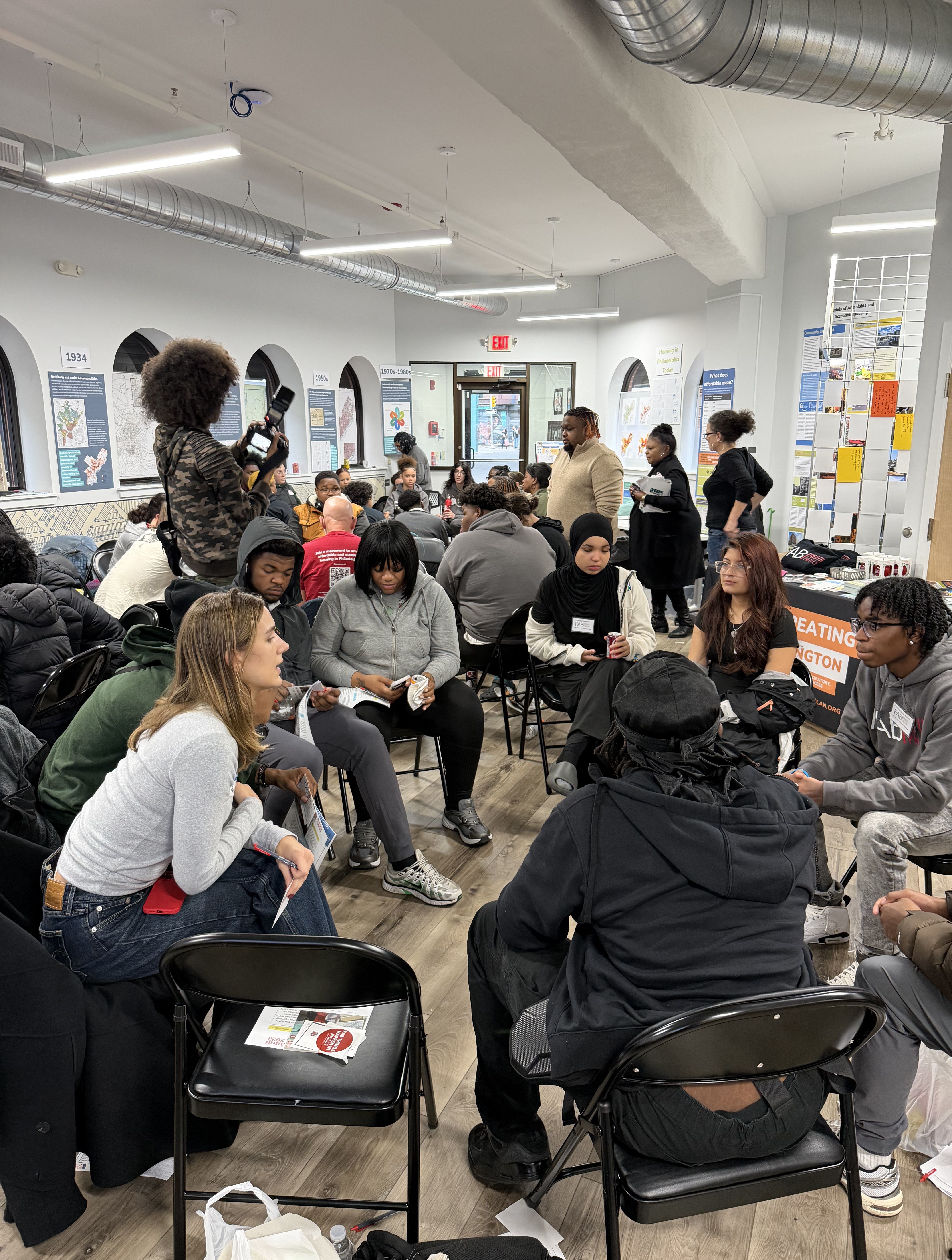
Fab Youth Philly brings together young people for a teen town hall to discuss housing issues on Nov. 15 at the Kensington Engagement Center.
Any transformative housing plan must be built on values: to address historical and current misaligned missions that continue to drive exploitative forces in our neighborhoods. The start of the mayor’s H.O.M.E. program is a moment to ensure the plans that we will be paying for over the next 30 years are people-first in their mission, purpose, and function.
Real change happens when we are collectively grounded in hope, community, facts, and information about where we have been, all of which can serve as a guide to where we’d like to go.
Over the last few years, New Kensington Community Development Corp. has been facilitating the Co-Creating Kensington planning and implementation process, in which we have received feedback from 700 residents about their priorities. In January, we completed the rehabilitation of a three-story building at 3000 Kensington Ave., converting it into the Kensington Engagement Center, a meeting place and exhibition space that was designed to facilitate conversations with the community on their priorities.
Conversations with our neighbors and partners revealed that housing is an increasingly pressing issue for Kensington residents (as well as for the rest of Philadelphia). We collectively recognized a moment of alignment with the release of the Philadelphia H.O.M.E. Initiative and the soon-to-be-released Pennsylvania Housing Action Plan.
This deep-dive approach is based on an understanding that community engagement needs to go beyond pizza parties and setting up tables at events. For a community to truly participate in its future, it needs to be informed, there needs to be shared power, and there needs to be collaboration and collective visioning.
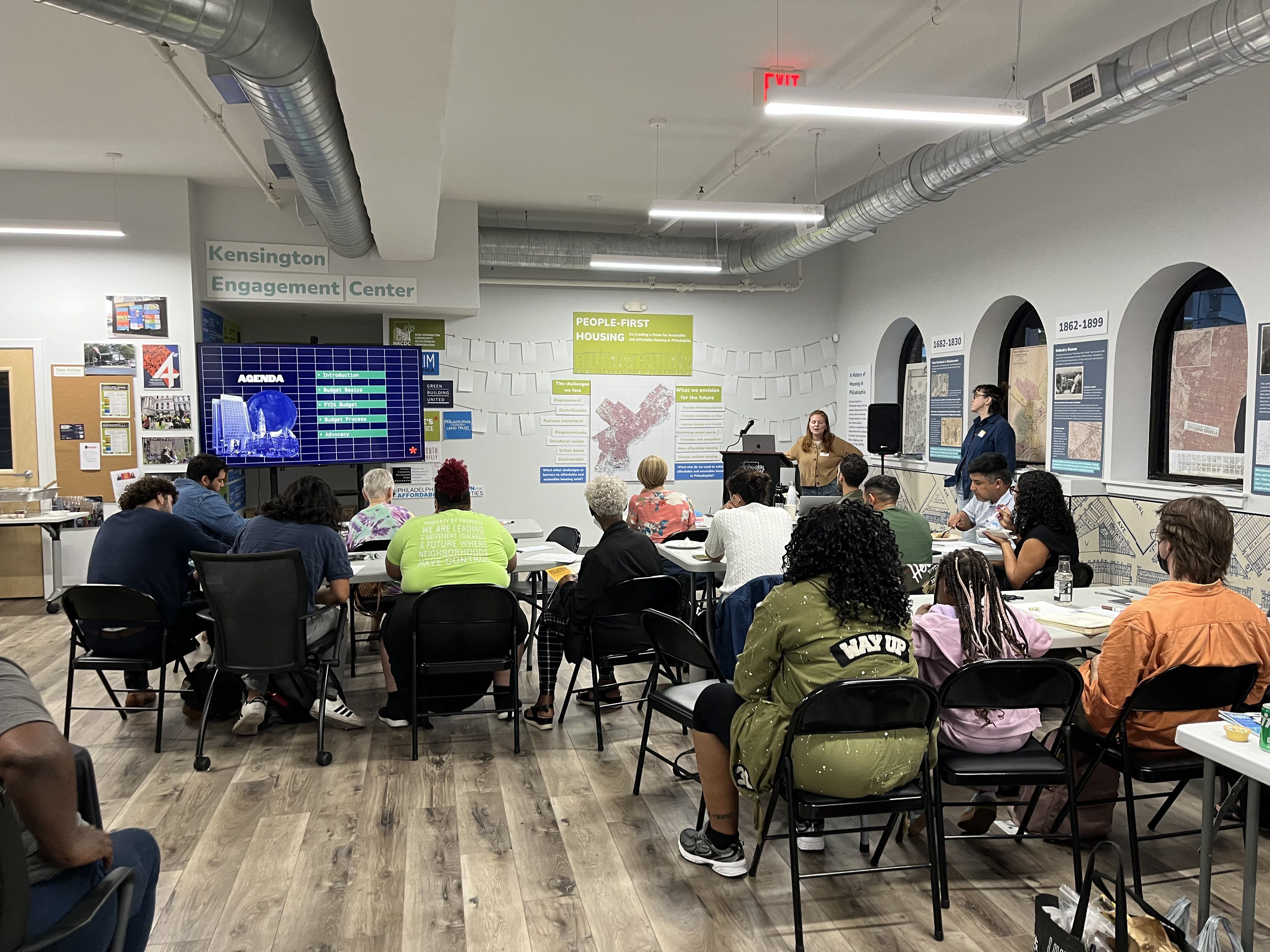
The People’s Budget Office facilitates a Budget 101 Workshop at the Kensington Engagement Center on Oct. 7.
The workshop series has engaged more than 175 residents from 15 neighborhoods and has covered topics from housing wins, gentrification and displacement, how municipal resources are directed toward housing, environmental concerns, tenants’ rights, illegal evictions, and more.
Angela Brooks, Philadelphia’s chief housing and development officer and new chair of the board of the Land Bank, came out for a workshop on the H.O.M.E. plan to help residents understand how the initiative will work and to hear resident feedback.
Most recently, we hosted a teen town hall facilitated by Fab Youth Philly, in which more than 70 young people came together to share their hopes, dreams, and concerns and gave guidance on how the city can support young people — for example, looking at how the McKinney-Vento Homeless Assistance Act implements programs that serve youth.
What we’ve learned so far is that the best way to build momentum for change is through informed, collective action and leveraging strategic pressure points by investing in relationships early. Creativity and diversity in leadership and lived experience are critical to ensuring movements are resilient, and we need to question the status quo.
Communities must be built for the people who live in them, so that they aren’t just about four walls built by colonizers and conquerors, but about communities of choice and relevance so people can thrive.
Trickle-down approaches do not work. The city’s H.O.M.E. plan needs to concretely prioritize resources for residents whose households earn no more than 30% of the area’s median income. We need to serve those on housing program wait lists before adding more and higher earners. We need to preserve the affordable housing we already have, and we need to invest more deeply in home repair programs like Built to Last.
As someone serving on the H.O.M.E. advisory board and as a nonprofit leader of a community development corporation, I learned there are several housing issues we aren’t addressing at all in the city’s H.O.M.E. plan, such as those affecting young people and individuals impacted by the criminal justice system who have urgent needs but do not meet many of the traditional service categories.
How do we move forward?
For those of us who are currently centering housing, learning and being in community is essential. But we also need actionable moments.
Participate in any of the remaining workshops in our series, become informed, and become a part of the community.
Call your City Council member to make sure they are aware of the above priorities and your desires for housing.
I recommend all these organizations because they put people first in housing plans — countering the notion that housing is just a commodity. Instead, they affirm the fundamental idea that housing is about people — and that people deserve a home.
Bill McKinney is a Kensington resident and the executive director of the New Kensington Community Development Corp.
There is a glaring omission in the wall-to-wall coverage of the Jeffrey Epstein case. Even as new headlines roar with fresh allegations, the facts of the crimes and the trauma inflicted on the innocent children continue to fall to the wayside.
The current focus on the rich and powerful and the political backstory surrounding fights over lists, transcripts, and depositions does little if anything for the still-young women who were trapped in Epstein’s depravity. Accountability and transparency are what will support them.
One thing is not in dispute: What happened to those children was no hoax. Those horrific crimes were the result of years of grooming and entrapment of young teenage girls. These crimes sadly happen at an alarming rate, often right under our noses.
Why? One major reason is that society fails to talk about them openly and honestly, leaving the public with the perception that it is a “them” rather than a “we” issue.
Forgetting about the abuse these young women and girls endured is a tragedy. Here is a glimpse into their reality:
Virginia Giuffre was 17 when Maxwell recruited her from Mar-a-Lago for a job as Epstein’s masseuse. They groomed and lured her into years of sexual abuse by trafficking her internationally. Sadly, she took her own life earlier this year. Her friends and family are robbed of sharing her life.
Maria Farmer was an aspiring artist who met Epstein and Maxwell during her studies. Under the pretext of supporting her career, they sexually abused her while security prevented her from leaving. Her pleas to authorities were ignored, allowing the abuse to continue for years. This is trauma she will never escape.
Sarah Ransome, 22, was pursuing a fashion career when Maxwell offered her mentorship. Instead, she was lured into Epstein’s circle, sexually abused, and trafficked to wealthy international rapists on “Epstein Island,” a captivity she couldn’t escape, even by trying to swim away.
Courtney Wild was just 14 when a friend convinced her to go to Palm Beach, Fla., for a job giving massages to Epstein. “Massage” as a code word for abuse and rape. Not once, but hundreds of times. Epstein made her recruit other girls in an operation that ensnared children in cycles of abuse and coercion.
Uncomfortable? Now put yourself in the victims’ shoes.
An epidemic of evil
An estimated 48,000 U.S. minors are trafficked into sexual abuse annually, leaving nearly 60 million adult survivors of child sexual abuse. That’s about one out of every five Americans. With society unwilling to even talk about their reality, it shouldn’t come as a big surprise that less than 30% of sex crimes are even reported.
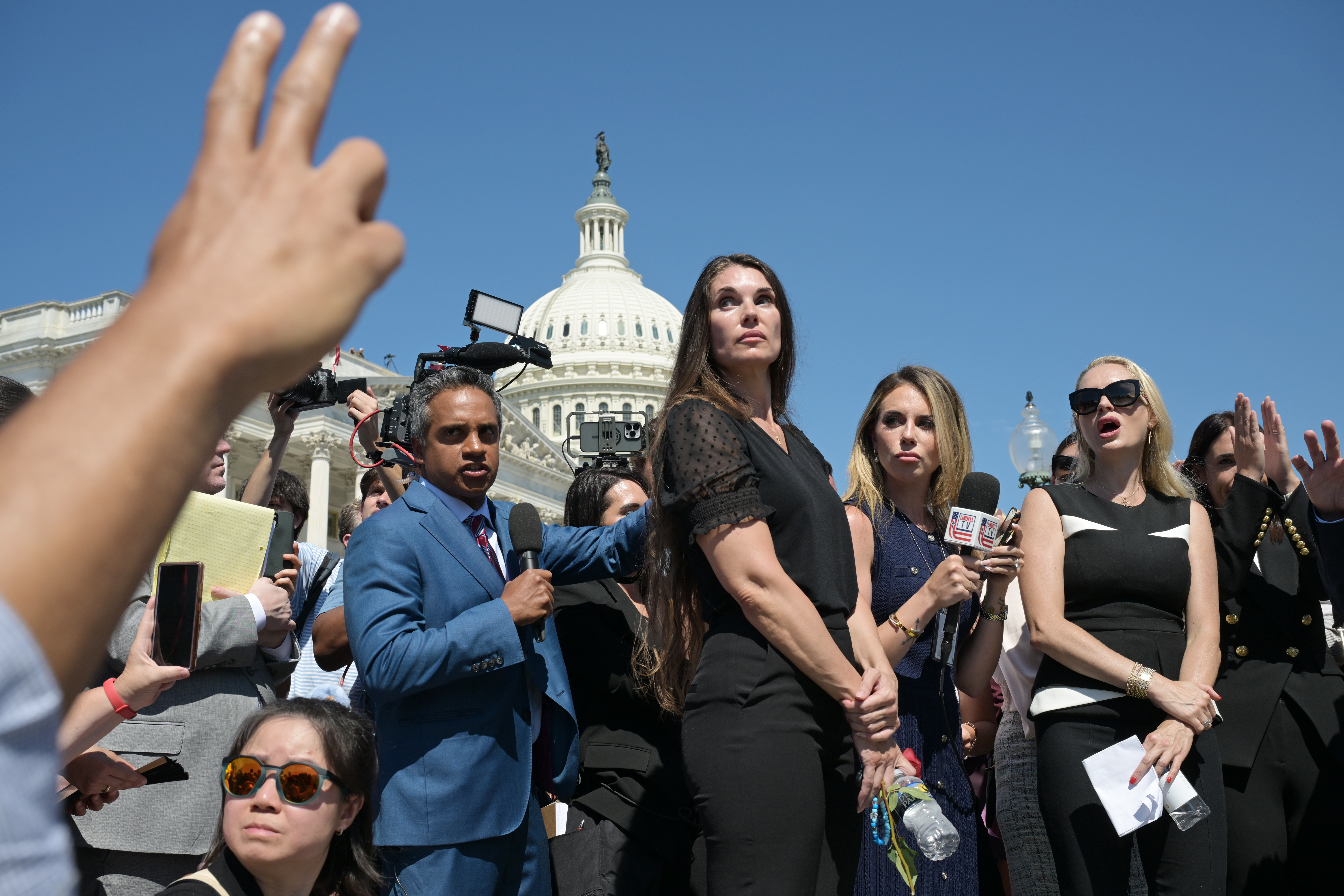
Anouska De Georgiou (right) gathers with other Jeffrey Epstein accusers at a news conference outside the U.S. Capitol on Sept. 3.
Epstein’s name might be the most famous, but there are thousands more like him who count on silence, confusion, and distraction. Those creatures have something else in common: They continue to hunt for prey and inflict horrible abuse on the next victim.
Lack of accountability is a blueprint for “Epstein Islands” popping up in every community. Shying away from the uncomfortable details doesn’t soften the crime. Secrets don’t help victims heal. Epstein and Maxwell kept secrets, and other abusers hope you do, too.
Victims of sexual abuse are forced to keep secrets. Keeping documents sealed under the pretext of protecting victims is the real hoax.
If you’re serious about wanting to prevent these crimes from happening again, release all the Epstein files.
Paul DelPonte is executive director and CEO of the National Crime Prevention Council. Aaron Hanson has served as the sheriff of Douglas County, Neb., since 2023, and has nearly 30 years of law enforcement experience.
Thank you to Wendy Ruderman for your moving story about Mike West. I had the privilege of knowing both Mike and Lynn — Mike, who left a lasting impact, and Lynn, who continues to honor his legacy with grace and heart. Your piece truly captured their spirit.
Mike was always approachable — no matter how challenging the business discussion, his smile always led the way into the room. He was a consummate professional who brought people together and made things happen, always with kindness and respect.
Reading about his journey with Alzheimer’s was difficult. It’s hard to imagine the weight of the decisions he faced. I salute Lynn for her courage in sharing resources and their family’s experience, so others might find help and understanding on their own Alzheimer’s journeys.
Your story is a reminder that it’s easy to get caught up in the day-to-day and forget what matters most in support of friends and family. Mike’s legacy isn’t just in Rothman’s growth, but in how he treated people — with genuine care. Sharing his story will help more families find the support they need.
Thank you for telling it with such compassion.
Richard L. Snyder, chief operating officer, Independence Blue Cross
Combined sewer systems — where sewage and stormwater share the same pipes to a treatment plant — serve about 60% of Philadelphia. These systems can’t handle heavy rainfall, causing overflows that contaminate our rivers. Between 2016 and 2024, an average of 12.7 billion gallons of untreated sewage and stormwater entered local waterways each year. This goes against the Clean Water Act’s goal of protecting U.S. waters and threatens wildlife, communities, and athletes like myself.
Philadelphia must invest in stronger infrastructure that can handle heavy rainfall. While green stormwater projects are an important start, they aren’t enough to protect the Schuylkill and Delaware Rivers. Ongoing sewage overflows make training and recreation unsafe for up to 195 days a year. It’s time for the Water Department to act and keep our rivers clean and safe.
These soldiers died fighting for freedom and against the Nazis. They must be remembered.
How must their descendants feel?
Judy Hartl,Philadelphia
Join the conversation: Send letters to letters@inquirer.com. Limit length to 150 words and include home address and day and evening phone number. Letters run in The Inquirer six days a week on the editorial pages and online.
I’m always reluctant to talk about upcoming columns, because in this twisted era everything changes at the drop of a MAGA hat, and I hate to jinx things. But as of now, I’m booked for a trip to Charlotte (or Raleigh?…I’ve already jinxed it, maybe) this coming weekend, where I hope to report from the front lines of the Border Patrol’s latest big-city invasion that has terrorized the immigrant community in North Carolina. So I’m going to spend a couple days reading up on what to do in a tear-gas attack, and I’ll see you again this weekend.
Fearless college kids are saving journalism. Grown-ups? Not so much
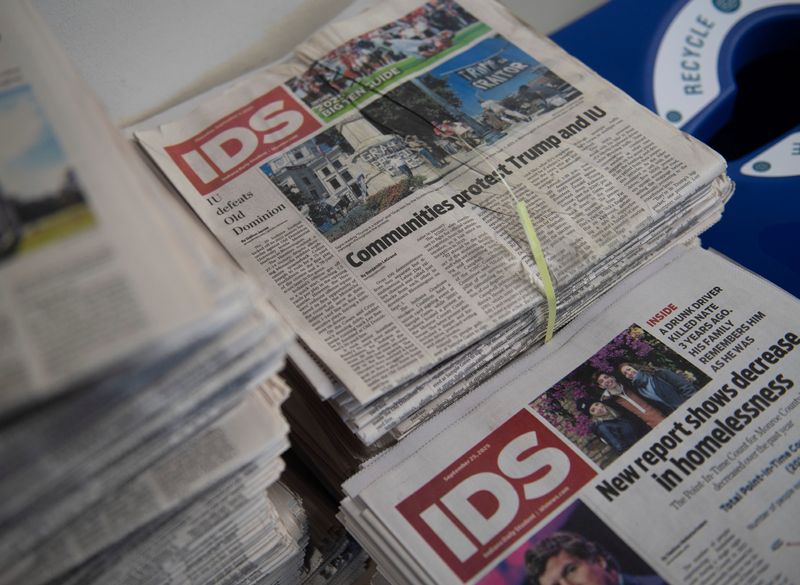
Editions of the Indiana Daily Student in the student media area in Franklin Hall on Indiana University’s campus on Oct. 14.
In American journalism’s year of the bended knee, nobody would have been surprised if the student editors of the Harvard Crimson followed the sorry example of major outlets like CBS News or the Washington Post in groveling before the rich and powerful — in this case, their ex-university president and still plugged-in professor Larry Summers.
Earlier this month, Summers took to social media (the Elon Musk-owned X, of course) with a rant against the student-run paper at the Ivy League school he once helmed, linked to an article by conservative commentator (and former Crimson editor) Ira Stoll accusing the Crimson of biased coverage in favor of Palestine. Summers said ominously, “I do hope alumni trustees will investigate and take any necessary steps lest a problematic situation deteriorate any further.”
But instead ofbacking down, Harvard’s student journalists stepped up. When the emails of the late financier and sex fiend Jeffrey Epstein, released last week by a House committee, proved to be riddled with his communications with Summers — long after Epstein had pleaded guilty to teen sex trafficking in Florida — the Crimson produced the most in-depth takedown of any media outlet, anywhere.
“As Summers Sought Clandestine Relationship With Woman He Called a Mentee, Epstein Was His ‘Wing Man’” was the blistering headline on the article by undergraduates Dhruv T. Patel and Cam N. Srivastava. It described, in excruciating detail, the married Summers’ missives to Epstein about his efforts to woo a much younger Chinese economist on campus whom he was mentoring (and whom the former U.S. treasury secretary and his felonious friend code-named, with a racism they thought would remain forever private, as “peril.”)
Take that to the alumni trustees, Mr. Summers!
With a devastating kicker that shows Summers still emailing Epstein up until 1:27 p.m. of the day before his pal was busted on new federal sex charges in 2019, the Crimson article went viral over the weekend. By Monday morning, Massachusetts U.S. Sen. Elizabeth Warren was calling for Summers’ ouster from his faculty post. By Monday night, a “deeply ashamed” Summers announced that he’s pulling back from his public commitments, although he plans to continue teaching.
The students’ reporting was another win for truth, justice, and the American way — but not an isolated incident. In recent years, as mainstream journalism looks increasingly weak and flabby in the face of U.S. authoritarianism, and with college campuses on the front lines of a culture war, scribes in their teens and early 20s — burning with youthful idealism and the freedom of not much to lose — have raced into the void.
Some 3,000 miles from Harvard Square, the student journalists at the Stanford Daily stood their ground after one of its reporters was charged with three felonies, at the behest of a top university administrator, for attempting to cover a pro-Palestinian protest on the California campus. Under increasing public pressure, the charges were dropped in March — another triumph for the paper whose 2022 investigative reporting into research irregularities took down the university president.
In the heartland, the editors of the Indiana Daily Student at that state’s flagship public university last month stood up to school administrators banning their print editions, blasting the move in a front-page editorial that said “telling us what we can and cannot print is unlawful censorship.” The students, who worked with their peers at nearby Purdue University to publish a special issue that circumvented the ban, rallied support from prominent alums and got the school to reverse course.
“I think that many of these college journalists are laser-focused on their beats, are developing great sources among administrators, faculty and students, and are unfazed by the possibility that their stories might piss off a valued source or two,” Columbia Journalism School professor Bill Grueskin, who covered the Stanford fracas for Columbia Journalism Review, told me Monday. “In other words, they’re doing the things that the best reporters do. They’re just not able to buy a beer (legally, at least) when their story shakes up the world.”
I know what some of you are thinking here. Investigating corruption or misconduct among university leaders, or fighting for a free press…aren’t these college students just doing what any journalist worth their saltwould do? Well, yes and no.
Consider those Epstein emails that continue to dominate the news. It turns out that two prominent journalists corresponded frequently with the convicted sex creep: the “palace intrigue” access journalist Michael Wolff, and a soon-to-be-fired New York Times business reporter, Landon Thomas Jr. The missives suggest they had zero interest in reporting on Epstein’s proclivity for underage girls but very much wanted the access to the rich and famous that jeevacation@gmail.com offered.
And it gets worse. Thomas actually solicited a $30,000 donation from Epstein to a favored charity — a severe ethical breach that cost him his job in America’s most prestigious newsroom. Wolff, meanwhile, was offering Epstein advice on how to leverage — in essence, blackmail — the sitting U.S. president, Donald Trump. At the same time, he was pushing a business venture that would link him not only with Epstein but another man later convicted of sex crimes, filmmaker Harvey Weinstein. It seems like both conflicted journalists wanted to play in the big leagues with the much richer people they were supposed to watchdog.
This is something that too many elite journalists share with the increasingly conflicted corporations that employ them: a desire to comfort the comfortable in return for access, or prestige, or money — and to avoid getting sued, which might jeopardize those first three things.
How else to explain major TV networks like CBS or ABC, owned by corporations with myriad issues before the federal government, settling frivolous lawsuits by Trump for millions of dollars, or the similarly conflicted Jeff Bezos telling his Washington Post to spike its endorsement of Kamala Harris, or the mealy-mouthed “both sides” reporting on rising authoritarianism that plagues so many elite newsrooms of the traditional media?
The late, great Kris Kristofferson told us that freedom’s just another word for nothing left to lose, and maybe that simple explanation has a lot to do with the bravery of college journalists — that they are freer to question authority than folks with a mortgage and worries about paying for their own kids to attend a top school.
Still, it’s important to understand that most of the rot in modern mainstream journalism — too much consolidation in the hands of too few conglomerates with too much at risk to be seen as anti-regime — is institutional. We should strive to make something great out of the fact that the next generation of American journalists has arrived with smarts, savvy, and a moral compass yet to be worn down by late-stage capitalism.
Our challenge, as a society, is to tear down the decrepit structures of the corrupted old media and build a new one that rewards independent journalists who actually afflict the comfortable, and offers them incentives to keep doing that instead of cutting venture-capitalism deals with the folks they allegedly cover. Most of today’s college journalism majors would never trade emails with the likes of Jeffrey Epstein — except to take him down.
Yo, do this!
The stroke of timing behind Ken Burns’ latest documentary epic, The American Revolution, which is currently running this week on PBS stations like WHYY here in Philadelphia and also streaming, was supposed to be the 250th anniversary of the conflict that created the United States. But the project has taken on much greater relevance in a fraught present, when folks are heatedly arguing just what the Founders’ American Experiment is really all about. Critics have praised Burns and his skilled team for blending the ideals and leadership of the George Washingtons and Thomas Paines with the realities faced by everyday folk, including indigenous and enslaved people.
Personally, I’ve been embroiled in my nostalgia for a more recent revolution — the cultural and musical explosions that occurred in 1966. I’ve been listening to the audiobook about that tumultuous year — 1966: The Year the Decade Exploded — by the British author Jon Savage, whose later book on the year 1971 was the basis for an outstanding but largely ignored documentary series on Apple TV, But 1971’s classic rock wouldn’t have happened without the cultural pioneers and a youthful clamor for liberation that came five years earlier. The book is an engrossing reminder that change is possible.
Ask me anything
Question: Now that People Magazine has revealed the disgusting “piggy” story, why isn’t this atop every news outlets coverage? We spent 3 full weeks on Biden’s age, a week on his pardon of his son with such moral outrage from every outlet. This doesn’t even get covered? — BigTVFan (@bigtvfan.bsky.social) via Bluesky
Answer: The episode that BigTVFan is referring to occurred with a gaggle of journalists about Air Force One, but just started getting viral attention Monday night. It is, indeed, shocking to watch. When a Bloomberg woman journalist pressed Donald Trump on the Epstein files, the president erupted. “Quiet! Quiet, Piggy!” Yes, this should be a front-page story in the traditional media, and not only because of the stunning sexism (when the subject is Epstein, no less!) and the regal arrogance, but also this: the man who’s followed around by the nuclear suitcase seems to be losing his grip on reality. Monday afternoon, Trump spoke to a gathering of franchisees of the fast-food addiction that may be just one reason why nobody believes he only weighs 16 ounces more than Jalen Hurts, McDonald’s, and was at times beyond incoherent. Yet Trump’s rapidly deteriorating mental state remains mostly off-limits for the elite media. It’s a massive error of omission that the world will look back on and regret.
What you’re saying about…
It’s funny how one week can feel like a decade in 2025. Last week’s question about the eight senators (seven Democrats and an independent) who cut a deal to end the long government shutdown drew a huge response from folks fired up about an issue that now almost feels like ancient history after the Epstein email release. Readers were passionate but divided. Certainly many felt the eight senators had caved in the worst possible way. An outraged Freddi Carlip wrote that “most people wanted to do what was best for Americans who are hurting and that is to stand up to bullies.” But a number of you thought the opposition had few real options but to deal from a weak hand. “This was always going to end with the government opening under the black flag of the Big Ugly Bill,” wrote Kent Dietz. “Oft repeated but true: elections have consequences.”
📮 This week’s question: It’s all Epstein all the time, so let’s talk about it. Do you think Trump has sincerely flip-flopped and the relevant files will soon be released? Or is the White House still playing a long game aiming to keep Epstein’s secrets buried with him? Please email me your answer and put the exact phrase “Epstein files” in the subject line.
History lesson on ‘Charlotte’s Web’…and fascism
U.S. Border Patrol Commander at large Gregory Bovino, right, looks on as a detainee sits by a car Monday, in Charlotte, N.C.
Nobody reads any more, at least not to the end. That’s been driven home this autumn by several efforts from tech bros and other leaders of our dystopia falling flat on their face with their attempts at literary allusions. A viral post on Bluesky recently mocked the Icarus Flying Academy, whose founders may be blissfully unaware that their Greek mythological namesake flew too close to the sun and crashed. On Monday, gazillionaire Jeff Bezos also invoked ancient Greece by announcing his AI startup Project Prometheus, invoking an inventor who was ultimately bound to a rock by Zeus for his overreaching. Then there’s the bad people behind the U.S. Border Patrol and its inhumane mass deportation drive, who took their horror show to North Carolina this past weekend with their “Operation Charlotte’s Web.”
The “brains” behind the BP’s masked goon squad, Gregory Bovino, named the operation — which netted 81 detainees in its first Saturday during a chaotic surge through suburban lawns and Home Depot parking lots — after the 1952 classic children’s novel by E.B. White about a farm, a pig, and the compassionate spider, Charlotte, who saves the pig’s life. Why? Because Bovino’s secret police force are ensnaring scores of immigrants in their web. In Charlotte, N.C. Get it? Bovino even took to social media’s X with a wildly out-of-context quote from the novel: “Wherever the wind takes us. High, low. East, west. North, south. We take to the breeze, we go as we please.”
In a viral essay, the writer Chris Geidner of the excellent site LawDork demolished Bovino’s literary aspirations for his police-state operation. His piece went well beyond the obvious point that a children’s novel that centers on a spider’s quest to protect someone different from her — a pig — from his human predators is the 180-degree polar opposite from the web of inhumanity that Team Bovino is spinning in Charlotte, terrorizing the Latino community there. Geidner notes that much of E.B. White’s wider work was in opposition to the very fascism that’sbehind the mass deportation drive of Bovino and his ultimate boss, Donald Trump.
Geidner quotes White from a 1940 essay, as Adolf Hitler’s stormtroopers were advancing across Europe: “I am in love with freedom and that it is an affair of long standing and that it is a fine state to be in, and that I am deeply suspicious of people who are beginning to adjust to fascism and dictators merely because they are succeeding in war. From such adaptable natures a smell rises. I pinch my nose.”
White, and his fictional Charlotte, would have done more than pinch their nose from the stench of this operation in a proud city that shares its name with a heroic spider. For sure, Bovino’s crimes against literature pale in comparison to his ongoing crimes against humanity. But he may discover that the rapidly spinning American thread of community and common decency that is resisting mass deportation is the true sequel to Charlotte’s Web.
What I wrote on this date in 2018
It was Mississippi’s most famous writer, William Faulkner, who wrote, “The past is never dead. It’s not even past.” Seven years ago on this date, I wrote about how a justice-denied 1955 murder of a Black man trying to deliver absentee ballots to the county courthouse in Brookhaven, Miss., haunted the modern Senate campaign of that town’s GOP U.S. Sen. Cindy Hyde-Smith. I wrote: “Four years after [Lamar Smith] was killed, a baby girl was born in Brookhaven named Cindy Hyde. Over the next 59 years, she immersed herself in the politics of a community that bitterly refuses to concede the just cause that Lamar Smith died for.” Read the rest from Nov. 18, 2018: “Why the blood of a 1955 Mississippi murder drenches today’s U.S. Senate race.”
Recommended Inquirer reading
Only one column this week, and as you might expect it drilled deeply into the true meaning of the Jeffrey Epstein emails that have dominated the headlines. I went beyond the suggestive comments about Donald Trump to look at the deeper moral decay of the rich and famous who continued to seek out Epstein and his connections years after his Florida guilty plea to child prostitution charges. The missives from billionaires and political insiders also reveal their growing — and justified — worries that the public may be reaching for pitchforks.
The John Fetterman saga never ends, nor does Pennsylvania readers’ bottomless fascination with his decade-plus odyssey from outspokenly progressive mayor of struggling Braddock, Pa., to the U.S. Senate, where he is increasingly at odds with his fellow Democrats about practically everything. The Inquirer’s coverage of revelations in Fetterman’s new autobiography, including his long-running feud with Gov. Josh Shapiro, was one of the most widely read stories last week. So was what happened next, as renewed heart problems caused Fetterman to fall flat on his face and again be hospitalized. There’s three more years until the end of Fetterman’s term and an all-but-certain primary challenge from his political left. No one is going to cover this better than The Inquirer, so why not subscribe today?
By submitting your written, visual, and/or audio contributions, you agree to The Inquirer‘s Terms of Use, including the grant of rights in Section 10.
A favorite of mine was ESPN’s Mike and Mike. I remember during the height of the Colin Kaepernick protest, Mike Golic commended Kaepernick for his attention-grabbing display and the reasons behind it.
But Golic turned the tables on Kaepernick and asked what the quarterback planned to do to achieve the goals he sought through his protest.
I would love to ask white people who were part of the “No Kings” rally recently the same question, but I am unsure of what tangible outcome was sought from it. It seemed like an occasion to voice their displeasure, so I am unsure what the next step is beyond planning another “protest” in the next few months.
The optics from the mass demonstration were indeed impressive: seven million people, predominantly older and white, took part in protests nationwide. That cannot be ignored. But the substance of these protests was lacking.
Not according to news media pundits, who declare that these acts are signs of the anger and emerging resistance to the Trump administration we’ve been waiting for.
But “No Kings” shouldn’t be confused with the Arab Spring.
Protesters made no demands. They caused no ruckus. In fact, this “protest” seemed more like a party than a desperate attempt to save humanity.
Don’t get me wrong.
Protesting one’s grievances in an attempt to acquire a remedy for them by way of public policy is a good thing. Black people are well acquainted with our history of protest and resistance to unjust laws.
Lessons from the civil rights era
But the lessons for all to learn from the history of Black resistance, particularly the civil rights movement, is 1) there is always a tangible demand for something or numerous things, 2) there’s a righteous anger that is harnessed into a tangible action (e.g., protest, boycott, divesting, etc.) to produce the demand, and 3) there is a desperation that yields a willingness to sacrifice in the name of their humanity.
The “No Kings” protest had none of these.
But it did have singing, dancing, and folks in costumes. Indeed, there is room for joy within any social movement (if you can call this a social movement yet, I am not sure), and there’s been that at protests before.
Joy is one of the fruits of our work, whether it comes from protest or other mass action, but a protest isn’t a party.
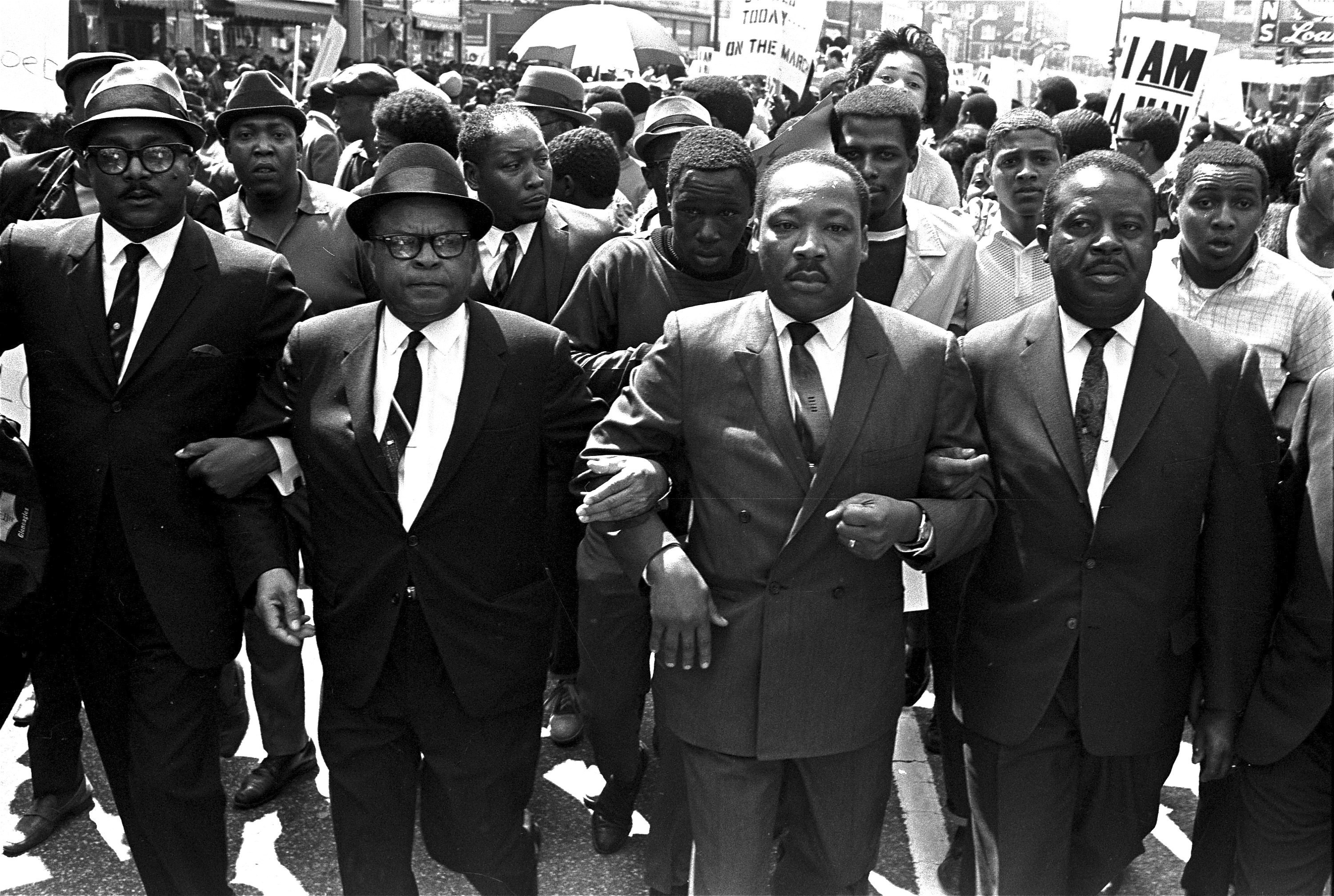
The Rev. Dr. Martin Luther King and other civil rights leaders march in Memphis on March 28, 1968. He was killed a week later.
Organized protests should elicit a response that either brings the oppressor to their knees and forces them to concede the demand, or, at the very least, brings them to the negotiating table.
The “No Kings” rally produced only one response from Donald Trump: an AI video of a “King Trump” jet dumping what appeared to be liquid feces on the protesters. Clearly, demonstrators got a reaction from Trump, but not the kind that relieves any of the pressure they face at the kitchen table.
I previously commented that white people have a decision to make. That is, whether they intend to fight for their rights and the rights of nonwhite people, or only for their own rights. I’m not sure what these protests suggest is their answer to that question. But my advice is to learn from the civil rights movement.
Some sit it out
I highly doubt white Americans can “save” democracy in America by way of reconciling its relationship with white supremacy absent Black people. However, a lot of us have chosen to sit out these protests because many of the people protesting Trump are likely responsible for his return to power.
We’re tired of persevering through the hypocrisy in the name of survival, but I digress.
Learn from the civil rights movement to strengthen this effort on behalf of all Americans. Concretely define the “movement’s” demand(s) via policy change that can directly begin to upend systemic oppression.
Just as the civil rights movement improved the lives of all Americans, so should these coordinated mass demonstrations. Harness the real anger seen at town hall meetings, for example, to agitate and aggravate the power structure to show that these protests are a force to be reckoned with, as opposed to “a good time had by all.”
Lastly, continue direct action with a consistency that demonstrates your demands aren’t a wish list, but rather the oxygen necessary to breathe.
Taking it to the streets is definitely a start. But it’s nowhere near the finish.
To reach the finish line, y’all have more work to do. Some Democrats in Congress need to learn these lessons, as well.
Rann Miller is an educator and freelance writer based in southern New Jersey. His “Urban Education Mixtape” blog supports urban educators and parents of children attending urban schools. urbanedmixtape.com@UrbanEdDJ
Earlier this week, the United States Congress voted to reopen the federal government. Yet, for more than 470,000 residents of Philadelphia, the timeline for restoring full SNAP (Supplemental Nutrition Assistance Program) benefits remains uncertain.
As a pediatrician, I witness its effects firsthand. I regularly speak with parents who struggle not only to find healthy options but simply to secure enough food to feed their families. Sharing information about local food banks and pantries has become a routine part of these conversations.
While the precariousness of SNAP benefits continues even as the government shutdown has ended, I am deeply concerned about the growing food insecurity facing children across the city. Among this population, I am particularly worried about children with autism, who are at even greater risk for food insecurity.
Autism spectrum disorder is a neurodevelopmental condition often accompanied by sensory overresponsiveness, which can lead to significant food aversion and extreme selectivity. Many children with autism tolerate only a limited range of foods — sometimes as few as five to 10 — because the textures, smells, or appearances of unfamiliar foods can be overwhelming.
Many challenges
Families raising children with both autism and intellectual disabilities are estimated to face twice the risk of food insecurity, driven, in part, by financial strain, childcare challenges, and reduced employment opportunities.
A national pulse survey conducted during the COVID-19 pandemic found that, amid widespread disruptions to support systems, families of children with autism were nearly four times more likely to experience food insecurity than the general population.
A sign alerts cusotmers that this store accepts food stamps, or SNAP benefits
While SNAP benefits remain uncertain, I am directing more families toward the extraordinary efforts of food banks and community pantries across Philadelphia.
These organizations, however, were designed to supplement food supplies — not to replace the sustained support that federal nutrition programs provide. Many, despite increased donations, are now facing unprecedented demand.
While I am grateful for that important work, I face understandable pushback from some families when I direct them toward Philadelphia’s food pantries. I have had heartbreaking conversations with parents who are scared about their ability to meet their child’s specialized dietary needs.
“They gave me food, but my kid won’t eat the noodles, bread, and beans they gave us. I’ll figure something out — I have to.”
“I have to pick out specific things for my kid. He’s incredibly picky and won’t eat outside of his regular foods. You’re not finding Eggo waffles at a food bank.”
A call to action
These are not isolated anecdotes. They illustrate a broader challenge that deserves public attention: the intersection of food insecurity, disability, and systemic gaps in support.
My intention is not only to express gratitude for the vital work of local food assistance organizations, but also to highlight the additional barriers facing families of children with autism.
Philadelphia’s schools already struggle to meet the educational and behavioral needs of these children. Their families often experience additional economic burden, including lower household incomes and heightened employment instability due to caregiving responsibilities — factors that compound the effects of a prolonged SNAP interruption.
The government’s reopening offers hope, but procedural hurdles remain before SNAP benefits will return to families in need. Meanwhile, my call to action is to avoid passivity and find a way to help.
Food insecurity is not always visible.
It hides in the shadows of stigma and sometimes shame. I urge those who can to support local food pantries with their time, resources, or donations. I encourage you to pick up the phone and call your elected representatives to demand swift restoration of SNAP benefits.
Finally, if you happen to know a family raising a child with autism, consider reaching out with compassion and asking, “Is there a way I can help?”
Sometimes, this small human action of solidarity may just keep a child from missing their next meal.
Nishant Pandya is a general pediatrician in Philadelphia.