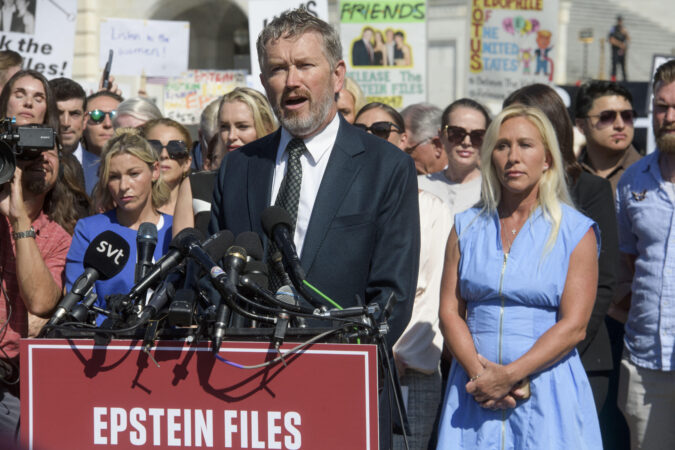
For months, Donald Trump has tried to insult, bully, and intimidate his way to keeping the House from voting on the release of files related to convicted sex offender Jeffrey Epstein.
On Sunday night, fearing that more than a handful of Republicans would break ranks and support the measure in a vote scheduled as soon as Tuesday, the president tried to keep the word humiliating from preceding a description of his defeat.
“The House Oversight Committee can have whatever they are legally entitled to, I DON’T CARE,” Trump posted on Truth Social.
The abrupt about-face clears the way for Republicans to join Democrats and steadfast GOP Reps. Thomas Massie, Marjorie Taylor Greene, Lauren Boebert, and Nancy Mace in compelling the U.S. Department of Justice to release the files.
This is an important win for the many alleged victims — around 200 women and underage girls — of the late disgraced financier, whose ties to the rich and powerful (including Trump and former President Bill Clinton) have sparked conspiracy theories about a mass cover-up and suspicion around Epstein’s 2019 suicide in a federal jail cell in Manhattan.
Once the House clears the way, the Senate should quickly follow suit and send the bill to the president’s desk. Transparency, accountability, and justice for Epstein’s victims have been delayed long enough.
Of course, even if Congress and Trump approve the measure, the fight will likely continue.
The president’s capitulation may only be a strategic retreat. His persistent unwillingness to release the information — which he had promised to make public if elected — forecasts further obstruction.
It is not difficult to wonder why.
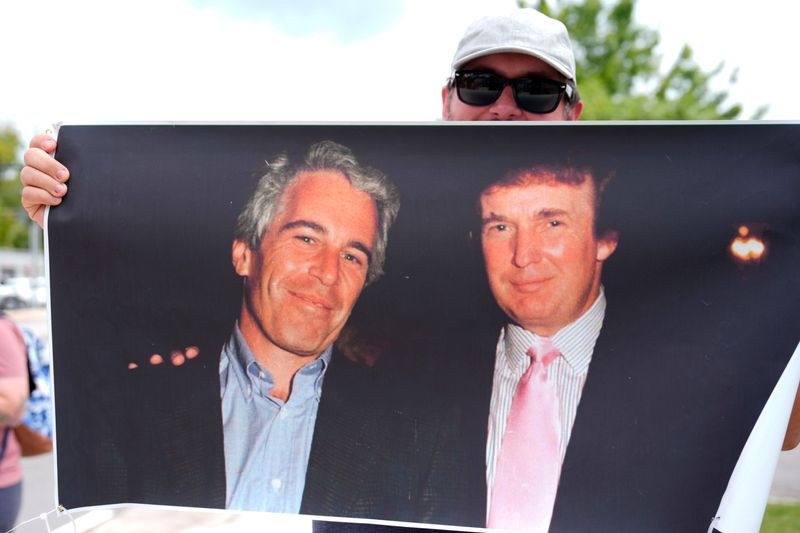
A protester holds up a photo of Donald Trump with financier Jeffrey Epstein at a rally in Augusta, Ga., in August.
Despite Trump’s denials, he and Epstein were once good friends, part of an elite cadre that included financial titans and political leaders. There are videos and photos of them together, and Trump repeatedly flew on Epstein’s plane (known as “the Lolita Express”).
Even as he told Republicans to vote to release the files, Trump nonsensically railed that this was all a “Democrat Hoax perpetrated by Radical Left Lunatics.” He argued in the same breath that Republicans shouldn’t fall into the “Epstein trap,” which was “actually a curse on the Democrats, not us.”
Only the full release of the files may reveal why the president has been so reluctant to act on a promise he made to his supporters. Why he has pressured his party so effectively that a vote on the House bill had to be forced upon Republican leadership. As this board has asked before: What are they hiding? Who are they protecting?
Unfortunately, the American people cannot fully trust those in charge of the files. Attorney General Pam Bondi and FBI Director Kash Patel have shown that they value loyalty to Trump above all else, including going after the president’s political enemies regardless of any evidence.
Congress must ensure that both fully discharge their duties and release all required information, regardless of who is embarrassed or implicated.
Justice — and, at least for now, the president — demands it.
I was saddened to read the article about the possibility of Lower Merion High School and Harriton High School merging their football programs because of declining enrollment. I remember when Lower Merion was the “powerhouse” when it came to football. My late sister, my brother, and I all attended Lower Merion (Classes of ’56, ’59, and ’61, respectively), and the greatest football rivalry on the Main Line was the last game of the season between Lower Merion and Radnor High School. The local newspapers covered it extensively. Our school had all kinds of placards and decorations up in the school, with the slogan “Beat Radnor,” during the week leading up to the big game. The night before the game, all the students and the coaches had a pre-victory celebration around a bonfire on the football field. The legendary John “Fritz” Brennan was the coach of Lower Merion, and what a successful career he had. His football team went undefeated for 32 straight games, between the years 1952 and 1957, and had only a few losses in the following years when I graduated. A statue of Brennan was placed near the entrance to Arnold Field, which, by the way, was named after Gen. Henry “Hap” Arnold, a graduate of Lower Merion and the only officer to hold the rank of a five-star general in both the Army and Air Force. Today, very few students even attend the games.
Paul Benedict,Broomall
Insurance is a blessing
No one is happy to see another person hurt. But if they have to deal with an injury, it is truly a blessing to have health insurance.
So while I was sorry to hear Sen. John Fetterman was hospitalized after his recent fall, I thought it was great he had insurance that allowed him to stay in the hospital a few extra days while doctors adjusted his medication regimen. I also couldn’t shake the sense of irony here: It seems grossly unfair that this man, one of eight senators who caved on the Democrats’ demand to save healthcare subsidies in the budget resolution, is able to receive the best of hospital care through his own elite insurance — even after he surrendered in the fight for affordable healthcare for his fellow Americans.
Mardys Leeper, Bryn Mawr
Keep the same energy
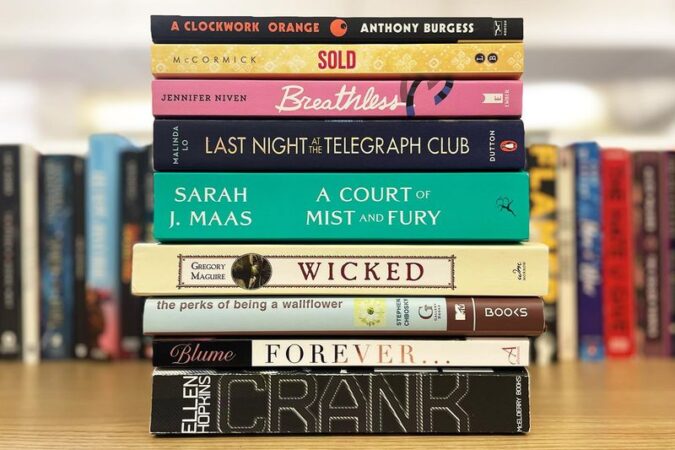
Recent reporting on the Cherry Hill School District’s internal memo about potential limits on student library books fit a pattern we’ve seen across the country. Few issues galvanize public outrage today like the prospect of “banned books,” and for good reason. Access to a wide, diverse range of literature is essential for a healthy democracy and for our children’s moral and intellectual development.
But there is a quieter crisis hiding behind the headlines.
While communities pack meetings and flood social media over which books might be restricted, there is comparatively little uproar over how few of our children can read fluently and confidently at all. Proficiency scores in reading are abysmal in many districts nationwide. That reality should trouble us at least as much as any debate over a handful of contested titles.
Our students deserve both: school libraries that offer rich, inclusive collections and sustained investment in high-quality reading instruction, tutoring, and early intervention. If we’re going to show up in force over schoolbooks, we should also be showing up over reading outcomes.
By all means, let’s protect our students’ right to read widely. But we should be just as passionate about ensuring they are able to read anything on the shelf in the first place.
Brandon McNeice, head of school and CEO, Cornerstone Christian Academy, Philadelphia
Join the conversation: Send letters to letters@inquirer.com. Limit length to 150 words and include home address and day and evening phone number. Letters run in The Inquirer six days a week on the editorial pages and online.
This metaphorical Epstein Island — people sending, or featured in, the emails of the late disgraced financier and sex fiend Jeffrey Epstein, released last week by a House committee — is kind of like TV’s Gilligan’s Island … if everyone had a truckload more money than Thurston Howell III, and was also a lot dumber.
Last week’s stunning document dump by the House Oversight Committee of Epstein’s emails, mostly from the 2010s, among 20,000 pages from his estate, can and should be viewed through several prisms. The main media focus has understandably beenon his leering close friend in the 1990s and 2000s, now-President Donald Trump, who is mentioned many times over. There’s arguably no “smoking gun” directly linking Trump to any specific act of sexual misconduct in Epstein’s lurid world, but more than enough innuendo that POTUS 45 and 47 “knew about the girls,” and possibly much more, to fuel a Watergate-level frenzy.
I don’t know if the emails, so far, are enough to take down Trump, but the president should be even more worried — and he probably is — about the much deeper rot that’s already been laid bare about the entire decrepit class of men (because they’re almost all men) who rule the world with atrocious grammar amid a nonstop booty call.
The QAnon folks were almost there! These emails prove there really is a global cabal of the world’s most powerful and wealthy elites, linked to the most repulsive child sex trafficking operation we know about. No, it doesn’t involve pizzeria basements or blood-drinking rituals — at least as far as we know so far. But these missives do reveal the evil banality of the world’s most rich and famous, whose vast pursuit of money or teenaged blondes or whatever knew no bounds, or, at long last, any sense of decency.
This is cool. COURIER has created a searchable database with all 20,000 of the files just released from Epstein’s estate.
Trump's name appears in them more than anyone else, in 1,628 documents.https://t.co/EAqRoi5zN2
The Nation’s Jeet Heer nailed it when he wrote after the email dump that the Epstein scandal “has always been a scandal about the ruling class as a whole, not one individual or political party,” adding that “Epstein trafficked not just in the bodies of the children he abused but also in social connections that could bring elites together.”
And ignorance is no defense. By the 2000s, the murky but wildly rich financier’s predilection for underage girls was hardly a secret. In 2008, in a sweetheart deal, he pleaded guilty in Florida to a charge of procuring a 17-year-old girl for prostitution, but prosecutors had evidence linking him to about three dozen other girls, including some as young as 13. And yet, most of the emails from powerful people released by the committee came after those revelations, up through his 2019 second indictment and his death in a federal jail in Manhattan under mysterious circumstances.
Some of the most telling exchanges are not the more than 1,000 emails from Epstein, his convicted partner-in-crime Ghislaine Maxwell, or their pals that mention Trump (who, wisely for him, never learned to use email), but involve Epstein’s misogyny-soaked friendship with Larry Summers, the former U.S. Treasury secretary and Harvard president.
Summers had lost that plum Ivy League post in 2006, in good measure because of a speech in which he’d questioned the intellect of top female scientists. During the 2010s, when the Obama administration or cable TV wasn’t still treating him as an economic seer, the married Summers turned to this convicted sex trafficker for advice on how to hit on a younger, attractive protégée, or just to commiserate.
“I’m trying to figure why [the] American elite think if u murder your baby by beating and abandonment it must be irrelevant to your admission to Harvard,” Summers wrote Epstein in 2017, referring to this episode at the school. “But hit on a few women 10 years ago and can’t work at a network or think tank. DO NOT REPEAT THIS INSIGHT.”
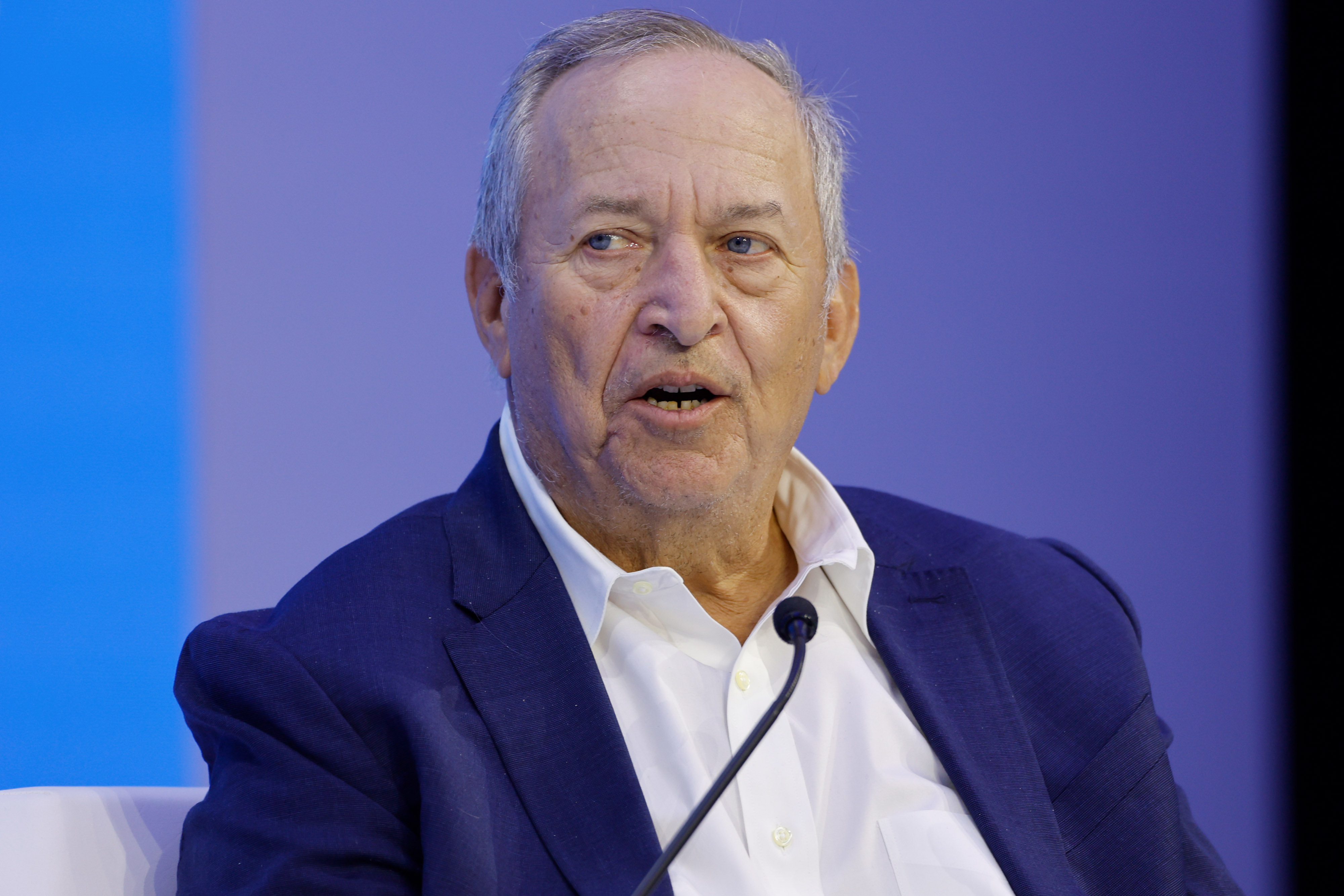
Larry Summers, president emeritus and professor at Harvard University, during a panel session at the World Economic Forum in Davos, Switzerland, in January 2023.
You may remember that 2017, the first year of Trump’s first presidency, is when the #MeToo movement against male sexual harassment and misconduct exploded. That email from Summers is one of the very few that even alludes to the social upheavals of the tumultuous 2010s that also included Occupy Wall Street, the tea party, Black Lives Matter, and other movements targeting privilege and inequity. Most of this prattle is instead just rich dudes talking about how to get themselves richer … or just how to get off.
Still, as Heer captures in his analysis for the Nation, the thought-to-be-secret communications of the elites increasingly involved enhanced security for the 1 Percent and ways to silence protests as that decade devolved, including scheming with the former Israeli prime minister, Ehud Barak, about launching a cybersecurity start-up. The world’s shrewdest investors knew the pitchfork bubble was coming before you did.
In the six years since Epstein was found dead, however, it has been the political backlash his email correspondents, like the Silicon Valley billionaire Peter Thiel, have heavily funded that has advanced while warding off the revolution. This was the ultimate goal of this sordid chat group: to desperately cling to their dying hierarchies around patriarchy and white supremacy, and to portray the #MeToo movement as going too far, when it’s obvious it didn’t go nearly far enough. It was during those fraught years that they stumbled into the perfect avatar in the unlikely Trump presidency.
Now, it’s a headline that Trump “knew about the girls,” but, of course, he knew about the girls. They all knew about the girls, and every Thiel and Summers and the con artist formerly known as Prince Andrew knew they’d bought more security with a U.S. president who shared their “wonderful secret.”
🚨 HAPPENING NOW: Massive anti-Trump protest outside the White House as protesters demand the resignation of President Trump following the release of Epstein emails. pic.twitter.com/7b55gvvEtx
It starts to make sense that Team Trump even deployed the White House Situation Room to fight a congressional vote for a wider release of the Epstein files, as if these secrets were a nuclear bomb headed for Chicago. To be sure, this all-out war against disclosure — along with Trump’s bizarre order for the U.S. Department of Justice to investigate only Democrats mentioned in the letters — might be to hide that Trump did more with Epstein’s bevy of young girls than just “know about” them.
But on some level, Trump’s White House must also realize that the Epstein file is the Jenga piece that brings the whole thing crashing down — the end of America, or, more to the point, the version of America getting financially drained, sexually abused, and basically ruined by all the people getting emails from jeevacation@gmail.com.
The timing couldn’t be better, or worse, for this midnight of the elites. The overblown stock market fueled by an AI hallucination is set to burst any moment, and new hiring is already grinding to a halt — just as the price of everything from steak to coffee goes through the roof, and health insurance is doubling or tripling for millions of Americans. When this perfect storm strikes, an electoral bloodbath in the 2026 midterms is the best outcome Trump can hope for, on a list of dire possibilities.
It’s no coincidence Trump is accelerating the pace of dictatorship, not because he’s at the peak of power, but because he knows he’s running out of time. Thus, the wag-the-dog war drums off Venezuela are pounding louder, and the muck of naked corruption — from Swiss gold bars to real estate deals with the murderous Saudi prince — is getting filthier. All of it haunted by the ghost of Jeffrey Epstein.
There’s one other thing about the Epstein files I feel compelled to mention. I’m also in them — well, sort of. On Feb. 12, 2019, for reasons we’ll never know, Epstein emailed his ethically conflicted journalist pal Michael Wolff a column I’d just written, with the words “please note.”
The piece was tied to the recent arrest of another close friend, the New England Patriots owner Robert Kraft, for soliciting sex in strip mall massage parlors near Palm Beach, and the moral decay of Kraft and his Florida neighbors, Trump and Epstein. It came at a moment when Epstein and Wolff were talking about ways to use his inside knowledge about Trump as leverage when the walls of federal prosecution were closing in. Nine months later, Epstein was dead — weird coincidence.
In that column, I wrote, “Kraft’s embarrassing charges come at one of those rarest of moments — when everyday people are suddenly realizing who doesn’t have power in America, who does, and that something can be done about this.” If Epstein did, in fact, read the piece, he knew what was coming. Now Trump knows it, too — and America will never be the same. FEEL FREE TO REPEAT THIS INSIGHT.
Thirty years ago next February, the world’s first high-profile competition between human and machine intelligence took place in Philadelphia.
IBM’s Deep Blue supercomputer faced world chess champion Garry Kasparov at the still-new Pennsylvania Convention Center. It was timed with the 50th anniversary of the unveiling at the University of Pennsylvania of ENIAC, the world’s first supercomputer, and a reminder that Philadelphia once led the world into the computer age.
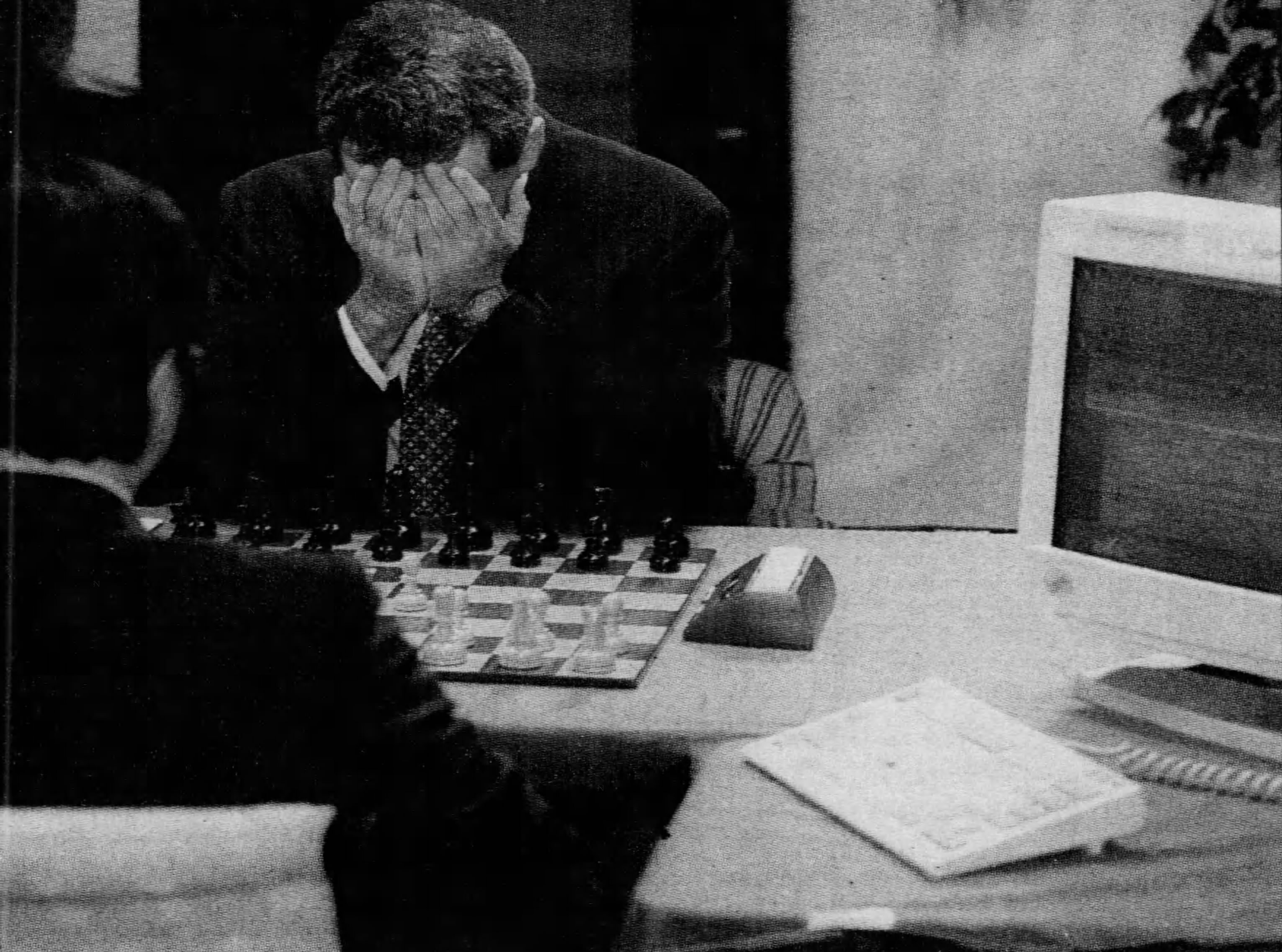
Russian chess grandmaster Garry Kasparov, hunched over a chessboard and holding his furrowed brow in his hands, competes against the supercomputer Deep Blue in February 1996.
Back then, artificial intelligence felt distant. Today, it feels existential.
As we prepare to host the nation’s 250th anniversary in 2026, I’ve been asking: In a city so rich in history, are we still interested in the future?
How it started
This spark began in 2023, during a reporting project on economic mobility called Thriving that Technical.ly — the news organization I founded and lead — published with support from the William Penn Foundation, the Pew Charitable Trusts, and the Knight Foundation. Our newsroom followed 10 Philadelphians for a year to produce an award-winning audio-documentary and hosted a dozen focus groups across the city.
One Brewerytown resident said something that inspired a previous op-ed I wrote for this paper: “Leaders here talk a lot about hundreds of years in the past, but nobody is looking very far in the future.”
Across this region — in boardrooms, nonprofits, universities, and regional corporate offices — too many leaders manage the wealth and institutions created by past entrepreneurs, but too rarely invent anything new. We fight over what exists instead of building what’s next.
The Semiquincentennial is our chance to prove we can balance our past, present, and future.
Why this matters now
My career has been spent listening to and challenging the inventors, entrepreneurs, and civic leaders shaping tomorrow’s economy. They act while others analyze.
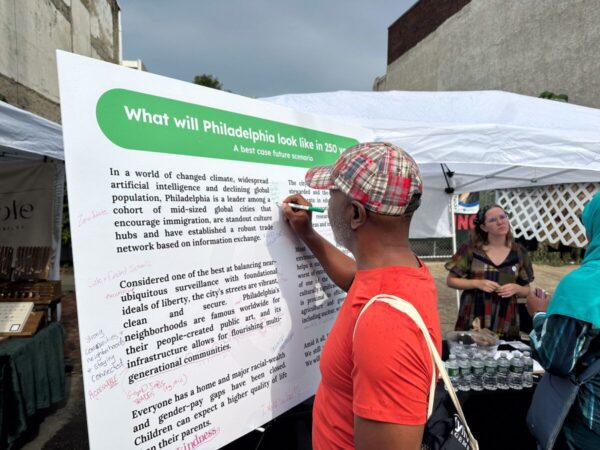
In that spirit, we spent two years developing a vision for Philadelphia 250 years in the future. Nearly 1,000 Philadelphians have shared ideas at festivals, community events, and small-group gatherings. The current draft, open for one final round of feedback at Ph.ly, isn’t a plan but an invitation — a shared view of what we wish for our descendants in 2276.
The coming decades could bring population decline, climate strain, and sweeping technological change. Yet, many local leaders still struggle to plan even years ahead.
During a recent private discussion I moderated inside one of our city’s impressively preserved old buildings, a longtime civic leader cited Philadelphia’s poor economic mobility ranking. I reminded him that the same research, with the same warning, was released a decade ago. Why didn’t we plan to make changes then?
He assured me this time would be different.
Philadelphia’s past points forward
Philadelphia’s breakthroughs have nearly always come from outsiders who pushed past local gatekeepers.
Stephen Girard, a French immigrant dismissed by elites, built a shipping and banking fortune, stabilized the nation’s finances, and endowed Girard College.
The Drexel family’s daring banking experiments helped fuel the Industrial Revolution before founding the school for engineers.
Albert Barnes saw beauty where Philadelphia’s art establishment did not.
ENIAC’s inventors, John Mauchly and Presper Eckert, were a little-known physics professor and a 24-year-old grad student whose entrepreneurial efforts were blocked locally, presaging Silicon Valley.
Katalin Karikó and Drew Weissman attend a news conference at the University of Pennsylvania in October 2023, after they were named winners of the 2023 Nobel Prize in physiology or medicine for their work on messenger RNA, a key component of COVID-19 vaccines.
Most recently and famously, Nobel laureate Katalin Karikó’s mRNA research that led to the rapid-fast, lifesaving COVID-19 vaccine response was commercialized in Boston, not here.
The pattern is clear: Visionaries choose to live in Philadelphia, yet often get ignored, if not outright blocked, by local institutions. That’s no way to secure the next 250 years.
There are signals of change.
I take inspiration from bold efforts to build, including the Delaware waterfront and the cap of I-95. In the 2010s, Philadelphia’s technology sector earned initial, if timid, attention from successive mayoral administrations and civic leadership — and a half dozen tech unicorns were born.
That tech community helped inform this multiyear vision statement project, which received $75,000 from a funders collaborative activating Semiquincentennial efforts, including the William Penn and Connelly Foundations. The city’s 2026 planning director, Michael Newmius, has been supportive, urging us to listen to residents and avoid undue filtering.
Over two years, we’ve tabled at community events, hosted discussions, and led working sessions. The result isn’t mealymouthed or filtered by incumbency; it has grit and humanity — like Philadelphia itself.
You can read the draft vision at Ph.ly and in the article box in this op-ed. We’re collecting one final round of feedback this fall, and we’ll incorporate what we can. We’re accepting feedback until Dec. 1.
From conversation to commitment
Our goal is to enshrine the final version of this statement on a physical plaque at a prominent location in the city. We’ll also host a digital version online, paired with voices from residents across the region.
This vision doesn’t prescribe policy, nor make fallible predictions; instead, it offers a shared aspiration, a framework that future leaders can measure their plans against.
In its early drafts, the statement imagined a green-energy Philadelphia with climate-adaptive agriculture, abundant public art, thriving multigenerational neighborhoods, and a culture that “exports ideas and imports opportunity.”
Over subsequent versions, the specifics were removed to reflect the long time horizon, but the spirit remains: Philadelphia must keep people — not technology, not incumbency — at the center of our future.
The Semiquincentennial should celebrate our history — I personally cherish it. I was a historic Old City tour guide for a year, and my daily bicycle commute to the Technical.ly newsroom past Independence Hall reminds me what endurance looks like.
But if we only admire our past, we’ve missed its key lesson. Philadelphia is strongest when we pair cobblestones with invention’s spark.
Read the vision at Ph.ly. Critique it, add to it, make it better. May it inspire Philadelphians for generations to keep building, not just preserving.
The Kasparov-Deep Blue rivalry is remembered as the moment a machine beat a human genius. But that was the rematch. The first contest — the one held here in Philadelphia — ended with the human winning. Let’s make sure that’s still true for our city.
Christopher Wink is the publisher and cofounder of the news organization Technical.ly.
Talk to most nonprofit chief executives, and they’ll be able, on cue, to recite a heartwarming story about someone their organizations helped.
And the Rev. Luis Cortés Jr., Esperanza’s founder and chief executive, can do it, too.
But he’d rather talk about a sin he committed as a little boy — a sin that impacted his thinking for a lifetime and allowed him to understand how to build a $111.6 million organization with 800 employees that educates, develops, uplifts, and houses 35,000 people a year in the heart of North Philadelphia’s predominantly Hispanic Hunting Park neighborhood.
When Cortés was 12, he stole a Snickers candy bar from the bodega his father owned in New York City’s Spanish Harlem.
Oh, his father figured it out, and quickly, too, because he began to ask little Luis some important questions:
Did the 12-year-old know how many Snickers bars the bodega would have to sell to break even — not only on the box of Snickers, but on the taxes and utilities for the entire store? More importantly, how many Snickers bars would be required to turn a profit — a profit that could be reinvested?
“You need to understand finance, whether it’s a box of Snickers or a multimillion-dollar bond to build a school. Where is the money coming from, and what’s the repayment structure?” Cortés said.
Outside, as he spoke, a crane moved materials in what will soon become a new culinary school.
“Understanding finance is important, and understanding culture is important, and you have to understand the relationship between the two.”
So, yes, Cortés can and did tell the story about the mother who came to Esperanza to learn English skills, who got help to get a job and a house, who sent her daughter to Esperanza’s charter school and to Esperanza’s college, and now that same daughter is getting a house thanks to Esperanza’s mortgage counseling help.
Students Jayliani Casioano, Oryulie Andujar, Derek Medina, and Natalia Kukulski use an interactve anatomy table. The students are members of is the Health Occupations Students of America (HOSA).
All good. But this is what Cortés really wants people to know:
“If people trust us with their funds,” he said, “we’re putting the money into institutions, and institutions build culture.”
That’s why Esperanza has a K-12 charter school, a cyber school, a two-year college that’s a branch campus of Eastern University, a 320-seat theater, an art gallery, computer labs, an immigration law practice, a neighborhood revitalization office, a CareerLink office for workforce development and job placement, a music program, a youth leadership institute, housing and benefit assistance, and a state-of-the-art broadcasting facility.
Cortés even likes to brag about the basketball court. “Three inches of concrete, maple wood flooring, fiberglass backboards — NBA standards.”
“Think about Paoli. It has a hospital, a public school, a theater. Paoli has all of that, and it’s understood that that’s the quality of life. We have to have access to those same things at a different price point,” he said. “Notice I didn’t say different quality. I said different price point.
“We want to create an opportunity community, where people can have a good life — with arts, housing, healthcare, financial literacy, education, all those pieces — regardless of your family income,” he said.
“What’s important here and what’s different is that in all our places, all our facilities are first class,” Cortés said.
“I grew up in a low-income community where people were always telling you to step up, but step up to what?” he asked. “Where is the vision? What is possible to even have? How can anyone know unless they can see it?”
So, when people from the community visit Esperanza, “you can see that you can have the best facilities with state-of-the-art equipment. As a provider of services, we have to step up,” he said, in turn always giving people the tools and resources they need to step up.
For example, on Citizenship Day, Sept. 20, Anu Thomas, an attorney and executive director of Esperanza’s Immigration Legal Services, trained a dozen volunteer lawyers and law students on the fine points and recent pitfalls in the process of applying for citizenship.
Soon, the room was crowded with people coming for help.
Watching from the sidelines was Charlie Ellison, executive director of the city’s Office of Immigrant Affairs, who noted that an estimated 60,000 legal residents of Philadelphia are eligible to apply for citizenship.
“Clinics like these are critically important to helping people who might be facing barriers,” including the cost of getting legal help. “This bridges a lot of gaps. It’s a vital mission, now more than ever,” he said.
For Neury “Tito” Caba, a men’s fashion designer, tailor, and director of green space at Historic Fair Hill, citizenship help from Esperanza was a family affair. Through Esperanza, he, his grandmother, and his mother all became citizens.
“Now I can vote, and that’s the most positive thing I can do,” he said. “And also, things being the way they are, it gives me some sort of protection.”
Fashion designer Neury “Tito” Caba talks about his citizenship experience at Esperanza.
Earlier this fall at Esperanza’s CareerLink branch, counselor Sylvia Carabillo helped Luis Rubio on the computer. He was trying to extend his unemployment benefits and looking for a job as a security guard. Agueda Mojica was being tutored in Esperanza’s most popular workforce class: Introduction to Computers.
“I want to become more independent to be able to do anything on a computer,” she said in Spanish, speaking through a translator. “I was always working and never had time to learn.”
Much of Esperanza’s staff is bilingual in Spanish, but to help people from the neighborhood, Esperanza also hired counselors who speak Ukrainian and Kreyòl for Haitians who live nearby.
In Esperanza College classrooms a few weeks ago, Esperanza Academy high schoolers enrolled as college students had just finished a chemistry exam. When they graduate from high school, they’ll already have associate degrees on their résumés.
For them, Esperanza represents a future.
There’s Oryulie Andujar, 18, who wants to study sonography because an ultrasound technician found a cyst in her mother’s uterus. “We could have lost her. That was very impactful for me.”
Jayliani Casiano, 17, wants to go into anesthesiology. The oldest of seven, she witnessed her mother giving birth to several younger siblings. “She was in a lot of pain. It was interesting. I want to do everything after seeing her through that process.”
Derek Medina, 18, said the opportunity to go to college “made me rethink my whole life.” He had been getting into trouble in school, but now wants to combine a love of mathematics and a desire to help people by going into the field of biomedical engineering.
Recently, on Nov. 14, Esperanza College hosted its Ninth Annual Minorities in Health Sciences Symposium, designed to acquaint high schoolers with medical careers.
Construction will soon begin to convert a former warehouse space into a center to teach welding and HVAC in an apprenticeship program.
Next month, it’ll be time for “Christmas En El Barrio” with music, food, and community in Teatro Esperanza — admission is free. In January, the Philadelphia Ballet will perform there. Tickets are $15 and free for senior citizens and students.
“My worst seat — in Row 13 — would be $250 at the Academy of Music,” Cortés said. He wants to offer the arts at a price and a time available to a mother of three, who may not be able to afford even the cheapest seats in downtown venues, plus bus fare, “and heaven forbid the child wants a soda,” Cortés said.
All this adds up to culture, which brings him back to the Snickers bar, and not just breaking even, but investing.
Other groups, Cortés said, had to build their own institutions when mainstream organizations put up barriers. Howard University helped Black people, Brandeis served Jewish people, and Notre Dame provided education to the Irish.
Building an institution is his investment goal with Esperanza, and he takes as his mentors famous Philadelphia pastors such as the Rev. Leon Sullivan, who founded Progress Plaza in North Philadelphia, and the Rev. Russell Conwell, the Baptist minister who founded Temple University.
“Philadelphia has a tradition that its clergy don’t just do clergy things,” he said, admitting that he doesn’t have the patience for a more traditional pastor’s role. “As clergy here, it’s understood that we snoop around everything.”
Cities sometimes brag that their poverty rates have declined, he said, when in reality, rates have declined because people with low incomes were forced to move away.
Philadelphia, he said, has a chance to be different — to lower the poverty level both by raising people’s incomes and improving their standards of living. “There should be Esperanzas in every neighborhood,” he said.
“How can we focus on helping the people who just need a break?” Cortés said, referencing Jesus’ admonishment to “help the least of these.”
“This city has the opportunity to make this a win-win,” he said, “to show the rest of the country and Washington, D.C. — especially Washington, D.C. — that people who are different, and people who are `the other’ can be supported, so that they are not only part of the fabric of the city, but economic drivers of the city.”
This article is part of a series about Philly Gives — a community fund to support nonprofits through end-of-year giving. To learn more about Philly Gives, including how to donate, visit phillygives.org.
For more information about Philly Gives, including how to donate, visit phillygives.org.
AboutEsperanza
People Served: 35,000
Annual Spending: $111.6 million across all divisions
Point of Pride: Esperanza empowers clients to transform their lives and their community through a diverse array of programs, including K-14 education, job training and placement, neighborhood revitalization and greening, housing and financial counseling, immigration legal services, arts programming, and more.
You Can Help: Esperanza welcomes volunteers for community cleanups, plantings, and other neighborhood events. Some programs also need volunteers with specific skills (lawyers, translators, etc.).
$25 covers the cost of one private music lesson for a young student through our Artístas y Músicos Latinoamericanos program.
$50 provides printing and distribution of 30 “Know Your Rights” brochures to immigrant families.
$100 pays for five hours of training for a new mentor fellow at the Esperanza Arts Center, preparing a young person for a career in arts production through hands-on learning.
$275 funds the planting of one street tree in a neighborhood that desperately needs additional tree cover to address extreme heat.
$350 covers tuition and books for one English as a second language student at the Esperanza English Institute.
$550 supports the cost of the initial work authorization for an asylum-seeker.
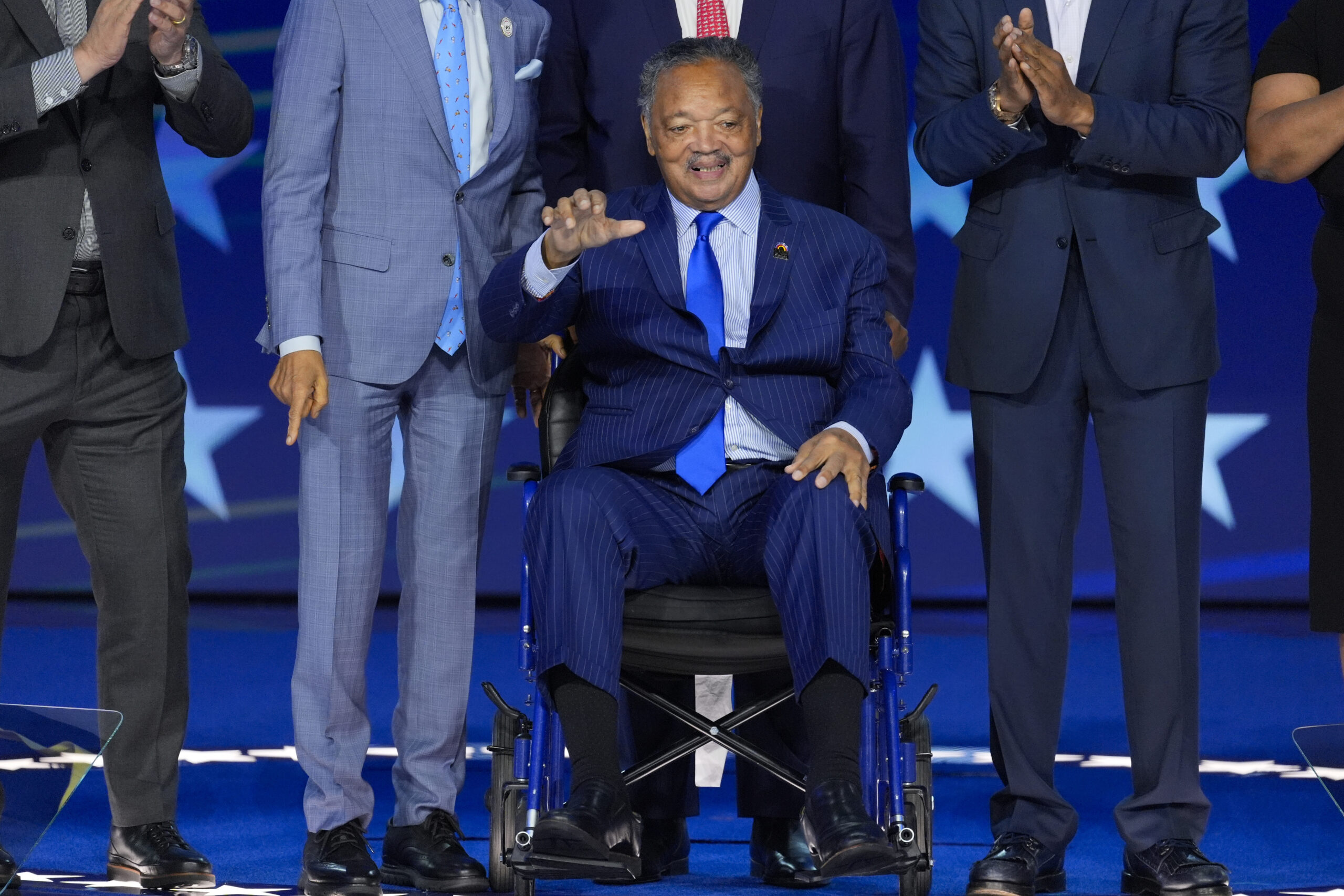
Editor’s Note: This column originally appeared in The Inquirer in November. On Tuesday, the Rev. Jesse Jackson Sr. died at his home in Chicago.
One of the first articles I wrote for my college paper was about PUSH, the organization founded by the Rev. Jesse Jackson Sr. — People United to Save Humanity.
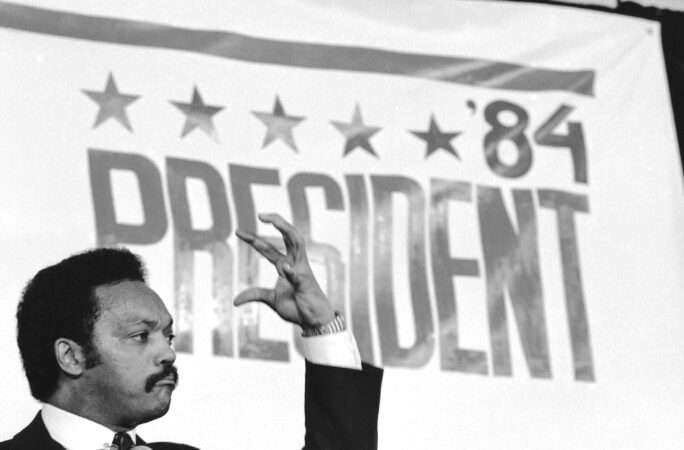
When the civil rights leader arrived in Washington, D.C., for a presidential campaign rally on the National Mall, I was there. It was electrifying. I remember listening as he called for Americans to unite across racial, gender, and class lines, and become part of his Rainbow Coalition. Looking back, it was a message that would resonate even today. But America wasn’t ready.
Four years later, he was back on the presidential campaign trail, urging his followers to “keep hope alive.” That time around, he tripled his share of white voters in the Democratic primaries, finishing second to then-Massachusetts Gov. Michael Dukakis. He also pushed the Democratic Party to institute reforms. But once again, America wasn’t ready.
Although Jackson didn’t clinch the Democratic nomination that time, either, his efforts to become America’s first Black president set the stage for Barack Obama’s historic election.
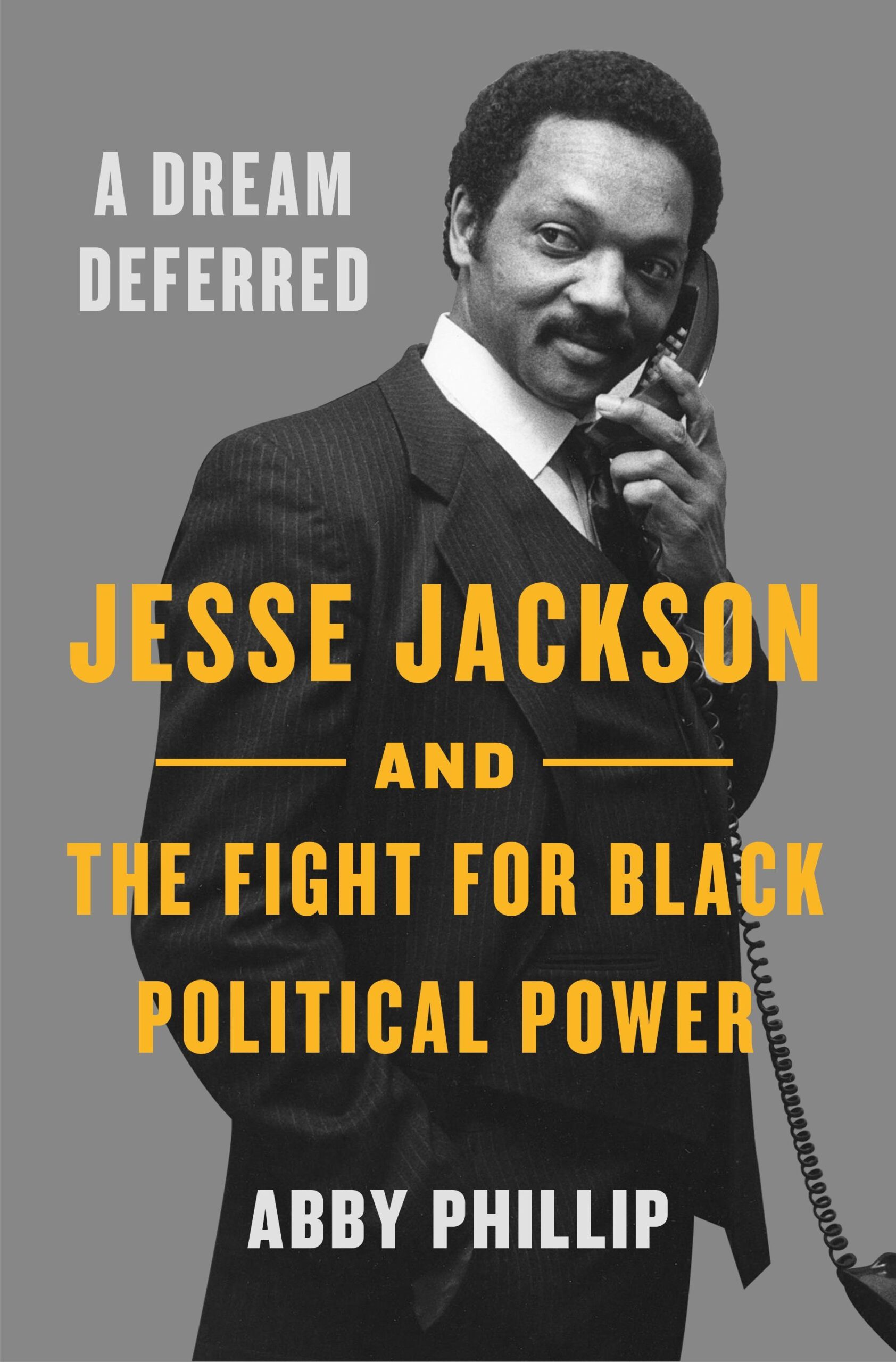
CNN anchor Abby Phillip explores the legacy of civil rights leader Jesse Jackson and its impact on American politics in her new book “Jesse Jackson and the Fight for Black Political Power.”
In 1988, the same year Jackson launched his second presidential bid, CNN anchor Abby Phillip had just been born. I doubt her parents ever dreamed that one day their baby girl would go on to write a seminal tome about Jackson, who at the time wasone of the best-known political figures.
Published last month, A Dream Deferred: Jesse Jackson and the Fight for Black Political Powertakes readers through Jackson’s impoverished childhood as the son of a single mother in the Jim Crow South, to his days in the civil rights movement with the late Rev. Dr. Martin Luther King Jr., and through his historic campaigns for the presidency.
I read it last month while vacationing. When I reached the end, I turned the last page with a feeling of gratitude, not only for Jackson and his contributions to the cause of civil rights, but also for Phillip for making the time to write it. A graduate of Harvard University, she’s a media superstar, juggling the demands of motherhood with weeknights at the anchor desk and fact-checking the uber-annoying conservative commentator Scott Jennings, a frequent cohost on her show. If Phillip, 36, had chosen to pass on this considerable undertaking, it would have been understandable.
Instead, she stuck with it through the COVID-19 pandemic, the launch of her first show, Inside Politics Sunday, the 2021 birth of her daughter, a move to New York City, and the creation of her current show, CNN NewsNight with Abby Phillip. The reporting and writing took almost four years to complete, and was somewhat of a race against time.
“One of the impetuses for writing this book was just a recognition that in order to really get to the truth of a lot of these stories, you really have to get it from the people who were there,” Phillip told me when we spoke last week. “It was important for me to try to reach those people while they are still with us, including Rev. Jackson, and a lot of his aides and staffers and so on and try to get those stories.”
A new book written by CNN anchor Abby Phillip explores the legacy of civil rights leader Jesse Jackson and its impact on American politics.
Doctors diagnosed Jackson, now 84, with Parkinson’s disease in 2017. Two years ago, he stepped down as the leader of the Rainbow-PUSH Coalition, which he had led for roughly half a century.
Since his speech is impaired by the disease, Phillip found it easier to understand him in person and traveled to his home in Chicago for interviews. The CNN anchor also went with him to his hometown in Greenville, S.C.
“I really got to know his world, and I’m grateful that they trusted me to do my job,” Phillip said.
The Rev. Jesse Jackson waves during the 2024 Democratic National Convention in Chicago.
Much of the book focuses on Jackson’s presidential campaigns. “This is a major point of pride for him,” Phillip said. “His political campaigns, I think he really sees them as an essential part of his legacy. I do think that there was a sense that they were always underplayed or misunderstood.”
So many of his accomplishments slip deeper into the recesses of our minds with each passing year. He organized voter registration drives that helped elect Chicago’s first Black mayor, Harold Washington, in 1983, and negotiated with Syria for the successful release of Navy Lt. Robert Goodman. He pushed for changes in how delegates were allotted in the Democratic Party.
President Donald Trump wants to whitewash American history, as evidenced by his call to sanitize the history of Black people in America. In light of this, it’s more important than ever to preserve these stories. Phillip’s goal in writing the Jackson book, she told me, “was to make sure that this chapter didn’t get lost to history.”
Thanks to her dedication, persistence, and brilliance, it won’t.
Pennsylvania has an opportunity to lead the nation in righting a long-standing wrong in our housing laws.
A group of legislators has introduced the PA Fair Future Act — landmark legislation that would end the state’s enforcement of one of the most damaging and overlooked barriers to housing: the Thurmond Amendment.
Enacted in 1988 during the height of the war on drugs, the Thurmond Amendment allows landlords and property sellers to deny housing solely on the basis of a drug distribution conviction — regardless of how long ago it occurred, the person’s current circumstances, or how much they’ve rebuilt their lives.
Imagine making a mistake as a teenager or young adult — getting caught up in drugs, serving your sentence, and spending years working hard to turn your life around.
Despite holding a steady job, maintaining good credit, and having a clean rental history, you still find yourself legally locked out of housing because of a decades-old conviction.
Some landlords won’t return your calls. Others reject your application outright, no questions asked.
That’s the reality for thousands of Pennsylvanians.
Take the case of Jonathon Jacobs, who was convicted of marijuana distribution when he was 19. For years, Jacobs faced rejection in the housing market or was forced to pay exorbitant security deposits because of his record.
His punishment didn’t end with his sentence — it extended into every aspect of his life, including his ability to provide stable housing for his family.
Ironically, had Jacobs been convicted of a violent crime, he would not be facing this same legal barrier.
In 2016, the Department of Housing and Urban Development (HUD) issued guidanceurging housing providers to consider criminal records in context — taking into account factors like rental, credit, and employment history.
But the Thurmond Amendment creates an explicit carveout: Anyone with a drug distribution conviction is excluded from these protections. It’s a loophole that leaves people like Jacobs permanently locked out of fair housing opportunities.
The law’s impact in Pennsylvania is staggering.
Since 1988, over 80,000 Pennsylvanians have been convicted of drug distribution offenses — many for small amounts. In fact, the most frequently charged amount is less than 1 gram, barely more than a sugar packet.
In 2022, the U.S. House voted to help roll back the war on drugs that as proportionately targeted people of color.
Had many of these cases occurred in today’s legal and political environment, they likely would have been charged as simple possession, and those convicted would have retained their housing rights.
These aren’t major traffickers being excluded from housing; they’re mostly people punished for low-level mistakes, often made in their youth, that carry lifetime consequences.
Black Pennsylvanians are five times more likely than white residents to receive a distribution conviction.
By denying housing based on old records, the Thurmond Amendment reinforces systemic racial disparities and perpetuates cycles of poverty, incarceration, and family instability — all without contributing to public safety.
Thankfully, there’s a path forward.
While federal efforts to repeal the Thurmond Amendment continue, as our governor is fond of saying, “We’re getting stuff done here in Pennsylvania.”
State Rep. Josh Siegel has introduced legislation in Harrisburg to repeal the amendment’s effect at the state level, restoring fair housing protections to those with drug distribution convictions.
House Bill 1492 passed committee on Monday, Sept. 29 and is expected to come to the House floor in the coming weeks.
This is an opportunity for Pennsylvania to lead. It’s a chance to affirm that people should be judged not by their past, but by whom they are today.
Stable housing isn’t just a second chance; it’s the first step toward a better life. Let’s make it accessible to everyone.
Anjelica D. Sanders is a policy advisor and community reporter focused on public health and policy.Yusuf Dahl is CEO of The Century Promise and founder of the Real Estate Lab in Allentown, Pa.
There’s a military saying that “piss-poor planning means piss-poor execution.”
Unfortunately, the execution of how the Trump administration is using America’s military to conduct its counter-drug operations in the Caribbean Sea has had poor planning.
First, 100% of fentanyl comes across the U.S.-Mexican land border — usually carried by U.S. citizens — while almost three-quarters of U.S.-bound cocaine sails via the Pacific Ocean.
The residual cocaine begins a Caribbean transit, but only 3% is en route to our water borders. Most sail to Central America or Mexico for land transport to America. The first five small vessels our military has struck, killing 32, were in the transit zone for cocaine destined not to the United States, but for islands that forward it to Europe and West Africa.
As a result, the administration’s current approach in the Caribbean makes any meaningful interdiction of drugs headed to America unlikely in what is an already tough hunting ground: 100,000 or more vessels — including unregistered or unbeaconed watercraft — are normally at sea in the Caribbean. I experienced this vast challenge while supporting a U.S. Coast Guard Law Enforcement Detachment (LEDET) onboard my ship, understanding why the Coast Guard’s interdiction rate hovers between 7%-15%.
Moreover, drug cartels recruit vulnerable U.S. citizens to be the primary “mules” for fentanyl because they are less likely to be inspected at legal U.S. border crossings. That is where substantial interdiction must occur if the administration is serious about stopping drugs from coming to the United States.
Similarly, the cartels elicit the impoverished — such as poor fishermen — to do their seaborne smuggling. Criminals? Yes. “Narco-terrorists”? According to the administration, yes, after President Donald Trump designated eight drug cartels as foreign terrorist organizations (FTOs).
Just as it did for al-Qaeda and ISIS, an FTO designation makes drug-runners and carriers “unlawful combatants” in a “Non-International Armed Conflict (NIAC).”
Also, like them, to be legally labeled as an FTO, the drug cartels must: 1) exhibit “politically motivated violence,” 2) execute a combination of frequent and/or severe hostilities, and 3) have an extensive command and control structure.
However, the administration’s two principal justifications for meeting these three criteria were the number of U.S. drug overdose deaths (80,000 last year) and that the cartels’ violent activities are undermining the stabilization of the Western Hemisphere.
The appropriateness of these justifications has consequences for military commanding officers: U.S. and international law forbid them to use deadly force against both American and international civilians. Operational officers go through rigorous training regarding this “principle of distinction.”
Moreover, since the Navy operates on the “public commons” of the seas, it issues the Commander’s Handbook on the Law of Naval Operations that makes it clear it is “manifestly illegal” to comply with “an order directing the murder of a civilian [or] a noncombatant.”
Adm. Alvin Holsey, commander of U.S. Southern Command overseeing the counter-drug interdictions, recently resigned, reportedly because he deemed the strikes as possibly illegal.
It’s unquestionably disconcerting to be given a new legal interpretation of “political violence” and “severe hostilities” that suddenly changes who has always been a “civilian” into a “combatant.”
It’s disquieting because it’s already tough “out there” in terms of ensuring wise judgment. For example, in 1988, a Navy cruiser in the Persian Gulf shot down an Iranian airliner with the loss of 290 civilians because it had mistaken it for a fighter plane in peacetime.
A few years later, as I entered the Strait of Hormuz, an Iranian warplane took off from a nearby airfield and headed for my ship. My crew was well-trained, with missiles ready if “hostile intent” was determined. It flew low overhead — the first time the Iranian military had done so — then continued on its way, much as Chinese warplanes have done.
If this is a hemispheric war — and not peacetime — Congress should constitutionally “declare war” rather than an abrupt renaming of civilian drug runners as “narco-terrorists.” Otherwise, the sudden denial of “civilian-ship” after years of legal and moral training places our military leaders’ judgment into its own legal and moral quandary.
This is especially pertinent coming after Defense Secretary Pete Hegseth’s recent admonition to senior military leadership that there should be “no more politically correct and overbearing rules of engagement, just common sense, maximum lethality and authority for warfighters.”
This followed the secretary’s removal of the head of each service’s Judge Advocate General’s Corps (the military’s legal branches), as well as his closure of the Civilian Protection Center of Excellence, established to minimize civilian casualties in military operations.
Finally, with a tenth of all deployed U.S. Navy combatant forces now dedicated to drug interdiction — a nuclear submarine, a three-ship amphibious ready group, and five surface combatants — there is a cost to warfare training. We should be focused on our responses to threats from sophisticated subs, missiles, ships, aircraft, and space — especially as coordination is jammed and cyberattacked within a carrier battle group of ships.
Losing this type of training has come when warfare readiness is already poor: 40% of the U.S. attack submarine fleet is out of commission for repairs — double the Navy’s target rate, overall amphibious ship readiness for war is just 41%, and while surface combatant readiness has risen, it is only 68%.
If, as reported, the less adept — although deadly — Caribbean operation is intended as a prelude to force Venezuelan President Nicolás Maduro from office, the American people should know why their military men and women are sailing in harm’s way.
Trust in a commander — or commander in chief — is the military’s most precious asset. And while trust might be the biggest deficit in politics, it is not in warfare.
How and why this Caribbean Sea operation is being conducted — either as a professional drug interdiction operation or as a prelude to an intervention in another country — has endangered this trust.
As the top operational commander’s resignation appears to confirm.
Joe Sestak is a former Navy vice admiral, a former U.S. representative for Pennsylvania’s 7th Congressional District on the House Armed Services Committee, and director for defense policy of the National Security Council staff.
When my family wanted to add a 700-square-foot addition to our ordinary existing home, we had to provide architectural plans, submit them to the local zoning board, and appear at a hearing to state why our plans conformed to local laws and adhered to the character of our neighborhood. President Donald Trump lives in a historic property loaned to him by the people of the United States for use as a temporary residence during his tenure in office. Yet, without any approvals, he is demolishing part of this borrowed home and permanently changing its character.
When Trump first floated the plan to add a 90,000-square-foot ballroom, he provided assurance that the White House footprint would not change. In August, Trump paved over the historic Rose Garden. This past Tuesday, Trump invited Republican senators to lunch at the new concrete “Rose Garden Club,” granting the senators a chance to bear witness to the bulldozers that — in the midst of a government shutdown — were plowing down Trump’s promise to preserve the East Wing. In the meantime, the National Trust for Historic Preservation haplessly was asking for time to review Trump’s architectural plans.
As average U.S. citizens, we are bound by rules and regulations and expected to be truthful. Our president lies about his intentions, openly defies historic preservation, demolishes part of our White House, and does so while thumbing his nose at the decent folks who are just trying to get by day by day.
In Trump World, there is no zoning board, and there are no guardrails. This is a snapshot of our new world order. What will the historians write?
P. Bookspan,Philadelphia
. . .
The East Wing of the White House, built in the 1940s, undoubtedly has asbestos and lead throughout. Were tests done, and remediation actions taken? Take a look at the records for other Donald Trump projects: Profits are more important than the health of workers and the community at large.
Victoria M. Gillen, Browns Mills
. . .
My heart broke seeing the clawlike machine tearing down the East Wing of the White House. Living in Hatfield Township, we had a similar issue about five years ago on a much smaller scale. The last farm in our township was sold. A demolition crew was hired by the new owner to remove the farmhouse. However, the demolition crew halted after the removal of siding exposed walls made of logs from the mid-1700s. After professional historians looked over the siding, they determined the house was one of the earliest structures in the township. After hundreds of people attended meetings concerning the house, it was decided to carefully take the farmhouse apart to be reassembled later at a different location. Unlike our little township, all I saw concerning our beloved People’s House was Donald Trump declaring that in no way would the White House be touched during the construction of his big beautiful ballroom. That could turn out to be a bigger lie than his saying he won in 2020.
Joseph Obelcz, Hatfield
. . .
Instead of destroying the People’s House to build a billionaire’s ballroom, Donald Trump should turn it into a soup kitchen for all the people who will no longer be receiving SNAP benefits.
Cheryl Rice,Erdenheim
Canadian comparisons
I very much appreciated Daniel Pearson’s column on Montreal and how it compares with Philadelphia. I have been to Montreal 11 times, and I have observed many of the same things: Centreville is the business center of Montreal, yet it has residential dwellings, retail, and other sorts of establishments, and therefore does not feel as hollow as some downtown areas in American cities. It is known for being very clean and orderly. Yet, everybody seems like they are relaxed and having a good time, even in this predominantly business district.
Montreal also has ethnic enclaves such as Chinatown, and it also has strong West African, Lebanese, Moroccan, and other communities. Some of these communities are long-established. Montreal’s Old City section by the St. Lawrence River equates to our Old City section. It’s an area of history and tourism woven into one. Montreal has some of the greatest educational establishments in the world, especially McGill University, which dominates a lot of the intellectual thought of the city. Where Montreal differs from Philadelphia is in its ability to keep extreme economic disparities at bay. Some neighborhoods are doing better than others, but you don’t have a sense of dread if you accidentally get off at the wrong Metro station. The subway trains have rubber tires and are quieter than our subway trains, plus the stations are kept in a presentable manner.
Women are very prominent in the civic life of Montreal. The misogyny and misandry that often infects our society aren’t prevalent there. Montreal does not have the tension with the provincial capital, Quebec City, that Philadelphia has with Harrisburg. Too often, I find that Philadelphia tries to learn from other American cities that are experiencing the same difficulties. With a similar layout and a similar population, Montreal might be a better example. Perhaps we need to start emulating a winning strategy. Let’s find out what they do correctly that can be replicated here.
David W. Wannop, Philadelphia
Filibuster, anyone?
The truth about the current shutdown is that the Republicans can end it without Democratic help at any time. All they need to do is change the Senate rules regarding the filibuster. They did this in September to get 48 of Donald Trump’s government nominees approved. To change the rules only requires 50 votes. The reason they won’t do it is that politically, they would rather blame the Democrats than negotiate with them. Democrats should hold firm and point this out next time John Thune and Mike Johnson try to blame them on TV. The opposition party that controls no part of the government is under no obligation to help the other party.
Warren Kruger, Abington
Too young to remember
From news articles, it appears many of the Donald Trump supporters are young people in their early 20s — too young to remember the terrible first Trump administration. Some perspective that may make some of us feel old: Today’s college seniors were in seventh grade when Trump was first elected nine years ago.
These youngsters are also way too young to know what it was like to fear polio and see your friends put in an iron lung. What a relief it was to have a polio vaccine. And what do these young people of today know of World War II and the fight to save the world from the fascism that had taken control of Germany and Italy? With few World War II veterans remaining, most young people will not have a grandfather or father who faced the horrors of fighting to save democracy.
When I was a youngster, it was required that I have several vaccinations (MMR — measles, mumps, rubella) in order to attend school. My parents did not question this policy — they accepted it as a measure to keep their children safe, and they were grateful for it. Today, I am grateful for the additional vaccines that are available for me — pneumonia, shingles, and, in particular, the flu and COVID-19 vaccines. It’s distressing to now see that many vaccines are no longer recommended, and may become unavailable or only stocked in limited supplies. It appears the scientific progress made in the last century and decades is being rejected by two men, neither of whom is a doctor or scientist.
When will today’s young people bother to consider how the current administration is sabotaging their future as well as that of their parents and grandparents? If the luck they depend on holds, they will grow old, but will they still have vaccinations, healthcare, Social Security, food, and a safe environment? Who will they blame when these are gone? Will they look in a mirror?
Carol Sundeen,Lower Makefield
Do the right thing
Republican House leader Mike Johnson says he will bring back the Republican House members when Democrats do the right thing. What Johnson means by the “right thing” is for Democrats to allow 22 million people on the Affordable Care Act to have their premiums doubled, and for 15 million people on Medicaid to lose their health insurance. I, for one, am glad that Democrats refuse to do Johnson’s “right thing.”
Dave Posmontier,Elkins Park
Join the conversation: Send letters to letters@inquirer.com. Limit length to 150 words and include home address and day and evening phone number. Letters run in The Inquirer six days a week on the editorial pages and online.
The only thing more shocking than Donald Trump having dozens of people killed on his word — no trial, no jury, just execution — is that more than 70% of voters seem to be fine with this. Even when broken down by political identification, 89% of GOP supporters, 67% of independents, and 56% of Democrats are all right with the U.S. military blowing up civilians.
Well, maybe.
The polling that produced those stomach-turning results comes from a Harvard CAPS/Harris Poll released earlier this month, with a headline takeaway that most voters support Trump’s strikes on boats smuggling drugs.
As the administration escalates its attack on alleged smugglers in international waters, this wide approval is bad news for anyone who cares about (in alphabetical order) human rights, international law, and the Ten Commandments.
However, I am counting on something I usually rail against — how uninformed most people are — to optimistically dismiss these poll numbers as a bad question about an abhorrent policy.
You see, the question in the poll was, “Do you support or oppose the U.S. destroying boats bringing drugs into the United States from South America?” Asked in that manner, I wouldn’t be surprised if a lot of people were torn between answering “Absolutely!” or “Totally!” After all, who wouldn’t want to stop dangerous drugs from coming into the country?
Of course, the way that question should have been asked is, Do you support or oppose the U.S. destroying boats nowhere near the United States and killing their crew under the mere suspicion they are traveling with drugs?
I hope the answer to that question would have been “Hell no!”or, as U.S. Sen. Rand Paul more elegantly put it when speaking on Fox Business recently, “You cannot have a policy where you just allege that someone is guilty of something, and then kill them.”
Unlike the voters who were presented with an anodyne version of the president’s actions, the Republican senator from Kentucky knows the deadly reality. At least 42 people have been killed across 10 reported strikes on boats as of Friday; eight bombings occurred in the Caribbean, and two in the Pacific.
The administration’s legal rationale seems to be that the drug cartels (allegedly) running these boats are designated foreign terrorist organizations, and represent a clear and present danger to the American people, and must be dealt with accordingly. Or, as the president so chillingly put it at a news conference Thursday: “I think we’re just going to kill people that are bringing drugs into our country. OK? We’re gonna kill them. They’re gonna be, like, dead.”
Like, yikes.
A combination image shows screen captures from a video posted on the White House X account in September depicting what President Donald Trump said was a strike on a Venezuelan drug cartel vessel.
Where do you start? A motorboat that (maybe) is carrying drugs 1,000 miles from a U.S. coastline is hardly an imminent threat, and most of the strikes have involved Venezuelan vessels, a country that plays a very small role in drugs that reach the U.S.
Even if these are drug runners, trafficking is not a capital crime. And let’s say that it was, you must prove a crime has been committed before you pass sentence, yet all we have to go by are the administration’s claims. Forgive me for doubting, but this is the same bunch who sent hundreds of immigrants to a Salvadoran torture prison, saying they were the “worst of the worst,” only for it to come out that their only sin was having the wrong kind of tattoos.
For Trump’s supporters, didn’t the president run on keeping us out of foreign entanglements, on America no longer being the world’s policeman? Because this sounds a lot like a police officer who’s way out of his jurisdiction deciding to shoot someone for loitering.
If there were any doubts about the real motives of Trump’s strikes, consider the fate of two survivors of the U.S. attack on Oct. 16. If you think these two men were detained, questioned, and booked for processing as dangerous members of a foreign terrorist organization who merit death on sight, then you will be sadly disappointed to hear they were released.
Responsible members of Congress have tried to rein in the administration’s blatant lawlessness.
An Oct. 18 resolution to block the U.S. military from engaging in hostilities with “any non-state organization engaged in the promotion, trafficking, and distribution of illegal drugs and other related activities” without congressional authorization was voted down in the Senate.
While most Republican senators went on the record with allowing the president to freely continue killing, U.S. Sens. Paul and Lisa Murkowski of Alaska voted their conscience. On the Democratic side, Pennsylvania’s own John Fetterman, we must assume, also voted his when joining the GOP majority.
Folks like Fetterman have no excuse. They know what the administration is doing and condone it. My hope is that as more people learn the details of what’s happening, as voters pay attention to what is being done in our name, they will respond accordingly.
The only principled reaction to what Trump is doing should be revulsion.