Category: Opinion

  • This is what is happening to immigrants and citizens in Chicago right now

    This is what is happening to immigrants and citizens in Chicago right now

    Just before 9 p.m. on Oct. 15, Tracy pulled up outside the townhouse on the west side of Chicago. She ushered Juliana and her 6-year-old, Yori, into the back seat and headed for Union Station — the overnight train to New York City, their best shot at safety.

    For a month, mother and daughter had barely opened the door of their one-room apartment. Yori stopped attending first grade. Juliana stopped cleaning houses. Neighbors left groceries at the threshold.

    In mid-September, during a construction site raid, U.S. Immigration and Customs Enforcement (ICE) agents detained José, Juliana’s husband and Yori’s father, and deported him to Venezuela. He was “lucky”: at least he wasn’t lost in detention purgatory or sent to a prison in El Salvador.

    From Venezuela, José texted me about conditions at the Broadview Detention Center, where he had been held before deportation, calling them inhumane.

    He asked for only one thing: “Please help my family leave Chicago. It’s too dangerous for them there.”
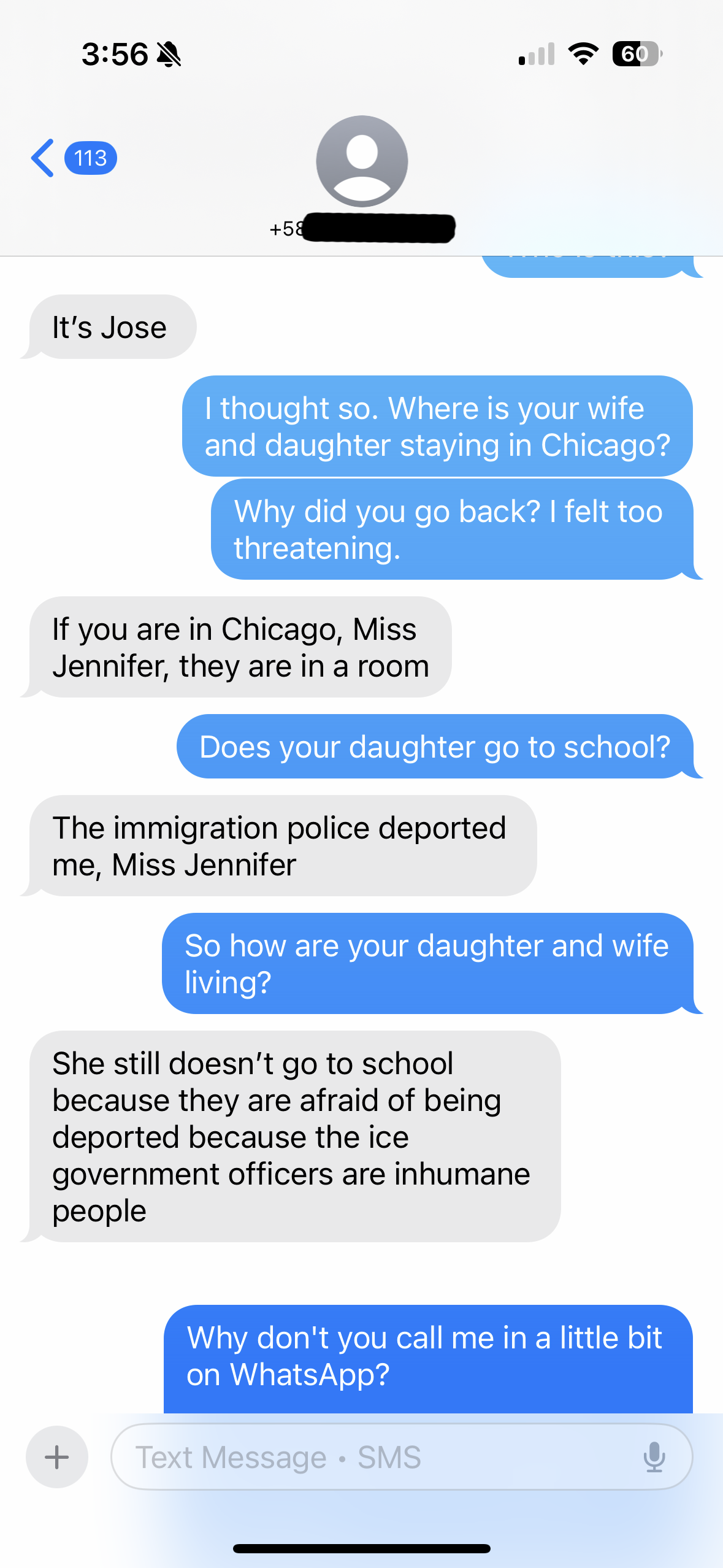
    One of the text messages between José and the author, after José had been deported to Venezuela. His phone number has been obscured by The Inquirer, leaving Venezuela’s international country code as verification of the provenance of the call.

    I first met José outside my local grocery store, Jewel-Osco, in Wilmette, one of Chicago’s North Shore communities. He held up a sign, seeking odd jobs. Many Venezuelan immigrants who congregated around the Jewel ended up there when Texas Gov. Greg Abbott bused them to Wilmette shortly after they crossed the border in late 2023.

    I spoke with José and hired him to do some repairs and painting. He traveled by subway two hours each way for work, Juliana and Yori in tow. While José worked, I drew with Yori.

    Yori explored the West Loop of Chicago in July with Tracy, one of the residents of Wilmette. Yori was drawn to the impressive mural of a woman who looked like her and her family. She loved posing in front of it, and the mural made her feel more at home in her new city.

    One warm summer day after José finished working, we all walked to the edge of Lake Michigan, where Yori made sand castles.

    These were good people who faced difficult circumstances. It felt right to help them.

    José was a proud craftsman, and I recommended him to other friends, including Tracy — one of the three of us who would later make sure Juliana and Yori had some money and helped arrange their transportation to New York after José’s deportation.

    What happened last month is not the 1930s. But as a Jewish woman, I can’t ignore the echo of that dark period.

    In Adolf Hitler’s Berlin, families packed by day and moved quietly toward the border by night, clutching papers that might open a path to New York, a city that, for many, meant survival.
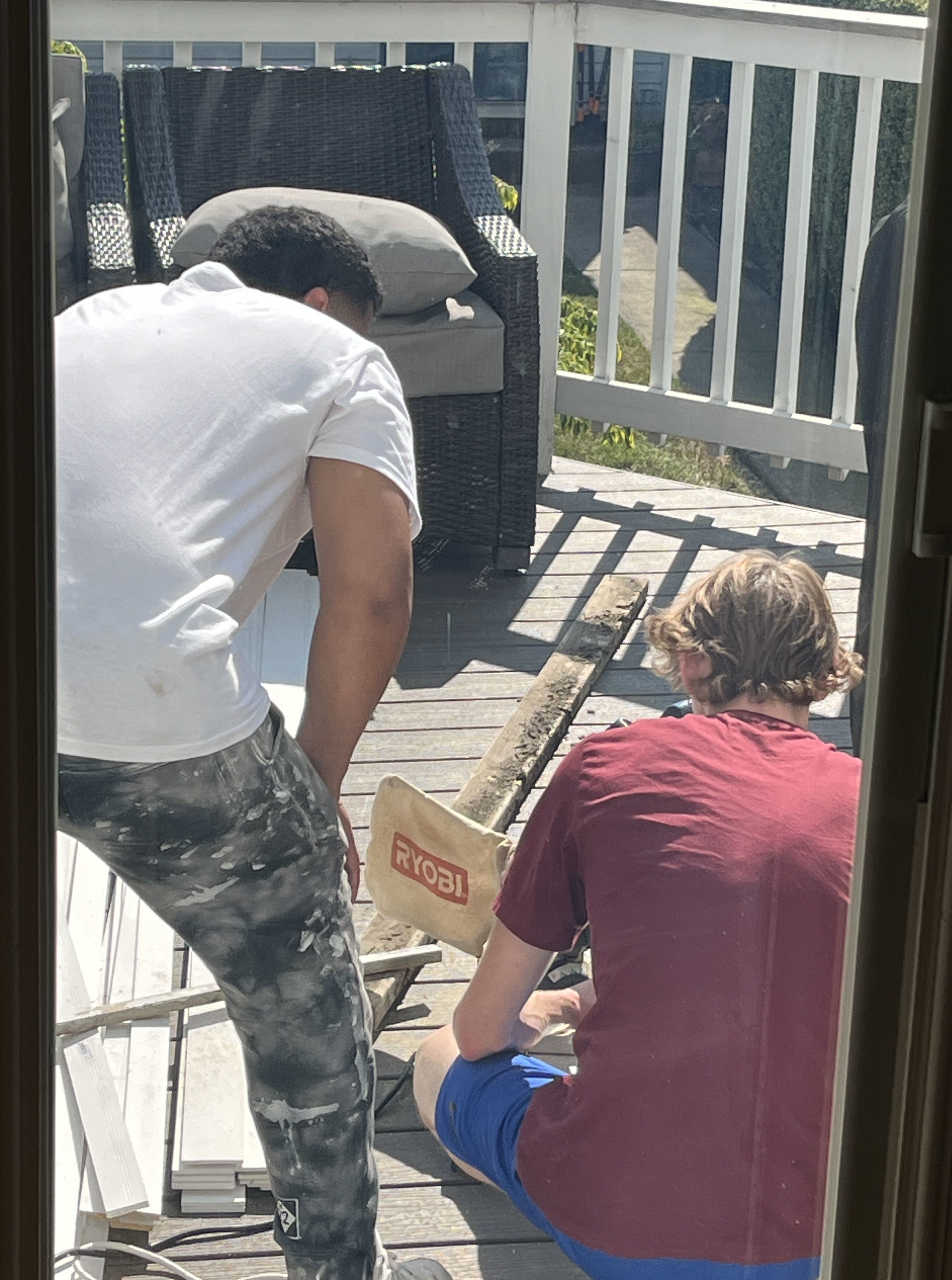
    José helps with a neighborhood construction project.

    They wrote to cousins, begged for affidavits, queued at consulates, and measured hope in stamps and signatures. The promise was simple: make it to New York, and you can gain freedom from terror.

    Our family, led by my great-uncle Max Berg, had settled in New York City after immigrating from Poland. On the eve of World War II, letters began arriving from people in Europe desperate to escape Hitler. They wrote because they shared his last name — Berg — hoping for a connection that might save them.

    The author’s great-uncle, Max Berg, standing, third from right, was a Jewish immigrant from Poland, the third of seven children. He became a successful lawyer in New York and, on the eve of World War II, sponsored 49 families to enter the U.S. These individuals wrote to him because they shared a common last name, though it remains unclear whether they were actual relatives. Many of those he sponsored became judges, writers, and leaders in their respective fields.

    Max never knew whether any of the 49 families were actually relatives, but he sponsored them all, buying their passage and covering their first month’s rent so they could begin new lives.

    The differences matter, of course. Hitler engineered annihilation; today’s migrants are not facing that. But the moral test feels painfully familiar.

    When government policy makes ordinary life like work, school, or a doctor’s visit unsafe for families who pose no threat, do we widen the circle of protection or narrow it? In the 1930s, too many Germans hid behind drawn curtains rather than opening their doors.

    As residents of Philadelphia and other American cities steel themselves for the possible deployment of immigration agents, Chicago offers a bleak preview of this chilling and shameful moment in our nation’s history.

    My hometown has faced an onslaught of immigration enforcement as part of Operation Midway Blitz. Chicago has responded to the crisis by widening its circle of protection. Our neighbors are already organizing.

    Yori, who loves to draw, illustrates her spelling lessons.

    Rapid-response networks canvass homes and storefronts, sharing “know your rights” cards and training witnesses to safely document encounters with ICE — even here in the affluent North Shore, where there are few immigrant residents but many immigrant workers.

    We also hold peaceful protests, which include clergy and citizens from across Illinois, to exercise our right of free speech.

    An ICE agent watches protesters as a Lenco BearCat vehicle drives to the scene in the Brighton Park neighborhood of Chicago, on Saturday, Oct. 4, 2025, after protesters learned that U.S. Border Patrol shot a woman Saturday morning on Chicago’s Southwest Side.
    Protesters stand and chant in the Brighton Park neighborhood of Chicago earlier this month, after protesters learned that U.S. Border Patrol agents shot a woman hours earlier on the city’s Southwest Side.

    And we record encounters whenever possible. In some instances, Chicagoans have faced down multiple ICE agents wielding weapons during an attempted arrest. In one such incident, a man, once pinned to the ground, was released because bystanders gathered to document and demand accountability.

    However, ICE agents are using aggressive tactics, often crossing the line into violence directed at protesters and people who document their activities.

    On Sept. 19, federal agents, who appeared like snipers perched on a rooftop at the Broadview Detention Center, shot a local pastor in the head with a pepper ball and then teargassed him.

    A federal agent throws a tear gas canister toward protesters in Chicago earlier this month.

    In recent footage, rows of agents in tactical gear surround protesters and push their faces into the pavement. On Oct. 10, a producer with a local television news program was thrown to the ground, handcuffed, and detained without cause.

    These are not “isolated incidents,” but rather tactics intended to intimidate and provoke. Chicago feels combustible — one itchy trigger finger from our own Kent State massacre.

    The real suffering isn’t confined to the protesters, of course, but to the detainees inside Broadview’s walls. In Lake County, Ill., immigration attorney Kimberly Weiss described the case of her client, Juan — who, like all the immigrants included in this commentary, was willing to be included in this essay only if his surname was withheld. (Likewise, some of the native-born U.S. citizens I interviewed agreed to participate only if their surnames were withheld, for fear of retribution.)

    Juan is a widowed father of four U.S.-born children, ages 12 to 20, detained by ICE outside his home. “His children contacted me terrified,” Weiss said.

    That same night, she filed emergency motions to stop his deportation and request bond, with a hearing set for the next morning. “It would have been a strong case,” she said. “He entered legally, held valid documents, like a work permit, Social Security number, and driver’s license. He’s a union roofer, a widower caring for his U.S. citizen children. He qualified for lawful status under a widower petition.”

    But before the hearing could take place, Juan was gone. Weiss said her client described Broadview Detention Center as so inhumane that he couldn’t endure another night. Detainees had no access to water. The air was so thick and suffocating that Juan witnessed others gasping for breath.

    Officers threatened Juan into signing his deportation papers, using an ICE agent as a “translator” to deceive him. Without his glasses and terrified, he finally signed. By the next afternoon, Juan was across the border.

    “There’s no accountability for what happens inside Broadview,” Weiss said. “It’s overcrowded, filthy, and cruel. There is no oversight, even when the conditions amount to torture.”

    Stories like these ripple far beyond detention centers. Dread doesn’t stop at the gates of Broadview. Anxiety seeps into neighborhoods, workplaces, and schools, touching even those who are U.S. citizens.

    During a recent nighttime raid in a South Shore neighborhood, Blackhawk helicopters dropped armed federal agents on top of an apartment building, as dozens of masked ICE agents arrived in trucks.

    Hundreds of agents moved through the building, kicking in doors, setting off flash-bang grenades, and rounding up residents as they slept. Children were separated from parents, zip-tied, and held in vans for hours.

    Imagine being a child, awakened in the middle of a peaceful slumber, snatched from your parents, and restrained. The U.S. Department of Homeland Security proudly boasts about the raid, but dozens of those arrested were U.S. citizens.

    We’ve now reached the point where friends of mine, Indian American physicians named Shila and Ravi, make sure they and their 14-year-old daughter always leave the house with their driver’s licenses and U.S. passports, in case they are stopped by ICE.

    “Show me your papers” is a demand one might expect from the Gestapo, Hitler’s secret police, but as Americans, we do not expect this, and should never accept it.

    “Being a brown-skinned woman in America means constantly proving my right to belong,” Shila told me recently. “My citizenship and contributions never seem enough to erase the question — ‘Where are you from?’ — that marks me as foreign. I’ve learned to live with this othering, but seeing my child inherit it breaks my heart.”

    “What was once an occasional ‘Go back home’ has become a deeper threat: ‘I’ll make sure you get home,’” she added. “But where is home when this is the only one we’ve ever known? Nothing can shield us from the fear that belonging can be questioned or revoked at any moment.”

    When ICE occupied Los Angeles and the National Guard was deployed, José and I exchanged texts so that I could better understand his asylum case.

    José then called me at the end of August. I could feel his embarrassment reaching through my phone, but he asked: Could he and his family move in with us? He’d heard about the planned ICE buildup and wondered whether his family would be safe in the predominantly Latino neighborhood where they were living.

    I declined. I thought of families in Europe who hid neighbors in attics and back rooms, and felt the weight of closing my door to him. My daughters were still home from college, and there wasn’t space for anyone else. I also wanted time with my girls before they left.

    And truthfully, I wasn’t sure José and his family would be any safer in my predominantly white suburb. I suspected my next-door neighbors were Trump supporters, and worried they would report him.
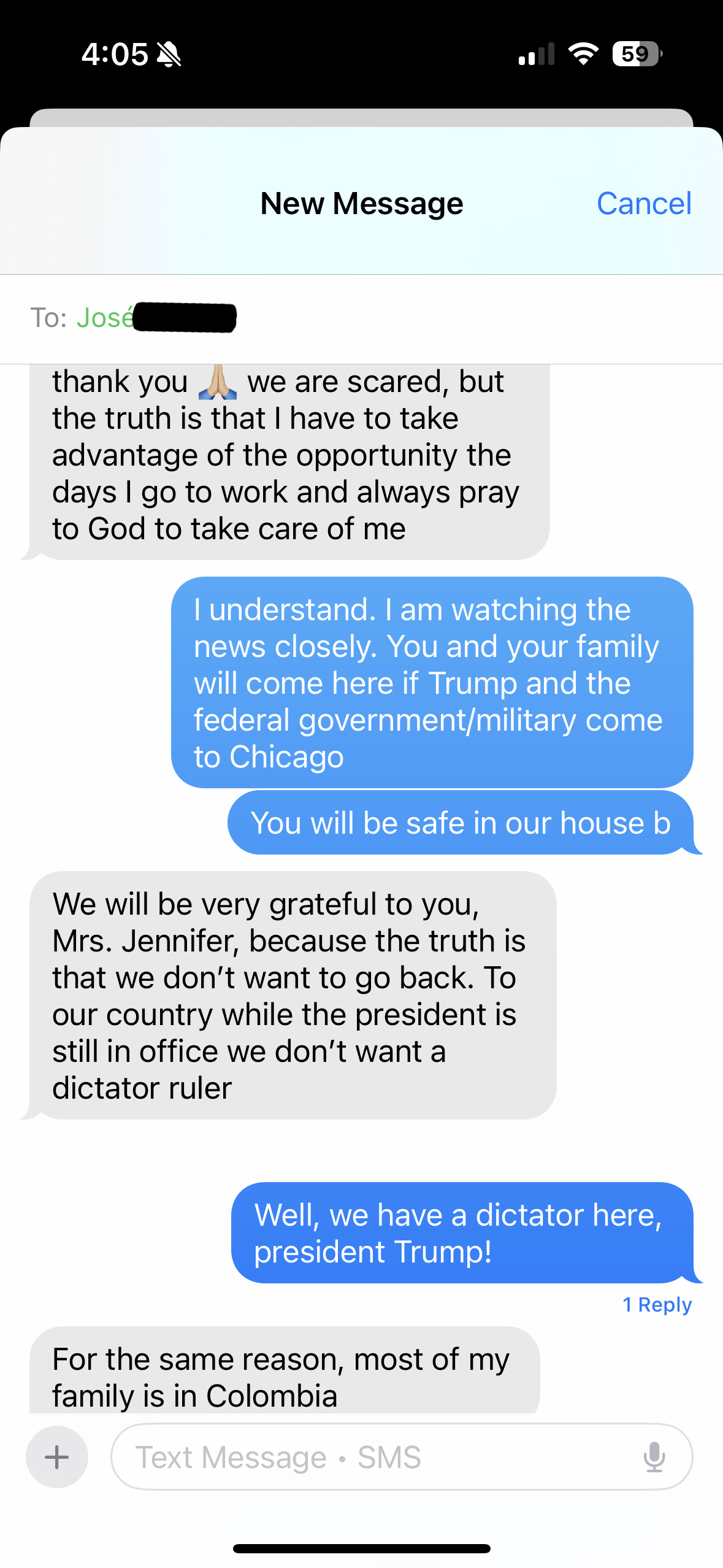
    One of the text messages between José and the author, before José’s deportation. His last name has been obscured by The Inquirer.

    Still, I told myself that by mid-September, when the girls returned to school, I would offer them refuge.

    But when I finally texted him, it was too late. He had already disappeared.

    When Juliana and Yori finally arrived at Penn Station, they carried two small suitcases with everything they could fit. They left behind their clothes, furniture, toys, traces of a life they built from nothing.

    With the help of an acquaintance, they found a family shelter in New York City, a place that feels more like exile than arrival. The noisy streets outside, thick with strangers and sirens, overwhelm them. Yori cries every day; she misses her father. Juliana leaves the room only to buy food. She had hoped to find work, but even mastering the city’s subway system seems like an impossible task.

    She once dreamed her daughter would breathe freely, run in the open air, play on a jungle gym. Instead, they live in a small room where safety feels borrowed.

    Yori playing in the park in Chicago before her father was deported.

    Watching Juliana and Yori struggle to rebuild their lives, I realize that what failed them wasn’t only my courage, but our collective conscience. The duty to offer refuge doesn’t belong to governments alone; it begins in the smallest places — on our streets, in our homes, within ourselves. Compassion is not a policy, but a choice, a door we decide to open or keep closed. The question is no longer who will offer them refuge, but who we become when we hide behind our curtains.

    I still replay that call, wondering whether borders are drawn only on maps, or instead, inside of us.

    Jennifer Obel is a founding member of the New Trier Rapid Response Team and coleader of Sukkat Shalom’s immigration task force.

  • Letters to the Editor | Oct. 26, 2025

    Letters to the Editor | Oct. 26, 2025

    A moment of understanding

    We refuse to be enemies. We refuse to hate each other. We are two mothers, one Jewish American and one Palestinian American, who have found in each other a friend with whom to cry, to dream, to learn, to laugh, to heal, and to grow.

    Going against the grain of deep-seated conditioning requires vulnerability, an essential and universal human quality. Allowing ourselves to be vulnerable shatters the conception that another person is “enemy,” and opens us to seeing the other’s fears, insecurities, wounds, hopes, and needs.

    We first met in May 2024 while planning a women’s peace vigil at City Hall sponsored by Sisters Waging Peace, a Philadelphia chapter of the Sisterhood of Salaam Shalom that brings together Jewish and Muslim women. The seed of friendship we have planted and watered with tears has taken root. We are actively creating a new “us” — one conversation, one peace vigil, one moment of understanding at a time.

    Now that there is a ceasefire in Gaza, we can breathe for a moment, but we cannot rest. A ceasefire halts the bombs, but does not end the underlying structure of injustice. The work to end the occupation must continue with even greater intensity. We must remember that the status quo was not peace, and going back to it would bring us back to the cycle of destruction and loss.

    Sisters Waging Peace, the Philadelphia chapter of American Friends of Combatants for Peace, and others will next bear public witness on Oct. 27, at City Hall from 4 to 5 p.m. Please come join us, wearing white, to pray for a just peace in Palestine and Israel, to bring a spirit of peace to our city, and to honor our humanity.

    Samah Elhajibrahim and Rabbi Malkah Binah Klein, founding members, Sisters Waging Peace

    Finding common ground

    Pennsylvania’s diversity has always been one of our commonwealth’s greatest strengths, but it has also frequently played a prominent role during political disputes. Whether the divide is rural vs. urban, wealthy vs. struggling communities, or along racial and ethnic differences, these fault lines become flashpoints when difficult decisions must be made.

    The recent battle over SEPTA funding provided a clear example.

    During budget negotiations, as Philadelphia’s transit system faced devastating service cuts, Republican Senate Majority Leader Joe Pittman of Indiana County spoke on the Senate floor about his rural Western Pennsylvania upbringing, quoting John Mellencamp’s “Small Town” before stating: “Human nature suggests, why should I do anything to help? I don’t ever get any help for my region. Why should I do anything to help the southeast part of the state?”

    This framing of regional interests in opposition to one another is nothing new to our statehouse. The tension runs deep and cuts both ways: a Democratic legislator responded by proposing to split state tax revenue by region, noting Philadelphia generates more revenue than it receives and subsidizes public services in counties that can’t afford them.

    The best antidote to division in our politics is common understanding, and that’s precisely why the statewide reporting of Spotlight PA is so important.

    As an independent, nonprofit newsroom, Spotlight PA seeks to better connect communities with what’s happening (or not) in Harrisburg, and to better connect communities to one another. The newsroom shares all its stories at no cost with more than 125 partner news outlets across the state dedicated to informing their local communities, including The Inquirer.

    The less we understand about life across Pennsylvania — people’s challenges, economic conditions, and their daily realities — the more susceptible we all become to politics that emphasize our differences rather than our shared interests.

    Finding common ground requires first understanding the ground others stand on — and that’s impossible without quality local news coverage from throughout the state.

    Christopher Baxter, CEO and president, Spotlight PA

    Join the conversation: Send letters to letters@inquirer.com. Limit length to 150 words and include home address and day and evening phone number. Letters run in The Inquirer six days a week on the editorial pages and online.

  • He helped defeat a plan to sell the sewer utility in his South Jersey town last year. Now, he’s running for mayor.

    He helped defeat a plan to sell the sewer utility in his South Jersey town last year. Now, he’s running for mayor.

    Keith Gibbons entered politics by accident.

    A few years ago, he was driving with his then-11-year-old daughter when she asked where roads came from.

    “The government,” Gibbons responded.

    “What’s the government?” his daughter asked.

    That led to a longer explanation and eventual father-daughter trip to a Gloucester Township meeting so she could see the government in, ah, action. Having covered many local government meetings and school boards long ago, I can attest that Gibbons went beyond any parental or civic duty.

    Gibbons continued to attend the meetings when a proposal to dissolve the Municipal Utilities Authority (MUA) caught his attention. He feared the township was planning to sell the water and sewer system.

    But during sworn oral testimony in a May 2023 teleconference, an attorney representing the township said there was no expectation the utilities would be sold within the next five years. Mayor David Mayer agreed.

    Yet, a year later, the township council voted to sell the sewer system to the highest bidder.

    “They lied to us,” Gibbons said.

    The township received two bids from large for-profit water companies: Aqua offered $52 million, and New Jersey American Water bid a whopping $143 million, plus a promise to make an additional $90 million in capital improvements to a system that only needed an estimated $25 million in repairs.

    Something didn’t smell right. Even for a sewer system.

    Keith Gibbons (middle) joined Ira Eckstein and Denise Coyne at a rally opposing a plan to sell a South Jersey sewer and water utility in October 2024.

    Coincidentally, Mayor Mayer worked for American Water. In addition to his job as director of government affairs at the water company, his mayoral salary is $52,000.

    To guard against any conflict of interest, Mayer recused himself from any discussion regarding the sewer sale.

    Even still, American Water’s lucrative offer raised eyebrows. But generous bids are part of the for-profit playbook. Aqua offered Bucks County $1.1 billion for its sewer system, but the commissioners backed away after fierce public opposition.

    For-profit water companies have been throwing big money at small towns in New Jersey, Pennsylvania, and beyond in an effort to scale up. The utility systems may not seem sexy, but they are mini monopolies that generate steady cash flow.

    In Pennsylvania, a 2016 change in the law essentially opened the door for local utilities to be sold at higher prices. Local politicians are often happy to get the utility systems off the books and use the windfall to fund other projects or avoid tax increases.

    But often left out of the negotiations are the ratepayers.

    After the sales go through, the for-profit companies often jack up the rates. In some towns, after a brief rate freeze, the water bills have increased by 100%.

    Rates have also increased at government-owned utility companies, but not by nearly as much. For example, Philadelphia recently increased water rates by 9%.

    As utility bills grow, residents have nowhere to turn. Aging infrastructure, climate change, and increased demand, including to cool computer data centers, are expected to further drive up water prices in the years to come.

    From left: Denise Coyne, Nancy Kelly Gentile, Gloucester Township independent mayoral candidate Keith Gibbons, and Ira Eckstein canvass supporters in Clementon, N.J., in September.

    For-profit companies say they offer professional management and resources to make long-deferred upgrades, as well as the ability to purchase materials in bulk and spread the risk across systems as they grow.

    Mayer said in an interview that the sewer sale would have enabled Gloucester to reduce property taxes, eliminate its debt, and make other improvements.

    But critics argue that handing control to for-profit companies seeking quick returns on investments is shortsighted and results in higher costs to consumers. After all, water and sewer utilities are supposed to be a long-term public good, not a profit center.

    To its credit, Gloucester Township scheduled a referendum last November to let residents vote on whether to sell the sewer system or not. A public vote should be a requirement, but most towns avoid referendums because the last thing they want is for taxpayers to have a say in the utility system they own.

    The referendum gave Gibbons time to mount a grassroots campaign against the sale. He knocked on doors, handed out yard signs, and used a podcast to raise awareness.

    But Gibbons seemed overmatched. His group spent roughly $3,000 opposing the sale, while New Jersey American Water spent about $1 million.

    Yet, David beat Goliath in a landslide. More than 80% voted against the sale.

    Gibbons, 48, a Cinnaminson High grad, who ran a Christmas tree farm and worked for Live Nation but is now self-employed and serves on the school board, became somewhat of a local hero in a town of 66,000 residents.

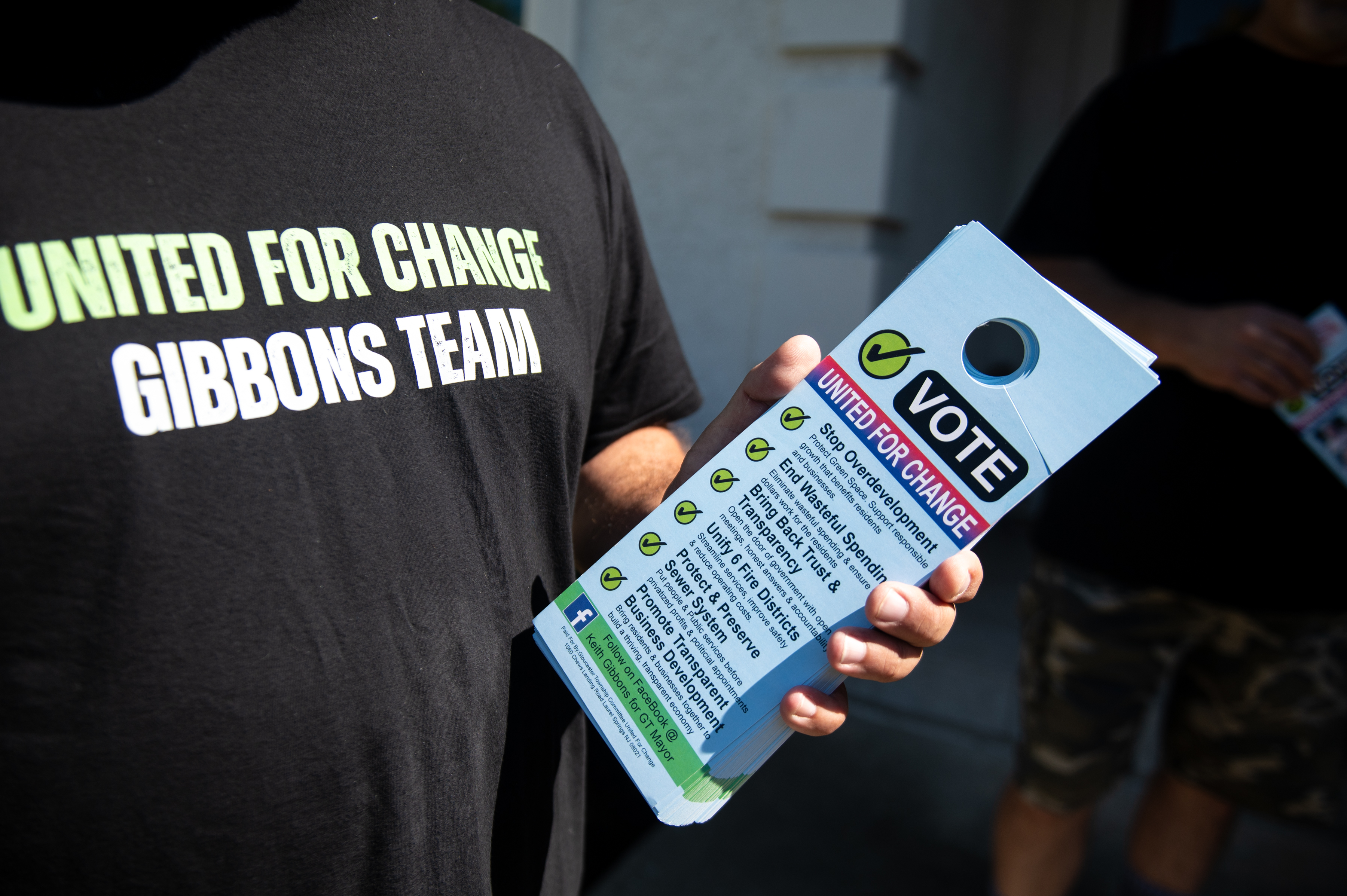
    Gloucester Township independent mayoral candidate Keith Gibbons holds promotional materials encouraging constituents to vote for him.

    Residents soon urged him to run for mayor.

    Gibbons, a former Republican, is running as an independent against Mayer, who has spent his life in South Jersey politics, working for former U.S. Rep. Rob Andrews in the 1990s before becoming chief of staff in the Camden County Clerk’s Office.

    He also served as a New Jersey assemblyman before getting elected mayor in 2010. Mayer’s wife is a Camden County freeholder.

    Mayer is part of the Democratic machine that has controlled South Jersey for decades, but has recently shown signs of losing its grip on power. In Gloucester Township, there are still twice as many registered Democrats as Republicans.

    The election has turned nasty. There are allegations that the Democrats tried to recruit a “phantom candidate” to run as a Republican to siphon votes away from Gibbons.

    Mayer said Gibbons has been on the school board for three years, and “I don’t know what he’s touting as his accomplishments.”

    Other attempts to muddy Gibbons indicate that the Democratic establishment may be nervous.

    Is it because Gibbons has a sophisticated field operation?

    “I don’t even have a campaign manager,” he said.

    Does Gibbons have deep-pocketed donors?

    “I’ve spent about $5,000 on the election,” he said.

    What’s his campaign message?

    “I’m not a political person,” Gibbons said. “I just want to fix local problems.”

    Can an outsider with no political experience win?

    Gibbons believes voters are fed up with South Jersey’s entrenched political machine, in which jobs and contracts often go to cronies. He argues no one is looking out for taxpayers who are often too busy to get involved, or believe they can’t do anything to change the system.

    But his efforts to block the sewer sale show that one person — and a motivated electorate — can make a difference.

    Mayer counters that he is proud to be a Democrat, and that the party’s strength has benefited South Jersey. He pointed to a list of accomplishments as mayor, from creating community policing to adding open space, attracting new businesses, and opening an office for veterans, adding that no party boss tells him what to do.

    For his part, Gibbons said he supports term limits and smart development. He plans to focus on fiscal responsibility and government transparency. If elected, he promised the water and sewer system would not get sold to a for-profit company whose main mission is to maximize shareholder value.

    “I don’t claim to know everything, but I do know enough,” Gibbons said.

    Now there’s a campaign slogan for an accidental candidate.

  • Voters should consider their choices carefully in judicial retention races | Editorial

    Voters should consider their choices carefully in judicial retention races | Editorial

    The most important election facing Pennsylvania voters on Nov. 4 involves whether to retain state Supreme Court Justices Christine Donohue, Kevin Dougherty, and David Wecht.

    While voters should vote yes to retain the three justices, there are some lower court judges who do not deserve another term.

    Millions of dollars have been spent on the Supreme Court race, which will impact residents in cities and towns across the commonwealth. In recent years, the state Supreme Court has ruled on a variety of high-profile issues, including elections, redistricting, reproductive health, and education.

    Going forward, the court is likely to continue to confront many of the same hot-button issues — especially if Republicans gain control of the state House, the governor’s mansion, or replace the three well-qualified justices on the high court with extreme partisans.

    Voters need only look to Washington, D.C., to see the danger of a politicized, conservative majority on the bench, as the U.S. Supreme Court continues to ignore precedent and rubber-stamps Donald Trump’s abuses of the rule of law.

    Republican control of the White House, Congress, and the U.S. Supreme Court has resulted in a rapid erosion of the system of checks and balances created by the founders.

    In just a few short months, the GOP has deferred all power to Trump, who has shuttered the government, demolished part of the White House, sicced the U.S. Department of Justice on political enemies while pardoning cronies, celebrities, and insurrectionists, summarily killed alleged drug traffickers without any evidence, and deported people living in America without any legal due process.

    He has forced out tens of thousands of career civil servants, imposed tariffs that have roiled the economy, slashed environmental, health, and worker safety regulations, appointed incompetent hacks throughout the government, pressured red state lawmakers to take steps to rig elections, and sent federal troops into cities for no legitimate reason — all while evading previous criminal indictments and embarking on dubious personal enrichment schemes.

    Much of Trump’s unchecked power emanates from the ruling last year by the conservative majority on the U.S. Supreme Court that effectively said presidents are above the law.

    Voting rights activists gather outside the U.S. Supreme Court Building on Oct. 15 as the justices prepared to take up a major Republican-led challenge to the Voting Rights Act, the centerpiece legislation of the civil rights movement.

    What does all of that have to do with the retention election of three Pennsylvania Supreme Court justices? Plenty.

    The state is evenly divided between Republicans and Democrats. Yet, the GOP controls the state Senate and all three row offices: attorney general, treasurer, and auditor general.

    The Democrats have a narrow edge in the House, while Gov. Josh Shapiro, a Democrat, is up for reelection next year.

    Essentially, Shapiro and the Supreme Court, which has a 5-2 Democratic majority, are the only bulwarks keeping Trump’s MAGA-fueled zealots from seizing total control of Pennsylvania.

    If the GOP were to control the governor’s mansion and the high court, voting maps would get even more gerrymandered, voting rights, including mail-in balloting, would likely get curtailed, abortion rights would get dramatically rolled back, and pro-business groups — and polluters like gas drillers — would enjoy even less regulation. Funding for public education and transit would likely also be slashed.

    Other inane red state laws could get enacted that attack science, limit teaching about race, or make it harder to get a divorce. More to the point, Pennsylvania doesn’t need a radicalized state Supreme Court like the Roberts Court, which has squandered its credibility.

    Judicial retention voter material at a Republican candidate’s rally in Bucks County in September.

    Donohue, Dougherty, and Wecht have demonstrated that they are fair, open-minded, and follow the law. They have restored respect to a high court that was plagued by scandals a decade ago.

    But don’t just take this Editorial Board’s word for it.

    The nonpartisan Pennsylvania Bar Association has a rigorous process for evaluating judges based on criteria like legal ability, integrity, and temperament. The process includes investigative panels that review the judge’s records, interview candidates, and gather input from attorneys.

    After all that, both the Pennsylvania and Philadelphia Bar Associations recommended voting yes to retain Justices Donohue, Dougherty, and Wecht.

    The Philadelphia Bar Association recommended voting no to retain five lower court judges. They are Common Pleas Judges Scott DiClaudio, Daine Grey, Frank Palumbo Jr., and Lyris F. Younge. The association also recommended not retaining Municipal Court Judge Jacquelyn Frazier-Lyde, the daughter of the late boxing champion Joe Frazier.

    The association does not disclose the reasons for the recommendation, other than noting that three of the five judges did not participate in the review process, which includes surveying more than 500 lawyers to assess the judges for things like integrity, legal ability, temperament, and diligence.

    Another 100 volunteer investigators interview the candidates, other judges, and lawyers, as well as scrutinize the judges’ written opinions, social media posts, and financial disclosures.

    The Inquirer obtained the confidential surveys, which shed more light on how lawyers view the jurists. Inquirer reporter Samantha Melamed also reviewed opinions, interviewed some of the judges, and spent time in the courtroom.

    It is not always easy for voters to be well-informed when it comes to selecting judges. But the intense focus (and misinformation) on the state Supreme Court election, combined with the nonpartisan work of the bar associations, other good government groups, and The Inquirer’s reporting, has framed the stakes.

    Voters will now decide the fate of Pennsylvania’s courts — and of Pennsylvanians’ freedoms.

  • ‘Baghdad Pete’ tries to prevent fact-based press from covering dire changes to U.S. security doctrine

    ‘Baghdad Pete’ tries to prevent fact-based press from covering dire changes to U.S. security doctrine

    Perhaps we should start calling the Pentagon’s secretary of war “Baghdad Pete.”

    Defense Secretary Pete Hegseth is trying to block the Pentagon press corps from using any information not explicitly authorized by his staff, even if it is unclassified. Shades of “Baghdad Bob,” the infamous Saddam Hussein mouthpiece who delivered the regime line daily to the international press when I was covering the 1991 Gulf War.

    The Hegseth policy even requires an official to accompany accredited journalists visiting Pentagon areas where they were formerly allowed to walk freely. Reminds me of our assigned “minders” in Baghdad, whose job was to bar us from learning anything the regime didn’t want us to know.

    Hats off to nearly all the Pentagon press corps — including conservative outlets such as Fox News, Newsmax, the Washington Times, and the Daily Caller — who refused to forfeit their First Amendment rights by signing on to the new rules. They thereby lost their accreditation and their access to enter the building. Even more outrageous, they have been replaced with far-right outlets and slander-mongers known for promoting election denial, fake news, Russian propaganda, and deluded conspiracy theories.

    Baghdad Pete is striving not only to stop accurate news coverage of the use or abuse of U.S. military operations. In his effort to tightly control Pentagon news, he has also decreed that Pentagon officials can’t interact with members of Congress without prior approval.

    Much (though not all) of the news he is trying to hide is already self-evident, and so damaging to U.S. security that he won’t be able to plug future leaks.

    Politico and the Washington Post have already published important details on President Donald Trump’s upcoming National Security Strategy, which will assign America’s top priority to “protecting” the U.S. homeland and the Western Hemisphere. This means making war on “the enemy within” in U.S. cities, as well as on immigration and drug cartels. As if those threats overshadow our fraught competition with China, and the very real threat from Russia.

    The theatrical U.S. military attacks on alleged drug smugglers in small boats off Venezuela and in the Pacific off Colombia – which could easily be stopped by the U.S. Coast Guard – are clearly illegal.

    But even more obvious, while this showy policy of killing a few unknown civilians at sea may be great for the White House video feed, it does nothing to combat America’s drug problem or drub the cartels.

    U.S. citizens are dying in enormous numbers from fentanyl, which is neither produced in nor smuggled in from Venezuela or Colombia (most comes in via Mexico, made from Chinese precursors).

    Indeed, Colombia has been one of Washington’s closest partners for decades in combating narcotics trafficking, and the U.S. strikes have infuriated Colombian President Gustavo Petro. Yet, Trump has now cut off all aid to Colombia and labeled Petro an “illegal drug leader.”

    As for Venezuela, the Pentagon has assembled a force of 10,000 in the Caribbean off its coast for a supposed anti-terrorism mission, which many Latin American experts believe is really aimed at fomenting regime change in Caracas. Despite Trump’s dismal failure in his first term to oust Venezuelan leader Nicolás Maduro, he is apparently trying again.

    This upside-down set of priorities has reportedly upset top U.S. military officials.

    It is hardly surprising, then, that Hegseth just announced that Adm. Alvin Holsey, a 37-year veteran, will quit his job as head of U.S. Southern Command — where he oversees all operations in Central and South America. (Could the fact that the highly qualified Holsey is African American have accelerated Baghdad Pete’s effort to get rid of him two years early?)

    Thus, there is plenty of news for the now-banned Pentagon press to ferret out for the U.S. public, not just about why the armada was dispatched, but why Trump and Hegseth want to prioritize Latin America and drugs.

    We know Trump has a thing about the Monroe Doctrine, the 1823 message to Congress by President James Monroe that warned off any other would-be colonizers from interfering in Latin America. Some wags now call it the “Donroe Doctrine.”

    Trump has interpreted the doctrine to mean the United States’ sphere of influence should extend over Northern, Central and South America, while often seeming to concede Europe to Russia’s sphere of influence, and Asia to China’s.

    In other words, a Big Man theory of politics expanding Monroe’s intended meaning, which presumes Trump, Vladimir Putin, and Xi Jinping can split up the world.

    However, 2025 is not 1823, and a Donroe Doctrine doesn’t fit the world we live in. Some Latin American countries, such as Brazil, have become major forces in their own right. China, with its large-scale investments in Latin America, and helped by Trump’s tariff policies, is already an ever more powerful presence on the continent.

    I see Trump’s Caribbean action as a distraction from his failures in handling China and Russia, as Putin and Xi run rings around him. It is far easier for Trump to carry out performative war off the South American coast — bang-bang on unknown boatmen about which he and Hegseth can chest thump — than to confront the real threats that endanger our country. (And he can still pretend he will tariff Xi into subservience when they meet in Seoul, South Korea, this week.)

    Let me give just one example of how the boat bombs serve as a distraction. This week, they have obscured the president’s latest failure with his all-carrots approach to Putin, who stiffed him yet again on a ceasefire in Ukraine.

    True, Trump has finally, after months of threats, imposed new sanctions on two big Russian oil producers. But if you read the text of the new sanctions, you will see he let Putin off the hook once more.

    The new sanctions — which will not even take effect for four weeks — are levied against any U.S. firms or individuals who deal with Rosneft or Lukoil. But as the indefatigable Phillips P. O’Brien pointed out in his Substack, the U.S. does almost no business with either firm. And secondary sanctions against foreign individuals or companies who keep dealing with the named firms will not be automatically applied.

    Indeed, the real issue is whether the president will try to squeeze China and India to halt their enormous purchases of Russian oil. Despite Trump’s claims, full Indian adherence isn’t likely, and forget about China.

    And POTUS has already admitted he hopes the new sanctions will be short-lived.

    If Trump had really wanted to pressure Putin, he would have sold Kyiv long-range Tomahawk missiles. But that would have been a hard choice, and might have disturbed some of his disciples.

    Better to focus on Caribbean boom-boom and change U.S. security doctrine to fight a war against “enemies at home” and supposed threats from drug lords. And to prohibit the Pentagon press from interviewing disaffected military or civilians who would explain how this doctrine endangers the United States.

  • Trump’s MAGA makeover of the Third Circuit is complete

    Trump’s MAGA makeover of the Third Circuit is complete

    In his first term, Donald Trump appointed four judges to the Philadelphia-based U.S. Court of Appeals for the Third Circuit — flipping the court’s ideological balance firmly to the right.

    The 14-member court, which hears appeals from Pennsylvania, New Jersey, and Delaware, routinely handles disputes of national importance.

    This past summer, it struck down Pennsylvania’s mail-in ballot dating rule, and just last week, it heard arguments over New Jersey’s long-standing assault rifle ban, potentially teeing up the issue for U.S. Supreme Court review.

    President Joe Biden had a chance to tip the balance back.

    His nominee, Adeel Mangi, would have become the first Muslim American to serve on any federal appellate court. But facing bad-faith Republican attacks and tepid Democratic support, Mangi’s nomination was left to die on the Senate floor.

    That failure, and Trump’s return to power, cleared the way for the rapid installation of two MAGA loyalists, Emil Bove and Jennifer Mascott, cementing an 8-6 conservative majority.

    Less than a year into his second term, Trump has finished what he started in his first. His MAGA makeover of the Third Circuit is complete — and the people of Pennsylvania, New Jersey, and Delaware, and perhaps the country as a whole, will be living with its consequences for decades to come.

    Emil Bove: The hatchet man

    Trump’s first pick for the Third Circuit is also his most dangerous: Emil Bove.

    Bove, the president’s former criminal defense attorney, lacks the culture war credentials required of nearly every other Trump judicial nominee. He never sued the Biden administration, or opposed same-sex marriage, or defended a state abortion ban. But he has one quality in spades: loyalty to Donald Trump.

    Once installed in the U.S. Department of Justice, Bove wasted little time proving to Trump that he would do whatever it took to advance Trump’s agenda.

    Donald Trump, flanked by attorneys Todd Blanche and Emil Bove (right), at his criminal trial in Manhattan in 2024.

    He fired the federal prosecutors and FBI agents who pursued cases against the Jan. 6, 2021, insurrectionists. He clumsily sought to dismiss charges against New York City Mayor Eric Adams to coerce him to aid Trump’s immigration crackdown. And, according to multiple credible whistleblower allegations, Bove told other DOJ lawyers that if courts tried to stop the administration’s deportations, they should tell “the courts ‘fuck you.’”

    Now that Bove is on the Third Circuit — he was confirmed in July by a razor-thin 50-49 vote — he is moving with similar speed to show Trump he’s still on his side.

    This week, in what appears to be Bove’s first vote as a circuit judge, he joined four other Trump appointees dissenting from the full court’s decision to deny the request of various Republican organizations to rehear the case holding Pennsylvania’s date requirement for mail-in ballots unconstitutional.

    Of course, there never should have been a vacancy for Bove to fill.

    Back in November 2023, President Biden nominated Mangi to the seat Bove now holds. Mangi had all the sterling credentials you’d expect from an appellate court nominee — degrees from Oxford and Harvard Law, and a long career at a white-shoe law firm.

    But all Republicans could see was that he was Muslim, and they pulled out every Islamophobic trick in their very big book to disingenuously paint him as some antisemitic radical.

    And what’s worse, some Senate Democrats fell for it, sinking Mangi’s nomination and handing this critical vacancy to Trump.

    Jennifer Mascott: Am MAGA, will travel

    Over the summer, Trump also nominated Catholic University law professor Jennifer Mascott to a second Third Circuit vacancy in Delaware.

    Mascott’s résumé is dripping with connections to Trump and the MAGA legal movement. She clerked for then-D.C. Circuit Judge Brett Kavanaugh (one of Trump’s appointees to the Supreme Court) and Justice Clarence Thomas (one of Trump’s favorite justices).

    Before joining Catholic Law last year, she taught at George Mason’s Antonin Scalia Law School, one of the most conservative in the country.

    In the first Trump administration, she worked in Trump’s Justice Department and helped with Justice Amy Coney Barrett’s last-minute confirmation.

    This time, she went to work directly for Trump as senior counselor to the president in the White House Counsel’s Office.

    What Mascott lacks, however, is any genuine connection to Delaware.

    She lives in Maryland and works in Washington, D.C. She is not admitted to the Delaware Bar, and she has little, if any, experience with Delaware’s sophisticated corporate law regime.

    But Mascott admitted in her Senate Judiciary Committee questionnaire that she made clear to Trump that she was willing to take any judgeship in which he “would be interested in having [her] serve,” historical tradition and judicial propriety be damned.

    Even the timing of her confirmation reeks of political gamesmanship.

    Mascott leapfrogged a half dozen other judicial nominees so she could join the Third Circuit in time to participate, and potentially cast the deciding vote, in a major Second Amendment case about New Jersey’s assault weapons ban.

    With Bove and Mascott now seated, the Third Circuit may become the venue of choice for Trump’s allies looking to legitimize his most extreme policies, as right-wing litigants know they’ll find sympathetic ears in Philadelphia.

    What was once a court known for its independence and moderation could soon become a proving ground for Trump’s legal movement — a place where loyalty trumps the law.

    The only question left is how long it will take before the rest of the country starts feeling the consequences of the Third Circuit’s new MAGA majority.

    John P. Collins Jr. is an associate professor at George Washington University Law School, where he researches and writes about federal judicial nominations.

  • Parker’s Land Bank shakeup may lead to more affordable housing | Shackamaxon

    Parker’s Land Bank shakeup may lead to more affordable housing | Shackamaxon

    Continued budget delays in Harrisburg are, unfortunately, again part of this week’s Shackamaxon. But first, all you ever wanted to know about the Land Bank (but were afraid to ask), including the mayor’s recent board shake-up.

    Running on empty

    Ever since Philadelphia lost more than a quarter million residents between 1970 and 1980, blight and vacancy have been a problem. Abandoned, deteriorating homes, schools, and factories provide a convenient staging ground for criminal activity, cost the city millions in annual maintenance, and don’t contribute property taxes to city coffers.

    For years, the city struggled to find a way to repurpose this land. While some residents admirably turned lots into community assets like gardens, most of the space sat unused. Some properties languished because potential buyers considered them unprofitable, with expected rents or sale prices that were too low to justify the cost of construction. But other lots were in high demand, drawing interest from developers, nonprofits, and community groups.

    Like a deer caught in the headlights, City Council members often opted against selling to anyone.

    To shake that inertia, City Council created the Land Bank in 2013. Yet, despite a push from then-Councilmember Maria Quiñones Sánchez, Council did not cede control of land sales. This meant the analysis paralysis continued. So did side arrangements, like when then-Council President Darrell L. Clarke steered city land to a developer through a no-bid process.

    Some parcels that were allocated to the Land Bank became the subject of fierce debate. Municipal policy wonks urged Council to sell the most valuable plots as a way to underwrite the city’s subsidized housing efforts. Meanwhile, advocates for affordable housing called for the creation of homes for people at the lowest income levels.

    City Council seemingly found common ground in 2022, nearly a decade after the Land Bank was first authorized, with a compromise called “Turn the Key.”

    Under the terms of that program, land would go to what’s often called “workforce housing,” available to residents of modest means who earn up to 100% of our area’s median income ($119,400 for a family of four).

    This would still come at a cost, mostly the millions of dollars in potential revenue from auctioning off the land, but it did ensure plots would return to productive use, rather than attracting trash and crime.

    It also offered a quicker timeline for reuse than federal affordable housing programs like the Low Income Housing Tax Credit, which can take four to seven years to get to construction.

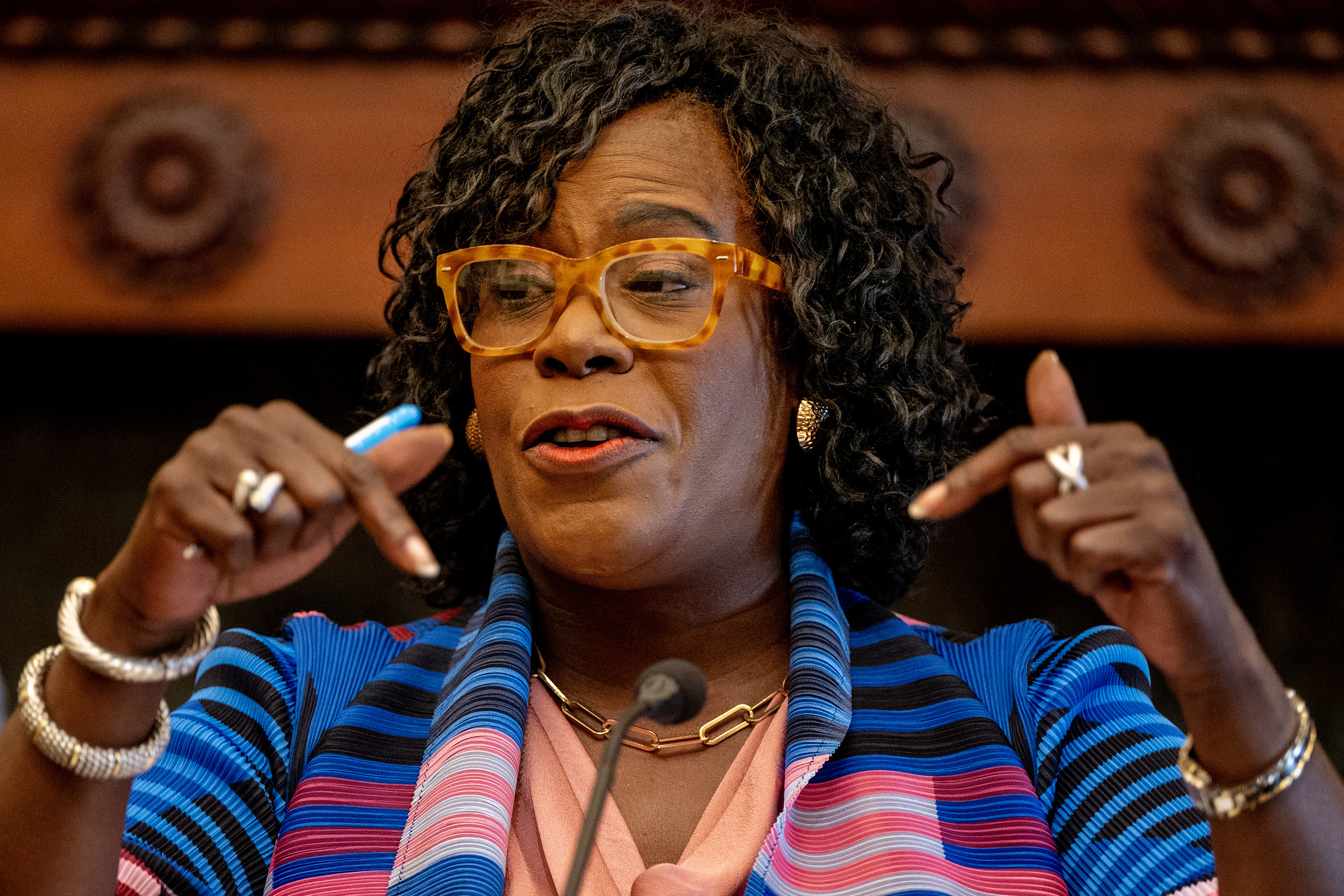
    Mayor Cherelle L. Parker holds a news conference at City Hall in August. Parker replaced her two appointees on the Philadelphia Land Bank board recently.

    Poor results

    Despite the new program, the same old problems remain. Namely, that most Council members have been reluctant to disburse land.

    The program, which was intended to yield 1,000 homes, has only managed to produce 202, per the Philly360 dashboard. Even though Turn the Key is a Council-designed program, only about half of the city’s 10 districts have participated. In the 5th District, which accounts for most of the homes, all 120 sales were approved in the last Council term.

    In addition to Council, the Land Bank board has also served as an obstacle to selling land, because of a faction of board members who would prefer an approach that prioritizes deeply affordable housing (for people at or below 30% of our area’s median income) and are concerned the program could cause gentrification.

    Mayor Cherelle L. Parker, who has doubled down on Turn the Key as a key component of her own housing plan, seems to have decided that it is time for a change, replacing two of her own appointees, both of whom tended to balance their own support for workforce housing with a preference for avoiding conflict.

    The two new board members, Chief Housing and Urban Development Officer Angela Brooks and community development expert Alex Balloon, are likely to have a “full steam ahead” approach to the program. Parker has also pressed Council to supply a list of “preapproved” parcels, where development can proceed without an ordinance. For those of us who want to see city-owned vacant land returned to productive use, these appointments are a win.

    Philadelphia needs quality housing options at all income levels, and the extreme appreciation in home prices over the last five years has made it harder for the working-class families who are the focus of Turn the Key to afford a home. While few households in the city have a white picket fence, achieving the Philadelphia dream of a move-in-ready rowhouse should not be out of reach for the sanitation workers, teachers, and others eligible for the program.

    The idea that workforce housing will foment gentrification is also hard to accept. The income levels for Turn the Key are designed for first-time home buyers with below median incomes. According to a Riverwards Group analysis of their Clifford Street project in North Philadelphia, all their buyers identified as African American, and most came from either the same zip code or a neighboring one. How can working-class people buying homes close to where they already live drive gentrification?

    Furthermore, the Land Bank’s remit is to implement city policy, not to make it. If advocates want to prioritize nonprofit developers, community gardens, or deeply affordable housing, the right venue is City Council, not the Land Bank board.

    With the mayor now putting her stamp on both the Philadelphia Historical Commission and the Land Bank, the Zoning Board of Adjustment, which has seen monthslong delays since the pandemic, should be next.

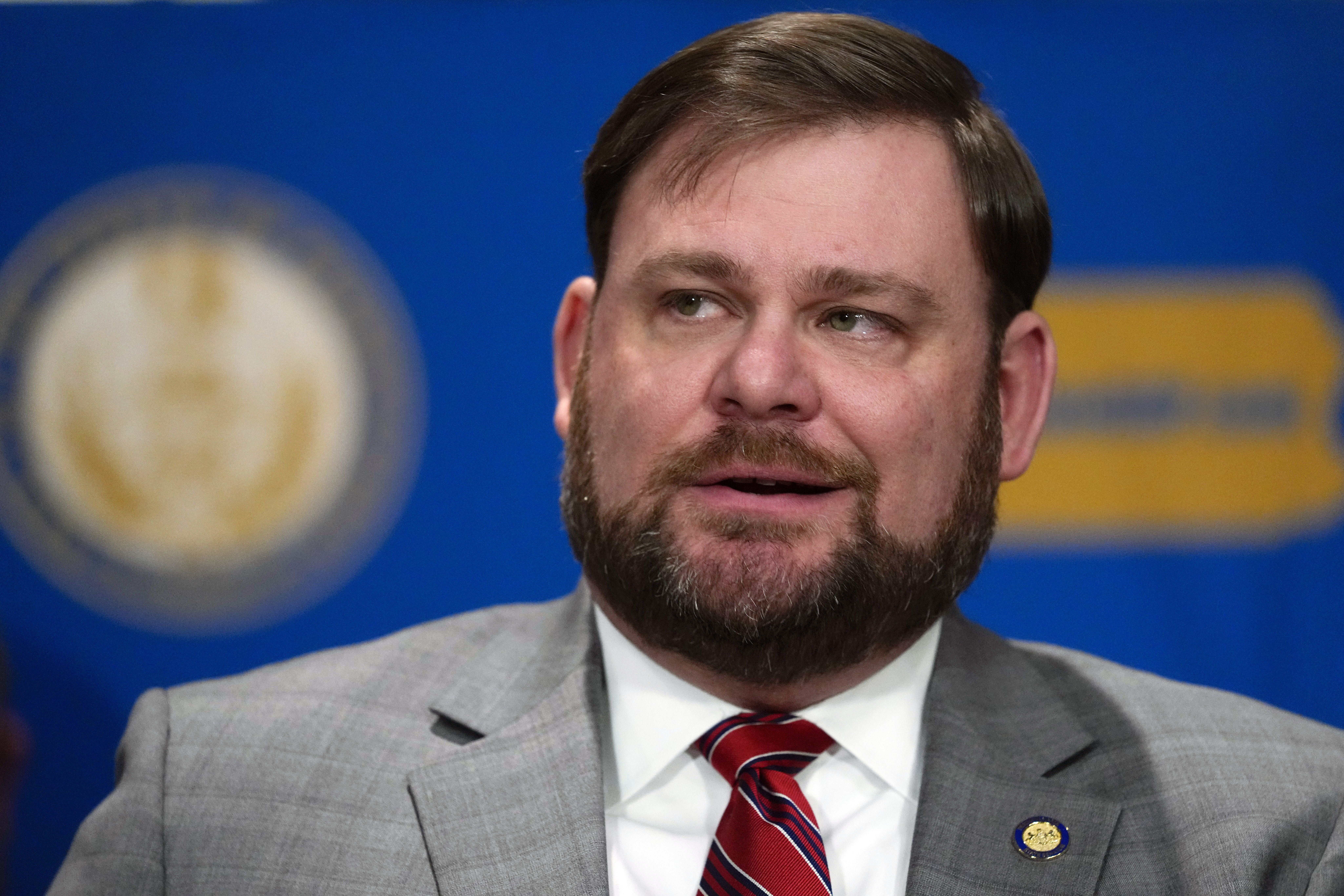
    Pennsylvania Senate Majority Leader Joe Pittman (R., Indiana) speaks during a 2024 news conference in Harrisburg.

    Budget doublespeak

    Pennsylvania continues to suffer the consequences of the nearly four-month delay in the state’s budget. Counties, school districts, and nonprofit organizations across the commonwealth are struggling to pay their bills. Beleaguered residents might have seen a recent state Senate vote approving a nearly $48 billion spending plan as a step in the right direction. Unfortunately, it represents the opposite of progress.

    That’s because the Senate still refuses to consider any proposals that might stand a chance of passing the House or garnering Gov. Josh Shapiro’s signature. While Democrats have shrunk their initial $52.5 billion proposal to just over $50 billion, Republicans have yet to make a serious offer. In fact, the budget they approved is nearly identical to last year’s.

    Their insistence on sticking to this number is curious, especially given that Senate Majority Leader Joe Pittman, who was selected as their negotiator, publicly stated a willingness weeks ago to pass a budget in the $49 billion range. I asked Kate Flessner, Pittman’s spokesperson, for an answer to this disparity more than a month ago.

    Just like the many Pennsylvanians, counties, school districts, and nonprofit organizations who rely on state support, I have yet to receive anything from Pittman.

  • Even before the shutdown imperiled SNAP benefits, the federal budget bill did. But we can take action.

    Even before the shutdown imperiled SNAP benefits, the federal budget bill did. But we can take action.

    Nearly two million Pennsylvanians may wake up on the first of the month and discover they don’t have any money for groceries.

    As a result of the federal government shutdown, the Pennsylvania Department of Human Services (DHS) has announced that Supplemental Nutrition Assistance Program (SNAP) benefits will not be paid until the shutdown ends and funds are released to Pennsylvania.

    But SNAP was already in jeopardy before the shutdown.

    Even as families scramble to find a way to keep food on the table right now, many must also take immediate action to protect their SNAP in the long run. The federal budget bill enacted in July threatens to take food away from millions of people with disabilities, caregivers, and older adults who cannot afford food. In fact, tens of thousands of Philadelphians are in danger of losing their SNAP this winter.

    But it’s not too late to ensure families can avoid hunger when SNAP resumes.

    For the first time ever, Philadelphians must satisfy harsh and ineffective work requirements that impose a time limit on SNAP benefits for many adults. People who do not meet an exemption or cannot prove they work at least 20 hours per week will be able to get only three months of SNAP every three years.

    This time limit began on Sept. 1 for adults ages 18-54 who do not receive a disability benefit and who do not live in a SNAP household with a child under 18. On Nov. 1, the clock starts for older adults ages 55-64 and parents of children ages 14 and older.

    Very soon, DHS will issue its first cutoff notices, alerting people ages 18-54 who have not been found exempt or compliant with work requirements that they will lose their SNAP effective Dec. 1.

    Moreover, many humanitarian immigrants who came to the United States seeking safety and prosperity will no longer be able to get SNAP at all. Under the new law, the only groups eligible for SNAP will be United States citizens, some green-card holders, certain Cuban or Haitian entrants, and a very few others. These devastating restrictions also take effect for new applicants on Nov. 1.

    Refugees, people granted asylum, and victims of trafficking and abuse who don’t yet have green cards will be left to worry about where their next meal is coming from, and there are no exceptions to these rules.

    As paralegals at Community Legal Services of Philadelphia (CLS), we have advocated for hundreds of clients who have been wrongfully denied SNAP because of red tape and paperwork errors. Without a citywide effort to protect access to SNAP, work requirements will leave Philadelphians without food on the table.

    DHS has estimated that as many as 65% of Pennsylvanians subject to work requirements will lose SNAP. We cannot accept this fate.

    The best way to protect SNAP is to help eligible people claim an exemption from work requirements. Many adults meet at least one exemption, which will allow them to keep their SNAP until their next annual renewal. Importantly, workers who earn at least $217.50 per week before taxes are exempt as long as the County Assistance Office (CAO) knows about their work. Many others must claim an exemption.

    Our client J.P. (we are using client initials to protect their privacy) was immediately distressed when told about work requirements. J.P. would love to be able to work, but he can’t. A 56-year-old, he gets dialysis three to four times a week to treat chronic kidney disease. He and his 76-year-old mom, V.P., survive on SNAP and her meager retirement benefit.

    Even with food assistance, V.P. has just $49 to her name each month after paying the bills.

    To preserve his SNAP and V.P.’s razor-thin budget, J.P. must ask his doctor to complete Pennsylvania’s SNAP medical exemption form (PA 1921) to prove he has a medical condition that limits his ability to work. Many people, including workers pushing through conditions like pain, fatigue, and depression on the job, will qualify for this exemption. Healthcare providers should readily complete the PA 1921 so that their patients can make healthy decisions without fear of losing access to adequate nutrition.

    DHS has estimated that as many as 65% of Pennsylvanians subject to work requirements will lose SNAP. We cannot accept this fate, write Daryn Forgeron and Anaga Srinivas.

    The medical exemption form is one of many exemptions available to SNAP recipients who cannot satisfy work requirements. Adults are also exempt if they are taking care of a sick family member, pregnant, unable to work because of domestic violence, participating in a drug or alcohol treatment program, receiving unemployment compensation, or are experiencing homelessness.

    CLS has trained thousands of service providers on how to help people claim exemptions and how to ensure eligible green-card holders do not lose their SNAP. We hope many others will join this collective effort.

    Accessing SNAP has never been easy for families like J.P.’s, and for other hardworking Philadelphians we all depend on — restaurant workers with irregular hours, school bus drivers, and dedicated caregivers. Work requirements and the paperwork burden that comes with them punish workers for their lack of stability. If their hours fall below 20 hours per week, they will be required to report this change to their caseworker within 10 days, and the three-month time limitation will begin.

    Most SNAP recipients who can work already do work. But job seekers who have applied for hundreds of jobs to no avail, perhaps because of their age, a suffering job market, or a criminal record, get no credit for their efforts, and are considered not to be complying with work requirements at all. They must meet an exemption to keep their SNAP.

    Without SNAP, families are likely to fall behind on bills, causing collateral consequences like utility shutoff or eviction. Our communities will bear the cost of SNAP cuts through higher healthcare costs and loss of income for local businesses.

    Philadelphia can’t afford to leave anyone behind. From legal advocates and community organizations to city government, medical care teams, and neighbors next door, our city must come together to ensure fellow Philadelphians do not lose SNAP.

    Daryn Forgeron and Anaga Srinivas are paralegals in the Health and Independence Unit at Community Legal Services of Philadelphia.

  • Letters to the Editor | Oct. 24, 2025

    Letters to the Editor | Oct. 24, 2025

    A $230M shakedown

    Donald Trump first extorted pro bono money from law firms, then extorted the return of grant money to universities, then extorted tariffs from foreign countries, and will now use a compromised U.S. Department of Justice to extort recovery of personal legal expenses. Legal expenses that were questionably covered by campaign contributions and used for legal maneuvering to prevent indictments from being heard in courts. Trump claimed to be innocent of the indictment charges, but went to great expense to prevent the cases from being heard by the courts, where he would have ample opportunity to disprove the charges. As far as funds recovered by the Justice Department going to a charity, please recall the Trump concept for a charity was the defunct Donald J. Trump Foundation, which was determined to have laundered money for improper personal, business, and political use. Trump has a history of using the courts for suspect personal profit. Trump will continue to playact the part of the Mafia don that he could never achieve in real life, and to flaunt illegal behavior until members of Congress grow spines and adhere to the intent of the Constitution.

    Craig McBride, Coatesville

    Seize closed properties

    Watching Delaware County wrangle with a for-profit health company about how to resolve overdue taxes is like watching Godzilla vs. Kong in a wrestling match in which both creatures die.

    The governor and Orphans Court need to take decisive action to relieve these assets in the public interest from private ownership in order to preserve whatever equity may be left.

    The investor game play needs to simply forfeit whatever potential gain was sought, just as the public has lost a significant asset through this gamble for private gain.

    Action for the public benefit now is needed. Let investors see how much it will cost to fund their attorney to continue this dispute. It’s the proper equipoise now that services for the community are depreciated to zero.

    D. Druckman, Baltimore, ddruck@gmail.com

    Where are they going to go?

    The study that was the basis of a recent Inquirer article, identifying racial disparities in the quality of sports facilities across our neighborhoods, confirmed what nonprofits and youth leaders have long known about access to opportunities for young people in our city.

    The Greater Philadelphia YMCA is one of many organizations working to fill those gaps. Our branches and outreach sites meet kids where they are by providing programming designed to reach as many young people as possible. From soccer clinics, swim lessons, and gymnastics instruction to summer camps, technology training, and college readiness courses, we offer safe spaces, mentors, and chances to grow. No child is ever turned away. We also employ more than 1,400 teenagers and young adults annually, providing a variety of jobs and leadership opportunities.

    Every day, I’m inspired by our branches and partners who are making a difference in our communities. However, this study demonstrates that in order to reach more kids, we must invest not only in our neighborhoods, but in the organizations doing this work.

    If we believe what the research is telling us — that youth sports have the power to build stronger, safer communities — then doesn’t every child in every community deserve a place to play?

    Shaun Elliott, president and CEO, Greater Philadelphia YMCA

    Sloppy signage

    Recently, I watched eight city workers using handheld roller brushes to repaint some crosswalks on Germantown Avenue with four big Streets Department trucks standing by; probably never seen such inefficiency nor such inept painting. A private contractor would be fired, stricken from the bid list, and not paid.

    Their idea of safe traffic control, too, was chaotic. No traffic control hand paddles, nor caution lights, nor warning signs were used. Two confused men barked and waved their bare hands at each other to hold traffic, or to let the cars pass in the visual confusion of the gang of painters at the intersections, making a mess of the painting as cars drove through the crosswalks.

    Instead of using the reflective highway tapes with straight edges that one worker could lay down, the Streets Department used eight workers for what a middle school art teacher would award an “F” for sloppy painting. Nothing squared, lines messy, corners not aligned, no pride in the work, and the painted guide markers were left visible where the painters did not cover them.

    OK, yes, I agree completely that this is clearly very small potatoes in the grand scheme of our lives, when we have illiterate high school “graduates,” rampant crime, smash and grabs, gang racing on our roadways, all tolerated by our mayors and city councils, and we have a very dangerous law passed by this Council that prevents police from stopping drivers for many traffic offenses. However, the unacceptable workman’s standards to merely repaint a crosswalk are a cultural and departmental indication that no one is setting an example, and no one is demanding that we citizens/taxpayers receive what we pay high taxes for, in our own city, for heaven’s sake.

    We should do much better; we are all able to do so much better … if our mayor, City Council, and department heads would raise the bar higher, instead of gleefully raising salaries and taxes higher each year for no benefit to taxpayers.

    Gardner A. Cadwalader, Philadelphia

    Model student

    I thank Aiden Wilkins, the 8-year-old who is the youngest ever student at Ursinus College, for coming to my rescue. People think I am crazy when I say that we can have a quality education system, where students are self-directed — and not dependent on schools.

    Then came Aiden, who entered Ursinus College this semester, studying to be a pediatric neurosurgeon. A reporter asked him who his teacher was prior to college. Aiden replied, “I taught myself.” The reporter then asked Aiden if he was worried. Aiden replied that he is only worried that he may not fit in the seat.

    As we search around the world for models that may deliver a better educational experience, isn’t it about time we listened to the children? And when we come up with all kinds of excuses why our current education models don’t fit children in our classrooms, isn’t it ironic that the one worry of little Aiden is his fitting in the seat?

    Leon Williams, Philadelphia

    One of a kind

    So often when someone passes, we almost automatically blurt out, “He will be missed!” The pioneering journalist Michael Days, who led the Daily News and served as a senior editor at The Inquirer, will really be missed because of his ability to handle the superdifficult job of being positioned between the legitimate concerns of the Black community regarding The Inquirer’s coverage and answering to the folks who paid his salary. Although he always would put a positive spin on whatever the crisis of the day was, I’m sure it took a toll on him.

    I always felt very close to Michael over the decades of knowing him, no matter how our professional responsibilities changed. He was always accessible, warm, and supportive. He was genuinely a friend, and more importantly, he was a friend to his community as well as the broader community. We thank his family for sharing him with us.

    Karen Warrington, Philadelphia

    Join the conversation: Send letters to letters@inquirer.com. Limit length to 150 words and include home address and day and evening phone number. Letters run in The Inquirer six days a week on the editorial pages and online.

  • From autism to beards, the Trump regime wages war on ‘the different’

    From autism to beards, the Trump regime wages war on ‘the different’

    Donald Trump had the nation’s somber attention last month as he delivered the Arizona football stadium eulogy for assassinated right-wing provocateur Charlie Kirk, and — as the 47th president is wont to do — took an unexpected detour to promise a scientific breakthrough for a condition his regime has called a national tragedy.

    “I think you’re going to find it to be amazing,” Trump said of a pending White House announcement. “I think we found an answer to autism.” With typical bravado, he suggested that a total end to a neurodevelopment order was at hand, that “we’re not going to let it happen anymore.”

    What was actually announced in the coming days — a debunked claim that autism is linked to pregnant women taking the pain reliever Tylenol, as well as a suggestion of a connection to circumcisionwas attacked by many experts as a gross misreading of the existing scientific data, and nothing like the breakthrough that Trump had promised in Glendale.

    But what was even more telling was the reaction from families or adults who’ve been living for years with a diagnosis of neurodivergence, who aren’t realistically asking for a “cure” — especially not one cloaked in alleged quackery — but simply a more compassionate approach from a government they feel is stigmatizing a community that wants support.

    They don’t see life on the autism spectrum — a mix of communication and emotional struggles with passionate interests and insight, varying greatly from person to person — as a disease, but as a difference, to be better understood and nurtured.

    In this photo provided by Ana Fiero, Kelly Sue Milano holds her 6-year-old son, who is on the autism spectrum, at an outdoor party in Irvine, Calif., on Monday.

    “My daughter’s an amazing person that contributes to society and contributes to our family, and she’s not a crisis,” Jenny Shank of St. Louis told the local NPR affiliate. She said that what the autism community really needs from the government “is awareness, acceptance and opportunities in our communities, and funding for schools for help to meet their maximum potential.”

    Studies have shown higher rates of autism — more than 3% of 8-year-olds, according to recent research by the Centers for Disease Control and Prevention — than was once believed. But experts theorize this may be more from greater awareness than the conspiracy theories around Tylenol or vaccines that are an obsession with Trump’s contrarian U.S. Department of Health and Human Services secretary, Robert F. Kennedy Jr.

    RFK Jr. has said that “autism destroys families,” while Trump has called it “a horrible, horrible crisis,” but statements like those have deeply dismayed many of the households for which the Trump regime seems to want a gold star for trying to help. Ashley Kline, whose 5-year-old son has been diagnosed with autism, told the Washington Post, “I don’t want it to get to a point where inclusion is just thrown out the window, and people start insisting that the best thing for autistic children and adults is to be hidden behind walls once again.”

    The Trump regime’s misguided obsession with faulty research in seeking a magic bullet “cure” for autism has been portrayed as one more example of science under siege in America, and it is that. But it’s also a window into something deeper, and arguably even more disturbing.

    Whether it’s an autism community it pretends to be helping or the transgender community it openly seeks to destroy, our authoritarian government is waging war to flatten any differences, to make America great again with a forced monochrome lens.

    Protesters for and against gender-affirming care for transgender minors demonstrate outside the U.S. Supreme Court Building in December.

    You see it almost every day with Trump and his MAGA administration. Often it’s big and obvious, like the president’s Day One executive order that targeted America’s nearly three million transgender people by declaring the government would only recognize two unchangeable sexes, male and female, and end any policies that aided the transgender community.

    But Trump’s war on the different also permeates the smaller stuff, like his “Secretary of War” Pete Hegseth’s much-ballyhooed and much-ridiculed “warrior ethos” lecture to 800 appalled-looking generals and admirals. Hegseth included in his vision a mandate that would ban soldiers with facial hair, declaring “no beardos,” and adding, “The age of rampant and ridiculous shaving profiles is done.”

    Hegseth also declared an end to “fat” generals and overweight troops (apparently the Texas National Guard didn’t get the memo), and, OK, maybe that’s required for certain types of combat soldiers. But the broader message from the Pentagon is clear: that the new regime wants a sea of troops who look alike. Beardless, slimmed down, and, evidently — given the ouster of so many women and Black top commanders — as white and male as possible in 2025 America.

    I think we vastly underrate how central this contempt for anyone who looks or acts differently from an idealized pre-1960 vision of America is to the entire fascist enterprise that we have too kindly branded “Trumpism.”

    The idea of a new type of personal freedom — a quest for individual fulfillment, aided by post-World War II prosperity, shattering the artificial constraints of conformity — was birthed in a New Left philosophy spelled out in texts like 1962’s “Port Huron Statement.”

    This outlook, rooted in the upheavals of the 1960s and ‘70s, is celebrated by many as the birth of everything from the LGBTQ+ rights movement, to efforts to replace stigma with empathy and treatment for conditions such as mental illness, to “letting your freak flag fly” by growing long hair or a beard. And this is also the thing that a reactionary far-right — deeply insecure and desperate for a cocoon of white privileged patriarchy — has ceaselessly sought to destroy for 60 years.

    While Trump himself has relished one aspect of 1960s freedom — the sexual revolution, as he once called the threat of STDs “my personal Vietnam” — in his political reinvention, he has recoiled at many others, wanting even a return to the Willowbrook-style warehousing of the mentally ill. As president, he is the perfect point man for the right’s revanchist project — clearly believing in the worst kinds of debunked eugenics theory.

    A classic example occurred the other day in the Oval Office with a rant that belonged to 1925’s The Great Gatsby and its racist millionaire Tom Buchanan, and not 100 years later. Trump bemoaned his bad relationship with Boston’s Asian American mayor, Michelle Wu, despite her “reasonable IQ,” in contrast with his war with Chicago’s “low IQ” leader, Brandon Johnson. The Windy City mayor happens to be Black, just like almost every other figure — like Reps. Maxine Waters or Jasmine Crockett — branded “low IQ” in the most thinly disguised racism possible.

    Trump’s 21st-century eugenics — from ending diversity programs in colleges or the workplace to the obsession with finding the pill or shot or whatever that has made some kids “not normal” — is the unifying force of his dictatorship. It’s why what was sold to 2024’s voters as an effort to remove undocumented criminals from America turned out to be members of a masked secret police force chasing hardworking family men across the Home Depot parking lot because they have brown skin or speak Spanish.

    You know. Different.

    True, Trump’s rage toward immigrants or programs aimed to recruit more Black and brown kids into colleges was no secret, but what’s been more surprising has been the broader sense of hostility toward any government program that offers aid and empathy to those born with real challenges. Few predicted that Trump would seek to decimate the special education office in the U.S. Department of Education, or work more broadly to undermine the rights of the disabled.

    You may have noticed that some of these slashed federal programs would help children diagnosed with autism. But putting these children on a path toward happier and more fulfilling lives isn’t the goal of the Trump-RFK Jr. focus on autism, but rather making sure the next generation conforms to their constricted definition of normal.

    We need to understand Trump’s war on the different because we need to defeat it. Boomers of my generation were born into the world of stigmatization and conformity that Trump wants to bring back, erasing the liberation movements that have been the victory of our lifetime. Sure, I want the next president to care about affordable healthcare and lowering egg prices, but America also needs leaders who will celebrate and defend our fundamental human right simply to be different.