A federal appeals court in Philadelphia ruled Monday that President Donald Trump’s attempts to keep his former personal lawyer Alina Habba as New Jersey’s U.S. attorney have been illegal.
The decision was unanimous from a Third Circuit Court of Appealspanel of three judges, including two appointed by former Republican President George W. Bush and one appointed by former Democratic President Barack Obama.
It supports a federal district court judge’s ruling in August that determined the Trump administration kept Habba in her powerful role unlawfully since her temporary term expired in July. The top federallaw enforcement role in the state is charged with enforcingU.S.criminal and civil law.
The Monday ruling is the first federal appeals court decision on Trump’s efforts to sidestep the Senate confirmation process for U.S. attorneys.
That makes it “critically important,” saidCarl Tobias, a professor at theUniversity of Richmond School ofLaw who specializes in federal judicial selection.
The Trump administration can either bring the case to the Supreme Court or petition for all the appeal court’s judges to hold a rehearing through a rare process, he said.
“I assume the Justice Department will … go to the Supreme Court, ask for a stay and continue to litigate it,” Tobias said. “Whether the justices will take it is not clear.”
Trump nominated Habba to the role in March through an interim appointment that was supposed to last no more than 120 days.
Wanting to instill his loyalist for a full four-year term, the president sent Habba’s name to the Senate over the summer for confirmation. But U.S. Sens. Andy Kim and Cory Booker, both New Jersey Democrats, said they opposed Habba in the position in part because she lacked experience and politicized the office.
The Senate traditionally defers to the home state senators for these nominations, putting that path out of the picture.
The two Democratic senators said in a joint statement Monday afternoon that the appeals court decision “vindicates concerns we have long raised about the extraordinary and unlawful steps taken by the Trump Administration to keep Habba in office without Senate confirmation.”
Kim and Booker urged Trump’s administration to “follow the long-established process” to “restore public trust” in the position.
My joint statement with @SenBooker on today's unanimous court ruling that affirmed Alina Habba has been unlawfully serving as U.S. Attorney for the District of New Jersey. pic.twitter.com/ck7t94Jqut
Judge D. Michael Fisher, a Bush appointee, acknowledged that “the current administration has been frustrated by some of the legal and political barriers to getting its appointees in place” in the panel’s Monday opinion.
“Where a vacancy exists, Congress has shown a strong preference that an acting officer be someone with a breadth of experience to properly lead the office,” he also stated in the roughly 30-page appellate court opinion.
New Jerseyans and U.S. attorney employees “deserve some clarity and stability,” the opinion also said.
Some criminal cases have slowed down and some grand jury proceedings have been halted in New Jersey’s federal courts due to Habba’s unclear status, the New York Times reported.
Habba had no prosecutorial experience prior to her appointment and most of her experience was in state courts, not federal. She represented Trump in personal cases before his second term and was involved in both his campaign and administration prior to her appointment. She previously worked as a partner in a small law firm near his Bedminster golf course.
She said after her appointment that she wanted to help “turn New Jersey red” in her role, which is supposed to be apolitical.
In the role, Habba brought a trespassing charge against Newark Mayor Ras Baraka, a gubernatorial candidate at the time, who was arrested outside an ICE facility. Those charges were quickly dropped, drawing a scolding from a federal judge who called the situation “worrisome” and “embarrassing” for Habba.
Habba later charged Democratic U.S. Rep. Monica McIver with assault stemming from the same scuffle with ICE officers, a rare federal criminal case against a sitting member of Congress other than for corruption. McIver denied the charges, which she has called political. She pleaded not guilty and the case is pending.
New Jersey Gov.-elect Mikie Sherrill said in a statement that the judges’ decision “makes clear that the rule of law applies to everyone, regardless of who they are.”
“The Trump administration should not be playing political games with the U.S. Attorney’s Office,” she said. “We need a new candidate in that post as soon as possible, so the office can focus on serving the people of New Jersey, not the president.”
Trump and Habba took another blow in an Atlanta-based appeals court last week when it upheld penalties nearing $1 million against them for making “frivolous” legal arguments against his political enemies.
Trump is running into similar roadblocks elsewhere in his pursuit of instilling loyalists into prosecutorial positions and sidestepping Senate approval.
Last week, a federal judge dismissed criminal cases against former FBI Director James Comey and New York Attorney General Letitia James after determining that the U.S. attorney for the Eastern District of Virginia, who brought the charges in both cases at Trump’s urging, was unlawfully appointed by his administration.
The U.S. Justice Department has not yet publicly commented on that matter.
In September in Nevada, the Trump administration was found to have kept the acting U.S. attorney in her position for too long. In October, a federal judge ruled the same for the pick in Los Angeles.
WASHINGTON — President Donald Trump said he’ll release the results of his MRI test that he received in October.
“If you want to have it released, I’ll release it,” the Republican president said Sunday during an exchange with reporters as he traveled back to Washington from Florida.
He said the results of the MRI were “perfect.”
The White House has declined to detail why Trump had an MRI during his physical in October or on what part of his body.
The press secretary, Karoline Leavitt, has said that the president received “advanced imaging” at Walter Reed National Military Medical Center “as part of his routine physical examination” and that the results showed Trump remains in “exceptional physical health.”
Trump added Sunday that he has “no idea” on what part of his body he got the MRI.
“It was just an MRI,” he said. “What part of the body? It wasn’t the brain because I took a cognitive test and I aced it.”
U.S. President Donald Trump said on Thursday his administration will “permanently pause” migration from all “Third World Countries,” following the death of a National Guard member in an attack near the White House.
The comments mark a further escalation of migration measures Trump has ordered since the shooting on Wednesday that investigators say was carried out by an Afghan national who entered the U.S. in 2021 under a resettlement program.
Trump did not identify any countries by name or explain what he meant by third-world countries or “permanently pause.” He said the plan would include cases approved under former President Joe Biden’s administration.
“I will permanently pause migration from all Third World Countries to allow the U.S. system to fully recover, terminate all of the millions of Biden illegal admissions, including those signed by Sleepy Joe Biden’s autopen, and remove anyone who is not a net asset to the United States,” he said on his social media platform, Truth Social.
Trump said he would end all federal benefits and subsidies for “non-citizens,” adding he would “denaturalize migrants who undermine domestic tranquility” and deport any foreign national deemed a public charge, security risk, or “non-compatible with Western civilization.”
White House and U.S. Citizenship and Immigration Services did not immediately respond to Reuters’ requests for comment.
Trump claims hundreds of thousands of migrants are unvetted
Earlier, officials from the Department of Homeland Security said Trump had ordered a widespread review of asylum cases approved under Biden’s administration and green cards issued to citizens of 19 countries.
The alleged gunman, identified by officials as 29-year-old Rahmanullah Lakanwal, was granted asylum this year under Trump, according to a U.S. government file seen by Reuters.
He entered the U.S. in a resettlement program set up by Biden after the U.S. military withdrawal from Afghanistan in August 2021 that led to the rapid collapse of the Afghan government and the country’s takeover by the Taliban.
In a separate post prior to his “permanently pause” announcement, Trump claimed that hundreds of thousands of people poured into the U.S. totally “unvetted and unchecked” during what he described as the “horrendous” airlift from Afghanistan.
The U.S. Citizenship and Immigration Services on Wednesday stopped processing all immigration requests relating to Afghan nationals indefinitely.
Trump pushes reverse migration
Trump indicated that his administration’s goals are aimed at significantly reducing “illegal and disruptive populations,” suggesting that measures would be taken to achieve this outcome.
“Only REVERSE MIGRATION can fully cure this situation.”
Even though Lakanwal was in the country legally, the incident bolsters Trump’s immigration agenda. Cracking down on both legal and illegal immigration has been a key focus of his presidency, and this case gave him an opportunity to broaden the debate beyond legality to include stricter vetting of immigrants.
Trump has already deployed additional immigration officers to major U.S. cities to achieve record deportation levels, including many long-term residents and individuals with no criminal record.
Over two-thirds of the roughly 53,000 people arrested by U.S. Immigration and Customs Enforcement and detained as of Nov. 15 had no criminal convictions, according to ICE statistics.
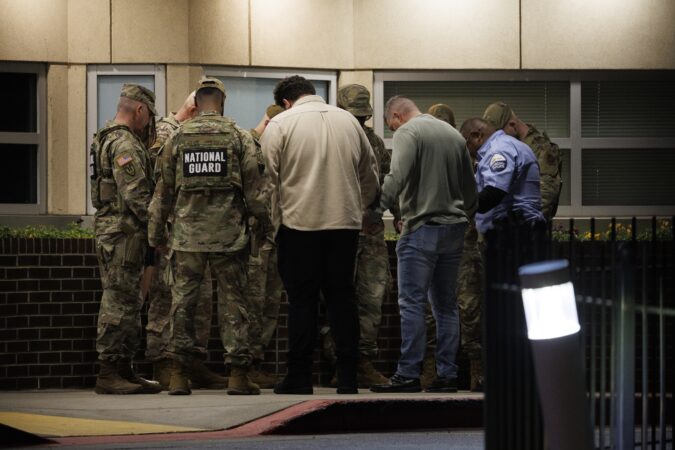
WEST PALM BEACH, Fla. — President Donald Trump said that one of the two West Virginia National Guard members shot by an Afghan national near the White House had died, calling the shooter who had worked with the CIA in his native country a “savage monster.”
As part of his Thanksgiving call to U.S. troops, Trump said that he had just learned that Specialist Sarah Beckstrom, 20, had died, while Staff Sgt. Andrew Wolfe, 24, was “fighting for his life.”
“She’s just passed away,” Trump said. “She’s no longer with us. She’s looking down at us right now. Her parents are with her.”
The president called Beckstrom an “incredible person, outstanding in every single way.”
Trump used the announcement to say the shooting was a “terrorist attack” as he criticized the Biden administration for enabling Afghans who worked with U.S. forces during the Afghanistan War to enter the United States. The president has deployed National Guard members in part to assist in his administration’s mass deportation efforts.
Trump suggested that the shooter was mentally unstable after the war and departure from Afghanistan.
“He went cuckoo. I mean, he went nuts,” the president said. “It happens too often with these people.”
Staff Sgt. Andrew Wolfe and Specialist Sarah Beckstrom.
The shooter worked with U.S. forces in Afghanistan
The suspect charged with the shooting is Rahmanullah Lakanwal, 29. The suspect had worked in a special CIA-backed Afghan Army unit before emigrating from Afghanistan, according to two sources who spoke to the Associated Press on condition of anonymity due to the sensitivity of the situation, and #AfghanEvac, a group that helps resettle Afghans who assisted the U.S. during the two-decade war.
Jeanine Pirro, the U.S. attorney for the District of Columbia, declined to provide a motive for Wednesday afternoon’s brazen act of violence which occurred just blocks from the White House. The presence of troops in the nation’s capital and other cities around the country has become a political flashpoint.
The Veterans of Foreign Wars post in Webster Springs, where Beckstrom is from, will hold three prayer vigils Thursday, Friday, and Saturday evenings, according to a Facebook post from the Webster County Veterans Auxiliary.
Pirro said that the suspect, Lakanwal, launched an “ambush-style” attack with a .357 Smith & Wesson revolver. The suspect currently faces charges of assault with intent to kill while armed and possession of a firearm during a crime of violence. Pirro said that “it’s too soon to say” what the suspect’s motives were.
The charges could be upgraded, Pirro said, adding: “We are praying that they survive and that the highest charge will not have to be murder in the first degree. But make no mistake, if they do not, that will certainly be the charge.”
The rare shooting of National Guard members on American soil, on the eve of Thanksgiving, comes amid court fights and a broader public policy debate about the Trump administration’s use of the military to combat what officials cast as an out-of-control crime problem.
Trump issued an emergency order in August that federalized the local police force and sent in National Guard troops. The order expired a month later. But the troops have remained in the city, where nearly 2,200 troops currently are assigned, according to the government’s latest update.
The guard members have patrolled neighborhoods, train stations and other locations, participated in highway checkpoints and been assigned to pick up trash and guard sports events. The Trump administration quickly ordered 500 more National Guard members to Washington following Wednesday’s shooting.
The suspect who was in custody also was shot and had wounds that were not believed to be life-threatening, according to a law enforcement official who was not authorized to discuss the matter publicly and spoke to AP on condition of anonymity.
Shooting raises questions about legacy of Afghanistan War
A resident of the eastern Afghan province of Khost who identified himself as Lakanwal’s cousin said Lakanwal was originally from the province and that he and his brother had worked in a special Afghan Army unit known as Zero Units in the southern province of Kandahar. A former official from the unit, who spoke on condition of anonymity because of the sensitivity of the situation, said Lakanwal was a team leader and his brother was a platoon leader.
The cousin spoke to the Associated Press on condition of anonymity for fear of reprisals. He said Lakanwal had started out working as a security guard for the unit in 2012, and was later promoted to become a team leader and a GPS specialist.
Kandahar is in the Taliban heartland of the country. It saw fierce fighting between the Taliban and NATO forces after the U.S.-led invasion in 2001 following the al-Qaeda attacks on Sept. 11. The CIA relied on Afghan staff for translation, administrative and front-line fighting with their own paramilitary officers in the war.
Zero Units were paramilitary units manned by Afghans but backed by the CIA and also served in front-line fighting with CIA paramilitary officers. Activists had attributed abuses to the units. They played a key role in the chaotic U.S. withdrawal from the country, providing security around Kabul International Airport as the Americans and withdrew from the country.
CIA Director John Ratcliffe said in a statement that Lakanwal’s relationship with the U.S. government “ended shortly following the chaotic evacuation” of U.S. service members from Afghanistan.
Lakanwal, 29, entered the U.S. in 2021 through Operation Allies Welcome, a Biden administration program that evacuated and resettled tens of thousands of Afghans after the U.S. withdrawal from the country, officials said. Lakanwal applied for asylum during the Biden administration, but his asylum was approved under the Trump administration, #AfghanEvac said in a statement.
The initiative brought roughly 76,000 people to the U.S., many of whom had worked alongside U.S. troops and diplomats as interpreters and translators. It has since faced intense scrutiny from Trump and others over allegations of gaps in the vetting process, even as advocates say there was extensive vetting and the program offered a lifeline to people at risk of Taliban reprisals.
The Philadelphia region played a crucial role in supporting the largest resettlement effort since the end of the Vietnam War, as the United States evacuated thousands of allies from Afghanistan as Kabul fell to the Taliban.
Philadelphia International Airport served as the nation’s main arrival point for more than 25,000 evacuees, about 1,500 of whom needed immediate medical attention for everything from diabetes to gunshot wounds. The flights to Philadelphia came from first-stop, emergency evacuation centers in Germany, Bahrain, Qatar, Spain, the United Arab Emirates, and elsewhere.
Most arrivals to Philadelphia were bused from the airport to temporary living quarters at Joint Base McGuire-Dix-Lakehurst in South Jersey. Others went to seven other military installations being used as “safe havens,” from where they were resettled in communities across the country.
At one point more than 11,000 Afghans were living in a tent city, christened “Liberty Village,” on the South Jersey base. The Trump administration recently designated the base as one of two military sites where it intends to hold immigration detainees.
Ultimately at least 600 evacuees were resettled in the Philadelphia area, many of them living in the Northeast, which already had a significant Afghan population.
Almost everyone who came to Philadelphia and to this country served the United States in a military, diplomatic, or development capacity, or was the family member of someone who did. Others worked in media, women’s organizations, or humanitarian groups that faced Taliban retaliation.
Lakanwal has been living in Bellingham, Wash., about 79 miles north of Seattle, with his wife and five children, said his former landlord, Kristina Widman.
The director of U.S. Citizenship and Immigration Services, Joseph Edlow, said in a social media post Thursday that Trump directed him to review the green cards of people from countries “of concern.”
Edlow didn’t name the countries. But in June, the administration banned travel to the U.S. by citizens of 12 countries and restricted access from seven others, citing national security concerns. Green card holders and Afghans who worked for the U.S. government or its allies in Afghanistan were listed as exempt.
Attack being investigated as terrorist act
FBI Director Kash Patel said the shooting is being investigated as an act of terrorism. Agents have served a series of search warrants, with Patel calling it a “coast-to-coast investigation.”
Washington Mayor Muriel Bowser, a Democrat, has previously questioned the effectiveness of using the National Guard to enforce city laws. Last week, a federal judge ordered an end to the deployment there, but the judge also paused her order for 21 days to allow the administration to remove the troops or appeal.
On Thursday, Bowser interpreted the shooting as a direct assault on America itself, rather than specifically on Trump’s policies.
“Somebody drove across the country and came to Washington, D.C., to attack America,” Bowser said. “That person will be prosecuted to the full extent of the law.”
Staff writer Jeff Gammage contributed to this article.
Pennsylvania’s richest man contributed an undisclosed amount to President Donald Trump’s presidential transition, which raised slightly more than $14 million.
Jeffrey Yass, a billionaire GOP megadonor, appeared on a list of 46 individuals — obtained by the New York Times and published Wednesday — who helped bankroll Trump’s transition. The publication of the list came a full year after Trump publicly promised to disclose the donors.
The transition team said it spent $13.7 million, according to the Times.
Yass’ name appearing on the list of donors was not shocking, as the billionaire has frequently used his financial capital to support Republican candidates both in Pennsylvania and nationally.
Commerce Secretary Howard Lutnick, who cochaired Trump’s transition team and is Haverford College’s largest donor, also donated to the transition.
“President Trump greatly appreciates his supporters and donors; however, unlike politicians of the past, he is not bought by anyone and does what’s in the best interest of the country,” Danielle Alvarez, a spokesperson for the Trump transition, said in a statement to the Times. “Any suggestion otherwise is simply false.”
There had been a back-and-forth as to whether the Trump transition team would release the names of the donors, and transition officials refused to sign an agreement that caps individual donations at $5,000 and prohibits foreign donations. The agreement with the General Services Administration would have required the publication of names of contributors and donation amount within 30 days of the inauguration.
Prior administrations, including the first Trump administration, had signed this agreement.
President Donald Trump has argued with the architect he handpicked to design a White House ballroom over the size of the project, reflecting a conflict between architectural norms and Trump’s grandiose aesthetic, according to four people who spoke on the condition of anonymity to describe internal conversations.
Trump’s desire to go big with the project has put him at odds with architect James McCrery II, the people said, who has counseled restraint over concerns the planned 90,000-square-foot addition could dwarf the 55,000-square-foot mansion in violation of a general architectural rule: don’t build an addition that overshadows the main building.
A White House official acknowledged the two have disagreed but would not say why or elaborate on the tensions, characterizing Trump and McCrery’s conversations about the ballroom as “constructive dialogue.”
“As with any building, there is a conversation between the principal and the architect,” said the official, who spoke on the condition of anonymity to discuss private conversations. “All parties are excited to execute on the president’s vision on what will be the greatest addition to the White House since the Oval Office.”
McCrery declined an interview request through a representative who declined to answer questions about the architect’s interactions with Trump in recent weeks.
Trump’s intense focus on the project and insistence on realizing his vision over the objections of his own hire, historic preservationists and others concerned by a lack of public input in the project reflect his singular belief in himself as a tastemaker and obsessive attention to details. In the first 10 months of his second term, Trump has waged a campaign to remake the White House in his gilded aesthetic and done so unilaterally – using a who’s-going-to-stop-me ethos he honed for decades as a developer.
Multiple administration officials have acknowledged that Trump has at times veered into micromanagement of the ballroom project, holding frequent meetings about its design and materials. A model of the ballroom has also become a regular fixture in the Oval Office.
The renovation represents one of the largest changes to the White House in its 233-year history, and has yet to undergo any formal public review. The administration has not publicly provided key details about the building, such as its planned height. The 90,000-square-foot structure also is expected to host a suite of offices previously located in the East Wing. The White House has also declined to specify its plans for an emergency bunker that was located below the East Wing, citing matters of national security.
On recent weekdays, a bustling project site that is almost entirely fenced off from public view contained dozens of workers and materials ready to be installed, including reinforced concrete pipes and an array of cranes, drills, pile drivers and other heavy machinery, photos obtained by The WashingtonPost show.
Plans for the addition as of Tuesday had not been submitted to the National Capital Planning Commission, a 12-member board charged by Congress with overseeing federal construction projects and now led by Trump allies. A preliminary agenda for the commission’s next meeting, scheduled for Dec. 4, does not include the ballroom project under projects expected to be covered at the meeting or reviewed by the body in the next six months. White House officials say that the administration still plans to submit its ballroom plans to the commission at “the appropriate time.”
The administration’s rapid demolition of the East Wing annex and solicitations from companies and individuals to fund the new construction have caused controversy over the project, which Trump believes the White House needs to host special events. Democrats, historical preservation groups and some architects have criticized the project’s pace, secrecy and shifting specifications. The White House initially said this summer that the ballroom would cost $200 million and fit 650 people, while Trump in recent weeks asserted that it could cost $300 million or more and would fit about 1,000 people.
McCrery has kept his criticism out of the public eye, quietly working to deliver as Trump demanded rushed revisions to his plans, according to two of the people with knowledge of the conversations. The president – a longtime real estate executive who prides himself on his expertise – has repeatedly drilled into the details of the project in their Oval Office meetings, the people said.
McCrery has wanted to remain with the project, worried that another architect would design an inferior building, according to a person with knowledge of his thinking.
McCrery, a classical architect and the founder and principal of McCrery Architects, had designed works like the U.S. Supreme Court bookstore and the pedestal for President Ronald Reagan’s statue in the U.S. Capitol. The ballroom was the largest-ever project for his firm, which has specialized in designing churches, libraries and homes.
Trump hired McCrery for the project on July 13. Eighteen days later, the White House announced the ballroom project, with officials promising to start construction within two months and finish before the end of Trump’s second term.
Trump also appointed McCrery in 2019 to serve a four-year term on the U.S. Commission of Fine Arts, which provides advice to the president, Congress and local government officials on design matters related to construction projects in the capital region.
Democrats have pressed the White House and its donors for more details on the planned construction and what was promised to financial contributors. The ballroom is being funded by wealthy individuals and large companies that have contracts with the federal government, including Amazon, Lockheed Martin and Palantir Technologies. (Amazon founder Jeff Bezos owns The Post.)
Several donors have cast the decision in statements as an investment in the future of a building that belongs to the American people, pushing back on the suggestion that their largesse sought to curry favor with Trump.
A donor list released by the White House of 37 businesses and individuals who underwrote the ballroom is not comprehensive, administration officials acknowledged, leaving open the possibility that millions of dollars have been funneled toward the president’s pet project with no oversight.
“Billionaires and giant corporations with business in front of this administration are lining up to dump millions into Trump’s new ballroom – and Trump is showing them where to sign on the dotted line,” Sen. Elizabeth Warren (D-Massachusetts) said in a statement last week. Warren andhercolleagues also introduced legislation that would impose restrictions on White House construction and require more transparency from donors.
WASHINGTON – A prosecutor on Wednesday dropped all criminal charges in Georgia against U.S. President Donald Trump for interference in the 2020 presidential election, ending a high-profile racketeering case that once seemed like a significant threat to the Republican.
The decision by Peter Skandalakis, a state official who recently took over the prosecution, was a stinging defeat for Fulton County District Attorney Fani Willis, who brought the case in 2023 but then lost control of it amid ethics complaints by defense lawyers.
It was one of four criminal prosecutions that Trump faced in the years since losing his 2020 presidential re-election bid to Democrat Joe Biden. Only one of them — a New York case over a hush-money payment to a porn star during his 2016 campaign — went to trial. Trump was found guilty in that case but has asked for it to be thrown out.
The dismissal highlighted how Trump’s return to the White House this year, a political comeback unparalleled in U.S. history, dismantled a thicket of legal cases that once seemed set to define his post-presidency era.
Trump’s political career had appeared to be over after his false claims of election fraud led a mob of supporters to storm the U.S. Capitol on Jan. 6, 2021, in a failed bid to overturn his 2020 defeat.
Skandalakis said in a court filing that “there is no realistic prospect that a sitting President will be compelled to appear in Georgia to stand trial,” so it would be “futile and unproductive” to push forward with the case.
Skandalakis said his decision, which was approved by a judge on Wednesday morning, “is not guided by a desire to advance an agenda but is based on my beliefs and understanding of the law.”
Steve Sadow, a lawyer for Trump, praised the dismissal, saying the case should have never been brought.
Willis had brought the case against Trump and 18 co-defendants, charging a sweeping criminal conspiracy to overturn Georgia’s 2020 election results after a recording surfaced in the media of Trump asking Georgia’s top electoral official to “find” him enough votes to win the state.
The co-defendants included former Trump lawyers Rudy Giuliani and John Eastman, who like Trump pleaded not guilty.
An appeals court removed Willis, an elected Democrat in Atlanta, from the case last year. The court said she had created an “appearance of impropriety” by having a romantic relationship with the special prosecutor she had hired to lead the case.
Skandalakis heads the Prosecuting Attorneys’ Council of Georgia, a government agency that supports the state’s local prosecutors. Earlier this month, he appointed himself to lead the case, saying he had been unable to find another prosecutor willing to take it over.
Anthony Michael Kreis, a Georgia State University law professor, said Skandalakis’s decision to drop the charges was not surprising. The agency he oversees does not have the resources to prosecute such a complex case with several co-defendants, Kreis said.
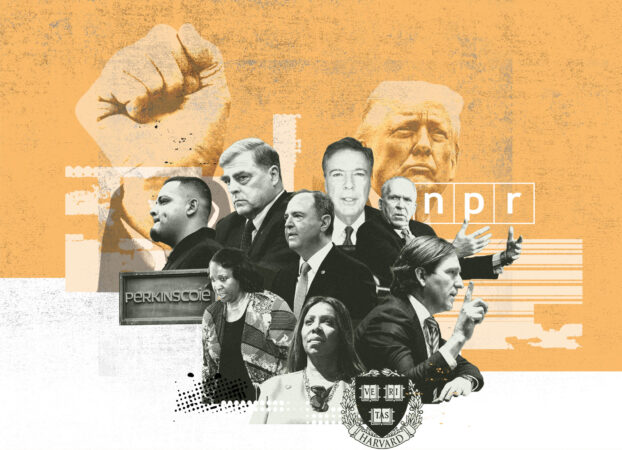
In his second term, Donald Trump has turned a campaign pledge to punish political opponents into a guiding principle of governance.
What began as a provocative rallying cry in March 2023 — “I am your retribution” — has hardened into a sweeping campaign of retaliation against perceived enemies, reshaping federal policy, staffing and law enforcement.
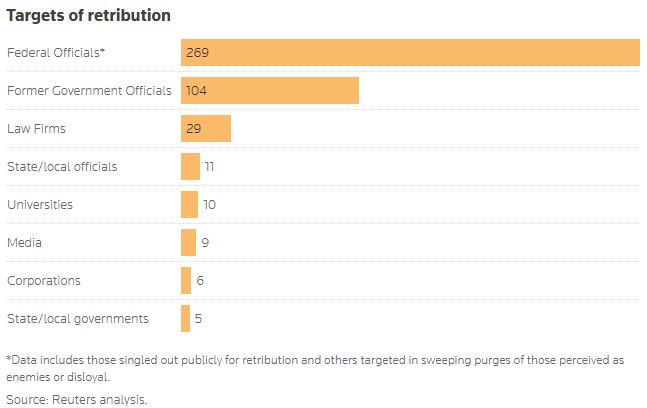
A tally by Reuters reveals the scale: At least 470 people, organizations and institutions have been targeted for retribution since Trump took office — an average of more than one a day. Some were singled out for punishment; others swept up in broader purges of perceived enemies. The count excludes foreign individuals, institutions and governments, as well as federal employees dismissed as part of force reductions.
The Trump vengeance campaign fuses personal vendettas with a drive for cultural and political dominance, Reuters found. His administration has wielded executive power to punish perceived foes — firing prosecutors who investigated his bid to overturn the 2020 election, ordering punishments of media organizations seen as hostile, penalizing law firms tied to opponents, and sidelining civil servants who question his policies. Many of those actions face legal challenges.
At the same time, Trump and his appointees have used the government to enforce ideology: ousting military leaders deemed “woke,” slashing funds for cultural institutions held to be divisive, and freezing research grants to universities that embraced diversity initiatives.
Reuters reached out to every person and institution that Trump or his subordinates singled out publicly for retribution, and reviewed hundreds of official orders, directives and public records. The result: the most comprehensive accounting yet of his campaign of payback.
The analysis revealed two broad groups of people and organizations targeted for retaliation.
Members of the first group – at least 247 individuals and entities – were singled out by name, either publicly by Trump and his appointees or later in government memos, legal filings or other records. To qualify, acts had to be aimed at specific individuals or entities, with evidence of intent to punish. Reuters reporters interviewed or corresponded with more than 150 of them.
Another 224 people were caught up in broader retribution efforts – not named individually but ensnared in crackdowns on groups of perceived opponents. Nearly 100 of them were prosecutors and FBI agents fired or forced to retire for working on cases tied to Trump or his allies, or because they were deemed “woke.” This includes 16 FBI agents who kneeled at a Black Lives Matter protest in 2020. The rest were civil servants, most of them suspended for publicly opposing administration policies or resisting directives on health, environmental and science issues.
Most common were punitive acts, such as firings, suspensions, investigations and the revocation of security clearances.
Reuters found at least 462 such cases, including the dismissal of at least 128 federal workers and officials who had probed, challenged or otherwise bucked Trump or his administration.
The second form was threats. Trump and his administration targeted at least 46 individuals, businesses and other entities with threats of investigations or penalties, including freezing federal funds for Democratic-led cities such as New York and Chicago.
Trump openly discussed firing Federal Reserve Chair Jerome Powell for resisting interest rate cuts, for instance. Last week, he threatened to have six Democratic members of Congress tried for sedition – a crime he said is “punishable by DEATH” – after the lawmakers reminded military personnel they can refuse “illegal orders.” This week, the Defense Department threatened to court-martial one of them, U.S. Senator Mark Kelly, a former Naval officer.
The third form was coercion. In at least a dozen cases, organizations such as law firms and universities signed agreements with the government to roll back diversity initiatives or other policies after facing administration threats of punishment, such as security clearance revocations and loss of federal funding and contracts.
It’s a campaign led from the top: Trump’s White House has issued at least 36 orders, decrees and directives, targeting at least 100 individuals and entities with punitive actions, according to the Reuters analysis.
Trump openly campaigned on a platform of revenge in his latest run for the presidency, promising to punish enemies of his Make America Great Again movement. “For those who have been wronged and betrayed, I am your retribution,” he said in a March 2023 speech. Weeks later, while campaigning in Texas, he repeated the theme. “I am your justice,” he said.
Today, the White House disputes the idea that the administration is out for revenge. It describes recent investigations and indictments of political adversaries as valid course corrections on policy, necessary probes of wrongdoing and legitimate policy initiatives.
“This entire article is based on the flawed premise that enforcing an electoral mandate is somehow ‘retribution.’ It’s not,” White House spokesperson Abigail Jackson said. There is no place in government for civil servants or public officials “who actively seek to undermine the agenda that the American people elected the president to enact,” she added. Trump is abiding by campaign promises to restore a justice system that was “weaponized” by the Biden administration, Jackson said, and “ensure taxpayer funding is not going to partisan causes.”
Trump’s actions have been cheered by his staunchest backers. Right-wing commentator and former Trump advisor Steve Bannon told Reuters the use of government power to punish Trump’s enemies is “not revenge at all” but an attempt to “hold people accountable” for what he said were unfair investigations targeting Trump. More is on the way, he said.
“The people that tried to take away President Trump’s first term, that accused him of being a Russian asset and damaged this republic, and then stole the 2020 election – they’re going to be held accountable and they’re going to be adjudicated in courts of law,” he said in an interview. “That’s coming. There’s no doubt.” There’s no evidence the 2020 election was stolen.
Trump’s allies point to actions former President Joe Biden took upon taking office. After Trump’s supporters attacked the U.S. Capitol on January 6, 2021, in a failed bid to overturn his election loss, Biden revoked Trump’s access to classified information, a first for any former president. Biden also won a court battle to dismiss Senate-confirmed directors of independent agencies serving fixed terms, such as the Federal Housing Finance Authority, and removed scores of Trump-era appointees from unpaid advisory boards.
Yet the scale and systematic nature of Trump’s effort to punish perceived enemies marks a sharp break from long-standing norms in U.S. governance, according to 13 political scientists and legal scholars interviewed by Reuters. Some historians say the closest modern parallel, though inexact, is the late President Richard Nixon’s quest for vengeance against political enemies. Since May, for instance, dozens
of officials from multiple federal agencies have been meeting as part of a task force formed to advance Trump’s retribution drive against perceived enemies, Reuters previously reported.
“The main aim is concentration of power and destruction of all checks against power,” said Daron Acemoglu, Nobel laureate in economics and a professor at the Massachusetts Institute of Technology, which faces an ongoing federal investigation for embracing diversity and equity programs. “Retribution is just one of the tools.”
Dozens of Trump’s targets have challenged their punishments as illegal. Fired and suspended civil servants have filed administrative appeals or legal challenges claiming wrongful termination. Some law firms have gone to court claiming the administration exceeded its legal authority by restricting their ability to work on classified contracts or interact with federal agencies. Most of those challenges remain unresolved.
Investigating foes of Trump
The administration has moved aggressively against officials in the government’s legal and national security agencies, institutions central to investigations of Trump’s alleged misconduct during and after his first term.
At least 69 current and former officials were targeted for investigating or sounding alarms about Russian interference in U.S. elections. U.S. intelligence agencies concluded soon after the 2016 election that Moscow sought to tilt the race toward Trump, a finding later affirmed by a bipartisan Senate Intelligence Committee report in August 2020. Acts of retribution tied to the Russia probe include the September 25 indictment of former FBI Director James Comey, a break from Justice Department norms meant to shield prosecutions from political influence.
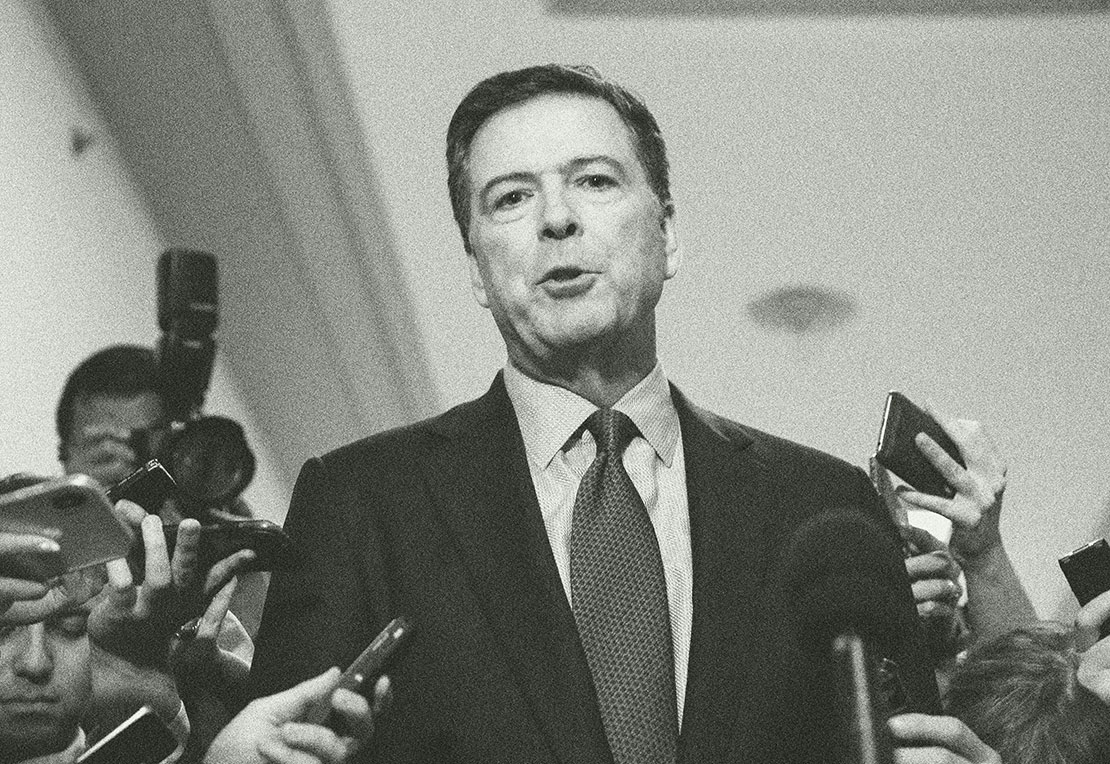
Comey, who led the FBI’s investigation into Trump’s 2016 campaign, was charged after Trump demanded his prosecution. The Justice Department has cast the case as a corruption crackdown. Comey and his lawyers said in court documents that the case was “vindictive” and motivated by “personal animus.” Comey, who pleaded not guilty, declined to comment. A federal judge dismissed the case on Monday, ruling that Trump’s handpicked prosecutor had been unlawfully appointed.
Acts of retribution tied to the Russia probe include the indictment of former FBI Director James Comey. His lawyers say he is the target of a “vindictive” prosecution.
At least 58 acts of retribution have targeted people Trump viewed as saboteurs of his election campaigns, including Chris Krebs, the top cybersecurity official during his first term. Trump fired him in 2020 for disputing claims that the election was rigged. In April, Trump stripped Krebs’ security clearance and ordered a federal investigation into his tenure. Krebs, still asserting that Trump’s defeat was valid, has vowed to fight the probe. He did not respond for this story.
Reuters documented 112 security clearances revoked from current and former U.S. officials, law firms and state leaders – credentials needed for work that involves classified information. In August, Director of National Intelligence Tulsi Gabbard announced she was revoking 37 clearances.
In a response to Reuters posted on X, an agency spokesperson said Gabbard and Trump are working “to ensure the government is never again wielded against the American people it is meant to serve.” She added: “President Trump said it best, ‘Our ultimate retribution is success.’”
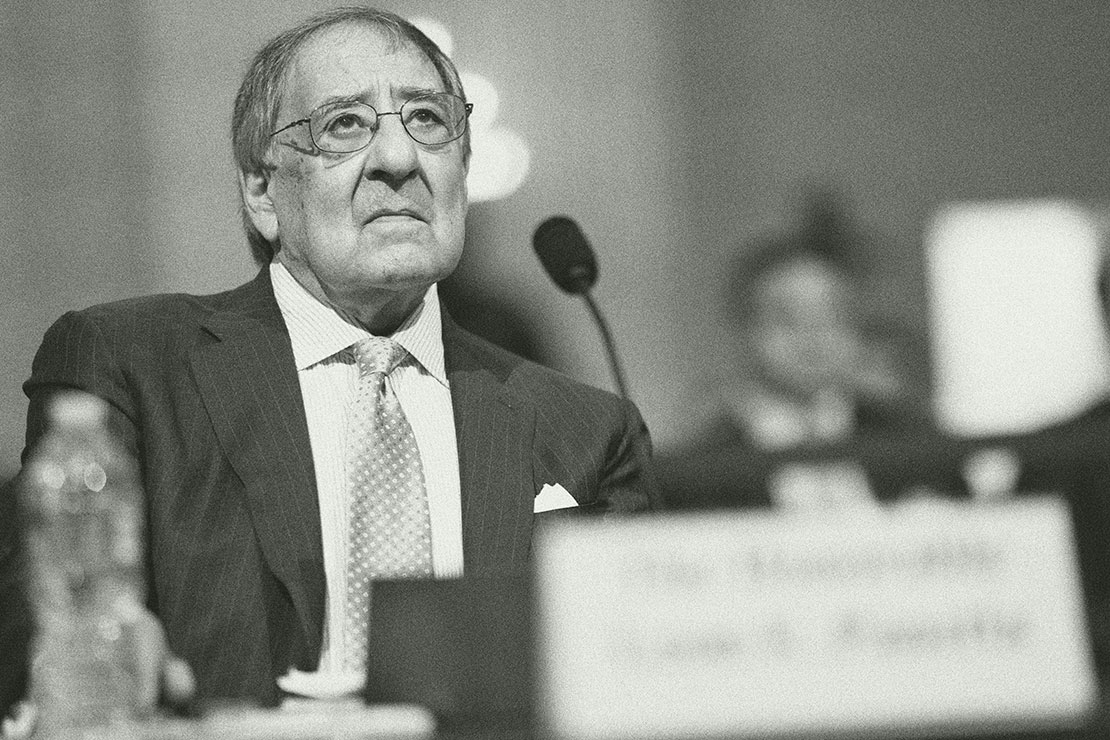
Leon Panetta, CIA director and defense secretary under former President Barack Obama, had his security clearance revoked in January along with others who signed an October 2020 letter suggesting Russia may have been behind reports about emails on Hunter Biden’s laptop. At the time, Joe Biden — Hunter’s father — was Trump’s Democratic rival in the 2020 election. An executive order Trump signed in January claimed: “The signatories willfully weaponized the gravitas of the Intelligence Community to manipulate the political process and undermine our democratic institutions.” Panetta has said he stands by signing the letter.
Panetta told Reuters he had already surrendered his clearance after leaving government nearly a decade ago. Trump’s retribution campaign is hurting CIA morale and wrecking the bipartisan trust that allows Washington to function, Panetta said. “What I worry about is that our adversaries will look at what’s happening and sense weakness,” he said. “This kind of political retribution leads to a loss of trust, which ultimately leads to a failure of governing.” The CIA did not respond to a request for comment.
Former CIA director Leon Panetta had his security clearance revoked along with others who signed a letter suggesting Russia may have been behind reports about emails on Hunter Biden’s laptop.
The revenge effort also reaches deep into the civil service, punishing employees who speak out against Trump’s policies and turning forms of dissent that were tolerated by past administrations into grounds for discipline.
This summer, hundreds of Environmental Protection Agency staffers wrote an open letter protesting deep cuts to pollution control and cleanup programs. The fallout was swift. More than 100 signers who attached their names were placed on paid leave. At least 15 senior officials and probationary employees were told they would be fired. The rest were informed they were under investigation for misconduct, leading to at least 69 suspensions without pay. Many remained out of work for weeks.
“They followed all the rules” of conduct for civil servants, said Nicole Cantello, one of the signers and an officer with the American Federation of Government Employees, a union that represents many affected workers. She called the punishments an attempt to “quell dissent,” stifle free speech and “scare the employees.” In a statement, the EPA said it has “a zero-tolerance policy for career officials using their agency position and title to unlawfully undermine, sabotage, and undercut” administration policy.
At the Federal Emergency Management Agency, about 20 staffers were put on leave and now face misconduct investigations after signing a letter criticizing the agency’s decision to scrap bipartisan reforms adopted years ago to speed disaster relief.
Cameron Hamilton, a Republican who served briefly as acting head of FEMA, was fired in May, a day after telling Congress he didn’t believe the agency should be shut down, contradicting the administration.
Hamilton told Reuters he still supports Trump. But he said too many senior officials are firing people in the name of retribution, trying to impress the White House. “They want to find ways to really launch themselves to prominence and be movers and shakers, to kick ass and take names,” said Hamilton. “They’re trying to show the president ‘look at what I am doing for you.’”
In a statement to Reuters, the Department of Homeland Security, which includes FEMA, said it is building a “new FEMA” to fix “inefficiency and outdated processes.” Employees “resisting change” are “not a good fit,” the statement said.
Dr. Jeanne Marrazzo, former head of the National Institute for Allergy and Infectious Diseases, sees her firing in October — three weeks after filing a whistleblower complaint alleging politicization of research and vaccine policy — as a warning shot. She told Reuters the administration’s purge of dissenting health officials is breeding “anticipatory obedience” — a reflex to comply before being asked. “People know if they push back … this is what happens,” she said. The effect, she says, is an ecosystem of fear: those who stay in government self-censor; those who speak out are branded “radioactive, too hot to handle.”
The Department of Health and Human Services, the agency that oversees NIAID, did not respond to a request for comment.
Federal agency leaders have dismissed a wide array of officials they deemed out of step with Trump’s MAGA agenda, including employees involved in diversity, equity and inclusion initiatives and those working on transgender issues.
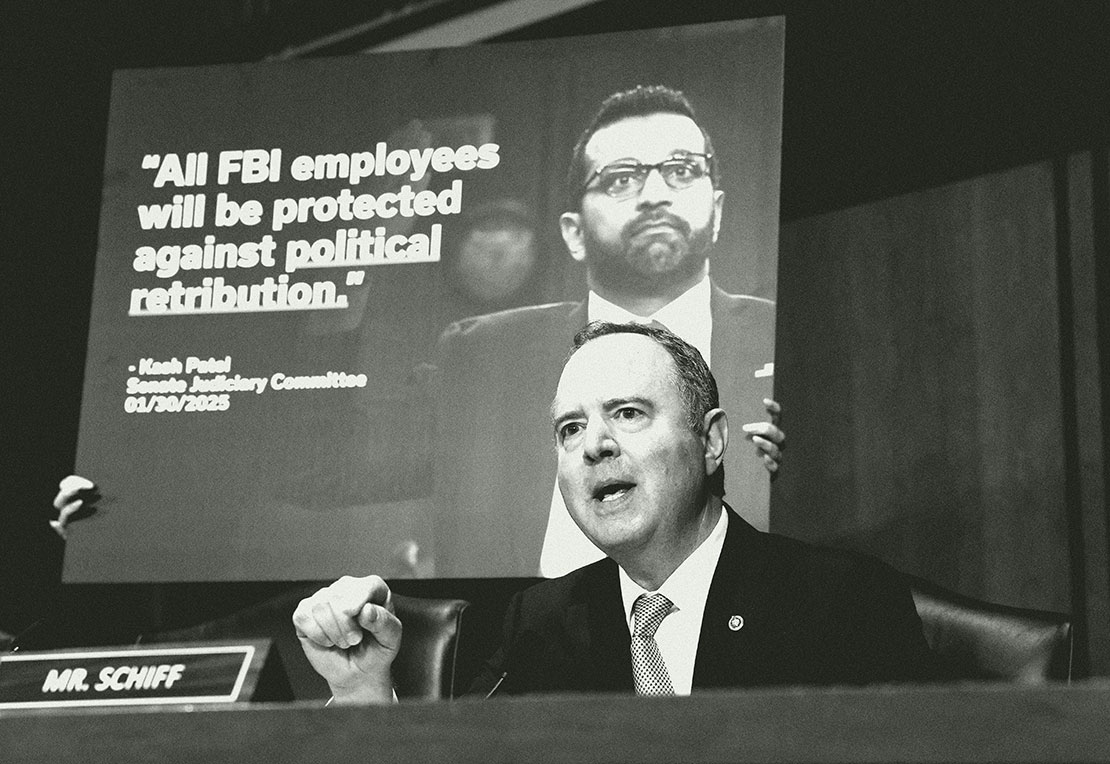
David Maltinsky, a Federal Bureau of Investigation employee, says he was fired by Director Kash Patel for displaying a Pride flag at work — one of at least 50 bureau personnel dismissed on Patel’s watch. Maltinsky sued the FBI and Justice Department, alleging violations of his constitutional rights and seeking reinstatement. The Justice Department has yet to file a formal response.
In his 2023 book, “Government Gangsters,” Patel named 60 people that he said were members of an “Executive Branch deep state” that opposed Trump, including former Democratic government officials and Republicans who served in Trump’s first administration but eventually broke with him. He called for firings and said that anybody who abused their authority should face prosecution. In his 2025 confirmation hearing before Congress, Patel denied that it was an “enemies list.”
Under FBI Director Kash Patel’s watch, at least 50 FBI personnel have been dismissed. In this photo, U.S. Senator Adam Schiff speaks in front of an image of Patel at a Senate hearing on FBI oversight.
Reuters found that at least 17 of the 60 people on Patel’s list have faced some sort of retribution, including firings and stripping of security clearances. The FBI did not respond to a request for comment.
Against perceived foes in the private sector, the administration has wielded financial penalties as leverage. At least two dozen law firms faced inquiries, investigations or restrictions on federal contracting, often for employing or representing people tied to past cases against Trump. Eight struck deals to avoid further action.
Nine media organizations have faced federal investigations, lawsuits, threats to revoke their broadcast licenses and limits on access to White House events. Trump has also suggested revoking broadcast licenses for networks whose coverage he dislikes.
The targets include universities, long cast by the president and his allies as bastions of left-wing radicals.
Officials froze more than $4 billion in federal grants and research funding to at least nine schools, demanding policy changes such as ending diversity, equity and inclusion programs, banning transgender athletes from women’s sports and cracking down on alleged antisemitism amid pro-Palestinian protests. Five universities have signed agreements to restore funding. Harvard University successfully sued to block a freeze on $2.2 billion in federal aid for the school, which Trump accused of “pushing political, ideological, and terrorist inspired” dogma. Harvard declined to comment.
The administration has described the funding freezes and other efforts to force policy changes at colleges and universities as a necessary push to reverse years of leftward drift in U.S. education. “If Reuters considers restoring merit in admissions, reclaiming women’s titles misappropriated by male athletes, enforcing civil rights laws, and preventing taxpayer dollars from funding radical DEI programs ‘retribution,’ then we’re on very different planes of reality,” said Julie Hartman, a spokesperson for the U.S. Education Department.
A historical parallel: Nixon’s enemies
It’s impossible to predict, of course, how far the Trump revenge campaign will go, or whether it will be affected by a recent slide in popular support. Trump has been hurt by public frustration with the high cost of living and the investigation into late convicted sex offender Jeffrey Epstein.
Nixon resigned in 1974 over the Watergate scandal, in which aides to his re-election campaign broke into Democratic Party headquarters and the president himself later directed a cover-up. While in office, he kept a list of more than 500 enemies. But while Trump has conducted his retribution campaign in the open, historians note, Nixon’s enemies list was conceived as a covert tool.
John Dean, chief counsel in the Nixon White House, wrote a confidential memo in 1971 addressing “how we can use the available federal machinery to screw our political enemies.” The planned methods included tax audits, phone-tapping, the cancellation of contracts and criminal prosecution. Yet the execution faltered: IRS Commissioner Donald Alexander refused to conduct mass audits, and most targets escaped serious punishment.
Other recent presidents, to be sure, have been accused of seeking to punish opponents, though on a smaller scale. The Obama administration pursued “aggressive prosecution of leakers of classified information,” the Committee to Protect Journalists said in a 2013 report. Two IRS employees alleged they were retaliated against during the Biden administration for raising concerns about the handling of the tax-compliance investigation of Hunter Biden.
Nixon’s plotting remained a secret until the Watergate hearings exposed it, turning his enemies list into a symbol of presidential abuse. The secrecy reflected a political culture in which retaliation was whispered, not broadcast, and where institutional checks blunted many of Nixon’s ambitions.
Trump’s approach reverses that pattern, historians say. He has openly named his perceived enemies, urged prosecutions in public and framed vengeance as a campaign vow. Some say today’s “enemies list” politics are in that sense farther-reaching than Nixon’s, possibly signaling a shift toward a normalization of retribution in American political life.
Corey Brettschneider, a political science professor at Brown University who has written a book on power grabs by American presidents, said Nixon was ultimately checked and forced to resign by Congress, including members of his own Republican Party. “That’s just not happening now,” he said.
President Donald Trump accused six Democratic members of Congress of committing sedition,a claim that his administration has stuck to amid a fierce national debate that began when the lawmakers urged military and intelligence personnel to “refuse illegal orders.”
The Democratic members, who are all veterans or members of the intelligence community, shared a video online last week in whichthey accused Trump’s administration of pitting service members against American citizens andwarned against orders that would violate the Constitution.
The lawmakers did not reference specific orders, but members have spoken against strikes in the Caribbean and Trump’s deployment of the National Guard in American cities — both of which have faced legal scrutiny — as cause for concern.
Trump first responded to the video with a string of posts on his social media platform, Truth Social, calling for the lawmakers to be arrested and put on trial for sedition, “punishable by DEATH,” and sharing posts against them, including one that called for them to be hanged.
Two of the members represent Pennsylvania: U.S. Reps. Chrissy Houlahan (D., Chester), an Air Force veteran, and Chris Deluzio (D., Allegheny), a Navy veteran.
On Monday, the Department of Defense announced that it would investigate Sen. Mark Kelly (D., Ariz.), a former naval officer and the one veteran in the video who is still obligated to follow military laws because he served long enough to become a military retiree. The announcement threatened to call Kelly back to active duty for court-martial proceedings.
On Tuesday, a Justice Department official told Reuters that the FBI has requested interviews with the Democrats who appeared in the video, which some of the lawmakers publicly corroborated. The FBI declined to comment when reached by The Inquirer.
As the debate over the video escalates in the wake of Trump’s sedition accusation and his administration’s actions, a rarely used charge and the intricacies of military law have been thrown into the spotlight.
What is sedition, and is it punishable by death?
Sedition is an incitement of a rebellion or encouragement of attacking authority, or, in other words, the intent to overthrow the government, according to legal and military experts. When acting with others, it is called seditious conspiracy.
For civilians, sedition is a violation of federal law and carries prison time. It is not punishable by death.
Active-duty military, however, must follow the Uniform Code of Military Justice (UCMJ). While the military law has overlap with civilian law, it is more expansive, controlling, and strict, said Sean Timmons, a Houston-based attorney specializing in military law who previously served as an active-duty U.S. Army captain in the U.S. Army Judge Advocate General (JAG) program.
“In the civilian world you have a lot more defenses, and you have full First Amendment protections,” said Timmons, a managing partner at Tully Rinckey PLLC. “Whereas in the military, your First Amendment rights are quite limited.”
The maximum punishment for active military is death, but it can be far lower, he said.
Service members must be on active duty to be prosecuted under the UCMJ, but the conduct does not have to have taken place during active duty. This means that retirees like Kelly can be recalled for active duty to face UCMJ prosecution over their behavior while they were not on active duty.
What is an illegal order?
Members of Trump’s administration have pointed to the UCMJ rule that says members must follow lawful orders and orders should be presumed to be lawful. Service members can be punished for not following orders.
However, military rules also prohibit service members from following orders that are undoubtedly illegal — a point the lawmakers get at in their video — and they can be punished for doing so.
But whether orders are legal is supposed to be up to officers, not rank-and-file members, Timmons said.
“If you don’t comply, you could be charged with failure to follow orders and other crimes,”hesaid.
The exceptions (those obviously illegal crimes) would be war crimes like raping prisoners, deliberating killing civilians without justification, or torture, not day-to-day acts that would break the law, he explained.
Take the example of burning down an enemy’s structure.
“If your military unit says to burn it down because it’s part of the military objective, that’s a lawful order, even though it’s an illegal act,” he said. “It’s a war crime if it’s to burn down adaycare with kids inside.”
The boat strikes in the Caribbean have been in a legalgray area, he said, but “if your command says it’s legal, you’re supposed to execute.”
“The military system is harsh, cruel, and unfair … but it’s the system we have in place, and it’s designed that way to ensure discipline, obedience, and compliance,” he added.
Did the lawmakers commit sedition?
Claire Finkelstein, founder and faculty director of the Center for Ethics and the Rule of Law at the University of Pennsylvania’s Carey Law School and an expert in military ethics, said accusing the lawmakers of sedition “makes absolutely no sense, especially in a case in which they’re just reminding servicemen of their obligation not to follow illegal orders, which is a fundamental part of the UCMJ.”
“One has to really work hard to fill in the blanks here,” she said.
Timmons said five out of the six lawmakers have their freedom of speech to relyon as a protection.
“Just having divergent political views that the commander-in-chief doesn’t like, for civilians, there’s no liability, there’s no repercussions,” he said.
That doesn’t mean Trump’s administration cannot investigate them for “seditious behavior” anyway.
Kelly, on the other hand, was “on thin ice” by participating in a video that seems to undermine Trump’s authority, he said, and it’s not “totally crazy” to argue he engaged in seditious behavior under military law.
That being said, prosecutors would have to prove that his intent was to “cause a revolt within the ranks,” which would be “very hard,” he said.
“But could they make him miserable and humiliate him and charge him? Yes,” he said.
“Is that politically wise? Absolutely not. Is it reckless? Of course. But, technically, can they do it? Yes,” he added.
What are members of Trump’s administration saying?
White House press secretary Karoline Leavitt told reporters on Monday the White House supports the investigation into Kelly and accused him of trying to “intimidate” active-duty members with the video.
“Sen. Mark Kelly well knows the rules of the military and the respect that one must have for the chain of command,” she said.
“You can’t have a functioning military if there is disorder and chaos within the ranks, and that’s what these Democrat members were encouraging,” she added.
In a social media post on Monday, Defense Secretary Pete Hegseth called the lawmakers the “seditious six.”
“Encouraging our warriors to ignore the orders of their Commanders undermines every aspect of ‘good order and discipline,’” he wrote. “Their foolish screed sows doubt and confusion — which only puts our warriors in danger.”
How has Kelly responded?
Kelly, also a former astronaut, played down the impact of the threats against him on The Rachel Maddow Show Monday night.
“Is it stressful? I’ve been stressed by, you know, things more important than Donald Trump trying to intimidate me into shutting my mouth and not doing my job,” he said. “He didn’t like what I said. I’m going to show up for work every day, support the Constitution, do my job, hold this administration accountable.”
He also denounced the president’s rhetoric, calling it “inciteful.”
“He’s got millions of supporters,” Kelly said. “People listen to what he says more so than anybody else in the country, and he should be careful with his words. But I’m not going to be silenced here.”
He said he and his wife, former U.S. Rep. Gabby Giffords (D., Ariz.), who survived a 2011 assassination attempt in which she was shot in the head, “know what political violence is, and we know what causes it, too.”
What response have Houlahan and Deluzio gotten?
Houlahan and Deluzio, the two Pennsylvania lawmakers in the video, both reported bomb threats at their district offices on Friday following the president’s posts.
But they have also gotten messages of support.
Houlahan shared voice recordings of veterans from all over the country who left messages of support for her office and thanked her for her advocacy.
“Keep pushing it,” one said. “I’m with you, I’m behind ya,” another said.
“I am so proud of all six of you for making that video,” said another.
The FBI is seeking interviews with the six Democratic members of Congress, including two from Pennsylvania, who released a video calling on members of the military and intelligence community to “refuse illegal orders.”
A U.S. Justice Department official said the FBI has requested interviews with the six Democratic lawmakers, who are all veterans or members of the intelligence community.
The move came a day after the Pentagon threatened to recall Sen. Mark Kelly (D., Ariz.), a Navy veteran and one of the six lawmakers, to active duty potentially to face military charges. Defense Secretary Pete Hegseth on Monday described the video as“seditious” and “despicable, reckless, and false” after President Donald Trump went on a social media rant against the lawmakers last week.
U.S. Reps. Chrissy Houlahan of Chester County, an Air Force veteran, and Chris Deluzio of Allegheny County, a Navy vet, both took part in the video.
Houlahan said in a statement Tuesday that Trump “is using the FBI as a tool to intimidate and harass Members of Congress.”
She said the FBI contacted the House and Senate sergeants at arms on Monday to request the interviews.
“No amount of intimidation or harassment will ever stop us from doing our jobs and honoring our Constitution,” Houlahan said.
The lawmaker said that members of Congress took an oath to the Constitution that “lasts a lifetime, and we intend to keep it.”
“We will not be bullied. We will never give up the ship,” she added.
The six members of Congress urged service members not to “give up the ship” in their video released last week, which drew fierce attacks from Trump. They did not refer to specific orders as illegal in the video, but some have cited military strikes against boats in the Caribbean that experts have questioned as well as Trump’s efforts to deploy the National Guard in U.S. cities.
In a string of posts last week on his social media platform, Truth Social, Trump called the Democrats “traitors” who committed sedition “punishable by DEATH.” He reshared similarly aggressive posts from supporters, including one calling for the lawmakers to be hanged.
The Department of Defense announced Monday that it “has received serious allegations of misconduct” against Kelly, a retired Navy captain, and that “a thorough review of these allegations has been initiated.”
Kelly is subject to military rules while the other veterans who partook in the video are not because he retired from the military. That means he earns a pension and can be recalled to active duty.
His colleagues in the video did not serve long enough to qualify for retirement, so they are not subject to military laws, as he is.