Category: Politics

Political news and coverage

  • Instagram chief says he does not believe people can get clinically addicted to social media

    Instagram chief says he does not believe people can get clinically addicted to social media

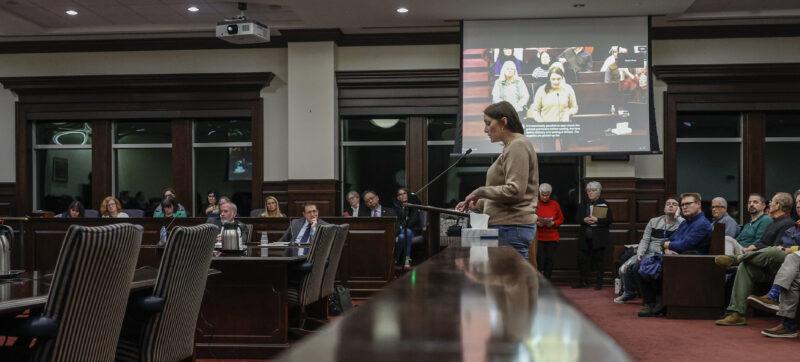
    LOS ANGELES — Adam Mosseri, the head of Meta’s Instagram, testified Wednesday during a landmark social media trial in Los Angeles that he disagrees with the idea that people can be clinically addicted to social media platforms.

    The question of addiction is a key pillar of the case, where plaintiffs seek to hold social media companies responsible for harms to children who use their platforms. Meta Platforms and Google’s YouTube are the two remaining defendants in the case, which TikTok and Snap have settled.

    At the core of the Los Angeles case is a 20-year-old identified only by the initials “KGM,” whose lawsuit could determine how thousands of similar lawsuits against social media companies would play out. She and two other plaintiffs have been selected for bellwether trials — essentially test cases for both sides to see how their arguments play out before a jury.

    Mosseri said it’s important to differentiate between clinical addiction and what he called problematic use. The plaintiff’s lawyer, however, presented quotes directly from Mosseri in a podcast interview a few years ago where he said the opposite, but he clarified that he was probably using the term “too casually,” as people tend to do.

    Mosseri said he was not claiming to be a medical expert when questioned about his qualifications to comment on the legitimacy of social media addiction, but said someone “very close” to him has experienced serious clinical addiction, which is why he said he was “being careful with my words.”

    He said he and his colleagues use the term “problematic use” to refer to “someone spending more time on Instagram than they feel good about, and that definitely happens.”

    It’s “not good for the company, over the long run, to make decisions that profit for us but are poor for people’s wellbeing,” Mosseri said.

    Mosseri and the plaintiff’s lawyer, Mark Lanier, engaged in a lengthy back-and-forth about cosmetic filters on Instagram that changed people’s appearance in a way that seemed to promote plastic surgery.

    “We are trying to be as safe as possible but also censor as little as possible,” Mosseri said.

    In the courtroom, bereaved parents of children who have had social media struggles seemed visibly upset during a discussion around body dysmorphia and cosmetic filters. Meta shut down all third-party augmented reality filters in January 2025. The judge made an announcement to members of the public on Wednesday after the displays of emotion, reminding them not to make any indication of agreement or disagreement with testimony, saying that it would be “improper to indicate some position.”

    In recent years, Instagram has added a slew of features and tools it says have made the platform safer for young people. But this does not always work. A report last year, for instance, found that teen accounts researchers created were recommended age-inappropriate sexual content, including “graphic sexual descriptions, the use of cartoons to describe demeaning sexual acts, and brief displays of nudity.”

    In addition, Instagram also recommended a “range of self-harm, self-injury, and body image content” on teen accounts that the report says “would be reasonably likely to result in adverse impacts for young people, including teenagers experiencing poor mental health, or self-harm and suicidal ideation and behaviors.” Meta called the report “misleading, dangerously speculative” and said it misrepresents its efforts on teen safety.

    Meta is also facing a separate trial in New Mexico that began this week.

  • Trump says he ‘insisted’ to Netanyahu that U.S. talks with Iran continue as Israel wants them expanded

    Trump says he ‘insisted’ to Netanyahu that U.S. talks with Iran continue as Israel wants them expanded

    WASHINGTON — President Donald Trump met privately with Israeli Prime Minister Benjamin Netanyahu on Wednesday and said he’d insisted that negotiations with Iran continue as the U.S. pushes for a nuclear deal with Tehran.

    Netanyahu spent nearly three hours at the White House, but he entered and left out of the view of reporters and he and Trump didn’t take questions. In a subsequent post on his social media site, however, the president called it “a very good meeting” and said “there was nothing definitive reached, other than I insisted that negotiations with Iran continue to see whether or not a Deal can be consummated.”

    “If it can, I let the Prime Minister know that will be a preference,” Trump wrote. “If it cannot, we will just have to see what the outcome will be.”

    He added, “Last time Iran decided that they were better off not making a Deal” and were hit by U.S. airstrikes.

    “Hopefully this time they will be more reasonable and responsible,” Trump wrote.

    In a statement, Netanyahu’s office said the two leaders had discussed negotiations with Iran as well as developments in Gaza and around the region and they had “agreed to continue their close coordination and relationship.”

    Wednesday’s meeting was their seventh during Trump’s second term and took place as both the U.S. and Iran are projecting cautious optimism after holding indirect talks in Oman on Friday about how, once again, to approach negotiations over Iran’s nuclear program.

    Trump said on reaching an agreement with Iran in a Tuesday interview with Fox Business Network’s Larry Kudlow: “I think they’d be foolish if they didn’t. We took out their nuclear power last time, and we’ll have to see if we take out more this time.”

    “It’s got to be a good deal,” he said then. “No nuclear weapons, no missiles.”

    Netanyahu pushes for more in Iran talks

    Netanyahu’s office said prior to the meeting that he wants the U.S.-Iran talks to include limits on Tehran’s ballistic missile program and its support for militant groups such as Hamas and Hezbollah.

    “I will present to the president our outlook regarding the principles of these negotiations — the essential principles which, in my opinion, are important not only to Israel, but to everyone around the world who wants peace and security in the Middle East,” Netanyahu said Tuesday before leaving Israel.

    But it remains unclear how much influence Netanyahu will have over Trump’s approach toward Iran. Trump initially threatened to take military action over Iran’s bloody crackdown on nationwide protests in January, then shifted to a pressure campaign in recent weeks to try to get Tehran to make a deal over its nuclear program.

    Iran is still reeling from the 12-day war with Israel in June. The devastating series of airstrikes, including the U.S. bombing several Iranian nuclear sites, killed nearly 1,000 people in Iran and almost 40 in Israel.

    Trump has said repeatedly that U.S. strikes had “obliterated” Iran’s nuclear capabilities, although the extent of the damage remains unclear. Satellite photos of nuclear sites have recently captured activity, prompting concern that Iran could be attempting to salvage or assess damage at the sites.

    Israel has long called for Iran to cease all uranium enrichment, dial back its ballistic missile program, and cut ties to militant groups across the region. Iran has always rejected those demands, saying it would only accept some limits on its nuclear program in return for sanctions relief.

    Washington has built up military forces in the region, sending an aircraft carrier, guided-missile destroyers, air defense assets and more to supplement its presence. Arab and Islamic countries, including Turkey and Qatar, have been urging both sides to show restraint, warning that any strike or retaliation could have destabilizing consequences for a region already strained by the Israel-Hamas war in Gaza.

    Gaza was also a topic

    In his post, Trump said he and Netanyahu had “also discussed the tremendous progress being made in Gaza, and the Region in general.”

    Trump plans to hold the first meeting next week of his Board of Peace, which was initially framed to oversee future steps of the U.S.-brokered Gaza ceasefire plan but has taken shape with Trump’s ambitions of resolving other global crises.

    Earlier Wednesday, Netanyahu met with Secretary of State Marco Rubio at Blair House, across the street from the White House, and agreed to be part of the board.

    On Iran, Trump said Friday that his special envoy, Steve Witkoff, and son-in-law Jared Kushner had “very good” talks and more were planned this week. But the Republican president kept up the pressure, warning that if Iran did not make a deal over its nuclear program, “the consequences are very steep.”

    Abbas Araghchi, Iran’s foreign minister, made similar comments, saying there will be consultations on “next steps.” He also said the level of mistrust between the two longtime adversaries remains a “serious challenge facing the negotiations.”

    He signaled that Iran would stick to its position that it must be able to enrich uranium — a major point of contention with Trump.

    Netanyahu met with Witkoff and Kushner shortly after arriving in Washington on Tuesday evening and they gave him an update on the talks held with Iran in Oman, the prime minister’s office said.

    Araghchi said in November that Iran was no longer enriching uranium due to the damage from last year’s war.

    Before the war, Iran had been enriching uranium up to 60% purity, a short, technical step away from weapons-grade levels. The U.N. nuclear watchdog, the International Atomic Energy Agency, had said Iran was the only country in the world to enrich to that level that was not armed with the bomb.

    Iran has been refusing requests by the IAEA to inspect the sites bombed in the June war. Even before that, Iran has restricted IAEA inspections since Trump’s decision in 2018 to unilaterally withdraw the U.S. from Iran’s 2015 nuclear deal with world powers.

  • Montgomery County’s top officials are divided on ICE and potential Trump administration funding cuts, but they say they’ll ‘put politics aside’

    Montgomery County’s top officials are divided on ICE and potential Trump administration funding cuts, but they say they’ll ‘put politics aside’

    It was a portrait of amicable disagreement.

    Talking to reporters gathered at the front of an auditorium at Montgomery County Community College, the collar county’s top officials engaged in a friendly back-and-forth about something local leaders have had to pay unprecedented attention to since last year: how to handle any future federal funding cuts under President Donald Trump.

    Within the last year, counties have navigated uncertainty surrounding reductions in funding under the Trump administration. In Montgomery County, those cuts have jeopardized key resources for public health, higher education, and homeless services.

    “Naturally, our teams are following what’s coming out of [the Department of Housing and Urban Development], what’s happening with SNAP. We’re trying to anticipate,” said Jamila Winder, a Democrat and the chair of the Montgomery County Board of Commissioners.

    Community needs “that arise from the cuts to SNAP and the cuts to Medicaid are significant,” said vice chair Neil Makhija, a Democrat.

    Tom DiBello, the board’s lone Republican, had a different view.

    “Well, we also have to maybe look at what those reductions are, why those reductions are occurring … and I know this is where we divide,” he said.

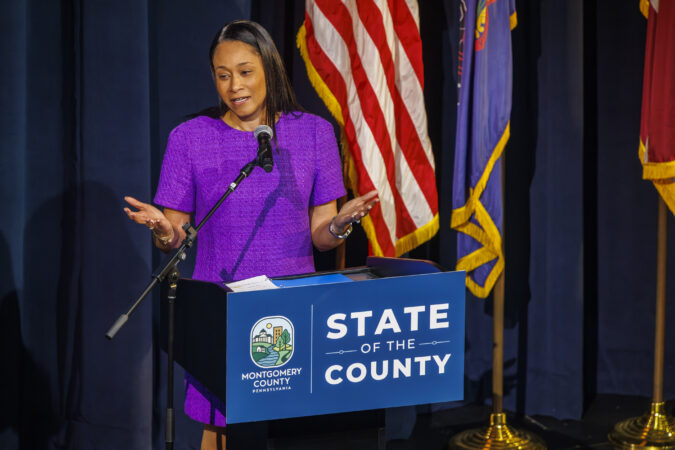
    Crossing the aisle has become rare in the rancorous national political environment. But at Montgomery County Community College on Wednesday, the commissioners emphasized at their annual State of the County address that they are striving for cooperation to be their norm, even as lawmakers in Harrisburg and Washington struggle to work together.

    The commissioners have navigated their own tense moments in recent months, particularly related to immigration.

    “Look, there are definitely things that we disagree on as a team, but what’s most important is that we’re able to fund the services that we provide to people in Montgomery County,” Winder told reporters.

    Montgomery County commissioners and row officers stand on stage during introductions.

    Wednesday’s address featured the commissioners reflecting on the county’s accomplishments in 2025 and outlining their goals for the year ahead to an audience of constituents and officials. Those include opening shelters for people experiencing homelessness, determining how to best integrate artificial intelligence in county services, and cutting red tape for residents trying to access local services.

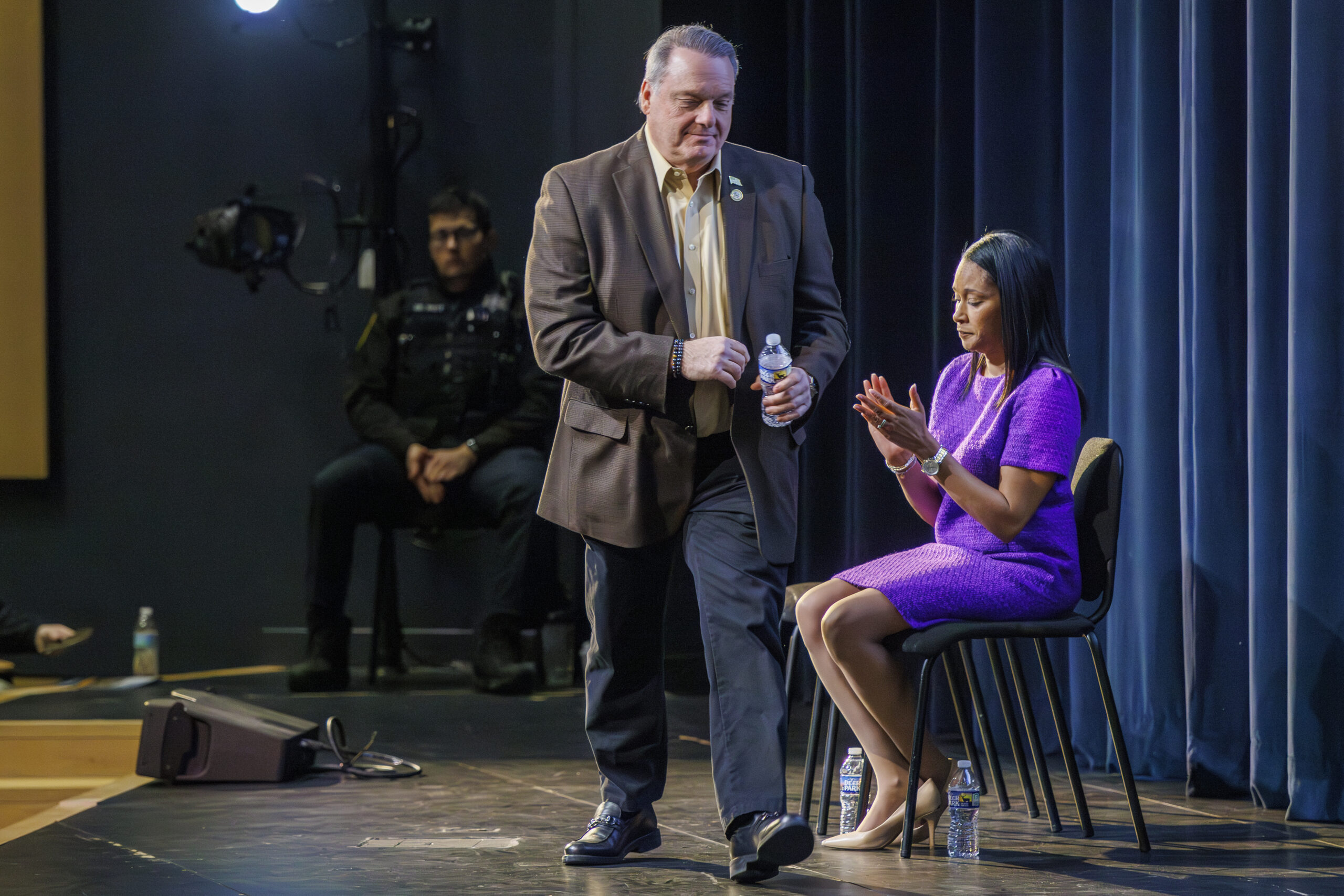
    And it was also sprinkled with displays of camaraderie despite political differences, such as the commissioners touting 2026’s bipartisan budget as the first in nearly a decade or DiBello going in for a hug after turning the microphone over to Winder for her closing remarks.

    “If there’s one thing I want you to take away from today, it’s this: Under our collective leadership as commissioners, this board will continue to put politics aside to do what’s best for our communities,” Winder said at the address, of which the theme was “collaboration.”

    But their interactions have not always fit the cordial image presented Wednesday.

    During a board of commissioners meeting in July, Winder accused DiBello of lacking empathy after 14 people were taken into custody by U.S. Immigration and Customs Enforcement in West Norriton.

    Winder and Makhija called for ICE agents to be held accountable, while DiBello encouraged respect for law enforcement and denounced the incorporation of politics into the meeting.

    “People are being terrorized by masked ICE agents in Montgomery County, that’s what we’re saying. And if you can’t be empathetic to that, that’s disconcerting,” Winder said at the time.

    Thomas DiBello, the lone Republican commissioner, walks to the podium for remarks during the Montgomery County’s 2026 State of County event in Blue Bell. At right is Jamila H. Winder, the board’s Democratic chair.

    “No matter what, we should be respecting our law enforcement agencies until they break the law,” DiBello responded.

    On Wednesday, immigration-related disagreements lingered when Makhija told reporters about his opposition to ICE buying warehouses in Pennsylvania, including in Berks County, that may be used to detain people.

    “Again we divide, because I will support the rule of law,” DiBello said on immigration enforcement. ”I stand with law enforcement, and if people want changes, they need to go to Washington and ask and promote those changes.”

  • Several ICE agents were arrested in recent months, showing risk of misconduct

    Several ICE agents were arrested in recent months, showing risk of misconduct

    Investigators said one immigration enforcement official got away with physically assaulting his girlfriend for years. Another admitted he repeatedly sexually abused a woman in his custody. A third is charged with taking bribes to remove detention orders on people targeted for deportation.

    At least two dozen U.S. Immigration and Customs Enforcement employees and contractors have been charged with crimes since 2020, and their documented wrongdoing includes patterns of physical and sexual abuse, corruption, and other abuses of authority, a review by The Associated Press found.

    While most of the cases happened before Congress voted last year to give ICE $75 billion to hire more agents and detain more people, experts say these kinds of crimes could accelerate given the sheer volume of new employees and their empowerment to use aggressive tactics to arrest and deport people.

    The Trump administration has emboldened agents by arguing they have “absolute immunity” for their actions on duty and by weakening oversight. One judge recently suggested that ICE was developing a troubling culture of lawlessness, while experts have questioned whether job applicants are getting enough vetting and training.

    “Once a person is hired, brought on, goes through the training and they are not the right person, it is difficult to get rid of them and there will be a price to be paid later down the road by everyone,” said Gil Kerlikowske, who served as commissioner of U.S. Customs and Border Protection from 2014 to 2017.

    Almost every law enforcement agency contends with bad employees and crimes related to domestic violence and substance abuse are long-standing problems in the field. But ICE’s rapid growth and mission to deport millions are unprecedented, and the AP review found that the immense power that officers exercise over vulnerable populations can lead to abuses.

    Department of Homeland Security Assistant Secretary Tricia McLaughlin said that wrongdoing was not widespread in the agency, and that ICE “takes allegations of misconduct by its employees extremely seriously.” She said that most new hires had already worked for other law enforcement agencies, and that their backgrounds were thoroughly vetted.

    “America can be proud of the professionalism our officers bring to the job day-in and day-out,” she said.

    Could become a ‘countrywide phenomenon’

    ICE announced last month that it had more than doubled in size to 22,000 employees in less than one year.

    Kerlikowske said ICE agents are particularly “vulnerable to unnecessary use-of-force issues,” given that they often conduct enforcement operations in public while facing protests. With the number of ICE detainees nearly doubling since last year to 70,000, employees and contractors responsible for overseeing them are also facing challenging conditions that can provide more opportunities for misconduct.

    The Border Patrol doubled in size to more than 20,000 agents from 2004 to 2011 — six years longer than ICE took. It was embarrassed by a wave of corruption, abuse, and other misconduct by some of the new hires. Kerlikowske recalled cases of agents who accepted bribes to let cars carrying drugs enter the U.S. or who became involved in human trafficking.

    He and others say ICE is poised to see similar problems that will likely be broader in scope, with less oversight and accountability.

    “The corruption and the abuse and the misconduct was largely confined in the prior instance to along the border and interactions with immigrants and border state residents. With ICE, this is going to be a countrywide phenomenon as they pull in so many people who are attracted to this mission,” said David Bier, director of immigration studies at the Cato Institute, a libertarian think tank.

    Bier, who has helped publicize some of the recent arrests and other alleged misconduct by ICE agents, said he has been struck by the “remarkable array of different offenses and charges that we’ve seen.”

    AP’s review examined public records involving cases of ICE employees and contractors who have been arrested since 2020, including at least 17 who have been convicted and six others who are awaiting trial. Nine have been charged in the last year, including an agent cited last month for assaulting a protester near Chicago while off-duty.

    Some of the most serious crimes were committed by veteran ICE employees and supervisors rather than rookies.

    While federal officials have justified ICE’s aggression, the behavior of agents is drawing scrutiny from cellphone-wielding observers and prosecutors in Democratic-led jurisdictions. Local agencies are looking into last month’s fatal shootings in Minneapolis of protesters Renee Good and Alex Pretti by federal agents, as well as the killing of Keith Porter by an off-duty ICE agent in Los Angeles on New Year’s Eve.

    Arrests have made local headlines

    Around the country, the cases have attracted unwelcome headlines for ICE, which has spent millions of dollars publicizing the criminal rap sheets of those they arrest as the “worst of the worst.”

    Among them:

    — The assistant ICE field office supervisor in Cincinnati, Samuel Saxon, a 20-year ICE veteran, has been jailed since his arrest in December on charges that he attempted to strangle his girlfriend.

    Saxon had abused the woman for years, fracturing her hip and nose and causing internal bleeding, a judge found in a ruling ordering him detained pending trial. “The defendant is a volatile and violent individual,” the judge wrote of Saxon, whose attorneys didn’t return a message seeking comment. ICE said he is considered absent without leave.

    — “I’m ICE, boys,” an ICE employment eligibility auditor told police in Minnesota in November when he was arrested in a sting as he went to meet a person he thought was a 17-year-old prostitute. Alexander Back, 41, has pleaded not guilty to attempted enticement of a minor. ICE said Back is on administrative leave while the agency investigates.

    — When officers in suburban Chicago found a man passed out in a crashed car in October, they were surprised to discover the driver was an ICE officer who had recently completed his shift at a detention center and had his government firearm in the vehicle. They arrested Guillermo Diaz-Torres for driving under the influence. He’s pleaded not guilty and has been put on administrative duty pending an investigation.

    — After an ICE officer in Florida was stopped for driving drunk with his two children in the car in August, he tried to get out of charges by pointing to his law enforcement and military service. When that failed, he demanded to know whether one of the deputies arresting him was Haitian and threatened to check the man’s immigration status, body camera video shows.

    “I’ll run him once I get out of here and if he’s not legit, ooh, he’s taking a ride back to Haiti,” Scott Deiseroth warned during the arrest.

    Deiseroth, who was sentenced to probation and community service, is on administrative leave pending the outcome of an internal investigation. “He did something stupid. He owned up to it,” said his attorney, Michael Catalano. “He’s very sorry about the whole thing.”

    Several cases of force and abuse

    The AP’s review found a pattern of charges involving ICE employees and contractors who mistreated vulnerable people in their care.

    A former top official at an ICE contract facility in Texas was sentenced to probation on Feb. 4 after acknowledging he grabbed a handcuffed detainee by the neck and slammed him into a wall last year. Prosecutors had downgraded the charge from a felony to a misdemeanor.

    In December, an ICE contractor pleaded guilty to sexually abusing a detainee at a detention facility in Louisiana. Prosecutors said the man had sexual encounters with a Nicaraguan national over a five-month period in 2025 as he instructed other detainees to act as lookouts.

    Outside Chicago, an off-duty ICE agent has been charged with misdemeanor battery for throwing to the ground a 68-year-old protester who was filming him at a gas station in December. McLaughlin has said the agent acted in self-defense.

    Other charges cited corruption

    Another pattern that emerged in AP’s review involved ICE officials charged with abusing their power for financial gain.

    An ICE deportation officer in Houston was indicted last summer on charges that he repeatedly accepted cash bribes from bail bondsmen in exchange for removing detainers ICE had placed on their clients targeting them for deportation.

    ICE said the officer was “indefinitely suspended” in May 2024, before his arrest one year later. He has pleaded not guilty to seven counts of accepting bribes and was released from custody while awaiting trial.

    Prosecutors say a former supervisor in ICE’s New York City office provided confidential information about people’s immigration statuses to acquaintances and made an arrest in exchange for gifts and other gain. He was arrested in November 2024, has pleaded not guilty and is awaiting trial.

    Two Utah-based ICE investigators were sentenced to prison last year for a scheme in which they made hundreds of thousands of dollars stealing synthetic drugs known as “bath salts” from government custody and selling them through government informants.

    Using badges to dodge consequences

    The wrongdoing often included the use of ICE resources and credentials to try to avoid arrest or receive favorable treatment.

    In 2022, ICE supervisor Koby Williams was arrested in a sting by police in Othello, Washington, while going to a hotel room to meet who he thought was a 13-year-old girl he’d arranged to pay for sex.

    Williams had driven his government vehicle, which was filled with cash, alcohol, pills, and Viagra, and was carrying his ICE badge and loaded government firearm. The 22-year ICE veteran offered a rationale that turned out to be a lie: that he was there to “rescue” the girl as part of a human trafficking investigation. Williams is serving prison time for what prosecutors called a “reprehensible” abuse of power.

    “With a duty to protect and serve,” they wrote, “defendant sought to exploit and victimize.”

  • Montco officials condemn ICE’s ‘brutality’ after federal agents arrest a man near Norristown

    Montco officials condemn ICE’s ‘brutality’ after federal agents arrest a man near Norristown

    Montgomery County elected officials forcefully condemned a Monday ICE arrest in which agents broke down a family’s front door, lambasting officers for what the leaders described as needless cruelty.

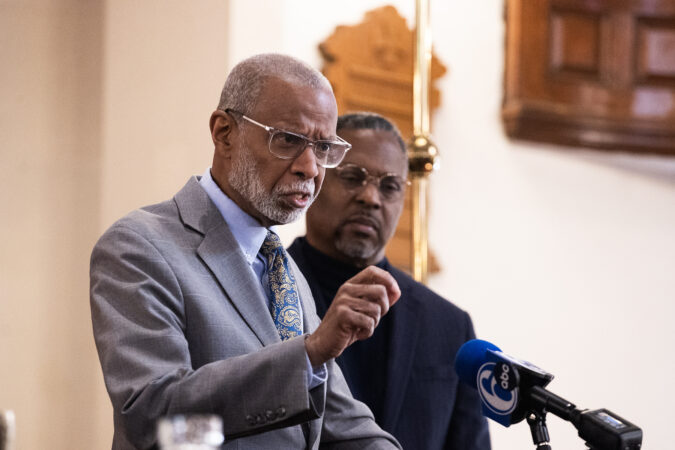
    “We are here for one reason, to say that this kind of brutality is completely unacceptable,” said State Sen. Art Haywood, a Democrat who represents parts of Montgomery County and Philadelphia, during a news conference Tuesday in Norristown.

    Neighbors watched in Lower Providence on Monday as a U.S. Immigration and Customs Enforcement action turned into an hours-long siege, with the street blocked off and more than a dozen government vehicles outside a home in an effort to take one man into custody.

    The local leaders’ comments came amid a national debate over President Donald Trump’s deportation agenda, following violent operations in Minnesota in which federal agents fatally shot two U.S. citizens last month.

    “ICE agents, if you can hear me, do not follow these cruel orders that violate the basic dignity that we all recognize, and for all immigrants who are terrified … we stand with you,” Haywood said.

    ICE officials in Philadelphia did not respond to a request for comment.

    Montgomery County has become a hot spot for ICE activity, and the Norristown area has come under particular scrutiny, with about one-third of the population identifying as Latino. In July, in one of its most high-profile operations in the Philadelphia region, ICE arrested 14 people at a food market near Norristown, about two miles north of the home where Monday’s arrest took place.

    Rachel Rutter, an attorney and the executive director of Project Libertad, was at the scene of the arrest Monday.

    She said it appeared the man was going to work when agents attempted to stop his car, and the vehicles tapped. Each blamed the other, she added. The man, who was not immediately identified, subsequently went inside the home at Ridge Pike and North Barry Avenue in Lower Providence Township.

    By about 10 a.m., agents had arrived and moved into positions around the property. Videos showed the road blocked off with yellow police tape.

    Some agents approached the house, Rutter said, and at least one could be seen waving at someone who was filming from inside. Rutter said family members told her federal agents later obtained a warrant and subsequently broke through the door to arrest the man.

    The Department of Homeland Security statement said Wednesday that ICE was conducting a targeted operation to arrest Jose Manuel Cordova Lopez, a Mexican national who overstayed his visa after it expired in 2021 and who in 2025 was charged with driving under the influence.

    To try to evade arrest, DHS said, he “weaponized his vehicle” and rammed an ICE vehicle, then fled into his house and refused to come out. ICE subsequently obtained a criminal warrant and arrested him, the agency said.

    On Tuesday, elected officials said they were especially concerned with the manner in which Monday’s arrest was carried out.

    Janine Darby, a Lower Providence Township supervisor, described seeing at least 20 unmarked vehicles, some with Uber stickers, along with agents from ICE and the Bureau of Alcohol, Tobacco, Firearms, and Explosives. She added that an ambulance was called for a family member in the house who had been “punched in the face.”

    “Inside the home, what I saw was devastating,” Darby said. “Children crying, a family in shock, and a home destroyed after agents broke down the door.”

    State Sen. Katie Muth (D., Montgomery) said that ICE arrests make communities less safe and less trusting of law enforcement.

    “You allow this kind of unlawful behavior without due process to happen to one person, it can happen to anyone,” Muth said.

    Montgomery County Commissioner Neil Makhija, a Democrat and vice chair of the board, said Tuesday that “it’s incredibly important that we continue to show that we are taking steps to protect every resident’s rights.”

    Immigration activists have repeatedly called for Montgomery County officials to adopt a formal ordinance or resolution to officially become a “welcoming county.”

    The Democratic-led board of commissioners has not done so, citing limits to its power and concern about creating a false sense of security for immigrants. Last year, county officials approved a policy limiting communication between county employees and ICE and said they would not honor prison-detainer requests without a signed judicial warrant, and the commissioners confirmed that the county will not participate in ICE’s 287(g) program, which authorizes local governments to assist in immigration enforcement.

    Local stakeholders have called for all 62 municipalities in the county to enact their own welcoming provisions to limit cooperation with ICE. As of early December, six of them had done so.

    State Rep. Greg Scott (D., Montgomery) said community advocacy is crucial, adding that residents witnessing and recording ICE activity are documenting “reality.”

    “Keep on recording, keep that spare battery pack in your pocket,” he said. “Keep it in your car, keep your phones charged. We got to keep recording to hold people accountable.”

  • Homeland Security officials voice concerns about looming shutdown

    Homeland Security officials voice concerns about looming shutdown

    WASHINGTON — A disruption in reimbursements to states for disaster relief costs. Delays in cybersecurity response and training. And missed paychecks for the agents who screen passengers and bags at the nation’s airports, which could lead to unscheduled absences and longer wait times for travelers.

    Those were just some of the potential ramifications of a looming funding lapse at the Department of Homeland Security, according to officials who testified before a House panel on Wednesday.

    Congress has approved full-year funding for the vast majority of the federal government, but it only passed a short-term funding patch for the Department of Homeland Security that extends through Friday. In response to the killing of two American citizens in Minneapolis and other incidents, Democrats have insisted that any funding bill for the department come with changes to immigration enforcement operations.

    Finding agreement on the issue of immigration enforcement will be exceedingly difficult. But even though lawmakers in both parties were skeptical, a White House official said that the administration was having constructive talks with both Republicans and Democrats. The official, granted anonymity to speak about ongoing deliberations, stressed that President Donald Trump wanted the government to remain open and for Homeland Security services to be funded.

    Meanwhile, Republicans are emphasizing that a Homeland Security shutdown would not curtail the work of the agencies Democrats are most concerned about. Trump’s tax and spending cut bill passed last year gave Immigration and Customs Enforcement about $75 billion to expand detention capacity and beef up enforcement operations.

    “Removal operations will continue. Wall construction will continue,” said Rep. Mark Amodei, the Republican chairman of the House Appropriations subcommittee on Homeland Security.

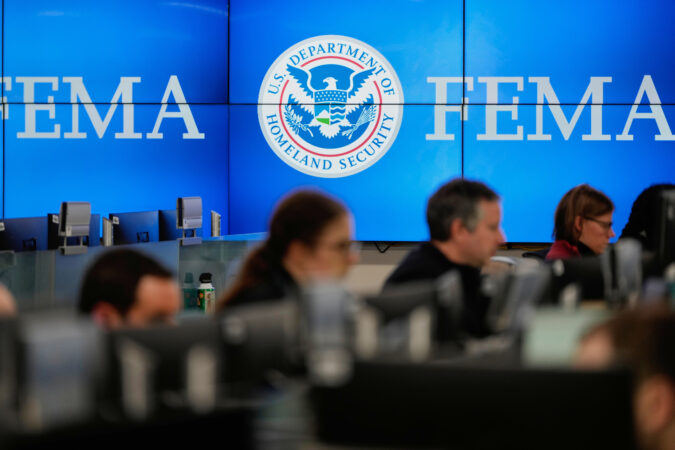
    Rather, agencies such as the Transportation Security Administration, the Secret Service, Coast Guard, and Federal Emergency Management Agency would take the biggest hit, he said. Officials from those agencies appeared before the House subcommittee to explain the potential impact of a Homeland Security shutdown.

    Rep. Henry Cuellar, the ranking Democrat on the panel, said the tragic loss of two American citizens in Minneapolis — Renee Good and Alex Pretti — should concern every lawmaker. He said that strong borders and a respect for human life are not competing values.

    “When enforcement actions lead to outcomes like that, we have an obligation to ask the hard question and to make sure our laws and policies are working as intended,” Cuellar said.

    He said on Homeland Security funding that “we were almost there. We were there, Democrats and Republicans and everybody, but the second shooting brought different dynamics. I think we can get there to address that.”

    Essential work continues

    About 90% of the department’s employees would continue working in a shutdown, but they would do so without pay. Vice Admiral Thomas Allan of the U.S. Coast Guard said law enforcement and emergency response missions continue during a shutdown, but that the possibility of missed paychecks creates significant financial hardships.

    “Shutdowns cripple morale and directly harm our ability to recruit and retain the talented Americans we need to meet growing demands,” Allan said.

    Ha Nguyen McNeill, of the Transportation Security Administration, shared a similar concern. She estimated about 95% of the agency’s 61,000 workers would continue to work, but potentially go without a paycheck depending upon the length of a shutdown. She noted that they just went through a lengthy shutdown last fall.

    “We heard reports of officers sleeping in their cars at airports to save money on gas, selling their blood and plasma and taking on second jobs to make ends meet,” she said. “…Some are just recovering from the financial impact of the 43-day shutdown. Many are still reeling from it. We cannot put them through another such experience.”

    Homeland Security also includes the agency charged with working to protect the public and private sector from a broad range of cyber threats. Madhu Gottumukkala, acting director of that agency, said a shutdown would “degrade our capacity to provide timely and actionable guidance to help partners defend their networks.”

    “I want to be clear, when the government shuts down, cyber threats do not,” he said.

    Long-term impact

    Gregg Phillips, an associated administrator at FEMA, said its disaster relief fund has sufficient balances to continue emergency response activities during a shutdown, but would become seriously strained in the event of a catastrophic disaster. He said that while the agency continues to respond to threats like flooding and winter storms, long-term planning and coordination with state and local partners is “irrevocably impacted.”

    For example, he said a lapse would disrupt training for first responders at the National Disaster & Emergency Management University in Maryland.

    “The import of these trainings cannot be measured,” Phillips said. “And their absence will be felt in our local communities.”

    At the Secret Service, “the casual observer will see no difference,” said Matthew Quinn, the agency’s deputy director. But he said reform efforts taking place at the Secret Service are affected.

    “Delayed contracts, diminished hiring and halted new programs will be the result,” Quinn said.

  • Kennedy Center head warns staff of cuts and ‘skeletal’ staffing during renovation closure

    Kennedy Center head warns staff of cuts and ‘skeletal’ staffing during renovation closure

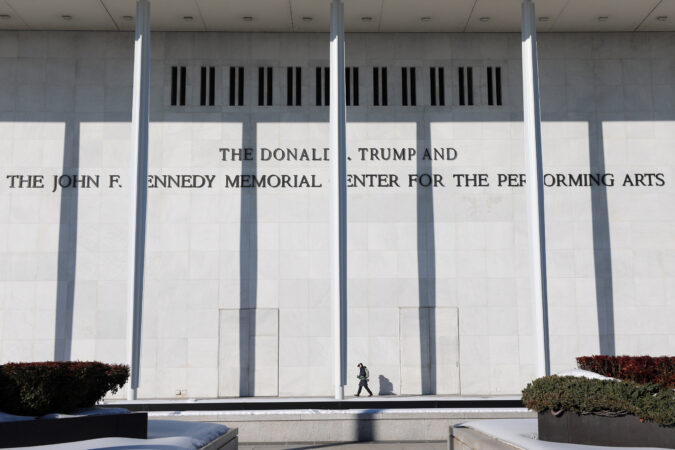
    As the Trump administration prepares to close the Kennedy Center for a two-year renovation, the head of Washington’s performing arts center has warned its staff about impending cuts that will leave “skeletal teams.”

    In a Tuesday memo obtained by The Associated Press, Kennedy Center president Richard Grenell told staff that “departments will obviously function on a much smaller scale with some units totally reduced or on hold until we begin preparations to reopen in 2028,” promising “permanent or temporary adjustments for most everyone.”

    A Kennedy Center spokesperson declined comment Wednesday.

    Over the next few months, he wrote, department heads would be “evaluating the needs and making the decisions as to what these skeletal teams left in place during the facility and closure and construction phase will look like.” Grenell said leadership would “provide as much clarity and advance notice as possible.”

    The Kennedy Center is slated to close in early July. Few details about what the renovations will look like have been released since President Donald Trump announced his plan at the beginning of February. Neither Trump nor Grenell have provided evidence to support claims about the building being in disrepair, and last October, Trump had pledged it would remain open during renovations.

    It’s unclear exactly how many employees the center currently has, but a 2025 tax filing said nearly 2,500 people were employed during the 2023 calendar year. A request for comment sent to Kennedy Center Arts Workers United, which represents artists and arts professionals affiliated with the center — wasn’t immediately returned.

    Leading performers and groups have left or canceled appearances since Trump ousted the center’s leadership a year ago and added his own name to the building in December. The Washington Post, which first reported about Grenell’s memo, has also cited significant drops in ticket revenue that — along with private philanthropy — comprises the center’s operating budget. Officials have yet to say whether such long-running traditions as the Mark Twain Award for comedy or the honors ceremony for lifetime contributions to the arts will continue while the center is closed.

    The Kennedy Center was first conceived as a national cultural facility during the Eisenhower administration, in the 1950s. President John F. Kennedy led a fundraising initiative, and the yet-to-be-built center was named in his honor following his assassination. It opened in 1971 and has become a preeminent showcase for theater, music and dramatic performances, enjoying bipartisan backing until Trump’s return to office last year.

    “This renovation represents a generational investment in our future,” Grenell wrote. “When we reopen, we will do so as a stronger organization — one that honors our legacy while expanding our impact.”

  • She bounced a $25 check in 2014. ICE tried to deport her.

    She bounced a $25 check in 2014. ICE tried to deport her.

    One evening last summer, Donna Hughes-Brown was handcuffed and led into a filthy holding cell somewhere in Kentucky, where insects crawled out of a drain and feces streaked the walls.

    The Missouri grandmother’s life had taken an unrecognizable turn days earlier, when federal agents pulled her off an arriving flight at Chicago’s O’Hare International Airport, arrested her and told her she would be deported.

    Her crime? Writing two bad checks, for a combined total of less than $75, more than a decade earlier.

    Hughes-Brown, a lawful permanent resident of the United States since she was a child, would go on to spend 143 days — nearly five months — in detention. She was only released at the end of last year after an immigration judge granted an application to stop her removal. Her story underscores just how far the Trump administration is willing to go in its quest to boost deportations, extending its dragnet to people who are legally present in the country with minor offenses from years earlier.

    For those swept up in the expanding deportation drive, it is also increasingly difficult to win release, resulting in lengthy detentions such as the one Hughes-Brown experienced. In November, the number of people released from Immigration and Customs Enforcement detention into the U.S. fell about 70 percent from a year earlier, according to a recent report from the American Immigration Council.

    When asked about Hughes-Brown, Tricia McLaughlin, assistant secretary at the Department of Homeland Security, defended her agency’s handling of the case. A conviction for passing bad checks does “not make for an upstanding lawful permanent resident,” McLaughlin said in an email. A spokesperson for ICE did not respond to a request for comment.

    Hughes-Brown, 59, is an Irish citizen and green-card holder who immigrated to the U.S. with her parents in 1978. Before last year, she never imagined she would become a target of the administration’s clampdown on immigration, she said, and she believed that everyone should come to the country legally, like she did.

    Now back home in small-town Missouri, Hughes-Brown said she thinks constantly of the women she left behind in detention: Jeimy, a 25-year-old from Guatemala who is married to an American citizen; Grace, a woman from Venezuela with a congenital heart condition; Beata, a Polish green-card holder with two convictions for minor retail theft more than a decade ago, her story an echo of Hughes-Brown’s.

    “It was the intent for this to happen to so many people,” Hughes-Brown said. “It doesn’t really matter how you got here, the end result is the same.”

    A $25 mistake

    Hughes-Brown’s ordeal began last July, when she made her first overseas trip in almost a decade. Her aunt had died, so Donna and her husband, Jim Brown, traveled to Ireland, gathering with family at a lighthouse overlooking an estuary as they spread her aunt’s ashes.

    At the airport in Dublin, Donna and Jim precleared U.S. Customs and Immigration. Officers pulled Donna aside and asked questions about her travel history. Then they let her proceed to her flight, she said.

    As the plane was approaching Chicago’s O’Hare airport, the flight attendant announced that all passengers would be required to show their passports as they exited. That’s odd, Donna thought. Exiting the plane, she saw armed officers waiting on the jet bridge. They were there for her.

    After a night in a cell at O’Hare, Donna received paperwork explaining why she had been apprehended. She was flummoxed. Back in 2015, she pleaded guilty to passing a bad check the previous year, a misdemeanor. The check was for $25, court records show, and made out to Krazy Korner, a gas station, and convenience store.

    She was living paycheck to paycheck and didn’t realize the check would bounce, Donna says. After it did, court records show, she paid restitution of $80 plus court fees of $117 and served a year of probation. She stabilized her finances, building a career as a home health care aide. She was certain that chapter was closed.

    The government also cited a separate 2012 misdemeanor conviction for passing a bad check. Records from that case are not available to the public because the case was either dismissed or expunged, a county official in Missouri said. Donna barely remembered it; she believes it was for less than $50 at a grocery store.

    While lawful permanent residents have considerably more protection from deportation than visa holders, the government can seek to deport green-card holders for certain nonviolent offenses. One such situation: crimes of “moral turpitude,” which include offenses with an intent to steal or defraud.

    But the government has an “immense amount of discretion” in deciding whether to exercise such powers and whether to detain someone, said César Cuauhtémoc García Hernández, a law professor and immigration expert at Ohio State University. In the past, he said, he would have expected DHS to exercise its discretion favorably in Donna’s case, given her “half a century in the United States with only one or two extremely minor hiccups.”

    To assert that passing a bad check more than a decade ago “makes you unworthy of living in the U.S. — that’s a policy decision,” García Hernández said. What’s more, detaining someone for months is “neither easy nor cheap.”

    The average cost to house an ICE detainee per day was $187, according to the most recent figures available. At that rate, detaining Hughes-Brown cost taxpayers about $27,000.

    ‘Hell from both sides’

    In early August, Donna and several other detainees were handcuffed and loaded into a van for the six-hour drive from Illinois to Campbell County Detention Center, a local jail in Kentucky that also houses ICE detainees. Four hundred miles from home, she lived in a pod with dozens of other women, she says, sleeping on metal bunks with only a thin mat and toilets that were clogged for days.

    One of the women was Beata Siemionkowicz, a lawful permanent resident from outside of Chicago who has lived in the U.S. since 1995. Federal agents arrested her at her daughter’s house in August, her lawyer, George Gomez, said, and told her they were launching deportation proceedings. The reason: two misdemeanor cases for retail theft in 2005 and 2011.

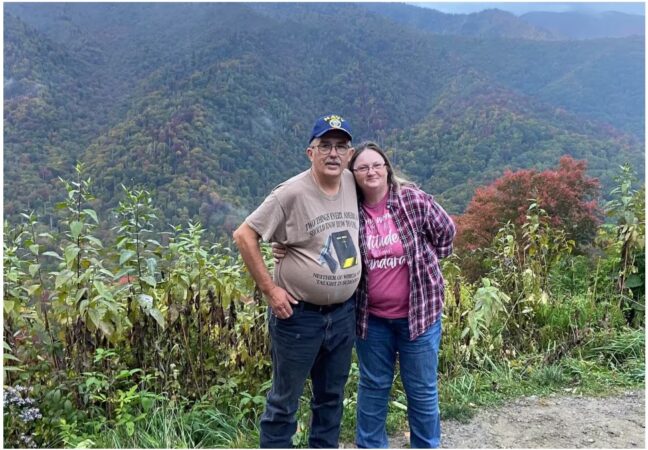
    Meanwhile, Donna’s husband, Jim, was doing everything he could think of to get her released. They’d met online and married seven years before, building a life in Cyrene, a tiny town south of Bowling Green, where they keep three horses and are active in their church. After Hurricane Helene, they twice filled a 30-foot horse trailer with supplies and drove it to North Carolina to help disaster victims.

    A combat veteran turned CT technologist, Jim describes himself as a conservative Christian and voted for Trump in 2024. He’s not against immigration: He grew up around migrant workers in Texas, hard-working people who paid taxes into the system.

    When Donna was detained, Jim wrote to every member of Missouri’s congressional delegation. He struck out, but then help came from an unexpected place: Rep. Seth Magaziner, a Democrat who represents Rhode Island. Magaziner brought Jim to Washington to speak at a panel on Trump’s immigration crackdown. At the event, Jim was asked why he had voted for Trump. He paused. “Because I was an idiot,” he answered.

    The partisan backlash has been swift, he said. Longtime friends in the ruby-red county where the couple lives have turned their back on him because he criticized Trump. Meanwhile, more liberal neighbors have said his wife’s ordeal is a fitting consequence of his vote.

    “My family and I have got hell from both sides,” Jim said.

    In December, Magaziner also asked Homeland Security Secretary Kristi L. Noem about Donna’s case during a hearing on Capitol Hill. “The Trump Administration claimed it would target the ‘worst of the worst,’ but no one understands how false that promise was more than Jim and Donna Brown,” Magaziner said in a statement.

    As the months rolled by, Donna spent two stints in an isolation cell, where the only book allowed was the Bible and she was permitted an hour outside every other day. Her requests to be released on bond were rejected by an immigration judge. But on Dec. 18, after a hearing during which family members talked about how devastating her deportation would be, the judge granted her application to cancel removal proceedings. DHS declined to appeal the decision.

    Still, Donna doesn’t intend to take chances. Her passport and green card were finally returned to her last week after the Irish consulate intervened. “I’m not even getting close to the border,” she said.

    These days, she senses an awkwardness with some friends. They’re sorry for what happened to her but still support the administration’s efforts. That’s their right, she says, and she’s not interested in cutting people off because they disagree with her.

    But she does want to talk to them. About how helpless she felt in her darkest moments in detention – labeled a criminal, locked away and unsure if she would ever return to her life in Missouri. She’s determined to fight for the women she met there.

    “I’m going to keep on keepin’ on,” Donna said. “Because it is not right. It is not right.”
  • IRS improperly disclosed confidential immigrant tax data to DHS

    IRS improperly disclosed confidential immigrant tax data to DHS

    The Internal Revenue Service improperly shared confidential tax information of thousands of individuals with immigration enforcement officials, according to three people familiar with the situation, appearing to breach a legal firewall intended to protect taxpayer data.

    The erroneous disclosure was only recently discovered, the people said. The IRS is working with officials from the Treasury Department, Justice Department, and Department of Homeland Security on the administration’s response.

    The IRS confirmed the Washington Post’s reporting in a court filing Wednesday afternoon. Dottie Romo, the tax agency’s chief risk and control officer, wrote in a sworn declaration that the IRS provided confidential taxpayer information even when DHS officials could not provide sufficient data to positively identify a specific individual.

    But in a controversial decision, Treasury, which oversees the IRS, in April agreed to provide DHS with the names and addresses of individuals the Trump administration believed to be in the country illegally, pursuant to DHS requests.

    Federal courts have since blocked the data-sharing arrangement, holding that it violates taxpayers’ rights, though the government appealed those rulings.

    Before the agreement was struck down, DHS requested the addresses of 1.2 million individuals from the IRS. The tax agency responded with data on 47,000 individuals, according to court records.

    When the IRS shared the addresses with DHS, it also inadvertently disclosed private information for thousands of taxpayers erroneously, a mistake only recently discovered, said the people familiar, who spoke on the condition of anonymity for fear of retribution.

    Romo, in her declaration, did not state when the IRS learned of its error. She said the agency notified DHS on Jan. 23, to begin taking steps to “prevent the disclosure or dissemination, and to ensure appropriate disposal, of any data provided to ICE by IRS based on incomplete or insufficient address information.”

    She declined to state if the IRS would inform people whose data was illegally disclosed to immigration officials, and said DHS and ICE had agreed to “not inspect, view, use, copy, distribute, rely on, or otherwise act on any return information that has been obtained from or disclosed by IRS” because of the pending litigation.

    The affected individuals could be entitled to financial compensation for each time their information was improperly shared. And government officials can personally face stiff civil and criminal penalties for sharing confidential tax information.

    Charles Littlejohn, an IRS contractor, pleaded guilty in 2023 to leaking the tax returns of President Donald Trump and other wealthy individuals.

    Littlejohn was sentenced to five years in prison. Trump in January sued the IRS for $10 billion in damages related to the Littlejohn leak.

    In a statement, a DHS spokesperson said that under the data-sharing agreement, “the government is finally doing what it should have all along.”

    “Information sharing across agencies is essential to identify who is in our country, including violent criminals, determine what public safety and terror threats may exist so we can neutralize them, scrub these individuals from voter rolls, and identify what public benefits these aliens are using at taxpayer expense,” the spokesperson said.

    There is little evidence that undocumented immigrants have attempted to participate in U.S. elections, nor is there a link between undocumented immigrants and higher levels of crime.

    “With the IRS information specifically, DHS plans to focus on enforcing long-neglected criminal laws that apply to illegal aliens,” the DHS spokesperson said.

    Treasury and Justice Department spokespeople declined to comment, citing agency policies not to comment on active litigation. The Office of the Deputy Attorney General is monitoring the ongoing litigation, but the office is not making any decisions on the matter, according to a person familiar with the matter who was not authorized to comment publicly.

    When the IRS began conversations with DHS over data sharing shortly after Trump returned to the White House, senior IRS employees warned administration officials that the program was likely illegal and could sweep up misidentified people, the Post has reported.

    During early meetings on the project, one agency staffer asked immigration authorities how many people with the same name may live in the same state, according to one of the people, illustrating how easy it would be for the Trump administration to inadvertently breach taxpayers’ privacy, including those who are not targets of immigration investigations.

    The IRS’s privacy department was largely sidelined from the talks, two of the people said, and its IT department took over implementing the data sharing. That team had largely been taken over by officials from Trump’s U.S. DOGE Service, the White House’s “efficiency” office charged with shrinking the federal government.

    Treasury officials justified the data-sharing agreement by arguing immigration enforcement was pursuing individuals who had violated criminal statutes, though immigration violations are generally civil, not criminal.

    Under the arrangement, DHS would provide the IRS with the name and address of a taxpayer. The IRS would then cross-reference that information with its confidential databases and confirm the taxpayers’ last known address.

    Immigration officials said the procedure was necessary because DHS lacked reliable information to locate individuals the Trump administration wanted to detain and deport, according to numerous IRS and DHS officials, who spoke on the condition of anonymity because they were not authorized to publicly discuss the matter.

    “This allegedly unauthorized viewing involves personal information that taxpayers provided to the IRS pursuant to a promise that the IRS would prioritize keeping the information confidential,” Judge Colleen Kollar-Kotelly of the U.S. District Court for the District of Columbia wrote in a November order. “A reasonable taxpayer would likely find it highly offensive to discover that the IRS now intends to share that information permissively because it has replaced its promise of confidentiality with a policy of disclosure.”

  • Chesco makes another election error, after residents said their faith in voting security was shaken

    Chesco makes another election error, after residents said their faith in voting security was shaken

    On the heels of a massive pollbook error that left thousands of voters off the rolls in the November election and prompted an independent investigation, Chester County is facing another mistake from its voter services department.

    Earlier this month, the county’s reminder notices, sent to voters who said they would like to receive an annual mail ballot application, reversed the first and last names of voters on the applications. It was not clear how many applications were affected by the error.

    “This printing error will not affect the processing of the form,” the county’s voter services department posted on its website. “Whether voters choose to submit their application online or using the paper form, all applications will be processed accordingly.”

    It was another blunder for a department that has made administrative mistakes in its elections, with residents telling county commissioners last week the errors were eroding their trust in election safety. It also comes as voters have called for the firing of the director of the department after the office has seen high numbers of turnover.

    Counties across the state are sending reminders to voters who said they would like to receive an application to vote by mail. The county became aware of the mistake on Feb. 4, after it mailed out the applications earlier that week.

    County officials alerted the Pennsylvania Department of State that day, a spokesperson for the agency said.

    “We agree with county officials that there is no need to reissue the applications,” the spokesperson said in an email.

    A county spokesperson referred to the voter services statement.

    More than 52,000 county voters cast their ballots by mail in November.

    Residents had worried during a public meeting last week that the county would make another misstep. The meeting was the first since the county released an independent report investigating a pollbook error that omitted roughly 75,000 unaffiliated and third-party voters and forced more than 12,000 voters to cast provisional ballots in the general election.

    November’s error followed another omission in May, when the county did not include the office of the prothonotary on its primary ballot, due to a legal misinterpretation from the county’s solicitor.

    The issues come as the department’s director, Karen Barsoum, has been accused of fostering a toxic workplace, leading to unusually high turnover. The independent investigation found no evidence of that, the lawyers who penned the report said last week.

    The investigation found no evidence of malfeasance in the election blunders, but rather that lack of training, poor oversight, and staffing challenges compounded to cause the pollbook error.

    This suburban content is produced with support from the Leslie Miller and Richard Worley Foundation and The Lenfest Institute for Journalism. Editorial content is created independently of the project donors. Gifts to support The Inquirer’s high-impact journalism can be made at inquirer.com/donate. A list of Lenfest Institute donors can be found at lenfestinstitute.org/supporters.