Category: Politics

Political news and coverage

  • Trump launches TrumpRx.gov, branding his push to lower prescription prices

    Trump launches TrumpRx.gov, branding his push to lower prescription prices

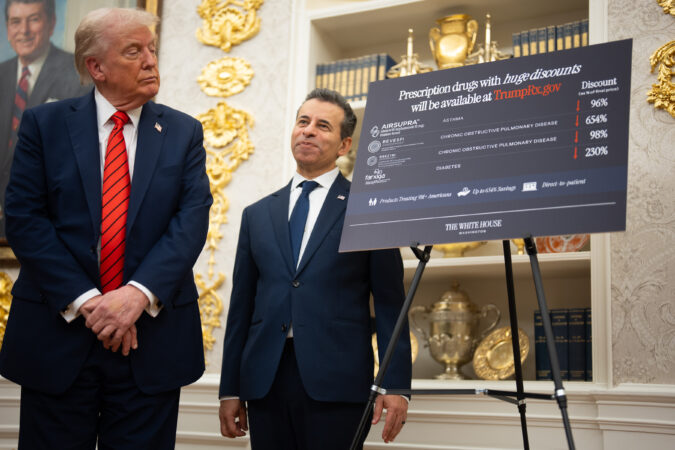
    NEW YORK — The Trump administration on Thursday launched TrumpRx, a website it says will help patients buy prescription drugs directly at a discounted rate at a time when health care and the cost of living are growing concerns for Americans.

    “You’re going to save a fortune,” President Donald Trump said at the site’s unveiling. “And this is also so good for overall health care.”

    The government-hosted website is not a platform for buying medications. Instead, it’s set up as a facilitator, pointing Americans to drugmakers’ direct-to-consumer websites, where they can make purchases. It also provides coupons to use at pharmacies. The site launches with over 40 medications, including weight-loss drugs such as Ozempic and Wegovy.

    The site is part of a larger effort by the Trump administration to show it’s tacking the challenges of high costs. Affordability has emerged as a political vulnerability for Trump and his Republican allies going into November’s midterm elections, as Americans remain concerned about the cost of housing, groceries, utilities and other staples of middle-class identity.

    Trump stressed that the lower prices were made possible by his pressuring of pharmaceutical companies on prices, saying he demanded that they charge the same costs in the U.S. as in other nations. He said prescription drug costs will increase in foreign countries as a result.

    “We’re tired of subsidizing the world,” Trump said at the event on the White House campus that lasted roughly 20 minutes.

    The president first teased TrumpRx in September while announcing the first of his more than 15 deals with pharmaceutical companies to lower drug prices to match the lowest price offered in other developed nations. He said in December the website would provide “massive discounts to all consumers” — though it’s unclear whether the prices available on drugmakers’ websites will routinely be any lower than what many consumers could get through their insurance coverage.

    The website’s Thursday release came after it faced multiple delays, for reasons the administration hasn’t publicly shared. Last fall, Mehmet Oz, administrator of the Centers for Medicare and Medicaid Services, told Trump the site would share prices for consumers before the end of the year. An expected launch in late January was also pushed back.

    The president has spent the past several months seeking to spotlight his efforts to lower drug prices for Americans. He’s done that through deals with major pharmaceutical companies, including some of the biggest drugmakers like Pfizer, Eli Lilly and Merck, which have agreed to lower prices of their Medicaid drugs to so-called “most favored nations” pricing. As part of the deals, many of the companies’ new drugs are also to be launched at discounted rates for consumer markets through TrumpRx.

    Many of the details of Trump’s deals with manufacturers remain unclear, and drug prices for patients in the U.S. can depend on many factors, including the competition a treatment faces and insurance coverage. Most people have coverage through work, the individual insurance market or government programs like Medicaid and Medicare, which shield them from much of the cost.

    Trump’s administration also has negotiated lower prices for several prescription drugs for Medicare enrollees, through a direct negotiation program created by a 2022 law.

  • Epstein emails show he helped arrange White House visit for Woody Allen

    Epstein emails show he helped arrange White House visit for Woody Allen

    NEW YORK — In 2015, Woody Allen and his wife, Soon-Yi Previn, went on a trip to Washington, D.C. With the help of their friend Jeffrey Epstein, they were able to tour the White House.

    Allen’s friendship with Epstein has been known for years, but emails in the huge trove of records released by the Justice Department in recent days illustrate that relationship in new depth.

    The filmmaker, his wife and Epstein were neighbors in New York City, and the three dined together often, records show. They offered each other emotional support during periods when they were being criticized in the media. They commiserated about being accused — unfairly, they told each other — of sexual misconduct.

    And in 2015, Epstein used his connections to another friend who had been in President Barack Obama’s administration to help the couple get a White House tour.

    “Could you show soon yi the White House,” Epstein wrote in a May 2015 email to former White House counsel Kathy Ruemmler. “I assume woody would be too politically sensitive?”

    “I am sure I could show both of them the White House,” Ruemmler responded, although she doubted whether Epstein, who in 2008 had pleaded guilty to solicitating prostitution from an underage girl, would be allowed in.

    “You are too politically sensitive, I think,” she added.

    White House records show that Allen, Previn, and Ruemmler visited on Dec. 27, a Sunday. Obama was in Hawaii at the time.

    Ruemmler and Allen were among a long list of notable people who maintained friendships with Epstein for years, even though he was a registered sex offender who had been accused of abusing children, and whose legal problems had been widely covered in newspapers.

    Some of the guests who accompanied Allen and Previn to dinners with Epstein included talk show host Dick Cavett, linguist Noam Chomsky, and the late comedian David Brenner. Epstein also attended screenings of Allen’s movies and, according to emails, would visit with Allen so he could watch him edit his latest film.

    “Wide variety of interesting people at every dinner,” was how Allen described some of their gatherings in a letter commissioned for a 2016 Epstein birthday party. “It’s always interesting and the food is sumptuous and abundant. Lots of dishes, plenty of choices, numerous desserts, well served. I say well served often it’s by some professional houseman and just as often by several young women reminding one of Castle Dracula where (actor Bela) Lugosi has three young female vampires who service the place.”

    A message sent to an assistant for Allen and Previn via email seeking comment wasn’t immediately returned. Epstein killed himself in 2019 while awaiting trial on sex trafficking charges.

    Emails suggest that Previn, too, had a close relationship to Epstein and she often served as the intermediary between Epstein and Allen.

    Numerous exchanges among Allen, Previn, and Epstein refer to the scandals that began in the early 1990s when Allen acknowledged he was having an affair with Previn, the adopted daughter of his then-girlfriend Mia Farrow. Around the same time, he was investigated by state authorities over allegations he had assaulted their adopted daughter, Dylan Farrow, while visiting Mia’s Connecticut home.

    A Connecticut prosecutor said in 1993 that there was “probable cause” to charge Allen with molesting Dylan, but that he decided not to pursue the case.

    Allen, who married Previn in 1997 and has since adopted two daughters, has denied any wrongdoing. Dylan’s allegations returned to the news in 2014 when an open letter from her was published in the New York Times. Allen has since been largely ostracized by the American film community.

    In emails in 2016, Epstein, Previn, and Allen compared their own scandals to another celebrity in the news at the time: Bill Cosby, who had denied allegations that he drugged and sexually assaulting numerous women.

    “The crowd needs a witch to burn, and there are not many left,” Epstein wrote.

    Allen replied, in a message relayed through Previn, that his own situation is “radically different” from Cosby’s.

    “I do expect (and get) many ugly unfair accusations, (but) he has to battle 50 women and criminal charges,” Allen said, according to Previn’s email. “I have one irate mother whose case was investigated and discredited,” he said, referring to Mia Farrow.

    Epstein replied that the public scorn Allen received was more likely related to his relationship with Previn, which he called a “publicly broken taboo.”

    “Everything else is noise,” he added.

    Allen, in comments relayed through Previn, responded that if the couple’s taboo relationship was the issue, “there’s nothing to be done.”

    “I’m certainly not going to dump her and I’m not going to apologize because I don’t feel either of us did anything we have to apologize for,” he says. “Our romantic life is our business and not the business of the public so it’s a hopeless situation because there’s no way out if that’s what they’re holding against us.”

    Epstein advised his friends to just enjoy themselves and in life.

    “Some actors or actresses might decline a role,” Epstein wrote. “But, so what.”

    Allen hasn’t been accused of having any involvement in Epstein’s alleged sexual abuse of girls and women.

  • Argentina and U.S. sign a major trade deal to slash tariffs and boost a political alliance

    Argentina and U.S. sign a major trade deal to slash tariffs and boost a political alliance

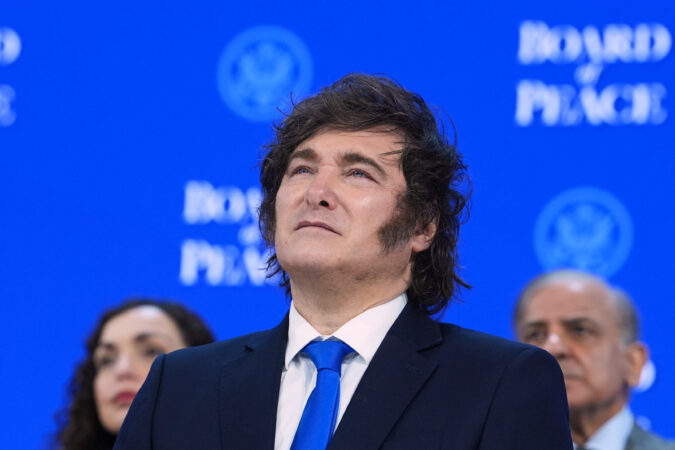
    BUENOS AIRES, Argentina — Argentina and the United States agreed Thursday to ease restrictions on each other’s goods in an expansive trade and investment deal that boosts a drive by President Javier Milei’s government to open up Argentina’s protectionist economy and a push by the Trump administration to reduce food prices for Americans.

    The deal, which slashes hundreds of reciprocal tariffs between the countries, also reflects the importance of Milei’s ideological loyalty to President Donald Trump, even as the chronically distressed South American nation long isolated from the global economy has little to offer Washington in the way of economic reward or geopolitical clout.

    Argentina’s radical libertarian leader has gone to dramatic lengths to prove his devotion to Trump, reshaping his country’s foreign policy to align with the U.S. and championing Trump’s increasingly aggressive interventions in the Western Hemisphere. Milei has traveled to the U.S. at least a dozen times since entering office and plans to visit Trump’s private Mar-a-Lago club in Florida again next week.

    The efforts have already paid off. Last year as market turmoil threatened to derail Milei’s free-market overhaul and drain Argentina’s foreign currency reserves ahead of a crucial midterm election, Trump offered his ally a $20 billion credit line. Milei avoided a currency devaluation and won a decisive victory in the election that sent markets rallying.

    A trade deal between ideological allies

    On Thursday, Argentine Foreign Minister Pablo Quirno and U.S. Trade Representative Jamieson Greer signed the trade and investment agreement in Washington.

    After imposing sweeping tariffs on its traditional trading partners for months, the Trump administration changed its tune last November in announcing framework deals with four Latin American countries, including Argentina.

    The White House argued that the reduction of mutual tariffs on a range of food imports, like Argentine beef and Ecuadorian bananas, would improve the ability of American firms to sell industrial and agricultural products abroad and relieve rising prices for American consumers. The announcement also came as Trump’s steep tariffs drew scrutiny from the Supreme Court.

    Argentina on Thursday became the first of the four countries to finalize its agreement with the U.S. Quirno hailed it as a milestone not only in Argentina’s alliance with the U.S., but also in Milei’s campaign to rebuild the serial defaulter’s reputation.

    “Today Argentina sent a clear signal to the world,” he wrote on social media. “We are a reliable partner, open to trade and committed to clear rules, predictability and strategic cooperation.”

    Concessions could revive criticism

    Argentina’s foreign ministry said it would scrap trade barriers on more than 200 categories of goods from the U.S., including chemicals, machinery and medical devices, slash tariffs to 2% on a range of imports like auto parts and allow sensitive imports like vehicles, beef and dairy products to enter the country tariff-free under government quotas.

    Those are key concessions as local Argentine industries long protected by steep tariffs voice concern about their ability to compete with American manufacturers.

    Washington, for its part, will eliminate reciprocal tariffs on 1,675 Argentine products, the Argentine Foreign Ministry said, adding $1 billion in export revenue. It did not name all the products, while the White House only said the U.S. would remove reciprocal tariffs on “unavailable natural resources” and ingredients for pharmaceutical goods.

    The text of the deal also shows the U.S. agreeing to review its stiff 50% taxes on steel and aluminum imports that have hobbled Argentine manufacturers since last year and quadruple the amount of Argentine beef it allows into the country annually at a lower tariff rate.

    An influx of Argentine beef

    The influx of beef could reignite criticism from cattle ranchers and Republican lawmakers in farm states who were outraged last October when Trump first floated plans to increase imports of Argentine beef, threatening to lower the price that American ranchers receive for their cattle.

    The move, aimed at shoring up the South American country’s limping economy while helping bring beef prices in the U.S. down from record highs, came shortly after the Trump administration offered Milei the $20 billion lifeline and directly purchased both U.S. dollar-denominated Argentine bonds that ratings agencies were classifying as “junk” at the time and the volatile Argentine currency that local investors were dumping in droves.

    The backlash came from across the political spectrum. Trump’s MAGA base questioned the need to bail out a far-flung country that has never been a natural U.S. trading partner: The two countries export many of the same things and directly compete in markets of soy, corn, wheat, meat and oil.

    Democratic lawmakers expressed outrage that Trump was staking taxpayer money on a political gift to an ideological soulmate. That criticism continues, with U.S. Sen. Elizabeth Warren, the top Democrat on the Senate Banking Committee, on Thursday appealing to Treasury Secretary Scott Bessent to end the $20 billion lifeline.

  • Families of plane crash victims ask U.S. appeals court to revive a criminal case against Boeing

    Families of plane crash victims ask U.S. appeals court to revive a criminal case against Boeing

    Thirty-one families that lost relatives in two fatal crashes of Boeing 737 Max jetliners asked a federal appeals court on Thursday to revive a criminal case against the aircraft manufacturer.

    Paul Cassell, a lawyer for the families, urged a three-judge panel of the 5th U.S. Circuit Court of Appeals to overturn a lower court’s dismissal of a criminal conspiracy charge Boeing faced for allegedly misleading Federal Aviation Administration regulators about a flight-control system tied to the crashes, which killed 346 people.

    The dismissal came at the request of the U.S. government after it reached a deal with Boeing that allowed the company to avoid prosecution in exchange for paying or investing an additional $1.1 billion in fines, compensation for victims’ families, and internal safety and quality measures.

    Cassell said Thursday that federal prosecutors violated the families’ rights by failing to properly consult them before striking the deal and shutting them out of the process.

    Federal prosecutors countered that, for years, the government, “has solicited and weighed the views of the crash victims’ families as it’s decided whether and how to prosecute the Boeing Company.”

    More than a dozen family members attended Thursday’s hearing in New Orleans, and Cassell said many more “around the globe” listened to a livestream of the arguments.

    “I feel that there wouldn’t be meaningful accountability without a trial,” Paul Njoroge said in a statement after the hearing. Njoroge, who lives in Canada, lost his entire family in the second of the two crashes — his wife, Carolyne, their children, ages 6, 4, and 9 months, and his mother-in-law.

    All passengers and crew died when the 737 Max jets crashed less than five months apart in 2018 and 2019 — a Lion Air flight that plunged into the sea off the coast of Indonesia and an Ethiopian Airlines flight that crashed into a field shortly after takeoff.

    U.S. District Judge Reed O’Connor in Texas, who oversaw the case for years, issued a written decision in November that described the families’ arguments as compelling. But O’Connor said case law prevented him from blocking the dismissal motion simply because he disagreed with the government’s view that the deal with Boeing served the public interest.

    The judge also concluded that federal prosecutors hadn’t acted in bad faith, had explained their decision and had met their obligations under the Crime Victims’ Rights Act.

    In the case of its deal with Boeing, the Justice Department had argued that given the possibility a jury might acquit the company, taking the case to trial carried a risk that Boeing would be spared any further punishment.

    Boeing attorney Paul Clement said Thursday that more than 60 families of crash victims “affirmatively supported” the deal and dozens more did not oppose it.

    “Boeing deeply regrets” the tragic crashes, Clement said, and “has taken extraordinary steps to improve its internal processes and has paid substantial compensation” to the victims’ families.

    The appeals court panel that heard the arguments said it would issue a decision at a later date.

    The criminal case took many twists and turns after the Justice Department first charged Boeing in 2021 with defrauding the government but agreed not to prosecute if the company paid a settlement and took steps to comply with anti-fraud laws.

    However, federal prosecutors determined in 2024 that Boeing had violated the agreement, and the company agreed to plead guilty to the charge. O’Connor later rejected that plea deal, however, and directed the two sides to resume negotiations. The Justice Department returned last year with the new deal and its request to withdraw the criminal charge.

    The case centered on a software system that Boeing developed for the 737 Max, which airlines began flying in 2017. The plane was Boeing’s answer to a new, more fuel-efficient model from European rival Airbus, and Boeing billed it as an updated 737 that wouldn’t require much additional pilot training.

    But the Max did include significant changes, some of which Boeing downplayed — most notably, the addition of an automated flight-control system designed to help account for the plane’s larger engines. Boeing didn’t mention the system in airplane manuals, and most pilots didn’t know about it.

    In both of the deadly crashes, that software pitched the nose of the plane down repeatedly based on faulty readings from a single sensor, and pilots flying for Lion Air and Ethiopian Airlines were unable to regain control. After the Ethiopia crash, the planes were grounded worldwide for 20 months.

    Investigators found that Boeing did not inform key Federal Aviation Administration personnel about changes it had made to the software before regulators set pilot training requirements for the Max and certified the airliner for flight.

  • U.K.’s Starmer didn’t know Jeffrey Epstein. But the prime minister’s job is under threat

    U.K.’s Starmer didn’t know Jeffrey Epstein. But the prime minister’s job is under threat

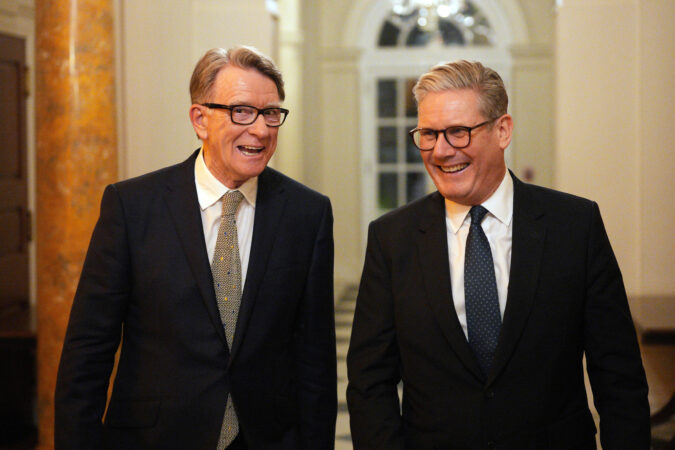
    LONDON — Keir Starmer never met Jeffrey Epstein. But the British prime minister’s job is under threat because of the fallout from the late sex offender’s global web of relationships.

    Friendship with Epstein has already brought down a British royal — Andrew Mountbatten-Windsor, formerly known as Prince Andrew — and U.K. ambassador to Washington Peter Mandelson, fired by Starmer over his links to the financier.

    Now new revelations have plunged Starmer’s center-left government into turmoil.

    The prime minister is facing mounting pressure from within his governing Labour Party over his decision in 2024 to appoint Mandelson, a veteran Labour politician, to the Washington role despite his ties to Epstein. Just how close those ties were has been exposed in newly released documents that have dominated headlines in the U.K.

    Starmer apologized on Thursday to Epstein’s victims, saying Mandelson had repeatedly lied and “portrayed Epstein as someone he barely knew.”

    “I am sorry, sorry for what was done to you, sorry that so many people with power failed you,” Starmer said. “Sorry for having believed Mandelson’s lies and appointed him.”

    Critics believe it’s an error that could end Starmer’s premiership.

    “He is now essentially a boxer on the ropes,” said Rob Ford, professor of political science at the University of Manchester. “His administration could fall over tomorrow, or it could stagger on for months or even years. [But] his authority is seriously shot.”

    Mandelson a risky appointment

    Starmer fired Mandelson, 72, in September after emails were published showing that he maintained a friendship with Epstein after the late financier’s 2008 conviction for sex offenses involving a minor. Epstein committed suicide in a jail cell in 2019 while awaiting trial on U.S. federal charges accusing him of sexually abusing dozens of girls.

    Documents published last week by the U.S. Justice Department contain new revelations, including papers suggesting Mandelson shared sensitive government information with Epstein after the 2008 global financial crisis, and records of payments totaling $75,000 in 2003 and 2004 from Epstein to accounts linked to Mandelson or his husband Reinaldo Avila da Silva.

    There are also chatty, jokey messages pointing to a much closer relationship with Epstein than Mandelson had disclosed.

    British police are investigating Mandelson over potential misconduct in public office. He is not accused of any sexual offenses and says he never witnessed any sexual wrongdoing,

    Mandelson was chosen as ambassador because his trade expertise, contacts and mastery of the political “dark arts” were considered assets in dealing with U.S. President Donald Trump’s second administration.

    Critics say Starmer was, at best, naive in not recognizing the risks involved. Aside from his association with Epstein, Mandelson twice had to resign from senior government posts because of scandals over money or ethics.

    ‘His judgment is questionable’

    In the House of Commons on Wednesday, Starmer answered “Yes” when asked whether the vetting process in 2024 had revealed that Mandelson’s friendship with Epstein continued after the latter’s 2008 conviction.

    The answer sent shock waves through the chamber. On Thursday Starmer said he had meant only that it had “been known publicly for some time that they knew each other.”

    The government plans to release files related to the vetting process that it hopes will exonerate Starmer and show Mandelson lied. But the government is not entirely in control of the process. Some documents are likely to be held back because of the police investigation. Others will be reviewed by Parliament’s independent Intelligence and Security Committee for potential national security implications.

    Labour lawmaker Paula Barker said the prime minister “has shown that his judgment is questionable.”

    “I think he has a very long way to go to rebuild trust and confidence with the public, and trust and confidence within our party,” she told the BBC.

    A string of setbacks

    Starmer has faced a string of setbacks since he led Labour to a landslide election victory in July 2024. He has struggled to deliver promised economic growth, repair tattered public services and ease the cost of living. He pledged a return to honest government after 14 years of scandal-tarred Conservative rule, but has been beset by missteps and U-turns over welfare cuts and other unpopular policies.

    Despite his struggles on the home front, Starmer has been praised for his work on the world stage. He has played a key role in maintaining European support for Ukraine, and in keeping Trump engaged with peace efforts and NATO. He has also worked to rebuild ties with the European Union after the U.K.’s acrimonious departure from the bloc in 2020.

    Labour consistently lags behind the hard-right Reform U.K. party in opinion polls, and its failure to improve had sparked talk of a leadership challenge, even before the Mandelson revelations.

    The Epstein files may have brought a challenge closer, but key rivals are holding back, for now.

    Senior lawmaker Angela Rayner, a popular figure on the left of the party, is still stinging after being forced to resign as deputy prime minister in September for failing to pay enough tax on a home purchase. Health Secretary Wes Streeting, a star of Labour’s right, was close to Mandelson in the past.

    Some Labour lawmakers are calling for Starmer to fire his top aide Morgan McSweeney, a powerful backroom figure mistrusted by many Labour lawmakers, and widely seen as a key force behind Mandelson’s appointment.

    Legislator Karl Turner said the prime minister should “get rid of those advisers who frankly have given terrible advice to him over these weeks and months.”

    On Thursday Starmer vowed to carry on doing the “vital work” of governing.

    But more potential flashpoints loom. Labour may lose a long-held seat in Parliament in a Feb. 26 special election in Greater Manchester. The party is also expected to fare badly in regional and local elections in May.

    Ford said that “whenever the moment comes when Starmer does finally leave, either of his own volition or because his MPs oust him … It will all be traced back to appointing Peter Mandelson.”

  • Some GOP-led states seek to bring back death penalty for child rape convictions

    Some GOP-led states seek to bring back death penalty for child rape convictions

    MONTGOMERY, Ala. — The state of Alabama has joined a growing number of Republican-led states seeking to revive the death penalty for child rape, a sentence outlawed by the U.S. Supreme Court in 2008.

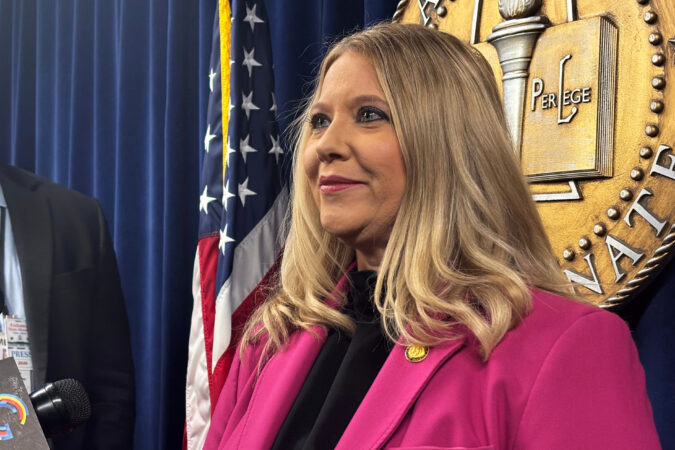
    Alabama approved legislation Thursday to add rape and sexual torture of a child under 12 to the narrow list of crimes that could draw a death sentence.

    The Supreme Court in 2008 ruled that such sentences were not a “proportional punishment” and would violate the Eighth Amendment’s ban on cruel and unusual punishment.

    Republican Rep. Matt Simpson, a former prosecutor who is sponsoring the legislation, said getting the Supreme Court to revisit the constitutionality issue will require getting a test case to the high court. He hopes that will happen if enough states pass similar legislation.

    “This is the worst of the worst crime. It deserves the worst of the worst punishments,” Simpson said.

    Five states — Florida, Tennessee, Idaho, Arkansas, and Oklahoma — have passed similar bills in the last three years and at least five more have proposed bills, according to the Death Penalty Information Center, which tracks the use of capital punishment across the United States.

    Florida Attorney General James Uthmeier in November announced the intent to seek a death sentence for a man indicted on charges of multiple counts of capital sexual battery on a child under 12.

    While the Alabama bill passed with widespread support, some lawmakers emphasized that capital punishment for child rape is unconstitutional and taxpayers would have to foot the bill for any court challenge.

    Robin M. Maher, executive director of the Death Penalty Information Center, said there are concerns that such laws could cause children harm instead of protecting them.

    Writing for the majority opinion in 2008, Justice Anthony Kennedy wrote that the prospect of a death sentence for the perpetrator might discourage reporting by victims or “may remove a strong incentive for the rapist not to kill the victim.”

    “The court recognized that these statutes do more harm to children than help them. They actually place them in grave danger of being killed,” Maher said.

    The Alabama Senate on Thursday voted 33-1 for the bill. Alabama Gov. Kay Ivey said she will sign the bill into law because,” we have to do everything we can to protect Alabama’s children.”

    While the bill is currently unconstitutional, Republican Sen. April Weaver likened it to state abortion bans that were considered unconstitutional until the U.S. Supreme Court in 2022 overturned Roe v. Wade and again allowed states to prohibit abortion. The Alabama legislation won approval after a headline-making case of an alleged child sex trafficking ring in Bibb County. Prosecutors said at least 10 children, some as young as 3, were subjected to rape and torture in an underground bunker.

    “I believe there’s a special place in hell for people who do this to our children, and today, we’re one step closer to having a special place for them in Alabama, and that’s on death row,” said Weaver, who represents Bibb County.

  • U.S. announces $6M in aid for Cuba as island’s leader accuses it of imposing an ‘energy blockade’

    U.S. announces $6M in aid for Cuba as island’s leader accuses it of imposing an ‘energy blockade’

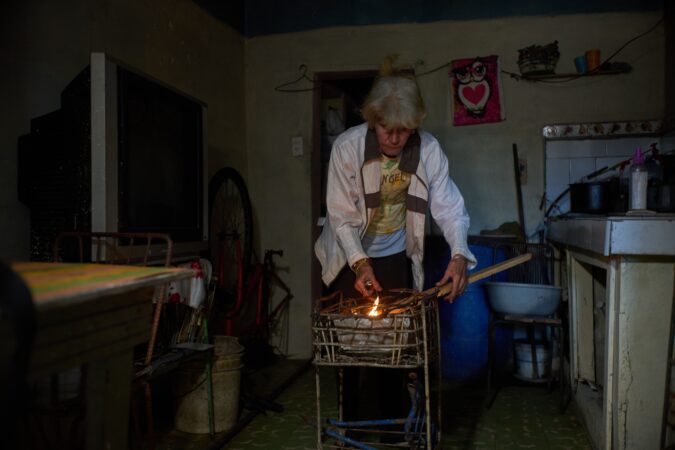
    SAN JUAN, Puerto Rico — The U.S. government on Thursday announced an additional $6 million in aid for Cuba as the island’s crisis deepens and tensions escalate between the two countries, with Cuba’s president accusing the U.S. of an “energy blockade.”

    The aid is largely meant for those living in Cuba’s eastern region, which Hurricane Melissa slammed into late last year. The supplies include rice, beans, pasta, cans of tuna and solar lamps that will be delivered by the Catholic Church and Caritas, said U.S. Department of State Senior Official Jeremy Lewin.

    He warned that officials with the U.S. embassy in Cuba will be out in the field “making sure that the regime does not take the assistance, divert it, try to politicize it.”

    The U.S. previously sent $3 million in disaster relief to Cuban people affected by Melissa.

    Lewin rejected that a halt in oil shipments from Venezuela — after the U.S. attacked the South American country and arrested its then leader — is responsible for the humanitarian situation in Cuba.

    He said that for years, the island has “hoarded all of the resources for the few senile old men that run the country, for their henchmen, for the security apparatus” as he accused Cuba of “meddling abroad,” including “colonizing Venezuela.”

    “So that’s what they’re spending their time and attention on,” said Lewin, who noted that his mother was born in Havana.

    “Why can’t they get food? It’s not because we’re not letting illicit Venezuelan oil continue to make Raúl Castro rich,” he added, referring to the former Cuban president. “It’s because the government can’t put food on the shelves. They have billions of dollars, but they don’t use it to buy food for ordinary Cubans.”

    Lewin spoke hours after Cuban President Miguel Díaz-Canel held a rare, invite-only press conference in which he fielded questions from a select group of reporters. The Associated Press was not invited.

    Díaz-Canel said that there was a “psychological war” against Cuba as he described a recent threat by U.S. President Donald Trump to impose tariffs on any country that sells or provides oil to Cuba as “an energy blockade.”

    He said such actions affect transportation, hospitals, schools, tourism and the production of food. In addition to severe blackouts, Cuban officials note that U.S. sanctions, which increased under Trump’s second term, cost the country more than $7.5 billion between March 2024 and February 2025.

    “I know we are going to live through difficult times. But we will overcome them together, with creative resilience,” Díaz-Canel said in a two-hour speech in which he answered questions from a handful of reporters.

    He noted that Cuba has not received oil shipments since the U.S. began its “naval blockade” on Venezuela in December.

    “Therefore, we have problems with fuel availability to guarantee not only electric generation, but also basic activities,” he said.

    Díaz-Canel promised that in a week, he would share details regarding the island’s current situation and how the government will confront it.

    “There’s a lot of fear,” he said. “I know people say, ‘Sacrifice, again?’ Well, if we don’t sacrifice, and if we don’t resist, what are we going to do? Are we going to give up?”

    Lewin said that if the Cuban government comes to its senses and is willing to allow the U.S. to provide more support, that there might be more announcements.

    “They should be focused on providing for their people, not making these blustery statements,” Lewin said. “He can talk a big game, but again, any government, its first responsibility is always to provide for its people.”

    In his speech, Díaz-Canel said his government is open to dialogue with the United States under certain conditions, including respect for Cuba’s sovereignty and “without addressing sensitive issues that could be perceived as interference in our internal affairs.”

    “Cubans do not hate the American people,” Díaz-Canel said. “We are not a threat to the United States.”

    ___

    Follow AP’s Latin America coverage at https://apnews.com/hub/latin-america

  • Minneapolis man is charged with threatening and cyberstalking ICE officers

    Minneapolis man is charged with threatening and cyberstalking ICE officers

    MINNEAPOLIS — A Minneapolis man was arrested Thursday on charges of cyberstalking and threatening to kill or assault Immigration and Customs Enforcement officers involved in the crackdown in Minnesota.

    Federal prosecutors said in a statement that Kyle Wagner, 37, of Minneapolis, was charged by complaint, and that a decision to seek an indictment, which is necessary to take the case to trial, would be made soon.

    Court records in Detroit, where the case was filed, did not list an attorney who could speak on Wagner’s behalf. The complaint was filed on Tuesday and unsealed Thursday.

    Attorney General Pam Bondi alleged in a statement that Wagner doxed and threatened law enforcement officers, claimed an affiliation with antifa and “encouraged bloodshed in the streets.”

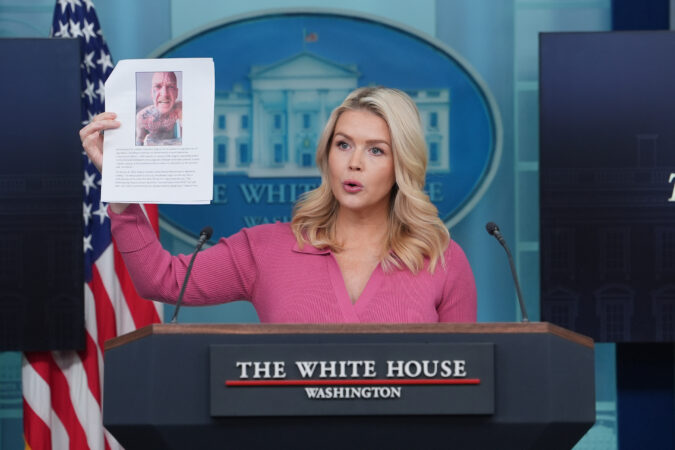
    And at the White House on Thursday, press secretary Karoline Leavitt held up Weber’s photo at the daily briefing and said such conduct by “left-wing agitators” won’t go unpunished.

    “And if people are illegally obstructing our federal law enforcement operations, if they are targeting, doxing, harassing and vilifying ICE agents, they are going to be held accountable like this individual here who, again, is a self-proclaimed member of antifa. He is a domestic terrorist, and he will be held accountable in the United States,” Leavitt told reporters.

    President Donald Trump announced in September that he would designate antifa a “major terrorist organization.” Antifa, short for “anti-fascists,” is an umbrella term for far-left-leaning militant groups and is not a singular entity. It consists of groups that resist fascists and neo-Nazis, especially at demonstrations.

    When Trump administration border czar Tom Homan announced Wednesday that about 700 federal officers deployed to Minnesota would be withdrawn immediately, he said a larger pullout would occur only after there’s more cooperation and protesters stop interfering with federal personnel.

    According to prosecutors, Wagner repeatedly posted on Facebook and Instagram encouraging his followers to “forcibly confront, assault, impede, oppose, and resist federal officers” whom he referred to as the “gestapo” and “murderers.”

    The complaint alleges Wagner posted a video last month that directly threatened ICE officers with an obscenity-laden rant. “I’ve already bled for this city, I’ve already fought for this city, this is nothing new, we’re ready this time,” he said, concluding that he was “coming for” ICE.

    The complaint further alleges that Wagner advocated for physical confrontation in another post, stating: “Anywhere we have an opportunity to get our hands on them, we need to put our hands on them.”

    It also details how Wagner used his Instagram account to dox a person identified only as a “pro-ICE individual” by publishing a phone number, birth month and year, and address in the Detroit suburb of Oak Park, Mich. The complaint says Wagner later admitted that he doxed the victim’s parents’ house.

    Federal prosecutors didn’t immediately respond to a request for comment on why the case was filed in Michigan instead of Minnesota. The alleged doxing was the only Michigan connection listed in the complaint.

    The U.S. Attorney’s office in Minnesota has been hit by the resignations of several prosecutors in recent weeks amid frustrations with the surge and its handling of the shooting deaths of two people by government officers. One lawyer, who told a judge that her job “sucks,” was removed from her post.

    Trump’s chief federal prosecutor for Minnesota, Dan Rosen, told a federal appeals court in a recent filing that his office is facing a “flood of new litigation” and is struggling to keep up just with immigration cases, while his division that handles civil cases is down 50%.

    Rosen wrote that his office has canceled other civil enforcement work “and is operating in a reactive mode.” He also said his attorneys are “appearing daily for hearings on contempt motions. The Court is setting deadlines within hours, including weekends and holidays. Paralegals are continuously working overtime. Lawyers are continuously working overtime.”

  • As West goes after Russia’s oil fleet, Moscow fears for its war funding

    As West goes after Russia’s oil fleet, Moscow fears for its war funding

    Europe is tightening the net on Russian oil being shipped through its waters, squeezing Moscow’s ability to fund its war even as officials and business executives in Russia fear the window is narrowing to reach a peace deal before the economy deteriorates.

    The European Union is considering imposing an outright maritime ban on services needed to ship Russian oil, such as insurance and transportation, as part of a new sanctions package marking four years of Russia’s war.

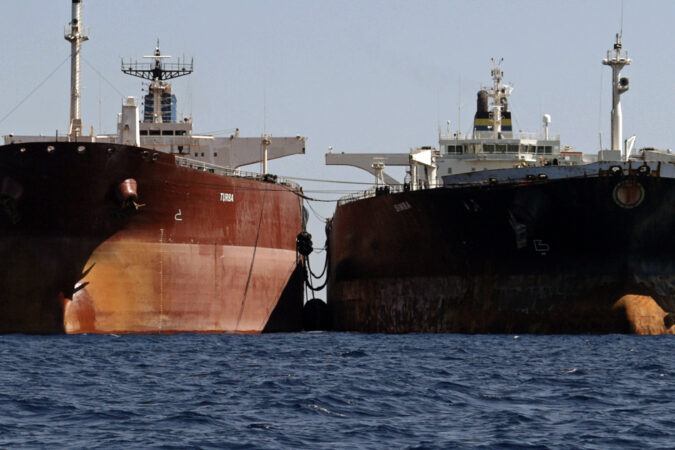
    The ban would significantly ratchet up the sanctions imposed on Russian oil, replacing the current oil price cap system, and comes as 14 European nations — including Britain, France, and Germany — warned last week they could intercept the shadowy fleet of tankers Russia created to help it evade sanctions operating in breach of international maritime law.

    Russian oil revenue plummeted by 50 percent in January compared with the same month the previous year after tough new sanctions imposed by the U.S. Treasury on Russian oil majors Rosneft and Lukoil in October. The penalties forced Moscow to accept ever-steeper discounts of more than $20 per barrel for its oil. Combined with India’s apparent agreement to halt Russian oil purchases in favor of increased imports from the United States and potentially Venezuela, the measures threaten to further strain the resources Moscow needs to fuel its war machine, risking crisis as nonpayments grow across the economy.

    Inspired by the seizure last month by U.S. forces of the Marinera tanker after a weeks-long pursuit despite a Russian submarine escort, the French navy briefly captured another suspected Russian shadow fleet tanker, the Grinch, which had been traveling from the Russian Arctic port of Murmansk across the Mediterranean carrying 730,000 barrels of oil under the flag of Comoros.

    French President Emmanuel Macron said the vessel was subject to international sanctions and suspected of flying a false flag.

    After Russia launched its full-scale invasion of Ukraine in February 2022, the Kremlin used intermediaries to buy up aging tankers and created what became known as the shadow fleet, to lessen its dependency on Western shipping services and reduce sanctions risks. Instead of being insured through Western companies, these tankers often receive insurance from Russia, backed by the country’s central bank, and sail under the flags of less stringent jurisdictions such as Sierra Leone and Cameroon, to conceal the origin of the oil.

    If enforced, the proposed measures could impact nearly a half of Russia’s oil exports, or about 3.5 million barrels per day, which head through European waters via the Baltic and Black seas, with crude shipments mostly bound for refineries in India, China, and Turkey.

    It’s not yet clear if the proposed EU maritime services ban, which requires a unanimous vote by member states, will be passed. But with the risk on the shadow vessels increasing from interceptions as well as attacks by Ukrainian drones, the costs are rising for shipments through Europe.

    “Russian oil exports are highly sensitive to disruptions in shipping. It is an Achilles’ heel,” said Janis Kluge, an economist at Germany’s Institute for International and Security Affairs. “If I were in Russia’s shoes, I would be very worried about the developments both with regards to a stricter policy against the shadow fleet and the Ukrainian drone attacks against tankers. Because both create significant risks. It is critical for Russia to have these shipping lanes open for its oil, or it will really run into big trouble.”

    A Russian academic close to senior Moscow diplomats said any European ban on maritime services for Russian oil and any further interceptions of shadow fleet tankers were “serious threats for Russia.”

    “This is a threat not just for the economy, but also it’s a political question about whether Russia can allow such actions without losing its political reputation,” the academic said.

    Even without the further risk to oil exports, Russian finance officials have been writing with increasing urgency to President Vladimir Putin to warn of a potential crisis by the summer, according to a person in contact with these officials and who spoke on the condition of anonymity because of the sensitivity of the subject.

    The officials have warned falling revenue means the budget deficit is only set to grow without further tax hikes while pressure is mounting on the Russian banking system due to high interest rates and a corporate borrowing spree to fund the war.

    One Moscow business executive said the crisis could hit in “three or four months” as signs appear that real inflation is spiraling far beyond the officially declared 6 percent despite interest rates being held at a high 16 percent. Signs of growing strain in the economy are the biggest numbers of closures of restaurants in Moscow since the pandemic and the forced layoffs of thousands of workers as costs grow, the executive said, also on the condition of anonymity.

    But there is little sign that Putin is set to change his calculus and step back from the Kremlin’s maximalist war demands. Last week, Foreign Minister Sergei Lavrov dismissed the Western security guarantees Ukraine says it needs for any deal, calling instead for an end to the regime in Kyiv.

    “We have no understanding about when the war will end,” the business executive added.

    The growing economic pressures are nevertheless weighing on Moscow as it seeks to keep the Trump administration on its side during negotiations to end the war. “If Trump comes to the conclusion that Russia is sabotaging the negotiation process then it’s possible there could be new sanctions including on the energy sector, and this is a serious challenge for Russia,” the Russian academic said.

    If anything, Russia is only growing more vulnerable to economic pressure, said Craig Kennedy, a former vice president at Bank of America Merrill Lynch now at Harvard University.

    “Oil revenues are sliding, credit is overextended. And Moscow knows things are only likely to get worse in 2026,” he said.

    Not all of Russia’s oil is under sanction, and Western companies can ship this oil as long as it is sold under the price cap first imposed by the European Union in December 2022. The EU had hesitated over imposing a full ban over fears it could cause a counterproductive oil price spike.

    But when the U.S. sanctioned Russia’s two biggest oil majors, Rosneft and Lukoil, in October last year, it sharply increased the share of Russia’s total oil output under U.S. sanctions to 80 percent. Moscow became even more reliant on its shadow fleet to transport its oil through the Baltic and Black seas to refineries in India, Turkey, and China.

    “The amount of unsanctioned oil now produced in Russia is a lot lower,” Kennedy said. “If shipping compliance gets tightened, it could put even more pressure on Russian export revenue.”

    Ukraine has also been stepping up its own efforts to target the shadow fleet, further increasing the risks and costs of shipping Russian oil. Since late November its forces have attacked at least nine Russia-linked tankers, deploying naval and aerial drones, as well as mines.

    European officials will likely still face a game of cat and mouse in targeting the illicit Russian oil. Already since the U.S. imposed sanctions on Rosneft and Lukoil, two mysterious new intermediary companies — Redwood Global Supply FZE LLC and Alghaf Marine DMCC — emerged out of nowhere to become major exporters of Russian oil, according to data from Kpler, a global commodities intelligence firm, compiled by the Kyiv School of Economics.

    Redwood sold 757,000 barrels per day in December, and Alghaf sold 174,000 barrels per day after trading zero amounts of oil previously, according to the data. “What we observed is that volumes traded by these new companies skyrocketed,” said Borys Dodonov, head of the Center for Energy and Climate Studies at the Kyiv School of Economics.

    European governments also argue that many of the Russian shadow fleet vessels flying flags of convenience from nations such as Cameroon and Sierra Leone are not compliant with international maritime safety standards, while those that sail under more than one flag during a voyage — as the Marinera did — can be treated as “stateless” under international maritime law allowing them to be boarded and searched.

    Amid the crackdown, Russia could be forced to register more of its shadow fleet under Russian flags, making them easier targets for sanctions, analysts said, especially if they are de-registered by other flag states.

    Any such move however could also increase the possibility of conflict over attempts to board Russian-flagged vessels with Moscow seeking to intimidate Europe out of taking any action. Russia’s Maritime Board, overseen by hawkish former Security Council chief Nikolai Patrushev, warned late last month that measures would be taken to protect Russian shipping interests against actions by “unfriendly states.”

    “It’s a question of whether these actions will be taken by the Europeans by themselves without the participation of the U.S.,” the Russian academic said. “Then there could be some measures in response like protection by a military convoy.”

  • Russia says it regrets expiration of last nuclear arms treaty but Trump says he wants a new pact

    Russia says it regrets expiration of last nuclear arms treaty but Trump says he wants a new pact

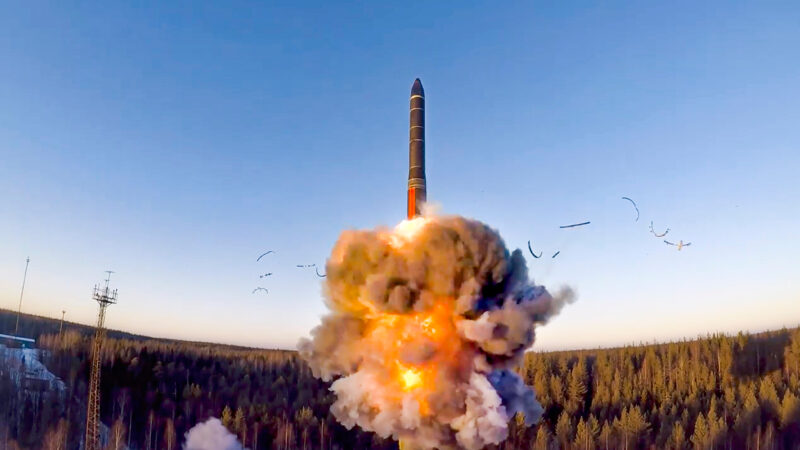
    MOSCOW — The Kremlin said Thursday it regretted the expiration of the last remaining nuclear arms pact between Russia and the United States, while President Donald Trump declared he was against keeping its limits and wants a better deal.

    The pact’s termination left no caps on the two largest atomic arsenals for the first time in more than a half-century, fueling fears of an unconstrained nuclear arms race

    Russian President Vladimir Putin last year declared his readiness to stick to the treaty’s limits for another year if Washington followed suit, but Trump has ignored the offer and argued that he wants China to be a part of a new pact — something Beijing has rebuffed.

    “Rather than extend ‘NEW START’ (A badly negotiated deal by the United States that, aside from everything else, is being grossly violated), we should have our Nuclear Experts work on a new, improved, and modernized Treaty that can last long into the future,” Trump posted on his Truth Social network.

    Putin discussed the pact’s expiration with Chinese leader Xi Jinping on Wednesday, noting the U.S. failure to respond to his proposal to extend its limits and saying that Russia “will act in a balanced and responsible manner based on thorough analysis of the security situation,” Kremlin adviser Yuri Ushakov said.

    Kremlin spokesman Dmitry Peskov said Moscow views the treaty’s expiration Thursday “negatively” and regrets it. He said Russia will maintain its “responsible, thorough approach to stability when it comes to nuclear weapons,” adding that “of course, it will be guided primarily by its national interests.”

    Peskov emphasized that “if we receive constructive responses, we will certainly conduct a dialogue.”

    With the end of the treaty, Moscow “remains ready to take decisive military-technical measures to counter potential additional threats to the national security,” the Russian Foreign Ministry said.

    “At the same time, our country remains open to seeking political-diplomatic ways to comprehensively stabilize the strategic situation on the basis of equal and mutually beneficial dialogue solutions, if the appropriate conditions for such cooperation are shaped,” it said in a statement issued late Wednesday.

    Even as New START expires, the U.S. and Russia agreed Thursday to reestablish high-level, military-to-military dialogue following a meeting between senior officials from both sides in Abu Dhabi, the U.S. military command in Europe said. The link was suspended in 2021 as relations between Moscow and Washington grew increasingly strained before Russia sent troops into Ukraine in February 2022.

    Details of the pact

    New START, signed in 2010 by then-President Barack Obama and his Russian counterpart, Dmitry Medvedev, restricted each side to no more than 1,550 nuclear warheads on no more than 700 missiles and bombers — deployed and ready for use. It was originally supposed to expire in 2021 but was extended for five more years.

    The pact envisioned sweeping on-site inspections to verify compliance, although they stopped in 2020 because of the COVID-19 pandemic and never resumed.

    In February 2023, Putin suspended Moscow’s participation, saying Russia couldn’t allow U.S. inspections of its nuclear sites at a time when Washington and its NATO allies have openly declared Moscow’s defeat in Ukraine as their goal. At the same time, the Kremlin emphasized it wasn’t withdrawing from the pact altogether, pledging to respect its caps on nuclear weapons.

    In offering in September to abide by New START’s limits for a year to buy time for both sides to negotiate a successor agreement, Putin said the treaty’s expiration would be destabilizing and could fuel nuclear proliferation.

    New START was the last remaining pact in a long series of agreements between Moscow and Washington to limit their nuclear arsenals, starting with the SALT I in 1972.

    Trump wants China in a pact

    Trump has indicated he would like to keep limits on nuclear weapons but wants to involve China in a potential new treaty.

    “I actually feel strongly that if we’re going to do it, I think China should be a member of the extension,” Trump told The New York Times last month. “China should be a part of the agreement.”

    In his first term, Trump tried and failed to push for a three-way nuclear pact involving China. Beijing has balked at any restrictions on its smaller but growing nuclear arsenal, while urging the U.S. to resume nuclear talks with Russia.

    “China’s nuclear forces are not at all on the same scale as those of the U.S. and Russia, and thus China will not participate in nuclear disarmament negotiations at the current stage,” Foreign Ministry spokesperson Lin Jian said Thursday.

    He said China regrets the expiration of New START, calls on the U.S. to resume nuclear dialogue with Russia soon, and respond positively to Moscow’s suggestion that the two sides continue observing the core limits of the treaty for now.

    Peskov reaffirmed Thursday that Moscow respects Beijing’s position. He and other Russian officials have repeatedly argued that any attempt to negotiate a broader nuclear pact instead of a U.S.-Russian deal should also involve nuclear arsenals of NATO members France and the U.K.

    Arms control advocates bemoaned the end of New START and warned of the imminent threat of a new arms race.

    “If the Trump administration continues to stiff-arm nuclear arms control diplomacy with Russia and decides to increase the number of nuclear weapons in the U.S. deployed strategic arsenal, it will only lead Russia to follow suit and encourage China to accelerate its ongoing strategic buildup in an attempt to maintain a strategic nuclear retaliatory strike capability vis-a-vis the United States,” said Daryl Kimball, executive director of the Arms Control Association in Washington. “Such a scenario could lead to a years-long, dangerous three-way nuclear arms buildup.”