Category: Politics

Political news and coverage

  • Here’s who is funding Philly’s crowded race for Congress

    Here’s who is funding Philly’s crowded race for Congress

    The race to fill Philadelphia’s open congressional seat is the marquee election in the city this year, but with less than four months left until primary election day, it has yet to attract much money from political action committees or donors outside the region.

    Most of the campaign thus far has been funded by big checks from individual donors, and several of the top contenders to represent Pennsylvania’s 3rd Congressional District — the most Democratic in the nation — have raised most of their money from people who live in Pennsylvania.

    That’s according to an Inquirer analysis of recently filed campaign finance reports that break down contributions to each candidate between October and December.

    The filings, coupled with previous financial reports, provide a snapshot of who is contributing to each Democrat’s campaign heading into the election year, and how capable each contender is of powering their operations and advertising.

    While money is not the only factor in a political campaign, fundraising prowess can be used as a predictor of viability, and it can persuade other donors to contribute. Ten candidates announced they are running for the seat held by retiring U.S. Rep. Dwight Evans, but it’s likely that not all of them will make it onto the May 19 primary election ballot.

    Overall, the reports showed that State Sen. Sharif Street, the son of a former mayor, holds a financial advantage over the rest of the field.

    However, the two physicians in the contest, Ala Stanford and David Oxman, have each dedicated six-figure loans to their own campaigns, and progressive State Rep. Chris Rabb is expected to draw donations from left-leaning groups.
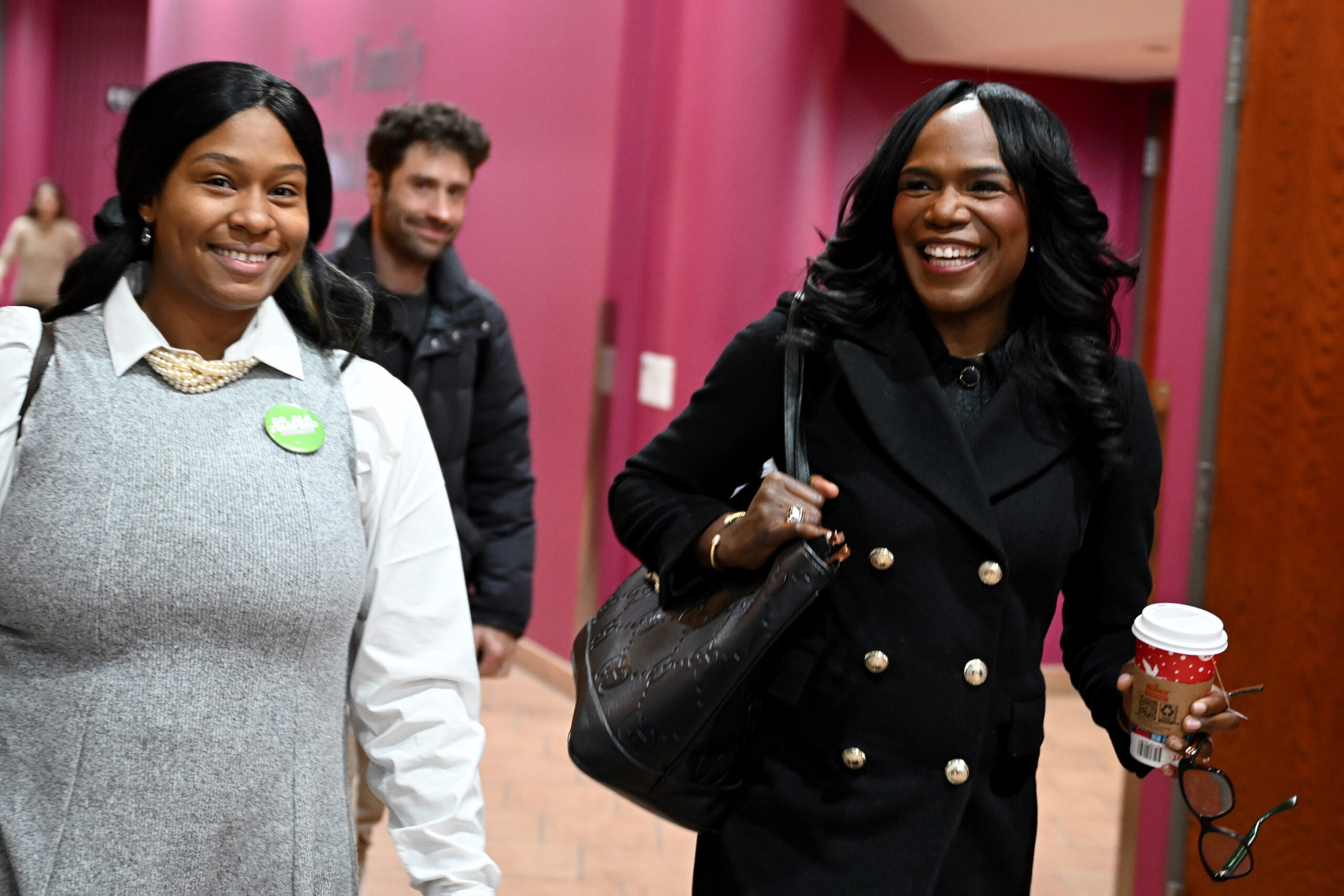
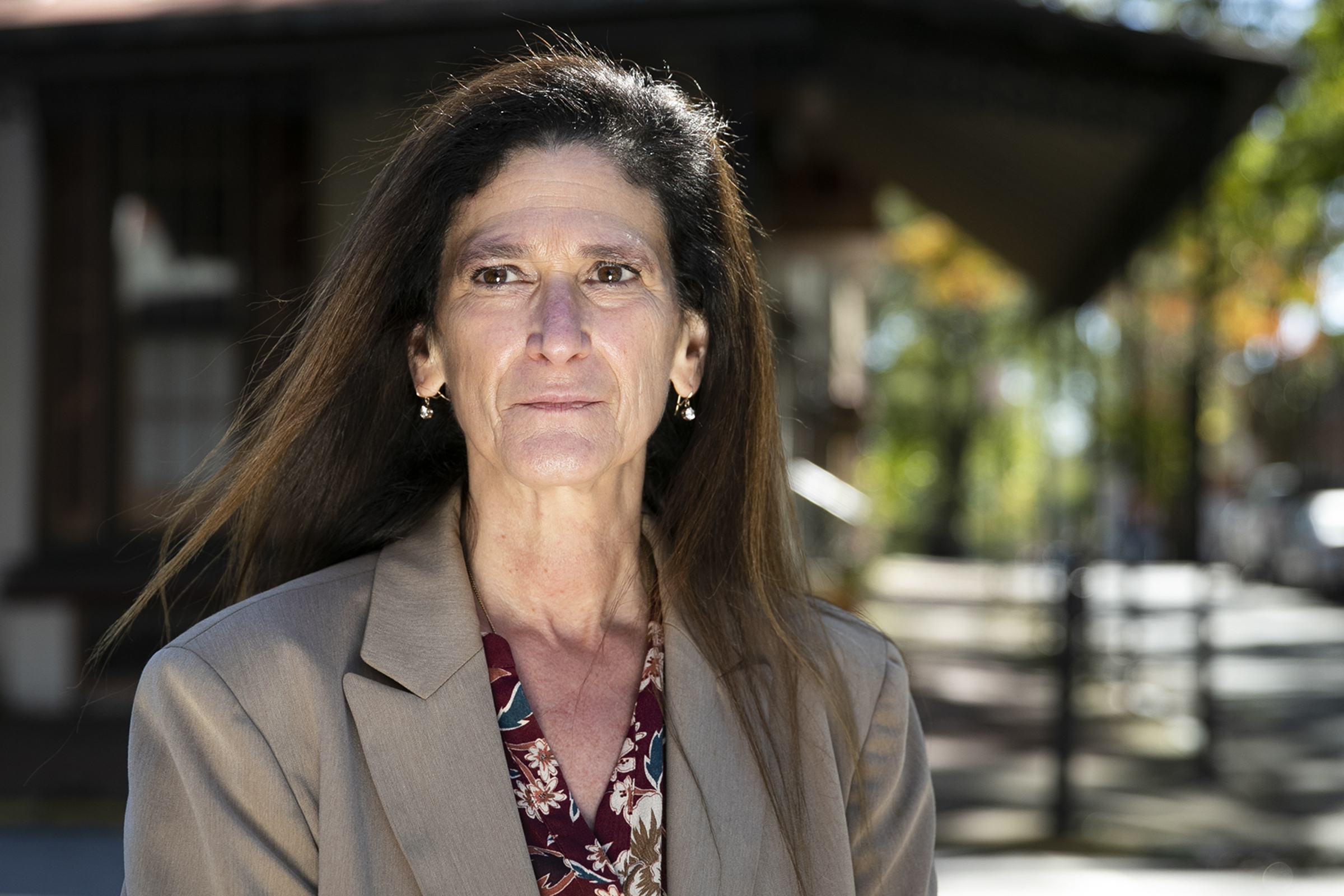
    Physician Ala Stanford (right) arrives at a forum hosted by the 9th Ward Democratic Committee Dec. 4, 2025. She is a Democratic candidate running to represent Philadelphia’s Third Congressional District.

    Interest from outside Philly will also likely rise as the primary election draws near.

    If national political figures weigh in on the race, they can lean on their vast networks of donors across the country to keep their preferred candidates’ campaigns afloat.

    And deep-pocketed special-interest groups with their eyes on influencing Congress may seek to sway the race in its final months.

    Not much PAC money — yet

    Under decades-old campaign finance law, corporations cannot give directly to candidates for federal office. But their executives, board members, and employees can fund PACs that are used as vehicles to prop up their supported candidates.

    As the role of money in politics has drawn scrutiny over the years, so has the reliance on so-called corporate PACs. That is especially true among some Democrats who see accepting money from them as a litmus test of their working-class bona fides.

    Rabb has hammered the issue in public forums and debates. He says he has never accepted corporate PAC money since his first run for office in 2015, and has repeatedly called on the other contenders to refuse corporate PAC funding.

    None of the candidates for the 3rd District has thus far leaned on corporate PAC money, according to the campaign finance reports.

    window.addEventListener(“message”,function(a){if(void 0!==a.data[“datawrapper-height”]){var e=document.querySelectorAll(“iframe”);for(var t in a.data[“datawrapper-height”])for(var r,i=0;r=e[i];i++)if(r.contentWindow===a.source){var d=a.data[“datawrapper-height”][t]+”px”;r.style.height=d}}});

    However, PACs associated with labor unions have gotten involved.

    Street raised about $40,000 in the last period from PACs associated with labor groups. He is backed by the deep-pocketed Philadelphia Building and Construction Trades Council, an umbrella organization of unions that endorsed him last fall.

    In the past, the trades have also funded super PACs, outside spending groups that can raise unlimited amounts of money but must follow strict rules largely barring them from coordinating directly with the campaigns they support.

    In 2023, the building trades funded a super PAC that supported Cherelle L. Parker’s successful run for mayor. And in 2018, Local 98 of the International Brotherhood of Electrical Workers, the most cash-flush building trades union in the state, funded a super PAC to support unsuccessful congressional candidate Rich Lazer.
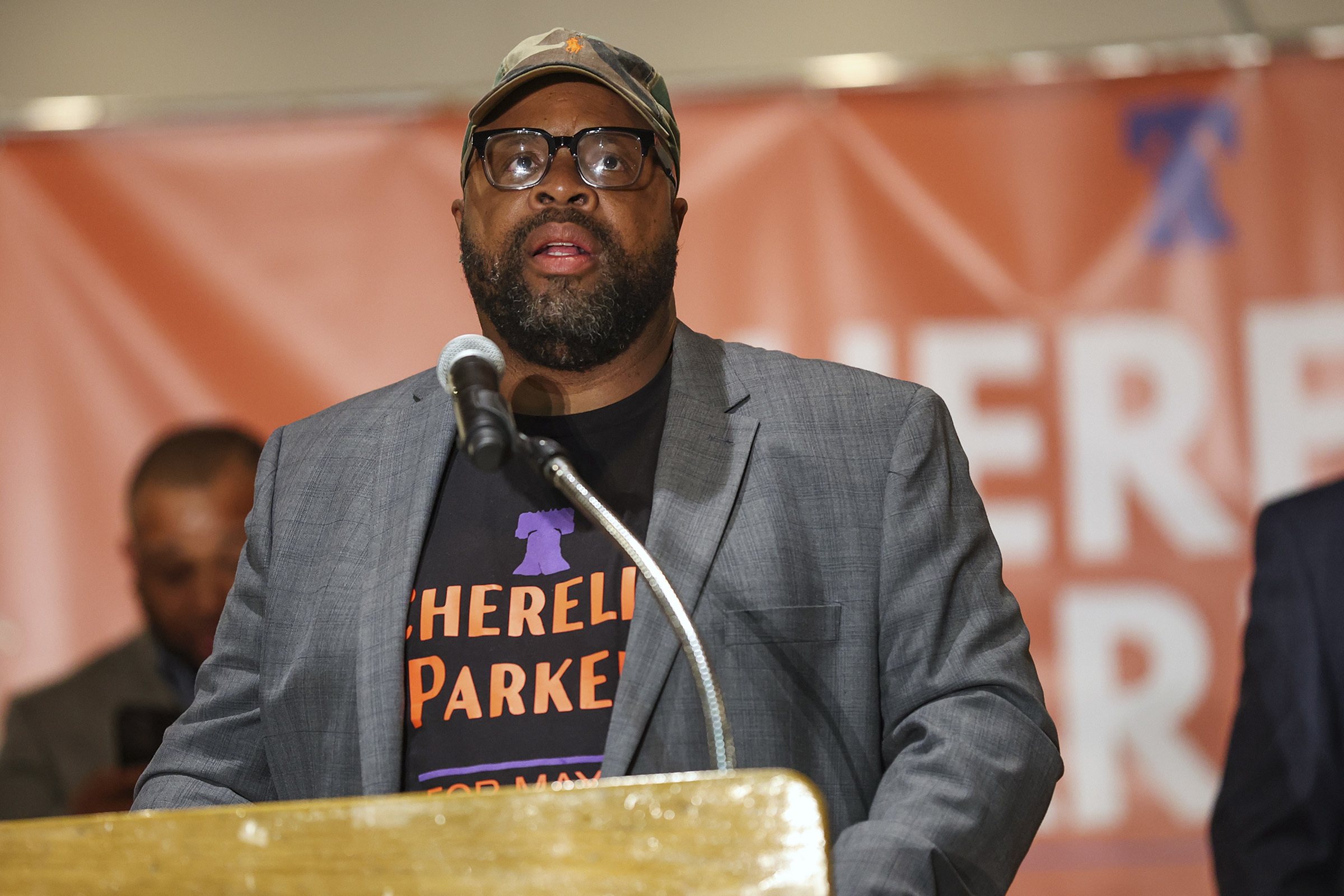
    Ryan Boyer, head of the Philadelphia Building & Construction Trades Council, was one of the first to speak at Cherelle Parker’s election night party at the Sheet Metal Workers Local 19 on Nov. 7, 2023.

    But no such super PAC has materialized so far, according to campaign finance reports. Rather, the bigger financial factor in this race — at least through the end of last year — was candidates lending money to their own campaigns. Stanford put up $250,000 on Dec. 31, the last day of the reporting period. And Oxman has lent his campaign $175,000.

    Small vs. big-dollar donors

    While the candidates relied largely on donations from individuals, the size of the checks they brought in varied. Under campaign finance limits, individuals can give up to $3,500 to a candidate per election.

    The average contribution to State Rep. Morgan Cephas since she announced her campaign was $596 — about half of Street’s and Rabb’s average contributions. Individual donors gave the most to Stanford, on average, with the average contribution to her campaign totaling $1,737.

    That analysis includes only donors who contributed more than $200 through the course of the year. Campaigns are required to itemize only contributions above that threshold.

    State Rep. Chris Rabb at a forum hosted by the 9th Ward Democratic Committee Dec. 4, 2025. He is a Democratic candidate running to represent Philadelphia’s Third Congressional District.

    Small donations, or contributions under $200, have made up a tiny fraction of the money brought in by the top contenders so far, according to the latest filings. About 11.5% of the money Rabb raised was from small-dollar donors. Such contributions made up less than 5% of all funding for Stanford, Oxman, and Street.

    The one outlier was Pablo Iván McConnie-Saad, an ex-Treasury Department official under former President Joe Biden. His campaign has been somewhat low-profile so far; however, small-dollar contributions made up a quarter of his total of $119,000 raised.

    His campaign said in a statement that the filings are evidence that his run is “entirely people powered.”

    Stanford’s campaign manager, Janée Taft-Mack, noted that the pediatric surgeon has been campaigning for a shorter amount of time than several of her opponents. She announced her campaign in October, several months after Street and Rabb.

    Taft-Mack added that the range of donors “underscores a coalition that crosses income levels, neighborhoods, and communities.”

    Where the money came from

    While every candidate vying for Evans’ seat has touted grassroots support, it appears that Cephas and Street raised the most money from donors who live in Philadelphia.

    About half of the individual donors who gave more than $200 to Street and Cephas are city residents. Both candidates have also raised the most money from donors living in Pennsylvania.

    window.addEventListener(“message”,function(a){if(void 0!==a.data[“datawrapper-height”]){var e=document.querySelectorAll(“iframe”);for(var t in a.data[“datawrapper-height”])for(var r,i=0;r=e[i];i++)if(r.contentWindow===a.source){var d=a.data[“datawrapper-height”][t]+”px”;r.style.height=d}}});

    Street, who formerly led the state Democratic Party and has connections to donors across Pennsylvania, raised 81% of his individual contributions, or about $488,000, from in-state residents. For Cephas, the share was 78%, or about $162,000.

    Anthony Campisi, a spokesperson for Street, said the latest finance report “highlights the entire point of our campaign.”

    “Sharif is running to represent Philadelphians from across an incredibly diverse district,” he said, “and is building the coalition needed to both win and effectively serve in Congress.”

    Cephas’ campaign manager, Salvatore Colleluori, said her fundraising within the city shows she has a “broad base of support, especially in Philadelphia.”

    “She has been a champion for Philadelphia in the state House, and people know that,” he said. “They want to support that work.”

    Rabb, a progressive who has support from left-leaning organizations and activists outside the region, had among the lowest share of contributions from Philly-based donors, according to The Inquirer’s analysis.

    He said in a statement that when small-dollar donations are accounted for, he believes he will have “more Philly donations than any of the establishment candidates.”

    Rabb said he will soon be rolling out endorsements from progressive organizations “that will significantly grow our donor base.”

    Staff writer Sean Collins Walsh contributed to this article.
  • Democratic campaign manager charged in Chester County for allegedly filing fake signatures in 2024 primary race

    Democratic campaign manager charged in Chester County for allegedly filing fake signatures in 2024 primary race

    A Democratic campaign manager was charged Monday in Chester County with filing fraudulent nomination petitions in the 2024 primary for auditor general, including the forged signature of a Chester County judge, authorities said.

    Mariel Kornblith-Martin, 40, of Philadelphia, is accused of filing the false nomination petitions when serving as campaign manager for Mark Pinsley, the Lehigh County controller, as he sought to secure a place on the competitive Democratic primary ballot.

    Petitions for Pinsley’s campaign included the names of people who said they had not signed them, including Chester County Judge Alita Rovito, Coatesville City Council members Carmen Green and Khadija Al-Amin, and West Goshen Township Supervisor Nate Wolman, The Inquirer reported.

    Rovito reported the forgery to the Chester County District Attorney’s Office at the time, saying the signature was not hers and she did not sign nominating petitions for any candidate, “as to do so would be a violation of judicial ethics,” according to charging documents.

    Rovito, a Democrat, told The Inquirer at the time that “the use of my name and signature is concerning to me due [to] the potential implications on my role as a member of the independent judiciary.”

    Alita Rovito, a Chester County judge, poses for a portrait in West Chester, Pa. in 2020.

    In the criminal complaint filed against Kornblith-Martin, the Chester County District Attorney’s Office alleges that she gave three college students “stacks of pages containing signatures of supporters” and asked them to sign the required sworn declaration at the bottom of each page. Among the charges filed against Kornblith-Martin was solicitation to false swearing.

    Prosecutors say she paid the students, who are not named in the charging documents, $50 on at least three occasions to sign the petitions.

    “That’s disgraceful,” former U.S. Rep. Bob Brady, the chair of the Philadelphia Democratic Party, said of the charges against Kornblith-Martin. “She’s not one of our favorites.”

    The three college students were all working part-time on several campaigns run by Kornblith-Martin, according to the complaint.

    The students were previously identified by The Inquirer as paid volunteers attending Temple University.

    Kornblith-Martin described herself to investigators as a “political operative” in Philadelphia with 13 years of experience who had worked on 16 campaigns, according to the criminal complaint. She previously served in Philadelphia’s 39th Democratic Ward, but resigned last year, according to its ward leader, Traffic Court Judge Michael Sullivan.

    Kornblith-Martin did not respond to requests for comment on Wednesday or Thursday.

    She turned herself in on Wednesday and has been released on bail, which was set at $50,000.

    Kornblith-Martin said in 2024 that the campaign was conducting an “internal investigation” when asked about the alleged fraudulent signatures.

    Pinsley told The Inquirer on Wednesday evening his campaign “reviewed what was brought to our attention but did not have enough verified information to reach independent conclusions” when concerns were raised.

    “Petition drives can involve invalid or questionable signatures for many reasons, and we were not in a position to determine intent,” he added in a text message. “I was not personally involved in the signature collection, and I believe the legal process is the appropriate place for the facts to be established. If anyone knowingly falsified signatures, that would be wrong and should carry consequences.”

    Pinsley said he has “not been involved” with Kornblith-Martin since his auditor general campaign and does “not know the facts of this situation.” Pinsley is now running in the crowded Democratic primary to challenge Republican U.S. Rep. Ryan Mackenzie in the Lehigh Valley.

    Pinsley’s campaign was not the only one with signatures that came under scrutiny.

    State Sen. Nikil Saval’s 2024 campaign complained about signatures on then-candidate Allen King’s petitions, which included two of the same student circulators and contributed to his being booted from the ballot.

    King, an entrepreneur who still has political aspirations, told The Inquirer the incident had disillusioned him about the two-party system and inspired him to reapply to law school.

    “When ballot access becomes a game of shortcuts and challenges, democracy loses before voters ever enter the booth,” he said.

    The February 2024 revelation that Pinsley’s campaign may have submitted fraudulent petitions shook up the race for a little-known office responsible for conducting audits to ensure that state money is spent properly.

    Pinsley failed to secure the Democratic nomination over State Rep. Malcolm Kenyatta, who ultimately lost to incumbent Republican Auditor General Tim DeFoor as the GOP swept the state’s row offices in the general election.

    Kenyatta did not formally challenge Pinsley’s nominating petitions to remove him from the ballot during the primary. Reached Wednesday, Kenyatta said in a statement: “Fraud occurring within any stage of our electoral process is a direct assault on our democracy.”

    “The charges brought today are a first step in the legal process but accountability must not end here: the buck always stops with the candidate,” added Kenyatta, the vice chair of the Democratic National Committee.

    Investigators found at least nine pages of alleged forgeries of Chester County voters, according to the complaint.

    To get on the ballot in Pennsylvania for a statewide row office like auditor general, a candidate must submit 1,000 signatures, including at least 100 from at least five counties.

  • Russia and Ukraine envoys meet in Abu Dhabi for 2 days of U.S.-brokered talks

    Russia and Ukraine envoys meet in Abu Dhabi for 2 days of U.S.-brokered talks

    KYIV, Ukraine — Envoys from Moscow and Kyiv met in Abu Dhabi on Wednesday for another round of U.S.-brokered talks on ending the almost four-year war, as a Russian attack using cluster munitions killed seven people at a market in Ukraine.

    The delegations from Moscow and Kyiv were joined in the capital of the United Arab Emirates by U.S. special envoy Steve Witkoff and President Donald Trump’s son-in-law, Jared Kushner, according to Rustem Umerov, Ukraine’s National Security and Defense Council chief who attended the meeting.

    “The discussions were substantive and productive, focusing on concrete steps and practical solutions,” Umerov said on social media as the first of two days of talks wrapped up.

    Secretary of State Marco Rubio said that a breakthrough in the talks may not come for a while but the Trump administration has made great progress on negotiations over the past year.

    “That’s the good news,” Rubio told reporters Wednesday. “The bad news is that the items that remain are the most difficult ones. And meanwhile the war continues.”

    Kremlin spokesman Dmitry Peskov wouldn’t offer any details on the talks and said that Moscow wasn’t planning to comment on their results.

    He said that “the doors for a peaceful settlement are open,” but that Moscow will proceed with its military campaign until Kyiv meets its demands.

    Last month’s discussions in Abu Dhabi, part of a U.S. push to end the fighting, yielded some progress but no breakthrough on key issues, officials said.

    The current talks also coincide with the expiry of the last remaining nuclear arms pact between Russia and the United States on Thursday. Trump and Russian President Vladimir Putin could extend the terms of the treaty or renegotiate its conditions in an effort to prevent a new nuclear arms race.

    Energy networks targeted

    The Abu Dhabi talks were held as Ukrainians were outraged over major Russian attacks on their energy system, which have occurred each winter since Russia launched its all-out invasion of its neighbor on Feb. 24, 2022.

    A huge Russian bombardment overnight from Monday to Tuesday included hundreds of drones and a record 32 ballistic missiles, wounding at least 10 people. This came despite Ukraine’s understanding that Putin had told Trump that he would temporarily halt strikes on Ukraine’s power grid.

    Ukrainian civilians are struggling with one of the coldest winters in years, which saw temperatures dip to around minus-4 degrees Fahrenheit.

    About 60 foreign ambassadors took part in an organized visit Wednesday to a Kyiv thermal power plant that was almost completely destroyed by missiles and drones in the Monday night attack. The plant provided heating to about 500,000 people.

    Russia is hitting Ukraine’s energy facilities because its armed forces believe the targets are associated with Kyiv’s military effort, Peskov said.

    There has been a lack of clarity about how long Putin had promised to observe a pause on power grid attacks.

    Trump said Tuesday at the White House that Putin had agreed to halt strikes for a week, through Feb. 1, and that the Russian leader had kept his word. But Zelensky said Tuesday that “barely four days have passed of the week Russia was asked to hold off,” before Ukraine was hit with new attacks, suggesting that the Ukrainian leader wasn’t fully aware of the terms of the Trump-Putin agreement.

    Meanwhile, White House press secretary Karoline Leavitt said that Trump was “unfortunately unsurprised” by Moscow’s resumption of attacks.

    On Wednesday, more than 200 repair crews were at work in Kyiv to restore power, according to the Ukrainian Energy Ministry, which said that staff were exhausted and would be rotated. More than 1,100 apartment buildings in the capital were still without heating, Zelensky said.

    The Institute for the Study of War, a Washington think tank, said that the developments were part of Moscow’s negotiating strategy.

    “The Kremlin will likely attempt to portray its adherence to this short-term energy strikes moratorium as a significant concession to gain leverage in the upcoming peace talks, even though the Kremlin used these few days to stockpile missiles for a larger strike package,” it said late Tuesday.

    New attacks

    Russia used cluster munitions Wednesday in an attack on a busy market in eastern Ukraine that killed seven and wounded 15 others, officials said.

    The attack on the town of Druzhkivka darkened prospects for progress in the UAE, with Donetsk regional military administration chief Vadym Filashkin describing Russian talk of a ceasefire as “worthless.”

    Russia also launched 105 drones against Ukraine overnight, and air defenses shot down 88 of them, the Ukrainian air force said Wednesday. Strikes by 17 drones were recorded at 14 locations, as well as falling debris at five sites, it said.

    In the central Dnipropetrovsk region, a Russian strike on a residential area killed a 68-year-old woman and a 38-year-old man, regional military administration head Oleksandr Hancha said.

    The southern city of Odesa also came under a large-scale attack, regional military administration head Oleh Kiper said. About 20 residential buildings were damaged, with four people rescued from under the rubble, he said.

  • Still no suspect in the disappearance of ‘Today’ host Savannah Guthrie’s mother

    Still no suspect in the disappearance of ‘Today’ host Savannah Guthrie’s mother

    TUCSON, Ariz. — The search for Today show host Savannah Guthrie’s mother still had no suspect or person of interest Wednesday, authorities said, four days after she disappeared with signs of forced entry at her home in southern Arizona.

    Investigators believe Nancy Guthrie was taken against her will over the weekend and Pima County Sheriff Chris Nanos has said they don’t have credible information indicating Guthrie’s disappearance was targeted. Guthrie has limited mobility, and officials do not believe she left on her own. Nanos said she is of sound mind.

    “Detectives continue to speak with anyone who may have had contact with Mrs. Guthrie,” the sheriff’s department said in a statement on social media Wednesday. “Detectives are working closely with the Guthrie family.”

    Multiple media organizations reported receiving purported ransom notes Tuesday that they handed over to investigators. The sheriff’s department has said it’s taking the notes and other tips seriously but declined to comment further.

    The Pima County sheriff and the Tucson FBI chief urged the public to offer tips during a news conference Tuesday. Nanos has said Guthrie needs daily medication and could die without it. Asked whether officials were looking for her alive, he said, “We hope we are.”

    Authorities say Nancy Guthrie was last seen around 9:30 p.m. Saturday at her home in the Tucson area, where she lived alone, and she was reported missing midday Sunday. Someone at her church called a family member to say she was not there, leading family to search her home and then call 911.

    DNA samples have been gathered and submitted for analysis as part of the investigation. “We’ve gotten some back, but nothing to indicate any suspects,” Nanos said.

    There were signs of forced entry at Guthrie’s home, evidence of a nighttime kidnapping, and several personal items were still there, including Guthrie’s cell phone, wallet and car, according to a person familiar with the investigation, who was not authorized to publicly discuss details of the case and spoke to the Associated Press on condition of an anonymity. Investigators were reviewing surveillance video from nearby homes and information from area license plate cameras and analyzing local cell phone towers data.

    Guthrie’s upscale Catalina Foothills neighborhood is quiet and mostly dark at night, lit mainly by car headlights and homes spaced far apart. Long driveways, front gates and desert plants provide a buffer from the winding streets. Saguaro cacti tower above her home’s roofline, and wispy trees partially block the view of the front door. Decorative streetlamps and prickly pear cacti dot the grassy front yard.

    Jim Mason, longtime commander of a search and rescue posse for the Maricopa County Sheriff’s Office, said desert terrain can make looking for missing people difficult. Sometimes it’s hard to peer into areas that are dense with mesquite trees, cholla cactus and other brush, he said. His group is based 175 miles (280 kilometers) north of Tucson, and is not involved in the search for Guthrie.

    On the other side of the country, Victory Church in Albany, New York, said it’s offering a $25,000 reward for information that leads to finding Nancy Guthrie.

    “Me and my wife, we watch Savannah every single morning. We’ve heard of her faith. We’ve heard of her mom’s faith. And she’s got such a sweet spirit,” Pastor Charlie Muller said.

    For a third day Wednesday, Today opened with Nancy Guthrie’s disappearance, but Savannah Guthrie was not at the anchor’s desk. NBC Sports said Tuesday that Guthrie will not be covering the 2026 Milan-Cortina Winter Olympics “as she focuses on being with her family during this difficult time.”

    The Today host grew up in Tucson, graduated from the University of Arizona and previously worked as a reporter and anchor at Tucson television station KVOA. Her parents settled in Tucson in the 1970s when she was a young child. The youngest of three siblings, she credits her mom with holding their family together after her father died of a heart attack at 49, when Savannah was just 16.

  • Supreme Court allows new California congressional districts that favor Democrats

    Supreme Court allows new California congressional districts that favor Democrats

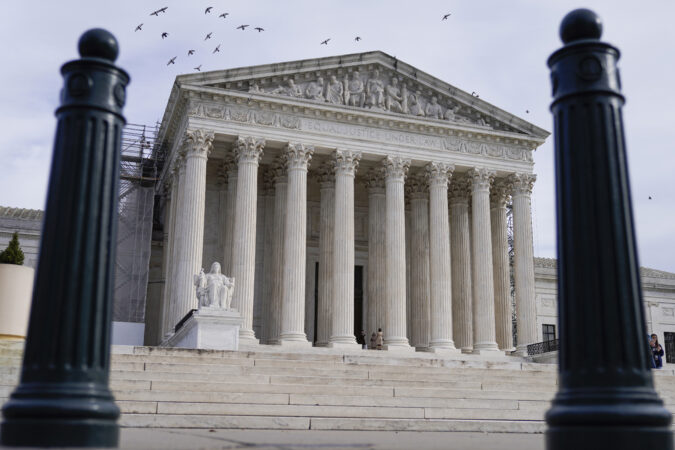
    WASHINGTON — The Supreme Court on Wednesday allowed California to use a new voter-approved congressional map that is favorable to Democrats in this year’s elections, rejecting a last-ditch plea from state Republicans and the Trump administration.

    No justices dissented from the brief order denying the appeal without explanation, which is common on the court’s emergency docket.

    The justices had previously allowed Texas’ Republican-friendly map to be used in 2026, despite a lower-court ruling that it likely discriminates on the basis of race.

    Conservative Justice Samuel Alito wrote in December that it appeared both states had adopted new maps for political advantage, which the high court has previously ruled cannot be a basis for a federal lawsuit.

    Republicans, joined by the Trump administration, claimed the California map improperly relied on race as well. But a lower court disagreed by a 2-1 vote. The Justice Department and White House did not immediately respond to messages seeking comment.

    The justices’ unsigned order keeps in place districts that are designed to flip up to five seats now held by Republicans, part of a tit-for-tat nationwide redistricting battle spurred by President Donald Trump, with control of Congress on the line in midterm elections.

    Last year, at Trump’s behest, Texas Republicans redid the state’s congressional districts with an eye on gaining five seats.

    California Gov. Gavin Newsom, a Democrat who is eyeing a 2028 presidential run, pledged to respond in kind, though he had to win over voters, not just lawmakers, to do so.

    Newsom celebrated the court’s decision, saying on social media that Trump had “started this redistricting war” and would end up losing out in the November midterms, when control of Congress is at stake.

    California’s attorney general, Democrat Rob Bonta, said the decision was “good news not only for Californians, but for our democracy.”

    The state Republican Party, which brought the case, vowed to keep fighting against the map’s use in future elections.

    “We will continue to vigorously argue for Equal Protection under the law for all of California’s voters,” Michael Columbo, counsel for the plaintiffs, said in a statement.

    One longtime party strategist, Jon Fleishman, a former executive director of the California Republican Party, said in a post on X that the decision means “this year’s elections will take place on the new lines shrinking the already very small Republican delegation from California.”

    Filing for congressional primaries in California begins on Monday.

  • Democrats demand ‘dramatic changes’ for ICE, including masks, cameras and judicial warrants

    Democrats demand ‘dramatic changes’ for ICE, including masks, cameras and judicial warrants

    WASHINGTON — Democrats are threatening to block funding for the Homeland Security Department when it expires in two weeks unless there are “dramatic changes” and “real accountability” for U.S. Immigration and Customs Enforcement and other law enforcement agencies who are carrying out President Donald Trump’s campaign of federal immigration enforcement in Minnesota and across the country.

    Congress is discussing potential new rules for ICE and U.S. Customs and Border Protection after officers shot and killed two Minneapolis protesters in January. Senate Democratic leader Chuck Schumer and House Democratic leader Hakeem Jeffries reiterated their party’s demands on Wednesday, with Schumer telling reporters that Congress must “rein in ICE in very serious ways, and end the violence.”

    Democrats are “drawing a line in the sand” as Republicans need their votes to continue the funding, Jeffries said.

    The negotiations come amid some bipartisan sentiment that Congress should step in to de-escalate tensions over the enforcement operations that have rocked Minnesota and other states. But finding real agreement in such a short time will be difficult, if not “an impossibility,” as Senate Majority Leader John Thune (R., S.D.) said Tuesday.

    President Donald Trump last week agreed to a Democratic request that funding for the DHS be separated from a larger spending bill and extended at current levels for two weeks while the two parties discuss possible requirements for the federal agents. House Speaker Mike Johnson (R., La.) said this weekend that he was at the White House when Trump spoke with Schumer and that they were “on the path to get agreement.”

    But it’s unclear if the president or enough congressional Republicans will agree to any of the Democrats’ larger demands that the officers unmask and identify themselves, obtain judicial warrants in certain cases and work with local authorities, among other asks. Republicans have already pushed back.

    And House GOP lawmakers are demanding that some of their own priorities be added to the Homeland Security spending bill, including legislation that would require proof of citizenship before Americans register to vote. South Carolina Sen. Lindsey Graham and other Republican senators are pushing for restrictions on sanctuary cities that they say don’t do enough to crack down on illegal immigration. There’s no clear definition of sanctuary jurisdictions, but the term is generally applied to state and local governments that limit cooperation with federal immigration authorities.

    It’s also uncertain if Democrats who are furious over the Trump administration’s increasingly aggressive immigration enforcement operations would be willing to compromise.

    “Republicans need to get serious,” said Schumer, a New York Democrat, adding that they will propose “tough, strong legislation” in the next day.

    A look at Democrats’ demands and what Republicans are saying about them:

    Agreement on body cameras

    Republicans say they are open to officer-worn body cameras, a change that was already in the underlying homeland security spending bill. Homeland Security Secretary Kristi Noem backed that up on Monday when she ordered body-worn cameras to be issued to every DHS officer on the ground in Minneapolis, including those from ICE. She said the policy would expand nationwide as funding becomes available.

    The bill already directed $20 million to outfit immigration enforcement agents with body-worn cameras.

    Gil Kerlikowske, who served as commissioner of U.S. Customs and Border Protection from 2014 to 2017, said that most agents are “very supportive” of cameras because they could help exonerate officers. But he added that complex questions remain, including when footage should be released and when cameras must be activated.

    “When do you turn it on? And if you got into a problem and didn’t have it on, are you going to be disciplined? It’s really pretty complex,” he said.

    Schumer said Tuesday that the body cameras “need to stay on.”

    Disagreement on masking

    As videos and photos of aggressive immigration tactics and high-profile shootings circulate nationwide, agents covering their faces with masks has become a flashpoint. Democrats argue that removing the masks would increase accountability. Republicans warn it could expose agents to harassment and threats.

    “State law enforcement, local folks don’t do it,” said Rep. Bennie Thompson, the top Democrat on the Committee for Homeland Security. ”I mean, what’s so special about an ICE law enforcement agency that they have to wear a mask?”

    But Republicans appear unlikely to agree.

    “Unlike your local law enforcement in your hometown, ICE agents are being doxed and targeted. We have evidence of that,” Johnson said on Tuesday. He added that if you “unmask them and you put all their identifying information on their uniform, they will obviously be targeted.”

    Immigration officers are already required to identify themselves “as soon as it is practical and safe to do so,” according to federal regulations. ICE officials insist those rules are being followed.

    Critics, however, question how closely officers adhere to the regulations.

    “We just see routinely that that’s not happening,” said Nithya Nathan Pineau, a policy attorney with the Immigrant Legal Resource Center.

    Judicial vs. administrative warrants

    Democrats have also demanded stricter use of judicial warrants and an end to roving patrols of agents who are targeting people in the streets and in their homes. Schumer said Tuesday that they want “arrest warrants and an end to racial profiling.”

    Most immigration arrests are carried out under administrative warrants, internal documents issued by immigration authorities that authorize the arrest of a specific person but do not permit officers to forcibly enter private homes or other non-public spaces without consent. Traditionally, only warrants signed by judges carry that authority.

    But an internal ICE memo obtained by The Associated Press last month authorizes ICE officers to use force to enter a residence based solely on a more narrow administrative warrant to arrest someone with a final order of removal, a move that advocates say collides with Fourth Amendment protections.

    Democrats have not made clear how broadly they want judicial warrants used. Jeffries of New York said that Democrats want to see “an end to the targeting of sensitive locations like houses of worship, schools and hospitals.”

    Johnson said Tuesday that Democrats are trying to “add an entirely new layer” by seeking warrants signed by a judge rather than the administrative warrants that are signed by the department. “We can’t do that,” he said.

    The speaker has said that an end to roving patrols is a potential area of agreement, but he did not give details.

    Code of conduct, more accountability

    Democrats have also called for a uniform code of conduct for all ICE and federal agents similar to that for state and local law enforcement officers.

    Federal officials blocked state investigators from accessing evidence after protester Renee Good was shot and killed by an ICE agent on Jan. 7. Gov. Tim Walz, a Democrat, demanded that the state be allowed to take part, saying that it would be “very difficult for Minnesotans” to accept that an investigation excluding the state could be fair.

    Hoping for a miracle

    Any deal Democrats strike on the Department of Homeland Security is unlikely to satisfy everyone in the party. Rep. Ayanna Pressley of Massachusetts said she would never support an agreement that didn’t require unmasking.

    “I ran for Congress in 2018 on abolish ICE,” Pressley said. “My position has not changed.”

    Thune, of South Dakota, has repeatedly said it’s an “impossibility” to negotiate and pass something so complicated in two weeks. He said any talks should be between Democrats and Trump.

    “I don’t think it’s very realistic,” Thune said Tuesday about finding quick agreement. “But there’s always miracles, right?”

  • Iran and the U.S. will hold nuclear talks Friday in Oman, Iranian foreign minister says

    Iran and the U.S. will hold nuclear talks Friday in Oman, Iranian foreign minister says

    DUBAI — Nuclear talks between Iran and the United States will take place Friday in Oman, the Iranian foreign minister said, as tensions between the countries remain high following Tehran’s bloody crackdown on nationwide protests last month.

    The announcement by Iranian Foreign Minister Abbas Araghchi on Wednesday came after hours of indications that the anticipated talks were faltering over changes in the format and content of the talks.

    ”I’m grateful to our Omani brothers for making all necessary arrangements,” Araghchi wrote on X on Wednesday evening.

    Earlier Wednesday, a regional official said Iran was seeking a “different” type of meeting than that what had been proposed by Turkey, one focused exclusively on the issue of Iran’s nuclear program, with participation limited to Iran and the United States. The official spoke on condition of anonymity because they were not authorized to brief the media.

    Secretary of State Marco Rubio had said U.S. officials were working on maintaining a meeting with Iran this week.

    Tensions between the countries have spiked after U.S. President Donald Trump suggested the U.S. might use force against Iran in response to its crackdown on protesters. Trump also has been pushing Tehran for a deal to constrain its nuclear program.

    Rubio hopes talks will go beyond nuclear ones

    Iran’s reformist President Masoud Pezeshkian on Tuesday said he had instructed the foreign minister to “pursue fair and equitable negotiations” with the U.S., in the first clear sign from Tehran it wants to try to negotiate. That signaled the move is supported by Supreme Leader Ayatollah Ali Khamenei, who has the final say on all matters of state and previously dismissed any negotiations.

    Rubio said the U.S. hoped to discuss a number of concerns beyond the nuclear issue, including discussions on Iran’s ballistic missiles, support for proxy networks across the region and the “treatment of their own people.”

    “The leadership of Iran at the clerical level does not reflect the people of Iran. I know of no other country where there’s a bigger difference between the people who lead the country and the people who live there,” he told reporters.

    Vice President JD Vance told The Megyn Kelly Show that diplomatic talks with Iran are challenging because of Tehran’s political system, overseen by Khamenei.

    “It’s a very weird country to conduct diplomacy with when you can’t even talk to the person who’s in charge of the country. That makes all of this much more complicated, and it makes the whole situation much more absurd,” Vance said, noting that Trump could speak directly by phone with the leaders of Russia, China or North Korea.

    Vance said Trump’s bottom line is that Iran cannot be allowed to develop a nuclear weapon, asserting that other states in the region would quickly do the same.

    Iran long has insisted its nuclear program is peaceful. However, Iranian officials in recent years have increasingly threatened to pursue the bomb.

    Vance said he believed Trump would work to “accomplish what he can through non-military means. And if he feels like the military is the only option, then he’s ultimately going to choose that option.”

    Talks expected even after U.S. shot down Iranian drone

    On Tuesday, a U.S. Navy fighter jet shot down an Iranian drone that approached an American aircraft carrier. Iranian fast boats from its paramilitary Revolutionary Guard also tried to stop a U.S.-flagged ship in the Strait of Hormuz, the narrow mouth of the Persian Gulf, the Navy said.

    Iran did not immediately acknowledge either incident, which strained but apparently did not derail hopes for talks with the U.S.

    On Wednesday, Iranian military chiefs visited a missile base in an attempt to highlight its military readiness after a 12-day war with Israel in June devastated Iran’s air defenses. The base holds the Khorramshahr missile, which has a range of more than 1,250 miles and was launched towards Israel during the war last year.

    Turkey urges diplomacy

    Also Wednesday, Turkish President Recep Tayyip Erdogan reiterated Turkey’s opposition to foreign intervention in neighboring Iran, calling for the resolution of issues through dialogue.

    Turkey has been urgently working for the past week to bring the U.S. and Iran to the negotiating table, and was previously expected to host the talks.

    “We believe that external interventions involving our neighbor Iran would pose significant risks for the entire region,” Erdogan said during a visit to Cairo. “Resolving issues with Iran, including the nuclear file, through diplomatic means is the most appropriate approach.”

  • The former Prince Andrew moves to King Charles III’s private estate after Epstein document uproar

    The former Prince Andrew moves to King Charles III’s private estate after Epstein document uproar

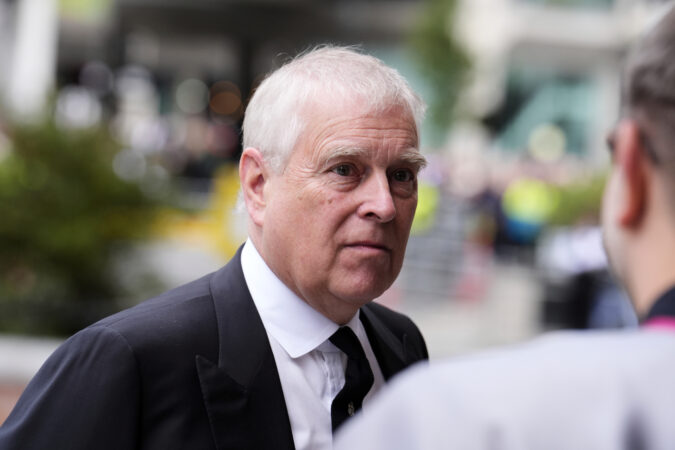
    LONDON — The former Prince Andrew has moved out of his longtime home on crown-owned land near Windsor Castle earlier than expected after the latest release of documents from the U.S. investigation of Jeffrey Epstein revived questions about his friendship with the convicted sex offender.

    The 65-year-old brother of King Charles III, now known as Andrew Mountbatten-Windsor, left the Royal Lodge in Windsor on Monday and is now living on the king’s Sandringham estate in eastern England, Britain’s Press Association reported. British media reported that Mountbatten-Windsor will live temporarily at Wood Farm Cottage while his permanent home on the estate undergoes repairs.

    Mountbatten-Windsor’s move to Sandringham was announced in October when Charles stripped him of his royal titles amid continuing revelations about his links to Epstein. But the former prince was expected to remain at Royal Lodge, where he has lived for more than 20 years, until the spring.

    The expedited departure came as Thames Valley Police announced they were investigating allegations that Epstein flew a second woman to Britain to have sex with Mountbatten-Windsor. A lawyer for the alleged victim told the BBC that the encounter took place in 2010 at Royal Lodge.

    The allegations are separate from those made by Virginia Giuffre, who claimed she had been trafficked to Britain to have sex with Andrew in 2001, when she was just 17. Giuffre died by suicide last year.

    Mountbatten-Windsor has repeatedly denied any wrongdoing in his relationship with Epstein. He hasn’t responded publicly to the new trafficking allegation.

    Mountbatten-Windsor features a number of times in the 3 million pages of documents the U.S. Department of Justice released on Friday.

    In an email dated March 23, 2011, the lawyer for an exotic dancer said Epstein and Mountbatten-Windsor asked her to take part in a threesome at the sex offenders’ Florida home.

    The woman’s legal representatives accused the pair of having “prevailed upon her to engage in various sex acts” during the alleged encounter in early 2006 after initially hiring her to dance for them. The woman was only paid $2,000, not the $10,000 she was promised, her lawyer said.

    The lawyer offered to settle the matter confidentially for $250,000.

    “My client has not pursued her claims against your client until this time because she is not proud of the circumstances of that night,” the lawyer wrote. “She was working as an exotic dancer, but she was treated like a prostitute.”

    In other correspondence between Epstein and someone believed to be Mountbatten-Windsor shows Epstein offering to arrange a date between the man and a 26-year-old Russian woman. The man, who signs off simply as “A,” later suggests that he and Epstein have dinner in London, either at a restaurant or Buckingham Palace.

    The documents do not show wrongdoing by many of those named. The appearance of famous people in the files often reflect Epstein’s extremely wide reach.

    The former prince’s residence at Royal Lodge has long been a point of contention between the king and his brother.

    After Charles became king in 2022, he tried to force his brother to move into a smaller house on the Windsor Castle estate. Mountbatten-Windsor refused, citing a lease on the property that ran through 2078.

    But the pressure for him to leave became irresistible in October as lawmakers and the public raised questions about the favorable terms of Mountbatten-Windsor’s lease on the 30-room house and surrounding estate, which is managed by the Crown Estate.

    The Crown Estate controls properties throughout the country that are technically owned by the monarchy but are managed for the benefit of British taxpayers.

    By contrast, the Sandringham Estate in Norfolk is the personal property of the king.

    Art museum official bails

    Art museum curator and director David A. Ross has left his post at the School of Visual Arts in New York after the latest release of documents about Epstein revealed his friendship with him.

    Ross, who was chair of the MFA art practice program, resigned Tuesday, the school said in a statement, adding that it was “aware of correspondence” between him and Epstein. Ross’ online page at the school was offline Wednesday.

    The resignation was first reported by ARTnews.

    In emails dating from 2009, Ross banters with, reaches out to meet and consoles Epstein, calling him “incredible” and “I’m still proud to call you a friend.”

    In one exchange in 2009, Epstein suggests an exhibition called “Statutory” that would feature “girls and boys ages 14-25 ”where they look nothing like their true ages.” Replied Ross: “You are incredible” and noted that Brooke Shields posed nude at age 10.

    Also that year, Ross wrote to console Epstein after the financier had been deposed. “Damn, this was not what you needed or deserved,” Ross wrote. “I know how tough you are, and in fact, it probably bothers me as your friend more than it does you.”

  • Lee Hamilton, foreign policy leader in Congress, has died at 94

    Lee Hamilton, foreign policy leader in Congress, has died at 94

    Lee H. Hamilton, a deliberative, soft-spoken Indiana Democrat who won bipartisan respect for his integrity and foreign policy expertise during 34 years in the U.S. House of Representatives, and who later helped steer high-profile inquiries into the 9/11 terrorist attacks and Iraq War strategy, died Feb. 3. He was 94.

    His son, Douglas Hamilton, confirmed the death but did not cite a specific cause.

    Mr. Hamilton, who was first elected to the House in 1964, became a prominent voice in some of the most contentious foreign policy debates of his era.

    The son of a pacifist Methodist minister, he helped lead an unsuccessful effort in 1991 to block President George H.W. Bush’s use of the military to drive Iraq from Kuwait. During the Reagan administration, the congressman had forcefully opposed military aid for the anti-communist Contra rebels fighting to overthrow Nicaragua’s left-wing Sandinista government.

    An all-state Hoosier high school basketball star, he maintained the lanky build and crew cut of his youth into his senior years. He also maintained a middle-of-the-road voting record that reflected the largely rural, small-town slice of southern Indiana he represented.

    He was measured in tone and language, almost professorial in manner — the antithesis of the stereotypical backslapping, lectern-thumping politician.

    “Lee Hamilton is a thinker, which makes him a little different,” political commentator Chris Matthews, then an aide to Speaker Thomas P. “Tip” O’Neill Jr. (D., Mass.), told the New York Times in 1984. “He makes his case logically, deductively. He’s not the kind of visceral politician you see around here.”

    At the time, Mr. Hamilton chaired the Europe and Middle East subcommittee of the House Foreign Affairs Committee and was O’Neill’s point man in pushing the Reagan administration to withdraw U.S. peacekeepers from Lebanon after the terrorist bombing in Beirut that killed 241 American service members. He later chaired the full Foreign Affairs and Intelligence committees.

    Mr. Hamilton advocated an activist role for Congress in shaping foreign policy and cautioned lawmakers against ceding all responsibility for military intervention to the president.

    The proper boundary between the executive and legislative branches was at the heart of the Iran-Contra affair, which raised Mr. Hamilton’s profile somewhat beyond Capitol Hill.

    After disclosures that the Reagan administration had diverted profits from the secret sale of weapons to Iran to fund the Nicaraguan rebels, then-Speaker Jim Wright (D., Texas) appointed Mr. Hamilton to head a special House committee to investigate the clandestine arrangement, which was designed to circumvent Congress’ ban on funding of the Contras.

    In 1987, Mr. Hamilton’s committee and a Senate panel chaired by Democrat Daniel K. Inouye of Hawaii held 41 days of televised hearings. The two key players, Vice Admiral John Poindexter, Reagan’s national security adviser, and an aide, Lt. Col. Oliver North, were unrepentant when they appeared, insisting that the covert program was in the national interest.

    Blaming the scandal at least in part on Congress’ “fickle, vacillating, unpredictable, on-again-off-again policy” toward the Contras, North told the committees: “The Congress of the United States left soldiers in the field unsupported and vulnerable to their communist enemies. . . . I am proud of the efforts that we made, and I am proud of the fight that we fought.”

    Mr. Hamilton’s reply was polite and stern. “I cannot agree,” he said, “that the end has justified these means, that the threat in Central America was so great that we had to do something even if it meant disregarding constitutional processes [and] deceiving the Congress and the American people.”

    He concluded: “Democracy has its frustrations. You’ve experienced some of them, but we — you and I — know of no better system of government. And when that democratic process is subverted, we risk all that we cherish.”

    In the end, the two committees found no conclusive evidence that Reagan was aware of the diversion. But their majority report concluded that laws had been disregarded and that the president “created or at least tolerated an environment where those who did know of the diversion believed with certainty that they were carrying out the President’s policies.”

    North and Poindexter were later found guilty of criminal charges stemming from the Iran-Contra affair, but their convictions were overturned on appeal.

    In an interview for this obituary in 2016, Norman Ornstein, a political scientist at the American Enterprise Institute, called Mr. Hamilton “one of the premier legislators of his time.”

    At least two Democratic presidential candidates, Michael Dukakis in 1988 and Bill Clinton in 1992, considered Mr. Hamilton as a running mate. His less-than-lively style and his record on some social issues — most noticeably, his opposition to federal funding of abortions except in cases of rape, incest or a threat to the mother’s life — may have hurt his chances.

    Mr. Hamilton did not seek reelection in 1998, but his career in elective politics proved to be only a first act. The second was a run of leadership roles in public policy and academic undertakings that cemented his standing as one of Washington’s elder statesmen.

    In 2002, he was named vice chairman of the 9/11 Commission, an independent, bipartisan panel created by Congress and the White House to examine the terrorist attacks a year earlier on the World Trade Center and the Pentagon.

    Chaired by former New Jersey Gov. Thomas Kean, a Republican, the 10-member group issued a unanimous report in 2004 identifying a raft of government shortcomings that contributed to the 9/11 disaster and 41 recommendations to prevent a recurrence. The report led to a number of changes in national security policies and organization, including the creation of a new position — director of national intelligence — to unify the intelligence community.

    Though the commission was not without critics, Kean and Mr. Hamilton, who worked essentially as co-chairs, got high marks for steering the investigation through a political minefield and producing a document that had the backing of all commission members, Republicans and Democrats.

    Mr. Hamilton returned to the limelight in 2006 as co-chair, with former secretary of state James A. Baker III, of the Iraq Study Group, a bipartisan panel organized by the U.S. Institute of Peace to propose strategies to stabilize Iraq, where sectarian violence was taking an increasing toll in American and Iraqi lives three years after the U.S.-led invasion.

    Among its 79 recommendations, the 10-member group called for boosting diplomatic efforts in the region, including engaging Syria and Iran, and increasing the number of American troops embedded in Iraqi units for training purposes while gradually decreasing the strength of U.S. combat forces.

    In part because of Baker’s close connection to the Bush family, the panel’s work drew significant media attention. But in January 2007 — in what then-Vice President Dick Cheney later described as a “repudiation of the Baker-Hamilton report” — President George W. Bush announced the deployment of more than 20,000 additional U.S. troops to Iraq to provide security, mainly in Baghdad. The surge would buy time for the Iraqi government to strengthen its military capacity, the administration argued.

    In 2015, President Barack Obama awarded Mr. Hamilton the Presidential Medal of Freedom, the nation’s highest civilian honor. The White House announcement called him “one of the most influential voices on international relations and American national security over the course of his more than 40-year career.”

    Lee Herbert Hamilton was born in Daytona Beach, Fla., on April 20, 1931, and as a child, he moved with his family to Evansville, Ind., where his father had a church assignment.

    He graduated in 1952 from DePauw University and completed a law degree at Indiana University in 1956. He was a lawyer in Columbus, Indiana, when he got involved in politics, and in 1964, he rode President Lyndon Johnson’s coattails to victory over an incumbent GOP congressman. Except for a close call in the GOP landslide of 1994, he repeatedly won reelection by comfortable margins.

    His wife of 57 years, Nancy Nelson, died in a car accident in 2012. In addition to his son, Douglas, survivors include two daughters, Tracy Souza and Deborah Kremer; five grandchildren; and a great-granddaughter.

    After leaving Congress, Mr. Hamilton was president for more than a decade of the Woodrow Wilson International Center for Scholars in Washington. He also directed what is now the Center on Representative Government at Indiana University in Bloomington and wrote books on Congress and international affairs.

    When Mr. Hamilton left the Wilson Center in 2010 and was preparing to move back to Indiana, an NPR interviewer asked him what he had learned over his many years in public life.

    “I think that you come filled with ambition and drive and energy and wanting to accomplish great things, and you find the system is very hard to move, to make it work,” Mr. Hamilton replied. “I think what has impressed me over the years is the sheer complexity and difficulty of governing this country.”

  • Government lawyer yanked from immigration detail in Minnesota after telling judge ‘this job sucks’

    Government lawyer yanked from immigration detail in Minnesota after telling judge ‘this job sucks’

    WASHINGTON — A government lawyer who told a judge that her job “sucks” during a court hearing stemming from the Trump administration’s immigration enforcement surge in Minnesota has been removed from her Justice Department post, according to a person familiar with the matter.

    Julie Le had been working for the Justice Department on a detail, but the U.S. attorney in Minnesota ended her assignment after her comments in court on Tuesday, the person said. The person spoke on the condition of anonymity to discuss a personnel matter. She had been working for U.S. Immigration and Customs Enforcement before the temporary assignment.

    At a hearing Tuesday in St. Paul, Minn., for several immigration cases, Le told U.S. District Judge Jerry Blackwell that she wishes he could hold her in contempt of court “so that I can have a full 24 hours of sleep.”

    “What do you want me to do? The system sucks. This job sucks. And I am trying every breath that I have so that I can get you what you need,” Le said, according to a transcript.

    Le’s extraordinary remarks reflect the intense strain that has been placed on the federal court system since President Donald Trump returned to the White House a year ago with a promise to carry out mass deportations. ICE officials have said the surge in Minnesota has become its largest-ever immigration operation since ramping up in early January.

    Several prosecutors have left the U.S. Attorney’s office in Minnesota amid frustration with the immigration enforcement surge and the Justice Department’s response to fatal shootings of two civilians by federal agents. Le was assigned at least 88 cases in less than a month, according to online court records.

    Blackwell told Le that the volume of cases isn’t an excuse for disregarding court orders. He expressed concern that people arrested in immigration enforcement operations are routinely jailed for days after judges have ordered their release from custody.

    “And I hear the concerns about all the energy that this is causing the DOJ to expend, but, with respect, some of it is of your own making by not complying with orders,” the judge told Le.

    Le said she was working for the Department of Homeland Security as an ICE attorney in immigration court before she “stupidly” volunteered to work the detail in Minnesota. Le told the judge that she wasn’t properly trained for the assignment. She said she wanted to resign from the job but couldn’t get a replacement.

    “Fixing a system, a broken system, I don’t have a magic button to do it. I don’t have the power or the voice to do it,” she said.

    Homeland Security Assistant Secretary Tricia McLaughlin said Le was a probationary attorney.

    “This conduct is unprofessional and unbecoming of an ICE attorney in abandoning her obligation to act with commitment, dedication, and zeal to the interests of the United States Government,” McLaughlin said in a statement.

    Le and the U.S. Attorney’s office in Minnesota didn’t immediately respond to emails seeking comment.

    Kira Kelley, an attorney who represented two petitioners at the hearing, said the flood of immigration petitions is necessary because “so many people being detained without any semblance of a lawful basis.”

    “And there’s no indication here that any new systems or bolded e-mails or any instructions to ICE are going to fix any of this,” she added.